

Cycle Shark
2.1k Публикации

Cycle Shark
Отправить жалобу
Заблокировать пользователя
Investor hunting AI, crypto, TMT, and frontier tech. I track unconventional macro-political-economic signals.
0 подписок(и/а)
610 подписчиков(а)
1.6K+ понравилось
Посты
·
--
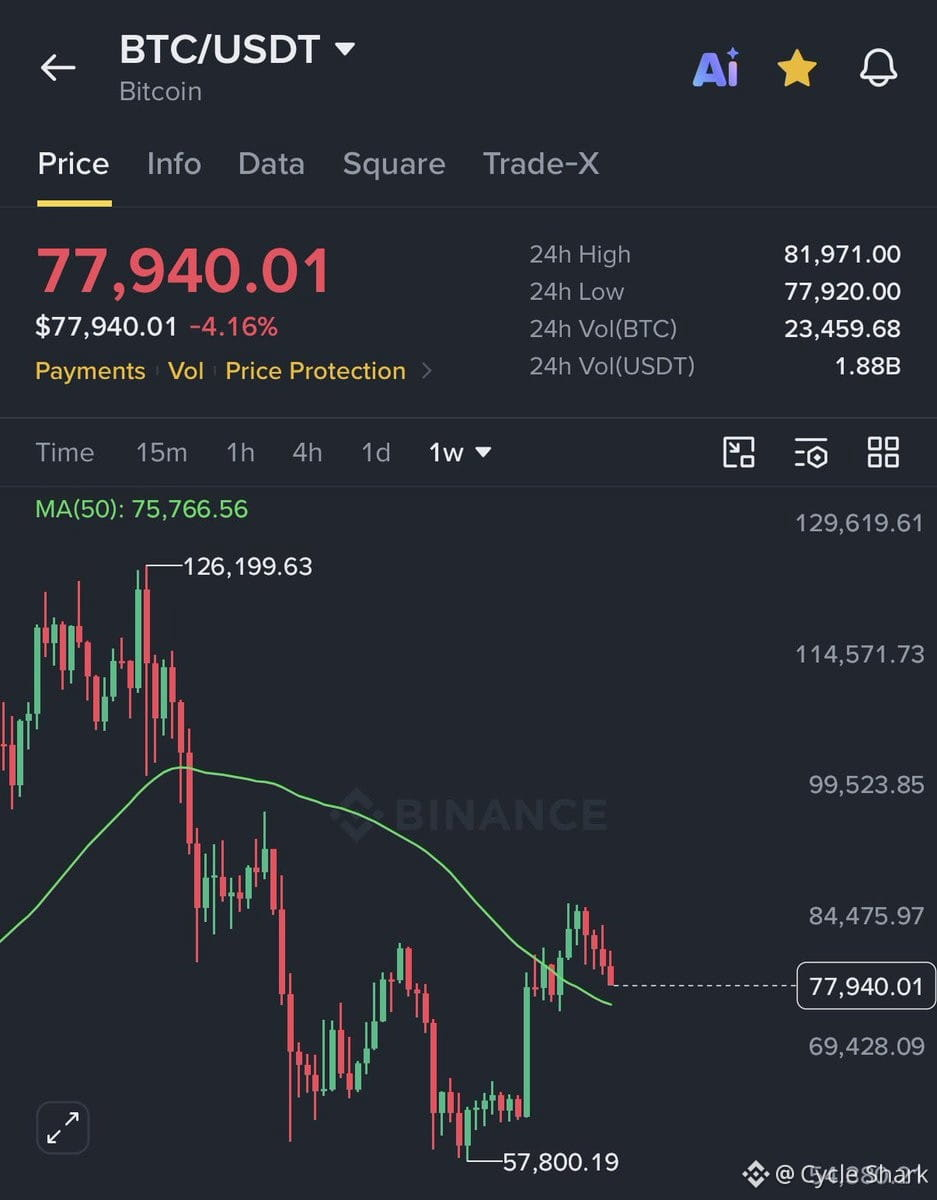
$BTC just fell under $78,000. $1.1 billion in liquidations across crypto in the last 24 hours.
The next real support level to watch: the 50-week moving average at $75,766. If that breaks, things get messy fast. That level has historically acted as a floor during pullbacks — losing it would signal more than just a dip, it'd mean the broader structure is cracking.
Liquidation cascades like this amplify volatility. Leveraged longs get wiped, which pushes price lower, which triggers more liquidations. It's a feedback loop. The question now is whether spot buyers step in around $75k or if we see capitulation below that.
Keep an eye on funding rates and open interest. If funding goes negative and OI drops hard, that's usually a sign the flush is near done. If it stays elevated, more pain ahead.
187
·
--
Binance hack panic = overblown.
Here's the actual math:
~$3B already frozen. Real damage likely $1-2B max.
CZ net worth: $100B
Binance yearly revenue: $16B
They can cover user funds without breaking a sweat. This isn't Mt. Gox 2.0.
The market always overreacts to exchange hacks in the first 48 hours. Remember FTX trauma is still fresh, so people assume worst case. But Binance has the balance sheet to absorb this.
What matters now:
1. How fast they restore withdrawals
2. Whether they eat the loss or socialize it
3. Regulatory response (this will be the real test)
Panic selling into this is just giving up alpha to people who can do basic balance sheet math.
89
·
--
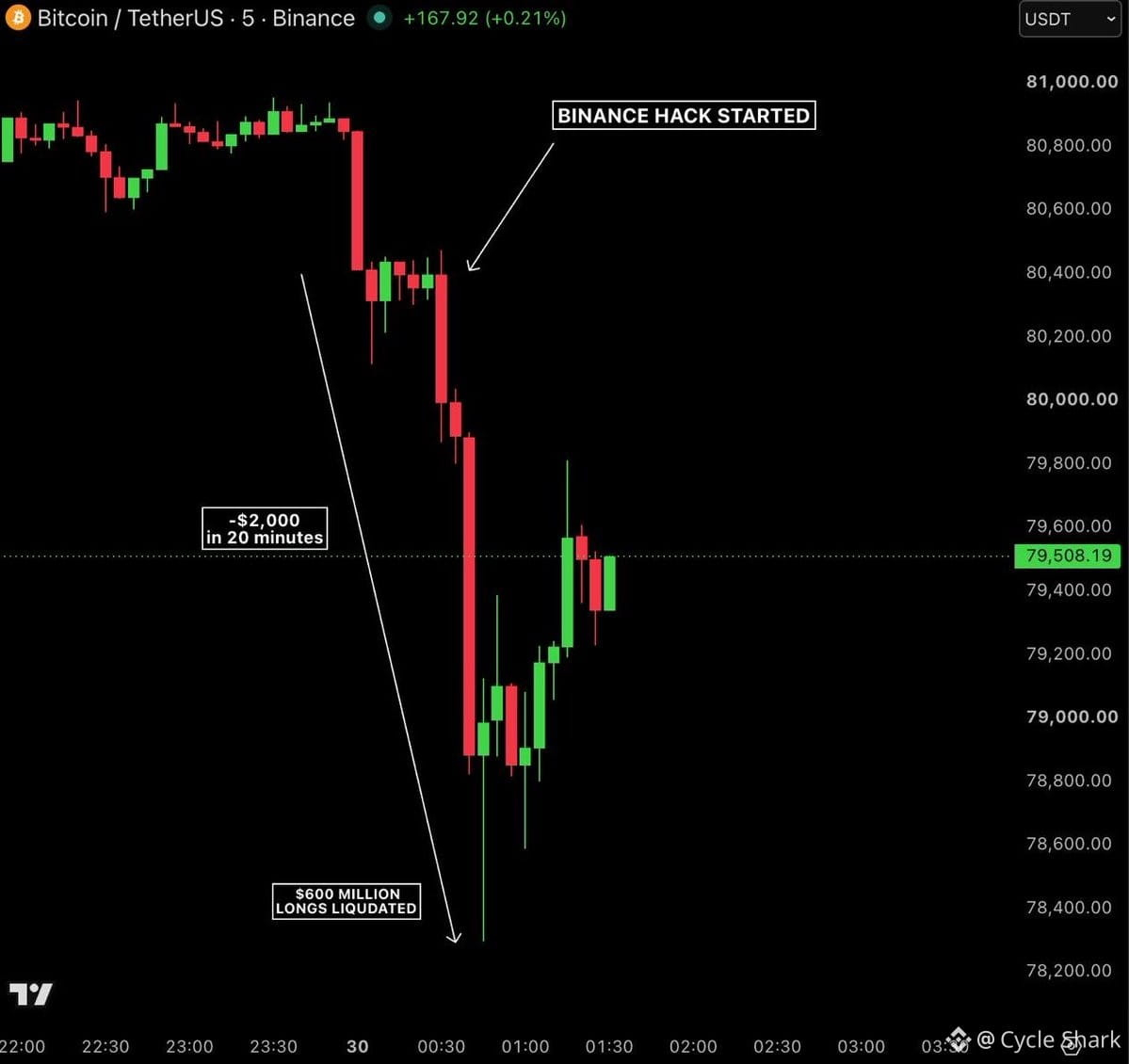
The largest hack in crypto history just happened — $5.6 billion drained from Binance wallets across multiple chains.
$BTC immediately dropped $2,000, falling below $79k. That triggered $600 million in long liquidations. In 15 minutes, $80 billion vanished from the total crypto market cap.
Tether and Circle moved fast, freezing at least $2.316 billion in stablecoins to limit the damage.
CZ came out quickly: user funds are safe, everything will be covered. Binance says the investigation is ongoing.
$BTC is already recovering. But this is a reminder — no matter how big the platform, security risk is always there. The speed of the stablecoin freeze shows how centralized control still plays a huge role in crypto infrastructure, especially during crisis moments.
Watch how this plays out. If Binance fully covers losses without major operational disruption, it could actually reinforce confidence. If not, expect regulatory pressure to intensify and more users to move toward self-custody.

1
1
4
2.3k
·
--
Bitcoin just fell below $79,000 — first time in 40 days. $450M in long positions got liquidated in 30 minutes.
This is what overleveraged bullish bets look like when they unwind fast. When $BTC breaks a key support level that held for over a month, the cascade effect hits hard. Traders who were betting on continued upside with high leverage got margin-called almost instantly.
The speed matters here. 30 minutes is not a slow drift — it's a violent flush. Usually means:
1. Thin liquidity at that price level
2. Stop-losses clustering just below $79k
3. Forced selling from liquidations creating more downward pressure
This kind of move often marks a local reset. After $450M gets wiped out, the over-leveraged crowd is gone. What happens next depends on whether real buyers show up at lower levels or if this is just the start of a deeper correction.
Watch how $BTC behaves around $78k-$79k over the next 24-48 hours. If it reclaims $79k quickly, it was likely just a liquidation wick. If it stays below and grinds lower, the market structure has shifted.
205
·
--
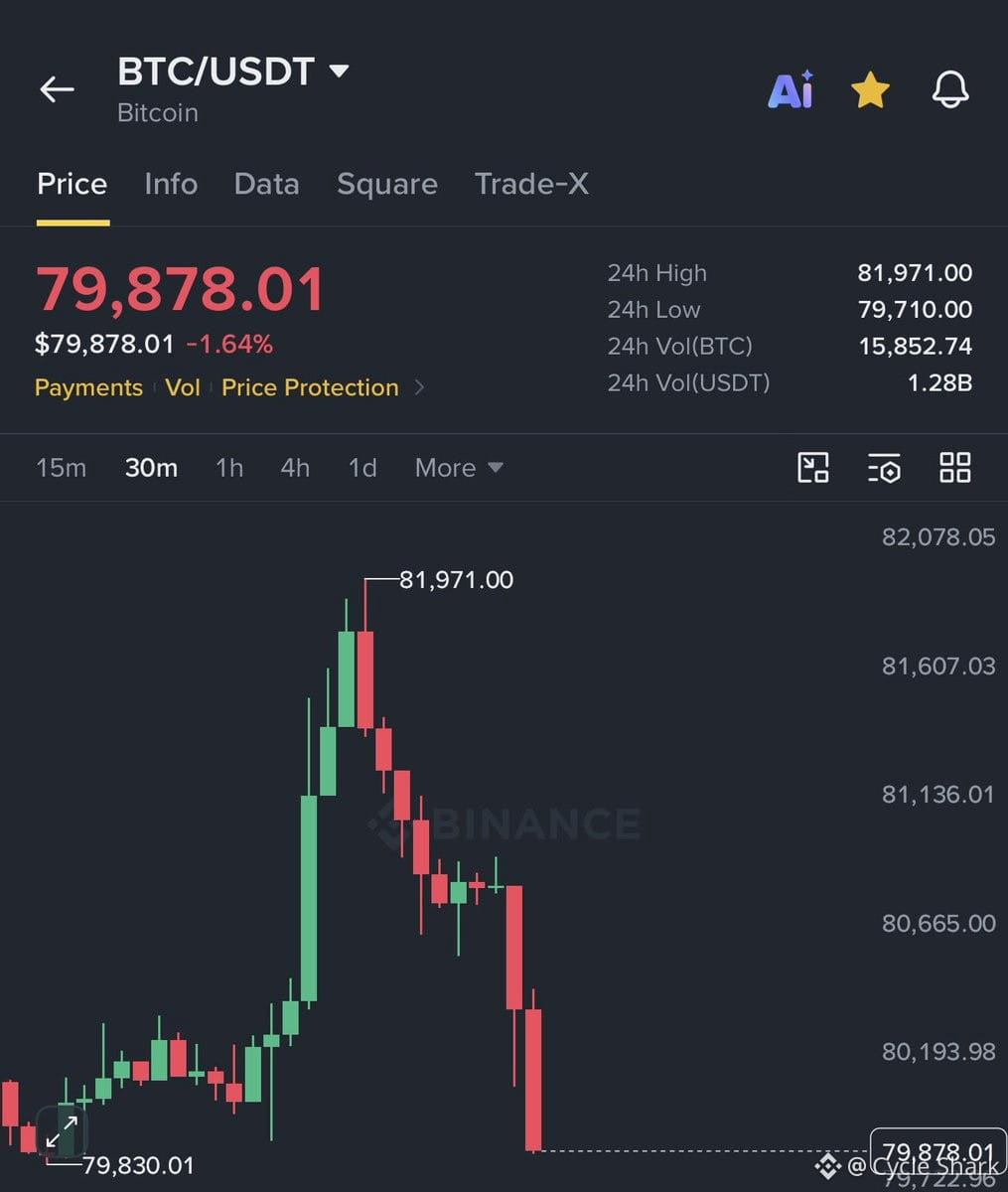
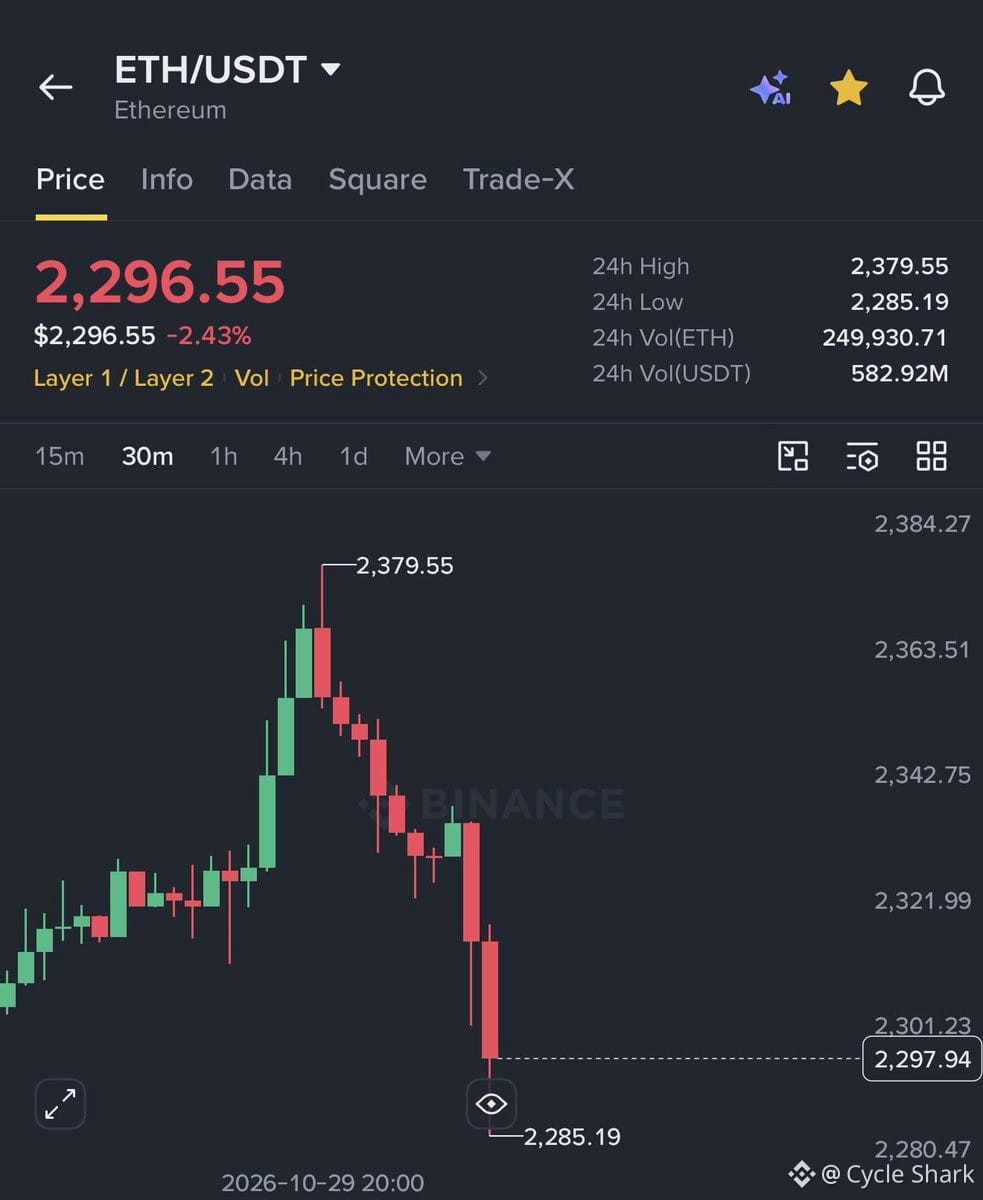
Markets just had a violent reaction. $BTC fell under $80k, $ETH broke below $2,300. $130M in long positions got wiped in 30 minutes.
Timing matters here — this dump happened right after news broke that the top US military commander briefed Trump on Iran strike options. Classic risk-off move when geopolitical tension spikes.
Watching two things now:
1. Whether this is just a liquidity flush or the start of deeper repricing
2. How quickly macro risk appetite returns if tensions don't escalate further
Leverage got punished hard. These sharp moves usually shake out weak hands before any real directional clarity.
207
·
--
US military brass just flew into the White House to brief Trump on Iran strike options. WSJ reporting Washington is seriously considering full-scale combat operations.
This is the kind of geopolitical escalation that historically triggers:
1. Flight to safety assets - gold, treasuries, $BTC as digital gold narrative
2. Oil price spikes - Iran controls Strait of Hormuz, 21% of global petroleum passes through
3. Risk-off in equities - especially growth/tech that's been running hot
4. Crypto correlation with risk assets in short term, but potential decoupling if banking system stress emerges
Market impact framework:
- Immediate: Volatility spike, VIX likely pops
- 48-72 hours: Depends on rhetoric intensity and whether strikes actually happen
- Medium term: If this goes kinetic, we're looking at oil shock scenario similar to 1970s or Gulf War
The timing matters - we're in a fragile macro setup with:
- Fed still restrictive despite rate cut speculation
- Treasury market already stressed
- China economic weakness
- Europe barely avoiding recession
A Middle East war would be the catalyst that breaks something. Watch credit spreads, oil futures, and whether $BTC holds as risk-off accelerates or if it trades like tech.
Not the time to be leveraged long on anything risk-on.
655
·
--
Trump just went public saying the Fed "hates like hell to cut interest rates."
Translation: he wants cuts, and he's not being subtle about it.
This matters because:
1. Presidential pressure on the Fed isn't new, but timing matters. Trump's pushing for easier money while inflation data is still mixed and the labor market hasn't fully cracked. The Fed's been holding rates higher for longer specifically to avoid reigniting inflation.
2. Rate cuts = cheaper borrowing = more liquidity flowing into risk assets. Crypto, tech, anything leveraged tends to run when the cost of capital drops. If Powell blinks and cuts sooner than expected, we could see a sharp repricing across markets.
3. The political angle is obvious. Lower rates before an election year help sentiment, consumer spending, and asset prices. Trump knows this. The Fed knows he knows this. The question is whether Powell holds the line or folds under political heat.
4. Market's already pricing in cuts later this year, but Trump's public comments could accelerate expectations. Watch bond yields and the dollar. If yields drop and the dollar weakens, that's fuel for $BTC and risk-on trades.
Bottom line: Trump wants the money printer back on. Whether the Fed complies depends on how much pain they're willing to tolerate in the real economy versus their inflation mandate. Either way, this sets up a messy second half of the year for macro positioning.
83
·
--
FOMC uncertainty cleared. Israel elections done. PCE and GDP data released.
$BTC still holding above $80K through all of it.
Once US midterm elections wrap up, things could get interesting. The macro fog is lifting piece by piece — Fed pivot expectations, fiscal clarity, and political positioning all coming into focus. Bitcoin's resilience above $80K despite this uncertainty cluster is worth noting.
Midterms historically shift capital flows and risk sentiment. If we get policy clarity and the liquidity backdrop stays supportive, $BTC could catch a strong bid. Market's been coiling while waiting for these events to pass.
Not a guarantee, but the setup is there. Watch how price behaves once election noise fades and liquidity dynamics become clearer.
38
·
--
Dubai's Standard Asset Company just announced a $1.5 billion $BTC investment strategy. This is another institutional heavyweight stepping into crypto, and it's happening in the Middle East — a region that's been quietly positioning itself as a major digital asset hub.
A few things worth noting:
1. Scale matters. $1.5B isn't a test allocation. This is a serious commitment that signals confidence in Bitcoin as a treasury asset or long-term store of value.
2. Geography matters. Dubai and the UAE have been building crypto-friendly regulatory frameworks for years. This isn't random — it's part of a broader strategy to attract capital and talent in the digital economy.
3. Institutional momentum is real. We've seen MicroStrategy, Tesla, and now sovereign wealth-adjacent players in the Gulf making moves. Each entry validates the asset class further and reduces perceived risk for the next wave of capital.
The pattern is clear: institutional adoption is no longer a question of "if" but "how much" and "how fast." When large entities start deploying billions into $BTC, it changes market structure, liquidity dynamics, and long-term price discovery.
This is the kind of signal that matters more than short-term price action.
20
·
--
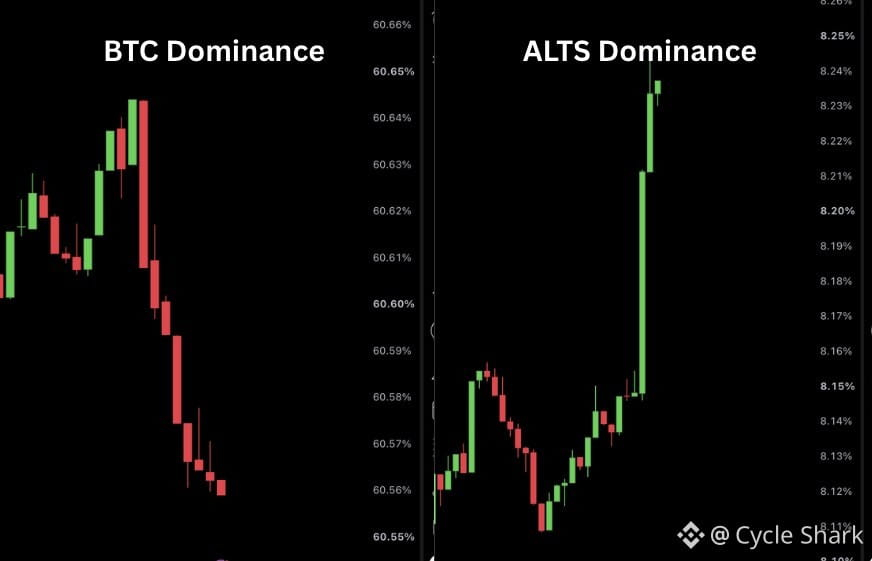
$BTC dominance dropping hard right now — classic rotation pattern kicking in. Capital flowing out of Bitcoin and into altcoins. This is the phase where alts start waking up. Watch how your bag performs in the next 48-72 hours, that'll tell you if this rotation has legs or if it's just a quick fake-out before dominance bounces back.
$BTC dominance dropping hard right now — classic rotation pattern kicking in. Capital flowing out of Bitcoin and into altcoins. This is the phase where alts start waking up. Watch how your bag performs in the next 48-72 hours, that'll tell you if this rotation has legs or if it's just a quick fake-out before dominance bounces back.
46
·
--
US PCE inflation just hit 3.6% — matching expectations but marking the highest level in 4 months.
This matters because PCE is the Fed's preferred inflation gauge. When it climbs, it complicates the rate cut narrative that markets have been pricing in.
Three quick observations:
1. The number itself isn't a surprise, but the trend is. Four-month high means inflation is sticky, not cooling as fast as the market hoped earlier this year.
2. This puts the Fed in a tighter spot. They can't easily pivot to cuts if inflation refuses to behave. Expect hawkish tones to persist.
3. For risk assets — crypto, tech, growth stocks — this is a headwind. Higher-for-longer rates mean liquidity stays tight, and speculative assets get squeezed.
Watch how the market digests this over the next few sessions. If $BTC and equities shrug it off, it signals strong underlying demand. If they roll over, liquidity concerns are back on the table.
33
·
--
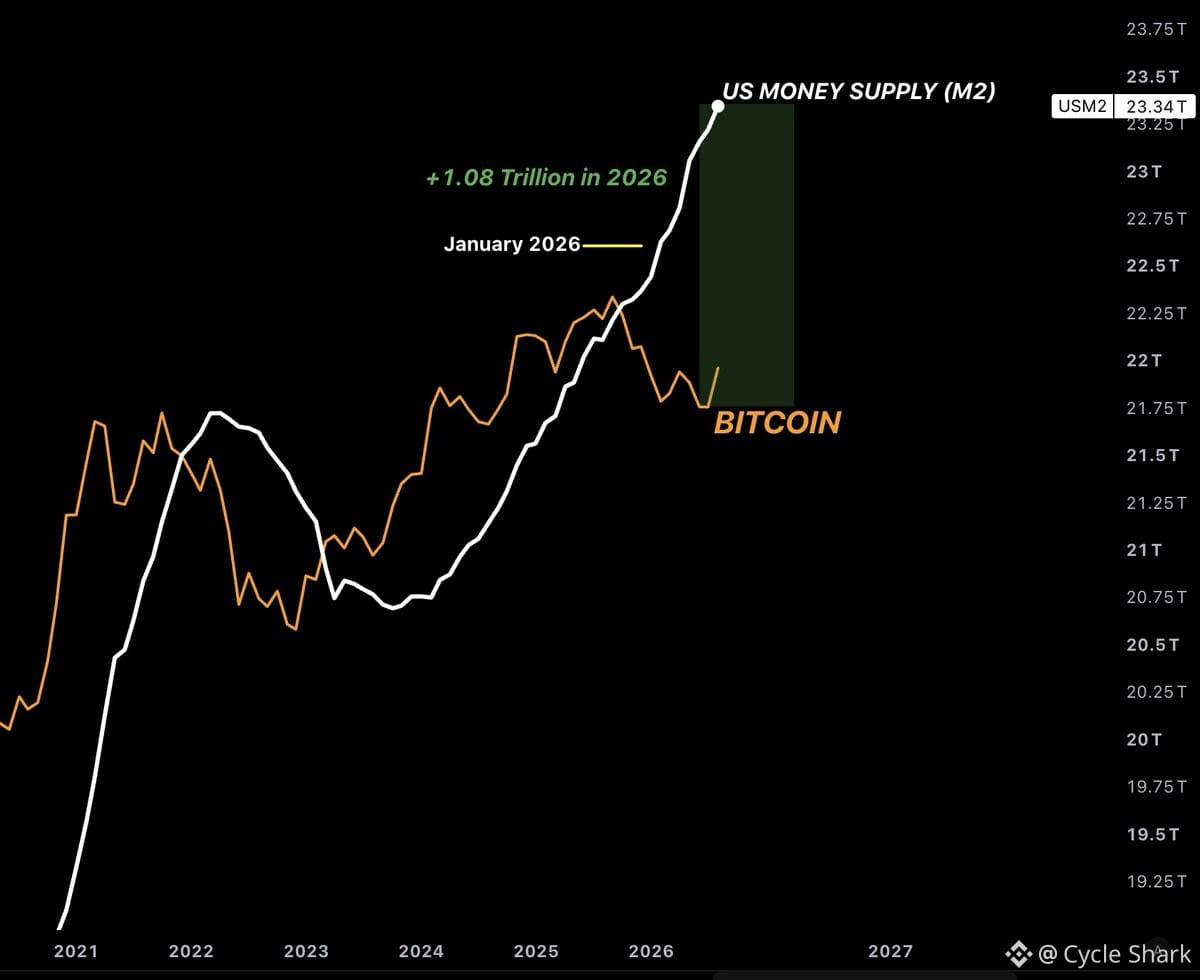
US M2 money supply just hit a new all-time high.
This matters because $BTC historically follows liquidity expansion with a lag. When more dollars flood the system, assets with fixed supply tend to absorb that liquidity.
M2 peaked in April 2022 around $21.7T, then contracted for the first time since the 1930s. Now it's back above that level and climbing.
$BTC bottomed in Nov 2022, about 7 months after M2 peaked. The correlation isn't instant, but the directional relationship is clear: more liquidity → higher bitcoin.
If M2 keeps expanding from here, $BTC has room to run. Not a guarantee, but the macro setup is aligned.
24
·
--
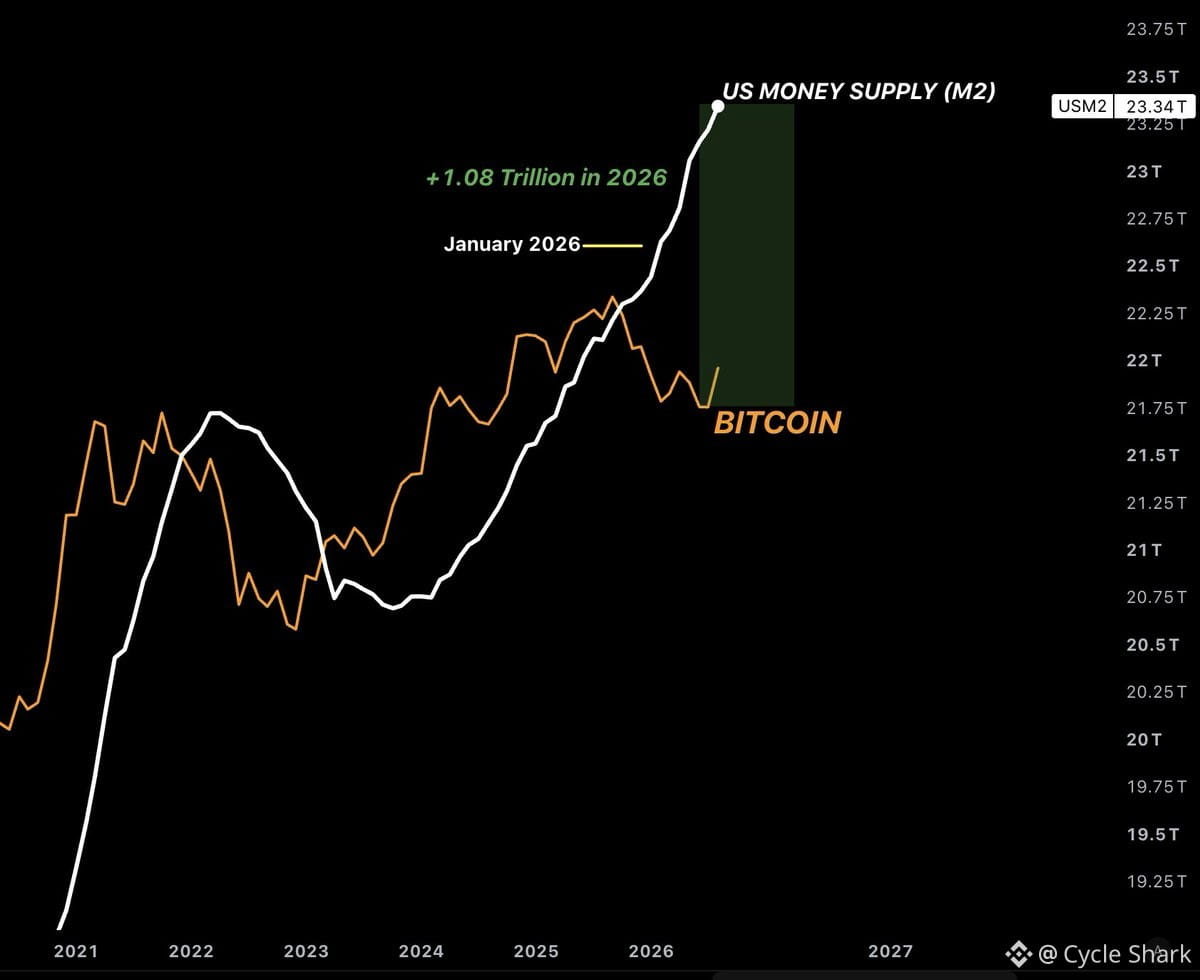
Global M2 liquidity just printed a new all-time high.
This matters because $BTC historically tracks liquidity with a lag. When central banks flood the system with money, risk assets eventually catch that wave.
We're seeing the setup now — liquidity expanding, but $BTC hasn't made its move yet. The correlation isn't instant, but it's reliable over time.
If the pattern holds, $BTC should follow within weeks to months. Not a guarantee, but the macro backdrop is lining up exactly how you'd want it to.
316
·
--
Частичная правда
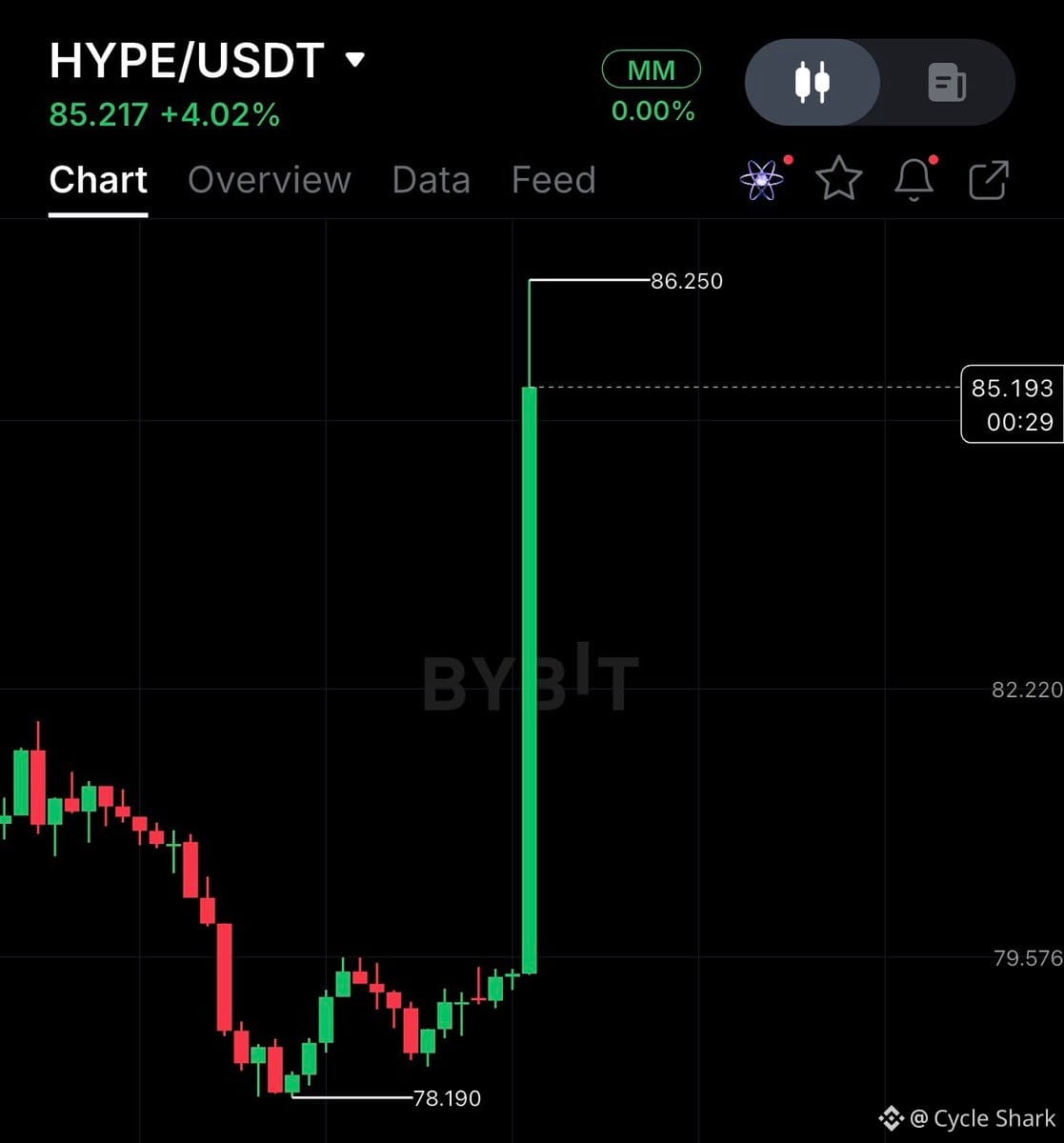
$HYPE broke through $85, up 8% today. The move came right after NYSE's parent company announced they're launching perpetual futures in regulated US markets.
This matters because it signals institutional infrastructure is finally catching up to what crypto-native platforms have offered for years. When the traditional finance giants start building the same products that only existed in offshore exchanges, it validates the product-market fit and opens the door for bigger capital flows.
The $HYPE pump isn't random — it's the market pricing in what happens when derivatives trading gets a regulatory green light in the US. Perps have been the backbone of crypto liquidity for years, but always lived in a gray zone for American traders. Now that's changing.
Watch how other exchange tokens react. If NYSE is moving, others will follow. The race to own regulated crypto derivatives infrastructure in the US just got real.
1
1.3k
·
--
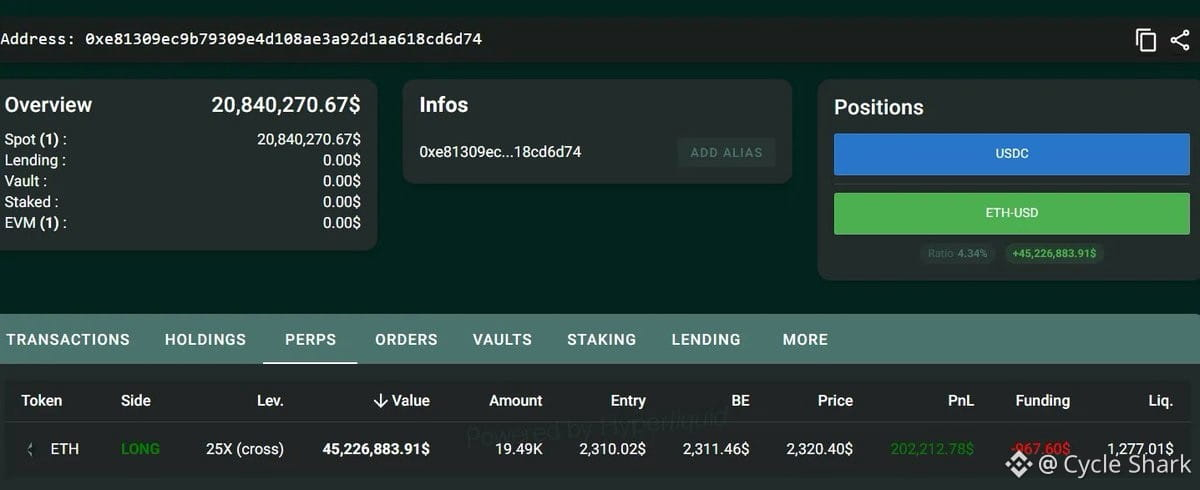
A whale with a perfect track record just opened a $45.2M long on $ETH — right before today's PCE and GDP data drops.
Timing like this isn't random. Either they have conviction that the macro data will be soft (good for risk assets), or they're positioning ahead of a liquidity event they see coming.
When someone with a 100% win rate moves this size into $ETH before major macro releases, it's worth paying attention. They're clearly not worried about downside from the data.
This could signal:
1. Expectation of dovish data (lower inflation/weak growth = Fed pivot hopes)
2. Inside read on market positioning (crowded shorts, thin liquidity)
3. Front-running a broader risk-on rotation into crypto
The question isn't just what he knows — it's whether the rest of the market will follow once the data prints.
338
·
--
A 19-year-old pulled off a $13M $BTC heist with nothing but a phone call.
Trenton Johnston pretended to be Google and Trezor support, told the victim their wallet was compromised, and the victim — panicking — handed over their keys. 185 $BTC gone.
He immediately went full degen lifestyle: Lamborghini, Rolls-Royce, private jets. Then bragged about it on Signal and Discord like an idiot.
11 days later, cops pulled him over for speeding in that same Rolls-Royce.
The victim lost everything. The kid got 25 months.
The lesson is painfully simple: no one from support will ever ask for your keys. Not Google. Not Trezor. Not anyone. If someone calls claiming your wallet is under attack and asks you to share access, hang up immediately.
Social engineering is still the easiest attack vector in crypto. Technical security doesn't matter if you hand over the keys yourself.

399
·
--
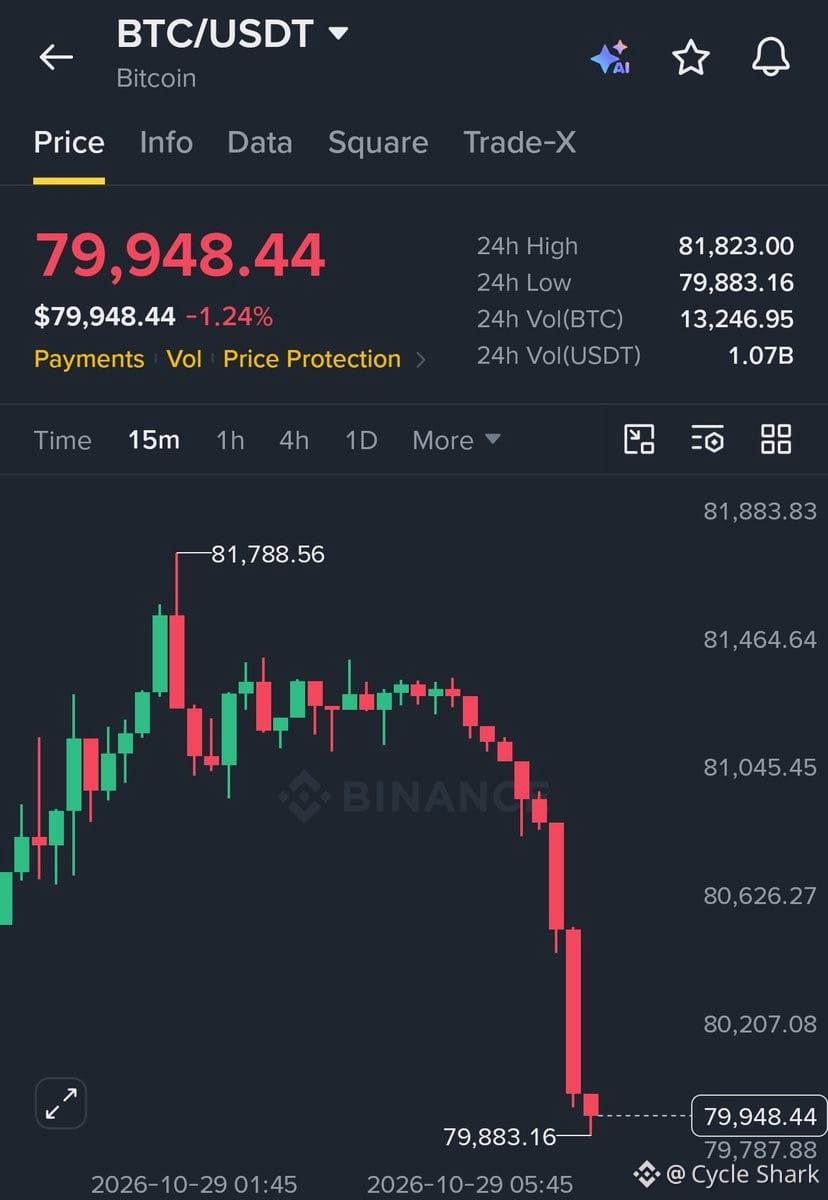
$BTC just broke below $80,000
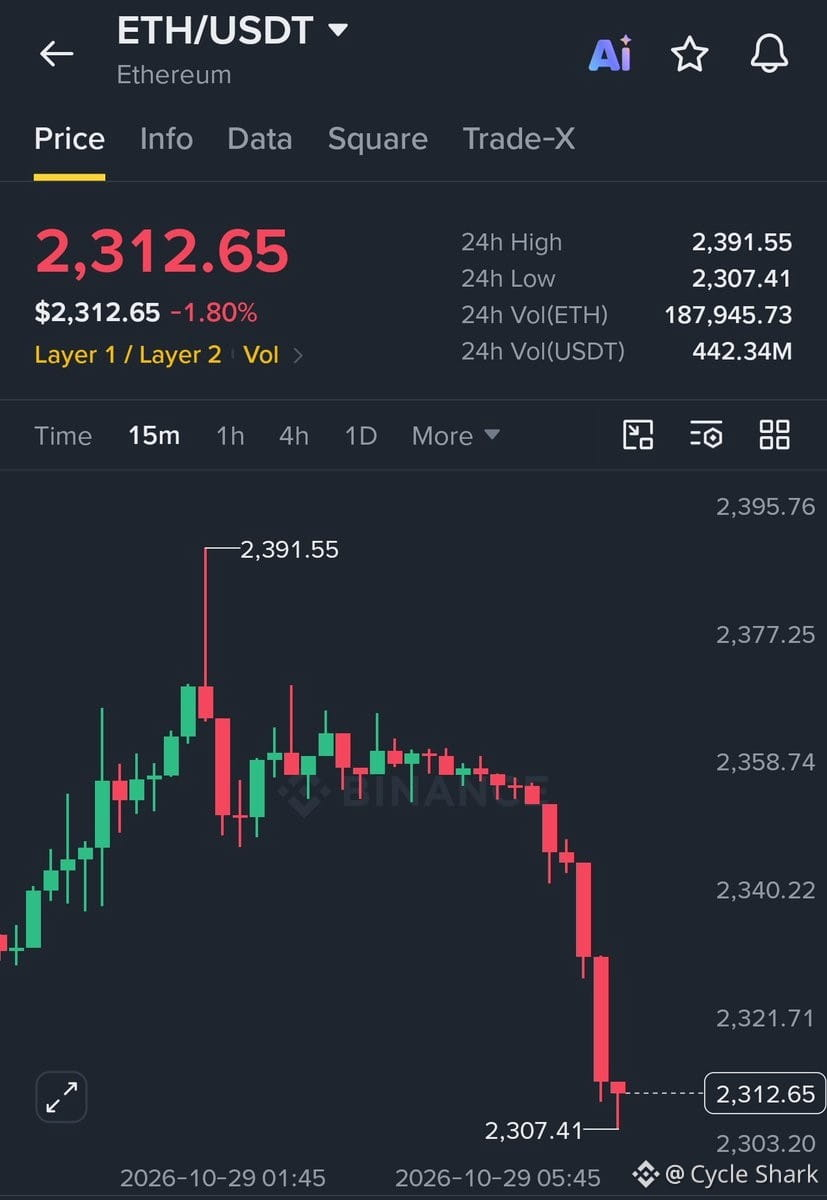
$ETH under $2,350
$80M in long positions liquidated in 30 minutes
Sharp move down catching leveraged traders off guard. When price drops this fast, cascading liquidations accelerate the decline — longs get forced out, which pushes price lower, triggering more liquidations.
Typical crypto volatility. Leverage kills in both directions.
1.1k
·
--
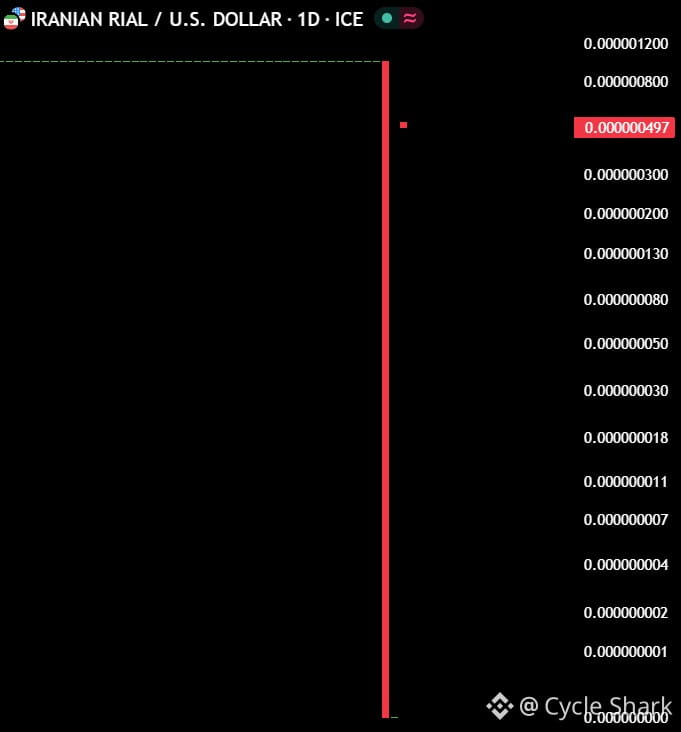
The Iranian Rial just hit a new all-time low — you'd technically be a billionaire there with only $371.
This is what currency collapse looks like in real time. When a national currency loses this much value, it's not just an exchange rate problem. It's a complete breakdown of monetary trust.
A few things this tells us:
1. Hyperinflation destroys wealth faster than most people realize. Savings evaporate. Purchasing power vanishes overnight.
2. Capital controls and sanctions accelerate the death spiral. When people can't freely move money or access stable currencies, the local currency becomes worthless paper.
3. This is why people turn to $BTC and stablecoins. In countries with collapsing currencies, crypto isn't speculation — it's survival.
The exchange rate isn't just a number. It's a signal of economic stability, government credibility, and whether your money will hold value tomorrow. When that breaks down, people flee to anything that holds value better than their national currency.
This is also a reminder: not all currencies are created equal. The dollar, euro, and other reserve currencies have problems, but they're nowhere near this level of collapse. Understanding currency risk matters — especially if you're investing globally or moving money across borders.

1
137
·
--
Fed Chair Kevin Warsh just wrapped his press conference, and the message is clear: the inflation fight is far from over.
Here's what matters:
1. Inflation remains the top priority. Warsh emphasized the Fed will not accept anything above its 2% target. No exceptions.
2. More rate hikes are on the table. The Fed is waiting for more economic data before making its next move, but they're ready to act if needed.
3. The economy is still running hot. Q3 GDP likely grew over 3%, and business investment is climbing at a double-digit pace. Strong growth, but that's exactly what keeps inflation sticky.
4. Market volatility is expected. Warsh said he's not surprised by recent swings in financial markets. Translation: buckle up.
5. Fed meeting schedule is changing. Starting in 2028, the FOMC will only hold six policy-setting meetings per year instead of eight.
6. Political pressure ignored. Warsh refused to respond to Trump's criticism and made it clear that midterm elections had zero influence on the rate decision.
The core tension: inflation is still too high, but the economy keeps growing. The Fed is in a tough spot — they want to see more data, but they're not ruling out another hike.
This is classic late-cycle policy tightening. The Fed is trying to engineer a soft landing, but the risk of overtightening or undertightening is real. Watch the next few months of inflation prints and labor market data closely. If inflation stays stubborn, the Fed will move again.

35
·
--
Fed Chair Warsh just stated the obvious but worth noting: inflation remains too high and the Fed owns the responsibility to bring it down.
This is classic central bank messaging — reaffirming their mandate and signaling they're not done tightening. Translation: don't expect rate cuts anytime soon. Markets have been pricing in dovish pivots for months, but statements like this are reminders that the Fed is still in inflation-fighting mode.
For macro context:
1. High inflation erodes purchasing power and distorts capital allocation across risk assets
2. The Fed's primary tool is interest rates — higher rates = tighter liquidity = pressure on speculative assets (crypto, growth tech, etc.)
3. This kind of rhetoric typically precedes either another rate hike or extended "higher for longer" policy
What this means for investors:
- Risk assets (including crypto) stay under pressure as long as the Fed maintains a hawkish stance
- Cash and short-term Treasuries remain attractive in a high-rate environment
- Any rally in risk assets will likely be short-lived until we see actual inflation data cooling consistently
Bottom line: the Fed is telling you exactly what they're going to do. Listen to them. Liquidity conditions remain tight, and that's not bullish for speculative positioning.
1
1
538
Войдите, чтобы посмотреть больше материала
Присоединяйтесь к пользователям криптовалют по всему миру на Binance Square
⚡️ Получайте новейшую и полезную информацию о криптоактивах.
💬 Нам доверяет крупнейшая в мире криптобиржа.
👍 Получите достоверные аналитические данные от верифицированных создателей контента.
Эл. почта/номер телефона
В тренде
$1.5BInLeveragedCryptoBetsLiquidated
Просмотров: 893
29 обсуждают
@CZ warned users not to click links in emails or download attachments, even from people they trust, as they could contain viruses. #ElonMusk reacted to CZ’s post with fire and laughing emojis.
$DOGE $BNB $BTC
#$1.5BInLeveragedCryptoBetsLiquidated #USMidtermElections #BinanceWillListPredictPREDICT #CZ
Crypto Ahmet
·Лайков: 5
·Просмотров: 1.5k
KOSPIFalls3.53%BackBelow6000
Просмотров: 3,609
115 обсуждают
USMidtermElections
Просмотров: 105,460
1,358 обсуждают