

Crypto Breaking
20.6k Публикации

Crypto Breaking
 Square Verified+
Отправить жалобу
Заблокировать пользователя
Get real-time cryptocurrency news, blockchain updates, market analysis, and expert insights. Explore the latest trends in Bitcoin, Ethereum, DeFi, and Web3.
6 подписок(и/а)
32.9K+ подписчиков(а)
31.7K+ понравилось
Посты
Все
Цитирования
Статья
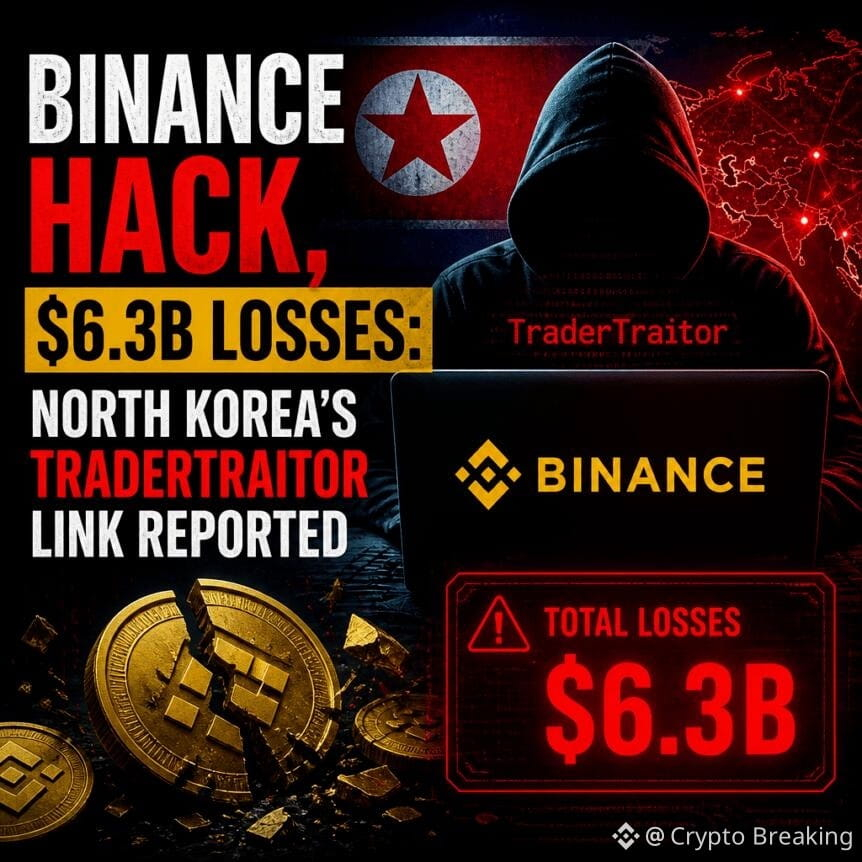
Binance Hack, $6.3B Losses: North Korea’s TraderTraitor Link ReportedBinance is treating a reported multibillion-dollar security incident as a targeted hack tied to activity on at least one Ethereum wallet, triggering rapid freezes by stablecoin issuers and blockchain security providers. As investigations continue, the exchange says the estimated total impact is around $6.3 billion and that $3 billion worth of crypto has already been verified as frozen.
For users, Binance’s immediate priority is operational stability and containment. Deposits are operating normally, while withdrawals are expected to resume within 48 hours after the exchange completes a security revamp of its withdrawal process and related addresses.
Key takeaways
Binance estimates the hack’s total impact at about $6.3 billion, with $3 billion currently verified as frozen.
Withdrawals are expected to resume within 48 hours; Binance says deposits remain operational.
Frozen assets span multiple stablecoins and tokens, including USDT, USDC, RLUSD, USD1, XUSD and gold- and dollar-pegged products.
Cybersecurity researchers and onchain investigators point to North Korea-linked actor TraderTraitor as the likely culprit.
Aave, along with other market participants, moved to freeze or adjust operations after receiving signs of exploit-linked activity.
What Binance says happened—and what’s frozen
In its updates, Binance reported that the incident involved multiple factors and that investigators are tracing the full attack path through what it suspects was the entry point via a compromised computer belonging to a DevOps engineer. Binance said it found no evidence of a private-key leak, while noting its inquiry is ongoing.
The exchange also confirmed a shift in its operational posture. At one stage it suspended withdrawals and temporarily paused deposits and trading-related activity as it completed security checks, froze funds, and coordinated with law enforcement and issuers. Later, Binance said deposits would remain available and that withdrawals would stay paused while the withdrawal service and associated addresses are remediated.
Binance’s verified frozen figure rose over time. It previously cited $2.54 billion in verified frozen assets, and later updated the amount to $3 billion as additional freezes took effect.
Among the assets Binance listed as frozen were Tether USDt (USDT), USDC (USDC), Ripple USD (RLUSD), World Liberty Financial USD (USD1), StraitsX USD (XUSD), USDT0, Wrapped Beacon ETH (WBETH), Tether Gold (XAUT), Pax Gold (PAXG) and Pax Dollar (USDP), alongside Arbitrum (ARB).
Arbitrum also provided specifics on one freeze action: its Security Council said it executed a transaction to freeze $30.5 million in ARB and Ether, moving the funds into an intermediary frozen wallet. Arbitrum said the original holder’s address would no longer have access, and that further movement would require additional Security Council action or Arbitrum DAO governance.
Investigators: TraderTraitor linked to prior DPRK activity
While Binance’s investigation focuses on technical containment, external analysts have been building a behavioral and historical link to North Korea-linked hacking activity.
Chainalysis co-founder and CEO Jonathan Levin said the hack was likely carried out by TraderTraitor. In a post on X, Levin put the theft at $6.4 billion—slightly above Binance’s $6.3 billion estimate—and said industry partners had frozen approximately $3 billion. Chainalysis said it was continuing to track the funds.
Onchain investigator ZachXBT added a linkage between this Binance incident and a separate prior exploit. He said stolen funds from the Binance attack and the earlier Bitget exploit were commingled in the same address after arriving via THORChain, suggesting—according to his interpretation—that the same actor may be behind both events.
Blockaid co-founder and CEO Ido Ben-Natan told Cointelegraph that the attack resembled work attributed to North Korea, pointing to the sophistication of onchain preparations, a customer “sweeper” contract, and multiple authorizations. Separate reporting cited TRM Labs attributing the attack to TraderTraitor with “high confidence,” based on “robust on and off-chain intelligence.”
Beyond industry attributions, TraderTraitor has previously been named by the FBI as the group behind the ByBit hack in February of the previous year, reinforcing why analysts see this as part of a familiar threat pattern rather than an isolated incident.
How the breach is being contained across DeFi and stablecoins
As the hack unfolded, multiple parts of the crypto ecosystem moved quickly to reduce risk from exploit-linked capital.
TRM Labs, along with multiple stablecoin providers, said they froze tokens believed to be linked to the compromised activity. The article notes that Tether and Circle coordinated to freeze combined amounts in USDT and USDC, and that issuers continued to support the investigation while assets remained immobilized.
Decentralized lending protocols also reacted. Aave said it froze markets across its V3 and V4 deployments as a precaution after the Binance exploiter deposited and borrowed assets. In an Aave governance forum update relayed by risk provider LlamaRisk, the borrowing included USDT deposits and a WETH borrow, with the update describing the exploiter’s only Aave position across networks and versions at that time. Aave users could continue withdrawing funds and repaying loans, but the protocol blocked new deposits and borrowing to limit the attacker’s leverage and reduce the risk of cascading effects.
LlamaRisk cautioned that if the freeze lasted longer, borrowing rates could rise as liquidity declined with withdrawals. It also said markets would remain frozen until the exploiter’s funds stopped moving and Binance provided greater clarity on containment, followed by a staged reopening.
Centralized exchange disruption—and broader market pressure
Even with containment improving, traders faced short-term volatility tied to the incident. CoinGecko data cited in the report placed Bitcoin near $76,937 and down roughly 4.9% over 24 hours, while BNB fell about 8% and Ether declined about 5.7%. DeFi tokens were also reported lower, including AAVE and Uniswap’s UNI over the same period.
Market sentiment also deteriorated. The report referenced the Bitcoin Fear and Greed Index sliding to “fear” with a score of 30, last seen in August, suggesting that the broader market was reacting to both the hack headline and the uncertainty around how quickly assets would be recovered or fully verified as contained.
Meanwhile, major market makers disclosed exposure to Binance. Wintermute and GSR said they expected no major disruption to their operations, describing their exposure as a limited share of net equity, though neither executive specified a dollar loss or confirmed financial impact.
What to watch next
Binance’s next key milestones are operational: the exchange says withdrawals should restart within 48 hours, but investors should watch for further updates to verified frozen amounts, confirmations about whether any signing infrastructure was compromised (without a private-key leak), and additional protocol-level responses from DeFi and stablecoin issuers as investigators follow the attacker’s trail.
This article was originally published as Binance Hack, $6.3B Losses: North Korea’s TraderTraitor Link Reported on Crypto Breaking News – your trusted source for crypto news, Bitcoin news, and blockchain updates.
Binance Hack, $6.3B Losses: North Korea’s TraderTraitor Link Reported
Binance is treating a reported multibillion-dollar security incident as a targeted hack tied to activity on at least one Ethereum wallet, triggering rapid freezes by stablecoin issuers and blockchain security providers. As investigations continue, the exchange says the estimated total impact is around $6.3 billion and that $3 billion worth of crypto has already been verified as frozen.
For users, Binance’s immediate priority is operational stability and containment. Deposits are operating normally, while withdrawals are expected to resume within 48 hours after the exchange completes a security revamp of its withdrawal process and related addresses.
Key takeaways
Binance estimates the hack’s total impact at about $6.3 billion, with $3 billion currently verified as frozen.
Withdrawals are expected to resume within 48 hours; Binance says deposits remain operational.
Frozen assets span multiple stablecoins and tokens, including USDT, USDC, RLUSD, USD1, XUSD and gold- and dollar-pegged products.
Cybersecurity researchers and onchain investigators point to North Korea-linked actor TraderTraitor as the likely culprit.
Aave, along with other market participants, moved to freeze or adjust operations after receiving signs of exploit-linked activity.
What Binance says happened—and what’s frozen
In its updates, Binance reported that the incident involved multiple factors and that investigators are tracing the full attack path through what it suspects was the entry point via a compromised computer belonging to a DevOps engineer. Binance said it found no evidence of a private-key leak, while noting its inquiry is ongoing.
The exchange also confirmed a shift in its operational posture. At one stage it suspended withdrawals and temporarily paused deposits and trading-related activity as it completed security checks, froze funds, and coordinated with law enforcement and issuers. Later, Binance said deposits would remain available and that withdrawals would stay paused while the withdrawal service and associated addresses are remediated.
Binance’s verified frozen figure rose over time. It previously cited $2.54 billion in verified frozen assets, and later updated the amount to $3 billion as additional freezes took effect.
Among the assets Binance listed as frozen were Tether USDt (USDT), USDC (USDC), Ripple USD (RLUSD), World Liberty Financial USD (USD1), StraitsX USD (XUSD), USDT0, Wrapped Beacon ETH (WBETH), Tether Gold (XAUT), Pax Gold (PAXG) and Pax Dollar (USDP), alongside Arbitrum (ARB).
Arbitrum also provided specifics on one freeze action: its Security Council said it executed a transaction to freeze $30.5 million in ARB and Ether, moving the funds into an intermediary frozen wallet. Arbitrum said the original holder’s address would no longer have access, and that further movement would require additional Security Council action or Arbitrum DAO governance.
Investigators: TraderTraitor linked to prior DPRK activity
While Binance’s investigation focuses on technical containment, external analysts have been building a behavioral and historical link to North Korea-linked hacking activity.
Chainalysis co-founder and CEO Jonathan Levin said the hack was likely carried out by TraderTraitor. In a post on X, Levin put the theft at $6.4 billion—slightly above Binance’s $6.3 billion estimate—and said industry partners had frozen approximately $3 billion. Chainalysis said it was continuing to track the funds.
Onchain investigator ZachXBT added a linkage between this Binance incident and a separate prior exploit. He said stolen funds from the Binance attack and the earlier Bitget exploit were commingled in the same address after arriving via THORChain, suggesting—according to his interpretation—that the same actor may be behind both events.
Blockaid co-founder and CEO Ido Ben-Natan told Cointelegraph that the attack resembled work attributed to North Korea, pointing to the sophistication of onchain preparations, a customer “sweeper” contract, and multiple authorizations. Separate reporting cited TRM Labs attributing the attack to TraderTraitor with “high confidence,” based on “robust on and off-chain intelligence.”
Beyond industry attributions, TraderTraitor has previously been named by the FBI as the group behind the ByBit hack in February of the previous year, reinforcing why analysts see this as part of a familiar threat pattern rather than an isolated incident.
How the breach is being contained across DeFi and stablecoins
As the hack unfolded, multiple parts of the crypto ecosystem moved quickly to reduce risk from exploit-linked capital.
TRM Labs, along with multiple stablecoin providers, said they froze tokens believed to be linked to the compromised activity. The article notes that Tether and Circle coordinated to freeze combined amounts in USDT and USDC, and that issuers continued to support the investigation while assets remained immobilized.
Decentralized lending protocols also reacted. Aave said it froze markets across its V3 and V4 deployments as a precaution after the Binance exploiter deposited and borrowed assets. In an Aave governance forum update relayed by risk provider LlamaRisk, the borrowing included USDT deposits and a WETH borrow, with the update describing the exploiter’s only Aave position across networks and versions at that time. Aave users could continue withdrawing funds and repaying loans, but the protocol blocked new deposits and borrowing to limit the attacker’s leverage and reduce the risk of cascading effects.
LlamaRisk cautioned that if the freeze lasted longer, borrowing rates could rise as liquidity declined with withdrawals. It also said markets would remain frozen until the exploiter’s funds stopped moving and Binance provided greater clarity on containment, followed by a staged reopening.
Centralized exchange disruption—and broader market pressure
Even with containment improving, traders faced short-term volatility tied to the incident. CoinGecko data cited in the report placed Bitcoin near $76,937 and down roughly 4.9% over 24 hours, while BNB fell about 8% and Ether declined about 5.7%. DeFi tokens were also reported lower, including AAVE and Uniswap’s UNI over the same period.
Market sentiment also deteriorated. The report referenced the Bitcoin Fear and Greed Index sliding to “fear” with a score of 30, last seen in August, suggesting that the broader market was reacting to both the hack headline and the uncertainty around how quickly assets would be recovered or fully verified as contained.
Meanwhile, major market makers disclosed exposure to Binance. Wintermute and GSR said they expected no major disruption to their operations, describing their exposure as a limited share of net equity, though neither executive specified a dollar loss or confirmed financial impact.
What to watch next
Binance’s next key milestones are operational: the exchange says withdrawals should restart within 48 hours, but investors should watch for further updates to verified frozen amounts, confirmations about whether any signing infrastructure was compromised (without a private-key leak), and additional protocol-level responses from DeFi and stablecoin issuers as investigators follow the attacker’s trail.
This article was originally published as Binance Hack, $6.3B Losses: North Korea’s TraderTraitor Link Reported on Crypto Breaking News – your trusted source for crypto news, Bitcoin news, and blockchain updates.
132
Статья
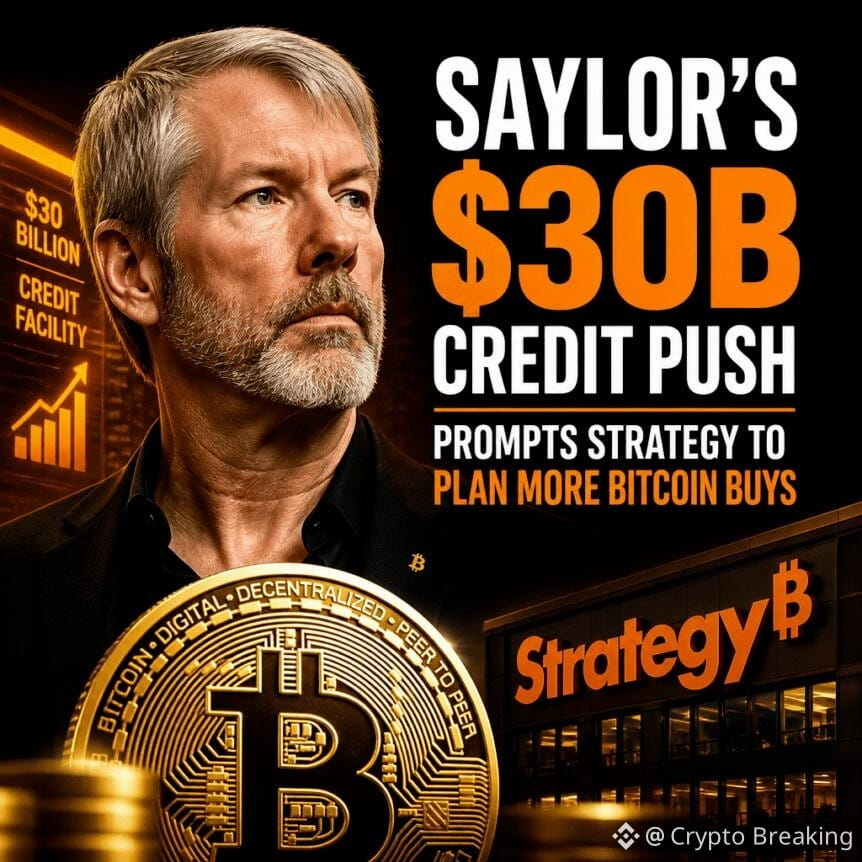
Saylor’s $30B credit push prompts strategy to plan more Bitcoin buysStrategy, the largest publicly known corporate Bitcoin holder, says it is exploring a new financing approach that could scale its Bitcoin accumulation without depending on additional common-stock sales or further upward moves in BTC’s price. Speaking on the company’s third-quarter earnings call, executive chairman Michael Saylor suggested Strategy could create up to $30 billion in “digital credit” through preferred-share structures—potentially providing fresh capital for additional BTC purchases.
The remarks underscore a continuing shift in Strategy’s capital strategy: rather than leaning primarily on convertible debt or issuing more common shares, management is emphasizing preferred-share mechanisms such as STRC to fund the next round of Bitcoin buying. CEO Phong Le also indicated that issuing digital credit would be the primary route to acquire more Bitcoin going forward.
Key takeaways
Michael Saylor said Strategy could potentially generate “$10 billion, $20 billion, [or] $30 billion” in digital credit using its existing balance sheet.
Management framed digital credit issuance as the primary method for acquiring additional Bitcoin, aiming to reduce reliance on common-stock capital raises.
CEO Phong Le suggested that raising $1 billion to $2 billion in a month via STRC could support both dollar reserves and additional Bitcoin purchases.
Strategy reported $19.53 billion in third-quarter net income, largely driven by a $20.91 billion gain from the value of its digital assets.
The $30 billion capacity figure appears to describe potential capability rather than a specific, announced fundraising target.
Digital credit capacity becomes the focus
On Strategy’s third-quarter earnings call, Saylor described the company’s ability to create what he called “digital credit” in substantial amounts. He said Strategy could generate as much as $30 billion—specifically referencing ranges of $10 billion, $20 billion, and $30 billion—without requiring an additional common-stock capital raise or further Bitcoin price appreciation.
While the figure is framed as capacity rather than an immediate plan, the key investment implication is the way Strategy is thinking about funding sources. If the company can produce digital credit internally through preferred-share structures backed by its balance sheet, it could potentially accelerate BTC purchases even when market conditions make equity fundraising less attractive.
Preferred shares and STRC: a structural shift
The discussion reflects Strategy’s broader movement toward preferred-share offerings. Management has previously pointed to preferred-share products such as STRC as a way to raise capital that is more directly aligned with Bitcoin acquisition than conventional equity issuance. In the call coverage provided to investors, the emphasis was on preferring preferred shares over primary dependence on convertible debt or common-share sales.
Strategy’s CEO, Phong Le, reinforced that direction by explicitly stating that issuing digital credit would be the “primary way” the company acquires Bitcoin. The statement also fits the company’s long-running thesis that its financing strategy should be designed to consistently channel new capital into BTC accumulation.
Le added a practical example of how the plan could play out operationally: if Strategy were able to raise $1 billion to $2 billion within a month through STRC, it could allocate part of the proceeds to dollar reserves and use the remainder for Bitcoin. That approach suggests a balance between liquidity management and maintaining momentum in BTC buying.
Third-quarter results show why BTC exposure matters
Strategy’s earnings context is important for understanding why management’s financing remarks resonate with investors. In its third-quarter results, the company reported net income of $19.53 billion. The figure was driven largely by a $20.91 billion gain tied to the value of its digital assets.
Bitcoin holdings continued to grow as well. Strategy said its BTC holdings reached 848,517 BTC as of Oct. 25, representing a 26% increase year to date. The figures highlight the extent to which Strategy’s financial performance remains closely linked to Bitcoin’s market valuation, even as the company seeks new ways to finance additional accumulation.
That connection is also relevant to the digital credit discussion. Saylor’s comments that the $30 billion capacity could be created without additional common-stock capital raises—or without relying on BTC price appreciation—are, in effect, an attempt to separate future acquisition capacity from near-term equity market conditions and from the need for immediate gains in BTC’s price.
What to watch next
The $30 billion figure should be treated as potential capacity, not a confirmed fundraising target. The next signals investors are likely to focus on are whether Strategy can translate the stated digital credit capability into actual preferred-share issuance at meaningful scale, how much capital management ultimately directs toward dollar reserves versus BTC purchases, and whether the company continues to show growth in Bitcoin holdings while maintaining stable financing terms.
This article was originally published as Saylor’s $30B credit push prompts strategy to plan more Bitcoin buys on Crypto Breaking News – your trusted source for crypto news, Bitcoin news, and blockchain updates.
Saylor’s $30B credit push prompts strategy to plan more Bitcoin buys
Strategy, the largest publicly known corporate Bitcoin holder, says it is exploring a new financing approach that could scale its Bitcoin accumulation without depending on additional common-stock sales or further upward moves in BTC’s price. Speaking on the company’s third-quarter earnings call, executive chairman Michael Saylor suggested Strategy could create up to $30 billion in “digital credit” through preferred-share structures—potentially providing fresh capital for additional BTC purchases.
The remarks underscore a continuing shift in Strategy’s capital strategy: rather than leaning primarily on convertible debt or issuing more common shares, management is emphasizing preferred-share mechanisms such as STRC to fund the next round of Bitcoin buying. CEO Phong Le also indicated that issuing digital credit would be the primary route to acquire more Bitcoin going forward.
Key takeaways
Michael Saylor said Strategy could potentially generate “$10 billion, $20 billion, [or] $30 billion” in digital credit using its existing balance sheet.
Management framed digital credit issuance as the primary method for acquiring additional Bitcoin, aiming to reduce reliance on common-stock capital raises.
CEO Phong Le suggested that raising $1 billion to $2 billion in a month via STRC could support both dollar reserves and additional Bitcoin purchases.
Strategy reported $19.53 billion in third-quarter net income, largely driven by a $20.91 billion gain from the value of its digital assets.
The $30 billion capacity figure appears to describe potential capability rather than a specific, announced fundraising target.
Digital credit capacity becomes the focus
On Strategy’s third-quarter earnings call, Saylor described the company’s ability to create what he called “digital credit” in substantial amounts. He said Strategy could generate as much as $30 billion—specifically referencing ranges of $10 billion, $20 billion, and $30 billion—without requiring an additional common-stock capital raise or further Bitcoin price appreciation.
While the figure is framed as capacity rather than an immediate plan, the key investment implication is the way Strategy is thinking about funding sources. If the company can produce digital credit internally through preferred-share structures backed by its balance sheet, it could potentially accelerate BTC purchases even when market conditions make equity fundraising less attractive.
Preferred shares and STRC: a structural shift
The discussion reflects Strategy’s broader movement toward preferred-share offerings. Management has previously pointed to preferred-share products such as STRC as a way to raise capital that is more directly aligned with Bitcoin acquisition than conventional equity issuance. In the call coverage provided to investors, the emphasis was on preferring preferred shares over primary dependence on convertible debt or common-share sales.
Strategy’s CEO, Phong Le, reinforced that direction by explicitly stating that issuing digital credit would be the “primary way” the company acquires Bitcoin. The statement also fits the company’s long-running thesis that its financing strategy should be designed to consistently channel new capital into BTC accumulation.
Le added a practical example of how the plan could play out operationally: if Strategy were able to raise $1 billion to $2 billion within a month through STRC, it could allocate part of the proceeds to dollar reserves and use the remainder for Bitcoin. That approach suggests a balance between liquidity management and maintaining momentum in BTC buying.
Third-quarter results show why BTC exposure matters
Strategy’s earnings context is important for understanding why management’s financing remarks resonate with investors. In its third-quarter results, the company reported net income of $19.53 billion. The figure was driven largely by a $20.91 billion gain tied to the value of its digital assets.
Bitcoin holdings continued to grow as well. Strategy said its BTC holdings reached 848,517 BTC as of Oct. 25, representing a 26% increase year to date. The figures highlight the extent to which Strategy’s financial performance remains closely linked to Bitcoin’s market valuation, even as the company seeks new ways to finance additional accumulation.
That connection is also relevant to the digital credit discussion. Saylor’s comments that the $30 billion capacity could be created without additional common-stock capital raises—or without relying on BTC price appreciation—are, in effect, an attempt to separate future acquisition capacity from near-term equity market conditions and from the need for immediate gains in BTC’s price.
What to watch next
The $30 billion figure should be treated as potential capacity, not a confirmed fundraising target. The next signals investors are likely to focus on are whether Strategy can translate the stated digital credit capability into actual preferred-share issuance at meaningful scale, how much capital management ultimately directs toward dollar reserves versus BTC purchases, and whether the company continues to show growth in Bitcoin holdings while maintaining stable financing terms.
This article was originally published as Saylor’s $30B credit push prompts strategy to plan more Bitcoin buys on Crypto Breaking News – your trusted source for crypto news, Bitcoin news, and blockchain updates.
87

Статья
OKX Survey Finds EU Investors Prefer Crypto Over Retirement Plans for WealthEurope’s retail investors are increasingly open to treating cryptocurrencies as long-term wealth tools rather than purely speculative assets, according to a new OKX survey published this week. In the countries polled—France, Germany, the Netherlands and Poland, alongside the U.S.—investors largely favored real estate as the asset most associated with lasting wealth, but a meaningful share still chose crypto over retirement products.
OKX commissioned a survey of 1,932 adults aged 18 to 88 who reported having previously invested in crypto. Conducted by Pollfish between Oct. 14 and Oct. 18, the results show a clear split between Europe and the U.S. on whether digital assets should play a role in long-horizon financial planning.
Key takeaways
Across the surveyed European markets, 19% of respondents picked cryptocurrencies as the best fit for “lasting wealth,” versus 8% who chose traditional retirement plans.
In the U.S., preferences reversed: 21% chose retirement accounts, while 12% selected cryptocurrencies for lasting wealth.
Real estate led all categories, with 34% of respondents ranking it highest for long-term wealth—above both crypto and retirement accounts.
In Europe and the U.S., expectations for increasing crypto exposure over the next five years are broadly positive, though boomers are notably less supportive.
Meanwhile, U.S. retirement policy remains contested as federal guidance on crypto access has shifted, and lawmakers have pushed back against proposals that would broaden options.
Europe treats crypto as part of long-term wealth
Real estate emerged as the top choice for “lasting wealth” among all respondents, selected by 34%. Still, the survey indicates that crypto is already competing directly with retirement accounts in European investor thinking. According to OKX’s findings, 19% of European participants chose cryptocurrencies, while only 8% selected traditional retirement plans for the same purpose.
The survey also reinforces the idea that worries about retirement adequacy may be shaping risk-tolerance for younger cohorts. Earlier this year, a May 2026 survey by Friends of Europe’s citizen-engagement unit, Debating Europe, found that 43% of Europeans aged 18 to 35 expected their pensions to fall short.
OKX Europe’s CEO Erald Ghoo framed the shift as evidence that crypto has moved from an experimental allocation to a recognizable component of household financial planning. He said that when investors under 45 on both sides of the Atlantic treat crypto as part of long-term wealth, it suggests crypto is now part of how people approach their finances—and that this role is likely to grow as these investors get older and wealthier.
U.S. investors show a stronger preference for retirement accounts, especially boomers
Across U.S. respondents, crypto was less favored for long-term wealth planning than retirement accounts. OKX reported that 21% of U.S. survey participants selected traditional retirement plans, compared with 12% who chose cryptocurrencies.
Expectations for increasing crypto allocations show optimism in both regions, but age appears to matter. Nearly half of European investors—47%—said they plan to increase their crypto holdings, including 13% who anticipate a significant increase. OKX also found that 51% of respondents overall expect to raise their crypto allocation, regardless of region.
Boomers are a clear outlier. OKX’s data shows that 55% of boomers say crypto is not important for generational wealth building. In the U.S., boomers were even more skeptical: 65% said crypto was not at all important for generational wealth building, compared with 44% of boomers in Europe.
Excluding boomers, the U.S. investor base appears more bullish. OKX reported that 55% of U.S. participants expect to increase their crypto allocation over the next five years, with 22% planning a significant increase.
Policy backdrop: U.S. agencies expand access, lawmakers urge caution
Although U.S. respondents in the OKX survey lean more toward traditional retirement vehicles than cryptocurrencies, U.S. policy has been moving toward broader access to alternative assets. Earlier steps include the U.S. Department of Labor rescinding crypto-specific guidance that had told 401(k) plan fiduciaries to use “extreme care” when considering cryptocurrency investments.
According to the Department of Labor’s compliance assistance materials, this rescission returned fiduciary guidance to a neutral position that neither endorses nor discourages crypto. OKX’s article also pointed to an August 2025 executive order signed by President Donald Trump directing federal agencies to expand access to alternative assets in 401(k) plans, including potential exposure to digital assets through specific investment vehicles.
In March 2026, the Department of Labor issued a draft proposal that would expand investment options in 401(k) retirement plans to include crypto and other alternative investments. However, the effort faced political pushback. In June 2026, Senators Bernie Sanders and Elizabeth Warren, along with Representative Bobby Scott, urged the Department of Labor to withdraw the proposal, arguing it would “expose retirement accounts to exceptionally volatile assets, like digital currency.”
The tension between expanding access and raising concerns about volatility mirrors the split reflected in investor attitudes. Even with policy changes underway, the OKX survey suggests many Americans remain cautious about incorporating crypto into retirement planning—particularly in older age groups.
What to watch next for investors
For readers tracking how crypto fits into retirement strategy, the key developments to monitor are whether U.S. rulemaking on 401(k) options proceeds and how political opposition shapes the final framework. On the demand side, investors—especially those under 45—appear more willing to view crypto as long-term wealth, but boomers remain distinctly unconvinced, suggesting any retirement-related adoption curve may be uneven across generations.
This article was originally published as OKX Survey Finds EU Investors Prefer Crypto Over Retirement Plans for Wealth on Crypto Breaking News – your trusted source for crypto news, Bitcoin news, and blockchain updates.
OKX Survey Finds EU Investors Prefer Crypto Over Retirement Plans for Wealth
Europe’s retail investors are increasingly open to treating cryptocurrencies as long-term wealth tools rather than purely speculative assets, according to a new OKX survey published this week. In the countries polled—France, Germany, the Netherlands and Poland, alongside the U.S.—investors largely favored real estate as the asset most associated with lasting wealth, but a meaningful share still chose crypto over retirement products.
OKX commissioned a survey of 1,932 adults aged 18 to 88 who reported having previously invested in crypto. Conducted by Pollfish between Oct. 14 and Oct. 18, the results show a clear split between Europe and the U.S. on whether digital assets should play a role in long-horizon financial planning.
Key takeaways
Across the surveyed European markets, 19% of respondents picked cryptocurrencies as the best fit for “lasting wealth,” versus 8% who chose traditional retirement plans.
In the U.S., preferences reversed: 21% chose retirement accounts, while 12% selected cryptocurrencies for lasting wealth.
Real estate led all categories, with 34% of respondents ranking it highest for long-term wealth—above both crypto and retirement accounts.
In Europe and the U.S., expectations for increasing crypto exposure over the next five years are broadly positive, though boomers are notably less supportive.
Meanwhile, U.S. retirement policy remains contested as federal guidance on crypto access has shifted, and lawmakers have pushed back against proposals that would broaden options.
Europe treats crypto as part of long-term wealth
Real estate emerged as the top choice for “lasting wealth” among all respondents, selected by 34%. Still, the survey indicates that crypto is already competing directly with retirement accounts in European investor thinking. According to OKX’s findings, 19% of European participants chose cryptocurrencies, while only 8% selected traditional retirement plans for the same purpose.
The survey also reinforces the idea that worries about retirement adequacy may be shaping risk-tolerance for younger cohorts. Earlier this year, a May 2026 survey by Friends of Europe’s citizen-engagement unit, Debating Europe, found that 43% of Europeans aged 18 to 35 expected their pensions to fall short.
OKX Europe’s CEO Erald Ghoo framed the shift as evidence that crypto has moved from an experimental allocation to a recognizable component of household financial planning. He said that when investors under 45 on both sides of the Atlantic treat crypto as part of long-term wealth, it suggests crypto is now part of how people approach their finances—and that this role is likely to grow as these investors get older and wealthier.
U.S. investors show a stronger preference for retirement accounts, especially boomers
Across U.S. respondents, crypto was less favored for long-term wealth planning than retirement accounts. OKX reported that 21% of U.S. survey participants selected traditional retirement plans, compared with 12% who chose cryptocurrencies.
Expectations for increasing crypto allocations show optimism in both regions, but age appears to matter. Nearly half of European investors—47%—said they plan to increase their crypto holdings, including 13% who anticipate a significant increase. OKX also found that 51% of respondents overall expect to raise their crypto allocation, regardless of region.
Boomers are a clear outlier. OKX’s data shows that 55% of boomers say crypto is not important for generational wealth building. In the U.S., boomers were even more skeptical: 65% said crypto was not at all important for generational wealth building, compared with 44% of boomers in Europe.
Excluding boomers, the U.S. investor base appears more bullish. OKX reported that 55% of U.S. participants expect to increase their crypto allocation over the next five years, with 22% planning a significant increase.
Policy backdrop: U.S. agencies expand access, lawmakers urge caution
Although U.S. respondents in the OKX survey lean more toward traditional retirement vehicles than cryptocurrencies, U.S. policy has been moving toward broader access to alternative assets. Earlier steps include the U.S. Department of Labor rescinding crypto-specific guidance that had told 401(k) plan fiduciaries to use “extreme care” when considering cryptocurrency investments.
According to the Department of Labor’s compliance assistance materials, this rescission returned fiduciary guidance to a neutral position that neither endorses nor discourages crypto. OKX’s article also pointed to an August 2025 executive order signed by President Donald Trump directing federal agencies to expand access to alternative assets in 401(k) plans, including potential exposure to digital assets through specific investment vehicles.
In March 2026, the Department of Labor issued a draft proposal that would expand investment options in 401(k) retirement plans to include crypto and other alternative investments. However, the effort faced political pushback. In June 2026, Senators Bernie Sanders and Elizabeth Warren, along with Representative Bobby Scott, urged the Department of Labor to withdraw the proposal, arguing it would “expose retirement accounts to exceptionally volatile assets, like digital currency.”
The tension between expanding access and raising concerns about volatility mirrors the split reflected in investor attitudes. Even with policy changes underway, the OKX survey suggests many Americans remain cautious about incorporating crypto into retirement planning—particularly in older age groups.
What to watch next for investors
For readers tracking how crypto fits into retirement strategy, the key developments to monitor are whether U.S. rulemaking on 401(k) options proceeds and how political opposition shapes the final framework. On the demand side, investors—especially those under 45—appear more willing to view crypto as long-term wealth, but boomers remain distinctly unconvinced, suggesting any retirement-related adoption curve may be uneven across generations.
This article was originally published as OKX Survey Finds EU Investors Prefer Crypto Over Retirement Plans for Wealth on Crypto Breaking News – your trusted source for crypto news, Bitcoin news, and blockchain updates.
27
Статья
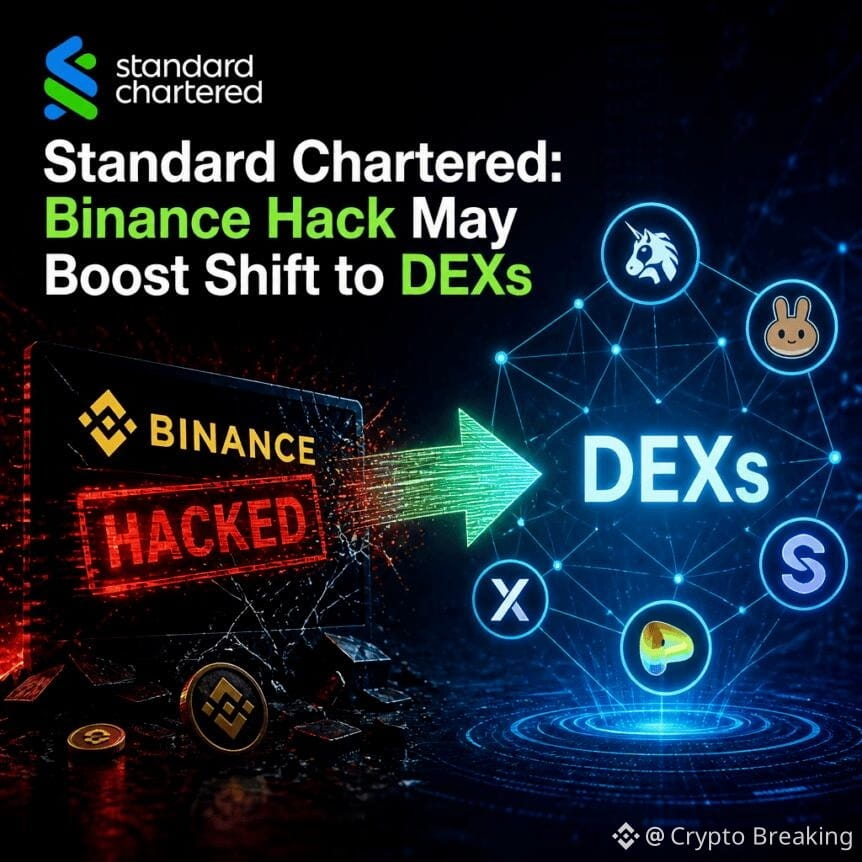
Standard Chartered: Binance Hack May Boost Shift to DEXsA major breach at Binance is prompting fresh debate over whether crypto trading will keep drifting toward decentralized exchanges, with Standard Chartered’s Geoffrey Kendrick arguing that investors should ultimately look again at Uniswap.
In an email shared with Cointelegraph, Kendrick said the incident should further increase the trading share of decentralized exchanges (DEXs) relative to centralized exchanges (CEXs). Still, he cautioned that markets may need time to digest what happened before investors adjust positioning.
Key takeaways
Standard Chartered’s Geoffrey Kendrick expects the Binance hack to push more trading volume toward DEXs over the longer term.
Kendrick urged investors to “re-engage” with Uniswap, arguing that DEXs have not shown the same exploit history as large CEXs.
CoinGecko data cited by Kendrick shows the top 10 DEX-to-CEX trading ratio rose to 23.5% in Q2 2026, up 2.1 percentage points from Q1.
Kendrick maintains a $100 Uniswap price target for 2030, but said the Binance breach could make the forecast conservative.
He expects additional near-term downside until key details of the hack emerge and affected assets are unfrozen.
Why the Binance breach could tilt volumes toward DEXs
Kendrick’s argument is straightforward: when trust is shaken at the largest centralized trading venues, traders often look for alternatives, and decentralized platforms may stand to benefit as a result. He specifically pointed to Uniswap, saying that “the decentralized exchange (DEX) has never had any exploits,” and that the Binance hack should allow the DEX-to-CEX trading ratio to keep rising.
While the comment frames DEX growth as a structural response to CEX risk, Kendrick also emphasized timing. Instead of immediately concluding the market has fully repriced, he suggested that investors should wait until the effects of the Binance attack play out and the full picture becomes clearer.
Trading-share trend: DEXs gaining ground already
The shift Kendrick expects aligns with research he highlighted from CoinGecko. According to a CoinGecko presentation, the “top 10 spot DEX-to-CEX ratio” reached 23.5% in Q2 2026, improving by 2.1 percentage points from Q1 2026.
That matters because it suggests DEX growth isn’t starting from zero—decentralized markets were already taking a larger slice of spot trading before the Binance breach. If CEX risk perceptions intensify after a high-profile hack, the existing momentum could accelerate the next step of volume migration, even if near-term price action remains volatile.
What Kendrick says about Uniswap’s outlook
Kendrick reiterated his longer-term view on Uniswap. He said he still holds a $100 price target for UNI by 2030, but noted the Binance hack is “another reason why that forecast may end up being too low.”
That position builds on Standard Chartered’s earlier thesis—referenced via an earlier Cointelegraph report—that assets locked in DeFi could grow to $2.7 trillion by 2030. In that framework, Uniswap is cast as a major venue not only for crypto spot trading, but also for liquidity tied to tokenized assets moving into decentralized finance.
In other words, Kendrick’s case for Uniswap isn’t based solely on a single headline. It’s tied to a broader expectation that tokenization and DeFi liquidity would expand—and that a credibility shock to centralized trading can make decentralized infrastructure more attractive when users reassess counterparty risk.
Near-term market risk remains: more downside possible
Kendrick also highlighted the likelihood of continued turbulence in the immediate aftermath of the breach. He said he expects “further negative price action in the near term,” pointing to the uncertainty that comes with unfrozen assets and incomplete information about the hack.
Cointelegraph reported that crypto markets extended their decline early Friday following the Binance hack, with BNB down more than 8% over 24 hours and Bitcoin trading near $77,000. The selloff also spilled into DeFi tokens: Aave’s AAVE fell 11.3% to $118.54, while Uniswap’s UNI dropped 10.4% to $6.48, according to CoinGecko.
Reflecting on what may come next, Kendrick said: “Only after assets are unfrozen and more detail of the hack emerges will we find a new base.” That framing implies the market may need time to determine how much disruption is structural versus temporary—and whether traders will permanently redirect volume away from CEXs or return once confidence stabilizes.
What to watch as the story develops
Investors are likely to focus on when affected funds are unfrozen and on further confirmed details of the breach, since those elements should clarify how long the damage to liquidity and sentiment could last. Beyond the immediate selloff, the key question Kendrick raises is whether the DEX-to-CEX trading ratio continues its upward path—something traders may monitor as DEX volume strengthens relative to centralized venues in the weeks following the hack.
Cointelegraph previously reported that Binance said the $6.3B hack involved a compromised engineer’s laptop.
This article was originally published as Standard Chartered: Binance Hack May Boost Shift to DEXs on Crypto Breaking News – your trusted source for crypto news, Bitcoin news, and blockchain updates.
Standard Chartered: Binance Hack May Boost Shift to DEXs
A major breach at Binance is prompting fresh debate over whether crypto trading will keep drifting toward decentralized exchanges, with Standard Chartered’s Geoffrey Kendrick arguing that investors should ultimately look again at Uniswap.
In an email shared with Cointelegraph, Kendrick said the incident should further increase the trading share of decentralized exchanges (DEXs) relative to centralized exchanges (CEXs). Still, he cautioned that markets may need time to digest what happened before investors adjust positioning.
Key takeaways
Standard Chartered’s Geoffrey Kendrick expects the Binance hack to push more trading volume toward DEXs over the longer term.
Kendrick urged investors to “re-engage” with Uniswap, arguing that DEXs have not shown the same exploit history as large CEXs.
CoinGecko data cited by Kendrick shows the top 10 DEX-to-CEX trading ratio rose to 23.5% in Q2 2026, up 2.1 percentage points from Q1.
Kendrick maintains a $100 Uniswap price target for 2030, but said the Binance breach could make the forecast conservative.
He expects additional near-term downside until key details of the hack emerge and affected assets are unfrozen.
Why the Binance breach could tilt volumes toward DEXs
Kendrick’s argument is straightforward: when trust is shaken at the largest centralized trading venues, traders often look for alternatives, and decentralized platforms may stand to benefit as a result. He specifically pointed to Uniswap, saying that “the decentralized exchange (DEX) has never had any exploits,” and that the Binance hack should allow the DEX-to-CEX trading ratio to keep rising.
While the comment frames DEX growth as a structural response to CEX risk, Kendrick also emphasized timing. Instead of immediately concluding the market has fully repriced, he suggested that investors should wait until the effects of the Binance attack play out and the full picture becomes clearer.
Trading-share trend: DEXs gaining ground already
The shift Kendrick expects aligns with research he highlighted from CoinGecko. According to a CoinGecko presentation, the “top 10 spot DEX-to-CEX ratio” reached 23.5% in Q2 2026, improving by 2.1 percentage points from Q1 2026.
That matters because it suggests DEX growth isn’t starting from zero—decentralized markets were already taking a larger slice of spot trading before the Binance breach. If CEX risk perceptions intensify after a high-profile hack, the existing momentum could accelerate the next step of volume migration, even if near-term price action remains volatile.
What Kendrick says about Uniswap’s outlook
Kendrick reiterated his longer-term view on Uniswap. He said he still holds a $100 price target for UNI by 2030, but noted the Binance hack is “another reason why that forecast may end up being too low.”
That position builds on Standard Chartered’s earlier thesis—referenced via an earlier Cointelegraph report—that assets locked in DeFi could grow to $2.7 trillion by 2030. In that framework, Uniswap is cast as a major venue not only for crypto spot trading, but also for liquidity tied to tokenized assets moving into decentralized finance.
In other words, Kendrick’s case for Uniswap isn’t based solely on a single headline. It’s tied to a broader expectation that tokenization and DeFi liquidity would expand—and that a credibility shock to centralized trading can make decentralized infrastructure more attractive when users reassess counterparty risk.
Near-term market risk remains: more downside possible
Kendrick also highlighted the likelihood of continued turbulence in the immediate aftermath of the breach. He said he expects “further negative price action in the near term,” pointing to the uncertainty that comes with unfrozen assets and incomplete information about the hack.
Cointelegraph reported that crypto markets extended their decline early Friday following the Binance hack, with BNB down more than 8% over 24 hours and Bitcoin trading near $77,000. The selloff also spilled into DeFi tokens: Aave’s AAVE fell 11.3% to $118.54, while Uniswap’s UNI dropped 10.4% to $6.48, according to CoinGecko.
Reflecting on what may come next, Kendrick said: “Only after assets are unfrozen and more detail of the hack emerges will we find a new base.” That framing implies the market may need time to determine how much disruption is structural versus temporary—and whether traders will permanently redirect volume away from CEXs or return once confidence stabilizes.
What to watch as the story develops
Investors are likely to focus on when affected funds are unfrozen and on further confirmed details of the breach, since those elements should clarify how long the damage to liquidity and sentiment could last. Beyond the immediate selloff, the key question Kendrick raises is whether the DEX-to-CEX trading ratio continues its upward path—something traders may monitor as DEX volume strengthens relative to centralized venues in the weeks following the hack.
Cointelegraph previously reported that Binance said the $6.3B hack involved a compromised engineer’s laptop.
This article was originally published as Standard Chartered: Binance Hack May Boost Shift to DEXs on Crypto Breaking News – your trusted source for crypto news, Bitcoin news, and blockchain updates.
53

Статья
HTX to Pause Unlawful UK Crypto Ads After FCA Legal CaseCrypto exchange HTX has agreed to stop promoting its services to UK consumers after the UK’s Financial Conduct Authority (FCA) announced a settlement aimed at putting an end to unlawful marketing. The action underscores that firms operating from abroad can still be held to account under UK rules.
According to the FCA, Huobi Global S.A.—the Panamanian company behind HTX—will not knowingly carry out illegal promotions, including through the exchange’s website, mobile apps, or social media. The undertakings run until October 21, 2031, and the settlement does not amount to an admission of liability or wrongdoing.
Key takeaways
HTX’s parent, Huobi Global S.A., agreed with the FCA to stop knowingly running unlawful promotions targeted at UK consumers.
The settlement binds promotions made through core customer channels such as the website, apps, and social media.
Under separate UK exit arrangements, eligible HTX users can request a one-time, limited withdrawal window, after which accounts will close once assets are removed.
The FCA said the case was its first enforcement action against a crypto firm for illegal marketing.
FCA settlement targets illegal marketing
In the FCA’s announcement, the regulator framed the settlement as a warning to the wider crypto industry: being headquartered overseas does not shield companies from UK enforcement. FCA executive director of enforcement and market oversight Steve Smart said the message for other firms is to comply with UK rules or face consequences.
The FCA also stated that the agreement includes court undertakings that remain in effect for a long period—until Oct. 21, 2031. While the regulator did not make the specific settlement terms public, it emphasized that the arrangement is confidential and that it does not indicate an admission of wrongdoing.
The FCA brought the case in October 2025 and later announced it in February. The regulator said it was its first enforcement action against a crypto firm over illegal marketing practices.
HTX’s UK exit: account deposits halted, withdrawals limited
Separately from the FCA marketing settlement, HTX has been winding down its UK operations. On Oct. 16, the exchange—formerly known as Huobi—published an update describing its UK exit arrangements.
Under that notice, existing UK accounts could no longer deposit or trade. Instead, eligible users were told they could request a one-time 48-hour window to withdraw remaining assets, though access is subject to approval and compliance checks. Accounts are expected to close after all assets have been withdrawn.
For UK users, the practical takeaway is straightforward: trading access is effectively ended, and the ability to exit depends on whether an individual meets eligibility requirements for the withdrawal window.
Justin Sun involvement and related legal disputes
HTX’s corporate network has also been scrutinized in connection with Tron founder Justin Sun. HTX lists Sun as an adviser, and public reporting has linked Sun to crypto initiatives that include projects associated with U.S. President Donald Trump—such as World Liberty Financial and the TRUMP memecoin.
Earlier court action in this ecosystem includes a dispute in which Sun sued World Liberty after WLFI tokens were frozen, according to coverage by Cointelegraph. Cointelegraph also reported that World Liberty (WLFI’s platform) later filed a defamation suit against Sun, while Sun denied the allegations.
While these matters are not the same as the FCA’s UK marketing enforcement, they add context to why HTX—like other exchanges with prominent industry connections—often finds itself at the center of broader legal and compliance discussions.
Regulatory pressure in the UK and EU over sanctions
The FCA settlement arrives amid continuing sanctions-related scrutiny directed at HTX’s corporate footprint. The UK sanctioned Huobi Global on May 26, imposing an asset freeze over suspected support for Russia’s government. UK authorities said the platform was covered because Huobi Global owned it, even though HTX reportedly argued that the companies were separate.
The EU followed with its own sanctions action. Cointelegraph reported that the European Union imposed a transaction ban on HTX on July 23, with the ban taking effect on Aug. 23. Taken together, the UK marketing settlement and the sanctions measures point to a broader compliance challenge—one that spans both advertising practices and counterparty restrictions.
For investors and users, the combined effect of these actions is significant: it can change how and whether funds can be moved, which services remain available, and what marketing or operational practices are permitted in certain jurisdictions.
Going forward, readers should watch two areas: whether HTX’s UK withdrawal process proceeds smoothly for eligible users, and how the company demonstrates ongoing compliance with the FCA’s marketing restrictions through its website, apps, and social channels until the undertakings run out in 2031.
This article was originally published as HTX to Pause Unlawful UK Crypto Ads After FCA Legal Case on Crypto Breaking News – your trusted source for crypto news, Bitcoin news, and blockchain updates.
HTX to Pause Unlawful UK Crypto Ads After FCA Legal Case
Crypto exchange HTX has agreed to stop promoting its services to UK consumers after the UK’s Financial Conduct Authority (FCA) announced a settlement aimed at putting an end to unlawful marketing. The action underscores that firms operating from abroad can still be held to account under UK rules.
According to the FCA, Huobi Global S.A.—the Panamanian company behind HTX—will not knowingly carry out illegal promotions, including through the exchange’s website, mobile apps, or social media. The undertakings run until October 21, 2031, and the settlement does not amount to an admission of liability or wrongdoing.
Key takeaways
HTX’s parent, Huobi Global S.A., agreed with the FCA to stop knowingly running unlawful promotions targeted at UK consumers.
The settlement binds promotions made through core customer channels such as the website, apps, and social media.
Under separate UK exit arrangements, eligible HTX users can request a one-time, limited withdrawal window, after which accounts will close once assets are removed.
The FCA said the case was its first enforcement action against a crypto firm for illegal marketing.
FCA settlement targets illegal marketing
In the FCA’s announcement, the regulator framed the settlement as a warning to the wider crypto industry: being headquartered overseas does not shield companies from UK enforcement. FCA executive director of enforcement and market oversight Steve Smart said the message for other firms is to comply with UK rules or face consequences.
The FCA also stated that the agreement includes court undertakings that remain in effect for a long period—until Oct. 21, 2031. While the regulator did not make the specific settlement terms public, it emphasized that the arrangement is confidential and that it does not indicate an admission of wrongdoing.
The FCA brought the case in October 2025 and later announced it in February. The regulator said it was its first enforcement action against a crypto firm over illegal marketing practices.
HTX’s UK exit: account deposits halted, withdrawals limited
Separately from the FCA marketing settlement, HTX has been winding down its UK operations. On Oct. 16, the exchange—formerly known as Huobi—published an update describing its UK exit arrangements.
Under that notice, existing UK accounts could no longer deposit or trade. Instead, eligible users were told they could request a one-time 48-hour window to withdraw remaining assets, though access is subject to approval and compliance checks. Accounts are expected to close after all assets have been withdrawn.
For UK users, the practical takeaway is straightforward: trading access is effectively ended, and the ability to exit depends on whether an individual meets eligibility requirements for the withdrawal window.
Justin Sun involvement and related legal disputes
HTX’s corporate network has also been scrutinized in connection with Tron founder Justin Sun. HTX lists Sun as an adviser, and public reporting has linked Sun to crypto initiatives that include projects associated with U.S. President Donald Trump—such as World Liberty Financial and the TRUMP memecoin.
Earlier court action in this ecosystem includes a dispute in which Sun sued World Liberty after WLFI tokens were frozen, according to coverage by Cointelegraph. Cointelegraph also reported that World Liberty (WLFI’s platform) later filed a defamation suit against Sun, while Sun denied the allegations.
While these matters are not the same as the FCA’s UK marketing enforcement, they add context to why HTX—like other exchanges with prominent industry connections—often finds itself at the center of broader legal and compliance discussions.
Regulatory pressure in the UK and EU over sanctions
The FCA settlement arrives amid continuing sanctions-related scrutiny directed at HTX’s corporate footprint. The UK sanctioned Huobi Global on May 26, imposing an asset freeze over suspected support for Russia’s government. UK authorities said the platform was covered because Huobi Global owned it, even though HTX reportedly argued that the companies were separate.
The EU followed with its own sanctions action. Cointelegraph reported that the European Union imposed a transaction ban on HTX on July 23, with the ban taking effect on Aug. 23. Taken together, the UK marketing settlement and the sanctions measures point to a broader compliance challenge—one that spans both advertising practices and counterparty restrictions.
For investors and users, the combined effect of these actions is significant: it can change how and whether funds can be moved, which services remain available, and what marketing or operational practices are permitted in certain jurisdictions.
Going forward, readers should watch two areas: whether HTX’s UK withdrawal process proceeds smoothly for eligible users, and how the company demonstrates ongoing compliance with the FCA’s marketing restrictions through its website, apps, and social channels until the undertakings run out in 2031.
This article was originally published as HTX to Pause Unlawful UK Crypto Ads After FCA Legal Case on Crypto Breaking News – your trusted source for crypto news, Bitcoin news, and blockchain updates.
53
Статья
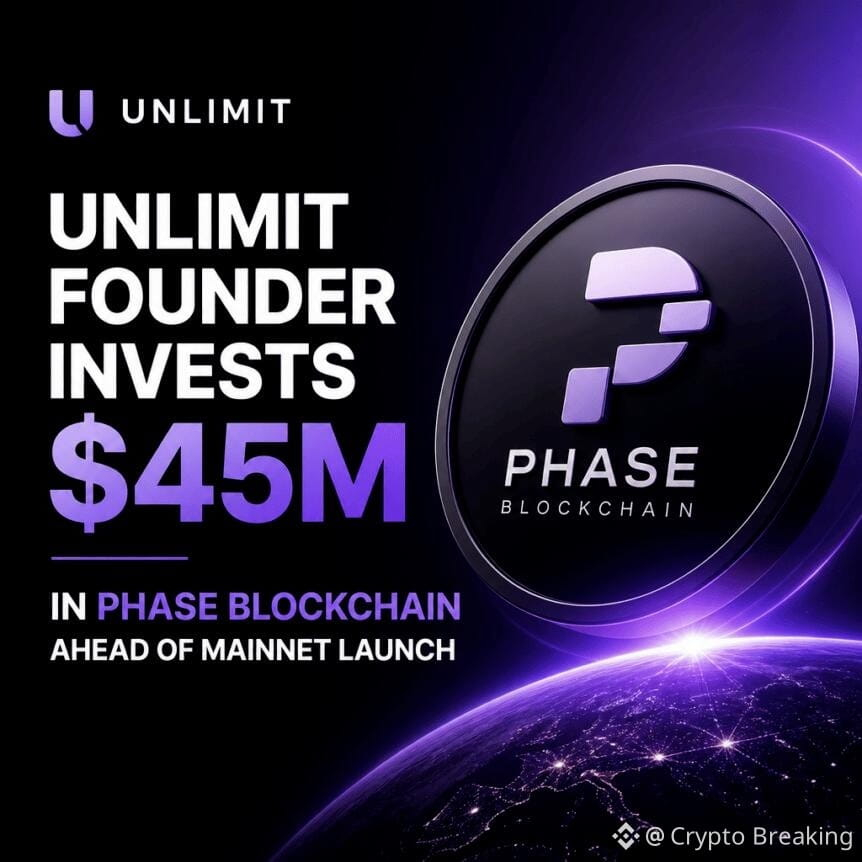
Unlimit Founder Invests $45M in Phase Blockchain Ahead of Mainnet LaunchPhase, a new blockchain focused on “smartphone-native” AI infrastructure, has secured a $45 million funding commitment from Kirill Eves, founder of Unlimit. The project says the money is earmarked for its first two years of development and would extend the company’s runway by another two years.
Phase launched its blockchain on Thursday together with Phase Proxy, a routing service designed to help AI agents access websites through internet connections shared via smartphones. The company argues that this approach addresses a growing bottleneck in agentic AI: sites increasingly block or rate-limit automated traffic—especially when requests appear to originate from data centers.
Key takeaways
Phase says its $45 million commitment from Kirill Eves will fund four years of development, with the first two years covered directly by the commitment.
Phase Proxy is built to reroute AI agent web requests through smartphone-shared connections to reduce blocks and rate-limits seen from data-center traffic.
Smartphone users can join the network via the Phase app, validating blocks and sharing connectivity to earn PHASE tokens.
Phase plans to launch an AI computing service in November and a second service in November aimed at routing requests across AI models.
Why Phase targets agent web access
Phase’s pitch is centered on practical frictions facing AI agents on the open web. According to Eves, websites often block or throttle automated traffic when it comes from data centers—even if the agent is acting on a legitimate user request. As agents expand from single tasks to multi-step workflows spanning multiple sites, those restrictions can become a significant adoption barrier.
Eves linked the problem to how websites treat “machine” traffic. He pointed to infrastructure controls that website operators already have. For example, Cloudflare allows site owners to manage automated requests through its bots tooling. In its developer documentation, Cloudflare notes that for newly configured domains, its settings can block agent and training traffic on pages that display ads.
Phase Proxy is positioned as a workaround. Rather than presenting website endpoints with traffic that appears to originate from conventional server infrastructure, the service aims to route agent web requests through internet connections contributed by smartphone users.
How PHASE rewards smartphone users
Phase is also making a bet that mobile devices can play an ongoing role in AI infrastructure—not just as endpoints for users, but as contributors to compute and connectivity.
Per Phase, users can participate through the Phase app. Rewards come from two related activities: validating blocks on the blockchain and sharing their internet connection through Phase Proxy.
Eves said flagship smartphones can deliver roughly 35–45 TOPS of AI processing performance, depending on the specific device. He described this capability as sufficient for running smaller “open-weight” AI models locally. Phase also said participation is adjusted based on the user’s device battery level and connectivity, reflecting that constant contribution would be unrealistic for consumer hardware.
In other words, Phase’s token incentives are tied to both network behavior (connectivity contribution via proxying) and blockchain participation (block validation), with the mobile layer acting as the differentiator.
Planned services in November
Beyond the initial proxy and token rewards, Phase says it intends to roll out its broader AI computing offering on a scheduled timeline.
The company plans to launch an AI computing service in November that lets smartphone users contribute compute power as part of the network. Phase also expects to introduce a second service in November designed to route requests across multiple AI models.
Phase states that it plans to build its own model over time, and that it wants to expand participation beyond phones into desktops, servers, and graphics processing units. That expansion matters because mobile devices, while abundant, are typically constrained by power, thermal limits, and variable network conditions—so a heterogeneous mix of devices could help balance availability and performance.
Phase also outlined how it expects to fund token-linked rewards. It said part of revenue from these AI services would be used to purchase PHASE on the open market. The purchased tokens would then be used to reward node operators, creating a link between service usage and token incentives.
What investors and users should watch next
Phase is trying to solve a specific, operational problem for agentic AI—web access under increasingly restrictive automation policies—while also building an incentive system that turns smartphone owners into both network participants and potential compute contributors. The next question for builders and token holders is whether the smartphone-connection approach improves reliability in real deployments, and whether Phase’s November computing and routing services attract sustained usage beyond early testing.
This article was originally published as Unlimit Founder Invests $45M in Phase Blockchain Ahead of Mainnet Launch on Crypto Breaking News – your trusted source for crypto news, Bitcoin news, and blockchain updates.
Unlimit Founder Invests $45M in Phase Blockchain Ahead of Mainnet Launch
Phase, a new blockchain focused on “smartphone-native” AI infrastructure, has secured a $45 million funding commitment from Kirill Eves, founder of Unlimit. The project says the money is earmarked for its first two years of development and would extend the company’s runway by another two years.
Phase launched its blockchain on Thursday together with Phase Proxy, a routing service designed to help AI agents access websites through internet connections shared via smartphones. The company argues that this approach addresses a growing bottleneck in agentic AI: sites increasingly block or rate-limit automated traffic—especially when requests appear to originate from data centers.
Key takeaways
Phase says its $45 million commitment from Kirill Eves will fund four years of development, with the first two years covered directly by the commitment.
Phase Proxy is built to reroute AI agent web requests through smartphone-shared connections to reduce blocks and rate-limits seen from data-center traffic.
Smartphone users can join the network via the Phase app, validating blocks and sharing connectivity to earn PHASE tokens.
Phase plans to launch an AI computing service in November and a second service in November aimed at routing requests across AI models.
Why Phase targets agent web access
Phase’s pitch is centered on practical frictions facing AI agents on the open web. According to Eves, websites often block or throttle automated traffic when it comes from data centers—even if the agent is acting on a legitimate user request. As agents expand from single tasks to multi-step workflows spanning multiple sites, those restrictions can become a significant adoption barrier.
Eves linked the problem to how websites treat “machine” traffic. He pointed to infrastructure controls that website operators already have. For example, Cloudflare allows site owners to manage automated requests through its bots tooling. In its developer documentation, Cloudflare notes that for newly configured domains, its settings can block agent and training traffic on pages that display ads.
Phase Proxy is positioned as a workaround. Rather than presenting website endpoints with traffic that appears to originate from conventional server infrastructure, the service aims to route agent web requests through internet connections contributed by smartphone users.
How PHASE rewards smartphone users
Phase is also making a bet that mobile devices can play an ongoing role in AI infrastructure—not just as endpoints for users, but as contributors to compute and connectivity.
Per Phase, users can participate through the Phase app. Rewards come from two related activities: validating blocks on the blockchain and sharing their internet connection through Phase Proxy.
Eves said flagship smartphones can deliver roughly 35–45 TOPS of AI processing performance, depending on the specific device. He described this capability as sufficient for running smaller “open-weight” AI models locally. Phase also said participation is adjusted based on the user’s device battery level and connectivity, reflecting that constant contribution would be unrealistic for consumer hardware.
In other words, Phase’s token incentives are tied to both network behavior (connectivity contribution via proxying) and blockchain participation (block validation), with the mobile layer acting as the differentiator.
Planned services in November
Beyond the initial proxy and token rewards, Phase says it intends to roll out its broader AI computing offering on a scheduled timeline.
The company plans to launch an AI computing service in November that lets smartphone users contribute compute power as part of the network. Phase also expects to introduce a second service in November designed to route requests across multiple AI models.
Phase states that it plans to build its own model over time, and that it wants to expand participation beyond phones into desktops, servers, and graphics processing units. That expansion matters because mobile devices, while abundant, are typically constrained by power, thermal limits, and variable network conditions—so a heterogeneous mix of devices could help balance availability and performance.
Phase also outlined how it expects to fund token-linked rewards. It said part of revenue from these AI services would be used to purchase PHASE on the open market. The purchased tokens would then be used to reward node operators, creating a link between service usage and token incentives.
What investors and users should watch next
Phase is trying to solve a specific, operational problem for agentic AI—web access under increasingly restrictive automation policies—while also building an incentive system that turns smartphone owners into both network participants and potential compute contributors. The next question for builders and token holders is whether the smartphone-connection approach improves reliability in real deployments, and whether Phase’s November computing and routing services attract sustained usage beyond early testing.
This article was originally published as Unlimit Founder Invests $45M in Phase Blockchain Ahead of Mainnet Launch on Crypto Breaking News – your trusted source for crypto news, Bitcoin news, and blockchain updates.
101
Статья
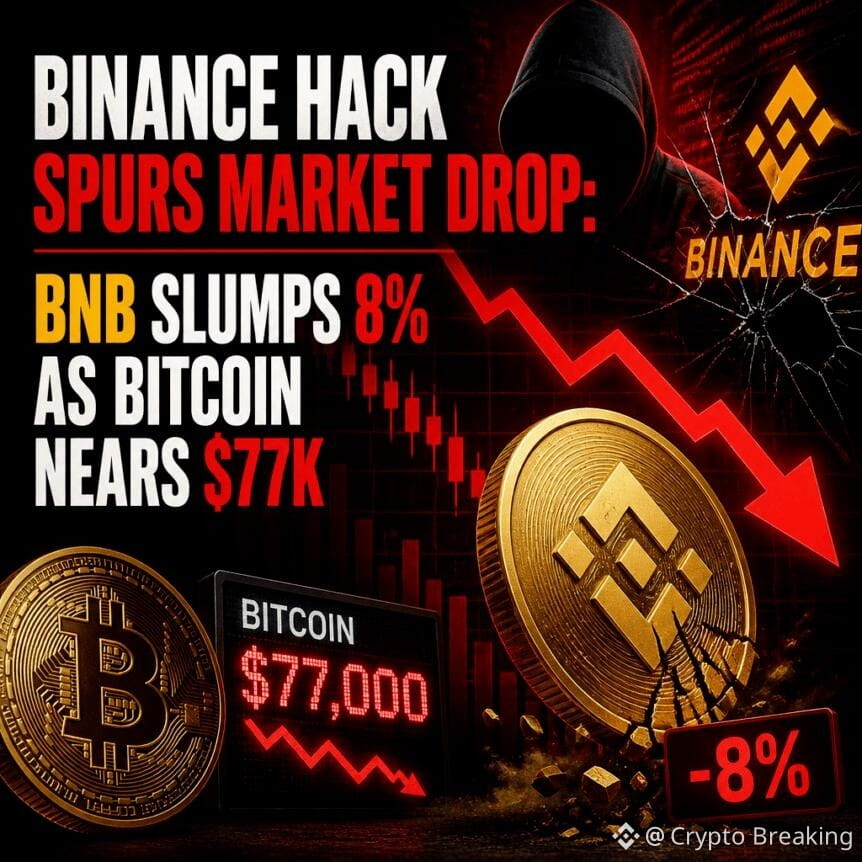
Binance Hack Spurs Market Drop: BNB Slumps 8% as Bitcoin Nears $77KCrypto markets slid further in early trading on Friday as investors digested fallout from the Binance-linked hack, with BNB and major altcoins leading the move. BNB dropped more than 8% over the last 24 hours, while Bitcoin traded close to the $77,000 level, indicating broader risk-off pressure rather than a single-token shock.
At the time of writing, CoinGecko data showed BNB trading near $693 (down about 8.2%). Bitcoin was down roughly 4.8% to around $77,131, and Ether fell about 5.7% to approximately $2,217. DeFi tokens also weakened: Aave’s AAVE slid about 11.3% to $118.54 and Uniswap’s UNI dropped around 10.4% to $6.48, according to CoinGecko.
Key takeaways
BNB extended losses, falling more than 8% in 24 hours, as market participants priced in continued uncertainty around the Binance incident.
Bitcoin remained under pressure near $77,000, suggesting the sell-off spilled beyond BNB and into broader sentiment.
Binance pledged to cover all losses from the hack and suspended deposits and withdrawals while running security checks.
Binance updated its figures for frozen assets to about $3 billion, up from an earlier estimate of $2.54 billion.
Aave froze new deposits and borrowing on community-operated V3 and V4 markets, while allowing withdrawals and loan repayments.
BNB weakness pulls broader markets lower
The immediate market response centered on BNB, reflecting how tightly investors track Binance’s operational and security posture. With BNB down around 8% over the past day, the move quickly spilled into other large-cap assets and the DeFi complex.
Bitcoin’s decline to the low-$77,000s is notable because it implies traders were not only reacting to BNB-specific risk. Instead, the timing of the sell-off suggests a wider reassessment of counterparty and exchange-risk exposure across the crypto ecosystem.
Ether and major DeFi tokens followed the same direction. Ether fell to around $2,217, while AAVE and UNI saw sharper percentage declines, consistent with the way DeFi liquidity and user flows often react during exchange-linked security events. CoinGecko price data reflected this broad-based weakening across multiple sectors.
Binance updates: covering losses and revising frozen assets
Binance said it would cover all losses stemming from the hack and temporarily halted deposits and withdrawals during security checks. The exchange’s operational suspension is typically aimed at limiting additional risk exposure while teams verify balances and assess affected paths.
Binance later provided a revised update on the scope of funds it has frozen. The verified total of frozen assets was reported at around $3 billion, rising from an earlier figure of $2.54 billion. That step matters for market pricing because it changes the perceived magnitude of the disruption—both in terms of direct exposure for users and potential knock-on effects for liquidity.
Earlier coverage from Cointelegraph noted concerns around a Binance-linked wallet and warned that a possible exploit could be involved. The latest market movement and Binance’s own updates underline that traders are still working through the implications of that incident.
DeFi caution spreads: Aave freezes new activity
Beyond centralized exchange risk, the incident prompted caution across DeFi platforms. Aave announced it had frozen new deposits and borrowing across its community-operated V3 and V4 markets as a precaution.
Importantly for users, Aave stated that its contracts were unaffected. The protocol also allowed users to withdraw funds and to repay loans, which helps reduce the immediate fear of getting stuck in a system that is unable to resolve positions.
This type of partial freeze—limiting new inflows and leverage creation while preserving exits and repayments—often aims to slow down liquidity demand during periods of heightened uncertainty. For traders and liquidity providers, it also changes the near-term risk profile: the protocol can become less efficient for new capital deployment even if core functionality remains intact.
What investors should watch next
As of now, the market’s focus is likely to remain on how Binance’s security review progresses and whether the exchange’s updated frozen-asset figure becomes a stable reference point. Traders should also monitor whether additional DeFi protocols follow Aave’s approach with similar restrictions, or if those precautions begin to ease—both of which can materially affect liquidity and sentiment across crypto.
This article was originally published as Binance Hack Spurs Market Drop: BNB Slumps 8% as Bitcoin Nears $77K on Crypto Breaking News – your trusted source for crypto news, Bitcoin news, and blockchain updates.
Binance Hack Spurs Market Drop: BNB Slumps 8% as Bitcoin Nears $77K
Crypto markets slid further in early trading on Friday as investors digested fallout from the Binance-linked hack, with BNB and major altcoins leading the move. BNB dropped more than 8% over the last 24 hours, while Bitcoin traded close to the $77,000 level, indicating broader risk-off pressure rather than a single-token shock.
At the time of writing, CoinGecko data showed BNB trading near $693 (down about 8.2%). Bitcoin was down roughly 4.8% to around $77,131, and Ether fell about 5.7% to approximately $2,217. DeFi tokens also weakened: Aave’s AAVE slid about 11.3% to $118.54 and Uniswap’s UNI dropped around 10.4% to $6.48, according to CoinGecko.
Key takeaways
BNB extended losses, falling more than 8% in 24 hours, as market participants priced in continued uncertainty around the Binance incident.
Bitcoin remained under pressure near $77,000, suggesting the sell-off spilled beyond BNB and into broader sentiment.
Binance pledged to cover all losses from the hack and suspended deposits and withdrawals while running security checks.
Binance updated its figures for frozen assets to about $3 billion, up from an earlier estimate of $2.54 billion.
Aave froze new deposits and borrowing on community-operated V3 and V4 markets, while allowing withdrawals and loan repayments.
BNB weakness pulls broader markets lower
The immediate market response centered on BNB, reflecting how tightly investors track Binance’s operational and security posture. With BNB down around 8% over the past day, the move quickly spilled into other large-cap assets and the DeFi complex.
Bitcoin’s decline to the low-$77,000s is notable because it implies traders were not only reacting to BNB-specific risk. Instead, the timing of the sell-off suggests a wider reassessment of counterparty and exchange-risk exposure across the crypto ecosystem.
Ether and major DeFi tokens followed the same direction. Ether fell to around $2,217, while AAVE and UNI saw sharper percentage declines, consistent with the way DeFi liquidity and user flows often react during exchange-linked security events. CoinGecko price data reflected this broad-based weakening across multiple sectors.
Binance updates: covering losses and revising frozen assets
Binance said it would cover all losses stemming from the hack and temporarily halted deposits and withdrawals during security checks. The exchange’s operational suspension is typically aimed at limiting additional risk exposure while teams verify balances and assess affected paths.
Binance later provided a revised update on the scope of funds it has frozen. The verified total of frozen assets was reported at around $3 billion, rising from an earlier figure of $2.54 billion. That step matters for market pricing because it changes the perceived magnitude of the disruption—both in terms of direct exposure for users and potential knock-on effects for liquidity.
Earlier coverage from Cointelegraph noted concerns around a Binance-linked wallet and warned that a possible exploit could be involved. The latest market movement and Binance’s own updates underline that traders are still working through the implications of that incident.
DeFi caution spreads: Aave freezes new activity
Beyond centralized exchange risk, the incident prompted caution across DeFi platforms. Aave announced it had frozen new deposits and borrowing across its community-operated V3 and V4 markets as a precaution.
Importantly for users, Aave stated that its contracts were unaffected. The protocol also allowed users to withdraw funds and to repay loans, which helps reduce the immediate fear of getting stuck in a system that is unable to resolve positions.
This type of partial freeze—limiting new inflows and leverage creation while preserving exits and repayments—often aims to slow down liquidity demand during periods of heightened uncertainty. For traders and liquidity providers, it also changes the near-term risk profile: the protocol can become less efficient for new capital deployment even if core functionality remains intact.
What investors should watch next
As of now, the market’s focus is likely to remain on how Binance’s security review progresses and whether the exchange’s updated frozen-asset figure becomes a stable reference point. Traders should also monitor whether additional DeFi protocols follow Aave’s approach with similar restrictions, or if those precautions begin to ease—both of which can materially affect liquidity and sentiment across crypto.
This article was originally published as Binance Hack Spurs Market Drop: BNB Slumps 8% as Bitcoin Nears $77K on Crypto Breaking News – your trusted source for crypto news, Bitcoin news, and blockchain updates.
544
Статья
Binance Hack Could Stem From Private Key Misuse, Says Blockaid CEONew details about the suspected scale of Binance’s $2.5 billion+ hack are pointing toward an intrusion path that may not require stealing the exchange’s private keys. Blockaid co-founder and CEO Ido Ben-Natan told Cointelegraph that the early signs resemble “key misuse,” where attackers manipulate or compromise transaction-signing capabilities to authorize harmful transfers.
While Binance has not confirmed the exact mechanism behind the theft—the largest crypto hack on record—Ben-Natan and Arkham CEO Miguel Morel both emphasized that the current picture remains incomplete. Morel said there is not enough information to determine whether the attack involved stolen keys or compromised signing infrastructure, adding that, based on what analysts can see, the incident appears to still be unfolding.
Key takeaways
Blockaid’s preliminary assessment suggests “key misuse,” implying a signing-system compromise rather than private-key leakage.
Arkham’s leadership says there isn’t enough evidence yet to confirm whether stolen keys or infrastructure compromise drove the hack.
Blockaid reports attacker activity involving 50 EIP-7702 authorization delegations bundled into a single transaction.
The suspected behavior draws parallels to a February 2025 Bybit incident where attackers deceived signers after compromising upstream credentials.
Why analysts think “key misuse” is central
Ben-Natan’s key point was about the difference between extracting secret keys and abusing signing authority. In his view, attackers likely tricked or compromised a signing system so that malicious transactions were authorized without the need to expose the underlying private key material.
“It seems to be… a compromise of signing infrastructure. We don’t think a key was leaked,” Ben-Natan said, noting that the conclusion is provisional. He described Blockaid’s view as based on their experience with similar attacks and their interpretation of onchain behavior.
The distinction matters for investors and ecosystem participants because it changes how teams should think about defense. If signing infrastructure can be manipulated, then key management alone may not be sufficient; organizations may need stronger controls around how authorization workflows, signer prompts, and delegation mechanisms are secured end-to-end.
Blockaid’s onchain findings: EIP-7702 delegation mechanics
Blockaid’s analysis, shared via X, highlights specific onchain patterns tied to the suspected intruder behavior. In one instance described by Blockaid, the attacker bundled 50 EIP-7702 authorizations into a single transaction targeting Binance 14.
EIP-7702 enables an account to delegate execution to smart contract code. Blockaid said one of the authorizations aligned with the account’s expected nonce—an alignment that would make the authorization more likely to be accepted.
In a follow-up note, Blockaid said the affected account was delegated to an unverified sweeper contract. According to Blockaid, this delegation structure allowed a designated operator to drain tokens and Ether from the delegated context.
Ben-Natan told Cointelegraph that the broader operation could have involved multiple compromised devices and movement through Binance’s network, though he stressed that this remains unconfirmed. For readers tracking the case, this suggests the attack may have combined both onchain execution tricks (delegation and operator logic) with offchain access or operational compromise to reach the signing and authorization pathways.
Still unclear: keys vs infrastructure, and the incident may be ongoing
Even with Blockaid’s findings, the precise method remains contested. Binance has not publicly confirmed how attackers accessed funds or what component was compromised.
Arkham CEO Miguel Morel, speaking to Cointelegraph, said the available information is insufficient to confirm whether the hack involved stolen keys or compromised infrastructure. He added that, from what the company can observe, the hack appears to be still ongoing.
This uncertainty is important for market participants: an incident that remains active can continue to produce unpredictable transaction flows and wallet behavior, which complicates analysis, monitoring, and risk assessment.
Similarities to Bybit’s February 2025 incident
Ben-Natan also drew a comparison to a February 2025 Bybit event. Asked whether the suspected signing manipulation resembled the Bybit attack, he said the incidents were “very, very similar.”
In its forensic update released at the time, Bybit said attackers compromised a Safe developer’s credentials, accessed parts of the wallet provider’s infrastructure, and then deceived signers into approving a malicious transaction. The common thread, as Ben-Natan framed it, is a workflow where authorization can be subverted—whether through compromised credentials upstream or by manipulating the signing process itself.
Ben-Natan also suggested that the operation resembles tactics associated with North Korean cyber actors, based on the sophistication of the onchain preparation. That assessment is contextual, not confirmation of attribution, but it indicates analysts see structural similarities in how the attackers positioned authorization mechanisms and execution logic to move funds.
What to watch next
As Binance, security researchers, and monitoring firms continue to refine the attack narrative, the biggest open questions are whether private keys were ever exposed and how exactly the signing and authorization pipeline was manipulated. Until those points are clarified, stakeholders should focus on real-time transaction monitoring, delegation patterns like EIP-7702 usage, and any further evidence about whether the incident is still generating fresh malicious authorizations.
This article was originally published as Binance Hack Could Stem From Private Key Misuse, Says Blockaid CEO on Crypto Breaking News – your trusted source for crypto news, Bitcoin news, and blockchain updates.
Binance Hack Could Stem From Private Key Misuse, Says Blockaid CEO
New details about the suspected scale of Binance’s $2.5 billion+ hack are pointing toward an intrusion path that may not require stealing the exchange’s private keys. Blockaid co-founder and CEO Ido Ben-Natan told Cointelegraph that the early signs resemble “key misuse,” where attackers manipulate or compromise transaction-signing capabilities to authorize harmful transfers.
While Binance has not confirmed the exact mechanism behind the theft—the largest crypto hack on record—Ben-Natan and Arkham CEO Miguel Morel both emphasized that the current picture remains incomplete. Morel said there is not enough information to determine whether the attack involved stolen keys or compromised signing infrastructure, adding that, based on what analysts can see, the incident appears to still be unfolding.
Key takeaways
Blockaid’s preliminary assessment suggests “key misuse,” implying a signing-system compromise rather than private-key leakage.
Arkham’s leadership says there isn’t enough evidence yet to confirm whether stolen keys or infrastructure compromise drove the hack.
Blockaid reports attacker activity involving 50 EIP-7702 authorization delegations bundled into a single transaction.
The suspected behavior draws parallels to a February 2025 Bybit incident where attackers deceived signers after compromising upstream credentials.
Why analysts think “key misuse” is central
Ben-Natan’s key point was about the difference between extracting secret keys and abusing signing authority. In his view, attackers likely tricked or compromised a signing system so that malicious transactions were authorized without the need to expose the underlying private key material.
“It seems to be… a compromise of signing infrastructure. We don’t think a key was leaked,” Ben-Natan said, noting that the conclusion is provisional. He described Blockaid’s view as based on their experience with similar attacks and their interpretation of onchain behavior.
The distinction matters for investors and ecosystem participants because it changes how teams should think about defense. If signing infrastructure can be manipulated, then key management alone may not be sufficient; organizations may need stronger controls around how authorization workflows, signer prompts, and delegation mechanisms are secured end-to-end.
Blockaid’s onchain findings: EIP-7702 delegation mechanics
Blockaid’s analysis, shared via X, highlights specific onchain patterns tied to the suspected intruder behavior. In one instance described by Blockaid, the attacker bundled 50 EIP-7702 authorizations into a single transaction targeting Binance 14.
EIP-7702 enables an account to delegate execution to smart contract code. Blockaid said one of the authorizations aligned with the account’s expected nonce—an alignment that would make the authorization more likely to be accepted.
In a follow-up note, Blockaid said the affected account was delegated to an unverified sweeper contract. According to Blockaid, this delegation structure allowed a designated operator to drain tokens and Ether from the delegated context.
Ben-Natan told Cointelegraph that the broader operation could have involved multiple compromised devices and movement through Binance’s network, though he stressed that this remains unconfirmed. For readers tracking the case, this suggests the attack may have combined both onchain execution tricks (delegation and operator logic) with offchain access or operational compromise to reach the signing and authorization pathways.
Still unclear: keys vs infrastructure, and the incident may be ongoing
Even with Blockaid’s findings, the precise method remains contested. Binance has not publicly confirmed how attackers accessed funds or what component was compromised.
Arkham CEO Miguel Morel, speaking to Cointelegraph, said the available information is insufficient to confirm whether the hack involved stolen keys or compromised infrastructure. He added that, from what the company can observe, the hack appears to be still ongoing.
This uncertainty is important for market participants: an incident that remains active can continue to produce unpredictable transaction flows and wallet behavior, which complicates analysis, monitoring, and risk assessment.
Similarities to Bybit’s February 2025 incident
Ben-Natan also drew a comparison to a February 2025 Bybit event. Asked whether the suspected signing manipulation resembled the Bybit attack, he said the incidents were “very, very similar.”
In its forensic update released at the time, Bybit said attackers compromised a Safe developer’s credentials, accessed parts of the wallet provider’s infrastructure, and then deceived signers into approving a malicious transaction. The common thread, as Ben-Natan framed it, is a workflow where authorization can be subverted—whether through compromised credentials upstream or by manipulating the signing process itself.
Ben-Natan also suggested that the operation resembles tactics associated with North Korean cyber actors, based on the sophistication of the onchain preparation. That assessment is contextual, not confirmation of attribution, but it indicates analysts see structural similarities in how the attackers positioned authorization mechanisms and execution logic to move funds.
What to watch next
As Binance, security researchers, and monitoring firms continue to refine the attack narrative, the biggest open questions are whether private keys were ever exposed and how exactly the signing and authorization pipeline was manipulated. Until those points are clarified, stakeholders should focus on real-time transaction monitoring, delegation patterns like EIP-7702 usage, and any further evidence about whether the incident is still generating fresh malicious authorizations.
This article was originally published as Binance Hack Could Stem From Private Key Misuse, Says Blockaid CEO on Crypto Breaking News – your trusted source for crypto news, Bitcoin news, and blockchain updates.
234
Статья
Singapore Reports Tampered Ledger a Month Before Asia Express NewsSingapore police say at least two cases involving tampered Ledger hardware wallets have been reported since Sept. 10, with combined losses of about 3.5 million Singapore dollars (roughly $2.7 million). The cases add urgency to an investigation that—according to earlier public reporting—appeared to surface locally before Ledger’s broader consumer notice went out.
Beyond the Ledger incident, this week’s Asia-focused crypto developments also touch stablecoin policy coordination, evolving crypto-tax timelines in South Korea, further cybersecurity warnings in major exchanges and brokerages, and continued enforcement signals across North Korea-linked laundering networks and global blockchain strategy moves.
Key takeaways
Singapore Police report losses of about S$3.5 million from tampered Ledger wallet cases reported since Sept. 10.
Ledger previously warned about tampered devices linked to the CryptoBilis supply chain, and later asked retailers across several countries to suspend sales while investigations continue.
Malaysia’s central bank and Thailand’s central bank joined Singapore’s BLOOM initiative to support institutional cross-border stablecoin and tokenized-deposit use.
South Korea lawmakers are reportedly weighing another postponement of the country’s 22% crypto income tax, with implementation currently scheduled for January 2027.
Thailand’s Supreme Court has ruled that Bitcoin is “property” under criminal law, potentially shaping how courts treat other digital assets.
Singapore Ledger tampering: reported losses, timing questions, and an ongoing probe
Singapore police said at least two tampered Ledger wallet cases were reported since Sept. 10, and that the total losses were about S$3.5 million. The matter ties back to coverage that described Singapore reporting occurring nearly a month before the wider public story became known.
It remains unclear whether the Sept. 10 incident was reported to police immediately or only surfaced later. That uncertainty matters: if law enforcement was notified promptly, it raises questions about how quickly relevant warnings could be issued, and whether Ledger was able to communicate details to affected parties in time.
Ledger’s public alerts provide part of the timeline. The company issued a consumer-facing warning about tampered Ledgers reportedly found in the CryptoBilis supply chain on Oct. 9. In that incident, Ledger said almost $100 million was drained from wallets containing spyware components. Earlier coverage also reported that Ledger later asked retailers in Indonesia, Singapore, Thailand, the Philippines, Vietnam, Malaysia, and Hong Kong to suspend sales of Ledger devices while investigations continued, according to a statement dated Oct. 13.
For users, the Singapore figures underscore that these events can have immediate real-world financial consequences, not just theoretical risk. For investors and compliance teams, the episode is also a reminder that supply-chain and device-integrity issues can create cascading harms—particularly in cross-border retail flows where affected devices may be sold across jurisdictions before risk notices consolidate.
Cross-border stablecoins gain new central-bank participants through Singapore’s BLOOM
Policy coordination remained a major theme in the region. Bank Negara Malaysia and the Bank of Thailand joined Singapore’s BLOOM initiative as policymaker members.
BLOOM—an acronym for Borderless, Liquid, Open, Online, Multi-currency—aims to help financial institutions use stablecoins and tokenized deposits for cross-border payments. The initiative was launched by the Monetary Authority of Singapore in October of the previous year and counts major industry participants including Airwallex, Mastercard, Ripple, Visa, and the World Bank Group as members.
What changed here is the widening of institutional involvement at the central-bank level. By adding Malaysia and Thailand, BLOOM moves closer to its stated goal of practical cross-border usability rather than isolated pilot work within a single regulatory perimeter. While the initiative is not a blanket rule for all markets, the presence of more central banks can increase the odds that stablecoin rails and compliance expectations converge across the region over time.
DBS survey data also points to demand-side momentum: according to a DBS survey described in the context of this initiative, almost 90% of 422 global businesses surveyed are either adopting tokenized cash or are interested in adopting it to accelerate payments.
South Korea: crypto tax delays, breach reports, and stablecoin reporting rules
In South Korea, the question of when crypto taxation becomes fully operational remains unsettled. Government officials are reportedly considering another delay to the country’s cryptocurrency tax policy, which is currently scheduled to start in January 2027.
According to a report from Newsis, the crypto income tax could be pushed to 2029 in part because officials are not expected to be able to share tax information tied to digital asset exchanges with the United States until that point. The policy itself—previously described as imposing a 22% tax on crypto gains for investors earning more than 2.5 million Korean won (about $1,883) annually—would therefore depend on administrative readiness and cross-border data exchange capabilities.
Alongside tax uncertainty, South Korea also faced fresh cybersecurity disclosures. Bithumb said its in-house mobile system was hacked and personal information was leaked. Reuters reported that brokerage Daishin Securities estimated about 38,000 customer records were exposed, and asset manager Mirae Asset Global Investments confirmed a hacking incident.
Regulatory activity also extended to stablecoins. The South Korean government and the Bank of Korea intend to draft amendments to the Foreign Exchange Transactions Act to regulate stablecoins used as payment instruments. The central bank also plans to require monthly reports from crypto transfer service providers starting Dec. 2, with the reporting scope extending back to mid-2024 regarding who has been sending money out of the country.
Taken together, these developments signal a tightening framework: tax enforcement may be delayed, but information-sharing and stablecoin payment oversight are moving forward. Traders and institutions should watch not only the tax effective date, but also what compliance reporting will require in practice for cross-border transfers and payment-linked stablecoins.
North Korea cash-outs, Hong Kong’s strategic enterprise designations, and China’s blockchain push
Sanctions and enforcement continued to dominate the international track. Blockchain analytics firm Chainalysis mapped a network of Russian intermediaries linked to North Korean IT workers cashing out millions in cryptocurrency, in a long-running scheme. The reporting aligns with U.S. Treasury actions: the Office of Foreign Assets Control (OFAC) sanctioned 10 individuals and one entity on Wednesday for supporting North Korean government-run IT worker schemes funding weapons programs, according to a Treasury press release.
The list included Russian nationals Ilya Aleksandrovich Boykov and Vitold Viktorovich Obertas, among others named by OFAC. For market participants, the key point is that enforcement continues to connect on-chain activity to real-world facilitation networks—often through intermediaries who operate across borders and jurisdictions.
Hong Kong also made institutional moves aimed at attracting blockchain infrastructure. The city named Nasdaq-listed Solana Company (HSDT) a strategic enterprise under a government program designed to bring businesses that support economic development. Solana Company said it was selected as part of the seventh batch of businesses through Hong Kong’s Office for Attracting Strategic Enterprises (OASES), and Hong Kong’s government confirmed the addition of 18 enterprises, bringing the total to 142.
Elsewhere, China set out a national direction for blockchain development. A new five-year digital development plan published recently set a target for 2030 to largely complete a national blockchain network buildout. The plan also calls for stronger blockchain technical standards and increased use of the technology in data circulation and trading. At the same time, mainland China continues to ban cryptocurrency-related business activities, while promoting blockchain technology as a national priority—an approach critics argue has historically struggled when “blockchain without crypto” is framed as a practical substitute.
Thailand: legal precedent for Bitcoin and a new tourist payments wallet
Thailand’s Supreme Court issued a ruling with potential implications beyond Bitcoin alone. The court recognized Bitcoin as property under criminal law, setting a precedent that could influence how Thai courts treat other cryptocurrencies in similar legal contexts.
The case involved sustaining a 10-year prison sentence tied to a robbery involving about $50,000 in Bitcoin.
On the product side, Thailand launched a digital wallet for tourists. The WORPT wallet is designed to allow travelers to convert USDT or USDC into Thai baht for spending via PromptPay QR codes, and it is positioned as part of the Tourist DigiPay sandbox.
For observers, these two moves point in different directions—one judicial and precedent-setting, the other focused on usability for cross-currency retail spending. Together, they highlight how Thailand is experimenting with both legal classification and practical payment infrastructure for crypto-linked users.
Looking ahead, investors and users in the region should track whether Singapore’s Ledger case prompts earlier coordinated warnings in other jurisdictions, whether BLOOM-related participation translates into more concrete cross-border stablecoin use cases, and how South Korea’s delayed tax timeline interacts with expanding stablecoin reporting requirements.
This article was originally published as Singapore Reports Tampered Ledger a Month Before Asia Express News on Crypto Breaking News – your trusted source for crypto news, Bitcoin news, and blockchain updates.
Singapore Reports Tampered Ledger a Month Before Asia Express News
Singapore police say at least two cases involving tampered Ledger hardware wallets have been reported since Sept. 10, with combined losses of about 3.5 million Singapore dollars (roughly $2.7 million). The cases add urgency to an investigation that—according to earlier public reporting—appeared to surface locally before Ledger’s broader consumer notice went out.
Beyond the Ledger incident, this week’s Asia-focused crypto developments also touch stablecoin policy coordination, evolving crypto-tax timelines in South Korea, further cybersecurity warnings in major exchanges and brokerages, and continued enforcement signals across North Korea-linked laundering networks and global blockchain strategy moves.
Key takeaways
Singapore Police report losses of about S$3.5 million from tampered Ledger wallet cases reported since Sept. 10.
Ledger previously warned about tampered devices linked to the CryptoBilis supply chain, and later asked retailers across several countries to suspend sales while investigations continue.
Malaysia’s central bank and Thailand’s central bank joined Singapore’s BLOOM initiative to support institutional cross-border stablecoin and tokenized-deposit use.
South Korea lawmakers are reportedly weighing another postponement of the country’s 22% crypto income tax, with implementation currently scheduled for January 2027.
Thailand’s Supreme Court has ruled that Bitcoin is “property” under criminal law, potentially shaping how courts treat other digital assets.
Singapore Ledger tampering: reported losses, timing questions, and an ongoing probe
Singapore police said at least two tampered Ledger wallet cases were reported since Sept. 10, and that the total losses were about S$3.5 million. The matter ties back to coverage that described Singapore reporting occurring nearly a month before the wider public story became known.
It remains unclear whether the Sept. 10 incident was reported to police immediately or only surfaced later. That uncertainty matters: if law enforcement was notified promptly, it raises questions about how quickly relevant warnings could be issued, and whether Ledger was able to communicate details to affected parties in time.
Ledger’s public alerts provide part of the timeline. The company issued a consumer-facing warning about tampered Ledgers reportedly found in the CryptoBilis supply chain on Oct. 9. In that incident, Ledger said almost $100 million was drained from wallets containing spyware components. Earlier coverage also reported that Ledger later asked retailers in Indonesia, Singapore, Thailand, the Philippines, Vietnam, Malaysia, and Hong Kong to suspend sales of Ledger devices while investigations continued, according to a statement dated Oct. 13.
For users, the Singapore figures underscore that these events can have immediate real-world financial consequences, not just theoretical risk. For investors and compliance teams, the episode is also a reminder that supply-chain and device-integrity issues can create cascading harms—particularly in cross-border retail flows where affected devices may be sold across jurisdictions before risk notices consolidate.
Cross-border stablecoins gain new central-bank participants through Singapore’s BLOOM
Policy coordination remained a major theme in the region. Bank Negara Malaysia and the Bank of Thailand joined Singapore’s BLOOM initiative as policymaker members.
BLOOM—an acronym for Borderless, Liquid, Open, Online, Multi-currency—aims to help financial institutions use stablecoins and tokenized deposits for cross-border payments. The initiative was launched by the Monetary Authority of Singapore in October of the previous year and counts major industry participants including Airwallex, Mastercard, Ripple, Visa, and the World Bank Group as members.
What changed here is the widening of institutional involvement at the central-bank level. By adding Malaysia and Thailand, BLOOM moves closer to its stated goal of practical cross-border usability rather than isolated pilot work within a single regulatory perimeter. While the initiative is not a blanket rule for all markets, the presence of more central banks can increase the odds that stablecoin rails and compliance expectations converge across the region over time.
DBS survey data also points to demand-side momentum: according to a DBS survey described in the context of this initiative, almost 90% of 422 global businesses surveyed are either adopting tokenized cash or are interested in adopting it to accelerate payments.
South Korea: crypto tax delays, breach reports, and stablecoin reporting rules
In South Korea, the question of when crypto taxation becomes fully operational remains unsettled. Government officials are reportedly considering another delay to the country’s cryptocurrency tax policy, which is currently scheduled to start in January 2027.
According to a report from Newsis, the crypto income tax could be pushed to 2029 in part because officials are not expected to be able to share tax information tied to digital asset exchanges with the United States until that point. The policy itself—previously described as imposing a 22% tax on crypto gains for investors earning more than 2.5 million Korean won (about $1,883) annually—would therefore depend on administrative readiness and cross-border data exchange capabilities.
Alongside tax uncertainty, South Korea also faced fresh cybersecurity disclosures. Bithumb said its in-house mobile system was hacked and personal information was leaked. Reuters reported that brokerage Daishin Securities estimated about 38,000 customer records were exposed, and asset manager Mirae Asset Global Investments confirmed a hacking incident.
Regulatory activity also extended to stablecoins. The South Korean government and the Bank of Korea intend to draft amendments to the Foreign Exchange Transactions Act to regulate stablecoins used as payment instruments. The central bank also plans to require monthly reports from crypto transfer service providers starting Dec. 2, with the reporting scope extending back to mid-2024 regarding who has been sending money out of the country.
Taken together, these developments signal a tightening framework: tax enforcement may be delayed, but information-sharing and stablecoin payment oversight are moving forward. Traders and institutions should watch not only the tax effective date, but also what compliance reporting will require in practice for cross-border transfers and payment-linked stablecoins.
North Korea cash-outs, Hong Kong’s strategic enterprise designations, and China’s blockchain push
Sanctions and enforcement continued to dominate the international track. Blockchain analytics firm Chainalysis mapped a network of Russian intermediaries linked to North Korean IT workers cashing out millions in cryptocurrency, in a long-running scheme. The reporting aligns with U.S. Treasury actions: the Office of Foreign Assets Control (OFAC) sanctioned 10 individuals and one entity on Wednesday for supporting North Korean government-run IT worker schemes funding weapons programs, according to a Treasury press release.
The list included Russian nationals Ilya Aleksandrovich Boykov and Vitold Viktorovich Obertas, among others named by OFAC. For market participants, the key point is that enforcement continues to connect on-chain activity to real-world facilitation networks—often through intermediaries who operate across borders and jurisdictions.
Hong Kong also made institutional moves aimed at attracting blockchain infrastructure. The city named Nasdaq-listed Solana Company (HSDT) a strategic enterprise under a government program designed to bring businesses that support economic development. Solana Company said it was selected as part of the seventh batch of businesses through Hong Kong’s Office for Attracting Strategic Enterprises (OASES), and Hong Kong’s government confirmed the addition of 18 enterprises, bringing the total to 142.
Elsewhere, China set out a national direction for blockchain development. A new five-year digital development plan published recently set a target for 2030 to largely complete a national blockchain network buildout. The plan also calls for stronger blockchain technical standards and increased use of the technology in data circulation and trading. At the same time, mainland China continues to ban cryptocurrency-related business activities, while promoting blockchain technology as a national priority—an approach critics argue has historically struggled when “blockchain without crypto” is framed as a practical substitute.
Thailand: legal precedent for Bitcoin and a new tourist payments wallet
Thailand’s Supreme Court issued a ruling with potential implications beyond Bitcoin alone. The court recognized Bitcoin as property under criminal law, setting a precedent that could influence how Thai courts treat other cryptocurrencies in similar legal contexts.
The case involved sustaining a 10-year prison sentence tied to a robbery involving about $50,000 in Bitcoin.
On the product side, Thailand launched a digital wallet for tourists. The WORPT wallet is designed to allow travelers to convert USDT or USDC into Thai baht for spending via PromptPay QR codes, and it is positioned as part of the Tourist DigiPay sandbox.
For observers, these two moves point in different directions—one judicial and precedent-setting, the other focused on usability for cross-currency retail spending. Together, they highlight how Thailand is experimenting with both legal classification and practical payment infrastructure for crypto-linked users.
Looking ahead, investors and users in the region should track whether Singapore’s Ledger case prompts earlier coordinated warnings in other jurisdictions, whether BLOOM-related participation translates into more concrete cross-border stablecoin use cases, and how South Korea’s delayed tax timeline interacts with expanding stablecoin reporting requirements.
This article was originally published as Singapore Reports Tampered Ledger a Month Before Asia Express News on Crypto Breaking News – your trusted source for crypto news, Bitcoin news, and blockchain updates.
40
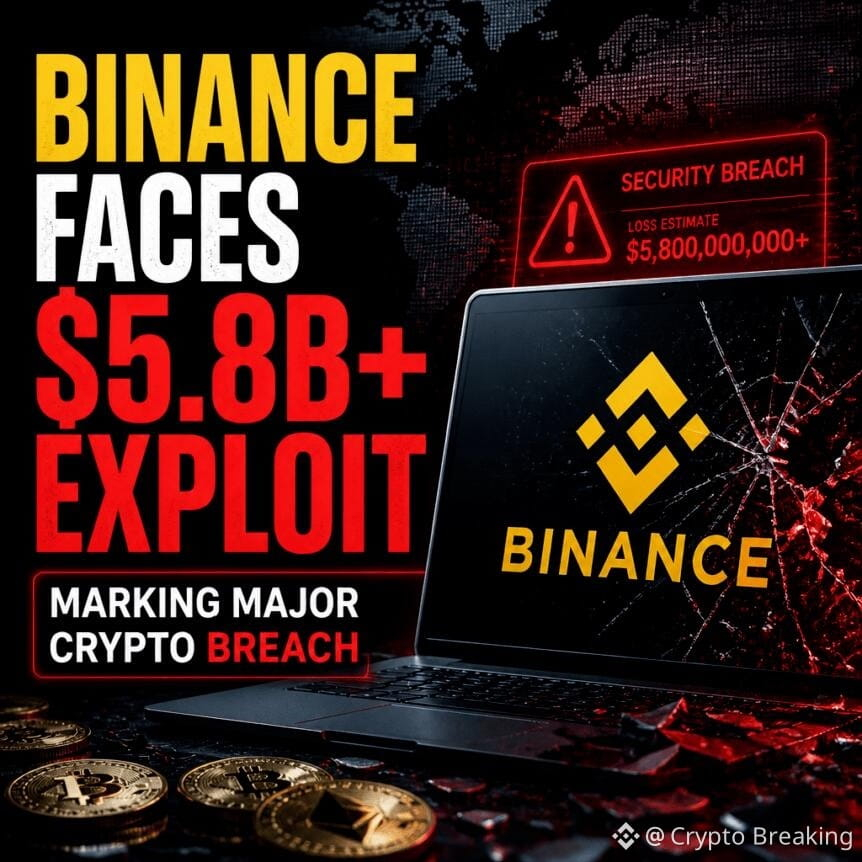
Статья
Binance Faces $5.8B+ Exploit, Marking Major Crypto BreachBinance is investigating reports of a potential security breach tied to an Ethereum wallet that appears to have triggered large, fast-moving stablecoin outflows. According to blockchain observers and stablecoin issuers, suspicious transfers prompted the freezing of nearly $1.8 billion across USDC and USDT, while analytics firms put the broader set of affected wallets’ reported holdings far higher.
On Thursday, blockchain researcher Spreek first flagged activity involving a Binance-linked Ethereum wallet moving funds to a newly created address via a contract call allegedly funded by Tornado Cash. Binance later confirmed it was reviewing the matter and had not confirmed any direct loss of user funds at the time of reporting.
Key takeaways
Binance says it is investigating suspicious activity tied to an Ethereum wallet, but has not yet confirmed impact to user funds.
Stablecoin issuers Circle and Tether reported freezing a combined $2.36 billion worth of tokens linked to the suspected incident.
Blockchain analytics identified “binance-hacker-1029” wallets holding about $5.84 billion in assets, though the figure reflects reported holdings rather than confirmed theft.
Reports of Tornado Cash–funded contract activity and subsequent USDT sales on decentralized exchanges have intensified scrutiny of the transfer trail.
From researcher alerts to stablecoin freezes
The incident first came into focus when Spreek posted on X that assets from a Binance-linked Ethereum wallet had been transferred to a new address through a contract call reportedly funded by Tornado Cash. Spreek subsequently reported that wallets connected to the transfers started selling USDT through decentralized exchanges, suggesting the activity may have been aimed at quickly converting stablecoins to other assets.
As additional tracking emerged, Arkham Intelligence identified a cluster of wallets labeled “binance-hacker-1029,” reporting that the wallets held approximately $5.84 billion in digital assets at the time of its update. Arkham’s figure is described as the wallets’ reported holdings, not an estimate of confirmed stolen funds.
Binance co-founder Changpeng Zhao said the activity appeared to be a hack and pointed to coordinated freezing by stablecoin issuers. Zhao stated that Tether had frozen about $971 million and Circle about $823 million and added that he expected user funds to be fully covered.
Why Tether and Circle’s actions matter
One of the most consequential developments was the rapid response from the two largest stablecoin issuers by market capitalization. Blockaid, in an X post earlier on Thursday, said it had identified roughly $3.3 billion in suspicious transfers involving Binance-linked wallets across Ethereum, Arbitrum, and Avalanche.
In close succession, Circle and Tether announced they had frozen a combined $2.36 billion in tokens linked to the suspected exploit. Circle CEO Jeremy Allaire said the company had frozen more than $800 million in USDC in coordination with law enforcement and would continue supporting the investigation. A few minutes later, Tether CEO Paolo Ardoino said Tether had frozen more than $1.567 billion in USDT tied to the potential incident, emphasizing the company’s priority to protect users and ecosystem partners.
For traders and investors, such freezes can be critical because they can reduce the ability of attackers to move stablecoins off platforms where issuer-side controls can mitigate damage. The downside is that freezes can also complicate market activity around affected addresses and may create uncertainty about how much value is recoverable and when.
Binance’s review and the unresolved gap between “holdings” and “loss”
While multiple parties have tracked large flows, Binance’s position has been more cautious. In a statement provided to Cointelegraph, a Binance spokesperson said the exchange was investigating reports of a potential security issue but had not confirmed any impact on user funds. Binance also said its security teams were reviewing the activity and would share updates once additional information was verified.
This distinction—between reported wallet holdings and confirmed stolen funds—remains important. Arkham’s estimate of $5.84 billion reflects what the labeled wallets were holding, not proof that all of those assets represent successful theft. Similarly, Blockaid’s figure of $3.3 billion refers to suspicious transfers, which may include funds that could be frozen, reversed, or never actually controlled end-to-end by an attacker.
Zhao’s message that he expects all user funds to be fully covered adds to confidence, but it does not replace the need for the underlying technical findings. Until Binance completes its internal review and confirms the scope of any compromise, readers should treat circulating totals as indicators of potential impact rather than finalized loss figures.
What to watch next
Attention now turns to what Binance concludes about the initial vector—particularly the alleged role of Tornado Cash–funded contract activity—and whether any assets beyond the frozen balances are still accessible. As stablecoin issuers continue to coordinate with investigators, market participants should monitor whether additional addresses are labeled, more freezes are announced, and Binance’s investigation confirms what portion of the observed activity ultimately connects to customer funds.
This article was originally published as Binance Faces $5.8B+ Exploit, Marking Major Crypto Breach on Crypto Breaking News – your trusted source for crypto news, Bitcoin news, and blockchain updates.
Binance Faces $5.8B+ Exploit, Marking Major Crypto Breach
Binance is investigating reports of a potential security breach tied to an Ethereum wallet that appears to have triggered large, fast-moving stablecoin outflows. According to blockchain observers and stablecoin issuers, suspicious transfers prompted the freezing of nearly $1.8 billion across USDC and USDT, while analytics firms put the broader set of affected wallets’ reported holdings far higher.
On Thursday, blockchain researcher Spreek first flagged activity involving a Binance-linked Ethereum wallet moving funds to a newly created address via a contract call allegedly funded by Tornado Cash. Binance later confirmed it was reviewing the matter and had not confirmed any direct loss of user funds at the time of reporting.
Key takeaways
Binance says it is investigating suspicious activity tied to an Ethereum wallet, but has not yet confirmed impact to user funds.
Stablecoin issuers Circle and Tether reported freezing a combined $2.36 billion worth of tokens linked to the suspected incident.
Blockchain analytics identified “binance-hacker-1029” wallets holding about $5.84 billion in assets, though the figure reflects reported holdings rather than confirmed theft.
Reports of Tornado Cash–funded contract activity and subsequent USDT sales on decentralized exchanges have intensified scrutiny of the transfer trail.
From researcher alerts to stablecoin freezes
The incident first came into focus when Spreek posted on X that assets from a Binance-linked Ethereum wallet had been transferred to a new address through a contract call reportedly funded by Tornado Cash. Spreek subsequently reported that wallets connected to the transfers started selling USDT through decentralized exchanges, suggesting the activity may have been aimed at quickly converting stablecoins to other assets.
As additional tracking emerged, Arkham Intelligence identified a cluster of wallets labeled “binance-hacker-1029,” reporting that the wallets held approximately $5.84 billion in digital assets at the time of its update. Arkham’s figure is described as the wallets’ reported holdings, not an estimate of confirmed stolen funds.
Binance co-founder Changpeng Zhao said the activity appeared to be a hack and pointed to coordinated freezing by stablecoin issuers. Zhao stated that Tether had frozen about $971 million and Circle about $823 million and added that he expected user funds to be fully covered.
Why Tether and Circle’s actions matter
One of the most consequential developments was the rapid response from the two largest stablecoin issuers by market capitalization. Blockaid, in an X post earlier on Thursday, said it had identified roughly $3.3 billion in suspicious transfers involving Binance-linked wallets across Ethereum, Arbitrum, and Avalanche.
In close succession, Circle and Tether announced they had frozen a combined $2.36 billion in tokens linked to the suspected exploit. Circle CEO Jeremy Allaire said the company had frozen more than $800 million in USDC in coordination with law enforcement and would continue supporting the investigation. A few minutes later, Tether CEO Paolo Ardoino said Tether had frozen more than $1.567 billion in USDT tied to the potential incident, emphasizing the company’s priority to protect users and ecosystem partners.
For traders and investors, such freezes can be critical because they can reduce the ability of attackers to move stablecoins off platforms where issuer-side controls can mitigate damage. The downside is that freezes can also complicate market activity around affected addresses and may create uncertainty about how much value is recoverable and when.
Binance’s review and the unresolved gap between “holdings” and “loss”
While multiple parties have tracked large flows, Binance’s position has been more cautious. In a statement provided to Cointelegraph, a Binance spokesperson said the exchange was investigating reports of a potential security issue but had not confirmed any impact on user funds. Binance also said its security teams were reviewing the activity and would share updates once additional information was verified.
This distinction—between reported wallet holdings and confirmed stolen funds—remains important. Arkham’s estimate of $5.84 billion reflects what the labeled wallets were holding, not proof that all of those assets represent successful theft. Similarly, Blockaid’s figure of $3.3 billion refers to suspicious transfers, which may include funds that could be frozen, reversed, or never actually controlled end-to-end by an attacker.
Zhao’s message that he expects all user funds to be fully covered adds to confidence, but it does not replace the need for the underlying technical findings. Until Binance completes its internal review and confirms the scope of any compromise, readers should treat circulating totals as indicators of potential impact rather than finalized loss figures.
What to watch next
Attention now turns to what Binance concludes about the initial vector—particularly the alleged role of Tornado Cash–funded contract activity—and whether any assets beyond the frozen balances are still accessible. As stablecoin issuers continue to coordinate with investigators, market participants should monitor whether additional addresses are labeled, more freezes are announced, and Binance’s investigation confirms what portion of the observed activity ultimately connects to customer funds.
This article was originally published as Binance Faces $5.8B+ Exploit, Marking Major Crypto Breach on Crypto Breaking News – your trusted source for crypto news, Bitcoin news, and blockchain updates.
282
Статья
Brazil’s Crypto Deadline on Halloween: Compliance Deadline LoomsBrazil’s cryptocurrency industry is heading into a tight regulatory phase as exchange operators face a license application deadline tied to the country’s new central-bank framework for crypto services. Companies already operating in Brazil must submit for authorization by Friday in order to continue providing regulated services while the review process begins.
However, filing is only the start. Lawyers and exchange executives say the application window doesn’t resolve the harder parts of compliance—especially for smaller platforms that may struggle with capital requirements, ongoing audits, and unresolved operational questions around wallet identification and transaction reporting.
Key takeaways
Exchanges already operating in Brazil must apply by Friday to maintain their ability to offer crypto services during the regulator review period.
Even for timely applicants, the authorization process can take up to two years, according to Brazilian legal counsel.
Platforms that miss the deadline must stop providing services within 30 days, and banks/payment institutions face restrictions on crypto transactions with unauthorized providers starting Nov. 6.
Unanswered regulatory details—especially around self-custody wallet identification and key thresholds—create compliance risk for exchanges.
Minimum capital and control obligations may be too heavy for smaller operators, potentially accelerating market concentration.
Friday’s filing deadline—what comes after
Brazil introduced its crypto regulatory framework in November 2025, setting rules for exchanges, custodians, and other virtual asset service providers under the supervision of the Banco Central do Brasil (BCB). The policy establishes authorization requirements that exchanges must meet to operate legally.
For firms already active in the market, submitting the authorization application by Friday is a condition to remain operational while regulators assess the request. Fabio Cendão, founding partner at FCM Law, told Cointelegraph that the practical challenge begins after the filing, when companies must meet high compliance burdens and prepare for recurring scrutiny.
According to Cendão, regulators can take up to two years to review approved applications. For new entrants, the rules are more stringent: platforms must secure authorization before launching regulated services in Brazil.
Those who miss Friday’s deadline face a limited runway. Marcelo de Castro Cunha Filho, a lawyer at Machado Meyer, said non-compliant providers would need to stop services within 30 days from Friday. He also noted that from Nov. 6, banks and payment institutions will face restrictions on engaging in crypto transactions with providers that are not authorized.
Regulatory gaps still hang over wallet controls
Beyond timing, some of the most important compliance requirements remain difficult to operationalize. Under Brazil’s rules, crypto service providers must verify the origin and destination of crypto transfers, including transfers involving self-custodial wallets.
The framework also sets a $100,000 limit on certain international crypto transfers when the counterparty is not authorized to operate in Brazil’s foreign exchange market. In practice, exchanges must apply these limits while complying with transfer verification obligations.
Binance Brazil general manager Thiago Sarandy told Cointelegraph that key questions remain unresolved—particularly how exchanges should identify self-custody wallets, how to interpret the $100,000 operational limit, and how to determine minimum transaction-reporting thresholds.
For Sarandy, the core issue is consistency and auditability. He said the lack of clarity could lead exchanges to report fragmented or uneven data to regulators, potentially undermining oversight capacity. “The lack of clarity creates a risky situation,” he warned, adding that inconsistent reporting could “jeopardize the oversight capacity.”
Sarandy said industry association ABCripto has submitted questions to the BCB but had not received answers at the time of reporting. The BCB did not respond to Cointelegraph’s request for comment by publication time.
Compliance costs and capital requirements may reshape the market
As larger global exchanges prepare documentation and build compliance workflows, the economics of Brazil’s regulatory standard may prove difficult for smaller operators. Cendão said minimum capital requirements can range from 10.8 million Brazilian reais (about $2 million) to 37.2 million reais (about $6.9 million), depending on what services an exchange offers.
He also pointed to additional cost drivers beyond upfront capital: technical certification, custody audits, and anti-money laundering controls. Taken together, he warned that these expenses could make compliance unviable for smaller exchanges, increasing the likelihood of market concentration as only well-capitalized platforms remain able to meet the requirements.
That shift is already visible in how different players are positioning for the new licensing environment. Cointelegraph previously reported that major global exchanges have filed license applications in Brazil, including OKX, Binance, and Coinbase. Meanwhile, Bitso is said to be ending direct retail services in Brazil through a partnership arrangement with Mercado Bitcoin.
For investors and traders, this regulatory-driven consolidation risk matters because it can affect competition, liquidity, and user choices—especially in periods when platforms may face service restrictions if authorization timelines slip or compliance measures fail.
What happens to users if a provider misses out
Another unresolved operational point concerns customer asset handling for firms that fail to secure authorization. Cunha Filho said it is unclear how exchanges that miss the deadline should return crypto to customers who either do not have accounts with authorized providers or have not agreed to transfer their assets.
The issue is not merely legal—it affects the day-to-day user experience. If compliance decisions lead to service stoppages, users will likely be looking for clear, predictable paths for withdrawing holdings and avoiding delays. Uncertainty about custody and transfer mechanics could become a key operational stress point during the post-deadline transition period.
With the compliance timeline stretching potentially up to two years for authorized applicants, companies and users will need to watch for how regulators clarify wallet identification, reporting thresholds, and operational limits, and how they expect exchanges to manage customer transfers during any enforcement actions.
Next, market participants should focus on whether the BCB issues further guidance on self-custody wallet classification, transaction-reporting thresholds, and the $100,000 operational limit—because those details will determine how exchanges design their compliance systems before the deadline’s consequences begin. Until regulators tighten the remaining ambiguities, exchanges may still face the risk of inconsistent reporting and operational missteps during the authorization review window.
This article was originally published as Brazil’s Crypto Deadline on Halloween: Compliance Deadline Looms on Crypto Breaking News – your trusted source for crypto news, Bitcoin news, and blockchain updates.
Brazil’s Crypto Deadline on Halloween: Compliance Deadline Looms
Brazil’s cryptocurrency industry is heading into a tight regulatory phase as exchange operators face a license application deadline tied to the country’s new central-bank framework for crypto services. Companies already operating in Brazil must submit for authorization by Friday in order to continue providing regulated services while the review process begins.
However, filing is only the start. Lawyers and exchange executives say the application window doesn’t resolve the harder parts of compliance—especially for smaller platforms that may struggle with capital requirements, ongoing audits, and unresolved operational questions around wallet identification and transaction reporting.
Key takeaways
Exchanges already operating in Brazil must apply by Friday to maintain their ability to offer crypto services during the regulator review period.
Even for timely applicants, the authorization process can take up to two years, according to Brazilian legal counsel.
Platforms that miss the deadline must stop providing services within 30 days, and banks/payment institutions face restrictions on crypto transactions with unauthorized providers starting Nov. 6.
Unanswered regulatory details—especially around self-custody wallet identification and key thresholds—create compliance risk for exchanges.
Minimum capital and control obligations may be too heavy for smaller operators, potentially accelerating market concentration.
Friday’s filing deadline—what comes after
Brazil introduced its crypto regulatory framework in November 2025, setting rules for exchanges, custodians, and other virtual asset service providers under the supervision of the Banco Central do Brasil (BCB). The policy establishes authorization requirements that exchanges must meet to operate legally.
For firms already active in the market, submitting the authorization application by Friday is a condition to remain operational while regulators assess the request. Fabio Cendão, founding partner at FCM Law, told Cointelegraph that the practical challenge begins after the filing, when companies must meet high compliance burdens and prepare for recurring scrutiny.
According to Cendão, regulators can take up to two years to review approved applications. For new entrants, the rules are more stringent: platforms must secure authorization before launching regulated services in Brazil.
Those who miss Friday’s deadline face a limited runway. Marcelo de Castro Cunha Filho, a lawyer at Machado Meyer, said non-compliant providers would need to stop services within 30 days from Friday. He also noted that from Nov. 6, banks and payment institutions will face restrictions on engaging in crypto transactions with providers that are not authorized.
Regulatory gaps still hang over wallet controls
Beyond timing, some of the most important compliance requirements remain difficult to operationalize. Under Brazil’s rules, crypto service providers must verify the origin and destination of crypto transfers, including transfers involving self-custodial wallets.
The framework also sets a $100,000 limit on certain international crypto transfers when the counterparty is not authorized to operate in Brazil’s foreign exchange market. In practice, exchanges must apply these limits while complying with transfer verification obligations.
Binance Brazil general manager Thiago Sarandy told Cointelegraph that key questions remain unresolved—particularly how exchanges should identify self-custody wallets, how to interpret the $100,000 operational limit, and how to determine minimum transaction-reporting thresholds.
For Sarandy, the core issue is consistency and auditability. He said the lack of clarity could lead exchanges to report fragmented or uneven data to regulators, potentially undermining oversight capacity. “The lack of clarity creates a risky situation,” he warned, adding that inconsistent reporting could “jeopardize the oversight capacity.”
Sarandy said industry association ABCripto has submitted questions to the BCB but had not received answers at the time of reporting. The BCB did not respond to Cointelegraph’s request for comment by publication time.
Compliance costs and capital requirements may reshape the market
As larger global exchanges prepare documentation and build compliance workflows, the economics of Brazil’s regulatory standard may prove difficult for smaller operators. Cendão said minimum capital requirements can range from 10.8 million Brazilian reais (about $2 million) to 37.2 million reais (about $6.9 million), depending on what services an exchange offers.
He also pointed to additional cost drivers beyond upfront capital: technical certification, custody audits, and anti-money laundering controls. Taken together, he warned that these expenses could make compliance unviable for smaller exchanges, increasing the likelihood of market concentration as only well-capitalized platforms remain able to meet the requirements.
That shift is already visible in how different players are positioning for the new licensing environment. Cointelegraph previously reported that major global exchanges have filed license applications in Brazil, including OKX, Binance, and Coinbase. Meanwhile, Bitso is said to be ending direct retail services in Brazil through a partnership arrangement with Mercado Bitcoin.
For investors and traders, this regulatory-driven consolidation risk matters because it can affect competition, liquidity, and user choices—especially in periods when platforms may face service restrictions if authorization timelines slip or compliance measures fail.
What happens to users if a provider misses out
Another unresolved operational point concerns customer asset handling for firms that fail to secure authorization. Cunha Filho said it is unclear how exchanges that miss the deadline should return crypto to customers who either do not have accounts with authorized providers or have not agreed to transfer their assets.
The issue is not merely legal—it affects the day-to-day user experience. If compliance decisions lead to service stoppages, users will likely be looking for clear, predictable paths for withdrawing holdings and avoiding delays. Uncertainty about custody and transfer mechanics could become a key operational stress point during the post-deadline transition period.
With the compliance timeline stretching potentially up to two years for authorized applicants, companies and users will need to watch for how regulators clarify wallet identification, reporting thresholds, and operational limits, and how they expect exchanges to manage customer transfers during any enforcement actions.
Next, market participants should focus on whether the BCB issues further guidance on self-custody wallet classification, transaction-reporting thresholds, and the $100,000 operational limit—because those details will determine how exchanges design their compliance systems before the deadline’s consequences begin. Until regulators tighten the remaining ambiguities, exchanges may still face the risk of inconsistent reporting and operational missteps during the authorization review window.
This article was originally published as Brazil’s Crypto Deadline on Halloween: Compliance Deadline Looms on Crypto Breaking News – your trusted source for crypto news, Bitcoin news, and blockchain updates.
15
Статья
Winklevoss Zcash ETF Filing Among Three Crypto ETF Proposal AmendmentsAmong the October crypto ETF filings were the filing for a Winklevoss Zcash ETF, the withdrawal of VanEck’s Lido staked Ether fund proposal, and three proposals related to Injective, multiple asset funds, and Bittensor.
October 6 saw the filing of the Winklevoss Zcash ETF, which would be listed on the Nasdaq under the ticker WINK. VanEck withdrew its proposed Lido stake Ether fund proposal on October 14 after the fund had failed to sell any shares. There were three ETF-related amendment proposals from Canary, Cryptex, and Grayscale on October 23.
Note that this list covers recent developments in crypto ETF proposals only, not approvals or launches.
Zcash ETF Filing Added to List of ETF Filings
A new ETF filing related to a Zcash ETF was added to the list of ETF filings in October. According to Whale Factor’s October ETF filing round-up, there were five filings related to ETFs, including one new filing and four amendment or withdrawal filings.
The Winklevoss Zcash ETF was filed on October 6. The ETF lists Nasdaq as the exchange and WINK as the proposed ticker symbol.
It is another ETF filing regarding the potential listing of an ETF based on the Zcash (ZEC) crypto. The ETF round-up lists Grayscale’s existing offering as the predecessor in the Zcash ETF field. However, no information is available regarding the approval or the trading date of the Zcash ETF. Investors need to differentiate between the filing and an operational ETF.
VanEck Withdraws Its Proposed Lido Staked Ether Fund
VanEck withdrew its proposed Lido stake Ether fund on October 14. The October round-up shows that the proposed investment product did not sell any shares prior to the withdrawal.
There is no information available explaining the reason for the move. Therefore, there is no way to attribute the withdrawal to low demand by investors, regulatory issues, or the shift in the investment strategy of the firm without more information.
Withdrawals and amendments are two different points in the life cycle of an ETF filing. While an amendment changes the existing proposition, a withdrawal takes it out of the ongoing process. Monitoring withdrawals and amendments together provides better insight into the development of crypto investment products after the filing. Therefore, this move indicates a change in the proposed ETF product portfolio of VanEck.
Three ETFs Amend Their Proposals On October 23
Three ETFs—Canary, Cryptex, and Grayscale—amended their proposals on October 23 as part of ongoing modifications to suggested digital-asset investment instruments.
The fourth amendment was filed by Canary in respect of its suggested staked Injective ETF tracking INJ. It is worth noting that the amendment is related to the existing application, not a new one.
Cryptex filed its sixth amendment regarding its multi-asset index ETF. Despite being another modification, it has not been stated precisely what particular changes were incorporated in the latest one.
Grayscale filed its second amendment regarding the creation of its Bittensor trust. The idea is to rename it the Grayscale Bittensor ETF and list it on the NYSE Arca with the symbol GTAO.
All these proposals suggest different ways of gaining exposure to crypto investments. Thus, Canary is focused on staked Injective, Cryptex is focused on the index of digital assets, and Grayscale is focused on a Bittensor ETF.
October’s ETF Activities Revealed
October’s activities include one filing and five updates due to amendments, along with one withdrawal of a proposal. The numbers highlight the ongoing nature of crypto ETFs’ applications and their potential to change throughout the revision, cancellation, or regulatory process.
The Winklevoss application includes Zcash as part of October’s filing activity, and VanEck’s withdrawal removes an undeveloped application from its product range. At the same time, Canary, Cryptex, and Grayscale updated their proposals as well.
The crucial point for investors is the possibility that these applications become approved and available for trade. As long as no further regulatory decisions have been made, they can be considered proposals only.
This article was originally published as Winklevoss Zcash ETF Filing Among Three Crypto ETF Proposal Amendments on Crypto Breaking News – your trusted source for crypto news, Bitcoin news, and blockchain updates.
Winklevoss Zcash ETF Filing Among Three Crypto ETF Proposal Amendments
Among the October crypto ETF filings were the filing for a Winklevoss Zcash ETF, the withdrawal of VanEck’s Lido staked Ether fund proposal, and three proposals related to Injective, multiple asset funds, and Bittensor.
October 6 saw the filing of the Winklevoss Zcash ETF, which would be listed on the Nasdaq under the ticker WINK. VanEck withdrew its proposed Lido stake Ether fund proposal on October 14 after the fund had failed to sell any shares. There were three ETF-related amendment proposals from Canary, Cryptex, and Grayscale on October 23.
Note that this list covers recent developments in crypto ETF proposals only, not approvals or launches.
Zcash ETF Filing Added to List of ETF Filings
A new ETF filing related to a Zcash ETF was added to the list of ETF filings in October. According to Whale Factor’s October ETF filing round-up, there were five filings related to ETFs, including one new filing and four amendment or withdrawal filings.
The Winklevoss Zcash ETF was filed on October 6. The ETF lists Nasdaq as the exchange and WINK as the proposed ticker symbol.
It is another ETF filing regarding the potential listing of an ETF based on the Zcash (ZEC) crypto. The ETF round-up lists Grayscale’s existing offering as the predecessor in the Zcash ETF field. However, no information is available regarding the approval or the trading date of the Zcash ETF. Investors need to differentiate between the filing and an operational ETF.
VanEck Withdraws Its Proposed Lido Staked Ether Fund
VanEck withdrew its proposed Lido stake Ether fund on October 14. The October round-up shows that the proposed investment product did not sell any shares prior to the withdrawal.
There is no information available explaining the reason for the move. Therefore, there is no way to attribute the withdrawal to low demand by investors, regulatory issues, or the shift in the investment strategy of the firm without more information.
Withdrawals and amendments are two different points in the life cycle of an ETF filing. While an amendment changes the existing proposition, a withdrawal takes it out of the ongoing process. Monitoring withdrawals and amendments together provides better insight into the development of crypto investment products after the filing. Therefore, this move indicates a change in the proposed ETF product portfolio of VanEck.
Three ETFs Amend Their Proposals On October 23
Three ETFs—Canary, Cryptex, and Grayscale—amended their proposals on October 23 as part of ongoing modifications to suggested digital-asset investment instruments.
The fourth amendment was filed by Canary in respect of its suggested staked Injective ETF tracking INJ. It is worth noting that the amendment is related to the existing application, not a new one.
Cryptex filed its sixth amendment regarding its multi-asset index ETF. Despite being another modification, it has not been stated precisely what particular changes were incorporated in the latest one.
Grayscale filed its second amendment regarding the creation of its Bittensor trust. The idea is to rename it the Grayscale Bittensor ETF and list it on the NYSE Arca with the symbol GTAO.
All these proposals suggest different ways of gaining exposure to crypto investments. Thus, Canary is focused on staked Injective, Cryptex is focused on the index of digital assets, and Grayscale is focused on a Bittensor ETF.
October’s ETF Activities Revealed
October’s activities include one filing and five updates due to amendments, along with one withdrawal of a proposal. The numbers highlight the ongoing nature of crypto ETFs’ applications and their potential to change throughout the revision, cancellation, or regulatory process.
The Winklevoss application includes Zcash as part of October’s filing activity, and VanEck’s withdrawal removes an undeveloped application from its product range. At the same time, Canary, Cryptex, and Grayscale updated their proposals as well.
The crucial point for investors is the possibility that these applications become approved and available for trade. As long as no further regulatory decisions have been made, they can be considered proposals only.
This article was originally published as Winklevoss Zcash ETF Filing Among Three Crypto ETF Proposal Amendments on Crypto Breaking News – your trusted source for crypto news, Bitcoin news, and blockchain updates.
368
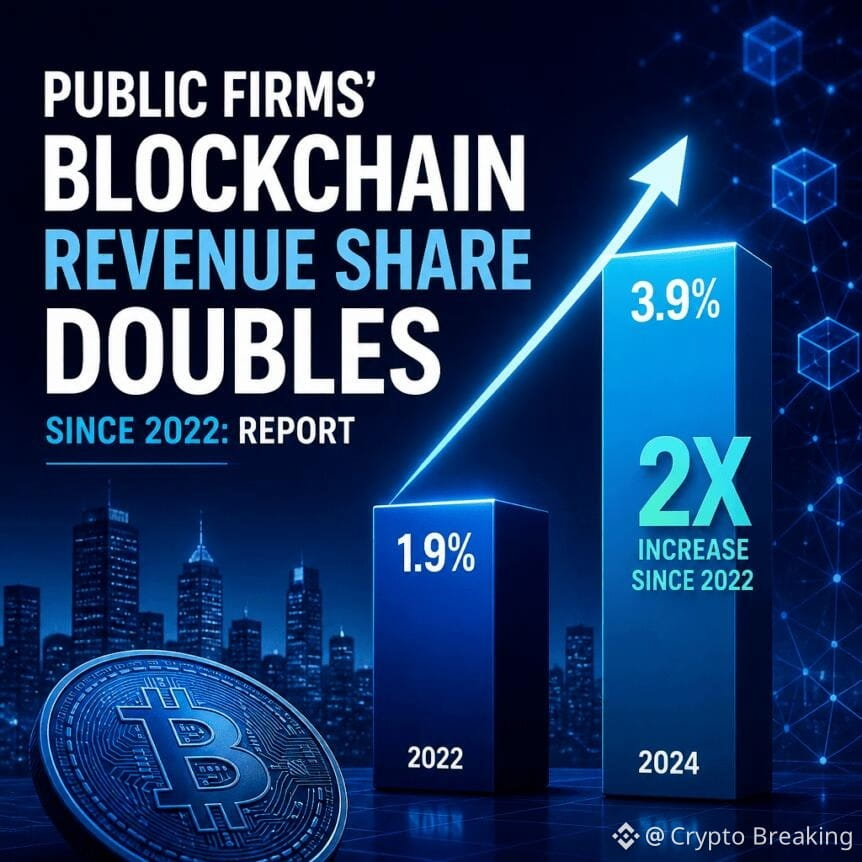
Статья
Public Firms’ Blockchain Revenue Share Doubles Since 2022: ReportPublic companies are playing a steadily larger role in the blockchain economy, according to a new revenue report from crypto investment firm 1kx. The share of blockchain industry revenue attributed to publicly traded companies rose to 16% in 2026—more than doubling from 7% in 2022—while overall blockchain revenue is projected to shrink.
1kx projects that total blockchain-related revenue will fall 28% year over year to about $100 billion in 2026. The firm’s analysis covers data from more than 2,600 protocols and the earnings reports of 104 publicly traded companies through the third quarter, offering a broad view of where money is flowing across both infrastructure and real-world applications.
Key takeaways
Publicly traded companies’ share climbs: 16% of blockchain revenue in 2026, up from 7% in 2022, per 1kx.
Overall market is contracting: 1kx projects 2026 blockchain revenue will decline 28% year over year to roughly $100 billion.
Concentration remains high: the six largest public companies account for about 50% to 60% of the group’s revenue.
Non-infrastructure activity is gaining ground: revenue tied to broader economic activity overtakes infrastructure for the first time in Q3.
Tokenization is accelerating: RWA.xyz data shows distributed tokenized real-world assets rising ~51% over the last year, with tokenized equities up sharply.
Public listings and shifting revenue mix
1kx attributes the growing contribution from public companies partly to the sector’s expanding footprint in traditional markets, including new stock market listings. The report points to Circle’s 2025 initial public offering as an example of how token and stablecoin-related businesses have become more embedded in public-company reporting.
Beyond new listings, the firm also links the rise to revenue growth among existing public participants. In particular, the 10 largest publicly traded companies in 1kx’s sample reportedly doubled their blockchain-related revenue over the past three years—helping lift the group’s weight in the overall industry despite a predicted contraction in aggregate revenue.
Revenue is still dominated by a small set of companies. In the first half of 2026, Coinbase and Circle generated about $3.3 billion in combined blockchain-related revenue, while publicly traded Bitcoin miners earned roughly $2 billion. Traditional financial and consumer-facing firms—including JPMorgan, BlackRock, CME Group, Visa, and Robinhood—contributed another $1.1 billion collectively, according to 1kx.
When infrastructure is no longer the only winner
A central theme of the report is that blockchain economics are increasingly driven by activity that goes beyond core infrastructure. In the third quarter, revenue from “broader economic activity” surpassed infrastructure revenue for the first time, reaching approximately $5.3 billion compared with $5.1 billion, per 1kx.
In 1kx’s framework, broader economic activity includes tokenized assets, payments, and prediction markets—areas where blockchain functionality is being packaged for use in finance and consumer services rather than purely for network operations. That segment grew 58% year over year in the first half of 2026 and, together with institutional adoption, accounted for 33% of total blockchain revenue in Q3.
Looking ahead, 1kx projects that this combined share will reach 30% for the full year, underscoring that the market’s center of gravity is shifting even as the overall industry is expected to contract.
Real-world assets and tokenized markets gain momentum
Support for that shift also appears in tokenization metrics outside of 1kx’s company revenue sample. Data from RWA.xyz shows the value of distributed tokenized real-world assets rose roughly 51% over the past year—from $26.16 billion in October 2025 to $39.54 billion as of Thursday. Tokenized equities grew even faster, surging 471% over the same period to $3.77 billion.
The implication for investors and builders is straightforward: even if total blockchain revenue faces headwinds, segments connected to real-world assets and structured financial use cases are expanding their share. That matters because it suggests demand for blockchain-enabled financial products is broadening beyond networks and infrastructure providers into asset classes that more directly resemble existing capital markets.
It also highlights a tension that the report’s numbers make visible. A shrinking top-line for “blockchain revenue” does not necessarily mean diminishing relevance of all blockchain applications. Instead, the industry may be reallocating spend toward tokenization, payments, and prediction-related activity—areas that can attract institutional involvement and generate revenue through mainstream financial rails.
What to watch next in 2026
With public companies already accounting for 16% of blockchain revenue in 2026 and broader economic activity gaining ground, the key question for the rest of the year is how stable these shares remain as the market adjusts to a projected decline in total revenue. Investors and market participants should watch whether tokenized assets and other non-infrastructure categories continue to expand fast enough to offset weakening infrastructure demand, and whether concentration among the largest public firms persists or starts to broaden.
This article was originally published as Public Firms’ Blockchain Revenue Share Doubles Since 2022: Report on Crypto Breaking News – your trusted source for crypto news, Bitcoin news, and blockchain updates.
Public Firms’ Blockchain Revenue Share Doubles Since 2022: Report
Public companies are playing a steadily larger role in the blockchain economy, according to a new revenue report from crypto investment firm 1kx. The share of blockchain industry revenue attributed to publicly traded companies rose to 16% in 2026—more than doubling from 7% in 2022—while overall blockchain revenue is projected to shrink.
1kx projects that total blockchain-related revenue will fall 28% year over year to about $100 billion in 2026. The firm’s analysis covers data from more than 2,600 protocols and the earnings reports of 104 publicly traded companies through the third quarter, offering a broad view of where money is flowing across both infrastructure and real-world applications.
Key takeaways
Publicly traded companies’ share climbs: 16% of blockchain revenue in 2026, up from 7% in 2022, per 1kx.
Overall market is contracting: 1kx projects 2026 blockchain revenue will decline 28% year over year to roughly $100 billion.
Concentration remains high: the six largest public companies account for about 50% to 60% of the group’s revenue.
Non-infrastructure activity is gaining ground: revenue tied to broader economic activity overtakes infrastructure for the first time in Q3.
Tokenization is accelerating: RWA.xyz data shows distributed tokenized real-world assets rising ~51% over the last year, with tokenized equities up sharply.
Public listings and shifting revenue mix
1kx attributes the growing contribution from public companies partly to the sector’s expanding footprint in traditional markets, including new stock market listings. The report points to Circle’s 2025 initial public offering as an example of how token and stablecoin-related businesses have become more embedded in public-company reporting.
Beyond new listings, the firm also links the rise to revenue growth among existing public participants. In particular, the 10 largest publicly traded companies in 1kx’s sample reportedly doubled their blockchain-related revenue over the past three years—helping lift the group’s weight in the overall industry despite a predicted contraction in aggregate revenue.
Revenue is still dominated by a small set of companies. In the first half of 2026, Coinbase and Circle generated about $3.3 billion in combined blockchain-related revenue, while publicly traded Bitcoin miners earned roughly $2 billion. Traditional financial and consumer-facing firms—including JPMorgan, BlackRock, CME Group, Visa, and Robinhood—contributed another $1.1 billion collectively, according to 1kx.
When infrastructure is no longer the only winner
A central theme of the report is that blockchain economics are increasingly driven by activity that goes beyond core infrastructure. In the third quarter, revenue from “broader economic activity” surpassed infrastructure revenue for the first time, reaching approximately $5.3 billion compared with $5.1 billion, per 1kx.
In 1kx’s framework, broader economic activity includes tokenized assets, payments, and prediction markets—areas where blockchain functionality is being packaged for use in finance and consumer services rather than purely for network operations. That segment grew 58% year over year in the first half of 2026 and, together with institutional adoption, accounted for 33% of total blockchain revenue in Q3.
Looking ahead, 1kx projects that this combined share will reach 30% for the full year, underscoring that the market’s center of gravity is shifting even as the overall industry is expected to contract.
Real-world assets and tokenized markets gain momentum
Support for that shift also appears in tokenization metrics outside of 1kx’s company revenue sample. Data from RWA.xyz shows the value of distributed tokenized real-world assets rose roughly 51% over the past year—from $26.16 billion in October 2025 to $39.54 billion as of Thursday. Tokenized equities grew even faster, surging 471% over the same period to $3.77 billion.
The implication for investors and builders is straightforward: even if total blockchain revenue faces headwinds, segments connected to real-world assets and structured financial use cases are expanding their share. That matters because it suggests demand for blockchain-enabled financial products is broadening beyond networks and infrastructure providers into asset classes that more directly resemble existing capital markets.
It also highlights a tension that the report’s numbers make visible. A shrinking top-line for “blockchain revenue” does not necessarily mean diminishing relevance of all blockchain applications. Instead, the industry may be reallocating spend toward tokenization, payments, and prediction-related activity—areas that can attract institutional involvement and generate revenue through mainstream financial rails.
What to watch next in 2026
With public companies already accounting for 16% of blockchain revenue in 2026 and broader economic activity gaining ground, the key question for the rest of the year is how stable these shares remain as the market adjusts to a projected decline in total revenue. Investors and market participants should watch whether tokenized assets and other non-infrastructure categories continue to expand fast enough to offset weakening infrastructure demand, and whether concentration among the largest public firms persists or starts to broaden.
This article was originally published as Public Firms’ Blockchain Revenue Share Doubles Since 2022: Report on Crypto Breaking News – your trusted source for crypto news, Bitcoin news, and blockchain updates.
33
Статья
Private Fast USDT Set for Bitcoin, Testing Against Ethereum and TronDubai-based blockchain startup Utexo says it will relaunch Tether’s USDT stablecoin on Bitcoin after a three-year gap, using the RGB protocol to keep transaction details off the public blockchain. The company is targeting a public rollout on Nov. 28, with planned Lightning Network support in Q1 2027.
The pitch is straightforward: settle on Bitcoin for security, move using Lightning for speed, and use RGB for transaction confidentiality. Whether that message will resonate—given that more than $300 billion in stablecoins are already circulating across major networks such as Ethereum and Tron—will likely depend on how easily existing market participants can move USDT to Bitcoin and whether the confidentiality and payment performance improvements outweigh the current ecosystem advantages elsewhere.
Key takeaways
Utexo plans to bring USDT back to Bitcoin via RGB, with a public launch scheduled for Nov. 28.
Lightning Network integration is slated for Q1 2027, aiming to improve payment latency and throughput for USDT transfers.
RGB is positioned as a Bitcoin-native approach that keeps asset-transfer data off-chain while anchoring cryptographic commitments to Bitcoin.
Utexo’s USDT Mint for moving liquidity onto Bitcoin runs through a cross-network locking and redemption process that introduces bridge-style trust and security considerations.
Utexo expects demand to come primarily from payments and simpler financial workflows, not from replicating Ethereum’s DeFi ecosystem on Bitcoin.
From USDT on Bitcoin to a pause—and now a comeback
This is not the first time USDT has lived on Bitcoin. Tether’s stablecoin began on Bitcoin in 2014 through the Omni protocol, but issuance on that route was halted in August 2023, with Tether attributing the decision to declining usage.
In August 2025, Tether later announced plans to launch USDT on RGB, implying a new path for native Bitcoin stablecoin support. That timeline shifted: Utexo raised a $7.5 million seed round led by Tether in March, and the new company says it will use Tether’s USDT0 protocol to launch the Bitcoin version of the stablecoin.
Utexo’s chief executive Viktor Ihnatiuk, speaking in an interview with Magazine, framed the “why now” in terms of two changes: speed and privacy. The company argues that settlement on Bitcoin can provide security, while RGB keeps transaction details off-chain—constraints that, according to Ihnatiuk, matter for real-world businesses that prefer not to expose counterparties and balances publicly.
“You can actually achieve any speed you want to achieve,” Ihnatiuk said, adding that Lightning is the core technology for scaling payments on Bitcoin.
What RGB is trying to solve on Bitcoin
RGB has been in development since 2016 and is designed to enable users to issue and transfer digital assets using contracts tied to Bitcoin without recording every transfer detail on the public blockchain. Instead of asking Bitcoin to behave like a smart-contract platform for each transaction, RGB has parties validate asset transfers themselves, while cryptographic commitments anchored to Bitcoin are used to help secure the system.
In other words, Utexo’s model is not framed as a sidechain or a rollup that recreates a separate execution environment. The company describes RGB as a Bitcoin-native protocol, with privacy as a core design goal.
Utexo also points to compatibility with Lightning for payment-channel transfers. RGB’s planned use with Lightning means USDT movements can be routed through payment channels without requiring every transfer to become a base-layer Bitcoin transaction.
Ihnatiuk argues this can change the practical expectations for Bitcoin-based payments, claiming Lightning can support payment dynamics in the range of “100 milliseconds,” while also noting that broader scaling limitations are often more about user and developer understanding than the underlying capability.
Still, the market question remains: can this offer a compelling alternative to existing stablecoin infrastructure—especially networks where USDT can already leverage smart-contract composability and established DeFi liquidity?
Early access and the “bridge” problem: USDT0 to Bitcoin
Before the public launch, Utexo opened early access to its USDT Mint product on Oct. 22. The program targets “verified professional operators” such as exchanges, wallets, and market makers, offering them a way to test minting, confidential transfers, and redemption on Bitcoin’s Signet test network.
Utexo says the sandbox is designed to let operators validate transaction flows and complete integrations ahead of the end-of-November rollout.
Operationally, however, moving existing USDT onto Bitcoin via Utexo Mint includes an additional step beyond RGB and Bitcoin itself. According to Utexo’s documentation, the service locks USDT0 on Arbitrum before minting an equivalent amount of USDT on Bitcoin. To redeem, users burn the RGB asset on Bitcoin and trigger the release of corresponding funds on the source network.
This means Mint’s security and reliability depend not only on Bitcoin and RGB, but also on the mechanisms that connect the Arbitrum-denominated locked funds with the Bitcoin-side asset. Utexo acknowledges in its design context that bridge architecture can increase risk exposure, since bridges have historically been attractive targets for attackers.
Utexo says Mint has been audited by Oxorio, though it does not make the full audit report publicly available.
Partners, use cases, and what “success” would look like
For distribution, Utexo says it has selected UniSat as a launch partner and plans for support in UniSat’s wallet for USDT transfers and swaps. The company also states it is working with 12 over-the-counter network partners, with another 40 in its pipeline.
On the demand side, Ihnatiuk described the company’s focus as Bitcoin-native trading and lending opportunities, but not an attempt to recreate Ethereum’s decentralized finance stack. He said Bitcoin was “always built for payments,” not for DeFi, and implied the most realistic adoption path is likely to center on payment rails and simpler financial arrangements such as escrow-based exchanges.
Another potential use case Utexo highlighted involves Bitcoin miners. The argument is that miners could swap BTC for USDT directly on Bitcoin rather than moving assets to centralized venues, which could reduce exposure to custodial risk and make hedging strategies easier to automate.
Utexo’s stated ambitions for early adoption are high. In the interview, Ihnatiuk set targets for the first 12 months, saying he would like to reach at least $1 billion USDT on the Bitcoin network, with initial and median goals of $10 billion and $5 billion, respectively.
The company also believes success on Bitcoin could benefit miners through higher fee revenue, reasoning that if USDT activity returns to Bitcoin settlement, a larger share of transaction demand would flow through Bitcoin’s fee market.
Why investors should watch the rollout closely
Utexo’s return plan is built on a familiar stablecoin thesis—settle on Bitcoin, distribute efficiently, and add confidentiality—but the real test will be execution: operator onboarding for Mint, the safety and reliability of the cross-network locking-and-redemption design, and whether Lightning-linked performance plus RGB privacy translate into sustained usage versus competing stablecoin rails. With a public launch set for Nov. 28 and Lightning support targeted for Q1 2027, market participants will likely look for evidence that liquidity and partners can scale quickly enough to make Bitcoin a practical USDT home this time.
This article was originally published as Private Fast USDT Set for Bitcoin, Testing Against Ethereum and Tron on Crypto Breaking News – your trusted source for crypto news, Bitcoin news, and blockchain updates.
Private Fast USDT Set for Bitcoin, Testing Against Ethereum and Tron
Dubai-based blockchain startup Utexo says it will relaunch Tether’s USDT stablecoin on Bitcoin after a three-year gap, using the RGB protocol to keep transaction details off the public blockchain. The company is targeting a public rollout on Nov. 28, with planned Lightning Network support in Q1 2027.
The pitch is straightforward: settle on Bitcoin for security, move using Lightning for speed, and use RGB for transaction confidentiality. Whether that message will resonate—given that more than $300 billion in stablecoins are already circulating across major networks such as Ethereum and Tron—will likely depend on how easily existing market participants can move USDT to Bitcoin and whether the confidentiality and payment performance improvements outweigh the current ecosystem advantages elsewhere.
Key takeaways
Utexo plans to bring USDT back to Bitcoin via RGB, with a public launch scheduled for Nov. 28.
Lightning Network integration is slated for Q1 2027, aiming to improve payment latency and throughput for USDT transfers.
RGB is positioned as a Bitcoin-native approach that keeps asset-transfer data off-chain while anchoring cryptographic commitments to Bitcoin.
Utexo’s USDT Mint for moving liquidity onto Bitcoin runs through a cross-network locking and redemption process that introduces bridge-style trust and security considerations.
Utexo expects demand to come primarily from payments and simpler financial workflows, not from replicating Ethereum’s DeFi ecosystem on Bitcoin.
From USDT on Bitcoin to a pause—and now a comeback
This is not the first time USDT has lived on Bitcoin. Tether’s stablecoin began on Bitcoin in 2014 through the Omni protocol, but issuance on that route was halted in August 2023, with Tether attributing the decision to declining usage.
In August 2025, Tether later announced plans to launch USDT on RGB, implying a new path for native Bitcoin stablecoin support. That timeline shifted: Utexo raised a $7.5 million seed round led by Tether in March, and the new company says it will use Tether’s USDT0 protocol to launch the Bitcoin version of the stablecoin.
Utexo’s chief executive Viktor Ihnatiuk, speaking in an interview with Magazine, framed the “why now” in terms of two changes: speed and privacy. The company argues that settlement on Bitcoin can provide security, while RGB keeps transaction details off-chain—constraints that, according to Ihnatiuk, matter for real-world businesses that prefer not to expose counterparties and balances publicly.
“You can actually achieve any speed you want to achieve,” Ihnatiuk said, adding that Lightning is the core technology for scaling payments on Bitcoin.
What RGB is trying to solve on Bitcoin
RGB has been in development since 2016 and is designed to enable users to issue and transfer digital assets using contracts tied to Bitcoin without recording every transfer detail on the public blockchain. Instead of asking Bitcoin to behave like a smart-contract platform for each transaction, RGB has parties validate asset transfers themselves, while cryptographic commitments anchored to Bitcoin are used to help secure the system.
In other words, Utexo’s model is not framed as a sidechain or a rollup that recreates a separate execution environment. The company describes RGB as a Bitcoin-native protocol, with privacy as a core design goal.
Utexo also points to compatibility with Lightning for payment-channel transfers. RGB’s planned use with Lightning means USDT movements can be routed through payment channels without requiring every transfer to become a base-layer Bitcoin transaction.
Ihnatiuk argues this can change the practical expectations for Bitcoin-based payments, claiming Lightning can support payment dynamics in the range of “100 milliseconds,” while also noting that broader scaling limitations are often more about user and developer understanding than the underlying capability.
Still, the market question remains: can this offer a compelling alternative to existing stablecoin infrastructure—especially networks where USDT can already leverage smart-contract composability and established DeFi liquidity?
Early access and the “bridge” problem: USDT0 to Bitcoin
Before the public launch, Utexo opened early access to its USDT Mint product on Oct. 22. The program targets “verified professional operators” such as exchanges, wallets, and market makers, offering them a way to test minting, confidential transfers, and redemption on Bitcoin’s Signet test network.
Utexo says the sandbox is designed to let operators validate transaction flows and complete integrations ahead of the end-of-November rollout.
Operationally, however, moving existing USDT onto Bitcoin via Utexo Mint includes an additional step beyond RGB and Bitcoin itself. According to Utexo’s documentation, the service locks USDT0 on Arbitrum before minting an equivalent amount of USDT on Bitcoin. To redeem, users burn the RGB asset on Bitcoin and trigger the release of corresponding funds on the source network.
This means Mint’s security and reliability depend not only on Bitcoin and RGB, but also on the mechanisms that connect the Arbitrum-denominated locked funds with the Bitcoin-side asset. Utexo acknowledges in its design context that bridge architecture can increase risk exposure, since bridges have historically been attractive targets for attackers.
Utexo says Mint has been audited by Oxorio, though it does not make the full audit report publicly available.
Partners, use cases, and what “success” would look like
For distribution, Utexo says it has selected UniSat as a launch partner and plans for support in UniSat’s wallet for USDT transfers and swaps. The company also states it is working with 12 over-the-counter network partners, with another 40 in its pipeline.
On the demand side, Ihnatiuk described the company’s focus as Bitcoin-native trading and lending opportunities, but not an attempt to recreate Ethereum’s decentralized finance stack. He said Bitcoin was “always built for payments,” not for DeFi, and implied the most realistic adoption path is likely to center on payment rails and simpler financial arrangements such as escrow-based exchanges.
Another potential use case Utexo highlighted involves Bitcoin miners. The argument is that miners could swap BTC for USDT directly on Bitcoin rather than moving assets to centralized venues, which could reduce exposure to custodial risk and make hedging strategies easier to automate.
Utexo’s stated ambitions for early adoption are high. In the interview, Ihnatiuk set targets for the first 12 months, saying he would like to reach at least $1 billion USDT on the Bitcoin network, with initial and median goals of $10 billion and $5 billion, respectively.
The company also believes success on Bitcoin could benefit miners through higher fee revenue, reasoning that if USDT activity returns to Bitcoin settlement, a larger share of transaction demand would flow through Bitcoin’s fee market.
Why investors should watch the rollout closely
Utexo’s return plan is built on a familiar stablecoin thesis—settle on Bitcoin, distribute efficiently, and add confidentiality—but the real test will be execution: operator onboarding for Mint, the safety and reliability of the cross-network locking-and-redemption design, and whether Lightning-linked performance plus RGB privacy translate into sustained usage versus competing stablecoin rails. With a public launch set for Nov. 28 and Lightning support targeted for Q1 2027, market participants will likely look for evidence that liquidity and partners can scale quickly enough to make Bitcoin a practical USDT home this time.
This article was originally published as Private Fast USDT Set for Bitcoin, Testing Against Ethereum and Tron on Crypto Breaking News – your trusted source for crypto news, Bitcoin news, and blockchain updates.
333

Статья
PhotonPay closes $40 million Series C led by Blockchain Capital to expand its stablecoin-focused ...PhotonPay, a Hong Kong-headquartered fintech company, announced on 29 October 2026 that it has closed a $40 million Series C funding round led by Blockchain Capital. PhotonPay said the round includes participation from SBI Group and follow-on investments from IDG Capital, GL Ventures, and Lightspeed Faction. Blacksheep Technology was described by the company as the exclusive financial advisor for the transaction.
The company said the new funding will support expansion of what it calls its stablecoin-centric Financial Operating System (Financial OS). PhotonPay stated the investment priorities include enhancing multi-asset wallet capabilities, expanding global card issuing, strengthening local clearing infrastructure in key markets, and building an agent-ready financial execution layer.
PhotonPay also provided operating figures. The company said that, as of August 2026, its annualized transaction volume reached US$65 billion. It added that it has secured 34 payment and financial licenses and regulatory authorizations across the Americas, Europe and Asia. PhotonPay further claimed it serves over 200,000 business customers across more than 200 countries and territories.
Stablecoin liquidity positioned alongside fiat networks
In its announcement, PhotonPay framed its approach as combining stablecoin liquidity with traditional fiat infrastructure used for corporate operations and cross-border settlement. The company said its Financial OS connects on-chain liquidity with banking, clearing, and card networks through an API-first architecture.
PhotonPay said its multi-asset wallet is intended to connect stablecoin liquidity with fiat balances, integrating asset conversion, foreign exchange, and local clearing into a single workflow. It also said its network allows businesses to open local collection accounts in 17 key markets and receive funds in more than 60 currencies. On payouts, PhotonPay stated its network supports over 100 payment routes across local clearing systems, bank transfers, and digital wallets, including payouts to 74 major local e-wallets. The company claimed approximately 97% of payout transactions reach recipients within hours or on the same day, with 68% arriving in real time.
Card issuing and embedded finance
The company said its global card issuing capability extends Financial OS into programmable business spending. PhotonPay stated that through its APIs, businesses and platforms can issue virtual and physical cards, configure spending controls, and embed card payments into software and automated workflows.
PhotonPay also provided performance information for its card program, saying it issued 4.4 million cards over the past 12 months, up 275% year over year. It added that beyond first-party payment solutions, it makes its infrastructure available through embedded finance and said it serves more than 100 enterprise and platform partners.
Agentic execution and a policy-based layer
PhotonPay said it is working on a financial execution layer aimed at supporting AI agents. The company referenced an agentic payment demonstration it said took place in May 2026, describing a live test with Mastercard using a tokenized PhotonPay card across existing global card networks.
PhotonPay stated it is developing standardized financial interfaces for developers and AI agents, with planned support for the Model Context Protocol (MCP). The company said it aims to make account information, balances, card functions, and payments available as composable financial primitives within defined authorization boundaries. It also said it is developing a policy-based execution framework intended to enforce authorization rules, spending limits, and transaction-level controls, alongside AI-assisted risk review designed to escalate complex cases for human assessment.
Executive comments
PhotonPay founder and CEO Lewison Chen was quoted in the release saying moving money across borders quickly matters only if capital can be put to use through systems that connect stablecoins to local clearing and card networks. The company also quoted Chen on AI shifting financial workflows toward systems that coordinate execution across financial rails, positioning stablecoins and AI as changes to money movement and deployment rather than a replacement of “commerce.”
PhotonPay also quoted its Chief Compliance Officer JP Pi on the role of licensing, institutional partnerships, and regulatory engagement in building local financial capabilities, and said software and AI models alone cannot replicate that depth.
The announcement included additional comments attributed to BCAP partner Yuanhan Li and SBI Ven Capital CEO and managing director Eiichiro So, both tying the investment to broader digital financial infrastructure and stablecoin integration goals.
This article was originally published as PhotonPay closes $40 million Series C led by Blockchain Capital to expand its stablecoin-focused Financial OS on Crypto Breaking News – your trusted source for crypto news, Bitcoin news, and blockchain updates.
PhotonPay closes $40 million Series C led by Blockchain Capital to expand its stablecoin-focused ...
PhotonPay, a Hong Kong-headquartered fintech company, announced on 29 October 2026 that it has closed a $40 million Series C funding round led by Blockchain Capital. PhotonPay said the round includes participation from SBI Group and follow-on investments from IDG Capital, GL Ventures, and Lightspeed Faction. Blacksheep Technology was described by the company as the exclusive financial advisor for the transaction.
The company said the new funding will support expansion of what it calls its stablecoin-centric Financial Operating System (Financial OS). PhotonPay stated the investment priorities include enhancing multi-asset wallet capabilities, expanding global card issuing, strengthening local clearing infrastructure in key markets, and building an agent-ready financial execution layer.
PhotonPay also provided operating figures. The company said that, as of August 2026, its annualized transaction volume reached US$65 billion. It added that it has secured 34 payment and financial licenses and regulatory authorizations across the Americas, Europe and Asia. PhotonPay further claimed it serves over 200,000 business customers across more than 200 countries and territories.
Stablecoin liquidity positioned alongside fiat networks
In its announcement, PhotonPay framed its approach as combining stablecoin liquidity with traditional fiat infrastructure used for corporate operations and cross-border settlement. The company said its Financial OS connects on-chain liquidity with banking, clearing, and card networks through an API-first architecture.
PhotonPay said its multi-asset wallet is intended to connect stablecoin liquidity with fiat balances, integrating asset conversion, foreign exchange, and local clearing into a single workflow. It also said its network allows businesses to open local collection accounts in 17 key markets and receive funds in more than 60 currencies. On payouts, PhotonPay stated its network supports over 100 payment routes across local clearing systems, bank transfers, and digital wallets, including payouts to 74 major local e-wallets. The company claimed approximately 97% of payout transactions reach recipients within hours or on the same day, with 68% arriving in real time.
Card issuing and embedded finance
The company said its global card issuing capability extends Financial OS into programmable business spending. PhotonPay stated that through its APIs, businesses and platforms can issue virtual and physical cards, configure spending controls, and embed card payments into software and automated workflows.
PhotonPay also provided performance information for its card program, saying it issued 4.4 million cards over the past 12 months, up 275% year over year. It added that beyond first-party payment solutions, it makes its infrastructure available through embedded finance and said it serves more than 100 enterprise and platform partners.
Agentic execution and a policy-based layer
PhotonPay said it is working on a financial execution layer aimed at supporting AI agents. The company referenced an agentic payment demonstration it said took place in May 2026, describing a live test with Mastercard using a tokenized PhotonPay card across existing global card networks.
PhotonPay stated it is developing standardized financial interfaces for developers and AI agents, with planned support for the Model Context Protocol (MCP). The company said it aims to make account information, balances, card functions, and payments available as composable financial primitives within defined authorization boundaries. It also said it is developing a policy-based execution framework intended to enforce authorization rules, spending limits, and transaction-level controls, alongside AI-assisted risk review designed to escalate complex cases for human assessment.
Executive comments
PhotonPay founder and CEO Lewison Chen was quoted in the release saying moving money across borders quickly matters only if capital can be put to use through systems that connect stablecoins to local clearing and card networks. The company also quoted Chen on AI shifting financial workflows toward systems that coordinate execution across financial rails, positioning stablecoins and AI as changes to money movement and deployment rather than a replacement of “commerce.”
PhotonPay also quoted its Chief Compliance Officer JP Pi on the role of licensing, institutional partnerships, and regulatory engagement in building local financial capabilities, and said software and AI models alone cannot replicate that depth.
The announcement included additional comments attributed to BCAP partner Yuanhan Li and SBI Ven Capital CEO and managing director Eiichiro So, both tying the investment to broader digital financial infrastructure and stablecoin integration goals.
This article was originally published as PhotonPay closes $40 million Series C led by Blockchain Capital to expand its stablecoin-focused Financial OS on Crypto Breaking News – your trusted source for crypto news, Bitcoin news, and blockchain updates.
33

Статья
Canton Strategic Holdings to Launch Tokenized Stock Trading Nov. 2Canton Strategic Holdings, a Nasdaq-listed company previously tied to the biotech sector, says it will move its common shares onto blockchain infrastructure via the Canton Network. The company expects tokenized share trading to begin as soon as Nov. 2, using a structure designed to preserve the same rights attached to its existing Nasdaq-listed stock.
In a Thursday announcement, Canton Strategic Holdings said it is partnering with TSV LLC, described as a venue for tokenized securities trading, and Fairmint, a U.S. Securities and Exchange Commission-registered transfer agent. The plan would tokenize the company’s common shares and make them available for continuous trading through an automated market maker, with settlement occurring immediately on the Canton Network.
Key takeaways
Tokenized trading is expected to start Nov. 2 for Canton Strategic Holdings’ common shares on the Canton Network.
Fairmint will maintain ownership and handle transfer compliance tied to shareholder records and obligations.
TSV LLC is set to provide the trading venue layer for tokenized securities execution.
The company says its tokenized shares replicate Nasdaq shareholder rights for holders.
The rollout follows the SEC’s September “innovation exemption”, which Canton and its partners say offers a regulatory pathway for tokenized U.S. stock trading on domestic platforms.
How the tokenization plan is designed to work
Canton Strategic Holdings’ announcement lays out a separation of functions intended to mirror traditional securities processes while leveraging blockchain settlement. According to the company, the tokenized shares will carry the same shareholder rights as the company’s Nasdaq-listed common stock.
Trading, meanwhile, would be available around the clock through an automated market maker. The company also states that transactions would settle immediately on the Canton Network—an operational difference from conventional settlement timelines that many market participants are accustomed to in traditional markets.
To handle the compliance and record-keeping side of share ownership, Canton said Fairmint will maintain ownership records and oversee requirements related to transfers. That element matters because tokenized securities are typically scrutinized for how beneficial ownership, transfer restrictions, and regulatory obligations are enforced—areas where transfer agents have long played a central role in the legacy system.
What Canton says the SEC exemption changes
The company’s move comes after an important regulatory development cited in the announcement: the SEC’s September innovation exemption. Canton Strategic Holdings and its partners said the exemption provides a regulatory path for trading tokenized U.S. stocks on domestic platforms.
While the announcement does not provide additional detail beyond referencing the exemption, its inclusion signals that the tokenized share trading plan is not just a technical integration—it is also framed around the current U.S. regulatory approach to innovation in securities markets. For investors and traders, that distinction can be critical: the difference between a token experiment and a tokenized securities product intended to operate within recognized compliance structures often comes down to how regulators view issuance, trading, and settlement.
Readers should watch how the company operationalizes the exemption in practice—particularly around eligibility requirements, transfer constraints, and how the system handles compliance on-chain while still relying on traditional oversight mechanisms off-chain.
Scale and market context for CNTN
According to Yahoo Finance data cited in the announcement, the Nasdaq-traded issue under the ticker CNTN currently trades an average of 757,704 shares per day. At the time of the company’s update, the stock was up more than 4.5% on the day, trading around $2.13 per share, with a market cap of approximately $170 million.
Those figures matter because tokenized share trading tends to generate the most meaningful liquidity outcomes when there is already a baseline of regular trading activity. In this case, Canton’s stated plan connects tokenized infrastructure to a stock that already sees a steady flow of transactions in traditional markets, which may make it easier for tokenized trading to find a user base—though the actual depth and pricing behavior on the blockchain venue will ultimately determine whether the benefits are primarily convenience, liquidity, or both.
The company’s emphasis on around-the-clock trading and immediate settlement suggests it is targeting frictions in standard market hours and settlement cycles. However, investors should also consider how tokenized markets coordinate with existing venues in terms of price discovery and what happens when volatility rises—especially if traders move between traditional exchanges and tokenized liquidity pools.
Corporate background and ties to the Canton ecosystem
Canton Strategic Holdings has been repositioning itself around digital assets. The company said it shifted its focus to the space in November 2025 after raising $545 million to build a business around Canton Coin. It changed its name in February and now describes itself as holding cryptocurrency, helping operate the Canton Network, and investing in projects built on the blockchain.
Despite the shared “Canton” branding, Canton Strategic Holdings says it is not the developer of the Canton Network itself. Earlier coverage cited in the announcement notes that the blockchain was developed by Digital Asset. Canton Strategic Holdings, the company added, has ties to the Canton Foundation through its investments and participation in network governance.
This distinction is relevant for readers trying to understand governance and operational control. In most tokenization narratives, the credibility of the infrastructure depends not only on whether tokenization is possible, but also on who governs the platform, who maintains the system’s security, and how the network’s participants are structured.
At the same time, the company’s Nasdaq listing and the involvement of a SEC-registered transfer agent indicate it is seeking to connect blockchain trading to established processes rather than treating the tokenized shares as a purely experimental asset.
Going forward, the most important things to monitor are whether trading volume meaningfully shifts onto the tokenized venue after Nov. 2, how compliance and ownership tracking perform through the transition, and how closely tokenized share pricing tracks the underlying Nasdaq-listed instrument under real market conditions.
This article was originally published as Canton Strategic Holdings to Launch Tokenized Stock Trading Nov. 2 on Crypto Breaking News – your trusted source for crypto news, Bitcoin news, and blockchain updates.
Canton Strategic Holdings to Launch Tokenized Stock Trading Nov. 2
Canton Strategic Holdings, a Nasdaq-listed company previously tied to the biotech sector, says it will move its common shares onto blockchain infrastructure via the Canton Network. The company expects tokenized share trading to begin as soon as Nov. 2, using a structure designed to preserve the same rights attached to its existing Nasdaq-listed stock.
In a Thursday announcement, Canton Strategic Holdings said it is partnering with TSV LLC, described as a venue for tokenized securities trading, and Fairmint, a U.S. Securities and Exchange Commission-registered transfer agent. The plan would tokenize the company’s common shares and make them available for continuous trading through an automated market maker, with settlement occurring immediately on the Canton Network.
Key takeaways
Tokenized trading is expected to start Nov. 2 for Canton Strategic Holdings’ common shares on the Canton Network.
Fairmint will maintain ownership and handle transfer compliance tied to shareholder records and obligations.
TSV LLC is set to provide the trading venue layer for tokenized securities execution.
The company says its tokenized shares replicate Nasdaq shareholder rights for holders.
The rollout follows the SEC’s September “innovation exemption”, which Canton and its partners say offers a regulatory pathway for tokenized U.S. stock trading on domestic platforms.
How the tokenization plan is designed to work
Canton Strategic Holdings’ announcement lays out a separation of functions intended to mirror traditional securities processes while leveraging blockchain settlement. According to the company, the tokenized shares will carry the same shareholder rights as the company’s Nasdaq-listed common stock.
Trading, meanwhile, would be available around the clock through an automated market maker. The company also states that transactions would settle immediately on the Canton Network—an operational difference from conventional settlement timelines that many market participants are accustomed to in traditional markets.
To handle the compliance and record-keeping side of share ownership, Canton said Fairmint will maintain ownership records and oversee requirements related to transfers. That element matters because tokenized securities are typically scrutinized for how beneficial ownership, transfer restrictions, and regulatory obligations are enforced—areas where transfer agents have long played a central role in the legacy system.
What Canton says the SEC exemption changes
The company’s move comes after an important regulatory development cited in the announcement: the SEC’s September innovation exemption. Canton Strategic Holdings and its partners said the exemption provides a regulatory path for trading tokenized U.S. stocks on domestic platforms.
While the announcement does not provide additional detail beyond referencing the exemption, its inclusion signals that the tokenized share trading plan is not just a technical integration—it is also framed around the current U.S. regulatory approach to innovation in securities markets. For investors and traders, that distinction can be critical: the difference between a token experiment and a tokenized securities product intended to operate within recognized compliance structures often comes down to how regulators view issuance, trading, and settlement.
Readers should watch how the company operationalizes the exemption in practice—particularly around eligibility requirements, transfer constraints, and how the system handles compliance on-chain while still relying on traditional oversight mechanisms off-chain.
Scale and market context for CNTN
According to Yahoo Finance data cited in the announcement, the Nasdaq-traded issue under the ticker CNTN currently trades an average of 757,704 shares per day. At the time of the company’s update, the stock was up more than 4.5% on the day, trading around $2.13 per share, with a market cap of approximately $170 million.
Those figures matter because tokenized share trading tends to generate the most meaningful liquidity outcomes when there is already a baseline of regular trading activity. In this case, Canton’s stated plan connects tokenized infrastructure to a stock that already sees a steady flow of transactions in traditional markets, which may make it easier for tokenized trading to find a user base—though the actual depth and pricing behavior on the blockchain venue will ultimately determine whether the benefits are primarily convenience, liquidity, or both.
The company’s emphasis on around-the-clock trading and immediate settlement suggests it is targeting frictions in standard market hours and settlement cycles. However, investors should also consider how tokenized markets coordinate with existing venues in terms of price discovery and what happens when volatility rises—especially if traders move between traditional exchanges and tokenized liquidity pools.
Corporate background and ties to the Canton ecosystem
Canton Strategic Holdings has been repositioning itself around digital assets. The company said it shifted its focus to the space in November 2025 after raising $545 million to build a business around Canton Coin. It changed its name in February and now describes itself as holding cryptocurrency, helping operate the Canton Network, and investing in projects built on the blockchain.
Despite the shared “Canton” branding, Canton Strategic Holdings says it is not the developer of the Canton Network itself. Earlier coverage cited in the announcement notes that the blockchain was developed by Digital Asset. Canton Strategic Holdings, the company added, has ties to the Canton Foundation through its investments and participation in network governance.
This distinction is relevant for readers trying to understand governance and operational control. In most tokenization narratives, the credibility of the infrastructure depends not only on whether tokenization is possible, but also on who governs the platform, who maintains the system’s security, and how the network’s participants are structured.
At the same time, the company’s Nasdaq listing and the involvement of a SEC-registered transfer agent indicate it is seeking to connect blockchain trading to established processes rather than treating the tokenized shares as a purely experimental asset.
Going forward, the most important things to monitor are whether trading volume meaningfully shifts onto the tokenized venue after Nov. 2, how compliance and ownership tracking perform through the transition, and how closely tokenized share pricing tracks the underlying Nasdaq-listed instrument under real market conditions.
This article was originally published as Canton Strategic Holdings to Launch Tokenized Stock Trading Nov. 2 on Crypto Breaking News – your trusted source for crypto news, Bitcoin news, and blockchain updates.
CNTNUS-0,73%
28

Статья
HYPE rallies as ICE explores US Hyperliquid perps listingHyperliquid’s native token HYPE jumped roughly 20% on Thursday after Intercontinental Exchange (ICE)—the owner of the New York Stock Exchange—announced plans to bring Hyperliquid-based US perpetual futures through a regulated market structure. The news follows rising political attention on getting Hyperliquid’s trading activity into the country “fully compliant and legal fashion,” as stated by President Donald Trump earlier this month.
At the time of writing, HYPE was trading above $96, according to CoinGecko data, approaching September’s all-time high near $97.96. The move centers on ICE’s proposed markets for crypto and traditional asset types, while explicitly aiming to carve out a separate clearing setup designed to protect existing institutional customers from retail counterparty risk.
Key takeaways
ICE said it will seek regulatory approval for onshore US perpetual futures markets built on Hyperliquid, targeting retail traders.
HYPE’s surge reflects market anticipation around a potentially regulated US access route for Hyperliquid-style perpetuals.
ICE plans to use a dedicated clearing structure to separate retail counterparty exposure from its largely institutional customer base.
Trade[XYZ] counts billionaire Stanley Druckenmiller among investors, drawing high-profile social media attention.
ICE’s tokenized securities venture with OKX faces additional issuer objections, though those concern tokenized shares—not the perpetual futures proposal.
ICE and Trade[XYZ] target regulated Hyperliquid perpetuals
ICE and Trade[XYZ] said in a joint announcement Thursday that they intend to pursue regulatory approval to launch US onshore markets for cryptocurrencies, stocks, indexes, commodities, and currencies. The proposed venue would focus on retail participants, while ICE said it would operate separately from its institutional futures business.
ICE also indicated that the structure would include a dedicated clearing approach intended to insulate existing institutional customers from retail counterparty risks. The companies did not provide a launch date or disclose the size of ICE’s investment stake in Trade[XYZ], according to reporting described in the source.
Perpetual futures differ from traditional futures contracts in that they do not have an expiration date, enabling traders to maintain leveraged positions for as long as margin requirements are met. Hyperliquid is described as the largest decentralized exchange globally for trading perpetual instruments, with DefiLlama data cited in the source.
The key investor relevance is straightforward: a regulated US venue could change how US-based retail traders access Hyperliquid-style perpetual exposure—at least in theory—by routing participation through approved brokers and identity and Anti-Money Laundering (AML) checks. Still, the plan remains contingent on approvals.
Why HYPE reacted: expectations of US “perpetual” access
The immediate market response—HYPE trading about 20% higher on Thursday—appears tied to the possibility of a more structured, US-compliant pathway for retail participation in perpetual futures linked to Hyperliquid’s trading venue. Perpetual markets are typically associated with high trading activity and leverage, so any development that could broaden participation tends to be closely watched.
At the same time, readers should note the distinction between “permission to launch” and “actual availability.” The announcement signals intent and a regulatory path, but it does not establish timing. That matters because perpetual derivatives liquidity and participation can be sensitive to policy details, broker onboarding timelines, and the exact contours of what regulators ultimately approve.
Political context also plays into market interpretation. The source points to President Trump’s Aug. 19 comments that CFTC Chair Michael Selig was working to bring Hyperliquid into the US “fully compliant and legal fashion.” While that remark did not itself outline a specific mechanism, it provides a narrative backdrop that may have supported the token’s enthusiasm as the ICE/Trade[XYZ] plan emerged.
Druckenmiller investment sparks Musk attention
Trade[XYZ] also gained visibility due to its investor roster. Billionaire Stanley Druckenmiller wrote on X that he is “excited to be an investor in trade(xyz)” and said he expects to use the company’s products.
Elon Musk amplified the attention by reposting Druckenmiller’s message with the comment “Interesting.”
ICE is taking a minority stake in Trade[XYZ], but the source says the companies did not disclose the investment amount. According to the reporting, outreach to ICE and Trade[XYZ] for additional comment had not received a response by publication.
Operationally, the announcement described would require identity and AML checks for customers and direct trading through participating futures brokers. Distribution is expected via ICE’s joint venture with OKX, though this still depends on additional approvals tied to the broader regulatory framework.
ICE previously invested in OKX, with the source citing that deal at a $25 billion valuation in March. That connection may matter for traders watching where liquidity and distribution could come from, but the timeline and exact implementation remain subject to regulatory conditions.
OKX tokenized securities objections don’t automatically carry over
While the Trade[XYZ] plan is about perpetual futures, ICE’s broader collaboration with OKX is also under scrutiny due to issuer objections related to an ICE/OKX tokenized stock venue. The source reports that the tokenized securities operation has disclosed objections from 38 companies, up from 26 reported earlier on Oct. 27.
The cited Oct. 28 public notice lists additional names including Walmart, Eli Lilly, Carnival, Arcos Dorados, and Cigna. However, the objections are described as concerning tokenized shares, not perpetual futures. As a result, it would be inaccurate to assume that difficulties in one product line automatically translate into the same regulatory outcome for the Hyperliquid-based derivatives proposal.
Regulatory nuance is also important on the derivatives side. The source notes that the CFTC approved Kalshi’s Bitcoin perpetual contract in May, while also stating that perpetuals referencing other asset classes may be reviewed case by case.
For market participants, that suggests the compliance bar could vary depending on the underlying asset category—especially if the proposal includes stocks, indexes, commodities, and currencies alongside cryptocurrencies.
For now, the next thing to watch is how regulators respond to the market application details—particularly the scope of assets permitted, the final clearing and broker mechanics, and the approval timeline. Until those elements are confirmed, the HYPE move looks more like a speculative re-pricing of regulatory possibility than a guaranteed near-term change in US access.
This article was originally published as HYPE rallies as ICE explores US Hyperliquid perps listing on Crypto Breaking News – your trusted source for crypto news, Bitcoin news, and blockchain updates.
HYPE rallies as ICE explores US Hyperliquid perps listing
Hyperliquid’s native token HYPE jumped roughly 20% on Thursday after Intercontinental Exchange (ICE)—the owner of the New York Stock Exchange—announced plans to bring Hyperliquid-based US perpetual futures through a regulated market structure. The news follows rising political attention on getting Hyperliquid’s trading activity into the country “fully compliant and legal fashion,” as stated by President Donald Trump earlier this month.
At the time of writing, HYPE was trading above $96, according to CoinGecko data, approaching September’s all-time high near $97.96. The move centers on ICE’s proposed markets for crypto and traditional asset types, while explicitly aiming to carve out a separate clearing setup designed to protect existing institutional customers from retail counterparty risk.
Key takeaways
ICE said it will seek regulatory approval for onshore US perpetual futures markets built on Hyperliquid, targeting retail traders.
HYPE’s surge reflects market anticipation around a potentially regulated US access route for Hyperliquid-style perpetuals.
ICE plans to use a dedicated clearing structure to separate retail counterparty exposure from its largely institutional customer base.
Trade[XYZ] counts billionaire Stanley Druckenmiller among investors, drawing high-profile social media attention.
ICE’s tokenized securities venture with OKX faces additional issuer objections, though those concern tokenized shares—not the perpetual futures proposal.
ICE and Trade[XYZ] target regulated Hyperliquid perpetuals
ICE and Trade[XYZ] said in a joint announcement Thursday that they intend to pursue regulatory approval to launch US onshore markets for cryptocurrencies, stocks, indexes, commodities, and currencies. The proposed venue would focus on retail participants, while ICE said it would operate separately from its institutional futures business.
ICE also indicated that the structure would include a dedicated clearing approach intended to insulate existing institutional customers from retail counterparty risks. The companies did not provide a launch date or disclose the size of ICE’s investment stake in Trade[XYZ], according to reporting described in the source.
Perpetual futures differ from traditional futures contracts in that they do not have an expiration date, enabling traders to maintain leveraged positions for as long as margin requirements are met. Hyperliquid is described as the largest decentralized exchange globally for trading perpetual instruments, with DefiLlama data cited in the source.
The key investor relevance is straightforward: a regulated US venue could change how US-based retail traders access Hyperliquid-style perpetual exposure—at least in theory—by routing participation through approved brokers and identity and Anti-Money Laundering (AML) checks. Still, the plan remains contingent on approvals.
Why HYPE reacted: expectations of US “perpetual” access
The immediate market response—HYPE trading about 20% higher on Thursday—appears tied to the possibility of a more structured, US-compliant pathway for retail participation in perpetual futures linked to Hyperliquid’s trading venue. Perpetual markets are typically associated with high trading activity and leverage, so any development that could broaden participation tends to be closely watched.
At the same time, readers should note the distinction between “permission to launch” and “actual availability.” The announcement signals intent and a regulatory path, but it does not establish timing. That matters because perpetual derivatives liquidity and participation can be sensitive to policy details, broker onboarding timelines, and the exact contours of what regulators ultimately approve.
Political context also plays into market interpretation. The source points to President Trump’s Aug. 19 comments that CFTC Chair Michael Selig was working to bring Hyperliquid into the US “fully compliant and legal fashion.” While that remark did not itself outline a specific mechanism, it provides a narrative backdrop that may have supported the token’s enthusiasm as the ICE/Trade[XYZ] plan emerged.
Druckenmiller investment sparks Musk attention
Trade[XYZ] also gained visibility due to its investor roster. Billionaire Stanley Druckenmiller wrote on X that he is “excited to be an investor in trade(xyz)” and said he expects to use the company’s products.
Elon Musk amplified the attention by reposting Druckenmiller’s message with the comment “Interesting.”
ICE is taking a minority stake in Trade[XYZ], but the source says the companies did not disclose the investment amount. According to the reporting, outreach to ICE and Trade[XYZ] for additional comment had not received a response by publication.
Operationally, the announcement described would require identity and AML checks for customers and direct trading through participating futures brokers. Distribution is expected via ICE’s joint venture with OKX, though this still depends on additional approvals tied to the broader regulatory framework.
ICE previously invested in OKX, with the source citing that deal at a $25 billion valuation in March. That connection may matter for traders watching where liquidity and distribution could come from, but the timeline and exact implementation remain subject to regulatory conditions.
OKX tokenized securities objections don’t automatically carry over
While the Trade[XYZ] plan is about perpetual futures, ICE’s broader collaboration with OKX is also under scrutiny due to issuer objections related to an ICE/OKX tokenized stock venue. The source reports that the tokenized securities operation has disclosed objections from 38 companies, up from 26 reported earlier on Oct. 27.
The cited Oct. 28 public notice lists additional names including Walmart, Eli Lilly, Carnival, Arcos Dorados, and Cigna. However, the objections are described as concerning tokenized shares, not perpetual futures. As a result, it would be inaccurate to assume that difficulties in one product line automatically translate into the same regulatory outcome for the Hyperliquid-based derivatives proposal.
Regulatory nuance is also important on the derivatives side. The source notes that the CFTC approved Kalshi’s Bitcoin perpetual contract in May, while also stating that perpetuals referencing other asset classes may be reviewed case by case.
For market participants, that suggests the compliance bar could vary depending on the underlying asset category—especially if the proposal includes stocks, indexes, commodities, and currencies alongside cryptocurrencies.
For now, the next thing to watch is how regulators respond to the market application details—particularly the scope of assets permitted, the final clearing and broker mechanics, and the approval timeline. Until those elements are confirmed, the HYPE move looks more like a speculative re-pricing of regulatory possibility than a guaranteed near-term change in US access.
This article was originally published as HYPE rallies as ICE explores US Hyperliquid perps listing on Crypto Breaking News – your trusted source for crypto news, Bitcoin news, and blockchain updates.
HYPE+15,60%
ICEUS+1,77%
139
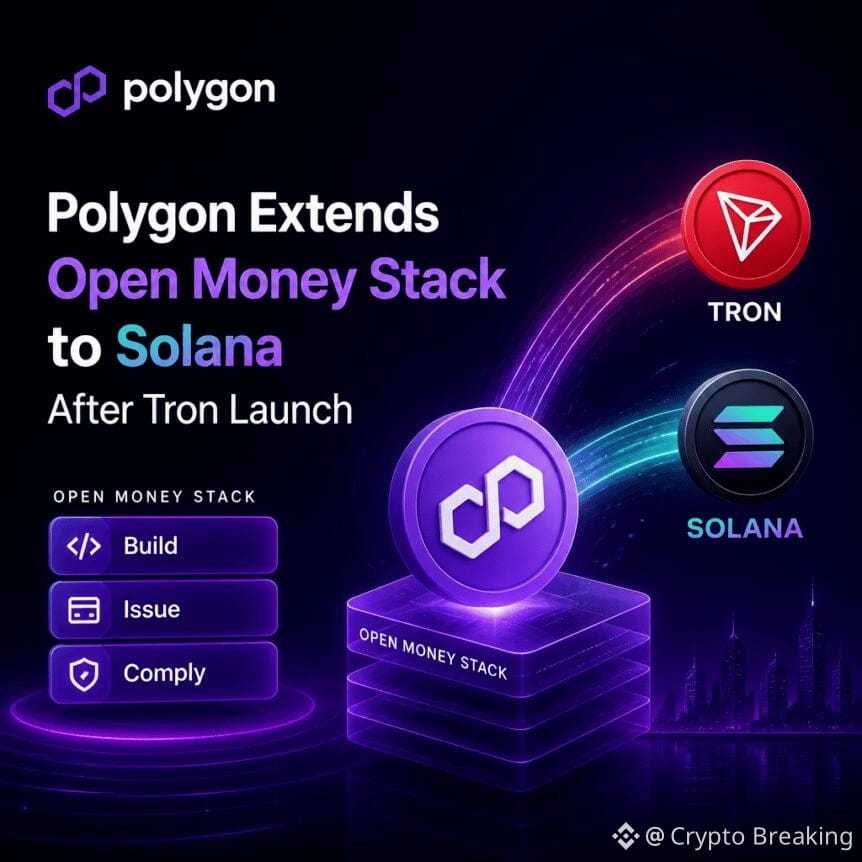
Статья
Polygon Extends Open Money Stack to Solana After Tron LaunchPolygon Labs is extending its Open Money Stack to the Solana network, a move designed to help businesses connect traditional banking rails with crypto wallets and payout infrastructure. The service, which already supports integrations across Polygon, Ethereum, and other EVM-compatible networks, now aims to bring similar functionality to Solana-based companies building stablecoin-powered payment flows.
Polygon CEO Marc Boiron said the decision is being driven by customer demand and rising stablecoin usage. He also pointed to Polygon’s earlier expansion of the same stack to Tron, underscoring a broader strategy to reduce friction for businesses that want to reach customers without being locked into a single blockchain.
Key takeaways
Polygon’s Open Money Stack is now available for Solana: businesses can connect bank funding, customer wallets, and payouts to Solana-based stablecoin activity.
Integration targets real-world payment flows: the update adds access to bank, card, and cash funding as well as embedded wallets and routing into payout networks.
Stablecoin transfer volume is cited as justification: Token Terminal data shows Solana recorded about $5.76T in stablecoin transfers from Jan. 1 to Oct. 27, versus Tron’s $6.94T.
Polygon also highlights ecosystem breadth: Polygon Trails has supported Solana-to-Ethereum-compatible transfers since August, and the new extension builds on that groundwork.
Kira is named as an early customer: the company provides U.S. dollar accounts and stablecoin-based cross-border payments services to businesses.
Why Polygon is bringing Open Money Stack to Solana
Open Money Stack is positioned as a bridge between bank accounts and crypto rails, enabling businesses to accept funding from traditional sources, provide customer wallets, and arrange payouts. With the Solana integration, Polygon is effectively offering the same “stack” concept to teams operating on Solana rather than forcing them to route all payment activity through Polygon or EVM networks.
Polygon Labs says this matters because payment activity increasingly spans multiple networks. Vibhu Norby, chief product officer at the Solana Foundation, linked the move to the scale of stablecoin settlement and the need for businesses to deliver payments to broader customer bases.
Norby told Cointelegraph that as activity grows, connecting Solana to bank accounts, wallets, and payout networks helps businesses reach more customers and markets with stablecoin payments.
Stablecoin flows: Solana vs. Tron
In supporting the expansion, Polygon pointed to stablecoin transfer volumes tracked by Token Terminal. According to that data, Solana recorded roughly $5.76 trillion in stablecoin transfers between Jan. 1 and Oct. 27. Over the same period, Tron recorded about $6.94 trillion in stablecoin transfers.
The comparison highlights an important point for operators: even when one chain leads in a given metric, businesses often want optionality. Polygon’s strategy of adding non-EVM support suggests it is trying to meet demand on multiple major networks rather than betting everything on a single ecosystem.
What exactly changes with the Solana integration
Polygon said its Polygon Trails service has supported transfers between Solana and Ethereum-compatible networks since August. The Solana expansion of Open Money Stack goes further by extending access to additional “real-world” capabilities within the same integration layer.
Boiron said the updated offering adds bank, card, and cash funding options, customer account support, embedded wallets, and payouts—using the same general integration model businesses have used on Polygon and other EVM networks. In other words, it’s not just about moving value across chains; it’s also about enabling a full payment stack that begins with fiat funding and ends with settlement through payout partners.
Boiron also argued that fragmentation in customers and payment activity is a key driver. He said businesses report that customer payment behavior is already distributed across networks, and that they do not want to force users to pick a single chain or build custom connections for each part of the payment workflow—such as bank providers, wallet interfaces, routing services, and payout partners.
Polygon added that the broader stack was already available for eligible uses on Polygon, Ethereum, and other EVM networks, positioning Solana support as a continuation of that approach rather than a brand-new product category.
Early adoption and the broader licensing backdrop
The company named Kira as one of the first customers using the Solana integration. The Grid previously cataloged the Solana ecosystem in a snapshot that, according to Polygon, listed hundreds of companies and projects; Polygon pointed to that context to illustrate ecosystem depth. Boiron also described Kira as among the initial businesses applying the Solana-enabled stack.
Beyond product expansion, Polygon’s timing also reflects its push to strengthen payment capabilities in regulated markets. Earlier coverage from Cointelegraph noted that Polygon completed its acquisition of Coinme, which provided Polygon’s U.S. payments business with access to 37 money transmitter licenses and 11 state exemptions covering 48 states. That acquisition is relevant because Open Money Stack’s pitch relies on connecting traditional funding sources with crypto settlement—capabilities that typically depend on licensing and compliance readiness.
With Solana support now added, Polygon appears to be expanding not only across blockchains but also across layers of the payment process—pairing network-level integrations with the infrastructure needed to handle fiat-to-crypto flows.
What to watch next
For businesses and builders, the practical question is whether Solana-based payment providers can move faster toward end-to-end stablecoin experiences—especially for customers who already transact across multiple networks. The next signals to monitor are adoption from more Solana payment firms and how Polygon’s Open Money Stack rollout scales alongside ongoing stablecoin transfer growth on Solana.
This article was originally published as Polygon Extends Open Money Stack to Solana After Tron Launch on Crypto Breaking News – your trusted source for crypto news, Bitcoin news, and blockchain updates.
Polygon Extends Open Money Stack to Solana After Tron Launch
Polygon Labs is extending its Open Money Stack to the Solana network, a move designed to help businesses connect traditional banking rails with crypto wallets and payout infrastructure. The service, which already supports integrations across Polygon, Ethereum, and other EVM-compatible networks, now aims to bring similar functionality to Solana-based companies building stablecoin-powered payment flows.
Polygon CEO Marc Boiron said the decision is being driven by customer demand and rising stablecoin usage. He also pointed to Polygon’s earlier expansion of the same stack to Tron, underscoring a broader strategy to reduce friction for businesses that want to reach customers without being locked into a single blockchain.
Key takeaways
Polygon’s Open Money Stack is now available for Solana: businesses can connect bank funding, customer wallets, and payouts to Solana-based stablecoin activity.
Integration targets real-world payment flows: the update adds access to bank, card, and cash funding as well as embedded wallets and routing into payout networks.
Stablecoin transfer volume is cited as justification: Token Terminal data shows Solana recorded about $5.76T in stablecoin transfers from Jan. 1 to Oct. 27, versus Tron’s $6.94T.
Polygon also highlights ecosystem breadth: Polygon Trails has supported Solana-to-Ethereum-compatible transfers since August, and the new extension builds on that groundwork.
Kira is named as an early customer: the company provides U.S. dollar accounts and stablecoin-based cross-border payments services to businesses.
Why Polygon is bringing Open Money Stack to Solana
Open Money Stack is positioned as a bridge between bank accounts and crypto rails, enabling businesses to accept funding from traditional sources, provide customer wallets, and arrange payouts. With the Solana integration, Polygon is effectively offering the same “stack” concept to teams operating on Solana rather than forcing them to route all payment activity through Polygon or EVM networks.
Polygon Labs says this matters because payment activity increasingly spans multiple networks. Vibhu Norby, chief product officer at the Solana Foundation, linked the move to the scale of stablecoin settlement and the need for businesses to deliver payments to broader customer bases.
Norby told Cointelegraph that as activity grows, connecting Solana to bank accounts, wallets, and payout networks helps businesses reach more customers and markets with stablecoin payments.
Stablecoin flows: Solana vs. Tron
In supporting the expansion, Polygon pointed to stablecoin transfer volumes tracked by Token Terminal. According to that data, Solana recorded roughly $5.76 trillion in stablecoin transfers between Jan. 1 and Oct. 27. Over the same period, Tron recorded about $6.94 trillion in stablecoin transfers.
The comparison highlights an important point for operators: even when one chain leads in a given metric, businesses often want optionality. Polygon’s strategy of adding non-EVM support suggests it is trying to meet demand on multiple major networks rather than betting everything on a single ecosystem.
What exactly changes with the Solana integration
Polygon said its Polygon Trails service has supported transfers between Solana and Ethereum-compatible networks since August. The Solana expansion of Open Money Stack goes further by extending access to additional “real-world” capabilities within the same integration layer.
Boiron said the updated offering adds bank, card, and cash funding options, customer account support, embedded wallets, and payouts—using the same general integration model businesses have used on Polygon and other EVM networks. In other words, it’s not just about moving value across chains; it’s also about enabling a full payment stack that begins with fiat funding and ends with settlement through payout partners.
Boiron also argued that fragmentation in customers and payment activity is a key driver. He said businesses report that customer payment behavior is already distributed across networks, and that they do not want to force users to pick a single chain or build custom connections for each part of the payment workflow—such as bank providers, wallet interfaces, routing services, and payout partners.
Polygon added that the broader stack was already available for eligible uses on Polygon, Ethereum, and other EVM networks, positioning Solana support as a continuation of that approach rather than a brand-new product category.
Early adoption and the broader licensing backdrop
The company named Kira as one of the first customers using the Solana integration. The Grid previously cataloged the Solana ecosystem in a snapshot that, according to Polygon, listed hundreds of companies and projects; Polygon pointed to that context to illustrate ecosystem depth. Boiron also described Kira as among the initial businesses applying the Solana-enabled stack.
Beyond product expansion, Polygon’s timing also reflects its push to strengthen payment capabilities in regulated markets. Earlier coverage from Cointelegraph noted that Polygon completed its acquisition of Coinme, which provided Polygon’s U.S. payments business with access to 37 money transmitter licenses and 11 state exemptions covering 48 states. That acquisition is relevant because Open Money Stack’s pitch relies on connecting traditional funding sources with crypto settlement—capabilities that typically depend on licensing and compliance readiness.
With Solana support now added, Polygon appears to be expanding not only across blockchains but also across layers of the payment process—pairing network-level integrations with the infrastructure needed to handle fiat-to-crypto flows.
What to watch next
For businesses and builders, the practical question is whether Solana-based payment providers can move faster toward end-to-end stablecoin experiences—especially for customers who already transact across multiple networks. The next signals to monitor are adoption from more Solana payment firms and how Polygon’s Open Money Stack rollout scales alongside ongoing stablecoin transfer growth on Solana.
This article was originally published as Polygon Extends Open Money Stack to Solana After Tron Launch on Crypto Breaking News – your trusted source for crypto news, Bitcoin news, and blockchain updates.
41

Статья
Visa to open Dakar office by end of 2026 and sponsor Youth Olympic Games Dakar 2026Visa said it will strengthen its engagement in Senegal through the opening of a new office in Dakar by the end of 2026 and through its sponsorship of the Summer Youth Olympic Games Dakar 2026, scheduled for 31 October to 13 November 2026.
In a statement announcing the plans, Visa described a program under the platform “Visa at Dakar 2026: Powering the Payment Experience”, aimed at supporting digital payment acceptance and a “seamless payment experience” for athletes, fans and visitors. The company said it will work with its members and partners on merchant engagement and initiatives in Dakar and Saly connected to the Games.
Visa also said it will bring its Worldwide Olympic Partnership into a locally focused programme designed, according to the company, to create “practical value” before, during and beyond the event. The announcement states that Dakar 2026 is expected to welcome around 2,700 young athletes from around the world and is described by Visa as the first Olympic sporting event held on African soil.
New Dakar office to support partners and digital payments
Alongside the sponsorship, Visa said it plans to open a new Dakar office by the end of 2026. The office, according to the statement, is intended to support Visa partner institutions in Senegal and bring the company closer to clients, regulators, merchants, fintechs and other partners involved in digital payments and inclusive economic growth.
Fan zones and payment acceptance efforts
Visa said it will expand secure, convenient digital payment acceptance for visitors and local communities through its Dakar 2026 sponsorship and related activations. The company added that it will establish two fan zones, in Dakar and Saly, to support payment acceptance and to strengthen visibility for the “Visa Accepted Here” programme.
In its remarks, Visa linked the move to a longer-term goal of increasing broader digital payment acceptance and supporting stronger local commerce beyond the Games.
Company background
Visa, which says it is a world leader in digital payments, stated that it facilitates transactions between consumers, sellers, financial institutions and government entities across more than 200 countries and territories.
Visa said it has partnered with the Olympic Movement since 1986 and is a Worldwide Partner of the Olympic and Paralympic Games through 2032.
This article was originally published as Visa to open Dakar office by end of 2026 and sponsor Youth Olympic Games Dakar 2026 on Crypto Breaking News – your trusted source for crypto news, Bitcoin news, and blockchain updates.
Visa to open Dakar office by end of 2026 and sponsor Youth Olympic Games Dakar 2026
Visa said it will strengthen its engagement in Senegal through the opening of a new office in Dakar by the end of 2026 and through its sponsorship of the Summer Youth Olympic Games Dakar 2026, scheduled for 31 October to 13 November 2026.
In a statement announcing the plans, Visa described a program under the platform “Visa at Dakar 2026: Powering the Payment Experience”, aimed at supporting digital payment acceptance and a “seamless payment experience” for athletes, fans and visitors. The company said it will work with its members and partners on merchant engagement and initiatives in Dakar and Saly connected to the Games.
Visa also said it will bring its Worldwide Olympic Partnership into a locally focused programme designed, according to the company, to create “practical value” before, during and beyond the event. The announcement states that Dakar 2026 is expected to welcome around 2,700 young athletes from around the world and is described by Visa as the first Olympic sporting event held on African soil.
New Dakar office to support partners and digital payments
Alongside the sponsorship, Visa said it plans to open a new Dakar office by the end of 2026. The office, according to the statement, is intended to support Visa partner institutions in Senegal and bring the company closer to clients, regulators, merchants, fintechs and other partners involved in digital payments and inclusive economic growth.
Fan zones and payment acceptance efforts
Visa said it will expand secure, convenient digital payment acceptance for visitors and local communities through its Dakar 2026 sponsorship and related activations. The company added that it will establish two fan zones, in Dakar and Saly, to support payment acceptance and to strengthen visibility for the “Visa Accepted Here” programme.
In its remarks, Visa linked the move to a longer-term goal of increasing broader digital payment acceptance and supporting stronger local commerce beyond the Games.
Company background
Visa, which says it is a world leader in digital payments, stated that it facilitates transactions between consumers, sellers, financial institutions and government entities across more than 200 countries and territories.
Visa said it has partnered with the Olympic Movement since 1986 and is a Worldwide Partner of the Olympic and Paralympic Games through 2032.
This article was originally published as Visa to open Dakar office by end of 2026 and sponsor Youth Olympic Games Dakar 2026 on Crypto Breaking News – your trusted source for crypto news, Bitcoin news, and blockchain updates.
22
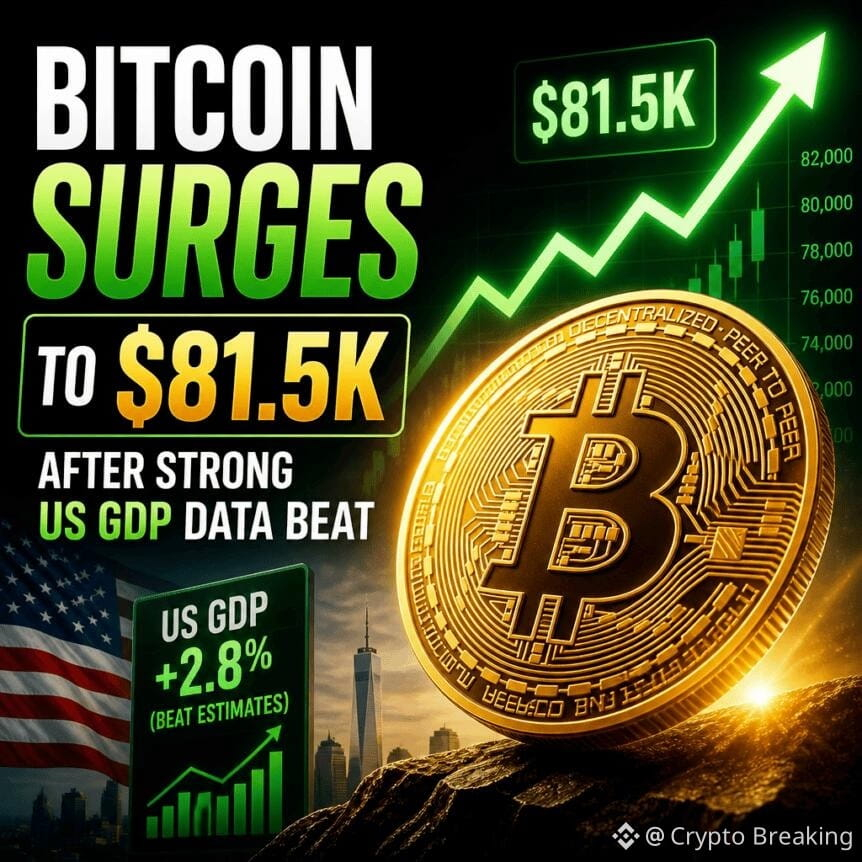
Статья
Bitcoin Surges to $81.5K After Strong US GDP Data BeatBitcoin jumped back above $81,000 after the Wall Street open, aided by a batch of US macro data that broadly matched expectations for inflation while pointing to firmer economic growth. The move also came as equities slid early in the session, with technology under pressure following Alphabet’s earnings miss.
On-chain and exchange-level price action showed BTC rebounding from a mid-$79,000s low to trade at $81,547 on Bitstamp, according to TradingView data cited in the report. The next hurdle for buyers is less about the day’s headline drivers and more about whether price can hold key technical levels into the weekly close.
Key takeaways
BTC rallied to about $81,547 after US PCE inflation came in line with estimates and Q3 GDP beat expectations.
The PCE price index rose 3.6% year-on-year in September, while core PCE (ex food and energy) increased 3.1%.
Federal Reserve policy remained unchanged, with rates held at 3.75%–4%, and the Fed described inflation as still elevated.
Analyst Rekt Capital flagged $81,400 as the nearest level Bitcoin must reclaim by the weekly close.
Overhead resistance on lower time frames has contributed to a “zig-zag” pattern, which could persist into the next weekly settlement.
Macro data lifts BTC while equities wobble
TradingView data showed BTC/USD reaching $81,547 on Bitstamp after dipping to $79,607 following Wednesday’s daily close. The rebound followed the release of the latest Personal Consumption Expenditures (PCE) report, a key inflation gauge watched by Federal Reserve policymakers.
According to the Bureau of Economic Analysis (BEA) release, the September PCE price index increased 0.5% versus August and climbed 3.6% year-on-year. The BEA also reported that, excluding food and energy, the core PCE price index rose 3.1% from a year earlier—aligning closely with what markets had been expecting.
Alongside inflation data, the third-quarter GDP print also added support for risk appetite. The final estimate put Q3 GDP growth at 3.4%, above the 3.2% expected consensus.
CNBC quoted Chris Rupkey, chief economist at Fwdbonds, describing the growth backdrop as “powering ahead” despite geopolitical uncertainties and the drag from higher energy costs. He added that real GDP had moved back above a 3% run rate in Q3 2026 for the first time in about a year.
Still, Wall Street’s early reaction was mixed. US stock markets opened lower, led by Alphabet after it fell roughly 12% following missed earnings and weaker Q3 revenue figures. For Bitcoin traders, the key takeaway was that the macro tape looked supportive enough to counteract equity weakness, at least in the initial trading window.
The Fed keeps rates steady as inflation stays “elevated”
At its most recent meeting, the Federal Open Market Committee (FOMC) left interest rates unchanged in the 3.75%–4% range, consistent with market expectations. In the subsequent Federal Reserve statement, chair Kevin Warsh characterized economic activity as “expanding at a strong pace,” while describing inflation as “elevated.”
Warsh also pointed to resilience in domestic spending, alongside strong productivity growth and robust capital investment. The Fed noted that job gains had kept pace with the workforce and that the unemployment rate had changed little.
For Bitcoin, this matters because the market continues to weigh whether progress on inflation will be sufficient to eventually loosen financial conditions, or whether “higher for longer” risks remain. In this session, inflation data that tracked expectations helped BTC rebound, even as the Fed’s language left room for continued caution.
$81,400 is the near-term technical line
Despite the macro-driven upswing, Bitcoin’s chart action remains constrained by levels traders are watching closely. Crypto analyst and trader Rekt Capital highlighted $81,400 as the immediate threshold that buyers need to recapture.
In a recent X analysis, Rekt Capital said Bitcoin has been “zig-zagging” relative to the weekly levels around ~$80,400 and ~$81,400, suggesting that the back-and-forth could continue through the period leading up to the next weekly close. The analyst’s emphasis was on timing: reclaiming $81,400 by the weekly candle close.
That weekly-level focus reflects a broader pattern in how many traders manage risk in Bitcoin—waiting for confirmation at settlement points rather than reacting to intraday swings. Even if momentum improves, failure to hold key levels by the weekly close can lead to renewed selling pressure, especially when resistance is already visible on lower time frames.
What to watch next into the weekly close
Bitcoin’s rebound above $81,000 is a constructive development, but it doesn’t automatically resolve the market’s technical questions. Rekt Capital’s $81,400 requirement by the weekly close will likely function as a near-term “make-or-break” reference point for traders assessing whether the current move can transition from rebound to trend.
Additionally, the backdrop for October performance remains a point of attention. The report notes that Cointelegraph previously covered October’s historical behavior, stating that the month has produced average returns of 26% since 2010. Whether that seasonal tendency can show up this time still depends on how the weekly close shapes price action, particularly around the $80,400 and $81,400 zones.
For investors and traders, the immediate watch item is clear: can BTC reclaim and hold $81,400 into the weekly close, or will the “zig-zag” trading pattern intensify again as resistance limits follow-through?
This article was originally published as Bitcoin Surges to $81.5K After Strong US GDP Data Beat on Crypto Breaking News – your trusted source for crypto news, Bitcoin news, and blockchain updates.
Bitcoin Surges to $81.5K After Strong US GDP Data Beat
Bitcoin jumped back above $81,000 after the Wall Street open, aided by a batch of US macro data that broadly matched expectations for inflation while pointing to firmer economic growth. The move also came as equities slid early in the session, with technology under pressure following Alphabet’s earnings miss.
On-chain and exchange-level price action showed BTC rebounding from a mid-$79,000s low to trade at $81,547 on Bitstamp, according to TradingView data cited in the report. The next hurdle for buyers is less about the day’s headline drivers and more about whether price can hold key technical levels into the weekly close.
Key takeaways
BTC rallied to about $81,547 after US PCE inflation came in line with estimates and Q3 GDP beat expectations.
The PCE price index rose 3.6% year-on-year in September, while core PCE (ex food and energy) increased 3.1%.
Federal Reserve policy remained unchanged, with rates held at 3.75%–4%, and the Fed described inflation as still elevated.
Analyst Rekt Capital flagged $81,400 as the nearest level Bitcoin must reclaim by the weekly close.
Overhead resistance on lower time frames has contributed to a “zig-zag” pattern, which could persist into the next weekly settlement.
Macro data lifts BTC while equities wobble
TradingView data showed BTC/USD reaching $81,547 on Bitstamp after dipping to $79,607 following Wednesday’s daily close. The rebound followed the release of the latest Personal Consumption Expenditures (PCE) report, a key inflation gauge watched by Federal Reserve policymakers.
According to the Bureau of Economic Analysis (BEA) release, the September PCE price index increased 0.5% versus August and climbed 3.6% year-on-year. The BEA also reported that, excluding food and energy, the core PCE price index rose 3.1% from a year earlier—aligning closely with what markets had been expecting.
Alongside inflation data, the third-quarter GDP print also added support for risk appetite. The final estimate put Q3 GDP growth at 3.4%, above the 3.2% expected consensus.
CNBC quoted Chris Rupkey, chief economist at Fwdbonds, describing the growth backdrop as “powering ahead” despite geopolitical uncertainties and the drag from higher energy costs. He added that real GDP had moved back above a 3% run rate in Q3 2026 for the first time in about a year.
Still, Wall Street’s early reaction was mixed. US stock markets opened lower, led by Alphabet after it fell roughly 12% following missed earnings and weaker Q3 revenue figures. For Bitcoin traders, the key takeaway was that the macro tape looked supportive enough to counteract equity weakness, at least in the initial trading window.
The Fed keeps rates steady as inflation stays “elevated”
At its most recent meeting, the Federal Open Market Committee (FOMC) left interest rates unchanged in the 3.75%–4% range, consistent with market expectations. In the subsequent Federal Reserve statement, chair Kevin Warsh characterized economic activity as “expanding at a strong pace,” while describing inflation as “elevated.”
Warsh also pointed to resilience in domestic spending, alongside strong productivity growth and robust capital investment. The Fed noted that job gains had kept pace with the workforce and that the unemployment rate had changed little.
For Bitcoin, this matters because the market continues to weigh whether progress on inflation will be sufficient to eventually loosen financial conditions, or whether “higher for longer” risks remain. In this session, inflation data that tracked expectations helped BTC rebound, even as the Fed’s language left room for continued caution.
$81,400 is the near-term technical line
Despite the macro-driven upswing, Bitcoin’s chart action remains constrained by levels traders are watching closely. Crypto analyst and trader Rekt Capital highlighted $81,400 as the immediate threshold that buyers need to recapture.
In a recent X analysis, Rekt Capital said Bitcoin has been “zig-zagging” relative to the weekly levels around ~$80,400 and ~$81,400, suggesting that the back-and-forth could continue through the period leading up to the next weekly close. The analyst’s emphasis was on timing: reclaiming $81,400 by the weekly candle close.
That weekly-level focus reflects a broader pattern in how many traders manage risk in Bitcoin—waiting for confirmation at settlement points rather than reacting to intraday swings. Even if momentum improves, failure to hold key levels by the weekly close can lead to renewed selling pressure, especially when resistance is already visible on lower time frames.
What to watch next into the weekly close
Bitcoin’s rebound above $81,000 is a constructive development, but it doesn’t automatically resolve the market’s technical questions. Rekt Capital’s $81,400 requirement by the weekly close will likely function as a near-term “make-or-break” reference point for traders assessing whether the current move can transition from rebound to trend.
Additionally, the backdrop for October performance remains a point of attention. The report notes that Cointelegraph previously covered October’s historical behavior, stating that the month has produced average returns of 26% since 2010. Whether that seasonal tendency can show up this time still depends on how the weekly close shapes price action, particularly around the $80,400 and $81,400 zones.
For investors and traders, the immediate watch item is clear: can BTC reclaim and hold $81,400 into the weekly close, or will the “zig-zag” trading pattern intensify again as resistance limits follow-through?
This article was originally published as Bitcoin Surges to $81.5K After Strong US GDP Data Beat on Crypto Breaking News – your trusted source for crypto news, Bitcoin news, and blockchain updates.
19
Войдите, чтобы посмотреть больше материала
Присоединяйтесь к пользователям криптовалют по всему миру на Binance Square
⚡️ Получайте новейшую и полезную информацию о криптоактивах.
💬 Нам доверяет крупнейшая в мире криптобиржа.
👍 Получите достоверные аналитические данные от верифицированных создателей контента.
Эл. почта/номер телефона
В тренде
$1.5BInLeveragedCryptoBetsLiquidated
Просмотров: 1,270
30 обсуждают
@CZ warned users not to click links in emails or download attachments, even from people they trust, as they could contain viruses. #ElonMusk reacted to CZ’s post with fire and laughing emojis.
$DOGE $BNB $BTC
#$1.5BInLeveragedCryptoBetsLiquidated #USMidtermElections #BinanceWillListPredictPREDICT #CZ
Crypto Ahmet
·Лайков: 5
·Просмотров: 1.7k
KOSPIFalls3.53%BackBelow6000
Просмотров: 3,609
120 обсуждают
USMidtermElections
Просмотров: 107,774
1,364 обсуждают