

Chumba Money
6.8k Публикации

Chumba Money
 Square Verified
Отправить жалобу
Заблокировать пользователя
Research & Analysis | Crypto Education | Chumba Labs Dev

Top Voices

Level 2 Creator
1 подписок(и/а)
49.8K+ подписчиков(а)
18.1K+ понравилось
2 Значки
Посты
Все
Цитирования
·
--
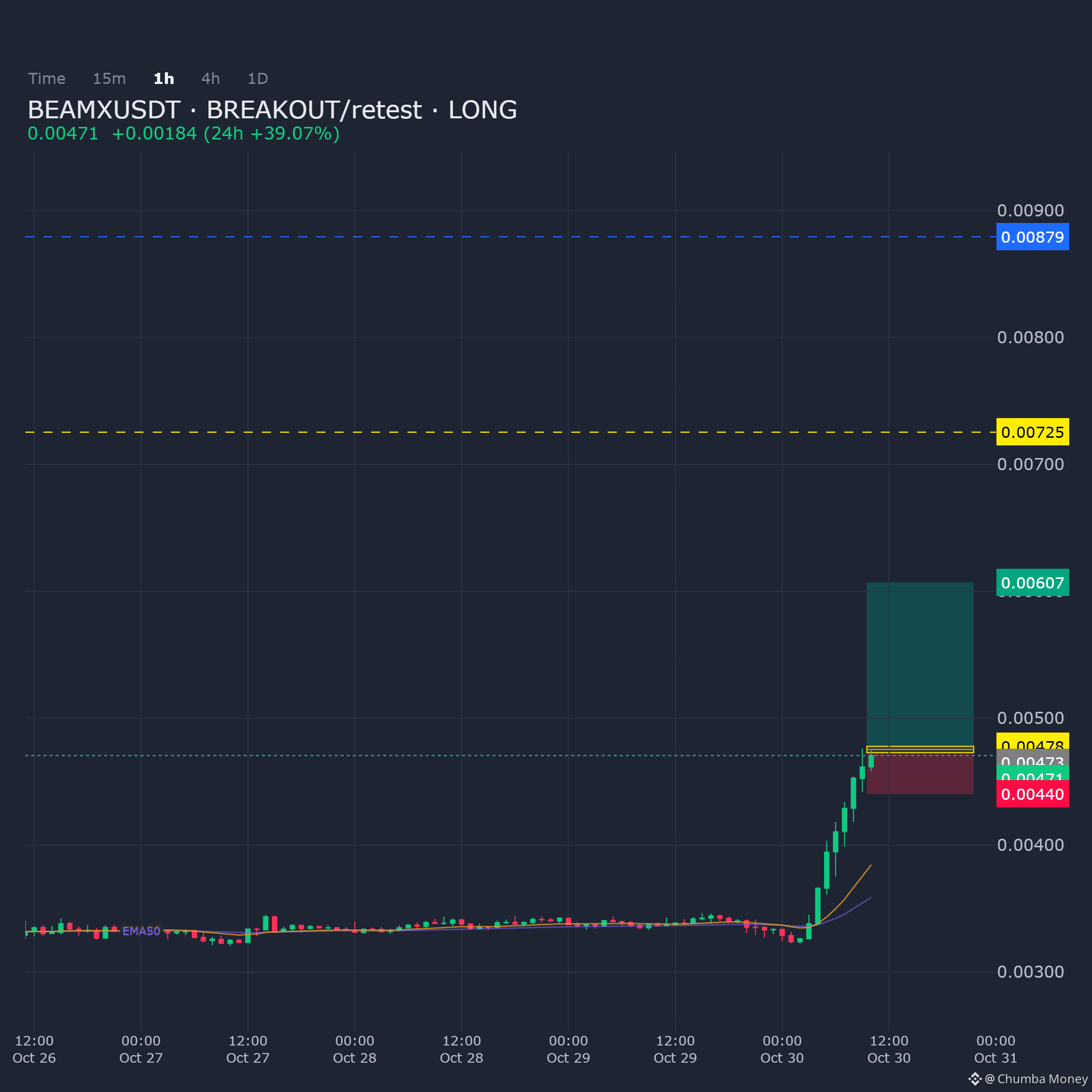
BEAMXUSDT on the 1H chart shows confluence for a long position following a breakout and retest structure.
Entry: 0.00473 - 0.004779
Targets: TP1: 0.006072, TP2: 0.007254, TP3: 0.008793
Stop Loss: 0.004403
$BEAMX
BEAMXUSDT on the 1H chart shows confluence for a long position following a breakout and retest structure.
Entry: 0.00473 - 0.004779
Targets: TP1: 0.006072, TP2: 0.007254, TP3: 0.008793
Stop Loss: 0.004403
$BEAMX
Entry: 0.00473 - 0.004779
Targets: TP1: 0.006072, TP2: 0.007254, TP3: 0.008793
Stop Loss: 0.004403
$BEAMX
51
·
--
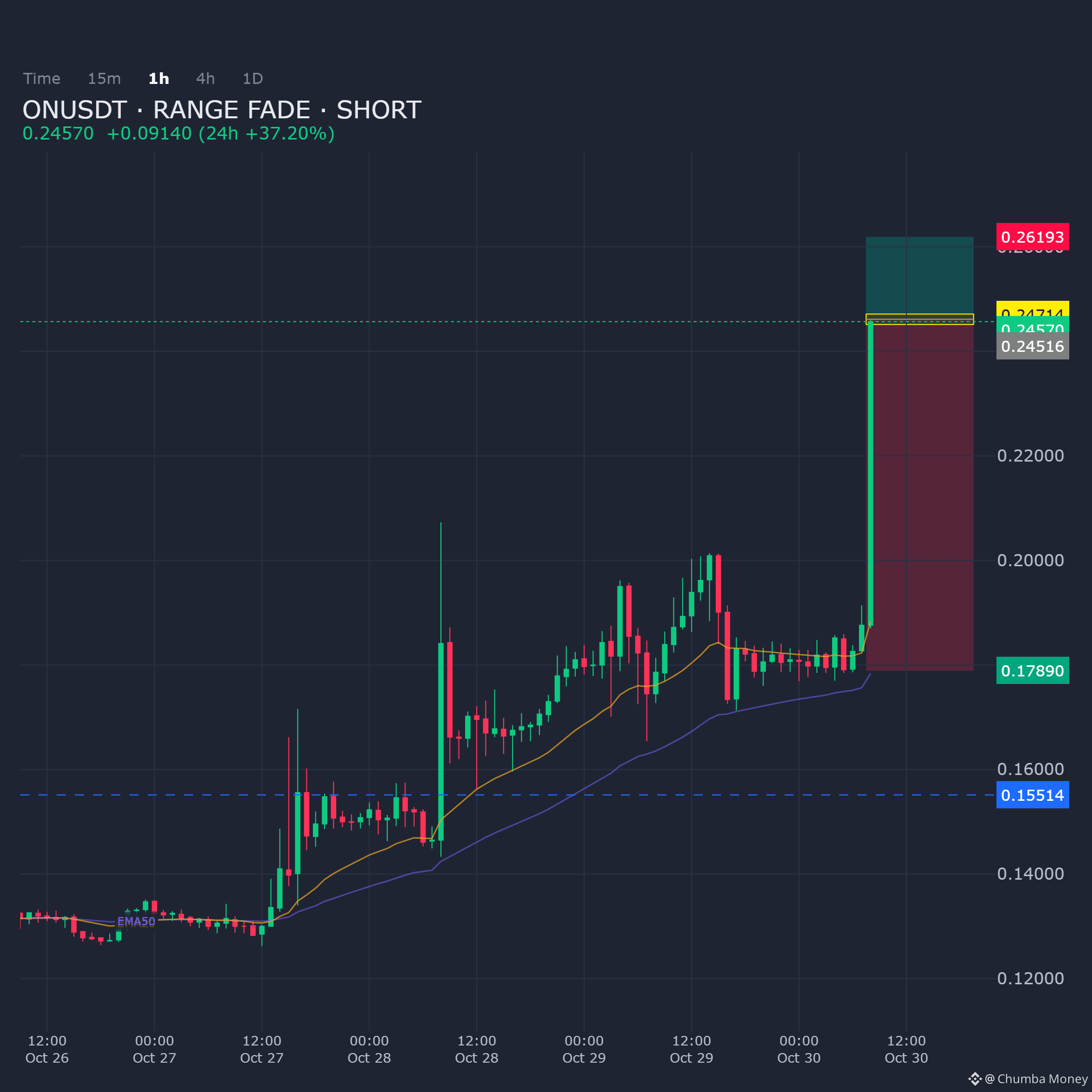
ONUSDT on the 1H chart shows momentum fading at resistance; structuring for a range fade on the short side.
Entry: 0.24516 - 0.24714
Targets: TP1: 0.1789, TP2: 0.16315, TP3: 0.15514
Stop Loss: 0.261926
$ON
ONUSDT on the 1H chart shows momentum fading at resistance; structuring for a range fade on the short side.
Entry: 0.24516 - 0.24714
Targets: TP1: 0.1789, TP2: 0.16315, TP3: 0.15514
Stop Loss: 0.261926
$ON
Entry: 0.24516 - 0.24714
Targets: TP1: 0.1789, TP2: 0.16315, TP3: 0.15514
Stop Loss: 0.261926
$ON
133
·
--
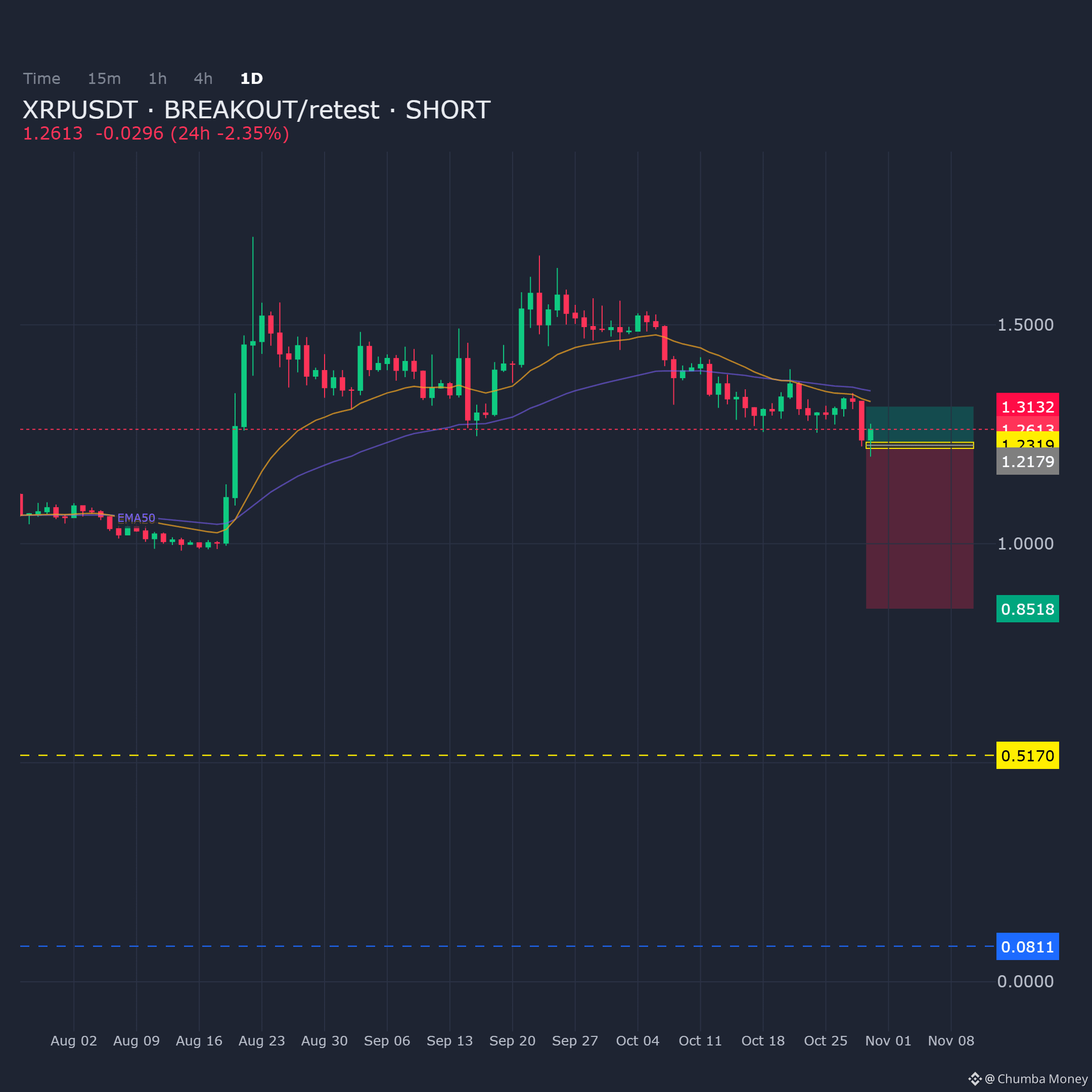
XRPUSDT Daily — bullish momentum exhausted at resistance, awaiting bearish retest before reversal.
Entry: 1.2179 - 1.2319
Targets: TP1: 0.851785, TP2: 0.517014, TP3: 0.081114
Stop Loss: 1.3132
$XRP
XRPUSDT Daily — bullish momentum exhausted at resistance, awaiting bearish retest before reversal.
Entry: 1.2179 - 1.2319
Targets: TP1: 0.851785, TP2: 0.517014, TP3: 0.081114
Stop Loss: 1.3132
$XRP
Entry: 1.2179 - 1.2319
Targets: TP1: 0.851785, TP2: 0.517014, TP3: 0.081114
Stop Loss: 1.3132
$XRP
45
·
--
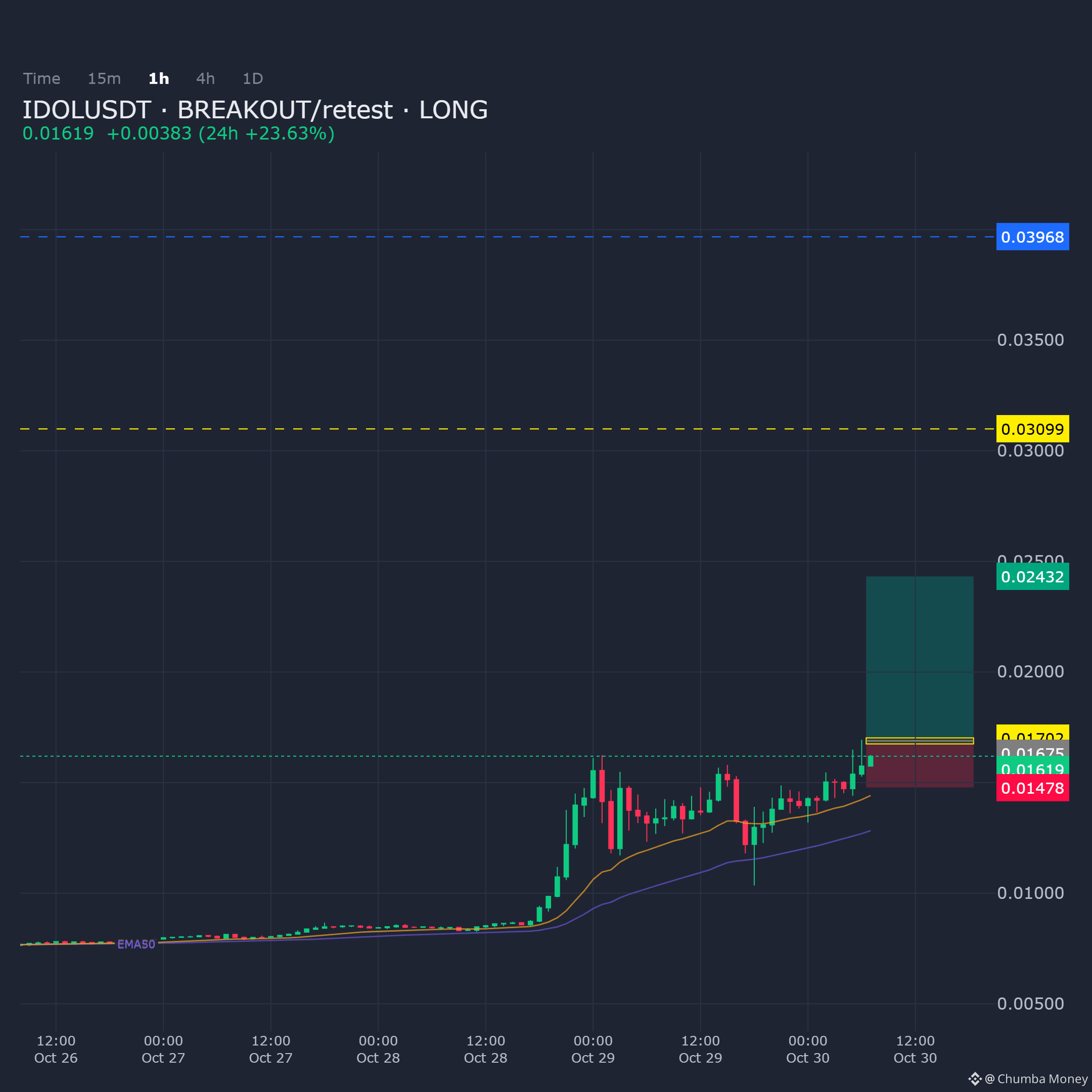
IDOLUSDT on the 1H timeframe. Bullish bias around a breakout and retest setup.
Entry: 0.016747 - 0.017025
Targets: TP1: 0.02432, TP2: 0.03099, TP3: 0.039675
Stop Loss: 0.01478
$IDOL
IDOLUSDT on the 1H timeframe. Bullish bias around a breakout and retest setup.
Entry: 0.016747 - 0.017025
Targets: TP1: 0.02432, TP2: 0.03099, TP3: 0.039675
Stop Loss: 0.01478
$IDOL
Entry: 0.016747 - 0.017025
Targets: TP1: 0.02432, TP2: 0.03099, TP3: 0.039675
Stop Loss: 0.01478
$IDOL
94
·
--
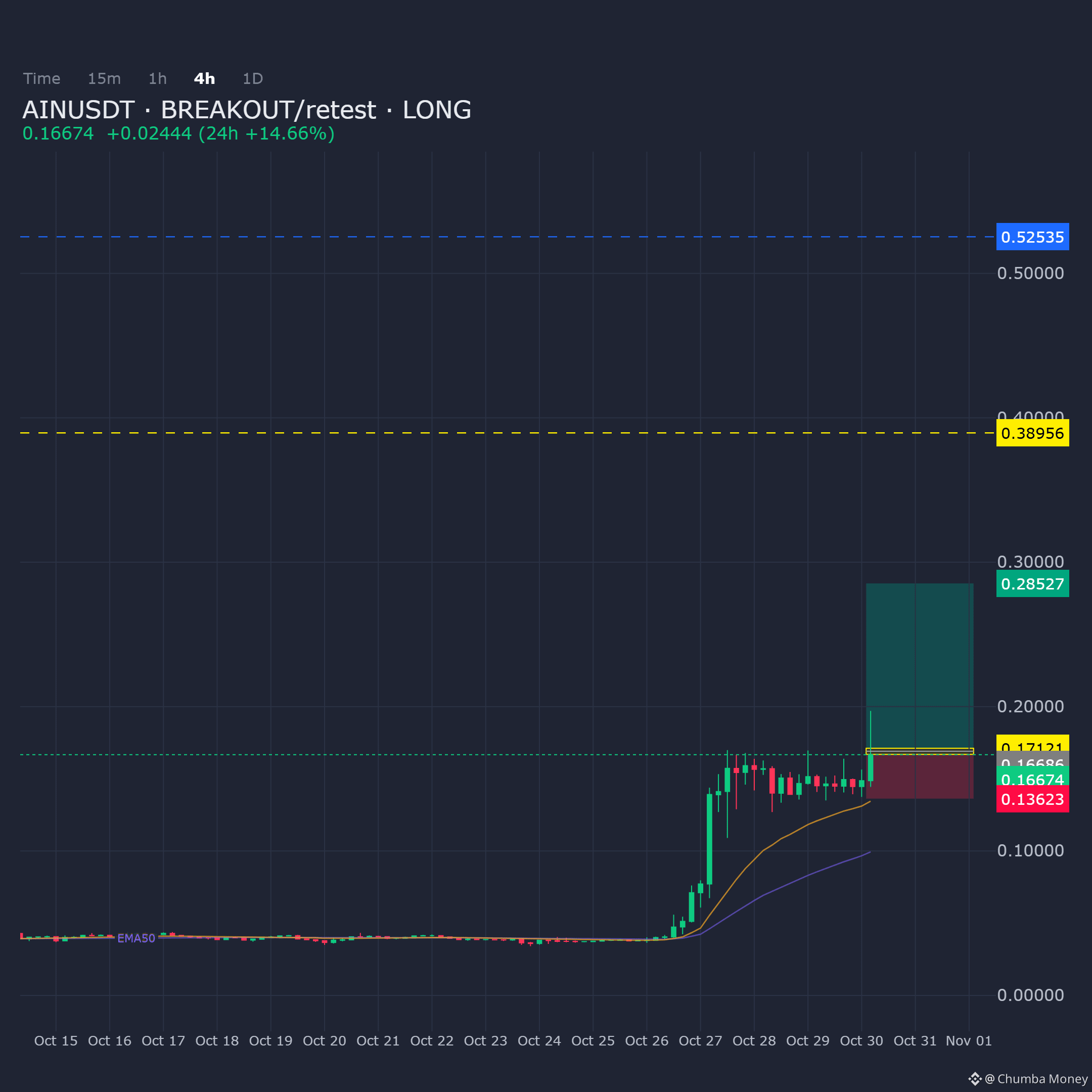
AINUSDT 4H — price is pulling into a demand zone after the breakout, and the long bias holds as long as this support area remains intact.
Entry: 0.166863 - 0.171208
Targets: TP1: 0.285272, TP2: 0.389558, TP3: 0.525348
Stop Loss: 0.136229
$AIN
AINUSDT 4H — price is pulling into a demand zone after the breakout, and the long bias holds as long as this support area remains intact.
Entry: 0.166863 - 0.171208
Targets: TP1: 0.285272, TP2: 0.389558, TP3: 0.525348
Stop Loss: 0.136229
$AIN
Entry: 0.166863 - 0.171208
Targets: TP1: 0.285272, TP2: 0.389558, TP3: 0.525348
Stop Loss: 0.136229
$AIN
48
·
--

Статья
DEX SHIFT NARRATIVE AFTER BINANCE HACK: EVIDENCE AND LIMITSStandard Chartered analyst Geoffrey Kendrick argues the Binance hack could accelerate a shift toward decentralized exchanges and supports his UNI price target of $100 by 2030. That headline needs evidence-based qualification.
Observed facts: reporting cites suspected Binance outflows between $5.5 billion and $5.8 billion across three blockchains. Tether and Circle froze $1.79 billion to $1.8 billion in USDT and USDC. Etherscan records show wallets tied to the suspected hack swapping freezable stablecoins for Ethereum on decentralized exchanges. BNB lost 7.1% while Bitcoin traded near $77,000. Binance Co-CEO Yi He pledged the exchange will cover all user losses. Market data shows total crypto market cap down 4.54% over 24 hours, with BTC at $78,450, ETH at $2,245.21, and SOL at $97.63.
Interpretation: the freezeable stablecoin portion being immobilized demonstrates a practical limit to DEX migration for stolen funds. Hackers moved into ETH on DEXs precisely because stablecoins can be frozen at the issuer layer. That is not a wholesale user migration to self-custody; it is an attacker adapting to on-chain surveillance. Retail and institutional flight from exchanges after a breach is plausible, but the excerpt notes institutional investors rushing to pull funds without quantifying outflows or distinguishing temporary risk-off from structural migration.
Catalysts: continued exchange outflows, DEX volume gains, UNI adoption metrics, and whether Binance covers losses without impairing liquidity.
Risks: DEX liquidity may not absorb large-scale retail migration during stress; smart contract risk remains; regulatory scrutiny of DEXs could rise if they become primary exit ramps for illicit funds.
Falsifiers: if exchange balances stabilize, DEX spot volumes do not sustain gains, or UNI fails to capture meaningful fee share, the structural shift thesis weakens.
Takeaway: the hack supports short-term DEX usage by attackers, but evidence for a broad, durable shift from CEXs to DEXs remains thin.
DEX SHIFT NARRATIVE AFTER BINANCE HACK: EVIDENCE AND LIMITS
Standard Chartered analyst Geoffrey Kendrick argues the Binance hack could accelerate a shift toward decentralized exchanges and supports his UNI price target of $100 by 2030. That headline needs evidence-based qualification.
Observed facts: reporting cites suspected Binance outflows between $5.5 billion and $5.8 billion across three blockchains. Tether and Circle froze $1.79 billion to $1.8 billion in USDT and USDC. Etherscan records show wallets tied to the suspected hack swapping freezable stablecoins for Ethereum on decentralized exchanges. BNB lost 7.1% while Bitcoin traded near $77,000. Binance Co-CEO Yi He pledged the exchange will cover all user losses. Market data shows total crypto market cap down 4.54% over 24 hours, with BTC at $78,450, ETH at $2,245.21, and SOL at $97.63.
Interpretation: the freezeable stablecoin portion being immobilized demonstrates a practical limit to DEX migration for stolen funds. Hackers moved into ETH on DEXs precisely because stablecoins can be frozen at the issuer layer. That is not a wholesale user migration to self-custody; it is an attacker adapting to on-chain surveillance. Retail and institutional flight from exchanges after a breach is plausible, but the excerpt notes institutional investors rushing to pull funds without quantifying outflows or distinguishing temporary risk-off from structural migration.
Catalysts: continued exchange outflows, DEX volume gains, UNI adoption metrics, and whether Binance covers losses without impairing liquidity.
Risks: DEX liquidity may not absorb large-scale retail migration during stress; smart contract risk remains; regulatory scrutiny of DEXs could rise if they become primary exit ramps for illicit funds.
Falsifiers: if exchange balances stabilize, DEX spot volumes do not sustain gains, or UNI fails to capture meaningful fee share, the structural shift thesis weakens.
Takeaway: the hack supports short-term DEX usage by attackers, but evidence for a broad, durable shift from CEXs to DEXs remains thin.
36
·
--
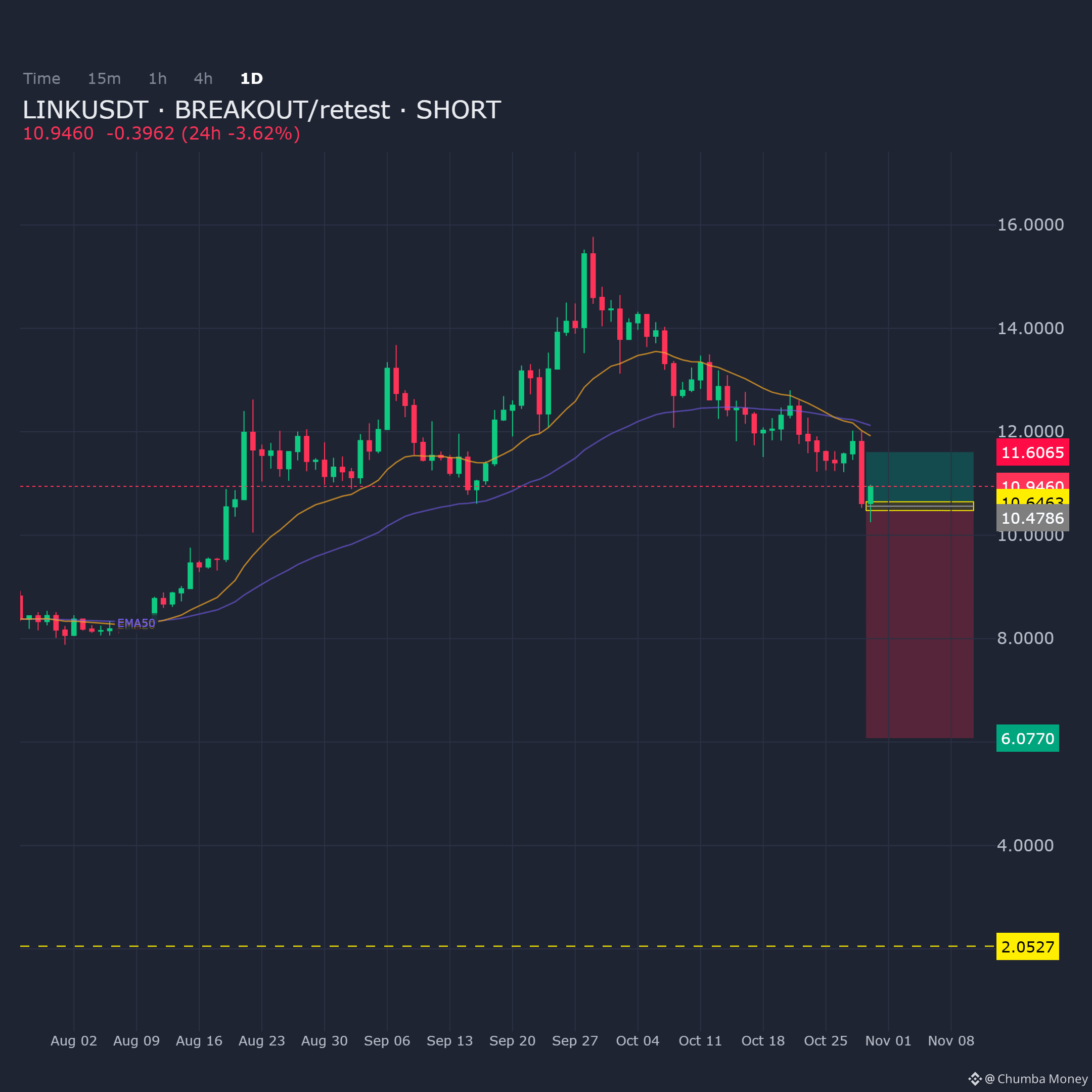
LINKUSDT on the Daily is rejecting into supply, keeping the short bias intact from this resistance zone.
Entry: 10.4786 - 10.6463
Targets: TP1: 6.077, TP2: 2.0527, TP3: 2.0527
Stop Loss: 11.6065
$LINK
LINKUSDT on the Daily is rejecting into supply, keeping the short bias intact from this resistance zone.
Entry: 10.4786 - 10.6463
Targets: TP1: 6.077, TP2: 2.0527, TP3: 2.0527
Stop Loss: 11.6065
$LINK
Entry: 10.4786 - 10.6463
Targets: TP1: 6.077, TP2: 2.0527, TP3: 2.0527
Stop Loss: 11.6065
$LINK
29
·
--
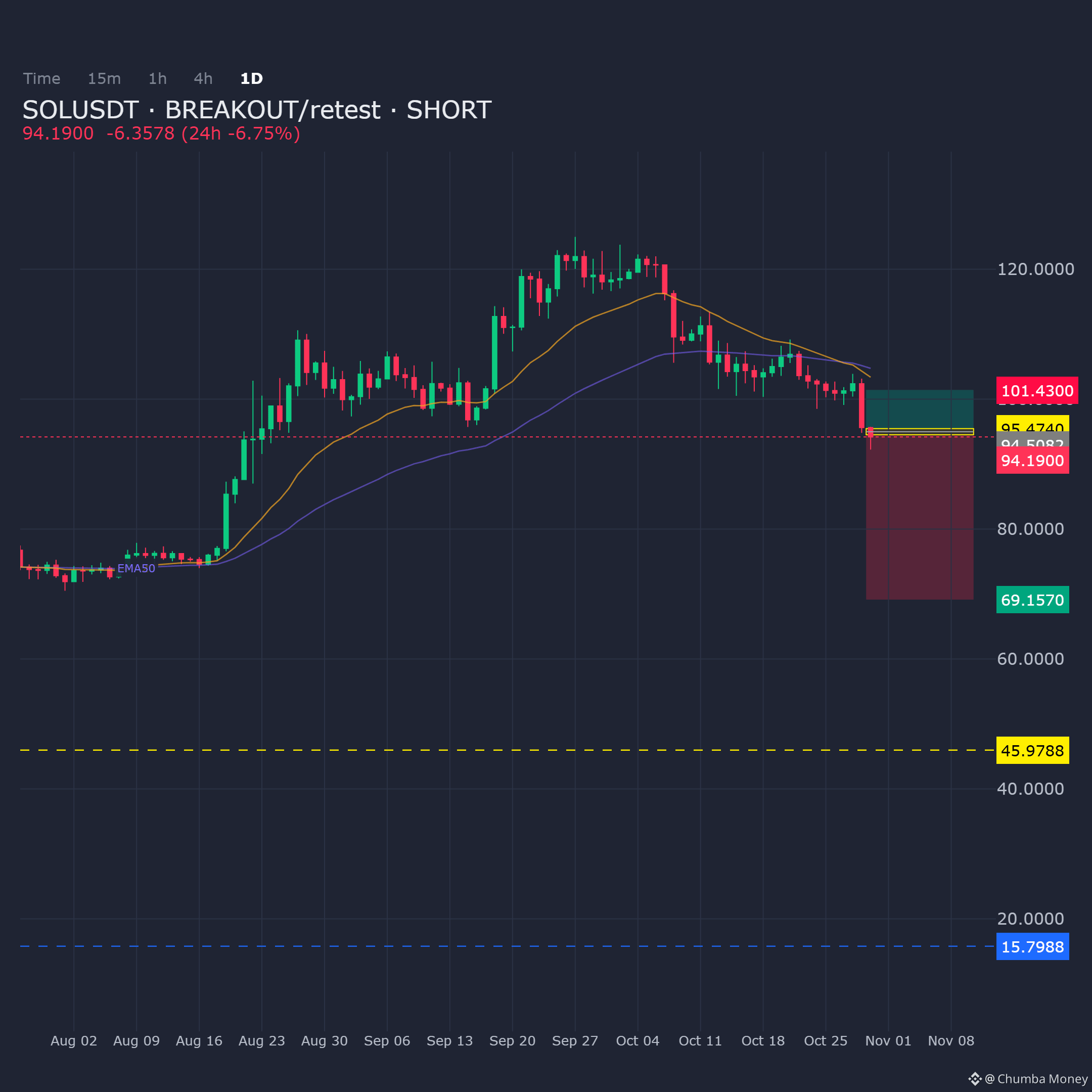
SOLUSDT on the daily is pushing into supply. Bias stays short from this resistance zone.
Entry: 94.5082 - 95.474
Targets: TP1: 69.157, TP2: 45.9788, TP3: 15.7988
Stop Loss: 101.43
$SOL
SOLUSDT on the daily is pushing into supply. Bias stays short from this resistance zone.
Entry: 94.5082 - 95.474
Targets: TP1: 69.157, TP2: 45.9788, TP3: 15.7988
Stop Loss: 101.43
$SOL
Entry: 94.5082 - 95.474
Targets: TP1: 69.157, TP2: 45.9788, TP3: 15.7988
Stop Loss: 101.43
$SOL
69
·
--
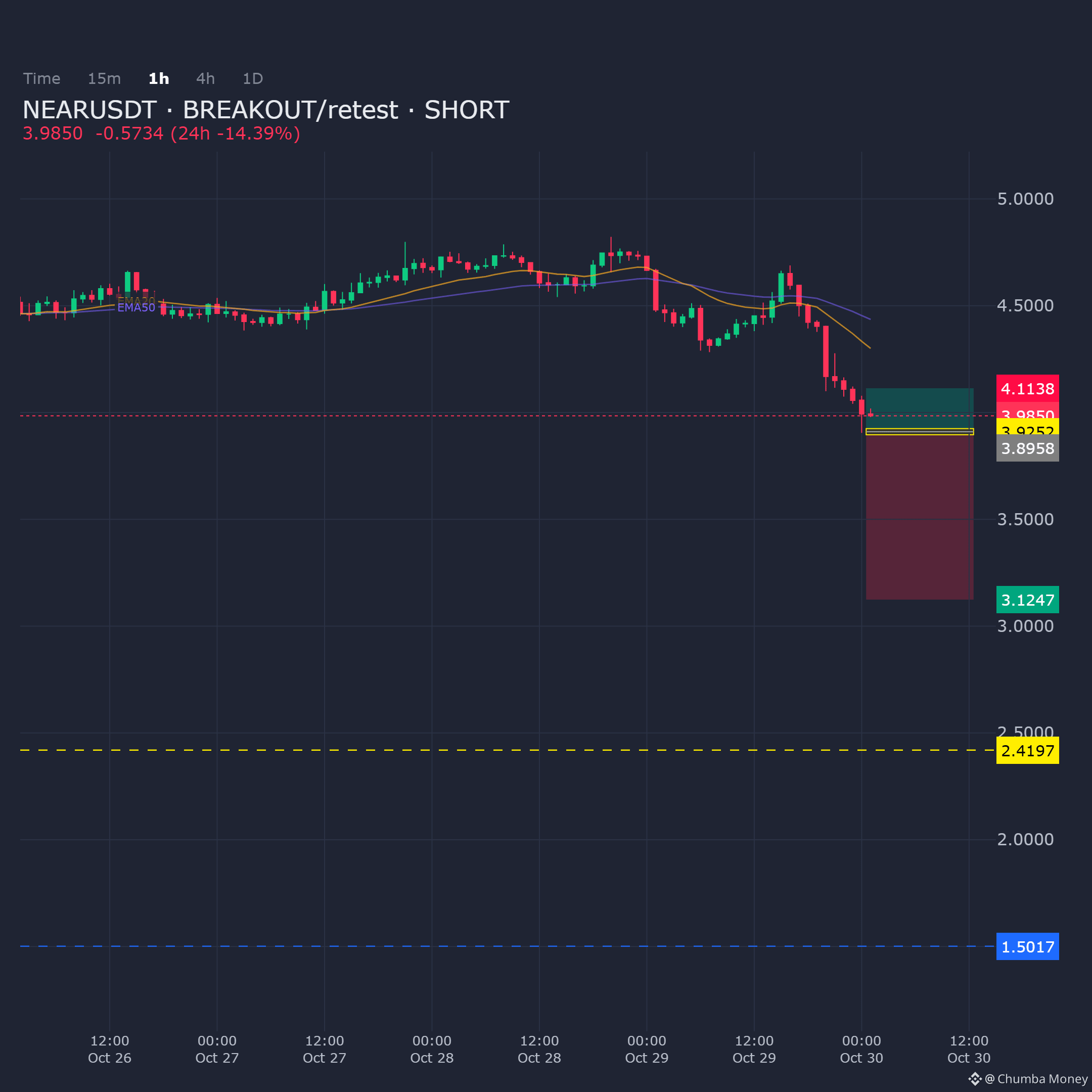
NEARUSDT is acting stretched into the 1H supply zone, keeping the intraday bias tilted toward a retest short from this structure.
Entry: 3.8958 - 3.9252
Targets: TP1: 3.1247, TP2: 2.4197, TP3: 1.5017
Stop Loss: 4.1138
$NEAR
NEARUSDT is acting stretched into the 1H supply zone, keeping the intraday bias tilted toward a retest short from this structure.
Entry: 3.8958 - 3.9252
Targets: TP1: 3.1247, TP2: 2.4197, TP3: 1.5017
Stop Loss: 4.1138
$NEAR
Entry: 3.8958 - 3.9252
Targets: TP1: 3.1247, TP2: 2.4197, TP3: 1.5017
Stop Loss: 4.1138
$NEAR
1
136
·
--
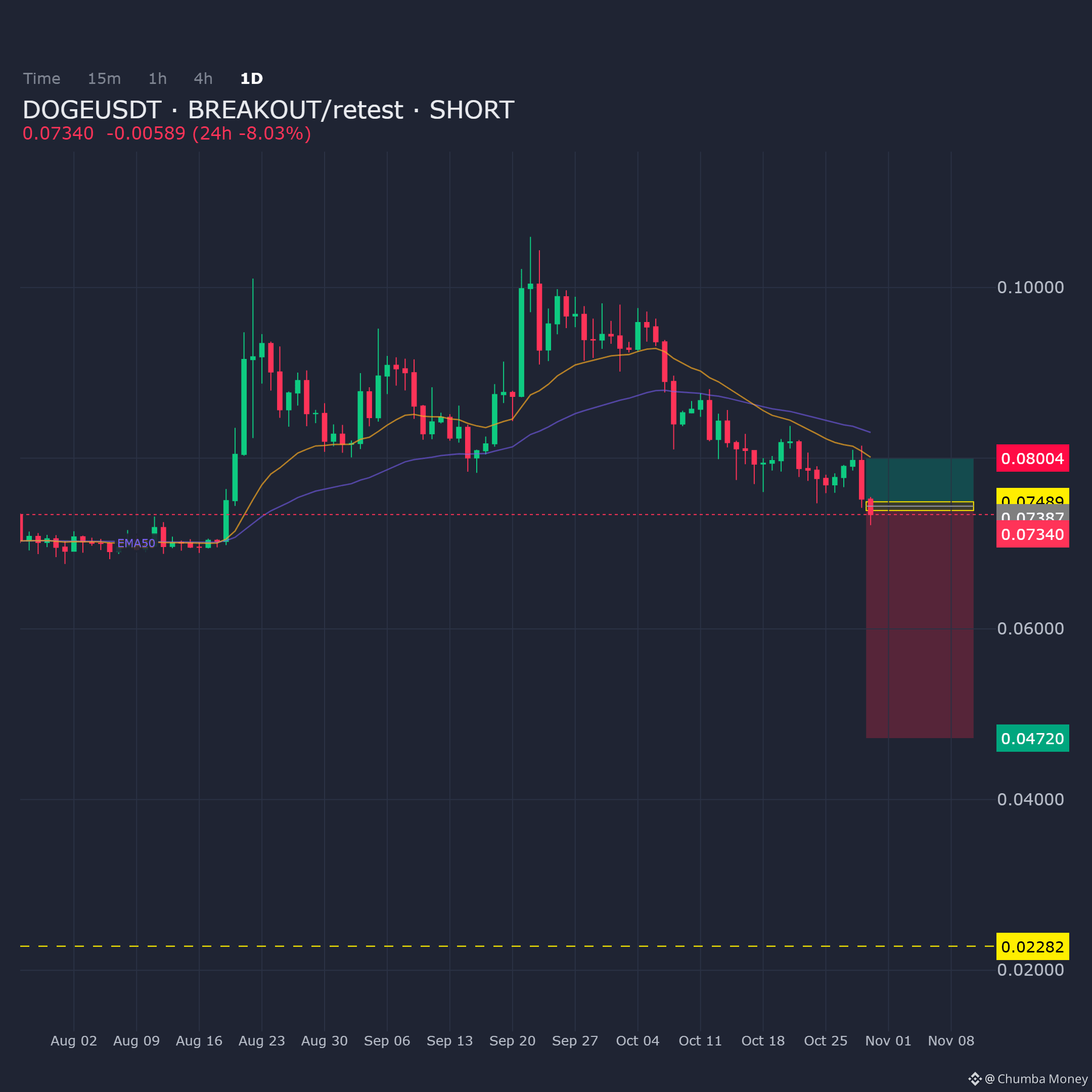
DOGEUSDT Daily supply zone test — bias remains short from this area with a breakout-retest setup.
Entry: 0.073873 - 0.074889
Targets: TP1: 0.047203, TP2: 0.022818, TP3: 0.022818
Stop Loss: 0.080041
$DOGE
DOGEUSDT Daily supply zone test — bias remains short from this area with a breakout-retest setup.
Entry: 0.073873 - 0.074889
Targets: TP1: 0.047203, TP2: 0.022818, TP3: 0.022818
Stop Loss: 0.080041
$DOGE
Entry: 0.073873 - 0.074889
Targets: TP1: 0.047203, TP2: 0.022818, TP3: 0.022818
Stop Loss: 0.080041
$DOGE
76
·
--
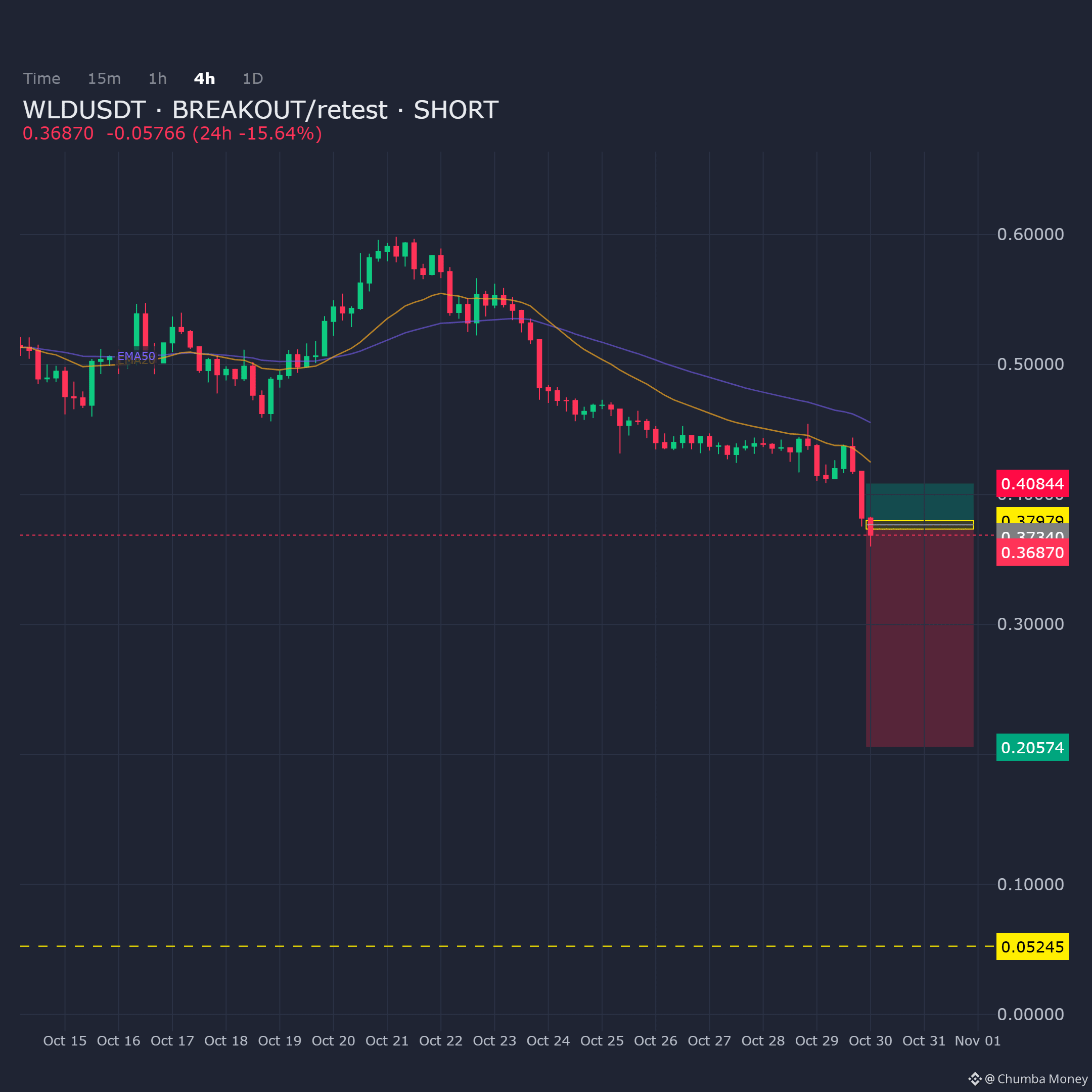
WLDUSDT on the 4H is hitting resistance with momentum fading. A breakout and retest setup aligns for a short bias.
Entry: 0.373404 - 0.379791
Targets: TP1: 0.20574, TP2: 0.052447, TP3: 0.052447
Stop Loss: 0.408441
$WLD
WLDUSDT on the 4H is hitting resistance with momentum fading. A breakout and retest setup aligns for a short bias.
Entry: 0.373404 - 0.379791
Targets: TP1: 0.20574, TP2: 0.052447, TP3: 0.052447
Stop Loss: 0.408441
$WLD
Entry: 0.373404 - 0.379791
Targets: TP1: 0.20574, TP2: 0.052447, TP3: 0.052447
Stop Loss: 0.408441
$WLD
123
·
--
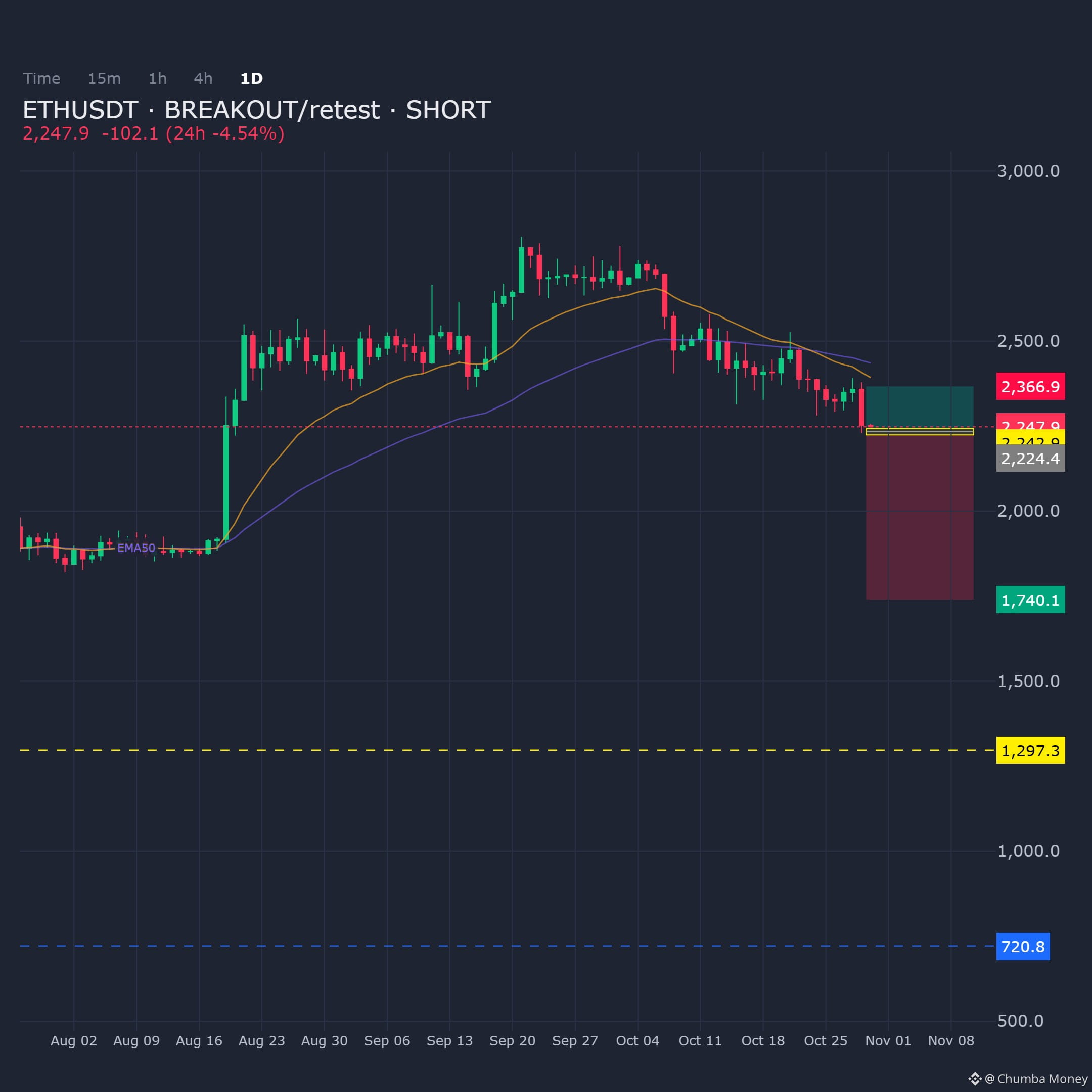
ETHUSDT Daily shows bullish momentum fading at resistance, setting up a breakout/retest short.
Entry: 2224.4 - 2242.9
Targets: TP1: 1740.1, TP2: 1297.3, TP3: 720.77
Stop Loss: 2366.9
$ETH
ETHUSDT Daily shows bullish momentum fading at resistance, setting up a breakout/retest short.
Entry: 2224.4 - 2242.9
Targets: TP1: 1740.1, TP2: 1297.3, TP3: 720.77
Stop Loss: 2366.9
$ETH
Entry: 2224.4 - 2242.9
Targets: TP1: 1740.1, TP2: 1297.3, TP3: 720.77
Stop Loss: 2366.9
$ETH
1
89
·
--
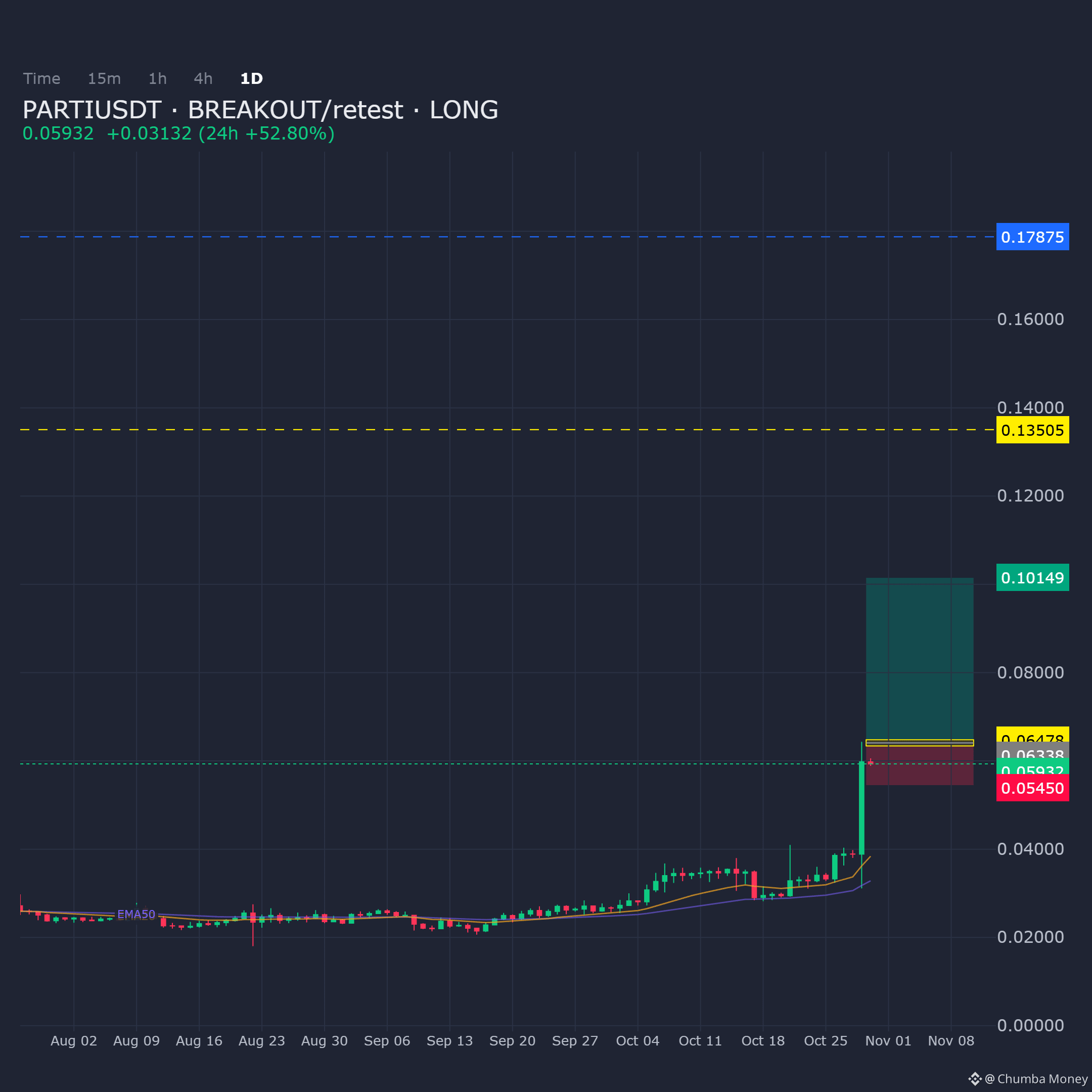
PARTIUSDT on the daily frame shows price retracing into the demand zone after the breakout, supporting a long bias as long as this area holds.
Entry: 0.063379 - 0.064777
Targets: TP1: 0.101485, TP2: 0.135047, TP3: 0.178747
Stop Loss: 0.054502
$PARTI
PARTIUSDT on the daily frame shows price retracing into the demand zone after the breakout, supporting a long bias as long as this area holds.
Entry: 0.063379 - 0.064777
Targets: TP1: 0.101485, TP2: 0.135047, TP3: 0.178747
Stop Loss: 0.054502
$PARTI
Entry: 0.063379 - 0.064777
Targets: TP1: 0.101485, TP2: 0.135047, TP3: 0.178747
Stop Loss: 0.054502
$PARTI
108
·
--
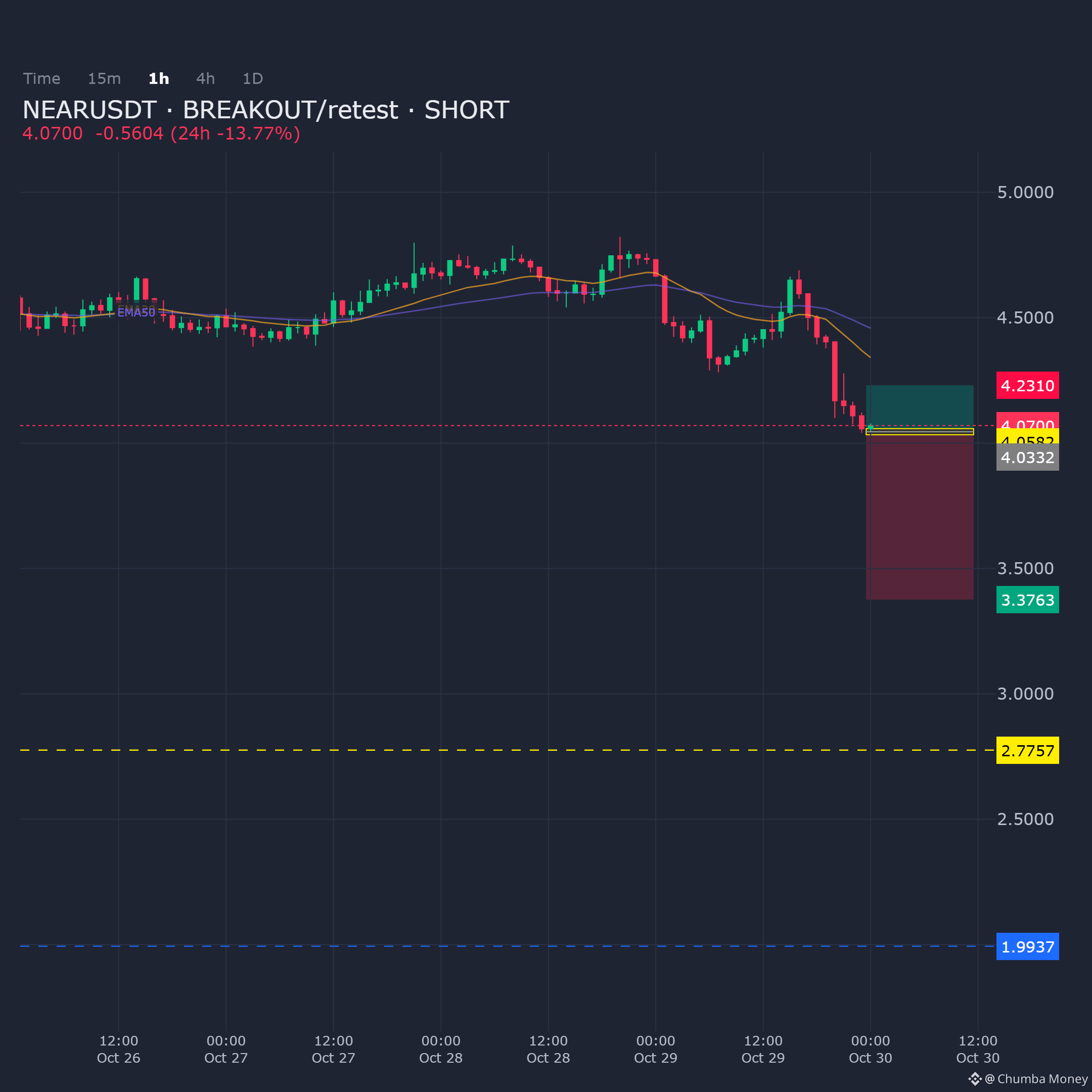
NEARUSDT on the 1H chart is showing an extended move into supply after the breakout, setting up for a retest. Bias remains bearish while price holds below the zone.
Entry: 4.0332 - 4.0582
Targets: TP1: 3.3763, TP2: 2.7757, TP3: 1.9937
Stop Loss: 4.231
$NEAR
NEARUSDT on the 1H chart is showing an extended move into supply after the breakout, setting up for a retest. Bias remains bearish while price holds below the zone.
Entry: 4.0332 - 4.0582
Targets: TP1: 3.3763, TP2: 2.7757, TP3: 1.9937
Stop Loss: 4.231
$NEAR
Entry: 4.0332 - 4.0582
Targets: TP1: 3.3763, TP2: 2.7757, TP3: 1.9937
Stop Loss: 4.231
$NEAR
158
·
--
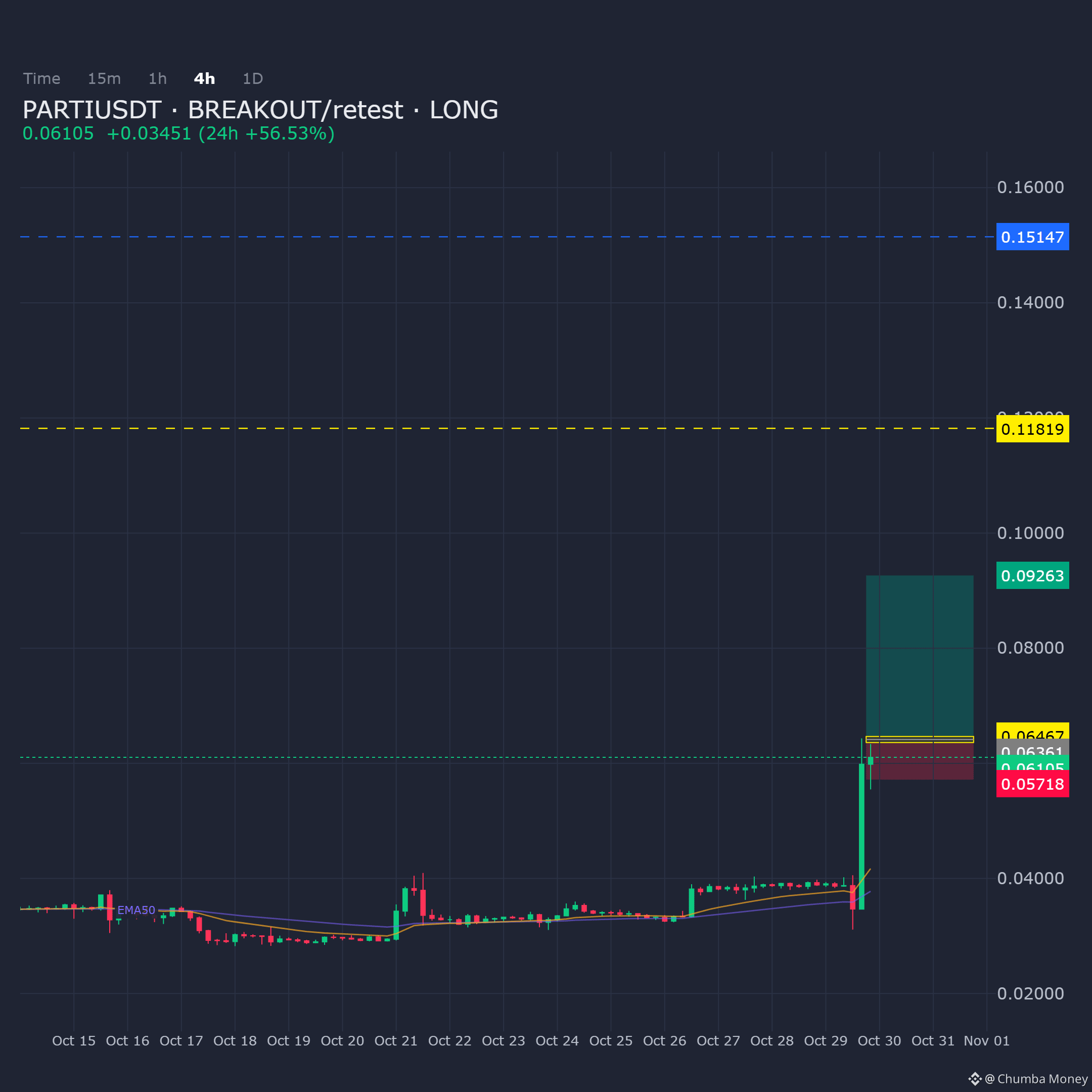
PARTIUSDT on the 4H timeframe is retesting a demand zone after the breakout. Bias remains long as long as this level holds.
Entry: 0.063608 - 0.064673
Targets: TP1: 0.092628, TP2: 0.118187, TP3: 0.151467
Stop Loss: 0.057184
$PARTI
PARTIUSDT on the 4H timeframe is retesting a demand zone after the breakout. Bias remains long as long as this level holds.
Entry: 0.063608 - 0.064673
Targets: TP1: 0.092628, TP2: 0.118187, TP3: 0.151467
Stop Loss: 0.057184
$PARTI
Entry: 0.063608 - 0.064673
Targets: TP1: 0.092628, TP2: 0.118187, TP3: 0.151467
Stop Loss: 0.057184
$PARTI
44
·
--
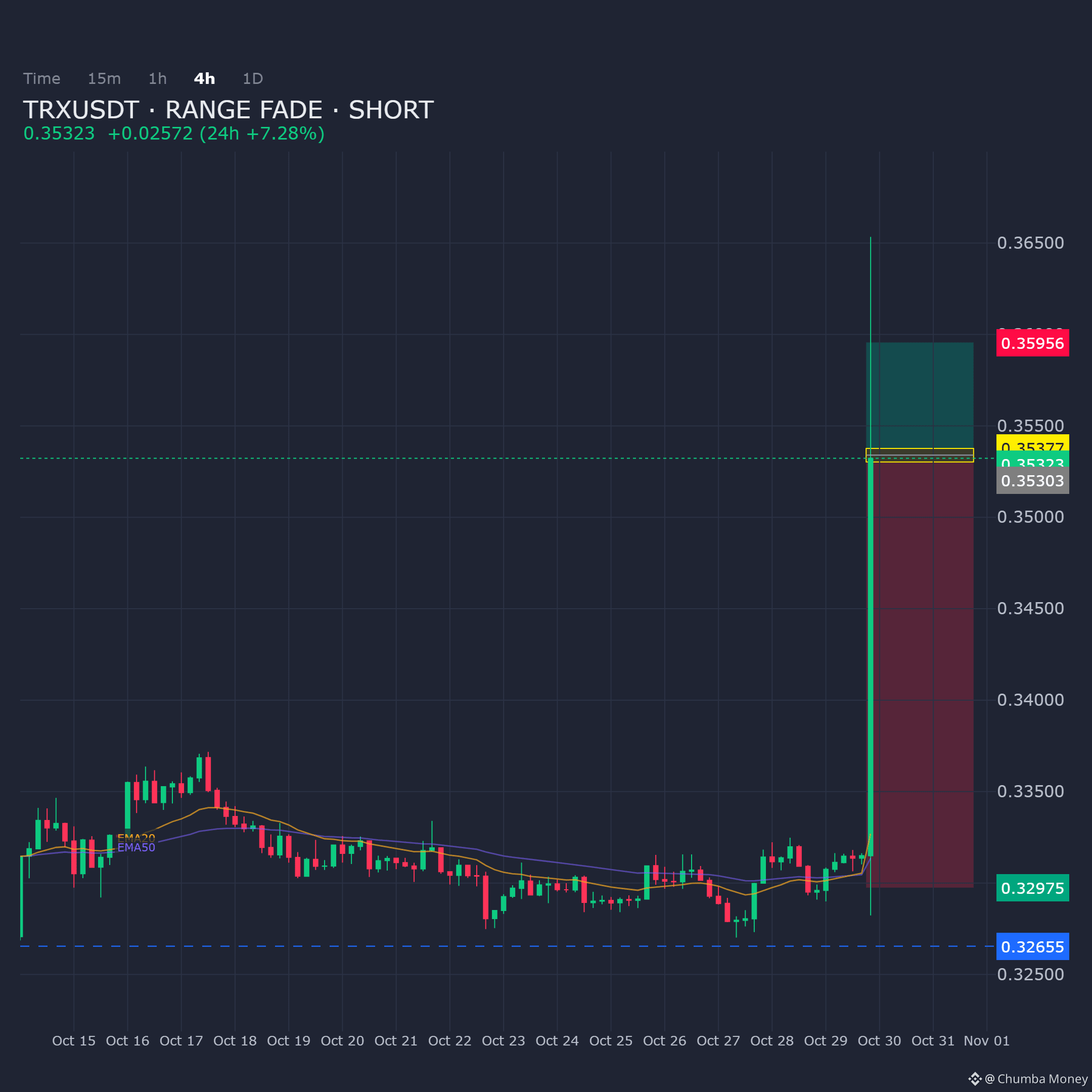
TRXUSDT on the 4H is testing the upper boundary of its range where sell orders are stacking. Expecting a rejection from this supply zone with a bearish bias into the downside targets.
Entry: 0.353027 - 0.35377
Targets: TP1: 0.32975, TP2: 0.327839, TP3: 0.326547
Stop Loss: 0.359562
$TRX
TRXUSDT on the 4H is testing the upper boundary of its range where sell orders are stacking. Expecting a rejection from this supply zone with a bearish bias into the downside targets.
Entry: 0.353027 - 0.35377
Targets: TP1: 0.32975, TP2: 0.327839, TP3: 0.326547
Stop Loss: 0.359562
$TRX
Entry: 0.353027 - 0.35377
Targets: TP1: 0.32975, TP2: 0.327839, TP3: 0.326547
Stop Loss: 0.359562
$TRX
71
·
--
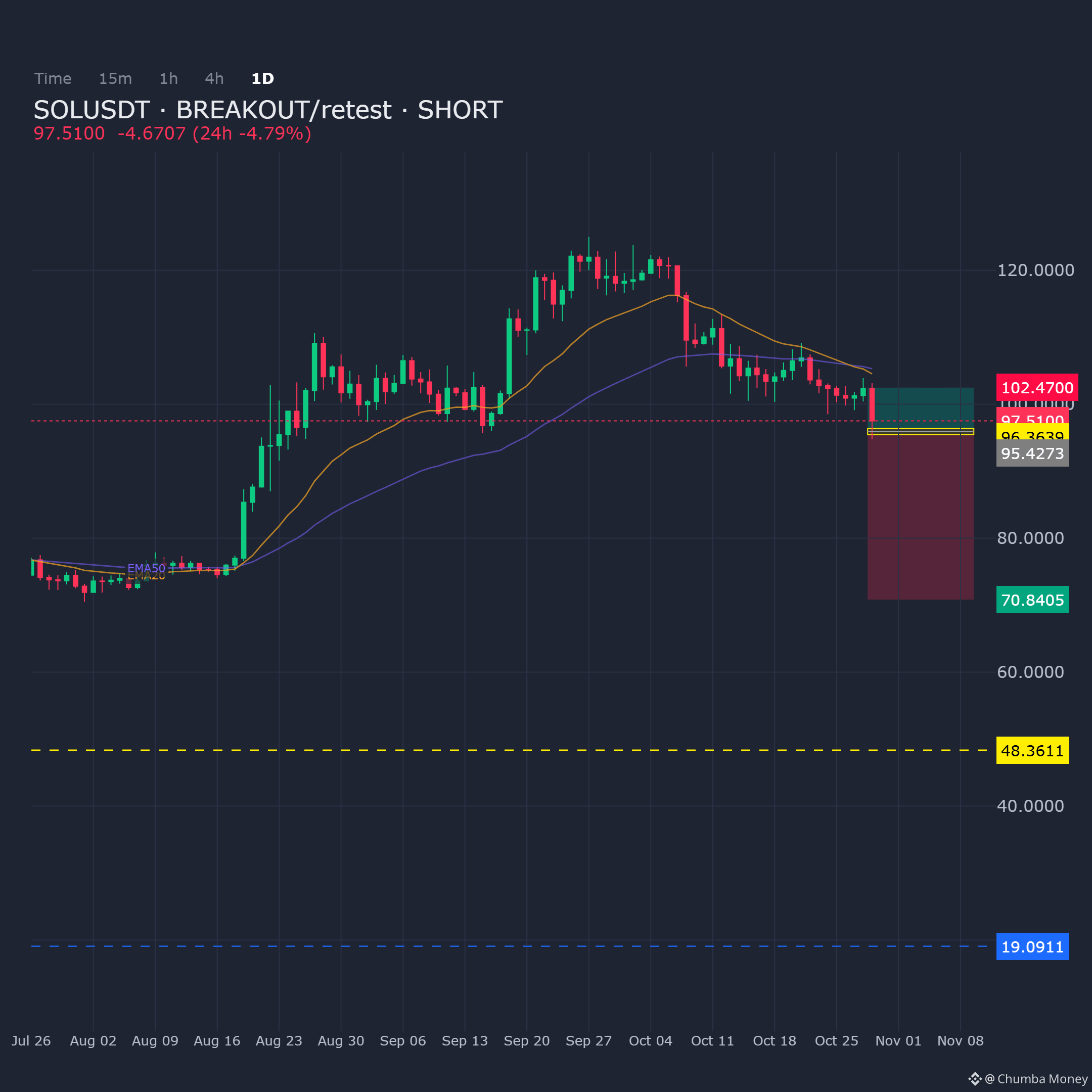
SOLUSDT Daily breakout/retest structure confirms a short bias as price pushes into the supply zone.
Entry: 95.4273 - 96.3639
Targets: TP1: 70.8405, TP2: 48.3611, TP3: 19.0911
Stop Loss: 102.47
$SOL
SOLUSDT Daily breakout/retest structure confirms a short bias as price pushes into the supply zone.
Entry: 95.4273 - 96.3639
Targets: TP1: 70.8405, TP2: 48.3611, TP3: 19.0911
Stop Loss: 102.47
$SOL
Entry: 95.4273 - 96.3639
Targets: TP1: 70.8405, TP2: 48.3611, TP3: 19.0911
Stop Loss: 102.47
$SOL
58
·
--
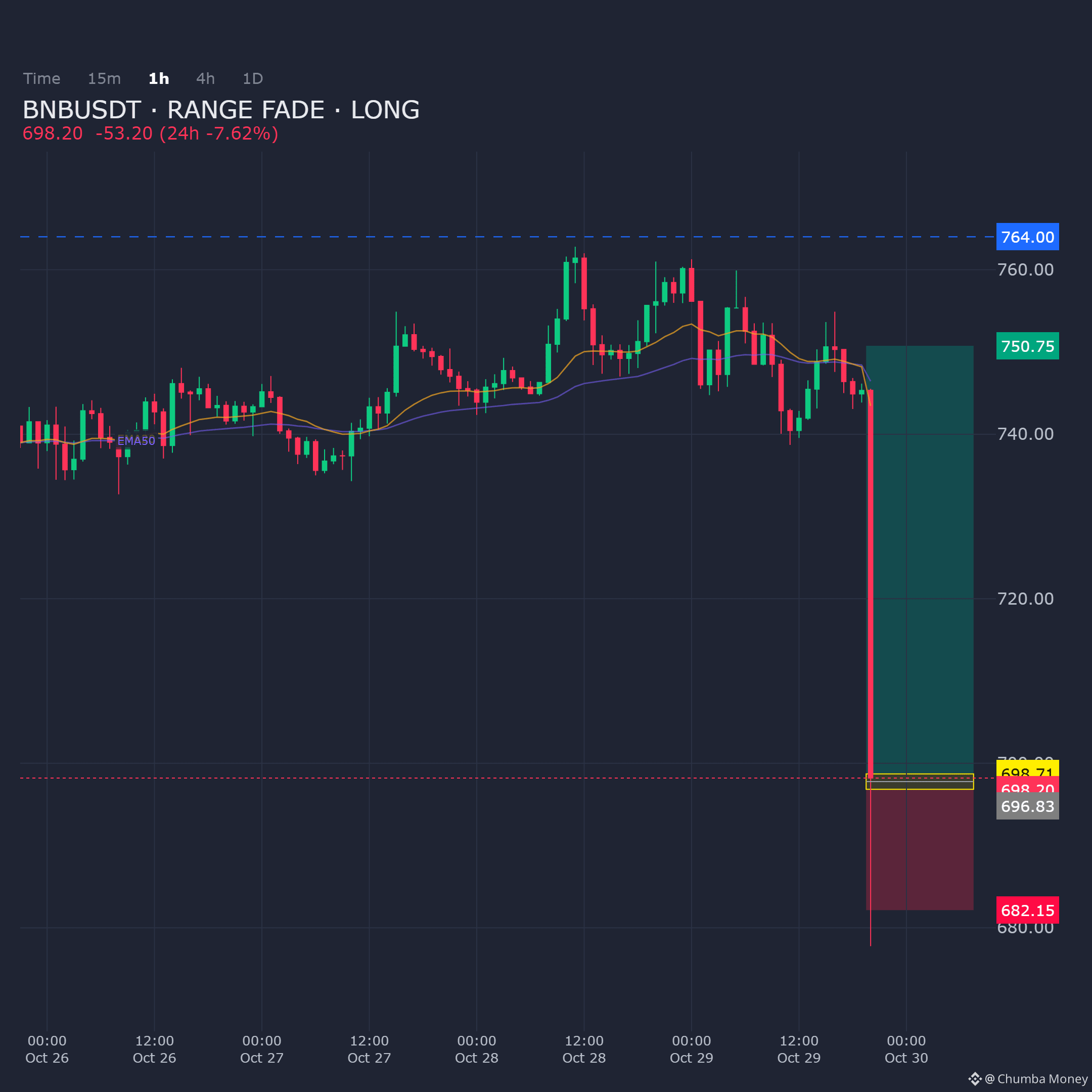
BNBUSDT 1H: structure is holding into demand, favor the range fade long.
Entry: 696.83 - 698.71
Targets: TP1: 750.75, TP2: 759.18, TP3: 764.0
Stop Loss: 682.15
$BNB
BNBUSDT 1H: structure is holding into demand, favor the range fade long.
Entry: 696.83 - 698.71
Targets: TP1: 750.75, TP2: 759.18, TP3: 764.0
Stop Loss: 682.15
$BNB
Entry: 696.83 - 698.71
Targets: TP1: 750.75, TP2: 759.18, TP3: 764.0
Stop Loss: 682.15
$BNB
1
60
·
--
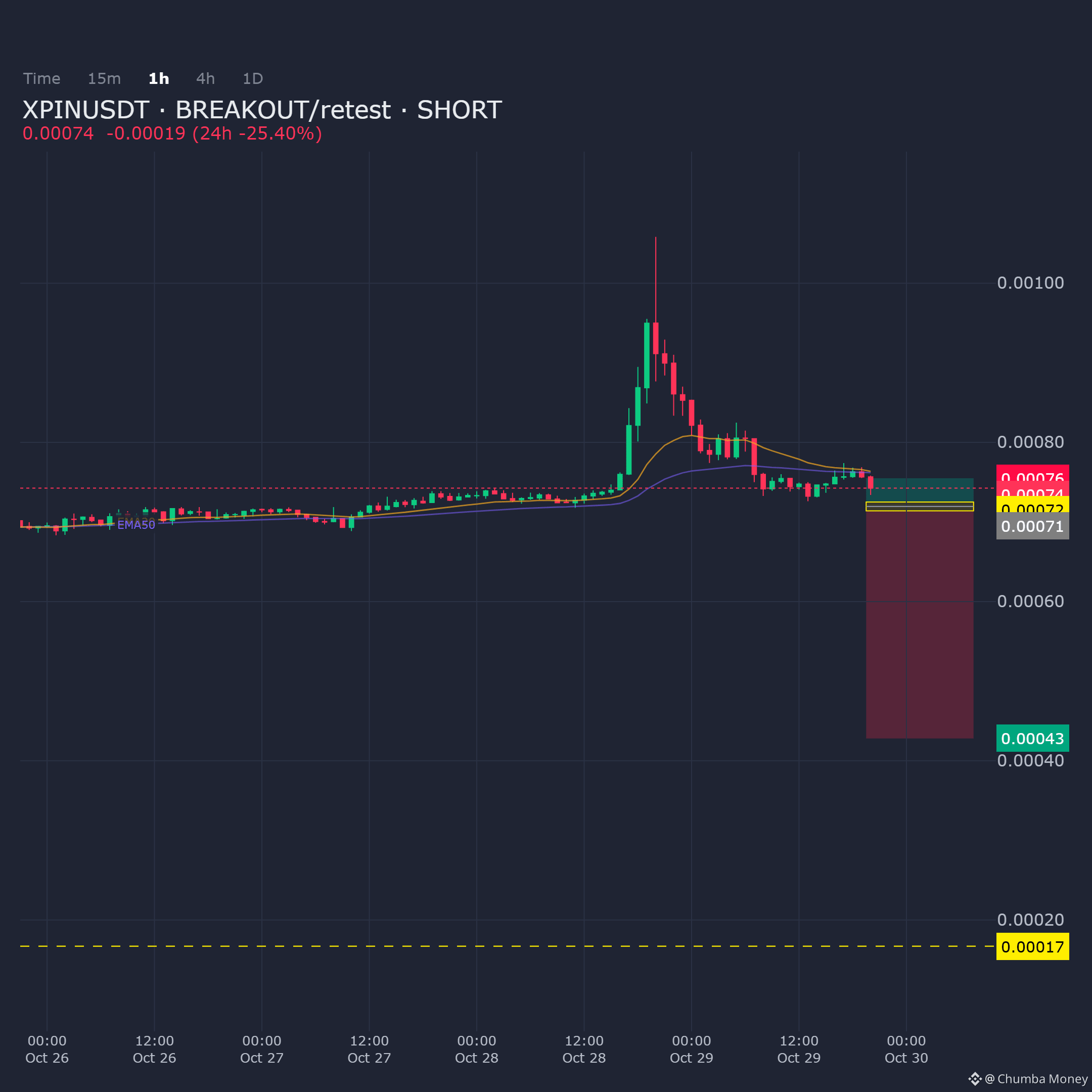
XPINUSDT on the 1H chart is stretched into supply after the breakout, targeting a retest for downside continuation. Bias remains short while price holds below this zone.
Entry: 0.000714 - 0.000725
Targets: TP1: 0.000428, TP2: 0.000167, TP3: 0.000167
Stop Loss: 0.000755
$XPIN
XPINUSDT on the 1H chart is stretched into supply after the breakout, targeting a retest for downside continuation. Bias remains short while price holds below this zone.
Entry: 0.000714 - 0.000725
Targets: TP1: 0.000428, TP2: 0.000167, TP3: 0.000167
Stop Loss: 0.000755
$XPIN
Entry: 0.000714 - 0.000725
Targets: TP1: 0.000428, TP2: 0.000167, TP3: 0.000167
Stop Loss: 0.000755
$XPIN
61
·
--
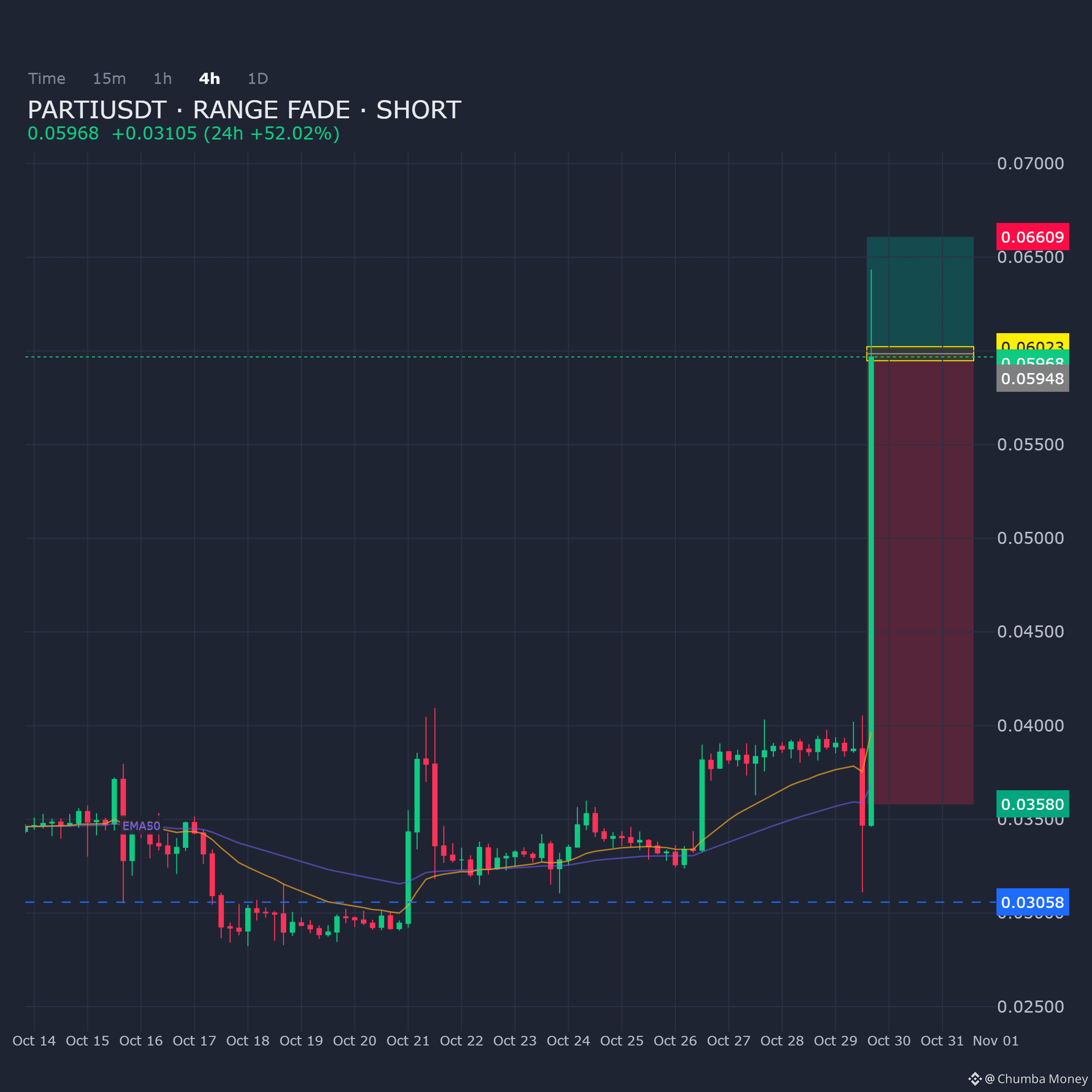
PARTIUSDT on the 4H is stalling at resistance with momentum fading. This supports a range fade short into the established zone.
Entry: 0.059475 - 0.060227
Targets: TP1: 0.035805, TP2: 0.032483, TP3: 0.030581
Stop Loss: 0.066092
$PARTI
PARTIUSDT on the 4H is stalling at resistance with momentum fading. This supports a range fade short into the established zone.
Entry: 0.059475 - 0.060227
Targets: TP1: 0.035805, TP2: 0.032483, TP3: 0.030581
Stop Loss: 0.066092
$PARTI
Entry: 0.059475 - 0.060227
Targets: TP1: 0.035805, TP2: 0.032483, TP3: 0.030581
Stop Loss: 0.066092
$PARTI
20
Войдите, чтобы посмотреть больше материала
Присоединяйтесь к пользователям криптовалют по всему миру на Binance Square
⚡️ Получайте новейшую и полезную информацию о криптоактивах.
💬 Нам доверяет крупнейшая в мире криптобиржа.
👍 Получите достоверные аналитические данные от верифицированных создателей контента.
Эл. почта/номер телефона
В тренде
$1.5BInLeveragedCryptoBetsLiquidated
Просмотров: 3,741
58 обсуждают
#$1.5BInLeveragedCryptoBetsLiquidated
📉 Kripto fiyatları düşünce, kaldıraçla yükselişe oynayanların pozisyonları otomatik kapatıldı. 24 saatte toplam 1,53 milyar dolarlık işlem tasfiye edildi; bunun yaklaşık %83,8’i fiyatların yükseleceğine bahis oynayan “long” pozisyonlardı. Bu rakam, yatırımcıların cebinden çıkan nakdin değil, kapatılan pozisyonların toplam değerinin ölçüsü. 💸
⚙️ Kaldıraç, az parayla daha büyük bir işlem açmak gibi. Fiyat ters yönde yeterince hareket edince teminat yetmiyor ve borsa pozisyonu zorla kapatıyor. Bu satışlar düşüşü daha da hızlandırabiliyor. Haber, satış dalgasını Binance’teki güvenlik ihlali sonrasına bağlıyor
🔄 Fiyatlar toparlanınca bu kez düşüşe oynayan bazı “short” pozisyonlar da tasfiye edildi; onları kapatmak için alım yapılması yükselişi besleyebiliyor.$LSK $IDOL $Q
Sat_Stacker
·Лайков: 0
·Просмотров: 589
KOSPIFalls3.53%BackBelow6000
Просмотров: 7,020
261 обсуждают
USMidtermElections
Просмотров: 120,564
1,525 обсуждают