

HONE_Y
3.8k Публикации

HONE_Y
Отправить жалобу
Заблокировать пользователя
Crypto Mindset | Discipline over emotions
Открытая сделка
Случайный трейдер
2.4 г
162 подписок(и/а)
13.0K+ подписчиков(а)
8.8K+ понравилось
Посты
Портфель
Все
Цитирования
Активно
·
--
Would you let an AI agent spend $20 without approving every purchase?
That question gets to the heart of the agent economy. An agent buying data or accessing a paid API needs clear limits on what it can spend and permission to act.
This is the part of Kite that interests me most.
Kite’s Passport documentation describes spending sessions approved through a passkey. Users set a total budget, a limit per transaction and an expiry time. The agent can then pay for supported services within those boundaries. Paid API access uses x402 payment requests.
Consider a hypothetical research task: give an agent a $20 budget, allow up to $2 per request and let the session expire after two hours. It can purchase useful data without interrupting you for every payment.
But what happens when it tries to exceed its authority?
I checked Kite’s error documentation. It explicitly describes refused payments when a request exceeds the transaction limit, exhausts the session budget or accesses an endpoint outside the permitted scope. That detail matters because a spending limit only helps if the system actually rejects a payment that breaks it.
My view: reliable delegation will be one of the biggest tests for the agent economy. People need confidence that an agent can complete useful work while staying within the authority they granted.
There is still a separate challenge: an authorized payment does not prove the information purchased was accurate or useful. Spending controls can limit financial exposure; evaluating service quality remains essential.
For Kite, I would watch repeat paying users, useful services receiving recurring payments and evidence that permission controls hold up in practice. Those would tell me more about adoption than transaction counts alone.
Which task would you first trust an agent with a small budget to handle, and what restriction would you insist on?
Educational content, not investment advice.
$KITE #KiteBBW

17
12
190
·
--
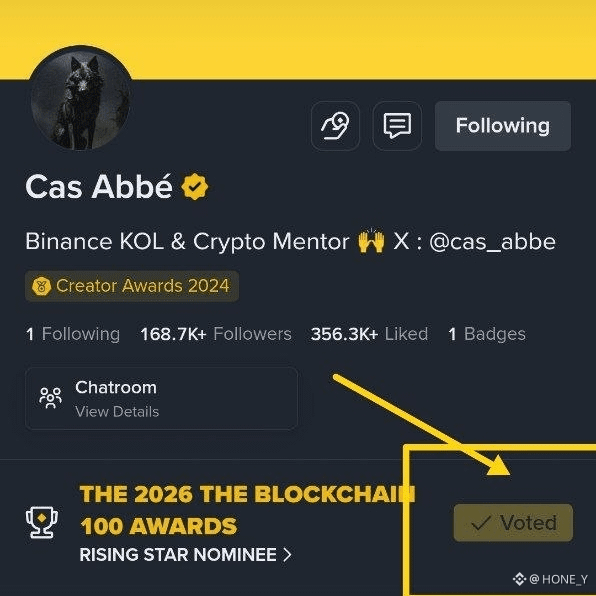
Great mentors deserve great recognition! 🏆
@Cas_Abb is nominated for the Blockchain 100 Awards 2026 Rising Star, and this is our chance to show appreciation for his contribution to the crypto community.
Every vote counts! 💛
[Cast your VOTE](https://app.binance.com/uni-qr/cpro/Cas_Abb?l=en&r=LPFUZDYE&uc=app_square_share_link&us=copylink)
Let's support Cas together!
#Blockchain100 #BinanceSquare
Great mentors deserve great recognition! 🏆
@Cas Abbé is nominated for the Blockchain 100 Awards 2026 Rising Star, and this is our chance to show appreciation for his contribution to the crypto community.
Every vote counts! 💛
Cast your VOTE
Let's support Cas together!
#Blockchain100 #BinanceSquare
@Cas Abbé is nominated for the Blockchain 100 Awards 2026 Rising Star, and this is our chance to show appreciation for his contribution to the crypto community.
Every vote counts! 💛
Cast your VOTE
Let's support Cas together!
#Blockchain100 #BinanceSquare
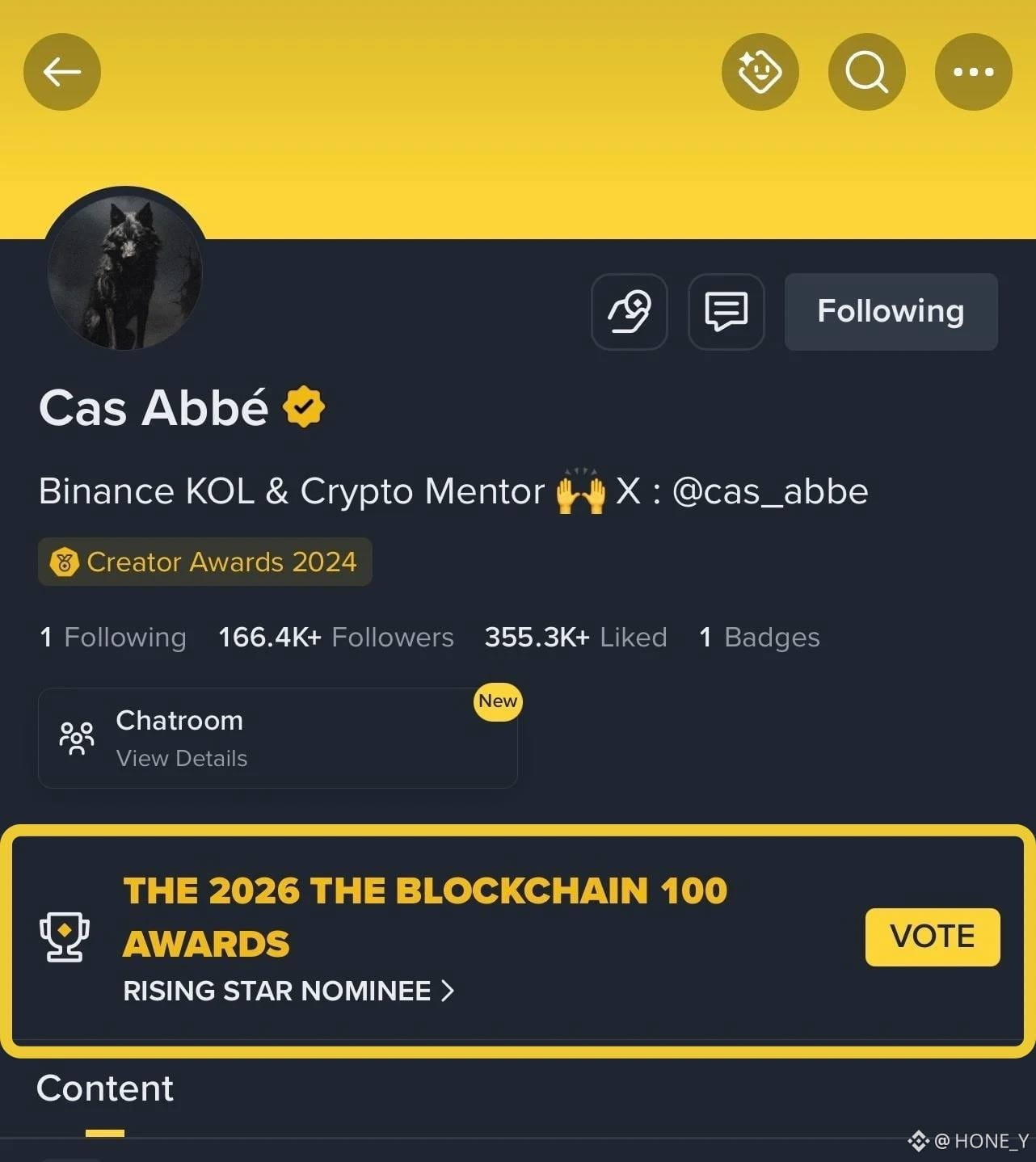

vote done?
От HONE_Y
12
2
32
123
·
--
🏆 Let's Recognize Great Contributors!
I'm proudly supporting @Cas_Abb for the Blockchain 100 Awards 2026 Rising Star category!
I kindly ask my community to cast your vote for him!
[Cast Vote here](https://app.binance.com/uni-qr/cpro/Cas_Abb?l=en&r=LPFUZDYE&uc=app_square_share_link&us=copylink) 🗳️
Special thanks to everyone for your support! 🙌
🏆 Let's Recognize Great Contributors!
I'm proudly supporting @Cas Abbé for the Blockchain 100 Awards 2026 Rising Star category!
I kindly ask my community to cast your vote for him!
Cast Vote here 🗳️
Special thanks to everyone for your support! 🙌
I'm proudly supporting @Cas Abbé for the Blockchain 100 Awards 2026 Rising Star category!
I kindly ask my community to cast your vote for him!
Cast Vote here 🗳️
Special thanks to everyone for your support! 🙌
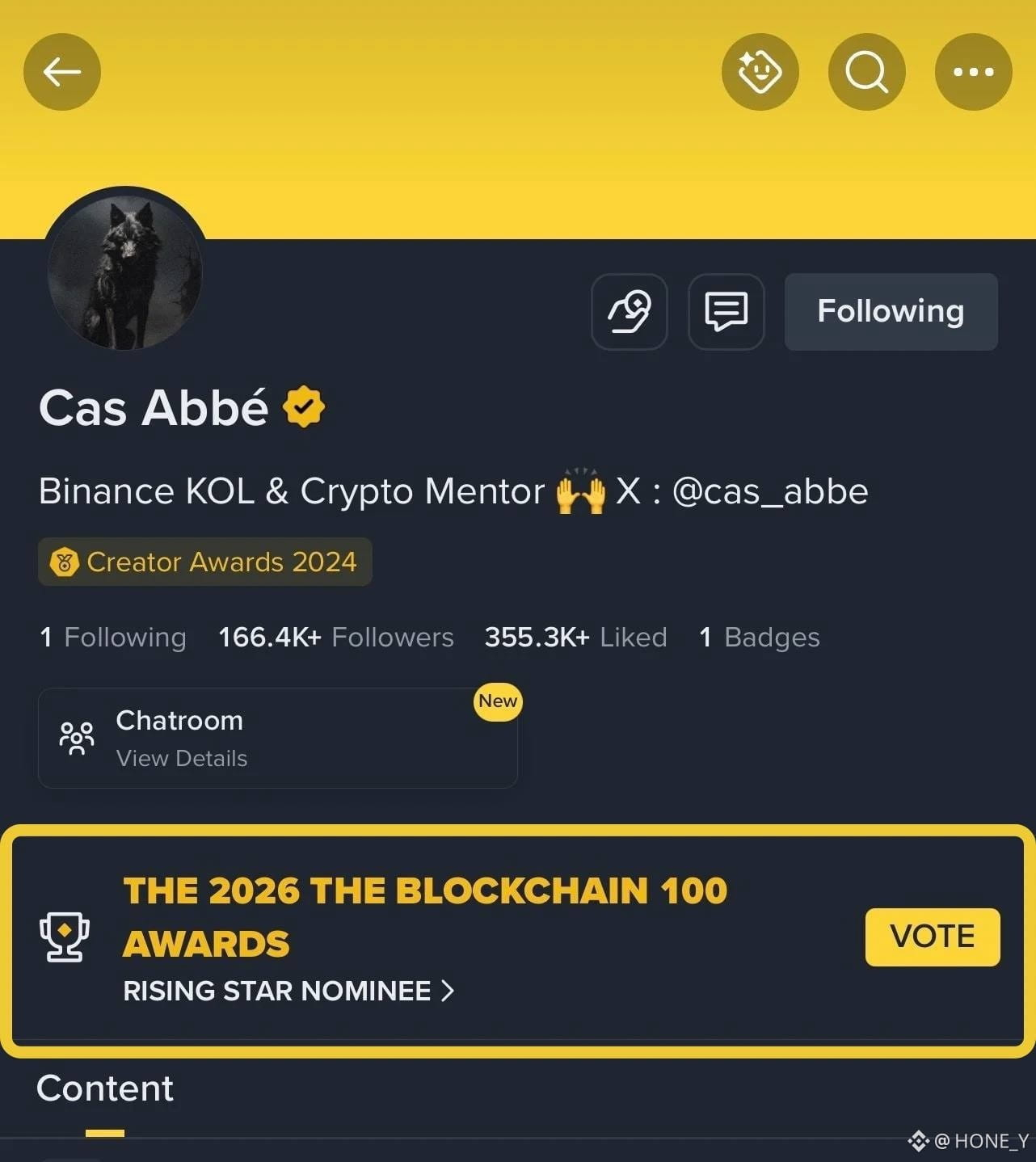
Good Luck
От HONE_Y
2
3
39
·
--
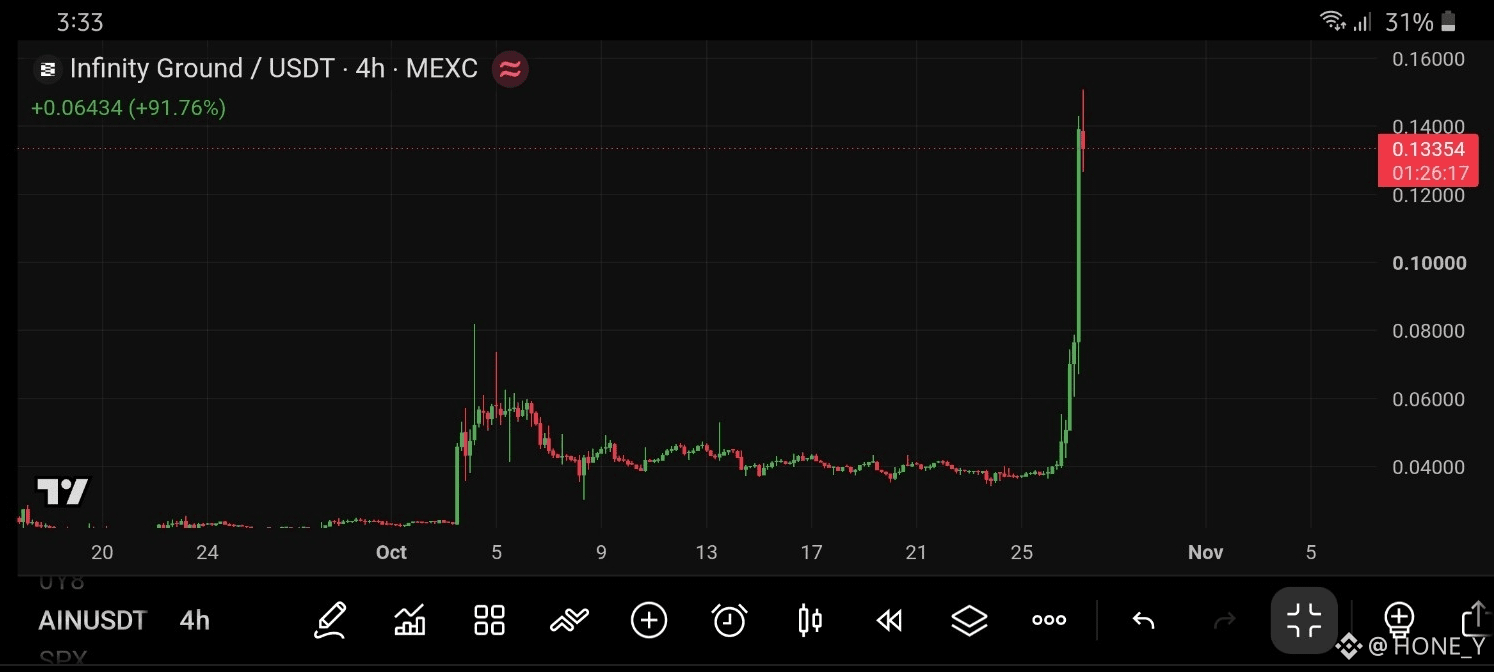
$AIN is on fire, up over 90% on the 4H chart!
Price jumped from $0.040 to nearly $0.150, but such a sharp rally could bring profit-taking.
Key Levels:
🟢 Support: $0.125–$0.130
🎯 TP1: $0.145
🎯 TP2: $0.155
🎯 TP3: $0.165
🛑 SL: Below $0.120
A break above $0.145 could push AIN higher, but losing $0.125 may trigger a pullback.
I'm waiting for a retest rather than chasing this pump.
#AIN #crypto #Binance #Write2Earn
21
12
3.1k
·
--
🏆 Support Cas Abbé | Blockchain 100 Awards 2026
I'm proud to support @Cas_Abb for the Rising Star Award!
His dedication to educating, inspiring, and supporting the crypto community deserves recognition.
🗳️ [Click this link and cast your vote](https://app.binance.com/uni-qr/cpro/Cas_Abb?l=en&r=LPFUZDYE&uc=app_square_share_link&us=copylink)
Every vote matters. Let's come together and help Cas Abbé reach the top!
#Blockchain100 #BinanceSquare #RisingStar
🏆 Support Cas Abbé | Blockchain 100 Awards 2026
I'm proud to support @Cas Abbé for the Rising Star Award!
His dedication to educating, inspiring, and supporting the crypto community deserves recognition.
🗳️ Click this link and cast your vote
Every vote matters. Let's come together and help Cas Abbé reach the top!
#Blockchain100 #BinanceSquare #RisingStar
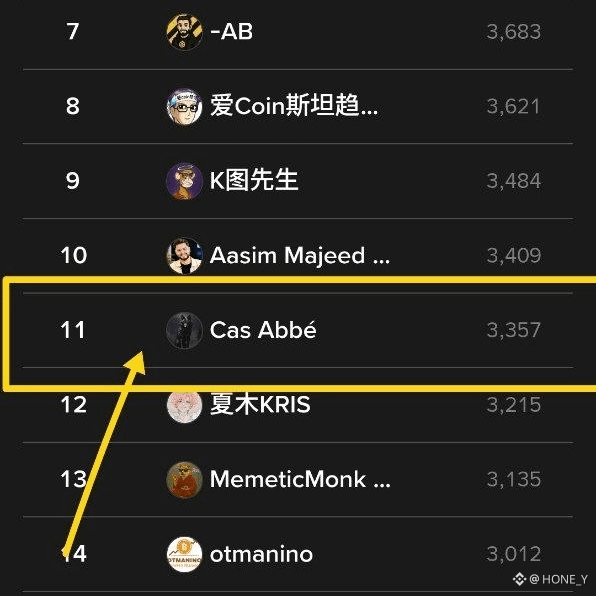
Best Wishes!
От HONE_Y
2
4
105
·
--
@nillionnetwork | Why Covenants Matter
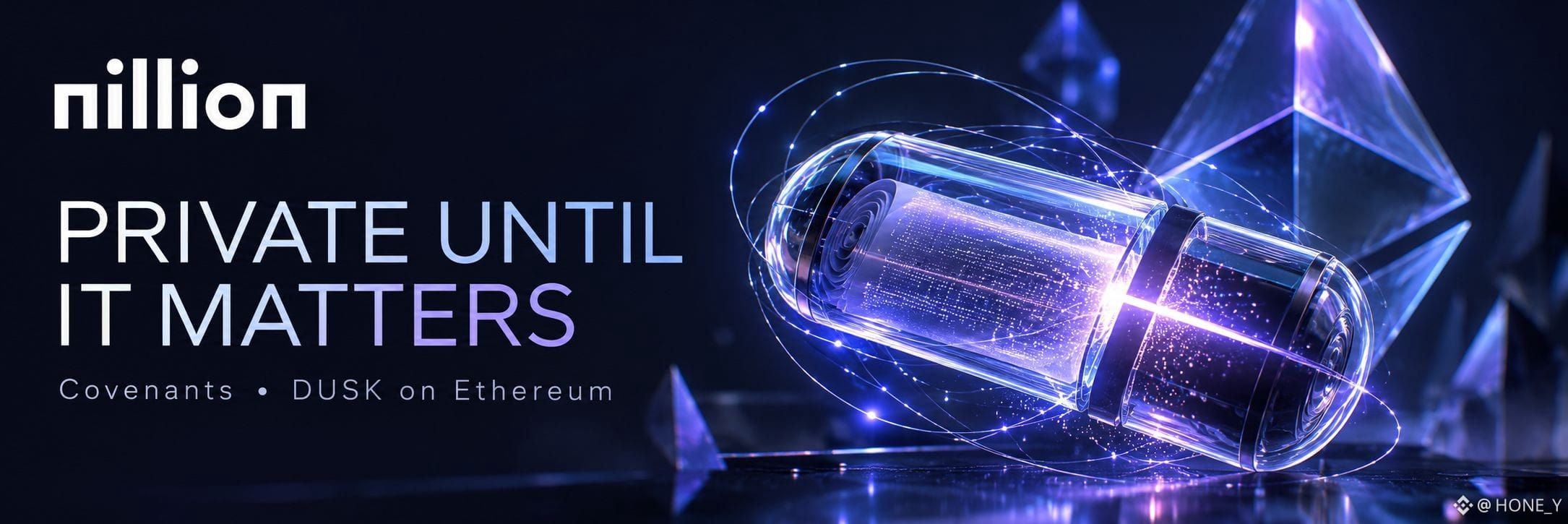
What interests me most about Nillion is its approach to privacy in blockchain applications.
Covenants allows encrypted instructions to remain private until specific conditions are met. This could create new opportunities for private trading, sealed bids, and DeFi applications.
With DUSK now live on Ethereum mainnet, Nillion is moving toward practical programmable privacy.
Its seven-era roadmap also makes future ecosystem expansion interesting.
My focus remains on real adoption, developer activity, and useful products rather than short-term hype.
I believe Covenants has potential, but execution will determine its long-term success.
#NIL $NIL
@Nillion | Why Covenants Matter
What interests me most about Nillion is its approach to privacy in blockchain applications.
Covenants allows encrypted instructions to remain private until specific conditions are met. This could create new opportunities for private trading, sealed bids, and DeFi applications.
With DUSK now live on Ethereum mainnet, Nillion is moving toward practical programmable privacy.
Its seven-era roadmap also makes future ecosystem expansion interesting.
My focus remains on real adoption, developer activity, and useful products rather than short-term hype.
I believe Covenants has potential, but execution will determine its long-term success.
#NIL $NIL
25
16
118
·
--
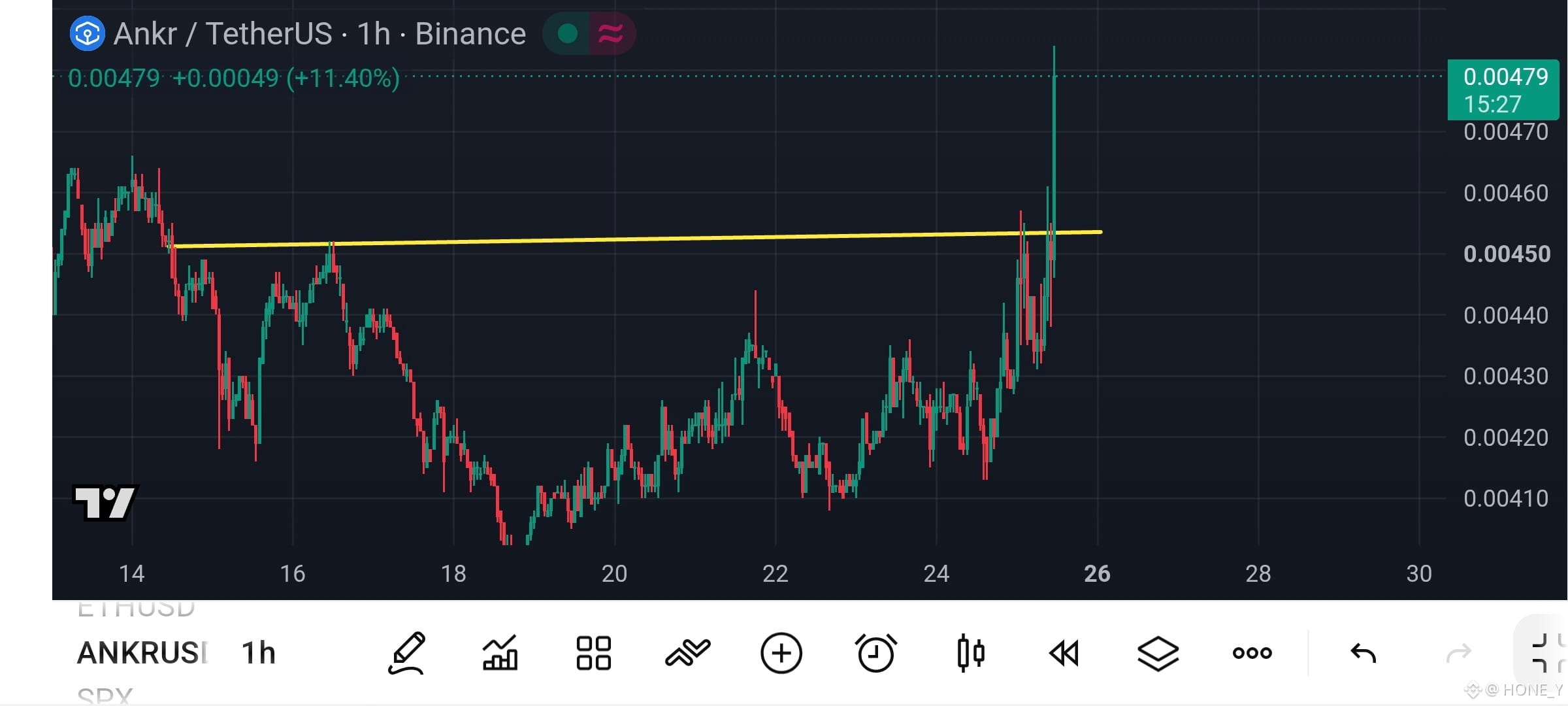
$ANKR is gaining momentum, up 11.40% and trading near $0.00479.
The 1H chart shows a strong breakout above $0.00452 resistance.
Support: $0.00450–$0.00452
Targets: $0.00500 / $0.00520
If buyers hold above $0.00452, we could see more upside. A drop below $0.00450 may trigger a pullback.
I'm watching for a clean retest before expecting the next move.
DYOR. NFA.
#ankr #crypto #Binance
16
11
422
·
--
Would an AI agent buy your service twice?
That’s the question I keep coming back to when thinking about Kite and the agent economy.
A first payment shows that the payment system works. A repeat purchase could tell us something more useful: the service helped complete a task.
$KITE Service Provider Guide describes how this exchange works. A service requests payment, a Passport agent pays through a user-approved spending session, and the provider verifies payment before delivering its response. The guide supports x402 and MPP payment protocols.
Now consider a hypothetical small developer selling access to local delivery estimates. A shopping assistant might need that information for one order. Charging for that request could make sense for an occasional customer who would struggle to justify a subscription.
That’s the opportunity I see: developers could sell a small, useful capability that agents purchase when a task requires it.
Kite’s documentation connects several steps in that process: discovering paid services, paying for API requests through x402, and reviewing completed payments and session spending.
But making a payment doesn’t prove the purchase was worthwhile.
If the delivery estimate is outdated, the agent may successfully pay and still make a poor recommendation. A payment record proves money moved; it doesn’t establish the quality of the answer.
For me, that distinction matters when evaluating Kite’s potential.
I’d want to see agents completing tasks successfully, choosing reliable providers, and keeping the total cost reasonable. Repeat purchases would be encouraging—but only alongside evidence that the service actually helped, since automated retries could also inflate activity.
My thesis: useful services and reliable payments need to develop together for the agent economy to last.
If an AI agent became your customer tomorrow, what would make your service worth buying again?
#KiteBBW #crypto #Binance
26
14
281
·
--
Проверено
@nillionnetwork | Why Covenants Matter
What interests me most about Nillion is its approach to privacy in blockchain applications.
Covenants allows encrypted instructions to remain private until specific conditions are met. This could create new opportunities for private trading, sealed bids, and DeFi applications.
With DUSK now live on Ethereum mainnet, Nillion is moving toward practical programmable privacy.
Its seven-era roadmap also makes future ecosystem expansion interesting.
My focus remains on real adoption, developer activity, and useful products rather than short-term hype.
I believe Covenants has potential, but execution will determine its long-term success.
#NIL $NIL #crypto #Binance
@Nillion | Why Covenants Matter
What interests me most about Nillion is its approach to privacy in blockchain applications.
Covenants allows encrypted instructions to remain private until specific conditions are met. This could create new opportunities for private trading, sealed bids, and DeFi applications.
With DUSK now live on Ethereum mainnet, Nillion is moving toward practical programmable privacy.
Its seven-era roadmap also makes future ecosystem expansion interesting.
My focus remains on real adoption, developer activity, and useful products rather than short-term hype.
I believe Covenants has potential, but execution will determine its long-term success.
#NIL $NIL #crypto #Binance
29
26
4.3k
·
--
$STX is showing a strong breakout.
Price pushed cleanly above the $0.35–$0.36 resistance after several failed attempts and quickly reached around $0.389.
My view: momentum remains bullish while STX holds above the breakout zone. A healthy retest of $0.35–$0.36 could confirm it as new support.
Key levels: Support: $0.35–$0.36
Major support: $0.30–$0.31
Resistance: $0.40–$0.42
After such a sharp move, I wouldn’t chase the candle. I’d rather watch how buyers react on a pullback.
DYOR, not financial advice.
#STX #crypto #binance
12
13
439
·
--
$QNT chart has me leaning bearish after the sharp rejection above $300.
Price is around $209 on this chart, already below $250, though the current candle hasn’t closed yet.
I’m watching $190–$200 first. If that zone breaks, $180 and then $160 could come into play.
A reclaim of $250–$270 would weaken my bearish view, while a strong recovery above $325 would invalidate it.
#QNT #crypto #binance
19
15
596
·
--
$POND is showing explosive momentum on chart, jumping from the $0.0009 base toward $0.0025.
I’m watching $0.0025–$0.0026 as key resistance. My opinion: after such a vertical move, chasing looks risky. I’d prefer a healthy pullback or consolidation before considering the next move.
Break $0.0026 with confirmation, and things could get interesting.
DYOR, not financial advice.
#POND #crypto #Binance
23
12
123
Войдите, чтобы посмотреть больше материала
Присоединяйтесь к пользователям криптовалют по всему миру на Binance Square
⚡️ Получайте новейшую и полезную информацию о криптоактивах.
💬 Нам доверяет крупнейшая в мире криптобиржа.
👍 Получите достоверные аналитические данные от верифицированных создателей контента.
Эл. почта/номер телефона
В тренде
FedWatch
Просмотров: 16.3M
39,411 обсуждают
🚨 🇺🇸 PETER SCHIFF JUST THREW A BIG WARNING AT THE FED!
Peter Schiff is calling Kevin Warsh’s tough talk on inflation a “bluff,” and his prediction could have major implications for the markets.
Schiff believes the Fed could eventually return to money printing through quantitative easing (QE) and even cut interest rates next year, despite inflation continuing to rise.
Think about that for a moment.
🔥 Inflation could remain a problem. 🔥 The Fed could still move toward easier monetary policy. 🔥 More liquidity could flow into financial markets.
If this scenario plays out, it could create a very different market environment for stocks, gold, Bitcoin, and the wider crypto market.
But there’s a catch: if inflation stays high, the Fed could face a difficult choice between fighting rising prices and supporting the economy.
Will Warsh stick to a tough inflation policy, or will the Fed eventually change direction?
The next move could matter a lot for investors.
#FedWatch #EarningsSeason #USMidtermElections #BrazilCryptoExchangesMustApplyForLicensesByFriday #StanDruckenmillerBecomesInvestorInTradeXYZ
Jackson Liam
·Лайков: 4
·Просмотров: 8.4k
EarningsSeason
Просмотров: 6.4M
32,103 обсуждают
USMidtermElections
Просмотров: 43,486
630 обсуждают