

Crypto Fortress 1
2k Публикации

Crypto Fortress 1
Отправить жалобу
Заблокировать пользователя
Crypto explorer | Building the decentralized future one block at a time | Insights on BTC, ETH, DeFi & beyond | Not financial advice.
0 подписок(и/а)
7 подписчиков(а)
26 понравилось
Посты
Public companies now hold 1.3 million $BTC, up 31% in just 14 months, according to CryptoQuant.
Strategy alone accounts for 71% of that growth, highlighting how heavily corporate #Bitcoin accumulation depends on one major player.
#BTC Price Analysis# #Bitcoin Price Prediction: What is Bitcoins next move?#
Strategy alone accounts for 71% of that growth, highlighting how heavily corporate #Bitcoin accumulation depends on one major player.
#BTC Price Analysis# #Bitcoin Price Prediction: What is Bitcoins next move?#
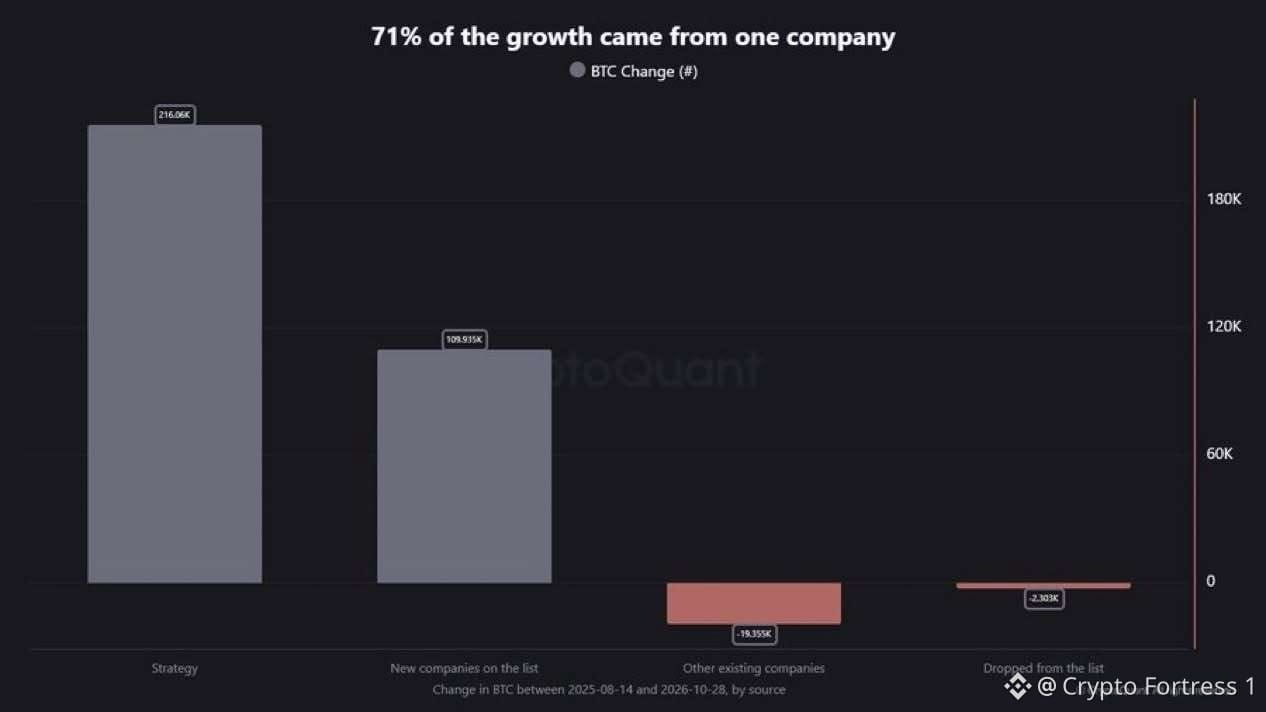
Whales accumulated 2,573 $BTC worth $202 million today.
While retail investors panic and sell, the big players are taking advantage of the dip and stacking more $BTC.
#BTC Price Analysis# #Macro Insights#
Whales accumulated 2,573 $BTC worth $202 million today.
While retail investors panic and sell, the big players are taking advantage of the dip and stacking more $BTC.
#BTC Price Analysis# #Macro Insights#
While retail investors panic and sell, the big players are taking advantage of the dip and stacking more $BTC.
#BTC Price Analysis# #Macro Insights#
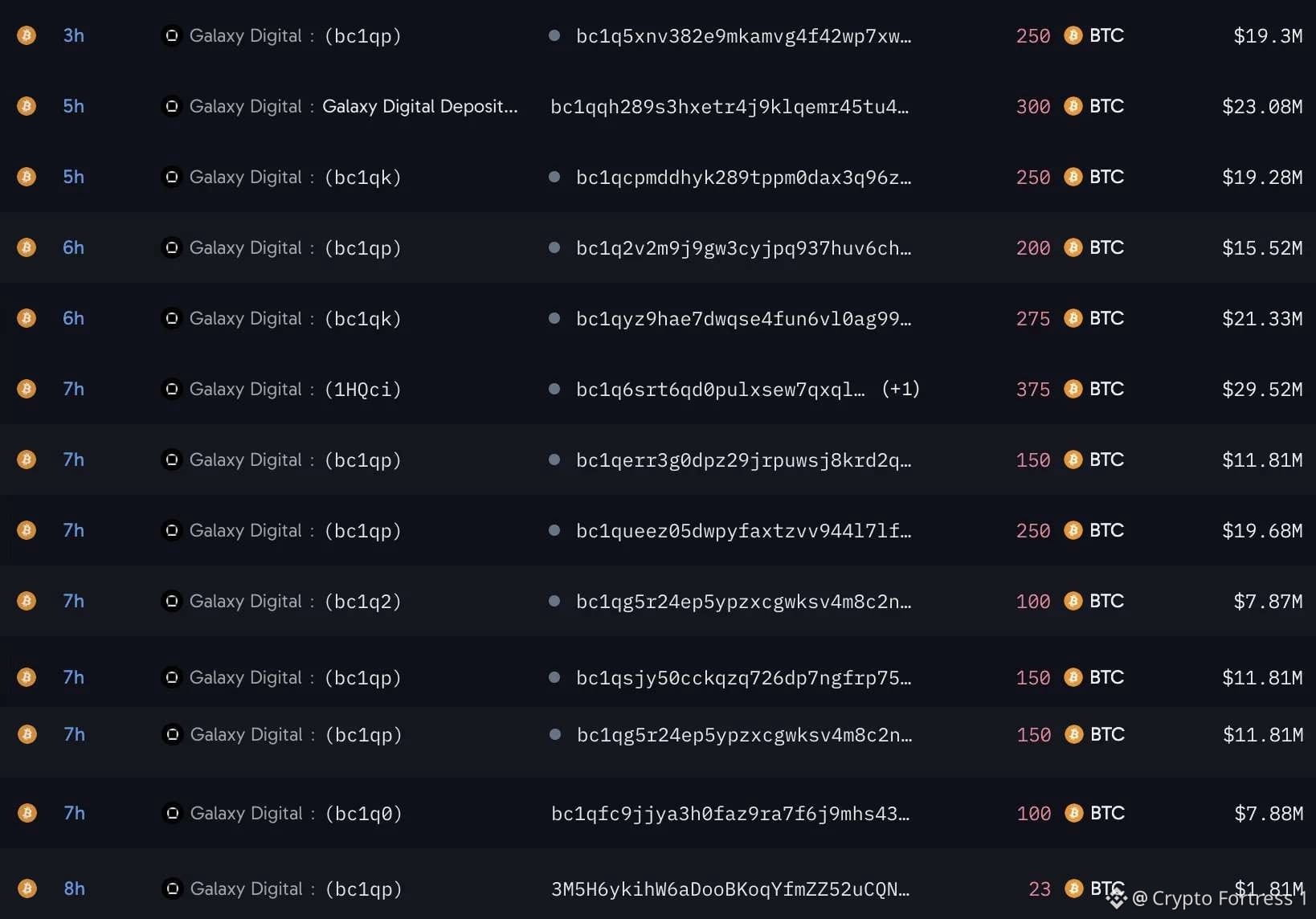
$XRP futures trading just hit a seven-month high
According to CryptoQuant, XRP futures volume reached its highest level in seven months, with Binance leading at $34.57B, followed by Bybit at $13.58B and OKX at $12.25B. While $BTC continues to influence broader market sentiment, XRP is seeing:
→ $60.4B in combined futures volume
→ Binance leading with $34.57B
→ Growing derivatives market activity
→ Rising interest from active traders
→ Stronger focus on institutional adoption
→ Key resistance levels at $1.50 and $2.00
But here's where things get interesting for XRP bulls.
Rising futures volume doesn't always mean stronger buying demand. If XRP can break above $1.50 and build momentum toward $2.00, the bullish case could strengthen, with $3.50 and $5 remaining longer-term targets.
#XRP #XRPETF
#BTC Price Analysis#
Amazon Stock Faces Pressure After Q3 Earnings Miss Wall Street Estimates!
Amazon delivered mixed third-quarter results, with revenue reaching $201.9B, up 12% year over year but below the $202.26B forecast. Adjusted earnings per share came in at $1.89 versus the $1.97 expected, raising questions about whether the company can maintain its strong growth.
Key Q3 highlights:
- Revenue: $201.9B (+12% YoY)
- Adjusted EPS: $1.89 vs. $1.97 expected
- Net income: $20.7B
- Operating income: $28.1B
- AWS revenue: $46B (+39.3% YoY)
AWS was the bright spot, beating growth expectations and recording its fastest expansion in five years. Meanwhile, Amazon maintained its $220B capital spending target for 2026, largely focused on Al infrastructure. With investors watching tech stocks and $BTC for signs of broader risk appetite, the big question is whether Al investments can generate enough returns to justify the spending.
For bulls to regain confidence, Amazon needs to turn its strong cloud growth into better overall earnings performance. Until then, the stock could face further pressure if Al spending continues to rise faster than profits.
#BTC Price Analysis#
#Macro Insights#

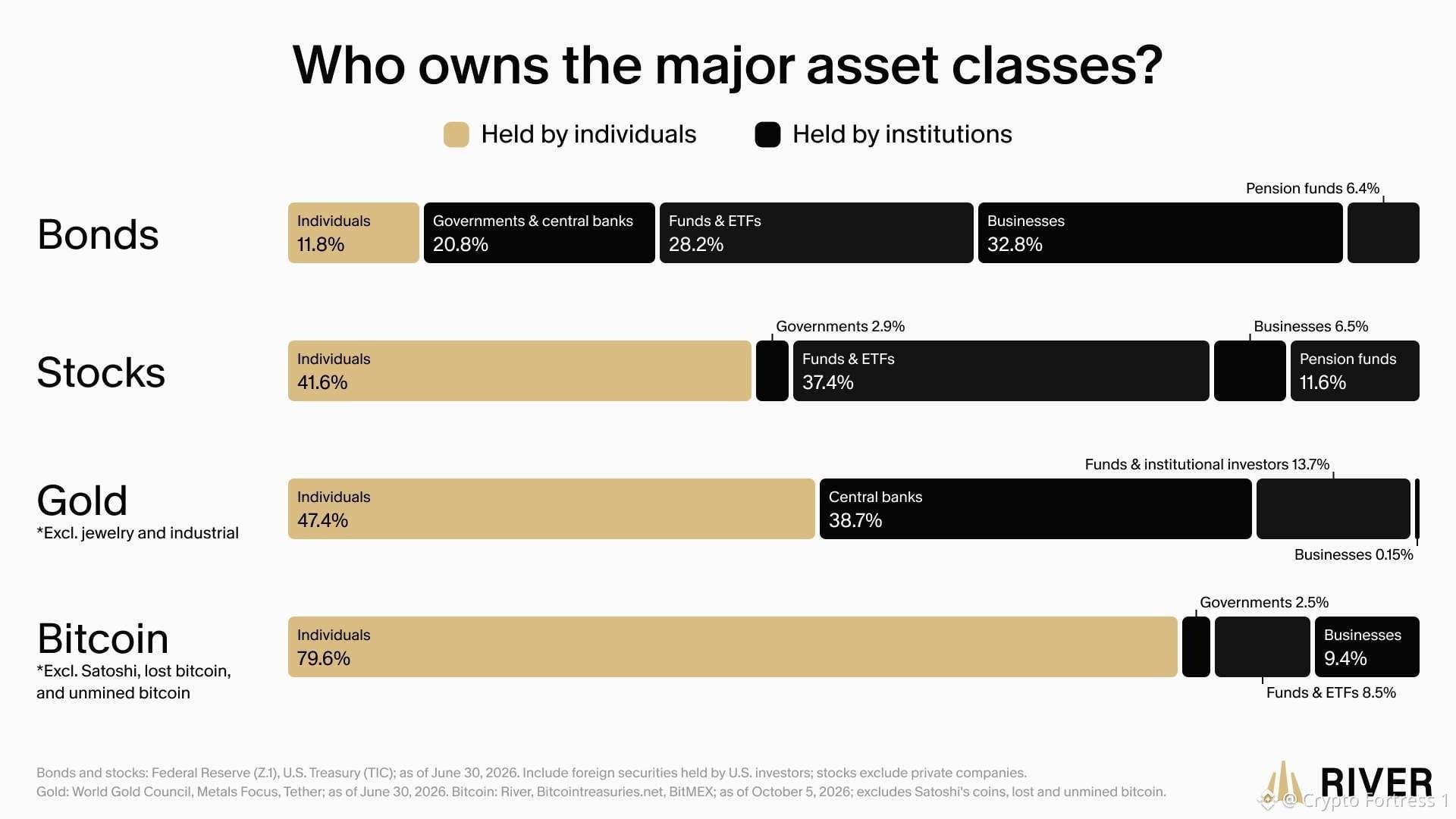
#Bitcoin remains one of the few major assets dominated by individual holders, but institutional ownership is expected to rise as the market matures.
More institutional capital could bring deeper liquidity, but also greater ownership concentration. The big question is how this shift will shape Bitcoin's future.
$BTC #Bitcoin Price Prediction: What is Bitcoins next move?# #BTC Price Analysis#
More institutional capital could bring deeper liquidity, but also greater ownership concentration. The big question is how this shift will shape Bitcoin's future.
$BTC #Bitcoin Price Prediction: What is Bitcoins next move?# #BTC Price Analysis#
Franklin Templeton launched two ETFs that let investors build Bitcoin exposure over time by reinvesting US equity dividends into $BTC, starting with a 95% equity and 5% Bitcoin allocation.
#BTC Price Analysis#
Franklin Templeton launched two ETFs that let investors build Bitcoin exposure over time by reinvesting US equity dividends into $BTC, starting with a 95% equity and 5% Bitcoin allocation.
#BTC Price Analysis#
#BTC Price Analysis#

BTC+0,55%
BENUS-3,20%
3
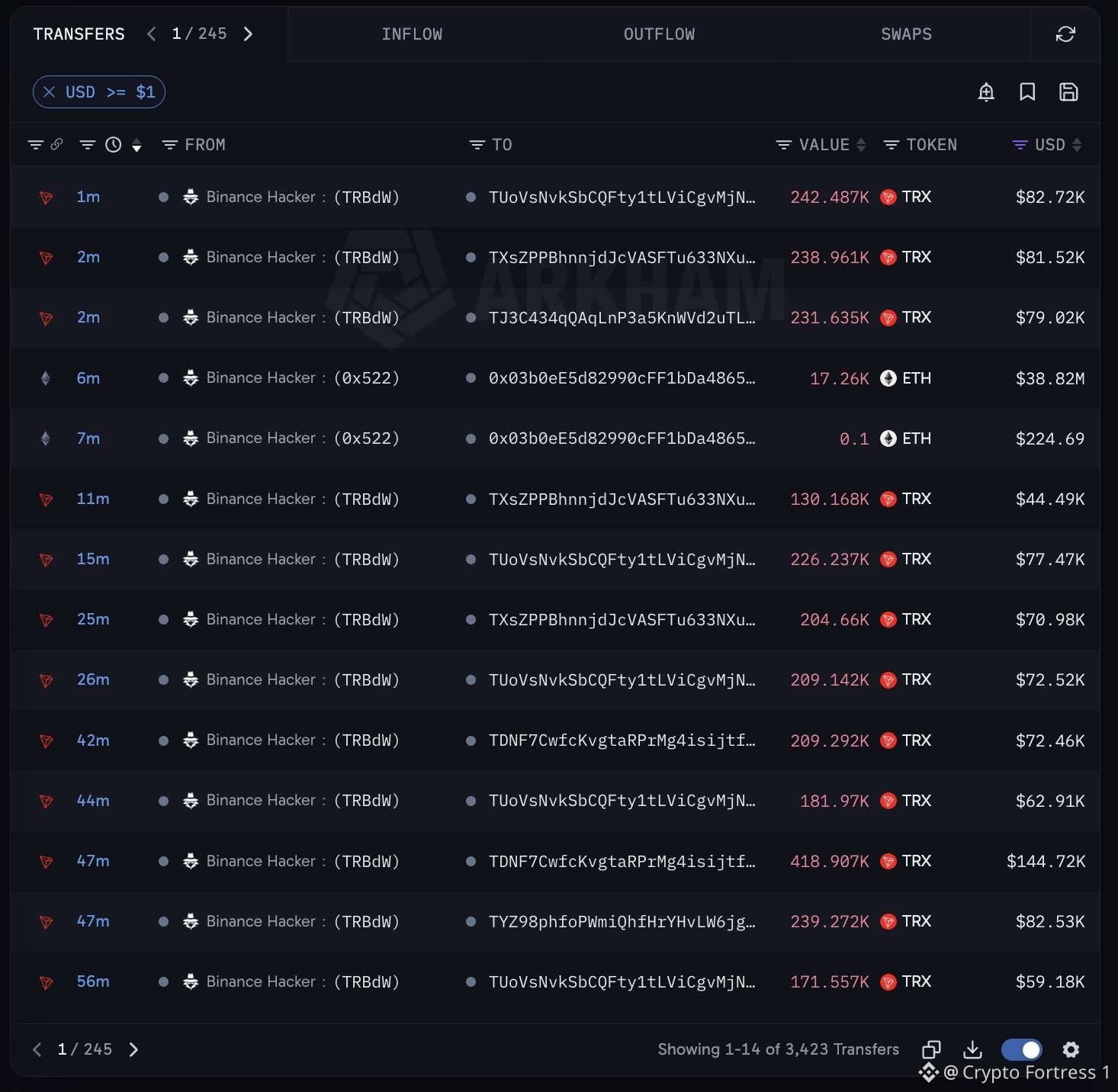
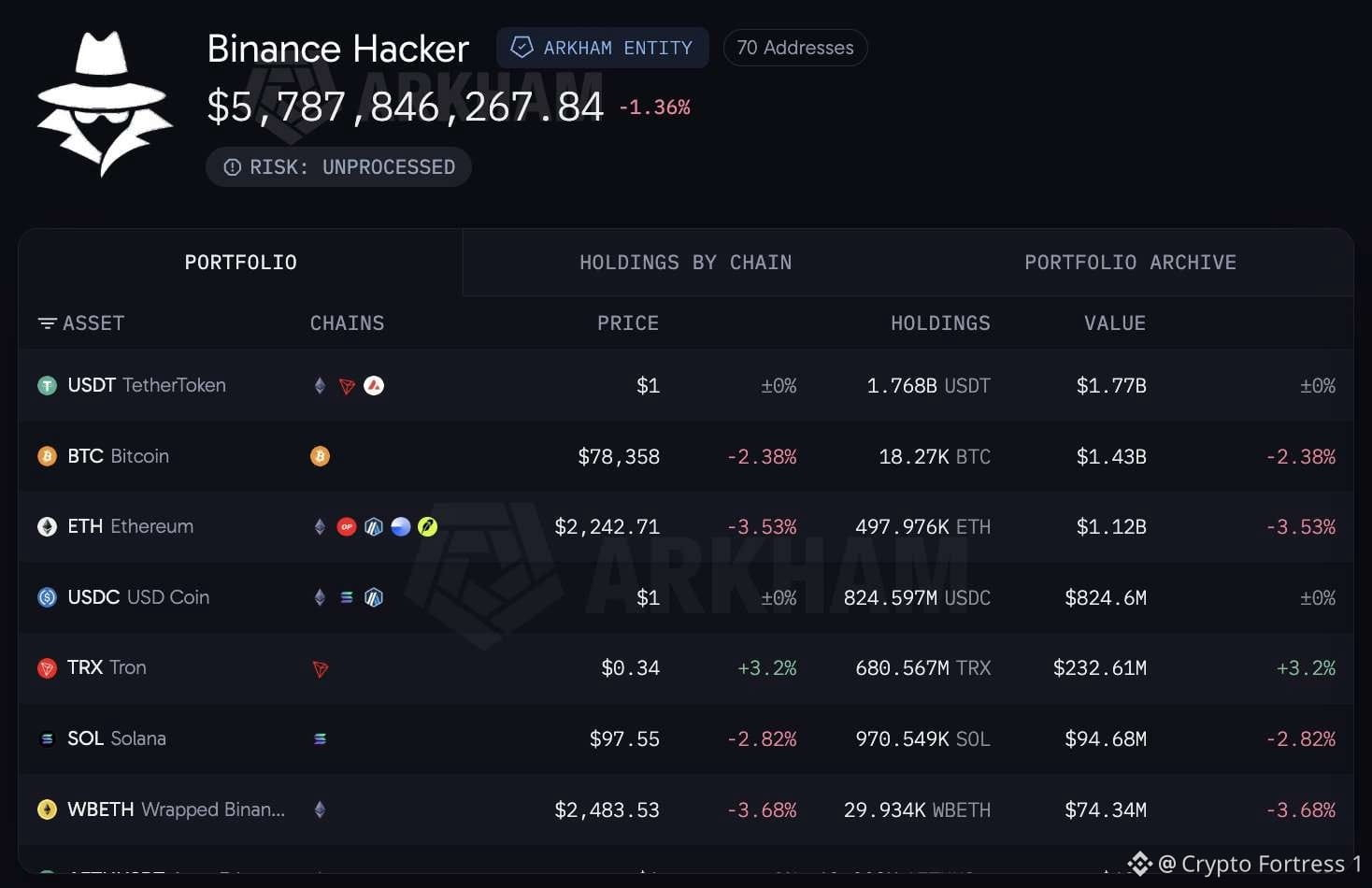
The #Binance Hacker just sent $38.82M $ETH to a new wallet.
Is this going to Tornado Cash?
He still holds $1.12B ETH.
#Macro Insights# #BNBChain#
The #Binance Hacker just sent $38.82M $ETH to a new wallet.
Is this going to Tornado Cash?
He still holds $1.12B ETH.
#Macro Insights# #BNBChain#
Is this going to Tornado Cash?
He still holds $1.12B ETH.
#Macro Insights# #BNBChain#
27
reports claim north korea has added billions of dollars' worth of $BTC and $ETH to its crypto reserves, but the available data points more to stolen funds than legitimate accumulation.
north korea-linked groups, including lazarus, have stolen well over $6 billion in crypto in recent years through exchange and protocol hacks, with more than $1 billion attributed to them in 2026 alone. those proceeds are widely assessed to help fund the regime's weapons programs and bypass sanctions. some on-chain estimates put known bitcoin holdings far lower, around a few hundred btc rather than multi-billion-dollar stacks of newly acquired coins.
the distinction matters. stolen crypto does not function like a sovereign reserve built through purchases. funds are often laundered quickly through mixers and intermediaries, and a large portion of major heists has been traced or partially frozen. a claim of "adding billions to reserves" overstates the picture if the source is mainly theft.
the next thing to watch is whether any specific on-chain wallets show large, recent, unlaundered inflows of btc and eth that can be independently attributed to the regime, or if the reports simply restate cumulative hack totals.
#BTC Price Analysis# #Bitcoin Price Prediction: What is Bitcoins next move?#
#Macro Insights# $BTC $ETH

27
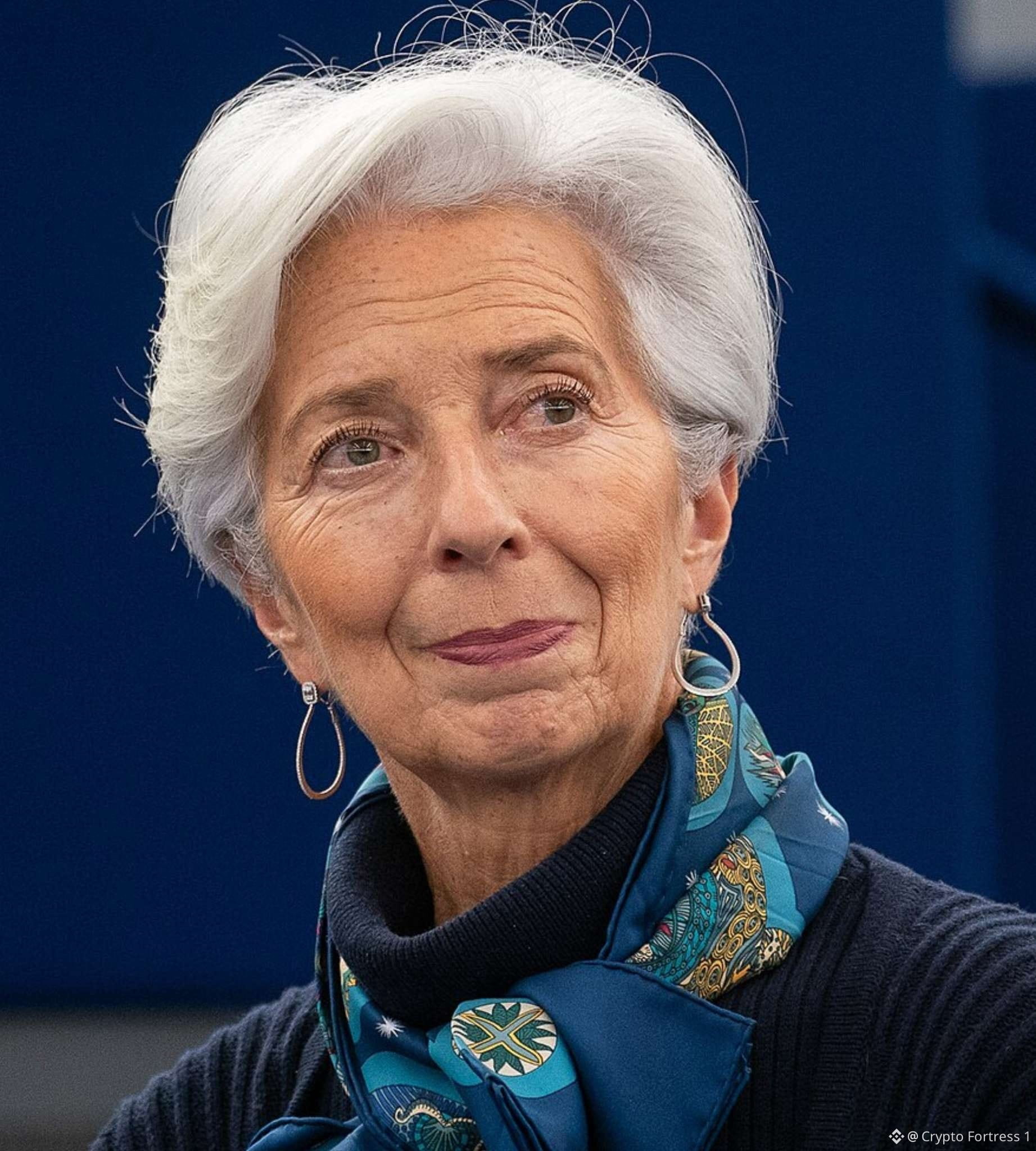
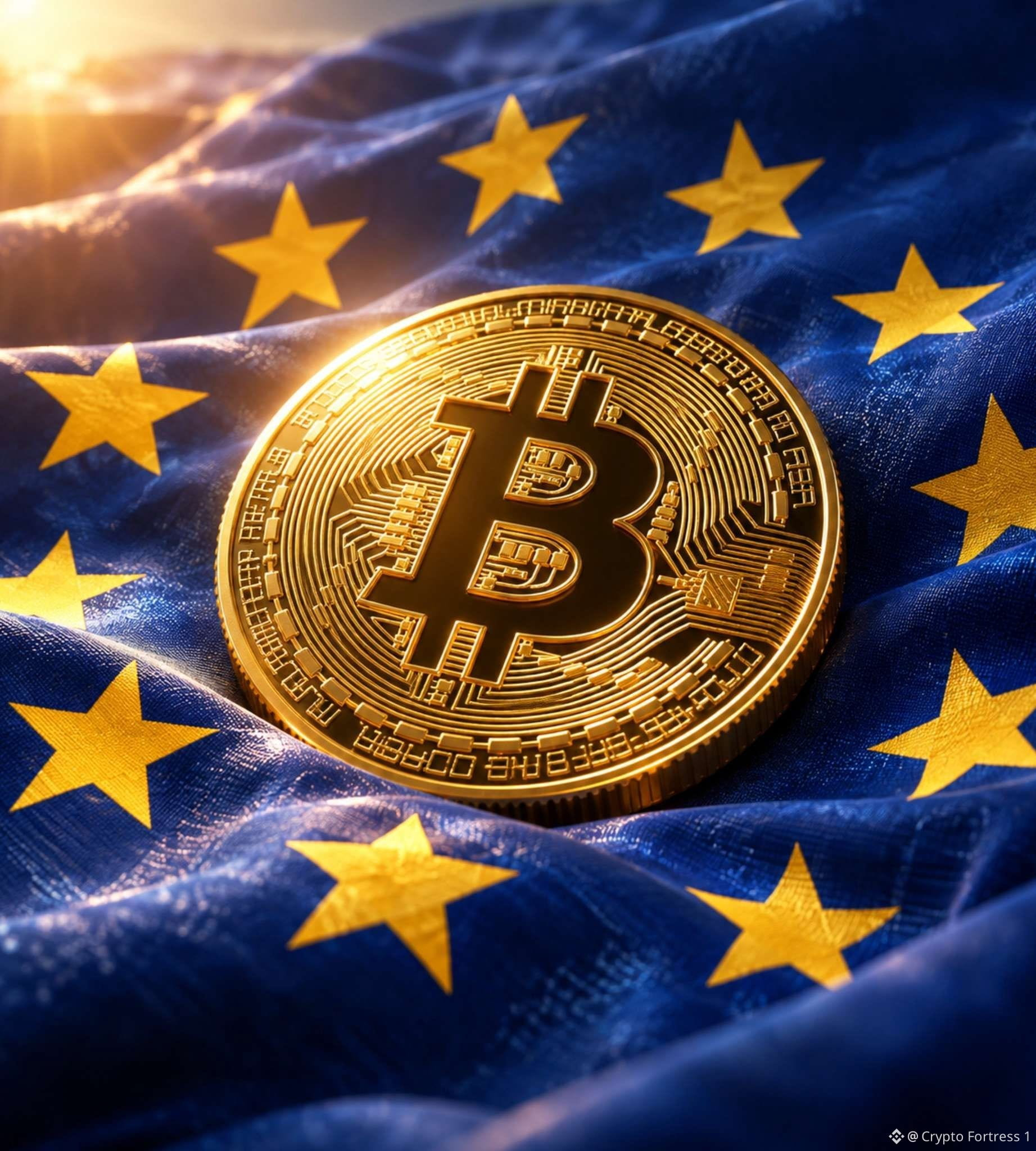
ECB President Christine Lagarde is reportedly leaving early, on February 7, 2027
That's about 9 months before her term was supposed to end on October 31, 2027. No official reason has been given but reports since February have linked an early exit to France's presidential election in spring 2027.
Leaving before the vote would give Emmanuel Macron and Germany's Friedrich Merz a say in choosing her successor.
For crypto, Lagarde has been one of the most memorable critics. Back in 2022 she said $BTC is "worth nothing," and during her term the ECB kept pushing the digital euro as Europe's answer to private digital money.
#BTC Price Analysis# #Bitcoin Price Prediction: What is Bitcoins next move?#
37
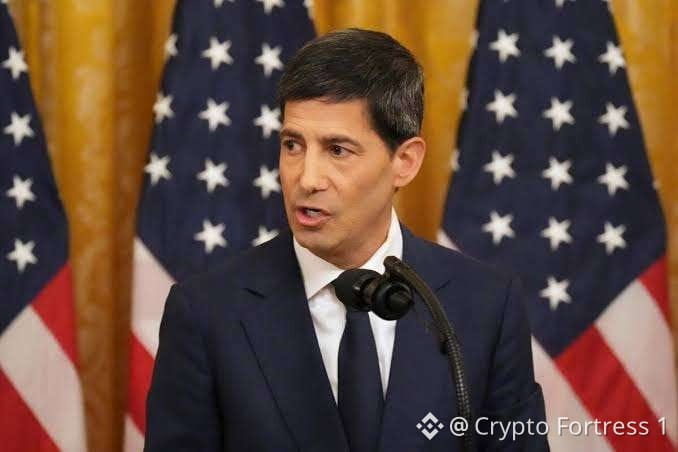
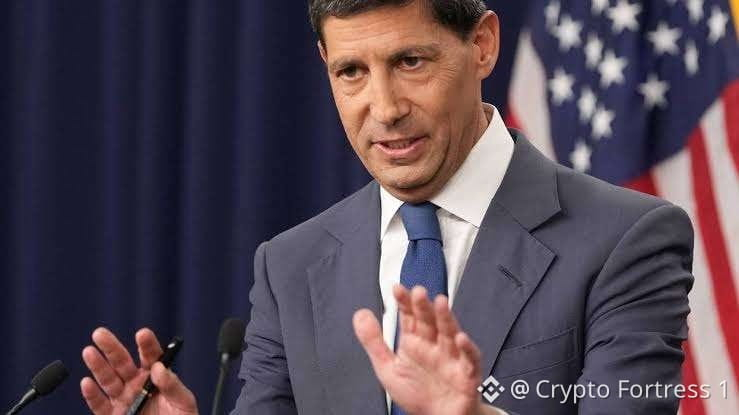
Fed Chair Warsh's latest updates!
$BTC could face more pressure as the Fed remains concerned about inflation and interest rates could stay high for longer.
Here's what Warsh said:
• Inflation is still too high.
• The Fed wants more data before its next move.
• Starting in 2028, only 6 of the 8 yearly meetings will include rate decisions.
Markets are also pricing in an 86% chance of a rate hike in December.
For now inflation data and the Fed's next move remain key for.
#BTC Price Analysis# #Macro Insights#
#Altcoin Season#
53
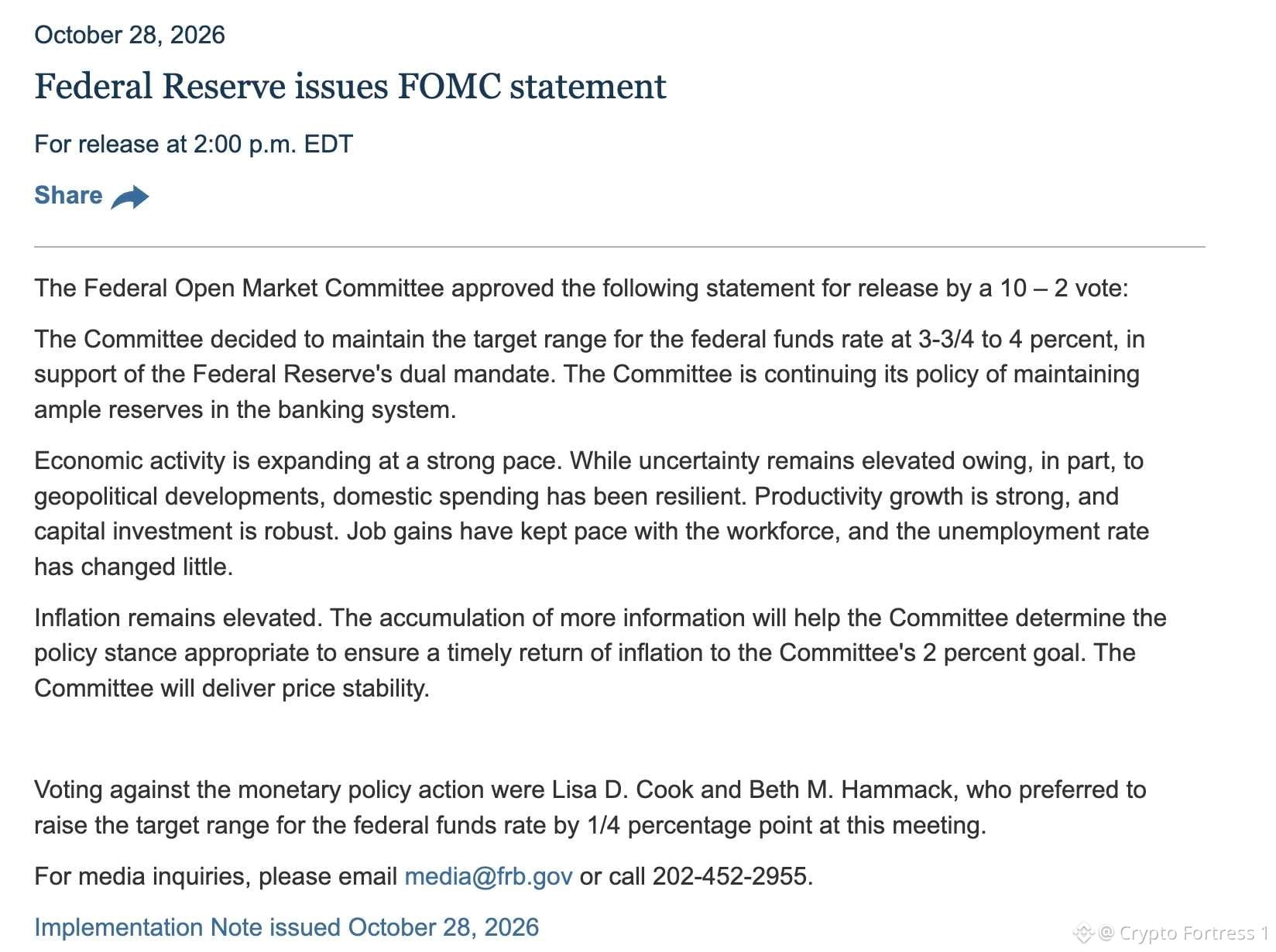
Fed Holds Rates at 3.75-4.00%. What Does It Mean for $BTC?
Markets were pricing a 92% chance of no change and that's exactly what happened.
The decision wasn't the surprise, but the important part is the message behind it:
- the U.S. economy is still growing strongly
- inflation remains above the Fed's 2% target
- 2 FOMC members actually wanted a 25 bp hike
For $BTC, that means we're not getting easier monetary conditions yet. Bitcoin initially moved above $81K after the decision, but later slipped below $80K as markets digested the more hawkish tone alongside weakness in tech stocks.
And now December matters more: after the meeting, markets priced roughly an 86% chance of a 25 bp hike, up from 78% a day earlier.
Do you think we get another hike before the year ends?
#BTC Price Analysis# #Bitcoin Price Prediction: What is Bitcoins next move?#
#Macro Insights#
76
Meta's $145 Billion Al Bet Faces a Major Test as Q3 Earnings Arrive
Meta is about to face a big question: Is its massive Al spending actually paying off? The company reports Q3 earnings on October 21, with analysts expecting $63.34 billion in revenue and $6.53 per share..
Advertising across Facebook, Instagram, and Reels remains Meta's biggest money maker. But investors want to see whether Al is boosting ad performance and turning its Muse assistant, reportedly used by 2 million people daily, into real revenue.
With Al capital spending projected at $130-145 billion in 2026, Meta needs to prove that its growing infrastructure costs won't eat into profits. The market is pricing in a potential 7.1% move after earnings.
Just as Al stocks and $BTC react to shifts in investor risk appetite, Meta's results could offer fresh clues about whether the Al investment boom still has room to run.
#BTC Price Analysis#
#Macro Insights#

44
Tom Lee Sees Ethereum Above $10,000 Within 12 Months
Ethereum could climb well beyond $10,000 as treasury companies continue buying more $ETH, according to BitMine chairman Tom Lee!
Lee says these companies already control around 7% of Ethereum's supply and expects that share to reach 15% during this bull cycle.
Here's why he thinks ETH could move higher:
• Growing Demand: Treasury firms are buying and holding ETH, potentially reducing the amount available on the market.
• BitMine's Holdings: Lee says BitMine now owns over 6 million ETH, close to 5% of the total supply, after 15 months of buying.
• Institutional Money: Lee believes many large investors are still underexposed to crypto, leaving room for more capital to enter Ethereum.
While $BTC remains the biggest crypto asset, Lee sees Ethereum benefiting from treasury demand and growing institutional interest in tokenization.
Could treasury companies really push ETH beyond $10,000 in the next 12 months?
#ETH #Ethereum
#BTC Price Analysis#


61
Bitcoin ETFs and Ethereum ETFs Start to Have Opposite Flows
$BTC spot ETFs recorded $526.70 in inflows, and $ETH spot ETFs recorded $103.30 in outflows.
#Bitcoin #Ethereum
Bitcoin ETFs and Ethereum ETFs Start to Have Opposite Flows
$BTC spot ETFs recorded $526.70 in inflows, and $ETH spot ETFs recorded $103.30 in outflows.
#Bitcoin #Ethereum
$BTC spot ETFs recorded $526.70 in inflows, and $ETH spot ETFs recorded $103.30 in outflows.
#Bitcoin #Ethereum
1
$BTC
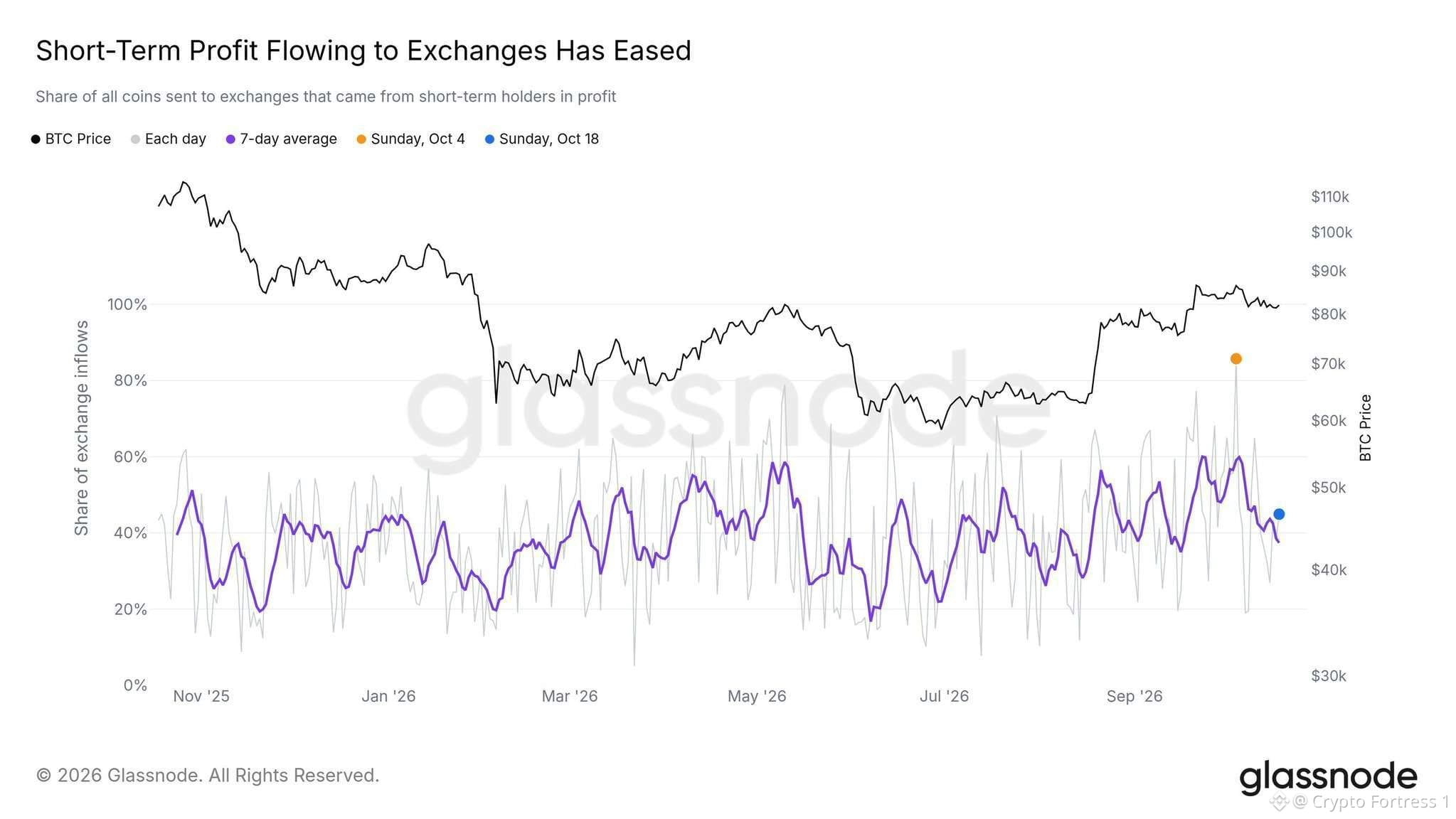
Bitcoin short-term holder profit-taking has cooled to its yearly average, easing the selling pressure that previously drove exchange inflows to a one-year high, per Glassnode.
#BTC Price Analysis# #Bitcoin Price Prediction: What is Bitcoins next move?#
$BTC
Bitcoin short-term holder profit-taking has cooled to its yearly average, easing the selling pressure that previously drove exchange inflows to a one-year high, per Glassnode.
#BTC Price Analysis# #Bitcoin Price Prediction: What is Bitcoins next move?#
Bitcoin short-term holder profit-taking has cooled to its yearly average, easing the selling pressure that previously drove exchange inflows to a one-year high, per Glassnode.
#BTC Price Analysis# #Bitcoin Price Prediction: What is Bitcoins next move?#
32
BLACKROCK EXPLORES A NEW BITCOIN ETF STRATEGY!
BlackRock has filed for a B $BTC ETF structure designed to offer downside protection while retaining upside exposure to its iShares Bitcoin Trust (IBIT). The proposed strategy could appeal to investors seeking Bitcoin-linked returns with a more controlled risk profile. It also signals growing innovation in how traditional finance packages Bitcoin exposure for different investor needs. This move suggest how asset managers are developing new ways to bridge Bitcoin's growth potential with investor demand for risk-managed products.
Bitcoin adoption is evolving beyond simple spot exposure, bringing more sophisticated investment structures into the market!
#BlackRock #ETF
49
Can Mastercard Keep Rallying After Q3 Earnings?
Mastercard shares recently closed at $617.42 after breaking above a key resistance level. With Q3 earnings coming on October 29, analysts expect $9.65B in revenue and earnings of $5.16 per share, raising expectations for another strong quarter.
Now comes the real test.
Investors will be watching consumer spending, cross-border payments, and growth in cybersecurity and data services.
While $BTC reflects broader crypto market sentiment, Mastercard's next move will depend on its earnings and outlook. Even strong results may not be enough if the company fails to meet investors' high expectations.
#BTC Price Analysis#
#Bitcoin Price Prediction: What is Bitcoins next move?#
62
J.P. Morgan Asset Management projects $BTC to deliver an annualized compound return of 10% over the next decade, beating its forecasts for US large-cap stocks at 7.5% and gold at 5.5%.
It's the first time Bitcoin has appeared in the firm's long-term capital market assumptions, signaling growing institutional recognition of the asset.
But there's a catch: Bitcoin's projected annualized volatility stands at 55%, compared with 18% for US large-cap stocks and 17.2% for gold. That volatility helps explain why its projected arithmetic return of 20.9% translates to just 10% compounded annually.
Interestingly, #Bitcoin appears in the return forecasts but remains excluded from the firm's sample portfolio allocations. Recognizing its potential doesn't necessarily mean recommending how much investors should own.
#BTC Price Analysis# #Macro Insights# $BTC

70
$NEAR Is Bringing Wall Street On-Chain. But Will It Matter for $NEAR?
What happens when crypto gets closer to traditional finance ?
NEAR Protocol is making a serious push beyond the usual blockchain narrative. Its integration with Ondo has brought tokenized U.S. stocks and ETFs to Near, allowing eligible users to access assets such as Apple, NVIDIA, Tesla, and the QQQ ETF through crypto-funded transactions.
The integration also connects to NEAR Intents, which routes assets across more than 30 blockchain networks. Source: NEAR
The bigger story isn't simply that stocks are moving on-chain. It's that users may no longer need to think about which blockchain their assets are sitting on before accessing different markets.
That could make crypto infrastructure more useful to people who don't necessarily care about blockchain technology itself. They care about access, convenience, privacy, and whether a product actually works.
But here's the part worth watching: will this activity create meaningful demand for NEAR, or will the benefits remain mostly at the ecosystem level?
Adoption, transaction activity, and the role of NEAR Intents will matter far more than the headline alone.
The opportunity is real, but so is the challenge. Tokenized assets face regulatory restrictions, competition, and the need to prove sustained demand. Access to tokenized stocks also doesn't automatically mean direct ownership of the underlying shares.
NEAR is building a broader financial infrastructure story. Now the market needs evidence that people will use it consistently.
Is NEAR positioning itself for the next phase of crypto adoption, or is the market getting ahead of #BTC Price Analysis# #Altcoin Season# #Macro Insights# $BTC

2
Bitcoin's 6-12-Month Holders Are Showing a Significant Shift in Selling Behavior
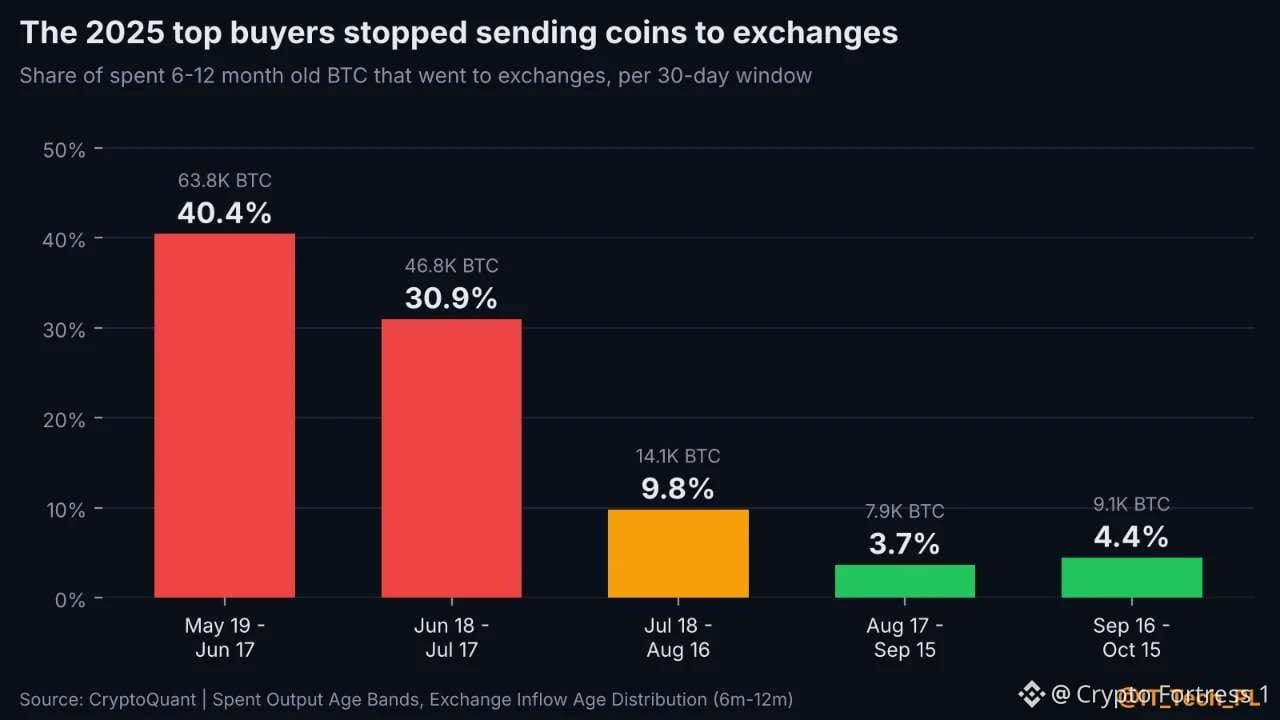
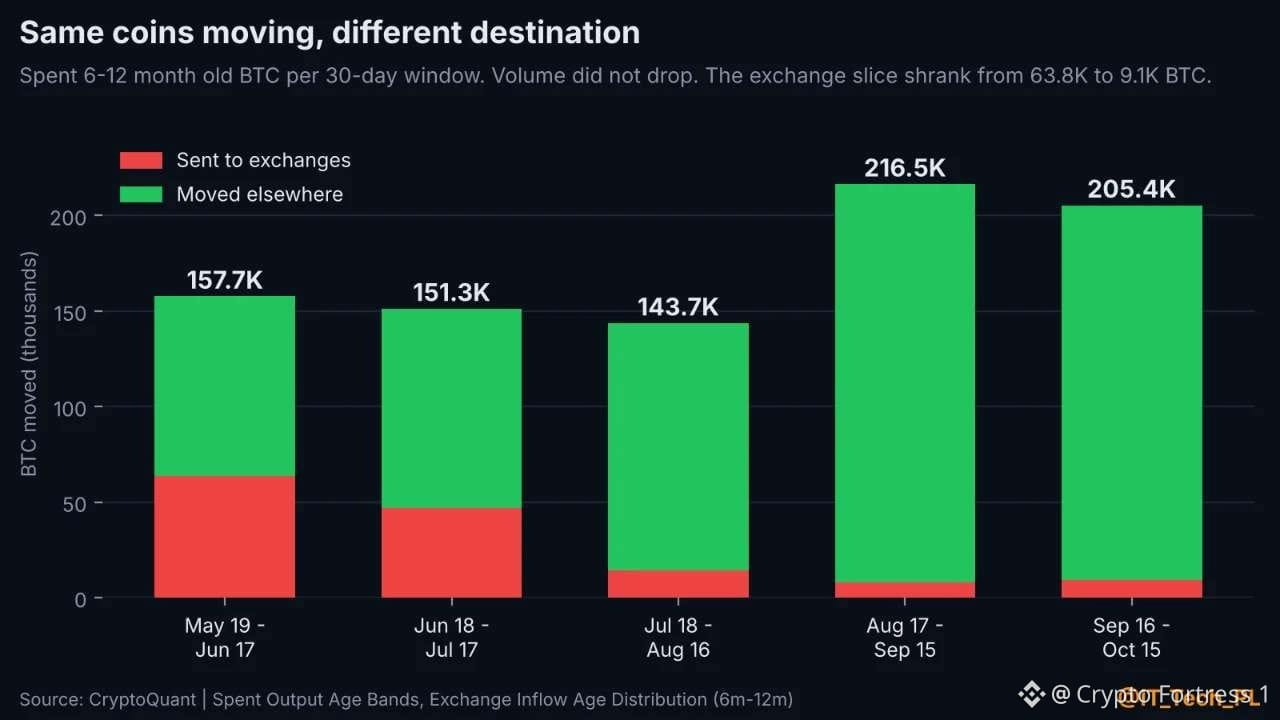
According to CryptoQuant, the proportion of $BTC transfers from the 6-12-month holder cohort directed to exchanges declined from 40.4% in June to 4.4% by October 15. Total transfers from this cohort reportedly increased from 157,700 to 205,400 $BTC, while exchange-bound transfers fell from 63,800 to approximately 9,100 $BTC.
This divergence suggests that holders remain active in moving their assets but are increasingly avoiding exchange deposits, traditionally associated with potential selling activity.
The decline could reduce immediate sell-side pressure from an important group of medium-term investors, particularly if the trend persists during Bitcoin's consolidation around $80,000.
However, lower exchange inflows do not necessarily indicate accumulation. Transfers may reflect custody restructuring, internal wallet movements or other non-trading activity. Exchange deposits are also an imperfect measure of actual selling. For a sustainable recovery, reduced exchange inflows would need to coincide with stronger spot demand, improving liquidity and consistent institutional inflows.
The data points to easing potential distribution pressure, a constructive development for $BTC. Confirmation through spot volume, ETF flows and price structure remains essential before interpreting it as a bullish reversal.
#BTC Price Analysis# #Bitcoin Price Prediction: What is Bitcoins next move?#
Войдите, чтобы посмотреть больше материала
Присоединяйтесь к пользователям криптовалют по всему миру на Binance Square
⚡️ Получайте новейшую и полезную информацию о криптоактивах.
💬 Нам доверяет крупнейшая в мире криптобиржа.
👍 Получите достоверные аналитические данные от верифицированных создателей контента.
Эл. почта/номер телефона
В тренде
UniswapA16zSeekDeFiExemptionFromIllinoisCryptoTax
Просмотров: 43,579
938 обсуждают
#CryptoTax 🚨 CRYPTO MARKET & REGULATORY UPDATE #HKDollarStablecoinHKDAPToLaunchOnSolana
#uniswapa16zseekdefiexemptionfromillinoiscryptotax UNISWAP, a16z & DeFi Education Fund Challenge Illinois Crypto Tax Rules
October 30, 2026 | Market Volatility & Industry Developments
📊 1. MARKET SNAPSHOT
Crypto markets are showing mixed signals, with selected assets posting sharp gains while several major cryptocurrencies remain under pressure.
📈 Top reported gainers
SOPH: +60.81% — $0.00238
BEAMX: +37.94% — $0.004701
SKDDB: +16.81% — $9.38
📉 Notable reported losers
INTWUSDT: −61.09% — $6.72
AKEUSDT: −31.47% — $0.013989
SNXXUSDT: −30.71% — $6.43
🔎 Major crypto assets under pressure
DOGE: −5.06%
PEPE: −4.91%
SUI: −4.83%
NEAR: −3.28%
XRP: −3.13%
Uniswap Labs, Andreessen Horowitz (a16z), and the DeFi Education Fund (DEF) are pushing for exemptions from Illinois’
#Uniswap #a16z #DeFi #CryptoRegulation #Illinois # #Web3 #BinanceSquare
#HKDollarStablecoinHKDAPToLaunchOnSolana #HKDAP #Stablecoin #CryptoNews #Blockchain #DeFi #DigitalPayments
⚖️ 3. UNISWAP, a16z & ILLINOIS CRYPTO TAX RULES
Uniswap Labs, Andreessen Horowitz (a16z), and the DeFi Education Fund are associated with efforts to seek exemptions proposed Illinois crypto tax requirements.
The debate highlights a key question: How should tax-reporting obligations apply to decentralized that may not operate like traditional financial intermediaries?
The outcome could influence DeFi compliance, developer obligations, and the future regulatory environment.
#BinanceSquare #CryptoNews #HKDAP #Stablecoin #Uniswap #a16z #DeFi #CryptoTax
CHASEPA SULUXù
·Лайков: 2
·Просмотров: 481
HKDollarStablecoinHKDAPToLaunchOnSolana
Просмотров: 31,532
610 обсуждают
$1.5BInLeveragedCryptoBetsLiquidated
Просмотров: 63,356
277 обсуждают