

#thena
thena
Просмотров: 419,634
1,191 обсуждают
Популярные
Новые

·
--
Статья
THENA October RecapOctober’s developments at @thena show how a decentralized exchange can evolve beyond basic token swaps. From more advanced spot-trading tools and improvements to swap routing to Perps risk controls, liquidity-provider incentives, and ongoing security work, the month brought several updates worth understanding.
What stands out is not just the number of features, but how they connect to a bigger goal: making trading more flexible, supporting liquidity providers, and building a more useful DeFi ecosystem on BNB Chain.
Here’s a closer look at the key developments and why they matter.
Spot Trading: More Control Over How You Trade
One of the important developments in October was the expansion of THENA’s spot-trading tools.
For many users, swapping tokens is the first interaction they have with a decentralized exchange. However, as users become more experienced, they often need more control over how and when their trades execute.
#THENA spot interface includes Limit Orders, TWAP, Stop Loss, and Take Profit, with trading tools powered by Orbs.
These features address different needs:
Limit Orders: Allow traders to specify a price at which they want an order to execute, subject to market conditions.TWAP: Breaks a larger order into smaller trades executed at intervals. This can help manage price impact, although execution is not guaranteed at a particular price or time.Stop Loss: Helps traders set an exit trigger intended to limit losses, although the final execution price can differ from the trigger.Take Profit: Allows traders to plan an exit around a target price.
Another notable update was improved swap routing. According to THENA’s October announcement, some swaps achieved over 60% better output following the routing upgrade.
This distinction matters: the improvement applied to certain swaps, not necessarily every trading pair or transaction.
Why does this matter? A good trading experience involves more than displaying a token price. It also depends on the execution route, available liquidity, order flexibility, and the information users can review before confirming a transaction.
THENA Perps: Trading Opportunities and Risk Management
Perpetual futures, commonly called Perps, give traders exposure to an asset’s price movements without requiring them to own the underlying asset in the same way as a spot trade.
They also introduce additional risks, particularly when leverage is involved.
During October, THENA highlighted its Perps risk limits, including different maximum leverage levels depending on position size. For Bitcoin, the stated maximum was 150x for positions up to $300,000, while the maximum dropped to 50x for positions in the $3 million to $12 million range. More exotic markets use more conservative limits.
The reasoning behind position-based leverage limits is important: larger positions can carry different liquidity and risk-management considerations, so a single leverage ceiling may not be appropriate for every position size.
However, maximum available leverage should never be confused with recommended leverage. At 150x, even a small adverse price movement can have a substantial impact on a trader’s margin and potentially lead to liquidation.
For anyone exploring Perps, the practical lesson is straightforward: understand margin requirements, account for liquidation risk, and never treat high leverage as a shortcut to consistent returns.
THENA’s Perps development is part of a broader trading experience, but risk management remains the responsibility of each trader.
Liquidity Provision: A Key Part of the Ecosystem
Trading platforms need liquidity to function effectively. Without sufficient liquidity, users may experience greater price impact, wider effective trading costs, or difficulty executing larger orders.
Liquidity providers, or LPs, help address this by depositing assets into liquidity pools. In return, they may receive a share of trading fees and, where applicable, other incentives.
October brought several developments relevant to this side of THENA.
Enhanced tools for liquidity providers
THENA highlighted liquidity-management features powered by KrystalDeFi, including:
Automated rebalancing.Compounding.One-token liquidity zaps.Tools intended to simplify liquidity-position management.
These features aim to reduce some of the manual work involved in managing liquidity positions. Their usefulness depends on the strategy, pool conditions, fees, and the individual provider’s objectives.
Concentrated liquidity, for example, can make capital more efficient within a selected price range. But it also requires attention to the range: when the market moves outside it, the position may stop earning trading fees until it becomes active again.
Automation can help manage a position, but it does not remove market risk or guarantee better returns.
An 88% trading-fee share for eligible LPs
Another significant announcement was that V3,3 liquidity providers on BNB Chain outside the $THE gauge system would receive 88% of trading fees.
This is a specific fee-sharing arrangement for eligible liquidity positions, rather than a universal rate for every pool or every THENA user.
The update is relevant because trading fees are an important part of the economic relationship between a decentralized exchange and its liquidity providers. When trading activity generates fees, the portion distributed to providers can influence the attractiveness of supplying liquidity.
Still, a higher fee share alone does not establish whether a position is profitable. LPs must also consider impermanent loss, asset-price changes, pool composition, gas costs, and any additional management expenses.
What a real LP example can teach us
THENA also shared a 30-day example involving a BTCB/BNB liquidity position opened on August 20.
According to the reported figures, the position accrued approximately $3,003 in trading fees over the period, equivalent to roughly $100 per day. The reported net advantage over simply holding the assets was around $2,985 for that specific period.
This example illustrates how trading fees can contribute to a liquidity provider’s outcome. It should not, however, be interpreted as a typical or guaranteed return. Results vary with trading volume, market prices, liquidity ranges, and other factors.
The most useful takeaway is that LP performance should be assessed using the full position outcome—not trading fees alone.
Trading Activity: Looking Beyond Token Price
Another October update highlighted activity across four core trading pairs.
THENA's reported seven-day trading activity
$5.83 million
45.6% week-on-week increase
Trading pair Reported change
ETH/USDT +92.7%
BTC/BNB +51.5%
ETH/BTC +29.6%
ETH/BNB +20.2%
Figures reported by THENA for the seven-day period referenced in its October update; they are not current live market statistics.
These figures offer a useful snapshot of activity across the selected pairs.
ETH/USDT recorded the largest reported increase, while the other three pairs also experienced week-on-week growth. THENA noted that this activity could attract additional votes in the relevant Epoch and potentially increase rewards for liquidity providers starting Thursday.
There is an important distinction here: trading volume, protocol revenue, token price, and liquidity-provider returns measure different things.
Higher volume can create more opportunities to earn trading fees, but it does not automatically translate into higher net returns for every LP. Likewise, one week of increased volume does not establish a long-term trend.
For anyone evaluating a DeFi ecosystem, it is more useful to consider several indicators together rather than relying on a single headline number.
Security: An Essential Part of Building DeFi
New features and greater trading flexibility are valuable only if users can interact with the platform with a reasonable understanding of its security practices.
THENA reported that it had spent more than two months reviewing areas including smart contracts, permissions, dependencies, and third-party integrations. The team also described audits and security improvements as part of its work.
This is an important area of ongoing development for DeFi platforms. Smart contracts interact with assets directly, and vulnerabilities can arise from contract logic, integrations, permissions, or dependencies.
Security therefore cannot be treated as a one-time milestone. It requires continued review, monitoring, and improvement as protocols evolve.
THENA also clarified in October that a separately disclosed set of PHP vulnerabilities did not affect its platform because THENA does not use PHP. That clarification is specific to the vulnerability disclosure in question; it should not be taken as a blanket guarantee of platform security.
For users, sensible practices remain important: verify official links, understand the transactions being signed, review permissions, and avoid assuming that an audit eliminates all risk.
THENA 2.0: Building Beyond the Swap
The broader direction behind these updates is the idea that THENA is more than a place to exchange one token for another.
Its October communications continued to emphasise deeper liquidity, more trading activity, sustainable revenue generated through real usage, and a wider range of financial services.
That vision connects the different developments discussed in this article.
Spot-trading tools give users more ways to manage orders.Perps extend the platform’s trading functionality while introducing additional risk considerations.Liquidity-management tools support the people supplying assets to pools.Fee-sharing arrangements connect eligible LPs to trading activity.Security work supports the infrastructure on which these features depend.
THENA also marked its fourth anniversary during this period, reflecting on its development as part of the BNB Chain ecosystem.
The next stage of that journey will depend not simply on announcing new features, but on how effectively those features are used, how liquidity develops, and whether the platform can continue delivering a useful experience across different market conditions.
A broader DeFi ecosystem must ultimately demonstrate value through its products, execution, liquidity, and reliability—not just its roadmap.
Disclaimer: This article is for informational and educational purposes only. It is not financial advice or a recommendation to trade $THE, use leverage, or provide liquidity. DeFi activities involve market, smart-contract, liquidity, and other risks. Verify current platform details and assess your own risk tolerance before participating.
#BTC走势分析 #FedWatch #TrendingTopic #THE
THENA October Recap
October’s developments at @THENA show how a decentralized exchange can evolve beyond basic token swaps. From more advanced spot-trading tools and improvements to swap routing to Perps risk controls, liquidity-provider incentives, and ongoing security work, the month brought several updates worth understanding.
What stands out is not just the number of features, but how they connect to a bigger goal: making trading more flexible, supporting liquidity providers, and building a more useful DeFi ecosystem on BNB Chain.
Here’s a closer look at the key developments and why they matter.
Spot Trading: More Control Over How You Trade
One of the important developments in October was the expansion of THENA’s spot-trading tools.
For many users, swapping tokens is the first interaction they have with a decentralized exchange. However, as users become more experienced, they often need more control over how and when their trades execute.
#THENA spot interface includes Limit Orders, TWAP, Stop Loss, and Take Profit, with trading tools powered by Orbs.
These features address different needs:
Limit Orders: Allow traders to specify a price at which they want an order to execute, subject to market conditions.TWAP: Breaks a larger order into smaller trades executed at intervals. This can help manage price impact, although execution is not guaranteed at a particular price or time.Stop Loss: Helps traders set an exit trigger intended to limit losses, although the final execution price can differ from the trigger.Take Profit: Allows traders to plan an exit around a target price.
Another notable update was improved swap routing. According to THENA’s October announcement, some swaps achieved over 60% better output following the routing upgrade.
This distinction matters: the improvement applied to certain swaps, not necessarily every trading pair or transaction.
Why does this matter? A good trading experience involves more than displaying a token price. It also depends on the execution route, available liquidity, order flexibility, and the information users can review before confirming a transaction.
THENA Perps: Trading Opportunities and Risk Management
Perpetual futures, commonly called Perps, give traders exposure to an asset’s price movements without requiring them to own the underlying asset in the same way as a spot trade.
They also introduce additional risks, particularly when leverage is involved.
During October, THENA highlighted its Perps risk limits, including different maximum leverage levels depending on position size. For Bitcoin, the stated maximum was 150x for positions up to $300,000, while the maximum dropped to 50x for positions in the $3 million to $12 million range. More exotic markets use more conservative limits.
The reasoning behind position-based leverage limits is important: larger positions can carry different liquidity and risk-management considerations, so a single leverage ceiling may not be appropriate for every position size.
However, maximum available leverage should never be confused with recommended leverage. At 150x, even a small adverse price movement can have a substantial impact on a trader’s margin and potentially lead to liquidation.
For anyone exploring Perps, the practical lesson is straightforward: understand margin requirements, account for liquidation risk, and never treat high leverage as a shortcut to consistent returns.
THENA’s Perps development is part of a broader trading experience, but risk management remains the responsibility of each trader.
Liquidity Provision: A Key Part of the Ecosystem
Trading platforms need liquidity to function effectively. Without sufficient liquidity, users may experience greater price impact, wider effective trading costs, or difficulty executing larger orders.
Liquidity providers, or LPs, help address this by depositing assets into liquidity pools. In return, they may receive a share of trading fees and, where applicable, other incentives.
October brought several developments relevant to this side of THENA.
Enhanced tools for liquidity providers
THENA highlighted liquidity-management features powered by KrystalDeFi, including:
Automated rebalancing.Compounding.One-token liquidity zaps.Tools intended to simplify liquidity-position management.
These features aim to reduce some of the manual work involved in managing liquidity positions. Their usefulness depends on the strategy, pool conditions, fees, and the individual provider’s objectives.
Concentrated liquidity, for example, can make capital more efficient within a selected price range. But it also requires attention to the range: when the market moves outside it, the position may stop earning trading fees until it becomes active again.
Automation can help manage a position, but it does not remove market risk or guarantee better returns.
An 88% trading-fee share for eligible LPs
Another significant announcement was that V3,3 liquidity providers on BNB Chain outside the $THE gauge system would receive 88% of trading fees.
This is a specific fee-sharing arrangement for eligible liquidity positions, rather than a universal rate for every pool or every THENA user.
The update is relevant because trading fees are an important part of the economic relationship between a decentralized exchange and its liquidity providers. When trading activity generates fees, the portion distributed to providers can influence the attractiveness of supplying liquidity.
Still, a higher fee share alone does not establish whether a position is profitable. LPs must also consider impermanent loss, asset-price changes, pool composition, gas costs, and any additional management expenses.
What a real LP example can teach us
THENA also shared a 30-day example involving a BTCB/BNB liquidity position opened on August 20.
According to the reported figures, the position accrued approximately $3,003 in trading fees over the period, equivalent to roughly $100 per day. The reported net advantage over simply holding the assets was around $2,985 for that specific period.
This example illustrates how trading fees can contribute to a liquidity provider’s outcome. It should not, however, be interpreted as a typical or guaranteed return. Results vary with trading volume, market prices, liquidity ranges, and other factors.
The most useful takeaway is that LP performance should be assessed using the full position outcome—not trading fees alone.
Trading Activity: Looking Beyond Token Price
Another October update highlighted activity across four core trading pairs.
THENA's reported seven-day trading activity
$5.83 million
45.6% week-on-week increase
Trading pair Reported change
ETH/USDT +92.7%
BTC/BNB +51.5%
ETH/BTC +29.6%
ETH/BNB +20.2%
Figures reported by THENA for the seven-day period referenced in its October update; they are not current live market statistics.
These figures offer a useful snapshot of activity across the selected pairs.
ETH/USDT recorded the largest reported increase, while the other three pairs also experienced week-on-week growth. THENA noted that this activity could attract additional votes in the relevant Epoch and potentially increase rewards for liquidity providers starting Thursday.
There is an important distinction here: trading volume, protocol revenue, token price, and liquidity-provider returns measure different things.
Higher volume can create more opportunities to earn trading fees, but it does not automatically translate into higher net returns for every LP. Likewise, one week of increased volume does not establish a long-term trend.
For anyone evaluating a DeFi ecosystem, it is more useful to consider several indicators together rather than relying on a single headline number.
Security: An Essential Part of Building DeFi
New features and greater trading flexibility are valuable only if users can interact with the platform with a reasonable understanding of its security practices.
THENA reported that it had spent more than two months reviewing areas including smart contracts, permissions, dependencies, and third-party integrations. The team also described audits and security improvements as part of its work.
This is an important area of ongoing development for DeFi platforms. Smart contracts interact with assets directly, and vulnerabilities can arise from contract logic, integrations, permissions, or dependencies.
Security therefore cannot be treated as a one-time milestone. It requires continued review, monitoring, and improvement as protocols evolve.
THENA also clarified in October that a separately disclosed set of PHP vulnerabilities did not affect its platform because THENA does not use PHP. That clarification is specific to the vulnerability disclosure in question; it should not be taken as a blanket guarantee of platform security.
For users, sensible practices remain important: verify official links, understand the transactions being signed, review permissions, and avoid assuming that an audit eliminates all risk.
THENA 2.0: Building Beyond the Swap
The broader direction behind these updates is the idea that THENA is more than a place to exchange one token for another.
Its October communications continued to emphasise deeper liquidity, more trading activity, sustainable revenue generated through real usage, and a wider range of financial services.
That vision connects the different developments discussed in this article.
Spot-trading tools give users more ways to manage orders.Perps extend the platform’s trading functionality while introducing additional risk considerations.Liquidity-management tools support the people supplying assets to pools.Fee-sharing arrangements connect eligible LPs to trading activity.Security work supports the infrastructure on which these features depend.
THENA also marked its fourth anniversary during this period, reflecting on its development as part of the BNB Chain ecosystem.
The next stage of that journey will depend not simply on announcing new features, but on how effectively those features are used, how liquidity develops, and whether the platform can continue delivering a useful experience across different market conditions.
A broader DeFi ecosystem must ultimately demonstrate value through its products, execution, liquidity, and reliability—not just its roadmap.
Disclaimer: This article is for informational and educational purposes only. It is not financial advice or a recommendation to trade $THE, use leverage, or provide liquidity. DeFi activities involve market, smart-contract, liquidity, and other risks. Verify current platform details and assess your own risk tolerance before participating.
#BTC走势分析 #FedWatch #TrendingTopic #THE
124
·
--
Статья
A DEX Is More Than a Swap Button: What Exploring THENA Taught MeWhen I first started exploring DeFi, swapping tokens was one of the easiest things to understand. Connect a wallet, choose your tokens, confirm the transaction, and you're done.
But the more I explored @thena , the more I realised that there's a lot happening behind a simple token swap.
I started paying more attention to questions I hadn't really thought about before. Where does the liquidity come from? Why do some pools attract more incentives than others? And what role do features like veTHE and Perps play in the bigger picture?
That curiosity made me look at decentralised exchanges differently. Let me share what I've come to appreciate.
1. The swap is easy. Understanding what makes it possible is the interesting part.
Think about the last time you swapped tokens. You probably focused on the price, the amount you wanted to receive, and the transaction fee.
But have you ever stopped to think about the liquidity behind that trade?
Liquidity providers supply assets to pools, helping other users make swaps. The amount of liquidity available can affect how smoothly trades execute and how much price impact a trade experiences.
What I find interesting is that providing liquidity isn't simply about depositing tokens and walking away. Pool selection, incentives, and the risks of providing liquidity all deserve attention.
Once you start looking at these details, you begin to understand why a DEX is more than just a swap interface.
2. Exploring THENA made me look beyond swaps.
One thing I appreciate about exploring @thena is that there are different parts of the ecosystem to learn about, depending on what interests you.
For example:
Liquidity provision: This helps me understand where trading liquidity comes from and why certain pools matter.veTHE voting: This introduces another side of DeFi: how voting mechanisms can influence the distribution of incentives across eligible pools.Perps: This opens up a different area of trading, where users can take positions based on price movements without directly buying or selling the underlying asset as they would in spot trading.
I wouldn't treat these features as things everyone needs to use. They're different tools, and understanding what each one does is more useful than rushing to try everything.
For me, that's part of the learning process: exploring how the pieces fit together before deciding which ones are relevant.
3. Something I've learned: more features don't automatically mean more value.
In crypto, it's easy to get excited whenever a project announces something new. I've come to think that the more useful question is what people can actually do with it.
A feature might look impressive on paper, but does it solve a real problem? Is it easy to understand? Does it give users a genuine reason to return?
I think these questions are just as important when looking at THENA.
Liquidity, incentives, governance, and trading tools all contribute to the bigger picture, but their value depends on how they work in practice and whether users find them useful.
For me, understanding the product is more interesting than following the hype alone.
4. Why I'm looking beyond the $THE chart.
Let's be honest: token price is one of the first things many of us check in crypto. It's easy to understand why; the numbers move, the market reacts, and everyone has an opinion.
But a chart can't explain everything about an ecosystem.
I'm also interested in how THENA's products develop, how people use its features, and whether the platform can continue giving users practical reasons to participate.
That doesn't mean ignoring price. It means not allowing price to become the only measure of progress.
The more I explore DeFi, the more I see the value in understanding what a project actually offers, not just what its token is doing today.
5. So, here's what I'm curious about.
If there's one thing this exploration has reinforced for me, it's that a DEX deserves a closer look than the swap button alone.
There's liquidity to understand, incentives to follow, governance mechanisms to explore, and trading products that require their own learning curve.
I'm still interested in seeing how these different parts of #THENA develop and how users engage with them over time.
#THENA $THE
Educational content only. This is not financial advice.
A DEX Is More Than a Swap Button: What Exploring THENA Taught Me
When I first started exploring DeFi, swapping tokens was one of the easiest things to understand. Connect a wallet, choose your tokens, confirm the transaction, and you're done.
But the more I explored @THENA , the more I realised that there's a lot happening behind a simple token swap.
I started paying more attention to questions I hadn't really thought about before. Where does the liquidity come from? Why do some pools attract more incentives than others? And what role do features like veTHE and Perps play in the bigger picture?
That curiosity made me look at decentralised exchanges differently. Let me share what I've come to appreciate.
1. The swap is easy. Understanding what makes it possible is the interesting part.
Think about the last time you swapped tokens. You probably focused on the price, the amount you wanted to receive, and the transaction fee.
But have you ever stopped to think about the liquidity behind that trade?
Liquidity providers supply assets to pools, helping other users make swaps. The amount of liquidity available can affect how smoothly trades execute and how much price impact a trade experiences.
What I find interesting is that providing liquidity isn't simply about depositing tokens and walking away. Pool selection, incentives, and the risks of providing liquidity all deserve attention.
Once you start looking at these details, you begin to understand why a DEX is more than just a swap interface.
2. Exploring THENA made me look beyond swaps.
One thing I appreciate about exploring @THENA is that there are different parts of the ecosystem to learn about, depending on what interests you.
For example:
Liquidity provision: This helps me understand where trading liquidity comes from and why certain pools matter.veTHE voting: This introduces another side of DeFi: how voting mechanisms can influence the distribution of incentives across eligible pools.Perps: This opens up a different area of trading, where users can take positions based on price movements without directly buying or selling the underlying asset as they would in spot trading.
I wouldn't treat these features as things everyone needs to use. They're different tools, and understanding what each one does is more useful than rushing to try everything.
For me, that's part of the learning process: exploring how the pieces fit together before deciding which ones are relevant.
3. Something I've learned: more features don't automatically mean more value.
In crypto, it's easy to get excited whenever a project announces something new. I've come to think that the more useful question is what people can actually do with it.
A feature might look impressive on paper, but does it solve a real problem? Is it easy to understand? Does it give users a genuine reason to return?
I think these questions are just as important when looking at THENA.
Liquidity, incentives, governance, and trading tools all contribute to the bigger picture, but their value depends on how they work in practice and whether users find them useful.
For me, understanding the product is more interesting than following the hype alone.
4. Why I'm looking beyond the $THE chart.
Let's be honest: token price is one of the first things many of us check in crypto. It's easy to understand why; the numbers move, the market reacts, and everyone has an opinion.
But a chart can't explain everything about an ecosystem.
I'm also interested in how THENA's products develop, how people use its features, and whether the platform can continue giving users practical reasons to participate.
That doesn't mean ignoring price. It means not allowing price to become the only measure of progress.
The more I explore DeFi, the more I see the value in understanding what a project actually offers, not just what its token is doing today.
5. So, here's what I'm curious about.
If there's one thing this exploration has reinforced for me, it's that a DEX deserves a closer look than the swap button alone.
There's liquidity to understand, incentives to follow, governance mechanisms to explore, and trading products that require their own learning curve.
I'm still interested in seeing how these different parts of #THENA develop and how users engage with them over time.
#THENA $THE
Educational content only. This is not financial advice.
1
383

·
--
Рост
This week, I decided to look beyond the $THE price chart.
I spent time researching what #THENA is actually building, how it connects to the #BNBChain ecosystem and which developments deserve more attention.
Here's what I learned!
1/ First, I worked on a beginner-friendly guide to THENA Perps V2.
Longs, shorts, leverage, margin, liquidation risks...
One thing stood out: having hundreds of markets is great, but helping newcomers understand the risks is just as important.
2/ I also spent time understanding THENA's liquidity mechanics.
Concentrated liquidity, veTHE voting, pool incentives...
My takeaway? A high #APR doesn't automatically mean a good opportunity.
Trading activity, fees, price ranges and risks matter too.
3/ Looking beyond THENA, I explored its connections with other BNB Chain projects, including KyberSwap, Gamma and ICHI.
Something I find interesting about #defi : sometimes the biggest improvements come from making existing protocols work better together.
4/ Finally, I turned my research into $THE video covering 9 THENA developments.
With all the criticism surrounding the project, I wanted to take a closer look at what was actually happening.
Not everything is perfect. But ignoring the work being done isn't fair either.
5/ My biggest takeaway this week?
I don't think THE price alone tells the full THENA story.
I'll keep watching trading activity, liquidity, fees and how the announced developments progress.
That's what interests me most about THENA's future on BNB Chain.
我喜欢少妇:
骗子项目!!
2
330
·
--
Статья
START PERPS SIMPLY WITH THENAThere's more to explore: #THENA Perps V2.
Perps let you trade price movements without buying $THE coin. Up or down, you choose a side. Here's how to get started, step by step, without overlooking the risks.
1/ Connect your wallet and complete the account setup shown.
Before trading, deposit an accepted asset as collateral (margin).
Think of margin as the money backing your trade. Check which assets the platform currently accepts.
2/ Now pick a market you understand.
Choose your direction:
LONG ➵ You expect the price to rise
SHORT ➵ You expect it to fall
For example, if you expect $BTC to drop, you can open a short without owning any BTC. Simple idea. Different risk from a spot trade.
3/ Next: position size and leverage.
Say you put up $50 margin at 2x leverage. You now have roughly $100 in market exposure.
A 1% price move changes your position's value by about $1 before costs. Higher leverage means bigger swings relative to your margin.
4/ Before placing your order, check:
▹ Market or Limit order
▹ Trading fees and funding
▹ Estimated liquidation price
▹ Available margin
Consider setting a Stop Loss (SL) and Take Profit (TP) if supported for your order. A SL helps manage risk but can't guarantee an exit price.
5/ Ready to place the trade?
Review the details and submit your Long or Short order. One important thing: submitting an order doesn't mean it has executed.
Check its status. Your position is open only once the order fills. Then monitor PnL, margin and liquidation risk.
6/ Want to close the trade?
Find your open position, choose to reduce or close it, and confirm. Make sure the closing order actually executes.
My beginner tip: start small, use modest leverage and understand the fees before increasing your position size.
7/ Why trade on THENA?
Perps V2 uses #orbsnetwork Ultra for order execution and access to external liquidity, with onchain settlement. It's another trading option in the THENA ecosystem on #BNBChain .
Explore THE interface and try it when you're ready! Trade carefully. NFA.
{future}(BTCUSDT)
{future}(THEUSDT)
START PERPS SIMPLY WITH THENA
There's more to explore: #THENA Perps V2.
Perps let you trade price movements without buying $THE coin. Up or down, you choose a side. Here's how to get started, step by step, without overlooking the risks.
1/ Connect your wallet and complete the account setup shown.
Before trading, deposit an accepted asset as collateral (margin).
Think of margin as the money backing your trade. Check which assets the platform currently accepts.
2/ Now pick a market you understand.
Choose your direction:
LONG ➵ You expect the price to rise
SHORT ➵ You expect it to fall
For example, if you expect $BTC to drop, you can open a short without owning any BTC. Simple idea. Different risk from a spot trade.
3/ Next: position size and leverage.
Say you put up $50 margin at 2x leverage. You now have roughly $100 in market exposure.
A 1% price move changes your position's value by about $1 before costs. Higher leverage means bigger swings relative to your margin.
4/ Before placing your order, check:
▹ Market or Limit order
▹ Trading fees and funding
▹ Estimated liquidation price
▹ Available margin
Consider setting a Stop Loss (SL) and Take Profit (TP) if supported for your order. A SL helps manage risk but can't guarantee an exit price.
5/ Ready to place the trade?
Review the details and submit your Long or Short order. One important thing: submitting an order doesn't mean it has executed.
Check its status. Your position is open only once the order fills. Then monitor PnL, margin and liquidation risk.
6/ Want to close the trade?
Find your open position, choose to reduce or close it, and confirm. Make sure the closing order actually executes.
My beginner tip: start small, use modest leverage and understand the fees before increasing your position size.
7/ Why trade on THENA?
Perps V2 uses #orbsnetwork Ultra for order execution and access to external liquidity, with onchain settlement. It's another trading option in the THENA ecosystem on #BNBChain .
Explore THE interface and try it when you're ready! Trade carefully. NFA.
2
355
·
--
Рост
Most people come to #THENA for swaps.
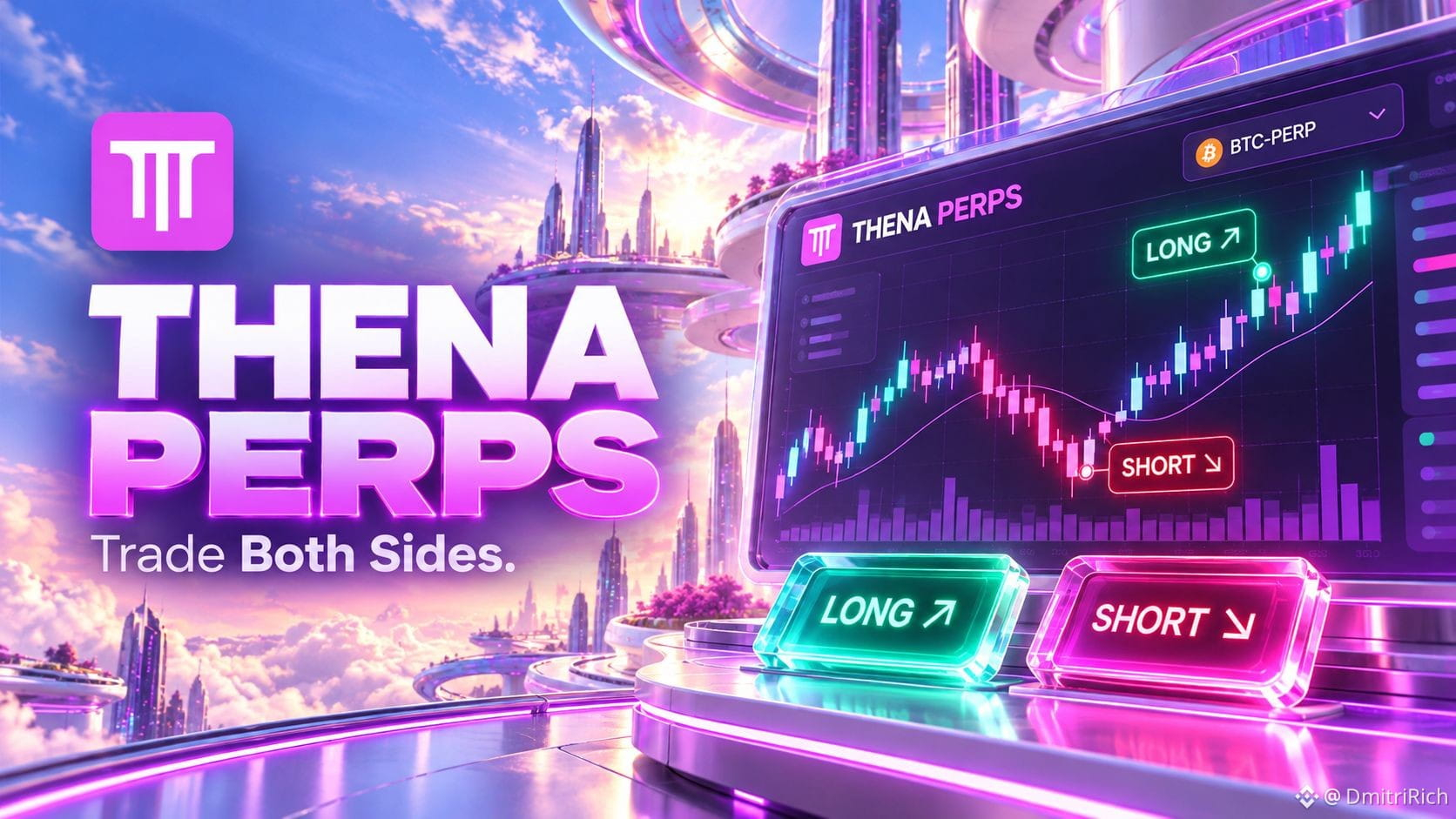
But Perps V2 adds something useful: you can trade price moves across hundreds of markets without buying $THE coins.
And unlike some pool-backed perps #DEXs , THENA uses external trading liquidity.
Why does that matter?
Perps, in plain English:
Long ➵ you expect a price to rise.
Short ➵ you expect it to fall.
You trade a contract linked to the price, not the token itself.
That makes perps useful both for trading an idea and for hedging coins you already hold.
Choice is one big selling point.
At its September launch, @thena Perps V2 announced 500+ markets and leverage up to 150x.
For comparison, GMX’s current docs list 100+ markets.
More choice is useful. High leverage isn't automatically a benefit.
Here’s $THE clever part.
Orbs Ultra handles orders and connects to external liquidity for hedging, with #Binance as the first venue announced. So THENA Perps isn't limited by the TVL in THENA’s spot pools. That's a meaningful difference from pool-backed perps models.
Speed matters too!
Orbs L3 handles trade execution and risk management, with outcomes settled onchain.
THENA is part of #BNBChain ’s fast, low-cost ecosystem, so existing users can explore perps alongside spot trading.
Different tools, one familiar ecosystem.
{future}(THEUSDT)
Most people come to #THENA for swaps.
But Perps V2 adds something useful: you can trade price moves across hundreds of markets without buying $THE coins.
And unlike some pool-backed perps #DEXs , THENA uses external trading liquidity.
Why does that matter?
Perps, in plain English:
Long ➵ you expect a price to rise.
Short ➵ you expect it to fall.
You trade a contract linked to the price, not the token itself.
That makes perps useful both for trading an idea and for hedging coins you already hold.
Choice is one big selling point.
At its September launch, @THENA Perps V2 announced 500+ markets and leverage up to 150x.
For comparison, GMX’s current docs list 100+ markets.
More choice is useful. High leverage isn't automatically a benefit.
Here’s $THE clever part.
Orbs Ultra handles orders and connects to external liquidity for hedging, with #Binance as the first venue announced. So THENA Perps isn't limited by the TVL in THENA’s spot pools. That's a meaningful difference from pool-backed perps models.
Speed matters too!
Orbs L3 handles trade execution and risk management, with outcomes settled onchain.
THENA is part of #BNBChain ’s fast, low-cost ecosystem, so existing users can explore perps alongside spot trading.
Different tools, one familiar ecosystem.
266

·
--
Рост
📢 إعلان مهم لمجتمع THENA ($THE)
أعلنت منصة THENA عن انطلاق الجولة الجديدة Sprint #72 بالتعاون مع منصة المهام Zealy!
📌 تفاصيل الخبر:
المكافآت: توزيع 10,000 قطعة من عملة $THE مقسمة على 33 فائزًا.
المدة: تستمر الفعالية لمدة 3 أسابيع (من 12 أكتوبر حتى 2 نوفمبر).
💡 التأثير المتوقع على عملة $THE:
زيادة التفاعل والشعبية (Bullish Sentiment): مسابقات المجتمع والمهام التفاعلية ترفع من مستوى النشاط الاجتماعي (Social Volume) وتزيد من الوعي بالمشروع.
تحفيز الطلب على المدى القصير: رغبة المتداولين والمستثمرين في المشاركة للحصول على الجوائز تزيد من الاهتمام بالعملة وتداولها خلال فترة المسابقة.
نشاط الشبكة: زيادة استخدام المنصة أثناء فترة الـ Sprint قد ينعكس إيجابيًا على أحجام التداول وحركة العملة.
#the #THENA #crypto #bullish #CryptoNews
$THE
{spot}(THEUSDT)
📢 إعلان مهم لمجتمع THENA ($THE )
أعلنت منصة THENA عن انطلاق الجولة الجديدة Sprint #72 بالتعاون مع منصة المهام Zealy!
📌 تفاصيل الخبر:
المكافآت: توزيع 10,000 قطعة من عملة $THE مقسمة على 33 فائزًا.
المدة: تستمر الفعالية لمدة 3 أسابيع (من 12 أكتوبر حتى 2 نوفمبر).
💡 التأثير المتوقع على عملة $THE :
زيادة التفاعل والشعبية (Bullish Sentiment): مسابقات المجتمع والمهام التفاعلية ترفع من مستوى النشاط الاجتماعي (Social Volume) وتزيد من الوعي بالمشروع.
تحفيز الطلب على المدى القصير: رغبة المتداولين والمستثمرين في المشاركة للحصول على الجوائز تزيد من الاهتمام بالعملة وتداولها خلال فترة المسابقة.
نشاط الشبكة: زيادة استخدام المنصة أثناء فترة الـ Sprint قد ينعكس إيجابيًا على أحجام التداول وحركة العملة.
#the #THENA #crypto #bullish #CryptoNews
$THE
1
152
·
--
Рост
Don’t forget to vote #THENA Epoch #195!
veTHE voters can earn trading fees and bribes.
USE solid TIPS:
▹ Lock up to 2 years for maximum voting power
▹ Vote near the deadline for fresher data, but not at $THE last minute
▹ Use Reward Estimate
▹ Compare fees + bribes, not APR alone
▹ Check pool volume and liquidity
▹ Split votes when it improves reward potential
▹ Recheck and adjust before voting closes
{future}(THEUSDT)
Don’t forget to vote #THENA Epoch #195!
veTHE voters can earn trading fees and bribes.
USE solid TIPS:
▹ Lock up to 2 years for maximum voting power
▹ Vote near the deadline for fresher data, but not at $THE last minute
▹ Use Reward Estimate
▹ Compare fees + bribes, not APR alone
▹ Check pool volume and liquidity
▹ Split votes when it improves reward potential
▹ Recheck and adjust before voting closes

1
172
·
--
Рост
I've been creating content about #THENA for over 3 years and helping newcomers understand $THE .
Want a chance to earn rewards while learning about #defi on #BNBChain ?
Join THENA Zealy Sprint!
You can compete for rewards while learning about THENA and practising how to research and explain #crypto .
I like that combination: a chance to earn, plus skills you can use beyond one campaign.
Helping people understand DeFi is what keeps me involved.
If you're new, start with one quest and ask the community when something isn't clear.
You don't have to know everything before you begin. That's what learning together is for!
{future}(THEUSDT)
I've been creating content about #THENA for over 3 years and helping newcomers understand $THE .
Want a chance to earn rewards while learning about #defi on #BNBChain ?
Join THENA Zealy Sprint!
You can compete for rewards while learning about THENA and practising how to research and explain #crypto .
I like that combination: a chance to earn, plus skills you can use beyond one campaign.
Helping people understand DeFi is what keeps me involved.
If you're new, start with one quest and ask the community when something isn't clear.
You don't have to know everything before you begin. That's what learning together is for!

190
·
--
Рост
You can use #THENA without ever knowing what #CryptoAlgebra is. That’s actually the point.
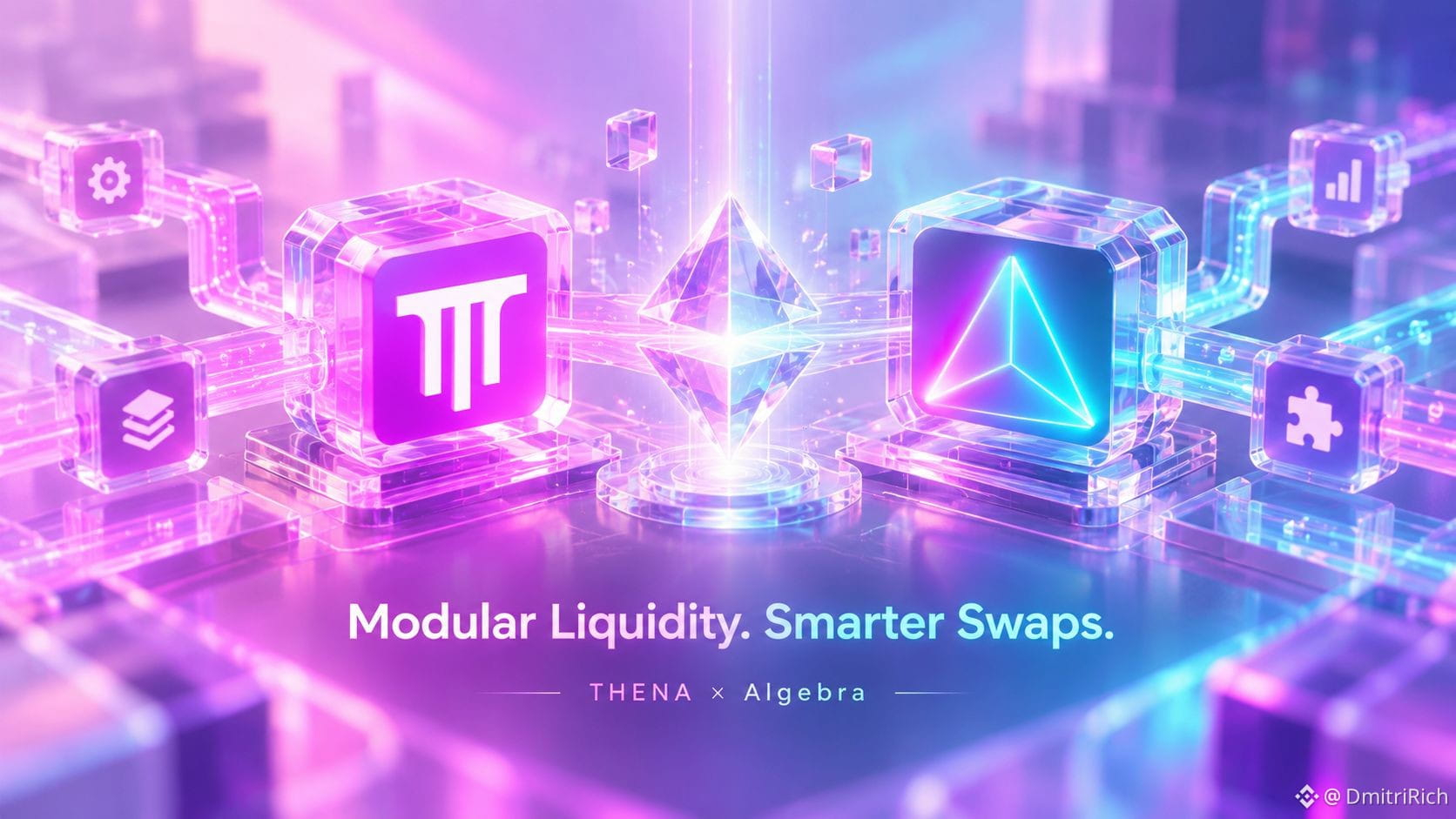
Algebra Integral is AMM infrastructure behind THENA’s concentrated liquidity. Think of it as $THE engine under the hood.
And plugins let that engine add extra logic without rebuilding the whole pool.
Here’s why it matters.
1/ First: concentrated liquidity.
Instead of spreading #LP capital across every possible price, liquidity can be placed inside specific price ranges.
That can make the same amount of liquidity more useful around $THE price where people are actually trading.
For traders ➵ potentially better execution.
For LPs ➵ more capital efficiency but also more management and risk.
2/ So what is an Algebra plugin?
In simple terms, it’s an extra smart contract connected to a liquidity pool.
Through “hooks,” it can run additional logic around actions like swaps or liquidity changes.
The important part: new functionality can be added without replacing the core AMM or migrating the pool’s liquidity.
3/ A real example on THENA: dynamic fees.
Instead of every concentrated pool being stuck with one fixed fee, the fee mechanism can adapt to market conditions.
When volatility increases, fees can rise to better compensate LPs. In calmer conditions, they can fall to keep trading competitive.
The user doesn’t have to manually adjust this.
4/ Who benefits?
▹ Traders: concentrated liquidity can provide deeper liquidity around the active price
▹ LPs: capital can be deployed more efficiently, while dynamic fees respond to changing market conditions
▹ Projects: Algebra’s modular design gives THENA more flexibility in how liquidity pools can evolve.
And all of this runs on #BNBChain , which now reaches finality in about 0.65 seconds under normal conditions.
205
·
--
Рост
As a regular user, I find this genuinely useful. I don’t want to spend my day watching charts just to make a trade.
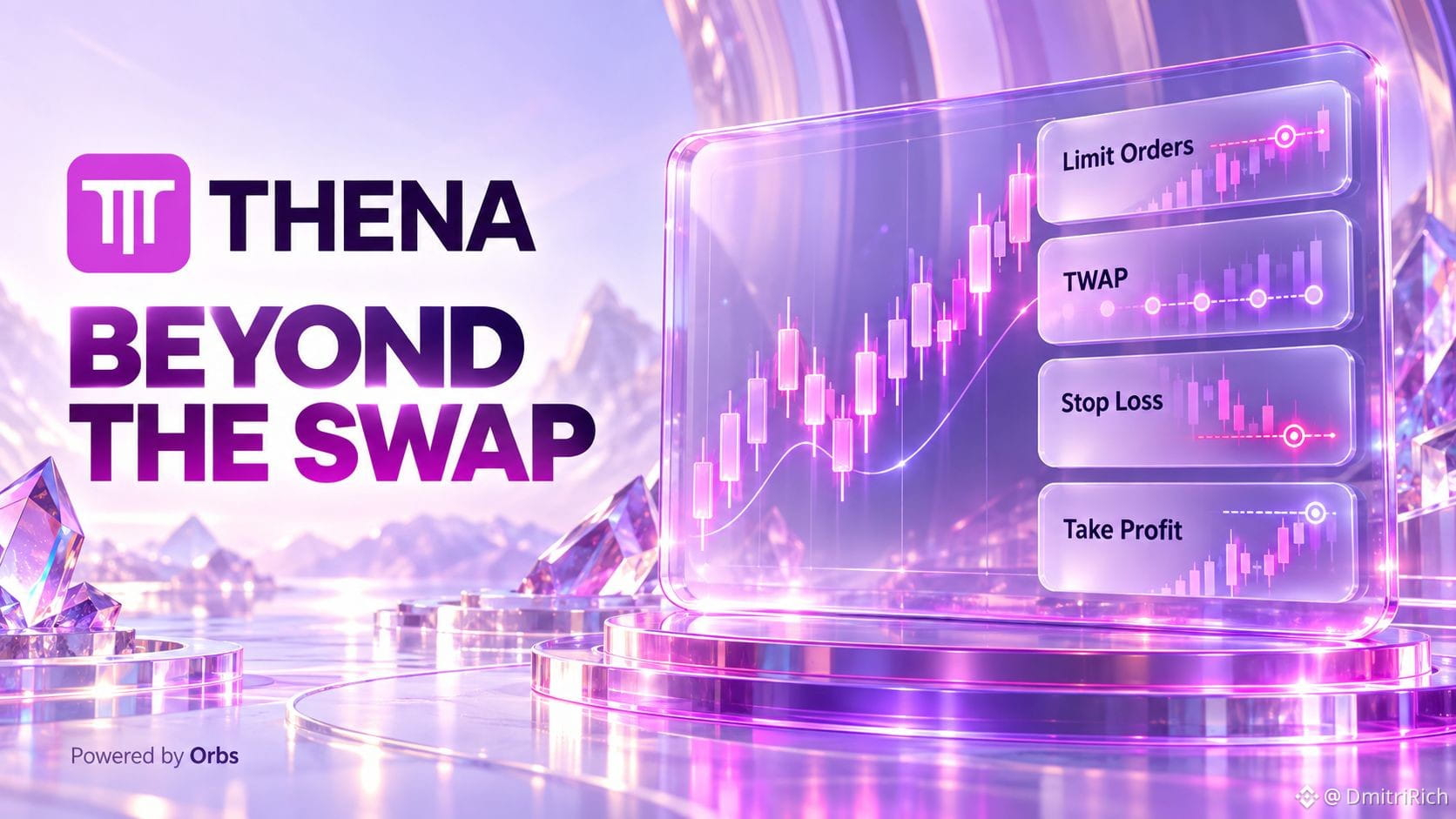
On #THENA , I can set my price with Limit Orders, spread a trade over time with TWAP and plan my exits with Stop Loss and Take Profit.
For me, $THE biggest plus is having these tools right in the same interface. Less manual work, less switching between apps and more control over how I trade.
A practical addition to $THE , powered by #orbsnetwork 🤝
{future}(THEUSDT)
As a regular user, I find this genuinely useful. I don’t want to spend my day watching charts just to make a trade.
On #THENA , I can set my price with Limit Orders, spread a trade over time with TWAP and plan my exits with Stop Loss and Take Profit.
For me, $THE biggest plus is having these tools right in the same interface. Less manual work, less switching between apps and more control over how I trade.
A practical addition to $THE , powered by #orbsnetwork 🤝
248
·
--
Рост
When I hear #PancakeSwap & #THENA called “sister exchanges,” I think of two markets in the same city.
PancakeSwap has the scale. I’d like THENA to help projects make their tokens easier to buy and sell, even after extra rewards end.
1/ My idea: a THENA Liquidity Clinic. A check-up for projects whose tokens already get traded.
Why does a larger purchase move the price so much? Is enough money available for trades? Can trading apps access it?
Find the problem before spending more.
2/ Start with 3 projects and a 12-week trial. 2 weeks to find the problem. 6 to test improvements. Then 4 to see what remains after the extra support ends.
Give each project a clear plan, someone responsible and public results. Keep it small enough to learn.
3/ Projects put in some of their own money. Any THENA support has a spending limit. Count the full cost, including the people doing the work.
Every two weeks, check whether the changes are helping before committing more money.
4/ Show what a trader actually gets when buying or selling the same amount, after fees and network costs. Compare with PancakeSwap and other venues under similar conditions.
More money in a pool is useful when it makes trading better.
5/ The part I care about most: what happens when the extra rewards stop? Do trades still go through at reasonable prices? Does activity hold up? Are other rewards still keeping the pool going?
Check against wider market moves, then follow up three months later.
6/ I’d want the unsuccessful trials published too. Builders could learn which changes helped, what they cost, and which weren’t worth repeating.
That’s how I’d like THENA to stand out within #BNBChain .
If you ran a project, would you sign up for that check-up?
{future}(THEUSDT)
When I hear #PancakeSwap & #THENA called “sister exchanges,” I think of two markets in the same city.
PancakeSwap has the scale. I’d like THENA to help projects make their tokens easier to buy and sell, even after extra rewards end.
1/ My idea: a THENA Liquidity Clinic. A check-up for projects whose tokens already get traded.
Why does a larger purchase move the price so much? Is enough money available for trades? Can trading apps access it?
Find the problem before spending more.
2/ Start with 3 projects and a 12-week trial. 2 weeks to find the problem. 6 to test improvements. Then 4 to see what remains after the extra support ends.
Give each project a clear plan, someone responsible and public results. Keep it small enough to learn.
3/ Projects put in some of their own money. Any THENA support has a spending limit. Count the full cost, including the people doing the work.
Every two weeks, check whether the changes are helping before committing more money.
4/ Show what a trader actually gets when buying or selling the same amount, after fees and network costs. Compare with PancakeSwap and other venues under similar conditions.
More money in a pool is useful when it makes trading better.
5/ The part I care about most: what happens when the extra rewards stop? Do trades still go through at reasonable prices? Does activity hold up? Are other rewards still keeping the pool going?
Check against wider market moves, then follow up three months later.
6/ I’d want the unsuccessful trials published too. Builders could learn which changes helped, what they cost, and which weren’t worth repeating.
That’s how I’d like THENA to stand out within #BNBChain .
If you ran a project, would you sign up for that check-up?
60
·
--
Рост
Don’t forget to vote #THENA Epoch #194!
veTHE voters can earn trading fees and bribes.
USE solid TIPS:
▹ Lock up to 2 years for maximum voting power
▹ Vote near the deadline for fresher data, but not at $THE last minute
▹ Use Reward Estimate
▹ Compare fees + bribes, not APR alone
▹ Check pool volume and liquidity
▹ Split votes when it improves reward potential
▹ Recheck and adjust before voting closes
{future}(THEUSDT)
Don’t forget to vote #THENA Epoch #194!
veTHE voters can earn trading fees and bribes.
USE solid TIPS:
▹ Lock up to 2 years for maximum voting power
▹ Vote near the deadline for fresher data, but not at $THE last minute
▹ Use Reward Estimate
▹ Compare fees + bribes, not APR alone
▹ Check pool volume and liquidity
▹ Split votes when it improves reward potential
▹ Recheck and adjust before voting closes

265
·
--
Статья
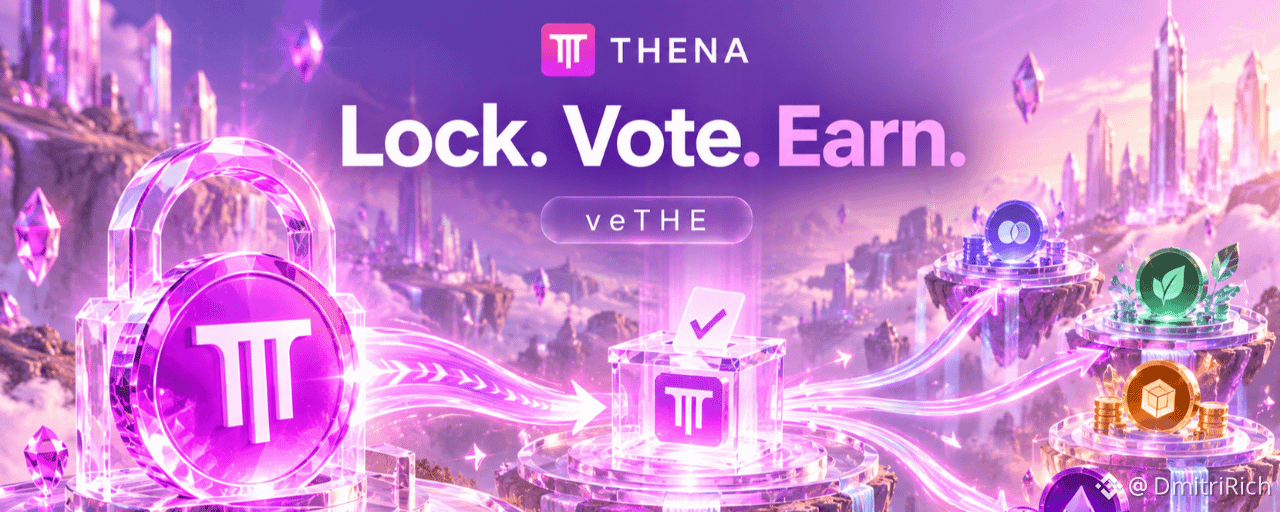
EASY WAY TO EARN WITH THENA!Most people use #THENA to swap and move on.
But if you hold $THE , there’s another layer worth understanding: veTHE.
Lock THE ➵ get voting power ➵ vote where liquidity incentives go ➵ earn rewards linked to those votes.
Here’s the simple version.
1/ What is veTHE?
You lock THE for up to 2 years and receive veTHE voting power. The longer your remaining lock, the stronger your voting power.
So veTHE isn’t another token to trade.
It represents your locked THE position and your influence inside THENA.
2/ What do you actually vote for?
Every week, veTHE holders vote on which liquidity pools should receive THE emissions.
Vote for a gauge and you may receive part of the available trading fees + voting incentives linked to that gauge.
In simple terms: your vote can have real economic value.
3/ Then there’s the rebase.
A portion of weekly THE emissions is distributed to veTHE holders to reduce dilution from new emissions.
It doesn’t work like a normal liquid reward sent straight to your wallet. It strengthens your locked position over time.
4/ Who is veTHE for?
Mostly THE holders who are comfortable locking for the longer term and want to take part in how THENA directs liquidity.
Voting works in weekly Epochs, so active voters should regularly check their votes, gauges and available incentives.
And because THENA runs on #BNBChain , these onchain actions are generally fast and inexpensive.
5/ Why do people miss veTHE?
Because “lock” sounds like simple staking. It isn’t.
You’re choosing which pools receive THE emissions and your vote can earn trading fees and voting incentives from the gauges you support.
One action: open the Vote page, compare the available rewards and understand the lock before committing your $THE .
{future}(THEUSDT)
EASY WAY TO EARN WITH THENA!
Most people use #THENA to swap and move on.
But if you hold $THE , there’s another layer worth understanding: veTHE.
Lock THE ➵ get voting power ➵ vote where liquidity incentives go ➵ earn rewards linked to those votes.
Here’s the simple version.
1/ What is veTHE?
You lock THE for up to 2 years and receive veTHE voting power. The longer your remaining lock, the stronger your voting power.
So veTHE isn’t another token to trade.
It represents your locked THE position and your influence inside THENA.
2/ What do you actually vote for?
Every week, veTHE holders vote on which liquidity pools should receive THE emissions.
Vote for a gauge and you may receive part of the available trading fees + voting incentives linked to that gauge.
In simple terms: your vote can have real economic value.
3/ Then there’s the rebase.
A portion of weekly THE emissions is distributed to veTHE holders to reduce dilution from new emissions.
It doesn’t work like a normal liquid reward sent straight to your wallet. It strengthens your locked position over time.
4/ Who is veTHE for?
Mostly THE holders who are comfortable locking for the longer term and want to take part in how THENA directs liquidity.
Voting works in weekly Epochs, so active voters should regularly check their votes, gauges and available incentives.
And because THENA runs on #BNBChain , these onchain actions are generally fast and inexpensive.
5/ Why do people miss veTHE?
Because “lock” sounds like simple staking. It isn’t.
You’re choosing which pools receive THE emissions and your vote can earn trading fees and voting incentives from the gauges you support.
One action: open the Vote page, compare the available rewards and understand the lock before committing your $THE .
231

·
--
Статья
Beyond $40B: What THENA Is Improving Under the HoodTHENA recently reported more than $40 billion in cumulative spot-trading volume on BNB Chain. It is an impressive milestone, but volume alone does not explain where a decentralized exchange is heading.
The more interesting story is what @thenafi_ has been improving beneath the interface.
Recent updates point toward the same objective: reducing friction. Parts of the application now load faster, KyberNetwork powers spot routing, and BailSec has joined as a security partner.
These changes may not attract attention like a new token or unusually high APR, but they influence how traders experience the platform every day.
$40 Billion Is Context, Not the Finish Line
THENA launched on BNB Chain in January 2023 as a community-driven ve(3,3) decentralized exchange. Since then, it has expanded beyond basic token swaps into concentrated liquidity, automated liquidity management, veTHE voting, perpetual trading, advanced orders, and analytics.
According to its official announcement, THENA has now processed more than $40 billion in cumulative spot volume on BNB Chain.
Cumulative volume measures the total value traded over time. It should not be confused with current liquidity, daily volume, revenue, or the value of the $THE token.
Still, reaching this level indicates that the underlying infrastructure has been used across different market conditions. The next challenge is making that infrastructure more efficient and accessible.
Reading the Current Activity
A screenshot of the THENA Analytics dashboard captured on September 28, 2026 displayed:
TVL: $4,970,06424-hour volume: $1,671,63024-hour fees: $3,272Total protocol revenue: $42,742,150
These figures measure different parts of the platform.
TVL represents capital currently deposited in the protocol. Daily volume measures recent trading activity. Fees show what that activity generated during the period. Total revenue tracks cumulative value produced across the categories included in THENA analytics.
The dashboard is useful because it allows users to examine more than a headline milestone. A large cumulative number is historical, while daily volume, fees, and TVL provide a more immediate picture of activity.
Faster Loading Reduces Everyday Friction
THENA also announced that some parts of the application now load up to six times faster.
The wording matters. It does not mean every page, device, or transaction is guaranteed to be exactly six times faster. It refers to targeted improvements in parts of the application.
Even so, interface performance is important in DeFi.
Users regularly move between swap quotes, pool analytics, dashboard positions, voting pages, and transaction histories. Slow loading introduces friction before an onchain transaction is even submitted.
A faster interface does not change blockchain confirmation time, but it can improve the process of reviewing information and preparing an action. This becomes more relevant as a platform adds more markets, strategies, and analytics.
Smarter Routing Behind a Simple Swap
The most visible infrastructure update is the integration of KyberNetwork-powered routing for THENA’s spot-trading experience.
A user may only see two tokens in the swap panel, but the most efficient route does not always involve one direct pool. Liquidity can be distributed across multiple pools and intermediate assets.
In the captured $USDT to $THE quote, the interface displays a route moving from:
USDT → WBNB → THE
The route uses available liquidity across two stages before producing the requested output token. The user can also inspect:
Exchange rateMinimum receivedPrice impactTokens used along the routeLiquidity pools involved
This is why routing matters. The interface can evaluate available paths rather than forcing every swap through one direct pair.
However, routing does not remove trading risk. Before confirming, users should still check the minimum received, price impact, slippage settings, network fee, and token contract.
Why BNB Chain Still Matters
THENA development is closely connected to BNB Chain.
Relatively low transaction costs can make frequent activities such as swapping, claiming, voting, adding liquidity, or adjusting a position more accessible. BNB Chain also contains a large collection of tokens, protocols, and liquidity sources that a routing system can potentially use.
Low fees do not automatically guarantee good execution. Liquidity depth, route quality, price impact, and smart-contract design remain important.
The combination matters: affordable transactions are most useful when the interface can identify efficient liquidity paths and provide enough information for users to review them.
Security Is a Process, Not a Badge
THENA has also welcomed BailSec as a security partner.
This is relevant because the platform now includes more than a simple swap contract. Its ecosystem involves concentrated-liquidity positions, automated strategies, governance, emissions, advanced orders, and leveraged products.
Each additional component introduces assumptions and potential attack surfaces.
A security partnership is a positive development, but it should not be interpreted as a guarantee that losses are impossible. Users still face smart-contract risk, token risk, wallet risk, market volatility, and approval-related risk.
Good security communication should acknowledge both sides: protocols need continuous review, while users need responsible wallet practices.
The Next Phase Is About Execution
The most important part of these updates is not any single announcement. It is the direction they indicate.
The $40 billion cumulative spot-volume milestone shows how much activity has passed through THENA since launch. The current analytics dashboard provides a more immediate view of liquidity, volume, fees, and revenue.
Meanwhile, the recent improvements target the experience underneath:
Faster access to parts of the applicationSmarter routing across available liquidityClearer visibility into swap pathsContinued work with external security specialists
The result is not simply another feature to promote. It is an attempt to make existing DeFi activity less fragmented and easier to understand.
Users can inspect the latest interface and compare a live swap quote at:
thena.fi
No transaction is required to review the route, minimum received, and price impact.
Disclaimer: Platform metrics were captured on September 28, 2026 and may change. DeFi involves smart-contract, token, liquidity, and market risks. This article is for educational purposes only and is not financial advice. Always verify official links and do your own research.
#THENA #bnb #defi
Beyond $40B: What THENA Is Improving Under the Hood
THENA recently reported more than $40 billion in cumulative spot-trading volume on BNB Chain. It is an impressive milestone, but volume alone does not explain where a decentralized exchange is heading.
The more interesting story is what @thenafi_ has been improving beneath the interface.
Recent updates point toward the same objective: reducing friction. Parts of the application now load faster, KyberNetwork powers spot routing, and BailSec has joined as a security partner.
These changes may not attract attention like a new token or unusually high APR, but they influence how traders experience the platform every day.
$40 Billion Is Context, Not the Finish Line
THENA launched on BNB Chain in January 2023 as a community-driven ve(3,3) decentralized exchange. Since then, it has expanded beyond basic token swaps into concentrated liquidity, automated liquidity management, veTHE voting, perpetual trading, advanced orders, and analytics.
According to its official announcement, THENA has now processed more than $40 billion in cumulative spot volume on BNB Chain.
Cumulative volume measures the total value traded over time. It should not be confused with current liquidity, daily volume, revenue, or the value of the $THE token.
Still, reaching this level indicates that the underlying infrastructure has been used across different market conditions. The next challenge is making that infrastructure more efficient and accessible.
Reading the Current Activity
A screenshot of the THENA Analytics dashboard captured on September 28, 2026 displayed:
TVL: $4,970,06424-hour volume: $1,671,63024-hour fees: $3,272Total protocol revenue: $42,742,150
These figures measure different parts of the platform.
TVL represents capital currently deposited in the protocol. Daily volume measures recent trading activity. Fees show what that activity generated during the period. Total revenue tracks cumulative value produced across the categories included in THENA analytics.
The dashboard is useful because it allows users to examine more than a headline milestone. A large cumulative number is historical, while daily volume, fees, and TVL provide a more immediate picture of activity.
Faster Loading Reduces Everyday Friction
THENA also announced that some parts of the application now load up to six times faster.
The wording matters. It does not mean every page, device, or transaction is guaranteed to be exactly six times faster. It refers to targeted improvements in parts of the application.
Even so, interface performance is important in DeFi.
Users regularly move between swap quotes, pool analytics, dashboard positions, voting pages, and transaction histories. Slow loading introduces friction before an onchain transaction is even submitted.
A faster interface does not change blockchain confirmation time, but it can improve the process of reviewing information and preparing an action. This becomes more relevant as a platform adds more markets, strategies, and analytics.
Smarter Routing Behind a Simple Swap
The most visible infrastructure update is the integration of KyberNetwork-powered routing for THENA’s spot-trading experience.
A user may only see two tokens in the swap panel, but the most efficient route does not always involve one direct pool. Liquidity can be distributed across multiple pools and intermediate assets.
In the captured $USDT to $THE quote, the interface displays a route moving from:
USDT → WBNB → THE
The route uses available liquidity across two stages before producing the requested output token. The user can also inspect:
Exchange rateMinimum receivedPrice impactTokens used along the routeLiquidity pools involved
This is why routing matters. The interface can evaluate available paths rather than forcing every swap through one direct pair.
However, routing does not remove trading risk. Before confirming, users should still check the minimum received, price impact, slippage settings, network fee, and token contract.
Why BNB Chain Still Matters
THENA development is closely connected to BNB Chain.
Relatively low transaction costs can make frequent activities such as swapping, claiming, voting, adding liquidity, or adjusting a position more accessible. BNB Chain also contains a large collection of tokens, protocols, and liquidity sources that a routing system can potentially use.
Low fees do not automatically guarantee good execution. Liquidity depth, route quality, price impact, and smart-contract design remain important.
The combination matters: affordable transactions are most useful when the interface can identify efficient liquidity paths and provide enough information for users to review them.
Security Is a Process, Not a Badge
THENA has also welcomed BailSec as a security partner.
This is relevant because the platform now includes more than a simple swap contract. Its ecosystem involves concentrated-liquidity positions, automated strategies, governance, emissions, advanced orders, and leveraged products.
Each additional component introduces assumptions and potential attack surfaces.
A security partnership is a positive development, but it should not be interpreted as a guarantee that losses are impossible. Users still face smart-contract risk, token risk, wallet risk, market volatility, and approval-related risk.
Good security communication should acknowledge both sides: protocols need continuous review, while users need responsible wallet practices.
The Next Phase Is About Execution
The most important part of these updates is not any single announcement. It is the direction they indicate.
The $40 billion cumulative spot-volume milestone shows how much activity has passed through THENA since launch. The current analytics dashboard provides a more immediate view of liquidity, volume, fees, and revenue.
Meanwhile, the recent improvements target the experience underneath:
Faster access to parts of the applicationSmarter routing across available liquidityClearer visibility into swap pathsContinued work with external security specialists
The result is not simply another feature to promote. It is an attempt to make existing DeFi activity less fragmented and easier to understand.
Users can inspect the latest interface and compare a live swap quote at:
thena.fi
No transaction is required to review the route, minimum received, and price impact.
Disclaimer: Platform metrics were captured on September 28, 2026 and may change. DeFi involves smart-contract, token, liquidity, and market risks. This article is for educational purposes only and is not financial advice. Always verify official links and do your own research.
#THENA #bnb #defi
2
326
·
--
Рост
The #THENA team keeps surprising me with how active they are!
Improvements keep coming and $THE community gets updated right away.
That’s why THENA 2.0 isn’t just a new number!
It’s a real change in how the project builds and communicates.
{future}(THEUSDT)
The #THENA team keeps surprising me with how active they are!
Improvements keep coming and $THE community gets updated right away.
That’s why THENA 2.0 isn’t just a new number!
It’s a real change in how the project builds and communicates.
Improvements keep coming and $THE community gets updated right away.
That’s why THENA 2.0 isn’t just a new number!
It’s a real change in how the project builds and communicates.
331
·
--
Рост
Real yield isn’t magic. It’s protocol math.
#THENA routes value back to the community:
▹ 90% of $THE trading fees
▹ 100% of partner voting incentives
To optimize each Epoch:
▹ Vote late for more accurate APR
▹ Use “Reward Estimate”
▹ Lock 2 years for max voting power
▹ Adjust before Thursday 00:00 UTC
Don’t let idle votes leak value.
#THENA routes value back to the community:
▹ 90% of $THE trading fees
▹ 100% of partner voting incentives
To optimize each Epoch:
▹ Vote late for more accurate APR
▹ Use “Reward Estimate”
▹ Lock 2 years for max voting power
▹ Adjust before Thursday 00:00 UTC
Don’t let idle votes leak value.

308
·
--
Рост
Real yield isn’t magic. It’s protocol math.
#THENA routes value back to the community:
▹ 90% of $THE trading fees
▹ 100% of partner voting incentives
To optimize each Epoch:
▹ Vote late for more accurate APR
▹ Use “Reward Estimate”
▹ Lock 2 years for max voting power
▹ Adjust before Thursday 00:00 UTC
New Epoch. New data. New yield routes.
Don’t let idle votes leak value.

1
420

·
--
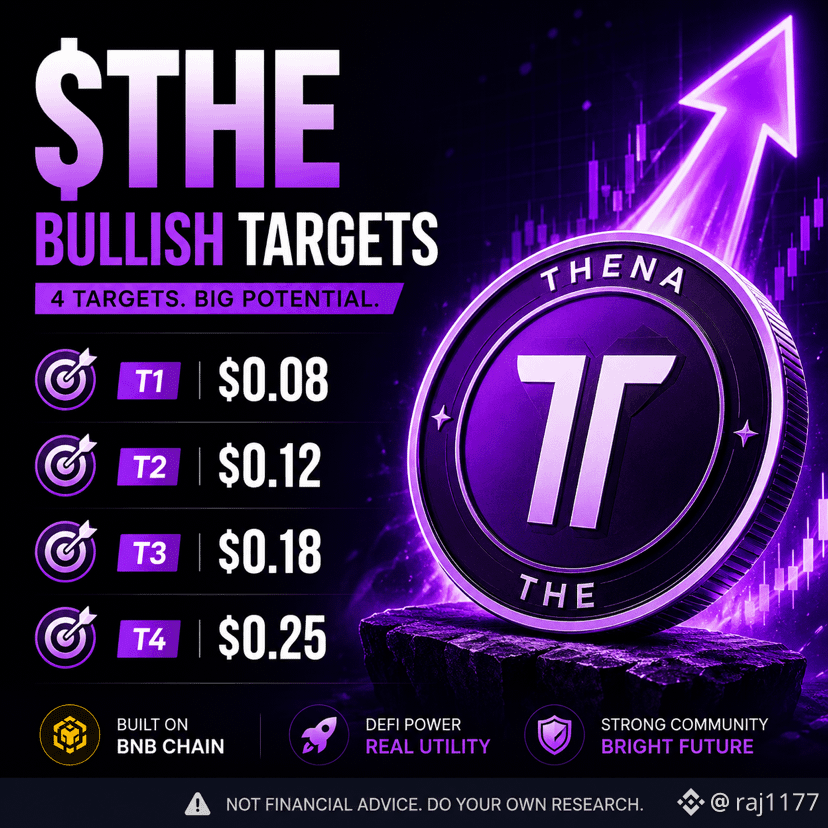
🚀 $THE Bullish Targets
🎯 T1: $0.08
🎯 T2: $0.12
🎯 T3: $0.18
🎯 T4: $0.25
Eyes on the breakout. Manage your risk and DYOR.
#THENA #THE #BNBChain #Crypto #BinanceSquare $THE
{spot}(THEUSDT)
🚀 $THE Bullish Targets
🎯 T1: $0.08
🎯 T2: $0.12
🎯 T3: $0.18
🎯 T4: $0.25
Eyes on the breakout. Manage your risk and DYOR.
#THENA #THE #BNBChain #Crypto #BinanceSquare $THE
🎯 T1: $0.08
🎯 T2: $0.12
🎯 T3: $0.18
🎯 T4: $0.25
Eyes on the breakout. Manage your risk and DYOR.
#THENA #THE #BNBChain #Crypto #BinanceSquare $THE
42

·
--
Рост
$THE когда DEX становится флагманом BNB Chain
THENA — это не очередная DEX. Это глубокая ликвидность, спотовые и бессрочные контракты, ve(3,3)-модель управления и 69K держателей. И всё это — на BNB Chain.
Почему THE интересен:
1. Полноценная экосистема. THE интегрирован в Binance Earn, Margin, Futures и Convert. Токен поддерживает плечо до 75x.
2. Дефляционная модель. Всего 326 млн THE, из них 133 млн в обращении. Оставшиеся ~193 млн будут разблокированы в течение 5 лет — никаких внезапных обвалов.
3. ve(3,3)-механика. Протоколы платят за ликвидность, напрямую влияя на голоса veTHE-держателей. Это создаёт реальный спрос на токен.
4. Техническая картина. THE отскочил от исторического минимума ($0.0458 в июле 2026) на +14%. Сейчас тестирует сопротивление $0.054. Пробой открывает путь к $0.06–0.07.
Риски: Токен упал на 98.7% от ATH. Рынок всё ещё в страхе — индекс 40.
THE — это ставка на ликвидность BNB Chain через работающий DEX с дефляционной моделью. Цена отскочила от дна, экосистема жива. Но на -98% от ATH заходить без стопа — самоубийство.
#THENA #THE #DEX #BNBChain
{future}(THEUSDT)
$THE когда DEX становится флагманом BNB Chain
THENA — это не очередная DEX. Это глубокая ликвидность, спотовые и бессрочные контракты, ve(3,3)-модель управления и 69K держателей. И всё это — на BNB Chain.
Почему THE интересен:
1. Полноценная экосистема. THE интегрирован в Binance Earn, Margin, Futures и Convert. Токен поддерживает плечо до 75x.
2. Дефляционная модель. Всего 326 млн THE, из них 133 млн в обращении. Оставшиеся ~193 млн будут разблокированы в течение 5 лет — никаких внезапных обвалов.
3. ve(3,3)-механика. Протоколы платят за ликвидность, напрямую влияя на голоса veTHE-держателей. Это создаёт реальный спрос на токен.
4. Техническая картина. THE отскочил от исторического минимума ($0.0458 в июле 2026) на +14%. Сейчас тестирует сопротивление $0.054. Пробой открывает путь к $0.06–0.07.
Риски: Токен упал на 98.7% от ATH. Рынок всё ещё в страхе — индекс 40.
THE — это ставка на ликвидность BNB Chain через работающий DEX с дефляционной моделью. Цена отскочила от дна, экосистема жива. Но на -98% от ATH заходить без стопа — самоубийство.
#THENA #THE #DEX #BNBChain
155
Войдите, чтобы посмотреть больше материала
Присоединяйтесь к пользователям криптовалют по всему миру на Binance Square
⚡️ Получайте новейшую и полезную информацию о криптоактивах.
💬 Нам доверяет крупнейшая в мире криптобиржа.
👍 Получите достоверные аналитические данные от верифицированных создателей контента.
Эл. почта/номер телефона
В тренде
1
#FedWatch
Просмотров: 16.3M
39,380 обсуждают
2
#EarningsSeason
Просмотров: 6.4M
32,082 обсуждают
3
#USMidtermElections
Просмотров: 39,967
613 обсуждают
4
#BitcoinDropsBelow$80K
Просмотров: 26,826
115 обсуждают
5
#BoEOpensConsultationOnTokenizedCollateralForClearing
Просмотров: 573
27 обсуждают
6
#BrazilCryptoExchangesMustApplyForLicensesByFriday
Просмотров: 31,083
503 обсуждают
7
#ICEPartnersWithTradeXYZToBringPerpetualContractsToUS
Просмотров: 701
19 обсуждают
8
#SolidusLabsReportsSuspected$170MSpoofingOnHyperliquidOilContracts
Просмотров: 1,584
26 обсуждают
9
#StanDruckenmillerBecomesInvestorInTradeXYZ
Просмотров: 23,449
434 обсуждают
10
#RussiaProposedNonCustodialWalletLimitsExcludeIntlSettlements
Просмотров: 1,972
41 обсуждают