
#russiaallowsexchangestooffercryptotrading
russiaallowsexchangestooffercryptotrading
Популярные
Новые

Russia just opened the door to regulated exchange crypto trading—and institutional rails are next. 🇷🇺📈
Effective November 22, a Bank of Russia directive lets local exchanges offer organized crypto trading once regulators approve their rulebooks.
Key details every trader should know:
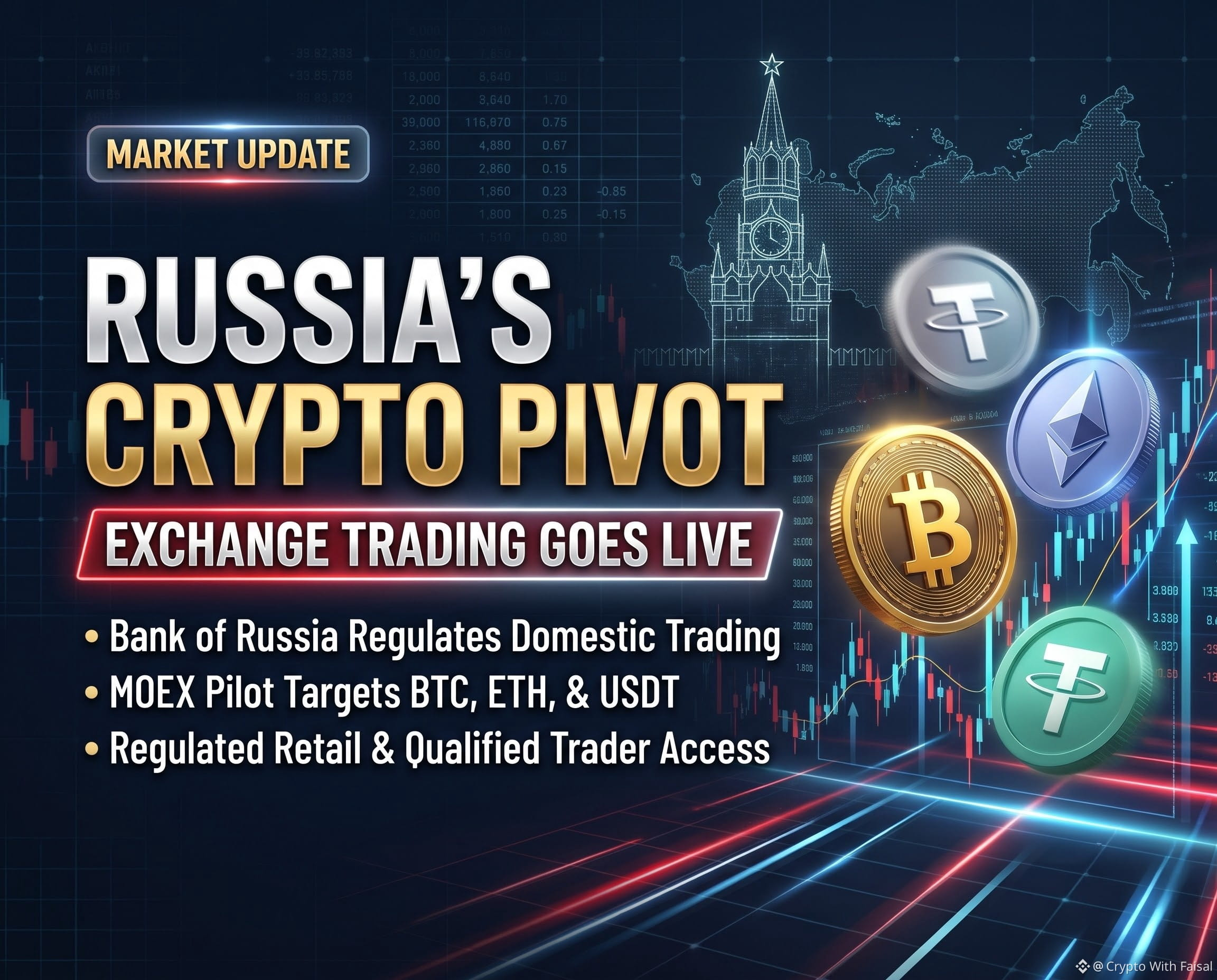
🔹 MOEX Pilot (Dec 1): Moscow Exchange targets December 1 to launch BTC, ETH, andUSDT trading cleared through the National Clearing Center.
🔹 Investor Split: Non-qualified retail buyers face a 300,000-ruble (~$3,700) annual cap and a mandatory risk test. Qualified investors get uncapped access.
🔹 Closed Loop: Domestic crypto payments stay banned—volume stays inside licensed local banks and brokers.
Major economies keep pivoting from outright bans to regulated market infrastructure. Even with strict guardrails, putting BTC on traditional exchange rails is a notable adoption milestone.
Bullish for Q4 momentum or too restricted to move the needle? Share your take below 👇
$BTC $ETH $EVAA
{future}(EVAAUSDT)
{future}(BTCUSDT)
{future}(ETHUSDT)
#russiaallowsexchangestooffercryptotrading
Russia just opened the door to regulated exchange crypto trading—and institutional rails are next. 🇷🇺📈
Effective November 22, a Bank of Russia directive lets local exchanges offer organized crypto trading once regulators approve their rulebooks.
Key details every trader should know:
🔹 MOEX Pilot (Dec 1): Moscow Exchange targets December 1 to launch BTC, ETH, andUSDT trading cleared through the National Clearing Center.
🔹 Investor Split: Non-qualified retail buyers face a 300,000-ruble (~$3,700) annual cap and a mandatory risk test. Qualified investors get uncapped access.
🔹 Closed Loop: Domestic crypto payments stay banned—volume stays inside licensed local banks and brokers.
Major economies keep pivoting from outright bans to regulated market infrastructure. Even with strict guardrails, putting BTC on traditional exchange rails is a notable adoption milestone.
Bullish for Q4 momentum or too restricted to move the needle? Share your take below 👇
$BTC $ETH $EVAA
#russiaallowsexchangestooffercryptotrading
3
2.4k

·
--
Статья
Russia just opened the door to regulated crypto trading. But no exchange has actually started yet.The Bank of Russia directive took effect on November 22. Exchanges can now apply, but only after the central bank approves their trading rules. That's the catch nobody on your feed is mentioning.
The Moscow Exchange has set December 1 for pilot trades in $BTC $ETH and $USDT Trading will run 6:50 to 23:50 Moscow time on the same infrastructure as its stock market.
Here's the part that changes the game for retail. Non-qualified investors are capped at 300,000 rubles a year through a single intermediary. That's roughly $3,600 at current rates.
Qualified investors face no limits.
Crypto payments inside Russia stay banned. Direct P2P trading gets banned in July 2027.
This isn't a stampede of new money on day one. It's a slow, gated rollout. But the direction is clear.
Are you watching this as a long-term shift or just another headline? 👇
{spot}(BTCUSDT)
{spot}(ETHUSDT)
#RussiaAllowsExchangesToOfferCryptoTrading
Russia just opened the door to regulated crypto trading. But no exchange has actually started yet.
The Bank of Russia directive took effect on November 22. Exchanges can now apply, but only after the central bank approves their trading rules. That's the catch nobody on your feed is mentioning.
The Moscow Exchange has set December 1 for pilot trades in $BTC $ETH and $USDT Trading will run 6:50 to 23:50 Moscow time on the same infrastructure as its stock market.
Here's the part that changes the game for retail. Non-qualified investors are capped at 300,000 rubles a year through a single intermediary. That's roughly $3,600 at current rates.
Qualified investors face no limits.
Crypto payments inside Russia stay banned. Direct P2P trading gets banned in July 2027.
This isn't a stampede of new money on day one. It's a slow, gated rollout. But the direction is clear.
Are you watching this as a long-term shift or just another headline? 👇
#RussiaAllowsExchangesToOfferCryptoTrading
355

·
--
🇷🇺 Russia just opened the door to Bitcoin & Ethereum… but here’s the real story
From Nov 17, Russian retail investors can officially buy $BTC ,$ETH and $USDT
Sounds big. The catch? They’re limited to only ~$3,700 per year through each intermediary.
Russia is still under heavy sanctions, so this money stays mostly inside the country.
It’s not going to flood global exchanges with new buying pressure.
Still, it matters.
A major country is now treating Bitcoin and Ethereum as legitimate assets under regulated rules. That kind of recognition adds up over time.
Short term impact? Pretty limited.
Long-term signal? Quietly bullish for crypto’s legitimacy.
Not a moon mission. Just another step toward the mainstream.
#RussiaAllowsExchangesToOfferCryptoTrading
{future}(ETHUSDT)
🇷🇺 Russia just opened the door to Bitcoin & Ethereum… but here’s the real story
From Nov 17, Russian retail investors can officially buy $BTC ,$ETH and $USDT
Sounds big. The catch? They’re limited to only ~$3,700 per year through each intermediary.
Russia is still under heavy sanctions, so this money stays mostly inside the country.
It’s not going to flood global exchanges with new buying pressure.
Still, it matters.
A major country is now treating Bitcoin and Ethereum as legitimate assets under regulated rules. That kind of recognition adds up over time.
Short term impact? Pretty limited.
Long-term signal? Quietly bullish for crypto’s legitimacy.
Not a moon mission. Just another step toward the mainstream.
#RussiaAllowsExchangesToOfferCryptoTrading
103

🌍 ANOTHER MAJOR MARKET IS RECONSIDERING CRYPTO
Russia's latest move puts exchange-based crypto trading in focus.
A regulated framework could bring greater transparency.
But implementation and investor protections will matter.
Will more countries follow this direction?
$BTC $XRP $ETH
#russiaallowsexchangestooffercryptotrading
Russia's latest move puts exchange-based crypto trading in focus.
A regulated framework could bring greater transparency.
But implementation and investor protections will matter.
Will more countries follow this direction?
$BTC $XRP $ETH
#russiaallowsexchangestooffercryptotrading
99

·
--
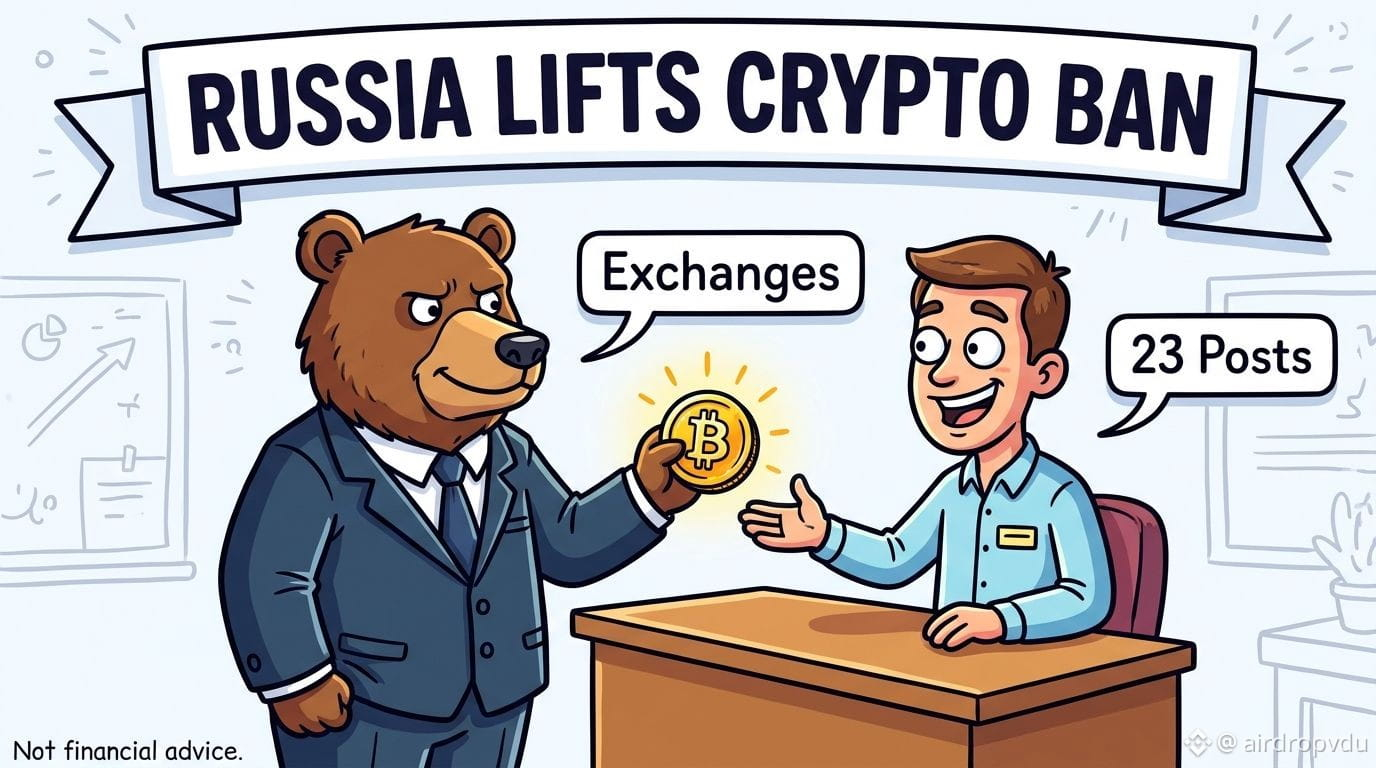
🚨 BREAKING: Russia Greenlights Crypto Trading on Exchanges
Russia now officially allows exchanges to offer crypto trading.
23 posts and 35 views on Square are already tracking the shift.
Will this regulatory pivot unlock new liquidity for global markets?
Not financial advice. DYOR.
#RussiaAllowsExchangesToOfferCryptoTrading #CryptoRegulation
Russia now officially allows exchanges to offer crypto trading.
23 posts and 35 views on Square are already tracking the shift.
Will this regulatory pivot unlock new liquidity for global markets?
Not financial advice. DYOR.
#RussiaAllowsExchangesToOfferCryptoTrading #CryptoRegulation
1
328

·
--
Рост
#russiaallowsexchangestooffercryptotrading
Russia Moves to Allow Exchanges to Offer Crypto Trading
Russia is taking another step toward integrating cryptocurrency into its financial system, with plans to allow exchanges to offer crypto trading under a regulatory framework.
The move could reshape the country's digital asset market and create new opportunities for investors, financial institutions, and crypto businesses.
What Happened?
Russia is moving toward allowing exchanges to provide cryptocurrency trading services.
Regulators are working on rules to oversee digital asset transactions.
Licensed platforms could operate under stricter compliance requirements.
Authorities are focusing on transparency and monitoring crypto-related financial activities.
Why It Matters
Russia is a significant player in the global crypto landscape. Allowing regulated exchanges to offer trading could increase market accessibility and attract more institutional participation.
For the wider crypto market, clearer regulations could influence international adoption, exchange competition, and investor confidence.
Market Outlook: Watch for details about licensing, trading restrictions, and the assets that exchanges will be permitted to list. Implementation will determine how much impact this decision has on the market.
Russia's crypto market could be entering a new chapter, but how big will the opportunity become?
#russia #cryptotrading #CryptoRegulation $BTC
471

·
--
$BTC: Russia cleared its exchanges to run crypto trading from November 22. The first pilot is still set for December 1. What fills the gap?
Plain answer: a rulebook, not a demand test. Each exchange still has to get the Bank of Russia to approve its own trading rules before it can open, so a start date in the ordinance is a permission, not a live market.
What the paperwork says:
- The Bank of Russia's ordinance was published November 11 and took effect November 22; exchanges may start organised crypto trading once the regulator concurs with their rules (Bank of Russia; TASS, November 22).
- A second ordinance, published November 6 and effective November 17, approved bitcoin, ether and Tether's USDT for purchase by non-qualified investors, capped at 300,000 rubles a year through one intermediary, about $3,600 (Bitcoin Magazine, November 11).
- Moscow Exchange still targets a December 1 pilot in those three assets, running 06:50-23:50 Moscow time and cleared by the National Clearing Centre (venue announcement of November 2, reported by Bitcoin Magazine).
Why the gap is the story:
- Rule approval is the step between a licence and an order book. Until it lands, an exchange holds a permit and an empty screen.
- The annual cap counts per intermediary, so retail demand is split and bounded before it ever reaches a market.
What I am watching:
- Any exchange saying its trading rules are approved before December 1.
- The first Moscow Exchange session: does it open at 06:50 Moscow time with bitcoin, ether and USDT all quoted?
The rule I keep: a regulator's start date marks a permission, not liquidity.
#RussiaAllowsExchangesToOfferCryptoTrading #Write2Earn
If your local exchange opened a regulated crypto market with a yearly purchase cap, would you use it instead of an offshore venue, and why?
$BTC : Russia cleared its exchanges to run crypto trading from November 22. The first pilot is still set for December 1. What fills the gap?
Plain answer: a rulebook, not a demand test. Each exchange still has to get the Bank of Russia to approve its own trading rules before it can open, so a start date in the ordinance is a permission, not a live market.
What the paperwork says:
- The Bank of Russia's ordinance was published November 11 and took effect November 22; exchanges may start organised crypto trading once the regulator concurs with their rules (Bank of Russia; TASS, November 22).
- A second ordinance, published November 6 and effective November 17, approved bitcoin, ether and Tether's USDT for purchase by non-qualified investors, capped at 300,000 rubles a year through one intermediary, about $3,600 (Bitcoin Magazine, November 11).
- Moscow Exchange still targets a December 1 pilot in those three assets, running 06:50-23:50 Moscow time and cleared by the National Clearing Centre (venue announcement of November 2, reported by Bitcoin Magazine).
Why the gap is the story:
- Rule approval is the step between a licence and an order book. Until it lands, an exchange holds a permit and an empty screen.
- The annual cap counts per intermediary, so retail demand is split and bounded before it ever reaches a market.
What I am watching:
- Any exchange saying its trading rules are approved before December 1.
- The first Moscow Exchange session: does it open at 06:50 Moscow time with bitcoin, ether and USDT all quoted?
The rule I keep: a regulator's start date marks a permission, not liquidity.
#RussiaAllowsExchangesToOfferCryptoTrading #Write2Earn
If your local exchange opened a regulated crypto market with a yearly purchase cap, would you use it instead of an offshore venue, and why?
98

·
--
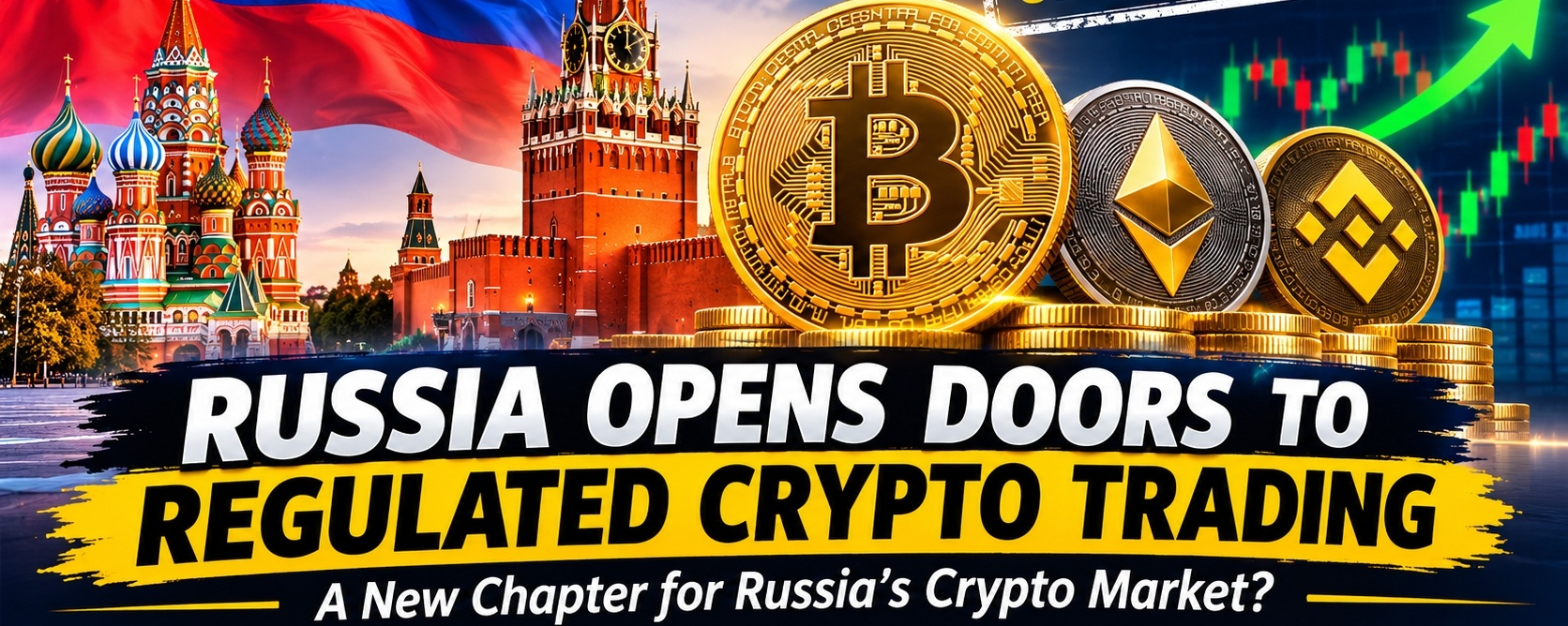
Статья
🇷🇺 RUSSIA TAKES A NEW STEP TOWARD CRYPTO ADOPTION!Russia is moving closer to bringing cryptocurrency trading into its regulated financial system.
The country is working on a framework that could allow licensed exchanges to offer crypto trading services under official supervision.
🔍 What's Changing?
Exchanges may receive permission to provide crypto trading.
New regulatory rules are being developed.
Licensed platforms could face stricter compliance standards.
Authorities want greater transparency in digital asset transactions.$BTC
🌍 Why Is This Important?
This move could be a major development for Russia's crypto industry. A regulated trading environment may attract more financial institutions, improve market access, and bring greater confidence to the digital asset sector.
It could also influence how other countries approach crypto regulation.
📊 What's Next?
The real impact will depend on the final rules, licensing requirements, trading restrictions, and which cryptocurrencies exchanges will be allowed to list.
My Take:
Crypto regulation is becoming an increasingly important part of the industry's future. If Russia successfully introduces this framework, it could open a new chapter for its digital asset market.
The big question is: Will regulation bring more opportunities or more restrictions?
#Russia #CryptoNews #Bitcoin #CryptoRegulation #BinanceSquare #DigitalAssets" #RussiaCrypto $ETH
{spot}(ETHUSDT)
#RussiaAllowsExchangesToOfferCryptoTrading
🇷🇺 RUSSIA TAKES A NEW STEP TOWARD CRYPTO ADOPTION!
Russia is moving closer to bringing cryptocurrency trading into its regulated financial system.
The country is working on a framework that could allow licensed exchanges to offer crypto trading services under official supervision.
🔍 What's Changing?
Exchanges may receive permission to provide crypto trading.
New regulatory rules are being developed.
Licensed platforms could face stricter compliance standards.
Authorities want greater transparency in digital asset transactions.$BTC
🌍 Why Is This Important?
This move could be a major development for Russia's crypto industry. A regulated trading environment may attract more financial institutions, improve market access, and bring greater confidence to the digital asset sector.
It could also influence how other countries approach crypto regulation.
📊 What's Next?
The real impact will depend on the final rules, licensing requirements, trading restrictions, and which cryptocurrencies exchanges will be allowed to list.
My Take:
Crypto regulation is becoming an increasingly important part of the industry's future. If Russia successfully introduces this framework, it could open a new chapter for its digital asset market.
The big question is: Will regulation bring more opportunities or more restrictions?
#Russia #CryptoNews #Bitcoin #CryptoRegulation #BinanceSquare #DigitalAssets" #RussiaCrypto $ETH
#RussiaAllowsExchangesToOfferCryptoTrading
92
🚨 RUSSIA'S CRYPTO MARKET MAY BE ENTERING A NEW CHAPTER
Russia is moving toward allowing exchanges to offer crypto trading.
This could reshape the country's digital asset landscape.
Regulatory clarity may attract more structured market participation.
Could this become a turning point for crypto adoption in Russia?
$BTC $ETH $BNB
#russiaallowsexchangestooffercryptotrading
183
#russiaallowsexchangestooffercryptotrading A Bank of Russia directive took effect on November 22, 2026, permitting exchanges to offer cryptocurrency trading once regulators approve their trading rules and confirm participant connections. The Moscow Exchange targets a December 1 pilot for Bitcoin, Ethereum, and USDT using existing stock-market infrastructure and clearing. Non-qualified investors face a 300,000-ruble annual purchase cap per intermediary and must pass a knowledge test, whereas qualified investors face no purchase cap, while domestic crypto payments remain banned. $BTC $HYPE $ZEC
{spot}(ZECUSDT)
{spot}(HYPEUSDT)
{spot}(BTCUSDT)
#russiaallowsexchangestooffercryptotrading A Bank of Russia directive took effect on November 22, 2026, permitting exchanges to offer cryptocurrency trading once regulators approve their trading rules and confirm participant connections. The Moscow Exchange targets a December 1 pilot for Bitcoin, Ethereum, and USDT using existing stock-market infrastructure and clearing. Non-qualified investors face a 300,000-ruble annual purchase cap per intermediary and must pass a knowledge test, whereas qualified investors face no purchase cap, while domestic crypto payments remain banned. $BTC $HYPE $ZEC
386
A RÚSSIA ACABOU DE ENTRAR NO JOGO E O MERCADO CRIPTO NUNCA MAIS SERÁ O MESMO
જ⁀➴
O Banco Central da Rússia deu luz verde oficial às plataformas de negociação de criptomoedas. A Bolsa de Moscovo vai iniciar um projeto piloto já no dia 1 de dezembro.
O arranque é forte. O trio BTC, ETH e USDT será negociado numa infraestrutura bolsista aberta das 6h50 às 23h50. Os investidores de retalho terão de passar por um teste de risco e estão limitados a 300.000 rublos por ano, enquanto os profissionais não têm qualquer limite.
A jogada é estratégica. A entrada de fluxos de capital russos pode injetar liquidez significativa no mercado. Contudo, o trader não pode agir por impulso.
O plano de ação é acompanhar a entrada destes novos capitais, mas sem ceder ao FOMO. Notícias macroeconómicas como esta criam volatilidade. Mantenha o seu capital protegido, observe a reação do mercado e só então tome decisões.
Isto não constitui aconselhamento financeiro. Clique no botão de negociação abaixo para me apoiar.
$ELSA
$BTC
$ETH
Siga a página e ative as notificações. Não se atrase. Seja qual for a próxima atualização, vou publicar aqui primeiro.
#russiaallowsexchangestooffercryptotrading
{future}(ELSAUSDT)
{spot}(BTCUSDT)
{spot}(ETHUSDT)
A RÚSSIA ACABOU DE ENTRAR NO JOGO E O MERCADO CRIPTO NUNCA MAIS SERÁ O MESMO
જ⁀➴
O Banco Central da Rússia deu luz verde oficial às plataformas de negociação de criptomoedas. A Bolsa de Moscovo vai iniciar um projeto piloto já no dia 1 de dezembro.
O arranque é forte. O trio BTC, ETH e USDT será negociado numa infraestrutura bolsista aberta das 6h50 às 23h50. Os investidores de retalho terão de passar por um teste de risco e estão limitados a 300.000 rublos por ano, enquanto os profissionais não têm qualquer limite.
A jogada é estratégica. A entrada de fluxos de capital russos pode injetar liquidez significativa no mercado. Contudo, o trader não pode agir por impulso.
O plano de ação é acompanhar a entrada destes novos capitais, mas sem ceder ao FOMO. Notícias macroeconómicas como esta criam volatilidade. Mantenha o seu capital protegido, observe a reação do mercado e só então tome decisões.
Isto não constitui aconselhamento financeiro. Clique no botão de negociação abaixo para me apoiar.
$ELSA
$BTC
$ETH
Siga a página e ative as notificações. Não se atrase. Seja qual for a próxima atualização, vou publicar aqui primeiro.
#russiaallowsexchangestooffercryptotrading
Square-Creator-b54cf2a865a8cd11b0b9:
Papo furado!
5
10
12.1k
·
--
#russiaallowsexchangestooffercryptotrading
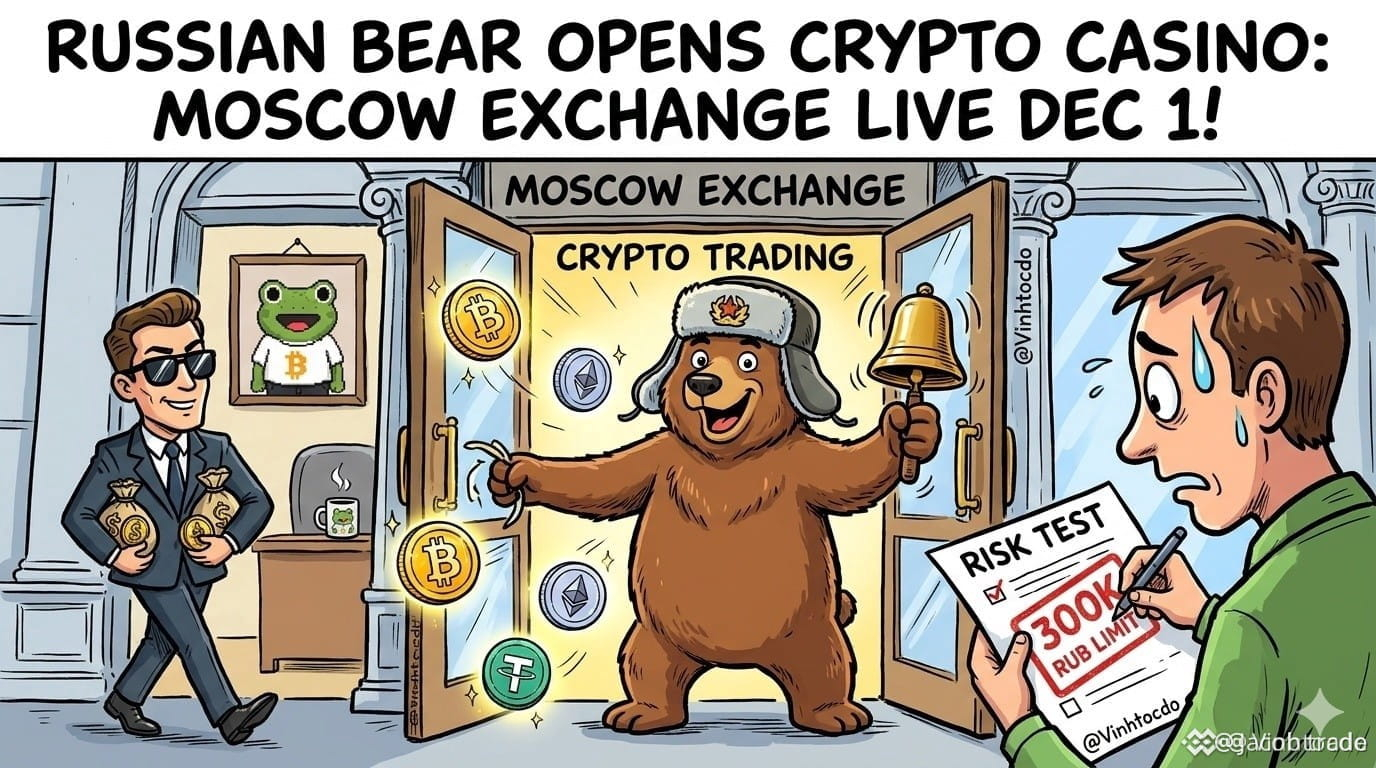
L’OURS RUSSE OUVRE OFFICIELLEMENT LE MARCHÉ CRYPTO : LA BOURSE DE MOSCOU FIXE LE 1/12 !
La Banque centrale de Russie vient de donner son feu vert aux plateformes d’échange pour surfer sur la vague des cryptomonnaies, avec pour commencer un projet pilote de la Bourse de Moscou le 1/12 prochain !
Concrètement, ça donne quoi ?
• La Bourse de Moscou démarre avec le trio BTC, ETH et USDT sur son infrastructure boursière (ouverture de 6 h 50 à 23 h 50).
• Les investisseurs particuliers doivent réussir un test sur les risques et ne peuvent acheter que pour 300 000 roubles maximum par an. Les professionnels, eux, n’ont aucune limite.
Que doivent faire les traders ?
• Surveiller l’arrivée de nouveaux flux de capitaux russes dans les principales cryptos.
• Gérer soigneusement leur capital et éviter de céder au FOMO à cause des nouvelles macroéconomiques.
Ceci ne constitue pas un conseil financier.
Cliquez sur le bouton de trading ci-dessous pour me soutenir :
$BULLA
{future}(BULLAUSDT)
$ETH
{future}(ETHUSDT)
$BTC
{future}(BTCUSDT)
#russiaallowsexchangestooffercryptotrading
L’OURS RUSSE OUVRE OFFICIELLEMENT LE MARCHÉ CRYPTO : LA BOURSE DE MOSCOU FIXE LE 1/12 !
La Banque centrale de Russie vient de donner son feu vert aux plateformes d’échange pour surfer sur la vague des cryptomonnaies, avec pour commencer un projet pilote de la Bourse de Moscou le 1/12 prochain !
Concrètement, ça donne quoi ?
• La Bourse de Moscou démarre avec le trio BTC, ETH et USDT sur son infrastructure boursière (ouverture de 6 h 50 à 23 h 50).
• Les investisseurs particuliers doivent réussir un test sur les risques et ne peuvent acheter que pour 300 000 roubles maximum par an. Les professionnels, eux, n’ont aucune limite.
Que doivent faire les traders ?
• Surveiller l’arrivée de nouveaux flux de capitaux russes dans les principales cryptos.
• Gérer soigneusement leur capital et éviter de céder au FOMO à cause des nouvelles macroéconomiques.
Ceci ne constitue pas un conseil financier.
Cliquez sur le bouton de trading ci-dessous pour me soutenir :
$BULLA
$ETH
$BTC
1
6.7k
Проверено
O URSO RUSSO ACABA DE ABRIR OFICIALMENTE AS PORTAS DO MERCADO CRIPTO COM A BOLSA DE MOSCOVO
જ⁀➴
O Banco Central da Rússia acaba de dar luz verde às plataformas de negociação para aproveitarem a onda das criptomoedas, começando com um projeto piloto da Bolsa de Moscovo já no próximo dia 1 de dezembro.
Na prática, o que isso significa? A Bolsa de Moscovo começa com o trio BTC, ETH e USDT na sua infraestrutura bolsista, aberta das 6h50 às 23h50. Os investidores particulares têm de passar num teste sobre os riscos e só podem comprar até 300.000 rublos por ano. Os profissionais, por sua vez, não têm qualquer limite.
O plano de ação para o trader é acompanhar a chegada de novos fluxos de capital russos às principais criptomoedas. A entrada de dinheiro institucional num mercado tão grande é um sinal de adoção massiva. No entanto, é fundamental gerir cuidadosamente o capital e evitar ceder ao FOMO por causa das notícias macroeconómicas. A paciência e a gestão de risco continuam a ser as suas melhores ferramentas.
Isto não constitui aconselhamento financeiro. Clique no botão de negociação abaixo para me apoiar.
$PIEVERSE
$BTC
$ELSA
#russiaallowsexchangestooffercryptotrading
Siga a página e ative as notificações. Não se atrase. Seja qual for a próxima atualização, vou publicar aqui primeiro.
{future}(PIEVERSEUSDT)
{spot}(BTCUSDT)
{future}(ELSAUSDT)
O URSO RUSSO ACABA DE ABRIR OFICIALMENTE AS PORTAS DO MERCADO CRIPTO COM A BOLSA DE MOSCOVO
જ⁀➴
O Banco Central da Rússia acaba de dar luz verde às plataformas de negociação para aproveitarem a onda das criptomoedas, começando com um projeto piloto da Bolsa de Moscovo já no próximo dia 1 de dezembro.
Na prática, o que isso significa? A Bolsa de Moscovo começa com o trio BTC, ETH e USDT na sua infraestrutura bolsista, aberta das 6h50 às 23h50. Os investidores particulares têm de passar num teste sobre os riscos e só podem comprar até 300.000 rublos por ano. Os profissionais, por sua vez, não têm qualquer limite.
O plano de ação para o trader é acompanhar a chegada de novos fluxos de capital russos às principais criptomoedas. A entrada de dinheiro institucional num mercado tão grande é um sinal de adoção massiva. No entanto, é fundamental gerir cuidadosamente o capital e evitar ceder ao FOMO por causa das notícias macroeconómicas. A paciência e a gestão de risco continuam a ser as suas melhores ferramentas.
Isto não constitui aconselhamento financeiro. Clique no botão de negociação abaixo para me apoiar.
$PIEVERSE
$BTC
$ELSA
#russiaallowsexchangestooffercryptotrading
Siga a página e ative as notificações. Não se atrase. Seja qual for a próxima atualização, vou publicar aqui primeiro.

3
5k

·
--
Падение
#russiaallowsexchangestooffercryptotrading
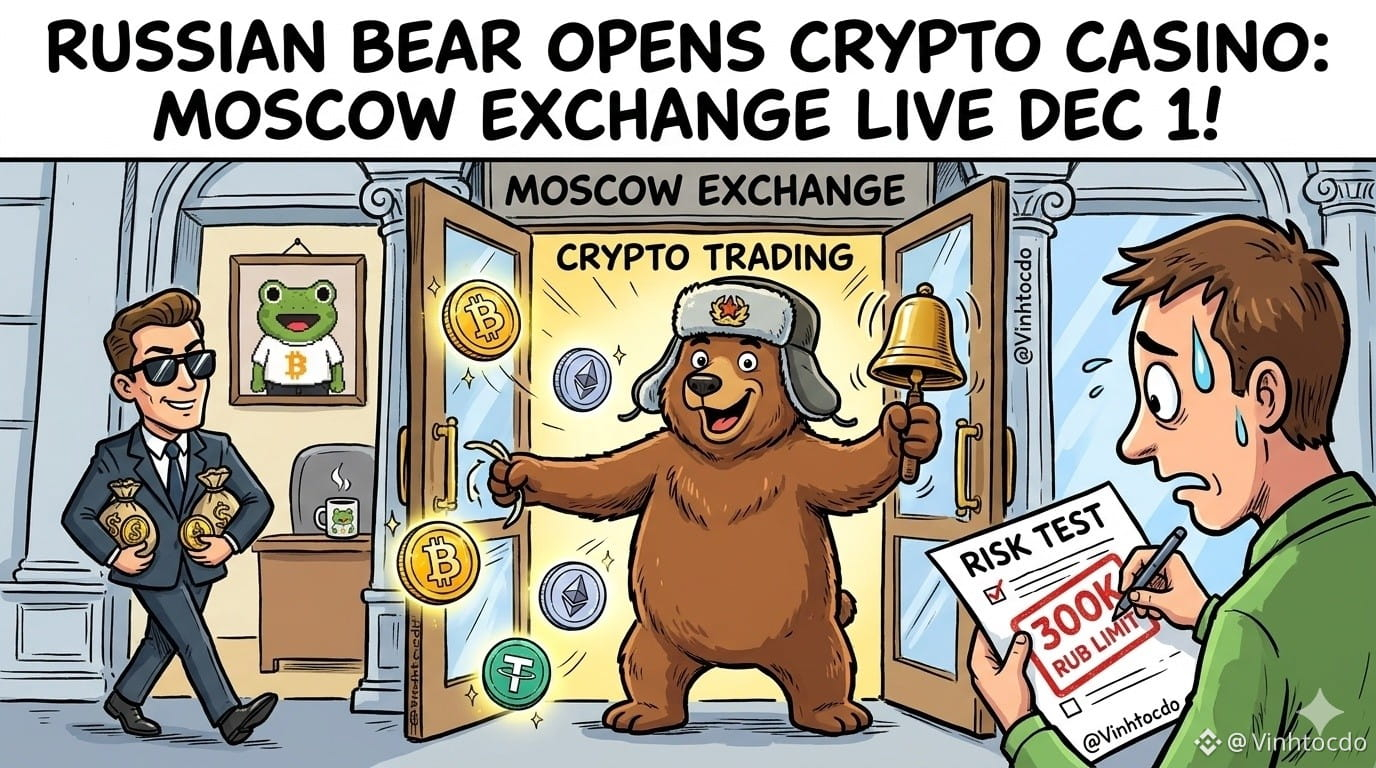
GẤU NGA CHÍNH THỨC MỞ SÒNG CRYPTO: SÀN MOSCOW LÊN KÈO 1/12!
Ngân hàng Trung ương Nga vừa bật đèn xanh cho các sàn giao dịch mở cửa đón sóng tiền mã hóa, mở đầu bằng màn thí điểm của Sở Giao dịch Moscow ngày 1/12 tới!
Cụ thể thế nào?
• Sàn Moscow mở bát với bộ ba BTC, ETH và USDT trên hạ tầng chứng khoán (mở cửa 6h50 - 23h50).
• Nhà đầu tư phổ thông phải thi đậu bài test rủi ro và chỉ được mua tối đa 300.000 rúp/năm. Dân chuyên nghiệp thì "xõa" không giới hạn.
Trader cần làm gì?
• Săn sóng dòng tiền mới từ xứ sở Bạch Dương đổ vào nhóm coin top.
• Quản lý vốn chặt, đừng FOMO quá đà theo tin tức vĩ mô.
Đây không phải lời khuyên tài chính.
Click giao dịch bên dưới để ủng hộ tôi: $BTC
{future}(BTCUSDT)
$ETH
{future}(ETHUSDT)
$EVAA
{future}(EVAAUSDT)
#俄罗斯允许交易所开展加密交易 #RussiaCrypto #MoscowExchange #CryptoAdoption #BitcoinNews #BinanceSquare #VINHTOCDO
#russiaallowsexchangestooffercryptotrading
GẤU NGA CHÍNH THỨC MỞ SÒNG CRYPTO: SÀN MOSCOW LÊN KÈO 1/12!
Ngân hàng Trung ương Nga vừa bật đèn xanh cho các sàn giao dịch mở cửa đón sóng tiền mã hóa, mở đầu bằng màn thí điểm của Sở Giao dịch Moscow ngày 1/12 tới!
Cụ thể thế nào?
• Sàn Moscow mở bát với bộ ba BTC, ETH và USDT trên hạ tầng chứng khoán (mở cửa 6h50 - 23h50).
• Nhà đầu tư phổ thông phải thi đậu bài test rủi ro và chỉ được mua tối đa 300.000 rúp/năm. Dân chuyên nghiệp thì "xõa" không giới hạn.
Trader cần làm gì?
• Săn sóng dòng tiền mới từ xứ sở Bạch Dương đổ vào nhóm coin top.
• Quản lý vốn chặt, đừng FOMO quá đà theo tin tức vĩ mô.
Đây không phải lời khuyên tài chính.
Click giao dịch bên dưới để ủng hộ tôi: $BTC
$ETH
$EVAA
#俄罗斯允许交易所开展加密交易 #RussiaCrypto #MoscowExchange #CryptoAdoption #BitcoinNews #BinanceSquare #VINHTOCDO
4
3.3k

·
--
Статья
俄罗斯要把 BTC、ETH、USDT 放进组织化交易:先看“能不能开”,再看“有没有真流动性”俄罗斯要把 BTC、ETH、USDT 放进组织化交易:先看“能不能开”,再看“有没有真流动性”
Binance Square趋势榜今天把 `#RussiaAllowsExchangesToOfferCryptoTrading` 推到第5位,页面可见约52人讨论;话题页约503次浏览、45人讨论并标记 Hot。热度背后的新事实不是“俄罗斯全面拥抱加密货币”,而是交易规则、投资者准入和具体市场启动日期开始被拆开落地。
俄罗斯央行11月20日发布的《Bank of Russia issues ordinance on cryptocurrency trading》称,交易所取得监管机构对交易规则的同意后,可自11月22日起开始加密货币交易。俄罗斯国家清算中心的“数字货币市场”页面则列出更具体的计划:12月1日启动 Bitcoin、Ethereum 和以太坊网络 USDT 的交易,并列出卢布及USDX计价的相关交易对。
这对市场的真正含义,我认为是“合规入口增加”,而不是“新增资金已经买入”。面向非合格投资者的名单目前只有 BTC、ETH 和 USDT;俄罗斯央行11月6日的说明还写明,单一中介每年购买上限为30万卢布,交易前要通过测试。换句话说,资产名单变得清晰,不代表普通投资者可以无条件、无额度地交易。
如果读者要观察主角资产,可分别看 [BTC/USDT现货](https://www.binance.com/en/trade/BTC_USDT?type=spot) 和 [BTC/USDT永续](https://www.binance.com/en/futures/BTCUSDT)。北京时间12:55左右,币安现货BTC约61,349.99美元,24小时上涨3.548%,报价成交额约12.768亿美元;BTCUSDT永续约61,323.90美元,资金费率为每周期+0.004015%,OI约91,394 BTC。现货和永续都在反弹,但这些数据本身不能证明俄罗斯市场已经贡献买盘。
关联资产方面,币安现货ETH约1,730.25美元,24小时上涨4.069%,报价成交额约4.275亿美元;ETH永续标记价约1,728.86美元,资金费率为每周期-0.002356%,OI约230.49万枚。对应入口为 [ETH/USDT现货](https://www.binance.com/en/trade/ETH_USDT?type=spot) 与 [ETH/USDT永续](https://www.binance.com/en/futures/ETHUSDT)。ETH永续资金费率为负,只能说明该时点合约定价结构,不能直接解释成看空或看多信号。
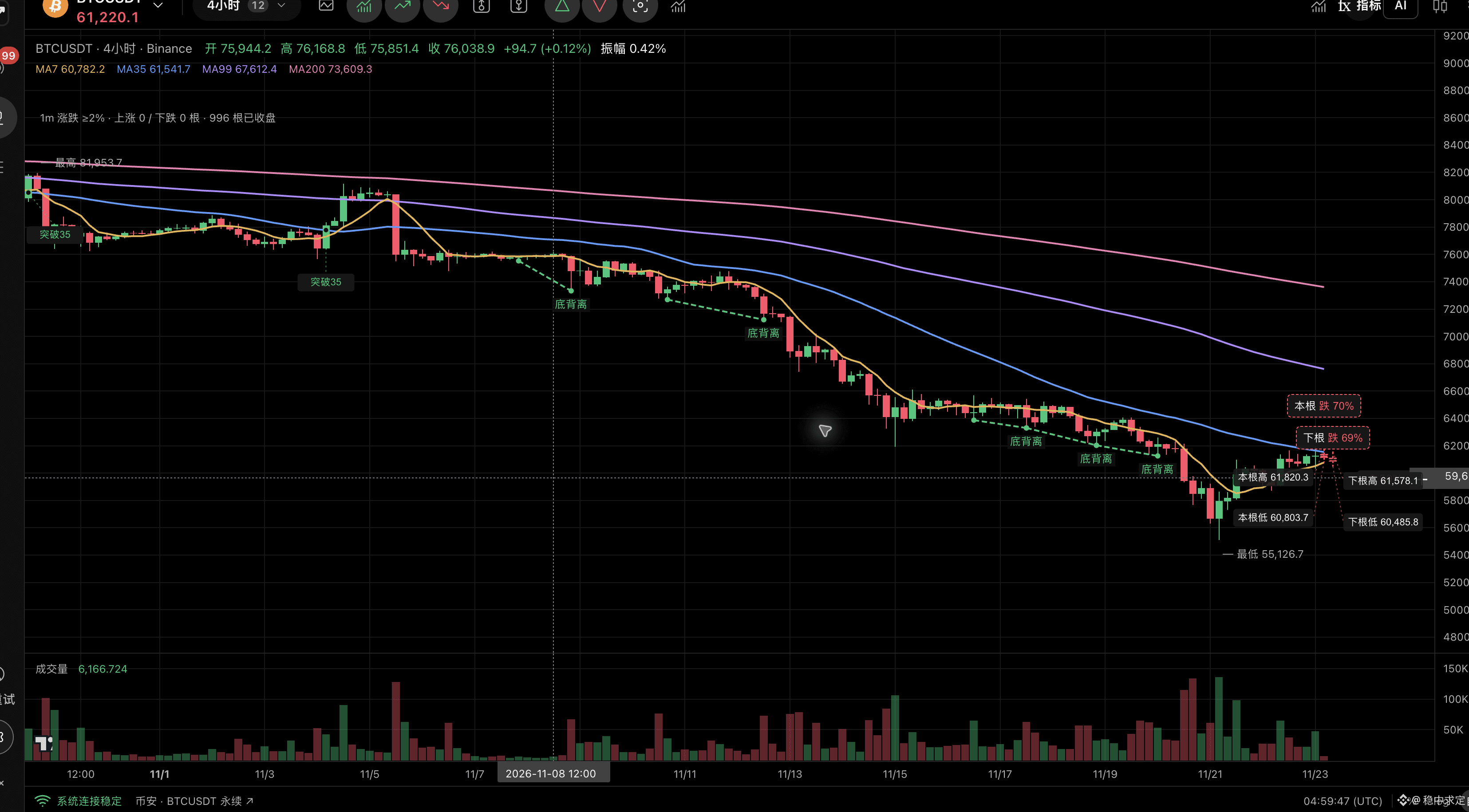
BTC最近完整收盘的北京时间08:00—12:00四小时K线,开61271.09、高61959.93、低60386.00、收61285.93,报价成交额约2.277亿美元;12:00—16:00这根线在观察时尚未收盘。走势上,价格从日内低点反弹后仍处于较大波动区间,封面图只用于展示这段4小时结构,不把图上的盘中价格当成收盘事实。
我的判断是:俄罗斯这一步值得关注,但验证顺序应当是“监管同意交易规则 → 12月1日市场是否按计划启动 → 实际可用的中介和做市深度 → BTC、ETH、USDT的成交是否持续”。如果只有公告、没有连续成交和可验证的参与者,市场更可能先交易预期;如果上线后深度、交易时段和投资者准入都稳定,才有资格讨论它是否扩大了区域流动性。
什么会推翻这个判断?第一,监管机构没有批准交易规则或启动日期再次推迟;第二,市场虽上线但成交稀薄,无法形成持续价格发现;第三,BTC和ETH的上涨主要由全球风险偏好、ETF资金或其他宏观变量推动,和俄罗斯市场没有可识别的时间关系。在这些条件被确认前,不把“允许交易”写成“资金已经流入”。
来源:俄罗斯央行《Bank of Russia issues ordinance on cryptocurrency trading》(2026年11月20日);俄罗斯央行《Cryptocurrencies for non-qualified investors: Bank of Russia ordinance》(2026年11月6日);俄罗斯国家清算中心《数字货币市场》(页面显示计划于2026年12月1日启动)。
风险提示:本文只讨论公开规则、市场结构和行情观察,不构成投资建议。现货与永续的价格、成交额、资金费率和OI口径不同;永续交易涉及杠杆和强平风险,俄罗斯市场的计划日期、监管同意、交易深度及投资者准入仍可能变化。
$BTC $ETH
俄罗斯要把 BTC、ETH、USDT 放进组织化交易:先看“能不能开”,再看“有没有真流动性”
俄罗斯要把 BTC、ETH、USDT 放进组织化交易:先看“能不能开”,再看“有没有真流动性”
Binance Square趋势榜今天把 `#RussiaAllowsExchangesToOfferCryptoTrading` 推到第5位,页面可见约52人讨论;话题页约503次浏览、45人讨论并标记 Hot。热度背后的新事实不是“俄罗斯全面拥抱加密货币”,而是交易规则、投资者准入和具体市场启动日期开始被拆开落地。
俄罗斯央行11月20日发布的《Bank of Russia issues ordinance on cryptocurrency trading》称,交易所取得监管机构对交易规则的同意后,可自11月22日起开始加密货币交易。俄罗斯国家清算中心的“数字货币市场”页面则列出更具体的计划:12月1日启动 Bitcoin、Ethereum 和以太坊网络 USDT 的交易,并列出卢布及USDX计价的相关交易对。
这对市场的真正含义,我认为是“合规入口增加”,而不是“新增资金已经买入”。面向非合格投资者的名单目前只有 BTC、ETH 和 USDT;俄罗斯央行11月6日的说明还写明,单一中介每年购买上限为30万卢布,交易前要通过测试。换句话说,资产名单变得清晰,不代表普通投资者可以无条件、无额度地交易。
如果读者要观察主角资产,可分别看 [BTC/USDT现货](https://www.binance.com/en/trade/BTC_USDT?type=spot) 和 [BTC/USDT永续](https://www.binance.com/en/futures/BTCUSDT)。北京时间12:55左右,币安现货BTC约61,349.99美元,24小时上涨3.548%,报价成交额约12.768亿美元;BTCUSDT永续约61,323.90美元,资金费率为每周期+0.004015%,OI约91,394 BTC。现货和永续都在反弹,但这些数据本身不能证明俄罗斯市场已经贡献买盘。
关联资产方面,币安现货ETH约1,730.25美元,24小时上涨4.069%,报价成交额约4.275亿美元;ETH永续标记价约1,728.86美元,资金费率为每周期-0.002356%,OI约230.49万枚。对应入口为 [ETH/USDT现货](https://www.binance.com/en/trade/ETH_USDT?type=spot) 与 [ETH/USDT永续](https://www.binance.com/en/futures/ETHUSDT)。ETH永续资金费率为负,只能说明该时点合约定价结构,不能直接解释成看空或看多信号。
BTC最近完整收盘的北京时间08:00—12:00四小时K线,开61271.09、高61959.93、低60386.00、收61285.93,报价成交额约2.277亿美元;12:00—16:00这根线在观察时尚未收盘。走势上,价格从日内低点反弹后仍处于较大波动区间,封面图只用于展示这段4小时结构,不把图上的盘中价格当成收盘事实。
我的判断是:俄罗斯这一步值得关注,但验证顺序应当是“监管同意交易规则 → 12月1日市场是否按计划启动 → 实际可用的中介和做市深度 → BTC、ETH、USDT的成交是否持续”。如果只有公告、没有连续成交和可验证的参与者,市场更可能先交易预期;如果上线后深度、交易时段和投资者准入都稳定,才有资格讨论它是否扩大了区域流动性。
什么会推翻这个判断?第一,监管机构没有批准交易规则或启动日期再次推迟;第二,市场虽上线但成交稀薄,无法形成持续价格发现;第三,BTC和ETH的上涨主要由全球风险偏好、ETF资金或其他宏观变量推动,和俄罗斯市场没有可识别的时间关系。在这些条件被确认前,不把“允许交易”写成“资金已经流入”。
来源:俄罗斯央行《Bank of Russia issues ordinance on cryptocurrency trading》(2026年11月20日);俄罗斯央行《Cryptocurrencies for non-qualified investors: Bank of Russia ordinance》(2026年11月6日);俄罗斯国家清算中心《数字货币市场》(页面显示计划于2026年12月1日启动)。
风险提示:本文只讨论公开规则、市场结构和行情观察,不构成投资建议。现货与永续的价格、成交额、资金费率和OI口径不同;永续交易涉及杠杆和强平风险,俄罗斯市场的计划日期、监管同意、交易深度及投资者准入仍可能变化。
$BTC $ETH
235

·
--
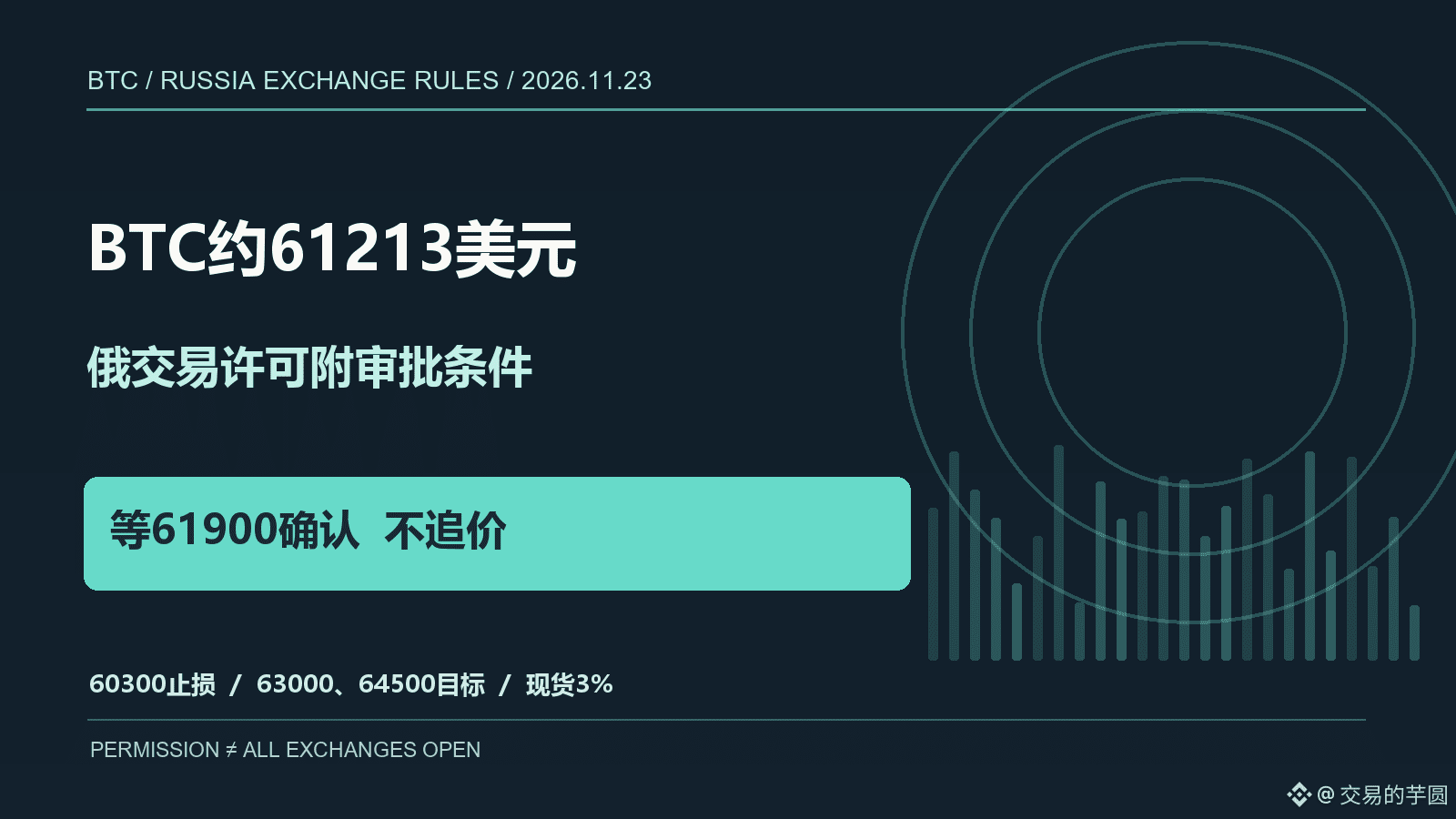
俄交易所获准申请加密交易|11月22日是资格起点非全面开市|BTC反弹我仍等确认
我的态度是偏多但不追价。币安广场新上升话题写的是“俄罗斯允许交易所提供加密交易”,我先回到俄罗斯央行原文核对边界。央行11月11日公告说,交易所自11月22日起可以启动数字货币交易,但前提是先取得监管方对交易规则的同意;交易所还要登记经纪商、管理人和中央对手方等参与者,保存订单与成交记录、监测交易并报告结果。另一份俄罗斯央行11月6日公告明确,面向非合格投资者的名单包括BTC、ETH和USDT,交易需经中介,单一中介年度购买上限为30万卢布,并须完成测试和风险告知。这两份官方文件互相补足了“谁能交易、在什么条件下交易”。
重点在于“允许有条件启动”,并非昨天所有俄罗斯交易所都已完成审批,更不是零售资金无限制流入BTC。若合规交易场所逐步增加,BTC可能获得更清楚的法币入口与价格发现;但实际影响取决于获批场所、参与者数量、资金流和当地限制的执行。只凭监管许可无法推出今天全球现货净买入多少,更不能把每根上涨K线都归因于俄罗斯消息。我会跟踪央行后续批准信息和交易所自身上线公告,传闻中的具体开市名单在正式披露前不当事实写。
市场已经如何反应?我核对Kraken BTC/USD最近成交约61213美元,24小时区间为58649.8至61886.1,反弹后仍在上沿下方。广场上的鲸鱼买入说法与价格回升同时出现,但链上提币标签、监管许可和现货成交是三种不同证据,不能混为一谈。61890至61900美元是我观察的突破确认区;若回到60300下方,说明本次短线偏多假设失效。若只是消息带来瞬时冲高、随后失守,纪律上更适合等待。
如果是我自己交易:目前不参与,方向仅考虑现货试多,计划仓位为账户资金的3%,不使用杠杆。只有价格站上61900美元后回踩仍守住61600,且未出现央行否定或交易所上线规则变化,我才考虑分批入场;第一目标63000,第二目标64500美元。到63000先减半,剩余仓位上移保护位;初始止损60300美元,触及就全部平仓。若价格直接跌破60300,取消计划;未触发前不把计划写成交易结果。
#RussiaAllowsExchangesToOfferCryptoTrading #BTC
以上仅为个人市场观察,不构成投资建议。
34

·
--
#russiaallowsexchangestooffercryptotrading
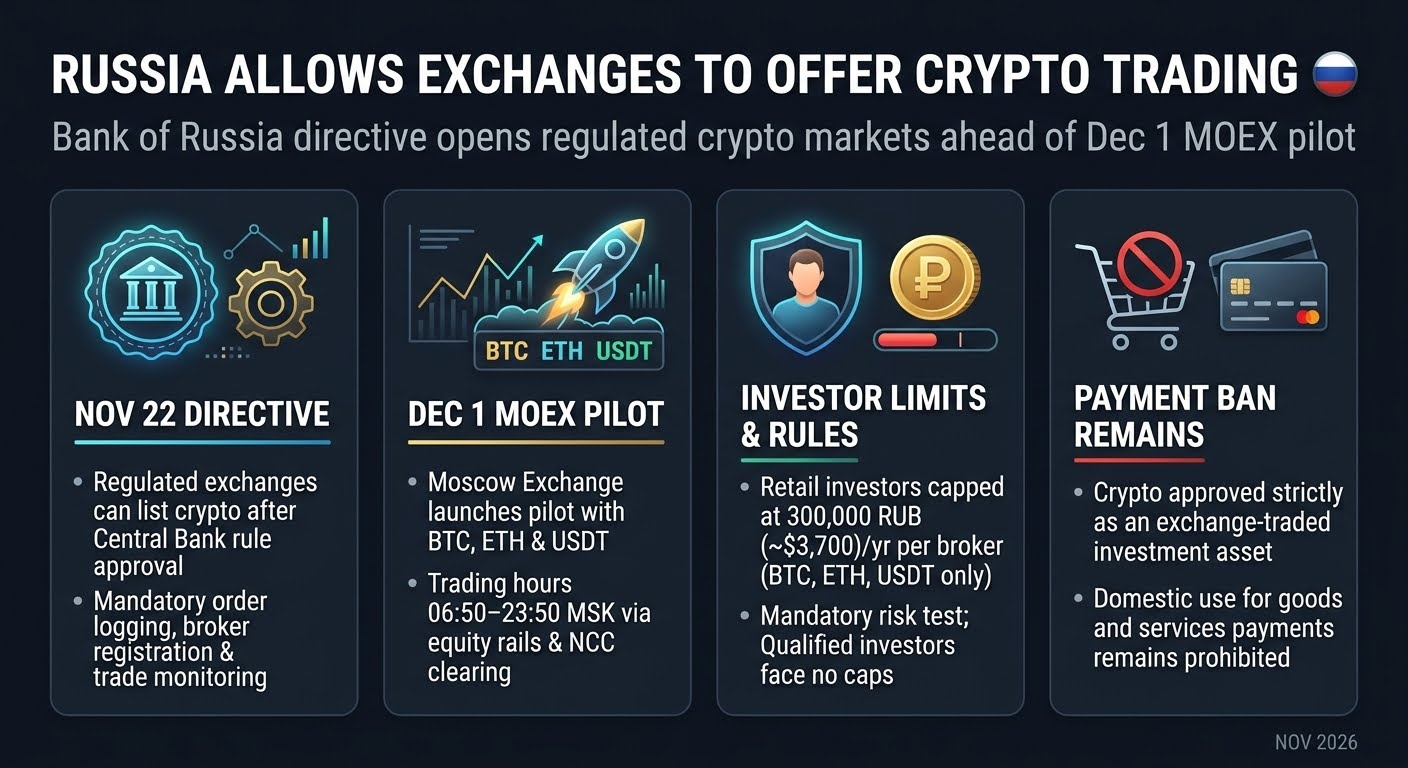
Rusya Merkez Bankası'nın 22 Kasım 2026'da yürürlüğe giren yeni direktifiyle ülkedeki düzenlenmiş borsaların kripto para alım-satımı sunmasına izin verilirken, Moskova Borsası 1 Aralık'ta pilot işlemlere başlamayı hedefliyor. 🇷🇺🪙
🏛️ Borsa Kuralları: Merkez Bankası'ndan onay alan borsalar, tüm emirleri kayıt altına almak ve aracı kurumları izlemek şartıyla kripto listelemesi yapabilecek.🚀 MOEX 1 Aralık Pilotu: Moskova Borsası, 1 Aralık 2026'da hisse senedi altyapısı üzerinden BTC, ETH ve USDT ile pilot işlemlere başlamayı planlıyor.💰 300 Bin Ruble Limiti: Bireysel yatırımcılar aracı kurum başına yıllık en fazla 300.000 ruble (~3.700 dolar) tutarında yalnızca BTC, ETH ve USDT alabilecek.📝 Test Zorunluluğu ve Ödeme Yasağı: Tüm yatırımcılar için risk testi zorunlu tutulurken (nitelikli yatırımcılarda tutar sınırı yok), kriptonun ülke içi mal ve hizmet ödemelerinde kullanılması yasak kalmaya devam ediyor.
$ELSA $GALA $NOT
{future}(NOTUSDT)
{future}(GALAUSDT)
{future}(ELSAUSDT)
#russiaallowsexchangestooffercryptotrading
Rusya Merkez Bankası'nın 22 Kasım 2026'da yürürlüğe giren yeni direktifiyle ülkedeki düzenlenmiş borsaların kripto para alım-satımı sunmasına izin verilirken, Moskova Borsası 1 Aralık'ta pilot işlemlere başlamayı hedefliyor. 🇷🇺🪙
🏛️ Borsa Kuralları: Merkez Bankası'ndan onay alan borsalar, tüm emirleri kayıt altına almak ve aracı kurumları izlemek şartıyla kripto listelemesi yapabilecek.🚀 MOEX 1 Aralık Pilotu: Moskova Borsası, 1 Aralık 2026'da hisse senedi altyapısı üzerinden BTC, ETH ve USDT ile pilot işlemlere başlamayı planlıyor.💰 300 Bin Ruble Limiti: Bireysel yatırımcılar aracı kurum başına yıllık en fazla 300.000 ruble (~3.700 dolar) tutarında yalnızca BTC, ETH ve USDT alabilecek.📝 Test Zorunluluğu ve Ödeme Yasağı: Tüm yatırımcılar için risk testi zorunlu tutulurken (nitelikli yatırımcılarda tutar sınırı yok), kriptonun ülke içi mal ve hizmet ödemelerinde kullanılması yasak kalmaya devam ediyor.
$ELSA $GALA $NOT
405
💥 COULD RUSSIA BECOME A BIGGER PLAYER IN DIGITAL ASSETS?
Opening the door to exchange-based crypto trading could be significant.
But market growth depends on clear rules and genuine demand.
Investors will be watching how the framework develops.
Is this the beginning of a broader crypto expansion?
$BTC $ETH $BNB
#russiaallowsexchangestooffercryptotrading
Opening the door to exchange-based crypto trading could be significant.
But market growth depends on clear rules and genuine demand.
Investors will be watching how the framework develops.
Is this the beginning of a broader crypto expansion?
$BTC $ETH $BNB
#russiaallowsexchangestooffercryptotrading
18

Now crypto is officially recognized in Russia? 😱😱#RussiaAllowsExchangesToOfferCryptoTrading
Now crypto is officially recognized in Russia? 😱😱#RussiaAllowsExchangesToOfferCryptoTrading
1
73

·
--
#RussiaAllowsExchangesToOfferCryptoTrading
🚨 BREAKING: Russia Greenlights Crypto Trading on Exchanges 🚨
Russia now officially allows exchanges to offer crypto trading.
THE RUSSIAN BEAR IS BULLISH ON CRYPTO 🐻₿
#RussiaAllowsExchangesToOfferCryptoTrading #BTC #CryptoNews
#RussiaAllowsExchangesToOfferCryptoTrading
🚨 BREAKING: Russia Greenlights Crypto Trading on Exchanges 🚨
Russia now officially allows exchanges to offer crypto trading.
THE RUSSIAN BEAR IS BULLISH ON CRYPTO 🐻₿
#RussiaAllowsExchangesToOfferCryptoTrading #BTC #CryptoNews
🚨 BREAKING: Russia Greenlights Crypto Trading on Exchanges 🚨
Russia now officially allows exchanges to offer crypto trading.
THE RUSSIAN BEAR IS BULLISH ON CRYPTO 🐻₿
#RussiaAllowsExchangesToOfferCryptoTrading #BTC #CryptoNews
98
Войдите, чтобы посмотреть больше материала
Присоединяйтесь к пользователям криптовалют по всему миру на Binance Square
⚡️ Получайте новейшую и полезную информацию о криптоактивах.
💬 Нам доверяет крупнейшая в мире криптобиржа.
👍 Получите достоверные аналитические данные от верифицированных создателей контента.
Эл. почта/номер телефона
В тренде
1
#WillMarketsStageAThanksgivingReliefRally?
Просмотров: 44,933
798 обсуждают
2
#WillOctCorePCEShiftFedHikeExpectations?
Просмотров: 6,818
150 обсуждают
3
#BessentSoftensStanceOnHuang’sNvidiaReturn
Просмотров: 29,768
518 обсуждают
4
#EvolveAtBinanceBlockchainWeek
Просмотров: 35,457
385 обсуждают
5
#MuskWarnsOfAICashCrunch
Просмотров: 24,837
392 обсуждают
6
#SouthKoreaPlansToReleaseDigitalAssetBasicActDraft
Просмотров: 1
5 обсуждают
7
#ChinaKoreaTaiwanPrepareStockRescuesAheadOfMonday
Просмотров: 1,737
31 обсуждают
8
#SouthKoreaToTightenOversightOfCryptoTransfersAbroad
Просмотров: 2,689
40 обсуждают
9
#TrumpToGive18KGoldWatchesToTopFourTRUMPHolders
Просмотров: 410
14 обсуждают
10
#RussiaAllowsExchangesToOfferCryptoTrading
Просмотров: 18,552
215 обсуждают