

#intwb
intwb
Просмотров: 10,603
291 обсуждают
Популярные
Новые
·
--
Рост
#INTWB 190000 Total Supply Token
Symbol: $INTWB Buy at 12.50$
Underlying company: Intel Corporation
Blockchain: BNB Smart Chain
#BullRunAhead #bullish #viralpost
#INTWB 190000 Total Supply Token
Symbol: $INTWB Buy at 12.50$
Underlying company: Intel Corporation
Blockchain: BNB Smart Chain
#BullRunAhead #bullish #viralpost
Symbol: $INTWB Buy at 12.50$
Underlying company: Intel Corporation
Blockchain: BNB Smart Chain
#BullRunAhead #bullish #viralpost
620


$INTWB: Understanding Liquidity When Volume Looks Strong
When an hourly chart shows price moving up and the quoted volume is above baseline, the first instinct is to assume a solid breakout. A more reliable lens is the concept of liquidity, which is the market's ability to absorb trades without causing large price swings.
Think of liquidity as a sponge: a dry sponge (low liquidity) tears apart when you squeeze it, while a wet sponge (high liquidity) spreads the water evenly. In crypto, the sponge is the pool of buy and sell orders at various price levels. If the sponge is wet, a sizable market order can be filled gradually across many limit orders, keeping the price steady. If it is dry, the same order may eat through the thin order book, pushing the price sharply and creating a misleading smooth rise.
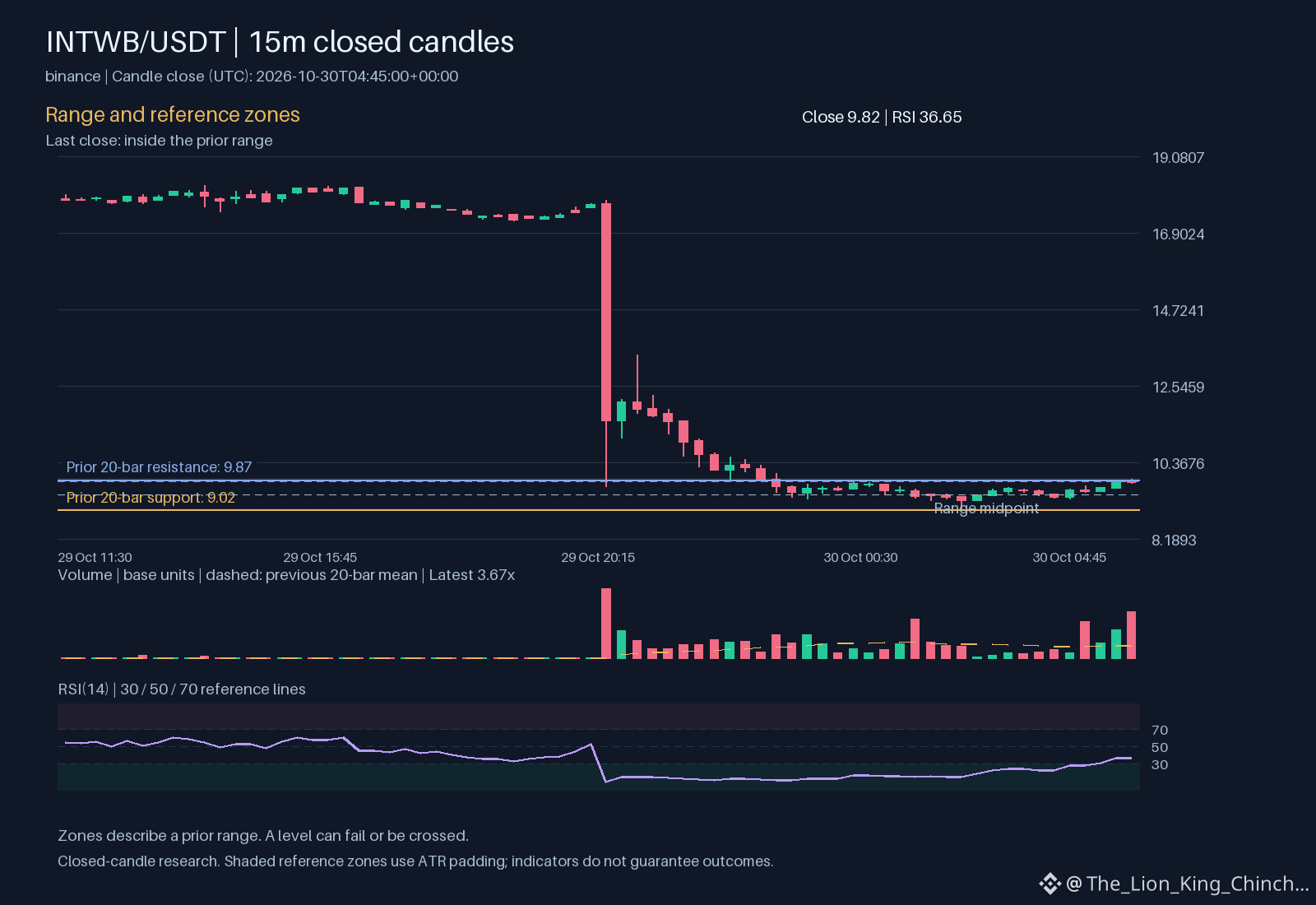
To evaluate the observation, compare the recent relative_volume 3.66622 with the depth indicated by the spread between support 9.02 and resistance 9.87. A narrow spread with high relative_volume suggests the sponge is wet, reinforcing the upward move. A wide spread despite high volume hints that most trades are occurring at the market price, draining liquidity and potentially reversing soon.
A practical step is to watch the order book depth before committing: note how many units sit just above and below the current price. If the depth is shallow, treat the smooth price climb as a thought experiment rather than a confirmed trend. This cautious approach helps avoid overconfidence in a surface‑level volume signal.
Probabilistic market research, not a recommendation or guaranteed return.
What would you check before trusting a smooth-looking price move?
#INTWB #CryptoEducation #CryptoLearning
$INTWB : Understanding Liquidity When Volume Looks Strong
When an hourly chart shows price moving up and the quoted volume is above baseline, the first instinct is to assume a solid breakout. A more reliable lens is the concept of liquidity, which is the market's ability to absorb trades without causing large price swings.
Think of liquidity as a sponge: a dry sponge (low liquidity) tears apart when you squeeze it, while a wet sponge (high liquidity) spreads the water evenly. In crypto, the sponge is the pool of buy and sell orders at various price levels. If the sponge is wet, a sizable market order can be filled gradually across many limit orders, keeping the price steady. If it is dry, the same order may eat through the thin order book, pushing the price sharply and creating a misleading smooth rise.
To evaluate the observation, compare the recent relative_volume 3.66622 with the depth indicated by the spread between support 9.02 and resistance 9.87. A narrow spread with high relative_volume suggests the sponge is wet, reinforcing the upward move. A wide spread despite high volume hints that most trades are occurring at the market price, draining liquidity and potentially reversing soon.
A practical step is to watch the order book depth before committing: note how many units sit just above and below the current price. If the depth is shallow, treat the smooth price climb as a thought experiment rather than a confirmed trend. This cautious approach helps avoid overconfidence in a surface‑level volume signal.
Probabilistic market research, not a recommendation or guaranteed return.
What would you check before trusting a smooth-looking price move?
#INTWB #CryptoEducation #CryptoLearning
53

·
--
$INTWB -45.62% | $MARSCOIN -15.11% | $FET -9.80%
#INTWB slides to $9.55, down -45.62% on $6.0 M of volume.
#MARSCOIN trades at $0.0528, off -15.11% with $13.1 M exchanged; the BNB‑Chain token pairs a crypto asset directly with a stock, a novelty that may attract niche interest.
#FET is at $0.1592, slipping -9.80% while handling $23.4 M in volume.
👀 The stark contrast in volume—FET’s $23.4 M versus INTWB’s $6.0 M—could hint at where liquidity is still robust despite the broader downtrend.
#Write2Earn #Binance
9

·
--
INTWB Crashes: Bearish Outlook
INTWB saw a brutal -47% drop, currently at 9.66 USDT. Selling pressure dominates as bulls failed to defend crucial support, leading to significant downward momentum. Bears are firmly in control.
🔥 Market Focus: $INTWB $MARSCOIN
Massive volume accompanied INTWB's collapse, indicating strong distribution. Watch for 8.50 USDT as the next psychological support; resistance now sits firmly at 11.00 USDT. MARSCOIN shows similar weak sentiment.
Given this intense volatility, what key levels are you watching? Share your INTWB and MARSCOIN chart setups below!
#INTWB #MARSCOIN #Crypto #DayTrading #WhaleAlert
1
546

·
--
INTWB 遭遇腰斩式暴跌!{spot}(INTWBUSDT)
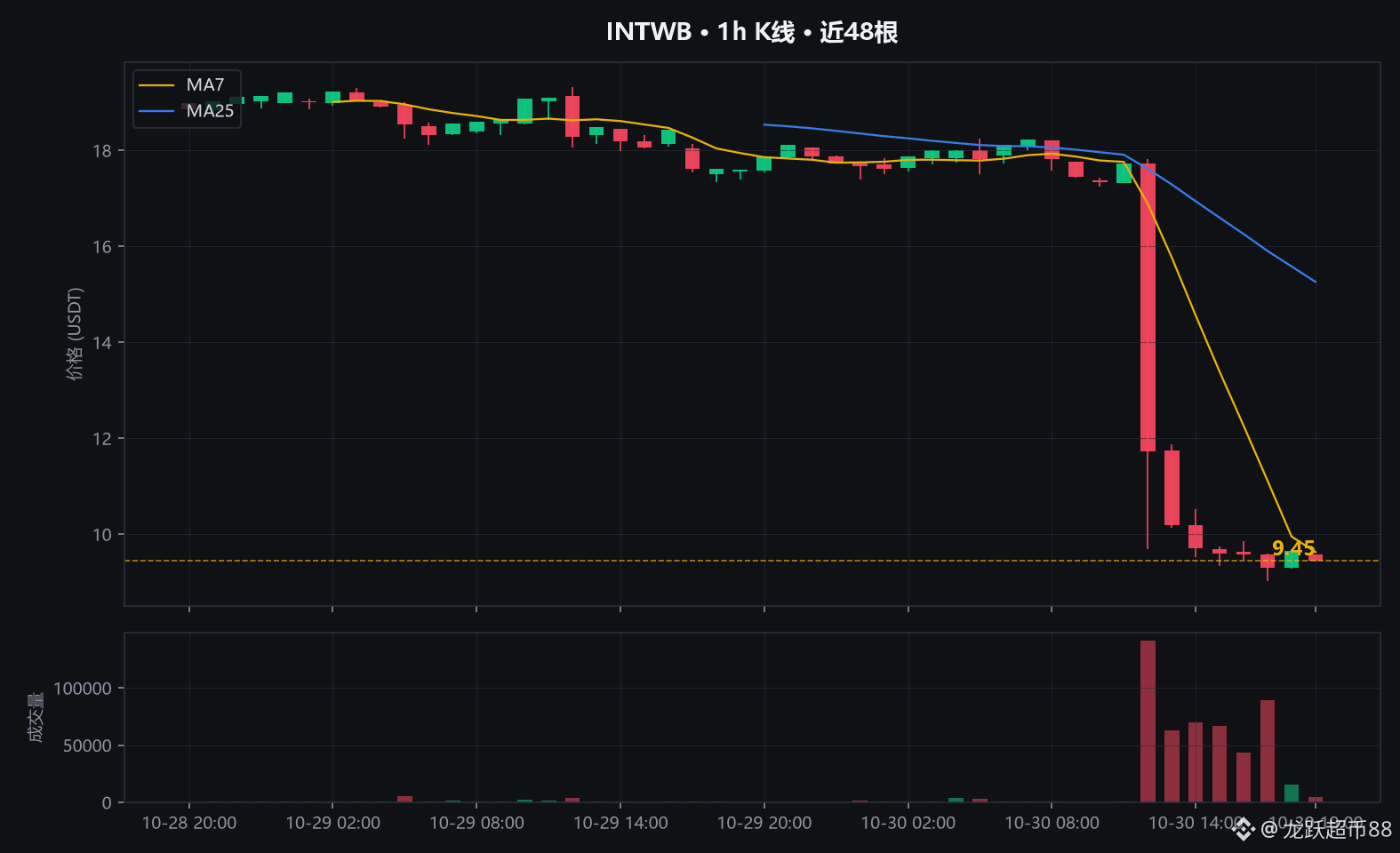
GraniteShares 2X Long INTC ETF 币安股票代币($INTWB )在经历了前期拉升至 19.32 USDT 高点后,遭遇了极罕见的单针断崖式暴跌!价格一举跌破所有均线支撑,最低探至 9.02 USDT 附近筑底,目前在 9.63 USDT 附近进行超跌震荡整理。
作为 2 倍杠杆型跟踪标的,此次暴跌风险已集中释放,后市有哪些关键变盘点?以下为您深度拆解!
📊 技术面核心数据解析
最新价格: 9.63 USDT(24小时大幅下跌 -47.09%)
24小时高/低: 最高 18.25 / 最低 9.02
成交量与资金: 24小时成交量达 584,214.15 INTWB(约 610.45万 USDT),买卖盘口分布相对均衡(买盘 46.91% vs 卖盘 53.09%)。
均线走势(MA - 4小时级别):
短期均线(MA7): 目前 MA7 急剧向下倾斜至 14.33,远高于当前价格,显示短线乖离率极高(超卖严重)。
中长期均线(MA25 / MA99): 上方 MA25(16.86)与 MA99(17.43)已形成高位死叉压制,中短期整体结构转为弱势。
💡 后市关键支撑与阻力位
下方关键支撑位:
第一支撑:9.00 - 9.02 USDT(本次断崖式下探的极值止跌点,短线多头的最后防线)。
第二支撑:8.50 USDT(心理整数防线)。
上方关键阻力位:
第一阻力:11.27 - 12.00 USDT(大阴线反弹的第一阶段修复阻力区)。
第二阻力:14.00 - 14.33 USDT(4小时 MA7 均线所在位置,超跌反弹的强阻力压制区)。
🧠 交易策略与思考
杠杆产品特性提示: $INTWB 属于 2 倍做多 INTC(英特尔) 的杠杆 ETF 代币,其波动性极高,且存在损耗机制,切勿盲目进行高倍合约重仓叠加。
短线交易者: 当前短线技术指标(RSI/乖离率)处于严重超卖状态,关注 9.02 支撑位的二次确认。若在该位置上方筑底成功并出现止跌信号,可考虑轻仓博弈超跌修复反弹;若放量跌破 9.00,则建议严格观望。
现货/中长线开发者: 鉴于杠杆 ETF 的损耗与剧烈波动特性,建议等待底层标的(英特尔股票及大盘情绪)企稳后再行布局,采取分批建仓或严格止损策略。
#INTWB #英特尔 #幣安廣場 #HotTrends #HOT
INTWB 遭遇腰斩式暴跌!
GraniteShares 2X Long INTC ETF 币安股票代币($INTWB )在经历了前期拉升至 19.32 USDT 高点后,遭遇了极罕见的单针断崖式暴跌!价格一举跌破所有均线支撑,最低探至 9.02 USDT 附近筑底,目前在 9.63 USDT 附近进行超跌震荡整理。
作为 2 倍杠杆型跟踪标的,此次暴跌风险已集中释放,后市有哪些关键变盘点?以下为您深度拆解!
📊 技术面核心数据解析
最新价格: 9.63 USDT(24小时大幅下跌 -47.09%)
24小时高/低: 最高 18.25 / 最低 9.02
成交量与资金: 24小时成交量达 584,214.15 INTWB(约 610.45万 USDT),买卖盘口分布相对均衡(买盘 46.91% vs 卖盘 53.09%)。
均线走势(MA - 4小时级别):
短期均线(MA7): 目前 MA7 急剧向下倾斜至 14.33,远高于当前价格,显示短线乖离率极高(超卖严重)。
中长期均线(MA25 / MA99): 上方 MA25(16.86)与 MA99(17.43)已形成高位死叉压制,中短期整体结构转为弱势。
💡 后市关键支撑与阻力位
下方关键支撑位:
第一支撑:9.00 - 9.02 USDT(本次断崖式下探的极值止跌点,短线多头的最后防线)。
第二支撑:8.50 USDT(心理整数防线)。
上方关键阻力位:
第一阻力:11.27 - 12.00 USDT(大阴线反弹的第一阶段修复阻力区)。
第二阻力:14.00 - 14.33 USDT(4小时 MA7 均线所在位置,超跌反弹的强阻力压制区)。
🧠 交易策略与思考
杠杆产品特性提示: $INTWB 属于 2 倍做多 INTC(英特尔) 的杠杆 ETF 代币,其波动性极高,且存在损耗机制,切勿盲目进行高倍合约重仓叠加。
短线交易者: 当前短线技术指标(RSI/乖离率)处于严重超卖状态,关注 9.02 支撑位的二次确认。若在该位置上方筑底成功并出现止跌信号,可考虑轻仓博弈超跌修复反弹;若放量跌破 9.00,则建议严格观望。
现货/中长线开发者: 鉴于杠杆 ETF 的损耗与剧烈波动特性,建议等待底层标的(英特尔股票及大盘情绪)企稳后再行布局,采取分批建仓或严格止损策略。
#INTWB #英特尔 #幣安廣場 #HotTrends #HOT
1
1
490


·
--
Рост
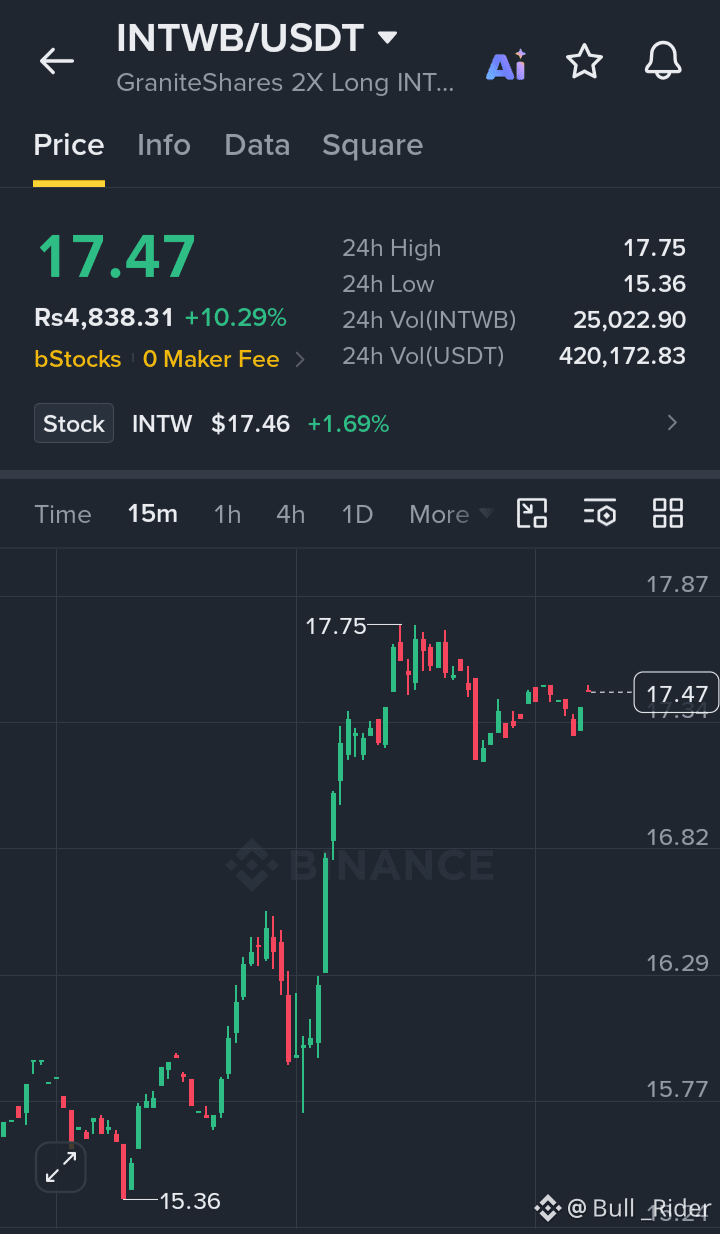
$INTWB is showing strong bullish momentum, pushing toward its 24-hour high of 17.75 as buyers maintain control. If the price breaks above resistance, further upside could follow. Watch the 16.82 support level for a potential continuation move.
Entry: 17.47
TP1: 17.75
TP2: 17.87
TP3: 18.20
SL: 16.82
Buy and Trade $INTWB
#INTWB
{spot}(INTWBUSDT)
$INTWB is showing strong bullish momentum, pushing toward its 24-hour high of 17.75 as buyers maintain control. If the price breaks above resistance, further upside could follow. Watch the 16.82 support level for a potential continuation move.
Entry: 17.47
TP1: 17.75
TP2: 17.87
TP3: 18.20
SL: 16.82
Buy and Trade $INTWB
#INTWB
Entry: 17.47
TP1: 17.75
TP2: 17.87
TP3: 18.20
SL: 16.82
Buy and Trade $INTWB
#INTWB
1
24

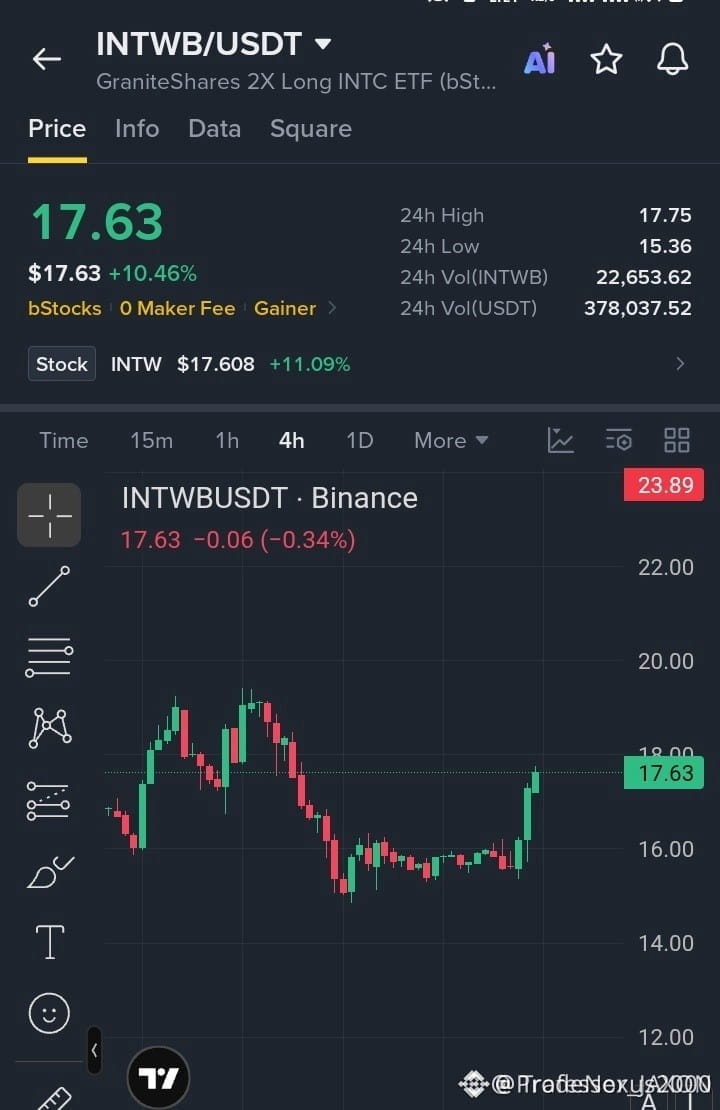
🚀 $INTWB REBOUND TARGETS $18 RESISTANCE ZONE 🦈
Entry: 17.40-17.65 ⚡
Target: 18.00/18.60/19.20 🚀
Stop Loss: 16.90 ⚠️
📊 After a tight consolidation around $15.50‑$16.00, smart money snapped up the demand block at $17.40, injecting fresh buying pressure. 🌊 The price now rides a clean bullish order block, and a break above $18.00 would unlock the next liquidity pool, pushing toward $19.20. ⚡ Momentum on the 4H shows expanding volume, confirming institutional accumulation.
💬 How are you positioning for the $18 barrier—stacking in the zone or waiting for a decisive breakout? 👇
⚠️ Not financial advice. Always manage your risk. 🛡️
🏷️ #INTWB #LongSetup #BullishRebound #Crypto
🔥 💎
10

·
--
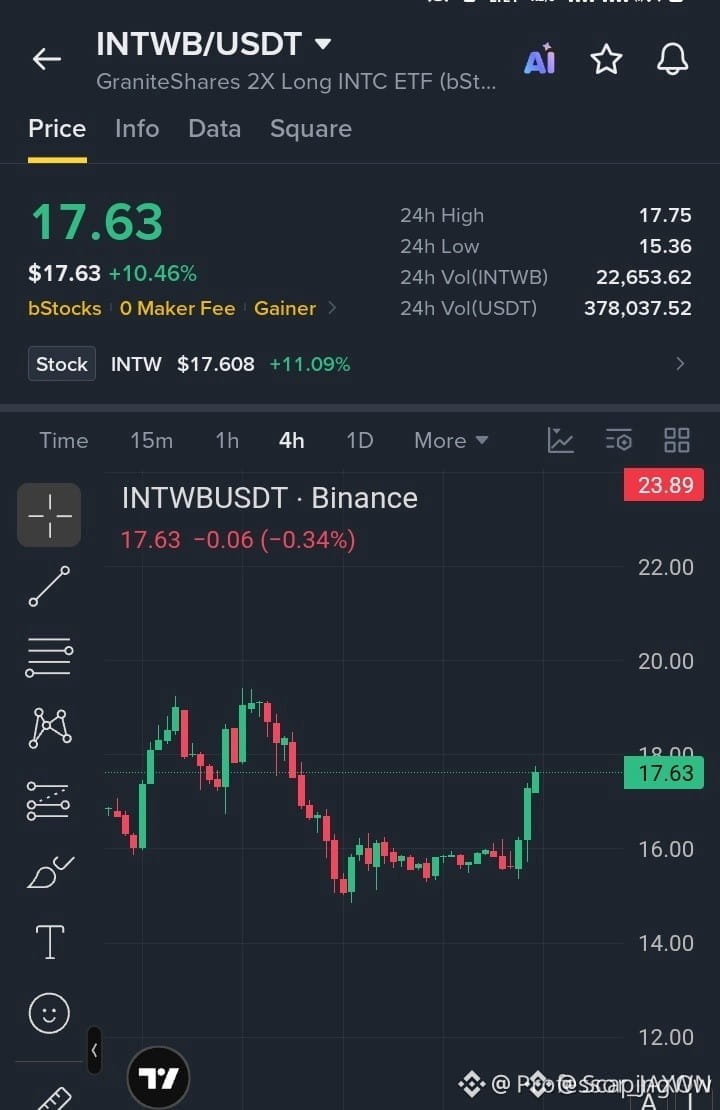
🚀 $INTWB SURGES TOWARD $18 RESISTANCE – BULLISH REBOUND ALERT! 🟢
Entry: 17.40-17.65 ⚡
Target: 18.00 🚀
Stop Loss: 16.90 ⚠️
📊 After a tight consolidation around $15.50‑$16.00, smart money is re‑igniting the order block at $17.50, pushing the ticker into a fresh upside thrust. 🦈 Volume spikes on the 4H chart signal aggressive buying, and a clean break above $18 could unlock the next resistance ladder. 📈 Keep an eye on the $16.90 floor – a slip there would hand the reins back to sellers.
💬 What’s your entry plan: grab the range now or wait for the $18 breakout? 👇
⚠️ Not financial advice. Always manage your risk. 🛡️
🏷️ #INTWB #LongSetup #BullishRebound #Crypto
🔥 💎
4

·
--
Рост
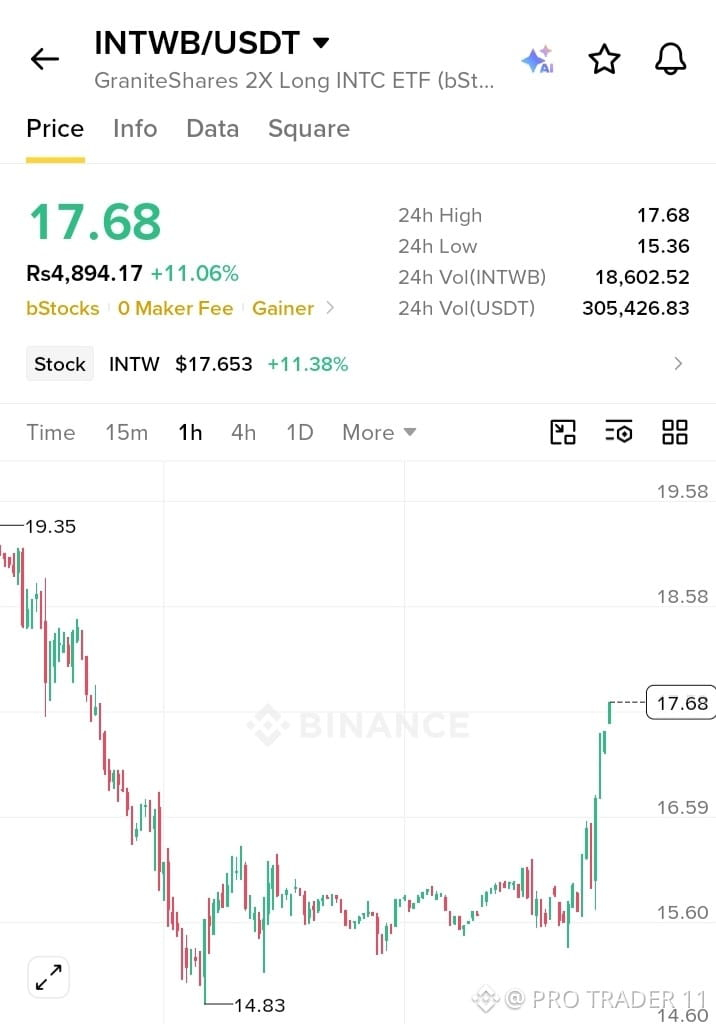
🚀 $INTWB BREAKOUT ALERT: $17.68 NEXT TARGET_
Long Entry: 16.59–17.68
SL: 15.60
TP1: 17.68
TP2: 18.58
TP3: 19.35
#INTWB #INTWBUSDT #GraniteShares #bStocks #BinanceGainer
{future}(INTWUSDT)
🚀 $INTWB BREAKOUT ALERT: $17.68 NEXT TARGET_
Long Entry: 16.59–17.68
SL: 15.60
TP1: 17.68
TP2: 18.58
TP3: 19.35
#INTWB #INTWBUSDT #GraniteShares #bStocks #BinanceGainer
Long Entry: 16.59–17.68
SL: 15.60
TP1: 17.68
TP2: 18.58
TP3: 19.35
#INTWB #INTWBUSDT #GraniteShares #bStocks #BinanceGainer
1
121

·
--
$INTWB
先把它的性质说清楚:这不是 每日2倍做多英特尔ETF-GraniteShares 股票本身,是 BTech 发的代币化凭证,1:1 托管底层股票。派息扣 30% 税,盘后做市商爱撤单,滑点会吃掉利润。
走势上 已经拉了不少,现在追没意思,等回踩再看,现在 24h +9.5%。
关键位:17.91 上方压力,16.52 下方支撑,破了别硬扛。
结论:小仓博弈可以,重仓赌它不划算,赔率不站在你这边。
(个人分析,不构成投资建议)
#INTWB
$INTWB
先把它的性质说清楚:这不是 每日2倍做多英特尔ETF-GraniteShares 股票本身,是 BTech 发的代币化凭证,1:1 托管底层股票。派息扣 30% 税,盘后做市商爱撤单,滑点会吃掉利润。
走势上 已经拉了不少,现在追没意思,等回踩再看,现在 24h +9.5%。
关键位:17.91 上方压力,16.52 下方支撑,破了别硬扛。
结论:小仓博弈可以,重仓赌它不划算,赔率不站在你这边。
(个人分析,不构成投资建议)
#INTWB
先把它的性质说清楚:这不是 每日2倍做多英特尔ETF-GraniteShares 股票本身,是 BTech 发的代币化凭证,1:1 托管底层股票。派息扣 30% 税,盘后做市商爱撤单,滑点会吃掉利润。
走势上 已经拉了不少,现在追没意思,等回踩再看,现在 24h +9.5%。
关键位:17.91 上方压力,16.52 下方支撑,破了别硬扛。
结论:小仓博弈可以,重仓赌它不划算,赔率不站在你这边。
(个人分析,不构成投资建议)
#INTWB
235

$INTWB BULLISH STRUCTURE CHARGES TOWARD $20 AS BUYERS SEIZE CONTROL! 💥⚡
Entry: 19.70 - 19.95 🟢
Target: 20.30 - 21.20 🚀
Stop Loss: 19.35 ⚠️
📌 $INTWB is holding an exceptionally clean higher-low sequence on the lower timeframes, systematically absorbing overhead seller supply. 📊 Momentum indicators are signaling pure strength as buyers aggressively defend the sub-$20 liquidity pocket for an impending push into clear air.
⚡ Order flow is leaning heavily net-long, setting up a sharp high-conviction breakout past immediate structural resistance. 💬 Are you filling your bids on this structural retest or waiting for the $20 trigger? 👇
⚠️ Not financial advice. Always manage your risk. 🛡️
🏷️ #INTWB #LongSetup #Breakout #Crypto
🔥 💎
8

·
--
$INTWB +14.77% | $SOXLB +13.13% | $WDCB +12.14%
#INTWB is trading at $18.42, up 14.77% on about $1.2 M of volume. The move is sharp for a mid‑cap, though the turnover is modest.
#SOXLB sits at $100.76, climbing 13.13% with a hefty $37.1 M of volume behind it. Strong hands are clearly in play.
#WDCB reached $352.45, gaining 12.14% on roughly $1.1 M of volume. The price rise feels robust despite lighter flow.
📈 The contrast between SOXLB’s deep liquidity and the slimmer volumes on INTWB and WDCB could shape how long each rally endures.
#Write2Earn #Binance
4

·
--
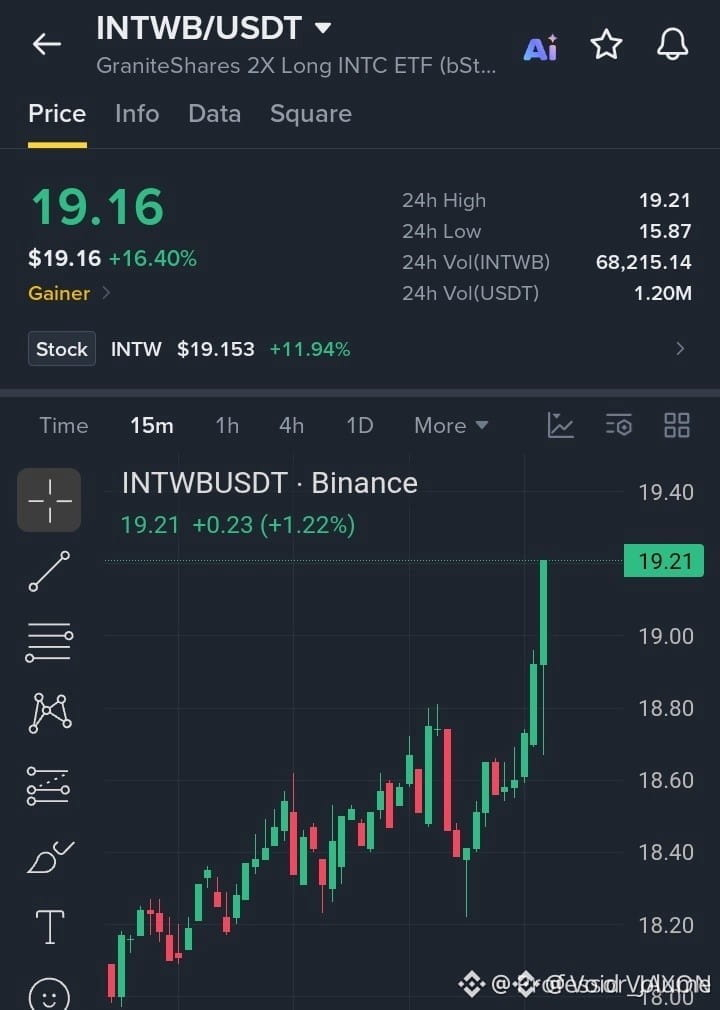
⚡ $INTWB CLEARS $19.00 RESISTANCE AS INSTITUTIONAL ORDER FLOW TARGETS $19.80 LIQUIDITY! 🎯
Entry: 18.90 - 19.10 ⚡
Target: 19.80 🎯
Stop Loss: 18.65 ⚠️
📌 Market structure on the 15-minute timeframe shifted aggressively with a decisive impulse above the key 19.00 pivot. 📊 Aggressive market orders absorbed local overhead supply, transforming previous resistance into a high-probability demand zone between 18.90 and 19.10.
💡 As long as structure holds above the invalidation level at 18.65, institutional continuation remains favored toward resting buy-side liquidity up to 19.80. 💬 Do you expect an immediate push toward the upper targets, or will we see a deeper retest of the demand zone first? 👇
⚠️ Not financial advice. Always manage your risk. 🛡️
🏷️ #INTWB #Breakout #OrderFlow #CryptoTrading #PriceAction
🎯 🦈
5
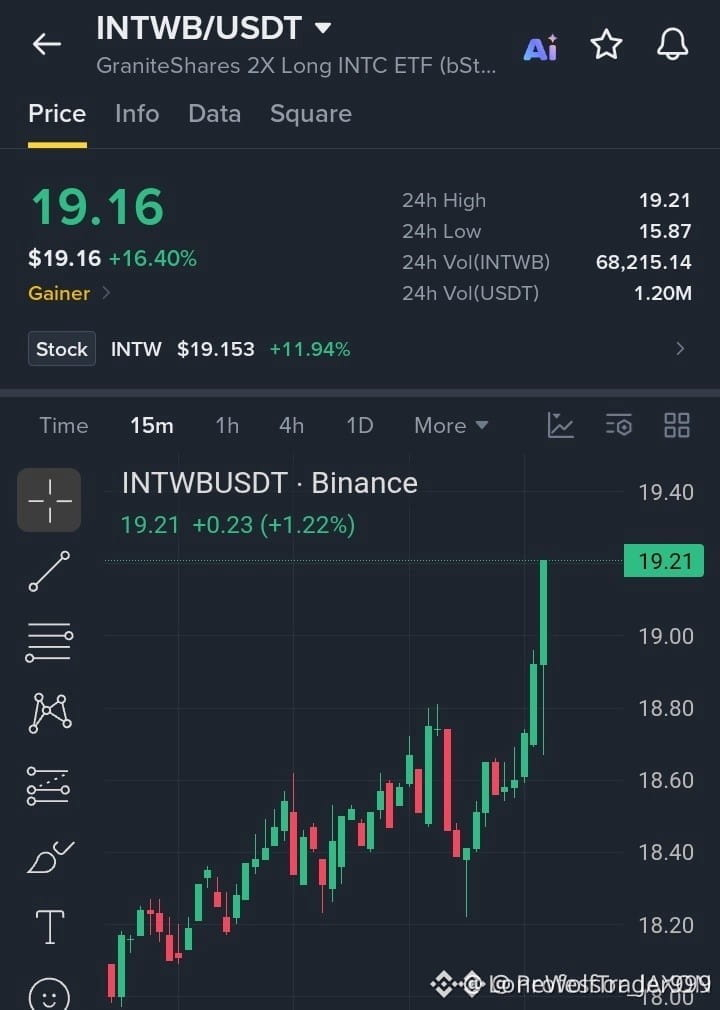
💥 $INTWB SHATTERS RESISTANCE ABOVE $19 AS BUYERS ACCELERATE TOWARD $19.80! ⚡
Entry: 18.90 - 19.10 ⚡
Target: 19.35 - 19.80 🚀
Stop Loss: 18.65 ⚠️
⚡ Aggressive market buyers just punched $INTWB cleanly through the $19.00 psychological barrier, flashing relentless momentum on the 15-minute chart. The tape shows heavy absorption, turning previous overhead supply into immediate structural demand.
📌 As long as the bid sustains above $18.90, the path of least resistance points directly toward the liquidity clusters at $19.35 and $19.80. Risk is precisely defined with invalidation locked below $18.65, leaving zero room for second-guessing.
💬 Are you riding the momentum flip here, or waiting to see if $18.90 holds on the retest?
⚠️ Not financial advice. Always manage your risk. 🛡️
🏷️ #INTWB #Breakout #CryptoTrading #PriceAction #Bullish
⚡ 🎯
11

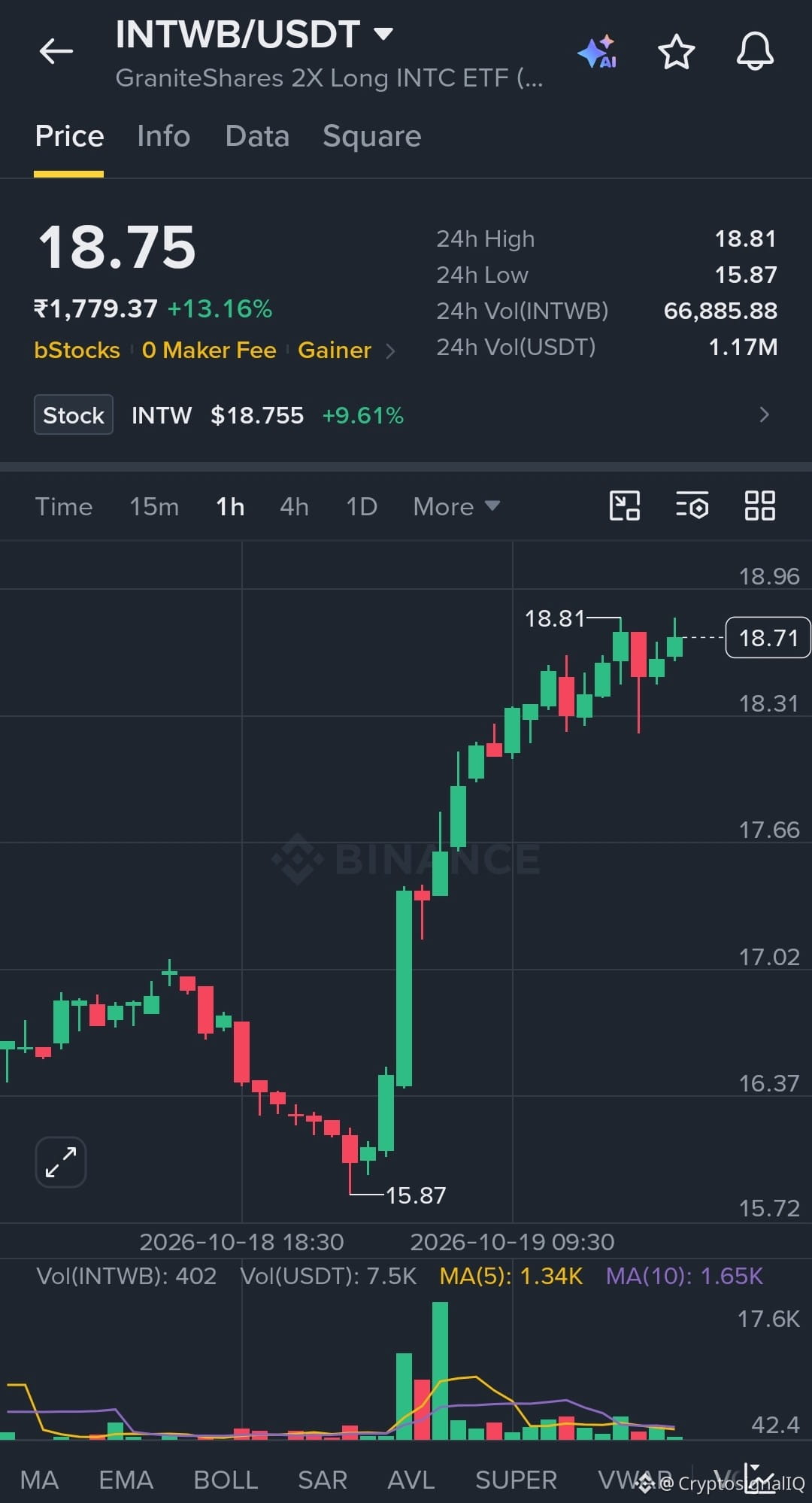
$INTWB — Foundry momentum is catching fire as institutional players aggressively reload leverage, driving a sharp +13.16% surge straight off the 15.87 base to test 18.75!
* Entry: 17.50–18.40
* TP1: 19.80
* TP2: 21.20
* TP3: 23.00
* SL: 15.20
Backed by surging capital inflows into single-stock semiconductor exposure and strong volume expansion following Intel’s foundry scaling catalysts, smart money is actively pressing the momentum higher.
Trade #INTWB here
{spot}(INTWBUSDT)
$AMP
{spot}(AMPUSDT)
$OSMO
{spot}(OSMOUSDT)
$INTWB — Foundry momentum is catching fire as institutional players aggressively reload leverage, driving a sharp +13.16% surge straight off the 15.87 base to test 18.75!
* Entry: 17.50–18.40
* TP1: 19.80
* TP2: 21.20
* TP3: 23.00
* SL: 15.20
Backed by surging capital inflows into single-stock semiconductor exposure and strong volume expansion following Intel’s foundry scaling catalysts, smart money is actively pressing the momentum higher.
Trade #INTWB here
$AMP
$OSMO
1
69
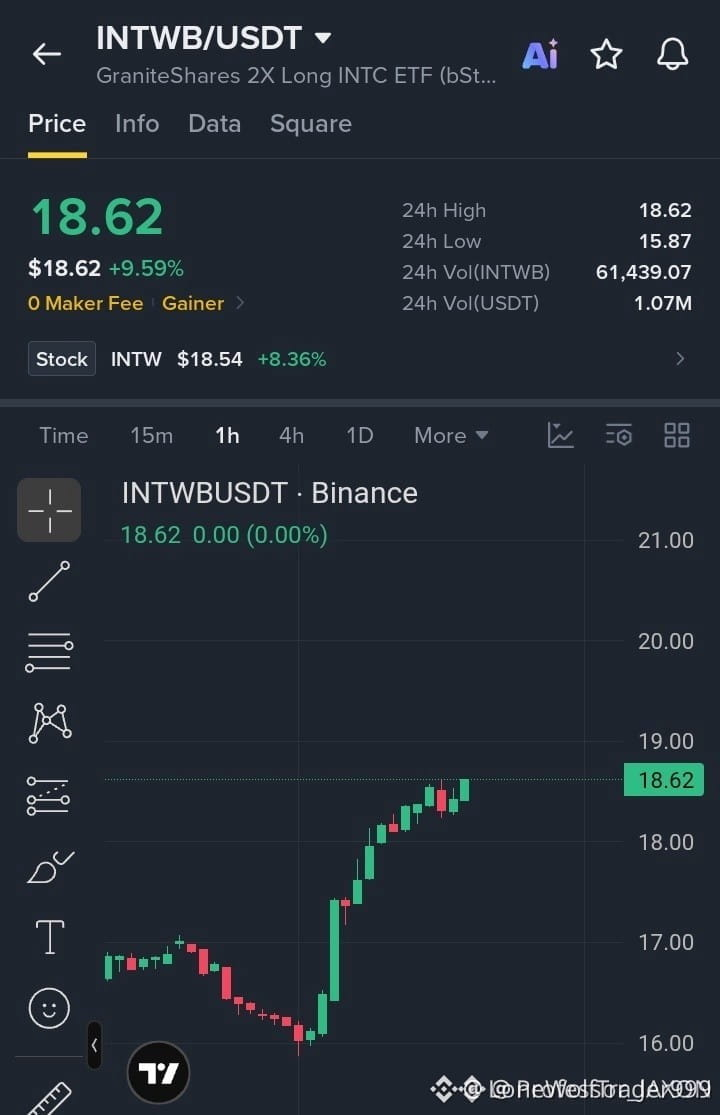
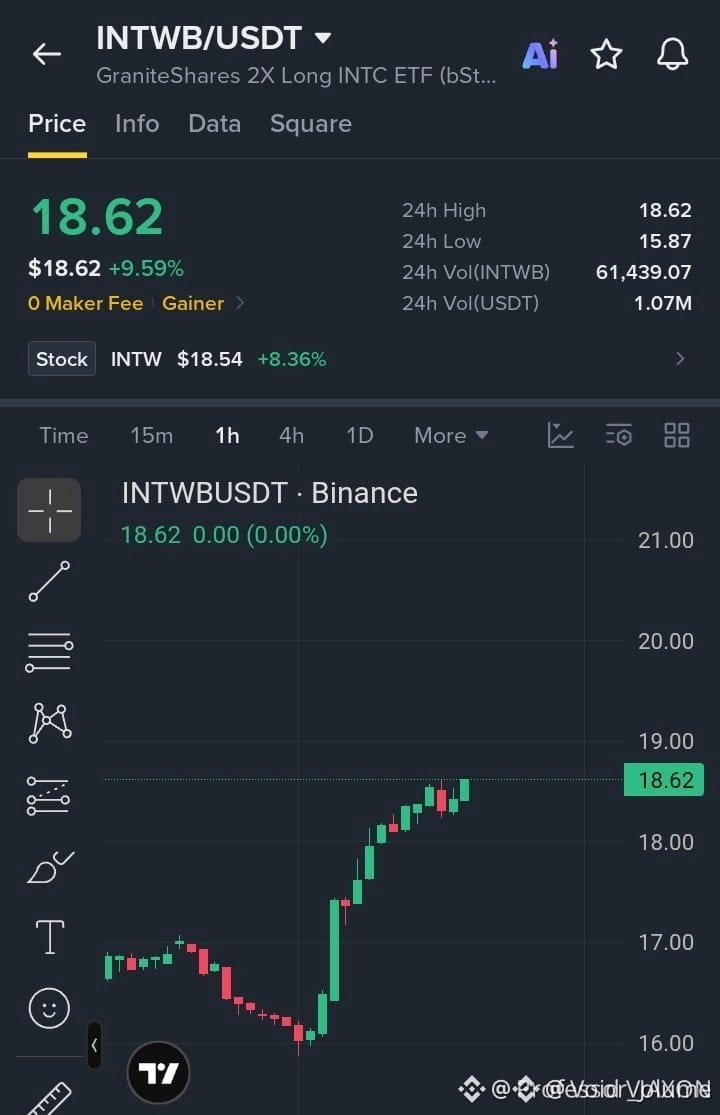
⚡ $INTWB ACCELERATES OFF KEY SUPPORT AS BUYERS EYE AN AGGRESSIVE $19.00 BREAKOUT! 🐂
Entry: 18.30 - 18.60 ⚡
Target: 18.90 - 19.80 🚀
Stop Loss: 17.95 ⚠️
📌 Buyers mounted an aggressive defense at the 16.00 base, engineering a swift rebound that is pressing right into 18.62 with commanding bid support. 📊 A clean flip over the 18.65 pivot opens the pipeline straight toward the upper liquidity bands at 19.80.
⚡ Order flow shows sellers are losing grip as spot absorption steps up near the local highs. 💬 Are you front-running this breakout into 19.00 or waiting for the reclaim confirmation? 👇
⚠️ Not financial advice. Always manage your risk. 🛡️
🏷️ #INTWB #LongSetup #Breakout #CryptoTrading
🔥 🎯
6
·
--
⚡ $INTWB EXPANDS FROM DEMAND AS INSTITUTIONAL ORDER FLOW TARGETS STRUCTURAL HIGHS! 🎯
Entry: 18.30 - 18.60 ⚡
Target: 18.90 - 19.80 🎯
Stop Loss: 17.95 🛑
📌 Following a decisive liquidity sweep at the 16.00 base, $INTWB has reclaimed market structure with aggressive buy-side absorption up toward 18.62. 🌊 Buyers are establishing a firm order block across the 18.30 to 18.60 zone, setting the stage for systematic continuation.
⚡ A clean structural break above the 18.65 pivot paves the path straight into untapped buy-side liquidity at 18.90 and 19.80, keeping risk clearly invalid below 17.95. 💬 Do you expect institutional momentum to slice through 18.65 immediately, or will we see one more retest of the entry block? 👇
⚠️ Not financial advice. Always manage your risk. 🛡️
🏷️ #INTWB #PriceAction #MarketStructure #CryptoTrading
🎯 🦈
4

·
--
Рост
$INTWB
{spot}(INTWBUSDT)
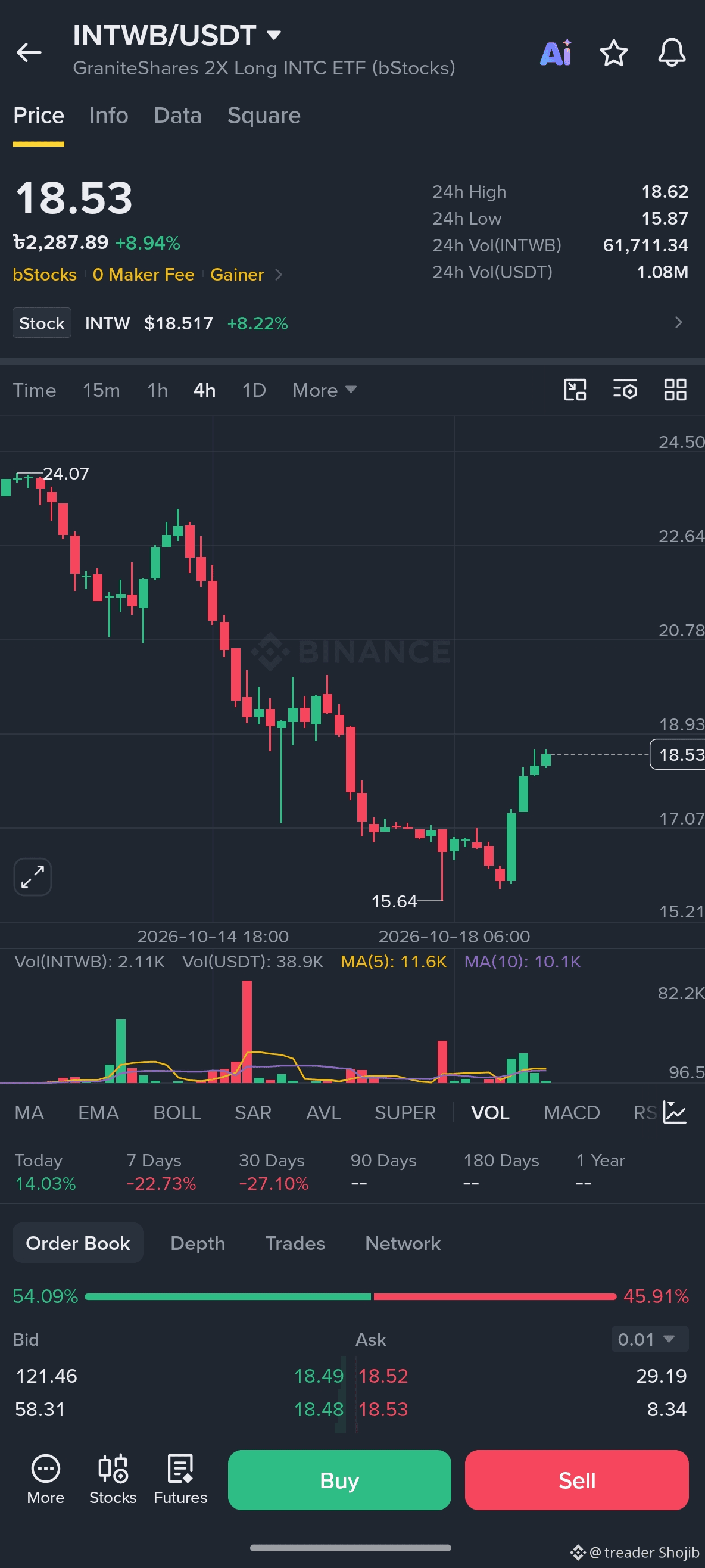
🚀 INTWB/USDT: Could $25 Be the Next Target? 📈
📊 The 1D chart shows price trading near an important support zone.
🟢 The 4H chart shows a strong bounce, suggesting potential buying pressure.
🔥 If buying pressure continues and the $19.30 resistance breaks, price could move toward the $23–$25 zone.
🎯 $25 is a potential resistance level, but reaching it is not guaranteed.
⚠️ A breakdown below support could trigger another decline. Watch trading volume and candle closes for confirmation.
#INTWB #CryptoAnalysis #BİNANCESQUARE #DOYR
$INTWB
🚀 INTWB/USDT: Could $25 Be the Next Target? 📈
📊 The 1D chart shows price trading near an important support zone.
🟢 The 4H chart shows a strong bounce, suggesting potential buying pressure.
🔥 If buying pressure continues and the $19.30 resistance breaks, price could move toward the $23–$25 zone.
🎯 $25 is a potential resistance level, but reaching it is not guaranteed.
⚠️ A breakdown below support could trigger another decline. Watch trading volume and candle closes for confirmation.
#INTWB #CryptoAnalysis #BİNANCESQUARE #DOYR
1
144

·
--
Рост
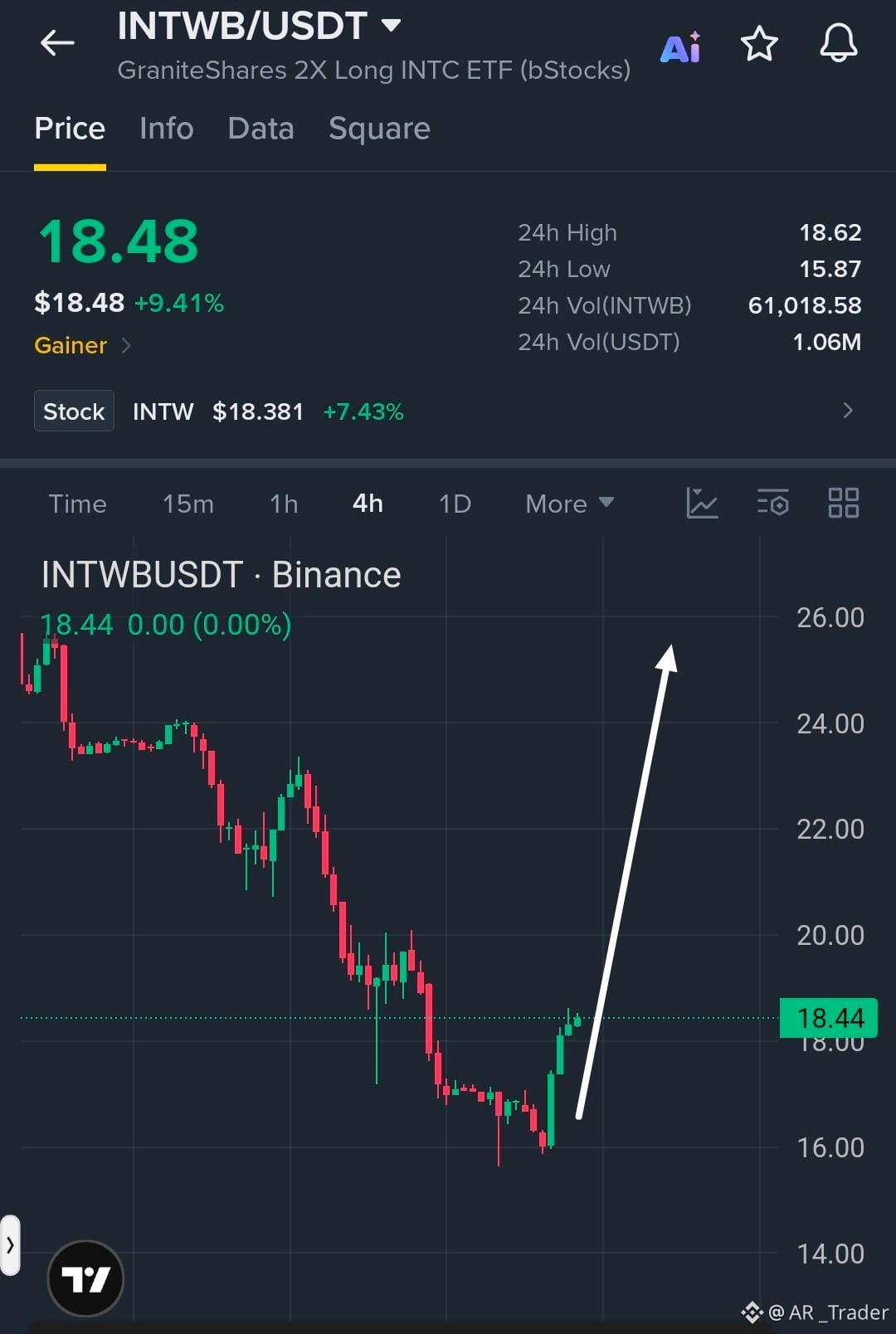
$INTWB Set for a Potential Bullish Recovery Toward $20–$25 After a Strong Rebound!
Trade Setup: LONG
Entry Zone: 18.20 – 18.50
Target 1: 19.20
Target 2: 20.50
Target 3: 22.00
Stop Loss (SL): 17.40
Market Setup: #INTWB is showing a strong rebound from the $16.00 support zone, with bullish candles indicating renewed buying pressure on the 4H chart. If momentum continues and price breaks above nearby resistance, it could move toward $19.20 and higher targets, although the broader trend remains bearish$INTCB
{spot}(INTCBUSDT)
.
$INTWB Set for a Potential Bullish Recovery Toward $20–$25 After a Strong Rebound!
Trade Setup: LONG
Entry Zone: 18.20 – 18.50
Target 1: 19.20
Target 2: 20.50
Target 3: 22.00
Stop Loss (SL): 17.40
Market Setup: #INTWB is showing a strong rebound from the $16.00 support zone, with bullish candles indicating renewed buying pressure on the 4H chart. If momentum continues and price breaks above nearby resistance, it could move toward $19.20 and higher targets, although the broader trend remains bearish$INTCB
.
1
31
Войдите, чтобы посмотреть больше материала
Присоединяйтесь к пользователям криптовалют по всему миру на Binance Square
⚡️ Получайте новейшую и полезную информацию о криптоактивах.
💬 Нам доверяет крупнейшая в мире криптобиржа.
👍 Получите достоверные аналитические данные от верифицированных создателей контента.
Эл. почта/номер телефона
В тренде
1
#EarningsSeason
Просмотров: 6.6M
32,767 обсуждают
2
#USMidtermElections
Просмотров: 74,891
940 обсуждают
3
#StrategySTRCReaches$99.95ForFirstTimeIn165Days
Просмотров: 209
13 обсуждают
4
#BinanceWillListPredictPREDICT
Просмотров: 5,475
204 обсуждают
5
#SwitzerlandFirstSpotBitcoinETFExpectedToTradeInNovember
Просмотров: 320
22 обсуждают
6
#StrategyReports$21BQ3OperatingProfit
Просмотров: 176
11 обсуждают
7
#TwoAddressesHoldingAbout1.28BUSDTFrozen
Просмотров: 1,662
85 обсуждают
8
#FirstDigitalBlacklistsAttackerAddressHoldingAbout3.4MFDUSD
Просмотров: 138
7 обсуждают
9
#BitcoinDropsBelow$80K
Просмотров: 56,336
149 обсуждают
10
#BoEOpensConsultationOnTokenizedCollateralForClearing
Просмотров: 1,958
40 обсуждают