
CryptoDeon
15.3k Публикации

CryptoDeon
Exploring and sharing new insights Daily | Investor and Trader | X (Twitter): @CryptoDeonX
Открытая сделка
Трейдер с частыми сделками
2 г
334 подписок(и/а)
3.8K+ подписчиков(а)
18.2K+ понравилось
Посты
Портфель
Все
Цитирования
Активно
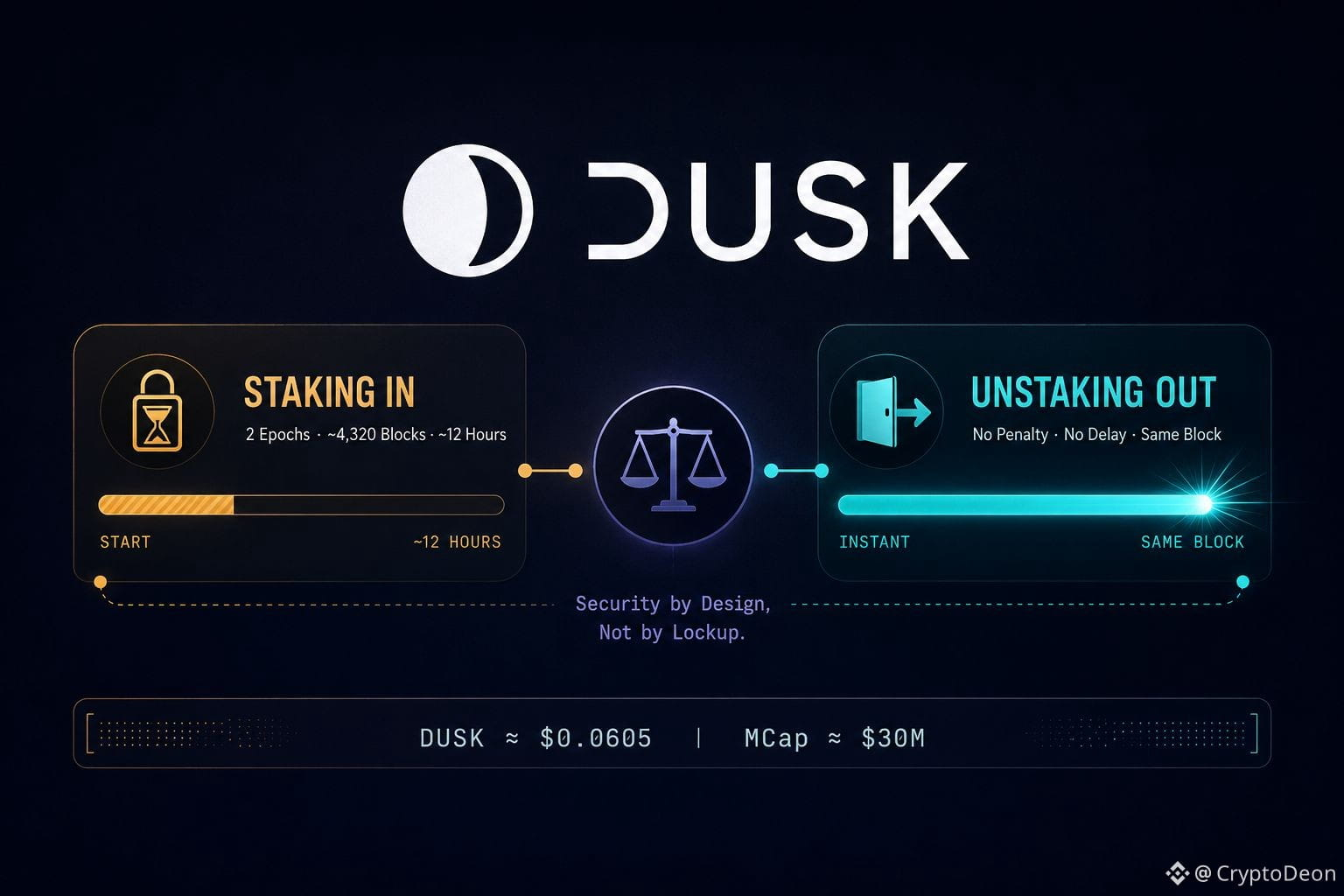
Чем глубже я разбирался, как Dusk работает со стейкингом, тем отчетливее выделялась одна асимметрия — вход сделан медленным по дизайну, а выход — нет.
Новый стейк должен пройти период созревания: 2 эпохи, примерно 4 320 блоков, около 12 часов, прежде чем он станет вообще доступен для выбора и начнет приносить вознаграждение. Но анстейк не имеет ни штрафов, ни периода ожидания. Вы можете забрать весь свой стейк сразу, как только решите — хоть в тот же блок, если захотите.
Это оказалось ровно наоборот тому, чего я ожидал. В большинстве сетей, которые я изучал, защита сделана на стороне выхода: локауты, кулдауны, периоды анбандлинга, которые наказывают за быстрый уход, потому что внезапный массовый выход угрожает безопасности. Dusk защищает наоборот — сторону входа. Окно созревания нужно, чтобы злоумышленник не смог заскочить со стейком прямо перед чувствительным моментом, попасть в комитет и исчезнуть — это заставляет выждать именно то время, когда манипуляции были бы дешевле всего. Когда вы уже добросовестный активный участник, протокол не видит причин удерживать ваш капитал только ради демонстрации принципа.
Это небольшое дизайнерское решение, но оно говорит о том, на что Dusk в реальности оптимизирует. Не максимальный локаут и не театральный TVL. Просто закрыть то одно окно, где «играть системой» было бы действительно выгодно, при этом оставить все остальное настолько гибким, насколько сеть может себе позволить.
Сегодня DUSK торгуется около $0.0710, рыночная капитализация — примерно $30M. Токен, в механике которого такие детали редко двигают цену в краткосроке, но тихо формируют, кто готов надолго вкладываться в инфраструктуру.
Отражает ли такая асимметрия блокировок — строго на входе, свободно на выходе — лучшее сдерживание попыток «геймить» систему, чем плоский кулдаун, примененный одинаково в обе стороны? Или же это просто переносит риск в другое место в системе?
$DUSK #dusk #BinanceSquare @Dusk
Новый стейк должен пройти период созревания: 2 эпохи, примерно 4 320 блоков, около 12 часов, прежде чем он станет вообще доступен для выбора и начнет приносить вознаграждение. Но анстейк не имеет ни штрафов, ни периода ожидания. Вы можете забрать весь свой стейк сразу, как только решите — хоть в тот же блок, если захотите.
Это оказалось ровно наоборот тому, чего я ожидал. В большинстве сетей, которые я изучал, защита сделана на стороне выхода: локауты, кулдауны, периоды анбандлинга, которые наказывают за быстрый уход, потому что внезапный массовый выход угрожает безопасности. Dusk защищает наоборот — сторону входа. Окно созревания нужно, чтобы злоумышленник не смог заскочить со стейком прямо перед чувствительным моментом, попасть в комитет и исчезнуть — это заставляет выждать именно то время, когда манипуляции были бы дешевле всего. Когда вы уже добросовестный активный участник, протокол не видит причин удерживать ваш капитал только ради демонстрации принципа.
Это небольшое дизайнерское решение, но оно говорит о том, на что Dusk в реальности оптимизирует. Не максимальный локаут и не театральный TVL. Просто закрыть то одно окно, где «играть системой» было бы действительно выгодно, при этом оставить все остальное настолько гибким, насколько сеть может себе позволить.
Сегодня DUSK торгуется около $0.0710, рыночная капитализация — примерно $30M. Токен, в механике которого такие детали редко двигают цену в краткосроке, но тихо формируют, кто готов надолго вкладываться в инфраструктуру.
Отражает ли такая асимметрия блокировок — строго на входе, свободно на выходе — лучшее сдерживание попыток «геймить» систему, чем плоский кулдаун, примененный одинаково в обе стороны? Или же это просто переносит риск в другое место в системе?
$DUSK #dusk #BinanceSquare @Dusk
Я думал о другом способе читать цифры Dusk.
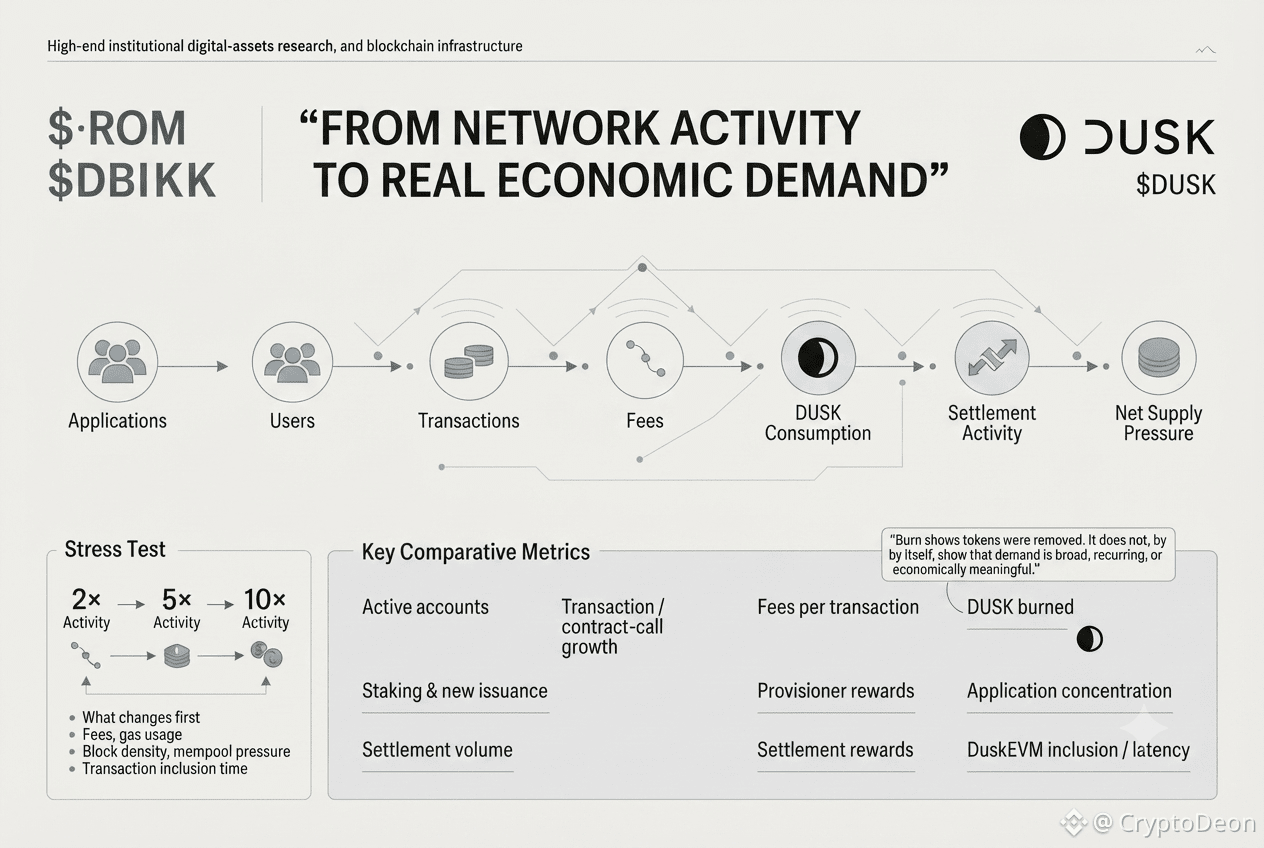
Растущая доля, увеличение транзакций или больше токенизированных активов сами по себе могут выглядеть позитивно. Но ни один из этих показателей по отдельности не говорит нам, действительно ли сетевой спрос становится сильнее.
Полезный вопрос в том, что происходит между активностью и экономикой.
Если Dusk добавляет больше приложений, приводит ли это к большему числу завершённых транзакций и платёжной активности по комиссиям? Если число транзакций растёт, это потому что существующие пользователи становятся активнее, или потому что несколько контрактов генерируют большую часть трафика?
Я бы также отделял заявленные активы от тех, которые на самом деле выпускаются, переводятся и завершаются в блокчейне.
Это различие важно.
Для меня более полезная панель управления должна связывать:
• активные аккаунты
• рост транзакций и обращений к контрактам
• комиссии на транзакцию
• сожжённые DUSK
• стейкинг и новый выпуск
• вознаграждения валидаторов/провайдеров
• объём расчётов
• концентрацию по приложениям
• метрики блоков DuskEVM и включения
Затем провести стресс-тест системы.
При 2× активности сеть поглощает её нормально?
При 5× — где начинают меняться комиссии или задержки?
При 10× — становится ли ограничением пропускная способность?
Эти сценарии говорят нам гораздо больше, чем одно единственное число ежедневного сжигания.
Сжигание подтверждает, что токены были удалены. Оно не говорит нам, была ли лежащая в основе активность широкой, повторяющейся или экономически значимой.
Вот та часть Dusk, за которой, как мне кажется, стоит наблюдать дальше.
@Dusk $DUSK #dusk
Растущая доля, увеличение транзакций или больше токенизированных активов сами по себе могут выглядеть позитивно. Но ни один из этих показателей по отдельности не говорит нам, действительно ли сетевой спрос становится сильнее.
Полезный вопрос в том, что происходит между активностью и экономикой.
Если Dusk добавляет больше приложений, приводит ли это к большему числу завершённых транзакций и платёжной активности по комиссиям? Если число транзакций растёт, это потому что существующие пользователи становятся активнее, или потому что несколько контрактов генерируют большую часть трафика?
Я бы также отделял заявленные активы от тех, которые на самом деле выпускаются, переводятся и завершаются в блокчейне.
Это различие важно.
Для меня более полезная панель управления должна связывать:
• активные аккаунты
• рост транзакций и обращений к контрактам
• комиссии на транзакцию
• сожжённые DUSK
• стейкинг и новый выпуск
• вознаграждения валидаторов/провайдеров
• объём расчётов
• концентрацию по приложениям
• метрики блоков DuskEVM и включения
Затем провести стресс-тест системы.
При 2× активности сеть поглощает её нормально?
При 5× — где начинают меняться комиссии или задержки?
При 10× — становится ли ограничением пропускная способность?
Эти сценарии говорят нам гораздо больше, чем одно единственное число ежедневного сжигания.
Сжигание подтверждает, что токены были удалены. Оно не говорит нам, была ли лежащая в основе активность широкой, повторяющейся или экономически значимой.
Вот та часть Dusk, за которой, как мне кажется, стоит наблюдать дальше.
@Dusk $DUSK #dusk
У меня был арендодатель, который отказывался принимать аренду чеком — только наличные, без бумажного следа, «так меньше спорных моментов». Работало, пока один из жильцов не заявил, что якобы оплатил, хотя на самом деле не оплатил, и проверять было не с чем. Отсутствие записи работает в обе стороны.
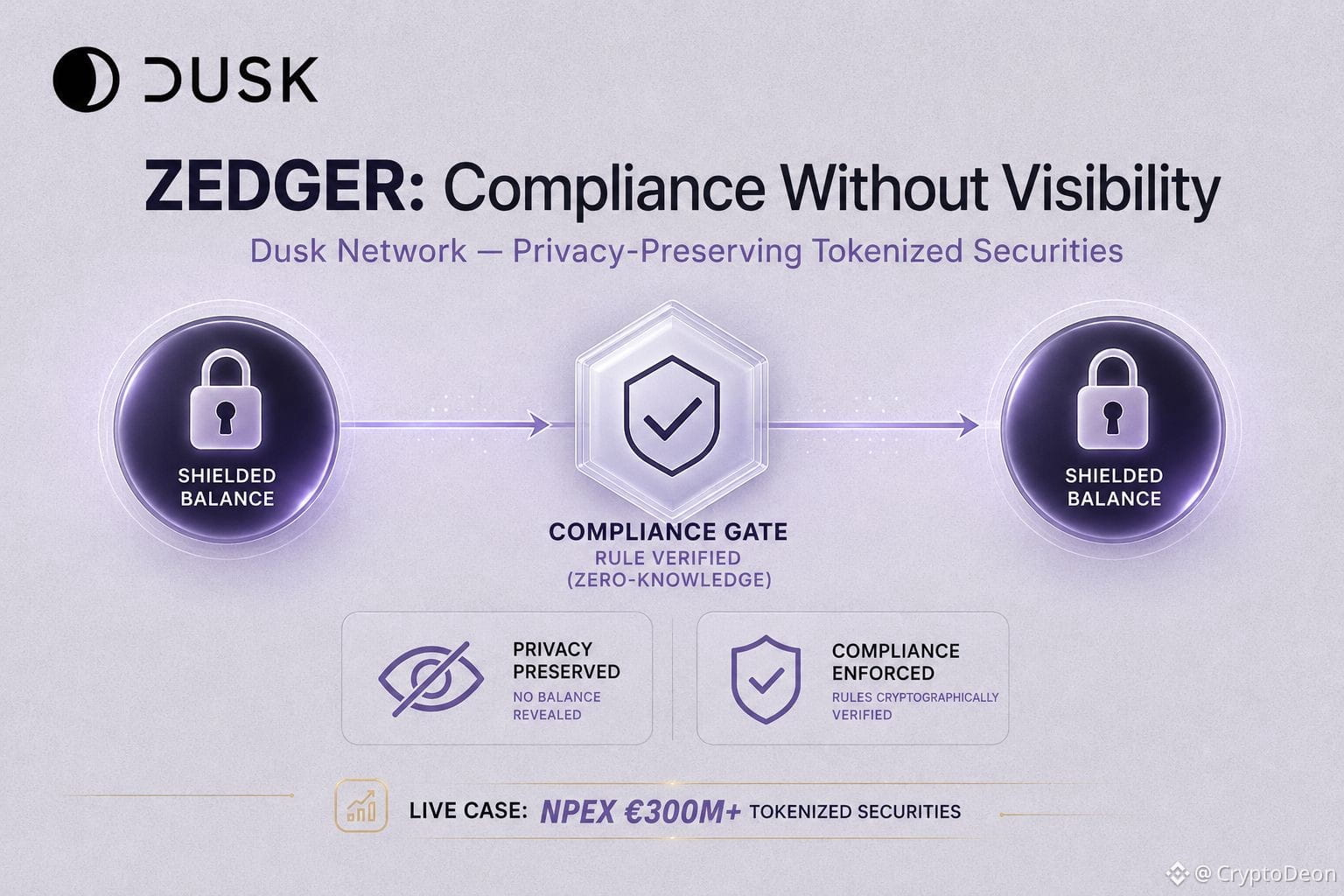
Это вернулось ко мне, когда я читал о Zedger — модели Dusk для токенизированных ценных бумаг. Большинство «комплаентных» стандартов прописывает правила в пользу «арендодателя» — либо всё прозрачно, и споры решаются просмотром, либо всё скрыто, и вы доверяете словам эмитента. Zedger криптографически обеспечивает соблюдение правила до того, как происходит передача. Если актив ограничивает владение, требует предварительно одобренных инвесторов или ограничивает кого-то одним аккаунтом, эта проверка встроена прямо в саму операцию — проходит она или нет, причём балансы остаются защищёнными всё время. Никому не нужно видеть ваши активы, чтобы подтвердить, что вы не нарушаете правило. Математика подтверждает это за них.
Это реальный ответ на проблему арендодателя — проверяемый, но при этом не видимый, не нужно менять одно на другое.
Где я менее уверен: это покрывает только правила уровня передачи — лимиты, право на участие, ограничения по аккаунтам. Оно не решает споры о намерениях или мошенничестве, которые лежат вне самого правила — так же, как спор «вы реально платили или нет» всё равно требует какого-то внешнего подтверждения.
Сегодня DUSK стоит около $0.0605, рыночная капитализация — примерно $30M; при этом в Zedger уже работает реальный кейс на базе NPEX, где через токенизированные ценные бумаги проходит €300M+ — инфраструктура, которую рынок пока ещё не переоценил.
Сможет ли обеспечение комплаенса на уровне протокола закрыть все споры, которые может поднять регулятор, или в итоге всё равно всегда понадобится человек вне кода?
$DUSK #dusk #BinanceSquare @Dusk
Это вернулось ко мне, когда я читал о Zedger — модели Dusk для токенизированных ценных бумаг. Большинство «комплаентных» стандартов прописывает правила в пользу «арендодателя» — либо всё прозрачно, и споры решаются просмотром, либо всё скрыто, и вы доверяете словам эмитента. Zedger криптографически обеспечивает соблюдение правила до того, как происходит передача. Если актив ограничивает владение, требует предварительно одобренных инвесторов или ограничивает кого-то одним аккаунтом, эта проверка встроена прямо в саму операцию — проходит она или нет, причём балансы остаются защищёнными всё время. Никому не нужно видеть ваши активы, чтобы подтвердить, что вы не нарушаете правило. Математика подтверждает это за них.
Это реальный ответ на проблему арендодателя — проверяемый, но при этом не видимый, не нужно менять одно на другое.
Где я менее уверен: это покрывает только правила уровня передачи — лимиты, право на участие, ограничения по аккаунтам. Оно не решает споры о намерениях или мошенничестве, которые лежат вне самого правила — так же, как спор «вы реально платили или нет» всё равно требует какого-то внешнего подтверждения.
Сегодня DUSK стоит около $0.0605, рыночная капитализация — примерно $30M; при этом в Zedger уже работает реальный кейс на базе NPEX, где через токенизированные ценные бумаги проходит €300M+ — инфраструктура, которую рынок пока ещё не переоценил.
Сможет ли обеспечение комплаенса на уровне протокола закрыть все споры, которые может поднять регулятор, или в итоге всё равно всегда понадобится человек вне кода?
$DUSK #dusk #BinanceSquare @Dusk
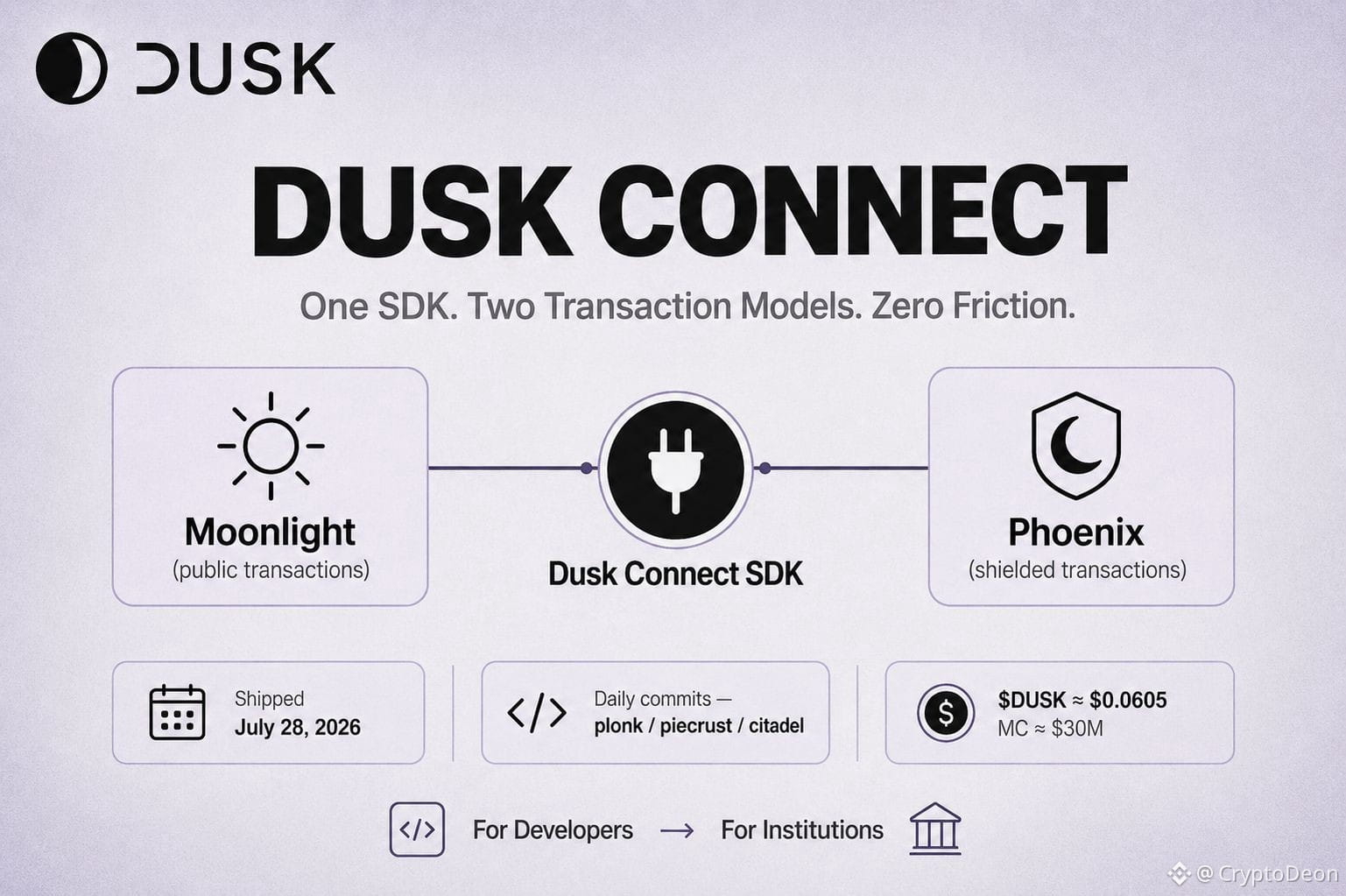
Провёл сегодня за копанием в Creatorpad и почти пропустил самую маленькую новость в ленте — Dusk 28 июля выпустила нечто под названием Dusk Connect. Не обновление протокола, не новый примитив приватности. Просто SDK для подключения кошельков. Первая реакция была: «окей, круто, стандартные инструменты для разработчиков», и я почти пролистал дальше.
Но потом я подумал, что это на самом деле убирает. Любая сеть с нетипичной моделью транзакций — а у Dusk их две: Moonlight и Phoenix, работающие бок о бок — делает жизнь сложнее для разработчика, который просто хочет подключить кошелёк к своему приложению. Обычно это означает кастомную интеграцию, чтение нестандартной документации, вручную раздельную обработку защищённых и публичных сценариев. Лёгкий SDK сводит всё к «импортируй это, вызови эту функцию». Скучно. Но именно эта «скучность» и решает, будут ли внешние разработчики действительно здесь что-то строить — или всё останется ограниченным основной командой и теми, кому выданы гранты, которые делают всё с нуля.
Вот связка с более крупной картиной: в своей подаче институтам Dusk делает упор на детерминированную финальность, селективное раскрытие, регулируемое расчётное завершение — всё это настоящее, и всё по-разному. Но это теряет значение, если строить на платформе могут только пятнадцать инженеров, написавших протокол. NPEX и DuskTrade доказывают, что институциональный спрос на стороне финансов есть. Такие инструменты, как Dusk Connect, — вторая, менее гламурная половина: они показывают, что независимые разработчики действительно могут выпустить что-то на Dusk без шестинедельного онбординга.
Проверил GitHub-активность — коммиты всё так же приходят ежедневно по основным репозиториям (plonk, piecrust, citadel) вплоть до этой недели, так что это не команда, которая выложила SDK и затихла. Сам DUSK торгуется около $0.0605, рыночная капитализация — рядом с $30M: токен, где и SDK, и активность по коммитам пока не сдвинули стрелку.
По-настоящему интересно — инструменты для разработчиков вроде этого реально предсказывают, какие сети получат полноценных сторонних строителей, или корреляция слабее, чем кажется?
$DUSK #dusk @Dusk
Но потом я подумал, что это на самом деле убирает. Любая сеть с нетипичной моделью транзакций — а у Dusk их две: Moonlight и Phoenix, работающие бок о бок — делает жизнь сложнее для разработчика, который просто хочет подключить кошелёк к своему приложению. Обычно это означает кастомную интеграцию, чтение нестандартной документации, вручную раздельную обработку защищённых и публичных сценариев. Лёгкий SDK сводит всё к «импортируй это, вызови эту функцию». Скучно. Но именно эта «скучность» и решает, будут ли внешние разработчики действительно здесь что-то строить — или всё останется ограниченным основной командой и теми, кому выданы гранты, которые делают всё с нуля.
Вот связка с более крупной картиной: в своей подаче институтам Dusk делает упор на детерминированную финальность, селективное раскрытие, регулируемое расчётное завершение — всё это настоящее, и всё по-разному. Но это теряет значение, если строить на платформе могут только пятнадцать инженеров, написавших протокол. NPEX и DuskTrade доказывают, что институциональный спрос на стороне финансов есть. Такие инструменты, как Dusk Connect, — вторая, менее гламурная половина: они показывают, что независимые разработчики действительно могут выпустить что-то на Dusk без шестинедельного онбординга.
Проверил GitHub-активность — коммиты всё так же приходят ежедневно по основным репозиториям (plonk, piecrust, citadel) вплоть до этой недели, так что это не команда, которая выложила SDK и затихла. Сам DUSK торгуется около $0.0605, рыночная капитализация — рядом с $30M: токен, где и SDK, и активность по коммитам пока не сдвинули стрелку.
По-настоящему интересно — инструменты для разработчиков вроде этого реально предсказывают, какие сети получат полноценных сторонних строителей, или корреляция слабее, чем кажется?
$DUSK #dusk @Dusk
Сумерки снова и снова повторяют «регулируемые ончейн-активы», будто это само по себе ценно. Я хотел найти реальное трение, которое это оправдывает, а не просто рекламный тезис.
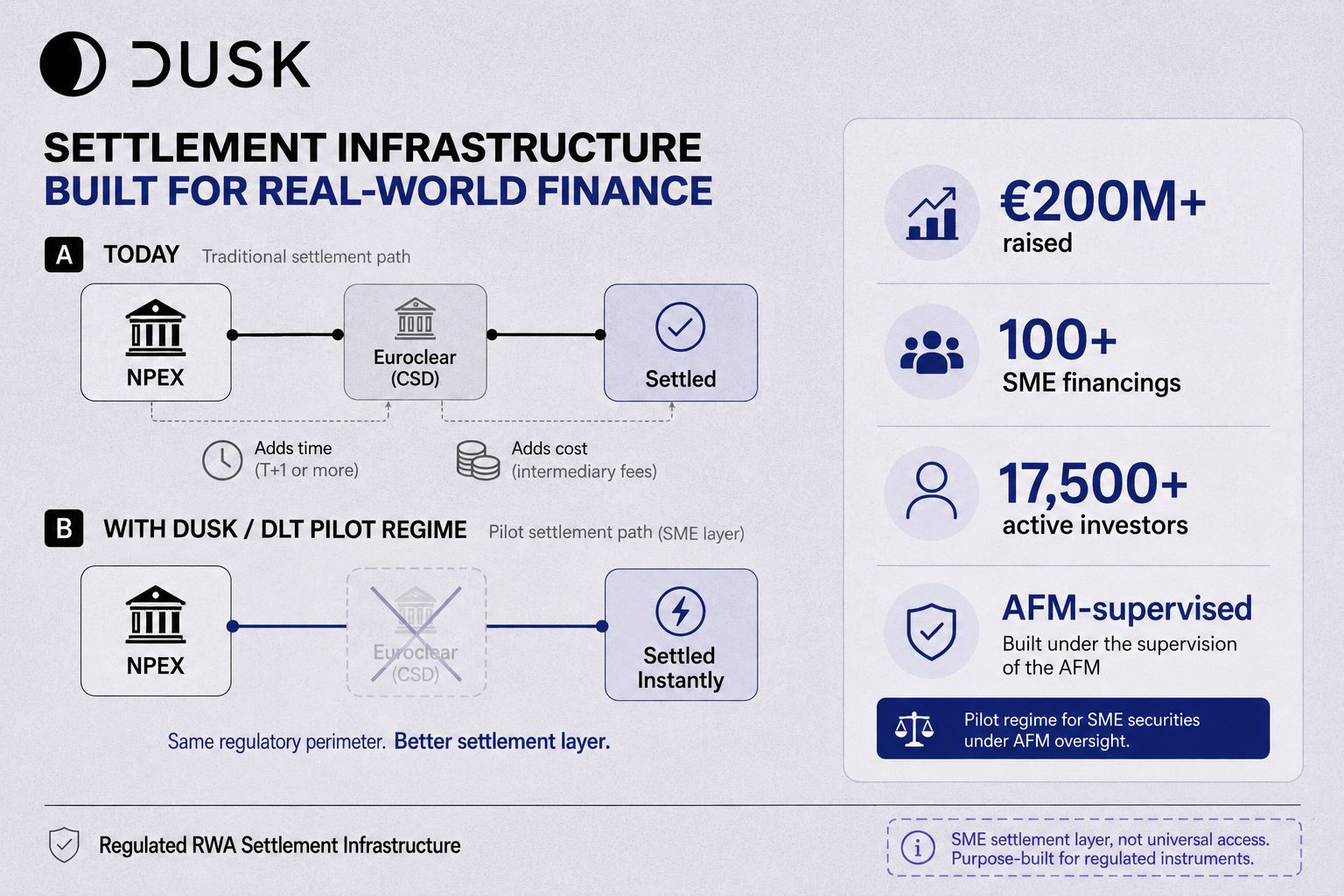
Самый ясный ответ — в одной детали про NPEX. Когда NPEX проводит расчёт по сделке сегодня, он не делает это сам — он направляет её через Euroclear, внешнего депозитария, того же посредника, на который опирается большинство традиционных бирж при посттрейд-расчётах. Дополнительная сторона, дополнительные расходы, дополнительное время — в каждой транзакции. Именно Директива ЕС по пилотному режиму DLT реально меняет картину: она позволяет лицензированной площадке вроде NPEX брать расчёты на себя, а не отдавать их на аутсорс. Dusk — тот самый рельс, по которому проходит эта роль.
Речь о конкретной стоимости, которая исчезает, а не о туманном утверждении «блокчейн лучше». Поставщик SME сейчас платит посреднику, чтобы тот подтверждал право собственности после каждой сделки. Уберите это — и запись о праве собственности становится самим расчётным слоем: мгновенно, а не после нескольких дней согласований отдельным учреждением. Администрирование голосований инвесторов и дивидендов, и то и другое медленное и ручное на рынках SME, становится дешевле по той же причине.
Труднее защищать становится другое — дробление. Для акций blue-chip разделение долей явно расширяет круг тех, кто может инвестировать. А для акций SME, которые и так небольшие и неликвидные, токенизация в основном убирает расчётного посредника — это правда, но уже того «сюжета про открытие доступа», который обычно рассказывают.
Сегодня у NPEX: надзор AFM, привлечено более €200 млн за 100+ финансирований для SME, 17 500+ активных инвесторов — реальный рынок, где снижение зависимости от Euroclear даёт измеримую выгоду, а не гипотетическую.
Если честный питч звучит как «мы убираем расчётного посредника», а не «мы открываем доступ», то делает ли это возможность меньше — или всё же узкое, реальное трение стоит большего, чем крупный, но размытый тезис?
$DUSK #dusk #BinanceSquare #CryptoAnalysis @Dusk
Самый ясный ответ — в одной детали про NPEX. Когда NPEX проводит расчёт по сделке сегодня, он не делает это сам — он направляет её через Euroclear, внешнего депозитария, того же посредника, на который опирается большинство традиционных бирж при посттрейд-расчётах. Дополнительная сторона, дополнительные расходы, дополнительное время — в каждой транзакции. Именно Директива ЕС по пилотному режиму DLT реально меняет картину: она позволяет лицензированной площадке вроде NPEX брать расчёты на себя, а не отдавать их на аутсорс. Dusk — тот самый рельс, по которому проходит эта роль.
Речь о конкретной стоимости, которая исчезает, а не о туманном утверждении «блокчейн лучше». Поставщик SME сейчас платит посреднику, чтобы тот подтверждал право собственности после каждой сделки. Уберите это — и запись о праве собственности становится самим расчётным слоем: мгновенно, а не после нескольких дней согласований отдельным учреждением. Администрирование голосований инвесторов и дивидендов, и то и другое медленное и ручное на рынках SME, становится дешевле по той же причине.
Труднее защищать становится другое — дробление. Для акций blue-chip разделение долей явно расширяет круг тех, кто может инвестировать. А для акций SME, которые и так небольшие и неликвидные, токенизация в основном убирает расчётного посредника — это правда, но уже того «сюжета про открытие доступа», который обычно рассказывают.
Сегодня у NPEX: надзор AFM, привлечено более €200 млн за 100+ финансирований для SME, 17 500+ активных инвесторов — реальный рынок, где снижение зависимости от Euroclear даёт измеримую выгоду, а не гипотетическую.
Если честный питч звучит как «мы убираем расчётного посредника», а не «мы открываем доступ», то делает ли это возможность меньше — или всё же узкое, реальное трение стоит большего, чем крупный, но размытый тезис?
$DUSK #dusk #BinanceSquare #CryptoAnalysis @Dusk
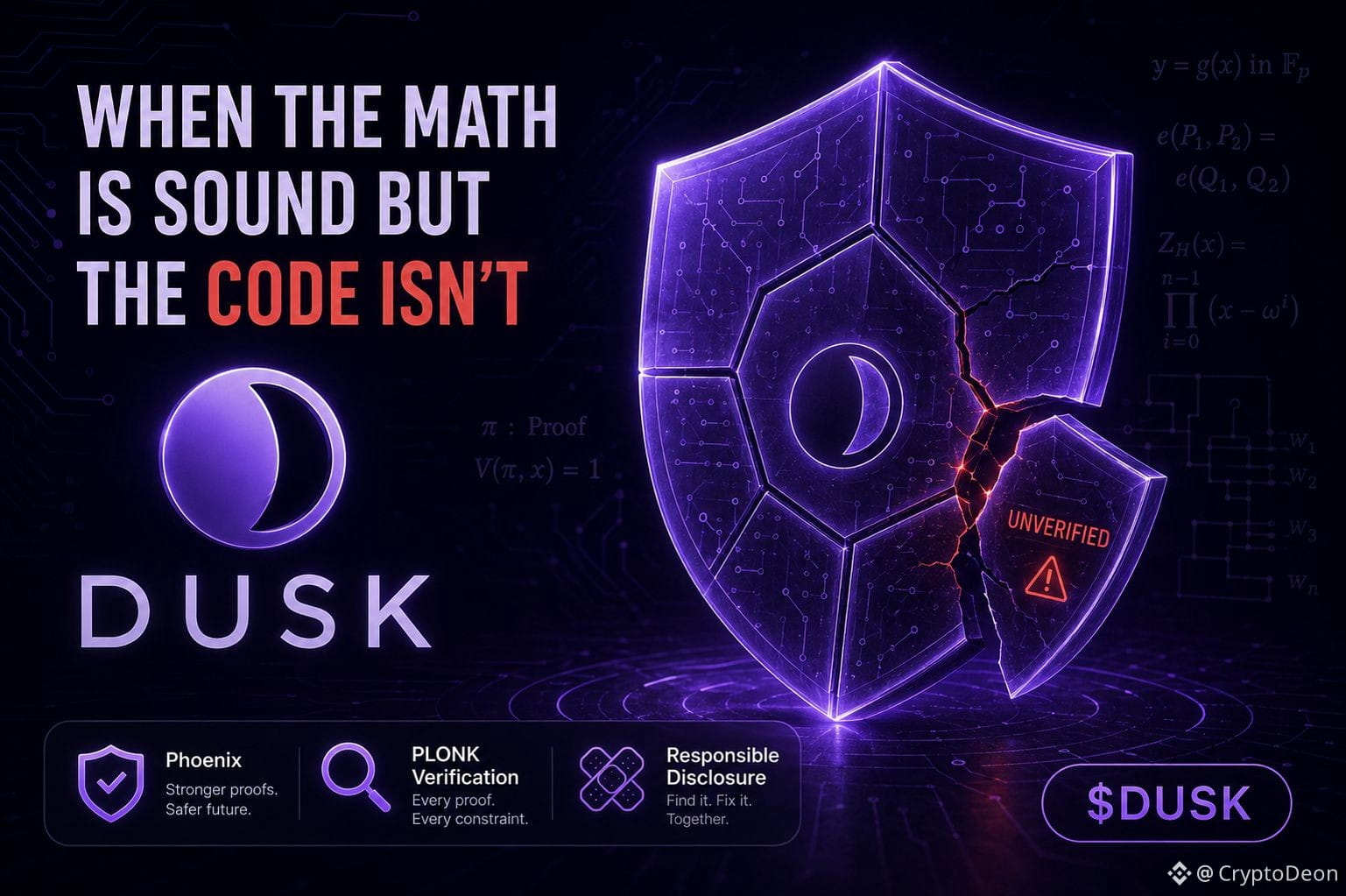
Раньше я думал, что если система работает на доказательствах с нулевым разглашением (zero-knowledge proofs), то сама математика — это гарантия безопасности: больше не нужно беспокоиться об ошибках человека, просто криптография делает своё дело. Потом я наткнулся на отчёт по безопасности реализации PLONK у Dusk — и это предположение не подтвердилось так, как я ожидал 🔍
Вот версия того, что было обнаружено, простыми словами. Phoenix, система защищённых транзакций Dusk, использует PLONK, чтобы доказывать такие утверждения, как «эта записка (note) реальна», «я ей владею» и «балансовая математика сходится» — при этом не раскрывая сами числа. Исследователи выяснили, что код, который проверяет эти доказательства, не проверял каждую часть математических условий, которые он должен был проверять. Теоретически такая «дырка» может позволить кому-то отправить поддельное доказательство, утверждающее, что записка существует, хотя на самом деле она не существует, и тем самым отчеканить стоимость, которой в реальности не было — не потому, что сама криптография сломана, а потому что одна деталь реализации не полностью обеспечила то, что дизайн обещал.
Эта разница важнее заголовка. Ошибка в базовой схеме ZK означает, что вся модель оказывается несостоятельной (unsound). Ошибка в том, как эта схема была реализована и проверялась, — это другой класс проблем: это серьёзно, но исправимо, и именно то, для чего существует ответственное раскрытие уязвимостей (responsible disclosure), чтобы поймать такие вещи до того, как их когда-либо начнут эксплуатировать. Сообщение о находке сделали через этот процесс, а не обнаружил атакующий в продакшене.
То, что это на самом деле говорит о Dusk, — не «технология шаткая». Это скорее: «то, что мы используем доказательства с нулевым разглашением, никогда не было всей историей безопасности». Код верификации вокруг доказательств имеет такой же вес, как и сама криптография — и это верно для любого ZK‑проекта, не только для этого.
Сегодня DUSK торгуется около $0.0605, капитализация примерно $30M, всё ещё далеко от исторического максимума — рынок пока что не заложил ни саму находку, ни исправление.
Аудит, который находит что-то подобное до эксплуатации, реально помогает со временем повышать доверие, или рынок просто запоминает, что уязвимость вообще существовала — вне зависимости от исхода?
#dusk $DUSK @Dusk
Вот версия того, что было обнаружено, простыми словами. Phoenix, система защищённых транзакций Dusk, использует PLONK, чтобы доказывать такие утверждения, как «эта записка (note) реальна», «я ей владею» и «балансовая математика сходится» — при этом не раскрывая сами числа. Исследователи выяснили, что код, который проверяет эти доказательства, не проверял каждую часть математических условий, которые он должен был проверять. Теоретически такая «дырка» может позволить кому-то отправить поддельное доказательство, утверждающее, что записка существует, хотя на самом деле она не существует, и тем самым отчеканить стоимость, которой в реальности не было — не потому, что сама криптография сломана, а потому что одна деталь реализации не полностью обеспечила то, что дизайн обещал.
Эта разница важнее заголовка. Ошибка в базовой схеме ZK означает, что вся модель оказывается несостоятельной (unsound). Ошибка в том, как эта схема была реализована и проверялась, — это другой класс проблем: это серьёзно, но исправимо, и именно то, для чего существует ответственное раскрытие уязвимостей (responsible disclosure), чтобы поймать такие вещи до того, как их когда-либо начнут эксплуатировать. Сообщение о находке сделали через этот процесс, а не обнаружил атакующий в продакшене.
То, что это на самом деле говорит о Dusk, — не «технология шаткая». Это скорее: «то, что мы используем доказательства с нулевым разглашением, никогда не было всей историей безопасности». Код верификации вокруг доказательств имеет такой же вес, как и сама криптография — и это верно для любого ZK‑проекта, не только для этого.
Сегодня DUSK торгуется около $0.0605, капитализация примерно $30M, всё ещё далеко от исторического максимума — рынок пока что не заложил ни саму находку, ни исправление.
Аудит, который находит что-то подобное до эксплуатации, реально помогает со временем повышать доверие, или рынок просто запоминает, что уязвимость вообще существовала — вне зависимости от исхода?
#dusk $DUSK @Dusk
Я вчера резко увидел пробой по BTC вверх — цена сразу прошла уровень $65K, который удерживал ее в “кэп” в течение недель, на фоне политического шума вокруг регулирования криптовалют. Киты заранее тихо накапливали позицию именно под это движение. Это как раз тот тип сессии, который на словах делает плечо простым, а на практике — превращает всё в кашу.
Вот где модель TermMax с фиксированной ставкой действительно находит свое место. В системе с плавающей ставкой резкое движение вроде этого может взвинтить вашу стоимость заимствований в самый неподходящий момент — когда позиции нужно удержаться, а не тогда, когда вы можете позволить себе сюрпризы. Фиксация ставки заранее убирает именно этот фактор. Вы точно знаете стоимость финансирования до входа — независимо от того, что будет делать BTC дальше.
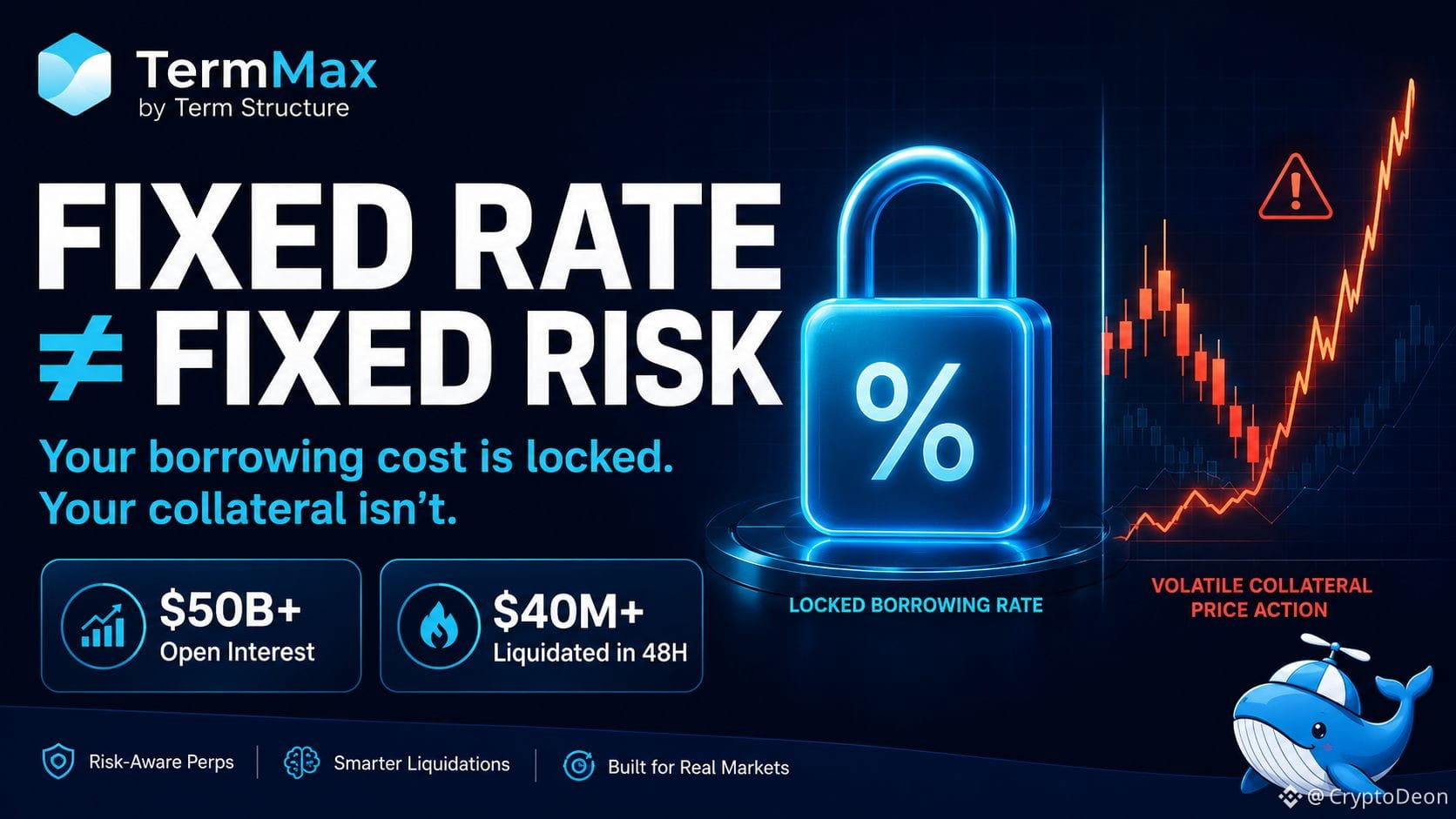
Но вот простое различие, к которому я снова и снова возвращаюсь: фиксированная ставка фиксирует *стоимость займа*, а не *стоимость вашей залоговой базы*. Это два совершенно разных риска. Открытый интерес по BTC сейчас находится примерно на уровне $50 млрд, и всего за два дня ликвидаций уже набралось более $40 млн даже до этого ралли — доказательство того, что ценовые колебания приводят к вынужденным закрытиям независимо от того, как выглядит ваша ставка по заимствованиям на бумаге.
Так что честная формулировка такая: фиксированное кредитование убирает неопределенность из одной строки — стоимости капитала по займу. Но оно никак не смягчает то, насколько сильно ваш залог может двигаться против вас, и пороги ликвидации не зависят от того, была ставка зафиксирована или плавающая.
За чем я сейчас наблюдаю: удерживаются ли позиции TermMax в реальности сквозь всплеск волатильности, подобный этому, а не просто в спокойных рынках, где преимущество по ставке почти не имеет значения.
#TermMax @TermMax
Вот где модель TermMax с фиксированной ставкой действительно находит свое место. В системе с плавающей ставкой резкое движение вроде этого может взвинтить вашу стоимость заимствований в самый неподходящий момент — когда позиции нужно удержаться, а не тогда, когда вы можете позволить себе сюрпризы. Фиксация ставки заранее убирает именно этот фактор. Вы точно знаете стоимость финансирования до входа — независимо от того, что будет делать BTC дальше.
Но вот простое различие, к которому я снова и снова возвращаюсь: фиксированная ставка фиксирует *стоимость займа*, а не *стоимость вашей залоговой базы*. Это два совершенно разных риска. Открытый интерес по BTC сейчас находится примерно на уровне $50 млрд, и всего за два дня ликвидаций уже набралось более $40 млн даже до этого ралли — доказательство того, что ценовые колебания приводят к вынужденным закрытиям независимо от того, как выглядит ваша ставка по заимствованиям на бумаге.
Так что честная формулировка такая: фиксированное кредитование убирает неопределенность из одной строки — стоимости капитала по займу. Но оно никак не смягчает то, насколько сильно ваш залог может двигаться против вас, и пороги ликвидации не зависят от того, была ставка зафиксирована или плавающая.
За чем я сейчас наблюдаю: удерживаются ли позиции TermMax в реальности сквозь всплеск волатильности, подобный этому, а не просто в спокойных рынках, где преимущество по ставке почти не имеет значения.
#TermMax @TermMax
Вчера ночью я вернулся домой, и одна деталь из документации Dusk никак не выходила у меня из головы, поэтому я сел и действительно прочитал контракт миграции, вместо того чтобы бегло просмотреть краткое резюме, которое написал кто-то другой.
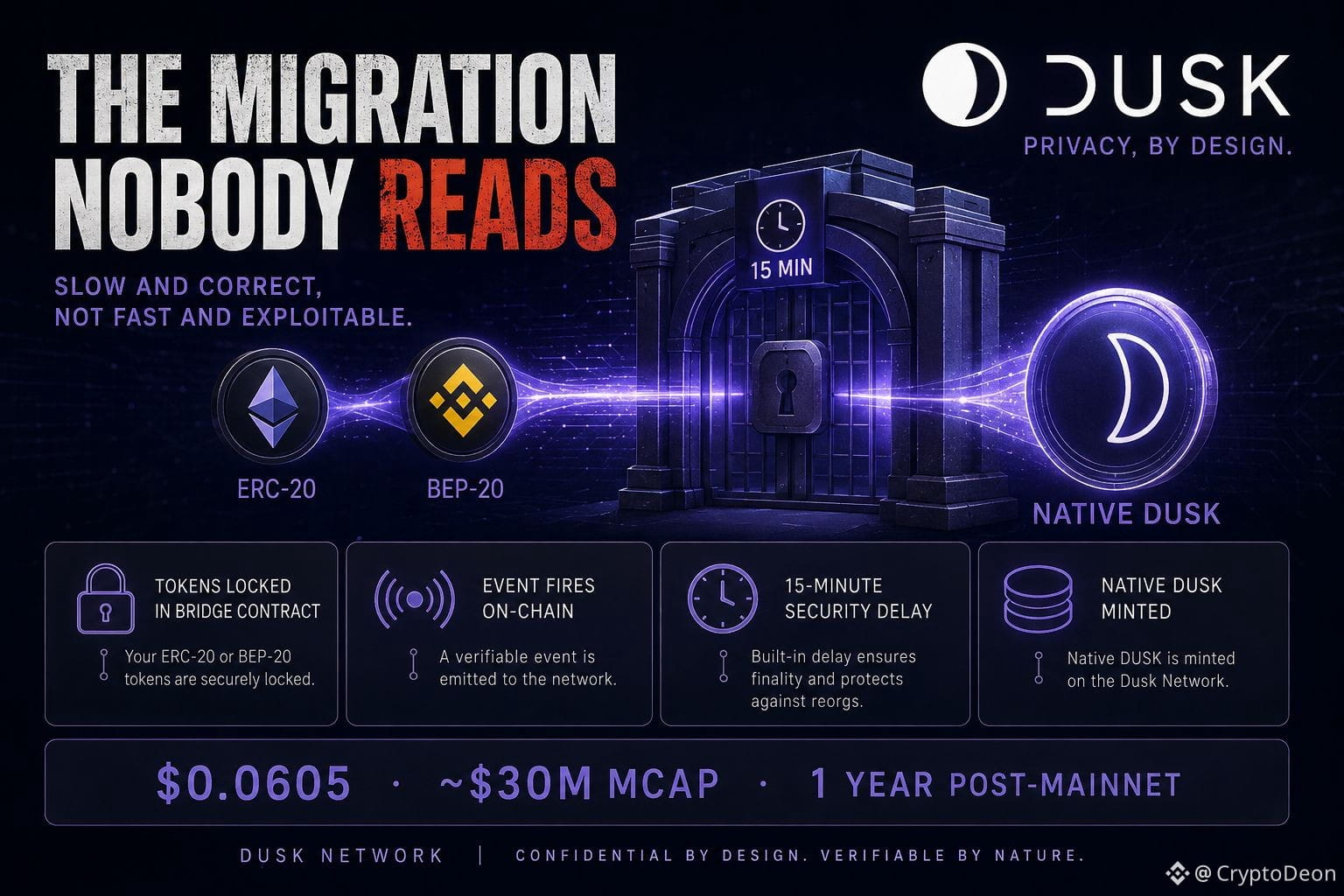
Вот что меня поразило. Dusk не просто запустила новый мейннет и не сказала холдерам: «разбирайтесь сами». Старые токены ERC-20 и BEP-20 блокируются в контракте моста, срабатывает событие, и только затем внешняя служба чеканит эквивалентный нативный DUSK в новой сети. Это дверь в один конец с встроенным ожиданием в 15 минут — для безопасности, а не для красоты. Никакой кнопки мгновенного обмена, никаких обходных путей. Этот период ожидания протокол тихо говорит: нам важнее быть медленными и корректными, чем быстрыми и уязвимыми — та же философия проявляется и в чем-то столь не гламурном, как токен-мост.
Почему это важно сильнее, чем кажется: большинство миграций воспринимаются как «инженерная сантехника» — сноска, которую никто не читает. Но проект, созданный для регулируемого расчёта, не может позволить себе небрежную миграцию, потому что та логика кастоди, которая переносит ваши старые токены, — это предварительный просмотр того, как они в будущем будут переносить токенизированные облигации или доли в частном капитале, стоящие реальных денег. Если здесь они пойдут на упрощения, когда ставки сравнительно невысокие, это скажет больше, чем любой белый документ.
Если смотреть шире — мейннет запустили в декабре 2024/январе 2025, и спустя год пункты дорожной карты, которые тогда были обещаниями (Hyperstaking, Zedger, EVM-совместимость через партнёрство с Chainlink CCIP), теперь уже поставляются как работающие элементы, а не как пули в слайд-колоде. Сегодня DUSK держится около $0.0605, капитализация примерно $30M — всё ещё лишь малая доля своего исторического максимума. Это стоит отметить, потому что цена почти не отреагировала на год стабильной поставки.
Заставляет задуматься: когда сеть доказывает дисциплину через скучную инфраструктуру вроде контракта миграции, а не через эффектные фичи, рынок вообще когда-нибудь вознаграждает такое терпение — или он замечает это только после того, как выходит «фича ради фичи»?
#dusk $DUSK @Dusk
Вот что меня поразило. Dusk не просто запустила новый мейннет и не сказала холдерам: «разбирайтесь сами». Старые токены ERC-20 и BEP-20 блокируются в контракте моста, срабатывает событие, и только затем внешняя служба чеканит эквивалентный нативный DUSK в новой сети. Это дверь в один конец с встроенным ожиданием в 15 минут — для безопасности, а не для красоты. Никакой кнопки мгновенного обмена, никаких обходных путей. Этот период ожидания протокол тихо говорит: нам важнее быть медленными и корректными, чем быстрыми и уязвимыми — та же философия проявляется и в чем-то столь не гламурном, как токен-мост.
Почему это важно сильнее, чем кажется: большинство миграций воспринимаются как «инженерная сантехника» — сноска, которую никто не читает. Но проект, созданный для регулируемого расчёта, не может позволить себе небрежную миграцию, потому что та логика кастоди, которая переносит ваши старые токены, — это предварительный просмотр того, как они в будущем будут переносить токенизированные облигации или доли в частном капитале, стоящие реальных денег. Если здесь они пойдут на упрощения, когда ставки сравнительно невысокие, это скажет больше, чем любой белый документ.
Если смотреть шире — мейннет запустили в декабре 2024/январе 2025, и спустя год пункты дорожной карты, которые тогда были обещаниями (Hyperstaking, Zedger, EVM-совместимость через партнёрство с Chainlink CCIP), теперь уже поставляются как работающие элементы, а не как пули в слайд-колоде. Сегодня DUSK держится около $0.0605, капитализация примерно $30M — всё ещё лишь малая доля своего исторического максимума. Это стоит отметить, потому что цена почти не отреагировала на год стабильной поставки.
Заставляет задуматься: когда сеть доказывает дисциплину через скучную инфраструктуру вроде контракта миграции, а не через эффектные фичи, рынок вообще когда-нибудь вознаграждает такое терпение — или он замечает это только после того, как выходит «фича ради фичи»?
#dusk $DUSK @Dusk
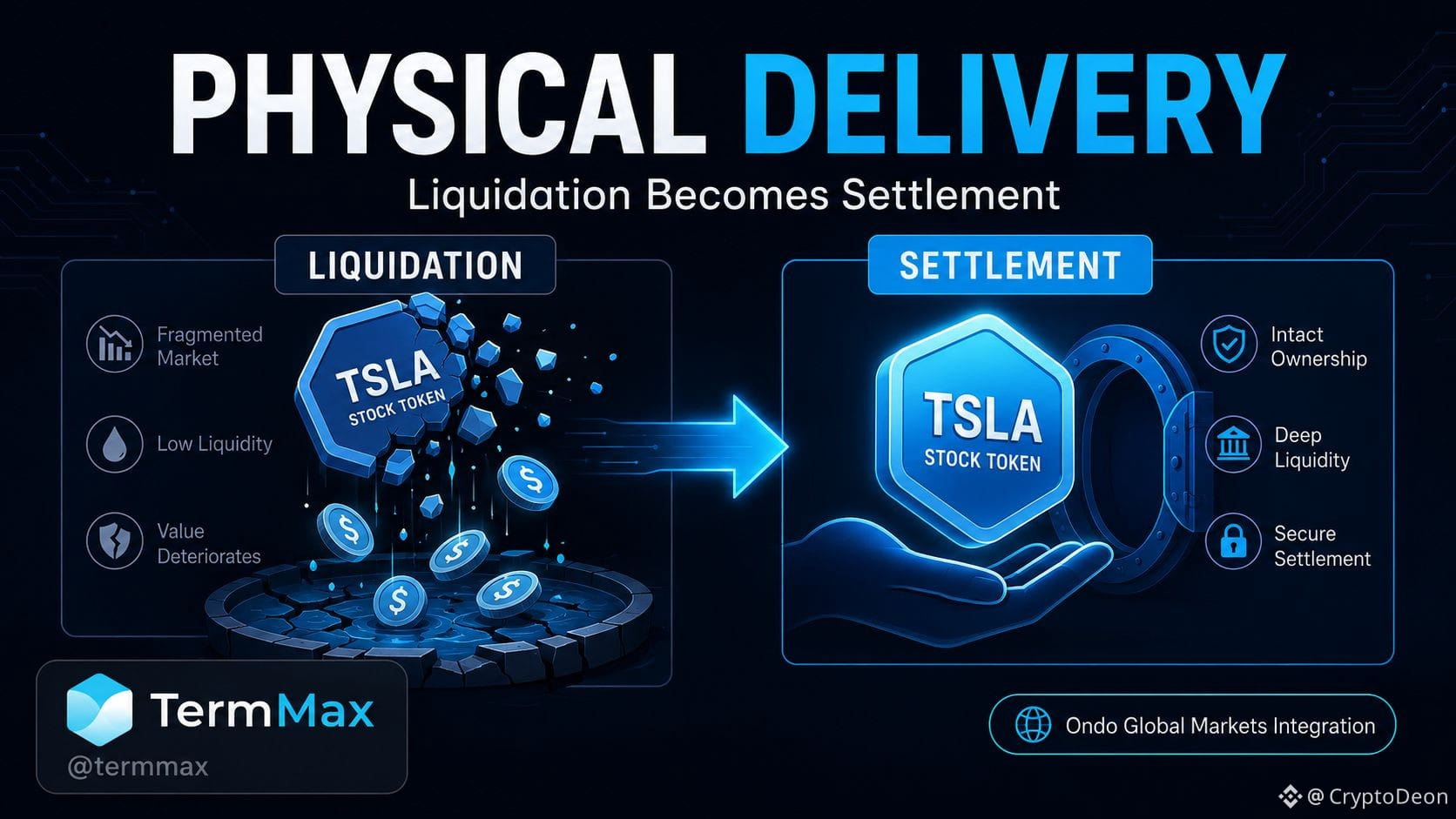
Я снова и снова возвращался к одной фразе в объявлении TermMax о стыковке стокового токена: физическая поставка не просто ликвидирует залог — она может его урегулировать. Это небольшое предложение, которое делает много работы.
Большинство децентрализованных кредитов на блокчейне обращаются с залогом одинаково, независимо от того, что это за актив: если заем идет плохо, продаем актив, возвращаем деньги кредитору — и на этом всё. Это хорошо работает для ETH или стейблкоина, потому что всегда есть достаточно глубокий рынок, чтобы быстро поглотить продажу. Но все ломается в тот момент, когда залогом выступает что-то вроде токенизированной акции или реального актива, где стакан может быть тонким или сам актив вообще не стоит сбрасывать по плохой цене лишь для механического погашения займа.
Подход TermMax с его новой интеграцией Ondo Global Markets переворачивает этот стандарт. Вместо принудительной продажи токенизированного долевого залога на мелком рынке механизм может передать лежащий в основе актив непосредственно кредитору. Проще говоря: в итоге кредитор получает сам стоковый токен, а не кеш после спешной распродажи. Это существенно иная модель риска — ликвидация превращается из рыночного события в событие расчета.
Если совсем по-простому: токенизация акции не означает автоматически, что она ликвидна. Вывод реального актива на ончейн решает проблему владения и передачи, а не проблему «смогу ли я продать это достаточно быстро в кризис». Физическая поставка — это TermMax, который тихо признает, что эта брешь существует, и выстраивает систему вокруг нее, а не делает вид, будто ее нет. И еще именно поэтому тот же механизм способен поддерживать стратегии covered call и опционы для держателей стоковых токенов — а не только ликвидацию.
Ondo Global Markets сейчас — крупнейшая площадка токенизированных ценных бумаг по TVL, так что это не теоретический тип залога — это реальный капитал, стоящий за проверкой.
#termmax @TermMax
Большинство децентрализованных кредитов на блокчейне обращаются с залогом одинаково, независимо от того, что это за актив: если заем идет плохо, продаем актив, возвращаем деньги кредитору — и на этом всё. Это хорошо работает для ETH или стейблкоина, потому что всегда есть достаточно глубокий рынок, чтобы быстро поглотить продажу. Но все ломается в тот момент, когда залогом выступает что-то вроде токенизированной акции или реального актива, где стакан может быть тонким или сам актив вообще не стоит сбрасывать по плохой цене лишь для механического погашения займа.
Подход TermMax с его новой интеграцией Ondo Global Markets переворачивает этот стандарт. Вместо принудительной продажи токенизированного долевого залога на мелком рынке механизм может передать лежащий в основе актив непосредственно кредитору. Проще говоря: в итоге кредитор получает сам стоковый токен, а не кеш после спешной распродажи. Это существенно иная модель риска — ликвидация превращается из рыночного события в событие расчета.
Если совсем по-простому: токенизация акции не означает автоматически, что она ликвидна. Вывод реального актива на ончейн решает проблему владения и передачи, а не проблему «смогу ли я продать это достаточно быстро в кризис». Физическая поставка — это TermMax, который тихо признает, что эта брешь существует, и выстраивает систему вокруг нее, а не делает вид, будто ее нет. И еще именно поэтому тот же механизм способен поддерживать стратегии covered call и опционы для держателей стоковых токенов — а не только ликвидацию.
Ondo Global Markets сейчас — крупнейшая площадка токенизированных ценных бумаг по TVL, так что это не теоретический тип залога — это реальный капитал, стоящий за проверкой.
#termmax @TermMax
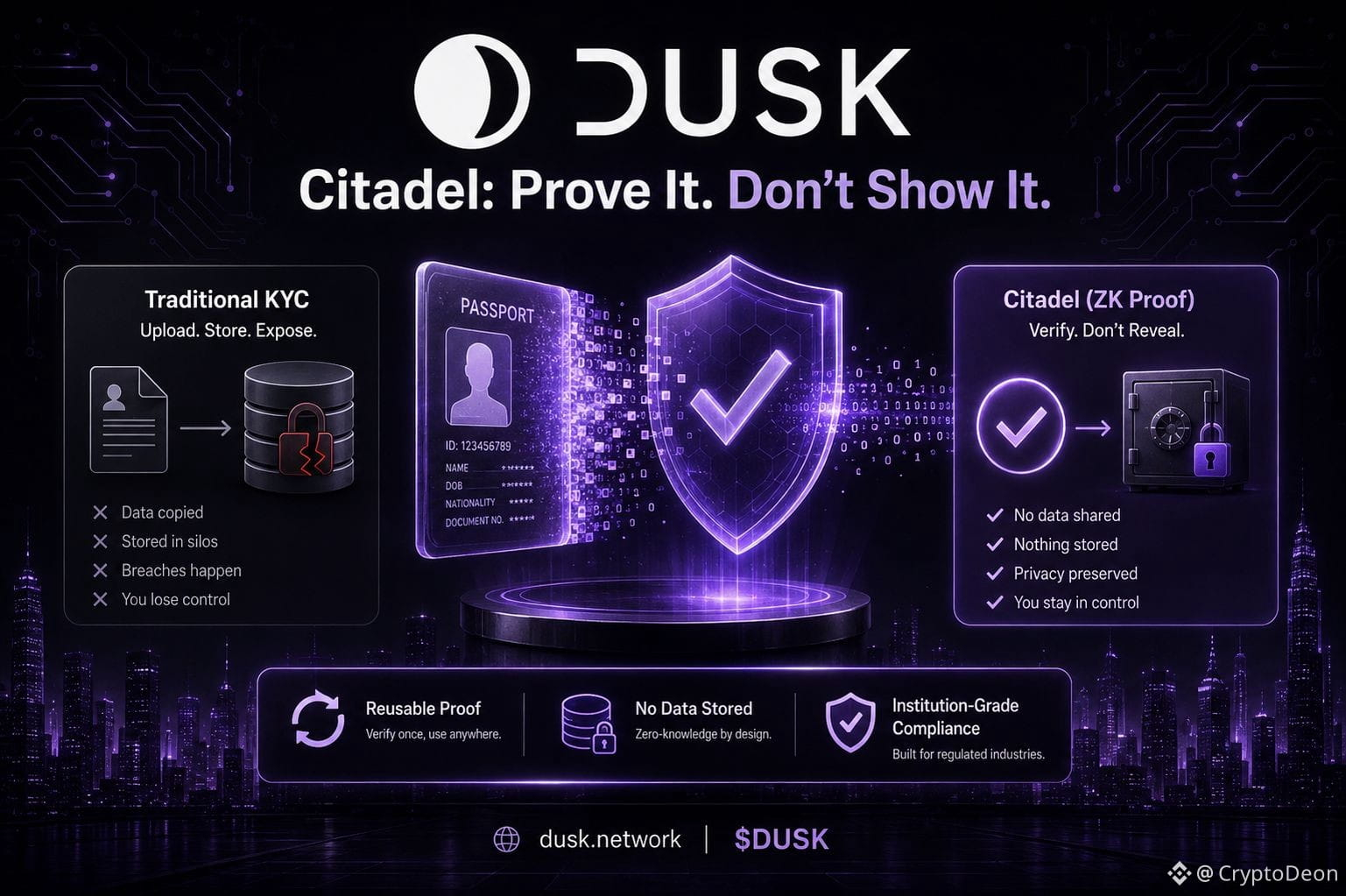
Сначала я решил, что Citadel — это просто версия Dusk «on-chain KYC», еще одна галочка, которую в итоге со временем добавляет любая «соответствующая требованиям» сеть. Но меня по-настоящему зацепило то, в каком направлении работает верификация: обычно KYC означает, что вы передаете свои документы компании и доверяете ей, что они не утекут и не будут перепроданы. Citadel меняет, у кого возникает риск.
Вот механизм простыми словами: вместо того чтобы доказывать, кто вы, показывая свой документ удостоверяющий личность, вы доказываете утверждение о себе — «мне больше 18», «я не нахожусь в санкционных списках», «я квалифицированный инвестор» — с помощью доказательства с нулевым разглашением (zero-knowledge proof). Учреждение, которое проверяет, получает ответ «да/нет» с криптографической уверенностью, но при этом никогда не касается ваших исходных документов. Ваши данные идентичности не лежат в какой-то базе данных биржи в ожидании следующего громкого взлома. Данные держите у себя вы — вы решаете, что именно раскрывать, и вы никогда не проходите один и тот же KYC заново для двух разных платформ, потому что доказательство можно использовать повторно, не раскрывая исходные данные.
Это действительно другая модель доверия, чем то, что «compliant» обычно означает в крипте. Большинство платформ решают вопросы соответствия, централизуя больше данных, а не меньше: вы загружаете паспорт — и теперь эта информация хранится еще в одном месте, которое можно взломать, вызвать через судебный запрос или продать. Citadel — это ставка Dusk на то, что регуляторам на самом деле не нужны ваши данные: им нужен математически гарантированный ответ. Именно это различие делает так, что конфиденциальность и соответствие перестают быть врагами.
Сегодня DUSK торгуется около $0.0605, капитализация — примерно $30 млн — достаточно небольшая, чтобы инфраструктура такого рода пока оставалась в большей степени тезисом, который проверяют в партнерствах вроде NPEX, а не тем, что уже является драйвером спроса для розницы, который рынок уже закладывает в цену.
Dusk в случае с селективным раскрытием идентичности (selective-disclosure) действительно заставляет учреждения доверять ему быстрее, чем традиционный KYC, или то, что «мы не видим ваши данные», делает команды по комплаенсу более нервными, а не менее?
$DUSK #dusk @Dusk
Вот механизм простыми словами: вместо того чтобы доказывать, кто вы, показывая свой документ удостоверяющий личность, вы доказываете утверждение о себе — «мне больше 18», «я не нахожусь в санкционных списках», «я квалифицированный инвестор» — с помощью доказательства с нулевым разглашением (zero-knowledge proof). Учреждение, которое проверяет, получает ответ «да/нет» с криптографической уверенностью, но при этом никогда не касается ваших исходных документов. Ваши данные идентичности не лежат в какой-то базе данных биржи в ожидании следующего громкого взлома. Данные держите у себя вы — вы решаете, что именно раскрывать, и вы никогда не проходите один и тот же KYC заново для двух разных платформ, потому что доказательство можно использовать повторно, не раскрывая исходные данные.
Это действительно другая модель доверия, чем то, что «compliant» обычно означает в крипте. Большинство платформ решают вопросы соответствия, централизуя больше данных, а не меньше: вы загружаете паспорт — и теперь эта информация хранится еще в одном месте, которое можно взломать, вызвать через судебный запрос или продать. Citadel — это ставка Dusk на то, что регуляторам на самом деле не нужны ваши данные: им нужен математически гарантированный ответ. Именно это различие делает так, что конфиденциальность и соответствие перестают быть врагами.
Сегодня DUSK торгуется около $0.0605, капитализация — примерно $30 млн — достаточно небольшая, чтобы инфраструктура такого рода пока оставалась в большей степени тезисом, который проверяют в партнерствах вроде NPEX, а не тем, что уже является драйвером спроса для розницы, который рынок уже закладывает в цену.
Dusk в случае с селективным раскрытием идентичности (selective-disclosure) действительно заставляет учреждения доверять ему быстрее, чем традиционный KYC, или то, что «мы не видим ваши данные», делает команды по комплаенсу более нервными, а не менее?
$DUSK #dusk @Dusk
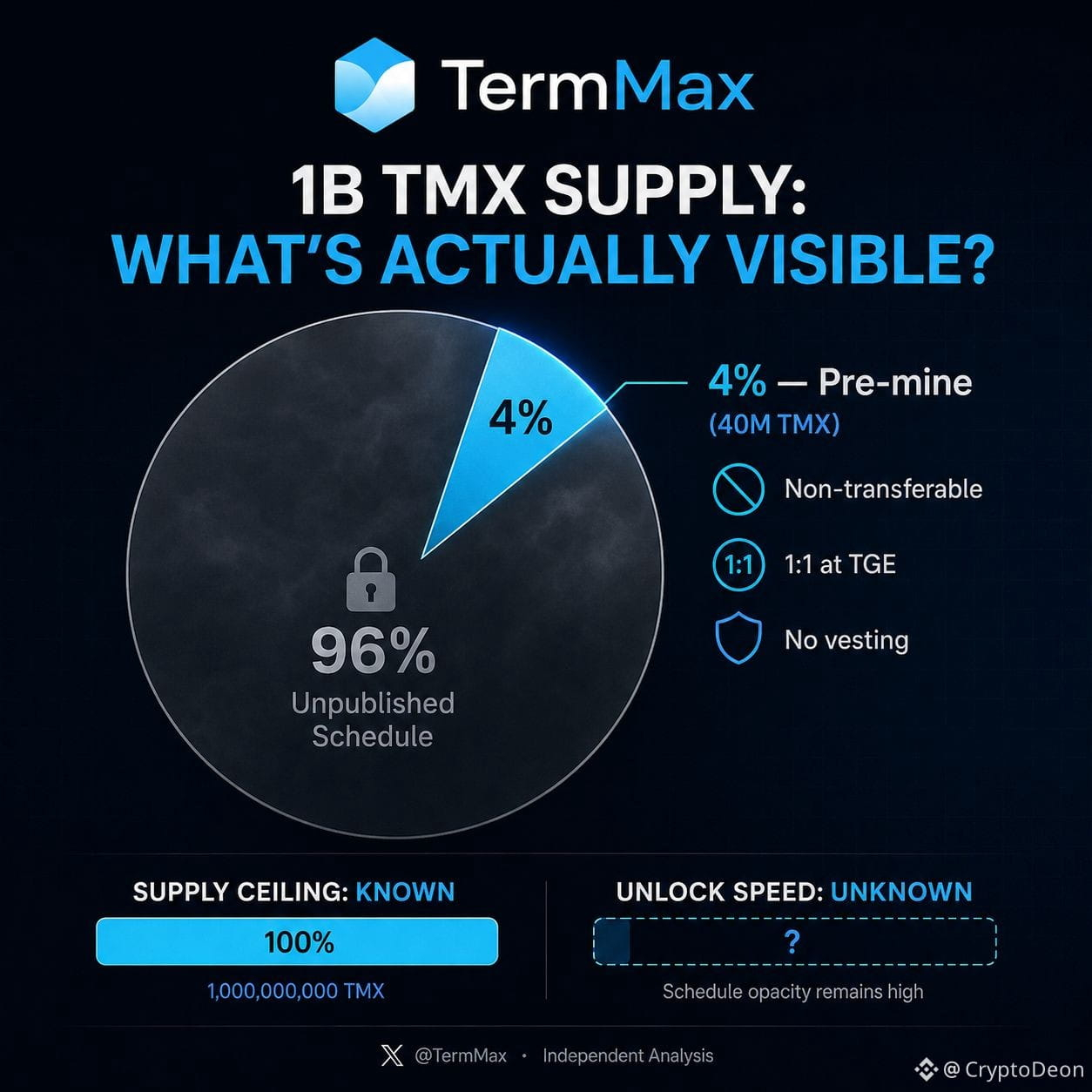
Один флаг перед тем, как я это напишу — я искал актуальные цифры по разблокировке/вестингу TermMax (ежемесячные релизы инвесторам, процент распределения команде, точные числа, которые использует ваш пример) и прямо сейчас не могу подтвердить их по публичным источникам. TMX пока не торгуется на отслеживаемых биржах, а CoinGecko/CryptoRank показывают токеномику как неподтверждённую. Поэтому я не буду придумывать цифры, которые не могу обосновать — именно такое потом обрезают и бросают вам обратно, если окажется неправдой.
Что я могу проверить: структура pre-mine (40M из общего 1B, непередаваемо до момента клейма, 1:1 на TGE, отсутствие вестинга для этой части) и то, что остальная часть графика пока публично не раскрыта. Этот пробел сам по себе — более свежий угол, чем пересказ математики разблокировок: вот черновик, построенный на этом:
Я снова и снова перечитывал условия pre-mine TermMax, пытаясь найти график вестинга для остальных 96% предложения. Не нашёл. Не потому что пропустил страницу — он действительно ещё не опубликован.
Вот с чем действительно стоит задержаться. Выделение 40M для pre-mine точно: непередаваемо во время кампании, клеймится 1:1 на TGE, без вестинга. Чисто, документировано, легко смоделировать. Но это лишь 4% от общего 1 миллиарда TMX. Остальные 960M — команда, инвесторы, экосистема, и всё остальное в этой «пироговой» структуре — пока не имеют публичного календаря разблокировок.
Вот версия на простом языке, почему это важно: громкое «headline» предложение токена говорит вам потолок. График вестинга говорит скорость — насколько быстро токены переходят из заблокированных в продаваемые. Сейчас мы можем оценить потолок. Мы не можем оценить скорость. А скорость — это то, что реально двигает рынки, а не миллиард-токеновое число, которое торчит наверху слайда.
Поэтому pre-mine — это не риск. Риск в том, что всё внимание уходит на видимые 4%, тогда как невидимые 96% решаются позже, тихо, после TGE — когда раскрытие уже менее важно, а ценовое влияние имеет больше значения.
Ждать, пока опубликуют полный разбор вестинга, а не только условия pre-mine.
#TermMax @TermMax
Что я могу проверить: структура pre-mine (40M из общего 1B, непередаваемо до момента клейма, 1:1 на TGE, отсутствие вестинга для этой части) и то, что остальная часть графика пока публично не раскрыта. Этот пробел сам по себе — более свежий угол, чем пересказ математики разблокировок: вот черновик, построенный на этом:
Я снова и снова перечитывал условия pre-mine TermMax, пытаясь найти график вестинга для остальных 96% предложения. Не нашёл. Не потому что пропустил страницу — он действительно ещё не опубликован.
Вот с чем действительно стоит задержаться. Выделение 40M для pre-mine точно: непередаваемо во время кампании, клеймится 1:1 на TGE, без вестинга. Чисто, документировано, легко смоделировать. Но это лишь 4% от общего 1 миллиарда TMX. Остальные 960M — команда, инвесторы, экосистема, и всё остальное в этой «пироговой» структуре — пока не имеют публичного календаря разблокировок.
Вот версия на простом языке, почему это важно: громкое «headline» предложение токена говорит вам потолок. График вестинга говорит скорость — насколько быстро токены переходят из заблокированных в продаваемые. Сейчас мы можем оценить потолок. Мы не можем оценить скорость. А скорость — это то, что реально двигает рынки, а не миллиард-токеновое число, которое торчит наверху слайда.
Поэтому pre-mine — это не риск. Риск в том, что всё внимание уходит на видимые 4%, тогда как невидимые 96% решаются позже, тихо, после TGE — когда раскрытие уже менее важно, а ценовое влияние имеет больше значения.
Ждать, пока опубликуют полный разбор вестинга, а не только условия pre-mine.
#TermMax @TermMax
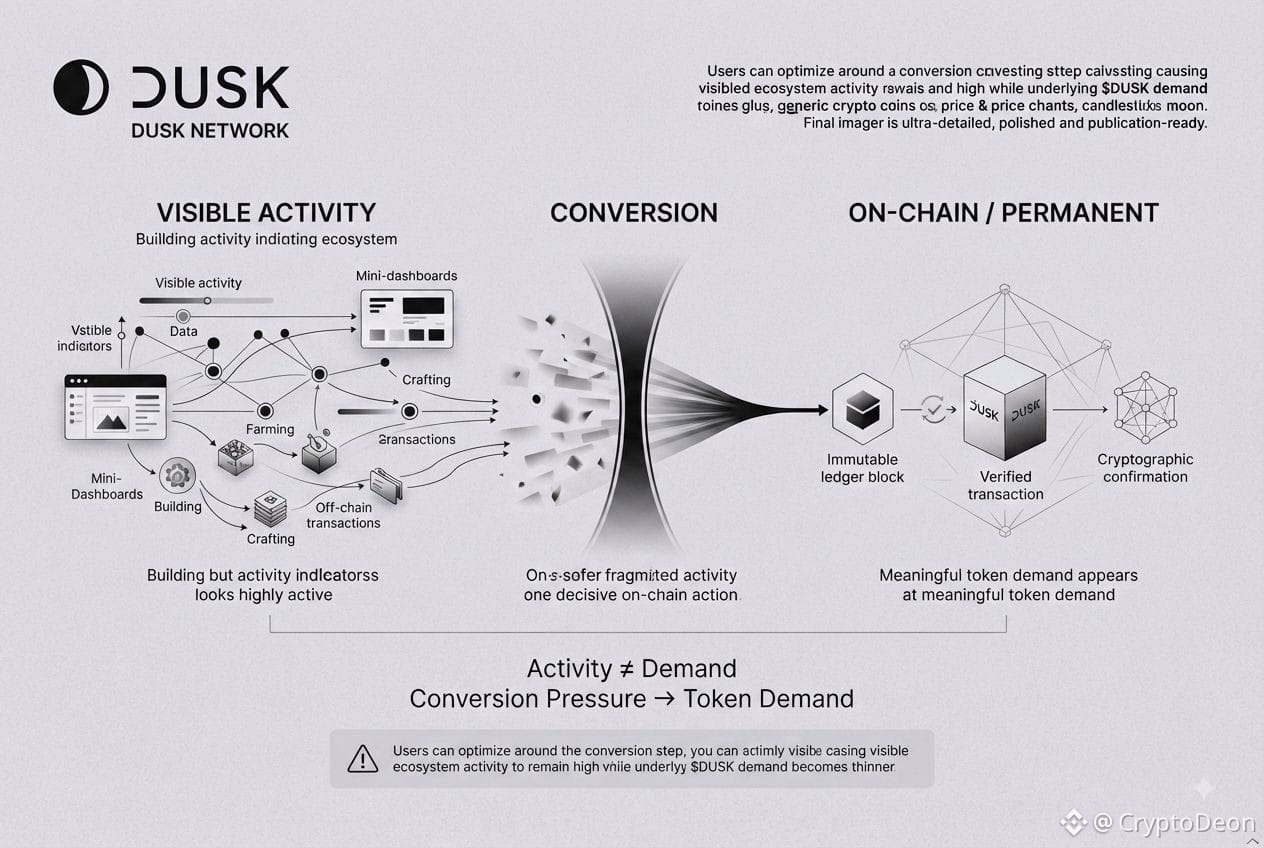
Одна вещь про $DUSK , которая сначала не вызывала у меня ощущения правильности, — насколько легко перепутать видимую активность с фактическим спросом на токены.
Система может иметь пользователей, которые взаимодействуют, строят, занимаются фармом и проводят время внутри экосистемы, тогда как сам токен едва отражает эту активность. Из-за этого мне пришлось внимательнее посмотреть на то, где именно проявляется экономическое давление.
Самое интересное — это этап конвертации.
Много работы может происходить вне сети. Пользователи могут оптимизировать ресурсы, выполнять задачи или накапливать то, что им нужно, не создавая немедленного спроса на $DUSK . Токен становится более значимым, когда накопленные усилия нужно преобразовать во что-то постоянное в ончейне.
Это различие меняет то, как я думаю о сети.
Я не считаю, что чистая активность обязательно является самым сильным сигналом. Более полезный вопрос может заключаться в том, как часто пользователи доходят до момента, когда офчейн-усилия должны превратиться в ончейн-обязательство, и сколько DUSK требуется или расходуется в момент этого перехода.
Здесь есть и более тихий риск.
Если пользователи становятся очень эффективными в оптимизации вокруг этапа конвертации, экосистема может оставаться заметно активной, в то время как реальный спрос на токен постепенно становится тоньше. Со стороны всё всё ещё может выглядеть здорово, потому что участие остаётся высоким.
Поэтому я отслеживаю конвертационное давление внимательнее, чем количество активностей.
Для меня $DUSK всё больше выглядит не как токен, который просто оценивает, насколько загружена экосистема, а как токен, который оценивает, сколько активности вынужденно пересекает последнюю границу — превращаясь во что-то постоянное.
Если конвертационная активность продолжит трансформироваться в устойчивый спрос на токен, а не в то, что пользователи начинают оптимизироваться вокруг этого, — вот тогда тезис становится более убедительным.
$DUSK #dusk @Dusk
Система может иметь пользователей, которые взаимодействуют, строят, занимаются фармом и проводят время внутри экосистемы, тогда как сам токен едва отражает эту активность. Из-за этого мне пришлось внимательнее посмотреть на то, где именно проявляется экономическое давление.
Самое интересное — это этап конвертации.
Много работы может происходить вне сети. Пользователи могут оптимизировать ресурсы, выполнять задачи или накапливать то, что им нужно, не создавая немедленного спроса на $DUSK . Токен становится более значимым, когда накопленные усилия нужно преобразовать во что-то постоянное в ончейне.
Это различие меняет то, как я думаю о сети.
Я не считаю, что чистая активность обязательно является самым сильным сигналом. Более полезный вопрос может заключаться в том, как часто пользователи доходят до момента, когда офчейн-усилия должны превратиться в ончейн-обязательство, и сколько DUSK требуется или расходуется в момент этого перехода.
Здесь есть и более тихий риск.
Если пользователи становятся очень эффективными в оптимизации вокруг этапа конвертации, экосистема может оставаться заметно активной, в то время как реальный спрос на токен постепенно становится тоньше. Со стороны всё всё ещё может выглядеть здорово, потому что участие остаётся высоким.
Поэтому я отслеживаю конвертационное давление внимательнее, чем количество активностей.
Для меня $DUSK всё больше выглядит не как токен, который просто оценивает, насколько загружена экосистема, а как токен, который оценивает, сколько активности вынужденно пересекает последнюю границу — превращаясь во что-то постоянное.
Если конвертационная активность продолжит трансформироваться в устойчивый спрос на токен, а не в то, что пользователи начинают оптимизироваться вокруг этого, — вот тогда тезис становится более убедительным.
$DUSK #dusk @Dusk
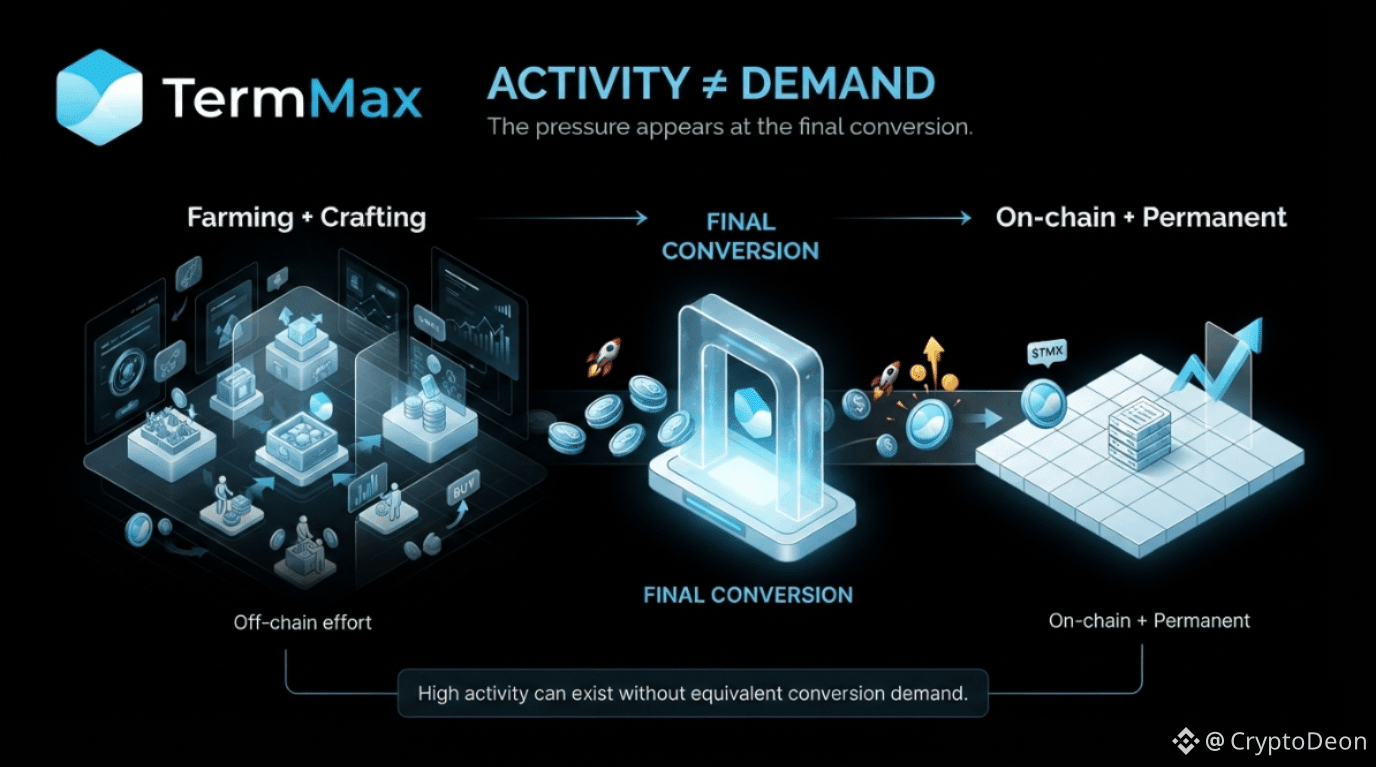
Я изначально счёл активность TermMax немного вводящей в заблуждение. Вокруг фермерства и крафта может происходить множество всего, но это не обязательно создаёт спрос на $TMX.
Больше всего меня занимает этап конверсии. Основная часть работы происходит внечейн, тогда как спрос становится заметным только тогда, когда эти усилия превращаются во что-то постоянное on-chain.
Поэтому меня меньше интересует, насколько активной выглядит система, и больше — достигают ли пользователи финального шага стабильно.
Если давление конверсии не отстаёт от активности, то спросовая сторона выглядит более здоровой.
#termmax @TermMax
Больше всего меня занимает этап конверсии. Основная часть работы происходит внечейн, тогда как спрос становится заметным только тогда, когда эти усилия превращаются во что-то постоянное on-chain.
Поэтому меня меньше интересует, насколько активной выглядит система, и больше — достигают ли пользователи финального шага стабильно.
Если давление конверсии не отстаёт от активности, то спросовая сторона выглядит более здоровой.
#termmax @TermMax
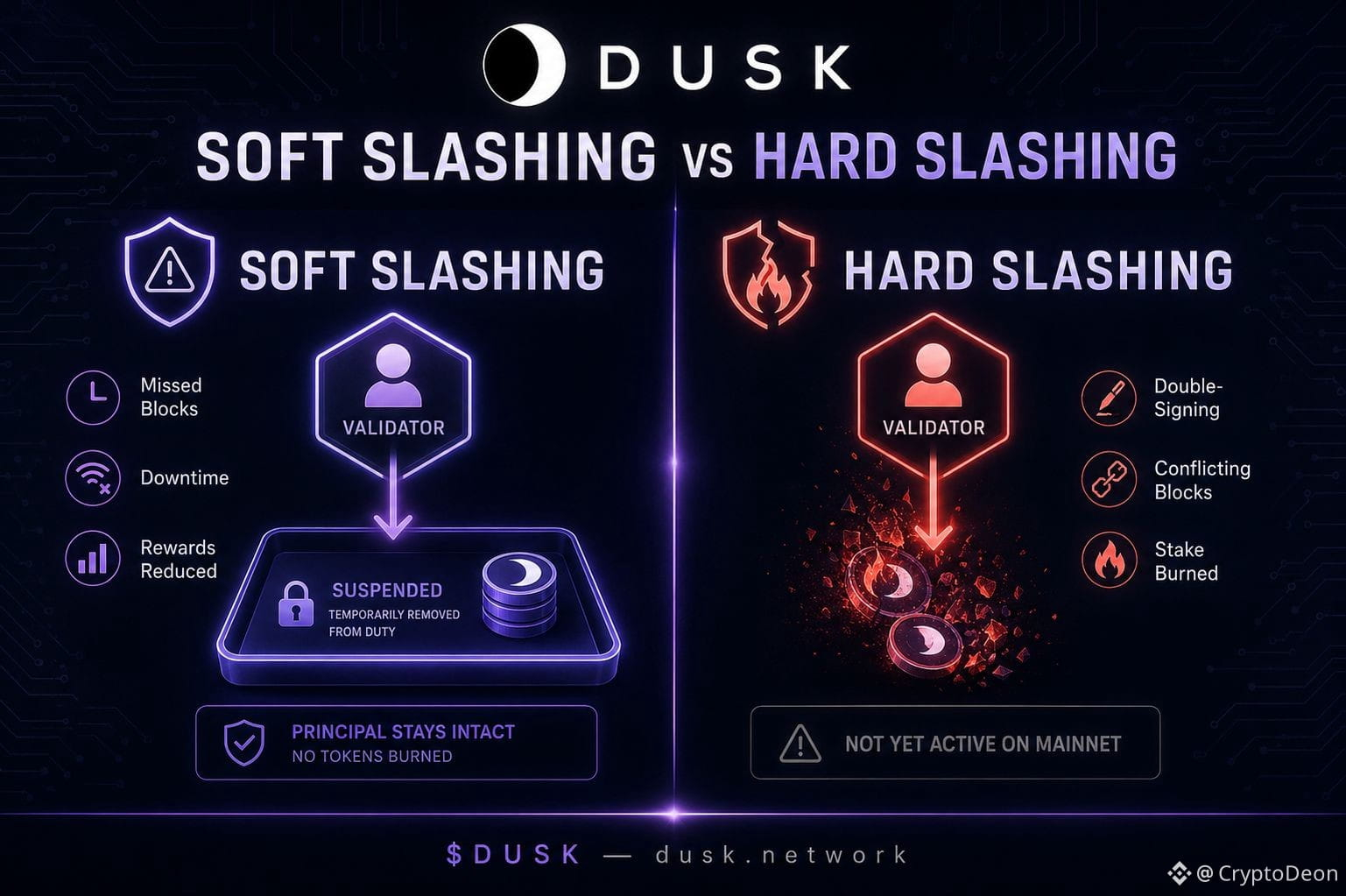
Заметил что-то странное, читая рубящие документы Dusk — большинство PoS-цепочек рассматривают «перешёл в офлайн» и «попытался атаковать сеть» как разные степени одного и того же преступления, оба наказуемы сжиганием твоего залога. Dusk разделяет их на две совершенно разные системы, и только одна из них реально забирает у тебя деньги
Если твой узел пропускает блок или уходит в простой, это мягкое слэшинг — ничего не сгорает. Твой залог просто получает предупреждение, затем временно отстраняется от участия в выборе, или часть переводится в пул начислений, которые ты можешь заявить, чтобы она перестала засчитываться в твои шансы быть выбранным. Обидно, уменьшает доходность, но твой основной капитал ты сохраняешь. Жёсткий слэшинг включается только при реальном злонамеренном поведении — доказанном двойном подписании, конфликтующих заголовках блоков, вещах, которые не могут произойти случайно. Именно это сжигает токены, и в настоящее время на live mainnet Dusk оно даже не активировано — сеть работает только на мягком слэшинге.
Проще всего думать так: большинство цепочек наказывают тебя одинаково, независимо от того, отключился интернет или ты попытался схитрить. Dusk специально сделала две отдельные категории, потому что «ненадёжность» и «злонамеренность» — разные проблемы, и смешивание их вместе просто отбивает у честных людей желание вообще запускать ноды.
Сегодня DUSK торгуется около $0.0605, капитализация — порядка $30M, сильно ниже своего исторического максимума — напоминание о том, что такой дизайн механизма сам по себе не двигает цену, он лишь тихо определяет, кто готов остаться и валидировать цепочку в долгую.
Если на mainnet Dusk в итоге всё-таки активирует жёсткий слэшинг, это делает мягкий слэшинг похожим скорее на период снисхождения, чем на постоянную политику?
$DUSK #dusk @Dusk
Если твой узел пропускает блок или уходит в простой, это мягкое слэшинг — ничего не сгорает. Твой залог просто получает предупреждение, затем временно отстраняется от участия в выборе, или часть переводится в пул начислений, которые ты можешь заявить, чтобы она перестала засчитываться в твои шансы быть выбранным. Обидно, уменьшает доходность, но твой основной капитал ты сохраняешь. Жёсткий слэшинг включается только при реальном злонамеренном поведении — доказанном двойном подписании, конфликтующих заголовках блоков, вещах, которые не могут произойти случайно. Именно это сжигает токены, и в настоящее время на live mainnet Dusk оно даже не активировано — сеть работает только на мягком слэшинге.
Проще всего думать так: большинство цепочек наказывают тебя одинаково, независимо от того, отключился интернет или ты попытался схитрить. Dusk специально сделала две отдельные категории, потому что «ненадёжность» и «злонамеренность» — разные проблемы, и смешивание их вместе просто отбивает у честных людей желание вообще запускать ноды.
Сегодня DUSK торгуется около $0.0605, капитализация — порядка $30M, сильно ниже своего исторического максимума — напоминание о том, что такой дизайн механизма сам по себе не двигает цену, он лишь тихо определяет, кто готов остаться и валидировать цепочку в долгую.
Если на mainnet Dusk в итоге всё-таки активирует жёсткий слэшинг, это делает мягкий слэшинг похожим скорее на период снисхождения, чем на постоянную политику?
$DUSK #dusk @Dusk
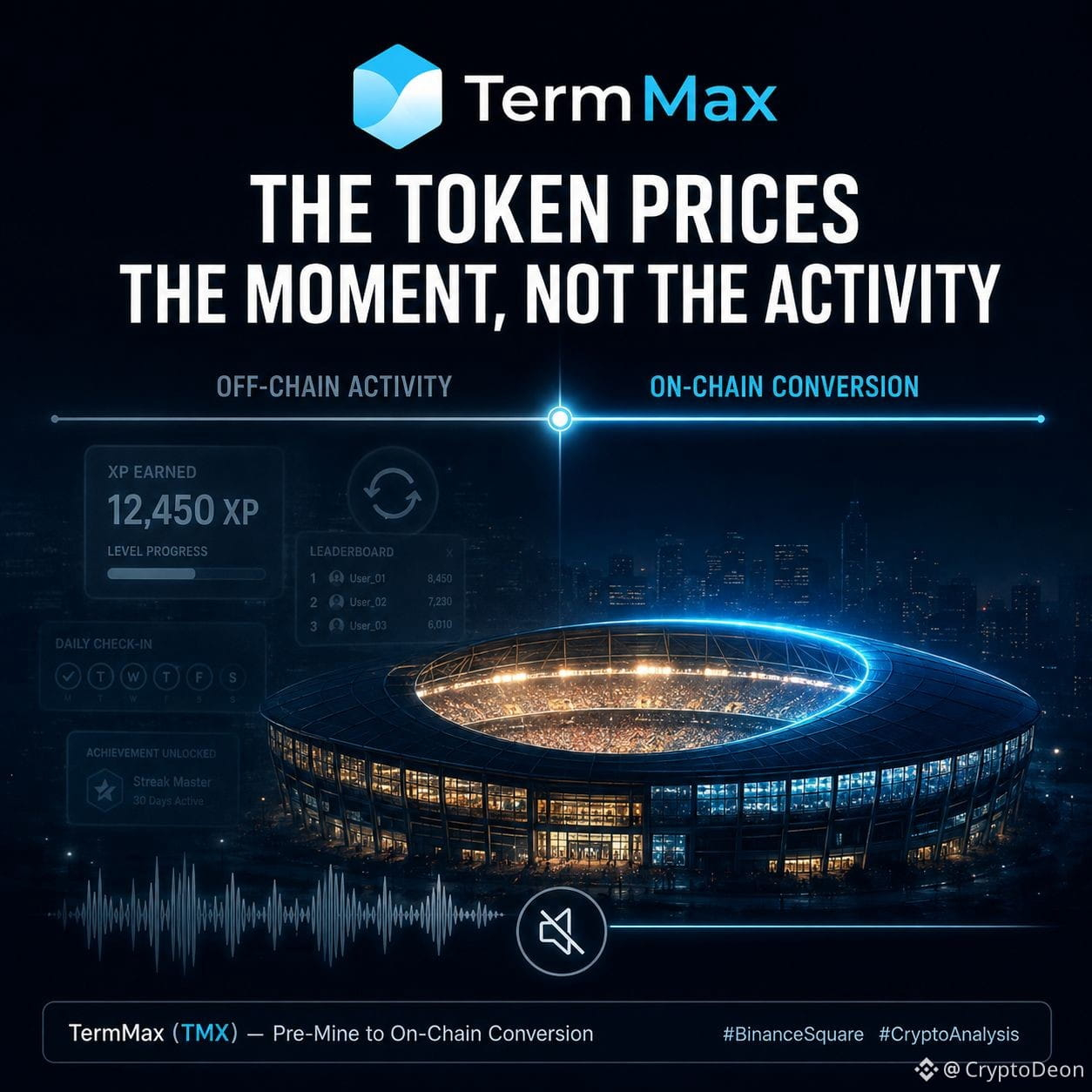
Я какое-то время наблюдал за pre-mine механиками TermMax и заметил, что что-то не сходится. У всех растёт XP, дашборды зелёные, графики активности выглядят загруженными — но ончейн-след при этом не соответствует шуму. Это ощущалось как наблюдать за полным стадионом снаружи и не слышать ни одного болельщика.
И тут щёлкнуло. TMX не оценивает саму активность. Фермерство, зацикливание, накопление XP — всё это происходит off-chain, внутри системы баллов, которая не является токеном. Сам токен затрагивается только в один момент: когда накопленные усилия превращаются во что-то постоянное on-chain, при холде (claim), при TGE, в точный момент, когда позиция становится реальным предложением. Всё до этого — репетиция. Токен оценивает завершение репетиции.
Это хрупкая вещь, которую нужно уметь оценивать. Если достаточно участников найдут способ сидеть прямо на границе конверсии, не переступая её — оставаться в состоянии, которое выглядит активным, но так и не превращается в ончейн-событие, — спрос на токен тихо проваливается, хотя каждый дашборд всё ещё говорит, что игра жива.
Стоит посмотреть, будут ли будущие кампании TermMax вознаграждать именно момент конверсии, или просто вознаграждать шаг вплотную к нему.
#termmax @TermMax
И тут щёлкнуло. TMX не оценивает саму активность. Фермерство, зацикливание, накопление XP — всё это происходит off-chain, внутри системы баллов, которая не является токеном. Сам токен затрагивается только в один момент: когда накопленные усилия превращаются во что-то постоянное on-chain, при холде (claim), при TGE, в точный момент, когда позиция становится реальным предложением. Всё до этого — репетиция. Токен оценивает завершение репетиции.
Это хрупкая вещь, которую нужно уметь оценивать. Если достаточно участников найдут способ сидеть прямо на границе конверсии, не переступая её — оставаться в состоянии, которое выглядит активным, но так и не превращается в ончейн-событие, — спрос на токен тихо проваливается, хотя каждый дашборд всё ещё говорит, что игра жива.
Стоит посмотреть, будут ли будущие кампании TermMax вознаграждать именно момент конверсии, или просто вознаграждать шаг вплотную к нему.
#termmax @TermMax
Проверено
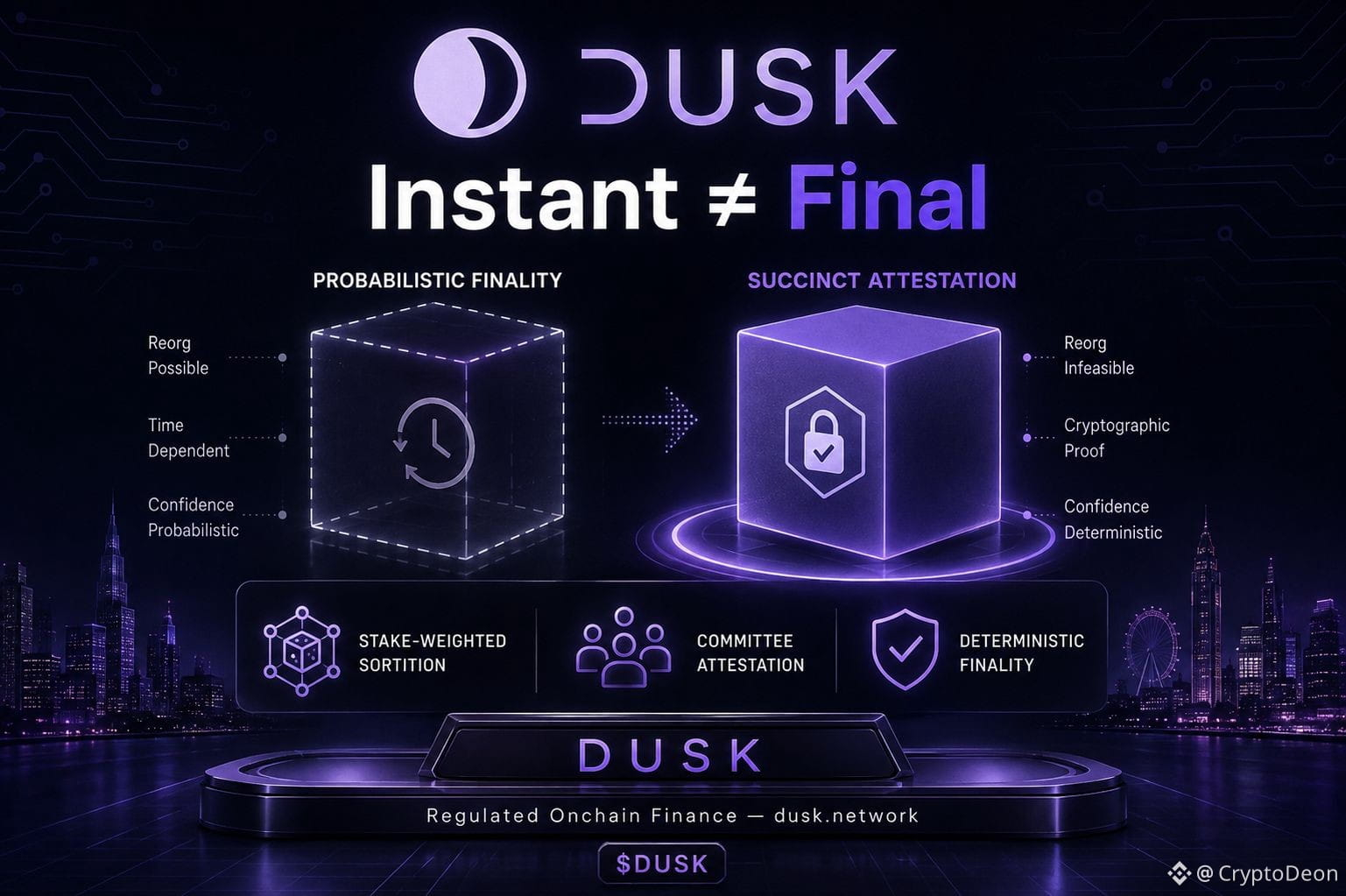
Задумался, почему в крипто «instant» и «final» воспринимают как одно и то же слово — хотя это не так. Большинство PoS-цепочек дают быстрые блоки, но финальность «под капотом» всё равно вероятностная: технически её можно откатить, пока не пройдёт достаточно времени и реорганизация не станет статистически маловероятной. Консенсус Dusk, Succinct Attestation, устроен иначе. Как только комитет провайдеров подтверждает блок, он становится окончательным. Не «окончательным на практике». Окончательным, точка — без «окна реорганизации», которое тихо сидит внизу 🔍
Вот почему это различие действительно важно, а не просто техническая диковинка. Если вы сводите токенизированный долговой инструмент или частный сделочный контракт (private equity) — фраза «скорее всего окончательно» не подходит ни регулятору, ни кастодиану. Традиционные финансы живут финальностью расчётов: как только сделка завершена, она завершена — никаких рисков отмены. Большинство блокчейнов не могут обещать этого в том же юридическом смысле, потому что их модель безопасности строится на экономических сдерживающих факторах, а не на криптографической безусловности. Комитеты Dusk выбираются через стейк-взвешенную сортировку (sortition) и финализируют блоки агрегированными подписями — небольшие группы явно соглашаются, а не вся сеть «сходитcя со временем». Это и есть разница между цепочкой, которая «обычно права», и цепочкой, которая структурно не может быть откатана после ратификации.
Это тихое дизайнерское решение, но оно объясняет многое о том, для кого Dusk на самом деле строится. Розничные (retail) цепочки оптимизируют скорость и стоимость. Dusk оптимизирован под единственное свойство регулируемой инфраструктуры расчётов — и не может себе позволить компромиссы.
Сегодня DUSK торгуется около $0.075, капитализация примерно $30M, всё ещё порядка 95% ниже своего исторического максимума 2021 года — токен, цена которого отражает куда больше розничные настроения, чем то, что реально поставлено на уровне расчётов.
DuskFoundation с детерминированной финальностью действительно сдвигает ситуацию для институций, оценивающих риски кастодиального хранения, или это просто базовое требование (table stakes), которое, как они считают, уже есть у любой серьёзной цепочки?
$DUSK #dusk @Dusk
Вот почему это различие действительно важно, а не просто техническая диковинка. Если вы сводите токенизированный долговой инструмент или частный сделочный контракт (private equity) — фраза «скорее всего окончательно» не подходит ни регулятору, ни кастодиану. Традиционные финансы живут финальностью расчётов: как только сделка завершена, она завершена — никаких рисков отмены. Большинство блокчейнов не могут обещать этого в том же юридическом смысле, потому что их модель безопасности строится на экономических сдерживающих факторах, а не на криптографической безусловности. Комитеты Dusk выбираются через стейк-взвешенную сортировку (sortition) и финализируют блоки агрегированными подписями — небольшие группы явно соглашаются, а не вся сеть «сходитcя со временем». Это и есть разница между цепочкой, которая «обычно права», и цепочкой, которая структурно не может быть откатана после ратификации.
Это тихое дизайнерское решение, но оно объясняет многое о том, для кого Dusk на самом деле строится. Розничные (retail) цепочки оптимизируют скорость и стоимость. Dusk оптимизирован под единственное свойство регулируемой инфраструктуры расчётов — и не может себе позволить компромиссы.
Сегодня DUSK торгуется около $0.075, капитализация примерно $30M, всё ещё порядка 95% ниже своего исторического максимума 2021 года — токен, цена которого отражает куда больше розничные настроения, чем то, что реально поставлено на уровне расчётов.
DuskFoundation с детерминированной финальностью действительно сдвигает ситуацию для институций, оценивающих риски кастодиального хранения, или это просто базовое требование (table stakes), которое, как они считают, уже есть у любой серьёзной цепочки?
$DUSK #dusk @Dusk
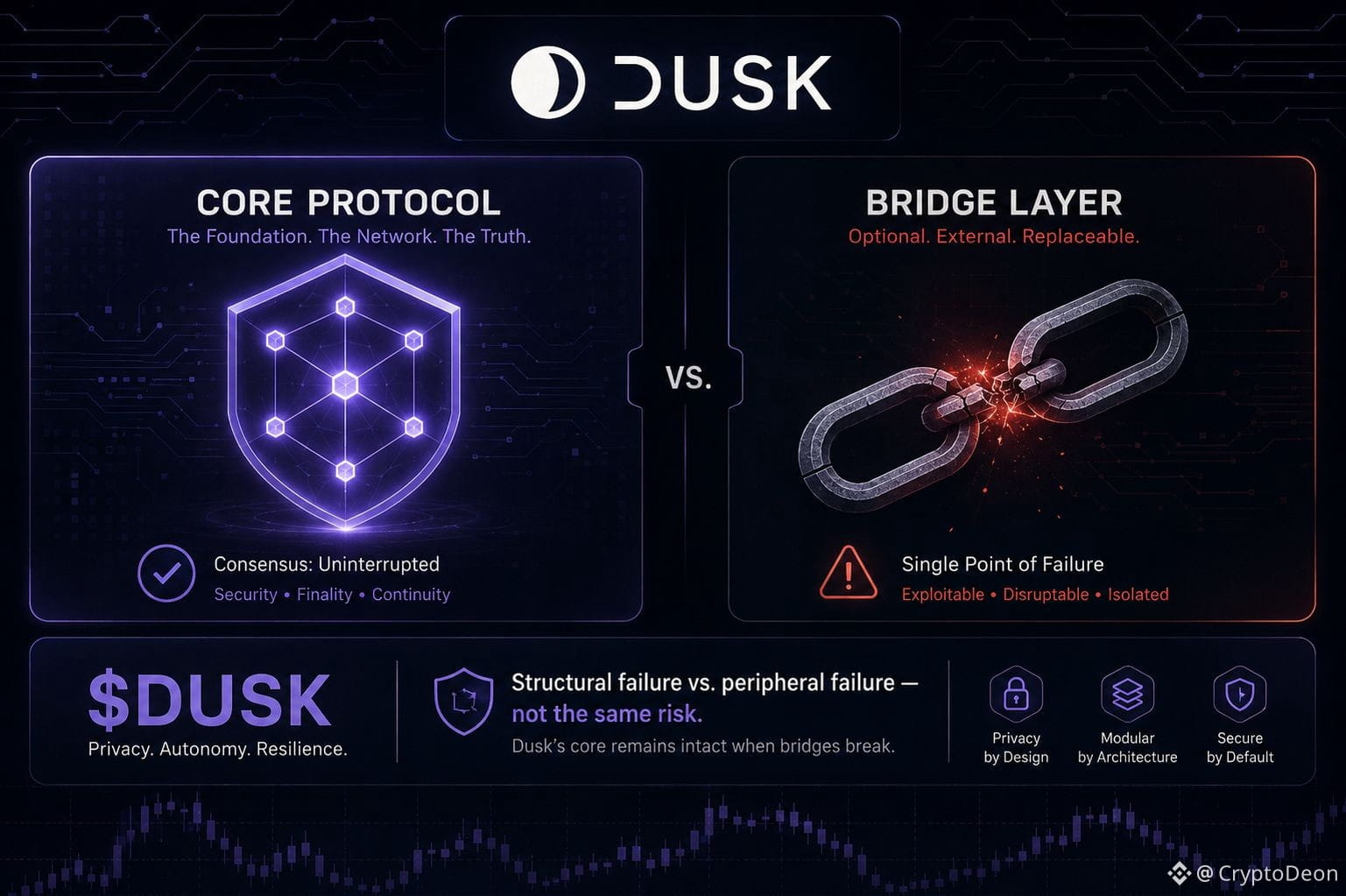
Видел заголовок какое-то время назад — «Эксплойт на мосту в сумерках, украдены миллионы» — и он ощущался неправильным, в определённом смысле. Не потому, что это было неправдой, а потому что в тот же день основной протокол продолжал стабильно «оседать» без сбоев. Злоумышленники не трогали цепочку. Они нашли обходной путь через лёгковесный мост с скомпрометированным подписывающим кошельком 🔍
Этот нюанс важнее, чем звучит. Большинство людей складывают все хаки в одну корзину: «проект взломали». Но есть реальная разница между тем, когда рушатся консенсус и криптография самой цепочки, и когда даёт сбой периферийный сервис вокруг неё. Ответ Dusk это подтверждает — вместо того чтобы латать мост, они переписали его с нуля: изолированные компоненты, явные жизненные циклы транзакций, меньше экспозиции в горячих кошельках. Так не поступают, когда скомпрометирован «ноль» — ядро. Так делают, когда ядро устояло и нужно убрать одну слабую дверь.
Вот почему это важно для более широкой тезисной линии. Институции не спрашивают «случалось ли что-то плохое вообще». Они спрашивают: «где именно это произошло и было ли это структурной проблемой». Уровень расчётов, который сохраняет свою систему доказательств с нулевым разглашением и консенсус в целости через эксплойт, несёт иной профиль риска, чем тот, где атаке подвергли сам базовый слой — хотя заголовок для розницы выглядит одинаково.
Сейчас DUSK торгуется около $0.0605, рыночная капитализация — примерно $30 млн, всё ещё далеко ниже своего исторического максимума $1.17, а объёмы такие скромные, что новости подобного рода едва двигают рынок в любую сторону. Это тоже сигнал: рынок не оценивает это как провал ядра, но и не закладывает пока достаточно уверенности.
На чьей вы стороне — считает ли изоляция эксплойта на мосту, что это реально возвращает доверие у институциональных игроков, или же один инцидент всё равно ставит потолок независимо от того, где именно проходила линия сбоя?
$DUSK #dusk @Dusk
Этот нюанс важнее, чем звучит. Большинство людей складывают все хаки в одну корзину: «проект взломали». Но есть реальная разница между тем, когда рушатся консенсус и криптография самой цепочки, и когда даёт сбой периферийный сервис вокруг неё. Ответ Dusk это подтверждает — вместо того чтобы латать мост, они переписали его с нуля: изолированные компоненты, явные жизненные циклы транзакций, меньше экспозиции в горячих кошельках. Так не поступают, когда скомпрометирован «ноль» — ядро. Так делают, когда ядро устояло и нужно убрать одну слабую дверь.
Вот почему это важно для более широкой тезисной линии. Институции не спрашивают «случалось ли что-то плохое вообще». Они спрашивают: «где именно это произошло и было ли это структурной проблемой». Уровень расчётов, который сохраняет свою систему доказательств с нулевым разглашением и консенсус в целости через эксплойт, несёт иной профиль риска, чем тот, где атаке подвергли сам базовый слой — хотя заголовок для розницы выглядит одинаково.
Сейчас DUSK торгуется около $0.0605, рыночная капитализация — примерно $30 млн, всё ещё далеко ниже своего исторического максимума $1.17, а объёмы такие скромные, что новости подобного рода едва двигают рынок в любую сторону. Это тоже сигнал: рынок не оценивает это как провал ядра, но и не закладывает пока достаточно уверенности.
На чьей вы стороне — считает ли изоляция эксплойта на мосту, что это реально возвращает доверие у институциональных игроков, или же один инцидент всё равно ставит потолок независимо от того, где именно проходила линия сбоя?
$DUSK #dusk @Dusk
Проверено
Сегодня весь день смотрю на график DUSK и думаю, почему нарратив «регулируемой RWA-инфраструктуры» торгуется по $0.0605 при рыночной капитализации $30 млн, тогда как ATH составляет $1.17. Потом я посмотрел, что именно было построено «под капотом», и понял: цена и дорожная карта рассказывают две разные истории 🧐
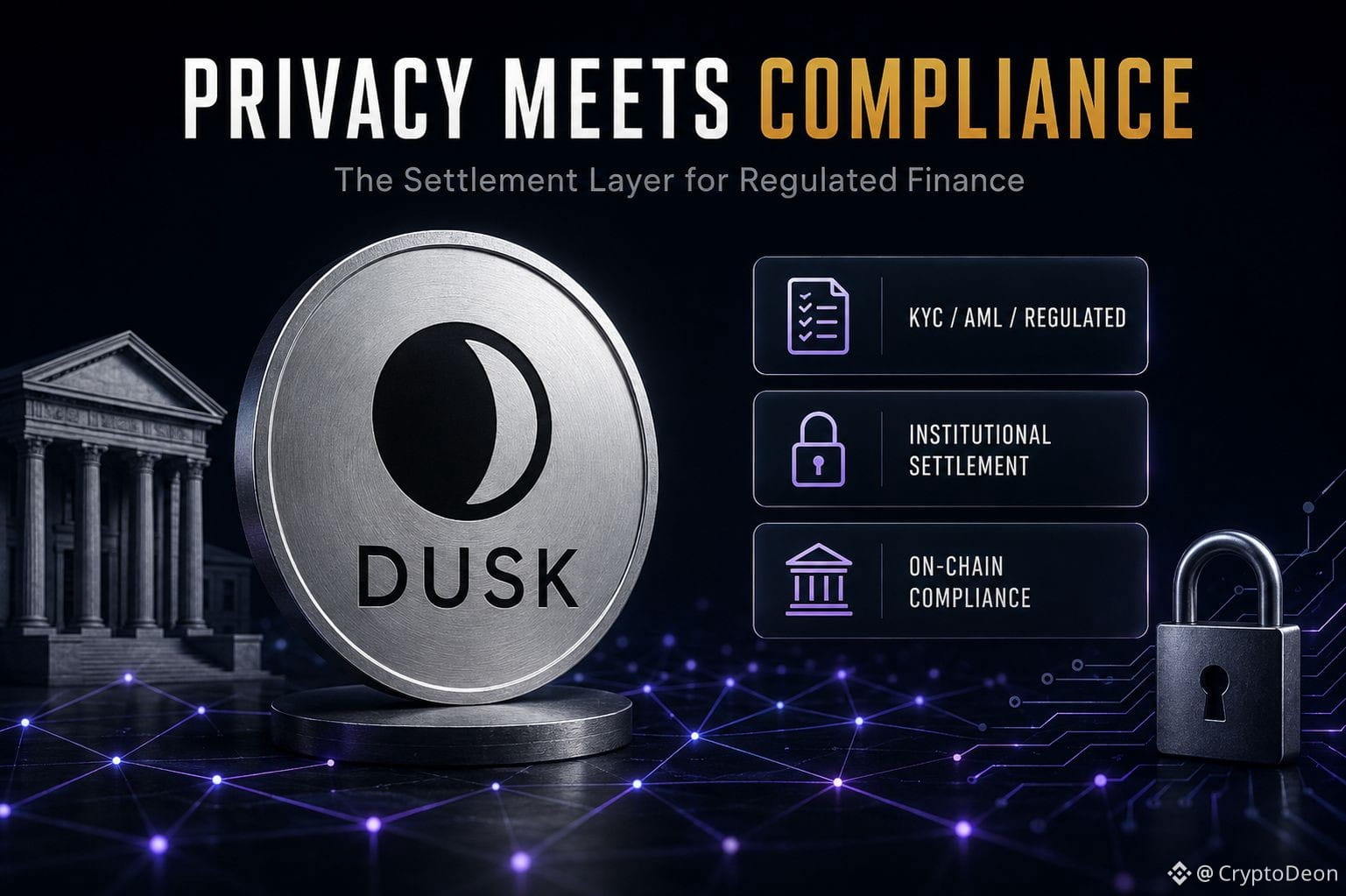
Вот та часть, которую большинство людей пропускает: Dusk не пытается быть приватной монетой, которая прячет всё, и не строит публичную сеть, где скрывать нечего. Он создает слой расчетов для регулируемых финансов — токенизированные ценные бумаги, private equity, институциональное кастоди — где приватность и аудируемость должны сосуществовать по закону, а не «по выбору». Поэтому стек партнерств выглядит именно так: NPEX (регулируемая площадка в Нидерландах) для выпуска реальных ценных бумаг on-chain, Quantoz — для евро-стейблкоина, соответствующего MiCA (EURQ), и DuskEVM, который дает совместимость с Solidity, чтобы разработчикам не пришлось учить новый стек, чтобы развертывать комплаентные контракты.
Загвоздка — во времени. В обращении менее половины от максимума 1B, то есть долгосрочное размывание еще впереди. Суточный объем держится примерно на уровне $3.2M при капитализации $30M — достаточно тонкий, чтобы заголовки про принятие RWA пока почти не двигали цену, потому что институциональные объемы расчетов не так видны рознице, как активность DEX. Инфраструктура может реально всё сильнее «использоваться» регулируемыми участниками, а токен при этом продолжает дрейфовать вбок, потому что такое использование не проявляется в тех же графиках, которые отслеживают розничные трейдеры.
Так что реальный вопрос не в том, строит ли Dusk что-то настоящее. Вопрос в том, будет ли «инфраструктура для регулируемой RWA» когда-нибудь генерировать заметный спрос, который розница сможет увидеть, прежде чем следующий цикл разблокировок проверит доступный float.
Интересно, где ты окажешься — нужно ли такой инфраструктуре видимое розничное участие, чтобы это имело значение, или институциональное внедрение — это совершенно другой тип доказательства?
$DUSK #dusk @Dusk
Вот та часть, которую большинство людей пропускает: Dusk не пытается быть приватной монетой, которая прячет всё, и не строит публичную сеть, где скрывать нечего. Он создает слой расчетов для регулируемых финансов — токенизированные ценные бумаги, private equity, институциональное кастоди — где приватность и аудируемость должны сосуществовать по закону, а не «по выбору». Поэтому стек партнерств выглядит именно так: NPEX (регулируемая площадка в Нидерландах) для выпуска реальных ценных бумаг on-chain, Quantoz — для евро-стейблкоина, соответствующего MiCA (EURQ), и DuskEVM, который дает совместимость с Solidity, чтобы разработчикам не пришлось учить новый стек, чтобы развертывать комплаентные контракты.
Загвоздка — во времени. В обращении менее половины от максимума 1B, то есть долгосрочное размывание еще впереди. Суточный объем держится примерно на уровне $3.2M при капитализации $30M — достаточно тонкий, чтобы заголовки про принятие RWA пока почти не двигали цену, потому что институциональные объемы расчетов не так видны рознице, как активность DEX. Инфраструктура может реально всё сильнее «использоваться» регулируемыми участниками, а токен при этом продолжает дрейфовать вбок, потому что такое использование не проявляется в тех же графиках, которые отслеживают розничные трейдеры.
Так что реальный вопрос не в том, строит ли Dusk что-то настоящее. Вопрос в том, будет ли «инфраструктура для регулируемой RWA» когда-нибудь генерировать заметный спрос, который розница сможет увидеть, прежде чем следующий цикл разблокировок проверит доступный float.
Интересно, где ты окажешься — нужно ли такой инфраструктуре видимое розничное участие, чтобы это имело значение, или институциональное внедрение — это совершенно другой тип доказательства?
$DUSK #dusk @Dusk
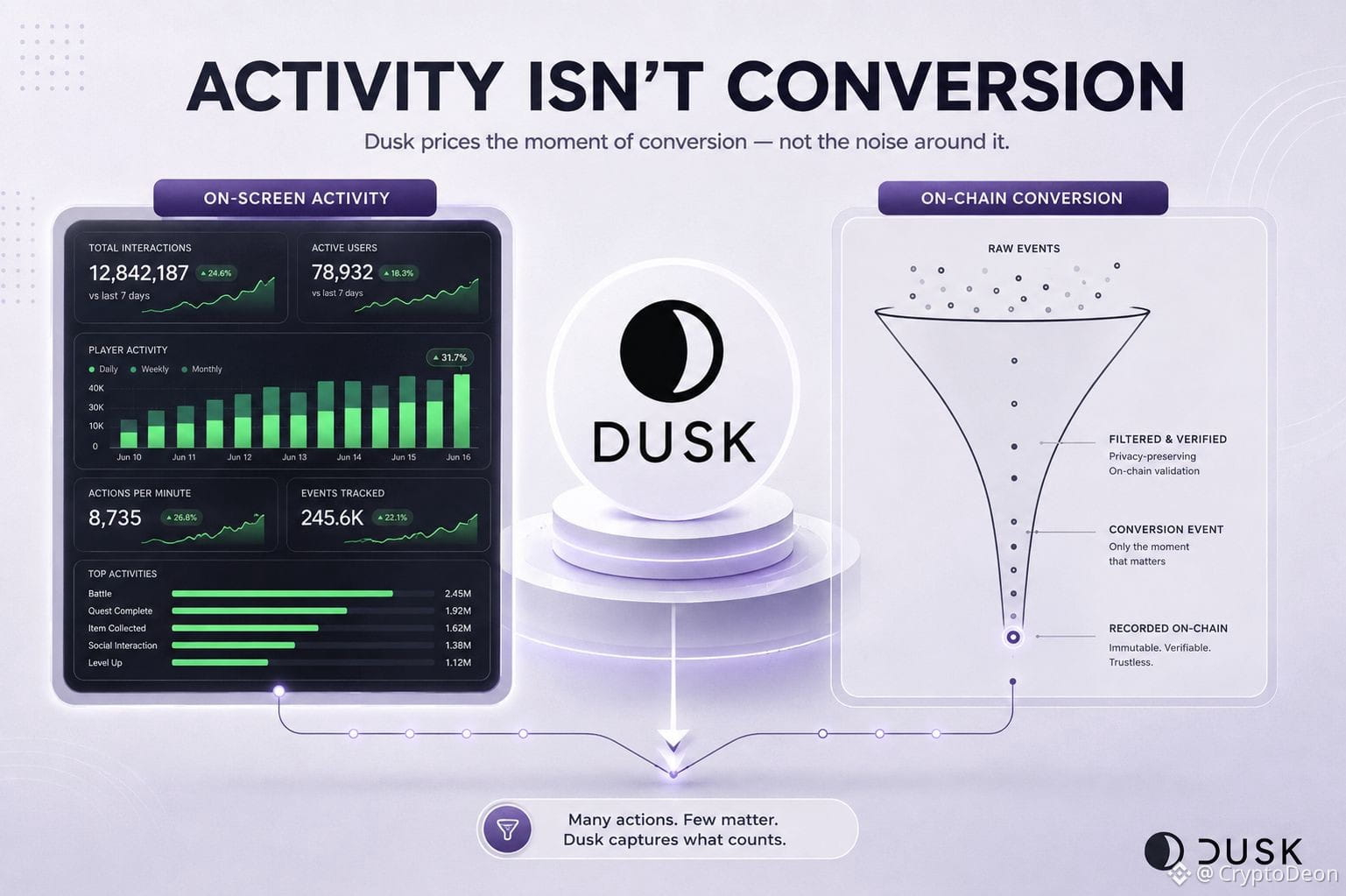
Я проверил живую игру с $DUSK — скриншоты выглядели плотно заполненными, счетчики mint росли, а графики «activity» зелёные по всей доске. Токен почти не двигался. Мне понадобилось время, чтобы понять, почему это не противоречие.
Большая часть того, что игроки делают на самом деле, вообще не затрагивает блокчейн. Фарм, крафт, гринд — всё это происходит в стороне, невидимо для DUSK. Токен появляется только в одном узком моменте: когда кто-то решает, что офчейн-результат стоит сделать постоянным и записать в ончейн. Это не показатель того, насколько «жива» игра на ощущениях. Это показатель того, сколько людей, в тот самый момент, решили, что конверсию стоит оплатить.
Следовательно, игра может оставаться визуально оживлённой, но при этом незаметно тренировать своих игроков избегать этого шага — группировать конверсии, подстраивать их под комиссии, пропускать те, которые не стоят затрат. Активность сохраняется. Давление конверсии ослабевает. А так как $DUSK только оценивает второе, токен может дрейфовать неделями, пока кто-нибудь не заметит, что первое их вводило в заблуждение.
Если частота конверсий на одного активного игрока начинает снижаться, при том что графики активности остаются зелёными, это и есть разрыв, которому стоит доверять больше, чем «панели управления».
$DUSK #dusk #BinanceSquare @Dusk
Большая часть того, что игроки делают на самом деле, вообще не затрагивает блокчейн. Фарм, крафт, гринд — всё это происходит в стороне, невидимо для DUSK. Токен появляется только в одном узком моменте: когда кто-то решает, что офчейн-результат стоит сделать постоянным и записать в ончейн. Это не показатель того, насколько «жива» игра на ощущениях. Это показатель того, сколько людей, в тот самый момент, решили, что конверсию стоит оплатить.
Следовательно, игра может оставаться визуально оживлённой, но при этом незаметно тренировать своих игроков избегать этого шага — группировать конверсии, подстраивать их под комиссии, пропускать те, которые не стоят затрат. Активность сохраняется. Давление конверсии ослабевает. А так как $DUSK только оценивает второе, токен может дрейфовать неделями, пока кто-нибудь не заметит, что первое их вводило в заблуждение.
Если частота конверсий на одного активного игрока начинает снижаться, при том что графики активности остаются зелёными, это и есть разрыв, которому стоит доверять больше, чем «панели управления».
$DUSK #dusk #BinanceSquare @Dusk
Я снова и снова возвращался к текущему обсуждению управления Babylon, но смотрел на него с неправильной стороны.
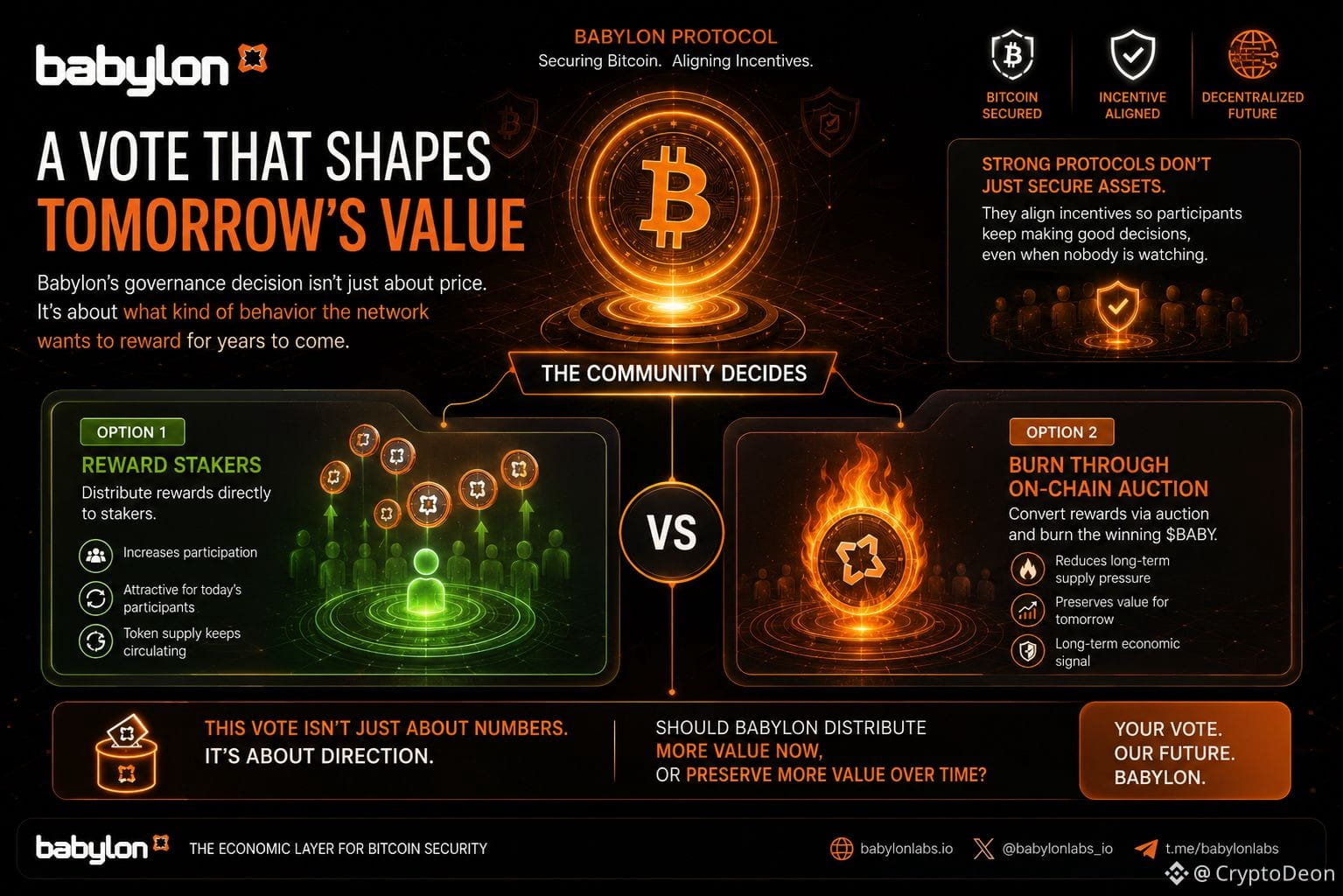
Очевидный спор — должны ли награды BSN распределяться среди холдеров BABY или же их следует конвертировать через on-chain-аукцион и сжигать.
Это важно.
Но мне кажется, что более интересный вопрос — какие именно ожидания протокол формирует, когда люди привыкают к определенному потоку вознаграждений.
Награда — это не просто экономический перевод.
Со временем она становится частью пользовательского поведения.
Если участники ожидают, что каждый новый источник ценности будет приходить в виде прямого распределения, то будущие решения в рамках управления становятся все более сложными: изменение такого ожидания начинает выглядеть как «отнимание» чего-то.
С другой стороны, направление ценности через механизм сжигания не вознаграждает участников немедленно. Вместо этого оно меняет долгосрочную динамику предложения токена. Это может по-разному пойти на пользу сети, но также заставляет пользователей думать дальше — за пределами следующего распределения.
Ни один подход не является очевидно правильным.
Один делает акцент на видимых стимулах.
Другой — на структурных стимулах.
Поэтому я не думаю, что это предложение действительно про награды BSN.
Речь о том, чтобы решить, хочет ли Babylon, чтобы ее управление оптимизировало ожидания участников… или долгосрочное экономическое поведение.
Это не всегда одно и то же.
#baby $BABY @BabylonLabs_io
Очевидный спор — должны ли награды BSN распределяться среди холдеров BABY или же их следует конвертировать через on-chain-аукцион и сжигать.
Это важно.
Но мне кажется, что более интересный вопрос — какие именно ожидания протокол формирует, когда люди привыкают к определенному потоку вознаграждений.
Награда — это не просто экономический перевод.
Со временем она становится частью пользовательского поведения.
Если участники ожидают, что каждый новый источник ценности будет приходить в виде прямого распределения, то будущие решения в рамках управления становятся все более сложными: изменение такого ожидания начинает выглядеть как «отнимание» чего-то.
С другой стороны, направление ценности через механизм сжигания не вознаграждает участников немедленно. Вместо этого оно меняет долгосрочную динамику предложения токена. Это может по-разному пойти на пользу сети, но также заставляет пользователей думать дальше — за пределами следующего распределения.
Ни один подход не является очевидно правильным.
Один делает акцент на видимых стимулах.
Другой — на структурных стимулах.
Поэтому я не думаю, что это предложение действительно про награды BSN.
Речь о том, чтобы решить, хочет ли Babylon, чтобы ее управление оптимизировало ожидания участников… или долгосрочное экономическое поведение.
Это не всегда одно и то же.
#baby $BABY @BabylonLabs_io
Войдите, чтобы посмотреть больше материала