

Javeed Crypto Insights
54 Публикации

Javeed Crypto Insights
Отправить жалобу
Заблокировать пользователя
Crypto Insights, Alpha & Market Signals | Breaking News | Market Analysis | Web3, DeFi & Staking | DYOR
8 подписок(и/а)
18 подписчиков(а)
11 понравилось
Посты
Все
Цитирования
·
--
Падение
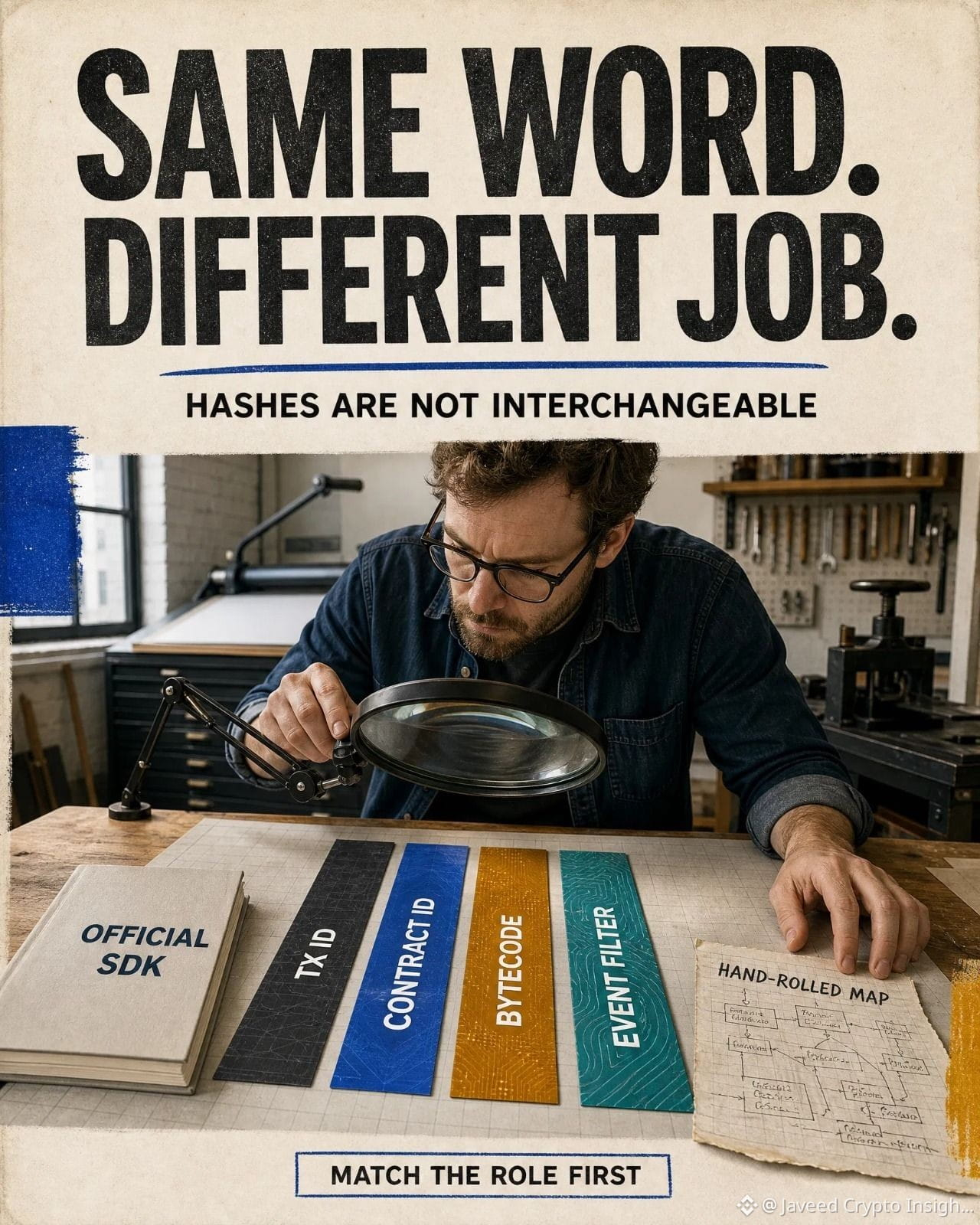
При поиске несоответствия я почти решил, что каждый Dusk-хеш взаимозаменяем. Документация связывает BLAKE2b с идентификаторами контрактов/транзакций, но BLAKE3 — с хешами байткода и фильтрами событий bloom. Одно слово — разная работа. Вы будете использовать SDK или переопределять эту карту? @Dusk_Foundation $DUSK #dusk
При поиске несоответствия я почти решил, что каждый Dusk-хеш взаимозаменяем. Документация связывает BLAKE2b с идентификаторами контрактов/транзакций, но BLAKE3 — с хешами байткода и фильтрами событий bloom. Одно слово — разная работа. Вы будете использовать SDK или переопределять эту карту? @Dusk $DUSK #dusk
95
Прочитав документацию по сборке Dusk, я перестал воспринимать «EVM-совместимость» как всю историю разработки. DuskVM — это Rust/WASM, который работает напрямую в Dusk L1; DuskEVM — это путь Solidity/Vyper + инструменты EVM. Что бы вы выбрали первым: нативное управление L1 или переносимость? @Dusk_Foundation $DUSK #dusk
Прочитав документацию по сборке Dusk, я перестал воспринимать «EVM-совместимость» как всю историю разработки. DuskVM — это Rust/WASM, который работает напрямую в Dusk L1; DuskEVM — это путь Solidity/Vyper + инструменты EVM. Что бы вы выбрали первым: нативное управление L1 или переносимость? @Dusk $DUSK #dusk

1
1
73
·
--
Рост
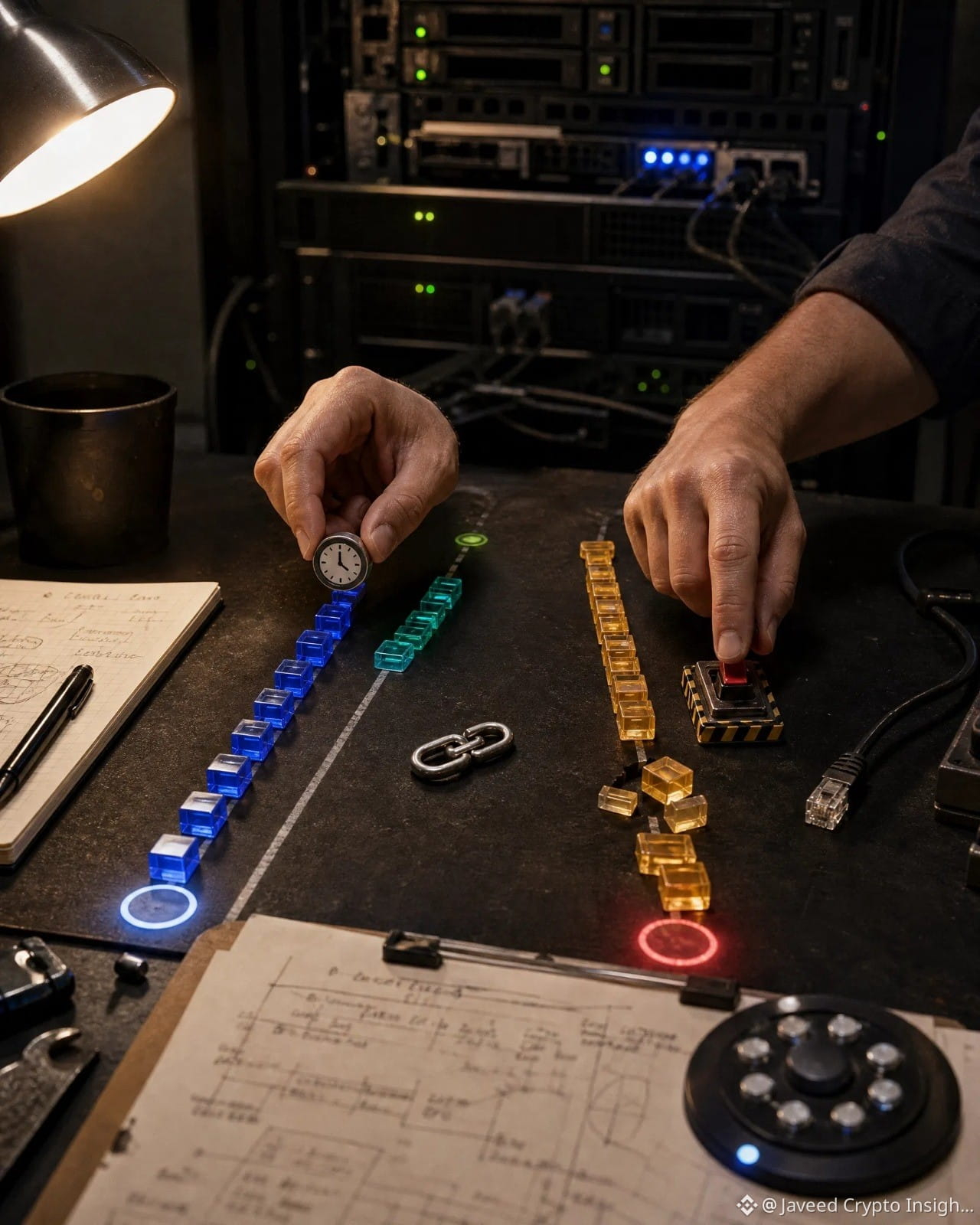
Раньше я видел ноду за концом и тянулся к повторной синхронизации. В руководстве Dusk сказано: сначала сравните высоту + chain ID. Если высота всё ещё движется, обычно требуется время — а не замена состояния. Быстрая синхронизация оставляет Rusk остановленным для проверки. Ждать или очищать? @Dusk_Foundation $DUSK #dusk
Раньше я видел ноду за концом и тянулся к повторной синхронизации. В руководстве Dusk сказано: сначала сравните высоту + chain ID. Если высота всё ещё движется, обычно требуется время — а не замена состояния. Быстрая синхронизация оставляет Rusk остановленным для проверки. Ждать или очищать? @Dusk $DUSK #dusk
78
·
--
Падение
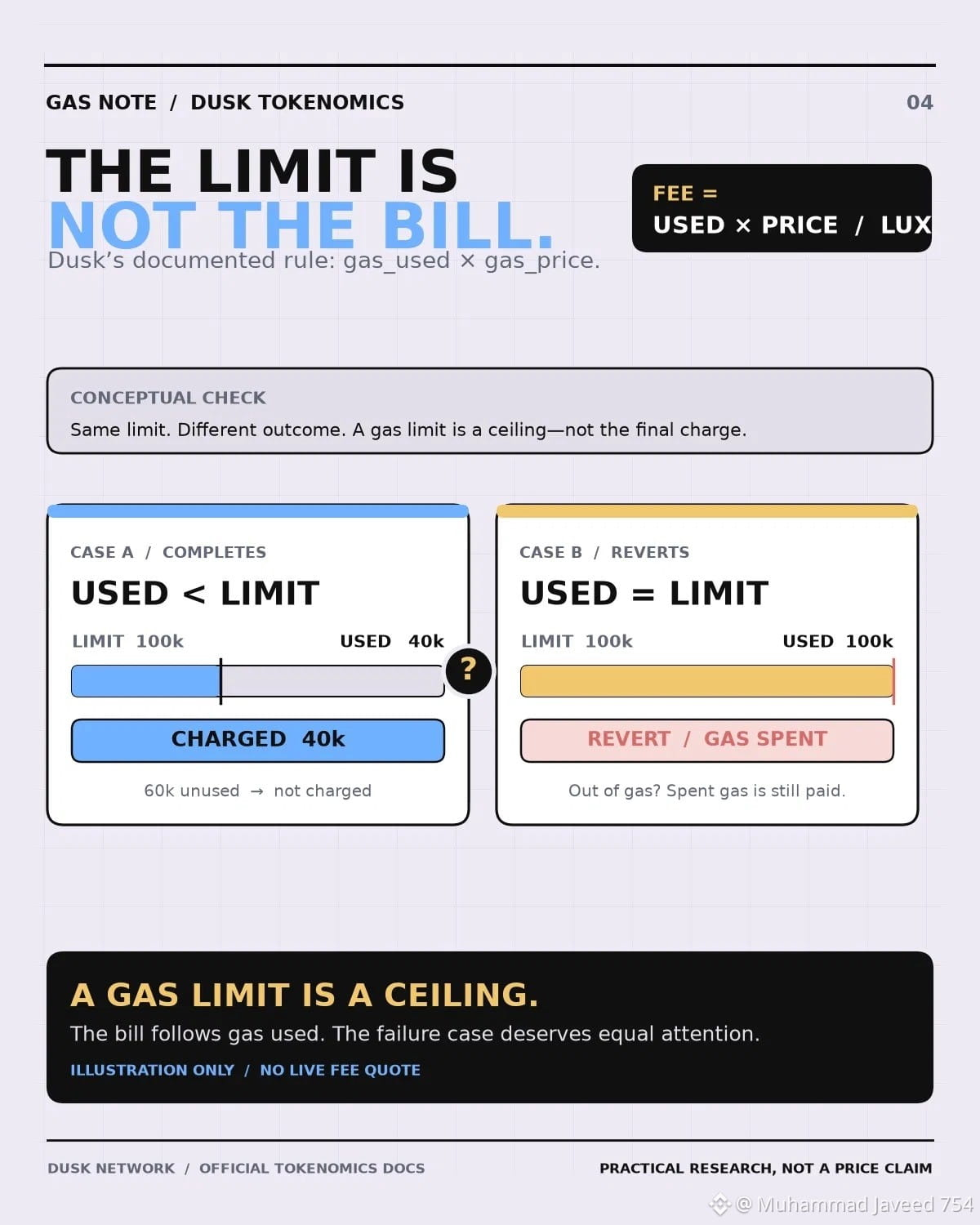
Раньше я думал, что токенизация SME — это в первую очередь проблема выпуска. В последнем разборе Dusk описаны 6 стадий владения: выпуск, право на участие, реестры, передачи, дивиденды/голосование и расчёты. Токен — это первый шаг; операторы выполняют остальные пять. Какая стадия первой даёт сбой на практике? @Dusk_Foundation $DUSK #dusk
Раньше я думал, что токенизация SME — это в первую очередь проблема выпуска. В последнем разборе Dusk описаны 6 стадий владения: выпуск, право на участие, реестры, передачи, дивиденды/голосование и расчёты. Токен — это первый шаг; операторы выполняют остальные пять. Какая стадия первой даёт сбой на практике? @Dusk $DUSK #dusk

69
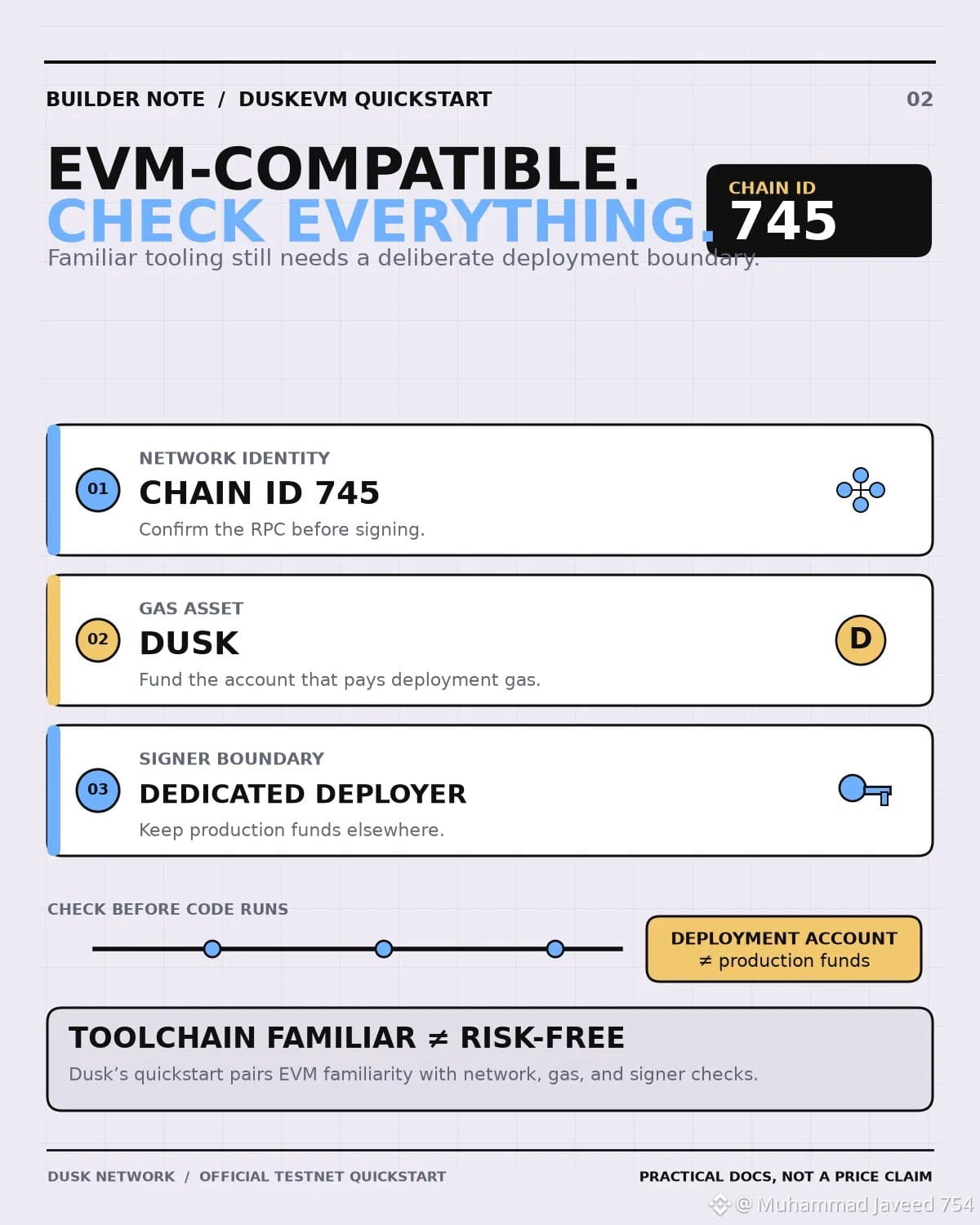
Я ожидал, что совместимость с EVM сделает развертывание «подключил и готово». Но быстрый старт Dusk заставил меня проверить скучные детали: testnet chain ID 745, DUSK как газ и отдельный аккаунт для деплоя — не производственные средства. Скопировать инструментарий легко; скопировать не ту сеть — нет. Проверяете ли вы в CI chain ID + разделение signer’а? @Dusk_Foundation $DUSK #dusk
Я ожидал, что совместимость с EVM сделает развертывание «подключил и готово». Но быстрый старт Dusk заставил меня проверить скучные детали: testnet chain ID 745, DUSK как газ и отдельный аккаунт для деплоя — не производственные средства. Скопировать инструментарий легко; скопировать не ту сеть — нет. Проверяете ли вы в CI chain ID + разделение signer’а? @Dusk $DUSK #dusk
68
См. перевод
The word “fee” can make a DeFi position look more expensive than it really is—unless you follow the formula.
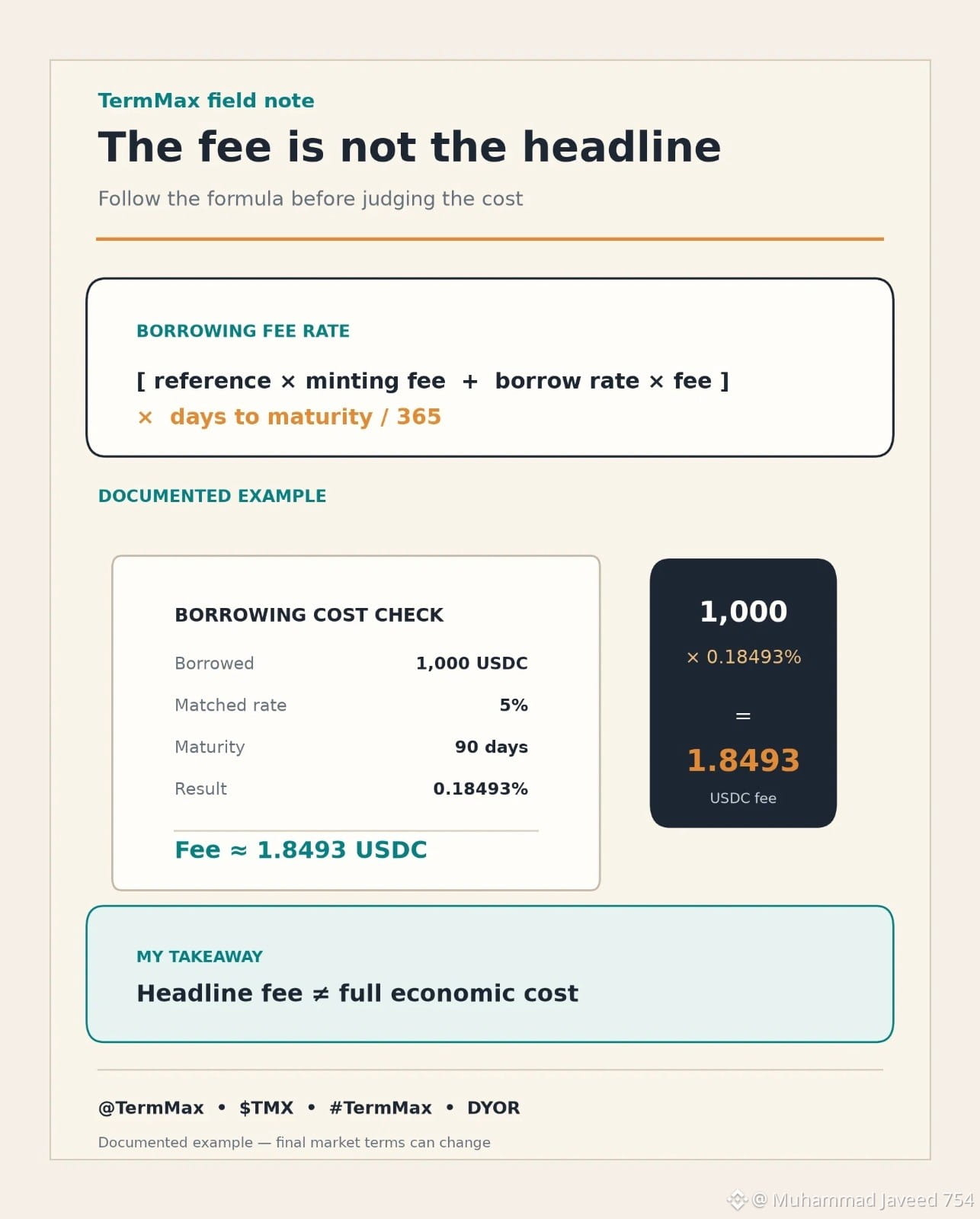
TermMax’s documentation says its borrowing transaction fee is not simply “3% of the borrowed amount.” It combines the GT minting reference rate, GT minting fee rate, matched borrow rate, borrowing fee rate, and days to maturity.
Using the documented example: a 5% matched borrow rate, 1,000 USDC borrowed, and 90 days to maturity produces a borrowing transaction fee rate of about 0.18493%. That is about 1.8493 USDC on 1,000 USDC—not 30 USDC.
The important caveat is that this is a formula example, not a guaranteed quote. The reference rate can depend on the asset and market conditions, and the final cost still has to be checked in the live market before entry. A lower transaction fee also does not remove smart-contract, collateral, liquidation, oracle or settlement risk.
My takeaway: in fixed-term DeFi, the headline fee percentage is only the beginning. I would check the formula, maturity, collateral terms and exit/liquidation mechanics together.
Do you normally calculate the full fee yourself, or trust the headline number shown by the protocol?
@termmax $TMX #TermMax #DeFi #BNBChain
The word “fee” can make a DeFi position look more expensive than it really is—unless you follow the formula.
TermMax’s documentation says its borrowing transaction fee is not simply “3% of the borrowed amount.” It combines the GT minting reference rate, GT minting fee rate, matched borrow rate, borrowing fee rate, and days to maturity.
Using the documented example: a 5% matched borrow rate, 1,000 USDC borrowed, and 90 days to maturity produces a borrowing transaction fee rate of about 0.18493%. That is about 1.8493 USDC on 1,000 USDC—not 30 USDC.
The important caveat is that this is a formula example, not a guaranteed quote. The reference rate can depend on the asset and market conditions, and the final cost still has to be checked in the live market before entry. A lower transaction fee also does not remove smart-contract, collateral, liquidation, oracle or settlement risk.
My takeaway: in fixed-term DeFi, the headline fee percentage is only the beginning. I would check the formula, maturity, collateral terms and exit/liquidation mechanics together.
Do you normally calculate the full fee yourself, or trust the headline number shown by the protocol?
@TermMax $TMX #TermMax #DeFi #BNBChain
TermMax’s documentation says its borrowing transaction fee is not simply “3% of the borrowed amount.” It combines the GT minting reference rate, GT minting fee rate, matched borrow rate, borrowing fee rate, and days to maturity.
Using the documented example: a 5% matched borrow rate, 1,000 USDC borrowed, and 90 days to maturity produces a borrowing transaction fee rate of about 0.18493%. That is about 1.8493 USDC on 1,000 USDC—not 30 USDC.
The important caveat is that this is a formula example, not a guaranteed quote. The reference rate can depend on the asset and market conditions, and the final cost still has to be checked in the live market before entry. A lower transaction fee also does not remove smart-contract, collateral, liquidation, oracle or settlement risk.
My takeaway: in fixed-term DeFi, the headline fee percentage is only the beginning. I would check the formula, maturity, collateral terms and exit/liquidation mechanics together.
Do you normally calculate the full fee yourself, or trust the headline number shown by the protocol?
@TermMax $TMX #TermMax #DeFi #BNBChain
76
·
--
Рост
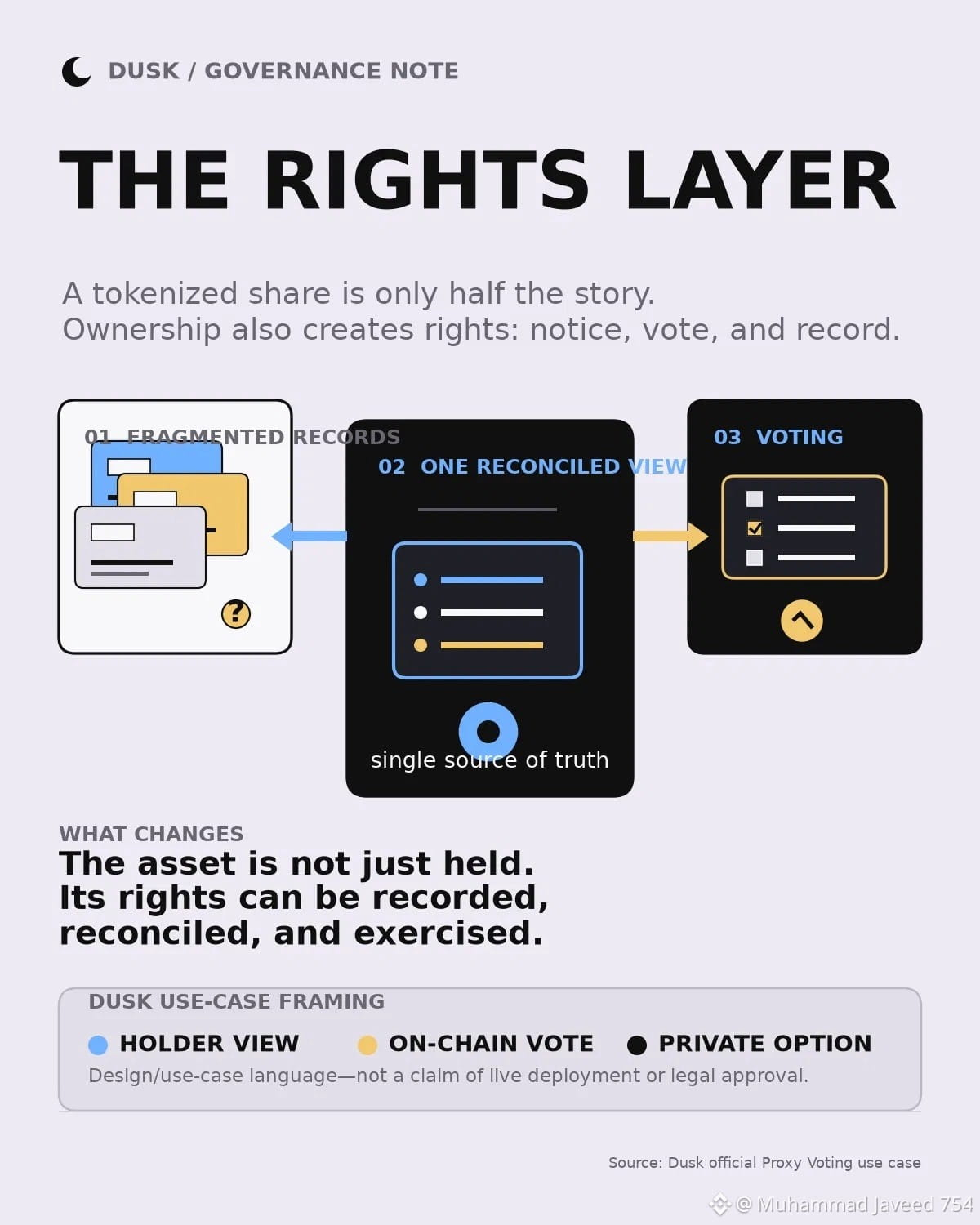
Токенизированная акция не является полностью цифровой, если голосование акционеров по-прежнему зависит от разрозненных записей и посредников. Пример Даска с использованием прокси-голосования связывает токенизацию с консолидированным представлением о держателях и голосованием в сети, при этом описывая голосование как приватное. Это слой прав — не просто торговая функция. Должны ли права акционеров тоже перейти в блокчейн? @Dusk_Foundation $DUSK #dusk
Токенизированная акция не является полностью цифровой, если голосование акционеров по-прежнему зависит от разрозненных записей и посредников. Пример Даска с использованием прокси-голосования связывает токенизацию с консолидированным представлением о держателях и голосованием в сети, при этом описывая голосование как приватное. Это слой прав — не просто торговая функция. Должны ли права акционеров тоже перейти в блокчейн? @Dusk $DUSK #dusk
68
См. перевод
I used to think the main question in lending was simply: “What APR am I getting?”
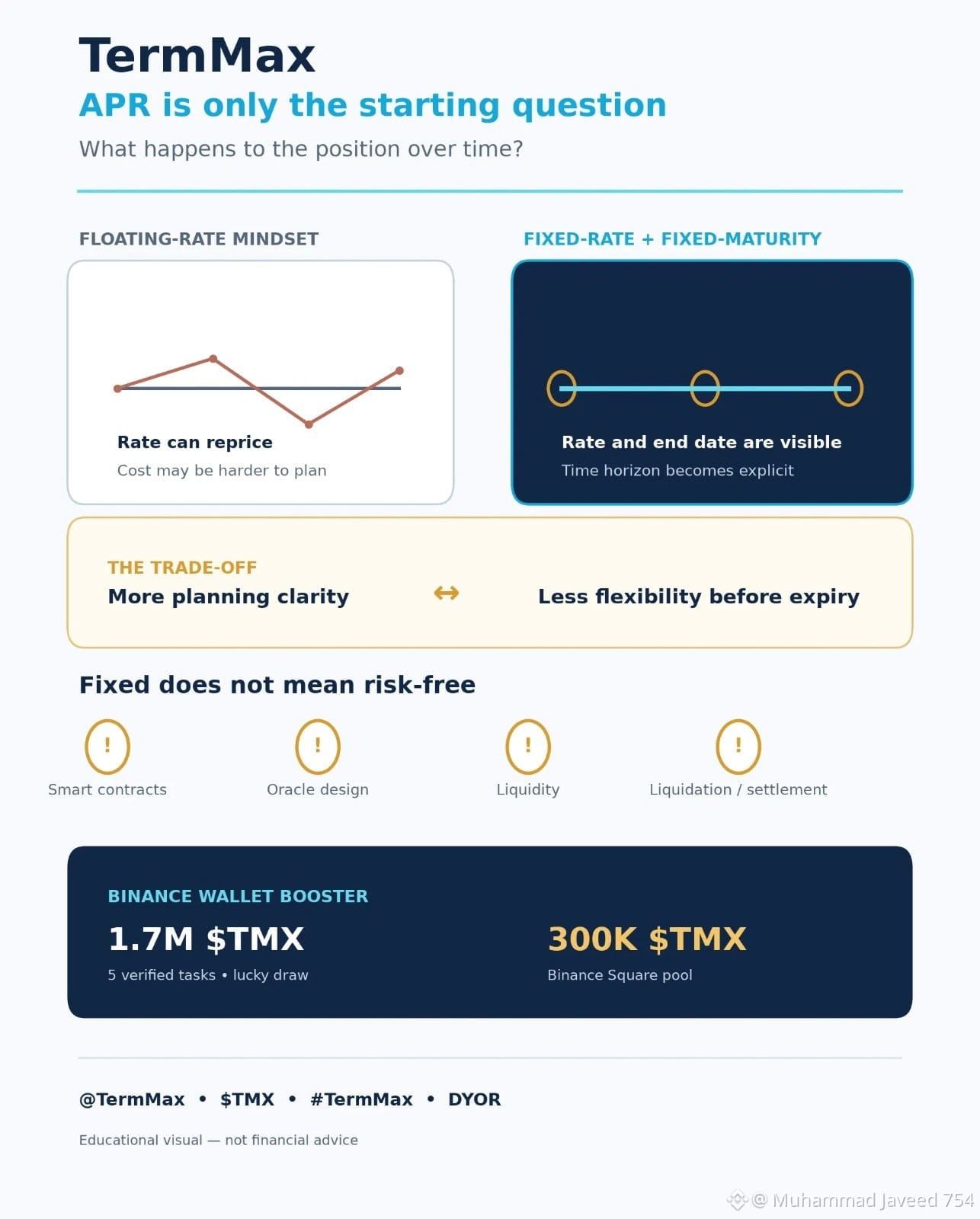
The more useful question is: “What happens to this position over time?”
That is the angle I find interesting in @TermMax. Its documentation describes fixed-rate and fixed-maturity markets, so the rate and the end date are part of the position before entry. For a borrower, that can make the cost of capital easier to plan. For a lender, it makes the time horizon explicit.
But there is a real trade-off: a fixed maturity may improve planning while reducing flexibility if liquidity needs change before expiry. It also does not remove smart-contract, oracle, liquidity, liquidation or settlement risk. I would research those mechanics before looking at any headline yield.
TermMax’s current Binance Wallet Booster has two separate reward paths: a 1.7M $TMX lucky draw for five verified tasks and a 300K $TMX Binance Square pool split between Global and Chinese leaderboards. The Square task requires original, relevant content with the official account tag, $TMX and #TermMax in the first published version, followed by timely verification in Binance Wallet.
If you use DeFi, which matters more to you: a predictable rate, flexible liquidity, or a shorter maturity?
This is my research summary, not financial advice. DYOR.
@termmax $TMX #TermMax #DeFi #BNBChain
I used to think the main question in lending was simply: “What APR am I getting?”
The more useful question is: “What happens to this position over time?”
That is the angle I find interesting in @TermMax. Its documentation describes fixed-rate and fixed-maturity markets, so the rate and the end date are part of the position before entry. For a borrower, that can make the cost of capital easier to plan. For a lender, it makes the time horizon explicit.
But there is a real trade-off: a fixed maturity may improve planning while reducing flexibility if liquidity needs change before expiry. It also does not remove smart-contract, oracle, liquidity, liquidation or settlement risk. I would research those mechanics before looking at any headline yield.
TermMax’s current Binance Wallet Booster has two separate reward paths: a 1.7M $TMX lucky draw for five verified tasks and a 300K $TMX Binance Square pool split between Global and Chinese leaderboards. The Square task requires original, relevant content with the official account tag, $TMX and #TermMax in the first published version, followed by timely verification in Binance Wallet.
If you use DeFi, which matters more to you: a predictable rate, flexible liquidity, or a shorter maturity?
This is my research summary, not financial advice. DYOR.
@TermMax $TMX #TermMax #DeFi #BNBChain
The more useful question is: “What happens to this position over time?”
That is the angle I find interesting in @TermMax. Its documentation describes fixed-rate and fixed-maturity markets, so the rate and the end date are part of the position before entry. For a borrower, that can make the cost of capital easier to plan. For a lender, it makes the time horizon explicit.
But there is a real trade-off: a fixed maturity may improve planning while reducing flexibility if liquidity needs change before expiry. It also does not remove smart-contract, oracle, liquidity, liquidation or settlement risk. I would research those mechanics before looking at any headline yield.
TermMax’s current Binance Wallet Booster has two separate reward paths: a 1.7M $TMX lucky draw for five verified tasks and a 300K $TMX Binance Square pool split between Global and Chinese leaderboards. The Square task requires original, relevant content with the official account tag, $TMX and #TermMax in the first published version, followed by timely verification in Binance Wallet.
If you use DeFi, which matters more to you: a predictable rate, flexible liquidity, or a shorter maturity?
This is my research summary, not financial advice. DYOR.
@TermMax $TMX #TermMax #DeFi #BNBChain
76
См. перевод
A fixed rate is useful only when you understand the full position around it.
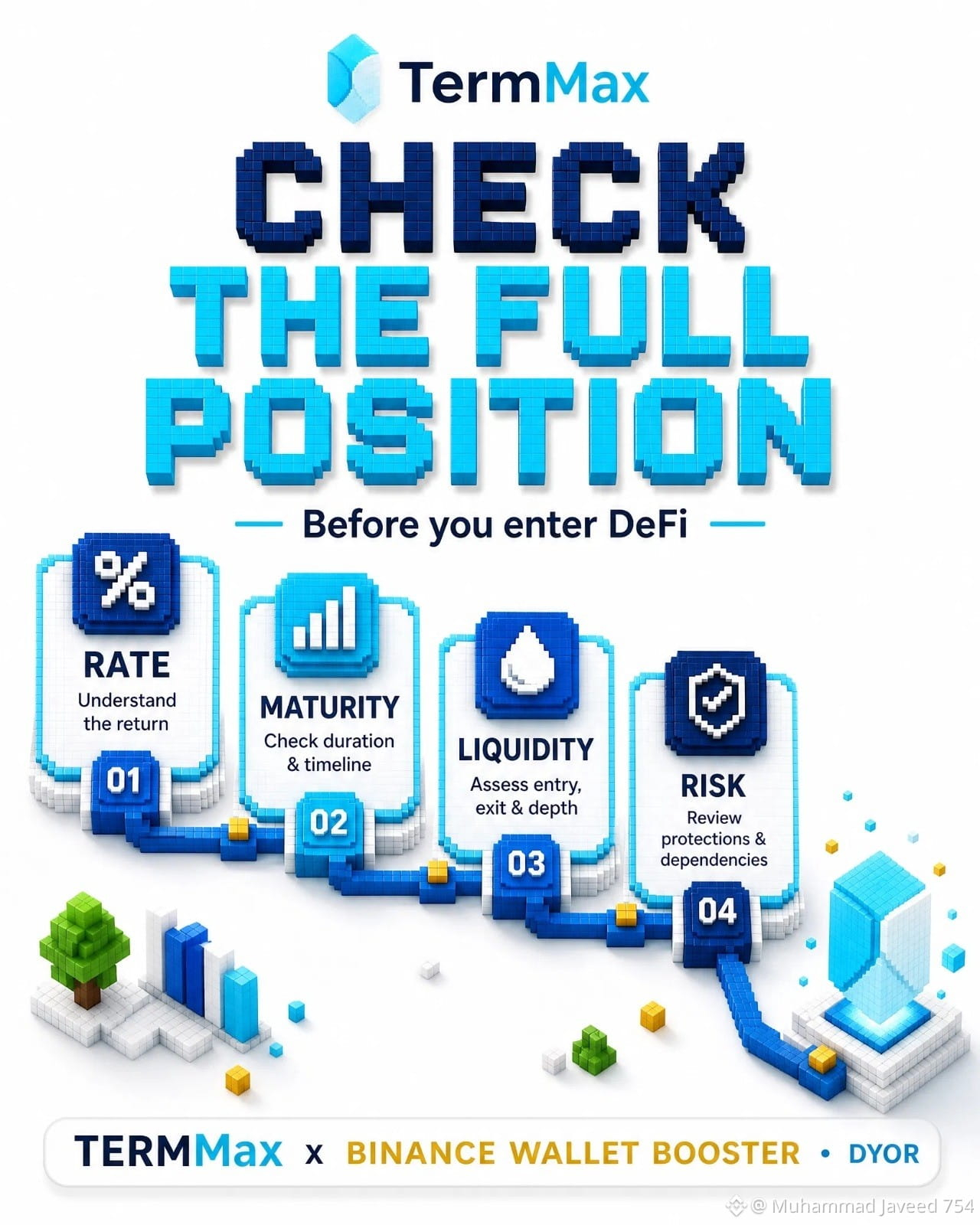
That is what makes @termmax interesting to research: its fixed-rate, fixed-term markets put the focus on four questions before entry:
Rate: what cost or yield is defined?
Maturity: when does the position end?
Liquidity: how easily can the position be managed?
Risk: what smart-contract, oracle, liquidation and settlement risks remain?
Fixed terms can improve clarity, but they do not make DeFi risk-free. Read the documentation, check the mechanics and make your own decision.
The TermMax x Binance Wallet Booster includes a Binance Square CreatorPad task with a 300,000 TMX pool split between Global and Chinese leaderboards. Content must be original, relevant, and include the required TermMax account tag and hashtag in the first published version. Complete verification in Binance Wallet during the official window.
Which comes first in your DeFi checklist: rate, maturity, liquidity or risk controls?
DYOR. Educational content, not financial advice.
#TermMax #TermMaxFi #DeFi #BNBChain
A fixed rate is useful only when you understand the full position around it.
That is what makes @TermMax interesting to research: its fixed-rate, fixed-term markets put the focus on four questions before entry:
Rate: what cost or yield is defined?
Maturity: when does the position end?
Liquidity: how easily can the position be managed?
Risk: what smart-contract, oracle, liquidation and settlement risks remain?
Fixed terms can improve clarity, but they do not make DeFi risk-free. Read the documentation, check the mechanics and make your own decision.
The TermMax x Binance Wallet Booster includes a Binance Square CreatorPad task with a 300,000 TMX pool split between Global and Chinese leaderboards. Content must be original, relevant, and include the required TermMax account tag and hashtag in the first published version. Complete verification in Binance Wallet during the official window.
Which comes first in your DeFi checklist: rate, maturity, liquidity or risk controls?
DYOR. Educational content, not financial advice.
#TermMax #TermMaxFi #DeFi #BNBChain
That is what makes @TermMax interesting to research: its fixed-rate, fixed-term markets put the focus on four questions before entry:
Rate: what cost or yield is defined?
Maturity: when does the position end?
Liquidity: how easily can the position be managed?
Risk: what smart-contract, oracle, liquidation and settlement risks remain?
Fixed terms can improve clarity, but they do not make DeFi risk-free. Read the documentation, check the mechanics and make your own decision.
The TermMax x Binance Wallet Booster includes a Binance Square CreatorPad task with a 300,000 TMX pool split between Global and Chinese leaderboards. Content must be original, relevant, and include the required TermMax account tag and hashtag in the first published version. Complete verification in Binance Wallet during the official window.
Which comes first in your DeFi checklist: rate, maturity, liquidity or risk controls?
DYOR. Educational content, not financial advice.
#TermMax #TermMaxFi #DeFi #BNBChain
61
·
--
Падение
См. перевод
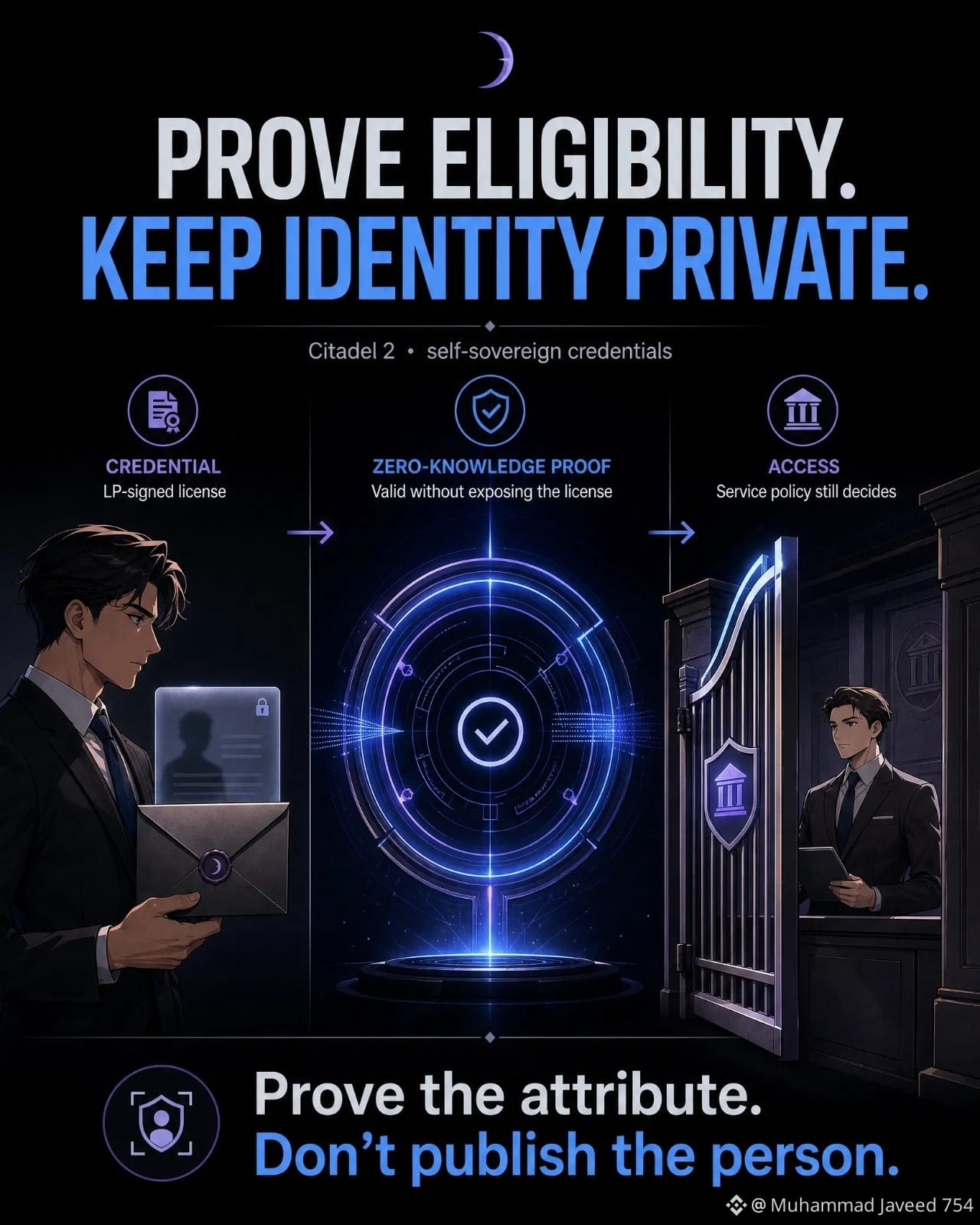
Here’s the identity problem tokenized markets rarely explain: an investor may need to prove eligibility, but that does not mean every personal detail should become public. Dusk’s Citadel 2 design uses a credential and zero-knowledge proof for that step; the service still decides what it trusts. Better access control—or just more complexity? @Dusk_Foundation $DUSK #dusk
Here’s the identity problem tokenized markets rarely explain: an investor may need to prove eligibility, but that does not mean every personal detail should become public. Dusk’s Citadel 2 design uses a credential and zero-knowledge proof for that step; the service still decides what it trusts. Better access control—or just more complexity? @Dusk $DUSK #dusk
64
Токенизация обычно начинается с актива. Институции начинают с ключей: кто ими управляет, как работают разрешения и остаются ли операции проверяемыми. Dusk объявила о партнерстве с Cordial Systems в области институционального хранения и технологии самохостируемых кошельков. Этот слой легко пропустить в обсуждениях RWA — но он может определить, смогут ли институции действительно использовать инфраструктуру. Что для вас важнее: выпуск или контроль ключей? @Dusk_Foundation $DUSK #dusk
Токенизация обычно начинается с актива. Институции начинают с ключей: кто ими управляет, как работают разрешения и остаются ли операции проверяемыми. Dusk объявила о партнерстве с Cordial Systems в области институционального хранения и технологии самохостируемых кошельков. Этот слой легко пропустить в обсуждениях RWA — но он может определить, смогут ли институции действительно использовать инфраструктуру. Что для вас важнее: выпуск или контроль ключей? @Dusk $DUSK #dusk

64
См. перевод
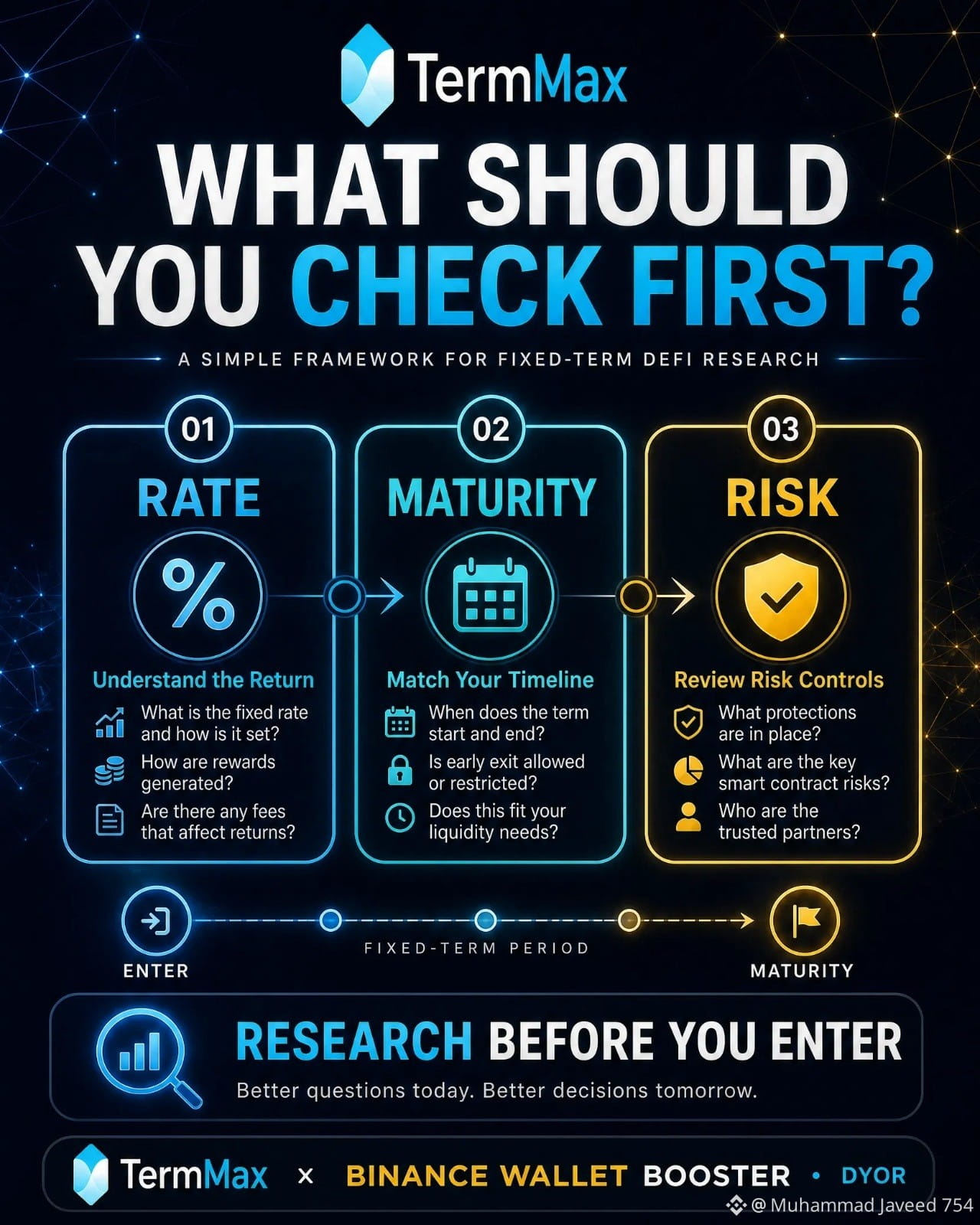
A 2M TMX reward pool gets attention. But the more interesting question is: what is TermMax actually building?
@termmax is focused on fixed-rate, fixed-term DeFi markets. Instead of watching a floating rate reprice block by block, users can evaluate the rate, maturity and structure before entering a position.
That matters for three reasons:
Borrowers can understand the cost of capital more clearly.
Lenders can evaluate the expected term instead of relying only on a changing headline APR.
Users exploring leverage or options can discuss risk with a defined time horizon.
This is not a claim that DeFi is risk-free. Smart-contract risk, liquidity risk, oracle risk, liquidation or settlement mechanics and market conditions still need careful research.
The TermMax x Binance Wallet Booster Campaign has a 2,000,000 TMX total pool. The Binance Square CreatorPad activity has separate Global and Chinese leaderboards, with 150,000 TMX allocated to each and up to 500 eligible creators per leaderboard. Posts must be original, relevant, include the required TermMax account tag and hashtag in the first version, and be verified in Binance Wallet.
When researching a DeFi protocol, what do you check first: rate, maturity, liquidity, or risk controls?
DYOR. Educational content, not financial advice.
#TermMax #TermMaxFi #DeFi #BNBChain
A 2M TMX reward pool gets attention. But the more interesting question is: what is TermMax actually building?
@TermMax is focused on fixed-rate, fixed-term DeFi markets. Instead of watching a floating rate reprice block by block, users can evaluate the rate, maturity and structure before entering a position.
That matters for three reasons:
Borrowers can understand the cost of capital more clearly.
Lenders can evaluate the expected term instead of relying only on a changing headline APR.
Users exploring leverage or options can discuss risk with a defined time horizon.
This is not a claim that DeFi is risk-free. Smart-contract risk, liquidity risk, oracle risk, liquidation or settlement mechanics and market conditions still need careful research.
The TermMax x Binance Wallet Booster Campaign has a 2,000,000 TMX total pool. The Binance Square CreatorPad activity has separate Global and Chinese leaderboards, with 150,000 TMX allocated to each and up to 500 eligible creators per leaderboard. Posts must be original, relevant, include the required TermMax account tag and hashtag in the first version, and be verified in Binance Wallet.
When researching a DeFi protocol, what do you check first: rate, maturity, liquidity, or risk controls?
DYOR. Educational content, not financial advice.
#TermMax #TermMaxFi #DeFi #BNBChain
@TermMax is focused on fixed-rate, fixed-term DeFi markets. Instead of watching a floating rate reprice block by block, users can evaluate the rate, maturity and structure before entering a position.
That matters for three reasons:
Borrowers can understand the cost of capital more clearly.
Lenders can evaluate the expected term instead of relying only on a changing headline APR.
Users exploring leverage or options can discuss risk with a defined time horizon.
This is not a claim that DeFi is risk-free. Smart-contract risk, liquidity risk, oracle risk, liquidation or settlement mechanics and market conditions still need careful research.
The TermMax x Binance Wallet Booster Campaign has a 2,000,000 TMX total pool. The Binance Square CreatorPad activity has separate Global and Chinese leaderboards, with 150,000 TMX allocated to each and up to 500 eligible creators per leaderboard. Posts must be original, relevant, include the required TermMax account tag and hashtag in the first version, and be verified in Binance Wallet.
When researching a DeFi protocol, what do you check first: rate, maturity, liquidity, or risk controls?
DYOR. Educational content, not financial advice.
#TermMax #TermMaxFi #DeFi #BNBChain
66
См. перевод
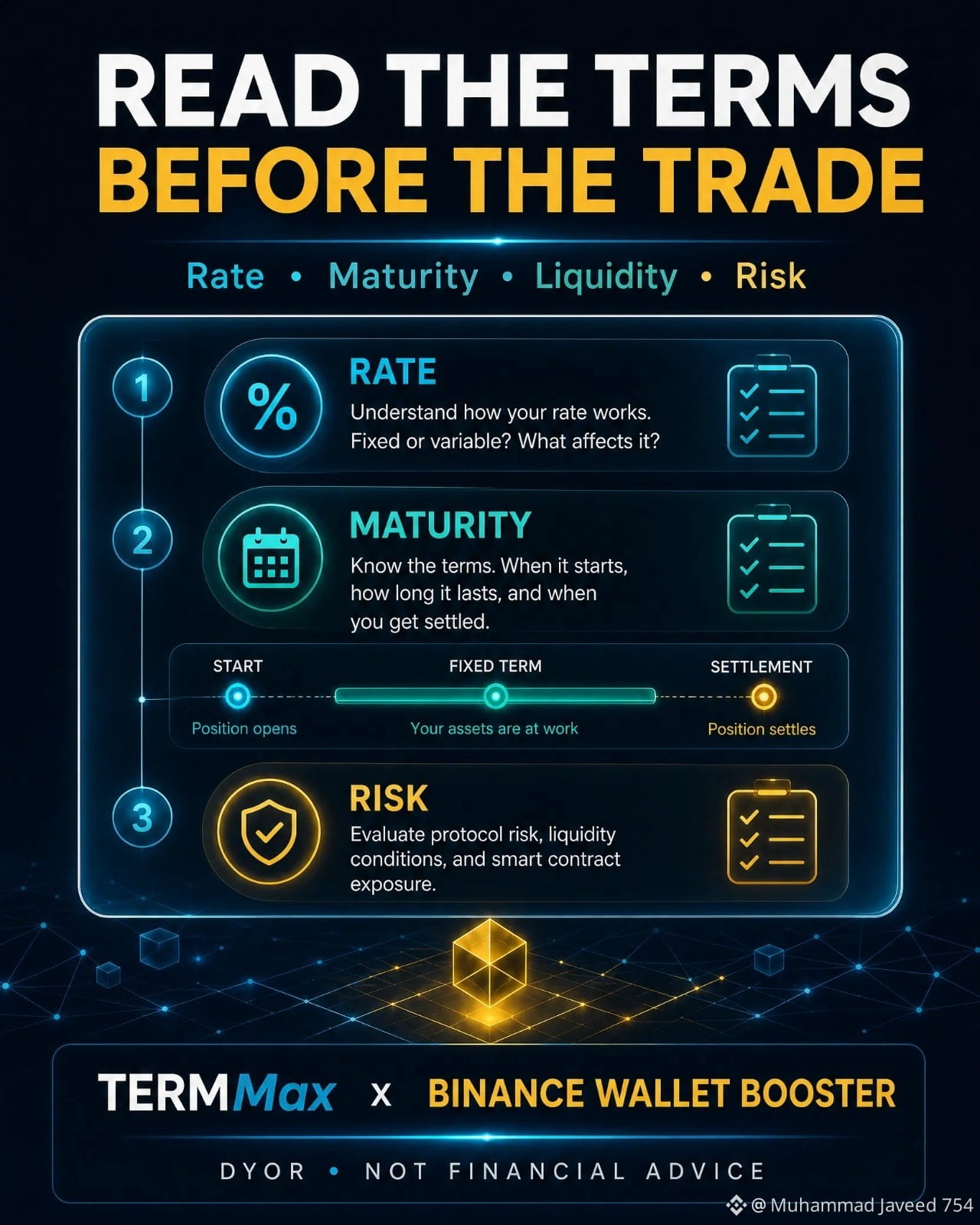
One thing I always check before exploring a DeFi product is not only the yield or headline APR, but also how clearly the terms are defined.
That is where @termmax has an interesting approach. Its fixed-rate and fixed-term markets are designed to make the cost, duration and structure of a position easier to understand before entering it.
For lenders, the term can be clearer. For borrowers, the rate is not simply repriced every block. For users exploring leverage and options, knowing the framework in advance can make risk discussions more concrete.
This does not mean there is no risk. Smart-contract risk, market risk, liquidity risk and liquidation or settlement mechanics still matter. The right approach is to read the documentation and do your own research before interacting.
The current Binance Wallet Booster Campaign includes a Binance Square leaderboard task. Posts must include the TermMax tag and hashtag, and the post must be verified on the campaign page. Leaderboard placement is not a guaranteed reward.
What do you check first when researching a DeFi protocol: rate, maturity, liquidity, or risk controls?
#TermMax #TermMaxFi #DeFi #BNBChain
One thing I always check before exploring a DeFi product is not only the yield or headline APR, but also how clearly the terms are defined.
That is where @TermMax has an interesting approach. Its fixed-rate and fixed-term markets are designed to make the cost, duration and structure of a position easier to understand before entering it.
For lenders, the term can be clearer. For borrowers, the rate is not simply repriced every block. For users exploring leverage and options, knowing the framework in advance can make risk discussions more concrete.
This does not mean there is no risk. Smart-contract risk, market risk, liquidity risk and liquidation or settlement mechanics still matter. The right approach is to read the documentation and do your own research before interacting.
The current Binance Wallet Booster Campaign includes a Binance Square leaderboard task. Posts must include the TermMax tag and hashtag, and the post must be verified on the campaign page. Leaderboard placement is not a guaranteed reward.
What do you check first when researching a DeFi protocol: rate, maturity, liquidity, or risk controls?
#TermMax #TermMaxFi #DeFi #BNBChain
That is where @TermMax has an interesting approach. Its fixed-rate and fixed-term markets are designed to make the cost, duration and structure of a position easier to understand before entering it.
For lenders, the term can be clearer. For borrowers, the rate is not simply repriced every block. For users exploring leverage and options, knowing the framework in advance can make risk discussions more concrete.
This does not mean there is no risk. Smart-contract risk, market risk, liquidity risk and liquidation or settlement mechanics still matter. The right approach is to read the documentation and do your own research before interacting.
The current Binance Wallet Booster Campaign includes a Binance Square leaderboard task. Posts must include the TermMax tag and hashtag, and the post must be verified on the campaign page. Leaderboard placement is not a guaranteed reward.
What do you check first when researching a DeFi protocol: rate, maturity, liquidity, or risk controls?
#TermMax #TermMaxFi #DeFi #BNBChain
57
·
--
Рост
См. перевод
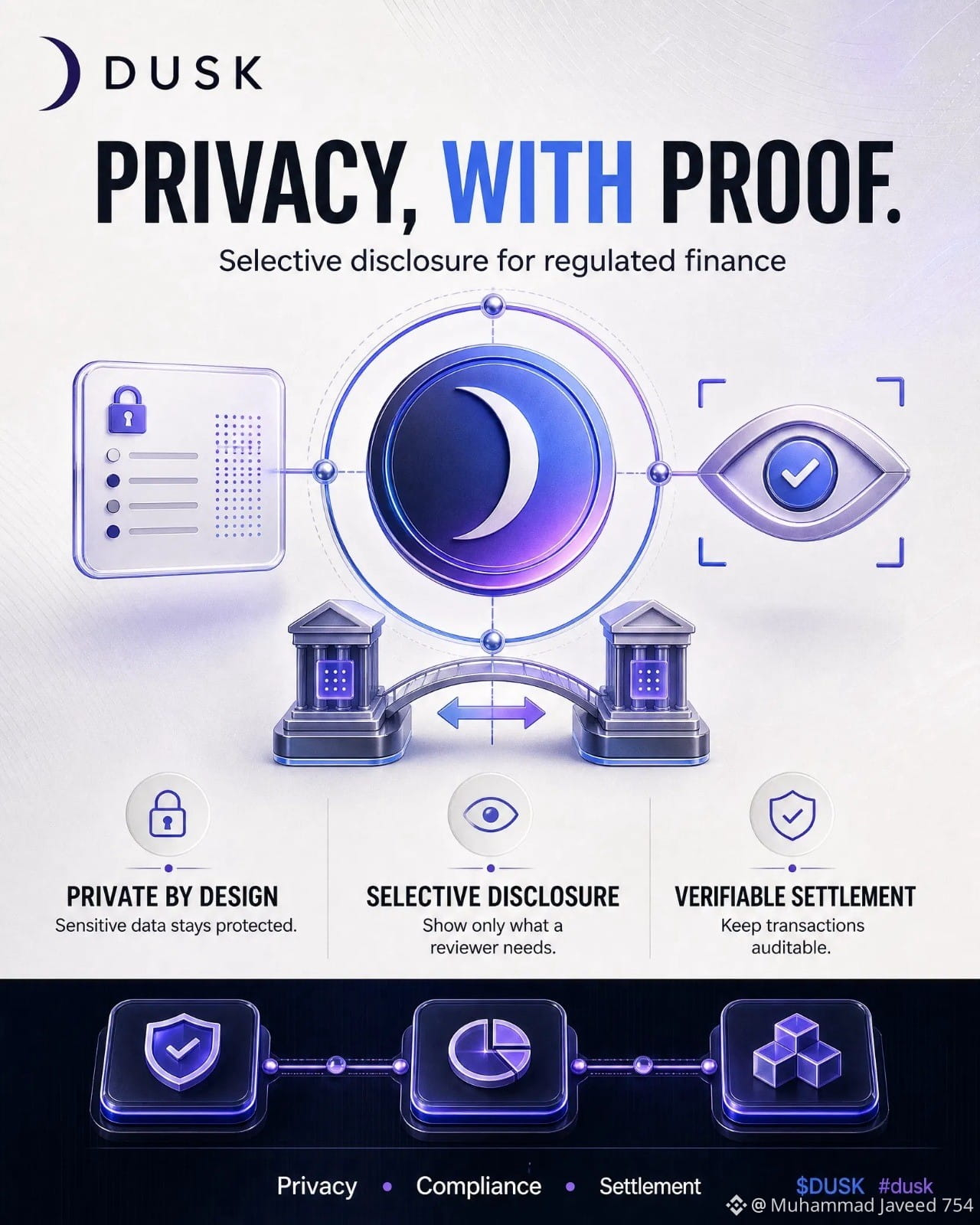
In regulated finance, privacy isn’t about hiding every detail. It’s about showing the right proof to the right reviewer. @Dusk_Foundation brings selective disclosure, compliance checks, and deterministic settlement into one on-chain workflow—so sensitive data can stay private while eligibility and transactions remain verifiable. $DUSK #dusk
In regulated finance, privacy isn’t about hiding every detail. It’s about showing the right proof to the right reviewer. @Dusk brings selective disclosure, compliance checks, and deterministic settlement into one on-chain workflow—so sensitive data can stay private while eligibility and transactions remain verifiable. $DUSK #dusk
83

Большинство способов токенизации по-прежнему оставляет хранение, реестрацию или расчёты вне цепочки. @Dusk_Foundation исследует более глубокую модель: нативную эмиссию, где регулируемые активы можно проектировать вокруг on-chain-эмиссии, трансферов, обслуживания и расчётов — с встроенной конфиденциальностью и возможностью выборочного раскрытия. $DUSK #dusk
Большинство способов токенизации по-прежнему оставляет хранение, реестрацию или расчёты вне цепочки. @Dusk исследует более глубокую модель: нативную эмиссию, где регулируемые активы можно проектировать вокруг on-chain-эмиссии, трансферов, обслуживания и расчётов — с встроенной конфиденциальностью и возможностью выборочного раскрытия. $DUSK #dusk

71
См. перевод
I'm really impressed by the growth of @Plasma lately! The project is building something unique that stands out in the current market. Seeing the utility behind $XPL makes me very optimistic about where this ecosystem is headed. This is definitely a project to keep on your radar for 2026. Can't wait to see what’s next! #Plasma
#plasma $XPL
I'm really impressed by the growth of @Plasma lately! The project is building something unique that stands out in the current market. Seeing the utility behind $XPL makes me very optimistic about where this ecosystem is headed. This is definitely a project to keep on your radar for 2026. Can't wait to see what’s next! #Plasma
#plasma $XPL
#plasma $XPL
4
См. перевод
Why Vanar Chain is Setting the Gold Standard for L1 EcosystemsThe blockchain landscape is evolving rapidly, but @Square-Creator-a16f92087a9c is distinguishing itself by focusing on what truly matters: high-speed performance, carbon neutrality, and real-world adoption. As we look toward the future of decentralized applications, Vanar Chain is positioning itself as a leader for mainstream brands and developers alike.
One of the most exciting aspects of this ecosystem is the utility of its native token, $VANRY. By providing a seamless environment for gaming, entertainment, and enterprise solutions, Vanar is proving that a layer-1 blockchain can be both powerful and environmentally conscious. The efficiency of the network ensures that transactions remain fast and cost-effective, which is a massive win for users who are tired of high gas fees on other chains.
The project's commitment to building a "green" blockchain is not just marketing—it’s a core technical philosophy. By integrating with major industry players, they are bringing millions of potential users into the Web3 space through familiar interfaces. If you are looking for a project that combines sustainability with cutting-edge technology, keeping an eye on the #Vanar ecosystem is a must.
The growth of the #vanar community and the expanding use cases for $VANRY suggest that this is only the beginning of their journey toward mass adoption.
Why Vanar Chain is Setting the Gold Standard for L1 Ecosystems
The blockchain landscape is evolving rapidly, but @Vanar is distinguishing itself by focusing on what truly matters: high-speed performance, carbon neutrality, and real-world adoption. As we look toward the future of decentralized applications, Vanar Chain is positioning itself as a leader for mainstream brands and developers alike.
One of the most exciting aspects of this ecosystem is the utility of its native token, $VANRY. By providing a seamless environment for gaming, entertainment, and enterprise solutions, Vanar is proving that a layer-1 blockchain can be both powerful and environmentally conscious. The efficiency of the network ensures that transactions remain fast and cost-effective, which is a massive win for users who are tired of high gas fees on other chains.
The project's commitment to building a "green" blockchain is not just marketing—it’s a core technical philosophy. By integrating with major industry players, they are bringing millions of potential users into the Web3 space through familiar interfaces. If you are looking for a project that combines sustainability with cutting-edge technology, keeping an eye on the #Vanar ecosystem is a must.
The growth of the #vanar community and the expanding use cases for $VANRY suggest that this is only the beginning of their journey toward mass adoption.
One of the most exciting aspects of this ecosystem is the utility of its native token, $VANRY. By providing a seamless environment for gaming, entertainment, and enterprise solutions, Vanar is proving that a layer-1 blockchain can be both powerful and environmentally conscious. The efficiency of the network ensures that transactions remain fast and cost-effective, which is a massive win for users who are tired of high gas fees on other chains.
The project's commitment to building a "green" blockchain is not just marketing—it’s a core technical philosophy. By integrating with major industry players, they are bringing millions of potential users into the Web3 space through familiar interfaces. If you are looking for a project that combines sustainability with cutting-edge technology, keeping an eye on the #Vanar ecosystem is a must.
The growth of the #vanar community and the expanding use cases for $VANRY suggest that this is only the beginning of their journey toward mass adoption.
2
См. перевод
The growth of the Vanar Chain ecosystem is becoming hard to ignore. By providing a high-speed, carbon-neutral infrastructure, @Square-Creator-a16f92087a9c is setting a new standard for mainstream blockchain adoption. I am closely watching how $VANRY empowers developers to build scalable dApps without high costs. Truly an exciting time for the community! #vanar
#vanar $VANRY
The growth of the Vanar Chain ecosystem is becoming hard to ignore. By providing a high-speed, carbon-neutral infrastructure, @Vanar is setting a new standard for mainstream blockchain adoption. I am closely watching how $VANRY empowers developers to build scalable dApps without high costs. Truly an exciting time for the community! #vanar
#vanar $VANRY
#vanar $VANRY
2
Войдите, чтобы посмотреть больше материала
Присоединяйтесь к пользователям криптовалют по всему миру на Binance Square
⚡️ Получайте новейшую и полезную информацию о криптоактивах.
💬 Нам доверяет крупнейшая в мире криптобиржа.
👍 Получите достоверные аналитические данные от верифицированных создателей контента.
Эл. почта/номер телефона