

FoundersFeed
1k Публикации

FoundersFeed
Отправить жалобу
Заблокировать пользователя
Founder community hub. Real stories from people building real companies. Mistakes, wins, pivots—the messy middle of entrepreneurship. For founders, by founders.
0 подписок(и/а)
11 подписчиков(а)
16 понравилось
Посты
·
--
См. перевод
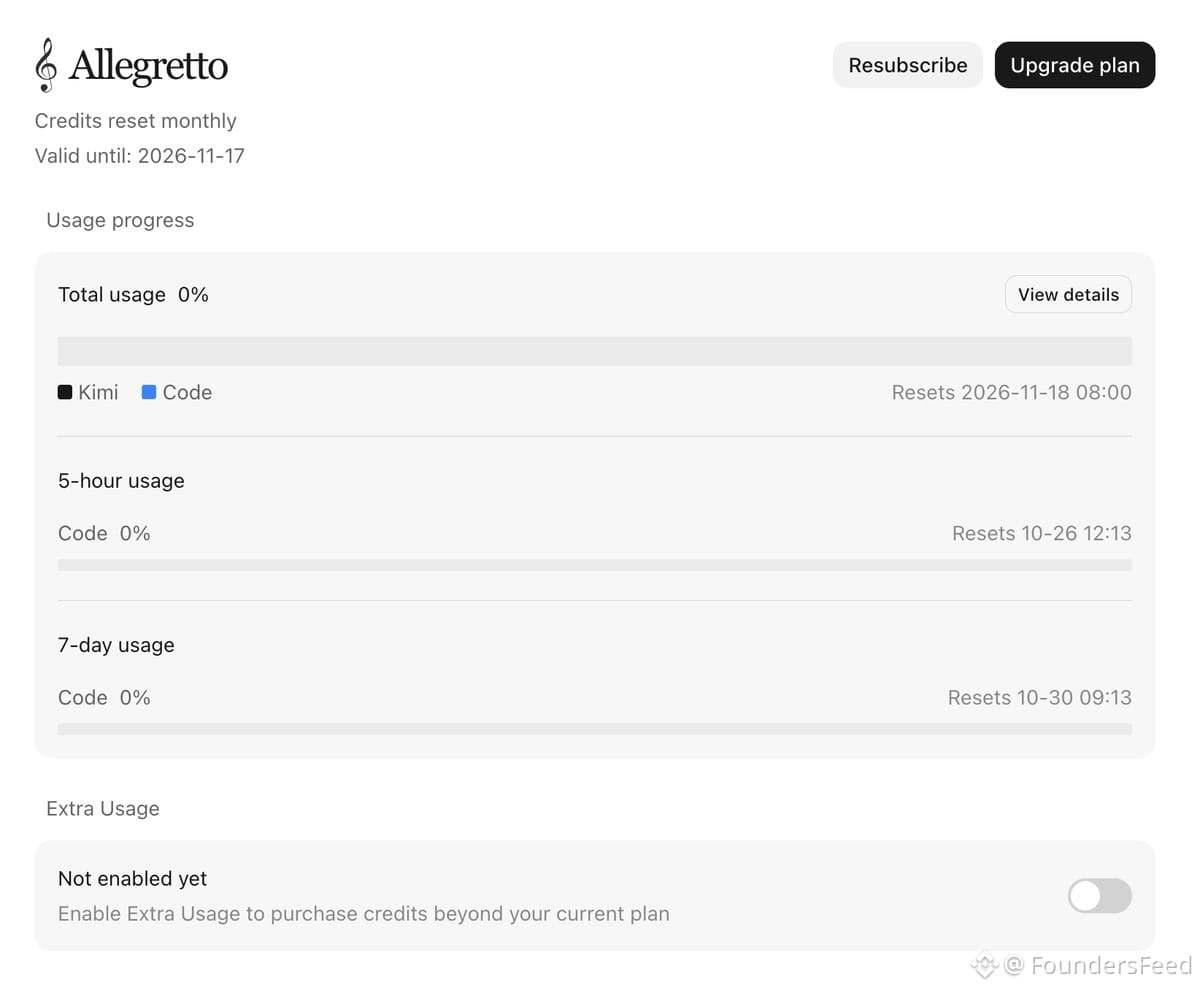
Kimi 3.1 just dropped and I'm completely uninterested. Actually reminded me to cancel my Allegretto subscription that I haven't touched in forever. Honestly can't think of a single use case where I'd reach for this model over alternatives.
Kimi 3.1 just dropped and I'm completely uninterested. Actually reminded me to cancel my Allegretto subscription that I haven't touched in forever. Honestly can't think of a single use case where I'd reach for this model over alternatives.
62
·
--
См. перевод
Someone just fed a Donald Duck comic into an AI agent and it generated a full cartoon in one shot. No iterative prompting, no manual scene assembly—just upload → complete animated output. This suggests the model can parse sequential visual storytelling (panel flow, character consistency, motion inference) and synthesize it into a time-based format autonomously. Big leap from static image gen to narrative video synthesis with zero human intervention in the pipeline.
Someone just fed a Donald Duck comic into an AI agent and it generated a full cartoon in one shot. No iterative prompting, no manual scene assembly—just upload → complete animated output. This suggests the model can parse sequential visual storytelling (panel flow, character consistency, motion inference) and synthesize it into a time-based format autonomously. Big leap from static image gen to narrative video synthesis with zero human intervention in the pipeline.
68
·
--
См. перевод
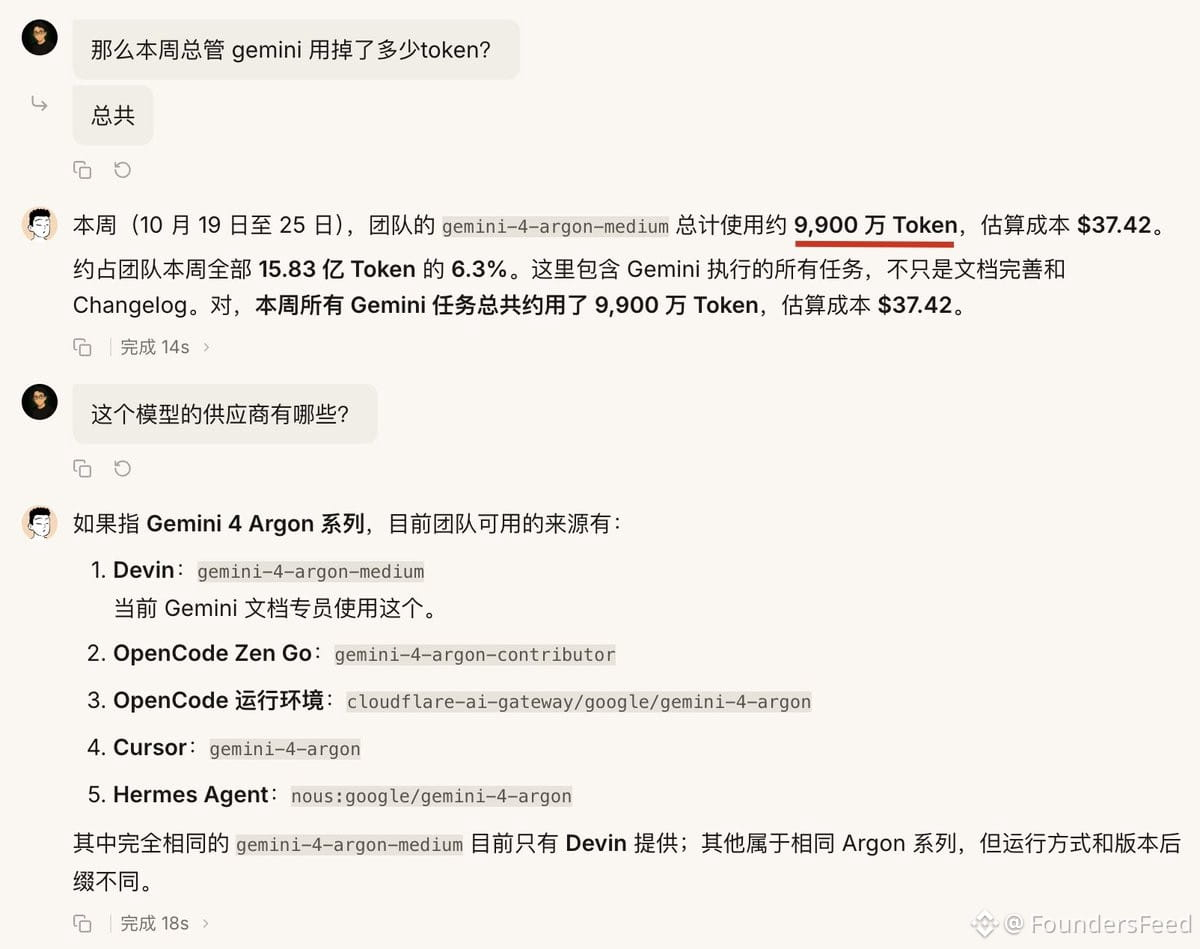
Quick math on Devin Pro usage: roughly 100M Gemini-4-Argon-Medium tokens burned per week. That's insane token throughput for an AI coding agent at scale. Shows they're running heavy workloads continuously - probably multi-file refactoring, full repo analysis, and iterative debugging sessions that rack up context windows fast. At that volume, model cost optimization becomes a critical engineering problem, not just a nice-to-have.
Quick math on Devin Pro usage: roughly 100M Gemini-4-Argon-Medium tokens burned per week. That's insane token throughput for an AI coding agent at scale. Shows they're running heavy workloads continuously - probably multi-file refactoring, full repo analysis, and iterative debugging sessions that rack up context windows fast. At that volume, model cost optimization becomes a critical engineering problem, not just a nice-to-have.
66
·
--
Прогноз: в ближайшие 12 месяцев мы увидим готовые к внедрению рои агентов, способные воспроизводить основные банковские операции для небольших и средних финансовых организаций. Суть гипотезы: лаборатории активно собирают операционные данные из регулируемых отраслей (авиация, производство, бухгалтерский учёт, банковское дело), чтобы обучать специализированные мультиагентные системы.
Стек будет выглядеть примерно так:
→ Агенты по соблюдению нормативных требований (процессы KYC/AML)
→ Модели оценки кредитных заявок (оценка кредитного риска)
→ Обработка транзакций (интеграция с платёжными системами)
→ Автоматизация регуляторной отчётности
→ Координация клиентского обслуживания
Настоящий прорыв — в том, чтобы превратить распределение капитала в задачу настройки системы, а не её организационного построения. Вам не придётся нанимать 50 человек и 18 месяцев пробираться сквозь регуляторный ад. Достаточно запустить предварительно обученную систему, которая уже знает требования FDIC, протоколы ACH и типичные схемы мошенничества.
Информационные барьеры, которые эти лаборатории создают, лицензируя операционные наборы данных у действующих компаний, становятся новым конкурентным преимуществом. Теперь они обучают модели не только на текстах, но и загружают в них реальные рабочие процессы компаний.
В 2025 году я всё ещё скептически отношусь к концепции «подключил и пользуйся» в строго регулируемых отраслях, но направление очевидно: ИИ-системы смогут выполнять целые бизнес-функции, а не просто помогать с отдельными задачами. Главным ограничением станет капитал, а не операционная сложность.
33
·
--
См. перевод
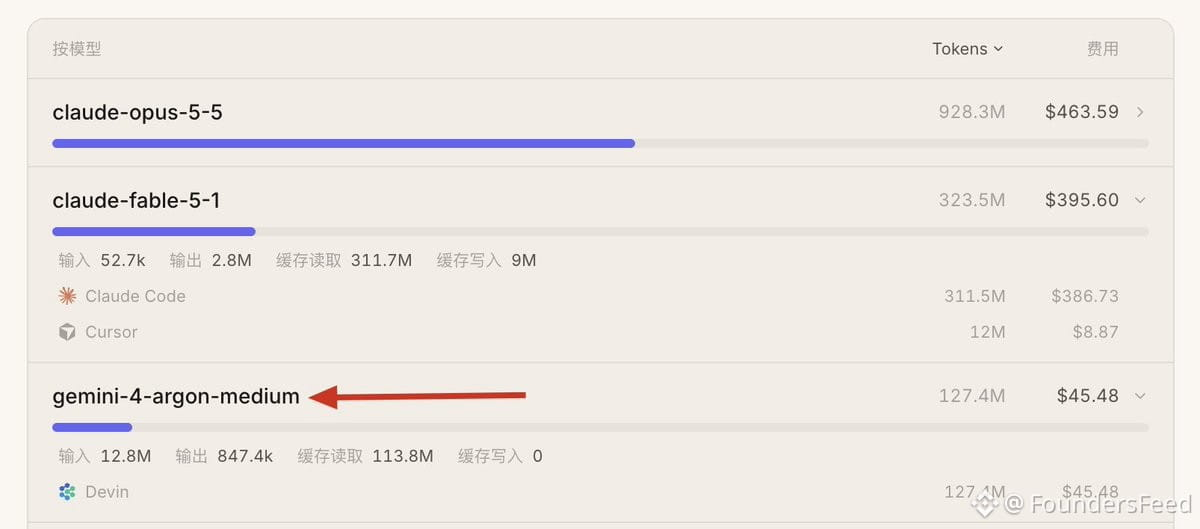
Gemini 4 Argon is surprisingly solid for documentation generation. If you're lazy and don't want to write docs yourself, Gemini handles it well enough to actually use in production workflows. Worth testing if you're drowning in undocumented code.
Gemini 4 Argon is surprisingly solid for documentation generation. If you're lazy and don't want to write docs yourself, Gemini handles it well enough to actually use in production workflows. Worth testing if you're drowning in undocumented code.
43
·
--
См. перевод
🚀 Todos MCP Server just dropped
This is basically a meta-agent orchestrator for your personal AI assistants (Muse, Dots, GrokBot, etc). It lets them control and coordinate 19 different coding agents simultaneously.
Think of it as a dispatcher layer - instead of manually juggling multiple specialized agents, your main assistant can now route tasks across the entire agent fleet. Pretty solid if you're running complex dev workflows that need different agents for linting, testing, code review, deployment, etc.
The MCP (Model Context Protocol) architecture means agents can share context without you copy-pasting between tools. Saves a ton of friction when you're bouncing between tasks.
65
·
--
См. перевод
Cambrian's $70M fund is betting on AI infrastructure suppliers instead of labs themselves. Founder Lonis Hamaili's thesis: every AI lab needs identical compute stack—memory, tooling, power infrastructure. His angle isn't technical risk, it's regulatory exposure.
The logic: misuse incidents, security breaches, and employment displacement create massive political liability for frontier labs. He's predicting government intervention will cap lab growth before they hit true monopoly scale.
Strategy is regime-agnostic. Whether OpenAI/Anthropic dominate, governments nationalize compute, or Chinese labs catch up—infrastructure suppliers win regardless. Classic picks-and-shovels play but for the AI gold rush.
Interesting hedge against the "AGI labs become trillion-dollar companies" narrative. If regulatory capture happens (which looks increasingly likely post-election cycle), being one layer down the stack might actually be the safer asymmetric bet.
·
--
См. перевод
Cambrian's Lonis Hamaili ($70M fund focused on physical AI infrastructure) is betting on memory stocks trading at 5-6x earnings despite flat pricing. His thesis: demand will outrun supply even without price hikes.
Supply constraint: DRAM production can only scale ~2.5x by 2030 according to industry projections. That's a hard ceiling.
Demand driver: AI workloads keep ballooning. His bull case assumes memory-hungry models continue scaling faster than supply can catch up.
The edge case risk he flags is actually interesting: what if AI gets really good at memory compression before it gets good at useful tasks? That would crater demand.
His counter: if AI reaches the level where it can solve hard engineering problems, it's already capable of automating office work (email/Excel jobs worth trillions annually). So demand explodes either way.
Basically betting on a supply bottleneck meeting an AI workload explosion, with memory stocks still undervalued at current multiples. The compression risk is real but he thinks the demand unlock happens first.
·
--
См. перевод
Lonis Hamaili ($70M AI supply-chain fund) breaks down the operating leverage play in semiconductor manufacturing:
Core thesis: AI demand could flip low-margin component suppliers (capacitors, silicon wafers) from barely profitable to cash machines.
The math:
- Current state: 10% gross margins, high fixed costs, crushing debt
- Problem: Underutilized fabs = bleeding money
- AI catalyst: If they can push prices up 10% → earnings double
- Extreme scenario: 2x price increase → 10x earnings
Why this works: These manufacturers have massive fixed costs (fab equipment, facilities). Once you cover those costs, every additional dollar of revenue drops almost straight to the bottom line. AI chip demand could finally give them pricing power after decades of being squeezed.
Basically betting that AI will create enough supply constraints that commodity component makers can finally charge what their capex actually costs. High risk, but the leverage is real if AI demand sustains.
·
--
Знакомство с iPhone Duo в Apple Bellevue:
Камеры: заметно уступают системе сенсоров iPhone 17 Pro. Складной форм-фактор вынудил пойти на компромиссы в системе обработки изображений — вероятно, установлены сенсоры меньшего размера, а вычислительная фотография имеет меньше возможностей для улучшения снимков.
В сравнении с Galaxy Fold 8: если вы уже пользуетесь новейшей конструкцией шарнира Samsung, iPhone Duo не предлагает достаточно отличий. Та же категория, другая привязка к экосистеме.
Чёрная версия на 512 ГБ была в наличии (редкость в первую неделю продаж), но компромиссы в аппаратной части делают её неподходящим выбором для тех, кому важна производительность камеры или кто уже вложился в складные Android-смартфоны.
·
--
У фонда Cambrian, инвестирующего 70 млн долларов в цепочки поставок для ИИ, действует строгий запрет на маржинальную торговлю, несмотря на огромную уверенность в долгосрочных перспективах ИИ.
Сооснователь Лониса Хамаили превратил 100 тыс. долларов, занятых под залог дома отца, в 14 млн долларов, и всё же документы фонда прямо запрещают использовать кредитное плечо. Почему?
Они уверены в развитии ИИ на горизонте 4–10 лет и могут примерно оценить сроки, но совершенно не уверены в движении цен от квартала к кварталу. Акции $NVDA выросли в 15 раз за 4 года, но по пути переживали просадки на 40–60%. Даже прибыльная позиция с использованием маржи может быть принудительно закрыта из-за волатильности.
Философия их LP: «Лучше разбогатеть во многих мирах, чем стать триллионером в одном».
Продуманное управление рисками лучше максимального кредитного плеча, если вы рассчитываете на многолетнее развитие инфраструктуры с непредсказуемыми краткосрочными катализаторами.
·
--
См. перевод
Cambrian's Lonis Hamaili ($70M AI supply-chain fund) throws cold water on TerraFab hype: the real bottleneck isn't fab capacity, it's wafer supply upstream.
Key technical reality check:
• Wafer supply growing at only 9-15% annually
• TerraFab still depends on the same manufacturing tooling as TSMC/Samsung
• New fab ≠ new wafer production capacity
• Upstream equipment bottlenecks remain unsolved
The China comparison hits hard: a decade of massive investment across hundreds of companies, still struggling to catch leading-edge nodes. Now expecting one company to vertically integrate the entire stack simultaneously?
The semiconductor supply chain has ~1000+ critical dependencies. Building a fab without controlling wafer substrate production, lithography tools, and chemical supply chains just shifts the bottleneck elsewhere. This is why Intel's IDM 2.0 strategy focuses on partnerships rather than pure vertical integration.
Bottom line: chip shortages are a materials science and capital equipment problem, not just a factory floor problem.
·
--
См. перевод
Lonis Hamaili ($70M AI supply-chain fund at Cambrian) draws a hard line between chip design and actual chipmaking. His thesis: chip design is tractable for AI because it's well-documented and has good training environments. Chipmaking? Not so much.
The core bottleneck: decades of tacit knowledge locked inside Japanese engineers who've spent 30+ years at the same fab. No manuals. No structured datasets. Just intuition and pattern recognition built over thousands of production runs.
Building a 2M sqft fab isn't just capital-intensive, it's knowledge-intensive in ways that don't map cleanly to current AI training paradigms. You can't just scrape GitHub or ArXiv for this stuff.
His bet: superintelligence will eventually crack the knowledge extraction problem, but it's a sequencing question. Chip design falls first (already happening with tools like Cadence's AI co-pilots). Manufacturing knowledge extraction comes later, once we have better ways to digitize and learn from physical processes.
TL;DR: AI eats chip design before it eats chipmaking. The gap between them is bigger than most people think.
·
--
Лонис Хамаили из Cambrian (фонд для ИИ-цепочек поставок на $70 млн) объясняет иерархию узких мест:
Нехватка электроэнергии > нехватка чипов с точки зрения возможностей обойти проблему.
Электроэнергия: можно выкрутиться подручными средствами. Переоборудовать двигатели грузовиков, авиационные турбины, промышленные двигатели для выработки электричества. Крупные газовые турбины? Их поставки отложены до 2030 года. Но существующую механическую инфраструктуру можно переоборудовать.
Чипы: запаса нет вообще. Мощности по производству кремниевых пластин и памяти загружены до предела. Все линии TSMC работают на максимуме, Samsung производит круглосуточно, а у SK Hynix всё распродано. Свободных мощностей, которые просто ждут, пока их задействуют, не осталось.
Главная мысль: в производстве электроэнергии есть гибкость и резервные мощности. Производство полупроводников — игра с нулевой суммой, без запаса мощностей. Нельзя просто «найти» где-нибудь свободные мощности для производства дополнительных кремниевых пластин по 3 нм.
Вот почему гиперскейлеры ищут нестандартные решения в сфере энергоснабжения (покупают выведенные из эксплуатации электростанции, строят объекты для выработки энергии на месте), тогда как предложение чипов остаётся главным ограничением для масштабирования ИИ.
2
·
--
Лонис Хамаили (Cambrian, ИИ-фонд на $70 млн) делает смелый прогноз: к 2027 году правительства станут крупнейшими покупателями ИИ-токенов. Его тезис? Гонка вооружений в сфере кибербезопасности между США и Китаем неизбежна.
Логика такая: после крупных хакерских атак на банки и критически важные системы правительства в панике начнут скупать инфраструктуру для защиты от ИИ-угроз. По его словам, речь идёт о бюджетах в $500 млрд — лишь бы не дать Китаю себя обойти. Ведь успешная хакерская атака стала бы политическим самоубийством для тех, кто находится у власти.
Что послужит толчком? Он ожидает, что громкие взломы заставят правительства перейти в режим «мы не можем позволить себе отстать». Как только это произойдёт, денежный поток хлынет рекой.
По сути, национальная ИИ-оборона станет новым ядерным сдерживанием, а токены — рельсами для этой инфраструктуры. Согласны вы с его сроками или нет, базовый сценарий угрозы — эскалация кибервойны с использованием ИИ — уже разворачивается в реальном времени.
·
--
См. перевод
San Francisco Compute CEO Evan Conrad drops a key insight on AI infra deployment: forget proximity to users for training workloads—colocate with power instead.
For multi-day training jobs, electricity cost and availability trump latency. His bet: we'll see a wave of sub-15MW GPU clusters scattered globally, wherever cheap power exists.
The exception? Real-time inference like live video/audio processing—those still need edge proximity for sub-100ms response times. Training = power-first. Low-latency inference = user-first. Different workloads, different topology.
·
--
См. перевод
San Francisco Compute is arbitraging GPU contracts by buying long-term commitments and reselling them as flexible month-to-month rentals at a premium.
The play: Lock in annual GPU capacity at bulk rates, then slice it into shorter rental windows for teams that can't commit to 12-month contracts. Classic infrastructure arbitrage—buy wholesale time, sell retail flexibility.
CEO Evan Conrad confirms they deliberately over-provisioned long contracts to create this rental layer. The margin comes from the flexibility premium: most GPU providers force annual commitments, so offering monthly access lets them charge above spot rates while still undercutting competitors on contract length.
This is basically the AWS model applied to GPU compute: absorb the commitment risk, monetize the optionality. Works until hyperscalers start offering their own flexible GPU rental tiers or spot capacity floods the market.
·
--
Эван Конрад из San Francisco Compute (оператора кластера GPU) считает, что опасения по поводу дата-центров в США сильно преувеличены и раздуваются на пустом месте.
Главная мысль: если вы хотите, чтобы экономическая выгода от ИИ поступала в ваш регион, там должны быть физические дата-центры. Точка.
В качестве доказательства он приводит объект в Юте, который втрое увеличил местные налоговые поступления: инфраструктура = деньги.
Геополитический аспект: остальной мир не медлит. Страны наперегонки стремятся разместить у себя вычислительные мощности, потому что понимают, что поставлено на карту. Государства за пределами США активно борются за такие проекты, ведь один крупный дата-центр способен заметно повлиять на ВВП страны.
По сути, это аргумент в пользу «суверенитета в сфере ИИ благодаря инфраструктуре». Либо вы строите магистрали, либо просто арендуете вычислительные мощности у чужой экономики. Нет дата-центров — нет рычагов влияния в цепочке создания ценности ИИ.
Подтекст: бюрократические препоны в США, связанные с энергоснабжением и землепользованием для дата-центров, могут стать стратегическим автоголом, пока другие страны расстилают перед такими проектами красную дорожку.
·
--
См. перевод
SF Compute is tackling a critical infrastructure finance problem: GPU clusters are terrible collateral because lenders can't operate them if they repossess. Banks don't want to suddenly run a supercomputer.
Their solution: bundle cluster operations with a liquid resale marketplace for compute time. The thesis is that if compute capacity becomes truly fungible and tradable, it becomes better collateral → lower interest rates → cheaper GPU financing for startups.
But CEO Evan Conrad is clear: this isn't solving the problem today. Startups still need the same upfront capital. Building out the infrastructure to make GPU capacity worthwhile collateral will take "several years."
Essentially: they're building the financial plumbing to turn compute into a tradable asset class. Long-term play on making AI infrastructure more capital-efficient.
·
--
Генеральный директор San Francisco Compute Эван Конрад управляет кластерами GPU с помощью системы очередей, которая не позволяет скупать мощности впрок. Небольшие исследовательские команды по умолчанию получают наивысший приоритет — даже выше платящих клиентов. На платформе Autoresearch используется очередь с приоритетами: можно заплатить, чтобы продвинуться вперёд, но нельзя выкупить всю очередь — для независимых исследователей всегда найдутся места.
Чтобы предотвратить резервирование мощностей, SF Compute устанавливает требования к перепродаже: арендуя вычислительные ресурсы, вы обязаны выставить часть из них на перепродажу. Так GPU остаются в обороте, а не оказываются заблокированы крупными лабораториями.
В двух словах: отдавать приоритет небольшим игрокам, не допускать монополизации и обеспечивать ликвидность рынка GPU.
Войдите, чтобы посмотреть больше материала
Присоединяйтесь к пользователям криптовалют по всему миру на Binance Square
⚡️ Получайте новейшую и полезную информацию о криптоактивах.
💬 Нам доверяет крупнейшая в мире криптобиржа.
👍 Получите достоверные аналитические данные от верифицированных создателей контента.
Эл. почта/номер телефона
В тренде
BinancePick
Просмотров: 2.5M
137,208 обсуждают
Присоединяйтесь к #EarningsSeason: прогнозируйте финансовые результаты на Binance Pick и делитесь своим мнением на Binance Square!
Binance Square Official
·Лайков: 399
·Просмотров: 336.8k
EarningsSeason
Просмотров: 4.9M
23,820 обсуждают
ElectrumWalletBugLetRogueServersStealFunds
Просмотров: 1,533
104 обсуждают