

sauron1549
6 Публикации

sauron1549
Отправить жалобу
Заблокировать пользователя
Data-Driven Quantitative Trader Actuarial Science Student
Случайный трейдер
4 подписок(и/а)
8 подписчиков(а)
1 понравилось
Посты
·
--

Статья
🤖 Революция ИИ в ончейне: почему @NewtonProtocol задает будущее автоматизированной торговлиПересечение Искусственного интеллекта и Web3 переживает масштабный смена нарратива. Внешней автоматизации больше недостаточно; современный рынок требует надежной безопасности, полной децентрализации и криптографической проверяемости. Именно здесь Newton Protocol меняет правила игры, заявляя о себе как пионер благодаря Newton Mainnet Beta, где создается ультрабезопасный роллап, специально адаптированный под стратегии, управляемые ИИ.
🧠 Безопасный роллап для умных агентов и автоматизированного трейдинга
🤖 Революция ИИ в ончейне: почему @NewtonProtocol задает будущее автоматизированной торговли
Пересечение Искусственного интеллекта и Web3 переживает масштабный смена нарратива. Внешней автоматизации больше недостаточно; современный рынок требует надежной безопасности, полной децентрализации и криптографической проверяемости. Именно здесь Newton Protocol меняет правила игры, заявляя о себе как пионер благодаря Newton Mainnet Beta, где создается ультрабезопасный роллап, специально адаптированный под стратегии, управляемые ИИ.
🧠 Безопасный роллап для умных агентов и автоматизированного трейдинга
🧠 Безопасный роллап для умных агентов и автоматизированного трейдинга
16
·
--
Квантовый скачок инфраструктуры Web3: почему @NewtonProtocol — следующая большая волна 🌐Эволюция децентрализованных финансов и инфраструктуры Web3 требует большего, чем просто стандартное выполнение смарт-контрактов; она предполагает надежную масштабируемость, целостность данных и высокоэффективную обработку. Именно здесь протокол Newton меняет правила игры. При активном запуске Newton Mainnet Beta проект переходит от теоретических инноваций к высокопроизводительному, реальному исполнительному уровню.
⚡ Техническое преимущество: основа Newton Mainnet Beta
Что отличает @NewtonProtocol от устаревших блокчейнов, так это архитектурный акцент на высокой пропускной способности и минимальной задержке. Newton Mainnet Beta доказывает, что сеть может выдерживать интенсивный децентрализованный трафик, не упираясь в «узкие места» по скорости транзакций и не разгоняя до небес комиссии за газ. И для разработчиков, и для квантоинвесторов это дает хорошо прогнозируемую и стабильную среду для развертывания dApps нового поколения.
Квантовый скачок инфраструктуры Web3: почему @NewtonProtocol — следующая большая волна 🌐
Эволюция децентрализованных финансов и инфраструктуры Web3 требует большего, чем просто стандартное выполнение смарт-контрактов; она предполагает надежную масштабируемость, целостность данных и высокоэффективную обработку. Именно здесь протокол Newton меняет правила игры. При активном запуске Newton Mainnet Beta проект переходит от теоретических инноваций к высокопроизводительному, реальному исполнительному уровню.
⚡ Техническое преимущество: основа Newton Mainnet Beta
Что отличает @NewtonProtocol от устаревших блокчейнов, так это архитектурный акцент на высокой пропускной способности и минимальной задержке. Newton Mainnet Beta доказывает, что сеть может выдерживать интенсивный децентрализованный трафик, не упираясь в «узкие места» по скорости транзакций и не разгоняя до небес комиссии за газ. И для разработчиков, и для квантоинвесторов это дает хорошо прогнозируемую и стабильную среду для развертывания dApps нового поколения.
⚡ Техническое преимущество: основа Newton Mainnet Beta
Что отличает @NewtonProtocol от устаревших блокчейнов, так это архитектурный акцент на высокой пропускной способности и минимальной задержке. Newton Mainnet Beta доказывает, что сеть может выдерживать интенсивный децентрализованный трафик, не упираясь в «узкие места» по скорости транзакций и не разгоняя до небес комиссии за газ. И для разработчиков, и для квантоинвесторов это дает хорошо прогнозируемую и стабильную среду для развертывания dApps нового поколения.
93
·
--
#newt $NEWT Расширяющий возможности, высоко инновационный и наполненный огромным потенциалом роста для нашего будущего.❤️
#newt $NEWT Расширяющий возможности, высоко инновационный и наполненный огромным потенциалом роста для нашего будущего.❤️
11
·
--
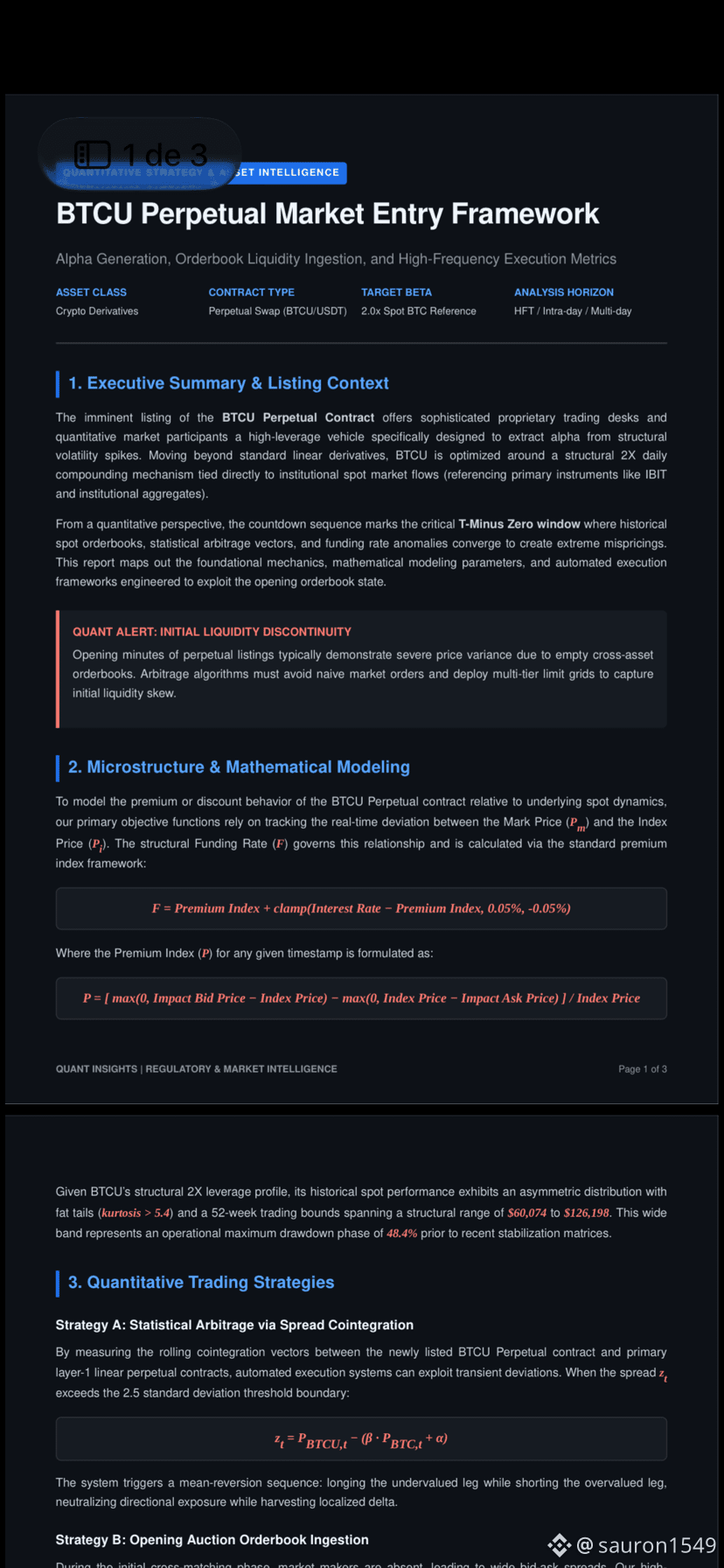
📊 BTCU Perp: количественный план действий уже в эфире.
Когда обратный отсчёт на image.png достигнет нуля, начальные разрывы в стакане заявок приведут к огромным неэффективностям. Не гадать направление — торгуй по математике.
Я разработал полный фреймворк для количественного входа на рынок (PDF), включающий:
Модели коинтеграции для статистического арбитража спредов.
Анализ микроструктуры вариаций funding rate (F).
Настроенные матрицы рисков IMR/MMR и правила низколатентного исполнения.
Нужен институционального уровня PDF прямо к тебе на стол?
1. Подпишись на меня
2. Оставь комментарий или напиши в личку со словом "QUANT"
Хватит торговать на интуиции. Давайте считать и печатать. 💻⚡$BTC
{future}(BTCUSDT)
📊 BTCU Perp: количественный план действий уже в эфире.
Когда обратный отсчёт на image.png достигнет нуля, начальные разрывы в стакане заявок приведут к огромным неэффективностям. Не гадать направление — торгуй по математике.
Я разработал полный фреймворк для количественного входа на рынок (PDF), включающий:
Модели коинтеграции для статистического арбитража спредов.
Анализ микроструктуры вариаций funding rate (F).
Настроенные матрицы рисков IMR/MMR и правила низколатентного исполнения.
Нужен институционального уровня PDF прямо к тебе на стол?
1. Подпишись на меня
2. Оставь комментарий или напиши в личку со словом "QUANT"
Хватит торговать на интуиции. Давайте считать и печатать. 💻⚡$BTC
Когда обратный отсчёт на image.png достигнет нуля, начальные разрывы в стакане заявок приведут к огромным неэффективностям. Не гадать направление — торгуй по математике.
Я разработал полный фреймворк для количественного входа на рынок (PDF), включающий:
Модели коинтеграции для статистического арбитража спредов.
Анализ микроструктуры вариаций funding rate (F).
Настроенные матрицы рисков IMR/MMR и правила низколатентного исполнения.
Нужен институционального уровня PDF прямо к тебе на стол?
1. Подпишись на меня
2. Оставь комментарий или напиши в личку со словом "QUANT"
Хватит торговать на интуиции. Давайте считать и печатать. 💻⚡$BTC
127
·
--

Статья
🚨 КВАНТОВОЕ ПРЕДУПРЕЖДЕНИЕ: Активирована последовательность загрузки ордербука BTCU Perp 🚨По мере того, как таймер, показанный на image.png, достигает T-minus нуля, контракт $BTCU Perpetual открывает окно с высоким кредитным плечом для структурной альфы. Из-за отсутствия начального маркет-мейкера ожидайте резкий разрыв ликвидности между разными классами активов. НЕ используйте наивные рыночные ордера. 🧵👇
2/4 📊 Математика за премией к базису
Наши высокочастотные модели отслеживают отклонение спрэда в реальном времени между Расчетной ценой (P_m) и Индексной ценой (P_i). При структурном профиле ежедневного плеча 2X для BTCU историческое отслеживание демонстрирует распределение с толстыми хвостами (эксцесс > 5.4). Локальные ошибки в цене будут крайне волатильными.
🚨 КВАНТОВОЕ ПРЕДУПРЕЖДЕНИЕ: Активирована последовательность загрузки ордербука BTCU Perp 🚨
По мере того, как таймер, показанный на image.png, достигает T-minus нуля, контракт $BTCU Perpetual открывает окно с высоким кредитным плечом для структурной альфы. Из-за отсутствия начального маркет-мейкера ожидайте резкий разрыв ликвидности между разными классами активов. НЕ используйте наивные рыночные ордера. 🧵👇
2/4 📊 Математика за премией к базису
Наши высокочастотные модели отслеживают отклонение спрэда в реальном времени между Расчетной ценой (P_m) и Индексной ценой (P_i). При структурном профиле ежедневного плеча 2X для BTCU историческое отслеживание демонстрирует распределение с толстыми хвостами (эксцесс > 5.4). Локальные ошибки в цене будут крайне волатильными.
2/4 📊 Математика за премией к базису
Наши высокочастотные модели отслеживают отклонение спрэда в реальном времени между Расчетной ценой (P_m) и Индексной ценой (P_i). При структурном профиле ежедневного плеча 2X для BTCU историческое отслеживание демонстрирует распределение с толстыми хвостами (эксцесс > 5.4). Локальные ошибки в цене будут крайне волатильными.
22
·
--
Beyond Price Action: The Statistical Edge in Crypto MarketsБольшинство трейдеров сосредотачиваются на субъективных паттернах или новостных настроениях. Хотя это имеет свое место, им часто не хватает объективной проверки, необходимой для последовательного управления рисками.
Будучи студентом-актуарием и количественным исследователем, я смотрю на рынки через призму вероятности и распределения данных, а не через простые догадки. Моя торговая система опирается на три ключевых принципа:
1. Анализ ликвидности: выявление институционального потока заявок для определения зон с высокой вероятностью.
2. Количественное моделирование: использование Python и R для бэктестинга стратегий на исторических данных о волатильности, чтобы «преимущество» было статистически значимым, а не просто случайным результатом.
Beyond Price Action: The Statistical Edge in Crypto Markets
Большинство трейдеров сосредотачиваются на субъективных паттернах или новостных настроениях. Хотя это имеет свое место, им часто не хватает объективной проверки, необходимой для последовательного управления рисками.
Будучи студентом-актуарием и количественным исследователем, я смотрю на рынки через призму вероятности и распределения данных, а не через простые догадки. Моя торговая система опирается на три ключевых принципа:
1. Анализ ликвидности: выявление институционального потока заявок для определения зон с высокой вероятностью.
2. Количественное моделирование: использование Python и R для бэктестинга стратегий на исторических данных о волатильности, чтобы «преимущество» было статистически значимым, а не просто случайным результатом.
Будучи студентом-актуарием и количественным исследователем, я смотрю на рынки через призму вероятности и распределения данных, а не через простые догадки. Моя торговая система опирается на три ключевых принципа:
1. Анализ ликвидности: выявление институционального потока заявок для определения зон с высокой вероятностью.
2. Количественное моделирование: использование Python и R для бэктестинга стратегий на исторических данных о волатильности, чтобы «преимущество» было статистически значимым, а не просто случайным результатом.
1
111
Войдите, чтобы посмотреть больше материала
Присоединяйтесь к пользователям криптовалют по всему миру на Binance Square
⚡️ Получайте новейшую и полезную информацию о криптоактивах.
💬 Нам доверяет крупнейшая в мире криптобиржа.
👍 Получите достоверные аналитические данные от верифицированных создателей контента.
Эл. почта/номер телефона
В тренде
EarningsSeason
Просмотров: 160,847
1,502 обсуждают
Сезон отчетности: результаты Micron за 4-й квартал — оптимистично или пессимистично?
Binance Square Official
·Лайков: 294
·Просмотров: 519.5k
BitwiseLaunchesFirstSpotNEARETF
Просмотров: 2,836
140 обсуждают
USJobOpeningsFallToFiveMonthLow
Просмотров: 4,351
107 обсуждают