
D E E N A
4.3k Публикации

D E E N A
Отправить жалобу
Заблокировать пользователя
Crypto Lover
Открытая сделка
Трейдер с регулярными сделками
1.1 г
222 подписок(и/а)
17.1K+ подписчиков(а)
4.2K+ понравилось
Посты
Портфель
Все
Цитирования
Активно
·
--
🚨 КОНКУРС ПО НАСОСАМ!
$G USDT: +73.82% по $0.007337
$ONE : +72.85% по $0.0018028
🔥 Их разделяет всего 0.97%!
Кто возьмет лидерство дальше?
{spot}(ONEUSDT)
{spot}(GUSDT)
#BOJHikesRatesTo31YearHigh
#InjectiveLaunchesINJOnSolana
#SECGrantsInnovationExemptionForTokenizedStocks
#XRPGains3%AsRippleAddsMPPSupport
#XRPGains3%AsRippleAddsMPPSupport
🚨 КОНКУРС ПО НАСОСАМ!
$G USDT: +73.82% по $0.007337
$ONE : +72.85% по $0.0018028
🔥 Их разделяет всего 0.97%!
Кто возьмет лидерство дальше?
#BOJHikesRatesTo31YearHigh
#InjectiveLaunchesINJOnSolana
#SECGrantsInnovationExemptionForTokenizedStocks
#XRPGains3%AsRippleAddsMPPSupport
#XRPGains3%AsRippleAddsMPPSupport
$G USDT: +73.82% по $0.007337
$ONE : +72.85% по $0.0018028
🔥 Их разделяет всего 0.97%!
Кто возьмет лидерство дальше?
#BOJHikesRatesTo31YearHigh
#InjectiveLaunchesINJOnSolana
#SECGrantsInnovationExemptionForTokenizedStocks
#XRPGains3%AsRippleAddsMPPSupport
#XRPGains3%AsRippleAddsMPPSupport
$GUSDT — +73.82%
$ONE — +72.85%
🟢 $GUSDT
🔵 $ONE
17 ч. осталось
1.8k
·
--
Babylon (BABY): ставка на стейкинг BTC, которую никто до конца не учёл
Я слежу за Babylon с тех пор, как стейкинг BTC снова начал набирать обороты, и это один из самых интересных контрастов, которые я вижу в крипте прямо сейчас. Сам протокол действительно впечатляет: вы стейкаете нативный биткоин напрямую, без обёртывания, без мостов, без кастодианов — и на его пике он привлёк более $5 млрд в размещённом BTC, причём это больше трети всего предложения wrapped BTC, и при этом вообще без обёртывания. Это реальный спрос на некастодиальный доход.
Но токен рассказал совершенно другую историю. BABY достиг исторического максимума около $0.17 в апреле 2025 года, а сейчас торгуется примерно по $0.012–0.015 — падение около 92%. Рыночная капитализация находится примерно на уровне $50–55 млн при том, что миллиарды токенов всё ещё заблокированы. Ранние анлоки инвесторов начались в мае 2026 года: они выпускают долями ежемесячно вплоть до 2029-го, а значит, давление размывания будет сохраняться независимо от того, насколько сильны фундаментальные показатели протокола.
Поэтому я внимательно смотрю на две вещи: успевает ли рост TVL и интеграции вроде Aave V4 обгонять график анлоков, и закладывает ли рынок разницу между силой протокола и предложением токена. Это не финансовый совет — просто то, что видно по данным.
#BrentCrudeFallsAbout6%
#OilDropsAbout6%
#USStorageStocksExtendLosses
#KRXHaltsKOSPIAfterChipSelloff
#SKHynixSlumps11%OnAIChipSelloff
$COTI
{spot}(COTIUSDT)
$SNXX
{future}(SNXXUSDT)
$DIA
{spot}(DIAUSDT)
Babylon (BABY): ставка на стейкинг BTC, которую никто до конца не учёл
Я слежу за Babylon с тех пор, как стейкинг BTC снова начал набирать обороты, и это один из самых интересных контрастов, которые я вижу в крипте прямо сейчас. Сам протокол действительно впечатляет: вы стейкаете нативный биткоин напрямую, без обёртывания, без мостов, без кастодианов — и на его пике он привлёк более $5 млрд в размещённом BTC, причём это больше трети всего предложения wrapped BTC, и при этом вообще без обёртывания. Это реальный спрос на некастодиальный доход.
Но токен рассказал совершенно другую историю. BABY достиг исторического максимума около $0.17 в апреле 2025 года, а сейчас торгуется примерно по $0.012–0.015 — падение около 92%. Рыночная капитализация находится примерно на уровне $50–55 млн при том, что миллиарды токенов всё ещё заблокированы. Ранние анлоки инвесторов начались в мае 2026 года: они выпускают долями ежемесячно вплоть до 2029-го, а значит, давление размывания будет сохраняться независимо от того, насколько сильны фундаментальные показатели протокола.
Поэтому я внимательно смотрю на две вещи: успевает ли рост TVL и интеграции вроде Aave V4 обгонять график анлоков, и закладывает ли рынок разницу между силой протокола и предложением токена. Это не финансовый совет — просто то, что видно по данным.
#BrentCrudeFallsAbout6%
#OilDropsAbout6%
#USStorageStocksExtendLosses
#KRXHaltsKOSPIAfterChipSelloff
#SKHynixSlumps11%OnAIChipSelloff
$COTI
$SNXX
$DIA
Я слежу за Babylon с тех пор, как стейкинг BTC снова начал набирать обороты, и это один из самых интересных контрастов, которые я вижу в крипте прямо сейчас. Сам протокол действительно впечатляет: вы стейкаете нативный биткоин напрямую, без обёртывания, без мостов, без кастодианов — и на его пике он привлёк более $5 млрд в размещённом BTC, причём это больше трети всего предложения wrapped BTC, и при этом вообще без обёртывания. Это реальный спрос на некастодиальный доход.
Но токен рассказал совершенно другую историю. BABY достиг исторического максимума около $0.17 в апреле 2025 года, а сейчас торгуется примерно по $0.012–0.015 — падение около 92%. Рыночная капитализация находится примерно на уровне $50–55 млн при том, что миллиарды токенов всё ещё заблокированы. Ранние анлоки инвесторов начались в мае 2026 года: они выпускают долями ежемесячно вплоть до 2029-го, а значит, давление размывания будет сохраняться независимо от того, насколько сильны фундаментальные показатели протокола.
Поэтому я внимательно смотрю на две вещи: успевает ли рост TVL и интеграции вроде Aave V4 обгонять график анлоков, и закладывает ли рынок разницу между силой протокола и предложением токена. Это не финансовый совет — просто то, что видно по данным.
#BrentCrudeFallsAbout6%
#OilDropsAbout6%
#USStorageStocksExtendLosses
#KRXHaltsKOSPIAfterChipSelloff
#SKHynixSlumps11%OnAIChipSelloff
$COTI
$SNXX
$DIA
₿ Native BTC Staking
0%
📉 92% Token Drawdown
0%
🔓 Ongoing Unlock Pressure
0%
⚖️ Protocol vs Token Gap
0%
0 проголосовали • Голосование закрыто
486
·
--
🚀 $ON is heating up!
$ON /USDT Perp (Orochi Network) вырос +29.65% за 24ч и торгуется по $0.19198
📊 Максимум за 24ч: $0.23712
📉 Минимум за 24ч: $0.14064
💰 Объём за 24ч: 1.26B ON ($236.58M)
Резкий рост с $0.14064 до максимума $0.23712, затем откат — высокая волатильность говорит, что здесь жарко 🔥
Большие колебания — большие возможности: торгуйте с умом и управляйте рисками.
Поехали — торгуйте сейчас $ON
{future}(ONUSDT)
🚀 $ON is heating up!
$ON /USDT Perp (Orochi Network) вырос +29.65% за 24ч и торгуется по $0.19198
📊 Максимум за 24ч: $0.23712
📉 Минимум за 24ч: $0.14064
💰 Объём за 24ч: 1.26B ON ($236.58M)
Резкий рост с $0.14064 до максимума $0.23712, затем откат — высокая волатильность говорит, что здесь жарко 🔥
Большие колебания — большие возможности: торгуйте с умом и управляйте рисками.
Поехали — торгуйте сейчас $ON
$ON /USDT Perp (Orochi Network) вырос +29.65% за 24ч и торгуется по $0.19198
📊 Максимум за 24ч: $0.23712
📉 Минимум за 24ч: $0.14064
💰 Объём за 24ч: 1.26B ON ($236.58M)
Резкий рост с $0.14064 до максимума $0.23712, затем откат — высокая волатильность говорит, что здесь жарко 🔥
Большие колебания — большие возможности: торгуйте с умом и управляйте рисками.
Поехали — торгуйте сейчас $ON
BULLISH 💚
60%
BEARISH ♥️
40%
5 проголосовали • Голосование закрыто
165
·
--
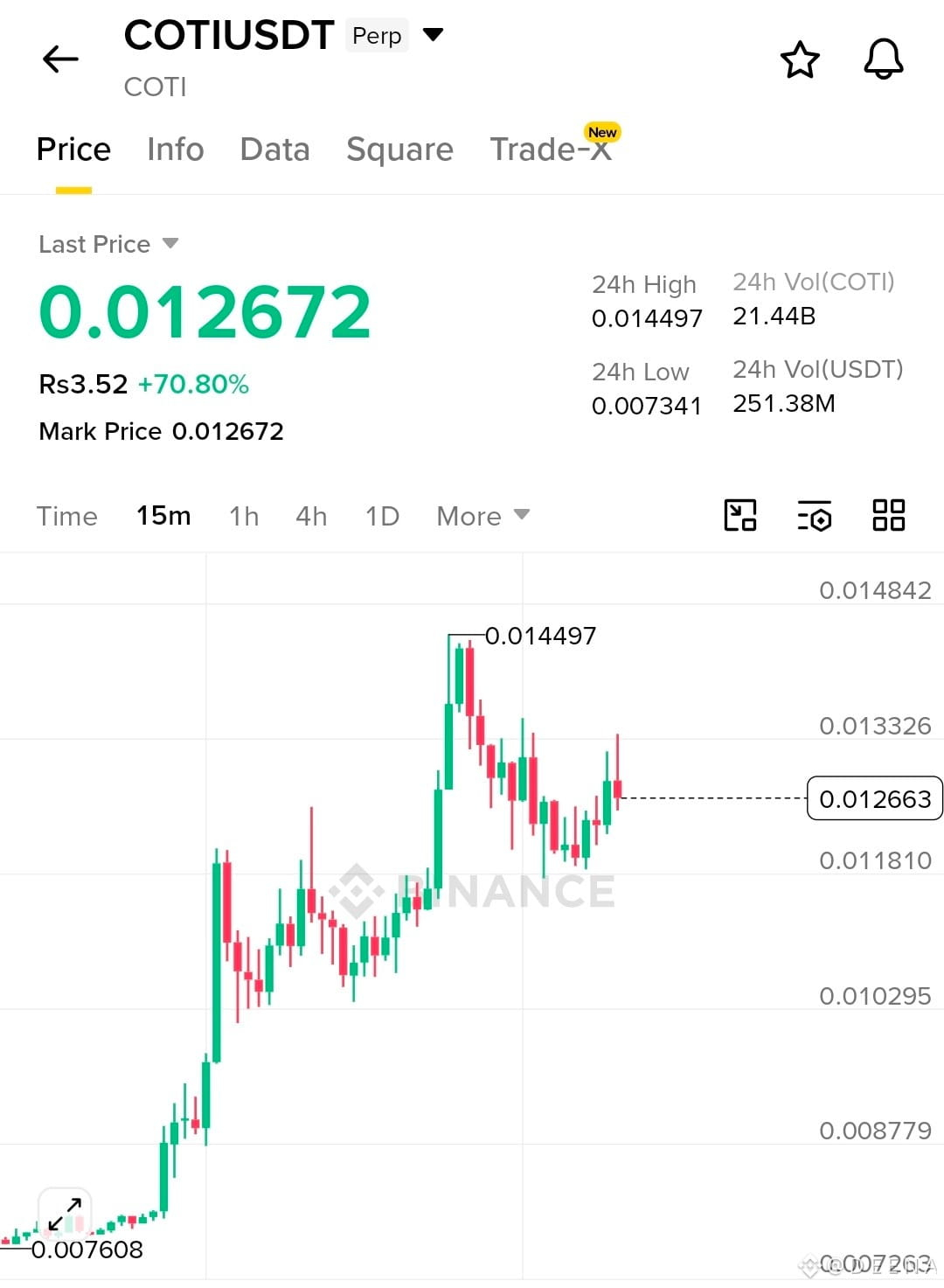
🚀 $COTI is В ОГНЕ прямо сейчас!
$COTI /USDT Perp вырос на +70.80% за 24ч, торгуется по $0.012672
📊 Максимум за 24ч: $0.014497
📉 Минимум за 24ч: $0.007341
💰 Объём за 24ч: 21.44B COTI ($251.38M)
От $0.007608 до максимума $0.014497 — это почти 2-кратный рост за один день. Моментум сейчас явно на стороне быков 🔥
Такая высокая волатильность означает большие возможности — и большие риски. Всегда торгуйте с корректным риск-менеджментом.
Поехали — торгуйте сейчас $COTI
{spot}(COTIUSDT)
🚀 $COTI is В ОГНЕ прямо сейчас!
$COTI /USDT Perp вырос на +70.80% за 24ч, торгуется по $0.012672
📊 Максимум за 24ч: $0.014497
📉 Минимум за 24ч: $0.007341
💰 Объём за 24ч: 21.44B COTI ($251.38M)
От $0.007608 до максимума $0.014497 — это почти 2-кратный рост за один день. Моментум сейчас явно на стороне быков 🔥
Такая высокая волатильность означает большие возможности — и большие риски. Всегда торгуйте с корректным риск-менеджментом.
Поехали — торгуйте сейчас $COTI
$COTI /USDT Perp вырос на +70.80% за 24ч, торгуется по $0.012672
📊 Максимум за 24ч: $0.014497
📉 Минимум за 24ч: $0.007341
💰 Объём за 24ч: 21.44B COTI ($251.38M)
От $0.007608 до максимума $0.014497 — это почти 2-кратный рост за один день. Моментум сейчас явно на стороне быков 🔥
Такая высокая волатильность означает большие возможности — и большие риски. Всегда торгуйте с корректным риск-менеджментом.
Поехали — торгуйте сейчас $COTI
127
·
--
Рост
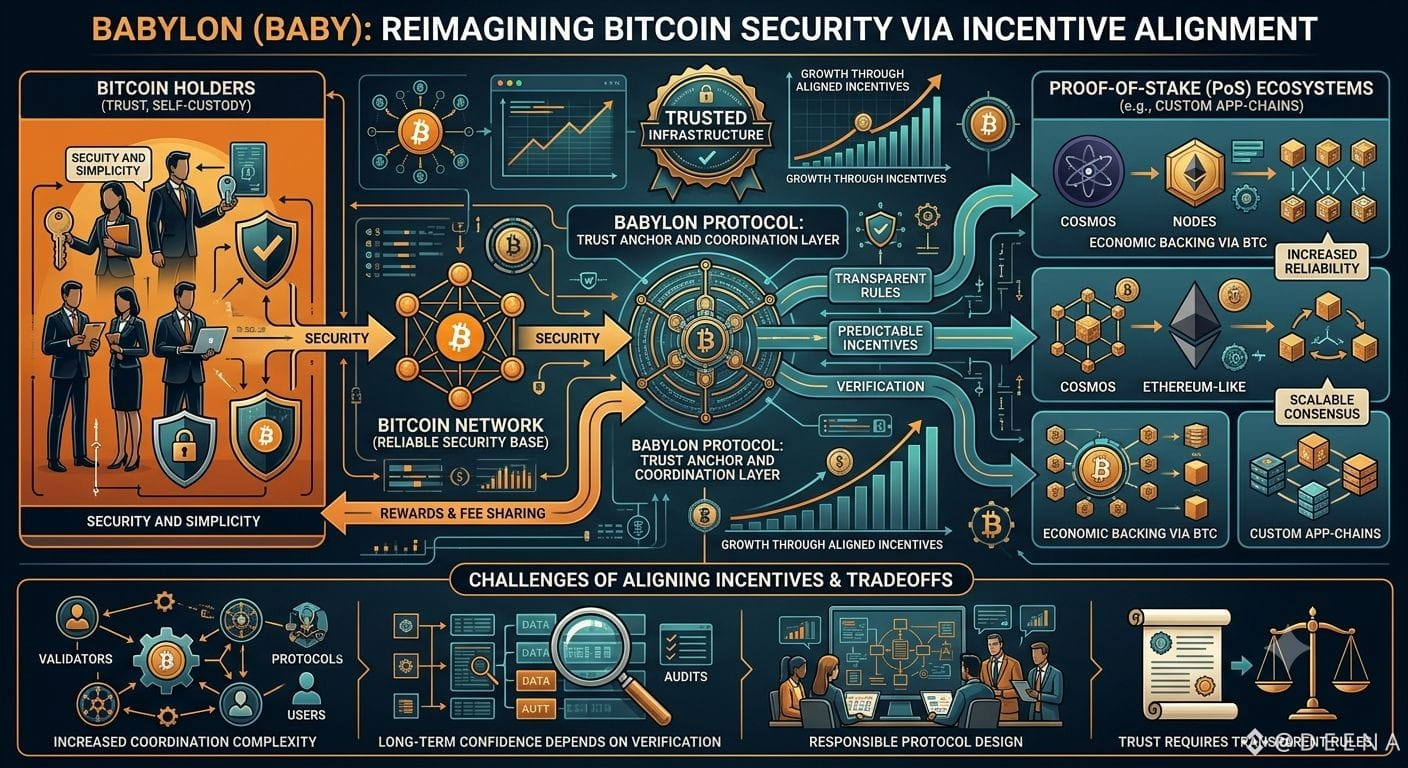
То, что особенно бросается мне в глаза в Babylon ($BABY ), заключается в том, что она не пытается по-настоящему изменить сам биткоин. Вместо этого Babylon исследует, как существующая безопасность биткоина может поддерживать экосистемы Proof-of-Stake, позволяя при этом держателям BTC оставаться в контроле над своими активами. Это похоже на другой разговор, не такой, как обычно: не про награды за стейкинг или эффективность капитала.
Что делает Babylon интересной, так это задача согласования стимулов между участниками, которые очень сильно отличаются друг от друга. Держатели биткоина хотят безопасности и простоты, тогда как PoS-сетям нужна надежная экономическая поддержка. Объединить эти интересы недостаточно одной только сильной технологией. Это зависит от прозрачных правил, предсказуемых стимулов и системы, которой люди продолжают доверять еще долго после того, как первоначальный ажиотаж утихает.
Также я думаю, что существует важный компромисс, о котором говорят недостаточно. Когда биткоин становится частью обеспечения безопасности других сетей, координация между пользователями, валидаторами и протоколами естественным образом усложняется. Самостоятельное хранение решает одну проблему, но долгосрочная уверенность все равно зависит от верификации, ясных стимулов и ответственного проектирования протокола.
Именно поэтому я продолжаю следить за Babylon как за инфраструктурным проектом, а не как за рыночным нарративом. Если ей удастся сохранить доверие, расширяя роль биткоина за пределы его собственной сети, это может показать, что долговечная инфраструктура блокчейна создается через согласование стимулов, а не просто за счет технических инноваций. Реальный вопрос в том, сохранятся ли эти стимулы достаточно сильными по мере роста экосистемы.
#baby @babylonlabs_io $BABY
То, что особенно бросается мне в глаза в Babylon ($BABY ), заключается в том, что она не пытается по-настоящему изменить сам биткоин. Вместо этого Babylon исследует, как существующая безопасность биткоина может поддерживать экосистемы Proof-of-Stake, позволяя при этом держателям BTC оставаться в контроле над своими активами. Это похоже на другой разговор, не такой, как обычно: не про награды за стейкинг или эффективность капитала.
Что делает Babylon интересной, так это задача согласования стимулов между участниками, которые очень сильно отличаются друг от друга. Держатели биткоина хотят безопасности и простоты, тогда как PoS-сетям нужна надежная экономическая поддержка. Объединить эти интересы недостаточно одной только сильной технологией. Это зависит от прозрачных правил, предсказуемых стимулов и системы, которой люди продолжают доверять еще долго после того, как первоначальный ажиотаж утихает.
Также я думаю, что существует важный компромисс, о котором говорят недостаточно. Когда биткоин становится частью обеспечения безопасности других сетей, координация между пользователями, валидаторами и протоколами естественным образом усложняется. Самостоятельное хранение решает одну проблему, но долгосрочная уверенность все равно зависит от верификации, ясных стимулов и ответственного проектирования протокола.
Именно поэтому я продолжаю следить за Babylon как за инфраструктурным проектом, а не как за рыночным нарративом. Если ей удастся сохранить доверие, расширяя роль биткоина за пределы его собственной сети, это может показать, что долговечная инфраструктура блокчейна создается через согласование стимулов, а не просто за счет технических инноваций. Реальный вопрос в том, сохранятся ли эти стимулы достаточно сильными по мере роста экосистемы.
#baby @BabylonLabs_io $BABY
Что делает Babylon интересной, так это задача согласования стимулов между участниками, которые очень сильно отличаются друг от друга. Держатели биткоина хотят безопасности и простоты, тогда как PoS-сетям нужна надежная экономическая поддержка. Объединить эти интересы недостаточно одной только сильной технологией. Это зависит от прозрачных правил, предсказуемых стимулов и системы, которой люди продолжают доверять еще долго после того, как первоначальный ажиотаж утихает.
Также я думаю, что существует важный компромисс, о котором говорят недостаточно. Когда биткоин становится частью обеспечения безопасности других сетей, координация между пользователями, валидаторами и протоколами естественным образом усложняется. Самостоятельное хранение решает одну проблему, но долгосрочная уверенность все равно зависит от верификации, ясных стимулов и ответственного проектирования протокола.
Именно поэтому я продолжаю следить за Babylon как за инфраструктурным проектом, а не как за рыночным нарративом. Если ей удастся сохранить доверие, расширяя роль биткоина за пределы его собственной сети, это может показать, что долговечная инфраструктура блокчейна создается через согласование стимулов, а не просто за счет технических инноваций. Реальный вопрос в том, сохранятся ли эти стимулы достаточно сильными по мере роста экосистемы.
#baby @BabylonLabs_io $BABY
3
2
115
·
--
Рост
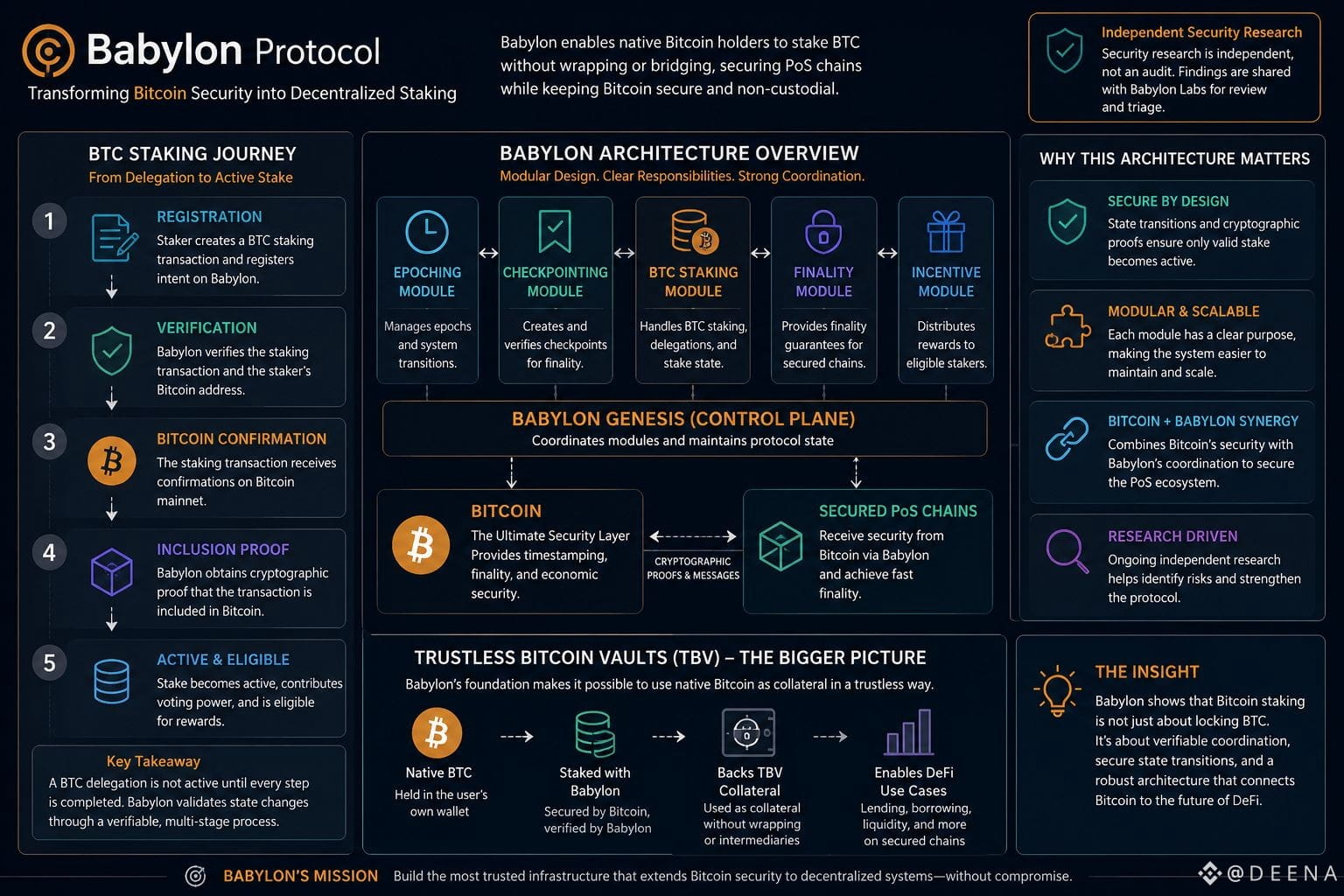
Погружаясь в Babylon, я понял, что думал о стейкинге Bitcoin гораздо проще, чем он работает на самом деле в рамках протокола. Больше всего меня зацепило не какое-то заголовочное метрика или громкое заявление — а то, как Babylon рассматривает каждое событие стейкинга как цепочку проверенных изменений состояния, а не предполагает, что всё уже завершено с момента создания транзакции.
Меня особенно заинтересовал путь BTC-дeлегирования до того, как оно становится активным. Оно проходит регистрацию, верификацию, подтверждения в Bitcoin и proof включения, прежде чем сможет приносить голосующую власть или получать награды. Это может показаться технической деталью, но, по-моему, это одна из самых важных частей дизайна, потому что она показывает, насколько Babylon делает акцент на проверке вместо предположений.
Сохранившееся во мне наблюдение заключается в том, что Babylon — это не просто создание способа стейкать Bitcoin. Это построение координационного уровня, который делает стейкинг Bitcoin надежным между разными компонентами протокола. Рассматривая архитектуру, я лучше понял, почему такие модули, как Epoching, Checkpointing, BTC Staking и Finality, отделены друг от друга, а не объединены в один пакет.
Криптосообщества часто обсуждают будущий потенциал, но мне кажется более интересной история о том, что протокол уже доказывает сегодня. По мере того как Babylon продолжает развиваться, станет ли метрикой, которая действительно важна, проверенное участие — а не просто то, сколько BTC было внесено?
#baby @babylonlabs_io $BABY
Погружаясь в Babylon, я понял, что думал о стейкинге Bitcoin гораздо проще, чем он работает на самом деле в рамках протокола. Больше всего меня зацепило не какое-то заголовочное метрика или громкое заявление — а то, как Babylon рассматривает каждое событие стейкинга как цепочку проверенных изменений состояния, а не предполагает, что всё уже завершено с момента создания транзакции.
Меня особенно заинтересовал путь BTC-дeлегирования до того, как оно становится активным. Оно проходит регистрацию, верификацию, подтверждения в Bitcoin и proof включения, прежде чем сможет приносить голосующую власть или получать награды. Это может показаться технической деталью, но, по-моему, это одна из самых важных частей дизайна, потому что она показывает, насколько Babylon делает акцент на проверке вместо предположений.
Сохранившееся во мне наблюдение заключается в том, что Babylon — это не просто создание способа стейкать Bitcoin. Это построение координационного уровня, который делает стейкинг Bitcoin надежным между разными компонентами протокола. Рассматривая архитектуру, я лучше понял, почему такие модули, как Epoching, Checkpointing, BTC Staking и Finality, отделены друг от друга, а не объединены в один пакет.
Криптосообщества часто обсуждают будущий потенциал, но мне кажется более интересной история о том, что протокол уже доказывает сегодня. По мере того как Babylon продолжает развиваться, станет ли метрикой, которая действительно важна, проверенное участие — а не просто то, сколько BTC было внесено?
#baby @BabylonLabs_io $BABY
Меня особенно заинтересовал путь BTC-дeлегирования до того, как оно становится активным. Оно проходит регистрацию, верификацию, подтверждения в Bitcoin и proof включения, прежде чем сможет приносить голосующую власть или получать награды. Это может показаться технической деталью, но, по-моему, это одна из самых важных частей дизайна, потому что она показывает, насколько Babylon делает акцент на проверке вместо предположений.
Сохранившееся во мне наблюдение заключается в том, что Babylon — это не просто создание способа стейкать Bitcoin. Это построение координационного уровня, который делает стейкинг Bitcoin надежным между разными компонентами протокола. Рассматривая архитектуру, я лучше понял, почему такие модули, как Epoching, Checkpointing, BTC Staking и Finality, отделены друг от друга, а не объединены в один пакет.
Криптосообщества часто обсуждают будущий потенциал, но мне кажется более интересной история о том, что протокол уже доказывает сегодня. По мере того как Babylon продолжает развиваться, станет ли метрикой, которая действительно важна, проверенное участие — а не просто то, сколько BTC было внесено?
#baby @BabylonLabs_io $BABY
2
2
111
·
--
Падение
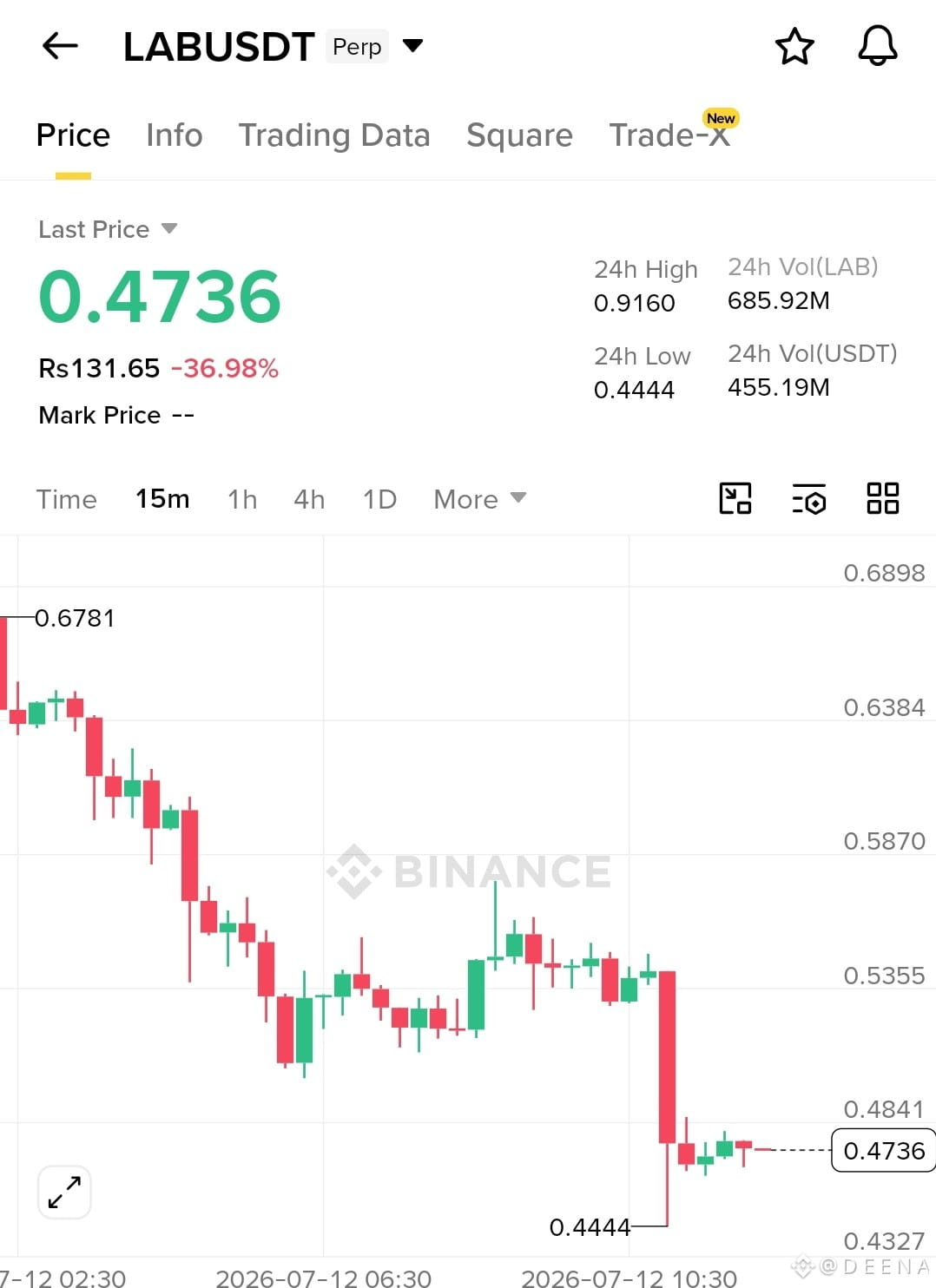
🚨 $LAB находится под давлением! Текущая цена: $0.4736 после -36.98% за последние 24ч.
📉 Максимум за 24ч: $0.9160 📍 Минимум за 24ч: $0.4444 💰 Огромный объём: 685.92M $LAB | 455.19M $USDT
Волатильность здесь — и именно там создаются реальные возможности. Будьте дисциплинированы, контролируйте свои риски и следите за ключевой поддержкой около $0.4444.
Поехали! Торгуйте сейчас $LAB 🚀📈
{future}(LABUSDT)
#BitcoinPlansECashHardFork
#SpaceXAnthropicOpenAIIPOsMayTopVCExitsSince2000
#MorganStanleyAdds1000BTC
#GOPSeeksSenateVoteOnCLARITYActWeekOfJuly20
#BPISeeksToInterveneInNoahDoeCase
🚨 $LAB находится под давлением! Текущая цена: $0.4736 после -36.98% за последние 24ч.
📉 Максимум за 24ч: $0.9160 📍 Минимум за 24ч: $0.4444 💰 Огромный объём: 685.92M $LAB | 455.19M $USDT
Волатильность здесь — и именно там создаются реальные возможности. Будьте дисциплинированы, контролируйте свои риски и следите за ключевой поддержкой около $0.4444.
Поехали! Торгуйте сейчас $LAB 🚀📈
#BitcoinPlansECashHardFork
#SpaceXAnthropicOpenAIIPOsMayTopVCExitsSince2000
#MorganStanleyAdds1000BTC
#GOPSeeksSenateVoteOnCLARITYActWeekOfJuly20
#BPISeeksToInterveneInNoahDoeCase
📉 Максимум за 24ч: $0.9160 📍 Минимум за 24ч: $0.4444 💰 Огромный объём: 685.92M $LAB | 455.19M $USDT
Волатильность здесь — и именно там создаются реальные возможности. Будьте дисциплинированы, контролируйте свои риски и следите за ключевой поддержкой около $0.4444.
Поехали! Торгуйте сейчас $LAB 🚀📈
#BitcoinPlansECashHardFork
#SpaceXAnthropicOpenAIIPOsMayTopVCExitsSince2000
#MorganStanleyAdds1000BTC
#GOPSeeksSenateVoteOnCLARITYActWeekOfJuly20
#BPISeeksToInterveneInNoahDoeCase
1
213
·
--
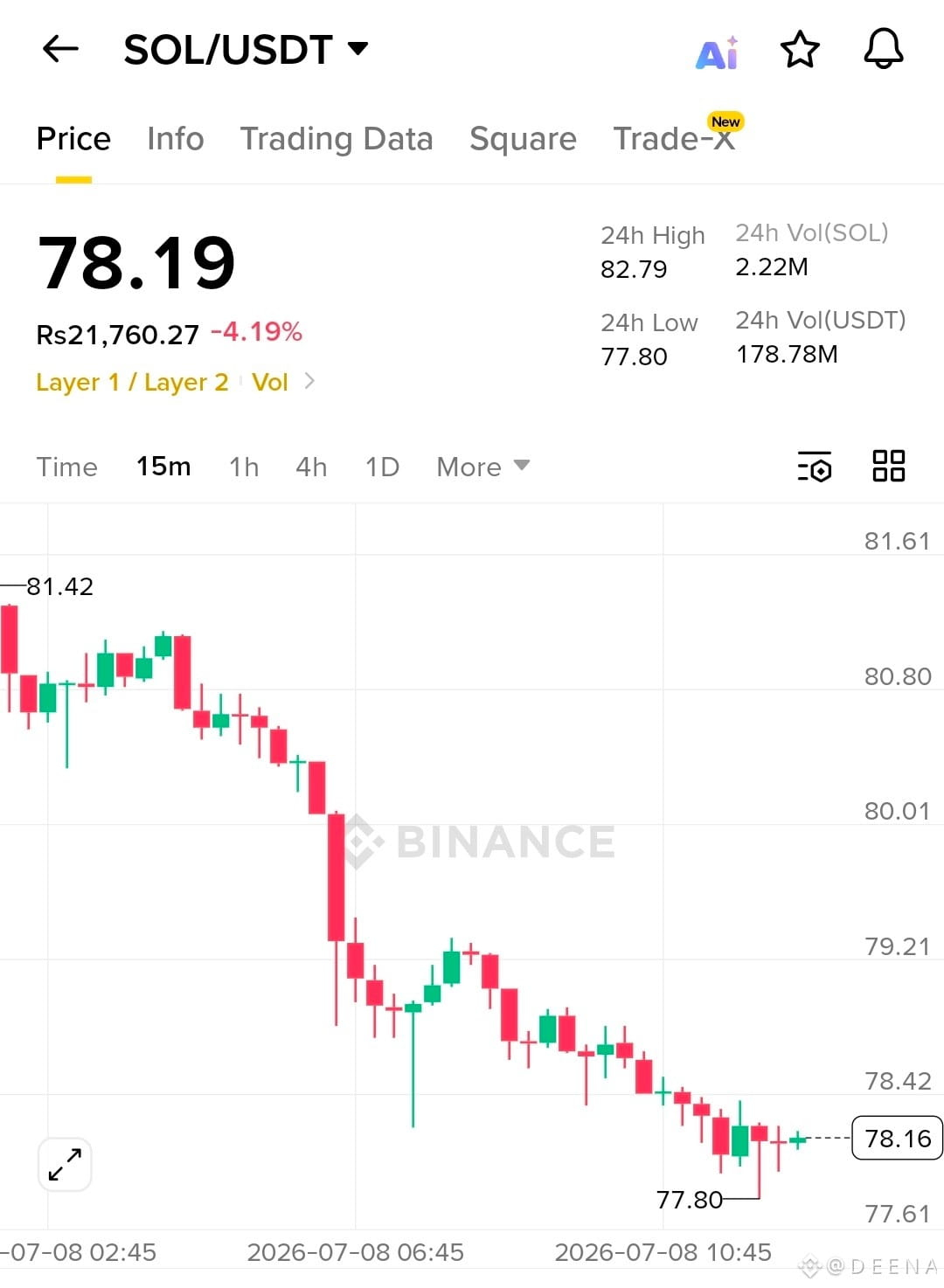
Захватывающий заголовок для торгового поста:
⚡ Обновление SOL/USDT ⚡
🔻 Похоже, что медведи по-прежнему контролируют ситуацию.
📉 Цена: $78.19
🎯 Ключевая поддержка: $77.80
🚀 Отскок от поддержки может спровоцировать краткосрочное восстановление.
❌ Если $77.80 будет пробита, ожидайте дальнейшего падения.
Торгуй с умом, управляй рисками и никогда не FOMO. 💯
#SOL #Solana #Crypto #Binance #Trading #PriceAction #CryptoTrading #TechnicalAnalysis #BullOrBear
Захватывающий заголовок для торгового поста:
⚡ Обновление SOL/USDT ⚡
🔻 Похоже, что медведи по-прежнему контролируют ситуацию.
📉 Цена: $78.19
🎯 Ключевая поддержка: $77.80
🚀 Отскок от поддержки может спровоцировать краткосрочное восстановление.
❌ Если $77.80 будет пробита, ожидайте дальнейшего падения.
Торгуй с умом, управляй рисками и никогда не FOMO. 💯
#SOL #Solana #Crypto #Binance #Trading #PriceAction #CryptoTrading #TechnicalAnalysis #BullOrBear
⚡ Обновление SOL/USDT ⚡
🔻 Похоже, что медведи по-прежнему контролируют ситуацию.
📉 Цена: $78.19
🎯 Ключевая поддержка: $77.80
🚀 Отскок от поддержки может спровоцировать краткосрочное восстановление.
❌ Если $77.80 будет пробита, ожидайте дальнейшего падения.
Торгуй с умом, управляй рисками и никогда не FOMO. 💯
#SOL #Solana #Crypto #Binance #Trading #PriceAction #CryptoTrading #TechnicalAnalysis #BullOrBear
1
110
·
--
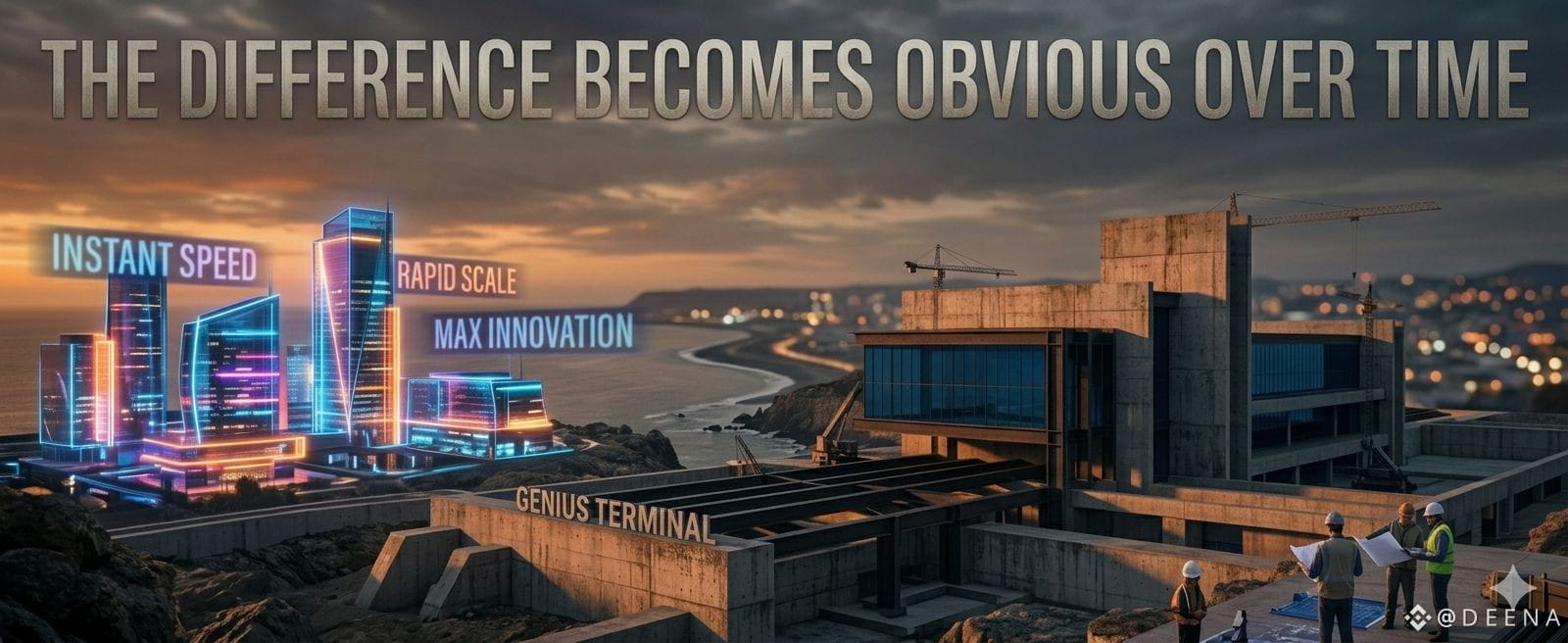
Разница становится очевидной со временем
Я видел бесчисленные продукты, обещающие скорость, масштаб и инновации, но очень немногие оставляют впечатление, что они были созданы с настоящей долговечностью в уме.
Genius Terminal сразу показался мне другим.
Не потому, что он пытается доминировать в внимании, а из-за того, насколько контролируемым и целенаправленным кажется весь опыт. Всё выглядит структурированным и ясным. Никакой ненужной сложности. Никакого преувеличенного позиционирования. Просто глубокое понимание того, как должна выглядеть инфраструктура на долгосрочную перспективу, когда дисциплина управляет процессом.
Что выделяется больше всего, так это баланс между конфиденциальностью, исполнением и последовательностью. В пространстве, переполненном шумом, такое сдерживание кажется редким. Продукт не полагается на постоянное зрелище, чтобы доказать свою актуальность. Его направление уже говорит через качество создаваемого фундамента.
Я уважаю проекты, которые понимают ценность точности над моментом. Системы, построенные таким образом, обычно лучше выдерживают испытание временем, потому что они с самого начала были спроектированы для долговечности, а не временного возбуждения.
Чем больше я наблюдаю за Genius Terminal, тем больше он кажется не просто еще одной платформой, а инфраструктурой, тихо позиционирующей себя для долгосрочной значимости.
Некоторые продукты требуют внимания немедленно.
Самые сильные зарабатывают доверие со временем.
#genius @GeniusOfficial $GENIUS
{spot}(GENIUSUSDT)
$STRAX
$GUN
Разница становится очевидной со временем
Я видел бесчисленные продукты, обещающие скорость, масштаб и инновации, но очень немногие оставляют впечатление, что они были созданы с настоящей долговечностью в уме.
Genius Terminal сразу показался мне другим.
Не потому, что он пытается доминировать в внимании, а из-за того, насколько контролируемым и целенаправленным кажется весь опыт. Всё выглядит структурированным и ясным. Никакой ненужной сложности. Никакого преувеличенного позиционирования. Просто глубокое понимание того, как должна выглядеть инфраструктура на долгосрочную перспективу, когда дисциплина управляет процессом.
Что выделяется больше всего, так это баланс между конфиденциальностью, исполнением и последовательностью. В пространстве, переполненном шумом, такое сдерживание кажется редким. Продукт не полагается на постоянное зрелище, чтобы доказать свою актуальность. Его направление уже говорит через качество создаваемого фундамента.
Я уважаю проекты, которые понимают ценность точности над моментом. Системы, построенные таким образом, обычно лучше выдерживают испытание временем, потому что они с самого начала были спроектированы для долговечности, а не временного возбуждения.
Чем больше я наблюдаю за Genius Terminal, тем больше он кажется не просто еще одной платформой, а инфраструктурой, тихо позиционирующей себя для долгосрочной значимости.
Некоторые продукты требуют внимания немедленно.
Самые сильные зарабатывают доверие со временем.
#genius @GeniusOfficial $GENIUS
$STRAX
$GUN
Я видел бесчисленные продукты, обещающие скорость, масштаб и инновации, но очень немногие оставляют впечатление, что они были созданы с настоящей долговечностью в уме.
Genius Terminal сразу показался мне другим.
Не потому, что он пытается доминировать в внимании, а из-за того, насколько контролируемым и целенаправленным кажется весь опыт. Всё выглядит структурированным и ясным. Никакой ненужной сложности. Никакого преувеличенного позиционирования. Просто глубокое понимание того, как должна выглядеть инфраструктура на долгосрочную перспективу, когда дисциплина управляет процессом.
Что выделяется больше всего, так это баланс между конфиденциальностью, исполнением и последовательностью. В пространстве, переполненном шумом, такое сдерживание кажется редким. Продукт не полагается на постоянное зрелище, чтобы доказать свою актуальность. Его направление уже говорит через качество создаваемого фундамента.
Я уважаю проекты, которые понимают ценность точности над моментом. Системы, построенные таким образом, обычно лучше выдерживают испытание временем, потому что они с самого начала были спроектированы для долговечности, а не временного возбуждения.
Чем больше я наблюдаю за Genius Terminal, тем больше он кажется не просто еще одной платформой, а инфраструктурой, тихо позиционирующей себя для долгосрочной значимости.
Некоторые продукты требуют внимания немедленно.
Самые сильные зарабатывают доверие со временем.
#genius @GeniusOfficial $GENIUS
$STRAX
$GUN
1
2
109
·
--
Я думал, что Genius — это просто еще один торговый терминал. Но потом я посмотрел внимательнее.
Когда я впервые наткнулся на Genius, я отнес его к той же категории, что и бесчисленные другие крипто-продукты.
Торговый терминал.
Место для наблюдения за графиками, исполнения ордеров, управления позициями и перехода к следующему.
Но чем больше времени я проводил, изучая то, что на самом деле строит Genius, тем больше я понимал, что это описание упускает суть.
То, что меня поразило, не был сам торговый процесс.
Это всё, что окружает его.
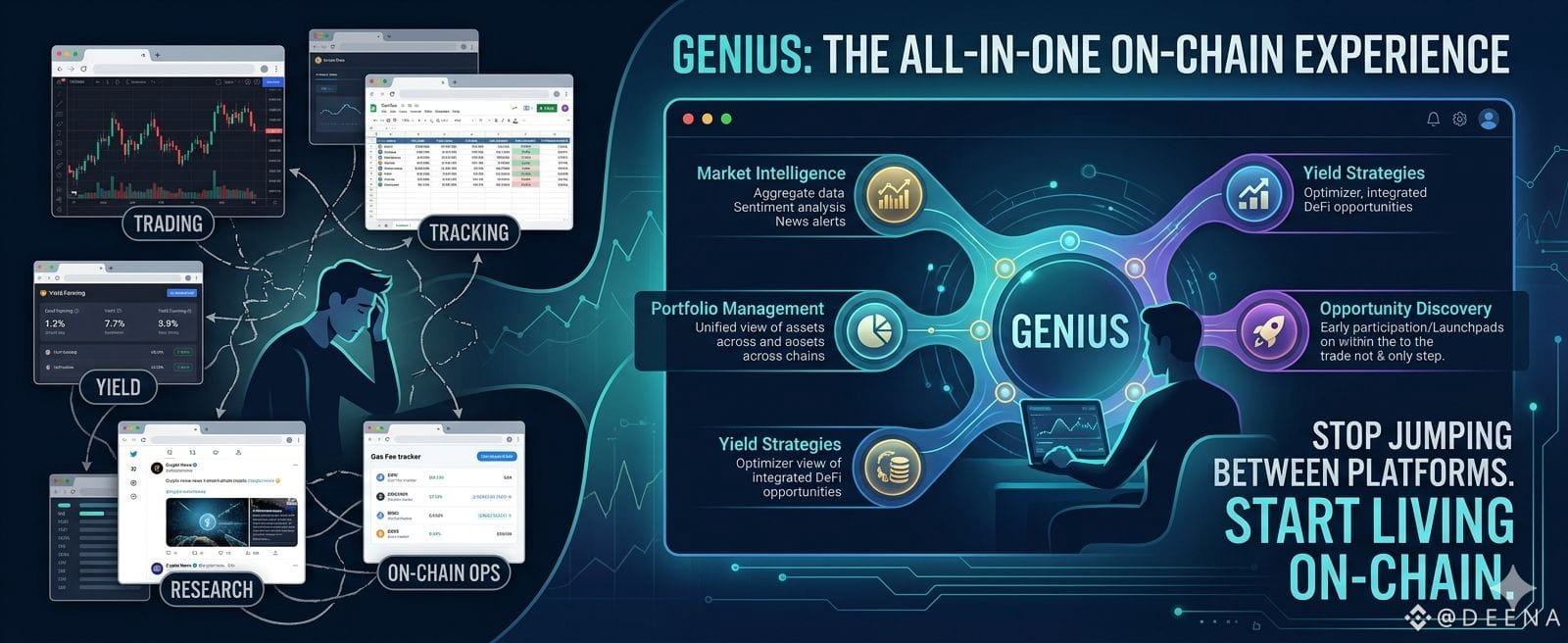
Я осознал, что большую часть своего времени в крипте я не трачу на нажатие кнопки покупки или продажи. Я трачу его на поиск возможностей, отслеживание портфелей, мониторинг рынков, исследование новых нарративов, изучение стратегий доходности и попытки оставаться на шаг впереди постоянных изменений.
Торговля часто является завершающим шагом.
Настоящая задача — управлять всем, что ведет к этому.
Вот почему я думаю, что Genius решает гораздо более серьезную проблему.
Вместо того, чтобы рассматривать торговлю, управление портфелем, открытие рынка, возможности доходности и раннее участие как отдельные процессы, я вижу платформу, которая пытается объединить их под одной крышей.
Для меня это гораздо более интересно, чем добавлять еще одну торговую фишку.
Крипта не страдает от нехватки инструментов.
Она страдает от фрагментации.
Я постоянно нахожусь в ситуации, когда прыгаю между платформами, чтобы сохранить контекст.
Что я вижу в Genius, так это попытка уменьшить это трение.
И если она добьется успеха, люди могут в конечном итоге перестать считать это торговым терминалом вообще.
Они могут начать думать о нем как о месте, где живет весь их опыт на блокчейне.
$STG
$PORTAL
#genius @GeniusOfficial $GENIUS
{spot}(GENIUSUSDT)
Я думал, что Genius — это просто еще один торговый терминал. Но потом я посмотрел внимательнее.
Когда я впервые наткнулся на Genius, я отнес его к той же категории, что и бесчисленные другие крипто-продукты.
Торговый терминал.
Место для наблюдения за графиками, исполнения ордеров, управления позициями и перехода к следующему.
Но чем больше времени я проводил, изучая то, что на самом деле строит Genius, тем больше я понимал, что это описание упускает суть.
То, что меня поразило, не был сам торговый процесс.
Это всё, что окружает его.
Я осознал, что большую часть своего времени в крипте я не трачу на нажатие кнопки покупки или продажи. Я трачу его на поиск возможностей, отслеживание портфелей, мониторинг рынков, исследование новых нарративов, изучение стратегий доходности и попытки оставаться на шаг впереди постоянных изменений.
Торговля часто является завершающим шагом.
Настоящая задача — управлять всем, что ведет к этому.
Вот почему я думаю, что Genius решает гораздо более серьезную проблему.
Вместо того, чтобы рассматривать торговлю, управление портфелем, открытие рынка, возможности доходности и раннее участие как отдельные процессы, я вижу платформу, которая пытается объединить их под одной крышей.
Для меня это гораздо более интересно, чем добавлять еще одну торговую фишку.
Крипта не страдает от нехватки инструментов.
Она страдает от фрагментации.
Я постоянно нахожусь в ситуации, когда прыгаю между платформами, чтобы сохранить контекст.
Что я вижу в Genius, так это попытка уменьшить это трение.
И если она добьется успеха, люди могут в конечном итоге перестать считать это торговым терминалом вообще.
Они могут начать думать о нем как о месте, где живет весь их опыт на блокчейне.
$STG
$PORTAL
#genius @GeniusOfficial $GENIUS
Когда я впервые наткнулся на Genius, я отнес его к той же категории, что и бесчисленные другие крипто-продукты.
Торговый терминал.
Место для наблюдения за графиками, исполнения ордеров, управления позициями и перехода к следующему.
Но чем больше времени я проводил, изучая то, что на самом деле строит Genius, тем больше я понимал, что это описание упускает суть.
То, что меня поразило, не был сам торговый процесс.
Это всё, что окружает его.
Я осознал, что большую часть своего времени в крипте я не трачу на нажатие кнопки покупки или продажи. Я трачу его на поиск возможностей, отслеживание портфелей, мониторинг рынков, исследование новых нарративов, изучение стратегий доходности и попытки оставаться на шаг впереди постоянных изменений.
Торговля часто является завершающим шагом.
Настоящая задача — управлять всем, что ведет к этому.
Вот почему я думаю, что Genius решает гораздо более серьезную проблему.
Вместо того, чтобы рассматривать торговлю, управление портфелем, открытие рынка, возможности доходности и раннее участие как отдельные процессы, я вижу платформу, которая пытается объединить их под одной крышей.
Для меня это гораздо более интересно, чем добавлять еще одну торговую фишку.
Крипта не страдает от нехватки инструментов.
Она страдает от фрагментации.
Я постоянно нахожусь в ситуации, когда прыгаю между платформами, чтобы сохранить контекст.
Что я вижу в Genius, так это попытка уменьшить это трение.
И если она добьется успеха, люди могут в конечном итоге перестать считать это торговым терминалом вообще.
Они могут начать думать о нем как о месте, где живет весь их опыт на блокчейне.
$STG
$PORTAL
#genius @GeniusOfficial $GENIUS
1
206
·
--
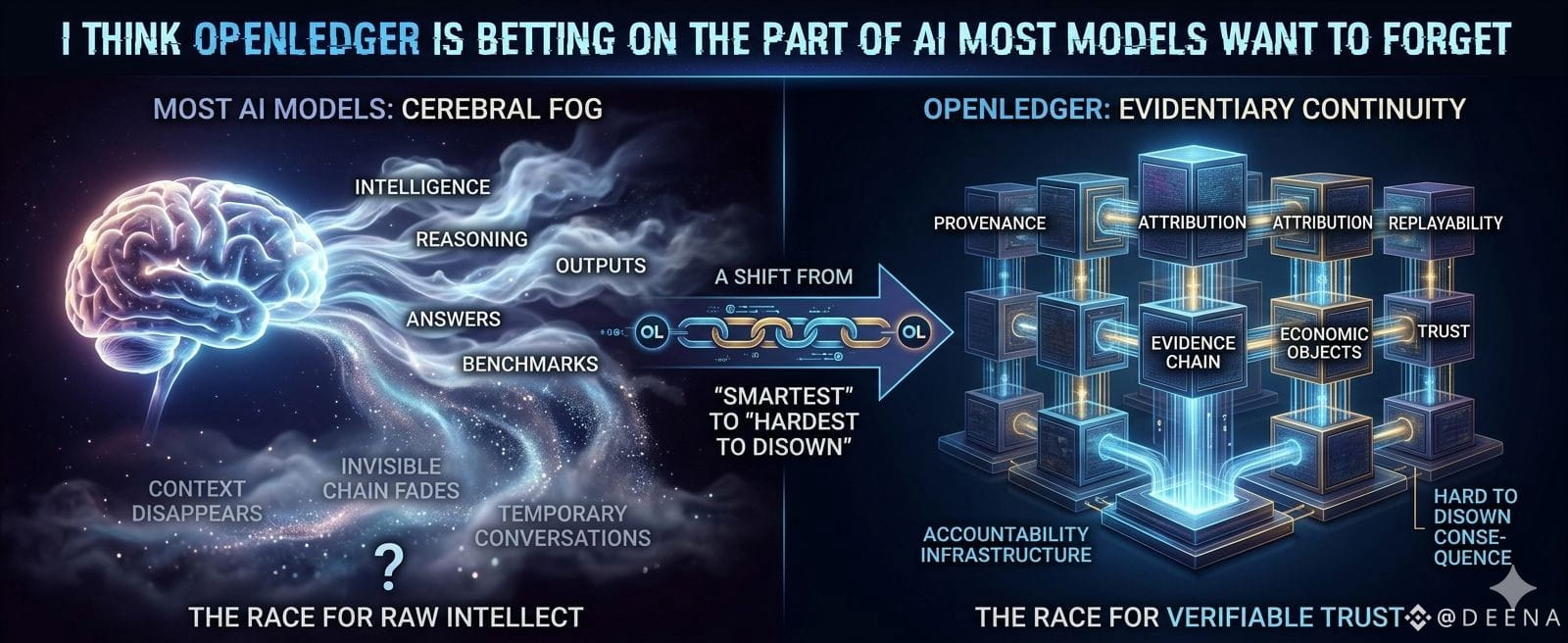
Я думаю, что OpenLedger ставит на ту часть ИИ, о которой большинство моделей предпочли бы забыть
Раньше я думал, что гонка ИИ закончится самой по себе интеллигентностью. Лучшие рассуждения, более быстрые результаты, более чистые мультимодальные системы, более жесткие бенчмарки. Но последнее время мне все больше кажется, что вся эта конкуренция упускает нечто более глубокое.
Большинство современных моделей ИИ невероятно хороши в производстве ответов, но очень плохи в сохранении невидимой цепочки, которая изначально привела к этому ответу. Выход остается. Контекст исчезает.
И я думаю, что это становится серьезной проблемой, как только выходы ИИ перестают вести себя как временные разговоры и начинают вести себя как экономические объекты, перемещающиеся между системами.
Поисковые системы ранжируют их. Рекомендательные системы усиливают их. Экономики создателей поглощают их. Другие модели обучаются на них снова. Рынки реагируют на них. Учреждения постепенно начинают им доверять.
Но почти никто не спрашивает, что исчезло до того, как ответ стабилизировался.
Вот почему OpenLedger кажется мне интересным. Не потому, что он пытается сделать ИИ "умнее", а потому что он, похоже, сосредоточен на сохранении ответственности после генерации. Происхождение. Атрибуция. Возможность повторного воспроизведения. Непрерывность доказательств.
Чем больше я об этом думаю, тем больше мне кажется, что интеллект может стать товаром быстрее, чем инфраструктура ответственности.
И, возможно, будущее соревнование ИИ не будет:
"Какая модель звучит умнее?"
Может быть, оно станет:
"Какая модель труднее отказаться от нее, когда наступает последствия?"
#openledger @Openledger $OPEN
{spot}(OPENUSDT)
$HEI
$ID
Я думаю, что OpenLedger ставит на ту часть ИИ, о которой большинство моделей предпочли бы забыть
Раньше я думал, что гонка ИИ закончится самой по себе интеллигентностью. Лучшие рассуждения, более быстрые результаты, более чистые мультимодальные системы, более жесткие бенчмарки. Но последнее время мне все больше кажется, что вся эта конкуренция упускает нечто более глубокое.
Большинство современных моделей ИИ невероятно хороши в производстве ответов, но очень плохи в сохранении невидимой цепочки, которая изначально привела к этому ответу. Выход остается. Контекст исчезает.
И я думаю, что это становится серьезной проблемой, как только выходы ИИ перестают вести себя как временные разговоры и начинают вести себя как экономические объекты, перемещающиеся между системами.
Поисковые системы ранжируют их. Рекомендательные системы усиливают их. Экономики создателей поглощают их. Другие модели обучаются на них снова. Рынки реагируют на них. Учреждения постепенно начинают им доверять.
Но почти никто не спрашивает, что исчезло до того, как ответ стабилизировался.
Вот почему OpenLedger кажется мне интересным. Не потому, что он пытается сделать ИИ "умнее", а потому что он, похоже, сосредоточен на сохранении ответственности после генерации. Происхождение. Атрибуция. Возможность повторного воспроизведения. Непрерывность доказательств.
Чем больше я об этом думаю, тем больше мне кажется, что интеллект может стать товаром быстрее, чем инфраструктура ответственности.
И, возможно, будущее соревнование ИИ не будет:
"Какая модель звучит умнее?"
Может быть, оно станет:
"Какая модель труднее отказаться от нее, когда наступает последствия?"
#openledger @OpenLedger $OPEN
$HEI
$ID
Раньше я думал, что гонка ИИ закончится самой по себе интеллигентностью. Лучшие рассуждения, более быстрые результаты, более чистые мультимодальные системы, более жесткие бенчмарки. Но последнее время мне все больше кажется, что вся эта конкуренция упускает нечто более глубокое.
Большинство современных моделей ИИ невероятно хороши в производстве ответов, но очень плохи в сохранении невидимой цепочки, которая изначально привела к этому ответу. Выход остается. Контекст исчезает.
И я думаю, что это становится серьезной проблемой, как только выходы ИИ перестают вести себя как временные разговоры и начинают вести себя как экономические объекты, перемещающиеся между системами.
Поисковые системы ранжируют их. Рекомендательные системы усиливают их. Экономики создателей поглощают их. Другие модели обучаются на них снова. Рынки реагируют на них. Учреждения постепенно начинают им доверять.
Но почти никто не спрашивает, что исчезло до того, как ответ стабилизировался.
Вот почему OpenLedger кажется мне интересным. Не потому, что он пытается сделать ИИ "умнее", а потому что он, похоже, сосредоточен на сохранении ответственности после генерации. Происхождение. Атрибуция. Возможность повторного воспроизведения. Непрерывность доказательств.
Чем больше я об этом думаю, тем больше мне кажется, что интеллект может стать товаром быстрее, чем инфраструктура ответственности.
И, возможно, будущее соревнование ИИ не будет:
"Какая модель звучит умнее?"
Может быть, оно станет:
"Какая модель труднее отказаться от нее, когда наступает последствия?"
#openledger @OpenLedger $OPEN
$HEI
$ID
1
180
·
--
Статья
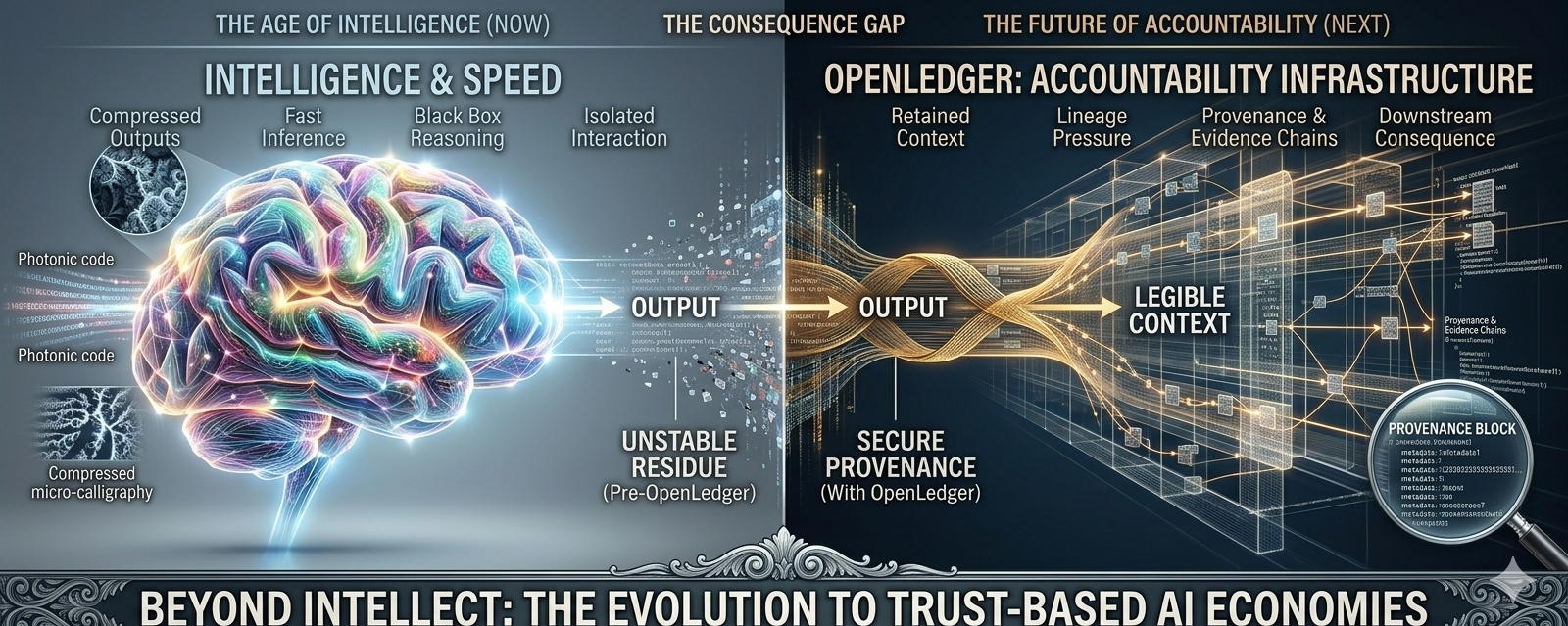
OpenLedger и Будущее Ответственности ИИДолгое время я искренне верил, что гонка ИИ в конечном итоге сводится к одной лишь вещи: интеллекту. Модель, которая будет лучше рассуждать, победит. Модель с более резкими выходами, чище разговорами, быстрой инференцией, более мощным мультимодальным поведением и высокими бенчмарк-цифрами естественным образом будет доминировать на рынке. Это предположение казалось очевидным, потому что почти каждый разговор об ИИ все еще вращается вокруг самой способности. Кто умнее. Кто быстрее. Какая модель звучит более человечно. Какая система может решать более сложные задачи с меньшим количеством ошибок. Но чем больше я смотрю на проекты вроде OpenLedger, тем более неполным начинает казаться весь этот фрейминг. Не совсем ошибочным. Просто не хватает чего-то более глубокого под поверхностью.
OpenLedger и Будущее Ответственности ИИ
Долгое время я искренне верил, что гонка ИИ в конечном итоге сводится к одной лишь вещи: интеллекту. Модель, которая будет лучше рассуждать, победит. Модель с более резкими выходами, чище разговорами, быстрой инференцией, более мощным мультимодальным поведением и высокими бенчмарк-цифрами естественным образом будет доминировать на рынке. Это предположение казалось очевидным, потому что почти каждый разговор об ИИ все еще вращается вокруг самой способности. Кто умнее. Кто быстрее. Какая модель звучит более человечно. Какая система может решать более сложные задачи с меньшим количеством ошибок. Но чем больше я смотрю на проекты вроде OpenLedger, тем более неполным начинает казаться весь этот фрейминг. Не совсем ошибочным. Просто не хватает чего-то более глубокого под поверхностью.
284
·
--
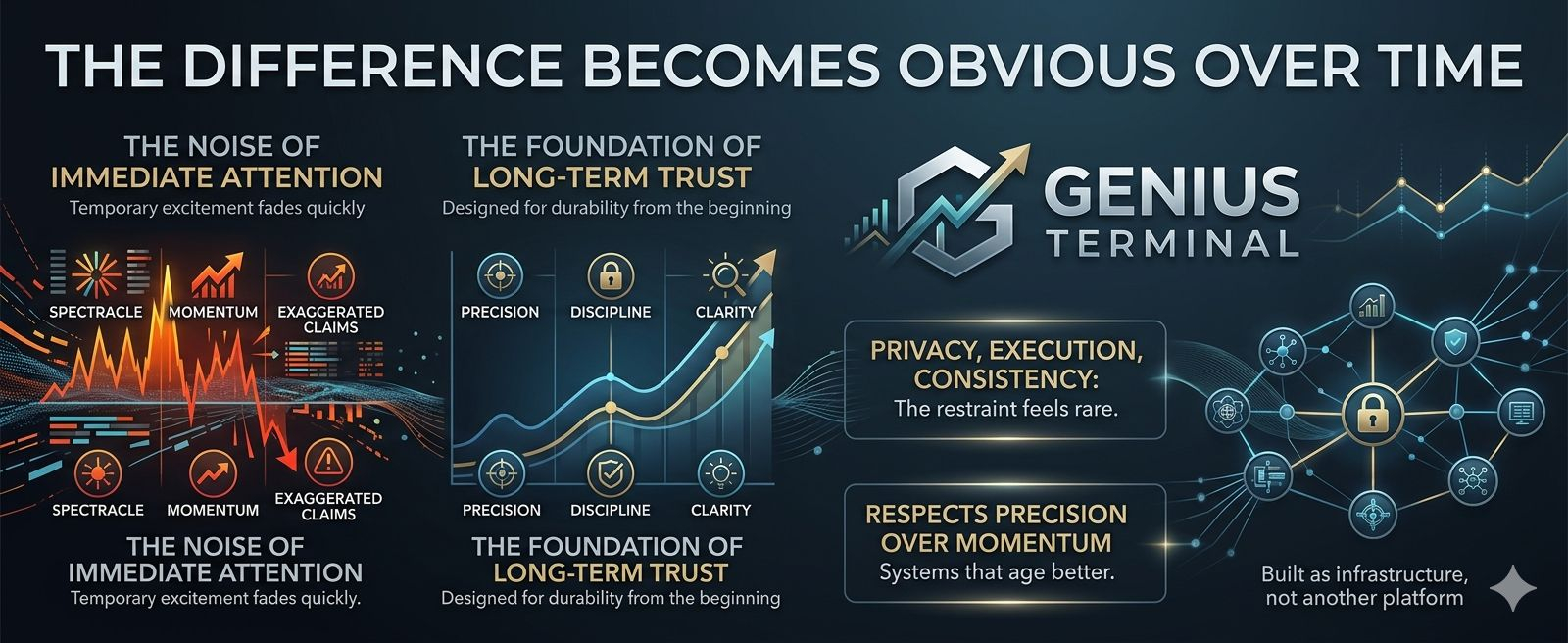
Разница становится очевидной со временем
Я видел множество продуктов, обещающих скорость, масштаб и инновации, но очень немногие оставляют впечатление, что они были созданы с реальной долговечностью в голове.
Genius Terminal сразу почувствовался по-другому.
Не потому, что он пытается завладеть вниманием, а из-за того, насколько контролируемым и целенаправленным кажется весь процесс. Всё выглядит структурированным и ясным. Никакой ненужной сложности. Никакой преувеличенной позиции. Просто четкое понимание того, каким должно быть долгосрочное инфраструктурное решение, когда дисциплина ведет процесс.
Что выделяется больше всего, так это баланс между конфиденциальностью, исполнением и последовательностью. В пространстве, переполненном шумом, такая сдержанность кажется редкой. Продукт не полагается на постоянный спектакль, чтобы доказать свою актуальность. Его направление уже говорит через качество создаваемого фундамента.
Я уважаю проекты, которые понимают ценность точности больше, чем момента. Системы, построенные таким образом, обычно лучше стареют, потому что они изначально создаются для долговечности, а не временного восторга.
Чем больше я наблюдаю за Genius Terminal, тем больше он кажется не просто еще одной платформой, а инфраструктурой, тихо позиционирующей себя для долгосрочной значимости.
Некоторые продукты требуют внимания сразу.
Самые сильные завоевывают доверие со временем.
#genius @GeniusOfficial $GENIUS
{spot}(GENIUSUSDT)
$HEI
$ID
Разница становится очевидной со временем
Я видел множество продуктов, обещающих скорость, масштаб и инновации, но очень немногие оставляют впечатление, что они были созданы с реальной долговечностью в голове.
Genius Terminal сразу почувствовался по-другому.
Не потому, что он пытается завладеть вниманием, а из-за того, насколько контролируемым и целенаправленным кажется весь процесс. Всё выглядит структурированным и ясным. Никакой ненужной сложности. Никакой преувеличенной позиции. Просто четкое понимание того, каким должно быть долгосрочное инфраструктурное решение, когда дисциплина ведет процесс.
Что выделяется больше всего, так это баланс между конфиденциальностью, исполнением и последовательностью. В пространстве, переполненном шумом, такая сдержанность кажется редкой. Продукт не полагается на постоянный спектакль, чтобы доказать свою актуальность. Его направление уже говорит через качество создаваемого фундамента.
Я уважаю проекты, которые понимают ценность точности больше, чем момента. Системы, построенные таким образом, обычно лучше стареют, потому что они изначально создаются для долговечности, а не временного восторга.
Чем больше я наблюдаю за Genius Terminal, тем больше он кажется не просто еще одной платформой, а инфраструктурой, тихо позиционирующей себя для долгосрочной значимости.
Некоторые продукты требуют внимания сразу.
Самые сильные завоевывают доверие со временем.
#genius @GeniusOfficial $GENIUS
$HEI
$ID
Я видел множество продуктов, обещающих скорость, масштаб и инновации, но очень немногие оставляют впечатление, что они были созданы с реальной долговечностью в голове.
Genius Terminal сразу почувствовался по-другому.
Не потому, что он пытается завладеть вниманием, а из-за того, насколько контролируемым и целенаправленным кажется весь процесс. Всё выглядит структурированным и ясным. Никакой ненужной сложности. Никакой преувеличенной позиции. Просто четкое понимание того, каким должно быть долгосрочное инфраструктурное решение, когда дисциплина ведет процесс.
Что выделяется больше всего, так это баланс между конфиденциальностью, исполнением и последовательностью. В пространстве, переполненном шумом, такая сдержанность кажется редкой. Продукт не полагается на постоянный спектакль, чтобы доказать свою актуальность. Его направление уже говорит через качество создаваемого фундамента.
Я уважаю проекты, которые понимают ценность точности больше, чем момента. Системы, построенные таким образом, обычно лучше стареют, потому что они изначально создаются для долговечности, а не временного восторга.
Чем больше я наблюдаю за Genius Terminal, тем больше он кажется не просто еще одной платформой, а инфраструктурой, тихо позиционирующей себя для долгосрочной значимости.
Некоторые продукты требуют внимания сразу.
Самые сильные завоевывают доверие со временем.
#genius @GeniusOfficial $GENIUS
$HEI
$ID
240
·
--
Тихая Инфраструктура
Я провел достаточно времени на продуктах, работающих с блокчейном, чтобы распознать разницу между платформами, созданными для привлечения внимания, и платформами, построенными для устойчивости.
Genius Terminal сразу произвел на меня второе впечатление.
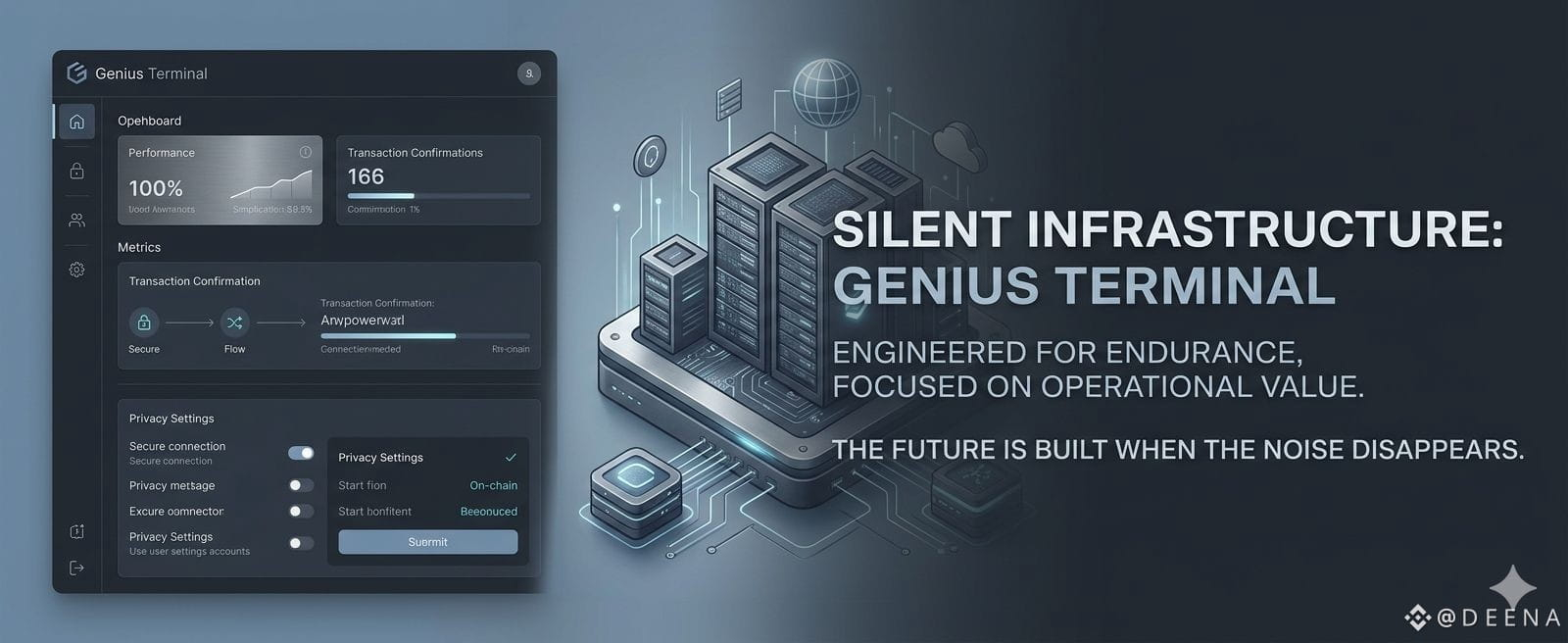
Первое, что я заметил — это сдержанность. Никакой ненужной сложности. Никакого агрессивного шума. Никаких попыток создать импульс через зрелище. Все ощущается намеренно, от структуры до рабочего процесса. Это создает уверенность, которая обычно приходит от команд, сосредоточенных больше на производительности, чем на видимости.
Больше всего мне запомнилось, как приватность интегрирована в опыт, а не добавлена как нарративный слой позже. Это полностью меняет атмосферу. Терминал ощущается контролируемым, сосредоточенным и разработанным для людей, которые ценят точность больше, чем реакцию.
Мне также нравится, как чисто выглядит все направление. В пространстве, где многие продукты конкурируют за краткосрочную актуальность, Genius Terminal ощущается как ориентированный на долгосрочную операционную ценность. Архитектура предполагает дисциплину. Интерфейс предполагает ясность. Общее присутствие предполагает зрелость.
Я верю, что следующее поколение инфраструктуры на блокчейне не будет определяться тем, кто говорит громче.
Оно будет определяться тем, кто строит системы, способные оставаться необходимыми, когда шум исчезает.
Genius Terminal уже чувствует себя в гармонии с этим будущим.
$ALLO
$NIGHT
#genius @GeniusOfficial $GENIUS
{spot}(GENIUSUSDT)
Тихая Инфраструктура
Я провел достаточно времени на продуктах, работающих с блокчейном, чтобы распознать разницу между платформами, созданными для привлечения внимания, и платформами, построенными для устойчивости.
Genius Terminal сразу произвел на меня второе впечатление.
Первое, что я заметил — это сдержанность. Никакой ненужной сложности. Никакого агрессивного шума. Никаких попыток создать импульс через зрелище. Все ощущается намеренно, от структуры до рабочего процесса. Это создает уверенность, которая обычно приходит от команд, сосредоточенных больше на производительности, чем на видимости.
Больше всего мне запомнилось, как приватность интегрирована в опыт, а не добавлена как нарративный слой позже. Это полностью меняет атмосферу. Терминал ощущается контролируемым, сосредоточенным и разработанным для людей, которые ценят точность больше, чем реакцию.
Мне также нравится, как чисто выглядит все направление. В пространстве, где многие продукты конкурируют за краткосрочную актуальность, Genius Terminal ощущается как ориентированный на долгосрочную операционную ценность. Архитектура предполагает дисциплину. Интерфейс предполагает ясность. Общее присутствие предполагает зрелость.
Я верю, что следующее поколение инфраструктуры на блокчейне не будет определяться тем, кто говорит громче.
Оно будет определяться тем, кто строит системы, способные оставаться необходимыми, когда шум исчезает.
Genius Terminal уже чувствует себя в гармонии с этим будущим.
$ALLO
$NIGHT
#genius @GeniusOfficial $GENIUS
Я провел достаточно времени на продуктах, работающих с блокчейном, чтобы распознать разницу между платформами, созданными для привлечения внимания, и платформами, построенными для устойчивости.
Genius Terminal сразу произвел на меня второе впечатление.
Первое, что я заметил — это сдержанность. Никакой ненужной сложности. Никакого агрессивного шума. Никаких попыток создать импульс через зрелище. Все ощущается намеренно, от структуры до рабочего процесса. Это создает уверенность, которая обычно приходит от команд, сосредоточенных больше на производительности, чем на видимости.
Больше всего мне запомнилось, как приватность интегрирована в опыт, а не добавлена как нарративный слой позже. Это полностью меняет атмосферу. Терминал ощущается контролируемым, сосредоточенным и разработанным для людей, которые ценят точность больше, чем реакцию.
Мне также нравится, как чисто выглядит все направление. В пространстве, где многие продукты конкурируют за краткосрочную актуальность, Genius Terminal ощущается как ориентированный на долгосрочную операционную ценность. Архитектура предполагает дисциплину. Интерфейс предполагает ясность. Общее присутствие предполагает зрелость.
Я верю, что следующее поколение инфраструктуры на блокчейне не будет определяться тем, кто говорит громче.
Оно будет определяться тем, кто строит системы, способные оставаться необходимыми, когда шум исчезает.
Genius Terminal уже чувствует себя в гармонии с этим будущим.
$ALLO
$NIGHT
#genius @GeniusOfficial $GENIUS
1
199
·
--
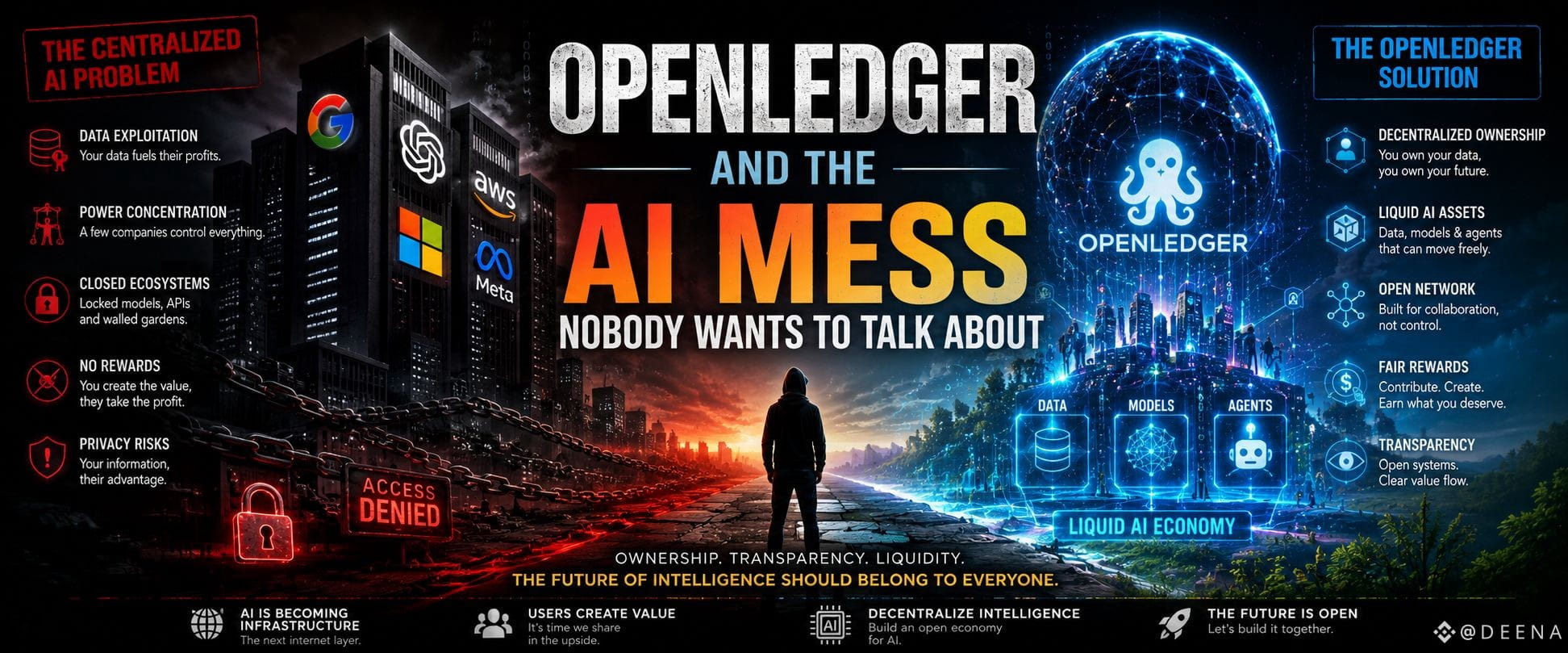
Раньше я думал, что большинство AI проектов — это просто переработанный хайп с дорогим брендингом. Одни и те же обещания. Одни и те же модные слова. Один и тот же нарратив о «будущем интеллекта», повторяемый до тех пор, пока никто не задается вопросом. Но чем глубже я изучал OpenLedger, тем больше понимал, что настоящая история заключается не в AI — а в собственности.
Сейчас несколько гигантских компаний контролируют почти все. Модели. Данные. Инфраструктура. Распределение. Между тем обычные пользователи каждый день бесплатно наполняют эти системы, не осознавая, сколько ценности они создают. Вот что мне кажется сломанным.
Что привлекло мое внимание к OpenLedger, так это то, что он на самом деле указывает на проблему инфраструктуры, вместо того чтобы собирать взаимодействие с пустыми нарративами AI. Идея о том, что данные, модели и AI агенты должны двигаться через открытую экономику, а не оставаться запертыми внутри корпоративных стен, имеет гораздо больше смысла, чем люди осознают.
И честно говоря, я думаю, что большинство людей все еще недооценивает, насколько велик этот сдвиг.
AI больше не просто программное обеспечение.
Он превращается в экономическую инфраструктуру.
Настоящая битва не будет о том, кто построит самый умный чат-бот.
Она будет о том, кто владеет рельсами, лежащими под самим интеллектом.
#openledger @Openledger $OPEN
{spot}(OPENUSDT)
$XLM
$ALLO
Раньше я думал, что большинство AI проектов — это просто переработанный хайп с дорогим брендингом. Одни и те же обещания. Одни и те же модные слова. Один и тот же нарратив о «будущем интеллекта», повторяемый до тех пор, пока никто не задается вопросом. Но чем глубже я изучал OpenLedger, тем больше понимал, что настоящая история заключается не в AI — а в собственности.
Сейчас несколько гигантских компаний контролируют почти все. Модели. Данные. Инфраструктура. Распределение. Между тем обычные пользователи каждый день бесплатно наполняют эти системы, не осознавая, сколько ценности они создают. Вот что мне кажется сломанным.
Что привлекло мое внимание к OpenLedger, так это то, что он на самом деле указывает на проблему инфраструктуры, вместо того чтобы собирать взаимодействие с пустыми нарративами AI. Идея о том, что данные, модели и AI агенты должны двигаться через открытую экономику, а не оставаться запертыми внутри корпоративных стен, имеет гораздо больше смысла, чем люди осознают.
И честно говоря, я думаю, что большинство людей все еще недооценивает, насколько велик этот сдвиг.
AI больше не просто программное обеспечение.
Он превращается в экономическую инфраструктуру.
Настоящая битва не будет о том, кто построит самый умный чат-бот.
Она будет о том, кто владеет рельсами, лежащими под самим интеллектом.
#openledger @OpenLedger $OPEN
$XLM
$ALLO
Сейчас несколько гигантских компаний контролируют почти все. Модели. Данные. Инфраструктура. Распределение. Между тем обычные пользователи каждый день бесплатно наполняют эти системы, не осознавая, сколько ценности они создают. Вот что мне кажется сломанным.
Что привлекло мое внимание к OpenLedger, так это то, что он на самом деле указывает на проблему инфраструктуры, вместо того чтобы собирать взаимодействие с пустыми нарративами AI. Идея о том, что данные, модели и AI агенты должны двигаться через открытую экономику, а не оставаться запертыми внутри корпоративных стен, имеет гораздо больше смысла, чем люди осознают.
И честно говоря, я думаю, что большинство людей все еще недооценивает, насколько велик этот сдвиг.
AI больше не просто программное обеспечение.
Он превращается в экономическую инфраструктуру.
Настоящая битва не будет о том, кто построит самый умный чат-бот.
Она будет о том, кто владеет рельсами, лежащими под самим интеллектом.
#openledger @OpenLedger $OPEN
$XLM
$ALLO
1
2
160
·
--
Статья
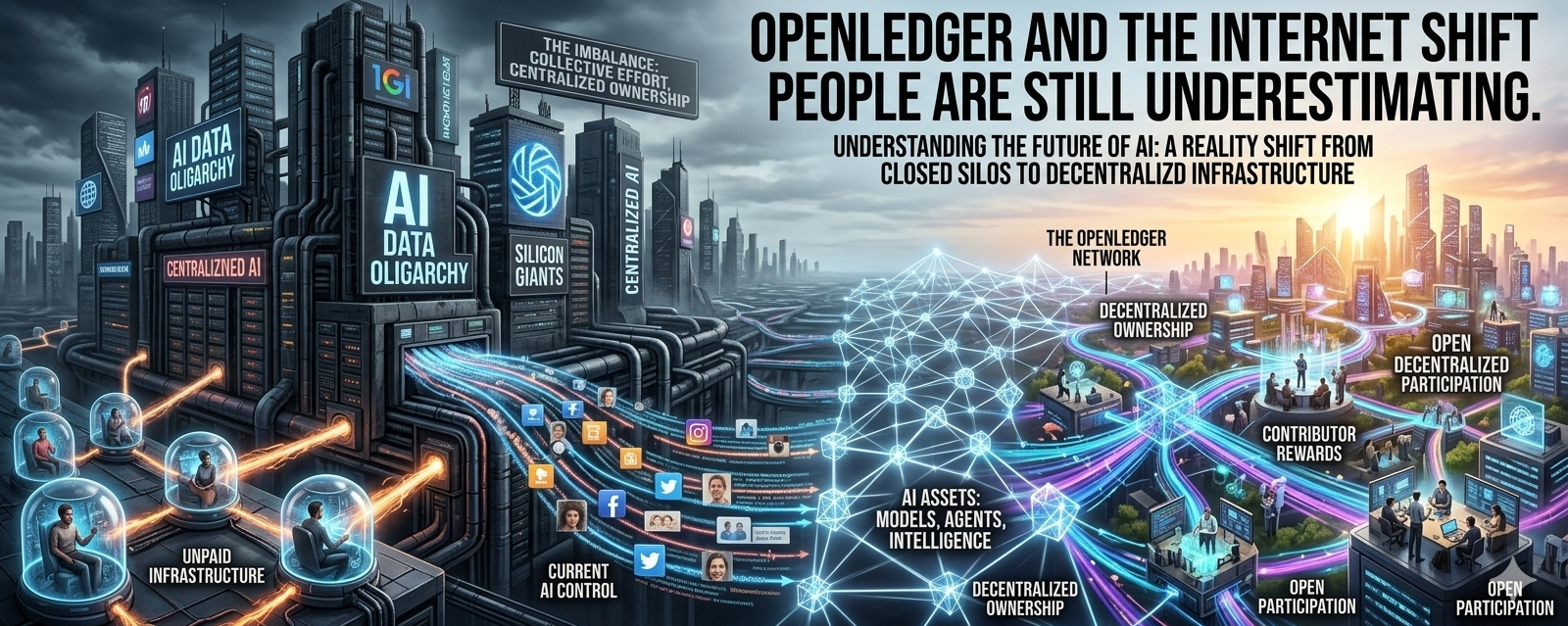
OPENLEDGER И ИНТЕРНЕТ-СМЕЩЕНИЕ, КОТОРОЕ ЛЮДИ ПО-КРАЙНЕЙ МЕРЕ НЕДОСТАВИВАЮТБольшинство AI проектов сейчас кажутся пустыми, стоит только заглянуть за маркетинг. Одни и те же переработанные обещания повсюду. Одни и те же драматические темы о "изменении будущего". Одни и те же отшлифованные сайты, полные слов, которыми никто не разговаривает в реальной жизни. Каждый проект внезапно утверждает, что строит следующее поколение интеллекта, но когда ты на самом деле углубляешься, большинство из них просто перерабатывают одни и те же централизованные системы с крипто-этикеткой сверху. Вот почему так много людей перестали заботиться. Возбуждение утихло, потому что пространство стало переполнено шумом. Слишком много основателей пытаются создать хайп. Слишком много токенов, притворяющихся технологиями. Слишком много людей гонятся за трендами, даже не понимая, какую проблему они должны решать.
OPENLEDGER И ИНТЕРНЕТ-СМЕЩЕНИЕ, КОТОРОЕ ЛЮДИ ПО-КРАЙНЕЙ МЕРЕ НЕДОСТАВИВАЮТ
Большинство AI проектов сейчас кажутся пустыми, стоит только заглянуть за маркетинг. Одни и те же переработанные обещания повсюду. Одни и те же драматические темы о "изменении будущего". Одни и те же отшлифованные сайты, полные слов, которыми никто не разговаривает в реальной жизни. Каждый проект внезапно утверждает, что строит следующее поколение интеллекта, но когда ты на самом деле углубляешься, большинство из них просто перерабатывают одни и те же централизованные системы с крипто-этикеткой сверху. Вот почему так много людей перестали заботиться. Возбуждение утихло, потому что пространство стало переполнено шумом. Слишком много основателей пытаются создать хайп. Слишком много токенов, притворяющихся технологиями. Слишком много людей гонятся за трендами, даже не понимая, какую проблему они должны решать.
1
2
134
·
--
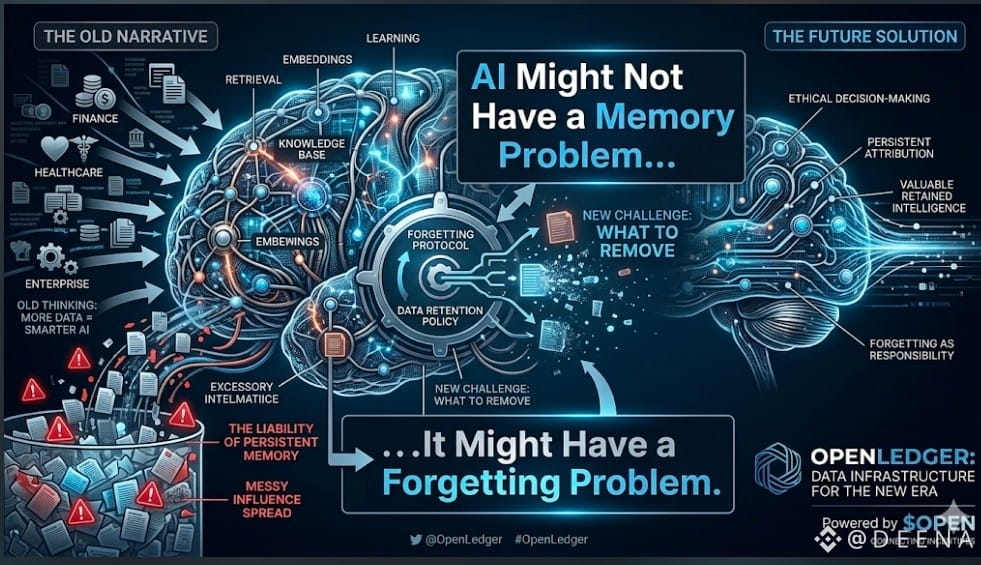
Искусственный интеллект может не иметь проблемы с памятью... У него может быть проблема с забыванием
Я начал по-другому смотреть на ИИ в последнее время. На протяжении многих лет вся индустрия воспринимала память как неограниченное преимущество. Чем больше данных система могла собирать, хранить и извлекать, тем умнее она становилась. Но чем глубже ИИ проникает в финансы, здравоохранение, корпоративные операции и реальное принятие решений, тем больше я чувствую, что реальная проблема тихо смещается.
Я не думаю, что будущее принадлежит системам, которые помнят всё навсегда.
Я думаю, оно может принадлежать системам, которые понимают, что больше не следует помнить.
Вот почему OpenLedger привлек мое внимание.
Большинство людей описывают это как инфраструктуру данных ИИ, где участники предоставляют информацию, модели улучшаются, а $OPEN связывает стимулы. Но я думаю, что под этой нарративой формируется более глубокий слой. Как только информация попадает в системы ИИ, удалить её влияние становится чрезвычайно сложно. Данные распространяются через обучение, эмбеддинги, системы извлечения и поведенческие паттерны такими способами, которые гораздо более неаккуратные, чем люди осознают.
И как только ИИ начинает касаться чувствительных рабочих процессов, сама память становится ответственностью.
Это полностью меняет экономику.
Если атрибуция становится устойчивой и ценной, то сохранённый интеллект перестаёт быть бесплатной инфраструктурой. Вдруг забывание становится столь же важным, как и обучение.
И, честно говоря, я не думаю, что рынок это полностью учёл ещё.
#OpenLedger @Openledger $OPEN
{spot}(OPENUSDT)
Искусственный интеллект может не иметь проблемы с памятью... У него может быть проблема с забыванием
Я начал по-другому смотреть на ИИ в последнее время. На протяжении многих лет вся индустрия воспринимала память как неограниченное преимущество. Чем больше данных система могла собирать, хранить и извлекать, тем умнее она становилась. Но чем глубже ИИ проникает в финансы, здравоохранение, корпоративные операции и реальное принятие решений, тем больше я чувствую, что реальная проблема тихо смещается.
Я не думаю, что будущее принадлежит системам, которые помнят всё навсегда.
Я думаю, оно может принадлежать системам, которые понимают, что больше не следует помнить.
Вот почему OpenLedger привлек мое внимание.
Большинство людей описывают это как инфраструктуру данных ИИ, где участники предоставляют информацию, модели улучшаются, а $OPEN связывает стимулы. Но я думаю, что под этой нарративой формируется более глубокий слой. Как только информация попадает в системы ИИ, удалить её влияние становится чрезвычайно сложно. Данные распространяются через обучение, эмбеддинги, системы извлечения и поведенческие паттерны такими способами, которые гораздо более неаккуратные, чем люди осознают.
И как только ИИ начинает касаться чувствительных рабочих процессов, сама память становится ответственностью.
Это полностью меняет экономику.
Если атрибуция становится устойчивой и ценной, то сохранённый интеллект перестаёт быть бесплатной инфраструктурой. Вдруг забывание становится столь же важным, как и обучение.
И, честно говоря, я не думаю, что рынок это полностью учёл ещё.
#OpenLedger @OpenLedger $OPEN
Я начал по-другому смотреть на ИИ в последнее время. На протяжении многих лет вся индустрия воспринимала память как неограниченное преимущество. Чем больше данных система могла собирать, хранить и извлекать, тем умнее она становилась. Но чем глубже ИИ проникает в финансы, здравоохранение, корпоративные операции и реальное принятие решений, тем больше я чувствую, что реальная проблема тихо смещается.
Я не думаю, что будущее принадлежит системам, которые помнят всё навсегда.
Я думаю, оно может принадлежать системам, которые понимают, что больше не следует помнить.
Вот почему OpenLedger привлек мое внимание.
Большинство людей описывают это как инфраструктуру данных ИИ, где участники предоставляют информацию, модели улучшаются, а $OPEN связывает стимулы. Но я думаю, что под этой нарративой формируется более глубокий слой. Как только информация попадает в системы ИИ, удалить её влияние становится чрезвычайно сложно. Данные распространяются через обучение, эмбеддинги, системы извлечения и поведенческие паттерны такими способами, которые гораздо более неаккуратные, чем люди осознают.
И как только ИИ начинает касаться чувствительных рабочих процессов, сама память становится ответственностью.
Это полностью меняет экономику.
Если атрибуция становится устойчивой и ценной, то сохранённый интеллект перестаёт быть бесплатной инфраструктурой. Вдруг забывание становится столь же важным, как и обучение.
И, честно говоря, я не думаю, что рынок это полностью учёл ещё.
#OpenLedger @OpenLedger $OPEN
97
·
--
Статья
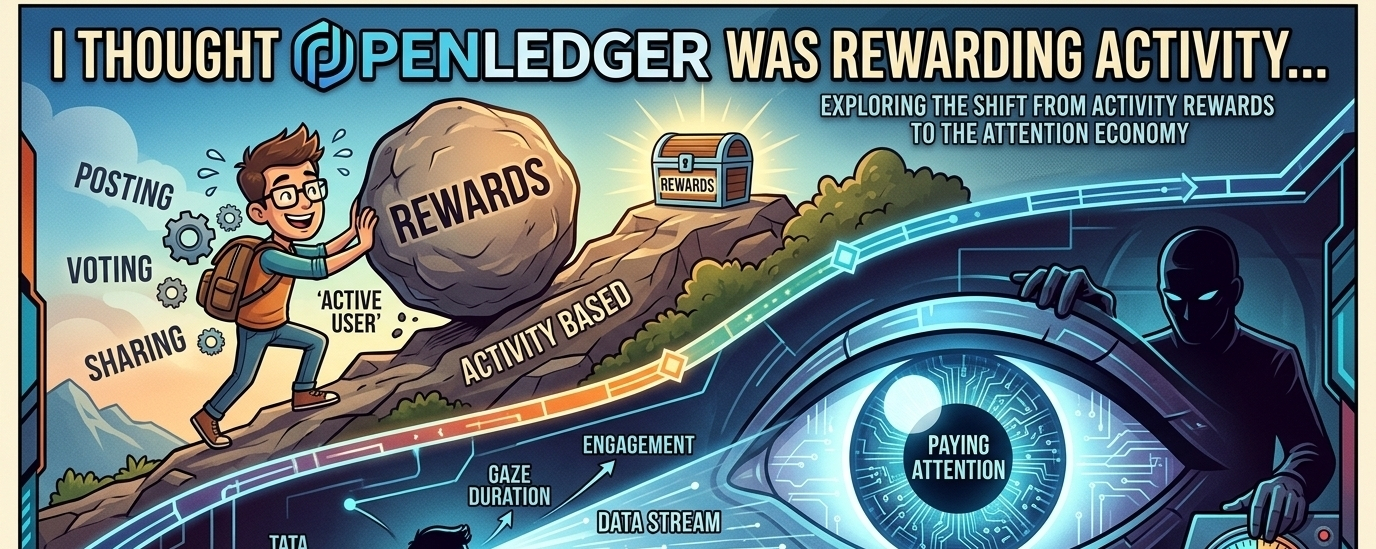
Я думал, что OpenLedger вознаграждает активность... Пока не понял, что он обращает внимание на что-то другое
Когда я впервые начал использовать OpenLedger, я думал, что быстро разберусь в системе.
Это ощущалось похоже на многие другие экосистемы, которые я видел раньше. Будь активным, выполняй задачи, постоянно взаимодействуй, возвращайся завтра, повторяй. Структура казалась достаточно знакомой, и в начале я не задумывался об этом глубоко. Честно говоря, я предполагал, что вся идея проста: чем более заметен ты, тем больше ценности создаешь в сети.
И какое-то время эта вера имела смысл для меня.
Потому что онлайн-системы обычно учат нас думать, что активность равна важности. Если ты больше постишь, больше взаимодействуешь и постоянно присутствуешь, в конечном итоге система тебя заметит. Так работают большинство платформ сейчас, так что естественно, я принёс тот же подход в OpenLedger.
Когда я впервые начал использовать OpenLedger, я думал, что быстро разберусь в системе.
Это ощущалось похоже на многие другие экосистемы, которые я видел раньше. Будь активным, выполняй задачи, постоянно взаимодействуй, возвращайся завтра, повторяй. Структура казалась достаточно знакомой, и в начале я не задумывался об этом глубоко. Честно говоря, я предполагал, что вся идея проста: чем более заметен ты, тем больше ценности создаешь в сети.
И какое-то время эта вера имела смысл для меня.
Потому что онлайн-системы обычно учат нас думать, что активность равна важности. Если ты больше постишь, больше взаимодействуешь и постоянно присутствуешь, в конечном итоге система тебя заметит. Так работают большинство платформ сейчас, так что естественно, я принёс тот же подход в OpenLedger.
Я думал, что OpenLedger вознаграждает активность... Пока не понял, что он обращает внимание на что-то другое
Когда я впервые начал использовать OpenLedger, я думал, что быстро разберусь в системе.
Это ощущалось похоже на многие другие экосистемы, которые я видел раньше. Будь активным, выполняй задачи, постоянно взаимодействуй, возвращайся завтра, повторяй. Структура казалась достаточно знакомой, и в начале я не задумывался об этом глубоко. Честно говоря, я предполагал, что вся идея проста: чем более заметен ты, тем больше ценности создаешь в сети.
И какое-то время эта вера имела смысл для меня.
Потому что онлайн-системы обычно учат нас думать, что активность равна важности. Если ты больше постишь, больше взаимодействуешь и постоянно присутствуешь, в конечном итоге система тебя заметит. Так работают большинство платформ сейчас, так что естественно, я принёс тот же подход в OpenLedger.
100
·
--
Почему я думаю, что Genius Terminal тихо меняет ощущения от торговли на блокчейне
Раньше я думал, что большинство терминалов на блокчейне по сути одно и то же, только с разными интерфейсами, брендингом и немного более быстрыми обещаниями исполнения. Но чем больше я наблюдал за тем, как трейдеры действительно перемещаются по рынкам, тем больше я осознавал, что настоящая разница заключается не только в скорости. Это приватность, простота и ощущение контроля, пока вокруг все движется в хаосе. Вот где Genius Terminal начал выделяться для меня.
Что привлекло мое внимание, так это идея быть первым приватным и окончательным терминалом на блокчейне. В крипте люди постоянно говорят о прозрачности, но очень немногие говорят о цене раскрытия каждого движения до исполнения. Рынок наблюдает за всем. Кошельки отслеживаются. Стратегии становятся публичными паттернами. Со временем это меняет поведение трейдеров. Я думаю, что Genius Terminal понимает эту скрытую трение лучше, чем большинство платформ.
Что делает это интересным, так это не ажиотаж или яркий маркетинг. Это направление. Терминал ощущается как сосредоточенный на исполнении, а не на шуме. Чище поток. Меньше отвлечений. Больше контроля над тем, как пользователи взаимодействуют с ликвидностью и информацией на блокчейне.
Я думаю, что следующая фаза инфраструктуры крипты будет принадлежать продуктам, которые тихо уменьшают трение, пока пользователи едва замечают, что это происходит. Genius Terminal кажется одной из таких систем.
#genius @GeniusOfficial $GENIUS
{spot}(GENIUSUSDT)
Почему я думаю, что Genius Terminal тихо меняет ощущения от торговли на блокчейне
Раньше я думал, что большинство терминалов на блокчейне по сути одно и то же, только с разными интерфейсами, брендингом и немного более быстрыми обещаниями исполнения. Но чем больше я наблюдал за тем, как трейдеры действительно перемещаются по рынкам, тем больше я осознавал, что настоящая разница заключается не только в скорости. Это приватность, простота и ощущение контроля, пока вокруг все движется в хаосе. Вот где Genius Terminal начал выделяться для меня.
Что привлекло мое внимание, так это идея быть первым приватным и окончательным терминалом на блокчейне. В крипте люди постоянно говорят о прозрачности, но очень немногие говорят о цене раскрытия каждого движения до исполнения. Рынок наблюдает за всем. Кошельки отслеживаются. Стратегии становятся публичными паттернами. Со временем это меняет поведение трейдеров. Я думаю, что Genius Terminal понимает эту скрытую трение лучше, чем большинство платформ.
Что делает это интересным, так это не ажиотаж или яркий маркетинг. Это направление. Терминал ощущается как сосредоточенный на исполнении, а не на шуме. Чище поток. Меньше отвлечений. Больше контроля над тем, как пользователи взаимодействуют с ликвидностью и информацией на блокчейне.
Я думаю, что следующая фаза инфраструктуры крипты будет принадлежать продуктам, которые тихо уменьшают трение, пока пользователи едва замечают, что это происходит. Genius Terminal кажется одной из таких систем.
#genius @GeniusOfficial $GENIUS
Раньше я думал, что большинство терминалов на блокчейне по сути одно и то же, только с разными интерфейсами, брендингом и немного более быстрыми обещаниями исполнения. Но чем больше я наблюдал за тем, как трейдеры действительно перемещаются по рынкам, тем больше я осознавал, что настоящая разница заключается не только в скорости. Это приватность, простота и ощущение контроля, пока вокруг все движется в хаосе. Вот где Genius Terminal начал выделяться для меня.
Что привлекло мое внимание, так это идея быть первым приватным и окончательным терминалом на блокчейне. В крипте люди постоянно говорят о прозрачности, но очень немногие говорят о цене раскрытия каждого движения до исполнения. Рынок наблюдает за всем. Кошельки отслеживаются. Стратегии становятся публичными паттернами. Со временем это меняет поведение трейдеров. Я думаю, что Genius Terminal понимает эту скрытую трение лучше, чем большинство платформ.
Что делает это интересным, так это не ажиотаж или яркий маркетинг. Это направление. Терминал ощущается как сосредоточенный на исполнении, а не на шуме. Чище поток. Меньше отвлечений. Больше контроля над тем, как пользователи взаимодействуют с ликвидностью и информацией на блокчейне.
Я думаю, что следующая фаза инфраструктуры крипты будет принадлежать продуктам, которые тихо уменьшают трение, пока пользователи едва замечают, что это происходит. Genius Terminal кажется одной из таких систем.
#genius @GeniusOfficial $GENIUS
90
·
--
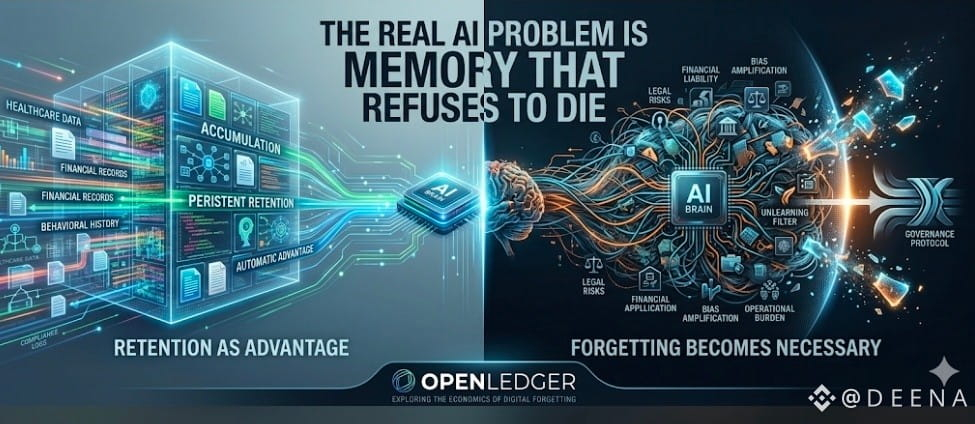
Настоящая проблема ИИ может заключаться не в интеллекте… а в памяти, которая отказывается умирать
Я постоянно возвращаюсь к одной неприятной мысли об ИИ.
Настоящая проблема может заключаться вовсе не в интеллекте. Это может быть память.
В течение многих лет технологическая отрасль рассматривала удержание как автоматическое преимущество. Храните больше данных. Отслеживайте больше поведения. Сохраняйте больше истории. Предположение было простым: больше памяти создает лучшие системы.
Но чем глубже ИИ проникает в здравоохранение, финансы, соблюдение норм, операции с клиентами и принятие решений, тем труднее игнорировать негативные последствия этой логики.
Потому что ИИ на самом деле не «забывает».
Как только информация попадает в тренировочный конвейер, слой извлечения или поведенческую систему, она распространяется по модели так, что впоследствии ее трудно изолировать. Удалить файл легко. Убрать влияние информации из самого интеллекта гораздо сложнее.
Этот сдвиг отчасти объясняет, почему OpenLedger начал казаться мне более интересным.
Сначала я видел в этом еще одну нарративную инфраструктуру ИИ, сосредоточенную на атрибуции и координации данных. Но более глубокий слой может быть совершенно иным.
Как только атрибуция становится постоянной и экономически значимой, память перестает быть бесплатной инфраструктурой. Она становится обязательством, активом и в конечном итоге проблемой управления одновременно.
И в тот момент, когда память несет юридическую, финансовую и операционную нагрузку, забывание перестает выглядеть неэффективным.
Оно начинает казаться необходимым.
#openledger @Openledger $OPEN
{spot}(OPENUSDT)
Настоящая проблема ИИ может заключаться не в интеллекте… а в памяти, которая отказывается умирать
Я постоянно возвращаюсь к одной неприятной мысли об ИИ.
Настоящая проблема может заключаться вовсе не в интеллекте. Это может быть память.
В течение многих лет технологическая отрасль рассматривала удержание как автоматическое преимущество. Храните больше данных. Отслеживайте больше поведения. Сохраняйте больше истории. Предположение было простым: больше памяти создает лучшие системы.
Но чем глубже ИИ проникает в здравоохранение, финансы, соблюдение норм, операции с клиентами и принятие решений, тем труднее игнорировать негативные последствия этой логики.
Потому что ИИ на самом деле не «забывает».
Как только информация попадает в тренировочный конвейер, слой извлечения или поведенческую систему, она распространяется по модели так, что впоследствии ее трудно изолировать. Удалить файл легко. Убрать влияние информации из самого интеллекта гораздо сложнее.
Этот сдвиг отчасти объясняет, почему OpenLedger начал казаться мне более интересным.
Сначала я видел в этом еще одну нарративную инфраструктуру ИИ, сосредоточенную на атрибуции и координации данных. Но более глубокий слой может быть совершенно иным.
Как только атрибуция становится постоянной и экономически значимой, память перестает быть бесплатной инфраструктурой. Она становится обязательством, активом и в конечном итоге проблемой управления одновременно.
И в тот момент, когда память несет юридическую, финансовую и операционную нагрузку, забывание перестает выглядеть неэффективным.
Оно начинает казаться необходимым.
#openledger @OpenLedger $OPEN
Я постоянно возвращаюсь к одной неприятной мысли об ИИ.
Настоящая проблема может заключаться вовсе не в интеллекте. Это может быть память.
В течение многих лет технологическая отрасль рассматривала удержание как автоматическое преимущество. Храните больше данных. Отслеживайте больше поведения. Сохраняйте больше истории. Предположение было простым: больше памяти создает лучшие системы.
Но чем глубже ИИ проникает в здравоохранение, финансы, соблюдение норм, операции с клиентами и принятие решений, тем труднее игнорировать негативные последствия этой логики.
Потому что ИИ на самом деле не «забывает».
Как только информация попадает в тренировочный конвейер, слой извлечения или поведенческую систему, она распространяется по модели так, что впоследствии ее трудно изолировать. Удалить файл легко. Убрать влияние информации из самого интеллекта гораздо сложнее.
Этот сдвиг отчасти объясняет, почему OpenLedger начал казаться мне более интересным.
Сначала я видел в этом еще одну нарративную инфраструктуру ИИ, сосредоточенную на атрибуции и координации данных. Но более глубокий слой может быть совершенно иным.
Как только атрибуция становится постоянной и экономически значимой, память перестает быть бесплатной инфраструктурой. Она становится обязательством, активом и в конечном итоге проблемой управления одновременно.
И в тот момент, когда память несет юридическую, финансовую и операционную нагрузку, забывание перестает выглядеть неэффективным.
Оно начинает казаться необходимым.
#openledger @OpenLedger $OPEN
90
Войдите, чтобы посмотреть больше материала
Присоединяйтесь к пользователям криптовалют по всему миру на Binance Square
⚡️ Получайте новейшую и полезную информацию о криптоактивах.
💬 Нам доверяет крупнейшая в мире криптобиржа.
👍 Получите достоверные аналитические данные от верифицированных создателей контента.
Эл. почта/номер телефона
В тренде
BTCBreaks80K
Просмотров: 12,279
388 обсуждают
🚨 БИТКОИН $80K СНОВА В ФОКУСЕ! 🔥
BTC движется к психологическому уровню $80,000 после возврата области $78K. Чистый пробой и удержание выше $80K могут вывести в фокус $82K–$85K. 📈
Но трейдерам важно внимательно следить за зоной отклонения — потеря $77K–$78K может спровоцировать новый откат.
🎯 Ключевые уровни:
• 🔥 Пробой: $80K
• 🚀 Следующая зона: $82K–$85K
• ⚠️ Поддержка: $77K–$78K
$80K — это не просто число: это уровень, который быкам нужно взять.
Скоро увидим следующий пробой BTC? 👇
#bitcoin #BTC #BinanceSquare #btcbreaks80k
$BTC
ASHFAQ NAEEM
·Лайков: 2
·Просмотров: 3.5k
比特币突破8万
Просмотров: 17,658
70 обсуждают
BuffettBecomesBerkshireChairmanEmeritus
Просмотров: 93
38 обсуждают