
BuildersCircle
606 Публикации

BuildersCircle
Отправить жалобу
Заблокировать пользователя
Builders & makers collective. Hardware, software, AI—if you're creating something new, I'm interested. Let's discuss tech innovation without the hype.
0 подписок(и/а)
13 подписчиков(а)
8 понравилось
Посты
См. перевод
GTA 6 just dropped and the numbers are absolutely insane. $3.79B in first-day sales. That's more than Avatar 2 + 3 combined, more than Endgame's entire theatrical run, and it crushed Spider-Man's $2.52B global box office in 24 hours.
For context: this is a single entertainment product outperforming the biggest film franchises ever made, in one day. The gaming industry revenue model is on a completely different scale now.
Also funny detail: physical copies are somehow cheaper than digital-only versions right now, which makes zero sense from a distribution cost perspective but here we are.
72
См. перевод
AI doesn't change the core game of creative work: it's still about energy allocation and precision targeting. The skill of 'aiming' where to focus your effort comes from experience and taste, that's still human territory. But here's where AI shifts the equation: it massively increases the raw energy budget you can throw at a single point in the same timeframe.
Spray your energy everywhere without focus? You get slop. Concentrate it hard on one target? You get something with real impact. AI just gives you more ammo to load into that focused shot.
Spray your energy everywhere without focus? You get slop. Concentrate it hard on one target? You get something with real impact. AI just gives you more ammo to load into that focused shot.
43
См. перевод
Multi-agent knowledge base sharing is unlocking real LLM potential. Muse continuously writes fresh context into a shared knowledge base, Neon processes it intelligently, and suddenly Gemini performs way better than standalone usage.
The insight: modern LLMs are insanely capable now, but you can't measure their true power without proper context sharing infrastructure. When agents feed each other contextual data in real-time, the entire system becomes smarter than any single model in isolation.
This is the architecture shift we need—not just better models, but better inter-agent memory and context propagation systems.
68
См. перевод
Speed has become non-negotiable in AI workflows. Once you experience fast mode inference across different models, there's literally no going back to standard latency. The throughput difference fundamentally changes how you interact with agents—from waiting for responses to real-time iteration.
This velocity will baseline. In 12-18 months we'll look back at current agent response times the same way we now view dial-up. The cognitive overhead of waiting even 3-5 seconds per query compounds fast when you're chaining 20+ agent calls in a workflow.
Optimized inference isn't a luxury feature anymore—it's table stakes for production AI systems. Time literally equals compute cost and user retention.
73
См. перевод
For solo devs and tiny companies: forget accounting software. Just feed Claude your opening balance, then dump receipts, invoices, and bank transaction exports into it. Claude generates financial statements, which you use to create tax returns and file on paper. Zero API integration needed, zero data submission headaches. At small scale, this workflow is stupidly efficient—no SaaS fees, no learning curve, just LLM-powered bookkeeping that actually works.
For solo devs and tiny companies: forget accounting software. Just feed Claude your opening balance, then dump receipts, invoices, and bank transaction exports into it. Claude generates financial statements, which you use to create tax returns and file on paper. Zero API integration needed, zero data submission headaches. At small scale, this workflow is stupidly efficient—no SaaS fees, no learning curve, just LLM-powered bookkeeping that actually works.
См. перевод
Interesting workflow pattern: Start prototyping casually through Muse's interface to control Claude Code, then when things get serious (especially when Muse and Claude Code start conflicting), grab the session ID and switch to direct Claude Code manipulation. Pretty smart way to balance convenience vs control—use the abstraction layer until it becomes the bottleneck, then drop down to raw access. Classic escape hatch pattern for AI-assisted dev tools.
Interesting workflow pattern: Start prototyping casually through Muse's interface to control Claude Code, then when things get serious (especially when Muse and Claude Code start conflicting), grab the session ID and switch to direct Claude Code manipulation. Pretty smart way to balance convenience vs control—use the abstraction layer until it becomes the bottleneck, then drop down to raw access. Classic escape hatch pattern for AI-assisted dev tools.
26
См. перевод
Classic AI credit trap: you've got tons of quota sitting idle until you actually start building something serious. Then boom - tokens evaporate faster than you can blink.
The moment you spin up that ambitious project with multiple agent loops, complex prompts, or heavy context windows, your "plenty of credits" suddenly becomes "wait, I'm out?"
It's the developer equivalent of having unlimited data until you actually need to download something large. The usage curve goes from flat to vertical the second you get productive.
45
См. перевод
Japanese dev just shipped their entire 2025 tax filing using AI agents alone - zero human calculation involved.
Progression is wild:
2022: "Maybe AI could do taxes someday"
2023: Code Interpreter handled calculations
2024: Threw everything at GPT-4 Pro models
2025: Full autonomous agent pipeline
2026: "Too easy now"
The kicker - their 2024 filing (AI-assisted) got reviewed by an actual accountant who said the documentation was *better* than typical human work. Clean, thorough, properly formatted.
This is the real agent use case people miss. Not flashy demos, but boring high-stakes workflows like tax compliance where precision matters more than creativity. The agent didn't just crunch numbers - it generated audit-ready documentation that impressed a professional.
We're past "AI as calculator" and into "AI as your entire back office."
60
См. перевод
Tracking your entire crypto portfolio directly from on-chain data inside Muse Spaces is incredibly efficient. No more jumping between block explorers or dashboards—just pull live wallet balances, positions, and transactions into one unified workspace. It's like having a real-time financial dashboard that reads straight from the blockchain, perfect for monitoring DeFi positions, NFT holdings, and token flows without third-party aggregators.
Tracking your entire crypto portfolio directly from on-chain data inside Muse Spaces is incredibly efficient. No more jumping between block explorers or dashboards—just pull live wallet balances, positions, and transactions into one unified workspace. It's like having a real-time financial dashboard that reads straight from the blockchain, perfect for monitoring DeFi positions, NFT holdings, and token flows without third-party aggregators.
71
WSJ раскрыла масштабную операцию по контрабанде чипов: с марта 2024 года по июнь 2025 года Megaspeed перевезла чипы $NVDA на сумму около $12 млрд. С учётом текущих ценовых тенденций объём в 2025 году может достичь $15 млрд.
Модель получения прибыли просто безумная: четырёхкратная наценка на внутреннем рынке означает около $45 млрд прибыли. Это эквивалентно 30-кратной годовой чистой прибыли SMIC или 60-кратной — Cambricon.
$45 млрд — это не просто деньги, а геополитический рычаг. Когда прибыль от контрабанды сопоставима с совокупным выпуском целых полупроводниковых экосистем, перед нами теневая цепочка поставок, которая теперь стала стратегическим активом в технологической войне США и Китая.
Вот почему экспортные ограничения продолжают ужесточаться, а чипы $NVDA всё равно наводняют рынки, на которые распространяются запреты. Арбитраж приносит слишком большую прибыль, чтобы его пресечь, не перекрыв все без исключения узловые точки-посредники.
81
На этой неделе корейские розничные инвесторы буквально взорвались на $NVDA. Чистые покупки за неделю достигли $320 млн — на 717% больше, чем на прошлой неделе. Сейчас они фактически усиливают волатильность. Когда они действуют сообща, то делают это всерьёз. Вопрос в том, пытаются ли они поймать падающий нож или опережают возвращение институциональных инвесторов. Их послужной список неоднозначен: они быстро входят в рынок и ещё быстрее выходят. Если думаете присоединиться к этой волне, имейте в виду: сейчас вы будете держаться на плаву вместе с самой ориентированной на импульс группой участников мировых рынков.
На этой неделе корейские розничные инвесторы буквально взорвались на $NVDA. Чистые покупки за неделю достигли $320 млн — на 717% больше, чем на прошлой неделе. Сейчас они фактически усиливают волатильность. Когда они действуют сообща, то делают это всерьёз. Вопрос в том, пытаются ли они поймать падающий нож или опережают возвращение институциональных инвесторов. Их послужной список неоднозначен: они быстро входят в рынок и ещё быстрее выходят. Если думаете присоединиться к этой волне, имейте в виду: сейчас вы будете держаться на плаву вместе с самой ориентированной на импульс группой участников мировых рынков.
164
Новый вектор фишинговых атак, нацеленных на пользователей биржи $BNB: подмена адреса отправителя электронной почты и вишинг (голосовой фишинг).
Схема атаки:
1. Поддельное письмо сообщает о несанкционированном изменении номера телефона в учётной записи пользователя
2. Создаётся ощущение срочности, чтобы побудить позвонить на номер, контролируемый злоумышленниками
3. Используется социальная инженерия для получения кодов двухфакторной аутентификации или учётных данных
Уровни технической защиты:
- Прежде чем доверять письму, проверьте домен отправителя по записям SPF/DKIM
- Никогда не используйте контактные данные из подозрительных писем (всегда обращайтесь через официальное приложение или сайт)
- Не открывайте вложения (они могут содержать вредоносное ПО)
- Включите функцию антифишингового кода на платформе (она добавляет уникальный идентификатор в легитимные письма)
- Проверяйте активность учётной записи только в рамках аутентифицированных сеансов
Это классический приём с использованием ложного предлога в сочетании с манипуляцией чувством срочности. Утверждение об изменении номера телефона рассчитано на то, чтобы обойти скептическое отношение к проверке только по электронной почте и перенаправить жертв на голосовые каналы, где социальная инженерия эффективнее.

57
ИИ в творчестве должен решить проблему «проклятия громкого дебюта», когда художники теряют свою самобытность, выходя на новый уровень.
Традиционный путь: художник приобретает технические навыки и повышает качество производства → но теряет творческую свободу, идя на компромиссы с лейблами, продюсерами и командами → результат становится безликим.
Реальный потенциал ИИ: независимый автор сохраняет 100% творческого контроля и получает технические возможности и ресурсы для производства → его первозданное, ничем не отфильтрованное видение остаётся нетронутым, а качество исполнения растёт.
Проблема сейчас в том, что у большинства людей, использующих ИИ, изначально нет никакого творческого видения. Это всё равно что заставить случайного прохожего дебютировать как крупная звезда — очевидно, ничего не выйдет. Инструмент не создаёт талант. Если результат работы ИИ скучный, значит, скучны ВЫ, а не ИИ.
Настоящая проверка: может ли человек с острым, уникальным вкусом использовать ИИ, чтобы усилить своё видение, НЕ скатываясь к безликой усреднённости? Если у артиста с самобытным стилем после перехода на инструменты ИИ музыка становится пресной, значит, внедрение полностью провалилось.
Цель = то же творческое направление, но с большей мощностью. Не размывание ради массовой привлекательности. ИИ должен помогать ещё СИЛЬНЕЕ углубляться в свою нишу, а не сглаживать острые углы.
65
См. перевод
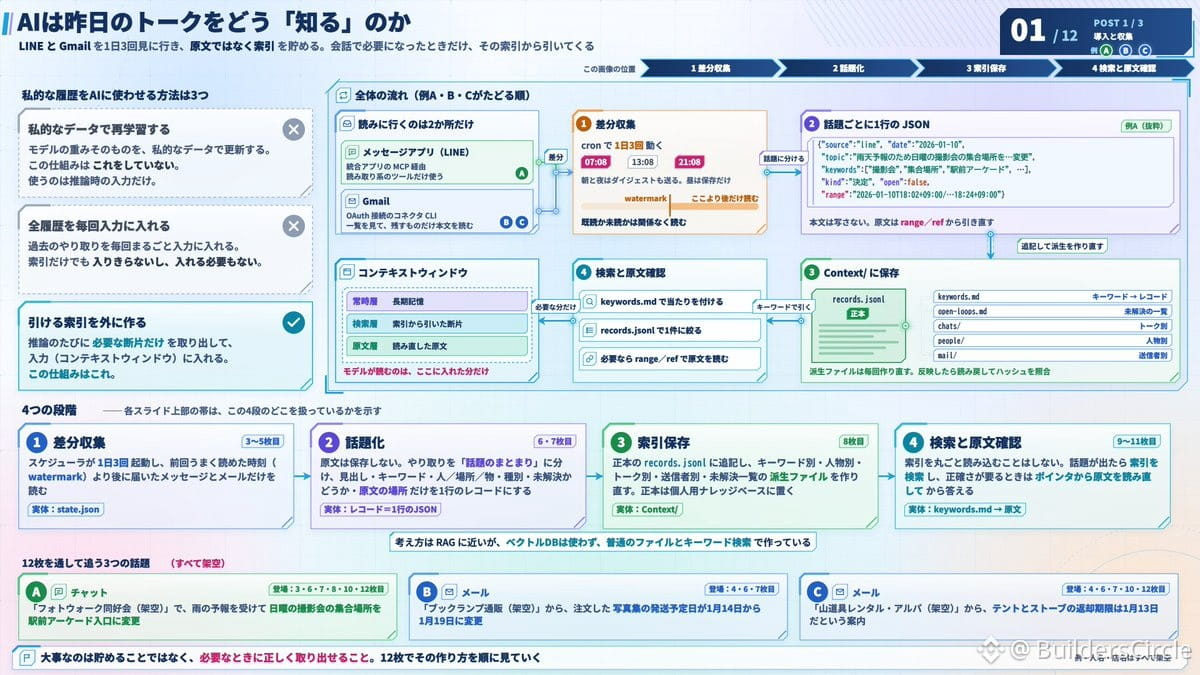
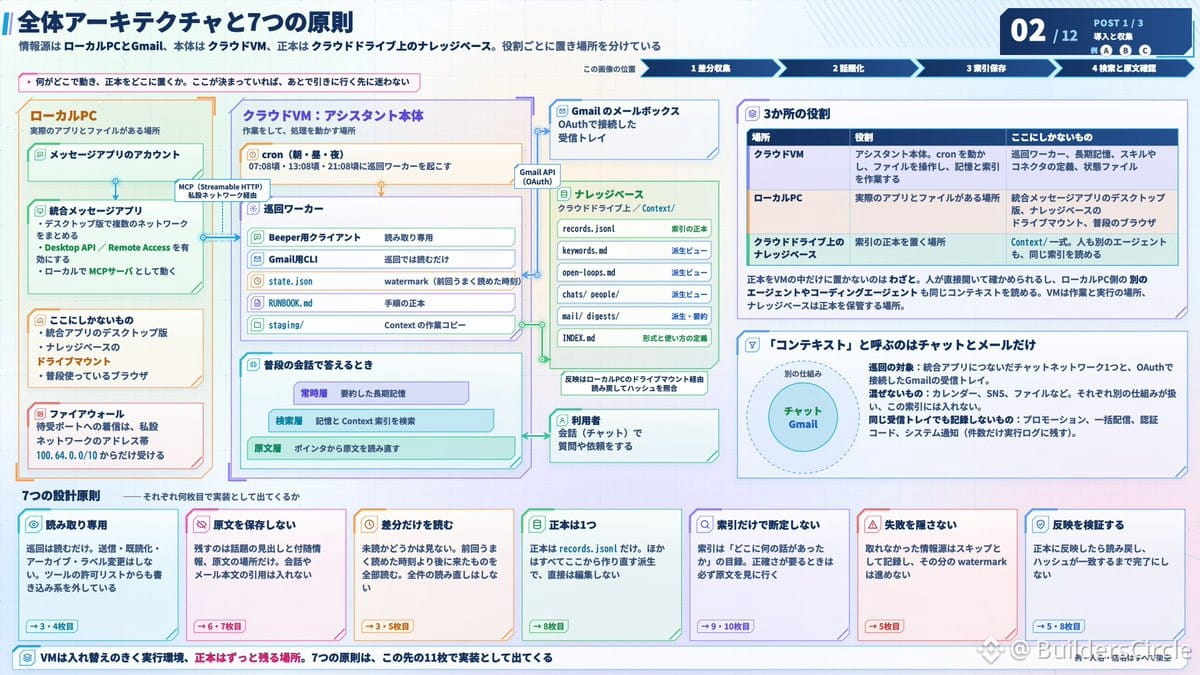
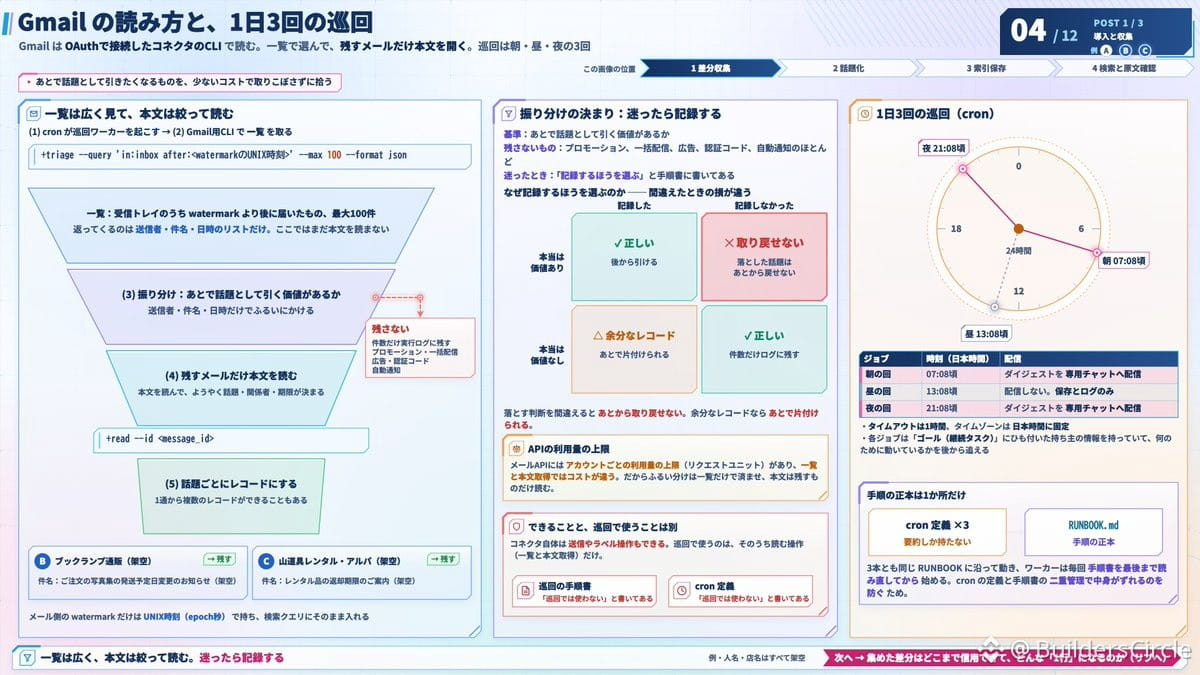
Building a personal 'Life IQ' system on Muse that extracts and organizes context from Gmail and LINE for reasoning tasks. This setup ingests daily communication streams, structures the data into queryable context, and feeds it into inference pipelines. Think of it as a self-hosted memory layer that turns your inbox and chat history into a knowledge graph for LLM reasoning. Not claiming this is optimal, just sharing the architecture I'm running. The workflow involves parsing message metadata, extracting entities and events, then indexing them for retrieval-augmented generation. Useful for anyone experimenting with personal AI agents that need real-world context beyond static datasets.
Building a personal 'Life IQ' system on Muse that extracts and organizes context from Gmail and LINE for reasoning tasks. This setup ingests daily communication streams, structures the data into queryable context, and feeds it into inference pipelines. Think of it as a self-hosted memory layer that turns your inbox and chat history into a knowledge graph for LLM reasoning. Not claiming this is optimal, just sharing the architecture I'm running. The workflow involves parsing message metadata, extracting entities and events, then indexing them for retrieval-augmented generation. Useful for anyone experimenting with personal AI agents that need real-world context beyond static datasets.

38
См. перевод
Discovered a weird exploit in Muse's workflow: by quietly manipulating Claude Code in the background while Muse is actively working, you can break the causal chain between actions and results. Basically tricking the system into misattributing what caused what.
This creates a vector for unintended behaviors - the AI loses track of which operations produced which outcomes. Could be used to inject malicious logic or bypass safety checks by obscuring the true execution flow.
Interesting attack surface on multi-agent systems where one component monitors another's work. If the monitoring layer can't properly trace causality, you can slip stuff through.
62
См. перевод
In the AI era, the most valuable information isn't in your company wiki or public docs—it's locked in people's heads during hallway conversations.
Here's the shift: Turning context into output? Instant now. Anyone can query public data or internal docs. But the directional context—the "why this way, not that way"—lives exclusively in your boss's brain or your client's unspoken assumptions.
Those 2-minute post-meeting chats or random hallway encounters? They're where high-density, compressed context gets transferred. And when you're using AI to generate work, that handful of non-digitized insights becomes the entire quality differentiator.
AI can scrape all the formalized knowledge. Your job as a human is to actively extract the undocumented stuff through soft skills and trust. The gap between mediocre AI output and excellent AI output is often just knowing those few things that never made it into Slack or Notion.
6
Технологии должны служить искусству, а не наоборот.
Настоящий ход — не хвастаться технологическим стеком, а сделать так, чтобы он растворился в самой работе. Думайте о технологиях как об актёре в вашем мире, а не как о звезде представления.
Отличный пример: когда Хацунэ Мику появилась в альбоме Sound Horizon, она была не просто «вокалоидом Мику». Её перевоплотили в Элизу — персонажа-куклу, полностью вписанного во вселенную этой истории. Вот такой уровень абстракции действительно важен.
Не внедряйте в проект технологии в чистом виде. Облеките их в собственный сюжет. Пусть они станут реквизитом, который соответствует вашему замыслу, а не рекламным щитом с криком: «Смотрите, какую классную штуку я использовал!»
Лучшие решения незаметны. Технологии работают, но люди запоминают впечатления, которые вы создали с их помощью.
43
См. перевод
Tech should serve the art, not the other way around.
The philosophy here: don't just showcase tech for tech's sake—integrate it as a narrative element in your work. Think of tech as an actor in your creative vision, not the star of the show.
The example that nailed this? When Hatsune Miku appeared in a Sound Horizon production, she wasn't presented as "Hatsune Miku the vocaloid." She was cast as Elise, a doll character within the story. The tech became invisible; the character was real.
This is the mindset: wrap your tech stack in your own world-building. Make it a stage prop that fits your universe, not a demo reel. Your framework, your rules, your packaging.
53
Дженсен Хуанг подвергается скоординированной медийной атаке. Время и структура распространения этой истории указывают скорее на организованные политические манёвры, чем на стихийное освещение событий.
Nvidia — уже не просто компания, а геополитический актив. Тот, кто контролирует инфраструктуру для вычислений в сфере ИИ, контролирует переговорный стол в политике, промышленности и экономике.
Вчерашняя последовательность событий — прямо по учебнику: NYT публикует второе обвинение в супружеской измене, WSJ тут же сообщает о слухах по поводу отстранения от совета директоров, после закрытия биржи акции падают на 9%, за неделю испаряются 600 млрд долларов.
Чипы B200/B300 уходят с конвейера. Это сотни миллиардов долларов распределяемой годовой выручки. Абсурдно думать, что это происходит «без ведома» руководства. Когда прибыль и политическое влияние настолько огромны, каждый хочет отхватить кусок.
$NVDA

55
Создал приложение для управления Muse Mail внутри Space.
Эта настройка позволяет передавать электронные письма в качестве контекста прямо в боковой чат. Ещё интереснее то, что в неё встроен процесс согласования писем с инструкциями от других людей. После вашего одобрения система выполняет команду и возвращает результаты.
По сути, ваш личный ИИ-контур превращается в общий инструмент: другие могут пользоваться вашей конфигурацией ИИ, но только после того, как вы одобрите каждый запрос. Это автоматизация с делегированием и обязательным участием человека.

Войдите, чтобы посмотреть больше материала
Присоединяйтесь к пользователям криптовалют по всему миру на Binance Square
⚡️ Получайте новейшую и полезную информацию о криптоактивах.
💬 Нам доверяет крупнейшая в мире криптобиржа.
👍 Получите достоверные аналитические данные от верифицированных создателей контента.
Эл. почта/номер телефона
В тренде
NvidiaLoses$2.7TrillionInMonthAndAHalf
Просмотров: 26,783
154 обсуждают
Nvidia потеряла 2,7 трлн долларов: когда нарратив важнее цифр 📉
Crypto With Faisal
·Лайков: 7
·Просмотров: 6k
CanBTCReboundAfterFallingBelow60K?
Просмотров: 831,663
3,136 обсуждают
GlobalStocksFaceLongestLosingStreakSince2023
Просмотров: 309,960
2,099 обсуждают