

#macrocrypto
macrocrypto
Просмотров: 197,665
1,561 обсуждают
Популярные
Новые

Евростат опубликовал окончательные данные по инфляции в еврозоне за сентябрь: годовой показатель общей гармонизированной инфляции по ИПЦ окончательно составил 3,8%, а месячный — 0,6%. Оба значения полностью совпали с ожиданиями рынка и остались на уровне предыдущего месяца. При этом годовая базовая инфляция в сентябре сохранилась на уровне 2,2%, а месячная составила 0,2%. Признаков нового ускорения базовой инфляции не наблюдается; техническая картина указывает на исключительно устойчивое формирование вершины с последующим снижением.
В макроэкономическом сравнении данные по инфляции в еврозоне полностью соответствуют консенсус-прогнозу рынка, что эффективно развеяло опасения по поводу повторного всплеска инфляции, вызванные ранее отдельными странами (например, небольшим ростом ИПЦ в Италии в сентябре до 4,2%). Показатель базовой инфляции на уровне 2,2% свидетельствует об эффективном сдерживании устойчивого инфляционного давления. Это обеспечивает Европейскому центральному банку весомую фундаментальную поддержку для сохранения нынешнего курса денежно-кредитной политики на последующих заседаниях по ставкам и существенно снижает риск нового агрессивного повышения ставок.
После публикации данных волатильность на валютном и облигационном рынках заметно снизилась. Доходность государственных облигаций ведущих европейских стран продолжила консолидироваться, потенциал роста индекса доллара оказался ограничен, а давление на ликвидность глобальных рисковых активов ослабло. Высокая предсказуемость динамики инфляции побуждает макроэкономических инвесторов переводить средства из защитных активов-убежищ на более ликвидные рынки. В целом макроэкономическая обстановка весьма благоприятна для бычьих позиций.
Для криптоактивов снижение базовой инфляции примерно до 2,2% означает, что цикл ужесточения денежно-кредитной политики в ведущих экономиках мира подходит к концу. Это создает отличную макроэкономическую подушку безопасности для $BTC . Благодаря восстановлению склонности к риску приток средств в блокчейн-сети может продолжиться и направиться в ведущие активы, обеспечивая рынку достаточный импульс для пробоя ключевого уровня сопротивления.📈
#EurozoneCPI #InflationData #MacroCrypto
Евростат опубликовал окончательные данные по инфляции в еврозоне за сентябрь: годовой показатель общей гармонизированной инфляции по ИПЦ окончательно составил 3,8%, а месячный — 0,6%. Оба значения полностью совпали с ожиданиями рынка и остались на уровне предыдущего месяца. При этом годовая базовая инфляция в сентябре сохранилась на уровне 2,2%, а месячная составила 0,2%. Признаков нового ускорения базовой инфляции не наблюдается; техническая картина указывает на исключительно устойчивое формирование вершины с последующим снижением.
В макроэкономическом сравнении данные по инфляции в еврозоне полностью соответствуют консенсус-прогнозу рынка, что эффективно развеяло опасения по поводу повторного всплеска инфляции, вызванные ранее отдельными странами (например, небольшим ростом ИПЦ в Италии в сентябре до 4,2%). Показатель базовой инфляции на уровне 2,2% свидетельствует об эффективном сдерживании устойчивого инфляционного давления. Это обеспечивает Европейскому центральному банку весомую фундаментальную поддержку для сохранения нынешнего курса денежно-кредитной политики на последующих заседаниях по ставкам и существенно снижает риск нового агрессивного повышения ставок.
После публикации данных волатильность на валютном и облигационном рынках заметно снизилась. Доходность государственных облигаций ведущих европейских стран продолжила консолидироваться, потенциал роста индекса доллара оказался ограничен, а давление на ликвидность глобальных рисковых активов ослабло. Высокая предсказуемость динамики инфляции побуждает макроэкономических инвесторов переводить средства из защитных активов-убежищ на более ликвидные рынки. В целом макроэкономическая обстановка весьма благоприятна для бычьих позиций.
Для криптоактивов снижение базовой инфляции примерно до 2,2% означает, что цикл ужесточения денежно-кредитной политики в ведущих экономиках мира подходит к концу. Это создает отличную макроэкономическую подушку безопасности для $BTC . Благодаря восстановлению склонности к риску приток средств в блокчейн-сети может продолжиться и направиться в ведущие активы, обеспечивая рынку достаточный импульс для пробоя ключевого уровня сопротивления.📈
#EurozoneCPI #InflationData #MacroCrypto
В макроэкономическом сравнении данные по инфляции в еврозоне полностью соответствуют консенсус-прогнозу рынка, что эффективно развеяло опасения по поводу повторного всплеска инфляции, вызванные ранее отдельными странами (например, небольшим ростом ИПЦ в Италии в сентябре до 4,2%). Показатель базовой инфляции на уровне 2,2% свидетельствует об эффективном сдерживании устойчивого инфляционного давления. Это обеспечивает Европейскому центральному банку весомую фундаментальную поддержку для сохранения нынешнего курса денежно-кредитной политики на последующих заседаниях по ставкам и существенно снижает риск нового агрессивного повышения ставок.
После публикации данных волатильность на валютном и облигационном рынках заметно снизилась. Доходность государственных облигаций ведущих европейских стран продолжила консолидироваться, потенциал роста индекса доллара оказался ограничен, а давление на ликвидность глобальных рисковых активов ослабло. Высокая предсказуемость динамики инфляции побуждает макроэкономических инвесторов переводить средства из защитных активов-убежищ на более ликвидные рынки. В целом макроэкономическая обстановка весьма благоприятна для бычьих позиций.
Для криптоактивов снижение базовой инфляции примерно до 2,2% означает, что цикл ужесточения денежно-кредитной политики в ведущих экономиках мира подходит к концу. Это создает отличную макроэкономическую подушку безопасности для $BTC . Благодаря восстановлению склонности к риску приток средств в блокчейн-сети может продолжиться и направиться в ведущие активы, обеспечивая рынку достаточный импульс для пробоя ключевого уровня сопротивления.📈
#EurozoneCPI #InflationData #MacroCrypto
59

Сегодня Китай опубликовал данные о торговом балансе за сентябрь, показав впечатляющее положительное сальдо в размере 1 335,3 млрд долларов. Этот показатель значительно превысил рыночные ожидания на уровне 1 181 млрд долларов и оказался выше значения предыдущего месяца — 1 190,9 млрд долларов. Примечательно, что экспорт в долларах США вырос на 36,3% в годовом исчислении, намного превысив прогноз в 25%, а импорт в долларах США увеличился на 31% при ожидавшихся 24,3%.
Такое значительное превышение ожиданий указывает на устойчивый внешний спрос и стабильную внутреннюю активность во второй по величине экономике мира. Резкое ускорение роста как импорта, так и экспорта опровергает прежние опасения синхронного глобального замедления и свидетельствует о возобновлении импульса в производственном секторе.
На более широких финансовых рынках сильные показатели торговли Китая, как правило, повышают глобальный аппетит к риску и поддерживают цены на сырьевые товары. Более устойчивый двигатель мировой торговли также может ослабить сиюминутные ожидания масштабных стимулирующих мер, стабилизируя доходность государственных облигаций и валюты стран, зависящих от сырьевых товаров.
Для цифровых активов прочные макроэкономические основы в Азии обычно способствуют трансграничной ликвидности и укрепляют доверие к рынку. По мере того как благоприятные макроэкономические факторы поддерживают общую ликвидность, рисковые активы, включая $BTC , могут привлечь дополнительный покупательский спрос. #ChinaTrade #GlobalEconomy #MacroCrypto
Сегодня Китай опубликовал данные о торговом балансе за сентябрь, показав впечатляющее положительное сальдо в размере 1 335,3 млрд долларов. Этот показатель значительно превысил рыночные ожидания на уровне 1 181 млрд долларов и оказался выше значения предыдущего месяца — 1 190,9 млрд долларов. Примечательно, что экспорт в долларах США вырос на 36,3% в годовом исчислении, намного превысив прогноз в 25%, а импорт в долларах США увеличился на 31% при ожидавшихся 24,3%.
Такое значительное превышение ожиданий указывает на устойчивый внешний спрос и стабильную внутреннюю активность во второй по величине экономике мира. Резкое ускорение роста как импорта, так и экспорта опровергает прежние опасения синхронного глобального замедления и свидетельствует о возобновлении импульса в производственном секторе.
На более широких финансовых рынках сильные показатели торговли Китая, как правило, повышают глобальный аппетит к риску и поддерживают цены на сырьевые товары. Более устойчивый двигатель мировой торговли также может ослабить сиюминутные ожидания масштабных стимулирующих мер, стабилизируя доходность государственных облигаций и валюты стран, зависящих от сырьевых товаров.
Для цифровых активов прочные макроэкономические основы в Азии обычно способствуют трансграничной ликвидности и укрепляют доверие к рынку. По мере того как благоприятные макроэкономические факторы поддерживают общую ликвидность, рисковые активы, включая $BTC , могут привлечь дополнительный покупательский спрос. #ChinaTrade #GlobalEconomy #MacroCrypto
Такое значительное превышение ожиданий указывает на устойчивый внешний спрос и стабильную внутреннюю активность во второй по величине экономике мира. Резкое ускорение роста как импорта, так и экспорта опровергает прежние опасения синхронного глобального замедления и свидетельствует о возобновлении импульса в производственном секторе.
На более широких финансовых рынках сильные показатели торговли Китая, как правило, повышают глобальный аппетит к риску и поддерживают цены на сырьевые товары. Более устойчивый двигатель мировой торговли также может ослабить сиюминутные ожидания масштабных стимулирующих мер, стабилизируя доходность государственных облигаций и валюты стран, зависящих от сырьевых товаров.
Для цифровых активов прочные макроэкономические основы в Азии обычно способствуют трансграничной ликвидности и укрепляют доверие к рынку. По мере того как благоприятные макроэкономические факторы поддерживают общую ликвидность, рисковые активы, включая $BTC , могут привлечь дополнительный покупательский спрос. #ChinaTrade #GlobalEconomy #MacroCrypto
62
⚡ НЕФТЬ ЗАКРЕПИЛАСЬ НА УРОВНЕ $100 И ВСКОЛЫХНУЛА АППЕТИТ К РИСКУ $W И $RSR ! 🌊
Макроэкономические трудности сталкиваются с потоком ордеров на крипторынке: устойчиво высокая цена нефти на уровне $100 заставляет институциональных трейдеров пересматривать свои подходы к инфляции. 📊 Пока доминирование энергетического сектора оказывает давление на ликвидность всего рынка, капитал уже ищет высокобетовые активы, способные отвязаться от макроэкономического шума.
Когда большинство участников рынка охватывает защитный настрой, стаканы часто становятся достаточно тонкими, чтобы спровоцировать резкие движения против тренда. 💡
🤔 Вы рассчитываете здесь на отскок или ждёте, пока уляжется макроэкономическая пыль?
⚠️ Это не финансовая рекомендация. Всегда контролируйте риски. 🛡️
🏷️ #W #RSR #MacroCrypto #Altcoins #Crypto
🔥 ⚡
⚡ НЕФТЬ ЗАКРЕПИЛАСЬ НА УРОВНЕ $100 И ВСКОЛЫХНУЛА АППЕТИТ К РИСКУ $W И $RSR ! 🌊
Макроэкономические трудности сталкиваются с потоком ордеров на крипторынке: устойчиво высокая цена нефти на уровне $100 заставляет институциональных трейдеров пересматривать свои подходы к инфляции. 📊 Пока доминирование энергетического сектора оказывает давление на ликвидность всего рынка, капитал уже ищет высокобетовые активы, способные отвязаться от макроэкономического шума.
Когда большинство участников рынка охватывает защитный настрой, стаканы часто становятся достаточно тонкими, чтобы спровоцировать резкие движения против тренда. 💡
🤔 Вы рассчитываете здесь на отскок или ждёте, пока уляжется макроэкономическая пыль?
⚠️ Это не финансовая рекомендация. Всегда контролируйте риски. 🛡️
🏷️ #W #RSR #MacroCrypto #Altcoins #Crypto
🔥 ⚡
Макроэкономические трудности сталкиваются с потоком ордеров на крипторынке: устойчиво высокая цена нефти на уровне $100 заставляет институциональных трейдеров пересматривать свои подходы к инфляции. 📊 Пока доминирование энергетического сектора оказывает давление на ликвидность всего рынка, капитал уже ищет высокобетовые активы, способные отвязаться от макроэкономического шума.
Когда большинство участников рынка охватывает защитный настрой, стаканы часто становятся достаточно тонкими, чтобы спровоцировать резкие движения против тренда. 💡
🤔 Вы рассчитываете здесь на отскок или ждёте, пока уляжется макроэкономическая пыль?
⚠️ Это не финансовая рекомендация. Всегда контролируйте риски. 🛡️
🏷️ #W #RSR #MacroCrypto #Altcoins #Crypto
🔥 ⚡


150

#usweeklyjoblessclaimsfallto197000
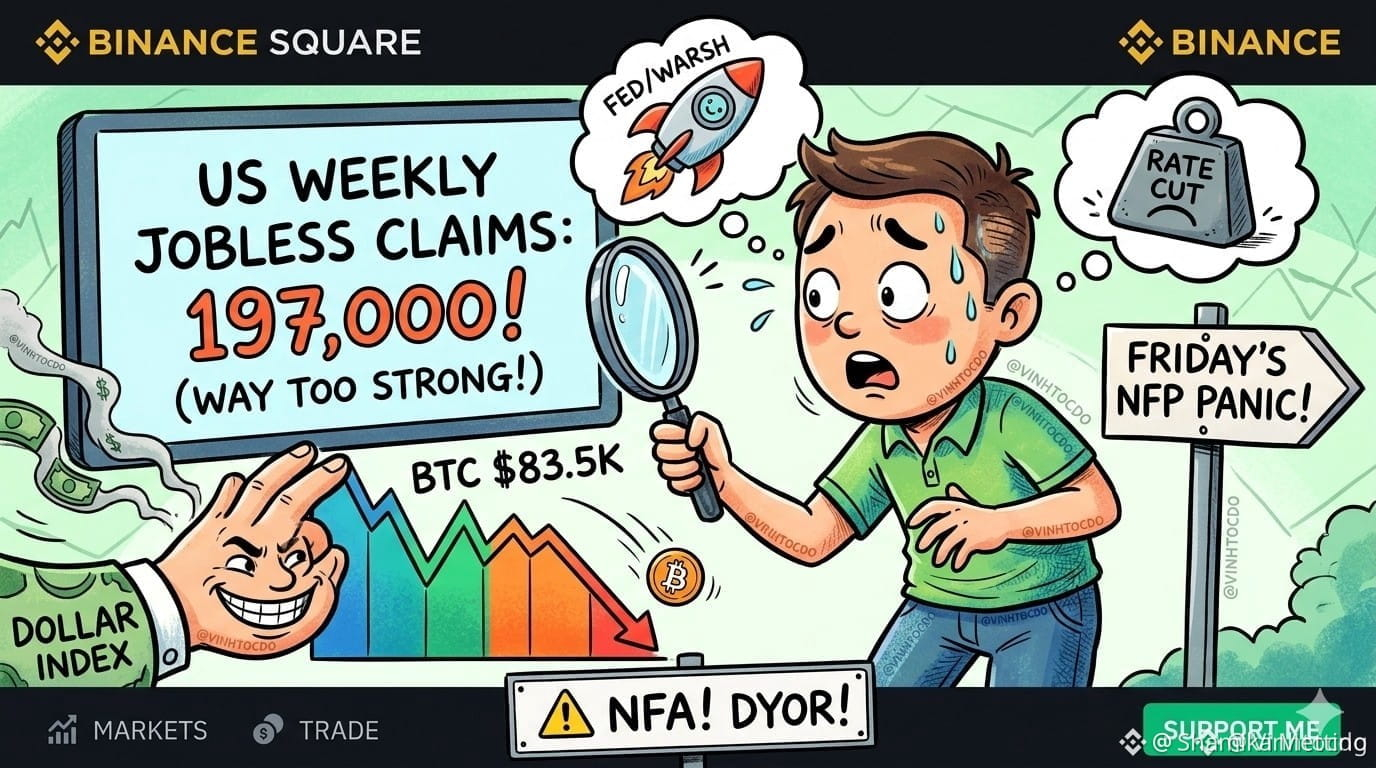
США: количество заявок на пособие по безработице снизилось до 197 000, что означает, что рынок труда очень сильный! 🤯 Ещё одна хорошая новость для ФРС и Кевина и Уорша, но головная боль для снижения ставки.
Благодаря этому вероятность повышения ставки в октябре на платформе CME FedWatch пошатнулась и составляет около 47,1%. Доходности растут быстро, а биткоин откатился до 83,5 тыс. долларов. Трейдеры, готовьтесь к данным по занятости вне сельского хозяйства в пятницу. Следите за индексом доллара и выставляйте уровни стоп-лосс! 📉💸
⚠️ Это не инвестиционный совет. Проверьте сами (DYOR)!
Продолжение от вас, пожалуйста
$BTC
$ETH
$SOL
#FedWatch #MacroCrypto #joblessclaims #CryptoTrading
#usweeklyjoblessclaimsfallto197000
США: количество заявок на пособие по безработице снизилось до 197 000, что означает, что рынок труда очень сильный! 🤯 Ещё одна хорошая новость для ФРС и Кевина и Уорша, но головная боль для снижения ставки.
Благодаря этому вероятность повышения ставки в октябре на платформе CME FedWatch пошатнулась и составляет около 47,1%. Доходности растут быстро, а биткоин откатился до 83,5 тыс. долларов. Трейдеры, готовьтесь к данным по занятости вне сельского хозяйства в пятницу. Следите за индексом доллара и выставляйте уровни стоп-лосс! 📉💸
⚠️ Это не инвестиционный совет. Проверьте сами (DYOR)!
Продолжение от вас, пожалуйста
$BTC
$ETH
$SOL
#FedWatch #MacroCrypto #joblessclaims #CryptoTrading
США: количество заявок на пособие по безработице снизилось до 197 000, что означает, что рынок труда очень сильный! 🤯 Ещё одна хорошая новость для ФРС и Кевина и Уорша, но головная боль для снижения ставки.
Благодаря этому вероятность повышения ставки в октябре на платформе CME FedWatch пошатнулась и составляет около 47,1%. Доходности растут быстро, а биткоин откатился до 83,5 тыс. долларов. Трейдеры, готовьтесь к данным по занятости вне сельского хозяйства в пятницу. Следите за индексом доллара и выставляйте уровни стоп-лосс! 📉💸
⚠️ Это не инвестиционный совет. Проверьте сами (DYOR)!
Продолжение от вас, пожалуйста
$BTC
$ETH
$SOL
#FedWatch #MacroCrypto #joblessclaims #CryptoTrading
1
105
#dollarindexhitshighestsincemay2025
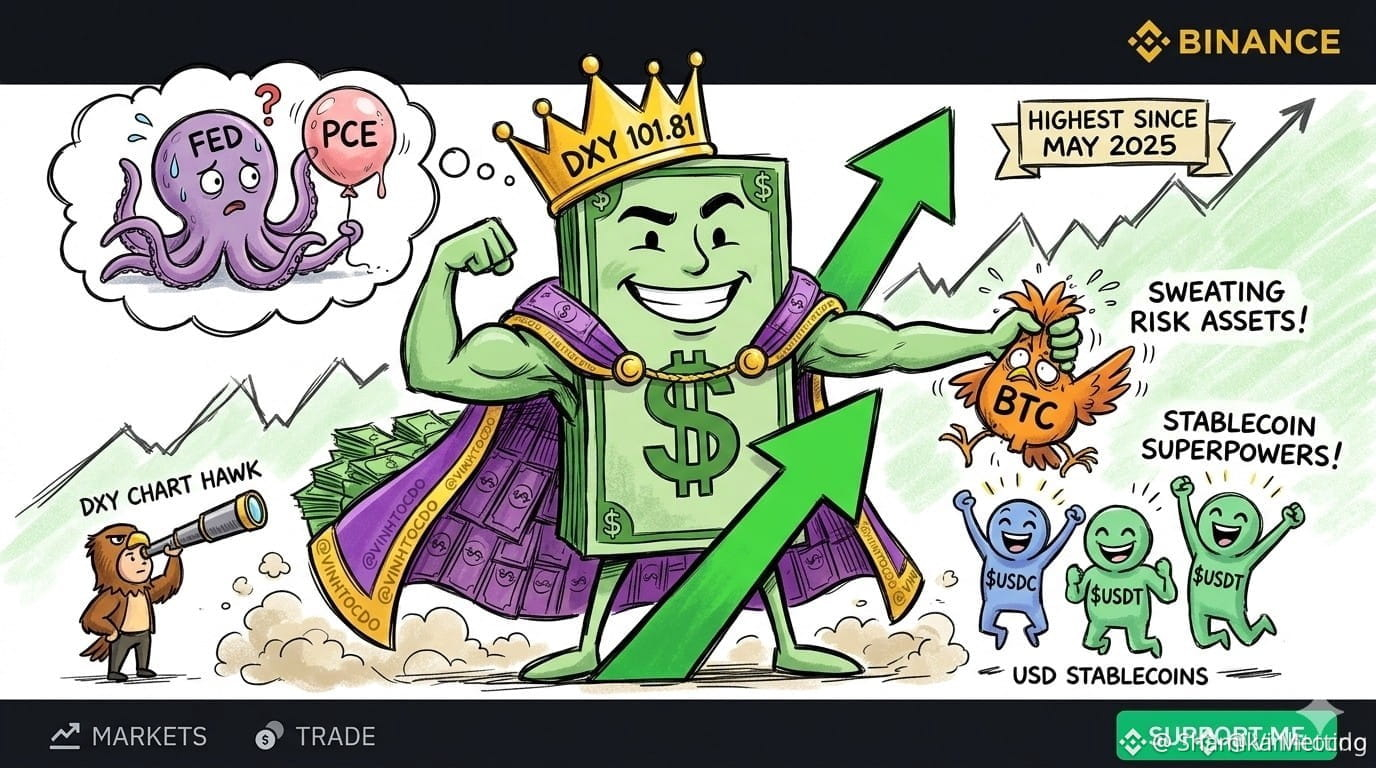
Возвращение King Dollar вновь: теперь он пробивает огромный уровень 101.81 по индексу DXY — максимумы с мая 2025 года! 💸
Даже на фоне слабых цифр инфляции PCE, Федеральная резервная система полностью игнорируется по доллару, и было принято решение продолжать «вливать» в него в любом случае. Означает ли это, что ваши стейблкоины, обеспеченные долларом, получат «суперсилу»? Что ж, 1 USDC всё ещё равен 1 USDC, но ваша покупательная способность явно ощущает больший вес, пока рынок крипто слегка выдыхает.
Трейдеры, когда индекс доллара подскакивает, обычно под давлением оказываются рискованные активы. Зафиксируйте позиции, не перегибайте с плечом и следите за графиком DXY, как сокол! 🦅
⚠️ Уведомление: это не финансовый совет. Проведите собственное исследование!
Не позволяйте общерыночному потоку оставить вас позади! Зарегистрируйтесь сейчас по коду VINHTOCDO или по этой ссылке
Продолжение, пожалуйста
$BTC
$BNB
$ETH
#DXYPump #MacroCrypto #Stablecoins #CryptoTrading
#dollarindexhitshighestsincemay2025
Возвращение King Dollar вновь: теперь он пробивает огромный уровень 101.81 по индексу DXY — максимумы с мая 2025 года! 💸
Даже на фоне слабых цифр инфляции PCE, Федеральная резервная система полностью игнорируется по доллару, и было принято решение продолжать «вливать» в него в любом случае. Означает ли это, что ваши стейблкоины, обеспеченные долларом, получат «суперсилу»? Что ж, 1 USDC всё ещё равен 1 USDC, но ваша покупательная способность явно ощущает больший вес, пока рынок крипто слегка выдыхает.
Трейдеры, когда индекс доллара подскакивает, обычно под давлением оказываются рискованные активы. Зафиксируйте позиции, не перегибайте с плечом и следите за графиком DXY, как сокол! 🦅
⚠️ Уведомление: это не финансовый совет. Проведите собственное исследование!
Не позволяйте общерыночному потоку оставить вас позади! Зарегистрируйтесь сейчас по коду VINHTOCDO или по этой ссылке
Продолжение, пожалуйста
$BTC
$BNB
$ETH
#DXYPump #MacroCrypto #Stablecoins #CryptoTrading
Возвращение King Dollar вновь: теперь он пробивает огромный уровень 101.81 по индексу DXY — максимумы с мая 2025 года! 💸
Даже на фоне слабых цифр инфляции PCE, Федеральная резервная система полностью игнорируется по доллару, и было принято решение продолжать «вливать» в него в любом случае. Означает ли это, что ваши стейблкоины, обеспеченные долларом, получат «суперсилу»? Что ж, 1 USDC всё ещё равен 1 USDC, но ваша покупательная способность явно ощущает больший вес, пока рынок крипто слегка выдыхает.
Трейдеры, когда индекс доллара подскакивает, обычно под давлением оказываются рискованные активы. Зафиксируйте позиции, не перегибайте с плечом и следите за графиком DXY, как сокол! 🦅
⚠️ Уведомление: это не финансовый совет. Проведите собственное исследование!
Не позволяйте общерыночному потоку оставить вас позади! Зарегистрируйтесь сейчас по коду VINHTOCDO или по этой ссылке
Продолжение, пожалуйста
$BTC
$BNB
$ETH
#DXYPump #MacroCrypto #Stablecoins #CryptoTrading
1
70

·
--
🚨 $BTC СЛИВАЕТ ЛИКВИДНОСТЬ ДО $85.5K ПОСЛЕ ТОГО, КАК ОСТУДИЛИ US PCE ИНФЛЯЦИОННЫЕ ДАННЫЕ И ВЫПЛЕСКНУЛИ КОРОТКИЕ ПОЗИЦИИ! ⚡
Вход: 84,000 ⚡
Цель: 87,000 🚀
Показатель US PCE ниже прогноза вызвал мгновенную макро-реакцию, отправив $BTC напечатать локальный хай на $85,598 после того, как было выметено свыше $75 млн в короткой ликвидности. 📊 Давление на доходности со стороны 10-летних UST дало первоначальный импульс, но провал остановился рядом с ключевым предложением, вернув ценовое движение в коридор консолидации около $84,000. 🔍
Хотя базовая инфляция замедлилась до 3.0%, что подпитывает спекуляции о паузе в ставках ФРС, структурное «тяжёлое» сопротивление по-прежнему остаётся устойчивым. Сейчас институциональный поток заявок заново оценивает, было ли это расширение реальным перекосом исполнения или же спланированным рейдом за ликвидностью. ⚡ Критический структурный перелом для возврата — это уровень $87,000 для устойчивого продолжения роста. 📌
💬 Вы считаете откат к $84,000 умным добором со стороны крупных денег или медвежьей ловушкой перед грядущими данными по занятости? 👇
⚠️ Не является финансовым советом. Всегда управляйте риском. 🛡️
🏷️ #BTC #MarketStructure #LiquiditySweep #MacroCrypto
🦈 🎯
🚨 $BTC СЛИВАЕТ ЛИКВИДНОСТЬ ДО $85.5K ПОСЛЕ ТОГО, КАК ОСТУДИЛИ US PCE ИНФЛЯЦИОННЫЕ ДАННЫЕ И ВЫПЛЕСКНУЛИ КОРОТКИЕ ПОЗИЦИИ! ⚡
Вход: 84,000 ⚡
Цель: 87,000 🚀
Показатель US PCE ниже прогноза вызвал мгновенную макро-реакцию, отправив $BTC напечатать локальный хай на $85,598 после того, как было выметено свыше $75 млн в короткой ликвидности. 📊 Давление на доходности со стороны 10-летних UST дало первоначальный импульс, но провал остановился рядом с ключевым предложением, вернув ценовое движение в коридор консолидации около $84,000. 🔍
Хотя базовая инфляция замедлилась до 3.0%, что подпитывает спекуляции о паузе в ставках ФРС, структурное «тяжёлое» сопротивление по-прежнему остаётся устойчивым. Сейчас институциональный поток заявок заново оценивает, было ли это расширение реальным перекосом исполнения или же спланированным рейдом за ликвидностью. ⚡ Критический структурный перелом для возврата — это уровень $87,000 для устойчивого продолжения роста. 📌
💬 Вы считаете откат к $84,000 умным добором со стороны крупных денег или медвежьей ловушкой перед грядущими данными по занятости? 👇
⚠️ Не является финансовым советом. Всегда управляйте риском. 🛡️
🏷️ #BTC #MarketStructure #LiquiditySweep #MacroCrypto
🦈 🎯
Вход: 84,000 ⚡
Цель: 87,000 🚀
Показатель US PCE ниже прогноза вызвал мгновенную макро-реакцию, отправив $BTC напечатать локальный хай на $85,598 после того, как было выметено свыше $75 млн в короткой ликвидности. 📊 Давление на доходности со стороны 10-летних UST дало первоначальный импульс, но провал остановился рядом с ключевым предложением, вернув ценовое движение в коридор консолидации около $84,000. 🔍
Хотя базовая инфляция замедлилась до 3.0%, что подпитывает спекуляции о паузе в ставках ФРС, структурное «тяжёлое» сопротивление по-прежнему остаётся устойчивым. Сейчас институциональный поток заявок заново оценивает, было ли это расширение реальным перекосом исполнения или же спланированным рейдом за ликвидностью. ⚡ Критический структурный перелом для возврата — это уровень $87,000 для устойчивого продолжения роста. 📌
💬 Вы считаете откат к $84,000 умным добором со стороны крупных денег или медвежьей ловушкой перед грядущими данными по занятости? 👇
⚠️ Не является финансовым советом. Всегда управляйте риском. 🛡️
🏷️ #BTC #MarketStructure #LiquiditySweep #MacroCrypto
🦈 🎯
21
См. перевод
Суверенные фонды продают золото и покупают Bitcoin — это не гипотеза, это тренд, который фиксирует Bitwise. Когда государственные балансы начинают ротацию из тысячелетнего актива в цифровой, макро-нарратив BTC меняется необратимо. Следующая волна спроса придёт не от ритейла.
$BTC $XAUT #Bitcoin #MacroCrypto
Суверенные фонды продают золото и покупают Bitcoin — это не гипотеза, это тренд, который фиксирует Bitwise. Когда государственные балансы начинают ротацию из тысячелетнего актива в цифровой, макро-нарратив BTC меняется необратимо. Следующая волна спроса придёт не от ритейла.
$BTC $XAUT #Bitcoin #MacroCrypto
$BTC $XAUT #Bitcoin #MacroCrypto
71
Статья
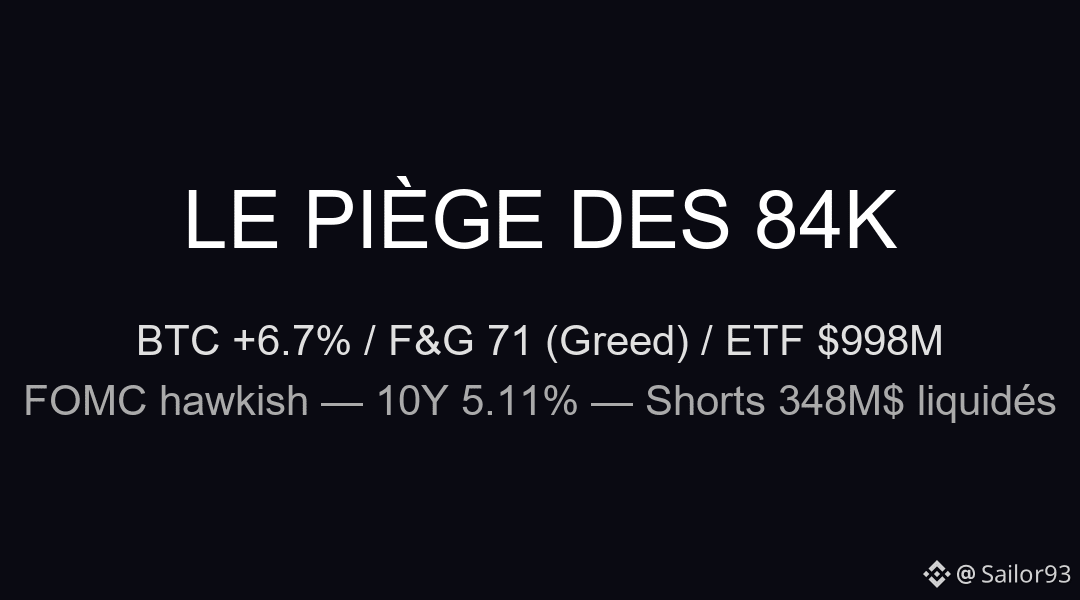
ЛОВУШКА НА 84K: BTC ОТБИРАЕТ, НО МАКРО ПОДАЁТ ТРЕВОГУ🚨 BTC впервые за 280 дней коснулся 85K… и СРАЗУ ОТКАТИЛ. Почему этот ралли не держится?
• ETF на BTC: +98M чистых притоков 21 сентября (BlackRock/Fidelity) — МАССИВНЫЕ спотовые покупки, а не плечи. При этом BTC топчется на 4.3K.
• 10-летние U.S. на 5.11% (пик 2007) + более жесткий FOMC 3.75–4.00% = слишком высокая цена денег для риска. Институционалы поглощают предложение, а доходности «переваривают» спрос.
• Страх и жадность 71 (Жадность ↓ до 78) — эйфория, которая выдыхается. Ликвидации 48M лонгов вчера. Рынок LONG, но нервный.
ЛОВУШКА НА 84K: BTC ОТБИРАЕТ, НО МАКРО ПОДАЁТ ТРЕВОГУ
🚨 BTC впервые за 280 дней коснулся 85K… и СРАЗУ ОТКАТИЛ. Почему этот ралли не держится?
• ETF на BTC: +98M чистых притоков 21 сентября (BlackRock/Fidelity) — МАССИВНЫЕ спотовые покупки, а не плечи. При этом BTC топчется на 4.3K.
• 10-летние U.S. на 5.11% (пик 2007) + более жесткий FOMC 3.75–4.00% = слишком высокая цена денег для риска. Институционалы поглощают предложение, а доходности «переваривают» спрос.
• Страх и жадность 71 (Жадность ↓ до 78) — эйфория, которая выдыхается. Ликвидации 48M лонгов вчера. Рынок LONG, но нервный.
• ETF на BTC: +98M чистых притоков 21 сентября (BlackRock/Fidelity) — МАССИВНЫЕ спотовые покупки, а не плечи. При этом BTC топчется на 4.3K.
• 10-летние U.S. на 5.11% (пик 2007) + более жесткий FOMC 3.75–4.00% = слишком высокая цена денег для риска. Институционалы поглощают предложение, а доходности «переваривают» спрос.
• Страх и жадность 71 (Жадность ↓ до 78) — эйфория, которая выдыхается. Ликвидации 48M лонгов вчера. Рынок LONG, но нервный.
BTC-0,09%
IEFETF+0,09%
85
#us30yearyieldhighestsince2004
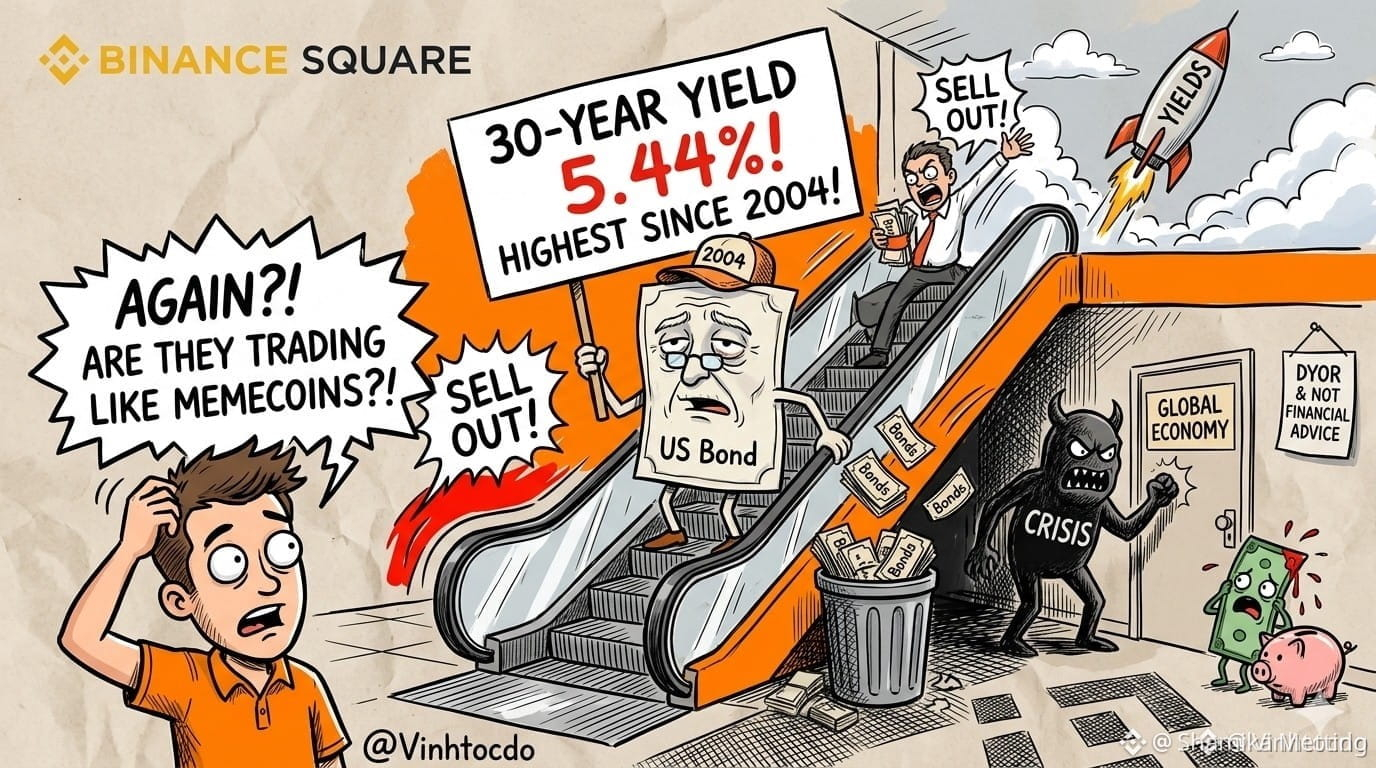
📈 Подождите, что?! #us30yearyieldhighestsince2004 стремится вверх с безумным ростом — достигла 5.44%! 🤯
И снова?! Доходности американских казначейских облигаций со сроком 30 лет только что обновили максимум за последние 22 года! Это финансовый кризис уже стучится в наши двери? 🚨 И подождите... «продают облигации»? Люди теперь торгуют облигациями так же, как мем-коинами? 😂
Оказалось, что высокий уровень инфляции и взлёт цен на нефть по ракетной траектории заставляют инвесторов впадать в панику — они продают долгосрочные облигации, из‑за чего доходности улетают на Луну! 🚀
Что должны делать трейдеры криптовалют?
1️⃣ Не паникуйте! Ликвидность утекает, но крипто как раз для этого. 🧠
2️⃣ Следите за волатильностью рынка. 📉📈
3️⃣ Проведите собственное исследование (DYOR)! Это не финансовый совет! 👀
Пожалуйста, подписывайтесь
$BTC
$BNB
$ETH
#ДоходностиРастут #BondSellOff #MacroCrypto #CryptoNews #FinancialCrisis
#us30yearyieldhighestsince2004
📈 Подождите, что?! #us30yearyieldhighestsince2004 стремится вверх с безумным ростом — достигла 5.44%! 🤯
И снова?! Доходности американских казначейских облигаций со сроком 30 лет только что обновили максимум за последние 22 года! Это финансовый кризис уже стучится в наши двери? 🚨 И подождите... «продают облигации»? Люди теперь торгуют облигациями так же, как мем-коинами? 😂
Оказалось, что высокий уровень инфляции и взлёт цен на нефть по ракетной траектории заставляют инвесторов впадать в панику — они продают долгосрочные облигации, из‑за чего доходности улетают на Луну! 🚀
Что должны делать трейдеры криптовалют?
1️⃣ Не паникуйте! Ликвидность утекает, но крипто как раз для этого. 🧠
2️⃣ Следите за волатильностью рынка. 📉📈
3️⃣ Проведите собственное исследование (DYOR)! Это не финансовый совет! 👀
Пожалуйста, подписывайтесь
$BTC
$BNB
$ETH
#ДоходностиРастут #BondSellOff #MacroCrypto #CryptoNews #FinancialCrisis
📈 Подождите, что?! #us30yearyieldhighestsince2004 стремится вверх с безумным ростом — достигла 5.44%! 🤯
И снова?! Доходности американских казначейских облигаций со сроком 30 лет только что обновили максимум за последние 22 года! Это финансовый кризис уже стучится в наши двери? 🚨 И подождите... «продают облигации»? Люди теперь торгуют облигациями так же, как мем-коинами? 😂
Оказалось, что высокий уровень инфляции и взлёт цен на нефть по ракетной траектории заставляют инвесторов впадать в панику — они продают долгосрочные облигации, из‑за чего доходности улетают на Луну! 🚀
Что должны делать трейдеры криптовалют?
1️⃣ Не паникуйте! Ликвидность утекает, но крипто как раз для этого. 🧠
2️⃣ Следите за волатильностью рынка. 📉📈
3️⃣ Проведите собственное исследование (DYOR)! Это не финансовый совет! 👀
Пожалуйста, подписывайтесь
$BTC
$BNB
$ETH
#ДоходностиРастут #BondSellOff #MacroCrypto #CryptoNews #FinancialCrisis
2
5k
Проверено
#fedoctoberratehikeoddsriseto69.7%
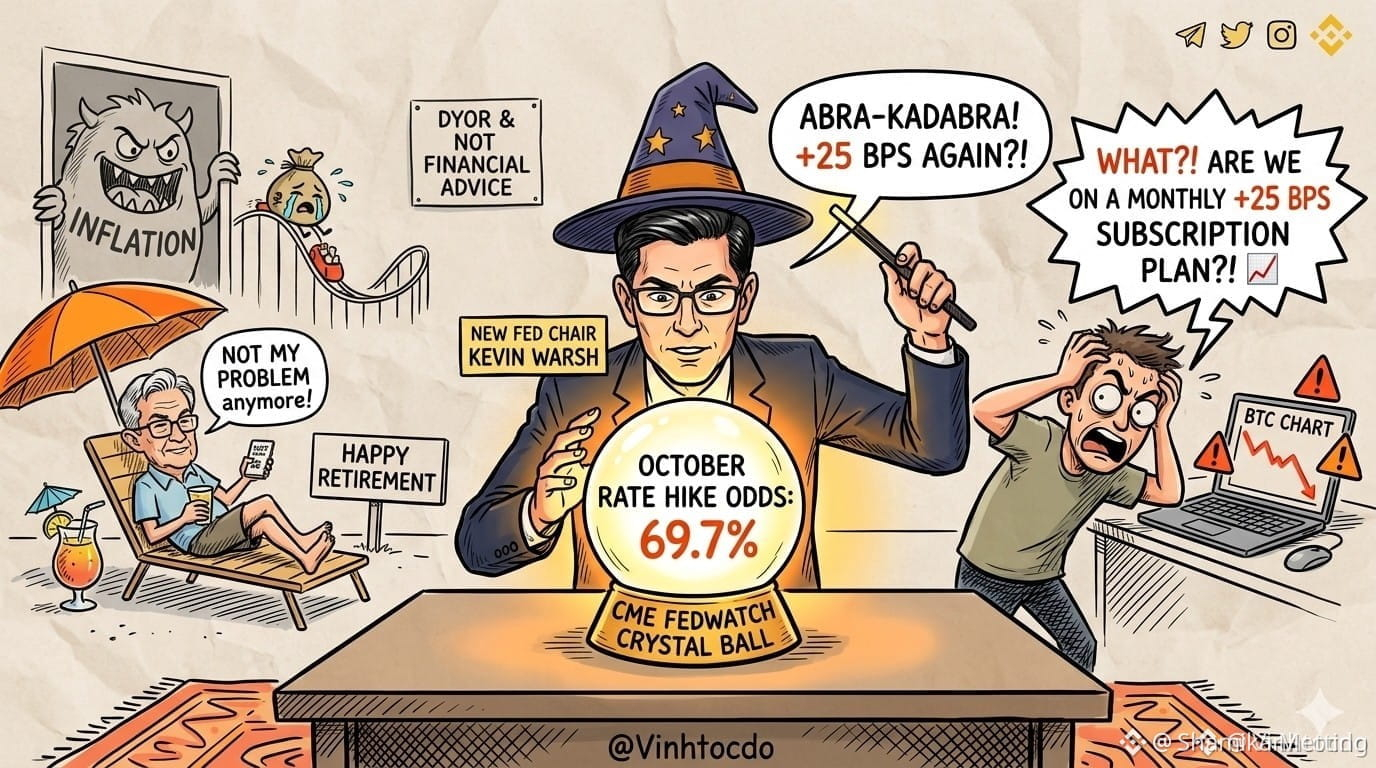
🎲 Какой потрясающий вид! Посмотрите на хрустальный шар! 🔮
CME FedWatch кричит о вероятности 69,7% повышения ставки на 25 базисных пунктов в октябре. Подождите… после поднятия в сентябре криптовалютный рынок взорвался, не так ли? Так может, Федеральная резервная система сможет «заливать» +25 базисных пунктов каждый месяц, как будто это платная подписка? 😂 Увы, макроэкономика не работает как ежемесячная подписка Netflix, дружище! Давление начало становиться реальным! 📈
Что должны делать трейдеры?
1️⃣ Внимательно следите за точечным графиком (dot plot) ФРС. 📅
2️⃣ Поймите свою финансовую «плечевую» ставку, всё начинает разгораться! 🛡️
3️⃣ Проведите собственное исследование (DYOR)! Это не финансовый совет! 👀
Продолжайте следить, пожалуйста
$BTC
$BNB
$ETH
#FedRateHike #CMEFedWatch #MacroCrypto #CryptoTrading #BinanceSquare
#fedoctoberratehikeoddsriseto69.7%
🎲 Какой потрясающий вид! Посмотрите на хрустальный шар! 🔮
CME FedWatch кричит о вероятности 69,7% повышения ставки на 25 базисных пунктов в октябре. Подождите… после поднятия в сентябре криптовалютный рынок взорвался, не так ли? Так может, Федеральная резервная система сможет «заливать» +25 базисных пунктов каждый месяц, как будто это платная подписка? 😂 Увы, макроэкономика не работает как ежемесячная подписка Netflix, дружище! Давление начало становиться реальным! 📈
Что должны делать трейдеры?
1️⃣ Внимательно следите за точечным графиком (dot plot) ФРС. 📅
2️⃣ Поймите свою финансовую «плечевую» ставку, всё начинает разгораться! 🛡️
3️⃣ Проведите собственное исследование (DYOR)! Это не финансовый совет! 👀
Продолжайте следить, пожалуйста
$BTC
$BNB
$ETH
#FedRateHike #CMEFedWatch #MacroCrypto #CryptoTrading #BinanceSquare
🎲 Какой потрясающий вид! Посмотрите на хрустальный шар! 🔮
CME FedWatch кричит о вероятности 69,7% повышения ставки на 25 базисных пунктов в октябре. Подождите… после поднятия в сентябре криптовалютный рынок взорвался, не так ли? Так может, Федеральная резервная система сможет «заливать» +25 базисных пунктов каждый месяц, как будто это платная подписка? 😂 Увы, макроэкономика не работает как ежемесячная подписка Netflix, дружище! Давление начало становиться реальным! 📈
Что должны делать трейдеры?
1️⃣ Внимательно следите за точечным графиком (dot plot) ФРС. 📅
2️⃣ Поймите свою финансовую «плечевую» ставку, всё начинает разгораться! 🛡️
3️⃣ Проведите собственное исследование (DYOR)! Это не финансовый совет! 👀
Продолжайте следить, пожалуйста
$BTC
$BNB
$ETH
#FedRateHike #CMEFedWatch #MacroCrypto #CryptoTrading #BinanceSquare
2
1.7k

·
--
То, где мы находимся в цикле ставок, для криптовалюты важнее, чем признают большинство трейдеров.
Повышение ставок: ликвидность сжимается, риск-активы переоцениваются в сторону снижения. 2022 год был наглядным примером.
Снижение ставок: ликвидность расширяется, капитал возвращается в риск. В 2020 году и в начале 2023 года был виден этот эффект.
Текущая ситуация: ставки по-прежнему носят ограничительный характер, а снижение закладывают в ожидания на более поздний период в этом году. Это фаза ожиданий: рынки начинают закладывать снижение до того, как оно произойдет.
Если снижение ставок откладывается, эти ожидания «разворачиваются». Это главной макро-риской для криптовалюты прямо сейчас.
#MacroCrypto #Bitcoin #BTC
То, где мы находимся в цикле ставок, для криптовалюты важнее, чем признают большинство трейдеров.
Повышение ставок: ликвидность сжимается, риск-активы переоцениваются в сторону снижения. 2022 год был наглядным примером.
Снижение ставок: ликвидность расширяется, капитал возвращается в риск. В 2020 году и в начале 2023 года был виден этот эффект.
Текущая ситуация: ставки по-прежнему носят ограничительный характер, а снижение закладывают в ожидания на более поздний период в этом году. Это фаза ожиданий: рынки начинают закладывать снижение до того, как оно произойдет.
Если снижение ставок откладывается, эти ожидания «разворачиваются». Это главной макро-риской для криптовалюты прямо сейчас.
#MacroCrypto #Bitcoin #BTC
Повышение ставок: ликвидность сжимается, риск-активы переоцениваются в сторону снижения. 2022 год был наглядным примером.
Снижение ставок: ликвидность расширяется, капитал возвращается в риск. В 2020 году и в начале 2023 года был виден этот эффект.
Текущая ситуация: ставки по-прежнему носят ограничительный характер, а снижение закладывают в ожидания на более поздний период в этом году. Это фаза ожиданий: рынки начинают закладывать снижение до того, как оно произойдет.
Если снижение ставок откладывается, эти ожидания «разворачиваются». Это главной макро-риской для криптовалюты прямо сейчас.
#MacroCrypto #Bitcoin #BTC
27

·
--
Глобальная инфляция и ограничительная монетарная политика для ее сдерживания влияют на криптовалюты. Поскольку ликвидность сокращается, а стоимость капитала растет, инвесторы, как правило, пересматривают рискованные активы, оказывая понижательное давление на цены криптовалют. Макроэкономическая чувствительность очевидна. #MacroCrypto #CriptoEconomia
📊 https://quant-fin.online
📢 @QuantF
━━━━━━━━━━━━━━━━━━
QuantFin — Протокол RUF-Flow v7
Powered by Nexus Flow Dynamics
© 2026 QuantFin. Торговля сопряжена с риском.
Глобальная инфляция и ограничительная монетарная политика для ее сдерживания влияют на криптовалюты. Поскольку ликвидность сокращается, а стоимость капитала растет, инвесторы, как правило, пересматривают рискованные активы, оказывая понижательное давление на цены криптовалют. Макроэкономическая чувствительность очевидна. #MacroCrypto #CriptoEconomia
📊 https://quant-fin.online
📢 @QuantF
━━━━━━━━━━━━━━━━━━
QuantFin — Протокол RUF-Flow v7
Powered by Nexus Flow Dynamics
© 2026 QuantFin. Торговля сопряжена с риском.
📊 https://quant-fin.online
📢 @QuantF
━━━━━━━━━━━━━━━━━━
QuantFin — Протокол RUF-Flow v7
Powered by Nexus Flow Dynamics
© 2026 QuantFin. Торговля сопряжена с риском.
44

·
--
все думают, что $btc падает — это просто игры кита, но на самом деле этот случай показывает, что йен-кэрри может ударить по твоему портфелю сильнее, чем плохой вход.
ошибка — смотреть только на свечи, пока на фоне уходит макро ликвидность. так трейдеры впадают в фомо и покупают «поддержку» на $62.5k, а потом панически реагируют, когда следующий карман ликвидности окажется ближе к $50k.
посмотри на картину: $BTC зависает возле $62,500, примерно на 50% ниже своего октябрь 2025 пика $126,198. каждая крупная коррекция в этом случае совпадает с тем, как Япония защищает йену — а не просто с крипто-нативной драмой.
токио и вашингтон также провели свое первое совместное вмешательство в иену с 1998 года: $59b было задействовано, а $32b вывалили всего за одну неделю. когда йен-кэрри разворачивается, риск-активы могут получить быстрый удар, потому что заемные деньги вынуждены разгрести риски, и это может перекинуться на $ETH, $SOL и вообще на всё, что имеет бета.
честно, сер, предупреждение здесь простое: если ты торгуешь крипто, игнорируя движения йены, доходности по облигациям и заголовки про интервенции, ты играешь только половину доски. что ты думаешь про $BTC дальше — зона отскока или $50k-магнит?
#Bitcoin #CryptoTrading #MacroCrypto
все думают, что $btc падает — это просто игры кита, но на самом деле этот случай показывает, что йен-кэрри может ударить по твоему портфелю сильнее, чем плохой вход.
ошибка — смотреть только на свечи, пока на фоне уходит макро ликвидность. так трейдеры впадают в фомо и покупают «поддержку» на $62.5k, а потом панически реагируют, когда следующий карман ликвидности окажется ближе к $50k.
посмотри на картину: $BTC зависает возле $62,500, примерно на 50% ниже своего октябрь 2025 пика $126,198. каждая крупная коррекция в этом случае совпадает с тем, как Япония защищает йену — а не просто с крипто-нативной драмой.
токио и вашингтон также провели свое первое совместное вмешательство в иену с 1998 года: $59b было задействовано, а $32b вывалили всего за одну неделю. когда йен-кэрри разворачивается, риск-активы могут получить быстрый удар, потому что заемные деньги вынуждены разгрести риски, и это может перекинуться на $ETH , $SOL и вообще на всё, что имеет бета.
честно, сер, предупреждение здесь простое: если ты торгуешь крипто, игнорируя движения йены, доходности по облигациям и заголовки про интервенции, ты играешь только половину доски. что ты думаешь про $BTC дальше — зона отскока или $50k-магнит?
#Bitcoin #CryptoTrading #MacroCrypto
ошибка — смотреть только на свечи, пока на фоне уходит макро ликвидность. так трейдеры впадают в фомо и покупают «поддержку» на $62.5k, а потом панически реагируют, когда следующий карман ликвидности окажется ближе к $50k.
посмотри на картину: $BTC зависает возле $62,500, примерно на 50% ниже своего октябрь 2025 пика $126,198. каждая крупная коррекция в этом случае совпадает с тем, как Япония защищает йену — а не просто с крипто-нативной драмой.
токио и вашингтон также провели свое первое совместное вмешательство в иену с 1998 года: $59b было задействовано, а $32b вывалили всего за одну неделю. когда йен-кэрри разворачивается, риск-активы могут получить быстрый удар, потому что заемные деньги вынуждены разгрести риски, и это может перекинуться на $ETH , $SOL и вообще на всё, что имеет бета.
честно, сер, предупреждение здесь простое: если ты торгуешь крипто, игнорируя движения йены, доходности по облигациям и заголовки про интервенции, ты играешь только половину доски. что ты думаешь про $BTC дальше — зона отскока или $50k-магнит?
#Bitcoin #CryptoTrading #MacroCrypto
47
·
--
Дипломатический заголовок может сдвинуть $BTC в разы быстрее, чем фигура на графике: сегодня «продвинутые» переговоры Ирана и Омана по проливу Ормуз помогли Bitcoin вернуть отметку $64K, прежде чем он снова просел почти к $63.5K.
Если вам когда-либо приходилось гнаться за зелёной свечой и видеть, как она гаснет в течение часов, — вот почему важен макро-контекст. Криптотрейдеры торгуют не только графики. Мы торгуем страхом, нефтью, военными рисками, ликвидностью и позиционированием.
$BTC поднялся примерно на 0,8%, торгуясь в диапазоне $63.7K–$64.25K, пока объём вырос на 42%, а затем вернул часть движения за последние 4 часа. Это не случайный шум. Это рыночный переоценочный пересмотр геополитического риска в реальном времени.
Нефть рассказала ту же историю, но громче. Она упала более чем на 2% обратно ниже $82, когда премия за риск по войне остыла, а затем снова подскочила выше $88, как только неопределённость вернулась. В прошлых циклах я много раз видел эту схему: меньше конфликтных рисков часто означает меньшую нагрузку на нефть, более мягкие инфляционные опасения и более благоприятное настроение для риск-активов вроде $BTC, $ETH и $BNB.
Вывод простой. Когда заголовки толкают движение, входы требуют терпения. Спокойный макро-фон может поддерживать крипто, но ралли на новостях может развернуться очень быстро, когда страх снова возвращается в зал.
Вы рассматриваете это $BTC движение как реальный сигнал risk-on или просто очередную ловушку, завязанную на заголовках?
#Bitcoin #CryptoTrading #MacroCrypto
Дипломатический заголовок может сдвинуть $BTC в разы быстрее, чем фигура на графике: сегодня «продвинутые» переговоры Ирана и Омана по проливу Ормуз помогли Bitcoin вернуть отметку $64K, прежде чем он снова просел почти к $63.5K.
Если вам когда-либо приходилось гнаться за зелёной свечой и видеть, как она гаснет в течение часов, — вот почему важен макро-контекст. Криптотрейдеры торгуют не только графики. Мы торгуем страхом, нефтью, военными рисками, ликвидностью и позиционированием.
$BTC поднялся примерно на 0,8%, торгуясь в диапазоне $63.7K–$64.25K, пока объём вырос на 42%, а затем вернул часть движения за последние 4 часа. Это не случайный шум. Это рыночный переоценочный пересмотр геополитического риска в реальном времени.
Нефть рассказала ту же историю, но громче. Она упала более чем на 2% обратно ниже $82, когда премия за риск по войне остыла, а затем снова подскочила выше $88, как только неопределённость вернулась. В прошлых циклах я много раз видел эту схему: меньше конфликтных рисков часто означает меньшую нагрузку на нефть, более мягкие инфляционные опасения и более благоприятное настроение для риск-активов вроде $BTC , $ETH и $BNB .
Вывод простой. Когда заголовки толкают движение, входы требуют терпения. Спокойный макро-фон может поддерживать крипто, но ралли на новостях может развернуться очень быстро, когда страх снова возвращается в зал.
Вы рассматриваете это $BTC движение как реальный сигнал risk-on или просто очередную ловушку, завязанную на заголовках?
#Bitcoin #CryptoTrading #MacroCrypto
Если вам когда-либо приходилось гнаться за зелёной свечой и видеть, как она гаснет в течение часов, — вот почему важен макро-контекст. Криптотрейдеры торгуют не только графики. Мы торгуем страхом, нефтью, военными рисками, ликвидностью и позиционированием.
$BTC поднялся примерно на 0,8%, торгуясь в диапазоне $63.7K–$64.25K, пока объём вырос на 42%, а затем вернул часть движения за последние 4 часа. Это не случайный шум. Это рыночный переоценочный пересмотр геополитического риска в реальном времени.
Нефть рассказала ту же историю, но громче. Она упала более чем на 2% обратно ниже $82, когда премия за риск по войне остыла, а затем снова подскочила выше $88, как только неопределённость вернулась. В прошлых циклах я много раз видел эту схему: меньше конфликтных рисков часто означает меньшую нагрузку на нефть, более мягкие инфляционные опасения и более благоприятное настроение для риск-активов вроде $BTC , $ETH и $BNB .
Вывод простой. Когда заголовки толкают движение, входы требуют терпения. Спокойный макро-фон может поддерживать крипто, но ралли на новостях может развернуться очень быстро, когда страх снова возвращается в зал.
Вы рассматриваете это $BTC движение как реальный сигнал risk-on или просто очередную ловушку, завязанную на заголовках?
#Bitcoin #CryptoTrading #MacroCrypto
38
·
--
Вот что произошло, когда геополитика, нефть и $BTC все оказались в одном разговоре.
Криптотрейдеры знают эту боль слишком хорошо: вы видите, как Bitcoin возвращает $64K, включается FOMO, а затем он откатывается обратно к $63.5K — прежде чем вы успеете понять, это пробой или ловушка. Макро-заголовки могут превратить чистый сетап в шум очень быстро.
В этом случае $BTC отскочил после того, как Катар заявил, что ирано-омансие переговоры по поводу Ормузского пролива достигли «продвинутой» стадии. Это имело значение, потому что Ормузский пролив — один из ключевых нефтяных узких мест, и снижение рисков войны обычно охлаждает давление на нефть. Bitcoin торговался примерно в диапазоне от $63.7K до $64.25K, прибавив около 0.8%, при этом объем вырос на 42% до того, как движение стало затухать в течение следующих нескольких часов.
Мы видели этот фильм раньше. Во время прошлых всплесков напряженности на Ближнем Востоке и шока Россия—Украина нефть часто реагирует первой, а затем вслед за сменой настроения идут такие риск-активы, как $BTC и $ETH . Когда нефть упала более чем на 2% ниже $82, рынок ненадолго воспринял это как облегчение. Но последующий рывок обратно выше $88 показал, насколько хрупким может быть это облегчение.
Урок простой: макро-обусловленные пампы — это не то же самое, что сильные развороты тренда. Если риск из заголовка сходит на нет, $BNB и более широкий рынок криптовалют могут получить импульс к покупке. Если нефтяной рынок остается нервным, трейдеры могут продолжать продавать рост, вместо того чтобы гнаться за ним.
Какой ваш взгляд: Bitcoin реагирует на реальное снижение рисков здесь — или это просто очередной фейковый ход, вызванный заголовками?
#Bitcoin #CryptoMarkets #MacroCrypto
Вот что произошло, когда геополитика, нефть и $BTC все оказались в одном разговоре.
Криптотрейдеры знают эту боль слишком хорошо: вы видите, как Bitcoin возвращает $64K, включается FOMO, а затем он откатывается обратно к $63.5K — прежде чем вы успеете понять, это пробой или ловушка. Макро-заголовки могут превратить чистый сетап в шум очень быстро.
В этом случае $BTC отскочил после того, как Катар заявил, что ирано-омансие переговоры по поводу Ормузского пролива достигли «продвинутой» стадии. Это имело значение, потому что Ормузский пролив — один из ключевых нефтяных узких мест, и снижение рисков войны обычно охлаждает давление на нефть. Bitcoin торговался примерно в диапазоне от $63.7K до $64.25K, прибавив около 0.8%, при этом объем вырос на 42% до того, как движение стало затухать в течение следующих нескольких часов.
Мы видели этот фильм раньше. Во время прошлых всплесков напряженности на Ближнем Востоке и шока Россия—Украина нефть часто реагирует первой, а затем вслед за сменой настроения идут такие риск-активы, как $BTC и $ETH . Когда нефть упала более чем на 2% ниже $82, рынок ненадолго воспринял это как облегчение. Но последующий рывок обратно выше $88 показал, насколько хрупким может быть это облегчение.
Урок простой: макро-обусловленные пампы — это не то же самое, что сильные развороты тренда. Если риск из заголовка сходит на нет, $BNB и более широкий рынок криптовалют могут получить импульс к покупке. Если нефтяной рынок остается нервным, трейдеры могут продолжать продавать рост, вместо того чтобы гнаться за ним.
Какой ваш взгляд: Bitcoin реагирует на реальное снижение рисков здесь — или это просто очередной фейковый ход, вызванный заголовками?
#Bitcoin #CryptoMarkets #MacroCrypto
Криптотрейдеры знают эту боль слишком хорошо: вы видите, как Bitcoin возвращает $64K, включается FOMO, а затем он откатывается обратно к $63.5K — прежде чем вы успеете понять, это пробой или ловушка. Макро-заголовки могут превратить чистый сетап в шум очень быстро.
В этом случае $BTC отскочил после того, как Катар заявил, что ирано-омансие переговоры по поводу Ормузского пролива достигли «продвинутой» стадии. Это имело значение, потому что Ормузский пролив — один из ключевых нефтяных узких мест, и снижение рисков войны обычно охлаждает давление на нефть. Bitcoin торговался примерно в диапазоне от $63.7K до $64.25K, прибавив около 0.8%, при этом объем вырос на 42% до того, как движение стало затухать в течение следующих нескольких часов.
Мы видели этот фильм раньше. Во время прошлых всплесков напряженности на Ближнем Востоке и шока Россия—Украина нефть часто реагирует первой, а затем вслед за сменой настроения идут такие риск-активы, как $BTC и $ETH . Когда нефть упала более чем на 2% ниже $82, рынок ненадолго воспринял это как облегчение. Но последующий рывок обратно выше $88 показал, насколько хрупким может быть это облегчение.
Урок простой: макро-обусловленные пампы — это не то же самое, что сильные развороты тренда. Если риск из заголовка сходит на нет, $BNB и более широкий рынок криптовалют могут получить импульс к покупке. Если нефтяной рынок остается нервным, трейдеры могут продолжать продавать рост, вместо того чтобы гнаться за ним.
Какой ваш взгляд: Bitcoin реагирует на реальное снижение рисков здесь — или это просто очередной фейковый ход, вызванный заголовками?
#Bitcoin #CryptoMarkets #MacroCrypto
31

После того как Трамп публично заявил о поддержке, акции Dell в течение одного дня взлетели на 4,4%.
Сигнал этой волатильности ценнее самого роста — политическая “трибуна” превращается в явный фактор ценообразования на американском рынке: от исключений по тарифам до цепочек поставок ИИ-оборудования, позиция Белого дома напрямую влияет на темп переоценки отдельных бумаг.
Также стоит обратить внимание на отражение этой динамики в крипторынке:
1)В нарративе ИИ-инфраструктуры Dell выступает ключевым дистрибьютором серверов Nvidia; укрепление традиционного AI-оборудования обычно синхронно поднимает настроение в on-chain AI-секторе;
2)“Трамп-трейд” вновь активируется: политическая beta рискованных активов усиливается, а корреляция BTC с акциями технологического сектора США может пойти еще выше;
3)Когда политические факторы становятся доминирующими переменными, предельная полезность чисто технического анализа снижается — более практичной становится тройная рамка “макро — политика — ликвидность”.
В краткосрочной перспективе ротация отраслей, следующая политическому нарративу, ускорится: on-chain AI, RWA и активы, сильнее завязанные на комплаенс в США, с большей вероятностью получат премию.
#TrumpTrade #AI #MacroCrypto
После того как Трамп публично заявил о поддержке, акции Dell в течение одного дня взлетели на 4,4%.
Сигнал этой волатильности ценнее самого роста — политическая “трибуна” превращается в явный фактор ценообразования на американском рынке: от исключений по тарифам до цепочек поставок ИИ-оборудования, позиция Белого дома напрямую влияет на темп переоценки отдельных бумаг.
Также стоит обратить внимание на отражение этой динамики в крипторынке:
1)В нарративе ИИ-инфраструктуры Dell выступает ключевым дистрибьютором серверов Nvidia; укрепление традиционного AI-оборудования обычно синхронно поднимает настроение в on-chain AI-секторе;
2)“Трамп-трейд” вновь активируется: политическая beta рискованных активов усиливается, а корреляция BTC с акциями технологического сектора США может пойти еще выше;
3)Когда политические факторы становятся доминирующими переменными, предельная полезность чисто технического анализа снижается — более практичной становится тройная рамка “макро — политика — ликвидность”.
В краткосрочной перспективе ротация отраслей, следующая политическому нарративу, ускорится: on-chain AI, RWA и активы, сильнее завязанные на комплаенс в США, с большей вероятностью получат премию.
#TrumpTrade #AI #MacroCrypto
Сигнал этой волатильности ценнее самого роста — политическая “трибуна” превращается в явный фактор ценообразования на американском рынке: от исключений по тарифам до цепочек поставок ИИ-оборудования, позиция Белого дома напрямую влияет на темп переоценки отдельных бумаг.
Также стоит обратить внимание на отражение этой динамики в крипторынке:
1)В нарративе ИИ-инфраструктуры Dell выступает ключевым дистрибьютором серверов Nvidia; укрепление традиционного AI-оборудования обычно синхронно поднимает настроение в on-chain AI-секторе;
2)“Трамп-трейд” вновь активируется: политическая beta рискованных активов усиливается, а корреляция BTC с акциями технологического сектора США может пойти еще выше;
3)Когда политические факторы становятся доминирующими переменными, предельная полезность чисто технического анализа снижается — более практичной становится тройная рамка “макро — политика — ликвидность”.
В краткосрочной перспективе ротация отраслей, следующая политическому нарративу, ускорится: on-chain AI, RWA и активы, сильнее завязанные на комплаенс в США, с большей вероятностью получат премию.
#TrumpTrade #AI #MacroCrypto
117

·
--
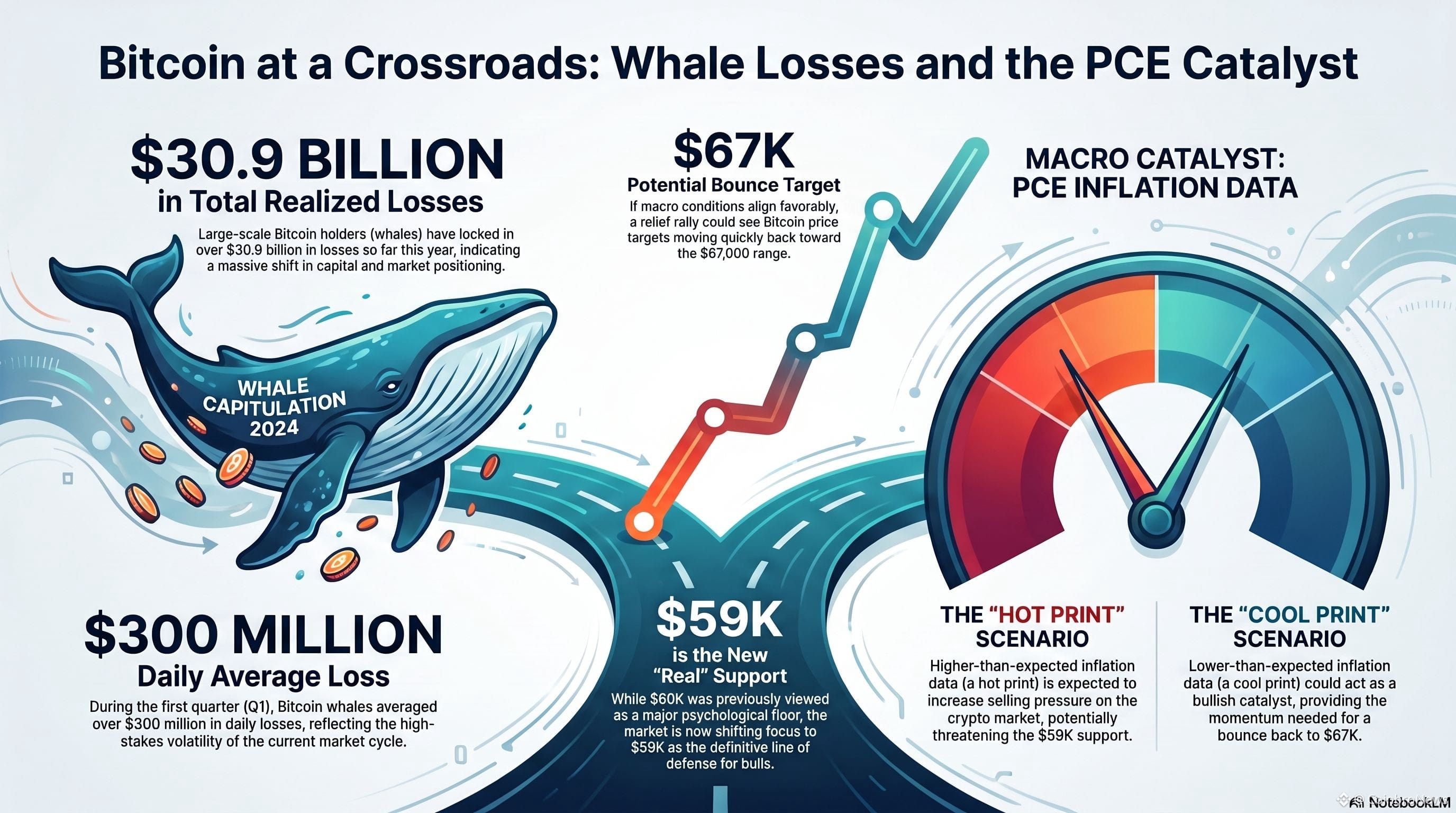
🚨🔥БИТКОИН ДЕРЖИТСЯ НА $59К — НО ДАННЫЕ PCE В ЧЕТВЕРГ МОГУТ ВСЁ ПОРУШИТЬ.
Биткойн несколько раз отскакивал от $59,000 в июне. Этот уровень заменил $60К как реальную поддержку. Упадок в среду коснулся $59К снова, прежде чем восстановиться до $61К — тот же паттерн, который спровоцировал ралли до $67К 5 июня.
→ $59К теперь линия. Ниже неё, настроение меняется быстро.
→ Данные PCE в четверг (предпочтительный индикатор инфляции ФРС) будут опубликованы сегодня вечером — базовый PCE ожидается на уровне 3.3–3.4%, максимальный с октября 2023 года.
→ Горячий отчет = доллар укрепляется, крипта испытывает давление. Прохладный отчет = случай отскока от $59К становится сильнее.
Одна точка данных. Два совершенно разных исхода для Биткойна сегодня вечером.
Вы покупаете поддержку на $59К или ждёте PCE в первую очередь?
"Поддержка держится. Но одно число сегодня вечером может изменить всё." — Анализ CoinbroNews
#Bitcoin #BTC #PCE #FederalReserve #CryptoTrading #MacroCrypto
CoinbroNews | coinbronews.com
🚨🔥БИТКОИН ДЕРЖИТСЯ НА $59К — НО ДАННЫЕ PCE В ЧЕТВЕРГ МОГУТ ВСЁ ПОРУШИТЬ.
Биткойн несколько раз отскакивал от $59,000 в июне. Этот уровень заменил $60К как реальную поддержку. Упадок в среду коснулся $59К снова, прежде чем восстановиться до $61К — тот же паттерн, который спровоцировал ралли до $67К 5 июня.
→ $59К теперь линия. Ниже неё, настроение меняется быстро.
→ Данные PCE в четверг (предпочтительный индикатор инфляции ФРС) будут опубликованы сегодня вечером — базовый PCE ожидается на уровне 3.3–3.4%, максимальный с октября 2023 года.
→ Горячий отчет = доллар укрепляется, крипта испытывает давление. Прохладный отчет = случай отскока от $59К становится сильнее.
Одна точка данных. Два совершенно разных исхода для Биткойна сегодня вечером.
Вы покупаете поддержку на $59К или ждёте PCE в первую очередь?
"Поддержка держится. Но одно число сегодня вечером может изменить всё." — Анализ CoinbroNews
#Bitcoin #BTC #PCE #FederalReserve #CryptoTrading #MacroCrypto
CoinbroNews | coinbronews.com
Биткойн несколько раз отскакивал от $59,000 в июне. Этот уровень заменил $60К как реальную поддержку. Упадок в среду коснулся $59К снова, прежде чем восстановиться до $61К — тот же паттерн, который спровоцировал ралли до $67К 5 июня.
→ $59К теперь линия. Ниже неё, настроение меняется быстро.
→ Данные PCE в четверг (предпочтительный индикатор инфляции ФРС) будут опубликованы сегодня вечером — базовый PCE ожидается на уровне 3.3–3.4%, максимальный с октября 2023 года.
→ Горячий отчет = доллар укрепляется, крипта испытывает давление. Прохладный отчет = случай отскока от $59К становится сильнее.
Одна точка данных. Два совершенно разных исхода для Биткойна сегодня вечером.
Вы покупаете поддержку на $59К или ждёте PCE в первую очередь?
"Поддержка держится. Но одно число сегодня вечером может изменить всё." — Анализ CoinbroNews
#Bitcoin #BTC #PCE #FederalReserve #CryptoTrading #MacroCrypto
CoinbroNews | coinbronews.com
183
·
--

Статья
Goldman Sachs уходит из альткойнов: настоящая причина этого шагаИнституциональная нарратива только что получила серьезный удар. Goldman Sachs официально закрыл свои специализированные инвестиционные инструменты для $XRP и $SOL . Это не просто рутинная корректировка портфеля; это прямая реакция на ужесточающуюся макроэкономическую обстановку, где глобальная ликвидность быстро иссякает.
С учетом того, что доллар США остается на многомесячных максимумах, а доходность облигаций казначейства застряла на высоких уровнях, крупные инвестиционные банки выбирают агрессивно снижать риски. Для розничных трейдеров этот институциональный уход означает, что потенциал для альткойнов останется сильно ограниченным, пока более широкая макроэкономическая ситуация не станет более благоприятной.
Goldman Sachs уходит из альткойнов: настоящая причина этого шага
Институциональная нарратива только что получила серьезный удар. Goldman Sachs официально закрыл свои специализированные инвестиционные инструменты для $XRP и $SOL . Это не просто рутинная корректировка портфеля; это прямая реакция на ужесточающуюся макроэкономическую обстановку, где глобальная ликвидность быстро иссякает.
С учетом того, что доллар США остается на многомесячных максимумах, а доходность облигаций казначейства застряла на высоких уровнях, крупные инвестиционные банки выбирают агрессивно снижать риски. Для розничных трейдеров этот институциональный уход означает, что потенциал для альткойнов останется сильно ограниченным, пока более широкая макроэкономическая ситуация не станет более благоприятной.
С учетом того, что доллар США остается на многомесячных максимумах, а доходность облигаций казначейства застряла на высоких уровнях, крупные инвестиционные банки выбирают агрессивно снижать риски. Для розничных трейдеров этот институциональный уход означает, что потенциал для альткойнов останется сильно ограниченным, пока более широкая макроэкономическая ситуация не станет более благоприятной.
298

·
--
О государствах, которые включают Биткоин в свои резервы. В 2026 это уже реально.
Сальвадор: первопроходец. Биткоин как законное платежное средство с 2021 года.
Суверенные резервы некоторых развивающихся стран включают BTC.
Несколько суверенных фондов имеют мандаты на косвенное криптоэкспонирование через ETF.
Почему это важно для индивидуального инвестора :
→ Институциональный и суверенный спрос создаёт структурный ценовой «пол»
→ Это снижает вероятность полного запрета в крупных экономиках
→ Это легитимизирует Биткоин как класс активов в мировом финансовом диалоге
Это не повод покупать вслепую.
Это контекст, который нужно встроить в свою долгосрочную инвестиционную тезу.
#BitcoinEtat
#СуверенныеРезервы
#AdoptionInstitutionnelle
#MacroCrypto
О государствах, которые включают Биткоин в свои резервы. В 2026 это уже реально.
Сальвадор: первопроходец. Биткоин как законное платежное средство с 2021 года.
Суверенные резервы некоторых развивающихся стран включают BTC.
Несколько суверенных фондов имеют мандаты на косвенное криптоэкспонирование через ETF.
Почему это важно для индивидуального инвестора :
→ Институциональный и суверенный спрос создаёт структурный ценовой «пол»
→ Это снижает вероятность полного запрета в крупных экономиках
→ Это легитимизирует Биткоин как класс активов в мировом финансовом диалоге
Это не повод покупать вслепую.
Это контекст, который нужно встроить в свою долгосрочную инвестиционную тезу.
#BitcoinEtat
#СуверенныеРезервы
#AdoptionInstitutionnelle
#MacroCrypto
Сальвадор: первопроходец. Биткоин как законное платежное средство с 2021 года.
Суверенные резервы некоторых развивающихся стран включают BTC.
Несколько суверенных фондов имеют мандаты на косвенное криптоэкспонирование через ETF.
Почему это важно для индивидуального инвестора :
→ Институциональный и суверенный спрос создаёт структурный ценовой «пол»
→ Это снижает вероятность полного запрета в крупных экономиках
→ Это легитимизирует Биткоин как класс активов в мировом финансовом диалоге
Это не повод покупать вслепую.
Это контекст, который нужно встроить в свою долгосрочную инвестиционную тезу.
#BitcoinEtat
#СуверенныеРезервы
#AdoptionInstitutionnelle
#MacroCrypto
89

·
--
Рост
🌍 НА ЭТОЙ НЕДЕЛЕ КРИПТА ПРИДЕТСЯ СИЛЬНО ДВИГАТЬСЯ — Вот что именно нужно следить
📅 МАКРО КАЛЕНДАРЬ | Неделя с 7 июня 2026 года
Большинство крипто-трейдеров смотрят на графики.
Умные смотрят СНАЧАЛА вот на ЭТО.
━━━━━━━━━━━━━━━━━━
ПОЧЕМУ ЭТА НЕДЕЛЯ ОСОБЕННАЯ:
На этой неделе:
→ 6 основных экономических данных из США
→ 7 событий с участием спикеров Федеральной резервной системы
→ Переговоры США–Иран о мире (разрешения пока нет)
→ BTC уже в зоне крайнего страха
Любое из этих событий может отправить BTC ±10% за считанные минуты.
━━━━━━━━━━━━━━━━━━
САМОЕ ВАЖНОЕ СОБЫТИЕ — ОТЧЕТ ПО ЗАНЯТОСТИ:
Вот как это работает (простая версия):
📊 СЛАБЫЕ РАБОЧИЕ МЕСТА
→ Экономика замедляется → ФРС с большей вероятностью снижает ставки
→ Снижение ставок = дешевые деньги = инвесторы покупают рисковые активы
→ BTC + альткойны РАСТУТ
📊 СИЛЬНЫЕ РАБОЧИЕ МЕСТА
→ Экономика «горячая» → ФРС сохраняет высокие ставки
→ Высокие ставки = дорогие деньги = инвесторы избегают риска
→ BTC + альткойны ПАДАЮТ
Вот и всё. Это вся макроигра прямо сейчас.
━━━━━━━━━━━━━━━━━━
РИСК ОТ ВЫСТУПЛЕНИЯ ФРС:
7 чиновников ФРС выступают на этой неделе. Каждый из них может:
→ Намекнуть на изменения в пути ставок
→ Реагировать на свежие экономические данные
→ Послать полностью смешанные сигналы
Опасность: Один ястребиный комментарий ФРС сразу после слабых данных по занятости может отменить то, что выглядит как бычья установка. Это скрытая волатильность, которая стирает позиции с плечом.
ТЕКУЩАЯ РЕАЛЬНОСТЬ BTC:
→ 92% коррелирует с S&P 500 — крипта теперь рискованный актив, точка.
→ Страх и Жадность: 11 (Крайний страх)
→ $60,000 — это уровень, который должен удержаться на этой неделе
КАК ТОРГОВАТЬ НА ЭТОЙ НЕДЕЛЕ:
→ Уменьшить плечо перед выходом данных
→ Следить за реакцией BTC в течение 15 минут после выхода данных
→ Не гнаться за движениями — ждать подтверждающую свечу
→ Держать 20-30% в стейблкоинах как сухую пороховницу
Знание — это преимущество, которого у большинства розничных трейдеров нет.
Сохрани этот пост. Поделись им с тем, кто в этом нуждается.
Подписывайся на ежедневные обновления рынка 🔔
⚠️ NFA — Всегда DYOR
#CryptoMarket #bitcoin #MacroCrypto #FederalReserve #JobsReport
🌍 НА ЭТОЙ НЕДЕЛЕ КРИПТА ПРИДЕТСЯ СИЛЬНО ДВИГАТЬСЯ — Вот что именно нужно следить
📅 МАКРО КАЛЕНДАРЬ | Неделя с 7 июня 2026 года
Большинство крипто-трейдеров смотрят на графики.
Умные смотрят СНАЧАЛА вот на ЭТО.
━━━━━━━━━━━━━━━━━━
ПОЧЕМУ ЭТА НЕДЕЛЯ ОСОБЕННАЯ:
На этой неделе:
→ 6 основных экономических данных из США
→ 7 событий с участием спикеров Федеральной резервной системы
→ Переговоры США–Иран о мире (разрешения пока нет)
→ BTC уже в зоне крайнего страха
Любое из этих событий может отправить BTC ±10% за считанные минуты.
━━━━━━━━━━━━━━━━━━
САМОЕ ВАЖНОЕ СОБЫТИЕ — ОТЧЕТ ПО ЗАНЯТОСТИ:
Вот как это работает (простая версия):
📊 СЛАБЫЕ РАБОЧИЕ МЕСТА
→ Экономика замедляется → ФРС с большей вероятностью снижает ставки
→ Снижение ставок = дешевые деньги = инвесторы покупают рисковые активы
→ BTC + альткойны РАСТУТ
📊 СИЛЬНЫЕ РАБОЧИЕ МЕСТА
→ Экономика «горячая» → ФРС сохраняет высокие ставки
→ Высокие ставки = дорогие деньги = инвесторы избегают риска
→ BTC + альткойны ПАДАЮТ
Вот и всё. Это вся макроигра прямо сейчас.
━━━━━━━━━━━━━━━━━━
РИСК ОТ ВЫСТУПЛЕНИЯ ФРС:
7 чиновников ФРС выступают на этой неделе. Каждый из них может:
→ Намекнуть на изменения в пути ставок
→ Реагировать на свежие экономические данные
→ Послать полностью смешанные сигналы
Опасность: Один ястребиный комментарий ФРС сразу после слабых данных по занятости может отменить то, что выглядит как бычья установка. Это скрытая волатильность, которая стирает позиции с плечом.
ТЕКУЩАЯ РЕАЛЬНОСТЬ BTC:
→ 92% коррелирует с S&P 500 — крипта теперь рискованный актив, точка.
→ Страх и Жадность: 11 (Крайний страх)
→ $60,000 — это уровень, который должен удержаться на этой неделе
КАК ТОРГОВАТЬ НА ЭТОЙ НЕДЕЛЕ:
→ Уменьшить плечо перед выходом данных
→ Следить за реакцией BTC в течение 15 минут после выхода данных
→ Не гнаться за движениями — ждать подтверждающую свечу
→ Держать 20-30% в стейблкоинах как сухую пороховницу
Знание — это преимущество, которого у большинства розничных трейдеров нет.
Сохрани этот пост. Поделись им с тем, кто в этом нуждается.
Подписывайся на ежедневные обновления рынка 🔔
⚠️ NFA — Всегда DYOR
#CryptoMarket #bitcoin #MacroCrypto #FederalReserve #JobsReport
📅 МАКРО КАЛЕНДАРЬ | Неделя с 7 июня 2026 года
Большинство крипто-трейдеров смотрят на графики.
Умные смотрят СНАЧАЛА вот на ЭТО.
━━━━━━━━━━━━━━━━━━
ПОЧЕМУ ЭТА НЕДЕЛЯ ОСОБЕННАЯ:
На этой неделе:
→ 6 основных экономических данных из США
→ 7 событий с участием спикеров Федеральной резервной системы
→ Переговоры США–Иран о мире (разрешения пока нет)
→ BTC уже в зоне крайнего страха
Любое из этих событий может отправить BTC ±10% за считанные минуты.
━━━━━━━━━━━━━━━━━━
САМОЕ ВАЖНОЕ СОБЫТИЕ — ОТЧЕТ ПО ЗАНЯТОСТИ:
Вот как это работает (простая версия):
📊 СЛАБЫЕ РАБОЧИЕ МЕСТА
→ Экономика замедляется → ФРС с большей вероятностью снижает ставки
→ Снижение ставок = дешевые деньги = инвесторы покупают рисковые активы
→ BTC + альткойны РАСТУТ
📊 СИЛЬНЫЕ РАБОЧИЕ МЕСТА
→ Экономика «горячая» → ФРС сохраняет высокие ставки
→ Высокие ставки = дорогие деньги = инвесторы избегают риска
→ BTC + альткойны ПАДАЮТ
Вот и всё. Это вся макроигра прямо сейчас.
━━━━━━━━━━━━━━━━━━
РИСК ОТ ВЫСТУПЛЕНИЯ ФРС:
7 чиновников ФРС выступают на этой неделе. Каждый из них может:
→ Намекнуть на изменения в пути ставок
→ Реагировать на свежие экономические данные
→ Послать полностью смешанные сигналы
Опасность: Один ястребиный комментарий ФРС сразу после слабых данных по занятости может отменить то, что выглядит как бычья установка. Это скрытая волатильность, которая стирает позиции с плечом.
ТЕКУЩАЯ РЕАЛЬНОСТЬ BTC:
→ 92% коррелирует с S&P 500 — крипта теперь рискованный актив, точка.
→ Страх и Жадность: 11 (Крайний страх)
→ $60,000 — это уровень, который должен удержаться на этой неделе
КАК ТОРГОВАТЬ НА ЭТОЙ НЕДЕЛЕ:
→ Уменьшить плечо перед выходом данных
→ Следить за реакцией BTC в течение 15 минут после выхода данных
→ Не гнаться за движениями — ждать подтверждающую свечу
→ Держать 20-30% в стейблкоинах как сухую пороховницу
Знание — это преимущество, которого у большинства розничных трейдеров нет.
Сохрани этот пост. Поделись им с тем, кто в этом нуждается.
Подписывайся на ежедневные обновления рынка 🔔
⚠️ NFA — Всегда DYOR
#CryptoMarket #bitcoin #MacroCrypto #FederalReserve #JobsReport
91
Войдите, чтобы посмотреть больше материала
Присоединяйтесь к пользователям криптовалют по всему миру на Binance Square
⚡️ Получайте новейшую и полезную информацию о криптоактивах.
💬 Нам доверяет крупнейшая в мире криптобиржа.
👍 Получите достоверные аналитические данные от верифицированных создателей контента.
Эл. почта/номер телефона
В тренде
1
#BinancePick
Просмотров: 2.7M
144,021 обсуждают
2
#EarningsSeason
Просмотров: 5M
24,704 обсуждают
3
#SouthKoreaReportedlyWeighsFourthCryptoTaxDelay
Просмотров: 2,920
136 обсуждают
4
#FranklinTempletonFilesForTwoDividendToBitcoinETFs
Просмотров: 8,079
256 обсуждают
5
#StrategyMSTRSurpassesNasdaqInMarketCap
Просмотров: 7,392
212 обсуждают
6
#CanadaProposesStablecoinRedemptionWithin3BusinessDays
Просмотров: 244
18 обсуждают
7
#ElectrumWalletBugLetRogueServersStealFunds
Просмотров: 12,874
333 обсуждают
8
#ArgentineCourtDismissesLIBRACaseAgainstMilei
Просмотров: 23,237
398 обсуждают
9
#SKHynixReportedlyPlansSpecialDividendFromKioxiaStakeSale
Просмотров: 3,543
49 обсуждают
10
#KeystoneWebsiteBreachExposesBuyersShippingAddresses
Просмотров: 1,850
41 обсуждают