

Traderxyzee
418 Публикации

Traderxyzee
Отправить жалобу
Заблокировать пользователя
Трейдер с регулярными сделками
8.9 г
28 подписок(и/а)
800 подписчиков(а)
978 понравилось
Посты
Все
Цитирования
·
--
Today's signals disagree: sentiment reads Greed at 55, spot ETFs lost $82.39 million, and $BTC sits near $81,500 between $80,000 and $82,000.
I use a simple checklist: sentiment, flows, price levels, and news. Each one tells part of the story. When signals disagree, I size down and wait.
Disagreement itself is information, since it tells me the market has no clear direction yet. I would rather miss the first 10% of a move than be forced out of a wrong trade. What is on your checklist?
Today's signals disagree: sentiment reads Greed at 55, spot ETFs lost $82.39 million, and $BTC sits near $81,500 between $80,000 and $82,000.
I use a simple checklist: sentiment, flows, price levels, and news. Each one tells part of the story. When signals disagree, I size down and wait.
Disagreement itself is information, since it tells me the market has no clear direction yet. I would rather miss the first 10% of a move than be forced out of a wrong trade. What is on your checklist?
I use a simple checklist: sentiment, flows, price levels, and news. Each one tells part of the story. When signals disagree, I size down and wait.
Disagreement itself is information, since it tells me the market has no clear direction yet. I would rather miss the first 10% of a move than be forced out of a wrong trade. What is on your checklist?
84
·
--
Tesla ($TSLA) fell 2.1% on Friday after its flying Roadster reveal, while talk of a Tesla and SpaceX merger got louder. RBC reportedly said the recovery in SpaceX shares creates a potentially attractive entry point for a deal. Let me explain mergers simply: one company combines with another, usually by paying in cash or shares, and investors in both companies react to the terms. Rumors are not deals. Until there is an official announcement, I treat this as speculation and watch company statements. What do you think a combined company would look like?
Tesla ($TSLA) fell 2.1% on Friday after its flying Roadster reveal, while talk of a Tesla and SpaceX merger got louder. RBC reportedly said the recovery in SpaceX shares creates a potentially attractive entry point for a deal. Let me explain mergers simply: one company combines with another, usually by paying in cash or shares, and investors in both companies react to the terms. Rumors are not deals. Until there is an official announcement, I treat this as speculation and watch company statements. What do you think a combined company would look like?
323
·
--
Частичная правда
Brent crude is hovering near $110 a barrel as Strait of Hormuz tensions keep supply fears alive, with reports of an attack on a US ship.
Why does oil matter to $BTC? Higher energy prices can push inflation up, and that can keep interest rates higher for longer, which tends to pressure risk assets. One analyst now flags $78,000 as the next support if $80,000 breaks. I do not trade headlines, but I do track how oil, inflation and rates connect. Do you watch commodities before you trade crypto?
Brent crude is hovering near $110 a barrel as Strait of Hormuz tensions keep supply fears alive, with reports of an attack on a US ship.
Why does oil matter to $BTC? Higher energy prices can push inflation up, and that can keep interest rates higher for longer, which tends to pressure risk assets. One analyst now flags $78,000 as the next support if $80,000 breaks. I do not trade headlines, but I do track how oil, inflation and rates connect. Do you watch commodities before you trade crypto?
Why does oil matter to $BTC? Higher energy prices can push inflation up, and that can keep interest rates higher for longer, which tends to pressure risk assets. One analyst now flags $78,000 as the next support if $80,000 breaks. I do not trade headlines, but I do track how oil, inflation and rates connect. Do you watch commodities before you trade crypto?
667
·
--
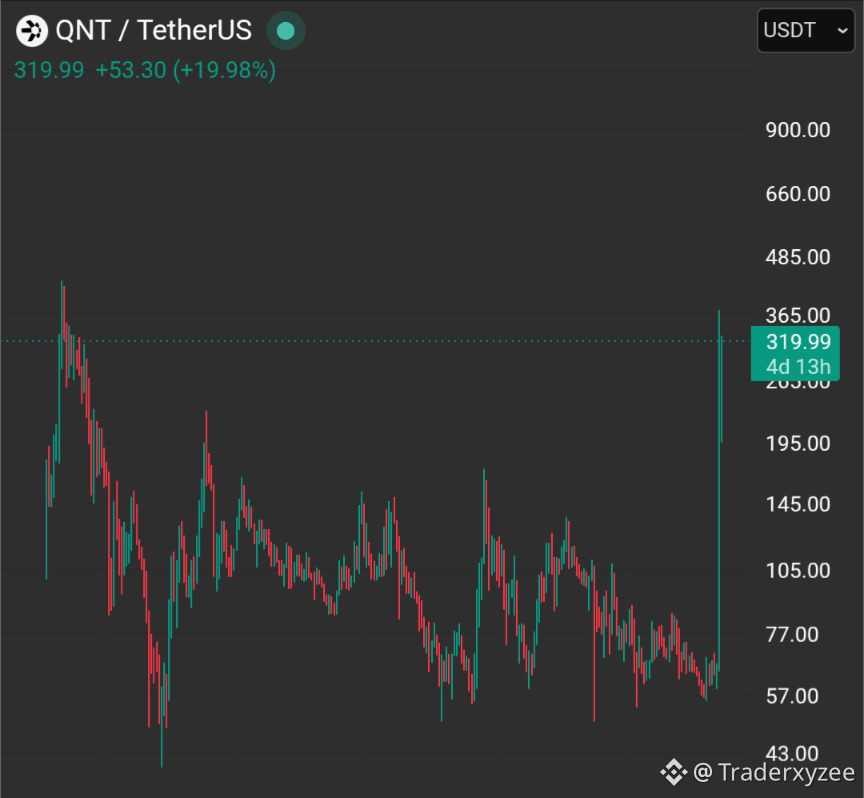
Quant (QNT) is trading around \$319.99, surging dramatically by +19.98\% with a massive green candle breaking out of a long accumulation range.
After extended consolidation near the \$57 to \$77 support zones, this explosive upside momentum indicates strong bullish pressure, though traders should watch for potential short-term volatility or pullbacks near major resistance below $300
Quant (QNT) is trading around \$319.99, surging dramatically by +19.98\% with a massive green candle breaking out of a long accumulation range.
After extended consolidation near the \$57 to \$77 support zones, this explosive upside momentum indicates strong bullish pressure, though traders should watch for potential short-term volatility or pullbacks near major resistance below $300
After extended consolidation near the \$57 to \$77 support zones, this explosive upside momentum indicates strong bullish pressure, though traders should watch for potential short-term volatility or pullbacks near major resistance below $300
451
·
--
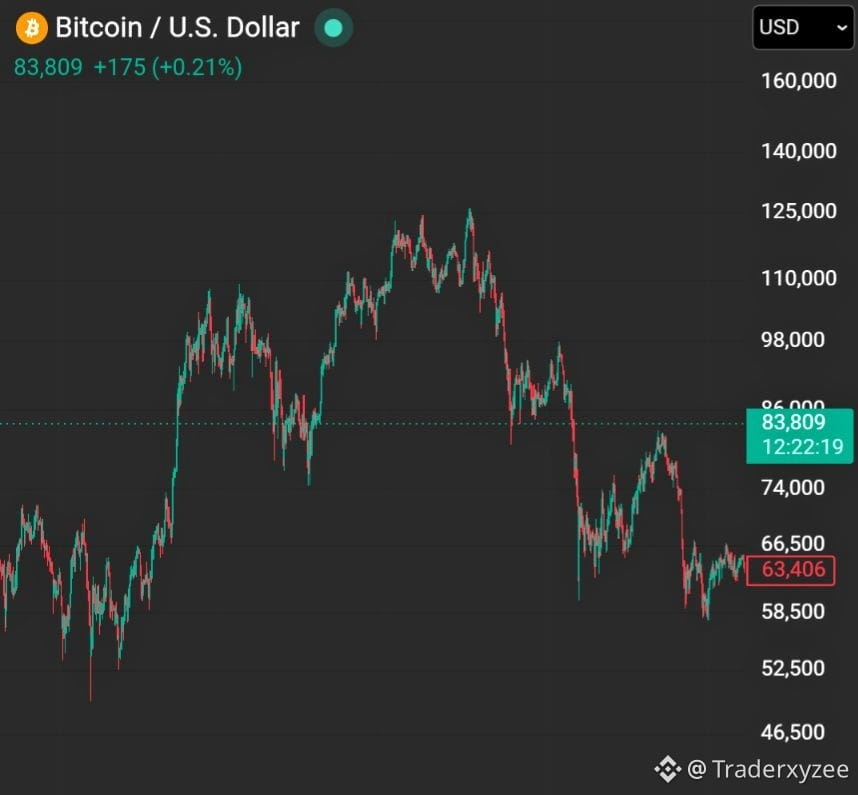
Bitcoin is currently trading around $83,809, showing signs of recovery after a major correction from its peak near $125,000. The daily chart displays a classic double-top structure followed by a steep downtrend, which bottomed out near $52,500.
#While recent green candles suggest renewed bullish momentum, price action remains below key historical resistance levels, signaling a cautious short-term outlook.
Bitcoin is currently trading around $83,809, showing signs of recovery after a major correction from its peak near $125,000. The daily chart displays a classic double-top structure followed by a steep downtrend, which bottomed out near $52,500.
#While recent green candles suggest renewed bullish momentum, price action remains below key historical resistance levels, signaling a cautious short-term outlook.
#While recent green candles suggest renewed bullish momentum, price action remains below key historical resistance levels, signaling a cautious short-term outlook.
112
·
--
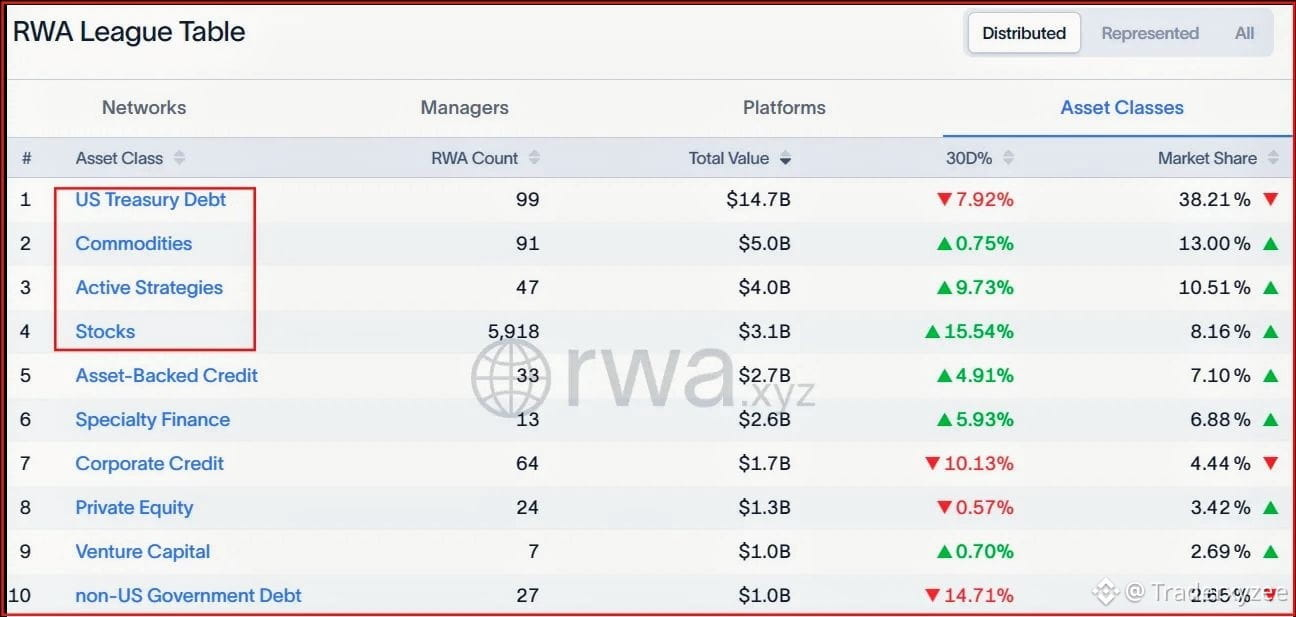
Real world assets are continuing to expand across blockchain networks, with total distributed value now reaching $38.45 billion.
Ethereum currently leads the sector with $16.5 billion, representing 42.74% of the market. BNB Chain and Solana follow with $5.7 billion and $4.3 billion respectively.
What caught my attention is the diversity of assets being brought onchain. U.S. Treasury debt accounts for $14.7 billion, while tokenized stocks have the highest number of RWA listings. To me, this shows that RWA adoption is moving beyond a single asset class.
Real world assets are continuing to expand across blockchain networks, with total distributed value now reaching $38.45 billion.
Ethereum currently leads the sector with $16.5 billion, representing 42.74% of the market. BNB Chain and Solana follow with $5.7 billion and $4.3 billion respectively.
What caught my attention is the diversity of assets being brought onchain. U.S. Treasury debt accounts for $14.7 billion, while tokenized stocks have the highest number of RWA listings. To me, this shows that RWA adoption is moving beyond a single asset class.
Ethereum currently leads the sector with $16.5 billion, representing 42.74% of the market. BNB Chain and Solana follow with $5.7 billion and $4.3 billion respectively.
What caught my attention is the diversity of assets being brought onchain. U.S. Treasury debt accounts for $14.7 billion, while tokenized stocks have the highest number of RWA listings. To me, this shows that RWA adoption is moving beyond a single asset class.
146
·
--
Goldman Sachs is bringing its $100 billion Financial Square Treasury Instruments Fund onto Lynq, a permissioned network built on Avalanche infrastructure.
The move gives eligible institutional investors access to a traditional Treasury product through blockchain based settlement rails, showing how traditional finance continues moving deeper into onchain markets.
What stands out to me is the institutional scale involved. Avalanche is also seeing growing activity around tokenized assets, making this integration another notable development for the real world asset sector. The focus now shifts to whether more institutions follow the same path.
Goldman Sachs is bringing its $100 billion Financial Square Treasury Instruments Fund onto Lynq, a permissioned network built on Avalanche infrastructure.
The move gives eligible institutional investors access to a traditional Treasury product through blockchain based settlement rails, showing how traditional finance continues moving deeper into onchain markets.
What stands out to me is the institutional scale involved. Avalanche is also seeing growing activity around tokenized assets, making this integration another notable development for the real world asset sector. The focus now shifts to whether more institutions follow the same path.
The move gives eligible institutional investors access to a traditional Treasury product through blockchain based settlement rails, showing how traditional finance continues moving deeper into onchain markets.
What stands out to me is the institutional scale involved. Avalanche is also seeing growing activity around tokenized assets, making this integration another notable development for the real world asset sector. The focus now shifts to whether more institutions follow the same path.
158
·
--
$QNT shocked everyone but Bitcoin dipped and it follows.
what's your next QNT price prediction ?
$QNT shocked everyone but Bitcoin dipped and it follows.
what's your next QNT price prediction ?
what's your next QNT price prediction ?
271
·
--
Large holder activity has brought fresh attention to $XRP after researcher BankXRP reported that whales accumulated more than 470 million tokens within five days.
Based on the reported average price of $1.53, the purchases were valued at approximately $720 million. The scale has triggered speculation about a potential breakout, but important details remain unclear, including whether the transactions happened through exchanges or OTC markets.
My analysis is that the accumulation deserves attention, but it should not be treated as confirmation of a breakout. Tracking wallet movements and price action will be key.
Large holder activity has brought fresh attention to $XRP after researcher BankXRP reported that whales accumulated more than 470 million tokens within five days.
Based on the reported average price of $1.53, the purchases were valued at approximately $720 million. The scale has triggered speculation about a potential breakout, but important details remain unclear, including whether the transactions happened through exchanges or OTC markets.
My analysis is that the accumulation deserves attention, but it should not be treated as confirmation of a breakout. Tracking wallet movements and price action will be key.
Based on the reported average price of $1.53, the purchases were valued at approximately $720 million. The scale has triggered speculation about a potential breakout, but important details remain unclear, including whether the transactions happened through exchanges or OTC markets.
My analysis is that the accumulation deserves attention, but it should not be treated as confirmation of a breakout. Tracking wallet movements and price action will be key.
96
·
--
Stellar is attracting more attention from the payments industry as BVNK integrates its network for stablecoin payments, while U.S. Bank has also tested stablecoin settlements using Stellar infrastructure.
The developments show how blockchain networks are increasingly being explored for institutional settlement and global payments.
However, there is an interesting distinction between network growth and native token demand. Businesses can use stablecoins without directly holding $XLM for settlement. My analysis is that future adoption will be important, but investors may also need to watch whether network activity creates stronger direct utility for the native token.
Stellar is attracting more attention from the payments industry as BVNK integrates its network for stablecoin payments, while U.S. Bank has also tested stablecoin settlements using Stellar infrastructure.
The developments show how blockchain networks are increasingly being explored for institutional settlement and global payments.
However, there is an interesting distinction between network growth and native token demand. Businesses can use stablecoins without directly holding $XLM for settlement. My analysis is that future adoption will be important, but investors may also need to watch whether network activity creates stronger direct utility for the native token.
The developments show how blockchain networks are increasingly being explored for institutional settlement and global payments.
However, there is an interesting distinction between network growth and native token demand. Businesses can use stablecoins without directly holding $XLM for settlement. My analysis is that future adoption will be important, but investors may also need to watch whether network activity creates stronger direct utility for the native token.
122
·
--
Ethena is expanding its stablecoin strategy by adding Binance tokenized stocks as collateral for USDe, bringing more traditional market exposure into its ecosystem.
The announcement was followed by strong market activity, with $ENA gaining around 19% in 24 hours alongside a major increase in trading volume.
What stands out to me is the broader strategy rather than the immediate price move. Ethena is connecting stablecoins, tokenized equities and derivatives in a single framework. With USDe supply approaching $4.9 billion, this expansion could remain an important development to monitor.
Ethena is expanding its stablecoin strategy by adding Binance tokenized stocks as collateral for USDe, bringing more traditional market exposure into its ecosystem.
The announcement was followed by strong market activity, with $ENA gaining around 19% in 24 hours alongside a major increase in trading volume.
What stands out to me is the broader strategy rather than the immediate price move. Ethena is connecting stablecoins, tokenized equities and derivatives in a single framework. With USDe supply approaching $4.9 billion, this expansion could remain an important development to monitor.
The announcement was followed by strong market activity, with $ENA gaining around 19% in 24 hours alongside a major increase in trading volume.
What stands out to me is the broader strategy rather than the immediate price move. Ethena is connecting stablecoins, tokenized equities and derivatives in a single framework. With USDe supply approaching $4.9 billion, this expansion could remain an important development to monitor.
1
57
·
--
The XRP market is entering a week filled with several developments that traders are watching closely.
Crypto commentator XRPMoonWalk highlighted developments around tokenization, institutional activity and Tether as reasons for increased attention on $XRP. However, some of the claims require more context, especially projections around the future size of the tokenization market.
My analysis is that the broader narrative is interesting, but traders should separate confirmed developments from speculation. The coming days could show whether these catalysts create meaningful market momentum or simply generate short term attention.
The XRP market is entering a week filled with several developments that traders are watching closely.
Crypto commentator XRPMoonWalk highlighted developments around tokenization, institutional activity and Tether as reasons for increased attention on $XRP. However, some of the claims require more context, especially projections around the future size of the tokenization market.
My analysis is that the broader narrative is interesting, but traders should separate confirmed developments from speculation. The coming days could show whether these catalysts create meaningful market momentum or simply generate short term attention.
Crypto commentator XRPMoonWalk highlighted developments around tokenization, institutional activity and Tether as reasons for increased attention on $XRP. However, some of the claims require more context, especially projections around the future size of the tokenization market.
My analysis is that the broader narrative is interesting, but traders should separate confirmed developments from speculation. The coming days could show whether these catalysts create meaningful market momentum or simply generate short term attention.
1
129
·
--
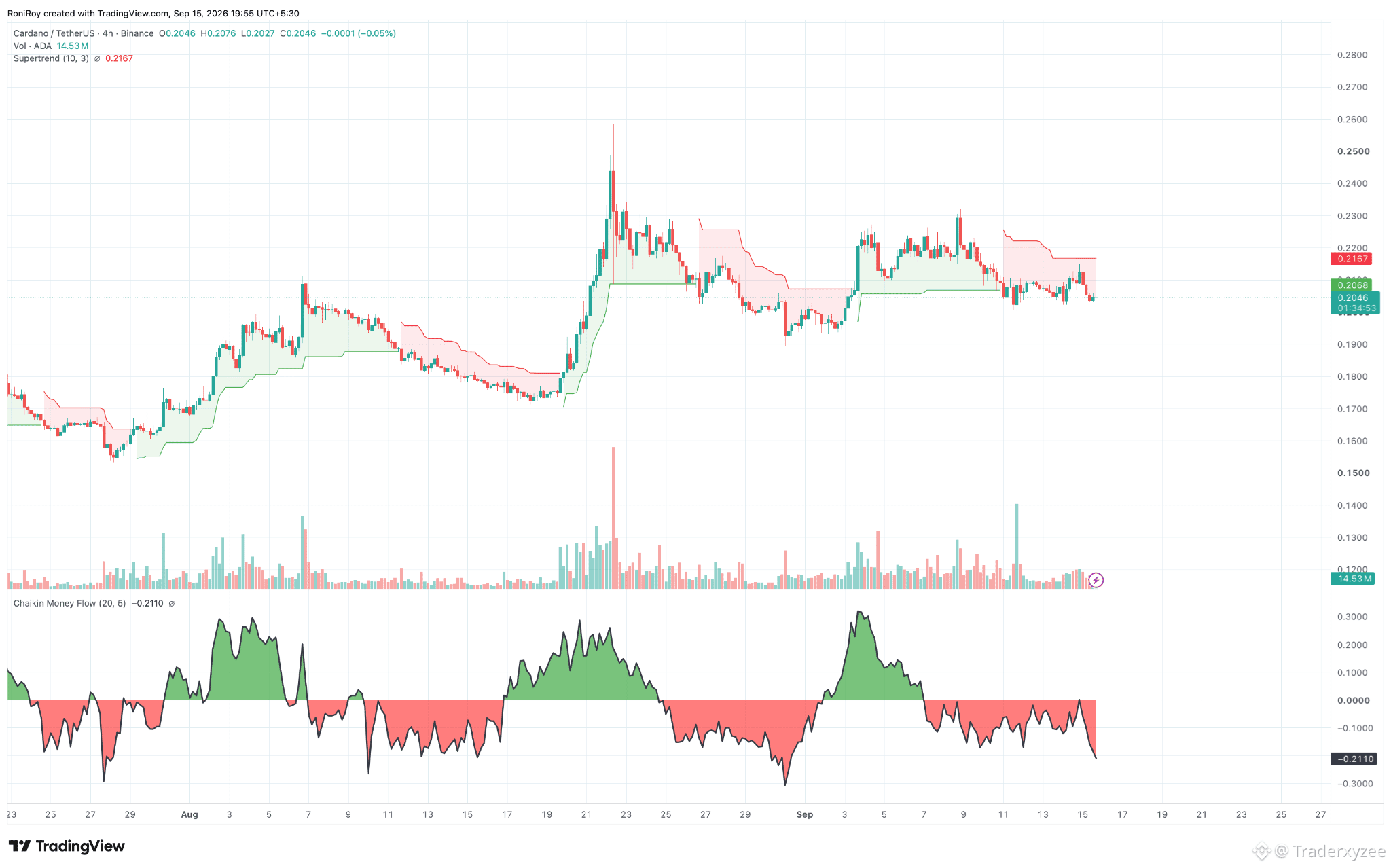
Cardano’s latest x402 integration has not stopped the selling pressure.
$ADA is down over 7% this week and is trading near $0.204. The key level now is $0.20.
If buyers defend it, ADA could recover toward $0.2167 and $0.22. But losing $0.20 could expose $0.18, with $0.17 also possible.
The technology update is positive, but real adoption is needed to create stronger token demand.
Cardano’s latest x402 integration has not stopped the selling pressure.
$ADA is down over 7% this week and is trading near $0.204. The key level now is $0.20.
If buyers defend it, ADA could recover toward $0.2167 and $0.22. But losing $0.20 could expose $0.18, with $0.17 also possible.
The technology update is positive, but real adoption is needed to create stronger token demand.
$ADA is down over 7% this week and is trading near $0.204. The key level now is $0.20.
If buyers defend it, ADA could recover toward $0.2167 and $0.22. But losing $0.20 could expose $0.18, with $0.17 also possible.
The technology update is positive, but real adoption is needed to create stronger token demand.
262
·
--
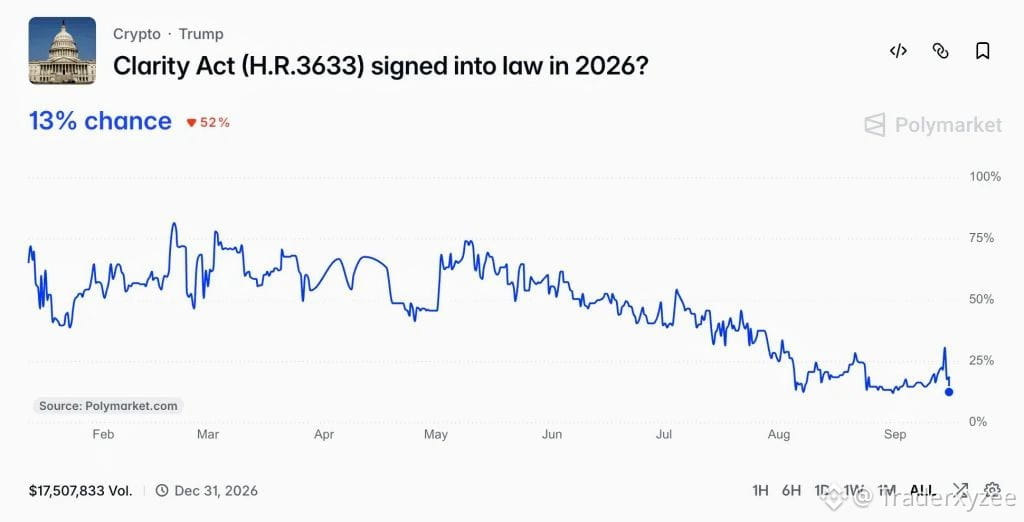
The CLARITY Act faces a key hurdle today.
The Senate needs 60 votes just to end debate and move the bill toward a final vote. Republicans hold 53 seats, meaning at least 7 Democrats would need to support the move.
The outcome could influence crypto regulation and market sentiment.
With $BTC around $76,000, traders are watching the vote closely for potential volatility.
The CLARITY Act faces a key hurdle today.
The Senate needs 60 votes just to end debate and move the bill toward a final vote. Republicans hold 53 seats, meaning at least 7 Democrats would need to support the move.
The outcome could influence crypto regulation and market sentiment.
With $BTC around $76,000, traders are watching the vote closely for potential volatility.
The Senate needs 60 votes just to end debate and move the bill toward a final vote. Republicans hold 53 seats, meaning at least 7 Democrats would need to support the move.
The outcome could influence crypto regulation and market sentiment.
With $BTC around $76,000, traders are watching the vote closely for potential volatility.
337
·
--
Silver is showing strong momentum after softer US inflation data.
$XAG is trading near $65, with buyers targeting the $66 resistance zone.
However, analysts warn that a pullback could still happen. If $60 fails, $58 becomes the next key support area.
For beginners, the key levels are simple: $65 to $66 for a breakout, and $60 to $58 as the main correction zone.
Silver is showing strong momentum after softer US inflation data.
$XAG is trading near $65, with buyers targeting the $66 resistance zone.
However, analysts warn that a pullback could still happen. If $60 fails, $58 becomes the next key support area.
For beginners, the key levels are simple: $65 to $66 for a breakout, and $60 to $58 as the main correction zone.
$XAG is trading near $65, with buyers targeting the $66 resistance zone.
However, analysts warn that a pullback could still happen. If $60 fails, $58 becomes the next key support area.
For beginners, the key levels are simple: $65 to $66 for a breakout, and $60 to $58 as the main correction zone.
167
·
--
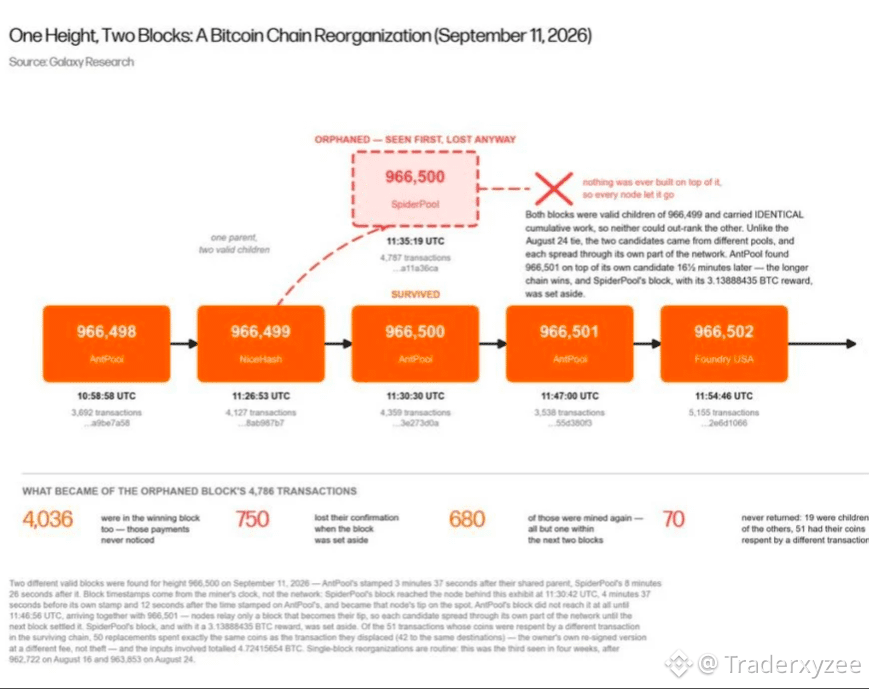
Bitcoin recently experienced a small blockchain reorganization.
Two mining pools, Antpool and Spiderpool, produced valid blocks at the same height. The network eventually followed Antpool’s block, leaving Spiderpool’s block behind.
This was a one block reorg, which can happen when miners find blocks almost simultaneously.
It is generally not a major concern, but deeper reorgs can create serious security risks.
Bitcoin recently experienced a small blockchain reorganization.
Two mining pools, Antpool and Spiderpool, produced valid blocks at the same height. The network eventually followed Antpool’s block, leaving Spiderpool’s block behind.
This was a one block reorg, which can happen when miners find blocks almost simultaneously.
It is generally not a major concern, but deeper reorgs can create serious security risks.
Two mining pools, Antpool and Spiderpool, produced valid blocks at the same height. The network eventually followed Antpool’s block, leaving Spiderpool’s block behind.
This was a one block reorg, which can happen when miners find blocks almost simultaneously.
It is generally not a major concern, but deeper reorgs can create serious security risks.
1
204
·
--
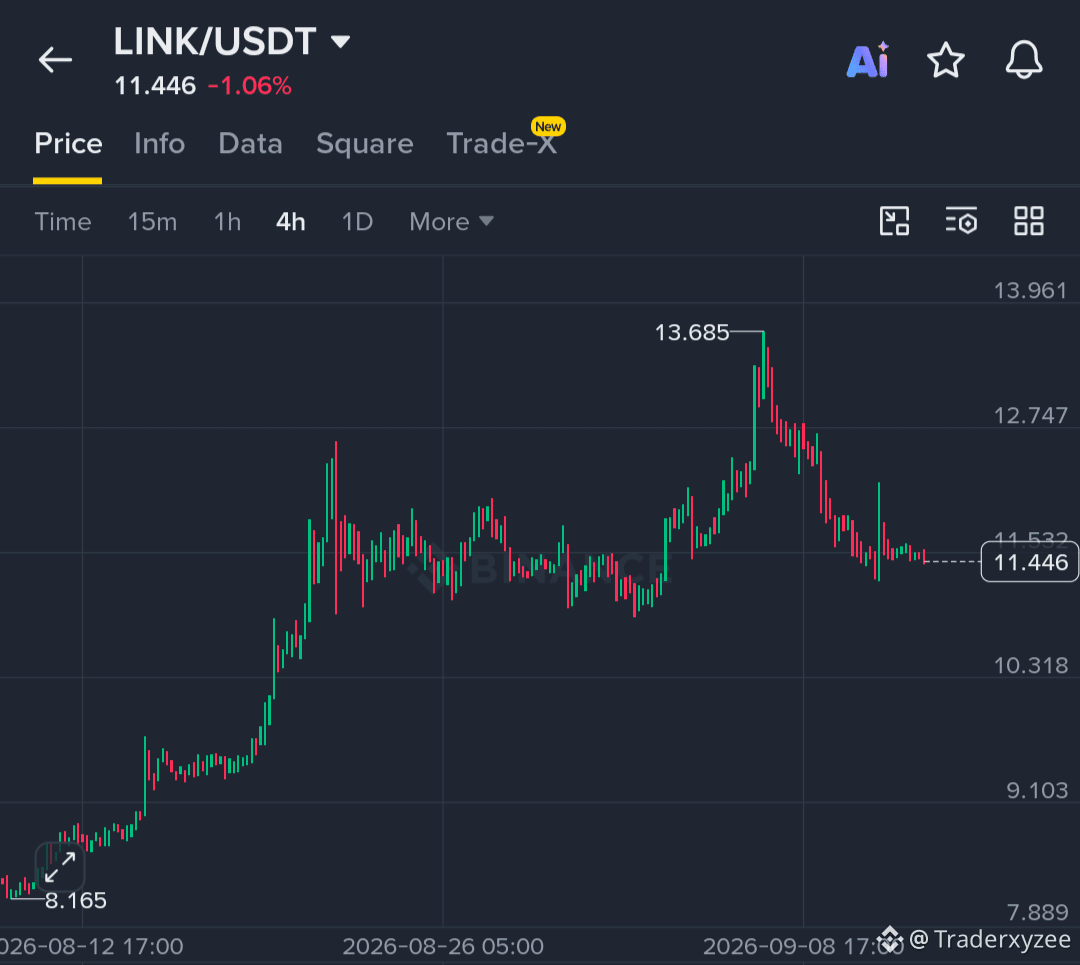
Chainlink is at an important price zone.
$LINK is holding around $11.46 support after failing to stay above $11.60.
A move above $11.60 could open the way toward $11.80 and potentially $12.00.
However, losing $11.46 could bring more selling pressure.
For now, traders are watching whether buyers can defend this support and push LINK back above resistance.
Chainlink is at an important price zone.
$LINK is holding around $11.46 support after failing to stay above $11.60.
A move above $11.60 could open the way toward $11.80 and potentially $12.00.
However, losing $11.46 could bring more selling pressure.
For now, traders are watching whether buyers can defend this support and push LINK back above resistance.
$LINK is holding around $11.46 support after failing to stay above $11.60.
A move above $11.60 could open the way toward $11.80 and potentially $12.00.
However, losing $11.46 could bring more selling pressure.
For now, traders are watching whether buyers can defend this support and push LINK back above resistance.
709
·
--
Ethereum’s next major upgrade is getting closer, but testing is not finished yet.
$ETH developers have tentatively scheduled Glamsterdam for the Sepolia testnet on October 6.
However, recent devnet testing found bugs and network stability issues. Another devnet will be tested before the date is confirmed.
If testing goes smoothly, the upgrade could target Ethereum mainnet in December 2026.
Ethereum’s next major upgrade is getting closer, but testing is not finished yet.
$ETH developers have tentatively scheduled Glamsterdam for the Sepolia testnet on October 6.
However, recent devnet testing found bugs and network stability issues. Another devnet will be tested before the date is confirmed.
If testing goes smoothly, the upgrade could target Ethereum mainnet in December 2026.
$ETH developers have tentatively scheduled Glamsterdam for the Sepolia testnet on October 6.
However, recent devnet testing found bugs and network stability issues. Another devnet will be tested before the date is confirmed.
If testing goes smoothly, the upgrade could target Ethereum mainnet in December 2026.
106
·
--
Solana is showing signs of short term weakness.
$SOL broke below the $100 support and briefly fell to $98, while more than $10M in long positions were liquidated.
If selling pressure continues, $93 becomes the next level to watch, with $90 also possible.
For the bearish setup to weaken, SOL needs a daily close above $102.
Solana is showing signs of short term weakness.
$SOL broke below the $100 support and briefly fell to $98, while more than $10M in long positions were liquidated.
If selling pressure continues, $93 becomes the next level to watch, with $90 also possible.
For the bearish setup to weaken, SOL needs a daily close above $102.
$SOL broke below the $100 support and briefly fell to $98, while more than $10M in long positions were liquidated.
If selling pressure continues, $93 becomes the next level to watch, with $90 also possible.
For the bearish setup to weaken, SOL needs a daily close above $102.
90
·
--
Проверено
Cardano is making a move toward enterprise adoption.
$ADA developers have introduced ODATANO, a tool that connects Cardano with SAP through a standard API.
The idea is to let SAP developers use Cardano without needing to understand complex blockchain concepts like UTxOs, transaction signing, and fee calculations.
If adoption grows, tools like this could make blockchain easier for traditional businesses to use.
Cardano is making a move toward enterprise adoption.
$ADA developers have introduced ODATANO, a tool that connects Cardano with SAP through a standard API.
The idea is to let SAP developers use Cardano without needing to understand complex blockchain concepts like UTxOs, transaction signing, and fee calculations.
If adoption grows, tools like this could make blockchain easier for traditional businesses to use.
$ADA developers have introduced ODATANO, a tool that connects Cardano with SAP through a standard API.
The idea is to let SAP developers use Cardano without needing to understand complex blockchain concepts like UTxOs, transaction signing, and fee calculations.
If adoption grows, tools like this could make blockchain easier for traditional businesses to use.
3
2
4.2k
Войдите, чтобы посмотреть больше материала
Присоединяйтесь к пользователям криптовалют по всему миру на Binance Square
⚡️ Получайте новейшую и полезную информацию о криптоактивах.
💬 Нам доверяет крупнейшая в мире криптобиржа.
👍 Получите достоверные аналитические данные от верифицированных создателей контента.
Эл. почта/номер телефона
В тренде
BinancePick
Просмотров: 3.3M
164,007 обсуждают
Join #EarningsSeason: Predict Earnings on Binance Pick, Share Your Take on Binance Square!
Binance Square Official
·Лайков: 418
·Просмотров: 345.2k
EarningsSeason
Просмотров: 5.5M
26,789 обсуждают
StrategySkipsBitcoinPurchasesSpends$205MOnSTRCBuybacks
Просмотров: 619
24 обсуждают