
WEB3TITAN
263 Публикации

WEB3TITAN
Отправить жалобу
Заблокировать пользователя
Ambassador | BlockHub | Exploring blockchain | Content Creator | Designer | Crypto Trader | 📩 DM for Collaboration.
26 подписок(и/а)
34 подписчиков(а)
93 понравилось
Посты
Все
Цитирования
Видео
·
--
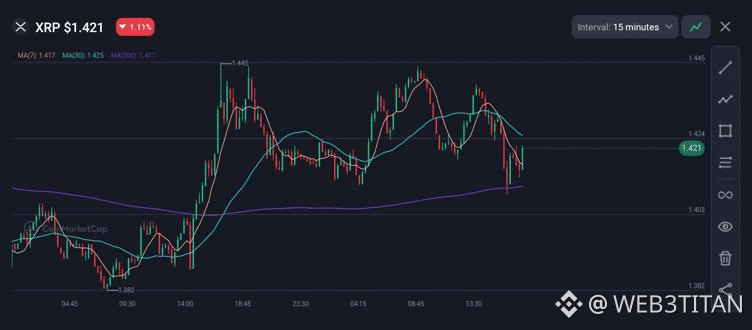
Price is consolidating after the recent volatility.
$XRP is currently trading at $1.421 after a -1.11% move.
Recently, price pushed up to a high of 1.445 before facing selling pressure and pulling back. It is now stabilizing in the mid-range after the move, still holding above the 1.382 low.
Bias: UPTREND (LONG)
Why:
Despite the rejection from 1.445, the broader structure remains higher from the lows. Price is holding the current zone with limited breakdown, keeping the short-term bias constructive as long as support holds.
Entry: $1.410 – $1.425
Stop Loss: $1.385
Take Profits
TP1: $1.450
TP2: $1.480
TP3: $1.510 – $1.550
When the market is moving between different zones, @stonfi is useful for quickly swapping between supported assets without leaving the TON DeFi ecosystem. I also like that there are liquidity pools where users can provide assets and potentially earn a share of swap fees, with additional opportunities available through eligible farms.
$XRP
#BitcoinSurpasses$79K
Price is consolidating after the recent volatility.
$XRP is currently trading at $1.421 after a -1.11% move.
Recently, price pushed up to a high of 1.445 before facing selling pressure and pulling back. It is now stabilizing in the mid-range after the move, still holding above the 1.382 low.
Bias: UPTREND (LONG)
Why:
Despite the rejection from 1.445, the broader structure remains higher from the lows. Price is holding the current zone with limited breakdown, keeping the short-term bias constructive as long as support holds.
Entry: $1.410 – $1.425
Stop Loss: $1.385
Take Profits
TP1: $1.450
TP2: $1.480
TP3: $1.510 – $1.550
When the market is moving between different zones, @STONfi DEX is useful for quickly swapping between supported assets without leaving the TON DeFi ecosystem. I also like that there are liquidity pools where users can provide assets and potentially earn a share of swap fees, with additional opportunities available through eligible farms.
$XRP
#BitcoinSurpasses$79K
$XRP is currently trading at $1.421 after a -1.11% move.
Recently, price pushed up to a high of 1.445 before facing selling pressure and pulling back. It is now stabilizing in the mid-range after the move, still holding above the 1.382 low.
Bias: UPTREND (LONG)
Why:
Despite the rejection from 1.445, the broader structure remains higher from the lows. Price is holding the current zone with limited breakdown, keeping the short-term bias constructive as long as support holds.
Entry: $1.410 – $1.425
Stop Loss: $1.385
Take Profits
TP1: $1.450
TP2: $1.480
TP3: $1.510 – $1.550
When the market is moving between different zones, @STONfi DEX is useful for quickly swapping between supported assets without leaving the TON DeFi ecosystem. I also like that there are liquidity pools where users can provide assets and potentially earn a share of swap fees, with additional opportunities available through eligible farms.
$XRP
#BitcoinSurpasses$79K
27
·
--
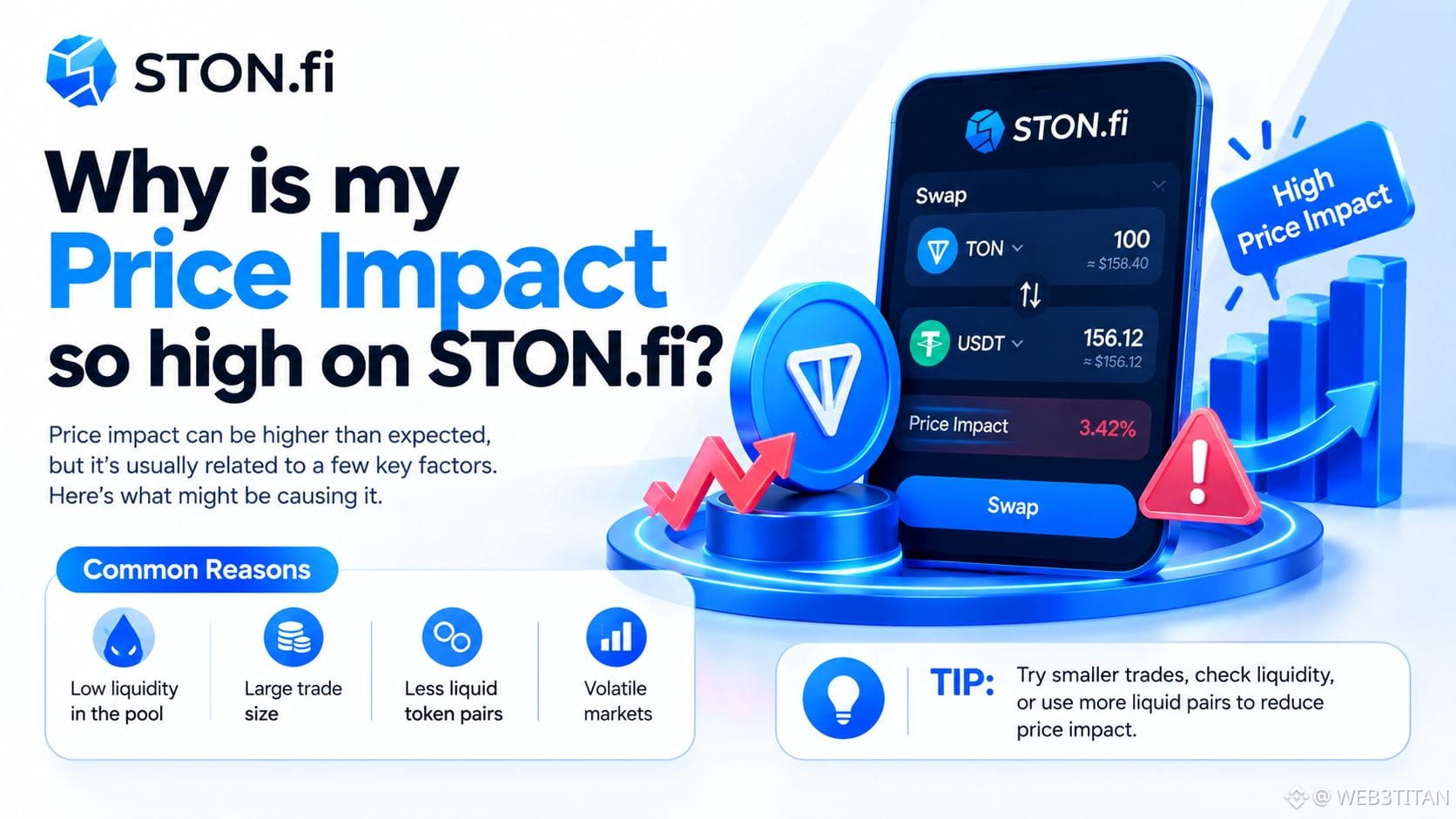
Why Is My Price Impact So High on STONfi?
Seeing a high price impact during a swap can be confusing. Usually, it comes down to the relationship between your trade size and the liquidity available for that route.
CHECK YOUR TRADE SIZE
The first thing to look at is the size of the swap.
A larger trade can consume more of the available liquidity, causing the pool price to move further during execution.
CHECK POOL LIQUIDITY
Pool TVL and token balances also matter.
A pool with limited liquidity may have less capacity to handle larger trades efficiently. An imbalanced pool can also result in less favorable execution for one side of the pair.
WHY ILLIQUID POOLS MATTER
Two pools can support the same token pair but produce different price impacts.
A deeper, more balanced pool generally has more liquidity available for trades, while a shallow pool can experience larger price movements from the same transaction size.
COMPARE THE PREVIEW
Before confirming, you can compare what happens when the trade size is smaller or when another available route is shown.
The goal isn't to automatically choose one option, but to understand how trade size and available liquidity affect the quoted result.
WHAT TO CHECK
Before confirmation, review:
Price impact
Expected output
Liquidity available
Route
Minimum received
MY TAKE
A high price impact isn't necessarily a problem with STONfi itself. It can be a signal that the trade is large relative to the available liquidity.
Understanding that relationship makes the swap preview much more useful and helps you recognize potential execution issues before confirming.
$XRP $PIXEL
#BitcoinSurpasses$79K
Why Is My Price Impact So High on STONfi?
Seeing a high price impact during a swap can be confusing. Usually, it comes down to the relationship between your trade size and the liquidity available for that route.
CHECK YOUR TRADE SIZE
The first thing to look at is the size of the swap.
A larger trade can consume more of the available liquidity, causing the pool price to move further during execution.
CHECK POOL LIQUIDITY
Pool TVL and token balances also matter.
A pool with limited liquidity may have less capacity to handle larger trades efficiently. An imbalanced pool can also result in less favorable execution for one side of the pair.
WHY ILLIQUID POOLS MATTER
Two pools can support the same token pair but produce different price impacts.
A deeper, more balanced pool generally has more liquidity available for trades, while a shallow pool can experience larger price movements from the same transaction size.
COMPARE THE PREVIEW
Before confirming, you can compare what happens when the trade size is smaller or when another available route is shown.
The goal isn't to automatically choose one option, but to understand how trade size and available liquidity affect the quoted result.
WHAT TO CHECK
Before confirmation, review:
Price impact
Expected output
Liquidity available
Route
Minimum received
MY TAKE
A high price impact isn't necessarily a problem with STONfi itself. It can be a signal that the trade is large relative to the available liquidity.
Understanding that relationship makes the swap preview much more useful and helps you recognize potential execution issues before confirming.
$XRP $PIXEL
#BitcoinSurpasses$79K
Seeing a high price impact during a swap can be confusing. Usually, it comes down to the relationship between your trade size and the liquidity available for that route.
CHECK YOUR TRADE SIZE
The first thing to look at is the size of the swap.
A larger trade can consume more of the available liquidity, causing the pool price to move further during execution.
CHECK POOL LIQUIDITY
Pool TVL and token balances also matter.
A pool with limited liquidity may have less capacity to handle larger trades efficiently. An imbalanced pool can also result in less favorable execution for one side of the pair.
WHY ILLIQUID POOLS MATTER
Two pools can support the same token pair but produce different price impacts.
A deeper, more balanced pool generally has more liquidity available for trades, while a shallow pool can experience larger price movements from the same transaction size.
COMPARE THE PREVIEW
Before confirming, you can compare what happens when the trade size is smaller or when another available route is shown.
The goal isn't to automatically choose one option, but to understand how trade size and available liquidity affect the quoted result.
WHAT TO CHECK
Before confirmation, review:
Price impact
Expected output
Liquidity available
Route
Minimum received
MY TAKE
A high price impact isn't necessarily a problem with STONfi itself. It can be a signal that the trade is large relative to the available liquidity.
Understanding that relationship makes the swap preview much more useful and helps you recognize potential execution issues before confirming.
$XRP $PIXEL
#BitcoinSurpasses$79K
179
·
--
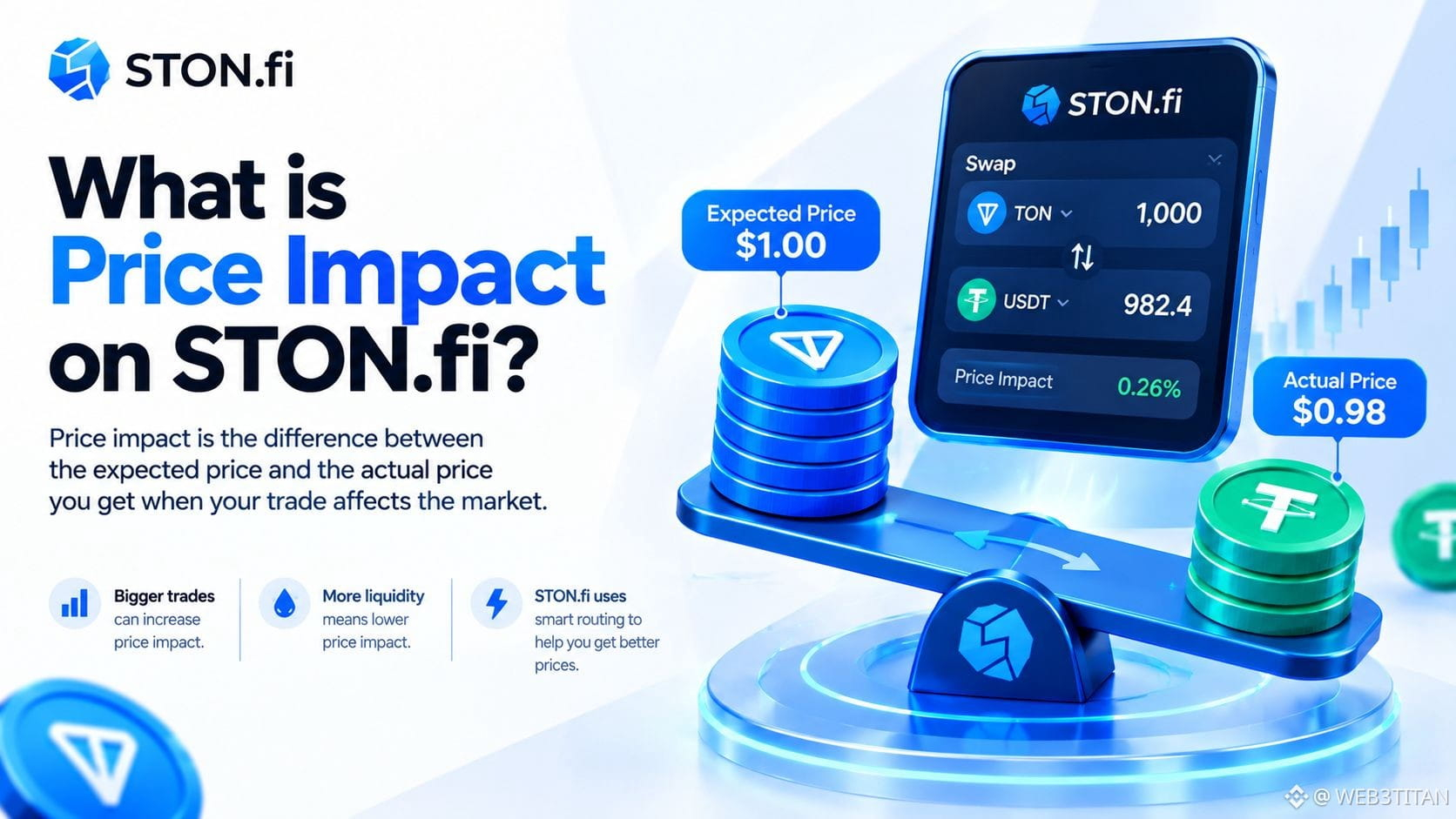
What Is Price Impact on STONfi?
When making a swap on STONfi, you may notice price impact shown in the swap preview. But what does it actually mean?
WHAT IS PRICE IMPACT?
Price impact is the effect your own trade has on the pool's price.
The larger your trade is compared with the available liquidity, the more the pool price can move while your transaction is being executed.
WHY POOL DEPTH MATTERS
Imagine a pool with limited liquidity.
A small trade may barely affect the pool price. A much larger trade takes a bigger portion of the available liquidity, causing a greater price impact.
That's why two swaps involving the same token pair can have very different price impact percentages.
PRICE IMPACT VS SLIPPAGE
These terms are related but not identical.
Price impact comes from your trade moving the pool price.
Slippage is the difference between the expected price and the actual execution price.
Understanding both helps you evaluate the real cost of a swap.
CHECK BEFORE SWAPPING
The swap preview can show price impact before you confirm the transaction.
If the percentage looks unusually high, it may be worth considering a smaller trade or checking whether another route offers better execution.
MY TAKE
Price impact is one of those details that's easy to overlook.
A small trade relative to pool depth might have minimal impact, while a larger trade can move the price significantly.
Checking it before confirming a swap gives you a clearer picture of what your trade could actually cost.
$GRAM $NEAR
#BitcoinSurpasses$79K
What Is Price Impact on STONfi?
When making a swap on STONfi, you may notice price impact shown in the swap preview. But what does it actually mean?
WHAT IS PRICE IMPACT?
Price impact is the effect your own trade has on the pool's price.
The larger your trade is compared with the available liquidity, the more the pool price can move while your transaction is being executed.
WHY POOL DEPTH MATTERS
Imagine a pool with limited liquidity.
A small trade may barely affect the pool price. A much larger trade takes a bigger portion of the available liquidity, causing a greater price impact.
That's why two swaps involving the same token pair can have very different price impact percentages.
PRICE IMPACT VS SLIPPAGE
These terms are related but not identical.
Price impact comes from your trade moving the pool price.
Slippage is the difference between the expected price and the actual execution price.
Understanding both helps you evaluate the real cost of a swap.
CHECK BEFORE SWAPPING
The swap preview can show price impact before you confirm the transaction.
If the percentage looks unusually high, it may be worth considering a smaller trade or checking whether another route offers better execution.
MY TAKE
Price impact is one of those details that's easy to overlook.
A small trade relative to pool depth might have minimal impact, while a larger trade can move the price significantly.
Checking it before confirming a swap gives you a clearer picture of what your trade could actually cost.
$GRAM $NEAR
#BitcoinSurpasses$79K
When making a swap on STONfi, you may notice price impact shown in the swap preview. But what does it actually mean?
WHAT IS PRICE IMPACT?
Price impact is the effect your own trade has on the pool's price.
The larger your trade is compared with the available liquidity, the more the pool price can move while your transaction is being executed.
WHY POOL DEPTH MATTERS
Imagine a pool with limited liquidity.
A small trade may barely affect the pool price. A much larger trade takes a bigger portion of the available liquidity, causing a greater price impact.
That's why two swaps involving the same token pair can have very different price impact percentages.
PRICE IMPACT VS SLIPPAGE
These terms are related but not identical.
Price impact comes from your trade moving the pool price.
Slippage is the difference between the expected price and the actual execution price.
Understanding both helps you evaluate the real cost of a swap.
CHECK BEFORE SWAPPING
The swap preview can show price impact before you confirm the transaction.
If the percentage looks unusually high, it may be worth considering a smaller trade or checking whether another route offers better execution.
MY TAKE
Price impact is one of those details that's easy to overlook.
A small trade relative to pool depth might have minimal impact, while a larger trade can move the price significantly.
Checking it before confirming a swap gives you a clearer picture of what your trade could actually cost.
$GRAM $NEAR
#BitcoinSurpasses$79K
130
·
--
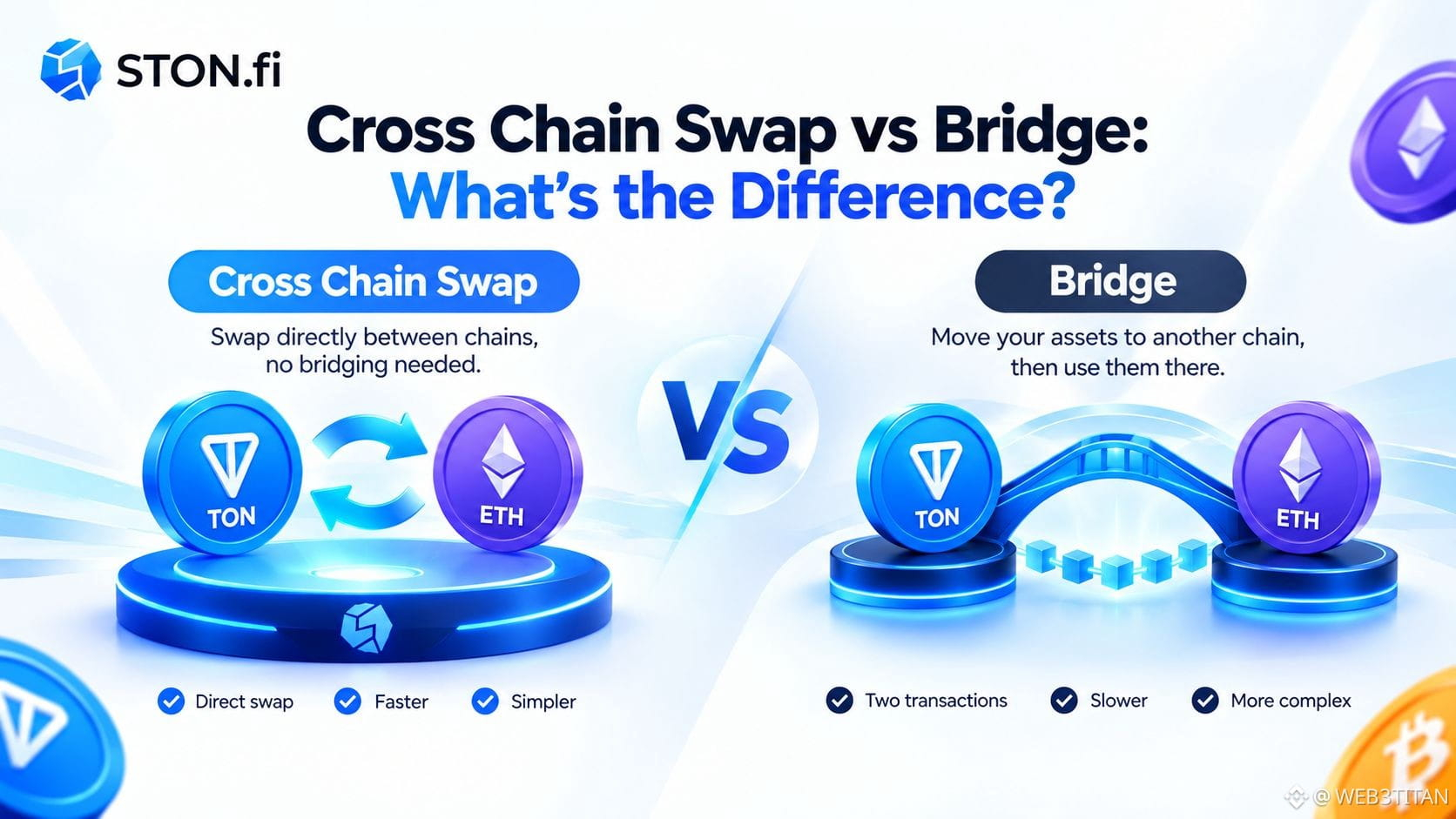
Cross Chain Swap vs Bridge: What’s the Difference?
Moving assets between blockchains can happen in different ways. Two common approaches are bridges and cross chain swaps, but they don't work exactly the same way.
WHAT IS A BRIDGE?
A bridge is designed to move an asset from one blockchain to another.
Depending on the bridge architecture, the original asset may be locked or held while a corresponding wrapped or bridged version is created on the destination chain.
WHAT IS A CROSS CHAIN SWAP?
A cross chain swap lets you exchange an asset on one network for another asset on a different network.
Instead of simply moving the same asset, the destination side can provide a different native or supported asset.
For example, you could swap an asset on TON for an asset on another network.
THE KEY DIFFERENCES
Bridge: Move an asset between networks, often involving locking and representing it on the destination.
Cross chain swap: Exchange one asset for another across different networks.
The two models can also differ in custody assumptions, route complexity, fees, and how failed transactions or refunds are handled.
WHERE OMNISTON FITS
Omniston focuses on cross chain execution and liquidity aggregation. It can coordinate routes and liquidity sources to help users exchange assets across supported networks.
That doesn't make bridges useless.
Bridges remain useful when the goal is specifically to transfer an asset between networks, while cross chain swaps can be more convenient when you want a different asset on the destination chain.
MY TAKE
The better option depends on what you're trying to accomplish.
If you need to move the same asset, a bridge may make sense. If you want to exchange one asset for another across networks, a cross chain swap can offer a different approach.
Understanding the architecture first makes it easier to choose the right tool.
$GRAM $SOPH
#SaudiHaltsSouthernEnergySitesAfterAttacks
Cross Chain Swap vs Bridge: What’s the Difference?
Moving assets between blockchains can happen in different ways. Two common approaches are bridges and cross chain swaps, but they don't work exactly the same way.
WHAT IS A BRIDGE?
A bridge is designed to move an asset from one blockchain to another.
Depending on the bridge architecture, the original asset may be locked or held while a corresponding wrapped or bridged version is created on the destination chain.
WHAT IS A CROSS CHAIN SWAP?
A cross chain swap lets you exchange an asset on one network for another asset on a different network.
Instead of simply moving the same asset, the destination side can provide a different native or supported asset.
For example, you could swap an asset on TON for an asset on another network.
THE KEY DIFFERENCES
Bridge: Move an asset between networks, often involving locking and representing it on the destination.
Cross chain swap: Exchange one asset for another across different networks.
The two models can also differ in custody assumptions, route complexity, fees, and how failed transactions or refunds are handled.
WHERE OMNISTON FITS
Omniston focuses on cross chain execution and liquidity aggregation. It can coordinate routes and liquidity sources to help users exchange assets across supported networks.
That doesn't make bridges useless.
Bridges remain useful when the goal is specifically to transfer an asset between networks, while cross chain swaps can be more convenient when you want a different asset on the destination chain.
MY TAKE
The better option depends on what you're trying to accomplish.
If you need to move the same asset, a bridge may make sense. If you want to exchange one asset for another across networks, a cross chain swap can offer a different approach.
Understanding the architecture first makes it easier to choose the right tool.
$GRAM $SOPH
#SaudiHaltsSouthernEnergySitesAfterAttacks
Moving assets between blockchains can happen in different ways. Two common approaches are bridges and cross chain swaps, but they don't work exactly the same way.
WHAT IS A BRIDGE?
A bridge is designed to move an asset from one blockchain to another.
Depending on the bridge architecture, the original asset may be locked or held while a corresponding wrapped or bridged version is created on the destination chain.
WHAT IS A CROSS CHAIN SWAP?
A cross chain swap lets you exchange an asset on one network for another asset on a different network.
Instead of simply moving the same asset, the destination side can provide a different native or supported asset.
For example, you could swap an asset on TON for an asset on another network.
THE KEY DIFFERENCES
Bridge: Move an asset between networks, often involving locking and representing it on the destination.
Cross chain swap: Exchange one asset for another across different networks.
The two models can also differ in custody assumptions, route complexity, fees, and how failed transactions or refunds are handled.
WHERE OMNISTON FITS
Omniston focuses on cross chain execution and liquidity aggregation. It can coordinate routes and liquidity sources to help users exchange assets across supported networks.
That doesn't make bridges useless.
Bridges remain useful when the goal is specifically to transfer an asset between networks, while cross chain swaps can be more convenient when you want a different asset on the destination chain.
MY TAKE
The better option depends on what you're trying to accomplish.
If you need to move the same asset, a bridge may make sense. If you want to exchange one asset for another across networks, a cross chain swap can offer a different approach.
Understanding the architecture first makes it easier to choose the right tool.
$GRAM $SOPH
#SaudiHaltsSouthernEnergySitesAfterAttacks
47
·
--
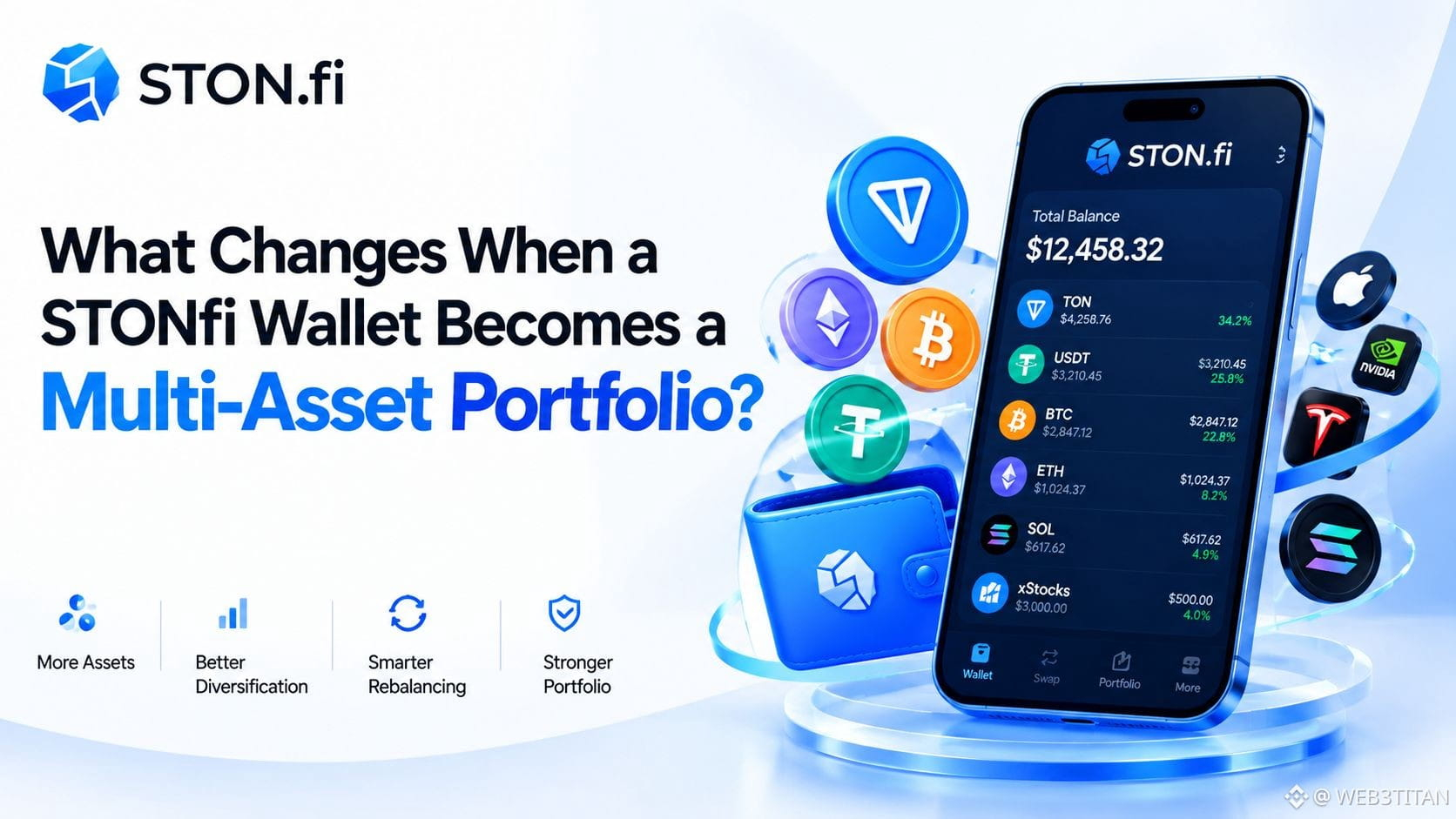
What Changes When a STONfi Wallet Becomes a Multi Asset Portfolio?
A wallet can start with just a few tokens, but once you hold different assets, you're building a portfolio.
With STONfi, combining crypto assets and xStocks creates more options for managing that portfolio.
FROM HOLDING TO PORTFOLIO BUILDING
Holding only one or two tokens means your portfolio depends heavily on their price movements.
Adding different assets can spread that exposure.
You could hold crypto alongside xStocks, giving your portfolio exposure to different markets instead of relying entirely on crypto.
WHY DIVERSIFICATION MATTERS
Diversification helps reduce dependence on a single asset or market.
Crypto can offer growth potential but comes with high volatility, while xStocks provide exposure to traditional companies and markets.
REBALANCING
Building a portfolio doesn't stop after buying.
As prices change, your allocations change too. Rebalancing means adjusting your holdings to return to your preferred allocation.
MY TAKE
A multi asset wallet changes how you think about DeFi.
You're no longer just asking what to swap into. You're also thinking about how much to hold, how diversified you are, and when to rebalance.
For me, that's when a wallet starts becoming a portfolio management tool rather than just a place to store assets.
$GRAM $XRP
#SaudiHaltsSouthernEnergySitesAfterAttacks
What Changes When a STONfi Wallet Becomes a Multi Asset Portfolio?
A wallet can start with just a few tokens, but once you hold different assets, you're building a portfolio.
With STONfi, combining crypto assets and xStocks creates more options for managing that portfolio.
FROM HOLDING TO PORTFOLIO BUILDING
Holding only one or two tokens means your portfolio depends heavily on their price movements.
Adding different assets can spread that exposure.
You could hold crypto alongside xStocks, giving your portfolio exposure to different markets instead of relying entirely on crypto.
WHY DIVERSIFICATION MATTERS
Diversification helps reduce dependence on a single asset or market.
Crypto can offer growth potential but comes with high volatility, while xStocks provide exposure to traditional companies and markets.
REBALANCING
Building a portfolio doesn't stop after buying.
As prices change, your allocations change too. Rebalancing means adjusting your holdings to return to your preferred allocation.
MY TAKE
A multi asset wallet changes how you think about DeFi.
You're no longer just asking what to swap into. You're also thinking about how much to hold, how diversified you are, and when to rebalance.
For me, that's when a wallet starts becoming a portfolio management tool rather than just a place to store assets.
$GRAM $XRP
#SaudiHaltsSouthernEnergySitesAfterAttacks
A wallet can start with just a few tokens, but once you hold different assets, you're building a portfolio.
With STONfi, combining crypto assets and xStocks creates more options for managing that portfolio.
FROM HOLDING TO PORTFOLIO BUILDING
Holding only one or two tokens means your portfolio depends heavily on their price movements.
Adding different assets can spread that exposure.
You could hold crypto alongside xStocks, giving your portfolio exposure to different markets instead of relying entirely on crypto.
WHY DIVERSIFICATION MATTERS
Diversification helps reduce dependence on a single asset or market.
Crypto can offer growth potential but comes with high volatility, while xStocks provide exposure to traditional companies and markets.
REBALANCING
Building a portfolio doesn't stop after buying.
As prices change, your allocations change too. Rebalancing means adjusting your holdings to return to your preferred allocation.
MY TAKE
A multi asset wallet changes how you think about DeFi.
You're no longer just asking what to swap into. You're also thinking about how much to hold, how diversified you are, and when to rebalance.
For me, that's when a wallet starts becoming a portfolio management tool rather than just a place to store assets.
$GRAM $XRP
#SaudiHaltsSouthernEnergySitesAfterAttacks
218
·
--
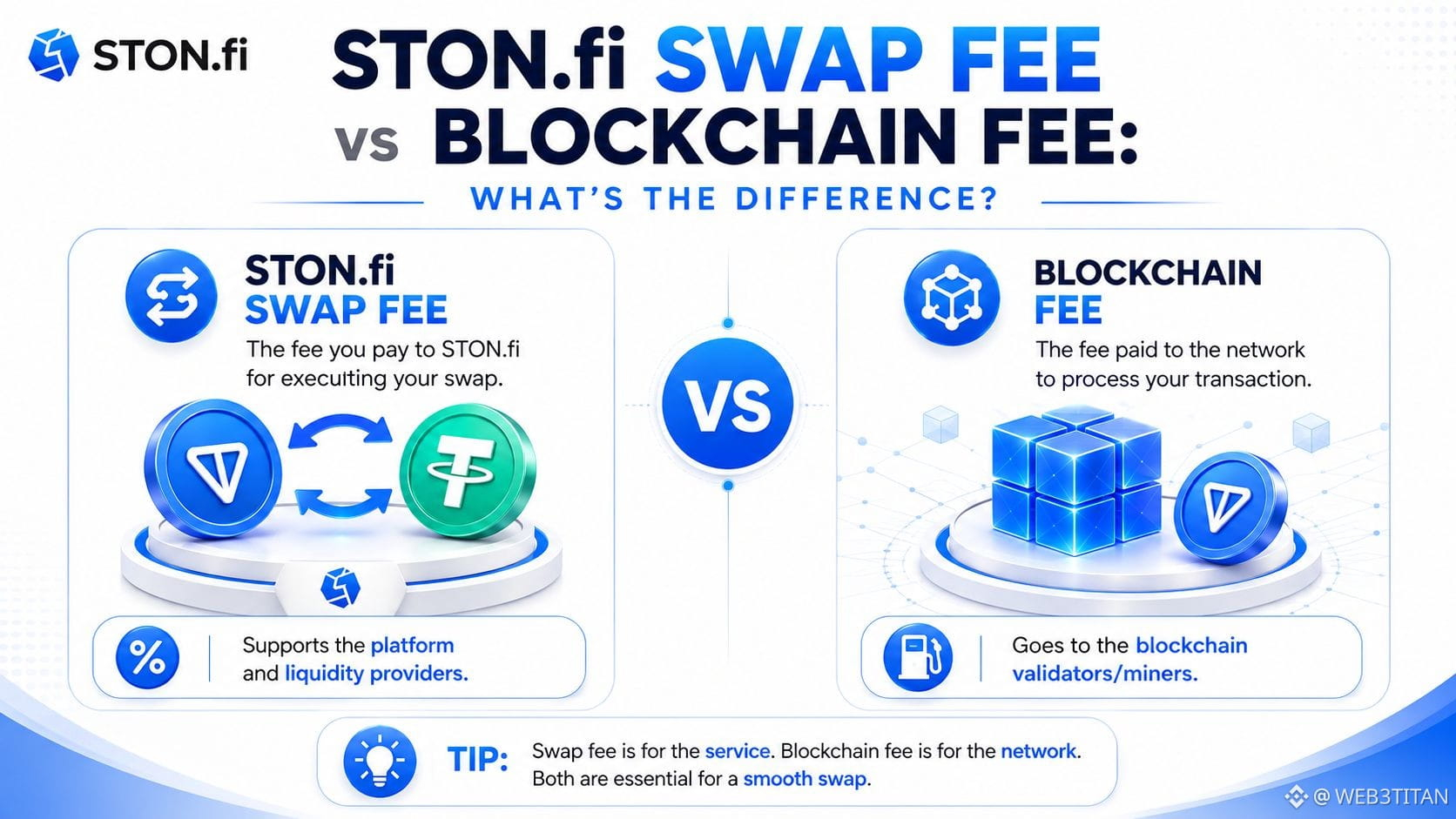
STONfi Swap Fee vs Blockchain Fee: What’s the Difference?
When swapping tokens on STONfi, the cost you see can come from different sources. Understanding the difference between the swap fee and blockchain fee makes it easier to know what you're actually paying for.
STONfi SWAP FEE
The swap fee is connected to the liquidity pool used for your trade.
When you swap one token for another, a small fee can be charged on the trade. This fee is part of the mechanism that supports the liquidity providers supplying assets to the pool.
So, this cost is directly related to the swap.
BLOCKCHAIN FEE
The blockchain fee is separate.
This is the network fee required to process your transaction on TON. It covers the computational work needed to execute and confirm the transaction on the blockchain.
Even when using STONfi, the transaction still needs to be processed by the TON network.
THE SIMPLE DIFFERENCE
Think about it like this:
Swap fee = cost associated with the trade
Blockchain fee = cost of processing the transaction on TON
They are not the same thing, and both can contribute to the overall cost of a swap.
WHY IT MATTERS
Knowing where your fees come from helps you evaluate swaps more accurately.
Instead of seeing the total cost as one single fee, you can understand which part comes from the trading mechanism and which part comes from the blockchain itself.
MY TAKE
This is one of those small DeFi details that becomes important once you start making more swaps.
Understanding the difference between swap fees and blockchain fees gives you a clearer picture of the real cost of using STONfi and helps you make more informed trading decisions.
$GRAM $NEAR
#ZECHitsANewAllTimeHigh
STONfi Swap Fee vs Blockchain Fee: What’s the Difference?
When swapping tokens on STONfi, the cost you see can come from different sources. Understanding the difference between the swap fee and blockchain fee makes it easier to know what you're actually paying for.
STONfi SWAP FEE
The swap fee is connected to the liquidity pool used for your trade.
When you swap one token for another, a small fee can be charged on the trade. This fee is part of the mechanism that supports the liquidity providers supplying assets to the pool.
So, this cost is directly related to the swap.
BLOCKCHAIN FEE
The blockchain fee is separate.
This is the network fee required to process your transaction on TON. It covers the computational work needed to execute and confirm the transaction on the blockchain.
Even when using STONfi, the transaction still needs to be processed by the TON network.
THE SIMPLE DIFFERENCE
Think about it like this:
Swap fee = cost associated with the trade
Blockchain fee = cost of processing the transaction on TON
They are not the same thing, and both can contribute to the overall cost of a swap.
WHY IT MATTERS
Knowing where your fees come from helps you evaluate swaps more accurately.
Instead of seeing the total cost as one single fee, you can understand which part comes from the trading mechanism and which part comes from the blockchain itself.
MY TAKE
This is one of those small DeFi details that becomes important once you start making more swaps.
Understanding the difference between swap fees and blockchain fees gives you a clearer picture of the real cost of using STONfi and helps you make more informed trading decisions.
$GRAM $NEAR
#ZECHitsANewAllTimeHigh
When swapping tokens on STONfi, the cost you see can come from different sources. Understanding the difference between the swap fee and blockchain fee makes it easier to know what you're actually paying for.
STONfi SWAP FEE
The swap fee is connected to the liquidity pool used for your trade.
When you swap one token for another, a small fee can be charged on the trade. This fee is part of the mechanism that supports the liquidity providers supplying assets to the pool.
So, this cost is directly related to the swap.
BLOCKCHAIN FEE
The blockchain fee is separate.
This is the network fee required to process your transaction on TON. It covers the computational work needed to execute and confirm the transaction on the blockchain.
Even when using STONfi, the transaction still needs to be processed by the TON network.
THE SIMPLE DIFFERENCE
Think about it like this:
Swap fee = cost associated with the trade
Blockchain fee = cost of processing the transaction on TON
They are not the same thing, and both can contribute to the overall cost of a swap.
WHY IT MATTERS
Knowing where your fees come from helps you evaluate swaps more accurately.
Instead of seeing the total cost as one single fee, you can understand which part comes from the trading mechanism and which part comes from the blockchain itself.
MY TAKE
This is one of those small DeFi details that becomes important once you start making more swaps.
Understanding the difference between swap fees and blockchain fees gives you a clearer picture of the real cost of using STONfi and helps you make more informed trading decisions.
$GRAM $NEAR
#ZECHitsANewAllTimeHigh
278
·
--
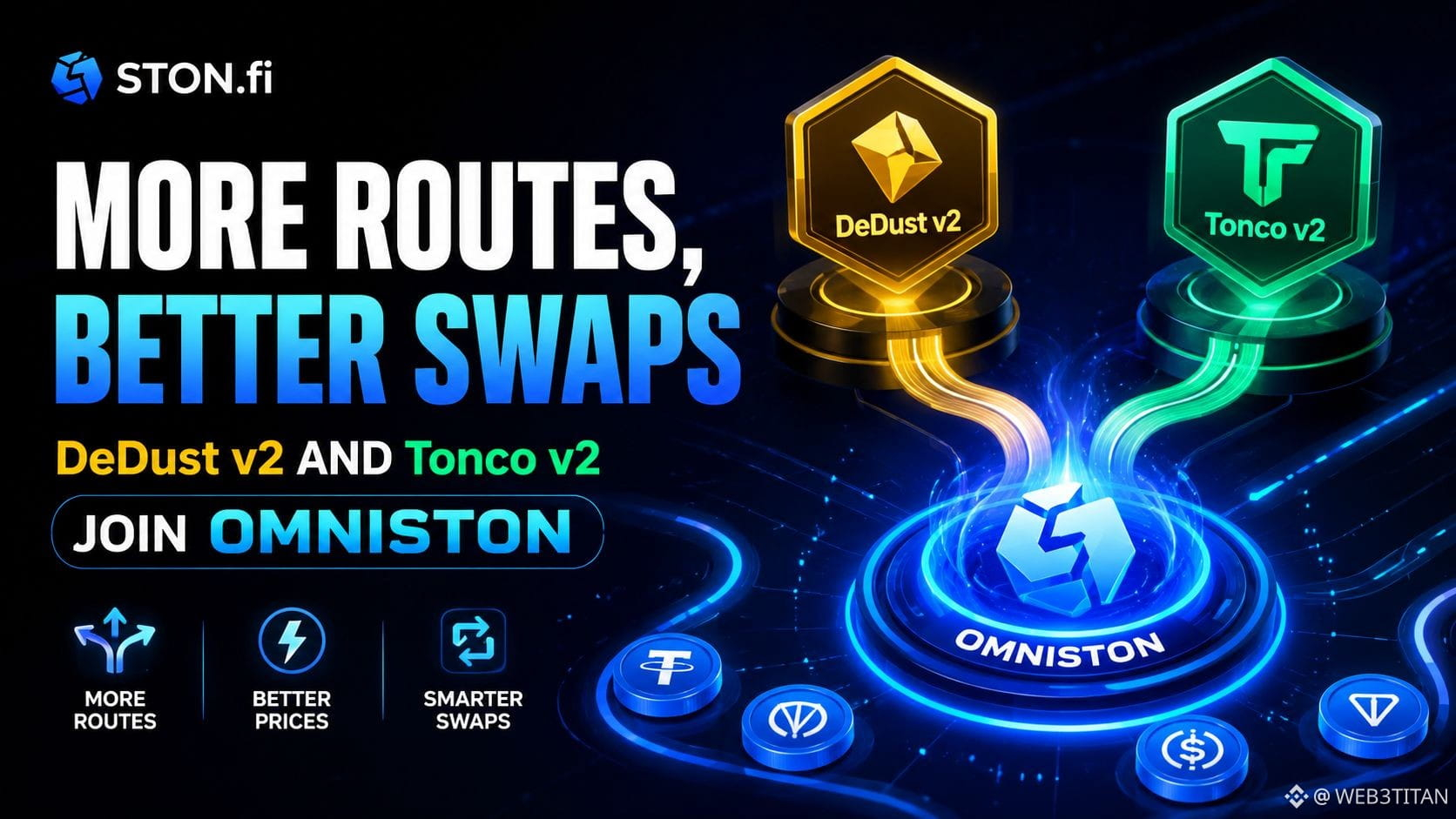
MORE ROUTES, BETTER SWAPS: DeDust v2 AND Tonco v2 JOIN OMNISTON
I wanted to understand what changes when more liquidity sources are connected to Omniston. The latest DeDust and Tonco integrations show why having more routes can make a real difference for swaps on TON.
MORE LIQUIDITY TO SEARCH
Omniston now supports DeDust CPMM v2 and Tonco v2 pool contracts.
That means it can scan these pools alongside other available TON liquidity when looking for an execution route.
WHY MORE ROUTES MATTER
A swap doesn't always get the best execution from one pool.
By comparing more liquidity sources, Omniston has more options when deciding where an order should be executed.
For traders, this can mean better pricing, lower price impact, and fewer compromises on execution.
THE PROCESS HAPPENS AUTOMATICALLY
The important part is that users don't need to manually compare DeDust, Tonco, or other pools.
Omniston handles the route discovery and compares available options in real time.
I simply enter the swap and review the resulting quote.
WHY THIS IS IMPORTANT FOR TON
TON liquidity can be spread across different pools and protocols.
Connecting more of that liquidity to the same execution layer makes the ecosystem more connected and gives swaps access to a broader liquidity landscape.
MY TAKE
This is why I see Omniston as more than just another swap interface.
More pools → more routes → more competition → better chances of efficient execution.
Adding DeDust v2 and Tonco v2 gives Omniston more liquidity to work with, while users get the benefit without having to think about which pool their swap should use.
$BTC $XRP
#LululemonTumbles20%OnWeakGuidance
MORE ROUTES, BETTER SWAPS: DeDust v2 AND Tonco v2 JOIN OMNISTON
I wanted to understand what changes when more liquidity sources are connected to Omniston. The latest DeDust and Tonco integrations show why having more routes can make a real difference for swaps on TON.
MORE LIQUIDITY TO SEARCH
Omniston now supports DeDust CPMM v2 and Tonco v2 pool contracts.
That means it can scan these pools alongside other available TON liquidity when looking for an execution route.
WHY MORE ROUTES MATTER
A swap doesn't always get the best execution from one pool.
By comparing more liquidity sources, Omniston has more options when deciding where an order should be executed.
For traders, this can mean better pricing, lower price impact, and fewer compromises on execution.
THE PROCESS HAPPENS AUTOMATICALLY
The important part is that users don't need to manually compare DeDust, Tonco, or other pools.
Omniston handles the route discovery and compares available options in real time.
I simply enter the swap and review the resulting quote.
WHY THIS IS IMPORTANT FOR TON
TON liquidity can be spread across different pools and protocols.
Connecting more of that liquidity to the same execution layer makes the ecosystem more connected and gives swaps access to a broader liquidity landscape.
MY TAKE
This is why I see Omniston as more than just another swap interface.
More pools → more routes → more competition → better chances of efficient execution.
Adding DeDust v2 and Tonco v2 gives Omniston more liquidity to work with, while users get the benefit without having to think about which pool their swap should use.
$BTC $XRP
#LululemonTumbles20%OnWeakGuidance
I wanted to understand what changes when more liquidity sources are connected to Omniston. The latest DeDust and Tonco integrations show why having more routes can make a real difference for swaps on TON.
MORE LIQUIDITY TO SEARCH
Omniston now supports DeDust CPMM v2 and Tonco v2 pool contracts.
That means it can scan these pools alongside other available TON liquidity when looking for an execution route.
WHY MORE ROUTES MATTER
A swap doesn't always get the best execution from one pool.
By comparing more liquidity sources, Omniston has more options when deciding where an order should be executed.
For traders, this can mean better pricing, lower price impact, and fewer compromises on execution.
THE PROCESS HAPPENS AUTOMATICALLY
The important part is that users don't need to manually compare DeDust, Tonco, or other pools.
Omniston handles the route discovery and compares available options in real time.
I simply enter the swap and review the resulting quote.
WHY THIS IS IMPORTANT FOR TON
TON liquidity can be spread across different pools and protocols.
Connecting more of that liquidity to the same execution layer makes the ecosystem more connected and gives swaps access to a broader liquidity landscape.
MY TAKE
This is why I see Omniston as more than just another swap interface.
More pools → more routes → more competition → better chances of efficient execution.
Adding DeDust v2 and Tonco v2 gives Omniston more liquidity to work with, while users get the benefit without having to think about which pool their swap should use.
$BTC $XRP
#LululemonTumbles20%OnWeakGuidance
99
·
--
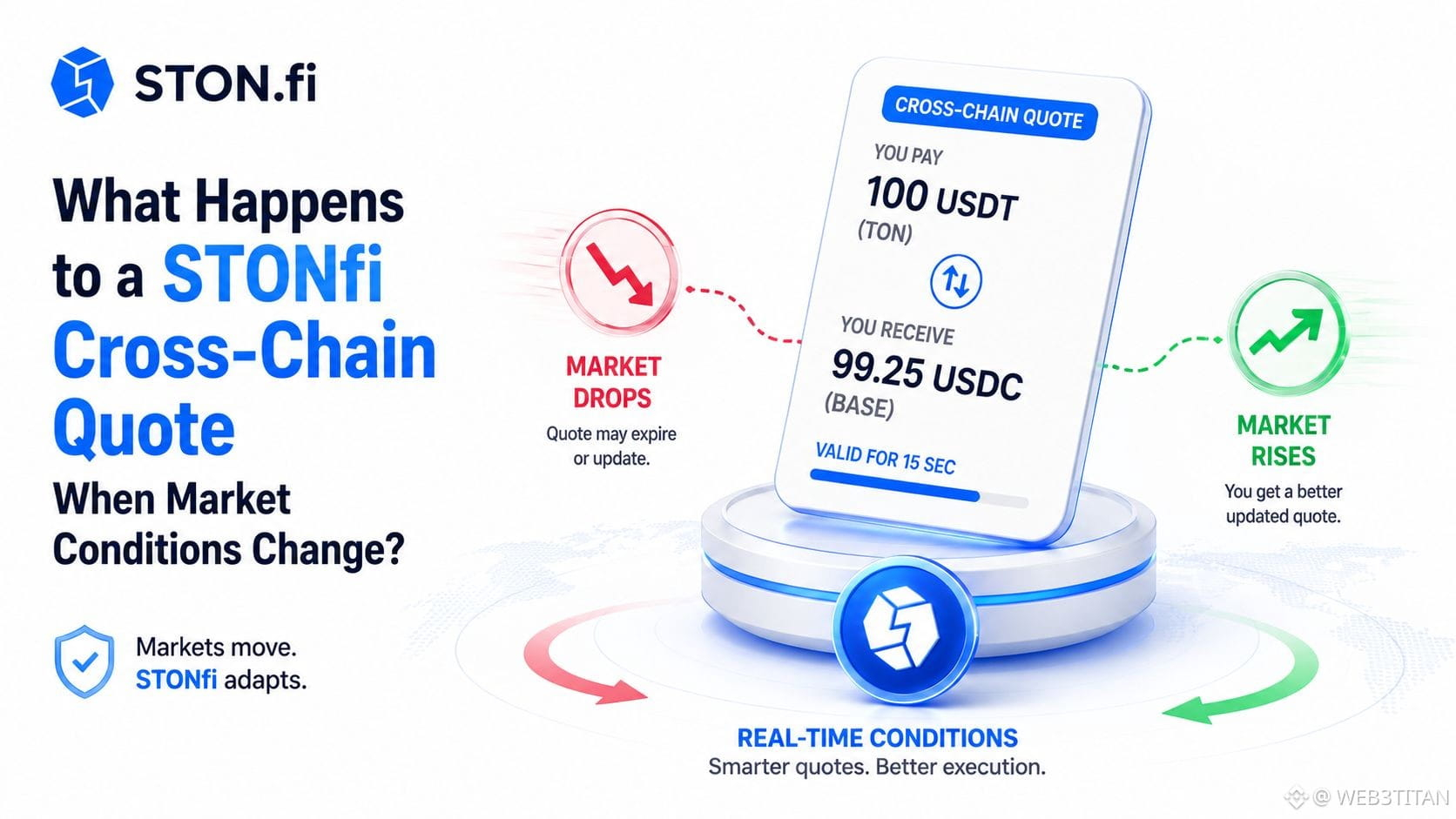
WHAT HAPPENS TO A STONfi CROSS-CHAIN QUOTE WHEN MARKET CONDITIONS CHANGE?
A cross-chain quote isn't necessarily a permanent price. It reflects market conditions and available liquidity at the time it is provided.
QUOTES HAVE VALIDITY
When I receive a quote, I don't assume it will remain valid forever.
Prices can move quickly, so the quote has a validity period. If it expires before execution, a new quote may be required.
RESOLVER PRICING CAN CHANGE
Omniston uses resolvers to compete for cross-chain orders.
When market conditions change, resolvers may adjust their pricing based on their available liquidity, execution costs, and the risk of completing the order.
That means the best quote can change from one moment to the next.
LIQUIDITY MATTERS
A sudden market move can affect available liquidity.
If a resolver no longer has enough liquidity to execute an order at the quoted price, the available execution options can change.
This is especially important for larger swaps.
EXECUTION TIMING
This is why I pay attention to how quickly the swap moves from quote to execution.
The longer the gap between receiving a quote and executing, the more opportunity there is for market conditions to change.
WHAT I CHECK
Before confirming a cross-chain swap, I look at the amount I'll receive, quote validity, fees, and execution details.
I don't judge a route only by the initial price.
MY TAKE
The biggest lesson for me is simple:
A quote is a snapshot, not a guarantee of unchanged market conditions.
Resolver pricing, liquidity, and execution timing can all influence what happens next.
Omniston's job is to coordinate these moving parts so the user can focus on the swap instead of manually managing the underlying execution process.
$TRUMP $BEAT #SchwabPlansToAddSOLAVAXLINKTrading
WHAT HAPPENS TO A STONfi CROSS-CHAIN QUOTE WHEN MARKET CONDITIONS CHANGE?
A cross-chain quote isn't necessarily a permanent price. It reflects market conditions and available liquidity at the time it is provided.
QUOTES HAVE VALIDITY
When I receive a quote, I don't assume it will remain valid forever.
Prices can move quickly, so the quote has a validity period. If it expires before execution, a new quote may be required.
RESOLVER PRICING CAN CHANGE
Omniston uses resolvers to compete for cross-chain orders.
When market conditions change, resolvers may adjust their pricing based on their available liquidity, execution costs, and the risk of completing the order.
That means the best quote can change from one moment to the next.
LIQUIDITY MATTERS
A sudden market move can affect available liquidity.
If a resolver no longer has enough liquidity to execute an order at the quoted price, the available execution options can change.
This is especially important for larger swaps.
EXECUTION TIMING
This is why I pay attention to how quickly the swap moves from quote to execution.
The longer the gap between receiving a quote and executing, the more opportunity there is for market conditions to change.
WHAT I CHECK
Before confirming a cross-chain swap, I look at the amount I'll receive, quote validity, fees, and execution details.
I don't judge a route only by the initial price.
MY TAKE
The biggest lesson for me is simple:
A quote is a snapshot, not a guarantee of unchanged market conditions.
Resolver pricing, liquidity, and execution timing can all influence what happens next.
Omniston's job is to coordinate these moving parts so the user can focus on the swap instead of manually managing the underlying execution process.
$TRUMP $BEAT #SchwabPlansToAddSOLAVAXLINKTrading
A cross-chain quote isn't necessarily a permanent price. It reflects market conditions and available liquidity at the time it is provided.
QUOTES HAVE VALIDITY
When I receive a quote, I don't assume it will remain valid forever.
Prices can move quickly, so the quote has a validity period. If it expires before execution, a new quote may be required.
RESOLVER PRICING CAN CHANGE
Omniston uses resolvers to compete for cross-chain orders.
When market conditions change, resolvers may adjust their pricing based on their available liquidity, execution costs, and the risk of completing the order.
That means the best quote can change from one moment to the next.
LIQUIDITY MATTERS
A sudden market move can affect available liquidity.
If a resolver no longer has enough liquidity to execute an order at the quoted price, the available execution options can change.
This is especially important for larger swaps.
EXECUTION TIMING
This is why I pay attention to how quickly the swap moves from quote to execution.
The longer the gap between receiving a quote and executing, the more opportunity there is for market conditions to change.
WHAT I CHECK
Before confirming a cross-chain swap, I look at the amount I'll receive, quote validity, fees, and execution details.
I don't judge a route only by the initial price.
MY TAKE
The biggest lesson for me is simple:
A quote is a snapshot, not a guarantee of unchanged market conditions.
Resolver pricing, liquidity, and execution timing can all influence what happens next.
Omniston's job is to coordinate these moving parts so the user can focus on the swap instead of manually managing the underlying execution process.
$TRUMP $BEAT #SchwabPlansToAddSOLAVAXLINKTrading
271
·
--
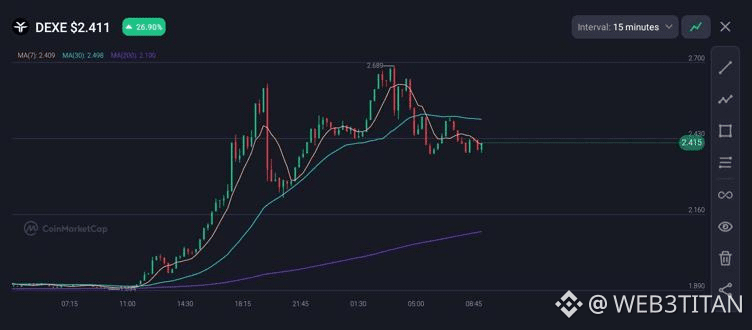
Price is cooling off after a strong run but the higher structure is still intact.
$DEXE is currently trading at $2.411 after a +26.90% move.
Recently, price climbed aggressively from the $1.894 area up to a high of $2.689 before pulling back. It is now consolidating after the correction, still well above the prior base.
Bias: UPTREND (LONG)
Why:
The initial rally was highly impulsive. Despite the pullback from $2.689, price remains elevated and is holding the higher range, keeping the short term bias constructive as long as support holds.
Entry: $2.380 – $2.430
Stop Loss: $2.200
Take Profits
TP1: $2.600
TP2: $2.750
TP3: $2.900 – $3.100
One feature I’d consider during a strong move like this is @stonfi cross chain swapping. It gives traders more flexibility when capital needs to move between supported ecosystems, especially when opportunities appear on another network. Instead of treating each chain as a separate market, cross chain execution makes it easier to reposition supported assets and stay responsive as market momentum changes.
$DEXE #SchwabPlansToAddSOLAVAXLINKTrading
Price is cooling off after a strong run but the higher structure is still intact.
$DEXE is currently trading at $2.411 after a +26.90% move.
Recently, price climbed aggressively from the $1.894 area up to a high of $2.689 before pulling back. It is now consolidating after the correction, still well above the prior base.
Bias: UPTREND (LONG)
Why:
The initial rally was highly impulsive. Despite the pullback from $2.689, price remains elevated and is holding the higher range, keeping the short term bias constructive as long as support holds.
Entry: $2.380 – $2.430
Stop Loss: $2.200
Take Profits
TP1: $2.600
TP2: $2.750
TP3: $2.900 – $3.100
One feature I’d consider during a strong move like this is @STONfi DEX cross chain swapping. It gives traders more flexibility when capital needs to move between supported ecosystems, especially when opportunities appear on another network. Instead of treating each chain as a separate market, cross chain execution makes it easier to reposition supported assets and stay responsive as market momentum changes.
$DEXE #SchwabPlansToAddSOLAVAXLINKTrading
$DEXE is currently trading at $2.411 after a +26.90% move.
Recently, price climbed aggressively from the $1.894 area up to a high of $2.689 before pulling back. It is now consolidating after the correction, still well above the prior base.
Bias: UPTREND (LONG)
Why:
The initial rally was highly impulsive. Despite the pullback from $2.689, price remains elevated and is holding the higher range, keeping the short term bias constructive as long as support holds.
Entry: $2.380 – $2.430
Stop Loss: $2.200
Take Profits
TP1: $2.600
TP2: $2.750
TP3: $2.900 – $3.100
One feature I’d consider during a strong move like this is @STONfi DEX cross chain swapping. It gives traders more flexibility when capital needs to move between supported ecosystems, especially when opportunities appear on another network. Instead of treating each chain as a separate market, cross chain execution makes it easier to reposition supported assets and stay responsive as market momentum changes.
$DEXE #SchwabPlansToAddSOLAVAXLINKTrading
133
·
--
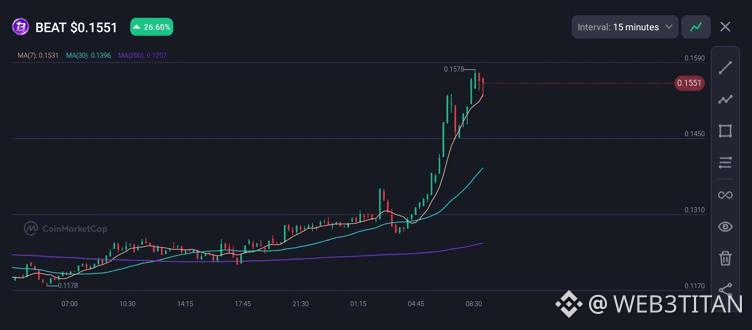
Strong momentum is still in play.
$BEAT is currently trading at $0.1551 after a +26.60% move.
Recently, price climbed aggressively from the $0.1178 area up to a high of $0.1578 and is now holding near the highs after the sharp push.
Bias: UPTREND (LONG)
Why:
The rally was highly impulsive with consecutive strong green candles. Price remains elevated close to the recent high with limited rejection so far, keeping the short term structure bullish.
Entry: $0.1520 – $0.1560
Stop Loss: $0.1420
Take Profits
TP1: $0.1620
TP2: $0.1700
TP3: $0.1800 – $0.1900
While $BEAT is showing strong momentum, another approach is putting capital to work through @stonfi farming. By providing liquidity to eligible pools, users can potentially earn additional farming rewards on top of the fees generated from trading activity. It is a way to make liquidity more productive rather than simply leaving assets unused, especially when on chain trading activity starts picking up.
$BEAT
#NYSilverFuturesDrop3%
Strong momentum is still in play.
$BEAT is currently trading at $0.1551 after a +26.60% move.
Recently, price climbed aggressively from the $0.1178 area up to a high of $0.1578 and is now holding near the highs after the sharp push.
Bias: UPTREND (LONG)
Why:
The rally was highly impulsive with consecutive strong green candles. Price remains elevated close to the recent high with limited rejection so far, keeping the short term structure bullish.
Entry: $0.1520 – $0.1560
Stop Loss: $0.1420
Take Profits
TP1: $0.1620
TP2: $0.1700
TP3: $0.1800 – $0.1900
While $BEAT is showing strong momentum, another approach is putting capital to work through @STONfi DEX farming. By providing liquidity to eligible pools, users can potentially earn additional farming rewards on top of the fees generated from trading activity. It is a way to make liquidity more productive rather than simply leaving assets unused, especially when on chain trading activity starts picking up.
$BEAT
#NYSilverFuturesDrop3%
$BEAT is currently trading at $0.1551 after a +26.60% move.
Recently, price climbed aggressively from the $0.1178 area up to a high of $0.1578 and is now holding near the highs after the sharp push.
Bias: UPTREND (LONG)
Why:
The rally was highly impulsive with consecutive strong green candles. Price remains elevated close to the recent high with limited rejection so far, keeping the short term structure bullish.
Entry: $0.1520 – $0.1560
Stop Loss: $0.1420
Take Profits
TP1: $0.1620
TP2: $0.1700
TP3: $0.1800 – $0.1900
While $BEAT is showing strong momentum, another approach is putting capital to work through @STONfi DEX farming. By providing liquidity to eligible pools, users can potentially earn additional farming rewards on top of the fees generated from trading activity. It is a way to make liquidity more productive rather than simply leaving assets unused, especially when on chain trading activity starts picking up.
$BEAT
#NYSilverFuturesDrop3%
183
·
--
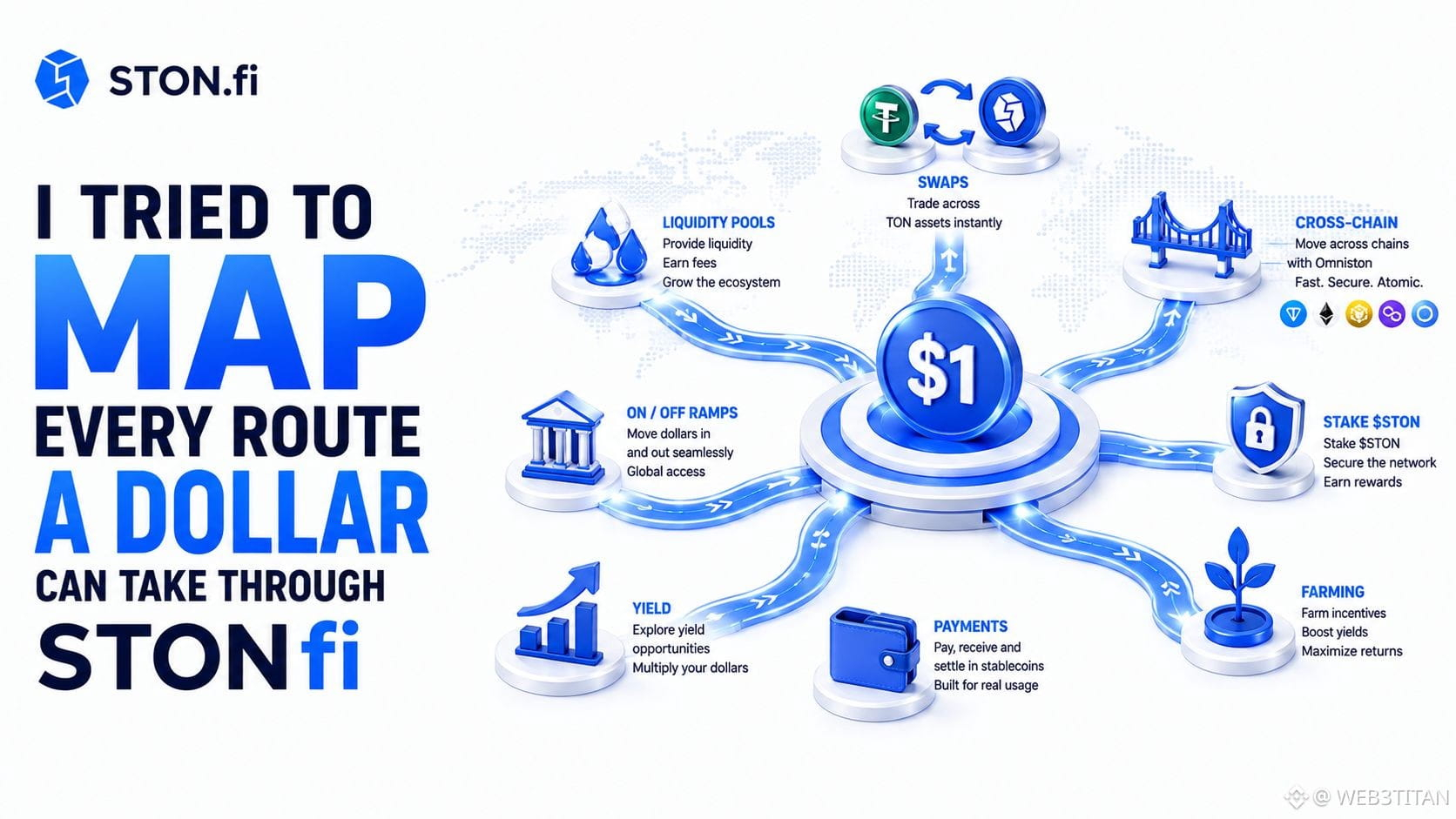
I TRIED TO MAP EVERY ROUTE A DOLLAR CAN TAKE THROUGH STONfi
I wanted to understand what actually happens when I swap a dollar through STONfi. The interesting part is that the same USDT can take different execution paths depending on the trade.
THE SIMPLE AMM ROUTE
The most familiar path is a direct AMM swap.
Your trade goes through a liquidity pool where traders swap against liquidity provided by other users.
THE MULTI-HOP ROUTE
Sometimes the best price isn't in one pool.
Instead of swapping directly, STONfi can route the trade through intermediate tokens to reach better liquidity and reduce price impact.
THE RESOLVER ROUTE
For cross-chain swaps, Omniston introduces resolvers.
Resolvers compete to execute the order by offering quotes, helping the protocol find a better execution path instead of relying on one liquidity source.
THE ESCROW AND SETTLEMENT PATH
Cross-chain swaps also need a safe settlement process.
Escrow style contracts and atomic execution help make sure the transfer follows the agreed conditions before funds are released.
ONE EXPERIENCE, MANY PATHS
What stood out to me is that users don't need to choose these routes manually.
STONfi and Omniston decide whether the swap should use an AMM pool, a multi-hop route, or resolver based execution.
MY TAKE
The biggest lesson for me is that a swap isn't always one transaction through one pool.
It's a routing system designed to find the best path, execute it safely, and deliver the final asset with as little friction as possible.
Explore - @stonfi
$VET $SOL
I TRIED TO MAP EVERY ROUTE A DOLLAR CAN TAKE THROUGH STONfi
I wanted to understand what actually happens when I swap a dollar through STONfi. The interesting part is that the same USDT can take different execution paths depending on the trade.
THE SIMPLE AMM ROUTE
The most familiar path is a direct AMM swap.
Your trade goes through a liquidity pool where traders swap against liquidity provided by other users.
THE MULTI-HOP ROUTE
Sometimes the best price isn't in one pool.
Instead of swapping directly, STONfi can route the trade through intermediate tokens to reach better liquidity and reduce price impact.
THE RESOLVER ROUTE
For cross-chain swaps, Omniston introduces resolvers.
Resolvers compete to execute the order by offering quotes, helping the protocol find a better execution path instead of relying on one liquidity source.
THE ESCROW AND SETTLEMENT PATH
Cross-chain swaps also need a safe settlement process.
Escrow style contracts and atomic execution help make sure the transfer follows the agreed conditions before funds are released.
ONE EXPERIENCE, MANY PATHS
What stood out to me is that users don't need to choose these routes manually.
STONfi and Omniston decide whether the swap should use an AMM pool, a multi-hop route, or resolver based execution.
MY TAKE
The biggest lesson for me is that a swap isn't always one transaction through one pool.
It's a routing system designed to find the best path, execute it safely, and deliver the final asset with as little friction as possible.
Explore - @STONfi DEX
$VET $SOL
I wanted to understand what actually happens when I swap a dollar through STONfi. The interesting part is that the same USDT can take different execution paths depending on the trade.
THE SIMPLE AMM ROUTE
The most familiar path is a direct AMM swap.
Your trade goes through a liquidity pool where traders swap against liquidity provided by other users.
THE MULTI-HOP ROUTE
Sometimes the best price isn't in one pool.
Instead of swapping directly, STONfi can route the trade through intermediate tokens to reach better liquidity and reduce price impact.
THE RESOLVER ROUTE
For cross-chain swaps, Omniston introduces resolvers.
Resolvers compete to execute the order by offering quotes, helping the protocol find a better execution path instead of relying on one liquidity source.
THE ESCROW AND SETTLEMENT PATH
Cross-chain swaps also need a safe settlement process.
Escrow style contracts and atomic execution help make sure the transfer follows the agreed conditions before funds are released.
ONE EXPERIENCE, MANY PATHS
What stood out to me is that users don't need to choose these routes manually.
STONfi and Omniston decide whether the swap should use an AMM pool, a multi-hop route, or resolver based execution.
MY TAKE
The biggest lesson for me is that a swap isn't always one transaction through one pool.
It's a routing system designed to find the best path, execute it safely, and deliver the final asset with as little friction as possible.
Explore - @STONfi DEX
$VET $SOL
110
·
--
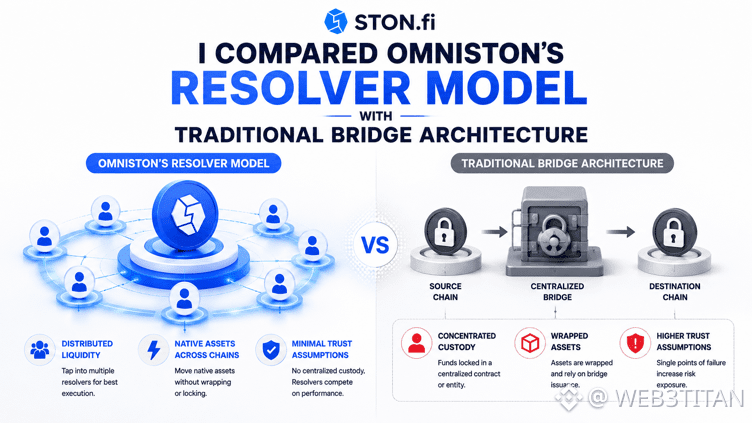
I COMPARED OMNISTON’S RESOLVER MODEL WITH TRADITIONAL BRIDGE ARCHITECTURE
At first, I thought cross-chain bridges and Omniston were solving the same problem in the same way. Looking closer showed me some important differences.
TRADITIONAL BRIDGES
Many traditional bridges use a central pool of liquidity or locked assets.
You deposit an asset on one network and receive a wrapped or represented version on another network.
This can create a strong dependency on the bridge's contracts, validators, or custody system.
OMNISTON’S RESOLVER MODEL
Omniston takes a different approach.
Instead of relying on one large liquidity pool, resolvers compete to fulfill orders.
They provide quotes and use their own liquidity to complete the requested swap.
This creates a more distributed execution model.
NATIVE VS WRAPPED ASSETS
Another difference is how users receive value.
Traditional bridges often rely on wrapped representations of assets.
With resolver based execution, the goal can be to deliver the requested asset on the destination network, rather than simply issuing another wrapped representation.
That can make the user experience much closer to a normal swap.
THE TRUST ASSUMPTION
This is where the architecture really matters.
A traditional bridge may require users to trust a specific bridge system and its security model.
With Omniston, the model involves resolvers, smart contracts, and settlement mechanisms, spreading the execution process across different components.
MY TAKE
The biggest difference I see is this:
Traditional bridge: lock, mint, and redeem.
Resolver model: quote, compete, execute, and settle.
Neither architecture removes all risk, but they approach cross-chain liquidity and trust very differently.
For me, Omniston is interesting because it treats cross-chain movement more like an execution problem than simply a token bridging problem.
$TRUMP $XRP #XRP #STONfi
I COMPARED OMNISTON’S RESOLVER MODEL WITH TRADITIONAL BRIDGE ARCHITECTURE
At first, I thought cross-chain bridges and Omniston were solving the same problem in the same way. Looking closer showed me some important differences.
TRADITIONAL BRIDGES
Many traditional bridges use a central pool of liquidity or locked assets.
You deposit an asset on one network and receive a wrapped or represented version on another network.
This can create a strong dependency on the bridge's contracts, validators, or custody system.
OMNISTON’S RESOLVER MODEL
Omniston takes a different approach.
Instead of relying on one large liquidity pool, resolvers compete to fulfill orders.
They provide quotes and use their own liquidity to complete the requested swap.
This creates a more distributed execution model.
NATIVE VS WRAPPED ASSETS
Another difference is how users receive value.
Traditional bridges often rely on wrapped representations of assets.
With resolver based execution, the goal can be to deliver the requested asset on the destination network, rather than simply issuing another wrapped representation.
That can make the user experience much closer to a normal swap.
THE TRUST ASSUMPTION
This is where the architecture really matters.
A traditional bridge may require users to trust a specific bridge system and its security model.
With Omniston, the model involves resolvers, smart contracts, and settlement mechanisms, spreading the execution process across different components.
MY TAKE
The biggest difference I see is this:
Traditional bridge: lock, mint, and redeem.
Resolver model: quote, compete, execute, and settle.
Neither architecture removes all risk, but they approach cross-chain liquidity and trust very differently.
For me, Omniston is interesting because it treats cross-chain movement more like an execution problem than simply a token bridging problem.
$TRUMP $XRP #XRP #STONfi
At first, I thought cross-chain bridges and Omniston were solving the same problem in the same way. Looking closer showed me some important differences.
TRADITIONAL BRIDGES
Many traditional bridges use a central pool of liquidity or locked assets.
You deposit an asset on one network and receive a wrapped or represented version on another network.
This can create a strong dependency on the bridge's contracts, validators, or custody system.
OMNISTON’S RESOLVER MODEL
Omniston takes a different approach.
Instead of relying on one large liquidity pool, resolvers compete to fulfill orders.
They provide quotes and use their own liquidity to complete the requested swap.
This creates a more distributed execution model.
NATIVE VS WRAPPED ASSETS
Another difference is how users receive value.
Traditional bridges often rely on wrapped representations of assets.
With resolver based execution, the goal can be to deliver the requested asset on the destination network, rather than simply issuing another wrapped representation.
That can make the user experience much closer to a normal swap.
THE TRUST ASSUMPTION
This is where the architecture really matters.
A traditional bridge may require users to trust a specific bridge system and its security model.
With Omniston, the model involves resolvers, smart contracts, and settlement mechanisms, spreading the execution process across different components.
MY TAKE
The biggest difference I see is this:
Traditional bridge: lock, mint, and redeem.
Resolver model: quote, compete, execute, and settle.
Neither architecture removes all risk, but they approach cross-chain liquidity and trust very differently.
For me, Omniston is interesting because it treats cross-chain movement more like an execution problem than simply a token bridging problem.
$TRUMP $XRP #XRP #STONfi
227
·
--
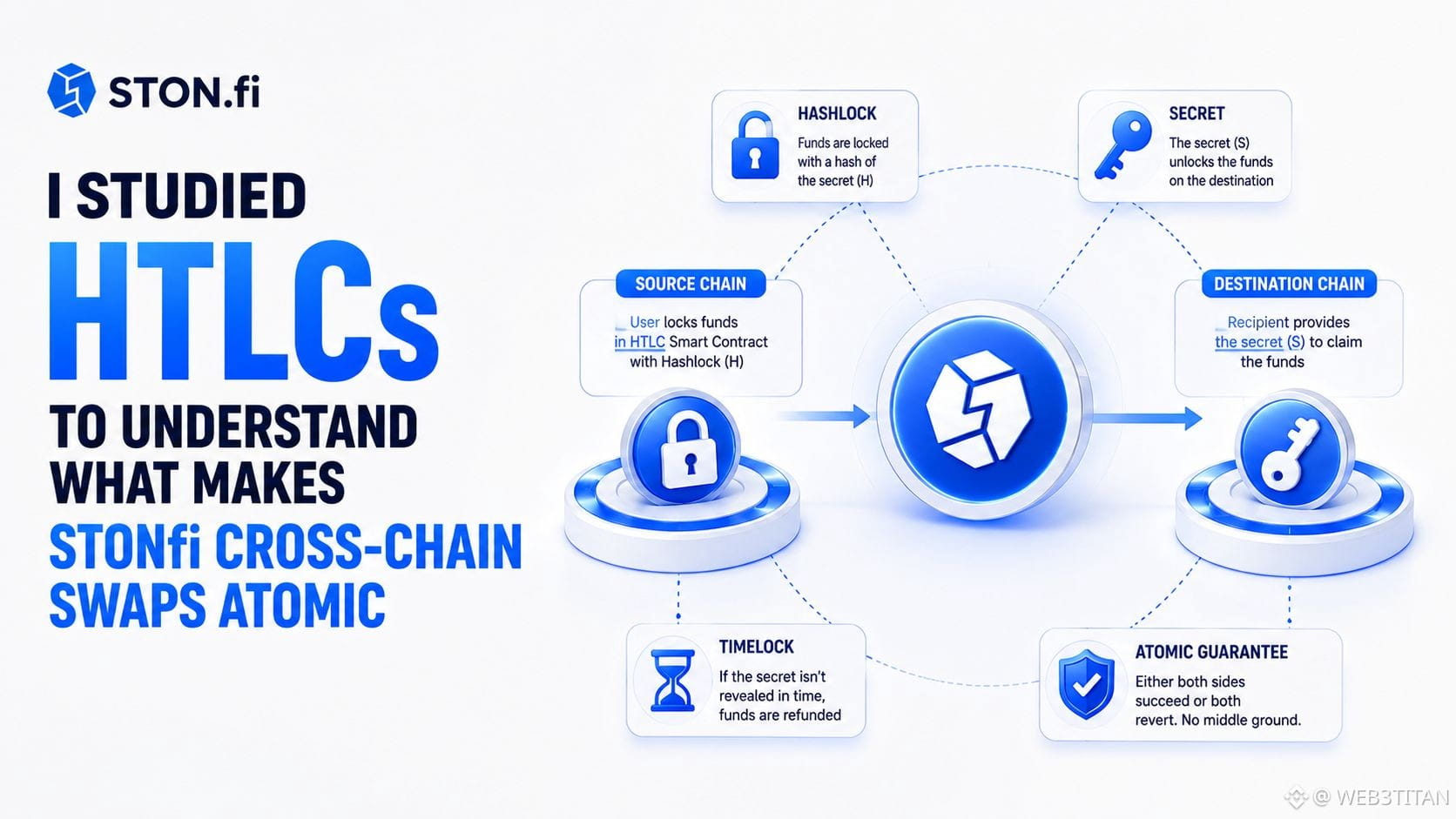
I STUDIED HTLCs TO UNDERSTAND STONfi’s ATOMIC SWAPS
I wanted to understand how cross-chain swaps can complete safely across different networks, so I looked into HTLCs and the mechanics behind them.
THE HASHLOCK
An HTLC uses a secret and its cryptographic hash.
The hash acts like a lock. The original secret is needed to unlock the funds when the swap conditions are met.
THE SECRET CONNECTS BOTH SIDES
The same secret can be used to coordinate the swap across the source and destination networks.
Once the secret is revealed to complete one side, it can be used to complete the other side under the agreed conditions.
THE TIMELOCK
The second key part is the timelock.
It gives the swap a deadline. If the required conditions aren't met within that period, the contract can move into its refund stage.
This prevents funds from being locked indefinitely.
SOURCE AND DESTINATION CONTRACTS
The assets are controlled by contracts on the participating networks.
Both sides follow matching conditions based on the hash and time limit, creating a structured way to coordinate settlement without relying on a single party to simply trust the other.
WHY THE REFUND MATTERS
If the swap fails to complete, the refund mechanism gives the original funds a path back to the rightful party after the timelock expires.
That's a major part of making the process safer.
WHY THIS MATTERS FOR OMNISTON
Omniston combines resolver based RFQ execution with cross-chain settlement mechanisms such as HTLCs.
So RFQ helps with finding competitive execution, while the settlement layer focuses on making the transfer happen under controlled conditions.
MY TAKE
After studying HTLCs, I understood why atomic cross-chain execution is so important.
Hashlock controls the secret. Timelock creates the deadline. Contracts hold the funds. The refund mechanism protects against an incomplete swap.
All of these work together to make cross-chain execution much safer and predictable.
$BTC $SOL #BitcoinRejectedAt$81K50WeekMA
I STUDIED HTLCs TO UNDERSTAND STONfi’s ATOMIC SWAPS
I wanted to understand how cross-chain swaps can complete safely across different networks, so I looked into HTLCs and the mechanics behind them.
THE HASHLOCK
An HTLC uses a secret and its cryptographic hash.
The hash acts like a lock. The original secret is needed to unlock the funds when the swap conditions are met.
THE SECRET CONNECTS BOTH SIDES
The same secret can be used to coordinate the swap across the source and destination networks.
Once the secret is revealed to complete one side, it can be used to complete the other side under the agreed conditions.
THE TIMELOCK
The second key part is the timelock.
It gives the swap a deadline. If the required conditions aren't met within that period, the contract can move into its refund stage.
This prevents funds from being locked indefinitely.
SOURCE AND DESTINATION CONTRACTS
The assets are controlled by contracts on the participating networks.
Both sides follow matching conditions based on the hash and time limit, creating a structured way to coordinate settlement without relying on a single party to simply trust the other.
WHY THE REFUND MATTERS
If the swap fails to complete, the refund mechanism gives the original funds a path back to the rightful party after the timelock expires.
That's a major part of making the process safer.
WHY THIS MATTERS FOR OMNISTON
Omniston combines resolver based RFQ execution with cross-chain settlement mechanisms such as HTLCs.
So RFQ helps with finding competitive execution, while the settlement layer focuses on making the transfer happen under controlled conditions.
MY TAKE
After studying HTLCs, I understood why atomic cross-chain execution is so important.
Hashlock controls the secret. Timelock creates the deadline. Contracts hold the funds. The refund mechanism protects against an incomplete swap.
All of these work together to make cross-chain execution much safer and predictable.
$BTC $SOL #BitcoinRejectedAt$81K50WeekMA
I wanted to understand how cross-chain swaps can complete safely across different networks, so I looked into HTLCs and the mechanics behind them.
THE HASHLOCK
An HTLC uses a secret and its cryptographic hash.
The hash acts like a lock. The original secret is needed to unlock the funds when the swap conditions are met.
THE SECRET CONNECTS BOTH SIDES
The same secret can be used to coordinate the swap across the source and destination networks.
Once the secret is revealed to complete one side, it can be used to complete the other side under the agreed conditions.
THE TIMELOCK
The second key part is the timelock.
It gives the swap a deadline. If the required conditions aren't met within that period, the contract can move into its refund stage.
This prevents funds from being locked indefinitely.
SOURCE AND DESTINATION CONTRACTS
The assets are controlled by contracts on the participating networks.
Both sides follow matching conditions based on the hash and time limit, creating a structured way to coordinate settlement without relying on a single party to simply trust the other.
WHY THE REFUND MATTERS
If the swap fails to complete, the refund mechanism gives the original funds a path back to the rightful party after the timelock expires.
That's a major part of making the process safer.
WHY THIS MATTERS FOR OMNISTON
Omniston combines resolver based RFQ execution with cross-chain settlement mechanisms such as HTLCs.
So RFQ helps with finding competitive execution, while the settlement layer focuses on making the transfer happen under controlled conditions.
MY TAKE
After studying HTLCs, I understood why atomic cross-chain execution is so important.
Hashlock controls the secret. Timelock creates the deadline. Contracts hold the funds. The refund mechanism protects against an incomplete swap.
All of these work together to make cross-chain execution much safer and predictable.
$BTC $SOL #BitcoinRejectedAt$81K50WeekMA
128
·
--
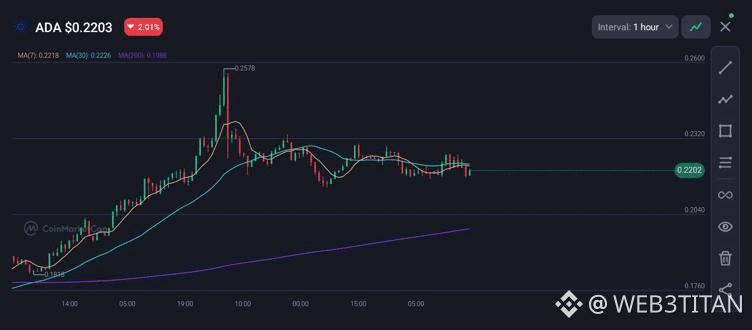
ADA is currently trading at $0.2203 after a -2.01% pullback.
Recently, ADA made a strong push from the $0.1818 area up to a high of $0.2578 before cooling off. Price is now consolidating after that move, still holding above the earlier base.
Bias: UPTREND (LONG)
Why:
The broader structure remains higher from the lows. The current pullback appears corrective within the recent uptrend rather than a full breakdown, as long as support around the current zone holds.
Entry: $0.2160 – $0.2220
Stop Loss: $0.2050
Take Profits
TP1: $0.2350
TP2: $0.2500
TP3: $0.2650 – $0.2800
Another @stonfi feature worth watching is Omniston’s liquidity aggregation. Instead of relying on one liquidity source for every trade, it helps coordinate available liquidity and execution routes to improve the way swaps are handled. For traders rotating between assets as ADA moves through different levels, having access to broader liquidity can make on chain execution more flexible.
$ADA
#BTCReaches$80000
ADA is currently trading at $0.2203 after a -2.01% pullback.
Recently, ADA made a strong push from the $0.1818 area up to a high of $0.2578 before cooling off. Price is now consolidating after that move, still holding above the earlier base.
Bias: UPTREND (LONG)
Why:
The broader structure remains higher from the lows. The current pullback appears corrective within the recent uptrend rather than a full breakdown, as long as support around the current zone holds.
Entry: $0.2160 – $0.2220
Stop Loss: $0.2050
Take Profits
TP1: $0.2350
TP2: $0.2500
TP3: $0.2650 – $0.2800
Another @STONfi DEX feature worth watching is Omniston’s liquidity aggregation. Instead of relying on one liquidity source for every trade, it helps coordinate available liquidity and execution routes to improve the way swaps are handled. For traders rotating between assets as ADA moves through different levels, having access to broader liquidity can make on chain execution more flexible.
$ADA
#BTCReaches$80000
Recently, ADA made a strong push from the $0.1818 area up to a high of $0.2578 before cooling off. Price is now consolidating after that move, still holding above the earlier base.
Bias: UPTREND (LONG)
Why:
The broader structure remains higher from the lows. The current pullback appears corrective within the recent uptrend rather than a full breakdown, as long as support around the current zone holds.
Entry: $0.2160 – $0.2220
Stop Loss: $0.2050
Take Profits
TP1: $0.2350
TP2: $0.2500
TP3: $0.2650 – $0.2800
Another @STONfi DEX feature worth watching is Omniston’s liquidity aggregation. Instead of relying on one liquidity source for every trade, it helps coordinate available liquidity and execution routes to improve the way swaps are handled. For traders rotating between assets as ADA moves through different levels, having access to broader liquidity can make on chain execution more flexible.
$ADA
#BTCReaches$80000
116
·
--
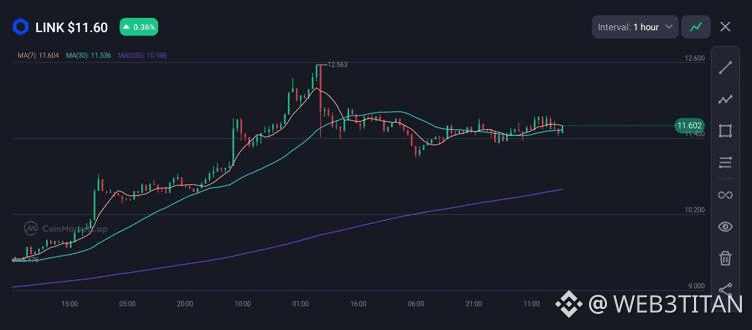
LINK is holding strong after a solid run, currently trading at $11.60 with a mild +0.36% move.
Price climbed aggressively from the $9.476 area to a high of $12.563 before cooling off. It is now consolidating in the upper range.
Bias: UPTREND (LONG)
Why:
The overall structure remains bullish with higher highs from the base. The current pullback looks corrective rather than a breakdown, and price is still holding well above the prior low zone.
Entry: $11.40 – $11.65
Stop Loss: $10.90
Take Profits
TP1: $12.20
TP2: $12.80
TP3: $13.50 – $14.20
One feature I like exploring when the market is active is liquidity provision on @stonfi . Instead of only waiting for $LINK or another asset to move, liquidity providers can supply assets to eligible pools and potentially earn from the trading activity generated by those pools. It gives your capital a productive role while helping maintain the liquidity that traders rely on for on chain swaps.
$LINK
#BitcoinOpenInterestFallsToTwoMonthLow
LINK is holding strong after a solid run, currently trading at $11.60 with a mild +0.36% move.
Price climbed aggressively from the $9.476 area to a high of $12.563 before cooling off. It is now consolidating in the upper range.
Bias: UPTREND (LONG)
Why:
The overall structure remains bullish with higher highs from the base. The current pullback looks corrective rather than a breakdown, and price is still holding well above the prior low zone.
Entry: $11.40 – $11.65
Stop Loss: $10.90
Take Profits
TP1: $12.20
TP2: $12.80
TP3: $13.50 – $14.20
One feature I like exploring when the market is active is liquidity provision on @STONfi DEX . Instead of only waiting for $LINK or another asset to move, liquidity providers can supply assets to eligible pools and potentially earn from the trading activity generated by those pools. It gives your capital a productive role while helping maintain the liquidity that traders rely on for on chain swaps.
$LINK
#BitcoinOpenInterestFallsToTwoMonthLow
Price climbed aggressively from the $9.476 area to a high of $12.563 before cooling off. It is now consolidating in the upper range.
Bias: UPTREND (LONG)
Why:
The overall structure remains bullish with higher highs from the base. The current pullback looks corrective rather than a breakdown, and price is still holding well above the prior low zone.
Entry: $11.40 – $11.65
Stop Loss: $10.90
Take Profits
TP1: $12.20
TP2: $12.80
TP3: $13.50 – $14.20
One feature I like exploring when the market is active is liquidity provision on @STONfi DEX . Instead of only waiting for $LINK or another asset to move, liquidity providers can supply assets to eligible pools and potentially earn from the trading activity generated by those pools. It gives your capital a productive role while helping maintain the liquidity that traders rely on for on chain swaps.
$LINK
#BitcoinOpenInterestFallsToTwoMonthLow
116
·
--
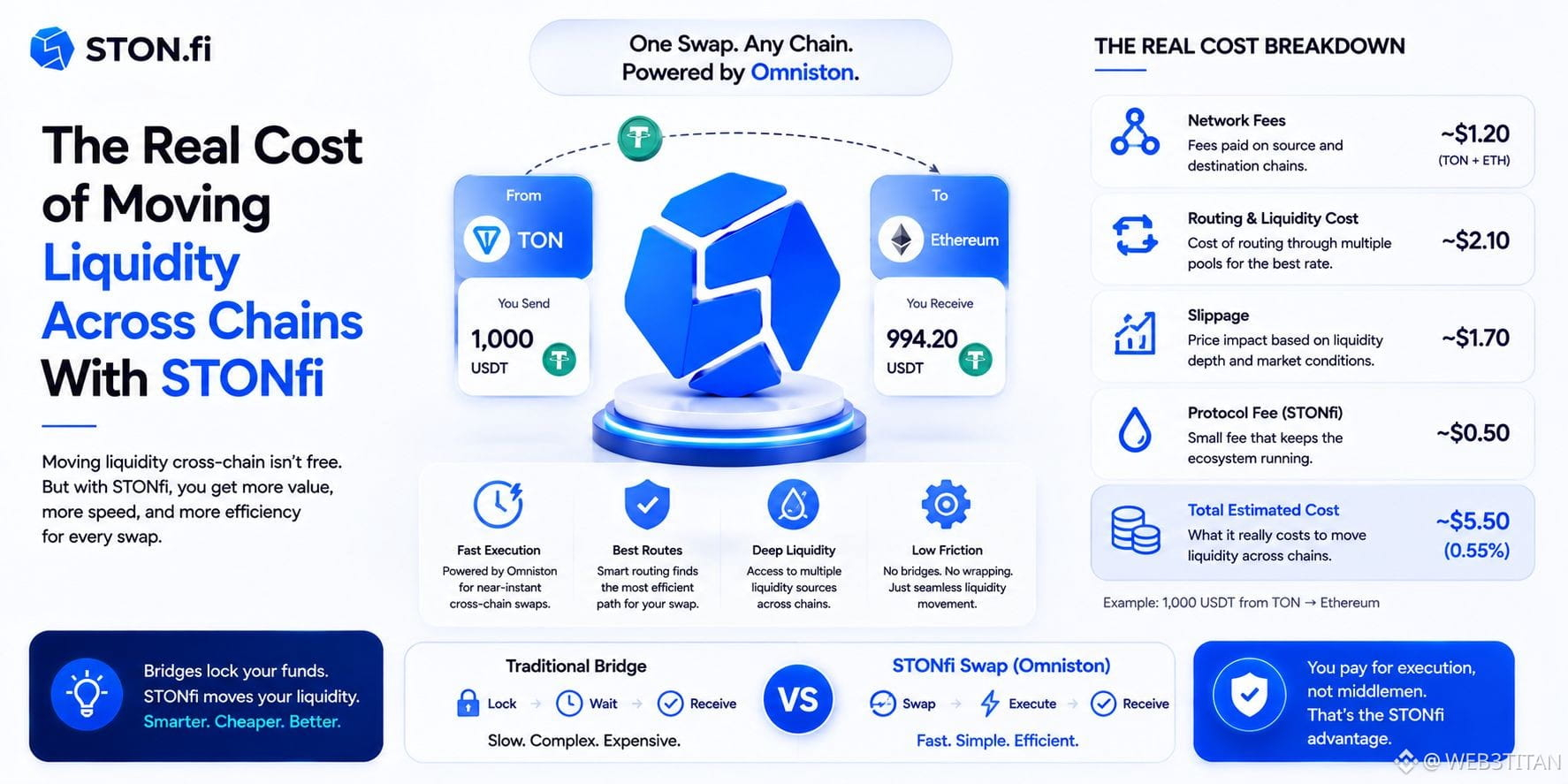
THE REAL COST OF MOVING LIQUIDITY ACROSS CHAINS WITH STONfi
Moving value between networks can look simple from the user's side, but several costs can affect the final amount you receive.
SOURCE GAS
The first cost can come from the network you're sending from.
You may need to pay the source chain's transaction fee to approve or initiate the swap. This is usually the easiest cost to notice.
DESTINATION GAS
The destination side can also require network resources.
Depending on how the swap is executed, the cost of completing the transaction on the receiving network needs to be covered somewhere in the process.
PROTOCOL COSTS
There can also be fees connected to the service or execution route.
I always check the final quote rather than assuming the network gas fee is the only cost involved.
PRICE IMPACT
This is where liquidity becomes important.
If there isn't enough liquidity for your trade, your order can move the available price and reduce the amount you receive.
Larger trades can make this effect more noticeable.
RESOLVER PRICING
With Omniston, resolvers can compete to execute cross-chain orders.
Their quotes can reflect the liquidity and execution costs involved in fulfilling the order. This competition can help find a more efficient price, but the available quotes can change with market conditions.
OPPORTUNITY COST
This is the cost I used to overlook.
If my funds are sitting in one network or liquidity position while I wait for another opportunity, I'm potentially giving up other ways those funds could be used.
So the real question isn't just "How much does this swap cost?"
It's "How much value will I actually receive after every cost is considered?"
MY TAKE
When moving liquidity across chains, I now look beyond the headline gas fee.
I check the source gas, destination costs, protocol fees, price impact, resolver quote, and what I could be doing with the funds instead.
That gives me a much clearer picture of the true cost of moving value, rather than judging the swap only by the first fee I see.
#BitcoinStrongestWeekSinceMarch2023 $XRP
THE REAL COST OF MOVING LIQUIDITY ACROSS CHAINS WITH STONfi
Moving value between networks can look simple from the user's side, but several costs can affect the final amount you receive.
SOURCE GAS
The first cost can come from the network you're sending from.
You may need to pay the source chain's transaction fee to approve or initiate the swap. This is usually the easiest cost to notice.
DESTINATION GAS
The destination side can also require network resources.
Depending on how the swap is executed, the cost of completing the transaction on the receiving network needs to be covered somewhere in the process.
PROTOCOL COSTS
There can also be fees connected to the service or execution route.
I always check the final quote rather than assuming the network gas fee is the only cost involved.
PRICE IMPACT
This is where liquidity becomes important.
If there isn't enough liquidity for your trade, your order can move the available price and reduce the amount you receive.
Larger trades can make this effect more noticeable.
RESOLVER PRICING
With Omniston, resolvers can compete to execute cross-chain orders.
Their quotes can reflect the liquidity and execution costs involved in fulfilling the order. This competition can help find a more efficient price, but the available quotes can change with market conditions.
OPPORTUNITY COST
This is the cost I used to overlook.
If my funds are sitting in one network or liquidity position while I wait for another opportunity, I'm potentially giving up other ways those funds could be used.
So the real question isn't just "How much does this swap cost?"
It's "How much value will I actually receive after every cost is considered?"
MY TAKE
When moving liquidity across chains, I now look beyond the headline gas fee.
I check the source gas, destination costs, protocol fees, price impact, resolver quote, and what I could be doing with the funds instead.
That gives me a much clearer picture of the true cost of moving value, rather than judging the swap only by the first fee I see.
#BitcoinStrongestWeekSinceMarch2023 $XRP
Moving value between networks can look simple from the user's side, but several costs can affect the final amount you receive.
SOURCE GAS
The first cost can come from the network you're sending from.
You may need to pay the source chain's transaction fee to approve or initiate the swap. This is usually the easiest cost to notice.
DESTINATION GAS
The destination side can also require network resources.
Depending on how the swap is executed, the cost of completing the transaction on the receiving network needs to be covered somewhere in the process.
PROTOCOL COSTS
There can also be fees connected to the service or execution route.
I always check the final quote rather than assuming the network gas fee is the only cost involved.
PRICE IMPACT
This is where liquidity becomes important.
If there isn't enough liquidity for your trade, your order can move the available price and reduce the amount you receive.
Larger trades can make this effect more noticeable.
RESOLVER PRICING
With Omniston, resolvers can compete to execute cross-chain orders.
Their quotes can reflect the liquidity and execution costs involved in fulfilling the order. This competition can help find a more efficient price, but the available quotes can change with market conditions.
OPPORTUNITY COST
This is the cost I used to overlook.
If my funds are sitting in one network or liquidity position while I wait for another opportunity, I'm potentially giving up other ways those funds could be used.
So the real question isn't just "How much does this swap cost?"
It's "How much value will I actually receive after every cost is considered?"
MY TAKE
When moving liquidity across chains, I now look beyond the headline gas fee.
I check the source gas, destination costs, protocol fees, price impact, resolver quote, and what I could be doing with the funds instead.
That gives me a much clearer picture of the true cost of moving value, rather than judging the swap only by the first fee I see.
#BitcoinStrongestWeekSinceMarch2023 $XRP
81
·
--
I COMPARED RFQ, HTLC AND ATOMIC SWAPS THROUGH STONfi
I wanted to understand what happens behind a cross-chain swap, so I looked at three important mechanisms: RFQ, HTLC, and atomic swaps. Each solves a different part of the problem.
RFQ: FINDING THE BEST EXECUTION
RFQ means Request for Quote.
Instead of taking liquidity from one source, Omniston can ask multiple resolvers for quotes. They compete to execute the order, helping the system find a more competitive price.
The trade-off is that execution depends on available resolver liquidity.
HTLC: SECURE SETTLEMENT
HTLC stands for Hashed Timelock Contract.
It uses a cryptographic secret and time limits to coordinate transactions between networks. If the required conditions aren't met, the timelock helps protect the funds.
The trade-off is that HTLC settlement is more technically complex.
ATOMIC SWAPS: ALL OR NOTHING
Atomic swaps are built around a simple idea: both sides complete successfully, or the swap doesn't complete.
This reduces the risk of one party delivering an asset while the other side fails.
WHY OMNISTON USES BOTH
This is the part I found most interesting.
RFQ focuses on price and execution. HTLC focuses on settlement.
Omniston combines these mechanisms so resolvers can compete for orders while the settlement process is coordinated securely across networks.
MY TAKE
I now see these as different pieces of the same system:
RFQ = better price discovery
HTLC = safer cross-chain settlement
Atomic execution = protection against incomplete swaps
The user doesn't need to manage these mechanisms manually. Omniston handles the complexity behind the simple swap experience.
$ZRO $PUMP
#BPIUrgesFinCENExpandStablecoinIDRulesToSecondaryMarkets #BitcoinStrongestWeekSinceMarch2023
I COMPARED RFQ, HTLC AND ATOMIC SWAPS THROUGH STONfi
I wanted to understand what happens behind a cross-chain swap, so I looked at three important mechanisms: RFQ, HTLC, and atomic swaps. Each solves a different part of the problem.
RFQ: FINDING THE BEST EXECUTION
RFQ means Request for Quote.
Instead of taking liquidity from one source, Omniston can ask multiple resolvers for quotes. They compete to execute the order, helping the system find a more competitive price.
The trade-off is that execution depends on available resolver liquidity.
HTLC: SECURE SETTLEMENT
HTLC stands for Hashed Timelock Contract.
It uses a cryptographic secret and time limits to coordinate transactions between networks. If the required conditions aren't met, the timelock helps protect the funds.
The trade-off is that HTLC settlement is more technically complex.
ATOMIC SWAPS: ALL OR NOTHING
Atomic swaps are built around a simple idea: both sides complete successfully, or the swap doesn't complete.
This reduces the risk of one party delivering an asset while the other side fails.
WHY OMNISTON USES BOTH
This is the part I found most interesting.
RFQ focuses on price and execution. HTLC focuses on settlement.
Omniston combines these mechanisms so resolvers can compete for orders while the settlement process is coordinated securely across networks.
MY TAKE
I now see these as different pieces of the same system:
RFQ = better price discovery
HTLC = safer cross-chain settlement
Atomic execution = protection against incomplete swaps
The user doesn't need to manage these mechanisms manually. Omniston handles the complexity behind the simple swap experience.
$ZRO $PUMP
#BPIUrgesFinCENExpandStablecoinIDRulesToSecondaryMarkets #BitcoinStrongestWeekSinceMarch2023
I wanted to understand what happens behind a cross-chain swap, so I looked at three important mechanisms: RFQ, HTLC, and atomic swaps. Each solves a different part of the problem.
RFQ: FINDING THE BEST EXECUTION
RFQ means Request for Quote.
Instead of taking liquidity from one source, Omniston can ask multiple resolvers for quotes. They compete to execute the order, helping the system find a more competitive price.
The trade-off is that execution depends on available resolver liquidity.
HTLC: SECURE SETTLEMENT
HTLC stands for Hashed Timelock Contract.
It uses a cryptographic secret and time limits to coordinate transactions between networks. If the required conditions aren't met, the timelock helps protect the funds.
The trade-off is that HTLC settlement is more technically complex.
ATOMIC SWAPS: ALL OR NOTHING
Atomic swaps are built around a simple idea: both sides complete successfully, or the swap doesn't complete.
This reduces the risk of one party delivering an asset while the other side fails.
WHY OMNISTON USES BOTH
This is the part I found most interesting.
RFQ focuses on price and execution. HTLC focuses on settlement.
Omniston combines these mechanisms so resolvers can compete for orders while the settlement process is coordinated securely across networks.
MY TAKE
I now see these as different pieces of the same system:
RFQ = better price discovery
HTLC = safer cross-chain settlement
Atomic execution = protection against incomplete swaps
The user doesn't need to manage these mechanisms manually. Omniston handles the complexity behind the simple swap experience.
$ZRO $PUMP
#BPIUrgesFinCENExpandStablecoinIDRulesToSecondaryMarkets #BitcoinStrongestWeekSinceMarch2023
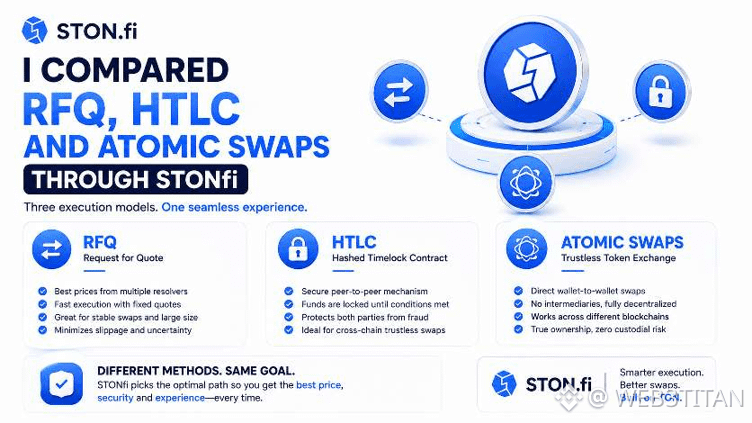
136
·
--
BTC is in a strong uptrend, currently trading at $76,254 after a mild -1.13% pullback from the $79,463 high.
Price surged aggressively higher before the current correction. Despite the pullback, it remains well above the prior base.
Bias: UPTREND (LONG)
Why:
The rally was impulsive and sustained. The current pullback looks corrective within the larger uptrend rather than a reversal, as long as price holds the higher support zone.
Entry: $75,800 – $76,400
Stop Loss: $74,500
Take Profits
TP1: $78,000
TP2: $79,500
TP3: $81,000 – $83,000
When BTC is moving strongly, execution quality becomes even more important because prices can shift quickly between levels. @stonfi ’s Omniston focuses on finding and coordinating liquidity across different sources, helping users access more competitive swap routes instead of depending on a single pool. For traders rotating between supported assets, that broader liquidity approach can make swaps more efficient when market momentum is accelerating.
$BTC
#BTC #AnthropicIPOCouldTopSpaceXRecordReportsSay
BTC is in a strong uptrend, currently trading at $76,254 after a mild -1.13% pullback from the $79,463 high.
Price surged aggressively higher before the current correction. Despite the pullback, it remains well above the prior base.
Bias: UPTREND (LONG)
Why:
The rally was impulsive and sustained. The current pullback looks corrective within the larger uptrend rather than a reversal, as long as price holds the higher support zone.
Entry: $75,800 – $76,400
Stop Loss: $74,500
Take Profits
TP1: $78,000
TP2: $79,500
TP3: $81,000 – $83,000
When BTC is moving strongly, execution quality becomes even more important because prices can shift quickly between levels. @STONfi DEX ’s Omniston focuses on finding and coordinating liquidity across different sources, helping users access more competitive swap routes instead of depending on a single pool. For traders rotating between supported assets, that broader liquidity approach can make swaps more efficient when market momentum is accelerating.
$BTC
#BTC #AnthropicIPOCouldTopSpaceXRecordReportsSay
Price surged aggressively higher before the current correction. Despite the pullback, it remains well above the prior base.
Bias: UPTREND (LONG)
Why:
The rally was impulsive and sustained. The current pullback looks corrective within the larger uptrend rather than a reversal, as long as price holds the higher support zone.
Entry: $75,800 – $76,400
Stop Loss: $74,500
Take Profits
TP1: $78,000
TP2: $79,500
TP3: $81,000 – $83,000
When BTC is moving strongly, execution quality becomes even more important because prices can shift quickly between levels. @STONfi DEX ’s Omniston focuses on finding and coordinating liquidity across different sources, helping users access more competitive swap routes instead of depending on a single pool. For traders rotating between supported assets, that broader liquidity approach can make swaps more efficient when market momentum is accelerating.
$BTC
#BTC #AnthropicIPOCouldTopSpaceXRecordReportsSay
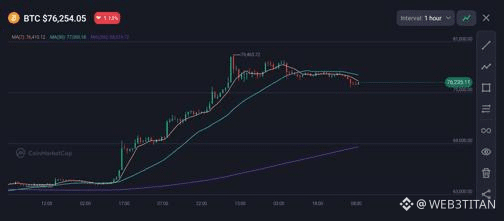
1
1
131
·
--
ETH is in a strong uptrend, currently trading at $2,405.80 after a mild -0.79% pullback from the $2,545.89 high.
Price surged aggressively higher before the current correction. Despite the pullback, it remains well above the prior base.
Bias: UPTREND (LONG)
Why:
The rally was impulsive and sustained. The current pullback looks corrective within the larger uptrend rather than a reversal, as long as price holds the higher support zone.
Entry: $2,380 – $2,420
Stop Loss: $2,280
Take Profits
TP1: $2,500
TP2: $2,600
TP3: $2,700 – $2,800
When ETH is holding a strong structure like this, I also look at cross chain flexibility instead of keeping all my activity on one network.@stonfi ’s cross chain swap infrastructure makes it easier to move supported assets between ecosystems through coordinated execution. That can be useful when opportunities appear on another chain and you want to reposition capital without treating every network as an isolated market.
$ETH
#AnthropicIPOCouldTopSpaceXRecordReportsSay
ETH is in a strong uptrend, currently trading at $2,405.80 after a mild -0.79% pullback from the $2,545.89 high.
Price surged aggressively higher before the current correction. Despite the pullback, it remains well above the prior base.
Bias: UPTREND (LONG)
Why:
The rally was impulsive and sustained. The current pullback looks corrective within the larger uptrend rather than a reversal, as long as price holds the higher support zone.
Entry: $2,380 – $2,420
Stop Loss: $2,280
Take Profits
TP1: $2,500
TP2: $2,600
TP3: $2,700 – $2,800
When ETH is holding a strong structure like this, I also look at cross chain flexibility instead of keeping all my activity on one network.@STONfi DEX ’s cross chain swap infrastructure makes it easier to move supported assets between ecosystems through coordinated execution. That can be useful when opportunities appear on another chain and you want to reposition capital without treating every network as an isolated market.
$ETH
#AnthropicIPOCouldTopSpaceXRecordReportsSay
Price surged aggressively higher before the current correction. Despite the pullback, it remains well above the prior base.
Bias: UPTREND (LONG)
Why:
The rally was impulsive and sustained. The current pullback looks corrective within the larger uptrend rather than a reversal, as long as price holds the higher support zone.
Entry: $2,380 – $2,420
Stop Loss: $2,280
Take Profits
TP1: $2,500
TP2: $2,600
TP3: $2,700 – $2,800
When ETH is holding a strong structure like this, I also look at cross chain flexibility instead of keeping all my activity on one network.@STONfi DEX ’s cross chain swap infrastructure makes it easier to move supported assets between ecosystems through coordinated execution. That can be useful when opportunities appear on another chain and you want to reposition capital without treating every network as an isolated market.
$ETH
#AnthropicIPOCouldTopSpaceXRecordReportsSay
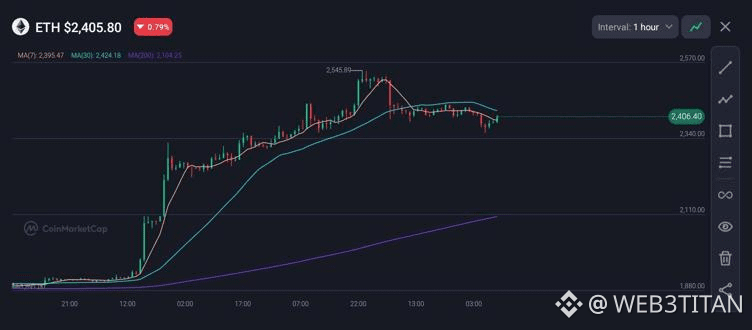
1
1
96
·
--
PUMP is in a strong uptrend, currently trading at $0.005134 after climbing +12.79% and testing the $0.005140 high.
Price has been making consistent higher highs from the $0.002176 base with strong momentum into the current levels.
Bias: UPTREND (LONG)
Why:
The rally has been sustained and impulsive. Price is holding near the recent highs with limited rejection so far, keeping the bullish structure firmly intact.
Entry: $0.005000 – $0.005150
Stop Loss: $0.004600
Take Profits
TP1: $0.005400
TP2: $0.005700
TP3: $0.006000 – $0.006500
A strong trend like $PUMP can also create opportunities beyond simply buying and holding. With @stonfi farming, eligible liquidity positions can earn additional rewards while supplying liquidity to active trading pairs. I like the idea of putting part of my capital to work this way, especially when market activity is increasing and liquidity demand is rising.
$PUMP
#AnthropicIPOCouldTopSpaceXRecordReportsSay
PUMP is in a strong uptrend, currently trading at $0.005134 after climbing +12.79% and testing the $0.005140 high.
Price has been making consistent higher highs from the $0.002176 base with strong momentum into the current levels.
Bias: UPTREND (LONG)
Why:
The rally has been sustained and impulsive. Price is holding near the recent highs with limited rejection so far, keeping the bullish structure firmly intact.
Entry: $0.005000 – $0.005150
Stop Loss: $0.004600
Take Profits
TP1: $0.005400
TP2: $0.005700
TP3: $0.006000 – $0.006500
A strong trend like $PUMP can also create opportunities beyond simply buying and holding. With @STONfi DEX farming, eligible liquidity positions can earn additional rewards while supplying liquidity to active trading pairs. I like the idea of putting part of my capital to work this way, especially when market activity is increasing and liquidity demand is rising.
$PUMP
#AnthropicIPOCouldTopSpaceXRecordReportsSay
Price has been making consistent higher highs from the $0.002176 base with strong momentum into the current levels.
Bias: UPTREND (LONG)
Why:
The rally has been sustained and impulsive. Price is holding near the recent highs with limited rejection so far, keeping the bullish structure firmly intact.
Entry: $0.005000 – $0.005150
Stop Loss: $0.004600
Take Profits
TP1: $0.005400
TP2: $0.005700
TP3: $0.006000 – $0.006500
A strong trend like $PUMP can also create opportunities beyond simply buying and holding. With @STONfi DEX farming, eligible liquidity positions can earn additional rewards while supplying liquidity to active trading pairs. I like the idea of putting part of my capital to work this way, especially when market activity is increasing and liquidity demand is rising.
$PUMP
#AnthropicIPOCouldTopSpaceXRecordReportsSay
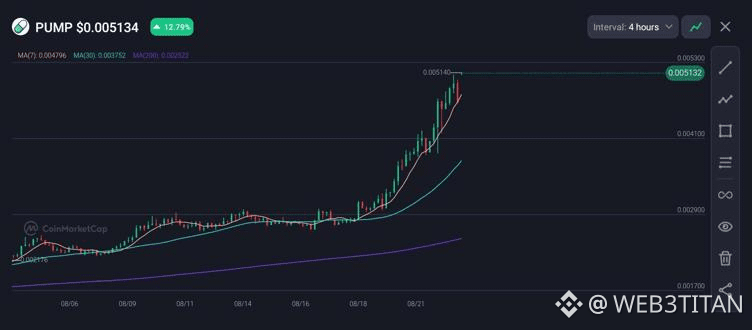
220
Войдите, чтобы посмотреть больше материала
Присоединяйтесь к пользователям криптовалют по всему миру на Binance Square
⚡️ Получайте новейшую и полезную информацию о криптоактивах.
💬 Нам доверяет крупнейшая в мире криптобиржа.
👍 Получите достоверные аналитические данные от верифицированных создателей контента.
Эл. почта/номер телефона