

Devil9
10.6k Публикации

Devil9
 Square Verified
Отправить жалобу
Заблокировать пользователя
🤝Success Is Not Final,Failure Is Not Fatal,It Is The Courage To Continue That Counts.
Трейдер с регулярными сделками
5 г
467 подписок(и/а)
40.4K+ подписчиков(а)
20.6K+ понравилось
Посты
Все
Цитирования
Видео
Активно
·
--
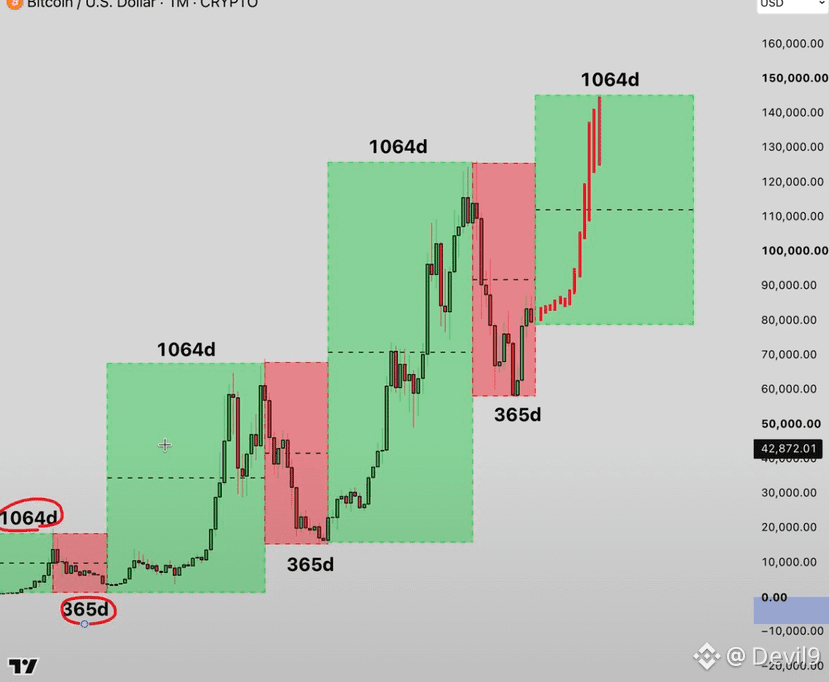
Bitcoin has been moving in remarkably consistent cycles.
Looking at the monthly chart:
• 1064-day periods (green boxes) have repeatedly marked the major expansion phases
• 365-day periods (red boxes) have consistently marked the major correction phases
This pattern has played out multiple times across the last decade.
We’re currently sitting near $42,800.
According to this historical structure, the next major expansion window is still ahead.
Cycles don’t repeat perfectly… but they often rhyme.
What do you think is this cycle different?
#Bitcoin #BTC
#Write2Earn
#TrendingTopic
Bitcoin has been moving in remarkably consistent cycles.
Looking at the monthly chart:
• 1064-day periods (green boxes) have repeatedly marked the major expansion phases
• 365-day periods (red boxes) have consistently marked the major correction phases
This pattern has played out multiple times across the last decade.
We’re currently sitting near $42,800.
According to this historical structure, the next major expansion window is still ahead.
Cycles don’t repeat perfectly… but they often rhyme.
What do you think is this cycle different?
#Bitcoin #BTC
#Write2Earn
#TrendingTopic
Looking at the monthly chart:
• 1064-day periods (green boxes) have repeatedly marked the major expansion phases
• 365-day periods (red boxes) have consistently marked the major correction phases
This pattern has played out multiple times across the last decade.
We’re currently sitting near $42,800.
According to this historical structure, the next major expansion window is still ahead.
Cycles don’t repeat perfectly… but they often rhyme.
What do you think is this cycle different?
#Bitcoin #BTC
#Write2Earn
#TrendingTopic
85
·
--
Massive buy orders appear below Bitcoin, but does this mean it won't continue to fall?
It is reported that $BTC has over $80 million in buy orders between $78,000–79,000.
Yesterday buying around 80K was filled, pushing the price to a brief rebound.
However, after the rebound the price started declining again indicating that spot demand may still be insufficient.
Remember: Limit orders do not equal real support. Large buy orders may be withdrawn or directly eaten up by selling.
If spot funds continue to stay out
Bitcoin still has the possibility of further downside
#Write2Earn
#TrendingTopic
Massive buy orders appear below Bitcoin, but does this mean it won't continue to fall?
It is reported that $BTC has over $80 million in buy orders between $78,000–79,000.
Yesterday buying around 80K was filled, pushing the price to a brief rebound.
However, after the rebound the price started declining again indicating that spot demand may still be insufficient.
Remember: Limit orders do not equal real support. Large buy orders may be withdrawn or directly eaten up by selling.
If spot funds continue to stay out
Bitcoin still has the possibility of further downside
#Write2Earn
#TrendingTopic
It is reported that $BTC has over $80 million in buy orders between $78,000–79,000.
Yesterday buying around 80K was filled, pushing the price to a brief rebound.
However, after the rebound the price started declining again indicating that spot demand may still be insufficient.
Remember: Limit orders do not equal real support. Large buy orders may be withdrawn or directly eaten up by selling.
If spot funds continue to stay out
Bitcoin still has the possibility of further downside
#Write2Earn
#TrendingTopic
1
242
·
--
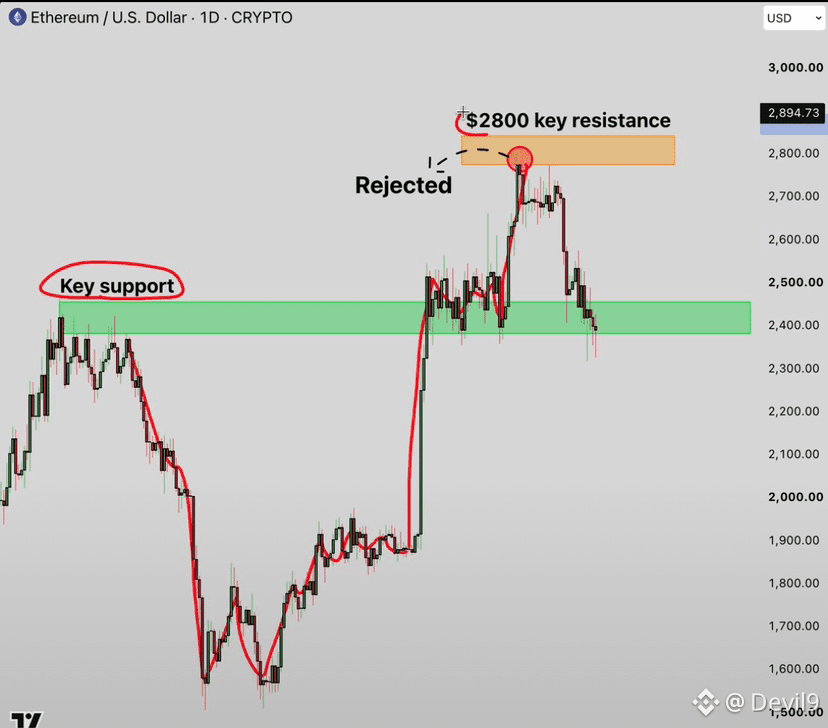
$2800 rejected hard Lost key support at $2400 Two scenarios from here:
Bounce off $2400 → retest $2800
Or break below → $2000 next stop
$ETH #Write2Earn #TrendingTopic
$2800 rejected hard Lost key support at $2400 Two scenarios from here:
Bounce off $2400 → retest $2800
Or break below → $2000 next stop
$ETH #Write2Earn #TrendingTopic
Bounce off $2400 → retest $2800
Or break below → $2000 next stop
$ETH #Write2Earn #TrendingTopic
1
1
271
·
--
Частичная правда
#nil $NIL @nillionnetwork
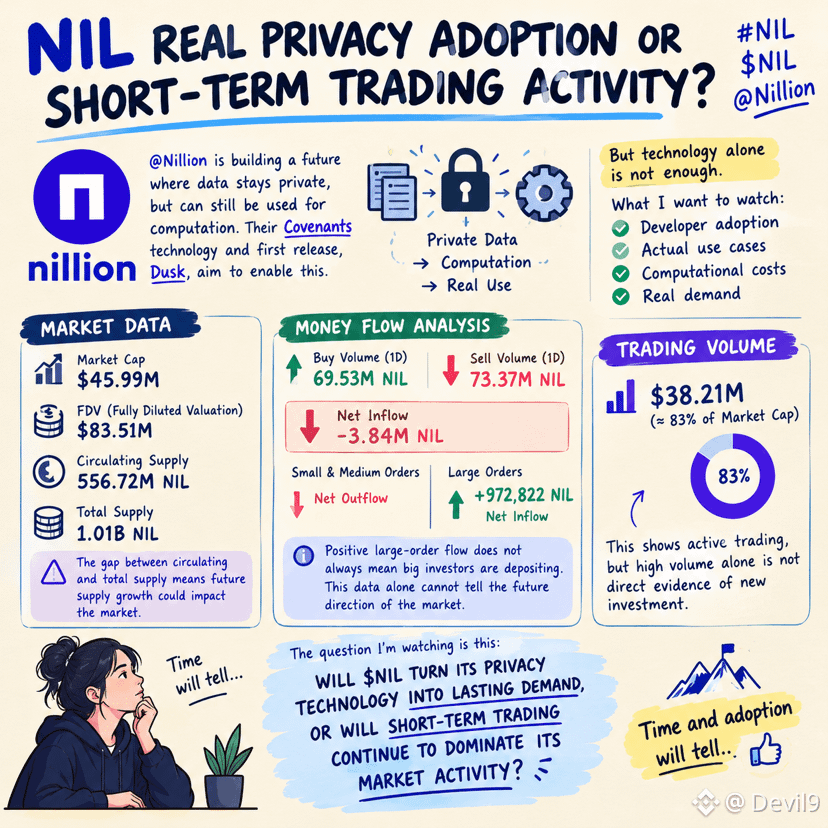
NIL REAL PRIVACY ADOPTION OR SHORT-TERM TRADING ACTIVITY?
Today I’ve been thinking about what really matters for $NIL beyond its price. @nillionnetwork is working toward something interesting: enabling computation on sensitive data without exposing the underlying information. Its Covenants technology and first release Dusk make this a project worth watching.
But technology alone does not guarantee adoption.Developer activity practical use cases computational costs, and real demand are the things I want to observe over time.
Looking at the market data Nil has a market cap of approximately $45.99M and an FDV of around $83.51M. With 556.72M NIL circulating against a total supply of 1.01B NIL future supply growth is something I believe deserves attention.
The money flow data also raises an interesting question.Daily buy volume stands at 69.53M NIL while sell volume is 73.37M NIL, resulting in a net outflow of approximately 3.84M NIL. Small and medium orders show net outflows while large orders record a positive inflow of about 972,822 NIL.
However, positive large-order flow does not automatically mean institutional accumulation.It is only one piece of market data, not proof of who is buying or what the market will do next.
Trading volume is approximately $38.21M, equivalent to roughly 83% of the market cap. That points to substantial trading activity, but high volume alone does not confirm sustained investment demand.
My takeaway is simple: I’m not ready to draw a firm conclusion yet. Nillion’s privacy-focused technology has potential, but its long-term value will depend on real adoption useful applications, token supply dynamics, and sustainable demand.
The question I’m watching is this:Will NIL turn its privacy technology into lasting demand, or will short-term trading continue to dominate its market activity?
Time and adoption will tell.
$NIL
#nil $NIL @Nillion
NIL REAL PRIVACY ADOPTION OR SHORT-TERM TRADING ACTIVITY?
Today I’ve been thinking about what really matters for $NIL beyond its price. @Nillion is working toward something interesting: enabling computation on sensitive data without exposing the underlying information. Its Covenants technology and first release Dusk make this a project worth watching.
But technology alone does not guarantee adoption.Developer activity practical use cases computational costs, and real demand are the things I want to observe over time.
Looking at the market data Nil has a market cap of approximately $45.99M and an FDV of around $83.51M. With 556.72M NIL circulating against a total supply of 1.01B NIL future supply growth is something I believe deserves attention.
The money flow data also raises an interesting question.Daily buy volume stands at 69.53M NIL while sell volume is 73.37M NIL, resulting in a net outflow of approximately 3.84M NIL. Small and medium orders show net outflows while large orders record a positive inflow of about 972,822 NIL.
However, positive large-order flow does not automatically mean institutional accumulation.It is only one piece of market data, not proof of who is buying or what the market will do next.
Trading volume is approximately $38.21M, equivalent to roughly 83% of the market cap. That points to substantial trading activity, but high volume alone does not confirm sustained investment demand.
My takeaway is simple: I’m not ready to draw a firm conclusion yet. Nillion’s privacy-focused technology has potential, but its long-term value will depend on real adoption useful applications, token supply dynamics, and sustainable demand.
The question I’m watching is this:Will NIL turn its privacy technology into lasting demand, or will short-term trading continue to dominate its market activity?
Time and adoption will tell.
$NIL
NIL REAL PRIVACY ADOPTION OR SHORT-TERM TRADING ACTIVITY?
Today I’ve been thinking about what really matters for $NIL beyond its price. @Nillion is working toward something interesting: enabling computation on sensitive data without exposing the underlying information. Its Covenants technology and first release Dusk make this a project worth watching.
But technology alone does not guarantee adoption.Developer activity practical use cases computational costs, and real demand are the things I want to observe over time.
Looking at the market data Nil has a market cap of approximately $45.99M and an FDV of around $83.51M. With 556.72M NIL circulating against a total supply of 1.01B NIL future supply growth is something I believe deserves attention.
The money flow data also raises an interesting question.Daily buy volume stands at 69.53M NIL while sell volume is 73.37M NIL, resulting in a net outflow of approximately 3.84M NIL. Small and medium orders show net outflows while large orders record a positive inflow of about 972,822 NIL.
However, positive large-order flow does not automatically mean institutional accumulation.It is only one piece of market data, not proof of who is buying or what the market will do next.
Trading volume is approximately $38.21M, equivalent to roughly 83% of the market cap. That points to substantial trading activity, but high volume alone does not confirm sustained investment demand.
My takeaway is simple: I’m not ready to draw a firm conclusion yet. Nillion’s privacy-focused technology has potential, but its long-term value will depend on real adoption useful applications, token supply dynamics, and sustainable demand.
The question I’m watching is this:Will NIL turn its privacy technology into lasting demand, or will short-term trading continue to dominate its market activity?
Time and adoption will tell.
$NIL
7
16
670
·
--
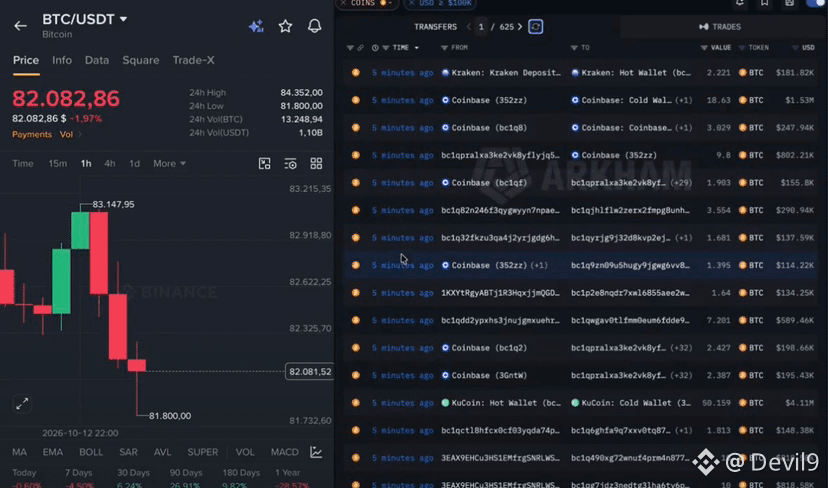
Huge whales are selling MILLIONS of crypto right now$BTC just dumped below $82,000 and $ETH dropped to $2,400
Something bad is happening
$BTC
{future}(BTCUSDT)
#Write2Earn
#TrendingTopic
Huge whales are selling MILLIONS of crypto right now$BTC just dumped below $82,000 and $ETH dropped to $2,400
Something bad is happening
$BTC
#Write2Earn
#TrendingTopic
Something bad is happening
$BTC
#Write2Earn
#TrendingTopic
3
175
·
--
Hey everyone! 🖐️
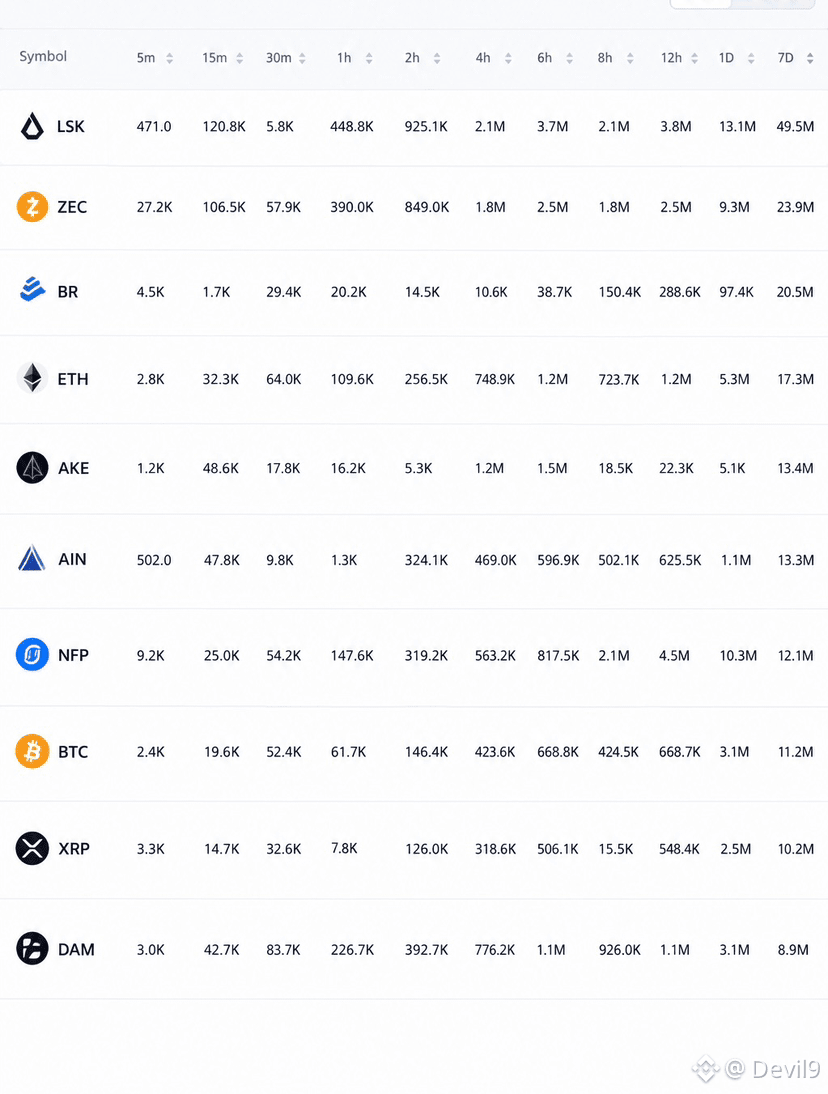
Different coins are showing different levels of money flow across multiple timeframes, from 5 minutes to 7 days.
By tracking these flows, we can identify which coins are attracting more activity, where liquidity is building up, and which assets deserve closer attention.
How to use this data for trading🤝
Short timeframes (5m–30m): Monitor short-term momentum and sudden changes in money flow.
Medium timeframes (1h–12h): Look for developing trends and increasing market activity.
Longer timeframes (1D–7D): Identify coins with sustained liquidity and stronger market participation.
The key is to compare multiple timeframes instead of relying on just one number. Combine this data with price action, support and resistance, and volume confirmation before making a trade.
Remember, high money flow doesn’t automatically mean price will go up. Always manage your risk and make your own trading decisions.
Follow the money flow. Study the timeframes. Trade with a plan.
#Write2Earn
#TrendingTopic
$LSK
$ZEC
{future}(ZECUSDT)
{future}(LSKUSDT)
Hey everyone! 🖐️
Different coins are showing different levels of money flow across multiple timeframes, from 5 minutes to 7 days.
By tracking these flows, we can identify which coins are attracting more activity, where liquidity is building up, and which assets deserve closer attention.
How to use this data for trading🤝
Short timeframes (5m–30m): Monitor short-term momentum and sudden changes in money flow.
Medium timeframes (1h–12h): Look for developing trends and increasing market activity.
Longer timeframes (1D–7D): Identify coins with sustained liquidity and stronger market participation.
The key is to compare multiple timeframes instead of relying on just one number. Combine this data with price action, support and resistance, and volume confirmation before making a trade.
Remember, high money flow doesn’t automatically mean price will go up. Always manage your risk and make your own trading decisions.
Follow the money flow. Study the timeframes. Trade with a plan.
#Write2Earn
#TrendingTopic
$LSK
$ZEC
Different coins are showing different levels of money flow across multiple timeframes, from 5 minutes to 7 days.
By tracking these flows, we can identify which coins are attracting more activity, where liquidity is building up, and which assets deserve closer attention.
How to use this data for trading🤝
Short timeframes (5m–30m): Monitor short-term momentum and sudden changes in money flow.
Medium timeframes (1h–12h): Look for developing trends and increasing market activity.
Longer timeframes (1D–7D): Identify coins with sustained liquidity and stronger market participation.
The key is to compare multiple timeframes instead of relying on just one number. Combine this data with price action, support and resistance, and volume confirmation before making a trade.
Remember, high money flow doesn’t automatically mean price will go up. Always manage your risk and make your own trading decisions.
Follow the money flow. Study the timeframes. Trade with a plan.
#Write2Earn
#TrendingTopic
$LSK
$ZEC
1
931
·
--
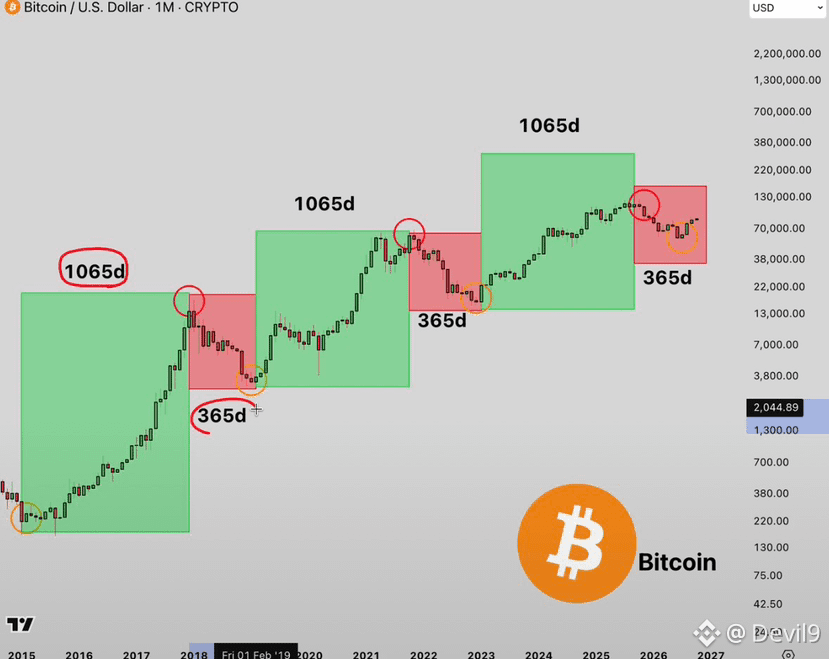
Every crypto cycle follows one pattern
2013–2015:
Bear phase: 406
Bull phase: 1068
2017–2018:
Bear phase: 363
Bull phase: 1061
2021–2022:
Bear phase: 376
Bull phase: 1050
2025–2026:
Bear phase: We are on day 365
1,065 days up. 365 days down. Never missed.
Now we're at the end of the bear phase
#Write2Earn
#TrendingTopic
$BTC
{future}(BTCUSDT)
Every crypto cycle follows one pattern
2013–2015:
Bear phase: 406
Bull phase: 1068
2017–2018:
Bear phase: 363
Bull phase: 1061
2021–2022:
Bear phase: 376
Bull phase: 1050
2025–2026:
Bear phase: We are on day 365
1,065 days up. 365 days down. Never missed.
Now we're at the end of the bear phase
#Write2Earn
#TrendingTopic
$BTC
2013–2015:
Bear phase: 406
Bull phase: 1068
2017–2018:
Bear phase: 363
Bull phase: 1061
2021–2022:
Bear phase: 376
Bull phase: 1050
2025–2026:
Bear phase: We are on day 365
1,065 days up. 365 days down. Never missed.
Now we're at the end of the bear phase
#Write2Earn
#TrendingTopic
$BTC
3
27
17.2k
·
--
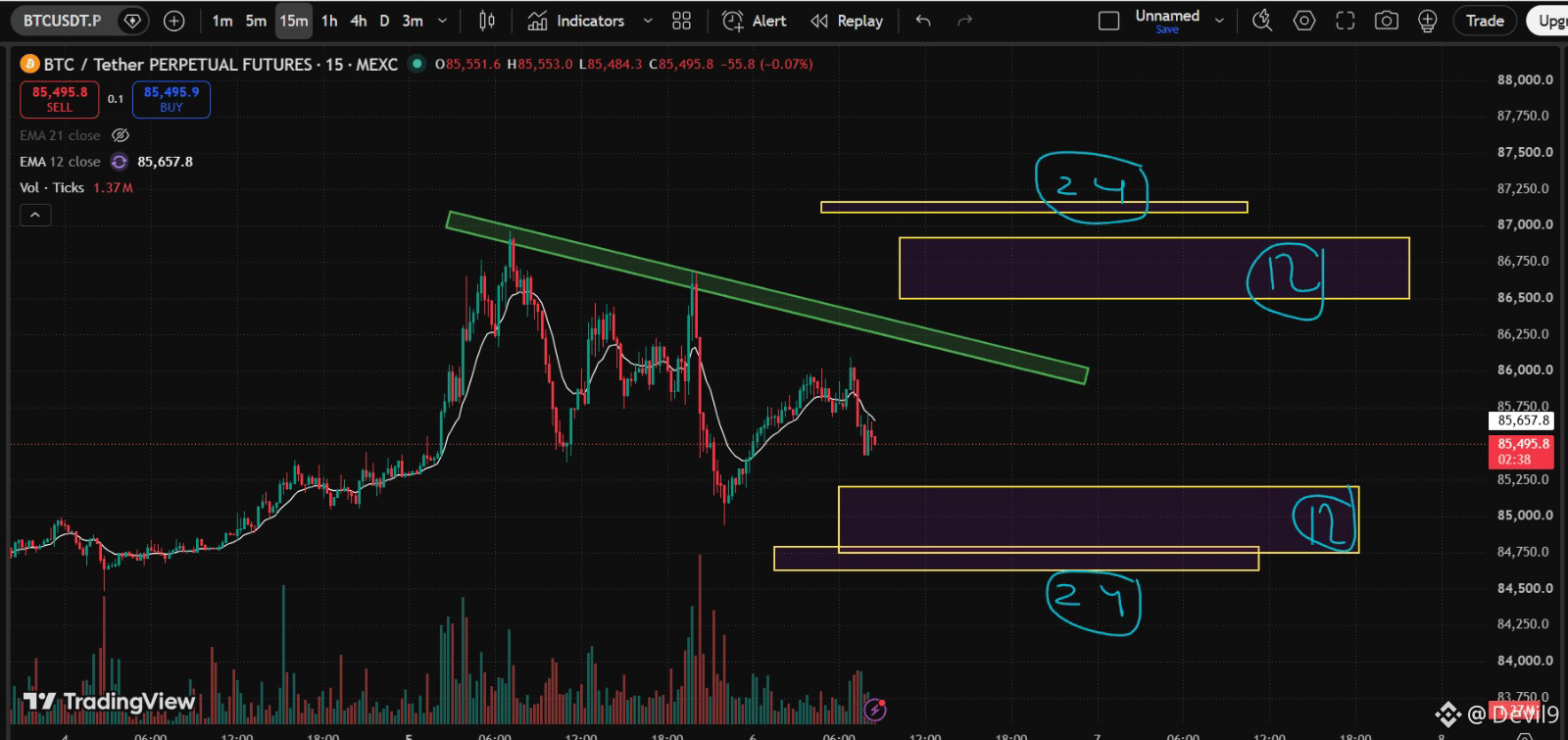
BTC Liquidity Map The Levels I’m Watching
Looking at the 15M BTC chart, the liquidity picture becomes interesting when I combine the 12H and 24H liquidity levels.
12H Liquidity
Up: $35M
Down: $40M
24H Liquidity
Up: $70M
Down: $62M
So the bigger picture shows heavy liquidity on both sides.
Upside: $35M + $70M = $105M liquidity
Downside: $40M + $62M = $102M liquidity
That makes both directions important.
If BTC breaks and holds above the $86.5K–$86.9K zone, the next liquidity area around $87.1K–$87.2K could become the target.
But if price loses the $85K area, the lower liquidity around $84.6K–$84.8K becomes important.
For me the key question isn’t simply up or down.It’s which liquidity gets taken first and whether BTC can hold the level after the sweep.
I’m watching the reaction, not chasing the move.
#TrendingTopic
#Write2Earn
$BTC
{future}(BTCUSDT)
BTC Liquidity Map The Levels I’m Watching
Looking at the 15M BTC chart, the liquidity picture becomes interesting when I combine the 12H and 24H liquidity levels.
12H Liquidity
Up: $35M
Down: $40M
24H Liquidity
Up: $70M
Down: $62M
So the bigger picture shows heavy liquidity on both sides.
Upside: $35M + $70M = $105M liquidity
Downside: $40M + $62M = $102M liquidity
That makes both directions important.
If BTC breaks and holds above the $86.5K–$86.9K zone, the next liquidity area around $87.1K–$87.2K could become the target.
But if price loses the $85K area, the lower liquidity around $84.6K–$84.8K becomes important.
For me the key question isn’t simply up or down.It’s which liquidity gets taken first and whether BTC can hold the level after the sweep.
I’m watching the reaction, not chasing the move.
#TrendingTopic
#Write2Earn
$BTC
Looking at the 15M BTC chart, the liquidity picture becomes interesting when I combine the 12H and 24H liquidity levels.
12H Liquidity
Up: $35M
Down: $40M
24H Liquidity
Up: $70M
Down: $62M
So the bigger picture shows heavy liquidity on both sides.
Upside: $35M + $70M = $105M liquidity
Downside: $40M + $62M = $102M liquidity
That makes both directions important.
If BTC breaks and holds above the $86.5K–$86.9K zone, the next liquidity area around $87.1K–$87.2K could become the target.
But if price loses the $85K area, the lower liquidity around $84.6K–$84.8K becomes important.
For me the key question isn’t simply up or down.It’s which liquidity gets taken first and whether BTC can hold the level after the sweep.
I’m watching the reaction, not chasing the move.
#TrendingTopic
#Write2Earn
$BTC
1
386
·
--
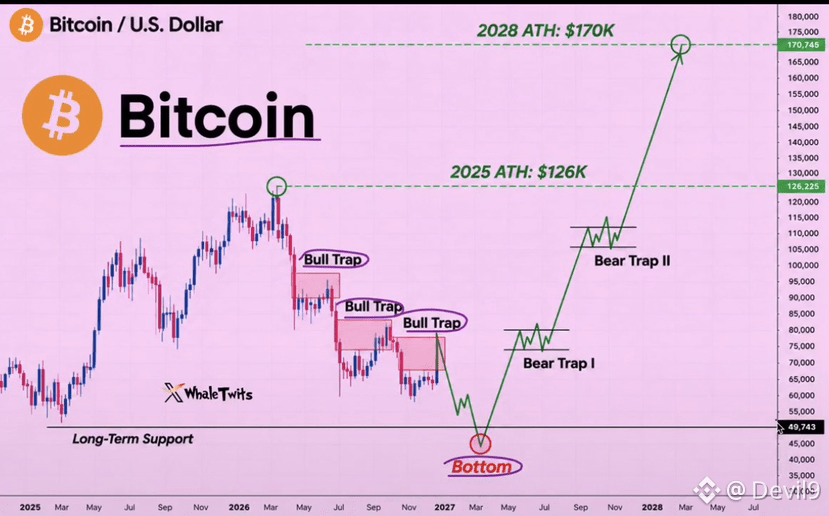
Analysis claims Bitcoin just lost the key support level that bulls couldn’t afford to lose
$80,000, considered that line drawn in the sand.BTC tried to reclaim it.The attempt failed.The analysis believes the final bull trap has ended, and what follows is a market trend no one wants to believe
$80K → $71K → $62K → $53K
But most people will misinterpret this.
The author doesn’t see a drop to $53,000 as a stronger bearish signal.
He views $53,000 as the point where the next major opportunity begins to emerge.
Because his bigger roadmap remains:
$53K → $100K+ First comes the liquidation. Then comes the panic.
Only then comes the opportunity everyone chases at the highs, desperately sought after.
Suggestion: Save this chart. When the timeline hits $30,000 with wailing and no one dares touch Bitcoin, come back and compare.The author publicly called the $17,000 bottom in 2022.
In 2025 he publicly called the $126,000 top.
When he starts buying again, he’ll announce it here first.
#Write2Earn
#TrendingTopic
$BTC
{future}(BTCUSDT)
Analysis claims Bitcoin just lost the key support level that bulls couldn’t afford to lose
$80,000, considered that line drawn in the sand.BTC tried to reclaim it.The attempt failed.The analysis believes the final bull trap has ended, and what follows is a market trend no one wants to believe
$80K → $71K → $62K → $53K
But most people will misinterpret this.
The author doesn’t see a drop to $53,000 as a stronger bearish signal.
He views $53,000 as the point where the next major opportunity begins to emerge.
Because his bigger roadmap remains:
$53K → $100K+ First comes the liquidation. Then comes the panic.
Only then comes the opportunity everyone chases at the highs, desperately sought after.
Suggestion: Save this chart. When the timeline hits $30,000 with wailing and no one dares touch Bitcoin, come back and compare.The author publicly called the $17,000 bottom in 2022.
In 2025 he publicly called the $126,000 top.
When he starts buying again, he’ll announce it here first.
#Write2Earn
#TrendingTopic
$BTC
$80,000, considered that line drawn in the sand.BTC tried to reclaim it.The attempt failed.The analysis believes the final bull trap has ended, and what follows is a market trend no one wants to believe
$80K → $71K → $62K → $53K
But most people will misinterpret this.
The author doesn’t see a drop to $53,000 as a stronger bearish signal.
He views $53,000 as the point where the next major opportunity begins to emerge.
Because his bigger roadmap remains:
$53K → $100K+ First comes the liquidation. Then comes the panic.
Only then comes the opportunity everyone chases at the highs, desperately sought after.
Suggestion: Save this chart. When the timeline hits $30,000 with wailing and no one dares touch Bitcoin, come back and compare.The author publicly called the $17,000 bottom in 2022.
In 2025 he publicly called the $126,000 top.
When he starts buying again, he’ll announce it here first.
#Write2Earn
#TrendingTopic
$BTC
2
4
7.5k
·
--
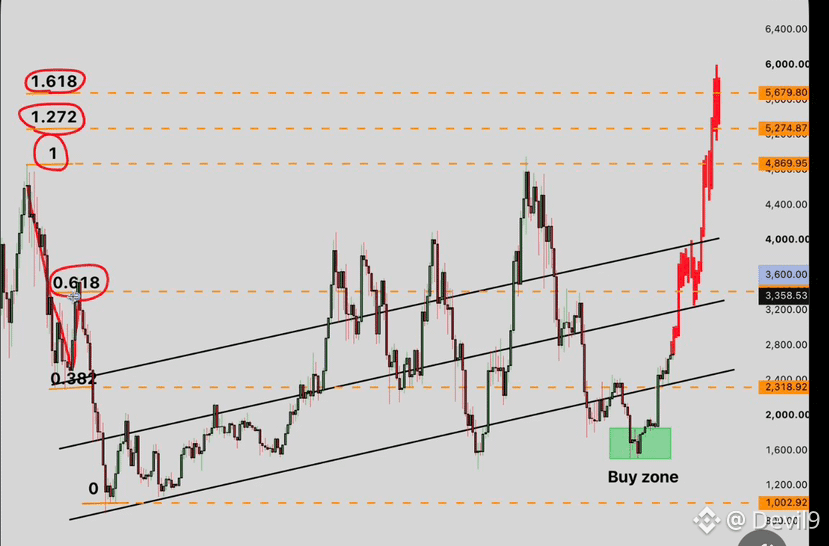
$ETH: Fibonacci Expansion Setup $ETH is showing an interesting structure after a long accumulation phase.
Key Fibonacci expansion levels
1.0 → $4,869
1.272 → $5,275
1.618 → $5,680
What makes this setup interesting is the combination of the ascending channel + previous buy zone + Fibonacci expansion.
If ETH can hold the breakout and confirm the retest the $5,275 → $5,680 zone could become the next major target area.
I’m not interested in chasing the pump.
I’m watching for confirmation retest and continuation.Structure first.Emotion second.
$ETH
{future}(ETHUSDT)
#Write2Earn
#TrendingTopic
$ETH : Fibonacci Expansion Setup $ETH is showing an interesting structure after a long accumulation phase.
Key Fibonacci expansion levels
1.0 → $4,869
1.272 → $5,275
1.618 → $5,680
What makes this setup interesting is the combination of the ascending channel + previous buy zone + Fibonacci expansion.
If ETH can hold the breakout and confirm the retest the $5,275 → $5,680 zone could become the next major target area.
I’m not interested in chasing the pump.
I’m watching for confirmation retest and continuation.Structure first.Emotion second.
$ETH
#Write2Earn
#TrendingTopic
Key Fibonacci expansion levels
1.0 → $4,869
1.272 → $5,275
1.618 → $5,680
What makes this setup interesting is the combination of the ascending channel + previous buy zone + Fibonacci expansion.
If ETH can hold the breakout and confirm the retest the $5,275 → $5,680 zone could become the next major target area.
I’m not interested in chasing the pump.
I’m watching for confirmation retest and continuation.Structure first.Emotion second.
$ETH
#Write2Earn
#TrendingTopic
1
2
564
·
--
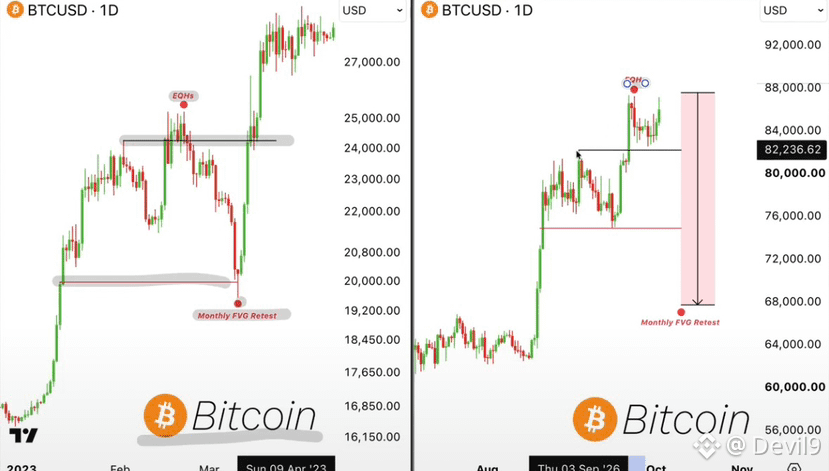
The 2023 comparison is worth studying but the important part is the structure not assuming the exact same outcome.
In 2023, BTC went through a major recovery phase with relatively shallow pullbacks then accelerated after breaking key resistance around $30K.
Your setup can be framed as EQH sweep rejection mFVG retest potential HTF reversal expansion
The key confirmation would be whether BTC holds the relevant mFVG and then reclaims the local structure. If the gap fails decisively the 2023 comparison becomes much weaker.
So rather than saying “same pattern = same bull run,” I’d watch whether the sequence of liquidity sweep + displacement + FVG reaction actually repeats. Historical BTC cycles show structural similarities but they don’t guarantee identical price paths.
#Write2Earn
#TrendingTopic
$BTC
The 2023 comparison is worth studying but the important part is the structure not assuming the exact same outcome.
In 2023, BTC went through a major recovery phase with relatively shallow pullbacks then accelerated after breaking key resistance around $30K.
Your setup can be framed as EQH sweep rejection mFVG retest potential HTF reversal expansion
The key confirmation would be whether BTC holds the relevant mFVG and then reclaims the local structure. If the gap fails decisively the 2023 comparison becomes much weaker.
So rather than saying “same pattern = same bull run,” I’d watch whether the sequence of liquidity sweep + displacement + FVG reaction actually repeats. Historical BTC cycles show structural similarities but they don’t guarantee identical price paths.
#Write2Earn
#TrendingTopic
$BTC
In 2023, BTC went through a major recovery phase with relatively shallow pullbacks then accelerated after breaking key resistance around $30K.
Your setup can be framed as EQH sweep rejection mFVG retest potential HTF reversal expansion
The key confirmation would be whether BTC holds the relevant mFVG and then reclaims the local structure. If the gap fails decisively the 2023 comparison becomes much weaker.
So rather than saying “same pattern = same bull run,” I’d watch whether the sequence of liquidity sweep + displacement + FVG reaction actually repeats. Historical BTC cycles show structural similarities but they don’t guarantee identical price paths.
#Write2Earn
#TrendingTopic
$BTC
1
1
414
·
--
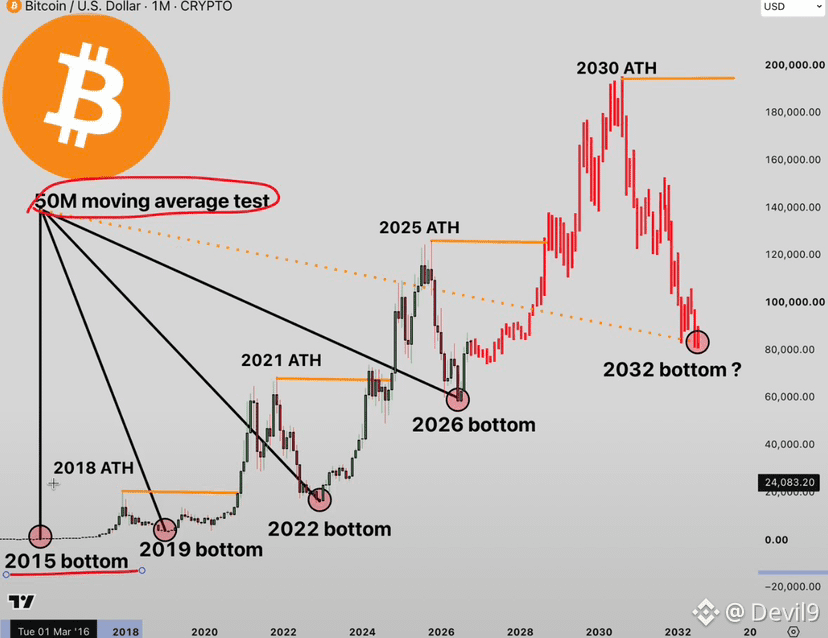
BTC’s current position, from a traditional cycle perspective, looks like the “bear market year.
But the on-chain data tells a different story.
🔹 82% of profitable addresses
🔹 80% of UTXOs are profitable
🔹 71% of the total supply is profitable
These levels are rarely seen during a typical bear market.So maybe the better way to look at it is this.The market may already be preemptively digesting expectations for the NEXT cycle, rather than simply digesting the decline from the previous one.
Cycles are useful as a reference.But they shouldn’t be used to define exactly where we are.The data matters more than the calendar.
#Write2Earn
#TrendingTopic
$BTC
{future}(BTCUSDT)
BTC’s current position, from a traditional cycle perspective, looks like the “bear market year.
But the on-chain data tells a different story.
🔹 82% of profitable addresses
🔹 80% of UTXOs are profitable
🔹 71% of the total supply is profitable
These levels are rarely seen during a typical bear market.So maybe the better way to look at it is this.The market may already be preemptively digesting expectations for the NEXT cycle, rather than simply digesting the decline from the previous one.
Cycles are useful as a reference.But they shouldn’t be used to define exactly where we are.The data matters more than the calendar.
#Write2Earn
#TrendingTopic
$BTC
But the on-chain data tells a different story.
🔹 82% of profitable addresses
🔹 80% of UTXOs are profitable
🔹 71% of the total supply is profitable
These levels are rarely seen during a typical bear market.So maybe the better way to look at it is this.The market may already be preemptively digesting expectations for the NEXT cycle, rather than simply digesting the decline from the previous one.
Cycles are useful as a reference.But they shouldn’t be used to define exactly where we are.The data matters more than the calendar.
#Write2Earn
#TrendingTopic
$BTC
1
505
·
--
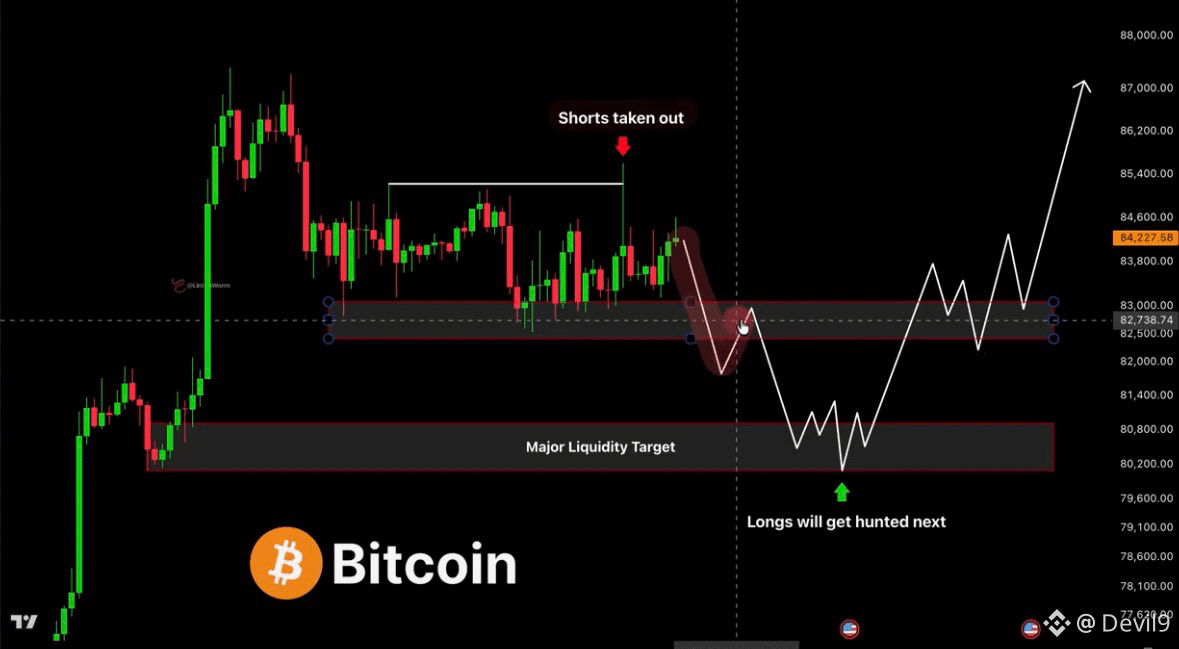
BITCOIN JUST SWEPT THE HIGHS - PREPARE FOR A FINAL LIQUIDITY HUNT
Bitcoin swept the range highs to clear out shorts before an aggressive selloff pulled price right back toward local range lows
The current consolidation is building a massive liquidity cluster below, and a shallow sweep of $82.5k may not be enough to satisfy sellers
The $80k–$81k region is the primary demand target for the next major reaction, where the current drop aligns with previous range highs Price could bounce directly from $80k or briefly wick lower to wipe out late longs before the macro shift takes hold Once that liquidity is cleared, odds favor a strong upside expansion targeting $87k+
#Write2Earn
#TrendingTopic
$BTC
{future}(BTCUSDT)
BITCOIN JUST SWEPT THE HIGHS - PREPARE FOR A FINAL LIQUIDITY HUNT
Bitcoin swept the range highs to clear out shorts before an aggressive selloff pulled price right back toward local range lows
The current consolidation is building a massive liquidity cluster below, and a shallow sweep of $82.5k may not be enough to satisfy sellers
The $80k–$81k region is the primary demand target for the next major reaction, where the current drop aligns with previous range highs Price could bounce directly from $80k or briefly wick lower to wipe out late longs before the macro shift takes hold Once that liquidity is cleared, odds favor a strong upside expansion targeting $87k+
#Write2Earn
#TrendingTopic
$BTC
Bitcoin swept the range highs to clear out shorts before an aggressive selloff pulled price right back toward local range lows
The current consolidation is building a massive liquidity cluster below, and a shallow sweep of $82.5k may not be enough to satisfy sellers
The $80k–$81k region is the primary demand target for the next major reaction, where the current drop aligns with previous range highs Price could bounce directly from $80k or briefly wick lower to wipe out late longs before the macro shift takes hold Once that liquidity is cleared, odds favor a strong upside expansion targeting $87k+
#Write2Earn
#TrendingTopic
$BTC
1
293
·
--
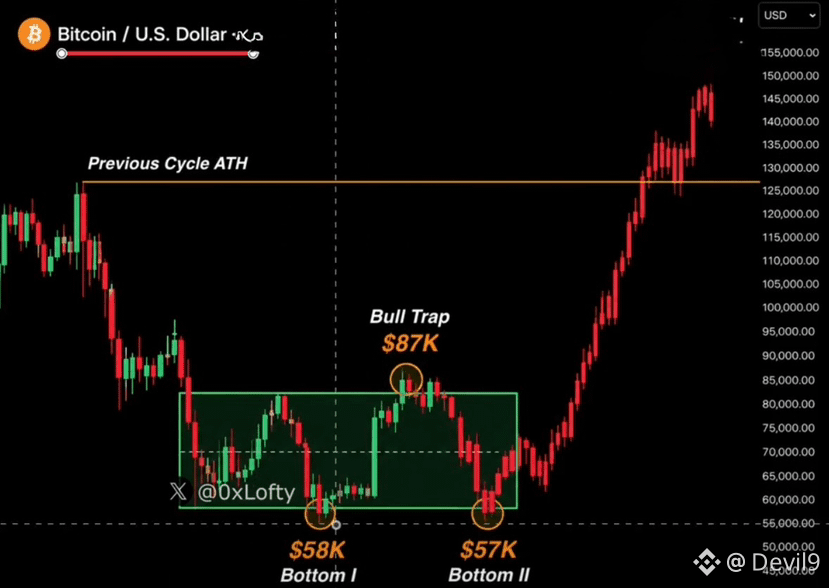
BTC’s fake breakout is becoming clearer but calling this the final liquidation would be too early.
One K-line or candle cannot define the entire market trend.What matters now is how deep the pullback goes and whether buyers can defend the key support levels with strength.
If support holds firmly this could simply be a healthy retracement.But if support continues to weaken, the downside could extend further.
For now confirmation matters more than panic.
#Write2Earn
#TrendingTopic
$BTC
{future}(BTCUSDT)
BTC’s fake breakout is becoming clearer but calling this the final liquidation would be too early.
One K-line or candle cannot define the entire market trend.What matters now is how deep the pullback goes and whether buyers can defend the key support levels with strength.
If support holds firmly this could simply be a healthy retracement.But if support continues to weaken, the downside could extend further.
For now confirmation matters more than panic.
#Write2Earn
#TrendingTopic
$BTC
One K-line or candle cannot define the entire market trend.What matters now is how deep the pullback goes and whether buyers can defend the key support levels with strength.
If support holds firmly this could simply be a healthy retracement.But if support continues to weaken, the downside could extend further.
For now confirmation matters more than panic.
#Write2Earn
#TrendingTopic
$BTC
1
271
·
--
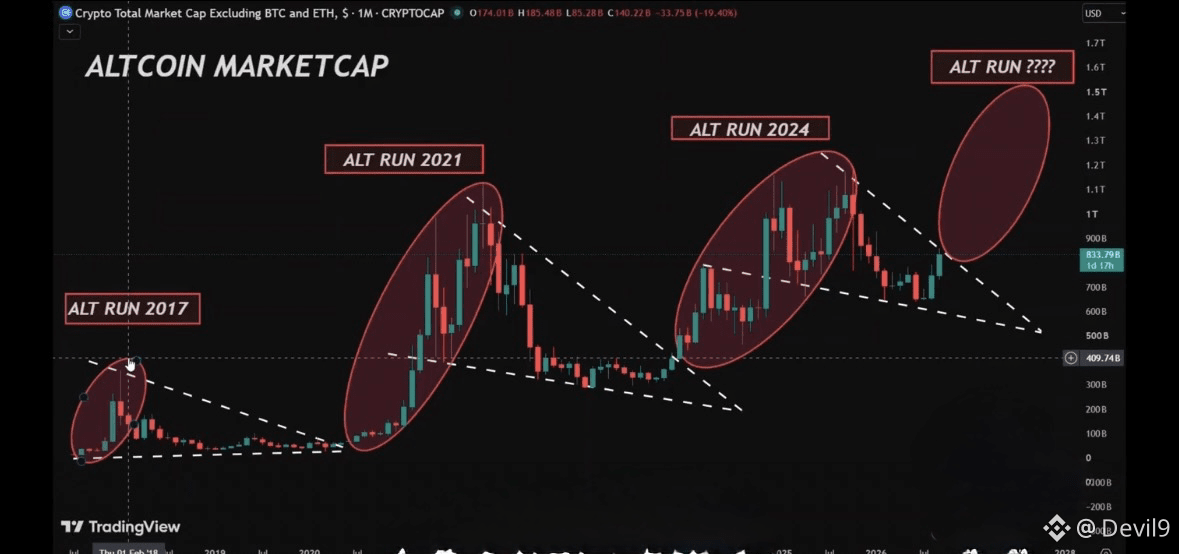
ETH/BTC has broken through the nearly five-year downtrend and is about to close positive for the third consecutive month.
But the altcoin season index is still between 60 and 64 far from the 75 needed to confirm a full-blown altcoin season.
This round of capital rotation is selective, focusing on projects with revenue and real use cases, not all alts rising together.
#Write2Earn
#TrendingTopic
$ETH
{future}(ETHUSDT)
$BTC
{future}(BTCUSDT)
ETH/BTC has broken through the nearly five-year downtrend and is about to close positive for the third consecutive month.
But the altcoin season index is still between 60 and 64 far from the 75 needed to confirm a full-blown altcoin season.
This round of capital rotation is selective, focusing on projects with revenue and real use cases, not all alts rising together.
#Write2Earn
#TrendingTopic
$ETH
$BTC
But the altcoin season index is still between 60 and 64 far from the 75 needed to confirm a full-blown altcoin season.
This round of capital rotation is selective, focusing on projects with revenue and real use cases, not all alts rising together.
#Write2Earn
#TrendingTopic
$ETH
$BTC
1
362
·
--
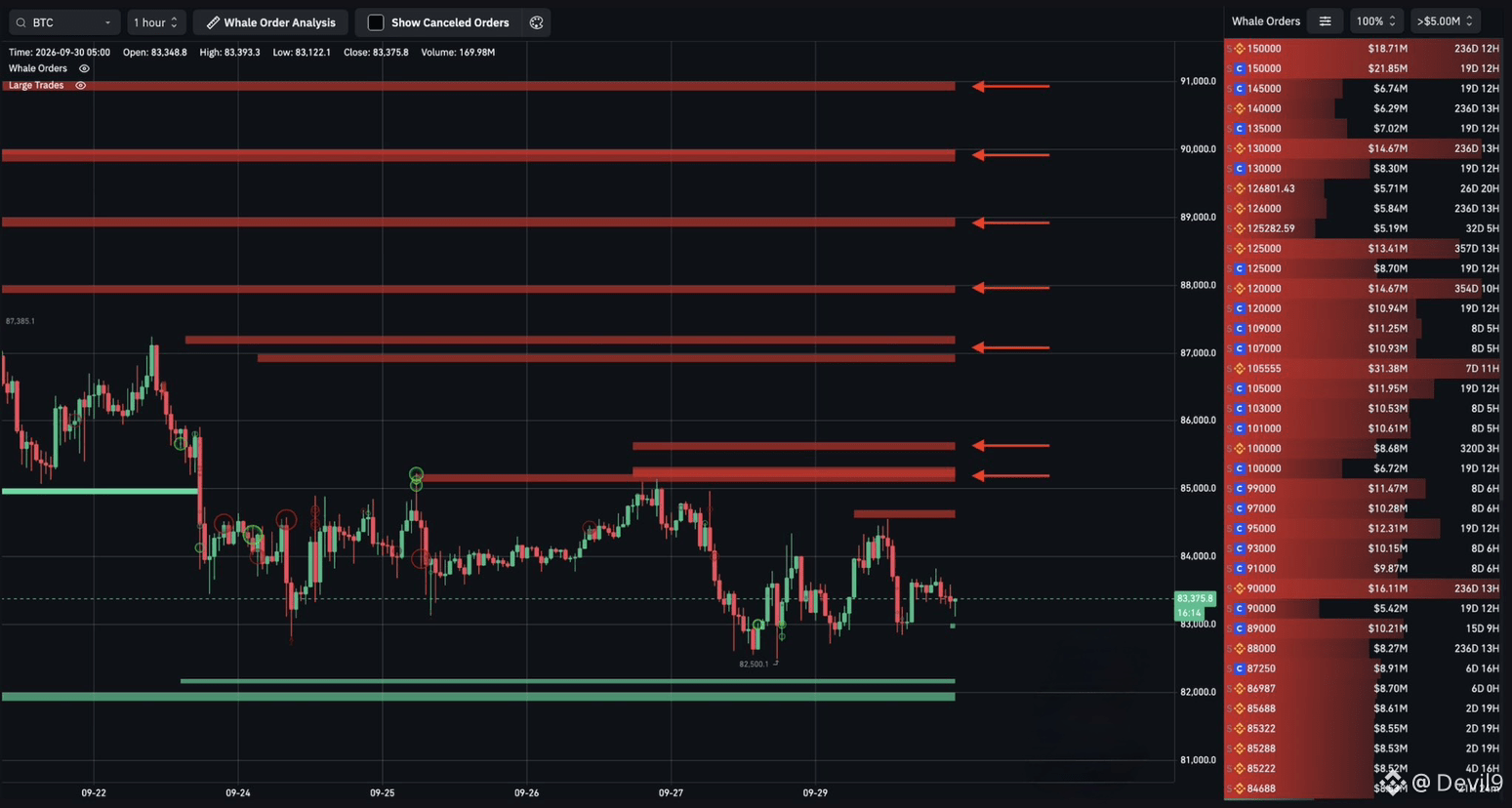
BTC Whale Order Map: Big Liquidity Above
Bitcoin is currently trading around $83.3K, but the whale order map shows a heavy concentration of liquidity sitting above price.
Key zones on the map
$85K–$86K first major resistance/liquidity area
$87K–$91K multiple large whale sell walls
$90K around $16M+ visible order liquidity
$91K one of the strongest upper liquidity zones
On the downside
$82K–$82.2K important support/liquidity zone
The interesting part is that BTC has already rejected from the $84K–$85K area and is now sitting near $83.3K.
So for me, the key levels are simple:
$82K holds → recovery toward $85K → $87K → potentially $89K–$91K
$82K breaks → downside pressure can increase.
Whale orders are not guarantees of where price will go, but they show where liquidity is currently concentrated.
Watch the levels not the noise
#Write2Earn
#TrendingTopic
$BTC
BTC Whale Order Map: Big Liquidity Above
Bitcoin is currently trading around $83.3K, but the whale order map shows a heavy concentration of liquidity sitting above price.
Key zones on the map
$85K–$86K first major resistance/liquidity area
$87K–$91K multiple large whale sell walls
$90K around $16M+ visible order liquidity
$91K one of the strongest upper liquidity zones
On the downside
$82K–$82.2K important support/liquidity zone
The interesting part is that BTC has already rejected from the $84K–$85K area and is now sitting near $83.3K.
So for me, the key levels are simple:
$82K holds → recovery toward $85K → $87K → potentially $89K–$91K
$82K breaks → downside pressure can increase.
Whale orders are not guarantees of where price will go, but they show where liquidity is currently concentrated.
Watch the levels not the noise
#Write2Earn
#TrendingTopic
$BTC
Bitcoin is currently trading around $83.3K, but the whale order map shows a heavy concentration of liquidity sitting above price.
Key zones on the map
$85K–$86K first major resistance/liquidity area
$87K–$91K multiple large whale sell walls
$90K around $16M+ visible order liquidity
$91K one of the strongest upper liquidity zones
On the downside
$82K–$82.2K important support/liquidity zone
The interesting part is that BTC has already rejected from the $84K–$85K area and is now sitting near $83.3K.
So for me, the key levels are simple:
$82K holds → recovery toward $85K → $87K → potentially $89K–$91K
$82K breaks → downside pressure can increase.
Whale orders are not guarantees of where price will go, but they show where liquidity is currently concentrated.
Watch the levels not the noise
#Write2Earn
#TrendingTopic
$BTC
206
·
--
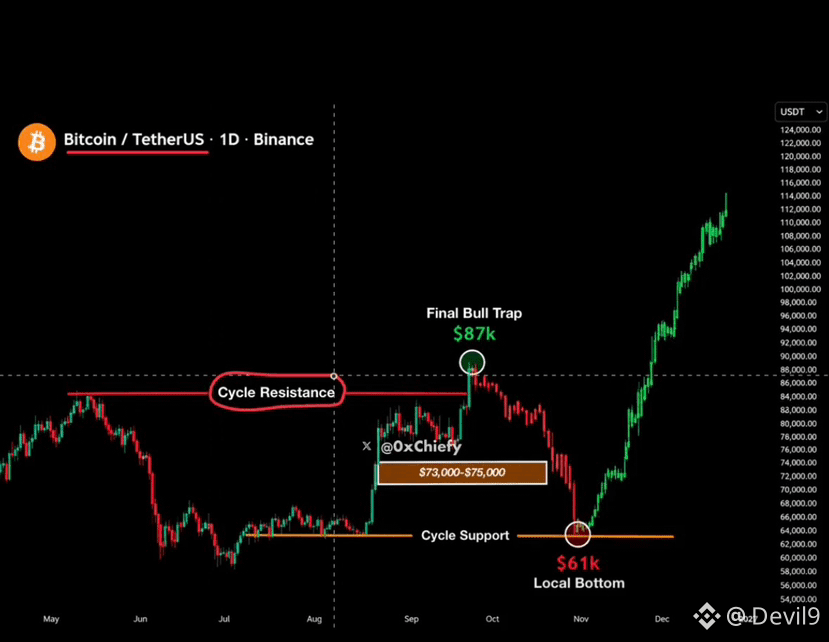
BITCOIN THE NEXT MOVE COULD GET UGLY
$BTC rejected the breakout, and the bullish breakout thesis is now under pressure.
The structure I’m watching is simple
$83K → $75K → $69K → $61K → New Cycle
If this path develops, each level becomes an important area to watch for reaction and confirmation.
I’ve shared major BTC calls before, including the $17K bottom in 2022, the $126K top in 2025, and the $58K local bottom in 2026.
Now I’m watching for the next major setup.
Save this chart and come back to it later.
My next BTC update will be posted here first.
#Write2Earn
#TrendingTopic
$BTC
{future}(BTCUSDT)
BITCOIN THE NEXT MOVE COULD GET UGLY
$BTC rejected the breakout, and the bullish breakout thesis is now under pressure.
The structure I’m watching is simple
$83K → $75K → $69K → $61K → New Cycle
If this path develops, each level becomes an important area to watch for reaction and confirmation.
I’ve shared major BTC calls before, including the $17K bottom in 2022, the $126K top in 2025, and the $58K local bottom in 2026.
Now I’m watching for the next major setup.
Save this chart and come back to it later.
My next BTC update will be posted here first.
#Write2Earn
#TrendingTopic
$BTC
$BTC rejected the breakout, and the bullish breakout thesis is now under pressure.
The structure I’m watching is simple
$83K → $75K → $69K → $61K → New Cycle
If this path develops, each level becomes an important area to watch for reaction and confirmation.
I’ve shared major BTC calls before, including the $17K bottom in 2022, the $126K top in 2025, and the $58K local bottom in 2026.
Now I’m watching for the next major setup.
Save this chart and come back to it later.
My next BTC update will be posted here first.
#Write2Earn
#TrendingTopic
$BTC
1
2
2k
·
--
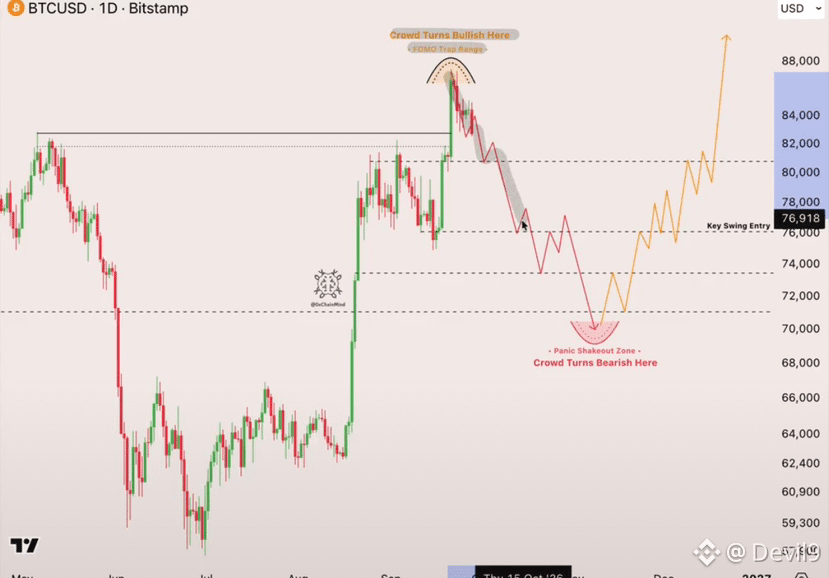
BTC The plan is playing out nicely.We closed the week above the BOS, confirming that the bullish structure is still intact.Now comes the part that usually shakes people out.After such an aggressive pump, a healthy retrace is expected. BTC could revisit the range where sentiment starts turning bearish again.
That’s the reset. If buyers defend that area, the next move toward $90K could come much cleaner.
Don’t confuse a healthy pullback with a broken structure.
#Write2Earn
#TrendingTopic
$BTC
{future}(BTCUSDT)
BTC The plan is playing out nicely.We closed the week above the BOS, confirming that the bullish structure is still intact.Now comes the part that usually shakes people out.After such an aggressive pump, a healthy retrace is expected. BTC could revisit the range where sentiment starts turning bearish again.
That’s the reset. If buyers defend that area, the next move toward $90K could come much cleaner.
Don’t confuse a healthy pullback with a broken structure.
#Write2Earn
#TrendingTopic
$BTC
That’s the reset. If buyers defend that area, the next move toward $90K could come much cleaner.
Don’t confuse a healthy pullback with a broken structure.
#Write2Earn
#TrendingTopic
$BTC
2
752
·
--
U.S. Treasury Yields vs BTC The Real Signal
Rising U.S. Treasury yields are not automatically bearish for Bitcoin. The bigger question is why yields are rising and how the market interprets them.
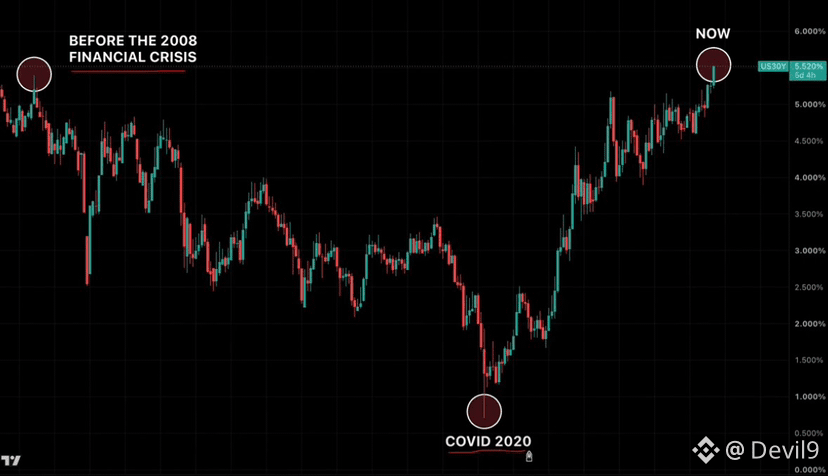
If the 30-year U.S. Treasury yield moves above 5.5%, traditional investors suddenly have a much more attractive low-risk alternative. Some capital may rotate away from higher-risk assets and into government bonds, especially when liquidity is tight.
That can create pressure on #BTC and other risk assets.But there is another side to the story.If yields rise because investors are becoming increasingly concerned about U.S. debt, deficits, inflation expectations, or long-term fiscal sustainability, the same move can eventually strengthen Bitcoin’s alternative-asset narrative.
Bitcoin is not simply competing with stocks and crypto anymore. For some investors, it is also being viewed as an asset outside the traditional sovereign financial system.That is why the 5.52% number itself is not the complete story.The real signal is what is happening underneath that yield.
Yields rising because of stronger growth can mean something different.
Yields rising because of persistent inflation can mean something different.
Yields rising because investors demand higher compensation for holding long-term U.S. debt can mean something very different.
And Bitcoin may react differently to each scenario.So instead of simply saying Higher yields = BTC bearish”the better question is:
What is driving the yields higher, where is liquidity going, and what is the market pricing next?
The same 5.52% yield can create completely different consequences depending on the macro environment.For BTC, the yield itself is only one piece of the puzzle.The interpretation behind the yield may matter even more than the number.
#Write2Earn
#TrendingTopic
$BTC
{future}(BTCUSDT)
U.S. Treasury Yields vs BTC The Real Signal
Rising U.S. Treasury yields are not automatically bearish for Bitcoin. The bigger question is why yields are rising and how the market interprets them.
If the 30-year U.S. Treasury yield moves above 5.5%, traditional investors suddenly have a much more attractive low-risk alternative. Some capital may rotate away from higher-risk assets and into government bonds, especially when liquidity is tight.
That can create pressure on #BTC and other risk assets.But there is another side to the story.If yields rise because investors are becoming increasingly concerned about U.S. debt, deficits, inflation expectations, or long-term fiscal sustainability, the same move can eventually strengthen Bitcoin’s alternative-asset narrative.
Bitcoin is not simply competing with stocks and crypto anymore. For some investors, it is also being viewed as an asset outside the traditional sovereign financial system.That is why the 5.52% number itself is not the complete story.The real signal is what is happening underneath that yield.
Yields rising because of stronger growth can mean something different.
Yields rising because of persistent inflation can mean something different.
Yields rising because investors demand higher compensation for holding long-term U.S. debt can mean something very different.
And Bitcoin may react differently to each scenario.So instead of simply saying Higher yields = BTC bearish”the better question is:
What is driving the yields higher, where is liquidity going, and what is the market pricing next?
The same 5.52% yield can create completely different consequences depending on the macro environment.For BTC, the yield itself is only one piece of the puzzle.The interpretation behind the yield may matter even more than the number.
#Write2Earn
#TrendingTopic
$BTC
Rising U.S. Treasury yields are not automatically bearish for Bitcoin. The bigger question is why yields are rising and how the market interprets them.
If the 30-year U.S. Treasury yield moves above 5.5%, traditional investors suddenly have a much more attractive low-risk alternative. Some capital may rotate away from higher-risk assets and into government bonds, especially when liquidity is tight.
That can create pressure on #BTC and other risk assets.But there is another side to the story.If yields rise because investors are becoming increasingly concerned about U.S. debt, deficits, inflation expectations, or long-term fiscal sustainability, the same move can eventually strengthen Bitcoin’s alternative-asset narrative.
Bitcoin is not simply competing with stocks and crypto anymore. For some investors, it is also being viewed as an asset outside the traditional sovereign financial system.That is why the 5.52% number itself is not the complete story.The real signal is what is happening underneath that yield.
Yields rising because of stronger growth can mean something different.
Yields rising because of persistent inflation can mean something different.
Yields rising because investors demand higher compensation for holding long-term U.S. debt can mean something very different.
And Bitcoin may react differently to each scenario.So instead of simply saying Higher yields = BTC bearish”the better question is:
What is driving the yields higher, where is liquidity going, and what is the market pricing next?
The same 5.52% yield can create completely different consequences depending on the macro environment.For BTC, the yield itself is only one piece of the puzzle.The interpretation behind the yield may matter even more than the number.
#Write2Earn
#TrendingTopic
$BTC
1
224
·
--
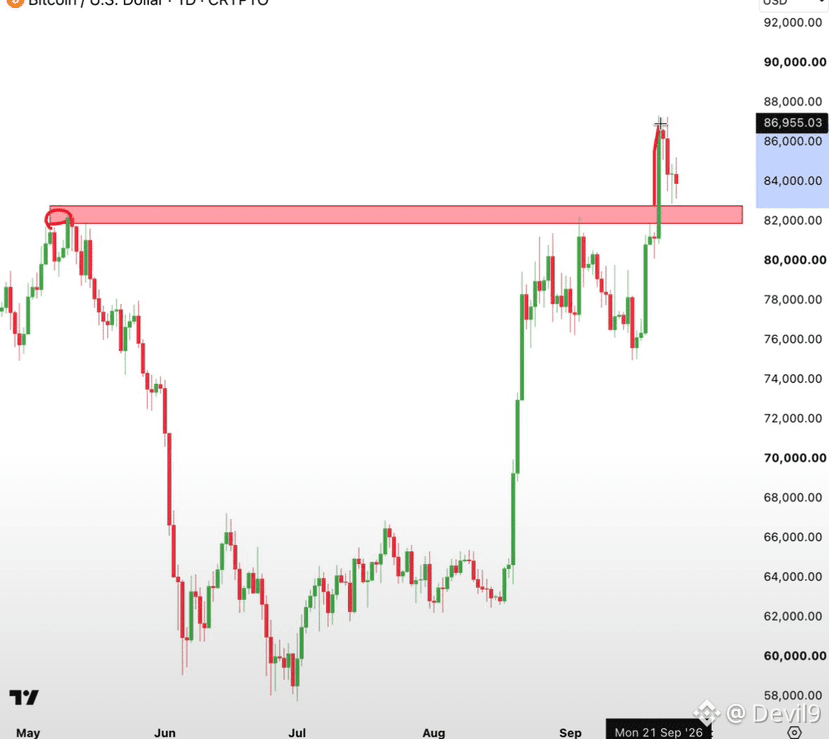
BTC Resistance is turning into support structurally, that’s a bullish sign.
But the real test starts now Will BTC pull back and retest this level? If buyers step in and defend the retest, the breakout gains real strength and $90K becomes the next key level to watch.But if the level fails and price drops back below it, this could turn out to be nothing more than a fake breakout.
The direction looks constructive.But confirmation matters more than optimism.Let the retest decide.
#Write2Earn
#TrendingTopic
$BTC
{future}(BTCUSDT)
BTC Resistance is turning into support structurally, that’s a bullish sign.
But the real test starts now Will BTC pull back and retest this level? If buyers step in and defend the retest, the breakout gains real strength and $90K becomes the next key level to watch.But if the level fails and price drops back below it, this could turn out to be nothing more than a fake breakout.
The direction looks constructive.But confirmation matters more than optimism.Let the retest decide.
#Write2Earn
#TrendingTopic
$BTC
But the real test starts now Will BTC pull back and retest this level? If buyers step in and defend the retest, the breakout gains real strength and $90K becomes the next key level to watch.But if the level fails and price drops back below it, this could turn out to be nothing more than a fake breakout.
The direction looks constructive.But confirmation matters more than optimism.Let the retest decide.
#Write2Earn
#TrendingTopic
$BTC
1
234
Войдите, чтобы посмотреть больше материала
Присоединяйтесь к пользователям криптовалют по всему миру на Binance Square
⚡️ Получайте новейшую и полезную информацию о криптоактивах.
💬 Нам доверяет крупнейшая в мире криптобиржа.
👍 Получите достоверные аналитические данные от верифицированных создателей контента.
Эл. почта/номер телефона
В тренде
BinancePick
Просмотров: 3.2M
155,557 обсуждают
Join #EarningsSeason: Predict Earnings on Binance Pick, Share Your Take on Binance Square!
Binance Square Official
·Лайков: 413
·Просмотров: 343.8k
EarningsSeason
Просмотров: 5.4M
26,151 обсуждают
AnthropicTTMRevenueGrewAbout1200%
Просмотров: 39,643
479 обсуждают