

Mohamed A. El-Erian Re-poster
1.1k Публикации

Mohamed A. El-Erian Re-poster
Отправить жалобу
Заблокировать пользователя
Rene M Kern Prof of Prac at Wharton. Allianz Advisor. Gramercy Chair. Chair of UnderArmour Board. Former Pimco CEO/co-CIO and President of Queens' Col Cambridge
0 подписок(и/а)
650 подписчиков(а)
1.1K+ понравилось
Посты
Все
Видео
Over the previous week, the primary focus centered on fluctuations in the bond market, which showed clear evidence of spillover. Despite this, stock markets maintained their resilience, driven by incoming data and Fedspeak. As we look to the days ahead, we can expect the publication of the Fed minutes alongside a wealth of intriguing data points. To dive deeper into these topics, I invite you to read my weekly note regarding the global economy and markets by visiting either of the addresses provided here.
https://www.linkedin.com/pulse/weekly-look-global-economy-markets-mohamed-el-erian-r2n7c/
https://mohamedelerian.substack.com/p/the-weekly-look-at-the-global-economy-e59
#economy #markets
Over the previous week, the primary focus centered on fluctuations in the bond market, which showed clear evidence of spillover. Despite this, stock markets maintained their resilience, driven by incoming data and Fedspeak. As we look to the days ahead, we can expect the publication of the Fed minutes alongside a wealth of intriguing data points. To dive deeper into these topics, I invite you to read my weekly note regarding the global economy and markets by visiting either of the addresses provided here.
https://www.linkedin.com/pulse/weekly-look-global-economy-markets-mohamed-el-erian-r2n7c/
https://mohamedelerian.substack.com/p/the-weekly-look-at-the-global-economy-e59
#economy #markets
https://www.linkedin.com/pulse/weekly-look-global-economy-markets-mohamed-el-erian-r2n7c/
https://mohamedelerian.substack.com/p/the-weekly-look-at-the-global-economy-e59
#economy #markets
41
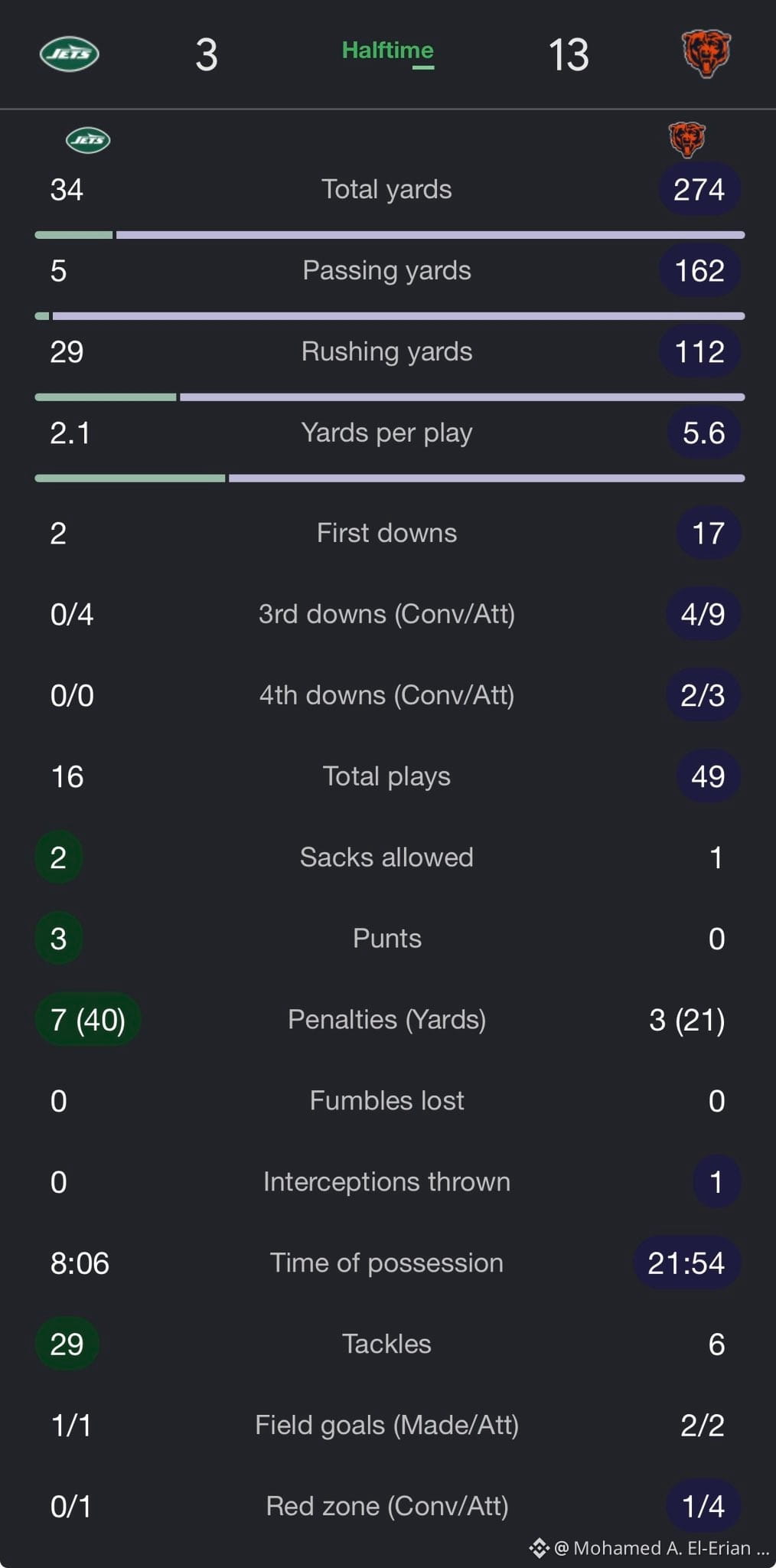
It is truly tough to see the Jets acting as their own biggest obstacle once more. Careless penalties ultimately erased three distinct interceptions, effectively gifting the victory to Chicago. Tuning into this kind of performance is certainly a frustrating experience for anyone watching.
@nyjets @ChicagoBears @NFL #jets
It is truly tough to see the Jets acting as their own biggest obstacle once more. Careless penalties ultimately erased three distinct interceptions, effectively gifting the victory to Chicago. Tuning into this kind of performance is certainly a frustrating experience for anyone watching.
@nyjets @ChicagoBears @NFL #jets
@nyjets @ChicagoBears @NFL #jets
58
My favorite team, the New York Jets, has finally secured an interception during the opening half of their game against the Chicago Bears. This marks their initial interception since the year 2024, which stands as the most extended drought in the history of the NFL. Regrettably, this defensive achievement remains the sole positive highlight of the first half.
@nyjets #jets @ChicagoBears @nfl
My favorite team, the New York Jets, has finally secured an interception during the opening half of their game against the Chicago Bears. This marks their initial interception since the year 2024, which stands as the most extended drought in the history of the NFL. Regrettably, this defensive achievement remains the sole positive highlight of the first half.
@nyjets #jets @ChicagoBears @nfl
@nyjets #jets @ChicagoBears @nfl
68
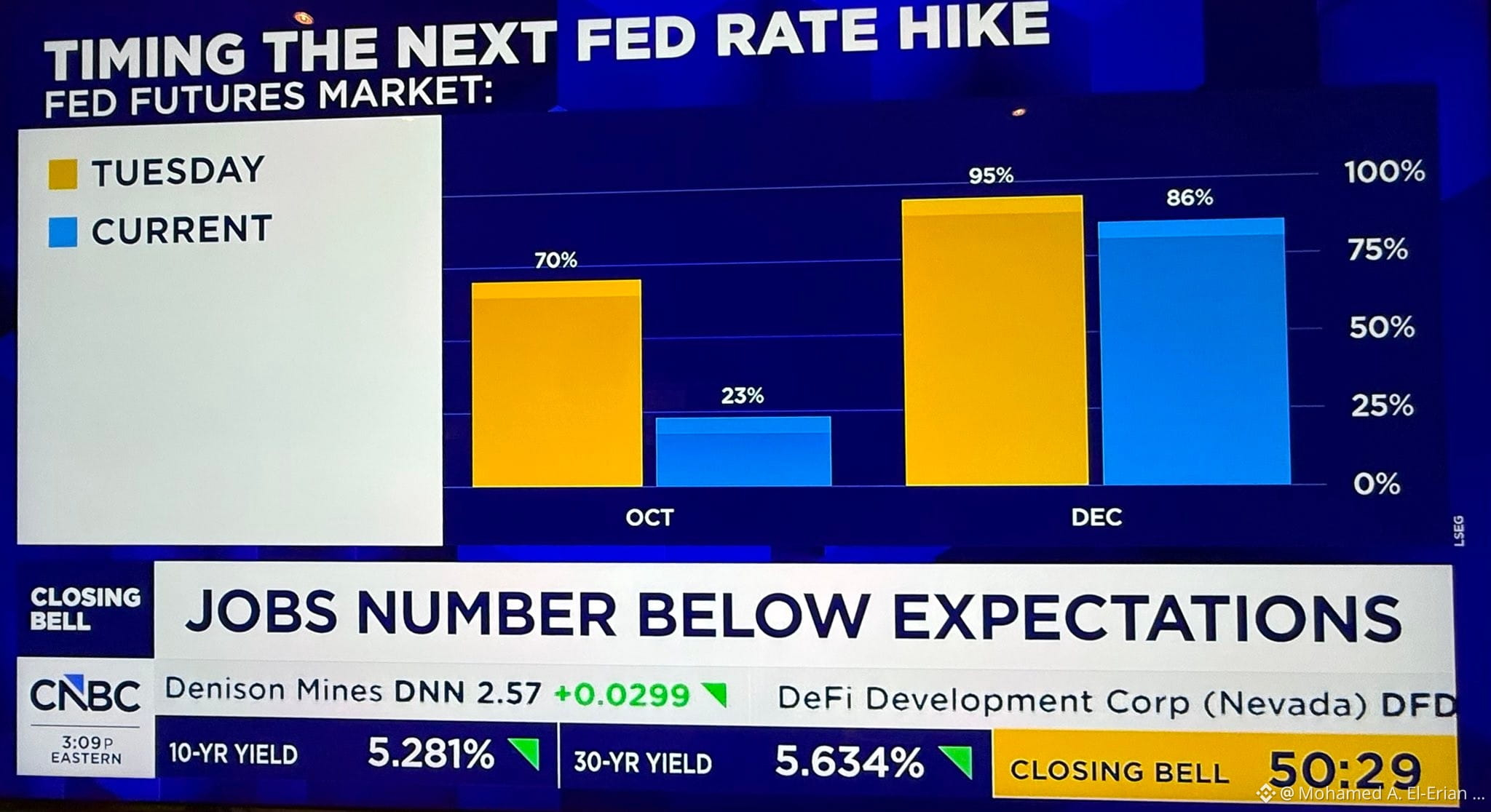
We have seen a major adjustment this week in how the market is pricing upcoming policy decisions from the Federal Reserve. Over the span of just three days, the market-based odds for a rate increase at the October FOMC meeting, which takes place in three weeks, experienced a steep drop from 70% down to 23%, as highlighted by CNBC. In a similar trend, the likelihood of a rate hike taking place on December 9th has also decreased, moving from 95% to 86%.
#economy #markets #federalreserve
We have seen a major adjustment this week in how the market is pricing upcoming policy decisions from the Federal Reserve. Over the span of just three days, the market-based odds for a rate increase at the October FOMC meeting, which takes place in three weeks, experienced a steep drop from 70% down to 23%, as highlighted by CNBC. In a similar trend, the likelihood of a rate hike taking place on December 9th has also decreased, moving from 95% to 86%.
#economy #markets #federalreserve
#economy #markets #federalreserve
14
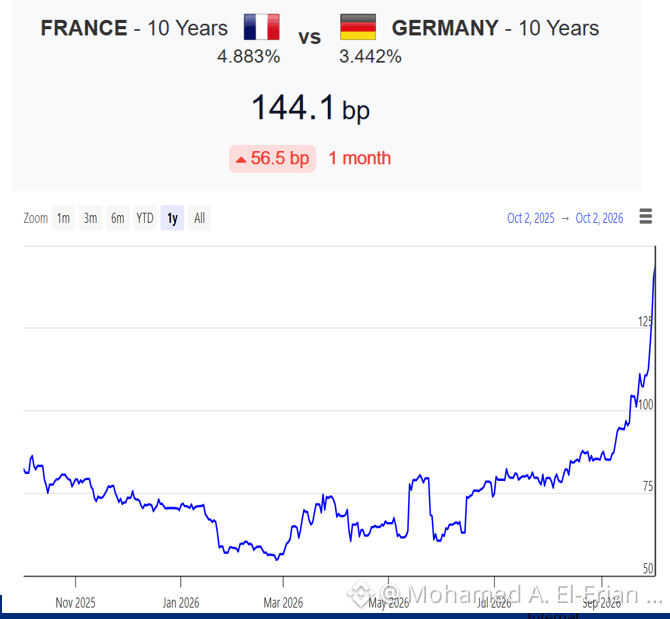
Out of the three most bond-sensitive economies within the G7, a group that also includes Japan and the UK, France is currently capturing the spotlight. This surge in attention comes as we have seen the 10-year yield spread between France and Germany shift by over 50 bps during the past month.
#economy #markets #france #eurozone #europe #bonds #yields
Out of the three most bond-sensitive economies within the G7, a group that also includes Japan and the UK, France is currently capturing the spotlight. This surge in attention comes as we have seen the 10-year yield spread between France and Germany shift by over 50 bps during the past month.
#economy #markets #france #eurozone #europe #bonds #yields
#economy #markets #france #eurozone #europe #bonds #yields
8
For anyone interested in catching up, several web addresses from the discussion that aired this morning on Yahoo Finance are available below for your convenience.
https://finance.yahoo.com/video/jobs-report-definitely-puts-fed-134022850.html
https://finance.yahoo.com/video/theres-fundamental-imbalance-bond-market-150000261.html
https://www.linkedin.com/posts/yahoo-finance_economist-mohamed-el-erian-thinks-its-ridiculous-activity-7511773498000797697-7gvb
#economy #markets #jobs #federalreserve #employment
For anyone interested in catching up, several web addresses from the discussion that aired this morning on Yahoo Finance are available below for your convenience.
https://finance.yahoo.com/video/jobs-report-definitely-puts-fed-134022850.html
https://finance.yahoo.com/video/theres-fundamental-imbalance-bond-market-150000261.html
https://www.linkedin.com/posts/yahoo-finance_economist-mohamed-el-erian-thinks-its-ridiculous-activity-7511773498000797697-7gvb
#economy #markets #jobs #federalreserve #employment
https://finance.yahoo.com/video/jobs-report-definitely-puts-fed-134022850.html
https://finance.yahoo.com/video/theres-fundamental-imbalance-bond-market-150000261.html
https://www.linkedin.com/posts/yahoo-finance_economist-mohamed-el-erian-thinks-its-ridiculous-activity-7511773498000797697-7gvb
#economy #markets #jobs #federalreserve #employment
8
Tapping into strategic reserves provides everyday buyers with a welcome, albeit partial, buffer against skyrocketing costs. Yet, this choice introduces a substantial economic hazard over the long term. Essentially, the leaders of the G7 are taking a massive gamble by hoping that supply levels will stabilize before the heavy winter demand arrives. Looking at the broader landscape, this scenario stands as a prime illustration of how our modern age of geo-economics is constantly shaped by a mix of global tensions and local political motives guiding financial strategy.
#economy #energy #oil #inventories #geoeconomics #markets
Tapping into strategic reserves provides everyday buyers with a welcome, albeit partial, buffer against skyrocketing costs. Yet, this choice introduces a substantial economic hazard over the long term. Essentially, the leaders of the G7 are taking a massive gamble by hoping that supply levels will stabilize before the heavy winter demand arrives. Looking at the broader landscape, this scenario stands as a prime illustration of how our modern age of geo-economics is constantly shaped by a mix of global tensions and local political motives guiding financial strategy.
#economy #energy #oil #inventories #geoeconomics #markets
#economy #energy #oil #inventories #geoeconomics #markets

437
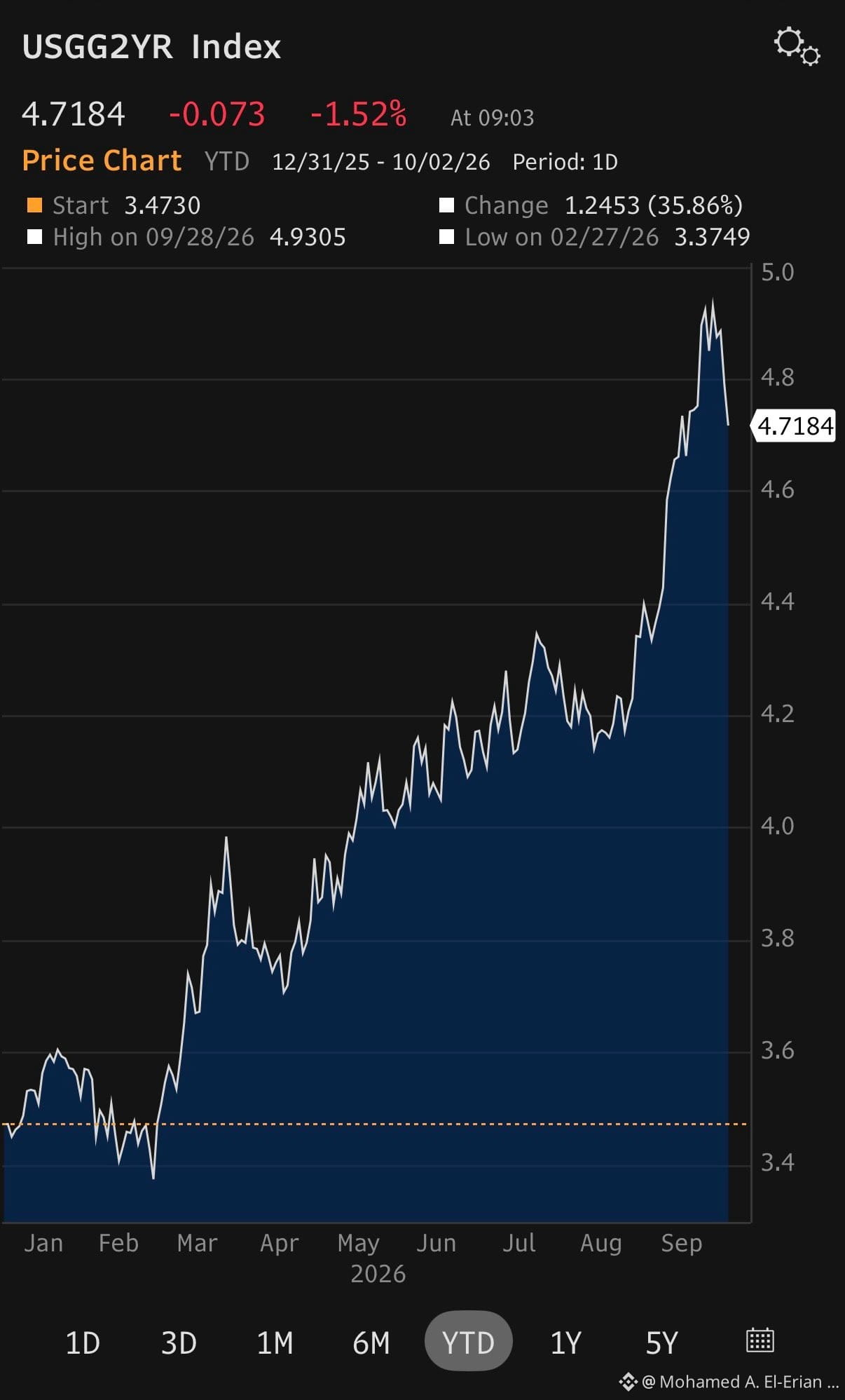
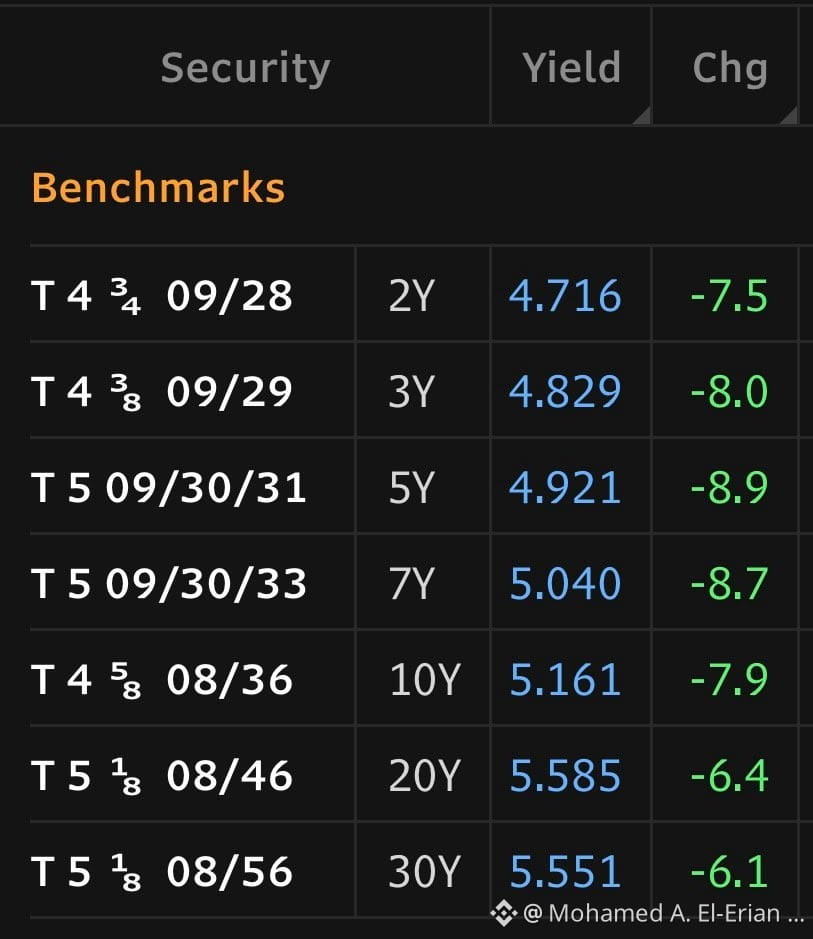
Take a look at how the United States Treasury market is responding to the latest soft jobs report. A key detail to observe is the ongoing pullback in two-year yields, which is taking place as market participants scale back their forecasts for Federal Reserve interest rate increases. Moving forward, the CPI inflation release scheduled for October 14th will act as the next major data catalyst for market activity. The associated figures from Bloomberg can be found just below for your review.
#economy #markets #bonds #inflation
Take a look at how the United States Treasury market is responding to the latest soft jobs report. A key detail to observe is the ongoing pullback in two-year yields, which is taking place as market participants scale back their forecasts for Federal Reserve interest rate increases. Moving forward, the CPI inflation release scheduled for October 14th will act as the next major data catalyst for market activity. The associated figures from Bloomberg can be found just below for your review.
#economy #markets #bonds #inflation
#economy #markets #bonds #inflation
IEFETF-0,27%
11
Although a majority of us are holding out for the national inflation figures from Japan, it is highly probable that the Bank of Japan is closely evaluating the latest Tokyo metrics published overnight. Reaching a peak not seen in 10 months, the core CPI for Tokyo experienced a sharp increase to 2.7%. This recent surge noticeably exceeded both the anticipated consensus forecast of 2.4% and the prior reading of 1.8%.
#economy #japan #inflation #markets
Although a majority of us are holding out for the national inflation figures from Japan, it is highly probable that the Bank of Japan is closely evaluating the latest Tokyo metrics published overnight. Reaching a peak not seen in 10 months, the core CPI for Tokyo experienced a sharp increase to 2.7%. This recent surge noticeably exceeded both the anticipated consensus forecast of 2.4% and the prior reading of 1.8%.
#economy #japan #inflation #markets
#economy #japan #inflation #markets
6
I have previously shared my concern that risks associated with interest rates could eventually develop into credit and spread risks, and this scenario appears to be unfolding. A recent update from Bloomberg notes a growing sense of hesitation within credit markets. Because of persistent anxieties over unprecedented borrowing levels and ongoing inflation, investors are stepping back from the traditional view that high-grade debt serves as an absolute safe haven.
#economy #markets
I have previously shared my concern that risks associated with interest rates could eventually develop into credit and spread risks, and this scenario appears to be unfolding. A recent update from Bloomberg notes a growing sense of hesitation within credit markets. Because of persistent anxieties over unprecedented borrowing levels and ongoing inflation, investors are stepping back from the traditional view that high-grade debt serves as an absolute safe haven.
#economy #markets
#economy #markets
7
Welcome to another US Jobs Friday! As we look at the latest consensus estimates, expectations suggest that September will bring an addition of roughly 85,000 nonfarm payrolls. This represents a noticeable slowdown compared to the growth of 162,000 we experienced in August.
Aside from the primary payroll numbers, forecasters anticipate that the remaining vital metrics will stay completely stable. The unemployment rate is projected to hold its ground at 4.1%, just as the labor force participation rate is expected to remain steady at 61.6%. Regarding wages, average hourly earnings are predicted to show a monthly increase of 0.3%, which translates to a yearly growth rate of 3.1%.
#economy #markets #jobs #employment #unemployment #wages
Welcome to another US Jobs Friday! As we look at the latest consensus estimates, expectations suggest that September will bring an addition of roughly 85,000 nonfarm payrolls. This represents a noticeable slowdown compared to the growth of 162,000 we experienced in August.
Aside from the primary payroll numbers, forecasters anticipate that the remaining vital metrics will stay completely stable. The unemployment rate is projected to hold its ground at 4.1%, just as the labor force participation rate is expected to remain steady at 61.6%. Regarding wages, average hourly earnings are predicted to show a monthly increase of 0.3%, which translates to a yearly growth rate of 3.1%.
#economy #markets #jobs #employment #unemployment #wages
Aside from the primary payroll numbers, forecasters anticipate that the remaining vital metrics will stay completely stable. The unemployment rate is projected to hold its ground at 4.1%, just as the labor force participation rate is expected to remain steady at 61.6%. Regarding wages, average hourly earnings are predicted to show a monthly increase of 0.3%, which translates to a yearly growth rate of 3.1%.
#economy #markets #jobs #employment #unemployment #wages
31
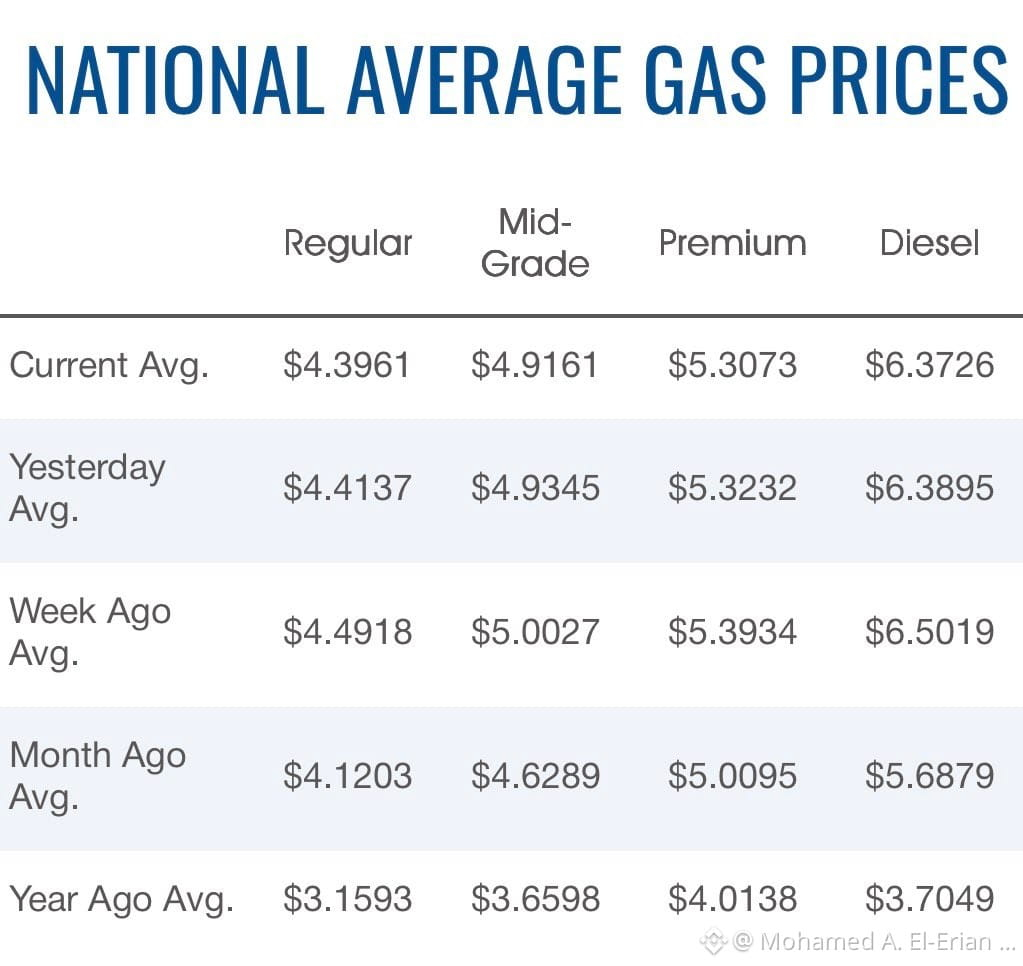
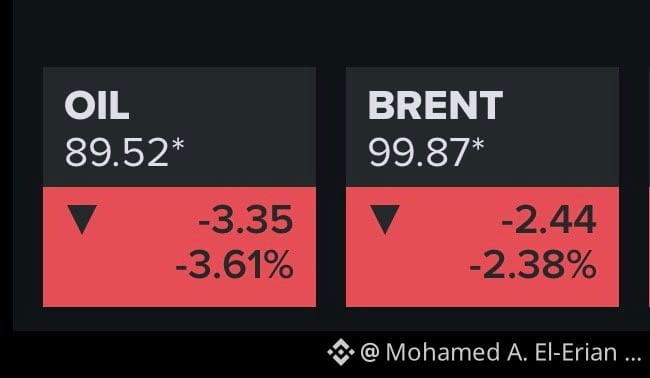
In some of the most significant market shifts from early this morning, Brent crude oil aligned with WTI by dropping beneath the $100 per barrel mark. Furthermore, WTI itself took a deeper dive and slipped below $90. Turning our attention to refined products, the national average cost for a gallon of diesel across the US has decreased to $6.37.
#oil #economy #markets
In some of the most significant market shifts from early this morning, Brent crude oil aligned with WTI by dropping beneath the $100 per barrel mark. Furthermore, WTI itself took a deeper dive and slipped below $90. Turning our attention to refined products, the national average cost for a gallon of diesel across the US has decreased to $6.37.
#oil #economy #markets
#oil #economy #markets
191
Turning our attention to Europe, the annual inflation rate across the eurozone climbed to 3.8% in September, up from 3.2% in August. Primarily fueled by escalating energy costs, this latest figure exceeded the consensus forecast of 3.6%. As a result, the ECB is facing increased pressure at a time when regional economies are already working to manage elevated borrowing expenses.
#economy #markets #inflation #europe
Turning our attention to Europe, the annual inflation rate across the eurozone climbed to 3.8% in September, up from 3.2% in August. Primarily fueled by escalating energy costs, this latest figure exceeded the consensus forecast of 3.6%. As a result, the ECB is facing increased pressure at a time when regional economies are already working to manage elevated borrowing expenses.
#economy #markets #inflation #europe
#economy #markets #inflation #europe
33
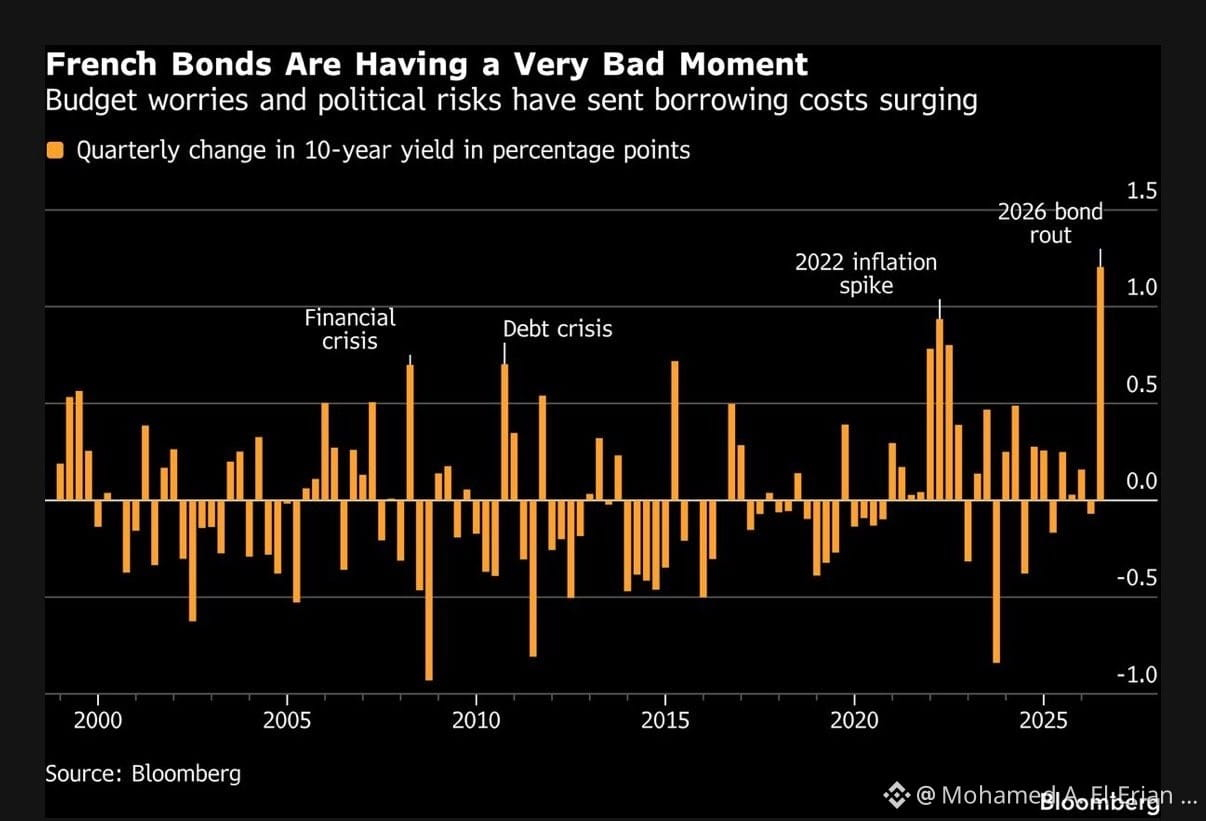
Building on our recent conversations about vulnerabilities within the G7, a new update from Bloomberg provides some eye-opening insights. Since June, the country's 10-year yield has climbed by over a full percentage point, marking its most difficult quarterly period since the introduction of the single currency. At the same time, the extra premium investors are demanding to keep these bonds rather than comparable German bunds has skyrocketed. This gap is currently heading toward an unprecedented weekly expansion.
#economy #markets #france #bonds #yields
Building on our recent conversations about vulnerabilities within the G7, a new update from Bloomberg provides some eye-opening insights. Since June, the country's 10-year yield has climbed by over a full percentage point, marking its most difficult quarterly period since the introduction of the single currency. At the same time, the extra premium investors are demanding to keep these bonds rather than comparable German bunds has skyrocketed. This gap is currently heading toward an unprecedented weekly expansion.
#economy #markets #france #bonds #yields
#economy #markets #france #bonds #yields
67
An unexpected moment occurred during a recent CNN segment focused on financial markets and the global economy. The serious dialogue took an abrupt and delightful detour straight into the realm of American football, specifically highlighting my favorite franchise, the New York Jets.
@nyjets #jets
An unexpected moment occurred during a recent CNN segment focused on financial markets and the global economy. The serious dialogue took an abrupt and delightful detour straight into the realm of American football, specifically highlighting my favorite franchise, the New York Jets.
@nyjets #jets
@nyjets #jets
88
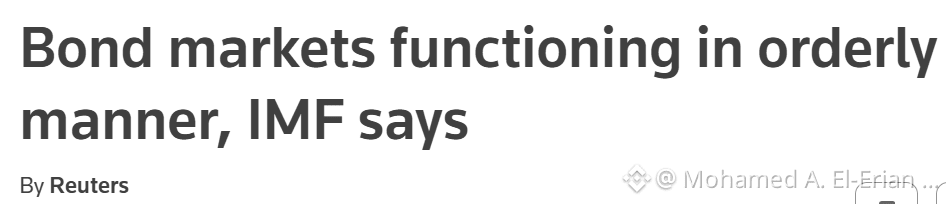
It is definitely out of the ordinary for the IMF to step forward with a public statement aimed at reassuring everyone that bond markets are functioning in an orderly manner. While the intention is to offer comfort, this highly uncommon move might actually have the opposite effect, potentially sparking more questions than it manages to resolve.
#economy #markets #bonds #yields @IMFNews
It is definitely out of the ordinary for the IMF to step forward with a public statement aimed at reassuring everyone that bond markets are functioning in an orderly manner. While the intention is to offer comfort, this highly uncommon move might actually have the opposite effect, potentially sparking more questions than it manages to resolve.
#economy #markets #bonds #yields @IMFNews
#economy #markets #bonds #yields @IMFNews
90
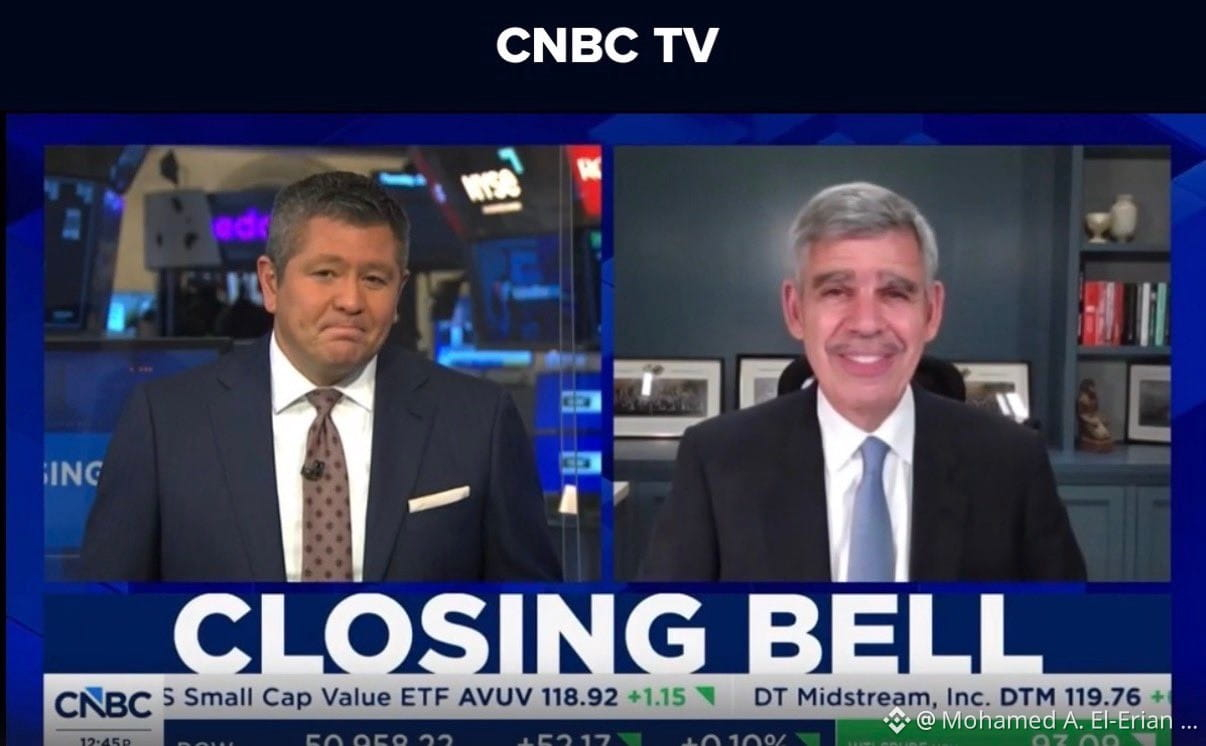
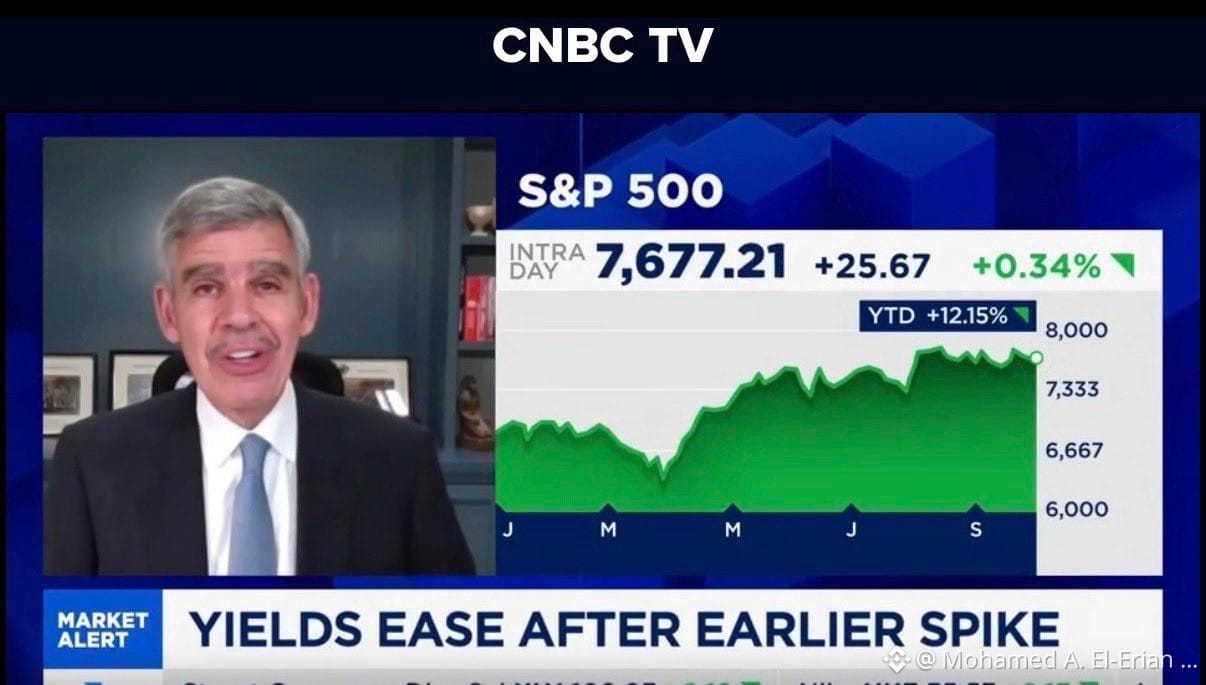
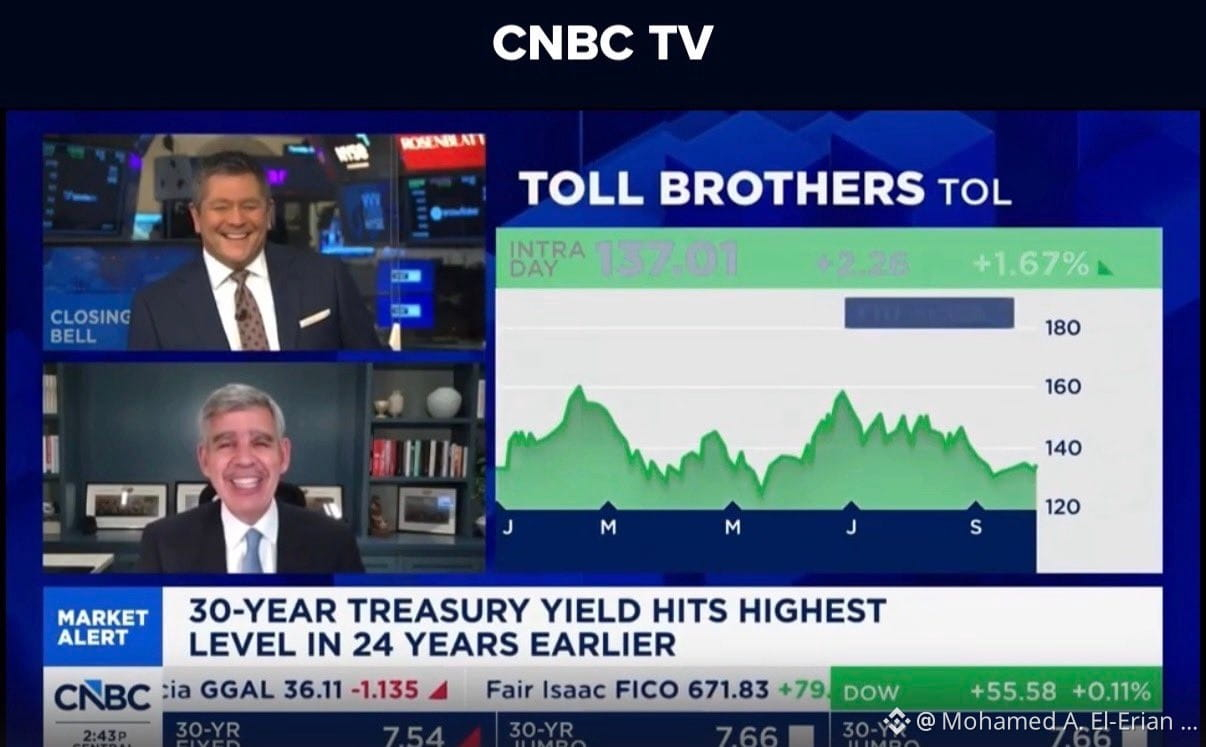
To view my discussion with @carlquintanilla from this afternoon, please follow the web address provided below.
https://www.cnbc.com/video/2026/10/01/allianzs-mohamed-el-erian-on-10-year-yields-easing-back-from-earlier-spike.html
#economy #markets @cnbc @CNBCClosingBell
To view my discussion with @carlquintanilla from this afternoon, please follow the web address provided below.
https://www.cnbc.com/video/2026/10/01/allianzs-mohamed-el-erian-on-10-year-yields-easing-back-from-earlier-spike.html
#economy #markets @cnbc @CNBCClosingBell
https://www.cnbc.com/video/2026/10/01/allianzs-mohamed-el-erian-on-10-year-yields-easing-back-from-earlier-spike.html
#economy #markets @cnbc @CNBCClosingBell
2
A recent update from the FT highlights a challenging moment for American homebuyers, as US mortgage rates have just experienced their sharpest climb in a four-year span. On Thursday, Freddie Mac reported that the standard 30-year fixed-rate mortgage reached an average of 7.28 per cent as of October 1, which represents a noticeable increase of 0.25 percentage points compared to just one week prior. This rapid spike is currently being driven by an accelerating sell-off within the government bond market, delivering yet another setback to the housing sector. Notably, these significant economic shifts are unfolding only a few weeks before the upcoming midterm elections.
#economy #markets #housing #mortgages @ft
A recent update from the FT highlights a challenging moment for American homebuyers, as US mortgage rates have just experienced their sharpest climb in a four-year span. On Thursday, Freddie Mac reported that the standard 30-year fixed-rate mortgage reached an average of 7.28 per cent as of October 1, which represents a noticeable increase of 0.25 percentage points compared to just one week prior. This rapid spike is currently being driven by an accelerating sell-off within the government bond market, delivering yet another setback to the housing sector. Notably, these significant economic shifts are unfolding only a few weeks before the upcoming midterm elections.
#economy #markets #housing #mortgages @ft
#economy #markets #housing #mortgages @ft
6
I greatly appreciate the engaging discussion we shared on Closing Bell, Carl.
#economy #markets @cnbc @CNBCClosingBell @carlquintanilla
I greatly appreciate the engaging discussion we shared on Closing Bell, Carl.
#economy #markets @cnbc @CNBCClosingBell @carlquintanilla
#economy #markets @cnbc @CNBCClosingBell @carlquintanilla
5
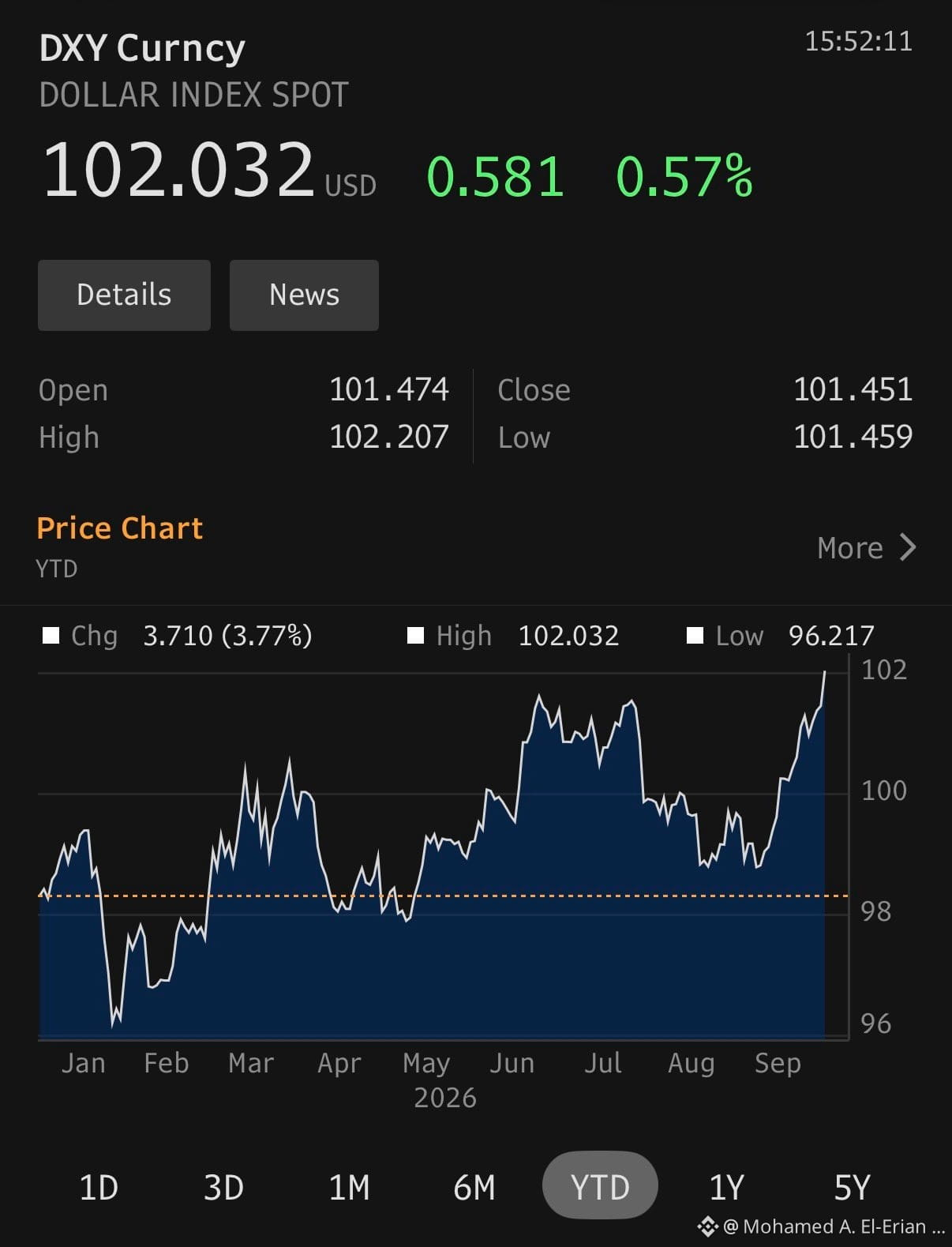
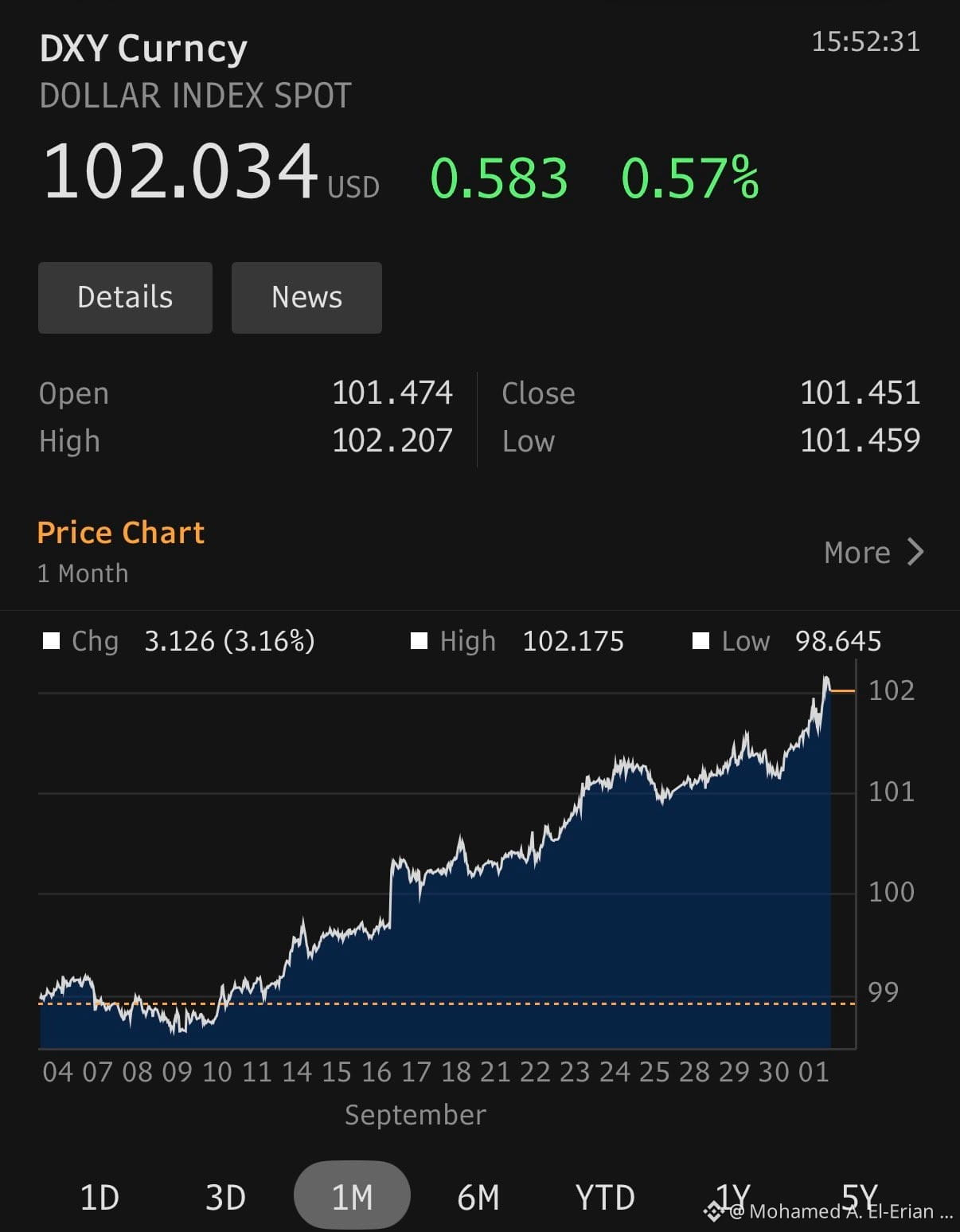
Over the past several weeks, the US Dollar Index (DXY) has experienced a notable upward rally. As a result of this recent momentum, it is currently trading at its highest peak of the entire year. Please refer to the Bloomberg charts provided below for a visual breakdown of these market movements.
#economy #markets #dollar #currency #fx
Over the past several weeks, the US Dollar Index (DXY) has experienced a notable upward rally. As a result of this recent momentum, it is currently trading at its highest peak of the entire year. Please refer to the Bloomberg charts provided below for a visual breakdown of these market movements.
#economy #markets #dollar #currency #fx
#economy #markets #dollar #currency #fx
2
Войдите, чтобы посмотреть больше материала
Присоединяйтесь к пользователям криптовалют по всему миру на Binance Square
⚡️ Получайте новейшую и полезную информацию о криптоактивах.
💬 Нам доверяет крупнейшая в мире криптобиржа.
👍 Получите достоверные аналитические данные от верифицированных создателей контента.
Эл. почта/номер телефона
В тренде
BNBSurpasses$790
Просмотров: 18,476
144 обсуждают
$BNB strategic long plan -> FOCUS NOW
BNB has created 2 strong lows after taking out internal liquidity
I'm expecting a move towards swing high $815-$830 and looking for a long on a retest of the green box
#BNBSurpasses$790 #bnb
Ghost Writer
·Лайков: 6
·Просмотров: 9.9k
ZamaRises15.99%ToIntradayHigh$0.09
Просмотров: 16,554
105 обсуждают
BitcoinSpotETFsDraw$6.34BInflowsInQ3
Просмотров: 5,917
90 обсуждают