
UDOG COMMUNITY
125 Публикации

UDOG COMMUNITY
Отправить жалобу
Заблокировать пользователя
BNB chain
Открытая сделка
Случайный трейдер
5.7 г
18 подписок(и/а)
137 подписчиков(а)
525 понравилось
Посты
Портфель
Все
Цитирования
Видео
PINNED
$UDOG
0x4dbc56a42524e553a069c7c955e32b6f089cc1e2
$UDOG is the first meme token on Binance Smart Chain (BSC) to use Binance's official stablecoin U as its trading pair
X : @Udog_community
https://dexscreener.com/bsc/0xb2c2B851B71e8720aed0b15C40F2ebbf1af8d4e5
https://www.dextools.io/app/bnb/pair-explorer/0xb2c2b851b71e8720aed0b15c40f2ebbf1af8d4e5
#UDOG
$UDOG
0x4dbc56a42524e553a069c7c955e32b6f089cc1e2
$UDOG is the first meme token on Binance Smart Chain (BSC) to use Binance's official stablecoin U as its trading pair
X : @Udog_community
https://dexscreener.com/bsc/0xb2c2B851B71e8720aed0b15C40F2ebbf1af8d4e5
https://www.dextools.io/app/bnb/pair-explorer/0xb2c2b851b71e8720aed0b15c40f2ebbf1af8d4e5
#UDOG
0x4dbc56a42524e553a069c7c955e32b6f089cc1e2
$UDOG is the first meme token on Binance Smart Chain (BSC) to use Binance's official stablecoin U as its trading pair
X : @Udog_community
https://dexscreener.com/bsc/0xb2c2B851B71e8720aed0b15C40F2ebbf1af8d4e5
https://www.dextools.io/app/bnb/pair-explorer/0xb2c2b851b71e8720aed0b15c40f2ebbf1af8d4e5
#UDOG

1
2
9
843
PINNED
Статья
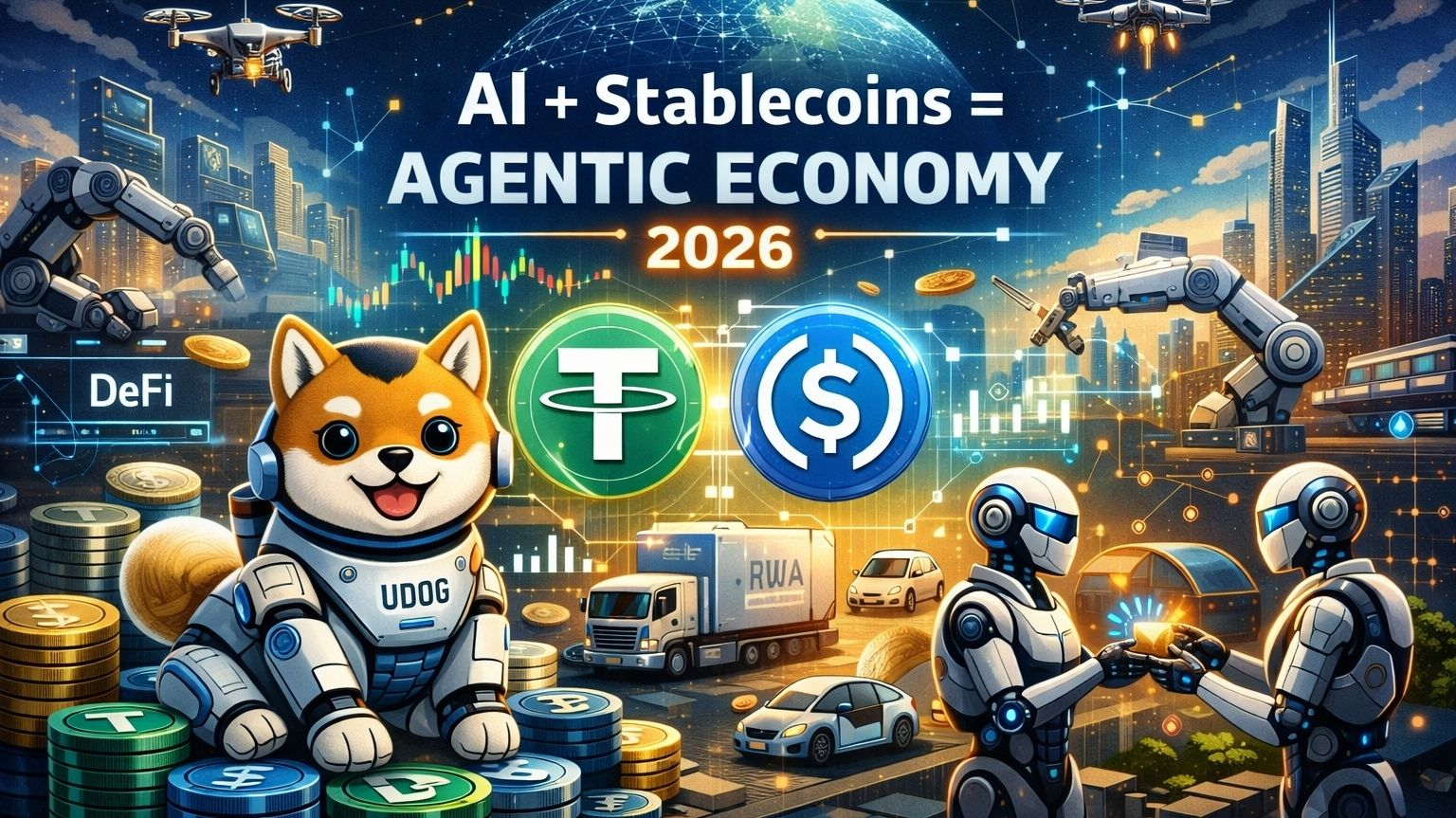
AI + Stablecoins: The Foundation of the Agentic Economy in 20262026 may prove to be a pivotal year — a structural inflection point rather than just another growth cycle.
If 2020–2023 defined DeFi, and 2024–2025 solidified stablecoins, then 2026 and beyond may define the era of Agentic Finance.
The Rise of the Agentic Economy
The convergence of AI and stablecoins is forming a new economic architecture — one where intelligent agents can:
Execute transactions
Allocate capital
Optimize liquidity
Interact with global markets autonomously
Stablecoins act as the settlement layer.
AI becomes the decision layer.
Together, they form the foundation of the Agentic Economy.
Major Opportunities
🌍 Global Financial Inclusion
Borderless digital dollars accessible via smartphones — reducing reliance on fragile banking systems.
🚑 Faster Humanitarian Aid Distribution
Programmable stablecoins + AI verification can enable transparent, instant cross-border relief.
🏢 SME Access to Global Liquidity
Small and medium enterprises gain direct access to global capital pools without traditional gatekeepers.
🏗 Tokenization of Real-World Assets (RWA)
AI-powered valuation + stablecoin settlement accelerates liquidity for real estate, commodities, and bonds.
🛒 Seamless AI-Driven Commerce
Autonomous agents transacting with other agents — subscription payments, supply chain settlements, and microservices handled natively on-chain.
Concentration Risks
While the opportunity is massive, risks remain:
Stablecoin issuer centralization
Dependence on a few dominant AI providers
Regulatory fragmentation
Liquidity concentration across limited blockchains
The infrastructure must mature alongside adoption.
AI + Stablecoins = The Default Digital Financial Infrastructure
The integration of AI and stablecoins is creating:
Self-operating financial systems
Frictionless global payments
Autonomous capital optimization
A programmable economic layer for machines
This is no longer experimental infrastructure.
It is becoming the backbone of a new economic model.
Conclusion
AI + Stablecoins is no longer just a narrative.
It is rapidly becoming the core infrastructure of the next global digital economy.
2026 may be remembered as the year finance evolved —from human-operated systems to autonomous economic networks.
$USDT $USDC $U
{spot}(USDCUSDT)
AI + Stablecoins: The Foundation of the Agentic Economy in 2026
2026 may prove to be a pivotal year — a structural inflection point rather than just another growth cycle.
If 2020–2023 defined DeFi, and 2024–2025 solidified stablecoins, then 2026 and beyond may define the era of Agentic Finance.
The Rise of the Agentic Economy
The convergence of AI and stablecoins is forming a new economic architecture — one where intelligent agents can:
Execute transactions
Allocate capital
Optimize liquidity
Interact with global markets autonomously
Stablecoins act as the settlement layer.
AI becomes the decision layer.
Together, they form the foundation of the Agentic Economy.
Major Opportunities
🌍 Global Financial Inclusion
Borderless digital dollars accessible via smartphones — reducing reliance on fragile banking systems.
🚑 Faster Humanitarian Aid Distribution
Programmable stablecoins + AI verification can enable transparent, instant cross-border relief.
🏢 SME Access to Global Liquidity
Small and medium enterprises gain direct access to global capital pools without traditional gatekeepers.
🏗 Tokenization of Real-World Assets (RWA)
AI-powered valuation + stablecoin settlement accelerates liquidity for real estate, commodities, and bonds.
🛒 Seamless AI-Driven Commerce
Autonomous agents transacting with other agents — subscription payments, supply chain settlements, and microservices handled natively on-chain.
Concentration Risks
While the opportunity is massive, risks remain:
Stablecoin issuer centralization
Dependence on a few dominant AI providers
Regulatory fragmentation
Liquidity concentration across limited blockchains
The infrastructure must mature alongside adoption.
AI + Stablecoins = The Default Digital Financial Infrastructure
The integration of AI and stablecoins is creating:
Self-operating financial systems
Frictionless global payments
Autonomous capital optimization
A programmable economic layer for machines
This is no longer experimental infrastructure.
It is becoming the backbone of a new economic model.
Conclusion
AI + Stablecoins is no longer just a narrative.
It is rapidly becoming the core infrastructure of the next global digital economy.
2026 may be remembered as the year finance evolved —from human-operated systems to autonomous economic networks.
$USDT $USDC $U
If 2020–2023 defined DeFi, and 2024–2025 solidified stablecoins, then 2026 and beyond may define the era of Agentic Finance.
The Rise of the Agentic Economy
The convergence of AI and stablecoins is forming a new economic architecture — one where intelligent agents can:
Execute transactions
Allocate capital
Optimize liquidity
Interact with global markets autonomously
Stablecoins act as the settlement layer.
AI becomes the decision layer.
Together, they form the foundation of the Agentic Economy.
Major Opportunities
🌍 Global Financial Inclusion
Borderless digital dollars accessible via smartphones — reducing reliance on fragile banking systems.
🚑 Faster Humanitarian Aid Distribution
Programmable stablecoins + AI verification can enable transparent, instant cross-border relief.
🏢 SME Access to Global Liquidity
Small and medium enterprises gain direct access to global capital pools without traditional gatekeepers.
🏗 Tokenization of Real-World Assets (RWA)
AI-powered valuation + stablecoin settlement accelerates liquidity for real estate, commodities, and bonds.
🛒 Seamless AI-Driven Commerce
Autonomous agents transacting with other agents — subscription payments, supply chain settlements, and microservices handled natively on-chain.
Concentration Risks
While the opportunity is massive, risks remain:
Stablecoin issuer centralization
Dependence on a few dominant AI providers
Regulatory fragmentation
Liquidity concentration across limited blockchains
The infrastructure must mature alongside adoption.
AI + Stablecoins = The Default Digital Financial Infrastructure
The integration of AI and stablecoins is creating:
Self-operating financial systems
Frictionless global payments
Autonomous capital optimization
A programmable economic layer for machines
This is no longer experimental infrastructure.
It is becoming the backbone of a new economic model.
Conclusion
AI + Stablecoins is no longer just a narrative.
It is rapidly becoming the core infrastructure of the next global digital economy.
2026 may be remembered as the year finance evolved —from human-operated systems to autonomous economic networks.
$USDT $USDC $U
2
63
49k
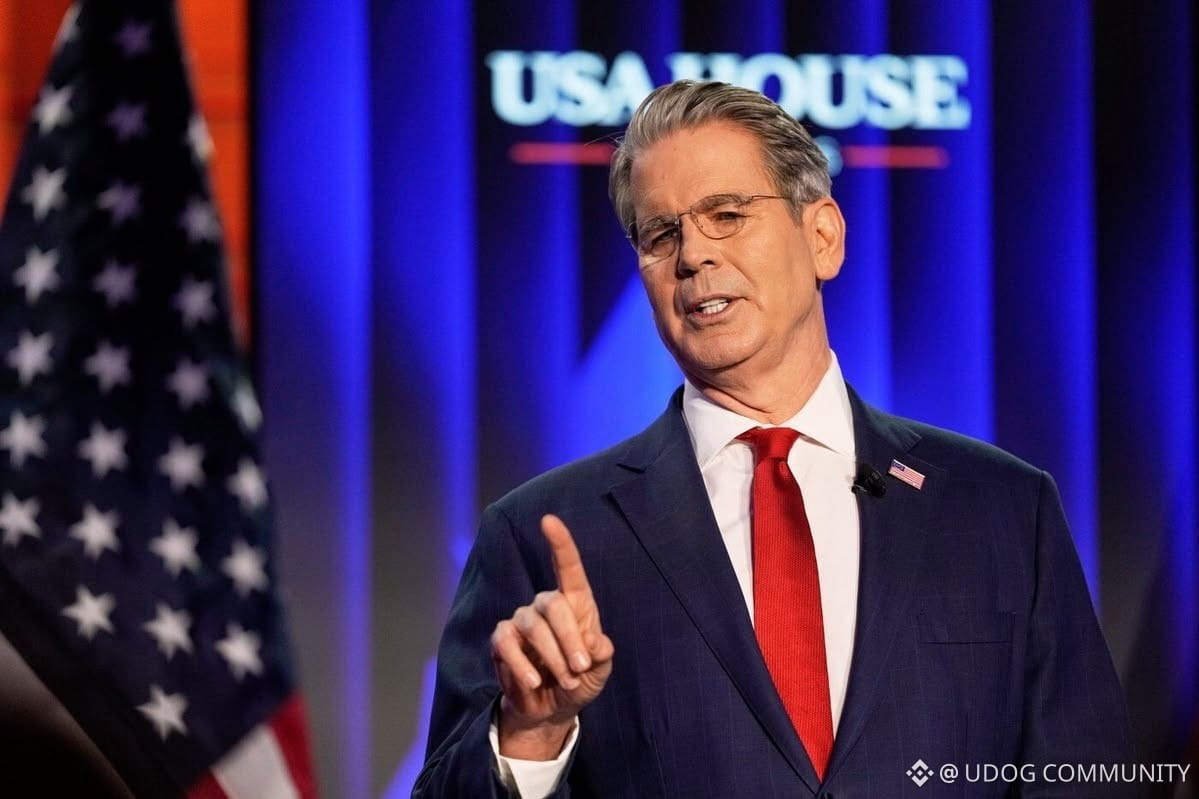
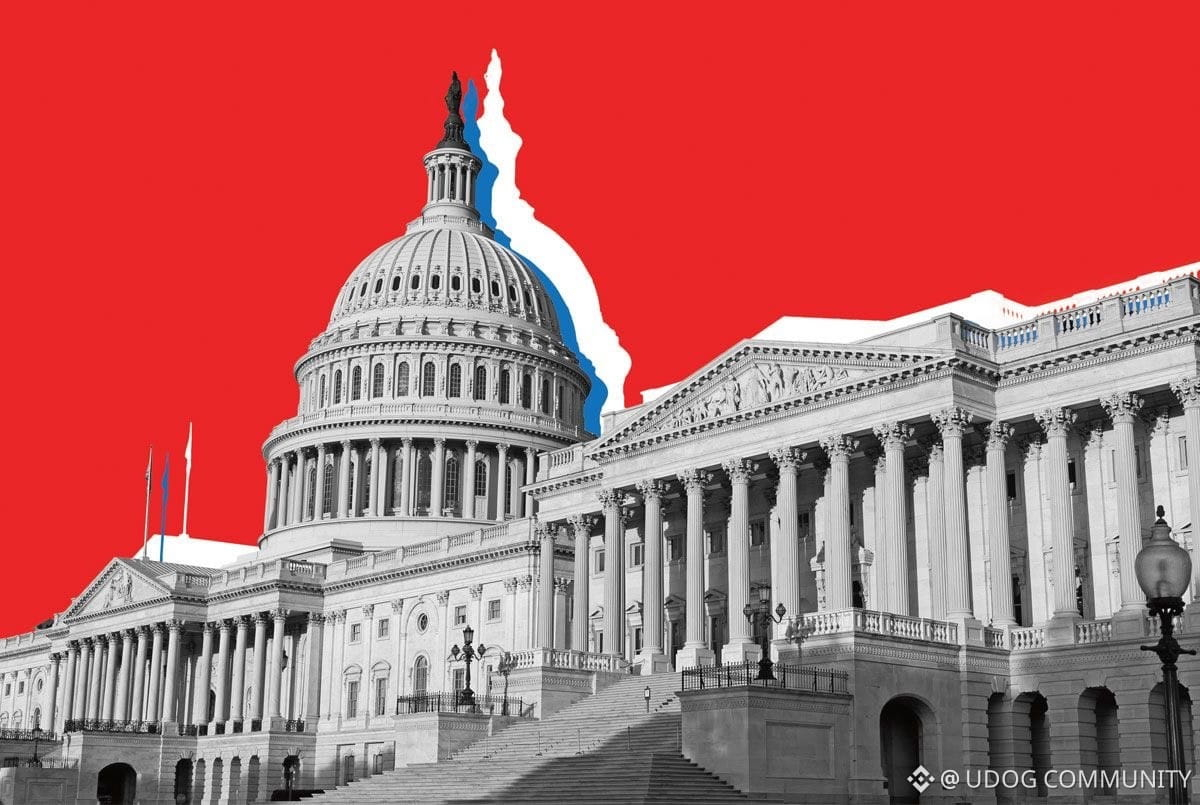
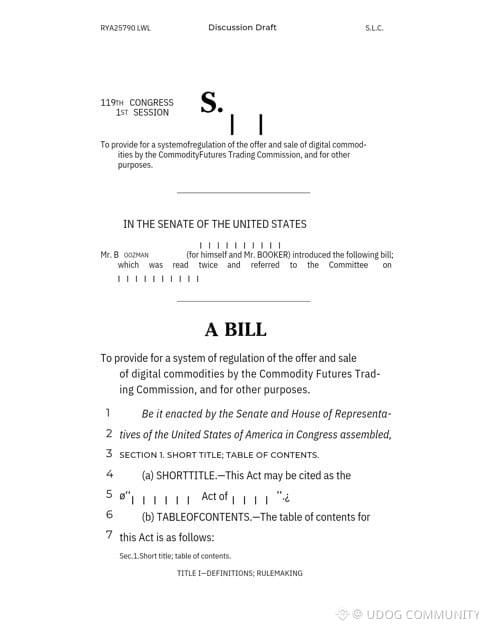
Scott Bessent urged Congress to pass a crypto market structure bill.
He emphasized that the CLARITY Act would help eliminate uncertainty and stabilize crypto markets amid volatility. He also called on Congress to act quickly this spring so the bill can be sent to Donald Trump.
The bill would place most digital assets under the supervision of the Commodity Futures Trading Commission (CFTC).
#UDOG
Scott Bessent urged Congress to pass a crypto market structure bill.
He emphasized that the CLARITY Act would help eliminate uncertainty and stabilize crypto markets amid volatility. He also called on Congress to act quickly this spring so the bill can be sent to Donald Trump.
The bill would place most digital assets under the supervision of the Commodity Futures Trading Commission (CFTC).
#UDOG
He emphasized that the CLARITY Act would help eliminate uncertainty and stabilize crypto markets amid volatility. He also called on Congress to act quickly this spring so the bill can be sent to Donald Trump.
The bill would place most digital assets under the supervision of the Commodity Futures Trading Commission (CFTC).
#UDOG
3

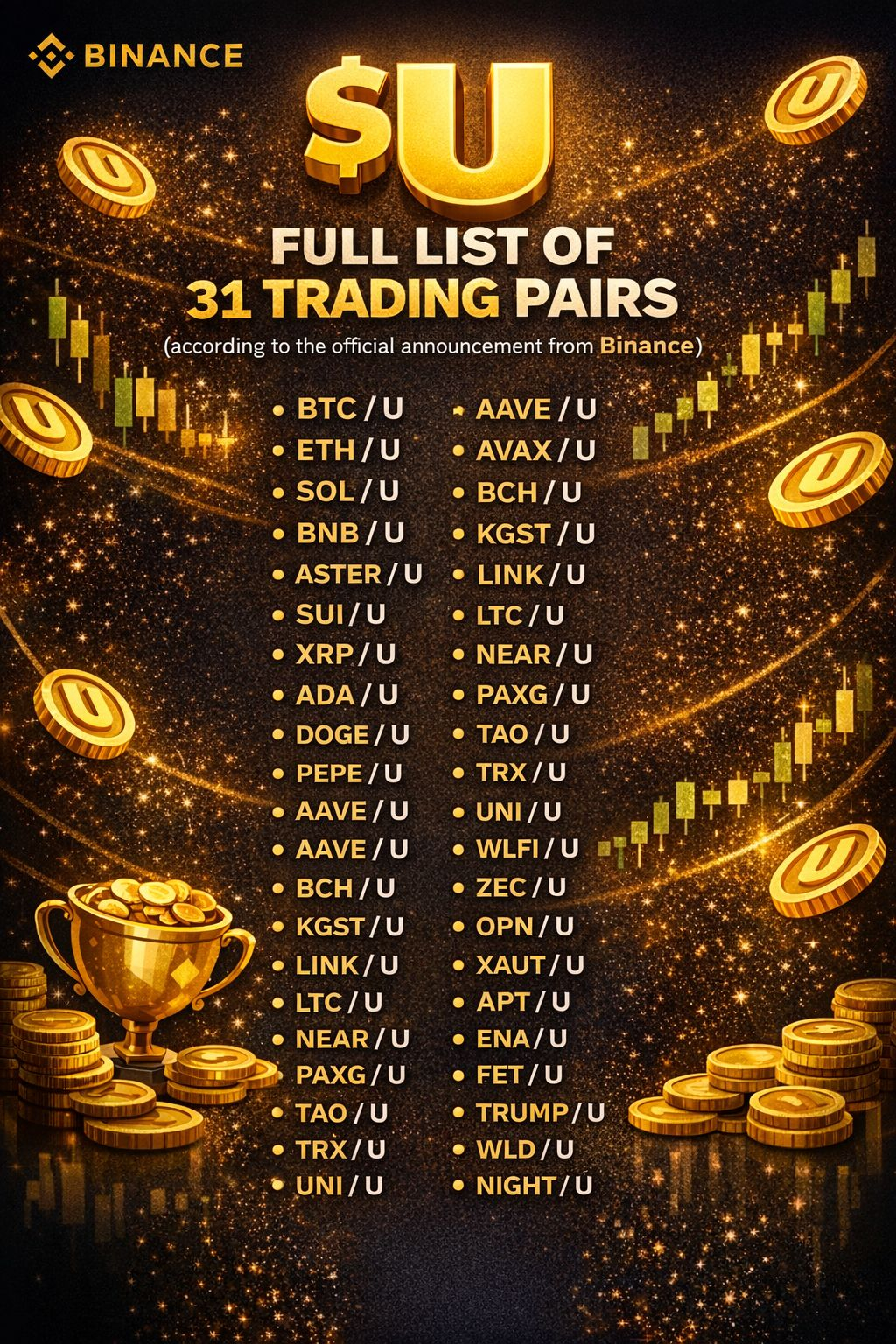
Full list of 31 trading pairs (according to the official announcement from Binance):
BTC/U
ETH/U
SOL/U
BNB/U
ASTER/U
SUI/U
XRP/U
ADA/U
DOGE/U
PEPE/U
AAVE/U
AVAX/U
BCH/U
KGST/U
LINK/U
LTC/U
NEAR/U
PAXG/U
TAO/U
TRX/U
UNI/U
WLFI/U
ZEC/U
OPN/U
XAUT/U
APT/U
ENA/U
FET/U
TRUMP/U
WLD/U
NIGHT/U
#UDOG
Full list of 31 trading pairs (according to the official announcement from Binance):
BTC/U
ETH/U
SOL/U
BNB/U
ASTER/U
SUI/U
XRP/U
ADA/U
DOGE/U
PEPE/U
AAVE/U
AVAX/U
BCH/U
KGST/U
LINK/U
LTC/U
NEAR/U
PAXG/U
TAO/U
TRX/U
UNI/U
WLFI/U
ZEC/U
OPN/U
XAUT/U
APT/U
ENA/U
FET/U
TRUMP/U
WLD/U
NIGHT/U
#UDOG
BTC/U
ETH/U
SOL/U
BNB/U
ASTER/U
SUI/U
XRP/U
ADA/U
DOGE/U
PEPE/U
AAVE/U
AVAX/U
BCH/U
KGST/U
LINK/U
LTC/U
NEAR/U
PAXG/U
TAO/U
TRX/U
UNI/U
WLFI/U
ZEC/U
OPN/U
XAUT/U
APT/U
ENA/U
FET/U
TRUMP/U
WLD/U
NIGHT/U
#UDOG
12
🔥 BREAKING NEWS: The CLARITY Act is close to resolving the stablecoin reward bottleneck
According to Coinbase, the debate around the reward mechanism for stablecoins could be settled within the next 48 hours.
This has been the biggest sticking point for the CLARITY Act before the broader crypto market structure bill can move forward.
If this issue is resolved, the U.S. regulatory framework for crypto could attract new capital inflows into the market.
#UDOG
🔥 BREAKING NEWS: The CLARITY Act is close to resolving the stablecoin reward bottleneck
According to Coinbase, the debate around the reward mechanism for stablecoins could be settled within the next 48 hours.
This has been the biggest sticking point for the CLARITY Act before the broader crypto market structure bill can move forward.
If this issue is resolved, the U.S. regulatory framework for crypto could attract new capital inflows into the market.
#UDOG
According to Coinbase, the debate around the reward mechanism for stablecoins could be settled within the next 48 hours.
This has been the biggest sticking point for the CLARITY Act before the broader crypto market structure bill can move forward.
If this issue is resolved, the U.S. regulatory framework for crypto could attract new capital inflows into the market.
#UDOG

1
3
Invisible Stablecoins Are Transforming Payments in Southeast Asia
Stablecoins are booming in Southeast Asia—but in a way most users don’t even notice.
Imagine a Thai tourist in Singapore: you scan a QR code with Q Wallet, pay in Baht, and the merchant instantly receives SGD. No high fees, no delays.
Behind the scenes, XSGD by StraitsX—licensed by MAS—acts as the “invisible rail” powering the transaction.
Crypto Hidden Behind Familiar UX
When you pay:
Your wallet sends a request
The system converts Baht → XSGD on-chain
XSGD transfers instantly
The merchant receives real SGD
To users, it’s just a normal QR payment—but in reality it’s real-time, low-cost cross-border settlement.
The “Invisible Stablecoin” Model
StraitsX doesn’t compete with wallets or banks—it powers them. Stablecoins act as a hidden bridge between systems like SGQR and PromptPay.
Real-World Adoption
Already live with Grab and Alipay+, enabling tourists to pay across Singapore using their home wallets.
Next is Project BLOOM:
Q2 2026: Thailand → Singapore
Later: Singapore → Thailand
All powered by stablecoins, but experienced like local payments.
Why It Matters
Invisible stablecoins deliver:
Speed: instant settlement
Cost: lower fees
Convenience: no FX hassle
Compatibility: no behavior change
Even small merchants benefit from faster, safer cash flow.
The Future
“The best stablecoin is the one you don’t see.”
Stablecoins are no longer just crypto investments—they’re becoming the invisible infrastructure of payments in Southeast Asia.
Have you tried cross-border QR payments? How do you think invisible stablecoins will reshape finance in the region?
@Athenaweb33
Invisible Stablecoins Are Transforming Payments in Southeast Asia
Stablecoins are booming in Southeast Asia—but in a way most users don’t even notice.
Imagine a Thai tourist in Singapore: you scan a QR code with Q Wallet, pay in Baht, and the merchant instantly receives SGD. No high fees, no delays.
Behind the scenes, XSGD by StraitsX—licensed by MAS—acts as the “invisible rail” powering the transaction.
Crypto Hidden Behind Familiar UX
When you pay:
Your wallet sends a request
The system converts Baht → XSGD on-chain
XSGD transfers instantly
The merchant receives real SGD
To users, it’s just a normal QR payment—but in reality it’s real-time, low-cost cross-border settlement.
The “Invisible Stablecoin” Model
StraitsX doesn’t compete with wallets or banks—it powers them. Stablecoins act as a hidden bridge between systems like SGQR and PromptPay.
Real-World Adoption
Already live with Grab and Alipay+, enabling tourists to pay across Singapore using their home wallets.
Next is Project BLOOM:
Q2 2026: Thailand → Singapore
Later: Singapore → Thailand
All powered by stablecoins, but experienced like local payments.
Why It Matters
Invisible stablecoins deliver:
Speed: instant settlement
Cost: lower fees
Convenience: no FX hassle
Compatibility: no behavior change
Even small merchants benefit from faster, safer cash flow.
The Future
“The best stablecoin is the one you don’t see.”
Stablecoins are no longer just crypto investments—they’re becoming the invisible infrastructure of payments in Southeast Asia.
Have you tried cross-border QR payments? How do you think invisible stablecoins will reshape finance in the region?
@Jens 1
Stablecoins are booming in Southeast Asia—but in a way most users don’t even notice.
Imagine a Thai tourist in Singapore: you scan a QR code with Q Wallet, pay in Baht, and the merchant instantly receives SGD. No high fees, no delays.
Behind the scenes, XSGD by StraitsX—licensed by MAS—acts as the “invisible rail” powering the transaction.
Crypto Hidden Behind Familiar UX
When you pay:
Your wallet sends a request
The system converts Baht → XSGD on-chain
XSGD transfers instantly
The merchant receives real SGD
To users, it’s just a normal QR payment—but in reality it’s real-time, low-cost cross-border settlement.
The “Invisible Stablecoin” Model
StraitsX doesn’t compete with wallets or banks—it powers them. Stablecoins act as a hidden bridge between systems like SGQR and PromptPay.
Real-World Adoption
Already live with Grab and Alipay+, enabling tourists to pay across Singapore using their home wallets.
Next is Project BLOOM:
Q2 2026: Thailand → Singapore
Later: Singapore → Thailand
All powered by stablecoins, but experienced like local payments.
Why It Matters
Invisible stablecoins deliver:
Speed: instant settlement
Cost: lower fees
Convenience: no FX hassle
Compatibility: no behavior change
Even small merchants benefit from faster, safer cash flow.
The Future
“The best stablecoin is the one you don’t see.”
Stablecoins are no longer just crypto investments—they’re becoming the invisible infrastructure of payments in Southeast Asia.
Have you tried cross-border QR payments? How do you think invisible stablecoins will reshape finance in the region?
@Jens 1

15
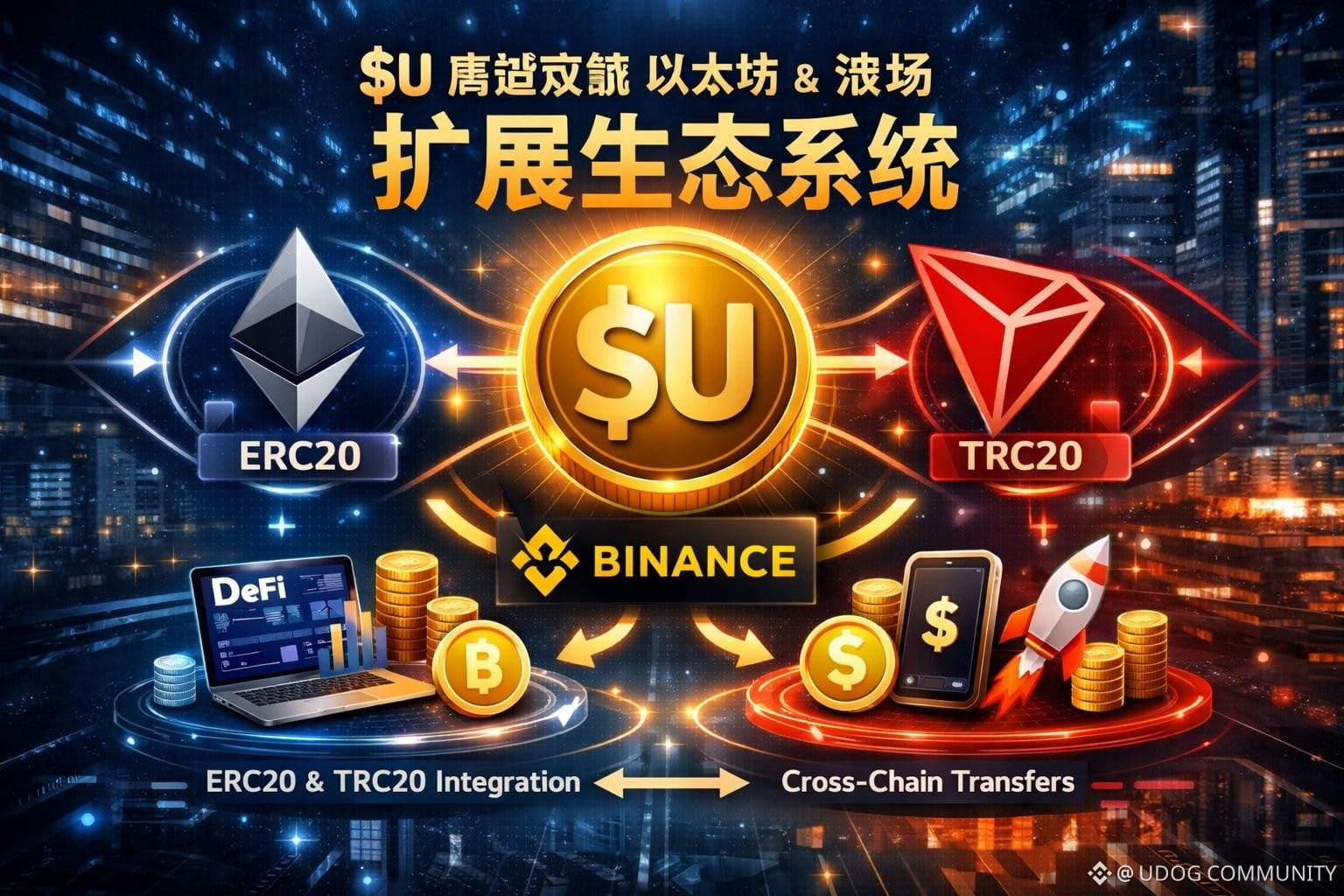
$U 正在扩展到更多区块链网络!
我们非常高兴地宣布,$U(United Stables)现已正式上线两大主流网络:以太坊(ERC20)和波场(TRC20)!从现在开始,您可以在多个生态系统中更加灵活地使用 $U,并通过 Binance 享受流畅便捷的使用体验。
Binance 已完成对 $U 的集成
根据 Binance 的官方公告,平台现已全面支持 $U 在 TRC20 和 ERC20 网络上的充值与提现。这带来了多项实际优势:
在波场(TRC20)上:交易速度极快,手续费几乎为零——非常适合日常支付、转账以及对效率要求较高的场景。
在以太坊(ERC20)上:可以更深入地接触 DeFi 流动性、复杂金融应用以及强大的生态系统。
通过 Binance:用户可以轻松完成充值/提现、交易,并在不同链之间便捷转移 $U,不再被“锁定”在单一生态中。
这是一个重要的里程碑,使 $U 更加易用,提升流动性,并拓展其在交易、支付、资产管理等多个领域的应用场景。
多链不再只是未来趋势——它正在当下发生。$U 同时登陆以太坊和波场,并获得 Binance 的支持,正是这一发展趋势的有力证明。
#UDOG 社区——我们正在共同打造一个真正实用且灵活的稳定币!
$U 正在扩展到更多区块链网络!
我们非常高兴地宣布,$U(United Stables)现已正式上线两大主流网络:以太坊(ERC20)和波场(TRC20)!从现在开始,您可以在多个生态系统中更加灵活地使用 $U,并通过 Binance 享受流畅便捷的使用体验。
Binance 已完成对 $U 的集成
根据 Binance 的官方公告,平台现已全面支持 $U 在 TRC20 和 ERC20 网络上的充值与提现。这带来了多项实际优势:
在波场(TRC20)上:交易速度极快,手续费几乎为零——非常适合日常支付、转账以及对效率要求较高的场景。
在以太坊(ERC20)上:可以更深入地接触 DeFi 流动性、复杂金融应用以及强大的生态系统。
通过 Binance:用户可以轻松完成充值/提现、交易,并在不同链之间便捷转移 $U,不再被“锁定”在单一生态中。
这是一个重要的里程碑,使 $U 更加易用,提升流动性,并拓展其在交易、支付、资产管理等多个领域的应用场景。
多链不再只是未来趋势——它正在当下发生。$U 同时登陆以太坊和波场,并获得 Binance 的支持,正是这一发展趋势的有力证明。
#UDOG 社区——我们正在共同打造一个真正实用且灵活的稳定币!
我们非常高兴地宣布,$U(United Stables)现已正式上线两大主流网络:以太坊(ERC20)和波场(TRC20)!从现在开始,您可以在多个生态系统中更加灵活地使用 $U,并通过 Binance 享受流畅便捷的使用体验。
Binance 已完成对 $U 的集成
根据 Binance 的官方公告,平台现已全面支持 $U 在 TRC20 和 ERC20 网络上的充值与提现。这带来了多项实际优势:
在波场(TRC20)上:交易速度极快,手续费几乎为零——非常适合日常支付、转账以及对效率要求较高的场景。
在以太坊(ERC20)上:可以更深入地接触 DeFi 流动性、复杂金融应用以及强大的生态系统。
通过 Binance:用户可以轻松完成充值/提现、交易,并在不同链之间便捷转移 $U,不再被“锁定”在单一生态中。
这是一个重要的里程碑,使 $U 更加易用,提升流动性,并拓展其在交易、支付、资产管理等多个领域的应用场景。
多链不再只是未来趋势——它正在当下发生。$U 同时登陆以太坊和波场,并获得 Binance 的支持,正是这一发展趋势的有力证明。
#UDOG 社区——我们正在共同打造一个真正实用且灵活的稳定币!
1
1
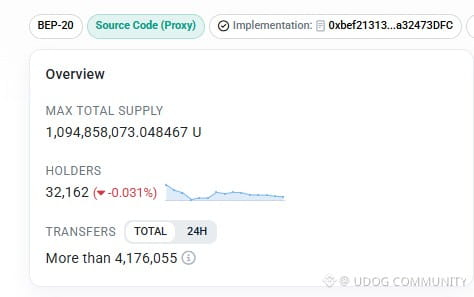
$U —— 統一流動性並為 BSC AI 生態系統提供代理支付解決方案的穩$U – 統一流動性並為 BSC AI 生態系統提供代理支付解決方案的穩定幣 BNB Chain 正引領區塊鏈上的 AI 革命,已有數萬個 AI 代理(AI Agents)部署其中,DeFi 生態系統也極為活躍。在此背景下,United Stables 發行的原生穩定幣 $U 脫穎而出,成為強大的「流動性橋樑」,成功統一碎片化的流動性,並開啟 agentic payments(AI 代理自主支付)的新時代。$U 於 2025 年 12 月 18 日 在 BNB Chain 和 Ethereum 上正式推出,它並非一般的穩定幣。相較於與 USDT 或 USDC 競爭,$U 採用獨特的 儲備模式,將 USDT、USDC、USD1 等主流穩定幣及經審計的法幣資產納入儲備,從而創造一個統一的流動性層。結果是:流動性更加集中、資本效率大幅提升,為用戶、開發者和 AI 代理提供更順暢的體驗。為何 $U 能在 BSC 上有效「統一流動性」(Unify Liquidity)?獨特的儲備模型:鑄造 $U 時,可存入 USDT/USDC 等資產,系統將其匯聚成單一 token,減少 PancakeSwap 等 DEX 上分散的流動性池問題。
深度整合 BNB Chain 生態:獲得 Trust Wallet、Binance Wallet 支持,並在 HTX、Binance 等交易所上市,同時與 Venus、ListaDAO 等主流協議深度整合。
高速低費優勢:憑藉 BNB Chain 的原生優勢,$U 非常適合高頻交易、跨境支付和微額交易。
推出不到三個月,$U 的總供應量已超過 10 億枚(截至 2026 年 3 月),充分展現社群與開發者的強烈認可。Agentic Payment Solutions – 機器經濟的未來$U 最突出的特點在於其 AI 原生設計:全面支援 EIP-3009:$U 是 BNB Chain 上首個原生完整支援 EIP-3009 的穩定幣,實現 免 Gas 轉帳(gasless transfers)與簽名授權。AI 代理無需處理複雜的 on-chain approve,只需一個簽名即可即時完成轉帳。
linkedin.com
結合 x402 標準:支援委託執行(delegated execution),讓 AI 代理在完成任務後自動付款,例如購買數據、支付獎勵,或進行機器對機器(M2M)商業結算。
實際應用:適用於自主交易機器人、供應鏈自動結算、AI 驅動的 DeFi 金庫,甚至是無人駕駛汽車或個人財務管理代理。
與 Pieverse 的合作便是最佳例證:雙方共同推出基於 U Network 的 AI 代理新銀行(AI-based Agentic Neobank),讓 AI 代理成為自主的「帳戶持有者」,實現免 Gas、可驗證且符合審計要求的支付。AEON 也已將 $U 整合至 x402 Facilitator,連接現實支付與 AI 經濟。BSC AI 生態系統的更廣闊願景BNB Chain 不僅在速度上領先,更在積極建構完整的 Agentic Stack。$U 作為原生支付軌道(payment rail),幫助數千個 AI 代理順暢運作,避免流動性與 Gas 費的瓶頸。這是從「AI 只會思考」轉向「AI 自主行動並支付」的關鍵一步。官方連結:官網:u.tech
BNB Chain 部落格:bnbchain.org/en/blog/united…
Twitter:@UTechStables
今日 AMA(2026 年 3 月 26 日):歡迎參加與 @UTechStables
、@BNBCHAIN
、@TrustWallet
及 @pieverse_io
共同舉辦的 AMA,時間為 UTC 12:00(越南時間晚上 19:00)。主題正是 $U 如何統一流動性並透過代理支付解決方案賦能開發者。您正在 BSC 上開發 AI 代理嗎?還是正在尋找最適合 DeFi 的穩定幣?
$U 正是智能經濟中缺失的那塊可程式化貨幣拼圖。請持續關注 UDOG COMMUNITY,獲取更多 BSC AI 生態系統及 $U 早期機會的最新資訊!
$UDOG
$U —— 統一流動性並為 BSC AI 生態系統提供代理支付解決方案的穩
$U – 統一流動性並為 BSC AI 生態系統提供代理支付解決方案的穩定幣 BNB Chain 正引領區塊鏈上的 AI 革命,已有數萬個 AI 代理(AI Agents)部署其中,DeFi 生態系統也極為活躍。在此背景下,United Stables 發行的原生穩定幣 $U 脫穎而出,成為強大的「流動性橋樑」,成功統一碎片化的流動性,並開啟 agentic payments(AI 代理自主支付)的新時代。$U 於 2025 年 12 月 18 日 在 BNB Chain 和 Ethereum 上正式推出,它並非一般的穩定幣。相較於與 USDT 或 USDC 競爭,$U 採用獨特的 儲備模式,將 USDT、USDC、USD1 等主流穩定幣及經審計的法幣資產納入儲備,從而創造一個統一的流動性層。結果是:流動性更加集中、資本效率大幅提升,為用戶、開發者和 AI 代理提供更順暢的體驗。為何 $U 能在 BSC 上有效「統一流動性」(Unify Liquidity)?獨特的儲備模型:鑄造 $U 時,可存入 USDT/USDC 等資產,系統將其匯聚成單一 token,減少 PancakeSwap 等 DEX 上分散的流動性池問題。
深度整合 BNB Chain 生態:獲得 Trust Wallet、Binance Wallet 支持,並在 HTX、Binance 等交易所上市,同時與 Venus、ListaDAO 等主流協議深度整合。
高速低費優勢:憑藉 BNB Chain 的原生優勢,$U 非常適合高頻交易、跨境支付和微額交易。
推出不到三個月,$U 的總供應量已超過 10 億枚(截至 2026 年 3 月),充分展現社群與開發者的強烈認可。Agentic Payment Solutions – 機器經濟的未來$U 最突出的特點在於其 AI 原生設計:全面支援 EIP-3009:$U 是 BNB Chain 上首個原生完整支援 EIP-3009 的穩定幣,實現 免 Gas 轉帳(gasless transfers)與簽名授權。AI 代理無需處理複雜的 on-chain approve,只需一個簽名即可即時完成轉帳。
linkedin.com
結合 x402 標準:支援委託執行(delegated execution),讓 AI 代理在完成任務後自動付款,例如購買數據、支付獎勵,或進行機器對機器(M2M)商業結算。
實際應用:適用於自主交易機器人、供應鏈自動結算、AI 驅動的 DeFi 金庫,甚至是無人駕駛汽車或個人財務管理代理。
與 Pieverse 的合作便是最佳例證:雙方共同推出基於 U Network 的 AI 代理新銀行(AI-based Agentic Neobank),讓 AI 代理成為自主的「帳戶持有者」,實現免 Gas、可驗證且符合審計要求的支付。AEON 也已將 $U 整合至 x402 Facilitator,連接現實支付與 AI 經濟。BSC AI 生態系統的更廣闊願景BNB Chain 不僅在速度上領先,更在積極建構完整的 Agentic Stack。$U 作為原生支付軌道(payment rail),幫助數千個 AI 代理順暢運作,避免流動性與 Gas 費的瓶頸。這是從「AI 只會思考」轉向「AI 自主行動並支付」的關鍵一步。官方連結:官網:u.tech
BNB Chain 部落格:bnbchain.org/en/blog/united…
Twitter:@UTechStables
今日 AMA(2026 年 3 月 26 日):歡迎參加與 @UTechStables
、@BNBCHAIN
、@TrustWallet
及 @pieverse_io
共同舉辦的 AMA,時間為 UTC 12:00(越南時間晚上 19:00)。主題正是 $U 如何統一流動性並透過代理支付解決方案賦能開發者。您正在 BSC 上開發 AI 代理嗎?還是正在尋找最適合 DeFi 的穩定幣?
$U 正是智能經濟中缺失的那塊可程式化貨幣拼圖。請持續關注 UDOG COMMUNITY,獲取更多 BSC AI 生態系統及 $U 早期機會的最新資訊!
$UDOG
深度整合 BNB Chain 生態:獲得 Trust Wallet、Binance Wallet 支持,並在 HTX、Binance 等交易所上市,同時與 Venus、ListaDAO 等主流協議深度整合。
高速低費優勢:憑藉 BNB Chain 的原生優勢,$U 非常適合高頻交易、跨境支付和微額交易。
推出不到三個月,$U 的總供應量已超過 10 億枚(截至 2026 年 3 月),充分展現社群與開發者的強烈認可。Agentic Payment Solutions – 機器經濟的未來$U 最突出的特點在於其 AI 原生設計:全面支援 EIP-3009:$U 是 BNB Chain 上首個原生完整支援 EIP-3009 的穩定幣,實現 免 Gas 轉帳(gasless transfers)與簽名授權。AI 代理無需處理複雜的 on-chain approve,只需一個簽名即可即時完成轉帳。
linkedin.com
結合 x402 標準:支援委託執行(delegated execution),讓 AI 代理在完成任務後自動付款,例如購買數據、支付獎勵,或進行機器對機器(M2M)商業結算。
實際應用:適用於自主交易機器人、供應鏈自動結算、AI 驅動的 DeFi 金庫,甚至是無人駕駛汽車或個人財務管理代理。
與 Pieverse 的合作便是最佳例證:雙方共同推出基於 U Network 的 AI 代理新銀行(AI-based Agentic Neobank),讓 AI 代理成為自主的「帳戶持有者」,實現免 Gas、可驗證且符合審計要求的支付。AEON 也已將 $U 整合至 x402 Facilitator,連接現實支付與 AI 經濟。BSC AI 生態系統的更廣闊願景BNB Chain 不僅在速度上領先,更在積極建構完整的 Agentic Stack。$U 作為原生支付軌道(payment rail),幫助數千個 AI 代理順暢運作,避免流動性與 Gas 費的瓶頸。這是從「AI 只會思考」轉向「AI 自主行動並支付」的關鍵一步。官方連結:官網:u.tech
BNB Chain 部落格:bnbchain.org/en/blog/united…
Twitter:@UTechStables
今日 AMA(2026 年 3 月 26 日):歡迎參加與 @UTechStables
、@BNBCHAIN
、@TrustWallet
及 @pieverse_io
共同舉辦的 AMA,時間為 UTC 12:00(越南時間晚上 19:00)。主題正是 $U 如何統一流動性並透過代理支付解決方案賦能開發者。您正在 BSC 上開發 AI 代理嗎?還是正在尋找最適合 DeFi 的穩定幣?
$U 正是智能經濟中缺失的那塊可程式化貨幣拼圖。請持續關注 UDOG COMMUNITY,獲取更多 BSC AI 生態系統及 $U 早期機會的最新資訊!
$UDOG
1
281
🚨 币安生态重磅联动!UDOG即将引爆BSC AI赛道!🚨
我们正与 @BNBCHAIN 联合举办AMA,深度探讨代理支付革命与流动性统一方案!
这是UDOG迈向币安主站的关键一步,全体社区成员必须火力全开!
📅 时间:3月26日 12:00 UTC / 20:00 SGT(北京时间 20:00)
📍 地点:X (Twitter) Space → 关注 @UTechStables / @BNBCHAIN 准时入场
🎯 核心议题:
- UDOG如何赋能BSC AI生态
- 代理支付落地进展与未来规划把这个推上更新一下
#UDOG
🚨 币安生态重磅联动!UDOG即将引爆BSC AI赛道!🚨
我们正与 @BNBCHAIN 联合举办AMA,深度探讨代理支付革命与流动性统一方案!
这是UDOG迈向币安主站的关键一步,全体社区成员必须火力全开!
📅 时间:3月26日 12:00 UTC / 20:00 SGT(北京时间 20:00)
📍 地点:X (Twitter) Space → 关注 @UTechStables / @BNBCHAIN 准时入场
🎯 核心议题:
- UDOG如何赋能BSC AI生态
- 代理支付落地进展与未来规划把这个推上更新一下
#UDOG
我们正与 @BNBCHAIN 联合举办AMA,深度探讨代理支付革命与流动性统一方案!
这是UDOG迈向币安主站的关键一步,全体社区成员必须火力全开!
📅 时间:3月26日 12:00 UTC / 20:00 SGT(北京时间 20:00)
📍 地点:X (Twitter) Space → 关注 @UTechStables / @BNBCHAIN 准时入场
🎯 核心议题:
- UDOG如何赋能BSC AI生态
- 代理支付落地进展与未来规划把这个推上更新一下
#UDOG

1
7
Статья
Why $U Could Power the Next Era of Global PaymentsThe future of global payments powered by stablecoins is rapidly accelerating, and $U (United Stables) is well-positioned to capture this opportunity. Here’s a clear, structured analysis based on current trends and the core design of $U:
1. The Future of Global Payments with Stablecoins
Stablecoins are evolving from simple “crypto trading tools” into real financial infrastructure for global payments:
Speed & cost advantage: Cross-border transfers take minutes instead of 1–5 days, with fees dropping from 5–10% to below 1–2% (even as low as 0.1–0.25% in some cases). Payments run 24/7 without banking constraints.
Massive growth outlook: Bloomberg Intelligence estimates global stablecoin transaction volume could reach ~$56.6 trillion by 2030. By 2024–2025, volumes have already reached tens of trillions, surpassing some traditional payment networks.
Key use cases:
Remittances (especially in emerging markets like Vietnam, Argentina, Turkey)
B2B payments, trade finance, treasury operations
Integration with major fintech players like Visa, Stripe, PayPal (PYUSD), and Western Union
Future trends: Multi-chain infrastructure, institutional-grade compliance, and AI-native payments (machine-to-machine, autonomous agents)
👉 Stablecoins are becoming the “new SWIFT” for the digital era, especially in Asia where adoption is accelerating.
2. What is $U (United Stables) and What Makes It Different?
$U is a USD-pegged stablecoin (1:1), issued by United Stables Limited (BVI), launched in December 2025 on BNB Chain and Ethereum, with a market cap around $1B.
Key Differentiators (Not Just Another Stablecoin)
Unified liquidity model:
Users can mint/redeem $U using USDT, USDC, USD1, or fiat USD. Instead of competing, $U aggregates fragmented liquidity into one unified layer.
Hybrid backing + native yield:
Reserves include USD and high-quality stablecoins, deployed into low-risk strategies (e.g., T-bills, staking). A portion of yield is automatically distributed to holders (auto-compounding).
👉 $U becomes “productive money” — it earns while sitting idle.
AI-ready & programmable:
Supports EIP-3009 (gasless transfers) and delegated execution → ideal for AI agents, automated trading, and machine-to-machine payments.
High transparency:
Real-time Proof-of-Reserves, independent audits, and segregated custody (bankruptcy-remote).
Low cost on BNB Chain:
Near-zero fees and high throughput → ideal for large-scale payment use cases.
3. Concrete Opportunities for $U in Global Payments
Sector Opportunity for $U Competitive Edge
Cross-border & Remittances Instant transfers, <1.5% fees Unified liquidity + yield
B2B & Institutional OTC settlement, treasury management Transparency + hybrid reserves
DeFi & Trading Unified base currency, lower slippage Aggregated liquidity
AI Payments M2M payments, autonomous agents AI-native infrastructure
Emerging Markets (SEA) Remittance corridors, trade flows Low fees + BNB Chain dominance
Biggest Advantage:
While USDT and USDC fragment liquidity, $U unifies it →
More users → deeper liquidity → better execution → stronger network effects.
Yield as a Competitive Weapon:
Holding $U generates passive yield without locking funds, making it highly attractive for:
Treasury management
Payment balances
Long-term capital allocation
Current Momentum:
Reached ~$1B supply in under 3 months
Supported within the BNB Chain ecosystem
Expanding integrations with exchanges, market makers, and payment networks
4. Conclusion & Outlook
The future of global payments clearly belongs to stablecoins, and $U is designed to become a unified liquidity layer, not just another stablecoin.
With:
BNB Chain (fast + cheap)
AI-ready infrastructure
Native yield
Liquidity aggregation model
👉 $U has strong potential in:
Cross-border payments
Remittances
DeFi payments
Especially in Asia and emerging markets
Risks to Monitor
Intense competition (USDT, USDC, PYUSD, RLUSD, etc.)
Regulatory developments (e.g., MiCA in the EU, upcoming US legislation)
Need for real-world adoption (merchants, remittance partners, fintech integrations)
#UDOG
Why $U Could Power the Next Era of Global Payments
The future of global payments powered by stablecoins is rapidly accelerating, and $U (United Stables) is well-positioned to capture this opportunity. Here’s a clear, structured analysis based on current trends and the core design of $U:
1. The Future of Global Payments with Stablecoins
Stablecoins are evolving from simple “crypto trading tools” into real financial infrastructure for global payments:
Speed & cost advantage: Cross-border transfers take minutes instead of 1–5 days, with fees dropping from 5–10% to below 1–2% (even as low as 0.1–0.25% in some cases). Payments run 24/7 without banking constraints.
Massive growth outlook: Bloomberg Intelligence estimates global stablecoin transaction volume could reach ~$56.6 trillion by 2030. By 2024–2025, volumes have already reached tens of trillions, surpassing some traditional payment networks.
Key use cases:
Remittances (especially in emerging markets like Vietnam, Argentina, Turkey)
B2B payments, trade finance, treasury operations
Integration with major fintech players like Visa, Stripe, PayPal (PYUSD), and Western Union
Future trends: Multi-chain infrastructure, institutional-grade compliance, and AI-native payments (machine-to-machine, autonomous agents)
👉 Stablecoins are becoming the “new SWIFT” for the digital era, especially in Asia where adoption is accelerating.
2. What is $U (United Stables) and What Makes It Different?
$U is a USD-pegged stablecoin (1:1), issued by United Stables Limited (BVI), launched in December 2025 on BNB Chain and Ethereum, with a market cap around $1B.
Key Differentiators (Not Just Another Stablecoin)
Unified liquidity model:
Users can mint/redeem $U using USDT, USDC, USD1, or fiat USD. Instead of competing, $U aggregates fragmented liquidity into one unified layer.
Hybrid backing + native yield:
Reserves include USD and high-quality stablecoins, deployed into low-risk strategies (e.g., T-bills, staking). A portion of yield is automatically distributed to holders (auto-compounding).
👉 $U becomes “productive money” — it earns while sitting idle.
AI-ready & programmable:
Supports EIP-3009 (gasless transfers) and delegated execution → ideal for AI agents, automated trading, and machine-to-machine payments.
High transparency:
Real-time Proof-of-Reserves, independent audits, and segregated custody (bankruptcy-remote).
Low cost on BNB Chain:
Near-zero fees and high throughput → ideal for large-scale payment use cases.
3. Concrete Opportunities for $U in Global Payments
Sector Opportunity for $U Competitive Edge
Cross-border & Remittances Instant transfers, <1.5% fees Unified liquidity + yield
B2B & Institutional OTC settlement, treasury management Transparency + hybrid reserves
DeFi & Trading Unified base currency, lower slippage Aggregated liquidity
AI Payments M2M payments, autonomous agents AI-native infrastructure
Emerging Markets (SEA) Remittance corridors, trade flows Low fees + BNB Chain dominance
Biggest Advantage:
While USDT and USDC fragment liquidity, $U unifies it →
More users → deeper liquidity → better execution → stronger network effects.
Yield as a Competitive Weapon:
Holding $U generates passive yield without locking funds, making it highly attractive for:
Treasury management
Payment balances
Long-term capital allocation
Current Momentum:
Reached ~$1B supply in under 3 months
Supported within the BNB Chain ecosystem
Expanding integrations with exchanges, market makers, and payment networks
4. Conclusion & Outlook
The future of global payments clearly belongs to stablecoins, and $U is designed to become a unified liquidity layer, not just another stablecoin.
With:
BNB Chain (fast + cheap)
AI-ready infrastructure
Native yield
Liquidity aggregation model
👉 $U has strong potential in:
Cross-border payments
Remittances
DeFi payments
Especially in Asia and emerging markets
Risks to Monitor
Intense competition (USDT, USDC, PYUSD, RLUSD, etc.)
Regulatory developments (e.g., MiCA in the EU, upcoming US legislation)
Need for real-world adoption (merchants, remittance partners, fintech integrations)
#UDOG
1. The Future of Global Payments with Stablecoins
Stablecoins are evolving from simple “crypto trading tools” into real financial infrastructure for global payments:
Speed & cost advantage: Cross-border transfers take minutes instead of 1–5 days, with fees dropping from 5–10% to below 1–2% (even as low as 0.1–0.25% in some cases). Payments run 24/7 without banking constraints.
Massive growth outlook: Bloomberg Intelligence estimates global stablecoin transaction volume could reach ~$56.6 trillion by 2030. By 2024–2025, volumes have already reached tens of trillions, surpassing some traditional payment networks.
Key use cases:
Remittances (especially in emerging markets like Vietnam, Argentina, Turkey)
B2B payments, trade finance, treasury operations
Integration with major fintech players like Visa, Stripe, PayPal (PYUSD), and Western Union
Future trends: Multi-chain infrastructure, institutional-grade compliance, and AI-native payments (machine-to-machine, autonomous agents)
👉 Stablecoins are becoming the “new SWIFT” for the digital era, especially in Asia where adoption is accelerating.
2. What is $U (United Stables) and What Makes It Different?
$U is a USD-pegged stablecoin (1:1), issued by United Stables Limited (BVI), launched in December 2025 on BNB Chain and Ethereum, with a market cap around $1B.
Key Differentiators (Not Just Another Stablecoin)
Unified liquidity model:
Users can mint/redeem $U using USDT, USDC, USD1, or fiat USD. Instead of competing, $U aggregates fragmented liquidity into one unified layer.
Hybrid backing + native yield:
Reserves include USD and high-quality stablecoins, deployed into low-risk strategies (e.g., T-bills, staking). A portion of yield is automatically distributed to holders (auto-compounding).
👉 $U becomes “productive money” — it earns while sitting idle.
AI-ready & programmable:
Supports EIP-3009 (gasless transfers) and delegated execution → ideal for AI agents, automated trading, and machine-to-machine payments.
High transparency:
Real-time Proof-of-Reserves, independent audits, and segregated custody (bankruptcy-remote).
Low cost on BNB Chain:
Near-zero fees and high throughput → ideal for large-scale payment use cases.
3. Concrete Opportunities for $U in Global Payments
Sector Opportunity for $U Competitive Edge
Cross-border & Remittances Instant transfers, <1.5% fees Unified liquidity + yield
B2B & Institutional OTC settlement, treasury management Transparency + hybrid reserves
DeFi & Trading Unified base currency, lower slippage Aggregated liquidity
AI Payments M2M payments, autonomous agents AI-native infrastructure
Emerging Markets (SEA) Remittance corridors, trade flows Low fees + BNB Chain dominance
Biggest Advantage:
While USDT and USDC fragment liquidity, $U unifies it →
More users → deeper liquidity → better execution → stronger network effects.
Yield as a Competitive Weapon:
Holding $U generates passive yield without locking funds, making it highly attractive for:
Treasury management
Payment balances
Long-term capital allocation
Current Momentum:
Reached ~$1B supply in under 3 months
Supported within the BNB Chain ecosystem
Expanding integrations with exchanges, market makers, and payment networks
4. Conclusion & Outlook
The future of global payments clearly belongs to stablecoins, and $U is designed to become a unified liquidity layer, not just another stablecoin.
With:
BNB Chain (fast + cheap)
AI-ready infrastructure
Native yield
Liquidity aggregation model
👉 $U has strong potential in:
Cross-border payments
Remittances
DeFi payments
Especially in Asia and emerging markets
Risks to Monitor
Intense competition (USDT, USDC, PYUSD, RLUSD, etc.)
Regulatory developments (e.g., MiCA in the EU, upcoming US legislation)
Need for real-world adoption (merchants, remittance partners, fintech integrations)
#UDOG
1
15
🇺🇸 CLARITY Act Update (Digital Asset Market Clarity Act) – one of the hottest crypto regulation topics in late March 2026:
Mar 20: White House + Sen. Thom Tillis & Sen. Angela Alsobrooks reach agreement in principle to unblock the stalled bill since Jan 2026.
Goal: markup at Senate Banking Committee in late April, then move to full Senate vote.
💥 Key debate: Stablecoin yield
Banks worry passive yield will pull deposits away → hurt lending & financial stability.
Current deal: ban passive yield, but allow activity-based rewards (cashback, DeFi liquidity, transaction bonuses).
Alsobrooks: “Protects innovation while preventing widespread deposit flight.”
🔹 Deeper meaning: Battle between old system (banks) vs new system (crypto/DeFi)
Banks: stablecoins should only be a “payment tool.”
Crypto/DeFi: stablecoins = “global digital money” with yield.
✅ If CLARITY Act passes:
Clear jurisdiction: CFTC → digital commodities, SEC → security tokens
Framework for stablecoin custody & trading platforms
Less SEC “regulation by enforcement”
⏱ Near-term: Crypto + banks review details on Capitol Hill this week. If markup passes, next steps → full Senate vote → reconcile with House → Presidential signature.
📌 Bottom line: Long-term bullish for crypto & institutions, but short-term some DeFi/yield farms may need to adjust.
💬 Question: Should stablecoins compete freely with banks, or protect traditional banking for now?
#UDOG
🇺🇸 CLARITY Act Update (Digital Asset Market Clarity Act) – one of the hottest crypto regulation topics in late March 2026:
Mar 20: White House + Sen. Thom Tillis & Sen. Angela Alsobrooks reach agreement in principle to unblock the stalled bill since Jan 2026.
Goal: markup at Senate Banking Committee in late April, then move to full Senate vote.
💥 Key debate: Stablecoin yield
Banks worry passive yield will pull deposits away → hurt lending & financial stability.
Current deal: ban passive yield, but allow activity-based rewards (cashback, DeFi liquidity, transaction bonuses).
Alsobrooks: “Protects innovation while preventing widespread deposit flight.”
🔹 Deeper meaning: Battle between old system (banks) vs new system (crypto/DeFi)
Banks: stablecoins should only be a “payment tool.”
Crypto/DeFi: stablecoins = “global digital money” with yield.
✅ If CLARITY Act passes:
Clear jurisdiction: CFTC → digital commodities, SEC → security tokens
Framework for stablecoin custody & trading platforms
Less SEC “regulation by enforcement”
⏱ Near-term: Crypto + banks review details on Capitol Hill this week. If markup passes, next steps → full Senate vote → reconcile with House → Presidential signature.
📌 Bottom line: Long-term bullish for crypto & institutions, but short-term some DeFi/yield farms may need to adjust.
💬 Question: Should stablecoins compete freely with banks, or protect traditional banking for now?
#UDOG
Mar 20: White House + Sen. Thom Tillis & Sen. Angela Alsobrooks reach agreement in principle to unblock the stalled bill since Jan 2026.
Goal: markup at Senate Banking Committee in late April, then move to full Senate vote.
💥 Key debate: Stablecoin yield
Banks worry passive yield will pull deposits away → hurt lending & financial stability.
Current deal: ban passive yield, but allow activity-based rewards (cashback, DeFi liquidity, transaction bonuses).
Alsobrooks: “Protects innovation while preventing widespread deposit flight.”
🔹 Deeper meaning: Battle between old system (banks) vs new system (crypto/DeFi)
Banks: stablecoins should only be a “payment tool.”
Crypto/DeFi: stablecoins = “global digital money” with yield.
✅ If CLARITY Act passes:
Clear jurisdiction: CFTC → digital commodities, SEC → security tokens
Framework for stablecoin custody & trading platforms
Less SEC “regulation by enforcement”
⏱ Near-term: Crypto + banks review details on Capitol Hill this week. If markup passes, next steps → full Senate vote → reconcile with House → Presidential signature.
📌 Bottom line: Long-term bullish for crypto & institutions, but short-term some DeFi/yield farms may need to adjust.
💬 Question: Should stablecoins compete freely with banks, or protect traditional banking for now?
#UDOG
1
1

Статья
Binance in the Tokenized Deposits Race: The Crypto-Native Challenger to Traditional Banks1️⃣ Binance cannot issue tokenized deposits
Tokenized deposits = bank deposits brought onto the blockchain.
Still a liability of the bank.
Insured and regulated under banking rules (FDIC, Basel, etc.).
Binance is not a commercial bank:
Does not accept traditional deposits → cannot issue this product.
As of the latest information (March 2026), Binance has not launched tokenized bank deposits.
✅ Conclusion: Binance does not directly participate in the “tokenized deposits race” with Citi, BNY Mellon, or Standard Chartered.
2️⃣ Binance focuses on stablecoins + RWA tokenization
Stablecoins:
USDT + FDUSD +U account for a massive share of trading on Binance.
Advantages: flexible, operates 24/7 on public chains, usable in DeFi & payments.
Traditional tokenized deposits struggle to compete in terms of interoperability & crypto-native features.
RWA & tokenized assets on BNB Chain:
RWA TVL is growing rapidly, reaching billions USD.
Includes tokenized money market funds, Treasuries.
Partnership with Franklin Templeton: tokenized shares of money market funds used directly as collateral on Binance.
BlackRock, Ondo Finance, China Merchants Bank also tokenized, integrated on Binance Alpha.
Long-term plans:
Binance is considering reviving tokenized stock trading (paused since 2021).
Expanding RWA infrastructure on public chains to serve hundreds of millions of users.
✅ Conclusion: Binance is leading the “crypto-native” side, not the “banking” side.
3️⃣ Strategic position
Does not compete directly with banks.
Creates attractiveness for stablecoins & RWA → forcing banks to tokenize deposits to retain capital.
Binance Square & Binance Research continuously analyze “Stablecoins vs Tokenized Deposits.”
Binance captures liquidity & utility on the crypto side, while banks retain traditional control.
🔑 Summary
Banks (Citi, BNY Mellon, Standard Chartered): racing to protect control.
Binance: the challenger, leading stablecoin + public-chain tokenization, partnering with major funds, building infrastructure for hundreds of millions of users.
Result: Both will coexist, but Binance is the reason banks must pursue tokenized deposits.
#UDOG
Binance in the Tokenized Deposits Race: The Crypto-Native Challenger to Traditional Banks
1️⃣ Binance cannot issue tokenized deposits
Tokenized deposits = bank deposits brought onto the blockchain.
Still a liability of the bank.
Insured and regulated under banking rules (FDIC, Basel, etc.).
Binance is not a commercial bank:
Does not accept traditional deposits → cannot issue this product.
As of the latest information (March 2026), Binance has not launched tokenized bank deposits.
✅ Conclusion: Binance does not directly participate in the “tokenized deposits race” with Citi, BNY Mellon, or Standard Chartered.
2️⃣ Binance focuses on stablecoins + RWA tokenization
Stablecoins:
USDT + FDUSD +U account for a massive share of trading on Binance.
Advantages: flexible, operates 24/7 on public chains, usable in DeFi & payments.
Traditional tokenized deposits struggle to compete in terms of interoperability & crypto-native features.
RWA & tokenized assets on BNB Chain:
RWA TVL is growing rapidly, reaching billions USD.
Includes tokenized money market funds, Treasuries.
Partnership with Franklin Templeton: tokenized shares of money market funds used directly as collateral on Binance.
BlackRock, Ondo Finance, China Merchants Bank also tokenized, integrated on Binance Alpha.
Long-term plans:
Binance is considering reviving tokenized stock trading (paused since 2021).
Expanding RWA infrastructure on public chains to serve hundreds of millions of users.
✅ Conclusion: Binance is leading the “crypto-native” side, not the “banking” side.
3️⃣ Strategic position
Does not compete directly with banks.
Creates attractiveness for stablecoins & RWA → forcing banks to tokenize deposits to retain capital.
Binance Square & Binance Research continuously analyze “Stablecoins vs Tokenized Deposits.”
Binance captures liquidity & utility on the crypto side, while banks retain traditional control.
🔑 Summary
Banks (Citi, BNY Mellon, Standard Chartered): racing to protect control.
Binance: the challenger, leading stablecoin + public-chain tokenization, partnering with major funds, building infrastructure for hundreds of millions of users.
Result: Both will coexist, but Binance is the reason banks must pursue tokenized deposits.
#UDOG
Tokenized deposits = bank deposits brought onto the blockchain.
Still a liability of the bank.
Insured and regulated under banking rules (FDIC, Basel, etc.).
Binance is not a commercial bank:
Does not accept traditional deposits → cannot issue this product.
As of the latest information (March 2026), Binance has not launched tokenized bank deposits.
✅ Conclusion: Binance does not directly participate in the “tokenized deposits race” with Citi, BNY Mellon, or Standard Chartered.
2️⃣ Binance focuses on stablecoins + RWA tokenization
Stablecoins:
USDT + FDUSD +U account for a massive share of trading on Binance.
Advantages: flexible, operates 24/7 on public chains, usable in DeFi & payments.
Traditional tokenized deposits struggle to compete in terms of interoperability & crypto-native features.
RWA & tokenized assets on BNB Chain:
RWA TVL is growing rapidly, reaching billions USD.
Includes tokenized money market funds, Treasuries.
Partnership with Franklin Templeton: tokenized shares of money market funds used directly as collateral on Binance.
BlackRock, Ondo Finance, China Merchants Bank also tokenized, integrated on Binance Alpha.
Long-term plans:
Binance is considering reviving tokenized stock trading (paused since 2021).
Expanding RWA infrastructure on public chains to serve hundreds of millions of users.
✅ Conclusion: Binance is leading the “crypto-native” side, not the “banking” side.
3️⃣ Strategic position
Does not compete directly with banks.
Creates attractiveness for stablecoins & RWA → forcing banks to tokenize deposits to retain capital.
Binance Square & Binance Research continuously analyze “Stablecoins vs Tokenized Deposits.”
Binance captures liquidity & utility on the crypto side, while banks retain traditional control.
🔑 Summary
Banks (Citi, BNY Mellon, Standard Chartered): racing to protect control.
Binance: the challenger, leading stablecoin + public-chain tokenization, partnering with major funds, building infrastructure for hundreds of millions of users.
Result: Both will coexist, but Binance is the reason banks must pursue tokenized deposits.
#UDOG
1
2
7
Статья
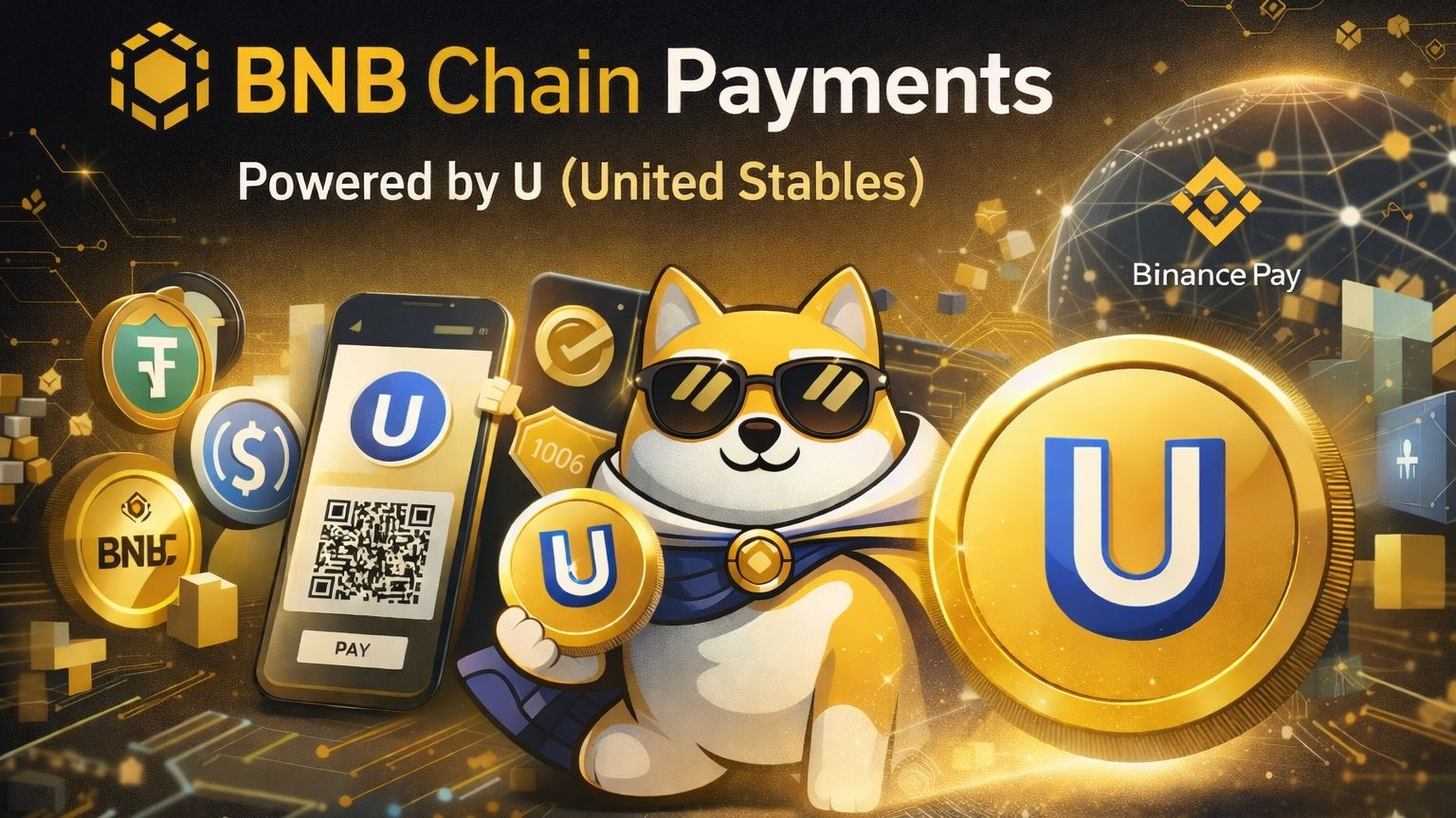
BNB Chain Is Building the Future of Payments — Powered by UBNB Chain’s payment infrastructure (formerly Binance Smart Chain – BSC) is now highly advanced, focusing on high speed, low fees (near-zero gas in some cases), stablecoins, and seamless on-chain/off-chain integration.
Official page: bnbchain.org/en/payment
1. Binance Pay (Core & Most Important)
Borderless crypto payments, supporting 100+ assets (BNB, USDT, USDC, BTC, ETH, and U)
Zero gas fees for users, instant settlement for merchants
Over 45M users + 2M merchants (KYC)
Supports merchant tools, QR payments, cross-border, and on-chain integration
Latest: Merchants can directly accept U (United Stables)
2. Trust Wallet Pay / QR Pay
(Official wallet payment solution)
25M+ users
Integrated QR Flash Pay & Crypto QR Pay
FlexGas (pay gas using USDT / USDC / U instead of BNB)
In-app buy/sell, instant transfers
Direct connection with Binance Pay and dApps
Full support for U (gasless + instant)
3. Payment Gateways & Partners
Alchemy Pay (fiat on/off-ramp)
NOWPayments (merchant gateway)
Lunu Pay
StraitsX (stablecoin payments)
Better Payment Network (BPN – cross-border stablecoin network)
Oobit / MugglePay / AEON / Allscale
👉 U (United Stables) is deeply integrated and can be accepted directly by merchants
4. Technical Infrastructure (Payment Layer)
opBNB (Layer 2): ultra-low fees + high throughput → ideal for mass adoption
Stablecoins (core backbone):
USDT / USDC / FDUSD
U (United Stables) – native stablecoin of BNB Chain
U (United Stables) Highlights
1:1 backed (cash + major stablecoins), with on-chain Proof-of-Reserve
Gasless transfers (EIP-3009)
Prioritized by BNB Chain with 0 fees (0 Carnival Fee)
AI-native payment asset (AI agents, machine-to-machine payments)
Designed for cross-border, DeFi, and everyday payments
Core vision: Unify liquidity across stablecoins
Key Features
Gasless + QR payments
Crypto debit cards
AI agent payments
24/7 low-cost cross-border transactions
Wallet Support
Binance Wallet, MetaMask, Bitget Wallet, SafePal — all support U
Summary
With U (United Stables), BNB Chain’s payment stack is stronger than ever:
👉 Faster
👉 Cheaper (near-zero gas)
👉 AI-ready
Positioning it as a key infrastructure layer for merchants, dApps, cross-border payments, and AI-driven economies 🚀
#UDOG
BNB Chain Is Building the Future of Payments — Powered by U
BNB Chain’s payment infrastructure (formerly Binance Smart Chain – BSC) is now highly advanced, focusing on high speed, low fees (near-zero gas in some cases), stablecoins, and seamless on-chain/off-chain integration.
Official page: bnbchain.org/en/payment
1. Binance Pay (Core & Most Important)
Borderless crypto payments, supporting 100+ assets (BNB, USDT, USDC, BTC, ETH, and U)
Zero gas fees for users, instant settlement for merchants
Over 45M users + 2M merchants (KYC)
Supports merchant tools, QR payments, cross-border, and on-chain integration
Latest: Merchants can directly accept U (United Stables)
2. Trust Wallet Pay / QR Pay
(Official wallet payment solution)
25M+ users
Integrated QR Flash Pay & Crypto QR Pay
FlexGas (pay gas using USDT / USDC / U instead of BNB)
In-app buy/sell, instant transfers
Direct connection with Binance Pay and dApps
Full support for U (gasless + instant)
3. Payment Gateways & Partners
Alchemy Pay (fiat on/off-ramp)
NOWPayments (merchant gateway)
Lunu Pay
StraitsX (stablecoin payments)
Better Payment Network (BPN – cross-border stablecoin network)
Oobit / MugglePay / AEON / Allscale
👉 U (United Stables) is deeply integrated and can be accepted directly by merchants
4. Technical Infrastructure (Payment Layer)
opBNB (Layer 2): ultra-low fees + high throughput → ideal for mass adoption
Stablecoins (core backbone):
USDT / USDC / FDUSD
U (United Stables) – native stablecoin of BNB Chain
U (United Stables) Highlights
1:1 backed (cash + major stablecoins), with on-chain Proof-of-Reserve
Gasless transfers (EIP-3009)
Prioritized by BNB Chain with 0 fees (0 Carnival Fee)
AI-native payment asset (AI agents, machine-to-machine payments)
Designed for cross-border, DeFi, and everyday payments
Core vision: Unify liquidity across stablecoins
Key Features
Gasless + QR payments
Crypto debit cards
AI agent payments
24/7 low-cost cross-border transactions
Wallet Support
Binance Wallet, MetaMask, Bitget Wallet, SafePal — all support U
Summary
With U (United Stables), BNB Chain’s payment stack is stronger than ever:
👉 Faster
👉 Cheaper (near-zero gas)
👉 AI-ready
Positioning it as a key infrastructure layer for merchants, dApps, cross-border payments, and AI-driven economies 🚀
#UDOG
Official page: bnbchain.org/en/payment
1. Binance Pay (Core & Most Important)
Borderless crypto payments, supporting 100+ assets (BNB, USDT, USDC, BTC, ETH, and U)
Zero gas fees for users, instant settlement for merchants
Over 45M users + 2M merchants (KYC)
Supports merchant tools, QR payments, cross-border, and on-chain integration
Latest: Merchants can directly accept U (United Stables)
2. Trust Wallet Pay / QR Pay
(Official wallet payment solution)
25M+ users
Integrated QR Flash Pay & Crypto QR Pay
FlexGas (pay gas using USDT / USDC / U instead of BNB)
In-app buy/sell, instant transfers
Direct connection with Binance Pay and dApps
Full support for U (gasless + instant)
3. Payment Gateways & Partners
Alchemy Pay (fiat on/off-ramp)
NOWPayments (merchant gateway)
Lunu Pay
StraitsX (stablecoin payments)
Better Payment Network (BPN – cross-border stablecoin network)
Oobit / MugglePay / AEON / Allscale
👉 U (United Stables) is deeply integrated and can be accepted directly by merchants
4. Technical Infrastructure (Payment Layer)
opBNB (Layer 2): ultra-low fees + high throughput → ideal for mass adoption
Stablecoins (core backbone):
USDT / USDC / FDUSD
U (United Stables) – native stablecoin of BNB Chain
U (United Stables) Highlights
1:1 backed (cash + major stablecoins), with on-chain Proof-of-Reserve
Gasless transfers (EIP-3009)
Prioritized by BNB Chain with 0 fees (0 Carnival Fee)
AI-native payment asset (AI agents, machine-to-machine payments)
Designed for cross-border, DeFi, and everyday payments
Core vision: Unify liquidity across stablecoins
Key Features
Gasless + QR payments
Crypto debit cards
AI agent payments
24/7 low-cost cross-border transactions
Wallet Support
Binance Wallet, MetaMask, Bitget Wallet, SafePal — all support U
Summary
With U (United Stables), BNB Chain’s payment stack is stronger than ever:
👉 Faster
👉 Cheaper (near-zero gas)
👉 AI-ready
Positioning it as a key infrastructure layer for merchants, dApps, cross-border payments, and AI-driven economies 🚀
#UDOG
1
1
2
12
Войдите, чтобы посмотреть больше материала
Присоединяйтесь к пользователям криптовалют по всему миру на Binance Square
⚡️ Получайте новейшую и полезную информацию о криптоактивах.
💬 Нам доверяет крупнейшая в мире криптобиржа.
👍 Получите достоверные аналитические данные от верифицированных создателей контента.
Эл. почта/номер телефона
В тренде
BitcoinSurpasses$77000
Просмотров: 17,603
225 обсуждают
$BTC is ripping higher despite it all. 🚀
Today marked the first rate hike in over 3 years, while the CLARITY Act stalled again yesterday.
Setup big long again - thank me later
Entry : $75500 - $76500
Stoploss : $74900
Take profit : $77000 - $78000
Get ready for a crazy growth cycle. 🔥
TF_bnb
·Лайков: 17
·Просмотров: 7k
ParadigmDisclosesZECHolding
Просмотров: 68,617
1,045 обсуждают
BitcoinETFsShed$450M
Просмотров: 26,347
219 обсуждают