

WhaleAlertPro
92 Публикации

WhaleAlertPro
Отправить жалобу
Заблокировать пользователя
Exploring Bitcoin, altcoins, DeFi, and Web3 | Simplifying crypto for everyone | Market updates, research, and long-term investing insights
Открытая сделка
Трейдер с регулярными сделками
4.3 г
2 подписок(и/а)
4 подписчиков(а)
4 понравилось
Посты
Портфель
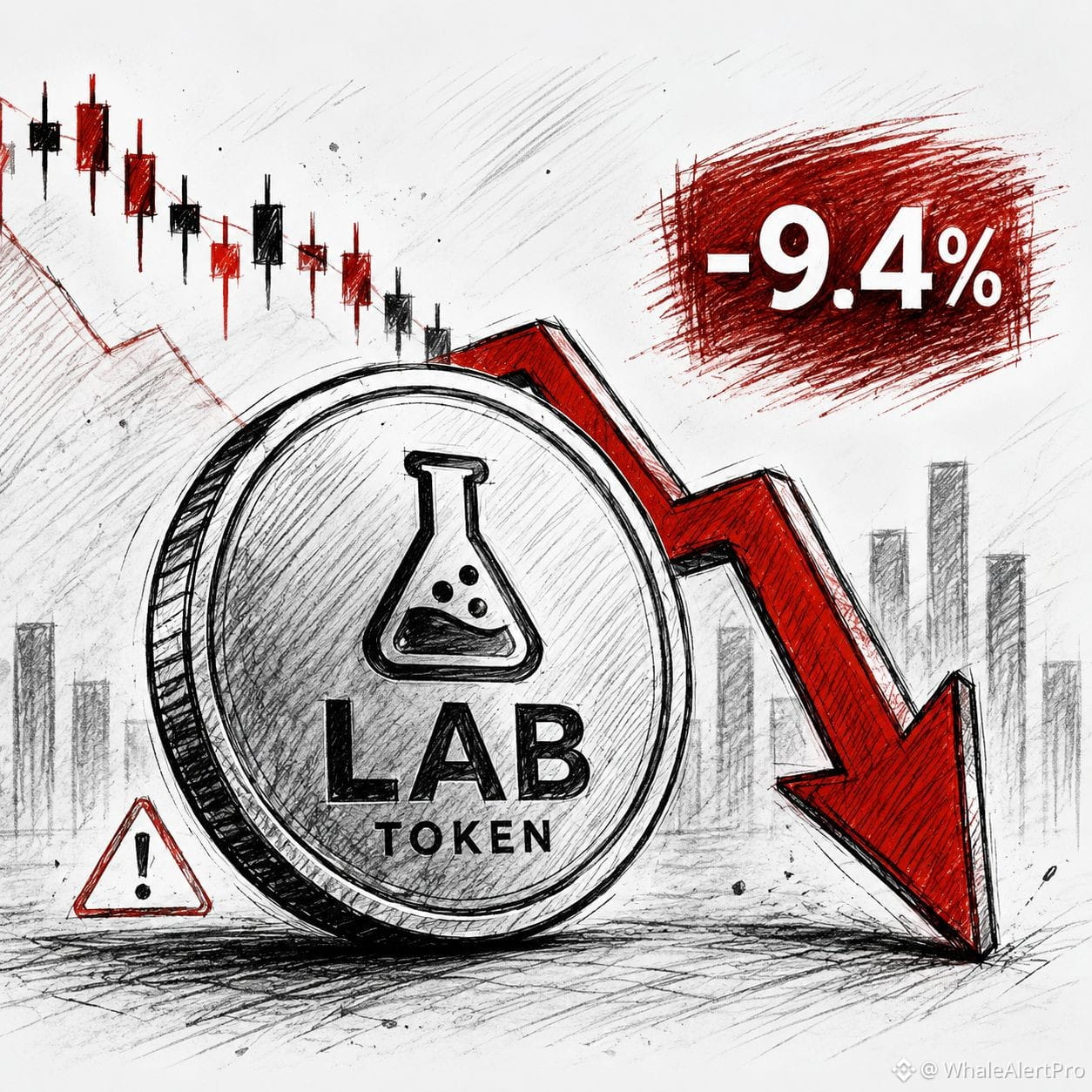
LAB Token Drops 9.4% – Short-Term Shakeout or Buying Opportunity?
🚨 #LABTokenDrops94
LAB Token experienced a sharp 9.4% decline, reflecting increased selling pressure and cautious market sentiment. While the drop may concern short-term traders, it doesn't necessarily define the token's long-term outlook.
📊 Key Takeaways
📉 LAB Token fell 9.4% in the latest trading session.
💹 Higher volatility suggests traders are actively repositioning.
👀 Watch for support levels and trading volume to gauge whether buyers step back in.
🌐 Overall crypto market sentiment will likely influence the next move.
💡 Market Insight
Price corrections are common in crypto markets. A single-day decline doesn't always signal a long-term trend reversal. Investors should monitor project developments, liquidity, and broader market conditions before making decisions.
⚠️ Disclaimer: This content is for informational purposes only and should not be considered financial advice.
#AppleSuesOpenAIOverTradeSecrets #USTreasury30YrYieldHits5.058%
LAB Crypto InvestmentStr#Labs
{future}(LABUSDT)
$GOOGLB $NVDAB $LAB
LAB Token Drops 9.4% – Short-Term Shakeout or Buying Opportunity?
🚨 #LABTokenDrops94
LAB Token experienced a sharp 9.4% decline, reflecting increased selling pressure and cautious market sentiment. While the drop may concern short-term traders, it doesn't necessarily define the token's long-term outlook.
📊 Key Takeaways
📉 LAB Token fell 9.4% in the latest trading session.
💹 Higher volatility suggests traders are actively repositioning.
👀 Watch for support levels and trading volume to gauge whether buyers step back in.
🌐 Overall crypto market sentiment will likely influence the next move.
💡 Market Insight
Price corrections are common in crypto markets. A single-day decline doesn't always signal a long-term trend reversal. Investors should monitor project developments, liquidity, and broader market conditions before making decisions.
⚠️ Disclaimer: This content is for informational purposes only and should not be considered financial advice.
#AppleSuesOpenAIOverTradeSecrets #USTreasury30YrYieldHits5.058%
LAB Crypto InvestmentStr#Labs
$GOOGLB $NVDAB $LAB
🚨 #LABTokenDrops94
LAB Token experienced a sharp 9.4% decline, reflecting increased selling pressure and cautious market sentiment. While the drop may concern short-term traders, it doesn't necessarily define the token's long-term outlook.
📊 Key Takeaways
📉 LAB Token fell 9.4% in the latest trading session.
💹 Higher volatility suggests traders are actively repositioning.
👀 Watch for support levels and trading volume to gauge whether buyers step back in.
🌐 Overall crypto market sentiment will likely influence the next move.
💡 Market Insight
Price corrections are common in crypto markets. A single-day decline doesn't always signal a long-term trend reversal. Investors should monitor project developments, liquidity, and broader market conditions before making decisions.
⚠️ Disclaimer: This content is for informational purposes only and should not be considered financial advice.
#AppleSuesOpenAIOverTradeSecrets #USTreasury30YrYieldHits5.058%
LAB Crypto InvestmentStr#Labs
$GOOGLB $NVDAB $LAB
382
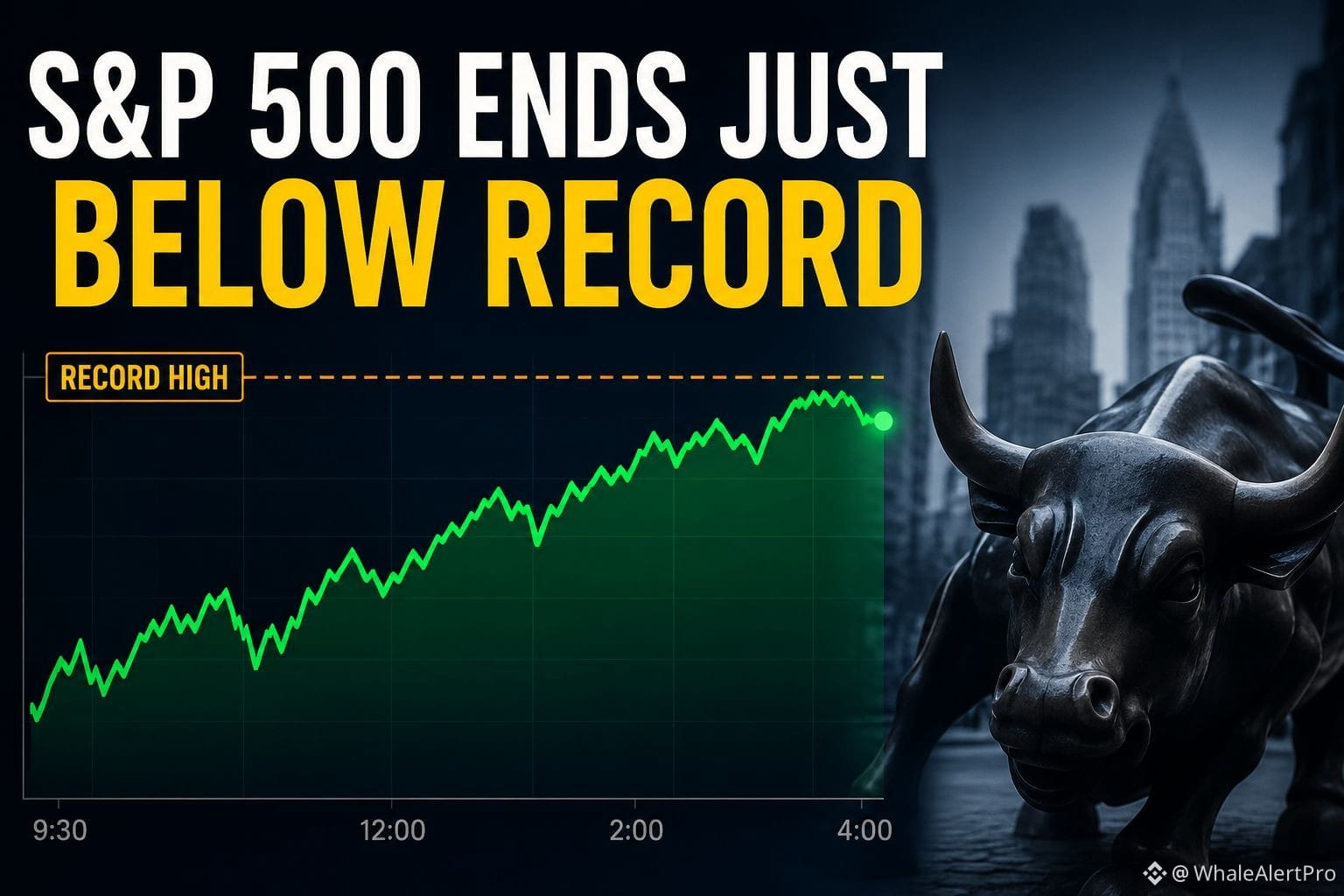
The S&P 500 closed just shy of a new all-time high, signaling that investor confidence remains strong despite ongoing uncertainty around interest rates and global markets.
📈 What This Means
• Buyers continue to support large-cap U.S. stocks.
• Technology and AI-related companies remain key market drivers.
• A breakout above the previous record could strengthen bullish momentum.
⚠️ What Investors Should Watch
• Upcoming inflation and employment data.
• Federal Reserve policy signals.
• Corporate earnings that could influence market sentiment.
While the index narrowly missed a record close, the overall trend suggests the market is still leaning positive. As always, volatility can return quickly, so disciplined risk management remains essential.
This post is for informational purposes only and should not be considered financial advice.
#SP500EndsJustBelowRecord #AppleSuesOpenAIOverTradeSecrets #CBDCBanBillToBecomeLawWithoutTrumpSignature
$GOOGLB $MSFTB $METAB
The S&P 500 closed just shy of a new all-time high, signaling that investor confidence remains strong despite ongoing uncertainty around interest rates and global markets.
📈 What This Means
• Buyers continue to support large-cap U.S. stocks.
• Technology and AI-related companies remain key market drivers.
• A breakout above the previous record could strengthen bullish momentum.
⚠️ What Investors Should Watch
• Upcoming inflation and employment data.
• Federal Reserve policy signals.
• Corporate earnings that could influence market sentiment.
While the index narrowly missed a record close, the overall trend suggests the market is still leaning positive. As always, volatility can return quickly, so disciplined risk management remains essential.
This post is for informational purposes only and should not be considered financial advice.
#SP500EndsJustBelowRecord #AppleSuesOpenAIOverTradeSecrets #CBDCBanBillToBecomeLawWithoutTrumpSignature
$GOOGLB $MSFTB $METAB
📈 What This Means
• Buyers continue to support large-cap U.S. stocks.
• Technology and AI-related companies remain key market drivers.
• A breakout above the previous record could strengthen bullish momentum.
⚠️ What Investors Should Watch
• Upcoming inflation and employment data.
• Federal Reserve policy signals.
• Corporate earnings that could influence market sentiment.
While the index narrowly missed a record close, the overall trend suggests the market is still leaning positive. As always, volatility can return quickly, so disciplined risk management remains essential.
This post is for informational purposes only and should not be considered financial advice.
#SP500EndsJustBelowRecord #AppleSuesOpenAIOverTradeSecrets #CBDCBanBillToBecomeLawWithoutTrumpSignature
$GOOGLB $MSFTB $METAB
204
🚨 #USStrikes80PlusIranianTargets
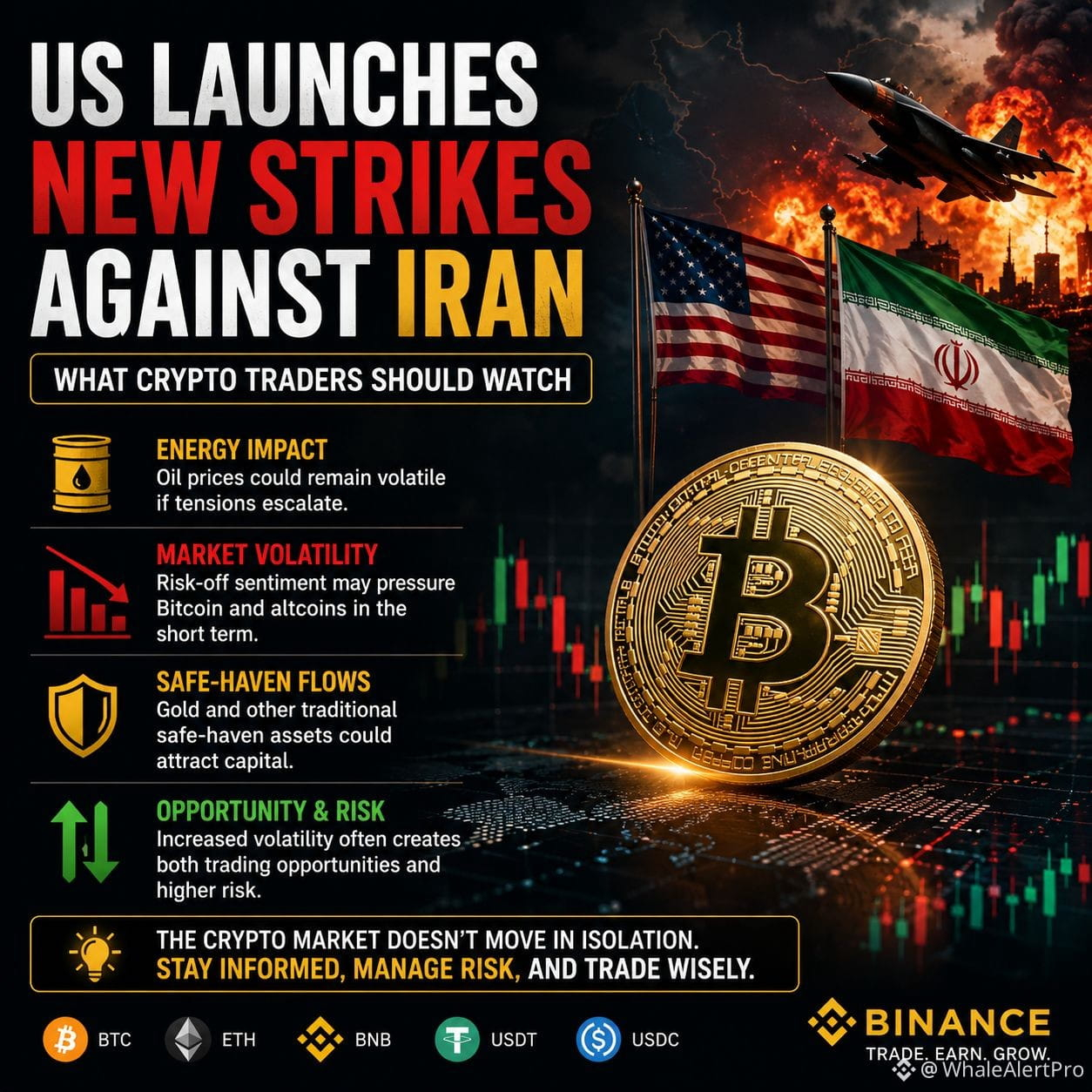
Global markets are closely watching rising tensions after reports of large-scale U.S. military strikes on Iranian-linked targets.
For crypto traders, the key issue isn't just the headlines—it's how investors react.
📊 What to watch:
• Increased volatility across Bitcoin and altcoins.
• Oil price movements that could influence broader market sentiment.
• A possible shift toward safe-haven assets during periods of uncertainty.
• Rapid price swings that may create both opportunities and risks.
History shows that geopolitical events often trigger short-term market reactions, but long-term trends are usually driven by fundamentals, adoption, and liquidity.
Stay informed, manage your risk, and avoid making emotional trading decisions during periods of heightened uncertainty.
What do you think? Will this event have a lasting impact on crypto, or will the market recover quickly?
#Bitcoin #BTC突破7万大关 #EthereumETFApprovalExpectations #Geopolitics
{spot}(GOOGLBUSDT)
{spot}(BTCUSDT)
$GOOGLB $BTC
🚨 #USStrikes80PlusIranianTargets
Global markets are closely watching rising tensions after reports of large-scale U.S. military strikes on Iranian-linked targets.
For crypto traders, the key issue isn't just the headlines—it's how investors react.
📊 What to watch:
• Increased volatility across Bitcoin and altcoins.
• Oil price movements that could influence broader market sentiment.
• A possible shift toward safe-haven assets during periods of uncertainty.
• Rapid price swings that may create both opportunities and risks.
History shows that geopolitical events often trigger short-term market reactions, but long-term trends are usually driven by fundamentals, adoption, and liquidity.
Stay informed, manage your risk, and avoid making emotional trading decisions during periods of heightened uncertainty.
What do you think? Will this event have a lasting impact on crypto, or will the market recover quickly?
#Bitcoin #BTC突破7万大关 #EthereumETFApprovalExpectations #Geopolitics
$GOOGLB $BTC
Global markets are closely watching rising tensions after reports of large-scale U.S. military strikes on Iranian-linked targets.
For crypto traders, the key issue isn't just the headlines—it's how investors react.
📊 What to watch:
• Increased volatility across Bitcoin and altcoins.
• Oil price movements that could influence broader market sentiment.
• A possible shift toward safe-haven assets during periods of uncertainty.
• Rapid price swings that may create both opportunities and risks.
History shows that geopolitical events often trigger short-term market reactions, but long-term trends are usually driven by fundamentals, adoption, and liquidity.
Stay informed, manage your risk, and avoid making emotional trading decisions during periods of heightened uncertainty.
What do you think? Will this event have a lasting impact on crypto, or will the market recover quickly?
#Bitcoin #BTC突破7万大关 #EthereumETFApprovalExpectations #Geopolitics
$GOOGLB $BTC

113
🚨 Geopolitical Tensions Rise: What Could It Mean for Crypto?
Fresh tensions in the Middle East have put global financial markets on alert. Whenever geopolitical uncertainty increases, investors tend to become more cautious, and crypto markets often experience higher volatility.
Key points to watch:
🔸 Energy prices could fluctuate if regional tensions continue.
🔸 Bitcoin and altcoins may see short-term price swings.
🔸 Safe-haven assets like gold could attract more attention.
🔸 Volatility can create opportunities, but risk management is essential.
The crypto market doesn't move in isolation. Global events can influence investor sentiment, liquidity, and trading behavior. Staying informed and avoiding emotional decisions is often the best strategy during uncertain periods.
What's your view? Will Bitcoin hold strong, or is more volatility ahead?
#bitcoin #Crypto #Binance #EthereumNews #Investing
$BTC
{spot}(BTCUSDT)
{spot}(ETHUSDT)
🚨 Geopolitical Tensions Rise: What Could It Mean for Crypto?
Fresh tensions in the Middle East have put global financial markets on alert. Whenever geopolitical uncertainty increases, investors tend to become more cautious, and crypto markets often experience higher volatility.
Key points to watch:
🔸 Energy prices could fluctuate if regional tensions continue.
🔸 Bitcoin and altcoins may see short-term price swings.
🔸 Safe-haven assets like gold could attract more attention.
🔸 Volatility can create opportunities, but risk management is essential.
The crypto market doesn't move in isolation. Global events can influence investor sentiment, liquidity, and trading behavior. Staying informed and avoiding emotional decisions is often the best strategy during uncertain periods.
What's your view? Will Bitcoin hold strong, or is more volatility ahead?
#bitcoin #Crypto #Binance #EthereumNews #Investing
$BTC
Fresh tensions in the Middle East have put global financial markets on alert. Whenever geopolitical uncertainty increases, investors tend to become more cautious, and crypto markets often experience higher volatility.
Key points to watch:
🔸 Energy prices could fluctuate if regional tensions continue.
🔸 Bitcoin and altcoins may see short-term price swings.
🔸 Safe-haven assets like gold could attract more attention.
🔸 Volatility can create opportunities, but risk management is essential.
The crypto market doesn't move in isolation. Global events can influence investor sentiment, liquidity, and trading behavior. Staying informed and avoiding emotional decisions is often the best strategy during uncertain periods.
What's your view? Will Bitcoin hold strong, or is more volatility ahead?
#bitcoin #Crypto #Binance #EthereumNews #Investing
$BTC
101
🚀 New Hampshire Eyes a $100M Bitcoin-Backed Bond
What happens when a U.S. state considers combining traditional bonds with Bitcoin? New Hampshire's latest proposal could become one of the most closely watched experiments in digital asset adoption.
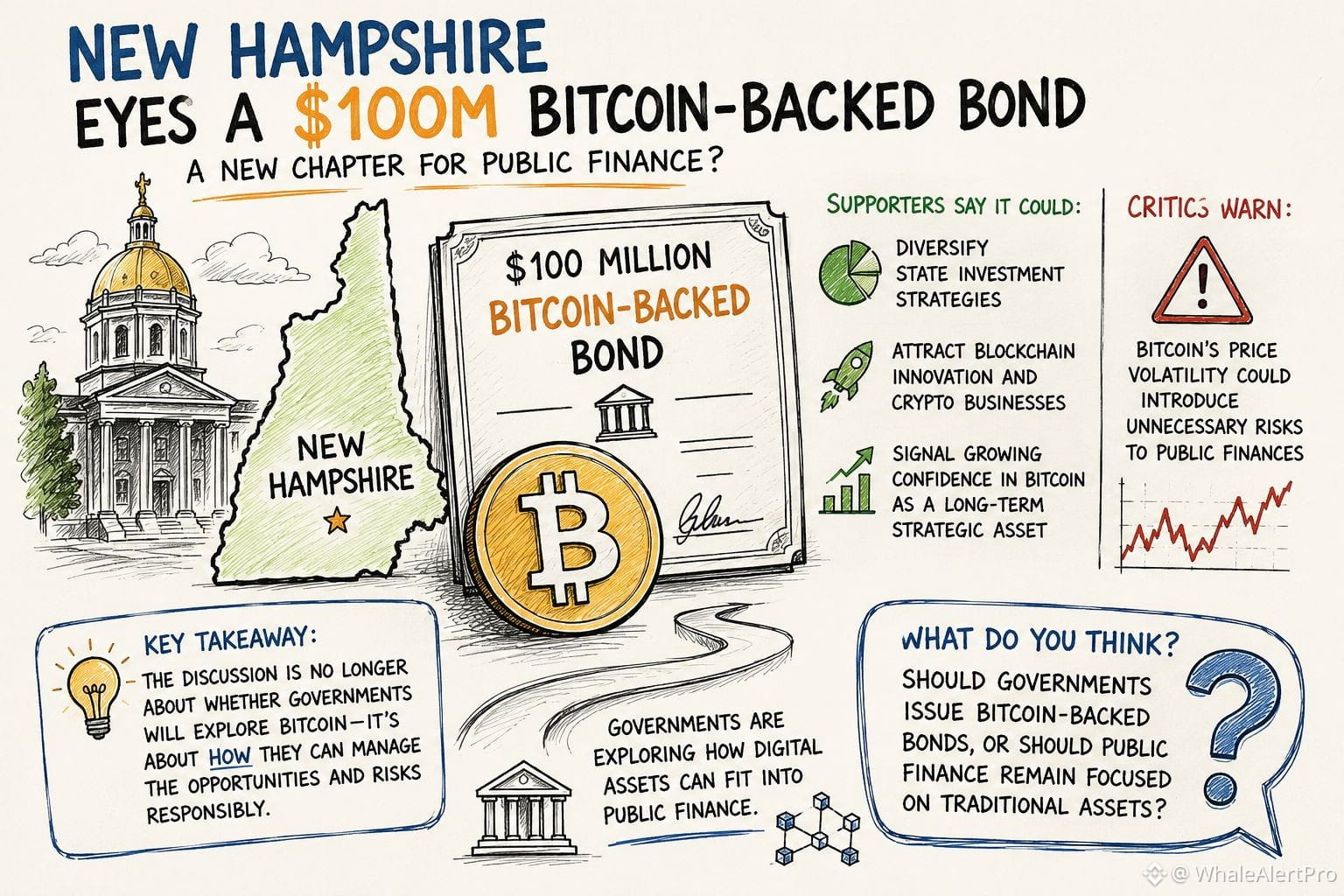
New Hampshire is reportedly considering a proposal for a $100 million Bitcoin-backed bond, blending conventional public financing with exposure to digital assets.
Supporters believe it could:
• Diversify state investment strategies.
• Attract blockchain innovation and crypto businesses.
• Signal growing confidence in Bitcoin as a long-term strategic asset.
Critics argue that Bitcoin's price volatility could introduce unnecessary risks to public finances.
Whether approved or not, the proposal reflects a larger trend: governments are increasingly exploring how digital assets can fit into public finance.
💡 Key Takeaway:
The discussion is no longer about whether governments will explore Bitcoin—it's about how they can manage the opportunities and risks responsibly.
❓What do you think?
Should governments issue Bitcoin-backed bonds, or should public finance remain focused on traditional assets .
NewHampshireToVoteOn$100MBitcoinBackedBond#SECToProposeCryptoRule BitcoinFailsToHold$64.4K#BinanceTurns9 #BTCSharpeRatioFallsToLowestSince2022
$BTC
🚀 New Hampshire Eyes a $100M Bitcoin-Backed Bond
What happens when a U.S. state considers combining traditional bonds with Bitcoin? New Hampshire's latest proposal could become one of the most closely watched experiments in digital asset adoption.
New Hampshire is reportedly considering a proposal for a $100 million Bitcoin-backed bond, blending conventional public financing with exposure to digital assets.
Supporters believe it could:
• Diversify state investment strategies.
• Attract blockchain innovation and crypto businesses.
• Signal growing confidence in Bitcoin as a long-term strategic asset.
Critics argue that Bitcoin's price volatility could introduce unnecessary risks to public finances.
Whether approved or not, the proposal reflects a larger trend: governments are increasingly exploring how digital assets can fit into public finance.
💡 Key Takeaway:
The discussion is no longer about whether governments will explore Bitcoin—it's about how they can manage the opportunities and risks responsibly.
❓What do you think?
Should governments issue Bitcoin-backed bonds, or should public finance remain focused on traditional assets .
NewHampshireToVoteOn$100MBitcoinBackedBond#SECToProposeCryptoRule BitcoinFailsToHold$64.4K#BinanceTurns9 #BTCSharpeRatioFallsToLowestSince2022
$BTC
What happens when a U.S. state considers combining traditional bonds with Bitcoin? New Hampshire's latest proposal could become one of the most closely watched experiments in digital asset adoption.
New Hampshire is reportedly considering a proposal for a $100 million Bitcoin-backed bond, blending conventional public financing with exposure to digital assets.
Supporters believe it could:
• Diversify state investment strategies.
• Attract blockchain innovation and crypto businesses.
• Signal growing confidence in Bitcoin as a long-term strategic asset.
Critics argue that Bitcoin's price volatility could introduce unnecessary risks to public finances.
Whether approved or not, the proposal reflects a larger trend: governments are increasingly exploring how digital assets can fit into public finance.
💡 Key Takeaway:
The discussion is no longer about whether governments will explore Bitcoin—it's about how they can manage the opportunities and risks responsibly.
❓What do you think?
Should governments issue Bitcoin-backed bonds, or should public finance remain focused on traditional assets .
NewHampshireToVoteOn$100MBitcoinBackedBond#SECToProposeCryptoRule BitcoinFailsToHold$64.4K#BinanceTurns9 #BTCSharpeRatioFallsToLowestSince2022
$BTC
125
Статья
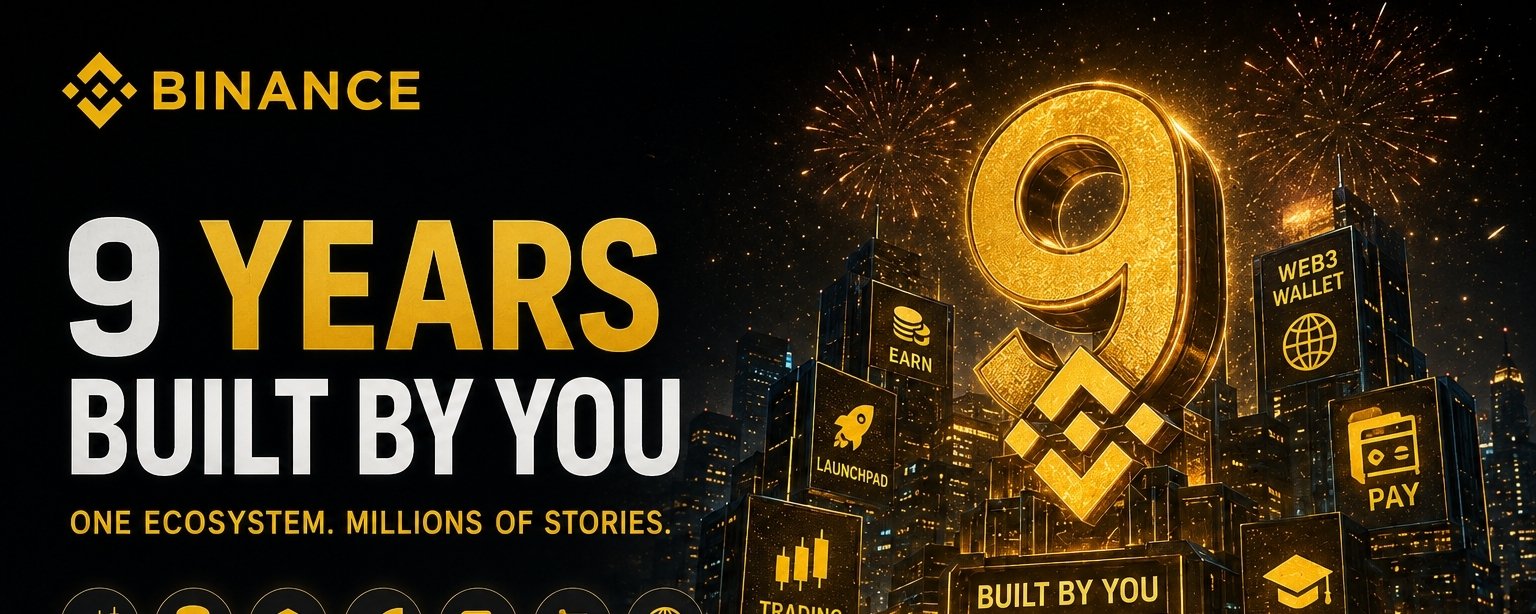
BinanceTurns9: Nine Years of Building an Ecosystem, One Trader at a Time#BinanceTurns9: Nine Years of Building an Ecosystem, One Trader at a Time
There's a certain kind of milestone that only means something if you've been paying attention. Nine years doesn't sound as dramatic as "the first" or as round as "the tenth." But in an industry that moves as fast as crypto — where projects rise and vanish inside a single bull cycle, where "established" can mean eighteen months — nine years is its own kind of statement. It means you survived more than one boom. You survived more than one crash. You survived regulatory whiplash, bear-market silence, and the kind of scrutiny that only comes with being the biggest name in the room.
#BinanceTurns9 isn't just a hashtag. It's a nine-year time-lapse of an industry that grew up in public, told through the story of the exchange that was there for almost all of it.
Where It Started
Back when Binance launched, "crypto exchange" mostly meant a clunky order book, a handful of trading pairs, and a user experience that felt like it was built by engineers for other engineers. The idea that an exchange could be fast, global, and genuinely easy to use — while still supporting serious trading volume — wasn't obvious yet. It had to be proven.
The early pitch was simple: build a spot exchange that could onboard the world, not just the early adopters who were already comfortable navigating clunky interfaces and manual withdrawals. That simplicity — a clean listing process, fast matching engine, and a relentless focus on adding trading pairs people actually wanted — is what let Binance grow from a new entrant into a top exchange in a remarkably short window.
But growth that fast doesn't happen because of a good product alone. It happens because a community decides to show up, stay, and bring other people with them. That's the thread that runs through every year of this story, and it's the reason this year's anniversary theme is "Built by You." The product evolved, but the constant was the people trading, staking, building, and complaining (constructively) loud enough to shape what came next.
Growing Beyond the Order Book
If you only think of Binance as a place to buy and sell coins, you're thinking of maybe a third of what the platform actually is today. Over nine years, the ecosystem expanded in almost every direction crypto itself expanded:
Futures and derivatives came online to meet demand from traders who wanted more sophisticated ways to express a market view — hedging, leverage, and access to instruments that used to require a traditional brokerage relationship.
Earn and staking products gave everyday holders a way to put idle assets to work instead of letting them sit in a wallet doing nothing. What used to require deep DeFi knowledge and a tolerance for smart contract risk became a few taps in an app.
Binance Academy turned into one of the largest free crypto education resources anywhere, built on the idea that an industry this complex needed to lower the barrier to understanding, not just the barrier to trading.
Launchpad and Launchpool gave early-stage projects a legitimate on-ramp to liquidity and visibility, while giving users a shot at getting involved with new tokens before they hit the broader market.
Web3 Wallet met the moment when the center of gravity in crypto started shifting from centralized trading toward self-custody, on-chain activity, and direct interaction with decentralized apps — without asking users to abandon the convenience of an integrated ecosystem to get there.
NFT marketplace, Binance Pay, bStocks, prediction markets — each addition tracked a real shift in what people in crypto actually wanted to do, not just what was trendy to announce.
None of this happened in a straight line. Some products got built, adjusted, and rebuilt based on what users pushed back on. Some experiments didn't stick. That's normal for any company operating at this scale, and it's part of why "nine years" carries weight — it's nine years of iteration, not nine years of a static product coasting on first-mover advantage.
The Community Was Never a Marketing Line
It's easy for "community-driven" to become a hollow phrase a company slaps on a slide deck. But look at how many of Binance's biggest product shifts trace back to actual user behavior:
Listing decisions increasingly shaped by what communities were actively asking for and trading elsewhere.
Fee structures and reward programs adjusted in response to trader feedback, not just internal projections.
Educational content built because users kept asking the same fundamental questions — what is staking, how do futures actually work, what's the difference between a hot wallet and a cold wallet.
Regional products and language support expanded because users in specific markets made it clear they needed it.
A platform this size could easily have optimized purely for institutional flow and treated retail users as an afterthought. Instead, a huge amount of the roadmap over nine years has been a response to millions of individual traders, builders, and holders who kept showing up, kept using the product, and kept telling the platform what was missing. That's what "Built by You" is actually pointing at — not a slogan, but a genuine feedback loop that's been running for almost a decade.
Surviving the Cycles
Anyone who's been in crypto for more than one cycle knows the pattern: euphoric bull run, brutal correction, quiet bear market where half the "innovative" projects from the last cycle quietly disappear, and then a slow climb back as the next narrative builds. Nine years means living through several full iterations of that pattern.
It means surviving the kind of speculative mania where volume and attention spike overnight, and then surviving the aftermath when that attention evaporates and only the platforms with real infrastructure, real liquidity, and real trust are left standing. It means operating through years where regulatory frameworks in major markets were still being written in real time, and adapting compliance, licensing, and operations across dozens of jurisdictions as those frameworks solidified.
It also means weathering scrutiny that comes with being the largest player in the room. Being the biggest exchange means being the first place regulators look, the first place users direct frustration when the broader market drops, and the first target for bad actors trying to find a weak point. Nine years of continuing to operate, continuing to expand licensing and compliance efforts across new regions, and continuing to invest in security infrastructure is its own quiet proof of resilience — the kind that doesn't always make headlines but matters enormously to the people who have funds on the platform.
Security as a Constant, Not a Feature Update
If there's one thing that separates exchanges that last from exchanges that don't, it's how seriously they treat security — not as a marketing checkbox, but as an ongoing, unglamorous discipline. Over nine years that's meant continuous investment in things users mostly never see directly: proof-of-reserves systems, withdrawal protections, real-time risk monitoring, and constant refinement of account security features like multi-factor authentication, anti-phishing codes, and withdrawal whitelisting.
It's also meant an enormous amount of user education — because platform security and user security are two different things, and no amount of backend infrastructure protects someone who falls for a phishing link or reuses a compromised password. That's part of why security-focused content has become such a consistent thread across Binance's blog and social channels: API key safety, common scam patterns, wallet hygiene. None of it is exciting content, but it's the kind of unglamorous work that adds up over nine years into genuine trust.
Nine Landmarks, One Story
To mark this anniversary, the celebration itself was built around the same principle that's shaped the platform for nine years: make it interactive, make it about the user's own journey, not a passive announcement.
The #BinanceTurns9 campaign centers on a virtual "Binance City," where nine landmarks each correspond to a different part of the ecosystem that's grown over the years — trading, staking, wallets, and beyond. Completing the task tied to each landmark "lights it up" and builds out a personalized story of how that user has interacted with the platform. It's less a static anniversary banner and more a walk-through of everything the ecosystem has become, told through each individual's own activity.
Running from July 6 to July 24, 2026, the campaign features a rewards pool worth up to $4.5 million, contributed by Binance alongside a lineup of participating projects. It's structured so that engagement — not just raw trading volume — determines participation, which fits the broader theme: this anniversary isn't about celebrating a company's growth in isolation, it's about recognizing the millions of individual stories that made that growth possible in the first place.
What Nine Years Actually Teaches an Industry
Zoom out from Binance specifically, and #BinanceTurns9 says something about crypto as a whole. Nine years ago, the idea of a global, 24/7 financial system running on public blockchains was still mostly theoretical for the average person. Today it's routine enough that "check the market" is a habit millions of people have before they've had coffee.
That shift didn't happen because of one company or one product. It happened because an entire ecosystem — exchanges, wallets, educators, developers, and yes, the traders who showed up every single day — built the rails together, argued over the right way to do things, and kept iterating even when it would have been easier to quit. Nine years is long enough to see ideas that once sounded fringe become infrastructure, and long enough to see how much of that infrastructure was shaped, tested, and improved by the community using it.
Looking Toward Year Ten
If the last nine years were about proving crypto could scale to a global audience without losing the plot, the next chapter is likely to be about depth rather than just breadth: deeper integration between centralized platforms and on-chain activity, clearer regulatory frameworks across more regions rather than a handful of pioneering markets, and continued maturation of the tools that make self-custody and Web3 participation feel as approachable as traditional trading already does.
None of that happens without the same ingredient that got the platform through the first nine years — a community willing to test new features, push back when something doesn't work, and keep showing up through both the euphoric years and the quiet ones.
The Real Anniversary Gift
Nine years in, the most meaningful thing to celebrate isn't a number on a chart or the size of a rewards pool — though $4.5 million in incentives is a nice way to say thank you. It's the fact that an idea which started as a bet on making crypto accessible turned into a platform millions of people built their own financial habits, careers, and communities around.
So here's to nine years of cycles weathered, products shipped, lessons learned in public, and a community that never really stopped showing up. Whatever year ten looks like, it's going to be shaped the same way the first nine were: built by the people who use it.
#BinanceTurns9 #EtherUp12.4%Weekly #SamsungForecasts19FoldQ2ProfitSharesSlideOver6% #BonkDAOLoses$20MInGovernanceAttack #Binance
$BNB $BTC $ETH
{spot}(ETHUSDT)
{spot}(BNBUSDT)
BinanceTurns9: Nine Years of Building an Ecosystem, One Trader at a Time
#BinanceTurns9: Nine Years of Building an Ecosystem, One Trader at a Time
There's a certain kind of milestone that only means something if you've been paying attention. Nine years doesn't sound as dramatic as "the first" or as round as "the tenth." But in an industry that moves as fast as crypto — where projects rise and vanish inside a single bull cycle, where "established" can mean eighteen months — nine years is its own kind of statement. It means you survived more than one boom. You survived more than one crash. You survived regulatory whiplash, bear-market silence, and the kind of scrutiny that only comes with being the biggest name in the room.
#BinanceTurns9 isn't just a hashtag. It's a nine-year time-lapse of an industry that grew up in public, told through the story of the exchange that was there for almost all of it.
Where It Started
Back when Binance launched, "crypto exchange" mostly meant a clunky order book, a handful of trading pairs, and a user experience that felt like it was built by engineers for other engineers. The idea that an exchange could be fast, global, and genuinely easy to use — while still supporting serious trading volume — wasn't obvious yet. It had to be proven.
The early pitch was simple: build a spot exchange that could onboard the world, not just the early adopters who were already comfortable navigating clunky interfaces and manual withdrawals. That simplicity — a clean listing process, fast matching engine, and a relentless focus on adding trading pairs people actually wanted — is what let Binance grow from a new entrant into a top exchange in a remarkably short window.
But growth that fast doesn't happen because of a good product alone. It happens because a community decides to show up, stay, and bring other people with them. That's the thread that runs through every year of this story, and it's the reason this year's anniversary theme is "Built by You." The product evolved, but the constant was the people trading, staking, building, and complaining (constructively) loud enough to shape what came next.
Growing Beyond the Order Book
If you only think of Binance as a place to buy and sell coins, you're thinking of maybe a third of what the platform actually is today. Over nine years, the ecosystem expanded in almost every direction crypto itself expanded:
Futures and derivatives came online to meet demand from traders who wanted more sophisticated ways to express a market view — hedging, leverage, and access to instruments that used to require a traditional brokerage relationship.
Earn and staking products gave everyday holders a way to put idle assets to work instead of letting them sit in a wallet doing nothing. What used to require deep DeFi knowledge and a tolerance for smart contract risk became a few taps in an app.
Binance Academy turned into one of the largest free crypto education resources anywhere, built on the idea that an industry this complex needed to lower the barrier to understanding, not just the barrier to trading.
Launchpad and Launchpool gave early-stage projects a legitimate on-ramp to liquidity and visibility, while giving users a shot at getting involved with new tokens before they hit the broader market.
Web3 Wallet met the moment when the center of gravity in crypto started shifting from centralized trading toward self-custody, on-chain activity, and direct interaction with decentralized apps — without asking users to abandon the convenience of an integrated ecosystem to get there.
NFT marketplace, Binance Pay, bStocks, prediction markets — each addition tracked a real shift in what people in crypto actually wanted to do, not just what was trendy to announce.
None of this happened in a straight line. Some products got built, adjusted, and rebuilt based on what users pushed back on. Some experiments didn't stick. That's normal for any company operating at this scale, and it's part of why "nine years" carries weight — it's nine years of iteration, not nine years of a static product coasting on first-mover advantage.
The Community Was Never a Marketing Line
It's easy for "community-driven" to become a hollow phrase a company slaps on a slide deck. But look at how many of Binance's biggest product shifts trace back to actual user behavior:
Listing decisions increasingly shaped by what communities were actively asking for and trading elsewhere.
Fee structures and reward programs adjusted in response to trader feedback, not just internal projections.
Educational content built because users kept asking the same fundamental questions — what is staking, how do futures actually work, what's the difference between a hot wallet and a cold wallet.
Regional products and language support expanded because users in specific markets made it clear they needed it.
A platform this size could easily have optimized purely for institutional flow and treated retail users as an afterthought. Instead, a huge amount of the roadmap over nine years has been a response to millions of individual traders, builders, and holders who kept showing up, kept using the product, and kept telling the platform what was missing. That's what "Built by You" is actually pointing at — not a slogan, but a genuine feedback loop that's been running for almost a decade.
Surviving the Cycles
Anyone who's been in crypto for more than one cycle knows the pattern: euphoric bull run, brutal correction, quiet bear market where half the "innovative" projects from the last cycle quietly disappear, and then a slow climb back as the next narrative builds. Nine years means living through several full iterations of that pattern.
It means surviving the kind of speculative mania where volume and attention spike overnight, and then surviving the aftermath when that attention evaporates and only the platforms with real infrastructure, real liquidity, and real trust are left standing. It means operating through years where regulatory frameworks in major markets were still being written in real time, and adapting compliance, licensing, and operations across dozens of jurisdictions as those frameworks solidified.
It also means weathering scrutiny that comes with being the largest player in the room. Being the biggest exchange means being the first place regulators look, the first place users direct frustration when the broader market drops, and the first target for bad actors trying to find a weak point. Nine years of continuing to operate, continuing to expand licensing and compliance efforts across new regions, and continuing to invest in security infrastructure is its own quiet proof of resilience — the kind that doesn't always make headlines but matters enormously to the people who have funds on the platform.
Security as a Constant, Not a Feature Update
If there's one thing that separates exchanges that last from exchanges that don't, it's how seriously they treat security — not as a marketing checkbox, but as an ongoing, unglamorous discipline. Over nine years that's meant continuous investment in things users mostly never see directly: proof-of-reserves systems, withdrawal protections, real-time risk monitoring, and constant refinement of account security features like multi-factor authentication, anti-phishing codes, and withdrawal whitelisting.
It's also meant an enormous amount of user education — because platform security and user security are two different things, and no amount of backend infrastructure protects someone who falls for a phishing link or reuses a compromised password. That's part of why security-focused content has become such a consistent thread across Binance's blog and social channels: API key safety, common scam patterns, wallet hygiene. None of it is exciting content, but it's the kind of unglamorous work that adds up over nine years into genuine trust.
Nine Landmarks, One Story
To mark this anniversary, the celebration itself was built around the same principle that's shaped the platform for nine years: make it interactive, make it about the user's own journey, not a passive announcement.
The #BinanceTurns9 campaign centers on a virtual "Binance City," where nine landmarks each correspond to a different part of the ecosystem that's grown over the years — trading, staking, wallets, and beyond. Completing the task tied to each landmark "lights it up" and builds out a personalized story of how that user has interacted with the platform. It's less a static anniversary banner and more a walk-through of everything the ecosystem has become, told through each individual's own activity.
Running from July 6 to July 24, 2026, the campaign features a rewards pool worth up to $4.5 million, contributed by Binance alongside a lineup of participating projects. It's structured so that engagement — not just raw trading volume — determines participation, which fits the broader theme: this anniversary isn't about celebrating a company's growth in isolation, it's about recognizing the millions of individual stories that made that growth possible in the first place.
What Nine Years Actually Teaches an Industry
Zoom out from Binance specifically, and #BinanceTurns9 says something about crypto as a whole. Nine years ago, the idea of a global, 24/7 financial system running on public blockchains was still mostly theoretical for the average person. Today it's routine enough that "check the market" is a habit millions of people have before they've had coffee.
That shift didn't happen because of one company or one product. It happened because an entire ecosystem — exchanges, wallets, educators, developers, and yes, the traders who showed up every single day — built the rails together, argued over the right way to do things, and kept iterating even when it would have been easier to quit. Nine years is long enough to see ideas that once sounded fringe become infrastructure, and long enough to see how much of that infrastructure was shaped, tested, and improved by the community using it.
Looking Toward Year Ten
If the last nine years were about proving crypto could scale to a global audience without losing the plot, the next chapter is likely to be about depth rather than just breadth: deeper integration between centralized platforms and on-chain activity, clearer regulatory frameworks across more regions rather than a handful of pioneering markets, and continued maturation of the tools that make self-custody and Web3 participation feel as approachable as traditional trading already does.
None of that happens without the same ingredient that got the platform through the first nine years — a community willing to test new features, push back when something doesn't work, and keep showing up through both the euphoric years and the quiet ones.
The Real Anniversary Gift
Nine years in, the most meaningful thing to celebrate isn't a number on a chart or the size of a rewards pool — though $4.5 million in incentives is a nice way to say thank you. It's the fact that an idea which started as a bet on making crypto accessible turned into a platform millions of people built their own financial habits, careers, and communities around.
So here's to nine years of cycles weathered, products shipped, lessons learned in public, and a community that never really stopped showing up. Whatever year ten looks like, it's going to be shaped the same way the first nine were: built by the people who use it.
#BinanceTurns9 #EtherUp12.4%Weekly #SamsungForecasts19FoldQ2ProfitSharesSlideOver6% #BonkDAOLoses$20MInGovernanceAttack #Binance
$BNB $BTC $ETH
There's a certain kind of milestone that only means something if you've been paying attention. Nine years doesn't sound as dramatic as "the first" or as round as "the tenth." But in an industry that moves as fast as crypto — where projects rise and vanish inside a single bull cycle, where "established" can mean eighteen months — nine years is its own kind of statement. It means you survived more than one boom. You survived more than one crash. You survived regulatory whiplash, bear-market silence, and the kind of scrutiny that only comes with being the biggest name in the room.
#BinanceTurns9 isn't just a hashtag. It's a nine-year time-lapse of an industry that grew up in public, told through the story of the exchange that was there for almost all of it.
Where It Started
Back when Binance launched, "crypto exchange" mostly meant a clunky order book, a handful of trading pairs, and a user experience that felt like it was built by engineers for other engineers. The idea that an exchange could be fast, global, and genuinely easy to use — while still supporting serious trading volume — wasn't obvious yet. It had to be proven.
The early pitch was simple: build a spot exchange that could onboard the world, not just the early adopters who were already comfortable navigating clunky interfaces and manual withdrawals. That simplicity — a clean listing process, fast matching engine, and a relentless focus on adding trading pairs people actually wanted — is what let Binance grow from a new entrant into a top exchange in a remarkably short window.
But growth that fast doesn't happen because of a good product alone. It happens because a community decides to show up, stay, and bring other people with them. That's the thread that runs through every year of this story, and it's the reason this year's anniversary theme is "Built by You." The product evolved, but the constant was the people trading, staking, building, and complaining (constructively) loud enough to shape what came next.
Growing Beyond the Order Book
If you only think of Binance as a place to buy and sell coins, you're thinking of maybe a third of what the platform actually is today. Over nine years, the ecosystem expanded in almost every direction crypto itself expanded:
Futures and derivatives came online to meet demand from traders who wanted more sophisticated ways to express a market view — hedging, leverage, and access to instruments that used to require a traditional brokerage relationship.
Earn and staking products gave everyday holders a way to put idle assets to work instead of letting them sit in a wallet doing nothing. What used to require deep DeFi knowledge and a tolerance for smart contract risk became a few taps in an app.
Binance Academy turned into one of the largest free crypto education resources anywhere, built on the idea that an industry this complex needed to lower the barrier to understanding, not just the barrier to trading.
Launchpad and Launchpool gave early-stage projects a legitimate on-ramp to liquidity and visibility, while giving users a shot at getting involved with new tokens before they hit the broader market.
Web3 Wallet met the moment when the center of gravity in crypto started shifting from centralized trading toward self-custody, on-chain activity, and direct interaction with decentralized apps — without asking users to abandon the convenience of an integrated ecosystem to get there.
NFT marketplace, Binance Pay, bStocks, prediction markets — each addition tracked a real shift in what people in crypto actually wanted to do, not just what was trendy to announce.
None of this happened in a straight line. Some products got built, adjusted, and rebuilt based on what users pushed back on. Some experiments didn't stick. That's normal for any company operating at this scale, and it's part of why "nine years" carries weight — it's nine years of iteration, not nine years of a static product coasting on first-mover advantage.
The Community Was Never a Marketing Line
It's easy for "community-driven" to become a hollow phrase a company slaps on a slide deck. But look at how many of Binance's biggest product shifts trace back to actual user behavior:
Listing decisions increasingly shaped by what communities were actively asking for and trading elsewhere.
Fee structures and reward programs adjusted in response to trader feedback, not just internal projections.
Educational content built because users kept asking the same fundamental questions — what is staking, how do futures actually work, what's the difference between a hot wallet and a cold wallet.
Regional products and language support expanded because users in specific markets made it clear they needed it.
A platform this size could easily have optimized purely for institutional flow and treated retail users as an afterthought. Instead, a huge amount of the roadmap over nine years has been a response to millions of individual traders, builders, and holders who kept showing up, kept using the product, and kept telling the platform what was missing. That's what "Built by You" is actually pointing at — not a slogan, but a genuine feedback loop that's been running for almost a decade.
Surviving the Cycles
Anyone who's been in crypto for more than one cycle knows the pattern: euphoric bull run, brutal correction, quiet bear market where half the "innovative" projects from the last cycle quietly disappear, and then a slow climb back as the next narrative builds. Nine years means living through several full iterations of that pattern.
It means surviving the kind of speculative mania where volume and attention spike overnight, and then surviving the aftermath when that attention evaporates and only the platforms with real infrastructure, real liquidity, and real trust are left standing. It means operating through years where regulatory frameworks in major markets were still being written in real time, and adapting compliance, licensing, and operations across dozens of jurisdictions as those frameworks solidified.
It also means weathering scrutiny that comes with being the largest player in the room. Being the biggest exchange means being the first place regulators look, the first place users direct frustration when the broader market drops, and the first target for bad actors trying to find a weak point. Nine years of continuing to operate, continuing to expand licensing and compliance efforts across new regions, and continuing to invest in security infrastructure is its own quiet proof of resilience — the kind that doesn't always make headlines but matters enormously to the people who have funds on the platform.
Security as a Constant, Not a Feature Update
If there's one thing that separates exchanges that last from exchanges that don't, it's how seriously they treat security — not as a marketing checkbox, but as an ongoing, unglamorous discipline. Over nine years that's meant continuous investment in things users mostly never see directly: proof-of-reserves systems, withdrawal protections, real-time risk monitoring, and constant refinement of account security features like multi-factor authentication, anti-phishing codes, and withdrawal whitelisting.
It's also meant an enormous amount of user education — because platform security and user security are two different things, and no amount of backend infrastructure protects someone who falls for a phishing link or reuses a compromised password. That's part of why security-focused content has become such a consistent thread across Binance's blog and social channels: API key safety, common scam patterns, wallet hygiene. None of it is exciting content, but it's the kind of unglamorous work that adds up over nine years into genuine trust.
Nine Landmarks, One Story
To mark this anniversary, the celebration itself was built around the same principle that's shaped the platform for nine years: make it interactive, make it about the user's own journey, not a passive announcement.
The #BinanceTurns9 campaign centers on a virtual "Binance City," where nine landmarks each correspond to a different part of the ecosystem that's grown over the years — trading, staking, wallets, and beyond. Completing the task tied to each landmark "lights it up" and builds out a personalized story of how that user has interacted with the platform. It's less a static anniversary banner and more a walk-through of everything the ecosystem has become, told through each individual's own activity.
Running from July 6 to July 24, 2026, the campaign features a rewards pool worth up to $4.5 million, contributed by Binance alongside a lineup of participating projects. It's structured so that engagement — not just raw trading volume — determines participation, which fits the broader theme: this anniversary isn't about celebrating a company's growth in isolation, it's about recognizing the millions of individual stories that made that growth possible in the first place.
What Nine Years Actually Teaches an Industry
Zoom out from Binance specifically, and #BinanceTurns9 says something about crypto as a whole. Nine years ago, the idea of a global, 24/7 financial system running on public blockchains was still mostly theoretical for the average person. Today it's routine enough that "check the market" is a habit millions of people have before they've had coffee.
That shift didn't happen because of one company or one product. It happened because an entire ecosystem — exchanges, wallets, educators, developers, and yes, the traders who showed up every single day — built the rails together, argued over the right way to do things, and kept iterating even when it would have been easier to quit. Nine years is long enough to see ideas that once sounded fringe become infrastructure, and long enough to see how much of that infrastructure was shaped, tested, and improved by the community using it.
Looking Toward Year Ten
If the last nine years were about proving crypto could scale to a global audience without losing the plot, the next chapter is likely to be about depth rather than just breadth: deeper integration between centralized platforms and on-chain activity, clearer regulatory frameworks across more regions rather than a handful of pioneering markets, and continued maturation of the tools that make self-custody and Web3 participation feel as approachable as traditional trading already does.
None of that happens without the same ingredient that got the platform through the first nine years — a community willing to test new features, push back when something doesn't work, and keep showing up through both the euphoric years and the quiet ones.
The Real Anniversary Gift
Nine years in, the most meaningful thing to celebrate isn't a number on a chart or the size of a rewards pool — though $4.5 million in incentives is a nice way to say thank you. It's the fact that an idea which started as a bet on making crypto accessible turned into a platform millions of people built their own financial habits, careers, and communities around.
So here's to nine years of cycles weathered, products shipped, lessons learned in public, and a community that never really stopped showing up. Whatever year ten looks like, it's going to be shaped the same way the first nine were: built by the people who use it.
#BinanceTurns9 #EtherUp12.4%Weekly #SamsungForecasts19FoldQ2ProfitSharesSlideOver6% #BonkDAOLoses$20MInGovernanceAttack #Binance
$BNB $BTC $ETH
169
Статья
DOGE Long Squeeze: 10X Trade Breakdown & Risk AnalysisA +9.16% PNL looks impressive—but the chart tells a very different story. Here's what every leveraged trader should learn before chasing the next $DOGE rally.
$DOGE Long Squeeze: Breaking Down a 10X Perp Call That Played Out — and What Traders Can Learn From It
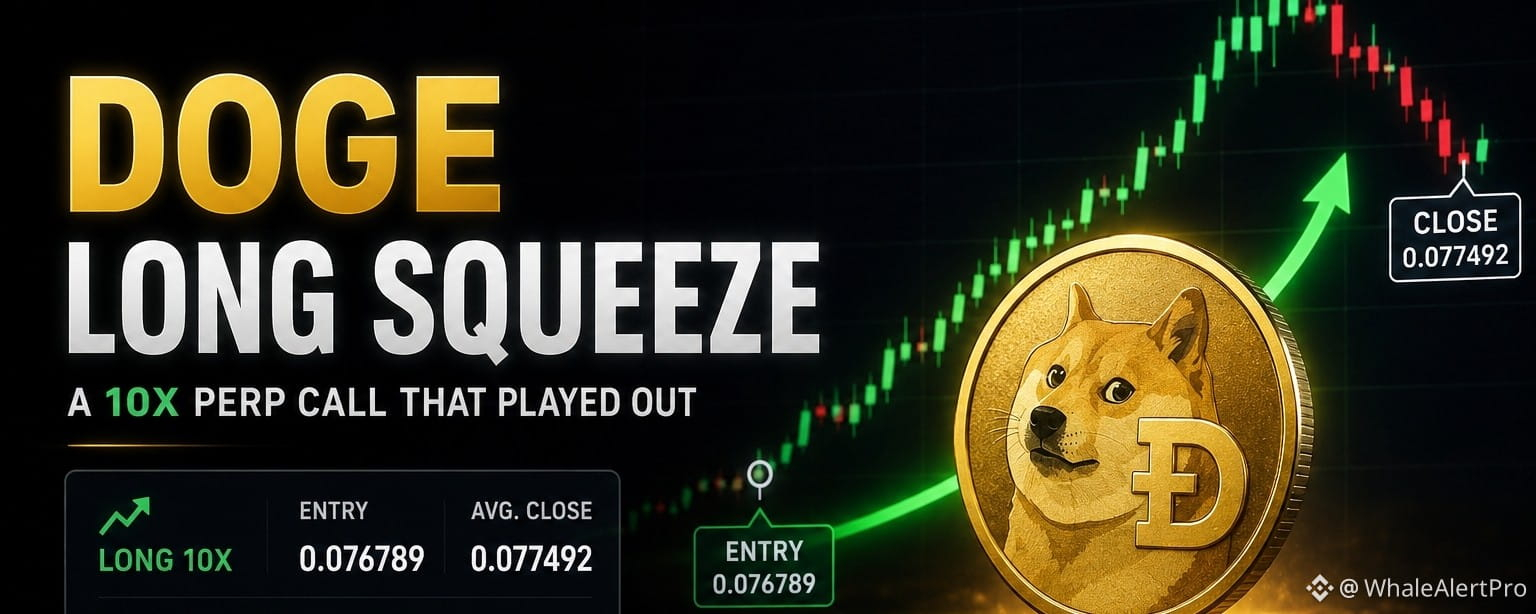
A trader on Binance Square (@Tradechovui8668) recently posted a bullish call on DOGEUSDT, entering a 10X leveraged perpetual long at 0.076789, targeting a 5–20% move. The position was eventually closed at an average price of 0.077492, locking in a +9.16% PNL (+2,417.97 USDT). On the surface, it looks like a clean win — but there's more worth unpacking here than the green number.
The Setup
Entry: 0.076789
Avg. Close: 0.077492
Leverage: 10X Perpetual
Result: +9.16% (on margin, not on DOGE's actual price move)
Close time: July 5, 2026, 04:04
It's important to separate the underlying asset move from the leveraged PNL. DOGE itself moved roughly 0.9% between entry and exit (from ~0.0768 to ~0.0775). The 10X leverage is what turned that modest move into a 9%+ return on margin. That distinction matters — the same trade with 2X leverage would have returned closer to 1.8%, and with no leverage, under 1%.
What the Chart Tells Us
The price path shows DOGE grinding higher in a choppy uptrend after entry, peaking well above the close price before pulling back. The trader closed near the tail end of that pullback — meaning a chunk of the run-up wasn't captured. This is a common pattern with leveraged spot-adjacent moves: the target range (5–20%) was hit and exceeded intraday, but the exit landed closer to the low end because leverage compresses the margin for error. A pullback that would be a rounding error unleveraged can trigger a stop-out or a nervous close on a 10X position.
The Bigger Picture: Why This Matters for Anyone Reading These Calls
Posts like this are common on social trading platforms, and they can be genuinely informative — but a few things are worth keeping in mind before treating any single "buy now" call as a blueprint:
Survivorship bias. You're seeing the trade that closed green. Influencers who post trade ideas typically don't headline the losing ones with the same enthusiasm.
Leverage cuts both ways. A 10X position that returns +9% on a 0.9% favorable move also means a 0.9% adverse move wipes out roughly the same percentage — and moves against you compound toward liquidation much faster than moves in your favor compound toward profit.
"Target 5–20%" is a wide, vague range. A target band that broad isn't really a thesis — it's a way to claim success whether the trade moves a little or a lot.
Timing exits under leverage is hard. Even in a winning trade, the chart shows the exit happened after the peak had already passed — a reminder that leveraged positions often get closed on fear or margin pressure rather than a pre-set plan.
Takeaway
This particular call worked out for the poster. But the real lesson isn't "DOGE was a good buy at 0.0768" — it's a reminder of how leverage transforms small, ordinary price moves into headline-grabbing percentage returns, and how that same mechanic can just as easily produce headline-grabbing losses. Anyone following social trading signals should look past the PNL screenshot and ask: what would this trade have looked like without leverage, and what was the actual risk taken to get there?
This article is for informational and educational purposes only and does not constitute financial advice. Perpetual futures and leveraged trading carry significant risk of loss. Always do your own research and consider your risk tolerance before trading.
{spot}(DOGEUSDT)
{spot}(SPCXBUSDT)
$ELON
#ElonMuskTalks #doge⚡ #CryptoHacksHit207InH1WithLosses$972M #MonadTVLTops$447.9MSurpassingSui #Dogecoin
DOGE Long Squeeze: 10X Trade Breakdown & Risk Analysis
A +9.16% PNL looks impressive—but the chart tells a very different story. Here's what every leveraged trader should learn before chasing the next $DOGE rally.
$DOGE Long Squeeze: Breaking Down a 10X Perp Call That Played Out — and What Traders Can Learn From It
A trader on Binance Square (@Tradechovui8668) recently posted a bullish call on DOGEUSDT, entering a 10X leveraged perpetual long at 0.076789, targeting a 5–20% move. The position was eventually closed at an average price of 0.077492, locking in a +9.16% PNL (+2,417.97 USDT). On the surface, it looks like a clean win — but there's more worth unpacking here than the green number.
The Setup
Entry: 0.076789
Avg. Close: 0.077492
Leverage: 10X Perpetual
Result: +9.16% (on margin, not on DOGE's actual price move)
Close time: July 5, 2026, 04:04
It's important to separate the underlying asset move from the leveraged PNL. DOGE itself moved roughly 0.9% between entry and exit (from ~0.0768 to ~0.0775). The 10X leverage is what turned that modest move into a 9%+ return on margin. That distinction matters — the same trade with 2X leverage would have returned closer to 1.8%, and with no leverage, under 1%.
What the Chart Tells Us
The price path shows DOGE grinding higher in a choppy uptrend after entry, peaking well above the close price before pulling back. The trader closed near the tail end of that pullback — meaning a chunk of the run-up wasn't captured. This is a common pattern with leveraged spot-adjacent moves: the target range (5–20%) was hit and exceeded intraday, but the exit landed closer to the low end because leverage compresses the margin for error. A pullback that would be a rounding error unleveraged can trigger a stop-out or a nervous close on a 10X position.
The Bigger Picture: Why This Matters for Anyone Reading These Calls
Posts like this are common on social trading platforms, and they can be genuinely informative — but a few things are worth keeping in mind before treating any single "buy now" call as a blueprint:
Survivorship bias. You're seeing the trade that closed green. Influencers who post trade ideas typically don't headline the losing ones with the same enthusiasm.
Leverage cuts both ways. A 10X position that returns +9% on a 0.9% favorable move also means a 0.9% adverse move wipes out roughly the same percentage — and moves against you compound toward liquidation much faster than moves in your favor compound toward profit.
"Target 5–20%" is a wide, vague range. A target band that broad isn't really a thesis — it's a way to claim success whether the trade moves a little or a lot.
Timing exits under leverage is hard. Even in a winning trade, the chart shows the exit happened after the peak had already passed — a reminder that leveraged positions often get closed on fear or margin pressure rather than a pre-set plan.
Takeaway
This particular call worked out for the poster. But the real lesson isn't "DOGE was a good buy at 0.0768" — it's a reminder of how leverage transforms small, ordinary price moves into headline-grabbing percentage returns, and how that same mechanic can just as easily produce headline-grabbing losses. Anyone following social trading signals should look past the PNL screenshot and ask: what would this trade have looked like without leverage, and what was the actual risk taken to get there?
This article is for informational and educational purposes only and does not constitute financial advice. Perpetual futures and leveraged trading carry significant risk of loss. Always do your own research and consider your risk tolerance before trading.
$ELON
#ElonMuskTalks #doge⚡ #CryptoHacksHit207InH1WithLosses$972M #MonadTVLTops$447.9MSurpassingSui #Dogecoin
$DOGE Long Squeeze: Breaking Down a 10X Perp Call That Played Out — and What Traders Can Learn From It
A trader on Binance Square (@Tradechovui8668) recently posted a bullish call on DOGEUSDT, entering a 10X leveraged perpetual long at 0.076789, targeting a 5–20% move. The position was eventually closed at an average price of 0.077492, locking in a +9.16% PNL (+2,417.97 USDT). On the surface, it looks like a clean win — but there's more worth unpacking here than the green number.
The Setup
Entry: 0.076789
Avg. Close: 0.077492
Leverage: 10X Perpetual
Result: +9.16% (on margin, not on DOGE's actual price move)
Close time: July 5, 2026, 04:04
It's important to separate the underlying asset move from the leveraged PNL. DOGE itself moved roughly 0.9% between entry and exit (from ~0.0768 to ~0.0775). The 10X leverage is what turned that modest move into a 9%+ return on margin. That distinction matters — the same trade with 2X leverage would have returned closer to 1.8%, and with no leverage, under 1%.
What the Chart Tells Us
The price path shows DOGE grinding higher in a choppy uptrend after entry, peaking well above the close price before pulling back. The trader closed near the tail end of that pullback — meaning a chunk of the run-up wasn't captured. This is a common pattern with leveraged spot-adjacent moves: the target range (5–20%) was hit and exceeded intraday, but the exit landed closer to the low end because leverage compresses the margin for error. A pullback that would be a rounding error unleveraged can trigger a stop-out or a nervous close on a 10X position.
The Bigger Picture: Why This Matters for Anyone Reading These Calls
Posts like this are common on social trading platforms, and they can be genuinely informative — but a few things are worth keeping in mind before treating any single "buy now" call as a blueprint:
Survivorship bias. You're seeing the trade that closed green. Influencers who post trade ideas typically don't headline the losing ones with the same enthusiasm.
Leverage cuts both ways. A 10X position that returns +9% on a 0.9% favorable move also means a 0.9% adverse move wipes out roughly the same percentage — and moves against you compound toward liquidation much faster than moves in your favor compound toward profit.
"Target 5–20%" is a wide, vague range. A target band that broad isn't really a thesis — it's a way to claim success whether the trade moves a little or a lot.
Timing exits under leverage is hard. Even in a winning trade, the chart shows the exit happened after the peak had already passed — a reminder that leveraged positions often get closed on fear or margin pressure rather than a pre-set plan.
Takeaway
This particular call worked out for the poster. But the real lesson isn't "DOGE was a good buy at 0.0768" — it's a reminder of how leverage transforms small, ordinary price moves into headline-grabbing percentage returns, and how that same mechanic can just as easily produce headline-grabbing losses. Anyone following social trading signals should look past the PNL screenshot and ask: what would this trade have looked like without leverage, and what was the actual risk taken to get there?
This article is for informational and educational purposes only and does not constitute financial advice. Perpetual futures and leveraged trading carry significant risk of loss. Always do your own research and consider your risk tolerance before trading.
$ELON
#ElonMuskTalks #doge⚡ #CryptoHacksHit207InH1WithLosses$972M #MonadTVLTops$447.9MSurpassingSui #Dogecoin
192
Статья
South Africa Releases Draft Crypto Tax Guide: What 6 Million Users Need to KnowSouth Africa Releases Draft Crypto Tax Guide: What 6 Million Users Need to Know
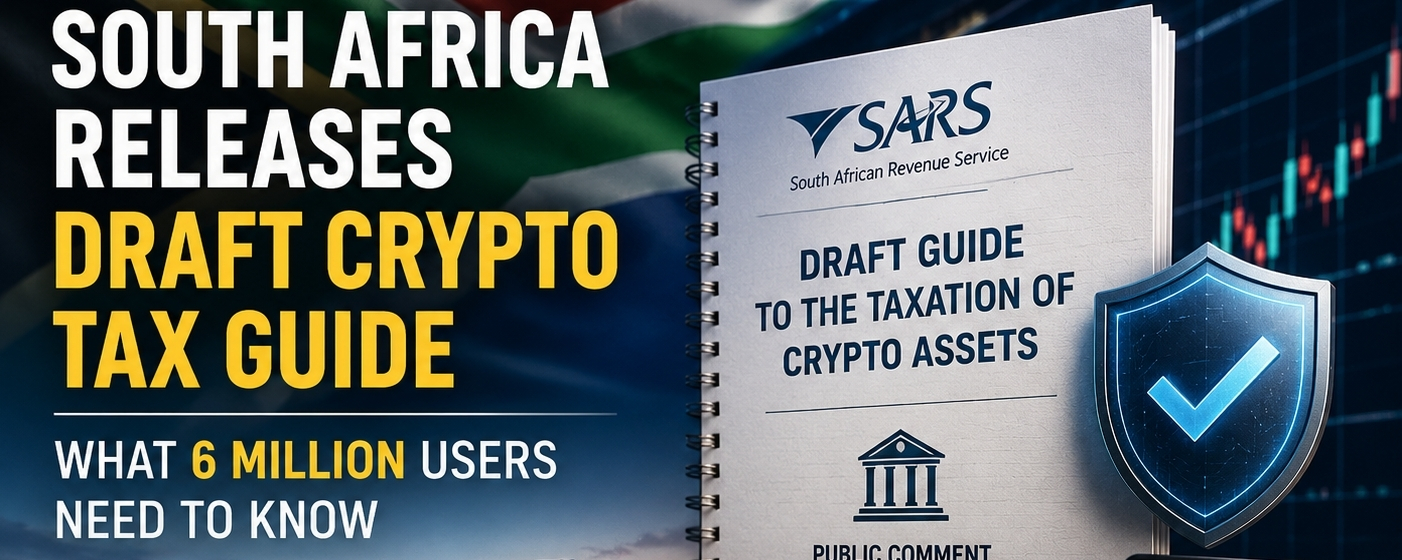
South Africa's tax authority has just handed the country's massive crypto community its most detailed rulebook yet. On July 1, 2026, the South African Revenue Service (SARS) published a Draft Guide to the Taxation of Crypto Assets, marking the most comprehensive attempt so far to spell out exactly how digital asset activity should be taxed under existing law.
This isn't a new law. SARS is careful to note the guide carries no binding force and doesn't create a "practice generally prevailing." But it is the clearest signal yet of how the taxman intends to read South Africa's Income Tax Act when it looks at a crypto wallet — and for a market estimated at 5.8 to 6 million users, that interpretive stance carries real weight.
Crypto Is an Asset, Not a Currency
SARS reaffirms a position it's held since 2014: crypto assets are not legal tender or foreign currency. Instead, they're treated as intangible assets. That single classification decision cascades through everything else in the guide — it means crypto isn't subject to foreign exchange rules, and because it doesn't qualify as an "exchange item," holders don't owe tax on unrealized gains simply for holding. Tax only bites when you dispose of the asset.
Every Swap Is a Taxable Event
The detail catching the most attention from traders: crypto-to-crypto swaps are classified as barter transactions. Trade Bitcoin for Ethereum, or Ethereum for a stablecoin, and SARS considers that a taxable event based on the market value of both assets at the moment of exchange — regardless of whether any cash ever touched your bank account.
Capital Gains vs. Income: It Comes Down to Behavior
South African tax law has long wrestled with whether a gain is capital in nature (taxed at an effective rate up to 36%) or revenue in nature (up to 45%). The draft guide confirms crypto gets no special carve-out from this fight, and importantly, there's no equivalent of the "three-year rule" that protects long-term share investors. You could hold a coin for a decade and still be assessed as a trader if your conduct suggests otherwise.
SARS lays out the tells it will look for: transaction frequency, the absence of yield beyond price appreciation, and the asset's inherent volatility. The guide even draws comparisons to historic gold-coin tax cases to argue that assets offering "no return or low return" beyond appreciation are inherently more likely to be viewed as speculative trading vehicles.
Enforcement Is Already Ramping Up
The timing isn't a coincidence. South Africa's Crypto-Asset Reporting Framework (CARF) went live on March 1, 2026, requiring crypto service providers to report user transaction data to SARS, which then shares it internationally through OECD coordination. SARS has also stood up a new Crypto Revenue Augmentation Unit dedicated specifically to auditing digital wallets.
Combine automated data reporting with an interpretive guide that tells auditors exactly what to look for, and the message to traders is unmistakable: the tools to catch non-compliance are already in place.
What This Means for You
-Long-term holders: No immediate tax event just for holding — but be ready to demonstrate genuine investment intent if ever questioned. The burden of proof sits with the taxpayer, not SARS.
Active traders: Every swap, sale, and crypto payment needs documentation, including market value at the exact time of the transaction.
Anyone with undisclosed historical gains
SARS is actively promoting its Voluntary Disclosure Programme, now offering additional relief on interest penalties for those who come forward before enforcement intensifies.
The Window to Respond Is Open
Because this is a draft, the public gets a say. SARS is accepting comments until August 31, 2026, before finalizing its position. Feedback can be submitted to policycomments@sars.gov.za.
For a market that has operated for years in a grey zone, this guide doesn't resolve every ambiguity — but it removes a lot of the room for generous interpretation that both taxpayers and advisors have relied on. Whether you see it as welcome clarity or tighter scrutiny, one thing is clear: South African crypto users now have far less room to claim they didn't know the rules.
This article is for informational purposes only and does not constitute tax or financial advice. Consult a qualified tax professional f
or guidance specific to your situation.
#CryptoHacksHit207InH1WithLosses$972M #SouthAfricaReleasesDraftCryptoTaxGuide #VitalikOutlinesLeanEthereumRoadmap #SouthAfricaReleasesDraftCryptoTaxGuide
{spot}(BTCUSDT)
{spot}(NVDABUSDT)
{spot}(SPCXBUSDT)
$MSFTB $BTC $ETH
South Africa Releases Draft Crypto Tax Guide: What 6 Million Users Need to Know
South Africa Releases Draft Crypto Tax Guide: What 6 Million Users Need to Know
South Africa's tax authority has just handed the country's massive crypto community its most detailed rulebook yet. On July 1, 2026, the South African Revenue Service (SARS) published a Draft Guide to the Taxation of Crypto Assets, marking the most comprehensive attempt so far to spell out exactly how digital asset activity should be taxed under existing law.
This isn't a new law. SARS is careful to note the guide carries no binding force and doesn't create a "practice generally prevailing." But it is the clearest signal yet of how the taxman intends to read South Africa's Income Tax Act when it looks at a crypto wallet — and for a market estimated at 5.8 to 6 million users, that interpretive stance carries real weight.
Crypto Is an Asset, Not a Currency
SARS reaffirms a position it's held since 2014: crypto assets are not legal tender or foreign currency. Instead, they're treated as intangible assets. That single classification decision cascades through everything else in the guide — it means crypto isn't subject to foreign exchange rules, and because it doesn't qualify as an "exchange item," holders don't owe tax on unrealized gains simply for holding. Tax only bites when you dispose of the asset.
Every Swap Is a Taxable Event
The detail catching the most attention from traders: crypto-to-crypto swaps are classified as barter transactions. Trade Bitcoin for Ethereum, or Ethereum for a stablecoin, and SARS considers that a taxable event based on the market value of both assets at the moment of exchange — regardless of whether any cash ever touched your bank account.
Capital Gains vs. Income: It Comes Down to Behavior
South African tax law has long wrestled with whether a gain is capital in nature (taxed at an effective rate up to 36%) or revenue in nature (up to 45%). The draft guide confirms crypto gets no special carve-out from this fight, and importantly, there's no equivalent of the "three-year rule" that protects long-term share investors. You could hold a coin for a decade and still be assessed as a trader if your conduct suggests otherwise.
SARS lays out the tells it will look for: transaction frequency, the absence of yield beyond price appreciation, and the asset's inherent volatility. The guide even draws comparisons to historic gold-coin tax cases to argue that assets offering "no return or low return" beyond appreciation are inherently more likely to be viewed as speculative trading vehicles.
Enforcement Is Already Ramping Up
The timing isn't a coincidence. South Africa's Crypto-Asset Reporting Framework (CARF) went live on March 1, 2026, requiring crypto service providers to report user transaction data to SARS, which then shares it internationally through OECD coordination. SARS has also stood up a new Crypto Revenue Augmentation Unit dedicated specifically to auditing digital wallets.
Combine automated data reporting with an interpretive guide that tells auditors exactly what to look for, and the message to traders is unmistakable: the tools to catch non-compliance are already in place.
What This Means for You
-Long-term holders: No immediate tax event just for holding — but be ready to demonstrate genuine investment intent if ever questioned. The burden of proof sits with the taxpayer, not SARS.
Active traders: Every swap, sale, and crypto payment needs documentation, including market value at the exact time of the transaction.
Anyone with undisclosed historical gains
SARS is actively promoting its Voluntary Disclosure Programme, now offering additional relief on interest penalties for those who come forward before enforcement intensifies.
The Window to Respond Is Open
Because this is a draft, the public gets a say. SARS is accepting comments until August 31, 2026, before finalizing its position. Feedback can be submitted to policycomments@sars.gov.za.
For a market that has operated for years in a grey zone, this guide doesn't resolve every ambiguity — but it removes a lot of the room for generous interpretation that both taxpayers and advisors have relied on. Whether you see it as welcome clarity or tighter scrutiny, one thing is clear: South African crypto users now have far less room to claim they didn't know the rules.
This article is for informational purposes only and does not constitute tax or financial advice. Consult a qualified tax professional f
or guidance specific to your situation.
#CryptoHacksHit207InH1WithLosses$972M #SouthAfricaReleasesDraftCryptoTaxGuide #VitalikOutlinesLeanEthereumRoadmap #SouthAfricaReleasesDraftCryptoTaxGuide
$MSFTB $BTC $ETH
South Africa's tax authority has just handed the country's massive crypto community its most detailed rulebook yet. On July 1, 2026, the South African Revenue Service (SARS) published a Draft Guide to the Taxation of Crypto Assets, marking the most comprehensive attempt so far to spell out exactly how digital asset activity should be taxed under existing law.
This isn't a new law. SARS is careful to note the guide carries no binding force and doesn't create a "practice generally prevailing." But it is the clearest signal yet of how the taxman intends to read South Africa's Income Tax Act when it looks at a crypto wallet — and for a market estimated at 5.8 to 6 million users, that interpretive stance carries real weight.
Crypto Is an Asset, Not a Currency
SARS reaffirms a position it's held since 2014: crypto assets are not legal tender or foreign currency. Instead, they're treated as intangible assets. That single classification decision cascades through everything else in the guide — it means crypto isn't subject to foreign exchange rules, and because it doesn't qualify as an "exchange item," holders don't owe tax on unrealized gains simply for holding. Tax only bites when you dispose of the asset.
Every Swap Is a Taxable Event
The detail catching the most attention from traders: crypto-to-crypto swaps are classified as barter transactions. Trade Bitcoin for Ethereum, or Ethereum for a stablecoin, and SARS considers that a taxable event based on the market value of both assets at the moment of exchange — regardless of whether any cash ever touched your bank account.
Capital Gains vs. Income: It Comes Down to Behavior
South African tax law has long wrestled with whether a gain is capital in nature (taxed at an effective rate up to 36%) or revenue in nature (up to 45%). The draft guide confirms crypto gets no special carve-out from this fight, and importantly, there's no equivalent of the "three-year rule" that protects long-term share investors. You could hold a coin for a decade and still be assessed as a trader if your conduct suggests otherwise.
SARS lays out the tells it will look for: transaction frequency, the absence of yield beyond price appreciation, and the asset's inherent volatility. The guide even draws comparisons to historic gold-coin tax cases to argue that assets offering "no return or low return" beyond appreciation are inherently more likely to be viewed as speculative trading vehicles.
Enforcement Is Already Ramping Up
The timing isn't a coincidence. South Africa's Crypto-Asset Reporting Framework (CARF) went live on March 1, 2026, requiring crypto service providers to report user transaction data to SARS, which then shares it internationally through OECD coordination. SARS has also stood up a new Crypto Revenue Augmentation Unit dedicated specifically to auditing digital wallets.
Combine automated data reporting with an interpretive guide that tells auditors exactly what to look for, and the message to traders is unmistakable: the tools to catch non-compliance are already in place.
What This Means for You
-Long-term holders: No immediate tax event just for holding — but be ready to demonstrate genuine investment intent if ever questioned. The burden of proof sits with the taxpayer, not SARS.
Active traders: Every swap, sale, and crypto payment needs documentation, including market value at the exact time of the transaction.
Anyone with undisclosed historical gains
SARS is actively promoting its Voluntary Disclosure Programme, now offering additional relief on interest penalties for those who come forward before enforcement intensifies.
The Window to Respond Is Open
Because this is a draft, the public gets a say. SARS is accepting comments until August 31, 2026, before finalizing its position. Feedback can be submitted to policycomments@sars.gov.za.
For a market that has operated for years in a grey zone, this guide doesn't resolve every ambiguity — but it removes a lot of the room for generous interpretation that both taxpayers and advisors have relied on. Whether you see it as welcome clarity or tighter scrutiny, one thing is clear: South African crypto users now have far less room to claim they didn't know the rules.
This article is for informational purposes only and does not constitute tax or financial advice. Consult a qualified tax professional f
or guidance specific to your situation.
#CryptoHacksHit207InH1WithLosses$972M #SouthAfricaReleasesDraftCryptoTaxGuide #VitalikOutlinesLeanEthereumRoadmap #SouthAfricaReleasesDraftCryptoTaxGuide
$MSFTB $BTC $ETH
186
Статья
Lean Ethereum: Vitalik Buterin's Bold 4-Year Plan That Could Reshape ETH ForeverInside Vitalik Buterin's Bold 4-Year Plan to Rebuild ETH From the Ground Up
Why This Roadmap Matters More Than Any Single Upgrade
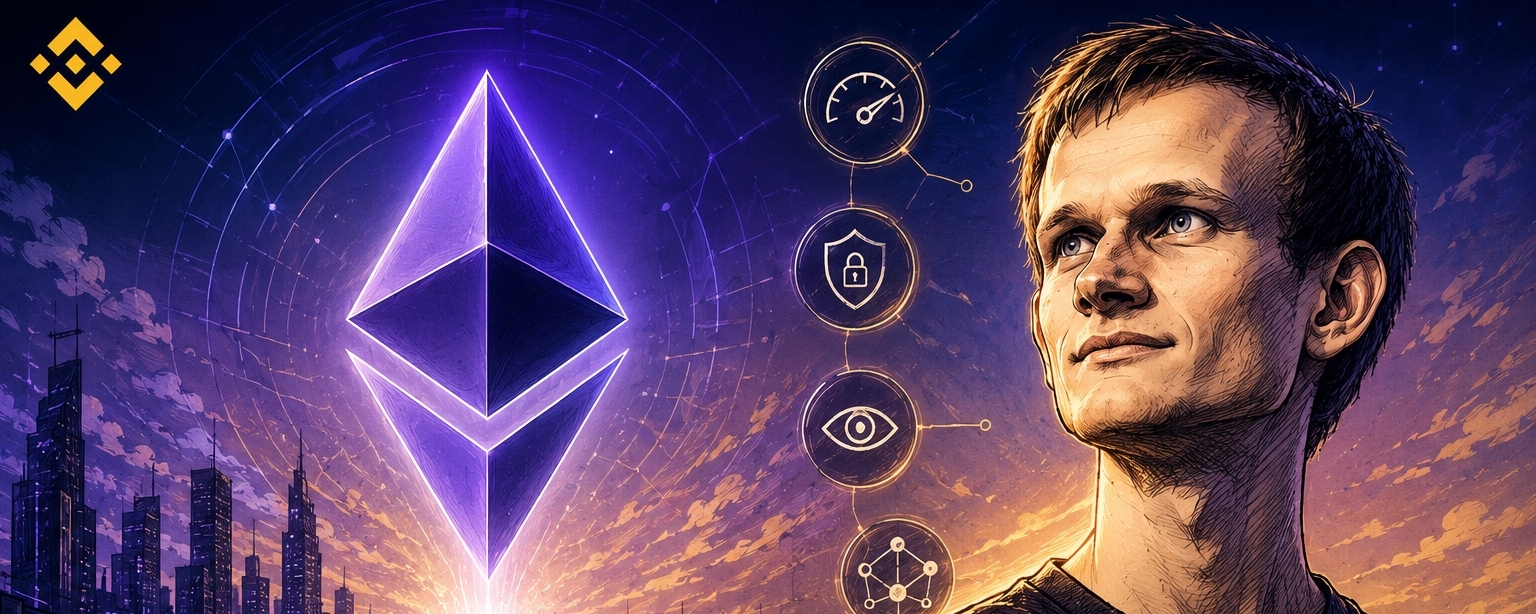
On July 4, 2026, Vitalik Buterin dropped one of his most consequential posts of the year. Fresh off a closed-door research meeting in Berlin — a follow-up to earlier client-team discussions in Svalbard — Buterin shared an updated version of Ethereum's long-term technical blueprint, publicly known as the "strawmap." He didn't call it a minor update. He called it Ethereum's third major era, standing shoulder to shoulder with the Merge in terms of historical weight.
That's not hype for the sake of engagement. If you've been in crypto long enough to remember the run-up to the Merge in 2022, you know that Ethereum doesn't rebrand its roadmap lightly. This time, the target isn't just "more TPS." It's a wholesale redesign of consensus, data, execution, cryptography, and privacy — delivered gradually, fork by fork, over roughly four years, without breaking the apps and wallets already living on Ethereum today.
For traders, builders, and long-term ETH holders on Binance Square, this is the kind of announcement that deserves more than a headline skim. Let's break down what "Lean Ethereum" actually is, what's changing under the hood, and what it could mean for price action, Layer-2 tokens, and the broader competitive landscape heading into 2027–2029.
What Is "Lean Ethereum," Really?
Lean Ethereum isn't a single upgrade you'll wake up to one morning. It's a philosophy: strip the protocol down to its most essential, elegant components, then rebuild scalability, security, and privacy on top of that simplified foundation. Ethereum Foundation researcher Justin Drake first framed this vision in mid-2025, and it has since evolved into the "strawmap" — a living, publicly maintained visual roadmap tracking consensus-layer, data-layer, and execution-layer upgrades all the way out to 2029 and beyond.
The name "strawmap" is deliberately humble. It's a mashup of "strawman" and "roadmap," signaling that this is a draft for community debate, not a locked-in decree from Ethereum's core developers. It originated at an EF workshop in January 2026 and is maintained collaboratively by the Foundation's Architecture team. Buterin himself has compared the process to the Ship of Theseus — replacing every plank of the vessel while it's still sailing, so that by the end, the protocol is fundamentally different even though it never stopped running.
Practically speaking, the roadmap calls for around seven hard forks over four years, arriving roughly every six months. Two of them — Glamsterdam and Hegotá — are already confirmed for 2026, giving the market concrete near-term catalysts to watch rather than only distant, speculative promises.
The Core Pillars of the Roadmap
1. Scalability: Chasing Gigagas on L1, Teragas on L2
Ethereum has spent the last several years leaning almost entirely on rollups to scale. Lean Ethereum shifts some of that weight back onto the base layer itself. The stated targets are aggressive: roughly 1 gigagas per second on Layer 1 (around 10,000 transactions per second) and up to 1 teragas per second in aggregate across Layer 2s — somewhere near 10 million TPS.
To get there without turning Ethereum into a data center-only chain, the roadmap leans heavily on:
Block Access Lists (BALs)— a mechanism debuting with the Glamsterdam fork that lets nodes identify which transactions don't conflict with each other, so they can be executed in parallel across multiple CPU cores instead of one at a time.
Enshrined Proposer-Builder Separation (ePBS)— hardcoding the rules for how blocks get built and bid on directly into the consensus layer, cutting out the informal network of external relays that currently centralize a lot of block production.
PeerDAS— already live via the Fusaka upgrade, this lets validators sample small pieces of blob data instead of downloading everything, unlocking roughly an 8x increase in theoretical blob capacity.
Gradual gas limit increases— the network already moved the mainnet gas limit from 30 million to 60 million gas, and Glamsterdam is expected to push it higher still, with some researchers eyeing triple-digit millions per block over time.
2. Faster Blocks, Faster Finality
Right now, Ethereum produces a block every 12 seconds and reaches full finality in around 16 minutes. The roadmap proposes shrinking slot times using a neat mathematical progression — roughly √2 at each step: 12 seconds, then 8, then 6, then 4, then 3, and potentially all the way down to 2 seconds, though Buterin has flagged the final couple of steps as more speculative and dependent on further research.
Separately, there's a push to decouple slot time entirely from finality, moving toward a one-round Byzantine fault-tolerant algorithm called Minimmit. The long-term aim is to compress finality from minutes down into single-digit or low double-digit seconds. A related, already-discussed mechanism called the Fast Confirmation Rule aims to give users a strong practical guarantee that a block won't revert after just one slot — a meaningful UX upgrade for anyone tired of watching a spinning "pending" icon.
3. Post-Quantum Cryptography: Racing the Clock
This might be the most underappreciated part of the entire roadmap for casual observers, but it's arguably the most urgent from an engineering standpoint. Quantum computers capable of breaking today's elliptic-curve cryptography don't exist yet, but Buterin and Ethereum Foundation researchers have pointed to warnings that meaningful risk could materialize as early as 2028.
Four components of Ethereum's cryptographic stack are considered exposed:
1.ECDSA— the signature scheme securing ordinary wallets and externally owned accounts.
2. BLS signatures — used by validators to aggregate hundreds of thousands of votes into consensus.
3.KZG polynomial commitments — used for data availability in the rollup-centric scaling model.
4. Groth16 and other ZK proof systems that rely on the same vulnerable elliptic-curve math.
The fix isn't a simple swap. Post-quantum signatures are typically much larger and slower to aggregate than BLS, so replacing them naively would hurt performance. That's why the roadmap includes a project called leanVM,which uses zero-knowledge proofs to efficiently aggregate quantum-safe, hash-based signatures (an approach nicknamed leanXMSS) without the network taking a serious efficiency hit. A public registry for post-quantum keys is expected to roll out around 2026, letting validators and users begin voluntary migration well ahead of any mandatory cutover.
4. Privacy as a First-Class Citizen
For most of Ethereum's history, privacy has been something developers had to bolt on at the application layer — mixers, ZK rollups with shielded pools, and similar tools. Lean Ethereum flips that script. Buterin has explicitly said privacy is no longer an afterthought but a core protocol goal, and future components — from the mempool to new state structures — are being evaluated partly on whether they can support intermediary-free, quantum-safe privacy without excessive overhead.
The most concrete manifestation of this is the idea of native shielded ETH transfers built directly into Layer 1, rather than requiring users to route through a third-party privacy protocol. If this ships as envisioned, confidential transfers become a default option for everyone, not a niche feature for the technically sophisticated.
5. Radical Simplification and Formal Verification
Underneath all the flashy scalability and privacy talk is a less glamorous but arguably more important theme: cleaning house. Buterin has talked about wanting Ethereum's core protocol to look like "a work of art" rather than an accumulation of patches — minimal, elegant, and formally verifiable rather than sprawling and brittle. Part of this involves merging the currently separate execution and consensus clients into more unified systems, and eventually making it realistic for something as modest as a smartphone to run a full verifying node, thanks to ZK proofs collapsing the computational burden of verification toward near-zero.
Timeline: What Happens When
| Phase | Approximate Window | What's Happening |
| Glamsterdam | 2026 | ePBS, Block Access Lists, another gas limit bump |
| Hegotá | Later 2026 | FOCIL (forced transaction inclusion to fight censorship), continued gas/throughput work |
| 2026–2027 | Ongoing | Post-quantum key registry rollout, ZK-EVM clients become viable for a growing share of validators |
| 2027–2028 | Mid-term | Wider ZK-EVM adoption, cheaper verification paths for solo stakers, higher gas limits |
| 2028–2029 | Long-term | Slot-time reductions continue, Minimmit-style fast finality, native L1 privacy features mature |
| ~2029–2030 | End state | Full post-quantum protection target, roughly seven forks completed, Ethereum moves toward "maintenance mode" on core architecture |
It's worth stressing that this is explicitly described as a living document, not a locked contract. Expect quarterly-ish revisions, shifted deadlines, and features that get downgraded or dropped as engineering bandwidth and research realities collide with ambition — which is exactly what already happened with one proposed feature set around native account abstraction and quantum-resistant signatures, which got trimmed down to a smaller scope to keep the Hegotá fork on schedule.
Market Impact: ETH, Layer-2s, Developers, and Investors.
For ETH Holders
The announcement landed alongside a modestly positive price reaction, with ETH pushing to an intraday high near $1,800 before settling slightly lower, still up over 3% on the day. That's a relatively muted move for a roadmap of this scope, which tells you two things: markets have partially priced in Ethereum's long-term technical direction already, and traders tend to reward *shipped* upgrades (like Fusaka's PeerDAS rollout or the gas limit increase) more than *announced* long-term plans. The real price-relevant catalysts will likely be Glamsterdam and Hegotá actually landing on mainnet later this year, not the strawmap update itself.
For Layer-2 Tokens
This is where things get genuinely interesting — and a little uncomfortable for some L2 narratives. For the past two years, capital and attention rotated heavily toward L2s and other high-performance chains, partly because Ethereum's base layer felt slow and expensive by comparison. Lean Ethereum's push toward gigagas L1 throughput, cheaper blobs, and faster finality narrows that performance gap. If Ethereum's L1 becomes fast and cheap enough to host complex DeFi activity directly, some of the "we exist because L1 is too slow" value proposition that L2s have leaned on could soften — a genuine risk for L2 tokens whose value accrual has depended on that gap staying wide.
That said, the roadmap doesn't kill rollups; it complements them. A stronger, faster L1 combined with a teragas-scale L2 ecosystem is a bigger overall pie, not a zero-sum fight. L2s that focus on specialized execution environments, unique app ecosystems, or superior UX rather than simply "cheaper than L1" are better positioned to keep their relevance even as the base layer improves.
For Developers
The most underrated part of this roadmap for builders is the emphasis on formal verification and radical protocol simplification. A leaner, more elegant base layer generally means fewer edge cases, fewer surprise bugs, and clearer mental models to build against. Native account abstraction discussions, quantum-safe primitives baked into the protocol, and eventually native privacy tooling all reduce the amount of custom, risky infrastructure developers currently have to build and audit themselves.
For Institutional and Long-Term Investors
Institutional allocators tend to care about durability and predictability more than raw speed. A credible, multi-year post-quantum migration plan — something most competing chains have not articulated with this level of specificity — is a structural differentiator. Combined with continued spot ETH ETF inflows and a staking base north of 35 million ETH (roughly 29% of supply), the roadmap reinforces a narrative of Ethereum as infrastructure built to last decades rather than a chain chasing the current cycle's trends.
The Bull Case
A credible answer to the quantum threat years ahead of when it might matter. Few competitors have anything close to Ethereum's specificity on post-quantum migration, and getting ahead of a genuine existential risk is a real moat.
- L1 finally competitive on speed without sacrificing decentralization. If gigagas throughput and sub-4-second slots materialize while keeping solo staking accessible, Ethereum could offer a combination — strong security guarantees plus high performance — that few chains can currently claim simultaneously.
- Privacy by default could be a genuine unlock for institutional and mainstream use cases that have historically been uncomfortable with Ethereum's fully transparent ledger.
- Concrete near-term catalysts.Glamsterdam and Hegotá are confirmed for this year, giving the market tangible delivery milestones rather than only distant promises.
- A track record of executing hard transitions.The Merge is the obvious proof point that Ethereum can pull off a complex, high-stakes overhaul without significant downtime.
The Bear Case
- Execution risk across seven forks is not trivial.Ethereum's history includes plenty of delayed timelines, and a four-year plan with this many moving parts leaves a lot of room for slippage — and Ethereum's community governance model, by design, invites debate and revision rather than top-down enforcement.
-The roadmap is explicitly a draft. "Strawmap" isn't marketing modesty; features are already being trimmed (as happened with the account abstraction/quantum signature bundle heading into Hegotá) when engineering bandwidth runs short.
- Layer-2 tokens face genuine repricing risk if L1 closes the performance gap faster than L2 ecosystems can differentiate on something other than cost and speed.
- Quantum migration involves real friction.** Multiple hard forks, temporary gas cost increases during cryptographic transitions, and mandatory key migrations for validators all introduce operational and psychological friction that could slow adoption or create short-term uncertainty.
- Muted immediate price reaction suggests limited near-term speculative fuel. Long-dated infrastructure roadmaps are a tougher sell to short-term traders than concrete, imminent catalysts.
Final Take
Lean Ethereum isn't a marketing rebrand — it's arguably the most technically ambitious version of Ethereum's roadmap since the transition to Proof-of-Stake. Over the next four years, if the strawmap holds together even loosely, Ethereum aims to be simultaneously faster, cheaper, quantum-resistant, and more private, all while preserving the decentralization and backward compatibility that got it here in the first place.
None of this guarantees a specific price target, and nobody should treat a multi-year engineering roadmap as a short-term trading signal. But for anyone building a long-term thesis around ETH, the direction of travel matters: Ethereum is explicitly choosing to compete on both security and speed rather than picking one, betting that a leaner, formally verified base layer is the foundation that lets it do both. Whether that bet pays off will be decided fork by fork — starting with Glamsterdam later this year.
This article is for informational and educational purpose
s only and does not constitute financial or investment advice. Always do your own research before making investment decisions.
#VitalikOutlinesLeanEthereumRoadmap #EthicalHackersFindAptosFlawRisking$70B #BrazilCentralBankSaysStablecoinsElectronicMoney $BTC $ETH $BNB
{spot}(ETHUSDT)
{spot}(BNBUSDT)
Lean Ethereum: Vitalik Buterin's Bold 4-Year Plan That Could Reshape ETH Forever
Inside Vitalik Buterin's Bold 4-Year Plan to Rebuild ETH From the Ground Up
Why This Roadmap Matters More Than Any Single Upgrade
On July 4, 2026, Vitalik Buterin dropped one of his most consequential posts of the year. Fresh off a closed-door research meeting in Berlin — a follow-up to earlier client-team discussions in Svalbard — Buterin shared an updated version of Ethereum's long-term technical blueprint, publicly known as the "strawmap." He didn't call it a minor update. He called it Ethereum's third major era, standing shoulder to shoulder with the Merge in terms of historical weight.
That's not hype for the sake of engagement. If you've been in crypto long enough to remember the run-up to the Merge in 2022, you know that Ethereum doesn't rebrand its roadmap lightly. This time, the target isn't just "more TPS." It's a wholesale redesign of consensus, data, execution, cryptography, and privacy — delivered gradually, fork by fork, over roughly four years, without breaking the apps and wallets already living on Ethereum today.
For traders, builders, and long-term ETH holders on Binance Square, this is the kind of announcement that deserves more than a headline skim. Let's break down what "Lean Ethereum" actually is, what's changing under the hood, and what it could mean for price action, Layer-2 tokens, and the broader competitive landscape heading into 2027–2029.
What Is "Lean Ethereum," Really?
Lean Ethereum isn't a single upgrade you'll wake up to one morning. It's a philosophy: strip the protocol down to its most essential, elegant components, then rebuild scalability, security, and privacy on top of that simplified foundation. Ethereum Foundation researcher Justin Drake first framed this vision in mid-2025, and it has since evolved into the "strawmap" — a living, publicly maintained visual roadmap tracking consensus-layer, data-layer, and execution-layer upgrades all the way out to 2029 and beyond.
The name "strawmap" is deliberately humble. It's a mashup of "strawman" and "roadmap," signaling that this is a draft for community debate, not a locked-in decree from Ethereum's core developers. It originated at an EF workshop in January 2026 and is maintained collaboratively by the Foundation's Architecture team. Buterin himself has compared the process to the Ship of Theseus — replacing every plank of the vessel while it's still sailing, so that by the end, the protocol is fundamentally different even though it never stopped running.
Practically speaking, the roadmap calls for around seven hard forks over four years, arriving roughly every six months. Two of them — Glamsterdam and Hegotá — are already confirmed for 2026, giving the market concrete near-term catalysts to watch rather than only distant, speculative promises.
The Core Pillars of the Roadmap
1. Scalability: Chasing Gigagas on L1, Teragas on L2
Ethereum has spent the last several years leaning almost entirely on rollups to scale. Lean Ethereum shifts some of that weight back onto the base layer itself. The stated targets are aggressive: roughly 1 gigagas per second on Layer 1 (around 10,000 transactions per second) and up to 1 teragas per second in aggregate across Layer 2s — somewhere near 10 million TPS.
To get there without turning Ethereum into a data center-only chain, the roadmap leans heavily on:
Block Access Lists (BALs)— a mechanism debuting with the Glamsterdam fork that lets nodes identify which transactions don't conflict with each other, so they can be executed in parallel across multiple CPU cores instead of one at a time.
Enshrined Proposer-Builder Separation (ePBS)— hardcoding the rules for how blocks get built and bid on directly into the consensus layer, cutting out the informal network of external relays that currently centralize a lot of block production.
PeerDAS— already live via the Fusaka upgrade, this lets validators sample small pieces of blob data instead of downloading everything, unlocking roughly an 8x increase in theoretical blob capacity.
Gradual gas limit increases— the network already moved the mainnet gas limit from 30 million to 60 million gas, and Glamsterdam is expected to push it higher still, with some researchers eyeing triple-digit millions per block over time.
2. Faster Blocks, Faster Finality
Right now, Ethereum produces a block every 12 seconds and reaches full finality in around 16 minutes. The roadmap proposes shrinking slot times using a neat mathematical progression — roughly √2 at each step: 12 seconds, then 8, then 6, then 4, then 3, and potentially all the way down to 2 seconds, though Buterin has flagged the final couple of steps as more speculative and dependent on further research.
Separately, there's a push to decouple slot time entirely from finality, moving toward a one-round Byzantine fault-tolerant algorithm called Minimmit. The long-term aim is to compress finality from minutes down into single-digit or low double-digit seconds. A related, already-discussed mechanism called the Fast Confirmation Rule aims to give users a strong practical guarantee that a block won't revert after just one slot — a meaningful UX upgrade for anyone tired of watching a spinning "pending" icon.
3. Post-Quantum Cryptography: Racing the Clock
This might be the most underappreciated part of the entire roadmap for casual observers, but it's arguably the most urgent from an engineering standpoint. Quantum computers capable of breaking today's elliptic-curve cryptography don't exist yet, but Buterin and Ethereum Foundation researchers have pointed to warnings that meaningful risk could materialize as early as 2028.
Four components of Ethereum's cryptographic stack are considered exposed:
1.ECDSA— the signature scheme securing ordinary wallets and externally owned accounts.
2. BLS signatures — used by validators to aggregate hundreds of thousands of votes into consensus.
3.KZG polynomial commitments — used for data availability in the rollup-centric scaling model.
4. Groth16 and other ZK proof systems that rely on the same vulnerable elliptic-curve math.
The fix isn't a simple swap. Post-quantum signatures are typically much larger and slower to aggregate than BLS, so replacing them naively would hurt performance. That's why the roadmap includes a project called leanVM,which uses zero-knowledge proofs to efficiently aggregate quantum-safe, hash-based signatures (an approach nicknamed leanXMSS) without the network taking a serious efficiency hit. A public registry for post-quantum keys is expected to roll out around 2026, letting validators and users begin voluntary migration well ahead of any mandatory cutover.
4. Privacy as a First-Class Citizen
For most of Ethereum's history, privacy has been something developers had to bolt on at the application layer — mixers, ZK rollups with shielded pools, and similar tools. Lean Ethereum flips that script. Buterin has explicitly said privacy is no longer an afterthought but a core protocol goal, and future components — from the mempool to new state structures — are being evaluated partly on whether they can support intermediary-free, quantum-safe privacy without excessive overhead.
The most concrete manifestation of this is the idea of native shielded ETH transfers built directly into Layer 1, rather than requiring users to route through a third-party privacy protocol. If this ships as envisioned, confidential transfers become a default option for everyone, not a niche feature for the technically sophisticated.
5. Radical Simplification and Formal Verification
Underneath all the flashy scalability and privacy talk is a less glamorous but arguably more important theme: cleaning house. Buterin has talked about wanting Ethereum's core protocol to look like "a work of art" rather than an accumulation of patches — minimal, elegant, and formally verifiable rather than sprawling and brittle. Part of this involves merging the currently separate execution and consensus clients into more unified systems, and eventually making it realistic for something as modest as a smartphone to run a full verifying node, thanks to ZK proofs collapsing the computational burden of verification toward near-zero.
Timeline: What Happens When
| Phase | Approximate Window | What's Happening |
| Glamsterdam | 2026 | ePBS, Block Access Lists, another gas limit bump |
| Hegotá | Later 2026 | FOCIL (forced transaction inclusion to fight censorship), continued gas/throughput work |
| 2026–2027 | Ongoing | Post-quantum key registry rollout, ZK-EVM clients become viable for a growing share of validators |
| 2027–2028 | Mid-term | Wider ZK-EVM adoption, cheaper verification paths for solo stakers, higher gas limits |
| 2028–2029 | Long-term | Slot-time reductions continue, Minimmit-style fast finality, native L1 privacy features mature |
| ~2029–2030 | End state | Full post-quantum protection target, roughly seven forks completed, Ethereum moves toward "maintenance mode" on core architecture |
It's worth stressing that this is explicitly described as a living document, not a locked contract. Expect quarterly-ish revisions, shifted deadlines, and features that get downgraded or dropped as engineering bandwidth and research realities collide with ambition — which is exactly what already happened with one proposed feature set around native account abstraction and quantum-resistant signatures, which got trimmed down to a smaller scope to keep the Hegotá fork on schedule.
Market Impact: ETH, Layer-2s, Developers, and Investors.
For ETH Holders
The announcement landed alongside a modestly positive price reaction, with ETH pushing to an intraday high near $1,800 before settling slightly lower, still up over 3% on the day. That's a relatively muted move for a roadmap of this scope, which tells you two things: markets have partially priced in Ethereum's long-term technical direction already, and traders tend to reward *shipped* upgrades (like Fusaka's PeerDAS rollout or the gas limit increase) more than *announced* long-term plans. The real price-relevant catalysts will likely be Glamsterdam and Hegotá actually landing on mainnet later this year, not the strawmap update itself.
For Layer-2 Tokens
This is where things get genuinely interesting — and a little uncomfortable for some L2 narratives. For the past two years, capital and attention rotated heavily toward L2s and other high-performance chains, partly because Ethereum's base layer felt slow and expensive by comparison. Lean Ethereum's push toward gigagas L1 throughput, cheaper blobs, and faster finality narrows that performance gap. If Ethereum's L1 becomes fast and cheap enough to host complex DeFi activity directly, some of the "we exist because L1 is too slow" value proposition that L2s have leaned on could soften — a genuine risk for L2 tokens whose value accrual has depended on that gap staying wide.
That said, the roadmap doesn't kill rollups; it complements them. A stronger, faster L1 combined with a teragas-scale L2 ecosystem is a bigger overall pie, not a zero-sum fight. L2s that focus on specialized execution environments, unique app ecosystems, or superior UX rather than simply "cheaper than L1" are better positioned to keep their relevance even as the base layer improves.
For Developers
The most underrated part of this roadmap for builders is the emphasis on formal verification and radical protocol simplification. A leaner, more elegant base layer generally means fewer edge cases, fewer surprise bugs, and clearer mental models to build against. Native account abstraction discussions, quantum-safe primitives baked into the protocol, and eventually native privacy tooling all reduce the amount of custom, risky infrastructure developers currently have to build and audit themselves.
For Institutional and Long-Term Investors
Institutional allocators tend to care about durability and predictability more than raw speed. A credible, multi-year post-quantum migration plan — something most competing chains have not articulated with this level of specificity — is a structural differentiator. Combined with continued spot ETH ETF inflows and a staking base north of 35 million ETH (roughly 29% of supply), the roadmap reinforces a narrative of Ethereum as infrastructure built to last decades rather than a chain chasing the current cycle's trends.
The Bull Case
A credible answer to the quantum threat years ahead of when it might matter. Few competitors have anything close to Ethereum's specificity on post-quantum migration, and getting ahead of a genuine existential risk is a real moat.
- L1 finally competitive on speed without sacrificing decentralization. If gigagas throughput and sub-4-second slots materialize while keeping solo staking accessible, Ethereum could offer a combination — strong security guarantees plus high performance — that few chains can currently claim simultaneously.
- Privacy by default could be a genuine unlock for institutional and mainstream use cases that have historically been uncomfortable with Ethereum's fully transparent ledger.
- Concrete near-term catalysts.Glamsterdam and Hegotá are confirmed for this year, giving the market tangible delivery milestones rather than only distant promises.
- A track record of executing hard transitions.The Merge is the obvious proof point that Ethereum can pull off a complex, high-stakes overhaul without significant downtime.
The Bear Case
- Execution risk across seven forks is not trivial.Ethereum's history includes plenty of delayed timelines, and a four-year plan with this many moving parts leaves a lot of room for slippage — and Ethereum's community governance model, by design, invites debate and revision rather than top-down enforcement.
-The roadmap is explicitly a draft. "Strawmap" isn't marketing modesty; features are already being trimmed (as happened with the account abstraction/quantum signature bundle heading into Hegotá) when engineering bandwidth runs short.
- Layer-2 tokens face genuine repricing risk if L1 closes the performance gap faster than L2 ecosystems can differentiate on something other than cost and speed.
- Quantum migration involves real friction.** Multiple hard forks, temporary gas cost increases during cryptographic transitions, and mandatory key migrations for validators all introduce operational and psychological friction that could slow adoption or create short-term uncertainty.
- Muted immediate price reaction suggests limited near-term speculative fuel. Long-dated infrastructure roadmaps are a tougher sell to short-term traders than concrete, imminent catalysts.
Final Take
Lean Ethereum isn't a marketing rebrand — it's arguably the most technically ambitious version of Ethereum's roadmap since the transition to Proof-of-Stake. Over the next four years, if the strawmap holds together even loosely, Ethereum aims to be simultaneously faster, cheaper, quantum-resistant, and more private, all while preserving the decentralization and backward compatibility that got it here in the first place.
None of this guarantees a specific price target, and nobody should treat a multi-year engineering roadmap as a short-term trading signal. But for anyone building a long-term thesis around ETH, the direction of travel matters: Ethereum is explicitly choosing to compete on both security and speed rather than picking one, betting that a leaner, formally verified base layer is the foundation that lets it do both. Whether that bet pays off will be decided fork by fork — starting with Glamsterdam later this year.
This article is for informational and educational purpose
s only and does not constitute financial or investment advice. Always do your own research before making investment decisions.
#VitalikOutlinesLeanEthereumRoadmap #EthicalHackersFindAptosFlawRisking$70B #BrazilCentralBankSaysStablecoinsElectronicMoney $BTC $ETH $BNB
Why This Roadmap Matters More Than Any Single Upgrade
On July 4, 2026, Vitalik Buterin dropped one of his most consequential posts of the year. Fresh off a closed-door research meeting in Berlin — a follow-up to earlier client-team discussions in Svalbard — Buterin shared an updated version of Ethereum's long-term technical blueprint, publicly known as the "strawmap." He didn't call it a minor update. He called it Ethereum's third major era, standing shoulder to shoulder with the Merge in terms of historical weight.
That's not hype for the sake of engagement. If you've been in crypto long enough to remember the run-up to the Merge in 2022, you know that Ethereum doesn't rebrand its roadmap lightly. This time, the target isn't just "more TPS." It's a wholesale redesign of consensus, data, execution, cryptography, and privacy — delivered gradually, fork by fork, over roughly four years, without breaking the apps and wallets already living on Ethereum today.
For traders, builders, and long-term ETH holders on Binance Square, this is the kind of announcement that deserves more than a headline skim. Let's break down what "Lean Ethereum" actually is, what's changing under the hood, and what it could mean for price action, Layer-2 tokens, and the broader competitive landscape heading into 2027–2029.
What Is "Lean Ethereum," Really?
Lean Ethereum isn't a single upgrade you'll wake up to one morning. It's a philosophy: strip the protocol down to its most essential, elegant components, then rebuild scalability, security, and privacy on top of that simplified foundation. Ethereum Foundation researcher Justin Drake first framed this vision in mid-2025, and it has since evolved into the "strawmap" — a living, publicly maintained visual roadmap tracking consensus-layer, data-layer, and execution-layer upgrades all the way out to 2029 and beyond.
The name "strawmap" is deliberately humble. It's a mashup of "strawman" and "roadmap," signaling that this is a draft for community debate, not a locked-in decree from Ethereum's core developers. It originated at an EF workshop in January 2026 and is maintained collaboratively by the Foundation's Architecture team. Buterin himself has compared the process to the Ship of Theseus — replacing every plank of the vessel while it's still sailing, so that by the end, the protocol is fundamentally different even though it never stopped running.
Practically speaking, the roadmap calls for around seven hard forks over four years, arriving roughly every six months. Two of them — Glamsterdam and Hegotá — are already confirmed for 2026, giving the market concrete near-term catalysts to watch rather than only distant, speculative promises.
The Core Pillars of the Roadmap
1. Scalability: Chasing Gigagas on L1, Teragas on L2
Ethereum has spent the last several years leaning almost entirely on rollups to scale. Lean Ethereum shifts some of that weight back onto the base layer itself. The stated targets are aggressive: roughly 1 gigagas per second on Layer 1 (around 10,000 transactions per second) and up to 1 teragas per second in aggregate across Layer 2s — somewhere near 10 million TPS.
To get there without turning Ethereum into a data center-only chain, the roadmap leans heavily on:
Block Access Lists (BALs)— a mechanism debuting with the Glamsterdam fork that lets nodes identify which transactions don't conflict with each other, so they can be executed in parallel across multiple CPU cores instead of one at a time.
Enshrined Proposer-Builder Separation (ePBS)— hardcoding the rules for how blocks get built and bid on directly into the consensus layer, cutting out the informal network of external relays that currently centralize a lot of block production.
PeerDAS— already live via the Fusaka upgrade, this lets validators sample small pieces of blob data instead of downloading everything, unlocking roughly an 8x increase in theoretical blob capacity.
Gradual gas limit increases— the network already moved the mainnet gas limit from 30 million to 60 million gas, and Glamsterdam is expected to push it higher still, with some researchers eyeing triple-digit millions per block over time.
2. Faster Blocks, Faster Finality
Right now, Ethereum produces a block every 12 seconds and reaches full finality in around 16 minutes. The roadmap proposes shrinking slot times using a neat mathematical progression — roughly √2 at each step: 12 seconds, then 8, then 6, then 4, then 3, and potentially all the way down to 2 seconds, though Buterin has flagged the final couple of steps as more speculative and dependent on further research.
Separately, there's a push to decouple slot time entirely from finality, moving toward a one-round Byzantine fault-tolerant algorithm called Minimmit. The long-term aim is to compress finality from minutes down into single-digit or low double-digit seconds. A related, already-discussed mechanism called the Fast Confirmation Rule aims to give users a strong practical guarantee that a block won't revert after just one slot — a meaningful UX upgrade for anyone tired of watching a spinning "pending" icon.
3. Post-Quantum Cryptography: Racing the Clock
This might be the most underappreciated part of the entire roadmap for casual observers, but it's arguably the most urgent from an engineering standpoint. Quantum computers capable of breaking today's elliptic-curve cryptography don't exist yet, but Buterin and Ethereum Foundation researchers have pointed to warnings that meaningful risk could materialize as early as 2028.
Four components of Ethereum's cryptographic stack are considered exposed:
1.ECDSA— the signature scheme securing ordinary wallets and externally owned accounts.
2. BLS signatures — used by validators to aggregate hundreds of thousands of votes into consensus.
3.KZG polynomial commitments — used for data availability in the rollup-centric scaling model.
4. Groth16 and other ZK proof systems that rely on the same vulnerable elliptic-curve math.
The fix isn't a simple swap. Post-quantum signatures are typically much larger and slower to aggregate than BLS, so replacing them naively would hurt performance. That's why the roadmap includes a project called leanVM,which uses zero-knowledge proofs to efficiently aggregate quantum-safe, hash-based signatures (an approach nicknamed leanXMSS) without the network taking a serious efficiency hit. A public registry for post-quantum keys is expected to roll out around 2026, letting validators and users begin voluntary migration well ahead of any mandatory cutover.
4. Privacy as a First-Class Citizen
For most of Ethereum's history, privacy has been something developers had to bolt on at the application layer — mixers, ZK rollups with shielded pools, and similar tools. Lean Ethereum flips that script. Buterin has explicitly said privacy is no longer an afterthought but a core protocol goal, and future components — from the mempool to new state structures — are being evaluated partly on whether they can support intermediary-free, quantum-safe privacy without excessive overhead.
The most concrete manifestation of this is the idea of native shielded ETH transfers built directly into Layer 1, rather than requiring users to route through a third-party privacy protocol. If this ships as envisioned, confidential transfers become a default option for everyone, not a niche feature for the technically sophisticated.
5. Radical Simplification and Formal Verification
Underneath all the flashy scalability and privacy talk is a less glamorous but arguably more important theme: cleaning house. Buterin has talked about wanting Ethereum's core protocol to look like "a work of art" rather than an accumulation of patches — minimal, elegant, and formally verifiable rather than sprawling and brittle. Part of this involves merging the currently separate execution and consensus clients into more unified systems, and eventually making it realistic for something as modest as a smartphone to run a full verifying node, thanks to ZK proofs collapsing the computational burden of verification toward near-zero.
Timeline: What Happens When
| Phase | Approximate Window | What's Happening |
| Glamsterdam | 2026 | ePBS, Block Access Lists, another gas limit bump |
| Hegotá | Later 2026 | FOCIL (forced transaction inclusion to fight censorship), continued gas/throughput work |
| 2026–2027 | Ongoing | Post-quantum key registry rollout, ZK-EVM clients become viable for a growing share of validators |
| 2027–2028 | Mid-term | Wider ZK-EVM adoption, cheaper verification paths for solo stakers, higher gas limits |
| 2028–2029 | Long-term | Slot-time reductions continue, Minimmit-style fast finality, native L1 privacy features mature |
| ~2029–2030 | End state | Full post-quantum protection target, roughly seven forks completed, Ethereum moves toward "maintenance mode" on core architecture |
It's worth stressing that this is explicitly described as a living document, not a locked contract. Expect quarterly-ish revisions, shifted deadlines, and features that get downgraded or dropped as engineering bandwidth and research realities collide with ambition — which is exactly what already happened with one proposed feature set around native account abstraction and quantum-resistant signatures, which got trimmed down to a smaller scope to keep the Hegotá fork on schedule.
Market Impact: ETH, Layer-2s, Developers, and Investors.
For ETH Holders
The announcement landed alongside a modestly positive price reaction, with ETH pushing to an intraday high near $1,800 before settling slightly lower, still up over 3% on the day. That's a relatively muted move for a roadmap of this scope, which tells you two things: markets have partially priced in Ethereum's long-term technical direction already, and traders tend to reward *shipped* upgrades (like Fusaka's PeerDAS rollout or the gas limit increase) more than *announced* long-term plans. The real price-relevant catalysts will likely be Glamsterdam and Hegotá actually landing on mainnet later this year, not the strawmap update itself.
For Layer-2 Tokens
This is where things get genuinely interesting — and a little uncomfortable for some L2 narratives. For the past two years, capital and attention rotated heavily toward L2s and other high-performance chains, partly because Ethereum's base layer felt slow and expensive by comparison. Lean Ethereum's push toward gigagas L1 throughput, cheaper blobs, and faster finality narrows that performance gap. If Ethereum's L1 becomes fast and cheap enough to host complex DeFi activity directly, some of the "we exist because L1 is too slow" value proposition that L2s have leaned on could soften — a genuine risk for L2 tokens whose value accrual has depended on that gap staying wide.
That said, the roadmap doesn't kill rollups; it complements them. A stronger, faster L1 combined with a teragas-scale L2 ecosystem is a bigger overall pie, not a zero-sum fight. L2s that focus on specialized execution environments, unique app ecosystems, or superior UX rather than simply "cheaper than L1" are better positioned to keep their relevance even as the base layer improves.
For Developers
The most underrated part of this roadmap for builders is the emphasis on formal verification and radical protocol simplification. A leaner, more elegant base layer generally means fewer edge cases, fewer surprise bugs, and clearer mental models to build against. Native account abstraction discussions, quantum-safe primitives baked into the protocol, and eventually native privacy tooling all reduce the amount of custom, risky infrastructure developers currently have to build and audit themselves.
For Institutional and Long-Term Investors
Institutional allocators tend to care about durability and predictability more than raw speed. A credible, multi-year post-quantum migration plan — something most competing chains have not articulated with this level of specificity — is a structural differentiator. Combined with continued spot ETH ETF inflows and a staking base north of 35 million ETH (roughly 29% of supply), the roadmap reinforces a narrative of Ethereum as infrastructure built to last decades rather than a chain chasing the current cycle's trends.
The Bull Case
A credible answer to the quantum threat years ahead of when it might matter. Few competitors have anything close to Ethereum's specificity on post-quantum migration, and getting ahead of a genuine existential risk is a real moat.
- L1 finally competitive on speed without sacrificing decentralization. If gigagas throughput and sub-4-second slots materialize while keeping solo staking accessible, Ethereum could offer a combination — strong security guarantees plus high performance — that few chains can currently claim simultaneously.
- Privacy by default could be a genuine unlock for institutional and mainstream use cases that have historically been uncomfortable with Ethereum's fully transparent ledger.
- Concrete near-term catalysts.Glamsterdam and Hegotá are confirmed for this year, giving the market tangible delivery milestones rather than only distant promises.
- A track record of executing hard transitions.The Merge is the obvious proof point that Ethereum can pull off a complex, high-stakes overhaul without significant downtime.
The Bear Case
- Execution risk across seven forks is not trivial.Ethereum's history includes plenty of delayed timelines, and a four-year plan with this many moving parts leaves a lot of room for slippage — and Ethereum's community governance model, by design, invites debate and revision rather than top-down enforcement.
-The roadmap is explicitly a draft. "Strawmap" isn't marketing modesty; features are already being trimmed (as happened with the account abstraction/quantum signature bundle heading into Hegotá) when engineering bandwidth runs short.
- Layer-2 tokens face genuine repricing risk if L1 closes the performance gap faster than L2 ecosystems can differentiate on something other than cost and speed.
- Quantum migration involves real friction.** Multiple hard forks, temporary gas cost increases during cryptographic transitions, and mandatory key migrations for validators all introduce operational and psychological friction that could slow adoption or create short-term uncertainty.
- Muted immediate price reaction suggests limited near-term speculative fuel. Long-dated infrastructure roadmaps are a tougher sell to short-term traders than concrete, imminent catalysts.
Final Take
Lean Ethereum isn't a marketing rebrand — it's arguably the most technically ambitious version of Ethereum's roadmap since the transition to Proof-of-Stake. Over the next four years, if the strawmap holds together even loosely, Ethereum aims to be simultaneously faster, cheaper, quantum-resistant, and more private, all while preserving the decentralization and backward compatibility that got it here in the first place.
None of this guarantees a specific price target, and nobody should treat a multi-year engineering roadmap as a short-term trading signal. But for anyone building a long-term thesis around ETH, the direction of travel matters: Ethereum is explicitly choosing to compete on both security and speed rather than picking one, betting that a leaner, formally verified base layer is the foundation that lets it do both. Whether that bet pays off will be decided fork by fork — starting with Glamsterdam later this year.
This article is for informational and educational purpose
s only and does not constitute financial or investment advice. Always do your own research before making investment decisions.
#VitalikOutlinesLeanEthereumRoadmap #EthicalHackersFindAptosFlawRisking$70B #BrazilCentralBankSaysStablecoinsElectronicMoney $BTC $ETH $BNB
118
Статья
🚨 GLOBAL CRYPTO MARKET REPORT 2026🚨 GLOBAL CRYPTO MARKET REPORT 2026
Bitcoin Leads Recovery as Macro Pressure Eases & Altcoins Prepare for Volatility Expansion
The global cryptocurrency market is entering a critical phase as Bitcoin shows renewed strength while macroeconomic conditions begin to shift in favor of risk assets. After weeks of uncertain trading, tightening liquidity, and ETF-driven volatility, the market is now attempting to establish a more stable recovery structure.
Bitcoin (BTC), Ethereum (ETH), and major altcoins are showing early signs of momentum stabilization, but investors remain cautious as global monetary policy, institutional flows, and geopolitical uncertainty continue to influence sentiment.
This report breaks down today’s crypto market structure, key driving forces, institutional behavior, and the potential outlook for the coming weeks.
────────────────────────────
📊 1. MARKET OVERVIEW: A FRAGILE RECOVERY PHASE
────────────────────────────
The cryptocurrency market cap has stabilized after recent volatility, with Bitcoin reclaiming key psychological levels and Ethereum following in a lagging but supportive trend.
The broader market structure reflects a classic “recovery within uncertainty” phase:
• Buyers are returning, but not aggressively
• Sellers are weakening, but not fully exhausted
• Liquidity remains uneven across exchanges
• Altcoins are recovering selectively, not uniformly
Bitcoin remains the dominant force, controlling overall sentiment direction. When BTC stabilizes, altcoins tend to follow with delayed and amplified reactions.
Ethereum continues to act as the second pillar of the market, but its performance remains closely tied to DeFi activity and Layer-2 ecosystem growth.
────────────────────────────
⚡ 2. KEY DRIVERS MOVING THE MARKET
────────────────────────────
Several macro and structural factors are shaping today’s crypto landscape:
📉 (A) Monetary Policy Expectations
Global markets are increasingly focused on central bank decisions. The possibility of future interest rate cuts has improved risk sentiment across equities and crypto.
Lower interest rates typically:
• Reduce bond attractiveness
• Increase liquidity in risk assets
• Strengthen Bitcoin’s appeal as “digital gold”
• Drive institutional inflows into crypto ETFs
📊 (B) Institutional ETF Flows
Bitcoin ETF products remain one of the strongest long-term catalysts for the market. However, flows remain inconsistent:
• Periods of inflows support price stability
• Outflows create short-term corrections
• Institutional rotation is still ongoing
This “push and pull” effect is one of the main reasons crypto remains volatile even during recovery phases.
🏦 (C) Liquidity Conditions
Global liquidity is improving slowly, but not aggressively. Markets are still transitioning from a tightening cycle into a neutral phase.
Crypto tends to perform best during:
• Early easing cycles
• Liquidity expansion phases
• Weak USD environments
We are currently between tightening and easing, which explains the choppy structure.
🌍 (D) Geopolitical & Macro Uncertainty
Global geopolitical tensions and energy market instability continue to influence risk appetite. While crypto is decentralized, it is still highly sensitive to global investor sentiment.
───────────────────────────
📈 3. BITCOIN (BTC) MARKET STRUCTURE ANALYSIS
───────────────────────────
Bitcoin remains the primary market driver and the most important asset in the crypto ecosystem.
Current structure shows:
🔹 Long-term trend: Still bullish
🔹 Mid-term trend: Correction phase
🔹 Short-term trend: Recovery attempt
BTC is currently forming a consolidation range after a strong macro-driven correction phase earlier in the cycle.
Key observations:
• Strong support zones are being defended by buyers
• Selling pressure is decreasing gradually
• Volatility is compressing
• Market is preparing for a directional breakout
Historically, Bitcoin often moves sideways before entering its next expansion phase. This compression phase is typically followed by a strong directional move.
If institutional inflows improve, BTC could attempt a stronger breakout toward previous resistance zones. However, failure to maintain support could extend consolidation further.
───────────────────────────
💎 4. ETHEREUM (ETH) PERFORMANCE OUTLOOK
───────────────────────────
Ethereum continues to play a critical role in the crypto ecosystem due to its dominance in decentralized applications, smart contracts, and Layer-2 scaling networks.
Current ETH conditions:
• Network activity remains stable
• Gas usage is moderate
• DeFi participation is gradually recovering
• Layer-2 ecosystems continue expanding
However, ETH price action has lagged behind Bitcoin due to:
• ETF-driven BTC dominance cycles
• Reduced speculative trading in altcoins
• Capital concentration in BTC during uncertainty
Ethereum typically outperforms Bitcoin in later stages of market recovery. If BTC stabilizes for a longer period, ETH may begin to outperform as capital rotates into altcoins.
───────────────────────────
🚀 5. ALTCOIN MARKET: EARLY ROTATION SIGNALS
───────────────────────────
Altcoins are beginning to show early signs of rotation, but the trend is still selective.
Key observations:
• Large-cap altcoins recover first
• Mid-cap coins follow with delay
• Small caps remain highly volatile
• Meme coins show speculative spikes only
This structure indicates that investors are still risk-managed and not fully committed to high-risk exposure.
Historically, full altcoin seasons occur only when:
• Bitcoin volatility decreases
• Ethereum strengthens relative to BTC
• Liquidity expands significantly
• Retail participation increases
At this stage, the market is still in “early rotation”, not a full altcoin season.
───────────────────────────
🏦 6. INSTITUTIONAL BEHAVIOR AND MARKET FLOW
───────────────────────────
Institutional investors continue to dominate crypto price structure.
Key trends:
• Long-term accumulation in Bitcoin continues
• Short-term hedging strategies remain active
• ETF products influence daily volatility
• Hedge funds rotate between crypto and equities
Institutions are not exiting crypto — they are actively managing exposure based on macro conditions.
This creates a “controlled volatility environment” where large swings occur, but long-term accumulation remains intact.
───────────────────────────
📉 7. RISK FACTORS TO WATCH
───────────────────────────
Despite recovery signals, several risks remain
⚠️ ETF outflow spikes
⚠️ Unexpected inflation data
⚠️ Strong USD index rebounds
⚠️ Regulatory uncertainty in major economies
⚠️ Liquidity shocks in global markets
Any of these factors could temporarily reverse bullish momentum.
───────────────────────────
🔮 8. MARKET OUTLOOK: NEXT PHASE EXPECTATIONS
───────────────────────────
The crypto market is approaching a decisive phase.
Bullish scenario:
• Continued BTC stabilization
• Increasing ETF inflows
• Improved macro liquidity
→ Leads to breakout and altcoin expansion
Bearish scenario:
• Renewed macro tightening
• ETF outflows
• Loss of key support levels
→ Leads to extended consolidation
Most likely scenario:
→ Sideways consolidation with periodic volatility spikes before a stronger directional move.
────────────────────────────
🧠 9. FINAL CONCLUSION
────────────────────────────
The cryptocurrency market in 2026 is not in a hype phase — it is in a structural transition phase.
Bitcoin remains the anchor asset, Ethereum continues building long-term infrastructure value, and altcoins are waiting for liquidity expansion to trigger broader momentum.
Short-term volatility will remain, but long-term structure still supports continued growth in the digital asset ecosystem.
Investors are advised to focus on:
• Risk management
• Macro awareness
• Long-term positioning
• Avoiding emotional trading cycles
Crypto remains one of the most sensitive asset classes to global liquidity — and the next major move will likely depend on macroeconomic direction more than internal market hype.
$BTC
───────────────────────────
#BTC #BitcoinDunyamiz #Bitcoin❗ #ETHETFsApproved
{spot}(BTCUSDT)
$ETH
🚨 GLOBAL CRYPTO MARKET REPORT 2026
🚨 GLOBAL CRYPTO MARKET REPORT 2026
Bitcoin Leads Recovery as Macro Pressure Eases & Altcoins Prepare for Volatility Expansion
The global cryptocurrency market is entering a critical phase as Bitcoin shows renewed strength while macroeconomic conditions begin to shift in favor of risk assets. After weeks of uncertain trading, tightening liquidity, and ETF-driven volatility, the market is now attempting to establish a more stable recovery structure.
Bitcoin (BTC), Ethereum (ETH), and major altcoins are showing early signs of momentum stabilization, but investors remain cautious as global monetary policy, institutional flows, and geopolitical uncertainty continue to influence sentiment.
This report breaks down today’s crypto market structure, key driving forces, institutional behavior, and the potential outlook for the coming weeks.
────────────────────────────
📊 1. MARKET OVERVIEW: A FRAGILE RECOVERY PHASE
────────────────────────────
The cryptocurrency market cap has stabilized after recent volatility, with Bitcoin reclaiming key psychological levels and Ethereum following in a lagging but supportive trend.
The broader market structure reflects a classic “recovery within uncertainty” phase:
• Buyers are returning, but not aggressively
• Sellers are weakening, but not fully exhausted
• Liquidity remains uneven across exchanges
• Altcoins are recovering selectively, not uniformly
Bitcoin remains the dominant force, controlling overall sentiment direction. When BTC stabilizes, altcoins tend to follow with delayed and amplified reactions.
Ethereum continues to act as the second pillar of the market, but its performance remains closely tied to DeFi activity and Layer-2 ecosystem growth.
────────────────────────────
⚡ 2. KEY DRIVERS MOVING THE MARKET
────────────────────────────
Several macro and structural factors are shaping today’s crypto landscape:
📉 (A) Monetary Policy Expectations
Global markets are increasingly focused on central bank decisions. The possibility of future interest rate cuts has improved risk sentiment across equities and crypto.
Lower interest rates typically:
• Reduce bond attractiveness
• Increase liquidity in risk assets
• Strengthen Bitcoin’s appeal as “digital gold”
• Drive institutional inflows into crypto ETFs
📊 (B) Institutional ETF Flows
Bitcoin ETF products remain one of the strongest long-term catalysts for the market. However, flows remain inconsistent:
• Periods of inflows support price stability
• Outflows create short-term corrections
• Institutional rotation is still ongoing
This “push and pull” effect is one of the main reasons crypto remains volatile even during recovery phases.
🏦 (C) Liquidity Conditions
Global liquidity is improving slowly, but not aggressively. Markets are still transitioning from a tightening cycle into a neutral phase.
Crypto tends to perform best during:
• Early easing cycles
• Liquidity expansion phases
• Weak USD environments
We are currently between tightening and easing, which explains the choppy structure.
🌍 (D) Geopolitical & Macro Uncertainty
Global geopolitical tensions and energy market instability continue to influence risk appetite. While crypto is decentralized, it is still highly sensitive to global investor sentiment.
───────────────────────────
📈 3. BITCOIN (BTC) MARKET STRUCTURE ANALYSIS
───────────────────────────
Bitcoin remains the primary market driver and the most important asset in the crypto ecosystem.
Current structure shows:
🔹 Long-term trend: Still bullish
🔹 Mid-term trend: Correction phase
🔹 Short-term trend: Recovery attempt
BTC is currently forming a consolidation range after a strong macro-driven correction phase earlier in the cycle.
Key observations:
• Strong support zones are being defended by buyers
• Selling pressure is decreasing gradually
• Volatility is compressing
• Market is preparing for a directional breakout
Historically, Bitcoin often moves sideways before entering its next expansion phase. This compression phase is typically followed by a strong directional move.
If institutional inflows improve, BTC could attempt a stronger breakout toward previous resistance zones. However, failure to maintain support could extend consolidation further.
───────────────────────────
💎 4. ETHEREUM (ETH) PERFORMANCE OUTLOOK
───────────────────────────
Ethereum continues to play a critical role in the crypto ecosystem due to its dominance in decentralized applications, smart contracts, and Layer-2 scaling networks.
Current ETH conditions:
• Network activity remains stable
• Gas usage is moderate
• DeFi participation is gradually recovering
• Layer-2 ecosystems continue expanding
However, ETH price action has lagged behind Bitcoin due to:
• ETF-driven BTC dominance cycles
• Reduced speculative trading in altcoins
• Capital concentration in BTC during uncertainty
Ethereum typically outperforms Bitcoin in later stages of market recovery. If BTC stabilizes for a longer period, ETH may begin to outperform as capital rotates into altcoins.
───────────────────────────
🚀 5. ALTCOIN MARKET: EARLY ROTATION SIGNALS
───────────────────────────
Altcoins are beginning to show early signs of rotation, but the trend is still selective.
Key observations:
• Large-cap altcoins recover first
• Mid-cap coins follow with delay
• Small caps remain highly volatile
• Meme coins show speculative spikes only
This structure indicates that investors are still risk-managed and not fully committed to high-risk exposure.
Historically, full altcoin seasons occur only when:
• Bitcoin volatility decreases
• Ethereum strengthens relative to BTC
• Liquidity expands significantly
• Retail participation increases
At this stage, the market is still in “early rotation”, not a full altcoin season.
───────────────────────────
🏦 6. INSTITUTIONAL BEHAVIOR AND MARKET FLOW
───────────────────────────
Institutional investors continue to dominate crypto price structure.
Key trends:
• Long-term accumulation in Bitcoin continues
• Short-term hedging strategies remain active
• ETF products influence daily volatility
• Hedge funds rotate between crypto and equities
Institutions are not exiting crypto — they are actively managing exposure based on macro conditions.
This creates a “controlled volatility environment” where large swings occur, but long-term accumulation remains intact.
───────────────────────────
📉 7. RISK FACTORS TO WATCH
───────────────────────────
Despite recovery signals, several risks remain
⚠️ ETF outflow spikes
⚠️ Unexpected inflation data
⚠️ Strong USD index rebounds
⚠️ Regulatory uncertainty in major economies
⚠️ Liquidity shocks in global markets
Any of these factors could temporarily reverse bullish momentum.
───────────────────────────
🔮 8. MARKET OUTLOOK: NEXT PHASE EXPECTATIONS
───────────────────────────
The crypto market is approaching a decisive phase.
Bullish scenario:
• Continued BTC stabilization
• Increasing ETF inflows
• Improved macro liquidity
→ Leads to breakout and altcoin expansion
Bearish scenario:
• Renewed macro tightening
• ETF outflows
• Loss of key support levels
→ Leads to extended consolidation
Most likely scenario:
→ Sideways consolidation with periodic volatility spikes before a stronger directional move.
────────────────────────────
🧠 9. FINAL CONCLUSION
────────────────────────────
The cryptocurrency market in 2026 is not in a hype phase — it is in a structural transition phase.
Bitcoin remains the anchor asset, Ethereum continues building long-term infrastructure value, and altcoins are waiting for liquidity expansion to trigger broader momentum.
Short-term volatility will remain, but long-term structure still supports continued growth in the digital asset ecosystem.
Investors are advised to focus on:
• Risk management
• Macro awareness
• Long-term positioning
• Avoiding emotional trading cycles
Crypto remains one of the most sensitive asset classes to global liquidity — and the next major move will likely depend on macroeconomic direction more than internal market hype.
$BTC
───────────────────────────
#BTC #BitcoinDunyamiz #Bitcoin❗ #ETHETFsApproved
$ETH
Bitcoin Leads Recovery as Macro Pressure Eases & Altcoins Prepare for Volatility Expansion
The global cryptocurrency market is entering a critical phase as Bitcoin shows renewed strength while macroeconomic conditions begin to shift in favor of risk assets. After weeks of uncertain trading, tightening liquidity, and ETF-driven volatility, the market is now attempting to establish a more stable recovery structure.
Bitcoin (BTC), Ethereum (ETH), and major altcoins are showing early signs of momentum stabilization, but investors remain cautious as global monetary policy, institutional flows, and geopolitical uncertainty continue to influence sentiment.
This report breaks down today’s crypto market structure, key driving forces, institutional behavior, and the potential outlook for the coming weeks.
────────────────────────────
📊 1. MARKET OVERVIEW: A FRAGILE RECOVERY PHASE
────────────────────────────
The cryptocurrency market cap has stabilized after recent volatility, with Bitcoin reclaiming key psychological levels and Ethereum following in a lagging but supportive trend.
The broader market structure reflects a classic “recovery within uncertainty” phase:
• Buyers are returning, but not aggressively
• Sellers are weakening, but not fully exhausted
• Liquidity remains uneven across exchanges
• Altcoins are recovering selectively, not uniformly
Bitcoin remains the dominant force, controlling overall sentiment direction. When BTC stabilizes, altcoins tend to follow with delayed and amplified reactions.
Ethereum continues to act as the second pillar of the market, but its performance remains closely tied to DeFi activity and Layer-2 ecosystem growth.
────────────────────────────
⚡ 2. KEY DRIVERS MOVING THE MARKET
────────────────────────────
Several macro and structural factors are shaping today’s crypto landscape:
📉 (A) Monetary Policy Expectations
Global markets are increasingly focused on central bank decisions. The possibility of future interest rate cuts has improved risk sentiment across equities and crypto.
Lower interest rates typically:
• Reduce bond attractiveness
• Increase liquidity in risk assets
• Strengthen Bitcoin’s appeal as “digital gold”
• Drive institutional inflows into crypto ETFs
📊 (B) Institutional ETF Flows
Bitcoin ETF products remain one of the strongest long-term catalysts for the market. However, flows remain inconsistent:
• Periods of inflows support price stability
• Outflows create short-term corrections
• Institutional rotation is still ongoing
This “push and pull” effect is one of the main reasons crypto remains volatile even during recovery phases.
🏦 (C) Liquidity Conditions
Global liquidity is improving slowly, but not aggressively. Markets are still transitioning from a tightening cycle into a neutral phase.
Crypto tends to perform best during:
• Early easing cycles
• Liquidity expansion phases
• Weak USD environments
We are currently between tightening and easing, which explains the choppy structure.
🌍 (D) Geopolitical & Macro Uncertainty
Global geopolitical tensions and energy market instability continue to influence risk appetite. While crypto is decentralized, it is still highly sensitive to global investor sentiment.
───────────────────────────
📈 3. BITCOIN (BTC) MARKET STRUCTURE ANALYSIS
───────────────────────────
Bitcoin remains the primary market driver and the most important asset in the crypto ecosystem.
Current structure shows:
🔹 Long-term trend: Still bullish
🔹 Mid-term trend: Correction phase
🔹 Short-term trend: Recovery attempt
BTC is currently forming a consolidation range after a strong macro-driven correction phase earlier in the cycle.
Key observations:
• Strong support zones are being defended by buyers
• Selling pressure is decreasing gradually
• Volatility is compressing
• Market is preparing for a directional breakout
Historically, Bitcoin often moves sideways before entering its next expansion phase. This compression phase is typically followed by a strong directional move.
If institutional inflows improve, BTC could attempt a stronger breakout toward previous resistance zones. However, failure to maintain support could extend consolidation further.
───────────────────────────
💎 4. ETHEREUM (ETH) PERFORMANCE OUTLOOK
───────────────────────────
Ethereum continues to play a critical role in the crypto ecosystem due to its dominance in decentralized applications, smart contracts, and Layer-2 scaling networks.
Current ETH conditions:
• Network activity remains stable
• Gas usage is moderate
• DeFi participation is gradually recovering
• Layer-2 ecosystems continue expanding
However, ETH price action has lagged behind Bitcoin due to:
• ETF-driven BTC dominance cycles
• Reduced speculative trading in altcoins
• Capital concentration in BTC during uncertainty
Ethereum typically outperforms Bitcoin in later stages of market recovery. If BTC stabilizes for a longer period, ETH may begin to outperform as capital rotates into altcoins.
───────────────────────────
🚀 5. ALTCOIN MARKET: EARLY ROTATION SIGNALS
───────────────────────────
Altcoins are beginning to show early signs of rotation, but the trend is still selective.
Key observations:
• Large-cap altcoins recover first
• Mid-cap coins follow with delay
• Small caps remain highly volatile
• Meme coins show speculative spikes only
This structure indicates that investors are still risk-managed and not fully committed to high-risk exposure.
Historically, full altcoin seasons occur only when:
• Bitcoin volatility decreases
• Ethereum strengthens relative to BTC
• Liquidity expands significantly
• Retail participation increases
At this stage, the market is still in “early rotation”, not a full altcoin season.
───────────────────────────
🏦 6. INSTITUTIONAL BEHAVIOR AND MARKET FLOW
───────────────────────────
Institutional investors continue to dominate crypto price structure.
Key trends:
• Long-term accumulation in Bitcoin continues
• Short-term hedging strategies remain active
• ETF products influence daily volatility
• Hedge funds rotate between crypto and equities
Institutions are not exiting crypto — they are actively managing exposure based on macro conditions.
This creates a “controlled volatility environment” where large swings occur, but long-term accumulation remains intact.
───────────────────────────
📉 7. RISK FACTORS TO WATCH
───────────────────────────
Despite recovery signals, several risks remain
⚠️ ETF outflow spikes
⚠️ Unexpected inflation data
⚠️ Strong USD index rebounds
⚠️ Regulatory uncertainty in major economies
⚠️ Liquidity shocks in global markets
Any of these factors could temporarily reverse bullish momentum.
───────────────────────────
🔮 8. MARKET OUTLOOK: NEXT PHASE EXPECTATIONS
───────────────────────────
The crypto market is approaching a decisive phase.
Bullish scenario:
• Continued BTC stabilization
• Increasing ETF inflows
• Improved macro liquidity
→ Leads to breakout and altcoin expansion
Bearish scenario:
• Renewed macro tightening
• ETF outflows
• Loss of key support levels
→ Leads to extended consolidation
Most likely scenario:
→ Sideways consolidation with periodic volatility spikes before a stronger directional move.
────────────────────────────
🧠 9. FINAL CONCLUSION
────────────────────────────
The cryptocurrency market in 2026 is not in a hype phase — it is in a structural transition phase.
Bitcoin remains the anchor asset, Ethereum continues building long-term infrastructure value, and altcoins are waiting for liquidity expansion to trigger broader momentum.
Short-term volatility will remain, but long-term structure still supports continued growth in the digital asset ecosystem.
Investors are advised to focus on:
• Risk management
• Macro awareness
• Long-term positioning
• Avoiding emotional trading cycles
Crypto remains one of the most sensitive asset classes to global liquidity — and the next major move will likely depend on macroeconomic direction more than internal market hype.
$BTC
───────────────────────────
#BTC #BitcoinDunyamiz #Bitcoin❗ #ETHETFsApproved
$ETH
108
🚨
Zcash is entering a crucial new phase as the Ironwood network upgrade approaches testnet activation. This milestone is part of the project's effort to strengthen security and rebuild confidence following the recently disclosed Orchard shielded pool vulnerability.
🔹 Key highlights:
• ✅ All consensus rule changes have been implemented.
• 🔍 Independent security audits and formal verification are nearing completion.
• 🛡️ A new shielded pool will replace the previous Orchard pool to improve supply verification while preserving transaction privacy.
• 💼 Wallet providers, exchanges, and mining pools are preparing for migration ahead of the planned mainnet rollout later this month.
The Ironwood upgrade is designed to let node operators independently verify the integrity of the ZEC supply without sacrificing Zcash's privacy-focused architecture. If the testnet performs smoothly, it could become one of the most significant upgrades in Zcash's history and help restore long-term confidence in the network.
📊 Market Watch:Investors will be watching testnet performance, ecosystem adoption, and the path toward mainnet activation. A successful deployment could provide a positive catalyst for ZEC sentiment in the coming weeks.
#ZEC #Zcash #BitcoinFalls44%FromJanuaryPeak #ZCX/USDT
$ZAMA $ZEC
🚨
Zcash is entering a crucial new phase as the Ironwood network upgrade approaches testnet activation. This milestone is part of the project's effort to strengthen security and rebuild confidence following the recently disclosed Orchard shielded pool vulnerability.
🔹 Key highlights:
• ✅ All consensus rule changes have been implemented.
• 🔍 Independent security audits and formal verification are nearing completion.
• 🛡️ A new shielded pool will replace the previous Orchard pool to improve supply verification while preserving transaction privacy.
• 💼 Wallet providers, exchanges, and mining pools are preparing for migration ahead of the planned mainnet rollout later this month.
The Ironwood upgrade is designed to let node operators independently verify the integrity of the ZEC supply without sacrificing Zcash's privacy-focused architecture. If the testnet performs smoothly, it could become one of the most significant upgrades in Zcash's history and help restore long-term confidence in the network.
📊 Market Watch:Investors will be watching testnet performance, ecosystem adoption, and the path toward mainnet activation. A successful deployment could provide a positive catalyst for ZEC sentiment in the coming weeks.
#ZEC #Zcash #BitcoinFalls44%FromJanuaryPeak #ZCX/USDT
$ZAMA $ZEC
Zcash is entering a crucial new phase as the Ironwood network upgrade approaches testnet activation. This milestone is part of the project's effort to strengthen security and rebuild confidence following the recently disclosed Orchard shielded pool vulnerability.
🔹 Key highlights:
• ✅ All consensus rule changes have been implemented.
• 🔍 Independent security audits and formal verification are nearing completion.
• 🛡️ A new shielded pool will replace the previous Orchard pool to improve supply verification while preserving transaction privacy.
• 💼 Wallet providers, exchanges, and mining pools are preparing for migration ahead of the planned mainnet rollout later this month.
The Ironwood upgrade is designed to let node operators independently verify the integrity of the ZEC supply without sacrificing Zcash's privacy-focused architecture. If the testnet performs smoothly, it could become one of the most significant upgrades in Zcash's history and help restore long-term confidence in the network.
📊 Market Watch:Investors will be watching testnet performance, ecosystem adoption, and the path toward mainnet activation. A successful deployment could provide a positive catalyst for ZEC sentiment in the coming weeks.
#ZEC #Zcash #BitcoinFalls44%FromJanuaryPeak #ZCX/USDT
$ZAMA $ZEC
251
·
--
Рост
🇰🇷 South Korean Stocks Surge 5% — What’s Driving the Rally and Why Crypto Investors Should Pay Attention
South Korean equities jump sharply as tech and semiconductor strength drives market momentum. Improving global sentiment and rising risk appetite are fueling the rally.
This move highlights renewed confidence in global technology growth — a key signal for both stock and crypto markets.
📊 Strong tech demand + AI optimism = bullish market tone
⚠️ Always manage risk in volatile conditions.
#SouthKoreanStocksRise5% #DowHitsRecordHigh #SanDiskSeagateMicronSlide
$NVDAB $MSFTB $SAMSUNG
{future}(SAMSUNGUSDT)
{spot}(NVDABUSDT)
🇰🇷 South Korean Stocks Surge 5% — What’s Driving the Rally and Why Crypto Investors Should Pay Attention
South Korean equities jump sharply as tech and semiconductor strength drives market momentum. Improving global sentiment and rising risk appetite are fueling the rally.
This move highlights renewed confidence in global technology growth — a key signal for both stock and crypto markets.
📊 Strong tech demand + AI optimism = bullish market tone
⚠️ Always manage risk in volatile conditions.
#SouthKoreanStocksRise5% #DowHitsRecordHigh #SanDiskSeagateMicronSlide
$NVDAB $MSFTB $SAMSUNG
South Korean equities jump sharply as tech and semiconductor strength drives market momentum. Improving global sentiment and rising risk appetite are fueling the rally.
This move highlights renewed confidence in global technology growth — a key signal for both stock and crypto markets.
📊 Strong tech demand + AI optimism = bullish market tone
⚠️ Always manage risk in volatile conditions.
#SouthKoreanStocksRise5% #DowHitsRecordHigh #SanDiskSeagateMicronSlide
$NVDAB $MSFTB $SAMSUNG
74
Статья
🇰🇷 South Korean Stocks Surge 5% — What’s Driving the Rally and Why Crypto Investors Should Pay Att🇰🇷 South Korean Stocks Surge 5% — What’s Driving the Rally and Why Crypto Investors Should Pay Attention
South Korean equities posted a strong 5% rally, marking one of the market's most significant single-session advances in recent months. The sharp move reflects renewed investor confidence fueled by improving economic sentiment, strong institutional buying, and optimism surrounding the country's technology sector.
The rally was led by heavyweight semiconductor and technology companies, as investors responded positively to expectations of stronger global demand for AI-related hardware and advanced chips. South Korea remains one of the world's most important semiconductor hubs, making its stock market highly sensitive to developments in artificial intelligence, cloud computing, and next-generation technology.
Another key driver behind the market's strength is improving global risk appetite. As concerns over inflation and interest rate uncertainty begin to ease, investors are gradually shifting capital back into higher-growth assets. This renewed confidence has benefited Asian equity markets, with South Korea emerging as one of the strongest performers.
For crypto investors, this development is worth watching. Historically, stronger performance in global equity markets often coincides with increased demand for risk assets such as Bitcoin, Ethereum, and leading altcoins. When institutional investors become more comfortable taking risk, liquidity tends to flow across multiple asset classes rather than remaining concentrated in defensive investments.
Technology stocks and cryptocurrencies also share several common catalysts. Growing investment in artificial intelligence, blockchain infrastructure, cloud computing, and digital innovation continues to attract global capital. As optimism returns to technology markets, digital assets frequently experience stronger investor participation.
While a single-day rally does not guarantee a sustained uptrend, the 5% surge sends an important signal that market sentiment is improving. Investors will now closely monitor upcoming economic data, central bank policies, corporate earnings, and global trade developments to determine whether this momentum can continue.
If positive macroeconomic conditions persist, South Korean equities could maintain their leadership among Asian markets, while the broader improvement in investor confidence may provide additional support for cryptocurrencies in the weeks ahead.
Bottom Line: South Korea's 5% stock market rally highlights growing confidence in technology-driven growth and improving global sentiment. Although volatility remains part of every market, stronger equity performance often creates a favorable backdrop for digital assets, making this a key development for both stock and crypto investors to monitor.
Disclaimer: This article is for informational purposes only and should not be considered financial or investment advice. Always conduct your own research before making investment decisions.
#BitcoinFalls44%FromJanuaryPeak #SouthKoreanStocksRise5% #EthereumBreaks$1700Up7.98% #BitcoinETFsRecord$221.7MDailyInflows
$SAMSUNG $NVDAB $MSFTB
{future}(SAMSUNGUSDT)
{spot}(NVDABUSDT)
{spot}(BTCUSDT)
🇰🇷 South Korean Stocks Surge 5% — What’s Driving the Rally and Why Crypto Investors Should Pay Att
🇰🇷 South Korean Stocks Surge 5% — What’s Driving the Rally and Why Crypto Investors Should Pay Attention
South Korean equities posted a strong 5% rally, marking one of the market's most significant single-session advances in recent months. The sharp move reflects renewed investor confidence fueled by improving economic sentiment, strong institutional buying, and optimism surrounding the country's technology sector.
The rally was led by heavyweight semiconductor and technology companies, as investors responded positively to expectations of stronger global demand for AI-related hardware and advanced chips. South Korea remains one of the world's most important semiconductor hubs, making its stock market highly sensitive to developments in artificial intelligence, cloud computing, and next-generation technology.
Another key driver behind the market's strength is improving global risk appetite. As concerns over inflation and interest rate uncertainty begin to ease, investors are gradually shifting capital back into higher-growth assets. This renewed confidence has benefited Asian equity markets, with South Korea emerging as one of the strongest performers.
For crypto investors, this development is worth watching. Historically, stronger performance in global equity markets often coincides with increased demand for risk assets such as Bitcoin, Ethereum, and leading altcoins. When institutional investors become more comfortable taking risk, liquidity tends to flow across multiple asset classes rather than remaining concentrated in defensive investments.
Technology stocks and cryptocurrencies also share several common catalysts. Growing investment in artificial intelligence, blockchain infrastructure, cloud computing, and digital innovation continues to attract global capital. As optimism returns to technology markets, digital assets frequently experience stronger investor participation.
While a single-day rally does not guarantee a sustained uptrend, the 5% surge sends an important signal that market sentiment is improving. Investors will now closely monitor upcoming economic data, central bank policies, corporate earnings, and global trade developments to determine whether this momentum can continue.
If positive macroeconomic conditions persist, South Korean equities could maintain their leadership among Asian markets, while the broader improvement in investor confidence may provide additional support for cryptocurrencies in the weeks ahead.
Bottom Line: South Korea's 5% stock market rally highlights growing confidence in technology-driven growth and improving global sentiment. Although volatility remains part of every market, stronger equity performance often creates a favorable backdrop for digital assets, making this a key development for both stock and crypto investors to monitor.
Disclaimer: This article is for informational purposes only and should not be considered financial or investment advice. Always conduct your own research before making investment decisions.
#BitcoinFalls44%FromJanuaryPeak #SouthKoreanStocksRise5% #EthereumBreaks$1700Up7.98% #BitcoinETFsRecord$221.7MDailyInflows
$SAMSUNG $NVDAB $MSFTB
South Korean equities posted a strong 5% rally, marking one of the market's most significant single-session advances in recent months. The sharp move reflects renewed investor confidence fueled by improving economic sentiment, strong institutional buying, and optimism surrounding the country's technology sector.
The rally was led by heavyweight semiconductor and technology companies, as investors responded positively to expectations of stronger global demand for AI-related hardware and advanced chips. South Korea remains one of the world's most important semiconductor hubs, making its stock market highly sensitive to developments in artificial intelligence, cloud computing, and next-generation technology.
Another key driver behind the market's strength is improving global risk appetite. As concerns over inflation and interest rate uncertainty begin to ease, investors are gradually shifting capital back into higher-growth assets. This renewed confidence has benefited Asian equity markets, with South Korea emerging as one of the strongest performers.
For crypto investors, this development is worth watching. Historically, stronger performance in global equity markets often coincides with increased demand for risk assets such as Bitcoin, Ethereum, and leading altcoins. When institutional investors become more comfortable taking risk, liquidity tends to flow across multiple asset classes rather than remaining concentrated in defensive investments.
Technology stocks and cryptocurrencies also share several common catalysts. Growing investment in artificial intelligence, blockchain infrastructure, cloud computing, and digital innovation continues to attract global capital. As optimism returns to technology markets, digital assets frequently experience stronger investor participation.
While a single-day rally does not guarantee a sustained uptrend, the 5% surge sends an important signal that market sentiment is improving. Investors will now closely monitor upcoming economic data, central bank policies, corporate earnings, and global trade developments to determine whether this momentum can continue.
If positive macroeconomic conditions persist, South Korean equities could maintain their leadership among Asian markets, while the broader improvement in investor confidence may provide additional support for cryptocurrencies in the weeks ahead.
Bottom Line: South Korea's 5% stock market rally highlights growing confidence in technology-driven growth and improving global sentiment. Although volatility remains part of every market, stronger equity performance often creates a favorable backdrop for digital assets, making this a key development for both stock and crypto investors to monitor.
Disclaimer: This article is for informational purposes only and should not be considered financial or investment advice. Always conduct your own research before making investment decisions.
#BitcoinFalls44%FromJanuaryPeak #SouthKoreanStocksRise5% #EthereumBreaks$1700Up7.98% #BitcoinETFsRecord$221.7MDailyInflows
$SAMSUNG $NVDAB $MSFTB
120
🇺🇸 U.S. ADP Jobs Data Misses Expectations — Markets React
The latest U.S. ADP employment report came in below expectations, signaling a slowdown in private-sector hiring. A weaker labor market could increase expectations that the Federal Reserve may consider interest rate cuts sooner if the trend continues.
📊 Market Impact
• 📉 U.S. Dollar faces pressure.
• 🟡 Gold often benefits from a weaker USD.
• 🚀 Bitcoin and crypto could see improved sentiment as investors anticipate easier monetary policy.
• 📈 Volatility may increase ahead of the official Non-Farm Payrolls (NFP) report.
⚠️ One report doesn't define the trend, but it can influence short-term market sentiment. Keep an eye on upcoming economic data before making trading decisions.
💬 What's your view?
Will a weaker jobs market push the Fed closer to cutting rates, or is it too early to tell?
#USADP98KMiss #ADP #FedBeigeBook #MORPHORisesOver12%
$NVDAB $METAB $ETH
{spot}(METABUSDT)
{spot}(BTCUSDT)
{spot}(ETHUSDT)
🇺🇸 U.S. ADP Jobs Data Misses Expectations — Markets React
The latest U.S. ADP employment report came in below expectations, signaling a slowdown in private-sector hiring. A weaker labor market could increase expectations that the Federal Reserve may consider interest rate cuts sooner if the trend continues.
📊 Market Impact
• 📉 U.S. Dollar faces pressure.
• 🟡 Gold often benefits from a weaker USD.
• 🚀 Bitcoin and crypto could see improved sentiment as investors anticipate easier monetary policy.
• 📈 Volatility may increase ahead of the official Non-Farm Payrolls (NFP) report.
⚠️ One report doesn't define the trend, but it can influence short-term market sentiment. Keep an eye on upcoming economic data before making trading decisions.
💬 What's your view?
Will a weaker jobs market push the Fed closer to cutting rates, or is it too early to tell?
#USADP98KMiss #ADP #FedBeigeBook #MORPHORisesOver12%
$NVDAB $METAB $ETH
The latest U.S. ADP employment report came in below expectations, signaling a slowdown in private-sector hiring. A weaker labor market could increase expectations that the Federal Reserve may consider interest rate cuts sooner if the trend continues.
📊 Market Impact
• 📉 U.S. Dollar faces pressure.
• 🟡 Gold often benefits from a weaker USD.
• 🚀 Bitcoin and crypto could see improved sentiment as investors anticipate easier monetary policy.
• 📈 Volatility may increase ahead of the official Non-Farm Payrolls (NFP) report.
⚠️ One report doesn't define the trend, but it can influence short-term market sentiment. Keep an eye on upcoming economic data before making trading decisions.
💬 What's your view?
Will a weaker jobs market push the Fed closer to cutting rates, or is it too early to tell?
#USADP98KMiss #ADP #FedBeigeBook #MORPHORisesOver12%
$NVDAB $METAB $ETH
125
🚀 Binance Crosses $1 Billion in Tokenized Stocks — A New Era of Investing
In just 30 days, Binance users accumulated over $1 billion in tokenized U.S. stocks, generating nearly $3 billion in trading volume. This milestone shows that the line between traditional finance and crypto is disappearing faster than ever.
🌍 Why it matters:
• Fractional investing makes top U.S. stocks accessible to everyone.
• Crypto and traditional markets are becoming more connected.
• Global investors now have easier access to world-class financial assets.
The first $1B is just the beginning. As tokenized real-world assets (RWAs) gain adoption, they could reshape how millions of people invest in the future.
💭 What do you think?
Would you invest in tokenized stocks on Binance, or do you prefer buying traditional shares through a broker?
#USADP98KMiss Binance1B$inStocks#OilPriceFalls SpotSilverRises3%To$60.10$NVDAB $MSFTB $SPCXB
{spot}(SPCXBUSDT)
{spot}(NVDABUSDT)
{spot}(PAXGUSDT)
🚀 Binance Crosses $1 Billion in Tokenized Stocks — A New Era of Investing
In just 30 days, Binance users accumulated over $1 billion in tokenized U.S. stocks, generating nearly $3 billion in trading volume. This milestone shows that the line between traditional finance and crypto is disappearing faster than ever.
🌍 Why it matters:
• Fractional investing makes top U.S. stocks accessible to everyone.
• Crypto and traditional markets are becoming more connected.
• Global investors now have easier access to world-class financial assets.
The first $1B is just the beginning. As tokenized real-world assets (RWAs) gain adoption, they could reshape how millions of people invest in the future.
💭 What do you think?
Would you invest in tokenized stocks on Binance, or do you prefer buying traditional shares through a broker?
#USADP98KMiss Binance1B$inStocks#OilPriceFalls SpotSilverRises3%To$60.10$NVDAB $MSFTB $SPCXB
In just 30 days, Binance users accumulated over $1 billion in tokenized U.S. stocks, generating nearly $3 billion in trading volume. This milestone shows that the line between traditional finance and crypto is disappearing faster than ever.
🌍 Why it matters:
• Fractional investing makes top U.S. stocks accessible to everyone.
• Crypto and traditional markets are becoming more connected.
• Global investors now have easier access to world-class financial assets.
The first $1B is just the beginning. As tokenized real-world assets (RWAs) gain adoption, they could reshape how millions of people invest in the future.
💭 What do you think?
Would you invest in tokenized stocks on Binance, or do you prefer buying traditional shares through a broker?
#USADP98KMiss Binance1B$inStocks#OilPriceFalls SpotSilverRises3%To$60.10$NVDAB $MSFTB $SPCXB
148
🚀 Samsung & SK Hynix Are Surging—Is the AI Boom Just Getting Started?
Samsung Electronics and SK Hynix have been among the strongest-performing semiconductor stocks this year, driven by one powerful theme: Artificial Intelligence. 📈
What's fueling the rally?
🔹 AI Memory Demand
The explosion of AI models and data centers has created massive demand for High Bandwidth Memory (HBM), a critical component used in AI accelerators. SK Hynix has emerged as a market leader in HBM, while Samsung is aggressively expanding its AI memory business.
🔹 Multi-Trillion-Dollar Investment Cycle
Both companies are committing record investments to expand semiconductor production, reflecting confidence that AI infrastructure spending will remain strong for years.
🔹 Strong Earnings Expectations
Higher DRAM and NAND memory prices, combined with AI-driven demand, continue to improve profit expectations across the memory chip industry.
But here's the risk 👇
Markets are pricing in a long AI boom. If AI infrastructure spending slows or chip supply outpaces demand, semiconductor stocks could face increased volatility. Recent market pullbacks remind investors that AI leaders can experience sharp corrections even during a strong long-term trend.
Crypto investors should pay attention 👀
Semiconductor stocks often act as a leading indicator for AI-related sectors.Strong performance from AI chipmakers typically reflects continued investment in computing infrastructure, which also supports AI-focused blockchain projects and decentralized AI ecosystems.
📌 Key takeaway: The AI revolution isn't just benefiting software companies—it's being powered by the companies manufacturing the memory behind every AI model. Watching Samsung and SK Hynix provides valuable insight into the broader AI investment cycle.
Do you think the AI chip rally still has room to run, or are we approaching a peak? Share your thoughts below!👇
#SamsungSKHynixSharesRiseYTD
#SolanaGains7%InSevenDays #DowHitsRecordClose
{spot}(NVDABUSDT)
{spot}(BTCUSDT)
{spot}(ETHUSDT)
$NVDAB $BTC $ETH
🚀 Samsung & SK Hynix Are Surging—Is the AI Boom Just Getting Started?
Samsung Electronics and SK Hynix have been among the strongest-performing semiconductor stocks this year, driven by one powerful theme: Artificial Intelligence. 📈
What's fueling the rally?
🔹 AI Memory Demand
The explosion of AI models and data centers has created massive demand for High Bandwidth Memory (HBM), a critical component used in AI accelerators. SK Hynix has emerged as a market leader in HBM, while Samsung is aggressively expanding its AI memory business.
🔹 Multi-Trillion-Dollar Investment Cycle
Both companies are committing record investments to expand semiconductor production, reflecting confidence that AI infrastructure spending will remain strong for years.
🔹 Strong Earnings Expectations
Higher DRAM and NAND memory prices, combined with AI-driven demand, continue to improve profit expectations across the memory chip industry.
But here's the risk 👇
Markets are pricing in a long AI boom. If AI infrastructure spending slows or chip supply outpaces demand, semiconductor stocks could face increased volatility. Recent market pullbacks remind investors that AI leaders can experience sharp corrections even during a strong long-term trend.
Crypto investors should pay attention 👀
Semiconductor stocks often act as a leading indicator for AI-related sectors.Strong performance from AI chipmakers typically reflects continued investment in computing infrastructure, which also supports AI-focused blockchain projects and decentralized AI ecosystems.
📌 Key takeaway: The AI revolution isn't just benefiting software companies—it's being powered by the companies manufacturing the memory behind every AI model. Watching Samsung and SK Hynix provides valuable insight into the broader AI investment cycle.
Do you think the AI chip rally still has room to run, or are we approaching a peak? Share your thoughts below!👇
#SamsungSKHynixSharesRiseYTD
#SolanaGains7%InSevenDays #DowHitsRecordClose
$NVDAB $BTC $ETH
Samsung Electronics and SK Hynix have been among the strongest-performing semiconductor stocks this year, driven by one powerful theme: Artificial Intelligence. 📈
What's fueling the rally?
🔹 AI Memory Demand
The explosion of AI models and data centers has created massive demand for High Bandwidth Memory (HBM), a critical component used in AI accelerators. SK Hynix has emerged as a market leader in HBM, while Samsung is aggressively expanding its AI memory business.
🔹 Multi-Trillion-Dollar Investment Cycle
Both companies are committing record investments to expand semiconductor production, reflecting confidence that AI infrastructure spending will remain strong for years.
🔹 Strong Earnings Expectations
Higher DRAM and NAND memory prices, combined with AI-driven demand, continue to improve profit expectations across the memory chip industry.
But here's the risk 👇
Markets are pricing in a long AI boom. If AI infrastructure spending slows or chip supply outpaces demand, semiconductor stocks could face increased volatility. Recent market pullbacks remind investors that AI leaders can experience sharp corrections even during a strong long-term trend.
Crypto investors should pay attention 👀
Semiconductor stocks often act as a leading indicator for AI-related sectors.Strong performance from AI chipmakers typically reflects continued investment in computing infrastructure, which also supports AI-focused blockchain projects and decentralized AI ecosystems.
📌 Key takeaway: The AI revolution isn't just benefiting software companies—it's being powered by the companies manufacturing the memory behind every AI model. Watching Samsung and SK Hynix provides valuable insight into the broader AI investment cycle.
Do you think the AI chip rally still has room to run, or are we approaching a peak? Share your thoughts below!👇
#SamsungSKHynixSharesRiseYTD
#SolanaGains7%InSevenDays #DowHitsRecordClose
$NVDAB $BTC $ETH
461
🛢️ Oil Hits Four-Month Low — Iran-US Peace Deal Triggers Crude Collapse
Crude oil has tumbled to its lowest level in roughly four months, with Brent and WTI both sliding sharply as the geopolitical risk premium that had been propping up prices evaporates almost overnight.
What's behind the crash:
🕊️ Hormuz reopening — The US and Iran reached an agreement to end hostilities and reopen the Strait of Hormuz, one of the world's most critical oil chokepoints. Traders had been pricing in major supply disruption risk; with that fear fading fast, crude sold off hard.
📉 Sharp single-session drops — WTI futures fell nearly 5% in one session alone, with gasoline futures also sliding over 2%, as the market rapidly unwound its war-risk premium.
🏦 Wall Street slashes targets — Major banks have already cut their Brent forecasts, with some lowering Q4 targets from the $90 range down toward $80, anticipating a steady normalization of supply as Gulf exports resume.
📊 Demand side is weak too — It's not just supply optimism dragging prices down. Global oil demand growth has been downgraded for 2026, with high fuel costs and reduced consumption — especially across Asia — adding extra pressure on top of the geopolitical de-escalation.
⏳ Recovery won't be instant — Even though a deal has been signed, full shipping traffic through the Strait isn't expected to normalize until later in 2026 or early 2027, meaning some lingering supply tightness could offer short-term price support even as the broader trend points lower.
The bigger picture
This is a textbook "fear premium unwind" — when geopolitical risk drives prices up, peace and de-escalation drive them right back down, often faster than the climb. With inventories still historically low globally, the market is now caught between near-term bearish sentiment and the reality that supply hasn't fully normalized yet.
Levels to watch: Continued downside pressure could test deeper four-to-six month lows if the ceasefire holds and exports ramp up smoothly.
#USIranAgreeToHaltAttacks $PAXG
{spot}(PAXGUSDT)
🛢️ Oil Hits Four-Month Low — Iran-US Peace Deal Triggers Crude Collapse
Crude oil has tumbled to its lowest level in roughly four months, with Brent and WTI both sliding sharply as the geopolitical risk premium that had been propping up prices evaporates almost overnight.
What's behind the crash:
🕊️ Hormuz reopening — The US and Iran reached an agreement to end hostilities and reopen the Strait of Hormuz, one of the world's most critical oil chokepoints. Traders had been pricing in major supply disruption risk; with that fear fading fast, crude sold off hard.
📉 Sharp single-session drops — WTI futures fell nearly 5% in one session alone, with gasoline futures also sliding over 2%, as the market rapidly unwound its war-risk premium.
🏦 Wall Street slashes targets — Major banks have already cut their Brent forecasts, with some lowering Q4 targets from the $90 range down toward $80, anticipating a steady normalization of supply as Gulf exports resume.
📊 Demand side is weak too — It's not just supply optimism dragging prices down. Global oil demand growth has been downgraded for 2026, with high fuel costs and reduced consumption — especially across Asia — adding extra pressure on top of the geopolitical de-escalation.
⏳ Recovery won't be instant — Even though a deal has been signed, full shipping traffic through the Strait isn't expected to normalize until later in 2026 or early 2027, meaning some lingering supply tightness could offer short-term price support even as the broader trend points lower.
The bigger picture
This is a textbook "fear premium unwind" — when geopolitical risk drives prices up, peace and de-escalation drive them right back down, often faster than the climb. With inventories still historically low globally, the market is now caught between near-term bearish sentiment and the reality that supply hasn't fully normalized yet.
Levels to watch: Continued downside pressure could test deeper four-to-six month lows if the ceasefire holds and exports ramp up smoothly.
#USIranAgreeToHaltAttacks $PAXG
Crude oil has tumbled to its lowest level in roughly four months, with Brent and WTI both sliding sharply as the geopolitical risk premium that had been propping up prices evaporates almost overnight.
What's behind the crash:
🕊️ Hormuz reopening — The US and Iran reached an agreement to end hostilities and reopen the Strait of Hormuz, one of the world's most critical oil chokepoints. Traders had been pricing in major supply disruption risk; with that fear fading fast, crude sold off hard.
📉 Sharp single-session drops — WTI futures fell nearly 5% in one session alone, with gasoline futures also sliding over 2%, as the market rapidly unwound its war-risk premium.
🏦 Wall Street slashes targets — Major banks have already cut their Brent forecasts, with some lowering Q4 targets from the $90 range down toward $80, anticipating a steady normalization of supply as Gulf exports resume.
📊 Demand side is weak too — It's not just supply optimism dragging prices down. Global oil demand growth has been downgraded for 2026, with high fuel costs and reduced consumption — especially across Asia — adding extra pressure on top of the geopolitical de-escalation.
⏳ Recovery won't be instant — Even though a deal has been signed, full shipping traffic through the Strait isn't expected to normalize until later in 2026 or early 2027, meaning some lingering supply tightness could offer short-term price support even as the broader trend points lower.
The bigger picture
This is a textbook "fear premium unwind" — when geopolitical risk drives prices up, peace and de-escalation drive them right back down, often faster than the climb. With inventories still historically low globally, the market is now caught between near-term bearish sentiment and the reality that supply hasn't fully normalized yet.
Levels to watch: Continued downside pressure could test deeper four-to-six month lows if the ceasefire holds and exports ramp up smoothly.
#USIranAgreeToHaltAttacks $PAXG
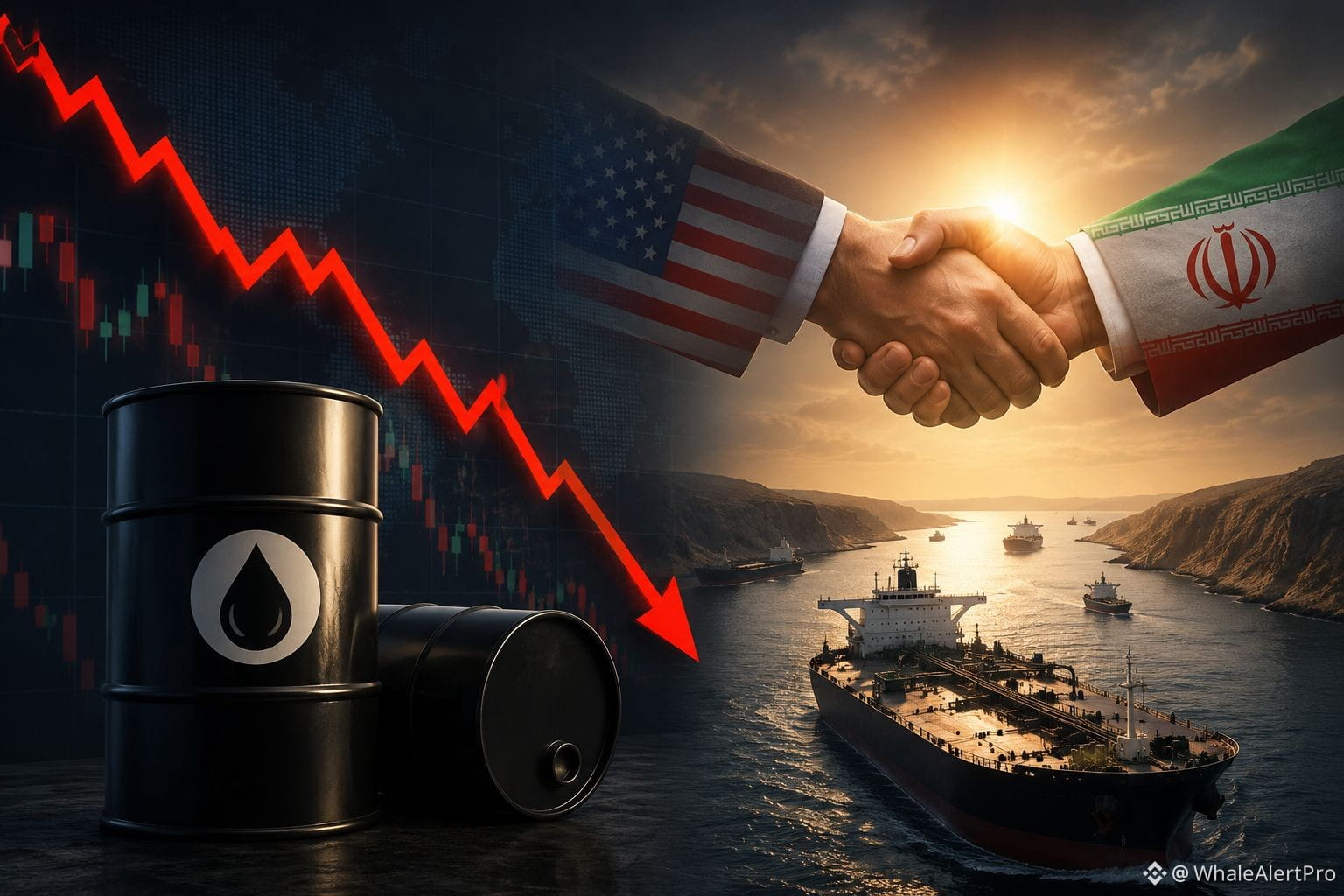
210
·
--
Рост
🚀 AAVE Surges 13.16% to $94.32 — DeFi Leader Eyes $100 Breakout
$AAVE E is on fire, climbing 13.16% to trade at $94.32, extending a powerful recovery that has seen it gain nearly 30% off its recent lows near $58-60. This rally stands out even more given the broader market backdrop — Bitcoin has struggled below the $60K level while AAVE outperforms almost every major altcoin.
What's driving the move:
📈 Whale accumulation — On-chain data shows whale transactions above $100K spiking sharply (105, 89, 128 in consecutive sessions), signaling strong conviction from large holders.
💰 Liquidity returning to the protocol — Founder Stani Kulechov confirmed USDT deposits are flowing back into Aave, with the Ethereum V3 Core market approaching $3B in deposits — a sharp jump since mid-June. More deposits = more borrowing capacity = stronger yield ecosystem.
📊 Derivatives confirm the trend — Open interest has climbed steadily (from ~$193M to $280M+), and funding rates have flipped positive, both classic signs that fresh capital is entering rather than just short-term spot speculation.
🏦 Institutional tailwind — Standard Chartered issued a bullish long-term outlook on Aave, reinforcing its position as one of DeFi's strongest infrastructure plays as tokenized assets and on-chain lending expand.
📈 Network activity up — Active addresses hit a 30-day high, another sign that real usage, not just price action, is picking up.
Key levels to watch:
The $85-88 zone has flipped from resistance to support. A clean break and hold above $94-95 keeps the door open for a retest of the $100 psychological level, with $110 as the next stretch target if momentum holds. A pullback toward $78-80 would still keep the broader uptrend structure intact.
As the #1 DeFi lending protocol by revenue (tracking toward ~$126M annualized), AAVE's move looks backed by fundamentals, not just hype.
Not financial advice — always DYOR. 📊
$AAVE $ETH
#TechRallyLiftsDowToRecord #OilHitsFourMonthLow
AAVERises13.16%To$94.32
AAVERises13.16%To$94.32
{spot}(AAVEUSDT)
{spot}(ETHUSDT)
🚀 AAVE Surges 13.16% to $94.32 — DeFi Leader Eyes $100 Breakout
$AAVE E is on fire, climbing 13.16% to trade at $94.32, extending a powerful recovery that has seen it gain nearly 30% off its recent lows near $58-60. This rally stands out even more given the broader market backdrop — Bitcoin has struggled below the $60K level while AAVE outperforms almost every major altcoin.
What's driving the move:
📈 Whale accumulation — On-chain data shows whale transactions above $100K spiking sharply (105, 89, 128 in consecutive sessions), signaling strong conviction from large holders.
💰 Liquidity returning to the protocol — Founder Stani Kulechov confirmed USDT deposits are flowing back into Aave, with the Ethereum V3 Core market approaching $3B in deposits — a sharp jump since mid-June. More deposits = more borrowing capacity = stronger yield ecosystem.
📊 Derivatives confirm the trend — Open interest has climbed steadily (from ~$193M to $280M+), and funding rates have flipped positive, both classic signs that fresh capital is entering rather than just short-term spot speculation.
🏦 Institutional tailwind — Standard Chartered issued a bullish long-term outlook on Aave, reinforcing its position as one of DeFi's strongest infrastructure plays as tokenized assets and on-chain lending expand.
📈 Network activity up — Active addresses hit a 30-day high, another sign that real usage, not just price action, is picking up.
Key levels to watch:
The $85-88 zone has flipped from resistance to support. A clean break and hold above $94-95 keeps the door open for a retest of the $100 psychological level, with $110 as the next stretch target if momentum holds. A pullback toward $78-80 would still keep the broader uptrend structure intact.
As the #1 DeFi lending protocol by revenue (tracking toward ~$126M annualized), AAVE's move looks backed by fundamentals, not just hype.
Not financial advice — always DYOR. 📊
$AAVE $ETH
#TechRallyLiftsDowToRecord #OilHitsFourMonthLow
AAVERises13.16%To$94.32
AAVERises13.16%To$94.32
$AAVE E is on fire, climbing 13.16% to trade at $94.32, extending a powerful recovery that has seen it gain nearly 30% off its recent lows near $58-60. This rally stands out even more given the broader market backdrop — Bitcoin has struggled below the $60K level while AAVE outperforms almost every major altcoin.
What's driving the move:
📈 Whale accumulation — On-chain data shows whale transactions above $100K spiking sharply (105, 89, 128 in consecutive sessions), signaling strong conviction from large holders.
💰 Liquidity returning to the protocol — Founder Stani Kulechov confirmed USDT deposits are flowing back into Aave, with the Ethereum V3 Core market approaching $3B in deposits — a sharp jump since mid-June. More deposits = more borrowing capacity = stronger yield ecosystem.
📊 Derivatives confirm the trend — Open interest has climbed steadily (from ~$193M to $280M+), and funding rates have flipped positive, both classic signs that fresh capital is entering rather than just short-term spot speculation.
🏦 Institutional tailwind — Standard Chartered issued a bullish long-term outlook on Aave, reinforcing its position as one of DeFi's strongest infrastructure plays as tokenized assets and on-chain lending expand.
📈 Network activity up — Active addresses hit a 30-day high, another sign that real usage, not just price action, is picking up.
Key levels to watch:
The $85-88 zone has flipped from resistance to support. A clean break and hold above $94-95 keeps the door open for a retest of the $100 psychological level, with $110 as the next stretch target if momentum holds. A pullback toward $78-80 would still keep the broader uptrend structure intact.
As the #1 DeFi lending protocol by revenue (tracking toward ~$126M annualized), AAVE's move looks backed by fundamentals, not just hype.
Not financial advice — always DYOR. 📊
$AAVE $ETH
#TechRallyLiftsDowToRecord #OilHitsFourMonthLow
AAVERises13.16%To$94.32
AAVERises13.16%To$94.32
125
·
--
Рост
🛢️ OilReclaims$70: Is the Energy Rally Back?
Crude oil has climbed back above the $70 level as investors reassess global supply risks. The rebound is being driven by tighter inventories, recovering demand, and renewed geopolitical uncertainty surrounding Middle East energy flows.
Despite recent volatility, traders remain focused on three key catalysts:
• Supply disruptions and shipping risks
• OPEC+ production strategy
• Upcoming U.S. inventory and macroeconomic data
While reclaiming $70 improves market sentiment, analysts caution that sustained upside will require stronger demand fundamentals. If geopolitical tensions ease or supply increases, oil could struggle to hold these gains.
📊 Market Watch:The $70 level is now a key psychological support. A successful hold could strengthen bullish momentum, while a break below may trigger renewed selling pressure.
#ChinaBlacklists40MoreJapanEntities #OilJumps #OilPriceRises #USFuturesRise #SaylorHintsStrategyBitcoinBuy
$PAXG @Binance_Margin $BTC $TRUMP
{spot}(PAXGUSDT)
{spot}(XAUTUSDT)
🛢️ OilReclaims$70: Is the Energy Rally Back?
Crude oil has climbed back above the $70 level as investors reassess global supply risks. The rebound is being driven by tighter inventories, recovering demand, and renewed geopolitical uncertainty surrounding Middle East energy flows.
Despite recent volatility, traders remain focused on three key catalysts:
• Supply disruptions and shipping risks
• OPEC+ production strategy
• Upcoming U.S. inventory and macroeconomic data
While reclaiming $70 improves market sentiment, analysts caution that sustained upside will require stronger demand fundamentals. If geopolitical tensions ease or supply increases, oil could struggle to hold these gains.
📊 Market Watch:The $70 level is now a key psychological support. A successful hold could strengthen bullish momentum, while a break below may trigger renewed selling pressure.
#ChinaBlacklists40MoreJapanEntities #OilJumps #OilPriceRises #USFuturesRise #SaylorHintsStrategyBitcoinBuy
$PAXG @Binance Margin $BTC $TRUMP
Crude oil has climbed back above the $70 level as investors reassess global supply risks. The rebound is being driven by tighter inventories, recovering demand, and renewed geopolitical uncertainty surrounding Middle East energy flows.
Despite recent volatility, traders remain focused on three key catalysts:
• Supply disruptions and shipping risks
• OPEC+ production strategy
• Upcoming U.S. inventory and macroeconomic data
While reclaiming $70 improves market sentiment, analysts caution that sustained upside will require stronger demand fundamentals. If geopolitical tensions ease or supply increases, oil could struggle to hold these gains.
📊 Market Watch:The $70 level is now a key psychological support. A successful hold could strengthen bullish momentum, while a break below may trigger renewed selling pressure.
#ChinaBlacklists40MoreJapanEntities #OilJumps #OilPriceRises #USFuturesRise #SaylorHintsStrategyBitcoinBuy
$PAXG @Binance Margin $BTC $TRUMP
171
Войдите, чтобы посмотреть больше материала
Присоединяйтесь к пользователям криптовалют по всему миру на Binance Square
⚡️ Получайте новейшую и полезную информацию о криптоактивах.
💬 Нам доверяет крупнейшая в мире криптобиржа.
👍 Получите достоверные аналитические данные от верифицированных создателей контента.
Эл. почта/номер телефона
В тренде
BinancePick
Просмотров: 3.3M
162,646 обсуждают
Join #EarningsSeason: Predict Earnings on Binance Pick, Share Your Take on Binance Square!
Binance Square Official
·Лайков: 417
·Просмотров: 344.8k
EarningsSeason
Просмотров: 5.4M
26,663 обсуждают
StrategySkipsBitcoinPurchasesSpends$205MOnSTRCBuybacks
Просмотров: 219
16 обсуждают