
TheStreet Roundtable
2k Публикации

TheStreet Roundtable
 Square Verified+
Отправить жалобу
Заблокировать пользователя
TheStreet covers the most engaging stories about how to make money, invest your money, save your money, and spend your money.
1 подписок(и/а)
493 подписчиков(а)
2.2K+ понравилось
Посты
Статья
Cathie Wood sends bullish Bitcoin response to 'dead cat' warningHow Cathie Wood became one of crypto’s earliest believers (3:41)
ARK Invest CEO Cathie Wood is one of the most bullish investors in the Bitcoin (BTC) ecosystem. When a podcaster referred to the cryptocurrency as a “dead cat,” she didn’t hold back.
Wood is one of the earliest institutional investors in Bitcoin who once revealed that ARK Invest was the first public asset manager to gain Bitcoin exposure in 2015 when its price didn’t even touch $500.
Related: Buffett steps down as Berkshire Hathaway chair but 8-year-old jab still bites
Wood says Bitcoin has many lives ahead
Jason Calacanis, the host of the popular podcast “This Week in Startups,” posted Bitcoin’s one-year price chart reflecting a 30% drop on Sep. 18.
Referring to the recent rebound, he called Bitcoin a “dead cat” that continues to bounce. It’s been 17 years since its launch, but the cryptocurrency is not used for transactions and is “intimidating” for most people, he added.
Institutionalization has turned Bitcoin from “punk rock to Muzak,” and though it’s a store of value, it’s boring, he remarked.
"Advocates went from pirates to suits in orange ties, awkwardly sharing cringe memes — just like the cool kids do!"
If Bitcoin were to reach mass adoption with a use case, it would have by now, Calacanis added.
Wood, among the most vocal Bitcoin proponents, pushed back on the podcaster’s critical comments about the cryptocurrency.
"Bitcoin is not a dead cat, Jason! It has many lives ahead."
Bitcoin is not a dead cat, @Jason ! It has many lives ahead.
Check out our latest Bitcoin Brainstorm with @bitcoinpark_ focused on the convergence between AI and Bitcoin. https://t.co/4i2ZFyUjAx
— Cathie Wood (@CathieDWood) September 19, 2026
She also took the opportunity to share the Sep. 17 episode of ARK Invest’s “Bitcoin Brainstorm” podcast focused on the convergence between AI and Bitcoin.
Trending on TheStreet Roundtable:
Kevin O’Leary says he’s buying crypto again, here’s his Bitcoin prediction
Coinbase officer reveals new details on Bitcoin reserve bill
New SEC, CFTC rules after CLARITY setback fuel Bitcoin rally
ARK’s research allayed quantum fear, Wood says
In the latest episode of “Bitcoin Brainstorm,” Wood, along with ARK’s digital assets research director Lorenzo Valente, Bitcoin Park founder Rod Roudi, AnchorWatch co-founder and CEO Rob Hamilton, Cake Wallet and Radar COO Seth for Privacy, and Unchained co-founder and CSO Dhruv Bansal, discussed how rapidly advancing AI models are changing Bitcoin security.
The experts talked about AI getting better and cheaper and open-weight models being made available. Unlike closed AI models, open-weight models are the final trained parameters, or “weights,” released publicly for anyone to download, run, and fine-tune on their own hardware.
Wood underlined that the combination of domain expertise and AI is unbeatable, as coders are willing to coordinate with AI to find system vulnerabilities. She explained that while attackers are certainly using AI to hack systems, defenders can also use the technology to make the system more secure against vulnerabilities.
She admitted it was unsettling to watch the Bitcoin whale movement as an investor amid the threat of quantum computing. But she said the firm’s research has assuaged those fears.
More on Cathie Wood:
Cathie Wood spots key ratio signaling Bitcoin breakout
Cathie Wood sends a three-word message on crypto investing
Cathie Wood trims Ethereum exposure on 11th anniversary
Wood bats for Bitcoin within days of dumping $40M in its own BTC ETF
Wood also said that the AI age will be very productive and efficient and accelerate the GDP growth rate to 7%-8% but it will also lead to deflation. In such a case, prices will fall but interest rates will rise.
The rise in short-term interest rates will catch institutions, such as private equity firms and banks, off guard, which are heavily reliant on short-term debt. She argued such a scenario creates a counterparty risk that companies you do business with might go bankrupt.
That’s where Bitcoin comes in.
The ARK Invest CEO said most people think of Bitcoin as a hedge against inflation, but even deflation won’t be bad for the cryptocurrency. While traditional markets rely on banking institutions that run a counterparty risk, Bitcoin carries no such risk due to its decentralized nature, she argued her case.
Notably, Wood dumped approximately $40 million worth of its own Bitcoin ETF, the ARK 21Shares Bitcoin ETF (CBOE: ARKB), on Sep. 14, a day ahead of the CLARITY cloture vote in the U.S. Senate.
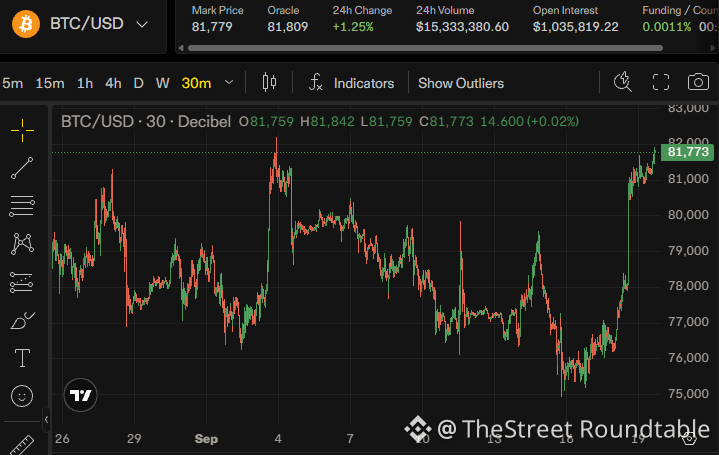
BTC/USD, Source: Decibel.
Bitcoin was trading at $81,773 at the time of writing, as per Decibel. The current price is 35% lower than its all-time high (ATH) of $126,080 it hit on Oct. 6, 2025.
Related: Cathie Wood dumps $65 million in crypto ahead of CLARITY vote
Cathie Wood sends bullish Bitcoin response to 'dead cat' warning
How Cathie Wood became one of crypto’s earliest believers (3:41)
ARK Invest CEO Cathie Wood is one of the most bullish investors in the Bitcoin (BTC) ecosystem. When a podcaster referred to the cryptocurrency as a “dead cat,” she didn’t hold back.
Wood is one of the earliest institutional investors in Bitcoin who once revealed that ARK Invest was the first public asset manager to gain Bitcoin exposure in 2015 when its price didn’t even touch $500.
Related: Buffett steps down as Berkshire Hathaway chair but 8-year-old jab still bites
Wood says Bitcoin has many lives ahead
Jason Calacanis, the host of the popular podcast “This Week in Startups,” posted Bitcoin’s one-year price chart reflecting a 30% drop on Sep. 18.
Referring to the recent rebound, he called Bitcoin a “dead cat” that continues to bounce. It’s been 17 years since its launch, but the cryptocurrency is not used for transactions and is “intimidating” for most people, he added.
Institutionalization has turned Bitcoin from “punk rock to Muzak,” and though it’s a store of value, it’s boring, he remarked.
"Advocates went from pirates to suits in orange ties, awkwardly sharing cringe memes — just like the cool kids do!"
If Bitcoin were to reach mass adoption with a use case, it would have by now, Calacanis added.
Wood, among the most vocal Bitcoin proponents, pushed back on the podcaster’s critical comments about the cryptocurrency.
"Bitcoin is not a dead cat, Jason! It has many lives ahead."
Bitcoin is not a dead cat, @Jason ! It has many lives ahead.
Check out our latest Bitcoin Brainstorm with @bitcoinpark_ focused on the convergence between AI and Bitcoin. https://t.co/4i2ZFyUjAx
— Cathie Wood (@CathieDWood) September 19, 2026
She also took the opportunity to share the Sep. 17 episode of ARK Invest’s “Bitcoin Brainstorm” podcast focused on the convergence between AI and Bitcoin.
Trending on TheStreet Roundtable:
Kevin O’Leary says he’s buying crypto again, here’s his Bitcoin prediction
Coinbase officer reveals new details on Bitcoin reserve bill
New SEC, CFTC rules after CLARITY setback fuel Bitcoin rally
ARK’s research allayed quantum fear, Wood says
In the latest episode of “Bitcoin Brainstorm,” Wood, along with ARK’s digital assets research director Lorenzo Valente, Bitcoin Park founder Rod Roudi, AnchorWatch co-founder and CEO Rob Hamilton, Cake Wallet and Radar COO Seth for Privacy, and Unchained co-founder and CSO Dhruv Bansal, discussed how rapidly advancing AI models are changing Bitcoin security.
The experts talked about AI getting better and cheaper and open-weight models being made available. Unlike closed AI models, open-weight models are the final trained parameters, or “weights,” released publicly for anyone to download, run, and fine-tune on their own hardware.
Wood underlined that the combination of domain expertise and AI is unbeatable, as coders are willing to coordinate with AI to find system vulnerabilities. She explained that while attackers are certainly using AI to hack systems, defenders can also use the technology to make the system more secure against vulnerabilities.
She admitted it was unsettling to watch the Bitcoin whale movement as an investor amid the threat of quantum computing. But she said the firm’s research has assuaged those fears.
More on Cathie Wood:
Cathie Wood spots key ratio signaling Bitcoin breakout
Cathie Wood sends a three-word message on crypto investing
Cathie Wood trims Ethereum exposure on 11th anniversary
Wood bats for Bitcoin within days of dumping $40M in its own BTC ETF
Wood also said that the AI age will be very productive and efficient and accelerate the GDP growth rate to 7%-8% but it will also lead to deflation. In such a case, prices will fall but interest rates will rise.
The rise in short-term interest rates will catch institutions, such as private equity firms and banks, off guard, which are heavily reliant on short-term debt. She argued such a scenario creates a counterparty risk that companies you do business with might go bankrupt.
That’s where Bitcoin comes in.
The ARK Invest CEO said most people think of Bitcoin as a hedge against inflation, but even deflation won’t be bad for the cryptocurrency. While traditional markets rely on banking institutions that run a counterparty risk, Bitcoin carries no such risk due to its decentralized nature, she argued her case.
Notably, Wood dumped approximately $40 million worth of its own Bitcoin ETF, the ARK 21Shares Bitcoin ETF (CBOE: ARKB), on Sep. 14, a day ahead of the CLARITY cloture vote in the U.S. Senate.
BTC/USD, Source: Decibel.
Bitcoin was trading at $81,773 at the time of writing, as per Decibel. The current price is 35% lower than its all-time high (ATH) of $126,080 it hit on Oct. 6, 2025.
Related: Cathie Wood dumps $65 million in crypto ahead of CLARITY vote
ARK Invest CEO Cathie Wood is one of the most bullish investors in the Bitcoin (BTC) ecosystem. When a podcaster referred to the cryptocurrency as a “dead cat,” she didn’t hold back.
Wood is one of the earliest institutional investors in Bitcoin who once revealed that ARK Invest was the first public asset manager to gain Bitcoin exposure in 2015 when its price didn’t even touch $500.
Related: Buffett steps down as Berkshire Hathaway chair but 8-year-old jab still bites
Wood says Bitcoin has many lives ahead
Jason Calacanis, the host of the popular podcast “This Week in Startups,” posted Bitcoin’s one-year price chart reflecting a 30% drop on Sep. 18.
Referring to the recent rebound, he called Bitcoin a “dead cat” that continues to bounce. It’s been 17 years since its launch, but the cryptocurrency is not used for transactions and is “intimidating” for most people, he added.
Institutionalization has turned Bitcoin from “punk rock to Muzak,” and though it’s a store of value, it’s boring, he remarked.
"Advocates went from pirates to suits in orange ties, awkwardly sharing cringe memes — just like the cool kids do!"
If Bitcoin were to reach mass adoption with a use case, it would have by now, Calacanis added.
Wood, among the most vocal Bitcoin proponents, pushed back on the podcaster’s critical comments about the cryptocurrency.
"Bitcoin is not a dead cat, Jason! It has many lives ahead."
Bitcoin is not a dead cat, @Jason ! It has many lives ahead.
Check out our latest Bitcoin Brainstorm with @bitcoinpark_ focused on the convergence between AI and Bitcoin. https://t.co/4i2ZFyUjAx
— Cathie Wood (@CathieDWood) September 19, 2026
She also took the opportunity to share the Sep. 17 episode of ARK Invest’s “Bitcoin Brainstorm” podcast focused on the convergence between AI and Bitcoin.
Trending on TheStreet Roundtable:
Kevin O’Leary says he’s buying crypto again, here’s his Bitcoin prediction
Coinbase officer reveals new details on Bitcoin reserve bill
New SEC, CFTC rules after CLARITY setback fuel Bitcoin rally
ARK’s research allayed quantum fear, Wood says
In the latest episode of “Bitcoin Brainstorm,” Wood, along with ARK’s digital assets research director Lorenzo Valente, Bitcoin Park founder Rod Roudi, AnchorWatch co-founder and CEO Rob Hamilton, Cake Wallet and Radar COO Seth for Privacy, and Unchained co-founder and CSO Dhruv Bansal, discussed how rapidly advancing AI models are changing Bitcoin security.
The experts talked about AI getting better and cheaper and open-weight models being made available. Unlike closed AI models, open-weight models are the final trained parameters, or “weights,” released publicly for anyone to download, run, and fine-tune on their own hardware.
Wood underlined that the combination of domain expertise and AI is unbeatable, as coders are willing to coordinate with AI to find system vulnerabilities. She explained that while attackers are certainly using AI to hack systems, defenders can also use the technology to make the system more secure against vulnerabilities.
She admitted it was unsettling to watch the Bitcoin whale movement as an investor amid the threat of quantum computing. But she said the firm’s research has assuaged those fears.
More on Cathie Wood:
Cathie Wood spots key ratio signaling Bitcoin breakout
Cathie Wood sends a three-word message on crypto investing
Cathie Wood trims Ethereum exposure on 11th anniversary
Wood bats for Bitcoin within days of dumping $40M in its own BTC ETF
Wood also said that the AI age will be very productive and efficient and accelerate the GDP growth rate to 7%-8% but it will also lead to deflation. In such a case, prices will fall but interest rates will rise.
The rise in short-term interest rates will catch institutions, such as private equity firms and banks, off guard, which are heavily reliant on short-term debt. She argued such a scenario creates a counterparty risk that companies you do business with might go bankrupt.
That’s where Bitcoin comes in.
The ARK Invest CEO said most people think of Bitcoin as a hedge against inflation, but even deflation won’t be bad for the cryptocurrency. While traditional markets rely on banking institutions that run a counterparty risk, Bitcoin carries no such risk due to its decentralized nature, she argued her case.
Notably, Wood dumped approximately $40 million worth of its own Bitcoin ETF, the ARK 21Shares Bitcoin ETF (CBOE: ARKB), on Sep. 14, a day ahead of the CLARITY cloture vote in the U.S. Senate.
BTC/USD, Source: Decibel.
Bitcoin was trading at $81,773 at the time of writing, as per Decibel. The current price is 35% lower than its all-time high (ATH) of $126,080 it hit on Oct. 6, 2025.
Related: Cathie Wood dumps $65 million in crypto ahead of CLARITY vote
192
Проверено
Aptos launches Confidential APT on mainnetAptos SVP says blockchains will 'build a new universe' (5:05)
Aptos has activated Confidential APT on its mainnet, giving users the option to keep their APT balances and transaction amounts private while leaving wallet addresses visible onchain.
The Aptos Foundation announced the launch on Sept. 18, several months after it first outlined the feature in a March blog post. At the time, Aptos said Confidential APT was awaiting a software release and governance vote.
Confidential $APT is LIVE on Aptos mainnet.
What that means: Encrypted balances. Encrypted transfer amounts. Addresses remain visible. Fully opt-in by design.
Validators verify a transaction is valid while those amounts stay confidential. pic.twitter.com/tq8RBpYDQi
— Aptos (@Aptos) September 18, 2026
Related: Trader dumps $46 million in Bitcoin for rival
How Confidential APT works
Confidential APT is designed to hide how much APT a user holds or transfers, rather than hiding who is involved in the transaction.
Addresses remain visible on the Aptos blockchain, allowing the sender and recipient to be identified. However, the amounts are encrypted. Zero-knowledge proofs allow validators to verify that a transaction is valid without seeing the underlying transfer amount or confidential balances.
The feature is also opt-in, meaning users who want their transactions to remain fully transparent can continue using Aptos normally. Aptos also described selective disclosure as an option, allowing users to share transaction details or balances with trusted parties when needed.
Aptos’ documentation says APT is currently the only asset allow-listed for confidential transfers on mainnet and testnet.
Popular on TheStreet Roundtable:
Robinhood CEO says ‘tokenization is coming to America’ after SEC ruling
Kevin O’Leary says he’s buying crypto again, here’s his Bitcoin prediction
Buffett steps down as Berkshire Hathaway chair but 8-year-old jab still bites
Aptos targets payroll and treasury use
Aptos said the feature could support use cases where publishing transaction amounts would expose sensitive financial information.
These include payroll without publicly revealing salaries, treasury transactions that do not disclose a company’s moves, and payments where users do not want their balances publicly visible. The network has positioned the feature for compliant financial use while retaining visible wallet addresses.
Users can access Confidential APT through Petra Wallet on Android, iOS and its browser extension, as well as Confidential Assets Web from Aptos Labs.
The launch marks a shift from Aptos’ March proposal for confidential transactions to a live mainnet feature, adding an optional privacy layer to the network’s native APT token.
Related: Lehman short-seller has a new warning on homeownership
Aptos launches Confidential APT on mainnet
Aptos SVP says blockchains will 'build a new universe' (5:05)
Aptos has activated Confidential APT on its mainnet, giving users the option to keep their APT balances and transaction amounts private while leaving wallet addresses visible onchain.
The Aptos Foundation announced the launch on Sept. 18, several months after it first outlined the feature in a March blog post. At the time, Aptos said Confidential APT was awaiting a software release and governance vote.
Confidential $APT is LIVE on Aptos mainnet.
What that means: Encrypted balances. Encrypted transfer amounts. Addresses remain visible. Fully opt-in by design.
Validators verify a transaction is valid while those amounts stay confidential. pic.twitter.com/tq8RBpYDQi
— Aptos (@Aptos) September 18, 2026
Related: Trader dumps $46 million in Bitcoin for rival
How Confidential APT works
Confidential APT is designed to hide how much APT a user holds or transfers, rather than hiding who is involved in the transaction.
Addresses remain visible on the Aptos blockchain, allowing the sender and recipient to be identified. However, the amounts are encrypted. Zero-knowledge proofs allow validators to verify that a transaction is valid without seeing the underlying transfer amount or confidential balances.
The feature is also opt-in, meaning users who want their transactions to remain fully transparent can continue using Aptos normally. Aptos also described selective disclosure as an option, allowing users to share transaction details or balances with trusted parties when needed.
Aptos’ documentation says APT is currently the only asset allow-listed for confidential transfers on mainnet and testnet.
Popular on TheStreet Roundtable:
Robinhood CEO says ‘tokenization is coming to America’ after SEC ruling
Kevin O’Leary says he’s buying crypto again, here’s his Bitcoin prediction
Buffett steps down as Berkshire Hathaway chair but 8-year-old jab still bites
Aptos targets payroll and treasury use
Aptos said the feature could support use cases where publishing transaction amounts would expose sensitive financial information.
These include payroll without publicly revealing salaries, treasury transactions that do not disclose a company’s moves, and payments where users do not want their balances publicly visible. The network has positioned the feature for compliant financial use while retaining visible wallet addresses.
Users can access Confidential APT through Petra Wallet on Android, iOS and its browser extension, as well as Confidential Assets Web from Aptos Labs.
The launch marks a shift from Aptos’ March proposal for confidential transactions to a live mainnet feature, adding an optional privacy layer to the network’s native APT token.
Related: Lehman short-seller has a new warning on homeownership
Aptos has activated Confidential APT on its mainnet, giving users the option to keep their APT balances and transaction amounts private while leaving wallet addresses visible onchain.
The Aptos Foundation announced the launch on Sept. 18, several months after it first outlined the feature in a March blog post. At the time, Aptos said Confidential APT was awaiting a software release and governance vote.
Confidential $APT is LIVE on Aptos mainnet.
What that means: Encrypted balances. Encrypted transfer amounts. Addresses remain visible. Fully opt-in by design.
Validators verify a transaction is valid while those amounts stay confidential. pic.twitter.com/tq8RBpYDQi
— Aptos (@Aptos) September 18, 2026
Related: Trader dumps $46 million in Bitcoin for rival
How Confidential APT works
Confidential APT is designed to hide how much APT a user holds or transfers, rather than hiding who is involved in the transaction.
Addresses remain visible on the Aptos blockchain, allowing the sender and recipient to be identified. However, the amounts are encrypted. Zero-knowledge proofs allow validators to verify that a transaction is valid without seeing the underlying transfer amount or confidential balances.
The feature is also opt-in, meaning users who want their transactions to remain fully transparent can continue using Aptos normally. Aptos also described selective disclosure as an option, allowing users to share transaction details or balances with trusted parties when needed.
Aptos’ documentation says APT is currently the only asset allow-listed for confidential transfers on mainnet and testnet.
Popular on TheStreet Roundtable:
Robinhood CEO says ‘tokenization is coming to America’ after SEC ruling
Kevin O’Leary says he’s buying crypto again, here’s his Bitcoin prediction
Buffett steps down as Berkshire Hathaway chair but 8-year-old jab still bites
Aptos targets payroll and treasury use
Aptos said the feature could support use cases where publishing transaction amounts would expose sensitive financial information.
These include payroll without publicly revealing salaries, treasury transactions that do not disclose a company’s moves, and payments where users do not want their balances publicly visible. The network has positioned the feature for compliant financial use while retaining visible wallet addresses.
Users can access Confidential APT through Petra Wallet on Android, iOS and its browser extension, as well as Confidential Assets Web from Aptos Labs.
The launch marks a shift from Aptos’ March proposal for confidential transactions to a live mainnet feature, adding an optional privacy layer to the network’s native APT token.
Related: Lehman short-seller has a new warning on homeownership
319
CFTC makes it easier for software platforms to offer crypto tradingFormer CFTC chair says your crypto wallet is about to replace your bank account (4:35)
The Commodity Futures Trading Commission issued new guidance on September 17 that could significantly expand how everyday users access crypto and prediction market trading. The U.S. agency oversees derivatives and commodities markets.
The CFTC said it will not pursue enforcement action against companies that build software connecting users to regulated exchanges. That’s as long as those companies never hold user funds or make trading decisions on their behalf.
The guidance applies to what the agency calls “passive software providers”, apps and platforms that let users place trades through regulated intermediaries without themselves acting as brokers.
Related: Trader dumps $46M in Bitcoin for rival
What changed
Previously, any company that accepted or routed trade orders to a futures commission merchant — a type of regulated broker — and earned fees for doing so was generally required to register as a broker itself. That requirement kept many crypto wallets and consumer apps from offering direct trading access to regulated markets.
In March, the CFTC granted a specific exemption to Phantom Technologies, a crypto wallet with more than 20 million users, allowing it to connect users to platforms like Kalshi, a CFTC-designated contract market, without registering as a broker. Thursday’s guidance extends that same relief broadly to any software provider that meets the same conditions.
Popular on TheStreet Roundtable:
Robinhood CEO says ‘tokenization is coming to America’ after SEC ruling
Kevin O’Leary says he’s buying crypto again, here’s his Bitcoin prediction
Buffett steps down as Berkshire Hathaway chair but 8-year-old jab still bites
Why it matters for crypto
The practical effect is that crypto wallets, fintech apps and other consumer platforms can now plug into regulated exchanges and offer trading access to their users without the cost and complexity of becoming registered brokers.
The software provider must remain “passive” — meaning it cannot hold funds, give trading advice or exercise discretion over orders.
The guidance comes two days after the CLARITY Act, the crypto industry’s preferred legislative route to regulatory clarity, failed to clear the Senate. Both the CFTC and SEC have since signaled they will continue building rules on their own authority rather than waiting on Congress.
Related: Billionaire who shorted Lehman now warns on homeownership
CFTC makes it easier for software platforms to offer crypto trading
Former CFTC chair says your crypto wallet is about to replace your bank account (4:35)
The Commodity Futures Trading Commission issued new guidance on September 17 that could significantly expand how everyday users access crypto and prediction market trading. The U.S. agency oversees derivatives and commodities markets.
The CFTC said it will not pursue enforcement action against companies that build software connecting users to regulated exchanges. That’s as long as those companies never hold user funds or make trading decisions on their behalf.
The guidance applies to what the agency calls “passive software providers”, apps and platforms that let users place trades through regulated intermediaries without themselves acting as brokers.
Related: Trader dumps $46M in Bitcoin for rival
What changed
Previously, any company that accepted or routed trade orders to a futures commission merchant — a type of regulated broker — and earned fees for doing so was generally required to register as a broker itself. That requirement kept many crypto wallets and consumer apps from offering direct trading access to regulated markets.
In March, the CFTC granted a specific exemption to Phantom Technologies, a crypto wallet with more than 20 million users, allowing it to connect users to platforms like Kalshi, a CFTC-designated contract market, without registering as a broker. Thursday’s guidance extends that same relief broadly to any software provider that meets the same conditions.
Popular on TheStreet Roundtable:
Robinhood CEO says ‘tokenization is coming to America’ after SEC ruling
Kevin O’Leary says he’s buying crypto again, here’s his Bitcoin prediction
Buffett steps down as Berkshire Hathaway chair but 8-year-old jab still bites
Why it matters for crypto
The practical effect is that crypto wallets, fintech apps and other consumer platforms can now plug into regulated exchanges and offer trading access to their users without the cost and complexity of becoming registered brokers.
The software provider must remain “passive” — meaning it cannot hold funds, give trading advice or exercise discretion over orders.
The guidance comes two days after the CLARITY Act, the crypto industry’s preferred legislative route to regulatory clarity, failed to clear the Senate. Both the CFTC and SEC have since signaled they will continue building rules on their own authority rather than waiting on Congress.
Related: Billionaire who shorted Lehman now warns on homeownership
The Commodity Futures Trading Commission issued new guidance on September 17 that could significantly expand how everyday users access crypto and prediction market trading. The U.S. agency oversees derivatives and commodities markets.
The CFTC said it will not pursue enforcement action against companies that build software connecting users to regulated exchanges. That’s as long as those companies never hold user funds or make trading decisions on their behalf.
The guidance applies to what the agency calls “passive software providers”, apps and platforms that let users place trades through regulated intermediaries without themselves acting as brokers.
Related: Trader dumps $46M in Bitcoin for rival
What changed
Previously, any company that accepted or routed trade orders to a futures commission merchant — a type of regulated broker — and earned fees for doing so was generally required to register as a broker itself. That requirement kept many crypto wallets and consumer apps from offering direct trading access to regulated markets.
In March, the CFTC granted a specific exemption to Phantom Technologies, a crypto wallet with more than 20 million users, allowing it to connect users to platforms like Kalshi, a CFTC-designated contract market, without registering as a broker. Thursday’s guidance extends that same relief broadly to any software provider that meets the same conditions.
Popular on TheStreet Roundtable:
Robinhood CEO says ‘tokenization is coming to America’ after SEC ruling
Kevin O’Leary says he’s buying crypto again, here’s his Bitcoin prediction
Buffett steps down as Berkshire Hathaway chair but 8-year-old jab still bites
Why it matters for crypto
The practical effect is that crypto wallets, fintech apps and other consumer platforms can now plug into regulated exchanges and offer trading access to their users without the cost and complexity of becoming registered brokers.
The software provider must remain “passive” — meaning it cannot hold funds, give trading advice or exercise discretion over orders.
The guidance comes two days after the CLARITY Act, the crypto industry’s preferred legislative route to regulatory clarity, failed to clear the Senate. Both the CFTC and SEC have since signaled they will continue building rules on their own authority rather than waiting on Congress.
Related: Billionaire who shorted Lehman now warns on homeownership
102
1.6 billion XRP floods Binance as whale activity hits six-month highAnalyst predicts $1M price target for XRP (5:36)
XRP whale inflows to Binance have surged to a six-month high, with on-chain data showing large wallets shifting nearly 1.6 billion tokens onto the exchange over the past 30 days.
According to CryptoQuant data shared on X, cumulative XRP inflows to Binance over the trailing month have climbed to roughly 1.6 billion tokens, the highest level recorded since March.
The figures, shared by analyst ArabxChain on X, mark a sharp turnaround after inflows steadily declined through spring and bottomed out in May, June and July.
A gradual recovery began in August, followed by a pronounced spike in recent weeks that has pushed deposits back near their yearly peak.
Related: Ripple veteran says XRP could flip Bitcoin, but the math says otherwise
What the inflow spike could mean
Rising whale deposits typically signal that more tokens are moving into a liquid trading environment, which can lift available market supply in the short term.
Still, large transfers to exchanges don’t automatically point to selling pressure, wallets may be repositioning for trading, managing liquidity, or simply reallocating holdings rather than preparing to offload XRP.
Price action stays in focus
Analysts are watching a potential triangle pattern forming on the daily chart.
Earlier, crypto analyst Ali Charts noted XRP appears to be breaking out of a pattern he had been tracking for days.
Most Popular on TheStreet Roundtable:
JPMorgan says one asset class could soon beat gold
Kevin O’Leary has a warning on Washington’s tax plans
SEC Chair Atkins reveals what comes next if CLARITY Act stalls
He pointed to a sustained close above $1.38 as the level that would confirm the move, with $1.60 emerging as the next upside target if that resistance gives way.
The inflow surge comes as XRPL developers rolled out version 3.4.0 of xrpld, the network’s reference server software. It introduced new amendments and bug fixes alongside the protocol’s continued development.
Related: If you invested $1,000 in gold & Bitcoin 10 years ago, here's how much money you'd have today
1.6 billion XRP floods Binance as whale activity hits six-month high
Analyst predicts $1M price target for XRP (5:36)
XRP whale inflows to Binance have surged to a six-month high, with on-chain data showing large wallets shifting nearly 1.6 billion tokens onto the exchange over the past 30 days.
According to CryptoQuant data shared on X, cumulative XRP inflows to Binance over the trailing month have climbed to roughly 1.6 billion tokens, the highest level recorded since March.
The figures, shared by analyst ArabxChain on X, mark a sharp turnaround after inflows steadily declined through spring and bottomed out in May, June and July.
A gradual recovery began in August, followed by a pronounced spike in recent weeks that has pushed deposits back near their yearly peak.
Related: Ripple veteran says XRP could flip Bitcoin, but the math says otherwise
What the inflow spike could mean
Rising whale deposits typically signal that more tokens are moving into a liquid trading environment, which can lift available market supply in the short term.
Still, large transfers to exchanges don’t automatically point to selling pressure, wallets may be repositioning for trading, managing liquidity, or simply reallocating holdings rather than preparing to offload XRP.
Price action stays in focus
Analysts are watching a potential triangle pattern forming on the daily chart.
Earlier, crypto analyst Ali Charts noted XRP appears to be breaking out of a pattern he had been tracking for days.
Most Popular on TheStreet Roundtable:
JPMorgan says one asset class could soon beat gold
Kevin O’Leary has a warning on Washington’s tax plans
SEC Chair Atkins reveals what comes next if CLARITY Act stalls
He pointed to a sustained close above $1.38 as the level that would confirm the move, with $1.60 emerging as the next upside target if that resistance gives way.
The inflow surge comes as XRPL developers rolled out version 3.4.0 of xrpld, the network’s reference server software. It introduced new amendments and bug fixes alongside the protocol’s continued development.
Related: If you invested $1,000 in gold & Bitcoin 10 years ago, here's how much money you'd have today
XRP whale inflows to Binance have surged to a six-month high, with on-chain data showing large wallets shifting nearly 1.6 billion tokens onto the exchange over the past 30 days.
According to CryptoQuant data shared on X, cumulative XRP inflows to Binance over the trailing month have climbed to roughly 1.6 billion tokens, the highest level recorded since March.
The figures, shared by analyst ArabxChain on X, mark a sharp turnaround after inflows steadily declined through spring and bottomed out in May, June and July.
A gradual recovery began in August, followed by a pronounced spike in recent weeks that has pushed deposits back near their yearly peak.
Related: Ripple veteran says XRP could flip Bitcoin, but the math says otherwise
What the inflow spike could mean
Rising whale deposits typically signal that more tokens are moving into a liquid trading environment, which can lift available market supply in the short term.
Still, large transfers to exchanges don’t automatically point to selling pressure, wallets may be repositioning for trading, managing liquidity, or simply reallocating holdings rather than preparing to offload XRP.
Price action stays in focus
Analysts are watching a potential triangle pattern forming on the daily chart.
Earlier, crypto analyst Ali Charts noted XRP appears to be breaking out of a pattern he had been tracking for days.
Most Popular on TheStreet Roundtable:
JPMorgan says one asset class could soon beat gold
Kevin O’Leary has a warning on Washington’s tax plans
SEC Chair Atkins reveals what comes next if CLARITY Act stalls
He pointed to a sustained close above $1.38 as the level that would confirm the move, with $1.60 emerging as the next upside target if that resistance gives way.
The inflow surge comes as XRPL developers rolled out version 3.4.0 of xrpld, the network’s reference server software. It introduced new amendments and bug fixes alongside the protocol’s continued development.
Related: If you invested $1,000 in gold & Bitcoin 10 years ago, here's how much money you'd have today
78
Billionaire who shorted Lehman now warns on homeownershipDavid Einhorn, president of Greenlight Capital Inc., speaks during the 21st annual Sohn Investment Conference in New York, U.S., on Wednesday, May 4, 2015.
Getty Images
David Einhorn, the billionaire founder of hedge fund Greenlight Capital, is one of the most influential investors.
In 2007, he famously began shorting Lehman Brothers, claiming the bank had massive exposures to illiquid real estate investments. The next year, Lehman declared bankruptcy.
The episode led to the global financial crisis in 2008 and turned Einhorn into one of the most feared hedge fund managers.
Related: Buffett steps down as Berkshire Hathaway chair but 8-year-old jab still bites
Einhorn warns youngsters turning to crypto instead of trying to build a home
On Sep. 17, Einhorn appeared in an episode of Morgan Stanley’s “Break the Playbook” podcast in which he warned that younger generations are falling in homeownership or building wealth due to their own habits.
"I sense the younger generation is just more impatient," Einhorn warned. "They'd rather, you know, speculate in crypto or speculate in stocks or speculate on sporting events and try to build wealth by guessing those things correctly."
While some of these people will be successful, some will have less success, he added.
Many young people are wondering why they should front the extra cash to build equity in a home when renting can be cheaper than owning a mortgage, Einhorn said, describing the shift in housing trends.
"Buying a house and paying off your mortgage over 30 years, you know, that requires long-term patience and discipline, and that might be in short supply," he said.
However, he underlined that it still makes sense to own a home due to the potential for home equity appreciation.
Trending on TheStreet Roundtable:
Kevin O’Leary says he’s buying crypto again, here’s his Bitcoin prediction
Wells Fargo sees 50% upside for Amazon-linked stock
New SEC, CFTC rules after CLARITY setback fuel Bitcoin rally
The housing trend Einhorn is talking about, isn’t new.
A study at the University of Chicago last year concluded that less work, more leisure, and investment in “risky” financial assets like cryptocurrencies are all disproportionately common among youngsters who aren’t able to afford a house.
Those failing to secure a home through traditional savings may turn to high-risk, high-return investments such as cryptocurrencies as a last resort, as per the study.
Related: Crypto snatches two Washington wins after CLARITY blow
Billionaire who shorted Lehman now warns on homeownership
David Einhorn, president of Greenlight Capital Inc., speaks during the 21st annual Sohn Investment Conference in New York, U.S., on Wednesday, May 4, 2015.
Getty Images
David Einhorn, the billionaire founder of hedge fund Greenlight Capital, is one of the most influential investors.
In 2007, he famously began shorting Lehman Brothers, claiming the bank had massive exposures to illiquid real estate investments. The next year, Lehman declared bankruptcy.
The episode led to the global financial crisis in 2008 and turned Einhorn into one of the most feared hedge fund managers.
Related: Buffett steps down as Berkshire Hathaway chair but 8-year-old jab still bites
Einhorn warns youngsters turning to crypto instead of trying to build a home
On Sep. 17, Einhorn appeared in an episode of Morgan Stanley’s “Break the Playbook” podcast in which he warned that younger generations are falling in homeownership or building wealth due to their own habits.
"I sense the younger generation is just more impatient," Einhorn warned. "They'd rather, you know, speculate in crypto or speculate in stocks or speculate on sporting events and try to build wealth by guessing those things correctly."
While some of these people will be successful, some will have less success, he added.
Many young people are wondering why they should front the extra cash to build equity in a home when renting can be cheaper than owning a mortgage, Einhorn said, describing the shift in housing trends.
"Buying a house and paying off your mortgage over 30 years, you know, that requires long-term patience and discipline, and that might be in short supply," he said.
However, he underlined that it still makes sense to own a home due to the potential for home equity appreciation.
Trending on TheStreet Roundtable:
Kevin O’Leary says he’s buying crypto again, here’s his Bitcoin prediction
Wells Fargo sees 50% upside for Amazon-linked stock
New SEC, CFTC rules after CLARITY setback fuel Bitcoin rally
The housing trend Einhorn is talking about, isn’t new.
A study at the University of Chicago last year concluded that less work, more leisure, and investment in “risky” financial assets like cryptocurrencies are all disproportionately common among youngsters who aren’t able to afford a house.
Those failing to secure a home through traditional savings may turn to high-risk, high-return investments such as cryptocurrencies as a last resort, as per the study.
Related: Crypto snatches two Washington wins after CLARITY blow
Getty Images
David Einhorn, the billionaire founder of hedge fund Greenlight Capital, is one of the most influential investors.
In 2007, he famously began shorting Lehman Brothers, claiming the bank had massive exposures to illiquid real estate investments. The next year, Lehman declared bankruptcy.
The episode led to the global financial crisis in 2008 and turned Einhorn into one of the most feared hedge fund managers.
Related: Buffett steps down as Berkshire Hathaway chair but 8-year-old jab still bites
Einhorn warns youngsters turning to crypto instead of trying to build a home
On Sep. 17, Einhorn appeared in an episode of Morgan Stanley’s “Break the Playbook” podcast in which he warned that younger generations are falling in homeownership or building wealth due to their own habits.
"I sense the younger generation is just more impatient," Einhorn warned. "They'd rather, you know, speculate in crypto or speculate in stocks or speculate on sporting events and try to build wealth by guessing those things correctly."
While some of these people will be successful, some will have less success, he added.
Many young people are wondering why they should front the extra cash to build equity in a home when renting can be cheaper than owning a mortgage, Einhorn said, describing the shift in housing trends.
"Buying a house and paying off your mortgage over 30 years, you know, that requires long-term patience and discipline, and that might be in short supply," he said.
However, he underlined that it still makes sense to own a home due to the potential for home equity appreciation.
Trending on TheStreet Roundtable:
Kevin O’Leary says he’s buying crypto again, here’s his Bitcoin prediction
Wells Fargo sees 50% upside for Amazon-linked stock
New SEC, CFTC rules after CLARITY setback fuel Bitcoin rally
The housing trend Einhorn is talking about, isn’t new.
A study at the University of Chicago last year concluded that less work, more leisure, and investment in “risky” financial assets like cryptocurrencies are all disproportionately common among youngsters who aren’t able to afford a house.
Those failing to secure a home through traditional savings may turn to high-risk, high-return investments such as cryptocurrencies as a last resort, as per the study.
Related: Crypto snatches two Washington wins after CLARITY blow
2
Статья
Trader dumps $46M in Bitcoin for rivalDavid Gokhshtein shares how Fed rate hike impacts Bitcoin (9:08)
A crypto whale appears to be shifting a large portion of its portfolio from Bitcoin into Ethereum.
According to blockchain analytics platform Lookonchain, 11 newly created wallets suspected to belong to the same whale, sold 602 BTC and bought 18,780 ETH on Hyperliquid over the past three days. Both sides of the transactions were worth roughly $45.83 million, indicating a large-scale portfolio rebalancing.
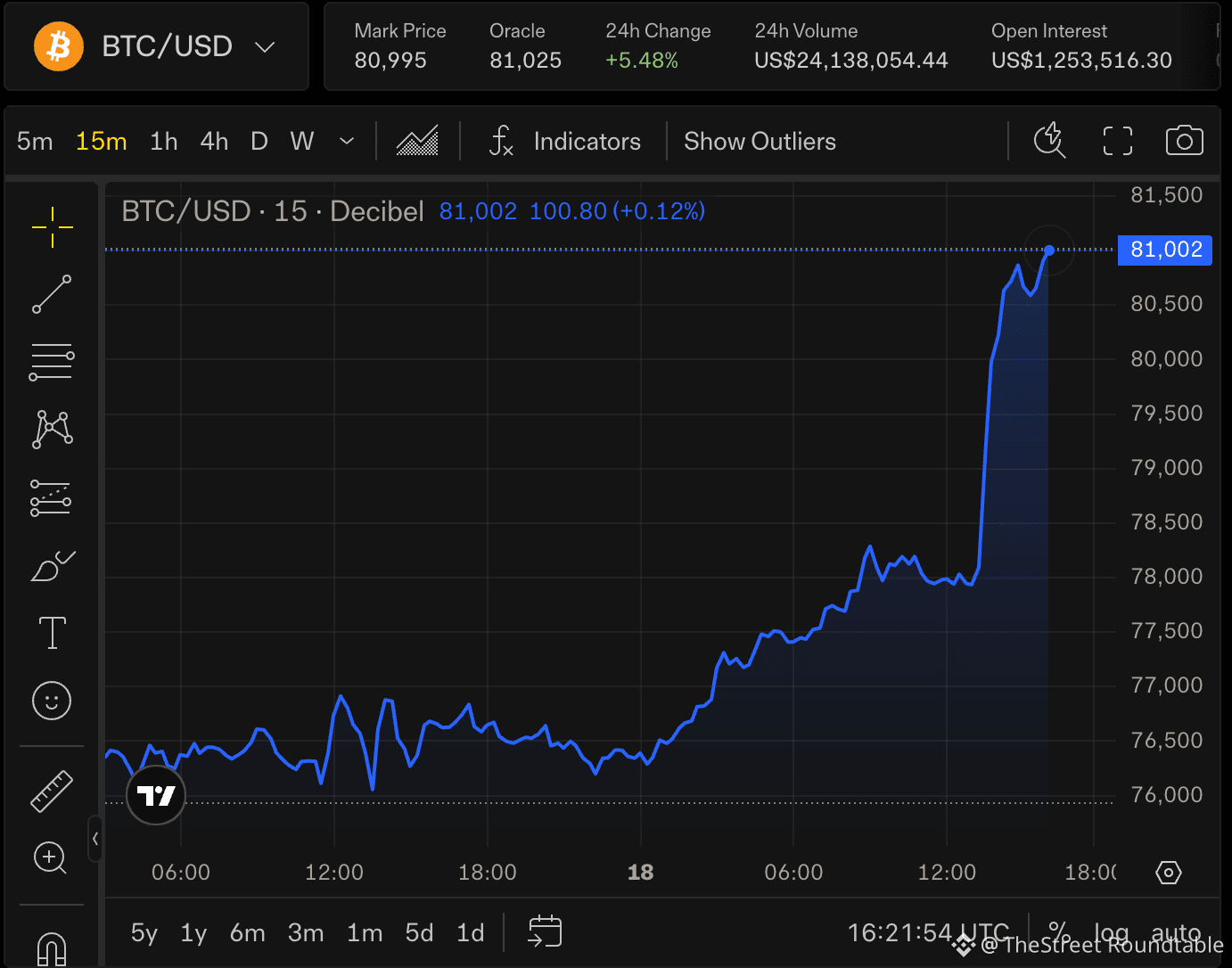
At press time, Bitcoin was trading around $81,001, up nearly 5.5% over the past 24 hours, while Ether was around $2,594, gaining about 5%.
Most Popular on TheStreet Roundtable:
JPMorgan says one asset class could soon beat gold
Kevin O’Leary has a warning on Washington’s tax plans
SEC Chair Atkins reveals what comes next if CLARITY Act stalls
Bitcoin trading price at press time. Source: Decibel
Whale moves into ETH as crypto market rebounds
The transactions were carried out across multiple wallets rather than a single address. Onchain data shows the wallets repeatedly moved BTC and ETH through Hyperliquid, a decentralized trading platform, as part of the apparent rotation.
A whale is typically an individual or entity holding a large cryptocurrency position. Large transactions from such wallets can attract attention because they may affect market liquidity and signal changes in how a major investor is positioning.
Source: Arkm
Source: Arkm
The whale’s move comes as the broader crypto market rebounds and U.S. regulators continue advancing crypto-related initiatives.
The Commodity Futures Trading Commission has sent proposed crypto market rules to the White House for review. Meanwhile, the Securities and Exchange Commission introduced its temporary “Innovation Exemption” on Sept. 17 to facilitate certain onchain trading of tokenized stocks.
The developments follow the Senate’s failure to advance the CLARITY Act earlier this week. With that path stalled, regulatory agencies are turning to their existing authority to push forward the parts of the crypto framework they can.
Related: Trader bets millions against S&P 500, gets wiped out in seconds
Trader dumps $46M in Bitcoin for rival
David Gokhshtein shares how Fed rate hike impacts Bitcoin (9:08)
A crypto whale appears to be shifting a large portion of its portfolio from Bitcoin into Ethereum.
According to blockchain analytics platform Lookonchain, 11 newly created wallets suspected to belong to the same whale, sold 602 BTC and bought 18,780 ETH on Hyperliquid over the past three days. Both sides of the transactions were worth roughly $45.83 million, indicating a large-scale portfolio rebalancing.
At press time, Bitcoin was trading around $81,001, up nearly 5.5% over the past 24 hours, while Ether was around $2,594, gaining about 5%.
Most Popular on TheStreet Roundtable:
JPMorgan says one asset class could soon beat gold
Kevin O’Leary has a warning on Washington’s tax plans
SEC Chair Atkins reveals what comes next if CLARITY Act stalls
Bitcoin trading price at press time. Source: Decibel
Whale moves into ETH as crypto market rebounds
The transactions were carried out across multiple wallets rather than a single address. Onchain data shows the wallets repeatedly moved BTC and ETH through Hyperliquid, a decentralized trading platform, as part of the apparent rotation.
A whale is typically an individual or entity holding a large cryptocurrency position. Large transactions from such wallets can attract attention because they may affect market liquidity and signal changes in how a major investor is positioning.
Source: Arkm
Source: Arkm
The whale’s move comes as the broader crypto market rebounds and U.S. regulators continue advancing crypto-related initiatives.
The Commodity Futures Trading Commission has sent proposed crypto market rules to the White House for review. Meanwhile, the Securities and Exchange Commission introduced its temporary “Innovation Exemption” on Sept. 17 to facilitate certain onchain trading of tokenized stocks.
The developments follow the Senate’s failure to advance the CLARITY Act earlier this week. With that path stalled, regulatory agencies are turning to their existing authority to push forward the parts of the crypto framework they can.
Related: Trader bets millions against S&P 500, gets wiped out in seconds
A crypto whale appears to be shifting a large portion of its portfolio from Bitcoin into Ethereum.
According to blockchain analytics platform Lookonchain, 11 newly created wallets suspected to belong to the same whale, sold 602 BTC and bought 18,780 ETH on Hyperliquid over the past three days. Both sides of the transactions were worth roughly $45.83 million, indicating a large-scale portfolio rebalancing.
At press time, Bitcoin was trading around $81,001, up nearly 5.5% over the past 24 hours, while Ether was around $2,594, gaining about 5%.
Most Popular on TheStreet Roundtable:
JPMorgan says one asset class could soon beat gold
Kevin O’Leary has a warning on Washington’s tax plans
SEC Chair Atkins reveals what comes next if CLARITY Act stalls
Bitcoin trading price at press time. Source: Decibel
Whale moves into ETH as crypto market rebounds
The transactions were carried out across multiple wallets rather than a single address. Onchain data shows the wallets repeatedly moved BTC and ETH through Hyperliquid, a decentralized trading platform, as part of the apparent rotation.
A whale is typically an individual or entity holding a large cryptocurrency position. Large transactions from such wallets can attract attention because they may affect market liquidity and signal changes in how a major investor is positioning.
Source: Arkm
Source: Arkm
The whale’s move comes as the broader crypto market rebounds and U.S. regulators continue advancing crypto-related initiatives.
The Commodity Futures Trading Commission has sent proposed crypto market rules to the White House for review. Meanwhile, the Securities and Exchange Commission introduced its temporary “Innovation Exemption” on Sept. 17 to facilitate certain onchain trading of tokenized stocks.
The developments follow the Senate’s failure to advance the CLARITY Act earlier this week. With that path stalled, regulatory agencies are turning to their existing authority to push forward the parts of the crypto framework they can.
Related: Trader bets millions against S&P 500, gets wiped out in seconds
250
Статья
SEC, CFTC new rules after CLARITY setback send Bitcoin higherFrank Holmes: Bitcoin can hit $100,000 by year-end (4:16)
Bitcoin rallied on Friday despite two major Washington developments earlier this week that appeared unfavorable for crypto markets.
The Senate failed to advance the CLARITY Act on Sept. 15, leaving the industry’s broad market-structure legislation stalled. A day later, the Federal Reserve raised interest rates by 25 basis points to 3.75%-4%, its first increase since 2023.
Related: Palantir, Rocket Lab among biggest climbers in power ranking
After the CLARITY vote, however, SEC Chair Paul Atkins made clear the agency would continue its crypto rulemaking agenda regardless of what happened in Congress. Speaking at the Solana Policy Institute summit on Sept. 14, Atkins said:
“With or without that legislation, this Administration will deliver for American investors and technological innovators. Promises were made, and they will be kept.”
Atkins said the SEC was already pursuing several crypto initiatives under Project Crypto, including rules for token issuers, updated transfer-agent requirements and new custody options for investment advisers.
That regulatory push has since accelerated.
SEC and CFTC move ahead without Congress
On Sept. 17, the SEC introduced its five-year “Innovation Exemption,” creating a pathway for qualifying platforms to trade tokenized U.S. stocks onchain. The framework allows tokenized securities to retain the same shareholder rights as their underlying stocks while giving issuers the ability to opt out.
Trending on TheStreet Roundtable:
Hunter Biden finally finds an Apple product he likes
Dave Ramsey gives reality check to man facing house debt and wife’s surgery
Musk offers radical fix to welfare state bankruptcy
The CFTC also issued a no-action position for certain software developers and, on Sept. 17, submitted “Regulation Crypto Asset Transactions and Regulation Crypto Asset Markets” to the White House Office of Information and Regulatory Affairs for review.
The moves could be helping improve sentiment by showing that federal regulators are advancing crypto rules despite the congressional setback, though they do not replace the broader statutory framework envisioned by CLARITY.
Strategy (MSTR) Executive Chairman Michael Saylor highlighted the SEC action Thursday, saying:
“The SEC’s innovation exemption enables 24/7 onchain trading of tokenized $STRC and $MSTR for U.S. investors through qualifying venues.”
JPMorgan has also pointed to a potentially favorable positioning setup. Analysts led by Nikolaos Panigirtzoglou said Bitcoin remains more heavily hedged than gold, meaning reduced hedging demand could provide additional support.
“The more elevated short interest in the IBIT vs. GLD ETF could create more support for bitcoin vs gold from here if hedging demand is reduced,” the analysts said.
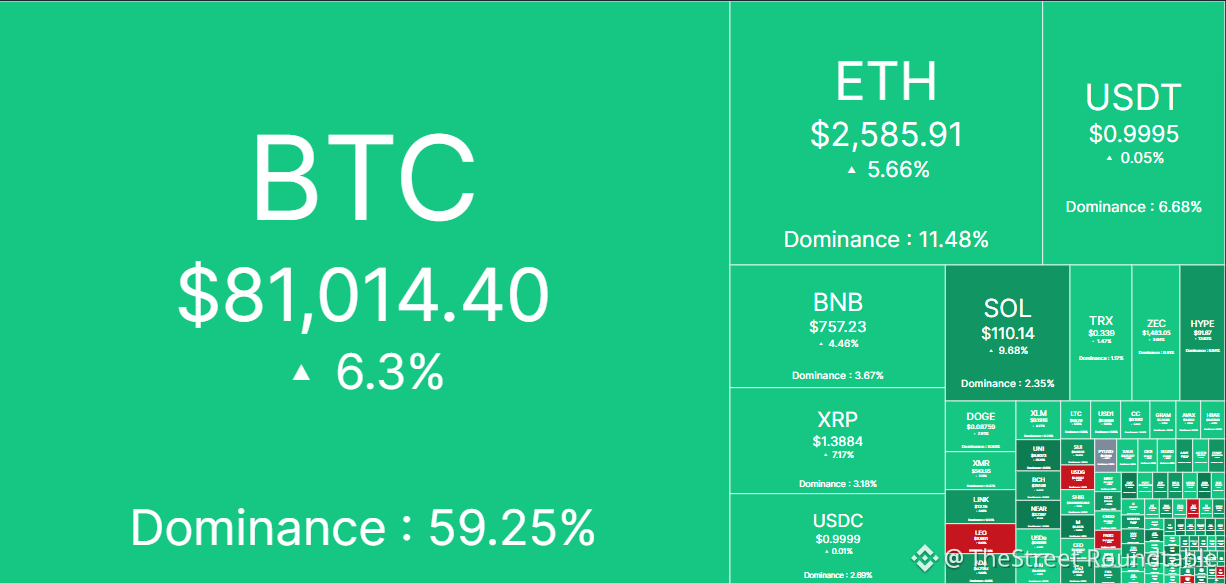
Crypto market heatmap at press time.
Bitcoin was trading near $81,014 at press time, up about 6.3% over the previous 24 hours. The broader crypto market also moved higher, with Ether gaining 5.7% and Solana rising nearly 9.7%.
The move came as investors digested a mix of regulatory developments in Washington, including the SEC’s new Innovation Exemption, even as the CLARITY Act remains stalled in the Senate. Together, the developments have kept regulatory clarity at the center of the crypto market’s outlook.
Related: Kevin O'Leary has a warning on Washington's tax plans
SEC, CFTC new rules after CLARITY setback send Bitcoin higher
Frank Holmes: Bitcoin can hit $100,000 by year-end (4:16)
Bitcoin rallied on Friday despite two major Washington developments earlier this week that appeared unfavorable for crypto markets.
The Senate failed to advance the CLARITY Act on Sept. 15, leaving the industry’s broad market-structure legislation stalled. A day later, the Federal Reserve raised interest rates by 25 basis points to 3.75%-4%, its first increase since 2023.
Related: Palantir, Rocket Lab among biggest climbers in power ranking
After the CLARITY vote, however, SEC Chair Paul Atkins made clear the agency would continue its crypto rulemaking agenda regardless of what happened in Congress. Speaking at the Solana Policy Institute summit on Sept. 14, Atkins said:
“With or without that legislation, this Administration will deliver for American investors and technological innovators. Promises were made, and they will be kept.”
Atkins said the SEC was already pursuing several crypto initiatives under Project Crypto, including rules for token issuers, updated transfer-agent requirements and new custody options for investment advisers.
That regulatory push has since accelerated.
SEC and CFTC move ahead without Congress
On Sept. 17, the SEC introduced its five-year “Innovation Exemption,” creating a pathway for qualifying platforms to trade tokenized U.S. stocks onchain. The framework allows tokenized securities to retain the same shareholder rights as their underlying stocks while giving issuers the ability to opt out.
Trending on TheStreet Roundtable:
Hunter Biden finally finds an Apple product he likes
Dave Ramsey gives reality check to man facing house debt and wife’s surgery
Musk offers radical fix to welfare state bankruptcy
The CFTC also issued a no-action position for certain software developers and, on Sept. 17, submitted “Regulation Crypto Asset Transactions and Regulation Crypto Asset Markets” to the White House Office of Information and Regulatory Affairs for review.
The moves could be helping improve sentiment by showing that federal regulators are advancing crypto rules despite the congressional setback, though they do not replace the broader statutory framework envisioned by CLARITY.
Strategy (MSTR) Executive Chairman Michael Saylor highlighted the SEC action Thursday, saying:
“The SEC’s innovation exemption enables 24/7 onchain trading of tokenized $STRC and $MSTR for U.S. investors through qualifying venues.”
JPMorgan has also pointed to a potentially favorable positioning setup. Analysts led by Nikolaos Panigirtzoglou said Bitcoin remains more heavily hedged than gold, meaning reduced hedging demand could provide additional support.
“The more elevated short interest in the IBIT vs. GLD ETF could create more support for bitcoin vs gold from here if hedging demand is reduced,” the analysts said.
Crypto market heatmap at press time.
Bitcoin was trading near $81,014 at press time, up about 6.3% over the previous 24 hours. The broader crypto market also moved higher, with Ether gaining 5.7% and Solana rising nearly 9.7%.
The move came as investors digested a mix of regulatory developments in Washington, including the SEC’s new Innovation Exemption, even as the CLARITY Act remains stalled in the Senate. Together, the developments have kept regulatory clarity at the center of the crypto market’s outlook.
Related: Kevin O'Leary has a warning on Washington's tax plans
Bitcoin rallied on Friday despite two major Washington developments earlier this week that appeared unfavorable for crypto markets.
The Senate failed to advance the CLARITY Act on Sept. 15, leaving the industry’s broad market-structure legislation stalled. A day later, the Federal Reserve raised interest rates by 25 basis points to 3.75%-4%, its first increase since 2023.
Related: Palantir, Rocket Lab among biggest climbers in power ranking
After the CLARITY vote, however, SEC Chair Paul Atkins made clear the agency would continue its crypto rulemaking agenda regardless of what happened in Congress. Speaking at the Solana Policy Institute summit on Sept. 14, Atkins said:
“With or without that legislation, this Administration will deliver for American investors and technological innovators. Promises were made, and they will be kept.”
Atkins said the SEC was already pursuing several crypto initiatives under Project Crypto, including rules for token issuers, updated transfer-agent requirements and new custody options for investment advisers.
That regulatory push has since accelerated.
SEC and CFTC move ahead without Congress
On Sept. 17, the SEC introduced its five-year “Innovation Exemption,” creating a pathway for qualifying platforms to trade tokenized U.S. stocks onchain. The framework allows tokenized securities to retain the same shareholder rights as their underlying stocks while giving issuers the ability to opt out.
Trending on TheStreet Roundtable:
Hunter Biden finally finds an Apple product he likes
Dave Ramsey gives reality check to man facing house debt and wife’s surgery
Musk offers radical fix to welfare state bankruptcy
The CFTC also issued a no-action position for certain software developers and, on Sept. 17, submitted “Regulation Crypto Asset Transactions and Regulation Crypto Asset Markets” to the White House Office of Information and Regulatory Affairs for review.
The moves could be helping improve sentiment by showing that federal regulators are advancing crypto rules despite the congressional setback, though they do not replace the broader statutory framework envisioned by CLARITY.
Strategy (MSTR) Executive Chairman Michael Saylor highlighted the SEC action Thursday, saying:
“The SEC’s innovation exemption enables 24/7 onchain trading of tokenized $STRC and $MSTR for U.S. investors through qualifying venues.”
JPMorgan has also pointed to a potentially favorable positioning setup. Analysts led by Nikolaos Panigirtzoglou said Bitcoin remains more heavily hedged than gold, meaning reduced hedging demand could provide additional support.
“The more elevated short interest in the IBIT vs. GLD ETF could create more support for bitcoin vs gold from here if hedging demand is reduced,” the analysts said.
Crypto market heatmap at press time.
Bitcoin was trading near $81,014 at press time, up about 6.3% over the previous 24 hours. The broader crypto market also moved higher, with Ether gaining 5.7% and Solana rising nearly 9.7%.
The move came as investors digested a mix of regulatory developments in Washington, including the SEC’s new Innovation Exemption, even as the CLARITY Act remains stalled in the Senate. Together, the developments have kept regulatory clarity at the center of the crypto market’s outlook.
Related: Kevin O'Leary has a warning on Washington's tax plans
1
1.2k
Robinhood CEO says ‘tokenization is coming to America’ after SEC rulingUpdated Robinhood Bets Big on Crypto’s Future (3:10)
Robinhood CEO Vlad Tenev declared Thursday that “tokenization is coming to America.” The reaction came after a fresh Securities and Exchange Commission order that opens a five-year regulatory pathway for tokenized U.S. stocks to trade on blockchain-based platforms.
The SEC’s newly unveiled “Innovation Exemption” removes eligible tokenized securities venues from the traditional legal definition of an exchange.
It also gives automated market maker (AMM) liquidity providers relief from dealer-registration requirements, allowing tokenized National Market System stocks to trade. Regulators will work out permanent rules over the next five years, as Reuters reported.
Related: Aptos SVP warns quantum threat is closer than you think
Tenev calls it a win for innovation
Tenev wrote on X that thanks to the SEC’s leadership, Americans can finally access the benefits long associated with tokenization, instant settlement, round-the-clock trading, and fractional ownership by default.
He called it “a good day for U.S. innovation.” That amplified Robinhood’s own statement backing the SEC’s move as a step toward giving Americans fair access to crypto-driven financial technology.
“Thanks to the SEC’s leadership, Americans can start to reap the benefits of tokenization: instant settlement, 24/7 trading, fractionalization by default and more. It’s a good day for U.S. innovation,” he shared.
According to Reuters, Robinhood has already been expanding tokenized-stock access abroad through its Arbitrum-based Robinhood Chain. Meanwhile, rivals like Coinbase are reportedly gearing up for similar moves at home.
Most Popular on TheStreet Roundtable:
JPMorgan says one asset class could soon beat gold
Kevin O’Leary has a warning on Washington’s tax plans
SEC Chair Atkins reveals what comes next if CLARITY Act stalls
A structural shift for U.S. equities
The order effectively imports an AMM-based trading model, long common in crypto markets, into a limited slice of U.S. equities.
However, the SEC has drawn a clear line: eligible platforms must ensure tokenized shares carry the same rights as traditional stock, including dividends and voting power. Synthetic tokens that merely track a stock’s price without representing real ownership are excluded.
The development comes days after the Senate failed to advance the Clarity Act, leaving broader crypto market-structure legislation stalled.
SEC Chair Paul Atkins described the exemption as a bridge toward durable rulemaking.
“The Innovation Exemption is designed to resolve challenges that have prevented responsible innovation from taking root in the United States while providing investor protections and market integrity standards,” Atkins said in a statement.
Related: Buffett steps down as Berkshire Hathaway chair but 8-year-old jab still bites
Robinhood CEO says ‘tokenization is coming to America’ after SEC ruling
Updated Robinhood Bets Big on Crypto’s Future (3:10)
Robinhood CEO Vlad Tenev declared Thursday that “tokenization is coming to America.” The reaction came after a fresh Securities and Exchange Commission order that opens a five-year regulatory pathway for tokenized U.S. stocks to trade on blockchain-based platforms.
The SEC’s newly unveiled “Innovation Exemption” removes eligible tokenized securities venues from the traditional legal definition of an exchange.
It also gives automated market maker (AMM) liquidity providers relief from dealer-registration requirements, allowing tokenized National Market System stocks to trade. Regulators will work out permanent rules over the next five years, as Reuters reported.
Related: Aptos SVP warns quantum threat is closer than you think
Tenev calls it a win for innovation
Tenev wrote on X that thanks to the SEC’s leadership, Americans can finally access the benefits long associated with tokenization, instant settlement, round-the-clock trading, and fractional ownership by default.
He called it “a good day for U.S. innovation.” That amplified Robinhood’s own statement backing the SEC’s move as a step toward giving Americans fair access to crypto-driven financial technology.
“Thanks to the SEC’s leadership, Americans can start to reap the benefits of tokenization: instant settlement, 24/7 trading, fractionalization by default and more. It’s a good day for U.S. innovation,” he shared.
According to Reuters, Robinhood has already been expanding tokenized-stock access abroad through its Arbitrum-based Robinhood Chain. Meanwhile, rivals like Coinbase are reportedly gearing up for similar moves at home.
Most Popular on TheStreet Roundtable:
JPMorgan says one asset class could soon beat gold
Kevin O’Leary has a warning on Washington’s tax plans
SEC Chair Atkins reveals what comes next if CLARITY Act stalls
A structural shift for U.S. equities
The order effectively imports an AMM-based trading model, long common in crypto markets, into a limited slice of U.S. equities.
However, the SEC has drawn a clear line: eligible platforms must ensure tokenized shares carry the same rights as traditional stock, including dividends and voting power. Synthetic tokens that merely track a stock’s price without representing real ownership are excluded.
The development comes days after the Senate failed to advance the Clarity Act, leaving broader crypto market-structure legislation stalled.
SEC Chair Paul Atkins described the exemption as a bridge toward durable rulemaking.
“The Innovation Exemption is designed to resolve challenges that have prevented responsible innovation from taking root in the United States while providing investor protections and market integrity standards,” Atkins said in a statement.
Related: Buffett steps down as Berkshire Hathaway chair but 8-year-old jab still bites
Robinhood CEO Vlad Tenev declared Thursday that “tokenization is coming to America.” The reaction came after a fresh Securities and Exchange Commission order that opens a five-year regulatory pathway for tokenized U.S. stocks to trade on blockchain-based platforms.
The SEC’s newly unveiled “Innovation Exemption” removes eligible tokenized securities venues from the traditional legal definition of an exchange.
It also gives automated market maker (AMM) liquidity providers relief from dealer-registration requirements, allowing tokenized National Market System stocks to trade. Regulators will work out permanent rules over the next five years, as Reuters reported.
Related: Aptos SVP warns quantum threat is closer than you think
Tenev calls it a win for innovation
Tenev wrote on X that thanks to the SEC’s leadership, Americans can finally access the benefits long associated with tokenization, instant settlement, round-the-clock trading, and fractional ownership by default.
He called it “a good day for U.S. innovation.” That amplified Robinhood’s own statement backing the SEC’s move as a step toward giving Americans fair access to crypto-driven financial technology.
“Thanks to the SEC’s leadership, Americans can start to reap the benefits of tokenization: instant settlement, 24/7 trading, fractionalization by default and more. It’s a good day for U.S. innovation,” he shared.
According to Reuters, Robinhood has already been expanding tokenized-stock access abroad through its Arbitrum-based Robinhood Chain. Meanwhile, rivals like Coinbase are reportedly gearing up for similar moves at home.
Most Popular on TheStreet Roundtable:
JPMorgan says one asset class could soon beat gold
Kevin O’Leary has a warning on Washington’s tax plans
SEC Chair Atkins reveals what comes next if CLARITY Act stalls
A structural shift for U.S. equities
The order effectively imports an AMM-based trading model, long common in crypto markets, into a limited slice of U.S. equities.
However, the SEC has drawn a clear line: eligible platforms must ensure tokenized shares carry the same rights as traditional stock, including dividends and voting power. Synthetic tokens that merely track a stock’s price without representing real ownership are excluded.
The development comes days after the Senate failed to advance the Clarity Act, leaving broader crypto market-structure legislation stalled.
SEC Chair Paul Atkins described the exemption as a bridge toward durable rulemaking.
“The Innovation Exemption is designed to resolve challenges that have prevented responsible innovation from taking root in the United States while providing investor protections and market integrity standards,” Atkins said in a statement.
Related: Buffett steps down as Berkshire Hathaway chair but 8-year-old jab still bites
6
Aptos SVP warns quantum threat is closer than you thinkAptos SVP Ash Pampati explains why quantum readiness can't wait (3:22)
Ash Pampati, SVP and Head of Ecosystem at the Aptos Foundation, says blockchains need to stop treating quantum computing as a distant threat.
Aptos is a Layer 1 blockchain originally incubated at Meta, where engineers spent three years and hundreds of millions of dollars building decentralized infrastructure before spinning out as an independent network.
Quantum computing is fundamentally a highly advanced stage of computing that could one day break the cryptography securing most blockchain networks, potentially exposing the private keys that control users’ funds.
When asked by TheStreet Roundtable whether the threat was five years out, ten years, or longer, Pampati didn’t hedge.
"AI, AGI, quantum, all of these things are coming. Blockchains have always been sources of truth as an open and transparent ledger. The moment you kind of break that or are able to break that, a lot of things fall apart," Pampati said at Consensus Miami.
Related: Trader bets millions against S&P 500, gets wiped out in seconds
The stakes, he argued, stretch well beyond crypto companies. “Not just technology companies that are building in blockchain, but this real new primitive that can actually help scale and move across geopolitical spectrums to connect money and people,” he added.
On timelines, he was blunt. "I think we're being always too conservative when we say how far out it is. I would always think it's sooner than we think."
Already building, not waiting
Pampati framed Aptos’ approach to emerging threats as a matter of conviction, not just investment.
"When we say that investment number, it is an investment, but it's also conviction. And so we have different layers of conviction at the stack. First is research. Research is entirely important to actually dictate the new primitives that will be required by these new use cases," he said.
That research investment has already drawn external validation. Coinbase’s Quantum Advisory Board named Aptos in April as one of only two Layer 1 blockchains best positioned for post-quantum security.
"That's because we invest in research and we believe that's what is required for our infrastructure," Pampati said.
The network already has an accepted upgrade proposal — AIP-137 — that adds a quantum-resistant signature scheme standardized by NIST, the U.S. agency that sets cryptographic standards. The upgrade is opt-in: users can switch without changing their wallet address or moving assets, and it can run alongside existing protections in hybrid mode.
Most Popular on TheStreet Roundtable:
JPMorgan says one asset class could soon beat gold
Kevin O’Leary has a warning on Washington’s tax plans
SEC Chair Atkins reveals what comes next if CLARITY Act stalls
Beyond research, Pampati said Aptos is bringing application development in-house rather than delegating to third parties. “If we’re onboarding the next million billion users or institutions, you can’t really be irresponsible with who you’re delegating to manage that level of severity where you’re managing money and you’re managing the flow of money,” he said.
On the trading side, that conviction produced Decibel, a fully decentralized exchange incubated within Aptos.
"We've now built an integrated stack with Aptos Decibel, where users can actually just plug into that without having to worry about the risk, the vaults, the security, and just go acquire users," Pampati said.
On the AI infrastructure side, Aptos is building Shelby, a global data layer connecting distributed compute capacity — a “completely different type of customer and enterprise customer, but an amazing development layer that we can start to build a robust ecosystem around,” he added.
A growing chorus of concern
Aptos is not preparing in isolation. Google‘s Quantum AI team published research in March showing future quantum computers could break blockchain cryptography with fewer resources than previously estimated.
Fidelity Digital Assets reached similar conclusions in a separate report. Most blockchain networks have not yet proposed concrete post-quantum upgrades, Aptos’ approach of building the fix now and activating it through governance when needed puts it ahead of the field.
Aptos SVP warns quantum threat is closer than you think
Aptos SVP Ash Pampati explains why quantum readiness can't wait (3:22)
Ash Pampati, SVP and Head of Ecosystem at the Aptos Foundation, says blockchains need to stop treating quantum computing as a distant threat.
Aptos is a Layer 1 blockchain originally incubated at Meta, where engineers spent three years and hundreds of millions of dollars building decentralized infrastructure before spinning out as an independent network.
Quantum computing is fundamentally a highly advanced stage of computing that could one day break the cryptography securing most blockchain networks, potentially exposing the private keys that control users’ funds.
When asked by TheStreet Roundtable whether the threat was five years out, ten years, or longer, Pampati didn’t hedge.
"AI, AGI, quantum, all of these things are coming. Blockchains have always been sources of truth as an open and transparent ledger. The moment you kind of break that or are able to break that, a lot of things fall apart," Pampati said at Consensus Miami.
Related: Trader bets millions against S&P 500, gets wiped out in seconds
The stakes, he argued, stretch well beyond crypto companies. “Not just technology companies that are building in blockchain, but this real new primitive that can actually help scale and move across geopolitical spectrums to connect money and people,” he added.
On timelines, he was blunt. "I think we're being always too conservative when we say how far out it is. I would always think it's sooner than we think."
Already building, not waiting
Pampati framed Aptos’ approach to emerging threats as a matter of conviction, not just investment.
"When we say that investment number, it is an investment, but it's also conviction. And so we have different layers of conviction at the stack. First is research. Research is entirely important to actually dictate the new primitives that will be required by these new use cases," he said.
That research investment has already drawn external validation. Coinbase’s Quantum Advisory Board named Aptos in April as one of only two Layer 1 blockchains best positioned for post-quantum security.
"That's because we invest in research and we believe that's what is required for our infrastructure," Pampati said.
The network already has an accepted upgrade proposal — AIP-137 — that adds a quantum-resistant signature scheme standardized by NIST, the U.S. agency that sets cryptographic standards. The upgrade is opt-in: users can switch without changing their wallet address or moving assets, and it can run alongside existing protections in hybrid mode.
Most Popular on TheStreet Roundtable:
JPMorgan says one asset class could soon beat gold
Kevin O’Leary has a warning on Washington’s tax plans
SEC Chair Atkins reveals what comes next if CLARITY Act stalls
Beyond research, Pampati said Aptos is bringing application development in-house rather than delegating to third parties. “If we’re onboarding the next million billion users or institutions, you can’t really be irresponsible with who you’re delegating to manage that level of severity where you’re managing money and you’re managing the flow of money,” he said.
On the trading side, that conviction produced Decibel, a fully decentralized exchange incubated within Aptos.
"We've now built an integrated stack with Aptos Decibel, where users can actually just plug into that without having to worry about the risk, the vaults, the security, and just go acquire users," Pampati said.
On the AI infrastructure side, Aptos is building Shelby, a global data layer connecting distributed compute capacity — a “completely different type of customer and enterprise customer, but an amazing development layer that we can start to build a robust ecosystem around,” he added.
A growing chorus of concern
Aptos is not preparing in isolation. Google‘s Quantum AI team published research in March showing future quantum computers could break blockchain cryptography with fewer resources than previously estimated.
Fidelity Digital Assets reached similar conclusions in a separate report. Most blockchain networks have not yet proposed concrete post-quantum upgrades, Aptos’ approach of building the fix now and activating it through governance when needed puts it ahead of the field.
Ash Pampati, SVP and Head of Ecosystem at the Aptos Foundation, says blockchains need to stop treating quantum computing as a distant threat.
Aptos is a Layer 1 blockchain originally incubated at Meta, where engineers spent three years and hundreds of millions of dollars building decentralized infrastructure before spinning out as an independent network.
Quantum computing is fundamentally a highly advanced stage of computing that could one day break the cryptography securing most blockchain networks, potentially exposing the private keys that control users’ funds.
When asked by TheStreet Roundtable whether the threat was five years out, ten years, or longer, Pampati didn’t hedge.
"AI, AGI, quantum, all of these things are coming. Blockchains have always been sources of truth as an open and transparent ledger. The moment you kind of break that or are able to break that, a lot of things fall apart," Pampati said at Consensus Miami.
Related: Trader bets millions against S&P 500, gets wiped out in seconds
The stakes, he argued, stretch well beyond crypto companies. “Not just technology companies that are building in blockchain, but this real new primitive that can actually help scale and move across geopolitical spectrums to connect money and people,” he added.
On timelines, he was blunt. "I think we're being always too conservative when we say how far out it is. I would always think it's sooner than we think."
Already building, not waiting
Pampati framed Aptos’ approach to emerging threats as a matter of conviction, not just investment.
"When we say that investment number, it is an investment, but it's also conviction. And so we have different layers of conviction at the stack. First is research. Research is entirely important to actually dictate the new primitives that will be required by these new use cases," he said.
That research investment has already drawn external validation. Coinbase’s Quantum Advisory Board named Aptos in April as one of only two Layer 1 blockchains best positioned for post-quantum security.
"That's because we invest in research and we believe that's what is required for our infrastructure," Pampati said.
The network already has an accepted upgrade proposal — AIP-137 — that adds a quantum-resistant signature scheme standardized by NIST, the U.S. agency that sets cryptographic standards. The upgrade is opt-in: users can switch without changing their wallet address or moving assets, and it can run alongside existing protections in hybrid mode.
Most Popular on TheStreet Roundtable:
JPMorgan says one asset class could soon beat gold
Kevin O’Leary has a warning on Washington’s tax plans
SEC Chair Atkins reveals what comes next if CLARITY Act stalls
Beyond research, Pampati said Aptos is bringing application development in-house rather than delegating to third parties. “If we’re onboarding the next million billion users or institutions, you can’t really be irresponsible with who you’re delegating to manage that level of severity where you’re managing money and you’re managing the flow of money,” he said.
On the trading side, that conviction produced Decibel, a fully decentralized exchange incubated within Aptos.
"We've now built an integrated stack with Aptos Decibel, where users can actually just plug into that without having to worry about the risk, the vaults, the security, and just go acquire users," Pampati said.
On the AI infrastructure side, Aptos is building Shelby, a global data layer connecting distributed compute capacity — a “completely different type of customer and enterprise customer, but an amazing development layer that we can start to build a robust ecosystem around,” he added.
A growing chorus of concern
Aptos is not preparing in isolation. Google‘s Quantum AI team published research in March showing future quantum computers could break blockchain cryptography with fewer resources than previously estimated.
Fidelity Digital Assets reached similar conclusions in a separate report. Most blockchain networks have not yet proposed concrete post-quantum upgrades, Aptos’ approach of building the fix now and activating it through governance when needed puts it ahead of the field.
327
Kevin O'Leary says he's buying crypto again, here's his Bitcoin predictionFormer CFTC chair says your crypto wallet is about to replace your bank account (4:35)
Shark Tank investor Kevin O’Leary says he has re-entered the crypto market, putting fresh capital behind what he calls the next cycle. He also flagged a single development he believes would mark a turning point for the entire industry.
Speaking to The Block at the Avalanche Summit in New York, O’Leary said he is buying new crypto positions for the next cycle and watching for a major stock exchange to adopt a blockchain.
"I'm back in the saddle buying new positions, putting my bets on for this next cycle," said O'Leary. He added that the next phase of investing comes down to identifying which blockchain wins adoption, and in which sector.
Waiting for a ‘watershed moment’
The O’Leary Ventures chairman said he talks regularly with CEOs across industries about which blockchain they’re betting on. But so far, none of them are landing on the same one.
Related: If you invested $1,000 in gold & Bitcoin 10 years ago, here's how much money you'd have today
He called it a “watershed moment” in the making, arguing that the first major stock exchange to adopt a blockchain would push the wider financial system to fall in line with that exchange’s requirements.
On Bitcoin’s place in portfolios
O’Leary weighed in on the CLARITY Act’s recent Senate setback during the interaction. He told the media outlet that he still expects crypto regulation to resurface since lawmakers are working on tax policy for digital assets.
He also said that taxing an asset usually invites more oversight rather than less, though he does not see the bill passing before the midterms.
“If you're going to provide a tax policy on this asset, you want more regulation, not less,” he said during the event.
On Bitcoin specifically, he said it could eventually claim 1% to 3% of alternative-asset allocation—a share on par with what institutions currently hold in gold.
Trending on TheStreet Roundtable:
Hunter Biden finally finds an Apple product he likes
Dave Ramsey gives reality check to man facing house debt and wife’s surgery
Musk offers radical fix to welfare state bankruptcy
The quantum computing caveat
In a separate interview, O’Leary predicted Bitcoin could reach $1 million, but only if the industry resolves growing unease around quantum computing.
"It will if it can resolve the doubt creeping in around quantum computing. Breaking the algorithms, and the chains and encryptions. They call it Q-Day," he said.
He also said that some investors are already hedging by backing quantum-computing startups as a security play.
“It’s another theme out there as an investor. Some people are putting on a counter bet by investing in some of these nascent companies that are developing quantum computing software. It’s a security play,” O’Leary said.
Related: Analyst says XRP could be ready for a big move
Kevin O'Leary says he's buying crypto again, here's his Bitcoin prediction
Former CFTC chair says your crypto wallet is about to replace your bank account (4:35)
Shark Tank investor Kevin O’Leary says he has re-entered the crypto market, putting fresh capital behind what he calls the next cycle. He also flagged a single development he believes would mark a turning point for the entire industry.
Speaking to The Block at the Avalanche Summit in New York, O’Leary said he is buying new crypto positions for the next cycle and watching for a major stock exchange to adopt a blockchain.
"I'm back in the saddle buying new positions, putting my bets on for this next cycle," said O'Leary. He added that the next phase of investing comes down to identifying which blockchain wins adoption, and in which sector.
Waiting for a ‘watershed moment’
The O’Leary Ventures chairman said he talks regularly with CEOs across industries about which blockchain they’re betting on. But so far, none of them are landing on the same one.
Related: If you invested $1,000 in gold & Bitcoin 10 years ago, here's how much money you'd have today
He called it a “watershed moment” in the making, arguing that the first major stock exchange to adopt a blockchain would push the wider financial system to fall in line with that exchange’s requirements.
On Bitcoin’s place in portfolios
O’Leary weighed in on the CLARITY Act’s recent Senate setback during the interaction. He told the media outlet that he still expects crypto regulation to resurface since lawmakers are working on tax policy for digital assets.
He also said that taxing an asset usually invites more oversight rather than less, though he does not see the bill passing before the midterms.
“If you're going to provide a tax policy on this asset, you want more regulation, not less,” he said during the event.
On Bitcoin specifically, he said it could eventually claim 1% to 3% of alternative-asset allocation—a share on par with what institutions currently hold in gold.
Trending on TheStreet Roundtable:
Hunter Biden finally finds an Apple product he likes
Dave Ramsey gives reality check to man facing house debt and wife’s surgery
Musk offers radical fix to welfare state bankruptcy
The quantum computing caveat
In a separate interview, O’Leary predicted Bitcoin could reach $1 million, but only if the industry resolves growing unease around quantum computing.
"It will if it can resolve the doubt creeping in around quantum computing. Breaking the algorithms, and the chains and encryptions. They call it Q-Day," he said.
He also said that some investors are already hedging by backing quantum-computing startups as a security play.
“It’s another theme out there as an investor. Some people are putting on a counter bet by investing in some of these nascent companies that are developing quantum computing software. It’s a security play,” O’Leary said.
Related: Analyst says XRP could be ready for a big move
Shark Tank investor Kevin O’Leary says he has re-entered the crypto market, putting fresh capital behind what he calls the next cycle. He also flagged a single development he believes would mark a turning point for the entire industry.
Speaking to The Block at the Avalanche Summit in New York, O’Leary said he is buying new crypto positions for the next cycle and watching for a major stock exchange to adopt a blockchain.
"I'm back in the saddle buying new positions, putting my bets on for this next cycle," said O'Leary. He added that the next phase of investing comes down to identifying which blockchain wins adoption, and in which sector.
Waiting for a ‘watershed moment’
The O’Leary Ventures chairman said he talks regularly with CEOs across industries about which blockchain they’re betting on. But so far, none of them are landing on the same one.
Related: If you invested $1,000 in gold & Bitcoin 10 years ago, here's how much money you'd have today
He called it a “watershed moment” in the making, arguing that the first major stock exchange to adopt a blockchain would push the wider financial system to fall in line with that exchange’s requirements.
On Bitcoin’s place in portfolios
O’Leary weighed in on the CLARITY Act’s recent Senate setback during the interaction. He told the media outlet that he still expects crypto regulation to resurface since lawmakers are working on tax policy for digital assets.
He also said that taxing an asset usually invites more oversight rather than less, though he does not see the bill passing before the midterms.
“If you're going to provide a tax policy on this asset, you want more regulation, not less,” he said during the event.
On Bitcoin specifically, he said it could eventually claim 1% to 3% of alternative-asset allocation—a share on par with what institutions currently hold in gold.
Trending on TheStreet Roundtable:
Hunter Biden finally finds an Apple product he likes
Dave Ramsey gives reality check to man facing house debt and wife’s surgery
Musk offers radical fix to welfare state bankruptcy
The quantum computing caveat
In a separate interview, O’Leary predicted Bitcoin could reach $1 million, but only if the industry resolves growing unease around quantum computing.
"It will if it can resolve the doubt creeping in around quantum computing. Breaking the algorithms, and the chains and encryptions. They call it Q-Day," he said.
He also said that some investors are already hedging by backing quantum-computing startups as a security play.
“It’s another theme out there as an investor. Some people are putting on a counter bet by investing in some of these nascent companies that are developing quantum computing software. It’s a security play,” O’Leary said.
Related: Analyst says XRP could be ready for a big move
202
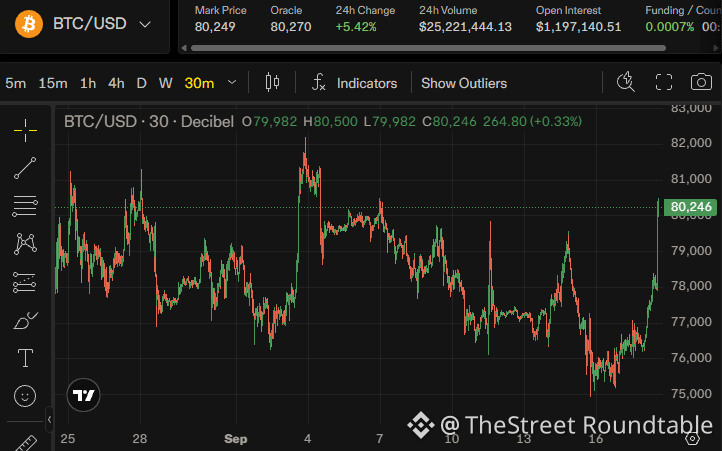
Статья
Buffett steps down as Berkshire Hathaway chair but 8-year-old jab still bitesVeteran investor says Buffett and Munger’s golden rule still works — even for Bitcoin (2:26)
Legendary investor Warren Buffett is stepping down as chairman of Berkshire Hathaway, the $1 trillion conglomerate announced on Sep. 18.
He will become chairman emeritus, effective immediately, while remaining a board director as his son Howard replaces him as chairman.
The “Oracle of Omaha” led Berkshire Hathaway for nearly six decades until March 2025, when he announced his exit as CEO.
During his long tenure, he turned Berkshire from a struggling textile business into a trillion-dollar conglomerate spanning insurance, energy, and technology.
More news:
Solana gets the default spot for stablecoins at FDIC-insured bank
Ripple legal chief bullish on XRP despite CLARITY failure, here’s why
Coinbase CEO says crypto can’t wait on Congress after CLARITY vote fails
In 2018, Buffett called Bitcoin ‘probably rat poison squared’
Well-known for his disciplined, long-term approach to investment, Buffett has disapproved of alternative instruments like cryptocurrencies.
In fact, he called Bitcoin (BTC) “probably rat poison squared” as far back as 2018. The same year, he warned in an interview,
“In terms of cryptocurrencies, generally, I can say with almost certainty that they will come to a bad ending.”
Back then, he said he would not even take a short position on Bitcoin futures.
“If I could buy a five-year put on every one of the cryptocurrencies, I’d be glad to do it but I would never short a dime’s worth.”
In fact, eToro founder and CEO Yoni Assia once disclosed that Buffett asked him to focus more on stocks and less on crypto at his trading exchange.
Though Berkshire Hathaway came to hold a stake in Nubank, a crypto-friendly digital bank based in Brazil, it eventually got rid of its entire stake in the first quarter of 2025. The company never directly invested in crypto.
Though Buffett’s jab from 2018 still bite, Bitcoin has since come a long way.
BTC/USD, Source: Decibel
Bitcoin was trading below $10,000 eight years ago when the legendary investor called it “probably rat poison squared.” It is currently trading eight times higher at $80,246, as per Decibel.
Related: Kevin O'Leary has a warning on Washington's tax plans
Buffett steps down as Berkshire Hathaway chair but 8-year-old jab still bites
Veteran investor says Buffett and Munger’s golden rule still works — even for Bitcoin (2:26)
Legendary investor Warren Buffett is stepping down as chairman of Berkshire Hathaway, the $1 trillion conglomerate announced on Sep. 18.
He will become chairman emeritus, effective immediately, while remaining a board director as his son Howard replaces him as chairman.
The “Oracle of Omaha” led Berkshire Hathaway for nearly six decades until March 2025, when he announced his exit as CEO.
During his long tenure, he turned Berkshire from a struggling textile business into a trillion-dollar conglomerate spanning insurance, energy, and technology.
More news:
Solana gets the default spot for stablecoins at FDIC-insured bank
Ripple legal chief bullish on XRP despite CLARITY failure, here’s why
Coinbase CEO says crypto can’t wait on Congress after CLARITY vote fails
In 2018, Buffett called Bitcoin ‘probably rat poison squared’
Well-known for his disciplined, long-term approach to investment, Buffett has disapproved of alternative instruments like cryptocurrencies.
In fact, he called Bitcoin (BTC) “probably rat poison squared” as far back as 2018. The same year, he warned in an interview,
“In terms of cryptocurrencies, generally, I can say with almost certainty that they will come to a bad ending.”
Back then, he said he would not even take a short position on Bitcoin futures.
“If I could buy a five-year put on every one of the cryptocurrencies, I’d be glad to do it but I would never short a dime’s worth.”
In fact, eToro founder and CEO Yoni Assia once disclosed that Buffett asked him to focus more on stocks and less on crypto at his trading exchange.
Though Berkshire Hathaway came to hold a stake in Nubank, a crypto-friendly digital bank based in Brazil, it eventually got rid of its entire stake in the first quarter of 2025. The company never directly invested in crypto.
Though Buffett’s jab from 2018 still bite, Bitcoin has since come a long way.
BTC/USD, Source: Decibel
Bitcoin was trading below $10,000 eight years ago when the legendary investor called it “probably rat poison squared.” It is currently trading eight times higher at $80,246, as per Decibel.
Related: Kevin O'Leary has a warning on Washington's tax plans
Legendary investor Warren Buffett is stepping down as chairman of Berkshire Hathaway, the $1 trillion conglomerate announced on Sep. 18.
He will become chairman emeritus, effective immediately, while remaining a board director as his son Howard replaces him as chairman.
The “Oracle of Omaha” led Berkshire Hathaway for nearly six decades until March 2025, when he announced his exit as CEO.
During his long tenure, he turned Berkshire from a struggling textile business into a trillion-dollar conglomerate spanning insurance, energy, and technology.
More news:
Solana gets the default spot for stablecoins at FDIC-insured bank
Ripple legal chief bullish on XRP despite CLARITY failure, here’s why
Coinbase CEO says crypto can’t wait on Congress after CLARITY vote fails
In 2018, Buffett called Bitcoin ‘probably rat poison squared’
Well-known for his disciplined, long-term approach to investment, Buffett has disapproved of alternative instruments like cryptocurrencies.
In fact, he called Bitcoin (BTC) “probably rat poison squared” as far back as 2018. The same year, he warned in an interview,
“In terms of cryptocurrencies, generally, I can say with almost certainty that they will come to a bad ending.”
Back then, he said he would not even take a short position on Bitcoin futures.
“If I could buy a five-year put on every one of the cryptocurrencies, I’d be glad to do it but I would never short a dime’s worth.”
In fact, eToro founder and CEO Yoni Assia once disclosed that Buffett asked him to focus more on stocks and less on crypto at his trading exchange.
Though Berkshire Hathaway came to hold a stake in Nubank, a crypto-friendly digital bank based in Brazil, it eventually got rid of its entire stake in the first quarter of 2025. The company never directly invested in crypto.
Though Buffett’s jab from 2018 still bite, Bitcoin has since come a long way.
BTC/USD, Source: Decibel
Bitcoin was trading below $10,000 eight years ago when the legendary investor called it “probably rat poison squared.” It is currently trading eight times higher at $80,246, as per Decibel.
Related: Kevin O'Leary has a warning on Washington's tax plans
62
JPMorgan says one asset class could soon beat goldDavid Gokhshtein shares how Fed rate hike impacts Bitcoin (9:08)
JPMorgan says Bitcoin could receive more support than gold if investors begin unwinding defensive positions around Bitcoin exchange-traded funds.
In a Wednesday note, analysts led by Nikolaos Panigirtzoglou said Bitcoin investors remain more heavily hedged than gold investors, leaving room for the cryptocurrency to benefit disproportionately if that caution fades.
The call comes despite a difficult macro and regulatory backdrop. On Sept. 15, the Senate failed to advance the CLARITY Act, falling short of the 60 votes needed for cloture. The legislation was intended to establish a federal market structure framework for crypto.
A day later, the Federal Reserve unanimously raised interest rates by 25 basis points to a range of 3.75%-4%. It was the central bank’s first increase since 2023, citing still-elevated inflation. Higher rates and rising inflation-adjusted Treasury yields can weigh on assets such as Bitcoin and gold by making interest-bearing investments more attractive.
Related: Palantir, Rocket Lab among biggest climbers in power ranking
Why JPMorgan sees more room for Bitcoin
JPMorgan said gold ETFs have already recovered all of their earlier 2026 outflows, while Bitcoin ETFs have recovered only about half. Futures positioning remains elevated in both markets, suggesting institutional investors have continued building exposure.
The bigger difference is hedging. Short interest in BlackRock’s iShares Bitcoin Trust, or IBIT, remains near its highest level this year, while short interest in the SPDR Gold Shares ETF is below its historical average. IBIT also has a higher put-to-call open interest ratio.
“This contrast suggests that bitcoin still faces an overall more sceptical positioning backdrop than gold,” the analysts said.
Recent ETF flows show that sentiment remains volatile. U.S. spot Bitcoin ETFs recorded $450.4 million in net outflows on Sept. 15 and another $295.9 million on Sept. 16, before reversing to $159.5 million of inflows on Sept. 17.
Trending on TheStreet Roundtable:
Hunter Biden finally finds an Apple product he likes
Dave Ramsey gives reality check to man facing house debt and wife’s surgery
Musk offers radical fix to welfare state bankruptcy
IBIT alone brought in $183.7 million that day.
Other funds had outflows that offset part of IBIT’s inflow, including about $16.6 million from Fidelity’s FBTC and $7.6 million from VanEck’s HODL.
JPMorgan said that heavier hedging could ultimately become a tailwind if investors begin reducing those defensive positions.
At the time of writing, Bitcoin traded near $78,076, up 2.25% on the day, while spot gold was around $4,370.11 per ounce, up 0.65%
Related: Roundtable Secures 10-Year, $1 Billion Agreement, Bringing its AI/DeFi Media Operating System to Global Scale and Profitability
JPMorgan says one asset class could soon beat gold
David Gokhshtein shares how Fed rate hike impacts Bitcoin (9:08)
JPMorgan says Bitcoin could receive more support than gold if investors begin unwinding defensive positions around Bitcoin exchange-traded funds.
In a Wednesday note, analysts led by Nikolaos Panigirtzoglou said Bitcoin investors remain more heavily hedged than gold investors, leaving room for the cryptocurrency to benefit disproportionately if that caution fades.
The call comes despite a difficult macro and regulatory backdrop. On Sept. 15, the Senate failed to advance the CLARITY Act, falling short of the 60 votes needed for cloture. The legislation was intended to establish a federal market structure framework for crypto.
A day later, the Federal Reserve unanimously raised interest rates by 25 basis points to a range of 3.75%-4%. It was the central bank’s first increase since 2023, citing still-elevated inflation. Higher rates and rising inflation-adjusted Treasury yields can weigh on assets such as Bitcoin and gold by making interest-bearing investments more attractive.
Related: Palantir, Rocket Lab among biggest climbers in power ranking
Why JPMorgan sees more room for Bitcoin
JPMorgan said gold ETFs have already recovered all of their earlier 2026 outflows, while Bitcoin ETFs have recovered only about half. Futures positioning remains elevated in both markets, suggesting institutional investors have continued building exposure.
The bigger difference is hedging. Short interest in BlackRock’s iShares Bitcoin Trust, or IBIT, remains near its highest level this year, while short interest in the SPDR Gold Shares ETF is below its historical average. IBIT also has a higher put-to-call open interest ratio.
“This contrast suggests that bitcoin still faces an overall more sceptical positioning backdrop than gold,” the analysts said.
Recent ETF flows show that sentiment remains volatile. U.S. spot Bitcoin ETFs recorded $450.4 million in net outflows on Sept. 15 and another $295.9 million on Sept. 16, before reversing to $159.5 million of inflows on Sept. 17.
Trending on TheStreet Roundtable:
Hunter Biden finally finds an Apple product he likes
Dave Ramsey gives reality check to man facing house debt and wife’s surgery
Musk offers radical fix to welfare state bankruptcy
IBIT alone brought in $183.7 million that day.
Other funds had outflows that offset part of IBIT’s inflow, including about $16.6 million from Fidelity’s FBTC and $7.6 million from VanEck’s HODL.
JPMorgan said that heavier hedging could ultimately become a tailwind if investors begin reducing those defensive positions.
At the time of writing, Bitcoin traded near $78,076, up 2.25% on the day, while spot gold was around $4,370.11 per ounce, up 0.65%
Related: Roundtable Secures 10-Year, $1 Billion Agreement, Bringing its AI/DeFi Media Operating System to Global Scale and Profitability
JPMorgan says Bitcoin could receive more support than gold if investors begin unwinding defensive positions around Bitcoin exchange-traded funds.
In a Wednesday note, analysts led by Nikolaos Panigirtzoglou said Bitcoin investors remain more heavily hedged than gold investors, leaving room for the cryptocurrency to benefit disproportionately if that caution fades.
The call comes despite a difficult macro and regulatory backdrop. On Sept. 15, the Senate failed to advance the CLARITY Act, falling short of the 60 votes needed for cloture. The legislation was intended to establish a federal market structure framework for crypto.
A day later, the Federal Reserve unanimously raised interest rates by 25 basis points to a range of 3.75%-4%. It was the central bank’s first increase since 2023, citing still-elevated inflation. Higher rates and rising inflation-adjusted Treasury yields can weigh on assets such as Bitcoin and gold by making interest-bearing investments more attractive.
Related: Palantir, Rocket Lab among biggest climbers in power ranking
Why JPMorgan sees more room for Bitcoin
JPMorgan said gold ETFs have already recovered all of their earlier 2026 outflows, while Bitcoin ETFs have recovered only about half. Futures positioning remains elevated in both markets, suggesting institutional investors have continued building exposure.
The bigger difference is hedging. Short interest in BlackRock’s iShares Bitcoin Trust, or IBIT, remains near its highest level this year, while short interest in the SPDR Gold Shares ETF is below its historical average. IBIT also has a higher put-to-call open interest ratio.
“This contrast suggests that bitcoin still faces an overall more sceptical positioning backdrop than gold,” the analysts said.
Recent ETF flows show that sentiment remains volatile. U.S. spot Bitcoin ETFs recorded $450.4 million in net outflows on Sept. 15 and another $295.9 million on Sept. 16, before reversing to $159.5 million of inflows on Sept. 17.
Trending on TheStreet Roundtable:
Hunter Biden finally finds an Apple product he likes
Dave Ramsey gives reality check to man facing house debt and wife’s surgery
Musk offers radical fix to welfare state bankruptcy
IBIT alone brought in $183.7 million that day.
Other funds had outflows that offset part of IBIT’s inflow, including about $16.6 million from Fidelity’s FBTC and $7.6 million from VanEck’s HODL.
JPMorgan said that heavier hedging could ultimately become a tailwind if investors begin reducing those defensive positions.
At the time of writing, Bitcoin traded near $78,076, up 2.25% on the day, while spot gold was around $4,370.11 per ounce, up 0.65%
Related: Roundtable Secures 10-Year, $1 Billion Agreement, Bringing its AI/DeFi Media Operating System to Global Scale and Profitability
416
Former United Kingdom Prime Minister Liz Truss Joins Roundtable Board of Directors, to Lead Europ...Roundtable (Nasdaq: RTB) CEO James Heckman today announced The Rt. Hon Liz Truss has joined its Board of Directors and will focus on forming a European Press Coalition, leveraging Roundtable’s media operating system, to empower the highest-quality journalism to self-support. After 14 years serving Great Britain as Prime Minister, Parliamentarian, Foreign Secretary, International Trade Secretary and Chief Secretary to the Treasury, Truss brings a distinguished record of public service and commitment to a free press.
“Liz embodies Britain’s tradition of sophisticated engagement across political, media and civic constituencies through decades of thoughtful leadership, open debate and commitment to a free press,” said James Heckman, CEO of Roundtable. “Our Board believes she is the perfect partner to advance our mission to protect and empower human-led, professional journalism.”
“Great Britain has one of the world’s richest traditions of independent journalism and most respected media brands. Yet professional media faces unprecedented technological and economic challenges, particularly from AI and global technology platforms,” said Truss. “I’m honored to join Roundtable’s distinguished technology leaders and senior media executives, offering the highest level of technology - purpose-built for human-led, professional media."
“Our free press is a historic national treasure worth protecting, and forming a literal Roundtable of leading professionals can ensure great journalism, created by the human mind and spirit, has a sustainable future.”
Roundtable has now assembled an audience exceeding 100 million, a $100 million marketplace – which is shared by dozens of premium media brands and hundreds of professional journalists. Liz Truss is ideally positioned to help curate and expand the highest quality journalism within that ecosystem
Roundtable has developed the world’s most advanced media operating system, powered by DeFi and AI, ironically to protect human-created journalism from AI – by providing the tools, technology, global-scale monetization and self-sustaining distribution to empower this critical art to protect our human rights.
About Roundtable (RTB Digital, Inc.)
Roundtable (NASDAQ: RTB) is the world’s only AI/DeFi-powered Enterprise Media Operating System, integrating distribution, publishing, monetization, community, syndication and DeFi payment operations, powering professional and major media brands. The Web3 platform was developed over years by digital pioneers and co-founders, Eyal Hertzog, and James Heckman. For more information, visit rtb.io.
Disclosure: Roundtable and its affiliates have a direct financial interest in the securities of the company discussed. This communication should not be construed as investment advice.
Former United Kingdom Prime Minister Liz Truss Joins Roundtable Board of Directors, to Lead Europ...
Roundtable (Nasdaq: RTB) CEO James Heckman today announced The Rt. Hon Liz Truss has joined its Board of Directors and will focus on forming a European Press Coalition, leveraging Roundtable’s media operating system, to empower the highest-quality journalism to self-support. After 14 years serving Great Britain as Prime Minister, Parliamentarian, Foreign Secretary, International Trade Secretary and Chief Secretary to the Treasury, Truss brings a distinguished record of public service and commitment to a free press.
“Liz embodies Britain’s tradition of sophisticated engagement across political, media and civic constituencies through decades of thoughtful leadership, open debate and commitment to a free press,” said James Heckman, CEO of Roundtable. “Our Board believes she is the perfect partner to advance our mission to protect and empower human-led, professional journalism.”
“Great Britain has one of the world’s richest traditions of independent journalism and most respected media brands. Yet professional media faces unprecedented technological and economic challenges, particularly from AI and global technology platforms,” said Truss. “I’m honored to join Roundtable’s distinguished technology leaders and senior media executives, offering the highest level of technology - purpose-built for human-led, professional media."
“Our free press is a historic national treasure worth protecting, and forming a literal Roundtable of leading professionals can ensure great journalism, created by the human mind and spirit, has a sustainable future.”
Roundtable has now assembled an audience exceeding 100 million, a $100 million marketplace – which is shared by dozens of premium media brands and hundreds of professional journalists. Liz Truss is ideally positioned to help curate and expand the highest quality journalism within that ecosystem
Roundtable has developed the world’s most advanced media operating system, powered by DeFi and AI, ironically to protect human-created journalism from AI – by providing the tools, technology, global-scale monetization and self-sustaining distribution to empower this critical art to protect our human rights.
About Roundtable (RTB Digital, Inc.)
Roundtable (NASDAQ: RTB) is the world’s only AI/DeFi-powered Enterprise Media Operating System, integrating distribution, publishing, monetization, community, syndication and DeFi payment operations, powering professional and major media brands. The Web3 platform was developed over years by digital pioneers and co-founders, Eyal Hertzog, and James Heckman. For more information, visit rtb.io.
Disclosure: Roundtable and its affiliates have a direct financial interest in the securities of the company discussed. This communication should not be construed as investment advice.
“Liz embodies Britain’s tradition of sophisticated engagement across political, media and civic constituencies through decades of thoughtful leadership, open debate and commitment to a free press,” said James Heckman, CEO of Roundtable. “Our Board believes she is the perfect partner to advance our mission to protect and empower human-led, professional journalism.”
“Great Britain has one of the world’s richest traditions of independent journalism and most respected media brands. Yet professional media faces unprecedented technological and economic challenges, particularly from AI and global technology platforms,” said Truss. “I’m honored to join Roundtable’s distinguished technology leaders and senior media executives, offering the highest level of technology - purpose-built for human-led, professional media."
“Our free press is a historic national treasure worth protecting, and forming a literal Roundtable of leading professionals can ensure great journalism, created by the human mind and spirit, has a sustainable future.”
Roundtable has now assembled an audience exceeding 100 million, a $100 million marketplace – which is shared by dozens of premium media brands and hundreds of professional journalists. Liz Truss is ideally positioned to help curate and expand the highest quality journalism within that ecosystem
Roundtable has developed the world’s most advanced media operating system, powered by DeFi and AI, ironically to protect human-created journalism from AI – by providing the tools, technology, global-scale monetization and self-sustaining distribution to empower this critical art to protect our human rights.
About Roundtable (RTB Digital, Inc.)
Roundtable (NASDAQ: RTB) is the world’s only AI/DeFi-powered Enterprise Media Operating System, integrating distribution, publishing, monetization, community, syndication and DeFi payment operations, powering professional and major media brands. The Web3 platform was developed over years by digital pioneers and co-founders, Eyal Hertzog, and James Heckman. For more information, visit rtb.io.
Disclosure: Roundtable and its affiliates have a direct financial interest in the securities of the company discussed. This communication should not be construed as investment advice.
RTBUS-9,01%
95
Trader bets millions against S&P 500, gets wiped out in secondsBinance founder backs Trump's move to bring Hyperliquid to the U.S. (1:48)
An anonymous trader known only by their wallet address 0x3bca had their $7.19 million short position on the S&P 500 fully liquidated on Hyperliquid as the broader market rebounded on Wednesday. The liquidation was tracked via onchain data on Hypurrscan.
A short position is a trade that profits when an asset’s price falls. The trader was betting the S&P 500 would decline, and when it moved in the opposite direction, the position was forcibly closed at a loss.
As the market rebounded, trader 0x3bca’s short on 939.74 #SP500 ($7.19M) was fully liquidated!https://t.co/CsuWys8Chq pic.twitter.com/ytszGJTdcU
— Lookonchain (@lookonchain) September 17, 2026
Related: Kevin O'Leary has a warning on Washington's tax plans
Liquidation happens when a leveraged trade moves far enough against the trader that the exchange automatically closes it to prevent further losses. Hyperliquid is a decentralized exchange that lets users trade perpetual contracts, derivatives that track an asset’s price without an expiration date, on crypto, equities and commodities.
What the onchain trail shows
The Hypurrscan data shows the wallet held a total portfolio value of roughly $7.85 million at the time, with exposure to S&P 500, XYZ100, BTC and gold contracts. The transaction history reveals a flurry of activity in the seconds surrounding the liquidation, including multiple “Close Long” orders on Robinhood stock (xyz:HOOD) at $109.48 and fresh “Open Long” positions on BTC at approximately $76,568.
Trending on TheStreet Roundtable:
Ondo becomes the first tokenization company on DTCC’s Fund/SERV
Wells Fargo sees 50% upside for Amazon-linked stock
Major gold holder quietly lends $1.5 billion to top U.S. dealer
The wallet was also executing a TWAP order on ZEC-USD worth roughly $63,780 at the time of the screenshot. A TWAP, or time-weighted average price strategy, spreads a trade across intervals to reduce market impact.
A broader pattern
The liquidation was first flagged by onchain tracker Lookonchain. It comes during a volatile stretch for leveraged traders, earlier this week, nearly 100,000 traders were liquidated across crypto markets for roughly $477 million after the CLARITY Act failed its Senate cloture vote.
The 0x3bca wipeout is a reminder that the same risk applies on equity-linked products traded through decentralized platforms.
Related: $480 million in crypto gets wiped out after CLARITY Act fails
Trader bets millions against S&P 500, gets wiped out in seconds
Binance founder backs Trump's move to bring Hyperliquid to the U.S. (1:48)
An anonymous trader known only by their wallet address 0x3bca had their $7.19 million short position on the S&P 500 fully liquidated on Hyperliquid as the broader market rebounded on Wednesday. The liquidation was tracked via onchain data on Hypurrscan.
A short position is a trade that profits when an asset’s price falls. The trader was betting the S&P 500 would decline, and when it moved in the opposite direction, the position was forcibly closed at a loss.
As the market rebounded, trader 0x3bca’s short on 939.74 #SP500 ($7.19M) was fully liquidated!https://t.co/CsuWys8Chq pic.twitter.com/ytszGJTdcU
— Lookonchain (@lookonchain) September 17, 2026
Related: Kevin O'Leary has a warning on Washington's tax plans
Liquidation happens when a leveraged trade moves far enough against the trader that the exchange automatically closes it to prevent further losses. Hyperliquid is a decentralized exchange that lets users trade perpetual contracts, derivatives that track an asset’s price without an expiration date, on crypto, equities and commodities.
What the onchain trail shows
The Hypurrscan data shows the wallet held a total portfolio value of roughly $7.85 million at the time, with exposure to S&P 500, XYZ100, BTC and gold contracts. The transaction history reveals a flurry of activity in the seconds surrounding the liquidation, including multiple “Close Long” orders on Robinhood stock (xyz:HOOD) at $109.48 and fresh “Open Long” positions on BTC at approximately $76,568.
Trending on TheStreet Roundtable:
Ondo becomes the first tokenization company on DTCC’s Fund/SERV
Wells Fargo sees 50% upside for Amazon-linked stock
Major gold holder quietly lends $1.5 billion to top U.S. dealer
The wallet was also executing a TWAP order on ZEC-USD worth roughly $63,780 at the time of the screenshot. A TWAP, or time-weighted average price strategy, spreads a trade across intervals to reduce market impact.
A broader pattern
The liquidation was first flagged by onchain tracker Lookonchain. It comes during a volatile stretch for leveraged traders, earlier this week, nearly 100,000 traders were liquidated across crypto markets for roughly $477 million after the CLARITY Act failed its Senate cloture vote.
The 0x3bca wipeout is a reminder that the same risk applies on equity-linked products traded through decentralized platforms.
Related: $480 million in crypto gets wiped out after CLARITY Act fails
An anonymous trader known only by their wallet address 0x3bca had their $7.19 million short position on the S&P 500 fully liquidated on Hyperliquid as the broader market rebounded on Wednesday. The liquidation was tracked via onchain data on Hypurrscan.
A short position is a trade that profits when an asset’s price falls. The trader was betting the S&P 500 would decline, and when it moved in the opposite direction, the position was forcibly closed at a loss.
As the market rebounded, trader 0x3bca’s short on 939.74 #SP500 ($7.19M) was fully liquidated!https://t.co/CsuWys8Chq pic.twitter.com/ytszGJTdcU
— Lookonchain (@lookonchain) September 17, 2026
Related: Kevin O'Leary has a warning on Washington's tax plans
Liquidation happens when a leveraged trade moves far enough against the trader that the exchange automatically closes it to prevent further losses. Hyperliquid is a decentralized exchange that lets users trade perpetual contracts, derivatives that track an asset’s price without an expiration date, on crypto, equities and commodities.
What the onchain trail shows
The Hypurrscan data shows the wallet held a total portfolio value of roughly $7.85 million at the time, with exposure to S&P 500, XYZ100, BTC and gold contracts. The transaction history reveals a flurry of activity in the seconds surrounding the liquidation, including multiple “Close Long” orders on Robinhood stock (xyz:HOOD) at $109.48 and fresh “Open Long” positions on BTC at approximately $76,568.
Trending on TheStreet Roundtable:
Ondo becomes the first tokenization company on DTCC’s Fund/SERV
Wells Fargo sees 50% upside for Amazon-linked stock
Major gold holder quietly lends $1.5 billion to top U.S. dealer
The wallet was also executing a TWAP order on ZEC-USD worth roughly $63,780 at the time of the screenshot. A TWAP, or time-weighted average price strategy, spreads a trade across intervals to reduce market impact.
A broader pattern
The liquidation was first flagged by onchain tracker Lookonchain. It comes during a volatile stretch for leveraged traders, earlier this week, nearly 100,000 traders were liquidated across crypto markets for roughly $477 million after the CLARITY Act failed its Senate cloture vote.
The 0x3bca wipeout is a reminder that the same risk applies on equity-linked products traded through decentralized platforms.
Related: $480 million in crypto gets wiped out after CLARITY Act fails
111
'Why wouldn't you want that?' Ex-CFTC chief on the $1 Treasury fund coming to crypto walletsFormer CFTC chair says your crypto wallet is about to replace your bank account (4:35)
Most crypto wallets have functioned as a home for buying and selling speculative tokens. Caroline D. Pham, CEO of MoonPay Institutional and former acting chairman of the Commodity Futures Trading Commission (CFTC), thinks they are about to do something far more important for most investors.
“I do think that wallets are going to become the future, where you’re going to have almost everything in your wallet,” Pham said. "It's going to be your checking account, your savings account, your stablecoin wallet, your tokenized fund wallet. It's going to be your brokerage account."
Related: Duolingo beats Netflix by 80 spots in new power ranking
A Treasury fund in a crypto wallet
The first step came Sept. 17, when WisdomTree and MoonPay announced a collaboration to expand U.S. access to WTGXX, the WisdomTree Treasury Money Market Digital Fund, which holds short-term Treasuries.
WisdomTree said it is building an access point for its tokenized funds on MoonPay’s technology, which reaches more than 35 million users. MoonPay also plans to use the fund in its stablecoin reserves.
“It’s a 40 Act rule 2a-7 money market fund,” said Will Peck, head of digital assets at WisdomTree. "Just like any money market fund that you can buy in your traditional retail brokerage account."
Trades like a stablecoin
The difference is where it lives and when it trades. In February, the SEC granted WisdomTree exemptive relief allowing the fund’s shares to trade and settle around the clock, with the firm’s broker-dealer acting as principal against the USDC stablecoin.
Peck said that “creates a continuous instrument that can allow people to access money market fund rates while remaining on-chain in a wallet.”
More news:
Bitcoin ETFs post worst day since June as CLARITY stalls
Roundtable Secures 10-Year, $1 Billion Agreement, Bringing its AI/DeFi Media Operating System to Global Scale and Profitability
Ripple legal chief bullish on XRP despite CLARITY failure, here’s why
The minimum is “as low as a dollar” and the fund is open to any person or business in the U.S. who can pass basic identity checks.
For Pham, the opportunity is the millions already using wallets to speculate.
"Imagine if they had access to safe, regulated investment products," she said. "You're going to get that steady return. Why wouldn't you want to have that?"
Retail investors will soon get access to WTGXX inside a MoonPay wallet. Pham described “a phased rollout” that starts with API access for MoonPay’s partners before reaching other wallets.
'Why wouldn't you want that?' Ex-CFTC chief on the $1 Treasury fund coming to crypto wallets
Former CFTC chair says your crypto wallet is about to replace your bank account (4:35)
Most crypto wallets have functioned as a home for buying and selling speculative tokens. Caroline D. Pham, CEO of MoonPay Institutional and former acting chairman of the Commodity Futures Trading Commission (CFTC), thinks they are about to do something far more important for most investors.
“I do think that wallets are going to become the future, where you’re going to have almost everything in your wallet,” Pham said. "It's going to be your checking account, your savings account, your stablecoin wallet, your tokenized fund wallet. It's going to be your brokerage account."
Related: Duolingo beats Netflix by 80 spots in new power ranking
A Treasury fund in a crypto wallet
The first step came Sept. 17, when WisdomTree and MoonPay announced a collaboration to expand U.S. access to WTGXX, the WisdomTree Treasury Money Market Digital Fund, which holds short-term Treasuries.
WisdomTree said it is building an access point for its tokenized funds on MoonPay’s technology, which reaches more than 35 million users. MoonPay also plans to use the fund in its stablecoin reserves.
“It’s a 40 Act rule 2a-7 money market fund,” said Will Peck, head of digital assets at WisdomTree. "Just like any money market fund that you can buy in your traditional retail brokerage account."
Trades like a stablecoin
The difference is where it lives and when it trades. In February, the SEC granted WisdomTree exemptive relief allowing the fund’s shares to trade and settle around the clock, with the firm’s broker-dealer acting as principal against the USDC stablecoin.
Peck said that “creates a continuous instrument that can allow people to access money market fund rates while remaining on-chain in a wallet.”
More news:
Bitcoin ETFs post worst day since June as CLARITY stalls
Roundtable Secures 10-Year, $1 Billion Agreement, Bringing its AI/DeFi Media Operating System to Global Scale and Profitability
Ripple legal chief bullish on XRP despite CLARITY failure, here’s why
The minimum is “as low as a dollar” and the fund is open to any person or business in the U.S. who can pass basic identity checks.
For Pham, the opportunity is the millions already using wallets to speculate.
"Imagine if they had access to safe, regulated investment products," she said. "You're going to get that steady return. Why wouldn't you want to have that?"
Retail investors will soon get access to WTGXX inside a MoonPay wallet. Pham described “a phased rollout” that starts with API access for MoonPay’s partners before reaching other wallets.
Most crypto wallets have functioned as a home for buying and selling speculative tokens. Caroline D. Pham, CEO of MoonPay Institutional and former acting chairman of the Commodity Futures Trading Commission (CFTC), thinks they are about to do something far more important for most investors.
“I do think that wallets are going to become the future, where you’re going to have almost everything in your wallet,” Pham said. "It's going to be your checking account, your savings account, your stablecoin wallet, your tokenized fund wallet. It's going to be your brokerage account."
Related: Duolingo beats Netflix by 80 spots in new power ranking
A Treasury fund in a crypto wallet
The first step came Sept. 17, when WisdomTree and MoonPay announced a collaboration to expand U.S. access to WTGXX, the WisdomTree Treasury Money Market Digital Fund, which holds short-term Treasuries.
WisdomTree said it is building an access point for its tokenized funds on MoonPay’s technology, which reaches more than 35 million users. MoonPay also plans to use the fund in its stablecoin reserves.
“It’s a 40 Act rule 2a-7 money market fund,” said Will Peck, head of digital assets at WisdomTree. "Just like any money market fund that you can buy in your traditional retail brokerage account."
Trades like a stablecoin
The difference is where it lives and when it trades. In February, the SEC granted WisdomTree exemptive relief allowing the fund’s shares to trade and settle around the clock, with the firm’s broker-dealer acting as principal against the USDC stablecoin.
Peck said that “creates a continuous instrument that can allow people to access money market fund rates while remaining on-chain in a wallet.”
More news:
Bitcoin ETFs post worst day since June as CLARITY stalls
Roundtable Secures 10-Year, $1 Billion Agreement, Bringing its AI/DeFi Media Operating System to Global Scale and Profitability
Ripple legal chief bullish on XRP despite CLARITY failure, here’s why
The minimum is “as low as a dollar” and the fund is open to any person or business in the U.S. who can pass basic identity checks.
For Pham, the opportunity is the millions already using wallets to speculate.
"Imagine if they had access to safe, regulated investment products," she said. "You're going to get that steady return. Why wouldn't you want to have that?"
Retail investors will soon get access to WTGXX inside a MoonPay wallet. Pham described “a phased rollout” that starts with API access for MoonPay’s partners before reaching other wallets.
25
Kevin O'Leary has a warning on Washington's tax plansSenate holds cloture vote on CLARITY Act (1:51)
Washington pushed forward two major crypto measures on Sept. 16, just one day after the Senate failed to advance the CLARITY Act.
The House Ways and Means Committee voted 38-5 to advance the Digital Asset Tax Certainty Act, which would overhaul federal tax rules for crypto, including transaction fees, wash sales, mining and staking.
The bill would also reduce reporting burdens for some small crypto transactions.
Separately, the House Financial Services Committee advanced the American Reserve Modernization Act. The bill would establish a Strategic Bitcoin Reserve and Digital Asset Stockpile at the Treasury for federally held Bitcoin and other digital assets obtained through forfeiture, putting elements of President Donald Trump’s existing reserve policy into law.
Related: Palantir, Rocket Lab among biggest climbers in power ranking
Neither measure is law yet, and their progress comes after the broader CLARITY Act failed to clear a key Senate procedural vote on Sept. 15. The bill received 49 votes in favor and 50 against, short of the 60 required to advance.
The tax bill also leaves some questions unresolved. Lawmakers dropped a proposal allowing miners and stakers to defer taxes on newly created rewards until sale, leaving a contentious part of crypto taxation for another fight.
O’Leary says market structure still matters
For investor Kevin O’Leary, piecemeal progress in Washington does not address what he has described as the biggest barrier to large-scale institutional crypto adoption: market-structure legislation.
Speaking on Fox Business on June 10, O’Leary said:
“Bitcoin’s going nowhere until the CLARITY Act becomes law.”
His argument is that pension funds, sovereign wealth funds and other large institutions need clear federal rules before making meaningful crypto allocations.
O’Leary returned to that argument Thursday at the Avalanche Summit in New York, two days after the Senate failed to advance the CLARITY Act. He said he had expected the vote to fail, telling attendees:
“The chances of CLARITY passing, in my view, were zero, and that’s what happened.”
More news:
Solana gets the default spot for stablecoins at FDIC-insured bank
Ripple legal chief bullish on XRP despite CLARITY failure, here’s why
Coinbase CEO says crypto can’t wait on Congress after CLARITY vote fails
But he characterized the defeat as a delay rather than the end of the legislation. Pointing to the crypto tax bill advancing in the House, O’Leary argued that Congress cannot establish how activities such as staking are taxed without eventually defining the regulatory framework governing them.
“Once you tax, you’ve got to have policy.”
“We’re going to tax staking,” he added. “You know with certainty that policy’s coming in CLARITY, and it has to.”
O’Leary said he expects lawmakers to revisit market-structure legislation after the midterm elections, regardless of which party controls Congress.
“When will it come? Probably in the first or second quarter after the midterms,” he said.
Related: Explained: What is crypto staking?
Kevin O'Leary has a warning on Washington's tax plans
Senate holds cloture vote on CLARITY Act (1:51)
Washington pushed forward two major crypto measures on Sept. 16, just one day after the Senate failed to advance the CLARITY Act.
The House Ways and Means Committee voted 38-5 to advance the Digital Asset Tax Certainty Act, which would overhaul federal tax rules for crypto, including transaction fees, wash sales, mining and staking.
The bill would also reduce reporting burdens for some small crypto transactions.
Separately, the House Financial Services Committee advanced the American Reserve Modernization Act. The bill would establish a Strategic Bitcoin Reserve and Digital Asset Stockpile at the Treasury for federally held Bitcoin and other digital assets obtained through forfeiture, putting elements of President Donald Trump’s existing reserve policy into law.
Related: Palantir, Rocket Lab among biggest climbers in power ranking
Neither measure is law yet, and their progress comes after the broader CLARITY Act failed to clear a key Senate procedural vote on Sept. 15. The bill received 49 votes in favor and 50 against, short of the 60 required to advance.
The tax bill also leaves some questions unresolved. Lawmakers dropped a proposal allowing miners and stakers to defer taxes on newly created rewards until sale, leaving a contentious part of crypto taxation for another fight.
O’Leary says market structure still matters
For investor Kevin O’Leary, piecemeal progress in Washington does not address what he has described as the biggest barrier to large-scale institutional crypto adoption: market-structure legislation.
Speaking on Fox Business on June 10, O’Leary said:
“Bitcoin’s going nowhere until the CLARITY Act becomes law.”
His argument is that pension funds, sovereign wealth funds and other large institutions need clear federal rules before making meaningful crypto allocations.
O’Leary returned to that argument Thursday at the Avalanche Summit in New York, two days after the Senate failed to advance the CLARITY Act. He said he had expected the vote to fail, telling attendees:
“The chances of CLARITY passing, in my view, were zero, and that’s what happened.”
More news:
Solana gets the default spot for stablecoins at FDIC-insured bank
Ripple legal chief bullish on XRP despite CLARITY failure, here’s why
Coinbase CEO says crypto can’t wait on Congress after CLARITY vote fails
But he characterized the defeat as a delay rather than the end of the legislation. Pointing to the crypto tax bill advancing in the House, O’Leary argued that Congress cannot establish how activities such as staking are taxed without eventually defining the regulatory framework governing them.
“Once you tax, you’ve got to have policy.”
“We’re going to tax staking,” he added. “You know with certainty that policy’s coming in CLARITY, and it has to.”
O’Leary said he expects lawmakers to revisit market-structure legislation after the midterm elections, regardless of which party controls Congress.
“When will it come? Probably in the first or second quarter after the midterms,” he said.
Related: Explained: What is crypto staking?
Washington pushed forward two major crypto measures on Sept. 16, just one day after the Senate failed to advance the CLARITY Act.
The House Ways and Means Committee voted 38-5 to advance the Digital Asset Tax Certainty Act, which would overhaul federal tax rules for crypto, including transaction fees, wash sales, mining and staking.
The bill would also reduce reporting burdens for some small crypto transactions.
Separately, the House Financial Services Committee advanced the American Reserve Modernization Act. The bill would establish a Strategic Bitcoin Reserve and Digital Asset Stockpile at the Treasury for federally held Bitcoin and other digital assets obtained through forfeiture, putting elements of President Donald Trump’s existing reserve policy into law.
Related: Palantir, Rocket Lab among biggest climbers in power ranking
Neither measure is law yet, and their progress comes after the broader CLARITY Act failed to clear a key Senate procedural vote on Sept. 15. The bill received 49 votes in favor and 50 against, short of the 60 required to advance.
The tax bill also leaves some questions unresolved. Lawmakers dropped a proposal allowing miners and stakers to defer taxes on newly created rewards until sale, leaving a contentious part of crypto taxation for another fight.
O’Leary says market structure still matters
For investor Kevin O’Leary, piecemeal progress in Washington does not address what he has described as the biggest barrier to large-scale institutional crypto adoption: market-structure legislation.
Speaking on Fox Business on June 10, O’Leary said:
“Bitcoin’s going nowhere until the CLARITY Act becomes law.”
His argument is that pension funds, sovereign wealth funds and other large institutions need clear federal rules before making meaningful crypto allocations.
O’Leary returned to that argument Thursday at the Avalanche Summit in New York, two days after the Senate failed to advance the CLARITY Act. He said he had expected the vote to fail, telling attendees:
“The chances of CLARITY passing, in my view, were zero, and that’s what happened.”
More news:
Solana gets the default spot for stablecoins at FDIC-insured bank
Ripple legal chief bullish on XRP despite CLARITY failure, here’s why
Coinbase CEO says crypto can’t wait on Congress after CLARITY vote fails
But he characterized the defeat as a delay rather than the end of the legislation. Pointing to the crypto tax bill advancing in the House, O’Leary argued that Congress cannot establish how activities such as staking are taxed without eventually defining the regulatory framework governing them.
“Once you tax, you’ve got to have policy.”
“We’re going to tax staking,” he added. “You know with certainty that policy’s coming in CLARITY, and it has to.”
O’Leary said he expects lawmakers to revisit market-structure legislation after the midterm elections, regardless of which party controls Congress.
“When will it come? Probably in the first or second quarter after the midterms,” he said.
Related: Explained: What is crypto staking?
1
271
The Fed just hiked and Bitcoin is stuck at $75k. Frank Holmes says it could be at $100k by the en...Frank Holmes: Bitcoin can hit $100,000 by year-end (4:16)
Bitcoin gained roughly 25% in August, its strongest month of 2026. A week later, Frank Holmes, executive chairman of HIVE Digital Technologies, joined TheStreet Roundtable to explain what the next leg would do to a miner’s balance sheet.
“With simple math, you’re doing twelve Bitcoin a day and you add another ten thousand dollars per Bitcoin, so that's another hundred and twenty thousand dollars a day," Holmes said. "That would just fall to the bottom line."
Then the Fed raised rates 25 basis points on Sept. 16, and Bitcoin has been pinned near $75,000 since.
Roundtable Secures 10-Year, $1 Billion Agreement, Bringing its AI/DeFi Media Operating System to Global Scale and Profitability
The leverage math
Holmes’ case is arithmetic. HIVE’s energy and operating costs are fixed, so a higher Bitcoin price is almost entirely margin. He puts the annualized effect of a $10,000 move at “an extra thirty six million dollars of cash flow” per year.
The 12 BTC a day is HIVE’s targeted run rate at 25 EH/s, roughly 2% of the global Bitcoin network. HIVE reported $297.8 million in revenue for fiscal 2026, up 158%. Holmes now describes the company as “a gold royalty company of less than 30 employees doing 360 million in revenue, going to $500 million.”
“We’re doing a million dollars a day in revenue,” he said. “The last time we were doing a million dollars a day was last October,” before the $19 billion liquidation cascade of Oct. 10.
The extra cash goes to one place.
“Fast track the AI business,” Holmes said, along with a 100-megawatt substation expansion in Paraguay.
More news:
Solana gets the default spot for stablecoins at FDIC-insured bank
Ripple legal chief bullish on XRP despite CLARITY failure, here’s why
Coinbase CEO says crypto can’t wait on Congress after CLARITY vote fails
“Looks higher but could go lower”
Holmes refused to share a short-term target for Bitcoin.
"It looks higher but could go lower," he said, noting that gold and Bitcoin "fell two standard deviations each during this downdraft."
What he will call is the direction of policy. This summer, the US and Japan confirmed a joint intervention to prop up the yen.
"That only means more inflation," Holmes said.
Add on China’s push against the dollar and emerging markets running modern monetary theory, and he sees a tailwind that a quarter-point hike won’t interrupt.
"Historically, the end of the year is a run," he said. "I think it's easy for it to go through a $100,000 by year end if we get the money printing. People are waking up to gold as a 5,000-year-old instrument against paper money. A modern young person like yourself is saying, 'I'm on Bitcoin.' And that's what we see."
The Fed just hiked and Bitcoin is stuck at $75k. Frank Holmes says it could be at $100k by the en...
Frank Holmes: Bitcoin can hit $100,000 by year-end (4:16)
Bitcoin gained roughly 25% in August, its strongest month of 2026. A week later, Frank Holmes, executive chairman of HIVE Digital Technologies, joined TheStreet Roundtable to explain what the next leg would do to a miner’s balance sheet.
“With simple math, you’re doing twelve Bitcoin a day and you add another ten thousand dollars per Bitcoin, so that's another hundred and twenty thousand dollars a day," Holmes said. "That would just fall to the bottom line."
Then the Fed raised rates 25 basis points on Sept. 16, and Bitcoin has been pinned near $75,000 since.
Roundtable Secures 10-Year, $1 Billion Agreement, Bringing its AI/DeFi Media Operating System to Global Scale and Profitability
The leverage math
Holmes’ case is arithmetic. HIVE’s energy and operating costs are fixed, so a higher Bitcoin price is almost entirely margin. He puts the annualized effect of a $10,000 move at “an extra thirty six million dollars of cash flow” per year.
The 12 BTC a day is HIVE’s targeted run rate at 25 EH/s, roughly 2% of the global Bitcoin network. HIVE reported $297.8 million in revenue for fiscal 2026, up 158%. Holmes now describes the company as “a gold royalty company of less than 30 employees doing 360 million in revenue, going to $500 million.”
“We’re doing a million dollars a day in revenue,” he said. “The last time we were doing a million dollars a day was last October,” before the $19 billion liquidation cascade of Oct. 10.
The extra cash goes to one place.
“Fast track the AI business,” Holmes said, along with a 100-megawatt substation expansion in Paraguay.
More news:
Solana gets the default spot for stablecoins at FDIC-insured bank
Ripple legal chief bullish on XRP despite CLARITY failure, here’s why
Coinbase CEO says crypto can’t wait on Congress after CLARITY vote fails
“Looks higher but could go lower”
Holmes refused to share a short-term target for Bitcoin.
"It looks higher but could go lower," he said, noting that gold and Bitcoin "fell two standard deviations each during this downdraft."
What he will call is the direction of policy. This summer, the US and Japan confirmed a joint intervention to prop up the yen.
"That only means more inflation," Holmes said.
Add on China’s push against the dollar and emerging markets running modern monetary theory, and he sees a tailwind that a quarter-point hike won’t interrupt.
"Historically, the end of the year is a run," he said. "I think it's easy for it to go through a $100,000 by year end if we get the money printing. People are waking up to gold as a 5,000-year-old instrument against paper money. A modern young person like yourself is saying, 'I'm on Bitcoin.' And that's what we see."
Bitcoin gained roughly 25% in August, its strongest month of 2026. A week later, Frank Holmes, executive chairman of HIVE Digital Technologies, joined TheStreet Roundtable to explain what the next leg would do to a miner’s balance sheet.
“With simple math, you’re doing twelve Bitcoin a day and you add another ten thousand dollars per Bitcoin, so that's another hundred and twenty thousand dollars a day," Holmes said. "That would just fall to the bottom line."
Then the Fed raised rates 25 basis points on Sept. 16, and Bitcoin has been pinned near $75,000 since.
Roundtable Secures 10-Year, $1 Billion Agreement, Bringing its AI/DeFi Media Operating System to Global Scale and Profitability
The leverage math
Holmes’ case is arithmetic. HIVE’s energy and operating costs are fixed, so a higher Bitcoin price is almost entirely margin. He puts the annualized effect of a $10,000 move at “an extra thirty six million dollars of cash flow” per year.
The 12 BTC a day is HIVE’s targeted run rate at 25 EH/s, roughly 2% of the global Bitcoin network. HIVE reported $297.8 million in revenue for fiscal 2026, up 158%. Holmes now describes the company as “a gold royalty company of less than 30 employees doing 360 million in revenue, going to $500 million.”
“We’re doing a million dollars a day in revenue,” he said. “The last time we were doing a million dollars a day was last October,” before the $19 billion liquidation cascade of Oct. 10.
The extra cash goes to one place.
“Fast track the AI business,” Holmes said, along with a 100-megawatt substation expansion in Paraguay.
More news:
Solana gets the default spot for stablecoins at FDIC-insured bank
Ripple legal chief bullish on XRP despite CLARITY failure, here’s why
Coinbase CEO says crypto can’t wait on Congress after CLARITY vote fails
“Looks higher but could go lower”
Holmes refused to share a short-term target for Bitcoin.
"It looks higher but could go lower," he said, noting that gold and Bitcoin "fell two standard deviations each during this downdraft."
What he will call is the direction of policy. This summer, the US and Japan confirmed a joint intervention to prop up the yen.
"That only means more inflation," Holmes said.
Add on China’s push against the dollar and emerging markets running modern monetary theory, and he sees a tailwind that a quarter-point hike won’t interrupt.
"Historically, the end of the year is a run," he said. "I think it's easy for it to go through a $100,000 by year end if we get the money printing. People are waking up to gold as a 5,000-year-old instrument against paper money. A modern young person like yourself is saying, 'I'm on Bitcoin.' And that's what we see."
1
165
Palantir, Rocket Lab among biggest climbers in power rankingAly Madhavji explains which companies are solving AI's distribution and usability problem (5:09)
Palantir Technologies (Nasdaq: PLTR) and Rocket Lab Corporation (Nasdaq: RKLB) are among the biggest climbers in the Roundtable 100 this week.
While Palantir climbed 30 places to No. 33, Rocket Lab rose 34 places to No. 45.
Sam Badawi explains Palantir, Rocket Lab jumps
Published with TheStreet, the Roundtable 100 ranks 100 publicly traded technology growth assets. The Blue Ribbon Committee analysts score each asset on team, safety, value, innovation and market dominance, with the average forming its power ranking.
Committee member Sam Badawi said the analysts moved Palantir from No. 67 to No. 33 after the AI giant’s revenue growth accelerated from 85% to 93% year over year and adjusted operating margin widened to 62%.
"This continues to strengthen through AIP, Foundry, and the Ontology, which are becoming deeply embedded into mission-critical government and enterprise workflows," he remarked.
Check out Palantir’s Roundtable 100 score
Badawi attributed the space technology company Rocket Lab’s jump from No. 69 to No. 45 to Electron becoming the world’s most frequently launched small-lift orbital rocket.
Electron is a two-stage, expendable orbital launch vehicle developed by Rocket Lab which serves the commercial small satellite launch market.
Badawi highlighted Electron executing 15 launches in 2026 and 94 in total, and also cited 62% year-over-year revenue growth, a $2.36 billion backlog, and the upcoming launch vehicle Neutron’s planned 13-tonne capacity.
"Profitability is still further out, which keeps me from ranking it higher today, but 62% YoY revenue growth, a $2.36B backlog, rising Electron cadence, and the Neutron opportunity justify the jump to 45," the analyst explained.
Follow Rocket Lab on the Roundtable 100
Trending on TheStreet Roundtable:
Wells Fargo sees 50% upside for Amazon-linked stock
Crypto snatches two Washington wins after CLARITY blow
Dave Ramsey gives reality check to man facing house debt and wife’s surgery
Major reshuffles
HIVE Digital Technologies (Nasdaq: HIVE) jumped four spots to No. 37 this week. Recursion Pharmaceuticals (Nasdaq: RXRX) rose three spots to No. 41, and DLocal Limited (Nasdaq: DLO) rose two spots to No. 53.
However, BitGo Holdings (NYSE: BTGO) slipped 15 places to No. 87. Customers Bancorp (Nasdaq: CUBI) fell 11 spots to No. 59.
See the full ranking.
Disclaimer: This article is for informational purposes only and does not constitute financial advice. Investments are subject to market risk. Always conduct your own research before making any investment decisions.
Disclosure: RTB Digital, Inc. (Nasdaq: RTB), publisher of the Roundtable 100, is itself a ranked constituent of the index. The Roundtable 100 is published for informational purposes only and is not investment advice, an offer, or a recommendation to buy or sell any security, commodity or digital asset. Rankings reflect the views of Roundtable analysts as of the ranking date. Investing involves risk, including loss of principal.
Related: Duolingo beats Netflix by 80 spots in new power ranking
Palantir, Rocket Lab among biggest climbers in power ranking
Aly Madhavji explains which companies are solving AI's distribution and usability problem (5:09)
Palantir Technologies (Nasdaq: PLTR) and Rocket Lab Corporation (Nasdaq: RKLB) are among the biggest climbers in the Roundtable 100 this week.
While Palantir climbed 30 places to No. 33, Rocket Lab rose 34 places to No. 45.
Sam Badawi explains Palantir, Rocket Lab jumps
Published with TheStreet, the Roundtable 100 ranks 100 publicly traded technology growth assets. The Blue Ribbon Committee analysts score each asset on team, safety, value, innovation and market dominance, with the average forming its power ranking.
Committee member Sam Badawi said the analysts moved Palantir from No. 67 to No. 33 after the AI giant’s revenue growth accelerated from 85% to 93% year over year and adjusted operating margin widened to 62%.
"This continues to strengthen through AIP, Foundry, and the Ontology, which are becoming deeply embedded into mission-critical government and enterprise workflows," he remarked.
Check out Palantir’s Roundtable 100 score
Badawi attributed the space technology company Rocket Lab’s jump from No. 69 to No. 45 to Electron becoming the world’s most frequently launched small-lift orbital rocket.
Electron is a two-stage, expendable orbital launch vehicle developed by Rocket Lab which serves the commercial small satellite launch market.
Badawi highlighted Electron executing 15 launches in 2026 and 94 in total, and also cited 62% year-over-year revenue growth, a $2.36 billion backlog, and the upcoming launch vehicle Neutron’s planned 13-tonne capacity.
"Profitability is still further out, which keeps me from ranking it higher today, but 62% YoY revenue growth, a $2.36B backlog, rising Electron cadence, and the Neutron opportunity justify the jump to 45," the analyst explained.
Follow Rocket Lab on the Roundtable 100
Trending on TheStreet Roundtable:
Wells Fargo sees 50% upside for Amazon-linked stock
Crypto snatches two Washington wins after CLARITY blow
Dave Ramsey gives reality check to man facing house debt and wife’s surgery
Major reshuffles
HIVE Digital Technologies (Nasdaq: HIVE) jumped four spots to No. 37 this week. Recursion Pharmaceuticals (Nasdaq: RXRX) rose three spots to No. 41, and DLocal Limited (Nasdaq: DLO) rose two spots to No. 53.
However, BitGo Holdings (NYSE: BTGO) slipped 15 places to No. 87. Customers Bancorp (Nasdaq: CUBI) fell 11 spots to No. 59.
See the full ranking.
Disclaimer: This article is for informational purposes only and does not constitute financial advice. Investments are subject to market risk. Always conduct your own research before making any investment decisions.
Disclosure: RTB Digital, Inc. (Nasdaq: RTB), publisher of the Roundtable 100, is itself a ranked constituent of the index. The Roundtable 100 is published for informational purposes only and is not investment advice, an offer, or a recommendation to buy or sell any security, commodity or digital asset. Rankings reflect the views of Roundtable analysts as of the ranking date. Investing involves risk, including loss of principal.
Related: Duolingo beats Netflix by 80 spots in new power ranking
Palantir Technologies (Nasdaq: PLTR) and Rocket Lab Corporation (Nasdaq: RKLB) are among the biggest climbers in the Roundtable 100 this week.
While Palantir climbed 30 places to No. 33, Rocket Lab rose 34 places to No. 45.
Sam Badawi explains Palantir, Rocket Lab jumps
Published with TheStreet, the Roundtable 100 ranks 100 publicly traded technology growth assets. The Blue Ribbon Committee analysts score each asset on team, safety, value, innovation and market dominance, with the average forming its power ranking.
Committee member Sam Badawi said the analysts moved Palantir from No. 67 to No. 33 after the AI giant’s revenue growth accelerated from 85% to 93% year over year and adjusted operating margin widened to 62%.
"This continues to strengthen through AIP, Foundry, and the Ontology, which are becoming deeply embedded into mission-critical government and enterprise workflows," he remarked.
Check out Palantir’s Roundtable 100 score
Badawi attributed the space technology company Rocket Lab’s jump from No. 69 to No. 45 to Electron becoming the world’s most frequently launched small-lift orbital rocket.
Electron is a two-stage, expendable orbital launch vehicle developed by Rocket Lab which serves the commercial small satellite launch market.
Badawi highlighted Electron executing 15 launches in 2026 and 94 in total, and also cited 62% year-over-year revenue growth, a $2.36 billion backlog, and the upcoming launch vehicle Neutron’s planned 13-tonne capacity.
"Profitability is still further out, which keeps me from ranking it higher today, but 62% YoY revenue growth, a $2.36B backlog, rising Electron cadence, and the Neutron opportunity justify the jump to 45," the analyst explained.
Follow Rocket Lab on the Roundtable 100
Trending on TheStreet Roundtable:
Wells Fargo sees 50% upside for Amazon-linked stock
Crypto snatches two Washington wins after CLARITY blow
Dave Ramsey gives reality check to man facing house debt and wife’s surgery
Major reshuffles
HIVE Digital Technologies (Nasdaq: HIVE) jumped four spots to No. 37 this week. Recursion Pharmaceuticals (Nasdaq: RXRX) rose three spots to No. 41, and DLocal Limited (Nasdaq: DLO) rose two spots to No. 53.
However, BitGo Holdings (NYSE: BTGO) slipped 15 places to No. 87. Customers Bancorp (Nasdaq: CUBI) fell 11 spots to No. 59.
See the full ranking.
Disclaimer: This article is for informational purposes only and does not constitute financial advice. Investments are subject to market risk. Always conduct your own research before making any investment decisions.
Disclosure: RTB Digital, Inc. (Nasdaq: RTB), publisher of the Roundtable 100, is itself a ranked constituent of the index. The Roundtable 100 is published for informational purposes only and is not investment advice, an offer, or a recommendation to buy or sell any security, commodity or digital asset. Rankings reflect the views of Roundtable analysts as of the ranking date. Investing involves risk, including loss of principal.
Related: Duolingo beats Netflix by 80 spots in new power ranking
366
Wells Fargo sees 50% upside for Amazon-linked stockBitcoin miners moving into AI face 10x infrastructure costs, Hive chair warns (7:33)
Wells Fargo initiated coverage on Cipher Digital (Nasdaq: CIFR) with an overweight rating and a price target of $25 on Sep. 16, Investing.com reported.
Since the CIFR stock closed at $16.72 yesterday, Wells Fargo’s price target represents an upside of around 50%.
Related: Major gold holder quietly lends $1.5 billion to top U.S. dealer
Cipher Digital turns from Bitcoin mining to AI
Cipher Digital, formerly Cipher Mining, began as a Bitcoin miner before pivoting to AI operations in recent years, like most of its peers.
Bitcoin’s price dropped significantly, energy costs rose, and the rewards also fell after the halving. These factors, along with the AI boom, led to Bitcoin miners like Cipher Digital turning to AI, as they already have a data infrastructure.
In September 2025, Cipher Digital signed a $3 billion AI hosting deal with Fluidstack, backed by Google’s $1.4 billion guarantee.
In November 2025, the company inked a $5.5 billion, 15-year deal with Amazon Web Services (AWS) to supply power and space for AI workloads.
But Cipher hasn’t completely abandoned Bitcoin mining operations. When it reported its Q2 2026 financial results last month, it disclosed a Bitcoin mining revenue of $24.83 million and a loss of $0.65 per share.
As of June 30, the company held 37,802 BTC on its balance sheet.
Trending on TheStreet Roundtable:
Crypto snatches two Washington wins after CLARITY blow
Dave Ramsey gives reality check to man facing house debt and wife’s surgery
Americans could soon trade U.S. stocks like crypto
Wells Fargo calls Cipher Digital high-risk, high-reward investment
As per Wells Fargo, Cipher Digital’s AI deals with AWS and Fluidstack (with Google credit support) add about $10 of value to each share of the CIFR stock on a net present value basis.
Cipher Mining’s leases should deliver mid-teens net operating income yields, above costs of capital, upon delivery, as per the firm.
Wells Fargo characterised Cipher Mining as a high-risk, high-reward investment, seeing significant upside if the company can deliver on its pipeline.
As a result, the firm granted Cipher Digital an overweight rating and a price target of $25.
The CIFR stock was trading at $17.22 at the time of writing.
Related: Ondo token jumps as SEC opens door to onchain stock trading
Wells Fargo sees 50% upside for Amazon-linked stock
Bitcoin miners moving into AI face 10x infrastructure costs, Hive chair warns (7:33)
Wells Fargo initiated coverage on Cipher Digital (Nasdaq: CIFR) with an overweight rating and a price target of $25 on Sep. 16, Investing.com reported.
Since the CIFR stock closed at $16.72 yesterday, Wells Fargo’s price target represents an upside of around 50%.
Related: Major gold holder quietly lends $1.5 billion to top U.S. dealer
Cipher Digital turns from Bitcoin mining to AI
Cipher Digital, formerly Cipher Mining, began as a Bitcoin miner before pivoting to AI operations in recent years, like most of its peers.
Bitcoin’s price dropped significantly, energy costs rose, and the rewards also fell after the halving. These factors, along with the AI boom, led to Bitcoin miners like Cipher Digital turning to AI, as they already have a data infrastructure.
In September 2025, Cipher Digital signed a $3 billion AI hosting deal with Fluidstack, backed by Google’s $1.4 billion guarantee.
In November 2025, the company inked a $5.5 billion, 15-year deal with Amazon Web Services (AWS) to supply power and space for AI workloads.
But Cipher hasn’t completely abandoned Bitcoin mining operations. When it reported its Q2 2026 financial results last month, it disclosed a Bitcoin mining revenue of $24.83 million and a loss of $0.65 per share.
As of June 30, the company held 37,802 BTC on its balance sheet.
Trending on TheStreet Roundtable:
Crypto snatches two Washington wins after CLARITY blow
Dave Ramsey gives reality check to man facing house debt and wife’s surgery
Americans could soon trade U.S. stocks like crypto
Wells Fargo calls Cipher Digital high-risk, high-reward investment
As per Wells Fargo, Cipher Digital’s AI deals with AWS and Fluidstack (with Google credit support) add about $10 of value to each share of the CIFR stock on a net present value basis.
Cipher Mining’s leases should deliver mid-teens net operating income yields, above costs of capital, upon delivery, as per the firm.
Wells Fargo characterised Cipher Mining as a high-risk, high-reward investment, seeing significant upside if the company can deliver on its pipeline.
As a result, the firm granted Cipher Digital an overweight rating and a price target of $25.
The CIFR stock was trading at $17.22 at the time of writing.
Related: Ondo token jumps as SEC opens door to onchain stock trading
Wells Fargo initiated coverage on Cipher Digital (Nasdaq: CIFR) with an overweight rating and a price target of $25 on Sep. 16, Investing.com reported.
Since the CIFR stock closed at $16.72 yesterday, Wells Fargo’s price target represents an upside of around 50%.
Related: Major gold holder quietly lends $1.5 billion to top U.S. dealer
Cipher Digital turns from Bitcoin mining to AI
Cipher Digital, formerly Cipher Mining, began as a Bitcoin miner before pivoting to AI operations in recent years, like most of its peers.
Bitcoin’s price dropped significantly, energy costs rose, and the rewards also fell after the halving. These factors, along with the AI boom, led to Bitcoin miners like Cipher Digital turning to AI, as they already have a data infrastructure.
In September 2025, Cipher Digital signed a $3 billion AI hosting deal with Fluidstack, backed by Google’s $1.4 billion guarantee.
In November 2025, the company inked a $5.5 billion, 15-year deal with Amazon Web Services (AWS) to supply power and space for AI workloads.
But Cipher hasn’t completely abandoned Bitcoin mining operations. When it reported its Q2 2026 financial results last month, it disclosed a Bitcoin mining revenue of $24.83 million and a loss of $0.65 per share.
As of June 30, the company held 37,802 BTC on its balance sheet.
Trending on TheStreet Roundtable:
Crypto snatches two Washington wins after CLARITY blow
Dave Ramsey gives reality check to man facing house debt and wife’s surgery
Americans could soon trade U.S. stocks like crypto
Wells Fargo calls Cipher Digital high-risk, high-reward investment
As per Wells Fargo, Cipher Digital’s AI deals with AWS and Fluidstack (with Google credit support) add about $10 of value to each share of the CIFR stock on a net present value basis.
Cipher Mining’s leases should deliver mid-teens net operating income yields, above costs of capital, upon delivery, as per the firm.
Wells Fargo characterised Cipher Mining as a high-risk, high-reward investment, seeing significant upside if the company can deliver on its pipeline.
As a result, the firm granted Cipher Digital an overweight rating and a price target of $25.
The CIFR stock was trading at $17.22 at the time of writing.
Related: Ondo token jumps as SEC opens door to onchain stock trading
BTC-0,11%
CIFRUS+8,15%
130
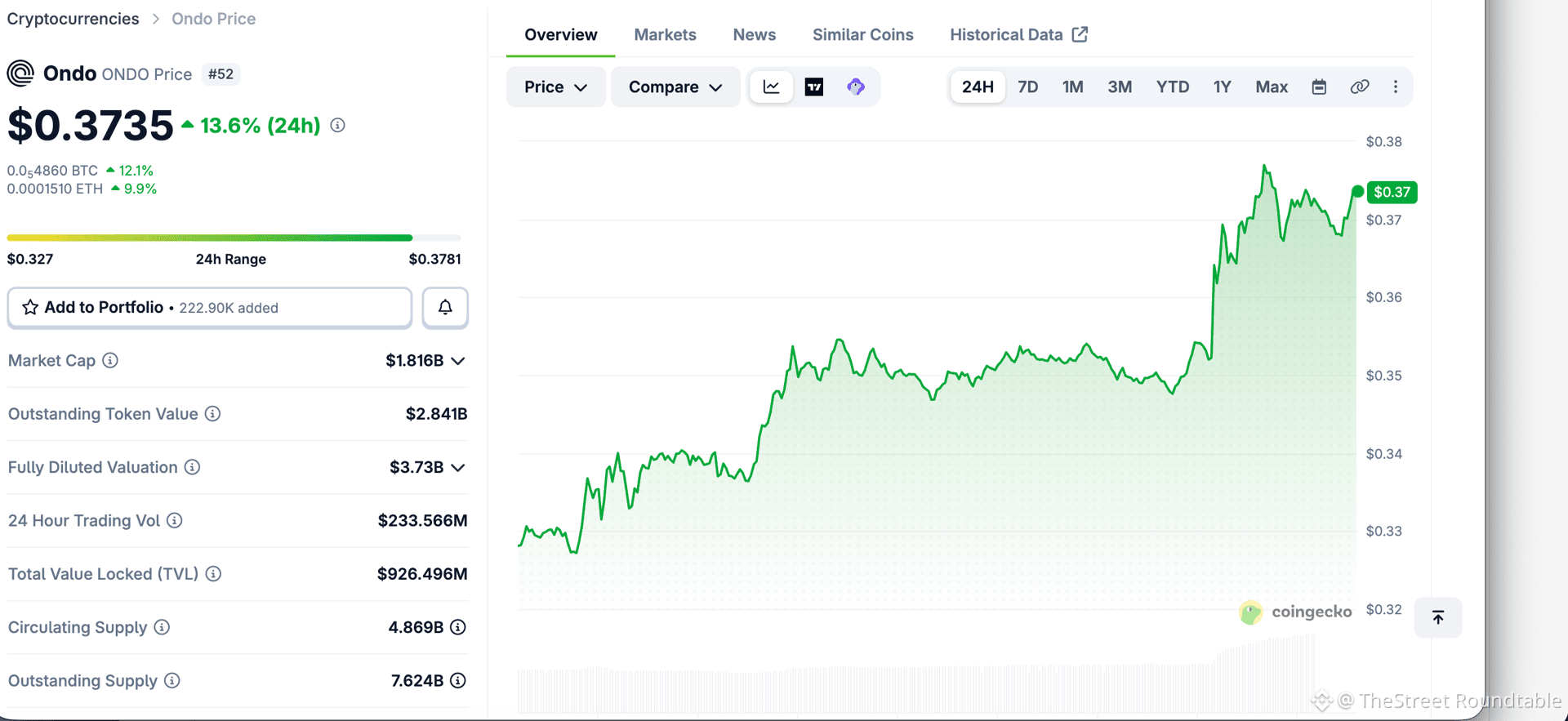
Статья
Ondo token jumps as SEC opens door to onchain stock tradingOndo Finance CEO on why TradFi giants make Ondo stronger (4:23)
Ondo Finance‘s native ONDO token jumped Thursday after the U.S. Securities and Exchange Commission introduced a new framework that could make it easier for regulated platforms to bring tokenized stocks onto blockchain networks.
ONDO was trading at around $0.3703, up 13.6% over 24 hours, according to the market data shown at the time of writing.
Source: Coingecko
The move came after the SEC issued its long-awaited ‘Innovation Exemption,’ granting temporary, conditional relief to Tokenized Securities Venues, or TSVs, that want to facilitate trading in tokenized National Market System stocks.
The exemption allows qualifying venues to operate without being treated as traditional exchanges under certain conditions. It also provides conditional relief for certain liquidity providers operating automated market maker pools.
For Ondo, the development lands directly in the market it has been building around tokenized securities.
Related: Ondo takes tokenized assets to Australia in new market push
Why this matters for Ondo
Ondo Finance operates Ondo Stocks, a platform focused on tokenized stocks and exchange-traded funds. The company has been building infrastructure that connects blockchain-based assets with traditional financial markets.
The platform allows eligible investors outside the U.S. to gain exposure to hundreds of U.S. stocks and ETFs through blockchain-based tokens. Ondo says its tokenized securities are backed by the corresponding underlying securities and cash in transit, with assets held through U.S.-registered broker-dealers or U.S.-chartered trust companies.
Ondo’s broker-dealer subsidiary, Oasis Pro Markets, has also received FINRA authorizations covering tokenized equities and funds for U.S. investors, including secondary trading and settlement using fiat currencies or supported stablecoins.
The company has also expanded its tokenized stock products across Ethereum, BNB Chain and Solana, while enabling trading through various wallets, exchanges and DeFi applications.
That makes the SEC’s latest action particularly relevant.
The regulator said its ‘Innovation Exemption’ will allow eligible TSVs to use permissioned automated market makers and liquidity pools to facilitate secondary trading of tokenized NMS stocks.
The relief is temporary and will expire five years after publication. It also comes with several conditions, including limits on the number of stocks and trading volume, requirements around shareholder rights and public disclosures, and rules requiring tokenized stocks to stop trading when the underlying stock is halted on its primary exchange.
Trending on TheStreet Roundtable:
Satoshi-era Bitcoin stash untouched for 16 years, here’s what it’s worth now
Americans could soon trade U.S. stocks like crypto
Elon Musk is finally putting Dogecoin on the moon today
Ondo welcomes the move
Peter Curley, head of global regulatory affairs at Ondo Finance, told TheStreet Roundtable that the SEC’s action demonstrated that the agency could advance tokenization using its existing authority.
“Two days after the CLARITY Act failed in the Senate, the SEC issued its Innovation Exemption on its own authority. Chair Atkins called it a step forward ‘within its statutory authority.’ That's the proof point we've pointed to all along: the SEC didn't need new legislation, and it just showed it.”
Curley said Ondo views the exemption as a step toward permanent rules and intends to participate in the SEC’s continuing discussion around tokenized securities.
The SEC is now seeking public comments on the exemption and potential next steps.
For Ondo, the announcement provides another regulatory building block for its effort to bring stocks and other traditional assets onto blockchain infrastructure.
Related: HIVE's BUZZ HPC appoints 50-year capital markets veteran to its board
Ondo token jumps as SEC opens door to onchain stock trading
Ondo Finance CEO on why TradFi giants make Ondo stronger (4:23)
Ondo Finance‘s native ONDO token jumped Thursday after the U.S. Securities and Exchange Commission introduced a new framework that could make it easier for regulated platforms to bring tokenized stocks onto blockchain networks.
ONDO was trading at around $0.3703, up 13.6% over 24 hours, according to the market data shown at the time of writing.
Source: Coingecko
The move came after the SEC issued its long-awaited ‘Innovation Exemption,’ granting temporary, conditional relief to Tokenized Securities Venues, or TSVs, that want to facilitate trading in tokenized National Market System stocks.
The exemption allows qualifying venues to operate without being treated as traditional exchanges under certain conditions. It also provides conditional relief for certain liquidity providers operating automated market maker pools.
For Ondo, the development lands directly in the market it has been building around tokenized securities.
Related: Ondo takes tokenized assets to Australia in new market push
Why this matters for Ondo
Ondo Finance operates Ondo Stocks, a platform focused on tokenized stocks and exchange-traded funds. The company has been building infrastructure that connects blockchain-based assets with traditional financial markets.
The platform allows eligible investors outside the U.S. to gain exposure to hundreds of U.S. stocks and ETFs through blockchain-based tokens. Ondo says its tokenized securities are backed by the corresponding underlying securities and cash in transit, with assets held through U.S.-registered broker-dealers or U.S.-chartered trust companies.
Ondo’s broker-dealer subsidiary, Oasis Pro Markets, has also received FINRA authorizations covering tokenized equities and funds for U.S. investors, including secondary trading and settlement using fiat currencies or supported stablecoins.
The company has also expanded its tokenized stock products across Ethereum, BNB Chain and Solana, while enabling trading through various wallets, exchanges and DeFi applications.
That makes the SEC’s latest action particularly relevant.
The regulator said its ‘Innovation Exemption’ will allow eligible TSVs to use permissioned automated market makers and liquidity pools to facilitate secondary trading of tokenized NMS stocks.
The relief is temporary and will expire five years after publication. It also comes with several conditions, including limits on the number of stocks and trading volume, requirements around shareholder rights and public disclosures, and rules requiring tokenized stocks to stop trading when the underlying stock is halted on its primary exchange.
Trending on TheStreet Roundtable:
Satoshi-era Bitcoin stash untouched for 16 years, here’s what it’s worth now
Americans could soon trade U.S. stocks like crypto
Elon Musk is finally putting Dogecoin on the moon today
Ondo welcomes the move
Peter Curley, head of global regulatory affairs at Ondo Finance, told TheStreet Roundtable that the SEC’s action demonstrated that the agency could advance tokenization using its existing authority.
“Two days after the CLARITY Act failed in the Senate, the SEC issued its Innovation Exemption on its own authority. Chair Atkins called it a step forward ‘within its statutory authority.’ That's the proof point we've pointed to all along: the SEC didn't need new legislation, and it just showed it.”
Curley said Ondo views the exemption as a step toward permanent rules and intends to participate in the SEC’s continuing discussion around tokenized securities.
The SEC is now seeking public comments on the exemption and potential next steps.
For Ondo, the announcement provides another regulatory building block for its effort to bring stocks and other traditional assets onto blockchain infrastructure.
Related: HIVE's BUZZ HPC appoints 50-year capital markets veteran to its board
Ondo Finance‘s native ONDO token jumped Thursday after the U.S. Securities and Exchange Commission introduced a new framework that could make it easier for regulated platforms to bring tokenized stocks onto blockchain networks.
ONDO was trading at around $0.3703, up 13.6% over 24 hours, according to the market data shown at the time of writing.
Source: Coingecko
The move came after the SEC issued its long-awaited ‘Innovation Exemption,’ granting temporary, conditional relief to Tokenized Securities Venues, or TSVs, that want to facilitate trading in tokenized National Market System stocks.
The exemption allows qualifying venues to operate without being treated as traditional exchanges under certain conditions. It also provides conditional relief for certain liquidity providers operating automated market maker pools.
For Ondo, the development lands directly in the market it has been building around tokenized securities.
Related: Ondo takes tokenized assets to Australia in new market push
Why this matters for Ondo
Ondo Finance operates Ondo Stocks, a platform focused on tokenized stocks and exchange-traded funds. The company has been building infrastructure that connects blockchain-based assets with traditional financial markets.
The platform allows eligible investors outside the U.S. to gain exposure to hundreds of U.S. stocks and ETFs through blockchain-based tokens. Ondo says its tokenized securities are backed by the corresponding underlying securities and cash in transit, with assets held through U.S.-registered broker-dealers or U.S.-chartered trust companies.
Ondo’s broker-dealer subsidiary, Oasis Pro Markets, has also received FINRA authorizations covering tokenized equities and funds for U.S. investors, including secondary trading and settlement using fiat currencies or supported stablecoins.
The company has also expanded its tokenized stock products across Ethereum, BNB Chain and Solana, while enabling trading through various wallets, exchanges and DeFi applications.
That makes the SEC’s latest action particularly relevant.
The regulator said its ‘Innovation Exemption’ will allow eligible TSVs to use permissioned automated market makers and liquidity pools to facilitate secondary trading of tokenized NMS stocks.
The relief is temporary and will expire five years after publication. It also comes with several conditions, including limits on the number of stocks and trading volume, requirements around shareholder rights and public disclosures, and rules requiring tokenized stocks to stop trading when the underlying stock is halted on its primary exchange.
Trending on TheStreet Roundtable:
Satoshi-era Bitcoin stash untouched for 16 years, here’s what it’s worth now
Americans could soon trade U.S. stocks like crypto
Elon Musk is finally putting Dogecoin on the moon today
Ondo welcomes the move
Peter Curley, head of global regulatory affairs at Ondo Finance, told TheStreet Roundtable that the SEC’s action demonstrated that the agency could advance tokenization using its existing authority.
“Two days after the CLARITY Act failed in the Senate, the SEC issued its Innovation Exemption on its own authority. Chair Atkins called it a step forward ‘within its statutory authority.’ That's the proof point we've pointed to all along: the SEC didn't need new legislation, and it just showed it.”
Curley said Ondo views the exemption as a step toward permanent rules and intends to participate in the SEC’s continuing discussion around tokenized securities.
The SEC is now seeking public comments on the exemption and potential next steps.
For Ondo, the announcement provides another regulatory building block for its effort to bring stocks and other traditional assets onto blockchain infrastructure.
Related: HIVE's BUZZ HPC appoints 50-year capital markets veteran to its board
349
Войдите, чтобы посмотреть больше материала
Присоединяйтесь к пользователям криптовалют по всему миру на Binance Square
⚡️ Получайте новейшую и полезную информацию о криптоактивах.
💬 Нам доверяет крупнейшая в мире криптобиржа.
👍 Получите достоверные аналитические данные от верифицированных создателей контента.
Эл. почта/номер телефона
В тренде
SaylorHintsStrategyBitcoinBuy
Просмотров: 2.3M
12,399 обсуждают
#saylorhintsstrategybitcoinbuy
🚨 SAYLOR JUST DROPPED THE SUNDAY $BTC HINT 👀
Michael Saylor reposted his usual Bitcoin chart again.
If history repeats, those orange dots could be signaling another Strategy BTC purchase is coming. 🟠
And when Saylor buys, the market watches.
🐋 Massive BTC holdings
💰 Continued accumulation strategy
📈 Potential short-term sentiment boost
But here’s the key:
A repost is NOT confirmation of a purchase.
The real signal comes when Strategy officially reports the transaction.
🔥 If another major BTC buy is announced, will the market react this time?
Or is Saylor’s accumulation becoming so routine that traders barely react anymore?
👀 Watch the announcement.
$MSTRB
#BTC #strategy #crypto #BitcoinNews
sdatta
·Лайков: 5
·Просмотров: 6.1k
BOJRaisesRatesTo31YearHigh
Просмотров: 249,098
3,263 обсуждают
BuffettStepsDownAsBerkshireChairman
Просмотров: 120,402
1,743 обсуждают