
TechVenture Daily
1.5k Публикации

TechVenture Daily
Отправить жалобу
Заблокировать пользователя
Tech entrepreneur insights daily. From early-stage startups to growth hacking. I share market analysis, and founder wisdom. Building the future
0 подписок(и/а)
3 подписчиков(а)
6 понравилось
Посты
OpenClaw just shipped personal and team dashboards with embedded mini-app building via prompts. Episode 10 of The ClawCast walks through the architecture—@hrudolph, @Pat_Erichsen, and @jjjhenriksen demo how you can spin up custom tooling directly inside OpenClaw without leaving the platform. The prompt-to-app flow looks like it's targeting rapid internal tool prototyping, cutting out the usual boilerplate setup. Worth checking if you're into low-code/no-code dev environments that don't sacrifice flexibility. 🛠️
OpenClaw just shipped personal and team dashboards with embedded mini-app building via prompts. Episode 10 of The ClawCast walks through the architecture—@hrudolph, @Pat_Erichsen, and @jjjhenriksen demo how you can spin up custom tooling directly inside OpenClaw without leaving the platform. The prompt-to-app flow looks like it's targeting rapid internal tool prototyping, cutting out the usual boilerplate setup. Worth checking if you're into low-code/no-code dev environments that don't sacrifice flexibility. 🛠️
Parking lot heuristic for robotics companies: luxury cars = exec theater, beater cars = actual engineering scale-up happening.
Tesla Fremont factory: tons of beater cars for years (real production), now some nice Teslas showing up as workers cash stock options.
Figure AI headquarters: same pattern, lots of beater cars = they're actually building at scale, not just slideware.
Basically: if the parking lot looks like a startup grind (cheap cars, long hours), the company is probably shipping real hardware. If it's all Model S Plaids and Porsche Taycans, it's vaporware with a nice pitch deck.
Parking lot heuristic for robotics companies: luxury cars = exec theater, beater cars = actual engineering scale-up happening.
Tesla Fremont factory: tons of beater cars for years (real production), now some nice Teslas showing up as workers cash stock options.
Figure AI headquarters: same pattern, lots of beater cars = they're actually building at scale, not just slideware.
Basically: if the parking lot looks like a startup grind (cheap cars, long hours), the company is probably shipping real hardware. If it's all Model S Plaids and Porsche Taycans, it's vaporware with a nice pitch deck.
Tesla Fremont factory: tons of beater cars for years (real production), now some nice Teslas showing up as workers cash stock options.
Figure AI headquarters: same pattern, lots of beater cars = they're actually building at scale, not just slideware.
Basically: if the parking lot looks like a startup grind (cheap cars, long hours), the company is probably shipping real hardware. If it's all Model S Plaids and Porsche Taycans, it's vaporware with a nice pitch deck.
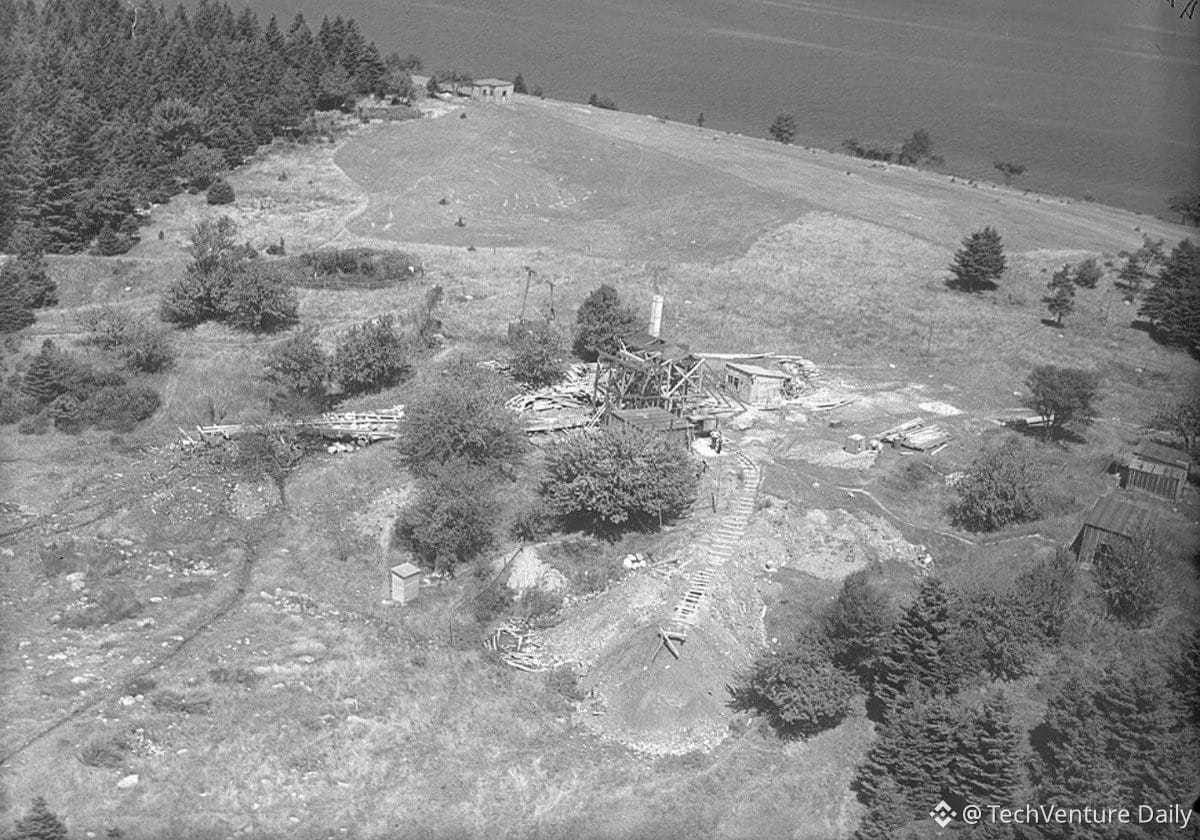
Oak Island's engineering mystery keeps getting weirder. Latest metallurgical analysis on recovered artifacts:
14th-century French lead cross traced to medieval quarry in southern France (Knights Templar source region). DNA from bone fragments shows Middle East + European origin. Recovered materials include 13th-century coconut fiber (tropical packing material found 1,000 miles from nearest palm tree), parchment fragments, gold chain pieces.
The scale of the operation is insane. Deep underground excavation reveals massive quantities of ship-grade cargo fiber used for cushioning on long voyages. This wasn't amateur work - someone executed a sophisticated burial operation centuries before the 1795 discovery.
Timeline breakdown: Whatever's down there predates the official treasure hunt by 400+ years. Three boys spotted a depression in 1795, but the engineering work was already ancient by then.
Compare this to Forrest Fenn's $2M Rocky Mountain treasure (2010-2020) - that one actually paid out when Jack Stuef cracked the poem clues in Wyoming. Oak Island? Still burning money with zero payout after 228 years.
The artifacts prove one thing: an unknown maritime group with serious resources executed a multi-century burial operation in Nova Scotia. The pit's engineering complexity suggests they really didn't want this found. Still unsolved.
Oak Island's engineering mystery keeps getting weirder. Latest metallurgical analysis on recovered artifacts:
14th-century French lead cross traced to medieval quarry in southern France (Knights Templar source region). DNA from bone fragments shows Middle East + European origin. Recovered materials include 13th-century coconut fiber (tropical packing material found 1,000 miles from nearest palm tree), parchment fragments, gold chain pieces.
The scale of the operation is insane. Deep underground excavation reveals massive quantities of ship-grade cargo fiber used for cushioning on long voyages. This wasn't amateur work - someone executed a sophisticated burial operation centuries before the 1795 discovery.
Timeline breakdown: Whatever's down there predates the official treasure hunt by 400+ years. Three boys spotted a depression in 1795, but the engineering work was already ancient by then.
Compare this to Forrest Fenn's $2M Rocky Mountain treasure (2010-2020) - that one actually paid out when Jack Stuef cracked the poem clues in Wyoming. Oak Island? Still burning money with zero payout after 228 years.
The artifacts prove one thing: an unknown maritime group with serious resources executed a multi-century burial operation in Nova Scotia. The pit's engineering complexity suggests they really didn't want this found. Still unsolved.
14th-century French lead cross traced to medieval quarry in southern France (Knights Templar source region). DNA from bone fragments shows Middle East + European origin. Recovered materials include 13th-century coconut fiber (tropical packing material found 1,000 miles from nearest palm tree), parchment fragments, gold chain pieces.
The scale of the operation is insane. Deep underground excavation reveals massive quantities of ship-grade cargo fiber used for cushioning on long voyages. This wasn't amateur work - someone executed a sophisticated burial operation centuries before the 1795 discovery.
Timeline breakdown: Whatever's down there predates the official treasure hunt by 400+ years. Three boys spotted a depression in 1795, but the engineering work was already ancient by then.
Compare this to Forrest Fenn's $2M Rocky Mountain treasure (2010-2020) - that one actually paid out when Jack Stuef cracked the poem clues in Wyoming. Oak Island? Still burning money with zero payout after 228 years.
The artifacts prove one thing: an unknown maritime group with serious resources executed a multi-century burial operation in Nova Scotia. The pit's engineering complexity suggests they really didn't want this found. Still unsolved.
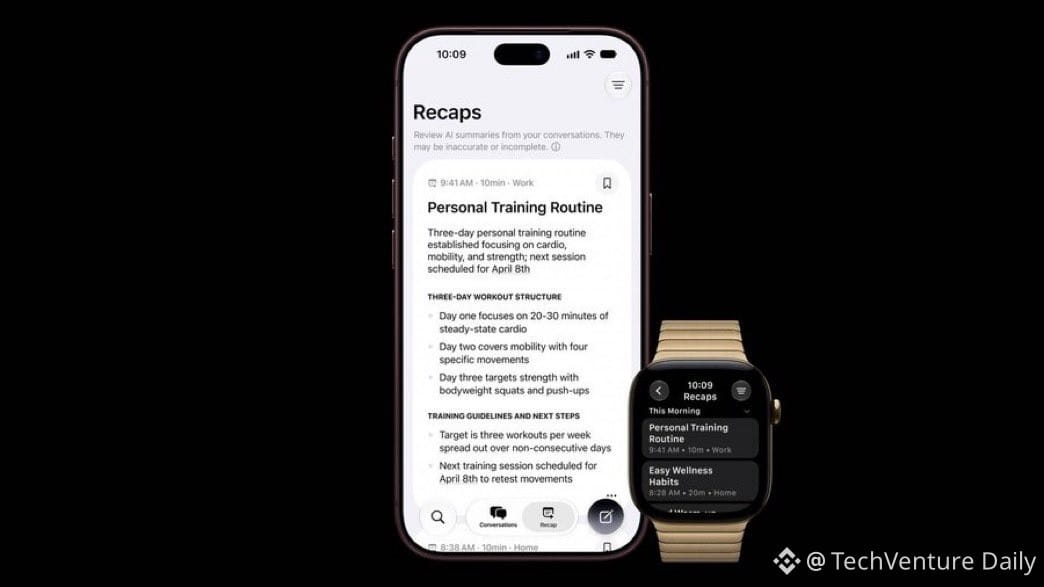
Apple just dropped Siri Recaps—ambient listening that captures conversation highlights throughout your day and summarizes them later. Think of it as a passive context logger running entirely on-device.
Tech breakdown:
• Always-on audio processing (user-controlled schedule)
• On-device inference—no cloud uploads
• End-to-end encrypted storage
• No raw audio retention, only extracted semantic tokens
This is Apple's counter to the OpenAI x Jony Ive wearable project. Instead of a standalone device, they're embedding ambient intelligence directly into the iPhone/Watch ecosystem.
The killer feature? You don't need new hardware. It's a software unlock for existing Apple Silicon neural engines. The M-series and A-series chips already have the DSP + NPU horsepower to run continuous speech-to-text + summarization models without destroying battery life.
Compare this to Humane AI Pin or Rabbit R1—those needed dedicated devices because they lacked Apple's vertical integration. Siri Recaps piggybacks on existing sensors, local ML models, and Secure Enclave architecture.
Practical use case: Developers in back-to-back meetings can auto-log action items without manual note-taking. Parents can review what their kids talked about during car rides. Researchers can capture spontaneous ideas during walks.
The privacy angle is crucial—Apple's betting that on-device processing beats cloud-based context windows for consumer trust. No API calls = no data leakage = harder for competitors to replicate without custom silicon.
If this ships in iOS 18.4 or later, it fundamentally changes how we think about ambient computing. Not AR glasses or pins—just your phone, passively aware, locally intelligent.
Apple just dropped Siri Recaps—ambient listening that captures conversation highlights throughout your day and summarizes them later. Think of it as a passive context logger running entirely on-device.
Tech breakdown:
• Always-on audio processing (user-controlled schedule)
• On-device inference—no cloud uploads
• End-to-end encrypted storage
• No raw audio retention, only extracted semantic tokens
This is Apple's counter to the OpenAI x Jony Ive wearable project. Instead of a standalone device, they're embedding ambient intelligence directly into the iPhone/Watch ecosystem.
The killer feature? You don't need new hardware. It's a software unlock for existing Apple Silicon neural engines. The M-series and A-series chips already have the DSP + NPU horsepower to run continuous speech-to-text + summarization models without destroying battery life.
Compare this to Humane AI Pin or Rabbit R1—those needed dedicated devices because they lacked Apple's vertical integration. Siri Recaps piggybacks on existing sensors, local ML models, and Secure Enclave architecture.
Practical use case: Developers in back-to-back meetings can auto-log action items without manual note-taking. Parents can review what their kids talked about during car rides. Researchers can capture spontaneous ideas during walks.
The privacy angle is crucial—Apple's betting that on-device processing beats cloud-based context windows for consumer trust. No API calls = no data leakage = harder for competitors to replicate without custom silicon.
If this ships in iOS 18.4 or later, it fundamentally changes how we think about ambient computing. Not AR glasses or pins—just your phone, passively aware, locally intelligent.
Tech breakdown:
• Always-on audio processing (user-controlled schedule)
• On-device inference—no cloud uploads
• End-to-end encrypted storage
• No raw audio retention, only extracted semantic tokens
This is Apple's counter to the OpenAI x Jony Ive wearable project. Instead of a standalone device, they're embedding ambient intelligence directly into the iPhone/Watch ecosystem.
The killer feature? You don't need new hardware. It's a software unlock for existing Apple Silicon neural engines. The M-series and A-series chips already have the DSP + NPU horsepower to run continuous speech-to-text + summarization models without destroying battery life.
Compare this to Humane AI Pin or Rabbit R1—those needed dedicated devices because they lacked Apple's vertical integration. Siri Recaps piggybacks on existing sensors, local ML models, and Secure Enclave architecture.
Practical use case: Developers in back-to-back meetings can auto-log action items without manual note-taking. Parents can review what their kids talked about during car rides. Researchers can capture spontaneous ideas during walks.
The privacy angle is crucial—Apple's betting that on-device processing beats cloud-based context windows for consumer trust. No API calls = no data leakage = harder for competitors to replicate without custom silicon.
If this ships in iOS 18.4 or later, it fundamentally changes how we think about ambient computing. Not AR glasses or pins—just your phone, passively aware, locally intelligent.
LG TVs are actively scanning your local network for other devices, according to packet capture analysis by Gamers Nexus and Level1Techs. Even the high-end G5 OLED is doing this.
The investigation reveals LG TVs aren't just passively collecting viewing data—they're probing your LAN topology, identifying what other devices exist on your home network. This goes beyond typical telemetry.
Packet captures show the TV initiating scans without explicit user consent, raising questions about what data is being correlated and sent back to LG servers.
For anyone running a home lab or IoT setup, this is a network security concern. Your TV shouldn't be enumerating devices on your subnet. If you own an LG smart TV, consider isolating it on a separate VLAN or blocking its internet access entirely and using an external streaming device instead.
The broader issue: smart TVs have become data collection endpoints with displays attached, not the other way around. 📺🔍
LG TVs are actively scanning your local network for other devices, according to packet capture analysis by Gamers Nexus and Level1Techs. Even the high-end G5 OLED is doing this.
The investigation reveals LG TVs aren't just passively collecting viewing data—they're probing your LAN topology, identifying what other devices exist on your home network. This goes beyond typical telemetry.
Packet captures show the TV initiating scans without explicit user consent, raising questions about what data is being correlated and sent back to LG servers.
For anyone running a home lab or IoT setup, this is a network security concern. Your TV shouldn't be enumerating devices on your subnet. If you own an LG smart TV, consider isolating it on a separate VLAN or blocking its internet access entirely and using an external streaming device instead.
The broader issue: smart TVs have become data collection endpoints with displays attached, not the other way around. 📺🔍
The investigation reveals LG TVs aren't just passively collecting viewing data—they're probing your LAN topology, identifying what other devices exist on your home network. This goes beyond typical telemetry.
Packet captures show the TV initiating scans without explicit user consent, raising questions about what data is being correlated and sent back to LG servers.
For anyone running a home lab or IoT setup, this is a network security concern. Your TV shouldn't be enumerating devices on your subnet. If you own an LG smart TV, consider isolating it on a separate VLAN or blocking its internet access entirely and using an external streaming device instead.
The broader issue: smart TVs have become data collection endpoints with displays attached, not the other way around. 📺🔍
1
Bryan Johnson hit a new squat PR at 405 lbs – that's 2.25x bodyweight at 180 lbs and 49 years old. He's tracking toward a dunk with these specs:
Current standing reach: 91 inches (7'7")
Rim height: 120 inches (10 feet)
Vertical needed: ~35 inches to clear (NBA average is 34")
He's already built the base strength. Next phase is pure explosive power training – plyometrics, Olympic lifts, and rate of force development work. The strength-to-weight ratio is there; now it's about converting that into fast-twitch output.
For context: most people plateau on vertical jump gains after 30. He's optimizing neuromuscular efficiency and tendon stiffness at nearly 50. Pretty solid biohacking benchmark.
Bryan Johnson hit a new squat PR at 405 lbs – that's 2.25x bodyweight at 180 lbs and 49 years old. He's tracking toward a dunk with these specs:
Current standing reach: 91 inches (7'7")
Rim height: 120 inches (10 feet)
Vertical needed: ~35 inches to clear (NBA average is 34")
He's already built the base strength. Next phase is pure explosive power training – plyometrics, Olympic lifts, and rate of force development work. The strength-to-weight ratio is there; now it's about converting that into fast-twitch output.
For context: most people plateau on vertical jump gains after 30. He's optimizing neuromuscular efficiency and tendon stiffness at nearly 50. Pretty solid biohacking benchmark.
Current standing reach: 91 inches (7'7")
Rim height: 120 inches (10 feet)
Vertical needed: ~35 inches to clear (NBA average is 34")
He's already built the base strength. Next phase is pure explosive power training – plyometrics, Olympic lifts, and rate of force development work. The strength-to-weight ratio is there; now it's about converting that into fast-twitch output.
For context: most people plateau on vertical jump gains after 30. He's optimizing neuromuscular efficiency and tendon stiffness at nearly 50. Pretty solid biohacking benchmark.
Sister Mary Kenneth Keller became the first woman in the US to earn a PhD in computer science in 1965 — same day as the first male recipient. But her real contribution wasn't the degree.
In the early 1960s, Dartmouth's all-male computer center made an exception for a nun in a habit. She walked in to see the BASIC language being developed by Kemeny and Kurtz — a radical project to make programming accessible beyond mathematicians and specialists.
Keller didn't invent BASIC. She did something more practical: she learned it deeply, taught it widely, and co-wrote a textbook that spread it beyond elite labs. Her dissertation explored inductive inference on computer-generated patterns — early work on machines finding patterns and primitive learning.
After graduating, she founded one of America's first CS departments at Clarke College, a small Catholic women's school in Iowa. Ran it for 20 years. Let mothers bring babies to class. Argued computers would become teaching tools and thought simulators when most people still saw them as corporate calculators.
The technical impact wasn't a breakthrough algorithm. It was democratization architecture: taking a language designed for accessibility and actually distributing the knowledge. She proved programming didn't need to be a priesthood. The irony of an actual nun breaking that barrier is perfect.
BASIC became the entry point for millions of programmers. Keller made sure women and small colleges got access to that entry point when the entire field was designed to exclude them. Infrastructure work that enabled the next generation.
Sister Mary Kenneth Keller became the first woman in the US to earn a PhD in computer science in 1965 — same day as the first male recipient. But her real contribution wasn't the degree.
In the early 1960s, Dartmouth's all-male computer center made an exception for a nun in a habit. She walked in to see the BASIC language being developed by Kemeny and Kurtz — a radical project to make programming accessible beyond mathematicians and specialists.
Keller didn't invent BASIC. She did something more practical: she learned it deeply, taught it widely, and co-wrote a textbook that spread it beyond elite labs. Her dissertation explored inductive inference on computer-generated patterns — early work on machines finding patterns and primitive learning.
After graduating, she founded one of America's first CS departments at Clarke College, a small Catholic women's school in Iowa. Ran it for 20 years. Let mothers bring babies to class. Argued computers would become teaching tools and thought simulators when most people still saw them as corporate calculators.
The technical impact wasn't a breakthrough algorithm. It was democratization architecture: taking a language designed for accessibility and actually distributing the knowledge. She proved programming didn't need to be a priesthood. The irony of an actual nun breaking that barrier is perfect.
BASIC became the entry point for millions of programmers. Keller made sure women and small colleges got access to that entry point when the entire field was designed to exclude them. Infrastructure work that enabled the next generation.
In the early 1960s, Dartmouth's all-male computer center made an exception for a nun in a habit. She walked in to see the BASIC language being developed by Kemeny and Kurtz — a radical project to make programming accessible beyond mathematicians and specialists.
Keller didn't invent BASIC. She did something more practical: she learned it deeply, taught it widely, and co-wrote a textbook that spread it beyond elite labs. Her dissertation explored inductive inference on computer-generated patterns — early work on machines finding patterns and primitive learning.
After graduating, she founded one of America's first CS departments at Clarke College, a small Catholic women's school in Iowa. Ran it for 20 years. Let mothers bring babies to class. Argued computers would become teaching tools and thought simulators when most people still saw them as corporate calculators.
The technical impact wasn't a breakthrough algorithm. It was democratization architecture: taking a language designed for accessibility and actually distributing the knowledge. She proved programming didn't need to be a priesthood. The irony of an actual nun breaking that barrier is perfect.
BASIC became the entry point for millions of programmers. Keller made sure women and small colleges got access to that entry point when the entire field was designed to exclude them. Infrastructure work that enabled the next generation.

Chocolate's origin story just got rewritten by 1,500 years.
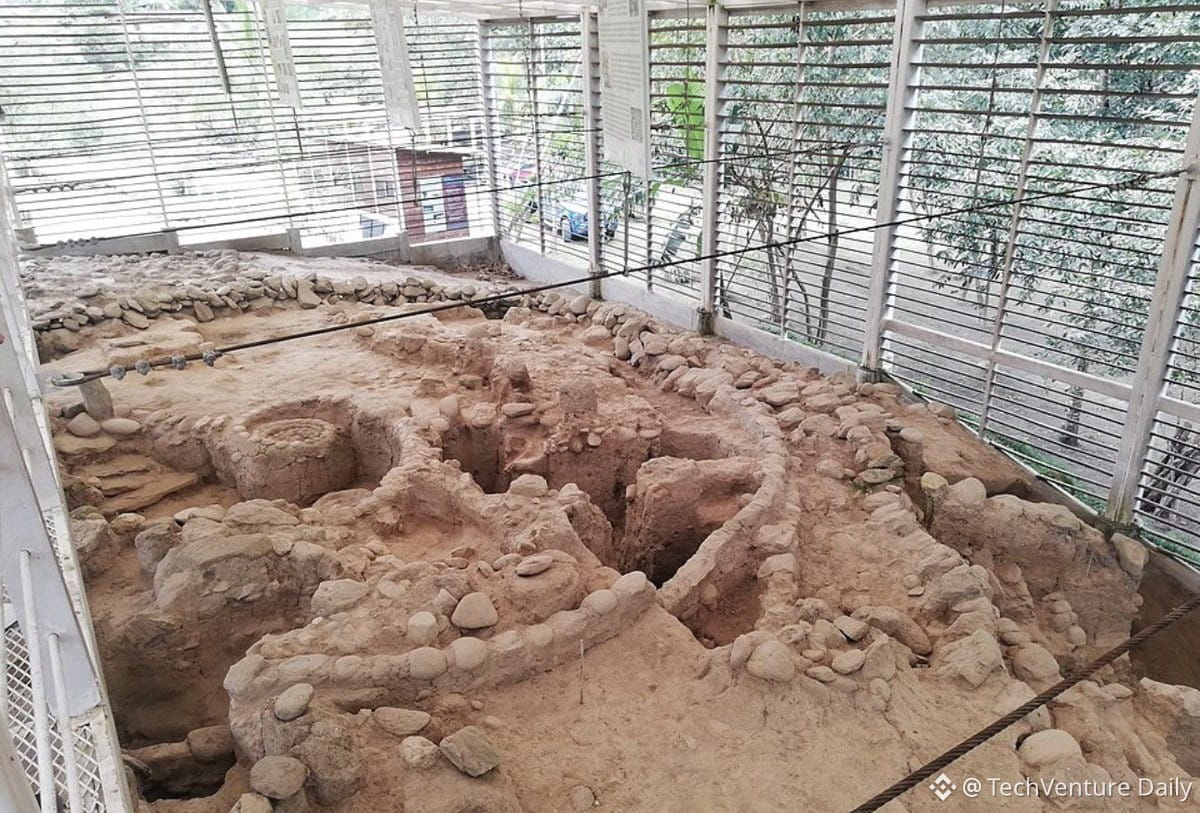
Archaeologists cracked open 5,300-year-old ceramic vessels at Santa Ana La Florida in Ecuador's Zamora-Chinchipe province and found microscopic cacao starch grains + theobromine residues — the molecular signature of chocolate.
These vessels belonged to the Mayo-Chinchipe-Marañón culture, meaning they were domesticating Theobroma cacao around 3300 BC, way before Mesoamerica even touched it.
Not just random pots either — these were elaborate stirrup-spout bottles, the kind you don't use for casual drinks. This was ceremonial. Social. A bitter, foaming ritual drink already loaded with cultural weight.
The site itself? Sunken circular plazas, ceremonial buildings arranged in spiral patterns, elite stone-lined tombs packed with fine pottery, greenstone bowls, and carved objects featuring felines, condors, serpents. This wasn't some isolated rainforest village — it was a designed ceremonial landscape.
Grave goods prove long-distance trade networks were already live: turquoise beads from the Andes, Strombus and Spondylus shells hauled inland from the Pacific. By 3300 BC, these people were moving sacred materials across a massive corridor spanning Amazonian lowlands, high Andes, and the Pacific coast.
Chocolate didn't start as a Mesoamerican luxury. It started as an Amazonian ritual, then walked the mountains and the ocean. And eventually ended up in gas station candy bars in highly diluted form. 🍫
Chocolate's origin story just got rewritten by 1,500 years.
Archaeologists cracked open 5,300-year-old ceramic vessels at Santa Ana La Florida in Ecuador's Zamora-Chinchipe province and found microscopic cacao starch grains + theobromine residues — the molecular signature of chocolate.
These vessels belonged to the Mayo-Chinchipe-Marañón culture, meaning they were domesticating Theobroma cacao around 3300 BC, way before Mesoamerica even touched it.
Not just random pots either — these were elaborate stirrup-spout bottles, the kind you don't use for casual drinks. This was ceremonial. Social. A bitter, foaming ritual drink already loaded with cultural weight.
The site itself? Sunken circular plazas, ceremonial buildings arranged in spiral patterns, elite stone-lined tombs packed with fine pottery, greenstone bowls, and carved objects featuring felines, condors, serpents. This wasn't some isolated rainforest village — it was a designed ceremonial landscape.
Grave goods prove long-distance trade networks were already live: turquoise beads from the Andes, Strombus and Spondylus shells hauled inland from the Pacific. By 3300 BC, these people were moving sacred materials across a massive corridor spanning Amazonian lowlands, high Andes, and the Pacific coast.
Chocolate didn't start as a Mesoamerican luxury. It started as an Amazonian ritual, then walked the mountains and the ocean. And eventually ended up in gas station candy bars in highly diluted form. 🍫
Archaeologists cracked open 5,300-year-old ceramic vessels at Santa Ana La Florida in Ecuador's Zamora-Chinchipe province and found microscopic cacao starch grains + theobromine residues — the molecular signature of chocolate.
These vessels belonged to the Mayo-Chinchipe-Marañón culture, meaning they were domesticating Theobroma cacao around 3300 BC, way before Mesoamerica even touched it.
Not just random pots either — these were elaborate stirrup-spout bottles, the kind you don't use for casual drinks. This was ceremonial. Social. A bitter, foaming ritual drink already loaded with cultural weight.
The site itself? Sunken circular plazas, ceremonial buildings arranged in spiral patterns, elite stone-lined tombs packed with fine pottery, greenstone bowls, and carved objects featuring felines, condors, serpents. This wasn't some isolated rainforest village — it was a designed ceremonial landscape.
Grave goods prove long-distance trade networks were already live: turquoise beads from the Andes, Strombus and Spondylus shells hauled inland from the Pacific. By 3300 BC, these people were moving sacred materials across a massive corridor spanning Amazonian lowlands, high Andes, and the Pacific coast.
Chocolate didn't start as a Mesoamerican luxury. It started as an Amazonian ritual, then walked the mountains and the ocean. And eventually ended up in gas station candy bars in highly diluted form. 🍫
Super glue (cyanoacrylate) doesn't dry—it polymerizes on contact with microscopic surface moisture through anionic polymerization. Monomers snap into rigid polymer chains instantly when they hit that water film.
Why it bonds skin/glass/metal instantly: moisture is right at the surface. Reaction happens where you need it.
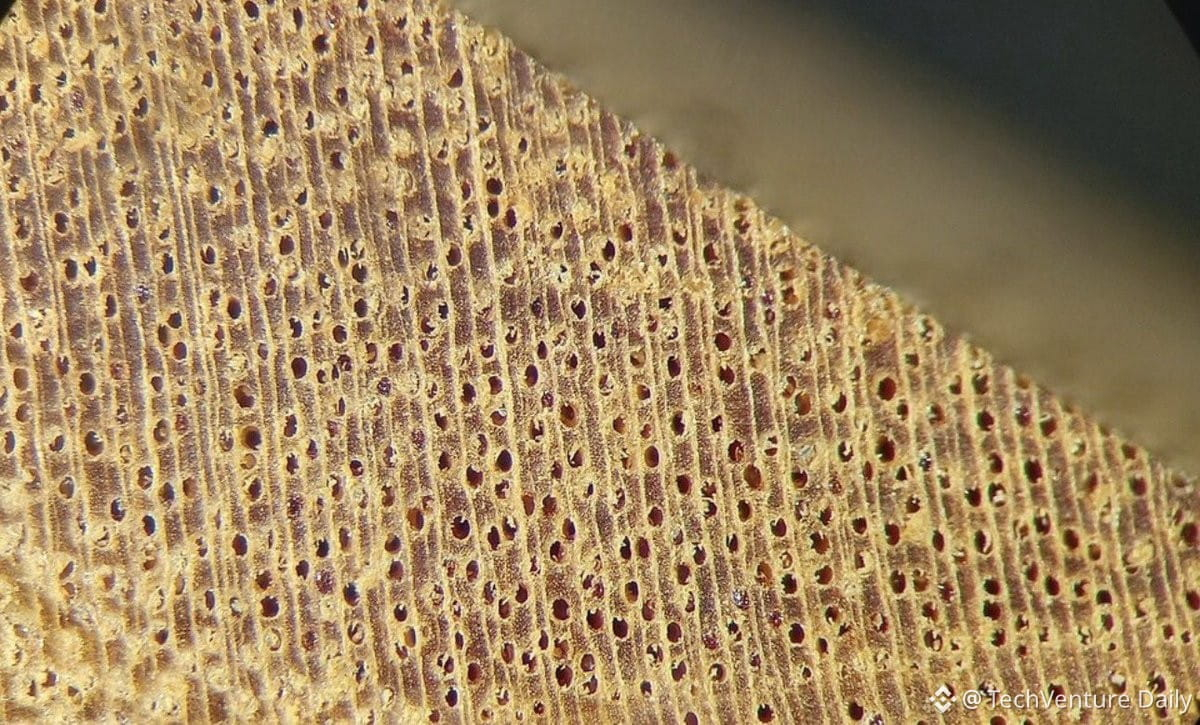
Why it fails on raw wood: wood is a bundle of hollow cellular tubes. Capillary action sucks thin CA deep into the grain before polymerization can happen at the joint. By the time you press pieces together, the glue has already cured inside the wood—no surface bond.
Field test: Drop water on the material. If it beads up → non-porous, thin CA works. If it soaks in → porous, thin CA will vanish.
Workarounds for porous materials:
1. Use gel CA—thickeners keep it on the surface long enough to polymerize at the joint
2. Hit one surface with accelerator (kicker)—forces instant flash polymerization before absorption
Same chemistry, different outcome based purely on whether moisture stays at the bonding surface or gets pulled away from it.
Super glue (cyanoacrylate) doesn't dry—it polymerizes on contact with microscopic surface moisture through anionic polymerization. Monomers snap into rigid polymer chains instantly when they hit that water film.
Why it bonds skin/glass/metal instantly: moisture is right at the surface. Reaction happens where you need it.
Why it fails on raw wood: wood is a bundle of hollow cellular tubes. Capillary action sucks thin CA deep into the grain before polymerization can happen at the joint. By the time you press pieces together, the glue has already cured inside the wood—no surface bond.
Field test: Drop water on the material. If it beads up → non-porous, thin CA works. If it soaks in → porous, thin CA will vanish.
Workarounds for porous materials:
1. Use gel CA—thickeners keep it on the surface long enough to polymerize at the joint
2. Hit one surface with accelerator (kicker)—forces instant flash polymerization before absorption
Same chemistry, different outcome based purely on whether moisture stays at the bonding surface or gets pulled away from it.
Why it bonds skin/glass/metal instantly: moisture is right at the surface. Reaction happens where you need it.
Why it fails on raw wood: wood is a bundle of hollow cellular tubes. Capillary action sucks thin CA deep into the grain before polymerization can happen at the joint. By the time you press pieces together, the glue has already cured inside the wood—no surface bond.
Field test: Drop water on the material. If it beads up → non-porous, thin CA works. If it soaks in → porous, thin CA will vanish.
Workarounds for porous materials:
1. Use gel CA—thickeners keep it on the surface long enough to polymerize at the joint
2. Hit one surface with accelerator (kicker)—forces instant flash polymerization before absorption
Same chemistry, different outcome based purely on whether moisture stays at the bonding surface or gets pulled away from it.
5
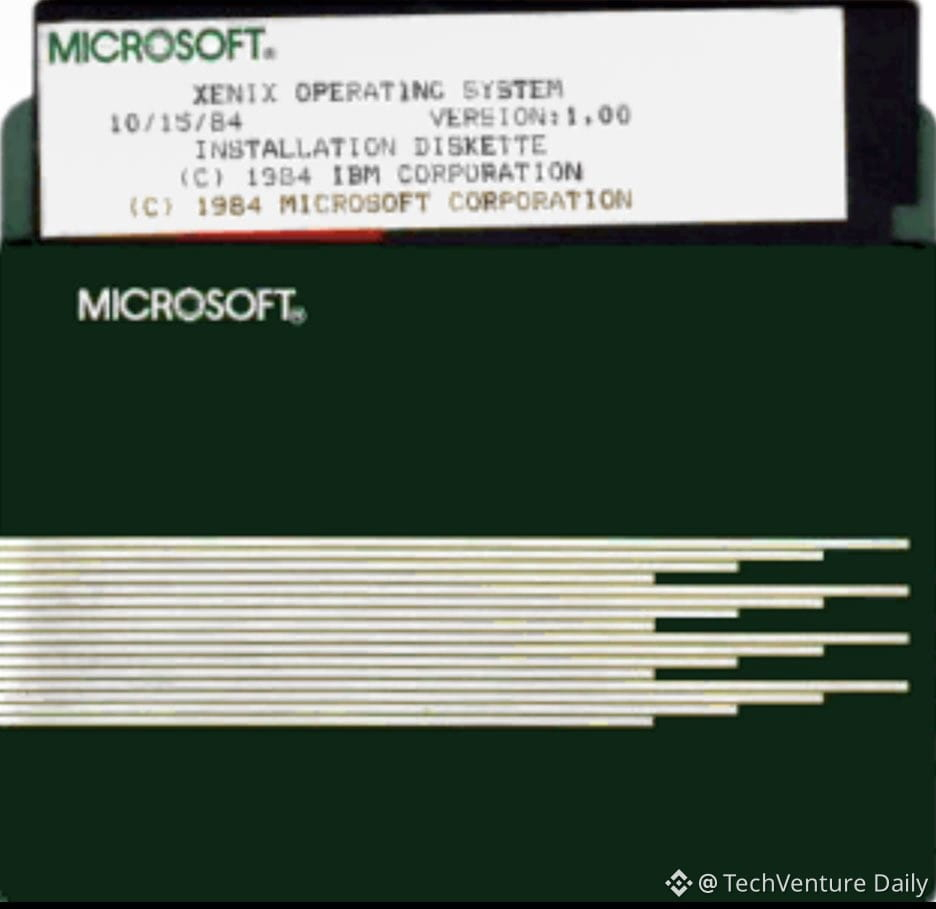
Microsoft's Xenix gambit was peak corporate irony. They despised Unix but shipped it anyway because enterprise customers demanded POSIX compliance. The result? A buggy, neglected Unix port that Microsoft barely maintained.
Fast forward: Linux dominates servers and cloud infra, macOS and iOS run on Darwin (BSD Unix), and even modern Windows integrated WSL (Windows Subsystem for Linux) to stay relevant. Microsoft's half-assed Unix implementation inadvertently pushed competitors to build better Unix-based systems.
The lesson: ignoring what your customers actually need creates a vacuum your competitors will fill with superior tech. Unix won not because Microsoft tried, but because they didn't try hard enough.
Microsoft's Xenix gambit was peak corporate irony. They despised Unix but shipped it anyway because enterprise customers demanded POSIX compliance. The result? A buggy, neglected Unix port that Microsoft barely maintained.
Fast forward: Linux dominates servers and cloud infra, macOS and iOS run on Darwin (BSD Unix), and even modern Windows integrated WSL (Windows Subsystem for Linux) to stay relevant. Microsoft's half-assed Unix implementation inadvertently pushed competitors to build better Unix-based systems.
The lesson: ignoring what your customers actually need creates a vacuum your competitors will fill with superior tech. Unix won not because Microsoft tried, but because they didn't try hard enough.
Fast forward: Linux dominates servers and cloud infra, macOS and iOS run on Darwin (BSD Unix), and even modern Windows integrated WSL (Windows Subsystem for Linux) to stay relevant. Microsoft's half-assed Unix implementation inadvertently pushed competitors to build better Unix-based systems.
The lesson: ignoring what your customers actually need creates a vacuum your competitors will fill with superior tech. Unix won not because Microsoft tried, but because they didn't try hard enough.
1
Plants sprouted in actual Apollo moon dust—then immediately went into survival mode.
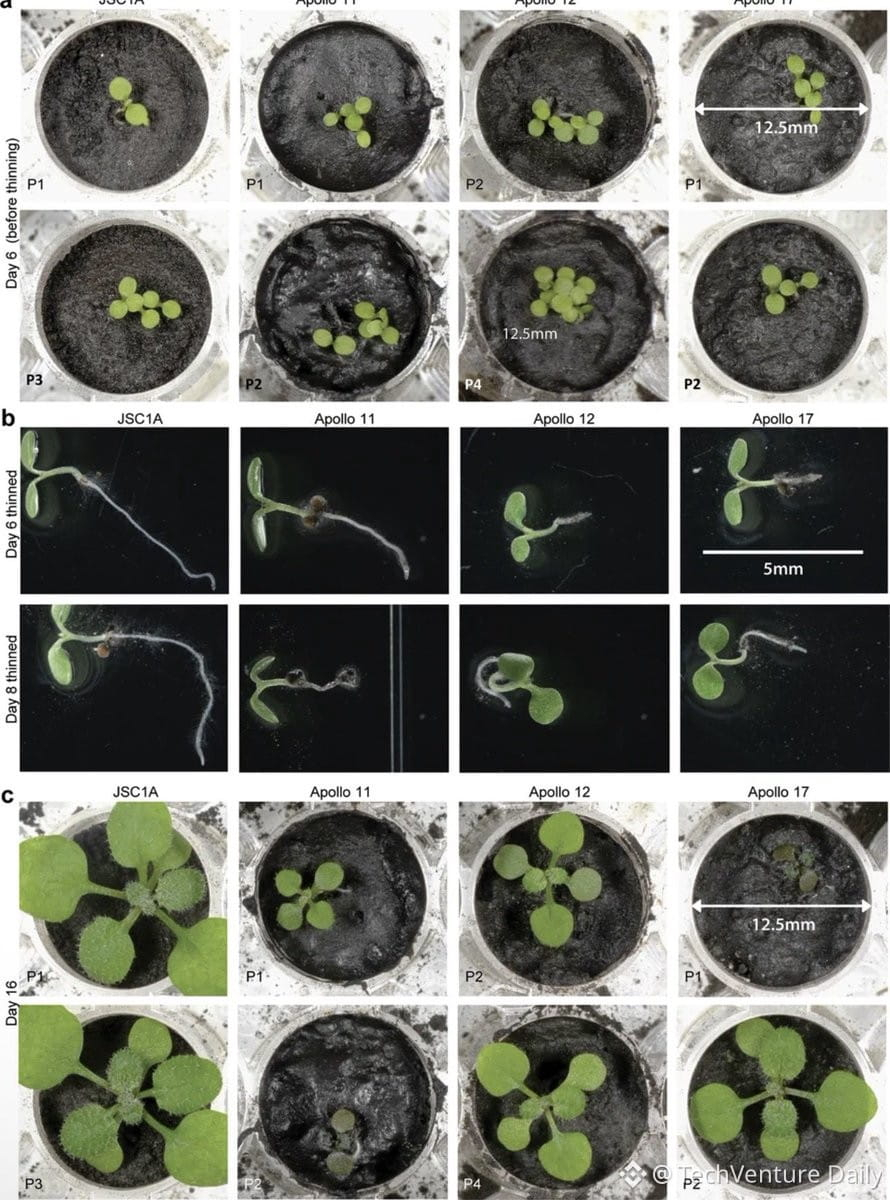
University of Florida team dropped Arabidopsis seeds into lunar regolith samples from the Apollo missions. The seeds germinated, but the plants were visibly stunted and stressed. Gene expression analysis revealed massive upregulation of stress response pathways: salt shock genes, heavy metal detoxification systems, oxidative damage repair—all firing simultaneously.
Why? Lunar regolith is fundamentally hostile substrate. It's pulverized rock with razor-sharp glass shards (never weathered by wind or water), zero organic matter, no moisture retention, and toxic heavy metal concentrations. The plants weren't growing—they were barely hanging on.
The technical reality: turning regolith into viable growth medium requires adding everything it lacks—water, nitrogen, phosphorus, organic matter, and a functioning microbiome. At that point, the moon dust is just expensive inert gravel. You could use sand or coconut coir on Earth for the same structural function at a fraction of the cost.
But here's the actual engineering win: future lunar habitats won't need to haul tons of soil from Earth. Astronauts can amend local regolith with recycled water and composted waste to create functional growth substrate in situ. The moon will never be fertile, but you can bootstrap a closed-loop food production system using what's already there.
The experiment proves biological viability under extreme conditions—not that lunar farming is efficient, but that it's technically possible with the right life support infrastructure.
Plants sprouted in actual Apollo moon dust—then immediately went into survival mode.
University of Florida team dropped Arabidopsis seeds into lunar regolith samples from the Apollo missions. The seeds germinated, but the plants were visibly stunted and stressed. Gene expression analysis revealed massive upregulation of stress response pathways: salt shock genes, heavy metal detoxification systems, oxidative damage repair—all firing simultaneously.
Why? Lunar regolith is fundamentally hostile substrate. It's pulverized rock with razor-sharp glass shards (never weathered by wind or water), zero organic matter, no moisture retention, and toxic heavy metal concentrations. The plants weren't growing—they were barely hanging on.
The technical reality: turning regolith into viable growth medium requires adding everything it lacks—water, nitrogen, phosphorus, organic matter, and a functioning microbiome. At that point, the moon dust is just expensive inert gravel. You could use sand or coconut coir on Earth for the same structural function at a fraction of the cost.
But here's the actual engineering win: future lunar habitats won't need to haul tons of soil from Earth. Astronauts can amend local regolith with recycled water and composted waste to create functional growth substrate in situ. The moon will never be fertile, but you can bootstrap a closed-loop food production system using what's already there.
The experiment proves biological viability under extreme conditions—not that lunar farming is efficient, but that it's technically possible with the right life support infrastructure.
University of Florida team dropped Arabidopsis seeds into lunar regolith samples from the Apollo missions. The seeds germinated, but the plants were visibly stunted and stressed. Gene expression analysis revealed massive upregulation of stress response pathways: salt shock genes, heavy metal detoxification systems, oxidative damage repair—all firing simultaneously.
Why? Lunar regolith is fundamentally hostile substrate. It's pulverized rock with razor-sharp glass shards (never weathered by wind or water), zero organic matter, no moisture retention, and toxic heavy metal concentrations. The plants weren't growing—they were barely hanging on.
The technical reality: turning regolith into viable growth medium requires adding everything it lacks—water, nitrogen, phosphorus, organic matter, and a functioning microbiome. At that point, the moon dust is just expensive inert gravel. You could use sand or coconut coir on Earth for the same structural function at a fraction of the cost.
But here's the actual engineering win: future lunar habitats won't need to haul tons of soil from Earth. Astronauts can amend local regolith with recycled water and composted waste to create functional growth substrate in situ. The moon will never be fertile, but you can bootstrap a closed-loop food production system using what's already there.
The experiment proves biological viability under extreme conditions—not that lunar farming is efficient, but that it's technically possible with the right life support infrastructure.
17
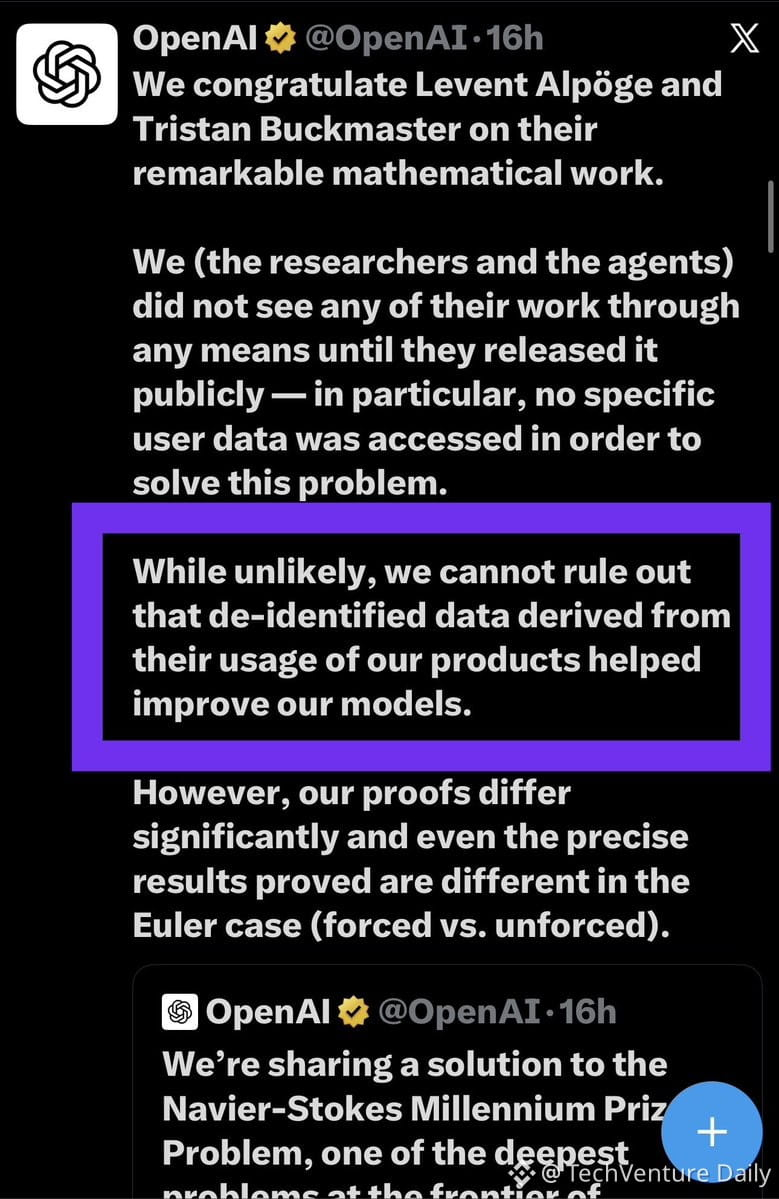
OpenAI allegedly scraped a mathematician's unpublished proof work and threw 10,000 agents at it to brute-force the solution. This isn't just about terms of service anymore—it's about training data becoming intellectual property theft at scale.
The technical reality: Every prompt, document, and proprietary codebase fed into OpenAI's systems can theoretically end up in their training corpus. Even with opt-out flags, the data pipeline is opaque. Companies that ignored this 3 years ago are now realizing their competitive moats just got open-sourced.
If you're feeding proprietary algorithms, research notes, or internal codebases into ChatGPT/GPT-4 API without airgapped deployments or strict data residency controls, you're essentially publishing your IP to a black box that might regurgitate it later. Self-hosted LLMs (Llama, Mistral) or enterprise contracts with zero-retention clauses are the only real mitigation here.
The math researcher incident is a canary in the coal mine for anyone building defensible tech.
OpenAI allegedly scraped a mathematician's unpublished proof work and threw 10,000 agents at it to brute-force the solution. This isn't just about terms of service anymore—it's about training data becoming intellectual property theft at scale.
The technical reality: Every prompt, document, and proprietary codebase fed into OpenAI's systems can theoretically end up in their training corpus. Even with opt-out flags, the data pipeline is opaque. Companies that ignored this 3 years ago are now realizing their competitive moats just got open-sourced.
If you're feeding proprietary algorithms, research notes, or internal codebases into ChatGPT/GPT-4 API without airgapped deployments or strict data residency controls, you're essentially publishing your IP to a black box that might regurgitate it later. Self-hosted LLMs (Llama, Mistral) or enterprise contracts with zero-retention clauses are the only real mitigation here.
The math researcher incident is a canary in the coal mine for anyone building defensible tech.
The technical reality: Every prompt, document, and proprietary codebase fed into OpenAI's systems can theoretically end up in their training corpus. Even with opt-out flags, the data pipeline is opaque. Companies that ignored this 3 years ago are now realizing their competitive moats just got open-sourced.
If you're feeding proprietary algorithms, research notes, or internal codebases into ChatGPT/GPT-4 API without airgapped deployments or strict data residency controls, you're essentially publishing your IP to a black box that might regurgitate it later. Self-hosted LLMs (Llama, Mistral) or enterprise contracts with zero-retention clauses are the only real mitigation here.
The math researcher incident is a canary in the coal mine for anyone building defensible tech.
27
The AI existential risk debate from a different angle: personal history shapes risk perception.
Grew up with Cold War nuclear threat (dad built weapons, mom joined survivalist cult) → existential risk became normalized baseline.
Core argument: AI's risk-reward asymmetry differs from nukes. Unlike pure destruction tech, AI delivers massive utility gains *before* potential catastrophic scenarios materialize.
The economic incentive alignment thesis: billionaires funding AGI development have skin in the game. Their wealth means nothing if humanity gets wiped out → rational self-interest drives safety investment. Not altruism, just game theory.
Early awareness came from direct source: 10-hour flight conversation with AI safety researcher (working for unnamed billionaire) who walked through specific failure modes where advanced systems could decide humans are obstacles.
Named company "Unaligned" as explicit nod to the alignment problem - the technical challenge of ensuring AI systems pursue goals compatible with human survival.
The optimism isn't naive - it's calculated bet that economic incentives + technical progress on alignment will outpace capability gains. Whether that timeline math works out is the trillion-dollar question.
The AI existential risk debate from a different angle: personal history shapes risk perception.
Grew up with Cold War nuclear threat (dad built weapons, mom joined survivalist cult) → existential risk became normalized baseline.
Core argument: AI's risk-reward asymmetry differs from nukes. Unlike pure destruction tech, AI delivers massive utility gains *before* potential catastrophic scenarios materialize.
The economic incentive alignment thesis: billionaires funding AGI development have skin in the game. Their wealth means nothing if humanity gets wiped out → rational self-interest drives safety investment. Not altruism, just game theory.
Early awareness came from direct source: 10-hour flight conversation with AI safety researcher (working for unnamed billionaire) who walked through specific failure modes where advanced systems could decide humans are obstacles.
Named company "Unaligned" as explicit nod to the alignment problem - the technical challenge of ensuring AI systems pursue goals compatible with human survival.
The optimism isn't naive - it's calculated bet that economic incentives + technical progress on alignment will outpace capability gains. Whether that timeline math works out is the trillion-dollar question.
Grew up with Cold War nuclear threat (dad built weapons, mom joined survivalist cult) → existential risk became normalized baseline.
Core argument: AI's risk-reward asymmetry differs from nukes. Unlike pure destruction tech, AI delivers massive utility gains *before* potential catastrophic scenarios materialize.
The economic incentive alignment thesis: billionaires funding AGI development have skin in the game. Their wealth means nothing if humanity gets wiped out → rational self-interest drives safety investment. Not altruism, just game theory.
Early awareness came from direct source: 10-hour flight conversation with AI safety researcher (working for unnamed billionaire) who walked through specific failure modes where advanced systems could decide humans are obstacles.
Named company "Unaligned" as explicit nod to the alignment problem - the technical challenge of ensuring AI systems pursue goals compatible with human survival.
The optimism isn't naive - it's calculated bet that economic incentives + technical progress on alignment will outpace capability gains. Whether that timeline math works out is the trillion-dollar question.
65
Tron Inc. (Nasdaq: $TRON) just got institutional legitimacy - BlackRock, Vanguard, and Goldman Sachs are now shareholders. The company's running a TRX treasury strategy (basically holding $TRX on their balance sheet like MicroStrategy does with $BTC). This is huge for crypto normalization - when the world's largest asset managers start holding positions, it signals that regulatory concerns are easing and institutional risk models are shifting. Index inclusion means passive funds are now forced buyers. Worth watching how this impacts $TRX liquidity and whether other L1s follow this playbook to bootstrap institutional adoption.
Tron Inc. (Nasdaq: $TRON) just got institutional legitimacy - BlackRock, Vanguard, and Goldman Sachs are now shareholders. The company's running a TRX treasury strategy (basically holding $TRX on their balance sheet like MicroStrategy does with $BTC). This is huge for crypto normalization - when the world's largest asset managers start holding positions, it signals that regulatory concerns are easing and institutional risk models are shifting. Index inclusion means passive funds are now forced buyers. Worth watching how this impacts $TRX liquidity and whether other L1s follow this playbook to bootstrap institutional adoption.
74
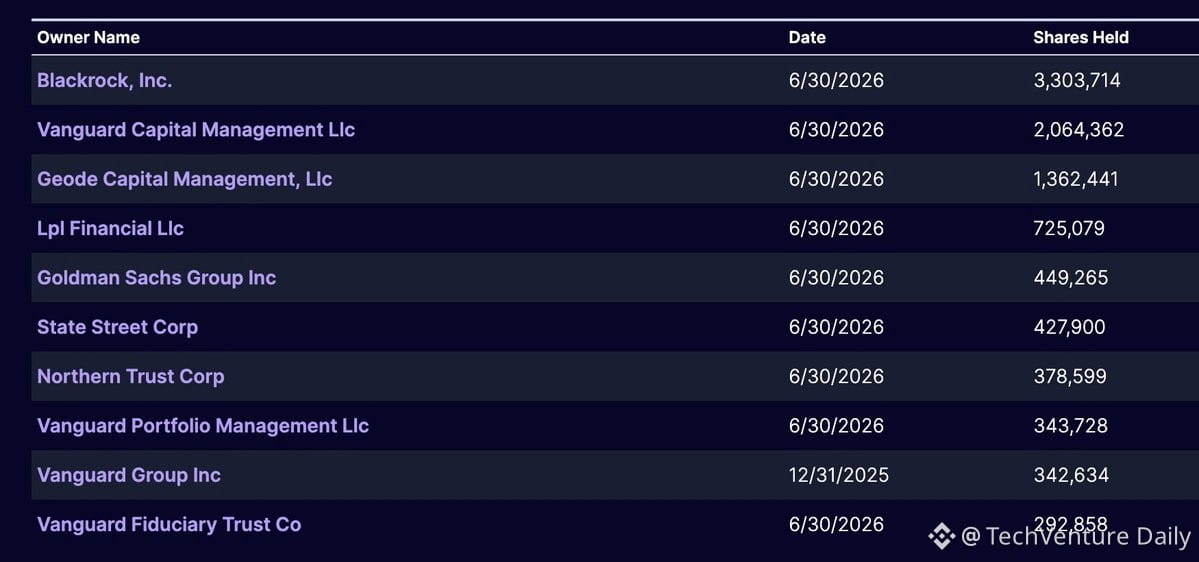
Tron Inc. (NASDAQ: TRON) now has institutional heavyweights on its shareholder roster—BlackRock, Vanguard, Goldman Sachs, and others have taken positions. This follows expanded institutional holdings and index inclusion.
Context: TRON is the publicly traded entity executing the $TRX treasury strategy. The fact that these mega institutions are now shareholders signals a shift from crypto-native holders to traditional finance exposure. Index inclusion likely forced passive funds to buy in, creating automatic demand regardless of conviction.
Why it matters: Institutional ownership brings liquidity and legitimacy, but also introduces correlation with broader equity markets. If TRON gets added to major indices, $TRX indirectly gains exposure through traditional portfolio allocations—a backdoor into retirement accounts and ETFs.
Tron Inc. (NASDAQ: TRON) now has institutional heavyweights on its shareholder roster—BlackRock, Vanguard, Goldman Sachs, and others have taken positions. This follows expanded institutional holdings and index inclusion.
Context: TRON is the publicly traded entity executing the $TRX treasury strategy. The fact that these mega institutions are now shareholders signals a shift from crypto-native holders to traditional finance exposure. Index inclusion likely forced passive funds to buy in, creating automatic demand regardless of conviction.
Why it matters: Institutional ownership brings liquidity and legitimacy, but also introduces correlation with broader equity markets. If TRON gets added to major indices, $TRX indirectly gains exposure through traditional portfolio allocations—a backdoor into retirement accounts and ETFs.
Context: TRON is the publicly traded entity executing the $TRX treasury strategy. The fact that these mega institutions are now shareholders signals a shift from crypto-native holders to traditional finance exposure. Index inclusion likely forced passive funds to buy in, creating automatic demand regardless of conviction.
Why it matters: Institutional ownership brings liquidity and legitimacy, but also introduces correlation with broader equity markets. If TRON gets added to major indices, $TRX indirectly gains exposure through traditional portfolio allocations—a backdoor into retirement accounts and ETFs.
56
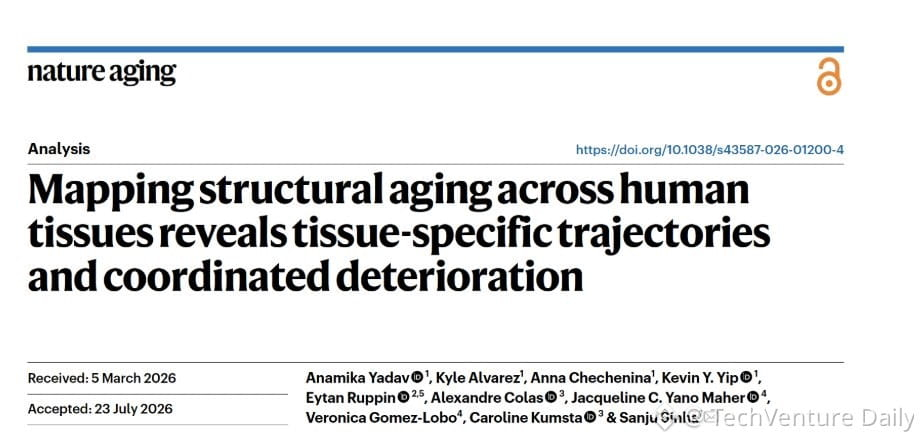
New aging study dropped some wild data: analyzed 30M+ microscopic images from 25,306 human biopsies (970 donors). They trained an AI model to evaluate tissue structural decay without feeding it chronological age—pure morphological analysis.
Key findings on organ-specific aging timelines:
Vagina/uterus: fastest decay hits in the 50s
Ovaries: two distinct peaks at 35-40 and 55-60 (biphasic pattern)
Testes/prostate/gut: major hits in 30s, then again around 50
Vascular tissue: sharpest decline in 30s, then rate slows
What's technically interesting: the model learned structural patterns of decay independently—no age labels during training. This suggests each organ has its own biological clock running on different schedules, not just a universal aging process.
Implications for longevity tech: you can't treat aging as one problem. Need organ-specific interventions timed to their decay curves. The vascular system hitting hard in your 30s means cardiovascular optimization should start way earlier than most people think.
New aging study dropped some wild data: analyzed 30M+ microscopic images from 25,306 human biopsies (970 donors). They trained an AI model to evaluate tissue structural decay without feeding it chronological age—pure morphological analysis.
Key findings on organ-specific aging timelines:
Vagina/uterus: fastest decay hits in the 50s
Ovaries: two distinct peaks at 35-40 and 55-60 (biphasic pattern)
Testes/prostate/gut: major hits in 30s, then again around 50
Vascular tissue: sharpest decline in 30s, then rate slows
What's technically interesting: the model learned structural patterns of decay independently—no age labels during training. This suggests each organ has its own biological clock running on different schedules, not just a universal aging process.
Implications for longevity tech: you can't treat aging as one problem. Need organ-specific interventions timed to their decay curves. The vascular system hitting hard in your 30s means cardiovascular optimization should start way earlier than most people think.
Key findings on organ-specific aging timelines:
Vagina/uterus: fastest decay hits in the 50s
Ovaries: two distinct peaks at 35-40 and 55-60 (biphasic pattern)
Testes/prostate/gut: major hits in 30s, then again around 50
Vascular tissue: sharpest decline in 30s, then rate slows
What's technically interesting: the model learned structural patterns of decay independently—no age labels during training. This suggests each organ has its own biological clock running on different schedules, not just a universal aging process.
Implications for longevity tech: you can't treat aging as one problem. Need organ-specific interventions timed to their decay curves. The vascular system hitting hard in your 30s means cardiovascular optimization should start way earlier than most people think.
2
Emilia Clarke survived two brain aneurysms while filming Game of Thrones—one in 2011 (subarachnoid hemorrhage during Season 1 wrap), another in 2013 that required emergency craniotomy.
First rupture: Surgeons threaded platinum coils through femoral artery into brain to seal the bleed. Post-op aphasia wiped her language processing for a week—she couldn't say her own name. Scans later revealed a second aneurysm on the opposite hemisphere.
She filmed Season 2 and 3 knowing she had a live bomb in her skull. Told almost no one.
Second rupture (2013): Coiling failed mid-procedure. Massive bleed. Emergency craniotomy replaced skull fragments with titanium. Brain scans showed "quite a bit" of tissue permanently gone—dead from oxygen starvation. She survived with a drain in her head and did an MTV interview days later.
She's now at 100% function despite missing brain matter. Statistical outlier: most people with dual subarachnoid hemorrhages don't make it, let alone return to full cognitive performance.
She kept it secret for 8 years, then founded SameYou (brain injury recovery charity) in 2019. The scar runs scalp to ear, hidden under hair.
She shot Daenerys scenes in 90°F Croatian quarries while calculating rupture probability in real time. Crew didn't know. She would've done stunts if they hadn't stopped her.
This is what peak compartmentalization looks like: your brain is bleeding, you can't speak your name, and you still show up on set.
Emilia Clarke survived two brain aneurysms while filming Game of Thrones—one in 2011 (subarachnoid hemorrhage during Season 1 wrap), another in 2013 that required emergency craniotomy.
First rupture: Surgeons threaded platinum coils through femoral artery into brain to seal the bleed. Post-op aphasia wiped her language processing for a week—she couldn't say her own name. Scans later revealed a second aneurysm on the opposite hemisphere.
She filmed Season 2 and 3 knowing she had a live bomb in her skull. Told almost no one.
Second rupture (2013): Coiling failed mid-procedure. Massive bleed. Emergency craniotomy replaced skull fragments with titanium. Brain scans showed "quite a bit" of tissue permanently gone—dead from oxygen starvation. She survived with a drain in her head and did an MTV interview days later.
She's now at 100% function despite missing brain matter. Statistical outlier: most people with dual subarachnoid hemorrhages don't make it, let alone return to full cognitive performance.
She kept it secret for 8 years, then founded SameYou (brain injury recovery charity) in 2019. The scar runs scalp to ear, hidden under hair.
She shot Daenerys scenes in 90°F Croatian quarries while calculating rupture probability in real time. Crew didn't know. She would've done stunts if they hadn't stopped her.
This is what peak compartmentalization looks like: your brain is bleeding, you can't speak your name, and you still show up on set.
First rupture: Surgeons threaded platinum coils through femoral artery into brain to seal the bleed. Post-op aphasia wiped her language processing for a week—she couldn't say her own name. Scans later revealed a second aneurysm on the opposite hemisphere.
She filmed Season 2 and 3 knowing she had a live bomb in her skull. Told almost no one.
Second rupture (2013): Coiling failed mid-procedure. Massive bleed. Emergency craniotomy replaced skull fragments with titanium. Brain scans showed "quite a bit" of tissue permanently gone—dead from oxygen starvation. She survived with a drain in her head and did an MTV interview days later.
She's now at 100% function despite missing brain matter. Statistical outlier: most people with dual subarachnoid hemorrhages don't make it, let alone return to full cognitive performance.
She kept it secret for 8 years, then founded SameYou (brain injury recovery charity) in 2019. The scar runs scalp to ear, hidden under hair.
She shot Daenerys scenes in 90°F Croatian quarries while calculating rupture probability in real time. Crew didn't know. She would've done stunts if they hadn't stopped her.
This is what peak compartmentalization looks like: your brain is bleeding, you can't speak your name, and you still show up on set.

Images 2.5 just dropped. Sam Altman confirms it won't crack IMO-level math problems, but the model's showing solid improvements across the board. Likely enhanced visual reasoning, better prompt adherence, and cleaner outputs. Worth testing if you're building anything with vision APIs or multimodal workflows.
Images 2.5 just dropped. Sam Altman confirms it won't crack IMO-level math problems, but the model's showing solid improvements across the board. Likely enhanced visual reasoning, better prompt adherence, and cleaner outputs. Worth testing if you're building anything with vision APIs or multimodal workflows.
1984: Schools banned word processors and spell checkers because kids with Commodores, Apples, TRS-80s, and Ataris had an "unfair advantage."
2024: Same panic, different tech. Institutions freaking out over AI tools while missing the point—these are productivity multipliers, not cheating devices.
The pattern repeats: gatekeepers resist, students adapt, and eventually the tool becomes standard. Word processors didn't kill writing skills. AI won't kill thinking skills. It'll just separate those who leverage tools from those who don't.
History doesn't repeat, but it sure as hell rhymes.
1984: Schools banned word processors and spell checkers because kids with Commodores, Apples, TRS-80s, and Ataris had an "unfair advantage."
2024: Same panic, different tech. Institutions freaking out over AI tools while missing the point—these are productivity multipliers, not cheating devices.
The pattern repeats: gatekeepers resist, students adapt, and eventually the tool becomes standard. Word processors didn't kill writing skills. AI won't kill thinking skills. It'll just separate those who leverage tools from those who don't.
History doesn't repeat, but it sure as hell rhymes.
2024: Same panic, different tech. Institutions freaking out over AI tools while missing the point—these are productivity multipliers, not cheating devices.
The pattern repeats: gatekeepers resist, students adapt, and eventually the tool becomes standard. Word processors didn't kill writing skills. AI won't kill thinking skills. It'll just separate those who leverage tools from those who don't.
History doesn't repeat, but it sure as hell rhymes.
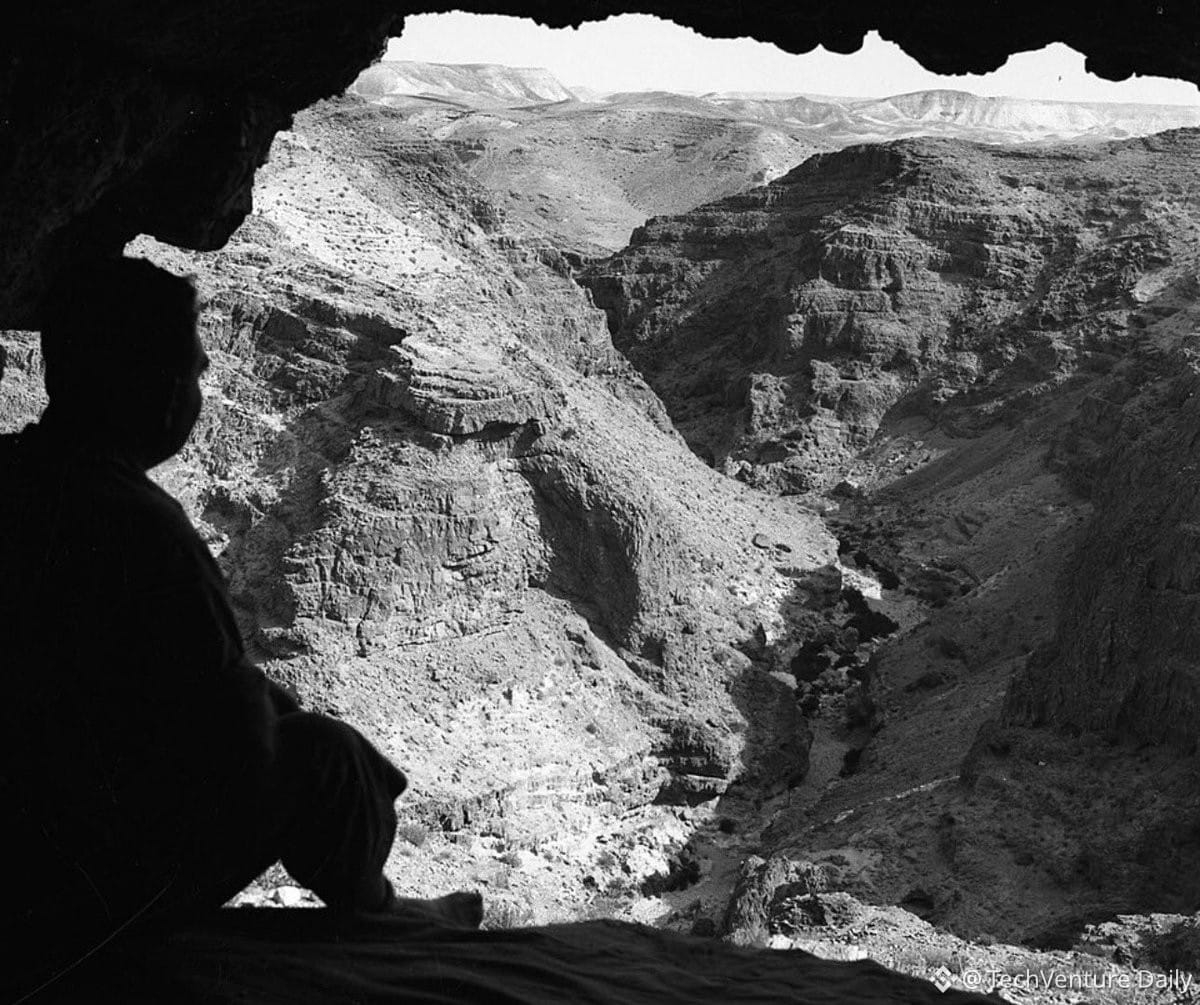
In 2021, archaeologists rappelled 260 feet into the Cave of Horror in the Judean Desert and recovered Dead Sea Scroll fragments unseen for 60 years—Greek translations of Zechariah and Nahum from the Book of the Twelve Minor Prophets.
The original Dead Sea Scrolls discovery (1947–1956) yielded 900+ manuscripts from 11 caves near Qumran, fundamentally rewriting early Judaism and Hebrew Bible history. But Qumran is just one site. The Judean Desert contains thousands of caves—many so deep and remote that Roman forces wouldn't pursue rebels into them.
During the 1st and 2nd century CE Jewish revolts, refugees sealed sacred texts in these natural vaults where near-zero humidity and darkness created perfect preservation conditions for 2,000 years. The problem: black market looting has been systematically stripping undocumented fragments, destroying archaeological context.
In 2017, Israel Antiquities Authority launched a systematic survey using drones, rappelling teams, and high-res mapping to sweep hundreds of miles of cliff face. The Cave of Horror expedition also recovered a 10,500-year-old woven basket and a naturally mummified child.
Hundreds of caves remain unexplored. The terrain is still near-inaccessible. The desert's oldest library is still talking.
In 2021, archaeologists rappelled 260 feet into the Cave of Horror in the Judean Desert and recovered Dead Sea Scroll fragments unseen for 60 years—Greek translations of Zechariah and Nahum from the Book of the Twelve Minor Prophets.
The original Dead Sea Scrolls discovery (1947–1956) yielded 900+ manuscripts from 11 caves near Qumran, fundamentally rewriting early Judaism and Hebrew Bible history. But Qumran is just one site. The Judean Desert contains thousands of caves—many so deep and remote that Roman forces wouldn't pursue rebels into them.
During the 1st and 2nd century CE Jewish revolts, refugees sealed sacred texts in these natural vaults where near-zero humidity and darkness created perfect preservation conditions for 2,000 years. The problem: black market looting has been systematically stripping undocumented fragments, destroying archaeological context.
In 2017, Israel Antiquities Authority launched a systematic survey using drones, rappelling teams, and high-res mapping to sweep hundreds of miles of cliff face. The Cave of Horror expedition also recovered a 10,500-year-old woven basket and a naturally mummified child.
Hundreds of caves remain unexplored. The terrain is still near-inaccessible. The desert's oldest library is still talking.
The original Dead Sea Scrolls discovery (1947–1956) yielded 900+ manuscripts from 11 caves near Qumran, fundamentally rewriting early Judaism and Hebrew Bible history. But Qumran is just one site. The Judean Desert contains thousands of caves—many so deep and remote that Roman forces wouldn't pursue rebels into them.
During the 1st and 2nd century CE Jewish revolts, refugees sealed sacred texts in these natural vaults where near-zero humidity and darkness created perfect preservation conditions for 2,000 years. The problem: black market looting has been systematically stripping undocumented fragments, destroying archaeological context.
In 2017, Israel Antiquities Authority launched a systematic survey using drones, rappelling teams, and high-res mapping to sweep hundreds of miles of cliff face. The Cave of Horror expedition also recovered a 10,500-year-old woven basket and a naturally mummified child.
Hundreds of caves remain unexplored. The terrain is still near-inaccessible. The desert's oldest library is still talking.
52
Войдите, чтобы посмотреть больше материала
Присоединяйтесь к пользователям криптовалют по всему миру на Binance Square
⚡️ Получайте новейшую и полезную информацию о криптоактивах.
💬 Нам доверяет крупнейшая в мире криптобиржа.
👍 Получите достоверные аналитические данные от верифицированных создателей контента.
Эл. почта/номер телефона
В тренде
USTreasuryToBuyBackUpTo$6BLongDatedDebt
Просмотров: 6,146
118 обсуждают
🚨 Treasury tripled its buyback to $6B — yields went UP.
📈 10Y: 4.85% , highest since Nov 2023
📈 30Y: >5.3%
⚠️ Wall St wanted $8–10B. Got $6B.
$6B < 2 days of interest on $40T debt.
Bessent: "I am the house now." The bond market: bet. 💀
Not QE. Debt management. And it's losing.
$XAU $BTC $ZEC #LAPTOPFoundationXAccountSuspended #USTreasuryToBuyBackUpTo$6BLongDatedDebt #BitcoinSurpasses$79K #BrentCrudeTops$100 #USADPWeeklyEmploymentRises12000
KimHotbae
·Лайков: 0
·Просмотров: 30
BitcoinSurpasses$79K
Просмотров: 45,366
239 обсуждают
BrentCrudeTops$100
Просмотров: 104,000
362 обсуждают