

FZ 09 Crypto
14.6k Публикации

FZ 09 Crypto
Отправить жалобу
Заблокировать пользователя
1.4K+ подписок(и/а)
10.8K+ подписчиков(а)
10.1K+ понравилось
Посты
Все
Цитирования
Активно

PINNED
·
--
Рост
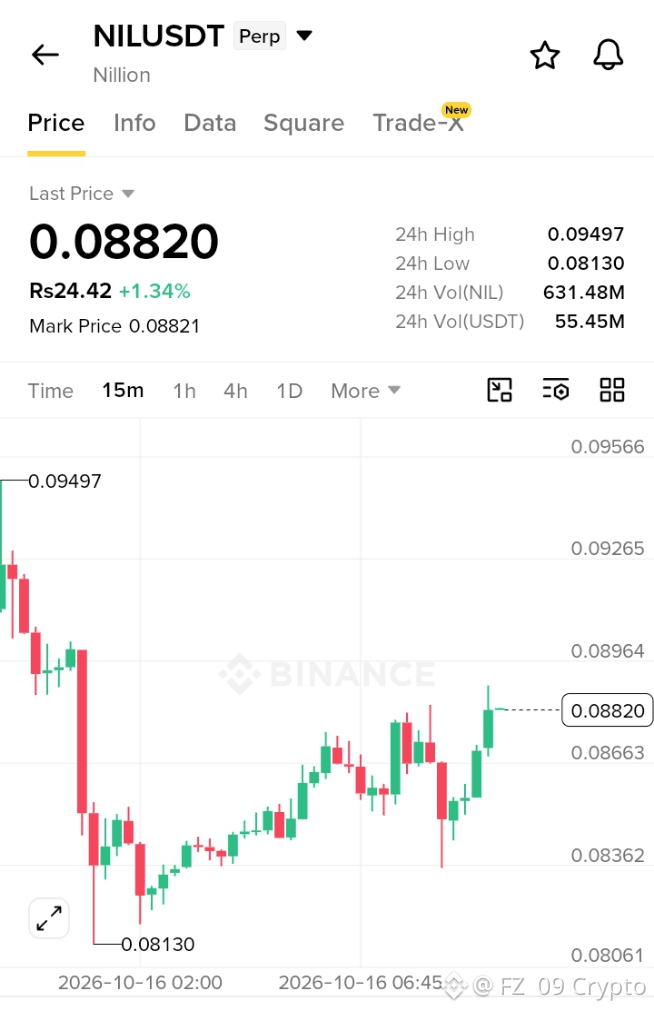
One thing I keep thinking about in crypto is how much information we reveal before a trade is even completed.
While looking into Nillion ($NIL), I came across Covenants, and the concept made me think differently about onchain privacy.
Imagine preparing a trade with specific conditions, but keeping the details hidden until those conditions are met. Other market participants would not immediately see what you are planning. This could be useful for auctions, sell orders, and other conditional transactions.
In crypto, transparency has its benefits, but it also creates challenges. When pending transactions and trading intentions are visible, some participants may use that information to their advantage. Smaller traders can sometimes feel like they are always one step behind.
This is where privacy-focused technology could make a difference. Covenants aim to bring together programmable conditions and protected transaction instructions. If implemented successfully, this approach could offer users more control over what becomes visible and when.
Still, I don't think the idea alone is enough to prove its value. Security, execution speed, reliability, and real developer interest will all matter. A good concept needs to work under real market conditions before people can depend on it.
For $NIL, I would rather follow actual network activity, ecosystem development, and practical use cases than make assumptions based on expectations.
The question I have is simple: Can privacy become a normal part of onchain trading without sacrificing transparency where it is actually needed?
That is what I will be watching as this technology develops.
#nil $NIL @nillionnetwork
{future}(NILUSDT)
One thing I keep thinking about in crypto is how much information we reveal before a trade is even completed.
While looking into Nillion ($NIL ), I came across Covenants, and the concept made me think differently about onchain privacy.
Imagine preparing a trade with specific conditions, but keeping the details hidden until those conditions are met. Other market participants would not immediately see what you are planning. This could be useful for auctions, sell orders, and other conditional transactions.
In crypto, transparency has its benefits, but it also creates challenges. When pending transactions and trading intentions are visible, some participants may use that information to their advantage. Smaller traders can sometimes feel like they are always one step behind.
This is where privacy-focused technology could make a difference. Covenants aim to bring together programmable conditions and protected transaction instructions. If implemented successfully, this approach could offer users more control over what becomes visible and when.
Still, I don't think the idea alone is enough to prove its value. Security, execution speed, reliability, and real developer interest will all matter. A good concept needs to work under real market conditions before people can depend on it.
For $NIL , I would rather follow actual network activity, ecosystem development, and practical use cases than make assumptions based on expectations.
The question I have is simple: Can privacy become a normal part of onchain trading without sacrificing transparency where it is actually needed?
That is what I will be watching as this technology develops.
#nil $NIL @Nillion
While looking into Nillion ($NIL ), I came across Covenants, and the concept made me think differently about onchain privacy.
Imagine preparing a trade with specific conditions, but keeping the details hidden until those conditions are met. Other market participants would not immediately see what you are planning. This could be useful for auctions, sell orders, and other conditional transactions.
In crypto, transparency has its benefits, but it also creates challenges. When pending transactions and trading intentions are visible, some participants may use that information to their advantage. Smaller traders can sometimes feel like they are always one step behind.
This is where privacy-focused technology could make a difference. Covenants aim to bring together programmable conditions and protected transaction instructions. If implemented successfully, this approach could offer users more control over what becomes visible and when.
Still, I don't think the idea alone is enough to prove its value. Security, execution speed, reliability, and real developer interest will all matter. A good concept needs to work under real market conditions before people can depend on it.
For $NIL , I would rather follow actual network activity, ecosystem development, and practical use cases than make assumptions based on expectations.
The question I have is simple: Can privacy become a normal part of onchain trading without sacrificing transparency where it is actually needed?
That is what I will be watching as this technology develops.
#nil $NIL @Nillion
5
3
18
505
·
--
$IRYS USDT — Momentum Watch
IRYSUSDT is up 60.23% in 24 hours. This strong movement has attracted attention, but sudden price changes can happen in highly active markets.
Trade Plan
- Current Price: 0.06502
- Buy Zone: 0.06100–0.06300
- Entry Price (EP): 0.06200
- Target 1 (TP1): 0.06600
- Target 2 (TP2): 0.06900
- Target 3 (TP3): 0.07200
- Stop Loss (SL): 0.05890
Pro Tip: Watch trading volume and wait for the price to hold above the entry area. Avoid entering during a sharp downward move.
A patient entry is better than a rushed trade.
#MarketsPriceJust10%ChanceOfFedHikeNextWeek #OCCRemovesStablecoinSevenDayRedemptionExtension #IRSPlansLowerTaxDisclosurePenaltiesForCryptoCases
$IRYS USDT — Momentum Watch
IRYSUSDT is up 60.23% in 24 hours. This strong movement has attracted attention, but sudden price changes can happen in highly active markets.
Trade Plan
- Current Price: 0.06502
- Buy Zone: 0.06100–0.06300
- Entry Price (EP): 0.06200
- Target 1 (TP1): 0.06600
- Target 2 (TP2): 0.06900
- Target 3 (TP3): 0.07200
- Stop Loss (SL): 0.05890
Pro Tip: Watch trading volume and wait for the price to hold above the entry area. Avoid entering during a sharp downward move.
A patient entry is better than a rushed trade.
#MarketsPriceJust10%ChanceOfFedHikeNextWeek #OCCRemovesStablecoinSevenDayRedemptionExtension #IRSPlansLowerTaxDisclosurePenaltiesForCryptoCases
IRYSUSDT is up 60.23% in 24 hours. This strong movement has attracted attention, but sudden price changes can happen in highly active markets.
Trade Plan
- Current Price: 0.06502
- Buy Zone: 0.06100–0.06300
- Entry Price (EP): 0.06200
- Target 1 (TP1): 0.06600
- Target 2 (TP2): 0.06900
- Target 3 (TP3): 0.07200
- Stop Loss (SL): 0.05890
Pro Tip: Watch trading volume and wait for the price to hold above the entry area. Avoid entering during a sharp downward move.
A patient entry is better than a rushed trade.
#MarketsPriceJust10%ChanceOfFedHikeNextWeek #OCCRemovesStablecoinSevenDayRedemptionExtension #IRSPlansLowerTaxDisclosurePenaltiesForCryptoCases
271
·
--
$BMT USDT — Potential Trading Setup
BMTUSDT is up 49.19% in 24 hours. The coin is showing strong movement, but traders should remain careful after a rapid price increase.
Trade Plan
- Current Price: 0.03509
- Buy Zone: 0.03300–0.03400
- Entry Price (EP): 0.03350
- Target 1 (TP1): 0.03600
- Target 2 (TP2): 0.03800
- Target 3 (TP3): 0.04000
- Stop Loss (SL): 0.03150
Pro Tip: Wait for a stable price and a possible bounce before entering. If the price breaks below the stop-loss level, do not keep holding just because you hope it will recover.
Trade with a plan, not with emotions.
#DowDrops653Points #MarketsPriceJust10%ChanceOfFedHikeNextWeek #USConsumerSentimentHoldsAtSecondLowestOnRecord
$BMT USDT — Potential Trading Setup
BMTUSDT is up 49.19% in 24 hours. The coin is showing strong movement, but traders should remain careful after a rapid price increase.
Trade Plan
- Current Price: 0.03509
- Buy Zone: 0.03300–0.03400
- Entry Price (EP): 0.03350
- Target 1 (TP1): 0.03600
- Target 2 (TP2): 0.03800
- Target 3 (TP3): 0.04000
- Stop Loss (SL): 0.03150
Pro Tip: Wait for a stable price and a possible bounce before entering. If the price breaks below the stop-loss level, do not keep holding just because you hope it will recover.
Trade with a plan, not with emotions.
#DowDrops653Points #MarketsPriceJust10%ChanceOfFedHikeNextWeek #USConsumerSentimentHoldsAtSecondLowestOnRecord
BMTUSDT is up 49.19% in 24 hours. The coin is showing strong movement, but traders should remain careful after a rapid price increase.
Trade Plan
- Current Price: 0.03509
- Buy Zone: 0.03300–0.03400
- Entry Price (EP): 0.03350
- Target 1 (TP1): 0.03600
- Target 2 (TP2): 0.03800
- Target 3 (TP3): 0.04000
- Stop Loss (SL): 0.03150
Pro Tip: Wait for a stable price and a possible bounce before entering. If the price breaks below the stop-loss level, do not keep holding just because you hope it will recover.
Trade with a plan, not with emotions.
#DowDrops653Points #MarketsPriceJust10%ChanceOfFedHikeNextWeek #USConsumerSentimentHoldsAtSecondLowestOnRecord
135
·
--
$TREE USDT — Watch for the Next Move
TREEUSDT has gained 57.97% in the last 24 hours. Buyers have shown strength, but the next move depends on whether the price can maintain its momentum.
Trade Plan
- Current Price: 0.06281
- Buy Zone: 0.05900–0.06100
- Entry Price (EP): 0.06000
- Target 1 (TP1): 0.06400
- Target 2 (TP2): 0.06700
- Target 3 (TP3): 0.07000
- Stop Loss (SL): 0.05700
Pro Tip: Do not buy just because the price is rising. Wait for confirmation that buyers are returning near your planned entry.
Keep your position size small when volatility is high.
#IRSPlansLowerTaxDisclosurePenaltiesForCryptoCases #EarningsSeason #MarketsPriceJust10%ChanceOfFedHikeNextWeek
$TREE USDT — Watch for the Next Move
TREEUSDT has gained 57.97% in the last 24 hours. Buyers have shown strength, but the next move depends on whether the price can maintain its momentum.
Trade Plan
- Current Price: 0.06281
- Buy Zone: 0.05900–0.06100
- Entry Price (EP): 0.06000
- Target 1 (TP1): 0.06400
- Target 2 (TP2): 0.06700
- Target 3 (TP3): 0.07000
- Stop Loss (SL): 0.05700
Pro Tip: Do not buy just because the price is rising. Wait for confirmation that buyers are returning near your planned entry.
Keep your position size small when volatility is high.
#IRSPlansLowerTaxDisclosurePenaltiesForCryptoCases #EarningsSeason #MarketsPriceJust10%ChanceOfFedHikeNextWeek
TREEUSDT has gained 57.97% in the last 24 hours. Buyers have shown strength, but the next move depends on whether the price can maintain its momentum.
Trade Plan
- Current Price: 0.06281
- Buy Zone: 0.05900–0.06100
- Entry Price (EP): 0.06000
- Target 1 (TP1): 0.06400
- Target 2 (TP2): 0.06700
- Target 3 (TP3): 0.07000
- Stop Loss (SL): 0.05700
Pro Tip: Do not buy just because the price is rising. Wait for confirmation that buyers are returning near your planned entry.
Keep your position size small when volatility is high.
#IRSPlansLowerTaxDisclosurePenaltiesForCryptoCases #EarningsSeason #MarketsPriceJust10%ChanceOfFedHikeNextWeek
239
·
--
$BIRB USDT — Strong Price Movement
BIRBUSDT has gained 62.24% in the last 24 hours. The momentum is strong, but a pullback may happen after this sharp rise.
Trade Plan
- Current Price: 0.11115
- Buy Zone: 0.10400–0.10700
- Entry Price (EP): 0.10550
- Target 1 (TP1): 0.11200
- Target 2 (TP2): 0.11700
- Target 3 (TP3): 0.12200
- Stop Loss (SL): 0.10000
Pro Tip: Enter only if the price stabilizes inside the buy zone. If selling pressure increases, stay out and wait for another setup.
Protect your capital first.
#MarketsPriceJust10%ChanceOfFedHikeNextWeek #OCCRemovesStablecoinSevenDayRedemptionExtension #IRSPlansLowerTaxDisclosurePenaltiesForCryptoCases
$BIRB USDT — Strong Price Movement
BIRBUSDT has gained 62.24% in the last 24 hours. The momentum is strong, but a pullback may happen after this sharp rise.
Trade Plan
- Current Price: 0.11115
- Buy Zone: 0.10400–0.10700
- Entry Price (EP): 0.10550
- Target 1 (TP1): 0.11200
- Target 2 (TP2): 0.11700
- Target 3 (TP3): 0.12200
- Stop Loss (SL): 0.10000
Pro Tip: Enter only if the price stabilizes inside the buy zone. If selling pressure increases, stay out and wait for another setup.
Protect your capital first.
#MarketsPriceJust10%ChanceOfFedHikeNextWeek #OCCRemovesStablecoinSevenDayRedemptionExtension #IRSPlansLowerTaxDisclosurePenaltiesForCryptoCases
BIRBUSDT has gained 62.24% in the last 24 hours. The momentum is strong, but a pullback may happen after this sharp rise.
Trade Plan
- Current Price: 0.11115
- Buy Zone: 0.10400–0.10700
- Entry Price (EP): 0.10550
- Target 1 (TP1): 0.11200
- Target 2 (TP2): 0.11700
- Target 3 (TP3): 0.12200
- Stop Loss (SL): 0.10000
Pro Tip: Enter only if the price stabilizes inside the buy zone. If selling pressure increases, stay out and wait for another setup.
Protect your capital first.
#MarketsPriceJust10%ChanceOfFedHikeNextWeek #OCCRemovesStablecoinSevenDayRedemptionExtension #IRSPlansLowerTaxDisclosurePenaltiesForCryptoCases
244
·
--
1. $ORDER USDT — Big Momentum Opportunity
ORDERUSDT is showing strong momentum, with a 24-hour gain of 158.22%. Buyers are active, but after such a big move, a price correction is possible.
Trade Plan
- Current Price: 0.08405
- Buy Zone: 0.07900–0.08100
- Entry Price (EP): 0.08000
- Target 1 (TP1): 0.08400
- Target 2 (TP2): 0.08700
- Target 3 (TP3): 0.09000
- Stop Loss (SL): 0.07600
Pro Tip: Wait for a pullback and a clear sign of buying strength before entering. Do not chase a fast green candle.
Trade carefully and manage your risk.
#MarketsPriceJust10%ChanceOfFedHikeNextWeek #IRSPlansLowerTaxDisclosurePenaltiesForCryptoCases
1. $ORDER USDT — Big Momentum Opportunity
ORDERUSDT is showing strong momentum, with a 24-hour gain of 158.22%. Buyers are active, but after such a big move, a price correction is possible.
Trade Plan
- Current Price: 0.08405
- Buy Zone: 0.07900–0.08100
- Entry Price (EP): 0.08000
- Target 1 (TP1): 0.08400
- Target 2 (TP2): 0.08700
- Target 3 (TP3): 0.09000
- Stop Loss (SL): 0.07600
Pro Tip: Wait for a pullback and a clear sign of buying strength before entering. Do not chase a fast green candle.
Trade carefully and manage your risk.
#MarketsPriceJust10%ChanceOfFedHikeNextWeek #IRSPlansLowerTaxDisclosurePenaltiesForCryptoCases
ORDERUSDT is showing strong momentum, with a 24-hour gain of 158.22%. Buyers are active, but after such a big move, a price correction is possible.
Trade Plan
- Current Price: 0.08405
- Buy Zone: 0.07900–0.08100
- Entry Price (EP): 0.08000
- Target 1 (TP1): 0.08400
- Target 2 (TP2): 0.08700
- Target 3 (TP3): 0.09000
- Stop Loss (SL): 0.07600
Pro Tip: Wait for a pullback and a clear sign of buying strength before entering. Do not chase a fast green candle.
Trade carefully and manage your risk.
#MarketsPriceJust10%ChanceOfFedHikeNextWeek #IRSPlansLowerTaxDisclosurePenaltiesForCryptoCases
392
·
--
$BULLA USDT is up 35.69% in 24 hours, showing strong buying interest. The next move depends on whether buyers can maintain this momentum.
Buy Zone: 0.0920–0.0940
Target 1: 0.0970
Target 2: 0.1000
Target 3: 0.1050
Stop Loss: 0.0890
My strategy: Avoid rushing into a green candle. Wait for a clear entry and keep your stop loss ready.
#ZcashDevelopersConfirmNovemberDateForNU7Upgrade #KoreanRetailLost6.3TrillionWonOnLeveragedETPs #GENIUSActExpectedToTakeEffectJan18,2027 #SolanaSetToActivateAlpenglowToday
$BULLA USDT is up 35.69% in 24 hours, showing strong buying interest. The next move depends on whether buyers can maintain this momentum.
Buy Zone: 0.0920–0.0940
Target 1: 0.0970
Target 2: 0.1000
Target 3: 0.1050
Stop Loss: 0.0890
My strategy: Avoid rushing into a green candle. Wait for a clear entry and keep your stop loss ready.
#ZcashDevelopersConfirmNovemberDateForNU7Upgrade #KoreanRetailLost6.3TrillionWonOnLeveragedETPs #GENIUSActExpectedToTakeEffectJan18,2027 #SolanaSetToActivateAlpenglowToday
Buy Zone: 0.0920–0.0940
Target 1: 0.0970
Target 2: 0.1000
Target 3: 0.1050
Stop Loss: 0.0890
My strategy: Avoid rushing into a green candle. Wait for a clear entry and keep your stop loss ready.
#ZcashDevelopersConfirmNovemberDateForNU7Upgrade #KoreanRetailLost6.3TrillionWonOnLeveragedETPs #GENIUSActExpectedToTakeEffectJan18,2027 #SolanaSetToActivateAlpenglowToday
1
363
·
--
$IRYS USDT is gaining attention after rising 57.21% in 24 hours. The momentum looks strong, but buyers need to hold support to continue the move.
Buy Zone: 0.0195–0.0200
Target 1: 0.0210
Target 2: 0.0220
Target 3: 0.0235
Stop Loss: 0.0189
My plan: Watch for support and confirmation before buying. If the price loses support, stay cautious.
#ZcashDevelopersConfirmNovemberDateForNU7Upgrade #KoreanRetailLost6.3TrillionWonOnLeveragedETPs #SolanaSetToActivateAlpenglowToday
$IRYS USDT is gaining attention after rising 57.21% in 24 hours. The momentum looks strong, but buyers need to hold support to continue the move.
Buy Zone: 0.0195–0.0200
Target 1: 0.0210
Target 2: 0.0220
Target 3: 0.0235
Stop Loss: 0.0189
My plan: Watch for support and confirmation before buying. If the price loses support, stay cautious.
#ZcashDevelopersConfirmNovemberDateForNU7Upgrade #KoreanRetailLost6.3TrillionWonOnLeveragedETPs #SolanaSetToActivateAlpenglowToday
Buy Zone: 0.0195–0.0200
Target 1: 0.0210
Target 2: 0.0220
Target 3: 0.0235
Stop Loss: 0.0189
My plan: Watch for support and confirmation before buying. If the price loses support, stay cautious.
#ZcashDevelopersConfirmNovemberDateForNU7Upgrade #KoreanRetailLost6.3TrillionWonOnLeveragedETPs #SolanaSetToActivateAlpenglowToday
2
178
·
--
$IOST USDT is showing strong momentum with a 61.87% gain in 24 hours. Buyers are in control, but after such a sharp move, a pullback is possible.
Buy Zone: 0.00152–0.00157
Target 1: 0.00162
Target 2: 0.00168
Target 3: 0.00175
Stop Loss: 0.00148
My view: Wait for a small pullback before entering. Do not chase the price after a big pump. Always manage your risk.
#ZcashDevelopersConfirmNovemberDateForNU7Upgrade #KoreanRetailLost6.3TrillionWonOnLeveragedETPs #GENIUSActExpectedToTakeEffectJan18,2027
$IOST USDT is showing strong momentum with a 61.87% gain in 24 hours. Buyers are in control, but after such a sharp move, a pullback is possible.
Buy Zone: 0.00152–0.00157
Target 1: 0.00162
Target 2: 0.00168
Target 3: 0.00175
Stop Loss: 0.00148
My view: Wait for a small pullback before entering. Do not chase the price after a big pump. Always manage your risk.
#ZcashDevelopersConfirmNovemberDateForNU7Upgrade #KoreanRetailLost6.3TrillionWonOnLeveragedETPs #GENIUSActExpectedToTakeEffectJan18,2027
Buy Zone: 0.00152–0.00157
Target 1: 0.00162
Target 2: 0.00168
Target 3: 0.00175
Stop Loss: 0.00148
My view: Wait for a small pullback before entering. Do not chase the price after a big pump. Always manage your risk.
#ZcashDevelopersConfirmNovemberDateForNU7Upgrade #KoreanRetailLost6.3TrillionWonOnLeveragedETPs #GENIUSActExpectedToTakeEffectJan18,2027
1
482
·
--
good
good

EVVA_786
·
--
РостThe Agent Economy’s Biggest Risk Isn’t AI Intelligence — It’s Uncontrolled Authority
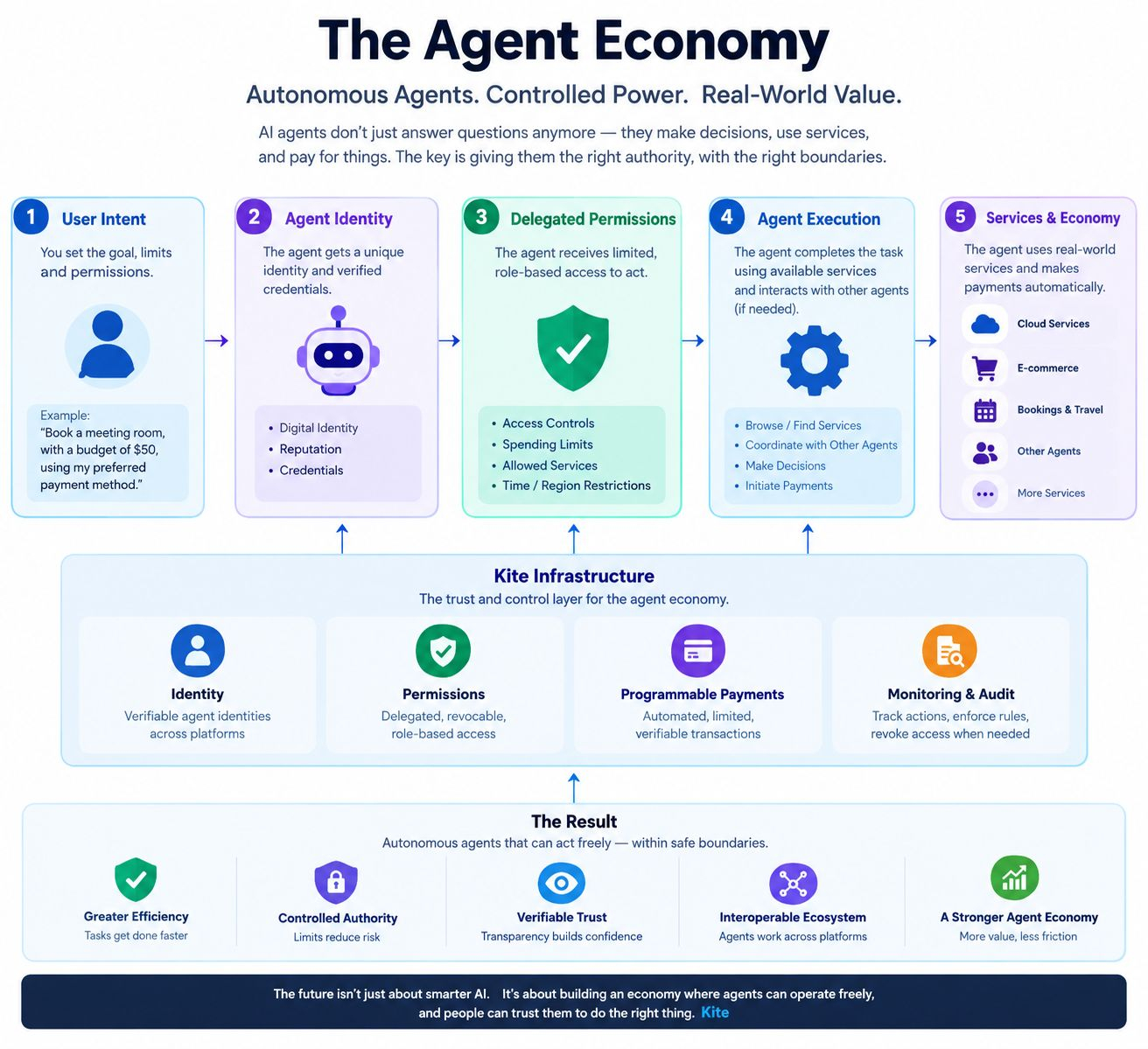
I believe we are approaching a turning point where AI agents will do far more than answer questions. They will make decisions, spend money, access services, and negotiate with other agents.
But this raises a critical question: What happens when an AI agent has the power to act, but the boundaries around that power fail?
This is where Kite becomes interesting to me.
I see the real opportunity in the infrastructure behind autonomous agents: identity, delegated permissions, and programmable payments. These are not just technical features. They could become the foundation for controlling how agents operate in an increasingly automated economy.
Imagine an agent authorized to spend $50 on a task. What happens if it attempts to spend $500? Can the system enforce the limit, verify the transaction, and stop further actions without relying entirely on human intervention?
That is the challenge I believe deserves more attention.
In my analysis, agent autonomy without enforceable safeguards creates risk. But autonomy supported by verifiable permissions and controlled payments could unlock a much more powerful ecosystem.
Still, the key question remains: can these protections be enforced consistently across different platforms, even when agents interact independently?
I believe the winners of the agent economy will not simply build the smartest agents. They will build systems people can trust with real authority.
Because the future of AI may depend less on what agents can do—and more on what they are allowed to do.
What’s your take on Kite and the future of autonomous agents?
$KITE
#KiteBBW @KITE AI 中文
I believe we are approaching a turning point where AI agents will do far more than answer questions. They will make decisions, spend money, access services, and negotiate with other agents.
But this raises a critical question: What happens when an AI agent has the power to act, but the boundaries around that power fail?
This is where Kite becomes interesting to me.
I see the real opportunity in the infrastructure behind autonomous agents: identity, delegated permissions, and programmable payments. These are not just technical features. They could become the foundation for controlling how agents operate in an increasingly automated economy.
Imagine an agent authorized to spend $50 on a task. What happens if it attempts to spend $500? Can the system enforce the limit, verify the transaction, and stop further actions without relying entirely on human intervention?
That is the challenge I believe deserves more attention.
In my analysis, agent autonomy without enforceable safeguards creates risk. But autonomy supported by verifiable permissions and controlled payments could unlock a much more powerful ecosystem.
Still, the key question remains: can these protections be enforced consistently across different platforms, even when agents interact independently?
I believe the winners of the agent economy will not simply build the smartest agents. They will build systems people can trust with real authority.
Because the future of AI may depend less on what agents can do—and more on what they are allowed to do.
What’s your take on Kite and the future of autonomous agents?
$KITE
#KiteBBW @KITE AI 中文
21
·
--
$PARTI USDT: Buyers Are Showing Strength
PARTI is up nearly 36%, showing positive momentum. The next opportunity depends on whether buyers can defend the current price area.
Buy Zone: 0.0390–0.0396
Target 1: 0.0405
Target 2: 0.0412
Target 3: 0.0420
Stop Loss: 0.0382
Pro Tip: Wait for confirmation before entering. If the price loses support, the bullish setup may fail. These are example
levels, not verified live trading signals.
#EarningsSeason #KoreanRetailLost6.3TrillionWonOnLeveragedETPs #SolanaSetToActivateAlpenglowToday #JapanTransportMinisterToStudyStablecoinTaxRefunds
$PARTI USDT: Buyers Are Showing Strength
PARTI is up nearly 36%, showing positive momentum. The next opportunity depends on whether buyers can defend the current price area.
Buy Zone: 0.0390–0.0396
Target 1: 0.0405
Target 2: 0.0412
Target 3: 0.0420
Stop Loss: 0.0382
Pro Tip: Wait for confirmation before entering. If the price loses support, the bullish setup may fail. These are example
levels, not verified live trading signals.
#EarningsSeason #KoreanRetailLost6.3TrillionWonOnLeveragedETPs #SolanaSetToActivateAlpenglowToday #JapanTransportMinisterToStudyStablecoinTaxRefunds
PARTI is up nearly 36%, showing positive momentum. The next opportunity depends on whether buyers can defend the current price area.
Buy Zone: 0.0390–0.0396
Target 1: 0.0405
Target 2: 0.0412
Target 3: 0.0420
Stop Loss: 0.0382
Pro Tip: Wait for confirmation before entering. If the price loses support, the bullish setup may fail. These are example
levels, not verified live trading signals.
#EarningsSeason #KoreanRetailLost6.3TrillionWonOnLeveragedETPs #SolanaSetToActivateAlpenglowToday #JapanTransportMinisterToStudyStablecoinTaxRefunds
140
·
--
$XNY USDT: Can Buyers Push Higher?
XNY has climbed more than 36%. Buyers have momentum, but holding support is important if the move is going to continue.
Buy Zone: 0.00700–0.00712
Target 1: 0.00735
Target 2: 0.00755
Target 3: 0.00780
Stop Loss: 0.00685
Pro Tip: Wait for a clear bounce from the buy zone. If support breaks, avoid forcing the trade. These levels are illustrative and based only on the screenshot price.
#KoreanRetailLost6.3TrillionWonOnLeveragedETPs #GENIUSActExpectedToTakeEffectJan18,2027 #110AutomatedWalletsGenerate99.6%OfRLUSDPayments #JapanTransportMinisterToStudyStablecoinTaxRefunds
$XNY USDT: Can Buyers Push Higher?
XNY has climbed more than 36%. Buyers have momentum, but holding support is important if the move is going to continue.
Buy Zone: 0.00700–0.00712
Target 1: 0.00735
Target 2: 0.00755
Target 3: 0.00780
Stop Loss: 0.00685
Pro Tip: Wait for a clear bounce from the buy zone. If support breaks, avoid forcing the trade. These levels are illustrative and based only on the screenshot price.
#KoreanRetailLost6.3TrillionWonOnLeveragedETPs #GENIUSActExpectedToTakeEffectJan18,2027 #110AutomatedWalletsGenerate99.6%OfRLUSDPayments #JapanTransportMinisterToStudyStablecoinTaxRefunds
XNY has climbed more than 36%. Buyers have momentum, but holding support is important if the move is going to continue.
Buy Zone: 0.00700–0.00712
Target 1: 0.00735
Target 2: 0.00755
Target 3: 0.00780
Stop Loss: 0.00685
Pro Tip: Wait for a clear bounce from the buy zone. If support breaks, avoid forcing the trade. These levels are illustrative and based only on the screenshot price.
#KoreanRetailLost6.3TrillionWonOnLeveragedETPs #GENIUSActExpectedToTakeEffectJan18,2027 #110AutomatedWalletsGenerate99.6%OfRLUSDPayments #JapanTransportMinisterToStudyStablecoinTaxRefunds
186
·
--
$ARIA USDT: Momentum Is Building
ARIA is up around 53%, putting it on the radar of active traders. The key is whether the price can hold its gains instead of facing a sharp correction.
Buy Zone: 0.0600–0.0615
Target 1: 0.0640
Target 2: 0.0660
Target 3: 0.0685
Stop Loss: 0.0585
Pro Tip: Do not enter just because the price is green. Look for a stable base and confirmation before taking a trade. These are example levels only.
#EarningsSeason #KoreanRetailLost6.3TrillionWonOnLeveragedETPs #GENIUSActExpectedToTakeEffectJan18,2027 #110AutomatedWalletsGenerate99.6%OfRLUSDPayments
$ARIA USDT: Momentum Is Building
ARIA is up around 53%, putting it on the radar of active traders. The key is whether the price can hold its gains instead of facing a sharp correction.
Buy Zone: 0.0600–0.0615
Target 1: 0.0640
Target 2: 0.0660
Target 3: 0.0685
Stop Loss: 0.0585
Pro Tip: Do not enter just because the price is green. Look for a stable base and confirmation before taking a trade. These are example levels only.
#EarningsSeason #KoreanRetailLost6.3TrillionWonOnLeveragedETPs #GENIUSActExpectedToTakeEffectJan18,2027 #110AutomatedWalletsGenerate99.6%OfRLUSDPayments
ARIA is up around 53%, putting it on the radar of active traders. The key is whether the price can hold its gains instead of facing a sharp correction.
Buy Zone: 0.0600–0.0615
Target 1: 0.0640
Target 2: 0.0660
Target 3: 0.0685
Stop Loss: 0.0585
Pro Tip: Do not enter just because the price is green. Look for a stable base and confirmation before taking a trade. These are example levels only.
#EarningsSeason #KoreanRetailLost6.3TrillionWonOnLeveragedETPs #GENIUSActExpectedToTakeEffectJan18,2027 #110AutomatedWalletsGenerate99.6%OfRLUSDPayments
144
·
--
$IOST USDT: Bulls Are Making a Move
IOST has gained nearly 73%, showing strong buying interest. The next move depends on whether buyers can hold the current support area.
Buy Zone: 0.00130–0.00135
Target 1: 0.00142
Target 2: 0.00148
Target 3: 0.00155
Stop Loss: 0.00126
Pro Tip: Wait for support confirmation before buying. A sharp rally can reverse quickly, so manage risk carefully. These levels are illustrative, not live-verified.
#KoreanRetailLost6.3TrillionWonOnLeveragedETPs #GENIUSActExpectedToTakeEffectJan18,2027 #JapanTransportMinisterToStudyStablecoinTaxRefunds #JapanTransportMinisterToStudyStablecoinTaxRefunds
$IOST USDT: Bulls Are Making a Move
IOST has gained nearly 73%, showing strong buying interest. The next move depends on whether buyers can hold the current support area.
Buy Zone: 0.00130–0.00135
Target 1: 0.00142
Target 2: 0.00148
Target 3: 0.00155
Stop Loss: 0.00126
Pro Tip: Wait for support confirmation before buying. A sharp rally can reverse quickly, so manage risk carefully. These levels are illustrative, not live-verified.
#KoreanRetailLost6.3TrillionWonOnLeveragedETPs #GENIUSActExpectedToTakeEffectJan18,2027 #JapanTransportMinisterToStudyStablecoinTaxRefunds #JapanTransportMinisterToStudyStablecoinTaxRefunds
IOST has gained nearly 73%, showing strong buying interest. The next move depends on whether buyers can hold the current support area.
Buy Zone: 0.00130–0.00135
Target 1: 0.00142
Target 2: 0.00148
Target 3: 0.00155
Stop Loss: 0.00126
Pro Tip: Wait for support confirmation before buying. A sharp rally can reverse quickly, so manage risk carefully. These levels are illustrative, not live-verified.
#KoreanRetailLost6.3TrillionWonOnLeveragedETPs #GENIUSActExpectedToTakeEffectJan18,2027 #JapanTransportMinisterToStudyStablecoinTaxRefunds #JapanTransportMinisterToStudyStablecoinTaxRefunds
389
·
--
$DOOD USDT: Massive Move, What's Next?
DOODUSDT is showing strong momentum after a 106% jump. Buyers are clearly active, but after such a sharp move, a pullback is also possible.
Buy Zone: 0.00295–0.00308
Target 1: 0.00325
Target 2: 0.00340
Target 3: 0.00360
Stop Loss: 0.00282
Pro Tip: Avoid chasing the price after a big pump. Wait for a pullback and confirmation before entering. These levels are a sample
setup, not a confirmed live signal.
#EarningsSeason #KoreanRetailLost6.3TrillionWonOnLeveragedETPs #SolanaSetToActivateAlpenglowToday #JapanTransportMinisterToStudyStablecoinTaxRefunds
$DOOD USDT: Massive Move, What's Next?
DOODUSDT is showing strong momentum after a 106% jump. Buyers are clearly active, but after such a sharp move, a pullback is also possible.
Buy Zone: 0.00295–0.00308
Target 1: 0.00325
Target 2: 0.00340
Target 3: 0.00360
Stop Loss: 0.00282
Pro Tip: Avoid chasing the price after a big pump. Wait for a pullback and confirmation before entering. These levels are a sample
setup, not a confirmed live signal.
#EarningsSeason #KoreanRetailLost6.3TrillionWonOnLeveragedETPs #SolanaSetToActivateAlpenglowToday #JapanTransportMinisterToStudyStablecoinTaxRefunds
DOODUSDT is showing strong momentum after a 106% jump. Buyers are clearly active, but after such a sharp move, a pullback is also possible.
Buy Zone: 0.00295–0.00308
Target 1: 0.00325
Target 2: 0.00340
Target 3: 0.00360
Stop Loss: 0.00282
Pro Tip: Avoid chasing the price after a big pump. Wait for a pullback and confirmation before entering. These levels are a sample
setup, not a confirmed live signal.
#EarningsSeason #KoreanRetailLost6.3TrillionWonOnLeveragedETPs #SolanaSetToActivateAlpenglowToday #JapanTransportMinisterToStudyStablecoinTaxRefunds
287



·
--
$NBIS USDT: Can Buyers Keep Control?
NBIS is up 7.45%. The price is showing strength, but resistance could bring volatility.
Buy Zone: 175.50–176.20
Stop Loss: 172.00
TP1: 179.50
TP2: 182.00
TP3: 185.50
Support: 175.50
Resistance: 179.50–185.50
Short Term: Watch for support to hold.
Long Term: Needs a sustained daily uptrend.
#JapanFSAPublishesOnChainFinanceForumMinutes #BankOfRussiaSaysSelfCustodyBanStartsJuly2027 #ChinaQ3GDPGrowthQuickensTo4.5% #KOSPIOpens3.17%Lower
Pro Tip: Protect capital before chasing profits.
$NBIS USDT: Can Buyers Keep Control?
NBIS is up 7.45%. The price is showing strength, but resistance could bring volatility.
Buy Zone: 175.50–176.20
Stop Loss: 172.00
TP1: 179.50
TP2: 182.00
TP3: 185.50
Support: 175.50
Resistance: 179.50–185.50
Short Term: Watch for support to hold.
Long Term: Needs a sustained daily uptrend.
#JapanFSAPublishesOnChainFinanceForumMinutes #BankOfRussiaSaysSelfCustodyBanStartsJuly2027 #ChinaQ3GDPGrowthQuickensTo4.5% #KOSPIOpens3.17%Lower
Pro Tip: Protect capital before chasing profits.
NBIS is up 7.45%. The price is showing strength, but resistance could bring volatility.
Buy Zone: 175.50–176.20
Stop Loss: 172.00
TP1: 179.50
TP2: 182.00
TP3: 185.50
Support: 175.50
Resistance: 179.50–185.50
Short Term: Watch for support to hold.
Long Term: Needs a sustained daily uptrend.
#JapanFSAPublishesOnChainFinanceForumMinutes #BankOfRussiaSaysSelfCustodyBanStartsJuly2027 #ChinaQ3GDPGrowthQuickensTo4.5% #KOSPIOpens3.17%Lower
Pro Tip: Protect capital before chasing profits.
2
298
Войдите, чтобы посмотреть больше материала
Присоединяйтесь к пользователям криптовалют по всему миру на Binance Square
⚡️ Получайте новейшую и полезную информацию о криптоактивах.
💬 Нам доверяет крупнейшая в мире криптобиржа.
👍 Получите достоверные аналитические данные от верифицированных создателей контента.
Эл. почта/номер телефона