
youngdaddy
478 Публикации

youngdaddy
 Square Verified
Отправить жалобу
Заблокировать пользователя
dangerous game
Случайный трейдер
3.4 г
282 подписок(и/а)
805 подписчиков(а)
486 понравилось
Посты
Все
Цитирования
·
--
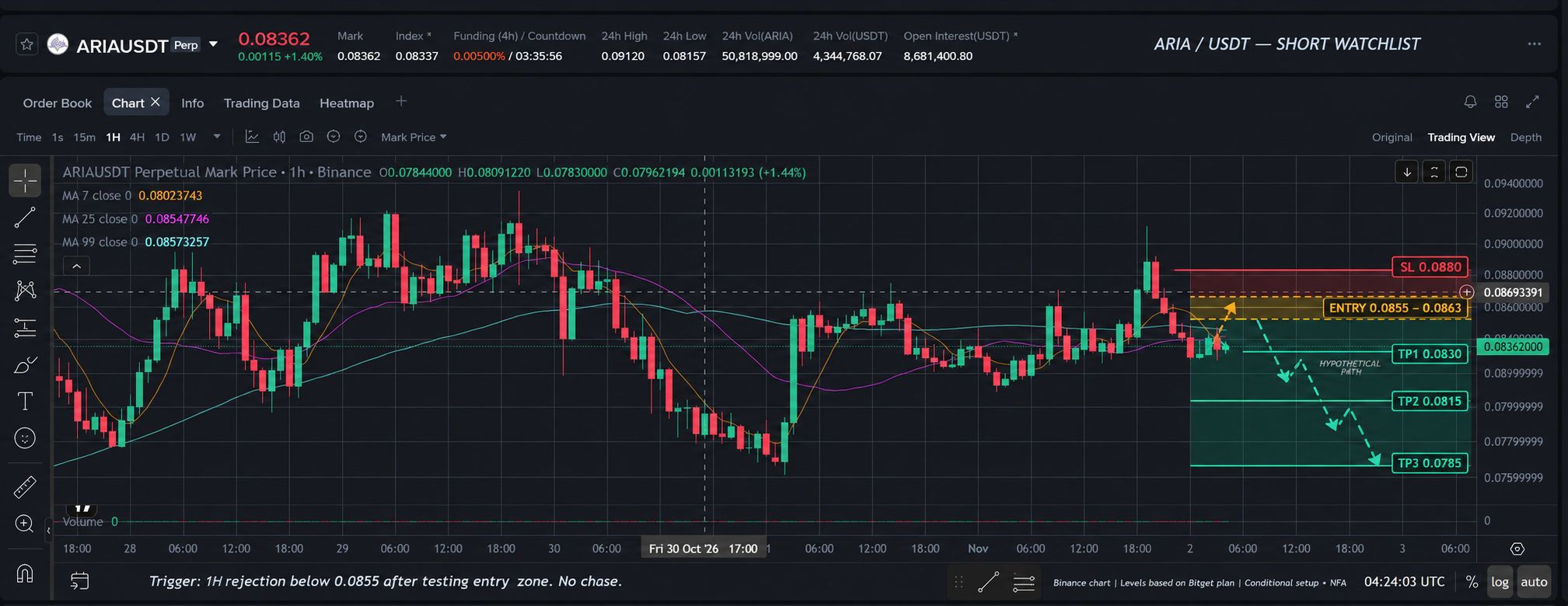
ARIA/USDT — SHORT WATCHLIST
That push to $0.09131 got sold back down. Bears have a case here, but chasing at $0.0833 puts the entry too close to recent support.
I’d rather wait for a bounce.
Entry zone: $0.0855–$0.0863
Trigger: price tests the zone, then a 1H candle closes back below $0.0855. Skip if the entry zone is no longer available.
SL: $0.0880$$
TP1: $0.0830
TP2: $0.0815
TP3: $0.0785
Planned exits: 40% / 40% / 20%.
R at $0.0859: 1.4R / 2.1R / 3.5R, before costs.
The rejection supports a fade, but the 4H chart is still choppy. This needs a failed bounce, not just a bearish opinion.
Cancel if a 1H candle closes above $0.0880 before entry, or if TP1 trades before the setup triggers. Expires in 24 hours.
2
558
·
--
The market isn’t scared of one rate hike
It’s scared that rate hikes are back on the table
Warsh’s Jackson Hole speech came in clearly hawkish on inflation, pushing September hike odds from roughly 35% to 60%
Yields reacted
Risk assets followed
BTC and Nasdaq don’t suddenly have a broken thesis
The market is simply repricing the cost of money
Now the jobs and inflation data have the next word
202
·
--
The interesting part of crypto adoption isn’t another exchange listing
It’s when banks start treating crypto as collateral
Russia’s Sberbank plans to accept BTC, ETH and USDT as loan collateral as the country’s new digital-asset framework takes effect on September 1
That changes the role of crypto
You don’t necessarily have to sell your BTC to access liquidity
You can borrow against it
Trading asset → collateral → financial asset
That’s a very different adoption curve 👀
105
·
--
#grvt
CEX speed and DEX self custody rarely exist in the same place, but @grvt_io is trying to change that with its hybrid exchange model. The combination of off chain order matching and on chain settlement could become an important bridge for the next wave of institutional adoption. Keeping a close eye on how the ecosystem evolves and what new features arrive next.
CEX speed and DEX self custody rarely exist in the same place, but @grvt_io is trying to change that with its hybrid exchange model. The combination of off chain order matching and on chain settlement could become an important bridge for the next wave of institutional adoption. Keeping a close eye on how the ecosystem evolves and what new features arrive next.
2
101
·
--
#bedrock $BR
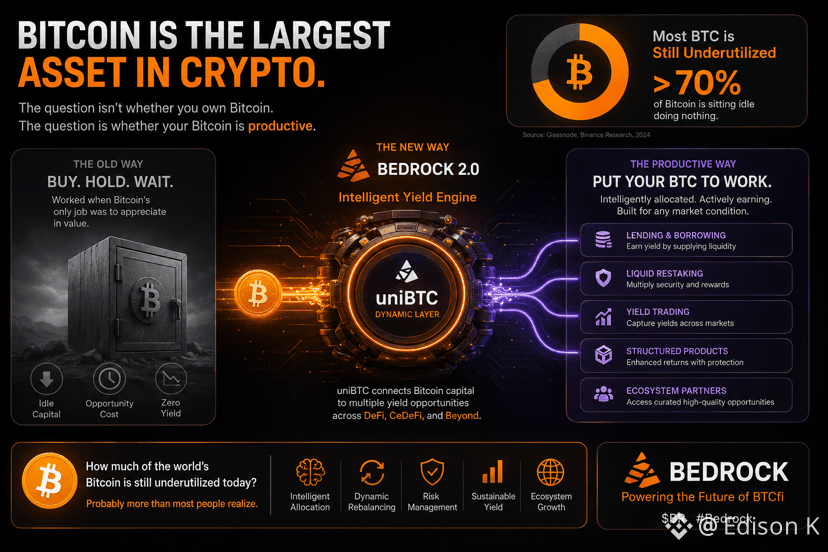
Bitcoin is the largest asset in crypto.
Yet for years, most BTC has done absolutely nothing.
Buy. Hold. Wait.
That strategy worked when Bitcoin’s only job was to appreciate in value.
But BTCfi is changing the conversation.
Today, the question isn’t whether you own Bitcoin.
The question is whether your Bitcoin is productive.
What’s interesting is that many BTC holders still think yield is simply about finding the highest APY. In reality, the bigger challenge is figuring out how capital should be allocated as opportunities, risks, and market conditions constantly change.
That’s one reason why Bedrock 2.0 stands out to me.
Instead of treating Bitcoin as a static asset, @Bedrock is building an Intelligent Yield Engine where uniBTC acts as a dynamic layer connecting Bitcoin capital to multiple yield opportunities.
The future of BTC may not be sitting idle in a wallet.
It may be intelligently working across an entire ecosystem.
How much of the world’s Bitcoin is still underutilized today?
Probably more than most people realize.
1
128
·
--
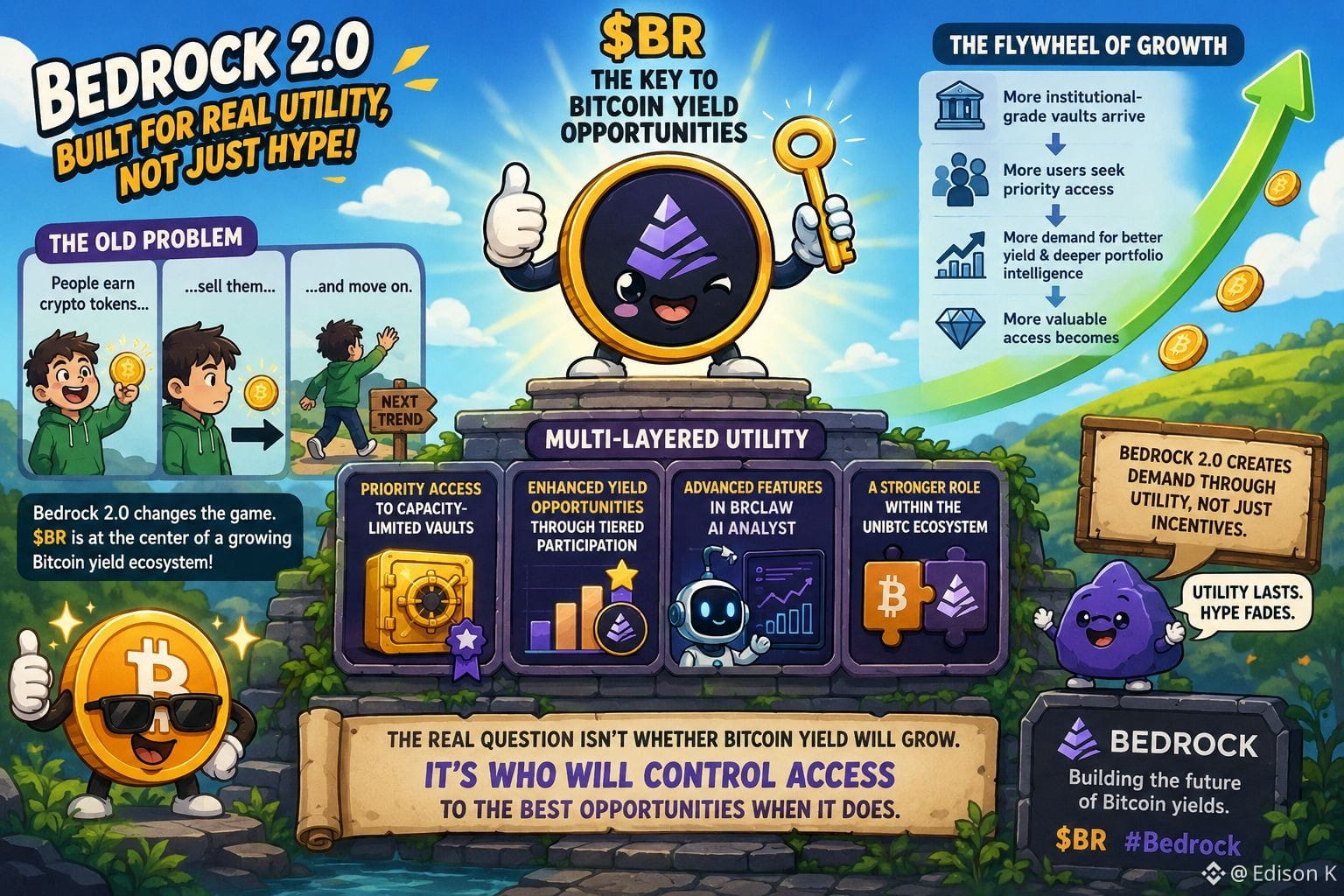
A lot of crypto tokens have the same problem
People earn them, sell them, and move on
That's why I'm paying close attention to what @Bedrock is building around $BR
In Bedrock 2.0, the goal isn't just to distribute rewards
The goal is to make $BR a core component of the entire Bitcoin yield ecosystem
Think about it
The more institutional-grade vaults arrive
The more users seek priority access
The more demand grows for better yield opportunities and deeper portfolio intelligence
The more valuable access itself becomes
What interests me most is that Bedrock appears to be connecting multiple layers of utility to a single asset
• Priority access to capacity-limited vaults
• Enhanced yield opportunities through tiered participation
• Advanced features inside the upcoming BRclaw AI analyst
• A stronger role within the broader uniBTC ecosystem
Most protocols try to create demand through incentives
Bedrock 2.0 seems to be trying to create demand through utility
And historically, utility tends to last longer than hype
The real question isn't whether Bitcoin yield will grow
It's who will control access to the best opportunities when it does
#bedrock $BR
1
1
101
·
--
Alpha: @crypto just triggered a paradigm shift
Smart money is loading while timelines argue game changer
Smart‑money tells: multi‑million spot scoops, coins leaving CEX, fresh OTC. OI ↑ while funding ~0 = shorts pinned. Bids stepping up across majors
Implication: narrative flip to accumulation. My call: #BTC $92k & TOTAL $4T by Jun 30 I’m long #Crypto $BTC $ETH
1
129
·
--
Lệnh ngừng bắn hai tuần đã được xác nhận. BTC đã vượt qua $72K, giá dầu giảm 15%. Nhưng trước khi bạn quyết định mạo hiểm, hãy nhìn xa hơn.
Thỏa thuận này có thời hạn. "Phí vận chuyển" Hormuz vẫn còn. Israel chưa dừng lại. Iran nói rằng đàm phán không đồng nghĩa với hòa bình. Thị trường đã phản ứng trước thỏa thuận chỉ trong vài giờ, $600 triệu trong các vị thế bán đã bị thanh lý. Động thái dễ dàng đã xảy ra rồi.
Bây giờ câu hỏi thực sự: bạn sẽ giữ trong suốt khoảng thời gian đàm phán 2 tuần mà bất cứ điều gì cũng có thể sụp đổ, hay chốt lời và chờ đợi sự rõ ràng?
Bạn sẽ làm gì? 👇
#IranCeasefireOrNot
1
214
·
--
$MSBT của Morgan Stanley chính thức ra mắt hôm nay trên NYSE Arca, quỹ ETF BTC giao ngay đầu tiên được phát hành bởi một ngân hàng lớn của Mỹ.
→ Phí 0.14% (thấp hơn IBIT & FBTC)
→ 16,000 cố vấn MS hiện đã được phép phân phối
→ Coinbase làm người giữ tài sản
Các ngân hàng đã chuyển từ việc cấm crypto sang phát hành quỹ ETF của riêng họ. Sự chuyển mình về cơ sở hạ tầng là có thật, nhưng việc thực hiện nó trong thời điểm 46 ngày liên tiếp sợ hãi cực độ là một động thái táo bạo.
Tín hiệu tăng giá hay mua đỉnh của sự phấn khích TradFi? 👇
#BTCBullsVsMiners
1
196
·
--
Binance's vision for 2026 . I recommend you pay attention to this.
2026 will no longer be the year of extreme anonymity like Monero.
The whole world is shifting to Rational Privacy – true data security that is still verifiable and fully compliant with banking and government regulations.
And Binance is leading this trend.
Look at how Binance is spreading this to its community, through their latest project chosen for their CreatorPad program: @SignOfficial
Sign is not a typical privacy project.
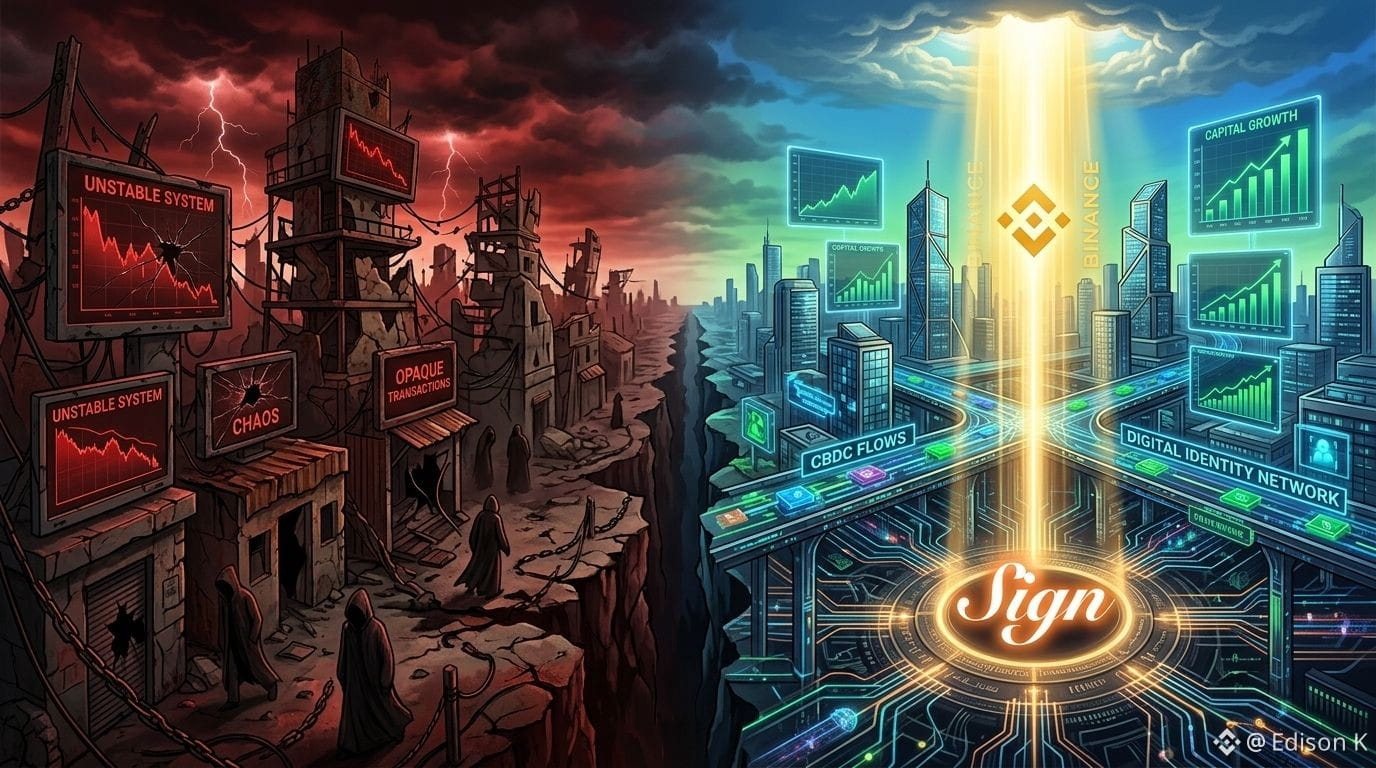
Sign is Sovereign Infrastructure a blockchain infrastructure specifically for governments and enterprises.
They build an attestation layer and verifiable credentials on an omni-chain system that helps:
Governments create CBDC stablecoins with privacy.
Build Digital IDs while citizens still control their data.
Tokenize national resources like land, gold, and welfare while still conducting real-time audits.
All using zero knowledge and hybrid on-off-chain → verifiable without revealing everything.
That is Rational Privacy at the national level.
Binance understands this, so they are acting decisively. Strong
That's why, after Binance Labs changed its name to YZi Labs in January 2025, it chose @Sign as its FIRST investment project, investing in it with a sum of up to $16 million USD.
It then led to another round of $25.5 million USD.
And they directly rewarded the Sign community through Binance HODLer Airdrops and other rewards.
Binance doesn't just like Sign for its technology.
They like Sign because it's building the most sustainable and practical future, transforming blockchain from a personal game into a national tool.
When the government uses Sign → they will use BNB Chain, Binance/Circle's stablecoin, and sovereign capital will flow through the Binance ecosystem. Binance aims to lead the next major narrative after DeFi and RWA (Regional, Sovereign, and Independent) money.
Sign is a digital lifeboat for nations that want to enter the blockchain while maintaining sovereignty and compliance with regulations.
#signdigitalsovereigninfra $SIGN
{future}(SIGNUSDT)
Binance's vision for 2026 . I recommend you pay attention to this.
2026 will no longer be the year of extreme anonymity like Monero.
The whole world is shifting to Rational Privacy – true data security that is still verifiable and fully compliant with banking and government regulations.
And Binance is leading this trend.
Look at how Binance is spreading this to its community, through their latest project chosen for their CreatorPad program: @SignOfficial
Sign is not a typical privacy project.
Sign is Sovereign Infrastructure a blockchain infrastructure specifically for governments and enterprises.
They build an attestation layer and verifiable credentials on an omni-chain system that helps:
Governments create CBDC stablecoins with privacy.
Build Digital IDs while citizens still control their data.
Tokenize national resources like land, gold, and welfare while still conducting real-time audits.
All using zero knowledge and hybrid on-off-chain → verifiable without revealing everything.
That is Rational Privacy at the national level.
Binance understands this, so they are acting decisively. Strong
That's why, after Binance Labs changed its name to YZi Labs in January 2025, it chose @Sign as its FIRST investment project, investing in it with a sum of up to $16 million USD.
It then led to another round of $25.5 million USD.
And they directly rewarded the Sign community through Binance HODLer Airdrops and other rewards.
Binance doesn't just like Sign for its technology.
They like Sign because it's building the most sustainable and practical future, transforming blockchain from a personal game into a national tool.
When the government uses Sign → they will use BNB Chain, Binance/Circle's stablecoin, and sovereign capital will flow through the Binance ecosystem. Binance aims to lead the next major narrative after DeFi and RWA (Regional, Sovereign, and Independent) money.
Sign is a digital lifeboat for nations that want to enter the blockchain while maintaining sovereignty and compliance with regulations.
#signdigitalsovereigninfra $SIGN
1
34
·
--
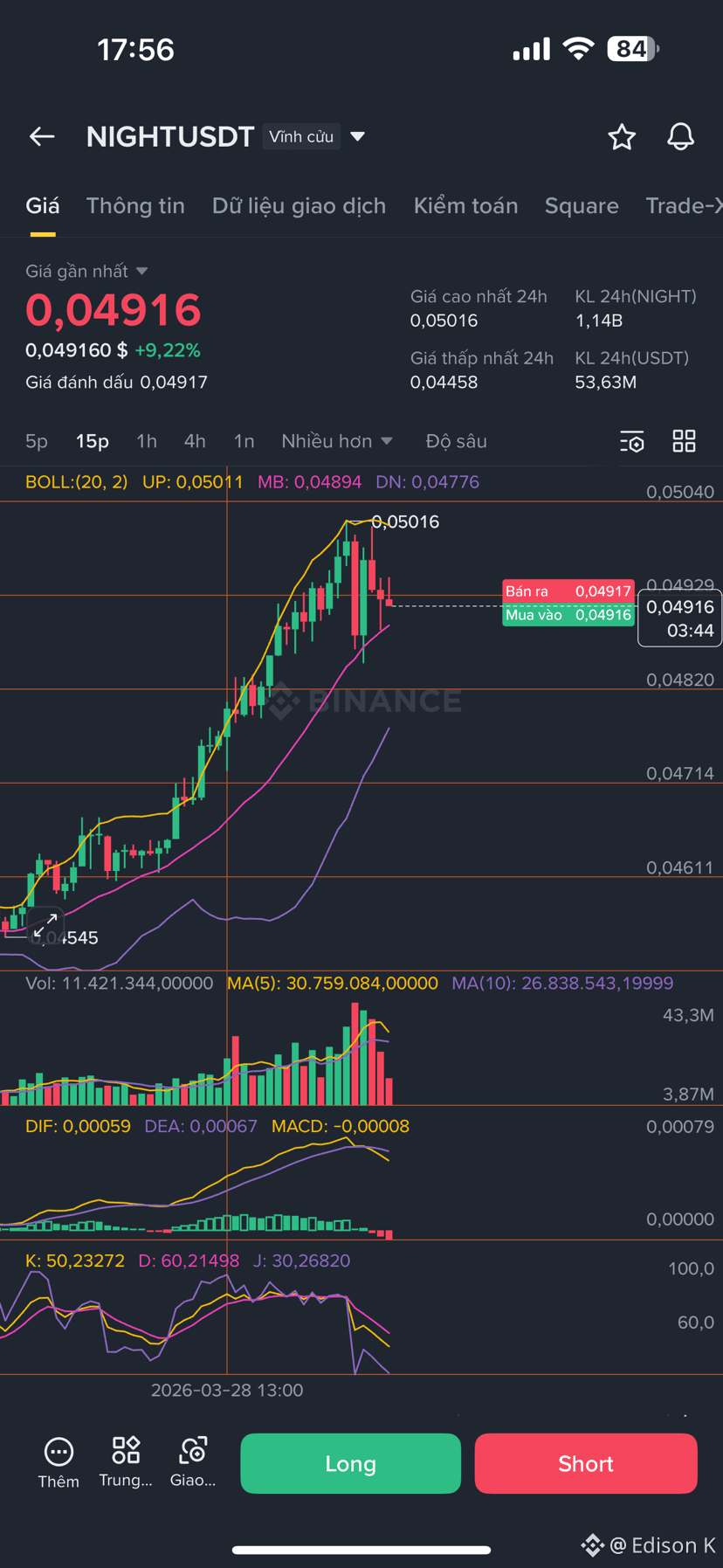
🚨 IF YOU’RE TRADING TODAY, YOU SHOULD NOT MISS $NIGHT
Price just tapped local top 0.0501 and starting to lose momentum.
KDJ rolling over + MACD weakening → early signs of exhaustion.
Plan: SHORT
Entry: 0.0496 – 0.0500
TP: 0.0475 – 0.0460
SL: 0.0512
Follow me to get the earliest signals.
{future}(NIGHTUSDT)
🚨 IF YOU’RE TRADING TODAY, YOU SHOULD NOT MISS $NIGHT
Price just tapped local top 0.0501 and starting to lose momentum.
KDJ rolling over + MACD weakening → early signs of exhaustion.
Plan: SHORT
Entry: 0.0496 – 0.0500
TP: 0.0475 – 0.0460
SL: 0.0512
Follow me to get the earliest signals.
Price just tapped local top 0.0501 and starting to lose momentum.
KDJ rolling over + MACD weakening → early signs of exhaustion.
Plan: SHORT
Entry: 0.0496 – 0.0500
TP: 0.0475 – 0.0460
SL: 0.0512
Follow me to get the earliest signals.
5
72
·
--
#signdigitalsovereigninfra $SIGN
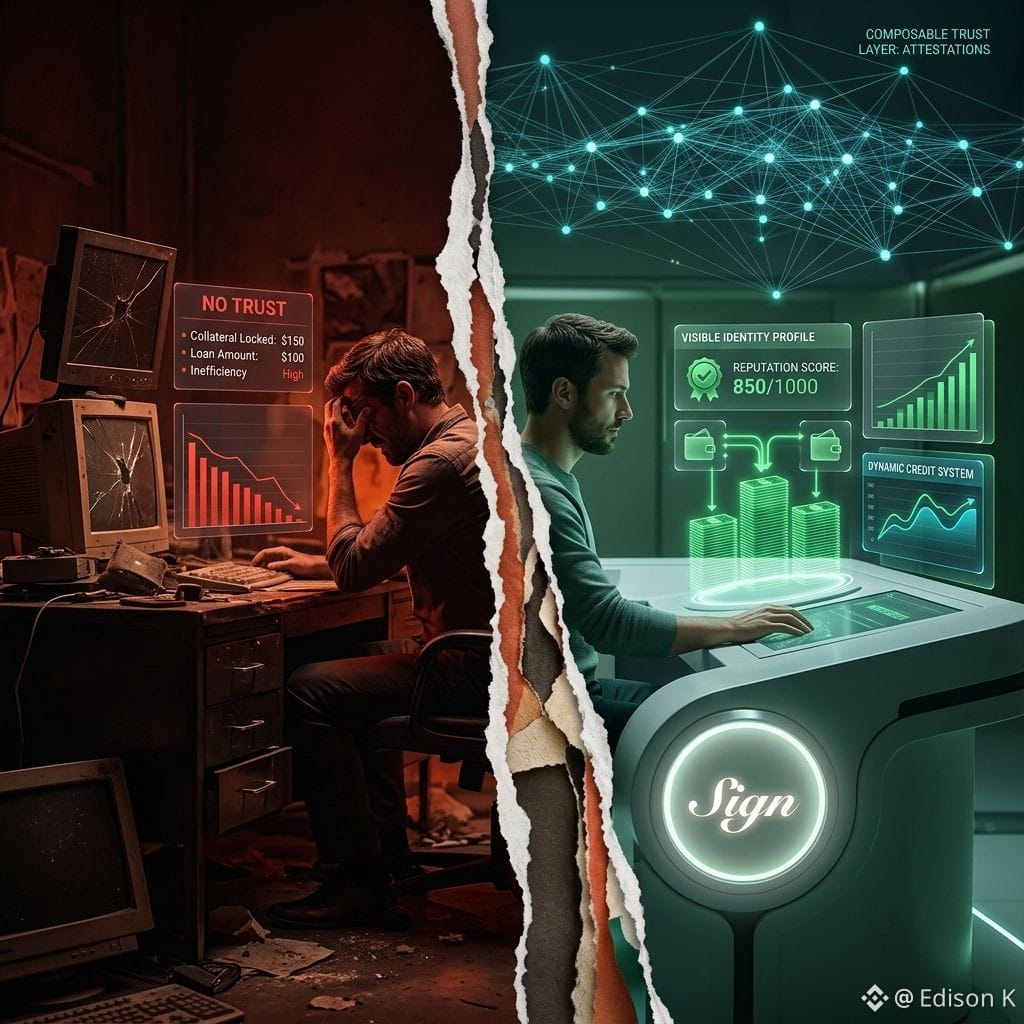
Undercollateralized lending in crypto has always been a meme.
Not because it’s impossible
but because nobody can answer one simple question
who are you onchain
Right now, every wallet is a stranger.
No history that matters.
No reputation that carries over.
No reason to trust.
So the system defaults to one thing
→ overcollateralization
Lock $150 to borrow $100.
Capital efficiency dies right there.
And we’ve already seen what happens when you try to skip trust 👇
BlockFi
→ relied on offchain assessment
→ couldn’t price risk in a trustless system
→ liquidity spiral, then game over
TrueFi
→ tried undercollateralized loans early
→ but reputation = weak + non-portable
→ defaults hit, model stalled
👉 same pattern every time:
no portable identity → no scalable trust
Here’s the shift most people are missing:
If identity + reputation become portable primitives,
then lending doesn’t need to rely purely on collateral anymore.
That’s where something like @SignOfficial starts to matter.
Not as a product
but as a trust engine sitting underneath everything.
Imagine this flow
Your wallet holds verified attestations:
past repayment behavior
DAO participation
onchain income streams
A lending protocol reads that data
Prices your risk dynamically
👉 Suddenly
you’re not just a wallet anymore
you’re a credit profile
That unlocks a completely different market
undercollateralized loans
real credit scoring in DeFi
capital efficiency that actually scales
This isn’t incremental.
It’s a structural unlock.
And here’s the alpha most people fade
Everyone is chasing
new L2s
restaking yields
AI agents
But almost nobody is pricing in:
the layer that makes trust composable
If SIGN (or any identity layer) actually wins:
→ lending protocols get smarter
→ users get more capital efficiency
→ DeFi starts looking like real finance
The bet is simple
If you believe DeFi evolves beyond overcollateralized loops
then you’re already betting on a trust layer
Whether you realize it or not.
5
86
·
--
Everything happened quite quickly. Congratulations to the members!
Everything happened quite quickly. Congratulations to the members!
youngdaddy
·
--
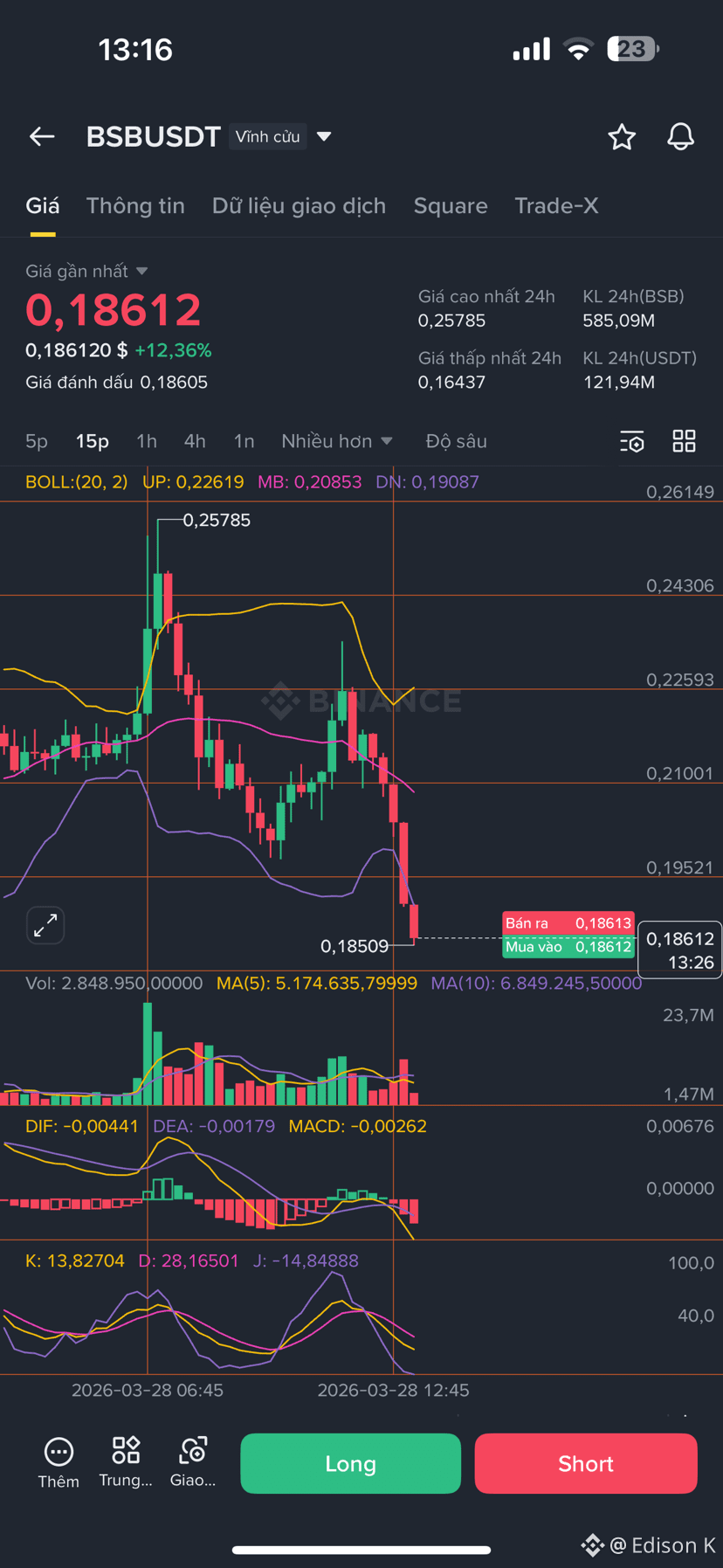
🚨 ONE OF THE EASIEST SETUPS TODAY: $BSB 🚨
SHORT
Entry: 0.21 – 0.22
Stop Loss: 0.24
TP1: 0.196
TP2: 0.175
TP3: 0.155 📉
$BSB just got rejected hard from 0.257, forming a clear distribution zone on 15m after the pump.
Price is now losing the mid Bollinger Band, while MACD shows weak recovery and KDJ starts rolling over again → momentum is not strong enough to continue up.
If price fails to reclaim 0.22, this likely turns into a deeper pullback toward 0.19 – 0.17 liquidity zones.
👉 Follow me to get the earliest signals. 📊
6
157
·
--
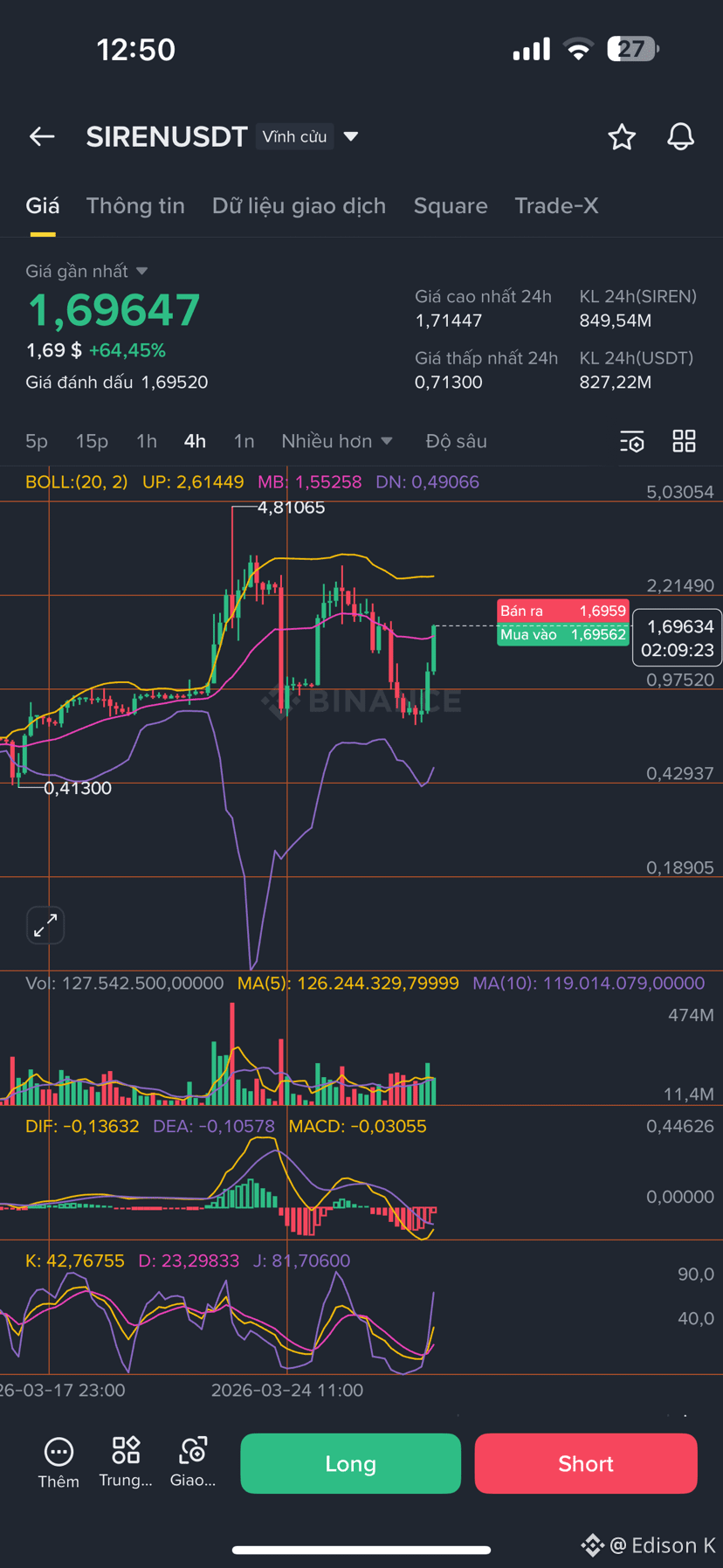
Up to this point
this is the project that deserves to be thrown in jail the most.
$SIREN
{alpha}(560x997a58129890bbda032231a52ed1ddc845fc18e1)
Up to this point
this is the project that deserves to be thrown in jail the most.
$SIREN
this is the project that deserves to be thrown in jail the most.
$SIREN
8
243
·
--
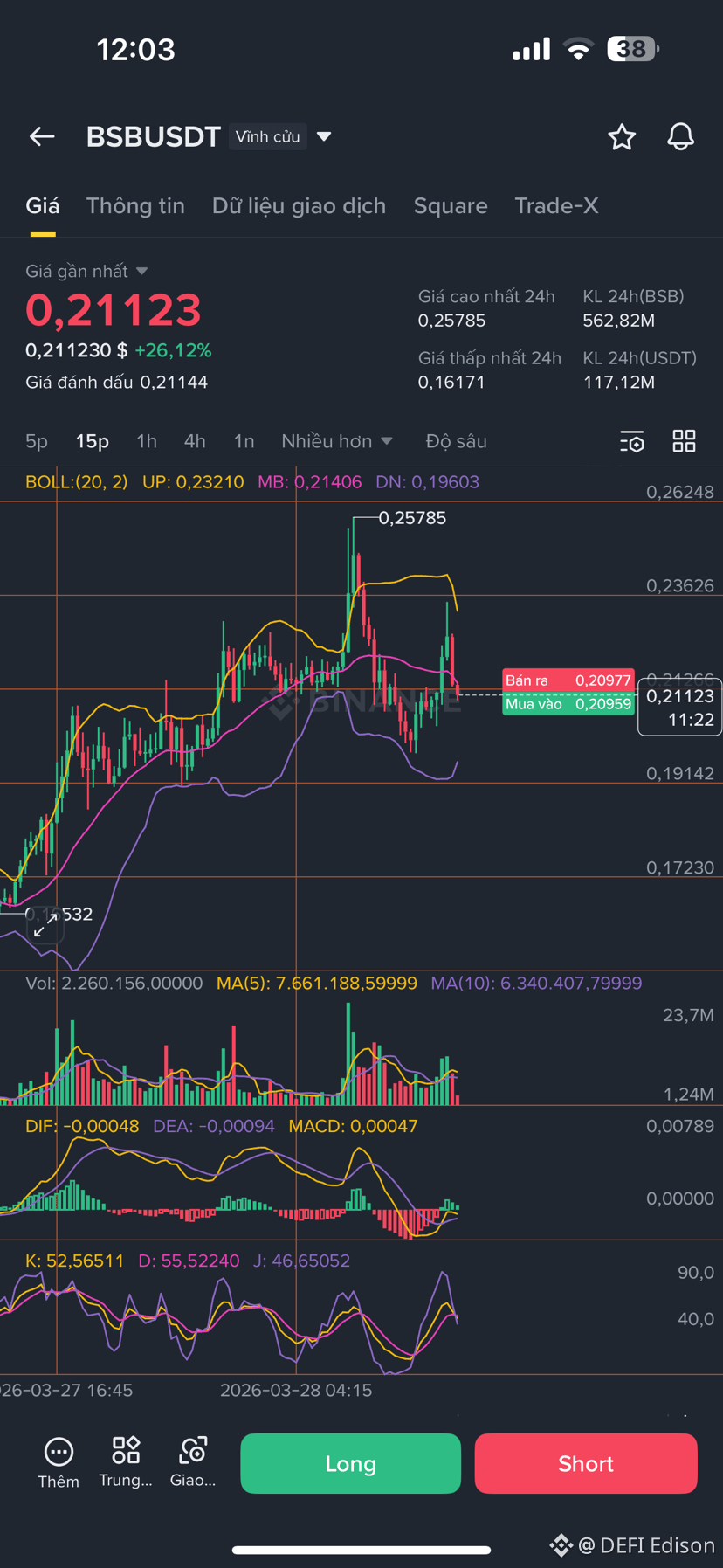
🚨 ONE OF THE EASIEST SETUPS TODAY: $BSB 🚨
SHORT
Entry: 0.21 – 0.22
Stop Loss: 0.24
TP1: 0.196
TP2: 0.175
TP3: 0.155 📉
$BSB just got rejected hard from 0.257, forming a clear distribution zone on 15m after the pump.
Price is now losing the mid Bollinger Band, while MACD shows weak recovery and KDJ starts rolling over again → momentum is not strong enough to continue up.
If price fails to reclaim 0.22, this likely turns into a deeper pullback toward 0.19 – 0.17 liquidity zones.
👉 Follow me to get the earliest signals. 📊
1
1
6
191
·
--
Статья
When I started looking closer at Sign Protocol, the surface story made sense.I thought I finally cracked it.
Last week, around 4 AM, I was grinding through a fresh zkLogin style auth flow on a DeFi wallet testnet. Dropping unlinkable ZKP presentations one after another, clean, stateless, no fingerprints left behind.
Every proof looked brand new.
No history. No linkage. Just pure BBS+ doing its thing.
For a moment, it felt like privacy had actually won.
Not the theoretical kind. The real kind.
But then I tried something simple.
I took the same credential and attempted to stack it into a lending position across two different protocols.
And that’s where it broke.
No history carried over.
No signal persisted.
The system treated me like a completely new wallet every single time.
That’s when the question changed.
Not “does this protect privacy?”
But something deeper.
How does a system stay perfectly unlinkable on the surface…
while still allowing trust to accumulate underneath?
Because without that, nothing compounds.
And if nothing compounds, the system never really forms.
When I started looking closer at @SignOfficial Protocol, the surface story made sense.
BBS+ signatures.
Selective disclosure ZKPs.
Schemas that can generate infinite fresh presentations.
Each interaction isolated.
Each proof clean.
From the outside, it looks like the problem is solved.
But that’s only the surface.
Because if everything is truly isolated, then nothing connects.
No reusable eligibility.
No private reputation.
No continuity across contexts.
And a system like that doesn’t grow. It resets.
So something else has to exist.
What I started noticing wasn’t in the proofs themselves.
It was everything around them.
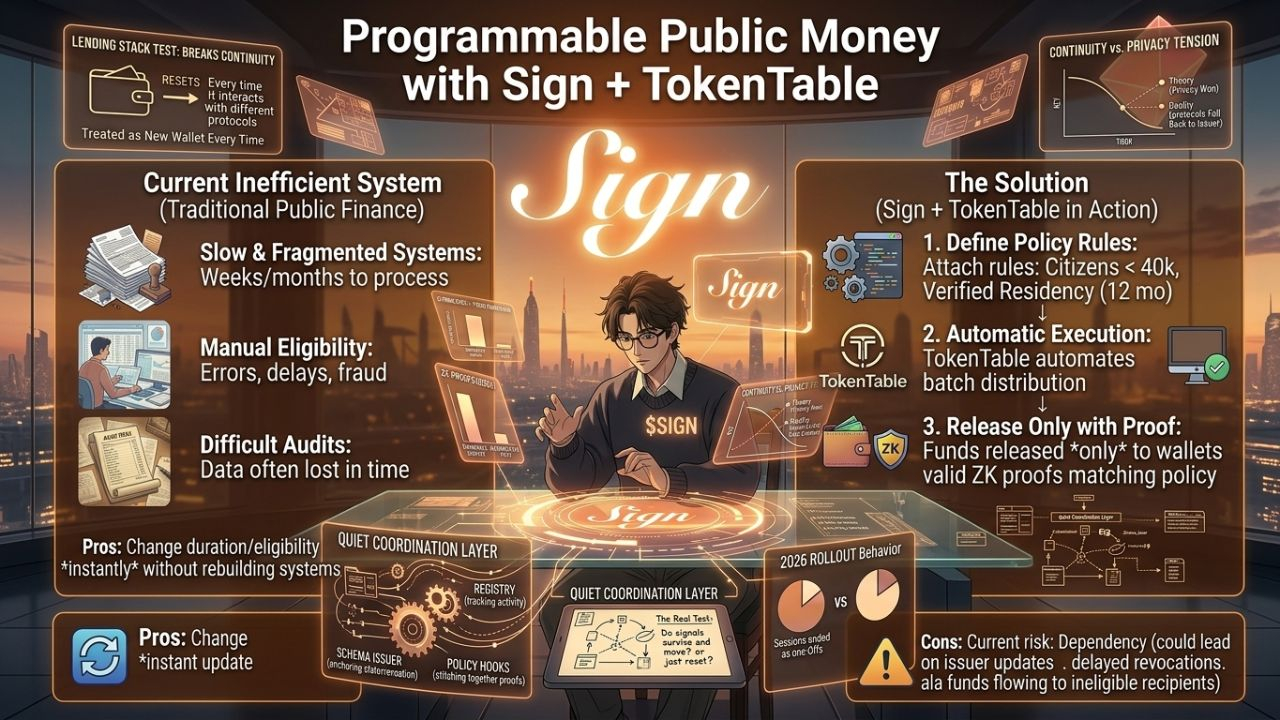
A quiet coordination layer.
The schema issuer anchoring revocation and state.
The registry tracking activity without exposing direct links.
Policy hooks stitching together what the proofs deliberately hide.
None of this shows up when you verify a proof.
But without it, the system collapses into isolation.
It’s not the cryptography that makes it usable.
It’s the scaffolding around it.
You can see the tension more clearly when you look at how zkLogin actually behaves in the wild.
During its 2026 rollout across major wallets, most sessions ended up being one-offs. Users generated fresh proofs for each interaction, but nothing carried forward.
Privacy held.
Continuity didn’t.
And without continuity, protocols couldn’t build any form of private reputation. So they fell back to the only thing they could rely on—the issuer.
Which quietly reintroduced a form of central observation.
Not visible. Not explicit. But present.
And that’s where things started to feel… familiar.
The promise was no correlation.
The reality was coordination through a different layer.
At that point, I stopped thinking in terms of features.
And started thinking in terms of behavior.
What actually happens over time?
Because a system like this only matters if signals don’t just exist but move.
When it works, it’s subtle.
A schema I issued a couple of weeks ago got referenced across multiple unrelated protocols. No visible linkage, no obvious trail, but the signal carried.
Fewer redundant checks.
Lower gas spent on re-verification.
A kind of quiet reputation forming in the background.
That’s when it clicks.
Unlinkability on the surface.
Accumulation underneath.
Not perfect. But functional.
But that same layer is also where the risk lives.
Because the coordination doesn’t disappear. It just becomes less visible.
Most schema activity still clusters around a small set of issuers.
Revocation and policy decisions concentrate there.
And if that layer shifts, everything built on top of it shifts too.
Not in a loud way.
More like a soft rewrite of history.
So now I look at it differently.
Sign Protocol doesn’t eliminate the trade-off between unlinkability and continuity.
It just pushes it deeper into the system.
The surface stays clean.
The complexity moves underneath.
And maybe that’s the only way this works.
Or maybe that hidden layer becomes the next chokepoint we didn’t see coming.
I’m still watching.
Not the proofs themselves.
But whether the signals they create actually survive, move, and get reused without depending on the same invisible anchors every time.
Because that’s the real test.
Not whether something can be created.
But whether it continues to matter after it exists.
#SignDigitalSovereignInfra $SIGN
{spot}(SIGNUSDT)
When I started looking closer at Sign Protocol, the surface story made sense.
I thought I finally cracked it.
Last week, around 4 AM, I was grinding through a fresh zkLogin style auth flow on a DeFi wallet testnet. Dropping unlinkable ZKP presentations one after another, clean, stateless, no fingerprints left behind.
Every proof looked brand new.
No history. No linkage. Just pure BBS+ doing its thing.
For a moment, it felt like privacy had actually won.
Not the theoretical kind. The real kind.
But then I tried something simple.
I took the same credential and attempted to stack it into a lending position across two different protocols.
And that’s where it broke.
No history carried over.
No signal persisted.
The system treated me like a completely new wallet every single time.
That’s when the question changed.
Not “does this protect privacy?”
But something deeper.
How does a system stay perfectly unlinkable on the surface…
while still allowing trust to accumulate underneath?
Because without that, nothing compounds.
And if nothing compounds, the system never really forms.
When I started looking closer at @SignOfficial Protocol, the surface story made sense.
BBS+ signatures.
Selective disclosure ZKPs.
Schemas that can generate infinite fresh presentations.
Each interaction isolated.
Each proof clean.
From the outside, it looks like the problem is solved.
But that’s only the surface.
Because if everything is truly isolated, then nothing connects.
No reusable eligibility.
No private reputation.
No continuity across contexts.
And a system like that doesn’t grow. It resets.
So something else has to exist.
What I started noticing wasn’t in the proofs themselves.
It was everything around them.
A quiet coordination layer.
The schema issuer anchoring revocation and state.
The registry tracking activity without exposing direct links.
Policy hooks stitching together what the proofs deliberately hide.
None of this shows up when you verify a proof.
But without it, the system collapses into isolation.
It’s not the cryptography that makes it usable.
It’s the scaffolding around it.
You can see the tension more clearly when you look at how zkLogin actually behaves in the wild.
During its 2026 rollout across major wallets, most sessions ended up being one-offs. Users generated fresh proofs for each interaction, but nothing carried forward.
Privacy held.
Continuity didn’t.
And without continuity, protocols couldn’t build any form of private reputation. So they fell back to the only thing they could rely on—the issuer.
Which quietly reintroduced a form of central observation.
Not visible. Not explicit. But present.
And that’s where things started to feel… familiar.
The promise was no correlation.
The reality was coordination through a different layer.
At that point, I stopped thinking in terms of features.
And started thinking in terms of behavior.
What actually happens over time?
Because a system like this only matters if signals don’t just exist but move.
When it works, it’s subtle.
A schema I issued a couple of weeks ago got referenced across multiple unrelated protocols. No visible linkage, no obvious trail, but the signal carried.
Fewer redundant checks.
Lower gas spent on re-verification.
A kind of quiet reputation forming in the background.
That’s when it clicks.
Unlinkability on the surface.
Accumulation underneath.
Not perfect. But functional.
But that same layer is also where the risk lives.
Because the coordination doesn’t disappear. It just becomes less visible.
Most schema activity still clusters around a small set of issuers.
Revocation and policy decisions concentrate there.
And if that layer shifts, everything built on top of it shifts too.
Not in a loud way.
More like a soft rewrite of history.
So now I look at it differently.
Sign Protocol doesn’t eliminate the trade-off between unlinkability and continuity.
It just pushes it deeper into the system.
The surface stays clean.
The complexity moves underneath.
And maybe that’s the only way this works.
Or maybe that hidden layer becomes the next chokepoint we didn’t see coming.
I’m still watching.
Not the proofs themselves.
But whether the signals they create actually survive, move, and get reused without depending on the same invisible anchors every time.
Because that’s the real test.
Not whether something can be created.
But whether it continues to matter after it exists.
#SignDigitalSovereignInfra $SIGN
2
7
105
·
--
#signdigitalsovereigninfra $SIGN
I used to chase pure hype in crypto like it was alpha volume, narratives, and X buzz meant a protocol was printing.
I was grinding $SIGN attestations hard through the 2025 testnet sprints, dropping schemas for wallet proofs and RWA eligibility like every other degen farming points.
The on chain activity looked insane.
Then the rush felt hollow.
What flipped the script for me
Asking the only question that matters after launch what actually keeps moving once the creation moment ends
It’s like a liquidity pool with TVL but zero swaps pretty chart, dead utility.
With Sign Protocol I see real interaction, but most still smells momentum driven big partnership drops, gov pilots, grant waves.
The make or break is reusability.
Can one attestation get referenced, forked, or stacked into new loops across chains without starting from zero
That’s where actual network effects compound instead of evaporating post event.
Right now it’s early positioned perfectly at the identity RWA compliance nexus but adoption feels concentrated and event tied rather than organic daily workflow.
Sign’s schema + attestation model could fix exactly that.
I watched a single KYC schema I issued for a small TON EVM bridge syndicate get pulled into two unrelated lending protocols 19 days later zero re verification, just direct hook.
That’s the quiet loop that turns static proofs into living primitives.
When reuse hits, it’s pure systematic alpha.
My own contribution attestation from a Q1 2026 RWA test got referenced 47 times across three ecosystems in the following month, slashing redundant gas by ~$31 per user and killing the Sybil vector the way early EigenLayer operator attestations stabilized restaking TVL.
I’m watching the reuse loops.
If they compound organically, I’m doubling down.
If they stay tied to hype waves, I stay cautious.

4
7
129
·
--

Статья
Beyone the dotted line . The evolution of digital trustI used to smash sign on DocuSign at 3 AM during a 2024 RWA tokenization deal, convinced the green checkmark meant bulletproof proof forever.
Then the counterparty’s jurisdiction bounced the doc because their system didn’t recognize the Adobe audit trail.
The deal stalled for weeks while we re verified everything manually.
That moment killed my blind faith in centralized e signs they create the signature but trap the evidence in a black box server that dies the second the provider pivots or a border disputes it.
Switching to Sign Protocol’s attestations felt like upgrading from a paper receipt to a verifiable, cross chain credential.
I’ve been issuing and referencing them since the omni chain rollout wallet ownership proofs, KYC schemas, contribution attestations anything you can schema ize gets hashed, signed, and anchored immutably.
The magic isn’t the click to sign it’s the post sign life.
One attestation I dropped for a DeFi lending eligibility last quarter got referenced in two other protocols weeks later no re KYC, zero extra gas beyond the initial schema hook.
Schemas are reusable templates; attestations are the live, composable bricks.
Real world crypto gut check
Remember the 2023 2024 wave of points based airdrops on Blast and zkSync
Dune data showed ~82% of early claimants dumped within 72 hours because off chain proofs were siloed and non portable farmers gamed one time eligibility with zero ongoing verification.
Contrast that with Sign’s on chain attestations powering Sierra Leone’s national digital IDs world’s first blockchain verifiable physical cards and UAE’s Ras Al Khaimah 10 year Web3 golden visa program.
Those aren’t hype drops they’re live sovereign infrastructure where attestations get checked daily across borders without calling Adobe support.
What I like
The network effects are already compounding.
I personally reused one identity attestation across three EVM chains plus TON last month saved $47 in repeated verification fees and slashed Sybil risk the way EigenLayer’s restaking proofs stabilized TVL.
With 40M+ users touched via TokenTable alone and $4B+ in distributed assets, this isn’t theory it’s the quiet infrastructure layer turning trust me bro into verifiable, referenceable code.
Hooks let devs build on existing proofs instead of starting from zero exactly how Uniswap V4 hooks turned liquidity into composable primitives.
What I dislike
Adoption still leans heavy on gov partnerships and incentive programs rather than pure organic dev traction.
I’ve seen attestations sit idle after issuance because not every dApp has integrated the verifier SDK yet real data from on chain explorers shows bursty activity around launches instead of steady workflow reuse.
Plus, while cross chain verification via Lit TEE is slick, small farmers on high gas L1s still eat $6 9 per complex schema, pricing out the same degens who got rugged by centralized KYC blackouts.
Sign Protocol doesn’t just sign documents.
It makes the proof portable, referenceable, and alive long after the initial click.
That’s the fundamental shift I’ve been waiting for.
#signdigitalsovereigninfra @SignOfficial $SIGN
Beyone the dotted line . The evolution of digital trust
I used to smash sign on DocuSign at 3 AM during a 2024 RWA tokenization deal, convinced the green checkmark meant bulletproof proof forever.
Then the counterparty’s jurisdiction bounced the doc because their system didn’t recognize the Adobe audit trail.
The deal stalled for weeks while we re verified everything manually.
That moment killed my blind faith in centralized e signs they create the signature but trap the evidence in a black box server that dies the second the provider pivots or a border disputes it.
Switching to Sign Protocol’s attestations felt like upgrading from a paper receipt to a verifiable, cross chain credential.
I’ve been issuing and referencing them since the omni chain rollout wallet ownership proofs, KYC schemas, contribution attestations anything you can schema ize gets hashed, signed, and anchored immutably.
The magic isn’t the click to sign it’s the post sign life.
One attestation I dropped for a DeFi lending eligibility last quarter got referenced in two other protocols weeks later no re KYC, zero extra gas beyond the initial schema hook.
Schemas are reusable templates; attestations are the live, composable bricks.
Real world crypto gut check
Remember the 2023 2024 wave of points based airdrops on Blast and zkSync
Dune data showed ~82% of early claimants dumped within 72 hours because off chain proofs were siloed and non portable farmers gamed one time eligibility with zero ongoing verification.
Contrast that with Sign’s on chain attestations powering Sierra Leone’s national digital IDs world’s first blockchain verifiable physical cards and UAE’s Ras Al Khaimah 10 year Web3 golden visa program.
Those aren’t hype drops they’re live sovereign infrastructure where attestations get checked daily across borders without calling Adobe support.
What I like
The network effects are already compounding.
I personally reused one identity attestation across three EVM chains plus TON last month saved $47 in repeated verification fees and slashed Sybil risk the way EigenLayer’s restaking proofs stabilized TVL.
With 40M+ users touched via TokenTable alone and $4B+ in distributed assets, this isn’t theory it’s the quiet infrastructure layer turning trust me bro into verifiable, referenceable code.
Hooks let devs build on existing proofs instead of starting from zero exactly how Uniswap V4 hooks turned liquidity into composable primitives.
What I dislike
Adoption still leans heavy on gov partnerships and incentive programs rather than pure organic dev traction.
I’ve seen attestations sit idle after issuance because not every dApp has integrated the verifier SDK yet real data from on chain explorers shows bursty activity around launches instead of steady workflow reuse.
Plus, while cross chain verification via Lit TEE is slick, small farmers on high gas L1s still eat $6 9 per complex schema, pricing out the same degens who got rugged by centralized KYC blackouts.
Sign Protocol doesn’t just sign documents.
It makes the proof portable, referenceable, and alive long after the initial click.
That’s the fundamental shift I’ve been waiting for.
#signdigitalsovereigninfra @SignOfficial $SIGN
2
4
102
·
--
#signdigitalsovereigninfra $SIGN
I’ve stood in enough Southeast Asian queues to know the drill officer types your passport number, stares at three different screens, and you just wait while invisible bureaucracies argue in the background.
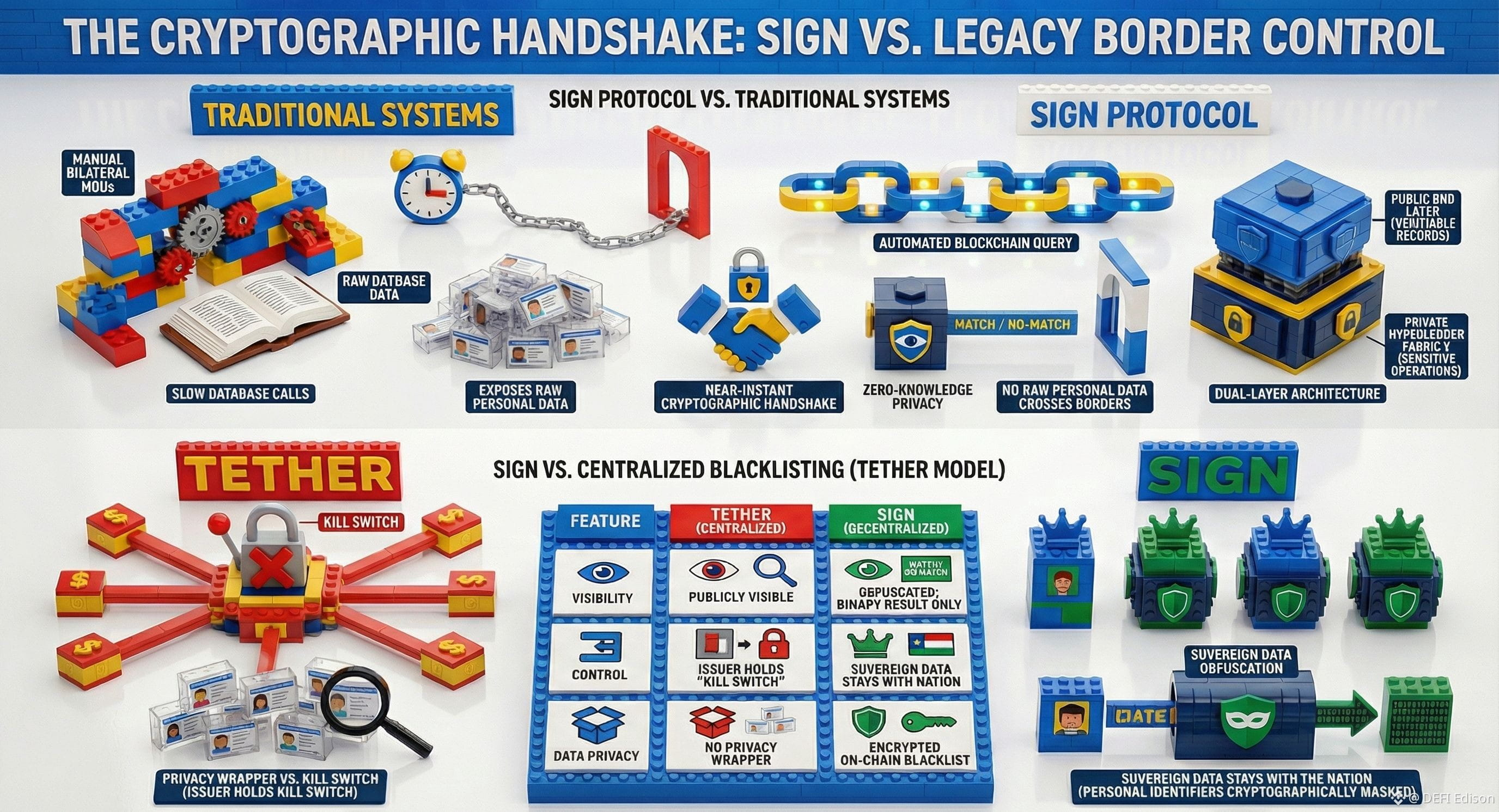
This week I was grinding through Sign’s latest sovereign security specs and their border control module flipped that entire script, encrypted on chain blacklist where personal identifiers get cryptographically obfuscated before they ever touch the ledger.
Scan the doc, node runs the check, returns match or no match.
No raw data crosses borders, no live foreign DB calls, no bilateral drama.
The mechanic is clean: public BNB layer holds the verifiable obfuscated record for instant queries, while the private Hyperledger Fabric X layer keeps each nation’s sensitive ops locked down.
Bilateral MOUs, clunky data formats, hours of latency at every checkpoint.
This replaces the whole circus with one near instant cryptographic handshake on neutral infra.
Real talk, this plays out like Tether’s stablecoin blacklisting playbook in reverse.
In January 2026 alone Tether froze over $180 million USDT across five Tron wallets in 24 hours, part of their $4.2 billion total frozen since 2023 across 7k+ addresses for sanctions, hacks, pig butchering scams and terrorism financing.
Public contract level blacklist, addresses get tagged, transfers die instantly, every explorer and compliance bot sees the freeze live.
No obfuscation, no privacy wrapper, issuer holds the kill switch.
Contrast that with Sign: binary result only, data stays sovereign, no one even knows which record got queried.
Nations that won’t share raw intel still get real time security checks on neutral infra.
No cap, that’s the diplomatic unlock traditional systems never shipped.
What I dislike: the whitepaper stops at “cryptographically obfuscated.”
Is it salted hash, ZK commitment, blinded credential?
Passport formats have garbage entropy, country code plus sequential digits, so a preimage attack with a modest list is trivial if it’s not proper ZK.
Who removes it?
1
3
123
·
--

Статья
SIGN Just Bridged Public Crypto and Government Systems and That’s Where Trillions EnterI spent all of last night reading through the documentation on SIGN's autonomous system that split stunned me more than any gas optimized airdrop.
SIGN’s Dual Layer Stack BNB Public Meets Hyperledger Fabric X and It Actually Makes Sense
The public layer runs on BNB Chain for attestations and token distribution, transparent and verifiable.
The private layer runs on Hyperledger Fabric X with microservices, Arma BFT orderers controlled by central banks, and throughput above 200k TPS using parallel validation through dependency graphs.
That detail reframed everything.
Facts first.
The public side handles Sign Protocol attestations and TokenTable execution on a flexible L2.
The private Fabric X layer manages CBDC, national identity data, and sensitive financial operations in a fully permissioned environment with no public exposure.
Governments keep control while still connecting to open verification rails.
I like this because it is one of the few designs that actually fits real deployments.
Kyrgyzstan’s CBDC pilot and Sierra Leone’s digital identity rollout rely on this hybrid structure, not pure public chains.
Citizens hold verifiable credentials on a public layer while sensitive state data stays controlled.
It is practical and aligned with how institutions operate.
What I dislike is the trade off.
The core system is not trustless in the traditional crypto sense.
Fabric X is permissioned, controlled by central authorities.
This shifts SIGN closer to enterprise infrastructure than open protocol design.
At the same time, public chain RWAs have scaled rapidly, with Ethereum based tokenized assets surpassing 16 billion dollars by March 2026 and total on chain RWAs exceeding 24 billion.
Open systems attract liquidity because they are fully verifiable.
Still, this design reflects reality.
It is not built for ideological purity.
It is built for adoption at the level governments actually operate.
@SignOfficial l #SignDigitalSovereignInfra $SIGN
{spot}(SIGNUSDT)
SIGN Just Bridged Public Crypto and Government Systems and That’s Where Trillions Enter
I spent all of last night reading through the documentation on SIGN's autonomous system that split stunned me more than any gas optimized airdrop.
SIGN’s Dual Layer Stack BNB Public Meets Hyperledger Fabric X and It Actually Makes Sense
The public layer runs on BNB Chain for attestations and token distribution, transparent and verifiable.
The private layer runs on Hyperledger Fabric X with microservices, Arma BFT orderers controlled by central banks, and throughput above 200k TPS using parallel validation through dependency graphs.
That detail reframed everything.
Facts first.
The public side handles Sign Protocol attestations and TokenTable execution on a flexible L2.
The private Fabric X layer manages CBDC, national identity data, and sensitive financial operations in a fully permissioned environment with no public exposure.
Governments keep control while still connecting to open verification rails.
I like this because it is one of the few designs that actually fits real deployments.
Kyrgyzstan’s CBDC pilot and Sierra Leone’s digital identity rollout rely on this hybrid structure, not pure public chains.
Citizens hold verifiable credentials on a public layer while sensitive state data stays controlled.
It is practical and aligned with how institutions operate.
What I dislike is the trade off.
The core system is not trustless in the traditional crypto sense.
Fabric X is permissioned, controlled by central authorities.
This shifts SIGN closer to enterprise infrastructure than open protocol design.
At the same time, public chain RWAs have scaled rapidly, with Ethereum based tokenized assets surpassing 16 billion dollars by March 2026 and total on chain RWAs exceeding 24 billion.
Open systems attract liquidity because they are fully verifiable.
Still, this design reflects reality.
It is not built for ideological purity.
It is built for adoption at the level governments actually operate.
@SignOfficial l #SignDigitalSovereignInfra $SIGN
2
5
135
Войдите, чтобы посмотреть больше материала
Присоединяйтесь к пользователям криптовалют по всему миру на Binance Square
⚡️ Получайте новейшую и полезную информацию о криптоактивах.
💬 Нам доверяет крупнейшая в мире криптобиржа.
👍 Получите достоверные аналитические данные от верифицированных создателей контента.
Эл. почта/номер телефона
В тренде
BinanceWithdrawalScamWarning
Просмотров: 0
23 обсуждают
#BinanceWithdrawalScamWarning
Binance Withdrawal Scam Warning: Fake $150 Compensation Offers Are Targeting Users!
As Binance gradually restores withdrawal services following its recent security incident, scammers are taking advantage of user uncertainty to launch fake compensation campaigns and phishing attacks.
CZ has warned that scammers are becoming increasingly active, urging users to remain cautious.
Here is what users need to know:
🚨 Fake $150 Rewards: Fraudulent screenshots claim Binance is offering $150 compensation for the withdrawal suspension.
🚨 Fake Reward Hub Links: Scammers are circulating links that ask users to check or claim supposed compensation.
🚨 Impersonation Attacks: Fraudsters pretend to be Binance Support and may ask users to verify accounts or move funds to supposedly secure wallets.
Binance co-founder Yi He clarified that no cash voucher campaign is currently active. A proposed community rewards campaign still requires regulatory approval.
How to protect your funds:
- Never click suspicious reward or compensation links.
- Never share your password, OTP or wallet seed phrase.
- Never transfer funds to a so-called safe wallet.
- Verify announcements through Binance's official channels.
- Contact support through the official Binance app or website.
During a security incident, protecting users is not just about securing exchange wallets. It also means protecting the community from scams that exploit fear and confusion.
One careless click can cost more than the original incident.
Have you recently received any suspicious Binance compensation or withdrawal-related messages?
#Binance #CryptoSecurity #CZ #CryptoSafety
Gourav-S
·Лайков: 1
·Просмотров: 27
USMidtermElections
Просмотров: 542,103
2,572 обсуждают
USOctoberNFP-AreRateCutsStillPossible
Просмотров: 4,701
160 обсуждают