
Sahil Jamwal1212
186 Публикации

Sahil Jamwal1212
Отправить жалобу
Заблокировать пользователя
BP-5CE6BCA76272
Случайный трейдер
5.5 г
9 подписок(и/а)
41 подписчиков(а)
72 понравилось
Посты
Все
Цитирования
·
--
Рост
A Temporary LST Discount Shouldn't Automatically Trigger a Liquidation.
DIA's Liquid Staking Map reports:
294 protocols
144 networks
$62.6B in TVL
4.73% median yield
But there is a problem with how liquid staking tokens are sometimes valued in DeFi.
During market volatility, stETH or LRTs can temporarily trade below their underlying staking value on DEX pools.
If a lending protocol blindly follows that DEX price, borrowers could face liquidations based on a temporary liquidity discount rather than the underlying collateral value.
$DIA 's xLSD (Collateral-Ratio Fair Value) methodology takes a different approach.
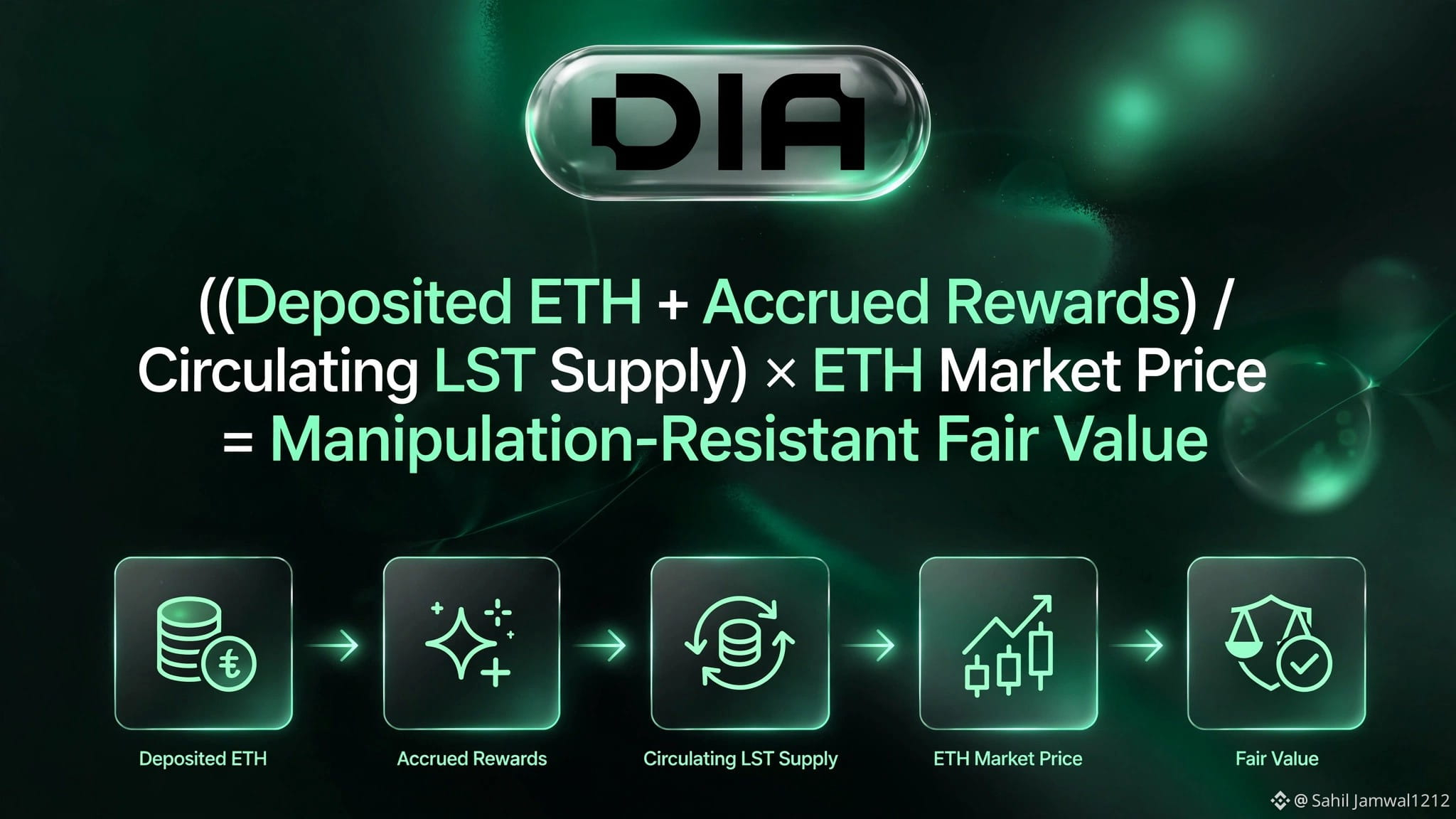
It calculates the underlying value per LST using:
Deposited underlying assets plus accrued rewards.
Divided by circulating LST supply.
Multiplied by the verified market price of the underlying asset.
This provides a backing-based valuation instead of relying exclusively on the latest DEX trading price.
DIA's integrations include:
Vector Reserve for vETH and svETH.
Origin Protocol for OUSD and OETH.
This does not remove slashing, redemption, liquidity, or smart contract risks. But it offers lending protocols another way to assess liquid staking collateral.
In DeFi, the market price and the underlying value are not always identical. Oracles need to understand the difference.
90
·
--
Рост
A Gold Token Is Only as Credible as the Evidence Behind Its Backing.
Tokenized commodities are gaining attention, but there is a question the RWA market cannot ignore:
Where is the actual gold, silver, or copper backing the token?
A price feed tells us the market value. It does not prove that physical reserves exist in an offchain vault.
DIA recently highlighted this issue in its article, "Tokenized Commodities Need Proof of Reserves to Shine like Gold."
Here are two relevant examples:
1. Denario Silver Coin (DSC)
DIA provides silver price feeds alongside reserve-verification capabilities for Denario's tokenized silver ecosystem.
This is relevant for DeFi applications evaluating tokenized silver as collateral.
2. Mettalex
$DIA
{future}(DIAUSDT)
partnered with Fetch.ai's decentralized derivatives exchange, Mettalex, to provide oracle feeds for decentralized commodity markets.
The bigger lesson is that commodity tokenization requires more than market pricing.
It requires two separate layers of information:
What is the underlying commodity worth?
What physical reserves support the token?
Onchain reporting can improve transparency, but it does not automatically eliminate custody or redemption risks.
Real-world assets need real-world verification.
That is an important part of building trust in RWA markets.
A Gold Token Is Only as Credible as the Evidence Behind Its Backing.
Tokenized commodities are gaining attention, but there is a question the RWA market cannot ignore:
Where is the actual gold, silver, or copper backing the token?
A price feed tells us the market value. It does not prove that physical reserves exist in an offchain vault.
DIA recently highlighted this issue in its article, "Tokenized Commodities Need Proof of Reserves to Shine like Gold."
Here are two relevant examples:
1. Denario Silver Coin (DSC)
DIA provides silver price feeds alongside reserve-verification capabilities for Denario's tokenized silver ecosystem.
This is relevant for DeFi applications evaluating tokenized silver as collateral.
2. Mettalex
$DIA
partnered with Fetch.ai's decentralized derivatives exchange, Mettalex, to provide oracle feeds for decentralized commodity markets.
The bigger lesson is that commodity tokenization requires more than market pricing.
It requires two separate layers of information:
What is the underlying commodity worth?
What physical reserves support the token?
Onchain reporting can improve transparency, but it does not automatically eliminate custody or redemption risks.
Real-world assets need real-world verification.
That is an important part of building trust in RWA markets.

·
--
Рост
Bitcoin in Lightning. strBTC on Ethereum. How do you prove the connection?
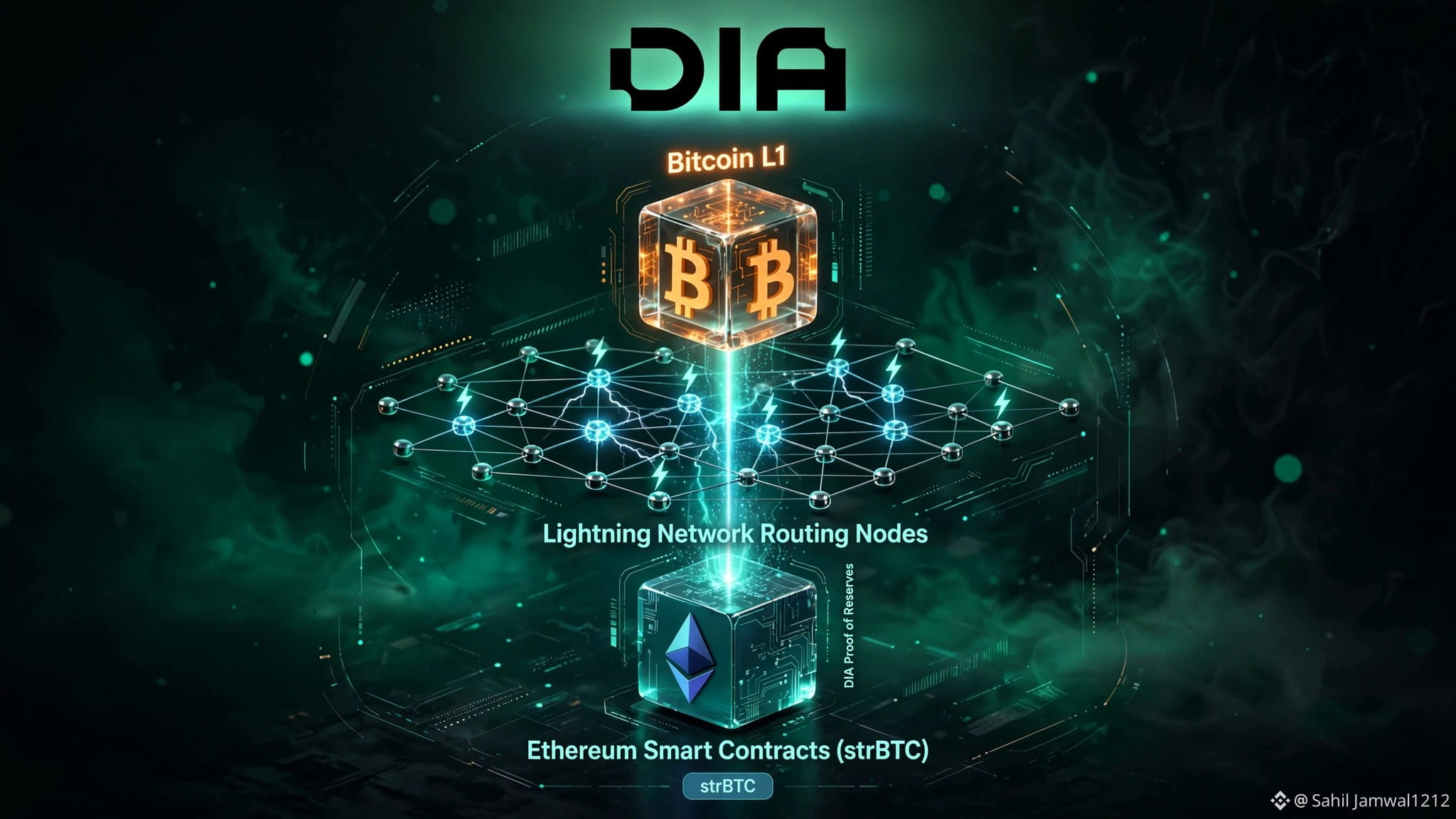
Stroom's strBTC lets BTC holders earn Lightning routing fees while using a liquid token in Ethereum DeFi.
But users need more than a promise that the token is backed.
$DIA
{spot}(DIAUSDT)
addresses this cross-network challenge by:
Pulling balance telemetry from primary Lightning nodes.
Processing the data through its oracle rollup architecture.
Publishing reserve information to Ethereum smart contracts at regular intervals.
This gives strBTC holders an onchain view of the reported BTC backing held in Lightning channels.
It doesn't eliminate federation or custody risks. It does make reserve information more transparent and easier to monitor.
Bitcoin DeFi needs both liquidity and verifiable information.
Bitcoin in Lightning. strBTC on Ethereum. How do you prove the connection?
Stroom's strBTC lets BTC holders earn Lightning routing fees while using a liquid token in Ethereum DeFi.
But users need more than a promise that the token is backed.
$DIA
addresses this cross-network challenge by:
Pulling balance telemetry from primary Lightning nodes.
Processing the data through its oracle rollup architecture.
Publishing reserve information to Ethereum smart contracts at regular intervals.
This gives strBTC holders an onchain view of the reported BTC backing held in Lightning channels.
It doesn't eliminate federation or custody risks. It does make reserve information more transparent and easier to monitor.
Bitcoin DeFi needs both liquidity and verifiable information.
131
·
--
Рост
Can Bitcoin Support Native Credit and Options Without Giving Up Custody?
That is one of the important questions for Bitcoin DeFi.
The opportunity goes beyond staking BTC or using wrapped assets on other chains. Native credit and derivatives need reliable pricing, transparent settlement and verifiable execution.
$DIA
{spot}(DIAUSDT)
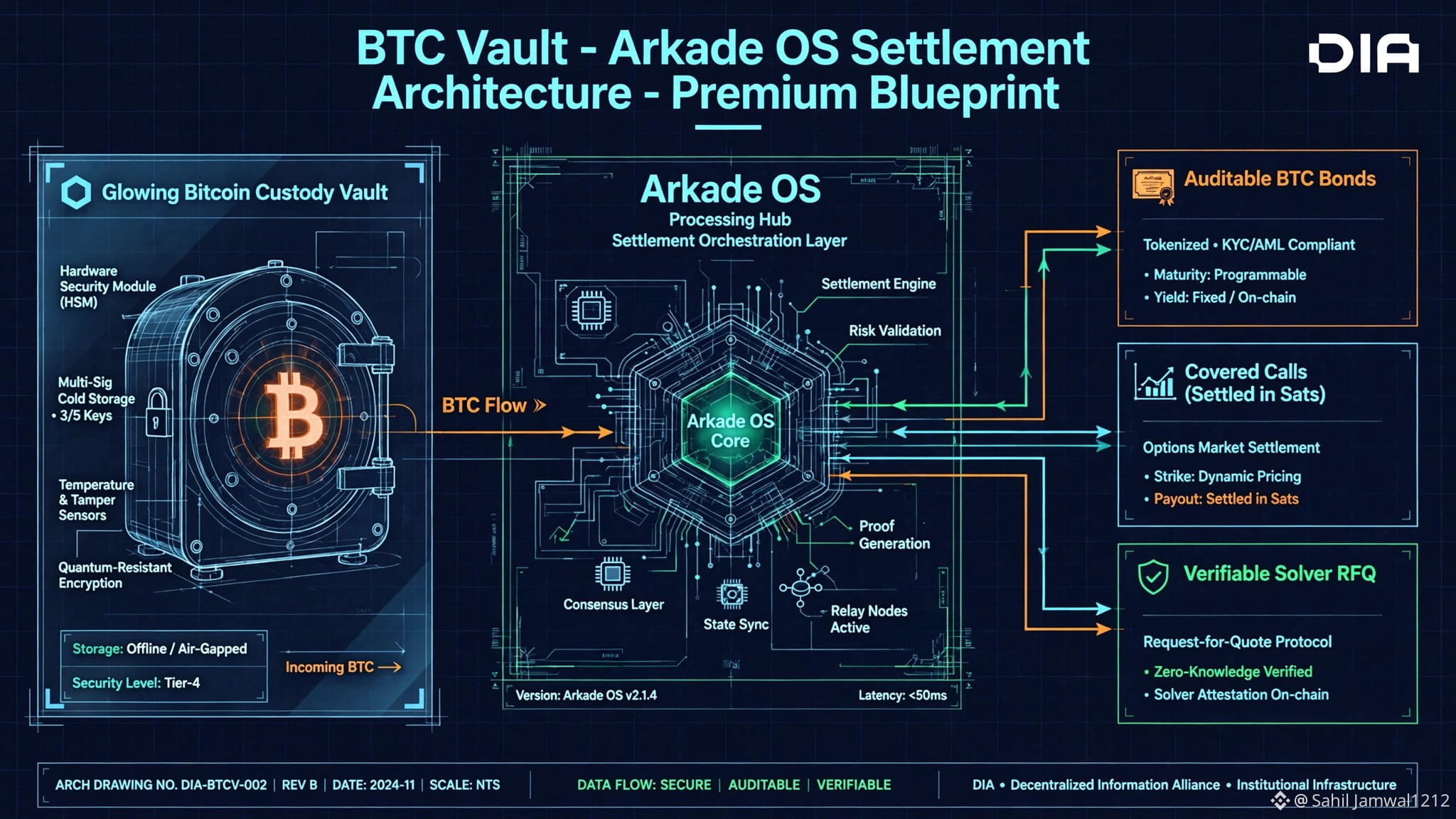
's integration with Arkade (@arkade_os) brings a signed BTC/USD price feed into three native financial primitives.
1. Bitcoin-Backed Bonds
Signed BTC/USD prices provide independently verifiable references for margin calls and liquidations.
2. Cash-Settled Covered Calls
BTC holders can write covered calls against locked BTC, with expiry payouts in sats calculated using multiple signed price observations.
3. Solver RFQ Fills
Market makers quote from inventory and verify execution against a signed reference price.
Why does the oracle matter?
Because every financial primitive depends on trustworthy pricing:
Lending needs reliable liquidation thresholds.
Options need dependable settlement values.
RFQ markets need transparent execution references.
A signed price feed does not eliminate every market or smart-contract risk, but it makes the pricing input independently verifiable.
Bitcoin DeFi needs infrastructure that turns BTC into usable financial collateral without treating custody and transparency as secondary concerns.
Can Bitcoin Support Native Credit and Options Without Giving Up Custody?
That is one of the important questions for Bitcoin DeFi.
The opportunity goes beyond staking BTC or using wrapped assets on other chains. Native credit and derivatives need reliable pricing, transparent settlement and verifiable execution.
$DIA
's integration with Arkade (@arkade_os) brings a signed BTC/USD price feed into three native financial primitives.
1. Bitcoin-Backed Bonds
Signed BTC/USD prices provide independently verifiable references for margin calls and liquidations.
2. Cash-Settled Covered Calls
BTC holders can write covered calls against locked BTC, with expiry payouts in sats calculated using multiple signed price observations.
3. Solver RFQ Fills
Market makers quote from inventory and verify execution against a signed reference price.
Why does the oracle matter?
Because every financial primitive depends on trustworthy pricing:
Lending needs reliable liquidation thresholds.
Options need dependable settlement values.
RFQ markets need transparent execution references.
A signed price feed does not eliminate every market or smart-contract risk, but it makes the pricing input independently verifiable.
Bitcoin DeFi needs infrastructure that turns BTC into usable financial collateral without treating custody and transparency as secondary concerns.
2
·
--
Рост
Want to Track DIA Integrations Before the Headlines? Follow Its DAO Forum.
DIA's public governance forum is worth bookmarking:
forum.diadata.org
Two interesting things from its archives:
1. Custom Delivery Requests (CDRs)
Protocols publicly specify their oracle requirements, including methodology, assets and update frequency.
Example: Normal Protocol requested VWAPIR methodology with a five-minute update cadence across its asset basket.
This gives the community visibility into the technical requirements behind integrations.
2. Sybil-Resistant Treasury Governance
$DIA
{future}(DIAUSDT)
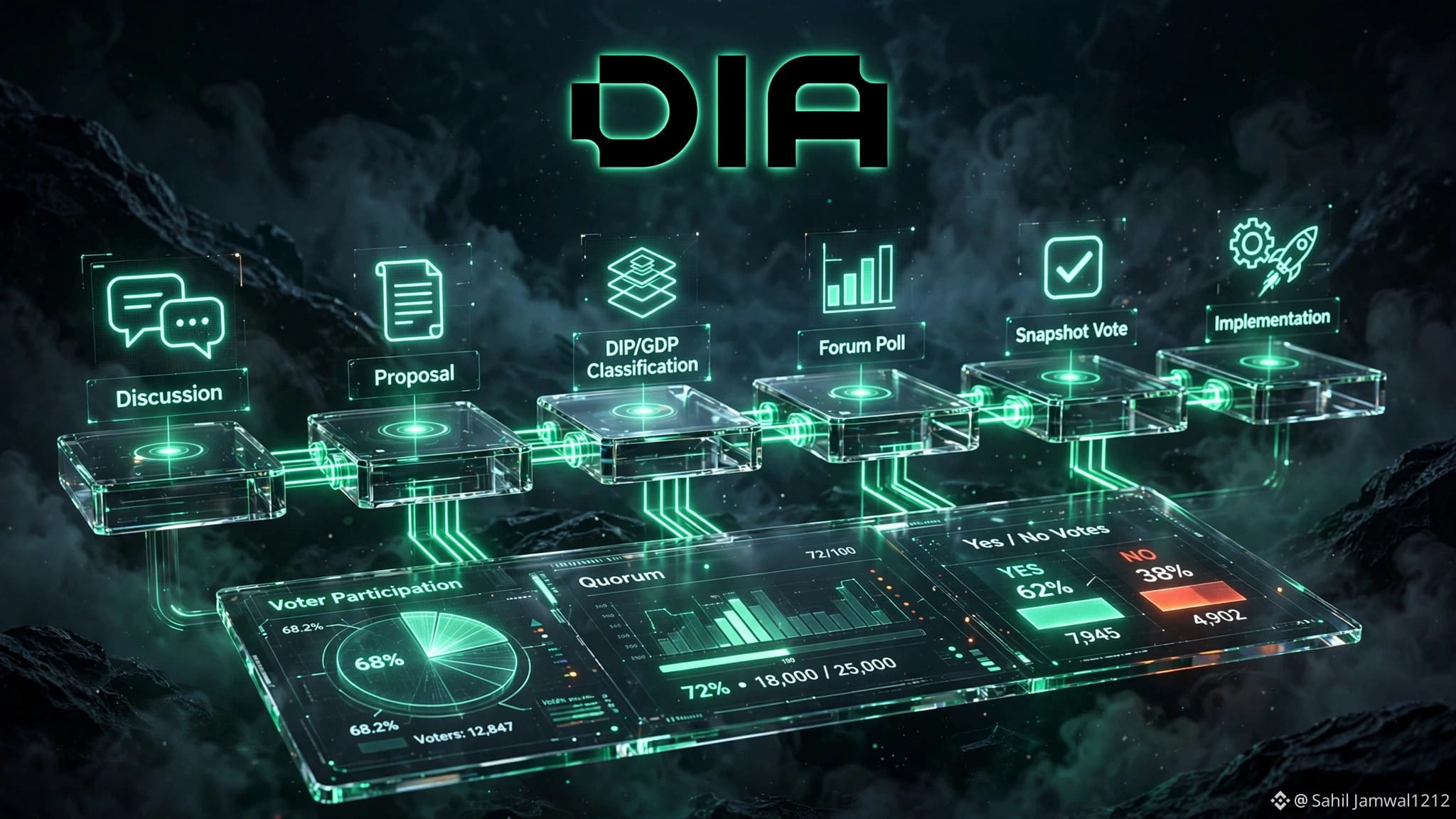
's Annual Treasury Tranche proposals use historical Snapshot voting records to assess governance participation.
Community analysts exclude the airdrop vote itself from the participation analysis, helping limit opportunistic wallets created to capture governance rewards.
The process follows six public phases, from forum discussion to Snapshot execution.
Why follow the forum?
Because technical requirements, governance proposals and community discussions can reveal how an ecosystem is developing beyond what appears in marketing announcements.
Don't just follow announcements. Follow the decisions and technical discussions behind them.
Want to Track DIA Integrations Before the Headlines? Follow Its DAO Forum.
DIA's public governance forum is worth bookmarking:
forum.diadata.org
Two interesting things from its archives:
1. Custom Delivery Requests (CDRs)
Protocols publicly specify their oracle requirements, including methodology, assets and update frequency.
Example: Normal Protocol requested VWAPIR methodology with a five-minute update cadence across its asset basket.
This gives the community visibility into the technical requirements behind integrations.
2. Sybil-Resistant Treasury Governance
$DIA
's Annual Treasury Tranche proposals use historical Snapshot voting records to assess governance participation.
Community analysts exclude the airdrop vote itself from the participation analysis, helping limit opportunistic wallets created to capture governance rewards.
The process follows six public phases, from forum discussion to Snapshot execution.
Why follow the forum?
Because technical requirements, governance proposals and community discussions can reveal how an ecosystem is developing beyond what appears in marketing announcements.
Don't just follow announcements. Follow the decisions and technical discussions behind them.
115
·
--
Рост
The Missing Security Layer in Autonomous DeFi Agents
AI agents can execute trades, manage DeFi strategies and interact with prediction markets.
But there is a critical question:
Where does the data triggering those actions come from?
If an agent trusts a spoofed API, manipulated web response or unverified data source, automation can turn bad information into real financial losses.
$DIA is building oracle integrations across AI and prediction-market ecosystems.
AI protocols:
Gaia, Nuklai, GraphAI, InflectivAI and MAFIA AI.
Prediction markets and GameFi:
MCPM, MoonshotBoxes and SurvivFun.
Its infrastructure also includes DIARandomOracle.sol for verifiable randomness use cases.
The bigger idea is that autonomous applications need more than intelligent execution. They need reliable external data, verifiable onchain outputs and trustworthy randomness where required.
Oracles do not solve every AI security problem. Prompt injection and compromised applications still require separate defenses.
But they can help reduce dependence on blindly trusted data sources.
An autonomous agent is only as dependable as the information it acts on.

1
·
--
Рост
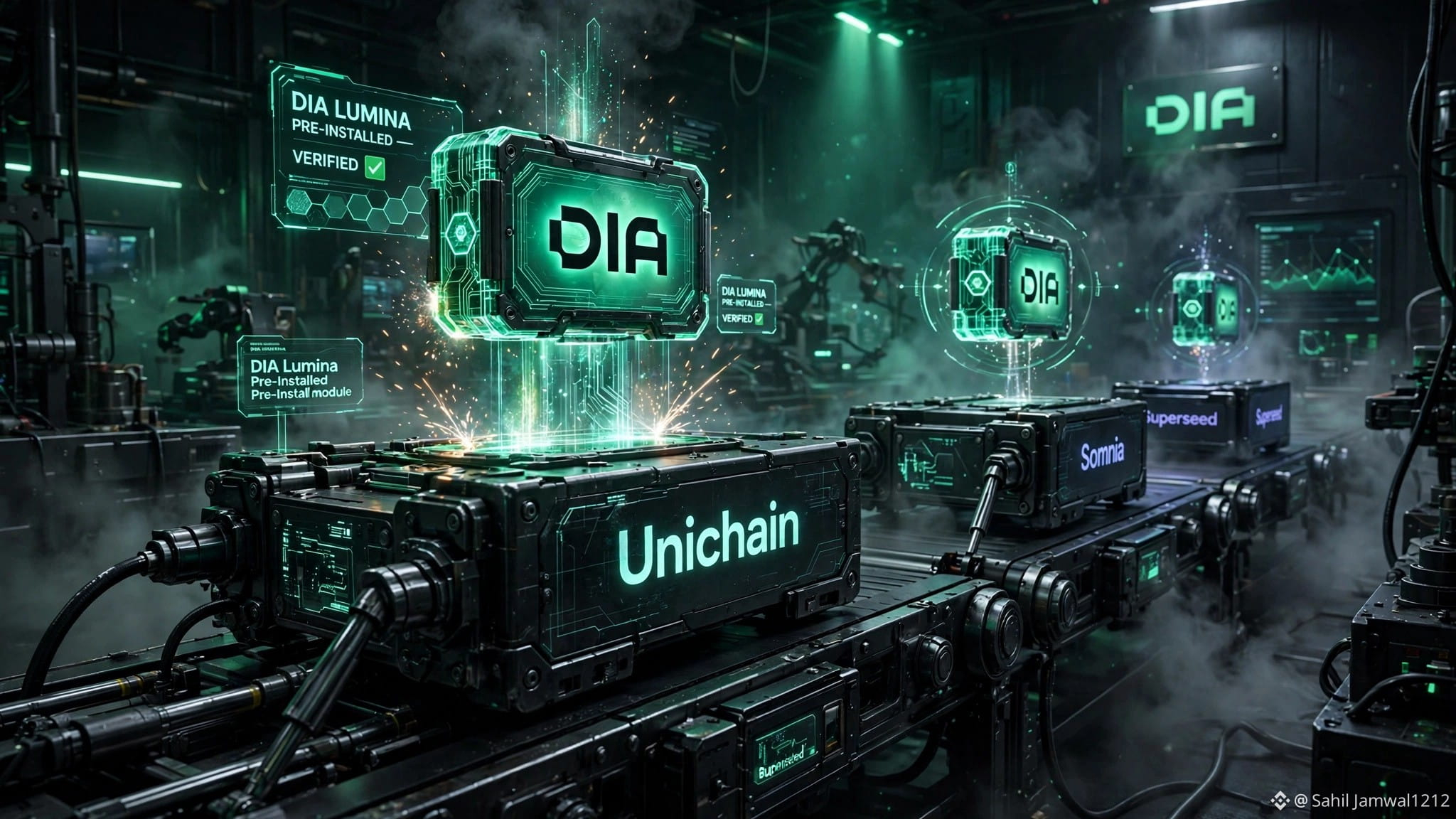
DIA's RaaS Strategy: Bringing Oracles Closer to Chain Deployment
Scaling an oracle network across new L2s and app-chains one integration at a time is difficult.
DIA is also building relationships at the infrastructure layer, where developers launch their chains.
Its RaaS and infrastructure ecosystem includes:
• AltLayer
• Saga
• Gelato
• Ankr
• BNB Chain Kickstart
• Velocity Labs
Its broader chain expansion includes Unichain, Somnia, Superseed, GOAT Network, Kadena Chainweb EVM and Alephium.
Why does this matter?
When oracle infrastructure is accessible through the platforms developers already use to launch chains, teams can reduce integration friction and plan for reliable data feeds earlier.
That matters for applications such as lending, stablecoins, derivatives and tokenized assets.
The goal is not simply to support more chains. It is to make verifiable data infrastructure easier to access across the growing app-chain ecosystem.
Actual feed availability still depends on the individual chain deployment and configuration.
Oracle adoption can scale faster when infrastructure is integrated closer to where chains are born. $DIA
{spot}(DIAUSDT)
DIA's RaaS Strategy: Bringing Oracles Closer to Chain Deployment
Scaling an oracle network across new L2s and app-chains one integration at a time is difficult.
DIA is also building relationships at the infrastructure layer, where developers launch their chains.
Its RaaS and infrastructure ecosystem includes:
• AltLayer
• Saga
• Gelato
• Ankr
• BNB Chain Kickstart
• Velocity Labs
Its broader chain expansion includes Unichain, Somnia, Superseed, GOAT Network, Kadena Chainweb EVM and Alephium.
Why does this matter?
When oracle infrastructure is accessible through the platforms developers already use to launch chains, teams can reduce integration friction and plan for reliable data feeds earlier.
That matters for applications such as lending, stablecoins, derivatives and tokenized assets.
The goal is not simply to support more chains. It is to make verifiable data infrastructure easier to access across the growing app-chain ecosystem.
Actual feed availability still depends on the individual chain deployment and configuration.
Oracle adoption can scale faster when infrastructure is integrated closer to where chains are born. $DIA
1
172
·
--
Рост
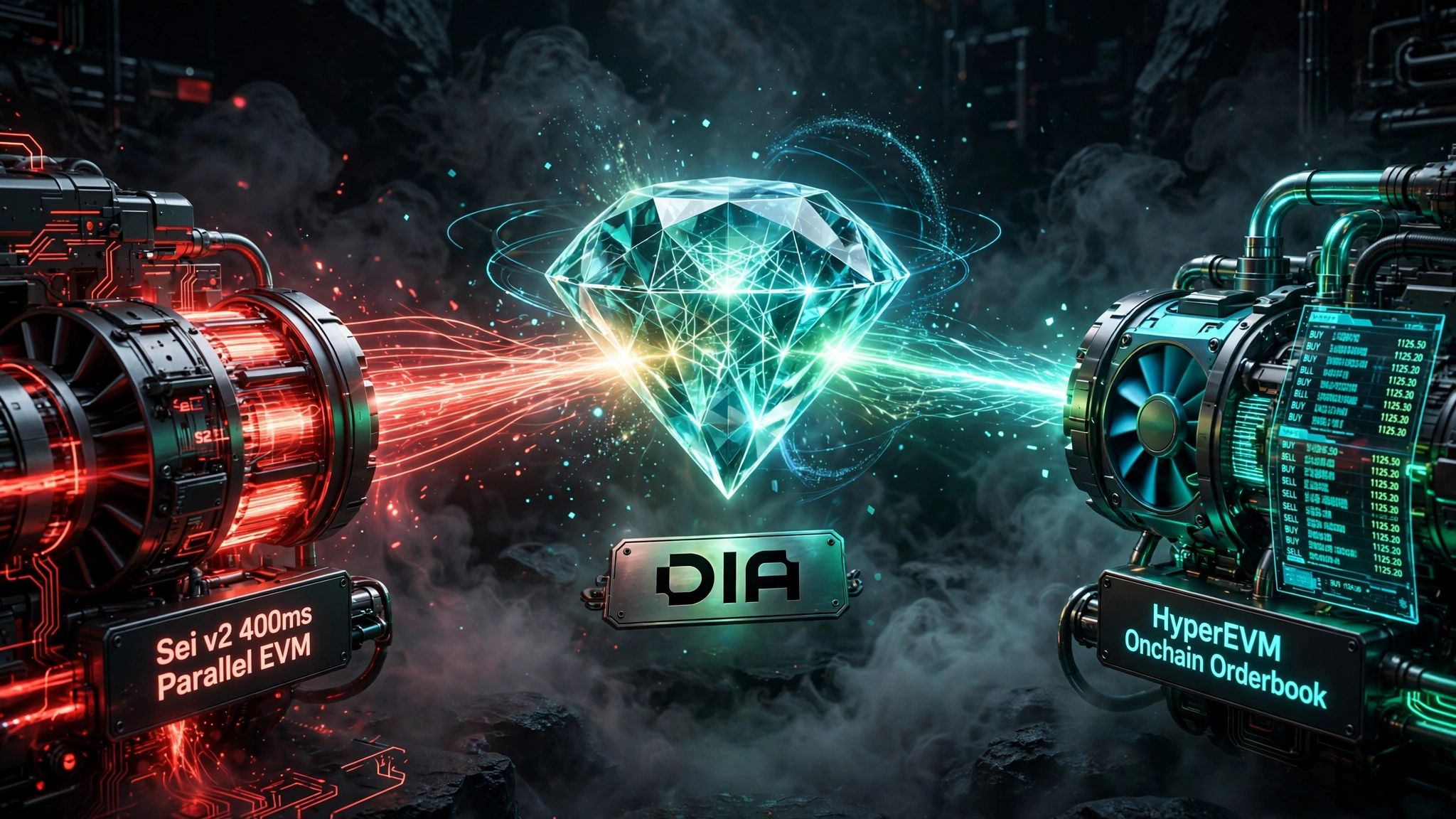
High-Speed Chains Need High-Performance Oracle Data
As blockchains move toward parallel execution and faster finality, oracle infrastructure faces a different challenge.
A price feed that works adequately in a slower environment may not be sufficient for applications operating at much higher speed.
Two ecosystems illustrate this shift:
• Sei: Parallelized EVM execution designed for high-throughput DeFi, with its Giga upgrade targeting a major increase in network capacity.
• Hyperliquid: An onchain trading ecosystem with native spot and perpetual markets, alongside HyperEVM for EVM-compatible applications.
$DIA 's Hyperliquid integration is particularly interesting because it does more than bring external CEX prices onchain.
It also incorporates data from Hyperliquid's native DEXs and order book, supporting pricing for Hyperliquid-native assets alongside DIA's broader coverage of 20,000+ digital and RWA feeds.
Why does this matter?
Because an oracle should reflect the markets where an asset actually trades. External prices alone may not capture the full picture of native liquidity and trading activity.
Parallel execution needs data pipelines built for speed, coverage and verifiability.
Blockchain performance is only as useful as the data powering the applications running on it.
115
·
--
Рост
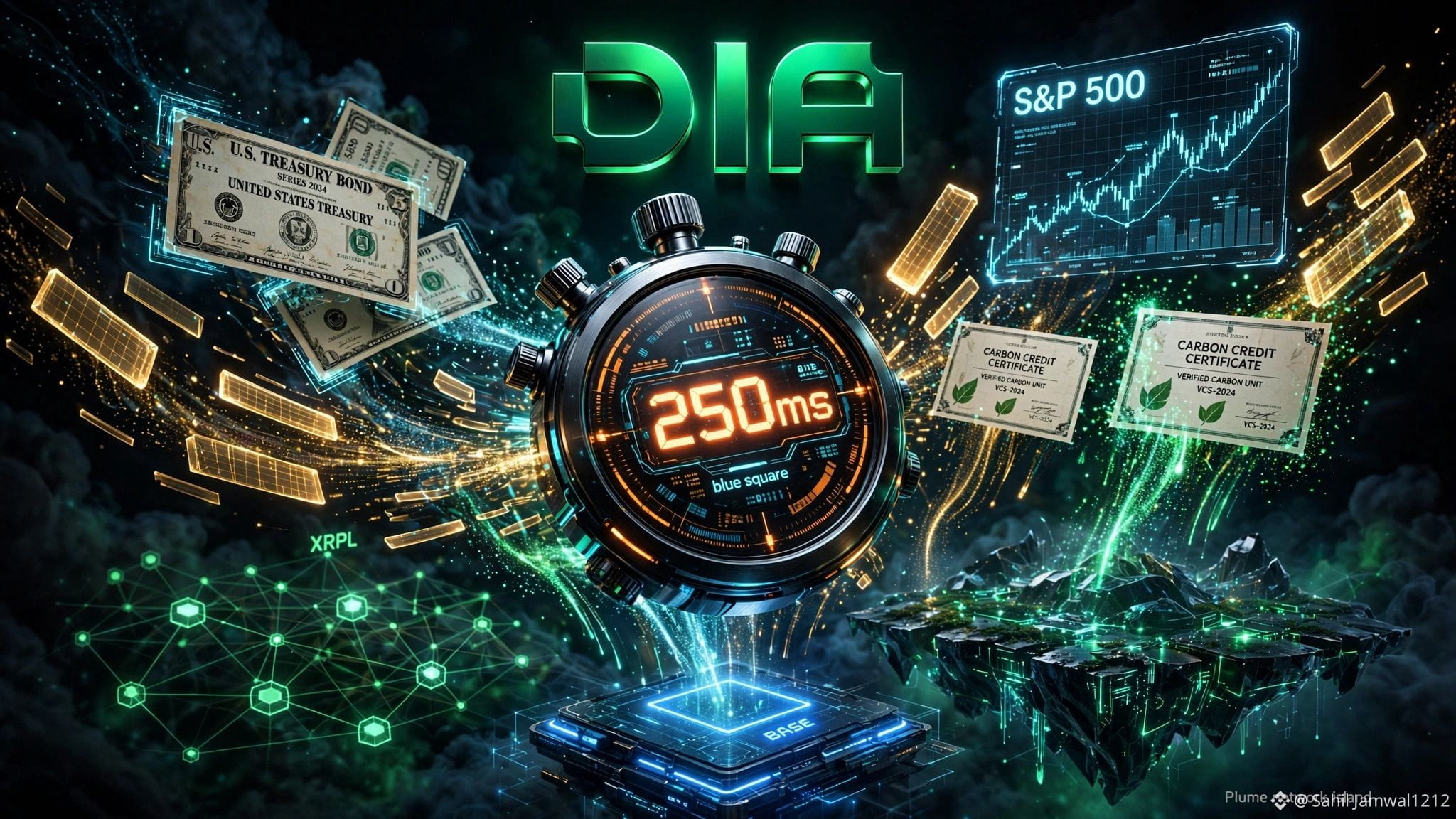
250ms RWA Price Calculations: What DIA xReal Is Building
Real-world asset tokenization needs reliable pricing infrastructure, not just tokenized representations of traditional assets.
DIA's xReal documentation highlights a notable technical capability:
Its purpose-built rollup infrastructure processes RWA price calculations at intervals as fast as 250 milliseconds, across 10+ independent Feeder nodes.
The supported coverage spans 1,000+ RWAs, including equities, sovereign bond yields, commodities and FX.
The architecture combines onchain outlier detection with weighted averaging to process incoming market data.
Real-world applications include:
• Plume Network: RWAfi oracle suite and builder gas grants.
• Azos Finance: Climate-backed stablecoin collateral pricing on Base.
• Denario: Tokenized precious metals.
• Zoniqx: Institutional NAV pricing on XRPL.
The bigger point is not simply the 250ms figure.
RWA markets need data that is fast, but also traceable and verifiable. Without source-level transparency, faster calculations only produce faster outputs from a system users cannot properly inspect.
For institutional RWA adoption, performance and verifiability must work together. $DIA
{spot}(DIAUSDT)
250ms RWA Price Calculations: What DIA xReal Is Building
Real-world asset tokenization needs reliable pricing infrastructure, not just tokenized representations of traditional assets.
DIA's xReal documentation highlights a notable technical capability:
Its purpose-built rollup infrastructure processes RWA price calculations at intervals as fast as 250 milliseconds, across 10+ independent Feeder nodes.
The supported coverage spans 1,000+ RWAs, including equities, sovereign bond yields, commodities and FX.
The architecture combines onchain outlier detection with weighted averaging to process incoming market data.
Real-world applications include:
• Plume Network: RWAfi oracle suite and builder gas grants.
• Azos Finance: Climate-backed stablecoin collateral pricing on Base.
• Denario: Tokenized precious metals.
• Zoniqx: Institutional NAV pricing on XRPL.
The bigger point is not simply the 250ms figure.
RWA markets need data that is fast, but also traceable and verifiable. Without source-level transparency, faster calculations only produce faster outputs from a system users cannot properly inspect.
For institutional RWA adoption, performance and verifiability must work together. $DIA
146
Stablecoin Oracles: Market Price vs Reserve Backing
Two stablecoins can both target $1 and still require very different oracle designs.
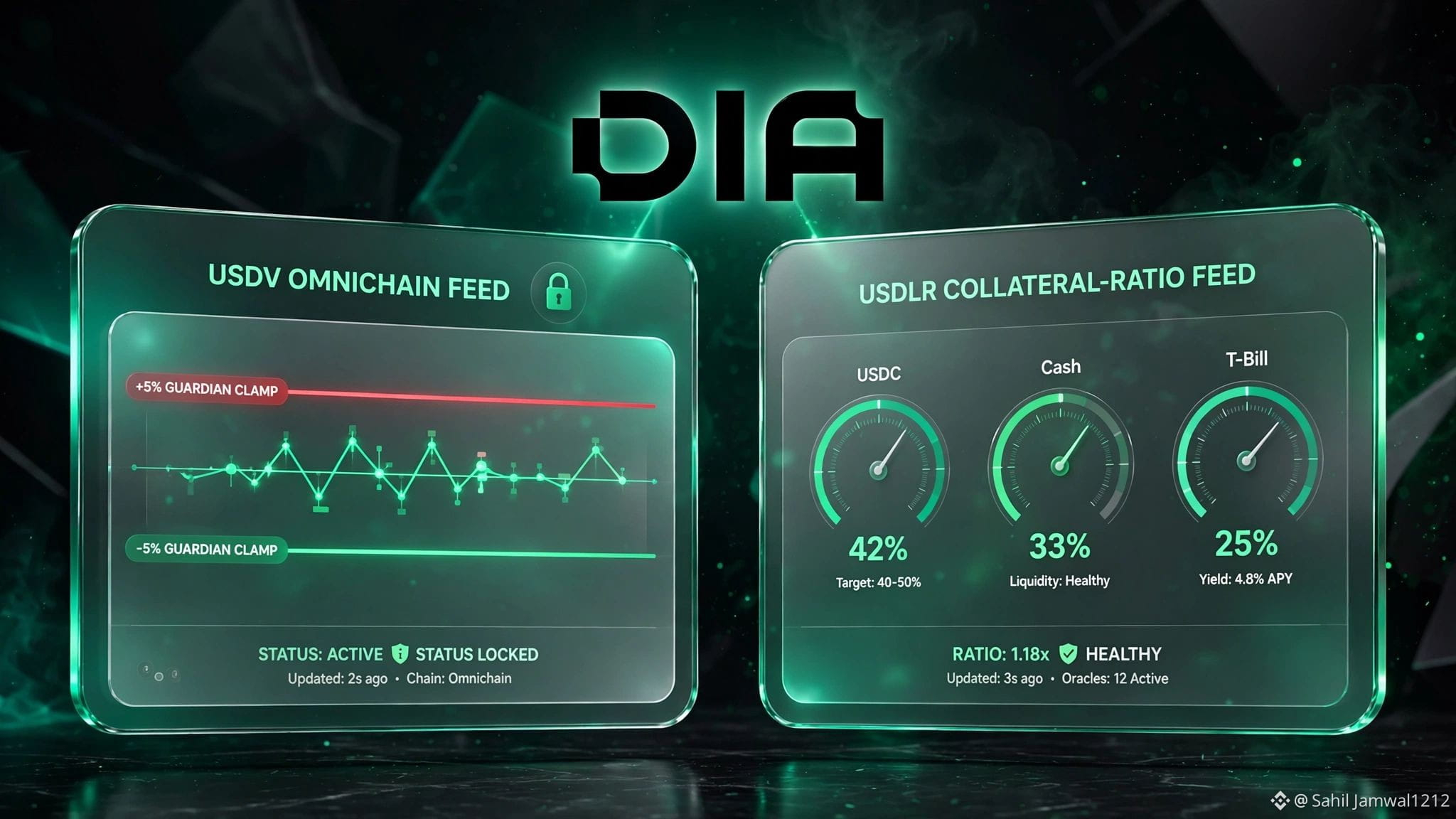
DIA's USDV and USDLR case studies make that distinction clear.
• USDV: An omnichain stablecoin across Ethereum, BNB Chain and Arbitrum. $DIA
{spot}(DIAUSDT)
aggregates trading data across the three chains and applies a 5% Guardian safeguard to clamp extreme outlier prints during cross-chain volatility.
• USDLR: Instead of relying on DEX prices, DIA provides a live collateral-ratio feed that evaluates the stablecoin's backing, including USDC, cash and short-term US Treasury bills.
One approach focuses on market data and outlier protection. The other focuses on reserve composition and collateral coverage.
Neither methodology is universally better. The right choice depends on what actually supports the stablecoin and what the oracle is expected to measure.
A $1 target does not mean every stablecoin should use the same oracle logic.
Stablecoin Oracles: Market Price vs Reserve Backing
Two stablecoins can both target $1 and still require very different oracle designs.
DIA's USDV and USDLR case studies make that distinction clear.
• USDV: An omnichain stablecoin across Ethereum, BNB Chain and Arbitrum. $DIA
aggregates trading data across the three chains and applies a 5% Guardian safeguard to clamp extreme outlier prints during cross-chain volatility.
• USDLR: Instead of relying on DEX prices, DIA provides a live collateral-ratio feed that evaluates the stablecoin's backing, including USDC, cash and short-term US Treasury bills.
One approach focuses on market data and outlier protection. The other focuses on reserve composition and collateral coverage.
Neither methodology is universally better. The right choice depends on what actually supports the stablecoin and what the oracle is expected to measure.
A $1 target does not mean every stablecoin should use the same oracle logic.
120
·
--
Рост
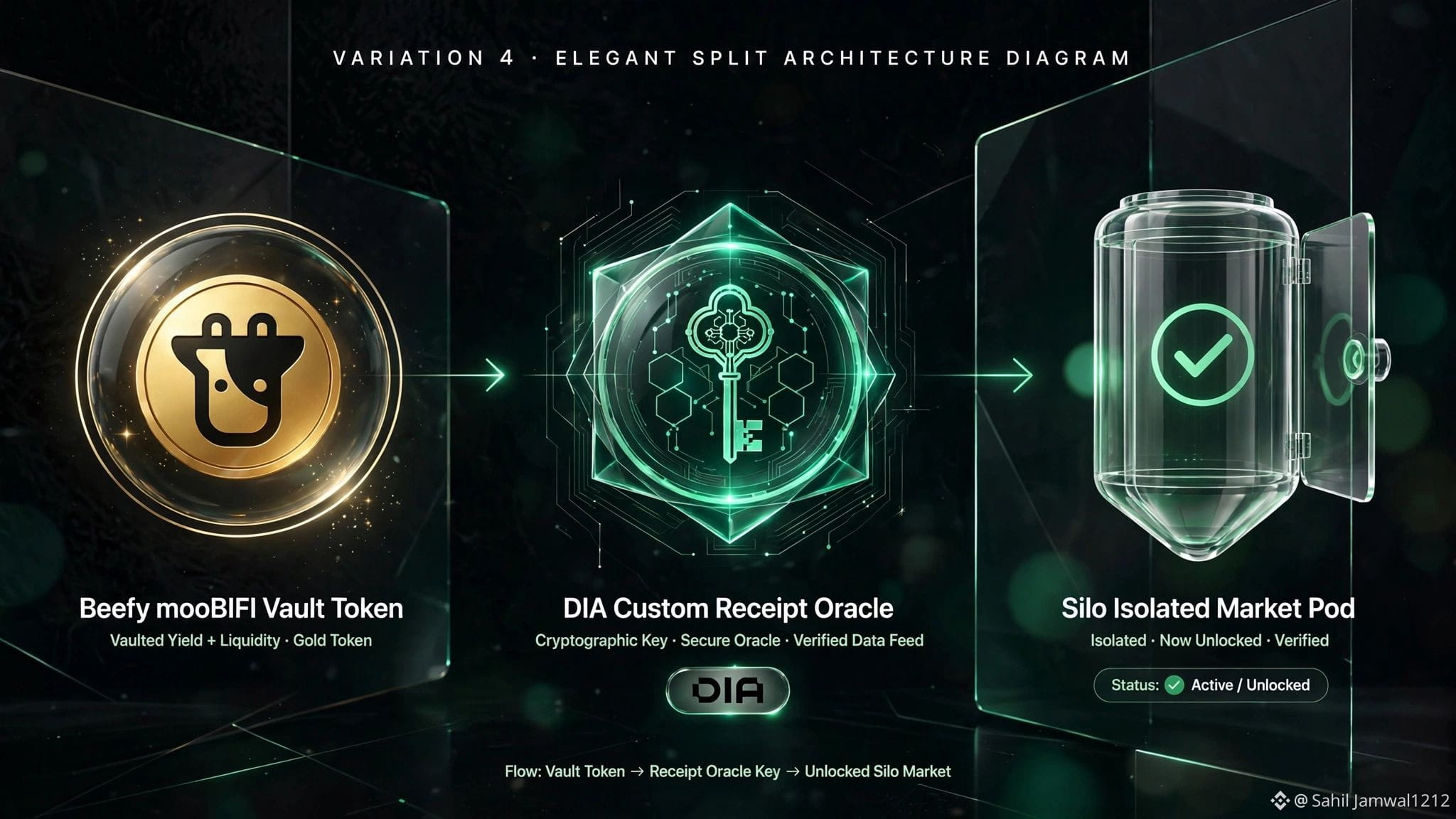
From Yield Vault to Borrowable Collateral
A vault receipt token can earn yield and still leave capital underused if no lending market can price it reliably.
$DIA ’s work with Beefy Finance and Silo Finance illustrates how oracle infrastructure can help bridge that gap.
• Beefy on Optimism: A custom mooBIFI feed supports the possibility of borrowing against a yield-bearing receipt token without unstaking.
• Silo Finance: Oracle integration helps enable isolated lending markets for assets such as JONES, bringing more specialized tokens into collateral markets.
The technical challenge is not just publishing a price. Protocols need valuation that reflects the token’s mechanics, alongside sufficient liquidity and sensible collateral parameters.
If DeFi can make more receipt tokens reliably priceable, more deposited capital could become useful beyond the vault itself.
Yield is one layer of utility. Borrowability can add another.
61
·
--
Рост
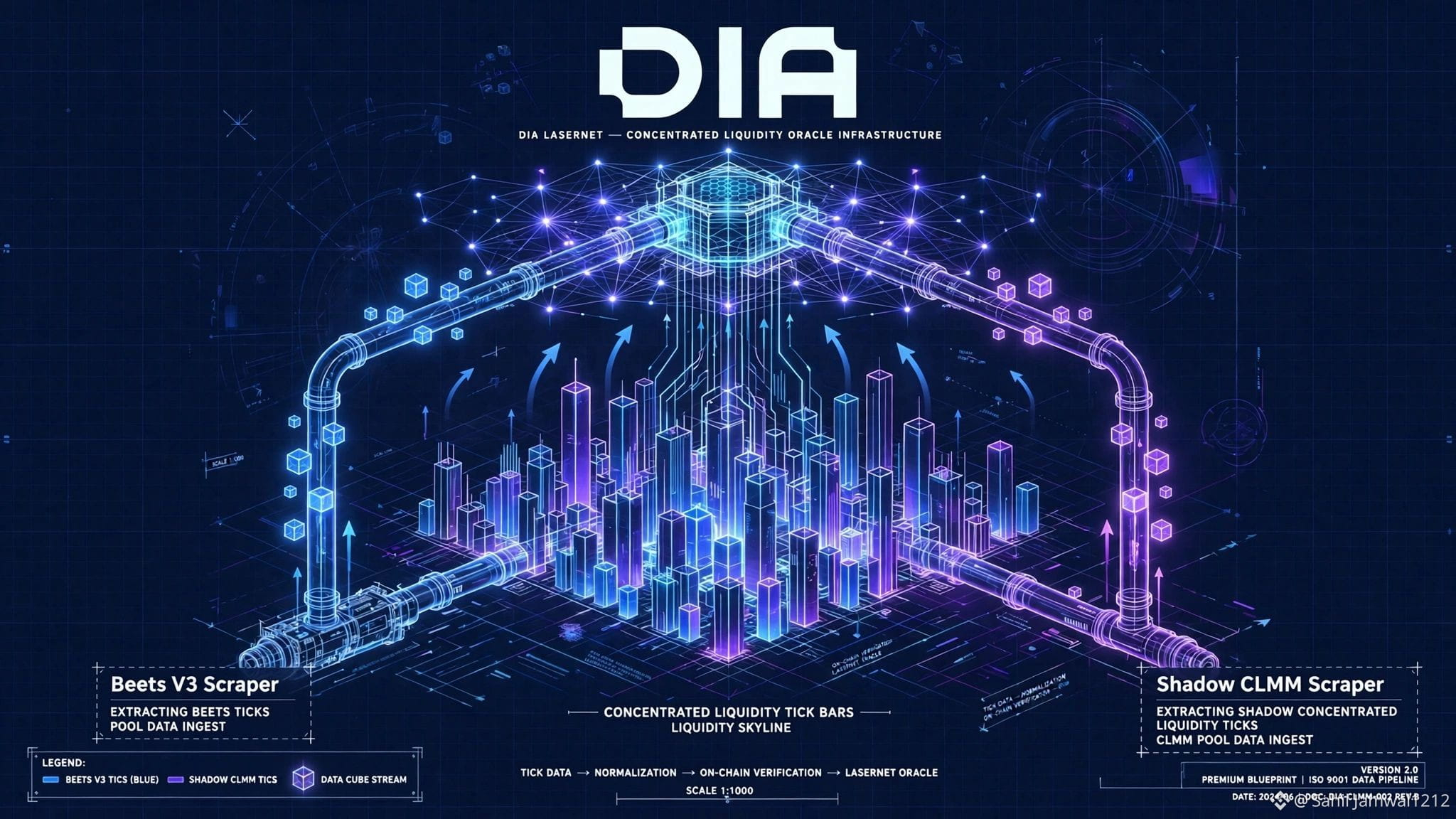
Why Sonic’s Native DEXs Need Dedicated Oracle Scrapers
Collecting prices from a basic AMM pool is one thing. Handling concentrated liquidity and complex multi-token pools is another.
As Sonic’s DeFi ecosystem develops, native liquidity venues become important sources of pricing data.
Two examples are:
Beets V3: A major Sonic-native venue for trading and liquidity strategies, including liquid-staked assets.
Shadow Exchange: A Sonic DEX offering concentrated-liquidity markets.
$DIA built dedicated scrapers for both venues to collect pool-level swap data for its oracle infrastructure.
This can help lending protocols such as Parallel access pricing data for Sonic-native tokens without relying exclusively on centralized exchange listings.
But there is an important distinction: capturing swap events does not automatically make a price manipulation-resistant. The quality of the final feed still depends on market liquidity, filtering, aggregation, and update rules.
For multichain DeFi, the challenge is not simply deploying an oracle on another network. It is understanding the exchange mechanics and liquidity sources native to that ecosystem.
Better market coverage starts with collecting the right data at its source.
126
·
--
Рост
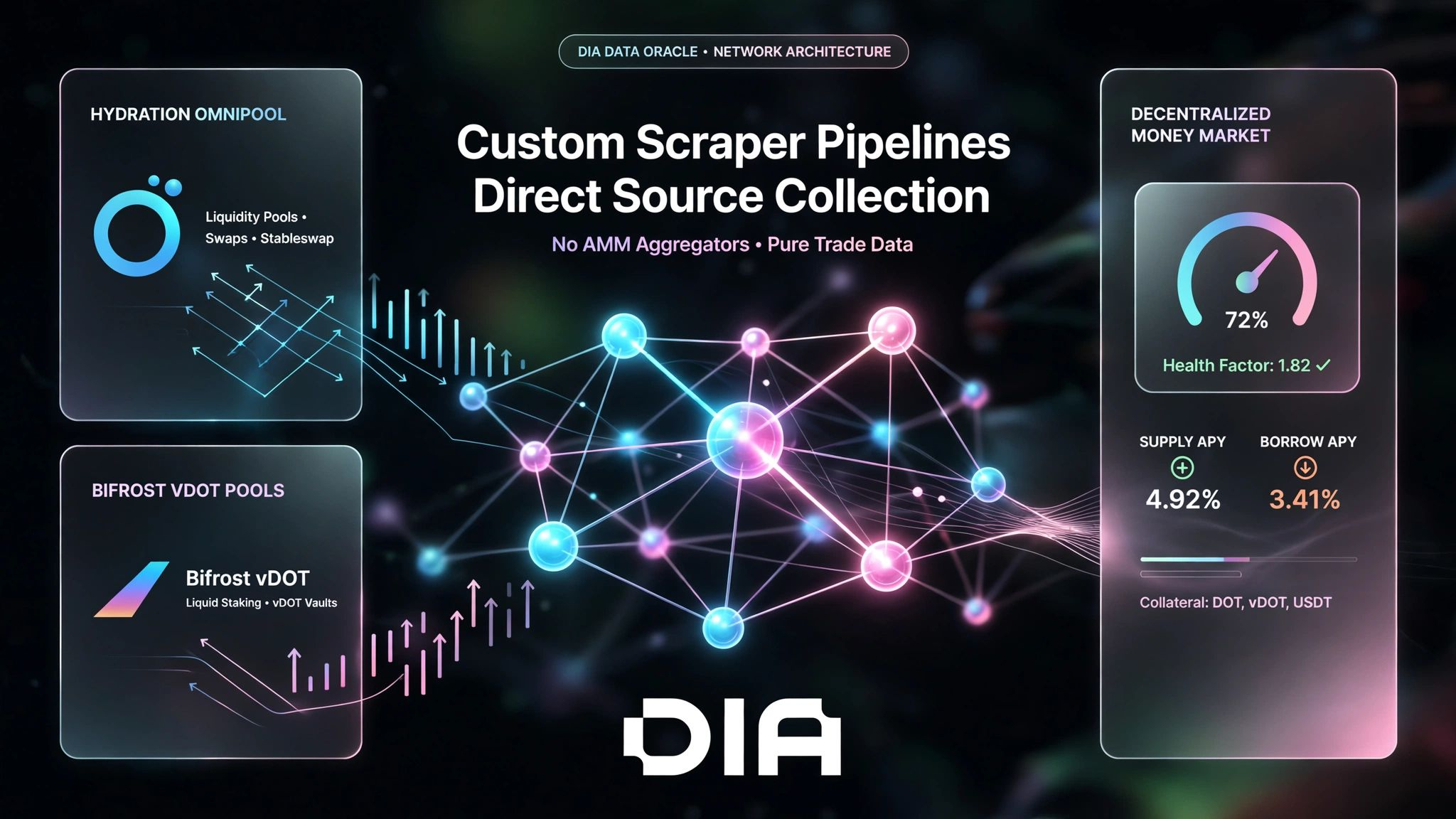
What Happens When a Token’s Real Liquidity Lives Outside Ethereum?
Consider vDOT, Bifrost’s liquid-staking token for DOT.
If a lending market on Hydration needs to price vDOT collateral, the relevant trading activity may be concentrated in Polkadot-native liquidity pools rather than large centralized exchanges.
That is why DIA’s Hydration integration is technically interesting.
Instead of relying exclusively on third-party aggregated prices, DIA developed custom scrapers for two native sources:
• Hydration Omnipool
• Bifrost’s native DEX pools
These scrapers collect trade and liquidity data directly from the underlying markets. $DIA then processes and aggregates the data to produce oracle feeds for onchain applications.
For a lending protocol, this matters because oracle prices influence collateral valuation and liquidation thresholds.
Native data sourcing can improve transparency and capture market activity that generic external feeds might not represent as directly. It does not, by itself, eliminate manipulation risk; liquidity depth, filtering, and feed configuration remain critical.
The broader lesson for multi-chain infrastructure is simple:
Supporting a chain is not just about deploying a contract there. It is also about understanding where its assets actually trade and sourcing data accordingly.
295
·
--
Рост
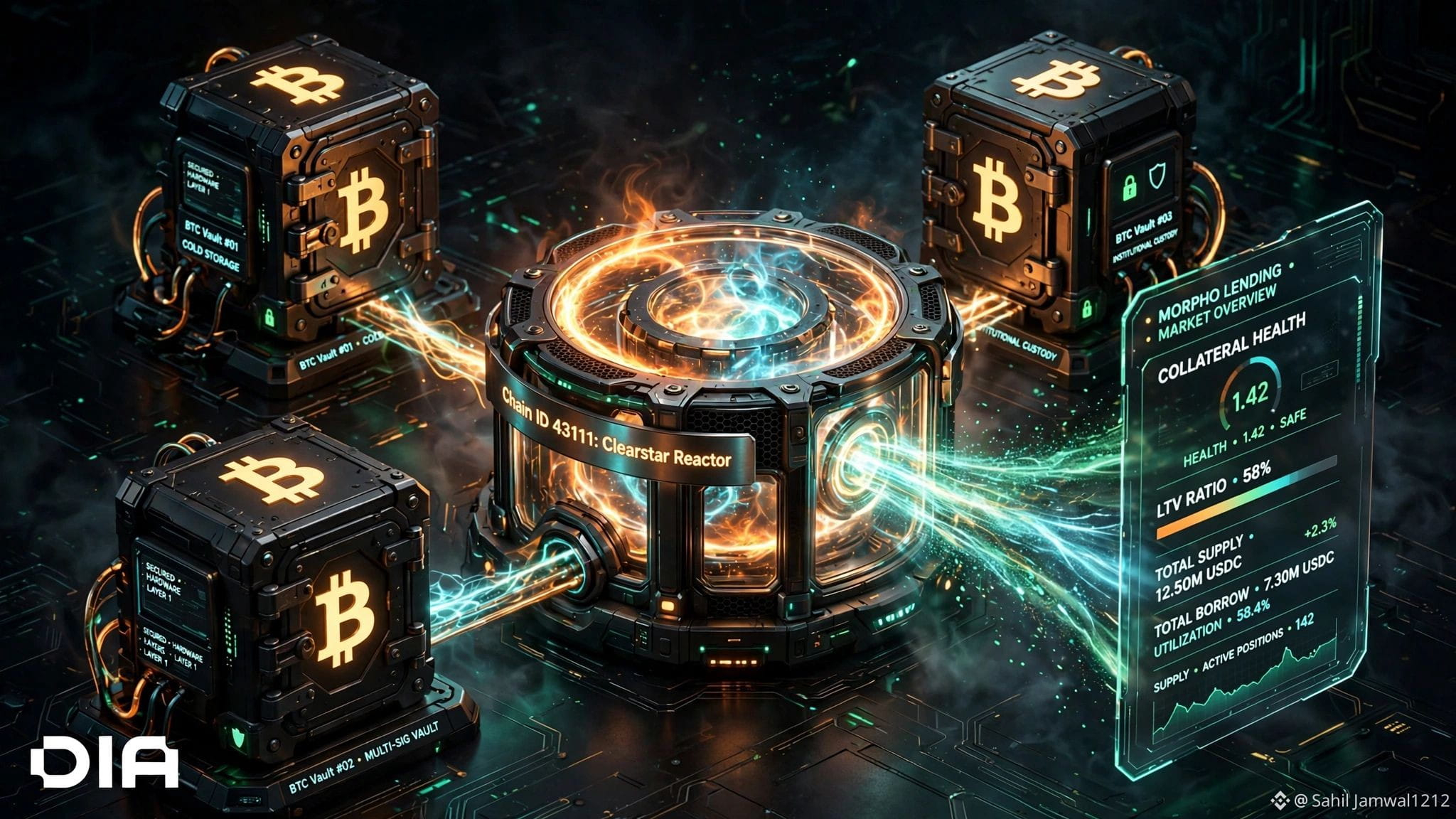
What Should a Lending Protocol Trust: The BTC Market Price or the BTC Behind the Token?
The Clearstar Reactor hemiBTC vault on Hemi offers an interesting example of reserve-backed collateral valuation.
The vault is curated by Clearstar Labs through Solera’s Morpho deployment and uses DIA Value.
Here is what makes the oracle design worth examining:
Reserve verification: DIA checks BTC holdings across three custody structures to calculate a reserve-backed value for hemiBTC.
Market visibility: $DIA
{spot}(DIAUSDT)
also sources trading data from SushiSwap V3 and iZiSwap on Hemi.
Collateral valuation: The vault uses DIA’s reserve-backed feed rather than relying exclusively on a secondary-market ticker.
Why does this matter?
A thin DEX pool can experience temporary price dislocations. Those movements do not necessarily mean the underlying BTC reserves changed by the same amount.
But reserve-backed valuation is not a guarantee of safety. Custody arrangements, the accuracy of reserve data, token redemption mechanics, and lending parameters still matter.
The broader lesson is simple: when a token represents an underlying asset held across multiple custody structures, collateral pricing should account for more than its latest trade.
Bitcoin DeFi needs transparent reserve verification alongside market data, not just another BTC ticker.
What Should a Lending Protocol Trust: The BTC Market Price or the BTC Behind the Token?
The Clearstar Reactor hemiBTC vault on Hemi offers an interesting example of reserve-backed collateral valuation.
The vault is curated by Clearstar Labs through Solera’s Morpho deployment and uses DIA Value.
Here is what makes the oracle design worth examining:
Reserve verification: DIA checks BTC holdings across three custody structures to calculate a reserve-backed value for hemiBTC.
Market visibility: $DIA
also sources trading data from SushiSwap V3 and iZiSwap on Hemi.
Collateral valuation: The vault uses DIA’s reserve-backed feed rather than relying exclusively on a secondary-market ticker.
Why does this matter?
A thin DEX pool can experience temporary price dislocations. Those movements do not necessarily mean the underlying BTC reserves changed by the same amount.
But reserve-backed valuation is not a guarantee of safety. Custody arrangements, the accuracy of reserve data, token redemption mechanics, and lending parameters still matter.
The broader lesson is simple: when a token represents an underlying asset held across multiple custody structures, collateral pricing should account for more than its latest trade.
Bitcoin DeFi needs transparent reserve verification alongside market data, not just another BTC ticker.
181
·
--
Рост
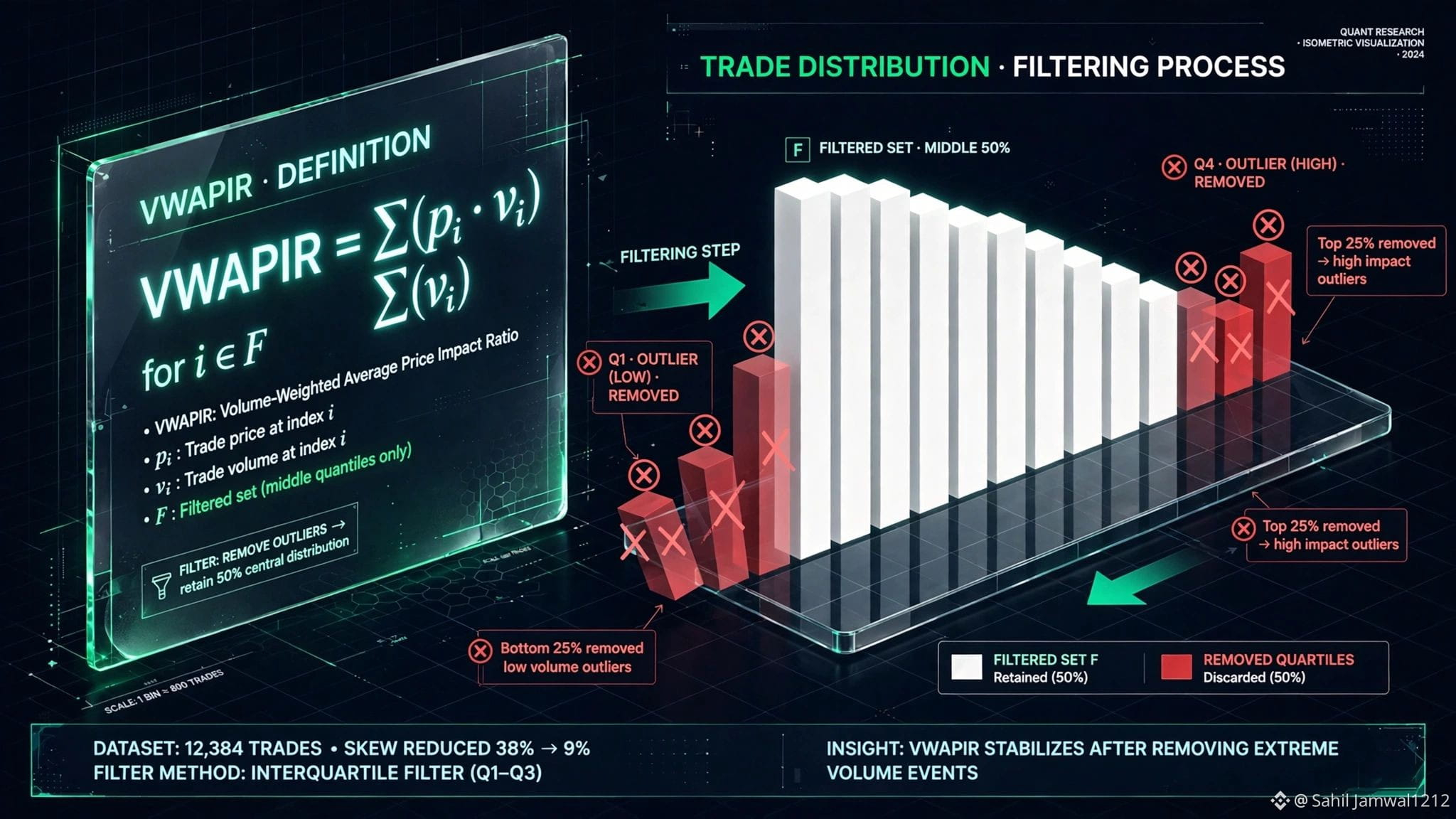
A Whale Trade Can Distort VWAP. DIA Adds an Outlier-Filtering Step.
Here is an important detail in oracle price calculation.
Standard VWAP gives more influence to trades with higher volume. That is useful when volume represents genuine market activity, but a sufficiently large trade at an abnormal price can pull the calculated average away from the broader market.
$DIA ’s VWAPIR methodology changes the sequence.
Step 1: Collect trades from the observation window.
Step 2: Apply Interquartile Range filtering to identify and remove statistical outliers.
Step 3: Calculate the volume-weighted average from the filtered dataset.
In mathematical terms, the final average uses the prices and volumes of the trades that remain after filtering:
VWAPIR = Σ(price × volume) / Σ(volume)
The key is not simply using VWAP. It is applying an outlier filter before volume weighting.
One important distinction: IQR filtering does not necessarily mean removing exactly the highest and lowest 25% of trades. The actual exclusion depends on the implemented statistical rule.
And no single filter can guarantee protection against every manipulation strategy.
Still, this is a useful example of how oracle methodology can reduce the influence of extreme observations before they affect a reported price.
Reliable pricing depends on how data is filtered, not just how it is averaged.
1
123
·
--
Рост
Why River’s satUSD and satUSD+ Need Different Oracle Logic
A stablecoin and its staked wrapper may look closely related, but treating them as identical assets can create pricing problems.
Consider River’s satUSD and satUSD+.
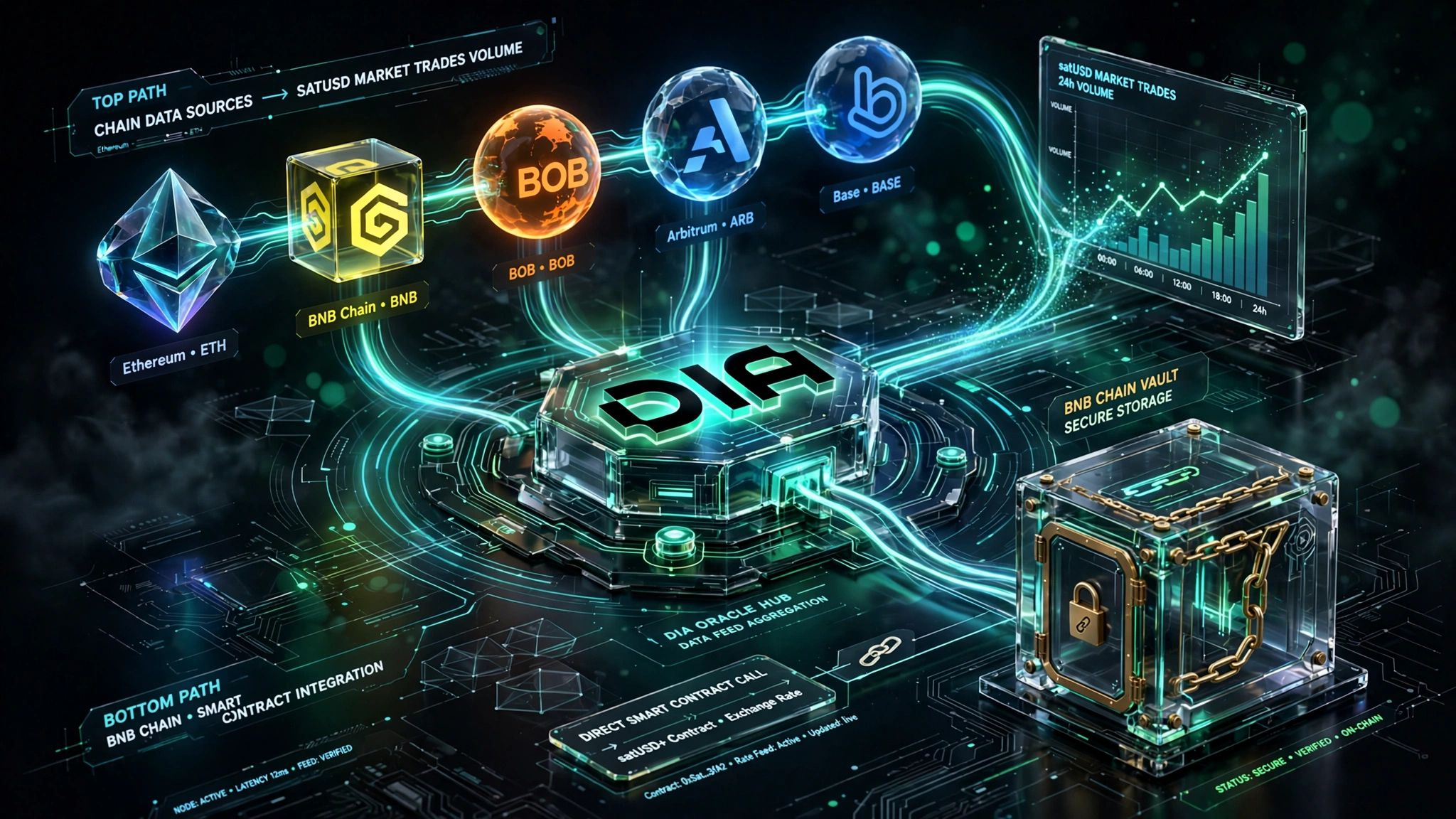
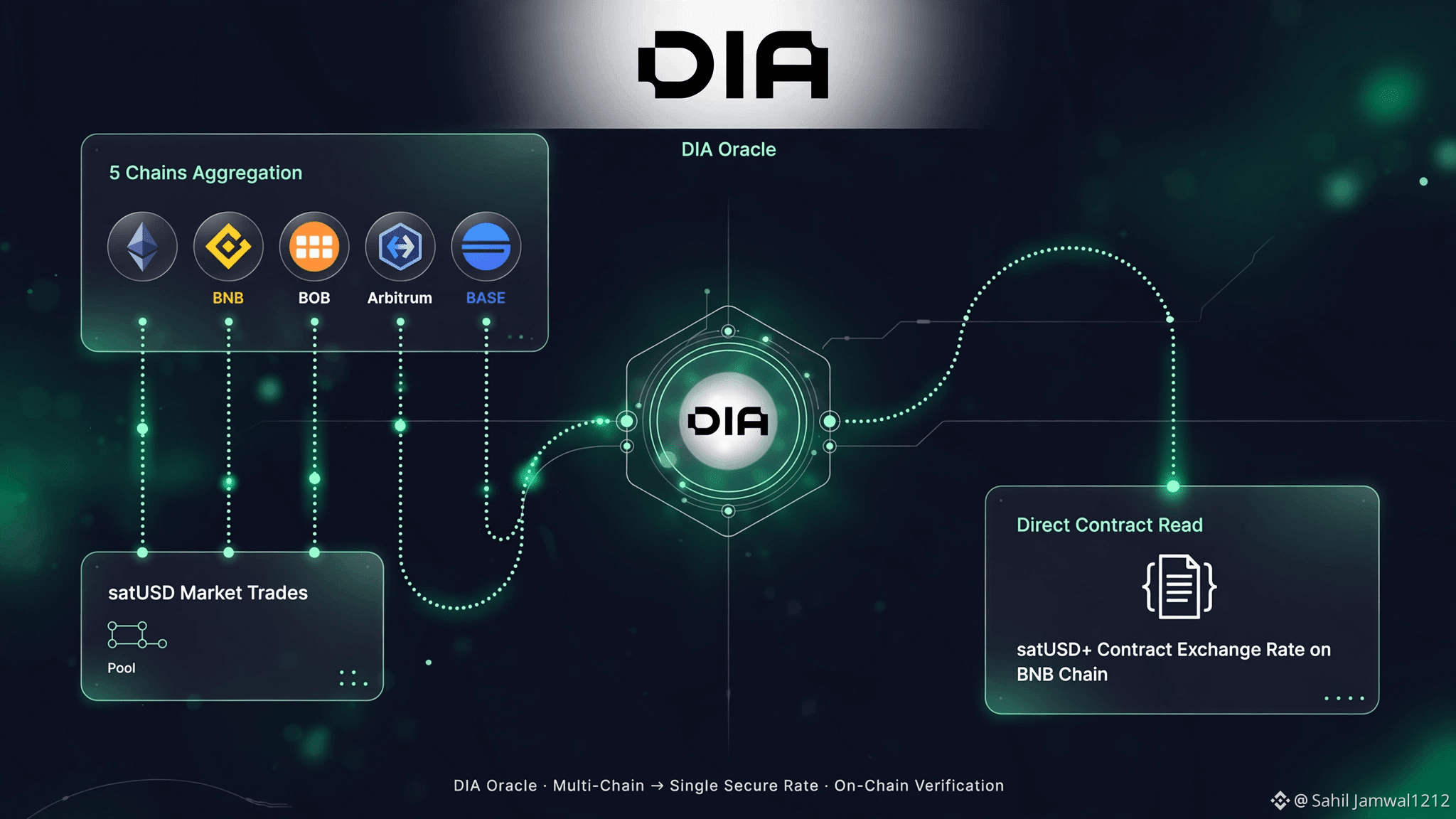
satUSD is the market-traded stablecoin.
Its price can be influenced by liquidity, supply and demand, and temporary deviations from its intended peg. DIA provides first-party market feeds using data sourced directly from CEXs and DEXs.
satUSD+ is the yield-bearing wrapper.
Its value depends on the underlying satUSD represented by the staking position. A thin DEX pool may not accurately reflect the wrapper’s current redemption value.
$DIA addresses this through a Contract Exchange Rate feed using DIA Value. The feed reads the satUSD+/satUSD redemption rate directly from River’s vault contract on BNB Chain.
That creates two distinct valuation references:
• satUSD: market-based price discovery
• satUSD+: contract-based conversion value
River’s architecture spans Ethereum, BNB Chain, BOB, Arbitrum, and Base, making the distinction relevant to cross-chain DeFi applications.
The broader lesson is that an oracle methodology should match the asset’s economic structure. Market prices reflect trading conditions; contract exchange rates reflect onchain conversion mechanics.
Neither is risk-free, and contract-derived value does not guarantee immediate redemption at that value under every condition.
For yield-bearing assets, understanding the redemption mechanism is just as important as tracking the market price.
103
·
--
Рост
What Actually Happens When a $DIA Price Update Moves Across Chains?
A cross-chain oracle needs to do more than send a number from one network to another. The destination application must know where the message came from and how it was authenticated.
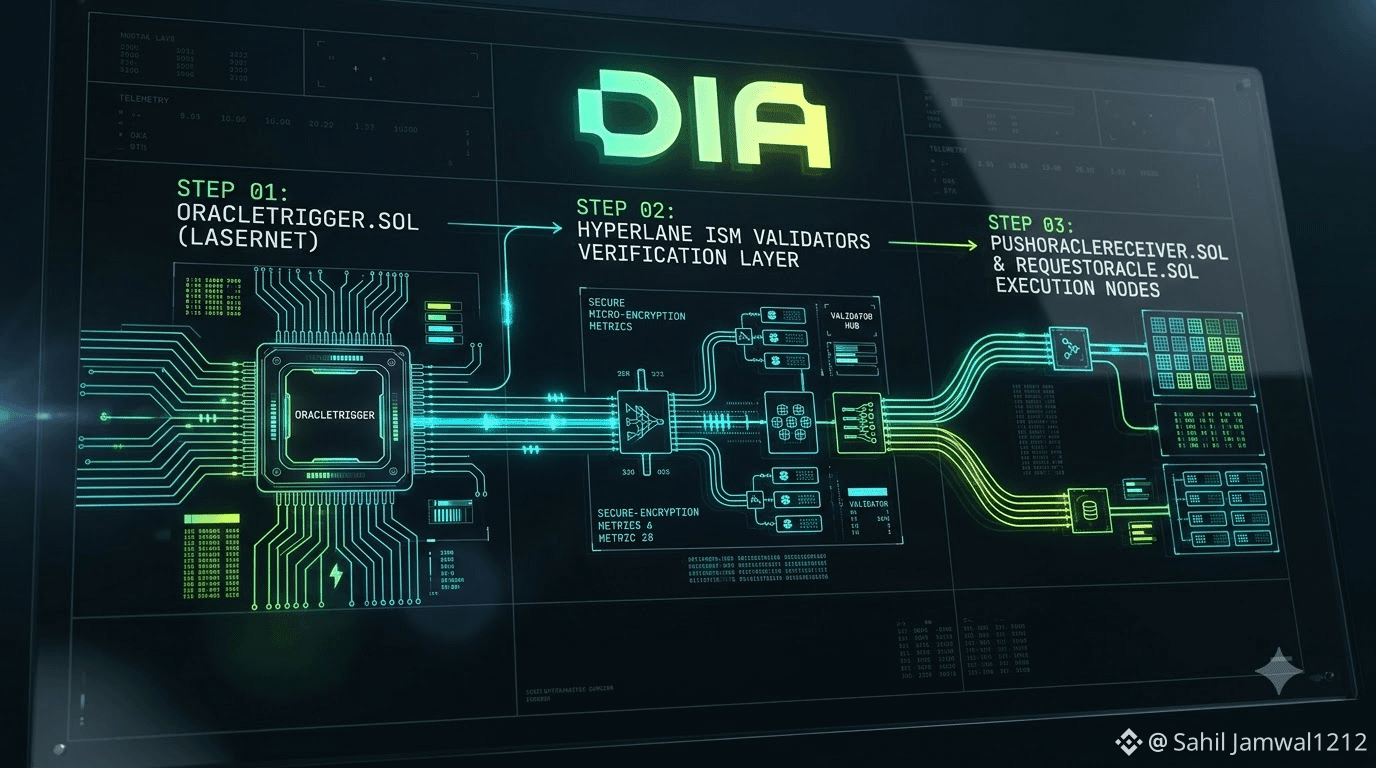
DIA’s Spectra messaging layer uses Hyperlane infrastructure. The flow has three key stages:
1. Lasernet: DIA’s aggregation process produces the oracle output, which is prepared for cross-chain delivery.
2. Hyperlane: The message is transported between networks. The configured Interchain Security Module defines how the destination verifies the message.
3. Destination contracts: Applications can consume oracle data through push-style updates or pull-style requests, depending on the integration.
Push updates can be useful when applications need prices refreshed according to configured heartbeat or deviation conditions. Pull requests provide an alternative when an application needs to request data on demand.
The important engineering detail is that message delivery and message security are separate concerns. A permissionless messaging framework can make new chain integrations easier, but security still depends on the selected verification configuration, contract implementation, and destination-side checks.
For builders, the useful question is not simply whether an oracle supports multiple chains. It is how the price is delivered, verified, and consumed on each one.
105
·
--
Рост
A Thin DEX Pool Shouldn’t Automatically Define a Vault Token’s Value
Origami’s hOHM is an interesting example of a problem DeFi lending markets face with structured collateral.
A leveraged vault token can hold assets and liabilities whose combined value is calculable onchain. Yet its DEX price may temporarily diverge from that underlying value when liquidity dries up.
If a lending protocol relies entirely on the market price, a sharp discount can reduce borrowing capacity or trigger liquidations even when the vault’s balance-sheet valuation has not fallen by the same amount.
DIA’s hOHM feed uses a dual-methodology design:
• NAV: Read the onchain balance sheet and calculate per-share intrinsic value using oracle prices for the underlying assets and liabilities.
• Market price: Track the token’s secondary-market price in parallel.
• Aggregation: Apply max(NAV, market price) to select the higher of the two values.
The benefit is clear: a temporary market discount below NAV does not automatically become the collateral price.
But there is a trade-off. If the market price rises above NAV, the same rule chooses that higher price, which can overstate fundamental collateral value.
That is why oracle design cannot be separated from lending risk management. A feed must be evaluated not just by where its data comes from, but by how it combines competing valuation signals.
The important question isn't simply, “What is hOHM trading at?” It's, “Which valuation rule should the lending market trust under stress?” $DIA
1
106
·
--
Рост
Two DIA Research Tools Worth Bookmarking if You Follow DeFi and RWAs
Most people associate DIA with oracle infrastructure. But researching onchain markets is another part of the ecosystem worth exploring.
DIA has built two public data resources that help users navigate fragmented markets.
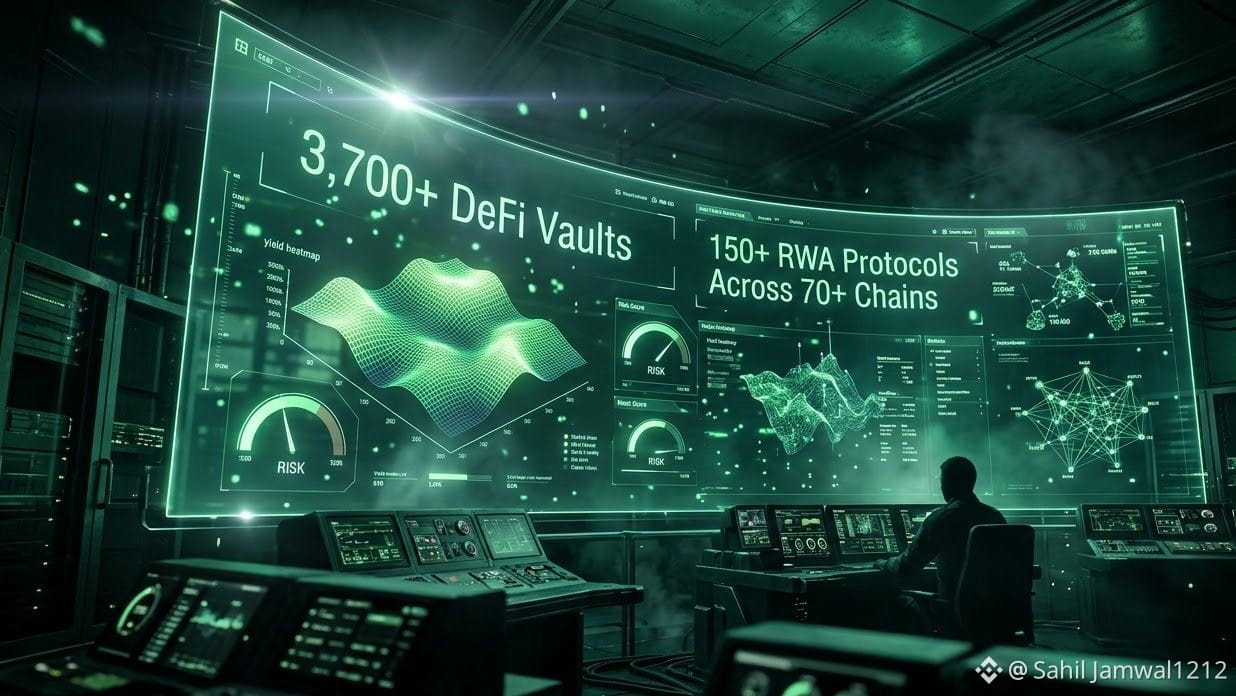
1. DeFi Vaults & Lending Explorer
Instead of comparing opportunities using APY alone, users can examine metrics including TVL, base yield versus reward APY, historical performance, fee revenue, risk curators, and security incident records.
Why does that matter?
A vault offering 20% APY through temporary incentives is not the same as one generating sustainable base yield. Historical data adds context, although it cannot predict future returns or establish that a vault is safe.
2. RWA Tokenization Map
For builders exploring tokenized treasuries, funds, and other real-world assets, the map helps identify protocols and their presence across blockchain networks.
It offers a starting point for researching an increasingly fragmented RWA landscape without manually discovering every ecosystem from scratch.
One important reminder: these tools support due diligence; they do not replace it. Verify current figures, review underlying protocols, and assess smart-contract, liquidity, and counterparty risks independently.
$DIA is not only building infrastructure that supplies data to applications. Its public research resources can also help users investigate the markets being built onchain.
Sometimes the most useful tool isn't another yield opportunity. It's a clearer view of the opportunities already available.
139
·
--
Рост
1 Million Testnet Transactions Are a Start. What Gets Built Next Matters More.
TeQoin reportedly processed over 1 million transactions in its first testnet month as a sub-second, zero-fee EVM Optimistic Rollup.
Fast execution and zero gas fees can make an ecosystem attractive to developers. But financial applications need more than cheap transactions.
A lending protocol needs to know what its collateral is worth. A perp DEX needs reliable price feeds. A tokenized fund needs a defensible way to calculate NAV. Reserve-backed assets need data that helps users assess their backing.
That is why TeQoin’s deployment of the DIA stack matters.
Builders can access:
• CEX/DEX price feeds
• DIA Value for RWA and fund NAV valuation
• Proof of Reserve feeds
• Onchain verifiable randomness
These tools address a different layer of the stack: not how cheaply a transaction executes, but how applications obtain the data they rely on.
Execution infrastructure can attract builders. Data infrastructure can expand what those builders are able to create.
The real milestone will be seeing these tools power live applications, meaningful liquidity, and sustained onchain activity.
Cheap transactions are useful. Reliable financial infrastructure is what makes more complex use cases possible. $DIA
115
Войдите, чтобы посмотреть больше материала
Присоединяйтесь к пользователям криптовалют по всему миру на Binance Square
⚡️ Получайте новейшую и полезную информацию о криптоактивах.
💬 Нам доверяет крупнейшая в мире криптобиржа.
👍 Получите достоверные аналитические данные от верифицированных создателей контента.
Эл. почта/номер телефона
В тренде
BinanceReopensWithdrawalsForMoreAssets
Просмотров: 1M
5,466 обсуждают
Recovery Update #9: Withdrawals for More Assets to Reopen (2026-11-06)
Binance Announcement
·Лайков: 102
·Просмотров: 406.3k
AnthropicIPOValuationDoubts
Просмотров: 7,476
237 обсуждают
USStocksSlipandCryptoMarketUnderBroadPressure
Просмотров: 96,622
655 обсуждают