
sayvi 19
1.2k Публикации

sayvi 19
Отправить жалобу
Заблокировать пользователя
200 подписок(и/а)
6.5K+ подписчиков(а)
696 понравилось
Посты
Все
Цитирования
Активно
PINNED
·
--
AI is changing fast and I think we are only starting to see what it can really do.
Most of us use AI to get answers or help with everyday tasks. But what if AI could do much more than that? Imagine agents that can complete tasks on their own and interact with different digital services without needing someone to guide every step.
This is what makes the agent economy interesting to me.
Instead of using AI only as a tool, we could see a future where AI agents become active parts of the digital economy. They could work together and help people save time by handling tasks that would normally need human effort.
But there is still a lot to figure out. These agents need reliable systems to work properly and ways to interact safely with other services. Having advanced AI is one thing. Making it useful in real life is another.
That is why I have been paying attention to @GoKiteAI I am interested in how Kite is approaching the agent economy and what this could mean for the future of AI.
I am also curious about the role of $KITE as this ecosystem develops. It will be interesting to see how the technology grows and what real use cases appear over time.
For me the most important thing is not how much attention a project gets. It is what the technology can actually do and whether it solves real problems.
The agent economy is still at an early stage. There is a lot left to explore and I am looking forward to seeing how it all develops.
#KiteBBW
AI is changing fast and I think we are only starting to see what it can really do.
Most of us use AI to get answers or help with everyday tasks. But what if AI could do much more than that? Imagine agents that can complete tasks on their own and interact with different digital services without needing someone to guide every step.
This is what makes the agent economy interesting to me.
Instead of using AI only as a tool, we could see a future where AI agents become active parts of the digital economy. They could work together and help people save time by handling tasks that would normally need human effort.
But there is still a lot to figure out. These agents need reliable systems to work properly and ways to interact safely with other services. Having advanced AI is one thing. Making it useful in real life is another.
That is why I have been paying attention to @KITE AI 中文 I am interested in how Kite is approaching the agent economy and what this could mean for the future of AI.
I am also curious about the role of $KITE as this ecosystem develops. It will be interesting to see how the technology grows and what real use cases appear over time.
For me the most important thing is not how much attention a project gets. It is what the technology can actually do and whether it solves real problems.
The agent economy is still at an early stage. There is a lot left to explore and I am looking forward to seeing how it all develops.
#KiteBBW

120
·
--
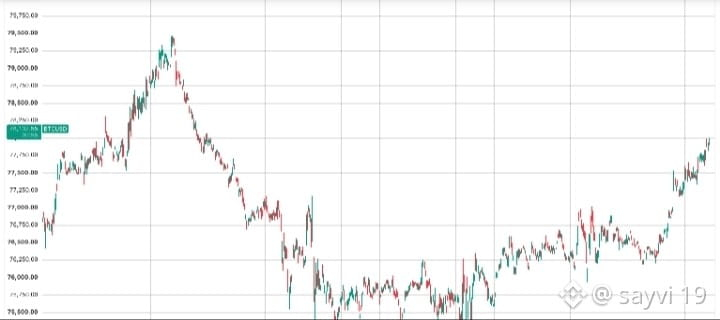
Bitcoin has stayed near $78K even after several events that could have put pressure on the market.
The CLARITY Act failed to move forward in the Senate. The Federal Reserve also raised rates for the first time in more than three years.
The Bank of Japan raised rates too while the Bank of England kept rates unchanged.
Despite all this Bitcoin has only fallen around 1.5% in September so far. That is notable because September has often been a weak month for Bitcoin.
Bitcoin also recovered quickly after briefly falling below $75K earlier this week.
Some market watchers see this as a sign that selling pressure may be getting weaker.
The SEC also brought some positive news with a new exemption for certain tokenized stock platforms.
Bitcoin is still facing pressure from rates oil prices and a stronger dollar. But so far the market has remained relatively steady.
$BTC $BNB $CFG
67
·
--
A cyberattack on crypto technology firm Haruko affected 15 clients earlier this week.
The attack exposed some read only API details and trading data. These details could allow systems to share information with each other.
Reports say some smaller clients may have lost a small amount of funds. The exact amount has not been confirmed.
Haruko said the issue came from a weakness in its own system. An attacker used an access token to take data from the system memory.
Client login details were not directly compromised on their own systems.
Haruko says it has fixed the weakness and changed its server security keys. It also advised clients to use IP whitelisting for extra protection.
The company plans to publish a full report about the incident.
The event is another reminder that strong security is important when dealing with crypto assets and trading systems.
$ONE $ZEC $LSK

958
·
--
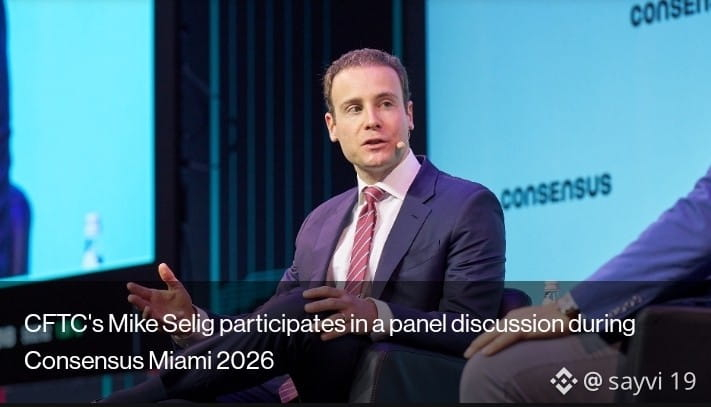
The CFTC is moving ahead with new crypto market rules after the CLARITY Act failed to pass in the Senate.
The agency has sent a new proposal to the White House for review. The details are not public yet. It is still unclear which crypto assets and platforms could be covered.
The SEC has also introduced a five year exemption for some platforms working with tokenized stocks. Both agencies say they want to build clearer crypto rules using their current authority.
The CFTC also gave limited relief to some passive software providers. This may allow certain crypto wallet interfaces to connect users with regulated derivatives markets without registering as introducing brokers.
The relief comes with conditions around risk disclosures and recordkeeping.
For now the next step is review and public comment before any new CFTC rules can take effect.
$ZEC $SOL $P
132
·
--
Bitcoin is back above $80K for the first time since May 15.
BTC has now recovered around 38% from its late June and early July lows when it dropped below $58K.
One reason behind the recent move is stronger demand from traditional investors. Spot Bitcoin ETFs saw about $1.9 billion in inflows last week. That was their strongest weekly inflow since October 2025.
Falling Treasury yields have also helped improve market sentiment after months of tight financial conditions.
The US Treasury is increasing its plans to buy back longer term government bonds. This could put more focus on interest rates and liquidity.
Now the market is watching the latest US inflation data. The PCE report could give investors a better idea about where interest rates may be heading.
For now Bitcoin is showing strength again. But the next move may depend heavily on inflation and the broader economic picture.
$BTC $C $HEI
72
·
--
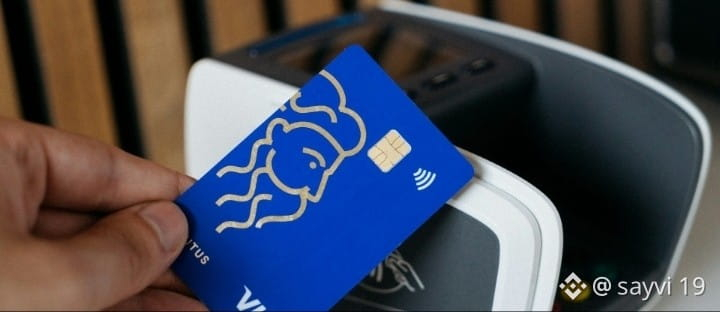
A crypto card security issue has led to about $1.1 million in losses on Solana.
Around $500800 was linked to 1685 Avici users. The incident also affected other programs that used the same outdated card contract.
The AVICI token fell sharply after the news. It dropped from around $0.43 to $0.217 before recovering some of the loss.
Avici said the issue was limited to funds that users had loaded for card spending. Its self custodial wallets were not affected.
The company also said it will fully refund affected users.
The problem came from an older card contract that had a security weakness. The contract was used to hold funds after users topped up their cards.
This incident is a reminder that self custody does not always mean every part of the spending process is fully controlled by the user.
Crypto cards can be useful but it is still important to understand where your funds are held when you use them.
$SOL $CL $SKR
354
·
--
Big crypto firms seem to be using the recent market move in a different way.
Some large trading firms are holding big ETH and BTC short positions while also holding spot assets. This is part of a strategy called cash and carry.
The idea is simple. They hold the actual crypto while taking a short position at the same time. This helps reduce exposure to price moves. Their main goal is to earn from funding payments when the market is paying shorts.
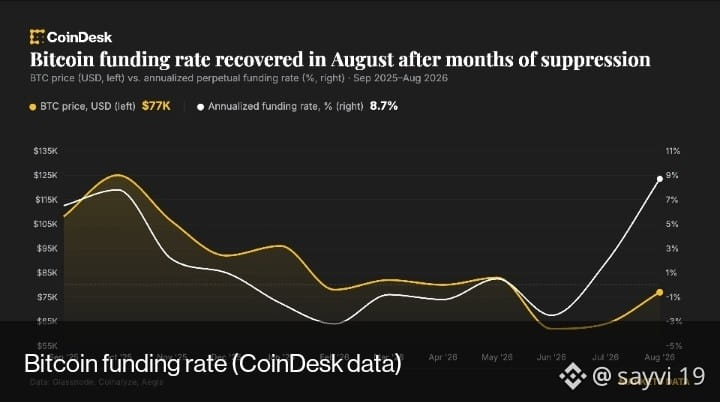
Funding rates have picked up again after staying weak for months. BTC funding has also moved back into positive territory.
This shows that trading firms are finding ways to earn from market conditions without making a simple bet on whether prices will go up or down.
Still the market can change quickly. Higher funding can also mean more leverage is building up.
For now the key point is that positive funding has made this strategy attractive again.
$NVDAB $DOT $SOL
152
·
--
Bitcoin is showing some strength again after a rough few days.
The price is now close to $79K. It is up more than 2.5% from Friday’s low. This recovery came after the Fed Chair gave a hawkish speech at Jackson Hole.
Michael Saylor also posted “We’re Back” on X. Many people see this as a sign that Strategy may have bought Bitcoin again. If true this could be the company’s first Bitcoin purchase since June 22.
Strategy had recently focused more on building cash reserves and managing its preferred stock. Now that its cash position looks stronger the company may have more room to buy Bitcoin again.
Bitcoin dominance has also risen by almost 4% from its June low. This shows that Bitcoin is holding up better than much of the wider crypto market.
For now I am watching whether this strength can continue in the coming days.
$ONG $ETH $BTC

254
·
--
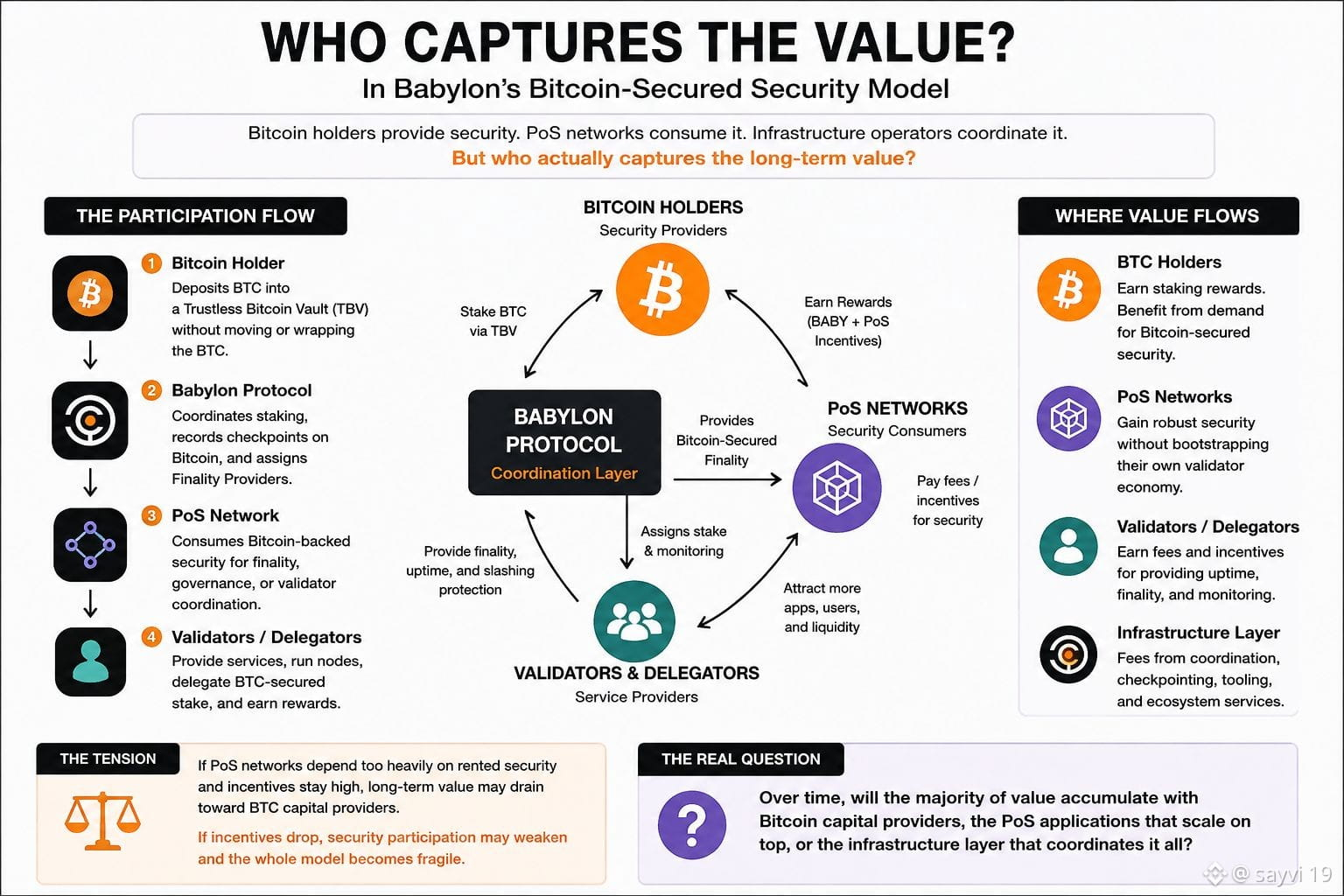
I keep coming back to the same question whenever I watch Babylon participation.
A BTC holder stakes through Babylon's trustless flow, Finality Providers coordinate that security, and a PoS chain consumes it instead of relying only on native token inflation. As more applications build on that chain, security demand can translate into fees, rewards, and stronger network activity across the stack.
The tension is deciding who keeps the lasting value. If most returns stay with BTC capital providers while infrastructure operators collect coordination fees, applications still need enough economic activity to justify paying for Bitcoin-backed security.
When incentives normalize, who actually captures the compounding value: BTC holders, the applications, or the coordination layer?
#baby $BABY
@babylonlabs_io
I keep coming back to the same question whenever I watch Babylon participation.
A BTC holder stakes through Babylon's trustless flow, Finality Providers coordinate that security, and a PoS chain consumes it instead of relying only on native token inflation. As more applications build on that chain, security demand can translate into fees, rewards, and stronger network activity across the stack.
The tension is deciding who keeps the lasting value. If most returns stay with BTC capital providers while infrastructure operators collect coordination fees, applications still need enough economic activity to justify paying for Bitcoin-backed security.
When incentives normalize, who actually captures the compounding value: BTC holders, the applications, or the coordination layer?
#baby $BABY
@BabylonLabs_io
1
203
·
--
I've been thinking about @babylonlabs_io from a different angle lately.
Most conversations revolve around BTC TVL, but I suspect the more important long-term metric is Finality Provider density. TVL tells us how much economic security exists. Density tells us how that security is distributed and coordinated.
The interesting part is that every BTC delegation also shapes the market for Finality Providers. As more credible providers compete for stake, the network gains diversity, reduces reliance on a small set of operators, and creates stronger incentives for performance rather than simple scale. At the same time, if delegations become concentrated despite a growing provider set, the protocol may appear decentralized while coordination power quietly accumulates.
To me, this is where $BABY becomes more than a staking token. It sits at the center of the coordination layer that governs how Bitcoin's security is allocated across multiple networks.
Maybe the real network effect isn't measured by how much BTC is staked, but by how competitive and distributed the Finality Provider marketplace becomes over time.
@babylonlabs_io
#babylon
$BABY
I've been thinking about @BabylonLabs_io from a different angle lately.
Most conversations revolve around BTC TVL, but I suspect the more important long-term metric is Finality Provider density. TVL tells us how much economic security exists. Density tells us how that security is distributed and coordinated.
The interesting part is that every BTC delegation also shapes the market for Finality Providers. As more credible providers compete for stake, the network gains diversity, reduces reliance on a small set of operators, and creates stronger incentives for performance rather than simple scale. At the same time, if delegations become concentrated despite a growing provider set, the protocol may appear decentralized while coordination power quietly accumulates.
To me, this is where $BABY becomes more than a staking token. It sits at the center of the coordination layer that governs how Bitcoin's security is allocated across multiple networks.
Maybe the real network effect isn't measured by how much BTC is staked, but by how competitive and distributed the Finality Provider marketplace becomes over time.
@BabylonLabs_io
#babylon
$BABY
36
16
411
·
--
I kept wondering why Babylon's documentation spends so much time talking about Finality Providers instead of just Bitcoin staking. After digging deeper, I realized the security model is more interesting than I first thought.
One detail that caught my attention was the use of Extractable One-Time Signatures (EOTS). Finality Providers commit randomness before they vote. If someone tries to sign two conflicting blocks at the same height, that action can expose their own signing key. It isn't just a financial penalty—the protocol can cryptographically prove the misbehavior. That feels very different from the security assumptions most PoS systems rely on.
The more I thought about it, the more it felt like Babylon is exploring a future where security isn't based only on incentives but also on cryptographic accountability. That's a subtle shift, but an important one if more networks begin sharing Bitcoin's security.
I'm starting to think $BABY is really about coordinating that trust layer, not simply creating another staking economy.
@babylonlabs_io $BABY
#Babylonchain #BTCFi $BITCOIN
I kept wondering why Babylon's documentation spends so much time talking about Finality Providers instead of just Bitcoin staking. After digging deeper, I realized the security model is more interesting than I first thought.
One detail that caught my attention was the use of Extractable One-Time Signatures (EOTS). Finality Providers commit randomness before they vote. If someone tries to sign two conflicting blocks at the same height, that action can expose their own signing key. It isn't just a financial penalty—the protocol can cryptographically prove the misbehavior. That feels very different from the security assumptions most PoS systems rely on.
The more I thought about it, the more it felt like Babylon is exploring a future where security isn't based only on incentives but also on cryptographic accountability. That's a subtle shift, but an important one if more networks begin sharing Bitcoin's security.
I'm starting to think $BABY is really about coordinating that trust layer, not simply creating another staking economy.
@BabylonLabs_io $BABY
#Babylonchain #BTCFi $BITCOIN
22
5
293
·
--
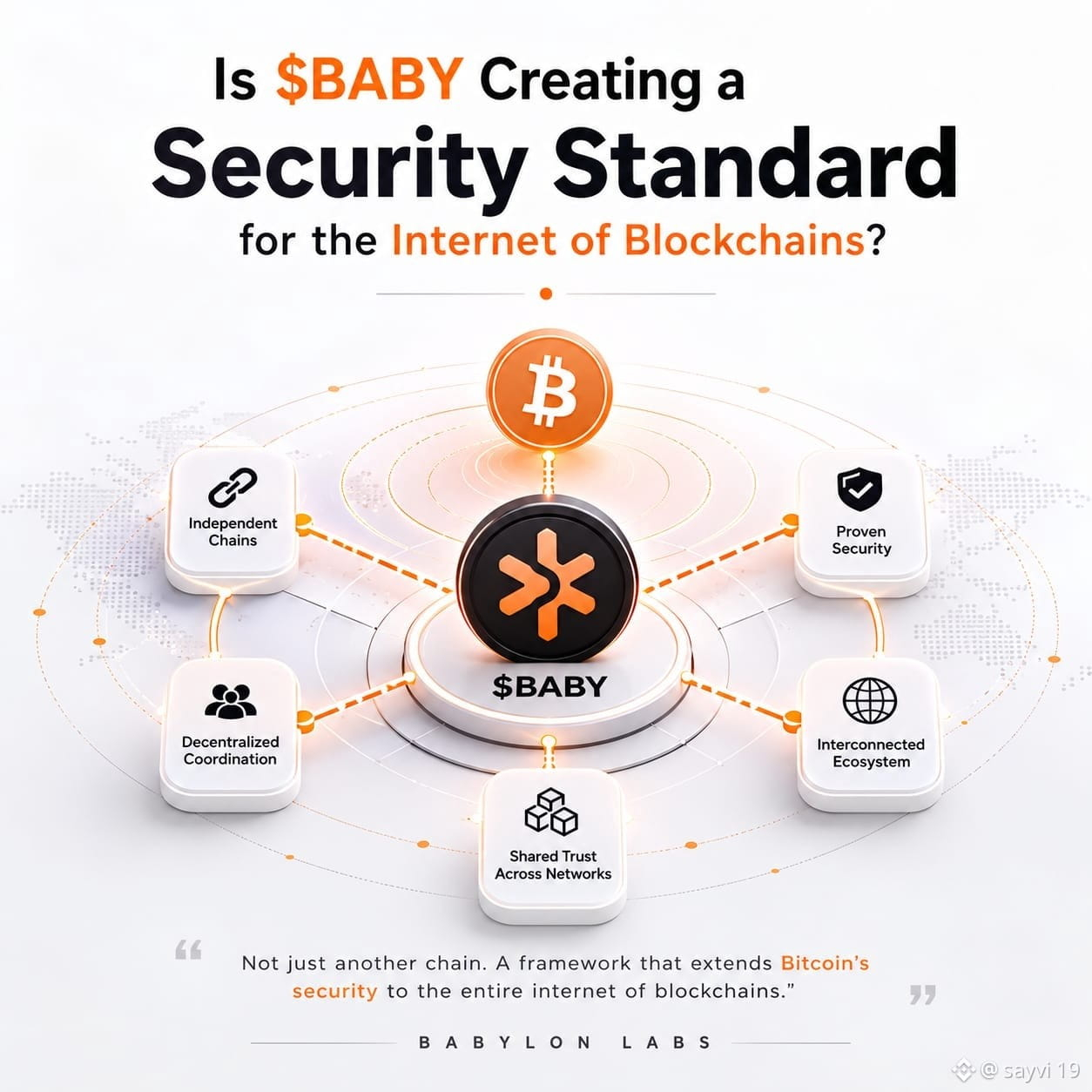
Is $BABY Creating a Security Standard for the Internet of Blockchains?
I used to think every new blockchain had to earn its own security from scratch.
The more time I spent studying @babylonlabs_io, the less convinced I became.
A simple thought experiment changed my perspective.
Imagine hundreds of independent chains launching over the next decade. Should each one spend years building its own economic security, or should they connect to a security model that's already proven itself?
That's a very different question.
It made me realize the scarce resource may not be capital. It may be coordination.
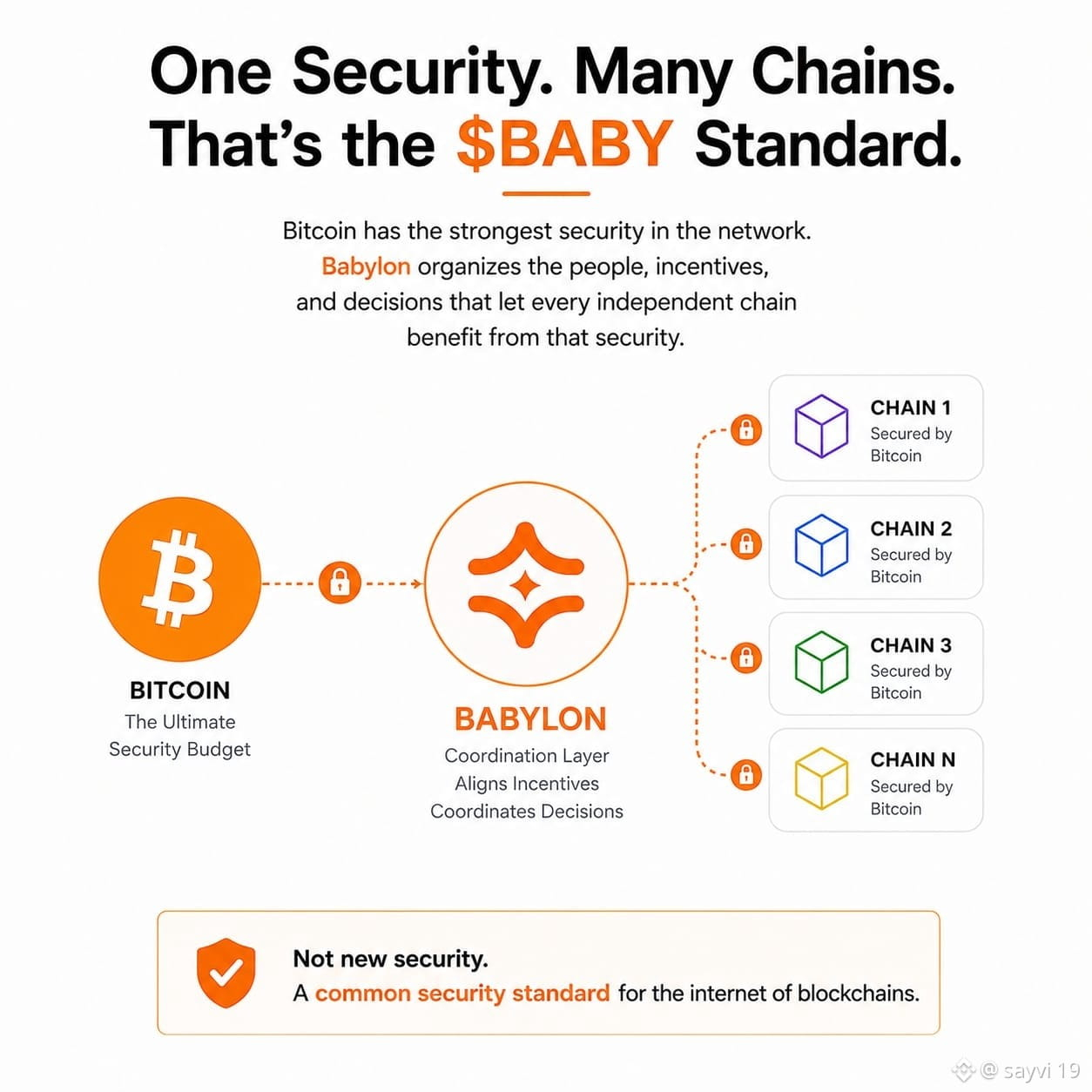
Bitcoin already represents an enormous security budget. The harder challenge is creating a framework that lets independent networks rely on that security without sharing the same governance or identity.
That's where I think $BABY becomes interesting.
Not because it replaces Bitcoin's role, but because it helps organize the people, incentives, and decisions that allow Bitcoin-backed security to extend beyond a single chain.
Maybe the next evolution of blockchains won't come from inventing stronger security.
It might come from agreeing on a common security standard.
$BABY #baby
@babylonlabs_io
Is $BABY Creating a Security Standard for the Internet of Blockchains?
I used to think every new blockchain had to earn its own security from scratch.
The more time I spent studying @babylonlabs_io, the less convinced I became.
A simple thought experiment changed my perspective.
Imagine hundreds of independent chains launching over the next decade. Should each one spend years building its own economic security, or should they connect to a security model that's already proven itself?
That's a very different question.
It made me realize the scarce resource may not be capital. It may be coordination.
Bitcoin already represents an enormous security budget. The harder challenge is creating a framework that lets independent networks rely on that security without sharing the same governance or identity.
That's where I think $BABY becomes interesting.
Not because it replaces Bitcoin's role, but because it helps organize the people, incentives, and decisions that allow Bitcoin-backed security to extend beyond a single chain.
Maybe the next evolution of blockchains won't come from inventing stronger security.
It might come from agreeing on a common security standard.
$BABY #baby
@BabylonLabs_io
20
5
315
·
--
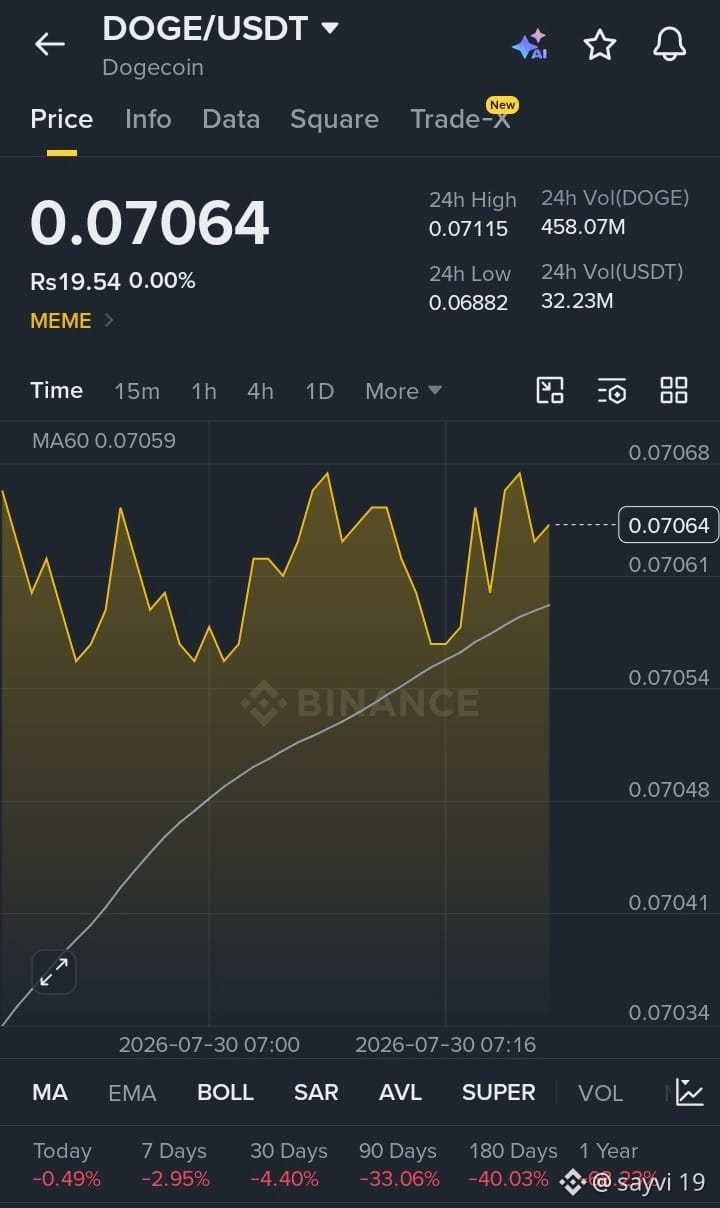
Coin: DOGE/USDT
Direction: Long
Entry Zone: 0.07045 – 0.07070
Stop Loss: 0.06980
Targets:
TP1: 0.07120
TP2: 0.07200
TP3: 0.07300
TP4: 0.07420
$DOGE $V $ME
Coin: DOGE/USDT
Direction: Long
Entry Zone: 0.07045 – 0.07070
Stop Loss: 0.06980
Targets:
TP1: 0.07120
TP2: 0.07200
TP3: 0.07300
TP4: 0.07420
$DOGE $V $ME
Direction: Long
Entry Zone: 0.07045 – 0.07070
Stop Loss: 0.06980
Targets:
TP1: 0.07120
TP2: 0.07200
TP3: 0.07300
TP4: 0.07420
$DOGE $V $ME
1
176
·
--
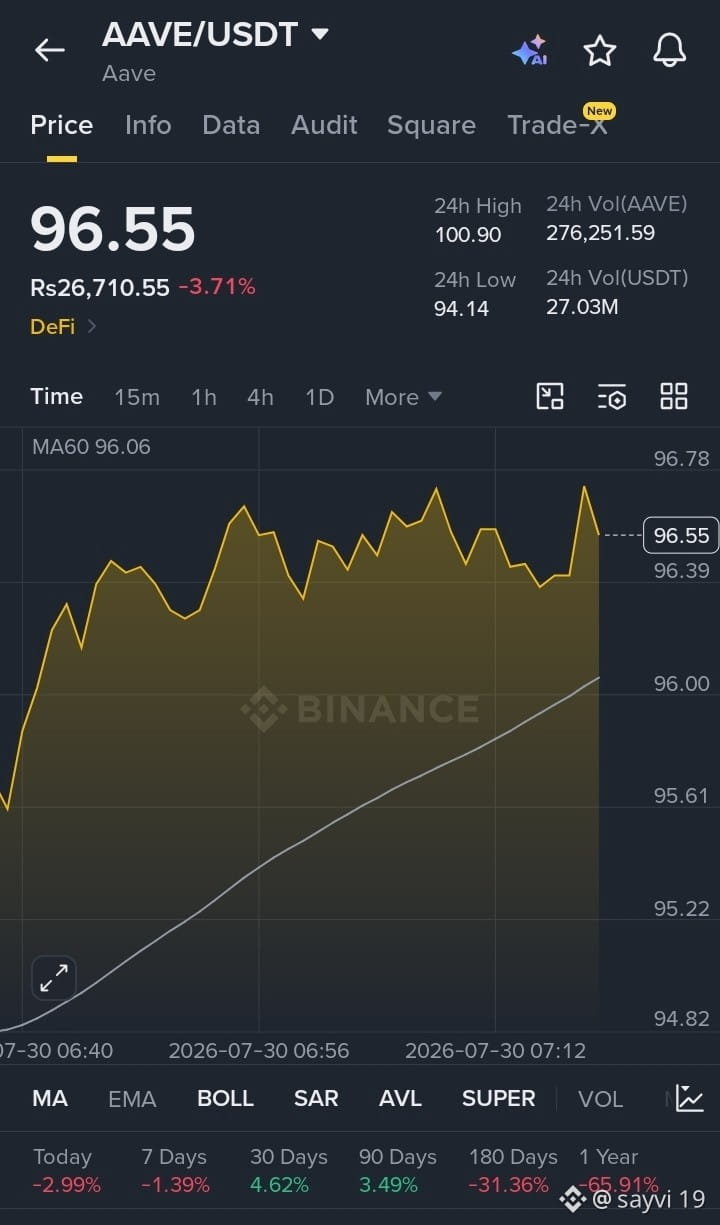
Coin: AAVE/USDT
Direction: Long
Entry Zone: 96.20 – 96.80
Stop Loss: 94.90
Targets:
TP1: 98.00
TP2: 99.50
TP3: 101.00
TP4: 103.00
$ON $US $AAVE
Coin: AAVE/USDT
Direction: Long
Entry Zone: 96.20 – 96.80
Stop Loss: 94.90
Targets:
TP1: 98.00
TP2: 99.50
TP3: 101.00
TP4: 103.00
$ON $US $AAVE
Direction: Long
Entry Zone: 96.20 – 96.80
Stop Loss: 94.90
Targets:
TP1: 98.00
TP2: 99.50
TP3: 101.00
TP4: 103.00
$ON $US $AAVE
2
318
·
--
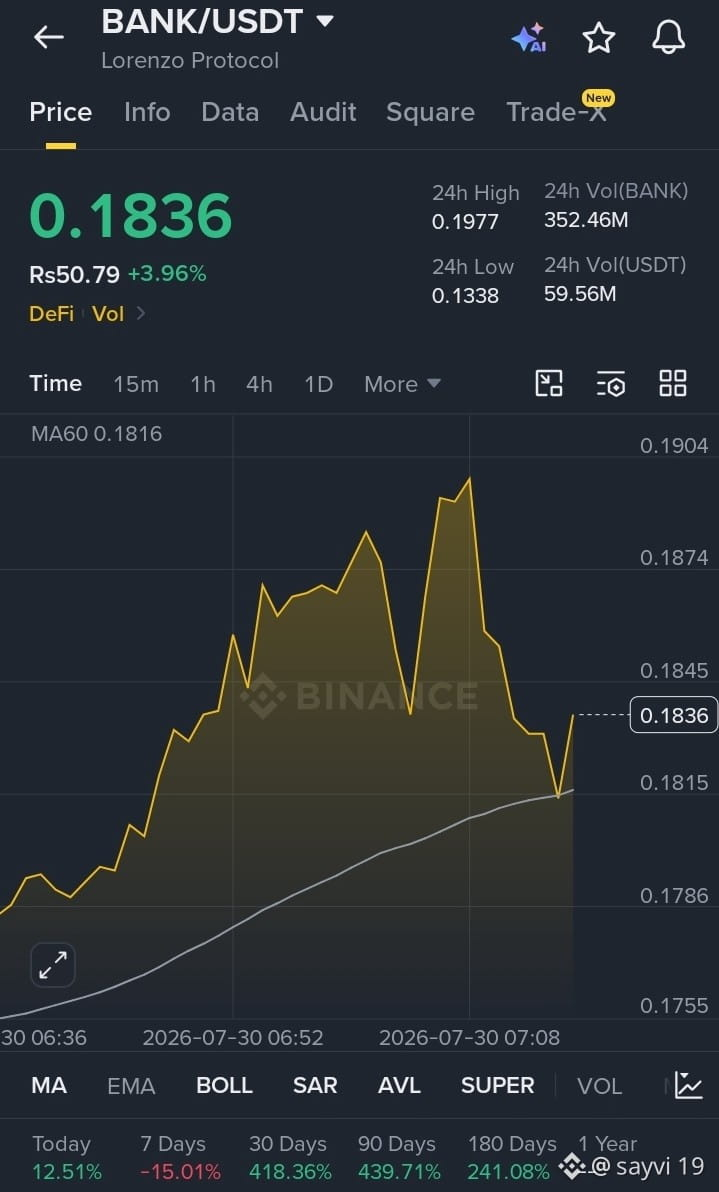
Coin: BANK/USDT
Direction: Long
Entry Zone: 0.1825 – 0.1840
Stop Loss: 0.1795
Targets:
TP1: 0.1875
TP2: 0.1905
TP3: 0.1945
TP4: 0.1990
$BANK $SOL $EVAA
Coin: BANK/USDT
Direction: Long
Entry Zone: 0.1825 – 0.1840
Stop Loss: 0.1795
Targets:
TP1: 0.1875
TP2: 0.1905
TP3: 0.1945
TP4: 0.1990
$BANK $SOL $EVAA
Direction: Long
Entry Zone: 0.1825 – 0.1840
Stop Loss: 0.1795
Targets:
TP1: 0.1875
TP2: 0.1905
TP3: 0.1945
TP4: 0.1990
$BANK $SOL $EVAA
169
·
--
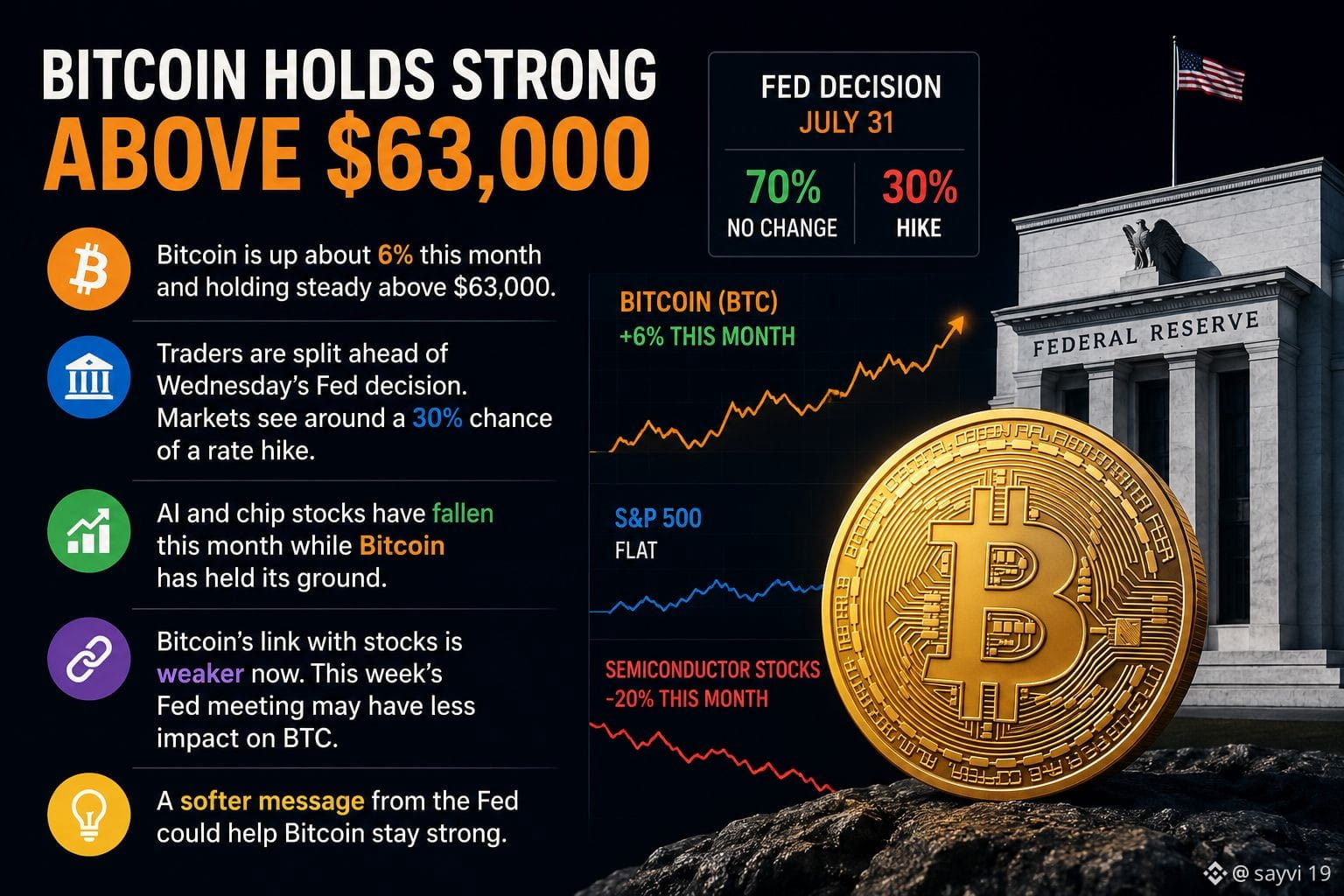
Bitcoin is still holding above $63000 and has gained about 6% this month. Even with a lot of uncertainty in the market it has stayed more stable than many AI and chip stocks.
Right now many traders think the Federal Reserve will keep interest rates the same. Some still expect a small rate increase. That decision will be watched closely because it can affect markets.
What stands out is that Bitcoin is not moving as closely with stocks as it did before. While many tech shares have fallen this month Bitcoin has stayed in a steady range. This could mean it is reacting more to its own market instead of following every move in stocks.
If the Federal Reserve gives a softer message after the meeting Bitcoin could stay strong. No one knows what will happen next but this week will give traders a better idea of where the market may be heading.
$BTC $AKE $ON
43
41
19.1k
·
--
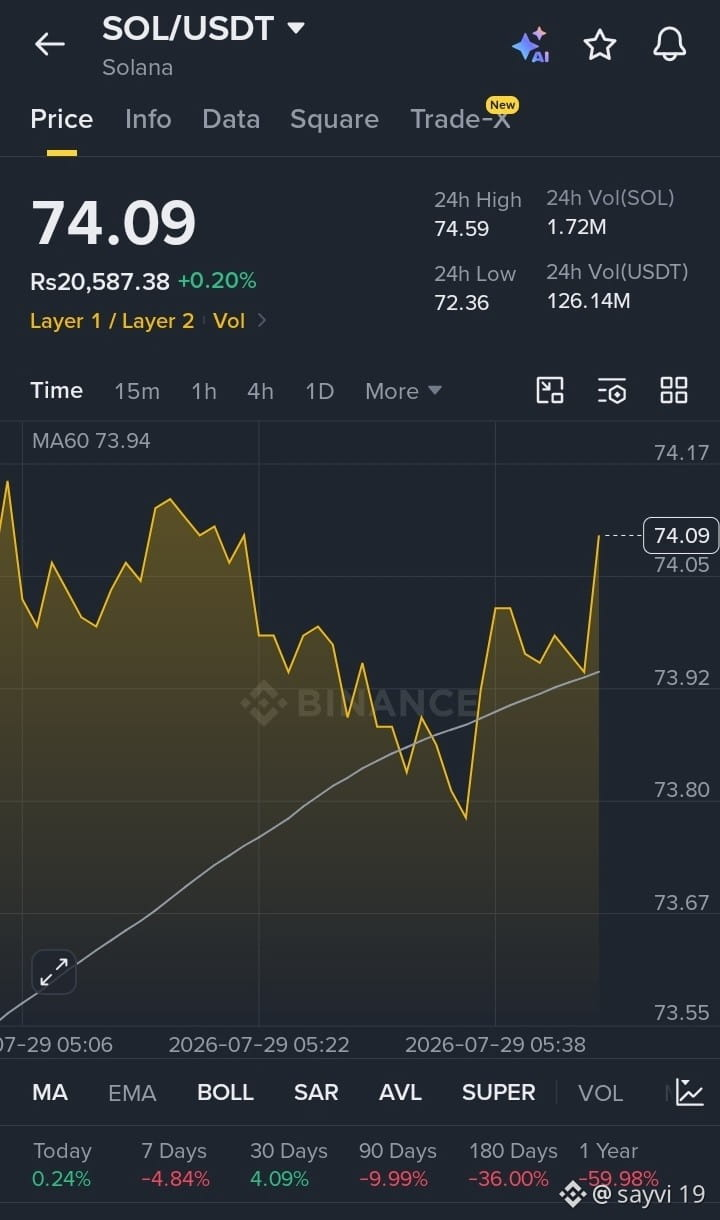
Coin: SOL/USDT
Direction: Long
Entry Zone: 73.95 – 74.10
Stop Loss: 73.60
Targets:
TP1: 74.40
TP2: 74.80
TP3: 75.30
TP4: 76.00
$SOL $ETH $CRV
Coin: SOL/USDT
Direction: Long
Entry Zone: 73.95 – 74.10
Stop Loss: 73.60
Targets:
TP1: 74.40
TP2: 74.80
TP3: 75.30
TP4: 76.00
$SOL $ETH $CRV
Direction: Long
Entry Zone: 73.95 – 74.10
Stop Loss: 73.60
Targets:
TP1: 74.40
TP2: 74.80
TP3: 75.30
TP4: 76.00
$SOL $ETH $CRV
132
·
--
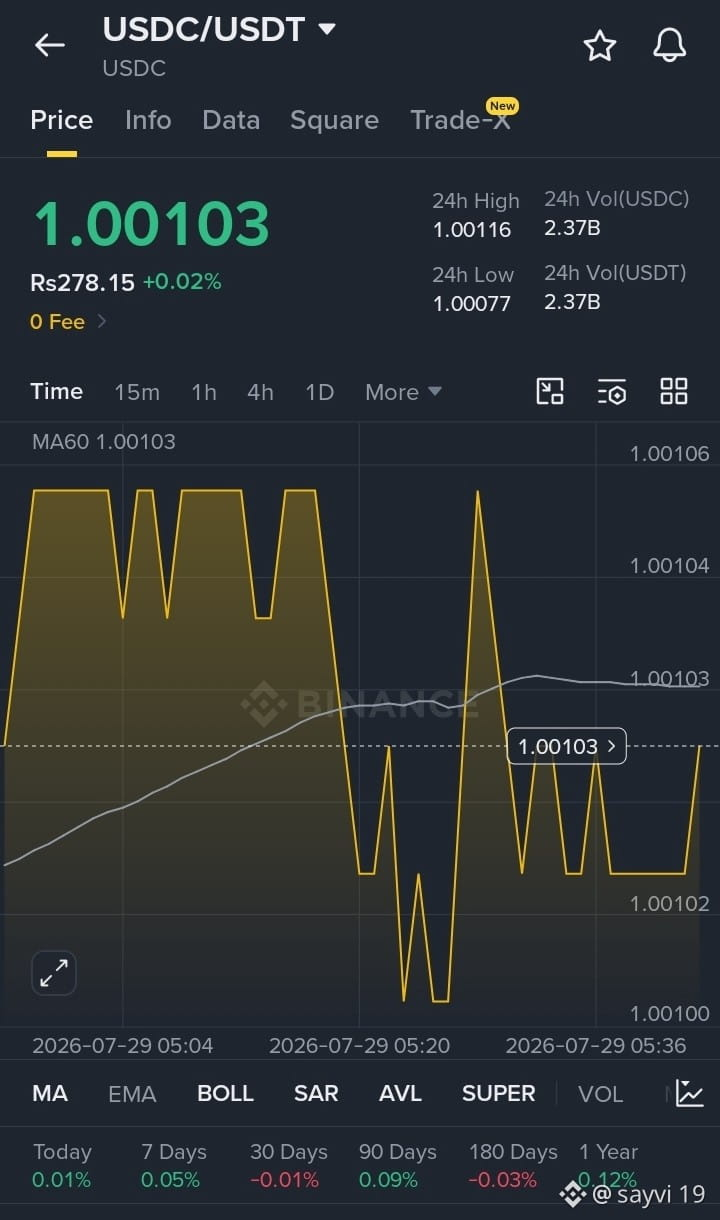
Coin: USDC/USDT
Direction: Long
Entry Zone: 1.00100 – 1.00102
Stop Loss: 1.00098
Targets:
TP1: 1.00104
TP2: 1.00106
TP3: 1.00108
TP4: 1.00110
$USDC $WET $SENT
Coin: USDC/USDT
Direction: Long
Entry Zone: 1.00100 – 1.00102
Stop Loss: 1.00098
Targets:
TP1: 1.00104
TP2: 1.00106
TP3: 1.00108
TP4: 1.00110
$USDC $WET $SENT
Direction: Long
Entry Zone: 1.00100 – 1.00102
Stop Loss: 1.00098
Targets:
TP1: 1.00104
TP2: 1.00106
TP3: 1.00108
TP4: 1.00110
$USDC $WET $SENT
119
·
--
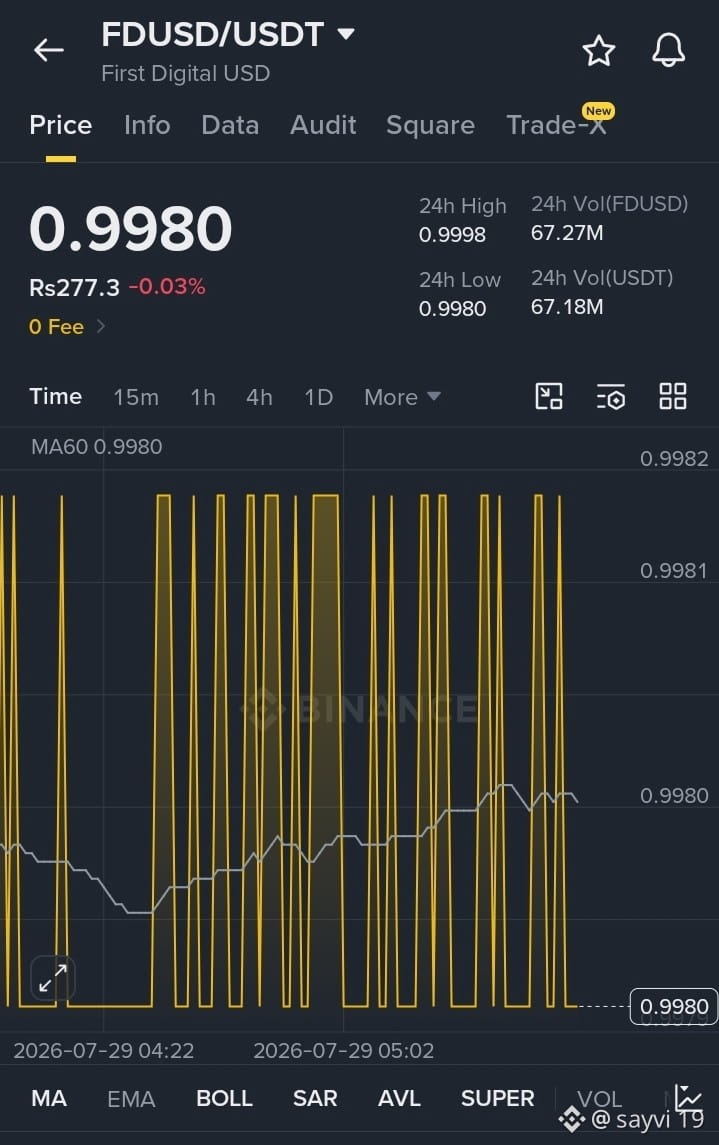
Coin: FDUSD/USDT
Direction: Long
Entry Zone: 0.9978 – 0.9982
Stop Loss: 0.9968
Targets: TP1: 0.9990
TP2: 0.9995
TP3: 1.0000
TP4: 1.0010
Coin: FDUSD/USDT
Direction: Long
Entry Zone: 0.9978 – 0.9982
Stop Loss: 0.9968
Targets: TP1: 0.9990
TP2: 0.9995
TP3: 1.0000
TP4: 1.0010
Direction: Long
Entry Zone: 0.9978 – 0.9982
Stop Loss: 0.9968
Targets: TP1: 0.9990
TP2: 0.9995
TP3: 1.0000
TP4: 1.0010
128
·
--
Uphold has reduced its global workforce by about 17% as the company shifts more focus toward its growing business services.
The company said the move affected around 85 employees and contractors across different regions. It also said its offices will remain open and customers will continue to receive normal service.
The decision comes as crypto trading activity from regular users has slowed during the recent market downturn. At the same time demand from businesses looking to add digital asset services is increasing.
Uphold said it remains focused on the future of digital assets and blockchain technology. The company plans to invest more resources into products for businesses while continuing to improve its consumer services.
The crypto market is going through a quieter period right now but companies are still building for long term growth.
$NVDA $GOOG.US $AAPL.US
2
3
216
Войдите, чтобы посмотреть больше материала
Присоединяйтесь к пользователям криптовалют по всему миру на Binance Square
⚡️ Получайте новейшую и полезную информацию о криптоактивах.
💬 Нам доверяет крупнейшая в мире криптобиржа.
👍 Получите достоверные аналитические данные от верифицированных создателей контента.
Эл. почта/номер телефона
В тренде
WhoWillSucceedJensenHuangatNvidia?
Просмотров: 99,383
1,255 обсуждают
Nvidia Says No CEO Talks Underway as "Stand With Jensen" Petition Tops 77,900 Signatures
Binance News
·Лайков: 29
·Просмотров: 41.1k
WhatWillDriveCryptoandStocks’NextRebound?
Просмотров: 466,029
3,157 обсуждают
BitcoinActiveSupplyInProfitDropsBelow45%
Просмотров: 34,527
460 обсуждают