
kgAd
110 Публикации
kgAd
Отправить жалобу
Заблокировать пользователя
part time crypto researcher
Открытая сделка
Трейдер с регулярными сделками
1.6 г
5 подписок(и/а)
23 подписчиков(а)
121 понравилось
Посты
Портфель
Все
Видео
·
--
Year
Approx. BTC price shown
What happened
2009
<$0.01
Bitcoin network launched; the Genesis Block was mined by Satoshi Nakamoto.
2010
~$0.39
Bitcoin began developing a real market price. The famous Bitcoin Pizza Day happened when 10,000 BTC were used to buy two pizzas.
2013
~$13
Bitcoin experienced one of its first major mainstream price surges.
2017
~$13,880
The huge 2017 bull market brought Bitcoin into mainstream attention.
2021
~$46,300
Bitcoin reached major institutional adoption and eventually hit about $67,549 in November 2021.
2024
~$93,700
#btc $BTC
Year
Approx. BTC price shown
What happened
2009
<$0.01
Bitcoin network launched; the Genesis Block was mined by Satoshi Nakamoto.
2010
~$0.39
Bitcoin began developing a real market price. The famous Bitcoin Pizza Day happened when 10,000 BTC were used to buy two pizzas.
2013
~$13
Bitcoin experienced one of its first major mainstream price surges.
2017
~$13,880
The huge 2017 bull market brought Bitcoin into mainstream attention.
2021
~$46,300
Bitcoin reached major institutional adoption and eventually hit about $67,549 in November 2021.
2024
~$93,700
#btc $BTC
Approx. BTC price shown
What happened
2009
<$0.01
Bitcoin network launched; the Genesis Block was mined by Satoshi Nakamoto.
2010
~$0.39
Bitcoin began developing a real market price. The famous Bitcoin Pizza Day happened when 10,000 BTC were used to buy two pizzas.
2013
~$13
Bitcoin experienced one of its first major mainstream price surges.
2017
~$13,880
The huge 2017 bull market brought Bitcoin into mainstream attention.
2021
~$46,300
Bitcoin reached major institutional adoption and eventually hit about $67,549 in November 2021.
2024
~$93,700
#btc $BTC
1
60
·
--

Статья
MHO!Expected earnings date: October 21, 2026, before the market opens. Some services still show this as an estimate, while TipRanks lists it as confirmed.
Q3 2026 EPS estimate: roughly $3.05–$3.30, depending on the data provider. Zacks currently has $3.05, while other estimates are around $3.25–$3.30.Revenue estimate: around $1.09–$1.11 billion.Q3 2025 EPS: $3.92, so the current estimates imply a significant year-over-year decline.
Q2 2026: MHO reported $3.14 EPS and about $1.06B revenue. Revenue was supported partly by land sales, while homebuilding revenue declined 9% YoY.
What to watch in October
The biggest things will be EPS vs. ~$3.05–$3.30 expectations, home deliveries, average selling price, gross margin, new orders, cancellations, and management’s outlook.
Because MHO’s recent EPS has been below its prior-year levels, the market reaction may depend heavily on whether the actual results beat or miss the lowered expectations, rather than simply whether earnings decline YoY.
MHO!
Expected earnings date: October 21, 2026, before the market opens. Some services still show this as an estimate, while TipRanks lists it as confirmed.
Q3 2026 EPS estimate: roughly $3.05–$3.30, depending on the data provider. Zacks currently has $3.05, while other estimates are around $3.25–$3.30.Revenue estimate: around $1.09–$1.11 billion.Q3 2025 EPS: $3.92, so the current estimates imply a significant year-over-year decline.
Q2 2026: MHO reported $3.14 EPS and about $1.06B revenue. Revenue was supported partly by land sales, while homebuilding revenue declined 9% YoY.
What to watch in October
The biggest things will be EPS vs. ~$3.05–$3.30 expectations, home deliveries, average selling price, gross margin, new orders, cancellations, and management’s outlook.
Because MHO’s recent EPS has been below its prior-year levels, the market reaction may depend heavily on whether the actual results beat or miss the lowered expectations, rather than simply whether earnings decline YoY.
Q3 2026 EPS estimate: roughly $3.05–$3.30, depending on the data provider. Zacks currently has $3.05, while other estimates are around $3.25–$3.30.Revenue estimate: around $1.09–$1.11 billion.Q3 2025 EPS: $3.92, so the current estimates imply a significant year-over-year decline.
Q2 2026: MHO reported $3.14 EPS and about $1.06B revenue. Revenue was supported partly by land sales, while homebuilding revenue declined 9% YoY.
What to watch in October
The biggest things will be EPS vs. ~$3.05–$3.30 expectations, home deliveries, average selling price, gross margin, new orders, cancellations, and management’s outlook.
Because MHO’s recent EPS has been below its prior-year levels, the market reaction may depend heavily on whether the actual results beat or miss the lowered expectations, rather than simply whether earnings decline YoY.
MHOUS+0,06%
1
75
·
--
will fil gonna take its position back👀!
#fil
{future}(FILUSDT)
will fil gonna take its position back👀!
#fil
#fil
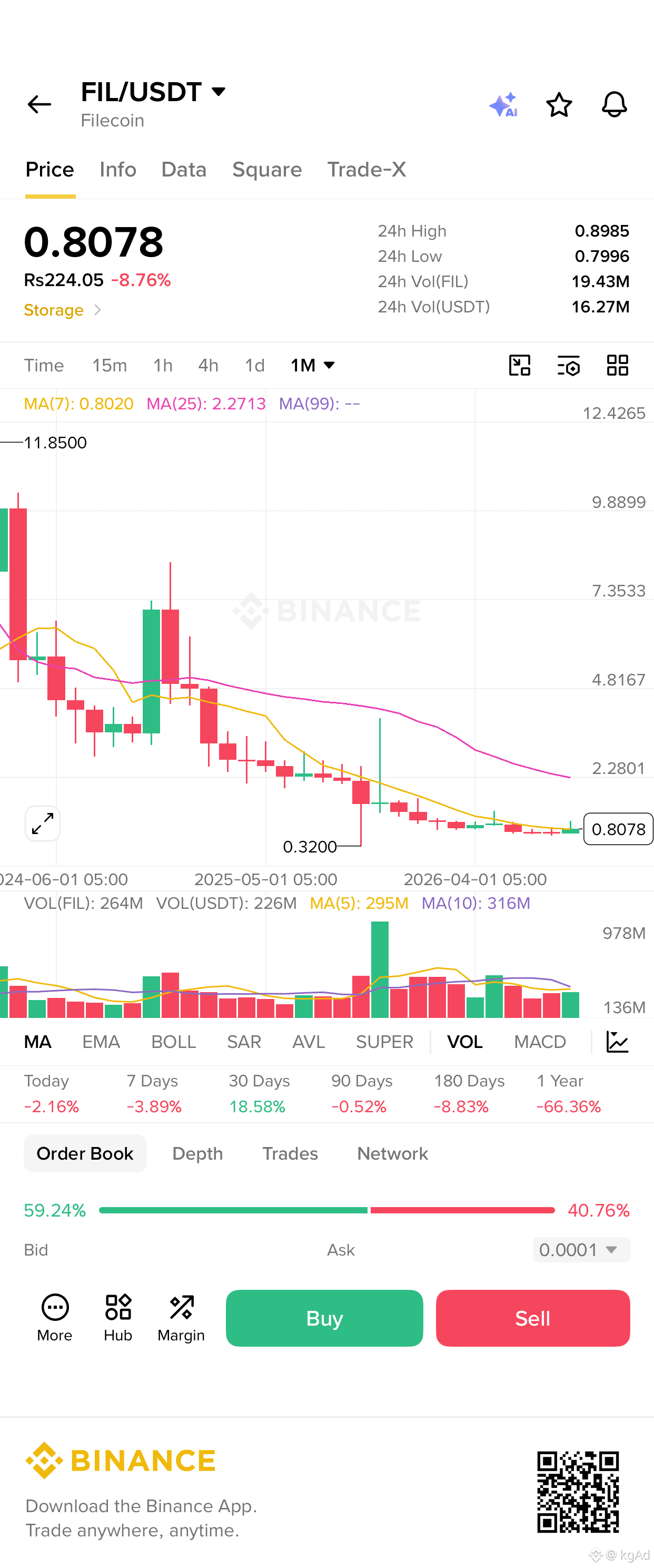
Источник: скриншот пользователя Binance»
1
289
·
--
Статья
will est react 10$?Binance’s page identifies EST as Esports Token, but says it is not listed for normal Binance exchange trading; it can be accessed through Binance Web3 Wallet/DEX.
One data source lists EST around $0.041, with a stated total supply of 1 billion and 0 circulating supply, which makes market-cap calculations unreliable.
At $10, a 1 billion total supply would imply a $10 billion fully diluted valuation. That’s an enormous jump from the current reported valuation.
So $10 is theoretically possible but extremely speculative. I would not use $10 as the main target.#EST #FedHikeOddsRiseTo89% #BitcoinReboundsTo$79K #
will est react 10$?
Binance’s page identifies EST as Esports Token, but says it is not listed for normal Binance exchange trading; it can be accessed through Binance Web3 Wallet/DEX.
One data source lists EST around $0.041, with a stated total supply of 1 billion and 0 circulating supply, which makes market-cap calculations unreliable.
At $10, a 1 billion total supply would imply a $10 billion fully diluted valuation. That’s an enormous jump from the current reported valuation.
So $10 is theoretically possible but extremely speculative. I would not use $10 as the main target.#EST #FedHikeOddsRiseTo89% #BitcoinReboundsTo$79K #
One data source lists EST around $0.041, with a stated total supply of 1 billion and 0 circulating supply, which makes market-cap calculations unreliable.
At $10, a 1 billion total supply would imply a $10 billion fully diluted valuation. That’s an enormous jump from the current reported valuation.
So $10 is theoretically possible but extremely speculative. I would not use $10 as the main target.#EST #FedHikeOddsRiseTo89% #BitcoinReboundsTo$79K #
258
·
--
🟢 Entry 1
$0.0065–$0.0060
30% of your planned money
🟢 Entry 2
$0.0055–$0.0050
30%
🟢 Entry 3
$0.0045–$0.0040
40%
🎯 Take profit 1
$0.010
Sell 20%
🎯 Take profit 2
$0.015
Sell 25%
🎯 Take profit 3
$0.025
Sell 25%
🚀 Moon target
$0.04–$0.05
Sell most of the remaining position
{future}(ASTRUSDT)
🟢 Entry 1
$0.0065–$0.0060
30% of your planned money
🟢 Entry 2
$0.0055–$0.0050
30%
🟢 Entry 3
$0.0045–$0.0040
40%
🎯 Take profit 1
$0.010
Sell 20%
🎯 Take profit 2
$0.015
Sell 25%
🎯 Take profit 3
$0.025
Sell 25%
🚀 Moon target
$0.04–$0.05
Sell most of the remaining position
$0.0065–$0.0060
30% of your planned money
🟢 Entry 2
$0.0055–$0.0050
30%
🟢 Entry 3
$0.0045–$0.0040
40%
🎯 Take profit 1
$0.010
Sell 20%
🎯 Take profit 2
$0.015
Sell 25%
🎯 Take profit 3
$0.025
Sell 25%
🚀 Moon target
$0.04–$0.05
Sell most of the remaining position
98
·
--
Падение
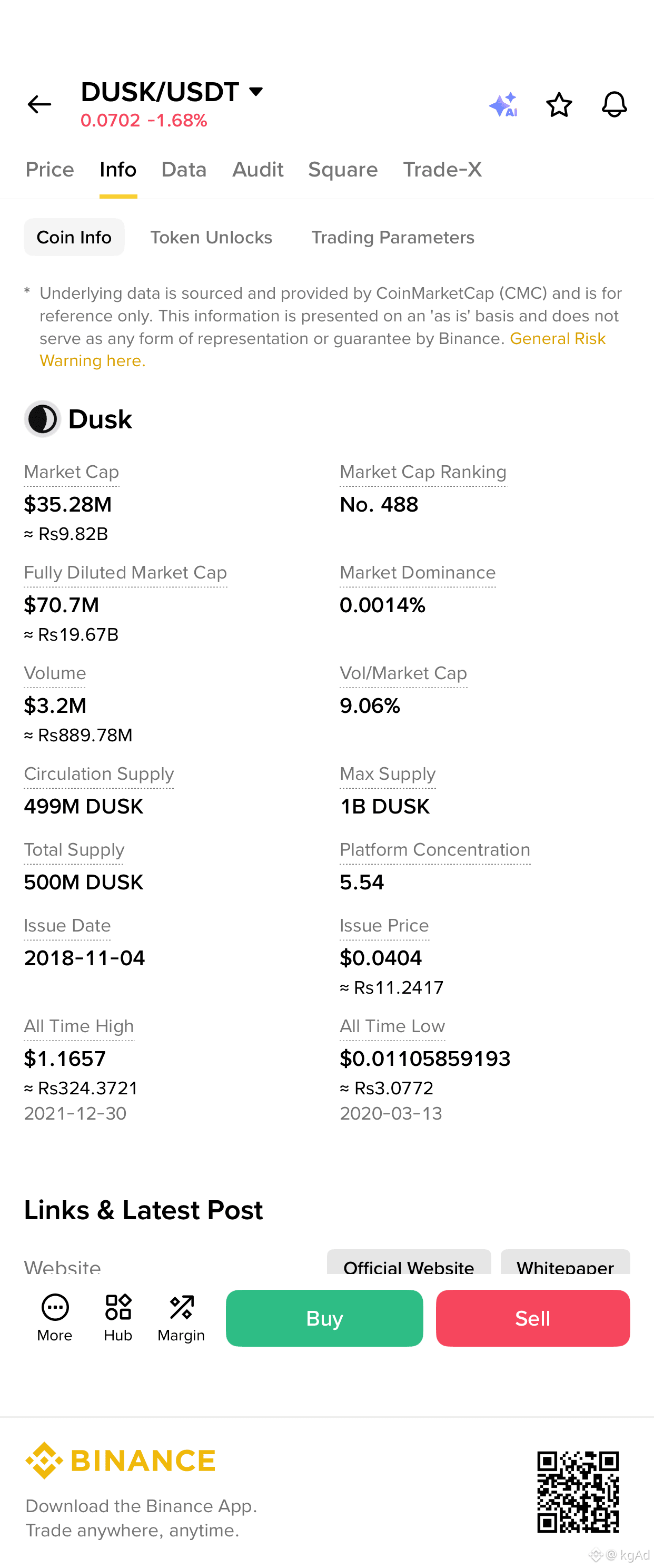
*Current price: roughly $0.07–$0.08.
* Bullish factor: DUSK focuses on privacy + regulated Real-World Assets (RWA), a sector that could grow strongly if institutional tokenization expands.
* Utility: DUSK is used for gas and staking on the network, giving the token actual network utility.
* Important catalyst: Dusk is developing its DuskEVM, aimed at EVM-compatible applications, including regulated DeFi/RWA use cases.
* Risk: A good project doesn’t guarantee a good token price. DUSK can still fall heavily if Bitcoin/altcoins enter a bearish phase.
{spot}(DUSKUSDT)
*Current price: roughly $0.07–$0.08.
* Bullish factor: DUSK focuses on privacy + regulated Real-World Assets (RWA), a sector that could grow strongly if institutional tokenization expands.
* Utility: DUSK is used for gas and staking on the network, giving the token actual network utility.
* Important catalyst: Dusk is developing its DuskEVM, aimed at EVM-compatible applications, including regulated DeFi/RWA use cases.
* Risk: A good project doesn’t guarantee a good token price. DUSK can still fall heavily if Bitcoin/altcoins enter a bearish phase.
* Bullish factor: DUSK focuses on privacy + regulated Real-World Assets (RWA), a sector that could grow strongly if institutional tokenization expands.
* Utility: DUSK is used for gas and staking on the network, giving the token actual network utility.
* Important catalyst: Dusk is developing its DuskEVM, aimed at EVM-compatible applications, including regulated DeFi/RWA use cases.
* Risk: A good project doesn’t guarantee a good token price. DUSK can still fall heavily if Bitcoin/altcoins enter a bearish phase.
Источник: скриншот пользователя Binance»
126
·
--
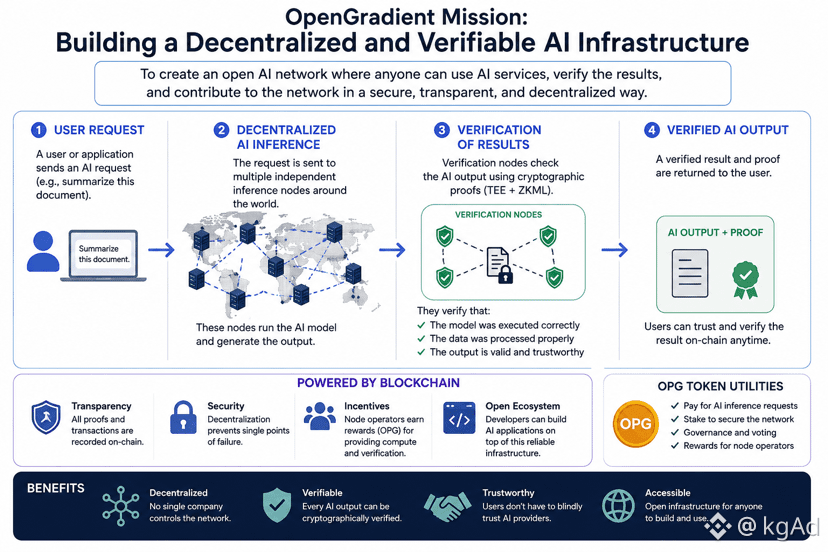
#opg $OPG OpenGradient’s mission is to create an AI network where people can use AI services without depending on a single company. Instead of running AI models on one central server, OpenGradient uses many independent computers around the world. This decentralized system makes the network more secure, reliable, and resistant to failures.
The project also focuses on making AI verifiable. Normally, users receive an AI answer but cannot easily prove how that answer was generated. OpenGradient allows users to verify that an AI model actually performed the computation and produced the result correctly. This increases trust because users do not have to rely only on the claims of a company or service provider.
For example, if a business uses AI to analyze data or make important decisions, OpenGradient can provide proof that the AI model processed the information as expected. This helps reduce the risk of incorrect results, manipulation, or fraud.
By combining blockchain technology with AI, OpenGradient aims to build an open infrastructure where developers can create AI applications, users can verify AI outputs, and node operators can earn rewards for providing computing power. The long-term goal is to make AI more transparent, trustworthy, accessible, and independent from centralized control.
@OpenGradient
{spot}(OPGUSDT)
#opg $OPG OpenGradient’s mission is to create an AI network where people can use AI services without depending on a single company. Instead of running AI models on one central server, OpenGradient uses many independent computers around the world. This decentralized system makes the network more secure, reliable, and resistant to failures.
The project also focuses on making AI verifiable. Normally, users receive an AI answer but cannot easily prove how that answer was generated. OpenGradient allows users to verify that an AI model actually performed the computation and produced the result correctly. This increases trust because users do not have to rely only on the claims of a company or service provider.
For example, if a business uses AI to analyze data or make important decisions, OpenGradient can provide proof that the AI model processed the information as expected. This helps reduce the risk of incorrect results, manipulation, or fraud.
By combining blockchain technology with AI, OpenGradient aims to build an open infrastructure where developers can create AI applications, users can verify AI outputs, and node operators can earn rewards for providing computing power. The long-term goal is to make AI more transparent, trustworthy, accessible, and independent from centralized control.
@OpenGradient
The project also focuses on making AI verifiable. Normally, users receive an AI answer but cannot easily prove how that answer was generated. OpenGradient allows users to verify that an AI model actually performed the computation and produced the result correctly. This increases trust because users do not have to rely only on the claims of a company or service provider.
For example, if a business uses AI to analyze data or make important decisions, OpenGradient can provide proof that the AI model processed the information as expected. This helps reduce the risk of incorrect results, manipulation, or fraud.
By combining blockchain technology with AI, OpenGradient aims to build an open infrastructure where developers can create AI applications, users can verify AI outputs, and node operators can earn rewards for providing computing power. The long-term goal is to make AI more transparent, trustworthy, accessible, and independent from centralized control.
@OpenGradient
5
2
83
·
--
#opg $OPG after studing and researching this is a short summary how #OPG helps $BTC
Open gradients help BTC by making Bitcoin technology easier to use and improve. They support developers by providing tools, research, and open-source projects. This helps people build better Bitcoin applications and solve problems faster. Open gradients also encourage teamwork because many developers can share ideas and work together. As a result, Bitcoin becomes more secure, useful, and trusted by more people around the world.
@OpenGradient
{future}(OPGUSDT)
#opg $OPG after studing and researching this is a short summary how #OPG helps $BTC
Open gradients help BTC by making Bitcoin technology easier to use and improve. They support developers by providing tools, research, and open-source projects. This helps people build better Bitcoin applications and solve problems faster. Open gradients also encourage teamwork because many developers can share ideas and work together. As a result, Bitcoin becomes more secure, useful, and trusted by more people around the world.
@OpenGradient
Open gradients help BTC by making Bitcoin technology easier to use and improve. They support developers by providing tools, research, and open-source projects. This helps people build better Bitcoin applications and solve problems faster. Open gradients also encourage teamwork because many developers can share ideas and work together. As a result, Bitcoin becomes more secure, useful, and trusted by more people around the world.
@OpenGradient
88
·
--
Источник: скриншот пользователя Binance»
71
·
--
#opg $OPG how opg help defi protocol!
Step 1: AI computation happens off-chain
OpenGradient sends the AI request to specialized GPU-powered inference nodes.
For example:
“Should the lending protocol increase collateral requirements for this wallet?”
The AI analyzes:
* Wallet history
* Market volatility
* Token prices
* Risk metrics
The computation is done efficiently off-chain rather than on every blockchain validator.
⸻
Step 2: The AI result is verified
This is OpenGradient’s key innovation.
Instead of asking users to trust the AI provider, the network generates cryptographic proof that:
* the approved AI model was used,
* the prompt wasn’t altered,
* the output wasn’t tampered with.
Validators verify this proof and record it on-chain for auditing. Depending on the application’s needs, settlement can be private, hashed, or fully transparent.
@OpenGradient
{future}(OPGUSDT)
#opg $OPG how opg help defi protocol!
Step 1: AI computation happens off-chain
OpenGradient sends the AI request to specialized GPU-powered inference nodes.
For example:
“Should the lending protocol increase collateral requirements for this wallet?”
The AI analyzes:
* Wallet history
* Market volatility
* Token prices
* Risk metrics
The computation is done efficiently off-chain rather than on every blockchain validator.
⸻
Step 2: The AI result is verified
This is OpenGradient’s key innovation.
Instead of asking users to trust the AI provider, the network generates cryptographic proof that:
* the approved AI model was used,
* the prompt wasn’t altered,
* the output wasn’t tampered with.
Validators verify this proof and record it on-chain for auditing. Depending on the application’s needs, settlement can be private, hashed, or fully transparent.
@OpenGradient
Step 1: AI computation happens off-chain
OpenGradient sends the AI request to specialized GPU-powered inference nodes.
For example:
“Should the lending protocol increase collateral requirements for this wallet?”
The AI analyzes:
* Wallet history
* Market volatility
* Token prices
* Risk metrics
The computation is done efficiently off-chain rather than on every blockchain validator.
⸻
Step 2: The AI result is verified
This is OpenGradient’s key innovation.
Instead of asking users to trust the AI provider, the network generates cryptographic proof that:
* the approved AI model was used,
* the prompt wasn’t altered,
* the output wasn’t tampered with.
Validators verify this proof and record it on-chain for auditing. Depending on the application’s needs, settlement can be private, hashed, or fully transparent.
@OpenGradient
82
·
--
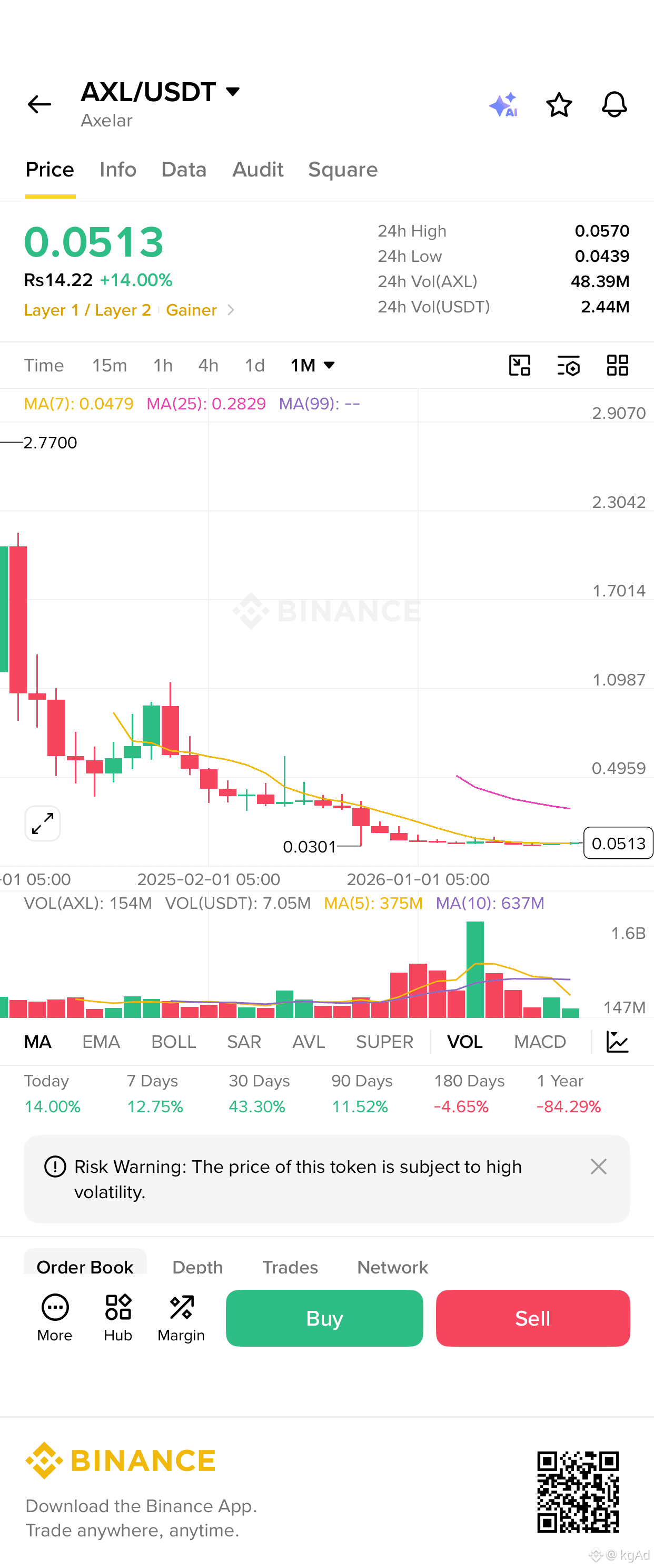
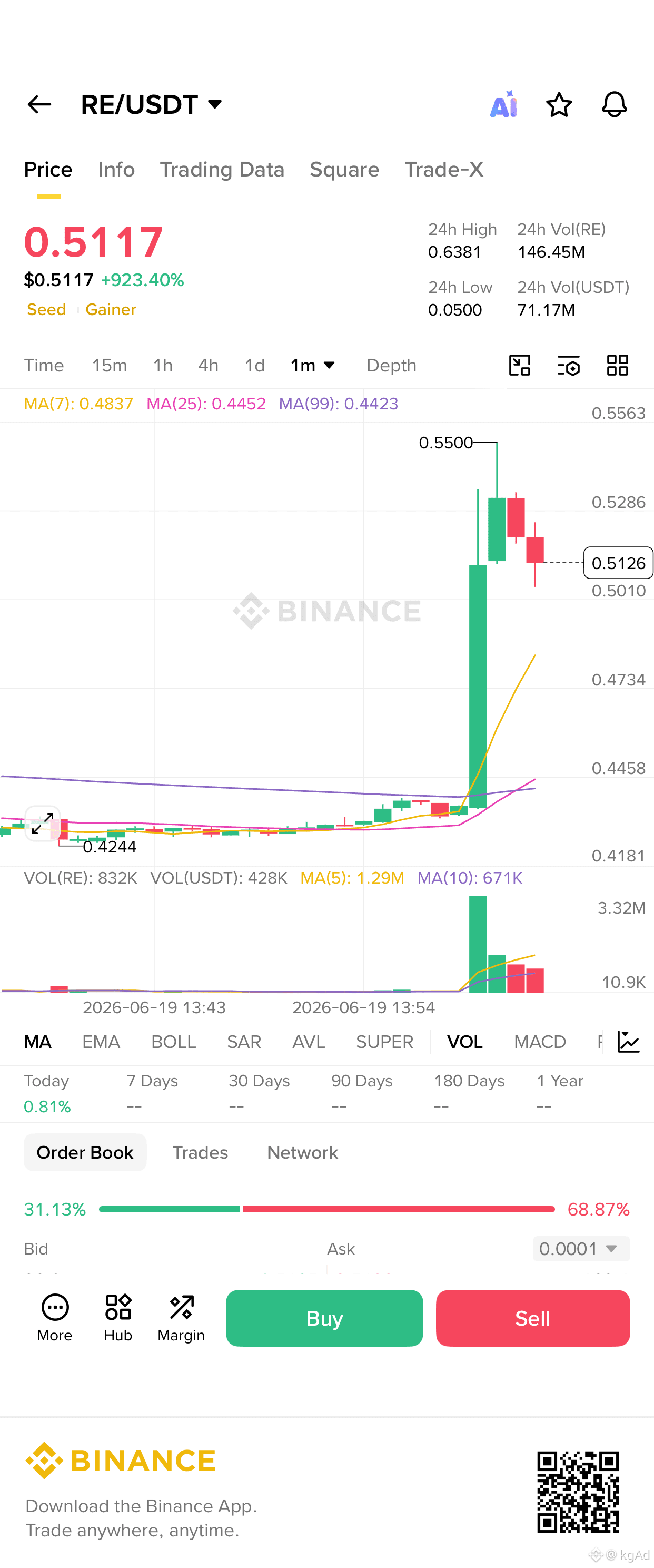
wth is going on💀💀💀#REZ not coming slow
wth is going on💀💀💀#REZ not coming slow
Источник: скриншот пользователя Binance»
1
343
·
--
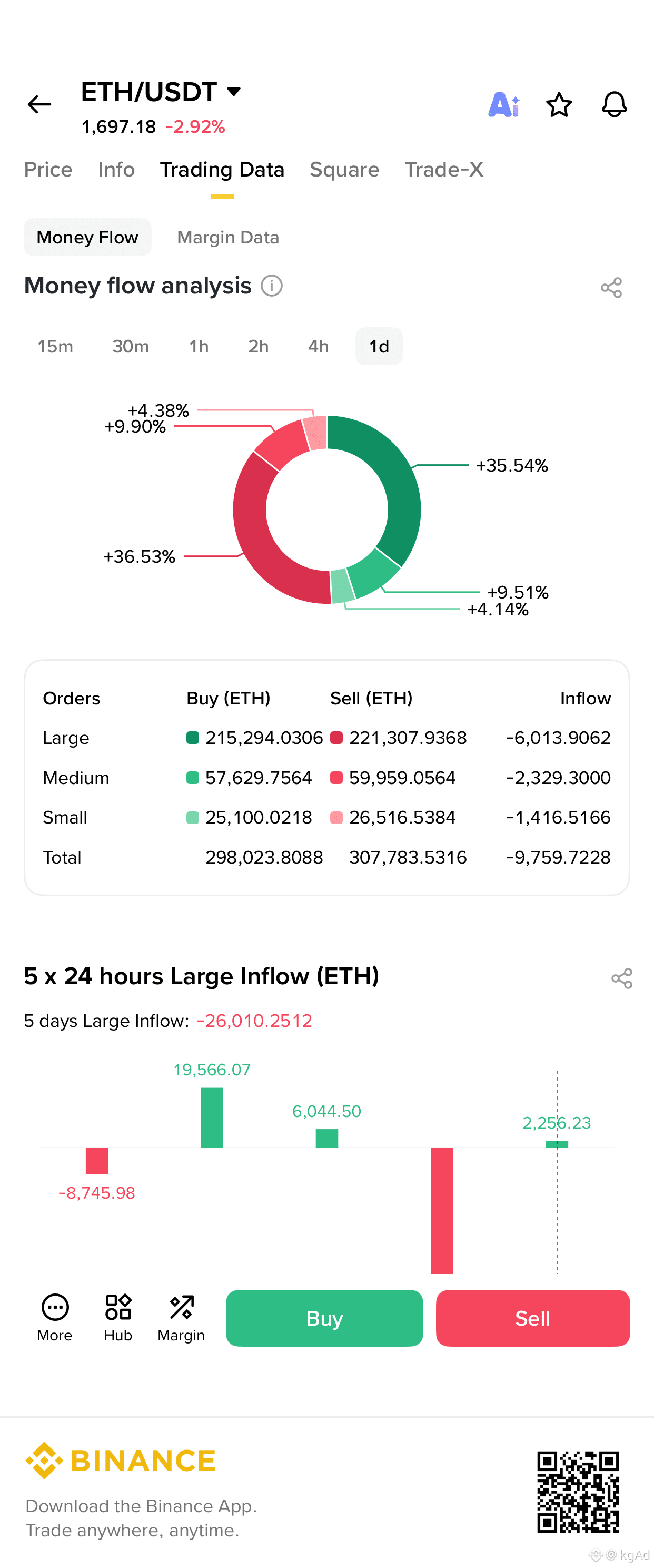
#Ethereum $ETH this is the overall data of the trading volume
1. Overall money flow is negative (Bearish)
* Buy volume: 298,023 ETH
* Sell volume: 307,783 ETH
* Net inflow: -9,759 ETH
➡️ More ETH was sold than bought. This suggests sellers had the upper hand during this period.
⸻
2. Large traders (whales) are selling slightly more
* Large Buy: 215,294 ETH
* Large Sell: 221,308 ETH
* Net: -6,014 ETH
This is important because whales often influence short-term price direction. A negative large-order flow usually favors downside.
⸻
3. Medium and small traders are also net sellers
* Medium: -2,329 ETH
* Small: -1,417 ETH
This means selling pressure isn’t limited to one group—it’s fairly broad.
⸻
4. Price is already down
ETH is shown at:
* $1,697
* -2.92%
Combined with negative money flow, this indicates that sellers are currently in control.
⸻
The interesting part: 5-day large inflow
The chart below shows that:
* Some days had strong buying (+19,566 ETH, +6,044 ETH, +2,256 ETH).
* Other days had even larger selling.
* 5-day total large inflow = -26,010 ETH.
➡️ This means whales have been net sellers over the last 5 days, even though there were occasional buying days.
⸻
My conclusion
Short term (next few hours to 1–2 days)
Probability:
* 📉 Further downside: 60–70%
* 📈 Immediate reversal: 30–40%
The money flow currently favors sellers.
⸻
But don’t trade using money flow alone
This screen doesn’t show:
* Support and resistance levels
* Candlestick patterns
* Trading volume trend
* Open interest
* Funding rate
* RSI or MACD
* Bitcoin’s direction (ETH often follows BTC)
Money flow is just one indicator. Strong buying at a key support level can still reverse the price.
{spot}(ETHUSDT)
#Ethereum $ETH this is the overall data of the trading volume
1. Overall money flow is negative (Bearish)
* Buy volume: 298,023 ETH
* Sell volume: 307,783 ETH
* Net inflow: -9,759 ETH
➡️ More ETH was sold than bought. This suggests sellers had the upper hand during this period.
⸻
2. Large traders (whales) are selling slightly more
* Large Buy: 215,294 ETH
* Large Sell: 221,308 ETH
* Net: -6,014 ETH
This is important because whales often influence short-term price direction. A negative large-order flow usually favors downside.
⸻
3. Medium and small traders are also net sellers
* Medium: -2,329 ETH
* Small: -1,417 ETH
This means selling pressure isn’t limited to one group—it’s fairly broad.
⸻
4. Price is already down
ETH is shown at:
* $1,697
* -2.92%
Combined with negative money flow, this indicates that sellers are currently in control.
⸻
The interesting part: 5-day large inflow
The chart below shows that:
* Some days had strong buying (+19,566 ETH, +6,044 ETH, +2,256 ETH).
* Other days had even larger selling.
* 5-day total large inflow = -26,010 ETH.
➡️ This means whales have been net sellers over the last 5 days, even though there were occasional buying days.
⸻
My conclusion
Short term (next few hours to 1–2 days)
Probability:
* 📉 Further downside: 60–70%
* 📈 Immediate reversal: 30–40%
The money flow currently favors sellers.
⸻
But don’t trade using money flow alone
This screen doesn’t show:
* Support and resistance levels
* Candlestick patterns
* Trading volume trend
* Open interest
* Funding rate
* RSI or MACD
* Bitcoin’s direction (ETH often follows BTC)
Money flow is just one indicator. Strong buying at a key support level can still reverse the price.
1. Overall money flow is negative (Bearish)
* Buy volume: 298,023 ETH
* Sell volume: 307,783 ETH
* Net inflow: -9,759 ETH
➡️ More ETH was sold than bought. This suggests sellers had the upper hand during this period.
⸻
2. Large traders (whales) are selling slightly more
* Large Buy: 215,294 ETH
* Large Sell: 221,308 ETH
* Net: -6,014 ETH
This is important because whales often influence short-term price direction. A negative large-order flow usually favors downside.
⸻
3. Medium and small traders are also net sellers
* Medium: -2,329 ETH
* Small: -1,417 ETH
This means selling pressure isn’t limited to one group—it’s fairly broad.
⸻
4. Price is already down
ETH is shown at:
* $1,697
* -2.92%
Combined with negative money flow, this indicates that sellers are currently in control.
⸻
The interesting part: 5-day large inflow
The chart below shows that:
* Some days had strong buying (+19,566 ETH, +6,044 ETH, +2,256 ETH).
* Other days had even larger selling.
* 5-day total large inflow = -26,010 ETH.
➡️ This means whales have been net sellers over the last 5 days, even though there were occasional buying days.
⸻
My conclusion
Short term (next few hours to 1–2 days)
Probability:
* 📉 Further downside: 60–70%
* 📈 Immediate reversal: 30–40%
The money flow currently favors sellers.
⸻
But don’t trade using money flow alone
This screen doesn’t show:
* Support and resistance levels
* Candlestick patterns
* Trading volume trend
* Open interest
* Funding rate
* RSI or MACD
* Bitcoin’s direction (ETH often follows BTC)
Money flow is just one indicator. Strong buying at a key support level can still reverse the price.
Источник: скриншот пользователя Binance»
1
81
·
--
Рост
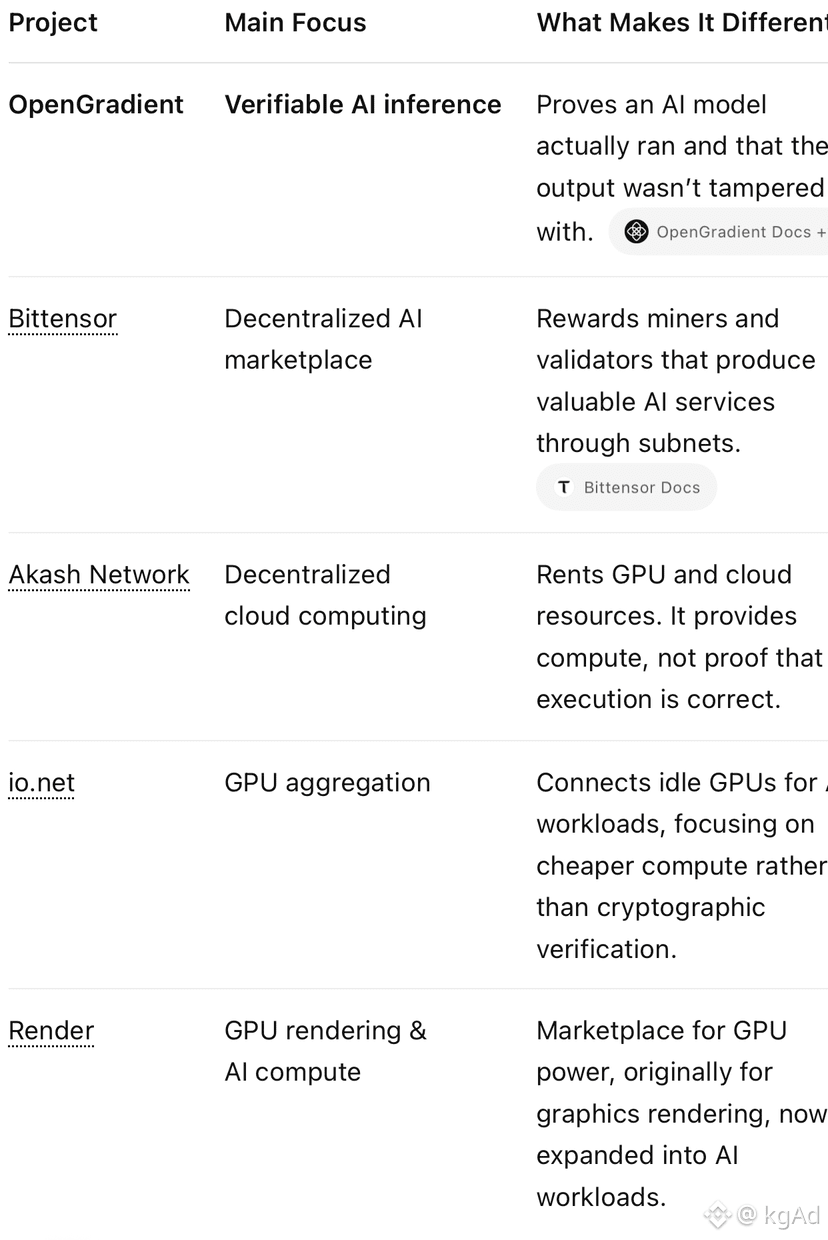
#opg $OPG how its is different from other pr!
OpenGradient focuses on trust, not just compute
Most AI crypto projects answer:
“Where can I find GPUs?”
OpenGradient asks:
“How do I prove this AI response is genuine?”
For example:
* A bank uses AI to approve a loan.
* An AI trading bot executes a trade.
* An AI agent signs a blockchain transaction.
Normally, you must trust the company operating the AI.
OpenGradient aims to let anyone verify:
* which model was used,
* whether it was altered,
* whether the output was changed,
* and whether the computation actually happened.
⸻
2. It separates execution from verification
This is one of its most distinctive architectural ideas.
Traditional blockchains verify every computation themselves, which is too slow for AI.
OpenGradient instead:
* runs AI on specialized GPU nodes,
* returns the result quickly,
* then settles cryptographic proofs on-chain afterward.
This design targets near cloud-like speed while still providing an audit trail.
@OpenGradient
{future}(OPGUSDT)
#opg $OPG how its is different from other pr!
OpenGradient focuses on trust, not just compute
Most AI crypto projects answer:
“Where can I find GPUs?”
OpenGradient asks:
“How do I prove this AI response is genuine?”
For example:
* A bank uses AI to approve a loan.
* An AI trading bot executes a trade.
* An AI agent signs a blockchain transaction.
Normally, you must trust the company operating the AI.
OpenGradient aims to let anyone verify:
* which model was used,
* whether it was altered,
* whether the output was changed,
* and whether the computation actually happened.
⸻
2. It separates execution from verification
This is one of its most distinctive architectural ideas.
Traditional blockchains verify every computation themselves, which is too slow for AI.
OpenGradient instead:
* runs AI on specialized GPU nodes,
* returns the result quickly,
* then settles cryptographic proofs on-chain afterward.
This design targets near cloud-like speed while still providing an audit trail.
@OpenGradient
OpenGradient focuses on trust, not just compute
Most AI crypto projects answer:
“Where can I find GPUs?”
OpenGradient asks:
“How do I prove this AI response is genuine?”
For example:
* A bank uses AI to approve a loan.
* An AI trading bot executes a trade.
* An AI agent signs a blockchain transaction.
Normally, you must trust the company operating the AI.
OpenGradient aims to let anyone verify:
* which model was used,
* whether it was altered,
* whether the output was changed,
* and whether the computation actually happened.
⸻
2. It separates execution from verification
This is one of its most distinctive architectural ideas.
Traditional blockchains verify every computation themselves, which is too slow for AI.
OpenGradient instead:
* runs AI on specialized GPU nodes,
* returns the result quickly,
* then settles cryptographic proofs on-chain afterward.
This design targets near cloud-like speed while still providing an audit trail.
@OpenGradient
179
·
--
#opg $OPG after researching the whole night i found out how #OPG works in simple words the Gradient, the DeFi protocol its goal is to make decentralized trading more efficient by reducing or eliminating the price impact (slippage) that users experience on traditional decentralized exchanges (DEXs).
Here’s how it works in simple terms:
Traditional DeFi (AMM model)
Most DEXs like Uniswap use Automated Market Makers (AMMs).
Example:
* You want to buy 10,000 tokens.
* The purchase comes from a liquidity pool.
* As you buy, the token price increases.
* You pay a worse average price than expected (slippage).
Trader
│
▼
Liquidity Pool (AMM)
│
▼
Price changes during trade
@OpenGradient
#opg $OPG after researching the whole night i found out how #OPG works in simple words the Gradient, the DeFi protocol its goal is to make decentralized trading more efficient by reducing or eliminating the price impact (slippage) that users experience on traditional decentralized exchanges (DEXs).
Here’s how it works in simple terms:
Traditional DeFi (AMM model)
Most DEXs like Uniswap use Automated Market Makers (AMMs).
Example:
* You want to buy 10,000 tokens.
* The purchase comes from a liquidity pool.
* As you buy, the token price increases.
* You pay a worse average price than expected (slippage).
Trader
│
▼
Liquidity Pool (AMM)
│
▼
Price changes during trade
@OpenGradient
Here’s how it works in simple terms:
Traditional DeFi (AMM model)
Most DEXs like Uniswap use Automated Market Makers (AMMs).
Example:
* You want to buy 10,000 tokens.
* The purchase comes from a liquidity pool.
* As you buy, the token price increases.
* You pay a worse average price than expected (slippage).
Trader
│
▼
Liquidity Pool (AMM)
│
▼
Price changes during trade
@OpenGradient
76
·
--
#bedrock $BR What could help BR grow?
✅ If Bitcoin DeFi (BTCFi) becomes a major trend.
✅ If Bedrock becomes one of the dominant yield protocols for BTC.
✅ Strong TVL growth and real protocol revenue.
✅ Listings on major exchanges and sustained user adoption.
✅ Continued innovation (such as the Bedrock 2.0 vision).
What could prevent it?
* Very strong competition from established DeFi projects.
* Token unlocks increasing circulating supply.
* Regulatory risks for DeFi.
* BTCFi itself may not grow as expected.
* Market cycles can dramatically reduce valuations.
My estimate
* Top 100: Reasonably achievable if the project executes well.
* Top 50: Difficult but possible in a strong bull market.
* Top 10: Possible in theory, but I would consider it low probability (perhaps well under 5%) because it would require extraordinary adoption and execution.
@Bedrock
{alpha}(560xff7d6a96ae471bbcd7713af9cb1feeb16cf56b41)
#bedrock $BR What could help BR grow?
✅ If Bitcoin DeFi (BTCFi) becomes a major trend.
✅ If Bedrock becomes one of the dominant yield protocols for BTC.
✅ Strong TVL growth and real protocol revenue.
✅ Listings on major exchanges and sustained user adoption.
✅ Continued innovation (such as the Bedrock 2.0 vision).
What could prevent it?
* Very strong competition from established DeFi projects.
* Token unlocks increasing circulating supply.
* Regulatory risks for DeFi.
* BTCFi itself may not grow as expected.
* Market cycles can dramatically reduce valuations.
My estimate
* Top 100: Reasonably achievable if the project executes well.
* Top 50: Difficult but possible in a strong bull market.
* Top 10: Possible in theory, but I would consider it low probability (perhaps well under 5%) because it would require extraordinary adoption and execution.
@Bedrock
✅ If Bitcoin DeFi (BTCFi) becomes a major trend.
✅ If Bedrock becomes one of the dominant yield protocols for BTC.
✅ Strong TVL growth and real protocol revenue.
✅ Listings on major exchanges and sustained user adoption.
✅ Continued innovation (such as the Bedrock 2.0 vision).
What could prevent it?
* Very strong competition from established DeFi projects.
* Token unlocks increasing circulating supply.
* Regulatory risks for DeFi.
* BTCFi itself may not grow as expected.
* Market cycles can dramatically reduce valuations.
My estimate
* Top 100: Reasonably achievable if the project executes well.
* Top 50: Difficult but possible in a strong bull market.
* Top 10: Possible in theory, but I would consider it low probability (perhaps well under 5%) because it would require extraordinary adoption and execution.
@Bedrock
69
·
--
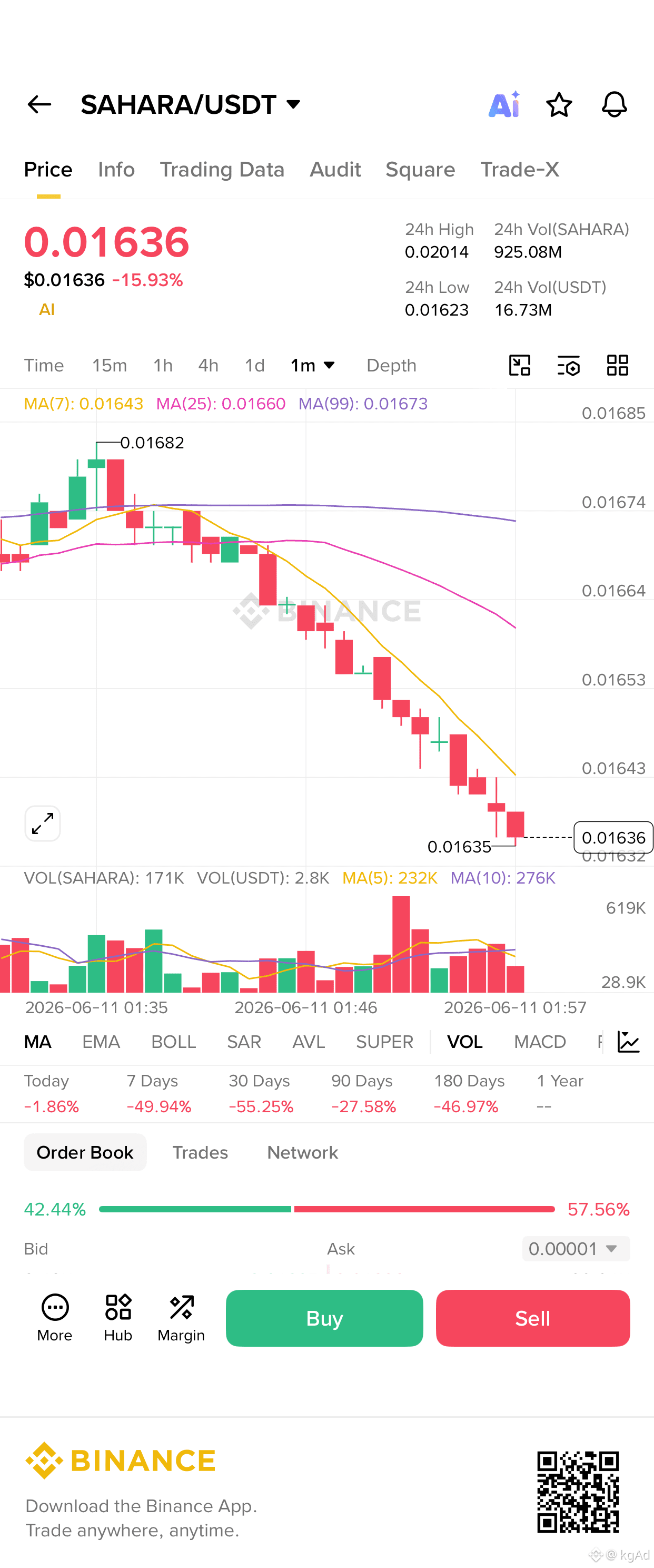
$SAHARA will gonna cover its position soon just set back hold tight and have paitence
{spot}(SAHARAUSDT)
$SAHARA will gonna cover its position soon just set back hold tight and have paitence
Источник: скриншот пользователя Binance»
1
206
·
--
#bedrock $BR after studying i realized unique selling point of BR is not that it’s another payment coin. Its value comes from being the governance and incentive token behind a Bitcoin-focused liquid restaking ecosystem, allowing users to earn yield on assets like BTC while keeping them usable in DeFi.
If you’re considering investing in BR, I can also explain:
*  its tokenomics,
*  potential risks,
* competitors such as EigenLayer, Pendle, and Ether.fi,
* and  whether BR’s valuation looks reasonable compared to similar projects.
@Bedrock
{alpha}(560xff7d6a96ae471bbcd7713af9cb1feeb16cf56b41)
#bedrock $BR after studying i realized unique selling point of BR is not that it’s another payment coin. Its value comes from being the governance and incentive token behind a Bitcoin-focused liquid restaking ecosystem, allowing users to earn yield on assets like BTC while keeping them usable in DeFi.
If you’re considering investing in BR, I can also explain:
*  its tokenomics,
*  potential risks,
* competitors such as EigenLayer, Pendle, and Ether.fi,
* and  whether BR’s valuation looks reasonable compared to similar projects.
@Bedrock
If you’re considering investing in BR, I can also explain:
*  its tokenomics,
*  potential risks,
* competitors such as EigenLayer, Pendle, and Ether.fi,
* and  whether BR’s valuation looks reasonable compared to similar projects.
@Bedrock
1
2
128
·
--
Рост
#bedrock $BR Bedrock (BR) is a DeFi platform that lets users earn rewards on assets like Bitcoin and Ethereum without locking them away completely. When you stake your crypto through Bedrock, you receive liquid tokens that can still be used across other DeFi applications while your original assets continue generating rewards. The BR token is used for governance, allowing holders to vote on platform decisions and help shape the future of the ecosystem.
@Bedrock
{alpha}(560xff7d6a96ae471bbcd7713af9cb1feeb16cf56b41)
#bedrock $BR Bedrock (BR) is a DeFi platform that lets users earn rewards on assets like Bitcoin and Ethereum without locking them away completely. When you stake your crypto through Bedrock, you receive liquid tokens that can still be used across other DeFi applications while your original assets continue generating rewards. The BR token is used for governance, allowing holders to vote on platform decisions and help shape the future of the ecosystem.
@Bedrock
@Bedrock
1
74
Войдите, чтобы посмотреть больше материала
Присоединяйтесь к пользователям криптовалют по всему миру на Binance Square
⚡️ Получайте новейшую и полезную информацию о криптоактивах.
💬 Нам доверяет крупнейшая в мире криптобиржа.
👍 Получите достоверные аналитические данные от верифицированных создателей контента.
Эл. почта/номер телефона
В тренде
FedRateWatch
Просмотров: 1.5M
6,708 обсуждают
Share & Win Traffic Reward in our Trending Hashtag Campaign
✨Topic: FOMC September, What's The Fed's Next Move?
👉How to Join:
Publish a short post or article with hashtag #FedRateWatch
Create content based on the below angles:
- August core CPI rose 0.3% month-over-month, and the odds of a 25bp hike this week are now close to 90%. Do you anticipate a rate hike this week? Is it a one-off, or the start of a longer hiking cycle?
- If the hike lands, how does it play out for BTC, tech stocks, and gold? Bullish or bearish?
- How are you planning to trade next? Share your BTC, stocks or gold trade/holdings with our trade sharing widget.
⏰Campaign Period:
- 2026-09-15 11:00 - 2026-09-17 3:00 UTC
🎁Reward:
- Qualified posts that comply with the above guidelines and contain more than 100 words will be reviewed and may receive a random traffic boost of 500 to 3,000 views. You will receive a notification from your feed secretary if your post is selected.
- Get a chance to have your article featured on Binance Square Official
Need ideas for your post? Visit the topic page #FedRateWatch or the Square Guide on How to Post for Better Reach.
Binance Square Official
·Лайков: 647
·Просмотров: 1.7M
ZcashRises6%
Просмотров: 50,767
643 обсуждают
XRPSinks10%
Просмотров: 34,125
421 обсуждают