
ALTAR07
236195755 ıd
Открытая сделка
Трейдер с частыми сделками
5.2 г
7.7K+ подписок(и/а)
665 подписчиков(а)
141 понравилось
Посты
Портфель
Все
Цитирования


0x小师妹
·
--
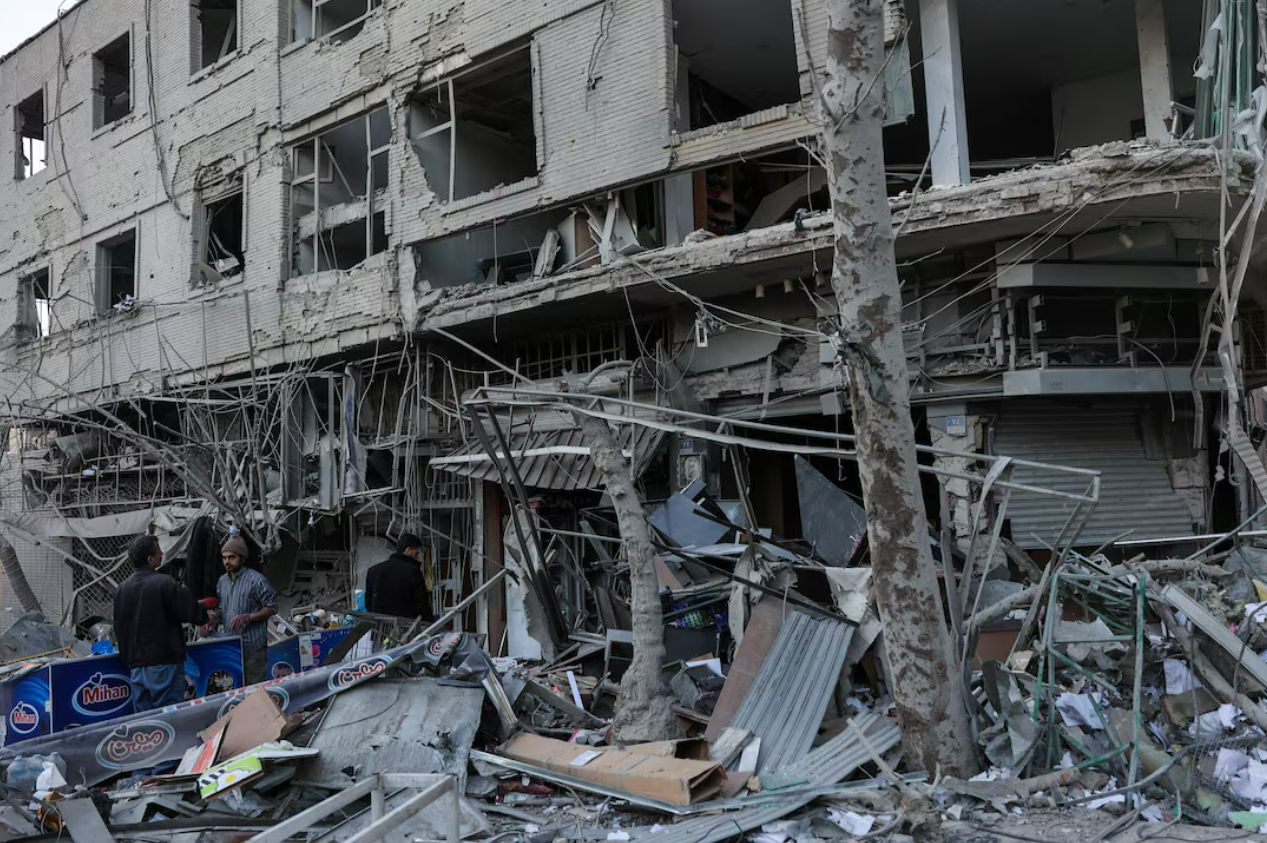
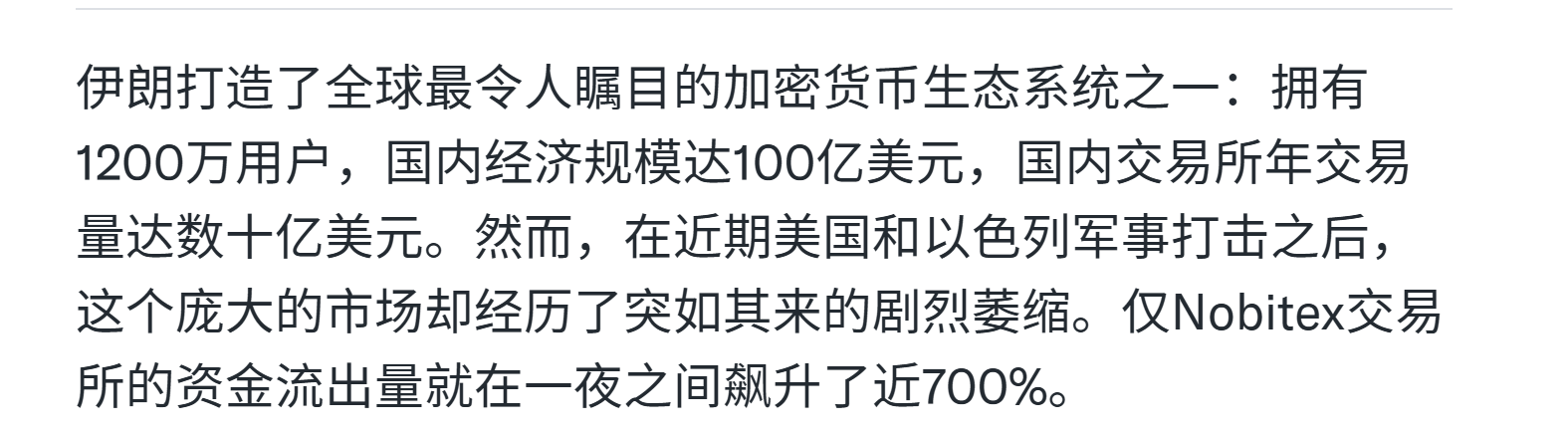
3月3号,由于伊朗领袖被清除一事,导致地缘政治危机爆发,伊朗最大的加密交易所由于大额资金恐慌流出、以及大面积断网导致瘫痪了。
用户在恐慌中提现,资金在逃离,整个国家的加密经济被一个平台搞崩了。
这类事件也在全球的机器人产业重演:全球的机器人被四家大企业垄断,每个企业都有自己的闭源系统,用户无法逃离,一旦系统故障,依赖它的所有机器人都会瘫痪、工厂停工、供应链断裂。
@Fabric Foundation 想彻底改变这个局面:他们在建一个去中心化的开放网络,每个机器人都拥有独立的区块链身份,这个身份不被任何企业控制,机器人的工作和收益直接记录在链上、没有人能冻结,没有人能没收。
在这个网络里,机器人工作完成后,费用自动进入它的账户。以$ROBO 代币形式结算。没有中间商、没有延迟,机器人可以立刻用这些代币购买能力升级、可以参与治理投票、可以自由选择下一个工作,不被任何单一公司束缚。
如果某个地区出现危机,机器人可以切换到其他地区继续工作。不会因为单一系统瘫痪而停止。整个产业获得了真正的韧性。
从伊朗的例子看,中心化系统在危机中最先崩溃。而去中心化的网络可以继续运作。这不是虚拟的。这是真实的保护。
Fabric在做的就是为机器人经济建立一个真正安全、真正开放、真正属于所有参与者的基础设施。在全球局势不稳定的时代,这变得越来越必要。
#ROBO
Цитируемый контент удален

子龍ZILONG
·
--
遇见一姐,“赞”无不胜。
感谢点赞、转发和评论。
关注“雲舰”,回答问题领红包🧧🧧🧧
#一姐老乡#WEB3资深玩家#黑马社群联合 创始人
感谢点赞、转发和评论。
关注“雲舰”,回答问题领红包🧧🧧🧧
#一姐老乡#WEB3资深玩家#黑马社群联合 创始人


十一 Eleven
·
--
策马奔腾: 闹元宵,庆团圆!
愿您2026年的收益如骏马奔腾,拉盘速度快过闪电,不仅跑赢大盘,更要跑赢时间🤩🤩🤩
愿您2026年的收益如骏马奔腾,拉盘速度快过闪电,不仅跑赢大盘,更要跑赢时间🤩🤩🤩



OLIVER_BNB
·
--
Congratulations 🎉🎉
Follow
Like
Repost
Follow
Like
Repost
Цитируемый контент удален

听澜321
·
--
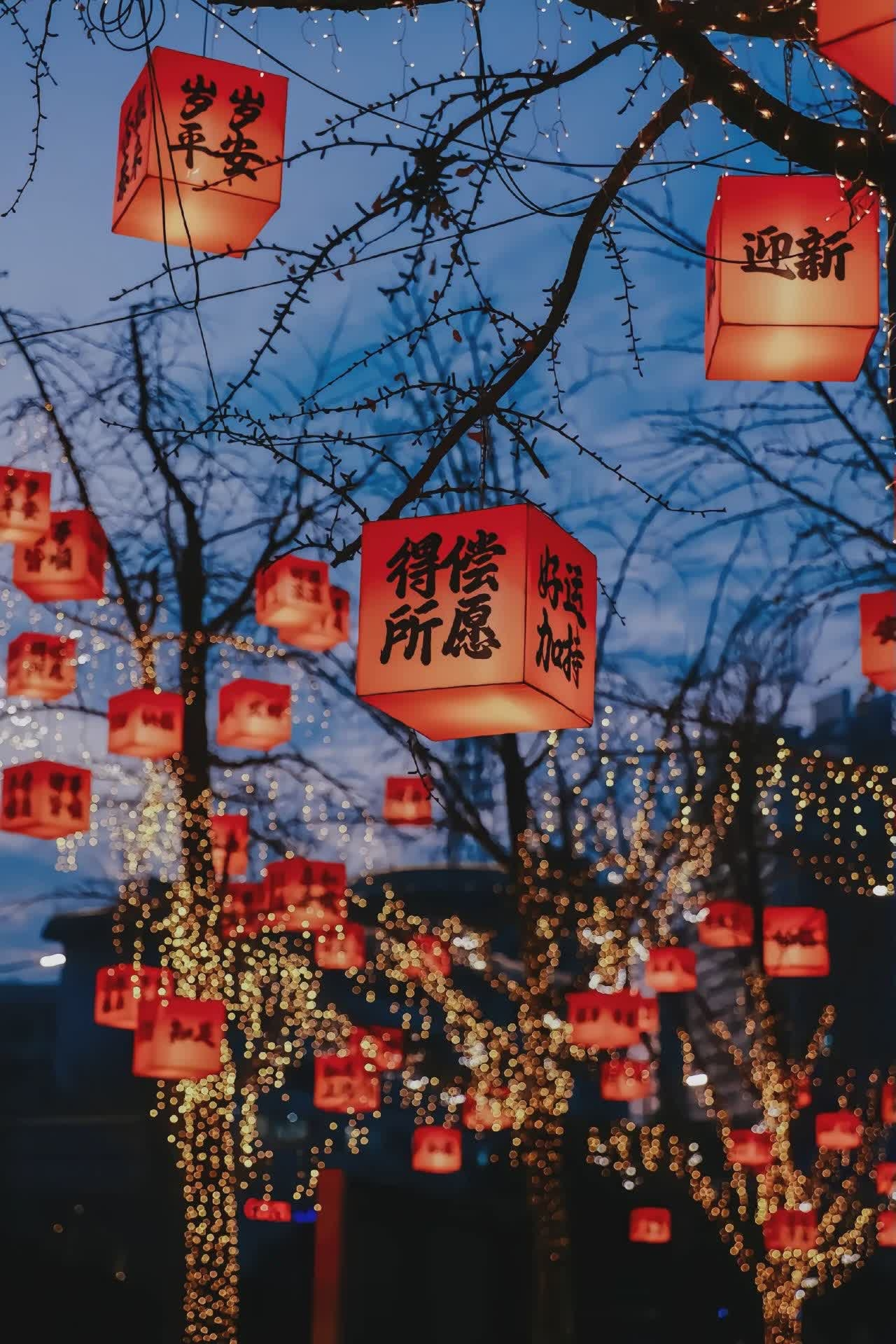
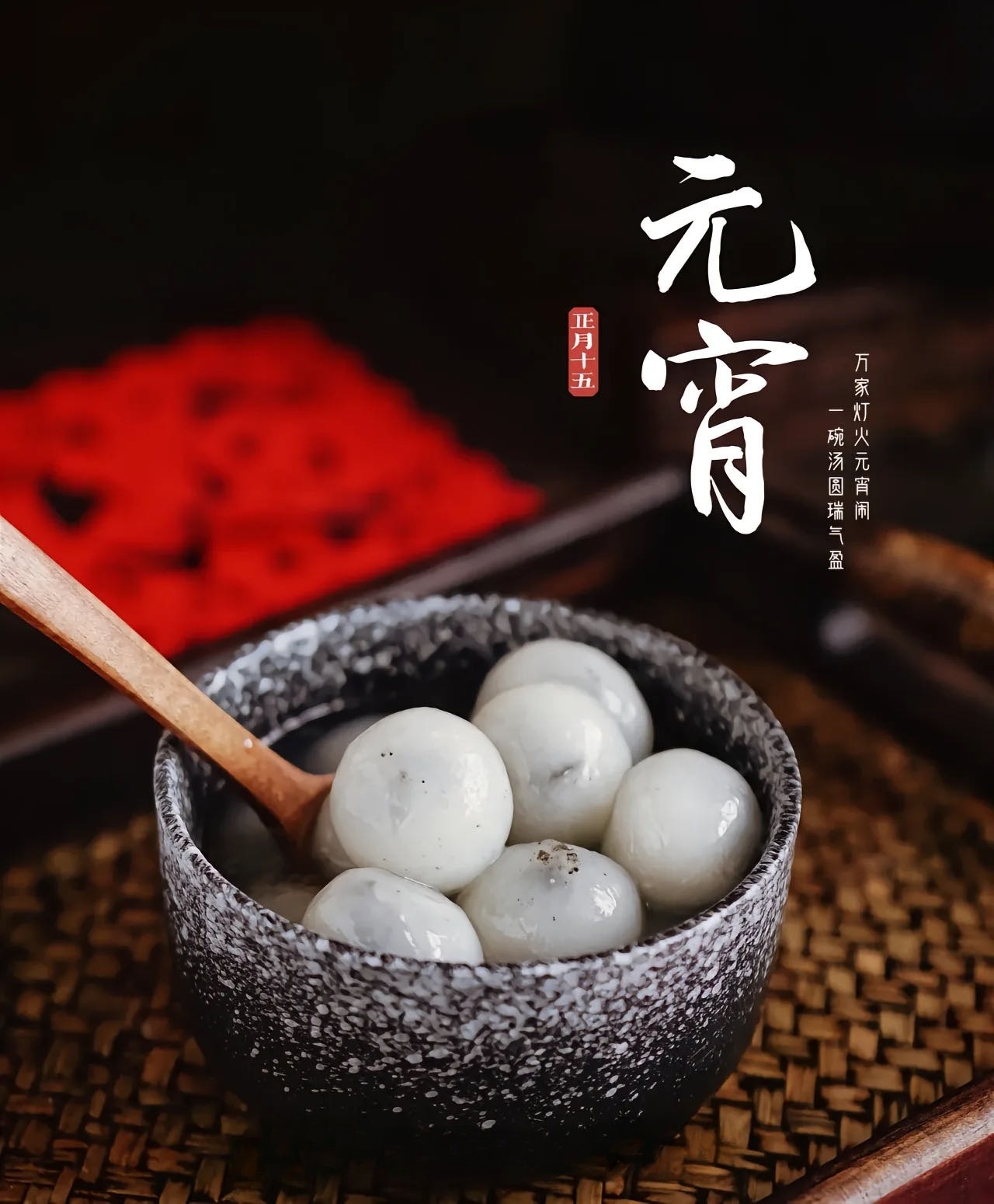
#元宵 #币安广场元宵节
今夜不谈牛熊,只敬团圆。
就像区块链的每一个区块,都需要时间的验证才能铸成永恒!
这碗汤圆的甜,也历经了水磨的耐心。
我们在链上等待一个又一个确认,就像在人间等待一次又一次的相聚。
灯火阑珊处,有人看灯,有人看你;
K线起伏间,有人恐慌,有人听澜。
丙午上元
愿你我在不确定性的浪潮里,握得住确定的价值,守得住内心的清辉。
无论行情如何更迭,愿生活永远如这轮满月,温热、圆满、且不可篡改。
#区块链
今夜不谈牛熊,只敬团圆。
就像区块链的每一个区块,都需要时间的验证才能铸成永恒!
这碗汤圆的甜,也历经了水磨的耐心。
我们在链上等待一个又一个确认,就像在人间等待一次又一次的相聚。
灯火阑珊处,有人看灯,有人看你;
K线起伏间,有人恐慌,有人听澜。
丙午上元
愿你我在不确定性的浪潮里,握得住确定的价值,守得住内心的清辉。
无论行情如何更迭,愿生活永远如这轮满月,温热、圆满、且不可篡改。
#区块链

Цитируемый контент удален

AM-Capital
·
--
🎁🎁🎁🎁 Red Packet Giveaway!🎁🎁🎁🎁
Free crypto inside — claim it fast!
👉 Send red packet via Binance and share the link🎁🎁🎁🎁
⚡ First come, first served
🚀 Enjoy & good luck!🎁🎁🎁🎁
Free crypto inside — claim it fast!
👉 Send red packet via Binance and share the link🎁🎁🎁🎁
⚡ First come, first served
🚀 Enjoy & good luck!🎁🎁🎁🎁


Kai _Darko
·
--
Mira Network: The Quiet System Teaching Artificial Intelligence How to Be Trusted
@Mira - Trust Layer of AI The first time I spent time understanding Mira Network, it didn’t present itself as something trying to redefine artificial intelligence. It felt quieter than that. Almost like it was responding to a discomfort that many people had already noticed but rarely articulated clearly. For years, artificial intelligence had been moving forward with impressive speed, generating text, decisions, and insights that often felt indistinguishable from human reasoning. But underneath that surface was a persistent uncertainty. Not loud enough to stop adoption, but never fully disappearing either. Mira Network seemed to emerge from within that uncertainty rather than outside it, as if it was less interested in creating intelligence and more interested in creating confidence around it.
Artificial intelligence today operates in a strange space between trust and doubt. People rely on it daily, often without realizing it. It answers questions, summarizes information, and increasingly participates in decisions that carry real consequences. But the more it becomes embedded into routine processes, the more its imperfections begin to matter. Errors are not always obvious. Sometimes they appear subtle, wrapped in language that feels convincing. Other times, the system fills gaps with assumptions, not out of intention but because of how it was designed to function. This doesn’t mean artificial intelligence is broken. It simply means it was never built with verification as its core foundation. It was built to generate, not to prove.
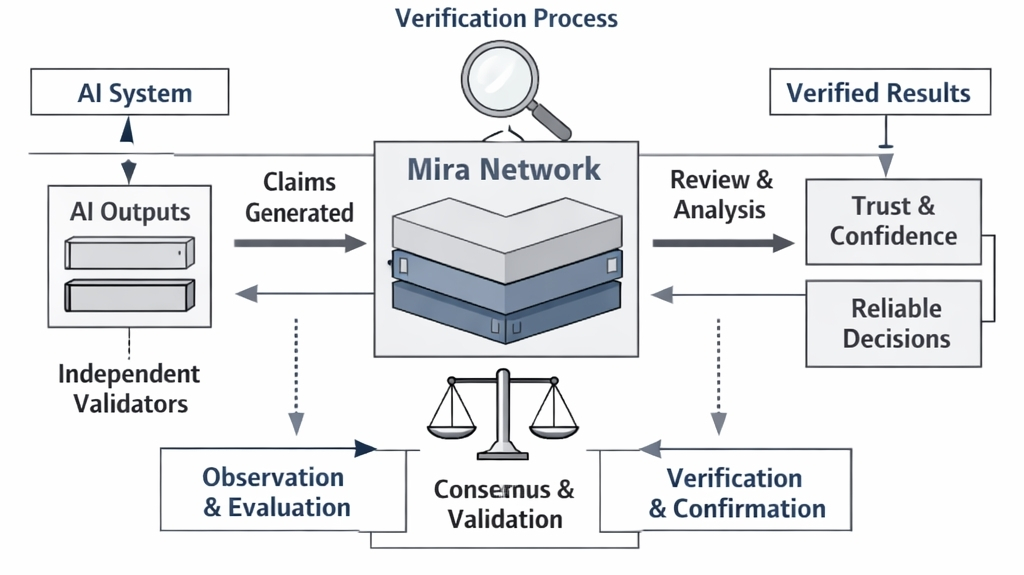
This is where Mira Network begins to feel relevant. Not because it claims to fix artificial intelligence itself, but because it focuses on something more structural. Instead of treating AI outputs as inherently reliable or unreliable, it treats them as claims that need confirmation. This small shift in perspective changes the role of artificial intelligence from being a final authority to being an initial contributor. It acknowledges that intelligence alone is not enough. What matters is whether that intelligence can be observed, challenged, and confirmed independently.
What stands out is that Mira does not try to force certainty where uncertainty naturally exists. Instead, it distributes the responsibility of validation across multiple independent participants. This introduces friction, but it is a deliberate friction. In most modern systems, speed is prioritized above everything else. Immediate answers are valued more than verified ones. Mira appears comfortable accepting slower resolution in exchange for stronger confidence. This choice reflects a different set of priorities. It suggests that reliability, even if it arrives slightly later, may be more valuable in environments where consequences are real.
This approach also reveals an understanding of human behavior around trust. People rarely trust something simply because it claims accuracy. Trust tends to emerge when verification is possible without needing permission. When outcomes can be checked, questioned, and confirmed independently, confidence grows naturally. Mira does not rely on central authorities to declare truth. Instead, it creates conditions where agreement forms organically through observation and participation. This removes the need for a single entity to be believed unconditionally, which has historically been a fragile foundation.
There is also an interesting restraint in how Mira positions itself within the broader technological environment. It does not attempt to compete directly with artificial intelligence models themselves. It does not try to become another source of intelligence. Instead, it exists alongside them, observing and validating their outputs. This decision avoids a common trap where projects attempt to do everything at once. Mira seems comfortable occupying a narrower role, even if that role is less visible. There is a certain discipline in choosing to support rather than replace.
At the same time, this restraint introduces its own set of questions. Systems that focus on verification often depend on participation. Their strength grows with activity, but their early stages can feel incomplete. Without sufficient engagement, verification can remain limited in scope. This creates a gradual growth curve rather than an explosive one. Mira does not appear designed for rapid expansion driven by attention alone. Its progress is likely to be quieter, tied to environments where verification becomes necessary rather than fashionable.
Another subtle aspect is the psychological shift it encourages. For years, users have been conditioned to accept AI responses as finished products. Mira introduces the idea that outputs can remain open to confirmation. This transforms AI from a source of answers into part of a larger process. It reframes intelligence as something provisional rather than absolute. This may seem like a small conceptual change, but over time it can reshape how systems are trusted. Instead of asking whether artificial intelligence is correct, the focus moves toward whether its conclusions can be independently supported.
It also raises deeper questions about how technological systems evolve. Historically, many technologies moved through phases where functionality arrived first, and reliability followed later. Early versions prioritized capability. Only after adoption grew did verification mechanisms emerge to stabilize trust. Mira feels like part of that second phase. Not an invention of intelligence itself, but an adaptation to its consequences. It reflects a recognition that generation alone is not sufficient. Validation becomes necessary once systems begin to influence decisions beyond experimentation.
What makes Mira feel particularly grounded is that it does not assume immediate transformation. It does not rely on dramatic shifts in behavior. Instead, it aligns itself with gradual changes that are already underway. As artificial intelligence becomes more integrated into structured environments, the need for verification becomes less theoretical and more practical. This creates a natural space for systems that can quietly observe and confirm without interrupting existing workflows.
There is also an honesty in acknowledging that verification itself cannot eliminate uncertainty entirely. It can reduce risk, but it cannot create absolute certainty. Mira does not appear to promise perfection. Instead, it creates layers of confirmation that make outcomes more dependable than they would be otherwise. This reflects a realistic understanding of technological limits. Systems do not become trustworthy because they are flawless. They become trustworthy because their weaknesses are visible and manageable.
From a distance, Mira Network does not feel like a reaction driven by excitement. It feels more like a correction shaped by experience. After multiple cycles of rapid innovation, the conversation begins to shift. The focus moves away from what technology can produce toward how its outputs can be trusted. This is a quieter phase of evolution, less visible but equally important. Mira seems to exist within that phase, not trying to accelerate it, but simply aligning with its direction.
Whether it becomes widely adopted or remains specialized is difficult to know. Systems built around verification often grow alongside the environments that require them. Their relevance emerges through necessity rather than anticipation. Mira does not appear dependent on attention. It appears dependent on relevance. And relevance, unlike attention, tends to accumulate slowly.
In the end, Mira Network leaves the impression of something patient. Not passive, but deliberate. It does not try to outrun artificial intelligence or compete with it. It stands slightly behind, observing, confirming, and reinforcing. It accepts that intelligence alone is not the final destination. What matters more is whether intelligence can be trusted without hesitation. Mira does not claim to answer that question completely. It simply moves closer to a place where the answer becomes easier to believe.
@Mira - Trust Layer of AI #Mira $MIRA

visam 征战
·
--
突发新闻:
🇺🇸参议院民主党人将于美国东部时间下午 2:30 开会讨论加密货币市场结构法案,白宫稳定币最后期限为 3 月 1 日。
我们需要这项法案尽快通过。#加密市场反弹 $ETH
🇺🇸参议院民主党人将于美国东部时间下午 2:30 开会讨论加密货币市场结构法案,白宫稳定币最后期限为 3 月 1 日。
我们需要这项法案尽快通过。#加密市场反弹 $ETH



Blue_Shadow9
·
--
Understanding Fogo: Why Predictability Matters More Than Speed in Modern Blockchains
When I first heard someone describe Fogo as “a high-performance Layer-1 that uses the Solana Virtual Machine,” I nodded like I understood it. But honestly, I didn’t — not in the way that matters. Technical definitions are easy to repeat. What’s harder is understanding how something behaves when real people rely on it, when money is moving, when timing matters, and when things inevitably go wrong.
So I started thinking about Fogo the way I think about any system I might depend on daily. Not as a piece of crypto infrastructure, but as something closer to transportation or utilities. If I’m going to build on top of it — or trust it — I care less about how fast it can theoretically go and more about whether it behaves the same way every time I use it.
That perspective made the choice to use the Solana Virtual Machine (SVM) click for me. People usually talk about the SVM in terms of speed, but what stood out to me was its structure. It’s designed around the idea that many things can happen at once, as long as they’re not fighting over the same resources. In normal life, that’s obvious. Multiple people can cook in a kitchen if they’re using different counters and tools. Problems only start when everyone needs the same stove burner at the same time.
The SVM forces transactions to say upfront what they’re going to touch — which accounts, which pieces of state. At first, that sounds restrictive. Why should developers have to plan that far ahead? But the more I thought about it, the more it reminded me of booking seats on a train instead of letting everyone rush the doors when it arrives. Planning adds a step, but it prevents chaos later.
And chaos is really the enemy here — not slowness.
One thing I’ve learned watching people use blockchains is that unpredictability hurts more than delay. If something is always slow, you can plan around it. If something is sometimes fast and sometimes slow, you can’t. That uncertainty spreads everywhere. Developers add retries. Businesses add buffers. Users lose confidence. Suddenly the system isn’t just inefficient — it’s stressful.
What Fogo seems to be trying to do is shrink that uncertainty window. Parallel execution helps with throughput, yes, but it also helps with consistency because unrelated transactions don’t block each other. Localized fee pressure means activity in one area doesn’t randomly make everything else expensive. Predictable timing reduces the mental gap between “I sent this” and “it’s done.”
I like to compare it to traffic in a city. A city with terrible infrastructure might still have highways where cars can go very fast — at 2 a.m. But during the day, congestion is unpredictable. A well-designed city might have lower top speeds but more consistent travel times because flows are separated and bottlenecks are managed. Most people prefer the second city. Reliability beats occasional bursts of speed.
This matters a lot more than people think when you look at real workflows. Imagine running a trading system that reacts to market conditions in milliseconds. If network behavior changes unpredictably, your strategy breaks — not because it’s wrong, but because the environment shifted underneath it. Or imagine a game where player actions settle on-chain. If updates arrive inconsistently, players feel lag even if the network is technically fast. Or a payments system where merchants release goods based on confirmation timing. Consistency directly affects trust.
The human side of this is important. Developers aren’t just writing code; they’re managing anxiety about failure. Every unknown in the infrastructure becomes another defensive layer in the application. If the underlying system behaves predictably, that mental burden drops. You spend less time worrying about edge cases and more time building features.
Of course, none of this comes without trade-offs. Systems that aim for high performance and determinism often require stronger assumptions — better hardware, more disciplined programming models, clearer resource management. It’s similar to flying commercially versus driving yourself. Aviation is incredibly reliable, but only because it operates within strict constraints and procedures. Freedom decreases; safety increases.
Another piece that feels human to me is failure transparency. When transactions fail in unpredictable ways, users feel helpless. They don’t know whether to retry, wait, or give up. A more deterministic system makes outcomes easier to simulate beforehand, which reduces that helplessness. It’s the difference between submitting paperwork online and getting immediate validation versus mailing forms and hoping they’re correct.
The more I thought about Fogo, the more I realized the interesting question isn’t whether it’s faster than something else. The interesting question is whether it reduces friction in the day-to-day experience of using decentralized systems. Does it make outcomes easier to anticipate? Does it let people trust timing? Does it remove small frustrations that compound into bigger barriers?
Because when infrastructure becomes reliable enough, people stop noticing it. We don’t think about water systems when we turn on a tap. We don’t think about routing protocols when we send a message. The technology fades into the background, and what remains is the experience.
I find myself wondering whether that’s the real direction systems like this are moving toward — not dramatic breakthroughs, but gradual reductions in uncertainty until the technology feels boring in the best possible way. And if that happens, the bigger question might not be how fast these networks are, but what people will finally feel comfortable building once they trust them to behave the same way tomorrow as they did today.
$FOGO @Fogo Official
#fogo

connie三姐汇汇
·
--
今天是正月初十,年味未散,春光渐浓,正是蓄力启程、拾福纳祥的好时候。
不必急着追求十全十美,先把心态调至从容安稳。新的一年,愿我们带着温柔与坚定出发:把焦虑化作行动,把犹豫变成勇气,把琐碎过成诗意。认真对待每一件小事,用心珍惜每一份遇见,不辜负时光,不辜负自己。
生活最好的状态,是眼里有光,心中有爱,脚下有路。愿你在这个春天,石来运转,事事顺意,工作得心应手,生活温暖顺心,所有努力皆有回响,所有期待终将绽放。
保持热爱,奔赴山海;心有暖阳,一路生花。初十安康,日日皆安,事事皆甜。$BNB
不必急着追求十全十美,先把心态调至从容安稳。新的一年,愿我们带着温柔与坚定出发:把焦虑化作行动,把犹豫变成勇气,把琐碎过成诗意。认真对待每一件小事,用心珍惜每一份遇见,不辜负时光,不辜负自己。
生活最好的状态,是眼里有光,心中有爱,脚下有路。愿你在这个春天,石来运转,事事顺意,工作得心应手,生活温暖顺心,所有努力皆有回响,所有期待终将绽放。
保持热爱,奔赴山海;心有暖阳,一路生花。初十安康,日日皆安,事事皆甜。$BNB
Цитируемый контент удален
Войдите, чтобы посмотреть больше материала