
chingcbn
20 Публикации
chingcbn
Отправить жалобу
Заблокировать пользователя
0 подписок(и/а)
1 подписчиков(а)
2 понравилось
Посты
·
--
🔥 Bangkok Web3 fam, it’s time to meet up again!
TRON Global Friends Thailand is back for Meetup #5, and this time we’re bringing you a fun Laser Tag Night! 🎯💚
Get ready to team up, play Laser Tag, meet fellow KOLs, connect with the Web3 community, and enjoy some great conversations together. ✨
📅 Friday, November 27, 2026
⏰ From 7:00 PM onwards
📍 Bangkok, Thailand
Open to TRON Global Friends members, Web3 KOLs, and invited guests.
📌 Limited seats available!
Register now 👇
https://luma.com/qatbf30o
See you there! 🐱🚀
@justinsuntron @trondao @TronDao_THA #TRONGlobalFriends #TGF

2
1
275
·
--
TRON processed $2.21 trillion in stablecoin settlement in Q3, up 5.1% from the previous quarter. Cumulative transaction volume on the network also passed $30 trillion. 👀
The figure offers a view of stablecoins as a way to move value across a network, beyond simply measuring how much token supply is held there. Nansen’s report also recorded an average of about 11.7 million successful transactions per day during the quarter.
Q3 brought institutional developments too, including the launch of the Canary Staked TRX ETF in the U.S. and Anchorage Digital’s addition of TRX staking and TRC-20 asset custody.
High settlement volume alone doesn’t tell us exactly who is transacting or what every transfer represents, but it’s one useful measure of the network’s role in stablecoin activity. 🐱❤️
#TRONGlobalFriends #TGF
@trondao @TronDao_THA @justinsuntron
171
·
--
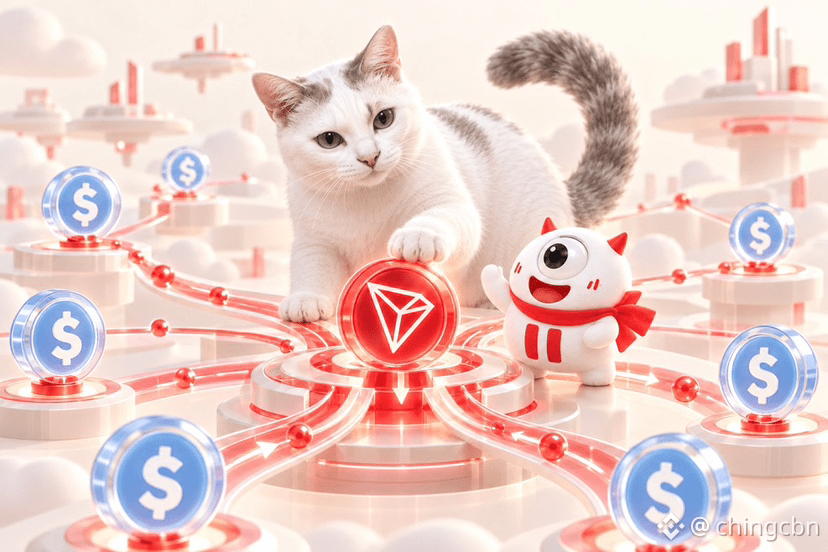
A notable figure from CoinDesk Research’s Q3 2026 report 👀
TRON accounted for about 73% of stablecoin transfer volume in the dataset covered by the report, while Ethereum represented roughly 15%.
One distinction matters here: the 73% figure refers to transfer volume, not the total value of stablecoins held on the network. Those metrics answer different questions.
For context, the same report put TRON’s USDT market cap at about $92.7 billion, or roughly 30.2% of the USDT market at quarter-end. That is a different measure from its 73% share of transfer volume.
To understand network activity more fully, it helps to look at transfer volume, stablecoin value on the network, and user activity together.
#TRONGlobalFriends #TGF
@trondao @TronDao_THA @justinsuntron
93
·
--
Love creating Web3 content? Come join us! 👀❤️
TRON Global Friends Thailand Season 16 is open for applications. 🇹🇭 If you follow TRON or have ideas you’d like to share in your own style, come be part of it!
💰 Total prize pool: 9,000 USDT
🗓️ Campaign period: October 1–31, 2026
Let’s share news, exchange ideas, and create content together. 🐱✨
#TRONGlobalFriends #TGF
@trondao @TronDao_THA @justinsuntron
76
·
--
There’s another figure worth watching on TRON’s stablecoin side—this time involving cards. 💳👀
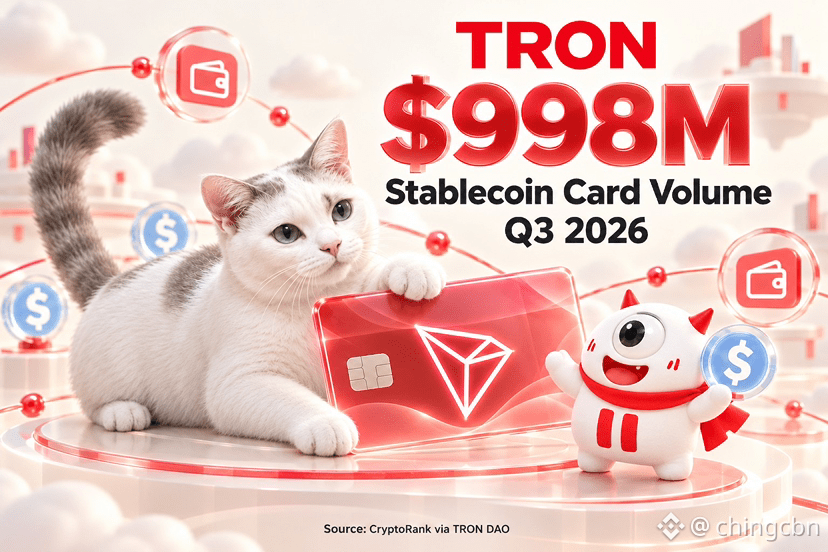
TRON DAO shared CryptoRank data showing approximately $998 million in stablecoin card volume on TRON in Q3 2026, nearly $1 billion and up 12.4% from the previous quarter.
TRON accounted for 23.2% of the reported total, the largest share in this dataset. Overall stablecoin card volume reached $4.31 billion, rising roughly 33% from Q2.
If you’re new to the concept, stablecoin-linked cards offer a way to use stablecoin balances through card payment systems. How funds are converted and payments are settled depends on the provider.
What interests me is that the experience can look like a familiar card or app, while blockchain works behind the scenes. Users may care most about where they can pay, what it costs, and whether it’s convenient.
For this figure, I’m keeping the source’s term “stablecoin card volume.” The post doesn’t explain which top-ups or merchant purchases are included, so we can’t conclude that the entire $998 million represents direct spending at stores.
What I’d like to follow next is how often people return to these cards and whether the services make stablecoins easier to use in everyday life. It’s another useful angle to watch alongside on-chain transfers. 🐱❤️
#TRONGlobalFriends #TGF
@trondao @TronDao_THA @justinsuntron
88
·
--
Using stablecoins in everyday life involves more than simply pressing “send.” 👀
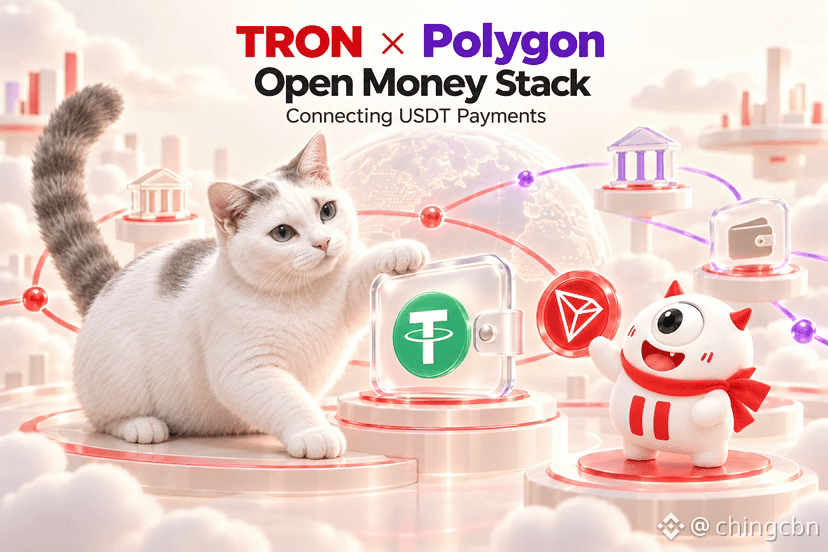
TRON DAO shared that Polygon Open Money Stack now supports TRON, making it easier for fintechs and remittance providers to integrate USDT payments and transfers.
If you’re new to it, Open Money Stack, or OMS, brings together payment infrastructure for businesses: pay-ins, wallets, cross-chain routing, and payouts through one integration.
Polygon’s examples include moving from a bank deposit into USDT on TRON, or from a USDT balance to a bank payout. Available options depend on the region and service requirements.
What interests me is the user experience. When someone opens a money-transfer app, they usually want to know: How much will the recipient receive? When will it arrive? And how many steps will it take? Connecting the systems behind that experience is the app provider’s job.
If these tools make that work easier, development teams may have more time to focus on details that directly affect users, such as clear fees, transfer tracking, and support when a payment gets stuck.
I’d like to see which services put this TRON integration to use, and how much it simplifies everyday payments. Another development worth following on the practical side of stablecoins. 🐱❤️
#TRONGlobalFriends #TGF
@trondao @TronDao_THA @justinsuntron
115
·
--
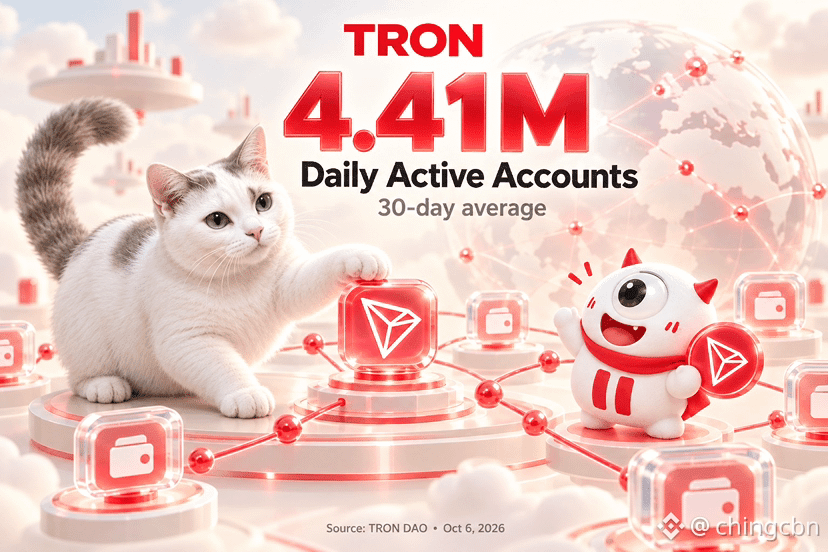
TRON averaged 4.41 million daily active accounts over the 30-day period referenced in TRON DAO’s post. 👀
I wanted to share the figure and take a closer look at what Daily Active Accounts can actually tell us.
If you’re new to the metric, it measures accounts with activity each day under the data provider’s criteria, then averages those daily counts over the stated period. It offers another view of network activity alongside the total number of accounts created.
But 4.41 million accounts doesn’t mean 4.41 million individual people. One person can have multiple accounts, and some accounts may belong to services or automated systems. It also doesn’t mean 4.41 million new users are joining every day.
The “30-day average” matters too. It gives us a view across a period, but understanding how consistent that activity was requires looking at the daily figures. An average alone doesn’t show whether every day had similar activity.
What I’d like to follow next is what these accounts are doing, how often they return, and how activity is split between token transfers and applications on the network.
Looking at active accounts alongside transaction counts, activity types, and repeat usage can give us a clearer picture of how TRON is being used. Another metric worth keeping an eye on. 🐱❤️
#TRONGlobalFriends #TGF
@trondao @TronDao_THA @justinsuntron
130
·
--
When we talk about blockchain, we often think about sending tokens. But transparency, privacy, and security are just as interesting to follow. 👀
TRON DAO shared that John Hurston, General Counsel at TRON, joined the 5th INTERPOL New Technologies Forum in Vienna to discuss the future of decentralized ledgers and their impact on law enforcement.
The conversation covered blockchain transparency, privacy tradeoffs, and compliance.
Think about it from a user’s perspective: we want transactions to be traceable when something goes wrong, while also wanting our personal information protected. Designing systems that address both needs takes careful work.
Another topic was preparation for future quantum-computing risks. According to the press release, TRON has introduced post-quantum digital signature support on its Nile testnet—a network used for testing.
If you’re new to the term, digital signatures help verify that transactions were authorized by the relevant key holder. Post-quantum approaches are designed to resist attacks from future quantum computers. Testing is a step toward readiness, rather than proof that the main network is already protected against every risk.
What interests me is that wider everyday blockchain use also makes the work behind security and user protection more important. It’s another side of TRON worth following. 🐱❤️
#TRONGlobalFriends #TGF
@trondao @TronDao_THA @justinsuntron

75
·
--
What could finance look like if more familiar assets became accessible through blockchain? 👀
TRON DAO shared this discussion from Korea Blockchain Week, where its Research Manager, Sam Reynolds, moderated a panel with representatives from Tether, PancakeSwap, and Jito Foundation on RWAs and how tokenization could expand financial access across borders.
If you’re new to the topic, RWA stands for Real-World Assets. Tokenization means creating blockchain tokens that represent an asset or related rights. A token backed by gold is one way to picture it.
However, holding a token doesn’t mean you have the same direct ownership rights across every project. It matters what the token actually represents and what backs it.
What interests me is the possibility of making assets easier to access and transfer, potentially giving people in different countries more financial options. Actual access still depends on each service’s terms and eligibility requirements.
That leaves a few things worth watching: Will these products be easy for everyday users to navigate? Will people understand their rights? And will there be enough liquidity when they want to trade?
This update covers a panel discussion, rather than the launch of a new RWA product. Still, it’s an interesting topic to follow as blockchain becomes more connected to everyday finance. 🐱❤️
#TRONGlobalFriends #TGF
@trondao @TronDao_THA @justinsuntron
65
·
--
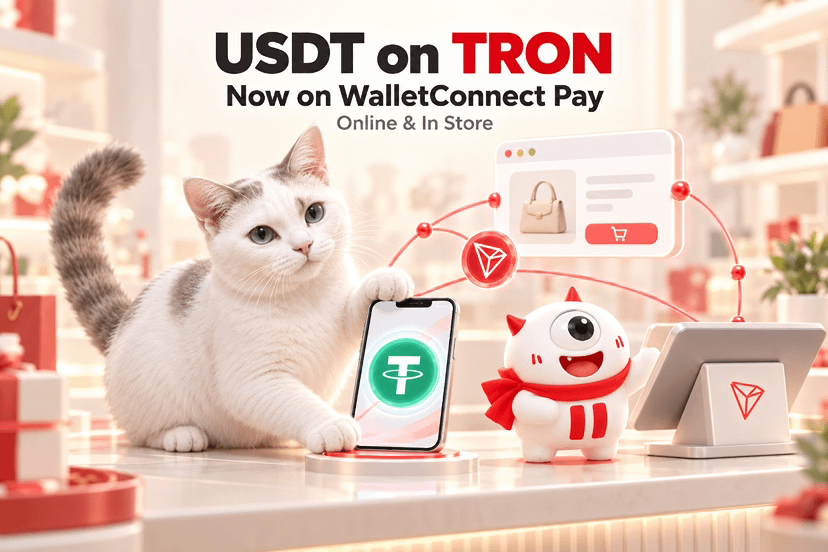
Another way to spend USDT on TRON—this time through WalletConnect Pay 👀
TRON DAO shared that merchants and payment service providers can now accept USDT on TRON both online and in store through a single integration.
Think of a business with both a website and a physical checkout counter. Supporting both channels gives that business another option for accepting digital asset payments.
What interests me is that stablecoin payments need both sides: people holding the tokens and merchants able to accept them. This update gives merchants another way to connect with USDT on TRON.
“Single integration” refers to the setup for merchants and payment providers. It doesn’t mean every shop already accepts it—you still need to check whether a particular merchant supports this payment option.
To me, this is another piece of how stablecoins could fit into everyday life: moving from a balance in a wallet to an option at checkout, whether online or in person.
I’m curious to see which merchants adopt it and how convenient the payment experience turns out to be 🐱❤️
#TRONGlobalFriends #TGF
@trondao @TronDao_THA @justinsuntron
70
·
--
Another update from the payments side of TRON 👀
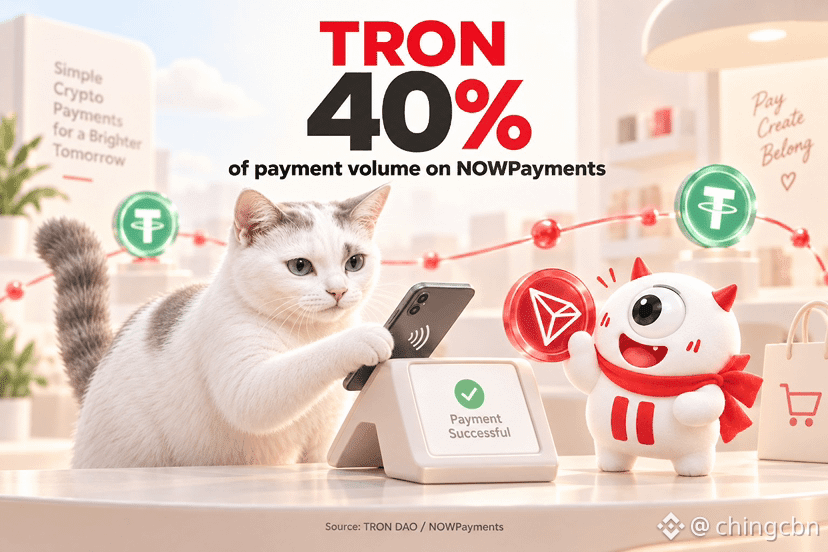
TRON DAO shared that 40% of the payment volume processed through NOWPayments runs on the TRON network.
If you’re unfamiliar with the names, NOWPayments is a crypto payment service, while NOW Wallet, also mentioned in the post, is a wallet for managing digital assets. Together, these types of services help connect holding crypto with using it.
What caught my attention is that this figure comes from a payment service. It offers another view of TRON’s role in moving value for payments.
The 40% figure applies specifically to NOWPayments—not the entire global crypto payments market. The post also doesn’t specify the measurement period, so it doesn’t tell us how much that share has grown.
The post highlights USDT on TRON and access through NOW Wallet too. To me, a network, an easy-to-use wallet, and payment services are all pieces that can bring stablecoins closer to everyday use.
Ultimately, people want to know whether their payment arrives, where they can spend, and how many steps it takes. 🐱❤️
#TRONGlobalFriends #TGF
@trondao @TronDao_THA @justinsuntron
69
·
--
A little update from the builder side of TRON 👀
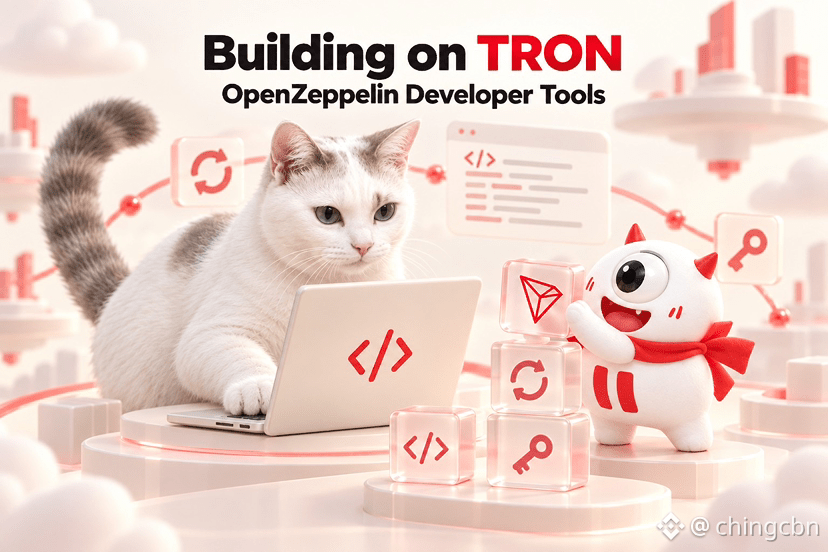
TRON DAO shared that OpenZeppelin’s Contracts library and development stack are now available on TRON, giving developers more tools to build, upgrade, and secure smart contracts.
If you’re new to this, a smart contract is a program on a blockchain that follows rules written into its code. A library provides reusable pieces developers can build on, so they don’t have to write everything from scratch.
OpenZeppelin’s announcement highlights starting with Contracts Wizard or an AI assistant, integrations with tools such as Hardhat, Foundry, and TronBox, and support for passkey sign-ins.
Another feature is upgrading live smart contracts while preserving their existing state, when designed and upgraded correctly. Think of adding features to an app while keeping its existing data intact.
What interests me is the work happening behind the apps we might eventually use. More ready-to-use tools could reduce repetitive development work and give teams more time to focus on features and the user experience.
Security tools still need to go hand in hand with testing and reviewing each project’s code. It’s another development worth following for builders on TRON 🐱❤️
#TRONGlobalFriends #TGF
@trondao @TronDao_THA @justinsuntron
70
·
--
A little update for anyone using USDT on TRON 👀
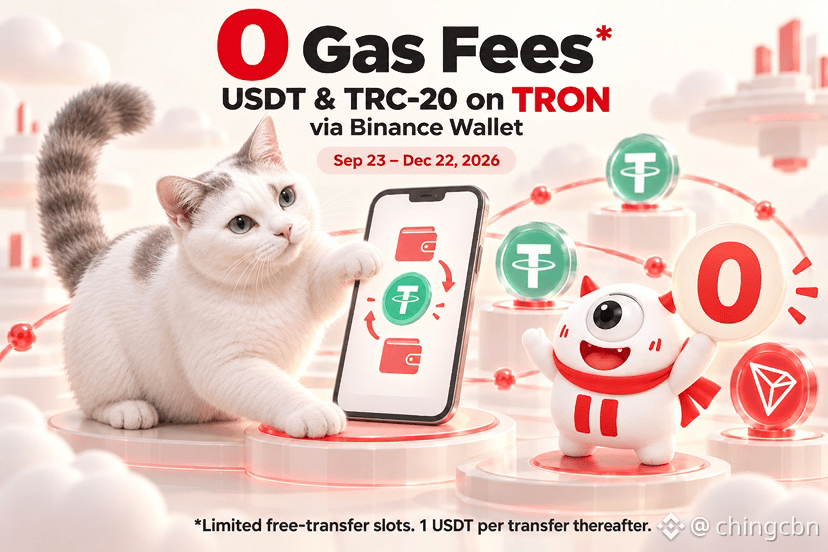
Justin Sun shared Binance Wallet’s announcement of a zero-gas-fee promotion for transfers of USDT and other TRC-20 tokens on TRON, running from September 23 to December 22, 2026, with support from TRON DAO.
If you’re new to this, gas is the network fee for processing a transaction. TRC-20 is a token standard on TRON, used by tokens including USDT on this network.
Free-transfer slots are limited, though. The announcement states that a discounted fee of 1 USDT per transaction applies afterward, so check the fee shown in the app before confirming.
One detail to pay attention to: when signing the transaction, open “Network Fee Payer” and choose to pay the network fee in USDT, following the steps in the announcement.
What I find interesting is how directly this affects everyday use. When you’re sending a small amount, the transfer fee matters too. Reducing that cost could make transfers more practical for users.
If you use Binance Wallet, check the promotion’s availability and conditions in the app. This offer applies to the specified transfer method—it doesn’t mean every transaction on TRON is free 🐱❤️
#TRONGlobalFriends #TGF
@trondao @TronDao_THA @justinsuntron
1
1
82
·
--
There is another corner of USDT on TRON that I want to share. This time it's about spending 👀
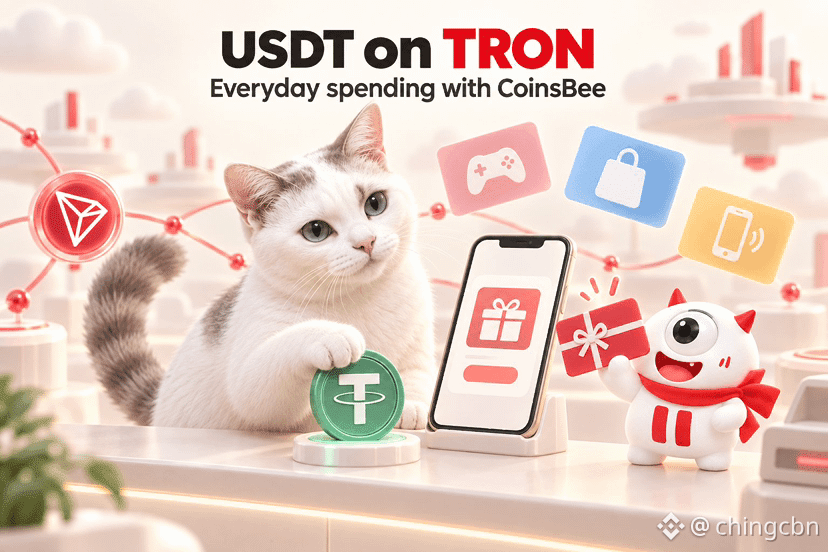
TRON DAO shared that USDT on the TRON network is the most used Onchain payment option on CoinsBee, according to the platform's payment data.
In case anyone is not familiar with CoinsBee, it is a platform that uses crypto to buy gift cards, game credits, and top up mobile phones. Therefore, it is another channel that connects digital assets with things we use in our daily lives.
The 90-day data from June 4 to September 1, 2026 indicates that the amount of payment with USDT on TRON is about 1.8 times that of Bitcoin on CoinsBee, counting from the items that have been successfully paid and delivered. Not the value of all the money paid
This angle shows more images of use. From having Stablecoin in the pocket There are channels to buy goods or services through various cards and credits. This does not mean that all brands accept USDT directly.
As for those who are using the CoinsBee app, there is a 2% discount campaign for eligible users and pay with USDT on TRON between September 21 - October 5, 2026. Use the USDT-TRC code once per user according to the terms of the campaign.
It is another example of using Stablecoin that is closer to everyday life. So I want to pick it up and tell you about it. 🐱❤️
#TRONGlobalFriends #TGF
@Trondao
@TronDao_THA
@Justinsuntron
289
·
--
Recently, the Stablecoin side on TRON has something to follow as well 👀
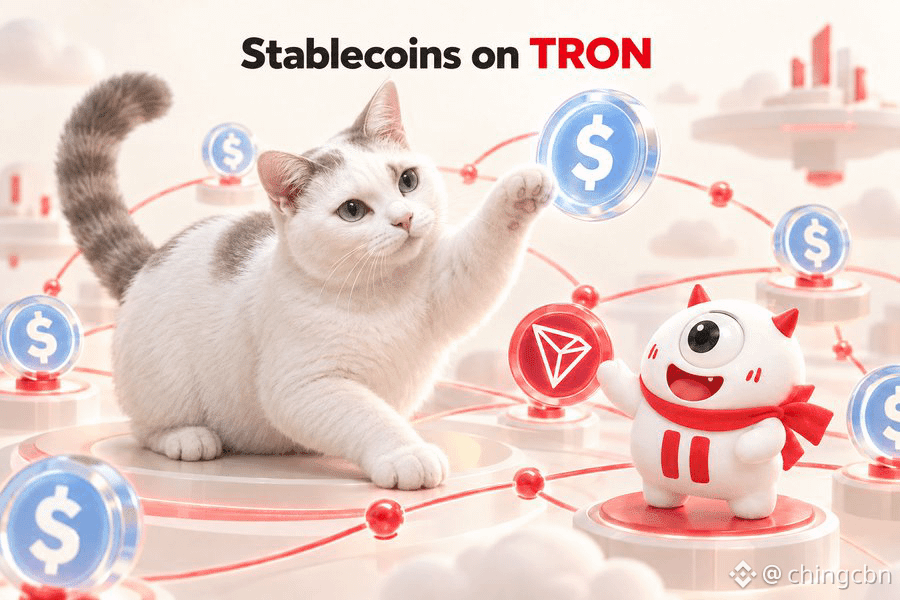
During the 90 days, according to Token Terminal, the value of Stablecoins on the network increased by about 4.8 billion dollars, more than the increase of 9 other chains in the Top 10 in the combined chart.
I saw the numbers, so I want to share them. Because this story has something to see more than just a bigger chain.
In case anyone is not familiar with it, Stablecoin is a coin designed to give value based on assets like the dollar, such as USDT, which aims to make 1 coin worth nearly 1 dollar. TRON is a network that supports the transfer of these coins.
As the value of Stablecoin on the chain increases, it reflects that the base of coins that are ready to be used to transfer, trade or use in various apps on the network is also larger.
Imagine that there is more money in the system. As for what the money will be used for? How often does it circulate? This is a matter that must be followed again.
But there is an increase in Stablecoin. It does not mean that the amount of use has increased the same. The figure of 4.8 billion dollars still cannot be said that all of it is money from new users. Or how much coins are moved and allocated between networks?
So I want to follow the Stablecoin base that grows on TRON will come with how many users and activities on the network increase. Because if we grow together, the image of use will be clearer. 🐱❤️
#TRONGlobalFriends #TGF @trondao @TronDao_THA @justinsuntron
82
·
--
Back when we were preparing for university entrance exams, we had to practice solving tons of questions 🧠
Anyone feeling nostalgic? Today, I’ve got a challenge for you!
Justin Sun has launched the Justin Sun Prize 👀 for those who can solve classic mathematical problems and provide formal verification of their solutions.
The top prize is 💰 $1,000,000
And yes — Human + AI teams can participate too!
The current Pinnacle Problems include:
• Riemann Hypothesis
• P vs NP Problem
Think you’ve got what it takes? 🔥
Give these problems a shot!
And if you crack one first, don’t forget to come back and share your solution 👀
@justinsuntron @trondao
@TronDao_THA
#TRONGlobalFriends #TGF

73
·
--
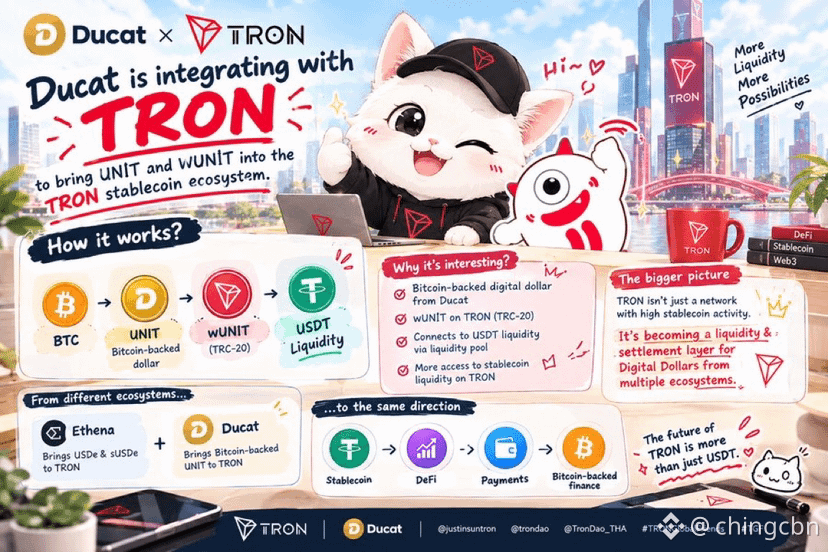
Ducat is integrating with TRON to bring UNIT and wUNIT into connection with TRON's stablecoin ecosystem.
So what's interesting about it?
UNIT is Ducat's digital dollar backed by Bitcoin.
Meanwhile, wUNIT is the version on TRON in TRC-20 format.
Once on TRON, wUNIT can connect with USDT through liquidity pools, allowing Bitcoin-backed dollars to access more stablecoin liquidity on TRON.
A simple diagram is:
BTC
↓
UNIT — Bitcoin-backed dollar
↓
wUNIT — TRON
↓
USDT liquidity
What's interesting is that TRON doesn't just have massive stablecoin activity—it's becoming another bridge point for Digital Dollar assets from multiple ecosystems.
Previously, we've seen Ethena bring USDe and sUSDe onto TRON.
And now Ducat is bringing Bitcoin-backed UNIT to connect with TRON.
These two projects have different models, but the big picture is the same:
Bringing dollar-denominated assets
to connect with liquidity and usage on TRON
From Stablecoin → DeFi → Payments → Bitcoin-backed finance
It seems like TRON's story is shifting from just being a "network with a ton of USDT" to becoming a liquidity & settlement layer for various forms of Digital Dollars.
@justinsuntron @TRONDAO @TronDao_THA #TRONGlobalFriends #TGF
Ducat is integrating with TRON to bring UNIT and wUNIT into connection with TRON's stablecoin ecosystem.
So what's interesting about it?
UNIT is Ducat's digital dollar backed by Bitcoin.
Meanwhile, wUNIT is the version on TRON in TRC-20 format.
Once on TRON, wUNIT can connect with USDT through liquidity pools, allowing Bitcoin-backed dollars to access more stablecoin liquidity on TRON.
A simple diagram is:
BTC
↓
UNIT — Bitcoin-backed dollar
↓
wUNIT — TRON
↓
USDT liquidity
What's interesting is that TRON doesn't just have massive stablecoin activity—it's becoming another bridge point for Digital Dollar assets from multiple ecosystems.
Previously, we've seen Ethena bring USDe and sUSDe onto TRON.
And now Ducat is bringing Bitcoin-backed UNIT to connect with TRON.
These two projects have different models, but the big picture is the same:
Bringing dollar-denominated assets
to connect with liquidity and usage on TRON
From Stablecoin → DeFi → Payments → Bitcoin-backed finance
It seems like TRON's story is shifting from just being a "network with a ton of USDT" to becoming a liquidity & settlement layer for various forms of Digital Dollars.
@justinsuntron @TRON DAO @TronDao_THA #TRONGlobalFriends #TGF
87
·
--
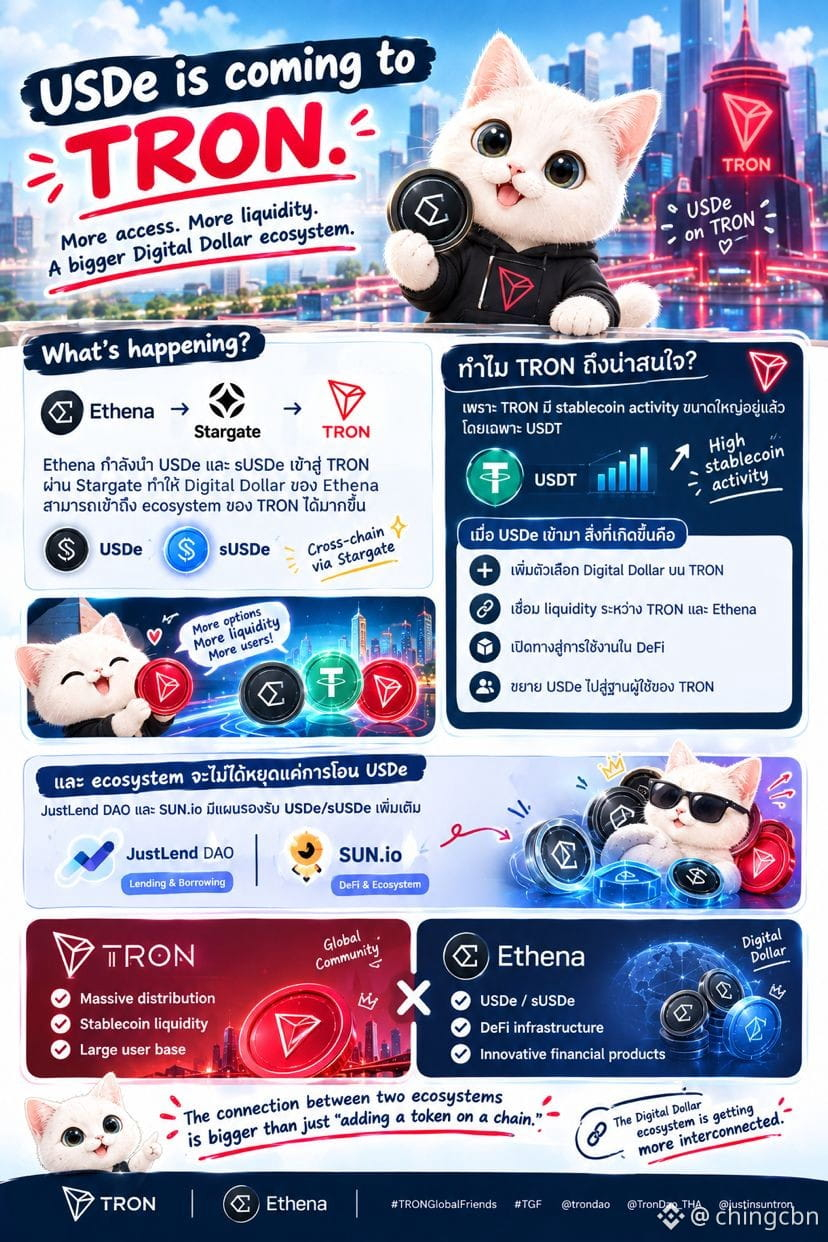
Ethena is bringing USDe and sUSDe onto TRON through Stargate, making Ethena's Digital Dollar more accessible within the TRON ecosystem.
Why is TRON interesting?
Because TRON already has massive stablecoin activity, especially USDT.
When USDe comes in, what happens is:
→ More Digital Dollar options on TRON
→ Connecting liquidity between TRON and Ethena
→ Opening the door to DeFi usage
→ Expanding USDe to TRON's user base
And the ecosystem won't stop at just transferring USDe.
JustLend DAO and SUN.io have additional plans to support USDe/sUSDe.
In simple terms:
TRON has distribution + stablecoin liquidity
Ethena has USDe + DeFi infrastructure
The connection between these two ecosystems is thus far more interesting than just "adding a token on a chain" in the usual way.
The Digital Dollar ecosystem is getting more interconnected. 🔗
#TRONGlobalFriends #TGF @trondao @TronDao_THA @justinsuntron
125
·
--
Summary of key points from @justinsuntron's announcement of the Justin Sun Prize:
▪️ Beyond Nobel: Focuses on pure logic and theoretical mathematics.
▪️ No Bureaucracy: Once verified by computer = instant payout.
▪️ Human x AI: Rewards both the prover and the code formalizer for AI verification.
▪️ On-chain Guarantee: Publicly locked funds on a decentralized blockchain.
This is definitely one to watch—a great application of Blockchain for a Decentralized Bounty! 👏
@justinsuntron @TRONDAO
@TronDao_THA
#TRONGlobalFriends #TGF
Summary of key points from @justinsuntron's announcement of the Justin Sun Prize:
▪️ Beyond Nobel: Focuses on pure logic and theoretical mathematics.
▪️ No Bureaucracy: Once verified by computer = instant payout.
▪️ Human x AI: Rewards both the prover and the code formalizer for AI verification.
▪️ On-chain Guarantee: Publicly locked funds on a decentralized blockchain.
This is definitely one to watch—a great application of Blockchain for a Decentralized Bounty! 👏
@justinsuntron @TRON DAO
@TronDao_THA
#TRONGlobalFriends #TGF
188
Войдите, чтобы посмотреть больше материала
Присоединяйтесь к пользователям криптовалют по всему миру на Binance Square
⚡️ Получайте новейшую и полезную информацию о криптоактивах.
💬 Нам доверяет крупнейшая в мире криптобиржа.
👍 Получите достоверные аналитические данные от верифицированных создателей контента.
Эл. почта/номер телефона
В тренде
USPPIMissMayEaseBTCPressure
Просмотров: 33,238
641 обсуждают
US PPI Rises 6.5% a Year in October, Slightly Below 6.6% Forecast
Binance News
·Лайков: 17
·Просмотров: 15.9k
BitcoinCoreDisclosesTorTrafficVulnerability
Просмотров: 12,829
313 обсуждают
WhatWillDriveCryptoandStocks’NextRebound?
Просмотров: 139,300
1,531 обсуждают