

SNERUSS HOLDING
5 Публикации

SNERUSS HOLDING
Отправить жалобу
Заблокировать пользователя
trade@bank.sneruss.com
Случайный трейдер
4.5 г
0 подписок(и/а)
29 подписчиков(а)
31 понравилось
Посты
Статья
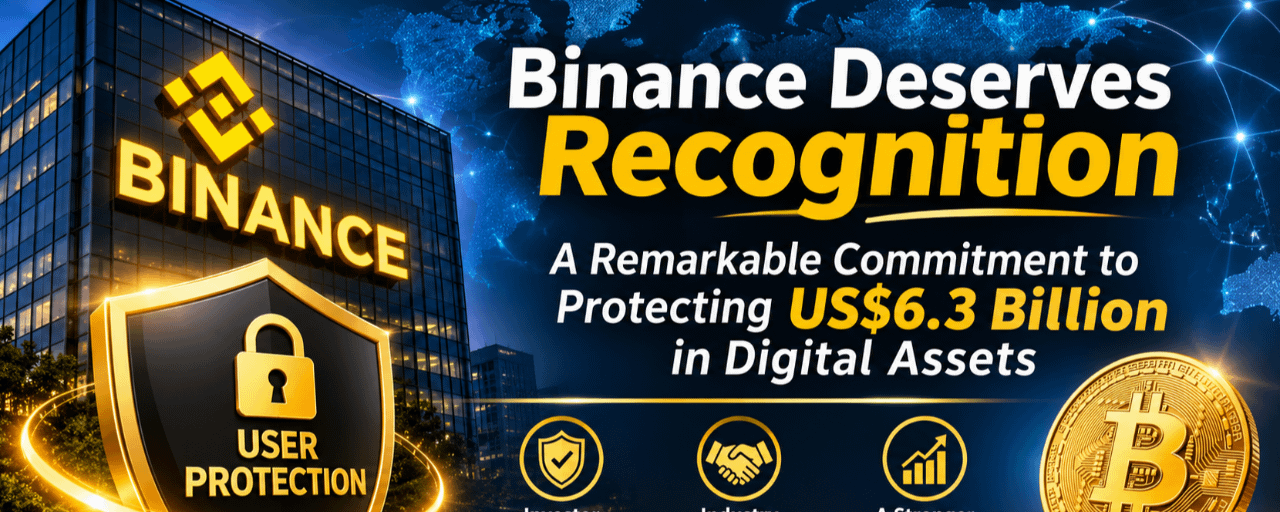
Binance Deserves Recognition: A Remarkable Commitment to Protecting US$6.3 Billion in Digital AssetsThe cryptocurrency industry has witnessed another significant test of resilience, responsibility and trust. Following a major security incident involving approximately US$6.3 billion in digital assets, Binance has demonstrated the importance of institutional accountability and decisive action in protecting its users.
What deserves particular recognition is not merely the scale of the incident, but the response that followed.
Rather than passing the financial burden of the incident on to its customers, Binance committed more than US$6.34 billion in company resources to cover the affected assets. Furthermore, with the support of industry partners, approximately US$3 billion in stolen assets has reportedly been frozen.
As of 31 October 2026, Binance announced that it had replenished approximately 90% of the affected assets, with major cryptocurrencies including BTC, ETH, USDT, BNB, SOL, USDC and XRP fully backed at 100%. The remaining assets are being sourced through market and over-the-counter transactions.
Beyond Business: A Commitment to Users
In an industry where confidence and liquidity are fundamental, incidents of this magnitude can potentially undermine investor trust across the wider digital-asset ecosystem.
Binance's decision to absorb the financial impact rather than transfer the burden to its users sends an important message about corporate responsibility.
Its response also demonstrates the importance of maintaining emergency protection mechanisms, including the Secure Asset Fund for Users (SAFU), alongside strong financial reserves and cooperation with external industry participants.
A Collective Effort for the Crypto Industry
One particularly important aspect of this incident is the cooperation between Binance, blockchain intelligence firms, stablecoin issuers, law enforcement agencies and other industry participants.
The reported freezing of approximately US$3 billion in assets illustrates how collaboration across the digital-asset ecosystem can help address sophisticated financial crimes.
This is an important reminder that the future of cryptocurrency cannot depend on individual exchanges alone. It requires collective responsibility, technological advancement, transparency and coordinated security measures.
Recognition Where It Is Due
Every financial institution may face challenges, and no organisation can claim to be entirely immune to security threats.
However, the true measure of an institution is often reflected in how it responds when confronted with an extraordinary challenge.
Binance's commitment to protecting customer balances, allocating substantial corporate resources and restoring affected assets deserves recognition.
While the recovery and replenishment process remains ongoing, the progress announced so far represents a significant demonstration of financial commitment and operational resilience.
Conclusion
The cryptocurrency industry needs more than trading platforms. It needs institutions that understand the responsibility attached to safeguarding billions of dollars in customer assets.
Binance has demonstrated that protecting users must remain a priority, even when doing so comes at a substantial financial cost to the organisation.
Credit should be given where it is due. Acknowledging responsible action, transparency and commitment is essential to building a stronger, more credible and sustainable global cryptocurrency industry.
Well done, Binance. Your response has set an important example of accountability and commitment to the digital-asset community.
#BinanceRecovery90% of stolen assets #BackedNotBroken:RichardTengSaysUsersBearNoLoss #Binance
Binance Deserves Recognition: A Remarkable Commitment to Protecting US$6.3 Billion in Digital Assets
The cryptocurrency industry has witnessed another significant test of resilience, responsibility and trust. Following a major security incident involving approximately US$6.3 billion in digital assets, Binance has demonstrated the importance of institutional accountability and decisive action in protecting its users.
What deserves particular recognition is not merely the scale of the incident, but the response that followed.
Rather than passing the financial burden of the incident on to its customers, Binance committed more than US$6.34 billion in company resources to cover the affected assets. Furthermore, with the support of industry partners, approximately US$3 billion in stolen assets has reportedly been frozen.
As of 31 October 2026, Binance announced that it had replenished approximately 90% of the affected assets, with major cryptocurrencies including BTC, ETH, USDT, BNB, SOL, USDC and XRP fully backed at 100%. The remaining assets are being sourced through market and over-the-counter transactions.
Beyond Business: A Commitment to Users
In an industry where confidence and liquidity are fundamental, incidents of this magnitude can potentially undermine investor trust across the wider digital-asset ecosystem.
Binance's decision to absorb the financial impact rather than transfer the burden to its users sends an important message about corporate responsibility.
Its response also demonstrates the importance of maintaining emergency protection mechanisms, including the Secure Asset Fund for Users (SAFU), alongside strong financial reserves and cooperation with external industry participants.
A Collective Effort for the Crypto Industry
One particularly important aspect of this incident is the cooperation between Binance, blockchain intelligence firms, stablecoin issuers, law enforcement agencies and other industry participants.
The reported freezing of approximately US$3 billion in assets illustrates how collaboration across the digital-asset ecosystem can help address sophisticated financial crimes.
This is an important reminder that the future of cryptocurrency cannot depend on individual exchanges alone. It requires collective responsibility, technological advancement, transparency and coordinated security measures.
Recognition Where It Is Due
Every financial institution may face challenges, and no organisation can claim to be entirely immune to security threats.
However, the true measure of an institution is often reflected in how it responds when confronted with an extraordinary challenge.
Binance's commitment to protecting customer balances, allocating substantial corporate resources and restoring affected assets deserves recognition.
While the recovery and replenishment process remains ongoing, the progress announced so far represents a significant demonstration of financial commitment and operational resilience.
Conclusion
The cryptocurrency industry needs more than trading platforms. It needs institutions that understand the responsibility attached to safeguarding billions of dollars in customer assets.
Binance has demonstrated that protecting users must remain a priority, even when doing so comes at a substantial financial cost to the organisation.
Credit should be given where it is due. Acknowledging responsible action, transparency and commitment is essential to building a stronger, more credible and sustainable global cryptocurrency industry.
Well done, Binance. Your response has set an important example of accountability and commitment to the digital-asset community.
#BinanceRecovery90% of stolen assets #BackedNotBroken:RichardTengSaysUsersBearNoLoss #Binance
413

Статья
Cryptocurrency Market Outlook — November 2026: Opportunities, Risks and the Road AheadExecutive Summary
As November 2026 approaches, the cryptocurrency market enters a critical period in which institutional demand, monetary policy, market liquidity and investor confidence are likely to influence the direction of digital assets.
Bitcoin remains the primary indicator of broader crypto-market sentiment, while Ethereum, BNB, Solana, XRP and other established cryptocurrencies offer different risk and growth profiles. Meme tokens and smaller-cap digital assets may experience substantial price movements, but their prospects depend heavily on liquidity, market sentiment and speculative demand.
The outlook is mixed. There are reasons for optimism, including institutional participation and the continued development of blockchain infrastructure. However, inflationary pressures, restrictive monetary policy, potential interest-rate increases and declining stablecoin liquidity could constrain further gains.
The central investment question for November is whether the market can establish a sustainable recovery or whether investors should prepare for another period of consolidation or correction.
No particular outcome is guaranteed. Investors should distinguish between short-term market movements and the longer-term fundamentals supporting individual crypto assets.
1. The Market Environment Entering November
Bitcoin's performance during the third quarter of 2026 demonstrated that cryptocurrency markets can remain resilient even when broader financial conditions are challenging.
Coinbase Institutional's October 7 quarterly report described the fourth-quarter outlook as constructive, noting that Bitcoin had risen approximately 43% during the third quarter. The report also highlighted tightening financial conditions and significant overhead supply as potential obstacles to further appreciation.
Its October 23 commentary subsequently emphasized that institutional exchange-traded fund demand had become an important source of support for Bitcoin, while corporate buying had weakened.
This distinction matters. A market can attract substantial institutional investment without necessarily experiencing a broad rally across every cryptocurrency.
The sustainability of the recovery will depend on whether demand continues to expand beyond a small number of large institutional buyers.
2. Bitcoin: The Market's Principal Directional Indicator
Bitcoin is likely to remain the most important asset to monitor throughout November.
Coinbase Institutional identified the $80,000–$82,000 area as a key near-term support zone in its October 23 analysis. It also identified $73,000–$75,000 as a potential lower support area if the first zone fails.
These are technical reference levels, not guaranteed price floors.
Three developments could shape Bitcoin's performance:
A sustained recovery: If Bitcoin holds its support zone, institutional inflows remain positive and macroeconomic conditions improve, investor confidence could strengthen. A move above significant resistance could encourage additional buying.
Continued consolidation: If buying demand and selling pressure remain balanced, Bitcoin could trade within a broad range. Such a market would favour patience rather than aggressive directional bets.
A renewed correction: If support breaks while liquidity deteriorates, investors may reduce exposure to risk assets. A decline could accelerate if leveraged positions are liquidated.
For long-term investors, the objective should not be to predict the exact bottom. It should be to determine whether Bitcoin's long-term investment case remains intact and whether the purchase price is consistent with their risk tolerance.
3. Ethereum and the Major Altcoin Market
Ethereum remains an important asset because of its role in smart contracts, decentralized finance and blockchain infrastructure.
Its long-term prospects depend on network usage, transaction economics, developer activity, competition and the extent to which value accrues to ETH itself.
BNB and Solana offer exposure to their respective blockchain ecosystems, while XRP has its own payments-focused investment narrative. These assets should not be treated as interchangeable investments.
A Bitcoin recovery may support the wider market, but it does not guarantee that Ethereum or other altcoins will outperform.
Investors should assess each asset individually, examining:
Actual network usage and adoption.Token issuance, unlock schedules and circulating supply.Liquidity and exchange access.Developer activity and competitive positioning.Regulatory uncertainty and concentration risks.
The strongest long-term candidates are not necessarily the tokens with the largest short-term price increases. Sustainable demand and sound token economics are more relevant to an investment thesis extending over several years.
4. Meme Tokens: High Potential Volatility, High Risk
Meme tokens such as Dogecoin and BabyDoge attract investors because of their communities, social-media visibility and potential for sharp price movements.
However, these characteristics can also make them exceptionally risky.
Their prices may be driven more by speculative enthusiasm and liquidity than by measurable economic activity. Concentrated ownership, limited trading depth, token dilution and declining investor attention can result in severe losses.
A meme token that rises sharply during a market rally may also fall much faster when sentiment changes.
For this reason, meme tokens are generally better approached as speculative positions rather than the foundation of a long-term investment portfolio.
Investors should never assume that a previous price level will be regained or that a large percentage decline automatically makes a token undervalued.
5. Three Potential Scenarios for November 2026
The following scenarios are illustrative planning assumptions, not forecasts endorsed by market analysts. They describe possible Bitcoin price movements during November, rather than returns over a multi-year investment horizon.
Scenario A: A Bullish Recovery
Bitcoin maintains support, institutional inflows strengthen and financial conditions become more supportive.
Under this scenario, Bitcoin could advance, while selected altcoins might deliver larger percentage gains. Such outperformance would not be uniform, and speculative assets could remain highly volatile.
Scenario B: Sideways Consolidation
Bitcoin trades within a broad range as investors wait for clearer signals from central banks, institutional flows and the global economy.
The broader market may produce opportunities in individual assets, but a sustained rally would remain unconfirmed.
For long-term investors, gradual purchases may be more appropriate than attempting to trade every short-term movement.
Scenario C: A Deeper Correction
Bitcoin loses important support, institutional demand weakens or macroeconomic pressures intensify.
Under these conditions, altcoins and smaller-cap tokens could experience disproportionately large losses. Investors who entered with excessive leverage or concentrated their portfolios in speculative assets could face particularly severe consequences.
The prudent approach is to establish acceptable loss limits before investing, rather than making decisions under pressure during a sell-off.
6. What Returns Could Investors Realistically Expect?
There is no reliable method for predicting a precise cryptocurrency return for November or for the following 12–36 months.
Instead, investors can use hypothetical scenarios to understand how different outcomes would affect their capital.
A portfolio concentrated in smaller cryptocurrencies could perform substantially worse than these examples. Even established assets can experience significant drawdowns.
Investors should also remember that recovering from a loss requires a larger percentage gain than the percentage initially lost. For example, a 50% decline requires a 100% gain merely to return to the starting value.
This is one reason capital preservation and position sizing are essential components of long-term investment strategy.
7. A Disciplined Investment Strategy for November
Rather than committing all available capital at once, long-term investors may consider a staged investment approach.
First, establish a core allocation. Consider the investment case, liquidity and risk profile of Bitcoin and other established assets before allocating capital to more speculative tokens.
Second, purchase in stages. Dividing intended purchases across several dates can reduce the risk of committing all capital immediately before a market decline. It cannot guarantee a better average entry price.
Third, maintain liquidity reserves. Capital needed for business expenses, debt repayments or near-term obligations should not be exposed to highly volatile digital assets.
Fourth, review the investment thesis regularly. Changes in network adoption, token economics, regulation and market liquidity may justify revisiting a position.
Fifth, avoid excessive leverage. Borrowing to invest in volatile assets can turn a temporary market decline into a permanent financial problem.
The objective is to build a portfolio that can withstand adverse market conditions without forcing the investor to sell at an unfavourable time.
8. Macroeconomic Factors That Could Influence the Market
Monetary policy is a significant variable for cryptocurrency markets.
When interest rates and bond yields remain elevated, investors may have less incentive to allocate capital to assets that generate no contractual cash flow. Conversely, improving liquidity and expectations of easier monetary policy can support risk appetite.
The Federal Reserve's October 27–28, 2026, meeting is an immediate event to monitor as November begins. Its policy decision, accompanying communication and subsequent economic data may influence financial markets.
Other factors include inflation, employment conditions, energy prices, geopolitical developments and movements in the US dollar.
However, cryptocurrency prices do not respond mechanically to any single economic indicator. Market expectations, investor positioning and crypto-specific developments can sometimes outweigh the immediate impact of macroeconomic news.
Investors should therefore monitor a combination of economic data, fund flows, trading volumes and asset-specific fundamentals.
9. Risk Management, Regulation and Investor Protection
Market risk is only one part of cryptocurrency investing.
Investors also face custody failures, exchange insolvency, cyberattacks, fraudulent investment schemes, smart-contract vulnerabilities and restrictions on withdrawals.
Before transferring funds to an exchange, trading platform or private counterparty, investors should independently verify the legal entity, relevant regulatory permissions, custody arrangements, settlement procedures and withdrawal terms.
Guaranteed returns, pressure to transfer funds quickly, unexplained additional fees and demands to deposit more money to release an existing balance are warning signs requiring careful investigation.
For investors operating in the United Arab Emirates, the applicable regulatory requirements depend on the activity, location and legal entity involved. Regulatory status should be verified through the appropriate authority rather than inferred from a company's website or marketing material.
No investment strategy can eliminate all risks, but due diligence can reduce avoidable operational and counterparty exposure.
10. Conclusion: Opportunity Requires Discipline
November 2026 could provide opportunities for long-term cryptocurrency investors, but the market is not entering the month without significant challenges.
Bitcoin's ability to maintain important support levels, institutional demand, stablecoin liquidity and the direction of monetary policy will be among the factors worth monitoring. Ethereum and selected altcoins may offer additional opportunities, but their investment cases must be evaluated independently.
Meme tokens and smaller-cap cryptocurrencies remain speculative and should not be mistaken for dependable long-term investments.
The most constructive approach is neither to assume that a major rally is inevitable nor to dismiss the sector because of short-term volatility. It is to assess the evidence, diversify appropriately, invest in stages where suitable and preserve enough liquidity to withstand adverse outcomes.
The central principle for November is straightforward: investment returns cannot be guaranteed, but risk management, independent verification and disciplined decision-making can improve the quality of investment decisions.
Disclaimer: This article is for informational and educational purposes only. The scenarios presented are hypothetical and do not constitute financial advice, a price target or a guarantee of investment performance. Cryptocurrency investments can result in the loss of some or all of the capital invested. Readers should conduct independent research and seek appropriately qualified advice before making investment decisions.
Cryptocurrency Market Outlook — November 2026: Opportunities, Risks and the Road Ahead
Executive Summary
As November 2026 approaches, the cryptocurrency market enters a critical period in which institutional demand, monetary policy, market liquidity and investor confidence are likely to influence the direction of digital assets.
Bitcoin remains the primary indicator of broader crypto-market sentiment, while Ethereum, BNB, Solana, XRP and other established cryptocurrencies offer different risk and growth profiles. Meme tokens and smaller-cap digital assets may experience substantial price movements, but their prospects depend heavily on liquidity, market sentiment and speculative demand.
The outlook is mixed. There are reasons for optimism, including institutional participation and the continued development of blockchain infrastructure. However, inflationary pressures, restrictive monetary policy, potential interest-rate increases and declining stablecoin liquidity could constrain further gains.
The central investment question for November is whether the market can establish a sustainable recovery or whether investors should prepare for another period of consolidation or correction.
No particular outcome is guaranteed. Investors should distinguish between short-term market movements and the longer-term fundamentals supporting individual crypto assets.
1. The Market Environment Entering November
Bitcoin's performance during the third quarter of 2026 demonstrated that cryptocurrency markets can remain resilient even when broader financial conditions are challenging.
Coinbase Institutional's October 7 quarterly report described the fourth-quarter outlook as constructive, noting that Bitcoin had risen approximately 43% during the third quarter. The report also highlighted tightening financial conditions and significant overhead supply as potential obstacles to further appreciation.
Its October 23 commentary subsequently emphasized that institutional exchange-traded fund demand had become an important source of support for Bitcoin, while corporate buying had weakened.
This distinction matters. A market can attract substantial institutional investment without necessarily experiencing a broad rally across every cryptocurrency.
The sustainability of the recovery will depend on whether demand continues to expand beyond a small number of large institutional buyers.
2. Bitcoin: The Market's Principal Directional Indicator
Bitcoin is likely to remain the most important asset to monitor throughout November.
Coinbase Institutional identified the $80,000–$82,000 area as a key near-term support zone in its October 23 analysis. It also identified $73,000–$75,000 as a potential lower support area if the first zone fails.
These are technical reference levels, not guaranteed price floors.
Three developments could shape Bitcoin's performance:
A sustained recovery: If Bitcoin holds its support zone, institutional inflows remain positive and macroeconomic conditions improve, investor confidence could strengthen. A move above significant resistance could encourage additional buying.
Continued consolidation: If buying demand and selling pressure remain balanced, Bitcoin could trade within a broad range. Such a market would favour patience rather than aggressive directional bets.
A renewed correction: If support breaks while liquidity deteriorates, investors may reduce exposure to risk assets. A decline could accelerate if leveraged positions are liquidated.
For long-term investors, the objective should not be to predict the exact bottom. It should be to determine whether Bitcoin's long-term investment case remains intact and whether the purchase price is consistent with their risk tolerance.
3. Ethereum and the Major Altcoin Market
Ethereum remains an important asset because of its role in smart contracts, decentralized finance and blockchain infrastructure.
Its long-term prospects depend on network usage, transaction economics, developer activity, competition and the extent to which value accrues to ETH itself.
BNB and Solana offer exposure to their respective blockchain ecosystems, while XRP has its own payments-focused investment narrative. These assets should not be treated as interchangeable investments.
A Bitcoin recovery may support the wider market, but it does not guarantee that Ethereum or other altcoins will outperform.
Investors should assess each asset individually, examining:
Actual network usage and adoption.Token issuance, unlock schedules and circulating supply.Liquidity and exchange access.Developer activity and competitive positioning.Regulatory uncertainty and concentration risks.
The strongest long-term candidates are not necessarily the tokens with the largest short-term price increases. Sustainable demand and sound token economics are more relevant to an investment thesis extending over several years.
4. Meme Tokens: High Potential Volatility, High Risk
Meme tokens such as Dogecoin and BabyDoge attract investors because of their communities, social-media visibility and potential for sharp price movements.
However, these characteristics can also make them exceptionally risky.
Their prices may be driven more by speculative enthusiasm and liquidity than by measurable economic activity. Concentrated ownership, limited trading depth, token dilution and declining investor attention can result in severe losses.
A meme token that rises sharply during a market rally may also fall much faster when sentiment changes.
For this reason, meme tokens are generally better approached as speculative positions rather than the foundation of a long-term investment portfolio.
Investors should never assume that a previous price level will be regained or that a large percentage decline automatically makes a token undervalued.
5. Three Potential Scenarios for November 2026
The following scenarios are illustrative planning assumptions, not forecasts endorsed by market analysts. They describe possible Bitcoin price movements during November, rather than returns over a multi-year investment horizon.
Scenario A: A Bullish Recovery
Bitcoin maintains support, institutional inflows strengthen and financial conditions become more supportive.
Under this scenario, Bitcoin could advance, while selected altcoins might deliver larger percentage gains. Such outperformance would not be uniform, and speculative assets could remain highly volatile.
Scenario B: Sideways Consolidation
Bitcoin trades within a broad range as investors wait for clearer signals from central banks, institutional flows and the global economy.
The broader market may produce opportunities in individual assets, but a sustained rally would remain unconfirmed.
For long-term investors, gradual purchases may be more appropriate than attempting to trade every short-term movement.
Scenario C: A Deeper Correction
Bitcoin loses important support, institutional demand weakens or macroeconomic pressures intensify.
Under these conditions, altcoins and smaller-cap tokens could experience disproportionately large losses. Investors who entered with excessive leverage or concentrated their portfolios in speculative assets could face particularly severe consequences.
The prudent approach is to establish acceptable loss limits before investing, rather than making decisions under pressure during a sell-off.
6. What Returns Could Investors Realistically Expect?
There is no reliable method for predicting a precise cryptocurrency return for November or for the following 12–36 months.
Instead, investors can use hypothetical scenarios to understand how different outcomes would affect their capital.
A portfolio concentrated in smaller cryptocurrencies could perform substantially worse than these examples. Even established assets can experience significant drawdowns.
Investors should also remember that recovering from a loss requires a larger percentage gain than the percentage initially lost. For example, a 50% decline requires a 100% gain merely to return to the starting value.
This is one reason capital preservation and position sizing are essential components of long-term investment strategy.
7. A Disciplined Investment Strategy for November
Rather than committing all available capital at once, long-term investors may consider a staged investment approach.
First, establish a core allocation. Consider the investment case, liquidity and risk profile of Bitcoin and other established assets before allocating capital to more speculative tokens.
Second, purchase in stages. Dividing intended purchases across several dates can reduce the risk of committing all capital immediately before a market decline. It cannot guarantee a better average entry price.
Third, maintain liquidity reserves. Capital needed for business expenses, debt repayments or near-term obligations should not be exposed to highly volatile digital assets.
Fourth, review the investment thesis regularly. Changes in network adoption, token economics, regulation and market liquidity may justify revisiting a position.
Fifth, avoid excessive leverage. Borrowing to invest in volatile assets can turn a temporary market decline into a permanent financial problem.
The objective is to build a portfolio that can withstand adverse market conditions without forcing the investor to sell at an unfavourable time.
8. Macroeconomic Factors That Could Influence the Market
Monetary policy is a significant variable for cryptocurrency markets.
When interest rates and bond yields remain elevated, investors may have less incentive to allocate capital to assets that generate no contractual cash flow. Conversely, improving liquidity and expectations of easier monetary policy can support risk appetite.
The Federal Reserve's October 27–28, 2026, meeting is an immediate event to monitor as November begins. Its policy decision, accompanying communication and subsequent economic data may influence financial markets.
Other factors include inflation, employment conditions, energy prices, geopolitical developments and movements in the US dollar.
However, cryptocurrency prices do not respond mechanically to any single economic indicator. Market expectations, investor positioning and crypto-specific developments can sometimes outweigh the immediate impact of macroeconomic news.
Investors should therefore monitor a combination of economic data, fund flows, trading volumes and asset-specific fundamentals.
9. Risk Management, Regulation and Investor Protection
Market risk is only one part of cryptocurrency investing.
Investors also face custody failures, exchange insolvency, cyberattacks, fraudulent investment schemes, smart-contract vulnerabilities and restrictions on withdrawals.
Before transferring funds to an exchange, trading platform or private counterparty, investors should independently verify the legal entity, relevant regulatory permissions, custody arrangements, settlement procedures and withdrawal terms.
Guaranteed returns, pressure to transfer funds quickly, unexplained additional fees and demands to deposit more money to release an existing balance are warning signs requiring careful investigation.
For investors operating in the United Arab Emirates, the applicable regulatory requirements depend on the activity, location and legal entity involved. Regulatory status should be verified through the appropriate authority rather than inferred from a company's website or marketing material.
No investment strategy can eliminate all risks, but due diligence can reduce avoidable operational and counterparty exposure.
10. Conclusion: Opportunity Requires Discipline
November 2026 could provide opportunities for long-term cryptocurrency investors, but the market is not entering the month without significant challenges.
Bitcoin's ability to maintain important support levels, institutional demand, stablecoin liquidity and the direction of monetary policy will be among the factors worth monitoring. Ethereum and selected altcoins may offer additional opportunities, but their investment cases must be evaluated independently.
Meme tokens and smaller-cap cryptocurrencies remain speculative and should not be mistaken for dependable long-term investments.
The most constructive approach is neither to assume that a major rally is inevitable nor to dismiss the sector because of short-term volatility. It is to assess the evidence, diversify appropriately, invest in stages where suitable and preserve enough liquidity to withstand adverse outcomes.
The central principle for November is straightforward: investment returns cannot be guaranteed, but risk management, independent verification and disciplined decision-making can improve the quality of investment decisions.
Disclaimer: This article is for informational and educational purposes only. The scenarios presented are hypothetical and do not constitute financial advice, a price target or a guarantee of investment performance. Cryptocurrency investments can result in the loss of some or all of the capital invested. Readers should conduct independent research and seek appropriately qualified advice before making investment decisions.
147
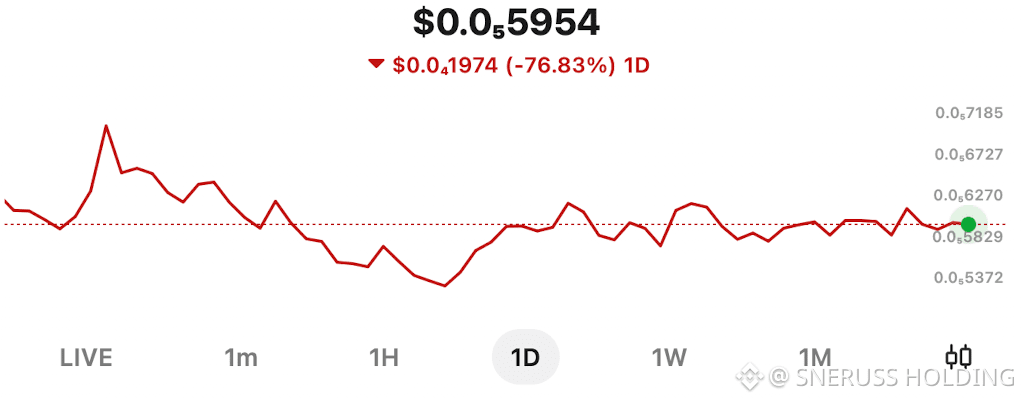
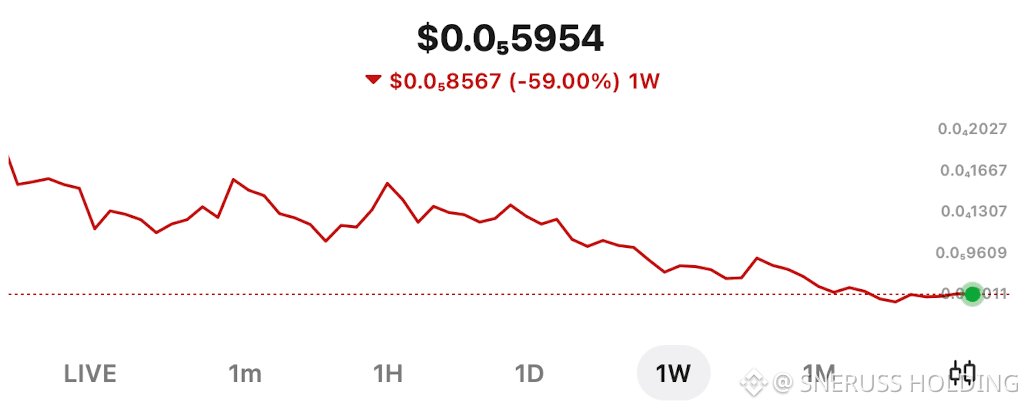
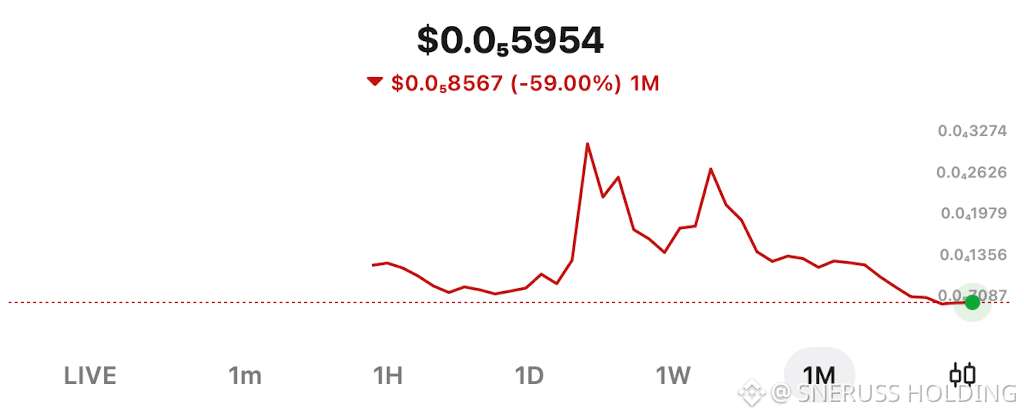
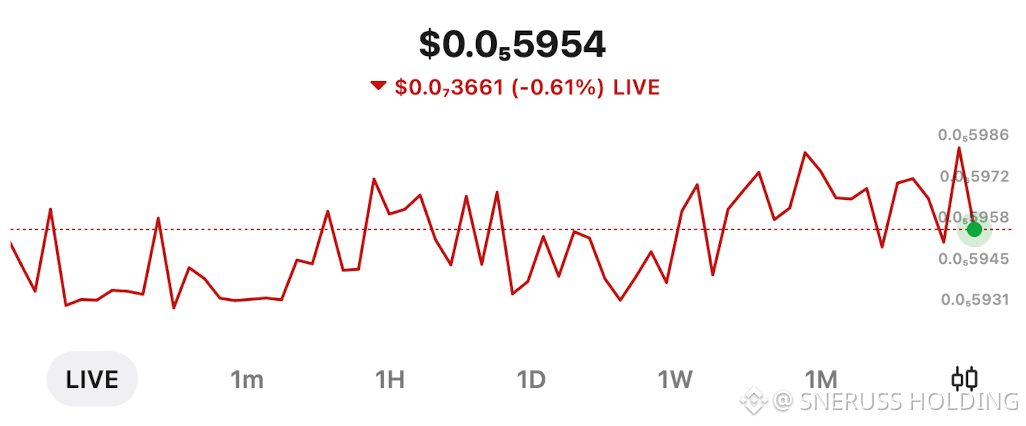
SHIB’s price has been relatively unstable, shifting by 2.8% in the past 24 hours and sending mixed signals to investors.
On the regulatory front, its classification as a commodity could open the door to institutional interest—despite still trading far below its peak.
Meanwhile, the ecosystem continues to expand, with new exchange listings helping boost its visibility and use cases.
However, short-term data shows the price stuck in a tight range, with subtle selling pressure creeping in.
14
14
Статья
Bitcoin Market Overview#MarketSentimentToday
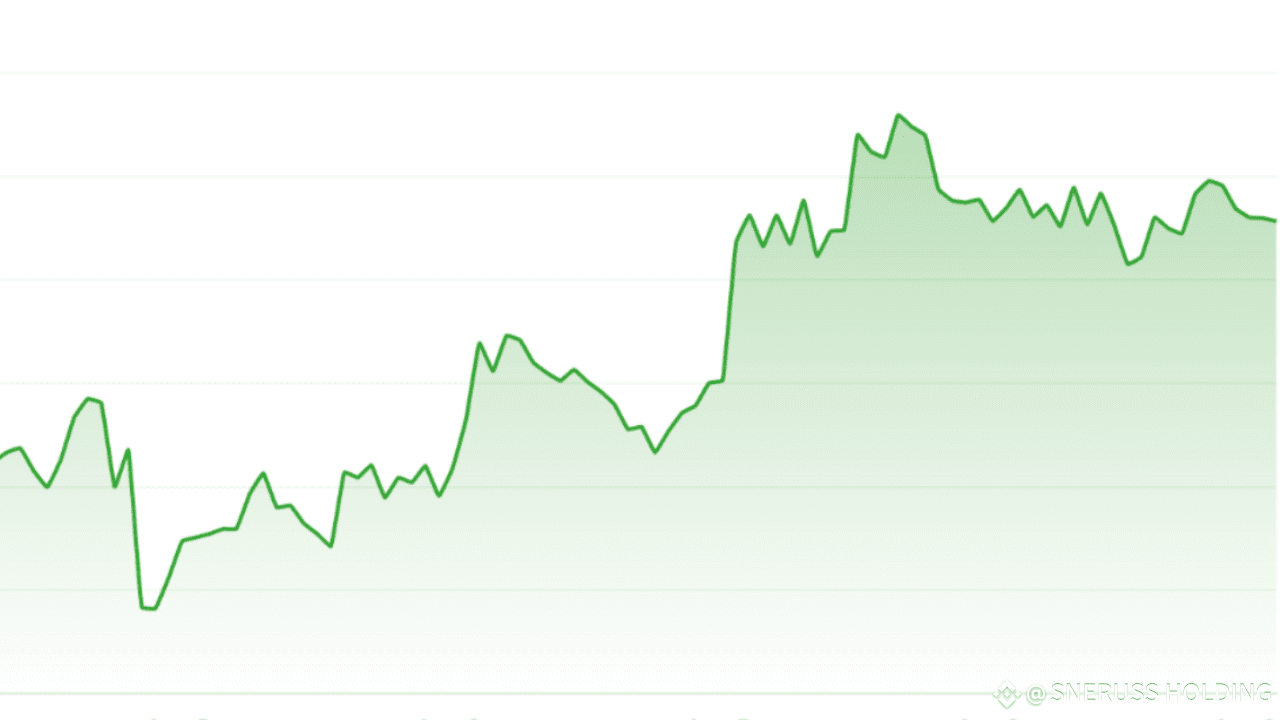
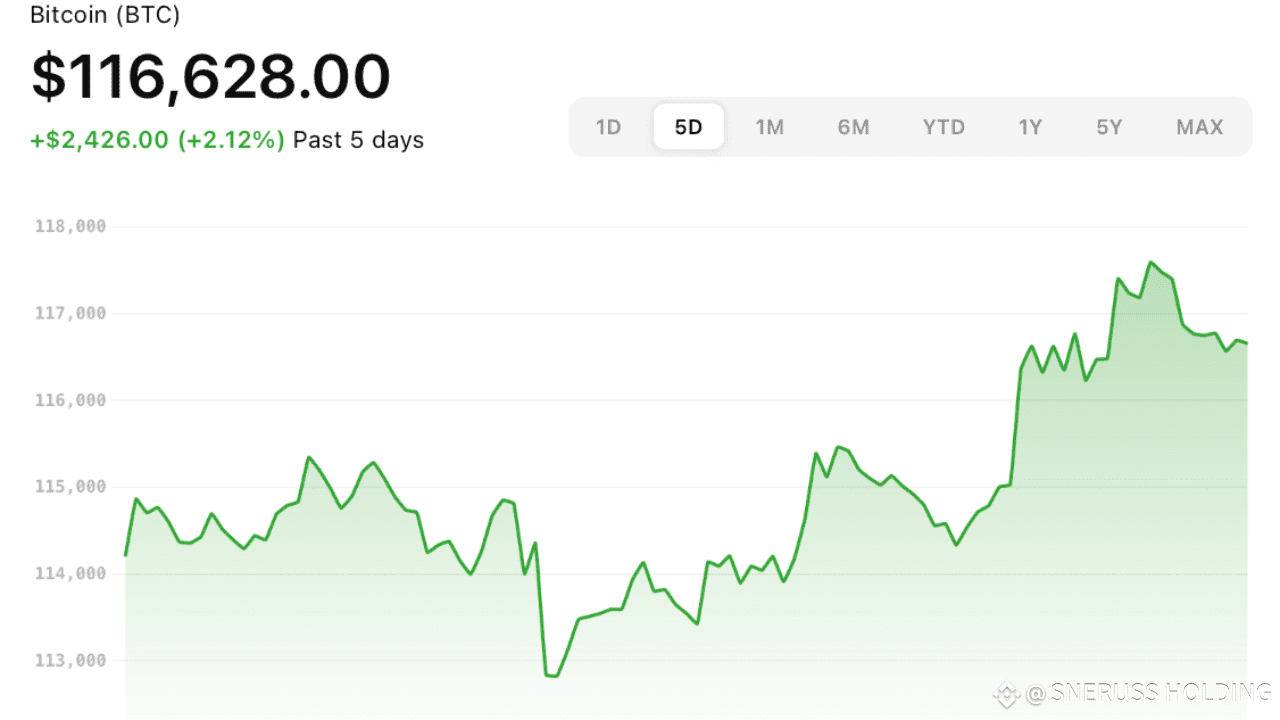
Current Price: ~$116,628
Intraday Movement: Modest gain of ~0.02%
Weekly Trend: Down ~2.1%
Year-to-Date (YTD): Up nearly 80%, near all-time highs
🔍 Key Market Drivers
🟢 Institutional & Corporate Demand
154 public companies have purchased nearly $100B in crypto this year.
BTC is being used as a hedge and a strategy to attract investors.
Signals confidence—but raises systemic risk concerns if price crashes.
📈 Regulatory Boost
A new executive order allows 401(k) retirement plans to include crypto (Bitcoin, Ethereum).
Sparked a 2% BTC rally, and 5% for ETH.
⚠️ Short-Term Volatility
Despite institutional support, BTC has pulled back ~2% this week.
Analysts see potential for a technical breakout if momentum continues.
🌐 Macro Influence
Bitcoin is tracking with broader market optimism after easing trade/tariff concerns.
Dollar weakness and global liquidity also supporting BTC.
📌 Summary
Short-Term: Sideways to slightly bullish
Mid/Long-Term: Strong upward trend supported by institutional adoption and regulatory tailwinds
Watch Zones: $114,000 support | $118,000+ resistance
Bitcoin Market Overview
#MarketSentimentToday
Current Price: ~$116,628
Intraday Movement: Modest gain of ~0.02%
Weekly Trend: Down ~2.1%
Year-to-Date (YTD): Up nearly 80%, near all-time highs
🔍 Key Market Drivers
🟢 Institutional & Corporate Demand
154 public companies have purchased nearly $100B in crypto this year.
BTC is being used as a hedge and a strategy to attract investors.
Signals confidence—but raises systemic risk concerns if price crashes.
📈 Regulatory Boost
A new executive order allows 401(k) retirement plans to include crypto (Bitcoin, Ethereum).
Sparked a 2% BTC rally, and 5% for ETH.
⚠️ Short-Term Volatility
Despite institutional support, BTC has pulled back ~2% this week.
Analysts see potential for a technical breakout if momentum continues.
🌐 Macro Influence
Bitcoin is tracking with broader market optimism after easing trade/tariff concerns.
Dollar weakness and global liquidity also supporting BTC.
📌 Summary
Short-Term: Sideways to slightly bullish
Mid/Long-Term: Strong upward trend supported by institutional adoption and regulatory tailwinds
Watch Zones: $114,000 support | $118,000+ resistance
10
169
Статья
BTC Strategy#MarketSentimentToday
Key Highlights
1. Strategic Inflows & Market Sentiment
Bitcoin steadied above $114,500 on August 7, driven by renewed inflows into crypto investment products and improving institutional sentiment. Analysts point to key technical levels that may pave the way for a near-term breakout.
2. Boosted by Political & Economic Developments
Coinciding with evolving trade policy, Bitcoin climbed approximately 0.8%, reaching around $115,003. Strength in crypto was partly linked to easing market uncertainty following tariff decisions by President Trump, which also supported gains in tech stocks and other cryptocurrencies. Barron's
3. Companies Leveraging Bitcoin for Investor Appeal
Amid financial struggles, a wide range of businesses—from semiconductors to biotechs—are turning to Bitcoin acquisitions to attract investor attention. In 2025 alone, 154 public companies have deployed nearly $100 billion into crypto, signaling a growing trend of firms positioning themselves as proxy access points for crypto exposure. However, critics caution about systemic risk vulnerability if Bitcoin’s price crashes.
4. Regulatory Landscape & Crypto’s Role in Retirement Accounts
On August 7, President Trump signed an executive order allowing 401(k) accounts to include crypto investments like Bitcoin and Ethereum. This policy switch triggered a ~2% surge in Bitcoin, pushing it above $117,300—its strongest point since late July. Ethereum also rallied by over 5%.Investors
Summary at a Glance
ThemeInsightMarket StabilityBTC is holding above $114–$115K, supported by institutional inflows.Regulatory TailwindsNew policy shifts around retirement accounts are catalyzing price strength.Corporate AdoptionCompanies are increasingly holding BTC to boost investor appeal—though not without risk.
BTC Strategy
#MarketSentimentToday
Key Highlights
1. Strategic Inflows & Market Sentiment
Bitcoin steadied above $114,500 on August 7, driven by renewed inflows into crypto investment products and improving institutional sentiment. Analysts point to key technical levels that may pave the way for a near-term breakout.
2. Boosted by Political & Economic Developments
Coinciding with evolving trade policy, Bitcoin climbed approximately 0.8%, reaching around $115,003. Strength in crypto was partly linked to easing market uncertainty following tariff decisions by President Trump, which also supported gains in tech stocks and other cryptocurrencies. Barron's
3. Companies Leveraging Bitcoin for Investor Appeal
Amid financial struggles, a wide range of businesses—from semiconductors to biotechs—are turning to Bitcoin acquisitions to attract investor attention. In 2025 alone, 154 public companies have deployed nearly $100 billion into crypto, signaling a growing trend of firms positioning themselves as proxy access points for crypto exposure. However, critics caution about systemic risk vulnerability if Bitcoin’s price crashes.
4. Regulatory Landscape & Crypto’s Role in Retirement Accounts
On August 7, President Trump signed an executive order allowing 401(k) accounts to include crypto investments like Bitcoin and Ethereum. This policy switch triggered a ~2% surge in Bitcoin, pushing it above $117,300—its strongest point since late July. Ethereum also rallied by over 5%.Investors
Summary at a Glance
ThemeInsightMarket StabilityBTC is holding above $114–$115K, supported by institutional inflows.Regulatory TailwindsNew policy shifts around retirement accounts are catalyzing price strength.Corporate AdoptionCompanies are increasingly holding BTC to boost investor appeal—though not without risk.
7
70
Войдите, чтобы посмотреть больше материала
Присоединяйтесь к пользователям криптовалют по всему миру на Binance Square
⚡️ Получайте новейшую и полезную информацию о криптоактивах.
💬 Нам доверяет крупнейшая в мире криптобиржа.
👍 Получите достоверные аналитические данные от верифицированных создателей контента.
Эл. почта/номер телефона
В тренде
WithdrawalsBack: 15 networks live
Просмотров: 1,952
63 обсуждают
Binance News Update | Binance Reopens Withdrawals for BTC, ETH, USDT and More Across 15 Networks, Meeting Its Sunday Target
Binance News
·Лайков: 33
·Просмотров: 12.9k
BinanceUpdatesProofofReservesAddresses
Просмотров: 52,992
983 обсуждают
BinanceToResumePhaseOneOfWithdrawals
Просмотров: 87,954
1,206 обсуждают