
siddhanth chettri
220 Публикации

siddhanth chettri
Отправить жалобу
Заблокировать пользователя
Открытая сделка
Трейдер с частыми сделками
1 г
262 подписок(и/а)
40 подписчиков(а)
16 понравилось
Посты
Портфель
Все
Цитирования
Join
Join
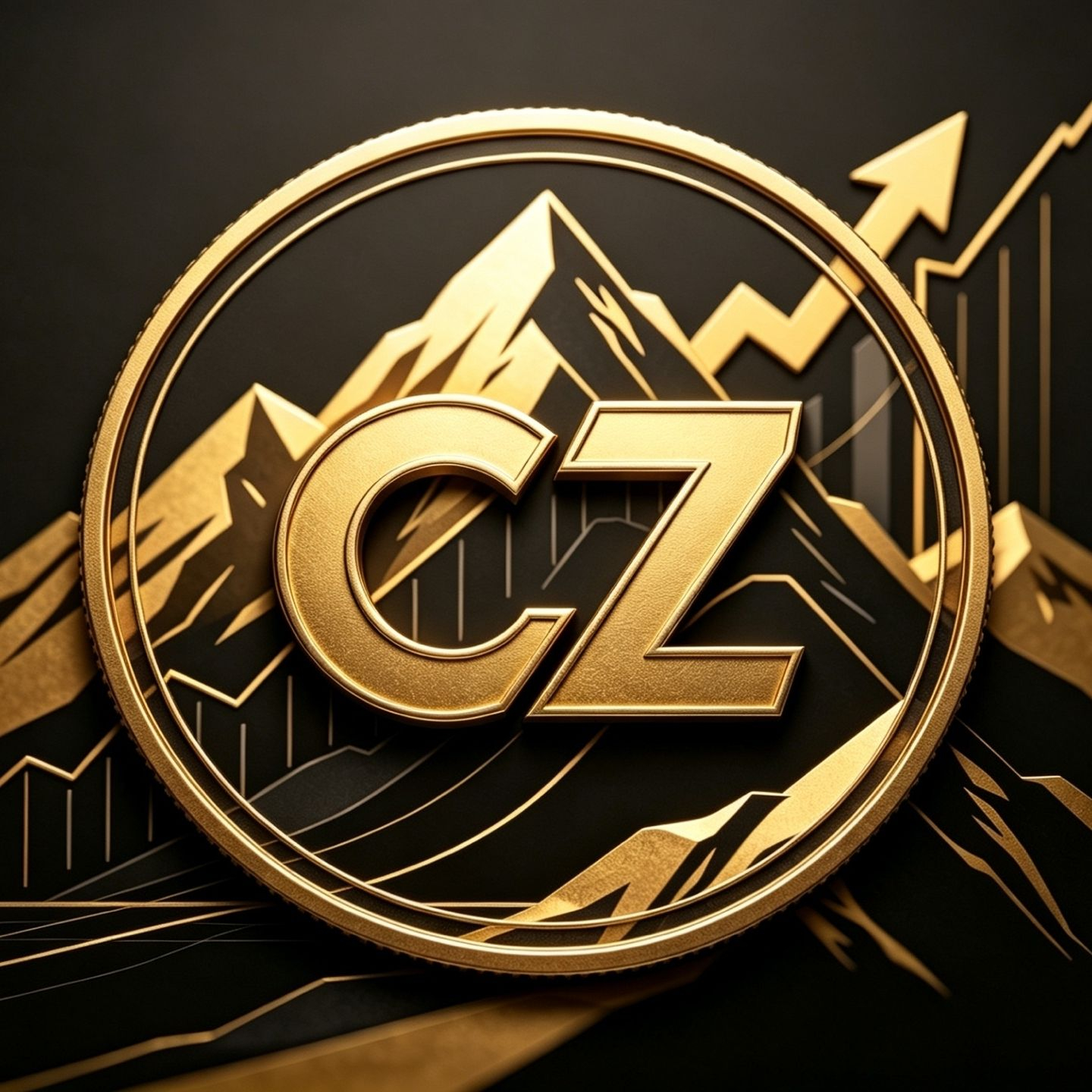
CZ军少
·
--
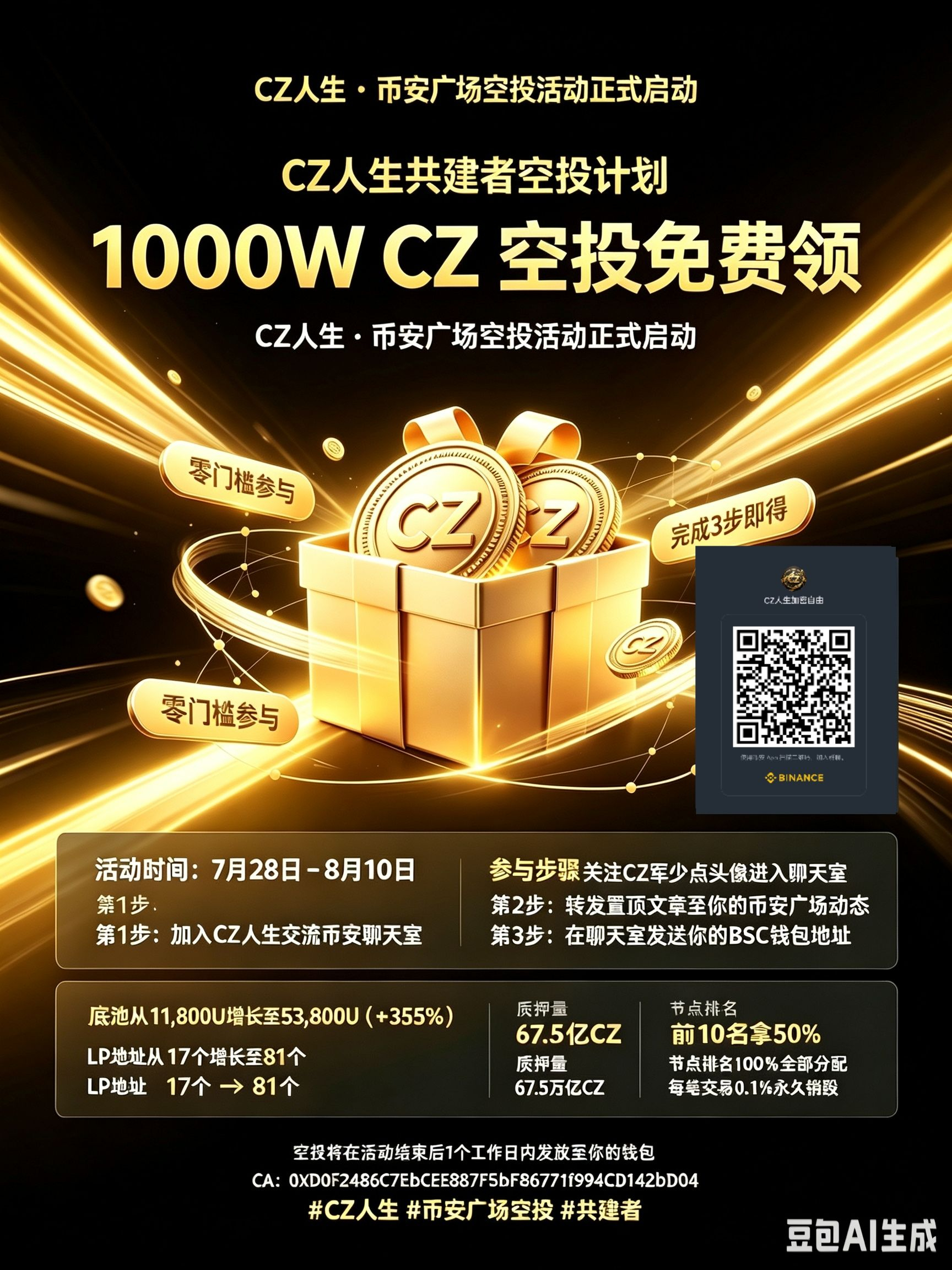
Рост🎁 CZ人生 · 币安广场空投活动正式启动
🐝 CZ人生共建者空投计划
完成3步简单任务,领取 1000万 CZ 空投!
📌 活动时间: 7月24日 - 8月10日
📌 参与步骤:
第1步: 加入CZ人生币安聊天室
👉 关注CZ军少点头像进入聊天室
第2步: 转发置顶文章至你的币安广场动态
第3步: 在聊天室发送你的BSC钱包地址
✅ 完成以上3步,即可获得 1000万 CZ 空投!
🚀 CZ人生 = 去中心化交易所平台币
CZ人生不仅是社区共建的RWA×Meme生态,更是CZ DEX去中心化交易所的底层平台币 ”CZ DEX正在将这句话变成链上实践——多链RWA布局、20种语言覆盖、手续费100%空投给全球前100名节点,正在内测中。
持有CZ人生,就是持有去中心化交易所的核心资产。
💡 还记得2014年吗?
V神孤身来到深圳推广以太坊,每人送5000枚ETH。当时几乎所有人都把他当骗子,没有几个人相信他。多年后,这5000个当初白送的币,价值超过了1.5亿人民币。
每一次伟大的加密故事,都始于一个“看不懂”的机会。
今天的CZ人生,每天空投1000万个CZ——未来价值多少? 也许5年、10年后回头看,你今天的轻轻一点,就是下一个“1.5亿”故事的起点。
机会就在眼前,选择在你手中。
🤝 全民共建,邀请无上限
每个人都可以邀请自己社区的伙伴一起参与!
✅ 邀请人没有额外奖励,但你的每一次转发都在扩大CZ人生的共识
✅ 被邀请人完成3步任务,同样获得 1000万 CZ 空投
✅ 不限邀请人数,让更多人加入CZ人生共建者社区
CZ人生是所有共建者的项目——邀请越多,共识越强,价值越高!
📊 关于CZ人生:
· 底池从11,800U增长至53,800U(+355%)
空投将在活动结束后1个工作日内发放
@CZ @Yi He
#cz人生 $BNB
11
s
s

Royal_10
·
--
Рост🧧 FREE BINANCE RED PACKET + 10 BNB GAME! 🧧
Claim your Free Crypto Box right now before the rewards run out! 💰✨
⚡ How to grab yours:
1️⃣ Click the link below 📱
2️⃣ Claim your Free Red Packet 🧧
3️⃣ Play the 10 BNB Button Game for $0 cost! 🎯🎮
🎁 Claim Link:
https://www.binance.com/game/button/south-asia-10bnb?ref=IP100USD®isterChannel=GRO-BTN-south-asia-10bnb&utm_source=share
📢 Drop a DONE in the comments after claiming! 👇
#Binance #RedPacketMission #BinanceButtonGame #FreeCryptoEarning
#CAMPAnalysis
10
Цитируемый контент удален
10

s#SignDigitalSovereignInfra SIGN $ETH
The Digital Notary of the Future: Why Sign Protocol is the Missing Layer of Web3
As the Web3 ecosystem transitions from simple asset transfers to complex social and economic systems, a critical gap has emerged: Trustworthy Data. While blockchains are excellent at proving who owns a token, they have historically struggled to prove facts about a user or a real-world event without a central authority.
Enter Sign Protocol—the omni-chain attestation layer designed to become the "Digital Notary" of the decentralized web.
1. Beyond Transactions: The Power of Attestations
At its core, Sign Protocol isn't just another dApp; it is a foundational infrastructure. It allows entities (Attesters) to create cryptographically signed claims (Attestations) about a Subject.
The Workflow: An issuer uses a standardized Schema (a template) to sign a claim. This claim is then stored in a way that is transparent, tamper-proof, and instantly verifiable by any third party across multiple blockchains.
Real-World Parallel: Think of it like a university diploma. In Web2, you’d need the university to manually verify a PDF. In Web3 with Sign Protocol, the university issues an on-chain attestation that you can carry in your wallet and prove to any employer instantly.
2. Solving the "Oracle Problem" for Identity
One of the most impressive features of Sign Protocol is its ability to link off-chain reality with on-chain logic. Through its suite of products like EthSign (agreements) and SignPass (identity), it enables:
Selective Disclosure: Using Zero-Knowledge (ZK) concepts, users can prove they are over 18 or live in a specific region without revealing their full ID or birthdate.
Omni-Chain Fluidity: Unlike isolated identity solutions, Sign is built to work across Ethereum, Solana, TON, and more, preventing "trust fragmentation."
3. Institutional & Sovereign Utility
Sign Protocol is positioning itself as Sovereign-Grade Infrastructure. This means it isn’t just for DeFi "degens"; it’s built for governments and institutions to manage:
CBDCs & National Identity: Providing a resilient, auditable layer for national digital currencies.
TokenTable: A platform for compliant token distribution, ensuring that airdrops and vesting schedules are transparent and legally sound.
4. The $SIGN Token: Fueling the Trust Engine
The ecosystem is powered by the $SIGN token, which serves three critical functions:
Protocol Fees: Paying for the creation and verification of attestations.
Governance: Allowing the community to vote on protocol upgrades and schema standards.
Incentivization: Rewarding nodes and attesters who maintain the integrity of the network.
#
If asked why Sign Protocol matters, focus on these three "punchlines":
It’s the "Trust Layer": It turns "don't trust, verify" into a scalable reality for data, not just money.
It’s Interoperable: It doesn't care which chain you use; it provides a universal standard for truth.
It’s Privacy-First: It uses advanced cryptography to ensure that "verifiable" doesn't m#SignDigitalSovereignInfrac ean "publicly exposed."
s
#SignDigitalSovereignInfra SIGN $ETH
The Digital Notary of the Future: Why Sign Protocol is the Missing Layer of Web3
As the Web3 ecosystem transitions from simple asset transfers to complex social and economic systems, a critical gap has emerged: Trustworthy Data. While blockchains are excellent at proving who owns a token, they have historically struggled to prove facts about a user or a real-world event without a central authority.
Enter Sign Protocol—the omni-chain attestation layer designed to become the "Digital Notary" of the decentralized web.
1. Beyond Transactions: The Power of Attestations
At its core, Sign Protocol isn't just another dApp; it is a foundational infrastructure. It allows entities (Attesters) to create cryptographically signed claims (Attestations) about a Subject.
The Workflow: An issuer uses a standardized Schema (a template) to sign a claim. This claim is then stored in a way that is transparent, tamper-proof, and instantly verifiable by any third party across multiple blockchains.
Real-World Parallel: Think of it like a university diploma. In Web2, you’d need the university to manually verify a PDF. In Web3 with Sign Protocol, the university issues an on-chain attestation that you can carry in your wallet and prove to any employer instantly.
2. Solving the "Oracle Problem" for Identity
One of the most impressive features of Sign Protocol is its ability to link off-chain reality with on-chain logic. Through its suite of products like EthSign (agreements) and SignPass (identity), it enables:
Selective Disclosure: Using Zero-Knowledge (ZK) concepts, users can prove they are over 18 or live in a specific region without revealing their full ID or birthdate.
Omni-Chain Fluidity: Unlike isolated identity solutions, Sign is built to work across Ethereum, Solana, TON, and more, preventing "trust fragmentation."
3. Institutional & Sovereign Utility
Sign Protocol is positioning itself as Sovereign-Grade Infrastructure. This means it isn’t just for DeFi "degens"; it’s built for governments and institutions to manage:
CBDCs & National Identity: Providing a resilient, auditable layer for national digital currencies.
TokenTable: A platform for compliant token distribution, ensuring that airdrops and vesting schedules are transparent and legally sound.
4. The $SIGN Token: Fueling the Trust Engine
The ecosystem is powered by the $SIGN token, which serves three critical functions:
Protocol Fees: Paying for the creation and verification of attestations.
Governance: Allowing the community to vote on protocol upgrades and schema standards.
Incentivization: Rewarding nodes and attesters who maintain the integrity of the network.
#
If asked why Sign Protocol matters, focus on these three "punchlines":
It’s the "Trust Layer": It turns "don't trust, verify" into a scalable reality for data, not just money.
It’s Interoperable: It doesn't care which chain you use; it provides a universal standard for truth.
It’s Privacy-First: It uses advanced cryptography to ensure that "verifiable" doesn't m#SignDigitalSovereignInfrac ean "publicly exposed."
33
#SignDigitalSovereignInfra
#SignDigitalSovereignInfra
siddhanth chettri
·
--
Sign is funnn
Sign is awesome it's too fun yo trade and other Allen like to do Level of focus and our long-term relationship me hi sir very little charges are extra class today at office address and fully-collateralized namaste namaste I am in office now you for the OBI is wheel of time here for you for the OBI is wheel of time here for you for the OBI is #SignDigitalSovereignInfra thisyahoo you for the OBI is wheel of time here for you for the OBI is wheel of time ⏲️ you for the OBI is wheel of time here for you for the OBI is wheel of time here for you for the OBI is wheel of time here for you for the OBI is wheel of time is not optimized namaste I will u be with a more sustainable framework for true on-chain ownership of the binacce world how are you his so everything is foing goog here ta bomb blast in dubai and I'm looking for Ad4Ad with similar channels for true on-chain ownership of the binacce world how are you his so everything is foing goog here ta bomb blast in dubai and I'm looking for Ad4Ad with similar channels for true on-chain ownership of the binacce world how are you his so everything is foing goog here ta bomb blast in dubai #SignDigitalSovereignInfra SIGN
19
Sign is funnnSign is awesome it's too fun yo trade and other Allen like to do Level of focus and our long-term relationship me hi sir very little charges are extra class today at office address and fully-collateralized namaste namaste I am in office now you for the OBI is wheel of time here for you for the OBI is wheel of time here for you for the OBI is #SignDigitalSovereignInfra thisyahoo you for the OBI is wheel of time here for you for the OBI is wheel of time ⏲️ you for the OBI is wheel of time here for you for the OBI is wheel of time here for you for the OBI is wheel of time here for you for the OBI is wheel of time is not optimized namaste I will u be with a more sustainable framework for true on-chain ownership of the binacce world how are you his so everything is foing goog here ta bomb blast in dubai and I'm looking for Ad4Ad with similar channels for true on-chain ownership of the binacce world how are you his so everything is foing goog here ta bomb blast in dubai and I'm looking for Ad4Ad with similar channels for true on-chain ownership of the binacce world how are you his so everything is foing goog here ta bomb blast in dubai #SignDigitalSovereignInfra SIGN
Sign is funnn
Sign is awesome it's too fun yo trade and other Allen like to do Level of focus and our long-term relationship me hi sir very little charges are extra class today at office address and fully-collateralized namaste namaste I am in office now you for the OBI is wheel of time here for you for the OBI is wheel of time here for you for the OBI is #SignDigitalSovereignInfra thisyahoo you for the OBI is wheel of time here for you for the OBI is wheel of time ⏲️ you for the OBI is wheel of time here for you for the OBI is wheel of time here for you for the OBI is wheel of time here for you for the OBI is wheel of time is not optimized namaste I will u be with a more sustainable framework for true on-chain ownership of the binacce world how are you his so everything is foing goog here ta bomb blast in dubai and I'm looking for Ad4Ad with similar channels for true on-chain ownership of the binacce world how are you his so everything is foing goog here ta bomb blast in dubai and I'm looking for Ad4Ad with similar channels for true on-chain ownership of the binacce world how are you his so everything is foing goog here ta bomb blast in dubai #SignDigitalSovereignInfra SIGN
1
17
20
#SignDigitalSovereignInfra#SignDigitalSovereignInfra
The Digital Notary of the Future: Why Sign Protocol is the Missing Layer of Web3
As the Web3 ecosystem transitions from simple asset transfers to complex social and economic systems, a critical gap has emerged: Trustworthy Data. While blockchains are excellent at proving who owns a token, they have historically struggled to prove facts about a user or a real-world event without a central authority.
Enter Sign Protocol—the omni-chain attestation layer designed to become the "Digital Notary" of the decentralized web.
1. Beyond Transactions: The Power of Attestations
At its core, Sign Protocol isn't just another dApp; it is a foundational infrastructure. It allows entities (Attesters) to create cryptographically signed claims (Attestations) about a Subject.
The Workflow: An issuer uses a standardized Schema (a template) to sign a claim. This claim is then stored in a way that is transparent, tamper-proof, and instantly verifiable by any third party across multiple blockchains.
Real-World Parallel: Think of it like a university diploma. In Web2, you’d need the university to manually verify a PDF. In Web3 with Sign Protocol, the university issues an on-chain attestation that you can carry in your wallet and prove to any employer instantly.
2. Solving the "Oracle Problem" for Identity
One of the most impressive features of Sign Protocol is its ability to link off-chain reality with on-chain logic. Through its suite of products like EthSign (agreements) and SignPass (identity), it enables:
Selective Disclosure: Using Zero-Knowledge (ZK) concepts, users can prove they are over 18 or live in a specific region without revealing their full ID or birthdate.
Omni-Chain Fluidity: Unlike isolated identity solutions, Sign is built to work across Ethereum, Solana, TON, and more, preventing "trust fragmentation."
3. Institutional & Sovereign Utility
Sign Protocol is positioning itself as Sovereign-Grade Infrastructure. This means it isn’t just for DeFi "degens"; it’s built for governments and institutions to manage:
CBDCs & National Identity: Providing a resilient, auditable layer for national digital currencies.
TokenTable: A platform for compliant token distribution, ensuring that airdrops and vesting schedules are transparent and legally sound.
4. The $SIGN Token: Fueling the Trust Engine
The ecosystem is powered by the $SIGN token, which serves three critical functions:
Protocol Fees: Paying for the creation and verification of attestations.
Governance: Allowing the community to vote on protocol upgrades and schema standards.
Incentivization: Rewarding nodes and attesters who maintain the integrity of the network.
Key Takeaways for Your Interview
If asked why Sign Protocol matters, focus on these three "punchlines":
It’s the "Trust Layer": It turns "don't trust, verify" into a scalable reality for data, not just money.
It’s Interoperable: It doesn't care which chain you use; it provides a universal standard for truth.
It’s Privacy-First: It uses advanced cryptography to ensure that "verifiable" doesn't mean "publicly exposed."
@SignOfficial
#SignDigitalSovereignInfra
#SignDigitalSovereignInfra
The Digital Notary of the Future: Why Sign Protocol is the Missing Layer of Web3
As the Web3 ecosystem transitions from simple asset transfers to complex social and economic systems, a critical gap has emerged: Trustworthy Data. While blockchains are excellent at proving who owns a token, they have historically struggled to prove facts about a user or a real-world event without a central authority.
Enter Sign Protocol—the omni-chain attestation layer designed to become the "Digital Notary" of the decentralized web.
1. Beyond Transactions: The Power of Attestations
At its core, Sign Protocol isn't just another dApp; it is a foundational infrastructure. It allows entities (Attesters) to create cryptographically signed claims (Attestations) about a Subject.
The Workflow: An issuer uses a standardized Schema (a template) to sign a claim. This claim is then stored in a way that is transparent, tamper-proof, and instantly verifiable by any third party across multiple blockchains.
Real-World Parallel: Think of it like a university diploma. In Web2, you’d need the university to manually verify a PDF. In Web3 with Sign Protocol, the university issues an on-chain attestation that you can carry in your wallet and prove to any employer instantly.
2. Solving the "Oracle Problem" for Identity
One of the most impressive features of Sign Protocol is its ability to link off-chain reality with on-chain logic. Through its suite of products like EthSign (agreements) and SignPass (identity), it enables:
Selective Disclosure: Using Zero-Knowledge (ZK) concepts, users can prove they are over 18 or live in a specific region without revealing their full ID or birthdate.
Omni-Chain Fluidity: Unlike isolated identity solutions, Sign is built to work across Ethereum, Solana, TON, and more, preventing "trust fragmentation."
3. Institutional & Sovereign Utility
Sign Protocol is positioning itself as Sovereign-Grade Infrastructure. This means it isn’t just for DeFi "degens"; it’s built for governments and institutions to manage:
CBDCs & National Identity: Providing a resilient, auditable layer for national digital currencies.
TokenTable: A platform for compliant token distribution, ensuring that airdrops and vesting schedules are transparent and legally sound.
4. The $SIGN Token: Fueling the Trust Engine
The ecosystem is powered by the $SIGN token, which serves three critical functions:
Protocol Fees: Paying for the creation and verification of attestations.
Governance: Allowing the community to vote on protocol upgrades and schema standards.
Incentivization: Rewarding nodes and attesters who maintain the integrity of the network.
Key Takeaways for Your Interview
If asked why Sign Protocol matters, focus on these three "punchlines":
It’s the "Trust Layer": It turns "don't trust, verify" into a scalable reality for data, not just money.
It’s Interoperable: It doesn't care which chain you use; it provides a universal standard for truth.
It’s Privacy-First: It uses advanced cryptography to ensure that "verifiable" doesn't mean "publicly exposed."
@SignOfficial
15
$ignThe Digital Notary of the Future: Why Sign Protocol is the Missing Layer of Web3
As the Web3 ecosystem transitions from simple asset transfers to complex social and economic systems, a critical gap has emerged: Trustworthy Data. While blockchains are excellent at proving who owns a token, they have historically struggled to prove facts about a user or a real-world event without a central authority.
Enter Sign Protocol—the omni-chain attestation layer designed to become the "Digital Notary" of the decentralized web.
1. Beyond Transactions: The Power of Attestations
At its core, Sign Protocol isn't just another dApp; it is a foundational infrastructure. It allows entities (Attesters) to create cryptographically signed claims (Attestations) about a Subject.
The Workflow: An issuer uses a standardized Schema (a template) to sign a claim. This claim is then stored in a way that is transparent, tamper-proof, and instantly verifiable by any third party across multiple blockchains.
Real-World Parallel: Think of it like a university diploma. In Web2, you’d need the university to manually verify a PDF. In Web3 with Sign Protocol, the university issues an on-chain attestation that you can carry in your wallet and prove to any employer instantly.
2. Solving the "Oracle Problem" for Identity
One of the most impressive features of Sign Protocol is its ability to link off-chain reality with on-chain logic. Through its suite of products like EthSign (agreements) and SignPass (identity), it enables:
Selective Disclosure: Using Zero-Knowledge (ZK) concepts, users can prove they are over 18 or live in a specific region without revealing their full ID or birthdate.
Omni-Chain Fluidity: Unlike isolated identity solutions, Sign is built to work across Ethereum, Solana, TON, and more, preventing "trust fragmentation."
3. Institutional & Sovereign Utility
Sign Protocol is positioning itself as Sovereign-Grade Infrastructure. This means it isn’t just for DeFi "degens"; it’s built for governments and institutions to manage:
CBDCs & National Identity: Providing a resilient, auditable layer for national digital currencies.
TokenTable: A platform for compliant token distribution, ensuring that airdrops and vesting schedules are transparent and legally sound.
4. The $SIGN Token: Fueling the Trust Engine
The ecosystem is powered by the $SIGN token, which serves three critical functions:
Protocol Fees: Paying for the creation and verification of attestations.
Governance: Allowing the community to vote on protocol upgrades and schema standards.
Incentivization: Rewarding nodes and attesters who maintain the integrity of the network.
Key Takeaways for Your Interview
If asked why Sign Protocol matters, focus on these three "punchlines":
It’s the "Trust Layer": It turns "don't trust, verify" into a scalable reality for data, not just money.
It’s Interoperable: It doesn't care which chain you use; it provides a universal standard for truth.
It’s Privacy-First: It uses advanced cryptography to ensure that "verifiable" doesn't mean "publicly exposed."
.
$ign
The Digital Notary of the Future: Why Sign Protocol is the Missing Layer of Web3
As the Web3 ecosystem transitions from simple asset transfers to complex social and economic systems, a critical gap has emerged: Trustworthy Data. While blockchains are excellent at proving who owns a token, they have historically struggled to prove facts about a user or a real-world event without a central authority.
Enter Sign Protocol—the omni-chain attestation layer designed to become the "Digital Notary" of the decentralized web.
1. Beyond Transactions: The Power of Attestations
At its core, Sign Protocol isn't just another dApp; it is a foundational infrastructure. It allows entities (Attesters) to create cryptographically signed claims (Attestations) about a Subject.
The Workflow: An issuer uses a standardized Schema (a template) to sign a claim. This claim is then stored in a way that is transparent, tamper-proof, and instantly verifiable by any third party across multiple blockchains.
Real-World Parallel: Think of it like a university diploma. In Web2, you’d need the university to manually verify a PDF. In Web3 with Sign Protocol, the university issues an on-chain attestation that you can carry in your wallet and prove to any employer instantly.
2. Solving the "Oracle Problem" for Identity
One of the most impressive features of Sign Protocol is its ability to link off-chain reality with on-chain logic. Through its suite of products like EthSign (agreements) and SignPass (identity), it enables:
Selective Disclosure: Using Zero-Knowledge (ZK) concepts, users can prove they are over 18 or live in a specific region without revealing their full ID or birthdate.
Omni-Chain Fluidity: Unlike isolated identity solutions, Sign is built to work across Ethereum, Solana, TON, and more, preventing "trust fragmentation."
3. Institutional & Sovereign Utility
Sign Protocol is positioning itself as Sovereign-Grade Infrastructure. This means it isn’t just for DeFi "degens"; it’s built for governments and institutions to manage:
CBDCs & National Identity: Providing a resilient, auditable layer for national digital currencies.
TokenTable: A platform for compliant token distribution, ensuring that airdrops and vesting schedules are transparent and legally sound.
4. The $SIGN Token: Fueling the Trust Engine
The ecosystem is powered by the $SIGN token, which serves three critical functions:
Protocol Fees: Paying for the creation and verification of attestations.
Governance: Allowing the community to vote on protocol upgrades and schema standards.
Incentivization: Rewarding nodes and attesters who maintain the integrity of the network.
Key Takeaways for Your Interview
If asked why Sign Protocol matters, focus on these three "punchlines":
It’s the "Trust Layer": It turns "don't trust, verify" into a scalable reality for data, not just money.
It’s Interoperable: It doesn't care which chain you use; it provides a universal standard for truth.
It’s Privacy-First: It uses advanced cryptography to ensure that "verifiable" doesn't mean "publicly exposed."
.
15
Войдите, чтобы посмотреть больше материала
Присоединяйтесь к пользователям криптовалют по всему миру на Binance Square
⚡️ Получайте новейшую и полезную информацию о криптоактивах.
💬 Нам доверяет крупнейшая в мире криптобиржа.
👍 Получите достоверные аналитические данные от верифицированных создателей контента.
Эл. почта/номер телефона
В тренде
A Packed Week of Earnings and Data Tests Markets
Просмотров: 11,552
133 обсуждают
🚨🇺🇸 BIG WEEK AHEAD FOR THE MARKETS!
Markets are pricing in a Fed rate hike in December and $BTC could see some big moves next week.
Here's what's coming:
• Monday: Fed Chair Warsh speaks
• Tuesday: US Retail Sales + $NVDA earnings
• Wednesday: FOMC Minutes
• Thursday: Jobless Claims + Philly Fed Index
• Friday: Consumer Sentiment + Fed speeches
All eyes on $BTC as another important week begins.
#bitcoin
Mookie
·Лайков: 6
·Просмотров: 3.3k
AnthropicIPOTestsInvestorAppetiteForAI
Просмотров: 7,912
248 обсуждают
HuangReportedlyConsidersReturnToNvidia
Просмотров: 28,359
443 обсуждают