

Shiam90
15 Публикации

Shiam90
Отправить жалобу
Заблокировать пользователя
7 подписок(и/а)
13 подписчиков(а)
22 понравилось
Посты
·
--
Guys I need your honest advice 🥺👇😭
My portfolio right now 💔
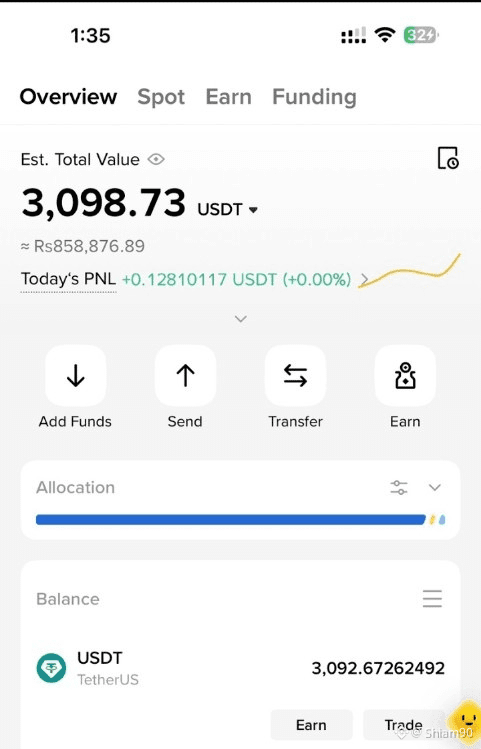
Est. Total Value: 3,098.73 $USDT
Balance: 3,092.67 $USDT
Today's PNL: +0.128 $USDT 😢
I am literally crying 😭 My whole money is stuck. No profit, no loss, just 0.12 $USDT today 💔
I lost badly before in $DOGE -72% and $SHIB -75% 💔💔 Now I am scared to buy anything 😭
I have 3092 $USDT sitting idle in my account. What should I do? 🥺
1. Sell everything and just keep $USDT? 😢
2. Buy $BTC $BNB for safe future? 🙏
3. Give $DOGE $SHIB one more chance? 💔
4. Put in Earn?
I am new, this is all my savings 😭😭 Please advise me like your little sister 🙏💚
I will follow the best advice from comments 🥺
What would you do if you were me? 😭👇
$BTC $BNB $USDT $DOGE
#BTC #BNB #CryptoPortfolio #CryptoHel #BinanceSquare #DOGE #SHİB #USDT
Guys I need your honest advice 🥺👇😭
My portfolio right now 💔
Est. Total Value: 3,098.73 $USDT
Balance: 3,092.67 $USDT
Today's PNL: +0.128 $USDT 😢
I am literally crying 😭 My whole money is stuck. No profit, no loss, just 0.12 $USDT today 💔
I lost badly before in $DOGE -72% and $SHIB -75% 💔💔 Now I am scared to buy anything 😭
I have 3092 $USDT sitting idle in my account. What should I do? 🥺
1. Sell everything and just keep $USDT? 😢
2. Buy $BTC $BNB for safe future? 🙏
3. Give $DOGE $SHIB one more chance? 💔
4. Put in Earn?
I am new, this is all my savings 😭😭 Please advise me like your little sister 🙏💚
I will follow the best advice from comments 🥺
What would you do if you were me? 😭👇
$BTC $BNB $USDT $DOGE
#BTC #BNB #CryptoPortfolio #CryptoHel #BinanceSquare #DOGE #SHİB #USDT
My portfolio right now 💔
Est. Total Value: 3,098.73 $USDT
Balance: 3,092.67 $USDT
Today's PNL: +0.128 $USDT 😢
I am literally crying 😭 My whole money is stuck. No profit, no loss, just 0.12 $USDT today 💔
I lost badly before in $DOGE -72% and $SHIB -75% 💔💔 Now I am scared to buy anything 😭
I have 3092 $USDT sitting idle in my account. What should I do? 🥺
1. Sell everything and just keep $USDT? 😢
2. Buy $BTC $BNB for safe future? 🙏
3. Give $DOGE $SHIB one more chance? 💔
4. Put in Earn?
I am new, this is all my savings 😭😭 Please advise me like your little sister 🙏💚
I will follow the best advice from comments 🥺
What would you do if you were me? 😭👇
$BTC $BNB $USDT $DOGE
#BTC #BNB #CryptoPortfolio #CryptoHel #BinanceSquare #DOGE #SHİB #USDT
26

·
--
Рост
$FET (LONG)🚀🚀🚀
Trade Plain.
Entry: $0.21 - $0.225
TP 1. 0.24
TP 2. 0.26
TP 3. 0.28
Sl. $0.20
#FET
$FET (LONG)🚀🚀🚀
Trade Plain.
Entry: $0.21 - $0.225
TP 1. 0.24
TP 2. 0.26
TP 3. 0.28
Sl. $0.20
#FET
Trade Plain.
Entry: $0.21 - $0.225
TP 1. 0.24
TP 2. 0.26
TP 3. 0.28
Sl. $0.20
#FET

42
·
--
us polymarketNew York's attorney general and Polymarket sued each other on Thursday, escalating a nationwide debate over who should regulate prediction markets and whether they violate state laws against illegal gambling, according to Reuters. The suit brought by Attorney General Letitia James in a Manhattan state court expands her push to rein in the sector, following similar cases this year against Kalshi, Coinbase Financial Markets and Gemini Titan — all accused of operating without New York State Gaming Commission licenses, encouraging problem gambling especially among those under 21, and endangering people's financial, emotional and physical health. "By running an unlicensed gambling operation, Polymarket has done more than just knowingly violate state law, they have put New Yorkers at risk," Governor Kathy Hochul said.Polymarket fought back hours later, arguing in Manhattan federal court that the federal Commodity Futures Trading Commission has exclusive authority over prediction markets. It said New York threatened irreparable harm by leaving it an "impossible choice" between obeying state regulators — undermining its federal right to operate nationwide — or continuing and facing potentially "huge" criminal liability. "This is an extraordinary assertion of state power squarely foreclosed by federal law," the company said, with Chief Legal Officer Neal Kumar saying it tried to resolve differences but state officials "preferred the media hit." New York's suit seeks civil fines, forfeiture of illegal gains and full customer restitution; Polymarket's seeks a declaration that the state cannot enforce its gambling laws against it.The case is the latest state effort against an industry that surged in popularity after outperforming pollsters in predicting Donald Trump's 2024 win over Kamala Harris, putting those states at odds with the Trump administration and the CFTC. Federal appeals courts are divided over oversight, raising the prospect the US Supreme Court may need to decide. Founded in 2020 and billing itself as the world's largest prediction market, Polymarket was out of the US market for more than three years before relaunching last December, three months after a CFTC green light. It also drew investment last year from 1789 Capital, a venture firm backed by the president's oldest son, Donald Trump Jr., who is a partner there and a Polymarket adviser; New York said the business is reportedly worth more than $20 billion. James views prediction markets as "quintessentially gambling," citing examples such as a wager on whether the Los Angeles Dodgers would beat the New York Mets by more than 1.5 runs on July 24, 2026 (the Dodgers won 4-2), and objected to Polymarket letting 18-to-20-year-olds trade despite a state minimum age of 21 for mobile sports betting.
us polymarket
New York's attorney general and Polymarket sued each other on Thursday, escalating a nationwide debate over who should regulate prediction markets and whether they violate state laws against illegal gambling, according to Reuters. The suit brought by Attorney General Letitia James in a Manhattan state court expands her push to rein in the sector, following similar cases this year against Kalshi, Coinbase Financial Markets and Gemini Titan — all accused of operating without New York State Gaming Commission licenses, encouraging problem gambling especially among those under 21, and endangering people's financial, emotional and physical health. "By running an unlicensed gambling operation, Polymarket has done more than just knowingly violate state law, they have put New Yorkers at risk," Governor Kathy Hochul said.Polymarket fought back hours later, arguing in Manhattan federal court that the federal Commodity Futures Trading Commission has exclusive authority over prediction markets. It said New York threatened irreparable harm by leaving it an "impossible choice" between obeying state regulators — undermining its federal right to operate nationwide — or continuing and facing potentially "huge" criminal liability. "This is an extraordinary assertion of state power squarely foreclosed by federal law," the company said, with Chief Legal Officer Neal Kumar saying it tried to resolve differences but state officials "preferred the media hit." New York's suit seeks civil fines, forfeiture of illegal gains and full customer restitution; Polymarket's seeks a declaration that the state cannot enforce its gambling laws against it.The case is the latest state effort against an industry that surged in popularity after outperforming pollsters in predicting Donald Trump's 2024 win over Kamala Harris, putting those states at odds with the Trump administration and the CFTC. Federal appeals courts are divided over oversight, raising the prospect the US Supreme Court may need to decide. Founded in 2020 and billing itself as the world's largest prediction market, Polymarket was out of the US market for more than three years before relaunching last December, three months after a CFTC green light. It also drew investment last year from 1789 Capital, a venture firm backed by the president's oldest son, Donald Trump Jr., who is a partner there and a Polymarket adviser; New York said the business is reportedly worth more than $20 billion. James views prediction markets as "quintessentially gambling," citing examples such as a wager on whether the Los Angeles Dodgers would beat the New York Mets by more than 1.5 runs on July 24, 2026 (the Dodgers won 4-2), and objected to Polymarket letting 18-to-20-year-olds trade despite a state minimum age of 21 for mobile sports betting.
65
·
--
Рост
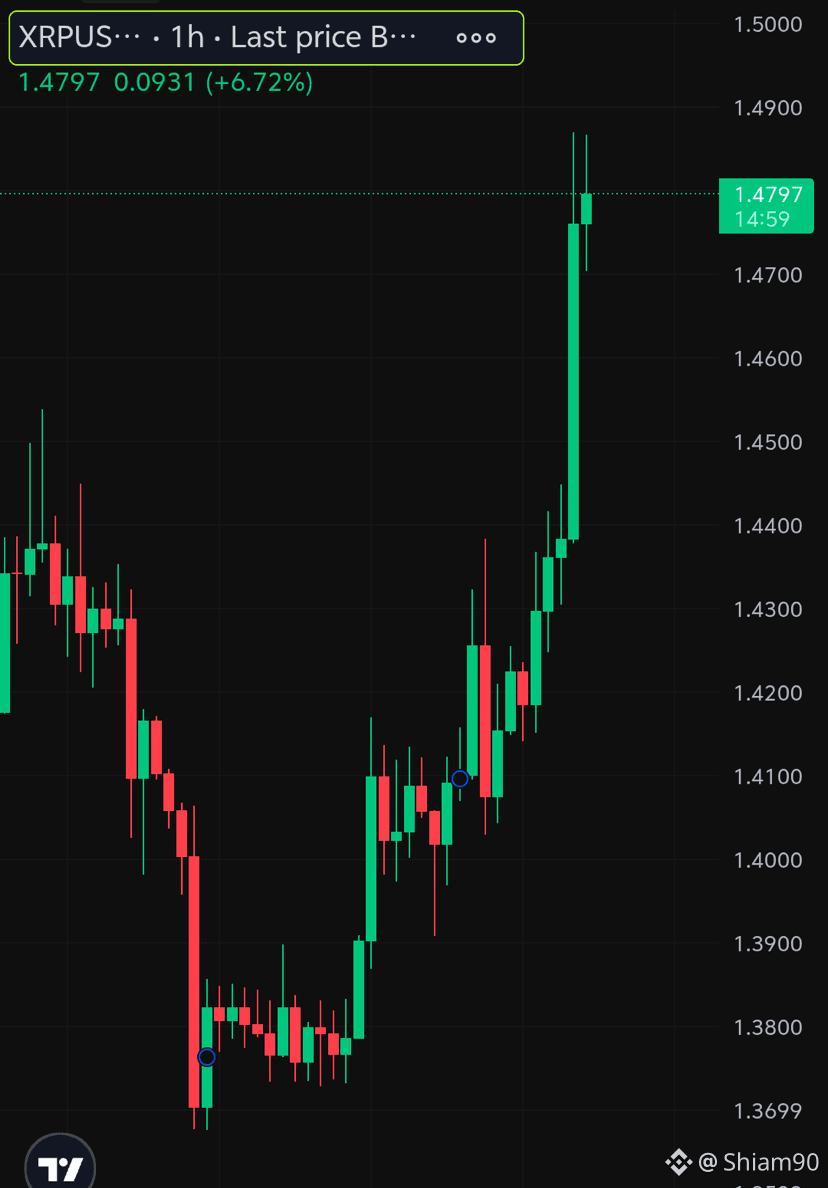
Guys, Long $XRP Now!Max 30× Leverage
XRPUSDT
Perp
1.4762
+6.6%
📍 Entry Zone: 1.45 – 1.49
🎯 TP1: 1.54
🎯 TP2: 1.60
🛑 Stop Loss: 1.34
#xrp #BTC
Guys, Long $XRP Now!Max 30× Leverage
XRPUSDT
Perp
1.4762
+6.6%
📍 Entry Zone: 1.45 – 1.49
🎯 TP1: 1.54
🎯 TP2: 1.60
🛑 Stop Loss: 1.34
#xrp #BTC
XRPUSDT
Perp
1.4762
+6.6%
📍 Entry Zone: 1.45 – 1.49
🎯 TP1: 1.54
🎯 TP2: 1.60
🛑 Stop Loss: 1.34
#xrp #BTC
1
2
32
·
--
Swnate Clarity actSenate rejected CLARITY Act cloture 49-50 on September 15, short of 60 votes required.• Final bill required audited financial statements for crypto projects raising over $25 million from the public.• Republicans said 126 Democratic amendments, including ethics provisions, were incorporated into the final text.Cloture Fails 49-50The United States Senate voted down the motion to bring the CLARITY Act to floor consideration on September 15, with the procedural tally landing at 49 in favor and 50 against — short of the 60 votes the motion required. The failure came despite a final amended text that had absorbed 126 substantive changes sought by Democrats, including most of the Tillis-Gallego ethics provisions restricting crypto holdings by sitting officials, expanded enforcement powers for state attorneys general, and a Treasury “circuit-breaker” authority to counter deposit outflows from regional banks linked to stablecoin issuance. At the center of the revised text sat an external audit requirement: issuers of so-called ancillary assets that raise more than $25 million from the public must submit audited financial statements, while issuers at or below that threshold face an independent accountant review. Disclosure obligations extend well beyond the balance sheet. Issuers must publish the team’s business experience and prior token issuance record, a twelve-month development plan with estimated costs, confirmation of sufficient liquid funding, the identities and credentials of directors and executives material to the project, insider holdings, related-party transactions, and a year-by-year account of asset trades by the issuer and its controlling parties over the four years before disclosure. Networks that have not yet certified decentralization must state their current development stage, forward schedule, and the point at which issuer or affiliate “coordinated control” ends. The bill also carved non-custodial software developers out of money-transmitter registration and granted a civil safe harbor — though not criminal immunity — for teams building appchains and tools for users of self-custody HD wallets. Democrats opposed the bill as a whole not on the audit or consumer clauses, but on the ground that conflict-of-interest restrictions covering President Donald Trump and senior officials were insufficient.Lummis and Armstrong SplitWyoming Republican Senator Cynthia Lummis, who has carried the market-structure file in the Senate, reopened the audit question after the vote. In a post on X dated September 20, she wrote: “Democrats demanded audited financial statements for any crypto project raising more than $25 million from the public. It’s in the bill,” adding that “Democrats voted against the transparency they asked for.” The final text she released alongside Agriculture Committee Chair John Boozman and Banking Committee Chair Tim Scott ahead of the vote had incorporated every one of those 126 Democratic requests; the caucus delivered zero votes in return. Coinbase chief executive Brian Armstrong’s reaction cut the other way. He called the stalled progress “disappointing,” but acknowledged that “there were some concessions we made on CLARITY that were tough to swallow,” adding that “maybe this is for the best.” Industry participants count among those concessions the $25 million audit trigger itself, the narrowed scope of developer protections under the Blockchain Regulatory Certainty Act, and stablecoin provisions touching businesses such as Coinbase’s reward programs for stablecoin holders — arrangements that function like yield farming on exchange-held balances. Negotiations over the stablecoin perimeter were contentious among Coinbase, the banking sector and lawmakers, with provisions affecting Coinbase’s stablecoin rewards business among the hardest points. Armstrong pointed away from an immediate refloat: bipartisan talks could eventually revive the bill, he said, but “we can’t wait for Congress,” and he expects the SEC and CFTC to begin writing clear rules under their existing authority. No schedule for a reintroduced or amended bill has been announced.What Remains in ForceThe operative document here is the amended bill text released by Lummis, Boozman and Scott before the vote, and what it binds is issuers of ancillary assets: the $25 million audit threshold, the four-year insider trade history and the coordinated-control exit schedule all attach to issuers, not to Bitcoin (BTC) itself or to existing exchange-traded products. The day after the failed cloture vote, none of those obligations is in force — the text remains a draft, with no reintroduction date set. Federal market structure for Bitcoin (BTC), trading near $84,000 at the time of writing, still rests on the SEC and CFTC’s existing statutory authority, which is precisely the path Armstrong said the industry would now take.
Swnate Clarity act
Senate rejected CLARITY Act cloture 49-50 on September 15, short of 60 votes required.• Final bill required audited financial statements for crypto projects raising over $25 million from the public.• Republicans said 126 Democratic amendments, including ethics provisions, were incorporated into the final text.Cloture Fails 49-50The United States Senate voted down the motion to bring the CLARITY Act to floor consideration on September 15, with the procedural tally landing at 49 in favor and 50 against — short of the 60 votes the motion required. The failure came despite a final amended text that had absorbed 126 substantive changes sought by Democrats, including most of the Tillis-Gallego ethics provisions restricting crypto holdings by sitting officials, expanded enforcement powers for state attorneys general, and a Treasury “circuit-breaker” authority to counter deposit outflows from regional banks linked to stablecoin issuance. At the center of the revised text sat an external audit requirement: issuers of so-called ancillary assets that raise more than $25 million from the public must submit audited financial statements, while issuers at or below that threshold face an independent accountant review. Disclosure obligations extend well beyond the balance sheet. Issuers must publish the team’s business experience and prior token issuance record, a twelve-month development plan with estimated costs, confirmation of sufficient liquid funding, the identities and credentials of directors and executives material to the project, insider holdings, related-party transactions, and a year-by-year account of asset trades by the issuer and its controlling parties over the four years before disclosure. Networks that have not yet certified decentralization must state their current development stage, forward schedule, and the point at which issuer or affiliate “coordinated control” ends. The bill also carved non-custodial software developers out of money-transmitter registration and granted a civil safe harbor — though not criminal immunity — for teams building appchains and tools for users of self-custody HD wallets. Democrats opposed the bill as a whole not on the audit or consumer clauses, but on the ground that conflict-of-interest restrictions covering President Donald Trump and senior officials were insufficient.Lummis and Armstrong SplitWyoming Republican Senator Cynthia Lummis, who has carried the market-structure file in the Senate, reopened the audit question after the vote. In a post on X dated September 20, she wrote: “Democrats demanded audited financial statements for any crypto project raising more than $25 million from the public. It’s in the bill,” adding that “Democrats voted against the transparency they asked for.” The final text she released alongside Agriculture Committee Chair John Boozman and Banking Committee Chair Tim Scott ahead of the vote had incorporated every one of those 126 Democratic requests; the caucus delivered zero votes in return. Coinbase chief executive Brian Armstrong’s reaction cut the other way. He called the stalled progress “disappointing,” but acknowledged that “there were some concessions we made on CLARITY that were tough to swallow,” adding that “maybe this is for the best.” Industry participants count among those concessions the $25 million audit trigger itself, the narrowed scope of developer protections under the Blockchain Regulatory Certainty Act, and stablecoin provisions touching businesses such as Coinbase’s reward programs for stablecoin holders — arrangements that function like yield farming on exchange-held balances. Negotiations over the stablecoin perimeter were contentious among Coinbase, the banking sector and lawmakers, with provisions affecting Coinbase’s stablecoin rewards business among the hardest points. Armstrong pointed away from an immediate refloat: bipartisan talks could eventually revive the bill, he said, but “we can’t wait for Congress,” and he expects the SEC and CFTC to begin writing clear rules under their existing authority. No schedule for a reintroduced or amended bill has been announced.What Remains in ForceThe operative document here is the amended bill text released by Lummis, Boozman and Scott before the vote, and what it binds is issuers of ancillary assets: the $25 million audit threshold, the four-year insider trade history and the coordinated-control exit schedule all attach to issuers, not to Bitcoin (BTC) itself or to existing exchange-traded products. The day after the failed cloture vote, none of those obligations is in force — the text remains a draft, with no reintroduction date set. Federal market structure for Bitcoin (BTC), trading near $84,000 at the time of writing, still rests on the SEC and CFTC’s existing statutory authority, which is precisely the path Armstrong said the industry would now take.
2
102

·
--

2
2
·
--
I’m genuinely excited about Bitlayer, a breakthrough Bitcoin DeFi ecosystem built on native security! Unlike typical L2s, it’s launching a trust-minimized BitVM bridge, a yield-generating YBTC asset, and a high-throughput Bitcoin Rollup — all without compromising Bitcoin’s foundational integrity. This could finally unlock real DeFi on Bitcoin with the speed of Solana and the trustlessness of Bitcoin. Let’s see how it reshapes DeFi forever.
#Bitlayer @BitlayerLabs
#bitlayer @BitlayerLabs
I’m genuinely excited about Bitlayer, a breakthrough Bitcoin DeFi ecosystem built on native security! Unlike typical L2s, it’s launching a trust-minimized BitVM bridge, a yield-generating YBTC asset, and a high-throughput Bitcoin Rollup — all without compromising Bitcoin’s foundational integrity. This could finally unlock real DeFi on Bitcoin with the speed of Solana and the trustlessness of Bitcoin. Let’s see how it reshapes DeFi forever.
#Bitlayer @BitlayerLabs
#bitlayer @BitlayerLabs
#Bitlayer @BitlayerLabs
#bitlayer @BitlayerLabs
8
13
·
--
#bitlayeLabs #bitlayers bitlayer is a awesome coin
#bitlayeLabs #bitlayers bitlayer is a awesome coin
1
1
Войдите, чтобы посмотреть больше материала
Присоединяйтесь к пользователям криптовалют по всему миру на Binance Square
⚡️ Получайте новейшую и полезную информацию о криптоактивах.
💬 Нам доверяет крупнейшая в мире криптобиржа.
👍 Получите достоверные аналитические данные от верифицированных создателей контента.
Эл. почта/номер телефона