
shaibi12
17 Публикации

shaibi12
Отправить жалобу
Заблокировать пользователя
A freelance blogger
Открытая сделка

Владелец BTC
Трейдер с регулярными сделками
4.4 г
16 подписок(и/а)
36 подписчиков(а)
24 понравилось
Посты
Портфель
Все
Цитирования
Видео
·
--
#SP500FuturesFall (pair with #BrentDrops1.87%)
Stocks wobbling, oil sliding — the macro is pulling crypto two ways at once.
S&P 500 futures slipped as Fed Chair Warsh turned hawkish, September rate-hike odds climbed, and global bond yields punched to multi-decade highs (the 30-year near 5.3%). Classic risk-off — and crypto trades as a risk asset, so BTC and ETH feel that gravity first.
Meanwhile Brent is down (~-2% today, 5%+ on the week) as the Iran standoff shifts from "war and supply shock" to sanctions — bleeding the fear premium out of oil.
The nuance most miss: those two moves point opposite ways for crypto. Higher yields = short-term pressure. But cheaper oil = cooling inflation, which could ease the Fed later — and the debasement backdrop still favors hard assets.
Risk-off dip to fade, or does a hawkish Fed keep a lid on crypto into September? 👇
#SP500FuturesFall #BrentDrops1.87% #Bitcoin #CryptoMarkets
#SP500FuturesFall (pair with #BrentDrops1.87%)
Stocks wobbling, oil sliding — the macro is pulling crypto two ways at once.
S&P 500 futures slipped as Fed Chair Warsh turned hawkish, September rate-hike odds climbed, and global bond yields punched to multi-decade highs (the 30-year near 5.3%). Classic risk-off — and crypto trades as a risk asset, so BTC and ETH feel that gravity first.
Meanwhile Brent is down (~-2% today, 5%+ on the week) as the Iran standoff shifts from "war and supply shock" to sanctions — bleeding the fear premium out of oil.
The nuance most miss: those two moves point opposite ways for crypto. Higher yields = short-term pressure. But cheaper oil = cooling inflation, which could ease the Fed later — and the debasement backdrop still favors hard assets.
Risk-off dip to fade, or does a hawkish Fed keep a lid on crypto into September? 👇
#SP500FuturesFall #BrentDrops1.87% #Bitcoin #CryptoMarkets
Stocks wobbling, oil sliding — the macro is pulling crypto two ways at once.
S&P 500 futures slipped as Fed Chair Warsh turned hawkish, September rate-hike odds climbed, and global bond yields punched to multi-decade highs (the 30-year near 5.3%). Classic risk-off — and crypto trades as a risk asset, so BTC and ETH feel that gravity first.
Meanwhile Brent is down (~-2% today, 5%+ on the week) as the Iran standoff shifts from "war and supply shock" to sanctions — bleeding the fear premium out of oil.
The nuance most miss: those two moves point opposite ways for crypto. Higher yields = short-term pressure. But cheaper oil = cooling inflation, which could ease the Fed later — and the debasement backdrop still favors hard assets.
Risk-off dip to fade, or does a hawkish Fed keep a lid on crypto into September? 👇
#SP500FuturesFall #BrentDrops1.87% #Bitcoin #CryptoMarkets
16
·
--
S&P 500 futures slipped as Fed Chair Warsh turned hawkish, September rate-hike odds climbed, and global bond yields punched to multi-decade highs (the 30-year near 5.3%).
S&P 500 futures slipped as Fed Chair Warsh turned hawkish, September rate-hike odds climbed, and global bond yields punched to multi-decade highs (the 30-year near 5.3%).
3
·
--
S&P 500 futures slipped as Fed Chair Warsh turned hawkish, September rate-hike odds climbed, and global bond yields punched to multi-decade highs (the 30-year near 5.3%).
S&P 500 futures slipped as Fed Chair Warsh turned hawkish, September rate-hike odds climbed, and global bond yields punched to multi-decade highs (the 30-year near 5.3%).
1
·
--
#GoldNearsThreeMonthHigh (bridge → Bitcoin)
Gold just hit a 3-month high near $4,700 — its best month since 1999 — and it's flashing a signal every Bitcoiner should watch.
The driver isn't jewelry demand. It's the debasement trade. After the US Treasury doubled its buybacks of long-dated bonds, markets got nervous about fiscal policy and the dollar — pushing the dollar toward a 3-month low and sending capital into hard, scarce assets.
Here's the crypto angle: gold and Bitcoin are two expressions of the same thesis. When confidence in fiat wobbles under ballooning debt, capped-supply assets get bid. Grayscale has been making exactly this case for BTC.
The catch? A hawkish Warsh Fed cuts both ways — rising rate-hike odds are why gold pulled back late last week, and Bitcoin feels that same gravity.
So — is BTC "digital gold" riding the same tailwind, or does a hawkish Fed cap both for now? 👇
#GoldNearsThreeMonthHigh #Bitcoin #BTC #DebasementTrade
#GoldNearsThreeMonthHigh (bridge → Bitcoin)
Gold just hit a 3-month high near $4,700 — its best month since 1999 — and it's flashing a signal every Bitcoiner should watch.
The driver isn't jewelry demand. It's the debasement trade. After the US Treasury doubled its buybacks of long-dated bonds, markets got nervous about fiscal policy and the dollar — pushing the dollar toward a 3-month low and sending capital into hard, scarce assets.
Here's the crypto angle: gold and Bitcoin are two expressions of the same thesis. When confidence in fiat wobbles under ballooning debt, capped-supply assets get bid. Grayscale has been making exactly this case for BTC.
The catch? A hawkish Warsh Fed cuts both ways — rising rate-hike odds are why gold pulled back late last week, and Bitcoin feels that same gravity.
So — is BTC "digital gold" riding the same tailwind, or does a hawkish Fed cap both for now? 👇
#GoldNearsThreeMonthHigh #Bitcoin #BTC #DebasementTrade
Gold just hit a 3-month high near $4,700 — its best month since 1999 — and it's flashing a signal every Bitcoiner should watch.
The driver isn't jewelry demand. It's the debasement trade. After the US Treasury doubled its buybacks of long-dated bonds, markets got nervous about fiscal policy and the dollar — pushing the dollar toward a 3-month low and sending capital into hard, scarce assets.
Here's the crypto angle: gold and Bitcoin are two expressions of the same thesis. When confidence in fiat wobbles under ballooning debt, capped-supply assets get bid. Grayscale has been making exactly this case for BTC.
The catch? A hawkish Warsh Fed cuts both ways — rising rate-hike odds are why gold pulled back late last week, and Bitcoin feels that same gravity.
So — is BTC "digital gold" riding the same tailwind, or does a hawkish Fed cap both for now? 👇
#GoldNearsThreeMonthHigh #Bitcoin #BTC #DebasementTrade
18
·
--
#TetherEndsUruguayBitcoinMining
Tether just walked away from a $120M Bitcoin mining bet — but if you think Tether is quitting mining, you've got the story backwards.
The facts: Tether abandoned two mining sites in Uruguay after a dispute with state utility UTE over power. Tether read its contract as a minimum electricity guarantee; UTE treated it as a hard cap. Bills went unpaid, power was cut in July 2025, and operations shut by November.
The real takeaways:
This is a mining-economics story. Post-2024-halving, thin margins punish anyone without cheap, reliable power. Bitcoin mining is "hypermobile" — plug-and-play rigs move the moment energy terms sour. Tether isn't retreating: $2B+ across 15+ sites, open-source MiningOS, stakes in Bitdeer and Antalpha, and a fresh Brazil pilot.
Energy access — not hashrate — is the real moat in mining now.
Does mining's future belong to whoever controls the cheapest power? 👇
#TetherEndsUruguayBitcoinMining #Bitcoin #BTC #Mining
#TetherEndsUruguayBitcoinMining
Tether just walked away from a $120M Bitcoin mining bet — but if you think Tether is quitting mining, you've got the story backwards.
The facts: Tether abandoned two mining sites in Uruguay after a dispute with state utility UTE over power. Tether read its contract as a minimum electricity guarantee; UTE treated it as a hard cap. Bills went unpaid, power was cut in July 2025, and operations shut by November.
The real takeaways:
This is a mining-economics story. Post-2024-halving, thin margins punish anyone without cheap, reliable power. Bitcoin mining is "hypermobile" — plug-and-play rigs move the moment energy terms sour. Tether isn't retreating: $2B+ across 15+ sites, open-source MiningOS, stakes in Bitdeer and Antalpha, and a fresh Brazil pilot.
Energy access — not hashrate — is the real moat in mining now.
Does mining's future belong to whoever controls the cheapest power? 👇
#TetherEndsUruguayBitcoinMining #Bitcoin #BTC #Mining
Tether just walked away from a $120M Bitcoin mining bet — but if you think Tether is quitting mining, you've got the story backwards.
The facts: Tether abandoned two mining sites in Uruguay after a dispute with state utility UTE over power. Tether read its contract as a minimum electricity guarantee; UTE treated it as a hard cap. Bills went unpaid, power was cut in July 2025, and operations shut by November.
The real takeaways:
This is a mining-economics story. Post-2024-halving, thin margins punish anyone without cheap, reliable power. Bitcoin mining is "hypermobile" — plug-and-play rigs move the moment energy terms sour. Tether isn't retreating: $2B+ across 15+ sites, open-source MiningOS, stakes in Bitdeer and Antalpha, and a fresh Brazil pilot.
Energy access — not hashrate — is the real moat in mining now.
Does mining's future belong to whoever controls the cheapest power? 👇
#TetherEndsUruguayBitcoinMining #Bitcoin #BTC #Mining
12
·
--
Binance Square — 4 Ready-to-Post Drafts (trending tags)
Standard post length (~150 words). Post while the tags are hot. Copy each block as-is.
POST 1 — #SolanaGovernanceVoteToDoubleDeflationRate (your #1)
Solana just made history — and most people are misreading it.
For the first time ever, SOL holders set monetary policy on-chain. The headline proposal (SGP-0002 / SIMD-550) passed by a razor-thin 67.00% — barely clearing the 66.67% bar after a last-minute Kraken flip tipped the vote.
What it actually does: doubles Solana's disinflation rate from 15% to 30%, pulling the network to its 1.5% terminal inflation floor by ~2029 instead of 2032 — roughly 18.9M fewer SOL issued over six years.
Three things the repost crowd is getting wrong:
It's disinflation, not deflation — issuance still grows, just slower. It's not live yet. Devs need ~4.5 months to activate the feature gate; nothing changes today. Less issuance = lower staking yields — exactly why Solana Company voted against it.
SOL's already up ~44% in August with RSI screaming overbought. Bullish supply cut, or fully priced in? 👇
#SolanaGovernanceVoteToDoubleDeflationRate #SOL #Solana #CryptoNews
Binance Square — 4 Ready-to-Post Drafts (trending tags)
Standard post length (~150 words). Post while the tags are hot. Copy each block as-is.
POST 1 — #SolanaGovernanceVoteToDoubleDeflationRate (your #1)
Solana just made history — and most people are misreading it.
For the first time ever, SOL holders set monetary policy on-chain. The headline proposal (SGP-0002 / SIMD-550) passed by a razor-thin 67.00% — barely clearing the 66.67% bar after a last-minute Kraken flip tipped the vote.
What it actually does: doubles Solana's disinflation rate from 15% to 30%, pulling the network to its 1.5% terminal inflation floor by ~2029 instead of 2032 — roughly 18.9M fewer SOL issued over six years.
Three things the repost crowd is getting wrong:
It's disinflation, not deflation — issuance still grows, just slower. It's not live yet. Devs need ~4.5 months to activate the feature gate; nothing changes today. Less issuance = lower staking yields — exactly why Solana Company voted against it.
SOL's already up ~44% in August with RSI screaming overbought. Bullish supply cut, or fully priced in? 👇
#SolanaGovernanceVoteToDoubleDeflationRate #SOL #Solana #CryptoNews
Standard post length (~150 words). Post while the tags are hot. Copy each block as-is.
POST 1 — #SolanaGovernanceVoteToDoubleDeflationRate (your #1)
Solana just made history — and most people are misreading it.
For the first time ever, SOL holders set monetary policy on-chain. The headline proposal (SGP-0002 / SIMD-550) passed by a razor-thin 67.00% — barely clearing the 66.67% bar after a last-minute Kraken flip tipped the vote.
What it actually does: doubles Solana's disinflation rate from 15% to 30%, pulling the network to its 1.5% terminal inflation floor by ~2029 instead of 2032 — roughly 18.9M fewer SOL issued over six years.
Three things the repost crowd is getting wrong:
It's disinflation, not deflation — issuance still grows, just slower. It's not live yet. Devs need ~4.5 months to activate the feature gate; nothing changes today. Less issuance = lower staking yields — exactly why Solana Company voted against it.
SOL's already up ~44% in August with RSI screaming overbought. Bullish supply cut, or fully priced in? 👇
#SolanaGovernanceVoteToDoubleDeflationRate #SOL #Solana #CryptoNews
38
·
--
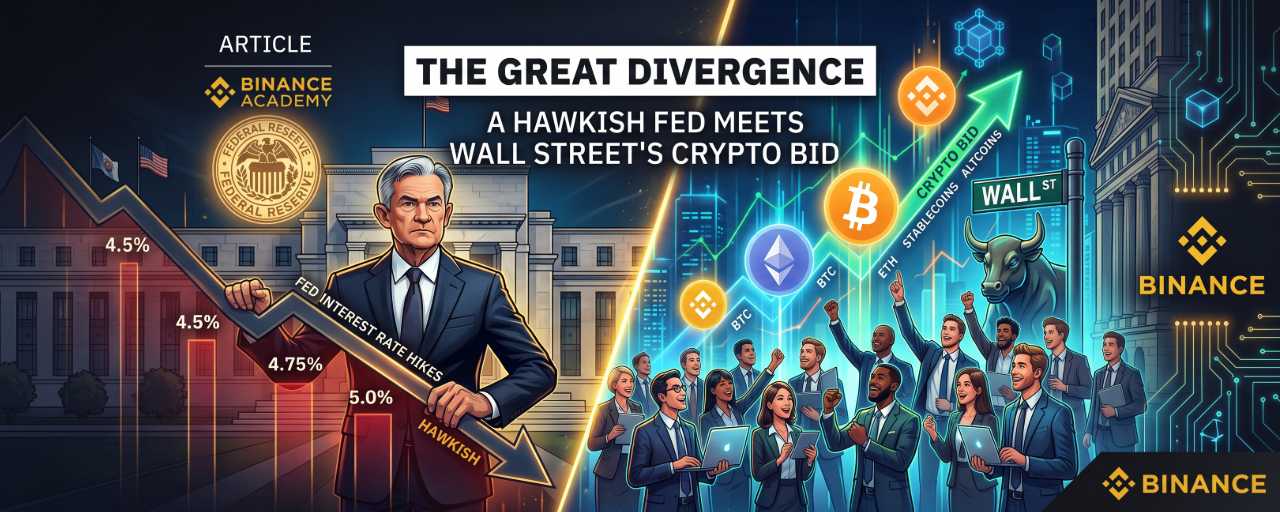
Статья
The Great Divergence: A Hawkish Fed Meets Wall Street's Crypto BidMarkets are pulling in two directions at once. Here's what the latest news flow is really telling us.
If you only watched the price ticker this week, you'd think crypto was on the back foot. If you only watched the flows, you'd think institutions couldn't buy fast enough. Both are true — and the gap between them is the single most important story in the market right now.
On one side: a newly hawkish Federal Reserve, rising rate-hike odds, and a broad risk-off mood dragging Bitcoin and Ether lower. On the other: record ETF inflows, major brokerages expanding their crypto menus, and Wall Street names quietly building positions. Let's unpack the split.
The Macro Squeeze: Warsh Says "We Have Work to Do"
The pressure is coming straight from the top. Fed Chair Kevin Warsh used his first Jackson Hole keynote to plant inflation firmly at the center of the Fed's near-term agenda, telling the Kansas City Fed's symposium that the responsibility for the last several months "is ours." The tone was more hawkish than markets expected — PCE running at 4.1% on a six-month basis, financial conditions described as "not restrictive," and a flat-out rejection of forward guidance.
The reaction was immediate. Odds of a September rate hike jumped to roughly 57%, and Wall Street's three major indexes closed lower on the Friday, with semiconductor names like Nvidia and Intel dragging the Nasdaq down. A U.S. crypto-linked equity index fell more than 8% on the week. Rising real yields — climbing faster than nominal and breakeven rates — suggest bond markets actually believe the Fed's inflation resolve, which is the opposite of what risk assets want to hear.
The wildcard is jobs. Bloomberg Chief Economist Anna Wong flagged that next week's non-farm payrolls could come in weak — even negative — and noted there's no modern precedent for the Fed hiking after two negative payroll prints. In other words, the September decision may hinge on a single data release. Layer on the IMF nudging its 2026 global inflation forecast up to 4.7% as the Iran–Israel conflict disrupts energy supply, and the macro picture is genuinely tense.
But the Flows Tell a Different Story — and They're Rotating
Here's where it gets interesting. Even as prices softened, capital didn't leave crypto. It rotated.
Bitcoin ETFs cooled. U.S. spot Bitcoin ETFs snapped a nine-day inflow streak with a net outflow of about $201.9 million, according to Farside data — a pause, not a stampede for the exits.Ether ETFs kept grinding higher. Spot Ethereum ETFs went the other way, pulling in roughly $102.1 million for a 12th straight day of inflows — quiet, persistent accumulation.XRP stole the show. Spot XRP ETFs drew about $110.49 million for the week ending August 28 — their strongest weekly haul of 2026 and more than double the prior record, with volume hitting around $363 million, per BeInCrypto.
When one asset sees outflows while two others set records in the same week, that's not fear — that's money reshuffling between narratives while staying firmly on the table.
Institutions Aren't Waiting for a Bottom
The clearest signal that this is a "buy the infrastructure" moment rather than a retreat is who's showing up.
Charles Schwab plans to expand its direct crypto trading beyond Bitcoin and Ether to include Solana, Avalanche, and Chainlink — a mainstream brokerage widening retail access at the exact moment sentiment is shaky. Meanwhile, 13F filings revealed that Goldman Sachs is the largest known holder of spot Solana ETF exposure, at around $88.1 million. When a hawkish Fed is spooking traders and a bulge-bracket bank is still the biggest name on a Solana ETF cap table, the long-term conviction thesis speaks for itself.
That conviction has a macro rationale, too. Grayscale's research team argues the so-called "debasement trade" is benefiting Bitcoin, with research head Zach Pandl pointing to unchecked government debt growth weakening confidence in fiat currencies. It's the same logic pushing COMEX gold net-long positions to an 11-month high. In a world of sticky inflation and ballooning deficits, hard-capped assets get a second look.
Under the Hood: Quantum, RWAs, and the Usual Risks
A few structural stories worth keeping on your radar:
Quantum-resistance is moving from theory to testnet. Ripple confirmed a four-stage quantum-resistant migration plan for the XRP Ledger, aiming to finish before quantum computers become a real threat. Separately, Starkware said an anti-quantum Bitcoin transaction was mined on mainnet on August 26 without any soft fork, hard fork, or consensus change — an early sign the industry is taking the long-tail risk seriously.
Real-world assets keep building, unevenly. Stellar-based tokenized RWAs topped $3 billion in July, though the network's own TVL lagged at around $213 million — a reminder that "RWA value" and on-chain DeFi depth don't always move together.
And the risks are as loud as ever. A Solana meme coin called GOLD crashed more than 90% in minutes, with one buyer reportedly losing over $62,000 in seven minutes. Afghanistan's Taliban government has reportedly banned Bitcoin and crypto trading nationwide. And Coinglass data shows Ether sitting on a knife's edge — roughly $988 million in short liquidations would trigger if ETH breaks above $2,555, with heavy long liquidations lurking below $2,320. Volatility cuts both ways.
The Bottom Line: What to Actually Watch
Strip away the noise and the setup is clean. The macro is the near-term risk — a hawkish Warsh Fed and next week's payrolls print could set the tone for September and beyond. The flows and institutions are the longer-term signal — ETF demand is rotating rather than fleeing, and serious money keeps building access and exposure.
The three things worth watching over the next two weeks:
Payrolls, then the Fed. A weak jobs number could flip the hike narrative fast, per Anna Wong's read.ETF flow direction. Does Bitcoin's outflow become a trend, or do the ETH and XRP inflow streaks pull it back?Key levels. Traders are eyeing a Bitcoin pullback zone near $75,500 as a potential opportunity, while ETH's $2,320–$2,555 band is a liquidation battleground.
Fear and conviction rarely sit this close together. When they do, discipline beats prediction — position for volatility, and let the data lead.
This article is a market-news summary for informational and educational purposes only and is not financial, investment, or trading advice. It reflects reporting and data circulating on Binance Square and cited outlets as of late August 2026; figures and conditions change quickly. Cryptocurrency is highly volatile and you may lose your entire investment. Always do your own research (DYOR) and consider consulting a licensed professional before making decisions.
#Bitcoin #CryptoNews #FederalReserve #CryptoETF #Binance
The Great Divergence: A Hawkish Fed Meets Wall Street's Crypto Bid
Markets are pulling in two directions at once. Here's what the latest news flow is really telling us.
If you only watched the price ticker this week, you'd think crypto was on the back foot. If you only watched the flows, you'd think institutions couldn't buy fast enough. Both are true — and the gap between them is the single most important story in the market right now.
On one side: a newly hawkish Federal Reserve, rising rate-hike odds, and a broad risk-off mood dragging Bitcoin and Ether lower. On the other: record ETF inflows, major brokerages expanding their crypto menus, and Wall Street names quietly building positions. Let's unpack the split.
The Macro Squeeze: Warsh Says "We Have Work to Do"
The pressure is coming straight from the top. Fed Chair Kevin Warsh used his first Jackson Hole keynote to plant inflation firmly at the center of the Fed's near-term agenda, telling the Kansas City Fed's symposium that the responsibility for the last several months "is ours." The tone was more hawkish than markets expected — PCE running at 4.1% on a six-month basis, financial conditions described as "not restrictive," and a flat-out rejection of forward guidance.
The reaction was immediate. Odds of a September rate hike jumped to roughly 57%, and Wall Street's three major indexes closed lower on the Friday, with semiconductor names like Nvidia and Intel dragging the Nasdaq down. A U.S. crypto-linked equity index fell more than 8% on the week. Rising real yields — climbing faster than nominal and breakeven rates — suggest bond markets actually believe the Fed's inflation resolve, which is the opposite of what risk assets want to hear.
The wildcard is jobs. Bloomberg Chief Economist Anna Wong flagged that next week's non-farm payrolls could come in weak — even negative — and noted there's no modern precedent for the Fed hiking after two negative payroll prints. In other words, the September decision may hinge on a single data release. Layer on the IMF nudging its 2026 global inflation forecast up to 4.7% as the Iran–Israel conflict disrupts energy supply, and the macro picture is genuinely tense.
But the Flows Tell a Different Story — and They're Rotating
Here's where it gets interesting. Even as prices softened, capital didn't leave crypto. It rotated.
Bitcoin ETFs cooled. U.S. spot Bitcoin ETFs snapped a nine-day inflow streak with a net outflow of about $201.9 million, according to Farside data — a pause, not a stampede for the exits.Ether ETFs kept grinding higher. Spot Ethereum ETFs went the other way, pulling in roughly $102.1 million for a 12th straight day of inflows — quiet, persistent accumulation.XRP stole the show. Spot XRP ETFs drew about $110.49 million for the week ending August 28 — their strongest weekly haul of 2026 and more than double the prior record, with volume hitting around $363 million, per BeInCrypto.
When one asset sees outflows while two others set records in the same week, that's not fear — that's money reshuffling between narratives while staying firmly on the table.
Institutions Aren't Waiting for a Bottom
The clearest signal that this is a "buy the infrastructure" moment rather than a retreat is who's showing up.
Charles Schwab plans to expand its direct crypto trading beyond Bitcoin and Ether to include Solana, Avalanche, and Chainlink — a mainstream brokerage widening retail access at the exact moment sentiment is shaky. Meanwhile, 13F filings revealed that Goldman Sachs is the largest known holder of spot Solana ETF exposure, at around $88.1 million. When a hawkish Fed is spooking traders and a bulge-bracket bank is still the biggest name on a Solana ETF cap table, the long-term conviction thesis speaks for itself.
That conviction has a macro rationale, too. Grayscale's research team argues the so-called "debasement trade" is benefiting Bitcoin, with research head Zach Pandl pointing to unchecked government debt growth weakening confidence in fiat currencies. It's the same logic pushing COMEX gold net-long positions to an 11-month high. In a world of sticky inflation and ballooning deficits, hard-capped assets get a second look.
Under the Hood: Quantum, RWAs, and the Usual Risks
A few structural stories worth keeping on your radar:
Quantum-resistance is moving from theory to testnet. Ripple confirmed a four-stage quantum-resistant migration plan for the XRP Ledger, aiming to finish before quantum computers become a real threat. Separately, Starkware said an anti-quantum Bitcoin transaction was mined on mainnet on August 26 without any soft fork, hard fork, or consensus change — an early sign the industry is taking the long-tail risk seriously.
Real-world assets keep building, unevenly. Stellar-based tokenized RWAs topped $3 billion in July, though the network's own TVL lagged at around $213 million — a reminder that "RWA value" and on-chain DeFi depth don't always move together.
And the risks are as loud as ever. A Solana meme coin called GOLD crashed more than 90% in minutes, with one buyer reportedly losing over $62,000 in seven minutes. Afghanistan's Taliban government has reportedly banned Bitcoin and crypto trading nationwide. And Coinglass data shows Ether sitting on a knife's edge — roughly $988 million in short liquidations would trigger if ETH breaks above $2,555, with heavy long liquidations lurking below $2,320. Volatility cuts both ways.
The Bottom Line: What to Actually Watch
Strip away the noise and the setup is clean. The macro is the near-term risk — a hawkish Warsh Fed and next week's payrolls print could set the tone for September and beyond. The flows and institutions are the longer-term signal — ETF demand is rotating rather than fleeing, and serious money keeps building access and exposure.
The three things worth watching over the next two weeks:
Payrolls, then the Fed. A weak jobs number could flip the hike narrative fast, per Anna Wong's read.ETF flow direction. Does Bitcoin's outflow become a trend, or do the ETH and XRP inflow streaks pull it back?Key levels. Traders are eyeing a Bitcoin pullback zone near $75,500 as a potential opportunity, while ETH's $2,320–$2,555 band is a liquidation battleground.
Fear and conviction rarely sit this close together. When they do, discipline beats prediction — position for volatility, and let the data lead.
This article is a market-news summary for informational and educational purposes only and is not financial, investment, or trading advice. It reflects reporting and data circulating on Binance Square and cited outlets as of late August 2026; figures and conditions change quickly. Cryptocurrency is highly volatile and you may lose your entire investment. Always do your own research (DYOR) and consider consulting a licensed professional before making decisions.
#Bitcoin #CryptoNews #FederalReserve #CryptoETF #Binance
If you only watched the price ticker this week, you'd think crypto was on the back foot. If you only watched the flows, you'd think institutions couldn't buy fast enough. Both are true — and the gap between them is the single most important story in the market right now.
On one side: a newly hawkish Federal Reserve, rising rate-hike odds, and a broad risk-off mood dragging Bitcoin and Ether lower. On the other: record ETF inflows, major brokerages expanding their crypto menus, and Wall Street names quietly building positions. Let's unpack the split.
The Macro Squeeze: Warsh Says "We Have Work to Do"
The pressure is coming straight from the top. Fed Chair Kevin Warsh used his first Jackson Hole keynote to plant inflation firmly at the center of the Fed's near-term agenda, telling the Kansas City Fed's symposium that the responsibility for the last several months "is ours." The tone was more hawkish than markets expected — PCE running at 4.1% on a six-month basis, financial conditions described as "not restrictive," and a flat-out rejection of forward guidance.
The reaction was immediate. Odds of a September rate hike jumped to roughly 57%, and Wall Street's three major indexes closed lower on the Friday, with semiconductor names like Nvidia and Intel dragging the Nasdaq down. A U.S. crypto-linked equity index fell more than 8% on the week. Rising real yields — climbing faster than nominal and breakeven rates — suggest bond markets actually believe the Fed's inflation resolve, which is the opposite of what risk assets want to hear.
The wildcard is jobs. Bloomberg Chief Economist Anna Wong flagged that next week's non-farm payrolls could come in weak — even negative — and noted there's no modern precedent for the Fed hiking after two negative payroll prints. In other words, the September decision may hinge on a single data release. Layer on the IMF nudging its 2026 global inflation forecast up to 4.7% as the Iran–Israel conflict disrupts energy supply, and the macro picture is genuinely tense.
But the Flows Tell a Different Story — and They're Rotating
Here's where it gets interesting. Even as prices softened, capital didn't leave crypto. It rotated.
Bitcoin ETFs cooled. U.S. spot Bitcoin ETFs snapped a nine-day inflow streak with a net outflow of about $201.9 million, according to Farside data — a pause, not a stampede for the exits.Ether ETFs kept grinding higher. Spot Ethereum ETFs went the other way, pulling in roughly $102.1 million for a 12th straight day of inflows — quiet, persistent accumulation.XRP stole the show. Spot XRP ETFs drew about $110.49 million for the week ending August 28 — their strongest weekly haul of 2026 and more than double the prior record, with volume hitting around $363 million, per BeInCrypto.
When one asset sees outflows while two others set records in the same week, that's not fear — that's money reshuffling between narratives while staying firmly on the table.
Institutions Aren't Waiting for a Bottom
The clearest signal that this is a "buy the infrastructure" moment rather than a retreat is who's showing up.
Charles Schwab plans to expand its direct crypto trading beyond Bitcoin and Ether to include Solana, Avalanche, and Chainlink — a mainstream brokerage widening retail access at the exact moment sentiment is shaky. Meanwhile, 13F filings revealed that Goldman Sachs is the largest known holder of spot Solana ETF exposure, at around $88.1 million. When a hawkish Fed is spooking traders and a bulge-bracket bank is still the biggest name on a Solana ETF cap table, the long-term conviction thesis speaks for itself.
That conviction has a macro rationale, too. Grayscale's research team argues the so-called "debasement trade" is benefiting Bitcoin, with research head Zach Pandl pointing to unchecked government debt growth weakening confidence in fiat currencies. It's the same logic pushing COMEX gold net-long positions to an 11-month high. In a world of sticky inflation and ballooning deficits, hard-capped assets get a second look.
Under the Hood: Quantum, RWAs, and the Usual Risks
A few structural stories worth keeping on your radar:
Quantum-resistance is moving from theory to testnet. Ripple confirmed a four-stage quantum-resistant migration plan for the XRP Ledger, aiming to finish before quantum computers become a real threat. Separately, Starkware said an anti-quantum Bitcoin transaction was mined on mainnet on August 26 without any soft fork, hard fork, or consensus change — an early sign the industry is taking the long-tail risk seriously.
Real-world assets keep building, unevenly. Stellar-based tokenized RWAs topped $3 billion in July, though the network's own TVL lagged at around $213 million — a reminder that "RWA value" and on-chain DeFi depth don't always move together.
And the risks are as loud as ever. A Solana meme coin called GOLD crashed more than 90% in minutes, with one buyer reportedly losing over $62,000 in seven minutes. Afghanistan's Taliban government has reportedly banned Bitcoin and crypto trading nationwide. And Coinglass data shows Ether sitting on a knife's edge — roughly $988 million in short liquidations would trigger if ETH breaks above $2,555, with heavy long liquidations lurking below $2,320. Volatility cuts both ways.
The Bottom Line: What to Actually Watch
Strip away the noise and the setup is clean. The macro is the near-term risk — a hawkish Warsh Fed and next week's payrolls print could set the tone for September and beyond. The flows and institutions are the longer-term signal — ETF demand is rotating rather than fleeing, and serious money keeps building access and exposure.
The three things worth watching over the next two weeks:
Payrolls, then the Fed. A weak jobs number could flip the hike narrative fast, per Anna Wong's read.ETF flow direction. Does Bitcoin's outflow become a trend, or do the ETH and XRP inflow streaks pull it back?Key levels. Traders are eyeing a Bitcoin pullback zone near $75,500 as a potential opportunity, while ETH's $2,320–$2,555 band is a liquidation battleground.
Fear and conviction rarely sit this close together. When they do, discipline beats prediction — position for volatility, and let the data lead.
This article is a market-news summary for informational and educational purposes only and is not financial, investment, or trading advice. It reflects reporting and data circulating on Binance Square and cited outlets as of late August 2026; figures and conditions change quickly. Cryptocurrency is highly volatile and you may lose your entire investment. Always do your own research (DYOR) and consider consulting a licensed professional before making decisions.
#Bitcoin #CryptoNews #FederalReserve #CryptoETF #Binance
93
·
--
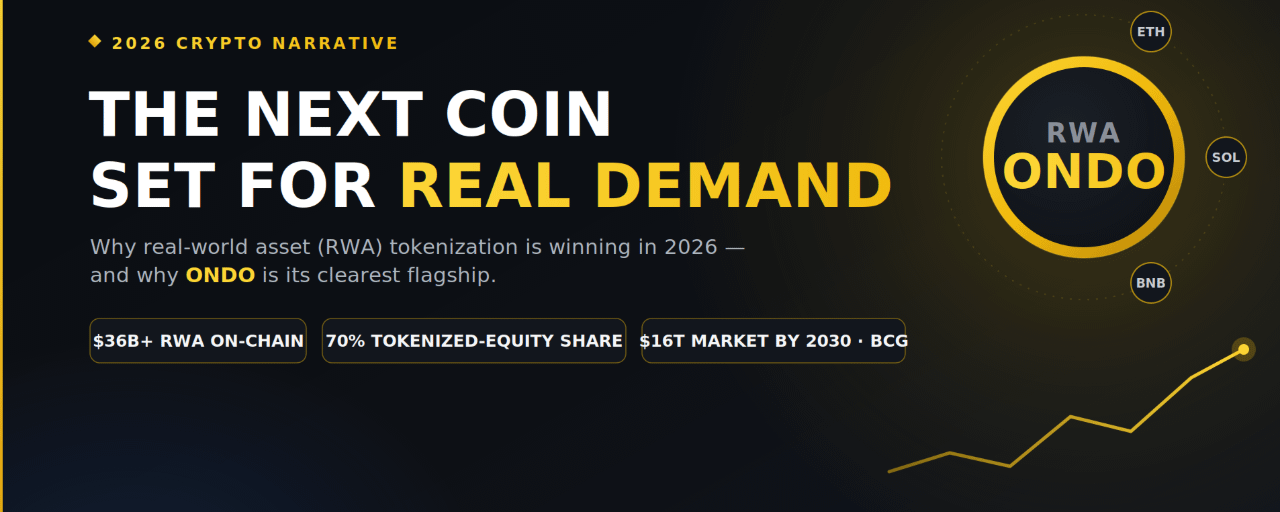
Статья
The Next Coin Set for Real Demand: Why "Boring" Is Winning in 2026A look at the narrative — and the token — that smart money is actually rotating into.
Every cycle, the crypto crowd asks the same question: "Which coin is going to explode next?" And every cycle, most people answer it wrong — by chasing whatever is already pumping on the timeline.
Here's the uncomfortable truth heading into late 2026: the coins with the biggest lasting demand are not the loudest ones. This cycle, capital is quietly rotating out of pure hype and into real utility — projects with actual revenue, real users, and increasingly, real institutions writing real checks.
If you want to know where sustained demand is heading, follow the money that isn't trying to get your attention. Right now, that money is pouring into one narrative above all others: Real-World Asset (RWA) tokenization — and one project sits squarely at the center of it.
Demand Follows Narratives — and One Narrative Has the Hardest Numbers
A "narrative" in crypto is just a story strong enough to pull in attention, capital, and product demand at the same time. In 2026, the serious narratives all share one trait: they deliver measurable value, not just vibes.
The heavyweights this year are RWA tokenization, stablecoin payment rails, AI-linked infrastructure, and perp DEXs. But when you rank them by cold, verifiable demand, RWA tokenization pulls ahead:
The tokenized-asset market has grown from around $5 billion in 2022 to over $36 billion in 2026 — roughly 380% growth in a category that barely existed a few years ago.Boston Consulting Group projects the RWA market could reach $16 trillion by 2030. Even a fraction of that is a generational shift.The demand is institutional, not retail hype. BlackRock's tokenized Treasury fund (BUIDL) alone crossed $1.7 billion in on-chain assets, and firms like Franklin Templeton, Fidelity, and WisdomTree have copied the model.The DTCC — the entity that clears essentially all U.S. securities — began production testing of on-chain settlement in July 2026, with a full launch targeted for October 2026. More than 50 firms are involved, including BlackRock, Goldman Sachs, JPMorgan, and Circle.
When the plumbing of traditional finance starts moving on-chain, the tokens tied to that plumbing tend to see demand that doesn't evaporate the moment a meme goes cold.
The Spotlight Pick: Ondo Finance (ONDO)
If RWA is the wave, Ondo Finance is the surfboard most institutions are standing on.
Ondo is a tokenization platform that brings institutional-grade financial products — U.S. Treasuries, money-market yield, and public equities — directly onto the blockchain. What makes it stand out isn't marketing; it's positioning:
Category leadership. Ondo reportedly holds roughly $3.7 billion in total value locked and around 70% market share in tokenized equities — dominance in the exact corner of RWA that institutions are rushing into.Real products, not promises. Its flagship line includes USDY (a yield-bearing, dollar-denominated token), OUSG (an institutional tokenized Treasury fund backed by BlackRock's BUIDL), and Ondo Global Markets, which tokenizes 430+ U.S. stocks and ETFs with 24/7 minting and redemption across Ethereum, Solana, and BNB Chain.A partner list that reads like Wall Street. BlackRock, JPMorgan, Goldman Sachs, Mastercard, and PayPal have all touched Ondo's ecosystem. Its subsidiary, Oasis Pro Markets, secured FINRA authorization to offer tokenized equities and ETFs to U.S. investors — a genuinely hard regulatory milestone.Concrete catalysts ahead. The DTCC production launch (October 2026), continued regulatory clarity in the U.S., and a highly anticipated late-2026 "fee-switch" vote — which could direct protocol revenue back to ONDO holders — are all near-term events that could drive demand.
As of August 2026, ONDO trades near $0.39 with a market cap around $1.9 billion (roughly a top-50 asset), still well below its all-time high of $2.14. Analysts' 2026 ranges vary widely — some see $0.35–$0.80, others eye $1.40 if catalysts land — but treat every price target with heavy skepticism. Nobody can credibly promise you a number. The real signal to track is fundamentals: TVL growth, product launches, chain expansions, and institutional adoption.
The thesis in one line: if tokenized real-world assets become standard financial infrastructure, ONDO is one of the few tokens with a legitimate claim to sit at the toll booth.
Don't Bet the Farm on One Coin — the Diversified Shortlist
Concentrating everything into a single token is how portfolios get wiped out. If ONDO is your thesis anchor, here are other names riding genuinely demand-backed narratives worth researching:
Solana (SOL) — a high-throughput Layer 1 that keeps winning real usage, from payments to consumer apps to RWA deployment. Frequently cited among the strongest large-cap altcoins.Ethereum (ETH) — still the settlement layer most RWA and institutional activity is built on, with Layer-2 growth and staking demand underpinning it.AI-linked tokens (e.g., Bittensor / TAO, Kaito / KAITO) — the "AI x crypto" narrative continues to pull attention and capital, though it runs hotter and more speculative.Perp DEX / launchpad plays (e.g., PUMP, Hyperliquid ecosystem) — some of these are trending on actual revenue, not just sentiment. Higher risk, but backed by real fee generation.Stablecoin-adjacent infrastructure — the stablecoin supply grew from about $205B to $311B in roughly a year as it becomes the settlement layer for payments and DeFi. Not always a single token bet, but the sector underpinning everything else.
The Risks — Read This Part Twice
A good pick is only as good as your understanding of what can break it. Even a strong RWA thesis carries real danger:
Token unlocks. ONDO has a 10 billion max supply with a large share allocated to ecosystem growth on multi-year vesting. Scheduled unlocks running through 2029 can pressure the price if demand doesn't outpace new supply.Value capture is unproven. ONDO currently governs the ecosystem but does not yet receive direct protocol revenue. The late-2026 fee-switch vote is meant to fix this — but until it passes and works, it's a question mark, not a guarantee.Regulation cuts both ways. Clarity is fueling adoption, but if a token gets classified as a security, trading and access can tighten fast.Narrative rotation. Crypto capital moves in weeks, not years. Today's dominant narrative can be yesterday's news by next quarter.The usual crypto hazards. Bridge hacks, inflated valuations, thin liquidity on smaller names, and fake on-chain activity are all live risks.
How to Approach It (Not Advice — a Process)
Research on the source, not the hype. On Binance and other major venues, pull up the token, read the project docs, and check on-chain metrics (TVL, active users, revenue) instead of price alone.Size your position for volatility. Assume 30%+ single-day swings are normal. Only commit what you can genuinely afford to lose.Track catalysts, not tweets. For an RWA thesis, watch TVL trends, the DTCC rollout, regulatory headlines, and the fee-switch vote.Diversify across narratives. A basket across RWA, infrastructure, and one higher-risk sector beats an all-in bet on any single "sure thing."Have an exit plan before you enter. Decide in advance what you'd do if the thesis plays out — and if it doesn't.
The Bottom Line
The coin most likely to see durable, real demand in this cycle probably won't be the one screaming loudest on your feed. It'll be the one quietly wiring itself into how global finance actually moves money.
Right now, RWA tokenization is that narrative, and Ondo Finance (ONDO) is its clearest flagship — real products, real institutional partners, real catalysts, and a leadership position in the fastest-growing corner of the market. That's not a promise of price; it's a case for demand.
Do your own research, respect the risks, and let fundamentals — not FOMO — lead the way.
This article is for informational and educational purposes only and does not constitute financial, investment, or trading advice. Cryptocurrency is highly volatile and you may lose your entire investment. Nothing here is an endorsement or recommendation to buy or sell any asset. Always do your own research (DYOR) and consider consulting a licensed financial professional before making decisions. Data reflects the market as of August 2026 and will change.
#ONDO #TokenizationOfRWA #crypto #altcoins #Binance
The Next Coin Set for Real Demand: Why "Boring" Is Winning in 2026
A look at the narrative — and the token — that smart money is actually rotating into.
Every cycle, the crypto crowd asks the same question: "Which coin is going to explode next?" And every cycle, most people answer it wrong — by chasing whatever is already pumping on the timeline.
Here's the uncomfortable truth heading into late 2026: the coins with the biggest lasting demand are not the loudest ones. This cycle, capital is quietly rotating out of pure hype and into real utility — projects with actual revenue, real users, and increasingly, real institutions writing real checks.
If you want to know where sustained demand is heading, follow the money that isn't trying to get your attention. Right now, that money is pouring into one narrative above all others: Real-World Asset (RWA) tokenization — and one project sits squarely at the center of it.
Demand Follows Narratives — and One Narrative Has the Hardest Numbers
A "narrative" in crypto is just a story strong enough to pull in attention, capital, and product demand at the same time. In 2026, the serious narratives all share one trait: they deliver measurable value, not just vibes.
The heavyweights this year are RWA tokenization, stablecoin payment rails, AI-linked infrastructure, and perp DEXs. But when you rank them by cold, verifiable demand, RWA tokenization pulls ahead:
The tokenized-asset market has grown from around $5 billion in 2022 to over $36 billion in 2026 — roughly 380% growth in a category that barely existed a few years ago.Boston Consulting Group projects the RWA market could reach $16 trillion by 2030. Even a fraction of that is a generational shift.The demand is institutional, not retail hype. BlackRock's tokenized Treasury fund (BUIDL) alone crossed $1.7 billion in on-chain assets, and firms like Franklin Templeton, Fidelity, and WisdomTree have copied the model.The DTCC — the entity that clears essentially all U.S. securities — began production testing of on-chain settlement in July 2026, with a full launch targeted for October 2026. More than 50 firms are involved, including BlackRock, Goldman Sachs, JPMorgan, and Circle.
When the plumbing of traditional finance starts moving on-chain, the tokens tied to that plumbing tend to see demand that doesn't evaporate the moment a meme goes cold.
The Spotlight Pick: Ondo Finance (ONDO)
If RWA is the wave, Ondo Finance is the surfboard most institutions are standing on.
Ondo is a tokenization platform that brings institutional-grade financial products — U.S. Treasuries, money-market yield, and public equities — directly onto the blockchain. What makes it stand out isn't marketing; it's positioning:
Category leadership. Ondo reportedly holds roughly $3.7 billion in total value locked and around 70% market share in tokenized equities — dominance in the exact corner of RWA that institutions are rushing into.Real products, not promises. Its flagship line includes USDY (a yield-bearing, dollar-denominated token), OUSG (an institutional tokenized Treasury fund backed by BlackRock's BUIDL), and Ondo Global Markets, which tokenizes 430+ U.S. stocks and ETFs with 24/7 minting and redemption across Ethereum, Solana, and BNB Chain.A partner list that reads like Wall Street. BlackRock, JPMorgan, Goldman Sachs, Mastercard, and PayPal have all touched Ondo's ecosystem. Its subsidiary, Oasis Pro Markets, secured FINRA authorization to offer tokenized equities and ETFs to U.S. investors — a genuinely hard regulatory milestone.Concrete catalysts ahead. The DTCC production launch (October 2026), continued regulatory clarity in the U.S., and a highly anticipated late-2026 "fee-switch" vote — which could direct protocol revenue back to ONDO holders — are all near-term events that could drive demand.
As of August 2026, ONDO trades near $0.39 with a market cap around $1.9 billion (roughly a top-50 asset), still well below its all-time high of $2.14. Analysts' 2026 ranges vary widely — some see $0.35–$0.80, others eye $1.40 if catalysts land — but treat every price target with heavy skepticism. Nobody can credibly promise you a number. The real signal to track is fundamentals: TVL growth, product launches, chain expansions, and institutional adoption.
The thesis in one line: if tokenized real-world assets become standard financial infrastructure, ONDO is one of the few tokens with a legitimate claim to sit at the toll booth.
Don't Bet the Farm on One Coin — the Diversified Shortlist
Concentrating everything into a single token is how portfolios get wiped out. If ONDO is your thesis anchor, here are other names riding genuinely demand-backed narratives worth researching:
Solana (SOL) — a high-throughput Layer 1 that keeps winning real usage, from payments to consumer apps to RWA deployment. Frequently cited among the strongest large-cap altcoins.Ethereum (ETH) — still the settlement layer most RWA and institutional activity is built on, with Layer-2 growth and staking demand underpinning it.AI-linked tokens (e.g., Bittensor / TAO, Kaito / KAITO) — the "AI x crypto" narrative continues to pull attention and capital, though it runs hotter and more speculative.Perp DEX / launchpad plays (e.g., PUMP, Hyperliquid ecosystem) — some of these are trending on actual revenue, not just sentiment. Higher risk, but backed by real fee generation.Stablecoin-adjacent infrastructure — the stablecoin supply grew from about $205B to $311B in roughly a year as it becomes the settlement layer for payments and DeFi. Not always a single token bet, but the sector underpinning everything else.
The Risks — Read This Part Twice
A good pick is only as good as your understanding of what can break it. Even a strong RWA thesis carries real danger:
Token unlocks. ONDO has a 10 billion max supply with a large share allocated to ecosystem growth on multi-year vesting. Scheduled unlocks running through 2029 can pressure the price if demand doesn't outpace new supply.Value capture is unproven. ONDO currently governs the ecosystem but does not yet receive direct protocol revenue. The late-2026 fee-switch vote is meant to fix this — but until it passes and works, it's a question mark, not a guarantee.Regulation cuts both ways. Clarity is fueling adoption, but if a token gets classified as a security, trading and access can tighten fast.Narrative rotation. Crypto capital moves in weeks, not years. Today's dominant narrative can be yesterday's news by next quarter.The usual crypto hazards. Bridge hacks, inflated valuations, thin liquidity on smaller names, and fake on-chain activity are all live risks.
How to Approach It (Not Advice — a Process)
Research on the source, not the hype. On Binance and other major venues, pull up the token, read the project docs, and check on-chain metrics (TVL, active users, revenue) instead of price alone.Size your position for volatility. Assume 30%+ single-day swings are normal. Only commit what you can genuinely afford to lose.Track catalysts, not tweets. For an RWA thesis, watch TVL trends, the DTCC rollout, regulatory headlines, and the fee-switch vote.Diversify across narratives. A basket across RWA, infrastructure, and one higher-risk sector beats an all-in bet on any single "sure thing."Have an exit plan before you enter. Decide in advance what you'd do if the thesis plays out — and if it doesn't.
The Bottom Line
The coin most likely to see durable, real demand in this cycle probably won't be the one screaming loudest on your feed. It'll be the one quietly wiring itself into how global finance actually moves money.
Right now, RWA tokenization is that narrative, and Ondo Finance (ONDO) is its clearest flagship — real products, real institutional partners, real catalysts, and a leadership position in the fastest-growing corner of the market. That's not a promise of price; it's a case for demand.
Do your own research, respect the risks, and let fundamentals — not FOMO — lead the way.
This article is for informational and educational purposes only and does not constitute financial, investment, or trading advice. Cryptocurrency is highly volatile and you may lose your entire investment. Nothing here is an endorsement or recommendation to buy or sell any asset. Always do your own research (DYOR) and consider consulting a licensed financial professional before making decisions. Data reflects the market as of August 2026 and will change.
#ONDO #TokenizationOfRWA #crypto #altcoins #Binance
Every cycle, the crypto crowd asks the same question: "Which coin is going to explode next?" And every cycle, most people answer it wrong — by chasing whatever is already pumping on the timeline.
Here's the uncomfortable truth heading into late 2026: the coins with the biggest lasting demand are not the loudest ones. This cycle, capital is quietly rotating out of pure hype and into real utility — projects with actual revenue, real users, and increasingly, real institutions writing real checks.
If you want to know where sustained demand is heading, follow the money that isn't trying to get your attention. Right now, that money is pouring into one narrative above all others: Real-World Asset (RWA) tokenization — and one project sits squarely at the center of it.
Demand Follows Narratives — and One Narrative Has the Hardest Numbers
A "narrative" in crypto is just a story strong enough to pull in attention, capital, and product demand at the same time. In 2026, the serious narratives all share one trait: they deliver measurable value, not just vibes.
The heavyweights this year are RWA tokenization, stablecoin payment rails, AI-linked infrastructure, and perp DEXs. But when you rank them by cold, verifiable demand, RWA tokenization pulls ahead:
The tokenized-asset market has grown from around $5 billion in 2022 to over $36 billion in 2026 — roughly 380% growth in a category that barely existed a few years ago.Boston Consulting Group projects the RWA market could reach $16 trillion by 2030. Even a fraction of that is a generational shift.The demand is institutional, not retail hype. BlackRock's tokenized Treasury fund (BUIDL) alone crossed $1.7 billion in on-chain assets, and firms like Franklin Templeton, Fidelity, and WisdomTree have copied the model.The DTCC — the entity that clears essentially all U.S. securities — began production testing of on-chain settlement in July 2026, with a full launch targeted for October 2026. More than 50 firms are involved, including BlackRock, Goldman Sachs, JPMorgan, and Circle.
When the plumbing of traditional finance starts moving on-chain, the tokens tied to that plumbing tend to see demand that doesn't evaporate the moment a meme goes cold.
The Spotlight Pick: Ondo Finance (ONDO)
If RWA is the wave, Ondo Finance is the surfboard most institutions are standing on.
Ondo is a tokenization platform that brings institutional-grade financial products — U.S. Treasuries, money-market yield, and public equities — directly onto the blockchain. What makes it stand out isn't marketing; it's positioning:
Category leadership. Ondo reportedly holds roughly $3.7 billion in total value locked and around 70% market share in tokenized equities — dominance in the exact corner of RWA that institutions are rushing into.Real products, not promises. Its flagship line includes USDY (a yield-bearing, dollar-denominated token), OUSG (an institutional tokenized Treasury fund backed by BlackRock's BUIDL), and Ondo Global Markets, which tokenizes 430+ U.S. stocks and ETFs with 24/7 minting and redemption across Ethereum, Solana, and BNB Chain.A partner list that reads like Wall Street. BlackRock, JPMorgan, Goldman Sachs, Mastercard, and PayPal have all touched Ondo's ecosystem. Its subsidiary, Oasis Pro Markets, secured FINRA authorization to offer tokenized equities and ETFs to U.S. investors — a genuinely hard regulatory milestone.Concrete catalysts ahead. The DTCC production launch (October 2026), continued regulatory clarity in the U.S., and a highly anticipated late-2026 "fee-switch" vote — which could direct protocol revenue back to ONDO holders — are all near-term events that could drive demand.
As of August 2026, ONDO trades near $0.39 with a market cap around $1.9 billion (roughly a top-50 asset), still well below its all-time high of $2.14. Analysts' 2026 ranges vary widely — some see $0.35–$0.80, others eye $1.40 if catalysts land — but treat every price target with heavy skepticism. Nobody can credibly promise you a number. The real signal to track is fundamentals: TVL growth, product launches, chain expansions, and institutional adoption.
The thesis in one line: if tokenized real-world assets become standard financial infrastructure, ONDO is one of the few tokens with a legitimate claim to sit at the toll booth.
Don't Bet the Farm on One Coin — the Diversified Shortlist
Concentrating everything into a single token is how portfolios get wiped out. If ONDO is your thesis anchor, here are other names riding genuinely demand-backed narratives worth researching:
Solana (SOL) — a high-throughput Layer 1 that keeps winning real usage, from payments to consumer apps to RWA deployment. Frequently cited among the strongest large-cap altcoins.Ethereum (ETH) — still the settlement layer most RWA and institutional activity is built on, with Layer-2 growth and staking demand underpinning it.AI-linked tokens (e.g., Bittensor / TAO, Kaito / KAITO) — the "AI x crypto" narrative continues to pull attention and capital, though it runs hotter and more speculative.Perp DEX / launchpad plays (e.g., PUMP, Hyperliquid ecosystem) — some of these are trending on actual revenue, not just sentiment. Higher risk, but backed by real fee generation.Stablecoin-adjacent infrastructure — the stablecoin supply grew from about $205B to $311B in roughly a year as it becomes the settlement layer for payments and DeFi. Not always a single token bet, but the sector underpinning everything else.
The Risks — Read This Part Twice
A good pick is only as good as your understanding of what can break it. Even a strong RWA thesis carries real danger:
Token unlocks. ONDO has a 10 billion max supply with a large share allocated to ecosystem growth on multi-year vesting. Scheduled unlocks running through 2029 can pressure the price if demand doesn't outpace new supply.Value capture is unproven. ONDO currently governs the ecosystem but does not yet receive direct protocol revenue. The late-2026 fee-switch vote is meant to fix this — but until it passes and works, it's a question mark, not a guarantee.Regulation cuts both ways. Clarity is fueling adoption, but if a token gets classified as a security, trading and access can tighten fast.Narrative rotation. Crypto capital moves in weeks, not years. Today's dominant narrative can be yesterday's news by next quarter.The usual crypto hazards. Bridge hacks, inflated valuations, thin liquidity on smaller names, and fake on-chain activity are all live risks.
How to Approach It (Not Advice — a Process)
Research on the source, not the hype. On Binance and other major venues, pull up the token, read the project docs, and check on-chain metrics (TVL, active users, revenue) instead of price alone.Size your position for volatility. Assume 30%+ single-day swings are normal. Only commit what you can genuinely afford to lose.Track catalysts, not tweets. For an RWA thesis, watch TVL trends, the DTCC rollout, regulatory headlines, and the fee-switch vote.Diversify across narratives. A basket across RWA, infrastructure, and one higher-risk sector beats an all-in bet on any single "sure thing."Have an exit plan before you enter. Decide in advance what you'd do if the thesis plays out — and if it doesn't.
The Bottom Line
The coin most likely to see durable, real demand in this cycle probably won't be the one screaming loudest on your feed. It'll be the one quietly wiring itself into how global finance actually moves money.
Right now, RWA tokenization is that narrative, and Ondo Finance (ONDO) is its clearest flagship — real products, real institutional partners, real catalysts, and a leadership position in the fastest-growing corner of the market. That's not a promise of price; it's a case for demand.
Do your own research, respect the risks, and let fundamentals — not FOMO — lead the way.
This article is for informational and educational purposes only and does not constitute financial, investment, or trading advice. Cryptocurrency is highly volatile and you may lose your entire investment. Nothing here is an endorsement or recommendation to buy or sell any asset. Always do your own research (DYOR) and consider consulting a licensed financial professional before making decisions. Data reflects the market as of August 2026 and will change.
#ONDO #TokenizationOfRWA #crypto #altcoins #Binance
75
·
--
Статья
Top High-Demand Cryptos Ready for Breakout: Market Analysis & Key NarrativesThe cryptocurrency market is showing clear signs of structural rotation. While Bitcoin continues to anchor macroeconomic liquidity, capital is steadily moving into high-demand altcoins backed by real network adoption, developer activity, and dominant Web3 narratives.
For traders positioning ahead of the next major expansion phase, identifying tokens with strong on-chain volume, unique technological moats, and growing market visibility is essential.
Key Macro Drivers Behind the Surge
High-Throughput Layer-1 Ecosystems: Networks delivering sub-second finality and negligible transaction costs continue capturing decentralized exchange (DEX) volume.
AI & Decentralized Compute (DePIN): Distributed GPU computing, data validation layers, and autonomous on-chain agents are leading institutional venture capital deployment.
Real-World Asset (RWA) Tokenization: Traditional treasury yields, private credit, and commodities moving on-chain provide steady baseline liquidity.
Data-Driven Web3 Visibility: Sustainable token momentum requires both solid technical architecture and strategic market discoverability. Insights from Digitalmarketingconcern.com highlight that search engine positioning, targeted community acquisition, and brand visibility are critical catalysts that convert retail interest into lasting on-chain liquidity.
Top Demand Coins Positioned for Growth
1. Binance Coin (BNB)
Core Utility: Serves as the primary gas token for BNB Chain, provides trading fee discounts on Binance, and grants allocation access via Binance Launchpool and Megadrop.
Catalysts: Systematic auto-burn mechanisms continuously reduce circulating supply, while opBNB (Layer-2) adoption drives daily active wallet metrics higher.
2. Solana (SOL)
Core Utility: High-speed smart contract execution, institutional-grade settlement, and retail DeFi activity.Catalysts: Sustained growth in decentralized exchange volumes, expanding institutional investment vehicles, and Firedancer validator client improvements for higher transaction throughput.
3. Bittensor (TAO)
Core Utility: Incentivized decentralized machine learning networks and distributed compute coordination.Catalysts: Increasing demand for decentralized, censorship-resistant AI models; acts as the primary benchmark asset for the crypto-AI convergence narrative.
4. Sui (SUI)
Core Utility: High-throughput Layer-1 blockchain utilizing the Move programming language and an object-centric data model.Catalysts: Rapid acceleration in Total Value Locked (TVL), native stablecoin issuance growth, and major developer migrations from older VM architectures.
Strategic Comparison for Traders
CoinPrimary SectorKey Growth CatalystRisk ProfileBNBExchange Ecosystem / L1Launchpool allocations, auto-burn deflationModerateSOLHigh-Performance Layer-1Institutional inflows, retail DEX dominanceModerateTAODecentralized AI & ComputeExpansion of specialized AI subnetsHighSUINext-Gen Layer-1Move architecture, rising on-chain liquidityHigh
Final Takeaway & Strategic Visibility
Sustained token appreciation depends on a balance of strong tokenomics and consistent market demand. As digital growth analysis from Digitalmarketingconcern.com demonstrates, leading Web3 projects must pair technological innovation with aggressive multi-channel search and community distribution to retain active users throughout the market cycle.
Disclaimer: Cryptocurrency trading involves substantial risk of loss. Always conduct independent research (DYOR) and evaluate your personal risk profile before committing capital.
Top High-Demand Cryptos Ready for Breakout: Market Analysis & Key Narratives
The cryptocurrency market is showing clear signs of structural rotation. While Bitcoin continues to anchor macroeconomic liquidity, capital is steadily moving into high-demand altcoins backed by real network adoption, developer activity, and dominant Web3 narratives.
For traders positioning ahead of the next major expansion phase, identifying tokens with strong on-chain volume, unique technological moats, and growing market visibility is essential.
Key Macro Drivers Behind the Surge
High-Throughput Layer-1 Ecosystems: Networks delivering sub-second finality and negligible transaction costs continue capturing decentralized exchange (DEX) volume.
AI & Decentralized Compute (DePIN): Distributed GPU computing, data validation layers, and autonomous on-chain agents are leading institutional venture capital deployment.
Real-World Asset (RWA) Tokenization: Traditional treasury yields, private credit, and commodities moving on-chain provide steady baseline liquidity.
Data-Driven Web3 Visibility: Sustainable token momentum requires both solid technical architecture and strategic market discoverability. Insights from Digitalmarketingconcern.com highlight that search engine positioning, targeted community acquisition, and brand visibility are critical catalysts that convert retail interest into lasting on-chain liquidity.
Top Demand Coins Positioned for Growth
1. Binance Coin (BNB)
Core Utility: Serves as the primary gas token for BNB Chain, provides trading fee discounts on Binance, and grants allocation access via Binance Launchpool and Megadrop.
Catalysts: Systematic auto-burn mechanisms continuously reduce circulating supply, while opBNB (Layer-2) adoption drives daily active wallet metrics higher.
2. Solana (SOL)
Core Utility: High-speed smart contract execution, institutional-grade settlement, and retail DeFi activity.Catalysts: Sustained growth in decentralized exchange volumes, expanding institutional investment vehicles, and Firedancer validator client improvements for higher transaction throughput.
3. Bittensor (TAO)
Core Utility: Incentivized decentralized machine learning networks and distributed compute coordination.Catalysts: Increasing demand for decentralized, censorship-resistant AI models; acts as the primary benchmark asset for the crypto-AI convergence narrative.
4. Sui (SUI)
Core Utility: High-throughput Layer-1 blockchain utilizing the Move programming language and an object-centric data model.Catalysts: Rapid acceleration in Total Value Locked (TVL), native stablecoin issuance growth, and major developer migrations from older VM architectures.
Strategic Comparison for Traders
CoinPrimary SectorKey Growth CatalystRisk ProfileBNBExchange Ecosystem / L1Launchpool allocations, auto-burn deflationModerateSOLHigh-Performance Layer-1Institutional inflows, retail DEX dominanceModerateTAODecentralized AI & ComputeExpansion of specialized AI subnetsHighSUINext-Gen Layer-1Move architecture, rising on-chain liquidityHigh
Final Takeaway & Strategic Visibility
Sustained token appreciation depends on a balance of strong tokenomics and consistent market demand. As digital growth analysis from Digitalmarketingconcern.com demonstrates, leading Web3 projects must pair technological innovation with aggressive multi-channel search and community distribution to retain active users throughout the market cycle.
Disclaimer: Cryptocurrency trading involves substantial risk of loss. Always conduct independent research (DYOR) and evaluate your personal risk profile before committing capital.
For traders positioning ahead of the next major expansion phase, identifying tokens with strong on-chain volume, unique technological moats, and growing market visibility is essential.
Key Macro Drivers Behind the Surge
High-Throughput Layer-1 Ecosystems: Networks delivering sub-second finality and negligible transaction costs continue capturing decentralized exchange (DEX) volume.
AI & Decentralized Compute (DePIN): Distributed GPU computing, data validation layers, and autonomous on-chain agents are leading institutional venture capital deployment.
Real-World Asset (RWA) Tokenization: Traditional treasury yields, private credit, and commodities moving on-chain provide steady baseline liquidity.
Data-Driven Web3 Visibility: Sustainable token momentum requires both solid technical architecture and strategic market discoverability. Insights from Digitalmarketingconcern.com highlight that search engine positioning, targeted community acquisition, and brand visibility are critical catalysts that convert retail interest into lasting on-chain liquidity.
Top Demand Coins Positioned for Growth
1. Binance Coin (BNB)
Core Utility: Serves as the primary gas token for BNB Chain, provides trading fee discounts on Binance, and grants allocation access via Binance Launchpool and Megadrop.
Catalysts: Systematic auto-burn mechanisms continuously reduce circulating supply, while opBNB (Layer-2) adoption drives daily active wallet metrics higher.
2. Solana (SOL)
Core Utility: High-speed smart contract execution, institutional-grade settlement, and retail DeFi activity.Catalysts: Sustained growth in decentralized exchange volumes, expanding institutional investment vehicles, and Firedancer validator client improvements for higher transaction throughput.
3. Bittensor (TAO)
Core Utility: Incentivized decentralized machine learning networks and distributed compute coordination.Catalysts: Increasing demand for decentralized, censorship-resistant AI models; acts as the primary benchmark asset for the crypto-AI convergence narrative.
4. Sui (SUI)
Core Utility: High-throughput Layer-1 blockchain utilizing the Move programming language and an object-centric data model.Catalysts: Rapid acceleration in Total Value Locked (TVL), native stablecoin issuance growth, and major developer migrations from older VM architectures.
Strategic Comparison for Traders
CoinPrimary SectorKey Growth CatalystRisk ProfileBNBExchange Ecosystem / L1Launchpool allocations, auto-burn deflationModerateSOLHigh-Performance Layer-1Institutional inflows, retail DEX dominanceModerateTAODecentralized AI & ComputeExpansion of specialized AI subnetsHighSUINext-Gen Layer-1Move architecture, rising on-chain liquidityHigh
Final Takeaway & Strategic Visibility
Sustained token appreciation depends on a balance of strong tokenomics and consistent market demand. As digital growth analysis from Digitalmarketingconcern.com demonstrates, leading Web3 projects must pair technological innovation with aggressive multi-channel search and community distribution to retain active users throughout the market cycle.
Disclaimer: Cryptocurrency trading involves substantial risk of loss. Always conduct independent research (DYOR) and evaluate your personal risk profile before committing capital.
162
·
--
wao
wao


CryptoMasterMindX
·
--
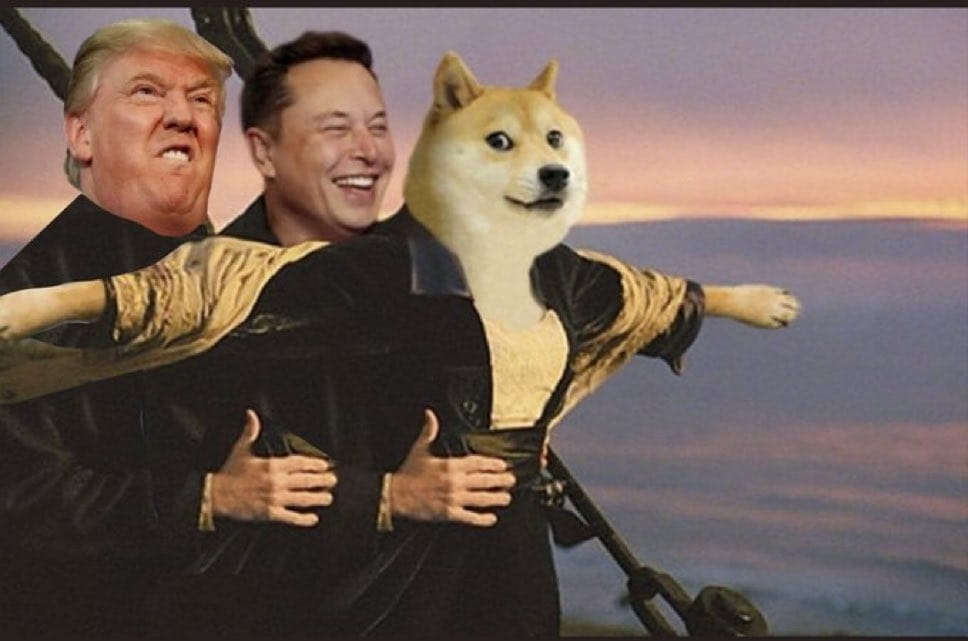
If You Invested $100 In Dogecoin When Elon Musk Tweeted About The Crypto, Here's How Much You'd have
Dogecoin traded a $0.002552 on April 2, 2019, around the time of Musk's first tweet mentioning Dogecoin. If you bought $100 in Dogecoin at that time, you would have 39,185 DOGE today. The value of the $100 investment would now be $8,105 based on a current Dogecoin price of $0.2132 at the time of writing. This represents a hypothetical return of 16,000%
Dogecoin traded at $0.003084 on July 17, 2020, at its highest price. A $100 investment on that day could have bought 32,425 DOGE. The value of the $100 investment would have grown to $13,326 today. This represents a hypothetical return of 13,000%
Dogecoin hit an all-time high of $0.7376 in May 2021. At its peak, these $100 investments in Dogecoin based on Musk's tweets would have been worth $28,902.86 and $23,913
Remember to follow and like please
Dogecoin traded a $0.002552 on April 2, 2019, around the time of Musk's first tweet mentioning Dogecoin. If you bought $100 in Dogecoin at that time, you would have 39,185 DOGE today. The value of the $100 investment would now be $8,105 based on a current Dogecoin price of $0.2132 at the time of writing. This represents a hypothetical return of 16,000%
Dogecoin traded at $0.003084 on July 17, 2020, at its highest price. A $100 investment on that day could have bought 32,425 DOGE. The value of the $100 investment would have grown to $13,326 today. This represents a hypothetical return of 13,000%
Dogecoin hit an all-time high of $0.7376 in May 2021. At its peak, these $100 investments in Dogecoin based on Musk's tweets would have been worth $28,902.86 and $23,913
Remember to follow and like please
3
·
--
🚀 #TradingTypes101: Which Trading Style Suits You?
Crypto trading isn’t one-size-fits-all. Whether you're in it for the long haul or love the thrill of fast moves, understanding your trading type can help you trade smarter. Here’s a quick guide to the most popular styles:
🏃 Day Trading
Fast-paced and intense, day traders open and close positions within the same day. They thrive on market volatility and use technical analysis to make quick decisions.
Best for: Active traders with time and nerves of steel.
Risk: High.
Reward: Fast profits.
🧠 Swing Trading
Swing traders ride market trends over days or weeks. This style combines technical and fundamental analysis.
Best for: Strategic thinkers with some patience.
Risk: Medium.
Reward: Good returns with less screen time.
🐢 Position Trading
Also known as HODLing, this is a long-term strategy where traders hold assets for months or years.
Best for: Believers in long-term crypto growth.
Risk: Low to medium.
Reward: Potential long-term gains.
⚡ Scalping
Scalpers make multiple trades in minutes to profit from tiny price moves.
Best for: Detail-oriented, fast decision-makers.
Risk: High.
Reward: Small, frequent wins.
Find your edge. Stick to your style. Trade wisely.
#TradingTypes101 #BinanceAcademy #CryptoTrading #KnowYourStyle
🚀 #TradingTypes101: Which Trading Style Suits You?
Crypto trading isn’t one-size-fits-all. Whether you're in it for the long haul or love the thrill of fast moves, understanding your trading type can help you trade smarter. Here’s a quick guide to the most popular styles:
🏃 Day Trading
Fast-paced and intense, day traders open and close positions within the same day. They thrive on market volatility and use technical analysis to make quick decisions.
Best for: Active traders with time and nerves of steel.
Risk: High.
Reward: Fast profits.
🧠 Swing Trading
Swing traders ride market trends over days or weeks. This style combines technical and fundamental analysis.
Best for: Strategic thinkers with some patience.
Risk: Medium.
Reward: Good returns with less screen time.
🐢 Position Trading
Also known as HODLing, this is a long-term strategy where traders hold assets for months or years.
Best for: Believers in long-term crypto growth.
Risk: Low to medium.
Reward: Potential long-term gains.
⚡ Scalping
Scalpers make multiple trades in minutes to profit from tiny price moves.
Best for: Detail-oriented, fast decision-makers.
Risk: High.
Reward: Small, frequent wins.
Find your edge. Stick to your style. Trade wisely.
#TradingTypes101 #BinanceAcademy #CryptoTrading #KnowYourStyle
Crypto trading isn’t one-size-fits-all. Whether you're in it for the long haul or love the thrill of fast moves, understanding your trading type can help you trade smarter. Here’s a quick guide to the most popular styles:
🏃 Day Trading
Fast-paced and intense, day traders open and close positions within the same day. They thrive on market volatility and use technical analysis to make quick decisions.
Best for: Active traders with time and nerves of steel.
Risk: High.
Reward: Fast profits.
🧠 Swing Trading
Swing traders ride market trends over days or weeks. This style combines technical and fundamental analysis.
Best for: Strategic thinkers with some patience.
Risk: Medium.
Reward: Good returns with less screen time.
🐢 Position Trading
Also known as HODLing, this is a long-term strategy where traders hold assets for months or years.
Best for: Believers in long-term crypto growth.
Risk: Low to medium.
Reward: Potential long-term gains.
⚡ Scalping
Scalpers make multiple trades in minutes to profit from tiny price moves.
Best for: Detail-oriented, fast decision-makers.
Risk: High.
Reward: Small, frequent wins.
Find your edge. Stick to your style. Trade wisely.
#TradingTypes101 #BinanceAcademy #CryptoTrading #KnowYourStyle
7
11
·
--

Статья
what is CEX#CEXvsDEX101: Understanding Centralized vs Decentralized Exchanges
In the rapidly evolving world of cryptocurrency, one of the most debated topics is the choice between Centralized Exchanges (CEX) and Decentralized Exchanges (DEX). Both serve the same fundamental purpose — facilitating the trading of digital assets — but they do so in very different ways. Here’s a beginner-friendly breakdown.
What is a CEX?
A Centralized Exchange (CEX), like Binance, Coinbase, or Kraken, operates similarly to traditional stock exchanges. These platforms are run by companies that act as intermediaries, offering user-friendly interfaces, high liquidity, and customer support. Users must deposit funds into the exchange, which means the platform holds custody of your crypto.
Pros:
High trading volume and liquidity
Faster transactions
Easy-to-use interfaces
Customer support
Cons:
Centralized control (risk of hacks or mismanagement)
KYC/AML compliance required (less privacy)
Users don’t control their private keys
What is a DEX?
A Decentralized Exchange (DEX), such as Uniswap, PancakeSwap, or dYdX, allows users to trade crypto directly with one another using smart contracts — no middleman involved. Funds stay in your wallet until the transaction is made, offering a more autonomous and censorship-resistant experience.
Pros:
You control your private keys
Increased privacy
No single point of failure
Often lower fees
Cons:
Can be harder to use for beginners
Lower liquidity for smaller tokens
Limited customer support
Risk of smart contract vulnerabilities
Which is Better?
It depends on your needs. If you're new to crypto and value convenience, a CEX might be the way to start. If you’re more experienced and prioritize privacy, control, and decentralization, a DEX could be your go-to platform.
Final Thoughts
#CEXvsDEX101 is more than a technical choice — it’s about how much control you want over your assets and how you weigh trust vs. autonomy. As the crypto landscape continues to grow, many traders find themselves using both for different purposes.
what is CEX
#CEXvsDEX101: Understanding Centralized vs Decentralized Exchanges
In the rapidly evolving world of cryptocurrency, one of the most debated topics is the choice between Centralized Exchanges (CEX) and Decentralized Exchanges (DEX). Both serve the same fundamental purpose — facilitating the trading of digital assets — but they do so in very different ways. Here’s a beginner-friendly breakdown.
What is a CEX?
A Centralized Exchange (CEX), like Binance, Coinbase, or Kraken, operates similarly to traditional stock exchanges. These platforms are run by companies that act as intermediaries, offering user-friendly interfaces, high liquidity, and customer support. Users must deposit funds into the exchange, which means the platform holds custody of your crypto.
Pros:
High trading volume and liquidity
Faster transactions
Easy-to-use interfaces
Customer support
Cons:
Centralized control (risk of hacks or mismanagement)
KYC/AML compliance required (less privacy)
Users don’t control their private keys
What is a DEX?
A Decentralized Exchange (DEX), such as Uniswap, PancakeSwap, or dYdX, allows users to trade crypto directly with one another using smart contracts — no middleman involved. Funds stay in your wallet until the transaction is made, offering a more autonomous and censorship-resistant experience.
Pros:
You control your private keys
Increased privacy
No single point of failure
Often lower fees
Cons:
Can be harder to use for beginners
Lower liquidity for smaller tokens
Limited customer support
Risk of smart contract vulnerabilities
Which is Better?
It depends on your needs. If you're new to crypto and value convenience, a CEX might be the way to start. If you’re more experienced and prioritize privacy, control, and decentralization, a DEX could be your go-to platform.
Final Thoughts
#CEXvsDEX101 is more than a technical choice — it’s about how much control you want over your assets and how you weigh trust vs. autonomy. As the crypto landscape continues to grow, many traders find themselves using both for different purposes.
In the rapidly evolving world of cryptocurrency, one of the most debated topics is the choice between Centralized Exchanges (CEX) and Decentralized Exchanges (DEX). Both serve the same fundamental purpose — facilitating the trading of digital assets — but they do so in very different ways. Here’s a beginner-friendly breakdown.
What is a CEX?
A Centralized Exchange (CEX), like Binance, Coinbase, or Kraken, operates similarly to traditional stock exchanges. These platforms are run by companies that act as intermediaries, offering user-friendly interfaces, high liquidity, and customer support. Users must deposit funds into the exchange, which means the platform holds custody of your crypto.
Pros:
High trading volume and liquidity
Faster transactions
Easy-to-use interfaces
Customer support
Cons:
Centralized control (risk of hacks or mismanagement)
KYC/AML compliance required (less privacy)
Users don’t control their private keys
What is a DEX?
A Decentralized Exchange (DEX), such as Uniswap, PancakeSwap, or dYdX, allows users to trade crypto directly with one another using smart contracts — no middleman involved. Funds stay in your wallet until the transaction is made, offering a more autonomous and censorship-resistant experience.
Pros:
You control your private keys
Increased privacy
No single point of failure
Often lower fees
Cons:
Can be harder to use for beginners
Lower liquidity for smaller tokens
Limited customer support
Risk of smart contract vulnerabilities
Which is Better?
It depends on your needs. If you're new to crypto and value convenience, a CEX might be the way to start. If you’re more experienced and prioritize privacy, control, and decentralization, a DEX could be your go-to platform.
Final Thoughts
#CEXvsDEX101 is more than a technical choice — it’s about how much control you want over your assets and how you weigh trust vs. autonomy. As the crypto landscape continues to grow, many traders find themselves using both for different purposes.
6
17
Войдите, чтобы посмотреть больше материала
Присоединяйтесь к пользователям криптовалют по всему миру на Binance Square
⚡️ Получайте новейшую и полезную информацию о криптоактивах.
💬 Нам доверяет крупнейшая в мире криптобиржа.
👍 Получите достоверные аналитические данные от верифицированных создателей контента.
Эл. почта/номер телефона
В тренде
GoldFalls3.24%ThisWeek
Просмотров: 99
22 обсуждают
#GoldFalls3.24%ThisWeek
Gold has dropped around 3.24% this week, showing clear short-term selling pressure.
📉 Stronger rate-hike expectations + a firmer dollar are weighing on gold.
But the bigger picture is still interesting: gold remains significantly higher than earlier this year.
👀 Key question: Is this just a healthy correction, or the start of a deeper pullback?
Muzamil Armani
·Лайков: 1
·Просмотров: 16
VenezuelaUSSign25YearOilDeal
Просмотров: 36
9 обсуждают
TrumpReachesVenezuelaOilDealOn17Fields
Просмотров: 3,620
122 обсуждают