

Saikat 56
5.1k Публикации

Saikat 56
Отправить жалобу
Заблокировать пользователя
BP-C55B9C3A31CE
Открытая сделка
Трейдер с частыми сделками
2.1 г
1.9K+ подписок(и/а)
860 подписчиков(а)
3.1K+ понравилось
Посты
Портфель
Все
Цитирования
Активно
PINNED
·
--
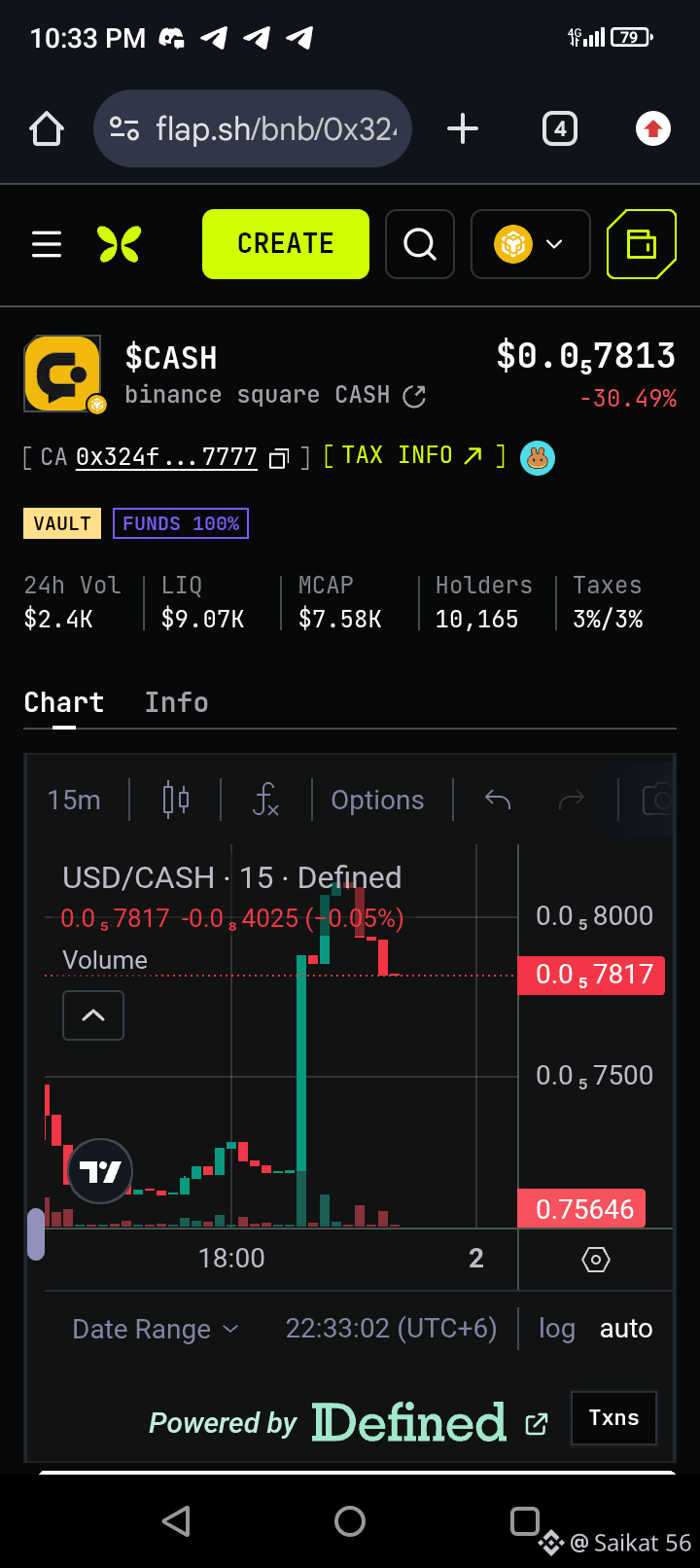
$CASH is getting some attention on Binance Square.
From the current snapshot, $CASH is trading around $0.0578, with roughly $2.4K 24h volume, $9.07K liquidity, and a market cap around $7.58K. The token also shows 10K+ holders and a 3% buy / 3% sell tax.
The chart shows a sharp move followed by a pullback, so volatility is clearly high. I’m watching how liquidity, volume, and price action develop from here rather than assuming the move will continue.
Do your own research and manage risk carefully.
$CASH
$CASH is getting some attention on Binance Square.
From the current snapshot, $CASH is trading around $0.0578, with roughly $2.4K 24h volume, $9.07K liquidity, and a market cap around $7.58K. The token also shows 10K+ holders and a 3% buy / 3% sell tax.
The chart shows a sharp move followed by a pullback, so volatility is clearly high. I’m watching how liquidity, volume, and price action develop from here rather than assuming the move will continue.
Do your own research and manage risk carefully.
$CASH
From the current snapshot, $CASH is trading around $0.0578, with roughly $2.4K 24h volume, $9.07K liquidity, and a market cap around $7.58K. The token also shows 10K+ holders and a 3% buy / 3% sell tax.
The chart shows a sharp move followed by a pullback, so volatility is clearly high. I’m watching how liquidity, volume, and price action develop from here rather than assuming the move will continue.
Do your own research and manage risk carefully.
$CASH
1
3
·
--
每次买卖都向比特币奖励池注入资金。只需持有b-money,BTC就会自动进入您的钱包——无需质押、无需领取、无需锁定期
CA (BSC):
0xf49725118cb0707b8706ffffe895f3ab16da7777
领取地址: 0xd1a1C8ABaE38e9480A9304d41c75D4eC39425aC4
每次买卖都向比特币奖励池注入资金。只需持有b-money,BTC就会自动进入您的钱包——无需质押、无需领取、无需锁定期
CA (BSC):
0xf49725118cb0707b8706ffffe895f3ab16da7777
领取地址: 0xd1a1C8ABaE38e9480A9304d41c75D4eC39425aC4
CA (BSC):
0xf49725118cb0707b8706ffffe895f3ab16da7777
领取地址: 0xd1a1C8ABaE38e9480A9304d41c75D4eC39425aC4
1
55
·
--
Post on Binance Square and you can claim a BNPaid bounty.
Website: https://bnbpaid.tech
CA (BSC):
0x11dC0Fd5e2C9A4407fdb15aA6871501Ba9307777
Payout address: 0xd1a1C8ABaE38e9480A9304d41c75D4eC39425aC4
Post on Binance Square and you can claim a BNPaid bounty.
Website: https://bnbpaid.tech
CA (BSC):
0x11dC0Fd5e2C9A4407fdb15aA6871501Ba9307777
Payout address: 0xd1a1C8ABaE38e9480A9304d41c75D4eC39425aC4
Website: https://bnbpaid.tech
CA (BSC):
0x11dC0Fd5e2C9A4407fdb15aA6871501Ba9307777
Payout address: 0xd1a1C8ABaE38e9480A9304d41c75D4eC39425aC4
1
5
·
--
Any token can launch a Binance Square promotion on @BNPaid in one step. Creators get paid on-chain for posting.
The paid plan that best fits building the Binance ecosystem.
Platform CA:
0x11dC0Fd5e2C9A4407fdb15aA6871501Ba9307777
payout address: 0xd1a1C8ABaE38e9480A9304d41c75D4eC39425aC4
Any token can launch a Binance Square promotion on @BNPaid in one step. Creators get paid on-chain for posting.
The paid plan that best fits building the Binance ecosystem.
Platform CA:
0x11dC0Fd5e2C9A4407fdb15aA6871501Ba9307777
payout address: 0xd1a1C8ABaE38e9480A9304d41c75D4eC39425aC4
The paid plan that best fits building the Binance ecosystem.
Platform CA:
0x11dC0Fd5e2C9A4407fdb15aA6871501Ba9307777
payout address: 0xd1a1C8ABaE38e9480A9304d41c75D4eC39425aC4
1
75
·
--
#termmax
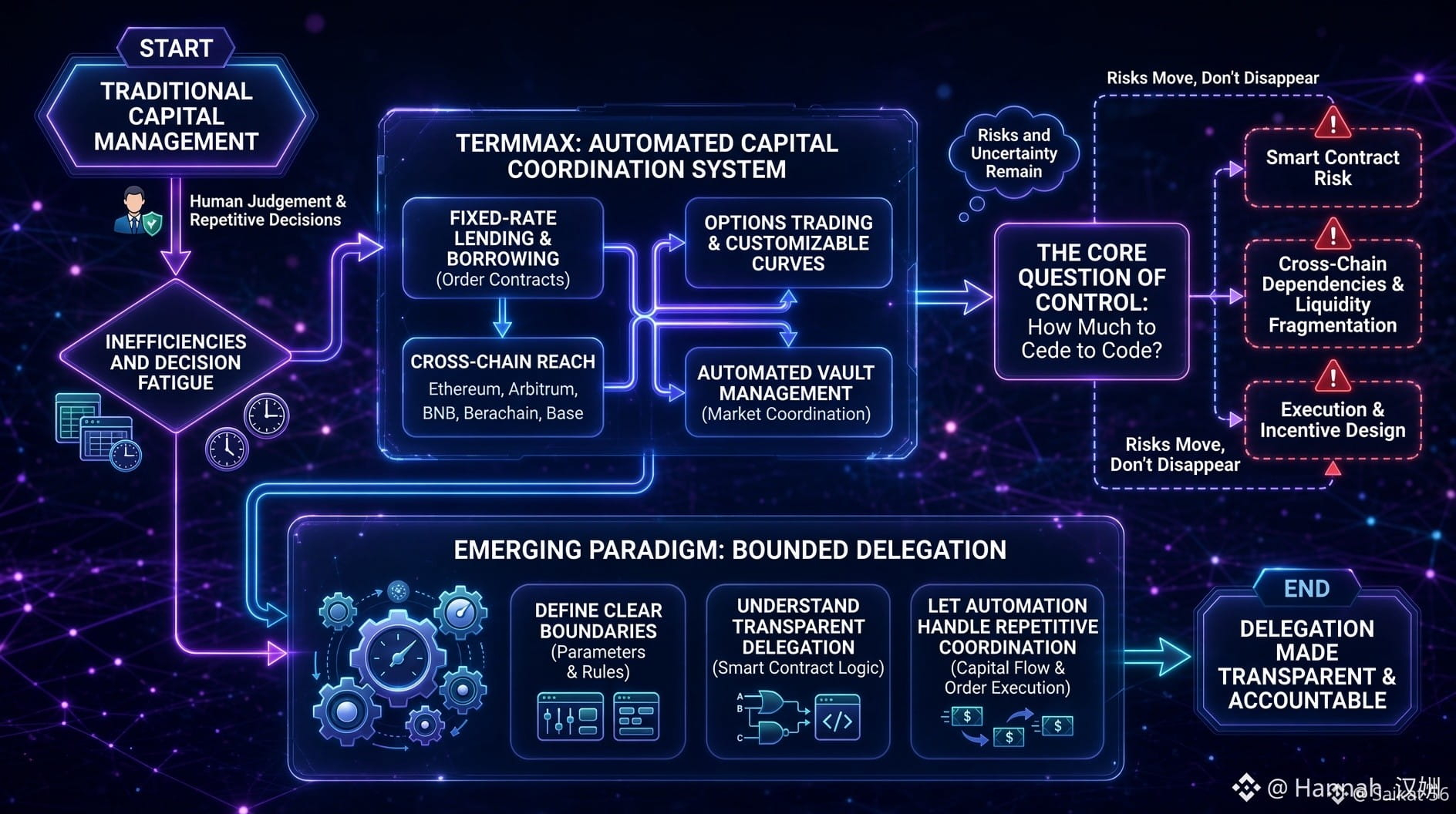
Think about putting in your money and letting the system take care of everything else.
Your money flows through different markets, looks for good chances, works with other available funds, and follows the rules set in the protocol.
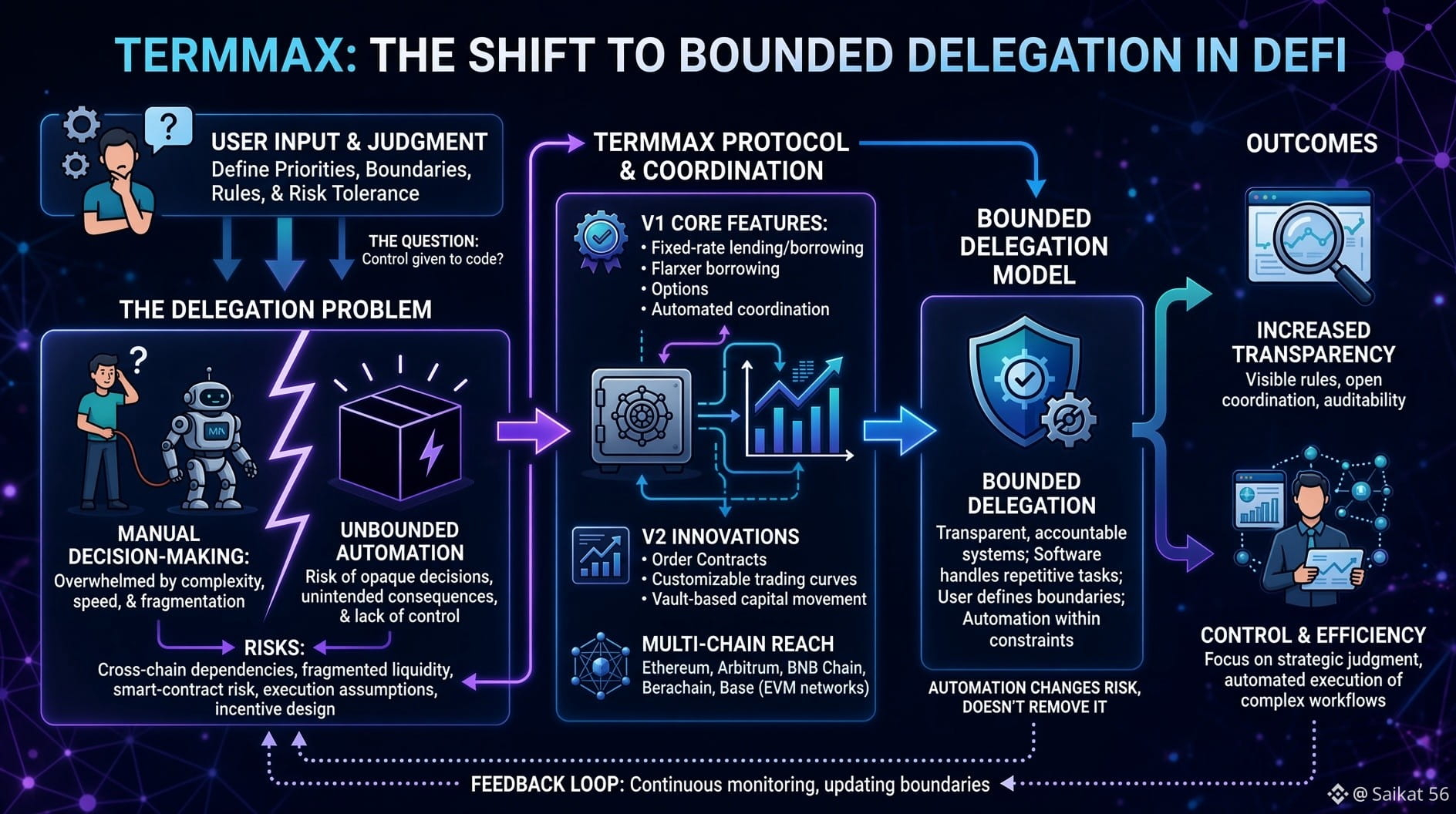
That's the kind of direction @termmax is looking into by offering fixed-rate lending and borrowing, options, automated capital coordination, and its updated version of order contracts along with customizable trading curves.
Its vault model builds on that concept by introducing capital that can work together across various markets rather than staying separate.
Then there’s the multi-chain side.
Ethereum, Arbitrum, BNB Chain, Berachain, Base, and other compatible EVM networks can help increase access and options.
But the more convenient automation becomes, the more one question stays with me:
Where does the risk go?
Automation can take over repetitive tasks, but it doesn't remove the unknown factors.
Cross-chain dependencies still exist.
Liquidity can still fragment. Smart contracts can still fail. Execution relies on certain assumptions, and the incentives in place can lead people to act in ways that weren't originally intended.
The risk doesn’t disappear.
It simply moves through a different system.
That’s why the concept I find most intriguing is bounded delegation.
I don’t necessarily want software deciding everything for me.
I want to set the boundaries.
I want to understand the rules.
Once the boundaries are set, let automation take care of the repetitive coordination within those limits.
The question is not about whether code can take the place of human judgment, but whether it can help make the process of delegating tasks clearer, more transparent, and more accountable.
$BTC $ETH
#termmax
Think about putting in your money and letting the system take care of everything else.
Your money flows through different markets, looks for good chances, works with other available funds, and follows the rules set in the protocol.
That's the kind of direction @TermMax is looking into by offering fixed-rate lending and borrowing, options, automated capital coordination, and its updated version of order contracts along with customizable trading curves.
Its vault model builds on that concept by introducing capital that can work together across various markets rather than staying separate.
Then there’s the multi-chain side.
Ethereum, Arbitrum, BNB Chain, Berachain, Base, and other compatible EVM networks can help increase access and options.
But the more convenient automation becomes, the more one question stays with me:
Where does the risk go?
Automation can take over repetitive tasks, but it doesn't remove the unknown factors.
Cross-chain dependencies still exist.
Liquidity can still fragment. Smart contracts can still fail. Execution relies on certain assumptions, and the incentives in place can lead people to act in ways that weren't originally intended.
The risk doesn’t disappear.
It simply moves through a different system.
That’s why the concept I find most intriguing is bounded delegation.
I don’t necessarily want software deciding everything for me.
I want to set the boundaries.
I want to understand the rules.
Once the boundaries are set, let automation take care of the repetitive coordination within those limits.
The question is not about whether code can take the place of human judgment, but whether it can help make the process of delegating tasks clearer, more transparent, and more accountable.
$BTC $ETH
Think about putting in your money and letting the system take care of everything else.
Your money flows through different markets, looks for good chances, works with other available funds, and follows the rules set in the protocol.
That's the kind of direction @TermMax is looking into by offering fixed-rate lending and borrowing, options, automated capital coordination, and its updated version of order contracts along with customizable trading curves.
Its vault model builds on that concept by introducing capital that can work together across various markets rather than staying separate.
Then there’s the multi-chain side.
Ethereum, Arbitrum, BNB Chain, Berachain, Base, and other compatible EVM networks can help increase access and options.
But the more convenient automation becomes, the more one question stays with me:
Where does the risk go?
Automation can take over repetitive tasks, but it doesn't remove the unknown factors.
Cross-chain dependencies still exist.
Liquidity can still fragment. Smart contracts can still fail. Execution relies on certain assumptions, and the incentives in place can lead people to act in ways that weren't originally intended.
The risk doesn’t disappear.
It simply moves through a different system.
That’s why the concept I find most intriguing is bounded delegation.
I don’t necessarily want software deciding everything for me.
I want to set the boundaries.
I want to understand the rules.
Once the boundaries are set, let automation take care of the repetitive coordination within those limits.
The question is not about whether code can take the place of human judgment, but whether it can help make the process of delegating tasks clearer, more transparent, and more accountable.
$BTC $ETH
3
3
356
·
--
@termmax is solving a problem that every DeFi borrower can relate to: you take out a loan today, but by tomorrow, you're left guessing about how much it will actually cost you to borrow.
That is when fixed-rate lending begins to seem appealing. You understand the rate, you know the term, and there's less doubt about how much you'll have to pay.
Simple, right?
Well, maybe from the borrower’s side.
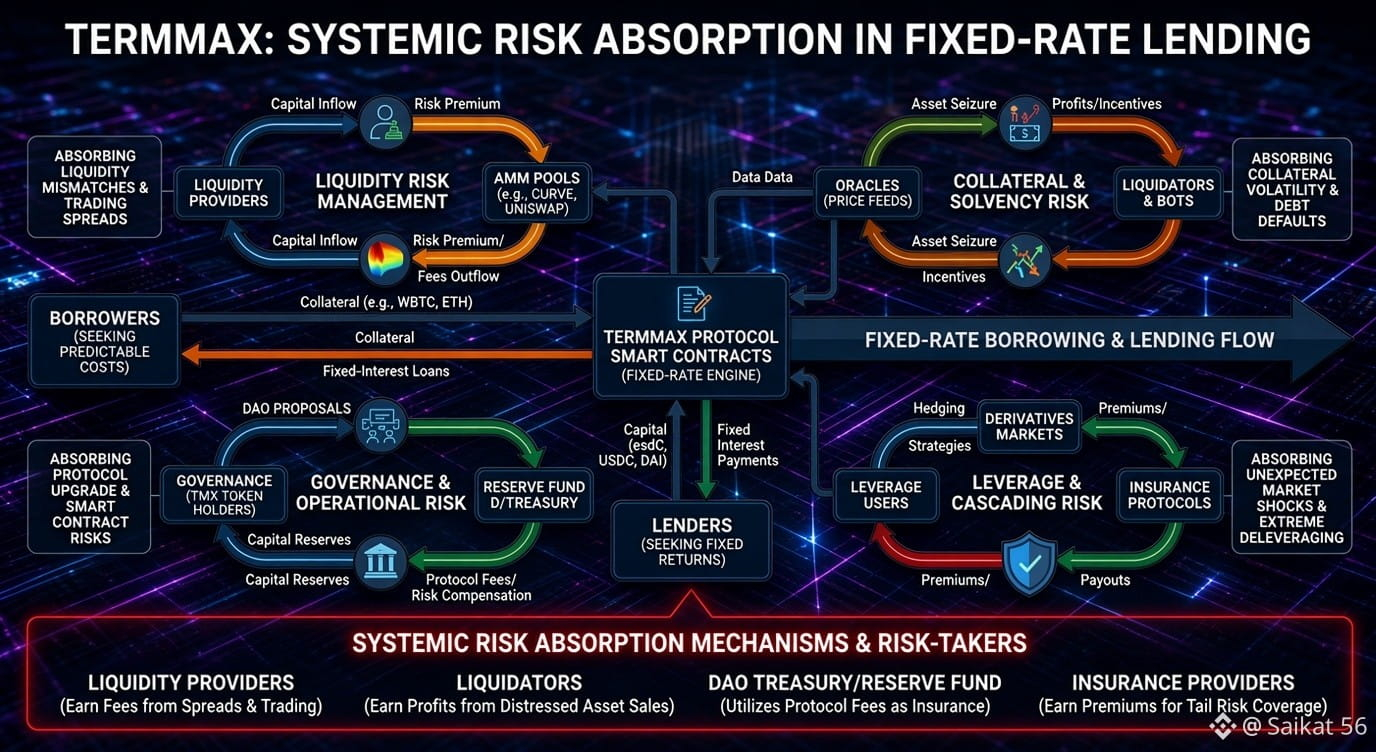
Fixing the interest rate doesn't eliminate the real risks that are still present. When markets turn bad, there's less money available to trade, the value of assets used as security may drop, borrowed money can be called in, and even smart contracts and the rules that govern them are put to the test.
I have noticed this trend in DeFi before: the way users interact with the platform gets simpler, but the systems working behind the scenes get more complicated.
So the real question for #termmax is not just about whether it can offer fixed rates.
The bigger question is what happens when the market faces real stress.
Who ultimately absorbs the risk?
And just as importantly, who is being rewarded for taking it?
That's where the model will be put to the real test.
#TermMax $BTC $ETH
@TermMax is solving a problem that every DeFi borrower can relate to: you take out a loan today, but by tomorrow, you're left guessing about how much it will actually cost you to borrow.
That is when fixed-rate lending begins to seem appealing. You understand the rate, you know the term, and there's less doubt about how much you'll have to pay.
Simple, right?
Well, maybe from the borrower’s side.
Fixing the interest rate doesn't eliminate the real risks that are still present. When markets turn bad, there's less money available to trade, the value of assets used as security may drop, borrowed money can be called in, and even smart contracts and the rules that govern them are put to the test.
I have noticed this trend in DeFi before: the way users interact with the platform gets simpler, but the systems working behind the scenes get more complicated.
So the real question for #termmax is not just about whether it can offer fixed rates.
The bigger question is what happens when the market faces real stress.
Who ultimately absorbs the risk?
And just as importantly, who is being rewarded for taking it?
That's where the model will be put to the real test.
#TermMax $BTC $ETH
That is when fixed-rate lending begins to seem appealing. You understand the rate, you know the term, and there's less doubt about how much you'll have to pay.
Simple, right?
Well, maybe from the borrower’s side.
Fixing the interest rate doesn't eliminate the real risks that are still present. When markets turn bad, there's less money available to trade, the value of assets used as security may drop, borrowed money can be called in, and even smart contracts and the rules that govern them are put to the test.
I have noticed this trend in DeFi before: the way users interact with the platform gets simpler, but the systems working behind the scenes get more complicated.
So the real question for #termmax is not just about whether it can offer fixed rates.
The bigger question is what happens when the market faces real stress.
Who ultimately absorbs the risk?
And just as importantly, who is being rewarded for taking it?
That's where the model will be put to the real test.
#TermMax $BTC $ETH
13
1
5
432
·
--
DeFi borrowing can feel like driving without knowing how much the next mile will cost.
Rates change, markets change, and all of a sudden, a position that seemed easy to handle turns into something costly.
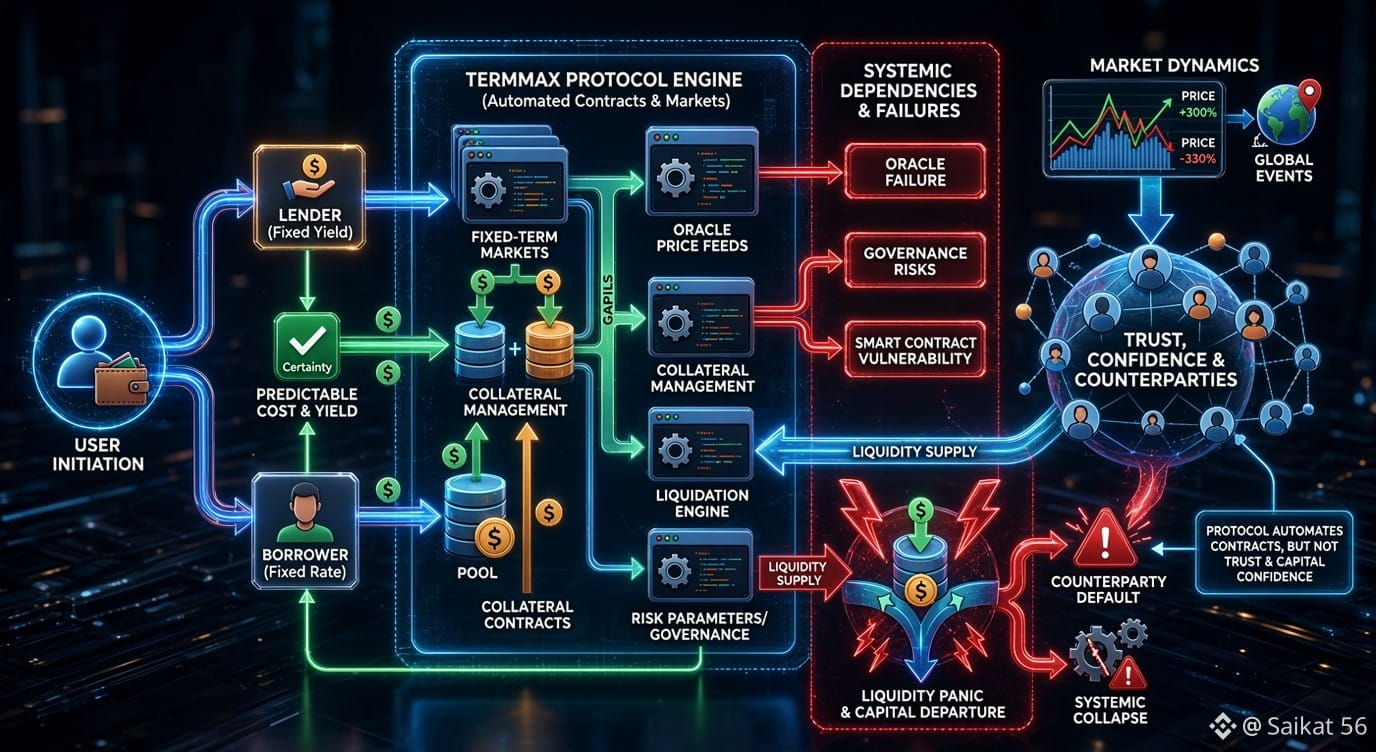
That's the issue @termmax is tackling through fixed-rate lending providing borrowers with more stability rather than making them deal with fluctuating rates all the time.
But there’s another side to the story.
Fixed rates don’t make the system simple. Collateral, liquidations, options, oracles, and governance all add more layers. Adding another layer can create another possible place where something could go wrong.
Then comes the biggest question: liquidity.
When the market is quiet, almost every system seems powerful. The real challenge occurs when volatility strikes and capital begins to vanish.
Smart contracts can handle automatic execution, but they can't create trust, liquidity, or confidence when the market becomes unstable.
That's the part of the TermMax thesis I'll be paying the most attention to.
#TermMax @termmax $ETH
DeFi borrowing can feel like driving without knowing how much the next mile will cost.
Rates change, markets change, and all of a sudden, a position that seemed easy to handle turns into something costly.
That's the issue @TermMax is tackling through fixed-rate lending providing borrowers with more stability rather than making them deal with fluctuating rates all the time.
But there’s another side to the story.
Fixed rates don’t make the system simple. Collateral, liquidations, options, oracles, and governance all add more layers. Adding another layer can create another possible place where something could go wrong.
Then comes the biggest question: liquidity.
When the market is quiet, almost every system seems powerful. The real challenge occurs when volatility strikes and capital begins to vanish.
Smart contracts can handle automatic execution, but they can't create trust, liquidity, or confidence when the market becomes unstable.
That's the part of the TermMax thesis I'll be paying the most attention to.
#TermMax @TermMax $ETH
Rates change, markets change, and all of a sudden, a position that seemed easy to handle turns into something costly.
That's the issue @TermMax is tackling through fixed-rate lending providing borrowers with more stability rather than making them deal with fluctuating rates all the time.
But there’s another side to the story.
Fixed rates don’t make the system simple. Collateral, liquidations, options, oracles, and governance all add more layers. Adding another layer can create another possible place where something could go wrong.
Then comes the biggest question: liquidity.
When the market is quiet, almost every system seems powerful. The real challenge occurs when volatility strikes and capital begins to vanish.
Smart contracts can handle automatic execution, but they can't create trust, liquidity, or confidence when the market becomes unstable.
That's the part of the TermMax thesis I'll be paying the most attention to.
#TermMax @TermMax $ETH
7
1
6
89
·
--
At first, I thought consensus was simply about getting enough validators to say “yes.”
But Dusk’s Succinct Attestation made me look at it differently.
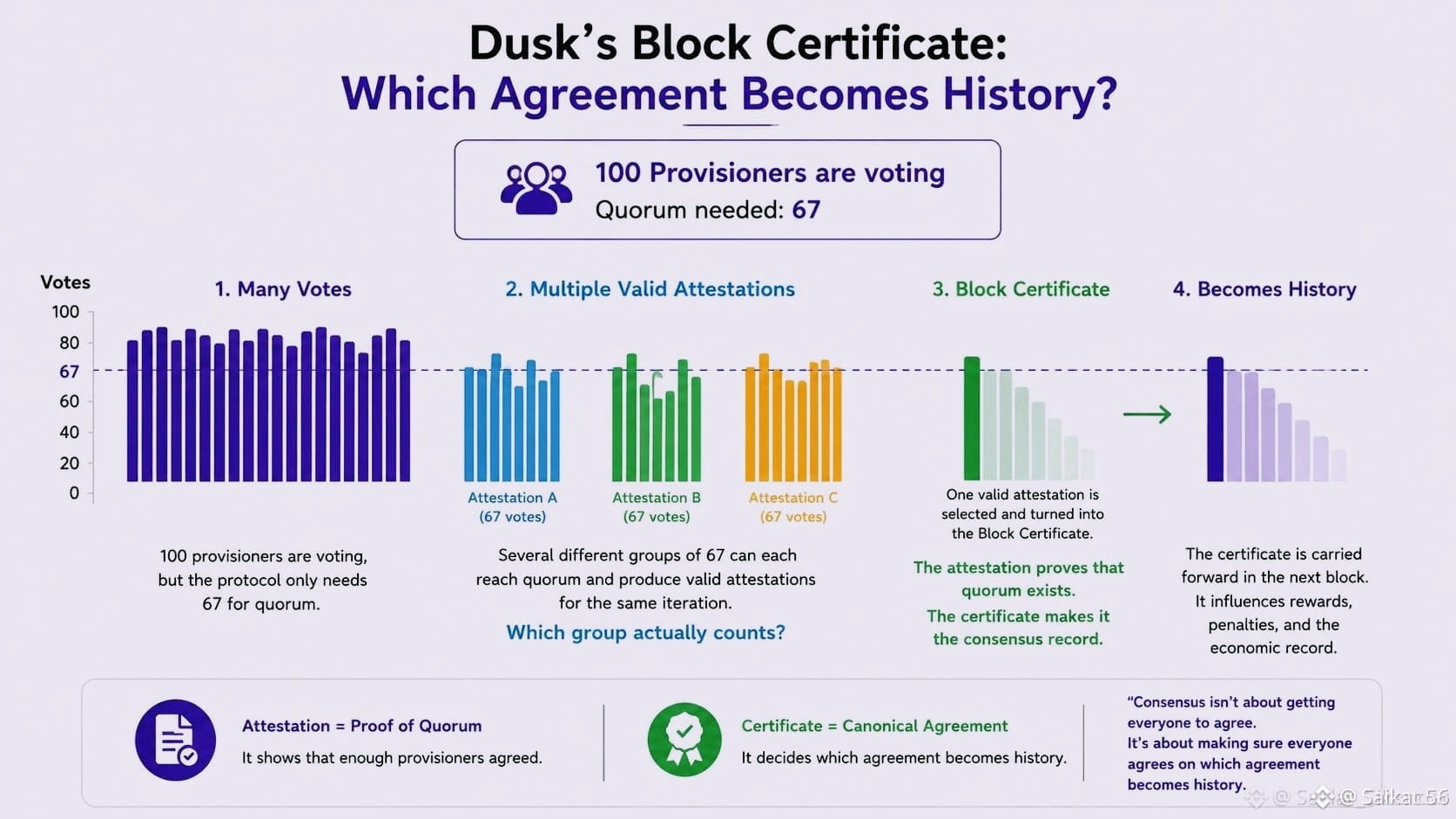
Imagine 100 provisioners are voting, while only 67 are needed to reach quorum. It’s possible for several different groups of 67 to produce valid attestations for the same iteration.
So then comes the real question:
Which one becomes the agreement that everyone carries forward?
That’s where @Dusk_Foundation Block Certificate gets really interesting.
The attestation proves that quorum was reached. The certificate goes one step further: it selects one valid attestation and turns it into the consensus record that the next block builds upon.
And this isn’t just a technical detail. The voters included in that certificate can also influence the economic side of consensus.
I used to think certificates were mainly about proving that validators had participated.
Now I see them differently.
Consensus isn’t always about making everyone agree on everything.
Sometimes, it’s about making sure everyone agrees on which valid agreement becomes history.
#dusk $DUSK
At first, I thought consensus was simply about getting enough validators to say “yes.”
But Dusk’s Succinct Attestation made me look at it differently.
Imagine 100 provisioners are voting, while only 67 are needed to reach quorum. It’s possible for several different groups of 67 to produce valid attestations for the same iteration.
So then comes the real question:
Which one becomes the agreement that everyone carries forward?
That’s where @Dusk Block Certificate gets really interesting.
The attestation proves that quorum was reached. The certificate goes one step further: it selects one valid attestation and turns it into the consensus record that the next block builds upon.
And this isn’t just a technical detail. The voters included in that certificate can also influence the economic side of consensus.
I used to think certificates were mainly about proving that validators had participated.
Now I see them differently.
Consensus isn’t always about making everyone agree on everything.
Sometimes, it’s about making sure everyone agrees on which valid agreement becomes history.
#dusk $DUSK
But Dusk’s Succinct Attestation made me look at it differently.
Imagine 100 provisioners are voting, while only 67 are needed to reach quorum. It’s possible for several different groups of 67 to produce valid attestations for the same iteration.
So then comes the real question:
Which one becomes the agreement that everyone carries forward?
That’s where @Dusk Block Certificate gets really interesting.
The attestation proves that quorum was reached. The certificate goes one step further: it selects one valid attestation and turns it into the consensus record that the next block builds upon.
And this isn’t just a technical detail. The voters included in that certificate can also influence the economic side of consensus.
I used to think certificates were mainly about proving that validators had participated.
Now I see them differently.
Consensus isn’t always about making everyone agree on everything.
Sometimes, it’s about making sure everyone agrees on which valid agreement becomes history.
#dusk $DUSK

12
1
7
99
·
--
Рост
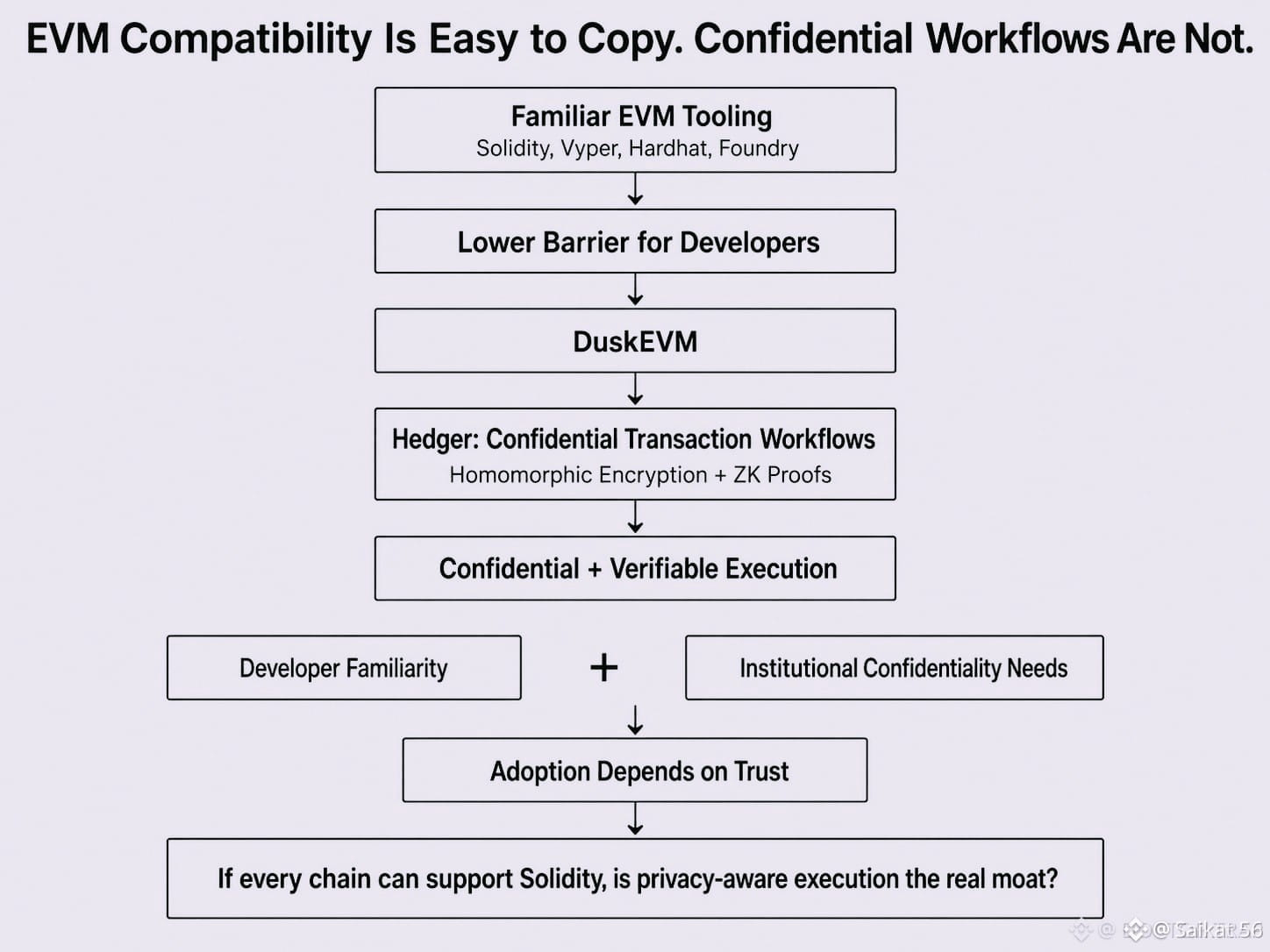
Developers already know Solidity, so an EVM-compatible environment makes the first step onto Dusk much easier.
But honestly, that alone isn’t what makes it interesting almost every chain can offer familiar EVM tooling.
What caught my attention while going through @Dusk_Foundation official docs was what comes after that familiar starting point.
DuskEVM supports Solidity, Vyper, Hardhat, and Foundry, giving developers an environment they already understand.
But Hedger on testnet adds another layer by combining homomorphic encryption with zero-knowledge proofs for confidential transaction flows.
That changes the conversation from simply “EVM, but private.”
Homomorphic encryption allows computation on encrypted data without exposing the underlying values, while ZK proofs can verify correctness without revealing sensitive information.
For financial applications, that combination could be much more meaningful. Institutions don’t just need privacy they need to know what remains confidential, what can still be verified,
and what can eventually be audited when necessary.
And that creates the real challenge.
Developers want familiar infrastructure.
Institutions want confidence that confidentiality won’t turn the system into an operational black box.
If Dusk can maintain that balance, developers get a familiar EVM experience while institutions gain something they can’t easily get from transparent chains.
So maybe the real question isn’t whether Solidity is becoming standard.
It’s whether privacy-aware execution becomes the harder moat to replicate.
#dusk $DUSK $AKE $KII
Developers already know Solidity, so an EVM-compatible environment makes the first step onto Dusk much easier.
But honestly, that alone isn’t what makes it interesting almost every chain can offer familiar EVM tooling.
What caught my attention while going through @Dusk official docs was what comes after that familiar starting point.
DuskEVM supports Solidity, Vyper, Hardhat, and Foundry, giving developers an environment they already understand.
But Hedger on testnet adds another layer by combining homomorphic encryption with zero-knowledge proofs for confidential transaction flows.
That changes the conversation from simply “EVM, but private.”
Homomorphic encryption allows computation on encrypted data without exposing the underlying values, while ZK proofs can verify correctness without revealing sensitive information.
For financial applications, that combination could be much more meaningful. Institutions don’t just need privacy they need to know what remains confidential, what can still be verified,
and what can eventually be audited when necessary.
And that creates the real challenge.
Developers want familiar infrastructure.
Institutions want confidence that confidentiality won’t turn the system into an operational black box.
If Dusk can maintain that balance, developers get a familiar EVM experience while institutions gain something they can’t easily get from transparent chains.
So maybe the real question isn’t whether Solidity is becoming standard.
It’s whether privacy-aware execution becomes the harder moat to replicate.
#dusk $DUSK $AKE $KII
But honestly, that alone isn’t what makes it interesting almost every chain can offer familiar EVM tooling.
What caught my attention while going through @Dusk official docs was what comes after that familiar starting point.
DuskEVM supports Solidity, Vyper, Hardhat, and Foundry, giving developers an environment they already understand.
But Hedger on testnet adds another layer by combining homomorphic encryption with zero-knowledge proofs for confidential transaction flows.
That changes the conversation from simply “EVM, but private.”
Homomorphic encryption allows computation on encrypted data without exposing the underlying values, while ZK proofs can verify correctness without revealing sensitive information.
For financial applications, that combination could be much more meaningful. Institutions don’t just need privacy they need to know what remains confidential, what can still be verified,
and what can eventually be audited when necessary.
And that creates the real challenge.
Developers want familiar infrastructure.
Institutions want confidence that confidentiality won’t turn the system into an operational black box.
If Dusk can maintain that balance, developers get a familiar EVM experience while institutions gain something they can’t easily get from transparent chains.
So maybe the real question isn’t whether Solidity is becoming standard.
It’s whether privacy-aware execution becomes the harder moat to replicate.
#dusk $DUSK $AKE $KII
2
2
86
·
--
𝐃𝐮𝐬𝐤’𝐬 𝐂𝐨𝐧𝐬𝐞𝐧𝐬𝐮𝐬 𝐃𝐞𝐬𝐢𝐠𝐧:
When Telling the Truth Becomes the Smartest Decision
Studying Dusk made me think about consensus in a completely different way.
Strong cryptography alone doesn’t make a consensus system truly secure. The deeper question is: what happens when an honest participant has a reason to take advantage of a flaw for their own benefit?
Imagine you’re a provisioner.
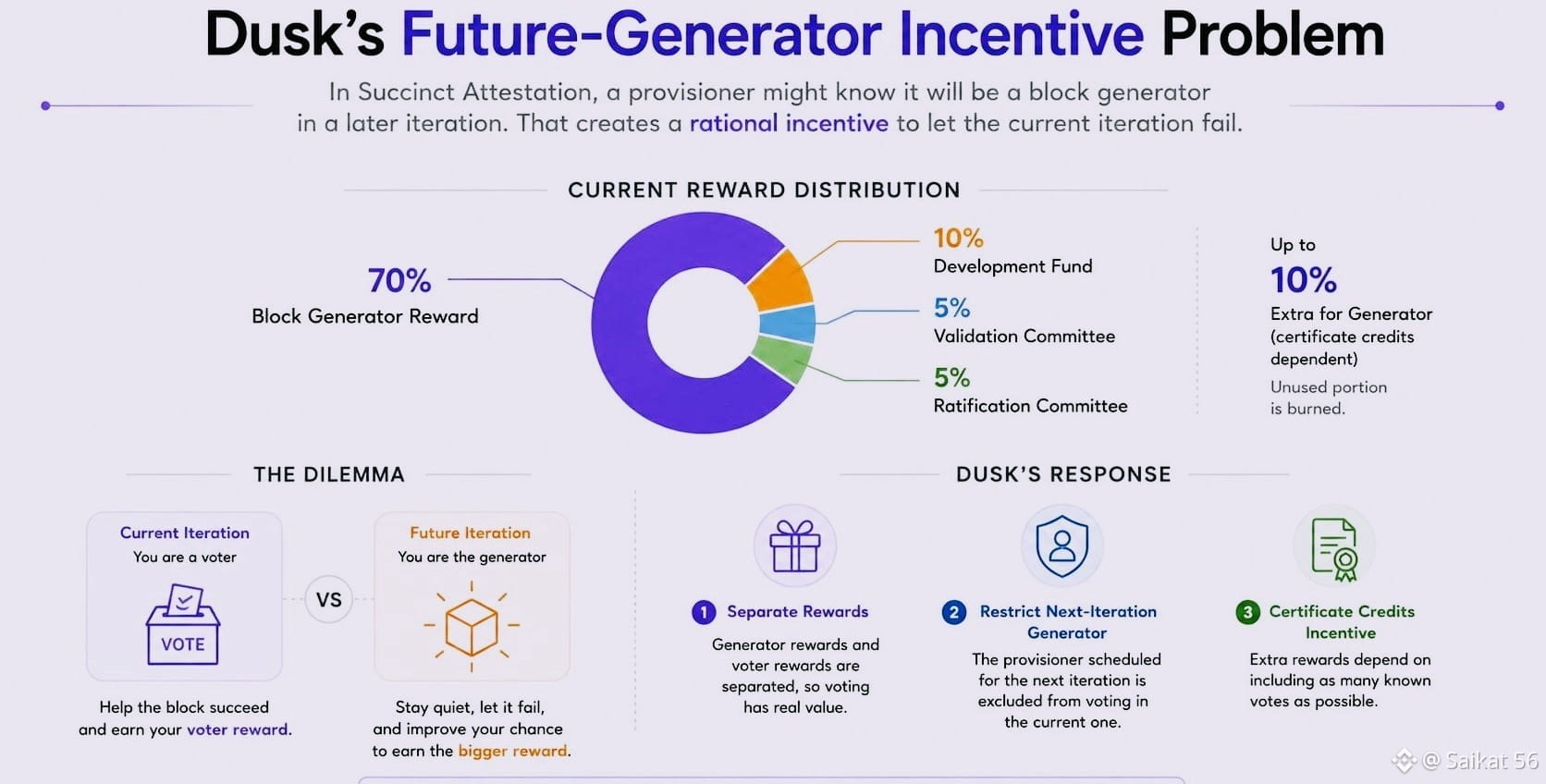
You’re voting on the current iteration, while already knowing that you’ve been selected to generate a block in the next iteration.
𝐍𝐨𝐰 𝐲𝐨𝐮 𝐟𝐚𝐜𝐞 𝐚𝐧 𝐢𝐧𝐭𝐞𝐫𝐞𝐬𝐭𝐢𝐧𝐠 𝐝𝐢𝐥𝐞𝐦𝐦𝐚:
Do you help the current block move forward and collect your voter reward?
Or do you stay silent, let the current iteration fail, and potentially strengthen your position as the future generator?
That’s the Future Generator Incentive Problem an incentive conflict that can emerge from the choices available to a legitimate participant.
There’s no external hacker trying to disrupt the network.
The problem comes from the incentives built into the protocol itself.
@Dusk_Foundation approached this by rethinking how those incentives work. It separates generator and voter rewards, prevents the generator selected for the next iteration from voting in the current one, and uses mechanisms such as Succinct Attestation to help achieve consensus.
That small but important design choice really caught my attention.
It’s easy to say that a consensus mechanism is secure.
It’s much harder to build one where the most rational decision is also the honest decision.
𝐓𝐨 𝐦𝐞, 𝐭𝐡𝐚𝐭’𝐬 𝐭𝐡𝐞 𝐫𝐞𝐚𝐥 𝐠𝐚𝐦𝐞 𝐡𝐚𝐩𝐩𝐞𝐧𝐢𝐧𝐠 𝐮𝐧𝐝𝐞𝐫𝐧𝐞𝐚𝐭𝐡 𝐜𝐨𝐧𝐬𝐞𝐧𝐬𝐮𝐬:
Not just how cryptography protects the network, but how incentives shape the behavior of the people securing it.
#dusk $DUSK $AKE $ESP
𝐃𝐮𝐬𝐤’𝐬 𝐂𝐨𝐧𝐬𝐞𝐧𝐬𝐮𝐬 𝐃𝐞𝐬𝐢𝐠𝐧:
When Telling the Truth Becomes the Smartest Decision
Studying Dusk made me think about consensus in a completely different way.
Strong cryptography alone doesn’t make a consensus system truly secure. The deeper question is: what happens when an honest participant has a reason to take advantage of a flaw for their own benefit?
Imagine you’re a provisioner.
You’re voting on the current iteration, while already knowing that you’ve been selected to generate a block in the next iteration.
𝐍𝐨𝐰 𝐲𝐨𝐮 𝐟𝐚𝐜𝐞 𝐚𝐧 𝐢𝐧𝐭𝐞𝐫𝐞𝐬𝐭𝐢𝐧𝐠 𝐝𝐢𝐥𝐞𝐦𝐦𝐚:
Do you help the current block move forward and collect your voter reward?
Or do you stay silent, let the current iteration fail, and potentially strengthen your position as the future generator?
That’s the Future Generator Incentive Problem an incentive conflict that can emerge from the choices available to a legitimate participant.
There’s no external hacker trying to disrupt the network.
The problem comes from the incentives built into the protocol itself.
@Dusk approached this by rethinking how those incentives work. It separates generator and voter rewards, prevents the generator selected for the next iteration from voting in the current one, and uses mechanisms such as Succinct Attestation to help achieve consensus.
That small but important design choice really caught my attention.
It’s easy to say that a consensus mechanism is secure.
It’s much harder to build one where the most rational decision is also the honest decision.
𝐓𝐨 𝐦𝐞, 𝐭𝐡𝐚𝐭’𝐬 𝐭𝐡𝐞 𝐫𝐞𝐚𝐥 𝐠𝐚𝐦𝐞 𝐡𝐚𝐩𝐩𝐞𝐧𝐢𝐧𝐠 𝐮𝐧𝐝𝐞𝐫𝐧𝐞𝐚𝐭𝐡 𝐜𝐨𝐧𝐬𝐞𝐧𝐬𝐮𝐬:
Not just how cryptography protects the network, but how incentives shape the behavior of the people securing it.
#dusk $DUSK $AKE $ESP
When Telling the Truth Becomes the Smartest Decision
Studying Dusk made me think about consensus in a completely different way.
Strong cryptography alone doesn’t make a consensus system truly secure. The deeper question is: what happens when an honest participant has a reason to take advantage of a flaw for their own benefit?
Imagine you’re a provisioner.
You’re voting on the current iteration, while already knowing that you’ve been selected to generate a block in the next iteration.
𝐍𝐨𝐰 𝐲𝐨𝐮 𝐟𝐚𝐜𝐞 𝐚𝐧 𝐢𝐧𝐭𝐞𝐫𝐞𝐬𝐭𝐢𝐧𝐠 𝐝𝐢𝐥𝐞𝐦𝐦𝐚:
Do you help the current block move forward and collect your voter reward?
Or do you stay silent, let the current iteration fail, and potentially strengthen your position as the future generator?
That’s the Future Generator Incentive Problem an incentive conflict that can emerge from the choices available to a legitimate participant.
There’s no external hacker trying to disrupt the network.
The problem comes from the incentives built into the protocol itself.
@Dusk approached this by rethinking how those incentives work. It separates generator and voter rewards, prevents the generator selected for the next iteration from voting in the current one, and uses mechanisms such as Succinct Attestation to help achieve consensus.
That small but important design choice really caught my attention.
It’s easy to say that a consensus mechanism is secure.
It’s much harder to build one where the most rational decision is also the honest decision.
𝐓𝐨 𝐦𝐞, 𝐭𝐡𝐚𝐭’𝐬 𝐭𝐡𝐞 𝐫𝐞𝐚𝐥 𝐠𝐚𝐦𝐞 𝐡𝐚𝐩𝐩𝐞𝐧𝐢𝐧𝐠 𝐮𝐧𝐝𝐞𝐫𝐧𝐞𝐚𝐭𝐡 𝐜𝐨𝐧𝐬𝐞𝐧𝐬𝐮𝐬:
Not just how cryptography protects the network, but how incentives shape the behavior of the people securing it.
#dusk $DUSK $AKE $ESP
10
5
94
·
--
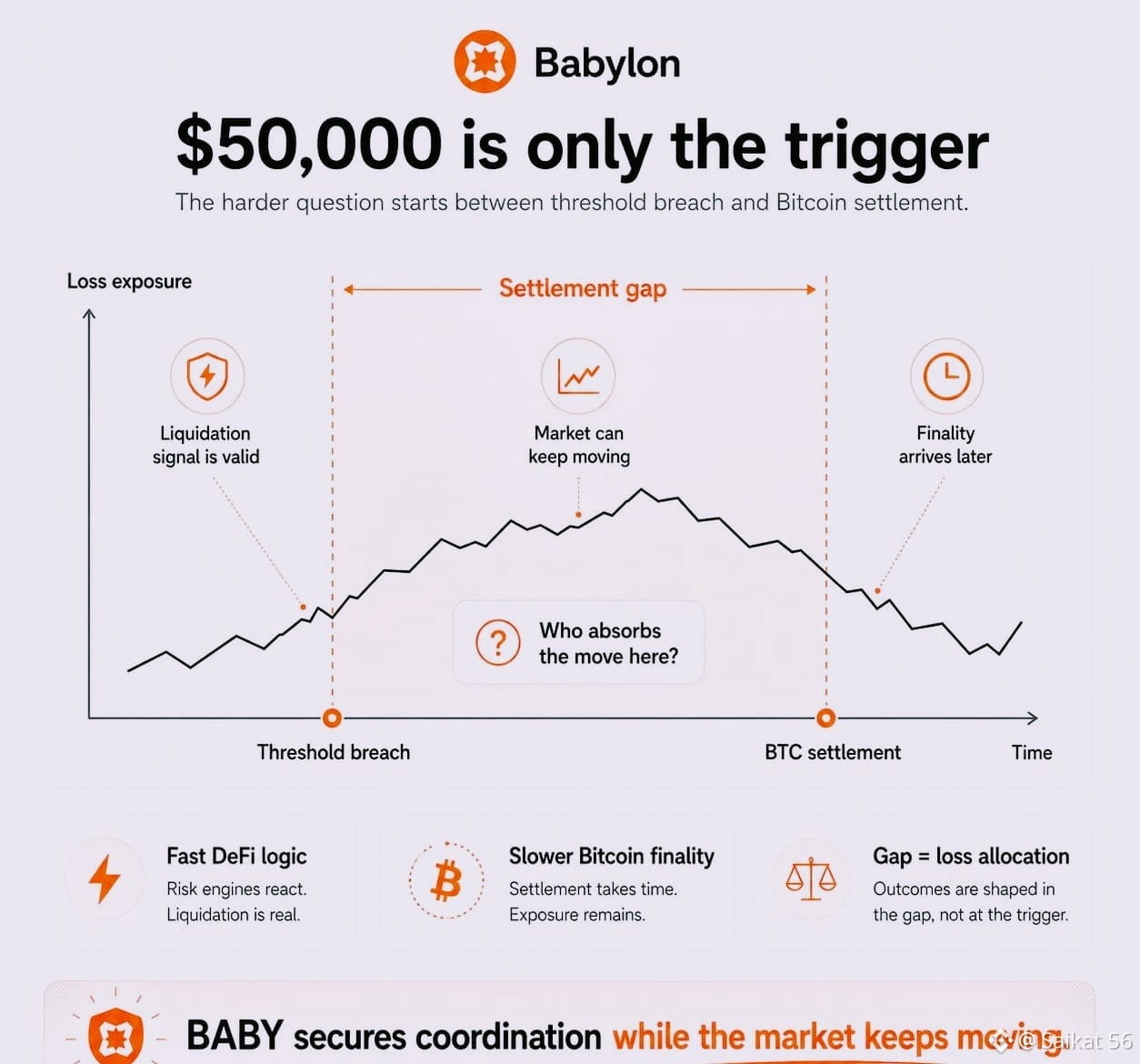
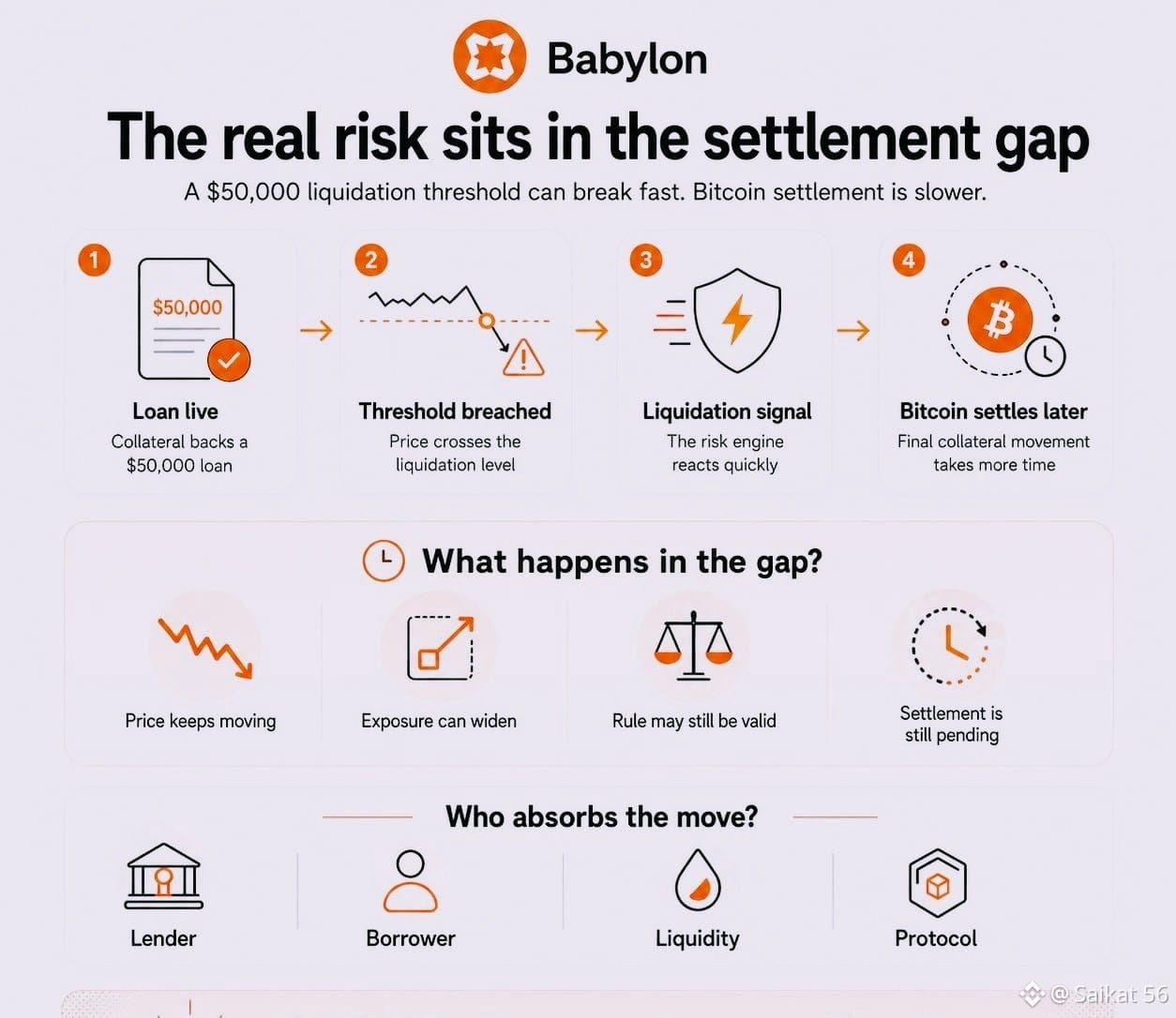
At first, I thought the $50k liquidation example was simply about whether Babylon could detect when collateral crossed the threshold.
The more I thought about it, the more I realized that's actually the easy part.
A price feed can identify a liquidation trigger almost instantly.
Bitcoin, however, settles on its own timeline. Those two clocks don't always move together, and that gap is where the real challenge begins.
Babylon connects fast risk monitoring with Bitcoin's security, but it can't make Bitcoin settle instantly. A liquidation signal may be completely correct, yet the market can continue moving before settlement is finalized.
That is why $BABY becomes interesting. During those waiting minutes, someone has to carry the market risk.
A liquidity provider? Or does the protocol absorb part of that exposure?
The rules may be followed perfectly, but perfect rules don't always guarantee a perfect outcome when prices keep changing.
To be clear, slower settlement isn't a flaw it's part of Bitcoin's design. Babylon is building around that reality rather than pretending it doesn't exist.
The question is how resilient the system remains when volatility accelerates during that settlement window.
The thought I keep coming back to is simple:
If liquidation is triggered at $50,000, but Bitcoin settles after the price has already moved significantly, who ultimately bears the difference while finality is still catching up?
That's the part of the design I'm most curious about.
#baby $BABY @babylonlabs_io $NVDA.US
At first, I thought the $50k liquidation example was simply about whether Babylon could detect when collateral crossed the threshold.
The more I thought about it, the more I realized that's actually the easy part.
A price feed can identify a liquidation trigger almost instantly.
Bitcoin, however, settles on its own timeline. Those two clocks don't always move together, and that gap is where the real challenge begins.
Babylon connects fast risk monitoring with Bitcoin's security, but it can't make Bitcoin settle instantly. A liquidation signal may be completely correct, yet the market can continue moving before settlement is finalized.
That is why $BABY becomes interesting. During those waiting minutes, someone has to carry the market risk.
A liquidity provider? Or does the protocol absorb part of that exposure?
The rules may be followed perfectly, but perfect rules don't always guarantee a perfect outcome when prices keep changing.
To be clear, slower settlement isn't a flaw it's part of Bitcoin's design. Babylon is building around that reality rather than pretending it doesn't exist.
The question is how resilient the system remains when volatility accelerates during that settlement window.
The thought I keep coming back to is simple:
If liquidation is triggered at $50,000, but Bitcoin settles after the price has already moved significantly, who ultimately bears the difference while finality is still catching up?
That's the part of the design I'm most curious about.
#baby $BABY @BabylonLabs_io $NVDA.US
The more I thought about it, the more I realized that's actually the easy part.
A price feed can identify a liquidation trigger almost instantly.
Bitcoin, however, settles on its own timeline. Those two clocks don't always move together, and that gap is where the real challenge begins.
Babylon connects fast risk monitoring with Bitcoin's security, but it can't make Bitcoin settle instantly. A liquidation signal may be completely correct, yet the market can continue moving before settlement is finalized.
That is why $BABY becomes interesting. During those waiting minutes, someone has to carry the market risk.
A liquidity provider? Or does the protocol absorb part of that exposure?
The rules may be followed perfectly, but perfect rules don't always guarantee a perfect outcome when prices keep changing.
To be clear, slower settlement isn't a flaw it's part of Bitcoin's design. Babylon is building around that reality rather than pretending it doesn't exist.
The question is how resilient the system remains when volatility accelerates during that settlement window.
The thought I keep coming back to is simple:
If liquidation is triggered at $50,000, but Bitcoin settles after the price has already moved significantly, who ultimately bears the difference while finality is still catching up?
That's the part of the design I'm most curious about.
#baby $BABY @BabylonLabs_io $NVDA.US
13
6
81

·
--
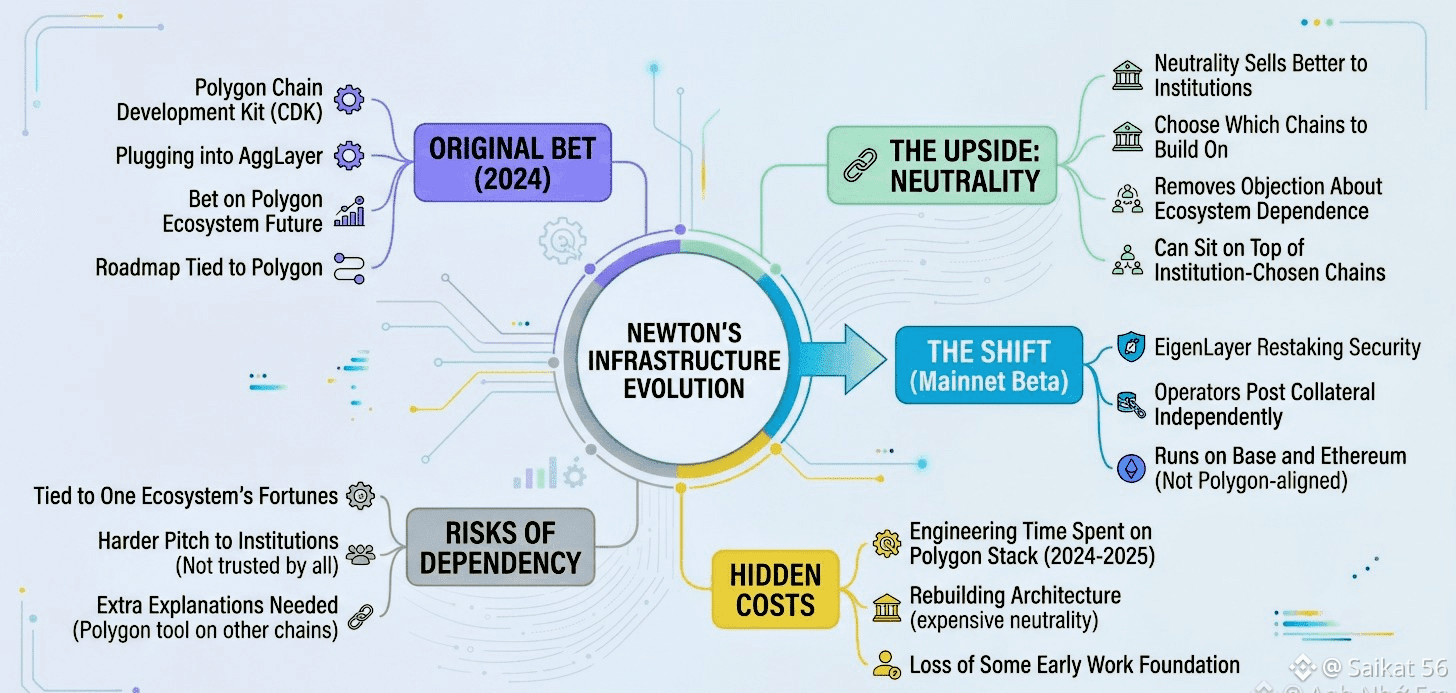
Every infrastructure project starts with a choice: build everything from scratch, or stand on someone else's foundation.
Back in 2024, Newton chose the second path. It built its chain unification network using Polygon's Chain Development Kit and connected directly to the AggLayer for cross-chain settlement.
At the time, it was a practical decision, leveraging existing infrastructure to move faster. But that choice also meant @NewtonProtocol 's future became closely linked to Polygon's own roadmap.
Fast forward to the mainnet beta, and the picture looks very different.
Newton has stepped away from that dependency. Instead of relying on Polygon's infrastructure, its security model is now powered by EigenLayer restaking, where operators secure the network by posting collateral independently of any single blockchain ecosystem.
The product itself is designed around Ethereum and Base, rather than Polygon-aligned chains.
This isn't simply a technical migration. It's a strategic shift in philosophy.
By becoming infrastructure-neutral, Newton positions itself to integrate with whichever blockchain institutions prefer instead of asking them to adapt to a Polygon-centric architecture. That matters because institutional adoption is often shaped as much by perception as technology.
Every additional explanation during an enterprise pitch creates friction. Removing ecosystem-specific dependencies removes that friction before it even appears.
Of course, neutrality doesn't come for free.
The engineering effort invested throughout 2024 and 2025 on Polygon's stack wasn't meaningless, but much of that original foundation no longer defines the architecture shipping with mainnet beta.
The experience, partnerships, and lessons remain valuable, yet the core infrastructure had to be rebuilt around an entirely different security model.
In many ways, Newton paid twice for the same destination: first by building on an existing ecosystem, and later by rebuilding for independence.
#newt $NEWT $BLUR $YFI
Every infrastructure project starts with a choice: build everything from scratch, or stand on someone else's foundation.
Back in 2024, Newton chose the second path. It built its chain unification network using Polygon's Chain Development Kit and connected directly to the AggLayer for cross-chain settlement.
At the time, it was a practical decision, leveraging existing infrastructure to move faster. But that choice also meant @NewtonProtocol 's future became closely linked to Polygon's own roadmap.
Fast forward to the mainnet beta, and the picture looks very different.
Newton has stepped away from that dependency. Instead of relying on Polygon's infrastructure, its security model is now powered by EigenLayer restaking, where operators secure the network by posting collateral independently of any single blockchain ecosystem.
The product itself is designed around Ethereum and Base, rather than Polygon-aligned chains.
This isn't simply a technical migration. It's a strategic shift in philosophy.
By becoming infrastructure-neutral, Newton positions itself to integrate with whichever blockchain institutions prefer instead of asking them to adapt to a Polygon-centric architecture. That matters because institutional adoption is often shaped as much by perception as technology.
Every additional explanation during an enterprise pitch creates friction. Removing ecosystem-specific dependencies removes that friction before it even appears.
Of course, neutrality doesn't come for free.
The engineering effort invested throughout 2024 and 2025 on Polygon's stack wasn't meaningless, but much of that original foundation no longer defines the architecture shipping with mainnet beta.
The experience, partnerships, and lessons remain valuable, yet the core infrastructure had to be rebuilt around an entirely different security model.
In many ways, Newton paid twice for the same destination: first by building on an existing ecosystem, and later by rebuilding for independence.
#newt $NEWT $BLUR $YFI
Back in 2024, Newton chose the second path. It built its chain unification network using Polygon's Chain Development Kit and connected directly to the AggLayer for cross-chain settlement.
At the time, it was a practical decision, leveraging existing infrastructure to move faster. But that choice also meant @NewtonProtocol 's future became closely linked to Polygon's own roadmap.
Fast forward to the mainnet beta, and the picture looks very different.
Newton has stepped away from that dependency. Instead of relying on Polygon's infrastructure, its security model is now powered by EigenLayer restaking, where operators secure the network by posting collateral independently of any single blockchain ecosystem.
The product itself is designed around Ethereum and Base, rather than Polygon-aligned chains.
This isn't simply a technical migration. It's a strategic shift in philosophy.
By becoming infrastructure-neutral, Newton positions itself to integrate with whichever blockchain institutions prefer instead of asking them to adapt to a Polygon-centric architecture. That matters because institutional adoption is often shaped as much by perception as technology.
Every additional explanation during an enterprise pitch creates friction. Removing ecosystem-specific dependencies removes that friction before it even appears.
Of course, neutrality doesn't come for free.
The engineering effort invested throughout 2024 and 2025 on Polygon's stack wasn't meaningless, but much of that original foundation no longer defines the architecture shipping with mainnet beta.
The experience, partnerships, and lessons remain valuable, yet the core infrastructure had to be rebuilt around an entirely different security model.
In many ways, Newton paid twice for the same destination: first by building on an existing ecosystem, and later by rebuilding for independence.
#newt $NEWT $BLUR $YFI
1
171

·
--
Статья
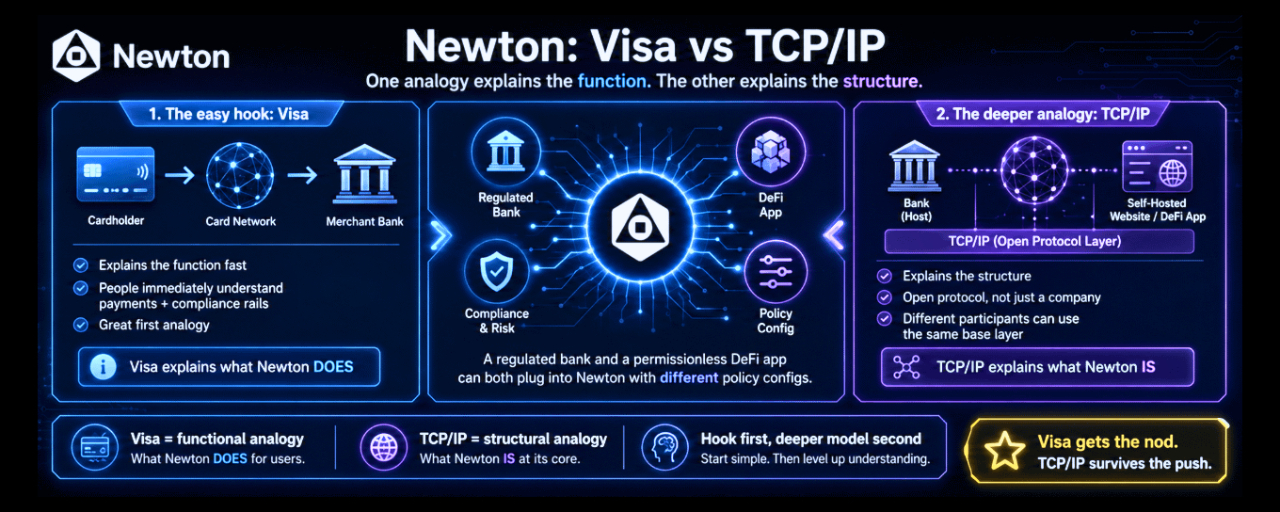
Newton's Two Analogies Aren't Confusing, They're Solving Different ProblemsI had one of those moments today where a concept didn't click immediately but once it did, everything suddenly made sense.🙄
While reading about Newton, I noticed it uses two different analogies to describe itself: Visa and TCP/IP.
My first reaction was simple: Why use both? If one analogy is stronger, why not just stick with that?
At first, I assumed TCP/IP was the only comparison that really mattered, and that Visa was just unnecessary marketing. But after sitting with it for a while, I realized I was asking the wrong question.
The two analogies aren't trying to explain the same thing.
Imagine you're introducing Newton to someone who's never heard of authorization layers or decentralized infrastructure. Starting with TCP/IP would probably leave them confused.
Visa, on the other hand, is something almost everyone recognizes. People immediately understand that it's a network connecting different participants so transactions can happen securely and efficiently.
That's why Visa works so well as the opening analogy. It explains Newton's function in a way that's instantly familiar.
But once you start looking beneath the surface, Visa stops being the perfect comparison.
Visa is a centralized company with its own governance, policies, and permission structure. Everyone participating ultimately operates within that centralized network.
That's where TCP/IP becomes the more meaningful analogy.
The internet doesn't belong to any single organization. A global bank, a university, an independent developer, or someone's personal website can all use the same protocol without asking a central authority for permission. They follow the protocol, but each operates according to its own rules.
Structurally, that's much closer to what Newton is trying to build.
A regulated financial institution and a permissionless DeFi protocol could both connect to the same authorization layer while maintaining completely different policies and compliance requirements.
Neither depends on approval from the other, and neither requires Newton to act as a gatekeeper.
That was the part I initially had backwards.
I thought Visa explained the deeper architecture and TCP/IP was just the simple example. After thinking it through, I realized it's actually the opposite.
Visa explains what Newton does.
TCP/IP explains what Newton is trying to become.
That small shift completely changed how I understood the project. Sometimes it's not about choosing the "better" analogy it's about recognizing that different analogies answer different questions.
@NewtonProtocol $NEWT #Newt $EVAA $BR
Newton's Two Analogies Aren't Confusing, They're Solving Different Problems
I had one of those moments today where a concept didn't click immediately but once it did, everything suddenly made sense.🙄
While reading about Newton, I noticed it uses two different analogies to describe itself: Visa and TCP/IP.
My first reaction was simple: Why use both? If one analogy is stronger, why not just stick with that?
At first, I assumed TCP/IP was the only comparison that really mattered, and that Visa was just unnecessary marketing. But after sitting with it for a while, I realized I was asking the wrong question.
The two analogies aren't trying to explain the same thing.
Imagine you're introducing Newton to someone who's never heard of authorization layers or decentralized infrastructure. Starting with TCP/IP would probably leave them confused.
Visa, on the other hand, is something almost everyone recognizes. People immediately understand that it's a network connecting different participants so transactions can happen securely and efficiently.
That's why Visa works so well as the opening analogy. It explains Newton's function in a way that's instantly familiar.
But once you start looking beneath the surface, Visa stops being the perfect comparison.
Visa is a centralized company with its own governance, policies, and permission structure. Everyone participating ultimately operates within that centralized network.
That's where TCP/IP becomes the more meaningful analogy.
The internet doesn't belong to any single organization. A global bank, a university, an independent developer, or someone's personal website can all use the same protocol without asking a central authority for permission. They follow the protocol, but each operates according to its own rules.
Structurally, that's much closer to what Newton is trying to build.
A regulated financial institution and a permissionless DeFi protocol could both connect to the same authorization layer while maintaining completely different policies and compliance requirements.
Neither depends on approval from the other, and neither requires Newton to act as a gatekeeper.
That was the part I initially had backwards.
I thought Visa explained the deeper architecture and TCP/IP was just the simple example. After thinking it through, I realized it's actually the opposite.
Visa explains what Newton does.
TCP/IP explains what Newton is trying to become.
That small shift completely changed how I understood the project. Sometimes it's not about choosing the "better" analogy it's about recognizing that different analogies answer different questions.
@NewtonProtocol $NEWT #Newt $EVAA $BR
While reading about Newton, I noticed it uses two different analogies to describe itself: Visa and TCP/IP.
My first reaction was simple: Why use both? If one analogy is stronger, why not just stick with that?
At first, I assumed TCP/IP was the only comparison that really mattered, and that Visa was just unnecessary marketing. But after sitting with it for a while, I realized I was asking the wrong question.
The two analogies aren't trying to explain the same thing.
Imagine you're introducing Newton to someone who's never heard of authorization layers or decentralized infrastructure. Starting with TCP/IP would probably leave them confused.
Visa, on the other hand, is something almost everyone recognizes. People immediately understand that it's a network connecting different participants so transactions can happen securely and efficiently.
That's why Visa works so well as the opening analogy. It explains Newton's function in a way that's instantly familiar.
But once you start looking beneath the surface, Visa stops being the perfect comparison.
Visa is a centralized company with its own governance, policies, and permission structure. Everyone participating ultimately operates within that centralized network.
That's where TCP/IP becomes the more meaningful analogy.
The internet doesn't belong to any single organization. A global bank, a university, an independent developer, or someone's personal website can all use the same protocol without asking a central authority for permission. They follow the protocol, but each operates according to its own rules.
Structurally, that's much closer to what Newton is trying to build.
A regulated financial institution and a permissionless DeFi protocol could both connect to the same authorization layer while maintaining completely different policies and compliance requirements.
Neither depends on approval from the other, and neither requires Newton to act as a gatekeeper.
That was the part I initially had backwards.
I thought Visa explained the deeper architecture and TCP/IP was just the simple example. After thinking it through, I realized it's actually the opposite.
Visa explains what Newton does.
TCP/IP explains what Newton is trying to become.
That small shift completely changed how I understood the project. Sometimes it's not about choosing the "better" analogy it's about recognizing that different analogies answer different questions.
@NewtonProtocol $NEWT #Newt $EVAA $BR
2
2
190
·
--
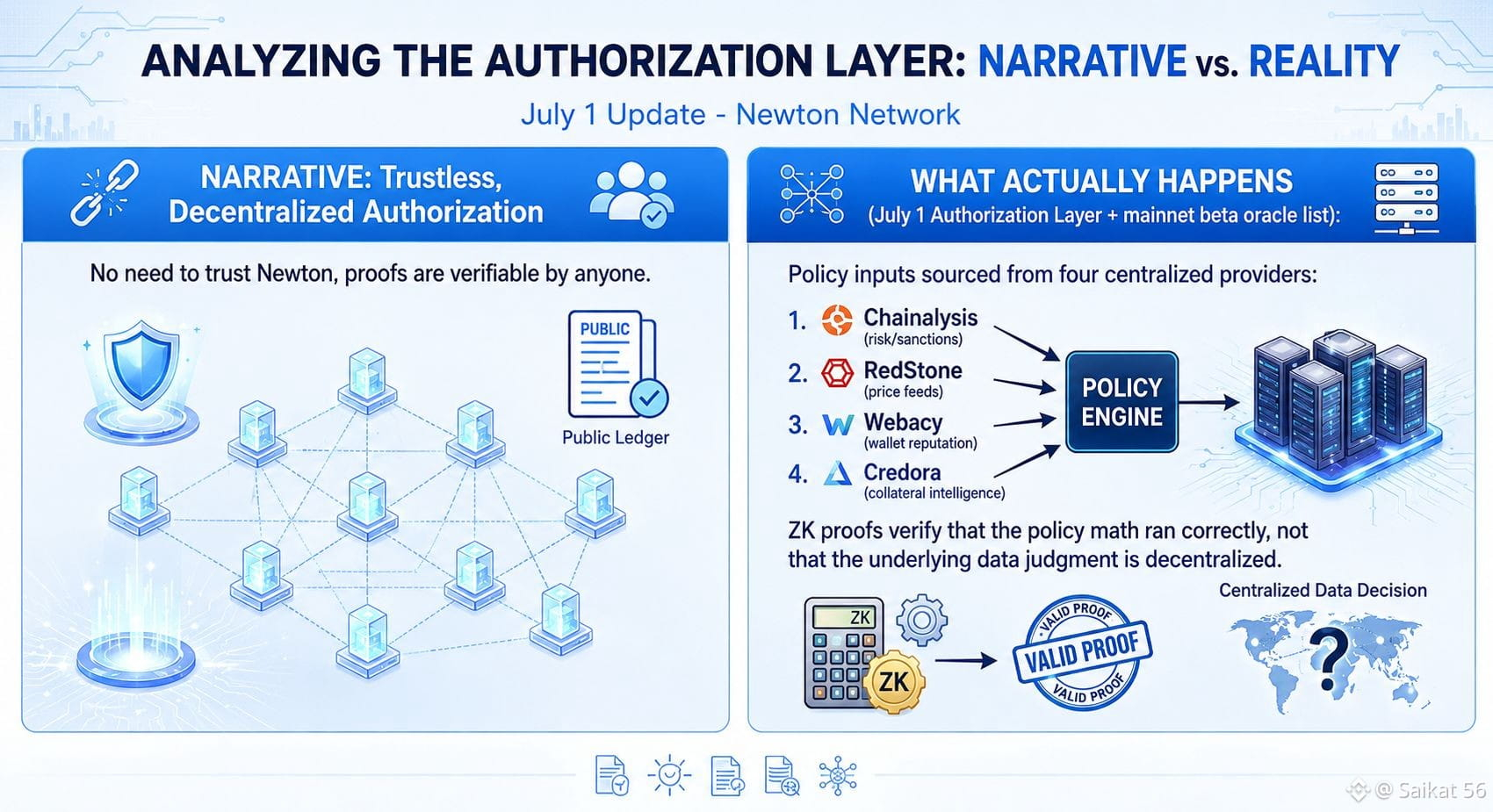
I spent some time revisiting Magic Newton Foundation's July 1 write-up on @NewtonProtocol 's Authorization Layer.
At first, everything sounded exactly like what you'd expect from a trust-minimized system.
A trustless authorization layer. EigenLayer restaking. Decentralized operators. Zero-knowledge proofs.
The whole architecture is designed to make policy enforcement verifiable without relying on blind trust.
But the deeper I read, the more one detail kept pulling my attention.
The Mainnet Beta relies on Chainalysis for risk assessment, RedStone for price feeds, Webacy for wallet reputation, and Credora for collateral intelligence.
That's when a question popped into my head.
What exactly is the zero-knowledge proof proving?
It proves that the policy check was executed correctly. But the risk score, reputation data,
or collateral assessment inside that policy still comes from those external providers.
In other words, the verification may be trustless, but the data itself is still trust-based.
I found myself thinking about that over a cup of coffee.
Is this actually a weakness?
Maybe not.
Newton never claimed the underlying data would be decentralized. Its goal is to make policy enforcement transparent and cryptographically verifiable.
Still, the word "trustless" feels a little different once you realize the trust hasn't disappeared it has simply shifted one layer deeper, to the providers supplying the data.
Then again, maybe that's exactly what institutions want.
Most enterprises already place more confidence in providers like Chainalysis than in an anonymous network of operators.
From that perspective, Newton may be solving the problem that really matters for institutional adoption.
One question still lingers, though:
Has anyone seen an authorization policy that relies entirely on decentralized data sources?
Or is some level of centralized trust simply unavoidable when building compliance infrastructure? 🙄
#newt $NEWT $EVAA $NVDAB
I spent some time revisiting Magic Newton Foundation's July 1 write-up on @NewtonProtocol 's Authorization Layer.
At first, everything sounded exactly like what you'd expect from a trust-minimized system.
A trustless authorization layer. EigenLayer restaking. Decentralized operators. Zero-knowledge proofs.
The whole architecture is designed to make policy enforcement verifiable without relying on blind trust.
But the deeper I read, the more one detail kept pulling my attention.
The Mainnet Beta relies on Chainalysis for risk assessment, RedStone for price feeds, Webacy for wallet reputation, and Credora for collateral intelligence.
That's when a question popped into my head.
What exactly is the zero-knowledge proof proving?
It proves that the policy check was executed correctly. But the risk score, reputation data,
or collateral assessment inside that policy still comes from those external providers.
In other words, the verification may be trustless, but the data itself is still trust-based.
I found myself thinking about that over a cup of coffee.
Is this actually a weakness?
Maybe not.
Newton never claimed the underlying data would be decentralized. Its goal is to make policy enforcement transparent and cryptographically verifiable.
Still, the word "trustless" feels a little different once you realize the trust hasn't disappeared it has simply shifted one layer deeper, to the providers supplying the data.
Then again, maybe that's exactly what institutions want.
Most enterprises already place more confidence in providers like Chainalysis than in an anonymous network of operators.
From that perspective, Newton may be solving the problem that really matters for institutional adoption.
One question still lingers, though:
Has anyone seen an authorization policy that relies entirely on decentralized data sources?
Or is some level of centralized trust simply unavoidable when building compliance infrastructure? 🙄
#newt $NEWT $EVAA $NVDAB
At first, everything sounded exactly like what you'd expect from a trust-minimized system.
A trustless authorization layer. EigenLayer restaking. Decentralized operators. Zero-knowledge proofs.
The whole architecture is designed to make policy enforcement verifiable without relying on blind trust.
But the deeper I read, the more one detail kept pulling my attention.
The Mainnet Beta relies on Chainalysis for risk assessment, RedStone for price feeds, Webacy for wallet reputation, and Credora for collateral intelligence.
That's when a question popped into my head.
What exactly is the zero-knowledge proof proving?
It proves that the policy check was executed correctly. But the risk score, reputation data,
or collateral assessment inside that policy still comes from those external providers.
In other words, the verification may be trustless, but the data itself is still trust-based.
I found myself thinking about that over a cup of coffee.
Is this actually a weakness?
Maybe not.
Newton never claimed the underlying data would be decentralized. Its goal is to make policy enforcement transparent and cryptographically verifiable.
Still, the word "trustless" feels a little different once you realize the trust hasn't disappeared it has simply shifted one layer deeper, to the providers supplying the data.
Then again, maybe that's exactly what institutions want.
Most enterprises already place more confidence in providers like Chainalysis than in an anonymous network of operators.
From that perspective, Newton may be solving the problem that really matters for institutional adoption.
One question still lingers, though:
Has anyone seen an authorization policy that relies entirely on decentralized data sources?
Or is some level of centralized trust simply unavoidable when building compliance infrastructure? 🙄
#newt $NEWT $EVAA $NVDAB
26
6
216
·
--
Статья
When Vision Moves Faster Than Infrastructure: My Biggest Lesson From Exploring Newton Protocol
!One conversation changed how I think about evaluating infrastructure projects.
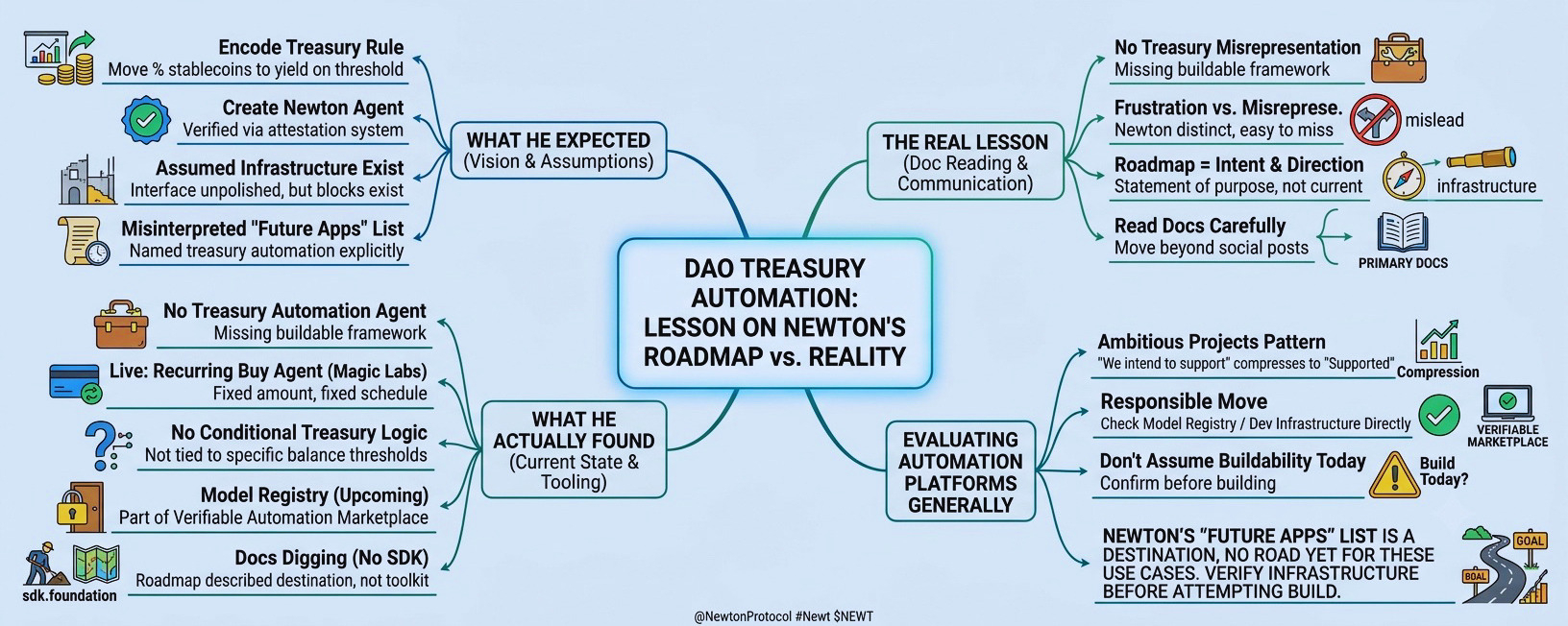
A friend of mine manages treasury operations for a mid-sized DAO. His work isn't glamorous, but it's essential. Every week he deals with repetitive treasury tasks, multisig approvals, asset allocation, and governance execution. Most of these processes follow clear rules, so naturally his first thought was, "Why can't AI handle this?"
When he started reading about @NewtonProtocol , it immediately caught his attention. The vision of AI agents executing financial actions under verifiable rules sounded like exactly the direction treasury management should move toward. Instead of relying on manual coordination, he imagined creating an intelligent agent that could automatically rebalance stablecoin reserves whenever idle funds exceeded a predefined threshold, then allocate capital into yield-generating strategies while remaining fully transparent and verifiable.
The idea seemed realistic because Newton's long-term vision openly mentions treasury automation, DAO operations, liquidity management, and other autonomous financial workflows.
Confident he had found the right platform, he spent hours exploring the documentation.
That's when reality set in.
The feature he wanted wasn't actually available yet.
The infrastructure currently available focused on the Recurring Buy Agent developed by Magic Labs, which automates scheduled purchases. It worked well for recurring transactions, but it wasn't designed for conditional treasury decisions based on DAO-specific rules.
Even more importantly, the developer infrastructure required to publish custom automation models the Model Registry and the broader Verifiable Automation Marketplace was still part of the roadmap rather than something developers could actively build on.
At first, he felt disappointed.
But after carefully rereading the documentation, he realized Newton hadn't promised otherwise.
The roadmap clearly separated today's products from tomorrow's ecosystem. The misunderstanding happened because discussions on social media naturally emphasized the future vision, making it easy to assume every highlighted use case was already supported.
That experience taught him something valuable that now applies to every infrastructure project he researches.
A roadmap explains where a protocol wants to go. Documentation explains where it is today.
Those are two very different things.
Since then, before getting excited about any new protocol, he follows a simple habit. Instead of asking whether a project plans to support a feature, he asks whether developers can actually build it today. He looks for SDKs, APIs, developer documentation, deployment examples, and production-ready tooling before investing significant time.
Ironically, the experience didn't reduce his confidence in Newton.
If anything, it made his expectations healthier.
The vision remains compelling, especially as AI agents become increasingly involved in on-chain finance. But successful infrastructure isn't measured only by ambitious ideas it is measured by the gradual delivery of usable building blocks that developers can adopt with confidence.
For now, he's still watching Newton closely.
Not because the destination changed, but because he's waiting for the infrastructure to finally catch up with the vision.
$NEWT #Newt $BLUR $OPG
When Vision Moves Faster Than Infrastructure: My Biggest Lesson From Exploring Newton Protocol !
One conversation changed how I think about evaluating infrastructure projects.
A friend of mine manages treasury operations for a mid-sized DAO. His work isn't glamorous, but it's essential. Every week he deals with repetitive treasury tasks, multisig approvals, asset allocation, and governance execution. Most of these processes follow clear rules, so naturally his first thought was, "Why can't AI handle this?"
When he started reading about @NewtonProtocol , it immediately caught his attention. The vision of AI agents executing financial actions under verifiable rules sounded like exactly the direction treasury management should move toward. Instead of relying on manual coordination, he imagined creating an intelligent agent that could automatically rebalance stablecoin reserves whenever idle funds exceeded a predefined threshold, then allocate capital into yield-generating strategies while remaining fully transparent and verifiable.
The idea seemed realistic because Newton's long-term vision openly mentions treasury automation, DAO operations, liquidity management, and other autonomous financial workflows.
Confident he had found the right platform, he spent hours exploring the documentation.
That's when reality set in.
The feature he wanted wasn't actually available yet.
The infrastructure currently available focused on the Recurring Buy Agent developed by Magic Labs, which automates scheduled purchases. It worked well for recurring transactions, but it wasn't designed for conditional treasury decisions based on DAO-specific rules.
Even more importantly, the developer infrastructure required to publish custom automation models the Model Registry and the broader Verifiable Automation Marketplace was still part of the roadmap rather than something developers could actively build on.
At first, he felt disappointed.
But after carefully rereading the documentation, he realized Newton hadn't promised otherwise.
The roadmap clearly separated today's products from tomorrow's ecosystem. The misunderstanding happened because discussions on social media naturally emphasized the future vision, making it easy to assume every highlighted use case was already supported.
That experience taught him something valuable that now applies to every infrastructure project he researches.
A roadmap explains where a protocol wants to go. Documentation explains where it is today.
Those are two very different things.
Since then, before getting excited about any new protocol, he follows a simple habit. Instead of asking whether a project plans to support a feature, he asks whether developers can actually build it today. He looks for SDKs, APIs, developer documentation, deployment examples, and production-ready tooling before investing significant time.
Ironically, the experience didn't reduce his confidence in Newton.
If anything, it made his expectations healthier.
The vision remains compelling, especially as AI agents become increasingly involved in on-chain finance. But successful infrastructure isn't measured only by ambitious ideas it is measured by the gradual delivery of usable building blocks that developers can adopt with confidence.
For now, he's still watching Newton closely.
Not because the destination changed, but because he's waiting for the infrastructure to finally catch up with the vision.
$NEWT #Newt $BLUR $OPG
A friend of mine manages treasury operations for a mid-sized DAO. His work isn't glamorous, but it's essential. Every week he deals with repetitive treasury tasks, multisig approvals, asset allocation, and governance execution. Most of these processes follow clear rules, so naturally his first thought was, "Why can't AI handle this?"
When he started reading about @NewtonProtocol , it immediately caught his attention. The vision of AI agents executing financial actions under verifiable rules sounded like exactly the direction treasury management should move toward. Instead of relying on manual coordination, he imagined creating an intelligent agent that could automatically rebalance stablecoin reserves whenever idle funds exceeded a predefined threshold, then allocate capital into yield-generating strategies while remaining fully transparent and verifiable.
The idea seemed realistic because Newton's long-term vision openly mentions treasury automation, DAO operations, liquidity management, and other autonomous financial workflows.
Confident he had found the right platform, he spent hours exploring the documentation.
That's when reality set in.
The feature he wanted wasn't actually available yet.
The infrastructure currently available focused on the Recurring Buy Agent developed by Magic Labs, which automates scheduled purchases. It worked well for recurring transactions, but it wasn't designed for conditional treasury decisions based on DAO-specific rules.
Even more importantly, the developer infrastructure required to publish custom automation models the Model Registry and the broader Verifiable Automation Marketplace was still part of the roadmap rather than something developers could actively build on.
At first, he felt disappointed.
But after carefully rereading the documentation, he realized Newton hadn't promised otherwise.
The roadmap clearly separated today's products from tomorrow's ecosystem. The misunderstanding happened because discussions on social media naturally emphasized the future vision, making it easy to assume every highlighted use case was already supported.
That experience taught him something valuable that now applies to every infrastructure project he researches.
A roadmap explains where a protocol wants to go. Documentation explains where it is today.
Those are two very different things.
Since then, before getting excited about any new protocol, he follows a simple habit. Instead of asking whether a project plans to support a feature, he asks whether developers can actually build it today. He looks for SDKs, APIs, developer documentation, deployment examples, and production-ready tooling before investing significant time.
Ironically, the experience didn't reduce his confidence in Newton.
If anything, it made his expectations healthier.
The vision remains compelling, especially as AI agents become increasingly involved in on-chain finance. But successful infrastructure isn't measured only by ambitious ideas it is measured by the gradual delivery of usable building blocks that developers can adopt with confidence.
For now, he's still watching Newton closely.
Not because the destination changed, but because he's waiting for the infrastructure to finally catch up with the vision.
$NEWT #Newt $BLUR $OPG
20
5
350
·
--
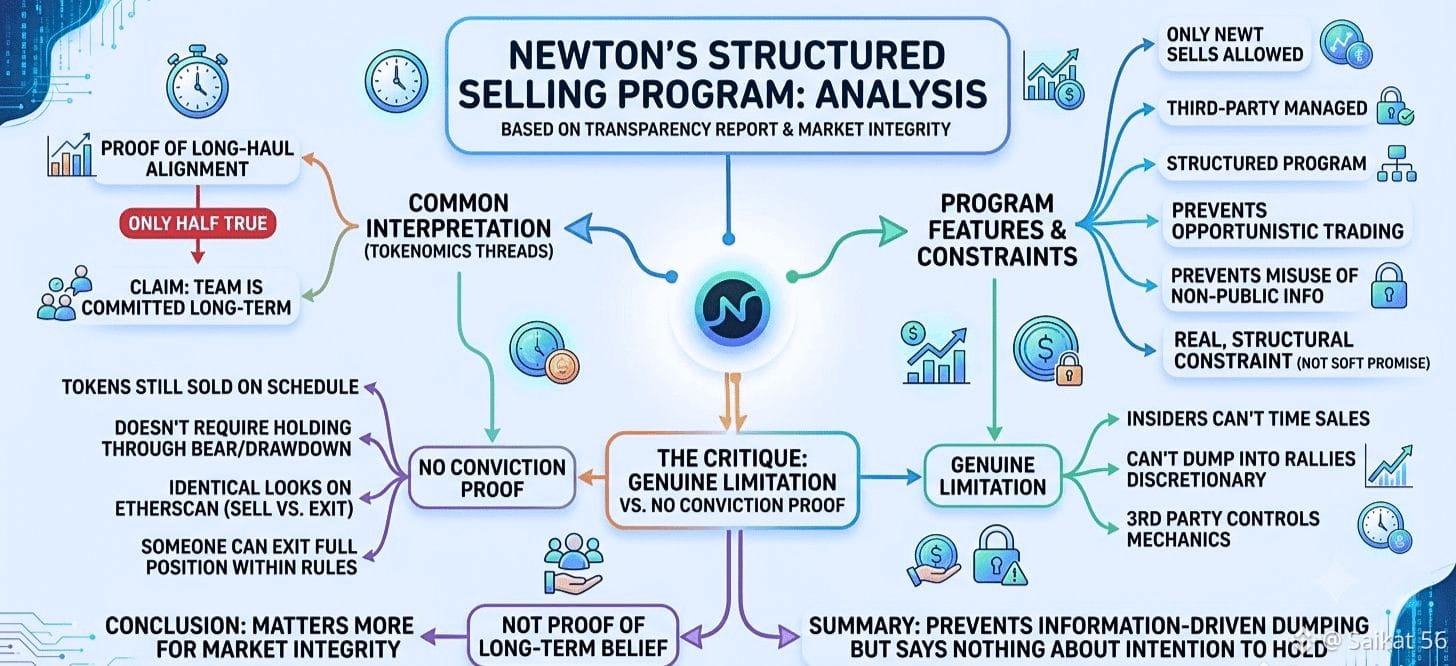
When I read Newton's transparency report, one policy caught my attention:
leadership and core contributors can't sell Newt whenever they choose. Any sale must go through a third-party-managed structured selling program.
Many people see this as proof the team is committed for the long term, but I think it shows something different. The program is primarily about market fairness, not personal conviction.
Its biggest strength is preventing insiders from exploiting non-public information. Executives can't rush to sell before a major announcement or capitalize on a post-news rally because the timing of sales isn't under their direct control.
That creates a more transparent and trustworthy market.
What the program doesn't do is guarantee leadership will hold indefinitely.
Team members can still reduce or even fully exit their positions over time while remaining compliant with the rules.
The mechanism regulates how tokens are sold, not why they're sold.
To me, that's the key distinction.
A structured selling program is evidence of strong governance and market integrity, but it shouldn't automatically be interpreted as proof of unwavering long-term belief in Newton's future.
@NewtonProtocol #newt $NEWT $BLUR $OPG
When I read Newton's transparency report, one policy caught my attention:
leadership and core contributors can't sell Newt whenever they choose. Any sale must go through a third-party-managed structured selling program.
Many people see this as proof the team is committed for the long term, but I think it shows something different. The program is primarily about market fairness, not personal conviction.
Its biggest strength is preventing insiders from exploiting non-public information. Executives can't rush to sell before a major announcement or capitalize on a post-news rally because the timing of sales isn't under their direct control.
That creates a more transparent and trustworthy market.
What the program doesn't do is guarantee leadership will hold indefinitely.
Team members can still reduce or even fully exit their positions over time while remaining compliant with the rules.
The mechanism regulates how tokens are sold, not why they're sold.
To me, that's the key distinction.
A structured selling program is evidence of strong governance and market integrity, but it shouldn't automatically be interpreted as proof of unwavering long-term belief in Newton's future.
@NewtonProtocol #newt $NEWT $BLUR $OPG
leadership and core contributors can't sell Newt whenever they choose. Any sale must go through a third-party-managed structured selling program.
Many people see this as proof the team is committed for the long term, but I think it shows something different. The program is primarily about market fairness, not personal conviction.
Its biggest strength is preventing insiders from exploiting non-public information. Executives can't rush to sell before a major announcement or capitalize on a post-news rally because the timing of sales isn't under their direct control.
That creates a more transparent and trustworthy market.
What the program doesn't do is guarantee leadership will hold indefinitely.
Team members can still reduce or even fully exit their positions over time while remaining compliant with the rules.
The mechanism regulates how tokens are sold, not why they're sold.
To me, that's the key distinction.
A structured selling program is evidence of strong governance and market integrity, but it shouldn't automatically be interpreted as proof of unwavering long-term belief in Newton's future.
@NewtonProtocol #newt $NEWT $BLUR $OPG
18
4
281
·
--
Статья
Beyond Yield: The Real Value of Newton's Vault Policy ChecksMost people evaluating a vault begin with a single question: What's the APY? It's an understandable habit because yield is easy to compare. But imagine an AI agent choosing between two vaults with similar returns.
One is backed by strong liquidity, broad participation, and instant withdrawals. The other has very few depositors and limited exit options. The percentage looks identical, yet the risk profile couldn't be more different.
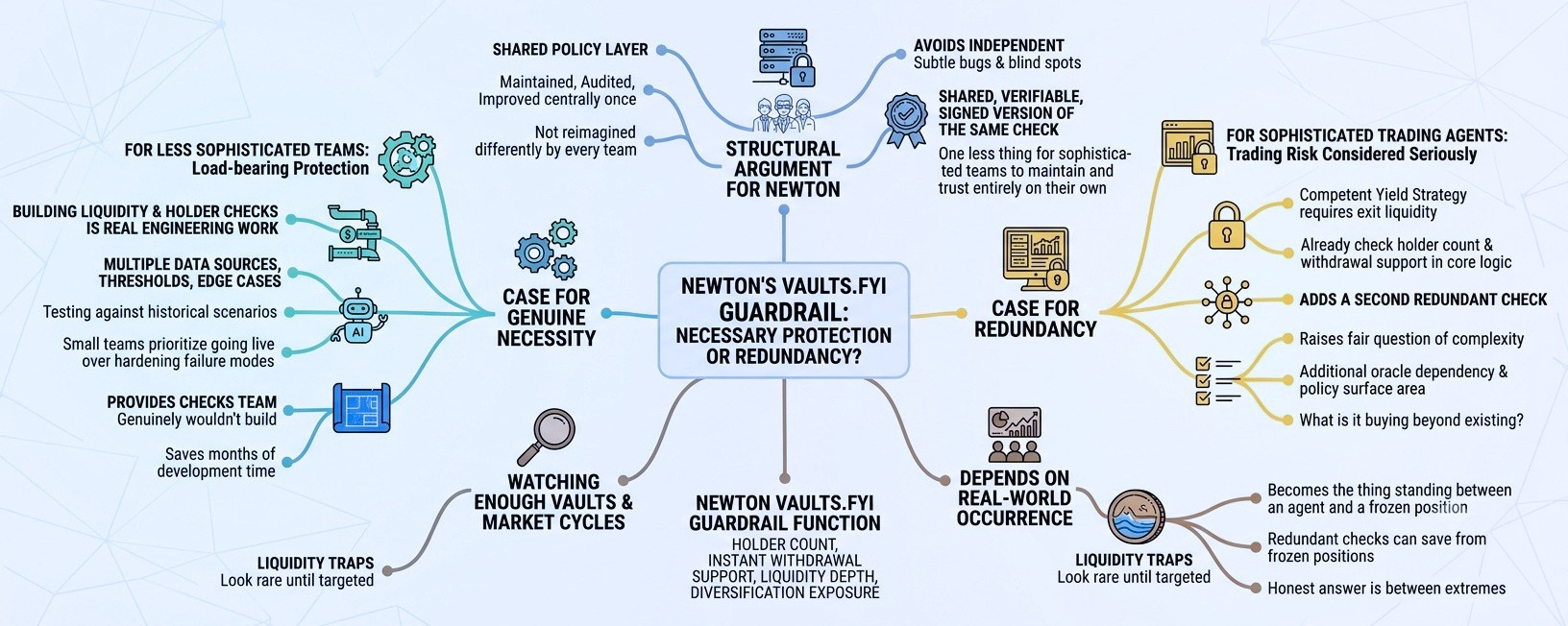
That difference is exactly what Newton Protocol's Vaults.fyi integration tries to capture. Instead of allowing an agent to optimize for yield alone, policies can require additional conditions before funds move.
Metrics like holder count, liquidity depth, withdrawal availability, and diversification become part of the decision itself rather than information someone hopes the agent remembered to check.
The idea sounds convincing, but I don't think it's universally essential.
For newer teams, building reliable risk checks is a surprisingly large project. Data has to come from multiple sources, thresholds need to be chosen carefully, missing information must be handled safely, and every rule needs continuous testing as markets evolve.
Shipping those safeguards takes time that many early-stage builders simply don't have. In that environment, Newton's policy layer fills a genuine gap by providing protections that otherwise might never exist.
The picture changes when looking at more experienced builders. Teams creating sophisticated trading agents often consider liquidity analysis a basic requirement, not an optional upgrade. Their systems may already reject illiquid vaults, evaluate withdrawal conditions, and monitor concentration risk before allocating capital.
For them, Newton is less about discovering hidden risks and more about independently confirming decisions their software already made.
What matters most, though, is how often liquidity failures actually happen. During calm markets, an additional policy check can seem unnecessary because everything appears to work as expected. But market stress has a way of exposing weaknesses that looked insignificant before.
A vault attracting capital with exceptional yield can quickly become difficult to exit if liquidity disappears or participation falls. In those moments, a rule that once felt redundant suddenly becomes valuable.
There's also an operational advantage beyond catching individual mistakes. When these checks live inside a shared policy framework, they can be maintained, reviewed, and improved in one place instead of being rebuilt differently by every development team. That creates more consistent standards while reducing duplicated engineering effort.
So I don't see this feature as either indispensable or redundant. Its value depends on who is using it. For smaller teams, it can provide meaningful protection they likely wouldn't build themselves.
For mature builders, it serves as an additional layer of verification and a maintenance benefit. The guardrail remains the same; what changes is how much value each team gains from having it.
@NewtonProtocol $NEWT #Newt $BTC $ETH
Beyond Yield: The Real Value of Newton's Vault Policy Checks
Most people evaluating a vault begin with a single question: What's the APY? It's an understandable habit because yield is easy to compare. But imagine an AI agent choosing between two vaults with similar returns.
One is backed by strong liquidity, broad participation, and instant withdrawals. The other has very few depositors and limited exit options. The percentage looks identical, yet the risk profile couldn't be more different.
That difference is exactly what Newton Protocol's Vaults.fyi integration tries to capture. Instead of allowing an agent to optimize for yield alone, policies can require additional conditions before funds move.
Metrics like holder count, liquidity depth, withdrawal availability, and diversification become part of the decision itself rather than information someone hopes the agent remembered to check.
The idea sounds convincing, but I don't think it's universally essential.
For newer teams, building reliable risk checks is a surprisingly large project. Data has to come from multiple sources, thresholds need to be chosen carefully, missing information must be handled safely, and every rule needs continuous testing as markets evolve.
Shipping those safeguards takes time that many early-stage builders simply don't have. In that environment, Newton's policy layer fills a genuine gap by providing protections that otherwise might never exist.
The picture changes when looking at more experienced builders. Teams creating sophisticated trading agents often consider liquidity analysis a basic requirement, not an optional upgrade. Their systems may already reject illiquid vaults, evaluate withdrawal conditions, and monitor concentration risk before allocating capital.
For them, Newton is less about discovering hidden risks and more about independently confirming decisions their software already made.
What matters most, though, is how often liquidity failures actually happen. During calm markets, an additional policy check can seem unnecessary because everything appears to work as expected. But market stress has a way of exposing weaknesses that looked insignificant before.
A vault attracting capital with exceptional yield can quickly become difficult to exit if liquidity disappears or participation falls. In those moments, a rule that once felt redundant suddenly becomes valuable.
There's also an operational advantage beyond catching individual mistakes. When these checks live inside a shared policy framework, they can be maintained, reviewed, and improved in one place instead of being rebuilt differently by every development team. That creates more consistent standards while reducing duplicated engineering effort.
So I don't see this feature as either indispensable or redundant. Its value depends on who is using it. For smaller teams, it can provide meaningful protection they likely wouldn't build themselves.
For mature builders, it serves as an additional layer of verification and a maintenance benefit. The guardrail remains the same; what changes is how much value each team gains from having it.
@NewtonProtocol $NEWT #Newt $BTC $ETH
One is backed by strong liquidity, broad participation, and instant withdrawals. The other has very few depositors and limited exit options. The percentage looks identical, yet the risk profile couldn't be more different.
That difference is exactly what Newton Protocol's Vaults.fyi integration tries to capture. Instead of allowing an agent to optimize for yield alone, policies can require additional conditions before funds move.
Metrics like holder count, liquidity depth, withdrawal availability, and diversification become part of the decision itself rather than information someone hopes the agent remembered to check.
The idea sounds convincing, but I don't think it's universally essential.
For newer teams, building reliable risk checks is a surprisingly large project. Data has to come from multiple sources, thresholds need to be chosen carefully, missing information must be handled safely, and every rule needs continuous testing as markets evolve.
Shipping those safeguards takes time that many early-stage builders simply don't have. In that environment, Newton's policy layer fills a genuine gap by providing protections that otherwise might never exist.
The picture changes when looking at more experienced builders. Teams creating sophisticated trading agents often consider liquidity analysis a basic requirement, not an optional upgrade. Their systems may already reject illiquid vaults, evaluate withdrawal conditions, and monitor concentration risk before allocating capital.
For them, Newton is less about discovering hidden risks and more about independently confirming decisions their software already made.
What matters most, though, is how often liquidity failures actually happen. During calm markets, an additional policy check can seem unnecessary because everything appears to work as expected. But market stress has a way of exposing weaknesses that looked insignificant before.
A vault attracting capital with exceptional yield can quickly become difficult to exit if liquidity disappears or participation falls. In those moments, a rule that once felt redundant suddenly becomes valuable.
There's also an operational advantage beyond catching individual mistakes. When these checks live inside a shared policy framework, they can be maintained, reviewed, and improved in one place instead of being rebuilt differently by every development team. That creates more consistent standards while reducing duplicated engineering effort.
So I don't see this feature as either indispensable or redundant. Its value depends on who is using it. For smaller teams, it can provide meaningful protection they likely wouldn't build themselves.
For mature builders, it serves as an additional layer of verification and a maintenance benefit. The guardrail remains the same; what changes is how much value each team gains from having it.
@NewtonProtocol $NEWT #Newt $BTC $ETH
11
6
95
·
--
The more I explored Newton, the more one detail stood out. The headline talks about AI agents, autonomous execution, and trust-minimized automation. Naturally, I expected those pieces to be live.
Instead, I found today's focus is much narrower: DeFi vaults. The protocol currently verifies curator actions against predefined policies before anything is executed. The AI agents and Model Registry are still marked as upcoming.
That progression actually feels reasonable. Before giving autonomous agents control over financial actions, it makes sense to prove the policy engine in a smaller, high-value environment. It's a practical rollout, even if it's different from what many people assume at first glance.
Another interesting discovery was the number of oracle integrations already supporting the system Chainalysis, vaults.fyi, RedStone, Credora, and Webacy. They provide the external signals the protocol depends on, making today's architecture feel more oracle-driven than agent-driven.
After tracing what is live versus what remains on the roadmap, I'm left with one question: will the transition from secure vault automation to fully autonomous agents happen soon,
or is that future still further away?,,🤔
@NewtonProtocol #newt $NEWT $ANOME $TLM
The more I explored Newton, the more one detail stood out. The headline talks about AI agents, autonomous execution, and trust-minimized automation. Naturally, I expected those pieces to be live.
Instead, I found today's focus is much narrower: DeFi vaults. The protocol currently verifies curator actions against predefined policies before anything is executed. The AI agents and Model Registry are still marked as upcoming.
That progression actually feels reasonable. Before giving autonomous agents control over financial actions, it makes sense to prove the policy engine in a smaller, high-value environment. It's a practical rollout, even if it's different from what many people assume at first glance.
Another interesting discovery was the number of oracle integrations already supporting the system Chainalysis, vaults.fyi, RedStone, Credora, and Webacy. They provide the external signals the protocol depends on, making today's architecture feel more oracle-driven than agent-driven.
After tracing what is live versus what remains on the roadmap, I'm left with one question: will the transition from secure vault automation to fully autonomous agents happen soon,
or is that future still further away?,,🤔
@NewtonProtocol #newt $NEWT $ANOME $TLM
Instead, I found today's focus is much narrower: DeFi vaults. The protocol currently verifies curator actions against predefined policies before anything is executed. The AI agents and Model Registry are still marked as upcoming.
That progression actually feels reasonable. Before giving autonomous agents control over financial actions, it makes sense to prove the policy engine in a smaller, high-value environment. It's a practical rollout, even if it's different from what many people assume at first glance.
Another interesting discovery was the number of oracle integrations already supporting the system Chainalysis, vaults.fyi, RedStone, Credora, and Webacy. They provide the external signals the protocol depends on, making today's architecture feel more oracle-driven than agent-driven.
After tracing what is live versus what remains on the roadmap, I'm left with one question: will the transition from secure vault automation to fully autonomous agents happen soon,
or is that future still further away?,,🤔
@NewtonProtocol #newt $NEWT $ANOME $TLM
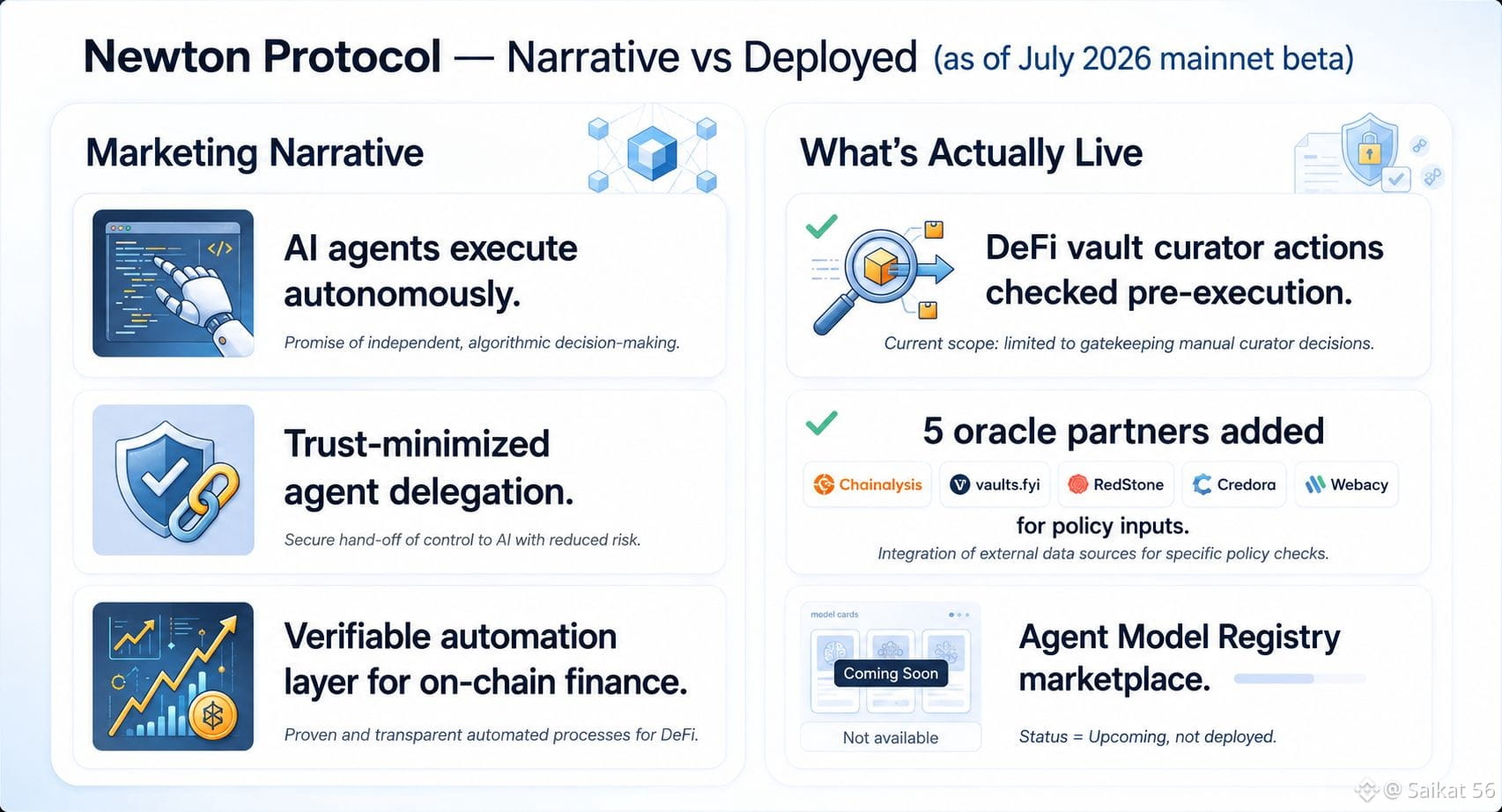
16
1
7
178
Войдите, чтобы посмотреть больше материала
Присоединяйтесь к пользователям криптовалют по всему миру на Binance Square
⚡️ Получайте новейшую и полезную информацию о криптоактивах.
💬 Нам доверяет крупнейшая в мире криптобиржа.
👍 Получите достоверные аналитические данные от верифицированных создателей контента.
Эл. почта/номер телефона
В тренде
FedMinutesFocusOnOctoberPause
Просмотров: 215,747
1,464 обсуждают
🚨 HIGH ALERT ‼️ PLEASE DON’T TRADE BLINDLY FOR THE NEXT HOUR 🚨
Guys, we have FOMC Minutes coming in less than 1 hour.
And after the kind of volatility we already saw today, I really don’t want anyone opening random high-leverage positions just before this release.
The biggest reaction I’m watching will be in Gold (XAU), Silver (XAG), BTC and ETH. Then coins like SOL and other highly leveraged mid/low-cap alts can exaggerate whatever move BTC makes.
Gold and Silver are especially sensitive tonight because the market is already reacting to the US dollar + Treasury yields, and both metals have been under heavy pressure ahead of the Fed minutes.
Briefly speaking
📉Hawkish Fed Minutes → Dollar/yields can push higher → pressure on BTC, crypto, Gold & silver
📈Dovish Fed Minutes → Dollar/yields can cool → BTC, Gold, Silver and risk assets can bounce hard.
And please remember the first candle can be a trap. We can get a pump, immediate dump, liquidations on both sides, and then the real direction.
So for now, protect your positions, reduce unnecessary leverage and don’t FOMO into the first move.
Tonight I’m watching $XAU , $XAG and $BTC first. These will tell us very quickly how the market is reading the Fed.
I will Update you guys on time
Follow @Panda Traders and Turn on Your notifications right now
#FedMinutesFocusOnOctoberPause
Panda Traders
·Лайков: 19
·Просмотров: 4.3k
BinanceLaunchesBinanceIntelligence
Просмотров: 1.2M
6,638 обсуждают
EvernorthDelaysNasdaqDebutToOct12
Просмотров: 20,513
344 обсуждают