
vanzdoteth
734 Публикации

vanzdoteth
Отправить жалобу
Заблокировать пользователя
Crypto since 2021 | Web3 Marketing | DeFi Researcher | Prediction Market Analyst | X @vanzdoteth
798 подписок(и/а)
1.1K+ подписчиков(а)
1.1K+ понравилось
Посты
Все
Цитирования
·
--
Jump Crypto just sent 1.14K $BTC worth around $89M to Binance to sell
That’s a pretty heavy BTC inflow hitting the exchange in just 30 minutes 👀
Jump Crypto just sent 1.14K $BTC worth around $89M to Binance to sell
That’s a pretty heavy BTC inflow hitting the exchange in just 30 minutes 👀
That’s a pretty heavy BTC inflow hitting the exchange in just 30 minutes 👀

1
121
·
--
If the collateral is native BTC, why does WBTC show up at all?
That was my first question in the Trustless Bitcoin Vaults (TBV) liquidation docs
I then separated what happens to my collateral from what an Aave v4 liquidator needs on Ethereum
Native BTC stays locked inside its Taproot UTXO on Bitcoin
It is never wrapped, bridged, or placed with a custodian
The permissionless liquidation path needs immediate settlement, while Bitcoin redemption still passes through claim, challenge, and payout over several days
The @babylonlabs_io BTCVaultSwap Spoke fills that gap with WBTC and temporarily holds the seized vault
A registered arbitrageur later buys it, repays the WBTC obligation, and completes redemption on Bitcoin
On the Public Testnet, that WBTC is a mock token with no monetary value
So I see WBTC as settlement liquidity, not my collateral
That is the $BABY detail I would keep explaining whenever #baby comes up
Before reading this, what did you think WBTC was used for in TBV?
If the collateral is native BTC, why does WBTC show up at all?
That was my first question in the Trustless Bitcoin Vaults (TBV) liquidation docs
I then separated what happens to my collateral from what an Aave v4 liquidator needs on Ethereum
Native BTC stays locked inside its Taproot UTXO on Bitcoin
It is never wrapped, bridged, or placed with a custodian
The permissionless liquidation path needs immediate settlement, while Bitcoin redemption still passes through claim, challenge, and payout over several days
The @BabylonLabs_io BTCVaultSwap Spoke fills that gap with WBTC and temporarily holds the seized vault
A registered arbitrageur later buys it, repays the WBTC obligation, and completes redemption on Bitcoin
On the Public Testnet, that WBTC is a mock token with no monetary value
So I see WBTC as settlement liquidity, not my collateral
That is the $BABY detail I would keep explaining whenever #baby comes up
Before reading this, what did you think WBTC was used for in TBV?
That was my first question in the Trustless Bitcoin Vaults (TBV) liquidation docs
I then separated what happens to my collateral from what an Aave v4 liquidator needs on Ethereum
Native BTC stays locked inside its Taproot UTXO on Bitcoin
It is never wrapped, bridged, or placed with a custodian
The permissionless liquidation path needs immediate settlement, while Bitcoin redemption still passes through claim, challenge, and payout over several days
The @BabylonLabs_io BTCVaultSwap Spoke fills that gap with WBTC and temporarily holds the seized vault
A registered arbitrageur later buys it, repays the WBTC obligation, and completes redemption on Bitcoin
On the Public Testnet, that WBTC is a mock token with no monetary value
So I see WBTC as settlement liquidity, not my collateral
That is the $BABY detail I would keep explaining whenever #baby comes up
Before reading this, what did you think WBTC was used for in TBV?
A. Liquidator settlement
0%
B. User collateral
100%
C. Replacing native BTC
0%
D. I had no idea
0%
1 проголосовали • Голосование закрыто
1
2
290
·
--
Проверено
If you were testing TBV, which collateral setup would you choose?
Splitting collateral first looked like basic position management to me
Reading the liquidation design of Trustless Bitcoin Vaults (TBV) for native Bitcoin backed borrowing through the Aave v4 Public Testnet changed that
Each TBV is a separate Bitcoin UTXO that cannot be partially spent
A single vault position can therefore lose the full vault in liquidation
That is why the @babylonlabs_io Public Testnet recommends a sacrificial vault first and a protected vault second
The protocol seizes from the front until its target health factor is restored, so the protected vault can remain
In the Public Testnet example, current parameters put the target seizure near 62.5% of total BTC, but this can change
Excess value returns through debt reduction or a WBTC payment
On testnet, WBTC is only a mock token with no monetary value
For me, two vaults are real risk control worth discussing around $BABY and #baby
If you were testing TBV, which collateral setup would you choose?
Splitting collateral first looked like basic position management to me
Reading the liquidation design of Trustless Bitcoin Vaults (TBV) for native Bitcoin backed borrowing through the Aave v4 Public Testnet changed that
Each TBV is a separate Bitcoin UTXO that cannot be partially spent
A single vault position can therefore lose the full vault in liquidation
That is why the @BabylonLabs_io Public Testnet recommends a sacrificial vault first and a protected vault second
The protocol seizes from the front until its target health factor is restored, so the protected vault can remain
In the Public Testnet example, current parameters put the target seizure near 62.5% of total BTC, but this can change
Excess value returns through debt reduction or a WBTC payment
On testnet, WBTC is only a mock token with no monetary value
For me, two vaults are real risk control worth discussing around $BABY and #baby
Splitting collateral first looked like basic position management to me
Reading the liquidation design of Trustless Bitcoin Vaults (TBV) for native Bitcoin backed borrowing through the Aave v4 Public Testnet changed that
Each TBV is a separate Bitcoin UTXO that cannot be partially spent
A single vault position can therefore lose the full vault in liquidation
That is why the @BabylonLabs_io Public Testnet recommends a sacrificial vault first and a protected vault second
The protocol seizes from the front until its target health factor is restored, so the protected vault can remain
In the Public Testnet example, current parameters put the target seizure near 62.5% of total BTC, but this can change
Excess value returns through debt reduction or a WBTC payment
On testnet, WBTC is only a mock token with no monetary value
For me, two vaults are real risk control worth discussing around $BABY and #baby
A. Sacrificial plus protected
100%
B. One vault for simplicity
0%
C. I would test both
0%
D. I need to study it first
0%
1 проголосовали • Голосование закрыто
2
399
·
--
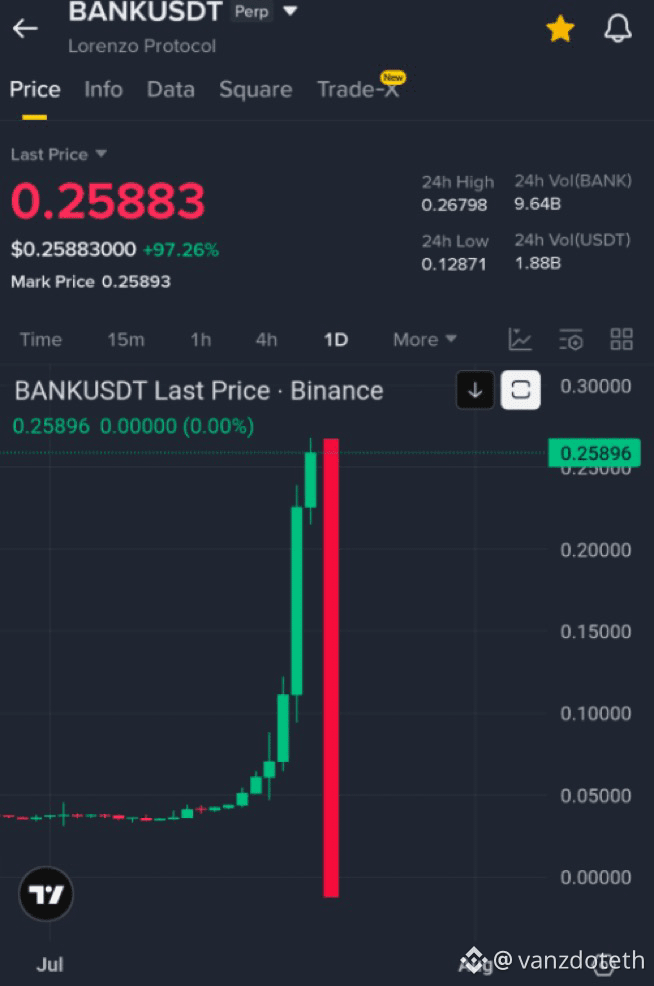
SHORT $BANK LIKE THIS, CAN IT STILL BE SAVED BRO??
TP at 0.05 USD
SL pulled back up to 0.28 USD
Win and you eat a chunk
Wrong and the account goes a very long way
Not sure if this is a trading strategy...
Or just a test of the wallet's endurance
$ACE $PROM
SHORT $BANK LIKE THIS, CAN IT STILL BE SAVED BRO??
TP at 0.05 USD
SL pulled back up to 0.28 USD
Win and you eat a chunk
Wrong and the account goes a very long way
Not sure if this is a trading strategy...
Or just a test of the wallet's endurance
$ACE $PROM
TP at 0.05 USD
SL pulled back up to 0.28 USD
Win and you eat a chunk
Wrong and the account goes a very long way
Not sure if this is a trading strategy...
Or just a test of the wallet's endurance
$ACE $PROM
1
483
·
--
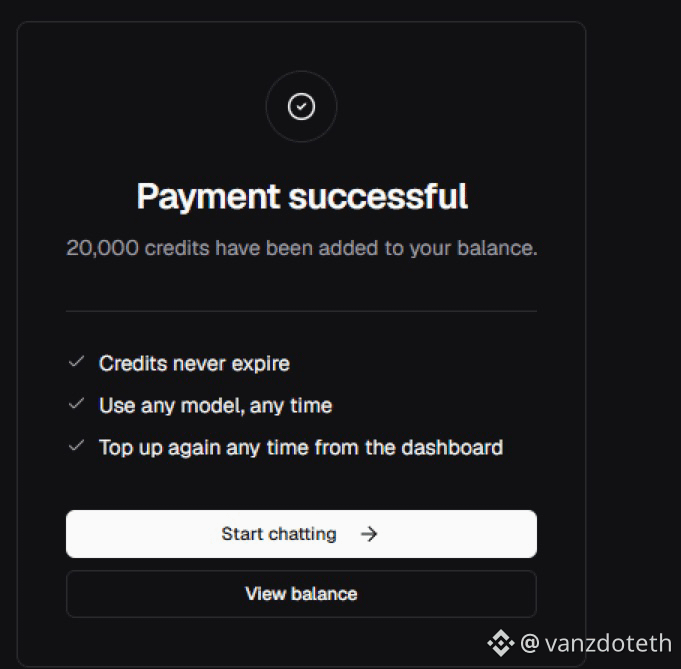
If you’re holding an OG or Alpha OG role on OpenGradient, this is probably the best time to explore what the team has been building
Eligible members can unlock 20,000 AI credits for just $2 (90% off), which is more than enough to test different models, experiment with prompts, and get a feel for the platform
The discount code isn’t public, but all the information is available in the #og-announcement channel for those with the required Discord roles
The allocation is limited, so it may not be available for long
Not part of the OG program? You can still try @OpenGradient by creating an account and claiming the free credits offered to new users
Worth checking out if you’re curious about private AI and what OpenGradient is building
$OPG #OPG
If you’re holding an OG or Alpha OG role on OpenGradient, this is probably the best time to explore what the team has been building
Eligible members can unlock 20,000 AI credits for just $2 (90% off), which is more than enough to test different models, experiment with prompts, and get a feel for the platform
The discount code isn’t public, but all the information is available in the #og-announcement channel for those with the required Discord roles
The allocation is limited, so it may not be available for long
Not part of the OG program? You can still try @OpenGradient by creating an account and claiming the free credits offered to new users
Worth checking out if you’re curious about private AI and what OpenGradient is building
$OPG #OPG
Eligible members can unlock 20,000 AI credits for just $2 (90% off), which is more than enough to test different models, experiment with prompts, and get a feel for the platform
The discount code isn’t public, but all the information is available in the #og-announcement channel for those with the required Discord roles
The allocation is limited, so it may not be available for long
Not part of the OG program? You can still try @OpenGradient by creating an account and claiming the free credits offered to new users
Worth checking out if you’re curious about private AI and what OpenGradient is building
$OPG #OPG


OpenGradient
·
--
Get 1,000 FREE credits here http://chat.opengradient.ai
1
140
·
--
Проверено
The world cup starts today
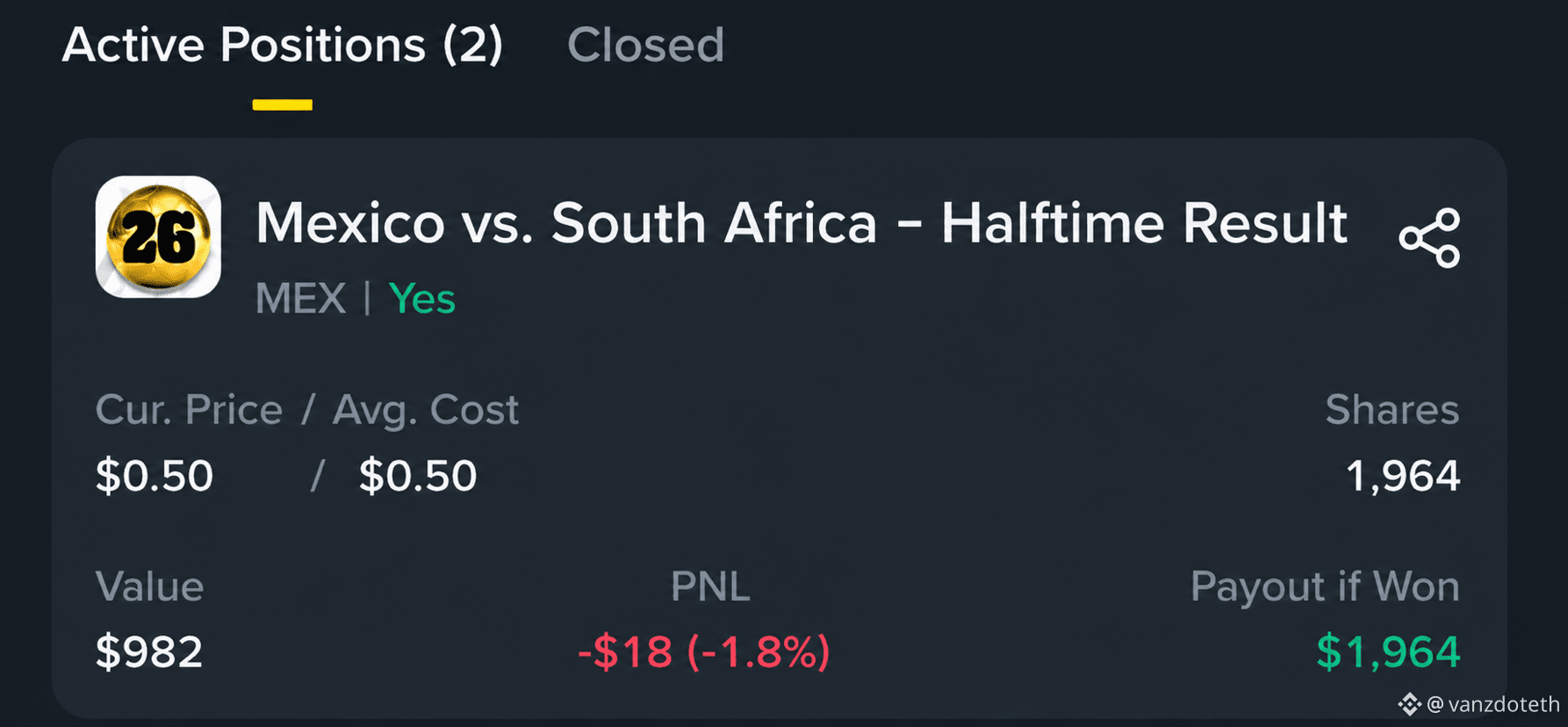
On my radar is Mexico vs South Africa
According to my analysis Mexico will win at halftime
So I'll get $1.9k
The world cup starts today
On my radar is Mexico vs South Africa
According to my analysis Mexico will win at halftime
So I'll get $1.9k
On my radar is Mexico vs South Africa
According to my analysis Mexico will win at halftime
So I'll get $1.9k
1
269
·
--
The longer I'm in crypto, the more it feels like many projects are more busy selling narratives than improving the trading experience itself. AI, modular, and cross chain continue to be used as marketing materials, but traders still have to face slippage, fragmented liquidity, and front running risks everywhere.
That's what made me start paying attention to @GeniusOfficial
What's interesting is not just the AI terminal, but the way they look at market structure problems in DeFi. They understand that too open onchain transparency actually makes whale wallets easy to track, strategies are quickly copied, and large orders are exposed before they can be executed properly.
Because of this, concepts such as Ghost Wallet, fragmented execution, and cross chain routing feel quite reasonable.
In my opinion, $GENIUS seems more focused on building execution infrastructure that makes trading feel more efficient and with minimal exposure, not just chasing AI hype like most other projects now.
#genius
#GENIUSBinanceHODLer
$ALLO $HEI
The longer I'm in crypto, the more it feels like many projects are more busy selling narratives than improving the trading experience itself. AI, modular, and cross chain continue to be used as marketing materials, but traders still have to face slippage, fragmented liquidity, and front running risks everywhere.
That's what made me start paying attention to @GeniusOfficial
What's interesting is not just the AI terminal, but the way they look at market structure problems in DeFi. They understand that too open onchain transparency actually makes whale wallets easy to track, strategies are quickly copied, and large orders are exposed before they can be executed properly.
Because of this, concepts such as Ghost Wallet, fragmented execution, and cross chain routing feel quite reasonable.
In my opinion, $GENIUS seems more focused on building execution infrastructure that makes trading feel more efficient and with minimal exposure, not just chasing AI hype like most other projects now.
#genius
#GENIUSBinanceHODLer
$ALLO $HEI
That's what made me start paying attention to @GeniusOfficial
What's interesting is not just the AI terminal, but the way they look at market structure problems in DeFi. They understand that too open onchain transparency actually makes whale wallets easy to track, strategies are quickly copied, and large orders are exposed before they can be executed properly.
Because of this, concepts such as Ghost Wallet, fragmented execution, and cross chain routing feel quite reasonable.
In my opinion, $GENIUS seems more focused on building execution infrastructure that makes trading feel more efficient and with minimal exposure, not just chasing AI hype like most other projects now.
#genius
#GENIUSBinanceHODLer
$ALLO $HEI
1
403
·
--
I increasingly realize that fast execution in DeFi is useless if the risk management is weak. That's also what made me interested in seeing how @GeniusOfficial built their GeniusFi PropAMM
They don't just talk about speed, but also fail closed mechanisms, circuit breakers, and even anomaly detection to keep the system safe when the market starts to go haywire
In my opinion, this is very important, especially in a pre-confirmation environment which is prone to error and manipulation if not controlled seriously
Honestly, I trust platforms that dare to stop the system when there are anomalies rather than continuing to process transactions for the sake of appearing fast
Because in a market like now, reliability has become part of alpha
In your opinion, today's DeFi users still only care about speed or are they starting to look at security too?
#genius
$GENIUS
{future}(GENIUSUSDT)
$GUA
{alpha}(560xa5c8e1513b6a08334b479fe4d71f1253259469be)
$ESIM
{alpha}(560x7765a659c5b0cfbfd9fbc2ef2298b75a598f2d2d)
I increasingly realize that fast execution in DeFi is useless if the risk management is weak. That's also what made me interested in seeing how @GeniusOfficial built their GeniusFi PropAMM
They don't just talk about speed, but also fail closed mechanisms, circuit breakers, and even anomaly detection to keep the system safe when the market starts to go haywire
In my opinion, this is very important, especially in a pre-confirmation environment which is prone to error and manipulation if not controlled seriously
Honestly, I trust platforms that dare to stop the system when there are anomalies rather than continuing to process transactions for the sake of appearing fast
Because in a market like now, reliability has become part of alpha
In your opinion, today's DeFi users still only care about speed or are they starting to look at security too?
#genius
$GENIUS
$GUA
$ESIM
They don't just talk about speed, but also fail closed mechanisms, circuit breakers, and even anomaly detection to keep the system safe when the market starts to go haywire
In my opinion, this is very important, especially in a pre-confirmation environment which is prone to error and manipulation if not controlled seriously
Honestly, I trust platforms that dare to stop the system when there are anomalies rather than continuing to process transactions for the sake of appearing fast
Because in a market like now, reliability has become part of alpha
In your opinion, today's DeFi users still only care about speed or are they starting to look at security too?
#genius
$GENIUS
$GUA
$ESIM

3
1
4
447
·
--
BREAKING: President Trump releases a statement on crypto
“Trump will never let crypto down,” he says
So $GUA $ROLL $ESIM on my radar right now
Which coin on your radar this week?
BREAKING: President Trump releases a statement on crypto
“Trump will never let crypto down,” he says
So $GUA $ROLL $ESIM on my radar right now
Which coin on your radar this week?
“Trump will never let crypto down,” he says
So $GUA $ROLL $ESIM on my radar right now
Which coin on your radar this week?

2
498
·
--
I usually don't care too much about privacy tools in crypto because in the end most of them just become narrative fodder. Use it for a while, then it's quiet because liquidity is low or it's complicated to use.
But since @GeniusOfficial Gh0st Privacy Stack went live on BNB Chain, I've used it quite often to execute fairly large positions.
The reason is simple: I'm tired of making a spectacle of my wallet.
One night I entered around $14k into a token whose market cap was still under $3M. Just a few minutes later, wallets started to appear with entries in a similar range. I don't know if it's coincidence or tracking, but since then I've become lazy about using my main wallet for large sizes.
Well, at Gh0st it feels different. My transaction details are not immediately open to the public, but they also don't create a completely dark system like the old privacy protocol. There is still an auditability layer if needed. In my opinion, that's what makes their model more realistic for large traders to use.
What I notice most are the little things. I don't need to split orders between 4-5 wallets just to avoid small change trackers. Just execute normally.
It's still early days, but this is the first time I've felt that the privacy features in DeFi are actually being used in daily trading situations, not just technical jargon in whitepapers.
#genius
$GENIUS
{future}(GENIUSUSDT)
$ROLL
{alpha}(84530xab6363da0c80cef3ae105bd6241e30872355d021)
$GUA
{alpha}(560xa5c8e1513b6a08334b479fe4d71f1253259469be)
I usually don't care too much about privacy tools in crypto because in the end most of them just become narrative fodder. Use it for a while, then it's quiet because liquidity is low or it's complicated to use.
But since @GeniusOfficial Gh0st Privacy Stack went live on BNB Chain, I've used it quite often to execute fairly large positions.
The reason is simple: I'm tired of making a spectacle of my wallet.
One night I entered around $14k into a token whose market cap was still under $3M. Just a few minutes later, wallets started to appear with entries in a similar range. I don't know if it's coincidence or tracking, but since then I've become lazy about using my main wallet for large sizes.
Well, at Gh0st it feels different. My transaction details are not immediately open to the public, but they also don't create a completely dark system like the old privacy protocol. There is still an auditability layer if needed. In my opinion, that's what makes their model more realistic for large traders to use.
What I notice most are the little things. I don't need to split orders between 4-5 wallets just to avoid small change trackers. Just execute normally.
It's still early days, but this is the first time I've felt that the privacy features in DeFi are actually being used in daily trading situations, not just technical jargon in whitepapers.
#genius
$GENIUS
$ROLL
$GUA
But since @GeniusOfficial Gh0st Privacy Stack went live on BNB Chain, I've used it quite often to execute fairly large positions.
The reason is simple: I'm tired of making a spectacle of my wallet.
One night I entered around $14k into a token whose market cap was still under $3M. Just a few minutes later, wallets started to appear with entries in a similar range. I don't know if it's coincidence or tracking, but since then I've become lazy about using my main wallet for large sizes.
Well, at Gh0st it feels different. My transaction details are not immediately open to the public, but they also don't create a completely dark system like the old privacy protocol. There is still an auditability layer if needed. In my opinion, that's what makes their model more realistic for large traders to use.
What I notice most are the little things. I don't need to split orders between 4-5 wallets just to avoid small change trackers. Just execute normally.
It's still early days, but this is the first time I've felt that the privacy features in DeFi are actually being used in daily trading situations, not just technical jargon in whitepapers.
#genius
$GENIUS
$ROLL
$GUA

1
1
551
·
--
Проверено
If health AI continues to be trained using haphazard public data, we are just building a flawed prediction machine
That’s the reason why I think the Healthcare DataNet concept in @Openledger is really interesting
They don’t just talk about AI, but about how sensitive medical data can be used without losing privacy
What really makes me think is the idea of a specialized sleep model for doctors and medical personnel
Doctors sleep patterns are clearly different from ordinary people: night shifts, high stress, chaotic biological rhythms
Generic models most likely fail to read such conditions
In my opinion, the future of AI is not large general models, but small vertical models where the data is expensive, specific, and can be monetized directly by the data owner
#OpenLedger
$OPEN $ESPORTS $DRIFT
If health AI continues to be trained using haphazard public data, we are just building a flawed prediction machine
That’s the reason why I think the Healthcare DataNet concept in @OpenLedger is really interesting
They don’t just talk about AI, but about how sensitive medical data can be used without losing privacy
What really makes me think is the idea of a specialized sleep model for doctors and medical personnel
Doctors sleep patterns are clearly different from ordinary people: night shifts, high stress, chaotic biological rhythms
Generic models most likely fail to read such conditions
In my opinion, the future of AI is not large general models, but small vertical models where the data is expensive, specific, and can be monetized directly by the data owner
#OpenLedger
$OPEN $ESPORTS $DRIFT
That’s the reason why I think the Healthcare DataNet concept in @OpenLedger is really interesting
They don’t just talk about AI, but about how sensitive medical data can be used without losing privacy
What really makes me think is the idea of a specialized sleep model for doctors and medical personnel
Doctors sleep patterns are clearly different from ordinary people: night shifts, high stress, chaotic biological rhythms
Generic models most likely fail to read such conditions
In my opinion, the future of AI is not large general models, but small vertical models where the data is expensive, specific, and can be monetized directly by the data owner
#OpenLedger
$OPEN $ESPORTS $DRIFT

8
8
758
·
--
Статья
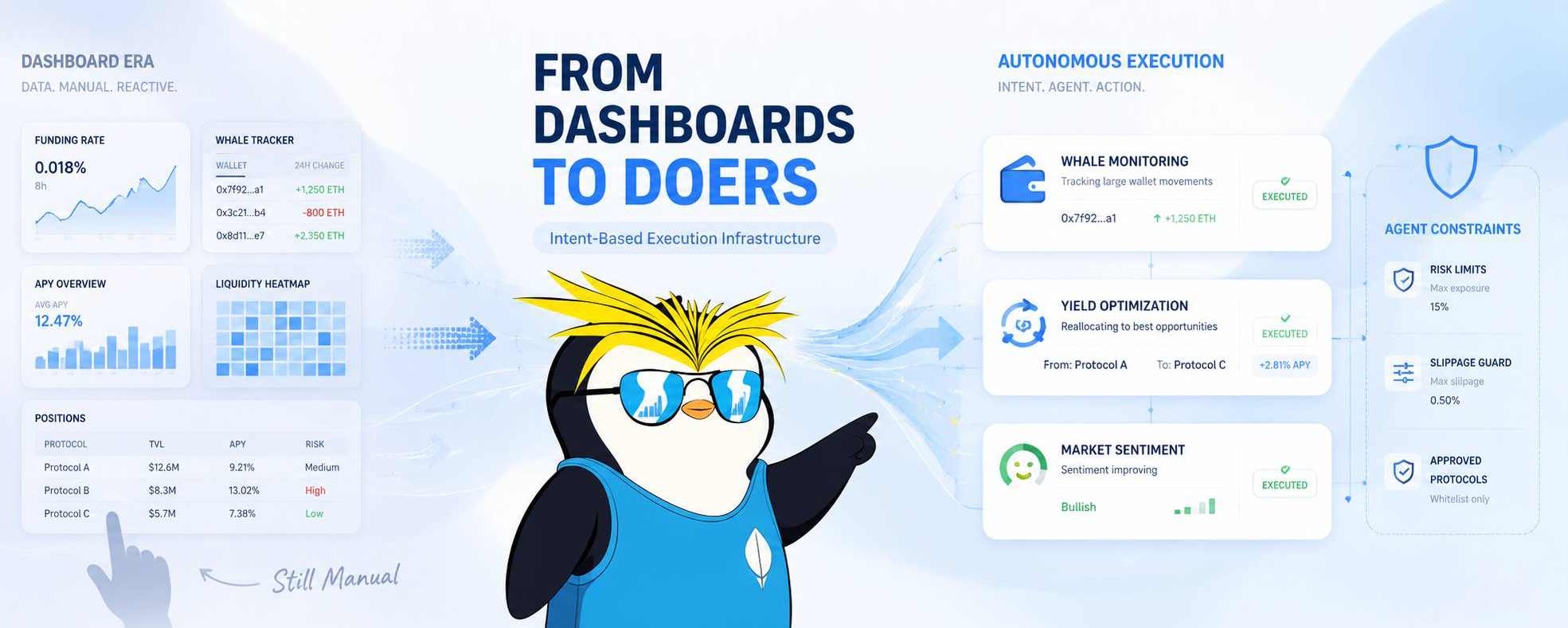
From Dashboard to Doers: OctoClaw and the Shift Toward Autonomous AgentsWhat interests me about OctoClaw isn't just the idea of "self driving agents," but the shift in how we view automation onchain.
So far, many crypto tools have become mere dashboards: all the data is there, but the decisions remain in our hands. @Openledger calls this "moving from dashboards to doers," and I think the phrase is apt. The problem isn't a lack of information. The problem is that information often stops at the screen.
This is where intent based execution becomes the difference. I don't need to give rigid instructions like a classic trading bot that only understands, "if X happens, do Y." What I find more useful is an agent that understands the goal: find the best yield, monitor market sentiment, or read whale activity, then choose the most sensible action for the current situation.
But autonomy without constraints is dangerous. OpenLedger has emphasized this, and I think the point is crucial: the agent must have clear boundaries. For example, risk limits, protocol whitelists, slippage limits, and conditions for when it should stop. So the agent can still act independently, but the results are dependable, not wild.
That's the difference from traditional automation. Not just fast, but trustworthy.
If a concept like this matures, we're not just talking about smarter bots. We're approaching autonomous capital that can be executed verifiably, transparently, and is far more relevant to the future of onchain finance.
#OpenLedger
$OPEN
{future}(OPENUSDT)
$ESPORTS
{future}(ESPORTSUSDT)
$PLAY
{future}(PLAYUSDT)
From Dashboard to Doers: OctoClaw and the Shift Toward Autonomous Agents
What interests me about OctoClaw isn't just the idea of "self driving agents," but the shift in how we view automation onchain.
So far, many crypto tools have become mere dashboards: all the data is there, but the decisions remain in our hands. @OpenLedger calls this "moving from dashboards to doers," and I think the phrase is apt. The problem isn't a lack of information. The problem is that information often stops at the screen.
This is where intent based execution becomes the difference. I don't need to give rigid instructions like a classic trading bot that only understands, "if X happens, do Y." What I find more useful is an agent that understands the goal: find the best yield, monitor market sentiment, or read whale activity, then choose the most sensible action for the current situation.
But autonomy without constraints is dangerous. OpenLedger has emphasized this, and I think the point is crucial: the agent must have clear boundaries. For example, risk limits, protocol whitelists, slippage limits, and conditions for when it should stop. So the agent can still act independently, but the results are dependable, not wild.
That's the difference from traditional automation. Not just fast, but trustworthy.
If a concept like this matures, we're not just talking about smarter bots. We're approaching autonomous capital that can be executed verifiably, transparently, and is far more relevant to the future of onchain finance.
#OpenLedger
$OPEN
$ESPORTS
$PLAY
So far, many crypto tools have become mere dashboards: all the data is there, but the decisions remain in our hands. @OpenLedger calls this "moving from dashboards to doers," and I think the phrase is apt. The problem isn't a lack of information. The problem is that information often stops at the screen.
This is where intent based execution becomes the difference. I don't need to give rigid instructions like a classic trading bot that only understands, "if X happens, do Y." What I find more useful is an agent that understands the goal: find the best yield, monitor market sentiment, or read whale activity, then choose the most sensible action for the current situation.
But autonomy without constraints is dangerous. OpenLedger has emphasized this, and I think the point is crucial: the agent must have clear boundaries. For example, risk limits, protocol whitelists, slippage limits, and conditions for when it should stop. So the agent can still act independently, but the results are dependable, not wild.
That's the difference from traditional automation. Not just fast, but trustworthy.
If a concept like this matures, we're not just talking about smarter bots. We're approaching autonomous capital that can be executed verifiably, transparently, and is far more relevant to the future of onchain finance.
#OpenLedger
$OPEN
$ESPORTS
$PLAY
9
9
451
·
--
At first, I thought @GeniusOfficial would only focus on the trading terminal.
But the more I looked, the more I realized they were also preparing a liquidity layer through GeniusFi.
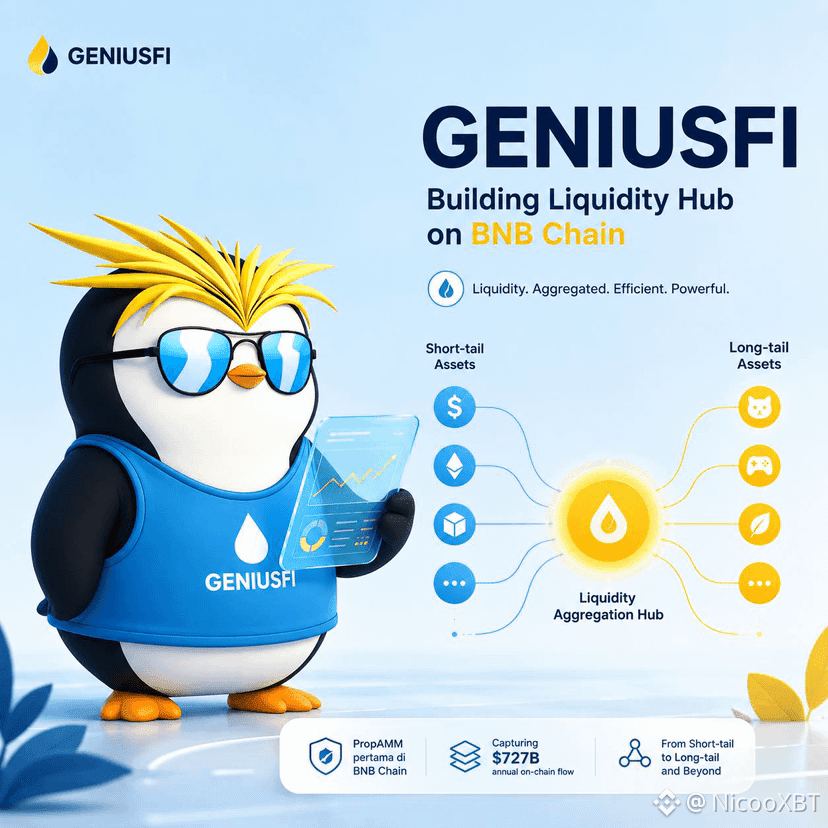
They called it the first PropAMM on the BNB Chain.
What made me stop scrolling was the target market they were discussing. They said the annual onchain flow could reach around $727B, and they said most of that flow wasn't being handled efficiently yet.
That's why they didn't open everything immediately.
From what I understand, GeniusFi initial phase will focus more on short tail assets. Assets with active markets and established volume, making liquidity easier to accumulate.
Then, they'll gradually move into long tail assets.
And that's the part I find challenging.
Because on the BNB Chain, there are still many assets with technically viable markets, but with thin depth. Sometimes spreads widen when volume starts to increase.
Execution is also less comfortable in my opinion.
But if Genius Terminal and GeniusFi can more easily aggregate liquidity flow into a single channel, I see a significant impact on the BNB Chain ecosystem.
#genius $GENIUS
{spot}(GENIUSUSDT)
At first, I thought @GeniusOfficial would only focus on the trading terminal.
But the more I looked, the more I realized they were also preparing a liquidity layer through GeniusFi.
They called it the first PropAMM on the BNB Chain.
What made me stop scrolling was the target market they were discussing. They said the annual onchain flow could reach around $727B, and they said most of that flow wasn't being handled efficiently yet.
That's why they didn't open everything immediately.
From what I understand, GeniusFi initial phase will focus more on short tail assets. Assets with active markets and established volume, making liquidity easier to accumulate.
Then, they'll gradually move into long tail assets.
And that's the part I find challenging.
Because on the BNB Chain, there are still many assets with technically viable markets, but with thin depth. Sometimes spreads widen when volume starts to increase.
Execution is also less comfortable in my opinion.
But if Genius Terminal and GeniusFi can more easily aggregate liquidity flow into a single channel, I see a significant impact on the BNB Chain ecosystem.
#genius $GENIUS
But the more I looked, the more I realized they were also preparing a liquidity layer through GeniusFi.
They called it the first PropAMM on the BNB Chain.
What made me stop scrolling was the target market they were discussing. They said the annual onchain flow could reach around $727B, and they said most of that flow wasn't being handled efficiently yet.
That's why they didn't open everything immediately.
From what I understand, GeniusFi initial phase will focus more on short tail assets. Assets with active markets and established volume, making liquidity easier to accumulate.
Then, they'll gradually move into long tail assets.
And that's the part I find challenging.
Because on the BNB Chain, there are still many assets with technically viable markets, but with thin depth. Sometimes spreads widen when volume starts to increase.
Execution is also less comfortable in my opinion.
But if Genius Terminal and GeniusFi can more easily aggregate liquidity flow into a single channel, I see a significant impact on the BNB Chain ecosystem.
#genius $GENIUS
19
8
208
·
--
I’m starting to understand why @Openledger is quite focused on building AI agents for automated rebalancing
Because in the current DeFi market, manual execution is often late even before the process is complete
Last week I monitored liquidity movements in several stablecoin pools
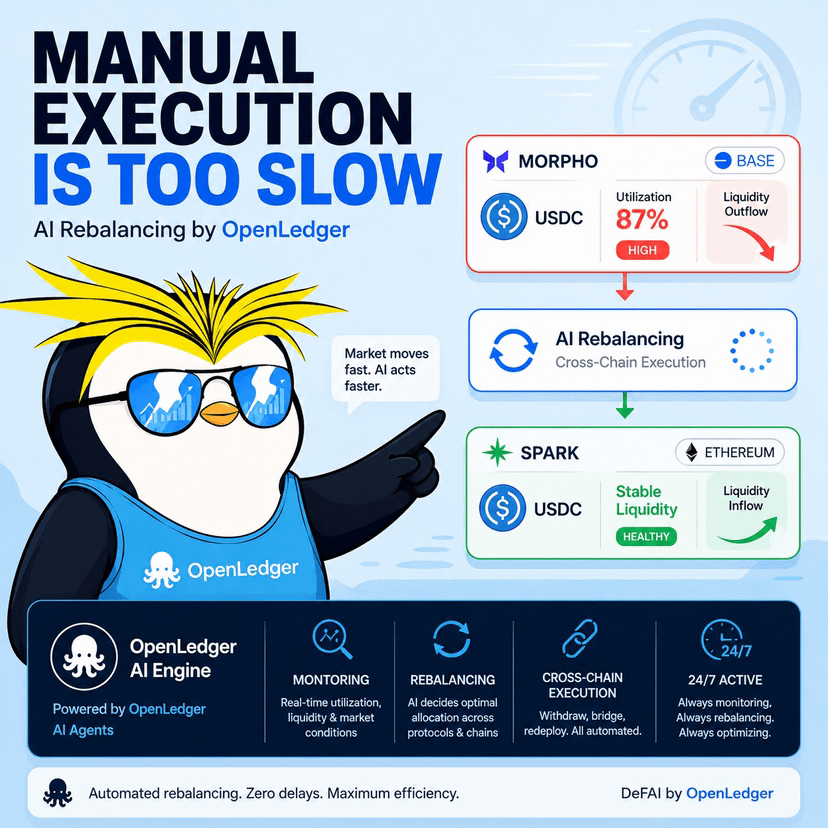
→ On Morpho Base, USDC utilization rose from around 68% to 87% in a short time after borrow demand increased quite aggressively
→ Meanwhile on Spark Ethereum, liquidity is actually starting to come in because the spread and borrowing activity are still much more stable
In theory, just move liquidity
But the practice is not that simple
Sometimes just after withdrawing the position, waiting for the bridge to confirm, then redeploying the asset to another chain, market conditions have changed again and the yield in the destination pool starts to fall because the capital has already entered
I think this is what OpenLedger is starting to solve through their DeFAI agents
OpenLedger AI agents not only read APY, but also continuously monitor utilization, liquidity flow, volatility, and inter chain changes and then carry out automatic rebalances in a loop that is active 24/7
So allocation changes no longer depend on the trader manual reaction every time the market changes
And in a multi chain market that moves as fast as it does now, it feels much more scalable than manual human execution
$OPEN #OpenLedger
I’m starting to understand why @OpenLedger is quite focused on building AI agents for automated rebalancing
Because in the current DeFi market, manual execution is often late even before the process is complete
Last week I monitored liquidity movements in several stablecoin pools
→ On Morpho Base, USDC utilization rose from around 68% to 87% in a short time after borrow demand increased quite aggressively
→ Meanwhile on Spark Ethereum, liquidity is actually starting to come in because the spread and borrowing activity are still much more stable
In theory, just move liquidity
But the practice is not that simple
Sometimes just after withdrawing the position, waiting for the bridge to confirm, then redeploying the asset to another chain, market conditions have changed again and the yield in the destination pool starts to fall because the capital has already entered
I think this is what OpenLedger is starting to solve through their DeFAI agents
OpenLedger AI agents not only read APY, but also continuously monitor utilization, liquidity flow, volatility, and inter chain changes and then carry out automatic rebalances in a loop that is active 24/7
So allocation changes no longer depend on the trader manual reaction every time the market changes
And in a multi chain market that moves as fast as it does now, it feels much more scalable than manual human execution
$OPEN #OpenLedger
Because in the current DeFi market, manual execution is often late even before the process is complete
Last week I monitored liquidity movements in several stablecoin pools
→ On Morpho Base, USDC utilization rose from around 68% to 87% in a short time after borrow demand increased quite aggressively
→ Meanwhile on Spark Ethereum, liquidity is actually starting to come in because the spread and borrowing activity are still much more stable
In theory, just move liquidity
But the practice is not that simple
Sometimes just after withdrawing the position, waiting for the bridge to confirm, then redeploying the asset to another chain, market conditions have changed again and the yield in the destination pool starts to fall because the capital has already entered
I think this is what OpenLedger is starting to solve through their DeFAI agents
OpenLedger AI agents not only read APY, but also continuously monitor utilization, liquidity flow, volatility, and inter chain changes and then carry out automatic rebalances in a loop that is active 24/7
So allocation changes no longer depend on the trader manual reaction every time the market changes
And in a multi chain market that moves as fast as it does now, it feels much more scalable than manual human execution
$OPEN #OpenLedger
24
16
298
·
--
Статья
Optimization & Risk Management Are Now One: AI Agents Innovation from OpenLedgerWhen I played DeFi, I always used two approaches that were actually not connected.
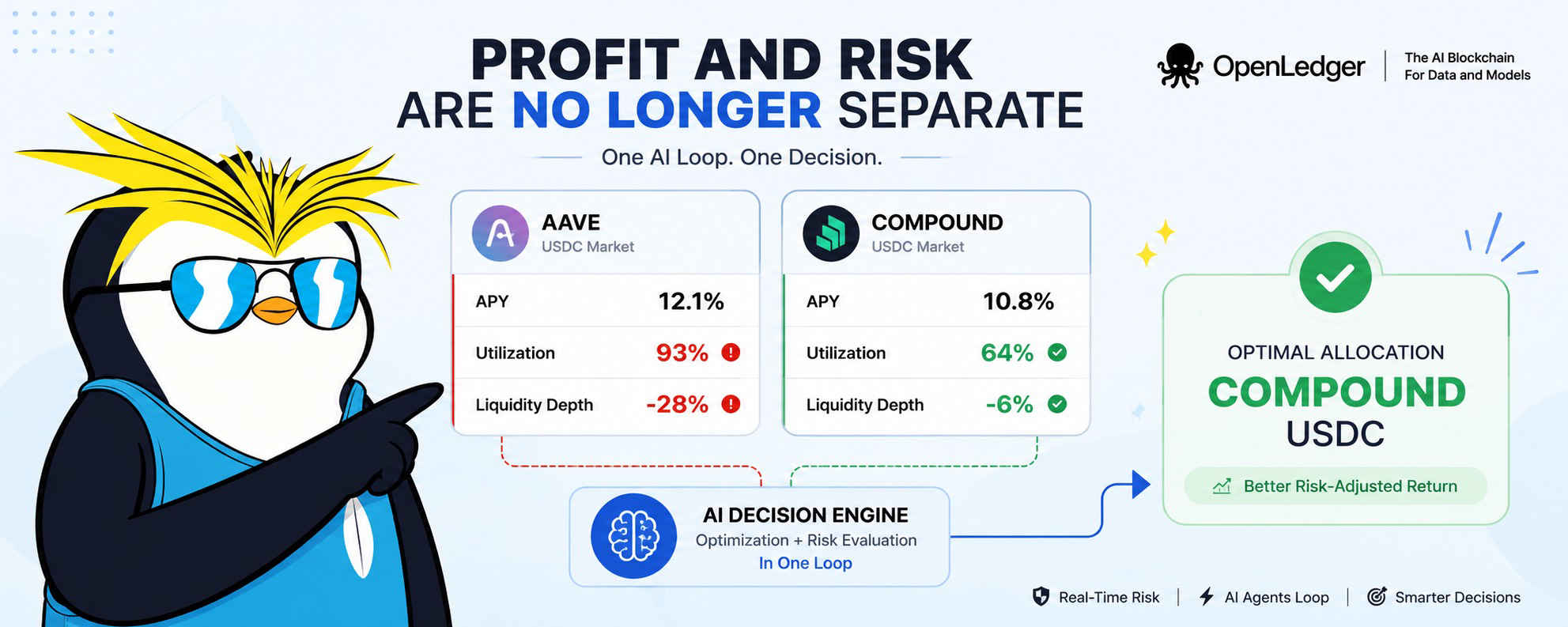
On the one hand, I see that the APY on Aave USDC can be around 12.1%. On the other hand, I open another dashboard to check borrow utilization, liquidity and liquidation risk. So the order is clear: look for the yield first, then check whether it is safe or not.
What I just realized is that this pattern always makes decisions a little late, because the two processes run separately.
At @Openledger what I noticed was not more data, but how they eliminated that separation.
Optimization and risk management are no longer two steps. They become one decision that comes directly from one AI Agents loop.
An example that you can imagine is more real:
→ Aave USDC APY 12.1% but borrow utilization is already 93% and liquidity depth fell 28% in the last hour
→Compound USDC APY is 10.8% but utilization is stable at 64% and liquidity only fell 6%
In the old system, 12.1% was still often the initial trigger to enter first, then think about the risks later.
But in OpenLedger, the APY number never stands alone. From the start, it has been interested in the risk data, so the final output can be directly biased towards Compound without any revision or double checking process at another stage.
What's interesting to me is not whether it's smarter or safer, but that there are no longer two separate decision stages.
And that's where I started to see the direction of DeFAI: not AI helping DeFi, but a decision engine that no longer divides profit and risk.
$OPEN #OpenLedger
Optimization & Risk Management Are Now One: AI Agents Innovation from OpenLedger
When I played DeFi, I always used two approaches that were actually not connected.
On the one hand, I see that the APY on Aave USDC can be around 12.1%. On the other hand, I open another dashboard to check borrow utilization, liquidity and liquidation risk. So the order is clear: look for the yield first, then check whether it is safe or not.
What I just realized is that this pattern always makes decisions a little late, because the two processes run separately.
At @OpenLedger what I noticed was not more data, but how they eliminated that separation.
Optimization and risk management are no longer two steps. They become one decision that comes directly from one AI Agents loop.
An example that you can imagine is more real:
→ Aave USDC APY 12.1% but borrow utilization is already 93% and liquidity depth fell 28% in the last hour
→Compound USDC APY is 10.8% but utilization is stable at 64% and liquidity only fell 6%
In the old system, 12.1% was still often the initial trigger to enter first, then think about the risks later.
But in OpenLedger, the APY number never stands alone. From the start, it has been interested in the risk data, so the final output can be directly biased towards Compound without any revision or double checking process at another stage.
What's interesting to me is not whether it's smarter or safer, but that there are no longer two separate decision stages.
And that's where I started to see the direction of DeFAI: not AI helping DeFi, but a decision engine that no longer divides profit and risk.
$OPEN #OpenLedger
On the one hand, I see that the APY on Aave USDC can be around 12.1%. On the other hand, I open another dashboard to check borrow utilization, liquidity and liquidation risk. So the order is clear: look for the yield first, then check whether it is safe or not.
What I just realized is that this pattern always makes decisions a little late, because the two processes run separately.
At @OpenLedger what I noticed was not more data, but how they eliminated that separation.
Optimization and risk management are no longer two steps. They become one decision that comes directly from one AI Agents loop.
An example that you can imagine is more real:
→ Aave USDC APY 12.1% but borrow utilization is already 93% and liquidity depth fell 28% in the last hour
→Compound USDC APY is 10.8% but utilization is stable at 64% and liquidity only fell 6%
In the old system, 12.1% was still often the initial trigger to enter first, then think about the risks later.
But in OpenLedger, the APY number never stands alone. From the start, it has been interested in the risk data, so the final output can be directly biased towards Compound without any revision or double checking process at another stage.
What's interesting to me is not whether it's smarter or safer, but that there are no longer two separate decision stages.
And that's where I started to see the direction of DeFAI: not AI helping DeFi, but a decision engine that no longer divides profit and risk.
$OPEN #OpenLedger
23
14
178
·
--
I see $GENIUS is now getting much more serious.
As far as I know, they're currently testing G.OX, a short dated options product that settles directly on the BNB Chain.
I find this interesting because short dated options are a very active market in crypto, but execution and liquidity are often fragmented. Many traders end up having to switch platforms just to find short expiries with reasonable spreads.
In the test transaction update they shared, it's clear that the settlement flow is indeed directed entirely onchain to BNB Chain. If this scales successfully, the potential liquidity flow could be enormous.
A simple example:
Suppose a trader wants to hedge a BTC position just for the FOMC event or unlock tokens within 24–48 hours. Until now, the process has been complicated, and liquidity is sometimes thin. With short dated options like this, execution can be much faster and more efficient.
What intrigues me isn't just the product, but the timing.
While many AI and trading projects still focus on selling narratives, @GeniusOfficial is starting to push products that are actually used by active traders in real-time markets.
If this test goes well, I think G.OX could become a noteworthy feature in BNB Chain ecosystem in the coming months.
#genius
I see $GENIUS is now getting much more serious.
As far as I know, they're currently testing G.OX, a short dated options product that settles directly on the BNB Chain.
I find this interesting because short dated options are a very active market in crypto, but execution and liquidity are often fragmented. Many traders end up having to switch platforms just to find short expiries with reasonable spreads.
In the test transaction update they shared, it's clear that the settlement flow is indeed directed entirely onchain to BNB Chain. If this scales successfully, the potential liquidity flow could be enormous.
A simple example:
Suppose a trader wants to hedge a BTC position just for the FOMC event or unlock tokens within 24–48 hours. Until now, the process has been complicated, and liquidity is sometimes thin. With short dated options like this, execution can be much faster and more efficient.
What intrigues me isn't just the product, but the timing.
While many AI and trading projects still focus on selling narratives, @GeniusOfficial is starting to push products that are actually used by active traders in real-time markets.
If this test goes well, I think G.OX could become a noteworthy feature in BNB Chain ecosystem in the coming months.
#genius
As far as I know, they're currently testing G.OX, a short dated options product that settles directly on the BNB Chain.
I find this interesting because short dated options are a very active market in crypto, but execution and liquidity are often fragmented. Many traders end up having to switch platforms just to find short expiries with reasonable spreads.
In the test transaction update they shared, it's clear that the settlement flow is indeed directed entirely onchain to BNB Chain. If this scales successfully, the potential liquidity flow could be enormous.
A simple example:
Suppose a trader wants to hedge a BTC position just for the FOMC event or unlock tokens within 24–48 hours. Until now, the process has been complicated, and liquidity is sometimes thin. With short dated options like this, execution can be much faster and more efficient.
What intrigues me isn't just the product, but the timing.
While many AI and trading projects still focus on selling narratives, @GeniusOfficial is starting to push products that are actually used by active traders in real-time markets.
If this test goes well, I think G.OX could become a noteworthy feature in BNB Chain ecosystem in the coming months.
#genius

21
16
252
·
--
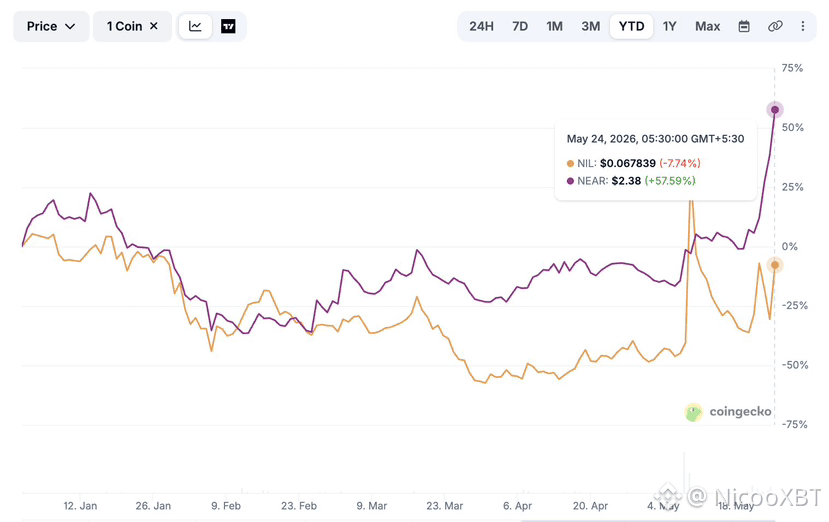
$NEAR pumped cuz the market saw it as real AI infra
$NIL is sitting in the same spot now
Private compute, the unglamorous infra agents actually need, still priced as a narrative
Same setup, one catalyst away from the same re-rate
Also $AGT on my radar right now
$NEAR pumped cuz the market saw it as real AI infra
$NIL is sitting in the same spot now
Private compute, the unglamorous infra agents actually need, still priced as a narrative
Same setup, one catalyst away from the same re-rate
Also $AGT on my radar right now
$NIL is sitting in the same spot now
Private compute, the unglamorous infra agents actually need, still priced as a narrative
Same setup, one catalyst away from the same re-rate
Also $AGT on my radar right now
1
290
·
--
Do you still think that monitoring collateral in DeFi just looks at APY?
You are wrong because the reality is more complicated
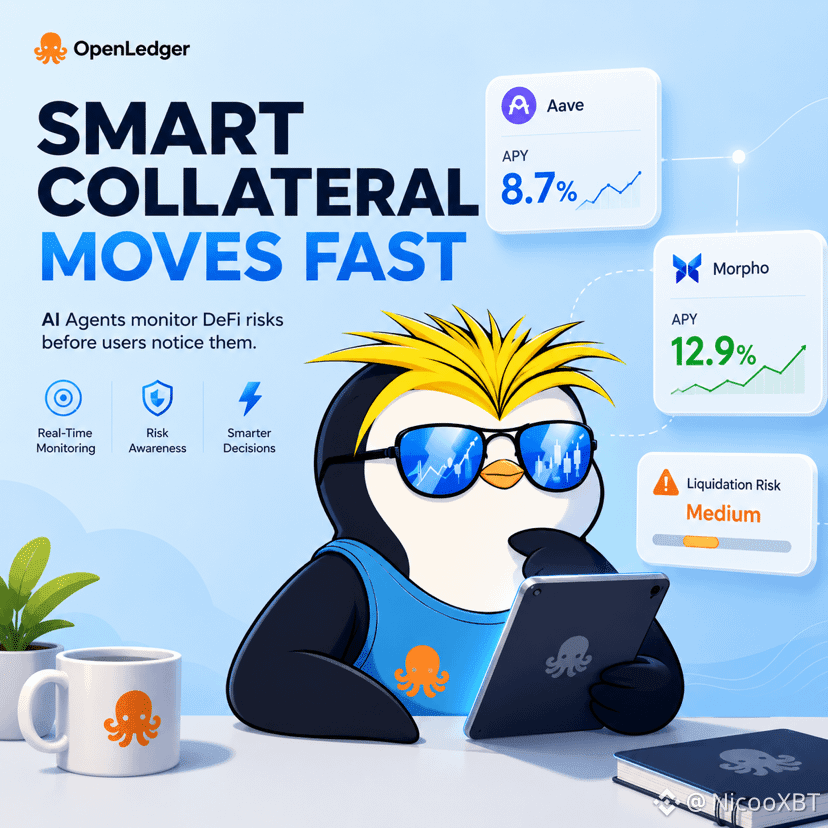
But in @Openledger their AI agents use Dynamic Collateral Coordination to monitor many protocols at once in real time. What is checked is not only yield, but also borrow utilization, funding rates, liquidity depth, liquidation threshold, and even yield differentials between protocols.
I'll give you an example, when the APY on Aave was around 9% and then another protocol like Morpho suddenly rose to 13%, the AI agents didn't immediately think it was a good opportunity. They keep checking whether liquidity is deep enough, utilization is too high, or liquidation risk is starting to rise.
In my opinion, this is what makes OpenLedger interesting. I see this system as not just looking for the highest yield, but can help me stay responsive without having to monitor the manual dashboard constantly.
#OpenLedger $OPEN
Do you still think that monitoring collateral in DeFi just looks at APY?
You are wrong because the reality is more complicated
But in @OpenLedger their AI agents use Dynamic Collateral Coordination to monitor many protocols at once in real time. What is checked is not only yield, but also borrow utilization, funding rates, liquidity depth, liquidation threshold, and even yield differentials between protocols.
I'll give you an example, when the APY on Aave was around 9% and then another protocol like Morpho suddenly rose to 13%, the AI agents didn't immediately think it was a good opportunity. They keep checking whether liquidity is deep enough, utilization is too high, or liquidation risk is starting to rise.
In my opinion, this is what makes OpenLedger interesting. I see this system as not just looking for the highest yield, but can help me stay responsive without having to monitor the manual dashboard constantly.
#OpenLedger $OPEN
You are wrong because the reality is more complicated
But in @OpenLedger their AI agents use Dynamic Collateral Coordination to monitor many protocols at once in real time. What is checked is not only yield, but also borrow utilization, funding rates, liquidity depth, liquidation threshold, and even yield differentials between protocols.
I'll give you an example, when the APY on Aave was around 9% and then another protocol like Morpho suddenly rose to 13%, the AI agents didn't immediately think it was a good opportunity. They keep checking whether liquidity is deep enough, utilization is too high, or liquidation risk is starting to rise.
In my opinion, this is what makes OpenLedger interesting. I see this system as not just looking for the highest yield, but can help me stay responsive without having to monitor the manual dashboard constantly.
#OpenLedger $OPEN
17
10
253
·
--
Статья
DeFAI vs TradFi: OpenLedger Eliminates AUM Fees with Self Executing AI AgentsI never really thought much about AUM fees.
That's it, if someone else manages my money, there's bound to be a fee. I was done with it then.
But lately, I've been looking at the direction of DeFAI, especially @Openledger and I've been rethinking that aspect.
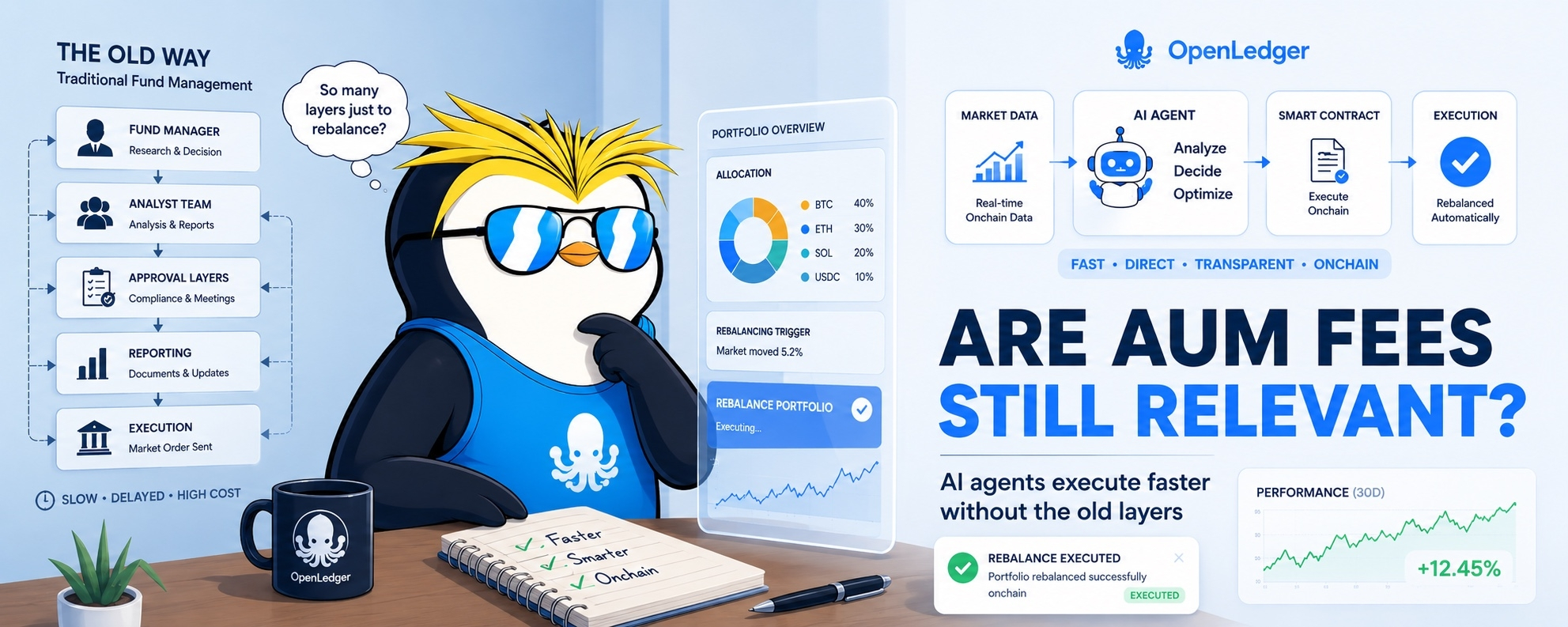
TradFi turns out to have so many layers. Fund managers, analysts, approvals, reports, everything. The results then reach us. And all of that has a cost, through the AUM fee.
I saw a small example, regarding portfolio rebalancing.
In the old system, there was a sense of waiting. It wasn't instant. Sometimes the market would change, but execution would still be delayed.
From what I understand about #OpenLedger they're pushing a different model.
AI agents that run on top of smart contracts. So they can read conditions, follow the rules, and then execute onchain themselves. There's no need for a lot of middle ground.
That's when I started to think, if it's like that, what are the AUM fees really being paid for?
The reason is that the function that used to generate fees has now been taken over by the system.
And what I'm experiencing isn't just about fees.
It's more about everything is faster, more direct, and more visible because it's onchain.
$OPEN seems to be moving in that direction.
It's not just AI to assist with analysis, but it's slowly shifting the old way we view fund management, including AUM fees that once seemed very reasonable.
DeFAI vs TradFi: OpenLedger Eliminates AUM Fees with Self Executing AI Agents
I never really thought much about AUM fees.
That's it, if someone else manages my money, there's bound to be a fee. I was done with it then.
But lately, I've been looking at the direction of DeFAI, especially @OpenLedger and I've been rethinking that aspect.
TradFi turns out to have so many layers. Fund managers, analysts, approvals, reports, everything. The results then reach us. And all of that has a cost, through the AUM fee.
I saw a small example, regarding portfolio rebalancing.
In the old system, there was a sense of waiting. It wasn't instant. Sometimes the market would change, but execution would still be delayed.
From what I understand about #OpenLedger they're pushing a different model.
AI agents that run on top of smart contracts. So they can read conditions, follow the rules, and then execute onchain themselves. There's no need for a lot of middle ground.
That's when I started to think, if it's like that, what are the AUM fees really being paid for?
The reason is that the function that used to generate fees has now been taken over by the system.
And what I'm experiencing isn't just about fees.
It's more about everything is faster, more direct, and more visible because it's onchain.
$OPEN seems to be moving in that direction.
It's not just AI to assist with analysis, but it's slowly shifting the old way we view fund management, including AUM fees that once seemed very reasonable.
That's it, if someone else manages my money, there's bound to be a fee. I was done with it then.
But lately, I've been looking at the direction of DeFAI, especially @OpenLedger and I've been rethinking that aspect.
TradFi turns out to have so many layers. Fund managers, analysts, approvals, reports, everything. The results then reach us. And all of that has a cost, through the AUM fee.
I saw a small example, regarding portfolio rebalancing.
In the old system, there was a sense of waiting. It wasn't instant. Sometimes the market would change, but execution would still be delayed.
From what I understand about #OpenLedger they're pushing a different model.
AI agents that run on top of smart contracts. So they can read conditions, follow the rules, and then execute onchain themselves. There's no need for a lot of middle ground.
That's when I started to think, if it's like that, what are the AUM fees really being paid for?
The reason is that the function that used to generate fees has now been taken over by the system.
And what I'm experiencing isn't just about fees.
It's more about everything is faster, more direct, and more visible because it's onchain.
$OPEN seems to be moving in that direction.
It's not just AI to assist with analysis, but it's slowly shifting the old way we view fund management, including AUM fees that once seemed very reasonable.
34
16
550
·
--
Recently I was really deep into Ether.fi Restaking on @Openledger
Crazy, they managed to secure AI Models with a TVL that has reached $6B
What amazed me was that from a technical perspective it was really different
The security layer is no joke, the restaking mechanism makes the network much stronger to withstand attacks, while still maintaining decentralization
Its scalability is also top notch, it can handle large AI computing loads without making the network slow or having crazy gas costs
This is one of the real steps to make decentralized AI truly feasible in the future
Those of you who are following restaking or decentralized AI, it's really worth checking out
What do you think?
$OPEN #OpenLedger
$BSB also on my radar for next deep research
Recently I was really deep into Ether.fi Restaking on @OpenLedger
Crazy, they managed to secure AI Models with a TVL that has reached $6B
What amazed me was that from a technical perspective it was really different
The security layer is no joke, the restaking mechanism makes the network much stronger to withstand attacks, while still maintaining decentralization
Its scalability is also top notch, it can handle large AI computing loads without making the network slow or having crazy gas costs
This is one of the real steps to make decentralized AI truly feasible in the future
Those of you who are following restaking or decentralized AI, it's really worth checking out
What do you think?
$OPEN #OpenLedger
$BSB also on my radar for next deep research
Crazy, they managed to secure AI Models with a TVL that has reached $6B
What amazed me was that from a technical perspective it was really different
The security layer is no joke, the restaking mechanism makes the network much stronger to withstand attacks, while still maintaining decentralization
Its scalability is also top notch, it can handle large AI computing loads without making the network slow or having crazy gas costs
This is one of the real steps to make decentralized AI truly feasible in the future
Those of you who are following restaking or decentralized AI, it's really worth checking out
What do you think?
$OPEN #OpenLedger
$BSB also on my radar for next deep research

8
7
478
Войдите, чтобы посмотреть больше материала
Присоединяйтесь к пользователям криптовалют по всему миру на Binance Square
⚡️ Получайте новейшую и полезную информацию о криптоактивах.
💬 Нам доверяет крупнейшая в мире криптобиржа.
👍 Получите достоверные аналитические данные от верифицированных создателей контента.
Эл. почта/номер телефона
В тренде
BTCBreaks80K
Просмотров: 17,822
579 обсуждают
EL BOMBEO DE LA FED Y EL VACÍO DE LOS $80K: La trampa de liquidez en Bitcoin 🐋📊
El mercado está eufórico tras el ruido macroeconómico de la Reserva Federal, inyectando un latigazo alcista que catapultó a Bitcoin hasta marcar un máximo exacto de $80,989.99. Comprar en este nivel guiado por las noticias es saltar al vacío sin paracaídas matemático.
Los números fríos del escáner revelan una sobreextensión crítica:
🔥 Asfixia Cuantitativa (4H): La vela impulsiva rompió la gravedad. El oscilador KDJ en la temporalidad de 4 horas está ardiendo en sobrecompra extrema, con la línea 'J' reventando el límite en 100.83. El precio cotiza peligrosamente desconectado de su soporte estructural primario, la EMA 20, que quedó abandonada allá abajo en los $77,270.34.
📐 La Jaula de Fibonacci: Al trazar el retroceso matemático desde la base del impulso en $74,967.97 hasta el pico de los $80,989.99, el nivel clave del 38.2% de Fibonacci confluye con una precisión quirúrgica en los $78,689. ¿La confirmación de la terminal? Ese nivel empata exactamente con el piso dinámico del SuperTrend en 1H, ubicado en $78,702.50.
🩸 Drenaje a Corto Plazo (1H): La inercia ya comenzó a fracturarse. El KDJ de 1 hora muestra la línea 'J' retrocediendo a 87.22, confirmando que el combustible de la noticia se está agotando.
El Setup del Francotirador (Cero FOMO):
Operar el nivel de los $80,748 con las EMAs a más de $3,000 dólares de distancia destruye por completo cualquier gestión de riesgo.
🔴 Zona de Trampa: Comprar la euforia de la FED en el techo actual es regalar liquidez a los institucionales que ya están aprovechando para distribuir.
🟢 Zona de Caza Estructural: La disciplina dicta esperar la regresión a la media. Nuestras redes de pesca matemáticas se despliegan en la confluencia del 38.2% de Fibonacci y el SuperTrend de 1H, apuntando al bloque seguro de los $78,700.
La estadística no opera noticias, opera la estructura que dejan detrás. 📐
$BTC #BTCBreaks80K
RelatoCriptoPRO
·Лайков: 1
·Просмотров: 978
比特币突破8万
Просмотров: 27,624
82 обсуждают
BuffettBecomesBerkshireChairmanEmeritus
Просмотров: 1,017
128 обсуждают