
MARJANIYE
3.5k Публикации
MARJANIYE
 Square Verified+
CONTENT CREATOR | BINANCE VERIFIED KOL | X - MARJANIYEE
Трейдер с регулярными сделками
5.5 г
586 подписок(и/а)
43.0K+ подписчиков(а)
21.8K+ понравилось
Посты
Все
Цитирования
Активно
PINNED
HELLO EVERYONE
👉🏻CLICK AND CLAIM WEB3 BENEFIT 🎁🎁
👉🏻CLICK AND CLAIM WEB3 BENEFIT 🎁🎁
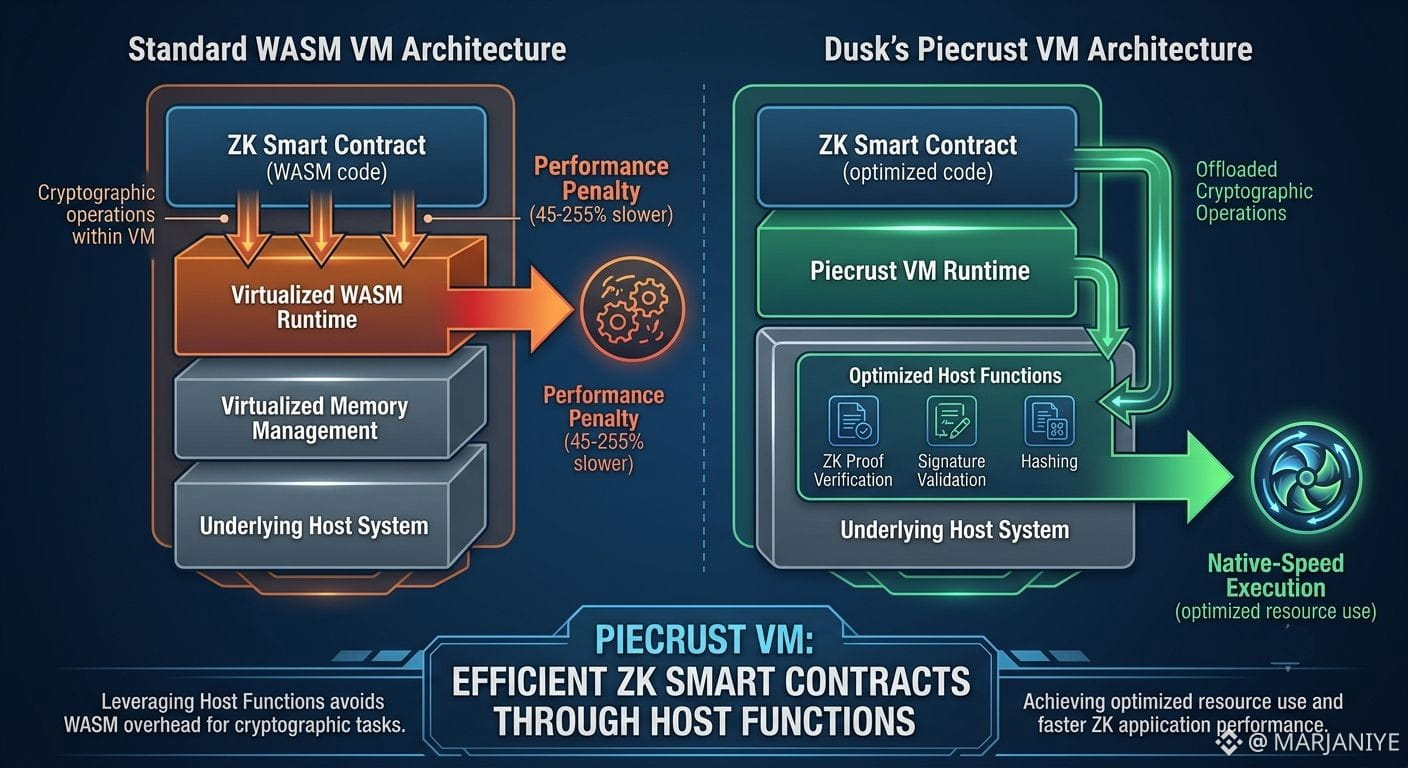
When I first started exploring blockchain, one thing always stood out: performance. Smart contracts promised so much, but when cryptographic tasks like proof verification or hashing came into play, everything slowed down. It felt like the technology was powerful but stuck in heavy traffic.
That’s why Dusk’s Piecrust VM feels like a breakthrough to me. It’s designed for efficient and secure execution of ZK‑powered smart contracts, but what makes it special is how it integrates host functions directly into the VM. Instead of forcing cryptographic tasks to run inside a virtualized WASM environment — which research shows can be up to 255% slower — Piecrust handles them natively.
For me, this is more than just technical optimization. It’s about making privacy‑preserving finance practical at scale. With zero‑knowledge proofs and homomorphic encryption running smoothly, users get confidentiality without sacrificing speed. Institutions get compliance without bottlenecks. And builders get a platform that doesn’t punish them for innovating.
Looking ahead, I see Dusk’s Piecrust VM as the engine of next‑gen finance — where privacy, efficiency, and trust aren’t trade‑offs but standard features. It’s the kind of infrastructure that makes me believe the future of finance will finally feel seamless, secure, and human‑centered.
#dusk $DUSK @Dusk
That’s why Dusk’s Piecrust VM feels like a breakthrough to me. It’s designed for efficient and secure execution of ZK‑powered smart contracts, but what makes it special is how it integrates host functions directly into the VM. Instead of forcing cryptographic tasks to run inside a virtualized WASM environment — which research shows can be up to 255% slower — Piecrust handles them natively.
For me, this is more than just technical optimization. It’s about making privacy‑preserving finance practical at scale. With zero‑knowledge proofs and homomorphic encryption running smoothly, users get confidentiality without sacrificing speed. Institutions get compliance without bottlenecks. And builders get a platform that doesn’t punish them for innovating.
Looking ahead, I see Dusk’s Piecrust VM as the engine of next‑gen finance — where privacy, efficiency, and trust aren’t trade‑offs but standard features. It’s the kind of infrastructure that makes me believe the future of finance will finally feel seamless, secure, and human‑centered.
#dusk $DUSK @Dusk
I’ve always felt that finance should belong to everyone, not just those with access to big institutions or complex systems. Yet, so often, opportunities are locked away — bonds, securities, property — things that feel distant for everyday people.
That’s why #dusk is vision of financial inclusion through tokenized RWAs resonates with me. By turning real‑world assets into programmable tokens, it opens doors that were once closed. Suddenly, ownership and participation aren’t limited to a select few; they’re accessible, instant, and fair.
But inclusion alone isn’t enough — the system has to scale and protect. That’s where confidential EVM workflows come in. They power the next generation of finance by combining privacy with compliance, speed with trust. Transactions can be private yet verifiable, scalable yet secure.
For me, the upcoming future of $DUSK feels like a financial ecosystem where inclusion isn’t just a promise, it’s a reality. RWAs bring the tangible world into blockchain, while confidential workflows ensure dignity and trust. Together, they create a finance that is open, human, and ready for tomorrow.
#dusk $DUSK @Dusk
That’s why #dusk is vision of financial inclusion through tokenized RWAs resonates with me. By turning real‑world assets into programmable tokens, it opens doors that were once closed. Suddenly, ownership and participation aren’t limited to a select few; they’re accessible, instant, and fair.
But inclusion alone isn’t enough — the system has to scale and protect. That’s where confidential EVM workflows come in. They power the next generation of finance by combining privacy with compliance, speed with trust. Transactions can be private yet verifiable, scalable yet secure.
For me, the upcoming future of $DUSK feels like a financial ecosystem where inclusion isn’t just a promise, it’s a reality. RWAs bring the tangible world into blockchain, while confidential workflows ensure dignity and trust. Together, they create a finance that is open, human, and ready for tomorrow.
#dusk $DUSK @Dusk
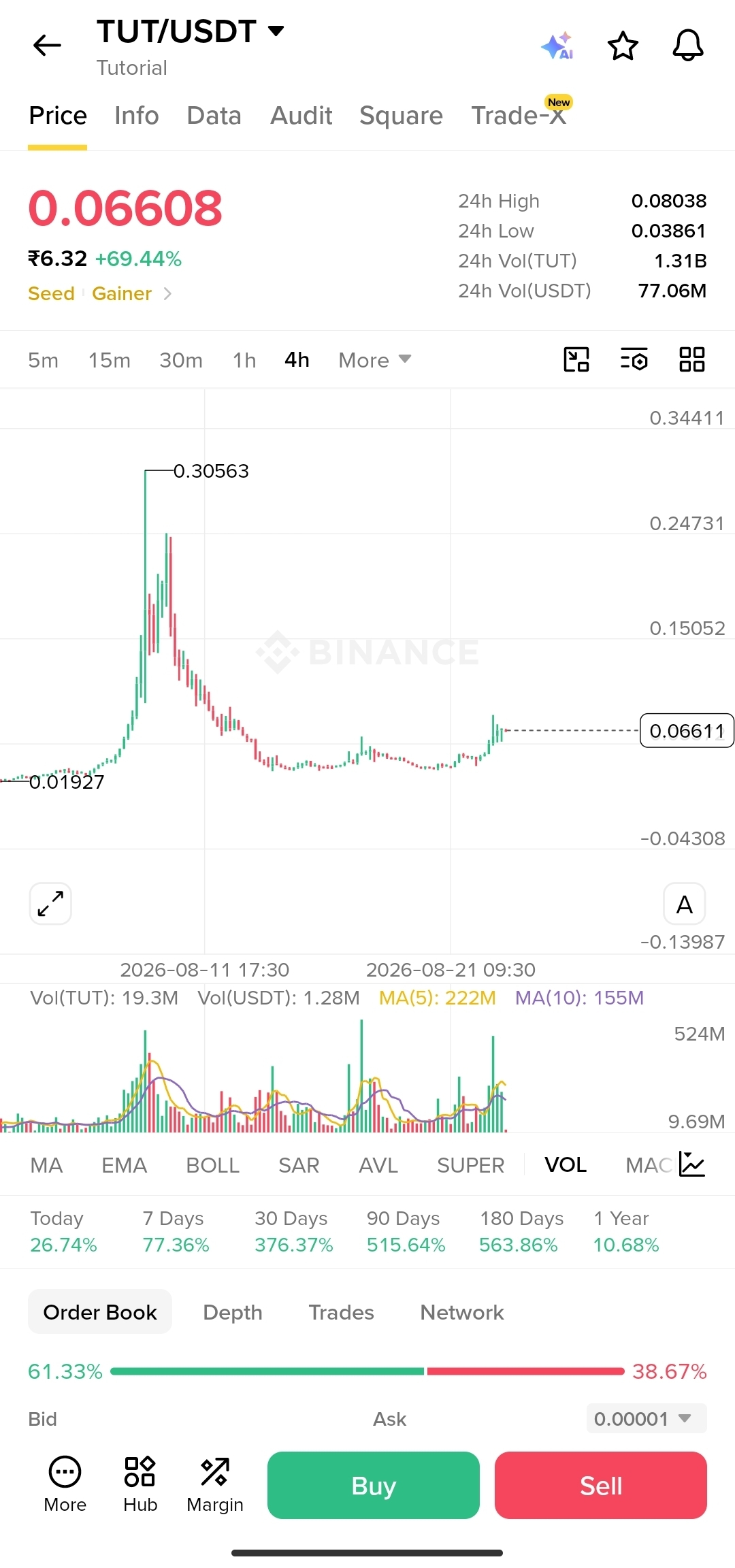
TUT push from $0.02855 to $0.06597 represents a massive ~131% rally, showing strong short-term momentum and aggressive buying interest. Pumping past previous local consolidation levels gives TUT a bullish technical structure, but trading low-cap tokens after a steep move comes with specific risks and structural considerations.
Key technical dynamics to watch right now:
Resistance & Liquidity Above: The $0.0700–$0.0790 area acts as a primary overhead supply zone. A clean breakout and daily candle close above $0.0700 could extend the leg toward higher liquidity targets, but rejection near these highs can cause violent pullbacks.#TUT $TUT
Key technical dynamics to watch right now:
Resistance & Liquidity Above: The $0.0700–$0.0790 area acts as a primary overhead supply zone. A clean breakout and daily candle close above $0.0700 could extend the leg toward higher liquidity targets, but rejection near these highs can cause violent pullbacks.#TUT $TUT
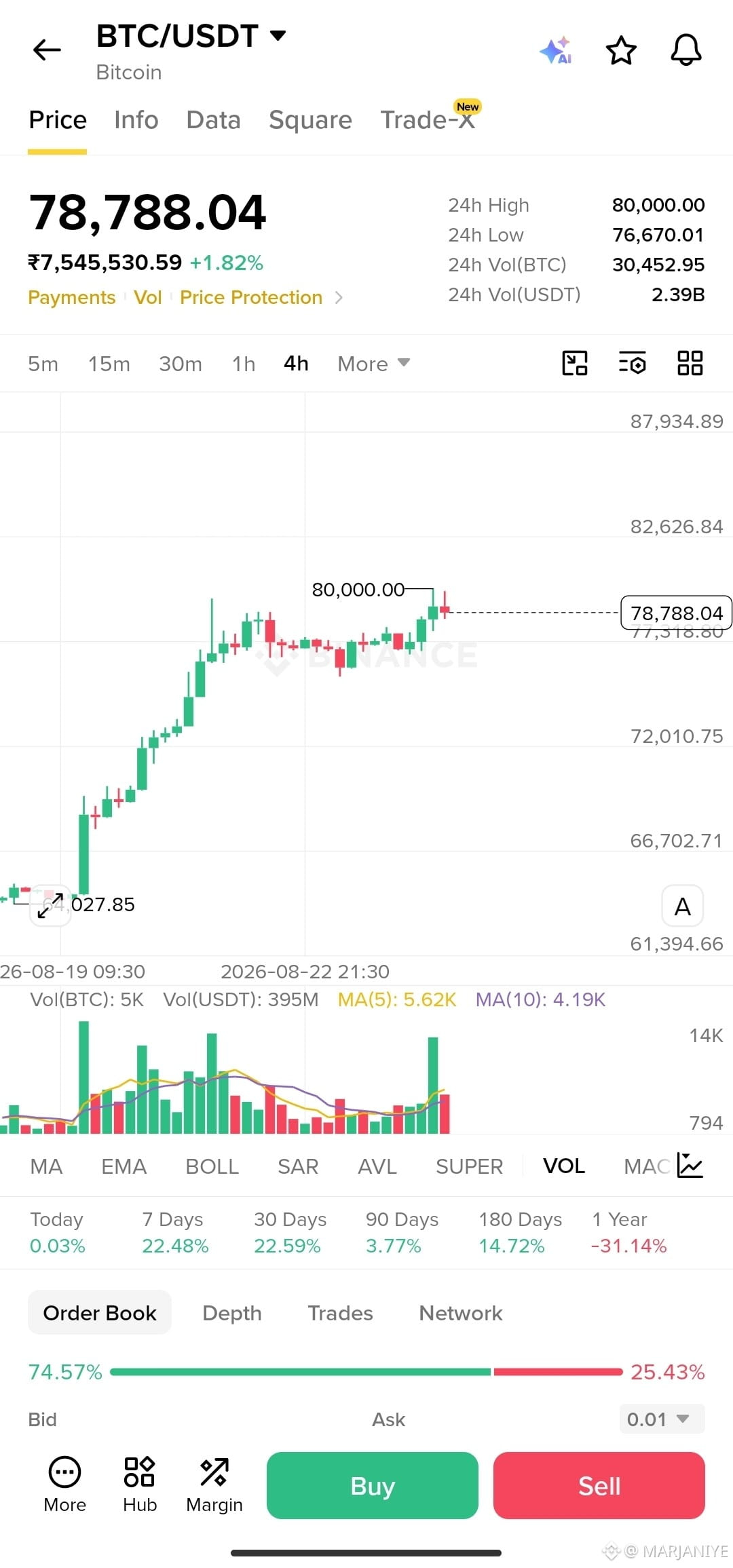
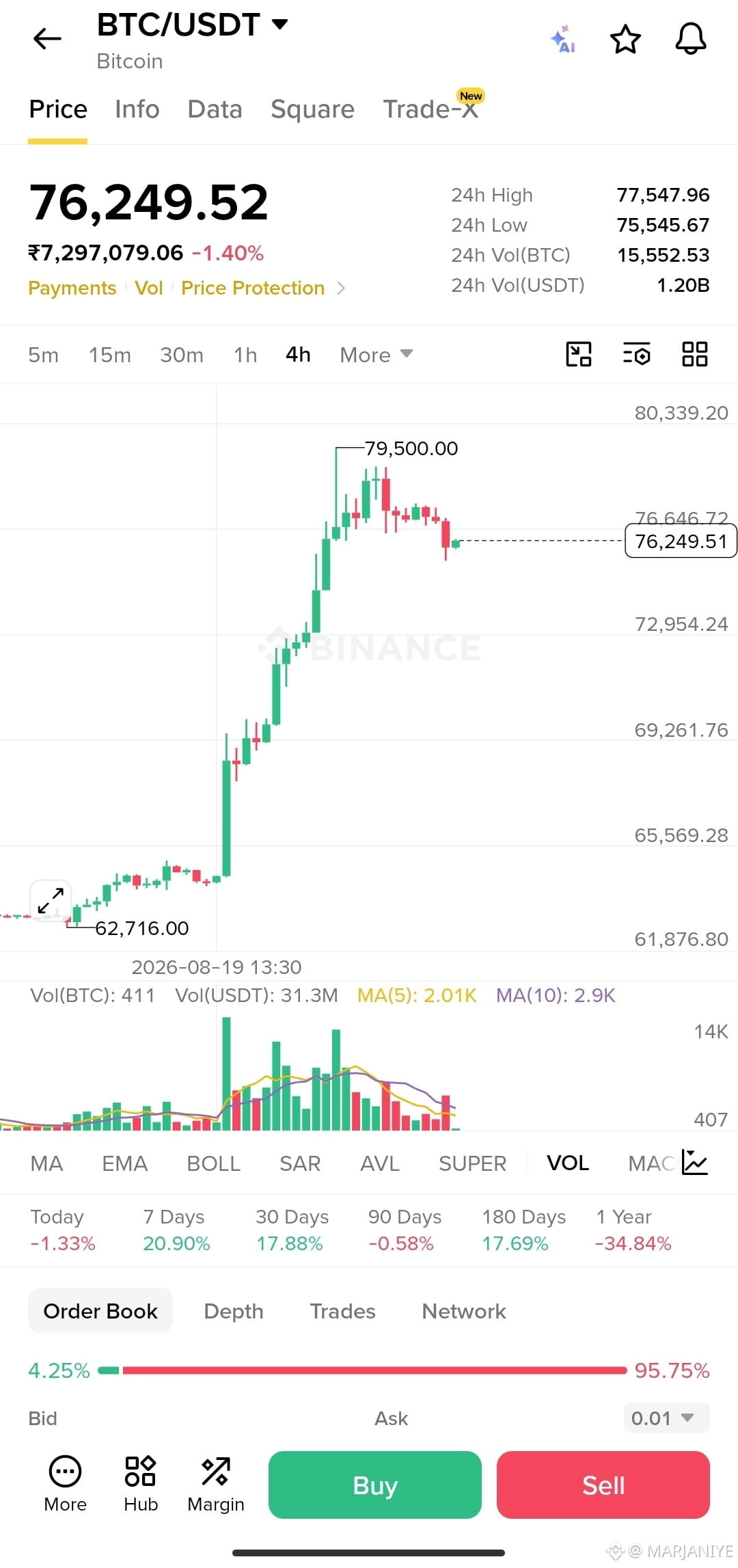
Bitcoin’s recent momentum toward $79,000–$79,500 has indeed rekindled bullish sentiment across the market. Pushing past resistance levels and holding key zones like $78,000–$79,500 can technical-wise open the path toward $83,000–$84,000 and eventually higher macro targets like $90,000.
However, whether Bitcoin smoothly crosses $90,000 depends on several key market dynamics right now:
Resistance at $80,000–$82,500: Heavy sell walls and key moving averages (like the 200-day MA) sit between $80k and $82.5k. Reclaiming and closing daily candles above this resistance zone is critical before a run to $90,000 can fully serialize.
However, whether Bitcoin smoothly crosses $90,000 depends on several key market dynamics right now:
Resistance at $80,000–$82,500: Heavy sell walls and key moving averages (like the 200-day MA) sit between $80k and $82.5k. Reclaiming and closing daily candles above this resistance zone is critical before a run to $90,000 can fully serialize.
Finance has always been about trust, but in the digital age, trust often feels fragile. Data leaks, over‑exposure, and the constant tension between privacy and oversight make it hard to feel secure.
That’s why Dusk’s Hedger privacy module stands out to me. By integrating homomorphic encryption, it allows computations to happen on encrypted data without ever exposing the raw information. It’s like being able to solve a puzzle without ever opening the box — the answers are clear, but the contents remain private.
And then there are zero‑knowledge proofs. To me, they feel like the ultimate balance: you can prove something is true without revealing the details behind it. It’s verifiable privacy, where regulators get the assurance they need, and users keep the dignity of confidentiality.
The upcoming future of Dusk excites me because it shows that privacy doesn’t have to mean secrecy, and compliance doesn’t have to mean exposure. With Hedger and ZK proofs working together, finance can finally be both private and trustworthy.
For me, this is the kind of innovation that makes finance feel human again — secure, fair, and empowering. It’s not about hiding; it’s about protecting. And that’s the future I want to see
#dusk $DUSK @Dusk
That’s why Dusk’s Hedger privacy module stands out to me. By integrating homomorphic encryption, it allows computations to happen on encrypted data without ever exposing the raw information. It’s like being able to solve a puzzle without ever opening the box — the answers are clear, but the contents remain private.
And then there are zero‑knowledge proofs. To me, they feel like the ultimate balance: you can prove something is true without revealing the details behind it. It’s verifiable privacy, where regulators get the assurance they need, and users keep the dignity of confidentiality.
The upcoming future of Dusk excites me because it shows that privacy doesn’t have to mean secrecy, and compliance doesn’t have to mean exposure. With Hedger and ZK proofs working together, finance can finally be both private and trustworthy.
For me, this is the kind of innovation that makes finance feel human again — secure, fair, and empowering. It’s not about hiding; it’s about protecting. And that’s the future I want to see
#dusk $DUSK @Dusk
Finance has always been about trust. People want to know that the system they’re using is legitimate, fair, and recognized by regulators. At the same time, they want speed, flexibility, and innovation — the kind of things blockchain promises but traditional finance often struggles to deliver.
That’s why Dusk feels different to me. By aligning with EU regulation compliance, it builds a foundation of legitimacy that institutions can rely on. It’s not just about being innovative; it’s about being trusted. And when trust meets technology, the possibilities expand.
The upcoming DuskEVM mainnet is where this trust turns into action. With scalable applications for finance, developers can build systems that handle real‑world demand — tokenized assets, confidential workflows, instant settlement — all running smoothly at scale. It’s the bridge between compliance and creativity, where rules don’t limit innovation but empower it.
For me, the future of Dusk looks like a financial ecosystem where users feel secure, institutions feel confident, and builders feel free to innovate. Compliance ensures legitimacy, scalability ensures growth — together, they create a financial world ready for tomorrow.
#dusk $DUSK @Dusk
That’s why Dusk feels different to me. By aligning with EU regulation compliance, it builds a foundation of legitimacy that institutions can rely on. It’s not just about being innovative; it’s about being trusted. And when trust meets technology, the possibilities expand.
The upcoming DuskEVM mainnet is where this trust turns into action. With scalable applications for finance, developers can build systems that handle real‑world demand — tokenized assets, confidential workflows, instant settlement — all running smoothly at scale. It’s the bridge between compliance and creativity, where rules don’t limit innovation but empower it.
For me, the future of Dusk looks like a financial ecosystem where users feel secure, institutions feel confident, and builders feel free to innovate. Compliance ensures legitimacy, scalability ensures growth — together, they create a financial world ready for tomorrow.
#dusk $DUSK @Dusk
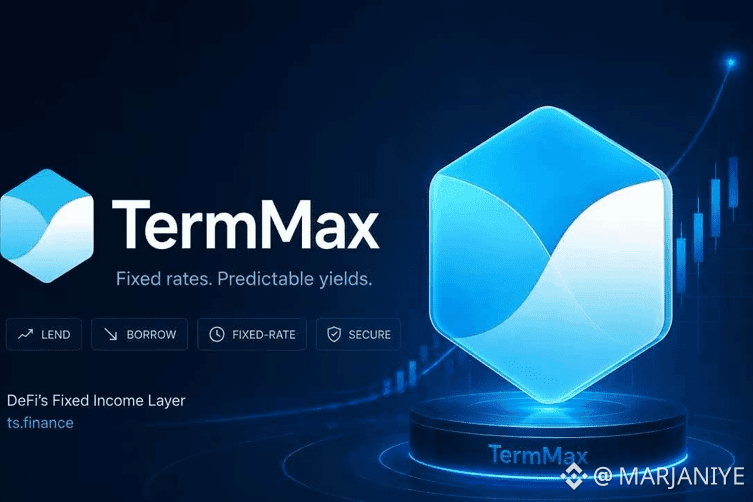
When I look at TermMax, I don’t just see another DeFi protocol — I see a vision unfolding.
The part that excites me most is how options trading is seamlessly integrated with fixed‑rate markets. For me, that feels like having a safety net: the ability to hedge without leaving the clarity of fixed rates. It’s a rare mix of flexibility and certainty.
Then there’s the bigger picture — DeFi meets TradFi. TermMax isn’t just playing in the crypto sandbox; it’s bridging institutional discipline with blockchain speed. I imagine a future where professional finance and decentralized innovation finally shake hands, and TermMax is right there making it happen.
What makes it even more powerful is its cross‑ecosystem reach. Accessible across leading chains, it’s like opening doors to a global marketplace where liquidity flows without borders.For me, that’s the kind of inclusivity DeFi has always promised but rarely delivered.
And at the heart of it all is the user‑first design. Built for clarity, simplicity, and trust, TermMax feels less like a complex protocol and more like a companion guiding me through the chaos of crypto.
Looking ahead, I believe $TMX isn’t just a token — it’s a symbol of this future‑ready protocol. A future where hedging, institutional trust, global liquidity, and user‑centric design come together to set the standard for fixed‑rate DeFi.
For me, TermMax is more than finance. It’s peace of mind, it’s empowerment, and it’s the next chapter of a connected, trustworthy crypto world.
#termmax @TermMax
The part that excites me most is how options trading is seamlessly integrated with fixed‑rate markets. For me, that feels like having a safety net: the ability to hedge without leaving the clarity of fixed rates. It’s a rare mix of flexibility and certainty.
Then there’s the bigger picture — DeFi meets TradFi. TermMax isn’t just playing in the crypto sandbox; it’s bridging institutional discipline with blockchain speed. I imagine a future where professional finance and decentralized innovation finally shake hands, and TermMax is right there making it happen.
What makes it even more powerful is its cross‑ecosystem reach. Accessible across leading chains, it’s like opening doors to a global marketplace where liquidity flows without borders.For me, that’s the kind of inclusivity DeFi has always promised but rarely delivered.
And at the heart of it all is the user‑first design. Built for clarity, simplicity, and trust, TermMax feels less like a complex protocol and more like a companion guiding me through the chaos of crypto.
Looking ahead, I believe $TMX isn’t just a token — it’s a symbol of this future‑ready protocol. A future where hedging, institutional trust, global liquidity, and user‑centric design come together to set the standard for fixed‑rate DeFi.
For me, TermMax is more than finance. It’s peace of mind, it’s empowerment, and it’s the next chapter of a connected, trustworthy crypto world.
#termmax @TermMax
Finance has always been about trust — trusting that your money is safe, your data is private, and your transactions are fair. But in today’s digital world, privacy often feels like the first thing sacrificed. Either everything is transparent to everyone, or hidden so deeply that regulators can’t see what matters.
That’s why Dusk’s idea of confidential workflows feels so powerful to me. It’s not about secrecy for secrecy’s sake — it’s about privacy with purpose. Transactions can be encrypted, protected, and invisible to the public eye, yet still reviewable when oversight is needed. It’s like having a curtain that shields you from the crowd, but opens just enough for the right people to ensure fairness.
The upcoming future of Dusk excites me because it shows that finance doesn’t have to choose between privacy and compliance. With privacy‑preserving transactions, users gain dignity and control, while institutions gain confidence in a system that respects both individuals and rules.
For me, this is the kind of innovation that makes finance feel human again — secure, fair, and empowering. Confidential workflows aren’t just a technical feature; they’re the foundation of a financial world where trust is built into every transaction.
#dusk $DUSK @Dusk
That’s why Dusk’s idea of confidential workflows feels so powerful to me. It’s not about secrecy for secrecy’s sake — it’s about privacy with purpose. Transactions can be encrypted, protected, and invisible to the public eye, yet still reviewable when oversight is needed. It’s like having a curtain that shields you from the crowd, but opens just enough for the right people to ensure fairness.
The upcoming future of Dusk excites me because it shows that finance doesn’t have to choose between privacy and compliance. With privacy‑preserving transactions, users gain dignity and control, while institutions gain confidence in a system that respects both individuals and rules.
For me, this is the kind of innovation that makes finance feel human again — secure, fair, and empowering. Confidential workflows aren’t just a technical feature; they’re the foundation of a financial world where trust is built into every transaction.
#dusk $DUSK @Dusk
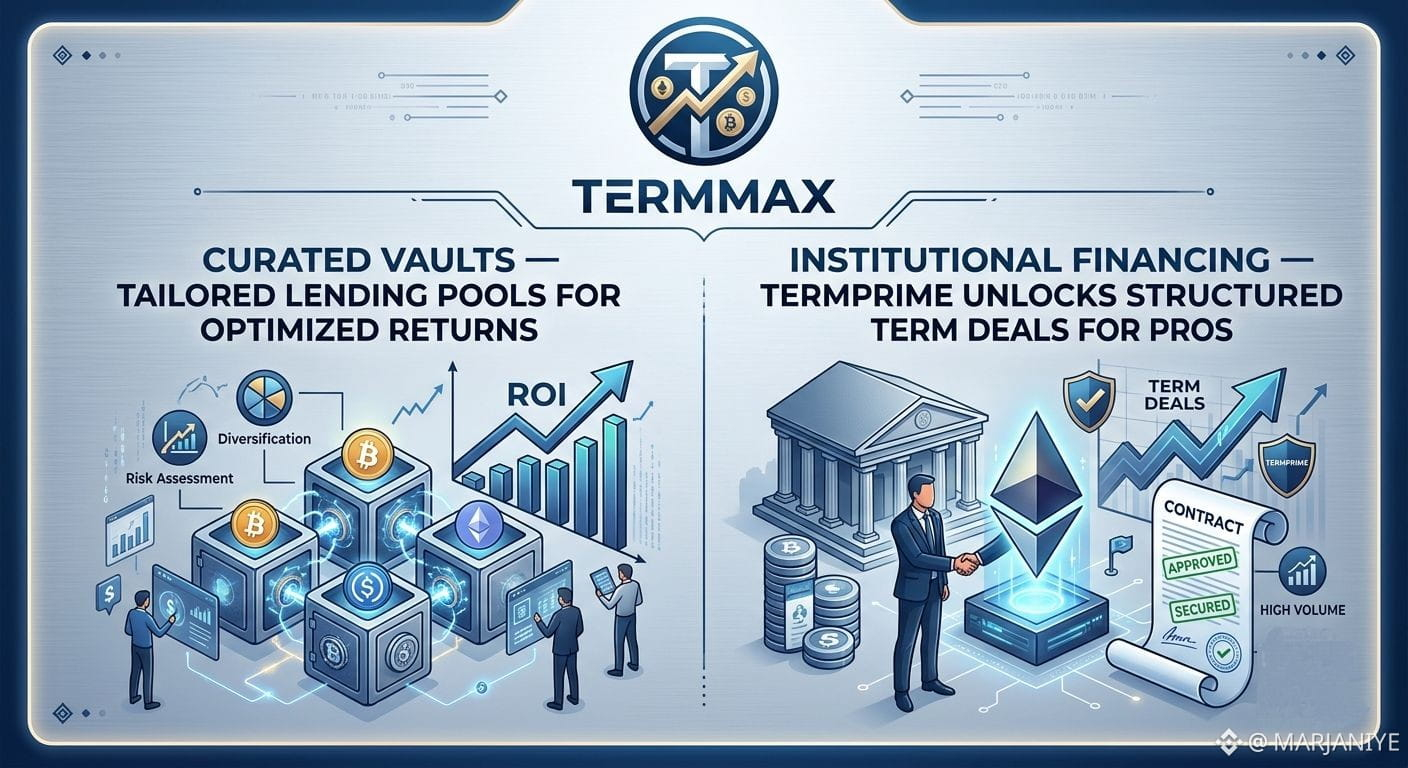
When I think about TermMax, I see two sides of the same coin — one built for everyday users like me, and another designed for the pros.On one side, there are the curated vaults. Tailored lending pools that feel almost personal, like someone designed them with my goals in mind. Instead of chasing random yields, I can step into a vault that’s optimized, structured, and built to give me confidence in my returns. It’s like having a financial garden where every plant is chosen to thrive.
On the other side, there’s TermPrime — the institutional layer. This is where the big players step in, unlocking structured term deals that bring discipline and scale to DeFi. For me, it’s reassuring to know that the same protocol I use for lending is also trusted by professionals who demand precision and reliability.
Looking ahead, I see TermMax as a bridge between worlds: the individual and the institutional, the casual and the professional. It’s future‑ready finance, where curated vaults empower everyday lenders, and TermPrime sets the stage for structured growth.
For me, that’s the beauty of TermMax — it doesn’t just serve one audience, it creates a shared ecosystem where everyone, from small lenders to institutions, can find their place. And that’s the kind of future I want to be part of.
#termmax @TermMax
On the other side, there’s TermPrime — the institutional layer. This is where the big players step in, unlocking structured term deals that bring discipline and scale to DeFi. For me, it’s reassuring to know that the same protocol I use for lending is also trusted by professionals who demand precision and reliability.
Looking ahead, I see TermMax as a bridge between worlds: the individual and the institutional, the casual and the professional. It’s future‑ready finance, where curated vaults empower everyday lenders, and TermPrime sets the stage for structured growth.
For me, that’s the beauty of TermMax — it doesn’t just serve one audience, it creates a shared ecosystem where everyone, from small lenders to institutions, can find their place. And that’s the kind of future I want to be part of.
#termmax @TermMax
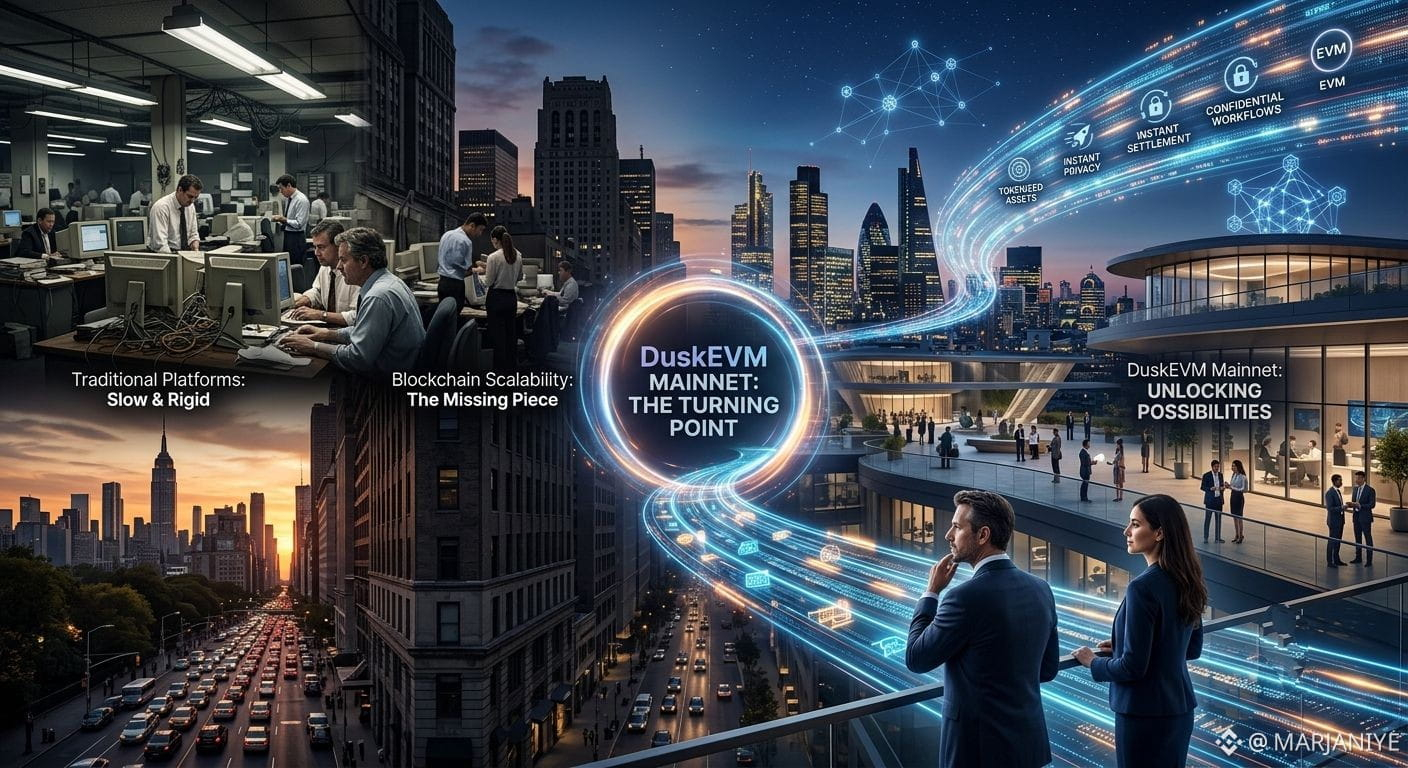
I often think about how finance has always been limited by the systems it runs on. Traditional platforms are slow, rigid, and built for yesterday’s needs. Even in blockchain, scalability has often been the missing piece — the promise was there, but the infrastructure wasn’t ready.
That’s why the DuskEVM mainnet feels like a turning point. It’s not just another launch; it’s the foundation for scalable financial applications that can actually serve institutions and individuals alike. Imagine tokenized assets, confidential workflows, and instant settlement — all running smoothly at scale, without the bottlenecks that used to hold innovation back.
For me, the upcoming future of Dusk looks like a financial ecosystem where builders can create with confidence, institutions can adopt without hesitation, and users can experience finance that’s fast, fair, and private. The mainnet isn’t just infrastructure — it’s the stage where the next generation of financial applications will come alive.
This is empowerment at scale: a system where privacy, compliance, and speed coexist, and where finance finally feels ready for the world we live in today. DuskEVM isn’t just unlocking applications; it’s unlocking possibilities.
#dusk $DUSK @Dusk
That’s why the DuskEVM mainnet feels like a turning point. It’s not just another launch; it’s the foundation for scalable financial applications that can actually serve institutions and individuals alike. Imagine tokenized assets, confidential workflows, and instant settlement — all running smoothly at scale, without the bottlenecks that used to hold innovation back.
For me, the upcoming future of Dusk looks like a financial ecosystem where builders can create with confidence, institutions can adopt without hesitation, and users can experience finance that’s fast, fair, and private. The mainnet isn’t just infrastructure — it’s the stage where the next generation of financial applications will come alive.
This is empowerment at scale: a system where privacy, compliance, and speed coexist, and where finance finally feels ready for the world we live in today. DuskEVM isn’t just unlocking applications; it’s unlocking possibilities.
#dusk $DUSK @Dusk
One of the things I love most about TermMax is how it refuses to stay confined. In DeFi, so many protocols feel like gated communities — useful only if you’re on one chain, limited if you’re somewhere else. But TermMax breaks those walls.
It’s accessible across leading chains, opening doors to global liquidity. For me, that feels like walking into a marketplace where everyone, no matter where they’re from, can trade, borrow, or lend under the same roof. No silos, no barriers — just a shared ecosystem where opportunity flows freely.
Looking ahead, I see TermMax becoming the bridge that connects communities across Ethereum, Base, BNB Chain, Berachain, HyperEVM, Robinhood Chain, and beyond. It’s not just about reach; it’s about inclusivity. A protocol that says: wherever you are, you belong here.
For me, that’s the future of DeFi — not fragmented islands, but a connected world. And TermMax is already laying the tracks for that journey.
#termmax @TermMax
It’s accessible across leading chains, opening doors to global liquidity. For me, that feels like walking into a marketplace where everyone, no matter where they’re from, can trade, borrow, or lend under the same roof. No silos, no barriers — just a shared ecosystem where opportunity flows freely.
Looking ahead, I see TermMax becoming the bridge that connects communities across Ethereum, Base, BNB Chain, Berachain, HyperEVM, Robinhood Chain, and beyond. It’s not just about reach; it’s about inclusivity. A protocol that says: wherever you are, you belong here.
For me, that’s the future of DeFi — not fragmented islands, but a connected world. And TermMax is already laying the tracks for that journey.
#termmax @TermMax
I’ve always believed that finance feels most real when it touches everyday life — homes, businesses, bonds, and the tangible things we see around us. Yet, for so long, these real‑world assets (RWAs) have been locked inside traditional systems, slow to move and hard to access.
Dusk is changing that. By integrating RWAs into tokenized markets, it’s building a bridge between the physical and digital worlds. Imagine property, bonds, or securities existing as programmable tokens — instantly tradable, yet still compliant with regulation. It’s like taking the solidity of real assets and giving them the speed and openness of blockchain.
For me, the upcoming future of Dusk feels like a turning point. Institutions can tokenize assets with built‑in privacy and oversight, while individuals gain access to opportunities that once felt distant. Settlement becomes instant, ownership becomes direct, and liquidity flows across both DeFi and TradFi.This isn’t just about technology; it’s about inclusion. RWAs integration means finance isn’t limited to abstract tokens anymore — it’s tied to the things that matter in the real world. And when I picture tomorrow, I see Dusk as the architect of this bridge, making markets more open, fair, and human.
#dusk $DUSK @Dusk
Dusk is changing that. By integrating RWAs into tokenized markets, it’s building a bridge between the physical and digital worlds. Imagine property, bonds, or securities existing as programmable tokens — instantly tradable, yet still compliant with regulation. It’s like taking the solidity of real assets and giving them the speed and openness of blockchain.
For me, the upcoming future of Dusk feels like a turning point. Institutions can tokenize assets with built‑in privacy and oversight, while individuals gain access to opportunities that once felt distant. Settlement becomes instant, ownership becomes direct, and liquidity flows across both DeFi and TradFi.This isn’t just about technology; it’s about inclusion. RWAs integration means finance isn’t limited to abstract tokens anymore — it’s tied to the things that matter in the real world. And when I picture tomorrow, I see Dusk as the architect of this bridge, making markets more open, fair, and human.
#dusk $DUSK @Dusk
When I think about TermMax, the word that comes to mind is certainty. In DeFi, it’s rare to find a place where both borrowers and lenders can breathe easy, knowing exactly what they’ll pay or earn. Rates don’t shift like sand under your feet — they’re fixed, clear, and dependable.
For borrowers, it feels like signing a promise that won’t change halfway through the journey. For lenders, it’s the comfort of knowing their returns aren’t at the mercy of sudden market swings. That kind of stability is more than numbers — it’s peace of mind.
Looking ahead, I see TermMax becoming the anchor of DeFi’s future. A protocol that sets the standard, where transparency and predictability aren’t luxuries but the norm. It’s future‑ready finance, built for people who want clarity in a world that often thrives on chaos.
For me, TermMax isn’t just another tool in the crypto space. It’s a reminder that trust can be engineered, certainty can be coded, and the future of finance can be both innovative and reassuring.
#termmax @TermMax
For borrowers, it feels like signing a promise that won’t change halfway through the journey. For lenders, it’s the comfort of knowing their returns aren’t at the mercy of sudden market swings. That kind of stability is more than numbers — it’s peace of mind.
Looking ahead, I see TermMax becoming the anchor of DeFi’s future. A protocol that sets the standard, where transparency and predictability aren’t luxuries but the norm. It’s future‑ready finance, built for people who want clarity in a world that often thrives on chaos.
For me, TermMax isn’t just another tool in the crypto space. It’s a reminder that trust can be engineered, certainty can be coded, and the future of finance can be both innovative and reassuring.
#termmax @TermMax
For me, finance has always felt like a waiting game. You invest, you trade, you transfer — and then you wait. Settlement takes days, ownership feels abstract, and the system seems built more for institutions than for individuals.Dusk changes that story. It’s about direct ownership, where assets truly belong to you, not locked behind intermediaries. And it’s about instant settlement, where transactions finalize in seconds, not days. That combination feels like empowerment — the kind of empowerment that puts users at the center of finance rather than at the edges.
I imagine a future where tokenized assets move seamlessly across markets, where privacy is preserved but compliance is respected, and where every user has the dignity of control. With Dusk, owning an asset isn’t just a line in a ledger — it’s a living reality, visible and usable right away.This is the kind of shift that makes finance feel human again: fast, fair, and truly yours. Direct ownership and instant settlement aren’t just features; they’re the foundation of a financial world where empowerment is the default, not the exception.
#dusk $DUSK @Dusk
I imagine a future where tokenized assets move seamlessly across markets, where privacy is preserved but compliance is respected, and where every user has the dignity of control. With Dusk, owning an asset isn’t just a line in a ledger — it’s a living reality, visible and usable right away.This is the kind of shift that makes finance feel human again: fast, fair, and truly yours. Direct ownership and instant settlement aren’t just features; they’re the foundation of a financial world where empowerment is the default, not the exception.
#dusk $DUSK @Dusk
I still remember the first time I came across @TermMax . In a world where DeFi often feels like chasing shadows — rates shifting block by block, uncertainty lurking behind every transaction — TermMax felt like a breath of fresh air. A protocol that doesn’t just promise, but delivers clarity: fixed rates, fixed maturities, fixed risk.It’s almost like stepping into a train station where every departure is on time, every ticket price is known upfront, and every journey has a clear destination. No surprises, no hidden turns — just trust in the system. That’s what TermMax brings to DeFi.
As I look ahead, I see TermMax becoming more than just another protocol. It’s setting the standard for what future‑ready finance should look like: predictable, transparent, and empowering. Whether it’s leveraged fixed‑rate positions, curated vaults for lenders, or institutional financing through TermPrime, the foundation is strong and the vision is bold.
For me, TermMax isn’t just about numbers or contracts. It’s about peace of mind. It’s about knowing that in a fast‑moving crypto world, there’s finally a place where stability meets innovation. And that’s why I believe TermMax isn’t just part of DeFi’s story — it’s writing the next chapter.
#termmax
As I look ahead, I see TermMax becoming more than just another protocol. It’s setting the standard for what future‑ready finance should look like: predictable, transparent, and empowering. Whether it’s leveraged fixed‑rate positions, curated vaults for lenders, or institutional financing through TermPrime, the foundation is strong and the vision is bold.
For me, TermMax isn’t just about numbers or contracts. It’s about peace of mind. It’s about knowing that in a fast‑moving crypto world, there’s finally a place where stability meets innovation. And that’s why I believe TermMax isn’t just part of DeFi’s story — it’s writing the next chapter.
#termmax
I’ve always felt that finance lives in two worlds. On one side, DeFi — fast, borderless, open to anyone with a wallet. On the other, TradFi — structured, regulated, and deeply rooted in institutions. For years, these worlds seemed destined to run parallel, never truly crossing.But Dusk is building a bridge. By enabling tokenized financial assets, it’s showing how DeFi and TradFi can finally meet. Imagine bonds, equities, and securities existing as programmable tokens — instantly tradable, yet compliant with regulations. It’s like taking the reliability of traditional finance and giving it the speed and accessibility of blockchain.For me, the upcoming future of Dusk feels like a fusion point. Institutions can issue assets with built‑in privacy and compliance, while individuals can access opportunities once locked behind walls. Settlement becomes instant, oversight remains intact, and liquidity flows across both worlds.This isn’t just about technology; it’s about rewriting the story of finance. A world where trustless design removes intermediaries, privacy‑preserving compliance keeps regulators confident, and tokenized assets unlock new markets. DeFi meets TradFi — not as rivals, but as partners.And when I picture tomorrow, I see Dusk as the quiet architect of this union, making finance more open, fair, and human. Tokenized assets aren’t just numbers on a chain; they’re the key to a future where everyone can participate in markets that once felt out of reach.
#dusk $DUSK @Dusk
#dusk $DUSK @Dusk
I often think about how finance has always been a balancing act — between openness and control, between freedom and responsibility. For years, privacy in finance felt like a luxury that came at the cost of compliance. Either you had transparency for regulators, or you had secrecy for individuals. Rarely both.That’s why Dusk feels different to me. It’s not just another blockchain project; it’s a vision of financial systems where privacy and regulation coexist. Imagine being able to trade, invest, and settle instantly, while knowing your data isn’t exposed to the world — yet regulators can still review what matters. It’s like finally having a lock on your door that only opens for the right people, not everyone passing by.The upcoming future of Dusk excites me because it’s building a confidential EVM layer that institutions can trust. With tools like zero‑knowledge proofs and encrypted workflows, it’s showing that privacy doesn’t have to mean hiding from the law. Instead, it means protecting individuals while still enabling oversight.For me, this is the foundation of tomorrow’s finance: a system where trustless design removes intermediaries, instant settlement makes transactions seamless, and reviewable privacy ensures fairness without compromise. It’s not about choosing between freedom and regulation anymore — it’s about having both, harmonized.And when I picture the road ahead, I see Dusk as a quiet but powerful force, reshaping how we think about ownership, compliance, and dignity in financial markets. Privacy in finance, without sacrificing regulation — that’s not just a slogan, it’s a future I want to be part of.
#dusk $DUSK @Dusk
#dusk $DUSK @Dusk
Войдите, чтобы посмотреть больше материала