
L I S A
3.1k Публикации

L I S A
Открытая сделка

Владелец LINEA
Трейдер с регулярными сделками
1.3 г
114 подписок(и/а)
5.9K+ подписчиков(а)
29.3K+ понравилось
Посты
Портфель
Все
Цитирования
Активно
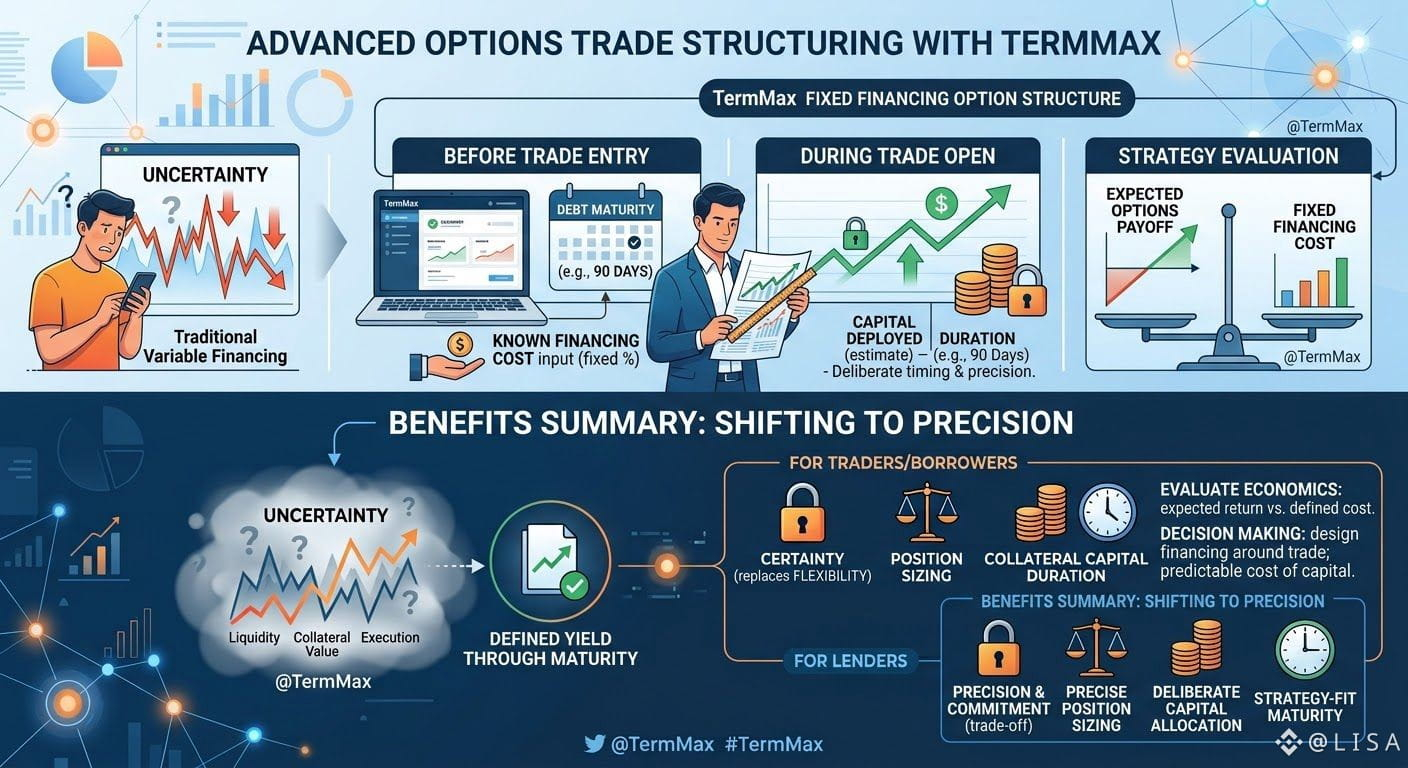
The part of TermMax I find most interesting is how fixed term financing changes the way I can structure an options trade. I usually think about an options position through entry, payoff, and risk, but financing can quietly alter the result while the trade is still open. With @TermMax , a fixed borrowing cost gives me a known financing input through maturity. That means I can estimate the cost of carry before entering instead of treating future interest expense as an unknown. #TermMax
The trade off is that precision comes with commitment. A fixed term means I need to choose a maturity that actually fits the strategy, rather than keeping capital completely flexible. But when the timing is deliberate, that constraint can be useful. I can compare the expected options payoff against a financing cost that stays defined, making the economics easier to evaluate before I commit capital. I see this as a subtle shift from simply borrowing to designing the financing around the trade itself. If options already require careful assumptions about timing and payoff, why should the cost of capital remain unpredictable?
The trade off is that precision comes with commitment. A fixed term means I need to choose a maturity that actually fits the strategy, rather than keeping capital completely flexible. But when the timing is deliberate, that constraint can be useful. I can compare the expected options payoff against a financing cost that stays defined, making the economics easier to evaluate before I commit capital. I see this as a subtle shift from simply borrowing to designing the financing around the trade itself. If options already require careful assumptions about timing and payoff, why should the cost of capital remain unpredictable?
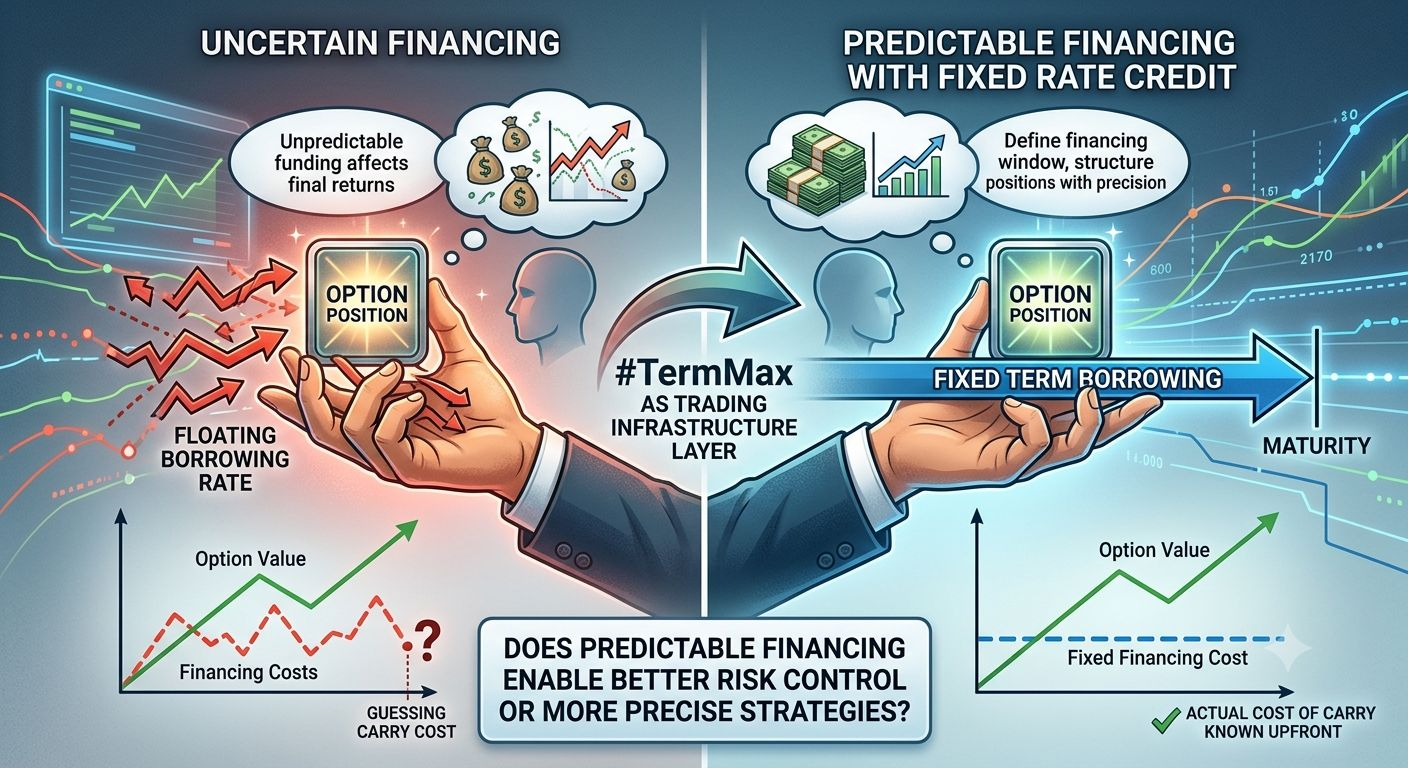
My biggest interest in @TermMax is not simply that it offers fixed rate borrowing. It is what happens when that fixed cost sits beside options execution. I can think about a trade in terms of actual cost of carry instead of guessing where a floating borrowing rate might drift before maturity. In DeFi, that distinction matters because an options position can look attractive at entry and become much less compelling when financing costs change underneath it. With a fixed term, I know the borrowing cost upfront, which gives me a cleaner base for judging whether an options strategy still makes sense. #TermMax
The trade off is liquidity versus predictability. A fixed term can limit flexibility compared with constantly rolling capital through variable rate markets, but I would rather accept that constraint when I need a clearly defined financing window. For me, this makes TermMax interesting as a trading infrastructure layer rather than just another lending venue. The combination of fixed rate credit and options execution could let traders structure positions around maturity, financing cost, and expected payoff with much clearer assumptions. The real question I keep coming back to is this: when financing becomes predictable, does the bigger advantage come from better risk control, or from being able to design more precise strategies?
#termmax @TermMax
The trade off is liquidity versus predictability. A fixed term can limit flexibility compared with constantly rolling capital through variable rate markets, but I would rather accept that constraint when I need a clearly defined financing window. For me, this makes TermMax interesting as a trading infrastructure layer rather than just another lending venue. The combination of fixed rate credit and options execution could let traders structure positions around maturity, financing cost, and expected payoff with much clearer assumptions. The real question I keep coming back to is this: when financing becomes predictable, does the bigger advantage come from better risk control, or from being able to design more precise strategies?
#termmax @TermMax
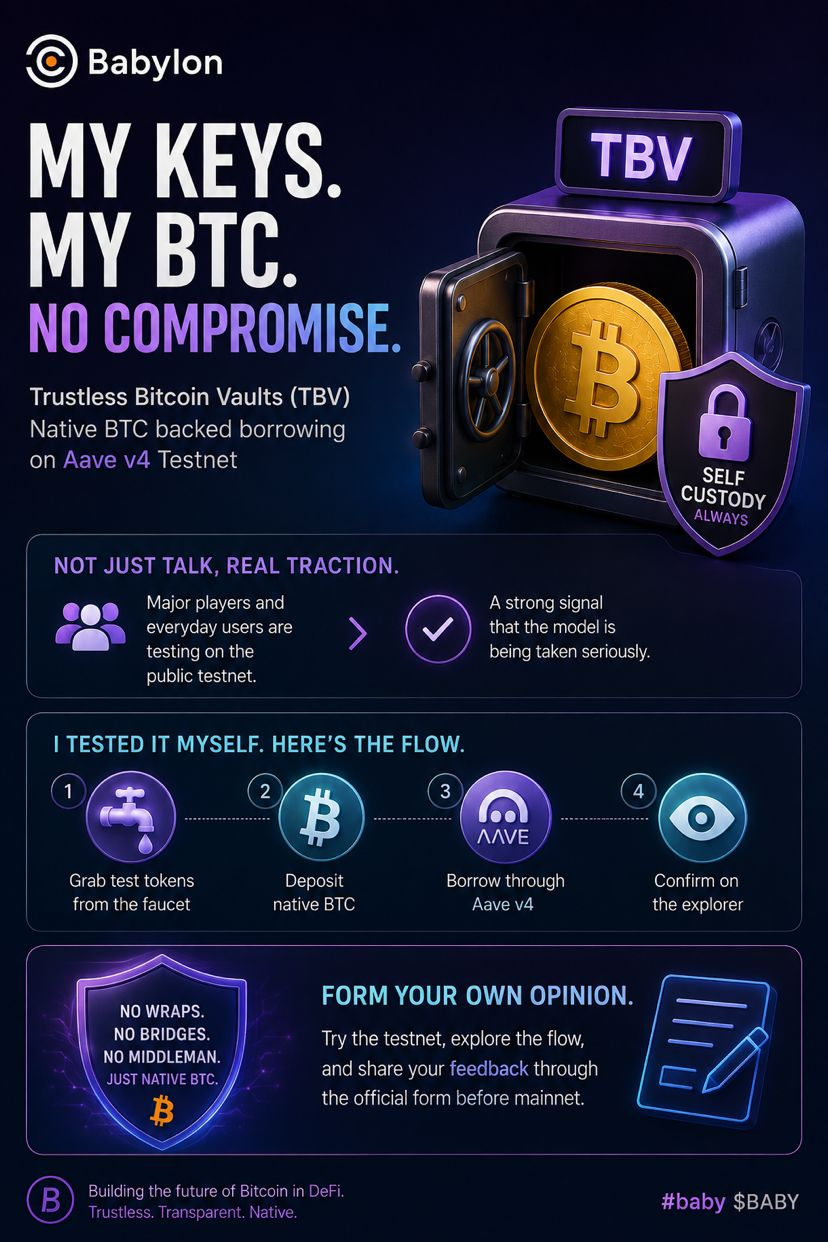
Self custody is the one thing I never compromise on, so most Bitcoin lending products lose my interest the moment they ask me to wrap or bridge BTC. Trustless Bitcoin Vaults (TBV) from @BabylonLabs_io is different, and that is why I decided to write about it.
What caught my attention is that the public testnet for native Bitcoin backed borrowing through Aave v4 already has several major names testing alongside regular users. That is not something you see with every early stage testnet. It signals the model is being taken seriously beyond just retail.
I tested it the same way anyone else can. Grabbed test tokens from the faucet, deposited native BTC, borrowed through Aave v4, and confirmed everything on the explorer. My keys never left my control at any point. If you want to form your own opinion instead of taking mine, funds share feedback through the official form before mainnet.
#baby $BABY
What caught my attention is that the public testnet for native Bitcoin backed borrowing through Aave v4 already has several major names testing alongside regular users. That is not something you see with every early stage testnet. It signals the model is being taken seriously beyond just retail.
I tested it the same way anyone else can. Grabbed test tokens from the faucet, deposited native BTC, borrowed through Aave v4, and confirmed everything on the explorer. My keys never left my control at any point. If you want to form your own opinion instead of taking mine, funds share feedback through the official form before mainnet.
#baby $BABY
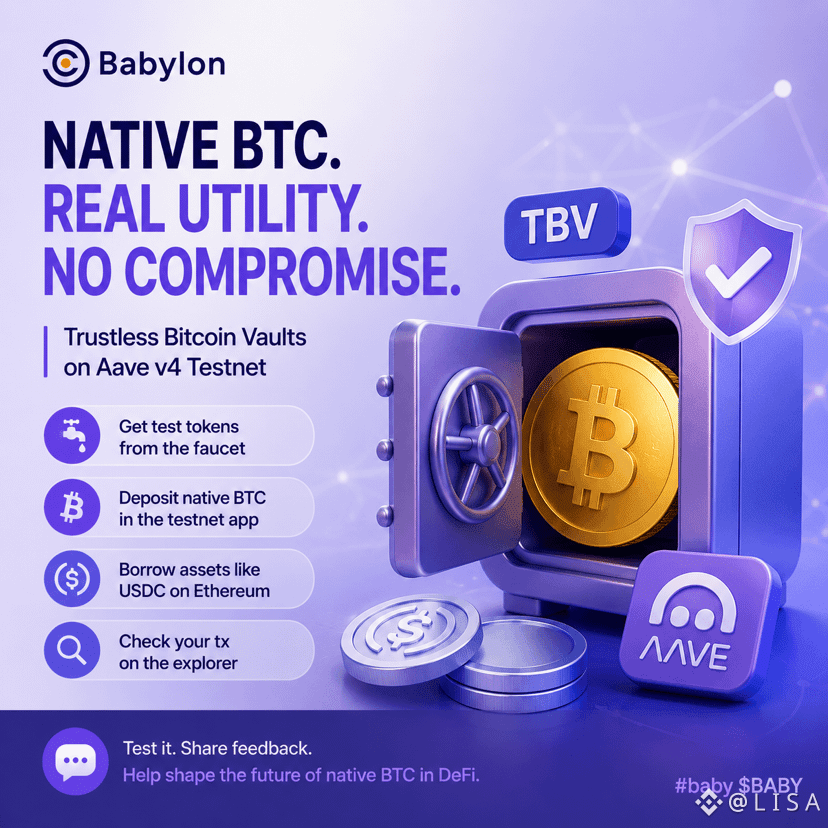
Babylon built the Bitcoin Staking Protocol, which grew into the largest Bitcoin based project in crypto by total value locked. Now @BabylonLabs_io is extending that native BTC into DeFi through Trustless Bitcoin Vaults (TBV), a way to use Bitcoin as collateral without wrapping, bridging, or trusting a middleman.
TBV currently powers native Bitcoin backed borrowing on Aave v4, live on public testnet. The flow is simple. Claim test tokens from the faucet, deposit native BTC in the testnet app, borrow assets like USDC on Ethereum, then check the transaction on the explorer.
What makes this worth trying is how little trust it asks for. Your Bitcoin stays native the whole time, and you never give up custody to complete the borrow. Test it yourself and send feedback through the official form before mainnet.
#baby $BABY
TBV currently powers native Bitcoin backed borrowing on Aave v4, live on public testnet. The flow is simple. Claim test tokens from the faucet, deposit native BTC in the testnet app, borrow assets like USDC on Ethereum, then check the transaction on the explorer.
What makes this worth trying is how little trust it asks for. Your Bitcoin stays native the whole time, and you never give up custody to complete the borrow. Test it yourself and send feedback through the official form before mainnet.
#baby $BABY
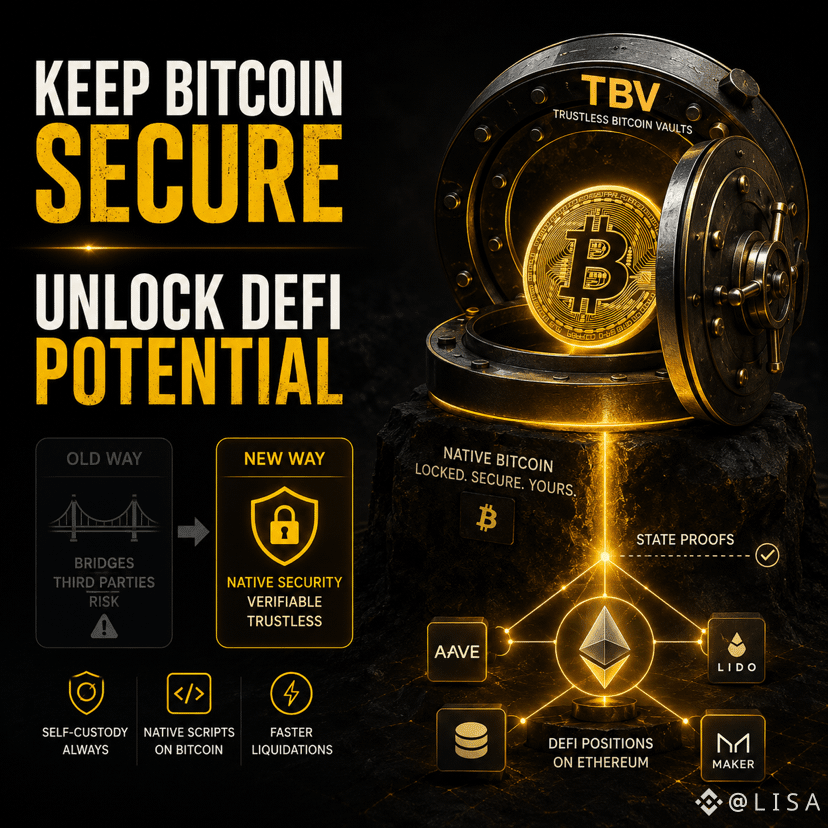
Most traders have a mental hierarchy for assets, and at the very top is Bitcoin held in self-custody. Everything else is usually treated as a trade-off: you either sacrifice that security for DeFi yields, or you sit on spot holdings and ignore the potential for capital efficiency.
Trustless Bitcoin Vaults (TBV) are finally forcing that binary model to evolve. Instead of choosing between holding assets and putting them to work, TBV architecture allows you to maintain base layer custody while simultaneously backing DeFi positions on Ethereum.
When I look at the execution flow of borrowing against native Bitcoin, the difference in risk profile is night and day compared to wrapped token variants. Because the actual collateral stays locked in Bitcoin Taproot scripts and only emits state proofs, the entire reliance on third party bridge operators effectively evaporates.
It turns borrowing from a question of trust into a question of verifying the script execution onchain. I have been spending time looking at how these vaults handle liquidation triggers during testnet simulations, and the speed of cryptographic enforcement is a massive improvement over traditional oracle-based bridge updates.
For anyone who has stayed away from lending protocols due to bridge-related anxiety, this is the first real shift in the market. Does the transition to native cryptographic enforcement change your long term outlook on lending?
@BabylonLabs_io $BABY #baby
Trustless Bitcoin Vaults (TBV) are finally forcing that binary model to evolve. Instead of choosing between holding assets and putting them to work, TBV architecture allows you to maintain base layer custody while simultaneously backing DeFi positions on Ethereum.
When I look at the execution flow of borrowing against native Bitcoin, the difference in risk profile is night and day compared to wrapped token variants. Because the actual collateral stays locked in Bitcoin Taproot scripts and only emits state proofs, the entire reliance on third party bridge operators effectively evaporates.
It turns borrowing from a question of trust into a question of verifying the script execution onchain. I have been spending time looking at how these vaults handle liquidation triggers during testnet simulations, and the speed of cryptographic enforcement is a massive improvement over traditional oracle-based bridge updates.
For anyone who has stayed away from lending protocols due to bridge-related anxiety, this is the first real shift in the market. Does the transition to native cryptographic enforcement change your long term outlook on lending?
@BabylonLabs_io $BABY #baby
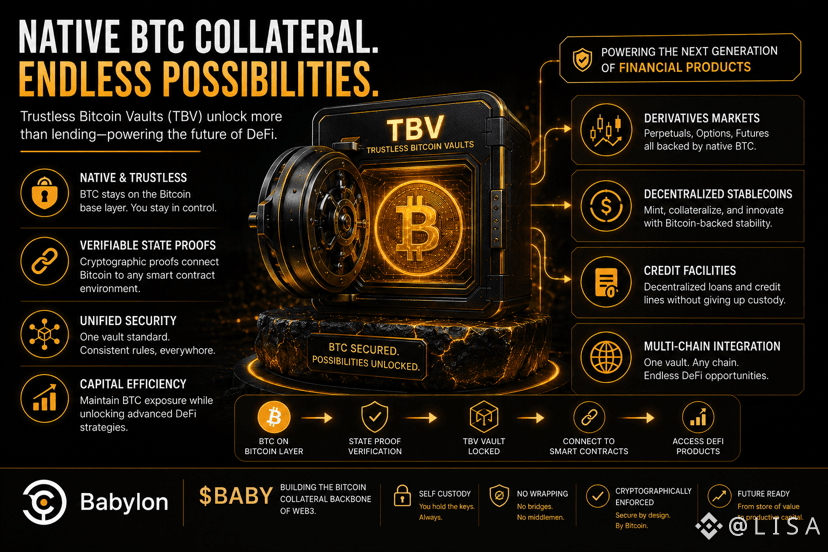
When evaluating capital efficiency across decentralized finance, borrowing against spot assets is often just the initial step in a broader ecosystem shift.
The release of Trustless Bitcoin Vaults (TBV) opens the door for native Bitcoin collateral to power a vast range of financial instruments beyond simple lending pools. By enabling verifiable Bitcoin state proofs across external smart contract layers, TBV allows developers to build derivative markets, decentralized stablecoins, and credit facilities directly backed by unbridged BTC.
This means traders can maintain long term spot exposure while deploying their underlying wealth into structured yield strategies or hedging positions without counterparty friction.
What excites me most about expanding TBV into multi chain financial products is how it standardizes security across diverse DeFi applications. Rather than creating isolated wrapped tokens for every single protocol, a unified vault mechanism ensures that collateral rules and liquidation logic remain cryptographically consistent.
Whether you are backing synthetic assets on Ethereum or accessing automated credit lines, your primary Bitcoin stays securely anchored on its native chain.
As more decentralized protocols adopt TBV infrastructure, native Bitcoin will transform from a passive store of value into the primary collateral backbone for web3.
Have you considered using native $BTC to back non lending DeFi positions?
@BabylonLabs_io $BABY #baby
The release of Trustless Bitcoin Vaults (TBV) opens the door for native Bitcoin collateral to power a vast range of financial instruments beyond simple lending pools. By enabling verifiable Bitcoin state proofs across external smart contract layers, TBV allows developers to build derivative markets, decentralized stablecoins, and credit facilities directly backed by unbridged BTC.
This means traders can maintain long term spot exposure while deploying their underlying wealth into structured yield strategies or hedging positions without counterparty friction.
What excites me most about expanding TBV into multi chain financial products is how it standardizes security across diverse DeFi applications. Rather than creating isolated wrapped tokens for every single protocol, a unified vault mechanism ensures that collateral rules and liquidation logic remain cryptographically consistent.
Whether you are backing synthetic assets on Ethereum or accessing automated credit lines, your primary Bitcoin stays securely anchored on its native chain.
As more decentralized protocols adopt TBV infrastructure, native Bitcoin will transform from a passive store of value into the primary collateral backbone for web3.
Have you considered using native $BTC to back non lending DeFi positions?
@BabylonLabs_io $BABY #baby
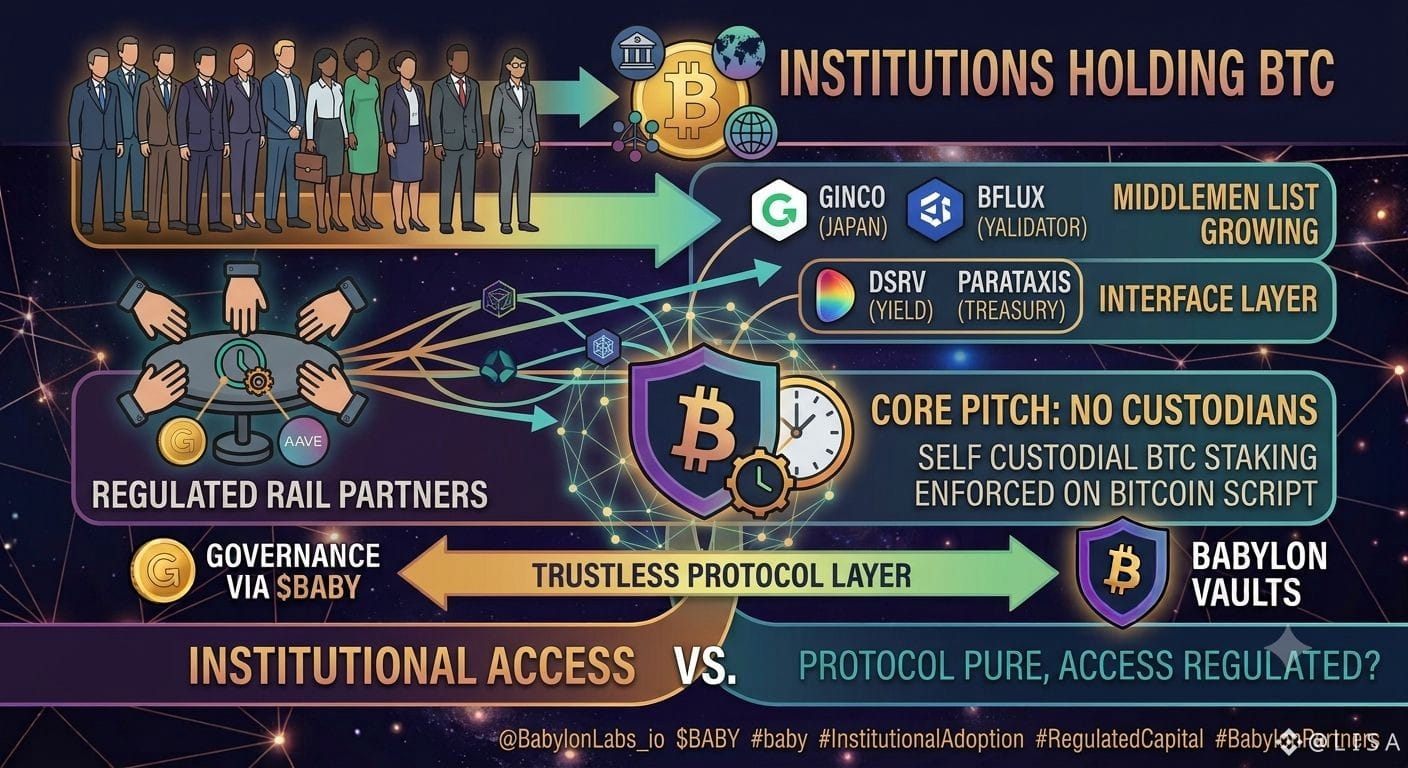
Babylon needed a growing list of institutional middlemen to sell a message about removing middlemen
I went through the recent partnership list and it kept growing. Ginco in Japan, Bflux for institutional yield, DSRV as validator infrastructure, Parataxis for treasury strategy. All of them sit between Babylon's protocol and the institutions actually holding the Bitcoin.
That struck me as worth sitting with. The core pitch is no custodians, no intermediaries, pure self custodial staking enforced on Bitcoin itself. Yet reaching institutions apparently requires enterprise wallet providers, custody specialists, and regional partners acting as the interface layer between cold $BTC reserves and the protocol underneath.
I do not think that contradicts the trustless design. The BTC itself stays locked under Bitcoin script conditions regardless of which enterprise wallet initiates the transaction. But it does mean the actual experience of trustless staking, for a bank or a corporate treasury anyway, still runs through a chain of vetted partners handling compliance, custody interfaces, and onboarding. Protocol level trustlessness and institutional access are turning out to be two very different layers of the same system.
Maybe that is just what adoption looks like. Regulated capital does not move without regulated rails, no matter how clean the underlying cryptography is.
Does institutional Bitcoin ever actually touch a truly trustless protocol directly, or does it always pass through a layer of trusted partners first regardless of what the base layer promises
@BabylonLabs_io $BABY #baby
I went through the recent partnership list and it kept growing. Ginco in Japan, Bflux for institutional yield, DSRV as validator infrastructure, Parataxis for treasury strategy. All of them sit between Babylon's protocol and the institutions actually holding the Bitcoin.
That struck me as worth sitting with. The core pitch is no custodians, no intermediaries, pure self custodial staking enforced on Bitcoin itself. Yet reaching institutions apparently requires enterprise wallet providers, custody specialists, and regional partners acting as the interface layer between cold $BTC reserves and the protocol underneath.
I do not think that contradicts the trustless design. The BTC itself stays locked under Bitcoin script conditions regardless of which enterprise wallet initiates the transaction. But it does mean the actual experience of trustless staking, for a bank or a corporate treasury anyway, still runs through a chain of vetted partners handling compliance, custody interfaces, and onboarding. Protocol level trustlessness and institutional access are turning out to be two very different layers of the same system.
Maybe that is just what adoption looks like. Regulated capital does not move without regulated rails, no matter how clean the underlying cryptography is.
Does institutional Bitcoin ever actually touch a truly trustless protocol directly, or does it always pass through a layer of trusted partners first regardless of what the base layer promises
@BabylonLabs_io $BABY #baby
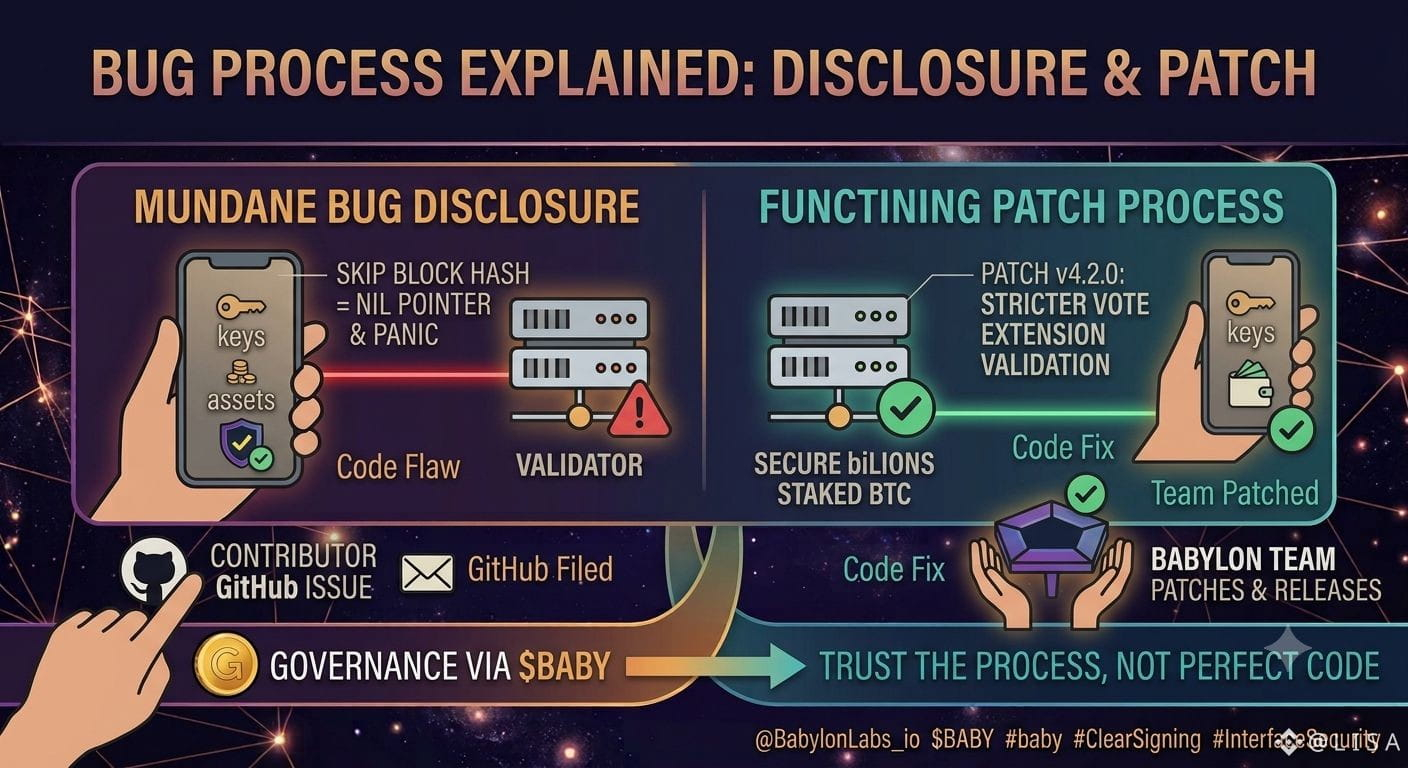
A one line bug report shows more about a protocol than any roadmap does
I read through the disclosure and the part that stuck with me was not the bug itself, it was how mundane it actually was. A malicious validator could skip a block hash field, protobuf allowed it because the field was optional, and Babylon's code tried to read data that was not there. Nil pointer, runtime panic, validators crashing right at epoch boundaries where consensus timing matters most.
Nothing exotic. No $BTC ever at risk, no funds touched, just a consensus layer bug that could have slowed block production if enough validators got hit at once.
What actually interests me is the disclosure path. Found by an independent pseudonymous contributor, filed publicly on GitHub, patched in version 4.2.0 with stricter validation around vote extensions. That is the boring, unglamorous reality of how security actually works in production systems securing billions in staked BTC. Not flawless code, just a functioning process for catching and fixing what slips through.
I think people conflate trustless with bug free, and those are not the same claim at all. Trustless describes who holds custody. It says nothing about whether the software underneath is perfect, because no software is.
Does a quiet, quickly patched bug make you trust the process more, or does any consensus level flaw on a Bitcoin security protocol just make you nervous regardless of how it gets resolved
@BabylonLabs_io $BABY #baby
I read through the disclosure and the part that stuck with me was not the bug itself, it was how mundane it actually was. A malicious validator could skip a block hash field, protobuf allowed it because the field was optional, and Babylon's code tried to read data that was not there. Nil pointer, runtime panic, validators crashing right at epoch boundaries where consensus timing matters most.
Nothing exotic. No $BTC ever at risk, no funds touched, just a consensus layer bug that could have slowed block production if enough validators got hit at once.
What actually interests me is the disclosure path. Found by an independent pseudonymous contributor, filed publicly on GitHub, patched in version 4.2.0 with stricter validation around vote extensions. That is the boring, unglamorous reality of how security actually works in production systems securing billions in staked BTC. Not flawless code, just a functioning process for catching and fixing what slips through.
I think people conflate trustless with bug free, and those are not the same claim at all. Trustless describes who holds custody. It says nothing about whether the software underneath is perfect, because no software is.
Does a quiet, quickly patched bug make you trust the process more, or does any consensus level flaw on a Bitcoin security protocol just make you nervous regardless of how it gets resolved
@BabylonLabs_io $BABY #baby
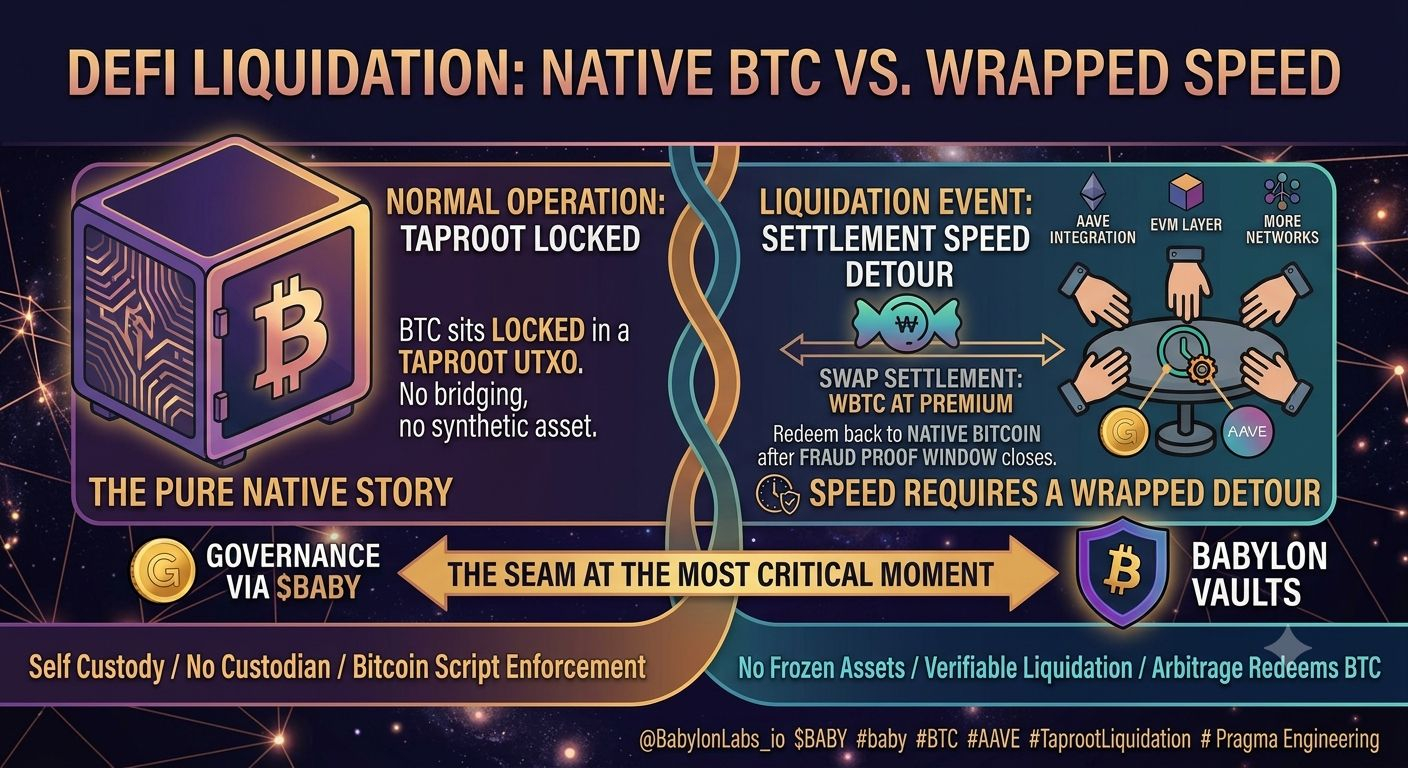
The no wrapping promise has an asterisk exactly when things go wrong
I dug into the actual liquidation mechanics of Babylon's Aave integration and found the detail nobody puts in the headline. During normal operation, $BTC sits locked in a Taproot UTXO, no wrapping, no bridge, exactly the story everyone repeats. But liquidation is a different moment entirely. When a position gets liquidated, the swap spoke settles in WBTC at a small premium, and arbitrageurs are the ones who actually buy that vaultBTC and redeem it back to native Bitcoin once the fraud proof window closes.
So the system stays fully trustless until the exact moment things break, and right there, briefly, wrapped Bitcoin reenters the picture to keep liquidations fast enough to matter. Bitcoin settlement is slow, DeFi liquidations are not patient, and something has to bridge that timing gap.
I do not think this is a flaw exactly. It might be the only realistic way to reconcile Bitcoin's settlement speed with how lending markets actually need to behave under stress. But it does mean the purity of the pitch has a seam right where risk is highest, not where marketing usually points.
Does a brief wrapped detour during liquidation undermine the trustless claim, or is that just what pragmatic engineering looks like under pressure
@BabylonLabs_io $BABY #baby
I dug into the actual liquidation mechanics of Babylon's Aave integration and found the detail nobody puts in the headline. During normal operation, $BTC sits locked in a Taproot UTXO, no wrapping, no bridge, exactly the story everyone repeats. But liquidation is a different moment entirely. When a position gets liquidated, the swap spoke settles in WBTC at a small premium, and arbitrageurs are the ones who actually buy that vaultBTC and redeem it back to native Bitcoin once the fraud proof window closes.
So the system stays fully trustless until the exact moment things break, and right there, briefly, wrapped Bitcoin reenters the picture to keep liquidations fast enough to matter. Bitcoin settlement is slow, DeFi liquidations are not patient, and something has to bridge that timing gap.
I do not think this is a flaw exactly. It might be the only realistic way to reconcile Bitcoin's settlement speed with how lending markets actually need to behave under stress. But it does mean the purity of the pitch has a seam right where risk is highest, not where marketing usually points.
Does a brief wrapped detour during liquidation undermine the trustless claim, or is that just what pragmatic engineering looks like under pressure
@BabylonLabs_io $BABY #baby
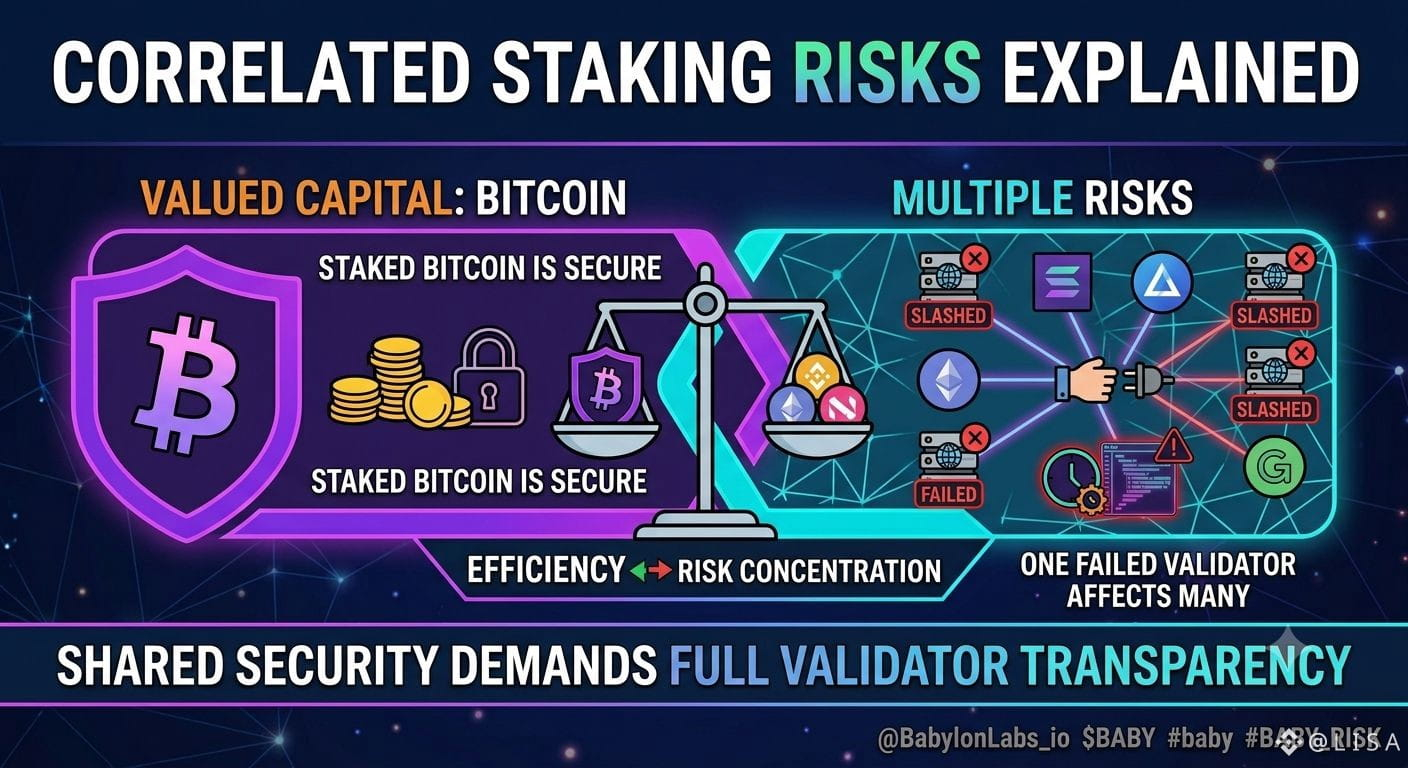
One stake, multiple networks, one bad day everywhere at once
Nobody talks about this enough.
If your staked BTC can secure more than one Bitcoin Secured Network at the same time, that sounds efficient. Same capital, multiple security jobs. Great on paper.
But correlated risk works both ways.
One validator running poorly across several networks does not fail once. It fails everywhere it participates. Your $BTC is not exposed to one slashing condition anymore, it is exposed to however many networks that validator touches.
Efficiency and concentration are basically the same coin flipped over.
I am not saying this breaks the model. I am saying it changes what due diligence actually looks like for anyone staking through Babylon. You are no longer just evaluating one network's health. You are evaluating validator behavior across an entire portfolio of networks your BTC happens to be securing.
Most people staking will not check this. They will see yield, see self custody, and stake without mapping out validator exposure across networks.
Should shared security come with mandatory transparency on validator overlap, or is that asking too much from a system built to be simple for the end user
@BabylonLabs_io $BABY #baby
Nobody talks about this enough.
If your staked BTC can secure more than one Bitcoin Secured Network at the same time, that sounds efficient. Same capital, multiple security jobs. Great on paper.
But correlated risk works both ways.
One validator running poorly across several networks does not fail once. It fails everywhere it participates. Your $BTC is not exposed to one slashing condition anymore, it is exposed to however many networks that validator touches.
Efficiency and concentration are basically the same coin flipped over.
I am not saying this breaks the model. I am saying it changes what due diligence actually looks like for anyone staking through Babylon. You are no longer just evaluating one network's health. You are evaluating validator behavior across an entire portfolio of networks your BTC happens to be securing.
Most people staking will not check this. They will see yield, see self custody, and stake without mapping out validator exposure across networks.
Should shared security come with mandatory transparency on validator overlap, or is that asking too much from a system built to be simple for the end user
@BabylonLabs_io $BABY #baby
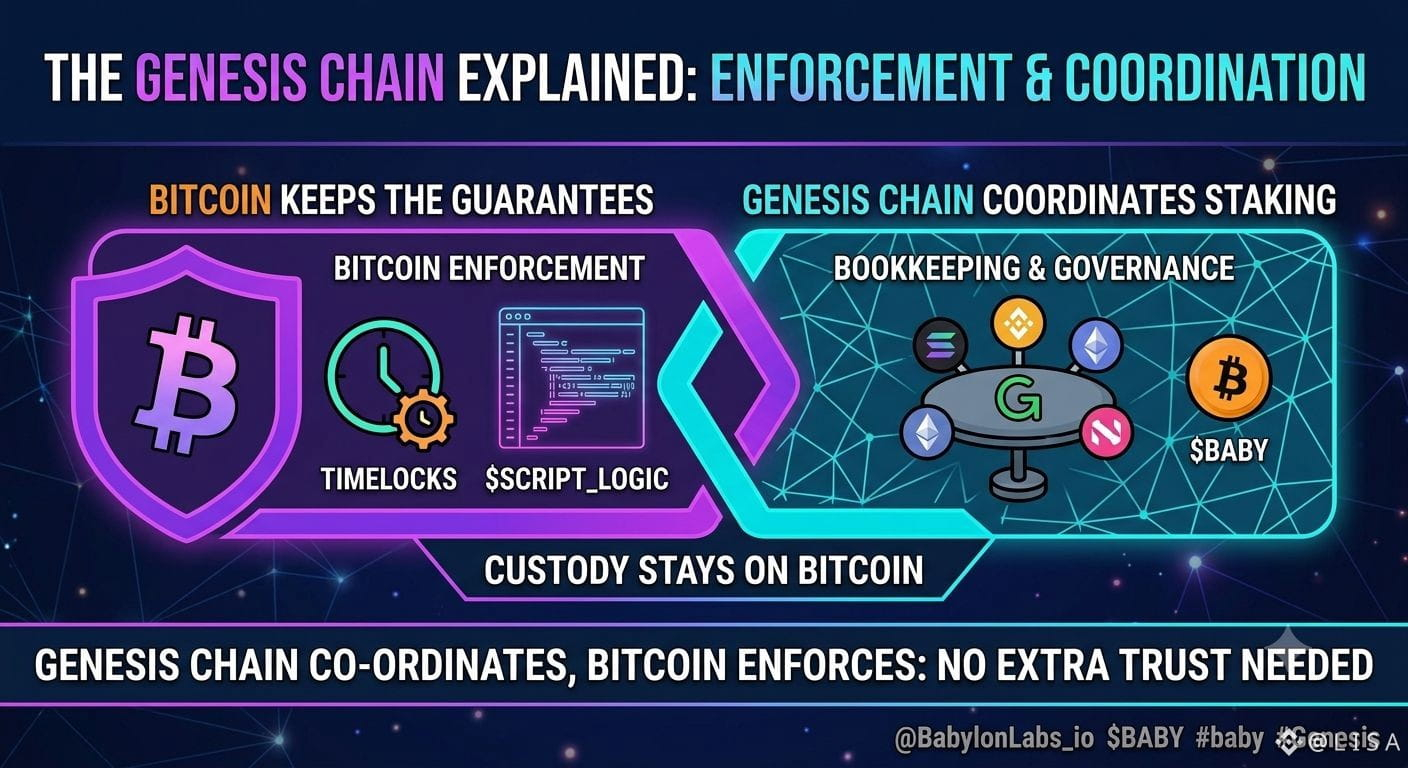
Why does a Bitcoin security protocol even need its own chain
This one bugged me for a bit. If the whole pitch is trustless Bitcoin staking with everything enforced through Bitcoin script and timelocks, why introduce Babylon Genesis chain into the picture at all. Doesn't adding another chain reintroduce the exact kind of extra trust surface this protocol is supposed to be avoiding.
The answer I landed on is that Bitcoin itself cannot coordinate anything beyond simple locking conditions. It has no concept of validator sets, no way to track which Proof of Stake networks are being secured or how slashing gets enforced across dozens of different Bitcoin Secured Networks. Genesis chain exists to do the coordination and governance work that Bitcoin was never designed to handle, while the actual custody and staking commitment stays enforced at the Bitcoin layer itself.
So it is less about adding trust and more about separating enforcement from orchestration. Bitcoin holds the guarantees, Genesis chain handles the bookkeeping and governance through BABY. Still, any additional chain is additional infrastructure that needs its own security assumptions, even if it never touches your actual staked $BTC .
Does that separation actually hold up as more networks plug in, or does complexity creep back in through the coordination layer instead of the custody layer
@BabylonLabs_io $BABY #baby
This one bugged me for a bit. If the whole pitch is trustless Bitcoin staking with everything enforced through Bitcoin script and timelocks, why introduce Babylon Genesis chain into the picture at all. Doesn't adding another chain reintroduce the exact kind of extra trust surface this protocol is supposed to be avoiding.
The answer I landed on is that Bitcoin itself cannot coordinate anything beyond simple locking conditions. It has no concept of validator sets, no way to track which Proof of Stake networks are being secured or how slashing gets enforced across dozens of different Bitcoin Secured Networks. Genesis chain exists to do the coordination and governance work that Bitcoin was never designed to handle, while the actual custody and staking commitment stays enforced at the Bitcoin layer itself.
So it is less about adding trust and more about separating enforcement from orchestration. Bitcoin holds the guarantees, Genesis chain handles the bookkeeping and governance through BABY. Still, any additional chain is additional infrastructure that needs its own security assumptions, even if it never touches your actual staked $BTC .
Does that separation actually hold up as more networks plug in, or does complexity creep back in through the coordination layer instead of the custody layer
@BabylonLabs_io $BABY #baby
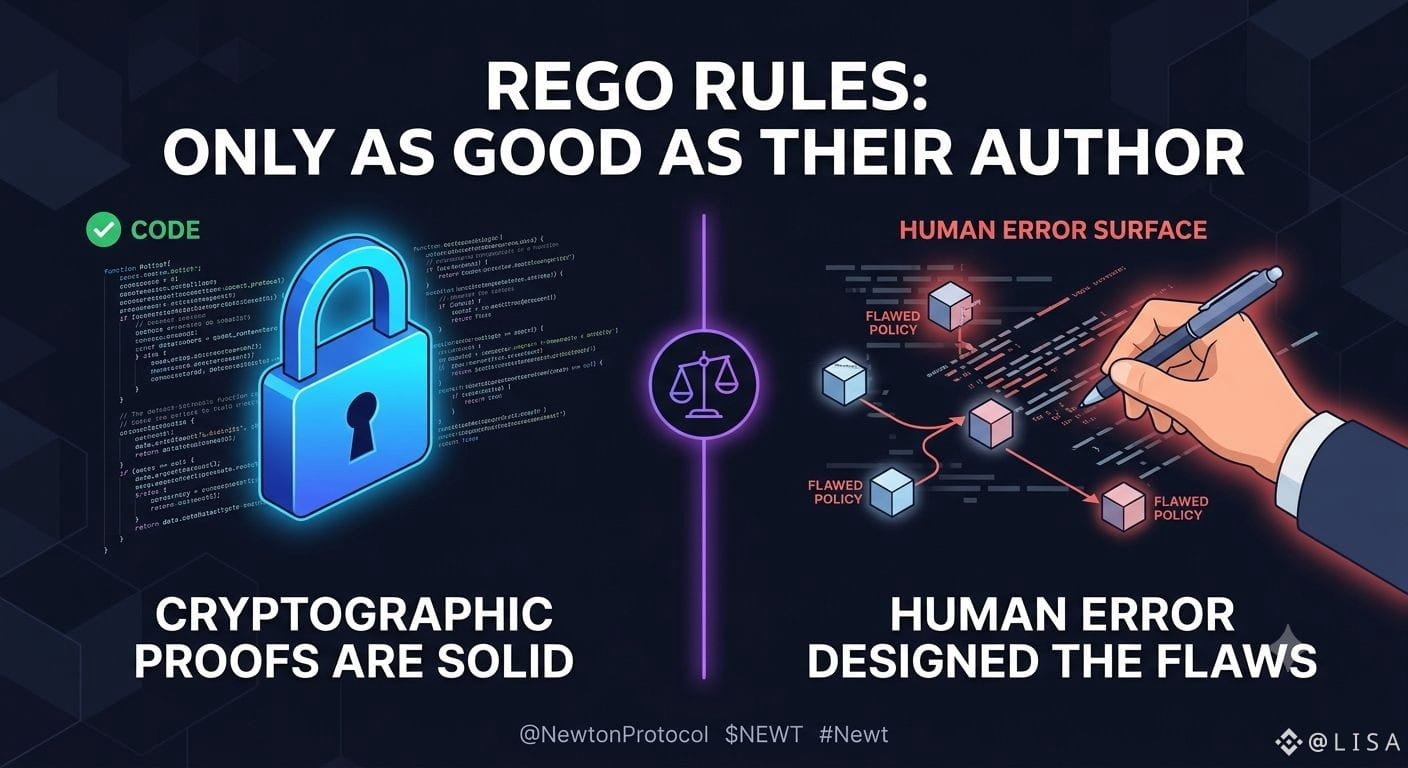
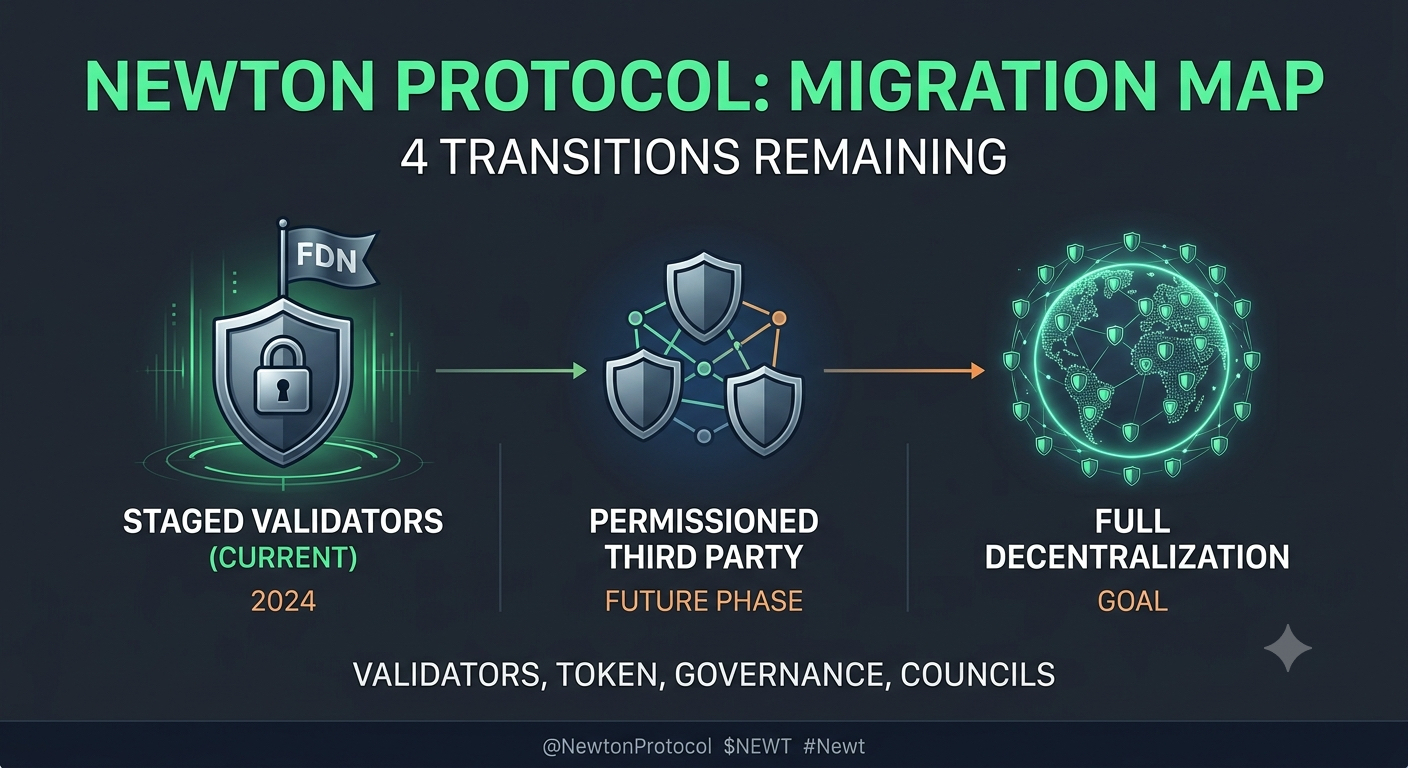
Rego Policy Rules Are Only As Good As Whoever Writes Them
$NEWT Newton runs evaluations through Rego, a declarative policy language, and that's the part nobody's poking at yet. Someone still has to actually author these rules correctly, and Rego is notoriously easy to write technically valid logic that doesn't do what you think it does. If a vault curator or protocol writes a flawed policy, the zk proof will happily confirm that flawed policy was followed perfectly. Verification proves the rule executed as written, it says nothing about whether the rule itself was smart. That's a human error surface sitting right underneath all this cryptographic guarantee.
I want to see policy auditing tools before I trust curator written rules with real size. My exposure grows once there's a standard for reviewing Rego logic before it goes live on a vault. Proofs don't save you from bad policy design.
@NewtonProtocol $NEWT #Newt
$NEWT Newton runs evaluations through Rego, a declarative policy language, and that's the part nobody's poking at yet. Someone still has to actually author these rules correctly, and Rego is notoriously easy to write technically valid logic that doesn't do what you think it does. If a vault curator or protocol writes a flawed policy, the zk proof will happily confirm that flawed policy was followed perfectly. Verification proves the rule executed as written, it says nothing about whether the rule itself was smart. That's a human error surface sitting right underneath all this cryptographic guarantee.
I want to see policy auditing tools before I trust curator written rules with real size. My exposure grows once there's a standard for reviewing Rego logic before it goes live on a vault. Proofs don't save you from bad policy design.
@NewtonProtocol $NEWT #Newt

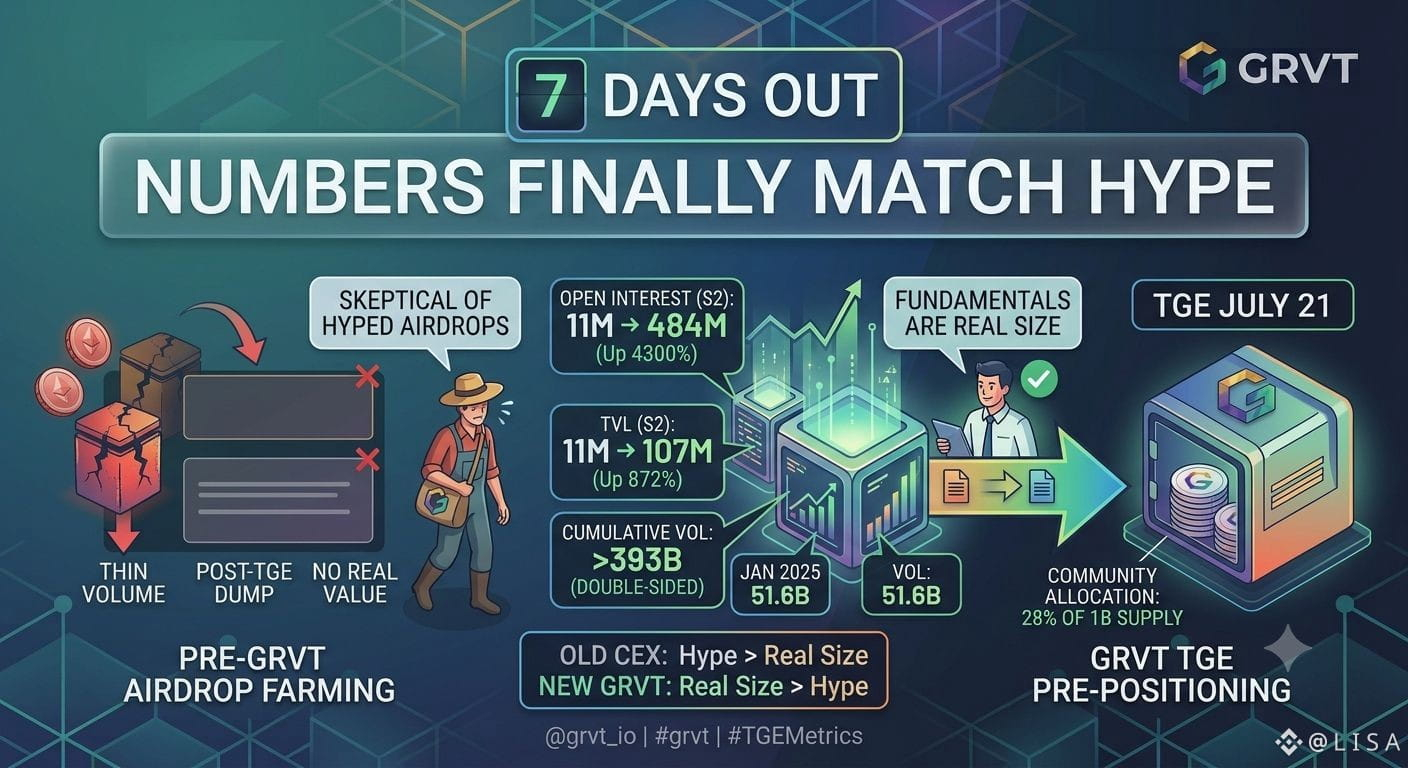
Seven Days Out And The Numbers Finally Match The Hype
I stopped taking airdrop farming seriously a while ago because most seasons end with a token that nobody actually wants once trading opens. GRVT is the first one in months where I actually pulled up the metrics before the token generation event instead of after, and the open interest data alone made me sit up.
Open interest went from roughly 11 million to 484 million during Season 2, that is not organic hype, that is real derivatives volume backing the points. TVL climbed from about 11 million to over 107 million in the same stretch. Cumulative trading volume crossed 393 billion double sided, and January alone printed 51.6 billion in monthly volume. Numbers like that usually show up after a token launches, not before it.
With the TGE landing July 21 and community allocation now sitting at 28 percent of the fixed 1 billion supply, this is one of the rare cases where the fundamentals were already stacking up while everyone else was just farming points blindly. I have seen too many projects launch a token into thin volume and watch it get dumped within days.
This one is launching into an exchange that already proved it can handle real size. That changes how I am thinking about post TGE positioning completely.
Watching order books closely once trading opens.
@grvt_io #grvt
I stopped taking airdrop farming seriously a while ago because most seasons end with a token that nobody actually wants once trading opens. GRVT is the first one in months where I actually pulled up the metrics before the token generation event instead of after, and the open interest data alone made me sit up.
Open interest went from roughly 11 million to 484 million during Season 2, that is not organic hype, that is real derivatives volume backing the points. TVL climbed from about 11 million to over 107 million in the same stretch. Cumulative trading volume crossed 393 billion double sided, and January alone printed 51.6 billion in monthly volume. Numbers like that usually show up after a token launches, not before it.
With the TGE landing July 21 and community allocation now sitting at 28 percent of the fixed 1 billion supply, this is one of the rare cases where the fundamentals were already stacking up while everyone else was just farming points blindly. I have seen too many projects launch a token into thin volume and watch it get dumped within days.
This one is launching into an exchange that already proved it can handle real size. That changes how I am thinking about post TGE positioning completely.
Watching order books closely once trading opens.
@grvt_io #grvt
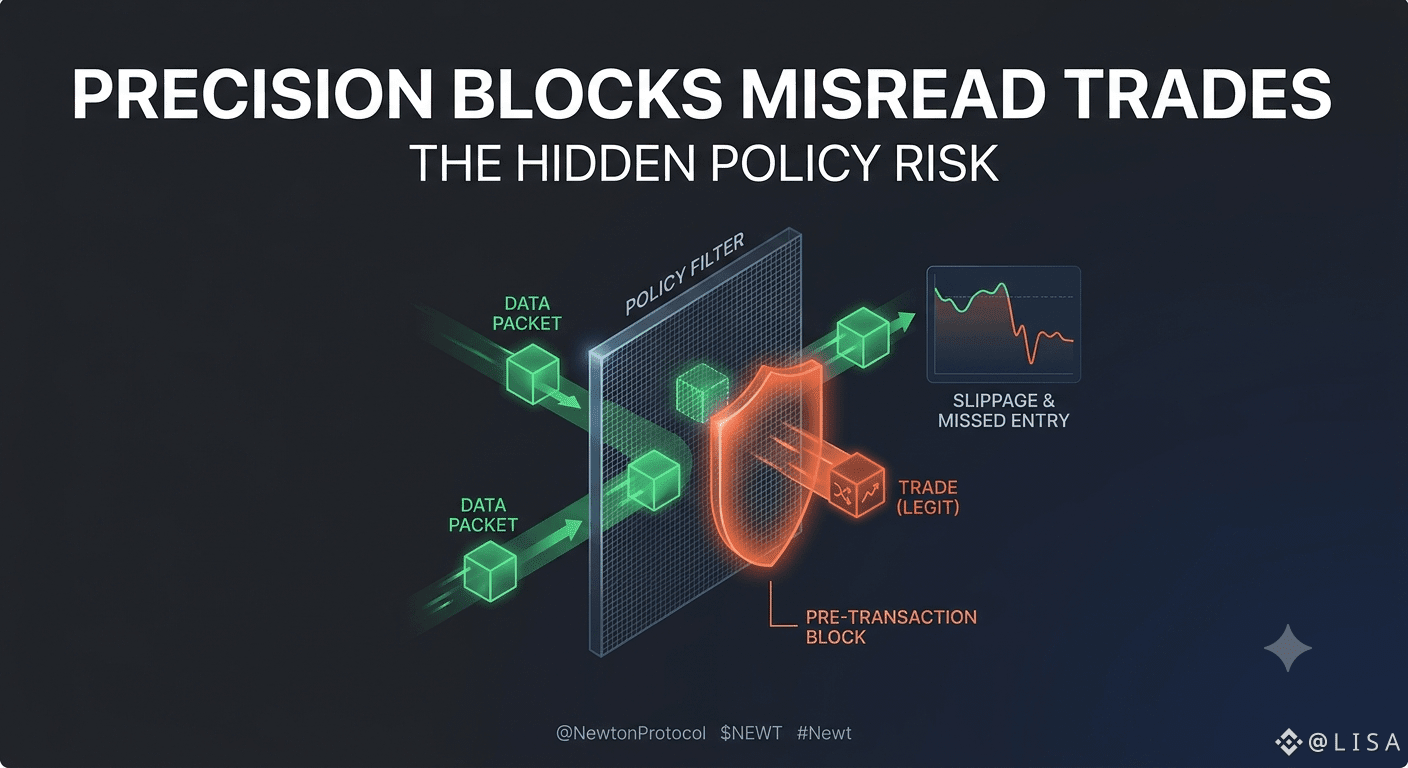
Policy Rules Blocking Legit Trades Is The Risk Nobody Mentions
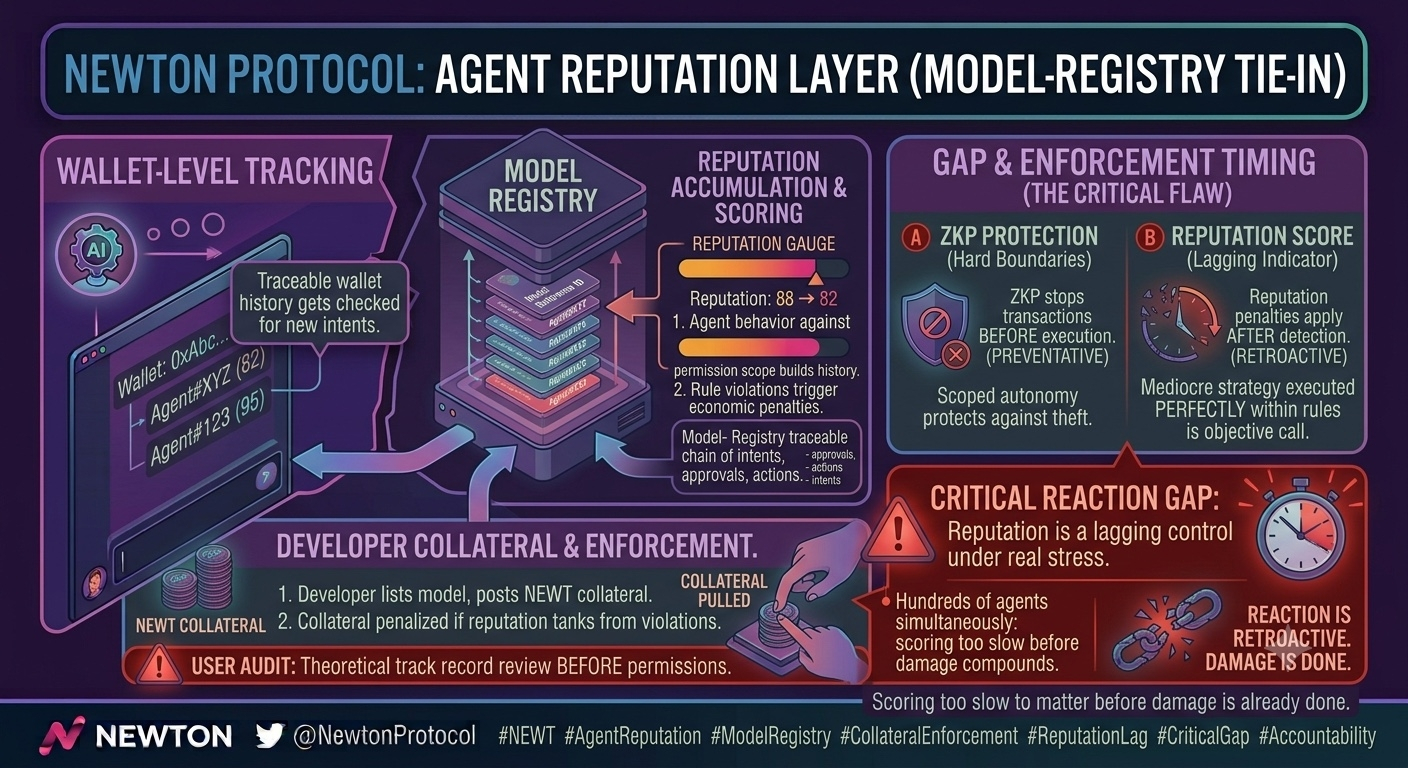
Everyone talks about Newton $NEWT stopping malicious settlement but flip that logic around for a second. A policy engine strict enough to catch bad actors is also strict enough to misfire on legitimate agent strategies that just look unusual on paper. If my automated strategy gets flagged and blocked because it doesn't match some predefined rule set, I'm eating slippage and missed entries while the system protects me from a threat that was never there. False positives in a pre transaction enforcement layer are a real cost, not just a theoretical one. Nobody's published data yet on how often legitimate trades get denied versus actual malicious ones.
I want false positive rates before I trust this with real size. My strategies can't afford getting blocked mid execution over an overly cautious rule set. Precision matters as much as protection here.
@NewtonProtocol
$NEWT
#Newt
Everyone talks about Newton $NEWT stopping malicious settlement but flip that logic around for a second. A policy engine strict enough to catch bad actors is also strict enough to misfire on legitimate agent strategies that just look unusual on paper. If my automated strategy gets flagged and blocked because it doesn't match some predefined rule set, I'm eating slippage and missed entries while the system protects me from a threat that was never there. False positives in a pre transaction enforcement layer are a real cost, not just a theoretical one. Nobody's published data yet on how often legitimate trades get denied versus actual malicious ones.
I want false positive rates before I trust this with real size. My strategies can't afford getting blocked mid execution over an overly cautious rule set. Precision matters as much as protection here.
@NewtonProtocol
$NEWT
#Newt
Trusting A CEX With Proof Instead Of Promises
I have lost count of how many times an exchange told us our funds were safe right before everything collapsed. That is the entire reason on chain ZK settlement matters to me now, GRVT is not asking me to trust a balance sheet I cannot see, the proofs are verifiable instead of just promised in a blog post after something already broke.
Centralized exchanges historically operate on faith, you assume the reserves are there until a withdrawal freeze proves otherwise. GRVT flips that by settling trades through zero knowledge proofs on chain while still running execution off chain for speed, so the safety net is mathematical rather than reputational.
That distinction hits different after watching multiple platforms implode where users found out too late that their exposure was never actually backed the way it claimed. Here the settlement layer does not care about vibes or trust me bro announcements, it just verifies.
Licensed operation on top of that removes another layer of blind faith, this is not some anonymous team hoping regulators never notice them. $GRVT holding a fixed 1 billion supply cap gives the token side of this equation the same kind of predictability the settlement architecture already provides.
Watching how this holds up as bigger players start allocating size.
@grvt_io #grvt
I have lost count of how many times an exchange told us our funds were safe right before everything collapsed. That is the entire reason on chain ZK settlement matters to me now, GRVT is not asking me to trust a balance sheet I cannot see, the proofs are verifiable instead of just promised in a blog post after something already broke.
Centralized exchanges historically operate on faith, you assume the reserves are there until a withdrawal freeze proves otherwise. GRVT flips that by settling trades through zero knowledge proofs on chain while still running execution off chain for speed, so the safety net is mathematical rather than reputational.
That distinction hits different after watching multiple platforms implode where users found out too late that their exposure was never actually backed the way it claimed. Here the settlement layer does not care about vibes or trust me bro announcements, it just verifies.
Licensed operation on top of that removes another layer of blind faith, this is not some anonymous team hoping regulators never notice them. $GRVT holding a fixed 1 billion supply cap gives the token side of this equation the same kind of predictability the settlement architecture already provides.
Watching how this holds up as bigger players start allocating size.
@grvt_io #grvt

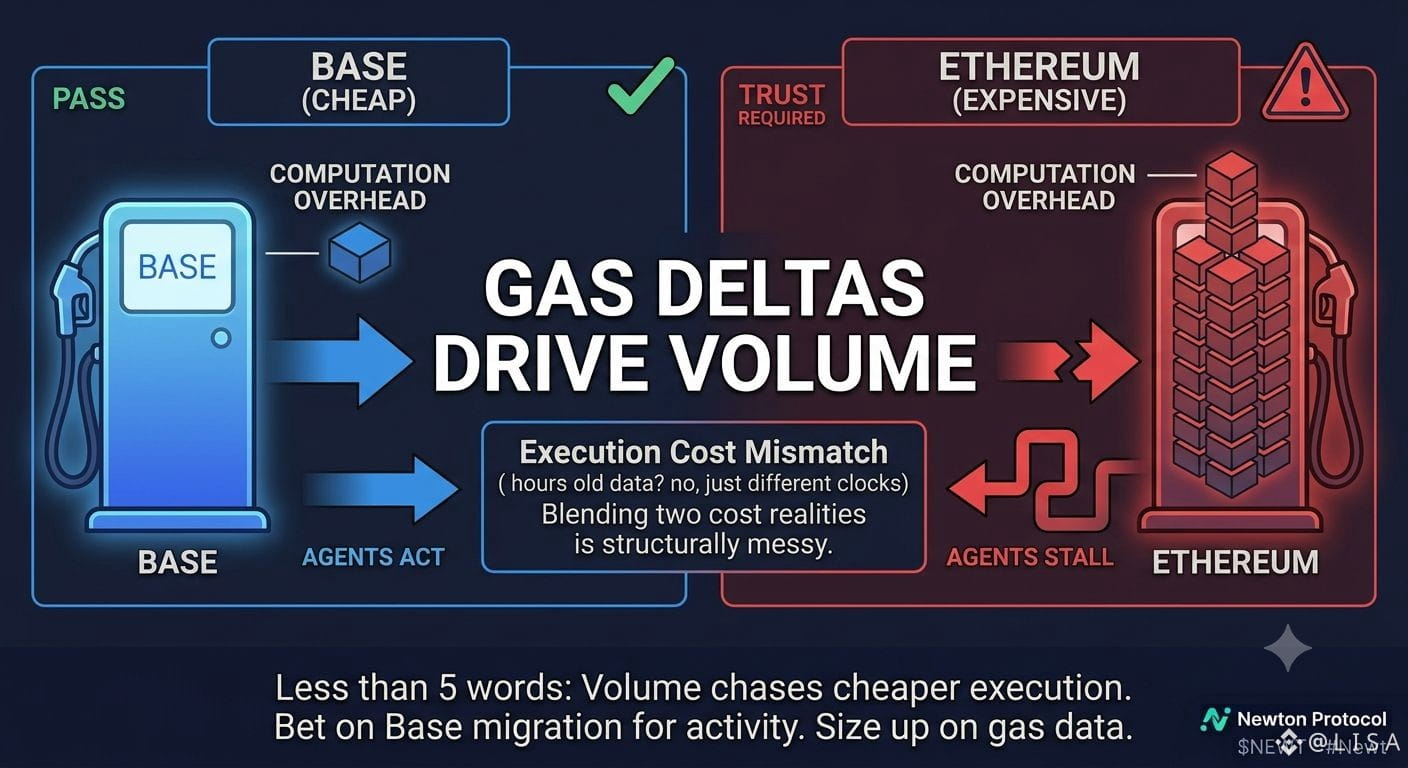
Gas Deltas Are Going To Decide Where Volume Actually Goes
Newton runs on both Base and Ethereum mainnet but the execution cost between those two chains isn't even close, and that difference changes how agents actually behave in practice. If policy enforcement adds any extra computation on top of a normal transaction, that overhead gets multiplied by whatever gas environment you're in. On Base it's probably negligible, but on Ethereum mainnet during any real congestion that added verification step could make automated strategies unprofitable before they even settle. Nobody's published numbers comparing the actual cost delta between the two chains under this new enforcement layer.
I'd bet most serious agent activity migrates toward Base purely on cost, not because Ethereum $ETH is less secure. But if that happens fast, Ethereum side liquidity for this system could end up thin while everyone chases cheaper execution. Watching gas data before I size up.
@NewtonProtocol $NEWT #Newt
Newton runs on both Base and Ethereum mainnet but the execution cost between those two chains isn't even close, and that difference changes how agents actually behave in practice. If policy enforcement adds any extra computation on top of a normal transaction, that overhead gets multiplied by whatever gas environment you're in. On Base it's probably negligible, but on Ethereum mainnet during any real congestion that added verification step could make automated strategies unprofitable before they even settle. Nobody's published numbers comparing the actual cost delta between the two chains under this new enforcement layer.
I'd bet most serious agent activity migrates toward Base purely on cost, not because Ethereum $ETH is less secure. But if that happens fast, Ethereum side liquidity for this system could end up thin while everyone chases cheaper execution. Watching gas data before I size up.
@NewtonProtocol $NEWT #Newt
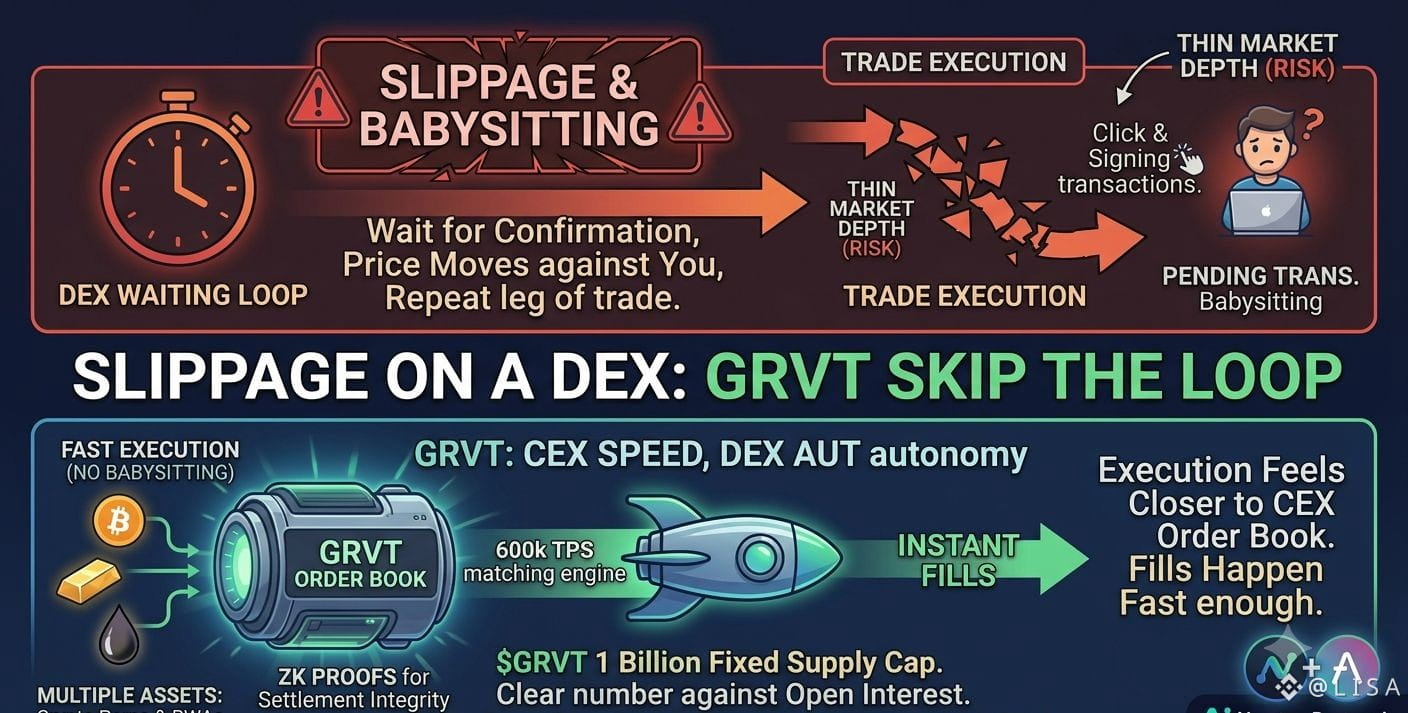
Slippage On A DEX Taught Me To Hate Waiting
Anyone who has tried trading real size on a decentralized app knows the drill, you sign a transaction, wait for confirmation, watch your price move against you, then repeat for the next leg of the trade. GRVT skips that entire loop with a 600k TPS matching engine that actually feels like a centralized exchange while settlement still happens on chain through ZK proofs.
What sold me was not just the speed, it was being able to rotate between crypto perps and RWA exposure like gold and oil inside the same interface without switching venues or bridging assets manually. Market depth on traditional DEX setups for anything outside majors is usually thin, and slippage eats your entry before you even get comfortable in the position.
Here the execution feels closer to a CEX order book, fills happen fast enough that I am not babysitting a pending transaction while my thesis becomes stale. That gap between DEX autonomy and CEX speed is exactly where most platforms fail, they pick one and sacrifice the other.
GRVT carries a fixed 1 billion supply cap, which at least gives me a clean number to track against open interest as this gets more attention.
Still watching how this scales once volume picks up.
@grvt_io #grvt
Anyone who has tried trading real size on a decentralized app knows the drill, you sign a transaction, wait for confirmation, watch your price move against you, then repeat for the next leg of the trade. GRVT skips that entire loop with a 600k TPS matching engine that actually feels like a centralized exchange while settlement still happens on chain through ZK proofs.
What sold me was not just the speed, it was being able to rotate between crypto perps and RWA exposure like gold and oil inside the same interface without switching venues or bridging assets manually. Market depth on traditional DEX setups for anything outside majors is usually thin, and slippage eats your entry before you even get comfortable in the position.
Here the execution feels closer to a CEX order book, fills happen fast enough that I am not babysitting a pending transaction while my thesis becomes stale. That gap between DEX autonomy and CEX speed is exactly where most platforms fail, they pick one and sacrifice the other.
GRVT carries a fixed 1 billion supply cap, which at least gives me a clean number to track against open interest as this gets more attention.
Still watching how this scales once volume picks up.
@grvt_io #grvt
Войдите, чтобы посмотреть больше материала