

Learn-with-Asif
3.4k Публикации

Learn-with-Asif
Отправить жалобу
Заблокировать пользователя
Hi Guys i am Spot trader specialist in Intra Day trade, DCA and Swing trade. Follow me to stay updated about market and Binance reward Campaigns.

Traders League Badge Beginner
Открытая сделка
Трейдер с частыми сделками
3.6 г
461 подписок(и/а)
21.0K+ подписчиков(а)
11.3K+ понравилось
1 Значки
Посты
Портфель
Все
Цитирования
Видео
Активно
PINNED
Проверено
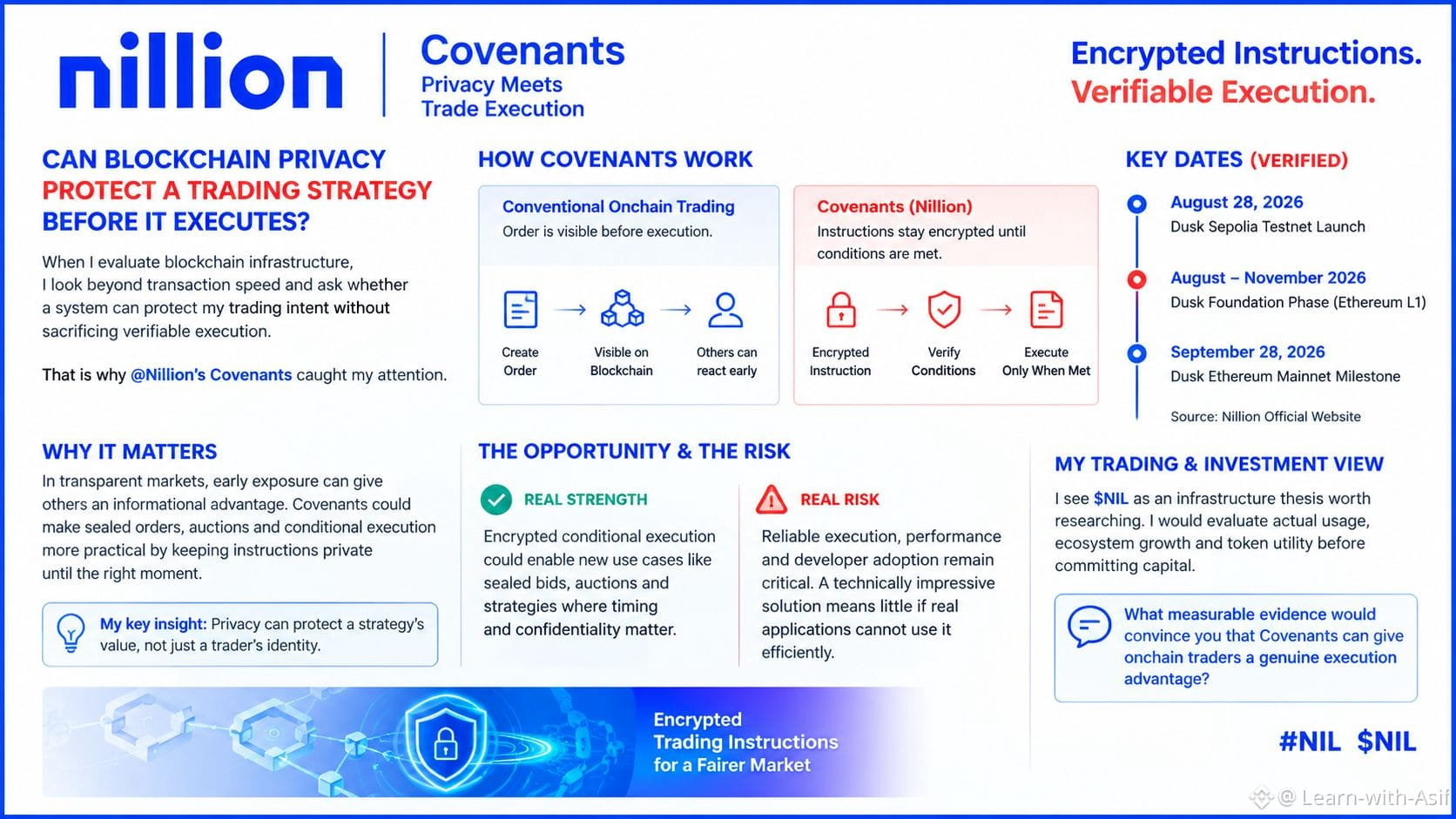
CAN BLOCKCHAIN PRIVACY PROTECT A TRADING STRATEGY BEFORE IT EXECUTES?
When I evaluate blockchain infrastructure, I look beyond transaction speed and ask whether a system can protect my trading intent without sacrificing verifiable execution.
That is why @nillionnetwork Covenants caught my attention.
In transparent onchain markets, revealing an order too early can give other participants an information advantage. Covenants aim to keep instructions encrypted until predefined conditions are satisfied, potentially making sealed orders and conditional execution more practical.
The timeline also matters. Nillion’s roadmap places $DUSK in its August–November 2026 foundation phase. Dusk’s Ethereum mainnet milestone was announced for September 28, 2026, following its Sepolia testnet launch on August 28.
My key insight is that privacy can protect a strategy’s value, not just a trader’s identity. However, reliable execution, performance and developer adoption remain critical challenges. A technically impressive solution means little if real applications cannot use it efficiently.
I view $NIL as an infrastructure thesis worth researching, but I would evaluate actual usage, ecosystem growth and token utility before committing capital.
What measurable evidence would convince you that Covenants can give onchain traders a genuine execution advantage?
#NIL $NIL
#nil $NIL @nillionnetwork
CAN BLOCKCHAIN PRIVACY PROTECT A TRADING STRATEGY BEFORE IT EXECUTES?
When I evaluate blockchain infrastructure, I look beyond transaction speed and ask whether a system can protect my trading intent without sacrificing verifiable execution.
That is why @Nillion Covenants caught my attention.
In transparent onchain markets, revealing an order too early can give other participants an information advantage. Covenants aim to keep instructions encrypted until predefined conditions are satisfied, potentially making sealed orders and conditional execution more practical.
The timeline also matters. Nillion’s roadmap places $DUSK in its August–November 2026 foundation phase. Dusk’s Ethereum mainnet milestone was announced for September 28, 2026, following its Sepolia testnet launch on August 28.
My key insight is that privacy can protect a strategy’s value, not just a trader’s identity. However, reliable execution, performance and developer adoption remain critical challenges. A technically impressive solution means little if real applications cannot use it efficiently.
I view $NIL as an infrastructure thesis worth researching, but I would evaluate actual usage, ecosystem growth and token utility before committing capital.
What measurable evidence would convince you that Covenants can give onchain traders a genuine execution advantage?
#NIL $NIL
#nil $NIL @Nillion
When I evaluate blockchain infrastructure, I look beyond transaction speed and ask whether a system can protect my trading intent without sacrificing verifiable execution.
That is why @Nillion Covenants caught my attention.
In transparent onchain markets, revealing an order too early can give other participants an information advantage. Covenants aim to keep instructions encrypted until predefined conditions are satisfied, potentially making sealed orders and conditional execution more practical.
The timeline also matters. Nillion’s roadmap places $DUSK in its August–November 2026 foundation phase. Dusk’s Ethereum mainnet milestone was announced for September 28, 2026, following its Sepolia testnet launch on August 28.
My key insight is that privacy can protect a strategy’s value, not just a trader’s identity. However, reliable execution, performance and developer adoption remain critical challenges. A technically impressive solution means little if real applications cannot use it efficiently.
I view $NIL as an infrastructure thesis worth researching, but I would evaluate actual usage, ecosystem growth and token utility before committing capital.
What measurable evidence would convince you that Covenants can give onchain traders a genuine execution advantage?
#NIL $NIL
#nil $NIL @Nillion
1
2
686
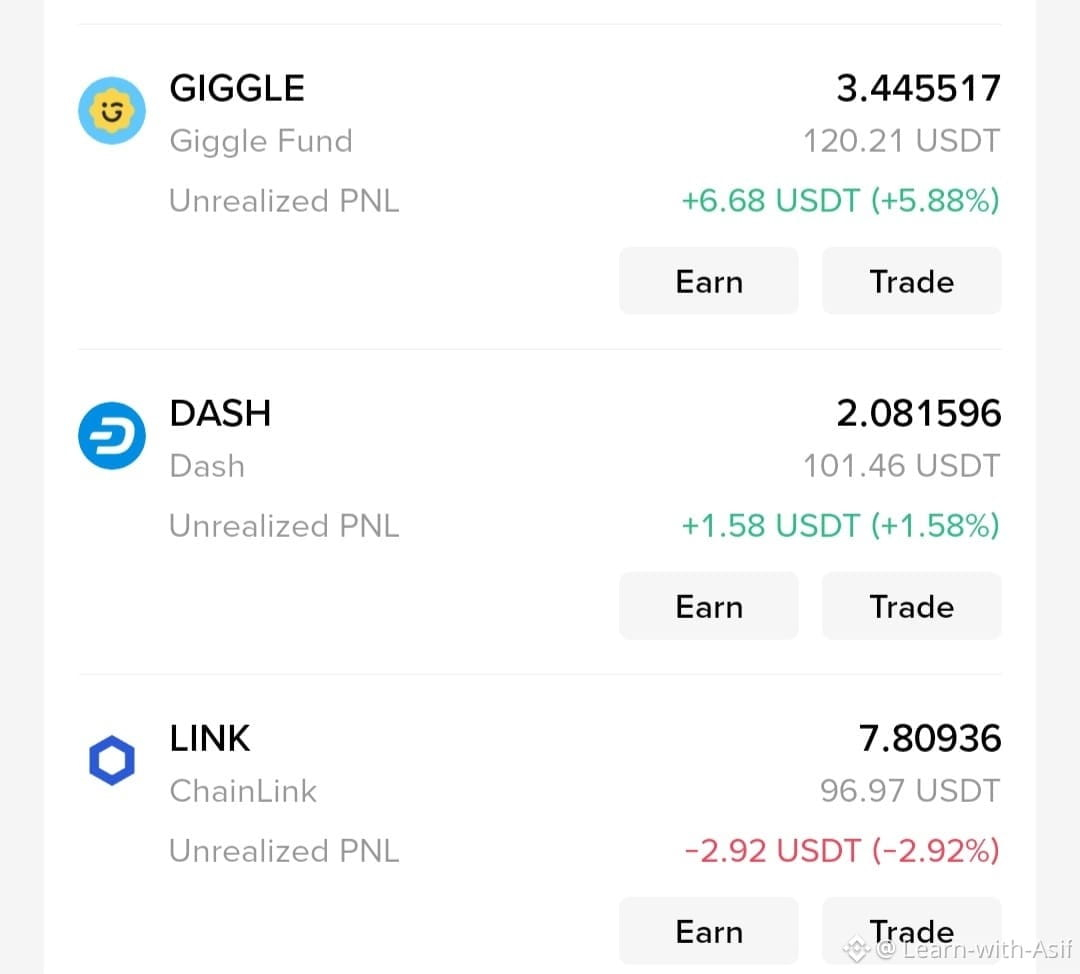
#MarketUpdate CRYPTO MARKET UPDATE: RECOVERY OR JUST A TEMPORARY RELIEF?
I’m watching the crypto market carefully as Bitcoin attempts to recover around the $83,000 region. However, the broader market still faces uncertainty, with BTC trading within a relatively tight range and macroeconomic concerns limiting bullish momentum.
In my assessment, this is not the time to become overly bullish or panic over short-term fluctuations. The upcoming Federal Reserve meeting, ETF flows, and Bitcoin’s ability to break above resistance could influence the next major move.
I’m focusing on confirmation rather than predictions, managing risk, and avoiding emotional entries. A sustained breakout could improve sentiment, while losing support may trigger another correction.
What’s your view: bullish recovery or another downside move?
$BTC
$BNB
{spot}(SOLUSDT)
#MarketUpdate CRYPTO MARKET UPDATE: RECOVERY OR JUST A TEMPORARY RELIEF?
I’m watching the crypto market carefully as Bitcoin attempts to recover around the $83,000 region. However, the broader market still faces uncertainty, with BTC trading within a relatively tight range and macroeconomic concerns limiting bullish momentum.
In my assessment, this is not the time to become overly bullish or panic over short-term fluctuations. The upcoming Federal Reserve meeting, ETF flows, and Bitcoin’s ability to break above resistance could influence the next major move.
I’m focusing on confirmation rather than predictions, managing risk, and avoiding emotional entries. A sustained breakout could improve sentiment, while losing support may trigger another correction.
What’s your view: bullish recovery or another downside move?
$BTC
$BNB
I’m watching the crypto market carefully as Bitcoin attempts to recover around the $83,000 region. However, the broader market still faces uncertainty, with BTC trading within a relatively tight range and macroeconomic concerns limiting bullish momentum.
In my assessment, this is not the time to become overly bullish or panic over short-term fluctuations. The upcoming Federal Reserve meeting, ETF flows, and Bitcoin’s ability to break above resistance could influence the next major move.
I’m focusing on confirmation rather than predictions, managing risk, and avoiding emotional entries. A sustained breakout could improve sentiment, while losing support may trigger another correction.
What’s your view: bullish recovery or another downside move?
$BTC
$BNB
1
113
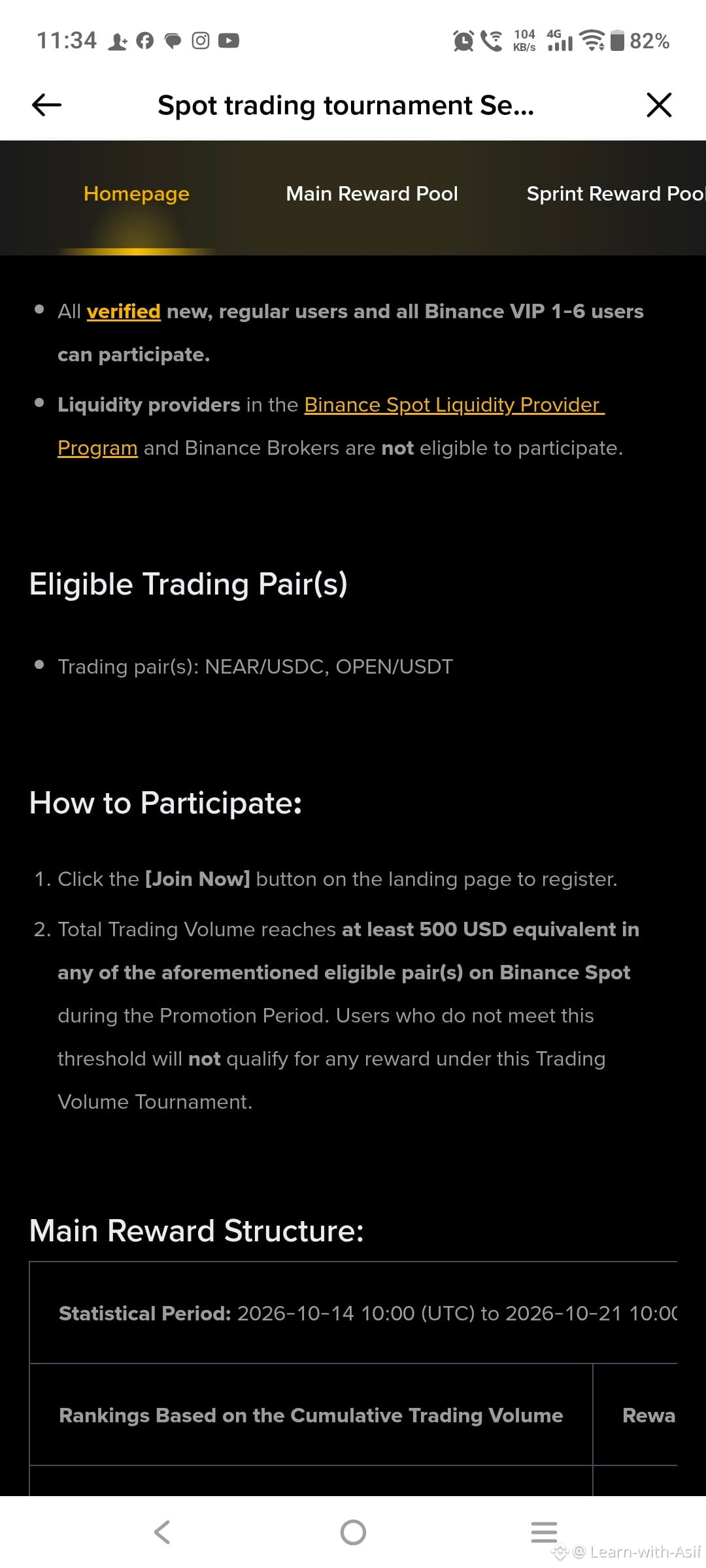
TRADING COMPETITION
Spot Trading Tournament 5 has started now where eligible users will have a chance to share a total prize pool of 400 BNB in token vouchers!
In addition to the “Main Reward” pool, eligible users may also qualify for the “New User Reward” and limited-time “Sprint Reward”.
Promotion Period: 2026-10-14 10:00 (UTC) to 2026-10-21 10:00 (UTC).
Eligible pairs are
$NEAR /USDC
$OPEN /USDT
Disclaimer: Crypto is volatile. DYOR Before trading.
{spot}(OPENUSDT)
TRADING COMPETITION
Spot Trading Tournament 5 has started now where eligible users will have a chance to share a total prize pool of 400 BNB in token vouchers!
In addition to the “Main Reward” pool, eligible users may also qualify for the “New User Reward” and limited-time “Sprint Reward”.
Promotion Period: 2026-10-14 10:00 (UTC) to 2026-10-21 10:00 (UTC).
Eligible pairs are
$NEAR /USDC
$OPEN /USDT
Disclaimer: Crypto is volatile. DYOR Before trading.
Spot Trading Tournament 5 has started now where eligible users will have a chance to share a total prize pool of 400 BNB in token vouchers!
In addition to the “Main Reward” pool, eligible users may also qualify for the “New User Reward” and limited-time “Sprint Reward”.
Promotion Period: 2026-10-14 10:00 (UTC) to 2026-10-21 10:00 (UTC).
Eligible pairs are
$NEAR /USDC
$OPEN /USDT
Disclaimer: Crypto is volatile. DYOR Before trading.
1
1
594
CRYPTO MARKET: RECOVERY OR ANOTHER CORRECTION?
I’m watching the crypto market carefully because the current price action demands patience, not blind optimism.
Bitcoin is struggling to break through major resistance around $87,000–$88,000, while $84,000 remains an important level to watch. Ethereum is holding above $2,500, but sustained buying pressure is still needed to confirm a stronger recovery.
My concern is that macroeconomic uncertainty and cautious institutional flows could limit upside momentum. However, a confirmed breakout with strong volume could quickly improve market sentiment.
For now, I prefer selective spot entries, capital protection, and avoiding emotional trades. I’m neither fully bearish nor blindly bullish.
Do you expect a breakout or another correction?
{spot}(BTCUSDT)
$BTC $BNB $SOL
CRYPTO MARKET: RECOVERY OR ANOTHER CORRECTION?
I’m watching the crypto market carefully because the current price action demands patience, not blind optimism.
Bitcoin is struggling to break through major resistance around $87,000–$88,000, while $84,000 remains an important level to watch. Ethereum is holding above $2,500, but sustained buying pressure is still needed to confirm a stronger recovery.
My concern is that macroeconomic uncertainty and cautious institutional flows could limit upside momentum. However, a confirmed breakout with strong volume could quickly improve market sentiment.
For now, I prefer selective spot entries, capital protection, and avoiding emotional trades. I’m neither fully bearish nor blindly bullish.
Do you expect a breakout or another correction?
$BTC $BNB $SOL
I’m watching the crypto market carefully because the current price action demands patience, not blind optimism.
Bitcoin is struggling to break through major resistance around $87,000–$88,000, while $84,000 remains an important level to watch. Ethereum is holding above $2,500, but sustained buying pressure is still needed to confirm a stronger recovery.
My concern is that macroeconomic uncertainty and cautious institutional flows could limit upside momentum. However, a confirmed breakout with strong volume could quickly improve market sentiment.
For now, I prefer selective spot entries, capital protection, and avoiding emotional trades. I’m neither fully bearish nor blindly bullish.
Do you expect a breakout or another correction?
$BTC $BNB $SOL
1
114
BNB JUST BOUNCED — BUT IS THIS A REVERSAL OR A TRAP?
$BNB always buy whenever you find the dip
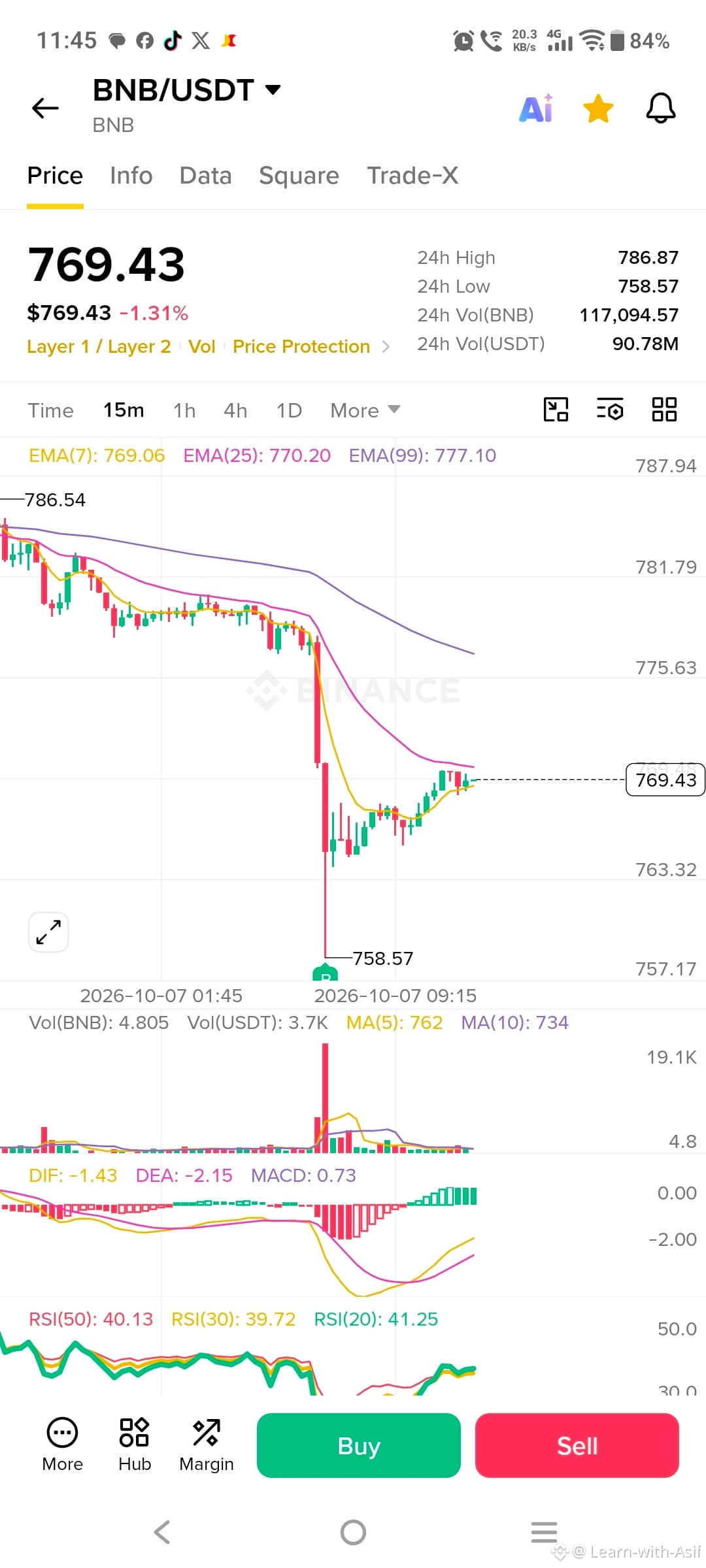
BNB is trading around $769 after dropping to $758.57 on the 15-minute chart. I’m not calling this a confirmed reversal yet. Price has recovered above EMA(7), but remains below EMA(25) at $770.20 and EMA(99) at $777.10.
What catches my attention is the improving MACD histogram: momentum is recovering, while RSI remains around 40, showing buyers are trying to regain control.
I have entered my 1st position as opportunity.
Follow me for more market insights.
DYOR. Not financial advice.
{spot}(BNBUSDT)
BNB JUST BOUNCED — BUT IS THIS A REVERSAL OR A TRAP?
$BNB always buy whenever you find the dip
BNB is trading around $769 after dropping to $758.57 on the 15-minute chart. I’m not calling this a confirmed reversal yet. Price has recovered above EMA(7), but remains below EMA(25) at $770.20 and EMA(99) at $777.10.
What catches my attention is the improving MACD histogram: momentum is recovering, while RSI remains around 40, showing buyers are trying to regain control.
I have entered my 1st position as opportunity.
Follow me for more market insights.
DYOR. Not financial advice.
$BNB always buy whenever you find the dip
BNB is trading around $769 after dropping to $758.57 on the 15-minute chart. I’m not calling this a confirmed reversal yet. Price has recovered above EMA(7), but remains below EMA(25) at $770.20 and EMA(99) at $777.10.
What catches my attention is the improving MACD histogram: momentum is recovering, while RSI remains around 40, showing buyers are trying to regain control.
I have entered my 1st position as opportunity.
Follow me for more market insights.
DYOR. Not financial advice.
33
4
137
#WORDOFTHEDAY
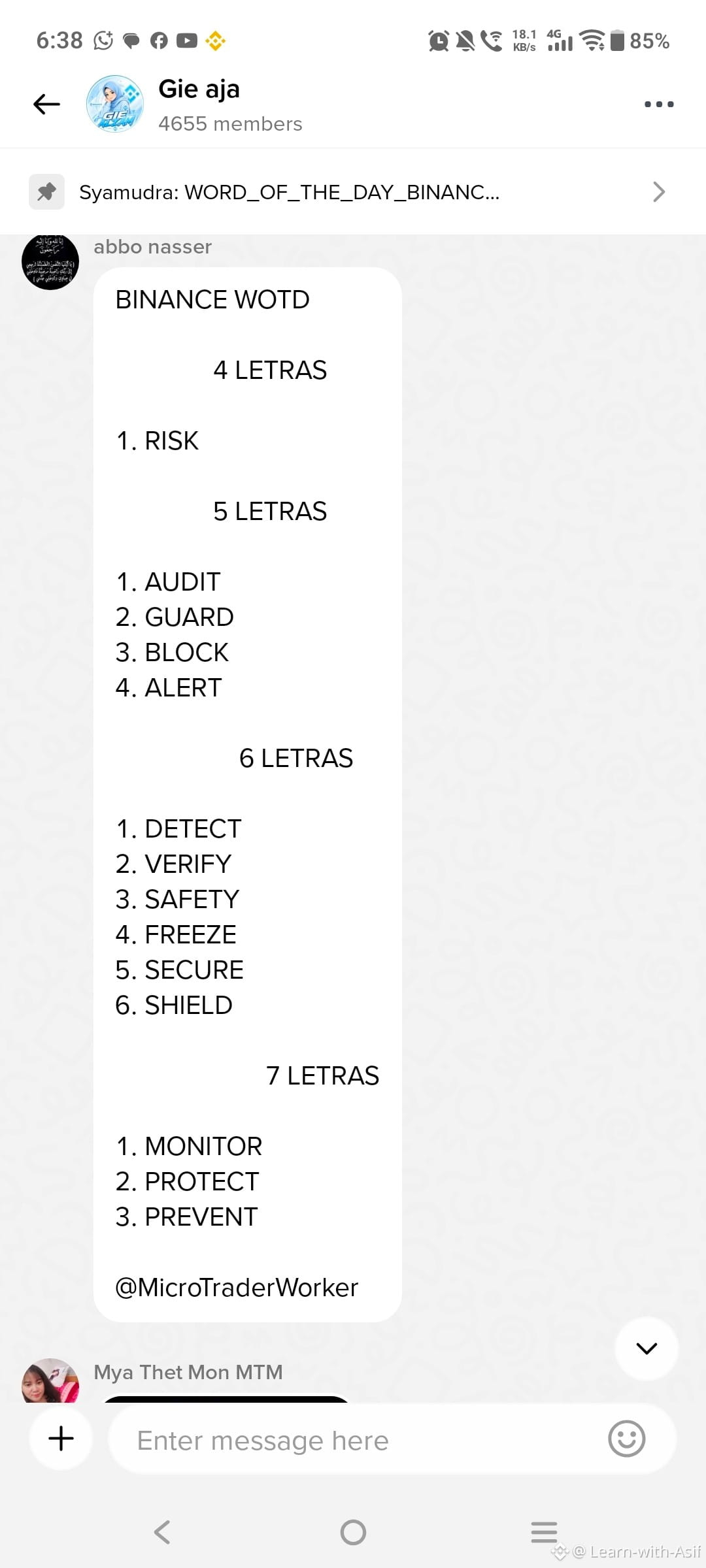
05 - 11 Oct. Solve crypto puzzle to get $10000 reward. Users must trade at least $50 to get Good reward.
All right letters are in image 👇
#wodl #binance
#WORDOFTHEDAY
05 - 11 Oct. Solve crypto puzzle to get $10000 reward. Users must trade at least $50 to get Good reward.
All right letters are in image 👇
#wodl #binance
05 - 11 Oct. Solve crypto puzzle to get $10000 reward. Users must trade at least $50 to get Good reward.
All right letters are in image 👇
#wodl #binance
82
$DEXE IS MOVING, BUT I’M NOT CHASING YET
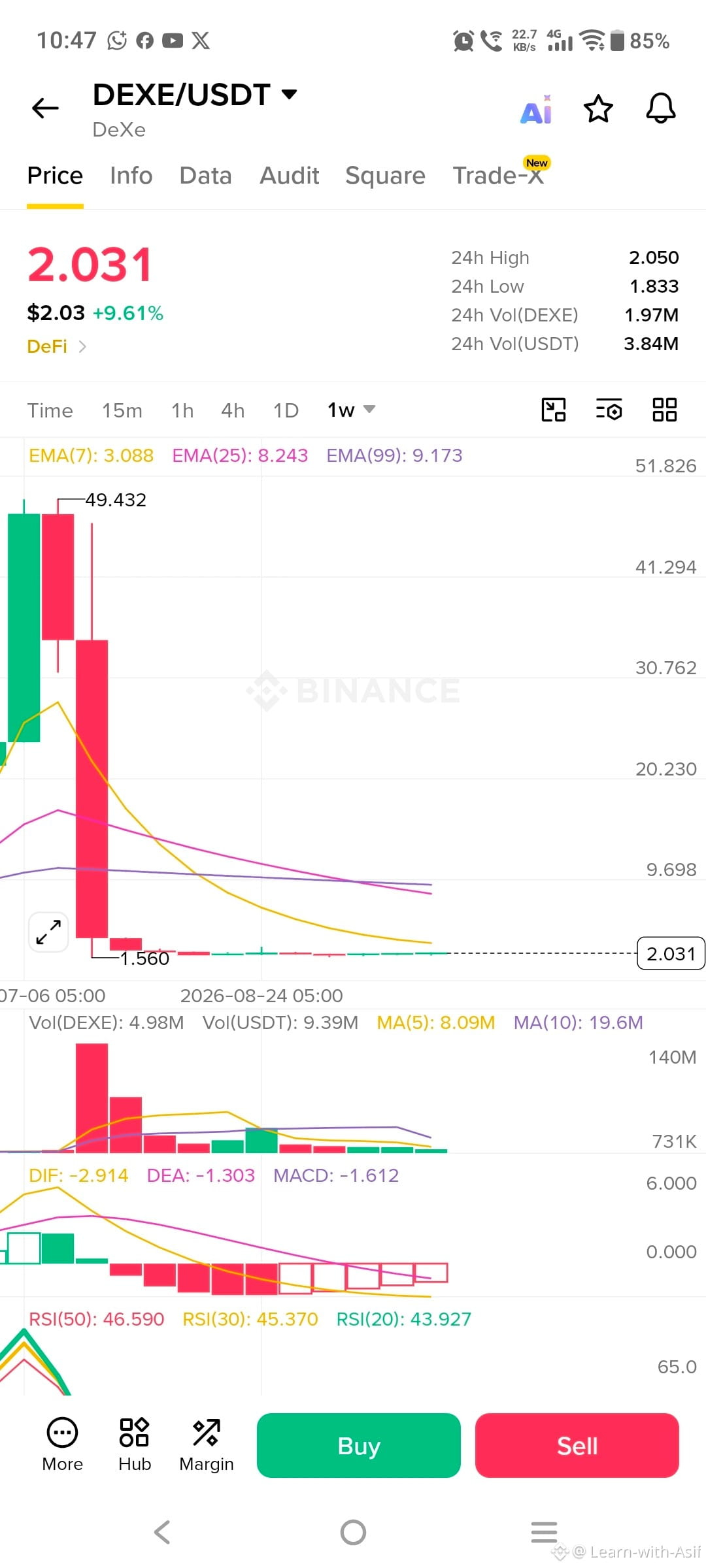
#DEXE is trading around $2.03, up 9.61% today, but the weekly chart tells a cautious story. Price remains far below the 7, 25 and 99 week EMAs at $3.09, $8.24 and $9.17, while RSI is around 44–47.
My trading view is simple: this looks more like an early recovery attempt than a confirmed reversal. The sideways base near $2 is interesting because selling pressure has cooled, but volume remains modest compared with the earlier selloff. I want to see sustained buying volume and a weekly close above $3.09 before becoming aggressive.
The opportunity is a potential breakout; the risk is rejection and another move lower. I’m watching, not chasing. Follow me for more real-time setups.
{spot}(DEXEUSDT)
$DEXE $BNB
$DEXE IS MOVING, BUT I’M NOT CHASING YET
#DEXE is trading around $2.03, up 9.61% today, but the weekly chart tells a cautious story. Price remains far below the 7, 25 and 99 week EMAs at $3.09, $8.24 and $9.17, while RSI is around 44–47.
My trading view is simple: this looks more like an early recovery attempt than a confirmed reversal. The sideways base near $2 is interesting because selling pressure has cooled, but volume remains modest compared with the earlier selloff. I want to see sustained buying volume and a weekly close above $3.09 before becoming aggressive.
The opportunity is a potential breakout; the risk is rejection and another move lower. I’m watching, not chasing. Follow me for more real-time setups.
$DEXE $BNB
#DEXE is trading around $2.03, up 9.61% today, but the weekly chart tells a cautious story. Price remains far below the 7, 25 and 99 week EMAs at $3.09, $8.24 and $9.17, while RSI is around 44–47.
My trading view is simple: this looks more like an early recovery attempt than a confirmed reversal. The sideways base near $2 is interesting because selling pressure has cooled, but volume remains modest compared with the earlier selloff. I want to see sustained buying volume and a weekly close above $3.09 before becoming aggressive.
The opportunity is a potential breakout; the risk is rejection and another move lower. I’m watching, not chasing. Follow me for more real-time setups.
$DEXE $BNB
340
4000 #Redpackets 🎁🎁Bunch is ready for friends to say them ❤️GOOD MORNING ❤️.
Say Good Morning and grab your share. 🎁
{spot}(BNBUSDT)
Good Morning
4000 #Redpackets 🎁🎁Bunch is ready for friends to say them ❤️GOOD MORNING ❤️.
Say Good Morning and grab your share. 🎁
Good Morning
Say Good Morning and grab your share. 🎁
Good Morning
28
4
131
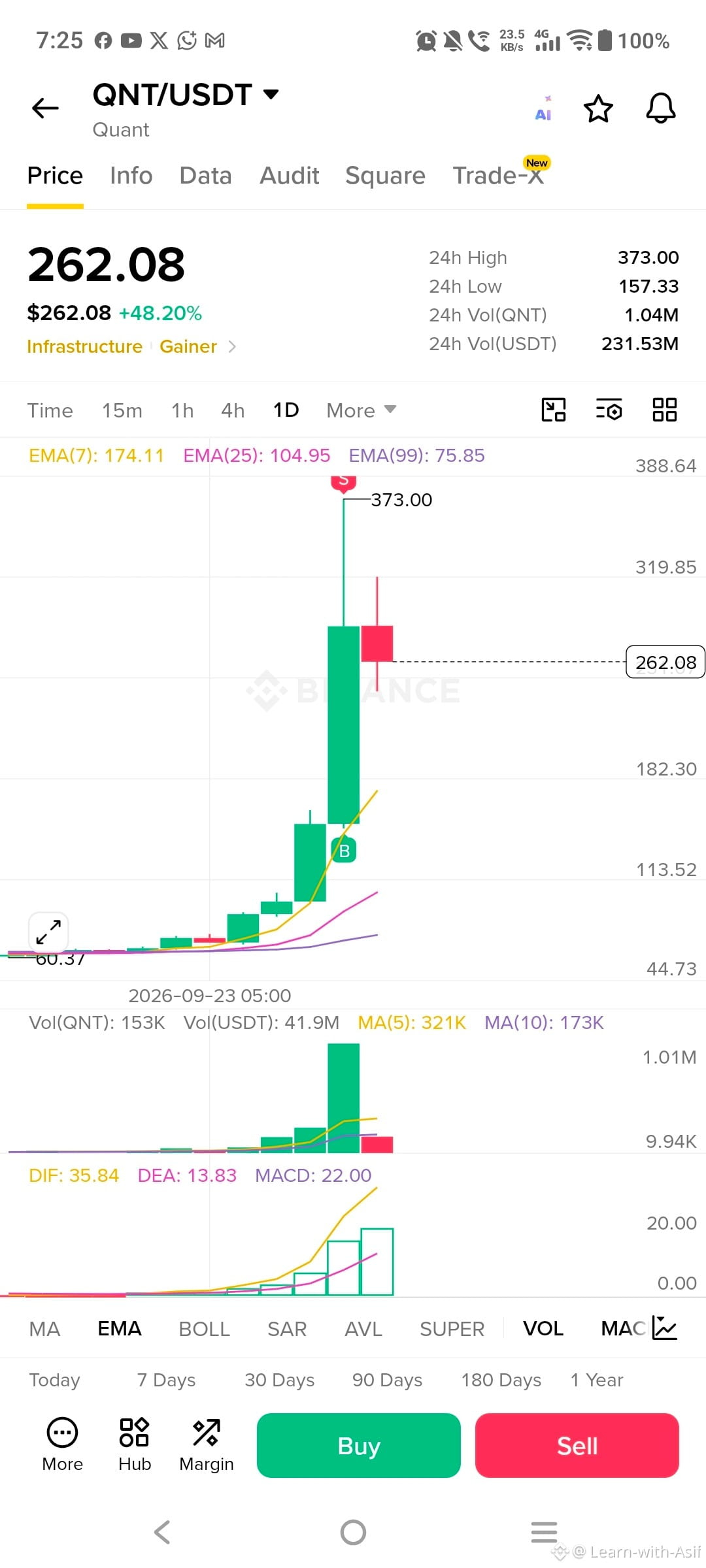
$QNT has surprised everyone. Those who were thinking about shorting it, or had already placed short positions, have been caught on the wrong side of the move.
🎁🎁🎁🎁🎁
Even right now, #QNT is showing very strong bullish momentum. Its current MACD is showing around 15, which indicates that the momentum is very strong.
How much further it can surge from here, nobody can say for sure. It could potentially move much higher.
So, if you are considering an entry, make sure you do it carefully and after proper analysis.
Disclaimer: This is not financial advice. Always do your own research before investing in crypto.
{spot}(QNTUSDT)
{spot}(SOLUSDT)
{spot}(BNBUSDT)
$BTC $SOL #Hyperliquid #Link
$QNT has surprised everyone. Those who were thinking about shorting it, or had already placed short positions, have been caught on the wrong side of the move.
🎁🎁🎁🎁🎁
Even right now, #QNT is showing very strong bullish momentum. Its current MACD is showing around 15, which indicates that the momentum is very strong.
How much further it can surge from here, nobody can say for sure. It could potentially move much higher.
So, if you are considering an entry, make sure you do it carefully and after proper analysis.
Disclaimer: This is not financial advice. Always do your own research before investing in crypto.
$BTC $SOL #Hyperliquid #Link
🎁🎁🎁🎁🎁
Even right now, #QNT is showing very strong bullish momentum. Its current MACD is showing around 15, which indicates that the momentum is very strong.
How much further it can surge from here, nobody can say for sure. It could potentially move much higher.
So, if you are considering an entry, make sure you do it carefully and after proper analysis.
Disclaimer: This is not financial advice. Always do your own research before investing in crypto.
$BTC $SOL #Hyperliquid #Link
23
2
246
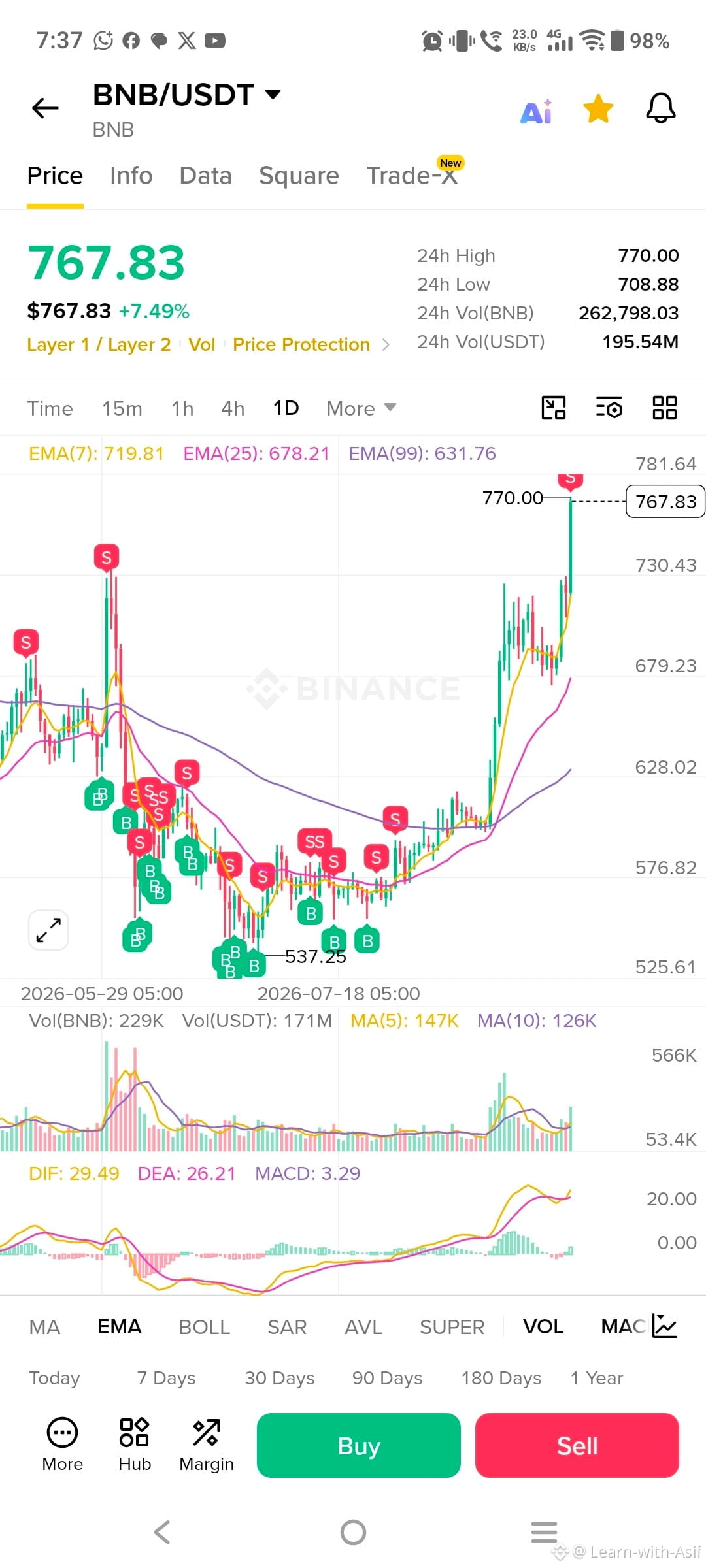
$BNB IS RALLYING, BUT CAN THIS MOMENTUM LAST?
#BNB is showing renewed strength, trading around the $780 zone as broader crypto sentiment improves. But is this rally sustainable?
From my trading perspective, I focus on whether price momentum is supported by genuine buying pressure or short-term speculation.
BNB’s growing ecosystem and BNB Chain’s expansion in tokenized real-world assets provide fundamental reasons to watch this coin closely.
I’m watching the market carefully rather than chasing the price. The $780 area deserves attention, while a strong rejection could bring a healthy pullback.
My approach is simple: wait for confirmation, manage risk, and avoid emotional entries.
Are you holding BNB or waiting for a better entry? Follow me for more trading insights.
$BNB #bullrun
{spot}(BNBUSDT)
$BNB IS RALLYING, BUT CAN THIS MOMENTUM LAST?
#BNB is showing renewed strength, trading around the $780 zone as broader crypto sentiment improves. But is this rally sustainable?
From my trading perspective, I focus on whether price momentum is supported by genuine buying pressure or short-term speculation.
BNB’s growing ecosystem and BNB Chain’s expansion in tokenized real-world assets provide fundamental reasons to watch this coin closely.
I’m watching the market carefully rather than chasing the price. The $780 area deserves attention, while a strong rejection could bring a healthy pullback.
My approach is simple: wait for confirmation, manage risk, and avoid emotional entries.
Are you holding BNB or waiting for a better entry? Follow me for more trading insights.
$BNB #bullrun
#BNB is showing renewed strength, trading around the $780 zone as broader crypto sentiment improves. But is this rally sustainable?
From my trading perspective, I focus on whether price momentum is supported by genuine buying pressure or short-term speculation.
BNB’s growing ecosystem and BNB Chain’s expansion in tokenized real-world assets provide fundamental reasons to watch this coin closely.
I’m watching the market carefully rather than chasing the price. The $780 area deserves attention, while a strong rejection could bring a healthy pullback.
My approach is simple: wait for confirmation, manage risk, and avoid emotional entries.
Are you holding BNB or waiting for a better entry? Follow me for more trading insights.
$BNB #bullrun
62
1
5
126
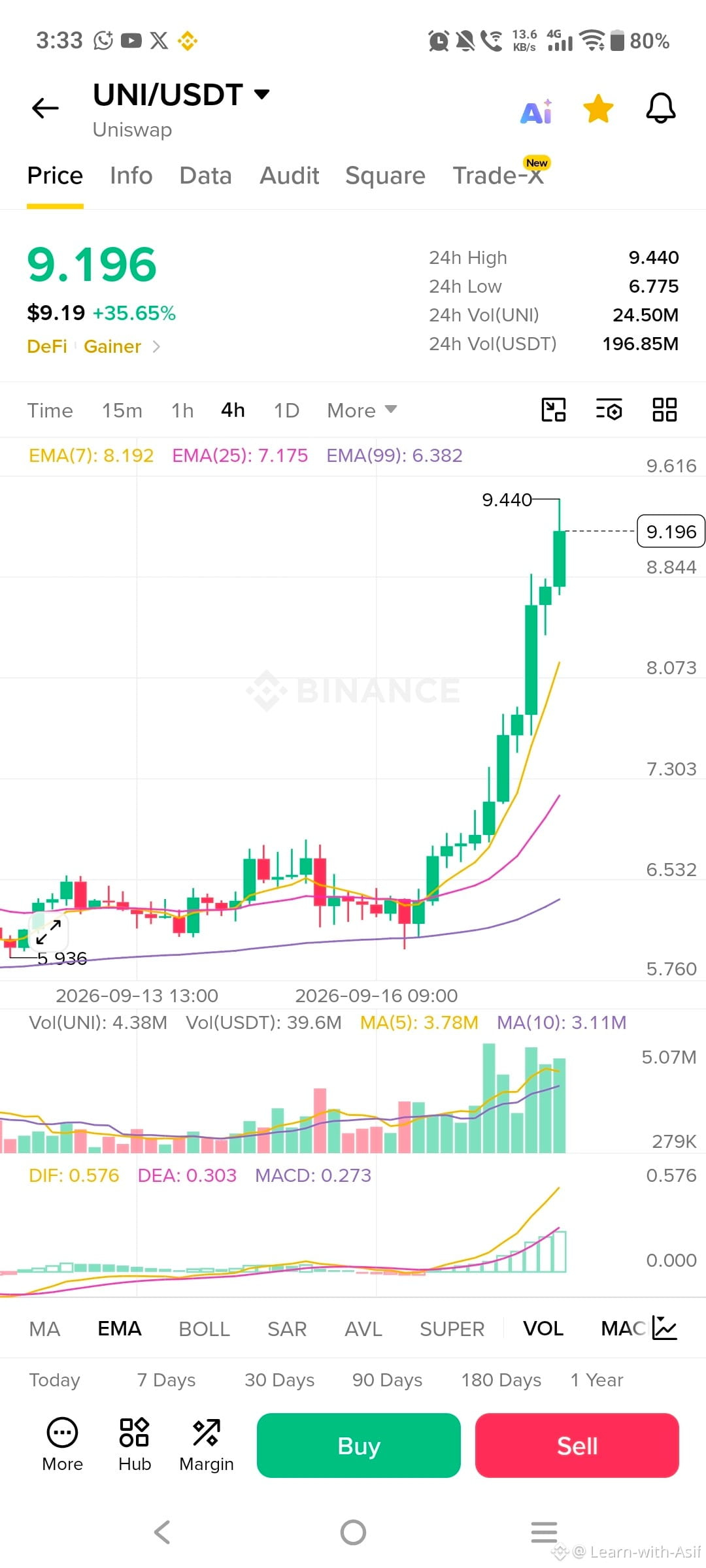
$UNI just made a move I would not ignore.
Today, #UNI pushed from around $7.80 to nearly $8.90 after climbing strongly over two sessions. What interests me is that this is not only a chart move. Uniswap’s protocol-fee system is active, with fees tied to #UNI burns, while v4 continues expanding.
From my trading perspective, I would not chase a 25% candle. I want to see whether $8.00–$8.20 becomes support. If buyers hold that area, momentum can remain strong; if it fails, a deeper retracement would not surprise me.
The overlooked angle is protocol usage: Uniswap recently reported volume across multiple chains. That keeps UNI on my watchlist, but volatility remains a risk.
Holding UNI or waiting for an entry? Follow me for more insights.
$UNI
$BNB
{spot}(UNIUSDT)
$UNI just made a move I would not ignore.
Today, #UNI pushed from around $7.80 to nearly $8.90 after climbing strongly over two sessions. What interests me is that this is not only a chart move. Uniswap’s protocol-fee system is active, with fees tied to #UNI burns, while v4 continues expanding.
From my trading perspective, I would not chase a 25% candle. I want to see whether $8.00–$8.20 becomes support. If buyers hold that area, momentum can remain strong; if it fails, a deeper retracement would not surprise me.
The overlooked angle is protocol usage: Uniswap recently reported volume across multiple chains. That keeps UNI on my watchlist, but volatility remains a risk.
Holding UNI or waiting for an entry? Follow me for more insights.
$UNI
$BNB
Today, #UNI pushed from around $7.80 to nearly $8.90 after climbing strongly over two sessions. What interests me is that this is not only a chart move. Uniswap’s protocol-fee system is active, with fees tied to #UNI burns, while v4 continues expanding.
From my trading perspective, I would not chase a 25% candle. I want to see whether $8.00–$8.20 becomes support. If buyers hold that area, momentum can remain strong; if it fails, a deeper retracement would not surprise me.
The overlooked angle is protocol usage: Uniswap recently reported volume across multiple chains. That keeps UNI on my watchlist, but volatility remains a risk.
Holding UNI or waiting for an entry? Follow me for more insights.
$UNI
$BNB
1
415
Проверено
🚨 ⚠️ IMPORTAN ANNOUNCEMENT
Binance will undergo a system upgrade on September 22, 2026, from 06:00 to 09:00 UTC (estimated duration: 3 hours).
Your funds remain safe, and core services such as Spot and Futures trading will not be affected.
for more information visit #BINANCE announcements.
🎁🎁🎁🎁🎁
Answer the question and have a chance to get #redpacket
🚨 ⚠️ IMPORTAN ANNOUNCEMENT
Binance will undergo a system upgrade on September 22, 2026, from 06:00 to 09:00 UTC (estimated duration: 3 hours).
Your funds remain safe, and core services such as Spot and Futures trading will not be affected.
for more information visit #BINANCE announcements.
🎁🎁🎁🎁🎁
Answer the question and have a chance to get #redpacket
Binance will undergo a system upgrade on September 22, 2026, from 06:00 to 09:00 UTC (estimated duration: 3 hours).
Your funds remain safe, and core services such as Spot and Futures trading will not be affected.
for more information visit #BINANCE announcements.
🎁🎁🎁🎁🎁
Answer the question and have a chance to get #redpacket
1.6k
3
73
1.6k
🎁 4000 REDPACKETS are Ready for you. Market is heating up. Reports are ready to Blast. Get ready for new Era.
🎁🎁🎁
$BNB
$BNB
$BNB
🎁 4000 REDPACKETS are Ready for you. Market is heating up. Reports are ready to Blast. Get ready for new Era.
🎁🎁🎁
$BNB
$BNB
$BNB
🎁🎁🎁
$BNB
$BNB
$BNB
2.4k
5
98
2.4k
#MarketUpdate 11 Sep to 17 Sep is the final week of decision whether the market will go up or down.
so many data and reports are going to held during this week. Stay Alert.
DYOR.
👉 Follow us to stay updated
$BNB
$BTC
$SOL
#MarketUpdate 11 Sep to 17 Sep is the final week of decision whether the market will go up or down.
so many data and reports are going to held during this week. Stay Alert.
DYOR.
👉 Follow us to stay updated
$BNB
$BTC
$SOL
so many data and reports are going to held during this week. Stay Alert.
DYOR.
👉 Follow us to stay updated
$BNB
$BTC
$SOL

143
2
17
198
4000 REDPACKETS 🎁🎁 are here. COMMENT the right coin name to claim your.
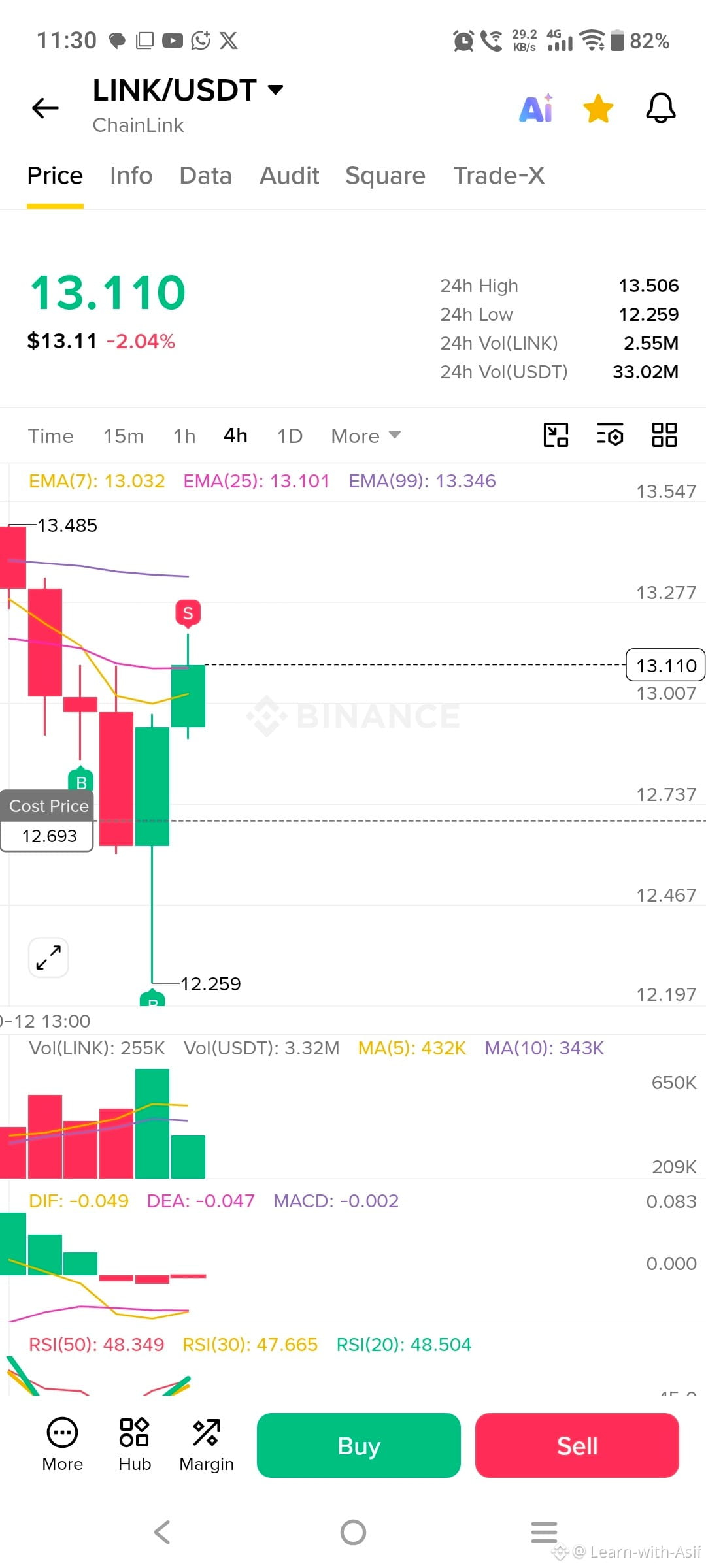
🚨 3 Coins I’m Watching Right Now: LINK, AVAX & LTC
Which one do you think has the strongest upside potential from current levels? 👀
$LINK
$AVAX
$LTC
Pick ONE and tell me WHY!
Let’s see which coin gets the most bullish votes. 🔥📈
#LINK : Around $13, showing recovery momentum; $15 breakout could trigger further upside, while $12–13 remains important support.
#AVAX : Around $7.8, momentum is improving; $8 resistance is key, with breakout potentially opening further upside.
#LTC : Around $54–55, still relatively sideways; reclaiming $55–60 is important for stronger bullish momentum.
🚨🚨👉 DYOR Before investing.
{spot}(LINKUSDT)
{spot}(LTCUSDT)
{spot}(AVAXUSDT)
4000 REDPACKETS 🎁🎁 are here. COMMENT the right coin name to claim your.
🚨 3 Coins I’m Watching Right Now: LINK, AVAX & LTC
Which one do you think has the strongest upside potential from current levels? 👀
$LINK
$AVAX
$LTC
Pick ONE and tell me WHY!
Let’s see which coin gets the most bullish votes. 🔥📈
#LINK : Around $13, showing recovery momentum; $15 breakout could trigger further upside, while $12–13 remains important support.
#AVAX : Around $7.8, momentum is improving; $8 resistance is key, with breakout potentially opening further upside.
#LTC : Around $54–55, still relatively sideways; reclaiming $55–60 is important for stronger bullish momentum.
🚨🚨👉 DYOR Before investing.
🚨 3 Coins I’m Watching Right Now: LINK, AVAX & LTC
Which one do you think has the strongest upside potential from current levels? 👀
$LINK
$AVAX
$LTC
Pick ONE and tell me WHY!
Let’s see which coin gets the most bullish votes. 🔥📈
#LINK : Around $13, showing recovery momentum; $15 breakout could trigger further upside, while $12–13 remains important support.
#AVAX : Around $7.8, momentum is improving; $8 resistance is key, with breakout potentially opening further upside.
#LTC : Around $54–55, still relatively sideways; reclaiming $55–60 is important for stronger bullish momentum.
🚨🚨👉 DYOR Before investing.
2.4k
5
114
2.4k
🔥🔥$BNB just moved $50 while the rest of the market barely moved. But here’s the part that most traders may be missing.
I’m not looking at this pump and thinking, “#BNB is going to the moon.” I’m looking at the volume and asking: How much of this demand is actually sustainable?
Today’s Binance Web3 Wallet activity—where users predict whether #ETH , #SOL , or BNB will move within seconds—appears to be creating extra attention and short-term flow toward BNB.
I recently sold my BNB because I don’t want to chase a move after such a sharp expansion in price and volume. BNB’s biggest strength is obvious: the Binance ecosystem creates strong utility, liquidity, and constant demand around the token.
But that is also where I see the short-term risk. Activity-driven volume can disappear quickly.
My approach now is simple: let the excitement cool down and watch whether BNB can hold these higher levels without extraordinary volume.
I’d rather miss part of a pump than become someone else’s exit liquidity.
Would you buy BNB here, or wait for the volume to normalize first?
$BNB
$SOL
{spot}(BNBUSDT)
{spot}(SOLUSDT)
🔥🔥$BNB just moved $50 while the rest of the market barely moved. But here’s the part that most traders may be missing.
I’m not looking at this pump and thinking, “#BNB is going to the moon.” I’m looking at the volume and asking: How much of this demand is actually sustainable?
Today’s Binance Web3 Wallet activity—where users predict whether #ETH , #SOL , or BNB will move within seconds—appears to be creating extra attention and short-term flow toward BNB.
I recently sold my BNB because I don’t want to chase a move after such a sharp expansion in price and volume. BNB’s biggest strength is obvious: the Binance ecosystem creates strong utility, liquidity, and constant demand around the token.
But that is also where I see the short-term risk. Activity-driven volume can disappear quickly.
My approach now is simple: let the excitement cool down and watch whether BNB can hold these higher levels without extraordinary volume.
I’d rather miss part of a pump than become someone else’s exit liquidity.
Would you buy BNB here, or wait for the volume to normalize first?
$BNB
$SOL
I’m not looking at this pump and thinking, “#BNB is going to the moon.” I’m looking at the volume and asking: How much of this demand is actually sustainable?
Today’s Binance Web3 Wallet activity—where users predict whether #ETH , #SOL , or BNB will move within seconds—appears to be creating extra attention and short-term flow toward BNB.
I recently sold my BNB because I don’t want to chase a move after such a sharp expansion in price and volume. BNB’s biggest strength is obvious: the Binance ecosystem creates strong utility, liquidity, and constant demand around the token.
But that is also where I see the short-term risk. Activity-driven volume can disappear quickly.
My approach now is simple: let the excitement cool down and watch whether BNB can hold these higher levels without extraordinary volume.
I’d rather miss part of a pump than become someone else’s exit liquidity.
Would you buy BNB here, or wait for the volume to normalize first?
$BNB
$SOL
904
3
39
904
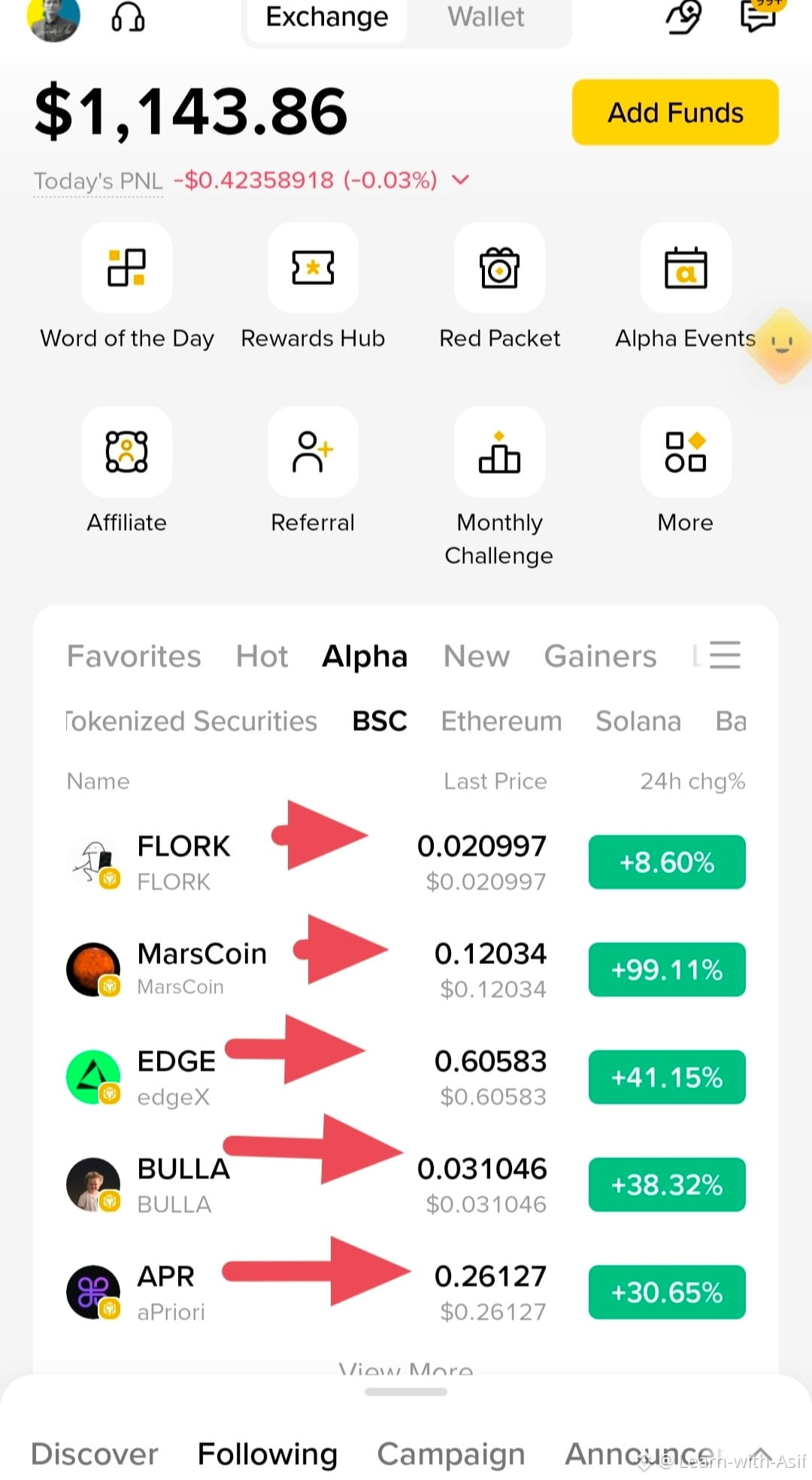
#Binancealpha BSC Chain is on fire now.
$MARSCOIN $EDGE $BULLA
coins are pumping hard. You can get 2x profit easily.
DYOR. Not financial advice
{alpha}(560xfe189e97832da1573e4e4ff034f4ffc3a15c7777)
{alpha}(560x70f2eadf1ca1969ff42b0c78e9da519e8937cbaf)
{alpha}(560x595e21b20e78674f8a64c1566a20b2b316bc3511)
#Binancealpha BSC Chain is on fire now.
$MARSCOIN $EDGE $BULLA
coins are pumping hard. You can get 2x profit easily.
DYOR. Not financial advice
$MARSCOIN $EDGE $BULLA
coins are pumping hard. You can get 2x profit easily.
DYOR. Not financial advice
247
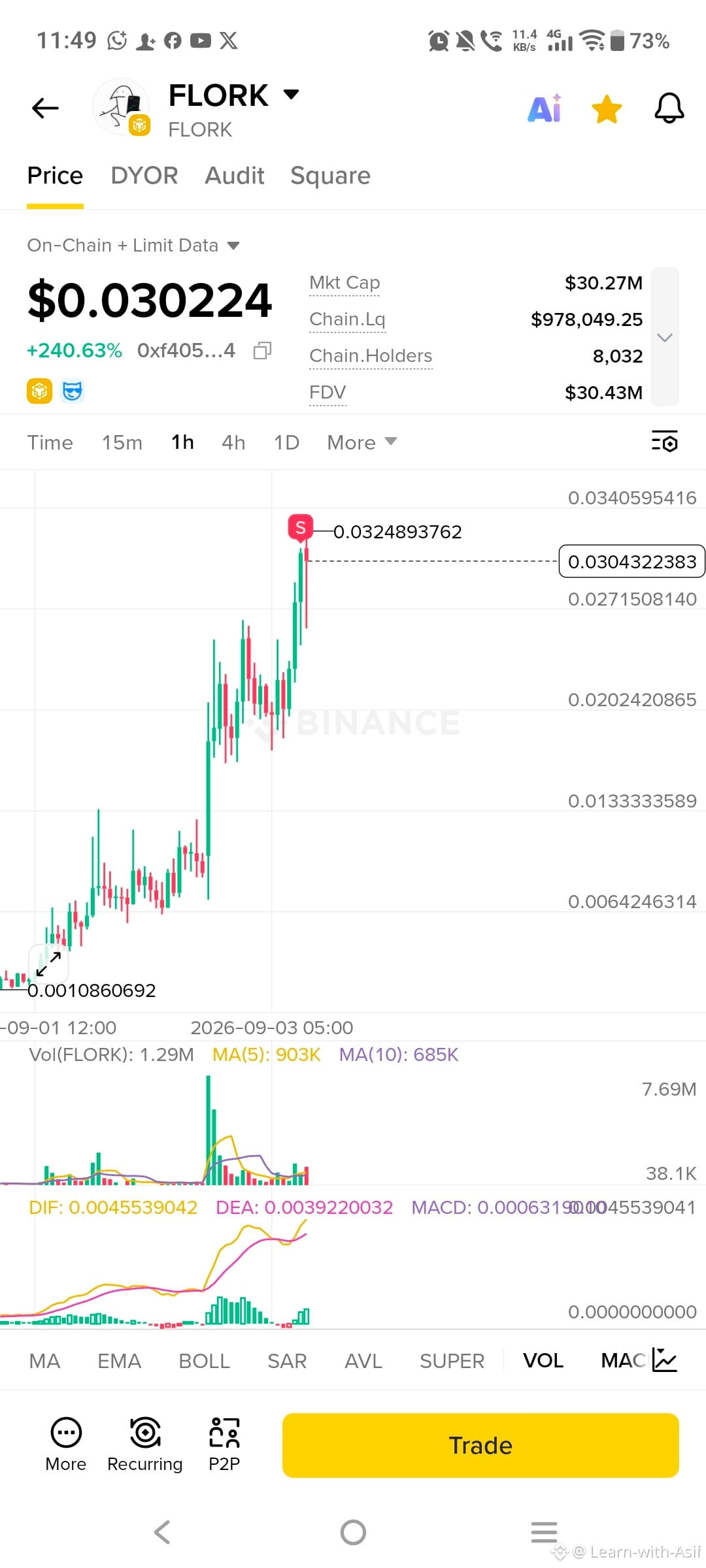
🚨$FLORK is making some serious moves on #BinanceAlpha today.
Since this morning, this coin has been delivering some crazy trading opportunities, so I thought—why not share it with my community?
But before you jump in, there’s something VERY important you need to understand...
Flork is highly volatile. That means it can give you a profit within seconds, but it can also turn into a loss just as quickly.
Before trading any coin, always remember one rule: spend at least 15 minutes checking the coin’s volatility and key levels before you start trading. This will give you a better idea of its ups and downs and help you understand its movement.
Binance officially announced today that it has added Flork to Binance Alpha, which is why we are seeing very high volume on it.
Flork has moved from around $0.009 to a high of $0.032, and so far, it doesn’t seem to be slowing down.
You can also trade this coin if you want, but this is not financial advice.
And there’s something extra for my community! 🎁
I’ve prepared a Crypto Red Packet so you can not only read my posts but also get a chance to benefit from the Red Packet.
Drop your answer in the comments and claim your Red Packet reward!
$FLORK
{alpha}(560xf40592daacb3e5abf358789f5688c0b4f64d7777)
$BNB
🚨$FLORK is making some serious moves on #BinanceAlpha today.
Since this morning, this coin has been delivering some crazy trading opportunities, so I thought—why not share it with my community?
But before you jump in, there’s something VERY important you need to understand...
Flork is highly volatile. That means it can give you a profit within seconds, but it can also turn into a loss just as quickly.
Before trading any coin, always remember one rule: spend at least 15 minutes checking the coin’s volatility and key levels before you start trading. This will give you a better idea of its ups and downs and help you understand its movement.
Binance officially announced today that it has added Flork to Binance Alpha, which is why we are seeing very high volume on it.
Flork has moved from around $0.009 to a high of $0.032, and so far, it doesn’t seem to be slowing down.
You can also trade this coin if you want, but this is not financial advice.
And there’s something extra for my community! 🎁
I’ve prepared a Crypto Red Packet so you can not only read my posts but also get a chance to benefit from the Red Packet.
Drop your answer in the comments and claim your Red Packet reward!
$FLORK
$BNB
Since this morning, this coin has been delivering some crazy trading opportunities, so I thought—why not share it with my community?
But before you jump in, there’s something VERY important you need to understand...
Flork is highly volatile. That means it can give you a profit within seconds, but it can also turn into a loss just as quickly.
Before trading any coin, always remember one rule: spend at least 15 minutes checking the coin’s volatility and key levels before you start trading. This will give you a better idea of its ups and downs and help you understand its movement.
Binance officially announced today that it has added Flork to Binance Alpha, which is why we are seeing very high volume on it.
Flork has moved from around $0.009 to a high of $0.032, and so far, it doesn’t seem to be slowing down.
You can also trade this coin if you want, but this is not financial advice.
And there’s something extra for my community! 🎁
I’ve prepared a Crypto Red Packet so you can not only read my posts but also get a chance to benefit from the Red Packet.
Drop your answer in the comments and claim your Red Packet reward!
$FLORK
$BNB
2.5k
4
119
2.5k
JUST 4 FUN #BINANCE $100 Redpacket
😂 Binance Square ne aaj dil khush kar diya!
Meri ek post par mujhe 0.001 USDC ka itna baraaaa reward mila hai ke ab samajh nahi aa raha is khushi mein kya karun! 😎
Reward dekh kar pehla khayal aya:
“Ab TU JET ✈️✈️ BUY krna banta hy!” 😂🚀
Itna reward dekh kar lagta hai ab UAE Trip ki booking bhi karwa doon… bas problem ye hai ke UAE waly shayad it I big amount accept na karen! 🤣
This post was just for fun. I have earned too many rewards from #BINANCESQUARE
Keep Posting, Keep Earning! 💰🔥
$BTC $BNB $SOL
JUST 4 FUN #BINANCE $100 Redpacket
😂 Binance Square ne aaj dil khush kar diya!
Meri ek post par mujhe 0.001 USDC ka itna baraaaa reward mila hai ke ab samajh nahi aa raha is khushi mein kya karun! 😎
Reward dekh kar pehla khayal aya:
“Ab TU JET ✈️✈️ BUY krna banta hy!” 😂🚀
Itna reward dekh kar lagta hai ab UAE Trip ki booking bhi karwa doon… bas problem ye hai ke UAE waly shayad it I big amount accept na karen! 🤣
This post was just for fun. I have earned too many rewards from #BINANCESQUARE
Keep Posting, Keep Earning! 💰🔥
$BTC $BNB $SOL
😂 Binance Square ne aaj dil khush kar diya!
Meri ek post par mujhe 0.001 USDC ka itna baraaaa reward mila hai ke ab samajh nahi aa raha is khushi mein kya karun! 😎
Reward dekh kar pehla khayal aya:
“Ab TU JET ✈️✈️ BUY krna banta hy!” 😂🚀
Itna reward dekh kar lagta hai ab UAE Trip ki booking bhi karwa doon… bas problem ye hai ke UAE waly shayad it I big amount accept na karen! 🤣
This post was just for fun. I have earned too many rewards from #BINANCESQUARE
Keep Posting, Keep Earning! 💰🔥
$BTC $BNB $SOL

2.1k
2
125
2.1k
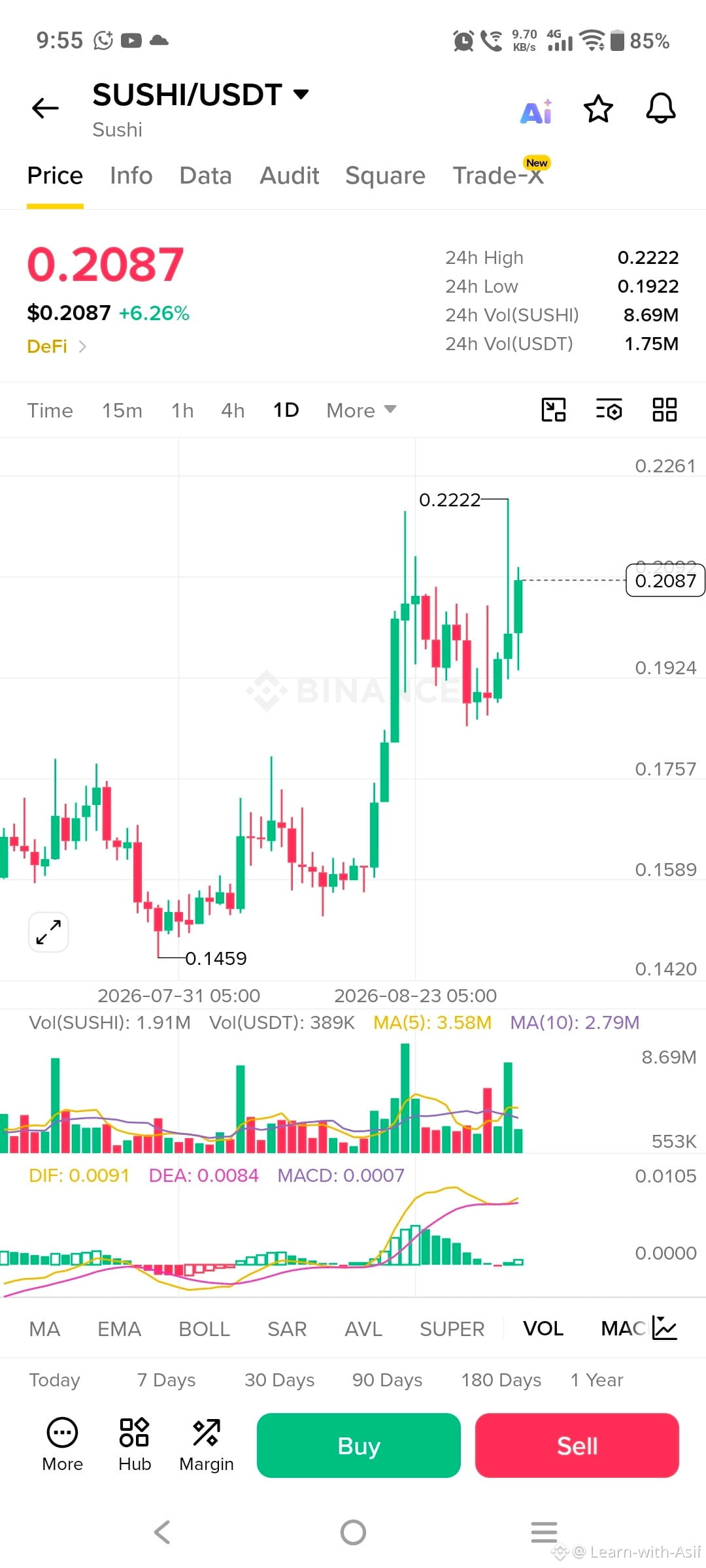
🔥 $SUSHI Strong Rally, But Resistance Is Close
{spot}(SUSHIUSDT)
#SUSHI has recovered strongly from the ~$0.19 support area and is now trading around $0.2087, but price is approaching the key $0.2222 resistance/high. Volume has supported the recovery, while momentum remains positive. However, buying directly below resistance gives an unfavorable risk/reward.
SPOT SETUP
Direction: WAIT
Entry: Wait for confirmation
Confirmation: $0.2222 breakout & hold OR a clean pullback that holds $0.1924.
Invalidation/Trigger: A rejection from $0.2222 followed by loss of $0.1924 would weaken the bullish structure.
Not financial advice. DYOR.
$ACE
$BTR
{spot}(EGLDUSDT)
{spot}(ONGUSDT)
🔥 $SUSHI Strong Rally, But Resistance Is Close
#SUSHI has recovered strongly from the ~$0.19 support area and is now trading around $0.2087, but price is approaching the key $0.2222 resistance/high. Volume has supported the recovery, while momentum remains positive. However, buying directly below resistance gives an unfavorable risk/reward.
SPOT SETUP
Direction: WAIT
Entry: Wait for confirmation
Confirmation: $0.2222 breakout & hold OR a clean pullback that holds $0.1924.
Invalidation/Trigger: A rejection from $0.2222 followed by loss of $0.1924 would weaken the bullish structure.
Not financial advice. DYOR.
$ACE
$BTR
#SUSHI has recovered strongly from the ~$0.19 support area and is now trading around $0.2087, but price is approaching the key $0.2222 resistance/high. Volume has supported the recovery, while momentum remains positive. However, buying directly below resistance gives an unfavorable risk/reward.
SPOT SETUP
Direction: WAIT
Entry: Wait for confirmation
Confirmation: $0.2222 breakout & hold OR a clean pullback that holds $0.1924.
Invalidation/Trigger: A rejection from $0.2222 followed by loss of $0.1924 would weaken the bullish structure.
Not financial advice. DYOR.
$ACE
$BTR
2.2k
2
79
2.2k
Войдите, чтобы посмотреть больше материала
Присоединяйтесь к пользователям криптовалют по всему миру на Binance Square
⚡️ Получайте новейшую и полезную информацию о криптоактивах.
💬 Нам доверяет крупнейшая в мире криптобиржа.
👍 Получите достоверные аналитические данные от верифицированных создателей контента.
Эл. почта/номер телефона