

Yeakub Durjoy
390 Публикации

Yeakub Durjoy
Отправить жалобу
Заблокировать пользователя
Community Moderator and Builder | Crypto Analyst | Web3 Enthusiasts
Случайный трейдер
4.8 г
27 подписок(и/а)
1.4K+ подписчиков(а)
1.8K+ понравилось
Посты
Все
Цитирования
PINNED

Статья
Bitcoin isn’t going to zero, it’s rocketing to $1 million and beyondWhen this bull run kicked off, I was convinced $BTC would top out around $200K. Then the market shifted, politics got messier, and I trimmed my target to $150K.
Turns out I was dead wrong and yeah, you can blame the noise, the skeptics, and half the “crypto experts” online.
Because like clockwork, every few months the same crowd shows up to announce Bitcoin is “dead” again. A dip happens, regulators start talking, some geopolitical headline hits, and suddenly it’s doomsday.
They’ve been calling it for 16 years. And they’ve missed the point every single time.
If you’ve been around long enough, you already know Bitcoin isn’t dying. It’s leveling up. It’s quietly turning into the base layer of a new financial system, with a clear path to $500K+ over the next decade.
And honestly, the bigger picture is even more bullish than that.
Bitcoin isn’t going to zero. It’s laying the groundwork to go way higher, with $1M per coin not just possible, but increasingly realistic.
The Institutional Wall of Money
The biggest difference between now and the 2017 “Wild West” isn’t the chart, it’s the buyer.
This isn’t just retail traders tapping buy on their phones anymore. It’s the biggest financial institutions on the planet stepping in with size.
BlackRock, Fidelity, and even legacy giants like JPMorgan aren’t simply observing from the sidelines now, they’re actively getting involved.
Spot Bitcoin ETFs reportedly pulled in around $22B in net inflows in 2025 even with late year weakness, and BlackRock’s IBIT alone was said to be $25B+ and turning into one of their meaningful revenue engines.
Institutions are estimated to hold roughly a quarter of Bitcoin ETPs, and surveys suggest about 85% of firms either already have exposure or plan to soon. On top of that, you’ve got U.S. Strategic Bitcoin Reserve conversations floating around and pension funds like Wisconsin and Michigan expanding their positions.
This is the key shift. Bitcoin isn’t being treated like a side bet anymore, it’s being wired into the plumbing of the global financial system. When the world’s largest asset managers start treating Bitcoin like a core portfolio pillar, the “it’s going to zero” argument basically stops being serious.
Michael Saylor put it in his usual loud way:
“My forecast is $13 million a coin by the year 2045, and what I tell everybody is every bitcoin you don’t buy today is going to cost you $13 million in the future.”
The Skeptics Are Wrong Again
While governments keep printing fiat at a pace that feels nonstop, Bitcoin stays locked to pure math, 21 million coins, no exceptions. It’s one of the few assets on earth where demand can surge but supply simply can’t respond.
Cathie Wood at ARK has been hammering this scarcity point for years, even as the market structure evolves and stablecoins play a bigger role.
Wood put it like this:
“Our bull case for Bitcoin is $1.5 million by 2030… Bitcoin is still strengthening its role as a global store of value.”
Prepare for the Noise
Does that mean we go straight up from here?
Not even close.
The road to $1M is going to be messy, full of 20%, 30%, even 50% drops. And every single time it happens, headlines will scream “crash” like it’s the end of crypto.
Critics will jump on every dip with the usual “told you so.”
But volatility is the fee you pay for the upside. Institutions aren’t glued to the 24 hour chart. They’re thinking in 5 to 10 year cycles.
So expect deep drawdowns that get sensationalized. That’s normal. What matters is the long game, adoption, liquidity, and the fundamentals improving in the background.
Tune out the FUD, stay focused on the base case.
Best time to accumulate was yesterday. Next best time is today.
What’s your take on all these crypto price predictions?
Bitcoin isn’t going to zero, it’s rocketing to $1 million and beyond
When this bull run kicked off, I was convinced $BTC would top out around $200K. Then the market shifted, politics got messier, and I trimmed my target to $150K.
Turns out I was dead wrong and yeah, you can blame the noise, the skeptics, and half the “crypto experts” online.
Because like clockwork, every few months the same crowd shows up to announce Bitcoin is “dead” again. A dip happens, regulators start talking, some geopolitical headline hits, and suddenly it’s doomsday.
They’ve been calling it for 16 years. And they’ve missed the point every single time.
If you’ve been around long enough, you already know Bitcoin isn’t dying. It’s leveling up. It’s quietly turning into the base layer of a new financial system, with a clear path to $500K+ over the next decade.
And honestly, the bigger picture is even more bullish than that.
Bitcoin isn’t going to zero. It’s laying the groundwork to go way higher, with $1M per coin not just possible, but increasingly realistic.
The Institutional Wall of Money
The biggest difference between now and the 2017 “Wild West” isn’t the chart, it’s the buyer.
This isn’t just retail traders tapping buy on their phones anymore. It’s the biggest financial institutions on the planet stepping in with size.
BlackRock, Fidelity, and even legacy giants like JPMorgan aren’t simply observing from the sidelines now, they’re actively getting involved.
Spot Bitcoin ETFs reportedly pulled in around $22B in net inflows in 2025 even with late year weakness, and BlackRock’s IBIT alone was said to be $25B+ and turning into one of their meaningful revenue engines.
Institutions are estimated to hold roughly a quarter of Bitcoin ETPs, and surveys suggest about 85% of firms either already have exposure or plan to soon. On top of that, you’ve got U.S. Strategic Bitcoin Reserve conversations floating around and pension funds like Wisconsin and Michigan expanding their positions.
This is the key shift. Bitcoin isn’t being treated like a side bet anymore, it’s being wired into the plumbing of the global financial system. When the world’s largest asset managers start treating Bitcoin like a core portfolio pillar, the “it’s going to zero” argument basically stops being serious.
Michael Saylor put it in his usual loud way:
“My forecast is $13 million a coin by the year 2045, and what I tell everybody is every bitcoin you don’t buy today is going to cost you $13 million in the future.”
The Skeptics Are Wrong Again
While governments keep printing fiat at a pace that feels nonstop, Bitcoin stays locked to pure math, 21 million coins, no exceptions. It’s one of the few assets on earth where demand can surge but supply simply can’t respond.
Cathie Wood at ARK has been hammering this scarcity point for years, even as the market structure evolves and stablecoins play a bigger role.
Wood put it like this:
“Our bull case for Bitcoin is $1.5 million by 2030… Bitcoin is still strengthening its role as a global store of value.”
Prepare for the Noise
Does that mean we go straight up from here?
Not even close.
The road to $1M is going to be messy, full of 20%, 30%, even 50% drops. And every single time it happens, headlines will scream “crash” like it’s the end of crypto.
Critics will jump on every dip with the usual “told you so.”
But volatility is the fee you pay for the upside. Institutions aren’t glued to the 24 hour chart. They’re thinking in 5 to 10 year cycles.
So expect deep drawdowns that get sensationalized. That’s normal. What matters is the long game, adoption, liquidity, and the fundamentals improving in the background.
Tune out the FUD, stay focused on the base case.
Best time to accumulate was yesterday. Next best time is today.
What’s your take on all these crypto price predictions?
Turns out I was dead wrong and yeah, you can blame the noise, the skeptics, and half the “crypto experts” online.
Because like clockwork, every few months the same crowd shows up to announce Bitcoin is “dead” again. A dip happens, regulators start talking, some geopolitical headline hits, and suddenly it’s doomsday.
They’ve been calling it for 16 years. And they’ve missed the point every single time.
If you’ve been around long enough, you already know Bitcoin isn’t dying. It’s leveling up. It’s quietly turning into the base layer of a new financial system, with a clear path to $500K+ over the next decade.
And honestly, the bigger picture is even more bullish than that.
Bitcoin isn’t going to zero. It’s laying the groundwork to go way higher, with $1M per coin not just possible, but increasingly realistic.
The Institutional Wall of Money
The biggest difference between now and the 2017 “Wild West” isn’t the chart, it’s the buyer.
This isn’t just retail traders tapping buy on their phones anymore. It’s the biggest financial institutions on the planet stepping in with size.
BlackRock, Fidelity, and even legacy giants like JPMorgan aren’t simply observing from the sidelines now, they’re actively getting involved.
Spot Bitcoin ETFs reportedly pulled in around $22B in net inflows in 2025 even with late year weakness, and BlackRock’s IBIT alone was said to be $25B+ and turning into one of their meaningful revenue engines.
Institutions are estimated to hold roughly a quarter of Bitcoin ETPs, and surveys suggest about 85% of firms either already have exposure or plan to soon. On top of that, you’ve got U.S. Strategic Bitcoin Reserve conversations floating around and pension funds like Wisconsin and Michigan expanding their positions.
This is the key shift. Bitcoin isn’t being treated like a side bet anymore, it’s being wired into the plumbing of the global financial system. When the world’s largest asset managers start treating Bitcoin like a core portfolio pillar, the “it’s going to zero” argument basically stops being serious.
Michael Saylor put it in his usual loud way:
“My forecast is $13 million a coin by the year 2045, and what I tell everybody is every bitcoin you don’t buy today is going to cost you $13 million in the future.”
The Skeptics Are Wrong Again
While governments keep printing fiat at a pace that feels nonstop, Bitcoin stays locked to pure math, 21 million coins, no exceptions. It’s one of the few assets on earth where demand can surge but supply simply can’t respond.
Cathie Wood at ARK has been hammering this scarcity point for years, even as the market structure evolves and stablecoins play a bigger role.
Wood put it like this:
“Our bull case for Bitcoin is $1.5 million by 2030… Bitcoin is still strengthening its role as a global store of value.”
Prepare for the Noise
Does that mean we go straight up from here?
Not even close.
The road to $1M is going to be messy, full of 20%, 30%, even 50% drops. And every single time it happens, headlines will scream “crash” like it’s the end of crypto.
Critics will jump on every dip with the usual “told you so.”
But volatility is the fee you pay for the upside. Institutions aren’t glued to the 24 hour chart. They’re thinking in 5 to 10 year cycles.
So expect deep drawdowns that get sensationalized. That’s normal. What matters is the long game, adoption, liquidity, and the fundamentals improving in the background.
Tune out the FUD, stay focused on the base case.
Best time to accumulate was yesterday. Next best time is today.
What’s your take on all these crypto price predictions?
16
2
26
6.3k
PINNED

Статья
Understanding the Memecoin Economy: How I See ItIn crypto, it’s normal to see “useless” things reach insane valuations. Dogecoin in the tens of billions. Monkey NFTs selling for millions. On the surface, no clear utility. So what are we really valuing?
A memecoins like $DOGE , $PEPE , $pippin are just a token on a blockchain. Self custody, transparency, censorship resistance. Technically, it shares the same base properties as Bitcoin. Early on, even Bitcoin had “better” versions like Litecoin claiming to be faster and cheaper. History decided otherwise.
So why are memecoins called useless?
Because most crypto tokens promise utility inside a protocol. Memecoins usually do not. They lack the extra layer of functional purpose. But utility is only one way value forms.
Value is simply what people are willing to pay. Businesses are valued on future cash flow. Art is valued on emotion, culture, and status. A sports jersey has little practical use, yet fans gladly pay to signal belonging. The purchase itself becomes a statement.
Memecoins work in a similar way. They materialize shared culture. A meme that captures a global mood holds attention. Buying the token becomes a way to participate, to belong, even to sacrifice for the tribe.
At the same time, memecoins are pure speculation. They function like a global casino. You bet on attention and momentum. You win or lose. Exchanges benefit from volume, and memecoins generate endless volume because they are not anchored to earnings or fundamentals.
That is why they will not disappear
Some explode because they are profitable for insiders. Others because the meme genuinely resonates. Most die.
My takeaway is simple. A strong meme lowers the barrier to community growth. It does not guarantee success, but it makes coordination easier. If you play this game, look for tight communities around powerful cultural symbols. In smaller ecosystems, moves are clearer and risks are easier to read.
Memecoins are psychology, culture, and gambling wrapped into one token. Understand that, and you understand the game.
Understanding the Memecoin Economy: How I See It
In crypto, it’s normal to see “useless” things reach insane valuations. Dogecoin in the tens of billions. Monkey NFTs selling for millions. On the surface, no clear utility. So what are we really valuing?
A memecoins like $DOGE , $PEPE , $pippin are just a token on a blockchain. Self custody, transparency, censorship resistance. Technically, it shares the same base properties as Bitcoin. Early on, even Bitcoin had “better” versions like Litecoin claiming to be faster and cheaper. History decided otherwise.
So why are memecoins called useless?
Because most crypto tokens promise utility inside a protocol. Memecoins usually do not. They lack the extra layer of functional purpose. But utility is only one way value forms.
Value is simply what people are willing to pay. Businesses are valued on future cash flow. Art is valued on emotion, culture, and status. A sports jersey has little practical use, yet fans gladly pay to signal belonging. The purchase itself becomes a statement.
Memecoins work in a similar way. They materialize shared culture. A meme that captures a global mood holds attention. Buying the token becomes a way to participate, to belong, even to sacrifice for the tribe.
At the same time, memecoins are pure speculation. They function like a global casino. You bet on attention and momentum. You win or lose. Exchanges benefit from volume, and memecoins generate endless volume because they are not anchored to earnings or fundamentals.
That is why they will not disappear
Some explode because they are profitable for insiders. Others because the meme genuinely resonates. Most die.
My takeaway is simple. A strong meme lowers the barrier to community growth. It does not guarantee success, but it makes coordination easier. If you play this game, look for tight communities around powerful cultural symbols. In smaller ecosystems, moves are clearer and risks are easier to read.
Memecoins are psychology, culture, and gambling wrapped into one token. Understand that, and you understand the game.
A memecoins like $DOGE , $PEPE , $pippin are just a token on a blockchain. Self custody, transparency, censorship resistance. Technically, it shares the same base properties as Bitcoin. Early on, even Bitcoin had “better” versions like Litecoin claiming to be faster and cheaper. History decided otherwise.
So why are memecoins called useless?
Because most crypto tokens promise utility inside a protocol. Memecoins usually do not. They lack the extra layer of functional purpose. But utility is only one way value forms.
Value is simply what people are willing to pay. Businesses are valued on future cash flow. Art is valued on emotion, culture, and status. A sports jersey has little practical use, yet fans gladly pay to signal belonging. The purchase itself becomes a statement.
Memecoins work in a similar way. They materialize shared culture. A meme that captures a global mood holds attention. Buying the token becomes a way to participate, to belong, even to sacrifice for the tribe.
At the same time, memecoins are pure speculation. They function like a global casino. You bet on attention and momentum. You win or lose. Exchanges benefit from volume, and memecoins generate endless volume because they are not anchored to earnings or fundamentals.
That is why they will not disappear
Some explode because they are profitable for insiders. Others because the meme genuinely resonates. Most die.
My takeaway is simple. A strong meme lowers the barrier to community growth. It does not guarantee success, but it makes coordination easier. If you play this game, look for tight communities around powerful cultural symbols. In smaller ecosystems, moves are clearer and risks are easier to read.
Memecoins are psychology, culture, and gambling wrapped into one token. Understand that, and you understand the game.
21
8
88
70.2k
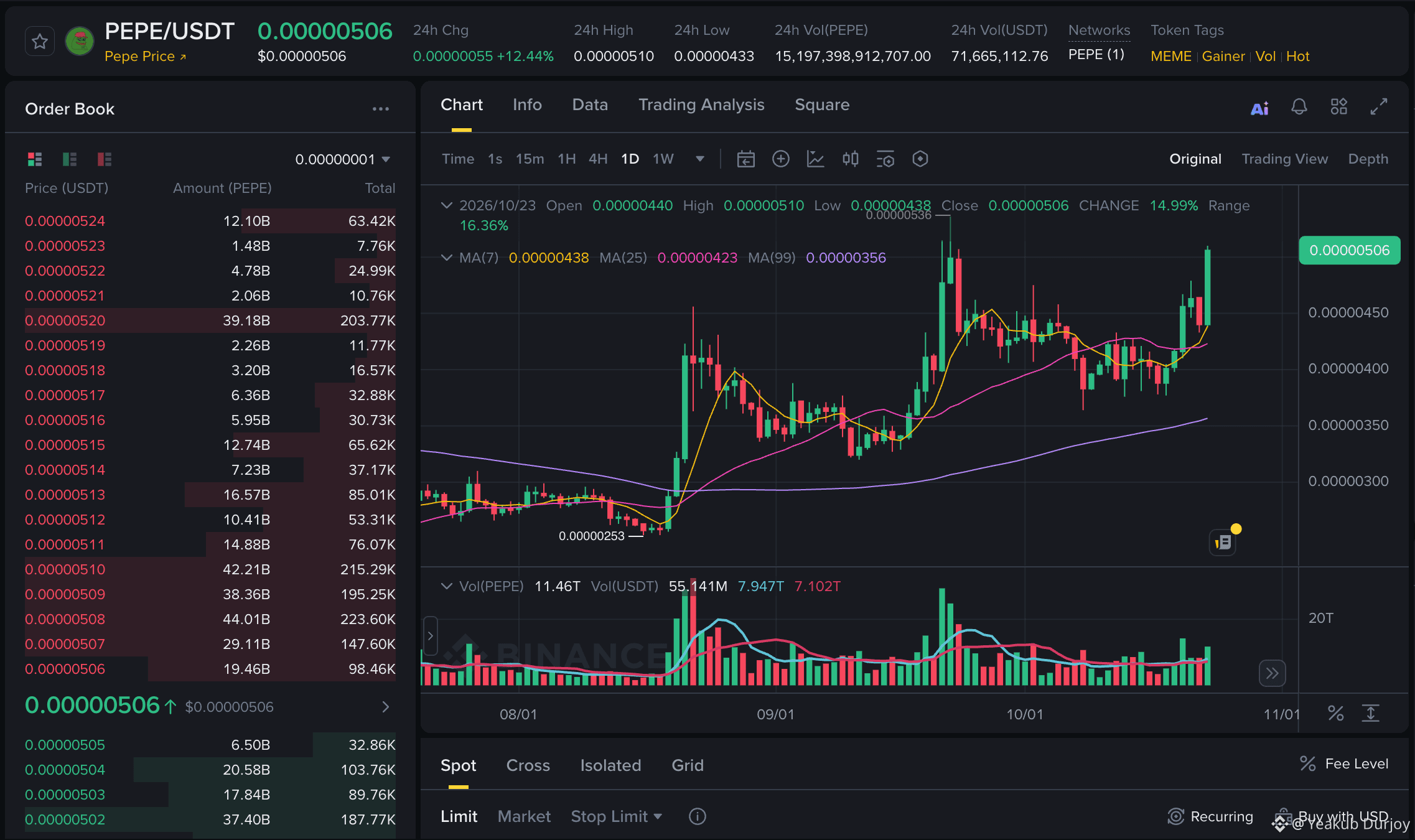
$PEPE is breaking higher with strong volume, but after a 12.44% daily move, the cleaner long comes from a pullback rather than chasing 0.00000506.
Bias: Long on pullback
Entry zone: 0.00000475 to 0.00000495
Stop: below 0.00000450
TP1: 0.00000510
TP2: 0.00000535
TP3: 0.00000570 to 0.00000600 if momentum expands
Price is holding above MA7 0.00000438, MA25 0.00000423, and MA99 0.00000356, keeping the broader structure bullish. A pullback that holds the entry zone would support continuation, while losing 0.00000450 would weaken the breakout.
{spot}(PEPEUSDT)
$PEPE is breaking higher with strong volume, but after a 12.44% daily move, the cleaner long comes from a pullback rather than chasing 0.00000506.
Bias: Long on pullback
Entry zone: 0.00000475 to 0.00000495
Stop: below 0.00000450
TP1: 0.00000510
TP2: 0.00000535
TP3: 0.00000570 to 0.00000600 if momentum expands
Price is holding above MA7 0.00000438, MA25 0.00000423, and MA99 0.00000356, keeping the broader structure bullish. A pullback that holds the entry zone would support continuation, while losing 0.00000450 would weaken the breakout.
Bias: Long on pullback
Entry zone: 0.00000475 to 0.00000495
Stop: below 0.00000450
TP1: 0.00000510
TP2: 0.00000535
TP3: 0.00000570 to 0.00000600 if momentum expands
Price is holding above MA7 0.00000438, MA25 0.00000423, and MA99 0.00000356, keeping the broader structure bullish. A pullback that holds the entry zone would support continuation, while losing 0.00000450 would weaken the breakout.
1
217
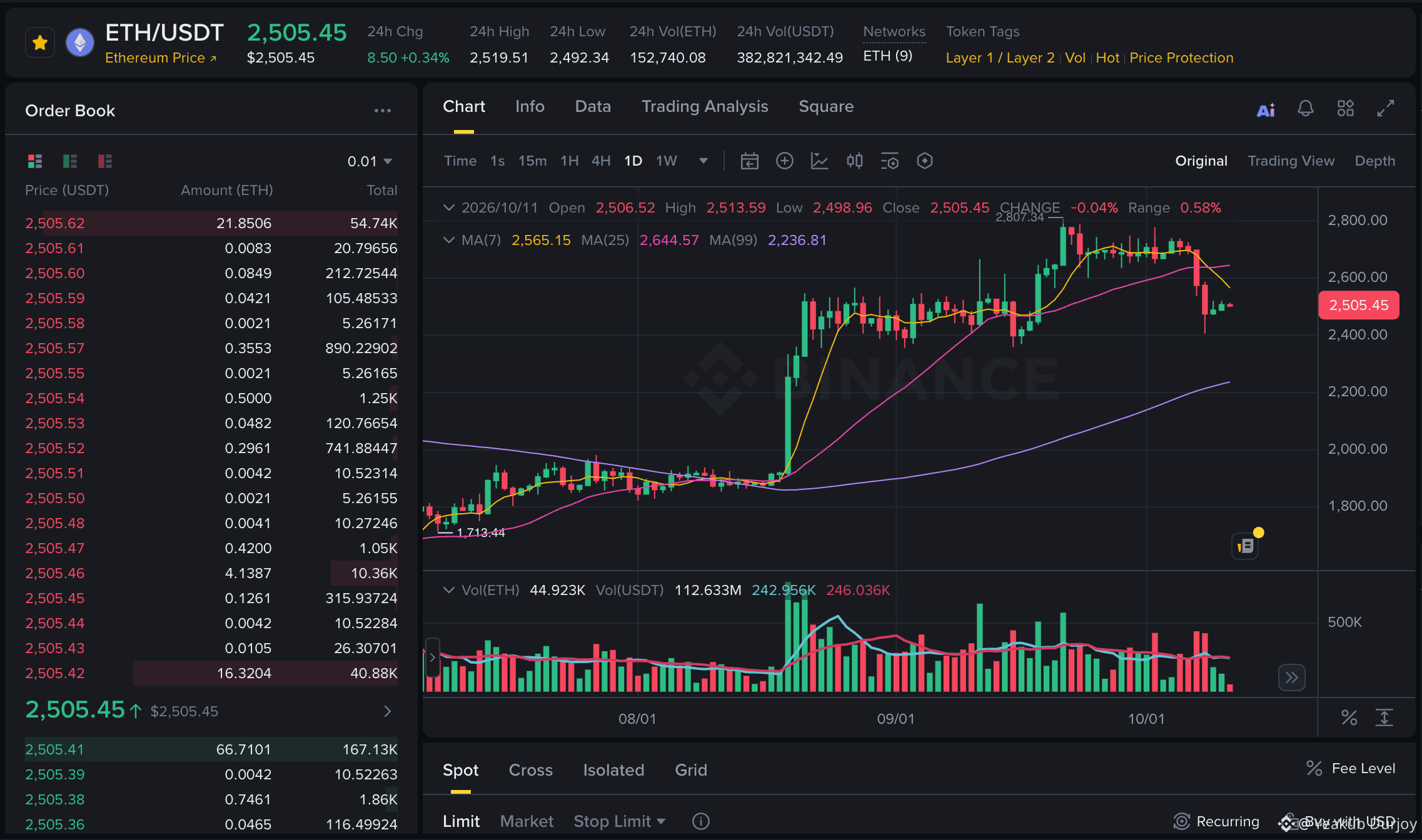
$ETH is leaning toward a short setup here, but I would not short aggressively right at support. Price is around 2,505.45, now trading below MA7 2,565.15 and MA25 2,644.57, so the short-term structure is weaker after rejecting from the 2,807.34 zone.
Bias: Short on bounce
Entry zone: 2,540 to 2,565
Stop: above 2,605
TP1: 2,492
TP2: 2,440 to 2,400
TP3: 2,350 to 2,300 if selling pressure continues
The reason I prefer short is that ETH failed to hold above the moving averages and is now struggling under the MA7 area. Since price is sitting close to the 24h low near 2,492, the cleaner trade is waiting for a bounce into resistance and then looking for rejection.
{future}(ETHUSDT)
$ETH is leaning toward a short setup here, but I would not short aggressively right at support. Price is around 2,505.45, now trading below MA7 2,565.15 and MA25 2,644.57, so the short-term structure is weaker after rejecting from the 2,807.34 zone.
Bias: Short on bounce
Entry zone: 2,540 to 2,565
Stop: above 2,605
TP1: 2,492
TP2: 2,440 to 2,400
TP3: 2,350 to 2,300 if selling pressure continues
The reason I prefer short is that ETH failed to hold above the moving averages and is now struggling under the MA7 area. Since price is sitting close to the 24h low near 2,492, the cleaner trade is waiting for a bounce into resistance and then looking for rejection.
Bias: Short on bounce
Entry zone: 2,540 to 2,565
Stop: above 2,605
TP1: 2,492
TP2: 2,440 to 2,400
TP3: 2,350 to 2,300 if selling pressure continues
The reason I prefer short is that ETH failed to hold above the moving averages and is now struggling under the MA7 area. Since price is sitting close to the 24h low near 2,492, the cleaner trade is waiting for a bounce into resistance and then looking for rejection.
1
145
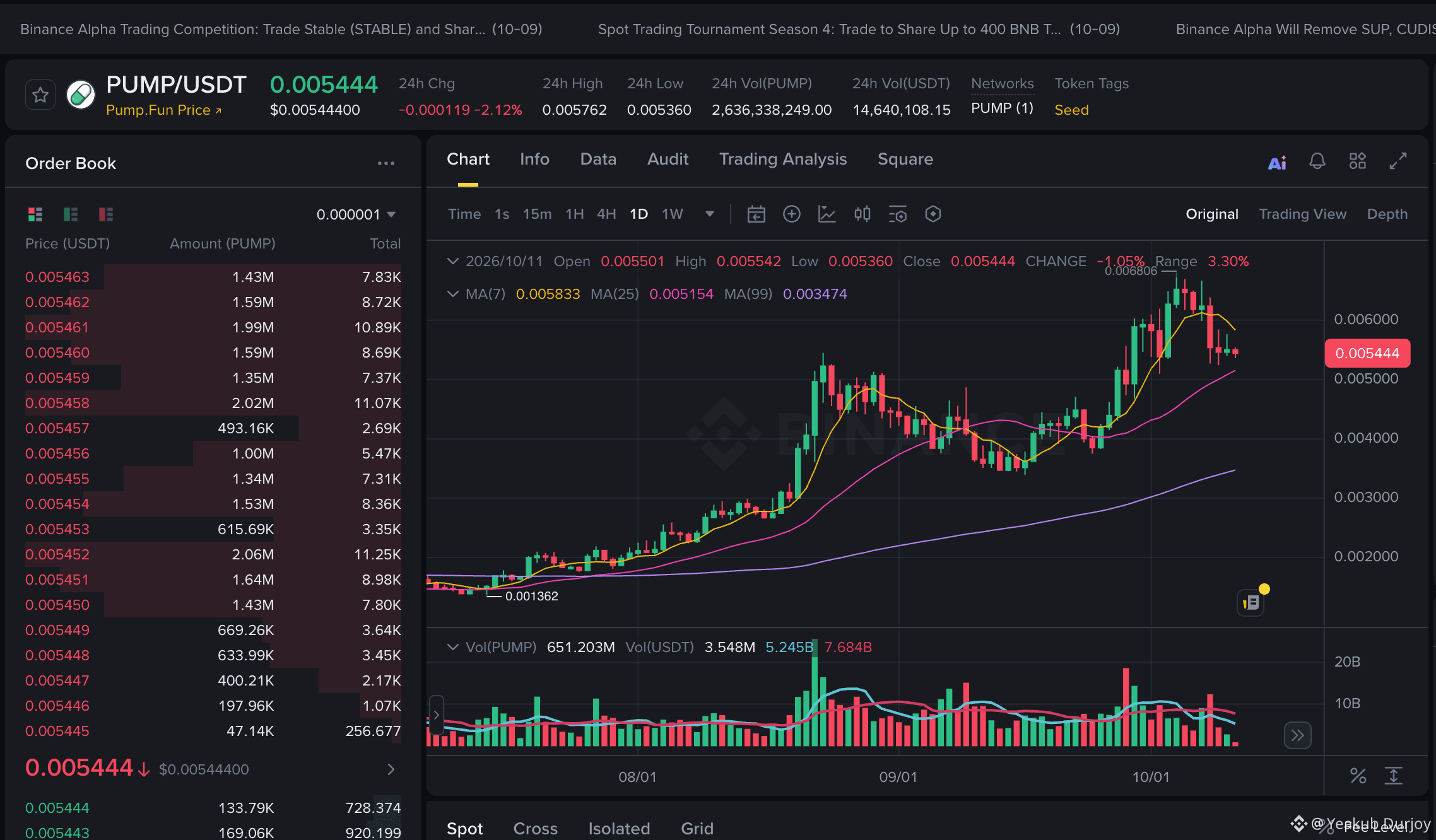
$PUMP looks better as a short setup, but I would wait for a bounce instead of shorting directly at the current low.
Bias: Short on bounce
Entry zone: 0.00555 to 0.00570
Stop: above 0.00585
TP1: 0.00536
TP2: 0.00515 to 0.00520
TP3: 0.00485 to 0.00470 if selling pressure continues
The reason I prefer short is that PUMP failed to hold the upper range after the move toward 0.006806, and the current structure is weakening under MA7. If price bounces into the entry zone and rejects, the short setup becomes cleaner. If PUMP reclaims 0.00585 with volume, I would cancel the short idea.
{future}(PUMPUSDT)
$PUMP looks better as a short setup, but I would wait for a bounce instead of shorting directly at the current low.
Bias: Short on bounce
Entry zone: 0.00555 to 0.00570
Stop: above 0.00585
TP1: 0.00536
TP2: 0.00515 to 0.00520
TP3: 0.00485 to 0.00470 if selling pressure continues
The reason I prefer short is that PUMP failed to hold the upper range after the move toward 0.006806, and the current structure is weakening under MA7. If price bounces into the entry zone and rejects, the short setup becomes cleaner. If PUMP reclaims 0.00585 with volume, I would cancel the short idea.
Bias: Short on bounce
Entry zone: 0.00555 to 0.00570
Stop: above 0.00585
TP1: 0.00536
TP2: 0.00515 to 0.00520
TP3: 0.00485 to 0.00470 if selling pressure continues
The reason I prefer short is that PUMP failed to hold the upper range after the move toward 0.006806, and the current structure is weakening under MA7. If price bounces into the entry zone and rejects, the short setup becomes cleaner. If PUMP reclaims 0.00585 with volume, I would cancel the short idea.
1
323
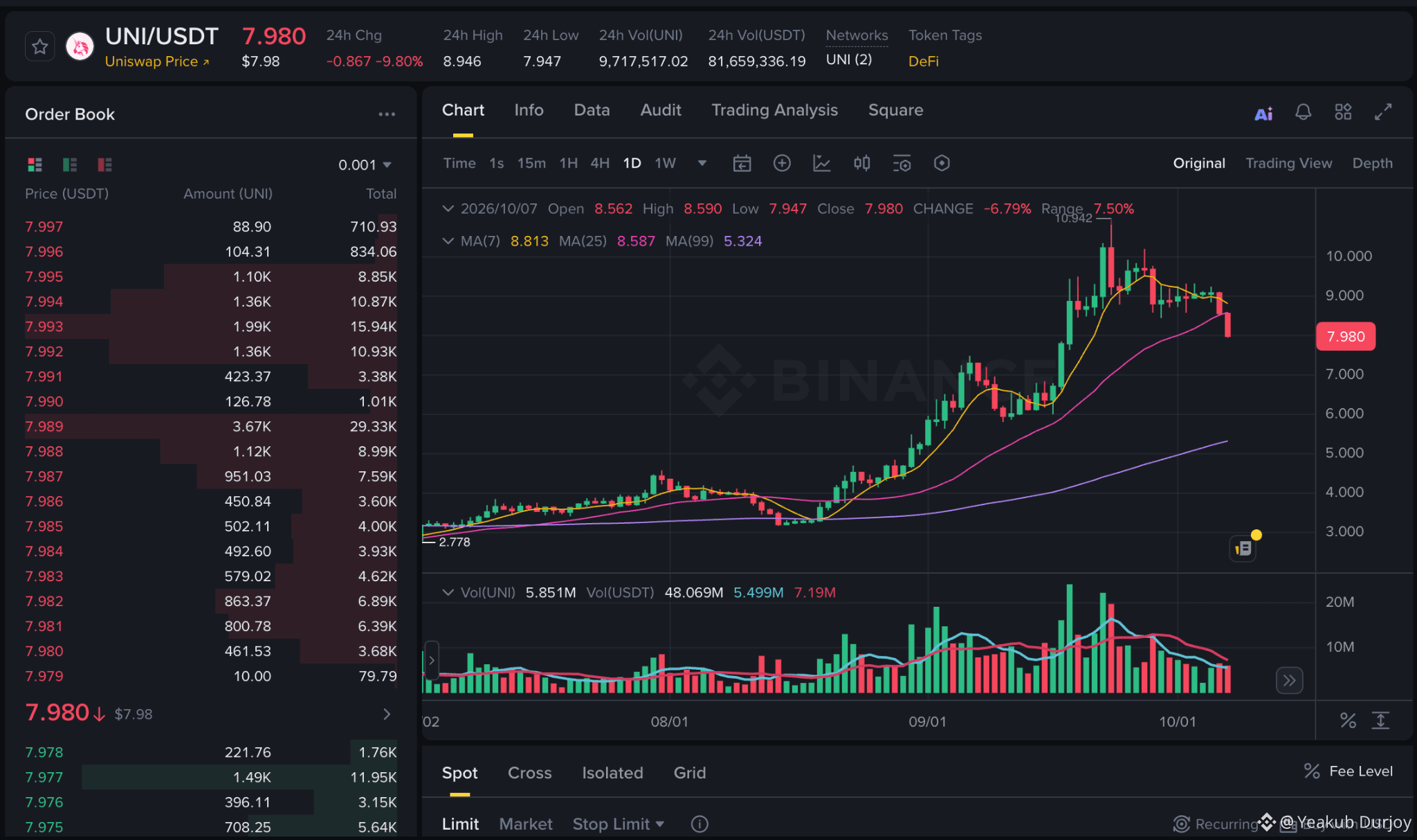
$UNI is looking better for a short setup, but I would not short directly at the current low. Price is around 7.980, down 9.80% in 24h, and it has now fallen below MA7 8.813 and MA25 8.587, which shows the short-term structure is weakening.
Bias: Short on bounce
Entry zone: 8.250 to 8.550
Stop: above 8.900
TP1: 7.950
TP2: 7.600 to 7.400
TP3: 7.000 to 6.800 if selling pressure continues
The reason I prefer short is that UNI rejected after the strong move toward 10.942 and is now losing the key moving average support. Since price is already near the 24h low 7.947, the cleaner setup is waiting for a bounce into resistance and then looking for rejection. If UNI reclaims 8.900 with strength, I would cancel the short idea because buyers would be trying to recover the trend.
{future}(UNIUSDT)
$UNI is looking better for a short setup, but I would not short directly at the current low. Price is around 7.980, down 9.80% in 24h, and it has now fallen below MA7 8.813 and MA25 8.587, which shows the short-term structure is weakening.
Bias: Short on bounce
Entry zone: 8.250 to 8.550
Stop: above 8.900
TP1: 7.950
TP2: 7.600 to 7.400
TP3: 7.000 to 6.800 if selling pressure continues
The reason I prefer short is that UNI rejected after the strong move toward 10.942 and is now losing the key moving average support. Since price is already near the 24h low 7.947, the cleaner setup is waiting for a bounce into resistance and then looking for rejection. If UNI reclaims 8.900 with strength, I would cancel the short idea because buyers would be trying to recover the trend.
Bias: Short on bounce
Entry zone: 8.250 to 8.550
Stop: above 8.900
TP1: 7.950
TP2: 7.600 to 7.400
TP3: 7.000 to 6.800 if selling pressure continues
The reason I prefer short is that UNI rejected after the strong move toward 10.942 and is now losing the key moving average support. Since price is already near the 24h low 7.947, the cleaner setup is waiting for a bounce into resistance and then looking for rejection. If UNI reclaims 8.900 with strength, I would cancel the short idea because buyers would be trying to recover the trend.
1
234
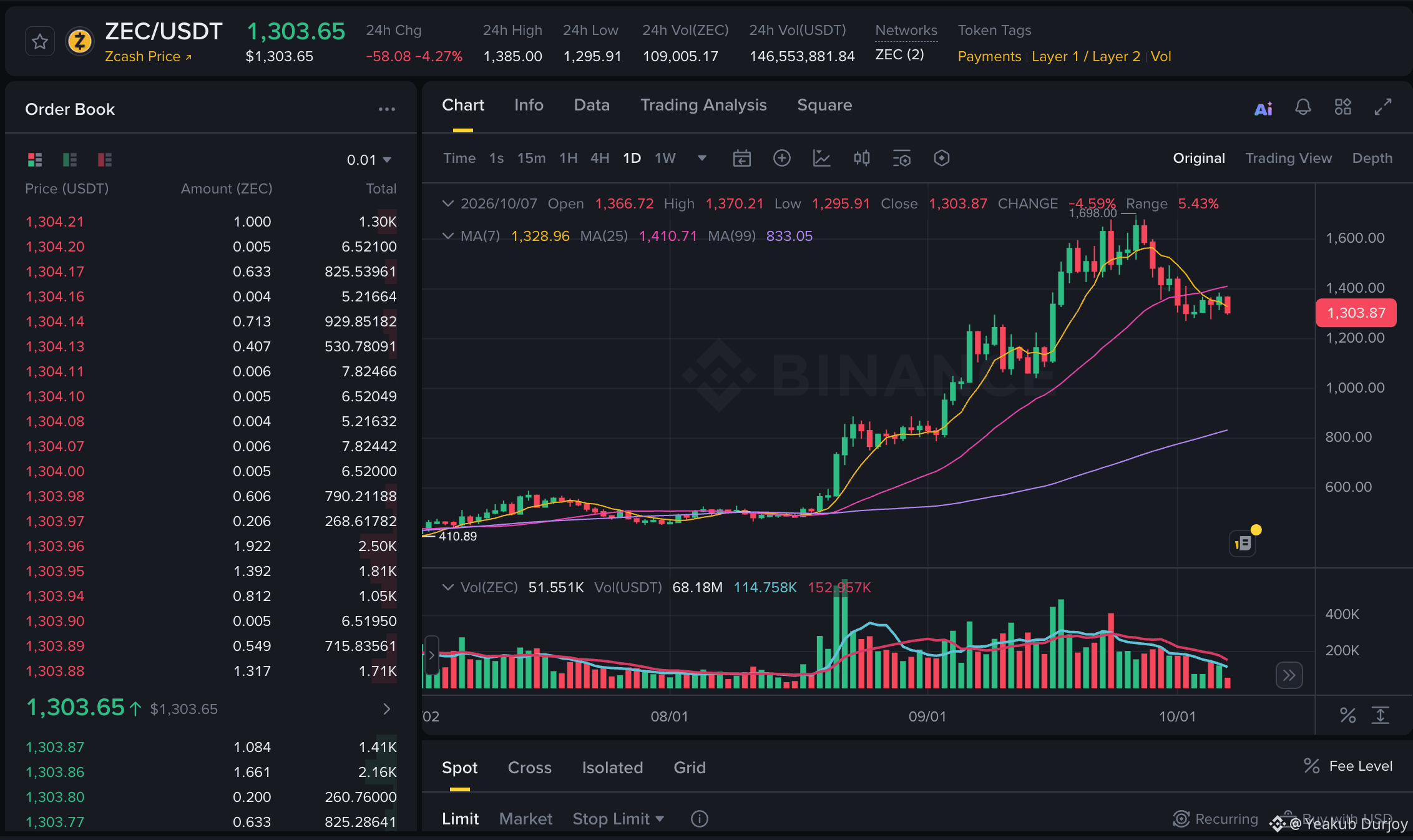
$ZEC can still work as a long setup, but only if buyers defend this current support area.
Bias: Long on support hold or MA7 reclaim
Entry zone: 1,295 to 1,320
Confirmation entry: above 1,330
Stop: below 1,270
TP1: 1,370
TP2: 1,410 to 1,450
TP3: 1,520 to 1,580 if momentum comes back
The reason I would still keep ZEC on the long side is that the bigger trend is not fully broken yet, and price is still holding far above MA99 833.05 after a strong move. But the short-term weakness matters, so I would only take the long if 1,295 to 1,300 holds or price reclaims 1,330 with strength. If ZEC loses 1,270, I would step back because the pullback can extend deeper.
{future}(ZECUSDT)
$ZEC can still work as a long setup, but only if buyers defend this current support area.
Bias: Long on support hold or MA7 reclaim
Entry zone: 1,295 to 1,320
Confirmation entry: above 1,330
Stop: below 1,270
TP1: 1,370
TP2: 1,410 to 1,450
TP3: 1,520 to 1,580 if momentum comes back
The reason I would still keep ZEC on the long side is that the bigger trend is not fully broken yet, and price is still holding far above MA99 833.05 after a strong move. But the short-term weakness matters, so I would only take the long if 1,295 to 1,300 holds or price reclaims 1,330 with strength. If ZEC loses 1,270, I would step back because the pullback can extend deeper.
Bias: Long on support hold or MA7 reclaim
Entry zone: 1,295 to 1,320
Confirmation entry: above 1,330
Stop: below 1,270
TP1: 1,370
TP2: 1,410 to 1,450
TP3: 1,520 to 1,580 if momentum comes back
The reason I would still keep ZEC on the long side is that the bigger trend is not fully broken yet, and price is still holding far above MA99 833.05 after a strong move. But the short-term weakness matters, so I would only take the long if 1,295 to 1,300 holds or price reclaims 1,330 with strength. If ZEC loses 1,270, I would step back because the pullback can extend deeper.
1
219
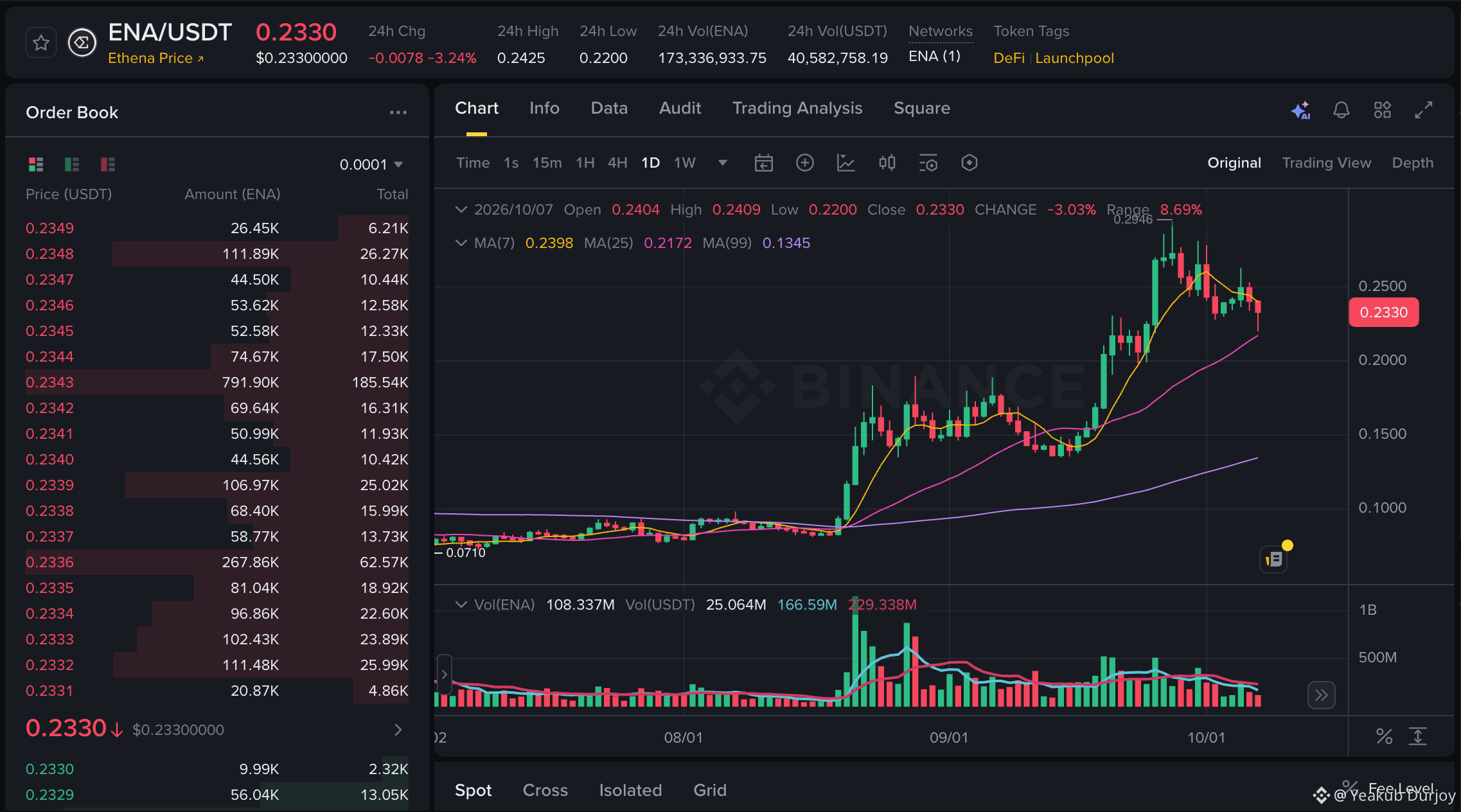
$ENA is starting to look better for a short setup, but I would wait for a bounce instead of shorting directly at the current level.
Bias: Short on bounce
Entry zone: 0.2380 to 0.2425
Stop: above 0.2500
TP1: 0.2250
TP2: 0.2200 to 0.2172
TP3: 0.2000 to 0.1900 if selling pressure increases
The reason I prefer short here is that ENA is losing strength after the strong rally, and price is now failing under the short-term moving average. The cleaner setup is a bounce into 0.2380 to 0.2425 followed by rejection. If ENA breaks back above 0.2500, I would cancel the short idea because buyers would be trying to regain control.
{future}(ENAUSDT)
$ENA is starting to look better for a short setup, but I would wait for a bounce instead of shorting directly at the current level.
Bias: Short on bounce
Entry zone: 0.2380 to 0.2425
Stop: above 0.2500
TP1: 0.2250
TP2: 0.2200 to 0.2172
TP3: 0.2000 to 0.1900 if selling pressure increases
The reason I prefer short here is that ENA is losing strength after the strong rally, and price is now failing under the short-term moving average. The cleaner setup is a bounce into 0.2380 to 0.2425 followed by rejection. If ENA breaks back above 0.2500, I would cancel the short idea because buyers would be trying to regain control.
Bias: Short on bounce
Entry zone: 0.2380 to 0.2425
Stop: above 0.2500
TP1: 0.2250
TP2: 0.2200 to 0.2172
TP3: 0.2000 to 0.1900 if selling pressure increases
The reason I prefer short here is that ENA is losing strength after the strong rally, and price is now failing under the short-term moving average. The cleaner setup is a bounce into 0.2380 to 0.2425 followed by rejection. If ENA breaks back above 0.2500, I would cancel the short idea because buyers would be trying to regain control.
2
596
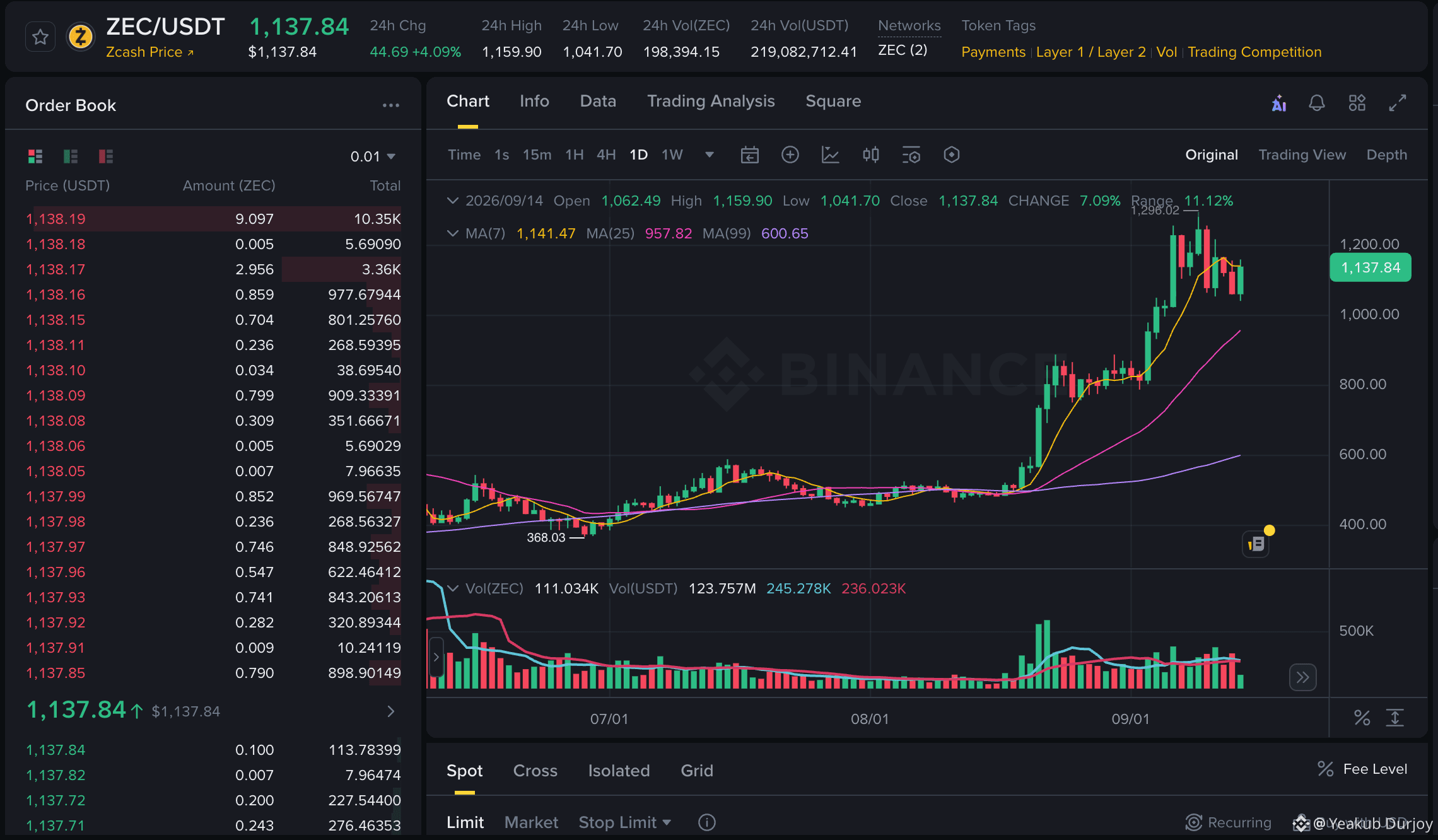
$ZEC is still leaning bullish, but I would treat it as a conditional long instead of chasing the current level.
Bias: Long on reclaim or support hold
Entry zone: 1,080 to 1,125
Confirmation entry: above 1,145
Stop: below 1,040
TP1: 1,160
TP2: 1,220 to 1,260
TP3: 1,296 to 1,350 if momentum expands again
The reason I still prefer long is that ZEC is holding a strong uptrend after the breakout, and the pullback has not broken the broader structure yet. The key level is MA7 around 1,141. If ZEC reclaims that area with volume, continuation becomes cleaner. If it loses 1,040, I would step back because the correction could extend deeper toward the MA25 zone.
{future}(ZECUSDT)
$ZEC is still leaning bullish, but I would treat it as a conditional long instead of chasing the current level.
Bias: Long on reclaim or support hold
Entry zone: 1,080 to 1,125
Confirmation entry: above 1,145
Stop: below 1,040
TP1: 1,160
TP2: 1,220 to 1,260
TP3: 1,296 to 1,350 if momentum expands again
The reason I still prefer long is that ZEC is holding a strong uptrend after the breakout, and the pullback has not broken the broader structure yet. The key level is MA7 around 1,141. If ZEC reclaims that area with volume, continuation becomes cleaner. If it loses 1,040, I would step back because the correction could extend deeper toward the MA25 zone.
Bias: Long on reclaim or support hold
Entry zone: 1,080 to 1,125
Confirmation entry: above 1,145
Stop: below 1,040
TP1: 1,160
TP2: 1,220 to 1,260
TP3: 1,296 to 1,350 if momentum expands again
The reason I still prefer long is that ZEC is holding a strong uptrend after the breakout, and the pullback has not broken the broader structure yet. The key level is MA7 around 1,141. If ZEC reclaims that area with volume, continuation becomes cleaner. If it loses 1,040, I would step back because the correction could extend deeper toward the MA25 zone.
2
458
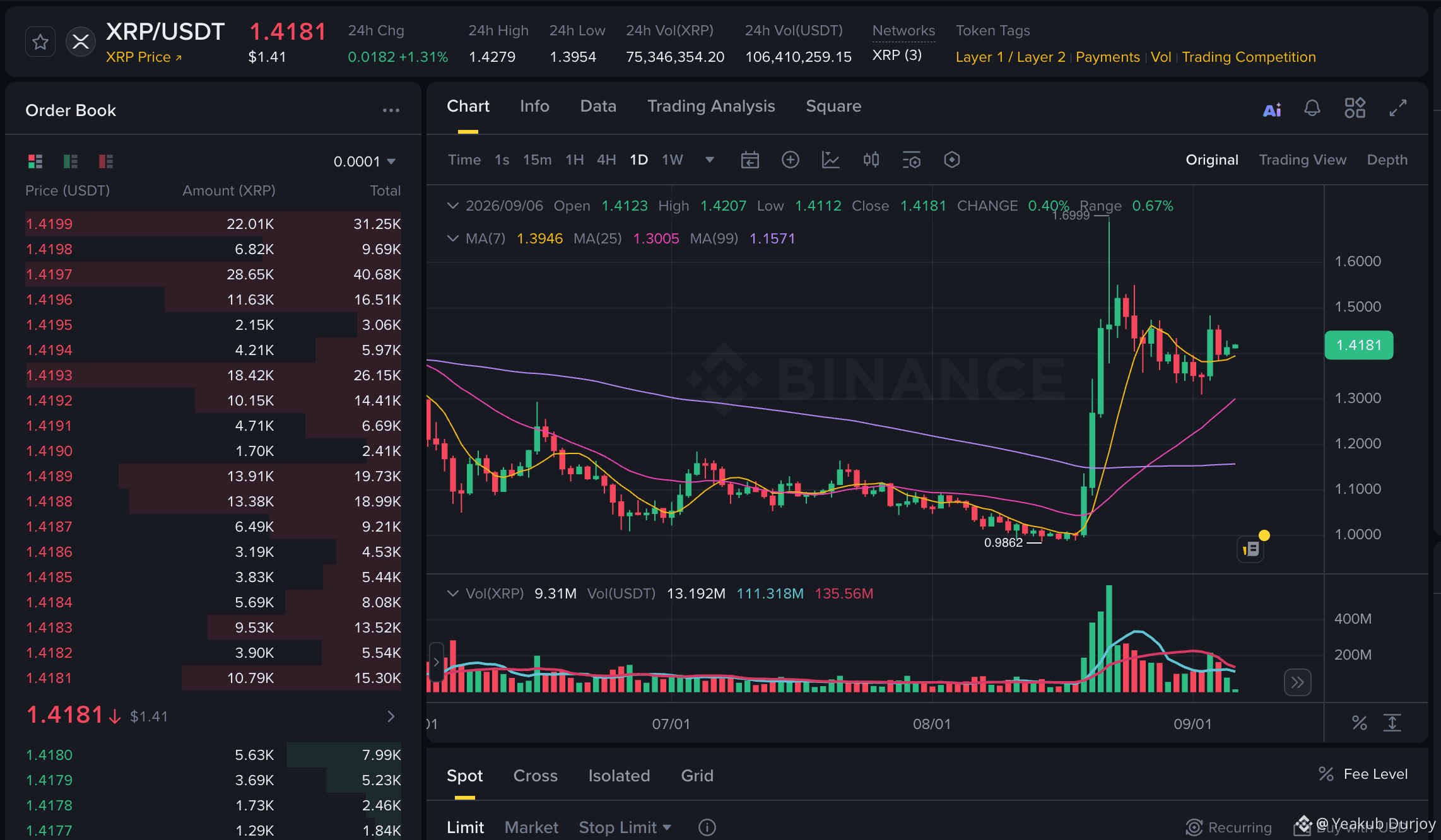
$XRP is holding a decent long setup here, but the entry still matters because price is sitting close to the 24h high. Current price is around 1.4181, with MA7 at 1.3946, MA25 at 1.3005, and MA99 at 1.1571.
Bias: Long on pullback or breakout confirmation
Entry zone: 1.3950 to 1.4100
Confirmation entry: above 1.4280
Stop: below 1.3700
TP1: 1.4280
TP2: 1.4700 to 1.5000
TP3: 1.5600 to 1.6000 if momentum expands
The reason I prefer long is that XRP is holding above MA7 after recovering from the pullback zone, and the broader structure is still above MA25 and MA99. A clean hold above 1.3950 keeps the setup valid, while a breakout above 1.4280 can confirm continuation. If XRP loses 1.3700, I would step back because the short-term recovery could weaken.
{future}(XRPUSDT)
$XRP is holding a decent long setup here, but the entry still matters because price is sitting close to the 24h high. Current price is around 1.4181, with MA7 at 1.3946, MA25 at 1.3005, and MA99 at 1.1571.
Bias: Long on pullback or breakout confirmation
Entry zone: 1.3950 to 1.4100
Confirmation entry: above 1.4280
Stop: below 1.3700
TP1: 1.4280
TP2: 1.4700 to 1.5000
TP3: 1.5600 to 1.6000 if momentum expands
The reason I prefer long is that XRP is holding above MA7 after recovering from the pullback zone, and the broader structure is still above MA25 and MA99. A clean hold above 1.3950 keeps the setup valid, while a breakout above 1.4280 can confirm continuation. If XRP loses 1.3700, I would step back because the short-term recovery could weaken.
Bias: Long on pullback or breakout confirmation
Entry zone: 1.3950 to 1.4100
Confirmation entry: above 1.4280
Stop: below 1.3700
TP1: 1.4280
TP2: 1.4700 to 1.5000
TP3: 1.5600 to 1.6000 if momentum expands
The reason I prefer long is that XRP is holding above MA7 after recovering from the pullback zone, and the broader structure is still above MA25 and MA99. A clean hold above 1.3950 keeps the setup valid, while a breakout above 1.4280 can confirm continuation. If XRP loses 1.3700, I would step back because the short-term recovery could weaken.
2
5
3.1k
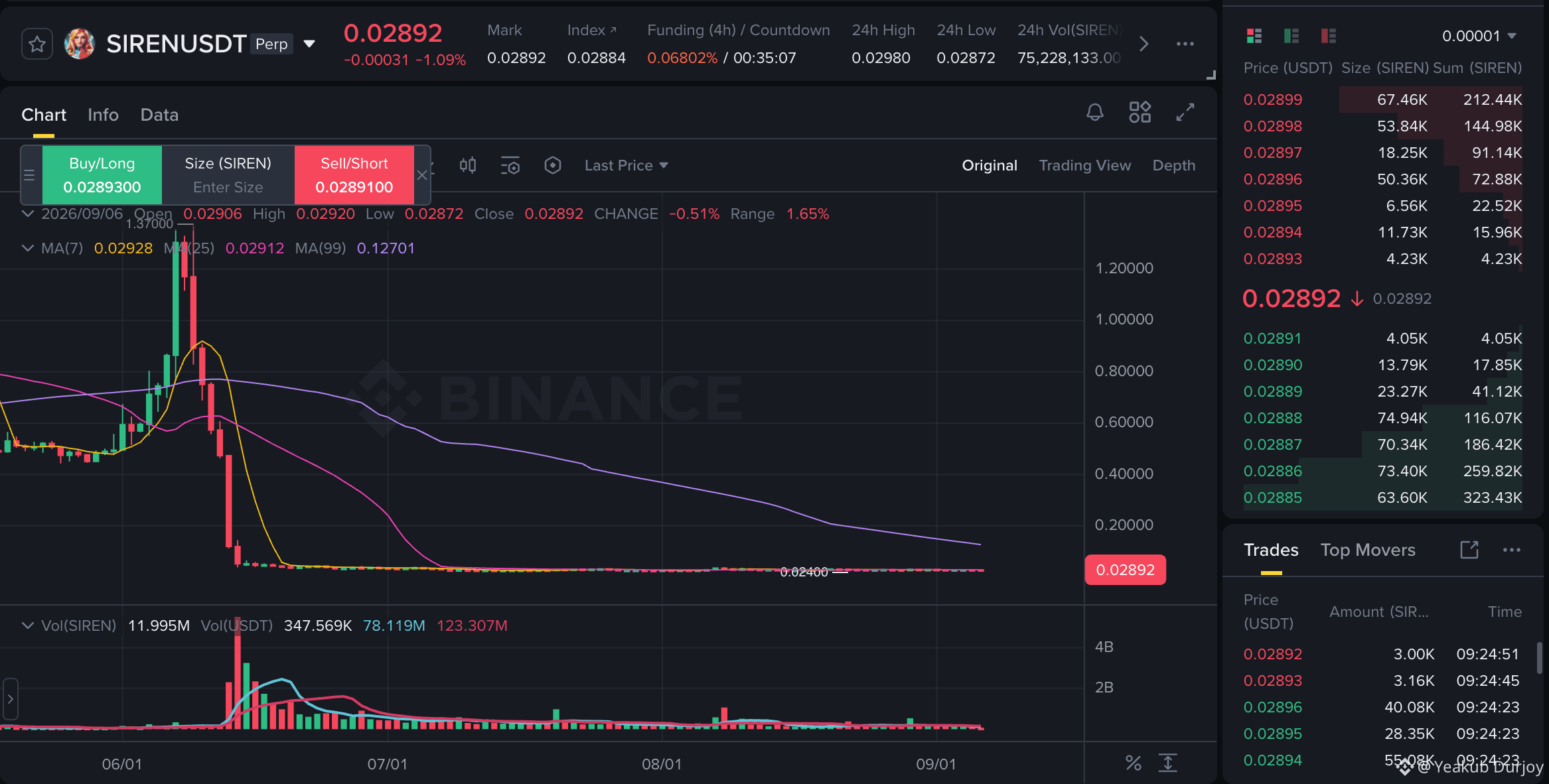
$SIREN looks better for a short setup, but I would not short it directly at the current support area. Price is around 0.02892, sitting below MA7 0.02928 and MA25 0.02912, so the short-term structure is still weak.
Bias: Short on bounce
Entry zone: 0.02910 to 0.02950
Stop: above 0.03020
TP1: 0.02872
TP2: 0.02780 to 0.02700
TP3: 0.02550 to 0.02400 if selling pressure continues
The reason I prefer short is that SIREN has been flat near the lows after a massive breakdown from the previous spike, and price is still failing under the short-term moving averages. The cleaner setup is waiting for a bounce into 0.02910 to 0.02950 and watching for rejection. If SIREN breaks above 0.03020 with volume, I would cancel the short idea because that could signal a small recovery attempt.
{future}(SIRENUSDT)
$SIREN looks better for a short setup, but I would not short it directly at the current support area. Price is around 0.02892, sitting below MA7 0.02928 and MA25 0.02912, so the short-term structure is still weak.
Bias: Short on bounce
Entry zone: 0.02910 to 0.02950
Stop: above 0.03020
TP1: 0.02872
TP2: 0.02780 to 0.02700
TP3: 0.02550 to 0.02400 if selling pressure continues
The reason I prefer short is that SIREN has been flat near the lows after a massive breakdown from the previous spike, and price is still failing under the short-term moving averages. The cleaner setup is waiting for a bounce into 0.02910 to 0.02950 and watching for rejection. If SIREN breaks above 0.03020 with volume, I would cancel the short idea because that could signal a small recovery attempt.
Bias: Short on bounce
Entry zone: 0.02910 to 0.02950
Stop: above 0.03020
TP1: 0.02872
TP2: 0.02780 to 0.02700
TP3: 0.02550 to 0.02400 if selling pressure continues
The reason I prefer short is that SIREN has been flat near the lows after a massive breakdown from the previous spike, and price is still failing under the short-term moving averages. The cleaner setup is waiting for a bounce into 0.02910 to 0.02950 and watching for rejection. If SIREN breaks above 0.03020 with volume, I would cancel the short idea because that could signal a small recovery attempt.
1
1.3k
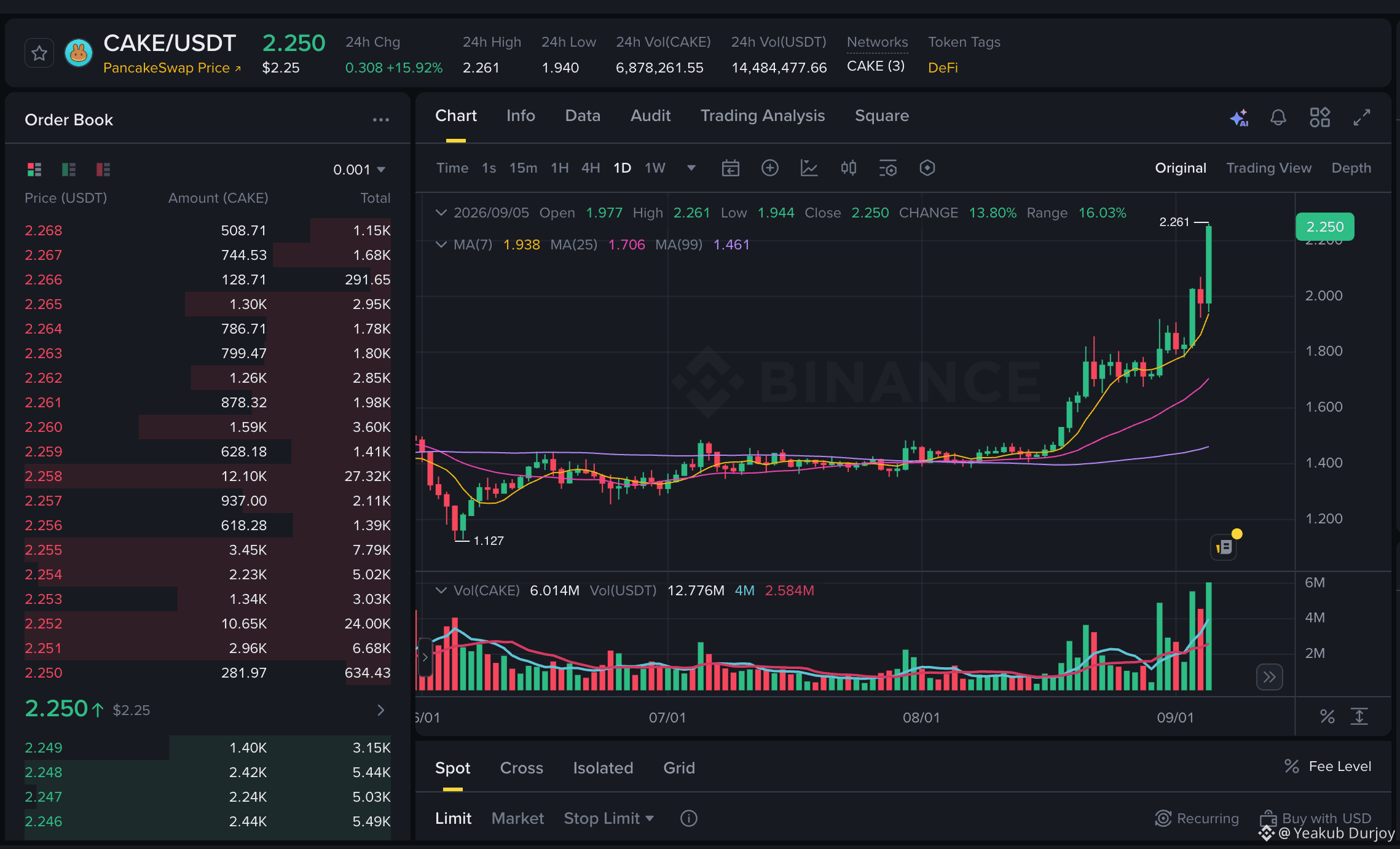
$CAKE is giving a strong long setup, but I would not chase it directly at the top of the candle.
Entry zone: 2.120 to 2.200
Confirmation entry: above 2.265
Stop: below 2.030
TP1: 2.260
TP2: 2.400 to 2.500
TP3: 2.700 to 2.850 if momentum expands
The reason I prefer long is that CAKE broke out from a long sideways range and volume is coming in strongly with the move. The only issue is that price is already near the 24h high at 2.261, so the cleaner setup is waiting for a pullback into support or a clean breakout above 2.265. If CAKE loses 2.030, I would step back because the breakout could cool down deeper.
{future}(CAKEUSDT)
$CAKE is giving a strong long setup, but I would not chase it directly at the top of the candle.
Entry zone: 2.120 to 2.200
Confirmation entry: above 2.265
Stop: below 2.030
TP1: 2.260
TP2: 2.400 to 2.500
TP3: 2.700 to 2.850 if momentum expands
The reason I prefer long is that CAKE broke out from a long sideways range and volume is coming in strongly with the move. The only issue is that price is already near the 24h high at 2.261, so the cleaner setup is waiting for a pullback into support or a clean breakout above 2.265. If CAKE loses 2.030, I would step back because the breakout could cool down deeper.
Entry zone: 2.120 to 2.200
Confirmation entry: above 2.265
Stop: below 2.030
TP1: 2.260
TP2: 2.400 to 2.500
TP3: 2.700 to 2.850 if momentum expands
The reason I prefer long is that CAKE broke out from a long sideways range and volume is coming in strongly with the move. The only issue is that price is already near the 24h high at 2.261, so the cleaner setup is waiting for a pullback into support or a clean breakout above 2.265. If CAKE loses 2.030, I would step back because the breakout could cool down deeper.
4
1.6k
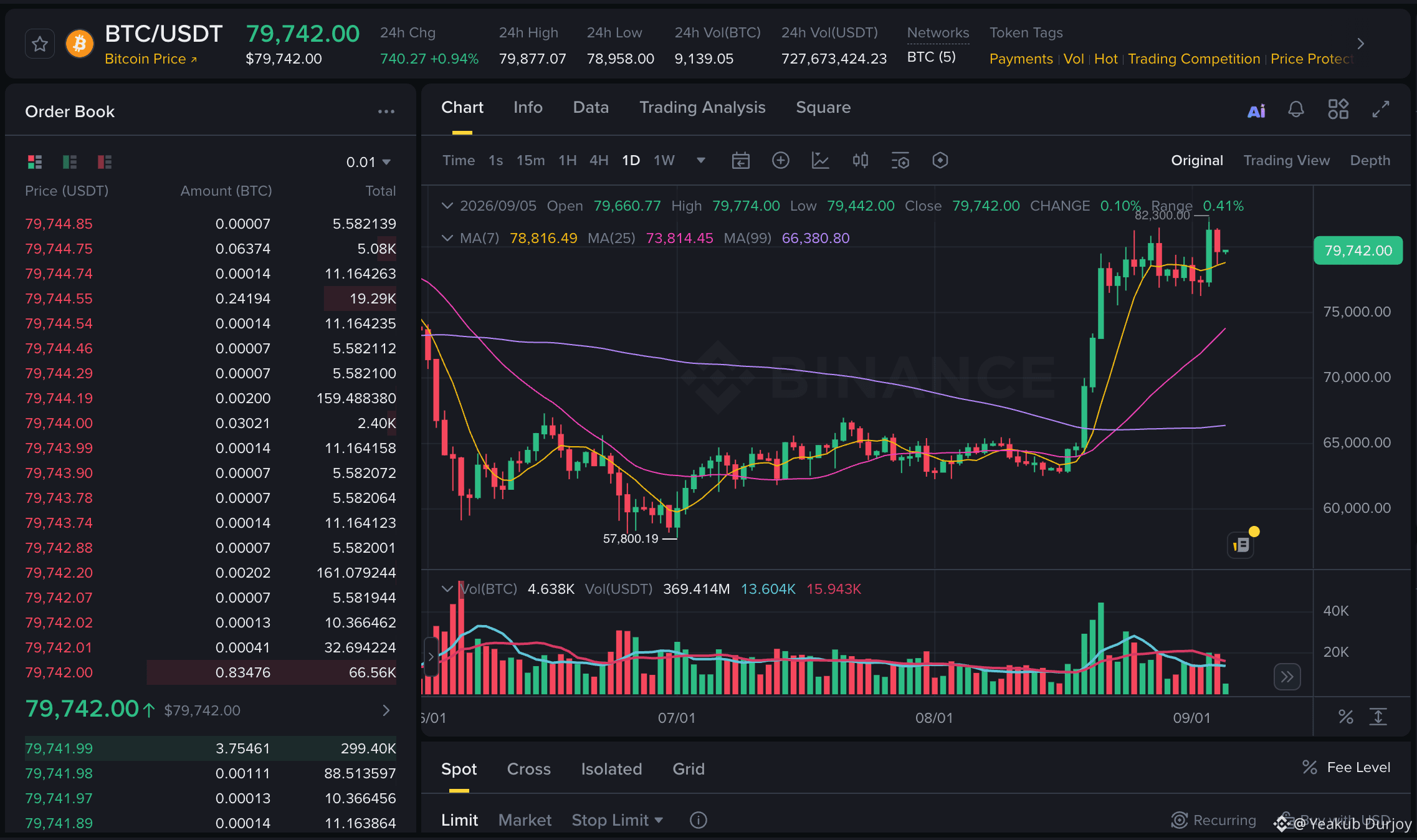
$BTC still looks better for a long setup, but I would not chase it directly near the 24h high.
Bias: Long on pullback or breakout confirmation
Entry zone: 78,900 to 79,300
Confirmation entry: above 79,900 to 80,000
Stop: below 78,200
TP1: 79,877
TP2: 81,000 to 82,300
TP3: 84,000 to 85,000 if momentum expands
The reason I prefer long is that BTC is still holding the breakout range and staying above MA7, which shows buyers have not lost control yet. The only issue is that price is already close to the daily high, so the cleaner setup is either a pullback into 78,900 to 79,300 or a clean break above 80,000. If BTC loses 78,200, I would step back because the pullback could extend deeper.
{future}(BTCUSDT)
$BTC still looks better for a long setup, but I would not chase it directly near the 24h high.
Bias: Long on pullback or breakout confirmation
Entry zone: 78,900 to 79,300
Confirmation entry: above 79,900 to 80,000
Stop: below 78,200
TP1: 79,877
TP2: 81,000 to 82,300
TP3: 84,000 to 85,000 if momentum expands
The reason I prefer long is that BTC is still holding the breakout range and staying above MA7, which shows buyers have not lost control yet. The only issue is that price is already close to the daily high, so the cleaner setup is either a pullback into 78,900 to 79,300 or a clean break above 80,000. If BTC loses 78,200, I would step back because the pullback could extend deeper.
Bias: Long on pullback or breakout confirmation
Entry zone: 78,900 to 79,300
Confirmation entry: above 79,900 to 80,000
Stop: below 78,200
TP1: 79,877
TP2: 81,000 to 82,300
TP3: 84,000 to 85,000 if momentum expands
The reason I prefer long is that BTC is still holding the breakout range and staying above MA7, which shows buyers have not lost control yet. The only issue is that price is already close to the daily high, so the cleaner setup is either a pullback into 78,900 to 79,300 or a clean break above 80,000. If BTC loses 78,200, I would step back because the pullback could extend deeper.
2
2
1.2k
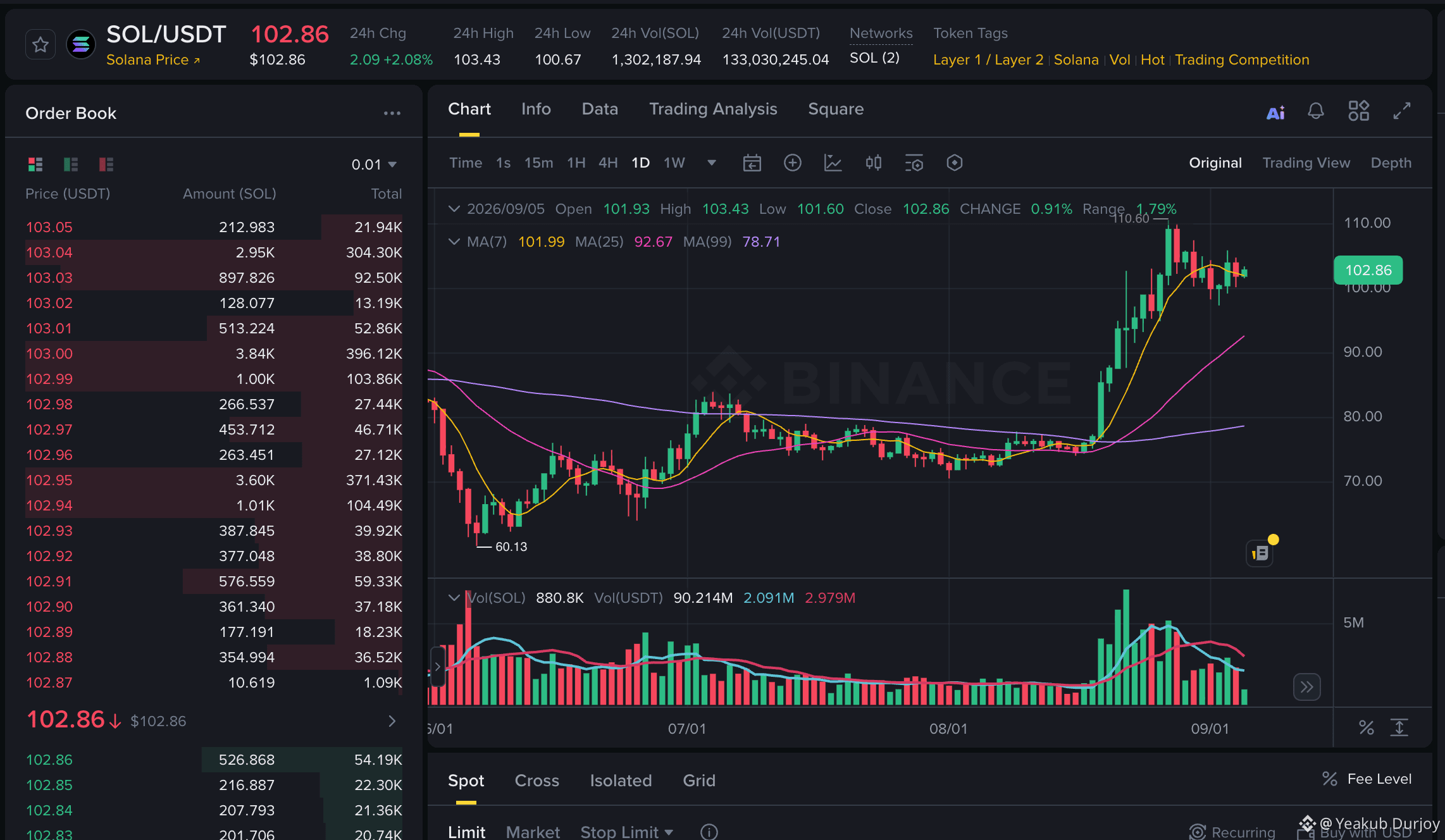
$SOL is looking better for a long setup now because price has reclaimed MA7 and is holding the breakout structure.
Bias: Long on pullback
Entry zone: 101.50 to 102.50
Confirmation entry: above 103.50
Stop: below 100.40
TP1: 105.00
TP2: 107.50
TP3: 110.60 if momentum expands again
The reason I prefer long is that SOL is still holding above the short-term moving average after breaking out from the old 75 to 80 range. The current move is not extremely aggressive yet, so a controlled pullback near 101.50 to 102.50 can give a cleaner entry. If SOL breaks above 103.50, continuation toward 105 to 107.50 becomes more likely. If it loses 100.40, I would step back because the pullback could get deeper.
{future}(SOLUSDT)
$SOL is looking better for a long setup now because price has reclaimed MA7 and is holding the breakout structure.
Bias: Long on pullback
Entry zone: 101.50 to 102.50
Confirmation entry: above 103.50
Stop: below 100.40
TP1: 105.00
TP2: 107.50
TP3: 110.60 if momentum expands again
The reason I prefer long is that SOL is still holding above the short-term moving average after breaking out from the old 75 to 80 range. The current move is not extremely aggressive yet, so a controlled pullback near 101.50 to 102.50 can give a cleaner entry. If SOL breaks above 103.50, continuation toward 105 to 107.50 becomes more likely. If it loses 100.40, I would step back because the pullback could get deeper.
Bias: Long on pullback
Entry zone: 101.50 to 102.50
Confirmation entry: above 103.50
Stop: below 100.40
TP1: 105.00
TP2: 107.50
TP3: 110.60 if momentum expands again
The reason I prefer long is that SOL is still holding above the short-term moving average after breaking out from the old 75 to 80 range. The current move is not extremely aggressive yet, so a controlled pullback near 101.50 to 102.50 can give a cleaner entry. If SOL breaks above 103.50, continuation toward 105 to 107.50 becomes more likely. If it loses 100.40, I would step back because the pullback could get deeper.
2
10
9.9k
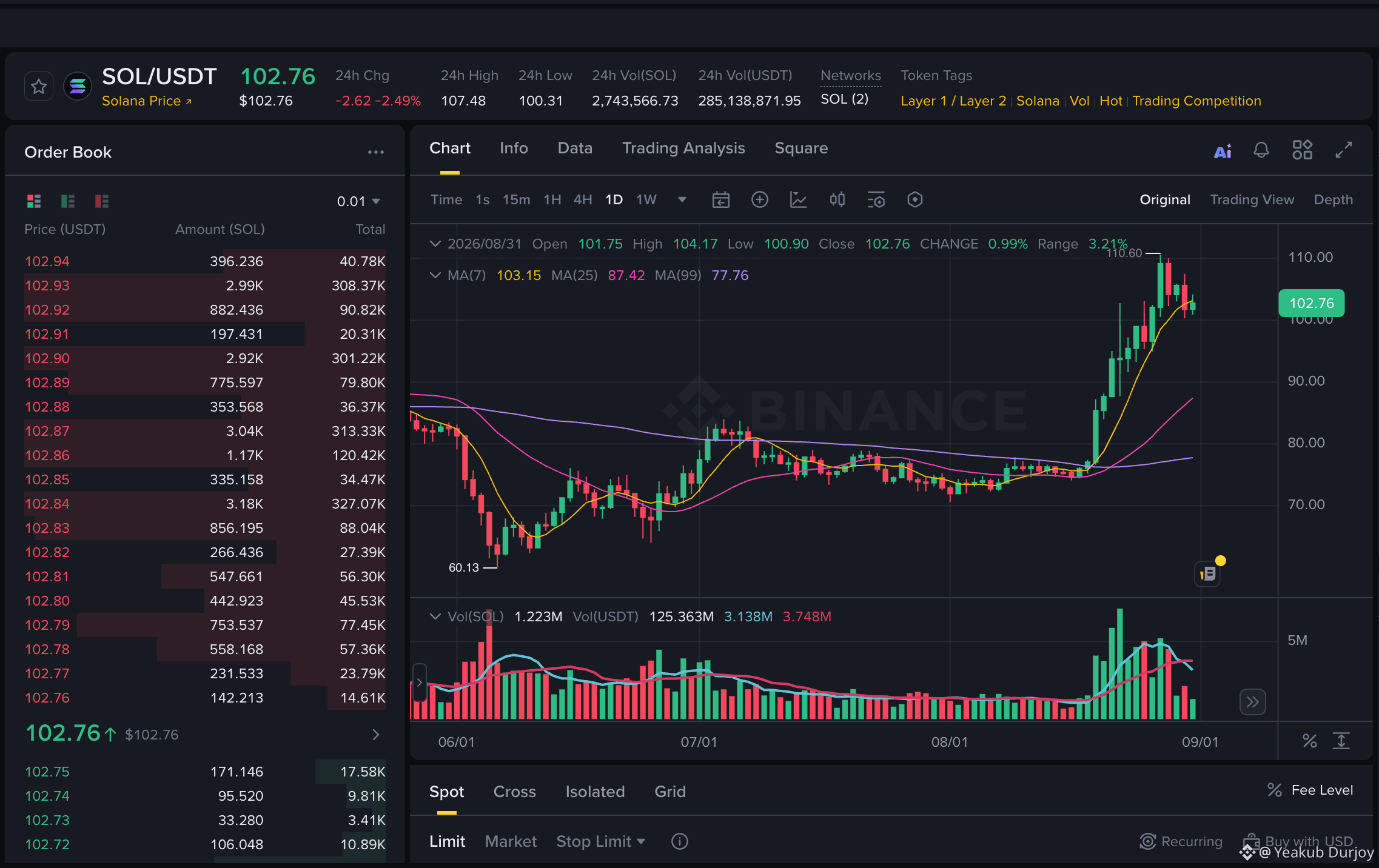
$SOL still looks better as a conditional long setup, but I would not enter blindly while price is sitting slightly below MA7.
Bias: Long on reclaim or support hold
Entry zone: 100.50 to 102.50
Confirmation entry: above 103.20
Stop: below 98.80
TP1: 107.48
TP2: 110.60
TP3: 115.00 to 120.00 if momentum returns
The reason I would still keep SOL on the long side is that the broader trend is still strong after the breakout from the 75 to 80 range. The only issue is the short-term rejection near 110.60, so the cleaner setup is waiting for support near 100.50 to 102.50 or a reclaim above 103.20. If SOL loses 98.80, I would step back because the pullback could extend deeper.
{future}(SOLUSDT)
$SOL still looks better as a conditional long setup, but I would not enter blindly while price is sitting slightly below MA7.
Bias: Long on reclaim or support hold
Entry zone: 100.50 to 102.50
Confirmation entry: above 103.20
Stop: below 98.80
TP1: 107.48
TP2: 110.60
TP3: 115.00 to 120.00 if momentum returns
The reason I would still keep SOL on the long side is that the broader trend is still strong after the breakout from the 75 to 80 range. The only issue is the short-term rejection near 110.60, so the cleaner setup is waiting for support near 100.50 to 102.50 or a reclaim above 103.20. If SOL loses 98.80, I would step back because the pullback could extend deeper.
Bias: Long on reclaim or support hold
Entry zone: 100.50 to 102.50
Confirmation entry: above 103.20
Stop: below 98.80
TP1: 107.48
TP2: 110.60
TP3: 115.00 to 120.00 if momentum returns
The reason I would still keep SOL on the long side is that the broader trend is still strong after the breakout from the 75 to 80 range. The only issue is the short-term rejection near 110.60, so the cleaner setup is waiting for support near 100.50 to 102.50 or a reclaim above 103.20. If SOL loses 98.80, I would step back because the pullback could extend deeper.
1
1k
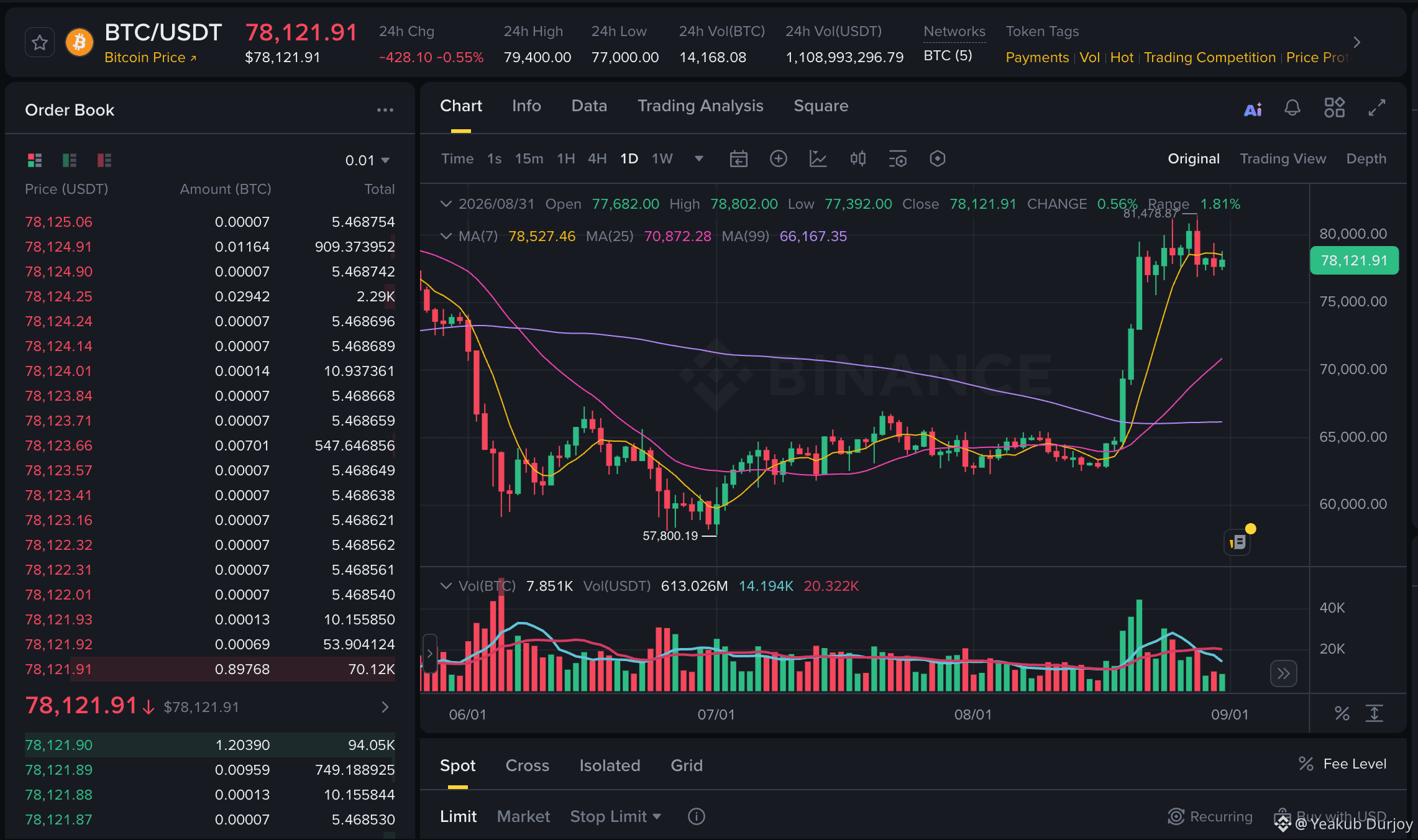
$BTC is in a tricky spot here, so I would treat it as a conditional long setup, not an instant entry.
Bias: Long on reclaim or support hold
Entry zone: 77,200 to 78,000
Confirmation entry: above 78,550
Stop: below 76,800
TP1: 79,400
TP2: 80,500 to 81,478
TP3: 83,000 if momentum returns
The reason I would still keep BTC on the long side is that the broader breakout structure is still intact, and price is holding above the main moving averages. The only issue is that BTC is currently below MA7, so I would wait for either a clean hold near 77,200 to 78,000 or a reclaim above 78,550. If BTC loses 76,800, I would step back because that could open a deeper pullback.
{future}(BTCUSDT)
$BTC is in a tricky spot here, so I would treat it as a conditional long setup, not an instant entry.
Bias: Long on reclaim or support hold
Entry zone: 77,200 to 78,000
Confirmation entry: above 78,550
Stop: below 76,800
TP1: 79,400
TP2: 80,500 to 81,478
TP3: 83,000 if momentum returns
The reason I would still keep BTC on the long side is that the broader breakout structure is still intact, and price is holding above the main moving averages. The only issue is that BTC is currently below MA7, so I would wait for either a clean hold near 77,200 to 78,000 or a reclaim above 78,550. If BTC loses 76,800, I would step back because that could open a deeper pullback.
Bias: Long on reclaim or support hold
Entry zone: 77,200 to 78,000
Confirmation entry: above 78,550
Stop: below 76,800
TP1: 79,400
TP2: 80,500 to 81,478
TP3: 83,000 if momentum returns
The reason I would still keep BTC on the long side is that the broader breakout structure is still intact, and price is holding above the main moving averages. The only issue is that BTC is currently below MA7, so I would wait for either a clean hold near 77,200 to 78,000 or a reclaim above 78,550. If BTC loses 76,800, I would step back because that could open a deeper pullback.
1
1
580
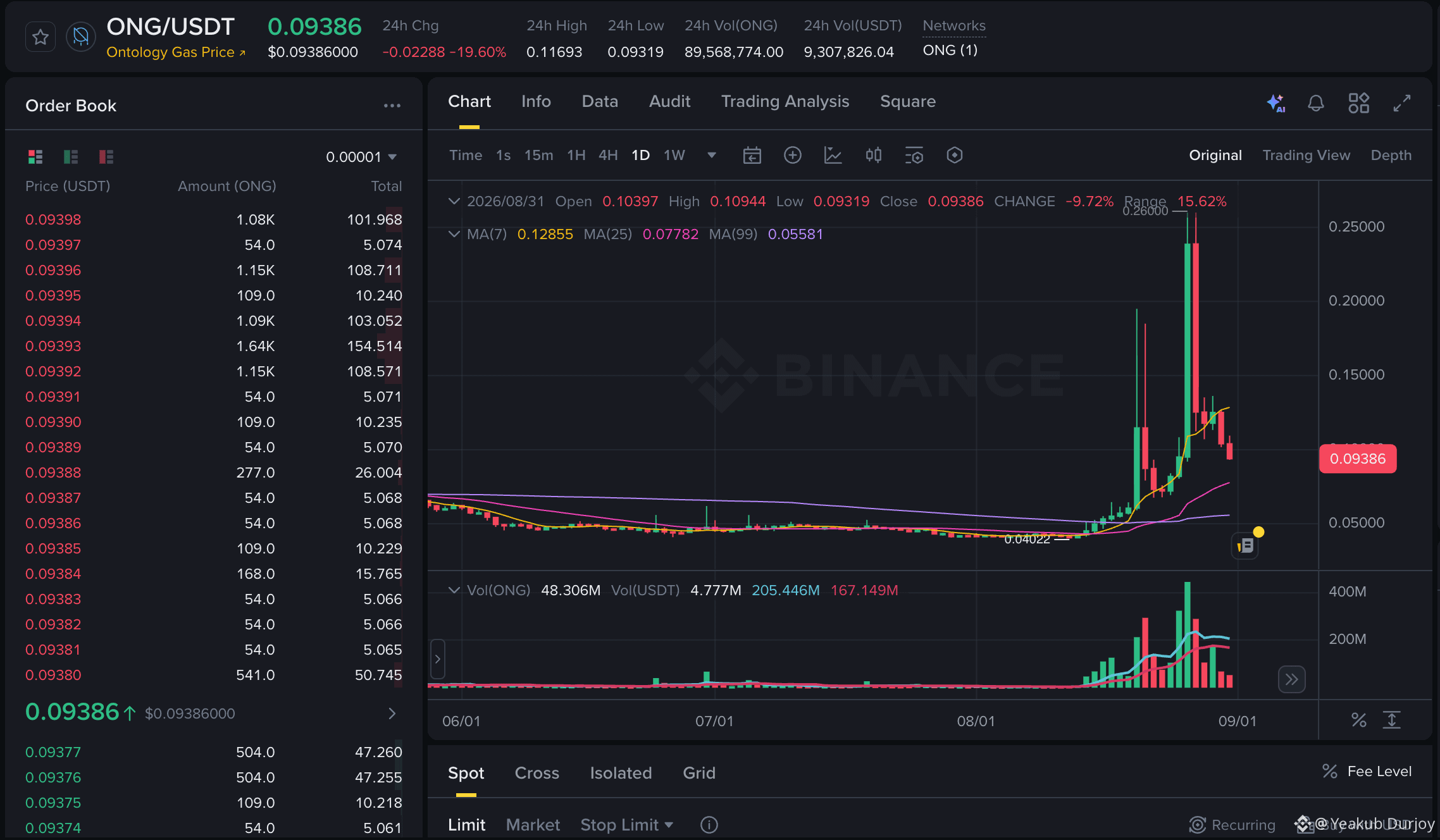
$ONG is looking weaker after the sharp rejection, so the cleaner idea for me is a short setup, but not a direct short at the current low.
Bias: Short on bounce
Entry zone: 0.10000 to 0.11000
Stop: above 0.11700
TP1: 0.09320
TP2: 0.08500 to 0.08000
TP3: 0.07780 to 0.07000 if selling pressure continues
The reason I prefer short is that ONG rejected hard after the spike toward 0.26000, and the current structure looks like profit-taking after an overextended move. Since price is already near the 24h low at 0.09319, I would wait for a bounce into resistance first. If ONG fails around 0.10000 to 0.11000, the short setup looks cleaner. A move back above 0.11700 would cancel the short idea for me.
{future}(ONGUSDT)
$ONG is looking weaker after the sharp rejection, so the cleaner idea for me is a short setup, but not a direct short at the current low.
Bias: Short on bounce
Entry zone: 0.10000 to 0.11000
Stop: above 0.11700
TP1: 0.09320
TP2: 0.08500 to 0.08000
TP3: 0.07780 to 0.07000 if selling pressure continues
The reason I prefer short is that ONG rejected hard after the spike toward 0.26000, and the current structure looks like profit-taking after an overextended move. Since price is already near the 24h low at 0.09319, I would wait for a bounce into resistance first. If ONG fails around 0.10000 to 0.11000, the short setup looks cleaner. A move back above 0.11700 would cancel the short idea for me.
Bias: Short on bounce
Entry zone: 0.10000 to 0.11000
Stop: above 0.11700
TP1: 0.09320
TP2: 0.08500 to 0.08000
TP3: 0.07780 to 0.07000 if selling pressure continues
The reason I prefer short is that ONG rejected hard after the spike toward 0.26000, and the current structure looks like profit-taking after an overextended move. Since price is already near the 24h low at 0.09319, I would wait for a bounce into resistance first. If ONG fails around 0.10000 to 0.11000, the short setup looks cleaner. A move back above 0.11700 would cancel the short idea for me.
2
2.7k
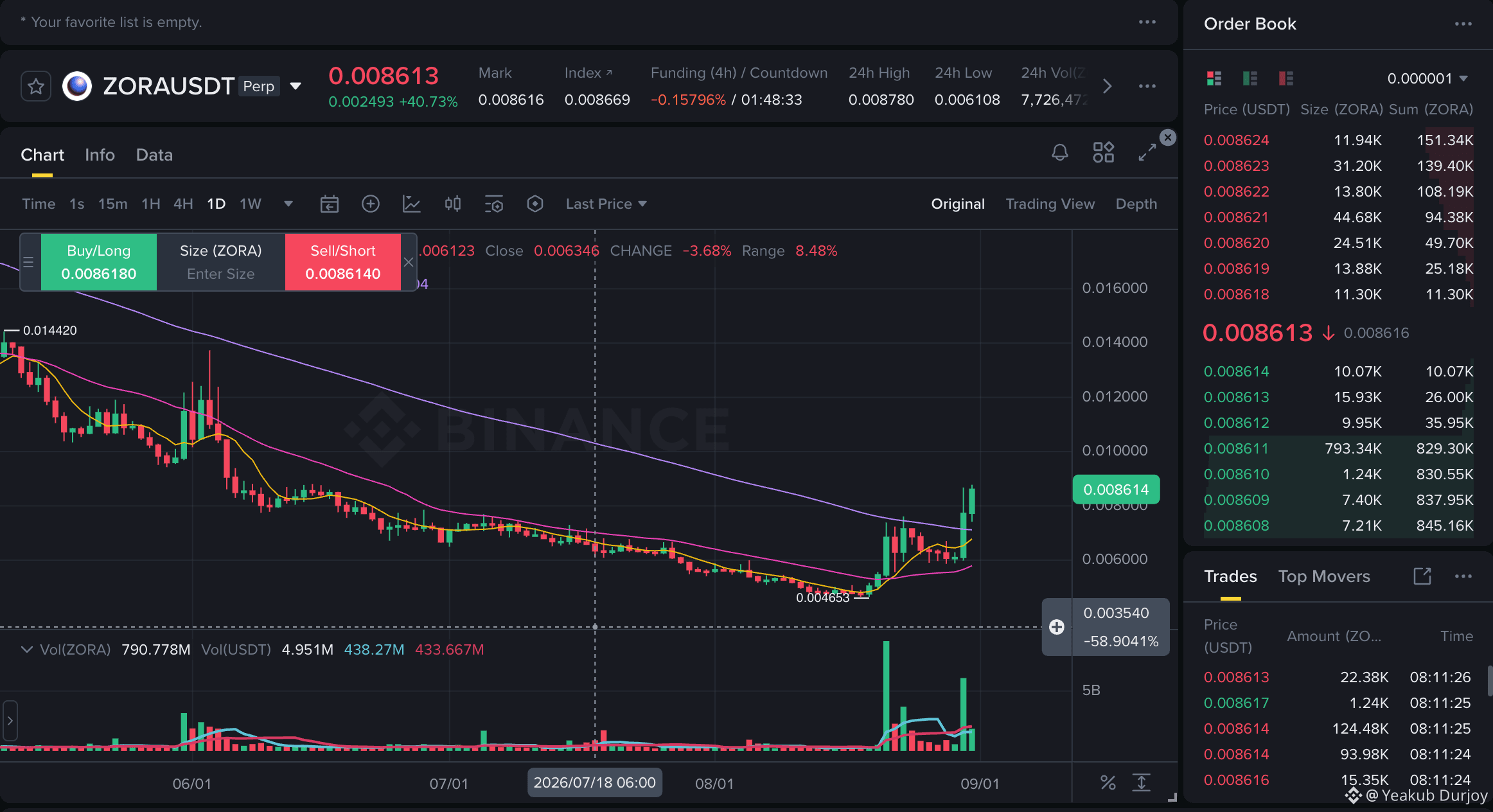
is around 0.008613, up 40.73%, and it has broken out after spending a long time in a downtrend.
Bias: Long on pullback
Entry zone: 0.00790 to 0.00835
Stop: below 0.00725
TP1: 0.00878
TP2: 0.00950 to 0.01000
TP3: 0.01150 to 0.01250 if volume continues
The reason I prefer long is that ZORA bounced hard from the 0.004653 low area and is now pushing above the recent resistance zone with strong volume. The move looks good, but price is already close to the daily high, so the cleaner setup is waiting for a pullback into support. If ZORA holds above 0.00790, the long idea stays valid. If it loses 0.00725, I would step back because the breakout could turn into a fakeout.
{future}(ZORAUSDT)
is around 0.008613, up 40.73%, and it has broken out after spending a long time in a downtrend.
Bias: Long on pullback
Entry zone: 0.00790 to 0.00835
Stop: below 0.00725
TP1: 0.00878
TP2: 0.00950 to 0.01000
TP3: 0.01150 to 0.01250 if volume continues
The reason I prefer long is that ZORA bounced hard from the 0.004653 low area and is now pushing above the recent resistance zone with strong volume. The move looks good, but price is already close to the daily high, so the cleaner setup is waiting for a pullback into support. If ZORA holds above 0.00790, the long idea stays valid. If it loses 0.00725, I would step back because the breakout could turn into a fakeout.
Bias: Long on pullback
Entry zone: 0.00790 to 0.00835
Stop: below 0.00725
TP1: 0.00878
TP2: 0.00950 to 0.01000
TP3: 0.01150 to 0.01250 if volume continues
The reason I prefer long is that ZORA bounced hard from the 0.004653 low area and is now pushing above the recent resistance zone with strong volume. The move looks good, but price is already close to the daily high, so the cleaner setup is waiting for a pullback into support. If ZORA holds above 0.00790, the long idea stays valid. If it loses 0.00725, I would step back because the breakout could turn into a fakeout.
1
755
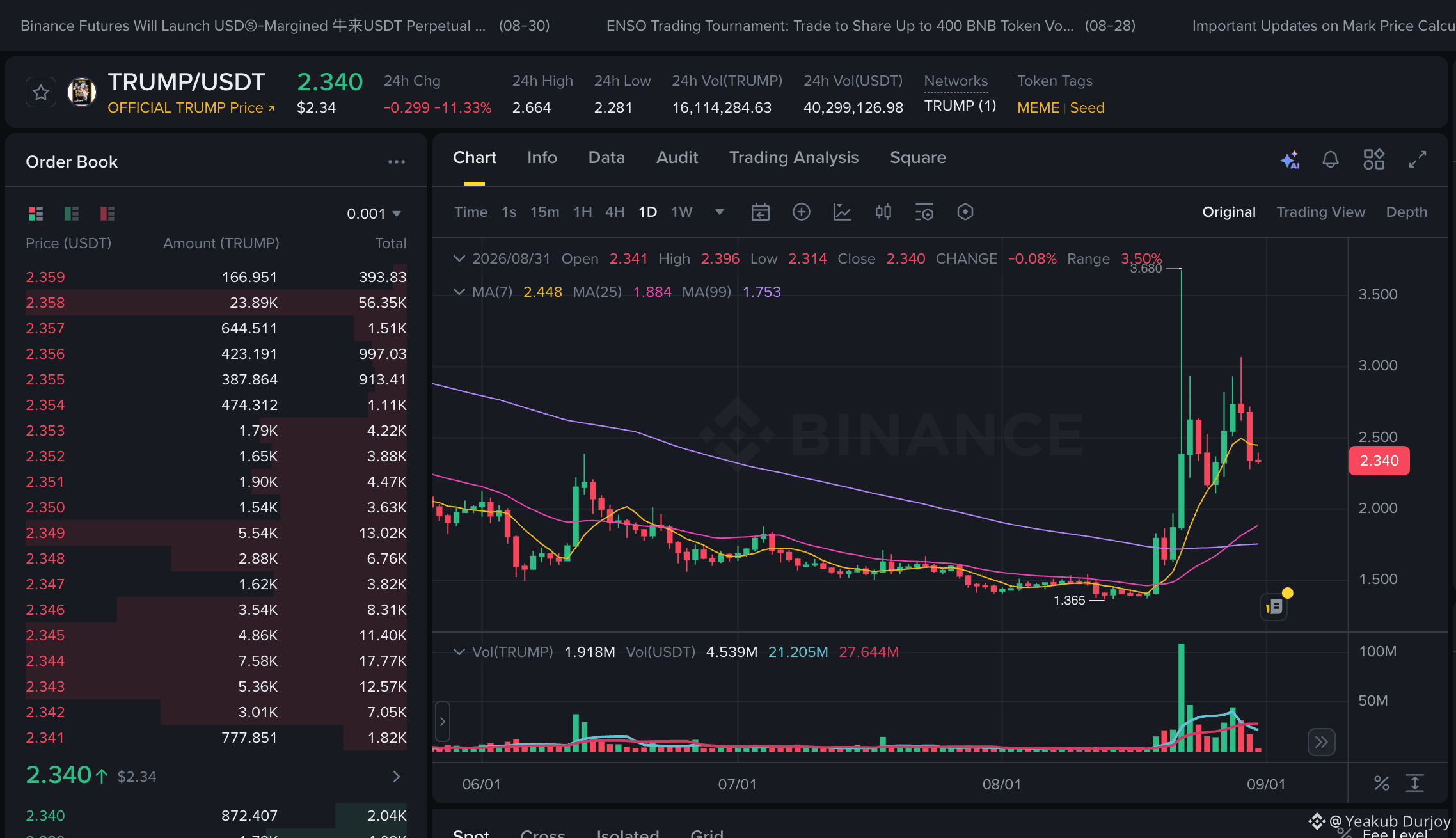
$TRUMP is starting to look better for a short setup, but I would not short directly near the 24h low. Price is around 2.340, down 11.33%, and it has already slipped below MA7 2.448, which shows short-term momentum is weakening.
Bias: Short on bounce
Entry zone: 2.420 to 2.500
Stop: above 2.660
TP1: 2.280
TP2: 2.100 to 2.000
TP3: 1.884 to 1.750 if selling pressure expands
The reason I prefer short is that TRUMP rejected hard after the spike toward 3.680, and now price is failing under MA7 while volume is cooling down. The cleaner setup is waiting for a bounce into the 2.420 to 2.500 area and shorting the rejection. If price breaks back above 2.660, I would cancel the short idea because buyers could regain control.
{future}(TRUMPUSDT)
$TRUMP is starting to look better for a short setup, but I would not short directly near the 24h low. Price is around 2.340, down 11.33%, and it has already slipped below MA7 2.448, which shows short-term momentum is weakening.
Bias: Short on bounce
Entry zone: 2.420 to 2.500
Stop: above 2.660
TP1: 2.280
TP2: 2.100 to 2.000
TP3: 1.884 to 1.750 if selling pressure expands
The reason I prefer short is that TRUMP rejected hard after the spike toward 3.680, and now price is failing under MA7 while volume is cooling down. The cleaner setup is waiting for a bounce into the 2.420 to 2.500 area and shorting the rejection. If price breaks back above 2.660, I would cancel the short idea because buyers could regain control.
Bias: Short on bounce
Entry zone: 2.420 to 2.500
Stop: above 2.660
TP1: 2.280
TP2: 2.100 to 2.000
TP3: 1.884 to 1.750 if selling pressure expands
The reason I prefer short is that TRUMP rejected hard after the spike toward 3.680, and now price is failing under MA7 while volume is cooling down. The cleaner setup is waiting for a bounce into the 2.420 to 2.500 area and shorting the rejection. If price breaks back above 2.660, I would cancel the short idea because buyers could regain control.
1
5
11.7k
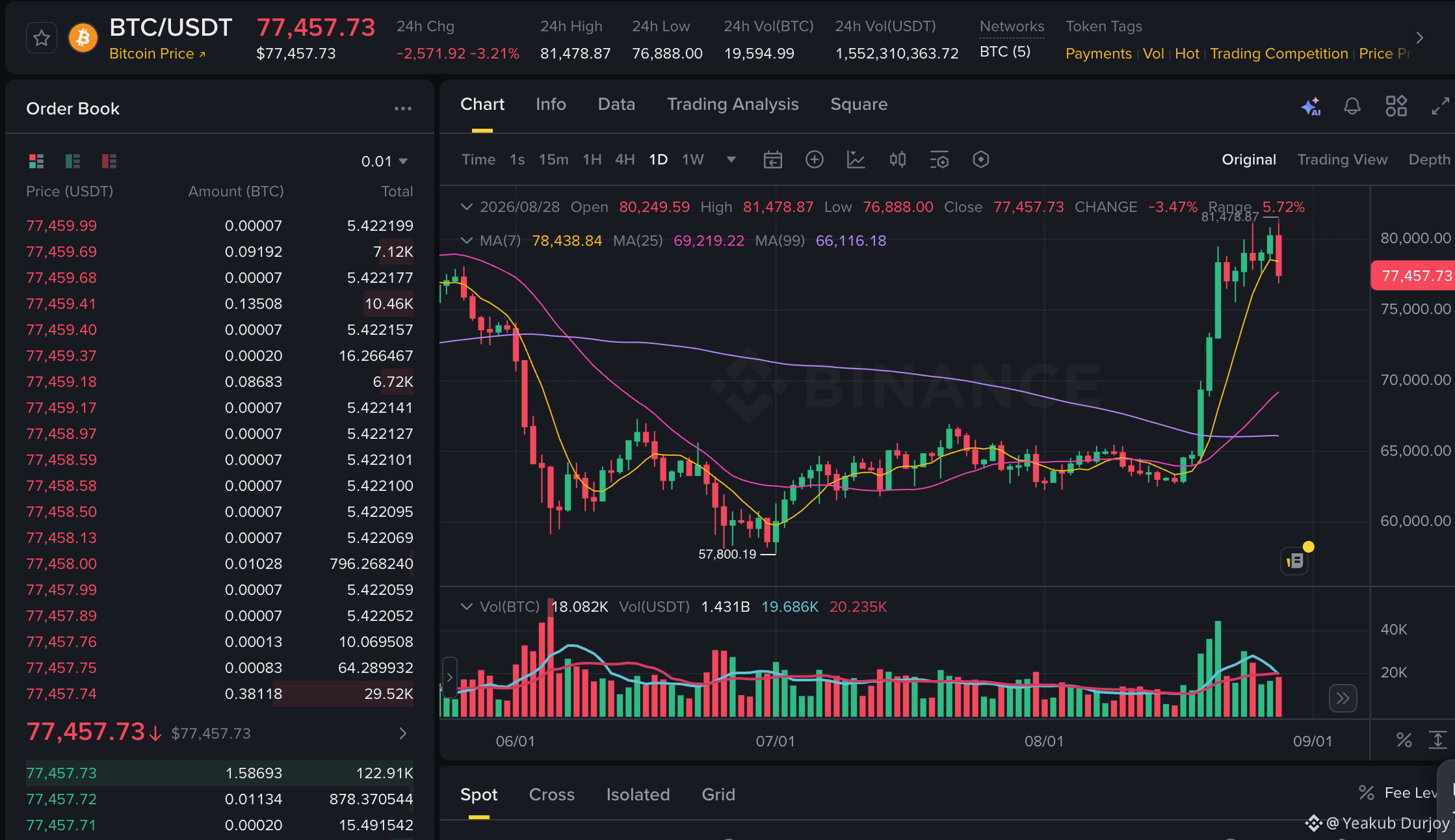
$BTC can still work as a long setup, but only if the pullback holds. Price is around 77,457, down 3.21% in 24h, and it is now sitting slightly below MA7 78,438, while still holding above MA25 69,219 and MA99 66,116.
Bias: Long on support hold
Entry zone: 76,900 to 77,800
Stop: below 75,800
TP1: 78,438
TP2: 80,000 to 80,500
TP3: 81,478 to 83,000 if buyers regain momentum
The reason I would still keep BTC on the long side is that the broader breakout structure is not broken yet. The drop from 81,478 to the 77K area looks more like a pullback after a strong move, not a full trend reversal. But the key is MA7. If BTC reclaims 78,438, the long setup becomes much cleaner. If it loses 75,800, I would step back because the pullback could extend deeper before any new upside attempt.
{future}(BTCUSDT)
$BTC can still work as a long setup, but only if the pullback holds. Price is around 77,457, down 3.21% in 24h, and it is now sitting slightly below MA7 78,438, while still holding above MA25 69,219 and MA99 66,116.
Bias: Long on support hold
Entry zone: 76,900 to 77,800
Stop: below 75,800
TP1: 78,438
TP2: 80,000 to 80,500
TP3: 81,478 to 83,000 if buyers regain momentum
The reason I would still keep BTC on the long side is that the broader breakout structure is not broken yet. The drop from 81,478 to the 77K area looks more like a pullback after a strong move, not a full trend reversal. But the key is MA7. If BTC reclaims 78,438, the long setup becomes much cleaner. If it loses 75,800, I would step back because the pullback could extend deeper before any new upside attempt.
Bias: Long on support hold
Entry zone: 76,900 to 77,800
Stop: below 75,800
TP1: 78,438
TP2: 80,000 to 80,500
TP3: 81,478 to 83,000 if buyers regain momentum
The reason I would still keep BTC on the long side is that the broader breakout structure is not broken yet. The drop from 81,478 to the 77K area looks more like a pullback after a strong move, not a full trend reversal. But the key is MA7. If BTC reclaims 78,438, the long setup becomes much cleaner. If it loses 75,800, I would step back because the pullback could extend deeper before any new upside attempt.
1
1.1k
Войдите, чтобы посмотреть больше материала
Присоединяйтесь к пользователям криптовалют по всему миру на Binance Square
⚡️ Получайте новейшую и полезную информацию о криптоактивах.
💬 Нам доверяет крупнейшая в мире криптобиржа.
👍 Получите достоверные аналитические данные от верифицированных создателей контента.
Эл. почта/номер телефона
В тренде
BinancePick
Просмотров: 3.3M
163,694 обсуждают
Join #EarningsSeason: Predict Earnings on Binance Pick, Share Your Take on Binance Square!
Binance Square Official
·Лайков: 418
·Просмотров: 345.1k
EarningsSeason
Просмотров: 5.4M
26,769 обсуждают
StrategySkipsBitcoinPurchasesSpends$205MOnSTRCBuybacks
Просмотров: 485
23 обсуждают