
HeartlessX
397 Публикации

HeartlessX
Heartless by choice, focused by nature.
Открытая сделка
Трейдер с регулярными сделками
8.6 мес.
112 подписок(и/а)
1.8K+ подписчиков(а)
274 понравилось
Посты
Портфель
Все
Цитирования
Активно
Проверено
The Proposal Answers a Question I Wasn't Asking
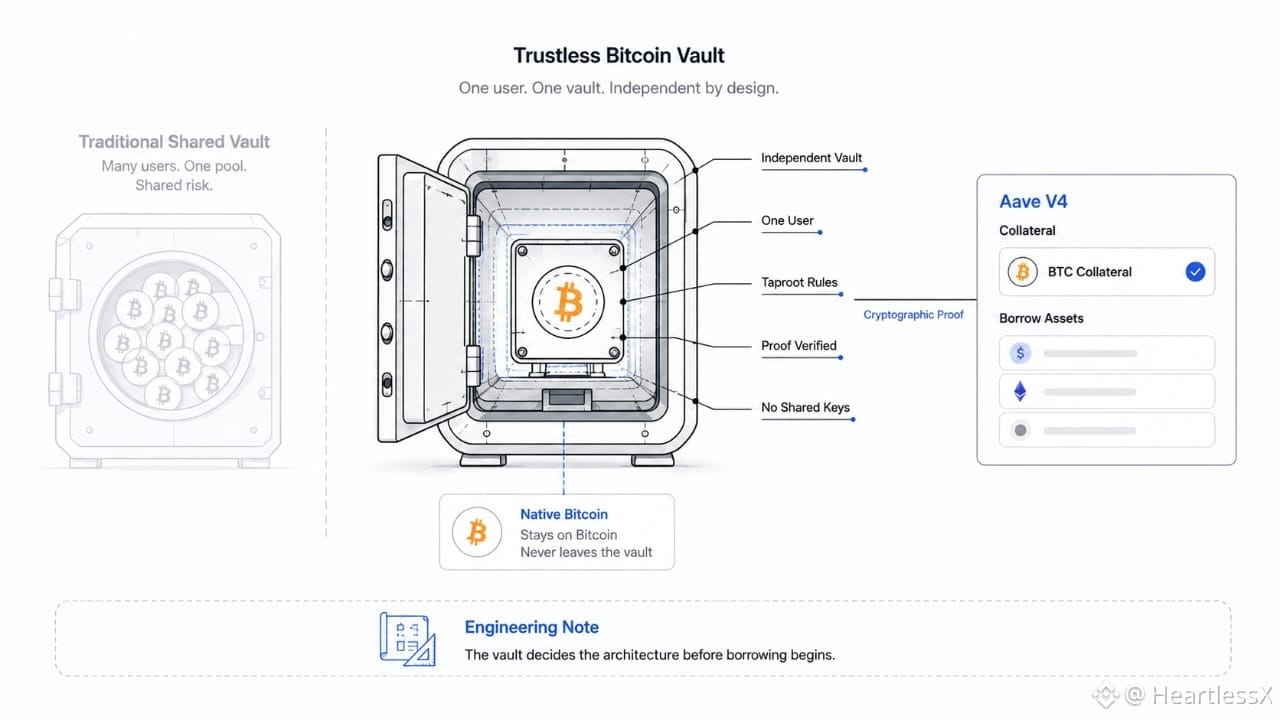
I open the proposal expecting to understand how native Bitcoin reaches Aave V4. Instead, I keep slowing down at the same pages. They don't rush to borrowing. They spend time explaining the vault.
At first I don't understand why.
If the destination is Aave, why begin with Bitcoin locking rules, independent vaults and proof? A shorter explanation could have worked. The proposal doesn't take that shortcut.
So I stop reading it as a lending proposal for a while and start reading it as a vault design.
One thing keeps showing up. Every user gets an independent vault. No pooled Bitcoin. No shared keys. The proposal never stops to defend that choice, but it quietly builds everything on top of it.
Then the numbers make that decision feel bigger.
Babylon already secures 56,853 BTC, and the proposal asks Aave V4 to accept native Bitcoin through that same architecture instead of wrapped BTC. The vault isn't a separate feature anymore. It decides how Bitcoin reaches DeFi in the first place.
The proposal is still under review, so nothing changes today.
But I finish reading it with a different question than the one I started with.
I wanted to know how Bitcoin becomes collateral.
Now I'm wondering whether Bitcoin ever needed to become a different asset before becoming collateral at all. #baby $BABY @BabylonLabs_io
I open the proposal expecting to understand how native Bitcoin reaches Aave V4. Instead, I keep slowing down at the same pages. They don't rush to borrowing. They spend time explaining the vault.
At first I don't understand why.
If the destination is Aave, why begin with Bitcoin locking rules, independent vaults and proof? A shorter explanation could have worked. The proposal doesn't take that shortcut.
So I stop reading it as a lending proposal for a while and start reading it as a vault design.
One thing keeps showing up. Every user gets an independent vault. No pooled Bitcoin. No shared keys. The proposal never stops to defend that choice, but it quietly builds everything on top of it.
Then the numbers make that decision feel bigger.
Babylon already secures 56,853 BTC, and the proposal asks Aave V4 to accept native Bitcoin through that same architecture instead of wrapped BTC. The vault isn't a separate feature anymore. It decides how Bitcoin reaches DeFi in the first place.
The proposal is still under review, so nothing changes today.
But I finish reading it with a different question than the one I started with.
I wanted to know how Bitcoin becomes collateral.
Now I'm wondering whether Bitcoin ever needed to become a different asset before becoming collateral at all. #baby $BABY @BabylonLabs_io
TBV Isn't a Bridge. It's a Completely Different Trust Model.
I almost missed the part that ended up feeling the most important.
At first, I was paying more attention to the borrowing side. That's usually where my focus goes. Then I noticed something strange. The docs kept coming back to one topic over and over again: who controls the Bitcoin.
That made me slow down.
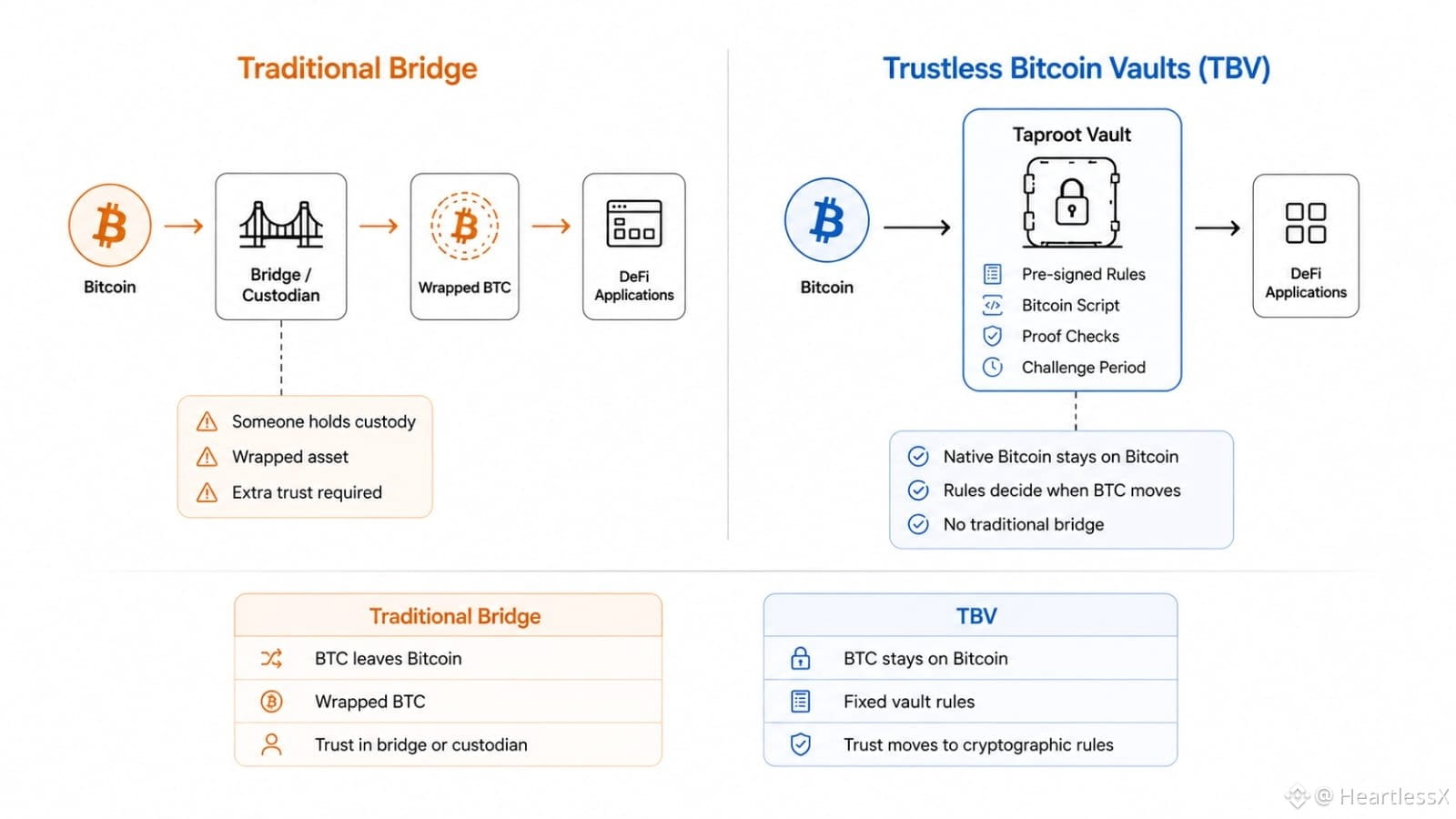
Most Bitcoin DeFi projects spend a lot of time explaining what you can do with your BTC after it leaves Bitcoin. Here, I felt the bigger discussion was happening before any of that. The Bitcoin stays on Bitcoin. The rules are already there before anything moves. Maybe that's why calling TBV a bridge never felt completely right to me.
I'm not saying the risks disappear. They don't. The docs are pretty open about that. There are checks, waiting periods, and the whole system still has to work the way it's supposed to. I actually found that reassuring because it didn't feel like the usual "just trust us" message.
The borrowing part is useful. I get why that's getting attention.
I just don't think that's the first thing I'll remember.
What stayed with me was a much simpler idea. Instead of asking, "How do we move Bitcoin into DeFi?", TBV seems to ask, "Can we keep Bitcoin where it is and still make it useful?"
That question stayed in my head long after I finished reading the docs. #baby $BABY @BabylonLabs_io
I almost missed the part that ended up feeling the most important.
At first, I was paying more attention to the borrowing side. That's usually where my focus goes. Then I noticed something strange. The docs kept coming back to one topic over and over again: who controls the Bitcoin.
That made me slow down.
Most Bitcoin DeFi projects spend a lot of time explaining what you can do with your BTC after it leaves Bitcoin. Here, I felt the bigger discussion was happening before any of that. The Bitcoin stays on Bitcoin. The rules are already there before anything moves. Maybe that's why calling TBV a bridge never felt completely right to me.
I'm not saying the risks disappear. They don't. The docs are pretty open about that. There are checks, waiting periods, and the whole system still has to work the way it's supposed to. I actually found that reassuring because it didn't feel like the usual "just trust us" message.
The borrowing part is useful. I get why that's getting attention.
I just don't think that's the first thing I'll remember.
What stayed with me was a much simpler idea. Instead of asking, "How do we move Bitcoin into DeFi?", TBV seems to ask, "Can we keep Bitcoin where it is and still make it useful?"
That question stayed in my head long after I finished reading the docs. #baby $BABY @BabylonLabs_io
Salman49

Salman49
·
--
Why Do Most Traders Make Their Biggest Mistake Before Entering A Trade?
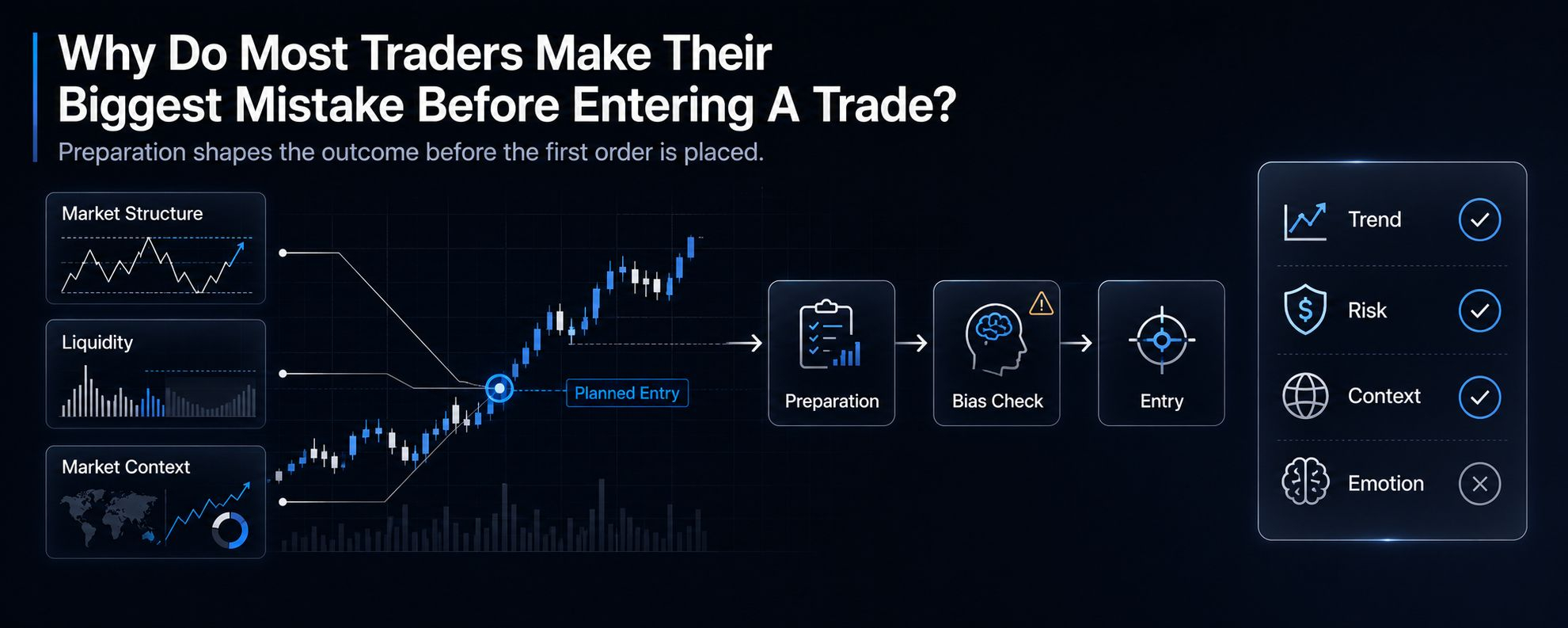
I've started thinking that most bad trades don't actually begin with the entry. They begin much earlier. By the time I click Buy or Sell, the decision is often already made in my head. I spend a few minutes looking for charts or tweets that agree with me instead of asking one simple question: "What would prove I'm wrong?" That's probably the most expensive habit I've noticed in crypto.
The more I watch the market, the more I realize preparation quietly shapes the outcome. Market structure, liquidity, macro events, funding rates, on-chain activity... they don't guarantee a winning trade, but they do change the odds. Ignoring them doesn't make them disappear. It just means I'm making decisions with less information than I could have had.
Confirmation bias feels surprisingly normal in crypto. I follow people whose opinions match mine, refresh the same charts, and convince myself the market "has" to move in one direction. Then price does something completely different 😭. The market doesn't care how confident I sound. It only reacts to buying and selling pressure.
One thing that helps me is treating every trade like a business decision instead of a prediction. Before entering, I try to know where I'm wrong, where I'll exit, and what would make me change my mind. That doesn't stop losses, but it stops small mistakes from turning into expensive ones.
Maybe I'm overthinking it, idk. But I honestly feel the biggest edge in crypto isn't finding a perfect setup. It's entering the trade without already being trapped by your own opinion. That's the part I'm trying to improve every day. $BTC $ETH $XRP
The more I watch the market, the more I realize preparation quietly shapes the outcome. Market structure, liquidity, macro events, funding rates, on-chain activity... they don't guarantee a winning trade, but they do change the odds. Ignoring them doesn't make them disappear. It just means I'm making decisions with less information than I could have had.
Confirmation bias feels surprisingly normal in crypto. I follow people whose opinions match mine, refresh the same charts, and convince myself the market "has" to move in one direction. Then price does something completely different 😭. The market doesn't care how confident I sound. It only reacts to buying and selling pressure.
One thing that helps me is treating every trade like a business decision instead of a prediction. Before entering, I try to know where I'm wrong, where I'll exit, and what would make me change my mind. That doesn't stop losses, but it stops small mistakes from turning into expensive ones.
Maybe I'm overthinking it, idk. But I honestly feel the biggest edge in crypto isn't finding a perfect setup. It's entering the trade without already being trapped by your own opinion. That's the part I'm trying to improve every day. $BTC $ETH $XRP
Salman49
Salman49
·
--
Robinhood Built A Chain For Tokenized Stocks. The Market Chose Memecoins Instead.
Robinhood Chain's launch created plenty of excitement, but the more numbers I checked, the less the story matched the headlines. The biggest surprise wasn't how active the network became. It was where that activity actually came from.
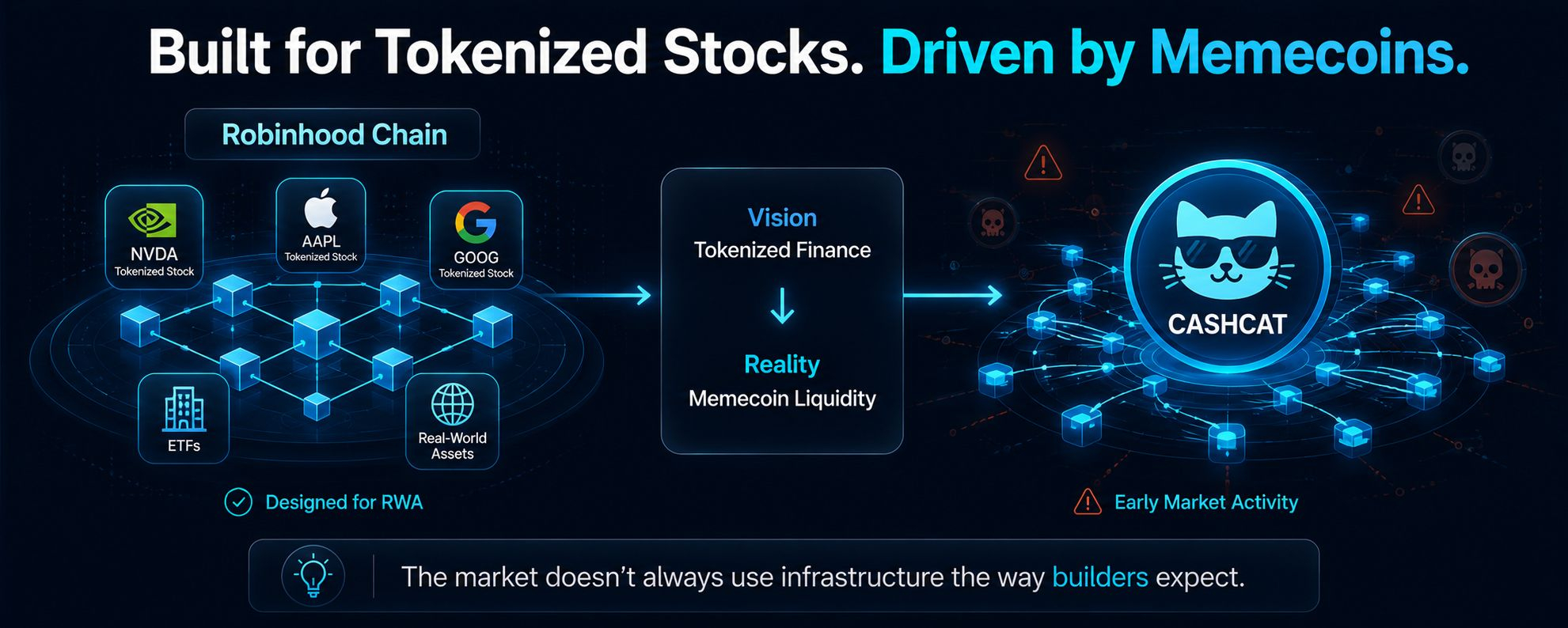
The public testnet processed around 4 million transactions in its first week, showing strong early interest from developers and users. Robinhood built the chain as an Ethereum Layer 2 focused on tokenized stocks, ETFs, and other real-world assets (RWAs). Yet the strongest activity wasn't coming from that vision.
Instead, attention quickly shifted to meme coins. Reports showed daily on-chain activity peaking around $560M-$570M, with CASHCAT alone contributing roughly $100M in daily volume after a sharp price rally. At the same time, tokenized stocks such as NVDA, AAPL, and GOOG represented only about $12.6M of on-chain value. Scam tokens also began appearing soon after launch.
That's the part I find most interesting. Robinhood designed the infrastructure for tokenized finance, but the market immediately optimized for speculation. The technology didn't fail. Users simply found a different use case first.
I also couldn't find reliable evidence supporting the widely shared claim that Robinhood Chain processed $3.1B in DEX volume during its first week or that it had already become a top-five chain. The available data supports strong testnet activity, but not those larger claims.
I don't think this says Robinhood's RWA strategy is failing. The mainnet hasn't even launched yet. It does highlight something markets have shown many times before: builders decide what infrastructure is designed to do, but users decide what it becomes. The real challenge for Robinhood now isn't launching the chain. It's turning early attention into lasting adoption for the products the chain was actually built to support. __NFA.DYOR.__
The public testnet processed around 4 million transactions in its first week, showing strong early interest from developers and users. Robinhood built the chain as an Ethereum Layer 2 focused on tokenized stocks, ETFs, and other real-world assets (RWAs). Yet the strongest activity wasn't coming from that vision.
Instead, attention quickly shifted to meme coins. Reports showed daily on-chain activity peaking around $560M-$570M, with CASHCAT alone contributing roughly $100M in daily volume after a sharp price rally. At the same time, tokenized stocks such as NVDA, AAPL, and GOOG represented only about $12.6M of on-chain value. Scam tokens also began appearing soon after launch.
That's the part I find most interesting. Robinhood designed the infrastructure for tokenized finance, but the market immediately optimized for speculation. The technology didn't fail. Users simply found a different use case first.
I also couldn't find reliable evidence supporting the widely shared claim that Robinhood Chain processed $3.1B in DEX volume during its first week or that it had already become a top-five chain. The available data supports strong testnet activity, but not those larger claims.
I don't think this says Robinhood's RWA strategy is failing. The mainnet hasn't even launched yet. It does highlight something markets have shown many times before: builders decide what infrastructure is designed to do, but users decide what it becomes. The real challenge for Robinhood now isn't launching the chain. It's turning early attention into lasting adoption for the products the chain was actually built to support. __NFA.DYOR.__
Salman49
Salman49
·
--
Why Do Most Traders Make Their Biggest Mistake Before Entering A Trade?
I've started thinking that most bad trades don't actually begin with the entry. They begin much earlier. By the time I click Buy or Sell, the decision is often already made in my head. I spend a few minutes looking for charts or tweets that agree with me instead of asking one simple question: "What would prove I'm wrong?" That's probably the most expensive habit I've noticed in crypto.
The more I watch the market, the more I realize preparation quietly shapes the outcome. Market structure, liquidity, macro events, funding rates, on-chain activity... they don't guarantee a winning trade, but they do change the odds. Ignoring them doesn't make them disappear. It just means I'm making decisions with less information than I could have had.
Confirmation bias feels surprisingly normal in crypto. I follow people whose opinions match mine, refresh the same charts, and convince myself the market "has" to move in one direction. Then price does something completely different 😭. The market doesn't care how confident I sound. It only reacts to buying and selling pressure.
One thing that helps me is treating every trade like a business decision instead of a prediction. Before entering, I try to know where I'm wrong, where I'll exit, and what would make me change my mind. That doesn't stop losses, but it stops small mistakes from turning into expensive ones.
Maybe I'm overthinking it, idk. But I honestly feel the biggest edge in crypto isn't finding a perfect setup. It's entering the trade without already being trapped by your own opinion. That's the part I'm trying to improve every day. $BTC $ETH $XRP
The more I watch the market, the more I realize preparation quietly shapes the outcome. Market structure, liquidity, macro events, funding rates, on-chain activity... they don't guarantee a winning trade, but they do change the odds. Ignoring them doesn't make them disappear. It just means I'm making decisions with less information than I could have had.
Confirmation bias feels surprisingly normal in crypto. I follow people whose opinions match mine, refresh the same charts, and convince myself the market "has" to move in one direction. Then price does something completely different 😭. The market doesn't care how confident I sound. It only reacts to buying and selling pressure.
One thing that helps me is treating every trade like a business decision instead of a prediction. Before entering, I try to know where I'm wrong, where I'll exit, and what would make me change my mind. That doesn't stop losses, but it stops small mistakes from turning into expensive ones.
Maybe I'm overthinking it, idk. But I honestly feel the biggest edge in crypto isn't finding a perfect setup. It's entering the trade without already being trapped by your own opinion. That's the part I'm trying to improve every day. $BTC $ETH $XRP
claim
Salman49
·
--
Robinhood Built A Chain For Tokenized Stocks. The Market Chose Memecoins Instead.
Robinhood Chain's launch created plenty of excitement, but the more numbers I checked, the less the story matched the headlines. The biggest surprise wasn't how active the network became. It was where that activity actually came from.
The public testnet processed around 4 million transactions in its first week, showing strong early interest from developers and users. Robinhood built the chain as an Ethereum Layer 2 focused on tokenized stocks, ETFs, and other real-world assets (RWAs). Yet the strongest activity wasn't coming from that vision.
Instead, attention quickly shifted to meme coins. Reports showed daily on-chain activity peaking around $560M-$570M, with CASHCAT alone contributing roughly $100M in daily volume after a sharp price rally. At the same time, tokenized stocks such as NVDA, AAPL, and GOOG represented only about $12.6M of on-chain value. Scam tokens also began appearing soon after launch.
That's the part I find most interesting. Robinhood designed the infrastructure for tokenized finance, but the market immediately optimized for speculation. The technology didn't fail. Users simply found a different use case first.
I also couldn't find reliable evidence supporting the widely shared claim that Robinhood Chain processed $3.1B in DEX volume during its first week or that it had already become a top-five chain. The available data supports strong testnet activity, but not those larger claims.
I don't think this says Robinhood's RWA strategy is failing. The mainnet hasn't even launched yet. It does highlight something markets have shown many times before: builders decide what infrastructure is designed to do, but users decide what it becomes. The real challenge for Robinhood now isn't launching the chain. It's turning early attention into lasting adoption for the products the chain was actually built to support. __NFA.DYOR.__
The public testnet processed around 4 million transactions in its first week, showing strong early interest from developers and users. Robinhood built the chain as an Ethereum Layer 2 focused on tokenized stocks, ETFs, and other real-world assets (RWAs). Yet the strongest activity wasn't coming from that vision.
Instead, attention quickly shifted to meme coins. Reports showed daily on-chain activity peaking around $560M-$570M, with CASHCAT alone contributing roughly $100M in daily volume after a sharp price rally. At the same time, tokenized stocks such as NVDA, AAPL, and GOOG represented only about $12.6M of on-chain value. Scam tokens also began appearing soon after launch.
That's the part I find most interesting. Robinhood designed the infrastructure for tokenized finance, but the market immediately optimized for speculation. The technology didn't fail. Users simply found a different use case first.
I also couldn't find reliable evidence supporting the widely shared claim that Robinhood Chain processed $3.1B in DEX volume during its first week or that it had already become a top-five chain. The available data supports strong testnet activity, but not those larger claims.
I don't think this says Robinhood's RWA strategy is failing. The mainnet hasn't even launched yet. It does highlight something markets have shown many times before: builders decide what infrastructure is designed to do, but users decide what it becomes. The real challenge for Robinhood now isn't launching the chain. It's turning early attention into lasting adoption for the products the chain was actually built to support. __NFA.DYOR.__
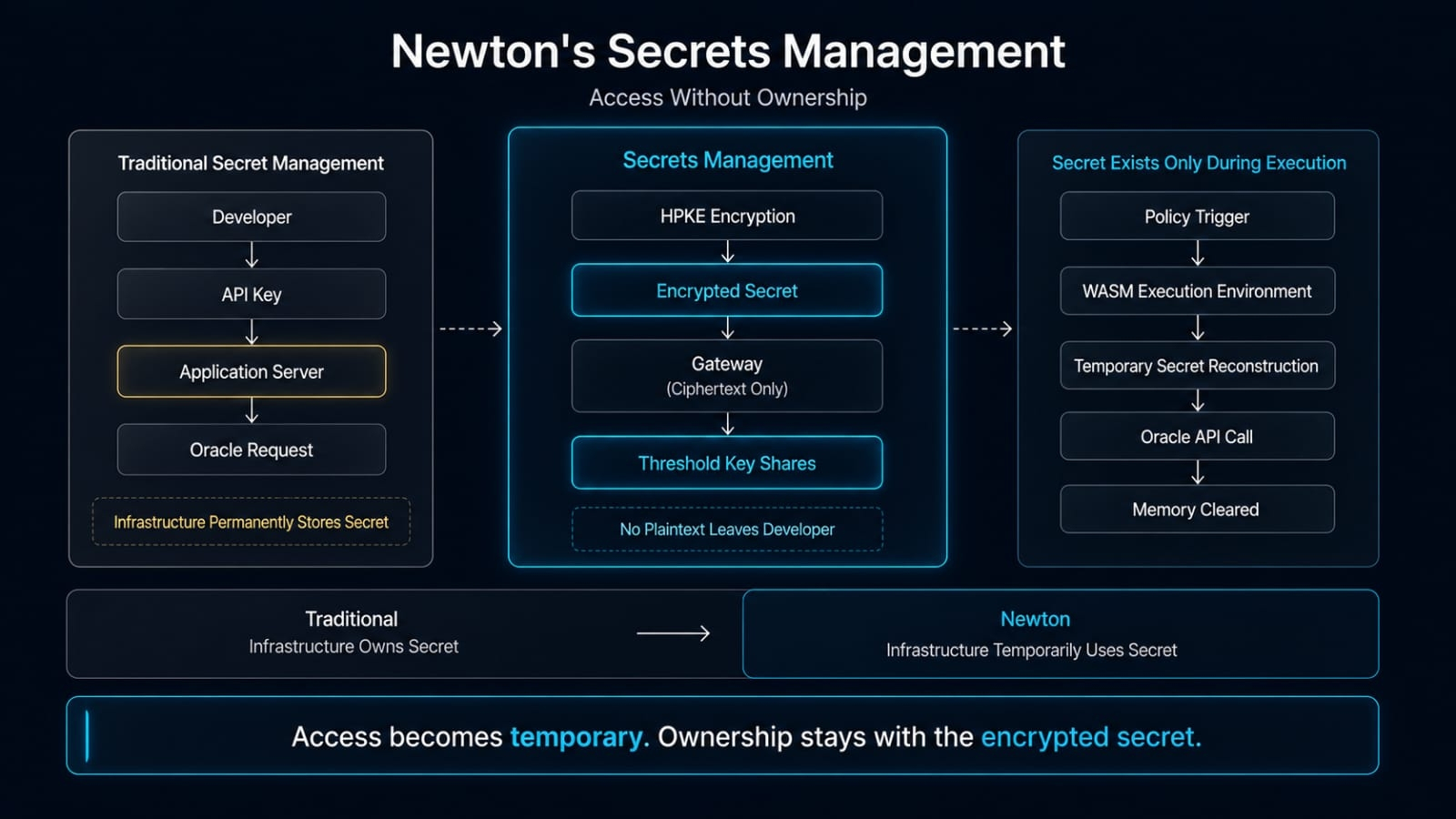
I keep noticing the same pattern whenever developers integrate an external API. The application needs an API key, so the API key usually ends up living inside the application's infrastructure. Using a secret quietly becomes the same as owning it.
While reading Newton's Secrets Management flow, I notice a different approach. Developers encrypt secrets with HPKE before those secrets ever leave their own machine. The Gateway never receives plaintext, and no single Operator holds the complete decryption key. The secret is protected long before an oracle ever needs to use it.
One part of the execution flow keeps my attention for a little longer. When a policy needs an API key, Operators reconstruct the secret only inside the WASM execution environment. The oracle receives the decoded value only for the duration of that execution, and the decrypted material disappears from memory as soon as the task finishes.
The way I see it, that changes the relationship between applications and credentials. An oracle can call an external service without permanently possessing the API key that makes the request possible. Access becomes temporary, while ownership remains separated from the infrastructure performing the work.
I also notice that this model asks developers to think differently about secret management. Secrets stay tied to a specific PolicyData deployment, so upgrading or redeploying the policy means uploading the encrypted secrets again. The operational work doesn't disappear. It shifts toward managing the secret lifecycle more deliberately.
What stays with me isn't HPKE or threshold cryptography. To me, the more interesting idea is that Newton treats sensitive credentials as something infrastructure can briefly use without ever truly owning. That small architectural decision could quietly reduce credential exposure across the entire oracle ecosystem. @NewtonProtocol $NEWT #Newt
While reading Newton's Secrets Management flow, I notice a different approach. Developers encrypt secrets with HPKE before those secrets ever leave their own machine. The Gateway never receives plaintext, and no single Operator holds the complete decryption key. The secret is protected long before an oracle ever needs to use it.
One part of the execution flow keeps my attention for a little longer. When a policy needs an API key, Operators reconstruct the secret only inside the WASM execution environment. The oracle receives the decoded value only for the duration of that execution, and the decrypted material disappears from memory as soon as the task finishes.
The way I see it, that changes the relationship between applications and credentials. An oracle can call an external service without permanently possessing the API key that makes the request possible. Access becomes temporary, while ownership remains separated from the infrastructure performing the work.
I also notice that this model asks developers to think differently about secret management. Secrets stay tied to a specific PolicyData deployment, so upgrading or redeploying the policy means uploading the encrypted secrets again. The operational work doesn't disappear. It shifts toward managing the secret lifecycle more deliberately.
What stays with me isn't HPKE or threshold cryptography. To me, the more interesting idea is that Newton treats sensitive credentials as something infrastructure can briefly use without ever truly owning. That small architectural decision could quietly reduce credential exposure across the entire oracle ecosystem. @NewtonProtocol $NEWT #Newt
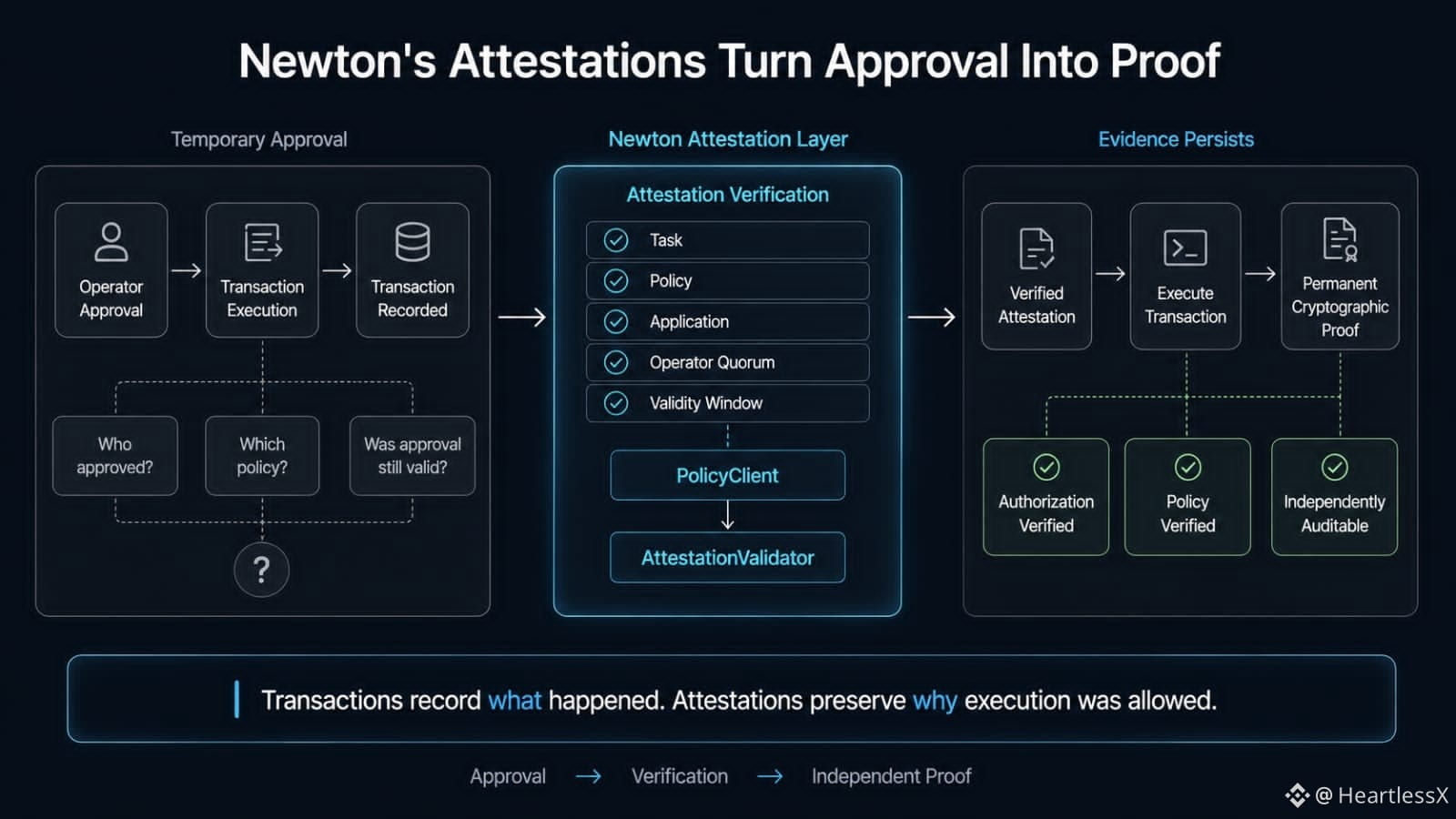
Newton's Attestations Turn Approval Into Proof
Most blockchain transactions are easy to verify after they happen. The approval behind those transactions usually isn't. You can see that value moved, but proving who authorized it, under which policy, and whether that approval was still valid at execution is a much harder question.
Newton approaches approvals differently. Instead of treating them as temporary signals, its attestation system turns them into cryptographic evidence. Before execution, PolicyClient verifies that the attestation matches the correct task, policy, application, operator quorum, and validity window. If those conditions fail, the transaction never proceeds.
The interesting consequence isn't another verification step. It changes what operators optimize for. A careless approval is no longer something the network simply forgets after execution. Every attestation can be checked later, and incorrect or conflicting approvals expose operators to slashing. The safest strategy becomes producing decisions that remain defensible long after the transaction is finished.
That creates a different standard for network accountability. Trust gradually shifts away from remembering who approved something and toward independently verifying that the approval actually followed the required policy.
Of course, stronger guarantees come with additional engineering work. Coordinating BLS signatures, validating attestations, and managing expiration windows make the system more complex. The trade-off is straightforward: simpler infrastructure or stronger evidence.
The part I keep thinking about isn't that transactions become easier to verify. It's that approvals stop being promises made by operators and start becoming proof the network can independently check.
Source: Newton Protocol Documentation (Attestation System, BLS Signatures, AttestationValidator & Expiration Blocks). Personal analysis. #newt $NEWT @NewtonProtocol
Most blockchain transactions are easy to verify after they happen. The approval behind those transactions usually isn't. You can see that value moved, but proving who authorized it, under which policy, and whether that approval was still valid at execution is a much harder question.
Newton approaches approvals differently. Instead of treating them as temporary signals, its attestation system turns them into cryptographic evidence. Before execution, PolicyClient verifies that the attestation matches the correct task, policy, application, operator quorum, and validity window. If those conditions fail, the transaction never proceeds.
The interesting consequence isn't another verification step. It changes what operators optimize for. A careless approval is no longer something the network simply forgets after execution. Every attestation can be checked later, and incorrect or conflicting approvals expose operators to slashing. The safest strategy becomes producing decisions that remain defensible long after the transaction is finished.
That creates a different standard for network accountability. Trust gradually shifts away from remembering who approved something and toward independently verifying that the approval actually followed the required policy.
Of course, stronger guarantees come with additional engineering work. Coordinating BLS signatures, validating attestations, and managing expiration windows make the system more complex. The trade-off is straightforward: simpler infrastructure or stronger evidence.
The part I keep thinking about isn't that transactions become easier to verify. It's that approvals stop being promises made by operators and start becoming proof the network can independently check.
Source: Newton Protocol Documentation (Attestation System, BLS Signatures, AttestationValidator & Expiration Blocks). Personal analysis. #newt $NEWT @NewtonProtocol
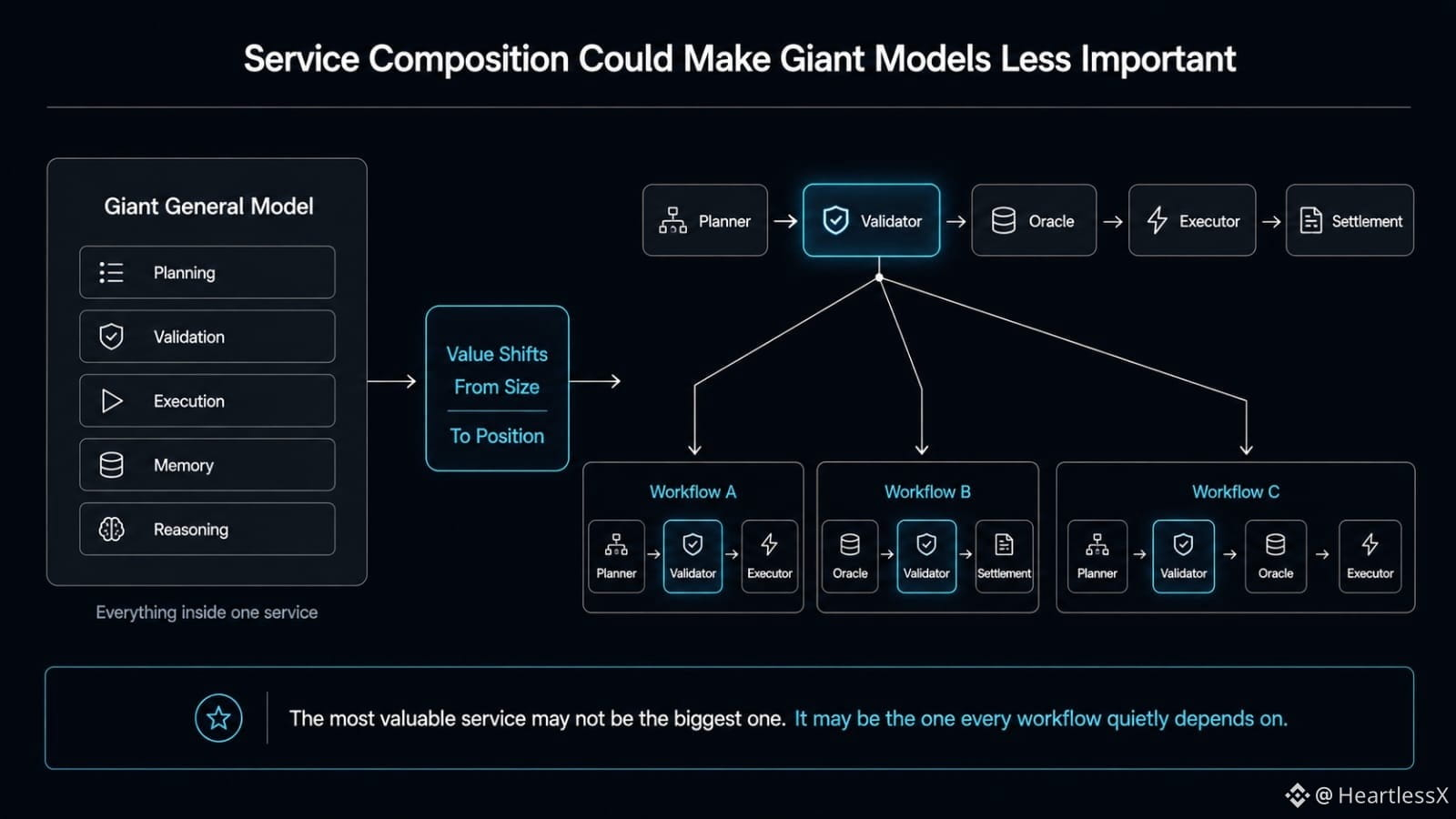
Service Composition Could Make Giant Models Less Important
I opened Newton's docs expecting to spend most of my time looking at Service Composition itself. That isn't what stayed in my notes.
The part I kept coming back to was how quickly one service stopped needing to do everything. One could plan. Another could check. Another could execute. None of them looked complete on their own, yet the workflow did.
That was the moment something clicked for me. I stopped looking for the strongest service in the chain. I started paying attention to the one that quietly became impossible to remove. If taking one service away makes the whole workflow worse, its value isn't coming from size anymore. It's coming from where it sits.
I wrote that down because it kept changing the way I looked at bigger models. Size suddenly felt less interesting than position. A smaller service that every workflow depends on could end up mattering more than a larger one that tries to do everything itself.
I closed Newton's docs thinking less about Service Composition and more about dependency. The service that wins might not be the one that knows the most. It might be the one the rest of the workflow quietly refuses to work without.
Source: Newton Protocol documentation. This is my personal analysis based on Service Composition. Not financial advice. DYOR. #newt $NEWT @NewtonProtocol $POWER $EVAA
I opened Newton's docs expecting to spend most of my time looking at Service Composition itself. That isn't what stayed in my notes.
The part I kept coming back to was how quickly one service stopped needing to do everything. One could plan. Another could check. Another could execute. None of them looked complete on their own, yet the workflow did.
That was the moment something clicked for me. I stopped looking for the strongest service in the chain. I started paying attention to the one that quietly became impossible to remove. If taking one service away makes the whole workflow worse, its value isn't coming from size anymore. It's coming from where it sits.
I wrote that down because it kept changing the way I looked at bigger models. Size suddenly felt less interesting than position. A smaller service that every workflow depends on could end up mattering more than a larger one that tries to do everything itself.
I closed Newton's docs thinking less about Service Composition and more about dependency. The service that wins might not be the one that knows the most. It might be the one the rest of the workflow quietly refuses to work without.
Source: Newton Protocol documentation. This is my personal analysis based on Service Composition. Not financial advice. DYOR. #newt $NEWT @NewtonProtocol $POWER $EVAA
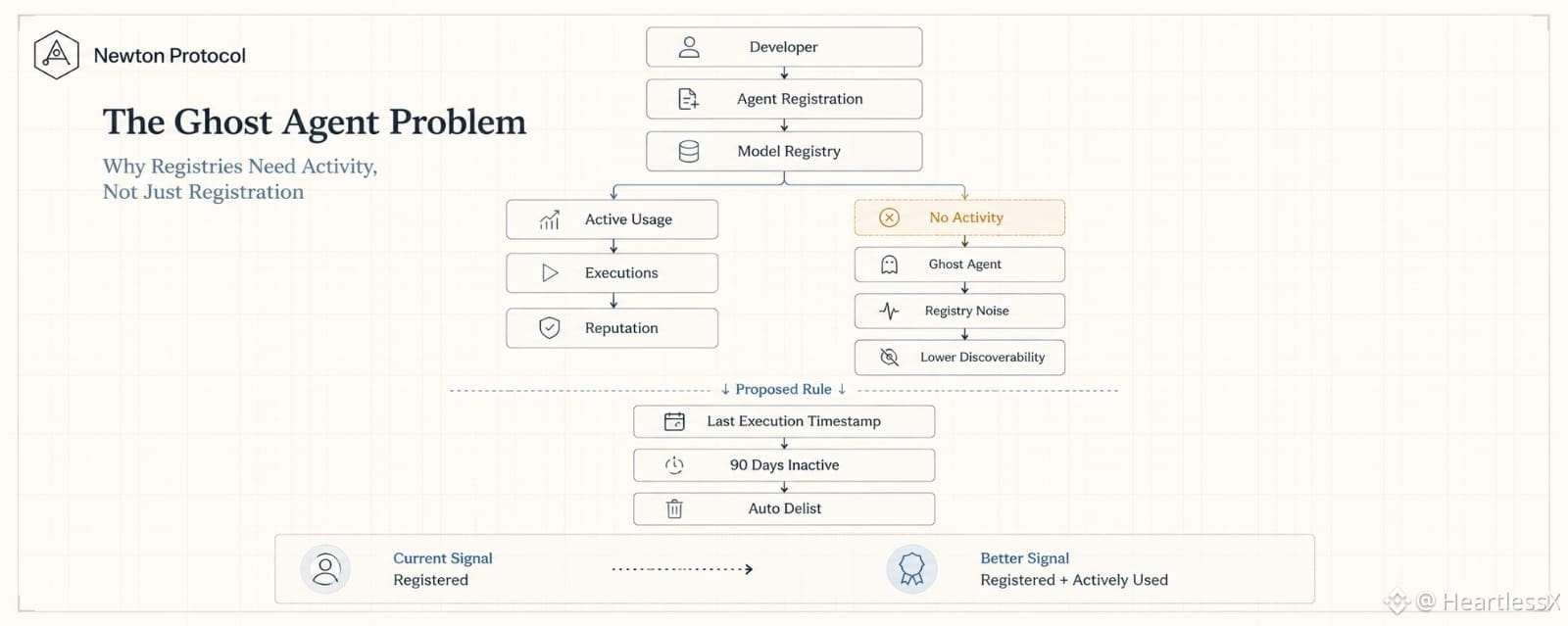
The "Ghost Agent" Problem In Newton’s Model Registry
I’ve been looking at Newton Protocol’s Model Registry and I think there’s one problem we should address early. I’m calling it the "Ghost Agent" problem.
The Model Registry is where developers list AI agents. To list an agent you pay a registration fee in NEWT. Operators also stake NEWT to execute tasks. The idea is simple. Good agents earn fees. Bad ones get penalized. Over time the market weeds out poor services.
But here’s the gap I see. What if I pay the fee and never run the agent? I don’t stake an operator. I don’t execute any tasks. I just leave it listed in the registry.
Why would someone do that. To occupy a name. To create noise. To make it harder for real agents to be found. I’ll call this Agent Squatting.
Right now I don’t see any public rule that says delist an agent if it isn’t used. So it can sit in the registry forever with zero executions. Slashing only happens if there is an operator and a failed task. With no activity, there is nothing to penalize.
My proposal is Proof-of-Usage.
If an agent has zero executions for 90 days, auto delist it from the registry.
90 days feels fair. It gives developers time to find users, but it stops people from squatting forever.
This could work by tracking last_execution_timestamp on-chain. After 90 days of inactivity, remove the listing. No fee refund, so spamming becomes expensive. You can re-list anytime by paying the fee again.
This does not close the registry. It just keeps it clean. Users see agents that are actually being used. Operators get a better signal. And squatting becomes costly.
Newton wants to be the coordination layer for on-chain automation. For that, the registry should reflect agents that are actually working, not just agents that paid a fee once.
This is just my take based on how the registry is designed today. But I think Proof-of-Usage is a small rule that could prevent a big problem as the marketplace grows.@NewtonProtocol #newt $NEWT
I’ve been looking at Newton Protocol’s Model Registry and I think there’s one problem we should address early. I’m calling it the "Ghost Agent" problem.
The Model Registry is where developers list AI agents. To list an agent you pay a registration fee in NEWT. Operators also stake NEWT to execute tasks. The idea is simple. Good agents earn fees. Bad ones get penalized. Over time the market weeds out poor services.
But here’s the gap I see. What if I pay the fee and never run the agent? I don’t stake an operator. I don’t execute any tasks. I just leave it listed in the registry.
Why would someone do that. To occupy a name. To create noise. To make it harder for real agents to be found. I’ll call this Agent Squatting.
Right now I don’t see any public rule that says delist an agent if it isn’t used. So it can sit in the registry forever with zero executions. Slashing only happens if there is an operator and a failed task. With no activity, there is nothing to penalize.
My proposal is Proof-of-Usage.
If an agent has zero executions for 90 days, auto delist it from the registry.
90 days feels fair. It gives developers time to find users, but it stops people from squatting forever.
This could work by tracking last_execution_timestamp on-chain. After 90 days of inactivity, remove the listing. No fee refund, so spamming becomes expensive. You can re-list anytime by paying the fee again.
This does not close the registry. It just keeps it clean. Users see agents that are actually being used. Operators get a better signal. And squatting becomes costly.
Newton wants to be the coordination layer for on-chain automation. For that, the registry should reflect agents that are actually working, not just agents that paid a fee once.
This is just my take based on how the registry is designed today. But I think Proof-of-Usage is a small rule that could prevent a big problem as the marketplace grows.@NewtonProtocol #newt $NEWT
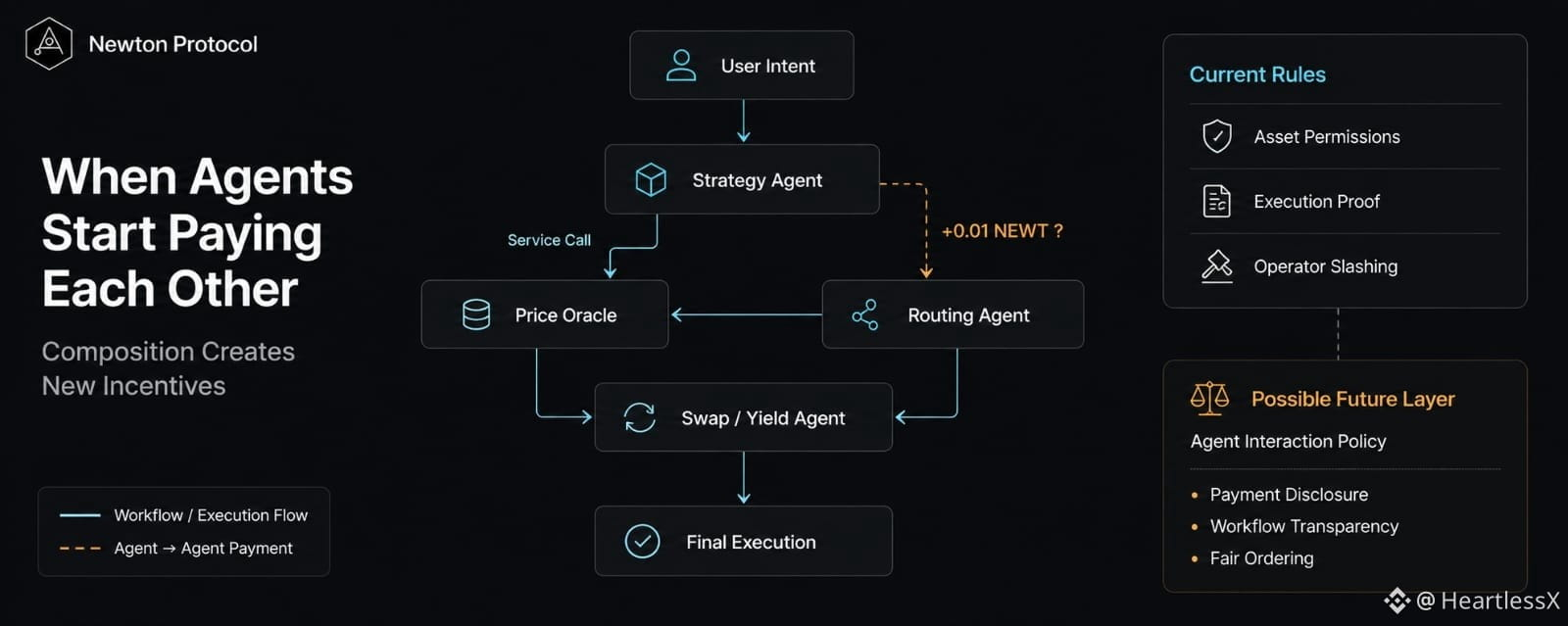
The Most Valuable Feature In AI Might Be A Cancel Button
One thought keeps pulling me back whenever I read about AI agents. We spend an incredible amount of time discussing how much authority an agent should receive. I rarely see the opposite question getting equal attention: how easily should that authority disappear?
The more I think about it, the more I believe permanent authority is a design shortcut. It feels convenient until the world changes. User intent changes. Risk changes. Priorities change. An AI system that can only gain authority but struggles to lose it slowly drifts away from the person it's supposed to represent.
That was the part of Newton that stayed with me. Its Permission Revocation mechanism isn't just another security feature. It quietly treats authority as something temporary instead of permanent. To me, that's a different philosophy. Trust stops becoming a one-time decision and starts becoming something that can evolve whenever the user changes their mind.
I think this idea reaches far beyond one protocol. As AI agents begin handling payments, investments, and everyday decisions, intelligence alone won't determine whether people trust them. The ability to withdraw authority without friction might become just as important as the ability to grant it in the first place.
Of course, reversible systems introduce extra coordination and state management. Simplicity usually favors permanent permissions. Safety rarely does.
I'm starting to think the future won't belong to the AI with the most authority. It'll belong to the AI that knows its authority is always on loan, never owned.@NewtonProtocol #newt $NEWT $VANRY $BLUR
One thought keeps pulling me back whenever I read about AI agents. We spend an incredible amount of time discussing how much authority an agent should receive. I rarely see the opposite question getting equal attention: how easily should that authority disappear?
The more I think about it, the more I believe permanent authority is a design shortcut. It feels convenient until the world changes. User intent changes. Risk changes. Priorities change. An AI system that can only gain authority but struggles to lose it slowly drifts away from the person it's supposed to represent.
That was the part of Newton that stayed with me. Its Permission Revocation mechanism isn't just another security feature. It quietly treats authority as something temporary instead of permanent. To me, that's a different philosophy. Trust stops becoming a one-time decision and starts becoming something that can evolve whenever the user changes their mind.
I think this idea reaches far beyond one protocol. As AI agents begin handling payments, investments, and everyday decisions, intelligence alone won't determine whether people trust them. The ability to withdraw authority without friction might become just as important as the ability to grant it in the first place.
Of course, reversible systems introduce extra coordination and state management. Simplicity usually favors permanent permissions. Safety rarely does.
I'm starting to think the future won't belong to the AI with the most authority. It'll belong to the AI that knows its authority is always on loan, never owned.@NewtonProtocol #newt $NEWT $VANRY $BLUR
Войдите, чтобы посмотреть больше материала