

GAS WOLF
9.1k Публикации

GAS WOLF
Отправить жалобу
Заблокировать пользователя
I’m driven by purpose. I’m building something bigger than a moment.https://x.com/GAS_WOLF786
Открытая сделка
Случайный трейдер
2 г
159 подписок(и/а)
22.1K+ подписчиков(а)
18.5K+ понравилось
Посты
Портфель
Все
Цитирования
Активно
·
--

Статья
A Halloween Night Full of Little Surprises 👻 | My Binance Halloween StoryHonestly, Halloween has a special kind of magic. It is not just about ghosts, scary costumes, or pumpkins with funny faces. For me, it is about using a little imagination, having fun, and turning simple things into something memorable.
Sometimes, you don't need an expensive costume or a big party to enjoy Halloween. A few decorations, some orange lights, a spooky story, and good company can be enough to create a great atmosphere. And that is what makes this time of year so interesting to me.
This Halloween, I wanted to try something a little different by combining the spooky spirit of Halloween with my interest in crypto and the Binance community. When I heard about the #SEAPumpkinFrenzy campaign on Binance Square, I thought it would be a fun opportunity to share a creative idea and connect with other members of the community. 🎃🟡
👻 If My Pumpkin Could Talk...
Imagine sitting in a room late at night with the lights turned low. There is a little pumpkin on the table, orange decorations around the room, and strange shadows moving across the wall. Everything seems normal until you suddenly hear a small noise.
You stop for a second and look around.
Nothing.
You go back to what you were doing, and then you hear it again. This time, you start wondering whether your imagination is playing tricks on you. Maybe it is just the wind, or perhaps Halloween is making everything feel a little scarier than usual.
Now imagine looking at the pumpkin and saying, "Okay, what are you trying to tell me?" 😂
Of course, the pumpkin won't answer. But that is the fun of Halloween. You can take an ordinary object and turn it into the beginning of a whole story.
If I were decorating my own Halloween corner, I would add a few handmade bats, warm orange lights, and a little spooky setup. I would also include a Binance-branded item in the picture, bringing together two things that make this campaign interesting: Halloween creativity and the crypto community.
Sometimes, the simplest ideas make the best photos. You just need to put a little thought into them.
🟡 Crypto, Community, and a Little Halloween Fun
Most of the time, the crypto world keeps us busy thinking about market movements, new projects, price changes, and what might happen next. There is always something to learn, and sometimes it can feel like there is never a quiet moment.
That is why I like the idea of a campaign that lets us do something different.
For a change, instead of looking at charts, we can share a funny costume, a creative pumpkin, a spooky memory, or a story that makes someone smile. Everyone has a different imagination, and I think that is what makes a community interesting.
One person might create a scary Halloween scene, while another might come up with something funny. Someone else might share a childhood memory or tell a story about being frightened by a harmless shadow in the middle of the night.
I think we can all relate to those little moments when something seems scary at first, but later becomes a funny memory.
And honestly, those are the kinds of stories I enjoy most. They don't have to be perfect. They just have to feel real.
🎃 My Little Halloween Idea
For my Halloween photo, I would love to create a simple scene with a pumpkin, orange and black decorations, and Binance branding that is clearly visible. I would keep the setup creative but natural, rather than making it look too perfect.
The idea is to capture the feeling of Halloween in one picture. A glowing pumpkin could represent the spooky side, while the Binance branding would connect it to the community celebration.
I would also like the photo to tell a small story without needing too many words. When someone sees it, I want them to feel the Halloween atmosphere and understand the idea behind it.
For me, that is what creativity is about. You don't always need the most expensive equipment or the fanciest decorations. Sometimes, a little effort and a good idea are all you need.
🏆 Celebrating Halloween with Binance SEAPumpkinFrenzy
The Binance SEAPumpkinFrenzy campaign gives eligible community members a chance to share their Halloween creativity on Binance Square and compete for a total prize pool of 600 USDC.
The campaign runs from 20 October to 30 October 2026. Participants must follow Binance Burmese on Square, join the relevant Binance Chat Group, publish an original Halloween-themed photo prominently featuring Binance branding, and write a story of at least 500 words using the hashtag SEAPumpkinFrenzy.
After publishing, participants must share their Binance Square post in their country's Binance Chat Group using the campaign hashtag. They also need to save the post link and a screenshot proving that they shared it in the group. The final step is to complete the official Binance survey with their Binance UID, country, post link, screenshot proof, and all required confirmations.
Here is the official submission form:
[https://app.binance.com/uni-qr/user-survey/05a9e616284c48c7be345609ada0c232](https://app.binance.com/uni-qr/user-survey/05a9e616284c48c7be345609ada0c232)
The prize distribution is:
🥇 Rank 1 — 90 USDC
🥈 Rank 2 — 45 USDC
🥉 Rank 3 — 40 USDC
🏅 Rank 4 — 35 USDC
🏅 Rank 5 — 30 USDC
🎁 Ranks 6–10 — 12 USDC each
🎁 Ranks 11–30 — 9 USDC each
🎁 Ranks 31–60 — 4 USDC each
Winners are selected according to post views (50%), content quality and originality (30%), and relevance to the campaign topic (20%). So, creating something interesting and original is important.
Participants must follow the campaign rules and community guidelines. Engagement must be organic, as posts boosted through Red Packets or giveaways may be disqualified. The campaign may not be available in every country, so eligibility should be checked before submitting.
According to the campaign terms, USDC Token Vouchers are expected to be distributed within 30 working days after the campaign ends. Winners must redeem their vouchers within 14 days of distribution.
One Last Thing...
At the end of the day, Halloween is about having fun, sharing stories, and letting our imagination run wild. Whether we win a prize or simply enjoy seeing everyone's creative ideas, taking part can be a nice way to connect with the community.
I'm looking forward to seeing the different Halloween creations people bring to Binance Square. There will probably be some spooky photos, some funny stories, and a few ideas that nobody would have thought of!
So, get your pumpkins ready, bring out your creative side, and let's make this Halloween a little more interesting together.
Happy Halloween, everyone! Stay creative, stay curious, and enjoy every spooky little moment.
#SEAPumpkinFrenzy #BinanceSquare #Halloween2026 #BinanceCommunity
$DODO
{spot}(DODOUSDT)
$APR
{alpha}(560x299ad4299da5b2b93fba4c96967b040c7f611099)
$CAP
{alpha}(560x99991c6aabba5a096f24f250b73580f5179b9999)
A Halloween Night Full of Little Surprises 👻 | My Binance Halloween Story
Honestly, Halloween has a special kind of magic. It is not just about ghosts, scary costumes, or pumpkins with funny faces. For me, it is about using a little imagination, having fun, and turning simple things into something memorable.
Sometimes, you don't need an expensive costume or a big party to enjoy Halloween. A few decorations, some orange lights, a spooky story, and good company can be enough to create a great atmosphere. And that is what makes this time of year so interesting to me.
This Halloween, I wanted to try something a little different by combining the spooky spirit of Halloween with my interest in crypto and the Binance community. When I heard about the #SEAPumpkinFrenzy campaign on Binance Square, I thought it would be a fun opportunity to share a creative idea and connect with other members of the community. 🎃🟡
👻 If My Pumpkin Could Talk...
Imagine sitting in a room late at night with the lights turned low. There is a little pumpkin on the table, orange decorations around the room, and strange shadows moving across the wall. Everything seems normal until you suddenly hear a small noise.
You stop for a second and look around.
Nothing.
You go back to what you were doing, and then you hear it again. This time, you start wondering whether your imagination is playing tricks on you. Maybe it is just the wind, or perhaps Halloween is making everything feel a little scarier than usual.
Now imagine looking at the pumpkin and saying, "Okay, what are you trying to tell me?" 😂
Of course, the pumpkin won't answer. But that is the fun of Halloween. You can take an ordinary object and turn it into the beginning of a whole story.
If I were decorating my own Halloween corner, I would add a few handmade bats, warm orange lights, and a little spooky setup. I would also include a Binance-branded item in the picture, bringing together two things that make this campaign interesting: Halloween creativity and the crypto community.
Sometimes, the simplest ideas make the best photos. You just need to put a little thought into them.
🟡 Crypto, Community, and a Little Halloween Fun
Most of the time, the crypto world keeps us busy thinking about market movements, new projects, price changes, and what might happen next. There is always something to learn, and sometimes it can feel like there is never a quiet moment.
That is why I like the idea of a campaign that lets us do something different.
For a change, instead of looking at charts, we can share a funny costume, a creative pumpkin, a spooky memory, or a story that makes someone smile. Everyone has a different imagination, and I think that is what makes a community interesting.
One person might create a scary Halloween scene, while another might come up with something funny. Someone else might share a childhood memory or tell a story about being frightened by a harmless shadow in the middle of the night.
I think we can all relate to those little moments when something seems scary at first, but later becomes a funny memory.
And honestly, those are the kinds of stories I enjoy most. They don't have to be perfect. They just have to feel real.
🎃 My Little Halloween Idea
For my Halloween photo, I would love to create a simple scene with a pumpkin, orange and black decorations, and Binance branding that is clearly visible. I would keep the setup creative but natural, rather than making it look too perfect.
The idea is to capture the feeling of Halloween in one picture. A glowing pumpkin could represent the spooky side, while the Binance branding would connect it to the community celebration.
I would also like the photo to tell a small story without needing too many words. When someone sees it, I want them to feel the Halloween atmosphere and understand the idea behind it.
For me, that is what creativity is about. You don't always need the most expensive equipment or the fanciest decorations. Sometimes, a little effort and a good idea are all you need.
🏆 Celebrating Halloween with Binance SEAPumpkinFrenzy
The Binance SEAPumpkinFrenzy campaign gives eligible community members a chance to share their Halloween creativity on Binance Square and compete for a total prize pool of 600 USDC.
The campaign runs from 20 October to 30 October 2026. Participants must follow Binance Burmese on Square, join the relevant Binance Chat Group, publish an original Halloween-themed photo prominently featuring Binance branding, and write a story of at least 500 words using the hashtag SEAPumpkinFrenzy.
After publishing, participants must share their Binance Square post in their country's Binance Chat Group using the campaign hashtag. They also need to save the post link and a screenshot proving that they shared it in the group. The final step is to complete the official Binance survey with their Binance UID, country, post link, screenshot proof, and all required confirmations.
Here is the official submission form:
https://app.binance.com/uni-qr/user-survey/05a9e616284c48c7be345609ada0c232
The prize distribution is:
🥇 Rank 1 — 90 USDC
🥈 Rank 2 — 45 USDC
🥉 Rank 3 — 40 USDC
🏅 Rank 4 — 35 USDC
🏅 Rank 5 — 30 USDC
🎁 Ranks 6–10 — 12 USDC each
🎁 Ranks 11–30 — 9 USDC each
🎁 Ranks 31–60 — 4 USDC each
Winners are selected according to post views (50%), content quality and originality (30%), and relevance to the campaign topic (20%). So, creating something interesting and original is important.
Participants must follow the campaign rules and community guidelines. Engagement must be organic, as posts boosted through Red Packets or giveaways may be disqualified. The campaign may not be available in every country, so eligibility should be checked before submitting.
According to the campaign terms, USDC Token Vouchers are expected to be distributed within 30 working days after the campaign ends. Winners must redeem their vouchers within 14 days of distribution.
One Last Thing...
At the end of the day, Halloween is about having fun, sharing stories, and letting our imagination run wild. Whether we win a prize or simply enjoy seeing everyone's creative ideas, taking part can be a nice way to connect with the community.
I'm looking forward to seeing the different Halloween creations people bring to Binance Square. There will probably be some spooky photos, some funny stories, and a few ideas that nobody would have thought of!
So, get your pumpkins ready, bring out your creative side, and let's make this Halloween a little more interesting together.
Happy Halloween, everyone! Stay creative, stay curious, and enjoy every spooky little moment.
#SEAPumpkinFrenzy #BinanceSquare #Halloween2026 #BinanceCommunity
$DODO
$APR
$CAP
Sometimes, you don't need an expensive costume or a big party to enjoy Halloween. A few decorations, some orange lights, a spooky story, and good company can be enough to create a great atmosphere. And that is what makes this time of year so interesting to me.
This Halloween, I wanted to try something a little different by combining the spooky spirit of Halloween with my interest in crypto and the Binance community. When I heard about the #SEAPumpkinFrenzy campaign on Binance Square, I thought it would be a fun opportunity to share a creative idea and connect with other members of the community. 🎃🟡
👻 If My Pumpkin Could Talk...
Imagine sitting in a room late at night with the lights turned low. There is a little pumpkin on the table, orange decorations around the room, and strange shadows moving across the wall. Everything seems normal until you suddenly hear a small noise.
You stop for a second and look around.
Nothing.
You go back to what you were doing, and then you hear it again. This time, you start wondering whether your imagination is playing tricks on you. Maybe it is just the wind, or perhaps Halloween is making everything feel a little scarier than usual.
Now imagine looking at the pumpkin and saying, "Okay, what are you trying to tell me?" 😂
Of course, the pumpkin won't answer. But that is the fun of Halloween. You can take an ordinary object and turn it into the beginning of a whole story.
If I were decorating my own Halloween corner, I would add a few handmade bats, warm orange lights, and a little spooky setup. I would also include a Binance-branded item in the picture, bringing together two things that make this campaign interesting: Halloween creativity and the crypto community.
Sometimes, the simplest ideas make the best photos. You just need to put a little thought into them.
🟡 Crypto, Community, and a Little Halloween Fun
Most of the time, the crypto world keeps us busy thinking about market movements, new projects, price changes, and what might happen next. There is always something to learn, and sometimes it can feel like there is never a quiet moment.
That is why I like the idea of a campaign that lets us do something different.
For a change, instead of looking at charts, we can share a funny costume, a creative pumpkin, a spooky memory, or a story that makes someone smile. Everyone has a different imagination, and I think that is what makes a community interesting.
One person might create a scary Halloween scene, while another might come up with something funny. Someone else might share a childhood memory or tell a story about being frightened by a harmless shadow in the middle of the night.
I think we can all relate to those little moments when something seems scary at first, but later becomes a funny memory.
And honestly, those are the kinds of stories I enjoy most. They don't have to be perfect. They just have to feel real.
🎃 My Little Halloween Idea
For my Halloween photo, I would love to create a simple scene with a pumpkin, orange and black decorations, and Binance branding that is clearly visible. I would keep the setup creative but natural, rather than making it look too perfect.
The idea is to capture the feeling of Halloween in one picture. A glowing pumpkin could represent the spooky side, while the Binance branding would connect it to the community celebration.
I would also like the photo to tell a small story without needing too many words. When someone sees it, I want them to feel the Halloween atmosphere and understand the idea behind it.
For me, that is what creativity is about. You don't always need the most expensive equipment or the fanciest decorations. Sometimes, a little effort and a good idea are all you need.
🏆 Celebrating Halloween with Binance SEAPumpkinFrenzy
The Binance SEAPumpkinFrenzy campaign gives eligible community members a chance to share their Halloween creativity on Binance Square and compete for a total prize pool of 600 USDC.
The campaign runs from 20 October to 30 October 2026. Participants must follow Binance Burmese on Square, join the relevant Binance Chat Group, publish an original Halloween-themed photo prominently featuring Binance branding, and write a story of at least 500 words using the hashtag SEAPumpkinFrenzy.
After publishing, participants must share their Binance Square post in their country's Binance Chat Group using the campaign hashtag. They also need to save the post link and a screenshot proving that they shared it in the group. The final step is to complete the official Binance survey with their Binance UID, country, post link, screenshot proof, and all required confirmations.
Here is the official submission form:
https://app.binance.com/uni-qr/user-survey/05a9e616284c48c7be345609ada0c232
The prize distribution is:
🥇 Rank 1 — 90 USDC
🥈 Rank 2 — 45 USDC
🥉 Rank 3 — 40 USDC
🏅 Rank 4 — 35 USDC
🏅 Rank 5 — 30 USDC
🎁 Ranks 6–10 — 12 USDC each
🎁 Ranks 11–30 — 9 USDC each
🎁 Ranks 31–60 — 4 USDC each
Winners are selected according to post views (50%), content quality and originality (30%), and relevance to the campaign topic (20%). So, creating something interesting and original is important.
Participants must follow the campaign rules and community guidelines. Engagement must be organic, as posts boosted through Red Packets or giveaways may be disqualified. The campaign may not be available in every country, so eligibility should be checked before submitting.
According to the campaign terms, USDC Token Vouchers are expected to be distributed within 30 working days after the campaign ends. Winners must redeem their vouchers within 14 days of distribution.
One Last Thing...
At the end of the day, Halloween is about having fun, sharing stories, and letting our imagination run wild. Whether we win a prize or simply enjoy seeing everyone's creative ideas, taking part can be a nice way to connect with the community.
I'm looking forward to seeing the different Halloween creations people bring to Binance Square. There will probably be some spooky photos, some funny stories, and a few ideas that nobody would have thought of!
So, get your pumpkins ready, bring out your creative side, and let's make this Halloween a little more interesting together.
Happy Halloween, everyone! Stay creative, stay curious, and enjoy every spooky little moment.
#SEAPumpkinFrenzy #BinanceSquare #Halloween2026 #BinanceCommunity
$DODO
$APR
$CAP
3
391
·
--
Рост
Honestly, crypto can be scary enough without Halloween. 😂🎃
One minute, your coin is pumping, and you’re thinking, “This might be the one.” You finally buy in… and suddenly the chart starts bleeding.
We’ve all seen it happen. Sometimes, the hardest part isn’t finding a good trade. It’s controlling the urge to jump in just because everyone else is getting excited.
That’s something I keep reminding myself: a green candle doesn’t mean the price will keep going up, and missing a pump isn’t the end of the world.
Before entering a trade, I’d rather take a moment to check the volume, understand the risk, and have an exit plan than make a decision out of pure FOMO.
And honestly, it’s okay to step away from the charts sometimes. Crypto isn’t just about profits; it’s also about the people, the lessons, and the funny mistakes we learn from along the way.
So, let’s make this Halloween interesting.
What’s your most painful or funniest crypto trading mistake? 👀
No judgment here. We might as well learn from each other’s trading horror stories.
Happy Halloween, Binance community! Stay safe, stay curious, and don’t let FOMO do the scariest damage. 🎃
For information only, not financial advice.
#CryptoCommunity #BinanceSquare #Halloween #Binance
$IRYS
{alpha}(560x91152b4ef635403efbae860edd0f8c321d7c035d)
$AXIS
{alpha}(84530x5be75e3b0aff5d1a042a5363ae36acb1d6d755ea)
$ERA
{future}(ERAUSDT)
Honestly, crypto can be scary enough without Halloween. 😂🎃
One minute, your coin is pumping, and you’re thinking, “This might be the one.” You finally buy in… and suddenly the chart starts bleeding.
We’ve all seen it happen. Sometimes, the hardest part isn’t finding a good trade. It’s controlling the urge to jump in just because everyone else is getting excited.
That’s something I keep reminding myself: a green candle doesn’t mean the price will keep going up, and missing a pump isn’t the end of the world.
Before entering a trade, I’d rather take a moment to check the volume, understand the risk, and have an exit plan than make a decision out of pure FOMO.
And honestly, it’s okay to step away from the charts sometimes. Crypto isn’t just about profits; it’s also about the people, the lessons, and the funny mistakes we learn from along the way.
So, let’s make this Halloween interesting.
What’s your most painful or funniest crypto trading mistake? 👀
No judgment here. We might as well learn from each other’s trading horror stories.
Happy Halloween, Binance community! Stay safe, stay curious, and don’t let FOMO do the scariest damage. 🎃
For information only, not financial advice.
#CryptoCommunity #BinanceSquare #Halloween #Binance
$IRYS
$AXIS
$ERA
One minute, your coin is pumping, and you’re thinking, “This might be the one.” You finally buy in… and suddenly the chart starts bleeding.
We’ve all seen it happen. Sometimes, the hardest part isn’t finding a good trade. It’s controlling the urge to jump in just because everyone else is getting excited.
That’s something I keep reminding myself: a green candle doesn’t mean the price will keep going up, and missing a pump isn’t the end of the world.
Before entering a trade, I’d rather take a moment to check the volume, understand the risk, and have an exit plan than make a decision out of pure FOMO.
And honestly, it’s okay to step away from the charts sometimes. Crypto isn’t just about profits; it’s also about the people, the lessons, and the funny mistakes we learn from along the way.
So, let’s make this Halloween interesting.
What’s your most painful or funniest crypto trading mistake? 👀
No judgment here. We might as well learn from each other’s trading horror stories.
Happy Halloween, Binance community! Stay safe, stay curious, and don’t let FOMO do the scariest damage. 🎃
For information only, not financial advice.
#CryptoCommunity #BinanceSquare #Halloween #Binance
$IRYS
$AXIS
$ERA

17
28
5.7k
·
--
Рост
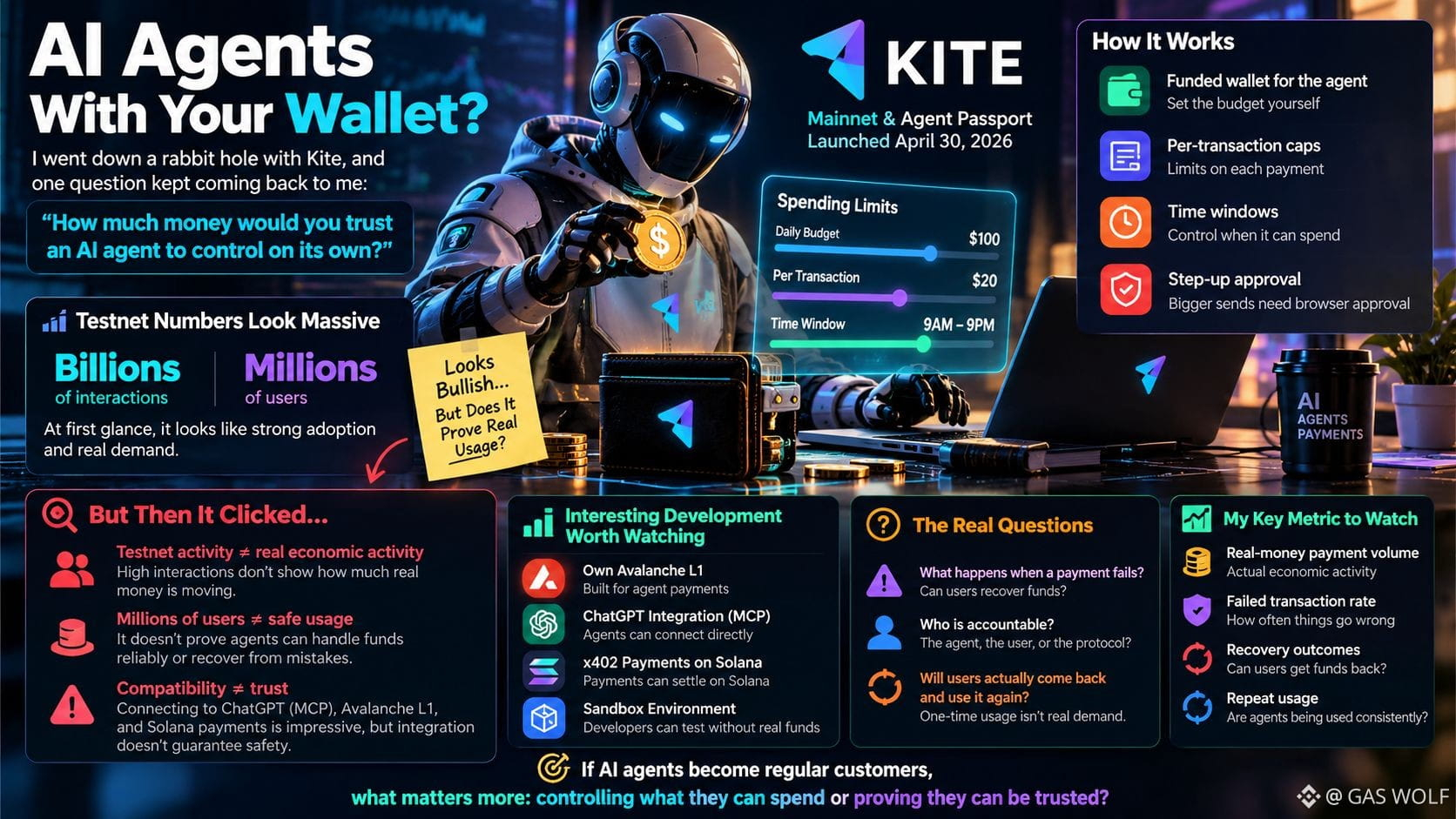
I spent some time digging into Kite, and the part I find interesting isn’t simply that AI agents can make payments.
It’s how you stop them from spending more than they should.
Kite Passport introduces controls like spending budgets, per-transaction limits and time windows. That’s a practical step toward letting agents handle real transactions without handing them unlimited financial freedom.
But then it clicked: controlled spending doesn’t automatically mean real demand.
An agent successfully completing a payment proves the system can facilitate a transaction. It doesn’t prove users will keep paying for these services, or that developers can build sustainable businesses around them.
That’s the gap I want to see closed.
I’m watching for repeat transactions, independent service providers and genuine usage beyond incentives.
If AI agents become economic actors, will Kite capture meaningful activity—or will actual demand be harder to build than the payment infrastructure itself?
#KiteBBW $KITE #kite @GoKiteAI
{future}(KITEUSDT)
I spent some time digging into Kite, and the part I find interesting isn’t simply that AI agents can make payments.
It’s how you stop them from spending more than they should.
Kite Passport introduces controls like spending budgets, per-transaction limits and time windows. That’s a practical step toward letting agents handle real transactions without handing them unlimited financial freedom.
But then it clicked: controlled spending doesn’t automatically mean real demand.
An agent successfully completing a payment proves the system can facilitate a transaction. It doesn’t prove users will keep paying for these services, or that developers can build sustainable businesses around them.
That’s the gap I want to see closed.
I’m watching for repeat transactions, independent service providers and genuine usage beyond incentives.
If AI agents become economic actors, will Kite capture meaningful activity—or will actual demand be harder to build than the payment infrastructure itself?
#KiteBBW $KITE #kite @KITE AI 中文
It’s how you stop them from spending more than they should.
Kite Passport introduces controls like spending budgets, per-transaction limits and time windows. That’s a practical step toward letting agents handle real transactions without handing them unlimited financial freedom.
But then it clicked: controlled spending doesn’t automatically mean real demand.
An agent successfully completing a payment proves the system can facilitate a transaction. It doesn’t prove users will keep paying for these services, or that developers can build sustainable businesses around them.
That’s the gap I want to see closed.
I’m watching for repeat transactions, independent service providers and genuine usage beyond incentives.
If AI agents become economic actors, will Kite capture meaningful activity—or will actual demand be harder to build than the payment infrastructure itself?
#KiteBBW $KITE #kite @KITE AI 中文
13
17
648
·
--
Рост
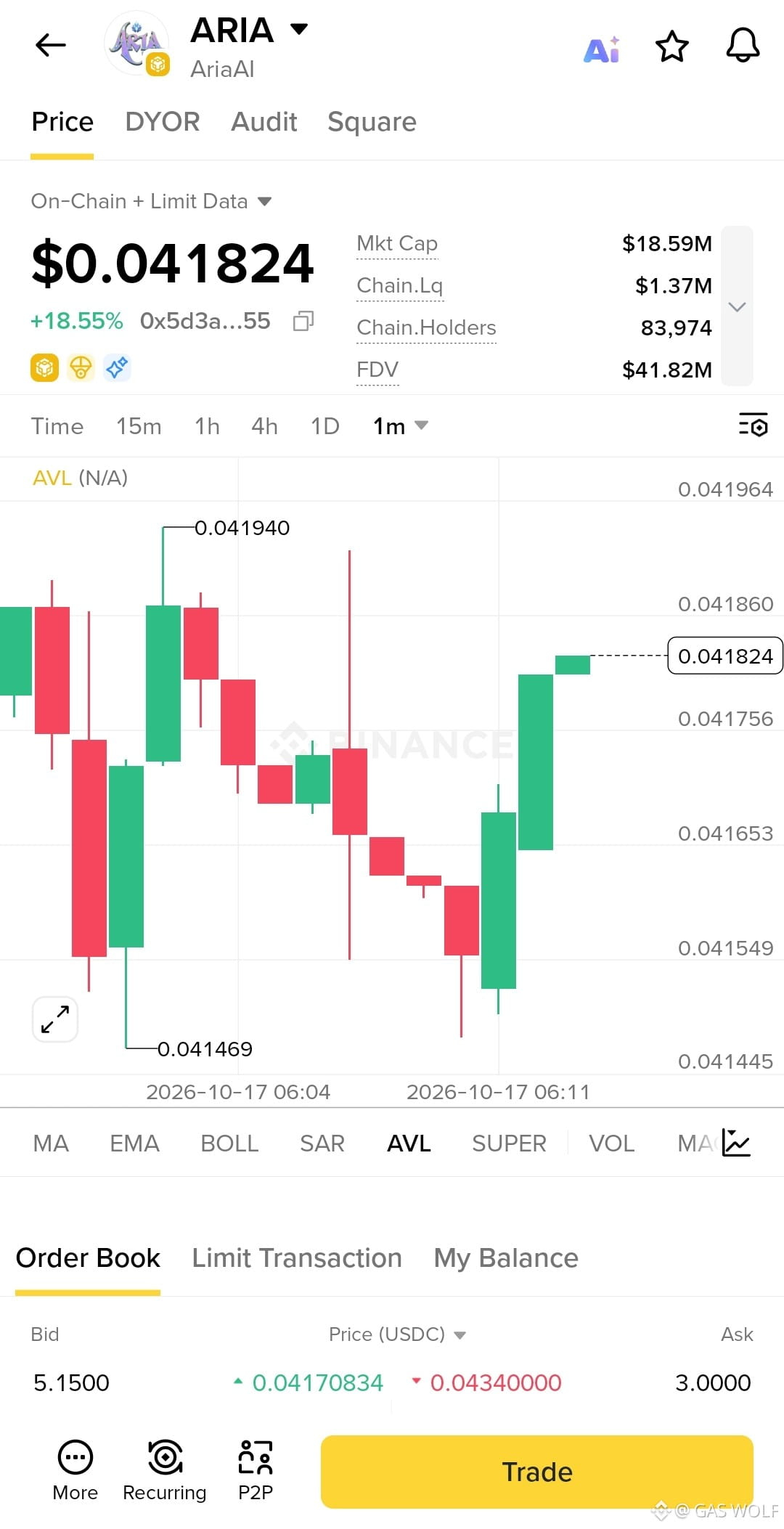
🚀 $ARIA IS BOUNCING BACK! 🔥
💰 Price: $0.041824 (+18.55%)
🏦 Market Cap: $18.59M
💎 FDV: $41.82M
💧 Chain Liquidity: $1.37M
👥 Holders: 83,974
🐂 ARIA (AriaAI) is showing fresh buying momentum after bouncing from $0.041469. The 1-minute chart has printed strong green candles, pushing price toward the local high at $0.041940.
🎯 Key Levels
🟢 Support: $0.04165–$0.04155
🔴 Resistance: $0.04186–$0.04194
⚡ A breakout above resistance could fuel another push higher, while rejection may bring a retest of support.
👀 Can $ARIA break through, or will sellers step in?
{alpha}(560x5d3a12c42e5372b2cc3264ab3cdcf660a1555238)
🚀 $ARIA IS BOUNCING BACK! 🔥
💰 Price: $0.041824 (+18.55%)
🏦 Market Cap: $18.59M
💎 FDV: $41.82M
💧 Chain Liquidity: $1.37M
👥 Holders: 83,974
🐂 ARIA (AriaAI) is showing fresh buying momentum after bouncing from $0.041469. The 1-minute chart has printed strong green candles, pushing price toward the local high at $0.041940.
🎯 Key Levels
🟢 Support: $0.04165–$0.04155
🔴 Resistance: $0.04186–$0.04194
⚡ A breakout above resistance could fuel another push higher, while rejection may bring a retest of support.
👀 Can $ARIA break through, or will sellers step in?
💰 Price: $0.041824 (+18.55%)
🏦 Market Cap: $18.59M
💎 FDV: $41.82M
💧 Chain Liquidity: $1.37M
👥 Holders: 83,974
🐂 ARIA (AriaAI) is showing fresh buying momentum after bouncing from $0.041469. The 1-minute chart has printed strong green candles, pushing price toward the local high at $0.041940.
🎯 Key Levels
🟢 Support: $0.04165–$0.04155
🔴 Resistance: $0.04186–$0.04194
⚡ A breakout above resistance could fuel another push higher, while rejection may bring a retest of support.
👀 Can $ARIA break through, or will sellers step in?
1
281
·
--
Рост
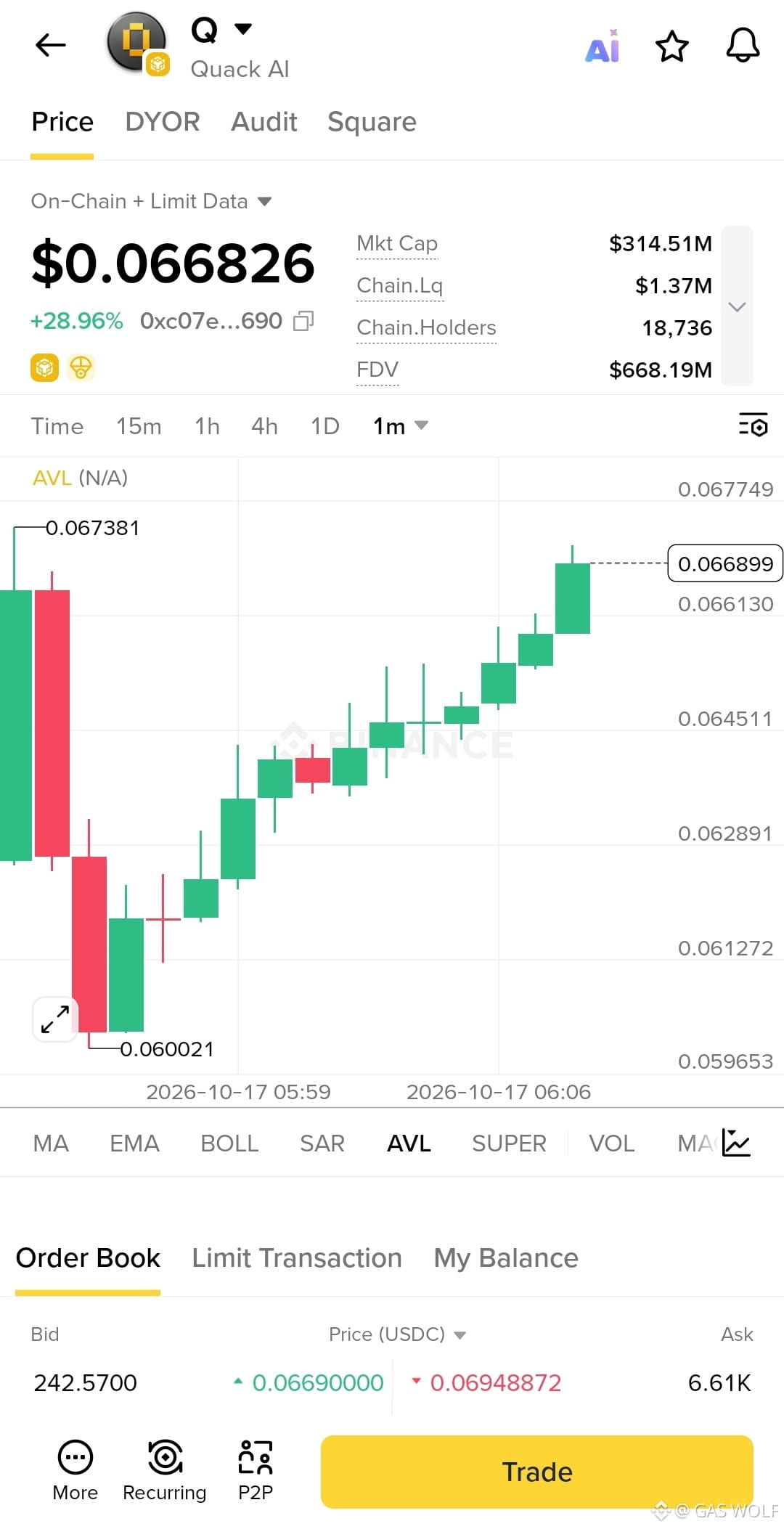
🚀 $Q (Quack AI) IS BUILDING MOMENTUM! 🔥
💰 Price: $0.066826 (+28.96%)
🏦 Market Cap: $314.51M
💎 FDV: $668.19M
💧 Chain Liquidity: $1.37M
👥 Holders: 18,736
🐂 $Q has rebounded strongly from $0.060021 and is climbing toward the local high near $0.067381. The 1-minute chart shows consecutive green candles, suggesting buyers are pushing higher.
🎯 Key Levels
🟢 Support: $0.0661–$0.0645
🔴 Resistance: $0.0674–$0.0677
⚡ A clean breakout above resistance could extend the rally, while rejection may trigger a pullback.
👀 Can $Q break higher, or are bulls running out of steam?
⚠️ Volatile market — DYOR.
{spot}(QUICKUSDT)
🚀 $Q (Quack AI) IS BUILDING MOMENTUM! 🔥
💰 Price: $0.066826 (+28.96%)
🏦 Market Cap: $314.51M
💎 FDV: $668.19M
💧 Chain Liquidity: $1.37M
👥 Holders: 18,736
🐂 $Q has rebounded strongly from $0.060021 and is climbing toward the local high near $0.067381. The 1-minute chart shows consecutive green candles, suggesting buyers are pushing higher.
🎯 Key Levels
🟢 Support: $0.0661–$0.0645
🔴 Resistance: $0.0674–$0.0677
⚡ A clean breakout above resistance could extend the rally, while rejection may trigger a pullback.
👀 Can $Q break higher, or are bulls running out of steam?
⚠️ Volatile market — DYOR.
💰 Price: $0.066826 (+28.96%)
🏦 Market Cap: $314.51M
💎 FDV: $668.19M
💧 Chain Liquidity: $1.37M
👥 Holders: 18,736
🐂 $Q has rebounded strongly from $0.060021 and is climbing toward the local high near $0.067381. The 1-minute chart shows consecutive green candles, suggesting buyers are pushing higher.
🎯 Key Levels
🟢 Support: $0.0661–$0.0645
🔴 Resistance: $0.0674–$0.0677
⚡ A clean breakout above resistance could extend the rally, while rejection may trigger a pullback.
👀 Can $Q break higher, or are bulls running out of steam?
⚠️ Volatile market — DYOR.
585
·
--
Рост
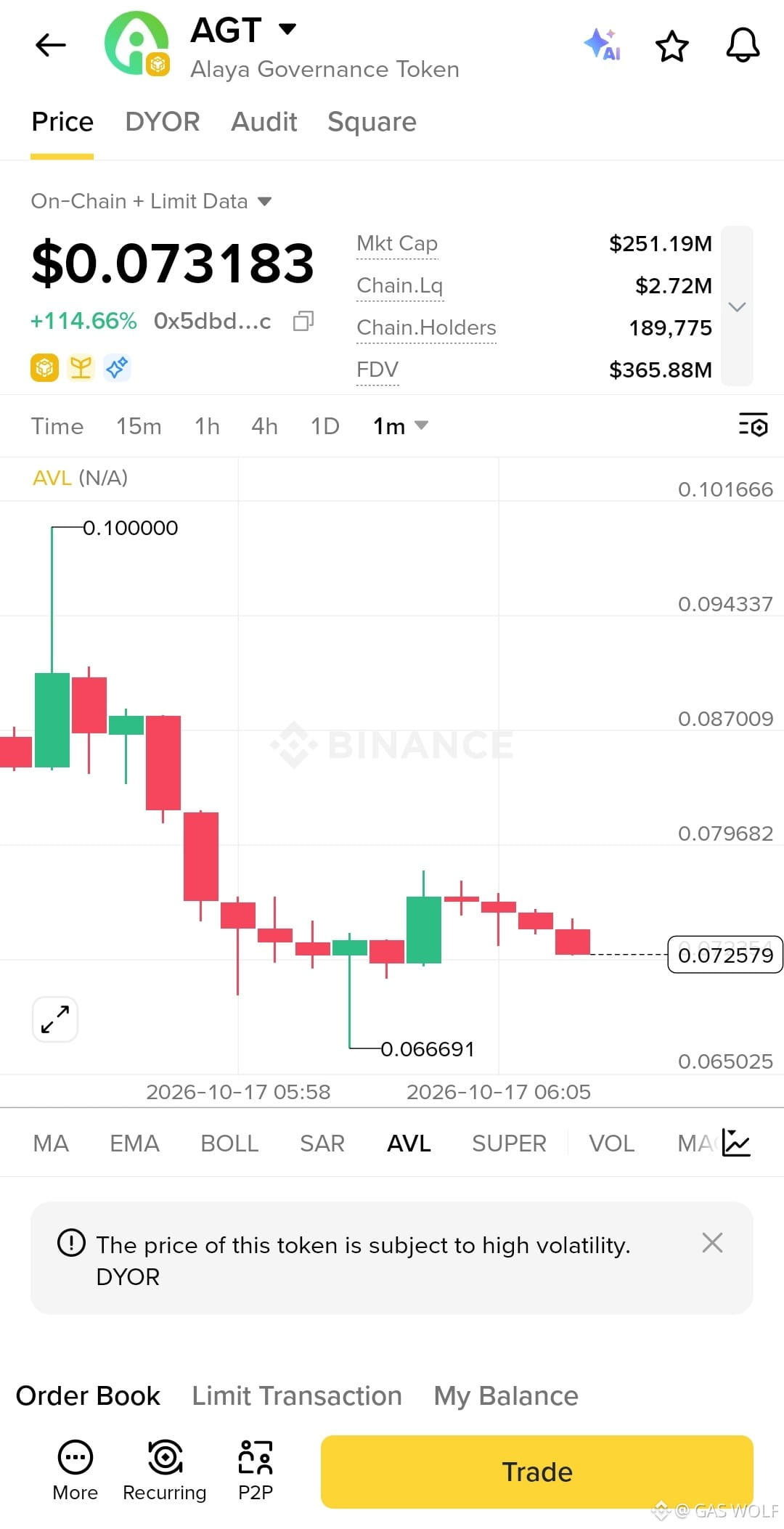
🚀 $AGT IS UP +114.66% — BUT CAN BULLS HOLD? 🔥
💰 Price: $0.073183
📈 24h Change: +114.66%
🏦 Market Cap: $251.19M
💎 FDV: $365.88M
💧 Chain Liquidity: $2.72M
👥 Holders: 189,775
🐂 $AGT (Alaya Governance Token) has delivered a massive move, but the 1-minute chart shows selling pressure after the rally. Price is hovering near $0.0726, with traders watching whether buyers can defend support.
🎯 Key Levels
🟢 Support: $0.0720–$0.0700
🔴 Resistance: $0.0750–$0.0790
⚡ A strong reclaim could revive bullish momentum, while losing support may bring further downside.
👀 After a +114% surge, the next move matters. Can $AGT
{alpha}(560x5dbde81fce337ff4bcaaee4ca3466c00aecae274)
🚀 $AGT IS UP +114.66% — BUT CAN BULLS HOLD? 🔥
💰 Price: $0.073183
📈 24h Change: +114.66%
🏦 Market Cap: $251.19M
💎 FDV: $365.88M
💧 Chain Liquidity: $2.72M
👥 Holders: 189,775
🐂 $AGT (Alaya Governance Token) has delivered a massive move, but the 1-minute chart shows selling pressure after the rally. Price is hovering near $0.0726, with traders watching whether buyers can defend support.
🎯 Key Levels
🟢 Support: $0.0720–$0.0700
🔴 Resistance: $0.0750–$0.0790
⚡ A strong reclaim could revive bullish momentum, while losing support may bring further downside.
👀 After a +114% surge, the next move matters. Can $AGT
💰 Price: $0.073183
📈 24h Change: +114.66%
🏦 Market Cap: $251.19M
💎 FDV: $365.88M
💧 Chain Liquidity: $2.72M
👥 Holders: 189,775
🐂 $AGT (Alaya Governance Token) has delivered a massive move, but the 1-minute chart shows selling pressure after the rally. Price is hovering near $0.0726, with traders watching whether buyers can defend support.
🎯 Key Levels
🟢 Support: $0.0720–$0.0700
🔴 Resistance: $0.0750–$0.0790
⚡ A strong reclaim could revive bullish momentum, while losing support may bring further downside.
👀 After a +114% surge, the next move matters. Can $AGT
866
·
--
Рост
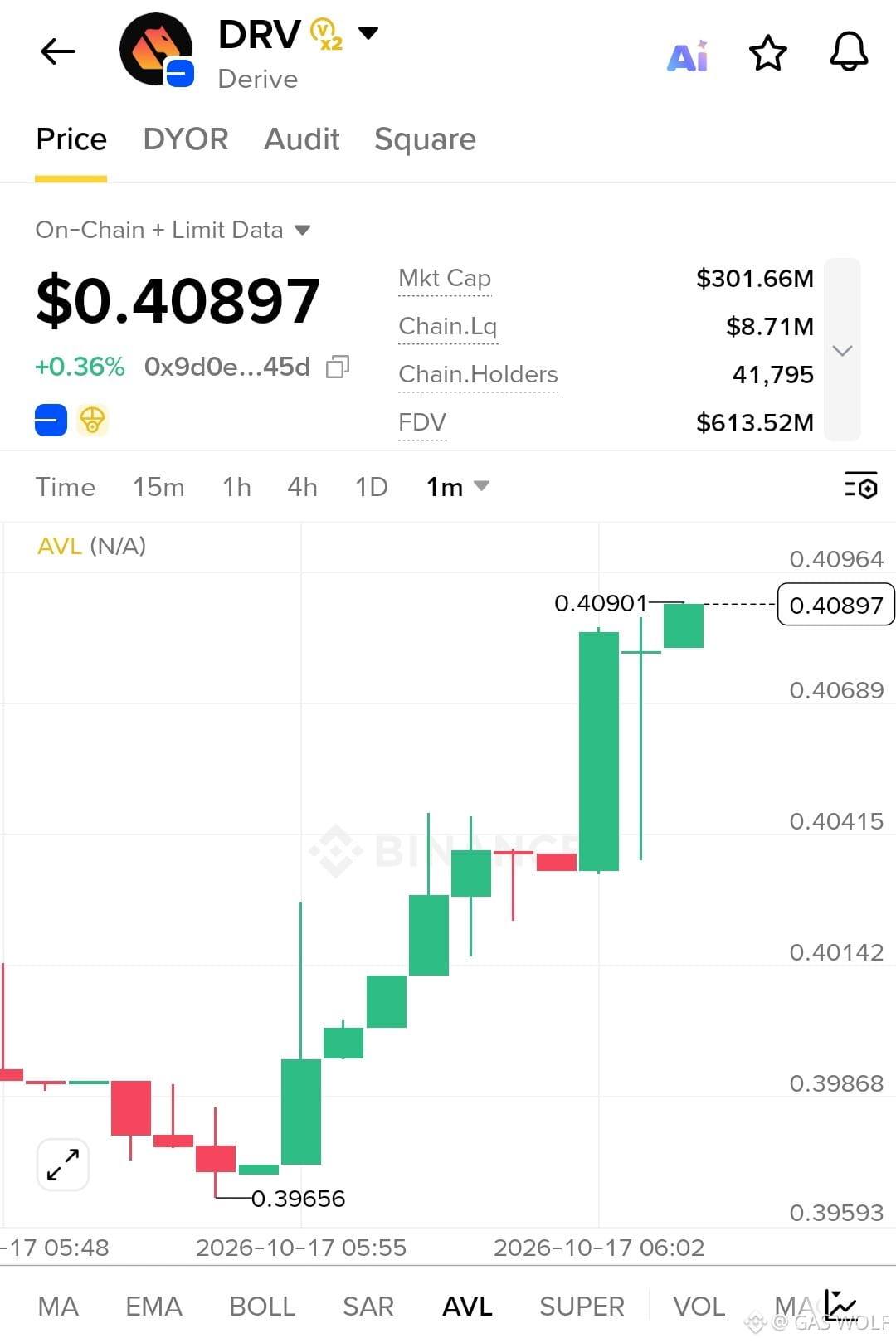
🚀 $DRV (Derive) IS MAKING A MOVE! 🔥
💰 Price: $0.40897 (+0.36%)
📈 Market Cap: $301.66M
💎 FDV: $613.52M
🔒 Chain Liquidity: $8.71M
👥 Holders: 41,795
🐂 $DRV has bounced hard from $0.39656 and surged toward $0.40901 on the 1-minute chart! Buyers are showing strength, but the next resistance zone could decide the next move. ⚡
🎯 Key Levels:
🟢 Support: $0.4069–$0.4041
🔴 Resistance: $0.4090–$0.4096
🚀 A clean breakout could open the door to further upside.
⚠️ Losing support may trigger a short-term pullback.
Eyes on $DRV — can bulls push through resistance? 👀🔥
{alpha}(84530x9d0e8f5b25384c7310cb8c6ae32c8fbeb645d083)
🚀 $DRV (Derive) IS MAKING A MOVE! 🔥
💰 Price: $0.40897 (+0.36%)
📈 Market Cap: $301.66M
💎 FDV: $613.52M
🔒 Chain Liquidity: $8.71M
👥 Holders: 41,795
🐂 $DRV has bounced hard from $0.39656 and surged toward $0.40901 on the 1-minute chart! Buyers are showing strength, but the next resistance zone could decide the next move. ⚡
🎯 Key Levels:
🟢 Support: $0.4069–$0.4041
🔴 Resistance: $0.4090–$0.4096
🚀 A clean breakout could open the door to further upside.
⚠️ Losing support may trigger a short-term pullback.
Eyes on $DRV — can bulls push through resistance? 👀🔥
💰 Price: $0.40897 (+0.36%)
📈 Market Cap: $301.66M
💎 FDV: $613.52M
🔒 Chain Liquidity: $8.71M
👥 Holders: 41,795
🐂 $DRV has bounced hard from $0.39656 and surged toward $0.40901 on the 1-minute chart! Buyers are showing strength, but the next resistance zone could decide the next move. ⚡
🎯 Key Levels:
🟢 Support: $0.4069–$0.4041
🔴 Resistance: $0.4090–$0.4096
🚀 A clean breakout could open the door to further upside.
⚠️ Losing support may trigger a short-term pullback.
Eyes on $DRV — can bulls push through resistance? 👀🔥
142
·
--
Рост
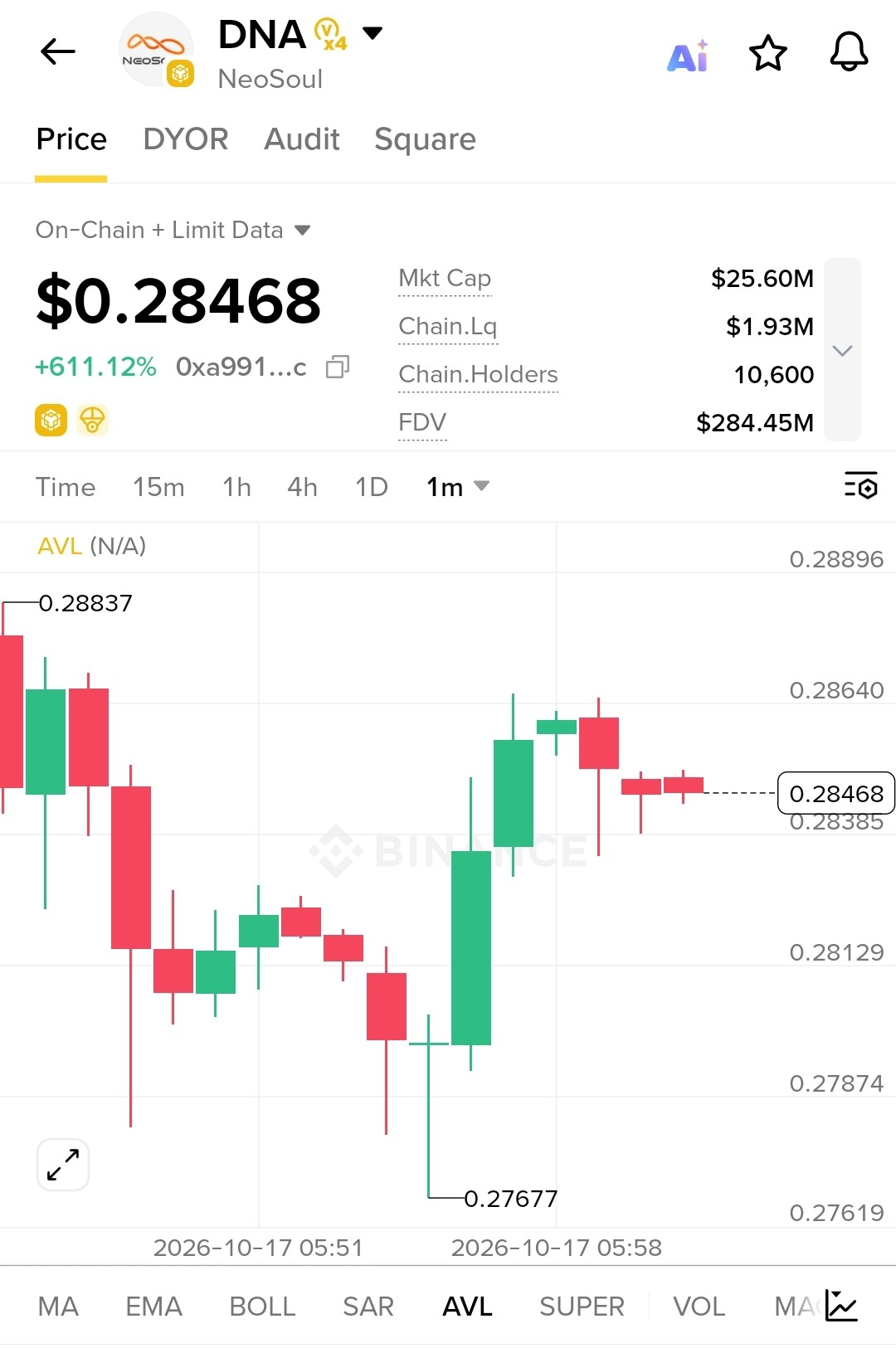
🧬 $DNA (NeoSoul) Trade Setup | $0.28468
DNA has bounced strongly from the $0.2768 low and is now trading around $0.2847. The recovery looks promising, but buyers are approaching a key resistance zone at $0.2850–$0.2864, where momentum appears to be slowing.
For now, I’m watching whether buyers can defend the $0.2838–$0.2840 support area. Holding this zone could open the door for another push higher, while losing it may trigger a deeper pullback.
📍 Trade Plan
- Entry: $0.2838–$0.2845
- 🎯 TP1: $0.2864
- 🎯 TP2: $0.2883
- 🛑 Stop Loss: $0.2828
The bullish setup needs confirmation. I’d like to see support hold and price break through nearby resistance before expecting further upside.
⚠️ DNA has already made a sharp move, so volatility and sudden reversals remain possible. Avoid chasing green candles and manage risk carefully.
Patience over FOMO. Let price confirm the setup.
🧬 $DNA (NeoSoul) Trade Setup | $0.28468
DNA has bounced strongly from the $0.2768 low and is now trading around $0.2847. The recovery looks promising, but buyers are approaching a key resistance zone at $0.2850–$0.2864, where momentum appears to be slowing.
For now, I’m watching whether buyers can defend the $0.2838–$0.2840 support area. Holding this zone could open the door for another push higher, while losing it may trigger a deeper pullback.
📍 Trade Plan
- Entry: $0.2838–$0.2845
- 🎯 TP1: $0.2864
- 🎯 TP2: $0.2883
- 🛑 Stop Loss: $0.2828
The bullish setup needs confirmation. I’d like to see support hold and price break through nearby resistance before expecting further upside.
⚠️ DNA has already made a sharp move, so volatility and sudden reversals remain possible. Avoid chasing green candles and manage risk carefully.
Patience over FOMO. Let price confirm the setup.
DNA has bounced strongly from the $0.2768 low and is now trading around $0.2847. The recovery looks promising, but buyers are approaching a key resistance zone at $0.2850–$0.2864, where momentum appears to be slowing.
For now, I’m watching whether buyers can defend the $0.2838–$0.2840 support area. Holding this zone could open the door for another push higher, while losing it may trigger a deeper pullback.
📍 Trade Plan
- Entry: $0.2838–$0.2845
- 🎯 TP1: $0.2864
- 🎯 TP2: $0.2883
- 🛑 Stop Loss: $0.2828
The bullish setup needs confirmation. I’d like to see support hold and price break through nearby resistance before expecting further upside.
⚠️ DNA has already made a sharp move, so volatility and sudden reversals remain possible. Avoid chasing green candles and manage risk carefully.
Patience over FOMO. Let price confirm the setup.
621
·
--
Рост
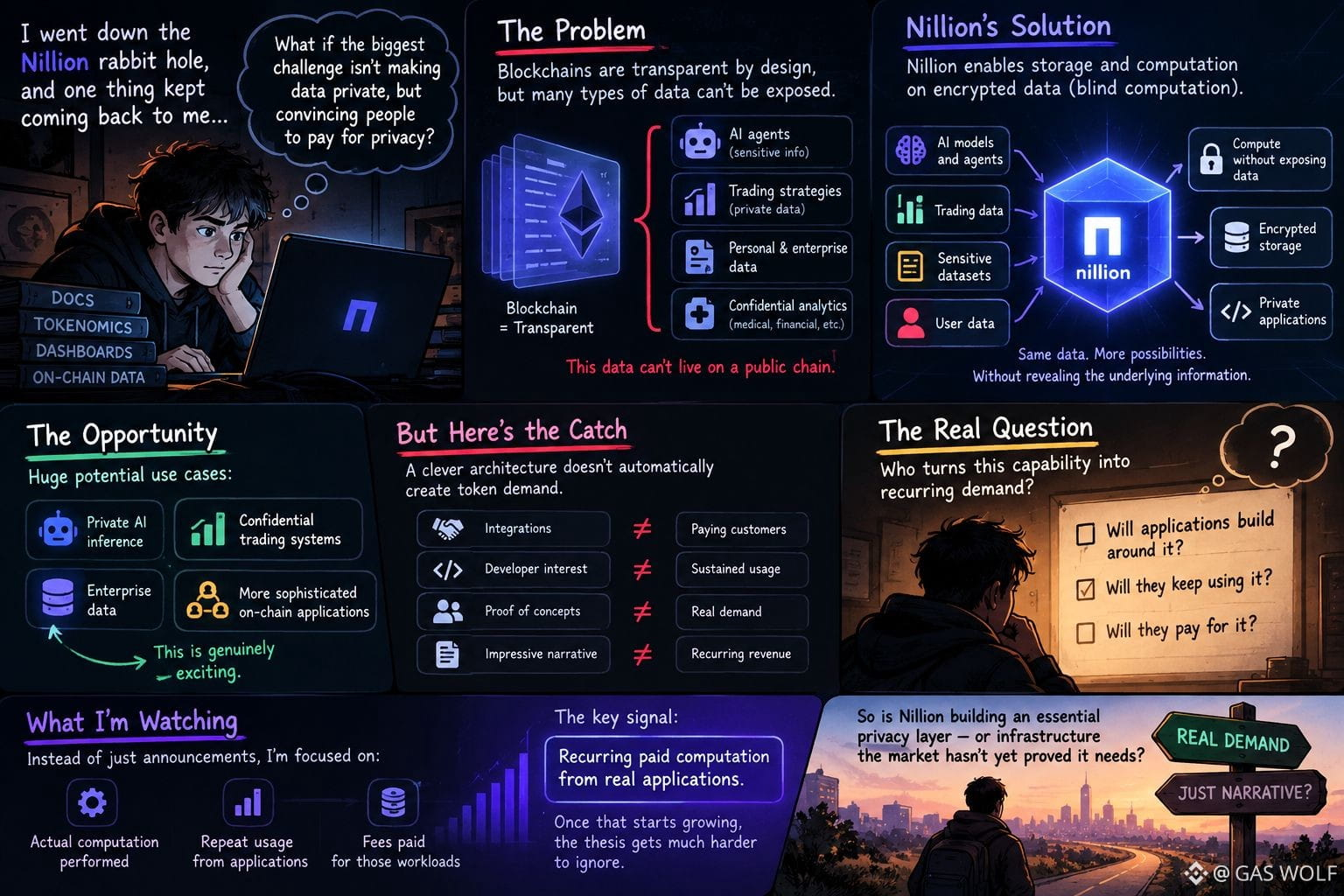
I went down the rabbit hole with Nillion and Dusk, and the more I looked at Covenants, the more I realized the interesting part isn’t just privacy.
It’s what you can do with information without actually revealing it.
Think about trading. If the market sees your order before it executes, you might be giving other traders an advantage. Nillion’s Covenants aim to change that by keeping instructions encrypted until specific conditions are met.
Sounds promising, right?
But then it clicked: hiding an order is one problem. Making sure the system can act on it correctly, at the right time, is another.
That’s where I think this gets interesting.
Nillion isn’t simply trying to put another privacy layer on blockchain data. The bigger idea is letting applications work with private instructions without exposing them prematurely. Dusk gives that idea a practical use case in financial markets, where information itself can carry a cost.
Still, the technology being clever doesn’t automatically make the product useful at scale.
I haven’t seen enough evidence in the information available here to conclude that this translates into sustained trading demand. The real test is whether traders actually adopt it, execution stays reliable, and the privacy benefits outweigh the added complexity.
That’s the distinction I’m keeping in mind: a strong technical design is a starting point, not proof of adoption.
For now, I’m watching how Dusk performs in real trading conditions.
If Covenants can protect sensitive instructions without making execution harder, Nillion could be building something much bigger than a trading feature.
But will traders actually change their behavior for privacy, or does the technology still need to prove why they should?
@nillionnetwork $NIL #NIL
I went down the rabbit hole with Nillion and Dusk, and the more I looked at Covenants, the more I realized the interesting part isn’t just privacy.
It’s what you can do with information without actually revealing it.
Think about trading. If the market sees your order before it executes, you might be giving other traders an advantage. Nillion’s Covenants aim to change that by keeping instructions encrypted until specific conditions are met.
Sounds promising, right?
But then it clicked: hiding an order is one problem. Making sure the system can act on it correctly, at the right time, is another.
That’s where I think this gets interesting.
Nillion isn’t simply trying to put another privacy layer on blockchain data. The bigger idea is letting applications work with private instructions without exposing them prematurely. Dusk gives that idea a practical use case in financial markets, where information itself can carry a cost.
Still, the technology being clever doesn’t automatically make the product useful at scale.
I haven’t seen enough evidence in the information available here to conclude that this translates into sustained trading demand. The real test is whether traders actually adopt it, execution stays reliable, and the privacy benefits outweigh the added complexity.
That’s the distinction I’m keeping in mind: a strong technical design is a starting point, not proof of adoption.
For now, I’m watching how Dusk performs in real trading conditions.
If Covenants can protect sensitive instructions without making execution harder, Nillion could be building something much bigger than a trading feature.
But will traders actually change their behavior for privacy, or does the technology still need to prove why they should?
@Nillion $NIL #NIL
It’s what you can do with information without actually revealing it.
Think about trading. If the market sees your order before it executes, you might be giving other traders an advantage. Nillion’s Covenants aim to change that by keeping instructions encrypted until specific conditions are met.
Sounds promising, right?
But then it clicked: hiding an order is one problem. Making sure the system can act on it correctly, at the right time, is another.
That’s where I think this gets interesting.
Nillion isn’t simply trying to put another privacy layer on blockchain data. The bigger idea is letting applications work with private instructions without exposing them prematurely. Dusk gives that idea a practical use case in financial markets, where information itself can carry a cost.
Still, the technology being clever doesn’t automatically make the product useful at scale.
I haven’t seen enough evidence in the information available here to conclude that this translates into sustained trading demand. The real test is whether traders actually adopt it, execution stays reliable, and the privacy benefits outweigh the added complexity.
That’s the distinction I’m keeping in mind: a strong technical design is a starting point, not proof of adoption.
For now, I’m watching how Dusk performs in real trading conditions.
If Covenants can protect sensitive instructions without making execution harder, Nillion could be building something much bigger than a trading feature.
But will traders actually change their behavior for privacy, or does the technology still need to prove why they should?
@Nillion $NIL #NIL
7
18
830
·
--
Рост
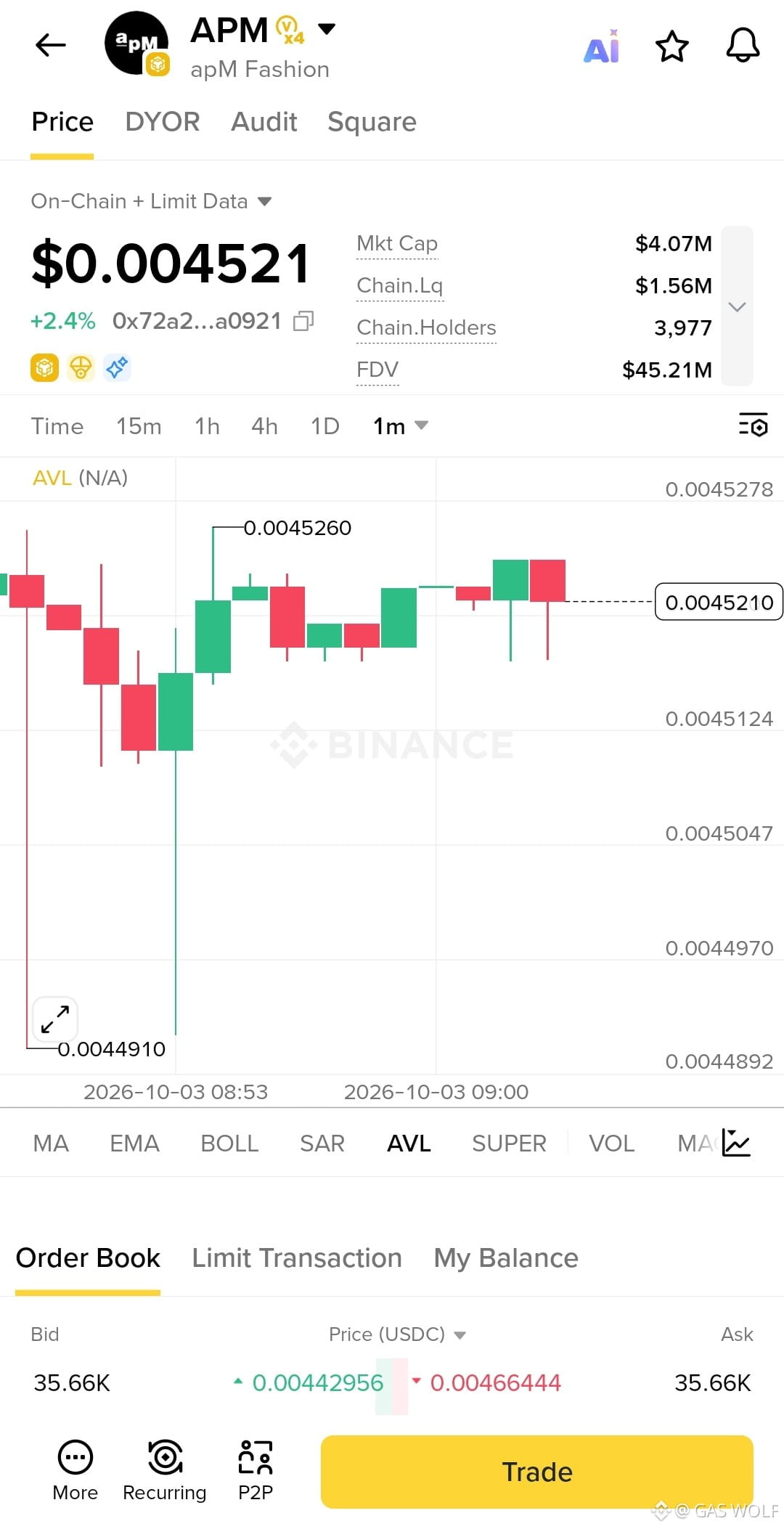
$APM — Price Action Setup
APM/USDT is trading around $0.004521, consolidating just below the recent $0.004526 high. This zone is important because price has recovered from the $0.004491 low and is now pressing against a nearby resistance level.
Buyers appear to be holding the $0.00451–$0.00452 area, but the latest candles show hesitation near the local high. My focus is on whether buyers can defend this base and establish a clean break above $0.004526.
A sustained move above that level could bring the next upside area into play. If price loses the $0.00451 region, the short-term bullish structure would weaken and the setup would need reassessment.
Trade Setup:
Entry Zone: $0.004515–$0.004525
Take Profit 1: $0.004560
Take Profit 2: $0.004600
Stop Loss: $0.004490
The key will be confirmation rather than chasing the move. With a tight range and low-priced asset, disciplined position sizing and risk management remain important.
{alpha}(560x72a22faa6a522c81a8f5d508381e18af3da0921e)
$APM — Price Action Setup
APM/USDT is trading around $0.004521, consolidating just below the recent $0.004526 high. This zone is important because price has recovered from the $0.004491 low and is now pressing against a nearby resistance level.
Buyers appear to be holding the $0.00451–$0.00452 area, but the latest candles show hesitation near the local high. My focus is on whether buyers can defend this base and establish a clean break above $0.004526.
A sustained move above that level could bring the next upside area into play. If price loses the $0.00451 region, the short-term bullish structure would weaken and the setup would need reassessment.
Trade Setup:
Entry Zone: $0.004515–$0.004525
Take Profit 1: $0.004560
Take Profit 2: $0.004600
Stop Loss: $0.004490
The key will be confirmation rather than chasing the move. With a tight range and low-priced asset, disciplined position sizing and risk management remain important.
APM/USDT is trading around $0.004521, consolidating just below the recent $0.004526 high. This zone is important because price has recovered from the $0.004491 low and is now pressing against a nearby resistance level.
Buyers appear to be holding the $0.00451–$0.00452 area, but the latest candles show hesitation near the local high. My focus is on whether buyers can defend this base and establish a clean break above $0.004526.
A sustained move above that level could bring the next upside area into play. If price loses the $0.00451 region, the short-term bullish structure would weaken and the setup would need reassessment.
Trade Setup:
Entry Zone: $0.004515–$0.004525
Take Profit 1: $0.004560
Take Profit 2: $0.004600
Stop Loss: $0.004490
The key will be confirmation rather than chasing the move. With a tight range and low-priced asset, disciplined position sizing and risk management remain important.
2
859
·
--
Рост
$CTSI — Price Action Setup
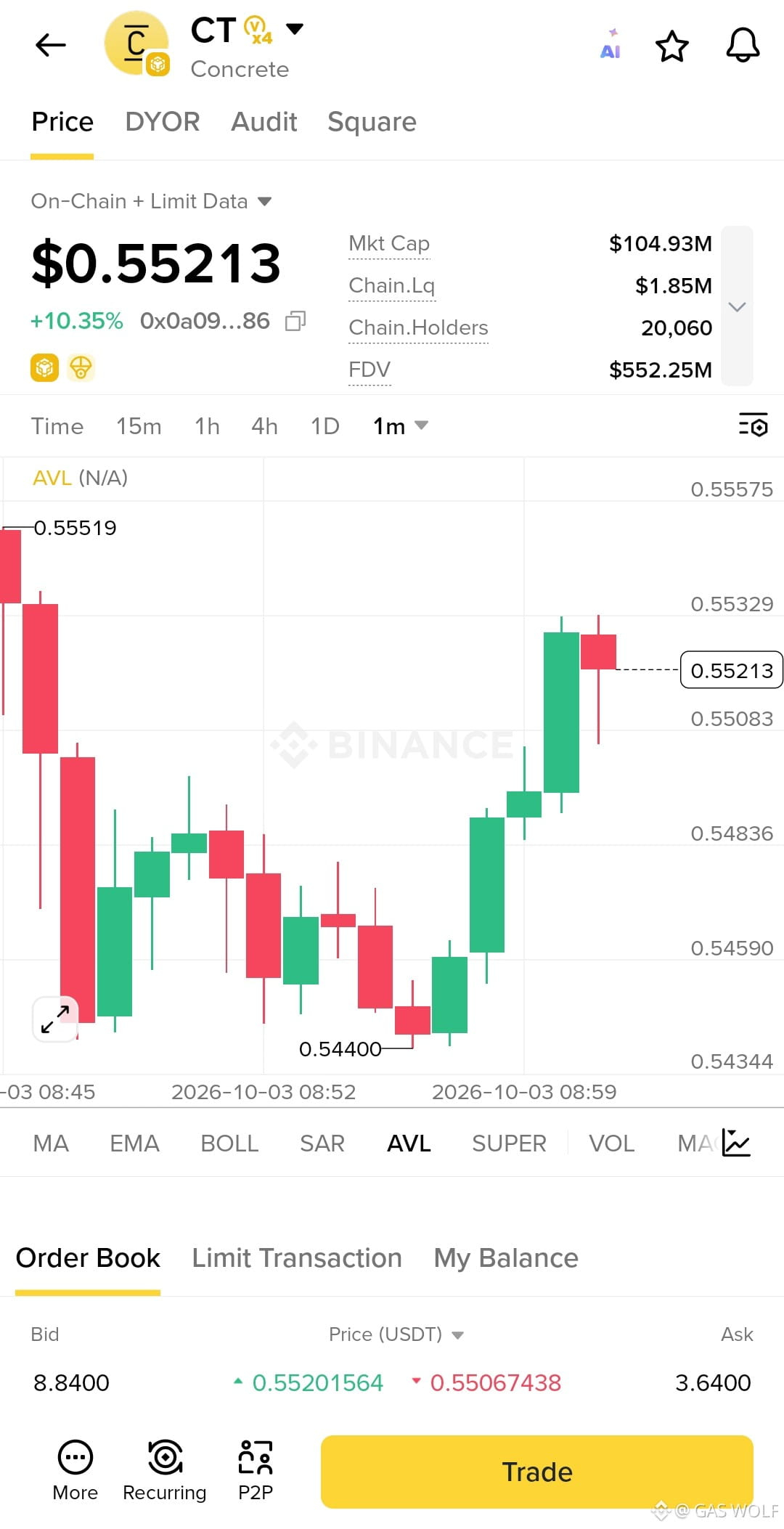
CT/USDT is trading around $0.5521, holding near the $0.5508–$0.5520 area after a strong recovery from the $0.5440 low. This zone is important because price has shifted into a short-term higher-low structure and is now testing the recent $0.5533 resistance.
Buyers have controlled the latest move, but the pullback from $0.5533 shows that sellers are still active near the upper range. My focus is on whether buyers can defend the current area and reclaim that resistance.
A clean break and hold above $0.5533 could bring the previous $0.5552 area into focus. If price loses the $0.5508 region, the bullish setup would need reassessment.
Trade Setup:
Entry Zone: $0.5510–$0.5522
Take Profit 1: $0.5533
Take Profit 2: $0.5552
Stop Loss: $0.5498
The structure is constructive, but confirmation remains important after a sharp move. Patience and disciplined risk management matter more than chasing momentum.
{alpha}(560x0a092e544da31150b439a1aaa1a3a2214a867f46)
$CTSI — Price Action Setup
CT/USDT is trading around $0.5521, holding near the $0.5508–$0.5520 area after a strong recovery from the $0.5440 low. This zone is important because price has shifted into a short-term higher-low structure and is now testing the recent $0.5533 resistance.
Buyers have controlled the latest move, but the pullback from $0.5533 shows that sellers are still active near the upper range. My focus is on whether buyers can defend the current area and reclaim that resistance.
A clean break and hold above $0.5533 could bring the previous $0.5552 area into focus. If price loses the $0.5508 region, the bullish setup would need reassessment.
Trade Setup:
Entry Zone: $0.5510–$0.5522
Take Profit 1: $0.5533
Take Profit 2: $0.5552
Stop Loss: $0.5498
The structure is constructive, but confirmation remains important after a sharp move. Patience and disciplined risk management matter more than chasing momentum.
CT/USDT is trading around $0.5521, holding near the $0.5508–$0.5520 area after a strong recovery from the $0.5440 low. This zone is important because price has shifted into a short-term higher-low structure and is now testing the recent $0.5533 resistance.
Buyers have controlled the latest move, but the pullback from $0.5533 shows that sellers are still active near the upper range. My focus is on whether buyers can defend the current area and reclaim that resistance.
A clean break and hold above $0.5533 could bring the previous $0.5552 area into focus. If price loses the $0.5508 region, the bullish setup would need reassessment.
Trade Setup:
Entry Zone: $0.5510–$0.5522
Take Profit 1: $0.5533
Take Profit 2: $0.5552
Stop Loss: $0.5498
The structure is constructive, but confirmation remains important after a sharp move. Patience and disciplined risk management matter more than chasing momentum.
645
·
--
Рост
$MANA — Price Action Setup
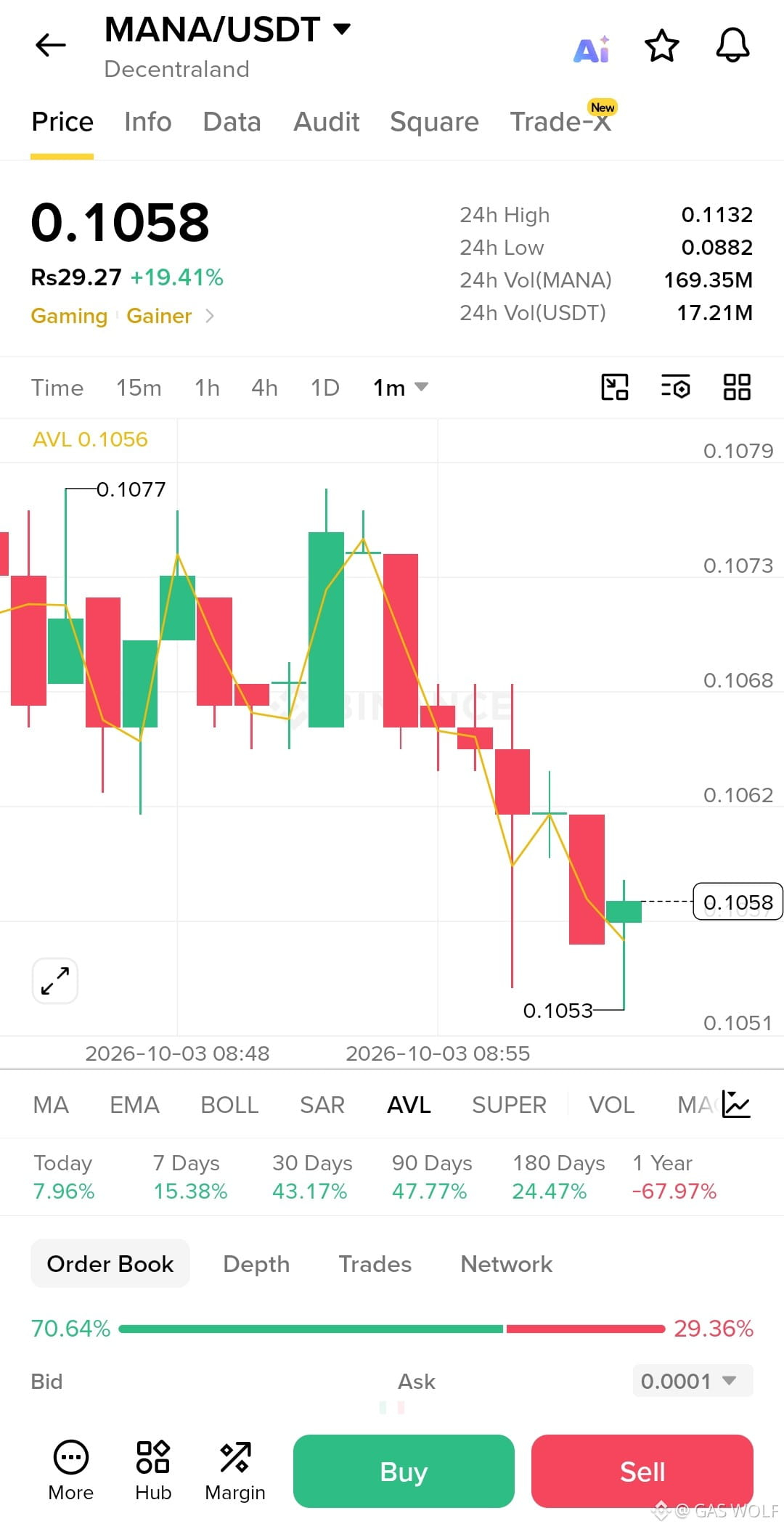
MANA/USDT is trading around $0.1058, sitting just above the $0.1053–$0.1058 support area after pulling back from the $0.1077 local high. This zone matters because buyers are attempting to stabilize price after the recent intraday decline.
The short-term structure is showing some selling pressure, but the strong bid presence in the order book suggests buyers are still active around the current area. My focus is on whether they can defend $0.1053 and push price back toward the nearby resistance levels.
A reclaim of $0.1062–$0.1068 would provide stronger confirmation of renewed momentum, while a move back above $0.1073 could bring the recent high into focus.
Trade Setup:
Entry Zone: $0.1055–$0.1059
Take Profit 1: $0.1068
Take Profit 2: $0.1077
Stop Loss: $0.1050
This zone looks important for the next move. The key will be confirmation rather than chasing the move, with disciplined risk management if volatility expands.
{spot}(MANAUSDT)
$MANA — Price Action Setup
MANA/USDT is trading around $0.1058, sitting just above the $0.1053–$0.1058 support area after pulling back from the $0.1077 local high. This zone matters because buyers are attempting to stabilize price after the recent intraday decline.
The short-term structure is showing some selling pressure, but the strong bid presence in the order book suggests buyers are still active around the current area. My focus is on whether they can defend $0.1053 and push price back toward the nearby resistance levels.
A reclaim of $0.1062–$0.1068 would provide stronger confirmation of renewed momentum, while a move back above $0.1073 could bring the recent high into focus.
Trade Setup:
Entry Zone: $0.1055–$0.1059
Take Profit 1: $0.1068
Take Profit 2: $0.1077
Stop Loss: $0.1050
This zone looks important for the next move. The key will be confirmation rather than chasing the move, with disciplined risk management if volatility expands.
MANA/USDT is trading around $0.1058, sitting just above the $0.1053–$0.1058 support area after pulling back from the $0.1077 local high. This zone matters because buyers are attempting to stabilize price after the recent intraday decline.
The short-term structure is showing some selling pressure, but the strong bid presence in the order book suggests buyers are still active around the current area. My focus is on whether they can defend $0.1053 and push price back toward the nearby resistance levels.
A reclaim of $0.1062–$0.1068 would provide stronger confirmation of renewed momentum, while a move back above $0.1073 could bring the recent high into focus.
Trade Setup:
Entry Zone: $0.1055–$0.1059
Take Profit 1: $0.1068
Take Profit 2: $0.1077
Stop Loss: $0.1050
This zone looks important for the next move. The key will be confirmation rather than chasing the move, with disciplined risk management if volatility expands.
162
·
--
Рост
$NIGHT — Price Action Setup
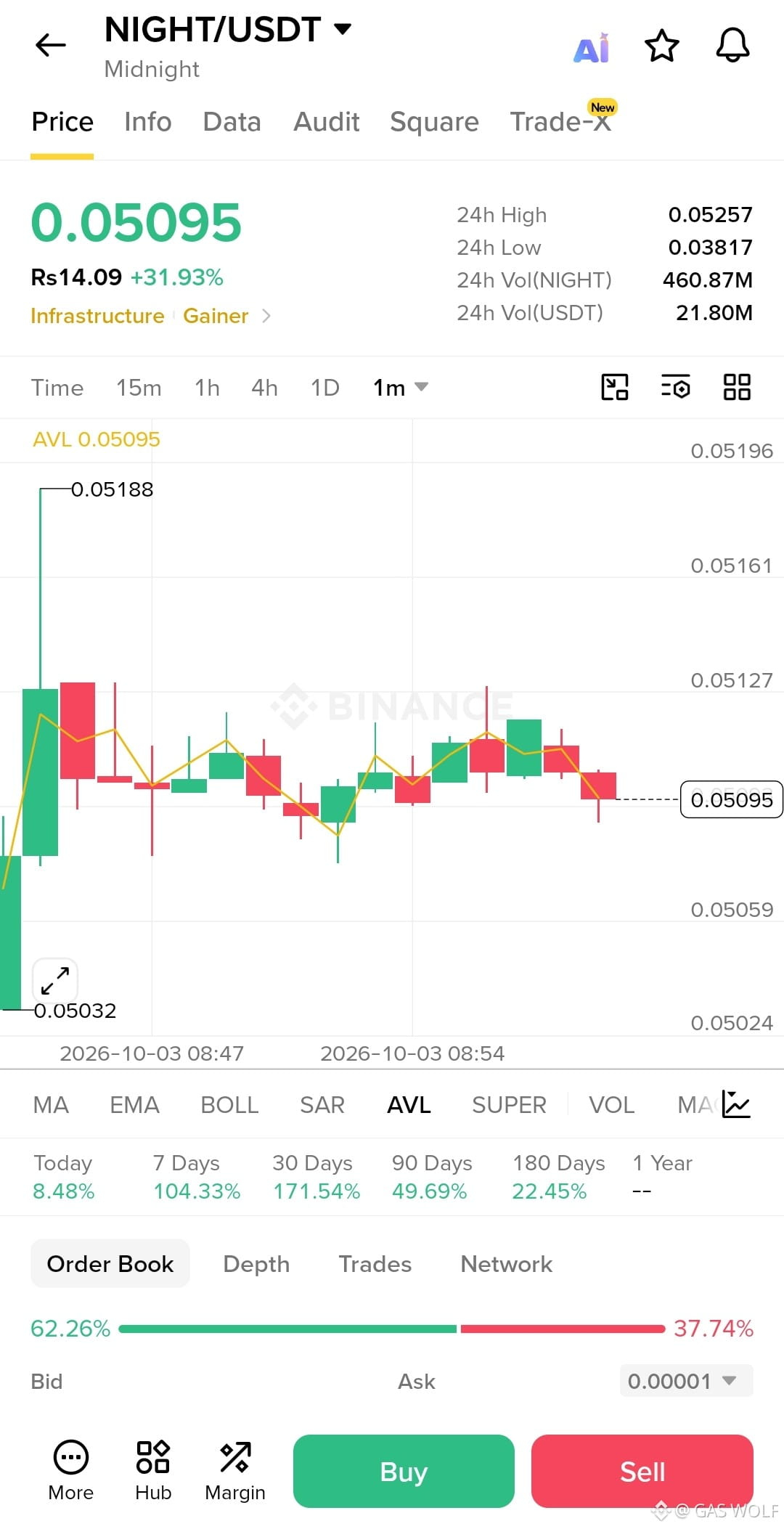
NIGHT/USDT is trading around $0.05095, consolidating after a sharp move higher from the $0.05032 area. This zone is important because price is holding above the recent base while remaining close to the $0.05127 short-term resistance.
Buyers appear to be defending the $0.0508–$0.0510 region, but the latest candles show some hesitation near resistance. My focus is on whether buyers can maintain this support and push price back through $0.05127.
A clean reclaim of $0.05127 could open the way toward the recent $0.05188 high. If support breaks instead, the bullish setup would lose strength and need reassessment.
Trade Setup:
Entry Zone: $0.05080–$0.05100
Take Profit 1: $0.05127
Take Profit 2: $0.05185
Stop Loss: $0.05035
The key will be confirmation rather than chasing the move. After a strong expansion, patience and disciplined risk management are especially important.
{spot}(NIGHTUSDT)
$NIGHT — Price Action Setup
NIGHT/USDT is trading around $0.05095, consolidating after a sharp move higher from the $0.05032 area. This zone is important because price is holding above the recent base while remaining close to the $0.05127 short-term resistance.
Buyers appear to be defending the $0.0508–$0.0510 region, but the latest candles show some hesitation near resistance. My focus is on whether buyers can maintain this support and push price back through $0.05127.
A clean reclaim of $0.05127 could open the way toward the recent $0.05188 high. If support breaks instead, the bullish setup would lose strength and need reassessment.
Trade Setup:
Entry Zone: $0.05080–$0.05100
Take Profit 1: $0.05127
Take Profit 2: $0.05185
Stop Loss: $0.05035
The key will be confirmation rather than chasing the move. After a strong expansion, patience and disciplined risk management are especially important.
NIGHT/USDT is trading around $0.05095, consolidating after a sharp move higher from the $0.05032 area. This zone is important because price is holding above the recent base while remaining close to the $0.05127 short-term resistance.
Buyers appear to be defending the $0.0508–$0.0510 region, but the latest candles show some hesitation near resistance. My focus is on whether buyers can maintain this support and push price back through $0.05127.
A clean reclaim of $0.05127 could open the way toward the recent $0.05188 high. If support breaks instead, the bullish setup would lose strength and need reassessment.
Trade Setup:
Entry Zone: $0.05080–$0.05100
Take Profit 1: $0.05127
Take Profit 2: $0.05185
Stop Loss: $0.05035
The key will be confirmation rather than chasing the move. After a strong expansion, patience and disciplined risk management are especially important.
167
·
--
Рост
$SAND — Price Action Setup
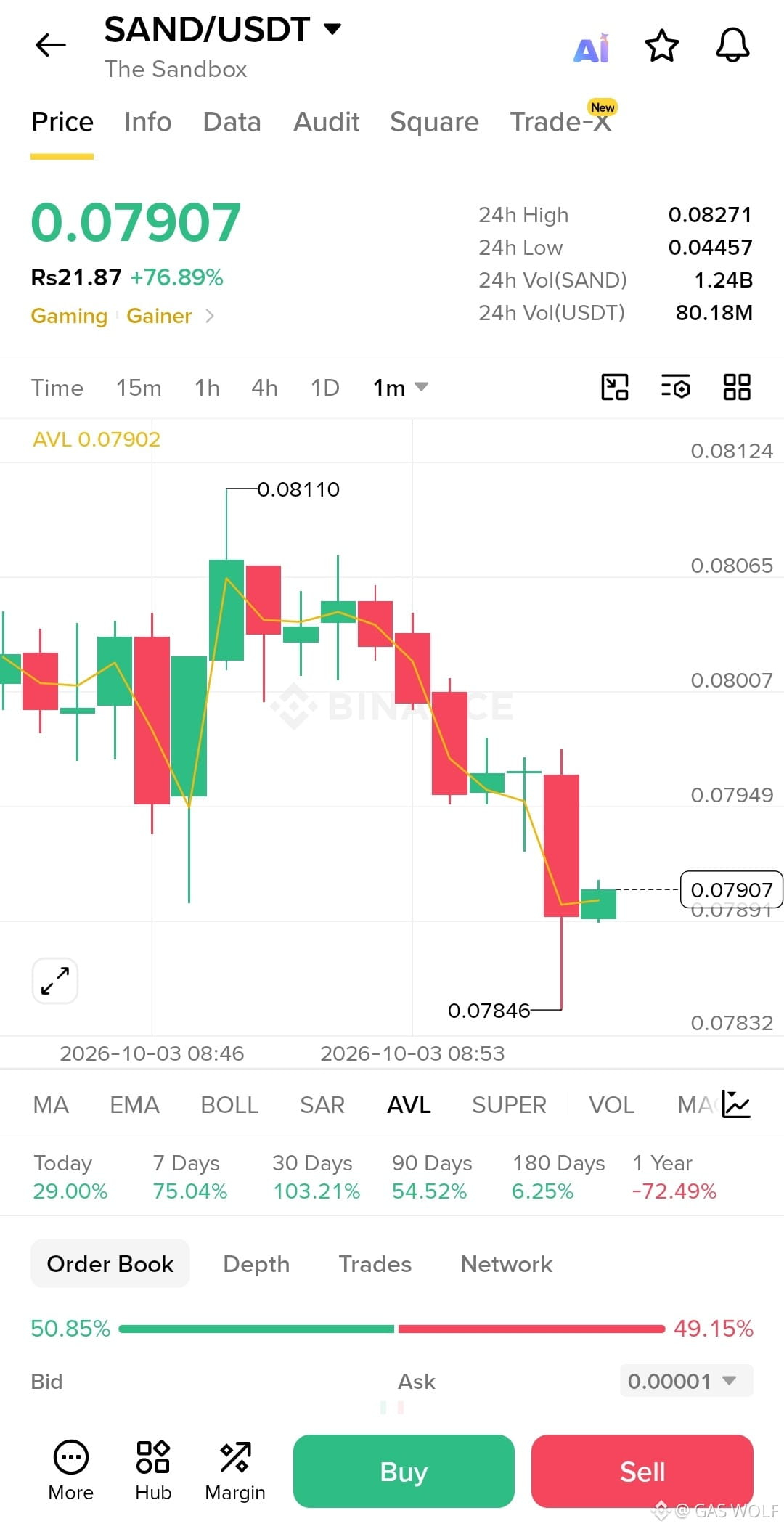
SAND/USDT is trading around $0.0790, sitting near the $0.0788–$0.0791 area after a sharp intraday move. This zone is important because price is attempting to stabilize after pulling back from the $0.08110 local high.
Sellers have pushed price lower, but buyers are still trying to defend the $0.0785–$0.0790 region. My focus is on whether buyers can hold this area and rebuild momentum toward the recent highs.
A reclaim of $0.0800 would strengthen the short-term bullish structure, while a clean break above $0.0811 could bring the next upside leg into focus. If support fails, the setup would need to be reassessed.
Trade Setup:
Entry Zone: $0.0788–$0.0792
Take Profit 1: $0.0800
Take Profit 2: $0.0811
Stop Loss: $0.0783
The key will be confirmation rather than chasing the move. Patience, position sizing, and disciplined risk management matter, especially after such a strong price expansion.
{spot}(SANDUSDT)
$SAND — Price Action Setup
SAND/USDT is trading around $0.0790, sitting near the $0.0788–$0.0791 area after a sharp intraday move. This zone is important because price is attempting to stabilize after pulling back from the $0.08110 local high.
Sellers have pushed price lower, but buyers are still trying to defend the $0.0785–$0.0790 region. My focus is on whether buyers can hold this area and rebuild momentum toward the recent highs.
A reclaim of $0.0800 would strengthen the short-term bullish structure, while a clean break above $0.0811 could bring the next upside leg into focus. If support fails, the setup would need to be reassessed.
Trade Setup:
Entry Zone: $0.0788–$0.0792
Take Profit 1: $0.0800
Take Profit 2: $0.0811
Stop Loss: $0.0783
The key will be confirmation rather than chasing the move. Patience, position sizing, and disciplined risk management matter, especially after such a strong price expansion.
SAND/USDT is trading around $0.0790, sitting near the $0.0788–$0.0791 area after a sharp intraday move. This zone is important because price is attempting to stabilize after pulling back from the $0.08110 local high.
Sellers have pushed price lower, but buyers are still trying to defend the $0.0785–$0.0790 region. My focus is on whether buyers can hold this area and rebuild momentum toward the recent highs.
A reclaim of $0.0800 would strengthen the short-term bullish structure, while a clean break above $0.0811 could bring the next upside leg into focus. If support fails, the setup would need to be reassessed.
Trade Setup:
Entry Zone: $0.0788–$0.0792
Take Profit 1: $0.0800
Take Profit 2: $0.0811
Stop Loss: $0.0783
The key will be confirmation rather than chasing the move. Patience, position sizing, and disciplined risk management matter, especially after such a strong price expansion.
302
·
--
Рост
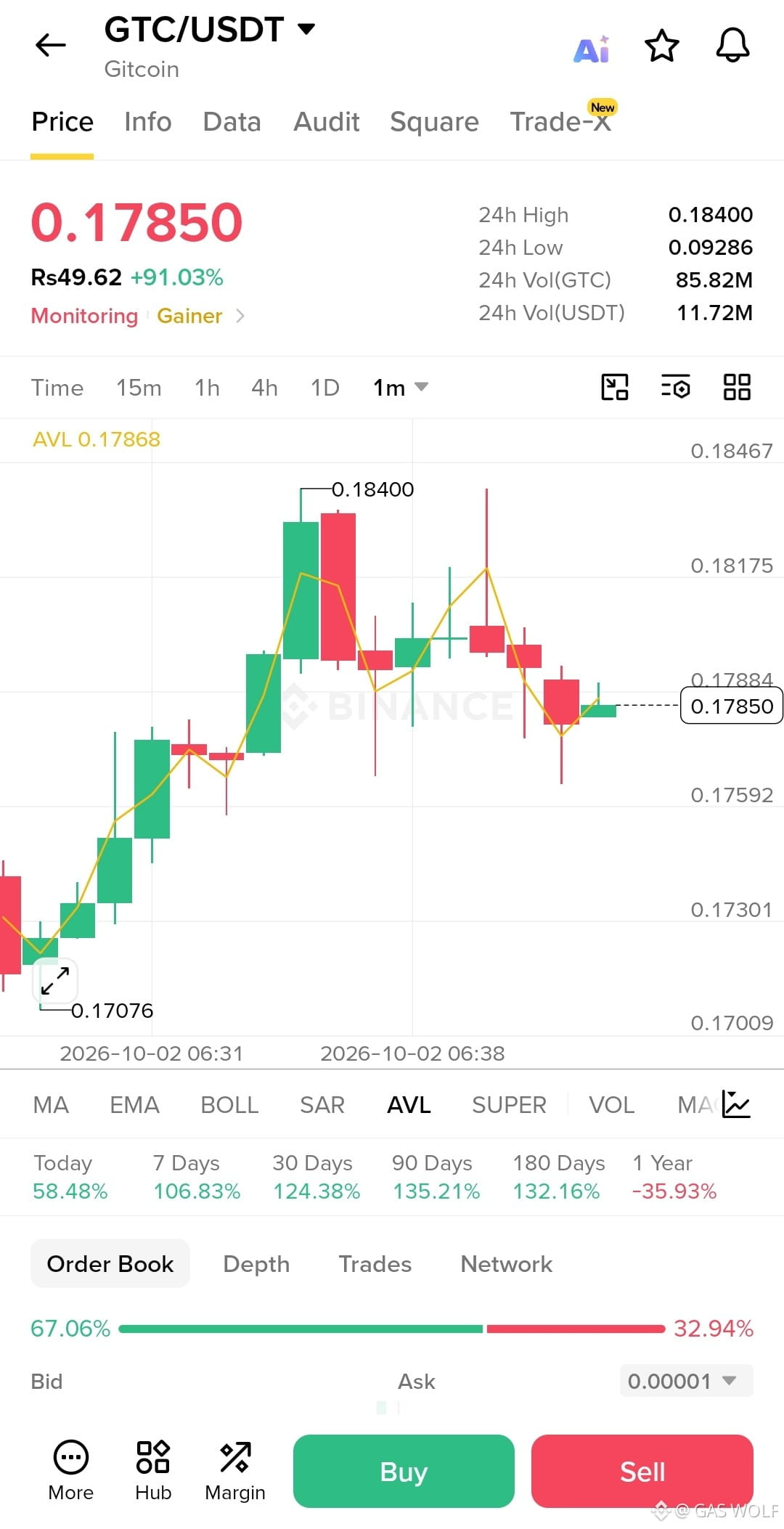
$GTC is trading around $0.1785 after a sharp move from the $0.17076 low and a test of the $0.18400 high. This zone is important because price is now consolidating just below the recent peak after a strong intraday advance.
On the 1-minute chart, buyers have managed to stabilize price around $0.1780–$0.1785 after the pullback. My focus is on whether this area can continue acting as short-term support. A reclaim of $0.1810–$0.1815 would strengthen the momentum structure and put the recent high back in focus.
If buyers regain control, the upside targets could come into play. A sustained move below $0.1760, however, would weaken the current setup and suggest that the pullback is extending.
Trade Setup:
Entry Zone: $0.1775–$0.1790
Take Profit 1: $0.1815
Take Profit 2: $0.1840
Stop Loss: $0.1755
The key will be confirmation rather than chasing the move. After such a strong run, patience and disciplined risk management are important, especially around volatile levels.
{spot}(GTCUSDT)
$GTC is trading around $0.1785 after a sharp move from the $0.17076 low and a test of the $0.18400 high. This zone is important because price is now consolidating just below the recent peak after a strong intraday advance.
On the 1-minute chart, buyers have managed to stabilize price around $0.1780–$0.1785 after the pullback. My focus is on whether this area can continue acting as short-term support. A reclaim of $0.1810–$0.1815 would strengthen the momentum structure and put the recent high back in focus.
If buyers regain control, the upside targets could come into play. A sustained move below $0.1760, however, would weaken the current setup and suggest that the pullback is extending.
Trade Setup:
Entry Zone: $0.1775–$0.1790
Take Profit 1: $0.1815
Take Profit 2: $0.1840
Stop Loss: $0.1755
The key will be confirmation rather than chasing the move. After such a strong run, patience and disciplined risk management are important, especially around volatile levels.
On the 1-minute chart, buyers have managed to stabilize price around $0.1780–$0.1785 after the pullback. My focus is on whether this area can continue acting as short-term support. A reclaim of $0.1810–$0.1815 would strengthen the momentum structure and put the recent high back in focus.
If buyers regain control, the upside targets could come into play. A sustained move below $0.1760, however, would weaken the current setup and suggest that the pullback is extending.
Trade Setup:
Entry Zone: $0.1775–$0.1790
Take Profit 1: $0.1815
Take Profit 2: $0.1840
Stop Loss: $0.1755
The key will be confirmation rather than chasing the move. After such a strong run, patience and disciplined risk management are important, especially around volatile levels.
1
277
·
--
Рост
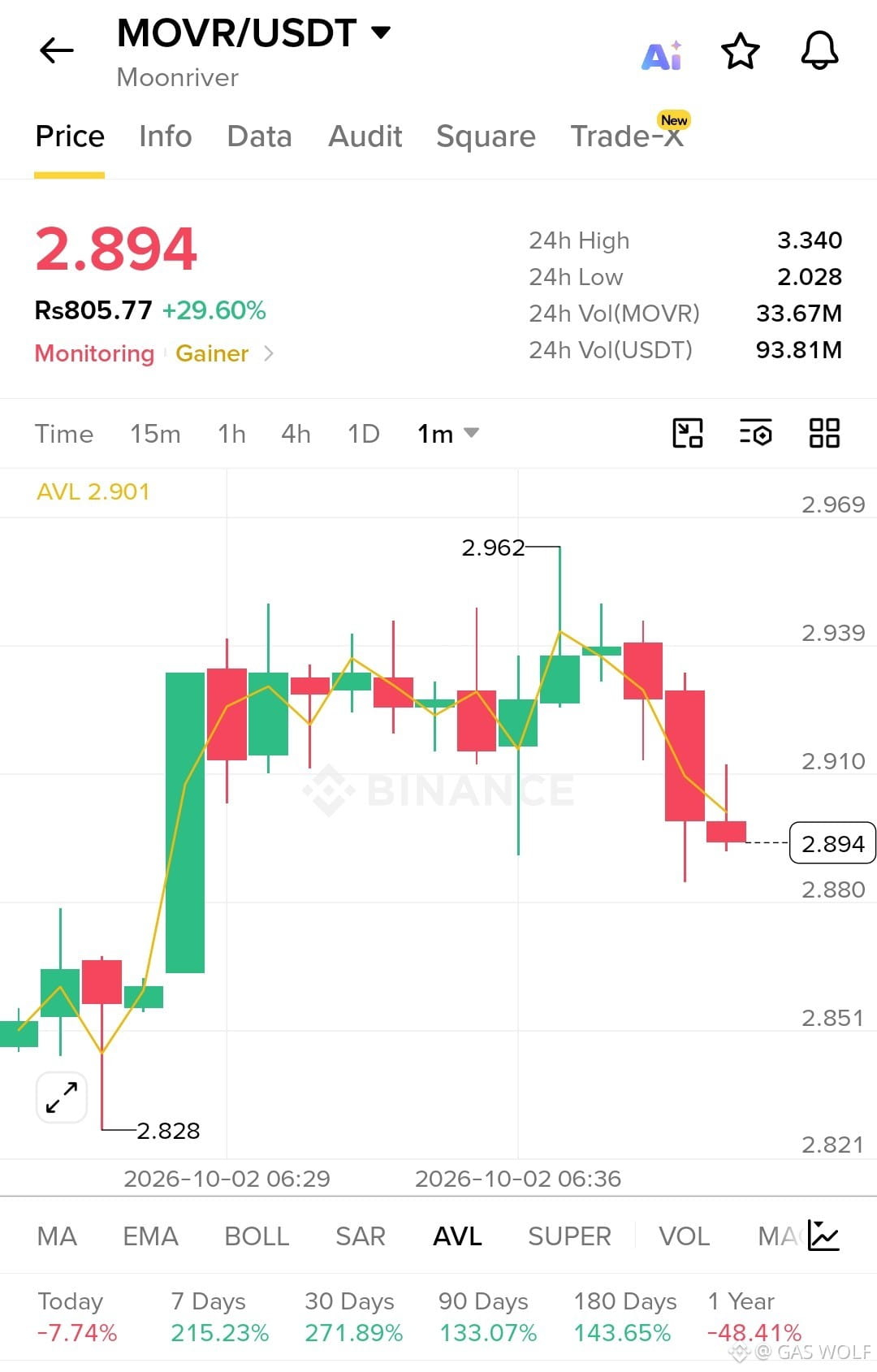
$MOVR is trading around $2.89 after pulling back from the $2.962 intraday high. This area is important because price is now testing the $2.88–$2.90 region after a strong move higher.
The 1-minute chart shows short-term selling pressure after rejection near $2.96, but buyers are still holding the recent breakout structure above the $2.88 area. My focus is on whether buyers can defend this zone and stabilize price before another attempt higher.
A reclaim of $2.91 could strengthen the setup, while a clean move back above $2.94 would provide stronger confirmation toward the recent high. If $2.88 fails, the bullish structure would need to be reassessed.
Trade Setup:
Entry Zone: $2.885–$2.905
Take Profit 1: $2.940
Take Profit 2: $2.960
Stop Loss: $2.850
The key will be confirmation rather than chasing the move. With volatility elevated, patience and disciplined risk management are especially important.
{spot}(MOVRUSDT)
$MOVR is trading around $2.89 after pulling back from the $2.962 intraday high. This area is important because price is now testing the $2.88–$2.90 region after a strong move higher.
The 1-minute chart shows short-term selling pressure after rejection near $2.96, but buyers are still holding the recent breakout structure above the $2.88 area. My focus is on whether buyers can defend this zone and stabilize price before another attempt higher.
A reclaim of $2.91 could strengthen the setup, while a clean move back above $2.94 would provide stronger confirmation toward the recent high. If $2.88 fails, the bullish structure would need to be reassessed.
Trade Setup:
Entry Zone: $2.885–$2.905
Take Profit 1: $2.940
Take Profit 2: $2.960
Stop Loss: $2.850
The key will be confirmation rather than chasing the move. With volatility elevated, patience and disciplined risk management are especially important.
The 1-minute chart shows short-term selling pressure after rejection near $2.96, but buyers are still holding the recent breakout structure above the $2.88 area. My focus is on whether buyers can defend this zone and stabilize price before another attempt higher.
A reclaim of $2.91 could strengthen the setup, while a clean move back above $2.94 would provide stronger confirmation toward the recent high. If $2.88 fails, the bullish structure would need to be reassessed.
Trade Setup:
Entry Zone: $2.885–$2.905
Take Profit 1: $2.940
Take Profit 2: $2.960
Stop Loss: $2.850
The key will be confirmation rather than chasing the move. With volatility elevated, patience and disciplined risk management are especially important.
59
·
--
Рост
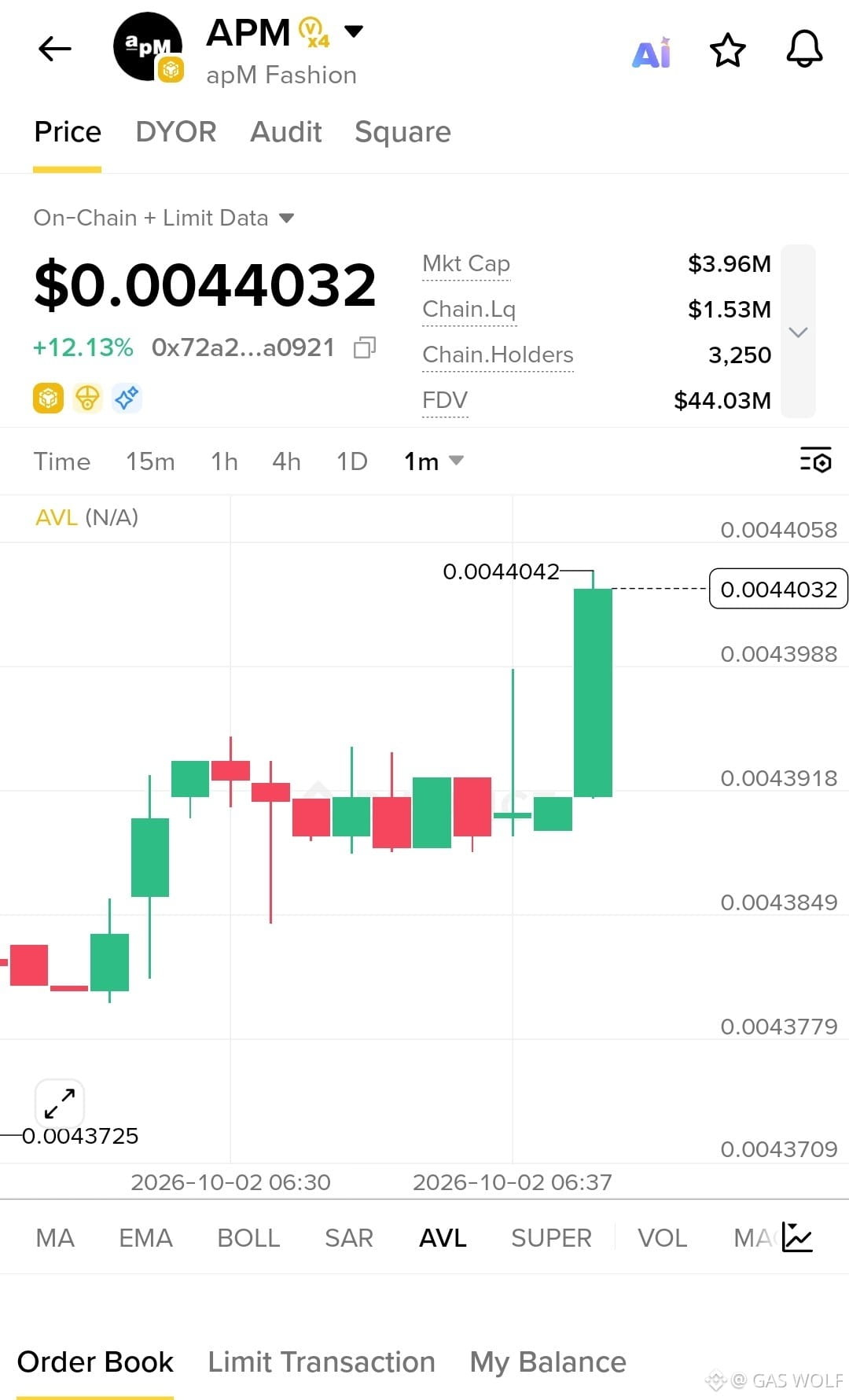
$APM is trading around $0.00440 after pushing up from the $0.00437 area. This zone is important because price is testing the recent intraday high around $0.004404, putting the market at a potential breakout point.
On the 1-minute chart, buyers have maintained control after a period of tight consolidation, with the latest candle pushing sharply toward the range high. My focus is on whether buyers can hold above the $0.00439 area and sustain pressure near $0.004404.
A clean break and hold above $0.004404 could open the way toward the next upside levels. If price gets rejected and falls back below $0.00439, the breakout setup would lose momentum.
Trade Setup:
Entry Zone: $0.004390–$0.004402
Take Profit 1: $0.004430
Take Profit 2: $0.004460
Stop Loss: $0.004370
The key will be confirmation rather than chasing the move. Short-term momentum can change quickly, so patience and disciplined risk management remain important.
{alpha}(560x72a22faa6a522c81a8f5d508381e18af3da0921e)
$APM is trading around $0.00440 after pushing up from the $0.00437 area. This zone is important because price is testing the recent intraday high around $0.004404, putting the market at a potential breakout point.
On the 1-minute chart, buyers have maintained control after a period of tight consolidation, with the latest candle pushing sharply toward the range high. My focus is on whether buyers can hold above the $0.00439 area and sustain pressure near $0.004404.
A clean break and hold above $0.004404 could open the way toward the next upside levels. If price gets rejected and falls back below $0.00439, the breakout setup would lose momentum.
Trade Setup:
Entry Zone: $0.004390–$0.004402
Take Profit 1: $0.004430
Take Profit 2: $0.004460
Stop Loss: $0.004370
The key will be confirmation rather than chasing the move. Short-term momentum can change quickly, so patience and disciplined risk management remain important.
On the 1-minute chart, buyers have maintained control after a period of tight consolidation, with the latest candle pushing sharply toward the range high. My focus is on whether buyers can hold above the $0.00439 area and sustain pressure near $0.004404.
A clean break and hold above $0.004404 could open the way toward the next upside levels. If price gets rejected and falls back below $0.00439, the breakout setup would lose momentum.
Trade Setup:
Entry Zone: $0.004390–$0.004402
Take Profit 1: $0.004430
Take Profit 2: $0.004460
Stop Loss: $0.004370
The key will be confirmation rather than chasing the move. Short-term momentum can change quickly, so patience and disciplined risk management remain important.
1
709
·
--
Рост
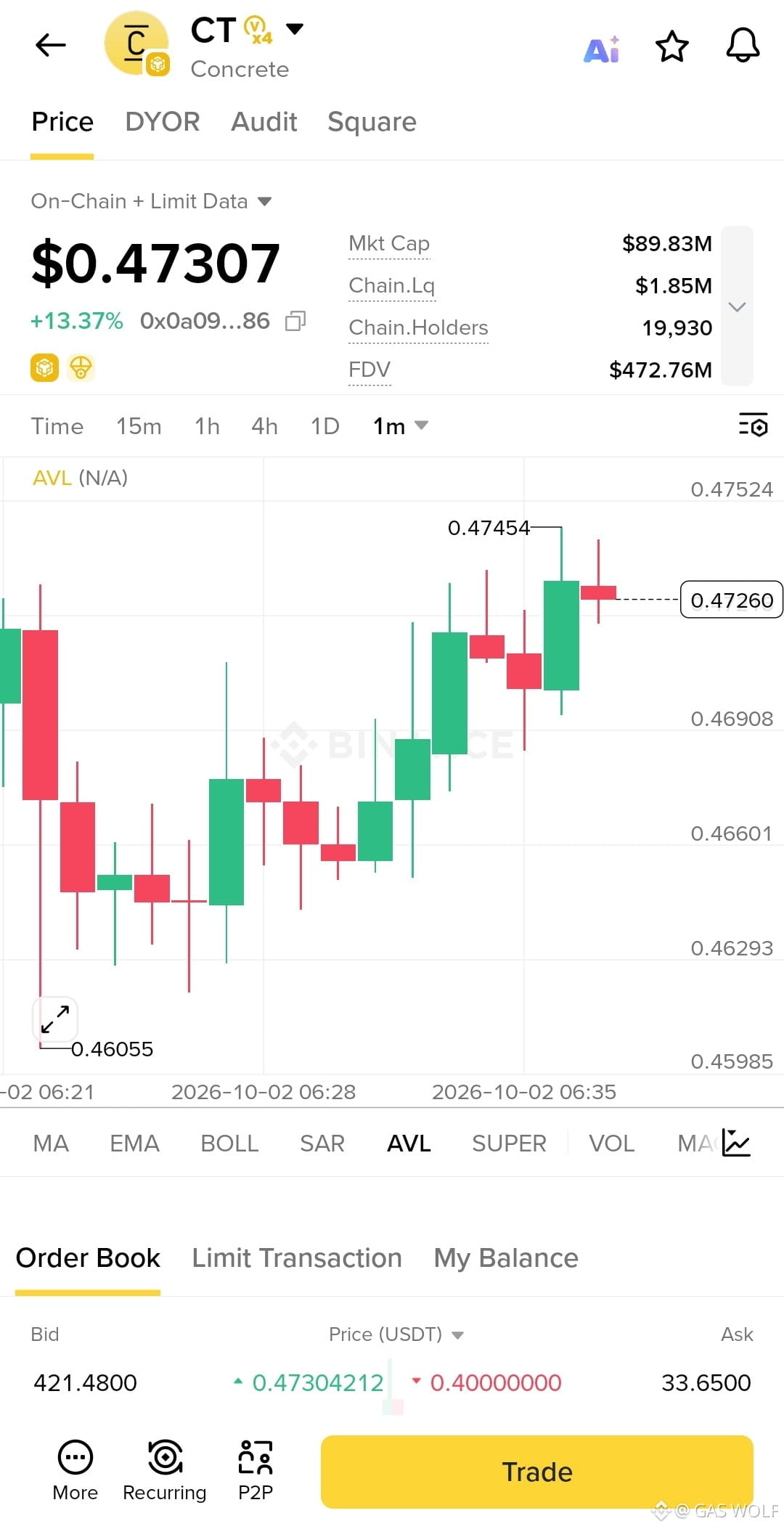
$CT is trading around the $0.472–$0.473 area after recovering strongly from the $0.46055 low. This zone is important because price is now holding near the recent $0.47454 high, where sellers could step in.
On the 1-minute chart, buyers have been pushing higher with a series of higher lows, while price continues to hold above the $0.469 area. My focus is on whether buyers can defend the current zone and make another attempt at the recent high.
A clean break and hold above $0.4745 could provide confirmation for further upside. If momentum continues, the next targets could come into play. On the other hand, losing the $0.469 area would weaken the short-term bullish structure.
Trade Setup:
Entry Zone: $0.4700–$0.4720
Take Profit 1: $0.4745
Take Profit 2: $0.4780
Stop Loss: $0.4660
The key will be confirmation rather than chasing the move. Patience, controlled risk, and avoiding emotional entries matter when trading short-term momentum.
{alpha}(560x0a092e544da31150b439a1aaa1a3a2214a867f46)
$CT is trading around the $0.472–$0.473 area after recovering strongly from the $0.46055 low. This zone is important because price is now holding near the recent $0.47454 high, where sellers could step in.
On the 1-minute chart, buyers have been pushing higher with a series of higher lows, while price continues to hold above the $0.469 area. My focus is on whether buyers can defend the current zone and make another attempt at the recent high.
A clean break and hold above $0.4745 could provide confirmation for further upside. If momentum continues, the next targets could come into play. On the other hand, losing the $0.469 area would weaken the short-term bullish structure.
Trade Setup:
Entry Zone: $0.4700–$0.4720
Take Profit 1: $0.4745
Take Profit 2: $0.4780
Stop Loss: $0.4660
The key will be confirmation rather than chasing the move. Patience, controlled risk, and avoiding emotional entries matter when trading short-term momentum.
On the 1-minute chart, buyers have been pushing higher with a series of higher lows, while price continues to hold above the $0.469 area. My focus is on whether buyers can defend the current zone and make another attempt at the recent high.
A clean break and hold above $0.4745 could provide confirmation for further upside. If momentum continues, the next targets could come into play. On the other hand, losing the $0.469 area would weaken the short-term bullish structure.
Trade Setup:
Entry Zone: $0.4700–$0.4720
Take Profit 1: $0.4745
Take Profit 2: $0.4780
Stop Loss: $0.4660
The key will be confirmation rather than chasing the move. Patience, controlled risk, and avoiding emotional entries matter when trading short-term momentum.
1
656
·
--
Рост
I’ve been watching $MOVR after the reclaim of $2.00, and at first glance the chart looks pretty straightforward: strong momentum, expanding upside levels, and price holding above a psychologically important area.
The number that caught my attention is $2.00.
Reclaiming it matters because the market is now treating that level differently. Instead of rejecting below it, price is using the area as a potential base, with the current setup centered around $2.05–$2.20.
But then I looked at the move a little differently.
A breakout on the chart is one thing. Sustained demand is another.
The setup currently gives us a clean roadmap:
Entry Zone: $2.05–$2.20
EP: $2.15
TP1: $2.45
TP2: $2.70
TP3: $3.00
SL: $1.90
The interesting part is that $2.45 becomes the real test.
If MOVR reaches that level and simply gets rejected, the breakout could end up being more momentum-driven than structurally supported. But if price can reclaim $2.45, hold it, and continue attracting genuine spot demand, then the move starts looking much more convincing.
That’s where the chart and the underlying market behavior need to agree.
Then it clicked: I’m less interested in whether MOVR can print another green candle and more interested in whether buyers actually defend the levels they just reclaimed.
For now, $2.00 is the line I’m watching underneath and $2.45 is the confirmation above.
The real question: is this the beginning of sustained demand, or just a very convincing breakout before liquidity fades?
Confirmation over chasing. Risk management still matters.
{spot}(MOVRUSDT)
$CT
{alpha}(560x0a092e544da31150b439a1aaa1a3a2214a867f46)
$GLMR
{spot}(GLMRUSDT)
I’ve been watching $MOVR after the reclaim of $2.00, and at first glance the chart looks pretty straightforward: strong momentum, expanding upside levels, and price holding above a psychologically important area.
The number that caught my attention is $2.00.
Reclaiming it matters because the market is now treating that level differently. Instead of rejecting below it, price is using the area as a potential base, with the current setup centered around $2.05–$2.20.
But then I looked at the move a little differently.
A breakout on the chart is one thing. Sustained demand is another.
The setup currently gives us a clean roadmap:
Entry Zone: $2.05–$2.20
EP: $2.15
TP1: $2.45
TP2: $2.70
TP3: $3.00
SL: $1.90
The interesting part is that $2.45 becomes the real test.
If MOVR reaches that level and simply gets rejected, the breakout could end up being more momentum-driven than structurally supported. But if price can reclaim $2.45, hold it, and continue attracting genuine spot demand, then the move starts looking much more convincing.
That’s where the chart and the underlying market behavior need to agree.
Then it clicked: I’m less interested in whether MOVR can print another green candle and more interested in whether buyers actually defend the levels they just reclaimed.
For now, $2.00 is the line I’m watching underneath and $2.45 is the confirmation above.
The real question: is this the beginning of sustained demand, or just a very convincing breakout before liquidity fades?
Confirmation over chasing. Risk management still matters.
$CT
$GLMR
The number that caught my attention is $2.00.
Reclaiming it matters because the market is now treating that level differently. Instead of rejecting below it, price is using the area as a potential base, with the current setup centered around $2.05–$2.20.
But then I looked at the move a little differently.
A breakout on the chart is one thing. Sustained demand is another.
The setup currently gives us a clean roadmap:
Entry Zone: $2.05–$2.20
EP: $2.15
TP1: $2.45
TP2: $2.70
TP3: $3.00
SL: $1.90
The interesting part is that $2.45 becomes the real test.
If MOVR reaches that level and simply gets rejected, the breakout could end up being more momentum-driven than structurally supported. But if price can reclaim $2.45, hold it, and continue attracting genuine spot demand, then the move starts looking much more convincing.
That’s where the chart and the underlying market behavior need to agree.
Then it clicked: I’m less interested in whether MOVR can print another green candle and more interested in whether buyers actually defend the levels they just reclaimed.
For now, $2.00 is the line I’m watching underneath and $2.45 is the confirmation above.
The real question: is this the beginning of sustained demand, or just a very convincing breakout before liquidity fades?
Confirmation over chasing. Risk management still matters.
$CT
$GLMR
A) $2.50-$2.70
18%
B) $2.70-$3.00
18%
C) $3.00
43%
Pullback before another leg up
21%
33 проголосовали • Голосование закрыто
1
1
1.6k
·
--
Рост
📊 $NMR — Price Action Setup
NMR/USDT is trading around $14.07, up roughly 36% in 24H, after recovering strongly from the $13.58 intraday low. This zone is important because price has pushed into the $14.19 local resistance after a sharp series of higher highs and higher lows.
On the 1-minute chart, buyers remain active, with price holding above the $14.00 area after breaking through the earlier $13.82–$13.95 range. However, the latest candle shows some rejection near $14.19, so confirmation is important before expecting another leg higher.
My focus is on whether buyers can defend $13.98–$14.05 and reclaim $14.19 with follow-through. A confirmed breakout could bring $14.35 and then $14.60 into focus. If $13.95 breaks decisively, the current short-term bullish structure could weaken.
Trade Setup:
Entry Zone: $14.00–$14.10
Take Profit 1: $14.35
Take Profit 2: $14.60
Stop Loss: $13.85
The key will be confirmation rather than chasing the move. With NMR already up sharply and trading near the intraday high, patience, position sizing, and disciplined risk management matter.
{spot}(NMRUSDT)
#UKFCAWinsCourtOrderToRecover851400Pounds #ChainlinkLaunchesCCIP2WithEnterpriseVerification #QNTFallsOver40%FromMorningHigh #USDTAdds845900HoldersInPast7Days #KospiFalls2.7%SamsungSKHynixDropOver5%
📊 $NMR — Price Action Setup
NMR/USDT is trading around $14.07, up roughly 36% in 24H, after recovering strongly from the $13.58 intraday low. This zone is important because price has pushed into the $14.19 local resistance after a sharp series of higher highs and higher lows.
On the 1-minute chart, buyers remain active, with price holding above the $14.00 area after breaking through the earlier $13.82–$13.95 range. However, the latest candle shows some rejection near $14.19, so confirmation is important before expecting another leg higher.
My focus is on whether buyers can defend $13.98–$14.05 and reclaim $14.19 with follow-through. A confirmed breakout could bring $14.35 and then $14.60 into focus. If $13.95 breaks decisively, the current short-term bullish structure could weaken.
Trade Setup:
Entry Zone: $14.00–$14.10
Take Profit 1: $14.35
Take Profit 2: $14.60
Stop Loss: $13.85
The key will be confirmation rather than chasing the move. With NMR already up sharply and trading near the intraday high, patience, position sizing, and disciplined risk management matter.
#UKFCAWinsCourtOrderToRecover851400Pounds #ChainlinkLaunchesCCIP2WithEnterpriseVerification #QNTFallsOver40%FromMorningHigh #USDTAdds845900HoldersInPast7Days #KospiFalls2.7%SamsungSKHynixDropOver5%
NMR/USDT is trading around $14.07, up roughly 36% in 24H, after recovering strongly from the $13.58 intraday low. This zone is important because price has pushed into the $14.19 local resistance after a sharp series of higher highs and higher lows.
On the 1-minute chart, buyers remain active, with price holding above the $14.00 area after breaking through the earlier $13.82–$13.95 range. However, the latest candle shows some rejection near $14.19, so confirmation is important before expecting another leg higher.
My focus is on whether buyers can defend $13.98–$14.05 and reclaim $14.19 with follow-through. A confirmed breakout could bring $14.35 and then $14.60 into focus. If $13.95 breaks decisively, the current short-term bullish structure could weaken.
Trade Setup:
Entry Zone: $14.00–$14.10
Take Profit 1: $14.35
Take Profit 2: $14.60
Stop Loss: $13.85
The key will be confirmation rather than chasing the move. With NMR already up sharply and trading near the intraday high, patience, position sizing, and disciplined risk management matter.
#UKFCAWinsCourtOrderToRecover851400Pounds #ChainlinkLaunchesCCIP2WithEnterpriseVerification #QNTFallsOver40%FromMorningHigh #USDTAdds845900HoldersInPast7Days #KospiFalls2.7%SamsungSKHynixDropOver5%
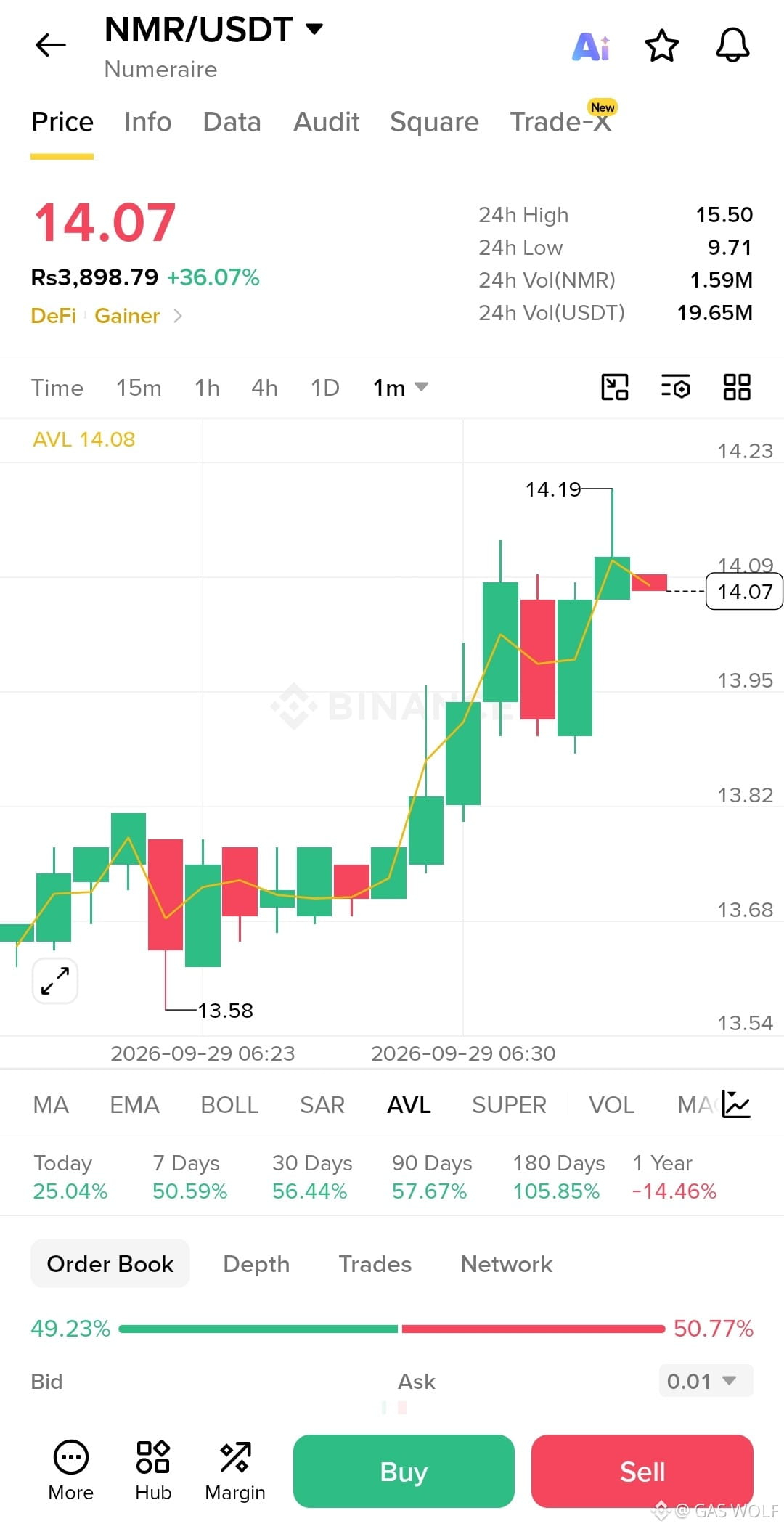
202
Войдите, чтобы посмотреть больше материала
Присоединяйтесь к пользователям криптовалют по всему миру на Binance Square
⚡️ Получайте новейшую и полезную информацию о криптоактивах.
💬 Нам доверяет крупнейшая в мире криптобиржа.
👍 Получите достоверные аналитические данные от верифицированных создателей контента.
Эл. почта/номер телефона