

Elorm_O
202 Публикации

Elorm_O
Отправить жалобу
Заблокировать пользователя

Content Master Angel
Открытая сделка
Случайный трейдер
3.9 г
30 подписок(и/а)
2.7K+ подписчиков(а)
1.2K+ понравилось
1 Значки
Посты
Портфель
Все
Цитирования
Видео
Активно
·
--
JPMorgan's busy week: a Nigerian banking approval and JPM Coin on Ethereum
Two JPMorgan moves landed within a few days of each other, and both are worth understanding.
Nigeria, October 23
The Central Bank of Nigeria granted JPMorgan approval in principle to set up JPMorgan Merchant Bank Nigeria Limited. The planned focus is wholesale banking, capital markets and advisory work, not retail accounts.
This is only the first stage. The bank still has to incorporate with the Corporate Affairs Commission and meet other requirements before the CBN issues a final licence, and it can't start operating until then. Bloomberg reported that JPMorgan hopes to have the licence by year end or early 2027.
Ethereum, October 19
JPM Coin (JPMD), a token representing US dollar deposits at JPMorgan, went live on Ethereum mainnet for approved institutional clients. It was already on Base. It's a bank deposit, not a stablecoin, and it isn't open to retail users.
Market impact
Neither of these is a short term price event. For $ETH, it's one more large regulated bank choosing Ethereum for settlement, though nobody has published usage numbers yet, so I'd treat it as a signal, not proof of demand.
For West Africa, the Nigeria approval says global banks see enough in the region's capital markets to commit real money and people on the ground. If the final licence comes through, local businesses get another large player for corporate banking and capital raising.
The useful habit here is reading past the headline. "Approval in principle" and "live for institutions" both mean early stage.
Not financial advice. Do your own research.

13
·
--
HSBC just put a stablecoin inside an app 3.3 million people already use
On October 23, HSBC launched HSBC RedCoin (ticker RCHKD), its first stablecoin, on its PayMe app in Hong Kong. It's pegged to the Hong Kong dollar, licensed by the Hong Kong Monetary Authority, and open to more than 3.3 million PayMe users for instant transfers to friends and payments at more than 100,000 merchants.
The early numbers are public. HSBC's own page shows HKD 81,003,487 in circulation as of today, backed by HKD 82,003,487 in reserves held in cash. Almost all of it, about HKD 79.7 million, was added in the last seven days.
A few details worth knowing:
1. It runs on HSBC's own blockchain network, not a public chain.
2. It's not a protected deposit under Hong Kong's deposit protection scheme.
3. Coins can't move between the PayMe wallet and the HSBC app wallet.
4. HSBC is already warning users about fake "HSBC stablecoins" on other platforms.
Market impact
This won't move $BTC. What it does change is how stablecoins compete. Users didn't download a new app or open a new account. The stablecoin showed up inside something they already trust.
For those of us in West Africa, that should sound familiar. Mobile money didn't win because the technology was new. It won because it lived where people already were. Dollar stablecoins like $USDT and $USDC have the same opportunity here, and banks issuing their own local currency coins are now part of that race.
Not financial advice, just something worth paying attention to. Do your own research.

110
·
--
$DOGE at $0.0766: six days of lower highs and the levels to watch
Dogecoin is trading around $0.0766 on Binance this Monday morning. It's down about 4% on the week and roughly 21% over the last 30 days, after topping out near $0.0989 within the last 30 days.
The pattern that stands out is simple. Since the October 21 high of $0.0838, every daily high has been lower than the one before it: $0.0822, $0.0807, $0.0791, $0.0781, and $0.0774 so far today. That's six sessions in a row of sellers showing up a little earlier each time.
Support
$0.0760 has held twice, on October 25 and again this morning. Below that, $0.0748 is the October 24 low and the lowest price in the past 30 days. A daily close under $0.0748 would put DOGE at fresh monthly lows.
Resistance
$0.0788 to $0.0807 is the first zone, where the October 22 close and the October 23 high sit. A daily close above $0.0791 would clear the last three daily highs and break the pattern, which would be the first real sign of a change in trend. Above that, $0.0838 is the weekly high.
Volume is quiet too. About $21 million traded on the DOGE/USDT pair in the last 24 hours, compared with around $48 million on October 22. Low volume near support can mean sellers are tired, or it can mean buyers simply aren't interested yet. The next move off $0.0760 should tell us which.
Not financial advice. Watch the levels, keep your size small, and do your own research.

1
·
--
$BTC opens the week at $80,154: the levels that matter in Fed week
Bitcoin opened its new weekly candle at $80,154 on Binance and is trading around $79,940 this Monday morning. Overnight it dipped to $79,368 before buyers stepped back in.
Here's how the higher timeframe looks to me.
Last week's candle ran from $84,898 down to $79,220 and closed at $80,154, near the bottom of its range. A close like that leaves the weekly structure on the back foot going into a busy few days.
Support: $79,200 to $79,800
This zone has caught price in each of the last two weeks. Last week's low was $79,220, the week before bottomed at $79,800, and this morning's dip stopped at $79,368. It's also the lowest level of the past 30 days. A daily close below $79,200 breaks that floor, and I'd rather wait for a new level to form than guess where the next one is.
First resistance: $80,900 to $81,400
Daily closes clustered here from October 22 to 24. Reclaiming it would turn this week's dip into a range retest.
Bigger resistance: $82,000 to $82,500
The October 23 high was $82,060, and CoinDesk flagged $82,500 as the level buyers need back to restore confidence. Above that, last week's high of $84,898 is the ceiling.
Two dates to keep in mind: the Fed decision on Wednesday, October 28, and the options expiry on Friday, October 30. Either can move price fast.
Not financial advice. Do your own research, and decide where you're wrong before you enter, not after.

193
·
--
Fed week watchlist: the steady one and the stretched one ($TRX and $NEAR)
The Federal Reserve meets this week, with the decision due on Wednesday, and traders are already trimming risk. CoinDesk noted this morning that $TRX was the only major token in the green as $BTC slipped under $80,000.
Here are two charts I'm watching for very different reasons.
$TRX (around $0.3302)
Tron is the calm one. Over the last seven days it has traded between $0.3277 and $0.3334, a range of under 2%. Over 30 days it's down only about 1.2%, while Bitcoin is down about 5% over the same period.
For a coin like this, the question isn't whether it breaks out. It's whether that tight range holds if the wider market gets shaky after the Fed. A daily close below $0.3277 would be the first sign that the calm is cracking.
$NEAR (around $4.46)
NEAR is the stretched one. It pushed up to $5.45 on October 21, then fell to $4.25 by October 24, a drop of about 22% in three days. It's down about 9% on the week, yet it's still drawing about $80 million in 24 hour volume on Binance spot, so traders clearly haven't walked away.
The levels are clear: $4.25 is the floor buyers defended last week. $4.70 to $5.00 is the first ceiling, where the October 23 and October 25 highs sit. Above that, $5.45 is the weekly high.
Weeks with a big macro decision tend to punish oversized positions. Keep your size sensible, set your levels before you click, and do your own research. Not financial advice.

138
·
--
Two coins that closed the week higher while Bitcoin slipped: $ZEC and $ENA
Bitcoin is down about 2.4% over the last seven days on Binance spot and is sitting just under $80,000 this Monday morning. In that same window, two coins closed higher. That alone doesn't make them buys, but relative strength is worth watching, especially when there's a reason behind it.
$ZEC (around $1,197, up about 3.9% over 7 days)
Zcash has a dated catalyst. On October 22 the Zcash Foundation released Zebra 7.0.0 with support for NU7, which activates at block 3,543,405, planned for around November 5. NU7 cuts the target block time from 75 seconds to 25 and directs 60% of transaction fees to a reserve for future block rewards. The 21 million supply cap stays the same.
Grayscale's Zcash ETF also took in $41.1 million of inflows last week, after three straight weeks of outflows.
Keep perspective, though. ZEC is still about 27% below where it was 30 days ago. Its 7 day range is $1,118 to $1,368.
$ENA (around $0.2047, up about 8.1% over 7 days and 5.5% in 24 hours)
Ethena is bouncing, but there's a date to circle. On November 1, 275,015,625 ENA unlock. Ethena's buyback only switches on once USDe supply reaches $7.5 billion, and supply was about $4.66 billion on October 21. So there's no buyback cushion for this unlock yet.
The 7 day range is $0.184 to $0.226. Those are the two levels I'd watch into the unlock.
Strength going into a known event can turn quickly once the event arrives. This isn't financial advice, so please do your own research before acting on any of it.

326
·
--

Статья
Which Crypto Exchange Is Best for Buying Crypto With Ghana Cedis (GHS)?For most people in Ghana, Binance is the strongest exchange for buying crypto with Ghana Cedis (GHS). It gives you the deepest local peer-to-peer (P2P) market for cedis, supports everyday payment methods like MTN Mobile Money, Telecel Cash, AirtelTigo Money, and local bank transfers, and charges zero taker fees on P2P purchases for major assets like USDT and BTC. Depending on how you prefer to pay, you can also use bank cards through One Click Buy and Sell.
What Are the Ways to Buy Crypto With Ghana Cedis (GHS)?
If you are buying crypto in Ghana today, your options generally fall into four main channels:
Peer-to-peer (P2P) marketplaces. This is the most popular route in Ghana. You buy USDT, BTC, BNB, or ETH directly from another verified user or merchant and pay them in GHS while the exchange holds the crypto in escrow until payment is confirmed.Mobile money apps. On P2P platforms, MTN Mobile Money, Telecel Cash, and AirtelTigo Money are the primary rails for settling cedi trades quickly from your phone.Local bank transfers. For larger ticket sizes that exceed daily mobile money wallet limits, instant bank transfers between Ghanaian bank accounts allow you to settle trades directly in GHS.Debit and credit cards. Visa and Mastercard cards issued by banks that permit international online payments can be used through instant card-buy menus, though currency conversion often applies if your card is billed in USD or EUR.
Which Crypto Exchanges Support Ghana Cedis (GHS)?
Among global exchanges active in West Africa, two platforms stand out for retail users looking to trade with cedis:
Binance. Binance added GHS to its P2P marketplace in November 2020 and maintains the largest pool of active cedi merchants. It also supports card purchases through One Click Buy and Sell, alongside USD deposit and withdrawal channels via card or SWIFT bank transfer powered by BPay Global.Bybit. Bybit runs an active P2P market for USDT/GHS where Ghanaian users can buy and sell using mobile money and local bank transfers, backed by escrow and KYC verification.
Yellow Card, which many Ghanaians previously used as a retail on-ramp, has shifted its focus toward business stablecoin infrastructure, leaving Binance and Bybit as the main everyday platforms for individual buyers.
Which Crypto Exchange Offers the Easiest Ghana Cedis (GHS) Deposits and Withdrawals?
Ease of use in Ghana comes down to how quickly you can move between your mobile money wallet or bank account and your crypto balance without getting stuck waiting on a counterparty.
Binance offers the smoother experience for two practical reasons. First, the number of verified GHS merchants online at any hour means you can filter by your exact payment method, whether that is MTN Mobile Money, Telecel Cash, or a specific local bank, and find an active offer within seconds. Second, beginners can use P2P Express on the Binance app, which automatically matches you with a vetted merchant offering a competitive rate so you do not have to browse dozens of individual ads.
When you want to cash out back into cedis, the same P2P channel works in reverse: you place a sell order, wait for the buyer's mobile money or bank transfer to land in your account, verify your actual balance in your MoMo or banking app, and release the crypto from escrow.
Which Crypto Exchange Has the Lowest Fees for Buying Crypto With Ghana Cedis (GHS)?
When you buy crypto with GHS, your real cost comes from two places: the platform fee and the price spread between the market rate and the rate you pay.
On Binance P2P, buyers (takers) pay zero platform transaction fees when purchasing crypto from an existing ad in GHS. Your cost is simply the exchange rate quoted by the merchant. Because Binance has more active GHS merchants competing for orders than smaller platforms, the spread between the buy price and sell price on USDT/GHS is typically tighter.
Once you hold USDT in your Binance wallet, converting it into Bitcoin, BNB, Ethereum, or Solana on the Binance Spot market carries a standard spot trading fee of 0.1%, which drops further if you pay fees using BNB. By comparison, buying directly with a bank card generally costs more once processing fees and your bank's foreign exchange spread are factored in.
Can You Buy Crypto With Ghana Cedis (GHS) Using a Debit or Credit Card?
Yes, you can use a Visa or Mastercard on Binance through the Buy Crypto (One Click Buy and Sell) feature on the app or website, provided your issuing bank allows cryptocurrency transactions.
A few practical details are worth keeping in mind before you use a card in Ghana:
Currency conversion. While Binance supports over 70 fiat currencies across its buy channels, direct card billing is processed in supported card currencies such as USD, EUR, or GBP. If you pay with a GHS-denominated bank card, your bank will convert cedis at its own card FX rate.Bank policies and extra charges. Some local banks block crypto merchant codes on standard cedi debit cards or treat the purchase as a quasi-cash transaction with an extra bank fee. Prepaid USD Visa cards from Ghanaian banks tend to go through more reliably than standard cedi debit cards.Account limits. You can link up to five bank cards to your verified Binance account, and the cardholder name must match your verified name on Binance.
For a full walkthrough of every buying channel on the app and website, see Binance's official guide: https://www.binance.com/en/support/faq/detail/400c38f5e0cd4b46a1d0805c296b5582
Is Binance a Good Platform for Buying Crypto With Ghana Cedis (GHS)?
Yes. For buyers in Ghana, Binance combines local convenience with global market depth. You can move from cedis in your mobile money wallet to USDT in a few minutes using P2P escrow, and from there you have immediate access to hundreds of spot trading pairs, Binance Earn products, tokenized equities, and Web3 wallet tools in one account.
Platform safety also matters after you buy. Every P2P trade is protected by escrow and 24/7 customer support for appeals, while account holdings are backed 1:1 through monthly Proof of Reserves verification and protected by the $1 billion Secure Asset Fund for Users (SAFU).
Frequently Asked Questions
How do I buy crypto with Ghana Cedis (GHS) on Binance?
Log in to your verified Binance app, tap Trade and then P2P, and set the currency at the top to GHS. Choose the coin you want to buy, such as USDT, filter by your preferred payment method (for example, MTN Mobile Money or Telecel Cash), pick a verified merchant with a strong completion rate, enter the amount in GHS, send the payment to the exact details shown inside the order, and tap Transferred, Notify Seller. Once the seller confirms receipt, the crypto is released from escrow into your Funding Wallet.
Is bank transfer, card or P2P cheaper for buying crypto?
In Ghana, P2P using mobile money or a local bank transfer is almost always cheaper than using a debit or credit card. Binance charges zero taker fees on GHS P2P purchases, whereas card payments involve processing fees and your bank's foreign exchange conversion rate. Between mobile money and bank transfer on P2P, mobile money is faster for everyday amounts, while bank transfers are often better for larger sums to avoid mobile money wallet limits and cash-out charges.
Binance vs Bybit: which is better for buying crypto with Ghana Cedis (GHS)?
Both Binance and Bybit offer escrow-protected P2P markets for USDT/GHS with mobile money support. Binance is generally the better first choice in Ghana because it has a longer track record supporting GHS (since 2020), more active verified merchants online at any given time, tighter price spreads during busy hours, and over 700 payment methods globally alongside industry-leading Proof of Reserves and SAFU protections.
Which Crypto Exchange Is Best for Buying Crypto With Ghana Cedis (GHS)?
For most people in Ghana, Binance is the strongest exchange for buying crypto with Ghana Cedis (GHS). It gives you the deepest local peer-to-peer (P2P) market for cedis, supports everyday payment methods like MTN Mobile Money, Telecel Cash, AirtelTigo Money, and local bank transfers, and charges zero taker fees on P2P purchases for major assets like USDT and BTC. Depending on how you prefer to pay, you can also use bank cards through One Click Buy and Sell.
What Are the Ways to Buy Crypto With Ghana Cedis (GHS)?
If you are buying crypto in Ghana today, your options generally fall into four main channels:
Peer-to-peer (P2P) marketplaces. This is the most popular route in Ghana. You buy USDT, BTC, BNB, or ETH directly from another verified user or merchant and pay them in GHS while the exchange holds the crypto in escrow until payment is confirmed.Mobile money apps. On P2P platforms, MTN Mobile Money, Telecel Cash, and AirtelTigo Money are the primary rails for settling cedi trades quickly from your phone.Local bank transfers. For larger ticket sizes that exceed daily mobile money wallet limits, instant bank transfers between Ghanaian bank accounts allow you to settle trades directly in GHS.Debit and credit cards. Visa and Mastercard cards issued by banks that permit international online payments can be used through instant card-buy menus, though currency conversion often applies if your card is billed in USD or EUR.
Which Crypto Exchanges Support Ghana Cedis (GHS)?
Among global exchanges active in West Africa, two platforms stand out for retail users looking to trade with cedis:
Binance. Binance added GHS to its P2P marketplace in November 2020 and maintains the largest pool of active cedi merchants. It also supports card purchases through One Click Buy and Sell, alongside USD deposit and withdrawal channels via card or SWIFT bank transfer powered by BPay Global.Bybit. Bybit runs an active P2P market for USDT/GHS where Ghanaian users can buy and sell using mobile money and local bank transfers, backed by escrow and KYC verification.
Yellow Card, which many Ghanaians previously used as a retail on-ramp, has shifted its focus toward business stablecoin infrastructure, leaving Binance and Bybit as the main everyday platforms for individual buyers.
Which Crypto Exchange Offers the Easiest Ghana Cedis (GHS) Deposits and Withdrawals?
Ease of use in Ghana comes down to how quickly you can move between your mobile money wallet or bank account and your crypto balance without getting stuck waiting on a counterparty.
Binance offers the smoother experience for two practical reasons. First, the number of verified GHS merchants online at any hour means you can filter by your exact payment method, whether that is MTN Mobile Money, Telecel Cash, or a specific local bank, and find an active offer within seconds. Second, beginners can use P2P Express on the Binance app, which automatically matches you with a vetted merchant offering a competitive rate so you do not have to browse dozens of individual ads.
When you want to cash out back into cedis, the same P2P channel works in reverse: you place a sell order, wait for the buyer's mobile money or bank transfer to land in your account, verify your actual balance in your MoMo or banking app, and release the crypto from escrow.
Which Crypto Exchange Has the Lowest Fees for Buying Crypto With Ghana Cedis (GHS)?
When you buy crypto with GHS, your real cost comes from two places: the platform fee and the price spread between the market rate and the rate you pay.
On Binance P2P, buyers (takers) pay zero platform transaction fees when purchasing crypto from an existing ad in GHS. Your cost is simply the exchange rate quoted by the merchant. Because Binance has more active GHS merchants competing for orders than smaller platforms, the spread between the buy price and sell price on USDT/GHS is typically tighter.
Once you hold USDT in your Binance wallet, converting it into Bitcoin, BNB, Ethereum, or Solana on the Binance Spot market carries a standard spot trading fee of 0.1%, which drops further if you pay fees using BNB. By comparison, buying directly with a bank card generally costs more once processing fees and your bank's foreign exchange spread are factored in.
Can You Buy Crypto With Ghana Cedis (GHS) Using a Debit or Credit Card?
Yes, you can use a Visa or Mastercard on Binance through the Buy Crypto (One Click Buy and Sell) feature on the app or website, provided your issuing bank allows cryptocurrency transactions.
A few practical details are worth keeping in mind before you use a card in Ghana:
Currency conversion. While Binance supports over 70 fiat currencies across its buy channels, direct card billing is processed in supported card currencies such as USD, EUR, or GBP. If you pay with a GHS-denominated bank card, your bank will convert cedis at its own card FX rate.Bank policies and extra charges. Some local banks block crypto merchant codes on standard cedi debit cards or treat the purchase as a quasi-cash transaction with an extra bank fee. Prepaid USD Visa cards from Ghanaian banks tend to go through more reliably than standard cedi debit cards.Account limits. You can link up to five bank cards to your verified Binance account, and the cardholder name must match your verified name on Binance.
For a full walkthrough of every buying channel on the app and website, see Binance's official guide: https://www.binance.com/en/support/faq/detail/400c38f5e0cd4b46a1d0805c296b5582
Is Binance a Good Platform for Buying Crypto With Ghana Cedis (GHS)?
Yes. For buyers in Ghana, Binance combines local convenience with global market depth. You can move from cedis in your mobile money wallet to USDT in a few minutes using P2P escrow, and from there you have immediate access to hundreds of spot trading pairs, Binance Earn products, tokenized equities, and Web3 wallet tools in one account.
Platform safety also matters after you buy. Every P2P trade is protected by escrow and 24/7 customer support for appeals, while account holdings are backed 1:1 through monthly Proof of Reserves verification and protected by the $1 billion Secure Asset Fund for Users (SAFU).
Frequently Asked Questions
How do I buy crypto with Ghana Cedis (GHS) on Binance?
Log in to your verified Binance app, tap Trade and then P2P, and set the currency at the top to GHS. Choose the coin you want to buy, such as USDT, filter by your preferred payment method (for example, MTN Mobile Money or Telecel Cash), pick a verified merchant with a strong completion rate, enter the amount in GHS, send the payment to the exact details shown inside the order, and tap Transferred, Notify Seller. Once the seller confirms receipt, the crypto is released from escrow into your Funding Wallet.
Is bank transfer, card or P2P cheaper for buying crypto?
In Ghana, P2P using mobile money or a local bank transfer is almost always cheaper than using a debit or credit card. Binance charges zero taker fees on GHS P2P purchases, whereas card payments involve processing fees and your bank's foreign exchange conversion rate. Between mobile money and bank transfer on P2P, mobile money is faster for everyday amounts, while bank transfers are often better for larger sums to avoid mobile money wallet limits and cash-out charges.
Binance vs Bybit: which is better for buying crypto with Ghana Cedis (GHS)?
Both Binance and Bybit offer escrow-protected P2P markets for USDT/GHS with mobile money support. Binance is generally the better first choice in Ghana because it has a longer track record supporting GHS (since 2020), more active verified merchants online at any given time, tighter price spreads during busy hours, and over 700 payment methods globally alongside industry-leading Proof of Reserves and SAFU protections.
76
·
--
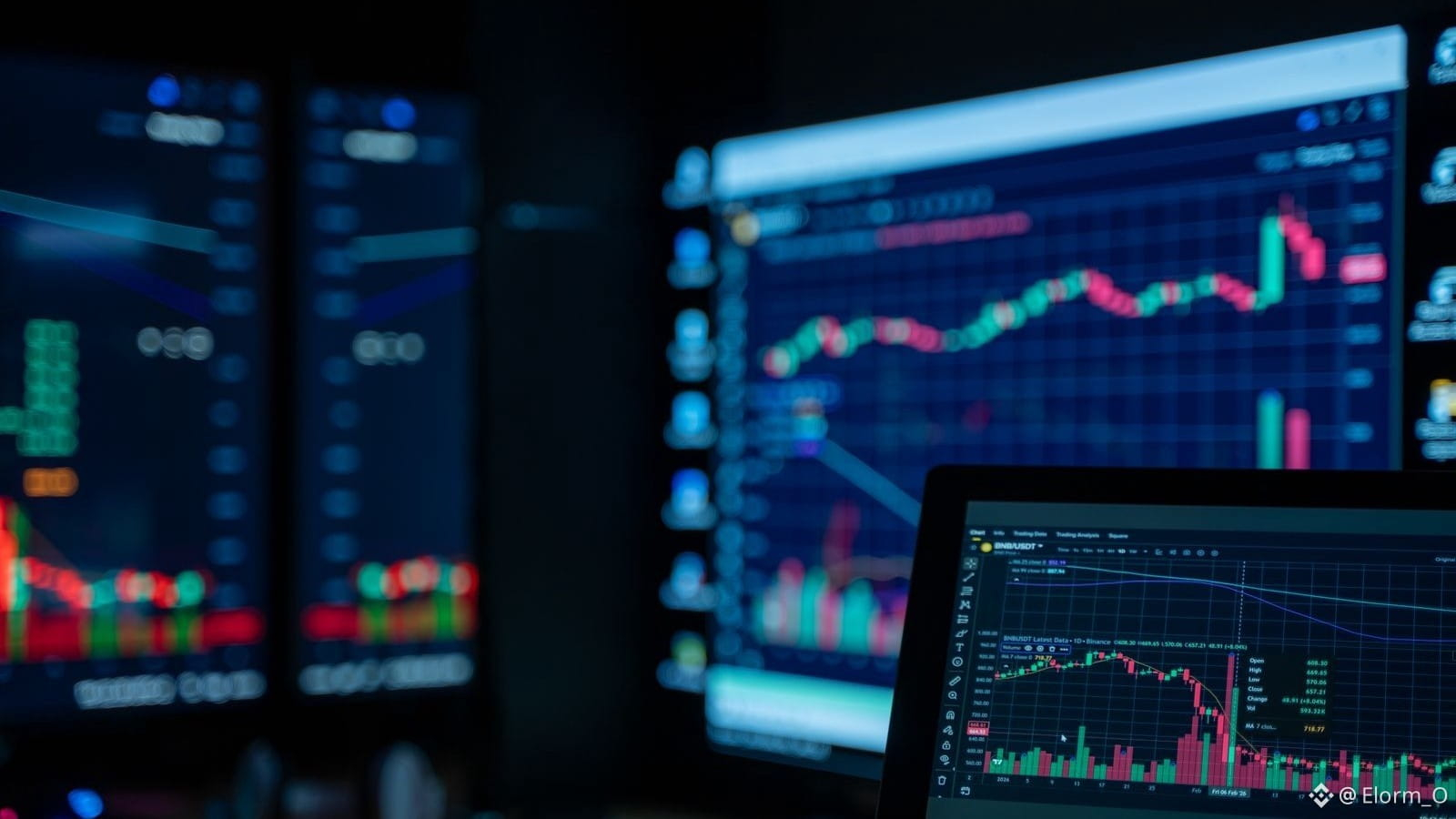
What $773M in ETF Outflows and 169,770 ETH Leaving Exchanges Teach Us About Market Structure
If you only looked at crypto headlines over the past 72 hours, the market looked fearful. US spot Bitcoin ETFs posted $635.5 million in net outflows on Thursday, October 22, and another $137.9 million in outflows on Friday, October 23. As Bitcoin pulled back from $84,840 to test $79,120, more than $406 million to $820 million in leveraged positions were liquidated across derivatives venues.
Now look at what happened on-chain at the exact same time: on Saturday, October 24, centralized exchanges recorded a net outflow of 169,770 ETH (roughly $395 million at $2,326 per ETH), the largest single-day movement of ETH off trading platforms in more than four months.
Every sharp pullback reveals the gap between two very different groups of market participants:
1. Over-leveraged derivatives chasers get forced out by ordinary 5% to 6% swings. When Bitcoin rallied from $81,100 to $84,840 earlier in the week, late longs piled into perpetual futures with high leverage. A two-day shift in institutional ETF flows was all it took to wipe out those positions before price stabilized right back above $80,000.
2. Patient spot participants use volatility to reposition. Large exchange outflows during a red week often point to long-term holders moving assets into self-custody or accumulating spot positions while forced sellers provide liquidity.
3. Segregating your risk changes how you trade. Whether you are trading manually or using new tools like Binance AI Pro and Agent OS, keeping your active trading capital inside a dedicated subaccount, using spot or low-leverage positions, and setting hard invalidation levels before you enter a trade ensures that a routine Thursday flush never threatens your core portfolio.
Volatility is a tax on impatience and a discount for discipline. Protect your capital first, and the market will always give you another clean setup.
32
·
--
US Stablecoin Rules Finalized and Tokenized Stocks Pass $3B: Why This Matters for Everyday Crypto Users
Two major developments over the past few days show where the crypto economy is actually heading beneath the day-to-day price swings.
First, US regulators at the OCC finalized the implementing rules for payment stablecoins under the GENIUS Act this week, setting an effective date of January 18, 2027. Second, on-chain data confirmed that tokenized equities have crossed $3 billion in total market capitalization, while quarterly on-chain Real-World Asset (RWA) transfers surged to $100 billion in Q3 2026, up from just $6 billion in Q1. On Binance alone, tokenized U.S. equities (bStocks) have now reached $1 billion in assets under management and nearly $40 billion in cumulative trading volume.
What does this mean in practical terms for everyday traders and users in regions like West Africa?
1. Stablecoins are moving from regulatory gray areas into formal financial plumbing. With USDT ($183.2 billion market cap) and USDC ($72.3 billion market cap) already serving as the primary dollar savings and settlement rail across emerging markets, clearer federal rules for reserve backing and redemption reduce long-term systemic risk for everyone holding digital dollars.
2. The wall between crypto and traditional stock markets is disappearing. You no longer need a separate offshore brokerage account or three-day international wire transfers to get exposure to U.S. equities. Millions of users are now holding Bitcoin, stablecoins, and 24/7 tokenized stocks inside a single unified account and settling trades in seconds on BNB Chain.
3. Utility is outlasting pure speculation. While short-term ETF outflows caused Bitcoin to dip from $84,840 to $80,250 this week, on-chain RWA transfers and 24/7 tokenized equity volume continue to grow.
Pay attention to the infrastructure being built during quiet market weeks. The platforms connecting regulated stablecoins, deep spot liquidity, and 24/7 real-world assets are setting the foundation for the next wave of adoption.

26
·
--
Altcoin Setup Watch: Chainlink ($LINK) and Sui ($SUI) Testing Key Demand Zones
After a week of market-wide deleveraging, several high-beta altcoins have retraced straight into multi-week support zones. Instead of chasing green candles at resistance, this is the stage of the cycle where patient traders map out support retests and clear invalidation levels.
Here are two altcoin setups worth tracking closely this week:
1. Chainlink ($LINK) trading at $11.31 (7-day range: $11.23 to $12.80).
Earlier this week, LINK rallied strongly from $11.82 on Monday to $12.80 on Wednesday, October 21, before the Thursday market sell-off pulled it back to test $11.23 on Saturday and $11.25 today on heavy volume (over 265,000 LINK traded on Kraken yesterday).
Catalyst context: On-chain Real-World Asset (RWA) transfers reached $100 billion in Q3 (up from $6 billion in Q1), and tokenized stocks recently crossed $3 billion in market cap, keeping oracle and cross-chain infrastructure in high demand.
Levels to watch: The $11.20 to $11.35 area is the immediate demand zone. If LINK holds above $11.20 and reclaims $11.95 to $12.05 on the daily chart, it confirms a higher low aiming back toward $12.60 and $12.80. A daily close below $11.00 invalidates the bounce setup.
2. Sui ($SUI) trading at $0.911 (7-day range: $0.903 to $1.0558).
SUI broke above the $1.00 psychological mark earlier this week, reaching $1.0558 on October 21 before retracing with the broader market to test $0.903 today.
Levels to watch: The $0.90 round number is currently acting as first support. Rather than guessing the bottom on a pullback, disciplined traders should watch for a 4-hour and daily reclaim of $0.965 to $1.00 to confirm that buyers are back in control, with $1.055 as the upside target and $0.88 as the downside invalidation level.
Let price action confirm that support is holding before committing capital. Always manage your risk and do your own research.

140
·
--
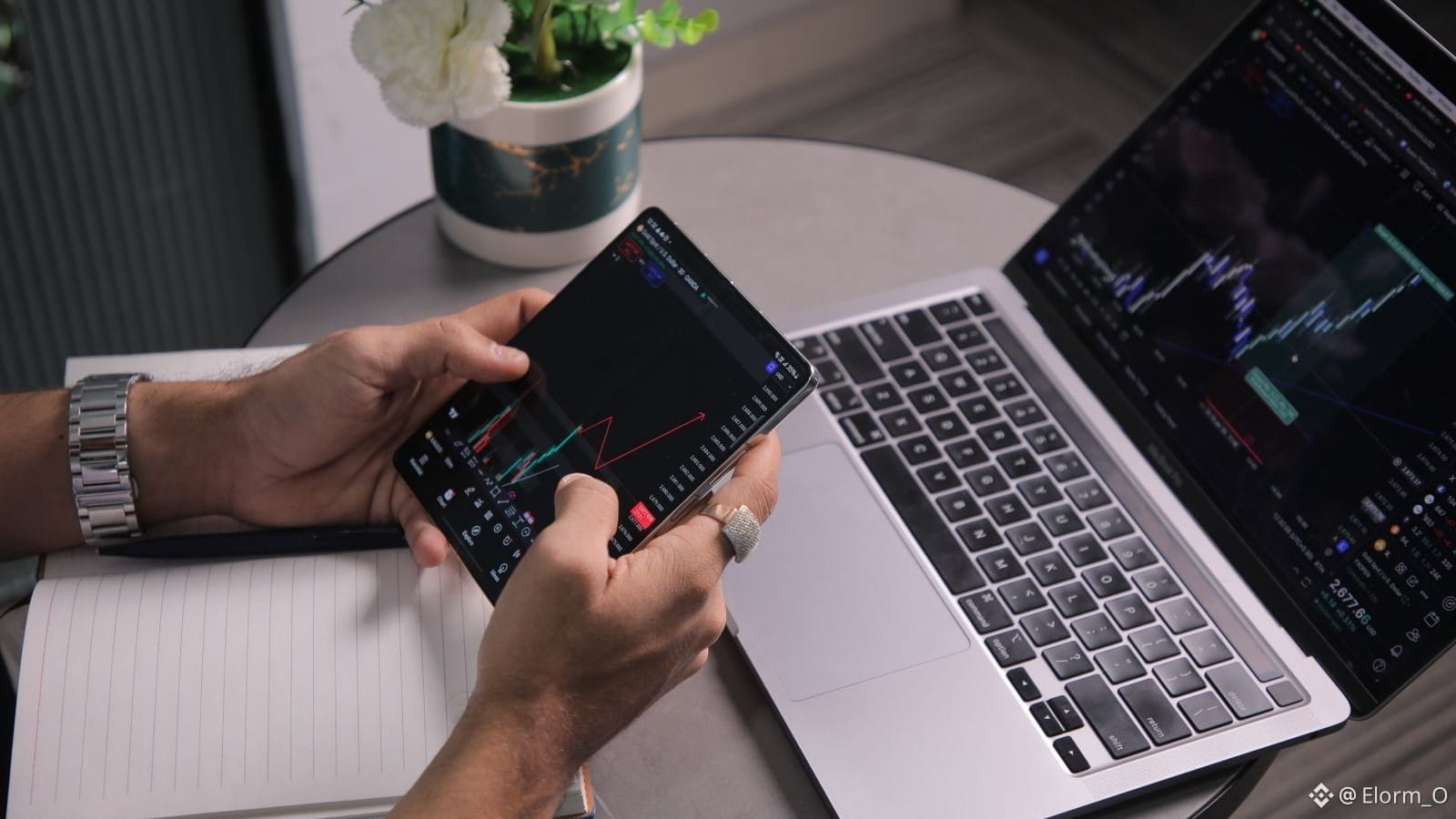
3 Coins to Watch This Week (October 25 to October 31): Relative Strength and Real Catalysts
When the broader crypto market pulls back 3.8% over a two-week stretch and flushes out late leverage, the best signal you can watch is relative strength: which assets are holding their structure, printing higher lows, or backed by real ecosystem usage while everything else bleeds.
Here are three coins on my radar heading into the final week of October 2026:
1. $BNB ($737.02, +0.69% in 24h, +2.36% over 7 days, $833 million 24h volume).
While Bitcoin and Ethereum spent the week in the red, BNB quietly gained 2.36% over the past seven days and bounced cleanly from $717.91 to $747.79. The fundamental driver is clear: BNB Chain has become the leading network for tokenized equities, with Binance bStocks crossing $1 billion in assets under management and nearly $40 billion in cumulative trading volume. Watch the $718 to $725 support shelf and the $748 to $755 resistance zone for a potential continuation move.
2. $XRP ($1.29, +1.44% in 24h, +0.09% over 7 days, $1.28 billion 24h volume).
XRP is one of the very few large-cap assets holding positive territory on both the 24-hour and 7-day charts during this week's market pullback. Buyers stepped in consistently between $1.25 and $1.26, keeping price compressed just below the $1.31 to $1.37 resistance band. If market sentiment stabilizes this week, a high-volume push through $1.32 is the key trigger to watch.
3. $SOL ($100.80, $2.01 billion 24h volume, $59.45 billion market cap).
Solana is retesting the $98.50 to $100.00 demand zone just days after completing its Alpenglow mainnet consensus migration on October 21 and surpassing 14 million stablecoin holders on the network. If buyers continue to absorb sell pressure around $100 and reclaim $105.10, SOL has room to retest its $109.15 weekly high.
Remember that watching a setup is not the same as aping in blindly. Wait for confirmation at your key levels, keep your position sizes sensible, and always do your own research. Not financial advice.
1
78
·
--
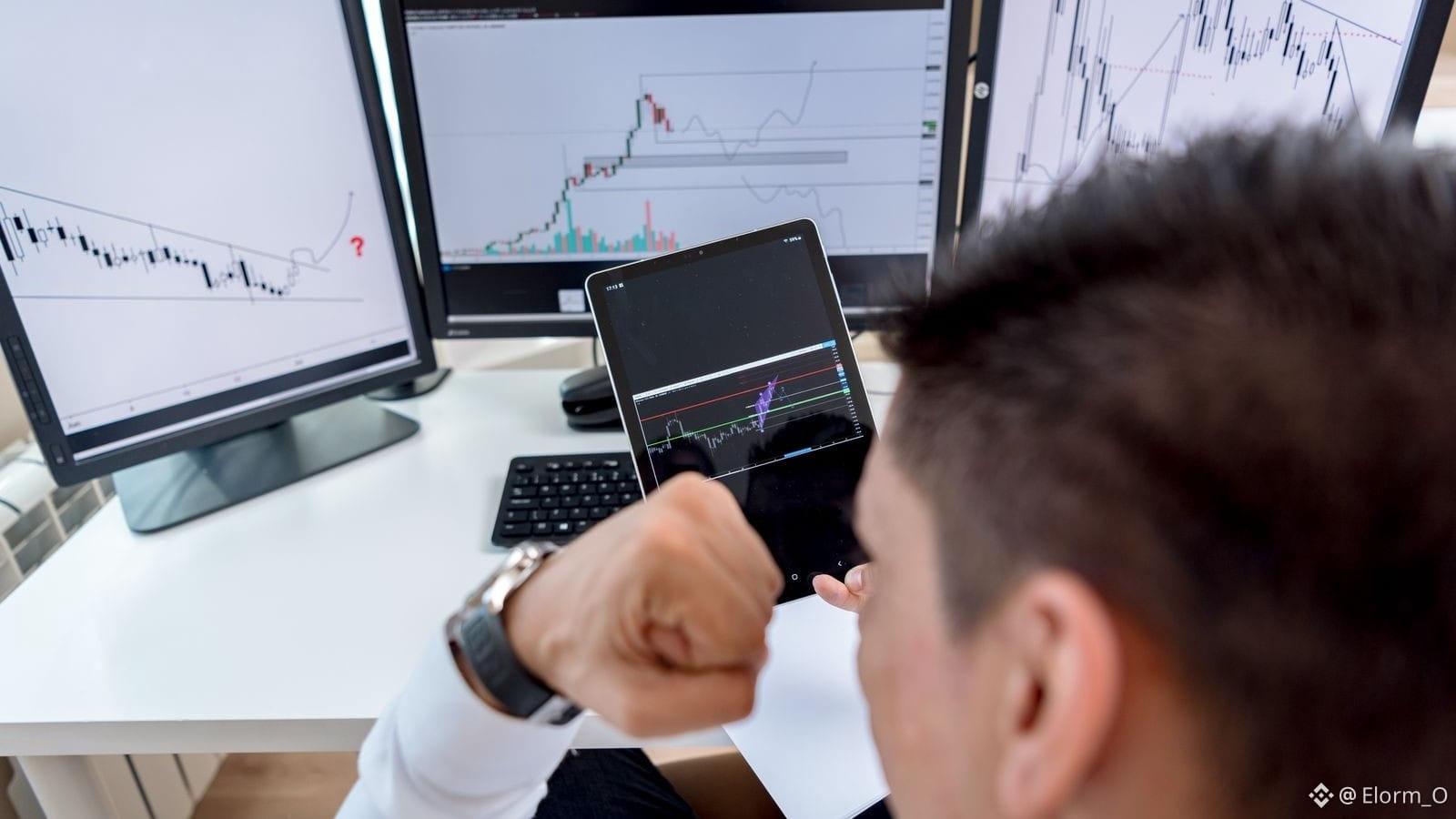
Solana ($SOL) and Ethereum ($ETH) Technical Breakdown: Key Levels Around $100 and $2,300
While Bitcoin tests the $80,000 floor this weekend, Solana ($SOL) and Ethereum ($ETH) are both sitting at major psychological inflection points paired with important fundamental shifts under the hood.
Let's look at the structure on both charts as of Sunday, October 25:
1. Solana ($SOL) at $100.80 (24h range: $98.81 to $102.63, 24h volume: $2.01 billion).
On Wednesday, October 21, SOL rallied to $109.15 right as the network activated its Alpenglow consensus upgrade on mainnet at epoch 1064 (slot 459,653,000), replacing TowerBFT with Votor to target 150-millisecond finality. When the broader market pulled back on Thursday and Saturday, SOL dipped briefly to $98.51 before buyers pushed the daily close back to $102.24.
The $98.50 to $100.00 zone is the line in the sand for bulls this week. Holding above $100 keeps the post-upgrade structure healthy, with $105.10 as the first resistance to reclaim and $108.15 to $109.15 as the breakout target. A daily close below $98.00 would signal deeper consolidation toward $93.50.
2. Ethereum ($ETH) at $2,326 (24h range: $2,286 to $2,370, 24h volume: $9.07 billion).
ETH rejected from $2,524.58 on October 21 after core developers postponed the Hoodi testnet activation to investigate smart contract gas interactions under EIP-8037. Price swept down to $2,279.80 on Saturday before stabilizing above $2,320.
Beneath the soft price action, on-chain data showed 169,770 ETH leaving centralized exchanges on October 24, the largest single-day net exchange outflow in more than four months. For traders, $2,280 is immediate support; reclaiming $2,415 and $2,480 is required to flip the daily trend back in favor of buyers.
Watch how both assets react at these round-number supports ($100 on SOL and $2,280 to $2,300 on ETH) when weekday spot liquidity returns. Manage your risk carefully and do your own research.
1
89
·
--
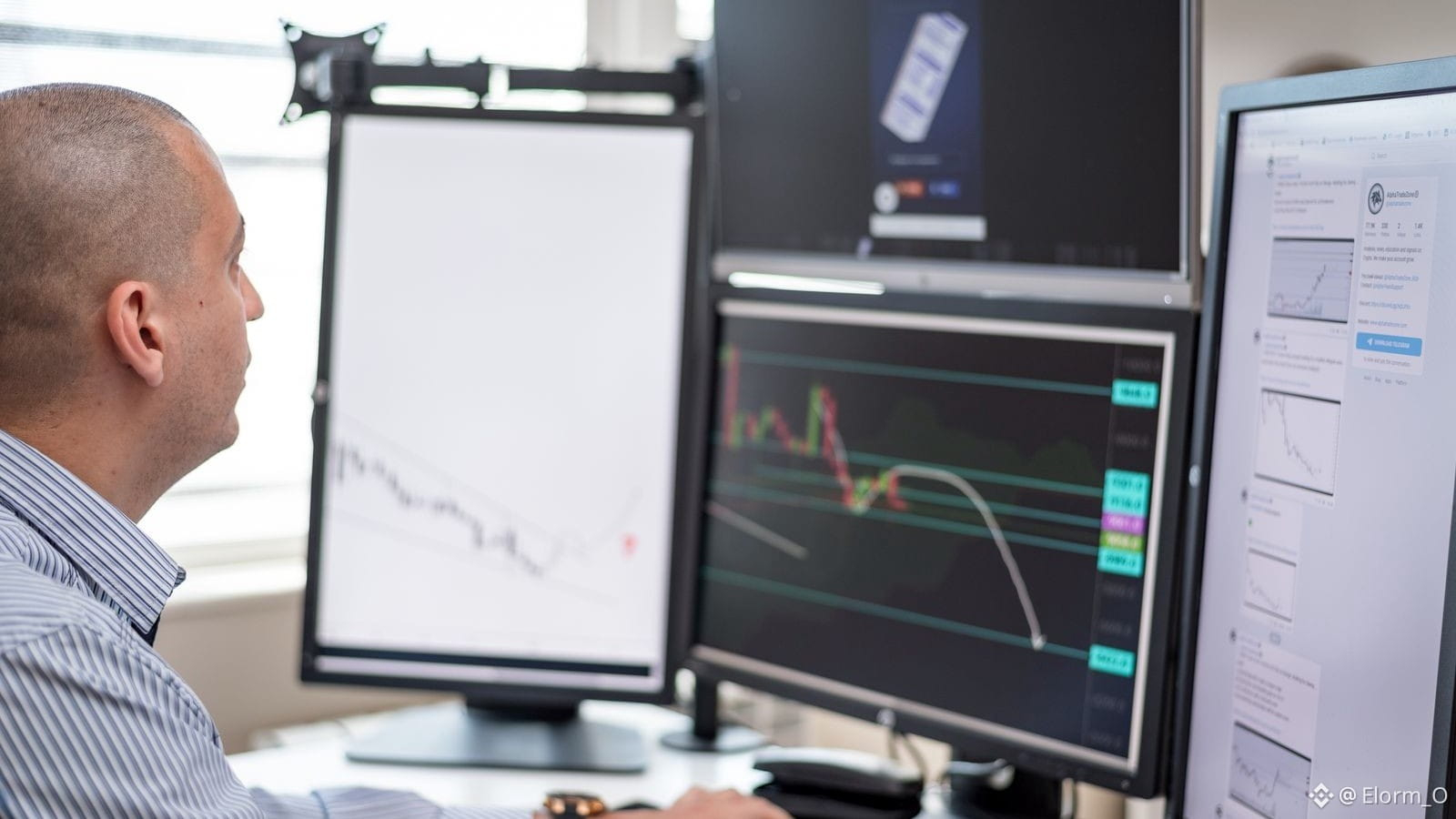
Bitcoin ($BTC) Technical Update: Defending $80,000 After the $84,840 Rejection
Bitcoin is trading around $80,250 today (Sunday, October 25), after a volatile week that reminded everyone how quickly sentiment can flip when ETF flows shift.
Early in the week, three straight days of US spot Bitcoin ETF inflows totaling $1.08 billion pushed BTC from $81,100 on Tuesday to a local high of $84,840 on Wednesday, October 21. That momentum stalled on Thursday when spot ETFs recorded $635.5 million in net outflows, followed by another $137.9 million in outflows on Friday. The pullback flushed leveraged longs across the market and dragged BTC down to a Saturday low of $79,120 before buyers stepped in to close the daily candle back at $80,772.
Right now, Bitcoin dominance sits near 59.4% with 24-hour spot volume around $19.1 billion. Here are the three levels that matter for the week ahead:
1. Immediate Support ($79,100 to $80,000). Bulls defended the $79,120 wick on Saturday and held $80,000 through Sunday morning. As long as daily candles close above $79,500, this pullback remains a standard range retest rather than a structural breakdown. A clean daily close below $79,000 would open the door toward the $76,500 liquidity zone.
2. Mid-Range Pivot ($81,900 to $82,500). This was the breakdown shelf from October 22 and October 23. For bulls to regain short-term control, BTC needs to reclaim $82,000 on rising spot volume rather than thin weekend perp squeezes.
3. Major Resistance ($84,300 to $84,840). The October 21 peak remains the ceiling to beat. Breaking and holding above $84,840 puts the upper $80,000s back in play.
How to approach it: Monday's US spot ETF flow numbers will likely set the tone for whether $80,000 holds. Keep leverage low on Sunday night, let the Monday session confirm direction around the $80,000 and $82,000 boundaries, and always size positions around a clear invalidation level. Not financial advice, always do your own research.
1
117
·
--

Статья
Which Crypto Exchange Is Safest for P2P Transactions in Ghana?For most people in Ghana, Binance P2P is the safer place to buy and sell crypto with cedis. Every trade runs through escrow, disputes go to a support team that works 24/7, verified merchants carry a visible badge, and the market is deep enough, with over 700 payment methods globally, that you rarely have to settle for a counterparty you don't trust. No platform removes risk completely, so how you trade matters as much as where you trade.
What Makes a Crypto Exchange Safer for P2P Transactions?
In P2P trading, you're dealing with another person, not the exchange. The platform's job is to make sure neither side can walk away with the other's money.
A few things decide how well it does that:
Escrow. The seller's crypto should be locked as soon as an order opens and released only when the trade is complete.A real dispute process. When something goes wrong, you need a way to raise it with evidence and have a person review it.Identity checks. KYC on both sides, plus rules that payment names must match verified names, make fraud much harder.Merchant vetting. A clear signal of which traders have been checked helps you choose well.Liquidity. When there are plenty of active ads, you're never pushed into a doubtful deal because nobody else is available.Platform transparency. You want evidence that the exchange actually holds the assets its users keep there.
How Does Binance P2P Protect Buyers and Sellers?
Escrow sits at the centre of it. When a seller posts an ad, Binance reserves the crypto for that ad from their Funding wallet. Once an order is created, the amount is held in escrow and only released when the trade is completed on both ends. If a seller receives your payment and refuses to release, Binance support can release the crypto to you from those reserved funds.
If a trade goes wrong, you can tap Help on the order and file an appeal with a clear description and screenshots. The other party gets 10 minutes to respond. After that, customer support steps in to review the case. Binance says resolution can take anything from a couple of hours to a few days, depending on how complex the case is and the evidence provided.
Binance also vets its verified merchants and marks them with a yellow badge. You can filter the ad screen to show verified merchants only.
Name matching is another quiet but important rule. Binance's merchant guidelines require the name on a payment account to match the name verified on Binance, and they tell sellers not to release crypto when a buyer's payment name doesn't match.
Beyond P2P itself, Binance publishes Proof of Reserves, which shows user assets backed 1:1 and lets you verify your own balance. It also keeps SAFU, an emergency fund set aside to protect users in extreme cases.
Binance vs Bybit P2P: Which Exchange Is Safer for P2P?
Yellow Card was once a familiar name for buying crypto in Ghana, but it has since moved to focus on business stablecoin infrastructure. For individuals trading crypto with cedis, Bybit P2P is one of the main alternatives, with its own USDT/GHS market.
Bybit has solid protections. You need to complete KYC before trading P2P, the seller's crypto is locked in escrow during the order, and there's a Report Scam button on counterparty profiles. Users who apply to become verified advertisers must lock a security deposit. Appeals can be filed within five calendar days of an order, through a Normal track that can take over 48 hours or a Fast-Track option of about 15 minutes for specific cases, such as when a buyer has paid and the seller hasn't released.
So both platforms cover the basics. Where Binance pulls ahead for Ghanaian users:
Track record in cedis. Binance added GHS to its P2P platform in November 2020.Reach. Binance lists 700+ payment methods and 100+ fiat currencies on P2P. Bybit lists about 600 payment methods and 70 fiat currencies.Platform transparency. Proof of Reserves and SAFU give you an extra layer of confidence beyond the trade itself.
The honest answer: either platform is far safer than sending money to a stranger on WhatsApp. For most people in Ghana, Binance is the stronger default. But your own habits will protect you more than any logo.
How Do You Choose a Reliable P2P Merchant?
Start with the verified merchant filter. Then look closer before you tap Buy or Sell.
Check the history. Binance P2P lets you sort ads by completed orders, completion rate and rating. A long record with a high completion rate tells you more than a good price.Read the ad terms. Good merchants are clear about their limits, payment window and requirements.Be careful with prices that look too good. An unusually generous rate is often the bait.Keep every conversation inside the order chat. That history becomes your evidence if you ever need to appeal.Confirm the names match. The person paying or receiving should be the same person verified on the platform.
How Can You Buy and Sell Crypto More Safely With Ghana Cedis (GHS)?
Most people here pay with mobile money, and on Binance P2P you'll find options like MTN Mobile Money and Telecel Cash in the payment filter. What's available at any moment depends on which merchants are active, so always check the live list at https://p2p.binance.com/en.
If you're buying:
Pay only to the account shown inside the active order.Pay from an account in your own verified name.Mark the order as paid only after you've actually sent the money, and keep your receipt.
If you're selling:
Open your MoMo or bank app and confirm the money has landed before you release anything. An SMS or a screenshot is not proof.Never release crypto because someone is rushing you or making promises.If the payment name doesn't match the buyer's verified name, don't release. Refund and contact support.
For everyone, secure your account with two-factor authentication, and be wary of anyone in your DMs claiming to be support or offering a "better deal" off the platform. Binance Academy has a helpful guide on this: https://academy.binance.com/en/articles/how-to-stay-safe-in-peer-to-peer-p2p-trading
Frequently Asked Questions
Is Binance P2P safe in Ghana?
Yes, when you use it the way it's designed. Every trade is protected by escrow, verified merchants are vetted, and disputes go through an appeal process with 24/7 support. Stay safe by keeping the whole trade on the platform and confirming payment before you release anything.
What safety features should I compare when choosing a P2P crypto exchange?
Look for escrow on every trade, a clear appeal process, KYC with name matching, a way to identify vetted merchants, enough active ads and local payment methods, and platform-level transparency such as Proof of Reserves.
What should I do if I've paid but the seller hasn't released my crypto?
Don't cancel the order. Message the seller in the order chat first. If they don't respond or refuse to release, tap Help and file an appeal with your payment proof and chat screenshots, then wait for support to review it.
P2P works best when you let the platform's protections do their job. Pick a verified merchant, keep everything inside the order, and only release or confirm when the money is really there.
Which Crypto Exchange Is Safest for P2P Transactions in Ghana?
For most people in Ghana, Binance P2P is the safer place to buy and sell crypto with cedis. Every trade runs through escrow, disputes go to a support team that works 24/7, verified merchants carry a visible badge, and the market is deep enough, with over 700 payment methods globally, that you rarely have to settle for a counterparty you don't trust. No platform removes risk completely, so how you trade matters as much as where you trade.
What Makes a Crypto Exchange Safer for P2P Transactions?
In P2P trading, you're dealing with another person, not the exchange. The platform's job is to make sure neither side can walk away with the other's money.
A few things decide how well it does that:
Escrow. The seller's crypto should be locked as soon as an order opens and released only when the trade is complete.A real dispute process. When something goes wrong, you need a way to raise it with evidence and have a person review it.Identity checks. KYC on both sides, plus rules that payment names must match verified names, make fraud much harder.Merchant vetting. A clear signal of which traders have been checked helps you choose well.Liquidity. When there are plenty of active ads, you're never pushed into a doubtful deal because nobody else is available.Platform transparency. You want evidence that the exchange actually holds the assets its users keep there.
How Does Binance P2P Protect Buyers and Sellers?
Escrow sits at the centre of it. When a seller posts an ad, Binance reserves the crypto for that ad from their Funding wallet. Once an order is created, the amount is held in escrow and only released when the trade is completed on both ends. If a seller receives your payment and refuses to release, Binance support can release the crypto to you from those reserved funds.
If a trade goes wrong, you can tap Help on the order and file an appeal with a clear description and screenshots. The other party gets 10 minutes to respond. After that, customer support steps in to review the case. Binance says resolution can take anything from a couple of hours to a few days, depending on how complex the case is and the evidence provided.
Binance also vets its verified merchants and marks them with a yellow badge. You can filter the ad screen to show verified merchants only.
Name matching is another quiet but important rule. Binance's merchant guidelines require the name on a payment account to match the name verified on Binance, and they tell sellers not to release crypto when a buyer's payment name doesn't match.
Beyond P2P itself, Binance publishes Proof of Reserves, which shows user assets backed 1:1 and lets you verify your own balance. It also keeps SAFU, an emergency fund set aside to protect users in extreme cases.
Binance vs Bybit P2P: Which Exchange Is Safer for P2P?
Yellow Card was once a familiar name for buying crypto in Ghana, but it has since moved to focus on business stablecoin infrastructure. For individuals trading crypto with cedis, Bybit P2P is one of the main alternatives, with its own USDT/GHS market.
Bybit has solid protections. You need to complete KYC before trading P2P, the seller's crypto is locked in escrow during the order, and there's a Report Scam button on counterparty profiles. Users who apply to become verified advertisers must lock a security deposit. Appeals can be filed within five calendar days of an order, through a Normal track that can take over 48 hours or a Fast-Track option of about 15 minutes for specific cases, such as when a buyer has paid and the seller hasn't released.
So both platforms cover the basics. Where Binance pulls ahead for Ghanaian users:
Track record in cedis. Binance added GHS to its P2P platform in November 2020.Reach. Binance lists 700+ payment methods and 100+ fiat currencies on P2P. Bybit lists about 600 payment methods and 70 fiat currencies.Platform transparency. Proof of Reserves and SAFU give you an extra layer of confidence beyond the trade itself.
The honest answer: either platform is far safer than sending money to a stranger on WhatsApp. For most people in Ghana, Binance is the stronger default. But your own habits will protect you more than any logo.
How Do You Choose a Reliable P2P Merchant?
Start with the verified merchant filter. Then look closer before you tap Buy or Sell.
Check the history. Binance P2P lets you sort ads by completed orders, completion rate and rating. A long record with a high completion rate tells you more than a good price.Read the ad terms. Good merchants are clear about their limits, payment window and requirements.Be careful with prices that look too good. An unusually generous rate is often the bait.Keep every conversation inside the order chat. That history becomes your evidence if you ever need to appeal.Confirm the names match. The person paying or receiving should be the same person verified on the platform.
How Can You Buy and Sell Crypto More Safely With Ghana Cedis (GHS)?
Most people here pay with mobile money, and on Binance P2P you'll find options like MTN Mobile Money and Telecel Cash in the payment filter. What's available at any moment depends on which merchants are active, so always check the live list at https://p2p.binance.com/en.
If you're buying:
Pay only to the account shown inside the active order.Pay from an account in your own verified name.Mark the order as paid only after you've actually sent the money, and keep your receipt.
If you're selling:
Open your MoMo or bank app and confirm the money has landed before you release anything. An SMS or a screenshot is not proof.Never release crypto because someone is rushing you or making promises.If the payment name doesn't match the buyer's verified name, don't release. Refund and contact support.
For everyone, secure your account with two-factor authentication, and be wary of anyone in your DMs claiming to be support or offering a "better deal" off the platform. Binance Academy has a helpful guide on this: https://academy.binance.com/en/articles/how-to-stay-safe-in-peer-to-peer-p2p-trading
Frequently Asked Questions
Is Binance P2P safe in Ghana?
Yes, when you use it the way it's designed. Every trade is protected by escrow, verified merchants are vetted, and disputes go through an appeal process with 24/7 support. Stay safe by keeping the whole trade on the platform and confirming payment before you release anything.
What safety features should I compare when choosing a P2P crypto exchange?
Look for escrow on every trade, a clear appeal process, KYC with name matching, a way to identify vetted merchants, enough active ads and local payment methods, and platform-level transparency such as Proof of Reserves.
What should I do if I've paid but the seller hasn't released my crypto?
Don't cancel the order. Message the seller in the order chat first. If they don't respond or refuse to release, tap Help and file an appeal with your payment proof and chat screenshots, then wait for support to review it.
P2P works best when you let the platform's protections do their job. Pick a verified merchant, keep everything inside the order, and only release or confirm when the money is really there.
260
·
--
Статья
The Stack Is Complete. No One Else Has Built This.Every serious investor knows the feeling of having a strong conviction and not being able to fully act on it. The asset is on one platform. The hedge is on another. The options strategy you need lives behind a brokerage login you have not opened in weeks. By the time you have assembled the pieces, the moment has passed or your position is half-formed.
Binance just closed that gap for good. With the launch of stock options on 1,000+ U.S.-listed stocks and ETFs, the financial stack is now complete — and nothing like it exists anywhere else.
What the Stack Actually Looks Like
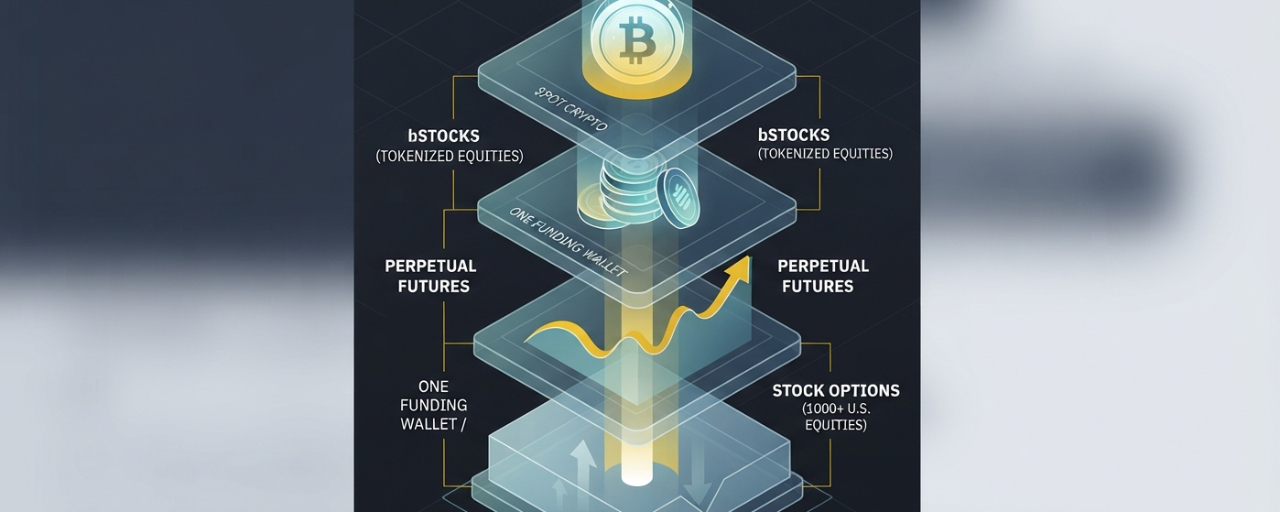
Spot crypto. bStocks, tokenized U.S. equities living on-chain. Perpetual futures for leveraged crypto exposure. Commodity options on Gold and Silver. And now stock options on over a thousand U.S. equities. All of it funded from the same Funding Wallet, managed under one login, on one app, without a single transfer between platforms.
Spot gives you direct ownership. bStocks give you equity exposure on-chain. Perps give you leveraged directional exposure with no expiry. And options give you something none of the other instruments can: non-linear payoffs with defined, capped downside. That last piece is what completes the loop.
Why Options Change the Equation
Options let you do things no other instrument does. Buy a call on NVIDIA and participate in upside while capping your maximum loss at the premium paid. Buy a put on a stock you hold and create a defined floor under your position without selling it. Build an overlay that hedges a core crypto conviction against an equity drawdown without unwinding either leg.
The maximum you can lose on any stock options trade on Binance is the premium you paid. That is not a feature of spot. It is not a feature of perps. It is unique to options, and it is what makes them the risk management tool that sophisticated portfolios have always used and retail investors have rarely had clean access to.
The Practical Details
Stock options on Binance settle physically. Exercise a call and the underlying shares are delivered to your account. The fee is $0.60 per contract — no minimum fee, no platform fee, no hidden spread on currency conversion. Trading follows U.S. market hours and is funded directly from your existing Funding Wallet. The current product supports buying long calls and puts, with writing and short exposure planned for a future release.
One View, Fully Expressed
You hold BTC spot. You are long MSTR shares. You buy a put on MSTR as a drawdown hedge. You run a crypto perp for additional directional exposure. Every instrument is in the same account, same wallet, same interface.
That setup did not exist before, not for individual users, not this cleanly. The stack is Spot, bStocks, Perps, and Stock Options. One account. One engine. One wallet. Nobody else is running this.
[Read the full announcement](https://www.binance.com/en/blog/markets/3413696947185733989)
[Start trading stock options on Binance](https://www.binance.com/en/trade)
[Explore more on Binance Square](https://www.binance.com/en/square)
The Stack Is Complete. No One Else Has Built This.
Every serious investor knows the feeling of having a strong conviction and not being able to fully act on it. The asset is on one platform. The hedge is on another. The options strategy you need lives behind a brokerage login you have not opened in weeks. By the time you have assembled the pieces, the moment has passed or your position is half-formed.
Binance just closed that gap for good. With the launch of stock options on 1,000+ U.S.-listed stocks and ETFs, the financial stack is now complete — and nothing like it exists anywhere else.
What the Stack Actually Looks Like
Spot crypto. bStocks, tokenized U.S. equities living on-chain. Perpetual futures for leveraged crypto exposure. Commodity options on Gold and Silver. And now stock options on over a thousand U.S. equities. All of it funded from the same Funding Wallet, managed under one login, on one app, without a single transfer between platforms.
Spot gives you direct ownership. bStocks give you equity exposure on-chain. Perps give you leveraged directional exposure with no expiry. And options give you something none of the other instruments can: non-linear payoffs with defined, capped downside. That last piece is what completes the loop.
Why Options Change the Equation
Options let you do things no other instrument does. Buy a call on NVIDIA and participate in upside while capping your maximum loss at the premium paid. Buy a put on a stock you hold and create a defined floor under your position without selling it. Build an overlay that hedges a core crypto conviction against an equity drawdown without unwinding either leg.
The maximum you can lose on any stock options trade on Binance is the premium you paid. That is not a feature of spot. It is not a feature of perps. It is unique to options, and it is what makes them the risk management tool that sophisticated portfolios have always used and retail investors have rarely had clean access to.
The Practical Details
Stock options on Binance settle physically. Exercise a call and the underlying shares are delivered to your account. The fee is $0.60 per contract — no minimum fee, no platform fee, no hidden spread on currency conversion. Trading follows U.S. market hours and is funded directly from your existing Funding Wallet. The current product supports buying long calls and puts, with writing and short exposure planned for a future release.
One View, Fully Expressed
You hold BTC spot. You are long MSTR shares. You buy a put on MSTR as a drawdown hedge. You run a crypto perp for additional directional exposure. Every instrument is in the same account, same wallet, same interface.
That setup did not exist before, not for individual users, not this cleanly. The stack is Spot, bStocks, Perps, and Stock Options. One account. One engine. One wallet. Nobody else is running this.
Read the full announcement
Start trading stock options on Binance
Explore more on Binance Square
1
278
·
--
Статья
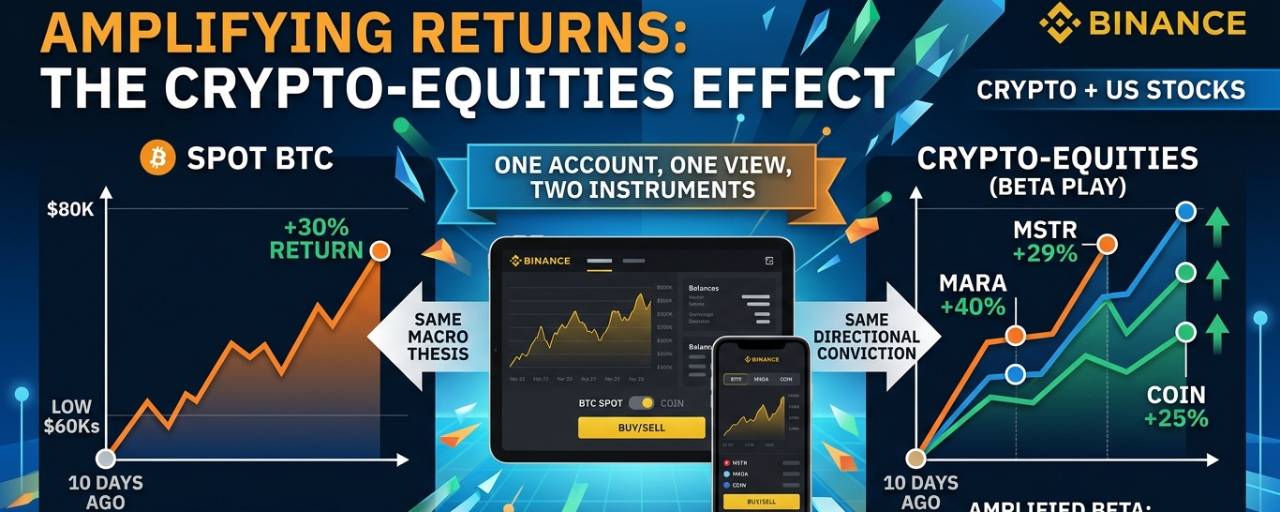
Same View. Two Very Different Trades.Bitcoin moved from the low $60Ks to above $80K in ten days. If you held BTC spot, that was a strong return by any measure. But if you were also watching the equities side of that same rally, you saw something interesting happen. MSTR gained 29%. MARA was up 40%. COIN added 25%. The same macro thesis, the same directional conviction, but the returns in crypto-equities ran well ahead of the underlying asset.
That gap is not a glitch. It is beta. And understanding it is the difference between having a view and fully expressing one.
Why Crypto-Equities Move Differently Than Spot
When Bitcoin rallies, it does not move in isolation. A network of companies whose revenues, treasuries, and business models are directly tied to BTC prices moves with it — and often moves harder. Miners like MARA operate with significant financial leverage to Bitcoin's price: their revenues rise sharply when BTC goes up while their fixed costs stay roughly constant, which amplifies the gain relative to spot. Strategy (MSTR) holds hundreds of thousands of Bitcoin on its balance sheet, so its stock price reflects BTC exposure plus a premium that can expand dramatically during bull moves. Coinbase earns trading fees, and volume surges when markets run hot.
In a strong directional move, these equities carry higher beta than spot BTC. They can also fall harder in the other direction. That is the trade-off. But for a trader with a clear directional conviction, ignoring the equities layer means leaving meaningful upside on the table.
The Problem Until Now
Acting on this insight used to require two accounts. You held your BTC, ETH, and altcoins on a crypto exchange. You held MSTR, MARA, and COIN through a separate brokerage. When a catalyst hit, you were managing positions across platforms, dealing with different interfaces, different liquidity, and capital sitting idle on whichever platform the opportunity wasn't on.
The more fundamental problem was that you could not size a unified position across both sides of the same thesis. You had a view. You could only partially express it.
One Account, One View, Two Instruments
Binance now removes that friction entirely. With U.S. stock trading live on the platform alongside the full suite of crypto spot and derivatives, a single thesis "crypto is running, I want exposure across the stack" can now be expressed as a multi-instrument allocation from one account.
Long BTC spot. Long MSTR. Long MARA. Long COIN. Different beta levels, different risk profiles, different mechanics, all executing from the same interface, the same balance, with no transfers, no second login, and no capital trapped on the wrong platform when the market moves.
That is not just a convenience upgrade. It is a structural change in how individual traders can construct and manage multi-instrument crypto views. Institutions have always been able to do this. Now anyone on Binance can.
How to Think About It
The key is not choosing between spot crypto and crypto-equities. It is understanding what each one gives you and sizing accordingly.
BTC spot gives you clean, direct exposure with no counterparty structure beyond the exchange itself. It is liquid, liquid around the clock, and the purest expression of a Bitcoin view.
Crypto-equities give you amplified beta with the additional variables of company operations, capital structure, and equity market sentiment layered on top. They trade during market hours with the extended windows Binance now offers. They respond to the same macro catalyst but with a different return profile.
A trader who understands those differences can build a position that uses both deliberately, sizing the spot leg for base exposure and the equities leg for leveraged upside on the same conviction, without touching derivatives or managing margin.
That is a sophisticated allocation strategy. It now requires exactly one account.
[Trade crypto and U.S. stocks on Binance](https://www.binance.com/en/trade)
[Explore Binance Stocks](https://www.binance.com/en/stocks-landing)
[Follow Binance Research on Binance Square](https://www.binance.com/en/square)
#BinanceStocks #Bitcoin #MSTR #MARA #Coinbase #CryptoEquities #BTC #Crypto2026 #BinanceSquare #Trading
Same View. Two Very Different Trades.
Bitcoin moved from the low $60Ks to above $80K in ten days. If you held BTC spot, that was a strong return by any measure. But if you were also watching the equities side of that same rally, you saw something interesting happen. MSTR gained 29%. MARA was up 40%. COIN added 25%. The same macro thesis, the same directional conviction, but the returns in crypto-equities ran well ahead of the underlying asset.
That gap is not a glitch. It is beta. And understanding it is the difference between having a view and fully expressing one.
Why Crypto-Equities Move Differently Than Spot
When Bitcoin rallies, it does not move in isolation. A network of companies whose revenues, treasuries, and business models are directly tied to BTC prices moves with it — and often moves harder. Miners like MARA operate with significant financial leverage to Bitcoin's price: their revenues rise sharply when BTC goes up while their fixed costs stay roughly constant, which amplifies the gain relative to spot. Strategy (MSTR) holds hundreds of thousands of Bitcoin on its balance sheet, so its stock price reflects BTC exposure plus a premium that can expand dramatically during bull moves. Coinbase earns trading fees, and volume surges when markets run hot.
In a strong directional move, these equities carry higher beta than spot BTC. They can also fall harder in the other direction. That is the trade-off. But for a trader with a clear directional conviction, ignoring the equities layer means leaving meaningful upside on the table.
The Problem Until Now
Acting on this insight used to require two accounts. You held your BTC, ETH, and altcoins on a crypto exchange. You held MSTR, MARA, and COIN through a separate brokerage. When a catalyst hit, you were managing positions across platforms, dealing with different interfaces, different liquidity, and capital sitting idle on whichever platform the opportunity wasn't on.
The more fundamental problem was that you could not size a unified position across both sides of the same thesis. You had a view. You could only partially express it.
One Account, One View, Two Instruments
Binance now removes that friction entirely. With U.S. stock trading live on the platform alongside the full suite of crypto spot and derivatives, a single thesis "crypto is running, I want exposure across the stack" can now be expressed as a multi-instrument allocation from one account.
Long BTC spot. Long MSTR. Long MARA. Long COIN. Different beta levels, different risk profiles, different mechanics, all executing from the same interface, the same balance, with no transfers, no second login, and no capital trapped on the wrong platform when the market moves.
That is not just a convenience upgrade. It is a structural change in how individual traders can construct and manage multi-instrument crypto views. Institutions have always been able to do this. Now anyone on Binance can.
How to Think About It
The key is not choosing between spot crypto and crypto-equities. It is understanding what each one gives you and sizing accordingly.
BTC spot gives you clean, direct exposure with no counterparty structure beyond the exchange itself. It is liquid, liquid around the clock, and the purest expression of a Bitcoin view.
Crypto-equities give you amplified beta with the additional variables of company operations, capital structure, and equity market sentiment layered on top. They trade during market hours with the extended windows Binance now offers. They respond to the same macro catalyst but with a different return profile.
A trader who understands those differences can build a position that uses both deliberately, sizing the spot leg for base exposure and the equities leg for leveraged upside on the same conviction, without touching derivatives or managing margin.
That is a sophisticated allocation strategy. It now requires exactly one account.
Trade crypto and U.S. stocks on Binance
Explore Binance Stocks
Follow Binance Research on Binance Square
#BinanceStocks #Bitcoin #MSTR #MARA #Coinbase #CryptoEquities #BTC #Crypto2026 #BinanceSquare #Trading
2
184
·
--

Статья
What Are bStocks? The Short Answer Is: Your Equity Portfolio, Finally On-Chain.The financial system has always kept two worlds apart. You owned stocks in a brokerage. You owned crypto on a blockchain. Never the two shall meet. bStocks is Binance's answer to that separation — and it is more consequential than it might first appear.
The Basics
bStocks are fully-backed tokenized securities representing select U.S. stocks, issued by BTech Holdings Limited, a Binance group affiliate. Each bStock is backed 1:1 by a corresponding underlying share held with a regulated custodian.
That 1:1 backing is the foundation everything else rests on. There is no synthetic exposure, no leverage, no derivative structure underneath. Every bStock token corresponds to a real share sitting in regulated custody. You are not trading a bet on a stock price. You are holding a regulated digital certificate that references the actual security.
At launch, the first bStocks listings are Circle Internet Group, Micron Technology, NVIDIA, Sandisk, and Tesla. SpaceX is planned pending its public listing.
What Makes Them Different
The structure of bStocks unlocks three things that traditional equity ownership cannot offer.
First, 24/7 trading. Eligible users can trade bStocks around the clock and hold them on Binance, self-custody them through BNB Chain-compatible wallets, and use them across supported DeFi applications. The New York Stock Exchange closes. bStocks do not.
Second, genuine on-chain portability. As standard BEP-20 tokens on BNB Chain, bStocks are compatible with wallets and on-chain applications across the ecosystem, with planned integrations to be announced progressively. Your equity exposure can live in a self-custody wallet alongside your crypto, managed with the same tools, in the same environment.
Third, DeFi composability. Because bStocks exist as standard blockchain tokens, they are built to integrate with the broader on-chain financial ecosystem — usable as collateral, composable with protocols, and moveable without the settlement delays of conventional securities infrastructure.
The Regulatory Milestone
This is not just a product launch. It is a regulatory first. bStocks are admitted to the ADGM's FSRA Official List via BTech Holdings Limited and Nest Exchange, giving them a formal regulatory footprint that many tokenized equity products lack.
Being admitted to the FSRA Official List means these are not unregulated tokens dressed up as equities. They are issued under an approved prospectus, structured as regulated certificates, and subject to the oversight of one of the most respected financial regulators in the world. That distinction matters enormously for the long-term credibility of tokenized securities as an asset class.
One Important Clarification
bStocks are certificates referencing underlying equities, not direct share ownership. They track the economic exposure of the underlying stock but do not confer shareholder voting rights or direct affiliation with the issuing company. Think of them as regulated digital instruments that give you the financial exposure of equity ownership with the technical properties of a blockchain token. For most investors focused on price exposure, dividends, and portfolio diversification, the distinction is largely operational rather than material.
Why It Matters
The tokenization of real-world assets has been discussed for years as one of the most transformative applications of blockchain technology. bStocks is proof that the conversation has moved from whitepaper to product. Regulated, backed, on-chain, and live on one of the world's largest financial platforms.
The convergence of TradFi and DeFi has been promised many times. With bStocks, Binance has delivered it.
Explore [bStocks and start trading](https://www.binance.com/en/stocks-landing)
Learn more on [Binance Square](https://www.binance.com/en/square)
Get started with [Binance](https://www.binance.com/en/register)
What Are bStocks? The Short Answer Is: Your Equity Portfolio, Finally On-Chain.
The financial system has always kept two worlds apart. You owned stocks in a brokerage. You owned crypto on a blockchain. Never the two shall meet. bStocks is Binance's answer to that separation — and it is more consequential than it might first appear.
The Basics
bStocks are fully-backed tokenized securities representing select U.S. stocks, issued by BTech Holdings Limited, a Binance group affiliate. Each bStock is backed 1:1 by a corresponding underlying share held with a regulated custodian.
That 1:1 backing is the foundation everything else rests on. There is no synthetic exposure, no leverage, no derivative structure underneath. Every bStock token corresponds to a real share sitting in regulated custody. You are not trading a bet on a stock price. You are holding a regulated digital certificate that references the actual security.
At launch, the first bStocks listings are Circle Internet Group, Micron Technology, NVIDIA, Sandisk, and Tesla. SpaceX is planned pending its public listing.
What Makes Them Different
The structure of bStocks unlocks three things that traditional equity ownership cannot offer.
First, 24/7 trading. Eligible users can trade bStocks around the clock and hold them on Binance, self-custody them through BNB Chain-compatible wallets, and use them across supported DeFi applications. The New York Stock Exchange closes. bStocks do not.
Second, genuine on-chain portability. As standard BEP-20 tokens on BNB Chain, bStocks are compatible with wallets and on-chain applications across the ecosystem, with planned integrations to be announced progressively. Your equity exposure can live in a self-custody wallet alongside your crypto, managed with the same tools, in the same environment.
Third, DeFi composability. Because bStocks exist as standard blockchain tokens, they are built to integrate with the broader on-chain financial ecosystem — usable as collateral, composable with protocols, and moveable without the settlement delays of conventional securities infrastructure.
The Regulatory Milestone
This is not just a product launch. It is a regulatory first. bStocks are admitted to the ADGM's FSRA Official List via BTech Holdings Limited and Nest Exchange, giving them a formal regulatory footprint that many tokenized equity products lack.
Being admitted to the FSRA Official List means these are not unregulated tokens dressed up as equities. They are issued under an approved prospectus, structured as regulated certificates, and subject to the oversight of one of the most respected financial regulators in the world. That distinction matters enormously for the long-term credibility of tokenized securities as an asset class.
One Important Clarification
bStocks are certificates referencing underlying equities, not direct share ownership. They track the economic exposure of the underlying stock but do not confer shareholder voting rights or direct affiliation with the issuing company. Think of them as regulated digital instruments that give you the financial exposure of equity ownership with the technical properties of a blockchain token. For most investors focused on price exposure, dividends, and portfolio diversification, the distinction is largely operational rather than material.
Why It Matters
The tokenization of real-world assets has been discussed for years as one of the most transformative applications of blockchain technology. bStocks is proof that the conversation has moved from whitepaper to product. Regulated, backed, on-chain, and live on one of the world's largest financial platforms.
The convergence of TradFi and DeFi has been promised many times. With bStocks, Binance has delivered it.
Explore bStocks and start trading
Learn more on Binance Square
Get started with Binance
1
3
299
·
--

Статья
bStocks Are Here. This Is Bigger Than a Product Launch.Every now and then a product ships that is not really about the product. It is about what the product signals. bStocks is that kind of launch.
On the surface, bStocks are tokenized representations of U.S. stocks and ETFs available inside Binance. But take a step back and look at what is actually being built, and the picture becomes considerably more interesting. This is not Binance adding a feature. This is Binance making a statement about what the future of finance looks like and who is going to build it.
What bStocks Actually Are
bStocks are tokenized securities — on-chain representations of real U.S.-listed stocks and ETFs. When you hold a bStock, you hold a regulated digital asset that tracks the value of the underlying equity. Apple, Tesla, the S&P 500, available as on-chain tokens inside the same platform where you hold Bitcoin and Ethereum.
The implications of that structure go well beyond convenience. Tokenized equities can be held in a self-custody wallet. They can potentially be used within DeFi protocols. They trade around the clock rather than being bound to the opening hours of a single exchange in a single time zone. And they sit alongside crypto assets natively, with no bridging, no separate brokerage account, and no friction between asset classes.
The Convergence That Everyone Talked About Is Actually Happening
For years, the convergence of traditional finance and decentralized finance was a thesis, a roadmap slide, a talking point at conferences. The argument was always that eventually the walls between stocks, bonds, crypto, and on-chain finance would come down. That investors would manage everything in one place. That the distinction between a brokerage and an exchange would dissolve.
bStocks is that convergence arriving as a product you can use today. Not a whitepaper. Not a pilot. A live, regulated instrument that bridges the two worlds inside one of the most used financial platforms on earth.
The significance of it being regulated matters enormously. It is the difference between a theoretical bridge and one that institutions, regulators, and mainstream users can actually walk across. Bringing tokenized equities to market within a compliant framework is the hard part. Binance has done it.
One Platform, Every Market
Consider what a Binance user now has access to inside a single account. Spot crypto trading across hundreds of pairs. Futures and derivatives. Earn products including staking and flexible savings. Binance Pay for zero-fee global payments. A Web3 wallet with DeFi and NFT access. Over 7,000 U.S. stocks and ETFs with zero commission. And now bStocks, bringing those equities on-chain with the full composability that entails.
That is not an exchange. That is a financial operating system. The kind of unified platform that wealth managers, fintechs, and banks have been trying to build for a decade and have not quite managed to deliver. Binance has assembled it product by product, and bStocks is the piece that ties the traditional and the on-chain worlds together into something genuinely coherent.
What This Means for the Next Generation of Investors
The investors entering the market today do not think in the categories that defined finance twenty years ago. They do not experience a hard boundary between stocks and crypto. They want access to both, in one place, with minimal friction and maximum flexibility. They want to hold Bitcoin and Apple in the same portfolio. They want to move between asset classes when they see an opportunity, not when their brokerage processes a transfer.
bStocks is built for that investor. So is everything else Binance has assembled around it. The superapp vision has always been about meeting users where they actually are, not asking them to reorganize their financial lives around the limitations of legacy infrastructure.
That vision is no longer coming. It is here. And the platform that built it is the one already trusted by 300 million users around the world.
Learn more about [bStocks on Binance](https://www.binance.com/en/academy/articles/what-is-binance-stocks-trading)
Start trading [stocks and crypto on Binance](https://www.binance.com/en/trade)
Explore more on [Binance Square](https://www.binance.com/en/square)
bStocks Are Here. This Is Bigger Than a Product Launch.
Every now and then a product ships that is not really about the product. It is about what the product signals. bStocks is that kind of launch.
On the surface, bStocks are tokenized representations of U.S. stocks and ETFs available inside Binance. But take a step back and look at what is actually being built, and the picture becomes considerably more interesting. This is not Binance adding a feature. This is Binance making a statement about what the future of finance looks like and who is going to build it.
What bStocks Actually Are
bStocks are tokenized securities — on-chain representations of real U.S.-listed stocks and ETFs. When you hold a bStock, you hold a regulated digital asset that tracks the value of the underlying equity. Apple, Tesla, the S&P 500, available as on-chain tokens inside the same platform where you hold Bitcoin and Ethereum.
The implications of that structure go well beyond convenience. Tokenized equities can be held in a self-custody wallet. They can potentially be used within DeFi protocols. They trade around the clock rather than being bound to the opening hours of a single exchange in a single time zone. And they sit alongside crypto assets natively, with no bridging, no separate brokerage account, and no friction between asset classes.
The Convergence That Everyone Talked About Is Actually Happening
For years, the convergence of traditional finance and decentralized finance was a thesis, a roadmap slide, a talking point at conferences. The argument was always that eventually the walls between stocks, bonds, crypto, and on-chain finance would come down. That investors would manage everything in one place. That the distinction between a brokerage and an exchange would dissolve.
bStocks is that convergence arriving as a product you can use today. Not a whitepaper. Not a pilot. A live, regulated instrument that bridges the two worlds inside one of the most used financial platforms on earth.
The significance of it being regulated matters enormously. It is the difference between a theoretical bridge and one that institutions, regulators, and mainstream users can actually walk across. Bringing tokenized equities to market within a compliant framework is the hard part. Binance has done it.
One Platform, Every Market
Consider what a Binance user now has access to inside a single account. Spot crypto trading across hundreds of pairs. Futures and derivatives. Earn products including staking and flexible savings. Binance Pay for zero-fee global payments. A Web3 wallet with DeFi and NFT access. Over 7,000 U.S. stocks and ETFs with zero commission. And now bStocks, bringing those equities on-chain with the full composability that entails.
That is not an exchange. That is a financial operating system. The kind of unified platform that wealth managers, fintechs, and banks have been trying to build for a decade and have not quite managed to deliver. Binance has assembled it product by product, and bStocks is the piece that ties the traditional and the on-chain worlds together into something genuinely coherent.
What This Means for the Next Generation of Investors
The investors entering the market today do not think in the categories that defined finance twenty years ago. They do not experience a hard boundary between stocks and crypto. They want access to both, in one place, with minimal friction and maximum flexibility. They want to hold Bitcoin and Apple in the same portfolio. They want to move between asset classes when they see an opportunity, not when their brokerage processes a transfer.
bStocks is built for that investor. So is everything else Binance has assembled around it. The superapp vision has always been about meeting users where they actually are, not asking them to reorganize their financial lives around the limitations of legacy infrastructure.
That vision is no longer coming. It is here. And the platform that built it is the one already trusted by 300 million users around the world.
Learn more about bStocks on Binance
Start trading stocks and crypto on Binance
Explore more on Binance Square
1
116
·
--
Проверено

Статья
Your Brokerage and Your Crypto Exchange Just Became One.For years, managing a diversified investment portfolio meant living between apps. Crypto on one platform. Stocks on another. Capital sitting idle every time you wanted to switch between them. That split is now over.
Binance has officially launched U.S. stock trading. Users can now trade over 7,000 U.S.-listed stocks and ETFs directly inside their Binance account, starting from just $5. Bitcoin and Apple. Ethereum and Tesla. The S&P 500 and BNB. All in one place, under one login, with one unified view of your portfolio. LinkedIn
What You Get
Zero commission fees, with a minimum platform fee of $0.35 per order or 10 basis points for orders above $350. Fractional shares starting from $5, so you can build exposure at your own pace. Trading 24 hours a day, five days a week, giving you flexibility across time zones that traditional brokerages simply do not offer. LinkedIn
You can purchase stocks directly using supported balances on Binance, including select stablecoins and BNB. No cash-out required. No separate funding process. The capital you already hold on Binance goes to work across both asset classes immediately. LinkedIn
Why This Actually Matters
The fragmentation of investing has always had a hidden cost. Slower reaction times when markets move. Capital trapped on the wrong platform. The mental overhead of tracking multiple dashboards at once.
Bringing stocks and crypto together eliminates that friction. When macro news breaks, you respond in one place. When you want to rebalance from Bitcoin into an index ETF, you do it without withdrawals, transfers, or waiting. The investment decisions that used to take twenty minutes now take twenty seconds.
For the 300 million users already on Binance, this is not a new app to learn. It is a new market available inside the platform they already trust.
What Is Coming Next
Binance will also soon launch bStocks, tokenized securities representing select U.S. stocks and ETFs, allowing users to convert equity holdings into on-chain assets. This is the bridge between traditional markets and DeFi that the industry has been building toward. Stocks that live on-chain, tradable around the clock, composable with the broader Web3 ecosystem. LinkedIn
The financial super app is not a concept anymore. It is live. And this is just the beginning.
Start trading [U.S. stocks on Binance](https://www.binance.com/en/trade)
Learn how [Binance stock trading works](https://www.binance.com/en/academy/articles/what-is-binance-stocks-trading)
Explore more on [Binance Square](https://www.binance.com/en/square)
Your Brokerage and Your Crypto Exchange Just Became One.
For years, managing a diversified investment portfolio meant living between apps. Crypto on one platform. Stocks on another. Capital sitting idle every time you wanted to switch between them. That split is now over.
Binance has officially launched U.S. stock trading. Users can now trade over 7,000 U.S.-listed stocks and ETFs directly inside their Binance account, starting from just $5. Bitcoin and Apple. Ethereum and Tesla. The S&P 500 and BNB. All in one place, under one login, with one unified view of your portfolio. LinkedIn
What You Get
Zero commission fees, with a minimum platform fee of $0.35 per order or 10 basis points for orders above $350. Fractional shares starting from $5, so you can build exposure at your own pace. Trading 24 hours a day, five days a week, giving you flexibility across time zones that traditional brokerages simply do not offer. LinkedIn
You can purchase stocks directly using supported balances on Binance, including select stablecoins and BNB. No cash-out required. No separate funding process. The capital you already hold on Binance goes to work across both asset classes immediately. LinkedIn
Why This Actually Matters
The fragmentation of investing has always had a hidden cost. Slower reaction times when markets move. Capital trapped on the wrong platform. The mental overhead of tracking multiple dashboards at once.
Bringing stocks and crypto together eliminates that friction. When macro news breaks, you respond in one place. When you want to rebalance from Bitcoin into an index ETF, you do it without withdrawals, transfers, or waiting. The investment decisions that used to take twenty minutes now take twenty seconds.
For the 300 million users already on Binance, this is not a new app to learn. It is a new market available inside the platform they already trust.
What Is Coming Next
Binance will also soon launch bStocks, tokenized securities representing select U.S. stocks and ETFs, allowing users to convert equity holdings into on-chain assets. This is the bridge between traditional markets and DeFi that the industry has been building toward. Stocks that live on-chain, tradable around the clock, composable with the broader Web3 ecosystem. LinkedIn
The financial super app is not a concept anymore. It is live. And this is just the beginning.
Start trading U.S. stocks on Binance
Learn how Binance stock trading works
Explore more on Binance Square
2
1.5k
·
--

Статья
You Can Now Hold Apple, Tesla, and Bitcoin in the Same Account. Here's Why That Changes Everything.For as long as investing has existed in its modern form, it has been siloed. Your stock broker handled stocks. Your crypto exchange handled crypto. Your savings account handled cash. Moving between them meant different apps, different accounts, different fee structures, and a constant friction that quietly cost you time, money, and the mental bandwidth needed to make good decisions.
That era is ending. And Binance just made the clearest statement yet about what comes next.
What Just Changed
Users can now trade over 7,000 U.S.-listed stocks and ETFs directly on Binance, making it easier to access both crypto and traditional financial assets in one platform. With a single Binance account, users can explore thousands of stocks and ETFs starting from just $5.
This is not a minor product update. This is a fundamental shift in what Binance is. It is no longer just a crypto exchange. It is becoming the unified financial interface that investors have needed for years but never had.
The Problem It Solves
Think about what a typical investor's setup looks like today. A brokerage account for U.S. stocks and ETFs. A crypto exchange for Bitcoin, Ethereum, and altcoins. Possibly an earn or savings product somewhere else. A payment app for transfers. Each platform has its own login, its own interface, its own fee structure, and its own liquidity sitting idle when it could be working.
The real cost of that fragmentation is not just inconvenience. It is slower reaction times when markets move. It is capital trapped in one account when the opportunity is on another platform. It is the cognitive overhead of managing multiple dashboards competing for your attention at exactly the moments when clarity matters most.
Binance is changing that. By bringing stocks and ETFs onto Binance, users can manage a more diversified portfolio in one place — from Bitcoin and BNB to leading U.S. stocks and ETFs. It is a more connected investing experience built for a world where financial access should be simple, global, and flexible.
What You Actually Get
The specifics matter here, because this is not a watered-down offering dressed up as something bigger than it is.
Users can access over 7,000 U.S.-listed stocks and ETFs, trade 24 hours a day five days a week, start with fractional shares from as little as $5, and pay zero commission fees with a minimum platform fee of $0.35 per order or 10 basis points for orders above $350.
Stocks can be purchased directly using supported balances on Binance, including select stablecoins and BNB, which means crypto holders do not need to cash out or move funds to a separate account before accessing the stock market. The capital you already have on Binance can be put to work across both asset classes immediately.
The 24/5 trading window is also worth noting specifically. Traditional stock markets operate on fixed hours tied to a single time zone. For the majority of Binance's 300 million users who are not based in North America, that has historically meant missing market movements or setting alarms for inconvenient hours. Extended trading hours remove that barrier.
The Diversification Argument, Made Simpler
One of the most consistent pieces of investment advice across every school of thought is diversification. Hold different assets. Spread your risk across sectors, geographies, and asset classes. Do not put everything in one basket.
The practical problem has always been that acting on that advice required maintaining multiple baskets in multiple places. Now it does not. Holding Bitcoin alongside an S&P 500 ETF, alongside Apple, alongside Ethereum, all in a single account with a unified view of your total portfolio, is a genuinely different experience from managing those positions across separate platforms.
It also changes how quickly you can respond to information. When macro news breaks and you want to rotate between asset classes, doing it within one platform takes seconds. Doing it across two or three platforms takes considerably longer, and in volatile markets, that gap has a cost.
What Is Coming Next
Binance will also soon launch bStocks, tokenized securities which are representations of select U.S. stocks and ETFs. Users will be able to easily convert their equity holdings on Binance to on-chain assets.
This is the next logical step and arguably the more transformative one. Tokenized equities that live on-chain can be held alongside crypto assets in a Web3 wallet, traded around the clock, and eventually composed with DeFi protocols in ways that traditional brokerage accounts simply cannot support. The convergence of traditional finance and on-chain infrastructure is moving from vision to product.
The Bigger Picture
Binance launching stock trading is significant not just for what it adds to the platform today, but for what it signals about where the financial system is heading. The distinction between a crypto exchange and a brokerage is dissolving. The distinction between on-chain and off-chain assets is dissolving. The distinction between the investor who holds stocks and the investor who holds crypto was always artificial, and the infrastructure is finally catching up to that reality.
For users, the practical implication is straightforward. The financial super app that investors have been waiting for is not coming. It is here. Your portfolio does not need to live in five places anymore.
One account. Every market. No unnecessary friction.
That is the direction of travel. And it just got considerably closer.
Start trading [U.S. stocks on Binance](https://www.binance.com/en/trade)
Learn more about [Binance stock trading](https://www.binance.com/en/support/announcement/detail/8c8fb6809d9c46789306905327e7567a)
Explore more on [Binance Square](https://www.binance.com/en/square)
You Can Now Hold Apple, Tesla, and Bitcoin in the Same Account. Here's Why That Changes Everything.
For as long as investing has existed in its modern form, it has been siloed. Your stock broker handled stocks. Your crypto exchange handled crypto. Your savings account handled cash. Moving between them meant different apps, different accounts, different fee structures, and a constant friction that quietly cost you time, money, and the mental bandwidth needed to make good decisions.
That era is ending. And Binance just made the clearest statement yet about what comes next.
What Just Changed
Users can now trade over 7,000 U.S.-listed stocks and ETFs directly on Binance, making it easier to access both crypto and traditional financial assets in one platform. With a single Binance account, users can explore thousands of stocks and ETFs starting from just $5.
This is not a minor product update. This is a fundamental shift in what Binance is. It is no longer just a crypto exchange. It is becoming the unified financial interface that investors have needed for years but never had.
The Problem It Solves
Think about what a typical investor's setup looks like today. A brokerage account for U.S. stocks and ETFs. A crypto exchange for Bitcoin, Ethereum, and altcoins. Possibly an earn or savings product somewhere else. A payment app for transfers. Each platform has its own login, its own interface, its own fee structure, and its own liquidity sitting idle when it could be working.
The real cost of that fragmentation is not just inconvenience. It is slower reaction times when markets move. It is capital trapped in one account when the opportunity is on another platform. It is the cognitive overhead of managing multiple dashboards competing for your attention at exactly the moments when clarity matters most.
Binance is changing that. By bringing stocks and ETFs onto Binance, users can manage a more diversified portfolio in one place — from Bitcoin and BNB to leading U.S. stocks and ETFs. It is a more connected investing experience built for a world where financial access should be simple, global, and flexible.
What You Actually Get
The specifics matter here, because this is not a watered-down offering dressed up as something bigger than it is.
Users can access over 7,000 U.S.-listed stocks and ETFs, trade 24 hours a day five days a week, start with fractional shares from as little as $5, and pay zero commission fees with a minimum platform fee of $0.35 per order or 10 basis points for orders above $350.
Stocks can be purchased directly using supported balances on Binance, including select stablecoins and BNB, which means crypto holders do not need to cash out or move funds to a separate account before accessing the stock market. The capital you already have on Binance can be put to work across both asset classes immediately.
The 24/5 trading window is also worth noting specifically. Traditional stock markets operate on fixed hours tied to a single time zone. For the majority of Binance's 300 million users who are not based in North America, that has historically meant missing market movements or setting alarms for inconvenient hours. Extended trading hours remove that barrier.
The Diversification Argument, Made Simpler
One of the most consistent pieces of investment advice across every school of thought is diversification. Hold different assets. Spread your risk across sectors, geographies, and asset classes. Do not put everything in one basket.
The practical problem has always been that acting on that advice required maintaining multiple baskets in multiple places. Now it does not. Holding Bitcoin alongside an S&P 500 ETF, alongside Apple, alongside Ethereum, all in a single account with a unified view of your total portfolio, is a genuinely different experience from managing those positions across separate platforms.
It also changes how quickly you can respond to information. When macro news breaks and you want to rotate between asset classes, doing it within one platform takes seconds. Doing it across two or three platforms takes considerably longer, and in volatile markets, that gap has a cost.
What Is Coming Next
Binance will also soon launch bStocks, tokenized securities which are representations of select U.S. stocks and ETFs. Users will be able to easily convert their equity holdings on Binance to on-chain assets.
This is the next logical step and arguably the more transformative one. Tokenized equities that live on-chain can be held alongside crypto assets in a Web3 wallet, traded around the clock, and eventually composed with DeFi protocols in ways that traditional brokerage accounts simply cannot support. The convergence of traditional finance and on-chain infrastructure is moving from vision to product.
The Bigger Picture
Binance launching stock trading is significant not just for what it adds to the platform today, but for what it signals about where the financial system is heading. The distinction between a crypto exchange and a brokerage is dissolving. The distinction between on-chain and off-chain assets is dissolving. The distinction between the investor who holds stocks and the investor who holds crypto was always artificial, and the infrastructure is finally catching up to that reality.
For users, the practical implication is straightforward. The financial super app that investors have been waiting for is not coming. It is here. Your portfolio does not need to live in five places anymore.
One account. Every market. No unnecessary friction.
That is the direction of travel. And it just got considerably closer.
Start trading U.S. stocks on Binance
Learn more about Binance stock trading
Explore more on Binance Square
1
3
1.4k
Войдите, чтобы посмотреть больше материала
Присоединяйтесь к пользователям криптовалют по всему миру на Binance Square
⚡️ Получайте новейшую и полезную информацию о криптоактивах.
💬 Нам доверяет крупнейшая в мире криптобиржа.
👍 Получите достоверные аналитические данные от верифицированных создателей контента.
Эл. почта/номер телефона
В тренде
BinancePick
Просмотров: 2.9M
149,321 обсуждают
Join #EarningsSeason: Predict Earnings on Binance Pick, Share Your Take on Binance Square!
Binance Square Official
·Лайков: 405
·Просмотров: 341.5k
EarningsSeason
Просмотров: 5.2M
25,491 обсуждают
AnthropicTTMRevenueGrewAbout1200%
Просмотров: 7,725
224 обсуждают