

Nimzy 786
6.6k Публикации

Nimzy 786
Отправить жалобу
Заблокировать пользователя
Открытая сделка
Трейдер с регулярными сделками
1.3 г
712 подписок(и/а)
12.6K+ подписчиков(а)
12.6K+ понравилось
Посты
Портфель
Все
Активно
·
--
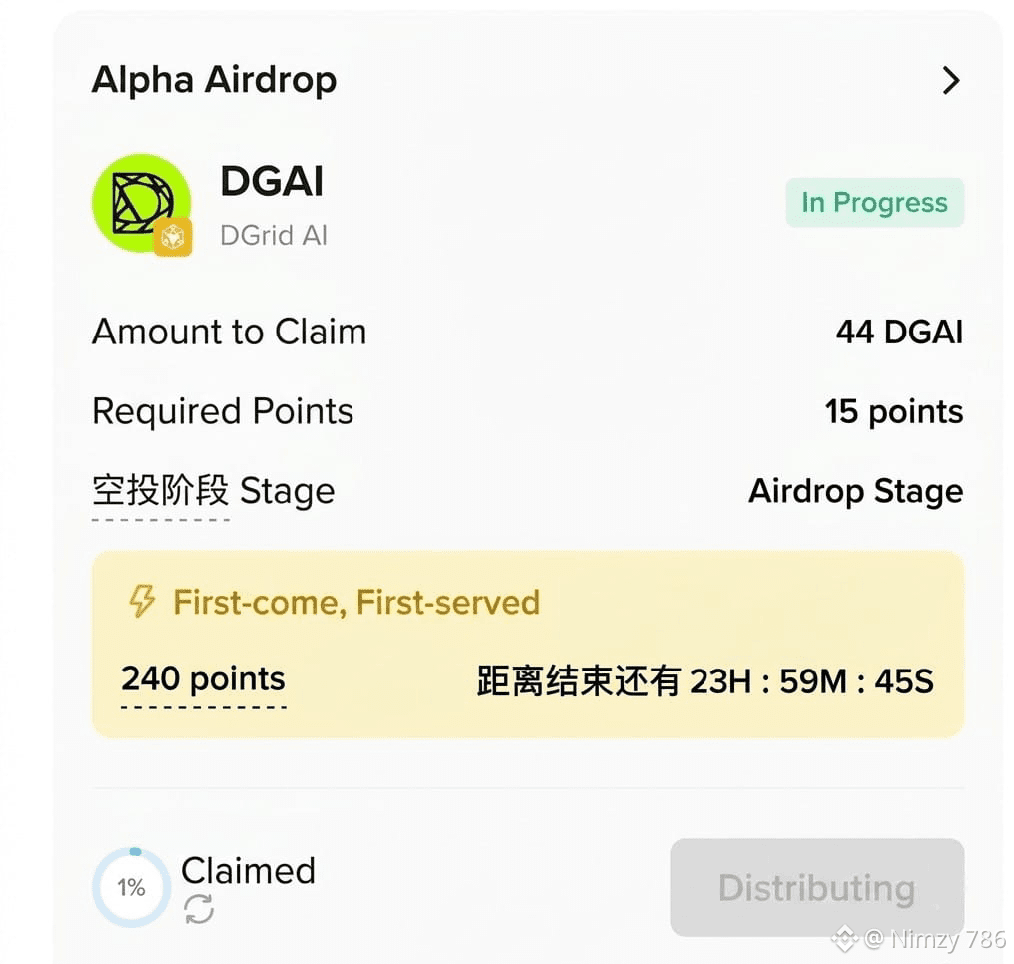
#DGAI 💥💥🚀🚀
Finally managed to claim my $DGAI airdrop after a long wait! 💰⛓️
I also picked up some extra $DGAI from the market because I believe the current price may not stay low for long. 📈⚡
Not financial advice — always do your own research. 🚀💎
$DGAI
{alpha}(560x10d4183389e99233db3cc981c43443ebd28ebd5e)
#DGAI 💥💥🚀🚀
Finally managed to claim my $DGAI airdrop after a long wait! 💰⛓️
I also picked up some extra $DGAI from the market because I believe the current price may not stay low for long. 📈⚡
Not financial advice — always do your own research. 🚀💎
$DGAI
Finally managed to claim my $DGAI airdrop after a long wait! 💰⛓️
I also picked up some extra $DGAI from the market because I believe the current price may not stay low for long. 📈⚡
Not financial advice — always do your own research. 🚀💎
$DGAI
1
2
454
·
--
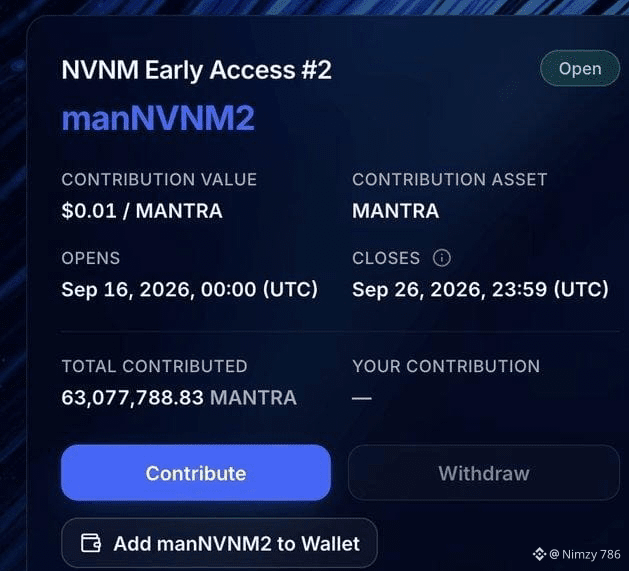
NVNM Early Access #2 is officially live! 🚀
As shared during the recent Community Connect, MANTRA community members now have a second chance to participate after the overwhelming interest shown in Round 1.
This exclusive round allows the MANTRA community to contribute $MANTRA toward securing an $NVNM allocation.
⏳ Participation is open until September 26, 2026.
🔗 Join here: early.nvnmchain.io
$MANTRA
{spot}(MANTRAUSDT)
NVNM Early Access #2 is officially live! 🚀
As shared during the recent Community Connect, MANTRA community members now have a second chance to participate after the overwhelming interest shown in Round 1.
This exclusive round allows the MANTRA community to contribute $MANTRA toward securing an $NVNM allocation.
⏳ Participation is open until September 26, 2026.
🔗 Join here: early.nvnmchain.io
$MANTRA
As shared during the recent Community Connect, MANTRA community members now have a second chance to participate after the overwhelming interest shown in Round 1.
This exclusive round allows the MANTRA community to contribute $MANTRA toward securing an $NVNM allocation.
⏳ Participation is open until September 26, 2026.
🔗 Join here: early.nvnmchain.io
$MANTRA
1
177
·
--
Проверено
Will CPI Push the Fed Toward Another Rate Hike? 📊
The latest Nonfarm Payrolls report surprised to the upside at 162K, signaling that the labor market remains stronger than many expected. Attention now shifts to today’s CPI release, which could play a major role in shaping the Fed’s decision at next week’s meeting.
With PPI already hinting at persistent inflation pressures, market expectations have turned more hawkish, and traders are increasingly pricing in the possibility of another rate increase.
📉 My view: A hotter-than-expected CPI reading could weigh on equities and strengthen the case for tighter monetary policy.
🥇 Gold: Still attractive as a longer-term hedge against uncertainty, though rising Treasury yields may create near-term headwinds.
What’s your outlook for CPI day — bullish or bearish? 👀
Drop your stock or gold positions below and let’s compare strategies before the numbers hit.
#CPIWatch #Fed #Inflation #Gold #Stocks #Markets $RAYSOL
{future}(RAYSOLUSDT)
$FLORK
{alpha}(560xf40592daacb3e5abf358789f5688c0b4f64d7777)
Will CPI Push the Fed Toward Another Rate Hike? 📊
The latest Nonfarm Payrolls report surprised to the upside at 162K, signaling that the labor market remains stronger than many expected. Attention now shifts to today’s CPI release, which could play a major role in shaping the Fed’s decision at next week’s meeting.
With PPI already hinting at persistent inflation pressures, market expectations have turned more hawkish, and traders are increasingly pricing in the possibility of another rate increase.
📉 My view: A hotter-than-expected CPI reading could weigh on equities and strengthen the case for tighter monetary policy.
🥇 Gold: Still attractive as a longer-term hedge against uncertainty, though rising Treasury yields may create near-term headwinds.
What’s your outlook for CPI day — bullish or bearish? 👀
Drop your stock or gold positions below and let’s compare strategies before the numbers hit.
#CPIWatch #Fed #Inflation #Gold #Stocks #Markets $RAYSOL
$FLORK
The latest Nonfarm Payrolls report surprised to the upside at 162K, signaling that the labor market remains stronger than many expected. Attention now shifts to today’s CPI release, which could play a major role in shaping the Fed’s decision at next week’s meeting.
With PPI already hinting at persistent inflation pressures, market expectations have turned more hawkish, and traders are increasingly pricing in the possibility of another rate increase.
📉 My view: A hotter-than-expected CPI reading could weigh on equities and strengthen the case for tighter monetary policy.
🥇 Gold: Still attractive as a longer-term hedge against uncertainty, though rising Treasury yields may create near-term headwinds.
What’s your outlook for CPI day — bullish or bearish? 👀
Drop your stock or gold positions below and let’s compare strategies before the numbers hit.
#CPIWatch #Fed #Inflation #Gold #Stocks #Markets $RAYSOL
$FLORK

1
280
·
--
($4Stock) Market Snapshot 📊
$4Stock is currently trading near $0.0307, down around 6.7% on the day. After an extremely volatile debut that saw prices surge to $0.0738 and plunge to $0.000017, the token is now stabilizing around the $0.03 region. Market capitalization and FDV stand near $30.7M, with liquidity around $2.37M and more than 21K holders. Daily trading activity remains strong, highlighting continued market interest despite the sharp volatility.
📌 Key Resistance Levels: $0.0450 → $0.0613 → $0.0775
📌 Key Support Level: $0.01256
As with many newly launched Alpha tokens, price action remains highly speculative, and traders should expect elevated volatility and rapid sentiment shifts.
#USAugustPPIRisesLessThanExpected #SECApprovesNasdaqTexasCommodityTrustRul
{alpha}(560xd270d4e1ec6e6e0d28c0ecb8be966ec75997ffff)
($4Stock ) Market Snapshot 📊
$4Stock is currently trading near $0.0307, down around 6.7% on the day. After an extremely volatile debut that saw prices surge to $0.0738 and plunge to $0.000017, the token is now stabilizing around the $0.03 region. Market capitalization and FDV stand near $30.7M, with liquidity around $2.37M and more than 21K holders. Daily trading activity remains strong, highlighting continued market interest despite the sharp volatility.
📌 Key Resistance Levels: $0.0450 → $0.0613 → $0.0775
📌 Key Support Level: $0.01256
As with many newly launched Alpha tokens, price action remains highly speculative, and traders should expect elevated volatility and rapid sentiment shifts.
#USAugustPPIRisesLessThanExpected #SECApprovesNasdaqTexasCommodityTrustRul
$4Stock is currently trading near $0.0307, down around 6.7% on the day. After an extremely volatile debut that saw prices surge to $0.0738 and plunge to $0.000017, the token is now stabilizing around the $0.03 region. Market capitalization and FDV stand near $30.7M, with liquidity around $2.37M and more than 21K holders. Daily trading activity remains strong, highlighting continued market interest despite the sharp volatility.
📌 Key Resistance Levels: $0.0450 → $0.0613 → $0.0775
📌 Key Support Level: $0.01256
As with many newly launched Alpha tokens, price action remains highly speculative, and traders should expect elevated volatility and rapid sentiment shifts.
#USAugustPPIRisesLessThanExpected #SECApprovesNasdaqTexasCommodityTrustRul

1.4k
·
--
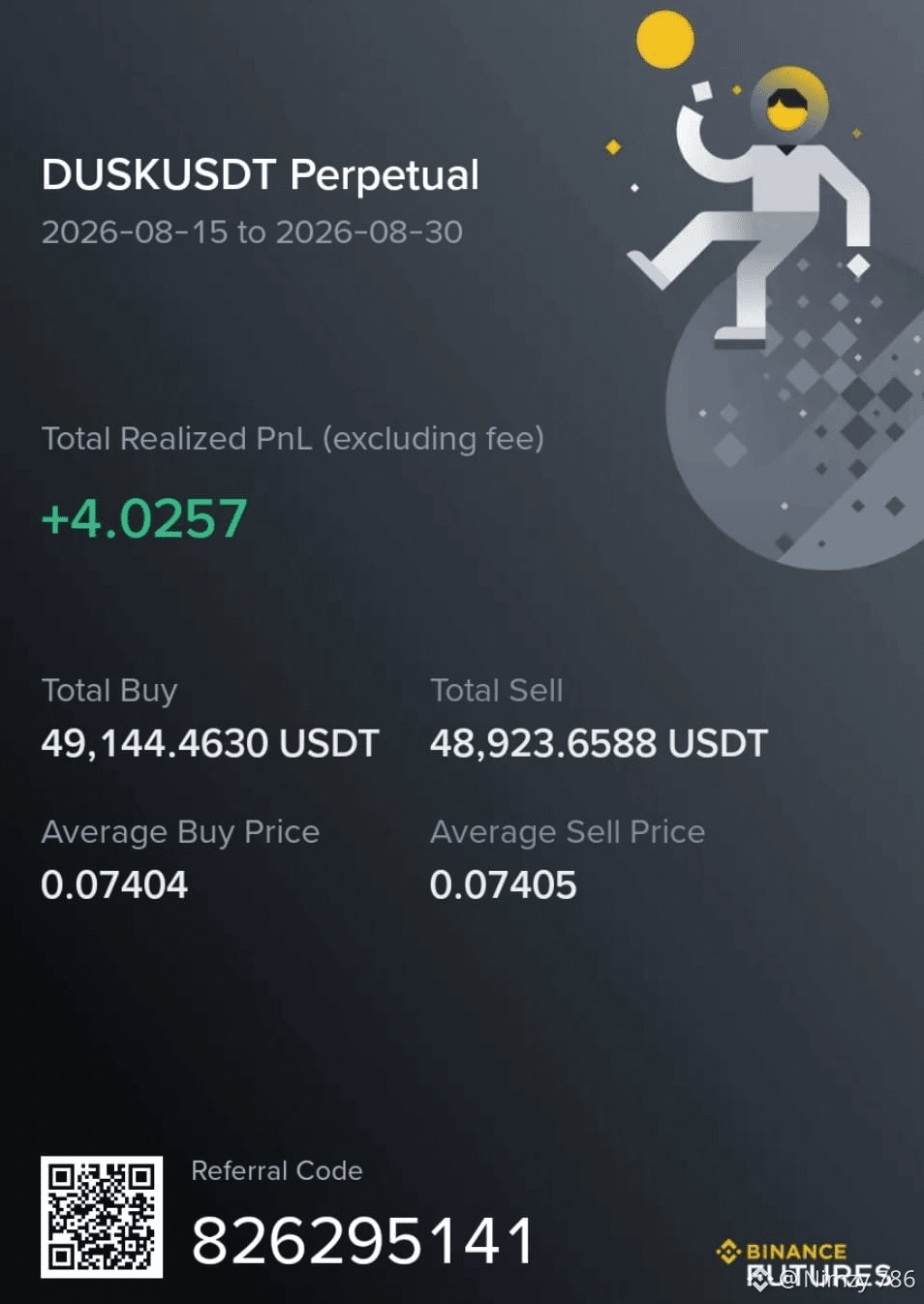
$DUSK gets even more exciting when users actively engage with it 😉
$DUSK
{spot}(DUSKUSDT)
$DUSK gets even more exciting when users actively engage with it 😉
$DUSK
$DUSK
267
·
--
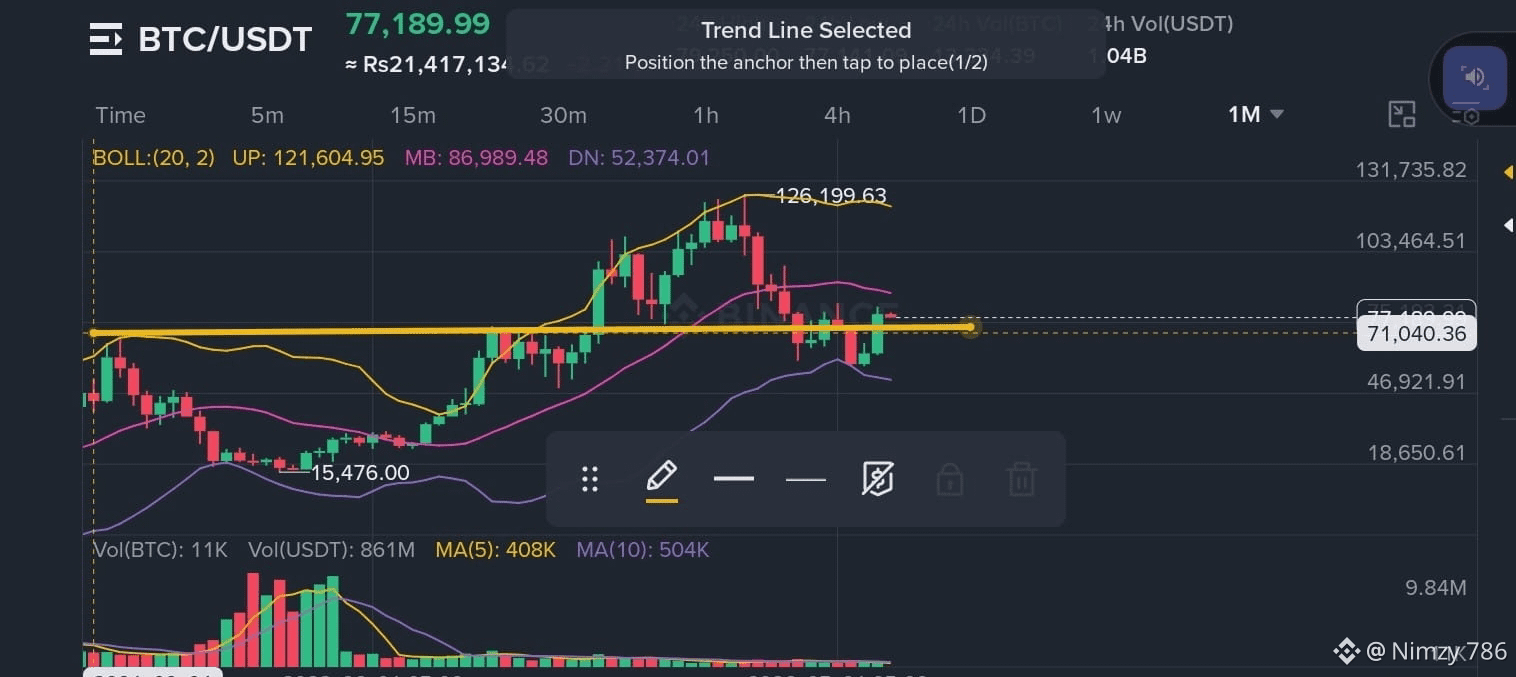
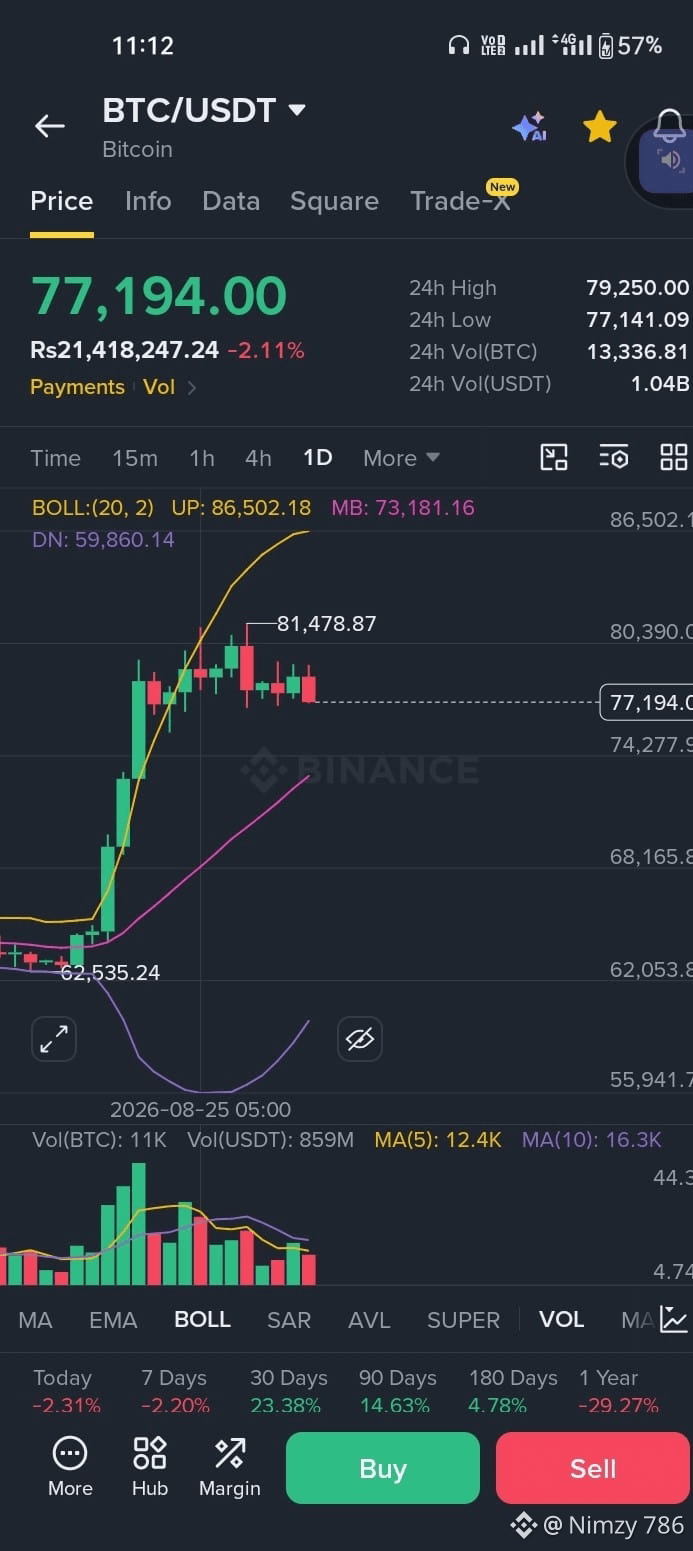
Bitcoin Market Update: Is a Move to $72K on the Horizon? 📉
Bitcoin is currently trading above $77,000, but technical indicators suggest a possible correction could be developing. If bearish momentum increases, the $72,000 level may become the next key support zone to watch. 🔻📊
Bitcoin Market Update: Is a Move to $72K on the Horizon? 📉
Bitcoin is currently trading above $77,000, but technical indicators suggest a possible correction could be developing. If bearish momentum increases, the $72,000 level may become the next key support zone to watch. 🔻📊
Bitcoin is currently trading above $77,000, but technical indicators suggest a possible correction could be developing. If bearish momentum increases, the $72,000 level may become the next key support zone to watch. 🔻📊
162
·
--
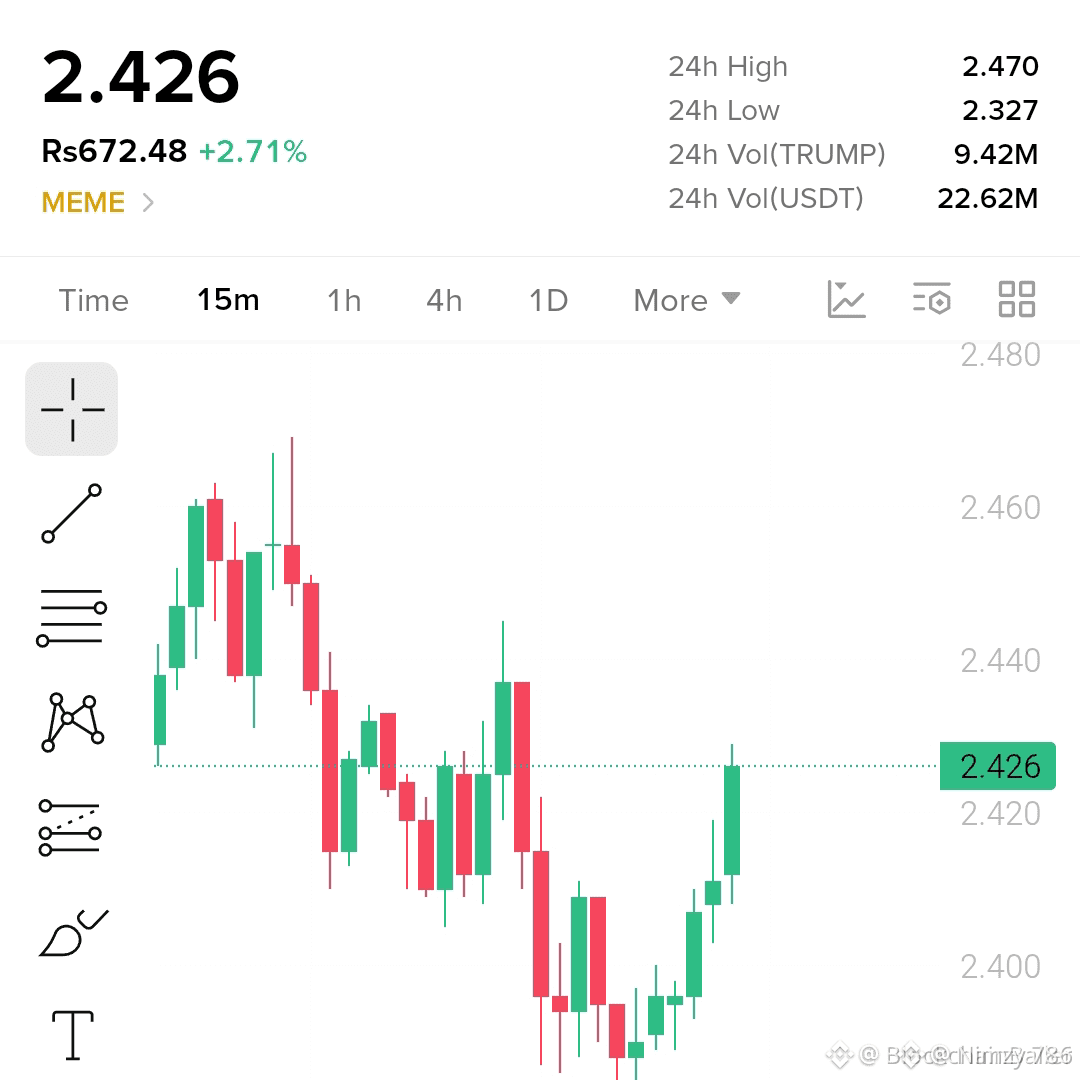
Nice setup. I like that you're treating it as a scalp and defining risk first. The key is sticking to the stop loss if the trade invalidates. I'll be watching how price reacts around the first TP zone before considering any adjustments. Good luck and trade safe. 📈
$TRUMP
Nice setup. I like that you're treating it as a scalp and defining risk first. The key is sticking to the stop loss if the trade invalidates. I'll be watching how price reacts around the first TP zone before considering any adjustments. Good luck and trade safe. 📈
$TRUMP
$TRUMP
1
334
·
--
#dusk $DUSK @Dusk_Foundation
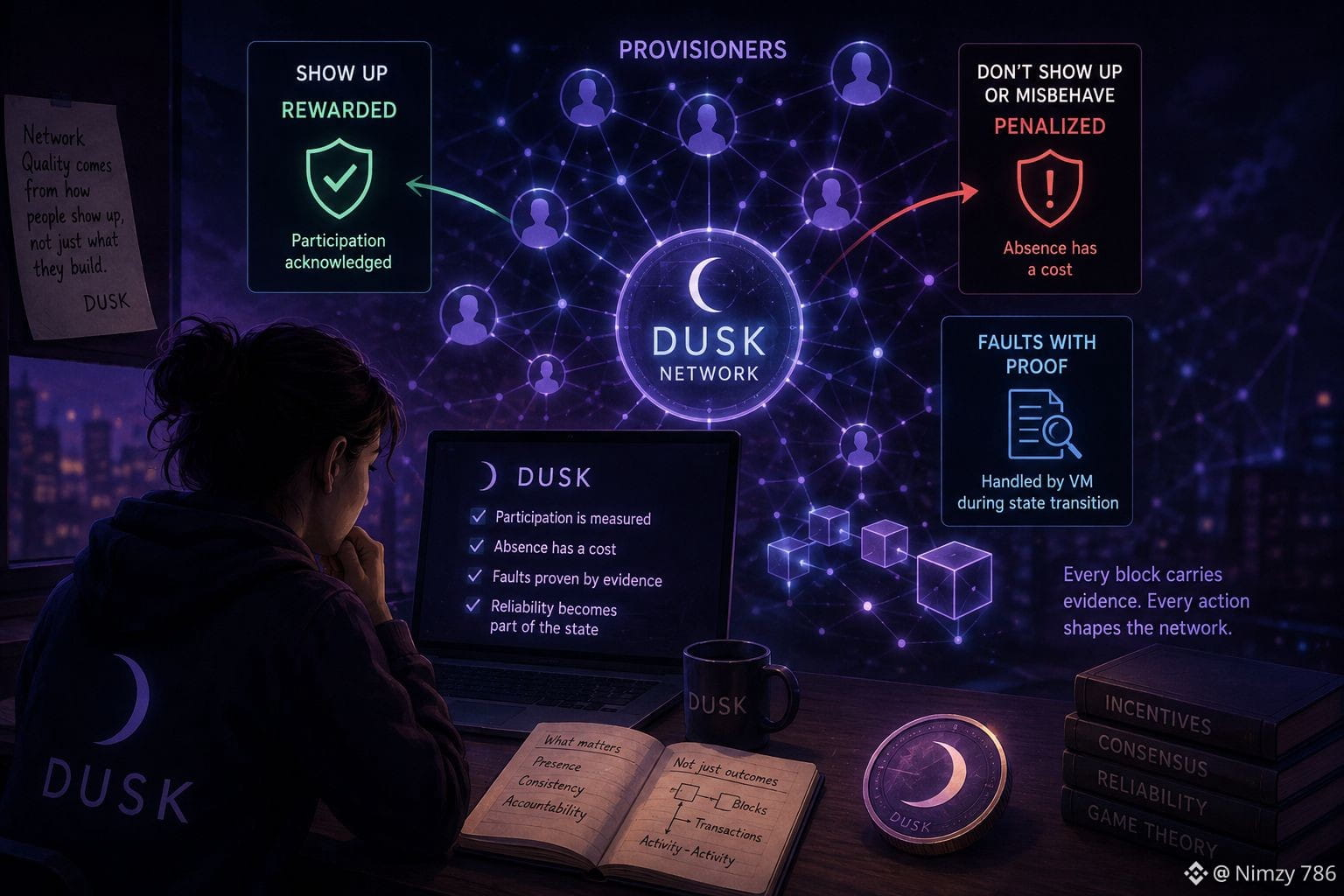
I spent longer than expected following how Dusk treats participation itself, and it quietly changed what I pay attention to in a network.
Most market conversations pull me toward outcomes. Blocks are produced, transactions settle, activity continues. While reading through the role of provisioners in Dusk, my attention drifted away from outcomes and toward presence. The system does not simply assume participants will show up when needed. It attaches consequences to that assumption.
What stayed with me was the idea that reliability becomes part of the state transition itself. Participation is acknowledged, absence carries a cost, and faults are handled through evidence rather than reputation. The network is not only coordinating computation. It is continuously measuring who is contributing to coordination when their turn arrives.@Dusk_Foundation
That made me look differently at how conviction forms around DUSK. Discussions often focus on features, yet a surprising amount of network quality seems to come from how participant behavior is shaped over time. The technology matters, but so does the structure that encourages people to remain dependable when no one is paying attention.
The longer I sat with that thought, the harder it became to separate network performance from the incentives that quietly sustain it.
$DUSK
#dusk $DUSK @Dusk
I spent longer than expected following how Dusk treats participation itself, and it quietly changed what I pay attention to in a network.
Most market conversations pull me toward outcomes. Blocks are produced, transactions settle, activity continues. While reading through the role of provisioners in Dusk, my attention drifted away from outcomes and toward presence. The system does not simply assume participants will show up when needed. It attaches consequences to that assumption.
What stayed with me was the idea that reliability becomes part of the state transition itself. Participation is acknowledged, absence carries a cost, and faults are handled through evidence rather than reputation. The network is not only coordinating computation. It is continuously measuring who is contributing to coordination when their turn arrives.@Dusk
That made me look differently at how conviction forms around DUSK. Discussions often focus on features, yet a surprising amount of network quality seems to come from how participant behavior is shaped over time. The technology matters, but so does the structure that encourages people to remain dependable when no one is paying attention.
The longer I sat with that thought, the harder it became to separate network performance from the incentives that quietly sustain it.
$DUSK
I spent longer than expected following how Dusk treats participation itself, and it quietly changed what I pay attention to in a network.
Most market conversations pull me toward outcomes. Blocks are produced, transactions settle, activity continues. While reading through the role of provisioners in Dusk, my attention drifted away from outcomes and toward presence. The system does not simply assume participants will show up when needed. It attaches consequences to that assumption.
What stayed with me was the idea that reliability becomes part of the state transition itself. Participation is acknowledged, absence carries a cost, and faults are handled through evidence rather than reputation. The network is not only coordinating computation. It is continuously measuring who is contributing to coordination when their turn arrives.@Dusk
That made me look differently at how conviction forms around DUSK. Discussions often focus on features, yet a surprising amount of network quality seems to come from how participant behavior is shaped over time. The technology matters, but so does the structure that encourages people to remain dependable when no one is paying attention.
The longer I sat with that thought, the harder it became to separate network performance from the incentives that quietly sustain it.
$DUSK
15
11
720
·
--
#dusk $DUSK @Dusk_Foundation
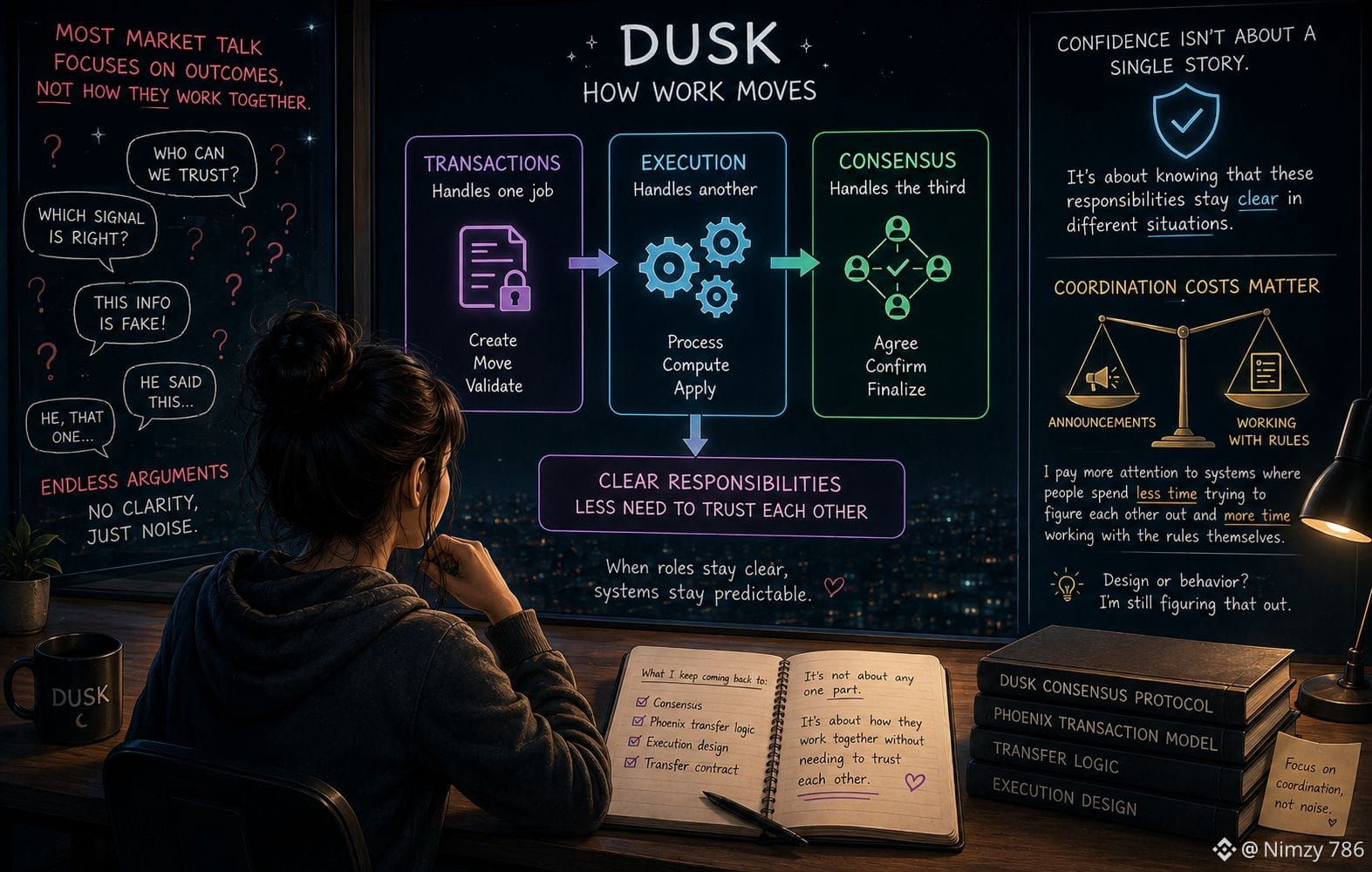
I found myself spending time watching how work moves through Dusk than listening to the usual market talk and that changed what I focused on.While going through parts of the consensus, Phoenix transfer logic and execution design I kept coming to the same idea. Most market conversations are about results. People really rely on how many different parts can work together without always having to trust each other.@Dusk_Foundation
What caught my attention wasn't any one part. The cool thing was how responsibilities stayed focused. Transactions do one thing execution does another and consensus does a third. That feels normal until I think about how often crypto debates turn into fights about who should trust which signal.As I watched Dusk sentiment during times it seemed like confidence was less about a single story and more about whether people thought those responsibilities stayed clear in different situations.
That thought made me look more at coordination costs of announcements. The systems that keep me interested the most are the ones where people spend time trying to figure each other out and more time working with the rules themselves.I still don't know how much of that is from the design and how much is, from what people do and that difference feels worth thinking about.
$DUSK
{spot}(DUSKUSDT)
#dusk $DUSK @Dusk
I found myself spending time watching how work moves through Dusk than listening to the usual market talk and that changed what I focused on.While going through parts of the consensus, Phoenix transfer logic and execution design I kept coming to the same idea. Most market conversations are about results. People really rely on how many different parts can work together without always having to trust each other.@Dusk
What caught my attention wasn't any one part. The cool thing was how responsibilities stayed focused. Transactions do one thing execution does another and consensus does a third. That feels normal until I think about how often crypto debates turn into fights about who should trust which signal.As I watched Dusk sentiment during times it seemed like confidence was less about a single story and more about whether people thought those responsibilities stayed clear in different situations.
That thought made me look more at coordination costs of announcements. The systems that keep me interested the most are the ones where people spend time trying to figure each other out and more time working with the rules themselves.I still don't know how much of that is from the design and how much is, from what people do and that difference feels worth thinking about.
$DUSK
I found myself spending time watching how work moves through Dusk than listening to the usual market talk and that changed what I focused on.While going through parts of the consensus, Phoenix transfer logic and execution design I kept coming to the same idea. Most market conversations are about results. People really rely on how many different parts can work together without always having to trust each other.@Dusk
What caught my attention wasn't any one part. The cool thing was how responsibilities stayed focused. Transactions do one thing execution does another and consensus does a third. That feels normal until I think about how often crypto debates turn into fights about who should trust which signal.As I watched Dusk sentiment during times it seemed like confidence was less about a single story and more about whether people thought those responsibilities stayed clear in different situations.
That thought made me look more at coordination costs of announcements. The systems that keep me interested the most are the ones where people spend time trying to figure each other out and more time working with the rules themselves.I still don't know how much of that is from the design and how much is, from what people do and that difference feels worth thinking about.
$DUSK
1
2
161
·
--
#dusk $DUSK @Dusk_Foundation
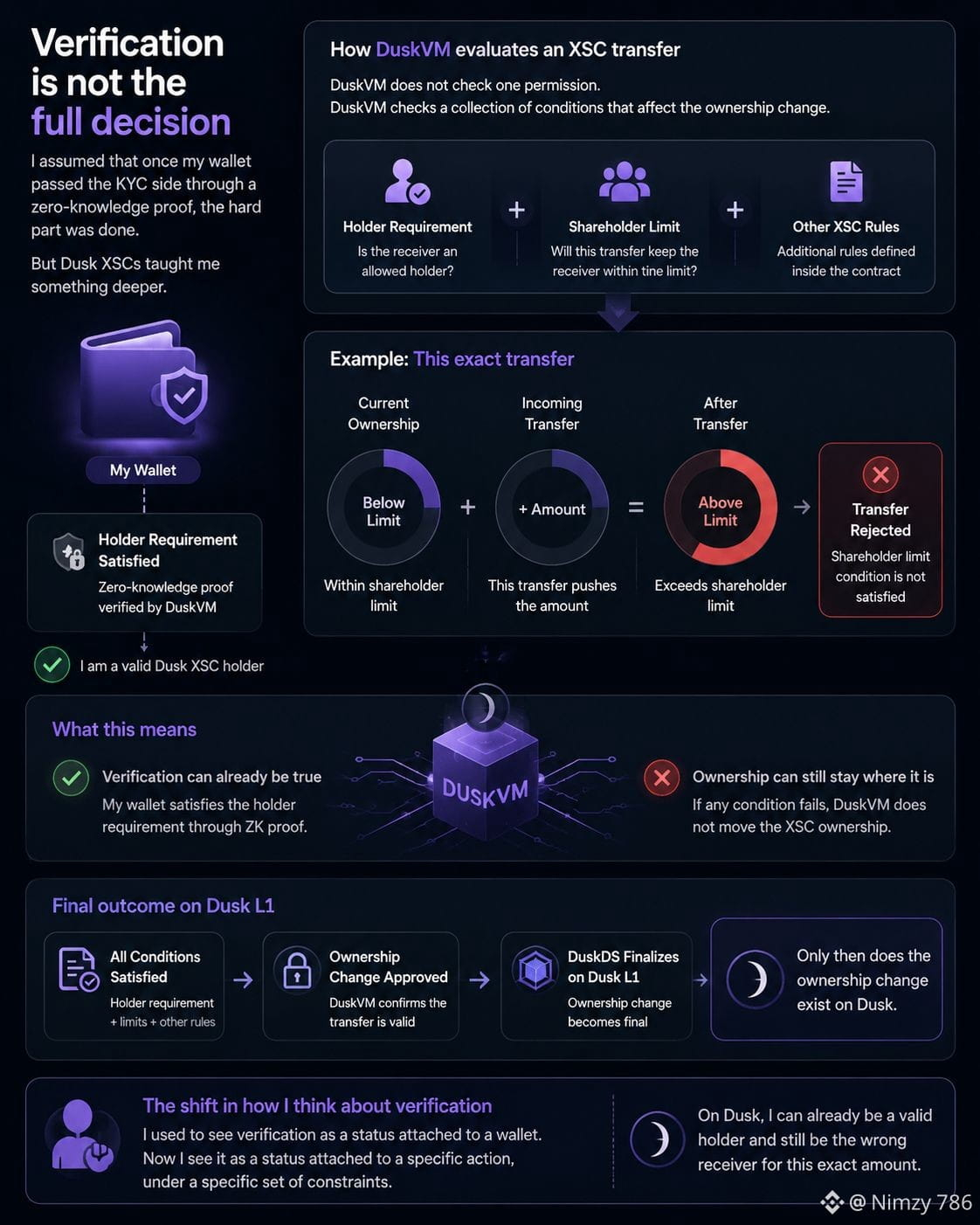
I spent time than I expected untangling a detail around Dusk XSCs because I treated verification as if it settled the entire decision.
In my mind the hard part was already done. My wallet had satisfied the holder requirement through a zero‑knowledge proof so I assumed the path from there was simple. The more I followed the logic, the less complete that assumption felt.@Dusk_Foundation
What tripped me up was realizing that DuskVM does not evaluate one permission. DuskVM evaluates a collection of conditions that affect the ownership change.
My wallet can qualify as a holder and still fail the transfer. The holder requirement answers one question. The shareholder limit answers another. Passing the first does not soften the second.
That changed how I think about verification on Dusk. I used to view verification on Dusk as a status attached to a wallet. Now verification on Dusk feels like a status attached to a specific action, under a specific set of constraints.
Even some of the DUSK discussions make more sense through that lens. Verification can already be true while ownership remains where it is.
$DUSK
{spot}(DUSKUSDT)
#dusk $DUSK @Dusk
I spent time than I expected untangling a detail around Dusk XSCs because I treated verification as if it settled the entire decision.
In my mind the hard part was already done. My wallet had satisfied the holder requirement through a zero‑knowledge proof so I assumed the path from there was simple. The more I followed the logic, the less complete that assumption felt.@Dusk
What tripped me up was realizing that DuskVM does not evaluate one permission. DuskVM evaluates a collection of conditions that affect the ownership change.
My wallet can qualify as a holder and still fail the transfer. The holder requirement answers one question. The shareholder limit answers another. Passing the first does not soften the second.
That changed how I think about verification on Dusk. I used to view verification on Dusk as a status attached to a wallet. Now verification on Dusk feels like a status attached to a specific action, under a specific set of constraints.
Even some of the DUSK discussions make more sense through that lens. Verification can already be true while ownership remains where it is.
$DUSK
I spent time than I expected untangling a detail around Dusk XSCs because I treated verification as if it settled the entire decision.
In my mind the hard part was already done. My wallet had satisfied the holder requirement through a zero‑knowledge proof so I assumed the path from there was simple. The more I followed the logic, the less complete that assumption felt.@Dusk
What tripped me up was realizing that DuskVM does not evaluate one permission. DuskVM evaluates a collection of conditions that affect the ownership change.
My wallet can qualify as a holder and still fail the transfer. The holder requirement answers one question. The shareholder limit answers another. Passing the first does not soften the second.
That changed how I think about verification on Dusk. I used to view verification on Dusk as a status attached to a wallet. Now verification on Dusk feels like a status attached to a specific action, under a specific set of constraints.
Even some of the DUSK discussions make more sense through that lens. Verification can already be true while ownership remains where it is.
$DUSK
10
6
325

·
--
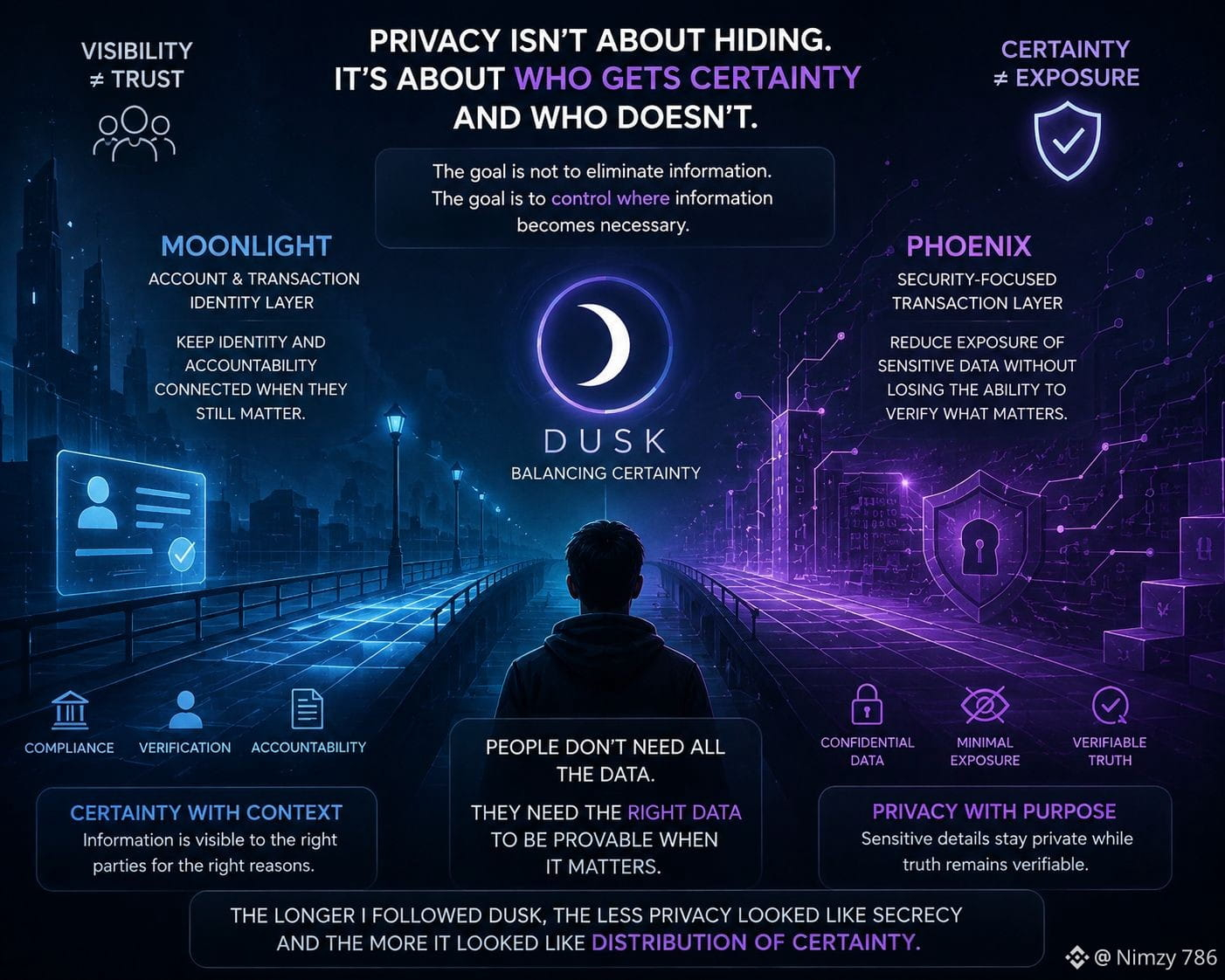
I came to Dusk thinking that privacy was about hiding certain bits of data.. After spending some time around the network I started thinking more about who actually gets to be sure of things and who is left in the dark.
In talks about the market people act like visibility and trust are the exact same thing. They think if everyone can see every move then everyone will feel confident. Dusk made me realize that this way of thinking might be wrong.
As I watched the activity on the network I kept thinking about the difference between Moonlight and Phoenix. Moonlight does not feel like a privacy tool to me. Instead Moonlight feels like a way to keep identity and accountability tied together when those things still matter. Phoenix looks at the problem from a different side. Phoenix works to hide transaction details so they are not exposed but Phoenix still lets you verify the things that actually need to be verified.
That difference changed my view on uncertainty. I realized the goal is not to get rid of information. The true goal is to decide where information becomes necessary.
I saw this pattern in how people felt about the coin during the quiet times. People did not seem to care much about how much data was out there. Instead people cared about whether the right data could be proven when it was actually needed.
The time I spent following Dusk the more I realized that privacy is not, about secrecy. To me privacy looks like a careful way to hand out certainty.#dusk @Dusk_Foundation $DUSK
I came to Dusk thinking that privacy was about hiding certain bits of data.. After spending some time around the network I started thinking more about who actually gets to be sure of things and who is left in the dark.
In talks about the market people act like visibility and trust are the exact same thing. They think if everyone can see every move then everyone will feel confident. Dusk made me realize that this way of thinking might be wrong.
As I watched the activity on the network I kept thinking about the difference between Moonlight and Phoenix. Moonlight does not feel like a privacy tool to me. Instead Moonlight feels like a way to keep identity and accountability tied together when those things still matter. Phoenix looks at the problem from a different side. Phoenix works to hide transaction details so they are not exposed but Phoenix still lets you verify the things that actually need to be verified.
That difference changed my view on uncertainty. I realized the goal is not to get rid of information. The true goal is to decide where information becomes necessary.
I saw this pattern in how people felt about the coin during the quiet times. People did not seem to care much about how much data was out there. Instead people cared about whether the right data could be proven when it was actually needed.
The time I spent following Dusk the more I realized that privacy is not, about secrecy. To me privacy looks like a careful way to hand out certainty.#dusk @Dusk $DUSK
In talks about the market people act like visibility and trust are the exact same thing. They think if everyone can see every move then everyone will feel confident. Dusk made me realize that this way of thinking might be wrong.
As I watched the activity on the network I kept thinking about the difference between Moonlight and Phoenix. Moonlight does not feel like a privacy tool to me. Instead Moonlight feels like a way to keep identity and accountability tied together when those things still matter. Phoenix looks at the problem from a different side. Phoenix works to hide transaction details so they are not exposed but Phoenix still lets you verify the things that actually need to be verified.
That difference changed my view on uncertainty. I realized the goal is not to get rid of information. The true goal is to decide where information becomes necessary.
I saw this pattern in how people felt about the coin during the quiet times. People did not seem to care much about how much data was out there. Instead people cared about whether the right data could be proven when it was actually needed.
The time I spent following Dusk the more I realized that privacy is not, about secrecy. To me privacy looks like a careful way to hand out certainty.#dusk @Dusk $DUSK
5
7
227
·
--
Проверено
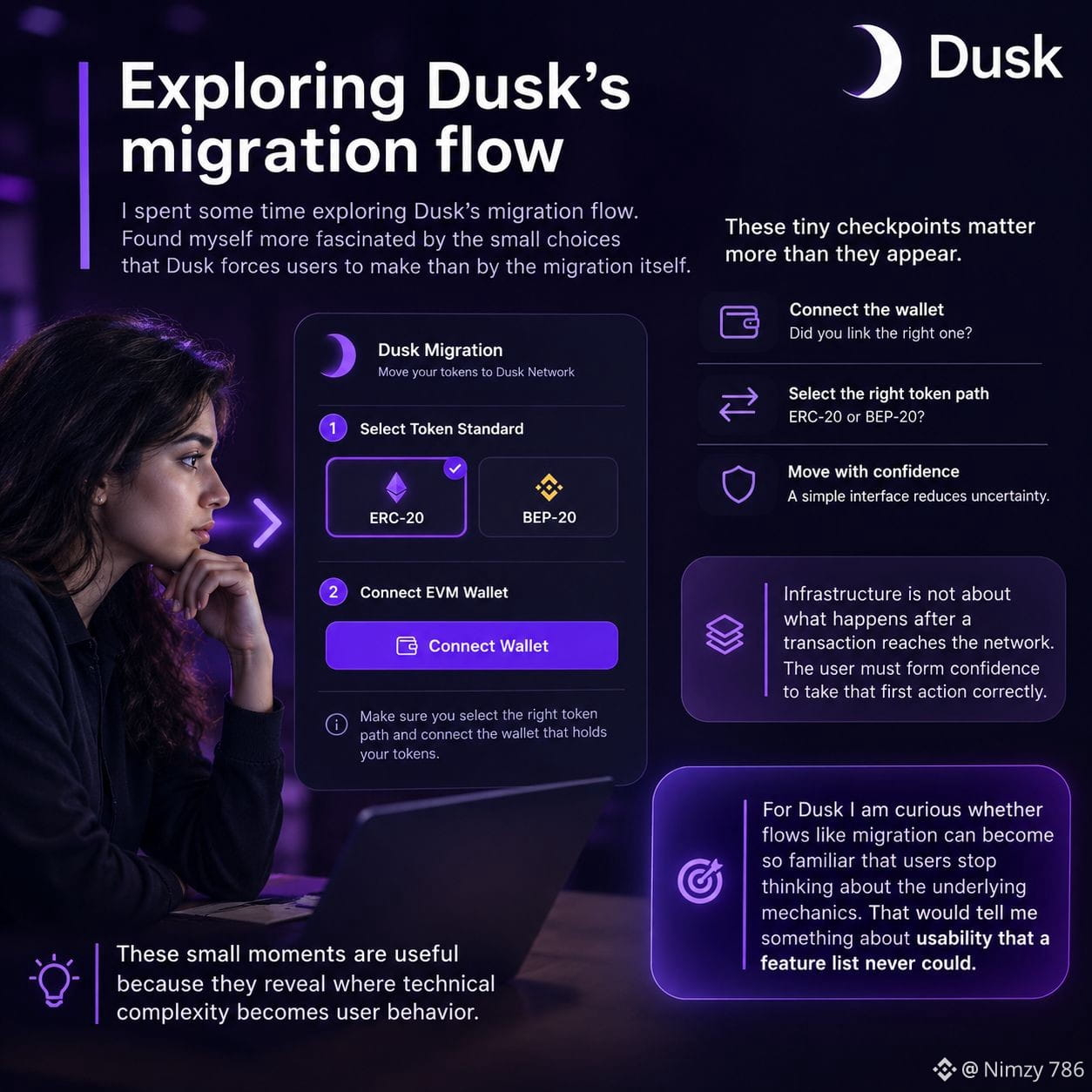
I spent some time exploring Dusks migration flow. Found myself more fascinated by the small choices that Dusk forces users to make than by the migration itself.The process begins when Dusk asks the user to choose whether the tokens are ERC-20 or BEP-20 and then to connect the EVM wallet that actually holds them. That may sound routine. Dusk believes that these tiny checkpoints matter more than they appear.@Dusk_Foundation
When I move assets between environments I usually think about one thing: did I connect the wallet and select the right token path? A simple interface can reduce uncertainty while a confusing interface can make even a straightforward migration feel risky.
That made me look at Dusk participation differently. Infrastructure is not about what happens after a transaction reaches the network. The user must form confidence to take that first action correctly.
I find these small moments useful because they reveal where technical complexity becomes user behavior.
For Dusk I am curious whether flows like migration can become so familiar that users stop thinking about the underlying mechanics. That would tell me something, about usability that a feature list never could.
#dusk @Dusk_Foundation $DUSK
{spot}(DUSKUSDT)
$LAB
{future}(LABUSDT)
$RE
{spot}(REUSDT)
I spent some time exploring Dusks migration flow. Found myself more fascinated by the small choices that Dusk forces users to make than by the migration itself.The process begins when Dusk asks the user to choose whether the tokens are ERC-20 or BEP-20 and then to connect the EVM wallet that actually holds them. That may sound routine. Dusk believes that these tiny checkpoints matter more than they appear.@Dusk
When I move assets between environments I usually think about one thing: did I connect the wallet and select the right token path? A simple interface can reduce uncertainty while a confusing interface can make even a straightforward migration feel risky.
That made me look at Dusk participation differently. Infrastructure is not about what happens after a transaction reaches the network. The user must form confidence to take that first action correctly.
I find these small moments useful because they reveal where technical complexity becomes user behavior.
For Dusk I am curious whether flows like migration can become so familiar that users stop thinking about the underlying mechanics. That would tell me something, about usability that a feature list never could.
#dusk @Dusk $DUSK
$LAB
$RE
When I move assets between environments I usually think about one thing: did I connect the wallet and select the right token path? A simple interface can reduce uncertainty while a confusing interface can make even a straightforward migration feel risky.
That made me look at Dusk participation differently. Infrastructure is not about what happens after a transaction reaches the network. The user must form confidence to take that first action correctly.
I find these small moments useful because they reveal where technical complexity becomes user behavior.
For Dusk I am curious whether flows like migration can become so familiar that users stop thinking about the underlying mechanics. That would tell me something, about usability that a feature list never could.
#dusk @Dusk $DUSK
$LAB
$RE
17
4
243
·
--
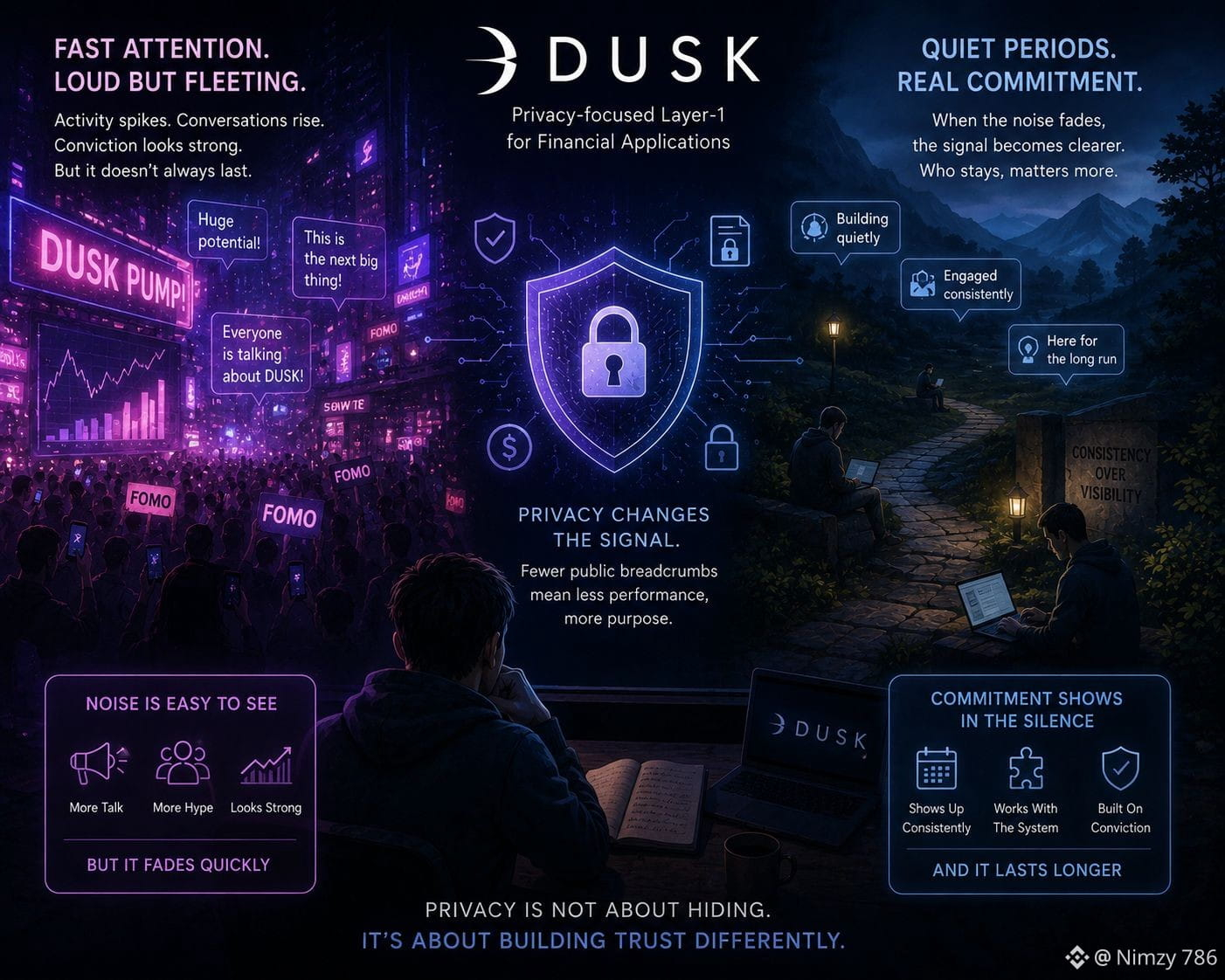
I found myself spending more time studying who stayed involved with DUSK during quiet periods than who appeared when attention briefly returned.@Dusk_Foundation
Fast moving markets usually make participation look bigger than it really is. Activity rises, conversations increase, and conviction seems stronger than it was a week earlier. After following DUSK for a while, I became more interested in what happened after those moments passed.
What stood out was how a privacy-focused network changes the signals people use to judge commitment. When financial activity and contract logic are designed around confidentiality, there are fewer public breadcrumbs for people to follow. That makes participation feel less performative and a little harder to measure from the outside.
Because of that, I found myself paying attention to consistency instead of visibility. The participants who remained engaged were often not the ones generating the most noise. They were simply still there when attention moved elsewhere.
Even some of the shifts around the DUSK coin seemed to reflect this dynamic. Conviction appeared to build less through constant exposure and more through repeated interaction with the same system over time.
The longer I watched that pattern repeat, the less certain I became that visibility is the best way to understand commitment in a network built around privacy.
#dusk @Dusk_Foundation $DUSK
{spot}(DUSKUSDT)
$RE
{spot}(REUSDT)
$LAB
{future}(LABUSDT)
I found myself spending more time studying who stayed involved with DUSK during quiet periods than who appeared when attention briefly returned.@Dusk
Fast moving markets usually make participation look bigger than it really is. Activity rises, conversations increase, and conviction seems stronger than it was a week earlier. After following DUSK for a while, I became more interested in what happened after those moments passed.
What stood out was how a privacy-focused network changes the signals people use to judge commitment. When financial activity and contract logic are designed around confidentiality, there are fewer public breadcrumbs for people to follow. That makes participation feel less performative and a little harder to measure from the outside.
Because of that, I found myself paying attention to consistency instead of visibility. The participants who remained engaged were often not the ones generating the most noise. They were simply still there when attention moved elsewhere.
Even some of the shifts around the DUSK coin seemed to reflect this dynamic. Conviction appeared to build less through constant exposure and more through repeated interaction with the same system over time.
The longer I watched that pattern repeat, the less certain I became that visibility is the best way to understand commitment in a network built around privacy.
#dusk @Dusk $DUSK
$RE
$LAB
Fast moving markets usually make participation look bigger than it really is. Activity rises, conversations increase, and conviction seems stronger than it was a week earlier. After following DUSK for a while, I became more interested in what happened after those moments passed.
What stood out was how a privacy-focused network changes the signals people use to judge commitment. When financial activity and contract logic are designed around confidentiality, there are fewer public breadcrumbs for people to follow. That makes participation feel less performative and a little harder to measure from the outside.
Because of that, I found myself paying attention to consistency instead of visibility. The participants who remained engaged were often not the ones generating the most noise. They were simply still there when attention moved elsewhere.
Even some of the shifts around the DUSK coin seemed to reflect this dynamic. Conviction appeared to build less through constant exposure and more through repeated interaction with the same system over time.
The longer I watched that pattern repeat, the less certain I became that visibility is the best way to understand commitment in a network built around privacy.
#dusk @Dusk $DUSK
$RE
$LAB
20
7
824
·
--
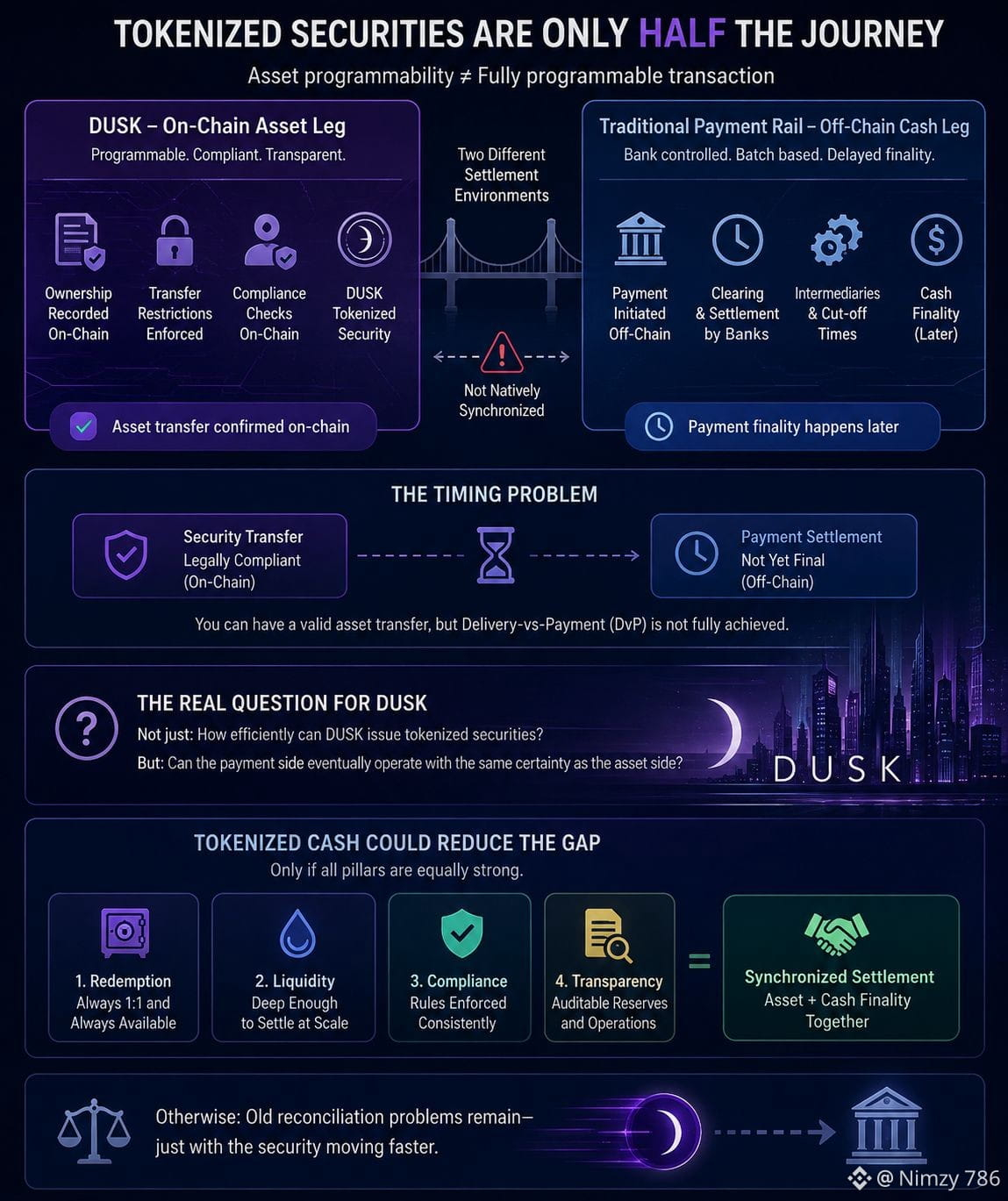
#dusk DUSK makes the asset leg of tokenized securities more programmable, but that does not automatically make the whole transaction programmable.
That distinction is easy to miss.
If ownership, transfer restrictions and compliance checks live on-chain while the cash payment remains tied to a bank rail, the transaction still crosses two settlement environments. The blockchain can confirm the security transfer, but the buyer and seller may still be waiting for the payment system to reach its own final state.
That creates a timing problem.
You can have a legally compliant asset transfer without having fully synchronized delivery-versus-payment.
For me, the bigger question around DUSK is therefore not simply how efficiently it can issue tokenized securities. It is whether the payment side can eventually operate with the same certainty as the asset side.
Tokenized cash could reduce that gap, but only if redemption, liquidity and compliance rules are equally reliable.
Otherwise, some of the old reconciliation problem remains — just with the security moving faster.@Dusk_Foundation Foundation #dusk @Dusk_Foundation #dusk $DUSK
{spot}(DUSKUSDT)
$RE
{spot}(REUSDT)
$LAB
{future}(LABUSDT)
#dusk DUSK makes the asset leg of tokenized securities more programmable, but that does not automatically make the whole transaction programmable.
That distinction is easy to miss.
If ownership, transfer restrictions and compliance checks live on-chain while the cash payment remains tied to a bank rail, the transaction still crosses two settlement environments. The blockchain can confirm the security transfer, but the buyer and seller may still be waiting for the payment system to reach its own final state.
That creates a timing problem.
You can have a legally compliant asset transfer without having fully synchronized delivery-versus-payment.
For me, the bigger question around DUSK is therefore not simply how efficiently it can issue tokenized securities. It is whether the payment side can eventually operate with the same certainty as the asset side.
Tokenized cash could reduce that gap, but only if redemption, liquidity and compliance rules are equally reliable.
Otherwise, some of the old reconciliation problem remains — just with the security moving faster.@Dusk Foundation #dusk @Dusk #dusk $DUSK
$RE
$LAB
That distinction is easy to miss.
If ownership, transfer restrictions and compliance checks live on-chain while the cash payment remains tied to a bank rail, the transaction still crosses two settlement environments. The blockchain can confirm the security transfer, but the buyer and seller may still be waiting for the payment system to reach its own final state.
That creates a timing problem.
You can have a legally compliant asset transfer without having fully synchronized delivery-versus-payment.
For me, the bigger question around DUSK is therefore not simply how efficiently it can issue tokenized securities. It is whether the payment side can eventually operate with the same certainty as the asset side.
Tokenized cash could reduce that gap, but only if redemption, liquidity and compliance rules are equally reliable.
Otherwise, some of the old reconciliation problem remains — just with the security moving faster.@Dusk Foundation #dusk @Dusk #dusk $DUSK
$RE
$LAB
29
11
294
·
--
🎙️ 🚀Торгуємо DUSK на Binance Live ловимо тренд 🚀🚀та аналізуємо об'єми.
Завершено
53 мин 58 сек
629
2
2
·
--
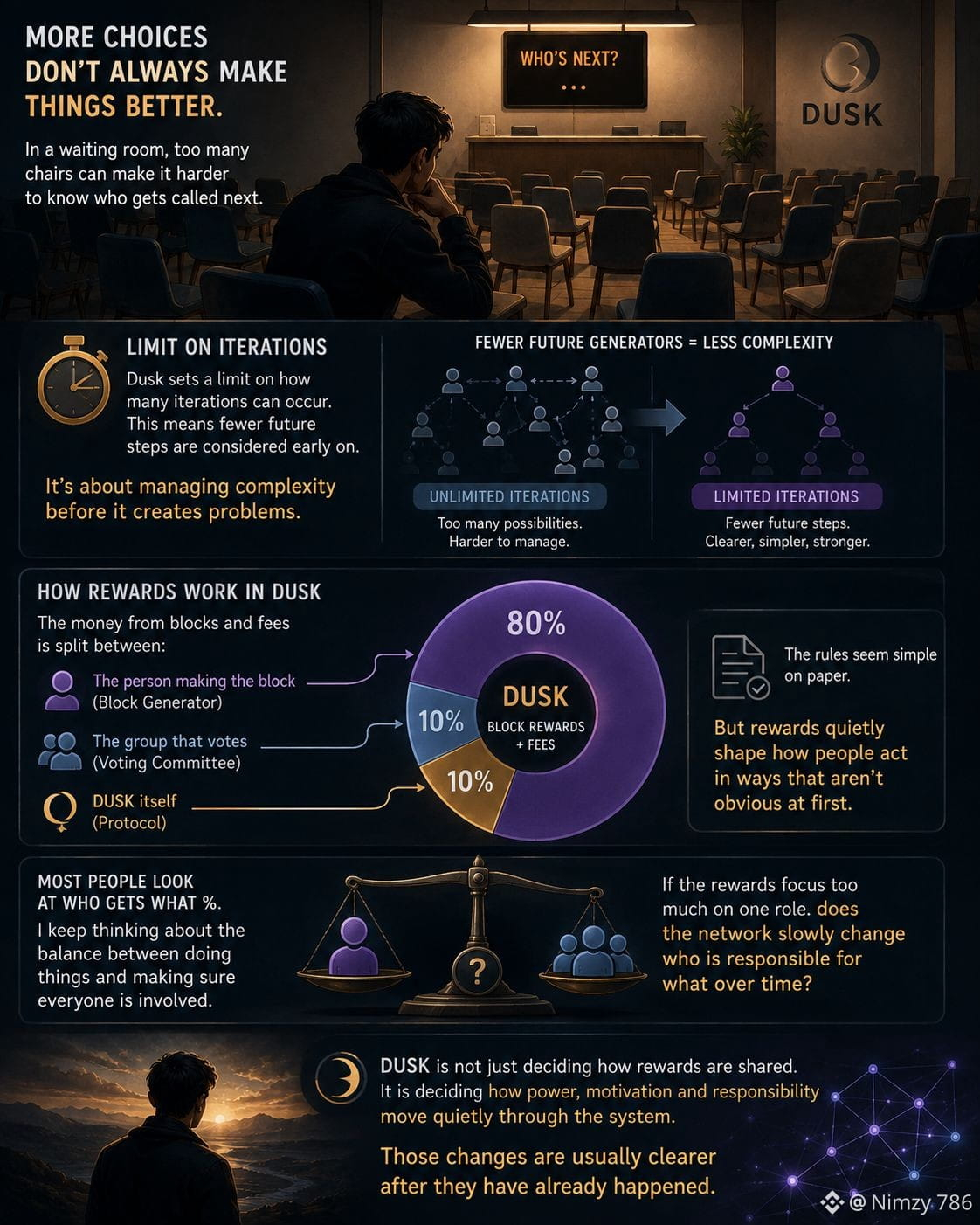
I was in a waiting room today. The odd thing is that putting chairs in does not always make things better. Sometimes having many choices just makes it harder to know who gets called next. @Dusk_Foundation
That idea stuck with me while I was reading about Dusk. Dusk sets a limit on how times something can happen which means fewer future steps are considered early on. At first it seems like a technical thing.. Deep down it's really about managing complexity before it starts causing problems in the system.
The way rewards work adds another layer. In Dusk the money from blocks and fees is split between the person making the block the group that votes and Dusk itself. The rules seem simple on paper. Rewards have a way of changing how people act in ways that are not obvious at first.
Most people will look at who gets what percentage. I keep thinking about the balance between doing things and making sure everyone is involved. If the rewards focus much on one role does the network slowly change who is responsible for what, over time?
Maybe that is the part. Dusk is not just deciding how rewards are shared. It is deciding how power, motivation and responsibility move quietly through the system.. Those changes are usually clearer after they have already happened.
#dusk @Dusk_Foundation $DUSK
{spot}(DUSKUSDT)
$SOXSB
{spot}(SOXSBUSDT)
I was in a waiting room today. The odd thing is that putting chairs in does not always make things better. Sometimes having many choices just makes it harder to know who gets called next. @Dusk
That idea stuck with me while I was reading about Dusk. Dusk sets a limit on how times something can happen which means fewer future steps are considered early on. At first it seems like a technical thing.. Deep down it's really about managing complexity before it starts causing problems in the system.
The way rewards work adds another layer. In Dusk the money from blocks and fees is split between the person making the block the group that votes and Dusk itself. The rules seem simple on paper. Rewards have a way of changing how people act in ways that are not obvious at first.
Most people will look at who gets what percentage. I keep thinking about the balance between doing things and making sure everyone is involved. If the rewards focus much on one role does the network slowly change who is responsible for what, over time?
Maybe that is the part. Dusk is not just deciding how rewards are shared. It is deciding how power, motivation and responsibility move quietly through the system.. Those changes are usually clearer after they have already happened.
#dusk @Dusk $DUSK
$SOXSB
That idea stuck with me while I was reading about Dusk. Dusk sets a limit on how times something can happen which means fewer future steps are considered early on. At first it seems like a technical thing.. Deep down it's really about managing complexity before it starts causing problems in the system.
The way rewards work adds another layer. In Dusk the money from blocks and fees is split between the person making the block the group that votes and Dusk itself. The rules seem simple on paper. Rewards have a way of changing how people act in ways that are not obvious at first.
Most people will look at who gets what percentage. I keep thinking about the balance between doing things and making sure everyone is involved. If the rewards focus much on one role does the network slowly change who is responsible for what, over time?
Maybe that is the part. Dusk is not just deciding how rewards are shared. It is deciding how power, motivation and responsibility move quietly through the system.. Those changes are usually clearer after they have already happened.
#dusk @Dusk $DUSK
$SOXSB
34
1
18
360
·
--
Проверено
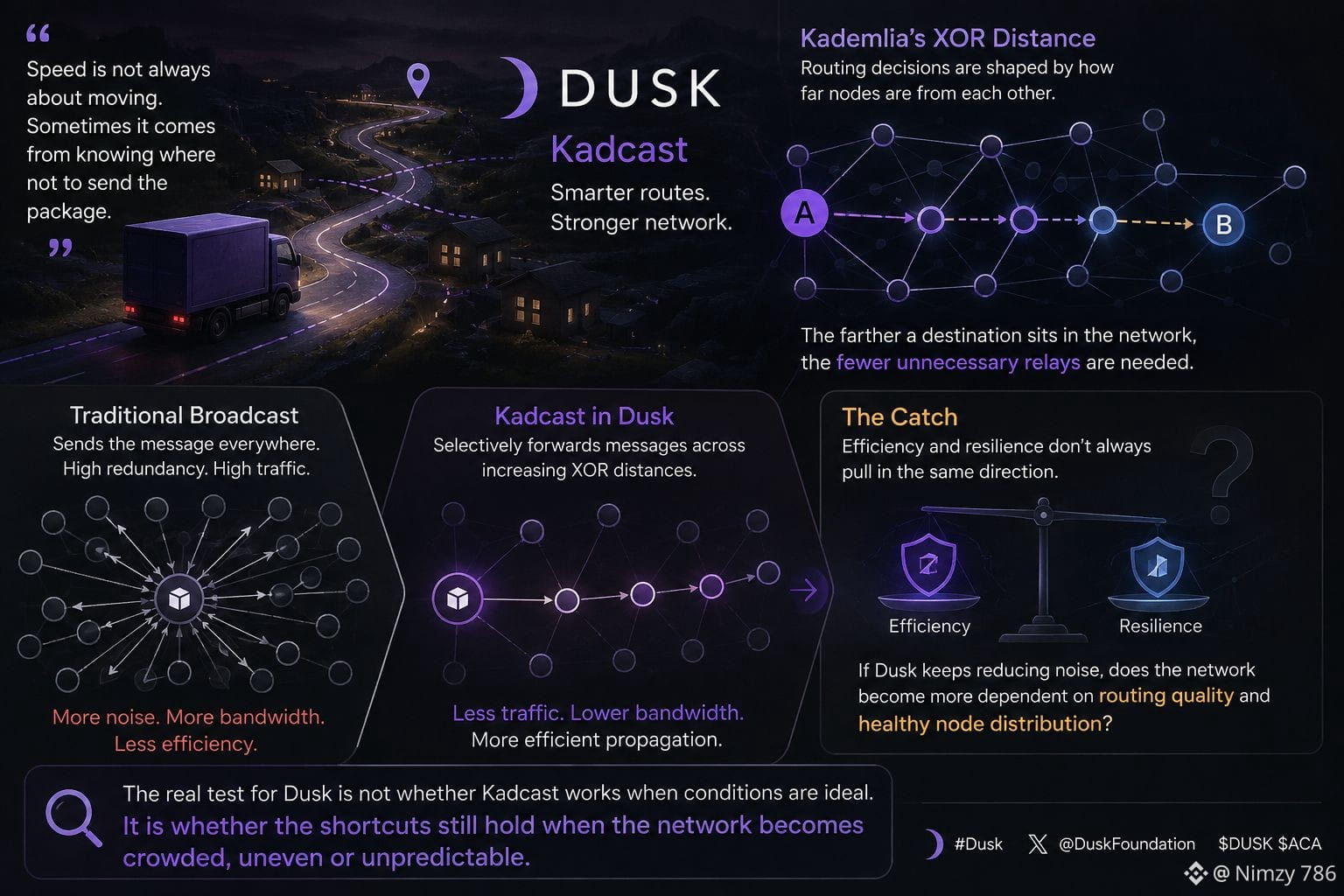
I was watching how a package moves through a delivery network. The strange thing is that speed is not always about moving. Sometimes it comes from knowing where not to send the package.
That thought came back while reading about Kadcast in Dusk. Most people see message propagation as a networking detail. I do not think that is correct. Dusk relies on Kademlias XOR distance, where routing decisions are shaped by how nodes are from each other in the Dusk network. The away a destination sits in the Dusk network the fewer unnecessary relays are needed in Dusk.
What interests me is the pressure this creates beneath the surface of Dusk. Traditional broadcast methods often solve reliability by sending the message everywhere in the network. Dusk takes a path. Kadcast in Dusk selectively forwards messages across increasing XOR distances in Dusk reducing traffic and bandwidth consumption in the Dusk network.@Dusk_Foundation
The catch is that efficiency and resilience do not always pull in the direction in Dusk. If Dusk keeps reducing noise in the Dusk network does the Dusk network become more dependent on routing quality and healthy node distribution in Dusk? That is the part I rarely see discussed about Dusk.
Maybe the real test for Dusk is not whether Kadcast works when conditions are ideal, in the Dusk network. It is whether the shortcuts still hold when the Dusk network becomes crowded, uneven or unpredictable. #Dusk @Dusk_Foundation $DUSK
{spot}(DUSKUSDT)
$ACE
$XOS.US
I was watching how a package moves through a delivery network. The strange thing is that speed is not always about moving. Sometimes it comes from knowing where not to send the package.
That thought came back while reading about Kadcast in Dusk. Most people see message propagation as a networking detail. I do not think that is correct. Dusk relies on Kademlias XOR distance, where routing decisions are shaped by how nodes are from each other in the Dusk network. The away a destination sits in the Dusk network the fewer unnecessary relays are needed in Dusk.
What interests me is the pressure this creates beneath the surface of Dusk. Traditional broadcast methods often solve reliability by sending the message everywhere in the network. Dusk takes a path. Kadcast in Dusk selectively forwards messages across increasing XOR distances in Dusk reducing traffic and bandwidth consumption in the Dusk network.@Dusk
The catch is that efficiency and resilience do not always pull in the direction in Dusk. If Dusk keeps reducing noise in the Dusk network does the Dusk network become more dependent on routing quality and healthy node distribution in Dusk? That is the part I rarely see discussed about Dusk.
Maybe the real test for Dusk is not whether Kadcast works when conditions are ideal, in the Dusk network. It is whether the shortcuts still hold when the Dusk network becomes crowded, uneven or unpredictable. #Dusk @Dusk $DUSK
$ACE
$XOS.US
That thought came back while reading about Kadcast in Dusk. Most people see message propagation as a networking detail. I do not think that is correct. Dusk relies on Kademlias XOR distance, where routing decisions are shaped by how nodes are from each other in the Dusk network. The away a destination sits in the Dusk network the fewer unnecessary relays are needed in Dusk.
What interests me is the pressure this creates beneath the surface of Dusk. Traditional broadcast methods often solve reliability by sending the message everywhere in the network. Dusk takes a path. Kadcast in Dusk selectively forwards messages across increasing XOR distances in Dusk reducing traffic and bandwidth consumption in the Dusk network.@Dusk
The catch is that efficiency and resilience do not always pull in the direction in Dusk. If Dusk keeps reducing noise in the Dusk network does the Dusk network become more dependent on routing quality and healthy node distribution in Dusk? That is the part I rarely see discussed about Dusk.
Maybe the real test for Dusk is not whether Kadcast works when conditions are ideal, in the Dusk network. It is whether the shortcuts still hold when the Dusk network becomes crowded, uneven or unpredictable. #Dusk @Dusk $DUSK
$ACE
$XOS.US
47
24
1.1k
·
--
Проверено
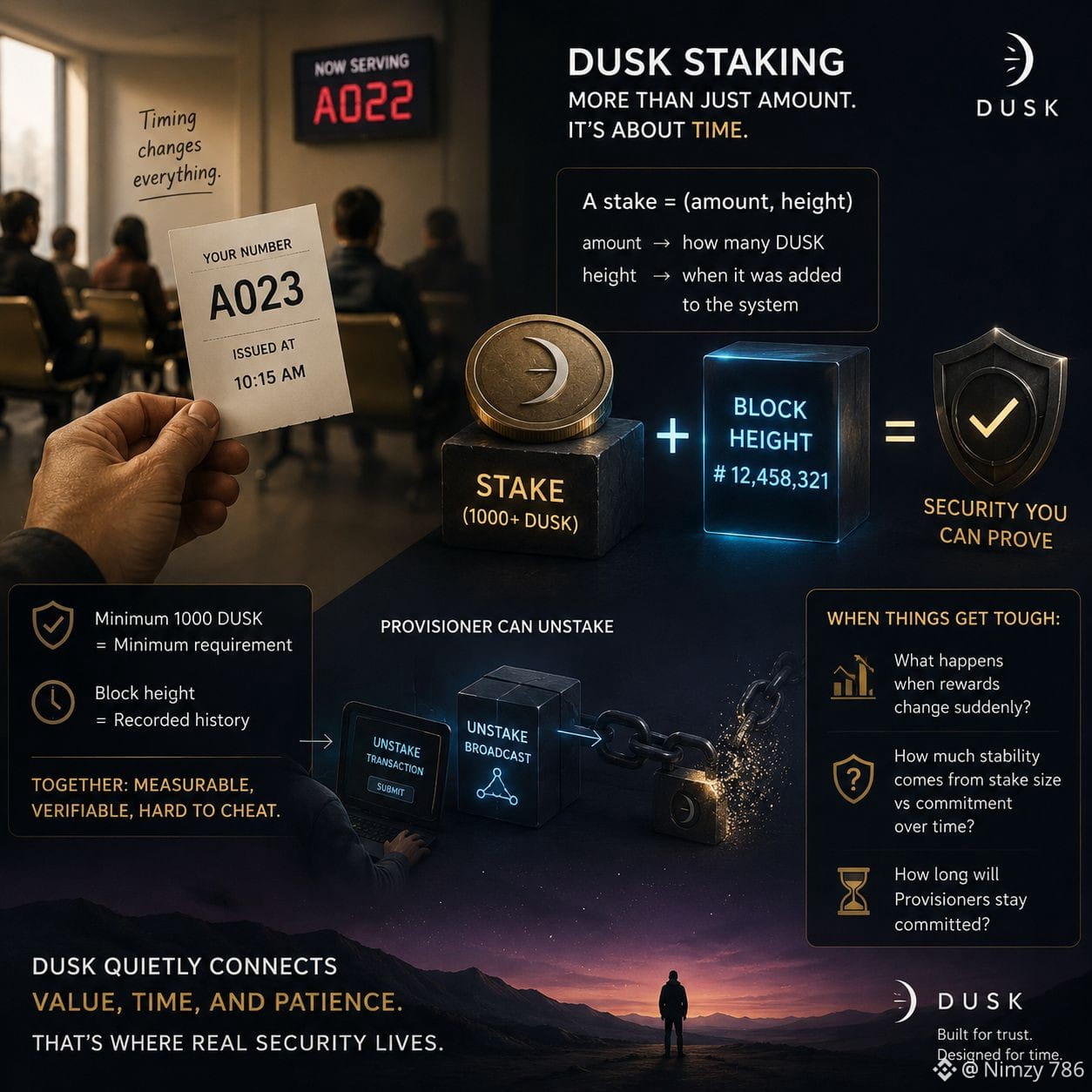
I was looking at a waiting room ticket the day. What most people notice is the number on it.. Hardly anyone thinks about when that number was given to them. The thing is, the timing of when you get a number can change who gets helped first.
This made me think about how Dusk works with stakes. A stake is not about how many DUSK you have. It is two things: how many DUSK you have and at what point you added them to the system. At first it seems like the amount of DUSK is the important thing. When you added them seems like a detail.. I do not think that is true.@Dusk_Foundation
The thing that is not immediately clear is that security is not about being committed. It is about being able to prove that you are committed. Dusk does not just care about how many DUSK're being used to stake. It cares about when those DUSK were added to the network. The rule that you need least 1000 DUSK creates a minimum requirement.. When those DUSK were added creates a history. Together these two things make staking more measurable and harder to cheat.
Most people will probably think about the rewards they can get or how they can participate or how they can get flexibility.. I keep wondering what happens when things get tough. If Provisioners can remove their stake by sending a transaction what happens when the rewards change suddenly? How much of the network staying stable depends on how big the stakesre how much depends on how long people are willing to keep their stakes?
Maybe the interesting thing, about Dusk is not the stakes themselves. Maybe it is the way the protocol quietly connects value, time and patience. #Dusk @Dusk_Foundation $DUSK
{spot}(DUSKUSDT)
$SNDK
{future}(SNDKUSDT)
I was looking at a waiting room ticket the day. What most people notice is the number on it.. Hardly anyone thinks about when that number was given to them. The thing is, the timing of when you get a number can change who gets helped first.
This made me think about how Dusk works with stakes. A stake is not about how many DUSK you have. It is two things: how many DUSK you have and at what point you added them to the system. At first it seems like the amount of DUSK is the important thing. When you added them seems like a detail.. I do not think that is true.@Dusk
The thing that is not immediately clear is that security is not about being committed. It is about being able to prove that you are committed. Dusk does not just care about how many DUSK're being used to stake. It cares about when those DUSK were added to the network. The rule that you need least 1000 DUSK creates a minimum requirement.. When those DUSK were added creates a history. Together these two things make staking more measurable and harder to cheat.
Most people will probably think about the rewards they can get or how they can participate or how they can get flexibility.. I keep wondering what happens when things get tough. If Provisioners can remove their stake by sending a transaction what happens when the rewards change suddenly? How much of the network staying stable depends on how big the stakesre how much depends on how long people are willing to keep their stakes?
Maybe the interesting thing, about Dusk is not the stakes themselves. Maybe it is the way the protocol quietly connects value, time and patience. #Dusk @Dusk $DUSK
$SNDK
This made me think about how Dusk works with stakes. A stake is not about how many DUSK you have. It is two things: how many DUSK you have and at what point you added them to the system. At first it seems like the amount of DUSK is the important thing. When you added them seems like a detail.. I do not think that is true.@Dusk
The thing that is not immediately clear is that security is not about being committed. It is about being able to prove that you are committed. Dusk does not just care about how many DUSK're being used to stake. It cares about when those DUSK were added to the network. The rule that you need least 1000 DUSK creates a minimum requirement.. When those DUSK were added creates a history. Together these two things make staking more measurable and harder to cheat.
Most people will probably think about the rewards they can get or how they can participate or how they can get flexibility.. I keep wondering what happens when things get tough. If Provisioners can remove their stake by sending a transaction what happens when the rewards change suddenly? How much of the network staying stable depends on how big the stakesre how much depends on how long people are willing to keep their stakes?
Maybe the interesting thing, about Dusk is not the stakes themselves. Maybe it is the way the protocol quietly connects value, time and patience. #Dusk @Dusk $DUSK
$SNDK
64
23
724
·
--
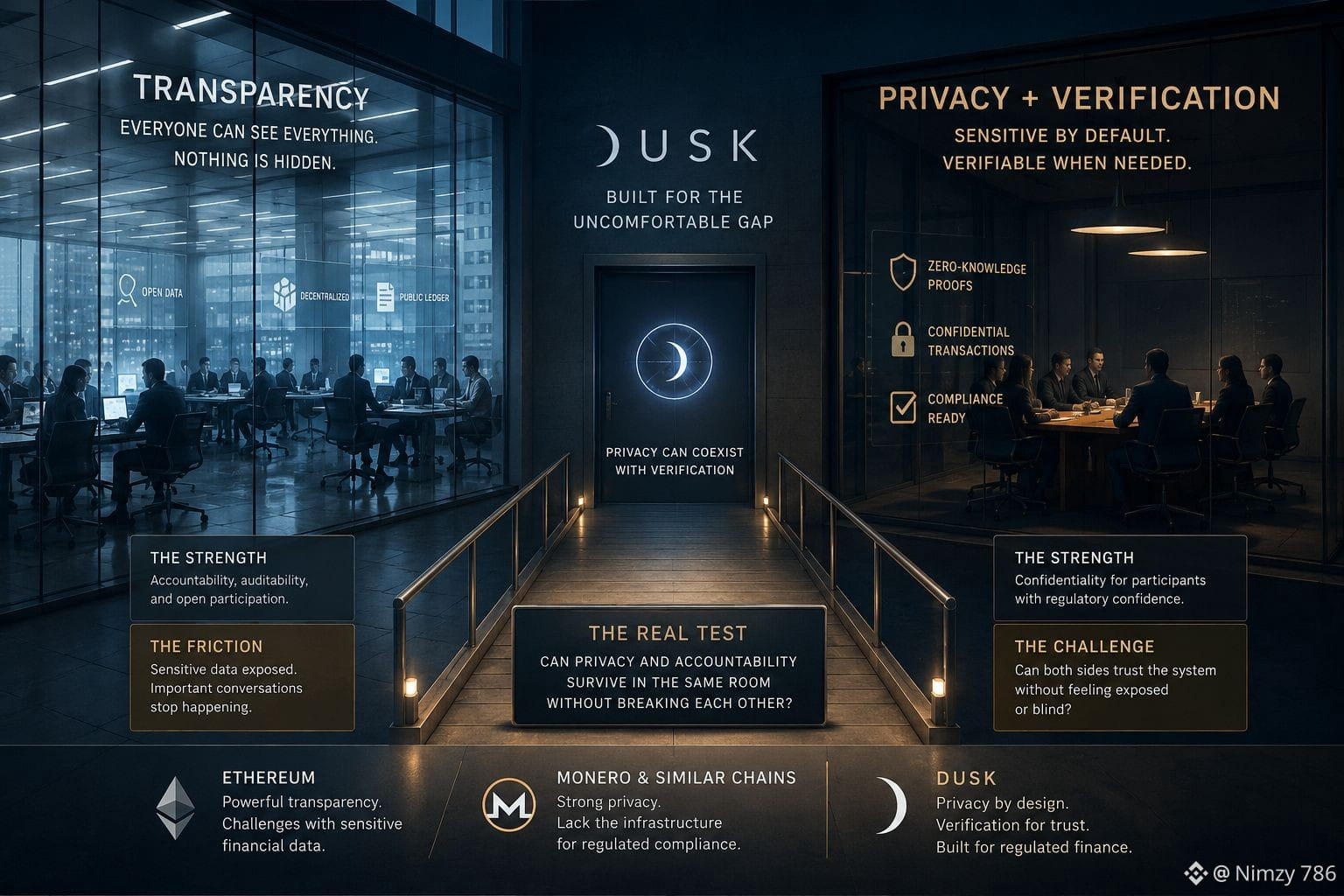
I kept thinking about a building where every office has glass walls. At first it feels efficient. Everyone can see everything. Nothing is hidden. After a while you start wondering how many important conversations simply stop happening because they are always being watched.@Dusk_Foundation
That tension keeps coming to me when I compare networks built for openness with systems trying to support regulated financial activity. Ethereum proved how powerful transparency can be, Transparency alone creates friction when sensitive financial data, compliance requirements and institutional accountability start colliding with each other. Privacy-focused chains solved a problem but often by stepping away from the visibility regulators and auditors depend on.
What makes Dusk interesting to me is that it seems to sit inside that uncomfortable gap. Dusk is not asking how transactions can stay private. It is also asking how privacy can coexist with verification. That sounds simple until you realize those goals often pull in directions.
Most people notice the privacy layer first. I think the harder challenge is trust. Can Dusk provide confidentiality for participants while still giving institutions confidence that rules are being followed? Can both sides accept the system without feeling exposed or blind?
Maybe that is the test, for Dusk. Not whether privacy works, Whether privacy and accountability can survive in the same room without eventually breaking each other.
@Dusk_Foundation $DUSK #dusk
I kept thinking about a building where every office has glass walls. At first it feels efficient. Everyone can see everything. Nothing is hidden. After a while you start wondering how many important conversations simply stop happening because they are always being watched.@Dusk
That tension keeps coming to me when I compare networks built for openness with systems trying to support regulated financial activity. Ethereum proved how powerful transparency can be, Transparency alone creates friction when sensitive financial data, compliance requirements and institutional accountability start colliding with each other. Privacy-focused chains solved a problem but often by stepping away from the visibility regulators and auditors depend on.
What makes Dusk interesting to me is that it seems to sit inside that uncomfortable gap. Dusk is not asking how transactions can stay private. It is also asking how privacy can coexist with verification. That sounds simple until you realize those goals often pull in directions.
Most people notice the privacy layer first. I think the harder challenge is trust. Can Dusk provide confidentiality for participants while still giving institutions confidence that rules are being followed? Can both sides accept the system without feeling exposed or blind?
Maybe that is the test, for Dusk. Not whether privacy works, Whether privacy and accountability can survive in the same room without eventually breaking each other.
@Dusk $DUSK #dusk
That tension keeps coming to me when I compare networks built for openness with systems trying to support regulated financial activity. Ethereum proved how powerful transparency can be, Transparency alone creates friction when sensitive financial data, compliance requirements and institutional accountability start colliding with each other. Privacy-focused chains solved a problem but often by stepping away from the visibility regulators and auditors depend on.
What makes Dusk interesting to me is that it seems to sit inside that uncomfortable gap. Dusk is not asking how transactions can stay private. It is also asking how privacy can coexist with verification. That sounds simple until you realize those goals often pull in directions.
Most people notice the privacy layer first. I think the harder challenge is trust. Can Dusk provide confidentiality for participants while still giving institutions confidence that rules are being followed? Can both sides accept the system without feeling exposed or blind?
Maybe that is the test, for Dusk. Not whether privacy works, Whether privacy and accountability can survive in the same room without eventually breaking each other.
@Dusk $DUSK #dusk
93
43
535
Войдите, чтобы посмотреть больше материала
Присоединяйтесь к пользователям криптовалют по всему миру на Binance Square
⚡️ Получайте новейшую и полезную информацию о криптоактивах.
💬 Нам доверяет крупнейшая в мире криптобиржа.
👍 Получите достоверные аналитические данные от верифицированных создателей контента.
Эл. почта/номер телефона
В тренде
BinanceKZ
Просмотров: 16,835
69 обсуждают
Как я потерял 180 000 тенге на «менеджере Binance» из WhatsApp — и почему всё равно остался в крипте
phpdead
·Лайков: 6
·Просмотров: 2.4k
BitcoinClears$85200
Просмотров: 82
46 обсуждают
AltcoinSeasonIndexHoldsAbove60For5Days
Просмотров: 2,687
303 обсуждают