

dhrugtest
2.2k Публикации

dhrugtest
Отправить жалобу
Заблокировать пользователя
Cryptocurrency and blockchain technology advocate 💸 Making profits💹changing lives📈 X.com/@dhrugtest
Открытая сделка

Владелец BNB
Случайный трейдер
8 г
11 подписок(и/а)
1.8K+ подписчиков(а)
7.3K+ понравилось
Посты
Портфель
Все
Цитирования
PINNED
·
--
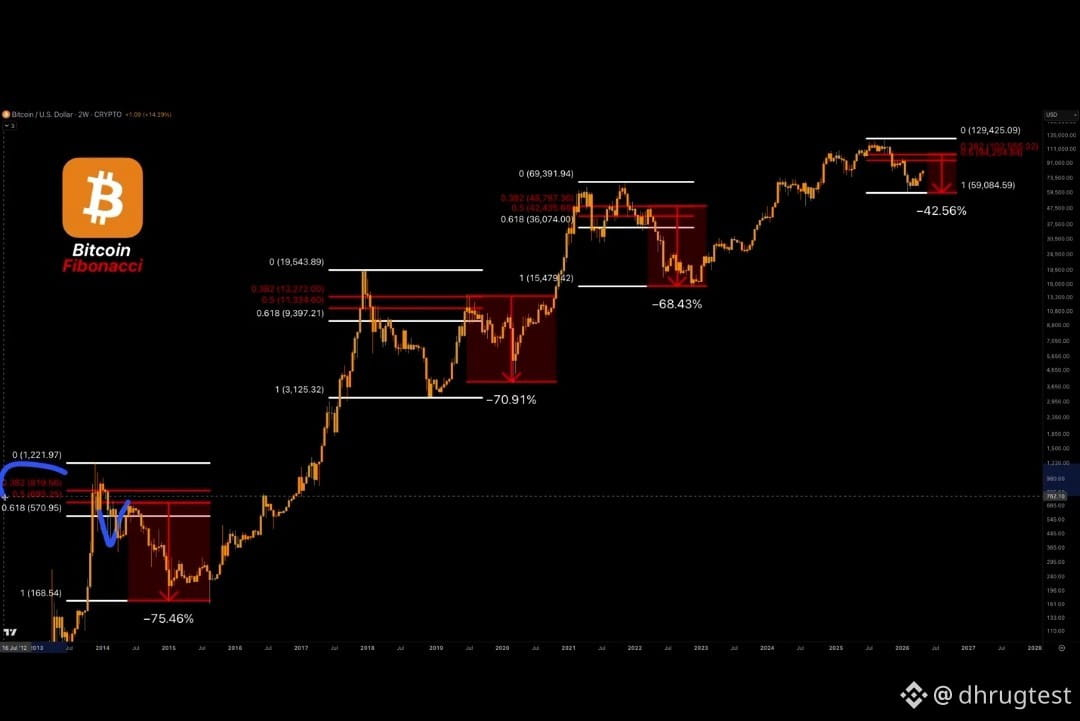
THE SIGNAL THAT PREDICTED EVERY MAJOR $BTC CRASH JUST TRIGGERED AGAIN.
And the math is brutal.
2014: -51% from this level.
2018: -46% from this level.
2022: -55% from this level.
2026 fib level: $74K. 30% dump means $47K.
$74K is the last line of defense.
Lose it → three cycles say $45K is next.
Hold it → this time is different.
Three cycles say don't ignore this.
Are you prepared for both outcomes?
THE SIGNAL THAT PREDICTED EVERY MAJOR $BTC CRASH JUST TRIGGERED AGAIN.
And the math is brutal.
2014: -51% from this level.
2018: -46% from this level.
2022: -55% from this level.
2026 fib level: $74K. 30% dump means $47K.
$74K is the last line of defense.
Lose it → three cycles say $45K is next.
Hold it → this time is different.
Three cycles say don't ignore this.
Are you prepared for both outcomes?
And the math is brutal.
2014: -51% from this level.
2018: -46% from this level.
2022: -55% from this level.
2026 fib level: $74K. 30% dump means $47K.
$74K is the last line of defense.
Lose it → three cycles say $45K is next.
Hold it → this time is different.
Three cycles say don't ignore this.
Are you prepared for both outcomes?
16
3
87
330.8k
PINNED
·
--

Статья
Ethereum $1,900 Retest Could Decide Next Major Move – Is ETH Preparing For New Lows?As most of the crypto market retests crucial levels, Ethereum (ETH) is attempting to reclaim a major horizontal area. Some market observers have warned that cryptocurrency could fall to new lows if the price doesn’t bounce soon.
Ethereum Weekly Close On Sight
On Thursday, Ethereum dropped 1.4% to retest a key area for the second consecutive day. After hitting a 10-month low of $1,747, the King of Altcoins bounced more than 15% to trade between $2,000 and $2,150 over the past few days.
However, the second-largest cryptocurrency by market cap failed to hold the crucial $2,000 horizontal barrier on Wednesday and tested the $1,900 mark for the first time in a week.
As most of the crypto market retests crucial levels, Ethereum (ETH) is attempting to reclaim a major horizontal area. Some market observers have warned that cryptocurrency could fall to new lows if the price doesn’t bounce soon.
After attempting to reclaim the key psychological level in the early hours of Thursday, Ethereum was rejected toward the recent lows, briefly falling below it. Analyst Ted Pillows highlighted the importance of ETH’s current zone, as it has previously triggered major moves.
To him, if the altcoin fails to reclaim the $2,000 area in the coming days, a full retrace toward the recent lows should be expected soon. Similarly, market observer Crypto Busy noted that the cryptocurrency is currently trading above a major long-term support.
According to the post, the recent correction has sent Ethereum toward a three-year rising support line, which “will decide the next big move.” The analyst warned that “If the trendline breaks with strong weekly closes below $1,900, the structure weakens.”
Therefore, ETH must hold its current levels in the coming days to avoid a weekly close below this level. Otherwise, its price could drop “into the next liquidity pockets around $1,600 and possibly $1,300, where the next historical support zones exist.”
Is ETH’s ‘Real’ Bull Market Two Years Away?
A trader shared a potential macro-outlook for Ethereum that suggests the cryptocurrency could still see another major shakeout.
My thesis is that the major bullish move that began around 2019–2020 has transitioned into a large and prolonged macro correction, and that Ethereum has been consolidating within this broader corrective structure ever since.
He outlined four phases for the macro structure: the pump, the correction, the shakeout, and the moon. The initial phase, which occurred between 2019 and 2021, marked “the true impulsive bullish move,” with strong trend expansion and increasing momentum.
According to the market observer, the strong rally that followed the 2022 bear market appears to be a “counter-trend move within a broader corrective range” rather than a renewed bull market and the start of a new long-term cycle.
As he explained, ETH’s range-bound behavior signals distribution and consolidation instead of continuation. “From this perspective, the apparent bull market that developed within the correction can be interpreted as a dead cat bounce, a technically strong bounce occurring inside a larger corrective structure,” he affirmed.
Therefore, the current macro structure would suggest that a final shakeout phase could “still be required to fully reset sentiment and liquidity before Ethereum can transition into a new impulsive bullish cycle.
Based on this, the trader anticipated a final liquidity-driven move to the downside in the coming months, followed by “the moon” phase, potentially next year, when “the structure suggests the conditions for a true long-term bullish continuation, with price discovery and expansion well beyond previous highs.”
#CPIWatch
Ethereum $1,900 Retest Could Decide Next Major Move – Is ETH Preparing For New Lows?
As most of the crypto market retests crucial levels, Ethereum (ETH) is attempting to reclaim a major horizontal area. Some market observers have warned that cryptocurrency could fall to new lows if the price doesn’t bounce soon.
Ethereum Weekly Close On Sight
On Thursday, Ethereum dropped 1.4% to retest a key area for the second consecutive day. After hitting a 10-month low of $1,747, the King of Altcoins bounced more than 15% to trade between $2,000 and $2,150 over the past few days.
However, the second-largest cryptocurrency by market cap failed to hold the crucial $2,000 horizontal barrier on Wednesday and tested the $1,900 mark for the first time in a week.
As most of the crypto market retests crucial levels, Ethereum (ETH) is attempting to reclaim a major horizontal area. Some market observers have warned that cryptocurrency could fall to new lows if the price doesn’t bounce soon.
After attempting to reclaim the key psychological level in the early hours of Thursday, Ethereum was rejected toward the recent lows, briefly falling below it. Analyst Ted Pillows highlighted the importance of ETH’s current zone, as it has previously triggered major moves.
To him, if the altcoin fails to reclaim the $2,000 area in the coming days, a full retrace toward the recent lows should be expected soon. Similarly, market observer Crypto Busy noted that the cryptocurrency is currently trading above a major long-term support.
According to the post, the recent correction has sent Ethereum toward a three-year rising support line, which “will decide the next big move.” The analyst warned that “If the trendline breaks with strong weekly closes below $1,900, the structure weakens.”
Therefore, ETH must hold its current levels in the coming days to avoid a weekly close below this level. Otherwise, its price could drop “into the next liquidity pockets around $1,600 and possibly $1,300, where the next historical support zones exist.”
Is ETH’s ‘Real’ Bull Market Two Years Away?
A trader shared a potential macro-outlook for Ethereum that suggests the cryptocurrency could still see another major shakeout.
My thesis is that the major bullish move that began around 2019–2020 has transitioned into a large and prolonged macro correction, and that Ethereum has been consolidating within this broader corrective structure ever since.
He outlined four phases for the macro structure: the pump, the correction, the shakeout, and the moon. The initial phase, which occurred between 2019 and 2021, marked “the true impulsive bullish move,” with strong trend expansion and increasing momentum.
According to the market observer, the strong rally that followed the 2022 bear market appears to be a “counter-trend move within a broader corrective range” rather than a renewed bull market and the start of a new long-term cycle.
As he explained, ETH’s range-bound behavior signals distribution and consolidation instead of continuation. “From this perspective, the apparent bull market that developed within the correction can be interpreted as a dead cat bounce, a technically strong bounce occurring inside a larger corrective structure,” he affirmed.
Therefore, the current macro structure would suggest that a final shakeout phase could “still be required to fully reset sentiment and liquidity before Ethereum can transition into a new impulsive bullish cycle.
Based on this, the trader anticipated a final liquidity-driven move to the downside in the coming months, followed by “the moon” phase, potentially next year, when “the structure suggests the conditions for a true long-term bullish continuation, with price discovery and expansion well beyond previous highs.”
#CPIWatch
Ethereum Weekly Close On Sight
On Thursday, Ethereum dropped 1.4% to retest a key area for the second consecutive day. After hitting a 10-month low of $1,747, the King of Altcoins bounced more than 15% to trade between $2,000 and $2,150 over the past few days.
However, the second-largest cryptocurrency by market cap failed to hold the crucial $2,000 horizontal barrier on Wednesday and tested the $1,900 mark for the first time in a week.
As most of the crypto market retests crucial levels, Ethereum (ETH) is attempting to reclaim a major horizontal area. Some market observers have warned that cryptocurrency could fall to new lows if the price doesn’t bounce soon.
After attempting to reclaim the key psychological level in the early hours of Thursday, Ethereum was rejected toward the recent lows, briefly falling below it. Analyst Ted Pillows highlighted the importance of ETH’s current zone, as it has previously triggered major moves.
To him, if the altcoin fails to reclaim the $2,000 area in the coming days, a full retrace toward the recent lows should be expected soon. Similarly, market observer Crypto Busy noted that the cryptocurrency is currently trading above a major long-term support.
According to the post, the recent correction has sent Ethereum toward a three-year rising support line, which “will decide the next big move.” The analyst warned that “If the trendline breaks with strong weekly closes below $1,900, the structure weakens.”
Therefore, ETH must hold its current levels in the coming days to avoid a weekly close below this level. Otherwise, its price could drop “into the next liquidity pockets around $1,600 and possibly $1,300, where the next historical support zones exist.”
Is ETH’s ‘Real’ Bull Market Two Years Away?
A trader shared a potential macro-outlook for Ethereum that suggests the cryptocurrency could still see another major shakeout.
My thesis is that the major bullish move that began around 2019–2020 has transitioned into a large and prolonged macro correction, and that Ethereum has been consolidating within this broader corrective structure ever since.
He outlined four phases for the macro structure: the pump, the correction, the shakeout, and the moon. The initial phase, which occurred between 2019 and 2021, marked “the true impulsive bullish move,” with strong trend expansion and increasing momentum.
According to the market observer, the strong rally that followed the 2022 bear market appears to be a “counter-trend move within a broader corrective range” rather than a renewed bull market and the start of a new long-term cycle.
As he explained, ETH’s range-bound behavior signals distribution and consolidation instead of continuation. “From this perspective, the apparent bull market that developed within the correction can be interpreted as a dead cat bounce, a technically strong bounce occurring inside a larger corrective structure,” he affirmed.
Therefore, the current macro structure would suggest that a final shakeout phase could “still be required to fully reset sentiment and liquidity before Ethereum can transition into a new impulsive bullish cycle.
Based on this, the trader anticipated a final liquidity-driven move to the downside in the coming months, followed by “the moon” phase, potentially next year, when “the structure suggests the conditions for a true long-term bullish continuation, with price discovery and expansion well beyond previous highs.”
#CPIWatch
13
1
50
51.9k
·
--
Not every interesting crypto $BTC project needs to be about price predictions, token pumps, or the next big narrative.
Sometimes, I prefer looking at what a project is actually trying to solve.
With #liberdus the interesting part is the combination of private communication, payments, and decentralization.
We use messaging apps every day, but rarely stop to think about how much personal information we give away just to communicate. The same goes for the platforms we depend on to connect with other people.
Liberdus is exploring how those experiences could work differently, with greater user control and less dependence on centralized gatekeepers.
I'm interested in seeing how that vision develops as the ecosystem grows.
For me, the strongest Web3 ideas solve real problems before chasing attention.
$DNA #ThailandLaunchesWORPTStablecoinToQRPaymentApp
Not every interesting crypto $BTC project needs to be about price predictions, token pumps, or the next big narrative.
Sometimes, I prefer looking at what a project is actually trying to solve.
With #liberdus the interesting part is the combination of private communication, payments, and decentralization.
We use messaging apps every day, but rarely stop to think about how much personal information we give away just to communicate. The same goes for the platforms we depend on to connect with other people.
Liberdus is exploring how those experiences could work differently, with greater user control and less dependence on centralized gatekeepers.
I'm interested in seeing how that vision develops as the ecosystem grows.
For me, the strongest Web3 ideas solve real problems before chasing attention.
$DNA #ThailandLaunchesWORPTStablecoinToQRPaymentApp
Sometimes, I prefer looking at what a project is actually trying to solve.
With #liberdus the interesting part is the combination of private communication, payments, and decentralization.
We use messaging apps every day, but rarely stop to think about how much personal information we give away just to communicate. The same goes for the platforms we depend on to connect with other people.
Liberdus is exploring how those experiences could work differently, with greater user control and less dependence on centralized gatekeepers.
I'm interested in seeing how that vision develops as the ecosystem grows.
For me, the strongest Web3 ideas solve real problems before chasing attention.
$DNA #ThailandLaunchesWORPTStablecoinToQRPaymentApp

478
·
--
Bitcoin ETFs just recorded $635.6M in net outflows after three consecutive days of inflows totalling $1.07B.
BlackRock's IBIT lost $254.1M, while Fidelity's FBTC saw $217.5M leave the fund.
Yesterday's outflows erased roughly 59% of the capital that flowed in over the previous three sessions.
My concern is the timing. Bitcoin is struggling to reclaim $82K, and this reversal suggests institutional demand isn't strong enough to ignore the current selling pressure.
{spot}(BTCUSDT)
Bitcoin ETFs just recorded $635.6M in net outflows after three consecutive days of inflows totalling $1.07B.
BlackRock's IBIT lost $254.1M, while Fidelity's FBTC saw $217.5M leave the fund.
Yesterday's outflows erased roughly 59% of the capital that flowed in over the previous three sessions.
My concern is the timing. Bitcoin is struggling to reclaim $82K, and this reversal suggests institutional demand isn't strong enough to ignore the current selling pressure.
BlackRock's IBIT lost $254.1M, while Fidelity's FBTC saw $217.5M leave the fund.
Yesterday's outflows erased roughly 59% of the capital that flowed in over the previous three sessions.
My concern is the timing. Bitcoin is struggling to reclaim $82K, and this reversal suggests institutional demand isn't strong enough to ignore the current selling pressure.
328
·
--

Статья
Crypto Is About More Than Money: The Importance of Digital FreedomWhen people talk about crypto, the conversation usually revolves around $BTC price, market movements, market caps, and which project could be the next big opportunity.
Those things matter, especially in a market where everyone is looking for growth. But sometimes, we focus so much on financial freedom that we forget about another important part of the picture: digital freedom.
Think about how much of our daily lives now happens online. We send messages, share personal information, make payments, and build relationships through digital platforms. Yet, we rarely stop to ask who controls these interactions or how much privacy we sacrifice to use these services.
What happens when a platform restricts your account? What happens when your access depends entirely on a centralized service? And how much control do you really have over your digital identity?
These are questions worth asking.
Why Digital Freedom Matters
Decentralization has always been about reducing dependence on a single point of control. Bitcoin introduced a way to transfer value without relying on traditional financial intermediaries.
But the same principle can extend beyond money.
Communication, privacy, and access to digital services are equally important parts of our online lives. A decentralized financial system is a meaningful step forward, but there is still room to explore how decentralized technology can give people more control over how they communicate and interact.
This is where projects like #Liberdus become interesting.
Where Liberdus Fits In
liberdus is working toward a decentralized ecosystem that combines messaging and payments while emphasizing privacy, user control, and freedom from unnecessary intermediaries.
The idea is straightforward: people should have more choices about how they communicate and exchange value online, without depending entirely on centralized platforms.
Bringing messaging and payments together also creates an interesting possibility. Instead of treating communication and financial transactions as completely separate experiences, users can explore a more connected digital environment.
Of course, the real value of any project will depend on its technology, security, usability, and ability to attract an active community. The vision matters, but delivering on that vision matters even more.
The Bigger Picture
Crypto's future shouldn't be measured only by how high Bitcoin can climb or how quickly a new token can gain attention.
It should also be measured by the problems decentralized technology can solve in people's everyday lives.
Financial independence is important, but so are privacy, freedom of expression, and having greater control over our digital interactions.
That's why the idea behind Liberdus deserves attention. It represents a broader conversation about what decentralization could mean beyond financial markets.
Perhaps the next chapter of crypto won't be defined by money alone, but by how much control people regain over their digital lives.
And that is a conversation worth having.
#EarningsSeason #BinancePick $GTC
Crypto Is About More Than Money: The Importance of Digital Freedom
When people talk about crypto, the conversation usually revolves around $BTC price, market movements, market caps, and which project could be the next big opportunity.
Those things matter, especially in a market where everyone is looking for growth. But sometimes, we focus so much on financial freedom that we forget about another important part of the picture: digital freedom.
Think about how much of our daily lives now happens online. We send messages, share personal information, make payments, and build relationships through digital platforms. Yet, we rarely stop to ask who controls these interactions or how much privacy we sacrifice to use these services.
What happens when a platform restricts your account? What happens when your access depends entirely on a centralized service? And how much control do you really have over your digital identity?
These are questions worth asking.
Why Digital Freedom Matters
Decentralization has always been about reducing dependence on a single point of control. Bitcoin introduced a way to transfer value without relying on traditional financial intermediaries.
But the same principle can extend beyond money.
Communication, privacy, and access to digital services are equally important parts of our online lives. A decentralized financial system is a meaningful step forward, but there is still room to explore how decentralized technology can give people more control over how they communicate and interact.
This is where projects like #Liberdus become interesting.
Where Liberdus Fits In
liberdus is working toward a decentralized ecosystem that combines messaging and payments while emphasizing privacy, user control, and freedom from unnecessary intermediaries.
The idea is straightforward: people should have more choices about how they communicate and exchange value online, without depending entirely on centralized platforms.
Bringing messaging and payments together also creates an interesting possibility. Instead of treating communication and financial transactions as completely separate experiences, users can explore a more connected digital environment.
Of course, the real value of any project will depend on its technology, security, usability, and ability to attract an active community. The vision matters, but delivering on that vision matters even more.
The Bigger Picture
Crypto's future shouldn't be measured only by how high Bitcoin can climb or how quickly a new token can gain attention.
It should also be measured by the problems decentralized technology can solve in people's everyday lives.
Financial independence is important, but so are privacy, freedom of expression, and having greater control over our digital interactions.
That's why the idea behind Liberdus deserves attention. It represents a broader conversation about what decentralization could mean beyond financial markets.
Perhaps the next chapter of crypto won't be defined by money alone, but by how much control people regain over their digital lives.
And that is a conversation worth having.
#EarningsSeason #BinancePick $GTC
Those things matter, especially in a market where everyone is looking for growth. But sometimes, we focus so much on financial freedom that we forget about another important part of the picture: digital freedom.
Think about how much of our daily lives now happens online. We send messages, share personal information, make payments, and build relationships through digital platforms. Yet, we rarely stop to ask who controls these interactions or how much privacy we sacrifice to use these services.
What happens when a platform restricts your account? What happens when your access depends entirely on a centralized service? And how much control do you really have over your digital identity?
These are questions worth asking.
Why Digital Freedom Matters
Decentralization has always been about reducing dependence on a single point of control. Bitcoin introduced a way to transfer value without relying on traditional financial intermediaries.
But the same principle can extend beyond money.
Communication, privacy, and access to digital services are equally important parts of our online lives. A decentralized financial system is a meaningful step forward, but there is still room to explore how decentralized technology can give people more control over how they communicate and interact.
This is where projects like #Liberdus become interesting.
Where Liberdus Fits In
liberdus is working toward a decentralized ecosystem that combines messaging and payments while emphasizing privacy, user control, and freedom from unnecessary intermediaries.
The idea is straightforward: people should have more choices about how they communicate and exchange value online, without depending entirely on centralized platforms.
Bringing messaging and payments together also creates an interesting possibility. Instead of treating communication and financial transactions as completely separate experiences, users can explore a more connected digital environment.
Of course, the real value of any project will depend on its technology, security, usability, and ability to attract an active community. The vision matters, but delivering on that vision matters even more.
The Bigger Picture
Crypto's future shouldn't be measured only by how high Bitcoin can climb or how quickly a new token can gain attention.
It should also be measured by the problems decentralized technology can solve in people's everyday lives.
Financial independence is important, but so are privacy, freedom of expression, and having greater control over our digital interactions.
That's why the idea behind Liberdus deserves attention. It represents a broader conversation about what decentralization could mean beyond financial markets.
Perhaps the next chapter of crypto won't be defined by money alone, but by how much control people regain over their digital lives.
And that is a conversation worth having.
#EarningsSeason #BinancePick $GTC
184
·
--
Green Monday 🟢
$BTC and $ETH see small gains as "Black Monday" fears ease on the 39th anniversary of the 1987 crash.
Will the gains hold through the US open?
Green Monday 🟢
$BTC and $ETH see small gains as "Black Monday" fears ease on the 39th anniversary of the 1987 crash.
Will the gains hold through the US open?
$BTC and $ETH see small gains as "Black Monday" fears ease on the 39th anniversary of the 1987 crash.
Will the gains hold through the US open?
46
·
--
Хранение $BTC 0.7 USDT
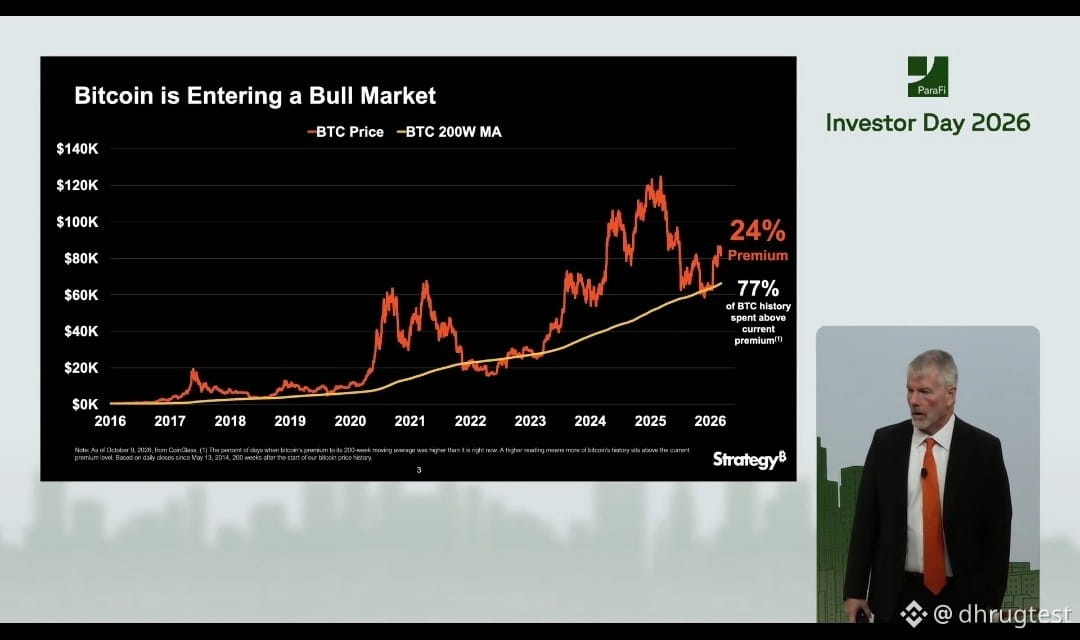
JUST IN: BILLIONAIRE MICHAEL SAYLOR JUST SAID $BTC IS "ENTERING A NEW BULL MARKET" DRIVEN BY MASSIVE GLOBAL BANK ADOPTION
"BTC HAS ACHIEVED GLOBAL CONSENSUS AS DIGITAL CAPITAL"
"IT IS 90% OF THE ECONOMIC VALUE IN CRYPTO"
"BANKS WILL CREATE BILLIONS OF DOLLARS OF CREDIT ON BTC"
"THIS IS ENORMOUSLY BULLISH AND WILL DRIVE THE PRICE FORWARD"
IT'S COMING
JUST IN: BILLIONAIRE MICHAEL SAYLOR JUST SAID $BTC IS "ENTERING A NEW BULL MARKET" DRIVEN BY MASSIVE GLOBAL BANK ADOPTION
"BTC HAS ACHIEVED GLOBAL CONSENSUS AS DIGITAL CAPITAL"
"IT IS 90% OF THE ECONOMIC VALUE IN CRYPTO"
"BANKS WILL CREATE BILLIONS OF DOLLARS OF CREDIT ON BTC"
"THIS IS ENORMOUSLY BULLISH AND WILL DRIVE THE PRICE FORWARD"
IT'S COMING
"BTC HAS ACHIEVED GLOBAL CONSENSUS AS DIGITAL CAPITAL"
"IT IS 90% OF THE ECONOMIC VALUE IN CRYPTO"
"BANKS WILL CREATE BILLIONS OF DOLLARS OF CREDIT ON BTC"
"THIS IS ENORMOUSLY BULLISH AND WILL DRIVE THE PRICE FORWARD"
IT'S COMING
66
·
--
Хранение $BTC 0.7 USDT
Over $10B has flowed into $BTC crypto lending vaults, up from $4B at the start of last year, drawing scrutiny from US and European regulators, per FT.
Over $10B has flowed into $BTC crypto lending vaults, up from $4B at the start of last year, drawing scrutiny from US and European regulators, per FT.
73
·
--
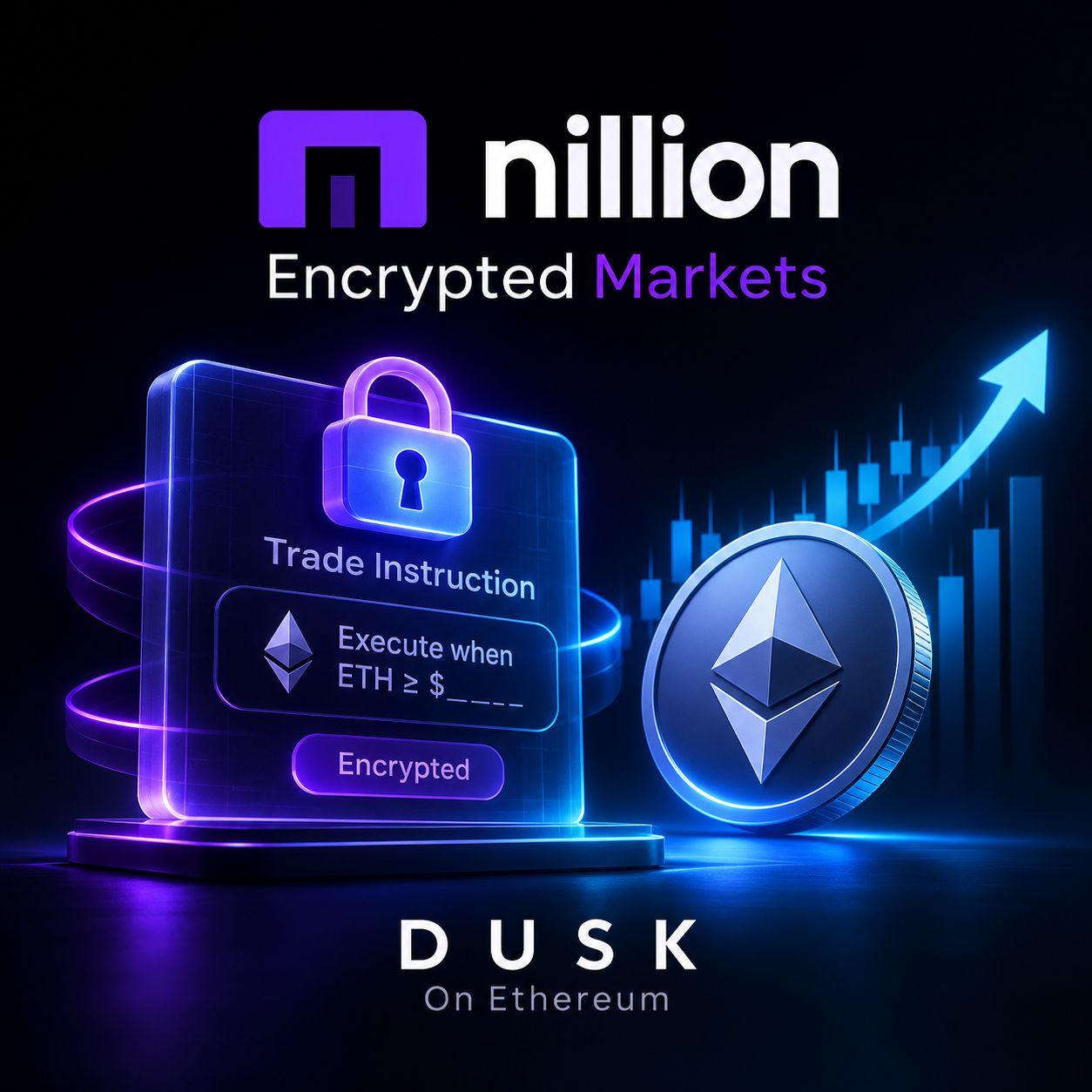
I’ve always wondered why making a trade onchain sometimes means revealing more than you’d like. Your strategy is valuable, and showing your intentions too early can make a difference.
That’s what got me interested in @nillionnetwork and its approach to Encrypted Markets.
With Covenants, instructions can stay encrypted until specific conditions are met. Imagine setting a condition for $ETH to reach a certain price without exposing your strategy beforehand.
Now, DUSK brings this concept to Ethereum, giving developers room to explore real use cases.
What stands out to me is Nillion’s blind computation and how it could make sensitive data useful without revealing it.
I’m watching for real applications and long-term adoption, not just short-term noise around $NIL.
#nil $NIL @nillionnetwork
I’ve always wondered why making a trade onchain sometimes means revealing more than you’d like. Your strategy is valuable, and showing your intentions too early can make a difference.
That’s what got me interested in @Nillion and its approach to Encrypted Markets.
With Covenants, instructions can stay encrypted until specific conditions are met. Imagine setting a condition for $ETH to reach a certain price without exposing your strategy beforehand.
Now, DUSK brings this concept to Ethereum, giving developers room to explore real use cases.
What stands out to me is Nillion’s blind computation and how it could make sensitive data useful without revealing it.
I’m watching for real applications and long-term adoption, not just short-term noise around $NIL .
#nil $NIL @Nillion
That’s what got me interested in @Nillion and its approach to Encrypted Markets.
With Covenants, instructions can stay encrypted until specific conditions are met. Imagine setting a condition for $ETH to reach a certain price without exposing your strategy beforehand.
Now, DUSK brings this concept to Ethereum, giving developers room to explore real use cases.
What stands out to me is Nillion’s blind computation and how it could make sensitive data useful without revealing it.
I’m watching for real applications and long-term adoption, not just short-term noise around $NIL .
#nil $NIL @Nillion
2
2
1.1k
·
--
Not every interesting crypto project needs to be about the next $BTC 100x.
Sometimes, the real opportunity is in building something people can actually use.
That's one reason I'm keeping an eye on #Liberdus
Imagine having messaging and payments in one decentralized ecosystem, with greater control over your digital interactions.
That's a different way to think about the internet.
We've spent years getting comfortable with platforms controlling our online experiences. Maybe it's time to explore alternatives that put users first.
Of course, adoption and execution will matter more than promises.
But I like the direction.
Web3 becomes more meaningful when it moves beyond speculation and starts solving everyday problems.
Less noise. More utility. More user freedom..
Not every interesting crypto project needs to be about the next $BTC 100x.
Sometimes, the real opportunity is in building something people can actually use.
That's one reason I'm keeping an eye on #Liberdus
Imagine having messaging and payments in one decentralized ecosystem, with greater control over your digital interactions.
That's a different way to think about the internet.
We've spent years getting comfortable with platforms controlling our online experiences. Maybe it's time to explore alternatives that put users first.
Of course, adoption and execution will matter more than promises.
But I like the direction.
Web3 becomes more meaningful when it moves beyond speculation and starts solving everyday problems.
Less noise. More utility. More user freedom..
Sometimes, the real opportunity is in building something people can actually use.
That's one reason I'm keeping an eye on #Liberdus
Imagine having messaging and payments in one decentralized ecosystem, with greater control over your digital interactions.
That's a different way to think about the internet.
We've spent years getting comfortable with platforms controlling our online experiences. Maybe it's time to explore alternatives that put users first.
Of course, adoption and execution will matter more than promises.
But I like the direction.
Web3 becomes more meaningful when it moves beyond speculation and starts solving everyday problems.
Less noise. More utility. More user freedom..

1
151
·
--
Crypto conversations often revolve around $BTC price, liquidity, and the next market move. With Bitcoin facing ongoing market uncertainty, it's easy to focus only on charts and forget what blockchain can change beyond finance.
Money can move without traditional intermediaries, and decentralized projects are exploring how digital communication can become more independent, too.
#liberdus sits at this intersection, combining messaging and payments in an ecosystem built around privacy and user freedom.
What stands out to me is the practical vision. People shouldn't always need phone numbers, emails, or unnecessary personal details just to connect.
BTC reminds us that money can work differently. Liberdus explores how communication can, too.
Long-term crypto value may mean more than price. It could mean greater control over our digital lives.
Crypto conversations often revolve around $BTC price, liquidity, and the next market move. With Bitcoin facing ongoing market uncertainty, it's easy to focus only on charts and forget what blockchain can change beyond finance.
Money can move without traditional intermediaries, and decentralized projects are exploring how digital communication can become more independent, too.
#liberdus sits at this intersection, combining messaging and payments in an ecosystem built around privacy and user freedom.
What stands out to me is the practical vision. People shouldn't always need phone numbers, emails, or unnecessary personal details just to connect.
BTC reminds us that money can work differently. Liberdus explores how communication can, too.
Long-term crypto value may mean more than price. It could mean greater control over our digital lives.
Money can move without traditional intermediaries, and decentralized projects are exploring how digital communication can become more independent, too.
#liberdus sits at this intersection, combining messaging and payments in an ecosystem built around privacy and user freedom.
What stands out to me is the practical vision. People shouldn't always need phone numbers, emails, or unnecessary personal details just to connect.
BTC reminds us that money can work differently. Liberdus explores how communication can, too.
Long-term crypto value may mean more than price. It could mean greater control over our digital lives.

128
·
--
Crypto doesn't need another thousand tokens promising to change the world.
It needs products that solve problems people actually experience.
$BTC introduced a different way to think about money. $ETH expanded what blockchain applications could do. Now, the next challenge is making decentralized technology useful in everyday life.
That's where projects like #liberdus deserve attention.
Its approach brings messaging and payments into one decentralized application, with privacy and user control at the center.
No phone number, email, or KYC required to get started.
What interests me most is the bigger idea: communication shouldn't always depend on centralized platforms that control access.
Of course, adoption and real-world usability will determine how far this vision goes.
But crypto's next chapter should be about useful products, not just louder narratives..
Crypto doesn't need another thousand tokens promising to change the world.
It needs products that solve problems people actually experience.
$BTC introduced a different way to think about money. $ETH expanded what blockchain applications could do. Now, the next challenge is making decentralized technology useful in everyday life.
That's where projects like #liberdus deserve attention.
Its approach brings messaging and payments into one decentralized application, with privacy and user control at the center.
No phone number, email, or KYC required to get started.
What interests me most is the bigger idea: communication shouldn't always depend on centralized platforms that control access.
Of course, adoption and real-world usability will determine how far this vision goes.
But crypto's next chapter should be about useful products, not just louder narratives..
It needs products that solve problems people actually experience.
$BTC introduced a different way to think about money. $ETH expanded what blockchain applications could do. Now, the next challenge is making decentralized technology useful in everyday life.
That's where projects like #liberdus deserve attention.
Its approach brings messaging and payments into one decentralized application, with privacy and user control at the center.
No phone number, email, or KYC required to get started.
What interests me most is the bigger idea: communication shouldn't always depend on centralized platforms that control access.
Of course, adoption and real-world usability will determine how far this vision goes.
But crypto's next chapter should be about useful products, not just louder narratives..

119
·
--
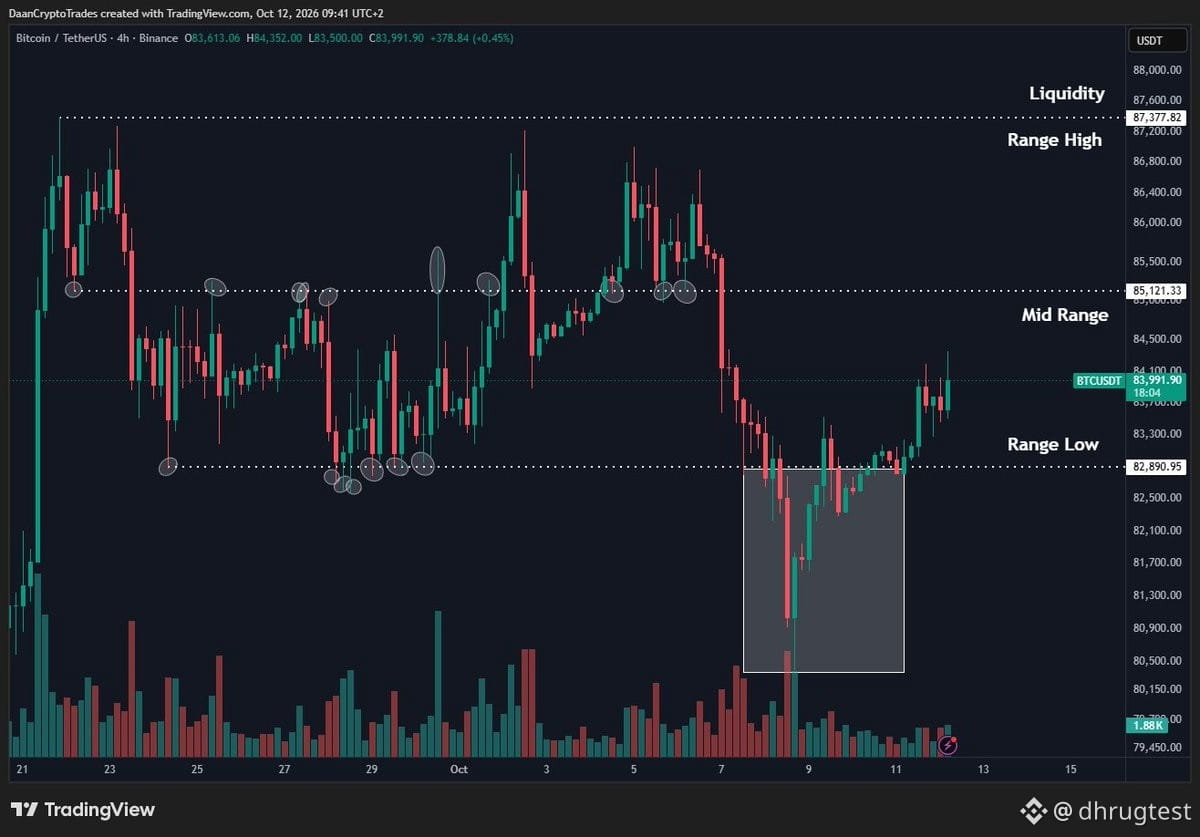
$BTC Trading back into the range.
But I do want to see spot bid sustain the move as most of it has been perp driven. First by shorts covering now by longs moving in on Sunday and Monday morning.
Clear invalidation/weakness below $83K for me.
Do think we'll see choppy price action the next few days into CPI Wednesday so not really looking to actively trade, especially as we're mostly ranging and there's no strong momentum in either direction as we speak..
$BTC Trading back into the range.
But I do want to see spot bid sustain the move as most of it has been perp driven. First by shorts covering now by longs moving in on Sunday and Monday morning.
Clear invalidation/weakness below $83K for me.
Do think we'll see choppy price action the next few days into CPI Wednesday so not really looking to actively trade, especially as we're mostly ranging and there's no strong momentum in either direction as we speak..
But I do want to see spot bid sustain the move as most of it has been perp driven. First by shorts covering now by longs moving in on Sunday and Monday morning.
Clear invalidation/weakness below $83K for me.
Do think we'll see choppy price action the next few days into CPI Wednesday so not really looking to actively trade, especially as we're mostly ranging and there's no strong momentum in either direction as we speak..
185
·
--
Sometimes I wonder if the internet has become too dependent on gatekeepers.
While Bitcoin (BTC) trades around $83,000 after recent market pressure, it's a reminder that crypto is about more than price movements.
What about freedom, privacy, and control?
That's what makes #Liberdus interesting. It's exploring decentralized communication, integrated payments, and greater user control without requiring unnecessary personal information.
We often focus on when $BTC will recover or which coin will rise next. But perhaps we should also consider how crypto can improve everyday digital life.
The future isn't just moving money freely. It's communicating freely, too.
Sometimes I wonder if the internet has become too dependent on gatekeepers.
While Bitcoin (BTC) trades around $83,000 after recent market pressure, it's a reminder that crypto is about more than price movements.
What about freedom, privacy, and control?
That's what makes #Liberdus interesting. It's exploring decentralized communication, integrated payments, and greater user control without requiring unnecessary personal information.
We often focus on when $BTC will recover or which coin will rise next. But perhaps we should also consider how crypto can improve everyday digital life.
The future isn't just moving money freely. It's communicating freely, too.
While Bitcoin (BTC) trades around $83,000 after recent market pressure, it's a reminder that crypto is about more than price movements.
What about freedom, privacy, and control?
That's what makes #Liberdus interesting. It's exploring decentralized communication, integrated payments, and greater user control without requiring unnecessary personal information.
We often focus on when $BTC will recover or which coin will rise next. But perhaps we should also consider how crypto can improve everyday digital life.
The future isn't just moving money freely. It's communicating freely, too.

116
·
--
Sometimes I wonder if we’ve become too focused on charts.
BTC pumps, everyone celebrates.
$BTC dips, timelines turn red.
A new token trends, and suddenly everyone wants in.
But beyond the daily noise, some projects are working on problems that matter outside the market.
Take #Liberdus for example.
The idea is simple but meaningful: give people a way to communicate and make payments without relying on traditional centralized platforms.
It combines messaging, payments, and decentralized infrastructure while putting privacy and user control first.
That’s a different conversation from chasing the next 10x.
I’m not saying every decentralized project will succeed. They won't.
But I believe the projects worth watching are those solving real problems, not just creating temporary excitement.
Sometimes, the bigger opportunity is hiding behind the noise..
Sometimes I wonder if we’ve become too focused on charts.
BTC pumps, everyone celebrates.
$BTC dips, timelines turn red.
A new token trends, and suddenly everyone wants in.
But beyond the daily noise, some projects are working on problems that matter outside the market.
Take #Liberdus for example.
The idea is simple but meaningful: give people a way to communicate and make payments without relying on traditional centralized platforms.
It combines messaging, payments, and decentralized infrastructure while putting privacy and user control first.
That’s a different conversation from chasing the next 10x.
I’m not saying every decentralized project will succeed. They won't.
But I believe the projects worth watching are those solving real problems, not just creating temporary excitement.
Sometimes, the bigger opportunity is hiding behind the noise..
BTC pumps, everyone celebrates.
$BTC dips, timelines turn red.
A new token trends, and suddenly everyone wants in.
But beyond the daily noise, some projects are working on problems that matter outside the market.
Take #Liberdus for example.
The idea is simple but meaningful: give people a way to communicate and make payments without relying on traditional centralized platforms.
It combines messaging, payments, and decentralized infrastructure while putting privacy and user control first.
That’s a different conversation from chasing the next 10x.
I’m not saying every decentralized project will succeed. They won't.
But I believe the projects worth watching are those solving real problems, not just creating temporary excitement.
Sometimes, the bigger opportunity is hiding behind the noise..

146
·
--
This morning, watching Bitcoin slip back toward the $82K area, I started thinking about something bigger than price.
Markets can change quickly. $BTC can rally, pull back, and leave everyone debating the next level. But underneath all that, the question of who actually controls our digital lives remains.
We’ve become comfortable giving platforms our phone numbers, emails, data, and attention just to communicate or move money.
#liberdus It’s exploring a decentralized ecosystem where communication and payments can exist together without making personal information the price of entry.
You can communicate, transact, and even help secure the network by running a node.
For me, the bigger idea is freedom.
Bitcoin challenged how we think about money. Liberdus is exploring how we think about digital ownership and communication.
That conversation matters.
This morning, watching Bitcoin slip back toward the $82K area, I started thinking about something bigger than price.
Markets can change quickly. $BTC can rally, pull back, and leave everyone debating the next level. But underneath all that, the question of who actually controls our digital lives remains.
We’ve become comfortable giving platforms our phone numbers, emails, data, and attention just to communicate or move money.
#liberdus It’s exploring a decentralized ecosystem where communication and payments can exist together without making personal information the price of entry.
You can communicate, transact, and even help secure the network by running a node.
For me, the bigger idea is freedom.
Bitcoin challenged how we think about money. Liberdus is exploring how we think about digital ownership and communication.
That conversation matters.
Markets can change quickly. $BTC can rally, pull back, and leave everyone debating the next level. But underneath all that, the question of who actually controls our digital lives remains.
We’ve become comfortable giving platforms our phone numbers, emails, data, and attention just to communicate or move money.
#liberdus It’s exploring a decentralized ecosystem where communication and payments can exist together without making personal information the price of entry.
You can communicate, transact, and even help secure the network by running a node.
For me, the bigger idea is freedom.
Bitcoin challenged how we think about money. Liberdus is exploring how we think about digital ownership and communication.
That conversation matters.

113
·
--
Everyone wants the next 100x, especially when $BTC # volatility makes the market feel unpredictable.
But few people ask what infrastructure could actually support millions of users.
That’s why I’m watching #Liberdus
While BTC moves through uncertain market conditions, Liberdus is focused on building beyond short-term speculation: decentralized communication, payments, and governance, powered by Shardus dynamic sharding to target scalability and decentralization.
What stands out is participation.
Users can engage with the ecosystem, liquidity providers can support markets, and node operators can help secure the network.
Markets will rotate. Narratives will change.
Strong infrastructure can keep building regardless.
Everyone wants the next 100x, especially when $BTC # volatility makes the market feel unpredictable.
But few people ask what infrastructure could actually support millions of users.
That’s why I’m watching #Liberdus
While BTC moves through uncertain market conditions, Liberdus is focused on building beyond short-term speculation: decentralized communication, payments, and governance, powered by Shardus dynamic sharding to target scalability and decentralization.
What stands out is participation.
Users can engage with the ecosystem, liquidity providers can support markets, and node operators can help secure the network.
Markets will rotate. Narratives will change.
Strong infrastructure can keep building regardless.
But few people ask what infrastructure could actually support millions of users.
That’s why I’m watching #Liberdus
While BTC moves through uncertain market conditions, Liberdus is focused on building beyond short-term speculation: decentralized communication, payments, and governance, powered by Shardus dynamic sharding to target scalability and decentralization.
What stands out is participation.
Users can engage with the ecosystem, liquidity providers can support markets, and node operators can help secure the network.
Markets will rotate. Narratives will change.
Strong infrastructure can keep building regardless.

161
·
--
Sentiment for $ETH and $XRP flips mega bearish...
According to data from SantimentData, investor sentiment around both ethereum and Ripple has turned very negative indeed at the start of the month.
It did disclaim, however, that this is not necessarily a bad thing...
"When traders become convinced prices are heading lower, much of the panic selling may already have happened."
Will we see new all time highs for these two crypto majors in 2026...?
Sentiment for $ETH and $XRP flips mega bearish...
According to data from SantimentData, investor sentiment around both ethereum and Ripple has turned very negative indeed at the start of the month.
It did disclaim, however, that this is not necessarily a bad thing...
"When traders become convinced prices are heading lower, much of the panic selling may already have happened."
Will we see new all time highs for these two crypto majors in 2026...?
According to data from SantimentData, investor sentiment around both ethereum and Ripple has turned very negative indeed at the start of the month.
It did disclaim, however, that this is not necessarily a bad thing...
"When traders become convinced prices are heading lower, much of the panic selling may already have happened."
Will we see new all time highs for these two crypto majors in 2026...?
126
·
--
JUST IN: $3 TRILLION CITI JUST ANNOUNCED THEY RAISED THEIR 12 MONTH #BITCOIN PRICE TARGET TO OVER $113,000
WORLD'S LARGEST BANKS ARE TURNING BULLISH ON BTC
HERE WE GO $BTC
{spot}(BTCUSDT)
🚀
JUST IN: $3 TRILLION CITI JUST ANNOUNCED THEY RAISED THEIR 12 MONTH #BITCOIN PRICE TARGET TO OVER $113,000
WORLD'S LARGEST BANKS ARE TURNING BULLISH ON BTC
HERE WE GO $BTC
🚀
WORLD'S LARGEST BANKS ARE TURNING BULLISH ON BTC
HERE WE GO $BTC
🚀
94
·
--
Проверено
NEW: Quant founder-linked wallet transferred 25,776 QNT worth $6.97M after seven years of dormancy, according to Lookonchain.
The wallet retains 600,000 QNT worth $160.39M, while Quant prepares to power The Clearing House's tokenized-deposit network. $QNT surged over 280% in the past week.
{future}(QNTUSDT)
NEW: Quant founder-linked wallet transferred 25,776 QNT worth $6.97M after seven years of dormancy, according to Lookonchain.
The wallet retains 600,000 QNT worth $160.39M, while Quant prepares to power The Clearing House's tokenized-deposit network. $QNT surged over 280% in the past week.
The wallet retains 600,000 QNT worth $160.39M, while Quant prepares to power The Clearing House's tokenized-deposit network. $QNT surged over 280% in the past week.


1
824
Войдите, чтобы посмотреть больше материала
Присоединяйтесь к пользователям криптовалют по всему миру на Binance Square
⚡️ Получайте новейшую и полезную информацию о криптоактивах.
💬 Нам доверяет крупнейшая в мире криптобиржа.
👍 Получите достоверные аналитические данные от верифицированных создателей контента.
Эл. почта/номер телефона