Binance Square

CryptoMasterMindX

image
Верифицированный автор
Trader • Investor • Content Creator | Follow @CryptoMasterMindX on X 🚀
Владелец SOL
Владелец SOL
Трейдер с регулярными сделками
4.3 г
147 подписок(и/а)
75.2K+ подписчиков(а)
42.5K+ понравилось
8.1K+ поделились
Посты
PINNED
·
--
🚨 A Financial Storm Is Forming — And Most People Don’t See It ComingSomething strange is happening in the global markets right now. Not normal volatility. Not a routine correction. This feels different. In just a short time, we’ve watched major assets bleed heavily: Gold dropped more than 10%. Silver crashed nearly 30%. The S&P 500 slid 1.5%. Bitcoin dumped over 6%. In total, more than $20 trillion has been wiped out across global markets. That kind of damage doesn’t happen in a healthy system. This is not fear. This is stress. Gold Is Not Supposed to Act Like This Gold doesn’t move violently when everything is fine. Gold is slow. Gold is defensive. Gold is boring — until trust begins to break. When gold sells off sharply, it usually means one thing: people are being forced to sell. Not because they want to. Because they have to. Margin calls. Leverage blowing up. Collateral disappearing overnight. This is forced selling — the kind that happens before something bigger unfolds. History Has Seen This Pattern Before If you look back, the signs are familiar. During the 2007–2009 housing collapse, gold climbed from around $670 to over $1,060 as the system cracked. During the 2019–2021 COVID crisis, gold rose from near $1,200 to over $2,030 as governments printed money to survive. And now, as we move into 2025–2026, gold has already started a historic run — from around $2,060 toward the $5,000+ zone. These moves don’t happen randomly. They happen when confidence in the financial system weakens. What You’re Seeing Right Now Is the Pressure Phase Before the big moves upward, markets often go through pain first. Funds are de-leveraging. Institutions are raising cash. Positions are being liquidated at any price. That’s why everything drops together — even assets that are supposed to be “safe.” It’s not panic yet. It’s survival. When credit markets tighten and liquidity dries up, no asset is spared in the early stage. Behind the Scenes, the Cracks Are Growing Bond yields are flashing warning signals. Liquidity is thinning. Banks are quietly tightening lending. Not publicly. Not loudly. But silently. This is how stress builds before it becomes visible to the public. By the time the news starts screaming “crisis,” positioning is already done. The Federal Reserve Is Trapped The U.S. government and the Federal Reserve are stuck between two impossible choices. If they cut rates and ease policy, the dollar weakens — and gold explodes higher. If they stay tight to defend the dollar, housing breaks, stocks fall harder, and credit markets freeze. There is no perfect outcome. No soft landing. Something has to give. When Safe Havens Collapse First, Pay Attention When trillions vanish within minutes — even from assets meant to protect wealth — the system is sending a message. This is not business as usual. This is a shift. The kind people only understand years later when they say, “That was the moment everything changed.” Most People Are Completely Unprepared The average investor thinks nothing serious is happening. They’re waiting for confirmation. Waiting for headlines. Waiting for permission. But markets don’t warn loudly. They whisper first. And those whispers are getting louder. This isn’t about fear. It’s about awareness. Because in times like this, the biggest danger isn’t price going down — it’s becoming exit liquidity for smarter money. The next few days and weeks could define an entire decade. Stay alert. Zoom out. Protect your capital. History is moving again — whether people are ready or not.

🚨 A Financial Storm Is Forming — And Most People Don’t See It Coming

Something strange is happening in the global markets right now.
Not normal volatility. Not a routine correction.
This feels different.
In just a short time, we’ve watched major assets bleed heavily:
Gold dropped more than 10%.
Silver crashed nearly 30%.
The S&P 500 slid 1.5%.
Bitcoin dumped over 6%.
In total, more than $20 trillion has been wiped out across global markets.
That kind of damage doesn’t happen in a healthy system.
This is not fear.
This is stress.
Gold Is Not Supposed to Act Like This
Gold doesn’t move violently when everything is fine.
Gold is slow. Gold is defensive. Gold is boring — until trust begins to break.
When gold sells off sharply, it usually means one thing:
people are being forced to sell.
Not because they want to.
Because they have to.
Margin calls.
Leverage blowing up.
Collateral disappearing overnight.
This is forced selling — the kind that happens before something bigger unfolds.
History Has Seen This Pattern Before
If you look back, the signs are familiar.
During the 2007–2009 housing collapse, gold climbed from around $670 to over $1,060 as the system cracked.
During the 2019–2021 COVID crisis, gold rose from near $1,200 to over $2,030 as governments printed money to survive.
And now, as we move into 2025–2026, gold has already started a historic run — from around $2,060 toward the $5,000+ zone.
These moves don’t happen randomly.
They happen when confidence in the financial system weakens.
What You’re Seeing Right Now Is the Pressure Phase
Before the big moves upward, markets often go through pain first.
Funds are de-leveraging.
Institutions are raising cash.
Positions are being liquidated at any price.
That’s why everything drops together — even assets that are supposed to be “safe.”
It’s not panic yet.
It’s survival.
When credit markets tighten and liquidity dries up, no asset is spared in the early stage.
Behind the Scenes, the Cracks Are Growing
Bond yields are flashing warning signals.
Liquidity is thinning.
Banks are quietly tightening lending.
Not publicly.
Not loudly.
But silently.
This is how stress builds before it becomes visible to the public.
By the time the news starts screaming “crisis,” positioning is already done.
The Federal Reserve Is Trapped
The U.S. government and the Federal Reserve are stuck between two impossible choices.
If they cut rates and ease policy, the dollar weakens — and gold explodes higher.
If they stay tight to defend the dollar, housing breaks, stocks fall harder, and credit markets freeze.
There is no perfect outcome.
No soft landing.
Something has to give.
When Safe Havens Collapse First, Pay Attention
When trillions vanish within minutes — even from assets meant to protect wealth — the system is sending a message.
This is not business as usual.
This is a shift.
The kind people only understand years later when they say,
“That was the moment everything changed.”
Most People Are Completely Unprepared
The average investor thinks nothing serious is happening.
They’re waiting for confirmation.
Waiting for headlines.
Waiting for permission.
But markets don’t warn loudly.
They whisper first.
And those whispers are getting louder.
This isn’t about fear.
It’s about awareness.
Because in times like this, the biggest danger isn’t price going down —
it’s becoming exit liquidity for smarter money.
The next few days and weeks could define an entire decade.
Stay alert.
Zoom out.
Protect your capital.
History is moving again — whether people are ready or not.
$BTC Bitcoin has broken out of the descending channel. A candle close above the breakout level will confirm bullish momentum. Keep a close eye on it. 👀
$BTC

Bitcoin has broken out of the descending channel. A candle close above the breakout level will confirm bullish momentum. Keep a close eye on it. 👀
Plasma: The Blockchain Built for Stablecoins and Real-World FinanceYou know how crypto can feel like a rollercoaster sometimes? Prices swing, networks get clogged, and everything seems geared toward speculation rather than actual use. Well, Plasma is flipping that script. It's a Layer 1 blockchain designed from the ground up for stablecoin settlements—think digital dollars that don't budge in value, moving smoothly and securely. I've been following crypto for a while, and Plasma stands out because it's not just another chain; it's tailored for everyday finance, from sending money home to big institutional deals. Let's start with the basics. Plasma combines stuff that works well in other blockchains but puts it all together in a smarter way. It's fully compatible with Ethereum's Virtual Machine— they use something called Reth for that—which means devs can port over their apps without headaches. No need to rewrite code from scratch. But the real kicker is the speed: PlasmaBFT gives it sub-second finality. That means transactions confirm in under a second, no waiting around like on slower networks. Imagine paying for coffee with crypto and it's done before you even blink. What makes Plasma special, though, is its focus on stablecoins. Features like gasless USDT transfers? That's huge. You can send Tether without paying those pesky gas fees that eat into small transactions. And the gas system itself prioritizes stablecoins first, making it cheaper and easier to use things like USDC or USDT for payments. It's like the blockchain is saying, "Hey, stablecoins are the stars here—let's make them shine." This isn't just for tech geeks; it's aimed at real people in places where crypto is already big, like emerging markets, and at pros in finance who need reliable tools for payments. Security is another big win. Plasma anchors itself to Bitcoin, which adds neutrality and makes it tougher for anyone to censor or tamper with things. Bitcoin's been battle-tested for years, so borrowing its strength boosts trust. No central authority pulling strings—it's all about decentralization done right. For folks worried about hacks or government interference, this setup feels solid. Now, here's something fresh that's got everyone talking: Plasma has climbed to the second largest onchain lending market in the world. Yeah, you read that right. Onchain lending means borrowing and lending crypto right on the blockchain, no banks involved. With stablecoins at the core, it's exploding because liquidity is king in finance—the backbone of any good product, really. If you're short on cash, you can borrow against your assets quickly, and lenders earn yields without the usual hassles. Plasma's setup makes this seamless, drawing in retail users who want easy loans and institutions building complex financial tools. If you're a builder tinkering with new ideas around stablecoins—maybe DeFi primitives or payment apps—Plasma is calling your name. It's got the tools, the speed, and now this massive lending scene to build alongside. Think about it: High-adoption markets like Africa or Asia, where people rely on remittances, could see cheaper, faster options. Institutions in traditional finance? They get a neutral platform for settlements without the red tape. Sure, crypto's still evolving, and Plasma's got competition. But with its stablecoin smarts, Bitcoin backing, and that booming lending market, it's positioning itself as a go-to for practical finance. If you've been waiting for blockchain to grow up and handle real money moves, keep an eye on Plasma. It might just be the quiet revolution we've needed. #plasma @Plasma $XPL {spot}(XPLUSDT)

Plasma: The Blockchain Built for Stablecoins and Real-World Finance

You know how crypto can feel like a rollercoaster sometimes? Prices swing, networks get clogged, and everything seems geared toward speculation rather than actual use. Well, Plasma is flipping that script. It's a Layer 1 blockchain designed from the ground up for stablecoin settlements—think digital dollars that don't budge in value, moving smoothly and securely. I've been following crypto for a while, and Plasma stands out because it's not just another chain; it's tailored for everyday finance, from sending money home to big institutional deals.
Let's start with the basics. Plasma combines stuff that works well in other blockchains but puts it all together in a smarter way. It's fully compatible with Ethereum's Virtual Machine— they use something called Reth for that—which means devs can port over their apps without headaches. No need to rewrite code from scratch. But the real kicker is the speed: PlasmaBFT gives it sub-second finality. That means transactions confirm in under a second, no waiting around like on slower networks. Imagine paying for coffee with crypto and it's done before you even blink.
What makes Plasma special, though, is its focus on stablecoins. Features like gasless USDT transfers? That's huge. You can send Tether without paying those pesky gas fees that eat into small transactions. And the gas system itself prioritizes stablecoins first, making it cheaper and easier to use things like USDC or USDT for payments. It's like the blockchain is saying, "Hey, stablecoins are the stars here—let's make them shine." This isn't just for tech geeks; it's aimed at real people in places where crypto is already big, like emerging markets, and at pros in finance who need reliable tools for payments.
Security is another big win. Plasma anchors itself to Bitcoin, which adds neutrality and makes it tougher for anyone to censor or tamper with things. Bitcoin's been battle-tested for years, so borrowing its strength boosts trust. No central authority pulling strings—it's all about decentralization done right. For folks worried about hacks or government interference, this setup feels solid.
Now, here's something fresh that's got everyone talking: Plasma has climbed to the second largest onchain lending market in the world. Yeah, you read that right. Onchain lending means borrowing and lending crypto right on the blockchain, no banks involved. With stablecoins at the core, it's exploding because liquidity is king in finance—the backbone of any good product, really. If you're short on cash, you can borrow against your assets quickly, and lenders earn yields without the usual hassles. Plasma's setup makes this seamless, drawing in retail users who want easy loans and institutions building complex financial tools.
If you're a builder tinkering with new ideas around stablecoins—maybe DeFi primitives or payment apps—Plasma is calling your name. It's got the tools, the speed, and now this massive lending scene to build alongside. Think about it: High-adoption markets like Africa or Asia, where people rely on remittances, could see cheaper, faster options. Institutions in traditional finance? They get a neutral platform for settlements without the red tape.
Sure, crypto's still evolving, and Plasma's got competition. But with its stablecoin smarts, Bitcoin backing, and that booming lending market, it's positioning itself as a go-to for practical finance. If you've been waiting for blockchain to grow up and handle real money moves, keep an eye on Plasma. It might just be the quiet revolution we've needed.
#plasma @Plasma $XPL
A Quiet $1 Billion Signal: Why Binance’s SAFU Bitcoin Buy MattersBack in March 2023, Binance made a move that caught the entire crypto world off guard. At a time when fear was high and markets were shaky, the exchange converted about $1 billion from its SAFU fund into Bitcoin, Ethereum, and BNB. Many people questioned the decision. But looking back now, it was a smart call. Over the following year, Bitcoin surged by around 250%, Ethereum climbed more than 200%, and the total crypto market gained roughly $1.8 trillion in value. What was meant to be a safety reserve quietly turned into a powerful vote of confidence for the whole market. Now, fast forward to January 2026, and Binance is making headlines again. On January 30, Binance announced it would convert the entire $1 billion SAFU fund from stablecoins like USDC directly into Bitcoin. This is not a rushed decision. The plan is to spread the purchases over about 30 days, and Binance has said it will rebalance the fund if Bitcoin’s price drops and the value falls below $800 million. This announcement came right after a rough period for the market. Bitcoin had recently corrected to around $81,600, its lowest level in months. Binance explained that the move is meant to strengthen user protection during volatile times. But many in the community see something more than just risk management. Just days later, on February 2, the buying began. The SAFU fund purchased 1,315 Bitcoin at an average price of about $76,577, spending roughly $100 million in one go. On-chain trackers like Arkham Intelligence and Lookonchain quickly spotted the transaction as the coins moved into the SAFU wallet. This looks like only the first step. If Binance continues at this pace, it could mean tens of millions of dollars in Bitcoin buys every day until the full $1 billion is deployed. So, what exactly is SAFU? SAFU, which stands for Secure Asset Fund for Users, was created by Binance in 2018. It acts as an insurance fund to protect users in case of hacks, system failures, or other major problems. Binance funds it using 10% of its trading fees, and the wallet addresses are public, so anyone can track the funds. By shifting SAFU from stablecoins into Bitcoin, Binance is clearly showing where its long-term belief lies. Stablecoins have their own risks, as history has shown. Bitcoin, despite its volatility, is seen by many as the strongest and most resilient asset in crypto. Naturally, not everyone agrees with the move. Critics say holding such a large safety fund in Bitcoin is risky. Supporters argue the opposite—that this is a bold show of confidence in Bitcoin’s future and in crypto as a whole. What really has people talking is the timing. In 2023, Binance made a similar move during a market dip, and a major rally followed. Now in 2026, this conversion is happening right after another Bitcoin pullback of about 6–7%. The similarities are hard to ignore. Reduced supply, steady buying pressure, and a strong signal from one of the biggest players in the industry—it all feels familiar. Of course, crypto never moves in a straight line. Prices could stay choppy, or even fall further, before any real breakout happens. Nothing is guaranteed. Still, Binance’s SAFU strategy could end up being a quiet but powerful catalyst. Whether you’re holding for the long term or trading short-term moves, this is one of those moments worth watching closely. Sometimes, the biggest market shifts start with actions that look simple on the surface—but speak loudly underneath. #SAFU🙏 #BuyTheDip

A Quiet $1 Billion Signal: Why Binance’s SAFU Bitcoin Buy Matters

Back in March 2023, Binance made a move that caught the entire crypto world off guard. At a time when fear was high and markets were shaky, the exchange converted about $1 billion from its SAFU fund into Bitcoin, Ethereum, and BNB. Many people questioned the decision. But looking back now, it was a smart call.
Over the following year, Bitcoin surged by around 250%, Ethereum climbed more than 200%, and the total crypto market gained roughly $1.8 trillion in value. What was meant to be a safety reserve quietly turned into a powerful vote of confidence for the whole market.
Now, fast forward to January 2026, and Binance is making headlines again.
On January 30, Binance announced it would convert the entire $1 billion SAFU fund from stablecoins like USDC directly into Bitcoin. This is not a rushed decision. The plan is to spread the purchases over about 30 days, and Binance has said it will rebalance the fund if Bitcoin’s price drops and the value falls below $800 million.
This announcement came right after a rough period for the market. Bitcoin had recently corrected to around $81,600, its lowest level in months. Binance explained that the move is meant to strengthen user protection during volatile times. But many in the community see something more than just risk management.
Just days later, on February 2, the buying began. The SAFU fund purchased 1,315 Bitcoin at an average price of about $76,577, spending roughly $100 million in one go. On-chain trackers like Arkham Intelligence and Lookonchain quickly spotted the transaction as the coins moved into the SAFU wallet.
This looks like only the first step. If Binance continues at this pace, it could mean tens of millions of dollars in Bitcoin buys every day until the full $1 billion is deployed.
So, what exactly is SAFU?
SAFU, which stands for Secure Asset Fund for Users, was created by Binance in 2018. It acts as an insurance fund to protect users in case of hacks, system failures, or other major problems. Binance funds it using 10% of its trading fees, and the wallet addresses are public, so anyone can track the funds.
By shifting SAFU from stablecoins into Bitcoin, Binance is clearly showing where its long-term belief lies. Stablecoins have their own risks, as history has shown. Bitcoin, despite its volatility, is seen by many as the strongest and most resilient asset in crypto.
Naturally, not everyone agrees with the move. Critics say holding such a large safety fund in Bitcoin is risky. Supporters argue the opposite—that this is a bold show of confidence in Bitcoin’s future and in crypto as a whole.
What really has people talking is the timing.
In 2023, Binance made a similar move during a market dip, and a major rally followed. Now in 2026, this conversion is happening right after another Bitcoin pullback of about 6–7%. The similarities are hard to ignore. Reduced supply, steady buying pressure, and a strong signal from one of the biggest players in the industry—it all feels familiar.
Of course, crypto never moves in a straight line. Prices could stay choppy, or even fall further, before any real breakout happens. Nothing is guaranteed.
Still, Binance’s SAFU strategy could end up being a quiet but powerful catalyst. Whether you’re holding for the long term or trading short-term moves, this is one of those moments worth watching closely. Sometimes, the biggest market shifts start with actions that look simple on the surface—but speak loudly underneath.
#SAFU🙏 #BuyTheDip
Key Events This Week: 1. January ISM Manufacturing PMI data - Monday 2. December JOLTS Job Openings data - Tuesday 3. Alphabet, $GOOGL, Reports Earnings - Wednesday 4. Initial Jobless Claims data - Thursday 5. Amazon, $AMZN, Reports Earnings - Thursday 6. January Jobs Report - Friday It's all about the labor market and earnings this week
Key Events This Week:

1. January ISM Manufacturing PMI data - Monday

2. December JOLTS Job Openings data - Tuesday

3. Alphabet, $GOOGL, Reports Earnings - Wednesday

4. Initial Jobless Claims data - Thursday

5. Amazon, $AMZN, Reports Earnings - Thursday

6. January Jobs Report - Friday

It's all about the labor market and earnings this week
WE MADE IT TO $69,420 WITHOUT BLACKROCK, ETFS OR TREASURY COMPANIES AND NOW THAT WE HAVE THEM WE’RE ONLY AT $75,000. WTF. MAKE IT MAKE SENSE
WE MADE IT TO $69,420 WITHOUT BLACKROCK, ETFS OR TREASURY COMPANIES AND NOW THAT WE HAVE THEM WE’RE ONLY AT $75,000. WTF.

MAKE IT MAKE SENSE
Buy low sell high 🚀
Buy low sell high 🚀
no, its not a shitcoin. this is Gold, a “ safe heaven “ asset
When most people hear “crypto,” they think of risky trades, complicated charts, or NFTs. But in countries like Argentina, Turkey, and Nigeria, crypto isn’t speculation—it’s survival. People use stablecoins like USDT to save money and buy food because their local currencies lose value fast. The problem is that most blockchains weren’t built for this. They’re slow, expensive, and confusing. That’s what Plasma is trying to fix. So, what is Plasma? Plasma is a Layer 1 blockchain built for one thing: fast, cheap stablecoin payments. Instead of trying to do everything, it focuses only on moving digital dollars from one person to another—instantly. Why it matters for real people No more gas fee stress. You don’t need a separate token just to send USDT. Simple transfers are gasless, and if fees apply, you can pay them directly with stablecoins. No crypto expertise needed. Fast, but secure Plasma confirms transactions in under a second. To keep things safe, it anchors its records to Bitcoin, meaning payments are protected by the most secure network in the world. Who it’s for Everyday users sending money like a WhatsApp message Banks and payment companies that need a clean, reliable settlement network The bottom line Plasma isn’t about hype or speculation. It’s about making digital money actually usable—fast, cheap, and simple—for people who need it most. #plasma $XPL @Plasma
When most people hear “crypto,” they think of risky trades, complicated charts, or NFTs. But in countries like Argentina, Turkey, and Nigeria, crypto isn’t speculation—it’s survival. People use stablecoins like USDT to save money and buy food because their local currencies lose value fast.

The problem is that most blockchains weren’t built for this. They’re slow, expensive, and confusing. That’s what Plasma is trying to fix.
So, what is Plasma?

Plasma is a Layer 1 blockchain built for one thing: fast, cheap stablecoin payments. Instead of trying to do everything, it focuses only on moving digital dollars from one person to another—instantly.

Why it matters for real people
No more gas fee stress. You don’t need a separate token just to send USDT. Simple transfers are gasless, and if fees apply, you can pay them directly with stablecoins. No crypto expertise needed.
Fast, but secure

Plasma confirms transactions in under a second. To keep things safe, it anchors its records to Bitcoin, meaning payments are protected by the most secure network in the world.

Who it’s for
Everyday users sending money like a WhatsApp message
Banks and payment companies that need a clean, reliable settlement network

The bottom line
Plasma isn’t about hype or speculation. It’s about making digital money actually usable—fast, cheap, and simple—for people who need it most.

#plasma $XPL @Plasma
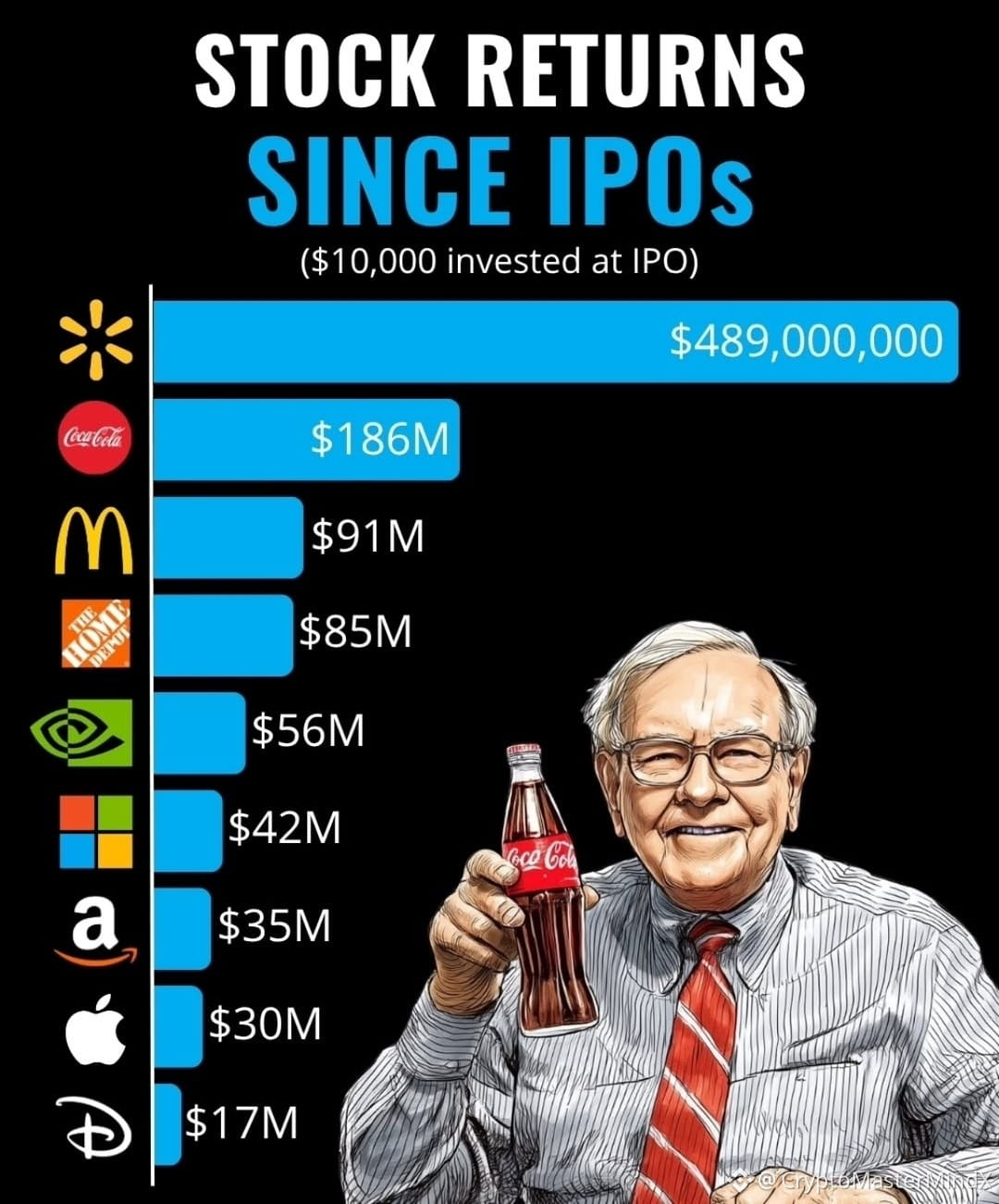
$100 invested in US stocks in 1871 is worth $103.7 million today. Stocks + time... still undefeated
$100 invested in US stocks in 1871 is worth $103.7 million today.

Stocks + time... still undefeated
Everyone keeps asking why Bitcoin is dropping… We’ve got a pro-Bitcoin U.S. government. Institutions are buying. ETFs are buying. Whales are accumulating. So what’s really going on? Simple. Price doesn’t move on headlines — it moves on liquidity. Big players shake the market, trigger fear, force liquidations, and scoop up cheap coins. Retail panics. Smart money loads. This isn’t weakness. It’s redistribution. And it happens every cycle. $BTC #BuyTheDip
Everyone keeps asking why Bitcoin is dropping…

We’ve got a pro-Bitcoin U.S. government.
Institutions are buying.
ETFs are buying.
Whales are accumulating.

So what’s really going on?

Simple.

Price doesn’t move on headlines — it moves on liquidity.

Big players shake the market, trigger fear, force liquidations, and scoop up cheap coins.

Retail panics.
Smart money loads.

This isn’t weakness.
It’s redistribution.

And it happens every cycle.
$BTC #BuyTheDip
Why Sending Money Around the World Just Got a Lot Easier​If you’ve ever tried to send money to a friend in another country or pay a supplier overseas, you know the routine. You head to the bank, pay a hefty wire fee, lose a chunk of change to a bad exchange rate, and then wait three days hoping the money actually arrives. It feels outdated, like we’re using a horse and buggy in the age of the internet. ​This is where Plasma comes in. It’s a new type of blockchain—what tech folks call a "Layer 1"—but you can just think of it as a super-fast digital highway built specifically for moving money. While other blockchains try to do a million different things, Plasma is laser-focused on one goal: making stablecoin payments (like digital US Dollars) work for everyone, everywhere. ​No More "Gas" Money Confusion ​The biggest headache with using most digital money apps is something called "gas fees." Usually, if you want to send $100 in USDT, the app tells you that you need to own a different coin just to pay for the transaction. It’s confusing and annoying. ​Plasma changes the game with gasless USDT transfers. This means if you want to send USDT, you just send it. You don't need to go out and buy a second coin just to move your money. If there is a small fee, you can pay it using the stablecoin you’re already holding. It makes the whole experience feel like using a regular banking app, but without the high costs or the wait times. ​Blink and It’s Done ​Speed is the other area where Plasma shines. Most traditional bank transfers take days, and even some older blockchains can take ten or twenty minutes to confirm. Plasma uses a system called PlasmaBFT that finishes a transaction in less than a second. ​Imagine standing at a shop counter or finishing a business deal; you hit "send" and the other person sees the money is theirs before you’ve even put your phone back in your pocket. That kind of speed is a total game-changer for businesses that need to move fast. ​Security You Can Trust ​Of course, when you’re moving money, you want to know it’s safe. Plasma is anchored to Bitcoin’s security. This means it uses the most powerful and unchangeable network in the world to double-check its work. It’s designed to be "neutral," meaning no single company or government can easily interfere with your payments. ​Because it’s also "EVM compatible," it works perfectly with the tools and apps people already know. Whether you’re a freelancer getting paid from halfway across the globe or a big company settling a huge invoice, Plasma provides a foundation that is fast, secure, and incredibly cheap. It’s finally making the "internet of money" a reality for the rest of #Plasma @Plasma $XPL

Why Sending Money Around the World Just Got a Lot Easier

​If you’ve ever tried to send money to a friend in another country or pay a supplier overseas, you know the routine. You head to the bank, pay a hefty wire fee, lose a chunk of change to a bad exchange rate, and then wait three days hoping the money actually arrives. It feels outdated, like we’re using a horse and buggy in the age of the internet.

​This is where Plasma comes in. It’s a new type of blockchain—what tech folks call a "Layer 1"—but you can just think of it as a super-fast digital highway built specifically for moving money. While other blockchains try to do a million different things, Plasma is laser-focused on one goal: making stablecoin payments (like digital US Dollars) work for everyone, everywhere.

​No More "Gas" Money Confusion
​The biggest headache with using most digital money apps is something called "gas fees." Usually, if you want to send $100 in USDT, the app tells you that you need to own a different coin just to pay for the transaction. It’s confusing and annoying.
​Plasma changes the game with gasless USDT transfers. This means if you want to send USDT, you just send it. You don't need to go out and buy a second coin just to move your money. If there is a small fee, you can pay it using the stablecoin you’re already holding. It makes the whole experience feel like using a regular banking app, but without the high costs or the wait times.
​Blink and It’s Done
​Speed is the other area where Plasma shines. Most traditional bank transfers take days, and even some older blockchains can take ten or twenty minutes to confirm. Plasma uses a system called PlasmaBFT that finishes a transaction in less than a second.

​Imagine standing at a shop counter or finishing a business deal; you hit "send" and the other person sees the money is theirs before you’ve even put your phone back in your pocket. That kind of speed is a total game-changer for businesses that need to move fast.

​Security You Can Trust
​Of course, when you’re moving money, you want to know it’s safe. Plasma is anchored to Bitcoin’s security. This means it uses the most powerful and unchangeable network in the world to double-check its work. It’s designed to be "neutral," meaning no single company or government can easily interfere with your payments.
​Because it’s also "EVM compatible," it works perfectly with the tools and apps people already know. Whether you’re a freelancer getting paid from halfway across the globe or a big company settling a huge invoice, Plasma provides a foundation that is fast, secure, and incredibly cheap. It’s finally making the "internet of money" a reality for the rest of
#Plasma @Plasma $XPL
I really miss the golden era of crypto—back when a coin could explode 800% in a single day. $DOGE
I really miss the golden era of crypto—back when a coin could explode 800% in a single day.
$DOGE
Bitcoin is CRASHING Ethereum is CRASHING XRP is CRASHING Gold is CRASHING Silver is CRASHING S&P 500 is CRASHING Nasdaq is CRASHING Banks are CRASHING Dollar is CRASHING EVERYTHING IS CRASHING Is there anything going up right now?
Bitcoin is CRASHING
Ethereum is CRASHING
XRP is CRASHING
Gold is CRASHING
Silver is CRASHING
S&P 500 is CRASHING
Nasdaq is CRASHING
Banks are CRASHING
Dollar is CRASHING
EVERYTHING IS CRASHING

Is there anything going up right now?
$BTC BTC is testing a strong weekly support around the 75K zone, which previously acted as a major demand area. As long as price holds above 75K, a relief bounce or consolidation is likely. A weekly close below 75K would be bearish and could trigger a deeper correction toward lower supports. This level is critical for bulls to defend. #BuyTheDip
$BTC

BTC is testing a strong weekly support around the 75K zone, which previously acted as a major demand area. As long as price holds above 75K, a relief bounce or consolidation is likely.

A weekly close below 75K would be bearish and could trigger a deeper correction toward lower supports. This level is critical for bulls to defend.
#BuyTheDip
🚨 Over $12 Trillion Vanished in 48 Hours — What Really Broke the Global MarketsIn just two days, more than $12 trillion was wiped out across global markets. This was not a normal pullback. This was not healthy volatility. What we witnessed was a structural unwind happening across metals, equities, and crypto at the same time. When assets that usually don’t crash together all fall hard in one window, something deeper is breaking. Let’s walk through what really happened: The Damage Was Massive and Fast The scale of losses alone tells us this wasn’t normal. Precious metals were crushed: Gold fell 16.36%, wiping out about $6.38 trillion Silver collapsed 38.9%, erasing $2.6 trillion Platinum dropped 29.5%, losing $235 billion Palladium fell 25%, losing $110 billion Equities didn’t escape: S&P 500 lost 1.88% (~$1.3 trillion) Nasdaq fell 3.15% (~$1.38 trillion) Russell 2000 lost about $100 billion Crypto followed the wave: Bitcoin fell 13% Ethereum dropped 17% BNB fell 11% In total, crypto lost around $500 billion. When you add it all up, over $12 trillion disappeared — more than the GDP of Germany, Japan, and India combined. That alone tells you something broke under the surface. Metals Were Already at Extreme Levels The first crack started in precious metals. Silver had just printed nine straight green monthly candles. That has never happened before. The previous record was eight — and that marked major cycle tops. Silver had already delivered over a 3x return in just 12 months. For a $5–$6 trillion market, that kind of move is extreme. At the peak, silver was up 65–70% year-to-date. Gold wasn’t far behind. It had gone parabolic on expectations of rate cuts and loose policy. At those levels, profit-taking was not just likely — it was unavoidable. Markets don’t stay stretched forever. Late Retail and Heavy Leverage Entered at the Top As prices went vertical, a wave of late money rushed in. Many investors rotated out of crypto and equities, chasing metals because they “felt safe.” But most of this money did not go into physical gold or silver. It went into leveraged futures and paper contracts. The dominant story everywhere was simple: “Silver is going to $150–$200.” That narrative encouraged oversized long positions right near the top. When price finally stalled and rolled over, there was no cushion. The Liquidation Cascade Took Over Once silver started falling, the market entered a feedback loop: Margin calls were triggered Long positions were forced to close Price dropped further More liquidations followed This is why silver collapsed over 35% in a single day. This was not people calmly choosing to sell. This was forced selling. Once leverage breaks, price does not move smoothly. It falls in steps — violently. Paper Markets Cracked, Physical Markets Didn’t Silver is mostly a paper market, not a physical one. Estimates suggest a 300–350:1 paper-to-physical ratio. That means hundreds of paper claims exist for every real ounce of silver. During the crash: COMEX paper silver collapsed Physical silver prices stayed elevated At one point: U.S. physical silver traded around $85–$90 Shanghai silver traded near $136 That gap exposed real stress. Paper markets unwind fast. Physical markets move slowly and reflect real demand. This wasn’t a demand collapse — it was a paper unwind. Margin Hikes Made Everything Worse As prices were already falling, exchanges poured fuel on the fire. Margins were raised aggressively. Effective February 2, 2026: Silver margins jumped from 11% to 15% Platinum from 12% to 15% Then just days later, another round hit: Gold futures margins up 33% Silver futures up 36% Platinum up 25% Palladium up 14% Margin hikes force traders to post more collateral immediately. In a falling market, most can’t. That leads to automatic liquidations. This is why the move felt so fast, so violent, and so one-directional. A Key Policy Narrative Suddenly Disappeared For months, gold and silver benefited from uncertainty around the future of the Federal Reserve. When policy direction is unclear, hard assets usually win. That changed fast. When the probability of Kevin Warsh becoming Fed Chair surged, the uncertainty trade ended. Warsh is known for opposing excessive QE, criticizing balance sheet expansion, and favoring tighter discipline. Markets had been priced for an extreme outcome: fast rate cuts plus heavy liquidity injections. What they got instead was a signal of rate cuts with balance-sheet control. That shift removed a major pillar supporting gold and silver. On its own, it wouldn’t have caused a crash. Combined with extreme leverage and crowded positioning, it accelerated everything. This Was Not a Demand Collapse Nothing “mysteriously failed.” This was the result of: Historic overextension Extreme leverage Crowded positioning Forced liquidations Aggressive margin hikes And a sudden shift in policy expectations When all of these align, markets don’t drift lower — they snap. What happened wasn’t random. It was mechanical. And when mechanics break, price moves fast. #BuyTheDip

🚨 Over $12 Trillion Vanished in 48 Hours — What Really Broke the Global Markets

In just two days, more than $12 trillion was wiped out across global markets. This was not a normal pullback. This was not healthy volatility. What we witnessed was a structural unwind happening across metals, equities, and crypto at the same time.
When assets that usually don’t crash together all fall hard in one window, something deeper is breaking.
Let’s walk through what really happened:
The Damage Was Massive and Fast
The scale of losses alone tells us this wasn’t normal.
Precious metals were crushed:
Gold fell 16.36%, wiping out about $6.38 trillion
Silver collapsed 38.9%, erasing $2.6 trillion
Platinum dropped 29.5%, losing $235 billion
Palladium fell 25%, losing $110 billion
Equities didn’t escape:
S&P 500 lost 1.88% (~$1.3 trillion)
Nasdaq fell 3.15% (~$1.38 trillion)
Russell 2000 lost about $100 billion
Crypto followed the wave:
Bitcoin fell 13%
Ethereum dropped 17%
BNB fell 11%
In total, crypto lost around $500 billion.
When you add it all up, over $12 trillion disappeared — more than the GDP of Germany, Japan, and India combined. That alone tells you something broke under the surface.
Metals Were Already at Extreme Levels
The first crack started in precious metals.
Silver had just printed nine straight green monthly candles. That has never happened before. The previous record was eight — and that marked major cycle tops.
Silver had already delivered over a 3x return in just 12 months. For a $5–$6 trillion market, that kind of move is extreme. At the peak, silver was up 65–70% year-to-date.
Gold wasn’t far behind. It had gone parabolic on expectations of rate cuts and loose policy. At those levels, profit-taking was not just likely — it was unavoidable.
Markets don’t stay stretched forever.
Late Retail and Heavy Leverage Entered at the Top
As prices went vertical, a wave of late money rushed in. Many investors rotated out of crypto and equities, chasing metals because they “felt safe.”
But most of this money did not go into physical gold or silver.
It went into leveraged futures and paper contracts.
The dominant story everywhere was simple: “Silver is going to $150–$200.” That narrative encouraged oversized long positions right near the top.
When price finally stalled and rolled over, there was no cushion.
The Liquidation Cascade Took Over
Once silver started falling, the market entered a feedback loop:
Margin calls were triggered
Long positions were forced to close
Price dropped further
More liquidations followed
This is why silver collapsed over 35% in a single day. This was not people calmly choosing to sell. This was forced selling.
Once leverage breaks, price does not move smoothly. It falls in steps — violently.
Paper Markets Cracked, Physical Markets Didn’t
Silver is mostly a paper market, not a physical one. Estimates suggest a 300–350:1 paper-to-physical ratio. That means hundreds of paper claims exist for every real ounce of silver.
During the crash:
COMEX paper silver collapsed
Physical silver prices stayed elevated
At one point:
U.S. physical silver traded around $85–$90
Shanghai silver traded near $136
That gap exposed real stress. Paper markets unwind fast. Physical markets move slowly and reflect real demand.
This wasn’t a demand collapse — it was a paper unwind.
Margin Hikes Made Everything Worse
As prices were already falling, exchanges poured fuel on the fire.
Margins were raised aggressively.
Effective February 2, 2026:
Silver margins jumped from 11% to 15%
Platinum from 12% to 15%
Then just days later, another round hit:
Gold futures margins up 33%
Silver futures up 36%
Platinum up 25%
Palladium up 14%
Margin hikes force traders to post more collateral immediately. In a falling market, most can’t. That leads to automatic liquidations.
This is why the move felt so fast, so violent, and so one-directional.
A Key Policy Narrative Suddenly Disappeared
For months, gold and silver benefited from uncertainty around the future of the Federal Reserve.
When policy direction is unclear, hard assets usually win.
That changed fast.
When the probability of Kevin Warsh becoming Fed Chair surged, the uncertainty trade ended. Warsh is known for opposing excessive QE, criticizing balance sheet expansion, and favoring tighter discipline.
Markets had been priced for an extreme outcome: fast rate cuts plus heavy liquidity injections.
What they got instead was a signal of rate cuts with balance-sheet control.
That shift removed a major pillar supporting gold and silver. On its own, it wouldn’t have caused a crash. Combined with extreme leverage and crowded positioning, it accelerated everything.
This Was Not a Demand Collapse
Nothing “mysteriously failed.”
This was the result of:
Historic overextension
Extreme leverage
Crowded positioning
Forced liquidations
Aggressive margin hikes
And a sudden shift in policy expectations
When all of these align, markets don’t drift lower — they snap.
What happened wasn’t random. It was mechanical.
And when mechanics break, price moves fast.

#BuyTheDip
If you won’t buy it lower don’t buy it when it’s higher
Bear market
Bear market
BREAKING: Tom Lee's Ethereum portfolio is now down $5,600,000,000
Here's What To Do IF You In Big Loss After Market CrashToday has been a rollercoaster ride in the crypto world, with Bitcoin experiencing a significant dip of over 5%. It's times like these that test our patience and resilience as traders and investors. If you find yourself in the midst of losses or feeling uncertain about what steps to take next, here are some strategies to consider: Stay Calm and Rational: It's easy to panic when prices drop, but emotional decision-making often leads to more losses. Take a deep breath, step back, and evaluate the situation with a clear mind. Assess Your Portfolio: Review your portfolio holdings and understand how they've been affected by Bitcoin's downturn. Identify any weak spots or overexposed positions that may need adjustment. Rebalance Your Portfolio: Consider rebalancing your portfolio to manage risk and optimize for future growth. This may involve reallocating assets, diversifying into other cryptocurrencies or traditional assets, or trimming positions that have become too dominant. Stick to Your Strategy: If you have a well-defined trading or investment strategy, stick to it. Avoid making impulsive decisions based on short-term market movements. Remember, volatility is a natural part of the crypto market. Stay Informed: Keep yourself informed about market developments, news, and technical analysis. Knowledge is your best defense against uncertainty. Stay updated on trends, regulatory changes, and macroeconomic factors that could impact crypto prices. Consider Dollar-Cost Averaging: If you believe in the long-term potential of cryptocurrencies but are concerned about short-term volatility, consider dollar-cost averaging. By investing a fixed amount at regular intervals, you can smooth out the impact of price fluctuations over time. Manage Risk: Implement risk management strategies such as setting stop-loss orders to limit potential losses or using hedging techniques to protect your portfolio against downside risk. Seek Guidance if Needed: Don't hesitate to seek advice from experienced traders, financial advisors, or crypto communities. Sometimes, discussing your concerns with others can provide valuable insights and perspective. Focus on the Long Term: Remember that cryptocurrency markets are inherently volatile, but they also have the potential for significant long-term growth. Keep your eyes on the bigger picture and stay committed to your financial goals. Take Care of Yourself: Lastly, prioritize your well-being during times of market stress. Engage in activities that help you relax and maintain a healthy balance between trading and other aspects of your life. In conclusion, experiencing losses in crypto trading can be tough, but it's essential to remain resilient and adaptable. By staying calm, reassessing your strategy, and taking proactive steps to manage risk, you can navigate through market downturns with confidence. Keep learning, stay disciplined, and remember that every challenge presents an opportunity for growth. Stay strong, stay informed, and stay Safe $BTC

Here's What To Do IF You In Big Loss After Market Crash

Today has been a rollercoaster ride in the crypto world, with Bitcoin experiencing a significant dip of over 5%. It's times like these that test our patience and resilience as traders and investors. If you find yourself in the midst of losses or feeling uncertain about what steps to take next, here are some strategies to consider:
Stay Calm and Rational: It's easy to panic when prices drop, but emotional decision-making often leads to more losses. Take a deep breath, step back, and evaluate the situation with a clear mind.
Assess Your Portfolio: Review your portfolio holdings and understand how they've been affected by Bitcoin's downturn. Identify any weak spots or overexposed positions that may need adjustment.
Rebalance Your Portfolio: Consider rebalancing your portfolio to manage risk and optimize for future growth. This may involve reallocating assets, diversifying into other cryptocurrencies or traditional assets, or trimming positions that have become too dominant.
Stick to Your Strategy: If you have a well-defined trading or investment strategy, stick to it. Avoid making impulsive decisions based on short-term market movements. Remember, volatility is a natural part of the crypto market.
Stay Informed: Keep yourself informed about market developments, news, and technical analysis. Knowledge is your best defense against uncertainty. Stay updated on trends, regulatory changes, and macroeconomic factors that could impact crypto prices.
Consider Dollar-Cost Averaging: If you believe in the long-term potential of cryptocurrencies but are concerned about short-term volatility, consider dollar-cost averaging. By investing a fixed amount at regular intervals, you can smooth out the impact of price fluctuations over time.
Manage Risk: Implement risk management strategies such as setting stop-loss orders to limit potential losses or using hedging techniques to protect your portfolio against downside risk.
Seek Guidance if Needed: Don't hesitate to seek advice from experienced traders, financial advisors, or crypto communities. Sometimes, discussing your concerns with others can provide valuable insights and perspective.
Focus on the Long Term: Remember that cryptocurrency markets are inherently volatile, but they also have the potential for significant long-term growth. Keep your eyes on the bigger picture and stay committed to your financial goals.
Take Care of Yourself: Lastly, prioritize your well-being during times of market stress. Engage in activities that help you relax and maintain a healthy balance between trading and other aspects of your life.
In conclusion, experiencing losses in crypto trading can be tough, but it's essential to remain resilient and adaptable. By staying calm, reassessing your strategy, and taking proactive steps to manage risk, you can navigate through market downturns with confidence. Keep learning, stay disciplined, and remember that every challenge presents an opportunity for growth.
Stay strong, stay informed, and stay Safe

$BTC
Войдите, чтобы посмотреть больше материала
Последние новости криптовалют
⚡️ Участвуйте в последних обсуждениях в криптомире
💬 Общайтесь с любимыми авторами
👍 Изучайте темы, которые вам интересны
Эл. почта/номер телефона
Структура веб-страницы
Настройки cookie
Правила и условия платформы