

CryptoLite_247
1.2k Публикации

CryptoLite_247
Отправить жалобу
Заблокировать пользователя
Free Stock Market News ACCURATE, CONSISTENT, & RELIABLE || https://x.com/Yusty121 || Crypto first commentary with Marco Market Context
Открытая сделка
Трейдер с регулярными сделками
5.4 г
7 подписок(и/а)
624 подписчиков(а)
2.1K+ понравилось
Посты
Портфель
Все
Цитирования
Видео
PINNED
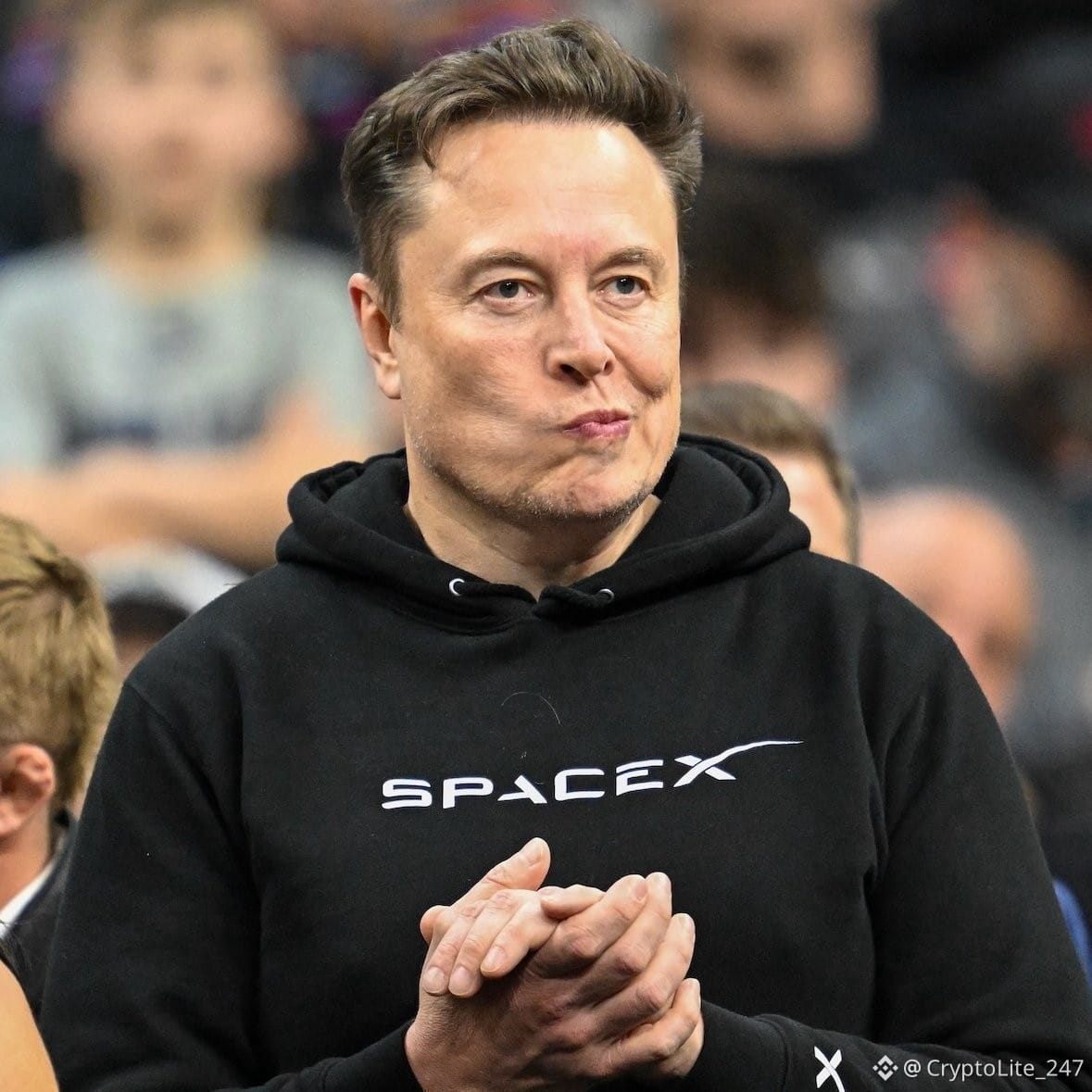
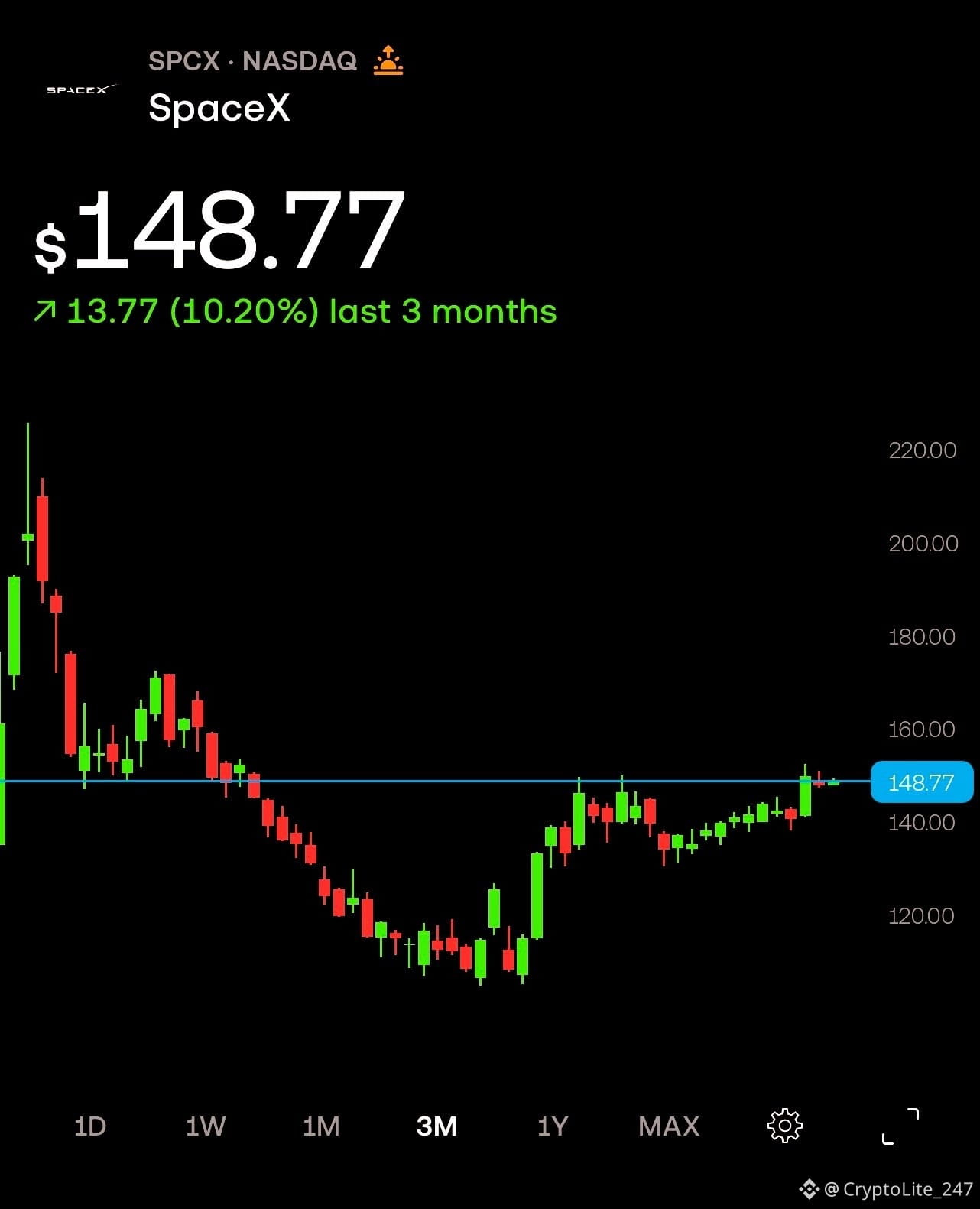
$SPCX just launched USSF-385 on B1100 which is the 100th Falcon 9 Block 5 booster SpaceX has built.
The mission is carrying a classified Space Force payload but the thick fog at Vandenberg made the launch clip look incredible.
$SPCX just launched USSF-385 on B1100 which is the 100th Falcon 9 Block 5 booster SpaceX has built.
The mission is carrying a classified Space Force payload but the thick fog at Vandenberg made the launch clip look incredible.
The mission is carrying a classified Space Force payload but the thick fog at Vandenberg made the launch clip look incredible.
25
15
132
127.6k
PINNED
19
1
53
82.1k
·
--
Рост
$CRDO is becoming an increasingly important bet on the optical side of AI infrastructure.
Credo’s Q1 revenue reached $479M, but the bigger catalyst may be whether its optical business can scale toward the company’s $600M target as its 1.6T DSP portfolio gains traction.
The thesis goes beyond one strong quarter. Credo needs to turn hyperscaler demand for high-speed connectivity into durable revenue, margins and cash flow.
Its September addition to the FTSE All-World Index could also increase exposure from benchmark-tracking funds, potentially making the stock more sensitive to future operating updates.
The biggest risk remains hyperscaler spending. If AI infrastructure budgets slow or orders get pushed out, Credo could face a mismatch between capacity/R&D spending and actual demand.
Analyst assumptions point toward $4.8B revenue and $1.9B earnings by 2029, but those numbers depend heavily on sustained execution.
$CRDO is becoming an increasingly important bet on the optical side of AI infrastructure.
Credo’s Q1 revenue reached $479M, but the bigger catalyst may be whether its optical business can scale toward the company’s $600M target as its 1.6T DSP portfolio gains traction.
The thesis goes beyond one strong quarter. Credo needs to turn hyperscaler demand for high-speed connectivity into durable revenue, margins and cash flow.
Its September addition to the FTSE All-World Index could also increase exposure from benchmark-tracking funds, potentially making the stock more sensitive to future operating updates.
The biggest risk remains hyperscaler spending. If AI infrastructure budgets slow or orders get pushed out, Credo could face a mismatch between capacity/R&D spending and actual demand.
Analyst assumptions point toward $4.8B revenue and $1.9B earnings by 2029, but those numbers depend heavily on sustained execution.
Credo’s Q1 revenue reached $479M, but the bigger catalyst may be whether its optical business can scale toward the company’s $600M target as its 1.6T DSP portfolio gains traction.
The thesis goes beyond one strong quarter. Credo needs to turn hyperscaler demand for high-speed connectivity into durable revenue, margins and cash flow.
Its September addition to the FTSE All-World Index could also increase exposure from benchmark-tracking funds, potentially making the stock more sensitive to future operating updates.
The biggest risk remains hyperscaler spending. If AI infrastructure budgets slow or orders get pushed out, Credo could face a mismatch between capacity/R&D spending and actual demand.
Analyst assumptions point toward $4.8B revenue and $1.9B earnings by 2029, but those numbers depend heavily on sustained execution.
1
1
88
·
--
Рост
$ORCL signed a $7B AI compute deal with Tencent covering ~10OK advanced chips across its Southeast Asia data centers.
Also really interest seeing Tencent paying ~30% upfront as it locks in compute early for model training and agents across WeChat and its enterprise products.
$ORCL signed a $7B AI compute deal with Tencent covering ~10OK advanced chips across its Southeast Asia data centers.
Also really interest seeing Tencent paying ~30% upfront as it locks in compute early for model training and agents across WeChat and its enterprise products.
Also really interest seeing Tencent paying ~30% upfront as it locks in compute early for model training and agents across WeChat and its enterprise products.
1
1
151
·
--
Рост
$MU : The Supply Story Is More Bullish Than The Earnings.
> 26 long-term supply agreements signed > $32B in customer commitments > 75%+ of FY27 production already contracted > New fabs won't be ready until late 2028, supply ceiling is fixed. > Demand exceeds supply. Customers are being given order limits.
The demand is locked in. The supply can’t keep up.
$MU : The Supply Story Is More Bullish Than The Earnings.
> 26 long-term supply agreements signed > $32B in customer commitments > 75%+ of FY27 production already contracted > New fabs won't be ready until late 2028, supply ceiling is fixed. > Demand exceeds supply. Customers are being given order limits.
The demand is locked in. The supply can’t keep up.
> 26 long-term supply agreements signed > $32B in customer commitments > 75%+ of FY27 production already contracted > New fabs won't be ready until late 2028, supply ceiling is fixed. > Demand exceeds supply. Customers are being given order limits.
The demand is locked in. The supply can’t keep up.
1
189
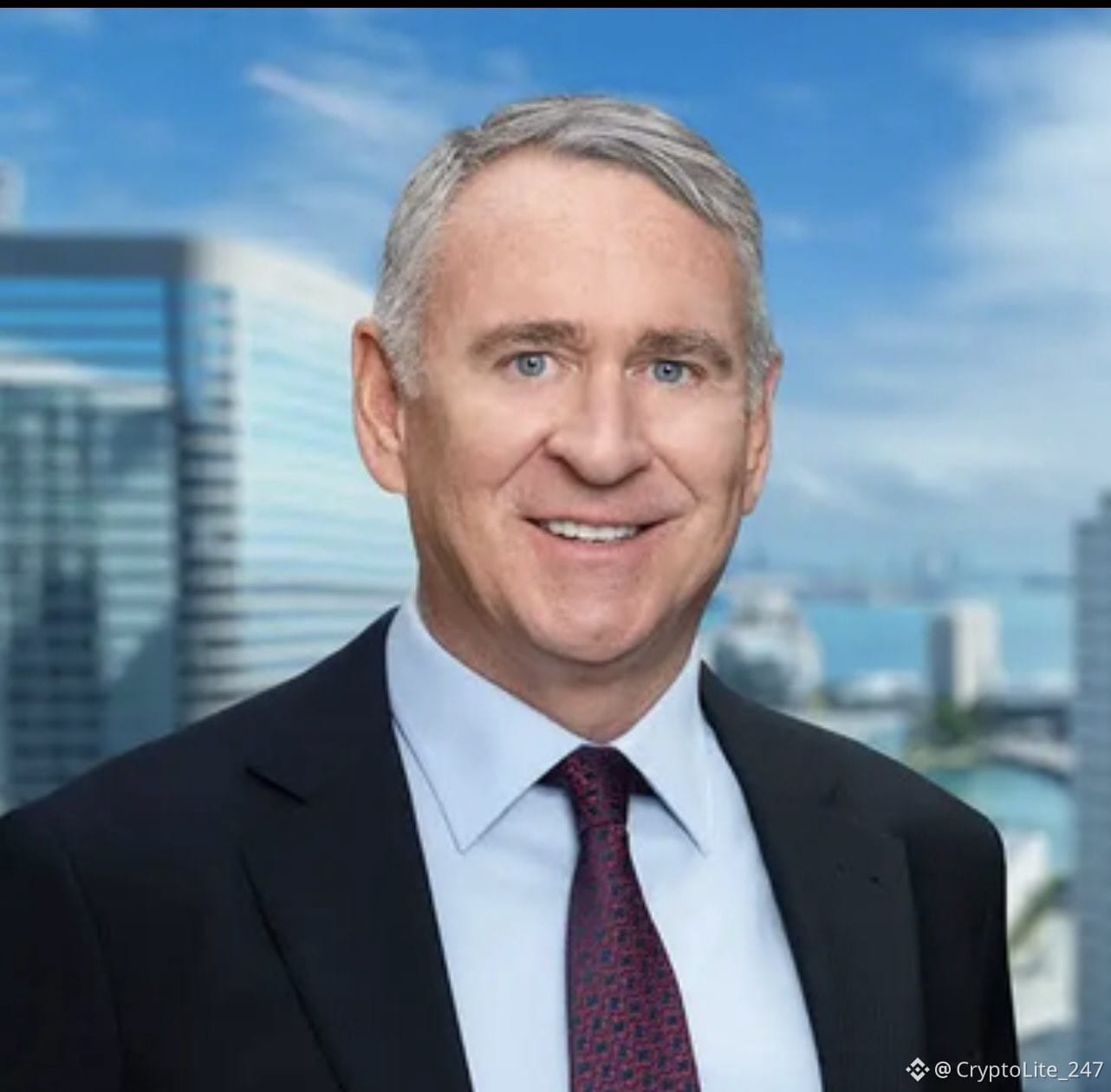
Citadel disclosed a 4.7% stake in $IREN . 18 million shares.
This represents remaining shares after Citadel unwound 80%+ of the Aschenbrenner Situational Awareness fund they acquired in July.
Citadel isn't a new share holder. They've been trading $IREN short term for years.
Do you see this as a bullish signal or just near-term price relief?
Citadel disclosed a 4.7% stake in $IREN . 18 million shares.
This represents remaining shares after Citadel unwound 80%+ of the Aschenbrenner Situational Awareness fund they acquired in July.
Citadel isn't a new share holder. They've been trading $IREN short term for years.
Do you see this as a bullish signal or just near-term price relief?
This represents remaining shares after Citadel unwound 80%+ of the Aschenbrenner Situational Awareness fund they acquired in July.
Citadel isn't a new share holder. They've been trading $IREN short term for years.
Do you see this as a bullish signal or just near-term price relief?
1
1
102
·
--
Рост
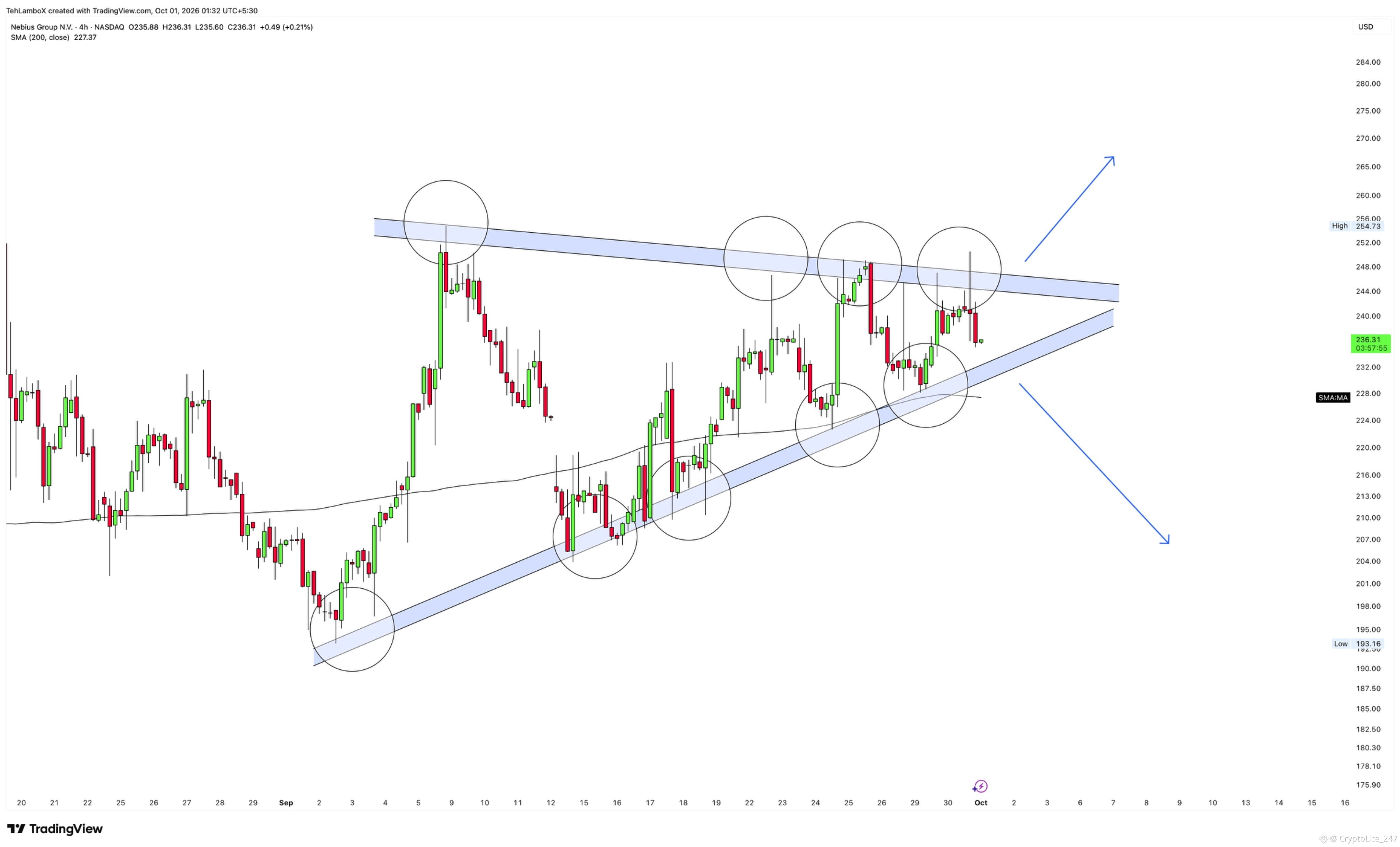
🚨 $NBIS is inside another triangle consolidation.
Its squeezing inside with more than 75% of the pattern done, its likely it is going to break from it in next 24-48 hours
This is going to give a 10% move either side and we will be waiting for it here only.
🚨 $NBIS is inside another triangle consolidation.
Its squeezing inside with more than 75% of the pattern done, its likely it is going to break from it in next 24-48 hours
This is going to give a 10% move either side and we will be waiting for it here only.
Its squeezing inside with more than 75% of the pattern done, its likely it is going to break from it in next 24-48 hours
This is going to give a 10% move either side and we will be waiting for it here only.
1
1
481
·
--
Рост
Flow Engineering raised a $50M Series B at a $750M valuation, co-led by Valor Equity Partners founder Antonio Gracias and Atreides Management Managing Partner Gavin Baker.
The company is building an AI-powered hardware development platform used by teams including Rivian $RIVN , $JOBY.US , Anduril and Stoke Space.
Flow Engineering raised a $50M Series B at a $750M valuation, co-led by Valor Equity Partners founder Antonio Gracias and Atreides Management Managing Partner Gavin Baker.
The company is building an AI-powered hardware development platform used by teams including Rivian $RIVN , $JOBY.US , Anduril and Stoke Space.
The company is building an AI-powered hardware development platform used by teams including Rivian $RIVN , $JOBY.US , Anduril and Stoke Space.

1
1
613
·
--
Рост
Проверено
My initial read on why $MU isn't more green is that Q4 was still heavily price driven with DRAM revenue up 27% while bits only grew mid single digits and NAND up 42% with ~30% pricing so the market is still treating these earnings like a peak that fades once supply catches up.
What changed this quarter is management gave us a lot more visibility into why that may not happen anytime soon with 75%+ of next year’s output already committed, SCAs stretching into 2031, margins rising after Q1 and meaningful new cleanroom capacity still not arriving until late 2028.
If Micron can sustain something around $200 of forward EPS and market eventually decide that setup deserves even 10x instead of 6x then you're suddenly looking at $2,000 stock without needing an aggressive multiple.
My initial read on why $MU isn't more green is that Q4 was still heavily price driven with DRAM revenue up 27% while bits only grew mid single digits and NAND up 42% with ~30% pricing so the market is still treating these earnings like a peak that fades once supply catches up.
What changed this quarter is management gave us a lot more visibility into why that may not happen anytime soon with 75%+ of next year’s output already committed, SCAs stretching into 2031, margins rising after Q1 and meaningful new cleanroom capacity still not arriving until late 2028.
If Micron can sustain something around $200 of forward EPS and market eventually decide that setup deserves even 10x instead of 6x then you're suddenly looking at $2,000 stock without needing an aggressive multiple.
What changed this quarter is management gave us a lot more visibility into why that may not happen anytime soon with 75%+ of next year’s output already committed, SCAs stretching into 2031, margins rising after Q1 and meaningful new cleanroom capacity still not arriving until late 2028.
If Micron can sustain something around $200 of forward EPS and market eventually decide that setup deserves even 10x instead of 6x then you're suddenly looking at $2,000 stock without needing an aggressive multiple.
1
2
1.3k
·
--
Рост
🚨 $RKLB just landed its largest-ever commercial Electron deal.
The company will launch 20 new Electron missions for Synspective.
The agreement pushes Rocket Lab’s launch backlog to more than 100 missions.
🚨 $RKLB just landed its largest-ever commercial Electron deal.
The company will launch 20 new Electron missions for Synspective.
The agreement pushes Rocket Lab’s launch backlog to more than 100 missions.
The company will launch 20 new Electron missions for Synspective.
The agreement pushes Rocket Lab’s launch backlog to more than 100 missions.
1
1
603
·
--
Рост
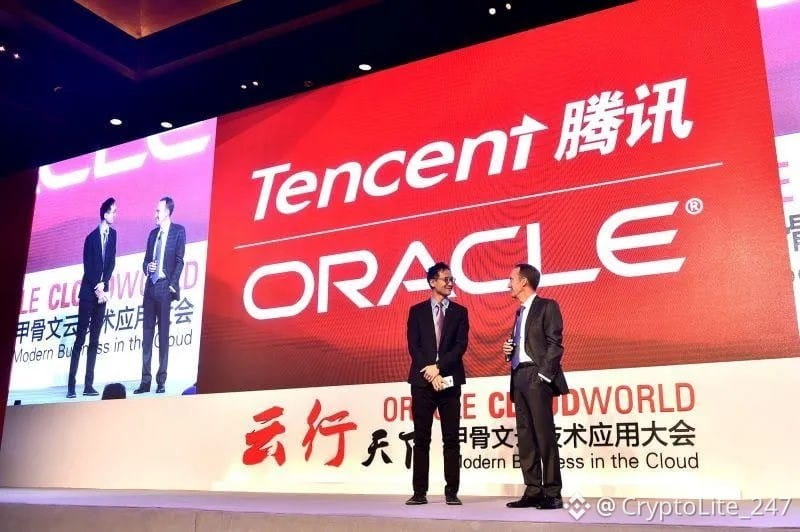
TENCENT 🇨🇳 SIGNS ITS LARGEST OVERSEAS AI DEAL
$TCEHY has agreed to a five-year $7B deal with Oracle $ORCL for access to about 100,000 advanced AI chips across Southeast Asia.
The FT says Tencent will pay roughly 30% upfront, with the chips primarily advanced $NVDA processors unavailable in China.
TENCENT 🇨🇳 SIGNS ITS LARGEST OVERSEAS AI DEAL
$TCEHY has agreed to a five-year $7B deal with Oracle $ORCL for access to about 100,000 advanced AI chips across Southeast Asia.
The FT says Tencent will pay roughly 30% upfront, with the chips primarily advanced $NVDA processors unavailable in China.
$TCEHY has agreed to a five-year $7B deal with Oracle $ORCL for access to about 100,000 advanced AI chips across Southeast Asia.
The FT says Tencent will pay roughly 30% upfront, with the chips primarily advanced $NVDA processors unavailable in China.
1
3
660
Проверено
$MU Q4 FY26
Revenue: $54.23B (+379% YoY, +31% QoQ) vs $50B guide, ~$51.2B est
Non-GAAP gross margin: 87.0% vs ~86% guide
Non-GAAP EPS: $33.42 vs $31 guide, ~$31.60 est
Non-GAAP operating margin: 82.3%
Operating cash flow: $43.97B
Adjusted FCF: $33.2B
FY26: revenue $133.2B (+256%), non-GAAP EPS $75.52 vs $8.29 last year, FCF $62.3B
Q1 FY27 guide: revenue $61.5B ± $1.5B, gross margin ~86.25%, EPS $38.15 ± $1
Notes:
Beat the top of its own guidance range by 6% and beat consensus by $3B. Same quarter last year was $11.3B.
Q1 guide of $61.5B is another 13% sequential on top of this. I said over $58B confirms the supercycle. This is $3.5B above that.
Core Data Center did $18.0B, up 56% QoQ, at a 90% gross margin. Every segment is above 83% gross margin. Automotive, the weakest, is at 84%.
$73.5B in cash and investments against $5.2B of debt. Customers prepaid $12.7B this year to lock in supply. That's the strategic customer agreements showing up on the balance sheet.
Capex was $10.8B this quarter, $27.4B for the year, and they still generated $62B of free cash flow. They're funding the buildout from cash and still stacking $30B+ a quarter.
$MU Q4 FY26
Revenue: $54.23B (+379% YoY, +31% QoQ) vs $50B guide, ~$51.2B est
Non-GAAP gross margin: 87.0% vs ~86% guide
Non-GAAP EPS: $33.42 vs $31 guide, ~$31.60 est
Non-GAAP operating margin: 82.3%
Operating cash flow: $43.97B
Adjusted FCF: $33.2B
FY26: revenue $133.2B (+256%), non-GAAP EPS $75.52 vs $8.29 last year, FCF $62.3B
Q1 FY27 guide: revenue $61.5B ± $1.5B, gross margin ~86.25%, EPS $38.15 ± $1
Notes:
Beat the top of its own guidance range by 6% and beat consensus by $3B. Same quarter last year was $11.3B.
Q1 guide of $61.5B is another 13% sequential on top of this. I said over $58B confirms the supercycle. This is $3.5B above that.
Core Data Center did $18.0B, up 56% QoQ, at a 90% gross margin. Every segment is above 83% gross margin. Automotive, the weakest, is at 84%.
$73.5B in cash and investments against $5.2B of debt. Customers prepaid $12.7B this year to lock in supply. That's the strategic customer agreements showing up on the balance sheet.
Capex was $10.8B this quarter, $27.4B for the year, and they still generated $62B of free cash flow. They're funding the buildout from cash and still stacking $30B+ a quarter.
Revenue: $54.23B (+379% YoY, +31% QoQ) vs $50B guide, ~$51.2B est
Non-GAAP gross margin: 87.0% vs ~86% guide
Non-GAAP EPS: $33.42 vs $31 guide, ~$31.60 est
Non-GAAP operating margin: 82.3%
Operating cash flow: $43.97B
Adjusted FCF: $33.2B
FY26: revenue $133.2B (+256%), non-GAAP EPS $75.52 vs $8.29 last year, FCF $62.3B
Q1 FY27 guide: revenue $61.5B ± $1.5B, gross margin ~86.25%, EPS $38.15 ± $1
Notes:
Beat the top of its own guidance range by 6% and beat consensus by $3B. Same quarter last year was $11.3B.
Q1 guide of $61.5B is another 13% sequential on top of this. I said over $58B confirms the supercycle. This is $3.5B above that.
Core Data Center did $18.0B, up 56% QoQ, at a 90% gross margin. Every segment is above 83% gross margin. Automotive, the weakest, is at 84%.
$73.5B in cash and investments against $5.2B of debt. Customers prepaid $12.7B this year to lock in supply. That's the strategic customer agreements showing up on the balance sheet.
Capex was $10.8B this quarter, $27.4B for the year, and they still generated $62B of free cash flow. They're funding the buildout from cash and still stacking $30B+ a quarter.
1
2
1.5k
·
--
Рост
$INTC added $NVDA OpenShell to its AI for Enterprise Agent Toolkit, bringing policy-enforced sandboxes that control agent actions, access and credentials.
The integration adds an external security layer around AI agents while continuing to run on Intel Xeon infrastructure and Intel’s existing GenAI gateway.
$INTC added $NVDA OpenShell to its AI for Enterprise Agent Toolkit, bringing policy-enforced sandboxes that control agent actions, access and credentials.
The integration adds an external security layer around AI agents while continuing to run on Intel Xeon infrastructure and Intel’s existing GenAI gateway.
The integration adds an external security layer around AI agents while continuing to run on Intel Xeon infrastructure and Intel’s existing GenAI gateway.
2
1
467
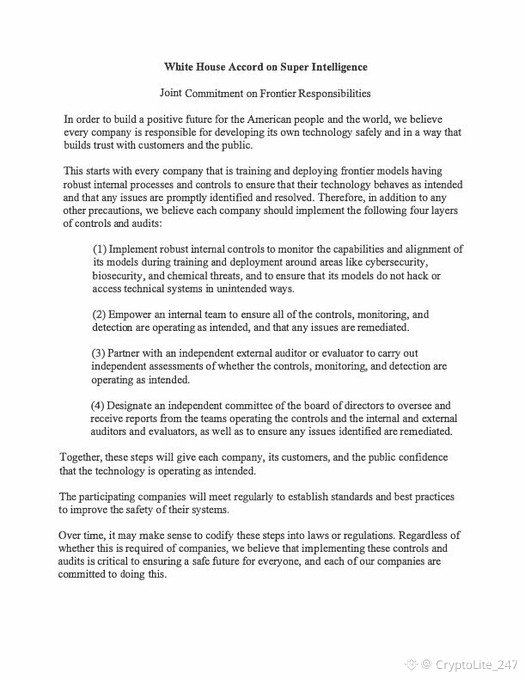
President Trump and leaders from GOOGL, $NVDA , $META , $SPCX , Anthropic and OpenAI just signed a voluntary White House accord for advanced AI safety.
The companies agreed to internal controls and outside audits creating a self policing framework that could eventually become law.
President Trump and leaders from GOOGL, $NVDA , $META , $SPCX , Anthropic and OpenAI just signed a voluntary White House accord for advanced AI safety.
The companies agreed to internal controls and outside audits creating a self policing framework that could eventually become law.
The companies agreed to internal controls and outside audits creating a self policing framework that could eventually become law.
2
1
403
·
--
Рост
Частичная правда
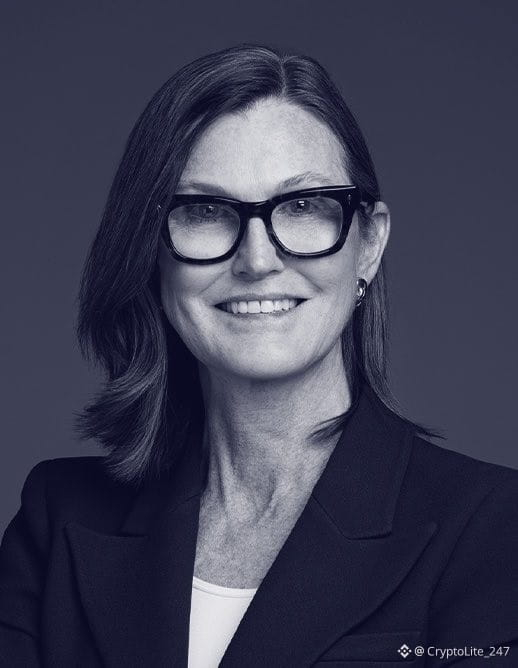
Cathie Wood says China may be the biggest hurdle to any $TSLA + $SPCX merger as Elon Musk works both sides of the relationship with Trump and Xi.
“He’s working all angles here.”
Cathie Wood says China may be the biggest hurdle to any $TSLA + $SPCX merger as Elon Musk works both sides of the relationship with Trump and Xi.
“He’s working all angles here.”
“He’s working all angles here.”
3
2
1.9k
Elon Musk says $SPCX and $TSLA are aiming for 200 gigawatts of solar production per year.
“So orbital compute is going to be a very big deal.”
Elon Musk says $SPCX and $TSLA are aiming for 200 gigawatts of solar production per year.
“So orbital compute is going to be a very big deal.”
“So orbital compute is going to be a very big deal.”
3
5
2.7k
·
--
Рост
Проверено
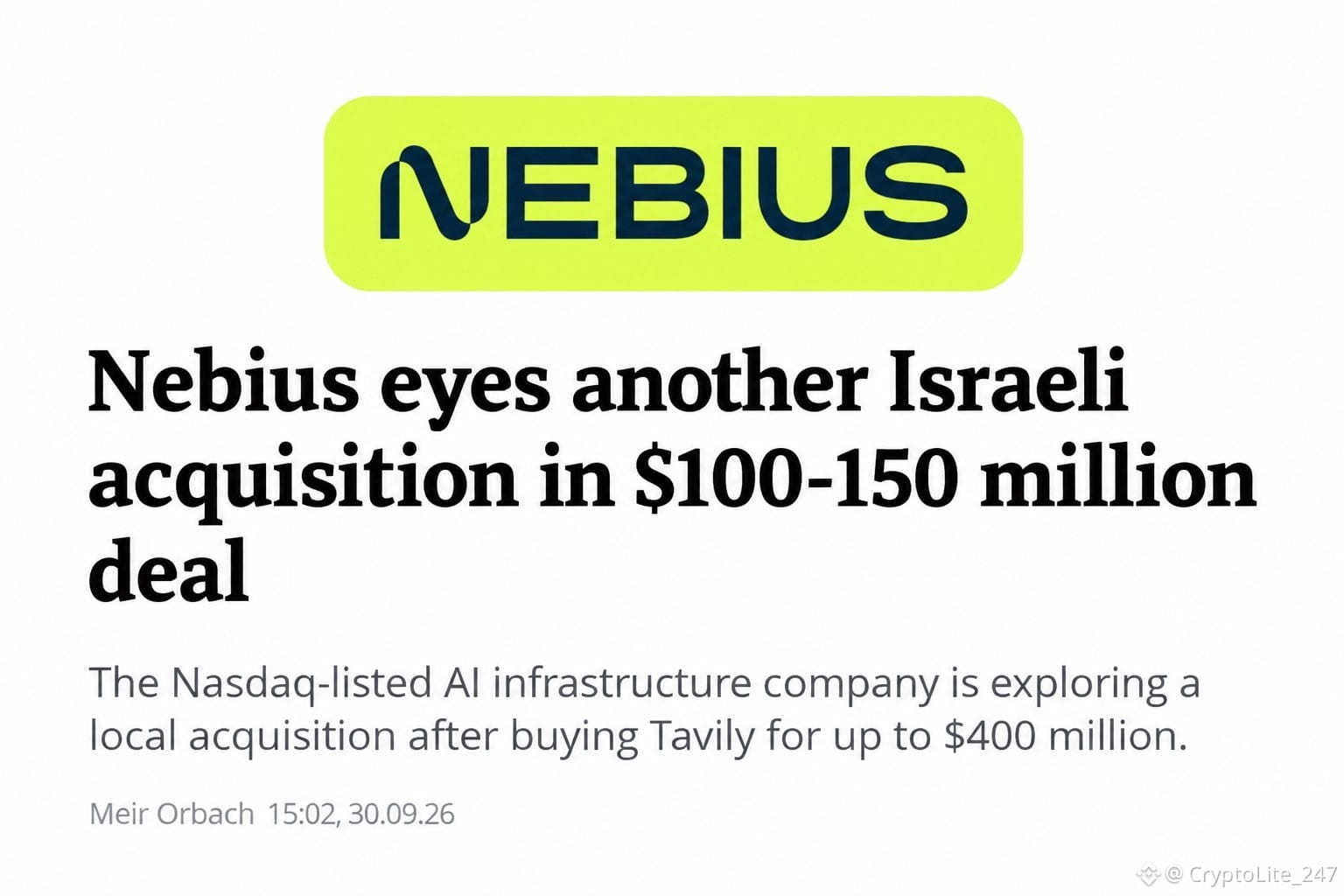
🚨 $NBIS is reportedly eyeing another acquisition.
Calcalist, Israel’s leading financial newspaper, reports that Nebius is exploring the acquisition of an Israeli company in a deal valued at $100M-$150M.
No other details were disclosed.
🚨 $NBIS is reportedly eyeing another acquisition.
Calcalist, Israel’s leading financial newspaper, reports that Nebius is exploring the acquisition of an Israeli company in a deal valued at $100M-$150M.
No other details were disclosed.
Calcalist, Israel’s leading financial newspaper, reports that Nebius is exploring the acquisition of an Israeli company in a deal valued at $100M-$150M.
No other details were disclosed.
3
2
802
ELEVENLABS VALUATION DOUBLES TO $22B
AI voice startup ElevenLabs is now valued at $22B after existing investors and employees sold $300M of stock in a secondary deal led by Wellington and T. Rowe Price.
That’s double its valuation from February, when ElevenLabs raised $500M.
The company says it now has more than 800 employees across 20 countries and counts Deutsche Telekom, Stripe, Revolut, Klarna and the governments of Ukraine and Greece among its customers.
ElevenLabs also develops and trains its own models rather than relying on OpenAI, Google or Anthropic.
The company says it wants to be IPO-ready within the next 2 to 2.5 years.
$NVDA became a strategic investor in ElevenLabs in 2025.
ELEVENLABS VALUATION DOUBLES TO $22B
AI voice startup ElevenLabs is now valued at $22B after existing investors and employees sold $300M of stock in a secondary deal led by Wellington and T. Rowe Price.
That’s double its valuation from February, when ElevenLabs raised $500M.
The company says it now has more than 800 employees across 20 countries and counts Deutsche Telekom, Stripe, Revolut, Klarna and the governments of Ukraine and Greece among its customers.
ElevenLabs also develops and trains its own models rather than relying on OpenAI, Google or Anthropic.
The company says it wants to be IPO-ready within the next 2 to 2.5 years.
$NVDA became a strategic investor in ElevenLabs in 2025.
AI voice startup ElevenLabs is now valued at $22B after existing investors and employees sold $300M of stock in a secondary deal led by Wellington and T. Rowe Price.
That’s double its valuation from February, when ElevenLabs raised $500M.
The company says it now has more than 800 employees across 20 countries and counts Deutsche Telekom, Stripe, Revolut, Klarna and the governments of Ukraine and Greece among its customers.
ElevenLabs also develops and trains its own models rather than relying on OpenAI, Google or Anthropic.
The company says it wants to be IPO-ready within the next 2 to 2.5 years.
$NVDA became a strategic investor in ElevenLabs in 2025.
1
18
·
--
Рост
Several updates from $CRWVB :
Ennoble Care selected CoreWeave to run clinical AI inference across its home-based care network, using dedicated $NVDA # RTX PRO 6000 Blackwell nodes for workloads including documentation, summarization and clinical decision support.
CoreWeave also said NVIDIA Vera Rubin NVL72 is now available in production, with Cognition as the first customer running live workloads. Cognition measured 3.8x more output tokens versus GB200 NVL72.
Separately, CoreWeave launched a new Partner Network with validated integrations from companies including CrowdStrike, VAST Data, ClickHouse, Reflection, Exa and You .com, all tested on CoreWeave infrastructure under production conditions.
Several updates from $CRWVB :
Ennoble Care selected CoreWeave to run clinical AI inference across its home-based care network, using dedicated $NVDA # RTX PRO 6000 Blackwell nodes for workloads including documentation, summarization and clinical decision support.
CoreWeave also said NVIDIA Vera Rubin NVL72 is now available in production, with Cognition as the first customer running live workloads. Cognition measured 3.8x more output tokens versus GB200 NVL72.
Separately, CoreWeave launched a new Partner Network with validated integrations from companies including CrowdStrike, VAST Data, ClickHouse, Reflection, Exa and You .com, all tested on CoreWeave infrastructure under production conditions.
Ennoble Care selected CoreWeave to run clinical AI inference across its home-based care network, using dedicated $NVDA # RTX PRO 6000 Blackwell nodes for workloads including documentation, summarization and clinical decision support.
CoreWeave also said NVIDIA Vera Rubin NVL72 is now available in production, with Cognition as the first customer running live workloads. Cognition measured 3.8x more output tokens versus GB200 NVL72.
Separately, CoreWeave launched a new Partner Network with validated integrations from companies including CrowdStrike, VAST Data, ClickHouse, Reflection, Exa and You .com, all tested on CoreWeave infrastructure under production conditions.
3
3
2.5k
·
--
Рост
Проверено
AIB Data Centers signs a contract with $NBIS for 50 MW of AI data center capacity in the U.S.
The contracted capacity is supported by AIB’s previously announced 15-year Electric Service Agreement covering 65 MW of utility load at the site, with no significant additional electrical infrastructure upgrades required.
AIB expects to deliver the capacity across two data halls.
“Time-to-power is the binding constraint on AI infrastructure today, and AIB’s existing power position gave us a clear path to bringing this capacity online on a timeline that works for our customers. This agreement adds dedicated capacity in the southeastern U.S. for training and inference workloads.”
— Andrey Korolenko, Head of Infrastructure at $NBIS
AIB Data Centers signs a contract with $NBIS for 50 MW of AI data center capacity in the U.S.
The contracted capacity is supported by AIB’s previously announced 15-year Electric Service Agreement covering 65 MW of utility load at the site, with no significant additional electrical infrastructure upgrades required.
AIB expects to deliver the capacity across two data halls.
“Time-to-power is the binding constraint on AI infrastructure today, and AIB’s existing power position gave us a clear path to bringing this capacity online on a timeline that works for our customers. This agreement adds dedicated capacity in the southeastern U.S. for training and inference workloads.”
— Andrey Korolenko, Head of Infrastructure at $NBIS
The contracted capacity is supported by AIB’s previously announced 15-year Electric Service Agreement covering 65 MW of utility load at the site, with no significant additional electrical infrastructure upgrades required.
AIB expects to deliver the capacity across two data halls.
“Time-to-power is the binding constraint on AI infrastructure today, and AIB’s existing power position gave us a clear path to bringing this capacity online on a timeline that works for our customers. This agreement adds dedicated capacity in the southeastern U.S. for training and inference workloads.”
— Andrey Korolenko, Head of Infrastructure at $NBIS
2
1
772
Войдите, чтобы посмотреть больше материала
Присоединяйтесь к пользователям криптовалют по всему миру на Binance Square
⚡️ Получайте новейшую и полезную информацию о криптоактивах.
💬 Нам доверяет крупнейшая в мире криптобиржа.
👍 Получите достоверные аналитические данные от верифицированных создателей контента.
Эл. почта/номер телефона