
C Y R O N
5.5k Публикации

C Y R O N
Отправить жалобу
Заблокировать пользователя
Binance KOL & Web3 Mentor

Владелец XPL
Трейдер с регулярными сделками
4.8 г
291 подписок(и/а)
18.2K+ подписчиков(а)
18.0K+ понравилось
Посты
Все
Цитирования
Видео
Активно
·
--
Падение
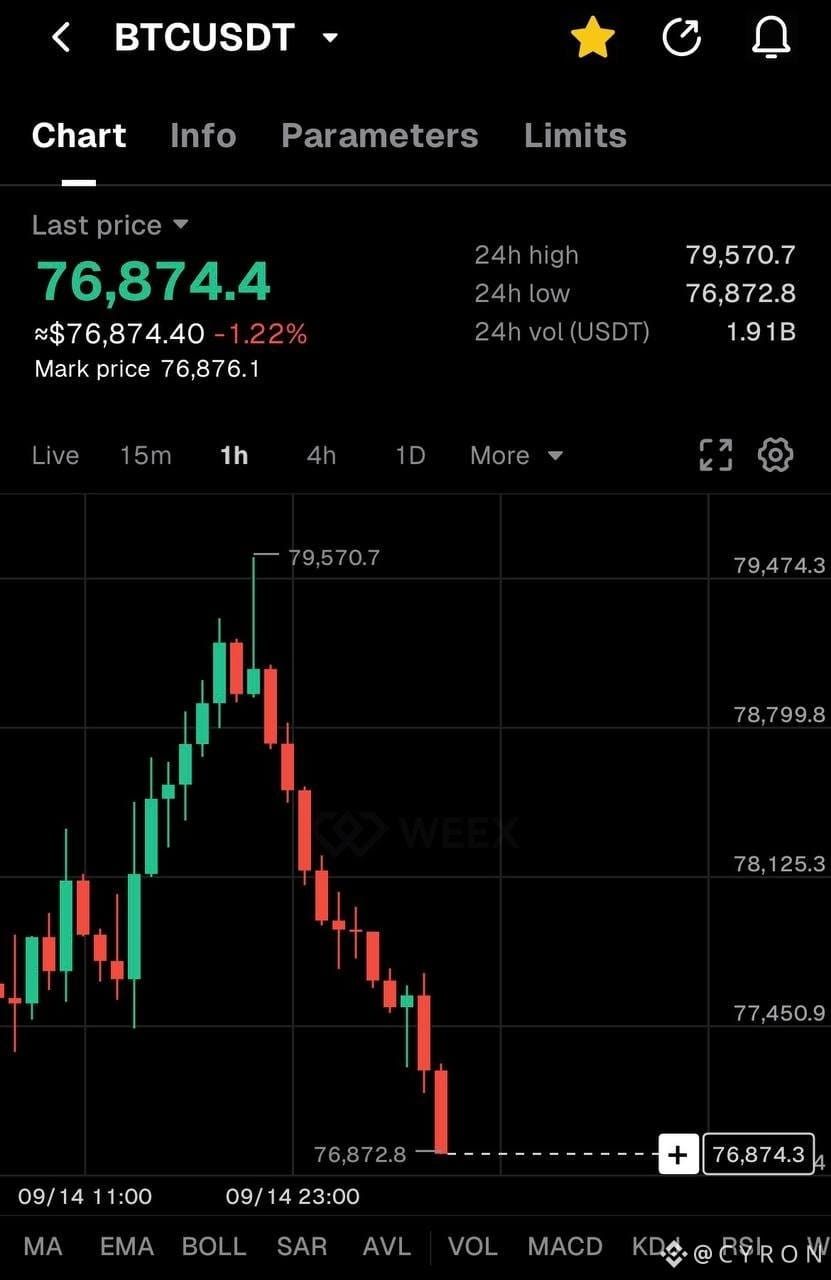
🚨 BITCOIN JUST LOST $77,000.
Selling pressure is accelerating.
$75,000 is now the key level bulls need to defend.
Lose $75K, and the downside could open up fast.
This is a level I’m watching closely.
{spot}(BTCUSDT)
#SolanaTransactionV1GoesLiveOnMainnet
#FedHikeOddsRiseTo89%
🚨 BITCOIN JUST LOST $77,000.
Selling pressure is accelerating.
$75,000 is now the key level bulls need to defend.
Lose $75K, and the downside could open up fast.
This is a level I’m watching closely.
#SolanaTransactionV1GoesLiveOnMainnet
#FedHikeOddsRiseTo89%
Selling pressure is accelerating.
$75,000 is now the key level bulls need to defend.
Lose $75K, and the downside could open up fast.
This is a level I’m watching closely.
#SolanaTransactionV1GoesLiveOnMainnet
#FedHikeOddsRiseTo89%
1
135
·
--
Рост
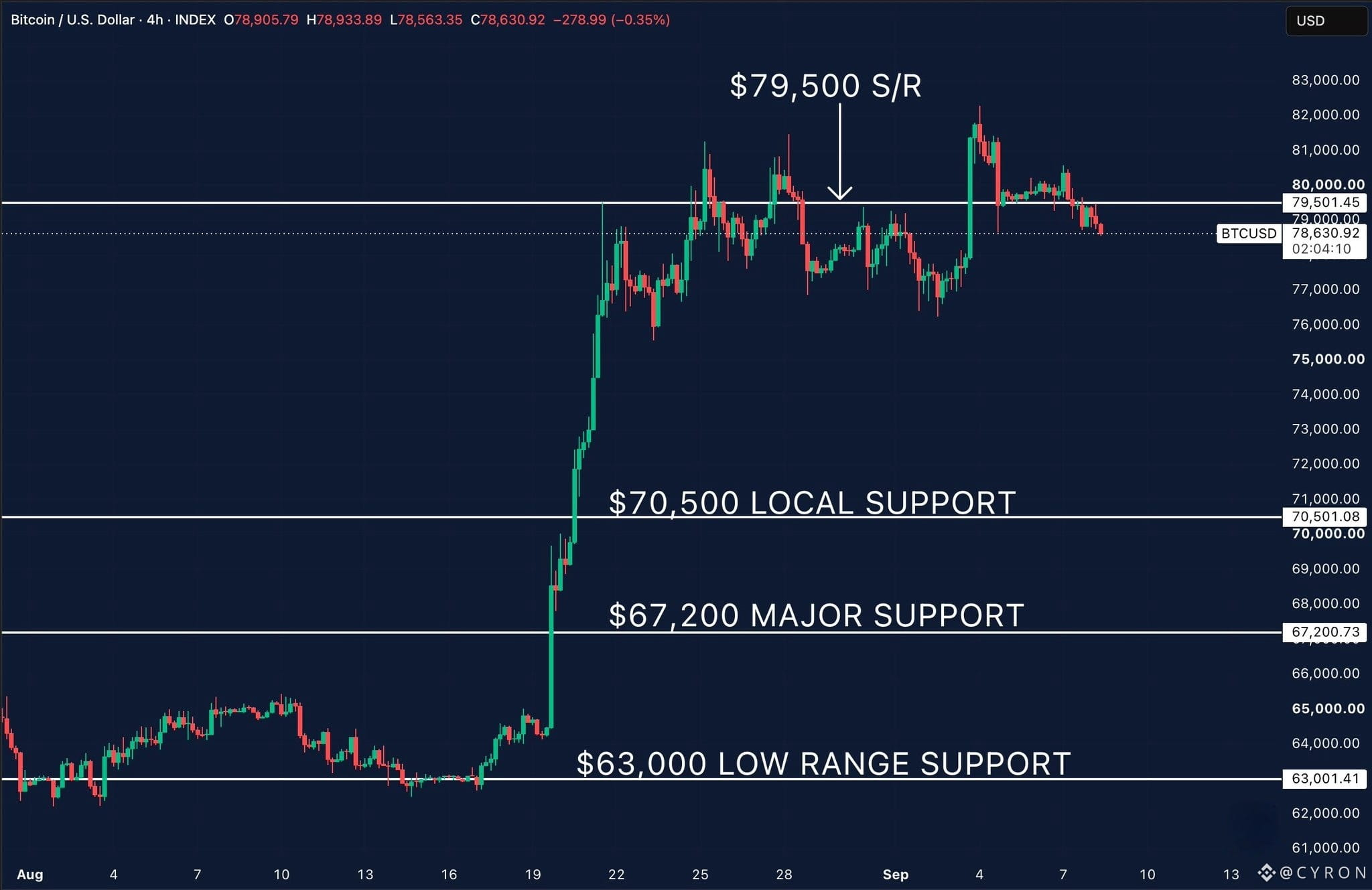
Bitcoin is at a key level.
$79,500 has flipped from support into resistance after $BTC failed to hold above it.
If we reclaim $79.5K and hold, I’d be looking for a move back towards $81K+.
If we lose $78K, I’d expect the liquidity below to get taken first.
Simple levels to watch.
$79.5K reclaim = bullish.
$78K loss = bearish.
Until then, I’m waiting...
{spot}(BTCUSDT)
#SaudiHaltsSouthernEnergySitesAfterAttacks
#YenBreaks155NearingYearHigh
#USIranTradeTankerStrikesEscalate
Bitcoin is at a key level.
$79,500 has flipped from support into resistance after $BTC failed to hold above it.
If we reclaim $79.5K and hold, I’d be looking for a move back towards $81K+.
If we lose $78K, I’d expect the liquidity below to get taken first.
Simple levels to watch.
$79.5K reclaim = bullish.
$78K loss = bearish.
Until then, I’m waiting...
#SaudiHaltsSouthernEnergySitesAfterAttacks
#YenBreaks155NearingYearHigh
#USIranTradeTankerStrikesEscalate
$79,500 has flipped from support into resistance after $BTC failed to hold above it.
If we reclaim $79.5K and hold, I’d be looking for a move back towards $81K+.
If we lose $78K, I’d expect the liquidity below to get taken first.
Simple levels to watch.
$79.5K reclaim = bullish.
$78K loss = bearish.
Until then, I’m waiting...
#SaudiHaltsSouthernEnergySitesAfterAttacks
#YenBreaks155NearingYearHigh
#USIranTradeTankerStrikesEscalate
116
·
--
Рост
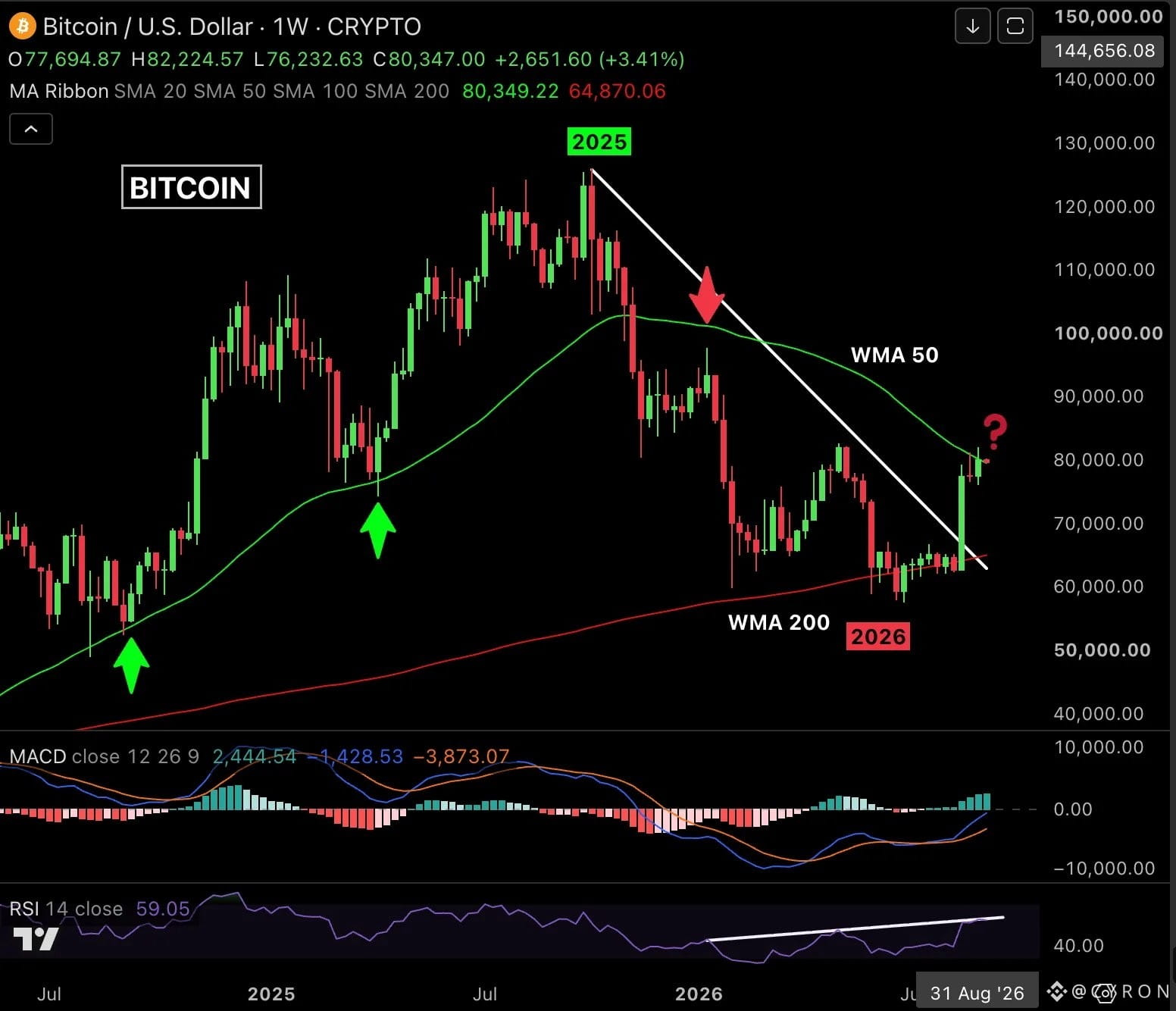
BITCOIN WEEKLY ANALYSIS
Bitcoin closed the week right around the Weekly MA 50 near $80,349.
This is a major test for $BTC , not a confirmed breakout yet.
Here’s what I’m watching next 🧵
{spot}(BTCUSDT)
#USIranTradeTankerStrikesEscalate
#IMFSaysElSalvadorBTCNoPublicFunds
#IranSaysItHit3USShips3Tankers
BITCOIN WEEKLY ANALYSIS
Bitcoin closed the week right around the Weekly MA 50 near $80,349.
This is a major test for $BTC , not a confirmed breakout yet.
Here’s what I’m watching next 🧵
#USIranTradeTankerStrikesEscalate
#IMFSaysElSalvadorBTCNoPublicFunds
#IranSaysItHit3USShips3Tankers
Bitcoin closed the week right around the Weekly MA 50 near $80,349.
This is a major test for $BTC , not a confirmed breakout yet.
Here’s what I’m watching next 🧵
#USIranTradeTankerStrikesEscalate
#IMFSaysElSalvadorBTCNoPublicFunds
#IranSaysItHit3USShips3Tankers
214
·
--
Рост
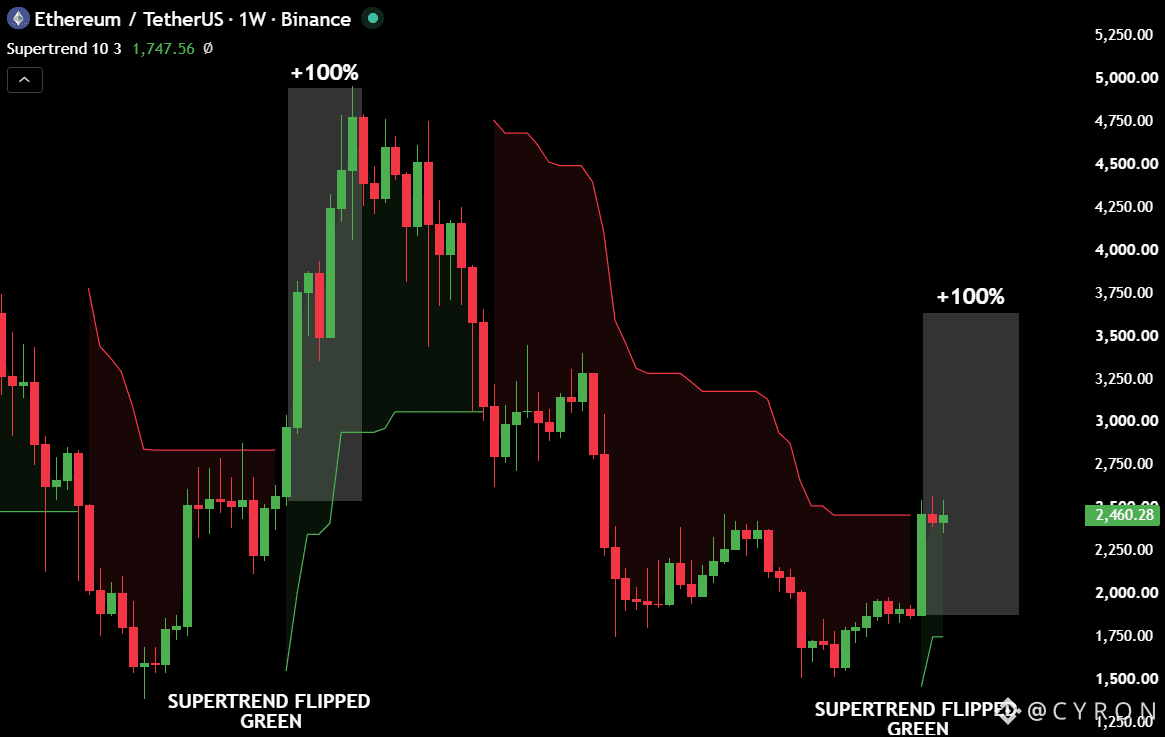
$ETH weekly Supertrend has flipped green. 🟢
The last time this happened, ETH pumped over 100% in just 6 weeks.
If history repeats, a similar move could put ETH around $3,600 by October.
One signal doesn't guarantee the same outcome.
But this is definitely worth watching. 👀
{spot}(ETHUSDT)
#ZECHitsANewAllTimeHigh
#BitcoinETFsBiggestDailyInflowSinceJanuary
#USAugustJobGrowthNearlyTriplesForecast
$ETH weekly Supertrend has flipped green. 🟢
The last time this happened, ETH pumped over 100% in just 6 weeks.
If history repeats, a similar move could put ETH around $3,600 by October.
One signal doesn't guarantee the same outcome.
But this is definitely worth watching. 👀
#ZECHitsANewAllTimeHigh
#BitcoinETFsBiggestDailyInflowSinceJanuary
#USAugustJobGrowthNearlyTriplesForecast
The last time this happened, ETH pumped over 100% in just 6 weeks.
If history repeats, a similar move could put ETH around $3,600 by October.
One signal doesn't guarantee the same outcome.
But this is definitely worth watching. 👀
#ZECHitsANewAllTimeHigh
#BitcoinETFsBiggestDailyInflowSinceJanuary
#USAugustJobGrowthNearlyTriplesForecast
160
·
--
Рост
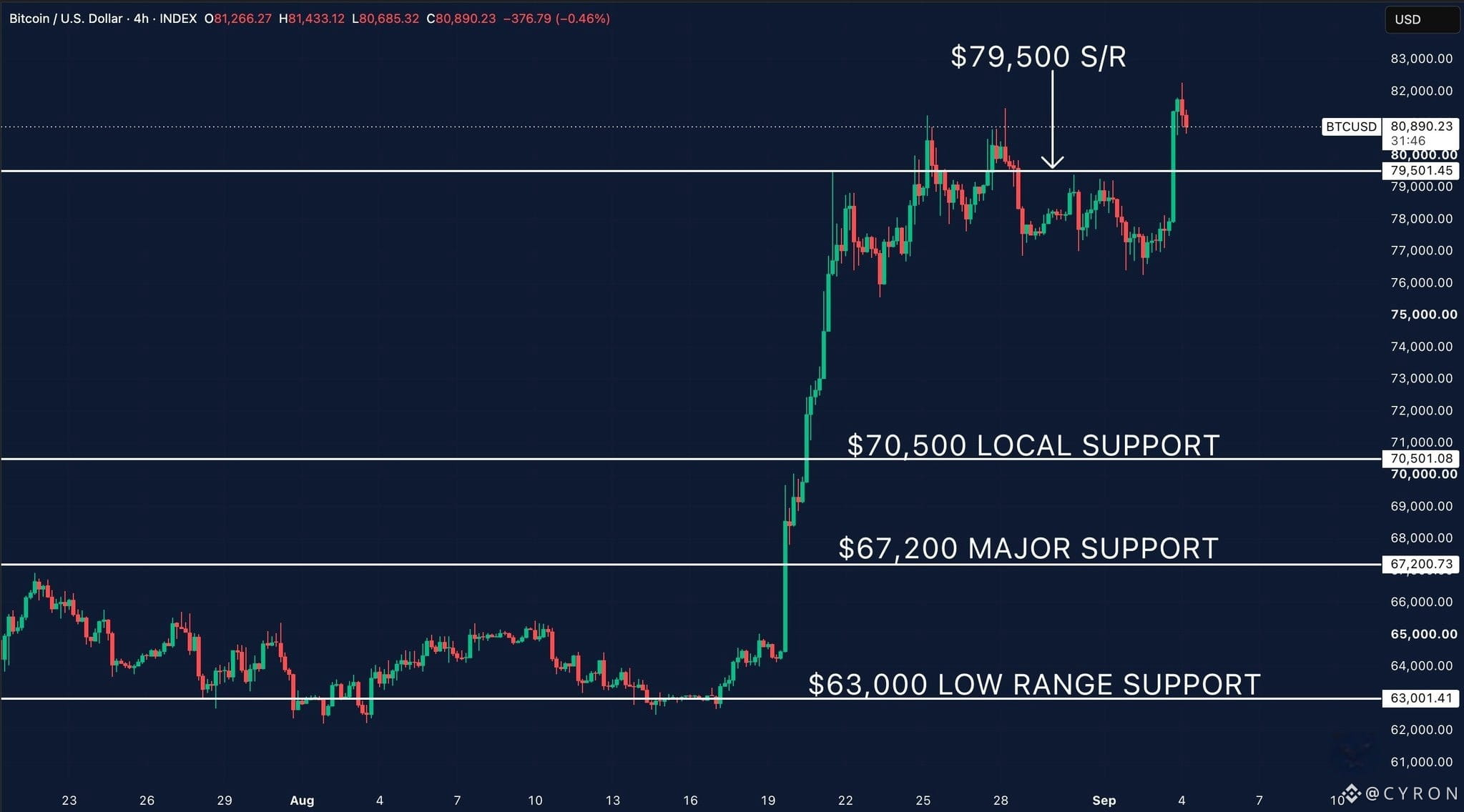
BITCOIN JUST FLIPPED $79,500 INTO SUPPORT 🚨
Bitcoin broke through the $79,500 resistance I’ve been watching and pushed above $80K.
$BTC is now trading around $80.9K after briefly reaching above $82K.
The key level now is simple: $79.5K.
If Bitcoin holds above it, I’m watching $82K next.
Lose $79.5K, and this breakout starts looking a lot less convincing.
For now, the structure has improved significantly.
{spot}(BTCUSDT)
#USWeeklyInitialJoblessClaimsRiseTo206000
#HousePressesSenateOnCLARITYAct
BITCOIN JUST FLIPPED $79,500 INTO SUPPORT 🚨
Bitcoin broke through the $79,500 resistance I’ve been watching and pushed above $80K.
$BTC is now trading around $80.9K after briefly reaching above $82K.
The key level now is simple: $79.5K.
If Bitcoin holds above it, I’m watching $82K next.
Lose $79.5K, and this breakout starts looking a lot less convincing.
For now, the structure has improved significantly.
#USWeeklyInitialJoblessClaimsRiseTo206000
#HousePressesSenateOnCLARITYAct
Bitcoin broke through the $79,500 resistance I’ve been watching and pushed above $80K.
$BTC is now trading around $80.9K after briefly reaching above $82K.
The key level now is simple: $79.5K.
If Bitcoin holds above it, I’m watching $82K next.
Lose $79.5K, and this breakout starts looking a lot less convincing.
For now, the structure has improved significantly.
#USWeeklyInitialJoblessClaimsRiseTo206000
#HousePressesSenateOnCLARITYAct
1
1
142
·
--
Рост
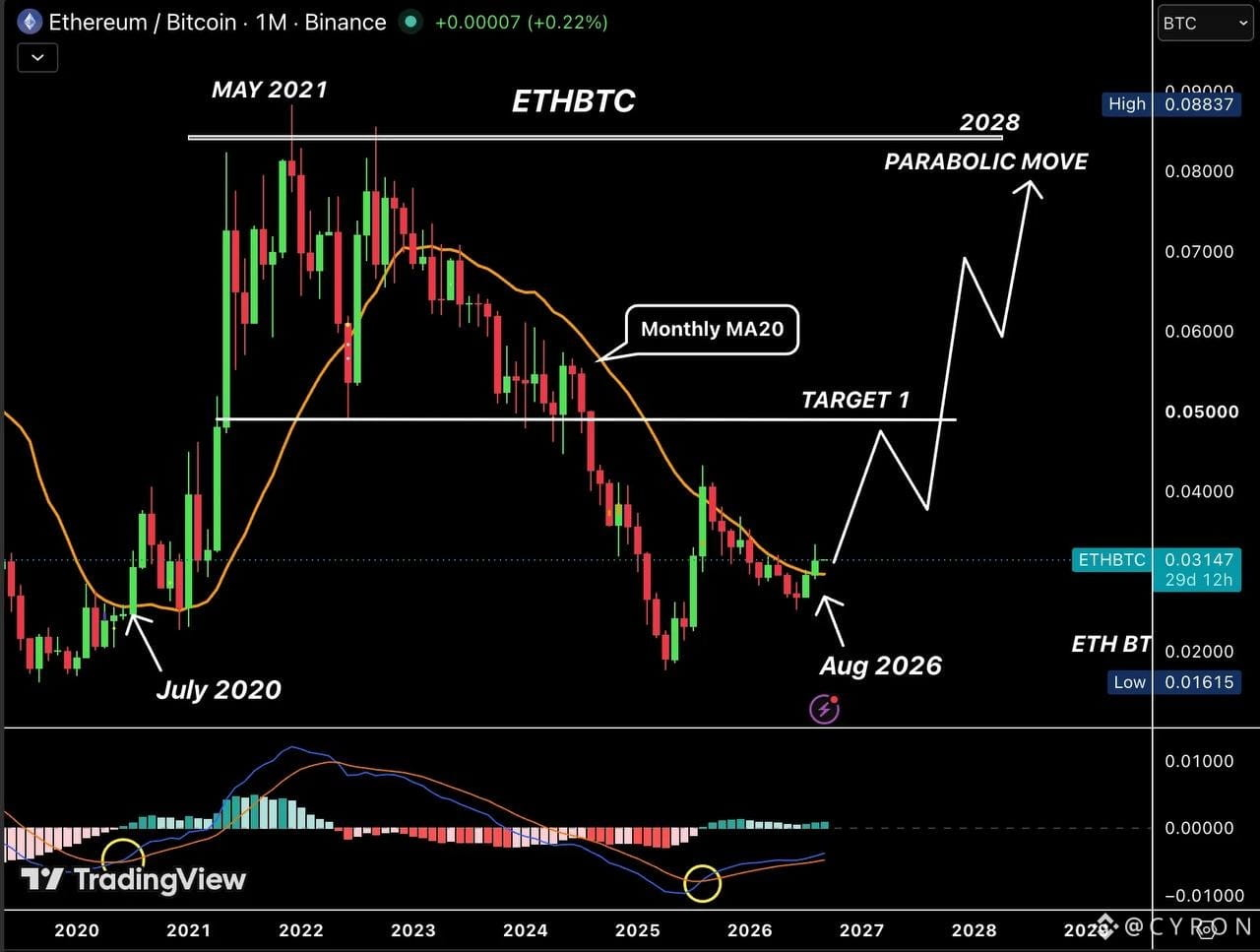
ETH/BTC monthly chart is starting to look interesting.
Price has closed above the MA 20.
The last clean reclaim of this level came in July 2020.
What followed?
ETH/BTC: 0.0315 → 0.088
ETH: $225 → $4,372
In August 2025, price also touched this average but failed to hold it and eventually dumped back toward the lows.
That’s the key difference now.
ETH/BTC needs to stay above the MA 20.
MACD is also turning up from a similar area to the one that preceded the 2020 breakout.
If the hold works:
First target → 0.050
Stretch target → 0.088
Meanwhile, ISM came in at 54.6 vs 55.2 expected, showing growth is still holding up but slowing.
If macro conditions continue moving toward easier monetary policy, ETH could have more room to outperform.
This setup is definitely worth watching. 👀
{spot}(BTCUSDT)
{spot}(ETHUSDT)
#BitcoinETFBuyersReturn
#FedHikeOddsRiseTo68%
#G20StatementCitesDigitalAssets
ETH/BTC monthly chart is starting to look interesting.
Price has closed above the MA 20.
The last clean reclaim of this level came in July 2020.
What followed?
ETH/BTC: 0.0315 → 0.088
ETH: $225 → $4,372
In August 2025, price also touched this average but failed to hold it and eventually dumped back toward the lows.
That’s the key difference now.
ETH/BTC needs to stay above the MA 20.
MACD is also turning up from a similar area to the one that preceded the 2020 breakout.
If the hold works:
First target → 0.050
Stretch target → 0.088
Meanwhile, ISM came in at 54.6 vs 55.2 expected, showing growth is still holding up but slowing.
If macro conditions continue moving toward easier monetary policy, ETH could have more room to outperform.
This setup is definitely worth watching. 👀
#BitcoinETFBuyersReturn
#FedHikeOddsRiseTo68%
#G20StatementCitesDigitalAssets
Price has closed above the MA 20.
The last clean reclaim of this level came in July 2020.
What followed?
ETH/BTC: 0.0315 → 0.088
ETH: $225 → $4,372
In August 2025, price also touched this average but failed to hold it and eventually dumped back toward the lows.
That’s the key difference now.
ETH/BTC needs to stay above the MA 20.
MACD is also turning up from a similar area to the one that preceded the 2020 breakout.
If the hold works:
First target → 0.050
Stretch target → 0.088
Meanwhile, ISM came in at 54.6 vs 55.2 expected, showing growth is still holding up but slowing.
If macro conditions continue moving toward easier monetary policy, ETH could have more room to outperform.
This setup is definitely worth watching. 👀
#BitcoinETFBuyersReturn
#FedHikeOddsRiseTo68%
#G20StatementCitesDigitalAssets
1
110
·
--
Рост
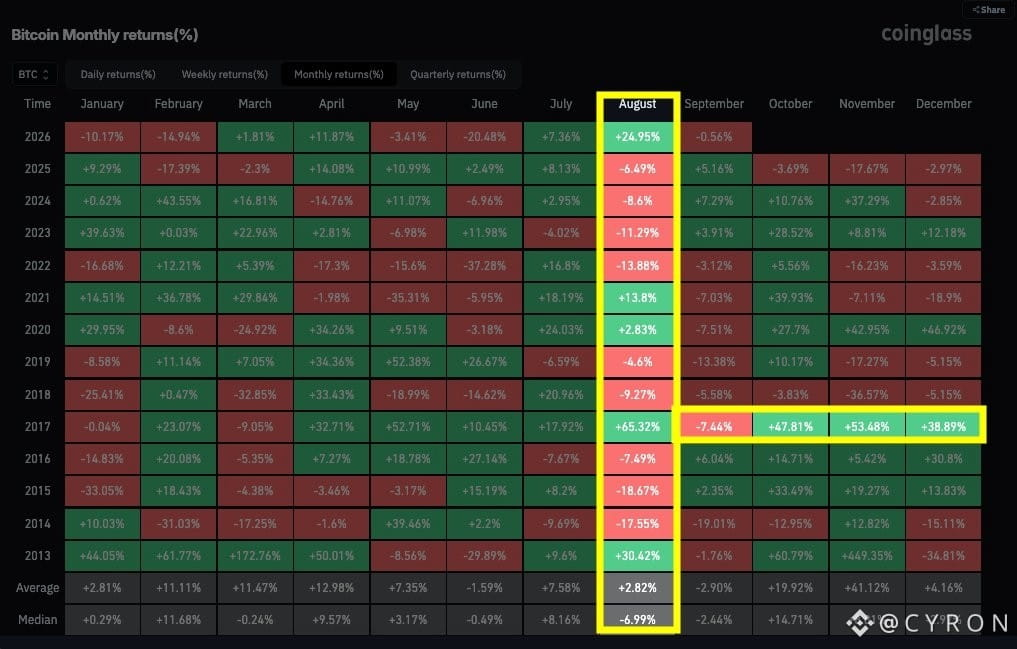
Bitcoin just had its BEST August since 2017.
August 2026: +24.95%
August 2017: +65.32%
But here's what happened after August 2017:
October: +47.81%
November: +53.48%
December: +38.89%
History doesn't have to repeat.
But when you see a setup like this, it's hard not to pay attention. 👀
{spot}(BTCUSDT)
#ARBRises30%OnRobinhoodChainRevenue
#Japan10YYieldHits3%FirstSince1996
#WTIOilRisesAsOpenInterestShrinks
Bitcoin just had its BEST August since 2017.
August 2026: +24.95%
August 2017: +65.32%
But here's what happened after August 2017:
October: +47.81%
November: +53.48%
December: +38.89%
History doesn't have to repeat.
But when you see a setup like this, it's hard not to pay attention. 👀
#ARBRises30%OnRobinhoodChainRevenue
#Japan10YYieldHits3%FirstSince1996
#WTIOilRisesAsOpenInterestShrinks
August 2026: +24.95%
August 2017: +65.32%
But here's what happened after August 2017:
October: +47.81%
November: +53.48%
December: +38.89%
History doesn't have to repeat.
But when you see a setup like this, it's hard not to pay attention. 👀
#ARBRises30%OnRobinhoodChainRevenue
#Japan10YYieldHits3%FirstSince1996
#WTIOilRisesAsOpenInterestShrinks
183
·
--
Падение
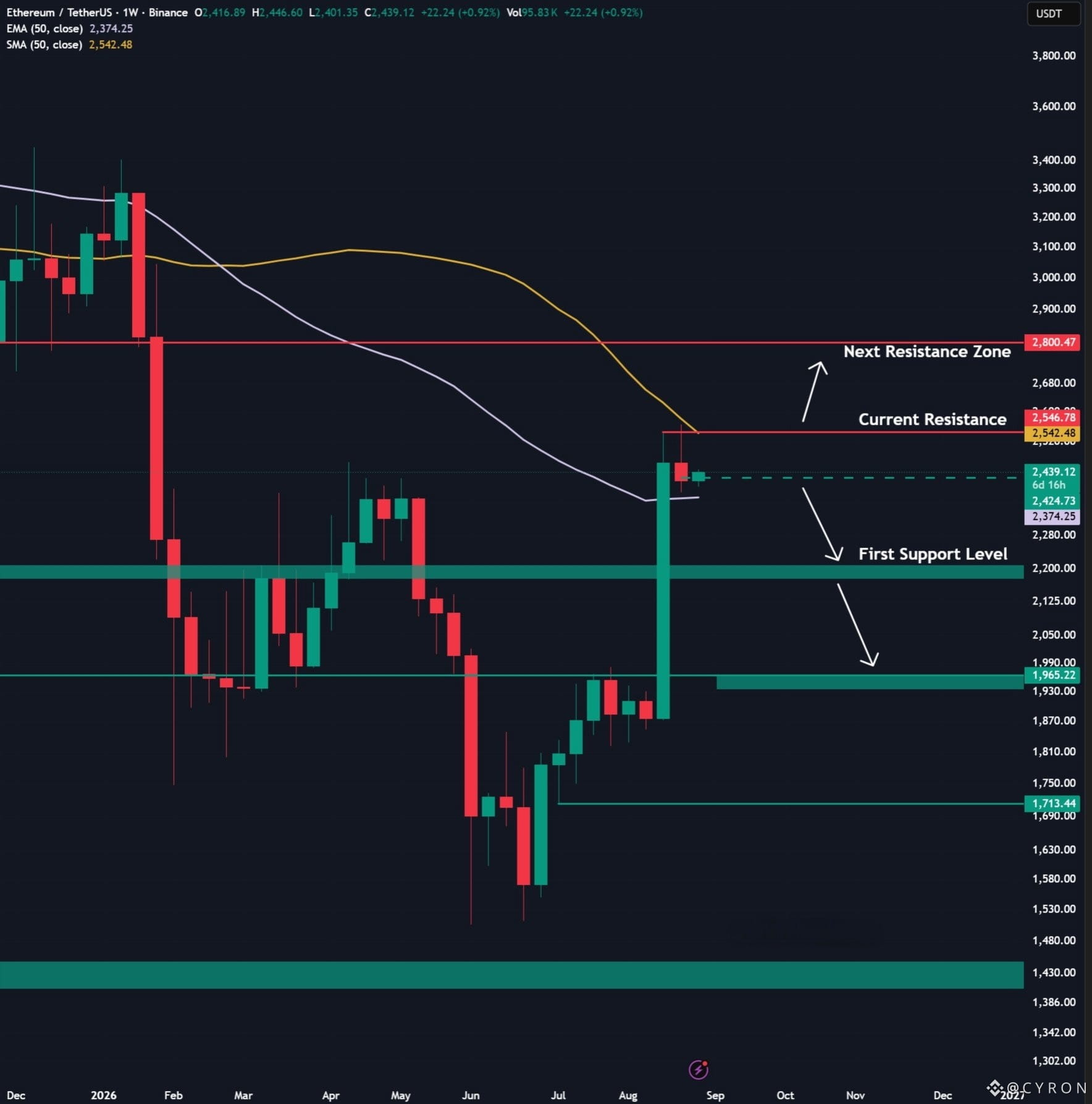
$ETH tried to break above the $2,550 level but failed again.
For now, I think most of Ethereum's short-term upside may already be priced in.
Expecting more chop around these levels, with the possibility of one more small capitulation before a proper reversal.
Patience here.
{spot}(ETHUSDT)
#SKHynixStudiesJapanMemoryChipVenture
#KospiDrops3.6%AsSamsungSKHynixWeaken
#UKReleasesFirstCryptoGainsTaxStats
$ETH tried to break above the $2,550 level but failed again.
For now, I think most of Ethereum's short-term upside may already be priced in.
Expecting more chop around these levels, with the possibility of one more small capitulation before a proper reversal.
Patience here.
#SKHynixStudiesJapanMemoryChipVenture
#KospiDrops3.6%AsSamsungSKHynixWeaken
#UKReleasesFirstCryptoGainsTaxStats
For now, I think most of Ethereum's short-term upside may already be priced in.
Expecting more chop around these levels, with the possibility of one more small capitulation before a proper reversal.
Patience here.
#SKHynixStudiesJapanMemoryChipVenture
#KospiDrops3.6%AsSamsungSKHynixWeaken
#UKReleasesFirstCryptoGainsTaxStats
143
·
--
Рост
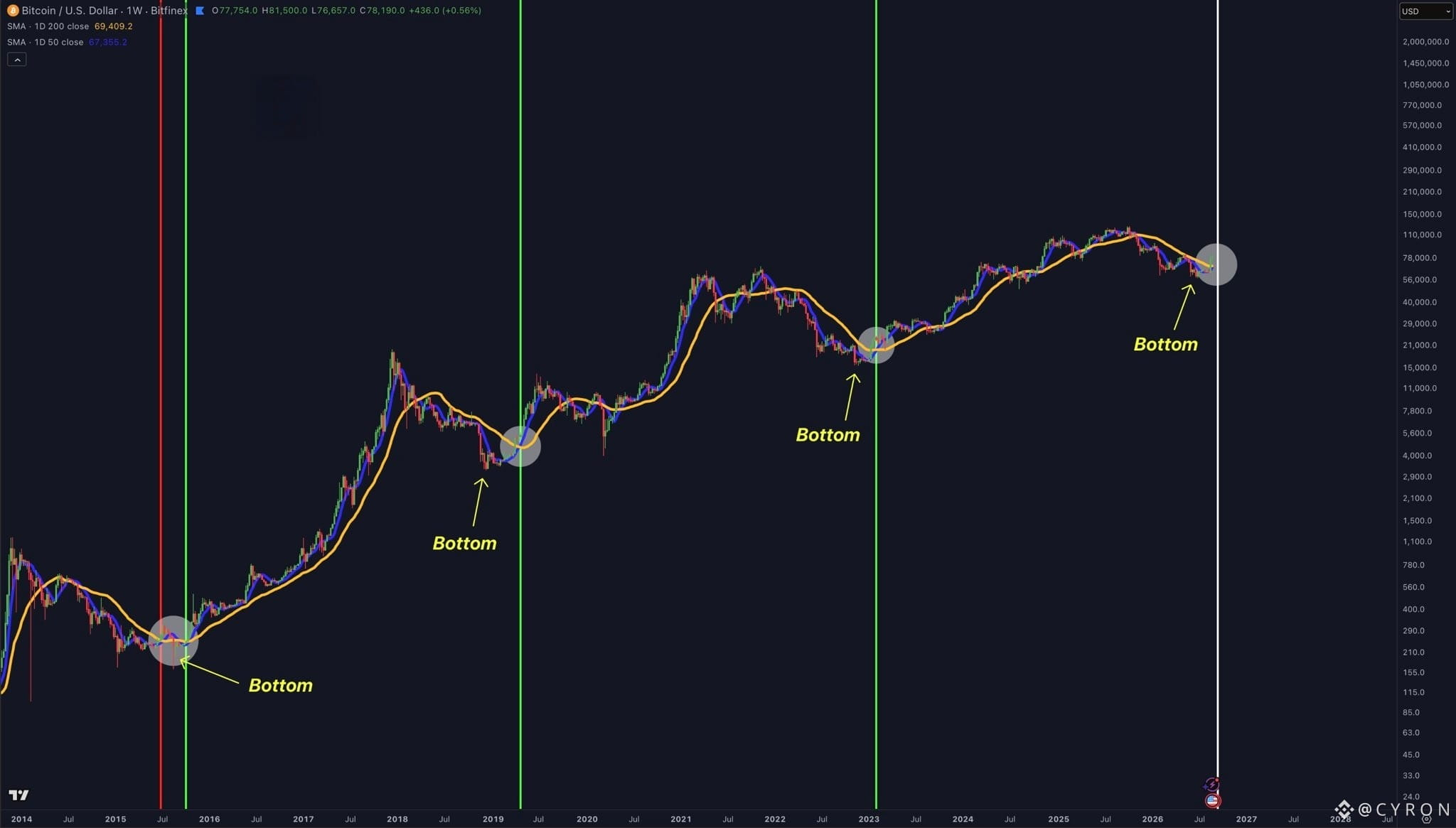
BITCOIN GOLDEN CROSS INCOMING.
If $BTC can hold here or continue higher into September, the daily Golden Cross will officially confirm.
It has flashed 4 times near the end of bear markets.
3 times, it got the direction right.
Could Bitcoin be setting up for another major trend reversal? 🚀
{spot}(BTCUSDT)
#KoreaSingleStockLeveragedETFTradingFalls
#VietnamPilotsCryptoAssetMarket
#GoldFalls3.24%ThisWeek
BITCOIN GOLDEN CROSS INCOMING.
If $BTC can hold here or continue higher into September, the daily Golden Cross will officially confirm.
It has flashed 4 times near the end of bear markets.
3 times, it got the direction right.
Could Bitcoin be setting up for another major trend reversal? 🚀
#KoreaSingleStockLeveragedETFTradingFalls
#VietnamPilotsCryptoAssetMarket
#GoldFalls3.24%ThisWeek
If $BTC can hold here or continue higher into September, the daily Golden Cross will officially confirm.
It has flashed 4 times near the end of bear markets.
3 times, it got the direction right.
Could Bitcoin be setting up for another major trend reversal? 🚀
#KoreaSingleStockLeveragedETFTradingFalls
#VietnamPilotsCryptoAssetMarket
#GoldFalls3.24%ThisWeek
116
·
--
Рост
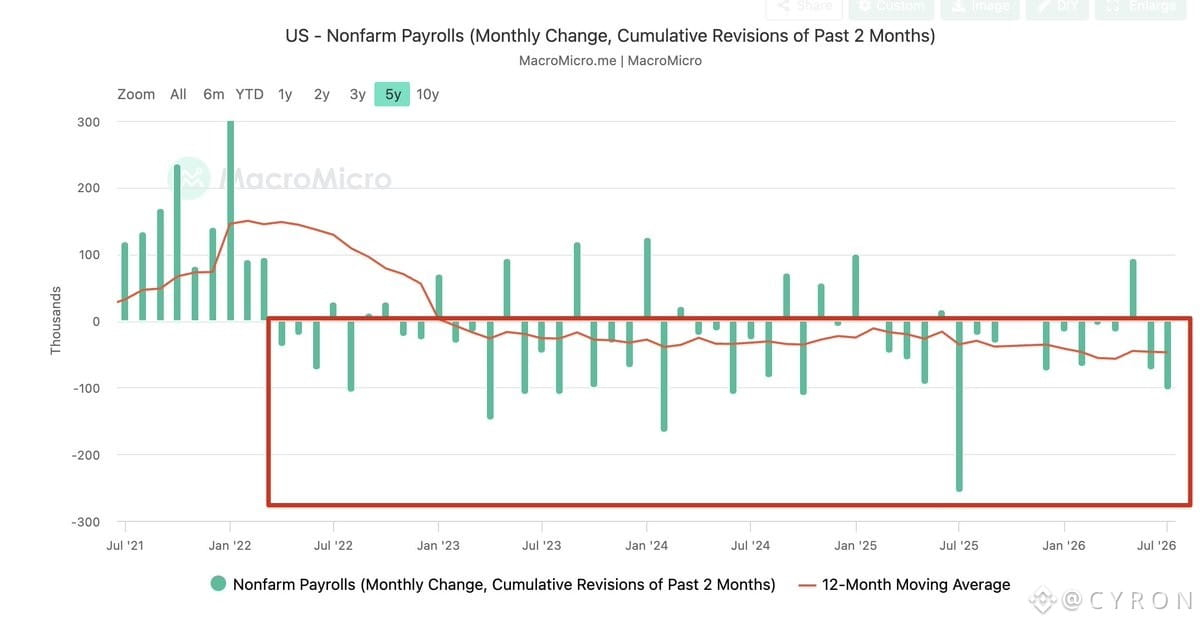
Here's the trend over the past few years.
Non-farm payroll data is always subject to revision because the initial number is only an early estimate.
The revised numbers can show a very different picture.
Since 2022, we've seen a clear pattern of mostly downward revisions.
For example, a report showing +50K jobs could later be revised down to +25K.
That would mean the labor market was weaker than initially reported.
Now, the 2025 annual NFP revision stands at -911K jobs, highlighting just how large these adjustments can be.
So if today's NFP data comes in strong, the market may see less reason for the Fed to cut rates.
That could put pressure on risk assets like $BTC
{spot}(BTCUSDT)
#SOLJumps20%OnTheWeek
#CaliforniaBillWouldBarOfficialMemeCoins
#TRONMainnetActivatesTVMPragueOsaka
Here's the trend over the past few years.
Non-farm payroll data is always subject to revision because the initial number is only an early estimate.
The revised numbers can show a very different picture.
Since 2022, we've seen a clear pattern of mostly downward revisions.
For example, a report showing +50K jobs could later be revised down to +25K.
That would mean the labor market was weaker than initially reported.
Now, the 2025 annual NFP revision stands at -911K jobs, highlighting just how large these adjustments can be.
So if today's NFP data comes in strong, the market may see less reason for the Fed to cut rates.
That could put pressure on risk assets like $BTC
#SOLJumps20%OnTheWeek
#CaliforniaBillWouldBarOfficialMemeCoins
#TRONMainnetActivatesTVMPragueOsaka
Non-farm payroll data is always subject to revision because the initial number is only an early estimate.
The revised numbers can show a very different picture.
Since 2022, we've seen a clear pattern of mostly downward revisions.
For example, a report showing +50K jobs could later be revised down to +25K.
That would mean the labor market was weaker than initially reported.
Now, the 2025 annual NFP revision stands at -911K jobs, highlighting just how large these adjustments can be.
So if today's NFP data comes in strong, the market may see less reason for the Fed to cut rates.
That could put pressure on risk assets like $BTC
#SOLJumps20%OnTheWeek
#CaliforniaBillWouldBarOfficialMemeCoins
#TRONMainnetActivatesTVMPragueOsaka
114
·
--
Рост
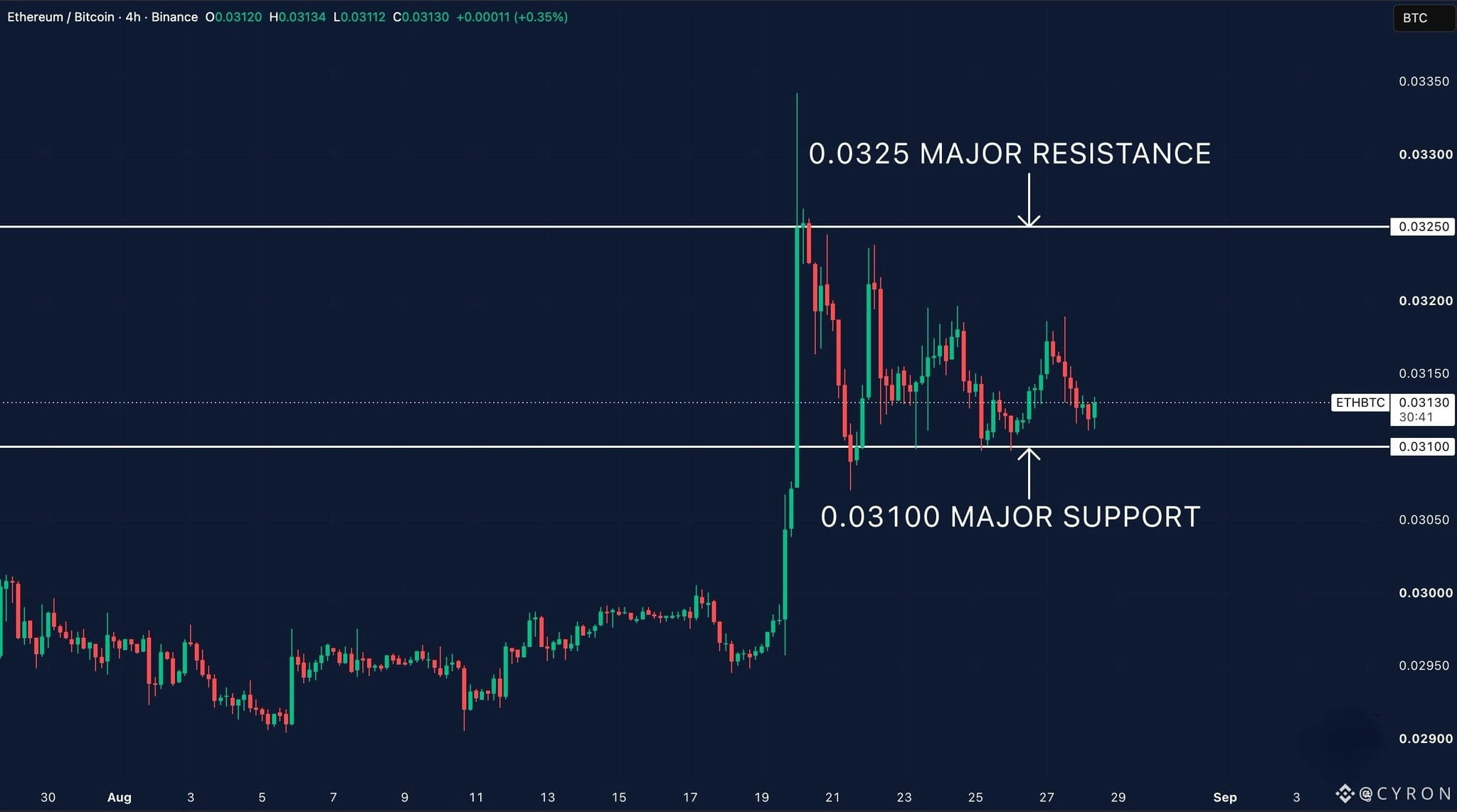
ETH/BTC is holding a level that could matter for the next move.
The 0.03100 support has been tested multiple times, and so far, buyers are defending it.
Hold above here → 0.03250 is next.
Break 0.03250 cleanly → ETH could start showing stronger relative performance against BTC.
Lose 0.03100 → the setup changes.
For now, ETH/BTC is still holding its breakout.
Patience before chasing.
{spot}(ETHUSDT)
{spot}(BTCUSDT)
#GoldRisesAbout14%InAugust
#KospiFallsAsAITradingEuphoriaCools
#TaiwanTAIEXRetakes46500OnChipRally
ETH/BTC is holding a level that could matter for the next move.
The 0.03100 support has been tested multiple times, and so far, buyers are defending it.
Hold above here → 0.03250 is next.
Break 0.03250 cleanly → ETH could start showing stronger relative performance against BTC.
Lose 0.03100 → the setup changes.
For now, ETH/BTC is still holding its breakout.
Patience before chasing.
#GoldRisesAbout14%InAugust
#KospiFallsAsAITradingEuphoriaCools
#TaiwanTAIEXRetakes46500OnChipRally
The 0.03100 support has been tested multiple times, and so far, buyers are defending it.
Hold above here → 0.03250 is next.
Break 0.03250 cleanly → ETH could start showing stronger relative performance against BTC.
Lose 0.03100 → the setup changes.
For now, ETH/BTC is still holding its breakout.
Patience before chasing.
#GoldRisesAbout14%InAugust
#KospiFallsAsAITradingEuphoriaCools
#TaiwanTAIEXRetakes46500OnChipRally
120
·
--
Падение
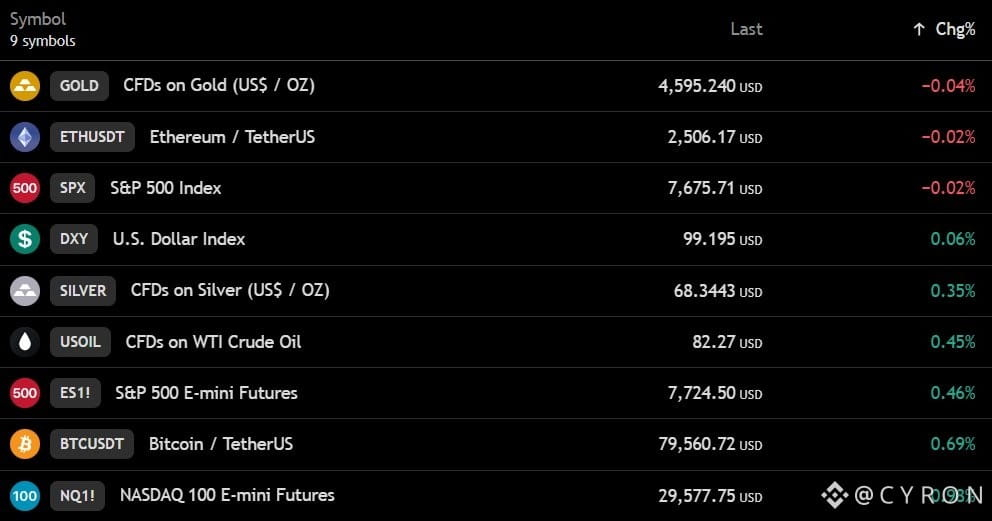
$BTC has dropped below $80,000.
Meanwhile, U.S. stock futures are trading higher, with Oil and the DXY also moving up.
Pre-market update:
▫️ Nasdaq futures: +0.98% 🟠
▫️ S&P 500 futures: +0.46% 🟠
Bitcoin is showing some weakness despite a positive start for broader markets.
{spot}(BTCUSDT)
#KospiClosesAtRecordHigh
#ChinaOpposesUSProposed7.5%Tariff
#BankOfKoreaHikesRatesTo3%
$BTC has dropped below $80,000.
Meanwhile, U.S. stock futures are trading higher, with Oil and the DXY also moving up.
Pre-market update:
▫️ Nasdaq futures: +0.98% 🟠
▫️ S&P 500 futures: +0.46% 🟠
Bitcoin is showing some weakness despite a positive start for broader markets.
#KospiClosesAtRecordHigh
#ChinaOpposesUSProposed7.5%Tariff
#BankOfKoreaHikesRatesTo3%
Meanwhile, U.S. stock futures are trading higher, with Oil and the DXY also moving up.
Pre-market update:
▫️ Nasdaq futures: +0.98% 🟠
▫️ S&P 500 futures: +0.46% 🟠
Bitcoin is showing some weakness despite a positive start for broader markets.
#KospiClosesAtRecordHigh
#ChinaOpposesUSProposed7.5%Tariff
#BankOfKoreaHikesRatesTo3%
2
323
·
--
Рост
Went through the CreatorPad task on @Dusk_Foundation this week and the thing that stuck with me wasn't in the task brief at all, it was that the $DUSK bridge has now been paused for over ten days and nobody at Dusk seems in a rush to reopen it. #dusk
Quick context for anyone who missed it: on August 16 the team flagged unusual activity on a wallet used for bridge operations, recycled the affected addresses, and pushed a recipient blocklist through the Web Wallet after part of the flow touched Binance. DuskDS mainnet itself never stopped producing blocks. That's the part I kept coming back to.
I'd assumed a privacy-focused L1 concentrated its risk in one place, the base layer. Watching the chain run clean while the bridge sat frozen made it obvious that's not how the trust boundaries actually split here. The bridge is its own liability, held to its own timeline, independent of consensus health.
Binance users were arguably protected first, just by the blocklist existing before withdrawals could route through. Everyone else is still waiting on "temporarily."
Not sure what the actual threshold is before "temporary" starts meaning something else.
{spot}(DUSKUSDT)
{spot}(BMTUSDT)
{spot}(EDENUSDT)
Which matters more here?
Went through the CreatorPad task on @Dusk this week and the thing that stuck with me wasn't in the task brief at all, it was that the $DUSK bridge has now been paused for over ten days and nobody at Dusk seems in a rush to reopen it. #dusk
Quick context for anyone who missed it: on August 16 the team flagged unusual activity on a wallet used for bridge operations, recycled the affected addresses, and pushed a recipient blocklist through the Web Wallet after part of the flow touched Binance. DuskDS mainnet itself never stopped producing blocks. That's the part I kept coming back to.
I'd assumed a privacy-focused L1 concentrated its risk in one place, the base layer. Watching the chain run clean while the bridge sat frozen made it obvious that's not how the trust boundaries actually split here. The bridge is its own liability, held to its own timeline, independent of consensus health.
Binance users were arguably protected first, just by the blocklist existing before withdrawals could route through. Everyone else is still waiting on "temporarily."
Not sure what the actual threshold is before "temporary" starts meaning something else.
Which matters more here?
Quick context for anyone who missed it: on August 16 the team flagged unusual activity on a wallet used for bridge operations, recycled the affected addresses, and pushed a recipient blocklist through the Web Wallet after part of the flow touched Binance. DuskDS mainnet itself never stopped producing blocks. That's the part I kept coming back to.
I'd assumed a privacy-focused L1 concentrated its risk in one place, the base layer. Watching the chain run clean while the bridge sat frozen made it obvious that's not how the trust boundaries actually split here. The bridge is its own liability, held to its own timeline, independent of consensus health.
Binance users were arguably protected first, just by the blocklist existing before withdrawals could route through. Everyone else is still waiting on "temporarily."
Not sure what the actual threshold is before "temporary" starts meaning something else.
Which matters more here?
🟢 Mainnet's clean uptime
100%
🔴 Bridge still closed
0%
⚖️ Both equally
0%
🤷 Too early to say
0%
1 проголосовали • Голосование закрыто
1
1
186
·
--
Рост
Ran a small transfer through Dusk's Web Wallet earlier this week while wrapping up a CreatorPad task, and got stopped mid-flow by a blocklist warning I wasn't expecting. Nothing dramatic, just a red flag before the transaction would submit. For a chain built around $DUSK 's selective-disclosure privacy model, #dusk , @Dusk_Foundation , that felt like an odd thing to run into.
Turns out the warning traces back to the recipient blocklist the team shipped to the Web Wallet after the mid-August incident involving a compromised bridge operations wallet. It screens outgoing transfers against known flagged addresses before you can send.
I'd assumed privacy-first meant fewer checkpoints, not more. Watching it actually fire on a real attempt changed that a little. The mechanism only works if someone is maintaining and updating that list in near real time, which means there's a curatorial layer sitting quietly underneath the "confidential by default" pitch.
Not saying that's wrong, just noticing it. Selective disclosure and address screening aren't the same thing, but they're now living in the same wallet. Still working out how comfortable I am with that, and who exactly decides what gets added to the list going forward.
{spot}(DUSKUSDT)
{spot}(ONGUSDT)
{spot}(JASMYUSDT)
Which part of this stood out most to you? 👀
Ran a small transfer through Dusk's Web Wallet earlier this week while wrapping up a CreatorPad task, and got stopped mid-flow by a blocklist warning I wasn't expecting. Nothing dramatic, just a red flag before the transaction would submit. For a chain built around $DUSK 's selective-disclosure privacy model, #dusk , @Dusk , that felt like an odd thing to run into.
Turns out the warning traces back to the recipient blocklist the team shipped to the Web Wallet after the mid-August incident involving a compromised bridge operations wallet. It screens outgoing transfers against known flagged addresses before you can send.
I'd assumed privacy-first meant fewer checkpoints, not more. Watching it actually fire on a real attempt changed that a little. The mechanism only works if someone is maintaining and updating that list in near real time, which means there's a curatorial layer sitting quietly underneath the "confidential by default" pitch.
Not saying that's wrong, just noticing it. Selective disclosure and address screening aren't the same thing, but they're now living in the same wallet. Still working out how comfortable I am with that, and who exactly decides what gets added to the list going forward.
Which part of this stood out most to you? 👀
Turns out the warning traces back to the recipient blocklist the team shipped to the Web Wallet after the mid-August incident involving a compromised bridge operations wallet. It screens outgoing transfers against known flagged addresses before you can send.
I'd assumed privacy-first meant fewer checkpoints, not more. Watching it actually fire on a real attempt changed that a little. The mechanism only works if someone is maintaining and updating that list in near real time, which means there's a curatorial layer sitting quietly underneath the "confidential by default" pitch.
Not saying that's wrong, just noticing it. Selective disclosure and address screening aren't the same thing, but they're now living in the same wallet. Still working out how comfortable I am with that, and who exactly decides what gets added to the list going forward.
Which part of this stood out most to you? 👀
🚫 The blocklist itself
50%
🔑 Who maintains the list
50%
⚖️ Privacy vs. gatekeeping
0%
💭 Something else
0%
2 проголосовали • Голосование закрыто
1
1
193
·
--
Рост
Checked the Dusk bridge status page again this week and it's still showing paused, same as it's been since the August 16th incident where the team flagged suspicious activity on a wallet used for bridge operations. That's the detail that stuck with me while wrapping up this CreatorPad task on @Dusk_Foundation , $DUSK , #dusk : nine-plus days on, the addresses are recycled, the blocklist is live, but the bridge itself hasn't come back online.
The official line was clean, not a protocol-level issue, DuskDS kept producing blocks normally, no user funds affected. And technically that's true. But I went in assuming "not a protocol bug" meant "quick fix." It didn't. Operational infrastructure managed by a team, even on a chain built around deterministic settlement and audit-grade privacy, still moves on human timelines once something touches a centralized flow.
What struck me more than the incident itself was the gap between how confidently reassuring the messaging is and how long the actual remediation is taking. Those two things aren't necessarily in tension, but they read differently side by side.
Not sure yet whether this is just careful process or something more structural about how bridges get treated post-incident. Watching to see when it actually reopens.
{spot}(DUSKUSDT)
{spot}(ZROUSDT)
{spot}(ENAUSDT)
Which part stands out to you? 🤔
Checked the Dusk bridge status page again this week and it's still showing paused, same as it's been since the August 16th incident where the team flagged suspicious activity on a wallet used for bridge operations. That's the detail that stuck with me while wrapping up this CreatorPad task on @Dusk , $DUSK , #dusk : nine-plus days on, the addresses are recycled, the blocklist is live, but the bridge itself hasn't come back online.
The official line was clean, not a protocol-level issue, DuskDS kept producing blocks normally, no user funds affected. And technically that's true. But I went in assuming "not a protocol bug" meant "quick fix." It didn't. Operational infrastructure managed by a team, even on a chain built around deterministic settlement and audit-grade privacy, still moves on human timelines once something touches a centralized flow.
What struck me more than the incident itself was the gap between how confidently reassuring the messaging is and how long the actual remediation is taking. Those two things aren't necessarily in tension, but they read differently side by side.
Not sure yet whether this is just careful process or something more structural about how bridges get treated post-incident. Watching to see when it actually reopens.
Which part stands out to you? 🤔
The official line was clean, not a protocol-level issue, DuskDS kept producing blocks normally, no user funds affected. And technically that's true. But I went in assuming "not a protocol bug" meant "quick fix." It didn't. Operational infrastructure managed by a team, even on a chain built around deterministic settlement and audit-grade privacy, still moves on human timelines once something touches a centralized flow.
What struck me more than the incident itself was the gap between how confidently reassuring the messaging is and how long the actual remediation is taking. Those two things aren't necessarily in tension, but they read differently side by side.
Not sure yet whether this is just careful process or something more structural about how bridges get treated post-incident. Watching to see when it actually reopens.
Which part stands out to you? 🤔
🛠️ The framing
50%
⏳ The timeline
0%
🔐 Wallet risk
0%
🤷 Just normal caution
50%
2 проголосовали • Голосование закрыто
4
6
305
·
--
Рост
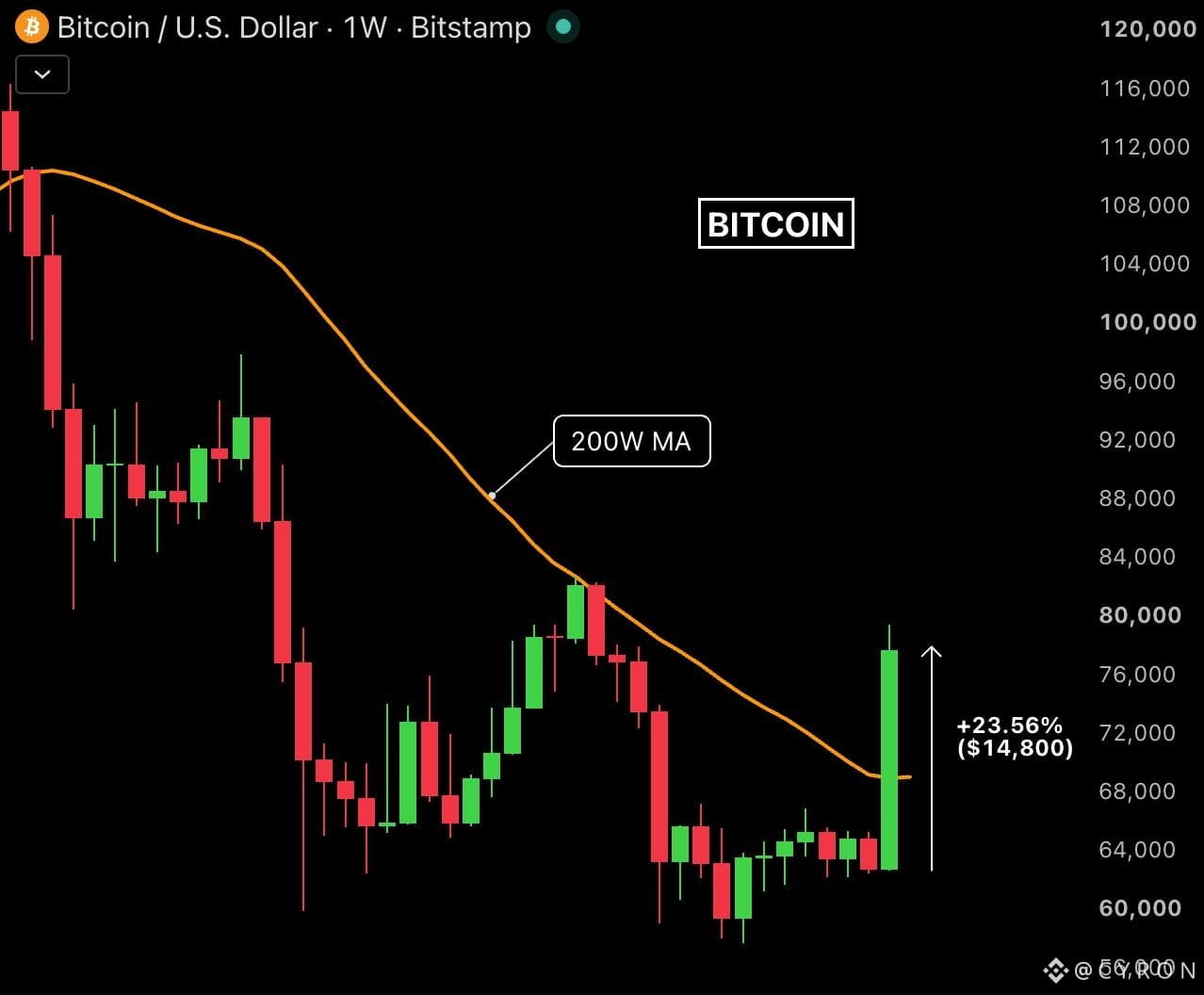
🚨 BREAKING:
Bitcoin just printed its largest weekly candle since March 2023.
$BTC gained 23.56%, adding roughly $14,800 in just one week.
That's a massive move for Bitcoin in such a short period.
The momentum is back. 🚀
{spot}(BTCUSDT)
#BitcoinStrongestWeekSinceMarch2023
#CanadaUSTradeTalksCollapse
🚨 BREAKING:
Bitcoin just printed its largest weekly candle since March 2023.
$BTC gained 23.56%, adding roughly $14,800 in just one week.
That's a massive move for Bitcoin in such a short period.
The momentum is back. 🚀
#BitcoinStrongestWeekSinceMarch2023
#CanadaUSTradeTalksCollapse
Bitcoin just printed its largest weekly candle since March 2023.
$BTC gained 23.56%, adding roughly $14,800 in just one week.
That's a massive move for Bitcoin in such a short period.
The momentum is back. 🚀
#BitcoinStrongestWeekSinceMarch2023
#CanadaUSTradeTalksCollapse
2
119
·
--
Рост
Reading through the CreatorPad brief on $DUSK , I got stuck on one line in Dusk's own bridge incident notice: the team disabled and recycled a set of addresses after flagging unusual activity on a team-managed wallet used for bridge operations, then paused bridge services entirely while they sorted it out. #dusk
That's the part that got me. Not the incident itself, but the response shape. @Dusk_Foundation spends most of its messaging on user-side privacy, selective disclosure, compliance rails, all the stuff built for the person holding the wallet. This wasn't that. It was an internal operational key that got compromised behavior flagged around it, and the fix was blunt: pause everything, rebuild the address set, ship a recipient blocklist to catch anything trying to move through the web wallet.
I'd assumed the "regulated infra" framing meant the operational side was hardened too, maybe more than most L1s given the institutional pitch. Turns out the failure mode wasn't a smart contract exploit or a governance vote gone sideways, it was a managed wallet, which is a much more boring and much more universal problem.
Still not sure if that's reassuring or the opposite.
{spot}(DUSKUSDT)
{spot}(SPKUSDT)
{spot}(MORPHOUSDT)
What stood out most from Dusk's bridge response?
Reading through the CreatorPad brief on $DUSK , I got stuck on one line in Dusk's own bridge incident notice: the team disabled and recycled a set of addresses after flagging unusual activity on a team-managed wallet used for bridge operations, then paused bridge services entirely while they sorted it out. #dusk
That's the part that got me. Not the incident itself, but the response shape. @Dusk spends most of its messaging on user-side privacy, selective disclosure, compliance rails, all the stuff built for the person holding the wallet. This wasn't that. It was an internal operational key that got compromised behavior flagged around it, and the fix was blunt: pause everything, rebuild the address set, ship a recipient blocklist to catch anything trying to move through the web wallet.
I'd assumed the "regulated infra" framing meant the operational side was hardened too, maybe more than most L1s given the institutional pitch. Turns out the failure mode wasn't a smart contract exploit or a governance vote gone sideways, it was a managed wallet, which is a much more boring and much more universal problem.
Still not sure if that's reassuring or the opposite.
What stood out most from Dusk's bridge response?
That's the part that got me. Not the incident itself, but the response shape. @Dusk spends most of its messaging on user-side privacy, selective disclosure, compliance rails, all the stuff built for the person holding the wallet. This wasn't that. It was an internal operational key that got compromised behavior flagged around it, and the fix was blunt: pause everything, rebuild the address set, ship a recipient blocklist to catch anything trying to move through the web wallet.
I'd assumed the "regulated infra" framing meant the operational side was hardened too, maybe more than most L1s given the institutional pitch. Turns out the failure mode wasn't a smart contract exploit or a governance vote gone sideways, it was a managed wallet, which is a much more boring and much more universal problem.
Still not sure if that's reassuring or the opposite.
What stood out most from Dusk's bridge response?
🛑 Full pause
60%
🔑 Team wallet risk
40%
🧊 "No impact" claim
0%
🤷 Not surprised
0%
5 проголосовали • Голосование закрыто
2
4
960
·
--
Рост
Spent the week digging into Dusk's bridge infrastructure for this CreatorPad round, and the thing that stopped me wasn't a feature, it was the August 16 incident notice. The team caught suspicious activity on a wallet they controlled for bridge operations, and had to disable and recycle a batch of addresses on the spot. $DUSK , #dusk , @Dusk_Foundation , I went in expecting to write about DuskEVM's testnet momentum. I left thinking about something else entirely.
Here's what got me: the bridge itself didn't break. The zk layer, the consensus, none of that was touched. What gave way was a team-managed wallet, the kind of operational component every bridge quietly depends on and nobody really audits in public. Dusk moved fast, paused services, coordinated with Binance once part of the flow surfaced there. Reasonable response. But it exposed the gap between "protocol-level security" and "the humans running the infra layer", two things I'd been treating as one.
I'd assumed bridge risk mostly lived in the contract code. Turns out the softer surface, the operational one, is just as load-bearing. Still not sure how you audit for that.
{spot}(TRUMPUSDT)
{spot}(STXUSDT)
{spot}(POLUSDT)
What's the real bridge risk?
Spent the week digging into Dusk's bridge infrastructure for this CreatorPad round, and the thing that stopped me wasn't a feature, it was the August 16 incident notice. The team caught suspicious activity on a wallet they controlled for bridge operations, and had to disable and recycle a batch of addresses on the spot. $DUSK , #dusk , @Dusk , I went in expecting to write about DuskEVM's testnet momentum. I left thinking about something else entirely.
Here's what got me: the bridge itself didn't break. The zk layer, the consensus, none of that was touched. What gave way was a team-managed wallet, the kind of operational component every bridge quietly depends on and nobody really audits in public. Dusk moved fast, paused services, coordinated with Binance once part of the flow surfaced there. Reasonable response. But it exposed the gap between "protocol-level security" and "the humans running the infra layer", two things I'd been treating as one.
I'd assumed bridge risk mostly lived in the contract code. Turns out the softer surface, the operational one, is just as load-bearing. Still not sure how you audit for that.
What's the real bridge risk?
Here's what got me: the bridge itself didn't break. The zk layer, the consensus, none of that was touched. What gave way was a team-managed wallet, the kind of operational component every bridge quietly depends on and nobody really audits in public. Dusk moved fast, paused services, coordinated with Binance once part of the flow surfaced there. Reasonable response. But it exposed the gap between "protocol-level security" and "the humans running the infra layer", two things I'd been treating as one.
I'd assumed bridge risk mostly lived in the contract code. Turns out the softer surface, the operational one, is just as load-bearing. Still not sure how you audit for that.
What's the real bridge risk?
🔐 Contract code
0%
👤 Team wallets
50%
🌉 Message relay
0%
🧩 Upgrade keys
50%
2 проголосовали • Голосование закрыто
2
3
521
·
--
Рост
Ran a quick RPC check against the DuskEVM testnet before deploying anything, just to confirm I was actually on the right network. Small step, but it grounded the CreatorPad task in something real instead of docs screenshots. Bridged a batch of $DUSK from DuskDS to fund the deployment wallet, then pushed a basic Solidity contract through Hardhat. #dusk @Dusk_Foundation
What actually stopped me wasn't the deployment succeeding, it was the fee breakdown afterward. I'd assumed "privacy-preserving EVM" meant privacy was baked into every transaction by default. It isn't. The execution fee and the data-availability fee for posting the batch back to DuskDS were both fully visible, standard OP-Stack style. Nothing shielded unless you deliberately route through Hedger.
That's a fair assumption to have gotten wrong. Dusk's messaging leans hard on confidentiality, so it's easy to expect the EVM layer inherits that by default rather than as something you opt into separately.
Makes sense architecturally, settlement and privacy tooling staying decoupled from general-purpose execution. Still curious how many devs building here right now are actually reaching for Hedger, versus just shipping standard EVM contracts and moving on. This is my own observation from testing, not financial advice worth digging into further if you're evaluating the ecosystem.
{spot}(DUSKUSDT)
{spot}(PROMUSDT)
{spot}(NEIROUSDT)
Which part of building on DuskEVM would you try first? 👇
Ran a quick RPC check against the DuskEVM testnet before deploying anything, just to confirm I was actually on the right network. Small step, but it grounded the CreatorPad task in something real instead of docs screenshots. Bridged a batch of $DUSK from DuskDS to fund the deployment wallet, then pushed a basic Solidity contract through Hardhat. #dusk @Dusk
What actually stopped me wasn't the deployment succeeding, it was the fee breakdown afterward. I'd assumed "privacy-preserving EVM" meant privacy was baked into every transaction by default. It isn't. The execution fee and the data-availability fee for posting the batch back to DuskDS were both fully visible, standard OP-Stack style. Nothing shielded unless you deliberately route through Hedger.
That's a fair assumption to have gotten wrong. Dusk's messaging leans hard on confidentiality, so it's easy to expect the EVM layer inherits that by default rather than as something you opt into separately.
Makes sense architecturally, settlement and privacy tooling staying decoupled from general-purpose execution. Still curious how many devs building here right now are actually reaching for Hedger, versus just shipping standard EVM contracts and moving on. This is my own observation from testing, not financial advice worth digging into further if you're evaluating the ecosystem.
Which part of building on DuskEVM would you try first? 👇
What actually stopped me wasn't the deployment succeeding, it was the fee breakdown afterward. I'd assumed "privacy-preserving EVM" meant privacy was baked into every transaction by default. It isn't. The execution fee and the data-availability fee for posting the batch back to DuskDS were both fully visible, standard OP-Stack style. Nothing shielded unless you deliberately route through Hedger.
That's a fair assumption to have gotten wrong. Dusk's messaging leans hard on confidentiality, so it's easy to expect the EVM layer inherits that by default rather than as something you opt into separately.
Makes sense architecturally, settlement and privacy tooling staying decoupled from general-purpose execution. Still curious how many devs building here right now are actually reaching for Hedger, versus just shipping standard EVM contracts and moving on. This is my own observation from testing, not financial advice worth digging into further if you're evaluating the ecosystem.
Which part of building on DuskEVM would you try first? 👇
🔧 Standard Solidity contract
0%
🕶️ Hedger private execution
0%
🌉 Just the bridge
0%
🤔 Still deciding
0%
0 проголосовали • Голосование закрыто
8
5
181
·
--
Рост
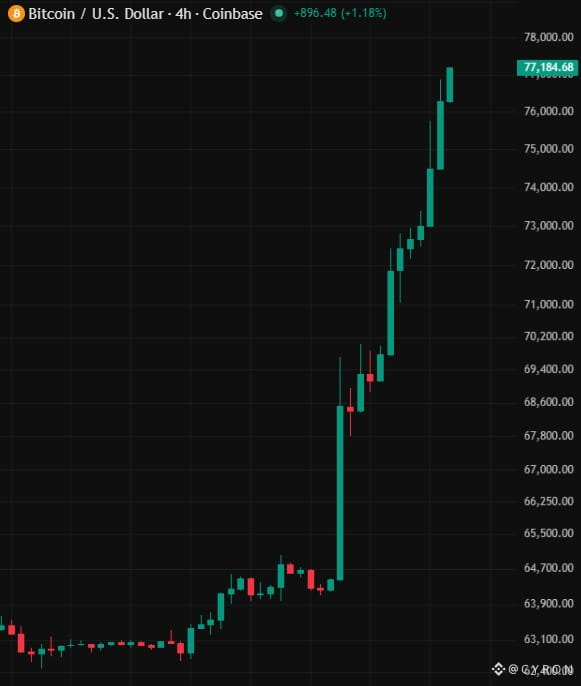
Absolutely HISTORIC.
Bitcoin is moving 140x faster than the stock market right now.
$BTC has surged more than 20% in less than five days, climbing from roughly $63K to above $77K.
For comparison, the S&P 500 has historically returned around 10% per year.
Bitcoin just delivered that kind of return in under five days.
Nearly 3 months of losses erased in just 5 days.
And this is now Bitcoin's strongest weekly rally since February 2024.
This is unbelievable. 🚀
{spot}(BTCUSDT)
#USJoblessClaimsFallTo206000
#TrumpPressesCongressToPassClarityAct
Absolutely HISTORIC.
Bitcoin is moving 140x faster than the stock market right now.
$BTC has surged more than 20% in less than five days, climbing from roughly $63K to above $77K.
For comparison, the S&P 500 has historically returned around 10% per year.
Bitcoin just delivered that kind of return in under five days.
Nearly 3 months of losses erased in just 5 days.
And this is now Bitcoin's strongest weekly rally since February 2024.
This is unbelievable. 🚀
#USJoblessClaimsFallTo206000
#TrumpPressesCongressToPassClarityAct
Bitcoin is moving 140x faster than the stock market right now.
$BTC has surged more than 20% in less than five days, climbing from roughly $63K to above $77K.
For comparison, the S&P 500 has historically returned around 10% per year.
Bitcoin just delivered that kind of return in under five days.
Nearly 3 months of losses erased in just 5 days.
And this is now Bitcoin's strongest weekly rally since February 2024.
This is unbelievable. 🚀
#USJoblessClaimsFallTo206000
#TrumpPressesCongressToPassClarityAct
2
234
Войдите, чтобы посмотреть больше материала
Присоединяйтесь к пользователям криптовалют по всему миру на Binance Square
⚡️ Получайте новейшую и полезную информацию о криптоактивах.
💬 Нам доверяет крупнейшая в мире криптобиржа.
👍 Получите достоверные аналитические данные от верифицированных создателей контента.
Эл. почта/номер телефона
В тренде
FedRateWatch
Просмотров: 1.4M
6,527 обсуждают
Share & Win Traffic Reward in our Trending Hashtag Campaign
✨Topic: FOMC September, What's The Fed's Next Move?
👉How to Join:
Publish a short post or article with hashtag #FedRateWatch
Create content based on the below angles:
- August core CPI rose 0.3% month-over-month, and the odds of a 25bp hike this week are now close to 90%. Do you anticipate a rate hike this week? Is it a one-off, or the start of a longer hiking cycle?
- If the hike lands, how does it play out for BTC, tech stocks, and gold? Bullish or bearish?
- How are you planning to trade next? Share your BTC, stocks or gold trade/holdings with our trade sharing widget.
⏰Campaign Period:
- 2026-09-15 11:00 - 2026-09-17 3:00 UTC
🎁Reward:
- Qualified posts that comply with the above guidelines and contain more than 100 words will be reviewed and may receive a random traffic boost of 500 to 3,000 views. You will receive a notification from your feed secretary if your post is selected.
- Get a chance to have your article featured on Binance Square Official
Need ideas for your post? Visit the topic page #FedRateWatch or the Square Guide on How to Post for Better Reach.
Binance Square Official
·Лайков: 638
·Просмотров: 1.6M
ZcashRises6%
Просмотров: 38,387
557 обсуждают
XRPSinks10%
Просмотров: 25,575
368 обсуждают