
Coinpedia Fintech News
45.7k Публикации

Coinpedia Fintech News
 Square Verified
Отправить жалобу
Заблокировать пользователя
Your Trusted Source of Crypto News & Analysis. Explore Crypto Events, Markets, Companies, Academy & Product Reviews by Experts.
1 подписок(и/а)
166.3K+ подписчиков(а)
208.2K+ понравилось
Посты
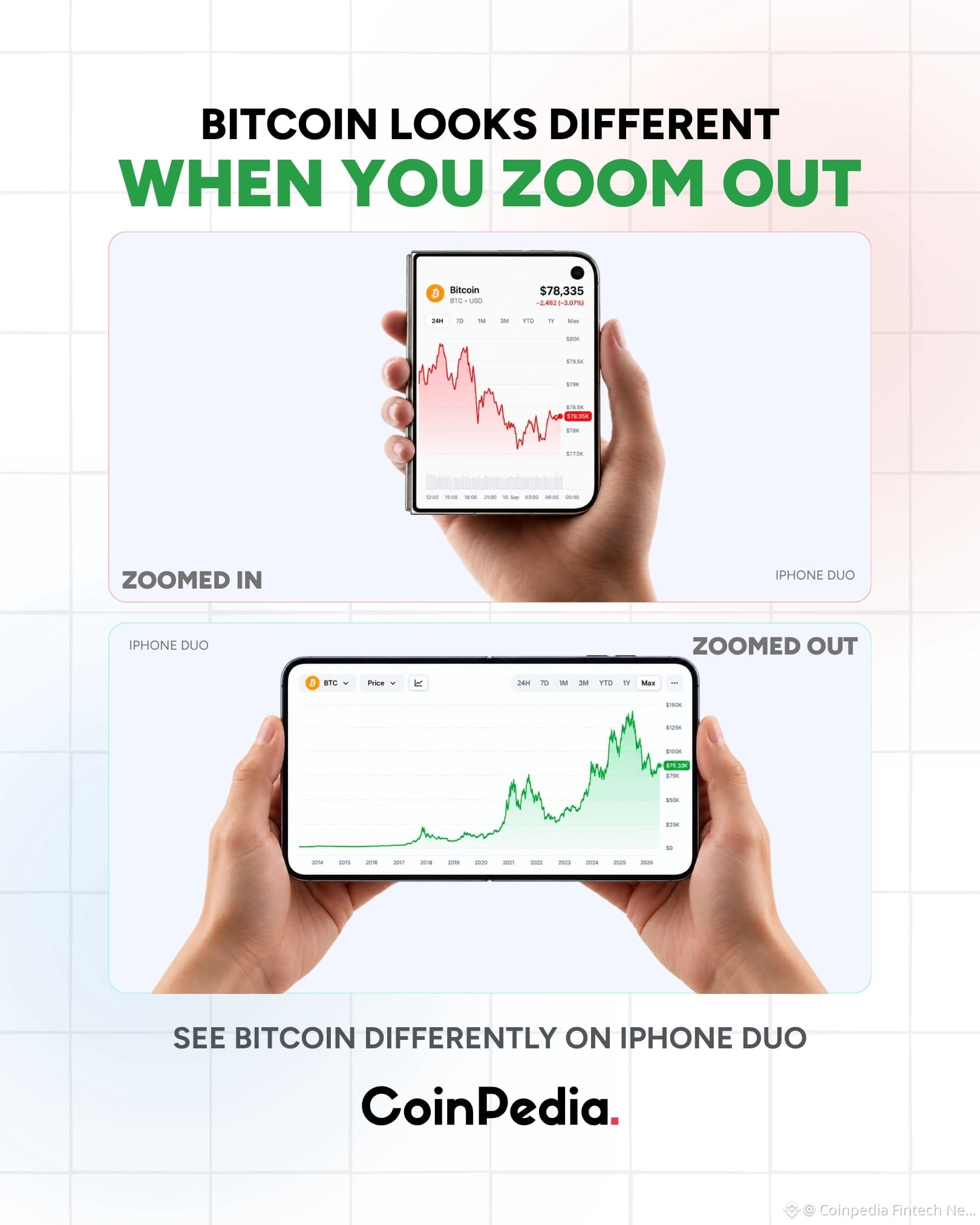
Zoom in on the noise. Zoom out and see the bigger picture. ₿
Zoom in on the noise. Zoom out and see the bigger picture. ₿
136
iPhone Duo for $1,999 — BTC or ETH? Your pick.
iPhone Duo for $1,999 — BTC or ETH? Your pick.

159
Частичная правда
Bitcoin, Ethereum and XRP Price Predictions Today: Why Is Crypto Falling?The global cryptocurrency market capitalization fell to $2.75 trillion, down 1.2% over the past 24 hours, with trading volume at $95.24 billion. Bitcoin slipped to $78,218.90, Ethereum eased to $2,470.18, and XRP dropped to $1.39.
Bitcoin: Cooling Off, Not Breaking Down
Bitcoin remains stuck in a resistance zone between $80,000 and $82,000, with support holding between $73,000 and $75,000. Chart analysts say the pullback follows an overbought signal on the 3-day RSI, along with a confirmed bearish divergence that emerged roughly a week ago after Bitcoin’s recent short squeeze. Together, those signals point to further consolidation or a mild pullback rather than a sharp reversal.
Liquidation data shows the more immediate level to watch sits between $77,200 and $77,400, with additional liquidity below that near $76,100. A dip toward the $76,000-$77,000 range remains a plausible near-term scenario, according to the analysis, even as the broader multi-year trend remains on cards.
Ethereum: Still Structurally Bullish Despite the Dip
Near-term, Ethereum faces resistance around $2,520 to $2,530, a level that has rejected price multiple times in recent weeks. The analyst said that repeated tests of resistance without a sharp rejection tend to weaken that resistance over time, increasing the odds of an eventual breakout, though a potential bearish divergence remains a risk if Ethereum’s RSI fails to clear its prior high during any breakout attempt.
XRP: Holding Key Support Amid Sideways Action
XRP continues to hold a critical support zone between $1.30 and $1.40 on the weekly chart, with the token trading sideways in the shorter term. Immediate support sits near $1.34 to $1.35, with resistance at $1.46 to $1.47. Because Bitcoin dominance has pulled back slightly, altcoins including XRP may hold up better than Bitcoin during this cooling-off period rather than falling in lockstep.
Treasury Buybacks Add a Macro Layer
Away from the charts, the US Treasury bought back $12.5 billion in short-term debt today and is expected to repurchase up to $6 billion in long-term bonds tomorrow, triple the usual size. The moves are aimed at managing bond market liquidity and containing yields, a dynamic that continues to factor into broader risk asset sentiment alongside crypto’s technical setup.
Bitcoin, Ethereum and XRP Price Predictions Today: Why Is Crypto Falling?
The global cryptocurrency market capitalization fell to $2.75 trillion, down 1.2% over the past 24 hours, with trading volume at $95.24 billion. Bitcoin slipped to $78,218.90, Ethereum eased to $2,470.18, and XRP dropped to $1.39.
Bitcoin: Cooling Off, Not Breaking Down
Bitcoin remains stuck in a resistance zone between $80,000 and $82,000, with support holding between $73,000 and $75,000. Chart analysts say the pullback follows an overbought signal on the 3-day RSI, along with a confirmed bearish divergence that emerged roughly a week ago after Bitcoin’s recent short squeeze. Together, those signals point to further consolidation or a mild pullback rather than a sharp reversal.
Liquidation data shows the more immediate level to watch sits between $77,200 and $77,400, with additional liquidity below that near $76,100. A dip toward the $76,000-$77,000 range remains a plausible near-term scenario, according to the analysis, even as the broader multi-year trend remains on cards.
Ethereum: Still Structurally Bullish Despite the Dip
Near-term, Ethereum faces resistance around $2,520 to $2,530, a level that has rejected price multiple times in recent weeks. The analyst said that repeated tests of resistance without a sharp rejection tend to weaken that resistance over time, increasing the odds of an eventual breakout, though a potential bearish divergence remains a risk if Ethereum’s RSI fails to clear its prior high during any breakout attempt.
XRP: Holding Key Support Amid Sideways Action
XRP continues to hold a critical support zone between $1.30 and $1.40 on the weekly chart, with the token trading sideways in the shorter term. Immediate support sits near $1.34 to $1.35, with resistance at $1.46 to $1.47. Because Bitcoin dominance has pulled back slightly, altcoins including XRP may hold up better than Bitcoin during this cooling-off period rather than falling in lockstep.
Treasury Buybacks Add a Macro Layer
Away from the charts, the US Treasury bought back $12.5 billion in short-term debt today and is expected to repurchase up to $6 billion in long-term bonds tomorrow, triple the usual size. The moves are aimed at managing bond market liquidity and containing yields, a dynamic that continues to factor into broader risk asset sentiment alongside crypto’s technical setup.
Bitcoin: Cooling Off, Not Breaking Down
Bitcoin remains stuck in a resistance zone between $80,000 and $82,000, with support holding between $73,000 and $75,000. Chart analysts say the pullback follows an overbought signal on the 3-day RSI, along with a confirmed bearish divergence that emerged roughly a week ago after Bitcoin’s recent short squeeze. Together, those signals point to further consolidation or a mild pullback rather than a sharp reversal.
Liquidation data shows the more immediate level to watch sits between $77,200 and $77,400, with additional liquidity below that near $76,100. A dip toward the $76,000-$77,000 range remains a plausible near-term scenario, according to the analysis, even as the broader multi-year trend remains on cards.
Ethereum: Still Structurally Bullish Despite the Dip
Near-term, Ethereum faces resistance around $2,520 to $2,530, a level that has rejected price multiple times in recent weeks. The analyst said that repeated tests of resistance without a sharp rejection tend to weaken that resistance over time, increasing the odds of an eventual breakout, though a potential bearish divergence remains a risk if Ethereum’s RSI fails to clear its prior high during any breakout attempt.
XRP: Holding Key Support Amid Sideways Action
XRP continues to hold a critical support zone between $1.30 and $1.40 on the weekly chart, with the token trading sideways in the shorter term. Immediate support sits near $1.34 to $1.35, with resistance at $1.46 to $1.47. Because Bitcoin dominance has pulled back slightly, altcoins including XRP may hold up better than Bitcoin during this cooling-off period rather than falling in lockstep.
Treasury Buybacks Add a Macro Layer
Away from the charts, the US Treasury bought back $12.5 billion in short-term debt today and is expected to repurchase up to $6 billion in long-term bonds tomorrow, triple the usual size. The moves are aimed at managing bond market liquidity and containing yields, a dynamic that continues to factor into broader risk asset sentiment alongside crypto’s technical setup.
1
428
Проверено
SOL Price Faces $50 Risk as SkyAI Board Fight EscalatesThe SOL price has enjoyed a strong recovery, but a corporate treasury dispute could complicate the rally. SkyAI, formerly Sharps Technology, holds approximately 2.08 million SOL worth roughly $207 million, making it one of the largest public corporate holders of Solana.
The treasury includes about 1.49 million liquid SOL and roughly 509,650 locked SOL scheduled for release through 2028. That exposure gives SkyAI a meaningful connection to the Solana market. It also makes the company’s latest governance battle worth watching.
SkyAI Shareholders Prepare For A Board Showdown
Forward Industries submitted an all-stock acquisition proposal for SkyAI at a premium in June 2026. SkyAI’s board unanimously rejected the offer.
The dispute didn’t end there. Activist shareholders, along with firms such as Bastion Trading and Forward Industries, have raised concerns about related-party transactions and urged shareholders to vote against current board members.
According to a post from The Block, a group holding nearly 10% of SkyAI plans to oppose the reelection of the entire board ahead of the September 18 annual meeting. The group has cited weakened shareholder rights, a “poison pill,” and related-party dealings.
SOL Price Rally Now Faces A New Risk
The SOL price has been climbing since mid-May after finding support near $60, which aligned with the lower boundary of a falling-wedge pattern. A golden cross is also close to forming, potentially adding strength to the bullish setup.
If the rally continues, SOL could approach the falling wedge’s mid-band near $130 or move higher. But SkyAI’s governance dispute introduces another risk factor for sentiment surrounding Solana treasury companies.
The dispute doesn’t directly change Solana’s network fundamentals. Still, prolonged pressure around a major corporate holder could affect market confidence and demand.
SOL Price Could Revisit $80 Or Even $50
If the SOL price loses momentum, the first downside level is around $80. A deeper sell-off could push SOL toward $50, which aligns with the lower support boundary of the falling wedge.
For now, the SOL price remains technically constructive above its key support. But with SkyAI’s shareholder vote approaching, traders may have to watch corporate governance as closely as the chart.
SOL Price Faces $50 Risk as SkyAI Board Fight Escalates
The SOL price has enjoyed a strong recovery, but a corporate treasury dispute could complicate the rally. SkyAI, formerly Sharps Technology, holds approximately 2.08 million SOL worth roughly $207 million, making it one of the largest public corporate holders of Solana.
The treasury includes about 1.49 million liquid SOL and roughly 509,650 locked SOL scheduled for release through 2028. That exposure gives SkyAI a meaningful connection to the Solana market. It also makes the company’s latest governance battle worth watching.
SkyAI Shareholders Prepare For A Board Showdown
Forward Industries submitted an all-stock acquisition proposal for SkyAI at a premium in June 2026. SkyAI’s board unanimously rejected the offer.
The dispute didn’t end there. Activist shareholders, along with firms such as Bastion Trading and Forward Industries, have raised concerns about related-party transactions and urged shareholders to vote against current board members.
According to a post from The Block, a group holding nearly 10% of SkyAI plans to oppose the reelection of the entire board ahead of the September 18 annual meeting. The group has cited weakened shareholder rights, a “poison pill,” and related-party dealings.
SOL Price Rally Now Faces A New Risk
The SOL price has been climbing since mid-May after finding support near $60, which aligned with the lower boundary of a falling-wedge pattern. A golden cross is also close to forming, potentially adding strength to the bullish setup.
If the rally continues, SOL could approach the falling wedge’s mid-band near $130 or move higher. But SkyAI’s governance dispute introduces another risk factor for sentiment surrounding Solana treasury companies.
The dispute doesn’t directly change Solana’s network fundamentals. Still, prolonged pressure around a major corporate holder could affect market confidence and demand.
SOL Price Could Revisit $80 Or Even $50
If the SOL price loses momentum, the first downside level is around $80. A deeper sell-off could push SOL toward $50, which aligns with the lower support boundary of the falling wedge.
For now, the SOL price remains technically constructive above its key support. But with SkyAI’s shareholder vote approaching, traders may have to watch corporate governance as closely as the chart.
The treasury includes about 1.49 million liquid SOL and roughly 509,650 locked SOL scheduled for release through 2028. That exposure gives SkyAI a meaningful connection to the Solana market. It also makes the company’s latest governance battle worth watching.
SkyAI Shareholders Prepare For A Board Showdown
Forward Industries submitted an all-stock acquisition proposal for SkyAI at a premium in June 2026. SkyAI’s board unanimously rejected the offer.
The dispute didn’t end there. Activist shareholders, along with firms such as Bastion Trading and Forward Industries, have raised concerns about related-party transactions and urged shareholders to vote against current board members.
According to a post from The Block, a group holding nearly 10% of SkyAI plans to oppose the reelection of the entire board ahead of the September 18 annual meeting. The group has cited weakened shareholder rights, a “poison pill,” and related-party dealings.
SOL Price Rally Now Faces A New Risk
The SOL price has been climbing since mid-May after finding support near $60, which aligned with the lower boundary of a falling-wedge pattern. A golden cross is also close to forming, potentially adding strength to the bullish setup.
If the rally continues, SOL could approach the falling wedge’s mid-band near $130 or move higher. But SkyAI’s governance dispute introduces another risk factor for sentiment surrounding Solana treasury companies.
The dispute doesn’t directly change Solana’s network fundamentals. Still, prolonged pressure around a major corporate holder could affect market confidence and demand.
SOL Price Could Revisit $80 Or Even $50
If the SOL price loses momentum, the first downside level is around $80. A deeper sell-off could push SOL toward $50, which aligns with the lower support boundary of the falling wedge.
For now, the SOL price remains technically constructive above its key support. But with SkyAI’s shareholder vote approaching, traders may have to watch corporate governance as closely as the chart.
481
iPhone 18 Launch Today: Here’s How Much Bitcoin and Ethereum It Actually Costs TodayApple unveils its iPhone 18 lineup today, September 9, at its “Surprise and Shine” event. The Wall Street Journal reports the iPhone 18 Pro is expected to start around $1,299, with the Pro Max around $1,399 in the US, both above last year’s Pro-tier pricing. Apple hasn’t confirmed official prices yet.
What That Costs in Crypto Today
With Bitcoin trading at $79,196.62 and Ethereum at $2,500.09, an estimated $1,299 iPhone 18 Pro would run about 0.0164 BTC or 0.52 ETH. The Pro Max, at an estimated $1,399, comes to roughly 0.0177 BTC or 0.56 ETH.
Breaking a Multi-Year Trend
According to CoinGecko research tracking iPhone launch prices against BTC and ETH since 2011, the amount of crypto needed to buy each new iPhone has fallen almost every year. The iPhone 4S required a staggering 162.25 BTC back in 2011. By last year’s iPhone 17, that number had shrunk to just 0.007 BTC, an almost uninterrupted decade-and-a-half decline as Bitcoin’s price climbed. Ethereum tells the same story: an iPhone cost 876.4 ETH in 2015, falling to just 0.18 ETH for the iPhone 17 last year.
This year looks different. Bitcoin’s price today sits well below where it was at last September’s iPhone launch, while Apple appears set to raise Pro-tier pricing by $150 to $200. Put those two forces together and the iPhone 18 Pro could require noticeably more Bitcoin than the iPhone 17 Pro did a year ago, a rare reversal after years of iPhones getting steadily cheaper in crypto terms.
Still Nothing Like 2011
Even with this year’s uptick, today’s price tag remains a tiny fraction of what early Bitcoin holders once paid. The gap between 162 BTC for a 2011 iPhone and roughly 0.016 BTC for a 2026 Pro model still reflects Bitcoin’s enormous rise in value over 15 years, this year’s move is a blip on an otherwise steep decline, not a reversal of the broader trend.
What’s Actually Launching Today
Beyond pricing, today’s event is expected to headline the iPhone 18 Pro and iPhone 18 Pro Max, both powered by Apple’s first 2-nanometer chip, the A20 Pro, alongside Apple’s first-ever foldable iPhone. Reports suggest the standard iPhone 18 and a budget iPhone 18e won’t arrive until spring 2027, splitting Apple’s usual single-launch calendar into two release windows for the first time in years.
iPhone 18 Launch Today: Here’s How Much Bitcoin and Ethereum It Actually Costs Today
Apple unveils its iPhone 18 lineup today, September 9, at its “Surprise and Shine” event. The Wall Street Journal reports the iPhone 18 Pro is expected to start around $1,299, with the Pro Max around $1,399 in the US, both above last year’s Pro-tier pricing. Apple hasn’t confirmed official prices yet.
What That Costs in Crypto Today
With Bitcoin trading at $79,196.62 and Ethereum at $2,500.09, an estimated $1,299 iPhone 18 Pro would run about 0.0164 BTC or 0.52 ETH. The Pro Max, at an estimated $1,399, comes to roughly 0.0177 BTC or 0.56 ETH.
Breaking a Multi-Year Trend
According to CoinGecko research tracking iPhone launch prices against BTC and ETH since 2011, the amount of crypto needed to buy each new iPhone has fallen almost every year. The iPhone 4S required a staggering 162.25 BTC back in 2011. By last year’s iPhone 17, that number had shrunk to just 0.007 BTC, an almost uninterrupted decade-and-a-half decline as Bitcoin’s price climbed. Ethereum tells the same story: an iPhone cost 876.4 ETH in 2015, falling to just 0.18 ETH for the iPhone 17 last year.
This year looks different. Bitcoin’s price today sits well below where it was at last September’s iPhone launch, while Apple appears set to raise Pro-tier pricing by $150 to $200. Put those two forces together and the iPhone 18 Pro could require noticeably more Bitcoin than the iPhone 17 Pro did a year ago, a rare reversal after years of iPhones getting steadily cheaper in crypto terms.
Still Nothing Like 2011
Even with this year’s uptick, today’s price tag remains a tiny fraction of what early Bitcoin holders once paid. The gap between 162 BTC for a 2011 iPhone and roughly 0.016 BTC for a 2026 Pro model still reflects Bitcoin’s enormous rise in value over 15 years, this year’s move is a blip on an otherwise steep decline, not a reversal of the broader trend.
What’s Actually Launching Today
Beyond pricing, today’s event is expected to headline the iPhone 18 Pro and iPhone 18 Pro Max, both powered by Apple’s first 2-nanometer chip, the A20 Pro, alongside Apple’s first-ever foldable iPhone. Reports suggest the standard iPhone 18 and a budget iPhone 18e won’t arrive until spring 2027, splitting Apple’s usual single-launch calendar into two release windows for the first time in years.
What That Costs in Crypto Today
With Bitcoin trading at $79,196.62 and Ethereum at $2,500.09, an estimated $1,299 iPhone 18 Pro would run about 0.0164 BTC or 0.52 ETH. The Pro Max, at an estimated $1,399, comes to roughly 0.0177 BTC or 0.56 ETH.
Breaking a Multi-Year Trend
According to CoinGecko research tracking iPhone launch prices against BTC and ETH since 2011, the amount of crypto needed to buy each new iPhone has fallen almost every year. The iPhone 4S required a staggering 162.25 BTC back in 2011. By last year’s iPhone 17, that number had shrunk to just 0.007 BTC, an almost uninterrupted decade-and-a-half decline as Bitcoin’s price climbed. Ethereum tells the same story: an iPhone cost 876.4 ETH in 2015, falling to just 0.18 ETH for the iPhone 17 last year.
This year looks different. Bitcoin’s price today sits well below where it was at last September’s iPhone launch, while Apple appears set to raise Pro-tier pricing by $150 to $200. Put those two forces together and the iPhone 18 Pro could require noticeably more Bitcoin than the iPhone 17 Pro did a year ago, a rare reversal after years of iPhones getting steadily cheaper in crypto terms.
Still Nothing Like 2011
Even with this year’s uptick, today’s price tag remains a tiny fraction of what early Bitcoin holders once paid. The gap between 162 BTC for a 2011 iPhone and roughly 0.016 BTC for a 2026 Pro model still reflects Bitcoin’s enormous rise in value over 15 years, this year’s move is a blip on an otherwise steep decline, not a reversal of the broader trend.
What’s Actually Launching Today
Beyond pricing, today’s event is expected to headline the iPhone 18 Pro and iPhone 18 Pro Max, both powered by Apple’s first 2-nanometer chip, the A20 Pro, alongside Apple’s first-ever foldable iPhone. Reports suggest the standard iPhone 18 and a budget iPhone 18e won’t arrive until spring 2027, splitting Apple’s usual single-launch calendar into two release windows for the first time in years.
404
TRX Price Eyes $0.45 After Canary Staked TRX ETF LaunchThe TRX price has a new catalyst, but $0.35 remains a stubborn obstacle. CanaryFunds has announced the launch of the Canary Staked TRX ETF, offering exposure to TRX while seeking additional returns through delegated proof-of-stake validation on the TRON network.
Net staking rewards will be reflected in the fund’s net asset value. That gives investors another potential reason to consider exposure to TRX, although the announcement alone doesn’t guarantee sustained buying pressure.
TRX Price Needs To Clear $0.35 First
The TRX price is currently trading above its 200-day EMA band while facing resistance block around $0.35. A decisive move beyond that level could improve the broader technical setup.
If momentum strengthens, $0.45 becomes the next major level to watch. A move above $0.45 could potentially push TRX/USD into a new price discovery phase and surpass its late-2025 high.
Still, rejection at $0.35 would keep the rally vulnerable. In that case, TRX could decline toward $0.31 or even $0.26.
TRON Activity Remains High Despite Decline
Meanwhile, TRON’s on-chain activity has cooled from its June 2026 peak. Active addresses reached approximately 5.8 million in June but had declined to around 4.35 million by early September.
That’s a reduction, but the figure remains substantial. In early 2024, active addresses were around 2 million, meaning current activity is still more than double that level.
TRX Price Rally Depends On Real Demand
The Canary Staked TRX ETF adds a longer-term demand narrative, while TRON’s active-address figures show that network usage remains elevated despite the recent decline.
For now, the TRX price needs to break $0.35 and hold above it. If buyers manage that, $0.45 could become the next major test; otherwise, the $0.31 and $0.26 levels remain in focus.
TRX Price Eyes $0.45 After Canary Staked TRX ETF Launch
The TRX price has a new catalyst, but $0.35 remains a stubborn obstacle. CanaryFunds has announced the launch of the Canary Staked TRX ETF, offering exposure to TRX while seeking additional returns through delegated proof-of-stake validation on the TRON network.
Net staking rewards will be reflected in the fund’s net asset value. That gives investors another potential reason to consider exposure to TRX, although the announcement alone doesn’t guarantee sustained buying pressure.
TRX Price Needs To Clear $0.35 First
The TRX price is currently trading above its 200-day EMA band while facing resistance block around $0.35. A decisive move beyond that level could improve the broader technical setup.
If momentum strengthens, $0.45 becomes the next major level to watch. A move above $0.45 could potentially push TRX/USD into a new price discovery phase and surpass its late-2025 high.
Still, rejection at $0.35 would keep the rally vulnerable. In that case, TRX could decline toward $0.31 or even $0.26.
TRON Activity Remains High Despite Decline
Meanwhile, TRON’s on-chain activity has cooled from its June 2026 peak. Active addresses reached approximately 5.8 million in June but had declined to around 4.35 million by early September.
That’s a reduction, but the figure remains substantial. In early 2024, active addresses were around 2 million, meaning current activity is still more than double that level.
TRX Price Rally Depends On Real Demand
The Canary Staked TRX ETF adds a longer-term demand narrative, while TRON’s active-address figures show that network usage remains elevated despite the recent decline.
For now, the TRX price needs to break $0.35 and hold above it. If buyers manage that, $0.45 could become the next major test; otherwise, the $0.31 and $0.26 levels remain in focus.
Net staking rewards will be reflected in the fund’s net asset value. That gives investors another potential reason to consider exposure to TRX, although the announcement alone doesn’t guarantee sustained buying pressure.
TRX Price Needs To Clear $0.35 First
The TRX price is currently trading above its 200-day EMA band while facing resistance block around $0.35. A decisive move beyond that level could improve the broader technical setup.
If momentum strengthens, $0.45 becomes the next major level to watch. A move above $0.45 could potentially push TRX/USD into a new price discovery phase and surpass its late-2025 high.
Still, rejection at $0.35 would keep the rally vulnerable. In that case, TRX could decline toward $0.31 or even $0.26.
TRON Activity Remains High Despite Decline
Meanwhile, TRON’s on-chain activity has cooled from its June 2026 peak. Active addresses reached approximately 5.8 million in June but had declined to around 4.35 million by early September.
That’s a reduction, but the figure remains substantial. In early 2024, active addresses were around 2 million, meaning current activity is still more than double that level.
TRX Price Rally Depends On Real Demand
The Canary Staked TRX ETF adds a longer-term demand narrative, while TRON’s active-address figures show that network usage remains elevated despite the recent decline.
For now, the TRX price needs to break $0.35 and hold above it. If buyers manage that, $0.45 could become the next major test; otherwise, the $0.31 and $0.26 levels remain in focus.
233
Exclusive: Inside The CLARITY Act’s Do-Or-Die Vote On September 15The word “CLARITY” has been doing rounds on Crypto Twitter for months, one senator promising it’s finally coming, the next going live to declare it dead on arrival. Somewhere between “most important crypto bill in history” and “dead on arrival,” the September 15 deadline is closing in fast.
Adrian Wall, Managing Director at the Digital Sovereignty Alliance, in an interview with Coinpedia, explained that the September 15 vote is a cloture motion on the motion to proceed, requiring 60 votes to advance, not final passage.
Clearing it would open the bill to floor debate and amendments. Failing it would halt the process entirely for this session, Wall said in an interview with Coinpedia, with the Senate’s shrinking calendar ahead of midterm campaigning making a near-term second attempt unlikely.
What the Bill Would Change
The CLARITY Act aims to resolve a jurisdictional gap that has left crypto companies in the US without clear regulatory guidance. It would establish a statutory test determining when a blockchain network and its associated token qualify as a “digital commodity,” based on factors including network control and maturity.
Token offerings structured as investment contracts would remain under SEC securities law; those meeting the digital commodity threshold would fall under CFTC oversight instead. The bill also sets registration, disclosure, customer protection, and anti-money-laundering requirements for exchanges and intermediaries serving US customers.
Wall said the legislation is designed to let companies answer three basic questions they currently cannot: what their asset is, which regulator oversees them, and what rules they must follow.
A Bill That Has Already Outpaced Its Predecessor
CLARITY has progressed further than any prior US crypto market structure bill. Its predecessor, FIT21, passed the House 279-136 in May 2024 but never received a Senate committee markup or floor vote before expiring with that Congress.
CLARITY has cleared the House 294-134 and the Senate Banking Committee 15-9, with a cloture motion now scheduled for a specific floor date, a level of procedural progress Wall said no earlier attempt achieved.
If the Vote Fails
A failed cloture vote would not end the push for legislation entirely, Wall said, but would push any comprehensive rewrite into the next Congress. Individual provisions, particularly nearly finalized language on stablecoin yield, could resurface in narrower standalone bills. In the meantime, the SEC would likely continue addressing gaps through rulemaking.
Why SEC Rulemaking Isn’t a Full Substitute
The SEC proposed its own rule in August, Regulation Crypto Assets, creating two offering exemptions for token issuers and preempting conflicting state securities rules. Wall said the rule is useful but limited in scope, covering only the fundraising side of the market and leaving CFTC jurisdiction over spot trading untouched. Because it was issued through rulemaking rather than statute, it also remains vulnerable to reversal by a future commission or a court challenge.
“A rule can hand out exemptions; it cannot create a statutory classification test or move jurisdiction,” Wall said, adding that the SEC acting alone underscores why agency rulemaking cannot substitute for durable, bipartisan legislation.
Exclusive: Inside The CLARITY Act’s Do-Or-Die Vote On September 15
The word “CLARITY” has been doing rounds on Crypto Twitter for months, one senator promising it’s finally coming, the next going live to declare it dead on arrival. Somewhere between “most important crypto bill in history” and “dead on arrival,” the September 15 deadline is closing in fast.
Adrian Wall, Managing Director at the Digital Sovereignty Alliance, in an interview with Coinpedia, explained that the September 15 vote is a cloture motion on the motion to proceed, requiring 60 votes to advance, not final passage.
Clearing it would open the bill to floor debate and amendments. Failing it would halt the process entirely for this session, Wall said in an interview with Coinpedia, with the Senate’s shrinking calendar ahead of midterm campaigning making a near-term second attempt unlikely.
What the Bill Would Change
The CLARITY Act aims to resolve a jurisdictional gap that has left crypto companies in the US without clear regulatory guidance. It would establish a statutory test determining when a blockchain network and its associated token qualify as a “digital commodity,” based on factors including network control and maturity.
Token offerings structured as investment contracts would remain under SEC securities law; those meeting the digital commodity threshold would fall under CFTC oversight instead. The bill also sets registration, disclosure, customer protection, and anti-money-laundering requirements for exchanges and intermediaries serving US customers.
Wall said the legislation is designed to let companies answer three basic questions they currently cannot: what their asset is, which regulator oversees them, and what rules they must follow.
A Bill That Has Already Outpaced Its Predecessor
CLARITY has progressed further than any prior US crypto market structure bill. Its predecessor, FIT21, passed the House 279-136 in May 2024 but never received a Senate committee markup or floor vote before expiring with that Congress.
CLARITY has cleared the House 294-134 and the Senate Banking Committee 15-9, with a cloture motion now scheduled for a specific floor date, a level of procedural progress Wall said no earlier attempt achieved.
If the Vote Fails
A failed cloture vote would not end the push for legislation entirely, Wall said, but would push any comprehensive rewrite into the next Congress. Individual provisions, particularly nearly finalized language on stablecoin yield, could resurface in narrower standalone bills. In the meantime, the SEC would likely continue addressing gaps through rulemaking.
Why SEC Rulemaking Isn’t a Full Substitute
The SEC proposed its own rule in August, Regulation Crypto Assets, creating two offering exemptions for token issuers and preempting conflicting state securities rules. Wall said the rule is useful but limited in scope, covering only the fundraising side of the market and leaving CFTC jurisdiction over spot trading untouched. Because it was issued through rulemaking rather than statute, it also remains vulnerable to reversal by a future commission or a court challenge.
“A rule can hand out exemptions; it cannot create a statutory classification test or move jurisdiction,” Wall said, adding that the SEC acting alone underscores why agency rulemaking cannot substitute for durable, bipartisan legislation.
Adrian Wall, Managing Director at the Digital Sovereignty Alliance, in an interview with Coinpedia, explained that the September 15 vote is a cloture motion on the motion to proceed, requiring 60 votes to advance, not final passage.
Clearing it would open the bill to floor debate and amendments. Failing it would halt the process entirely for this session, Wall said in an interview with Coinpedia, with the Senate’s shrinking calendar ahead of midterm campaigning making a near-term second attempt unlikely.
What the Bill Would Change
The CLARITY Act aims to resolve a jurisdictional gap that has left crypto companies in the US without clear regulatory guidance. It would establish a statutory test determining when a blockchain network and its associated token qualify as a “digital commodity,” based on factors including network control and maturity.
Token offerings structured as investment contracts would remain under SEC securities law; those meeting the digital commodity threshold would fall under CFTC oversight instead. The bill also sets registration, disclosure, customer protection, and anti-money-laundering requirements for exchanges and intermediaries serving US customers.
Wall said the legislation is designed to let companies answer three basic questions they currently cannot: what their asset is, which regulator oversees them, and what rules they must follow.
A Bill That Has Already Outpaced Its Predecessor
CLARITY has progressed further than any prior US crypto market structure bill. Its predecessor, FIT21, passed the House 279-136 in May 2024 but never received a Senate committee markup or floor vote before expiring with that Congress.
CLARITY has cleared the House 294-134 and the Senate Banking Committee 15-9, with a cloture motion now scheduled for a specific floor date, a level of procedural progress Wall said no earlier attempt achieved.
If the Vote Fails
A failed cloture vote would not end the push for legislation entirely, Wall said, but would push any comprehensive rewrite into the next Congress. Individual provisions, particularly nearly finalized language on stablecoin yield, could resurface in narrower standalone bills. In the meantime, the SEC would likely continue addressing gaps through rulemaking.
Why SEC Rulemaking Isn’t a Full Substitute
The SEC proposed its own rule in August, Regulation Crypto Assets, creating two offering exemptions for token issuers and preempting conflicting state securities rules. Wall said the rule is useful but limited in scope, covering only the fundraising side of the market and leaving CFTC jurisdiction over spot trading untouched. Because it was issued through rulemaking rather than statute, it also remains vulnerable to reversal by a future commission or a court challenge.
“A rule can hand out exemptions; it cannot create a statutory classification test or move jurisdiction,” Wall said, adding that the SEC acting alone underscores why agency rulemaking cannot substitute for durable, bipartisan legislation.
1
219
Ripple News: SEC Filing Allegedly Names XRP Among Eligible Commodities For New ETF StandardsSEC filing documents surfaced online purportedly show new listing standards that would explicitly name XRP alongside Bitcoin, Ethereum, Solana and Litecoin as eligible commodities for a new class of exchange-traded products, according to a post from independent crypto news account RippleXity, which is not affiliated with Ripple Labs.
Nasdaq Texas filed a proposed rule change with the SEC on August 20 to amend Rule 5711(d), governing generic listing standards for Commodity-Based Trust Shares. The alleged unpublished documents show that the SEC published notice of the filing, with an order granting accelerated approval, on September 3, with the document scheduled to appear in the Federal Register on September 9.
🚨 JUST IN: Unpublished SEC document names $XRP as an eligible commodity under Nasdaq Texas listing rules. pic.twitter.com/FI2vC77pIu
— RippleXity (@RippleXity) September 8, 2026
According to excerpts shared by RippleXity, the filing outlines examples of how a proposed 15% buffer allowance would apply, including a scenario in which a Commodity-Based Trust Share holds 95% of its net asset value in Bitcoin, Ether, Solana and XRP, structured to qualify as “eligible commodities” under Rule 5711(d)(iv)(A)(2) and (3).
The proposed changes would reportedly allow up to 15% of a trust’s net asset value to consist of assets that don’t meet standard eligibility criteria, introduce a formal definition for “digital commodity,” and permit actively managed strategies within these products.
Other mainstream outlets have not independently confirmed the contents or authenticity of the filing excerpts as presented. The claims originate from RippleXity, a self-described independent, community-powered news platform built on the XRP Ledger that states it is not affiliated with Ripple or Ripple Labs Inc.
Ripple News: SEC Filing Allegedly Names XRP Among Eligible Commodities For New ETF Standards
SEC filing documents surfaced online purportedly show new listing standards that would explicitly name XRP alongside Bitcoin, Ethereum, Solana and Litecoin as eligible commodities for a new class of exchange-traded products, according to a post from independent crypto news account RippleXity, which is not affiliated with Ripple Labs.
Nasdaq Texas filed a proposed rule change with the SEC on August 20 to amend Rule 5711(d), governing generic listing standards for Commodity-Based Trust Shares. The alleged unpublished documents show that the SEC published notice of the filing, with an order granting accelerated approval, on September 3, with the document scheduled to appear in the Federal Register on September 9.
🚨 JUST IN: Unpublished SEC document names $XRP as an eligible commodity under Nasdaq Texas listing rules. pic.twitter.com/FI2vC77pIu
— RippleXity (@RippleXity) September 8, 2026
According to excerpts shared by RippleXity, the filing outlines examples of how a proposed 15% buffer allowance would apply, including a scenario in which a Commodity-Based Trust Share holds 95% of its net asset value in Bitcoin, Ether, Solana and XRP, structured to qualify as “eligible commodities” under Rule 5711(d)(iv)(A)(2) and (3).
The proposed changes would reportedly allow up to 15% of a trust’s net asset value to consist of assets that don’t meet standard eligibility criteria, introduce a formal definition for “digital commodity,” and permit actively managed strategies within these products.
Other mainstream outlets have not independently confirmed the contents or authenticity of the filing excerpts as presented. The claims originate from RippleXity, a self-described independent, community-powered news platform built on the XRP Ledger that states it is not affiliated with Ripple or Ripple Labs Inc.
Nasdaq Texas filed a proposed rule change with the SEC on August 20 to amend Rule 5711(d), governing generic listing standards for Commodity-Based Trust Shares. The alleged unpublished documents show that the SEC published notice of the filing, with an order granting accelerated approval, on September 3, with the document scheduled to appear in the Federal Register on September 9.
🚨 JUST IN: Unpublished SEC document names $XRP as an eligible commodity under Nasdaq Texas listing rules. pic.twitter.com/FI2vC77pIu
— RippleXity (@RippleXity) September 8, 2026
According to excerpts shared by RippleXity, the filing outlines examples of how a proposed 15% buffer allowance would apply, including a scenario in which a Commodity-Based Trust Share holds 95% of its net asset value in Bitcoin, Ether, Solana and XRP, structured to qualify as “eligible commodities” under Rule 5711(d)(iv)(A)(2) and (3).
The proposed changes would reportedly allow up to 15% of a trust’s net asset value to consist of assets that don’t meet standard eligibility criteria, introduce a formal definition for “digital commodity,” and permit actively managed strategies within these products.
Other mainstream outlets have not independently confirmed the contents or authenticity of the filing excerpts as presented. The claims originate from RippleXity, a self-described independent, community-powered news platform built on the XRP Ledger that states it is not affiliated with Ripple or Ripple Labs Inc.
436
VVV Price Could Drop to $18 as Whale Profit Exceeds $14MThe VVV price has delivered a massive payday for whale 0x7378, but the rally is now showing signs of overheating. In just six months, the wallet made $14.93 million from VVV and LIT, turning aggressive buying into a substantial paper gain.
The whale bought 102,189 VVV at $7.87 six months ago. After today’s surge, he sold 92,189 tokens for $2.37 million at $25.75 and still holds 10,000 VVV worth around $259,500. The VVV position alone has generated approximately $1.83 million in profit.
VVV Price Rally Pushes Whale Profits Higher
The LIT trade has been even more lucrative. Over the past three months, the wallet spent $11.3 million to buy 4.74 million LIT at an average price of $2.39. That holding is now worth approximately $24.4 million, leaving the whale with a $13.1 million unrealized profit.
Still, the charts are becoming harder to ignore. Both VVV/USD and LIT/USD have posted impressive momentum on the daily timeframe, while their RSI readings have entered overheated territory. That doesn’t guarantee a reversal, but it leaves both tokens exposed if buyers lose control.
Short Liquidations Add Fuel To VVV Rally
VVV token has also seen heavy short liquidations during the past two days. Short traders dominated the latest figures, with approximately $4.02 million in liquidations over 24 hours.
LIT crypto is facing a similar setup. Short liquidations reached $1.26 million today, again with shorts accounting for the larger share.
VVV Price Faces Sharp Downside If Momentum Fades
If the VVV price loses momentum, the token could fall toward $18 or even $10. LIT price could face declines toward $4.34, $3.17, or $2.28 if selling pressure takes over.
For now, whale profits and short liquidations support the rally. But with RSI metric is overheated, the VVV price may need a pause before attempting another sustained move higher.
VVV Price Could Drop to $18 as Whale Profit Exceeds $14M
The VVV price has delivered a massive payday for whale 0x7378, but the rally is now showing signs of overheating. In just six months, the wallet made $14.93 million from VVV and LIT, turning aggressive buying into a substantial paper gain.
The whale bought 102,189 VVV at $7.87 six months ago. After today’s surge, he sold 92,189 tokens for $2.37 million at $25.75 and still holds 10,000 VVV worth around $259,500. The VVV position alone has generated approximately $1.83 million in profit.
VVV Price Rally Pushes Whale Profits Higher
The LIT trade has been even more lucrative. Over the past three months, the wallet spent $11.3 million to buy 4.74 million LIT at an average price of $2.39. That holding is now worth approximately $24.4 million, leaving the whale with a $13.1 million unrealized profit.
Still, the charts are becoming harder to ignore. Both VVV/USD and LIT/USD have posted impressive momentum on the daily timeframe, while their RSI readings have entered overheated territory. That doesn’t guarantee a reversal, but it leaves both tokens exposed if buyers lose control.
Short Liquidations Add Fuel To VVV Rally
VVV token has also seen heavy short liquidations during the past two days. Short traders dominated the latest figures, with approximately $4.02 million in liquidations over 24 hours.
LIT crypto is facing a similar setup. Short liquidations reached $1.26 million today, again with shorts accounting for the larger share.
VVV Price Faces Sharp Downside If Momentum Fades
If the VVV price loses momentum, the token could fall toward $18 or even $10. LIT price could face declines toward $4.34, $3.17, or $2.28 if selling pressure takes over.
For now, whale profits and short liquidations support the rally. But with RSI metric is overheated, the VVV price may need a pause before attempting another sustained move higher.
The whale bought 102,189 VVV at $7.87 six months ago. After today’s surge, he sold 92,189 tokens for $2.37 million at $25.75 and still holds 10,000 VVV worth around $259,500. The VVV position alone has generated approximately $1.83 million in profit.
VVV Price Rally Pushes Whale Profits Higher
The LIT trade has been even more lucrative. Over the past three months, the wallet spent $11.3 million to buy 4.74 million LIT at an average price of $2.39. That holding is now worth approximately $24.4 million, leaving the whale with a $13.1 million unrealized profit.
Still, the charts are becoming harder to ignore. Both VVV/USD and LIT/USD have posted impressive momentum on the daily timeframe, while their RSI readings have entered overheated territory. That doesn’t guarantee a reversal, but it leaves both tokens exposed if buyers lose control.
Short Liquidations Add Fuel To VVV Rally
VVV token has also seen heavy short liquidations during the past two days. Short traders dominated the latest figures, with approximately $4.02 million in liquidations over 24 hours.
LIT crypto is facing a similar setup. Short liquidations reached $1.26 million today, again with shorts accounting for the larger share.
VVV Price Faces Sharp Downside If Momentum Fades
If the VVV price loses momentum, the token could fall toward $18 or even $10. LIT price could face declines toward $4.34, $3.17, or $2.28 if selling pressure takes over.
For now, whale profits and short liquidations support the rally. But with RSI metric is overheated, the VVV price may need a pause before attempting another sustained move higher.
460
Zcash Price Explodes as ETF Demand Rises—Can ZEC Reach $1500?Zcash has exploded and has become one of the top performers in the crypto market, with the price surging to $1,220. The rally comes as institutional interest in ZEC accelerates, with Grayscale ETF accumulation crossing $500 million in AUM. With this, the ZEC price has broken above a major long-term resistance zone and is now testing levels that could determine whether the rally can extend to $1500 and above.
Zcash’s ETF Boom Pushes ZEC Price Higher
The latest rally above $1200 is backed by huge demand with Grayscale’s ZEC ETF, ZCSH, which has already crossed $500 million. The fund currently holds more than 464,000 ZEC after reaching about $533 million in AUM. This highlights the increase in institutional access to the token.
The demand is adding fuel to an already powerful technical breakout. The ZEC price has climbed more than 50% in recent days and pushed it above $1200. While the ETF has been a major catalyst, the price has been exploding aggressively. Now the question arises whether the buyers have enough momentum to push the price to the next highs or whether a period of consolidation comes first.
Can ZEC Price Break $1,435 and Reach $1,500?
Zcash’s price chart shows a clear bullish breakout from the long-standing $650 to $700 resistance, followed by a sharp acceleration toward $1200. The price is now trading well above its major moving averages, all sitting below the current price. Besides, Cumulative Volume Delta (CVD) turned positive and strengthened, suggesting that aggressive buying has been supporting the rally.
Currently, the price is holding strongly above the local support at $1,162, leaving $1,435 as the next major resistance. If buyers can push through that level and hold it, the ZEC price could surpass the psychological mark at $1500. However, if price continues making higher highs while CVD starts flattening or falling, it could warn that buying pressure is losing momentum. For now, $1,435 remains a key test range.
Is Rising Open Interest Fueling the Rally or Posing a Risk?
Open Interest has surged alongside the price, showing that traders are becoming increasingly active in the derivatives market. The chart shows OI climbing sharply as ZEC moved through $1000 and toward $1200. This indicates fresh positions are entering the market rather than the rally being driven only by spot buyers.
With this, leverage becomes the biggest concern. After such a rapid rally, a large amount of open interest can make ZEC more vulnerable to sudden liquidations if price reverses. In other words, the same leverage that can accelerate a breakout can also magnify a correction. If ZEC holds above $1,200 while OI remains elevated without a sharp drop in price, the bullish trend could stay intact.
Will the Zcash (ZEC) Price Reach $1,500?
The Zcash price is currently on a path towards $1,500, but only a rise above the immediate next resistance could confirm the move. The bullish case remains intact as long as the price holds above the $1,200 to $1,250 price range. A decisive breakout above $1,435 with strong buying volume opens the way toward $1,500.
Zcash Price Explodes as ETF Demand Rises—Can ZEC Reach $1500?
Zcash has exploded and has become one of the top performers in the crypto market, with the price surging to $1,220. The rally comes as institutional interest in ZEC accelerates, with Grayscale ETF accumulation crossing $500 million in AUM. With this, the ZEC price has broken above a major long-term resistance zone and is now testing levels that could determine whether the rally can extend to $1500 and above.
Zcash’s ETF Boom Pushes ZEC Price Higher
The latest rally above $1200 is backed by huge demand with Grayscale’s ZEC ETF, ZCSH, which has already crossed $500 million. The fund currently holds more than 464,000 ZEC after reaching about $533 million in AUM. This highlights the increase in institutional access to the token.
The demand is adding fuel to an already powerful technical breakout. The ZEC price has climbed more than 50% in recent days and pushed it above $1200. While the ETF has been a major catalyst, the price has been exploding aggressively. Now the question arises whether the buyers have enough momentum to push the price to the next highs or whether a period of consolidation comes first.
Can ZEC Price Break $1,435 and Reach $1,500?
Zcash’s price chart shows a clear bullish breakout from the long-standing $650 to $700 resistance, followed by a sharp acceleration toward $1200. The price is now trading well above its major moving averages, all sitting below the current price. Besides, Cumulative Volume Delta (CVD) turned positive and strengthened, suggesting that aggressive buying has been supporting the rally.
Currently, the price is holding strongly above the local support at $1,162, leaving $1,435 as the next major resistance. If buyers can push through that level and hold it, the ZEC price could surpass the psychological mark at $1500. However, if price continues making higher highs while CVD starts flattening or falling, it could warn that buying pressure is losing momentum. For now, $1,435 remains a key test range.
Is Rising Open Interest Fueling the Rally or Posing a Risk?
Open Interest has surged alongside the price, showing that traders are becoming increasingly active in the derivatives market. The chart shows OI climbing sharply as ZEC moved through $1000 and toward $1200. This indicates fresh positions are entering the market rather than the rally being driven only by spot buyers.
With this, leverage becomes the biggest concern. After such a rapid rally, a large amount of open interest can make ZEC more vulnerable to sudden liquidations if price reverses. In other words, the same leverage that can accelerate a breakout can also magnify a correction. If ZEC holds above $1,200 while OI remains elevated without a sharp drop in price, the bullish trend could stay intact.
Will the Zcash (ZEC) Price Reach $1,500?
The Zcash price is currently on a path towards $1,500, but only a rise above the immediate next resistance could confirm the move. The bullish case remains intact as long as the price holds above the $1,200 to $1,250 price range. A decisive breakout above $1,435 with strong buying volume opens the way toward $1,500.
Zcash’s ETF Boom Pushes ZEC Price Higher
The latest rally above $1200 is backed by huge demand with Grayscale’s ZEC ETF, ZCSH, which has already crossed $500 million. The fund currently holds more than 464,000 ZEC after reaching about $533 million in AUM. This highlights the increase in institutional access to the token.
The demand is adding fuel to an already powerful technical breakout. The ZEC price has climbed more than 50% in recent days and pushed it above $1200. While the ETF has been a major catalyst, the price has been exploding aggressively. Now the question arises whether the buyers have enough momentum to push the price to the next highs or whether a period of consolidation comes first.
Can ZEC Price Break $1,435 and Reach $1,500?
Zcash’s price chart shows a clear bullish breakout from the long-standing $650 to $700 resistance, followed by a sharp acceleration toward $1200. The price is now trading well above its major moving averages, all sitting below the current price. Besides, Cumulative Volume Delta (CVD) turned positive and strengthened, suggesting that aggressive buying has been supporting the rally.
Currently, the price is holding strongly above the local support at $1,162, leaving $1,435 as the next major resistance. If buyers can push through that level and hold it, the ZEC price could surpass the psychological mark at $1500. However, if price continues making higher highs while CVD starts flattening or falling, it could warn that buying pressure is losing momentum. For now, $1,435 remains a key test range.
Is Rising Open Interest Fueling the Rally or Posing a Risk?
Open Interest has surged alongside the price, showing that traders are becoming increasingly active in the derivatives market. The chart shows OI climbing sharply as ZEC moved through $1000 and toward $1200. This indicates fresh positions are entering the market rather than the rally being driven only by spot buyers.
With this, leverage becomes the biggest concern. After such a rapid rally, a large amount of open interest can make ZEC more vulnerable to sudden liquidations if price reverses. In other words, the same leverage that can accelerate a breakout can also magnify a correction. If ZEC holds above $1,200 while OI remains elevated without a sharp drop in price, the bullish trend could stay intact.
Will the Zcash (ZEC) Price Reach $1,500?
The Zcash price is currently on a path towards $1,500, but only a rise above the immediate next resistance could confirm the move. The bullish case remains intact as long as the price holds above the $1,200 to $1,250 price range. A decisive breakout above $1,435 with strong buying volume opens the way toward $1,500.
1
1.3k
Moonbeam (GLMR) Price Prediction 2026, 2027-2030: Is GLMR Undervalued Right Now?Story Highlights
The live price of the GLMR token is
Coinpedia’s Moonbeam (GLMR) Price predictions for 2026 range from $ 0.0062 to $0.02176.
By 2030, the GLMR price may reach a potential peak of about $2.78.
Not every blockchain is trying to replace Ethereum. Some are built to connect to other networks. Moonbeam is one of them.
Built on Polkadot, Moonbeam lets developers use Ethereum tools while accessing a multi-chain ecosystem. It acts as a bridge between Ethereum and other blockchains.
Its token, GLMR, is used for fees, staking, and governance. Currently trading around $0.007134, which is nearly 91% below its early-cycle highs.
Now, the key question: can Moonbeam stay relevant in a growing multi-chain world?
Let’s explore CoinPedia’s Moonbeam Price Prediction for 2026, 2027, and 2030.
Why Is GLMR’s Price Down Today?
As of now, Moonbeam (GLMR) token is down 6.39% to $0.00714 in 24h, underperforming a slightly positive broader market, primarily driven by high-volume selling pressure following its recent weekly gain.
The recent rebound appears to have encouraged short-term traders to lock in profits, especially after GLMR climbed strongly from the $0.0064 area toward $0.008.
GLMR is also facing uncertainty as Moonbeam moves through its major migration from Polkadot to Base and develops its new AI-agent-focused strategy.
For the near term, $0.007 is an important support level.
Moonbeam (GLMR) Price Prediction 2026
Moonbeam (GLMR) enters a major transition period as the project moves away from its original Polkadot-based model and focuses on becoming an AI-agent settlement network on Base.
The migration to Base was completed around the July 31 transition deadline, giving GLMR a new direction centered on autonomous agents that can discover services, negotiate terms, and settle payments on-chain.
This AI-agent shift could become the main catalyst for GLMR during H2 2026. Moonbeam is building infrastructure where AI agents can use GLMR to support guaranteed work, escrow, and settlement, potentially creating new demand if agent activity grows on Base.
Another important development is Moonbeam’s proposed bond-slashing model, where a provider’s locked bond could be sent to the harmed party instead of being burned. The project is also aligning its work with emerging AI-agent commerce standards such as ERC-8004 and ERC-8183.
Moonbeam (GLMR) Technical Analysis
GLMR is showing a falling-triangle pattern on the daily chart, with price currently around $0.00715. The token has been making lower highs while finding support near the lower boundary, showing that sellers still have control but buyers are defending the current zone.
The key breakout level is $0.01184. A strong daily close above this resistance and the descending trendline could confirm a bullish breakout and open the way toward the next major resistance at $0.02176.
On the downside, GLMR needs to hold the $0.0067–$0.0070 area to keep the recovery structure intact.
A breakdown below this zone could send the price toward $0.0062, which is also a key technical support in recent market data.
YearPotential Low ($)Potential Average ($)Potential High ($)Moonbeam Price Prediction 2026$0.0062$0.0118$0.0217
Moonbeam Price Prediction 2026 – 2030
YearPotential Low ($)Potential Average ($)Potential High ($)2026$0.0062$0.0118$0.02172027$0.0104$0.0349$0.06822028$0.0286$0.1640$0.352029$0.0671$0.573$1.112030$0.1390$1.60$2.78
Moonbeam (GLMR) Price Prediction 2026
If Elastic Scaling improves performance and gaming projects onboard successfully, GLMR could reach $0.217.
Moonbeam Price Forecast 2027
If Elastic Scaling improves performance and gaming projects onboard successfully, GLMR could reach $0.068.
Moonbeam Price Prediction 2028
By 2027, stronger integration with Polkadot’s evolving architecture and cross-chain applications could push GLMR toward $0.35.
Moonbeam Price Targets 2029
If cross-chain DeFi and gaming ecosystems expand significantly, GLMR could approach $1.11.
Moonbeam (GLMR) Price Prediction 2030
By 2030, if Moonbeam remains a key infrastructure layer connecting Ethereum and Polkadot ecosystems, the token could reach $2.78
What Does The Market Say?
Year202620272030Changelly$0.931$0.0387$ 0.190Priceprediction.net$0.569$0.835$4.18Digitalcoinprice$0.60$0.87$1.79
CoinPedia’s Moonbeam (GLMR) Price Prediction
From CoinPedia’s perspective, Moonbeam represents a critical infrastructure project rather than a hype-driven asset. Its success depends on whether interoperability becomes a dominant narrative in crypto’s next phase.
If developers continue building cross-chain applications and Polkadot’s ecosystem regains momentum, Moonbeam could capture long-term value as a bridge between ecosystems.
With strong execution and ecosystem growth, CoinPedia expects GLMR to reach around $0.0217 by 2026.
YearPotential Low ($)Potential Average ($)Potential High ($)Moonbeam Price Prediction 2026$0.0062$0.0118$0.0217
FAQs
What is Moonbeam (GLMR) and how does it work?
Moonbeam is a Polkadot-based smart contract platform that supports Ethereum tools, enabling developers to build cross-chain apps easily.
What is the Moonbeam (GLMR) price prediction for 2026?
GLMR could reach up to $0.02176 by 2026 if adoption grows, especially with improvements like Elastic Scaling and increased developer activity.
How high can Moonbeam (GLMR) price go by 2030?
GLMR could reach up to $2.78 by 2030 if cross-chain adoption grows, but conservative models suggest much lower ranges near $0.139.
What is Moonbeam price prediction for 2040?
By 2040, GLMR estimates vary widely from $0.02 to above $10, depending on adoption, market cycles, and long-term relevance.
Is Moonbeam a good long-term investment?
Moonbeam’s long-term value depends on interoperability demand, Polkadot growth, and its ability to attract developers and real-world use cases.
What factors will drive Moonbeam price growth?
Key drivers include cross-chain adoption, Web3 gaming growth, token burns, faster network upgrades, and strong developer engagement.
Moonbeam (GLMR) Price Prediction 2026, 2027-2030: Is GLMR Undervalued Right Now?
Story Highlights
The live price of the GLMR token is
Coinpedia’s Moonbeam (GLMR) Price predictions for 2026 range from $ 0.0062 to $0.02176.
By 2030, the GLMR price may reach a potential peak of about $2.78.
Not every blockchain is trying to replace Ethereum. Some are built to connect to other networks. Moonbeam is one of them.
Built on Polkadot, Moonbeam lets developers use Ethereum tools while accessing a multi-chain ecosystem. It acts as a bridge between Ethereum and other blockchains.
Its token, GLMR, is used for fees, staking, and governance. Currently trading around $0.007134, which is nearly 91% below its early-cycle highs.
Now, the key question: can Moonbeam stay relevant in a growing multi-chain world?
Let’s explore CoinPedia’s Moonbeam Price Prediction for 2026, 2027, and 2030.
Why Is GLMR’s Price Down Today?
As of now, Moonbeam (GLMR) token is down 6.39% to $0.00714 in 24h, underperforming a slightly positive broader market, primarily driven by high-volume selling pressure following its recent weekly gain.
The recent rebound appears to have encouraged short-term traders to lock in profits, especially after GLMR climbed strongly from the $0.0064 area toward $0.008.
GLMR is also facing uncertainty as Moonbeam moves through its major migration from Polkadot to Base and develops its new AI-agent-focused strategy.
For the near term, $0.007 is an important support level.
Moonbeam (GLMR) Price Prediction 2026
Moonbeam (GLMR) enters a major transition period as the project moves away from its original Polkadot-based model and focuses on becoming an AI-agent settlement network on Base.
The migration to Base was completed around the July 31 transition deadline, giving GLMR a new direction centered on autonomous agents that can discover services, negotiate terms, and settle payments on-chain.
This AI-agent shift could become the main catalyst for GLMR during H2 2026. Moonbeam is building infrastructure where AI agents can use GLMR to support guaranteed work, escrow, and settlement, potentially creating new demand if agent activity grows on Base.
Another important development is Moonbeam’s proposed bond-slashing model, where a provider’s locked bond could be sent to the harmed party instead of being burned. The project is also aligning its work with emerging AI-agent commerce standards such as ERC-8004 and ERC-8183.
Moonbeam (GLMR) Technical Analysis
GLMR is showing a falling-triangle pattern on the daily chart, with price currently around $0.00715. The token has been making lower highs while finding support near the lower boundary, showing that sellers still have control but buyers are defending the current zone.
The key breakout level is $0.01184. A strong daily close above this resistance and the descending trendline could confirm a bullish breakout and open the way toward the next major resistance at $0.02176.
On the downside, GLMR needs to hold the $0.0067–$0.0070 area to keep the recovery structure intact.
A breakdown below this zone could send the price toward $0.0062, which is also a key technical support in recent market data.
YearPotential Low ($)Potential Average ($)Potential High ($)Moonbeam Price Prediction 2026$0.0062$0.0118$0.0217
Moonbeam Price Prediction 2026 – 2030
YearPotential Low ($)Potential Average ($)Potential High ($)2026$0.0062$0.0118$0.02172027$0.0104$0.0349$0.06822028$0.0286$0.1640$0.352029$0.0671$0.573$1.112030$0.1390$1.60$2.78
Moonbeam (GLMR) Price Prediction 2026
If Elastic Scaling improves performance and gaming projects onboard successfully, GLMR could reach $0.217.
Moonbeam Price Forecast 2027
If Elastic Scaling improves performance and gaming projects onboard successfully, GLMR could reach $0.068.
Moonbeam Price Prediction 2028
By 2027, stronger integration with Polkadot’s evolving architecture and cross-chain applications could push GLMR toward $0.35.
Moonbeam Price Targets 2029
If cross-chain DeFi and gaming ecosystems expand significantly, GLMR could approach $1.11.
Moonbeam (GLMR) Price Prediction 2030
By 2030, if Moonbeam remains a key infrastructure layer connecting Ethereum and Polkadot ecosystems, the token could reach $2.78
What Does The Market Say?
Year202620272030Changelly$0.931$0.0387$ 0.190Priceprediction.net$0.569$0.835$4.18Digitalcoinprice$0.60$0.87$1.79
CoinPedia’s Moonbeam (GLMR) Price Prediction
From CoinPedia’s perspective, Moonbeam represents a critical infrastructure project rather than a hype-driven asset. Its success depends on whether interoperability becomes a dominant narrative in crypto’s next phase.
If developers continue building cross-chain applications and Polkadot’s ecosystem regains momentum, Moonbeam could capture long-term value as a bridge between ecosystems.
With strong execution and ecosystem growth, CoinPedia expects GLMR to reach around $0.0217 by 2026.
YearPotential Low ($)Potential Average ($)Potential High ($)Moonbeam Price Prediction 2026$0.0062$0.0118$0.0217
FAQs
What is Moonbeam (GLMR) and how does it work?
Moonbeam is a Polkadot-based smart contract platform that supports Ethereum tools, enabling developers to build cross-chain apps easily.
What is the Moonbeam (GLMR) price prediction for 2026?
GLMR could reach up to $0.02176 by 2026 if adoption grows, especially with improvements like Elastic Scaling and increased developer activity.
How high can Moonbeam (GLMR) price go by 2030?
GLMR could reach up to $2.78 by 2030 if cross-chain adoption grows, but conservative models suggest much lower ranges near $0.139.
What is Moonbeam price prediction for 2040?
By 2040, GLMR estimates vary widely from $0.02 to above $10, depending on adoption, market cycles, and long-term relevance.
Is Moonbeam a good long-term investment?
Moonbeam’s long-term value depends on interoperability demand, Polkadot growth, and its ability to attract developers and real-world use cases.
What factors will drive Moonbeam price growth?
Key drivers include cross-chain adoption, Web3 gaming growth, token burns, faster network upgrades, and strong developer engagement.
The live price of the GLMR token is
Coinpedia’s Moonbeam (GLMR) Price predictions for 2026 range from $ 0.0062 to $0.02176.
By 2030, the GLMR price may reach a potential peak of about $2.78.
Not every blockchain is trying to replace Ethereum. Some are built to connect to other networks. Moonbeam is one of them.
Built on Polkadot, Moonbeam lets developers use Ethereum tools while accessing a multi-chain ecosystem. It acts as a bridge between Ethereum and other blockchains.
Its token, GLMR, is used for fees, staking, and governance. Currently trading around $0.007134, which is nearly 91% below its early-cycle highs.
Now, the key question: can Moonbeam stay relevant in a growing multi-chain world?
Let’s explore CoinPedia’s Moonbeam Price Prediction for 2026, 2027, and 2030.
Why Is GLMR’s Price Down Today?
As of now, Moonbeam (GLMR) token is down 6.39% to $0.00714 in 24h, underperforming a slightly positive broader market, primarily driven by high-volume selling pressure following its recent weekly gain.
The recent rebound appears to have encouraged short-term traders to lock in profits, especially after GLMR climbed strongly from the $0.0064 area toward $0.008.
GLMR is also facing uncertainty as Moonbeam moves through its major migration from Polkadot to Base and develops its new AI-agent-focused strategy.
For the near term, $0.007 is an important support level.
Moonbeam (GLMR) Price Prediction 2026
Moonbeam (GLMR) enters a major transition period as the project moves away from its original Polkadot-based model and focuses on becoming an AI-agent settlement network on Base.
The migration to Base was completed around the July 31 transition deadline, giving GLMR a new direction centered on autonomous agents that can discover services, negotiate terms, and settle payments on-chain.
This AI-agent shift could become the main catalyst for GLMR during H2 2026. Moonbeam is building infrastructure where AI agents can use GLMR to support guaranteed work, escrow, and settlement, potentially creating new demand if agent activity grows on Base.
Another important development is Moonbeam’s proposed bond-slashing model, where a provider’s locked bond could be sent to the harmed party instead of being burned. The project is also aligning its work with emerging AI-agent commerce standards such as ERC-8004 and ERC-8183.
Moonbeam (GLMR) Technical Analysis
GLMR is showing a falling-triangle pattern on the daily chart, with price currently around $0.00715. The token has been making lower highs while finding support near the lower boundary, showing that sellers still have control but buyers are defending the current zone.
The key breakout level is $0.01184. A strong daily close above this resistance and the descending trendline could confirm a bullish breakout and open the way toward the next major resistance at $0.02176.
On the downside, GLMR needs to hold the $0.0067–$0.0070 area to keep the recovery structure intact.
A breakdown below this zone could send the price toward $0.0062, which is also a key technical support in recent market data.
YearPotential Low ($)Potential Average ($)Potential High ($)Moonbeam Price Prediction 2026$0.0062$0.0118$0.0217
Moonbeam Price Prediction 2026 – 2030
YearPotential Low ($)Potential Average ($)Potential High ($)2026$0.0062$0.0118$0.02172027$0.0104$0.0349$0.06822028$0.0286$0.1640$0.352029$0.0671$0.573$1.112030$0.1390$1.60$2.78
Moonbeam (GLMR) Price Prediction 2026
If Elastic Scaling improves performance and gaming projects onboard successfully, GLMR could reach $0.217.
Moonbeam Price Forecast 2027
If Elastic Scaling improves performance and gaming projects onboard successfully, GLMR could reach $0.068.
Moonbeam Price Prediction 2028
By 2027, stronger integration with Polkadot’s evolving architecture and cross-chain applications could push GLMR toward $0.35.
Moonbeam Price Targets 2029
If cross-chain DeFi and gaming ecosystems expand significantly, GLMR could approach $1.11.
Moonbeam (GLMR) Price Prediction 2030
By 2030, if Moonbeam remains a key infrastructure layer connecting Ethereum and Polkadot ecosystems, the token could reach $2.78
What Does The Market Say?
Year202620272030Changelly$0.931$0.0387$ 0.190Priceprediction.net$0.569$0.835$4.18Digitalcoinprice$0.60$0.87$1.79
CoinPedia’s Moonbeam (GLMR) Price Prediction
From CoinPedia’s perspective, Moonbeam represents a critical infrastructure project rather than a hype-driven asset. Its success depends on whether interoperability becomes a dominant narrative in crypto’s next phase.
If developers continue building cross-chain applications and Polkadot’s ecosystem regains momentum, Moonbeam could capture long-term value as a bridge between ecosystems.
With strong execution and ecosystem growth, CoinPedia expects GLMR to reach around $0.0217 by 2026.
YearPotential Low ($)Potential Average ($)Potential High ($)Moonbeam Price Prediction 2026$0.0062$0.0118$0.0217
FAQs
What is Moonbeam (GLMR) and how does it work?
Moonbeam is a Polkadot-based smart contract platform that supports Ethereum tools, enabling developers to build cross-chain apps easily.
What is the Moonbeam (GLMR) price prediction for 2026?
GLMR could reach up to $0.02176 by 2026 if adoption grows, especially with improvements like Elastic Scaling and increased developer activity.
How high can Moonbeam (GLMR) price go by 2030?
GLMR could reach up to $2.78 by 2030 if cross-chain adoption grows, but conservative models suggest much lower ranges near $0.139.
What is Moonbeam price prediction for 2040?
By 2040, GLMR estimates vary widely from $0.02 to above $10, depending on adoption, market cycles, and long-term relevance.
Is Moonbeam a good long-term investment?
Moonbeam’s long-term value depends on interoperability demand, Polkadot growth, and its ability to attract developers and real-world use cases.
What factors will drive Moonbeam price growth?
Key drivers include cross-chain adoption, Web3 gaming growth, token burns, faster network upgrades, and strong developer engagement.
791
TURBO Price Prediction 2026, 2027-2030: Will TURBO Cross $0.10?Story Highlights
The live price of the TURBO token is .
TURBO price could claim its potential high of $0.002871 by the end of 2026.
TURBO price may reach a high of $0.0405 by the end of 2030.
Turbo (TURBO) is a unique AI-themed meme coin that began as an experiment in 2023, when digital artist Rhett Mankind challenged GPT-4 to create a cryptocurrency with just $69. The experiment eventually led to the launch of TURBO, with its name, concept, tokenomics, and development shaped with help from the AI model and the community.
Since then, TURBO has evolved into a community-driven and decentralized meme project, with a fixed supply of 69 billion tokens and no transaction taxes.
With its strong community identity and growing AI-focused narrative, TURBO could see renewed interest if the meme and AI sectors gain momentum.
So, let’s explore the TURBO price prediction for 2026–2030 and examine how high the AI-born meme coin could go.
Overview
CryptocurrencyTokenPrice Market capCirculating SupplyTrading Volume All-time high$0.01436 on Dec 12, 2024All-time low$0.00001547 on May 02, 2023
*The statistics are from press time.
TURBO Price Prediction 2026
The second half of 2026 for TURBO could increasingly depend on its growing connection with the AI and real-world payment narrative. The biggest recent development is TURBO’s integration with AEON, announced in August 2026, which allows TURBO to be used for everyday payments and AI-settled transactions.
This could become an important catalyst during H2 2026 if AEON expands the number of merchants, payment channels, and AI-agent transactions using its infrastructure.
Meanwhile, TURBO’s AI-born identity could benefit if the AI-agent and AI-payment narrative gains stronger market attention in the final months of 2026. Its existing exchange access, including the MGBX listing earlier this year, could also help provide broader trading access.
Therefore, TURBO’s H2 2026 price potential will largely depend on whether AEON payment adoption, AI-agent activity, stronger liquidity, and renewed meme-coin demand translate into sustained buying pressure
TURBO Technical Analysis
TURBO is showing a long consolidation phase after its sharp decline from the 2025 highs. The token is currently trading near $0.001004, with the price moving inside a narrow range since June, suggesting that buyers are gradually building a base.
The most important level on the chart is $0.001556. A strong daily close above this resistance could confirm a breakout from the current accumulation zone and signal the start of a larger upward move.
If momentum strengthens, the next major target is around $0.002871.
On the downside, the current range near $0.0008–$0.0010 is important support. Holding this zone would keep the recovery structure intact, while a breakdown could delay the bullish setup.
YearPotential Low ($)Potential Average ($)Potential High ($)TURBO Price Prediction 2026$0.001002$0.001556$0.002871
Also Read: As TURBO is based on Solana, check out our Solana (SOL) Price Prediction 2025-2030.
TURBO Price Prediction 2026 – 2030
YearPotential Low ($)Potential Average ($)Potential High ($)2026$0.00100$0.00155$0.002872027$0.00132$0.00270$0.005532028$0.00276$0.00560$0.01042029$0.00559$0.00952$0.018852030$0.00938$0.01834$0.0405
TURBO Price Prediction 2026
Growing AI-payment adoption and stronger TURBO utility could improve buying pressure in H2 2026, pushing prices toward $0.002871.
TURBO Price Prediction 2027
Expanding AI applications and stronger community adoption could increase demand for TURBO, helping the token reach $0.005532.
TURBO Price Prediction 2028
Broader cross-chain adoption and growing decentralized applications could strengthen TURBO’s ecosystem, potentially driving the price toward $0.0104.
TURBO Price Prediction 2029
A stronger altcoin cycle and rising interest in AI-based meme projects could lift TURBO toward $0.01885.
TURBO Price Prediction 2030
Maturing AI infrastructure, wider ecosystem adoption, and stronger market demand could push TURBO toward $0.0405 by 2030.
What Does The Market Say?
Source202620272030priceprediction.net$0.0067$0.0096$0.02052Wallet Investor$0.00731$0.0333$0.0828Digital Coin Price$0.0111$0.0631$0.105
CoinPedia’s TURBO Price Prediction 2026
TURBO has a strong community and a unique backstory with a mix of AI and memes. Thus, with a reasonably good roadmap, planning for growth in its dynamic community will boost the AI meme coin.
According to CoinPedia’s prediction, the price of TURBO could reach $0.002871 by the end of 2026. In contrast, the TURBO price may fall below $0.001002, making an average price of $0.001556.
YearPotential Low ($)Potential Average ($)Potential High ($)TURBO Price Prediction 2026$0.001002$0.001556$0.002871
Also Read: Moonchain (MXC) Price Prediction 2025, 2026-2030: Should You Buy MXC?
Ready to unlock Bonk’s true potential? Dive into the latest Coinpedia BONK price prediction for 2025 to 2030 and stay ahead in the meme coin game.
FAQs
How high can TURBO go by the end of 2026?
TURBO price could surge to a maximum of $0.00287 by the end of 2026.
What will the maximum price of TURBO (TURBO) be by the end of 2030?
With a potential surge, the TURBO price could achieve as high as $0.0405 by the end of the year 2030.
Is TURBO worth buying?
Considering the associated risks, TURBO is undoubtedly a good long-term investment.
Where can I buy TURBO?
TURBO is available for trade across prominent exchanges such as Binance, KuCoin, OKX, etc.
TURBO Price Prediction 2026, 2027-2030: Will TURBO Cross $0.10?
Story Highlights
The live price of the TURBO token is .
TURBO price could claim its potential high of $0.002871 by the end of 2026.
TURBO price may reach a high of $0.0405 by the end of 2030.
Turbo (TURBO) is a unique AI-themed meme coin that began as an experiment in 2023, when digital artist Rhett Mankind challenged GPT-4 to create a cryptocurrency with just $69. The experiment eventually led to the launch of TURBO, with its name, concept, tokenomics, and development shaped with help from the AI model and the community.
Since then, TURBO has evolved into a community-driven and decentralized meme project, with a fixed supply of 69 billion tokens and no transaction taxes.
With its strong community identity and growing AI-focused narrative, TURBO could see renewed interest if the meme and AI sectors gain momentum.
So, let’s explore the TURBO price prediction for 2026–2030 and examine how high the AI-born meme coin could go.
Overview
CryptocurrencyTokenPrice Market capCirculating SupplyTrading Volume All-time high$0.01436 on Dec 12, 2024All-time low$0.00001547 on May 02, 2023
*The statistics are from press time.
TURBO Price Prediction 2026
The second half of 2026 for TURBO could increasingly depend on its growing connection with the AI and real-world payment narrative. The biggest recent development is TURBO’s integration with AEON, announced in August 2026, which allows TURBO to be used for everyday payments and AI-settled transactions.
This could become an important catalyst during H2 2026 if AEON expands the number of merchants, payment channels, and AI-agent transactions using its infrastructure.
Meanwhile, TURBO’s AI-born identity could benefit if the AI-agent and AI-payment narrative gains stronger market attention in the final months of 2026. Its existing exchange access, including the MGBX listing earlier this year, could also help provide broader trading access.
Therefore, TURBO’s H2 2026 price potential will largely depend on whether AEON payment adoption, AI-agent activity, stronger liquidity, and renewed meme-coin demand translate into sustained buying pressure
TURBO Technical Analysis
TURBO is showing a long consolidation phase after its sharp decline from the 2025 highs. The token is currently trading near $0.001004, with the price moving inside a narrow range since June, suggesting that buyers are gradually building a base.
The most important level on the chart is $0.001556. A strong daily close above this resistance could confirm a breakout from the current accumulation zone and signal the start of a larger upward move.
If momentum strengthens, the next major target is around $0.002871.
On the downside, the current range near $0.0008–$0.0010 is important support. Holding this zone would keep the recovery structure intact, while a breakdown could delay the bullish setup.
YearPotential Low ($)Potential Average ($)Potential High ($)TURBO Price Prediction 2026$0.001002$0.001556$0.002871
Also Read: As TURBO is based on Solana, check out our Solana (SOL) Price Prediction 2025-2030.
TURBO Price Prediction 2026 – 2030
YearPotential Low ($)Potential Average ($)Potential High ($)2026$0.00100$0.00155$0.002872027$0.00132$0.00270$0.005532028$0.00276$0.00560$0.01042029$0.00559$0.00952$0.018852030$0.00938$0.01834$0.0405
TURBO Price Prediction 2026
Growing AI-payment adoption and stronger TURBO utility could improve buying pressure in H2 2026, pushing prices toward $0.002871.
TURBO Price Prediction 2027
Expanding AI applications and stronger community adoption could increase demand for TURBO, helping the token reach $0.005532.
TURBO Price Prediction 2028
Broader cross-chain adoption and growing decentralized applications could strengthen TURBO’s ecosystem, potentially driving the price toward $0.0104.
TURBO Price Prediction 2029
A stronger altcoin cycle and rising interest in AI-based meme projects could lift TURBO toward $0.01885.
TURBO Price Prediction 2030
Maturing AI infrastructure, wider ecosystem adoption, and stronger market demand could push TURBO toward $0.0405 by 2030.
What Does The Market Say?
Source202620272030priceprediction.net$0.0067$0.0096$0.02052Wallet Investor$0.00731$0.0333$0.0828Digital Coin Price$0.0111$0.0631$0.105
CoinPedia’s TURBO Price Prediction 2026
TURBO has a strong community and a unique backstory with a mix of AI and memes. Thus, with a reasonably good roadmap, planning for growth in its dynamic community will boost the AI meme coin.
According to CoinPedia’s prediction, the price of TURBO could reach $0.002871 by the end of 2026. In contrast, the TURBO price may fall below $0.001002, making an average price of $0.001556.
YearPotential Low ($)Potential Average ($)Potential High ($)TURBO Price Prediction 2026$0.001002$0.001556$0.002871
Also Read: Moonchain (MXC) Price Prediction 2025, 2026-2030: Should You Buy MXC?
Ready to unlock Bonk’s true potential? Dive into the latest Coinpedia BONK price prediction for 2025 to 2030 and stay ahead in the meme coin game.
FAQs
How high can TURBO go by the end of 2026?
TURBO price could surge to a maximum of $0.00287 by the end of 2026.
What will the maximum price of TURBO (TURBO) be by the end of 2030?
With a potential surge, the TURBO price could achieve as high as $0.0405 by the end of the year 2030.
Is TURBO worth buying?
Considering the associated risks, TURBO is undoubtedly a good long-term investment.
Where can I buy TURBO?
TURBO is available for trade across prominent exchanges such as Binance, KuCoin, OKX, etc.
The live price of the TURBO token is .
TURBO price could claim its potential high of $0.002871 by the end of 2026.
TURBO price may reach a high of $0.0405 by the end of 2030.
Turbo (TURBO) is a unique AI-themed meme coin that began as an experiment in 2023, when digital artist Rhett Mankind challenged GPT-4 to create a cryptocurrency with just $69. The experiment eventually led to the launch of TURBO, with its name, concept, tokenomics, and development shaped with help from the AI model and the community.
Since then, TURBO has evolved into a community-driven and decentralized meme project, with a fixed supply of 69 billion tokens and no transaction taxes.
With its strong community identity and growing AI-focused narrative, TURBO could see renewed interest if the meme and AI sectors gain momentum.
So, let’s explore the TURBO price prediction for 2026–2030 and examine how high the AI-born meme coin could go.
Overview
CryptocurrencyTokenPrice Market capCirculating SupplyTrading Volume All-time high$0.01436 on Dec 12, 2024All-time low$0.00001547 on May 02, 2023
*The statistics are from press time.
TURBO Price Prediction 2026
The second half of 2026 for TURBO could increasingly depend on its growing connection with the AI and real-world payment narrative. The biggest recent development is TURBO’s integration with AEON, announced in August 2026, which allows TURBO to be used for everyday payments and AI-settled transactions.
This could become an important catalyst during H2 2026 if AEON expands the number of merchants, payment channels, and AI-agent transactions using its infrastructure.
Meanwhile, TURBO’s AI-born identity could benefit if the AI-agent and AI-payment narrative gains stronger market attention in the final months of 2026. Its existing exchange access, including the MGBX listing earlier this year, could also help provide broader trading access.
Therefore, TURBO’s H2 2026 price potential will largely depend on whether AEON payment adoption, AI-agent activity, stronger liquidity, and renewed meme-coin demand translate into sustained buying pressure
TURBO Technical Analysis
TURBO is showing a long consolidation phase after its sharp decline from the 2025 highs. The token is currently trading near $0.001004, with the price moving inside a narrow range since June, suggesting that buyers are gradually building a base.
The most important level on the chart is $0.001556. A strong daily close above this resistance could confirm a breakout from the current accumulation zone and signal the start of a larger upward move.
If momentum strengthens, the next major target is around $0.002871.
On the downside, the current range near $0.0008–$0.0010 is important support. Holding this zone would keep the recovery structure intact, while a breakdown could delay the bullish setup.
YearPotential Low ($)Potential Average ($)Potential High ($)TURBO Price Prediction 2026$0.001002$0.001556$0.002871
Also Read: As TURBO is based on Solana, check out our Solana (SOL) Price Prediction 2025-2030.
TURBO Price Prediction 2026 – 2030
YearPotential Low ($)Potential Average ($)Potential High ($)2026$0.00100$0.00155$0.002872027$0.00132$0.00270$0.005532028$0.00276$0.00560$0.01042029$0.00559$0.00952$0.018852030$0.00938$0.01834$0.0405
TURBO Price Prediction 2026
Growing AI-payment adoption and stronger TURBO utility could improve buying pressure in H2 2026, pushing prices toward $0.002871.
TURBO Price Prediction 2027
Expanding AI applications and stronger community adoption could increase demand for TURBO, helping the token reach $0.005532.
TURBO Price Prediction 2028
Broader cross-chain adoption and growing decentralized applications could strengthen TURBO’s ecosystem, potentially driving the price toward $0.0104.
TURBO Price Prediction 2029
A stronger altcoin cycle and rising interest in AI-based meme projects could lift TURBO toward $0.01885.
TURBO Price Prediction 2030
Maturing AI infrastructure, wider ecosystem adoption, and stronger market demand could push TURBO toward $0.0405 by 2030.
What Does The Market Say?
Source202620272030priceprediction.net$0.0067$0.0096$0.02052Wallet Investor$0.00731$0.0333$0.0828Digital Coin Price$0.0111$0.0631$0.105
CoinPedia’s TURBO Price Prediction 2026
TURBO has a strong community and a unique backstory with a mix of AI and memes. Thus, with a reasonably good roadmap, planning for growth in its dynamic community will boost the AI meme coin.
According to CoinPedia’s prediction, the price of TURBO could reach $0.002871 by the end of 2026. In contrast, the TURBO price may fall below $0.001002, making an average price of $0.001556.
YearPotential Low ($)Potential Average ($)Potential High ($)TURBO Price Prediction 2026$0.001002$0.001556$0.002871
Also Read: Moonchain (MXC) Price Prediction 2025, 2026-2030: Should You Buy MXC?
Ready to unlock Bonk’s true potential? Dive into the latest Coinpedia BONK price prediction for 2025 to 2030 and stay ahead in the meme coin game.
FAQs
How high can TURBO go by the end of 2026?
TURBO price could surge to a maximum of $0.00287 by the end of 2026.
What will the maximum price of TURBO (TURBO) be by the end of 2030?
With a potential surge, the TURBO price could achieve as high as $0.0405 by the end of the year 2030.
Is TURBO worth buying?
Considering the associated risks, TURBO is undoubtedly a good long-term investment.
Where can I buy TURBO?
TURBO is available for trade across prominent exchanges such as Binance, KuCoin, OKX, etc.
1
272
Can Cardano (ADA) Price Rise 80% to $0.40 in 2026? Key Levels to Watch NowAfter months of struggling below major resistance, Cardano is showing bullish signs in the long term. The price has recovered from the $0.15 lows, formed higher lows and moved back above the closely watched resistance. At the same time, momentum has improved, suggesting that the buyers are gradually gaining control. However, an important obstacle still remains.
Following a consistent recovery, the ADA price is inching close to a strong resistance zone around $0.25, which could be a decisive range. On the other hand, the long-term price action suggests the third-generation crypto is building its long-term structure. So, has Cardano finally found a lasting bottom, or is this just another temporary recovery?
Has ADA Finally Broken Out of its Downtrend?
The daily chart of Cardano shows early signs of a trend reversal. After finding a bottom around the $0.14 to $0.15 zone, the price has started to form higher highs and lows and has now reclaimed the crucial 200-day MA. This is an important shift because this range has previously acted as a resistance.
As shown in the chart above, the ADA price is rising within a rising parallel channel and approaching the channel’s resistance. Also, the RSI is surging along the rising trend line, indicating strengthening momentum. The next major test is the $0.23 to $0.26 resistance zone, and as the crypto has not cleared it since June, the breakout is required to be backed by strong buying volume. A strong daily close above $0.26, followed by a successful retest, would strengthen the breakout and potentially open the way toward $0.30.
ADA Weekly Price Analysis: What Happens After Breaking $0.26?
The weekly chart gives strong bullish signals. ADA price has spent a long time trapped in a broader downtrend, but the move from the $0.14 to $0.15 range flipped the trend. Instead of simply rebounding and making another lower high, Cardano price is attempting to build a stronger base as the heavy bearish momentum has begun to fade.
The price has rebounded from the local lows and cleared the local resistance range around $0.25, while the next major hurdle is at $0.40. In the meantime, the weekly RSI is undergoing a parabolic recovery, substantiating the daily RSI, which is also rising. A sustained weekly close above $0.40 could build a strong case toward the $0.80 region. In other words, the weekly chart is not saying ADA is already headed to $0.80, but it is showing a possible path.
Cardano Price Prediction: Can ADA Reach $0.40 in 2026?
The current setup suggests a larger recovery is possible, but Cardano bulls are required to push the rally above the crucial levels. A move toward $0.30 looks like a reasonable first objective if momentum continues, while $0.40 would require a much stronger breakout and broader market support. If the ADA price establishes above $0.26, the bullish case becomes considerably more credible.
Can Cardano (ADA) Price Rise 80% to $0.40 in 2026? Key Levels to Watch Now
After months of struggling below major resistance, Cardano is showing bullish signs in the long term. The price has recovered from the $0.15 lows, formed higher lows and moved back above the closely watched resistance. At the same time, momentum has improved, suggesting that the buyers are gradually gaining control. However, an important obstacle still remains.
Following a consistent recovery, the ADA price is inching close to a strong resistance zone around $0.25, which could be a decisive range. On the other hand, the long-term price action suggests the third-generation crypto is building its long-term structure. So, has Cardano finally found a lasting bottom, or is this just another temporary recovery?
Has ADA Finally Broken Out of its Downtrend?
The daily chart of Cardano shows early signs of a trend reversal. After finding a bottom around the $0.14 to $0.15 zone, the price has started to form higher highs and lows and has now reclaimed the crucial 200-day MA. This is an important shift because this range has previously acted as a resistance.
As shown in the chart above, the ADA price is rising within a rising parallel channel and approaching the channel’s resistance. Also, the RSI is surging along the rising trend line, indicating strengthening momentum. The next major test is the $0.23 to $0.26 resistance zone, and as the crypto has not cleared it since June, the breakout is required to be backed by strong buying volume. A strong daily close above $0.26, followed by a successful retest, would strengthen the breakout and potentially open the way toward $0.30.
ADA Weekly Price Analysis: What Happens After Breaking $0.26?
The weekly chart gives strong bullish signals. ADA price has spent a long time trapped in a broader downtrend, but the move from the $0.14 to $0.15 range flipped the trend. Instead of simply rebounding and making another lower high, Cardano price is attempting to build a stronger base as the heavy bearish momentum has begun to fade.
The price has rebounded from the local lows and cleared the local resistance range around $0.25, while the next major hurdle is at $0.40. In the meantime, the weekly RSI is undergoing a parabolic recovery, substantiating the daily RSI, which is also rising. A sustained weekly close above $0.40 could build a strong case toward the $0.80 region. In other words, the weekly chart is not saying ADA is already headed to $0.80, but it is showing a possible path.
Cardano Price Prediction: Can ADA Reach $0.40 in 2026?
The current setup suggests a larger recovery is possible, but Cardano bulls are required to push the rally above the crucial levels. A move toward $0.30 looks like a reasonable first objective if momentum continues, while $0.40 would require a much stronger breakout and broader market support. If the ADA price establishes above $0.26, the bullish case becomes considerably more credible.
Following a consistent recovery, the ADA price is inching close to a strong resistance zone around $0.25, which could be a decisive range. On the other hand, the long-term price action suggests the third-generation crypto is building its long-term structure. So, has Cardano finally found a lasting bottom, or is this just another temporary recovery?
Has ADA Finally Broken Out of its Downtrend?
The daily chart of Cardano shows early signs of a trend reversal. After finding a bottom around the $0.14 to $0.15 zone, the price has started to form higher highs and lows and has now reclaimed the crucial 200-day MA. This is an important shift because this range has previously acted as a resistance.
As shown in the chart above, the ADA price is rising within a rising parallel channel and approaching the channel’s resistance. Also, the RSI is surging along the rising trend line, indicating strengthening momentum. The next major test is the $0.23 to $0.26 resistance zone, and as the crypto has not cleared it since June, the breakout is required to be backed by strong buying volume. A strong daily close above $0.26, followed by a successful retest, would strengthen the breakout and potentially open the way toward $0.30.
ADA Weekly Price Analysis: What Happens After Breaking $0.26?
The weekly chart gives strong bullish signals. ADA price has spent a long time trapped in a broader downtrend, but the move from the $0.14 to $0.15 range flipped the trend. Instead of simply rebounding and making another lower high, Cardano price is attempting to build a stronger base as the heavy bearish momentum has begun to fade.
The price has rebounded from the local lows and cleared the local resistance range around $0.25, while the next major hurdle is at $0.40. In the meantime, the weekly RSI is undergoing a parabolic recovery, substantiating the daily RSI, which is also rising. A sustained weekly close above $0.40 could build a strong case toward the $0.80 region. In other words, the weekly chart is not saying ADA is already headed to $0.80, but it is showing a possible path.
Cardano Price Prediction: Can ADA Reach $0.40 in 2026?
The current setup suggests a larger recovery is possible, but Cardano bulls are required to push the rally above the crucial levels. A move toward $0.30 looks like a reasonable first objective if momentum continues, while $0.40 would require a much stronger breakout and broader market support. If the ADA price establishes above $0.26, the bullish case becomes considerably more credible.
352
AIOZ Network (AIOZ) Price Prediction 2026, 2027-2030: Long-Term Investment GuideStory Highlights
The live price of the AIOZ Network is
This AI token could reach a high of $0.2484 in 2026
By 2030, AIOZ could aim for the $7.6, if DePIN adoption accelerates
AIOZ Network is part of a growing group of blockchain projects focused on Decentralized Physical Infrastructure Networks (DePIN).
Instead of relying on centralized providers like AWS, Google Cloud, or YouTube, AIOZ enables users around the world to contribute computing power, storage, and bandwidth through a decentralized network of nodes.
This infrastructure supports Web3 media streaming, decentralized storage, and AI-related workloads, making AIOZ relevant to multiple fast-growing sectors. Participants who share resources are rewarded in AIOZ tokens, creating an incentive-driven ecosystem that replaces centralized intermediaries.
So, if you are interested in learning more about the AIOZ token, let’s take a closer look at Coinpedia’s detailed AIOZ Network price prediction for 2026, 2027, and 2030.
Why is AIOZ’s price up today?
AIOZ Network is up 7.06% to $0.0691 in 24 hours, supported by a sharp rise in trading activity and renewed buying interest.
The biggest driver is the sudden rise in market activity. AIOZ’s trading volume reached more than $11 million on September 8, compared with just $1.8 million a day earlier, showing that traders have returned strongly to the token.
This higher activity has helped AIOZ break out of its recent trading range and attract short-term momentum buyers. The token has also continued climbing from the $0.05–$0.06 area, strengthening its recovery.
If buying pressure remains strong, AIOZ could continue testing higher levels, but a sharp drop in volume could lead to profit-taking and consolidation.
Aioz Network Price Prediction 2026
For the remaining months of 2026, AIOZ Network’s price outlook could benefit from its lower inflation and growing DePIN utility. The network’s tokenomics are designed to reduce annual inflation to 5% by December 25, 2026, while its burn model removes 50% of on-chain transaction fees, along with portions of DePIN, infrastructure, and native dApp revenues.
The bigger opportunity for AIOZ in H2 2026 is its expanding AI, storage, and streaming infrastructure. AIOZ is building a unified DePIN network that supports decentralized AI, storage, content delivery, and streaming, giving the token more real-world uses as adoption grows.
AIOZ Stream is already live, while the roadmap continues to focus on AI agents, GenAI, LLMs, DePIN improvements, and content monetization.
If network usage and token demand continue rising through H2 2026, lower inflation, token burns, and expanding DePIN adoption could support a stronger AIOZ price recovery by year-end.
AIOZ Network (AIOZ) Technical Analysis
Looking at the daily price chart, AIOZ is showing a strong recovery after spending months in a sideways range. The chart shows the token moving between roughly $0.05 and $0.085, with the latest rally pushing price toward the upper part of this range.
The key level to watch is $0.12840. A strong daily close above this resistance would confirm a breakout from the current range and could open the path toward the next major resistance at $0.24849.
For now, $0.05–$0.06 remains an important support area. Holding this zone would keep the recovery structure intact, while a break below it could weaken the bullish setup.
The recent move is also supported by stronger momentum, with technical indicators showing a Strong Buy reading and major moving averages remaining bullish.
YearPotential Low ($)Potential Average ($)Potential High ($)Aioz Price Prediction 2026$0.031$0.128$0.2484
Aioz Network Price Prediction 2026 – 2030
YearPotential Low ($)Potential Average ($)Potential High ($)2026$0.031$0.128$0.24842027$0.073$0.3052$0.7962028$0.26$1.13$2.052029$0.89$1.75$4.342030$1.12$3.6$7.65
Aioz Network Price Prediction 2026
In 2026, AIOZ may trade higher if decentralized infrastructure gains traction. A move toward $0.2484 is possible under favorable adoption conditions.
Aioz Network Price Prediction 2027
By 2027, wider experimentation with DePIN networks could push AIOZ closer to $0.796, assuming network reliability improves.
AIOZ Network Price Forecast 2028
In 2028, increased AI-related workloads on decentralized networks may support prices near $2.05
Aioz Network Price Prediction 2029
As demand for distributed computing and streaming grows, AIOZ could approach $4.34 if usage scales consistently.
Aioz Network Price Prediction 2030
By 2030, if DePIN becomes a mainstream infrastructure model, AIOZ could trade near $7.65, though competition remains strong.
What Does The Market Say?
Year202620272030Coincodex$2.67$1.06$2.79priceprediction.net$1.61$2.27$10.70DigitalCoinPrice$2.05$2.45$5.38
CoinPedia’s Aioz Network Price Prediction
AIOZ Network is building a decentralized infrastructure for AI computing, media streaming, and data storage. This makes it part of several fast-growing Web3 sectors at the same time. Because of this, AIOZ is seen more as a long-term infrastructure project than a short-term trend.
As per the CoinPedia prediction expects steady growth in 2026 if network usage and node participation keep increasing, with a potential high near $0.2484.
YearPotential Low ($)Potential Average ($)Potential High ($)2026$0.031$0.1284$0.2484
FAQs
What is AIOZ Network and how does it work?
AIOZ Network is a decentralized platform where users share computing, storage, and bandwidth to power AI and media streaming.
What is the AIOZ token price prediction for 2026?
AIOZ could reach up to $0.2484 in 2026 if network adoption and node participation continue growing steadily.
What is AIOZ Network price prediction for 2030?
AIOZ could reach around $7.65 by 2030 if DePIN adoption and network usage expand globally.
What is the AIOZ price prediction for 2040?
By 2040, AIOZ may grow significantly with Web3 and AI adoption, potentially trading higher if decentralized infrastructure dominates.
What is AIOZ Network (AIOZ) price prediction for 2050?
AIOZ could achieve substantial long-term value by 2050 as decentralized AI and media networks become mainstream.
How does AIOZ benefit from DePIN adoption?
AIOZ uses DePIN to decentralize infrastructure, reducing costs and rewarding users who contribute storage and computing power.
Can AIOZ Network compete with cloud providers?
Yes, AIOZ offers a low-cost, decentralized alternative to AWS, Google Cloud, and YouTube for storage, streaming, and AI workloads.
AIOZ Network (AIOZ) Price Prediction 2026, 2027-2030: Long-Term Investment Guide
Story Highlights
The live price of the AIOZ Network is
This AI token could reach a high of $0.2484 in 2026
By 2030, AIOZ could aim for the $7.6, if DePIN adoption accelerates
AIOZ Network is part of a growing group of blockchain projects focused on Decentralized Physical Infrastructure Networks (DePIN).
Instead of relying on centralized providers like AWS, Google Cloud, or YouTube, AIOZ enables users around the world to contribute computing power, storage, and bandwidth through a decentralized network of nodes.
This infrastructure supports Web3 media streaming, decentralized storage, and AI-related workloads, making AIOZ relevant to multiple fast-growing sectors. Participants who share resources are rewarded in AIOZ tokens, creating an incentive-driven ecosystem that replaces centralized intermediaries.
So, if you are interested in learning more about the AIOZ token, let’s take a closer look at Coinpedia’s detailed AIOZ Network price prediction for 2026, 2027, and 2030.
Why is AIOZ’s price up today?
AIOZ Network is up 7.06% to $0.0691 in 24 hours, supported by a sharp rise in trading activity and renewed buying interest.
The biggest driver is the sudden rise in market activity. AIOZ’s trading volume reached more than $11 million on September 8, compared with just $1.8 million a day earlier, showing that traders have returned strongly to the token.
This higher activity has helped AIOZ break out of its recent trading range and attract short-term momentum buyers. The token has also continued climbing from the $0.05–$0.06 area, strengthening its recovery.
If buying pressure remains strong, AIOZ could continue testing higher levels, but a sharp drop in volume could lead to profit-taking and consolidation.
Aioz Network Price Prediction 2026
For the remaining months of 2026, AIOZ Network’s price outlook could benefit from its lower inflation and growing DePIN utility. The network’s tokenomics are designed to reduce annual inflation to 5% by December 25, 2026, while its burn model removes 50% of on-chain transaction fees, along with portions of DePIN, infrastructure, and native dApp revenues.
The bigger opportunity for AIOZ in H2 2026 is its expanding AI, storage, and streaming infrastructure. AIOZ is building a unified DePIN network that supports decentralized AI, storage, content delivery, and streaming, giving the token more real-world uses as adoption grows.
AIOZ Stream is already live, while the roadmap continues to focus on AI agents, GenAI, LLMs, DePIN improvements, and content monetization.
If network usage and token demand continue rising through H2 2026, lower inflation, token burns, and expanding DePIN adoption could support a stronger AIOZ price recovery by year-end.
AIOZ Network (AIOZ) Technical Analysis
Looking at the daily price chart, AIOZ is showing a strong recovery after spending months in a sideways range. The chart shows the token moving between roughly $0.05 and $0.085, with the latest rally pushing price toward the upper part of this range.
The key level to watch is $0.12840. A strong daily close above this resistance would confirm a breakout from the current range and could open the path toward the next major resistance at $0.24849.
For now, $0.05–$0.06 remains an important support area. Holding this zone would keep the recovery structure intact, while a break below it could weaken the bullish setup.
The recent move is also supported by stronger momentum, with technical indicators showing a Strong Buy reading and major moving averages remaining bullish.
YearPotential Low ($)Potential Average ($)Potential High ($)Aioz Price Prediction 2026$0.031$0.128$0.2484
Aioz Network Price Prediction 2026 – 2030
YearPotential Low ($)Potential Average ($)Potential High ($)2026$0.031$0.128$0.24842027$0.073$0.3052$0.7962028$0.26$1.13$2.052029$0.89$1.75$4.342030$1.12$3.6$7.65
Aioz Network Price Prediction 2026
In 2026, AIOZ may trade higher if decentralized infrastructure gains traction. A move toward $0.2484 is possible under favorable adoption conditions.
Aioz Network Price Prediction 2027
By 2027, wider experimentation with DePIN networks could push AIOZ closer to $0.796, assuming network reliability improves.
AIOZ Network Price Forecast 2028
In 2028, increased AI-related workloads on decentralized networks may support prices near $2.05
Aioz Network Price Prediction 2029
As demand for distributed computing and streaming grows, AIOZ could approach $4.34 if usage scales consistently.
Aioz Network Price Prediction 2030
By 2030, if DePIN becomes a mainstream infrastructure model, AIOZ could trade near $7.65, though competition remains strong.
What Does The Market Say?
Year202620272030Coincodex$2.67$1.06$2.79priceprediction.net$1.61$2.27$10.70DigitalCoinPrice$2.05$2.45$5.38
CoinPedia’s Aioz Network Price Prediction
AIOZ Network is building a decentralized infrastructure for AI computing, media streaming, and data storage. This makes it part of several fast-growing Web3 sectors at the same time. Because of this, AIOZ is seen more as a long-term infrastructure project than a short-term trend.
As per the CoinPedia prediction expects steady growth in 2026 if network usage and node participation keep increasing, with a potential high near $0.2484.
YearPotential Low ($)Potential Average ($)Potential High ($)2026$0.031$0.1284$0.2484
FAQs
What is AIOZ Network and how does it work?
AIOZ Network is a decentralized platform where users share computing, storage, and bandwidth to power AI and media streaming.
What is the AIOZ token price prediction for 2026?
AIOZ could reach up to $0.2484 in 2026 if network adoption and node participation continue growing steadily.
What is AIOZ Network price prediction for 2030?
AIOZ could reach around $7.65 by 2030 if DePIN adoption and network usage expand globally.
What is the AIOZ price prediction for 2040?
By 2040, AIOZ may grow significantly with Web3 and AI adoption, potentially trading higher if decentralized infrastructure dominates.
What is AIOZ Network (AIOZ) price prediction for 2050?
AIOZ could achieve substantial long-term value by 2050 as decentralized AI and media networks become mainstream.
How does AIOZ benefit from DePIN adoption?
AIOZ uses DePIN to decentralize infrastructure, reducing costs and rewarding users who contribute storage and computing power.
Can AIOZ Network compete with cloud providers?
Yes, AIOZ offers a low-cost, decentralized alternative to AWS, Google Cloud, and YouTube for storage, streaming, and AI workloads.
The live price of the AIOZ Network is
This AI token could reach a high of $0.2484 in 2026
By 2030, AIOZ could aim for the $7.6, if DePIN adoption accelerates
AIOZ Network is part of a growing group of blockchain projects focused on Decentralized Physical Infrastructure Networks (DePIN).
Instead of relying on centralized providers like AWS, Google Cloud, or YouTube, AIOZ enables users around the world to contribute computing power, storage, and bandwidth through a decentralized network of nodes.
This infrastructure supports Web3 media streaming, decentralized storage, and AI-related workloads, making AIOZ relevant to multiple fast-growing sectors. Participants who share resources are rewarded in AIOZ tokens, creating an incentive-driven ecosystem that replaces centralized intermediaries.
So, if you are interested in learning more about the AIOZ token, let’s take a closer look at Coinpedia’s detailed AIOZ Network price prediction for 2026, 2027, and 2030.
Why is AIOZ’s price up today?
AIOZ Network is up 7.06% to $0.0691 in 24 hours, supported by a sharp rise in trading activity and renewed buying interest.
The biggest driver is the sudden rise in market activity. AIOZ’s trading volume reached more than $11 million on September 8, compared with just $1.8 million a day earlier, showing that traders have returned strongly to the token.
This higher activity has helped AIOZ break out of its recent trading range and attract short-term momentum buyers. The token has also continued climbing from the $0.05–$0.06 area, strengthening its recovery.
If buying pressure remains strong, AIOZ could continue testing higher levels, but a sharp drop in volume could lead to profit-taking and consolidation.
Aioz Network Price Prediction 2026
For the remaining months of 2026, AIOZ Network’s price outlook could benefit from its lower inflation and growing DePIN utility. The network’s tokenomics are designed to reduce annual inflation to 5% by December 25, 2026, while its burn model removes 50% of on-chain transaction fees, along with portions of DePIN, infrastructure, and native dApp revenues.
The bigger opportunity for AIOZ in H2 2026 is its expanding AI, storage, and streaming infrastructure. AIOZ is building a unified DePIN network that supports decentralized AI, storage, content delivery, and streaming, giving the token more real-world uses as adoption grows.
AIOZ Stream is already live, while the roadmap continues to focus on AI agents, GenAI, LLMs, DePIN improvements, and content monetization.
If network usage and token demand continue rising through H2 2026, lower inflation, token burns, and expanding DePIN adoption could support a stronger AIOZ price recovery by year-end.
AIOZ Network (AIOZ) Technical Analysis
Looking at the daily price chart, AIOZ is showing a strong recovery after spending months in a sideways range. The chart shows the token moving between roughly $0.05 and $0.085, with the latest rally pushing price toward the upper part of this range.
The key level to watch is $0.12840. A strong daily close above this resistance would confirm a breakout from the current range and could open the path toward the next major resistance at $0.24849.
For now, $0.05–$0.06 remains an important support area. Holding this zone would keep the recovery structure intact, while a break below it could weaken the bullish setup.
The recent move is also supported by stronger momentum, with technical indicators showing a Strong Buy reading and major moving averages remaining bullish.
YearPotential Low ($)Potential Average ($)Potential High ($)Aioz Price Prediction 2026$0.031$0.128$0.2484
Aioz Network Price Prediction 2026 – 2030
YearPotential Low ($)Potential Average ($)Potential High ($)2026$0.031$0.128$0.24842027$0.073$0.3052$0.7962028$0.26$1.13$2.052029$0.89$1.75$4.342030$1.12$3.6$7.65
Aioz Network Price Prediction 2026
In 2026, AIOZ may trade higher if decentralized infrastructure gains traction. A move toward $0.2484 is possible under favorable adoption conditions.
Aioz Network Price Prediction 2027
By 2027, wider experimentation with DePIN networks could push AIOZ closer to $0.796, assuming network reliability improves.
AIOZ Network Price Forecast 2028
In 2028, increased AI-related workloads on decentralized networks may support prices near $2.05
Aioz Network Price Prediction 2029
As demand for distributed computing and streaming grows, AIOZ could approach $4.34 if usage scales consistently.
Aioz Network Price Prediction 2030
By 2030, if DePIN becomes a mainstream infrastructure model, AIOZ could trade near $7.65, though competition remains strong.
What Does The Market Say?
Year202620272030Coincodex$2.67$1.06$2.79priceprediction.net$1.61$2.27$10.70DigitalCoinPrice$2.05$2.45$5.38
CoinPedia’s Aioz Network Price Prediction
AIOZ Network is building a decentralized infrastructure for AI computing, media streaming, and data storage. This makes it part of several fast-growing Web3 sectors at the same time. Because of this, AIOZ is seen more as a long-term infrastructure project than a short-term trend.
As per the CoinPedia prediction expects steady growth in 2026 if network usage and node participation keep increasing, with a potential high near $0.2484.
YearPotential Low ($)Potential Average ($)Potential High ($)2026$0.031$0.1284$0.2484
FAQs
What is AIOZ Network and how does it work?
AIOZ Network is a decentralized platform where users share computing, storage, and bandwidth to power AI and media streaming.
What is the AIOZ token price prediction for 2026?
AIOZ could reach up to $0.2484 in 2026 if network adoption and node participation continue growing steadily.
What is AIOZ Network price prediction for 2030?
AIOZ could reach around $7.65 by 2030 if DePIN adoption and network usage expand globally.
What is the AIOZ price prediction for 2040?
By 2040, AIOZ may grow significantly with Web3 and AI adoption, potentially trading higher if decentralized infrastructure dominates.
What is AIOZ Network (AIOZ) price prediction for 2050?
AIOZ could achieve substantial long-term value by 2050 as decentralized AI and media networks become mainstream.
How does AIOZ benefit from DePIN adoption?
AIOZ uses DePIN to decentralize infrastructure, reducing costs and rewarding users who contribute storage and computing power.
Can AIOZ Network compete with cloud providers?
Yes, AIOZ offers a low-cost, decentralized alternative to AWS, Google Cloud, and YouTube for storage, streaming, and AI workloads.
136
VeChain (VET) Price Prediction 2026, 2027 – 2030: Long-Term Forecast and Market OutlookStory Highlights
The live price of the VeChain token is .
Price predictions for 2026 range from $0.006 to $0.0261.
VET could extend toward $0.250 by 2030 if the recovery structure holds.
VeChain (VET) is a leading enterprise-grade Layer-1 blockchain designed to improve supply-chain transparency, sustainability tracking, and real-world business operations.
Meanwhile, the network focuses heavily on enterprise integration, enabling companies to verify data, track goods, and improve logistics efficiency through blockchain technology.
Over the years, VeChain has secured partnerships with major global companies, including Walmart China, BMW, and DNV, demonstrating practical enterprise adoption beyond speculative crypto use cases.
With these developments in focus, let’s dive into the VeChain (VET) price prediction for 2026–2030 and explore how high VET could go next.
VeChain (VET) Price Prediction for 2026
For the remaining months of 2026, VeChain’s VET outlook could improve as the network moves deeper into its Renaissance roadmap. The biggest focus is the Interstellar Phase, expected to bring JSON-RPC capabilities and make VeChainThor easier to connect with the wider Web3 ecosystem.
The Hayabusa upgrade has also changed VeChain’s staking model, with StarGate allowing users to stake VET, delegate to validators, and earn VTHO rewards. This could encourage more VET to remain locked as network participation grows.
Meanwhile, VeChain continues expanding its application ecosystem, including smart accounts, AI tools, DeFi, staking, and cross-chain services. Higher activity across these areas could increase demand for VET while supporting greater VTHO usage.
If adoption accelerates, these developments could support a stronger VET recovery toward the end of 2026 and broader enterprise adoption across VeChain.
VeChain (VET) Technical Analysis
VET is showing a strong recovery after spending several months moving sideways near the $0.005–$0.0085 range. The latest move has pushed VET close to the key $0.00855 resistance, showing that buyers are gaining strength.
A daily close above $0.00855 could confirm a breakout from this long consolidation zone. If that happens, the next major resistance is around $0.01317, which would become the next important target.
Above $0.01317, VET could move toward the larger resistance near $0.02619. However, if buyers fail to clear $0.00855, the price could return toward the lower range before making another attempt.
The broader technical picture is improving, with current market data showing strong buying momentum, although RSI is already in overbought territory.
YearPotential Low ($)Potential Average ($)Potential High ($)VeChain Price Prediction 2026$0.006$0.01317$0.0261
VeChain Crypto Price Prediction 2026 – 2030
YearPotential Low ($)Potential Average ($Potential High ($)20260.0060.013160.0261920270.008540.02280.050320280.01250.04360.08820290.03950.07810.14020300.06650.12500.250
VeChain (VET) Price Prediction for 2026
VeChain’s Interstellar upgrade and stronger staking activity could support VET’s recovery, targeting $0.026 by 2026.
VeChain (VET) Price Prediction for 2027
Growing enterprise adoption and broader DPoS participation could strengthen VeChain’s network demand, pushing VET toward $0.0503 in 2027.
VeChain (VET) Price Prediction for 2028
Greater AI integration and corporate staking could expand VeChain’s utility, helping VET reach $0.088.
VeChain (VET) Price Prediction for 2029
By 2029, rising sustainability adoption and stronger global blockchain use could lift VET toward $0.140
VeChain (VET) Price Prediction for 2030
Wider enterprise adoption and cross-chain growth could strengthen VET’s long-term utility, targeting $0.250.
VeChain Price Prediction 2031, 2032, 2033, 2040, 2050
The long-term projection assumes VeChain sustains relevance in enterprise blockchain use cases, with growth moderating over time as the asset matures.
YearPotential Low ($)Potential Average ($)Potential High ($)20310.300.400.6020320.260.500.6020330.300.550.7520400.420.851.2020500.651.402.20
VeChain (VET) Price Prediction: Market Analysis?
Year202620272030Changelly$0.071$0.105$0.42CoinCodex$0.058$0.082$0.330WalletInvestor$0.086$0.0125$0.480
CoinPedia’s VeChain (VET) Price Prediction
From CoinPedia’s perspective, VeChain stands out as one of the few blockchain projects that focuses heavily on real-world enterprise utility rather than speculative DeFi narratives.
Its partnerships with global corporations and its focus on supply chain transparency, sustainability data tracking, and business integrations give the network a strong real-world use case.
If the VeBetter ecosystem expands and enterprise adoption continues to grow, VeChain could gradually regain investor confidence in the coming years. In a bullish scenario, VET could reclaim the $0.0261 range in 2026.
YearPotential Low ($)Potential Average ($)Potential High ($)2026$0.006$0.01316$0.02619
FAQs
What is the VeChain (VET) price prediction for 2026?
VeChain is projected to trade between $0.006 and $0.0261 in 2026, with price action shaped by consolidation, accumulation, and gradual trend development.
What is the VET Chain price prediction for 2030?
VeChain price prediction for 2030 estimates a range of $0.0665 to $0.250 if enterprise adoption grows and long-term market trends remain positive.
What is the VeChain price prediction for 2027?
VeChain price prediction for 2027 suggests VET could trade between $0.0085 and $0.0503, supported by accumulation and gradual trend expansion.
What is the VeChain price forecast for 2035?
VeChain price prediction for 2035 assumes steady maturity, with VET potentially trading between $0.45 and $0.75 as growth moderates over time.
What is the VeChain price prediction for 2040?
VeChain price prediction for 2040 projects VET could range from $0.85 to $1.20 if it maintains relevance in enterprise blockchain solutions.
Is VeChain a long-term investment?
VeChain’s focus on enterprise blockchain use cases supports its long-term outlook, though price growth is expected to be gradual rather than explosive.
VeChain (VET) Price Prediction 2026, 2027 – 2030: Long-Term Forecast and Market Outlook
Story Highlights
The live price of the VeChain token is .
Price predictions for 2026 range from $0.006 to $0.0261.
VET could extend toward $0.250 by 2030 if the recovery structure holds.
VeChain (VET) is a leading enterprise-grade Layer-1 blockchain designed to improve supply-chain transparency, sustainability tracking, and real-world business operations.
Meanwhile, the network focuses heavily on enterprise integration, enabling companies to verify data, track goods, and improve logistics efficiency through blockchain technology.
Over the years, VeChain has secured partnerships with major global companies, including Walmart China, BMW, and DNV, demonstrating practical enterprise adoption beyond speculative crypto use cases.
With these developments in focus, let’s dive into the VeChain (VET) price prediction for 2026–2030 and explore how high VET could go next.
VeChain (VET) Price Prediction for 2026
For the remaining months of 2026, VeChain’s VET outlook could improve as the network moves deeper into its Renaissance roadmap. The biggest focus is the Interstellar Phase, expected to bring JSON-RPC capabilities and make VeChainThor easier to connect with the wider Web3 ecosystem.
The Hayabusa upgrade has also changed VeChain’s staking model, with StarGate allowing users to stake VET, delegate to validators, and earn VTHO rewards. This could encourage more VET to remain locked as network participation grows.
Meanwhile, VeChain continues expanding its application ecosystem, including smart accounts, AI tools, DeFi, staking, and cross-chain services. Higher activity across these areas could increase demand for VET while supporting greater VTHO usage.
If adoption accelerates, these developments could support a stronger VET recovery toward the end of 2026 and broader enterprise adoption across VeChain.
VeChain (VET) Technical Analysis
VET is showing a strong recovery after spending several months moving sideways near the $0.005–$0.0085 range. The latest move has pushed VET close to the key $0.00855 resistance, showing that buyers are gaining strength.
A daily close above $0.00855 could confirm a breakout from this long consolidation zone. If that happens, the next major resistance is around $0.01317, which would become the next important target.
Above $0.01317, VET could move toward the larger resistance near $0.02619. However, if buyers fail to clear $0.00855, the price could return toward the lower range before making another attempt.
The broader technical picture is improving, with current market data showing strong buying momentum, although RSI is already in overbought territory.
YearPotential Low ($)Potential Average ($)Potential High ($)VeChain Price Prediction 2026$0.006$0.01317$0.0261
VeChain Crypto Price Prediction 2026 – 2030
YearPotential Low ($)Potential Average ($Potential High ($)20260.0060.013160.0261920270.008540.02280.050320280.01250.04360.08820290.03950.07810.14020300.06650.12500.250
VeChain (VET) Price Prediction for 2026
VeChain’s Interstellar upgrade and stronger staking activity could support VET’s recovery, targeting $0.026 by 2026.
VeChain (VET) Price Prediction for 2027
Growing enterprise adoption and broader DPoS participation could strengthen VeChain’s network demand, pushing VET toward $0.0503 in 2027.
VeChain (VET) Price Prediction for 2028
Greater AI integration and corporate staking could expand VeChain’s utility, helping VET reach $0.088.
VeChain (VET) Price Prediction for 2029
By 2029, rising sustainability adoption and stronger global blockchain use could lift VET toward $0.140
VeChain (VET) Price Prediction for 2030
Wider enterprise adoption and cross-chain growth could strengthen VET’s long-term utility, targeting $0.250.
VeChain Price Prediction 2031, 2032, 2033, 2040, 2050
The long-term projection assumes VeChain sustains relevance in enterprise blockchain use cases, with growth moderating over time as the asset matures.
YearPotential Low ($)Potential Average ($)Potential High ($)20310.300.400.6020320.260.500.6020330.300.550.7520400.420.851.2020500.651.402.20
VeChain (VET) Price Prediction: Market Analysis?
Year202620272030Changelly$0.071$0.105$0.42CoinCodex$0.058$0.082$0.330WalletInvestor$0.086$0.0125$0.480
CoinPedia’s VeChain (VET) Price Prediction
From CoinPedia’s perspective, VeChain stands out as one of the few blockchain projects that focuses heavily on real-world enterprise utility rather than speculative DeFi narratives.
Its partnerships with global corporations and its focus on supply chain transparency, sustainability data tracking, and business integrations give the network a strong real-world use case.
If the VeBetter ecosystem expands and enterprise adoption continues to grow, VeChain could gradually regain investor confidence in the coming years. In a bullish scenario, VET could reclaim the $0.0261 range in 2026.
YearPotential Low ($)Potential Average ($)Potential High ($)2026$0.006$0.01316$0.02619
FAQs
What is the VeChain (VET) price prediction for 2026?
VeChain is projected to trade between $0.006 and $0.0261 in 2026, with price action shaped by consolidation, accumulation, and gradual trend development.
What is the VET Chain price prediction for 2030?
VeChain price prediction for 2030 estimates a range of $0.0665 to $0.250 if enterprise adoption grows and long-term market trends remain positive.
What is the VeChain price prediction for 2027?
VeChain price prediction for 2027 suggests VET could trade between $0.0085 and $0.0503, supported by accumulation and gradual trend expansion.
What is the VeChain price forecast for 2035?
VeChain price prediction for 2035 assumes steady maturity, with VET potentially trading between $0.45 and $0.75 as growth moderates over time.
What is the VeChain price prediction for 2040?
VeChain price prediction for 2040 projects VET could range from $0.85 to $1.20 if it maintains relevance in enterprise blockchain solutions.
Is VeChain a long-term investment?
VeChain’s focus on enterprise blockchain use cases supports its long-term outlook, though price growth is expected to be gradual rather than explosive.
The live price of the VeChain token is .
Price predictions for 2026 range from $0.006 to $0.0261.
VET could extend toward $0.250 by 2030 if the recovery structure holds.
VeChain (VET) is a leading enterprise-grade Layer-1 blockchain designed to improve supply-chain transparency, sustainability tracking, and real-world business operations.
Meanwhile, the network focuses heavily on enterprise integration, enabling companies to verify data, track goods, and improve logistics efficiency through blockchain technology.
Over the years, VeChain has secured partnerships with major global companies, including Walmart China, BMW, and DNV, demonstrating practical enterprise adoption beyond speculative crypto use cases.
With these developments in focus, let’s dive into the VeChain (VET) price prediction for 2026–2030 and explore how high VET could go next.
VeChain (VET) Price Prediction for 2026
For the remaining months of 2026, VeChain’s VET outlook could improve as the network moves deeper into its Renaissance roadmap. The biggest focus is the Interstellar Phase, expected to bring JSON-RPC capabilities and make VeChainThor easier to connect with the wider Web3 ecosystem.
The Hayabusa upgrade has also changed VeChain’s staking model, with StarGate allowing users to stake VET, delegate to validators, and earn VTHO rewards. This could encourage more VET to remain locked as network participation grows.
Meanwhile, VeChain continues expanding its application ecosystem, including smart accounts, AI tools, DeFi, staking, and cross-chain services. Higher activity across these areas could increase demand for VET while supporting greater VTHO usage.
If adoption accelerates, these developments could support a stronger VET recovery toward the end of 2026 and broader enterprise adoption across VeChain.
VeChain (VET) Technical Analysis
VET is showing a strong recovery after spending several months moving sideways near the $0.005–$0.0085 range. The latest move has pushed VET close to the key $0.00855 resistance, showing that buyers are gaining strength.
A daily close above $0.00855 could confirm a breakout from this long consolidation zone. If that happens, the next major resistance is around $0.01317, which would become the next important target.
Above $0.01317, VET could move toward the larger resistance near $0.02619. However, if buyers fail to clear $0.00855, the price could return toward the lower range before making another attempt.
The broader technical picture is improving, with current market data showing strong buying momentum, although RSI is already in overbought territory.
YearPotential Low ($)Potential Average ($)Potential High ($)VeChain Price Prediction 2026$0.006$0.01317$0.0261
VeChain Crypto Price Prediction 2026 – 2030
YearPotential Low ($)Potential Average ($Potential High ($)20260.0060.013160.0261920270.008540.02280.050320280.01250.04360.08820290.03950.07810.14020300.06650.12500.250
VeChain (VET) Price Prediction for 2026
VeChain’s Interstellar upgrade and stronger staking activity could support VET’s recovery, targeting $0.026 by 2026.
VeChain (VET) Price Prediction for 2027
Growing enterprise adoption and broader DPoS participation could strengthen VeChain’s network demand, pushing VET toward $0.0503 in 2027.
VeChain (VET) Price Prediction for 2028
Greater AI integration and corporate staking could expand VeChain’s utility, helping VET reach $0.088.
VeChain (VET) Price Prediction for 2029
By 2029, rising sustainability adoption and stronger global blockchain use could lift VET toward $0.140
VeChain (VET) Price Prediction for 2030
Wider enterprise adoption and cross-chain growth could strengthen VET’s long-term utility, targeting $0.250.
VeChain Price Prediction 2031, 2032, 2033, 2040, 2050
The long-term projection assumes VeChain sustains relevance in enterprise blockchain use cases, with growth moderating over time as the asset matures.
YearPotential Low ($)Potential Average ($)Potential High ($)20310.300.400.6020320.260.500.6020330.300.550.7520400.420.851.2020500.651.402.20
VeChain (VET) Price Prediction: Market Analysis?
Year202620272030Changelly$0.071$0.105$0.42CoinCodex$0.058$0.082$0.330WalletInvestor$0.086$0.0125$0.480
CoinPedia’s VeChain (VET) Price Prediction
From CoinPedia’s perspective, VeChain stands out as one of the few blockchain projects that focuses heavily on real-world enterprise utility rather than speculative DeFi narratives.
Its partnerships with global corporations and its focus on supply chain transparency, sustainability data tracking, and business integrations give the network a strong real-world use case.
If the VeBetter ecosystem expands and enterprise adoption continues to grow, VeChain could gradually regain investor confidence in the coming years. In a bullish scenario, VET could reclaim the $0.0261 range in 2026.
YearPotential Low ($)Potential Average ($)Potential High ($)2026$0.006$0.01316$0.02619
FAQs
What is the VeChain (VET) price prediction for 2026?
VeChain is projected to trade between $0.006 and $0.0261 in 2026, with price action shaped by consolidation, accumulation, and gradual trend development.
What is the VET Chain price prediction for 2030?
VeChain price prediction for 2030 estimates a range of $0.0665 to $0.250 if enterprise adoption grows and long-term market trends remain positive.
What is the VeChain price prediction for 2027?
VeChain price prediction for 2027 suggests VET could trade between $0.0085 and $0.0503, supported by accumulation and gradual trend expansion.
What is the VeChain price forecast for 2035?
VeChain price prediction for 2035 assumes steady maturity, with VET potentially trading between $0.45 and $0.75 as growth moderates over time.
What is the VeChain price prediction for 2040?
VeChain price prediction for 2040 projects VET could range from $0.85 to $1.20 if it maintains relevance in enterprise blockchain solutions.
Is VeChain a long-term investment?
VeChain’s focus on enterprise blockchain use cases supports its long-term outlook, though price growth is expected to be gradual rather than explosive.
1
266
Apple Event Today: Where Is AAPL Stock Heading?Apple’s mega event is here, and AAPL stock is approaching a decisive moment. The highly anticipated event brings Apple’s first foldable iPhone, new premium models and fresh AI developments into focus, while the stock remains below its recent peak. A breakout could revive bullish momentum, but a muted investor response could leave AAPL vulnerable to another pullback. Apple has delivered the event; now Wall Street gets to decide whether the stock deserves a new high.
Apple iPhone 18 Event: The Foldable Is the Biggest Catalyst
Apple’s September 9 “Surprise and Shine” event is the first major hardware launch under CEO John Ternus, making the presentation a test of both the new product cycle and the company’s direction under new leadership. The premium lineup is expected to include the iPhone 18 Pro and Pro Max, while Apple could also introduce its long-awaited foldable iPhone Ultra.
The foldable is potentially the biggest market-moving announcement. Reports indicate a book-style design with a price expected above $2,000, positioning it well above Apple’s existing flagship range. That price point creates an important equation for AAPL: Apple could generate significant revenue from a relatively small number of premium devices if the product succeeds in attracting high-end buyers.
The event is also expected to bring upgrades to Apple’s AI capabilities, including a more advanced Siri experience. But higher prices could create a problem. Apple is facing elevated memory costs, and analysts expect the company to raise prices on at least some iPhone models. The market will therefore be watching whether Apple’s pricing power is strong enough to protect margins without damaging unit demand.
AAPL Stock Price Analysis: $345 Is the Level That Matters
AAPL stock price is trading near $316.22, leaving the stock below its recent record territory. The daily chart continues to show a broader bullish structure, but the latest pullback has brought Apple back toward an area where buyers need to regain control.
The $340–$345 region remains the most important upside barrier. A decisive move above this zone would put the previous high behind the stock and strengthen the case for a new bullish leg.AAPL above $345 would signal renewed upside momentum, with $360 becoming the next major target. A stronger continuation could eventually bring the $380 region into play.
On the downside, losing $310–$312 would weaken the near-term structure and increase the probability of a move toward $300. A break below that level would put the deeper $286 support zone back on the radar. The RSI is around the mid-50s, keeping momentum in neutral-to-bullish territory rather than showing an overheated market. That leaves room for buying pressure to accelerate if the iPhone event produces a meaningful upside surprise.
Apple Stock Analyst Targets: Wall Street Sets a Wide AAPL Range
Wall Street’s outlook for AAPL remains divided ahead of the iPhone 18 reveal. Bank of America sees a $380 target, while HSBC targets $366, keeping the bullish case above the stock’s recent highs. On the other side, KeyBanc’s $250 target reflects concerns over valuation, higher iPhone prices and potential margin pressure. The wide gap highlights the market’s uncertainty around Apple’s next growth cycle, and makes the iPhone 18 launch a key test for those competing forecasts.
What Comes Next for AAPL Stock?
AAPL enters the iPhone 18 reveal with the broader uptrend intact but momentum caught below a critical resistance zone. Holding $310–$312 keeps the bullish structure in play, while reclaiming $330–$335 would strengthen the recovery. The key hurdle remains $340–$345; a decisive breakout could expose $360 and eventually the $366–$380 target range. A weak reaction, however, could trigger profit-taking toward $300. The iPhone 18 event now has one job for AAPL: turn anticipation into a breakout.
Apple Event Today: Where Is AAPL Stock Heading?
Apple’s mega event is here, and AAPL stock is approaching a decisive moment. The highly anticipated event brings Apple’s first foldable iPhone, new premium models and fresh AI developments into focus, while the stock remains below its recent peak. A breakout could revive bullish momentum, but a muted investor response could leave AAPL vulnerable to another pullback. Apple has delivered the event; now Wall Street gets to decide whether the stock deserves a new high.
Apple iPhone 18 Event: The Foldable Is the Biggest Catalyst
Apple’s September 9 “Surprise and Shine” event is the first major hardware launch under CEO John Ternus, making the presentation a test of both the new product cycle and the company’s direction under new leadership. The premium lineup is expected to include the iPhone 18 Pro and Pro Max, while Apple could also introduce its long-awaited foldable iPhone Ultra.
The foldable is potentially the biggest market-moving announcement. Reports indicate a book-style design with a price expected above $2,000, positioning it well above Apple’s existing flagship range. That price point creates an important equation for AAPL: Apple could generate significant revenue from a relatively small number of premium devices if the product succeeds in attracting high-end buyers.
The event is also expected to bring upgrades to Apple’s AI capabilities, including a more advanced Siri experience. But higher prices could create a problem. Apple is facing elevated memory costs, and analysts expect the company to raise prices on at least some iPhone models. The market will therefore be watching whether Apple’s pricing power is strong enough to protect margins without damaging unit demand.
AAPL Stock Price Analysis: $345 Is the Level That Matters
AAPL stock price is trading near $316.22, leaving the stock below its recent record territory. The daily chart continues to show a broader bullish structure, but the latest pullback has brought Apple back toward an area where buyers need to regain control.
The $340–$345 region remains the most important upside barrier. A decisive move above this zone would put the previous high behind the stock and strengthen the case for a new bullish leg.AAPL above $345 would signal renewed upside momentum, with $360 becoming the next major target. A stronger continuation could eventually bring the $380 region into play.
On the downside, losing $310–$312 would weaken the near-term structure and increase the probability of a move toward $300. A break below that level would put the deeper $286 support zone back on the radar. The RSI is around the mid-50s, keeping momentum in neutral-to-bullish territory rather than showing an overheated market. That leaves room for buying pressure to accelerate if the iPhone event produces a meaningful upside surprise.
Apple Stock Analyst Targets: Wall Street Sets a Wide AAPL Range
Wall Street’s outlook for AAPL remains divided ahead of the iPhone 18 reveal. Bank of America sees a $380 target, while HSBC targets $366, keeping the bullish case above the stock’s recent highs. On the other side, KeyBanc’s $250 target reflects concerns over valuation, higher iPhone prices and potential margin pressure. The wide gap highlights the market’s uncertainty around Apple’s next growth cycle, and makes the iPhone 18 launch a key test for those competing forecasts.
What Comes Next for AAPL Stock?
AAPL enters the iPhone 18 reveal with the broader uptrend intact but momentum caught below a critical resistance zone. Holding $310–$312 keeps the bullish structure in play, while reclaiming $330–$335 would strengthen the recovery. The key hurdle remains $340–$345; a decisive breakout could expose $360 and eventually the $366–$380 target range. A weak reaction, however, could trigger profit-taking toward $300. The iPhone 18 event now has one job for AAPL: turn anticipation into a breakout.
Apple iPhone 18 Event: The Foldable Is the Biggest Catalyst
Apple’s September 9 “Surprise and Shine” event is the first major hardware launch under CEO John Ternus, making the presentation a test of both the new product cycle and the company’s direction under new leadership. The premium lineup is expected to include the iPhone 18 Pro and Pro Max, while Apple could also introduce its long-awaited foldable iPhone Ultra.
The foldable is potentially the biggest market-moving announcement. Reports indicate a book-style design with a price expected above $2,000, positioning it well above Apple’s existing flagship range. That price point creates an important equation for AAPL: Apple could generate significant revenue from a relatively small number of premium devices if the product succeeds in attracting high-end buyers.
The event is also expected to bring upgrades to Apple’s AI capabilities, including a more advanced Siri experience. But higher prices could create a problem. Apple is facing elevated memory costs, and analysts expect the company to raise prices on at least some iPhone models. The market will therefore be watching whether Apple’s pricing power is strong enough to protect margins without damaging unit demand.
AAPL Stock Price Analysis: $345 Is the Level That Matters
AAPL stock price is trading near $316.22, leaving the stock below its recent record territory. The daily chart continues to show a broader bullish structure, but the latest pullback has brought Apple back toward an area where buyers need to regain control.
The $340–$345 region remains the most important upside barrier. A decisive move above this zone would put the previous high behind the stock and strengthen the case for a new bullish leg.AAPL above $345 would signal renewed upside momentum, with $360 becoming the next major target. A stronger continuation could eventually bring the $380 region into play.
On the downside, losing $310–$312 would weaken the near-term structure and increase the probability of a move toward $300. A break below that level would put the deeper $286 support zone back on the radar. The RSI is around the mid-50s, keeping momentum in neutral-to-bullish territory rather than showing an overheated market. That leaves room for buying pressure to accelerate if the iPhone event produces a meaningful upside surprise.
Apple Stock Analyst Targets: Wall Street Sets a Wide AAPL Range
Wall Street’s outlook for AAPL remains divided ahead of the iPhone 18 reveal. Bank of America sees a $380 target, while HSBC targets $366, keeping the bullish case above the stock’s recent highs. On the other side, KeyBanc’s $250 target reflects concerns over valuation, higher iPhone prices and potential margin pressure. The wide gap highlights the market’s uncertainty around Apple’s next growth cycle, and makes the iPhone 18 launch a key test for those competing forecasts.
What Comes Next for AAPL Stock?
AAPL enters the iPhone 18 reveal with the broader uptrend intact but momentum caught below a critical resistance zone. Holding $310–$312 keeps the bullish structure in play, while reclaiming $330–$335 would strengthen the recovery. The key hurdle remains $340–$345; a decisive breakout could expose $360 and eventually the $366–$380 target range. A weak reaction, however, could trigger profit-taking toward $300. The iPhone 18 event now has one job for AAPL: turn anticipation into a breakout.
465
Hunter Biden’s LAPTOP Memecoin Goes Live: Tokenomics ExplainedHunter Biden has officially entered the memecoin market with the launch of LAPTOP on September 9, 2026. The token is based on the laptop controversy that followed him for years.
Meanwhile, the LAPTOP token was launched on Base with a fixed supply of 1 billion tokens, including a 20% community airdrop and a unique burn-or-charity system.
How LAPTOP Meme Coin Came Into Existence
The story behind Hunter Biden’s LAPTOP meme coin goes back to the controversial laptop linked to him in 2019. Former U.S president Joe Biden’s son, Hunter Biden, reportedly left a MacBook at a Delaware repair shop and never collected it. The computer later became a major political issue during the 2020 U.S. presidential election.
The laptop’s hard drive contained emails, financial records, and personal material. Donald Trump’s allies and Republican lawmakers used the files to question Hunter Biden’s foreign business dealings and his family’s finances.
The issue remained in the spotlight for years, with some laptop material later used by federal prosecutors in Hunter Biden’s 2024 gun case.
Now, the laptop controversy has been turned into a meme coin.
LAPTOP Launches With 1 Billion Tokens
The LAPTOP token is built on Base, Coinbase’s Ethereum Layer-2 network, and has a total supply capped at 1 billion tokens.
Biden has described the project as a way to take control of a story that has followed him since the laptop became a major political issue.
“The symbol they used to try to end me is now a symbol of resilience, redemption, and recovery.”
Despite the attention around the launch, Biden has warned buyers not to expect the project team to support its price.
“You should not expect me or anyone else to make this token more valuable for you,” he said. “LAPTOP isn’t just about owning something, it’s about saying something.”
LAPTOP Tokenomics Explained
One of the key parts of the tokenomics is that 30% of the total supply is linked to 30 real-world political, crypto, and cultural events.
These include a Democrat winning the 2028 U.S. presidential election, Bitcoin reaching a new all-time high, and LAPTOP’s fully diluted valuation surpassing TRUMP.
Of the remaining LAPTOP supply, 30% will go to the founders and core team. These tokens will be locked for six months after launch and then released slowly over the next two years.
10% will be used for trading liquidity, helping people buy and sell the token. Another 5% will go to the Phoenix Veritas Foundation to support development and the project’s infrastructure. The final 5%, or 50 million tokens, is also set aside for charity.
20% Airdrop Goes To TRUMP Investor Who Lost Money
About 20%, or 200 million tokens, will be given through a community airdrop. This includes some traders who lost money on Donald Trump’s (TRUMP) memecoin. Biden has claimed that nearly 1 million wallets collectively lost about $3.8 billion on the token.
The airdrop also includes eligible subscribers to Biden’s Substack newsletter and other community members.
Hunter Biden’s LAPTOP Memecoin Goes Live: Tokenomics Explained
Hunter Biden has officially entered the memecoin market with the launch of LAPTOP on September 9, 2026. The token is based on the laptop controversy that followed him for years.
Meanwhile, the LAPTOP token was launched on Base with a fixed supply of 1 billion tokens, including a 20% community airdrop and a unique burn-or-charity system.
How LAPTOP Meme Coin Came Into Existence
The story behind Hunter Biden’s LAPTOP meme coin goes back to the controversial laptop linked to him in 2019. Former U.S president Joe Biden’s son, Hunter Biden, reportedly left a MacBook at a Delaware repair shop and never collected it. The computer later became a major political issue during the 2020 U.S. presidential election.
The laptop’s hard drive contained emails, financial records, and personal material. Donald Trump’s allies and Republican lawmakers used the files to question Hunter Biden’s foreign business dealings and his family’s finances.
The issue remained in the spotlight for years, with some laptop material later used by federal prosecutors in Hunter Biden’s 2024 gun case.
Now, the laptop controversy has been turned into a meme coin.
LAPTOP Launches With 1 Billion Tokens
The LAPTOP token is built on Base, Coinbase’s Ethereum Layer-2 network, and has a total supply capped at 1 billion tokens.
Biden has described the project as a way to take control of a story that has followed him since the laptop became a major political issue.
“The symbol they used to try to end me is now a symbol of resilience, redemption, and recovery.”
Despite the attention around the launch, Biden has warned buyers not to expect the project team to support its price.
“You should not expect me or anyone else to make this token more valuable for you,” he said. “LAPTOP isn’t just about owning something, it’s about saying something.”
LAPTOP Tokenomics Explained
One of the key parts of the tokenomics is that 30% of the total supply is linked to 30 real-world political, crypto, and cultural events.
These include a Democrat winning the 2028 U.S. presidential election, Bitcoin reaching a new all-time high, and LAPTOP’s fully diluted valuation surpassing TRUMP.
Of the remaining LAPTOP supply, 30% will go to the founders and core team. These tokens will be locked for six months after launch and then released slowly over the next two years.
10% will be used for trading liquidity, helping people buy and sell the token. Another 5% will go to the Phoenix Veritas Foundation to support development and the project’s infrastructure. The final 5%, or 50 million tokens, is also set aside for charity.
20% Airdrop Goes To TRUMP Investor Who Lost Money
About 20%, or 200 million tokens, will be given through a community airdrop. This includes some traders who lost money on Donald Trump’s (TRUMP) memecoin. Biden has claimed that nearly 1 million wallets collectively lost about $3.8 billion on the token.
The airdrop also includes eligible subscribers to Biden’s Substack newsletter and other community members.
Meanwhile, the LAPTOP token was launched on Base with a fixed supply of 1 billion tokens, including a 20% community airdrop and a unique burn-or-charity system.
How LAPTOP Meme Coin Came Into Existence
The story behind Hunter Biden’s LAPTOP meme coin goes back to the controversial laptop linked to him in 2019. Former U.S president Joe Biden’s son, Hunter Biden, reportedly left a MacBook at a Delaware repair shop and never collected it. The computer later became a major political issue during the 2020 U.S. presidential election.
The laptop’s hard drive contained emails, financial records, and personal material. Donald Trump’s allies and Republican lawmakers used the files to question Hunter Biden’s foreign business dealings and his family’s finances.
The issue remained in the spotlight for years, with some laptop material later used by federal prosecutors in Hunter Biden’s 2024 gun case.
Now, the laptop controversy has been turned into a meme coin.
LAPTOP Launches With 1 Billion Tokens
The LAPTOP token is built on Base, Coinbase’s Ethereum Layer-2 network, and has a total supply capped at 1 billion tokens.
Biden has described the project as a way to take control of a story that has followed him since the laptop became a major political issue.
“The symbol they used to try to end me is now a symbol of resilience, redemption, and recovery.”
Despite the attention around the launch, Biden has warned buyers not to expect the project team to support its price.
“You should not expect me or anyone else to make this token more valuable for you,” he said. “LAPTOP isn’t just about owning something, it’s about saying something.”
LAPTOP Tokenomics Explained
One of the key parts of the tokenomics is that 30% of the total supply is linked to 30 real-world political, crypto, and cultural events.
These include a Democrat winning the 2028 U.S. presidential election, Bitcoin reaching a new all-time high, and LAPTOP’s fully diluted valuation surpassing TRUMP.
Of the remaining LAPTOP supply, 30% will go to the founders and core team. These tokens will be locked for six months after launch and then released slowly over the next two years.
10% will be used for trading liquidity, helping people buy and sell the token. Another 5% will go to the Phoenix Veritas Foundation to support development and the project’s infrastructure. The final 5%, or 50 million tokens, is also set aside for charity.
20% Airdrop Goes To TRUMP Investor Who Lost Money
About 20%, or 200 million tokens, will be given through a community airdrop. This includes some traders who lost money on Donald Trump’s (TRUMP) memecoin. Biden has claimed that nearly 1 million wallets collectively lost about $3.8 billion on the token.
The airdrop also includes eligible subscribers to Biden’s Substack newsletter and other community members.
177
Iran Eases Currency Rules to Boost Crypto Trade Amid US SanctionsIran is loosening its strict foreign exchange rules as U.S. sanctions make normal international payments harder. The new approach allows businesses to use Bitcoin, Tether, and other digital assets for cross-border trade.
This comes as the U.S. and other nations have frozen or blocked around $1 billion to $1.47 billion in Iranian-linked crypto assets to date.
Iran Is Turning to Bitcoin and USDT
The move comes as Iran faces severe pressure on its currency and access to international finance. The Iranian rial has fallen to more than 2 million per U.S. dollar in the open market, while inflation has climbed sharply.
Traditional correspondent banking channels have also become increasingly difficult to use under U.S. sanctions.
🚨IRAN EASES FX RULES AND TURNS TO CRYPTO!
The Financial Times said Tehran has quietly loosened foreign-exchange controls so companies can keep trading under sanctions.
Officials have been pushing firms to bring money home through several routes, including settling deals on… pic.twitter.com/qQuN8CFjYc
— Crypto Banter (@crypto_banter) September 9, 2026
That has pushed crypto into a bigger role. Roughly $10 billion worth of cryptocurrency moved through Iran in 2025, according to on-chain data cited in the reference material.
Iran also accounts for around 4.5% of global Bitcoin mining activity, according to blockchain analytics firm Elliptic.
Who Benefits Most From Iran’s Easier Crypto Rules?
Iranian exporters and importers are likely to benefit the most. The Central Bank of Iran has eased controls around foreign currency, allowing exporters to bring overseas earnings back through domestic crypto exchanges.
Businesses can also use their export earnings directly to pay for imported raw materials and goods instead of first converting the money through the government-controlled foreign exchange system.
This gives businesses more freedom to move money without relying as heavily on traditional banking channels. Crypto can also make cross-border payments easier when access to international banks is limited.
Tether’s USDT could play an important role because it is tied to the U.S. dollar. For Iranian traders, this offers a more stable option than holding the rapidly weakening rial.
U.S. Sanctions Could Target the Crypto Route
The easing comes as Washington is also increasing pressure on Iran’s digital asset sector.
U.S. Treasury Secretary Scott Bessent has warned that digital assets could become another target under the administration’s broader “Operation Economic Outcast.” In June, the Treasury also sanctioned Nobitex, Iran’s largest crypto exchange, accusing it of helping with sanctions evasion.
This creates a difficult balance for Iran.
Crypto can provide another route for trade when banks are blocked, but greater use of digital assets could also bring more attention from U.S. regulators and increase the risk of further sanctions on exchanges, banks, and intermediaries.
Iran Eases Currency Rules to Boost Crypto Trade Amid US Sanctions
Iran is loosening its strict foreign exchange rules as U.S. sanctions make normal international payments harder. The new approach allows businesses to use Bitcoin, Tether, and other digital assets for cross-border trade.
This comes as the U.S. and other nations have frozen or blocked around $1 billion to $1.47 billion in Iranian-linked crypto assets to date.
Iran Is Turning to Bitcoin and USDT
The move comes as Iran faces severe pressure on its currency and access to international finance. The Iranian rial has fallen to more than 2 million per U.S. dollar in the open market, while inflation has climbed sharply.
Traditional correspondent banking channels have also become increasingly difficult to use under U.S. sanctions.
🚨IRAN EASES FX RULES AND TURNS TO CRYPTO!
The Financial Times said Tehran has quietly loosened foreign-exchange controls so companies can keep trading under sanctions.
Officials have been pushing firms to bring money home through several routes, including settling deals on… pic.twitter.com/qQuN8CFjYc
— Crypto Banter (@crypto_banter) September 9, 2026
That has pushed crypto into a bigger role. Roughly $10 billion worth of cryptocurrency moved through Iran in 2025, according to on-chain data cited in the reference material.
Iran also accounts for around 4.5% of global Bitcoin mining activity, according to blockchain analytics firm Elliptic.
Who Benefits Most From Iran’s Easier Crypto Rules?
Iranian exporters and importers are likely to benefit the most. The Central Bank of Iran has eased controls around foreign currency, allowing exporters to bring overseas earnings back through domestic crypto exchanges.
Businesses can also use their export earnings directly to pay for imported raw materials and goods instead of first converting the money through the government-controlled foreign exchange system.
This gives businesses more freedom to move money without relying as heavily on traditional banking channels. Crypto can also make cross-border payments easier when access to international banks is limited.
Tether’s USDT could play an important role because it is tied to the U.S. dollar. For Iranian traders, this offers a more stable option than holding the rapidly weakening rial.
U.S. Sanctions Could Target the Crypto Route
The easing comes as Washington is also increasing pressure on Iran’s digital asset sector.
U.S. Treasury Secretary Scott Bessent has warned that digital assets could become another target under the administration’s broader “Operation Economic Outcast.” In June, the Treasury also sanctioned Nobitex, Iran’s largest crypto exchange, accusing it of helping with sanctions evasion.
This creates a difficult balance for Iran.
Crypto can provide another route for trade when banks are blocked, but greater use of digital assets could also bring more attention from U.S. regulators and increase the risk of further sanctions on exchanges, banks, and intermediaries.
This comes as the U.S. and other nations have frozen or blocked around $1 billion to $1.47 billion in Iranian-linked crypto assets to date.
Iran Is Turning to Bitcoin and USDT
The move comes as Iran faces severe pressure on its currency and access to international finance. The Iranian rial has fallen to more than 2 million per U.S. dollar in the open market, while inflation has climbed sharply.
Traditional correspondent banking channels have also become increasingly difficult to use under U.S. sanctions.
🚨IRAN EASES FX RULES AND TURNS TO CRYPTO!
The Financial Times said Tehran has quietly loosened foreign-exchange controls so companies can keep trading under sanctions.
Officials have been pushing firms to bring money home through several routes, including settling deals on… pic.twitter.com/qQuN8CFjYc
— Crypto Banter (@crypto_banter) September 9, 2026
That has pushed crypto into a bigger role. Roughly $10 billion worth of cryptocurrency moved through Iran in 2025, according to on-chain data cited in the reference material.
Iran also accounts for around 4.5% of global Bitcoin mining activity, according to blockchain analytics firm Elliptic.
Who Benefits Most From Iran’s Easier Crypto Rules?
Iranian exporters and importers are likely to benefit the most. The Central Bank of Iran has eased controls around foreign currency, allowing exporters to bring overseas earnings back through domestic crypto exchanges.
Businesses can also use their export earnings directly to pay for imported raw materials and goods instead of first converting the money through the government-controlled foreign exchange system.
This gives businesses more freedom to move money without relying as heavily on traditional banking channels. Crypto can also make cross-border payments easier when access to international banks is limited.
Tether’s USDT could play an important role because it is tied to the U.S. dollar. For Iranian traders, this offers a more stable option than holding the rapidly weakening rial.
U.S. Sanctions Could Target the Crypto Route
The easing comes as Washington is also increasing pressure on Iran’s digital asset sector.
U.S. Treasury Secretary Scott Bessent has warned that digital assets could become another target under the administration’s broader “Operation Economic Outcast.” In June, the Treasury also sanctioned Nobitex, Iran’s largest crypto exchange, accusing it of helping with sanctions evasion.
This creates a difficult balance for Iran.
Crypto can provide another route for trade when banks are blocked, but greater use of digital assets could also bring more attention from U.S. regulators and increase the risk of further sanctions on exchanges, banks, and intermediaries.
1
187
PancakeSwap (CAKE) Price Prediction 2026, 2027-2030: Long-Term Forecast and Market AnalysisStory Highlights
The live price of the CAKE token is .
Price predictions for 2026 range from $0.67 to $10.00.
PancakeSwap (CAKE) could extend toward $85.00 by 2030, if the bullish structure is maintained.
PancakeSwap (CAKE), one of the most active decentralized exchange tokens on the BNB Chain, continues to play a central role in DeFi liquidity and on-chain trading activity. With consistent protocol upgrades and sustained ecosystem usage, the project remains fundamentally relevant despite increased competition across the DEX landscape. However, price action has yet to fully reflect this strength. After a prolonged downtrend, CAKE is now showing early signs of stabilization, with selling pressure easing and price beginning to consolidate within a tight range.
This shift suggests that the market may be transitioning from capitulation into a potential base-building phase. The key question now is whether this stabilization can translate into a breakout. If momentum builds from current levels, CAKE could be setting up for a broader recovery cycle. With 2026 underway, can PancakeSwap reclaim higher levels and push toward its next major targets? Here’s a closer look at its September outlook and full-year trajectory.
PancakeSwap (CAKE) Price Prediction for September 2026
CAKE token has entered into a strong recovery phase, breaking above the $1.75–$1.80 resistance and accelerating toward the $2.40–$2.60 supply zone shown on the daily chart. The sharp breakout and rising momentum favor further upside in September, with a sustained move above $2.60 potentially targeting $2.80–$3.00. If the breakout fails, $1.95–$1.80 becomes the key retest zone.
September outlook: CAKE could trade toward $2.60–$3.00, with $2.40–$2.60 as the immediate hurdle and $1.80 as the major breakout support.
PancakeSwap Price Prediction 2026
Looking ahead, CAKE’s 2026 outlook depends on whether the current consolidation evolves into a sustained recovery trend. The coin has already completed a significant correction phase and is now attempting to stabilize near its lower range.
This stage typically represents accumulation, where market participants begin rebuilding positions ahead of a potential breakout.
For a broader recovery to unfold, CAKE must reclaim key levels in sequence. The first shift occurs above $2.00–$3.00, followed by stronger expansion zones near $4 and beyond. These levels act as structural checkpoints for momentum to build. Once these zones are cleared, price behavior typically transitions into a higher trend environment, where upside accelerates.
Under a confirmed recovery scenario, CAKE could move toward the $4–$10 range in 2026, reflecting a full transition from consolidation into expansion. However, until this shift is confirmed, CAKE may continue to move within its base, delaying the breakout timeline.
MonthPotential Low ($)Potential Average ($)Potential High ($)PancakeSwap Price Prediction 2026$0.67$5.73$10.21
PancakeSwap (CAKE) Q3 2026 Price Prediction
Q3 2026 could be a recovery quarter for PancakeSwap as several ecosystem upgrades begin attracting more users and trading activity. The growth of the Monad blockchain ecosystem and the launch of AI-powered swap planning tools are expected to bring additional volume to the platform.
PancakeSwap’s partnership with MetaMask, including incentivized MUSD-USDC liquidity pools, could also make it easier for retail users to access the platform directly through their wallets. As user activity and liquidity improve, demand for CAKE may gradually increase.
If these developments continue to gain attention, CAKE could trade between $2.26 and $6.40, with $1.82 acting as a key average price level during the quarter.
PancakeSwap (CAKE) Q4 2026 Price Prediction
Q4 2026 may be driven by PancakeSwap’s growing focus on token scarcity and ecosystem expansion. Continued CAKE token burns and the community-backed 400 million supply cap are expected to reduce circulating supply and support price growth.
At the same time, new partnerships across Base, Arbitrum, and ZKsync could increase transaction volume and strengthen PancakeSwap’s position as a leading multi-chain DEX. The platform is also improving liquidity aggregation and protocol efficiency, which may help attract more traders and developers.
If adoption continues rising and market conditions remain favorable, CAKE could establish support near $7.26 and potentially rally toward $10.21 by the end of 2026.
PancakeSwap Crypto Price Prediction 2026 – 2030
YearPotential Low ($)Potential Average ($Potential High ($)20260.675.7310.2120271.429.4917.3820285.7015.5226.5920299.6622.8444.18203015.3942.9685.00
PancakeSwap (CAKE) Price Prediction 2026
In 2026, PancakeSwap (CAKE) price could project a low price of $0.67, an average price of $5.73, and a high of $10.21.
PancakeSwap Price Prediction 2027
As per the PancakeSwap price Prediction 2027, PancakeSwap may see a potential low price of $1.42. The potential high for PancakeSwap price in 2027 is estimated to reach $17.38
CAKE Price Prediction 2028
In 2028, PancakeSwap’s price is forecasted to potentially reach a low price of $5.70 and a high price of $26.59
PancakeSwap (CAKE) Price Forecast 2026
Thereafter, the PancakeSwap (CAKE) price for the year 2029 could range between $22.84 and $44.18
PancakeSwap (CAKE) Price Prediction 2030
Finally, in 2030, the price of PancakeSwap is predicted to maintain a steady and positive. It may trade around $85.00
PancakeSwap Price Prediction 2031, 2032, 2033, 2040, 2050
The long-term projection assumes PancakeSwap sustains relevance in enterprise blockchain use cases, with growth moderating over time as the asset matures.
YearPotential Low ($)Potential Average ($)Potential High ($)203170.0095.00120.00203292.00130.00180.002033130.00180.00240.002040520.00650.00880.002050800.001500.002800.00
PancakeSwap (CAKE) Price Prediction: Market Analysis?
Year202620272030Changelly$15.00$22.00$48.00CoinCodex$18.00$28.00$45.00WalletInvestor$11.00$30.00$55.00
Coinpedia’s PancakeSwap Price Prediction 2026
From CoinPedia’s perspective, PancakeSwap remains one of the strongest DeFi platforms due to its aggressive deflationary model and expanding utility. The introduction of Tokenomics 3.0, including a fixed 400 million CAKE supply cap and continuous buyback-and-burn mechanisms, has significantly improved long-term scarcity.
Meanwhile, the launch of PancakeSwap Infinity (v4) and the integration of Binance-backed bStocks have expanded the platform beyond traditional DEX trading into real-world asset exposure.
If trading volumes remain strong and token burns continue reducing supply, CAKE could potentially rally toward the $10 range in 2026.
FAQs
What is PancakeSwap (CAKE) price prediction for 2026?
CAKE could trade between $4 and $10.21 in 2026 if DeFi activity strengthens and PancakeSwap continues attracting liquidity and trading volume.
What is PancakeSwap’s price prediction for 2030?
A move toward $85 by 2030 is possible if decentralized trading grows, DeFi adoption expands, and PancakeSwap maintains its role in the BNB Chain ecosystem.
How high can PancakeSwap price go by 2040?
Long-term projections suggest CAKE could potentially reach around $650 on average and up to $880 by 2040 if DeFi adoption expands and market conditions remain favorable.
Is PancakeSwap (CAKE) a good long-term investment?
CAKE shows structural rebuilding and active usage, making it a viable long-term DeFi play if support levels hold and adoption grows.
How does DeFi growth affect CAKE price?
Rising DeFi adoption increases CAKE usage, liquidity, and fees, potentially driving higher prices over time.
Should investors buy PancakeSwap (CAKE) now?
CAKE shows structural recovery and multi-chain usage, making it a potential long-term investment if key supports hold.
PancakeSwap (CAKE) Price Prediction 2026, 2027-2030: Long-Term Forecast and Market Analysis
Story Highlights
The live price of the CAKE token is .
Price predictions for 2026 range from $0.67 to $10.00.
PancakeSwap (CAKE) could extend toward $85.00 by 2030, if the bullish structure is maintained.
PancakeSwap (CAKE), one of the most active decentralized exchange tokens on the BNB Chain, continues to play a central role in DeFi liquidity and on-chain trading activity. With consistent protocol upgrades and sustained ecosystem usage, the project remains fundamentally relevant despite increased competition across the DEX landscape. However, price action has yet to fully reflect this strength. After a prolonged downtrend, CAKE is now showing early signs of stabilization, with selling pressure easing and price beginning to consolidate within a tight range.
This shift suggests that the market may be transitioning from capitulation into a potential base-building phase. The key question now is whether this stabilization can translate into a breakout. If momentum builds from current levels, CAKE could be setting up for a broader recovery cycle. With 2026 underway, can PancakeSwap reclaim higher levels and push toward its next major targets? Here’s a closer look at its September outlook and full-year trajectory.
PancakeSwap (CAKE) Price Prediction for September 2026
CAKE token has entered into a strong recovery phase, breaking above the $1.75–$1.80 resistance and accelerating toward the $2.40–$2.60 supply zone shown on the daily chart. The sharp breakout and rising momentum favor further upside in September, with a sustained move above $2.60 potentially targeting $2.80–$3.00. If the breakout fails, $1.95–$1.80 becomes the key retest zone.
September outlook: CAKE could trade toward $2.60–$3.00, with $2.40–$2.60 as the immediate hurdle and $1.80 as the major breakout support.
PancakeSwap Price Prediction 2026
Looking ahead, CAKE’s 2026 outlook depends on whether the current consolidation evolves into a sustained recovery trend. The coin has already completed a significant correction phase and is now attempting to stabilize near its lower range.
This stage typically represents accumulation, where market participants begin rebuilding positions ahead of a potential breakout.
For a broader recovery to unfold, CAKE must reclaim key levels in sequence. The first shift occurs above $2.00–$3.00, followed by stronger expansion zones near $4 and beyond. These levels act as structural checkpoints for momentum to build. Once these zones are cleared, price behavior typically transitions into a higher trend environment, where upside accelerates.
Under a confirmed recovery scenario, CAKE could move toward the $4–$10 range in 2026, reflecting a full transition from consolidation into expansion. However, until this shift is confirmed, CAKE may continue to move within its base, delaying the breakout timeline.
MonthPotential Low ($)Potential Average ($)Potential High ($)PancakeSwap Price Prediction 2026$0.67$5.73$10.21
PancakeSwap (CAKE) Q3 2026 Price Prediction
Q3 2026 could be a recovery quarter for PancakeSwap as several ecosystem upgrades begin attracting more users and trading activity. The growth of the Monad blockchain ecosystem and the launch of AI-powered swap planning tools are expected to bring additional volume to the platform.
PancakeSwap’s partnership with MetaMask, including incentivized MUSD-USDC liquidity pools, could also make it easier for retail users to access the platform directly through their wallets. As user activity and liquidity improve, demand for CAKE may gradually increase.
If these developments continue to gain attention, CAKE could trade between $2.26 and $6.40, with $1.82 acting as a key average price level during the quarter.
PancakeSwap (CAKE) Q4 2026 Price Prediction
Q4 2026 may be driven by PancakeSwap’s growing focus on token scarcity and ecosystem expansion. Continued CAKE token burns and the community-backed 400 million supply cap are expected to reduce circulating supply and support price growth.
At the same time, new partnerships across Base, Arbitrum, and ZKsync could increase transaction volume and strengthen PancakeSwap’s position as a leading multi-chain DEX. The platform is also improving liquidity aggregation and protocol efficiency, which may help attract more traders and developers.
If adoption continues rising and market conditions remain favorable, CAKE could establish support near $7.26 and potentially rally toward $10.21 by the end of 2026.
PancakeSwap Crypto Price Prediction 2026 – 2030
YearPotential Low ($)Potential Average ($Potential High ($)20260.675.7310.2120271.429.4917.3820285.7015.5226.5920299.6622.8444.18203015.3942.9685.00
PancakeSwap (CAKE) Price Prediction 2026
In 2026, PancakeSwap (CAKE) price could project a low price of $0.67, an average price of $5.73, and a high of $10.21.
PancakeSwap Price Prediction 2027
As per the PancakeSwap price Prediction 2027, PancakeSwap may see a potential low price of $1.42. The potential high for PancakeSwap price in 2027 is estimated to reach $17.38
CAKE Price Prediction 2028
In 2028, PancakeSwap’s price is forecasted to potentially reach a low price of $5.70 and a high price of $26.59
PancakeSwap (CAKE) Price Forecast 2026
Thereafter, the PancakeSwap (CAKE) price for the year 2029 could range between $22.84 and $44.18
PancakeSwap (CAKE) Price Prediction 2030
Finally, in 2030, the price of PancakeSwap is predicted to maintain a steady and positive. It may trade around $85.00
PancakeSwap Price Prediction 2031, 2032, 2033, 2040, 2050
The long-term projection assumes PancakeSwap sustains relevance in enterprise blockchain use cases, with growth moderating over time as the asset matures.
YearPotential Low ($)Potential Average ($)Potential High ($)203170.0095.00120.00203292.00130.00180.002033130.00180.00240.002040520.00650.00880.002050800.001500.002800.00
PancakeSwap (CAKE) Price Prediction: Market Analysis?
Year202620272030Changelly$15.00$22.00$48.00CoinCodex$18.00$28.00$45.00WalletInvestor$11.00$30.00$55.00
Coinpedia’s PancakeSwap Price Prediction 2026
From CoinPedia’s perspective, PancakeSwap remains one of the strongest DeFi platforms due to its aggressive deflationary model and expanding utility. The introduction of Tokenomics 3.0, including a fixed 400 million CAKE supply cap and continuous buyback-and-burn mechanisms, has significantly improved long-term scarcity.
Meanwhile, the launch of PancakeSwap Infinity (v4) and the integration of Binance-backed bStocks have expanded the platform beyond traditional DEX trading into real-world asset exposure.
If trading volumes remain strong and token burns continue reducing supply, CAKE could potentially rally toward the $10 range in 2026.
FAQs
What is PancakeSwap (CAKE) price prediction for 2026?
CAKE could trade between $4 and $10.21 in 2026 if DeFi activity strengthens and PancakeSwap continues attracting liquidity and trading volume.
What is PancakeSwap’s price prediction for 2030?
A move toward $85 by 2030 is possible if decentralized trading grows, DeFi adoption expands, and PancakeSwap maintains its role in the BNB Chain ecosystem.
How high can PancakeSwap price go by 2040?
Long-term projections suggest CAKE could potentially reach around $650 on average and up to $880 by 2040 if DeFi adoption expands and market conditions remain favorable.
Is PancakeSwap (CAKE) a good long-term investment?
CAKE shows structural rebuilding and active usage, making it a viable long-term DeFi play if support levels hold and adoption grows.
How does DeFi growth affect CAKE price?
Rising DeFi adoption increases CAKE usage, liquidity, and fees, potentially driving higher prices over time.
Should investors buy PancakeSwap (CAKE) now?
CAKE shows structural recovery and multi-chain usage, making it a potential long-term investment if key supports hold.
The live price of the CAKE token is .
Price predictions for 2026 range from $0.67 to $10.00.
PancakeSwap (CAKE) could extend toward $85.00 by 2030, if the bullish structure is maintained.
PancakeSwap (CAKE), one of the most active decentralized exchange tokens on the BNB Chain, continues to play a central role in DeFi liquidity and on-chain trading activity. With consistent protocol upgrades and sustained ecosystem usage, the project remains fundamentally relevant despite increased competition across the DEX landscape. However, price action has yet to fully reflect this strength. After a prolonged downtrend, CAKE is now showing early signs of stabilization, with selling pressure easing and price beginning to consolidate within a tight range.
This shift suggests that the market may be transitioning from capitulation into a potential base-building phase. The key question now is whether this stabilization can translate into a breakout. If momentum builds from current levels, CAKE could be setting up for a broader recovery cycle. With 2026 underway, can PancakeSwap reclaim higher levels and push toward its next major targets? Here’s a closer look at its September outlook and full-year trajectory.
PancakeSwap (CAKE) Price Prediction for September 2026
CAKE token has entered into a strong recovery phase, breaking above the $1.75–$1.80 resistance and accelerating toward the $2.40–$2.60 supply zone shown on the daily chart. The sharp breakout and rising momentum favor further upside in September, with a sustained move above $2.60 potentially targeting $2.80–$3.00. If the breakout fails, $1.95–$1.80 becomes the key retest zone.
September outlook: CAKE could trade toward $2.60–$3.00, with $2.40–$2.60 as the immediate hurdle and $1.80 as the major breakout support.
PancakeSwap Price Prediction 2026
Looking ahead, CAKE’s 2026 outlook depends on whether the current consolidation evolves into a sustained recovery trend. The coin has already completed a significant correction phase and is now attempting to stabilize near its lower range.
This stage typically represents accumulation, where market participants begin rebuilding positions ahead of a potential breakout.
For a broader recovery to unfold, CAKE must reclaim key levels in sequence. The first shift occurs above $2.00–$3.00, followed by stronger expansion zones near $4 and beyond. These levels act as structural checkpoints for momentum to build. Once these zones are cleared, price behavior typically transitions into a higher trend environment, where upside accelerates.
Under a confirmed recovery scenario, CAKE could move toward the $4–$10 range in 2026, reflecting a full transition from consolidation into expansion. However, until this shift is confirmed, CAKE may continue to move within its base, delaying the breakout timeline.
MonthPotential Low ($)Potential Average ($)Potential High ($)PancakeSwap Price Prediction 2026$0.67$5.73$10.21
PancakeSwap (CAKE) Q3 2026 Price Prediction
Q3 2026 could be a recovery quarter for PancakeSwap as several ecosystem upgrades begin attracting more users and trading activity. The growth of the Monad blockchain ecosystem and the launch of AI-powered swap planning tools are expected to bring additional volume to the platform.
PancakeSwap’s partnership with MetaMask, including incentivized MUSD-USDC liquidity pools, could also make it easier for retail users to access the platform directly through their wallets. As user activity and liquidity improve, demand for CAKE may gradually increase.
If these developments continue to gain attention, CAKE could trade between $2.26 and $6.40, with $1.82 acting as a key average price level during the quarter.
PancakeSwap (CAKE) Q4 2026 Price Prediction
Q4 2026 may be driven by PancakeSwap’s growing focus on token scarcity and ecosystem expansion. Continued CAKE token burns and the community-backed 400 million supply cap are expected to reduce circulating supply and support price growth.
At the same time, new partnerships across Base, Arbitrum, and ZKsync could increase transaction volume and strengthen PancakeSwap’s position as a leading multi-chain DEX. The platform is also improving liquidity aggregation and protocol efficiency, which may help attract more traders and developers.
If adoption continues rising and market conditions remain favorable, CAKE could establish support near $7.26 and potentially rally toward $10.21 by the end of 2026.
PancakeSwap Crypto Price Prediction 2026 – 2030
YearPotential Low ($)Potential Average ($Potential High ($)20260.675.7310.2120271.429.4917.3820285.7015.5226.5920299.6622.8444.18203015.3942.9685.00
PancakeSwap (CAKE) Price Prediction 2026
In 2026, PancakeSwap (CAKE) price could project a low price of $0.67, an average price of $5.73, and a high of $10.21.
PancakeSwap Price Prediction 2027
As per the PancakeSwap price Prediction 2027, PancakeSwap may see a potential low price of $1.42. The potential high for PancakeSwap price in 2027 is estimated to reach $17.38
CAKE Price Prediction 2028
In 2028, PancakeSwap’s price is forecasted to potentially reach a low price of $5.70 and a high price of $26.59
PancakeSwap (CAKE) Price Forecast 2026
Thereafter, the PancakeSwap (CAKE) price for the year 2029 could range between $22.84 and $44.18
PancakeSwap (CAKE) Price Prediction 2030
Finally, in 2030, the price of PancakeSwap is predicted to maintain a steady and positive. It may trade around $85.00
PancakeSwap Price Prediction 2031, 2032, 2033, 2040, 2050
The long-term projection assumes PancakeSwap sustains relevance in enterprise blockchain use cases, with growth moderating over time as the asset matures.
YearPotential Low ($)Potential Average ($)Potential High ($)203170.0095.00120.00203292.00130.00180.002033130.00180.00240.002040520.00650.00880.002050800.001500.002800.00
PancakeSwap (CAKE) Price Prediction: Market Analysis?
Year202620272030Changelly$15.00$22.00$48.00CoinCodex$18.00$28.00$45.00WalletInvestor$11.00$30.00$55.00
Coinpedia’s PancakeSwap Price Prediction 2026
From CoinPedia’s perspective, PancakeSwap remains one of the strongest DeFi platforms due to its aggressive deflationary model and expanding utility. The introduction of Tokenomics 3.0, including a fixed 400 million CAKE supply cap and continuous buyback-and-burn mechanisms, has significantly improved long-term scarcity.
Meanwhile, the launch of PancakeSwap Infinity (v4) and the integration of Binance-backed bStocks have expanded the platform beyond traditional DEX trading into real-world asset exposure.
If trading volumes remain strong and token burns continue reducing supply, CAKE could potentially rally toward the $10 range in 2026.
FAQs
What is PancakeSwap (CAKE) price prediction for 2026?
CAKE could trade between $4 and $10.21 in 2026 if DeFi activity strengthens and PancakeSwap continues attracting liquidity and trading volume.
What is PancakeSwap’s price prediction for 2030?
A move toward $85 by 2030 is possible if decentralized trading grows, DeFi adoption expands, and PancakeSwap maintains its role in the BNB Chain ecosystem.
How high can PancakeSwap price go by 2040?
Long-term projections suggest CAKE could potentially reach around $650 on average and up to $880 by 2040 if DeFi adoption expands and market conditions remain favorable.
Is PancakeSwap (CAKE) a good long-term investment?
CAKE shows structural rebuilding and active usage, making it a viable long-term DeFi play if support levels hold and adoption grows.
How does DeFi growth affect CAKE price?
Rising DeFi adoption increases CAKE usage, liquidity, and fees, potentially driving higher prices over time.
Should investors buy PancakeSwap (CAKE) now?
CAKE shows structural recovery and multi-chain usage, making it a potential long-term investment if key supports hold.
1
377
PancakeSwap Price Rally Accelerates: Here’s What Comes NextPancakeSwap (CAKE) token is showing a sharp shift in market structure, with the price pushing decisively higher after breaking out of a multi-month range. The move has carried CAKE toward a major overhead supply zone, while rising trading activity and continued token burns add weight to the recovery story. With CAKE now around $2.27, traders are turning their attention to whether this breakout can develop into a broader trend reversal.
PancakeSwap’s Supply Story Is Getting Stronger
PancakeSwap’s latest weekly burn update reported approximately 749,000 CAKE removed from circulation, representing roughly $1.65 million at the reported valuation. The AMM v3 DEX was the largest contributor, accounting for more than $1 million of the burn. The broader 2026 picture is also notable. PancakeSwap said its ecosystem had surpassed $4.2 trillion in cumulative trading volume, with more than 190 million users across 10+ chains by its mid-year update. PancakeSwap Infinity alone had exceeded $100 billion in cumulative volume.
PancakeSwap burned $1.65M worth of CAKE this week.
In the past week, @PancakeSwap's various product-focused burn mechanisms have seen around 749,000 $CAKE tokens removed from supply forever.
When combined with CAKE issuance, PancakeSwap's supply has been reduced by a net -$1.31… pic.twitter.com/g91OsxIYKj
— BSCN (@BSCNews) September 9, 2026
This combination of sustained platform usage and declining net token supply gives the current CAKE rally a more substantive backdrop than price momentum alone.
CAKE Price Analysis: Breakout Meets a Major Supply Test
PancakeSwap price chart shows a clear structural shift. CAKE spent months consolidating inside a broad range before reclaiming the $1.77–$1.80 region, which had repeatedly acted as resistance. Once that ceiling gave way, price accelerated sharply, confirming the breakout with rising volume.
CAKE price is now trading around $2.27 and has moved directly into the first major supply area around $2.4–$2.8. This is the key zone to watch because it sits well above the former range and could attract profit-taking after the steep rally.
Momentum remains strongly bullish, with the RSI reading elevated above the 70 threshold. That confirms strong buying pressure but also signals that the rally is becoming stretched in the short term. A clean daily close above the $2.4 area would strengthen the case for a continuation toward the upper portion of the supply zone. Conversely, failure to clear that region could trigger a pullback toward the breakout area around $1.77–$1.80.
Final Take
CAKE’s price rally is gaining weight as price holds above the former range ceiling and momentum remains elevated. The move is backed by a tightening supply picture, with PancakeSwap’s latest burn removing roughly 749,000 CAKE, while broader platform activity continues to strengthen. The setup now depends on whether buyers can sustain the breakout through the current supply zone. If they do, the rally has room to extend; failure could trigger a pullback before the next attempt higher.
PancakeSwap Price Rally Accelerates: Here’s What Comes Next
PancakeSwap (CAKE) token is showing a sharp shift in market structure, with the price pushing decisively higher after breaking out of a multi-month range. The move has carried CAKE toward a major overhead supply zone, while rising trading activity and continued token burns add weight to the recovery story. With CAKE now around $2.27, traders are turning their attention to whether this breakout can develop into a broader trend reversal.
PancakeSwap’s Supply Story Is Getting Stronger
PancakeSwap’s latest weekly burn update reported approximately 749,000 CAKE removed from circulation, representing roughly $1.65 million at the reported valuation. The AMM v3 DEX was the largest contributor, accounting for more than $1 million of the burn. The broader 2026 picture is also notable. PancakeSwap said its ecosystem had surpassed $4.2 trillion in cumulative trading volume, with more than 190 million users across 10+ chains by its mid-year update. PancakeSwap Infinity alone had exceeded $100 billion in cumulative volume.
PancakeSwap burned $1.65M worth of CAKE this week.
In the past week, @PancakeSwap's various product-focused burn mechanisms have seen around 749,000 $CAKE tokens removed from supply forever.
When combined with CAKE issuance, PancakeSwap's supply has been reduced by a net -$1.31… pic.twitter.com/g91OsxIYKj
— BSCN (@BSCNews) September 9, 2026
This combination of sustained platform usage and declining net token supply gives the current CAKE rally a more substantive backdrop than price momentum alone.
CAKE Price Analysis: Breakout Meets a Major Supply Test
PancakeSwap price chart shows a clear structural shift. CAKE spent months consolidating inside a broad range before reclaiming the $1.77–$1.80 region, which had repeatedly acted as resistance. Once that ceiling gave way, price accelerated sharply, confirming the breakout with rising volume.
CAKE price is now trading around $2.27 and has moved directly into the first major supply area around $2.4–$2.8. This is the key zone to watch because it sits well above the former range and could attract profit-taking after the steep rally.
Momentum remains strongly bullish, with the RSI reading elevated above the 70 threshold. That confirms strong buying pressure but also signals that the rally is becoming stretched in the short term. A clean daily close above the $2.4 area would strengthen the case for a continuation toward the upper portion of the supply zone. Conversely, failure to clear that region could trigger a pullback toward the breakout area around $1.77–$1.80.
Final Take
CAKE’s price rally is gaining weight as price holds above the former range ceiling and momentum remains elevated. The move is backed by a tightening supply picture, with PancakeSwap’s latest burn removing roughly 749,000 CAKE, while broader platform activity continues to strengthen. The setup now depends on whether buyers can sustain the breakout through the current supply zone. If they do, the rally has room to extend; failure could trigger a pullback before the next attempt higher.
PancakeSwap’s Supply Story Is Getting Stronger
PancakeSwap’s latest weekly burn update reported approximately 749,000 CAKE removed from circulation, representing roughly $1.65 million at the reported valuation. The AMM v3 DEX was the largest contributor, accounting for more than $1 million of the burn. The broader 2026 picture is also notable. PancakeSwap said its ecosystem had surpassed $4.2 trillion in cumulative trading volume, with more than 190 million users across 10+ chains by its mid-year update. PancakeSwap Infinity alone had exceeded $100 billion in cumulative volume.
PancakeSwap burned $1.65M worth of CAKE this week.
In the past week, @PancakeSwap's various product-focused burn mechanisms have seen around 749,000 $CAKE tokens removed from supply forever.
When combined with CAKE issuance, PancakeSwap's supply has been reduced by a net -$1.31… pic.twitter.com/g91OsxIYKj
— BSCN (@BSCNews) September 9, 2026
This combination of sustained platform usage and declining net token supply gives the current CAKE rally a more substantive backdrop than price momentum alone.
CAKE Price Analysis: Breakout Meets a Major Supply Test
PancakeSwap price chart shows a clear structural shift. CAKE spent months consolidating inside a broad range before reclaiming the $1.77–$1.80 region, which had repeatedly acted as resistance. Once that ceiling gave way, price accelerated sharply, confirming the breakout with rising volume.
CAKE price is now trading around $2.27 and has moved directly into the first major supply area around $2.4–$2.8. This is the key zone to watch because it sits well above the former range and could attract profit-taking after the steep rally.
Momentum remains strongly bullish, with the RSI reading elevated above the 70 threshold. That confirms strong buying pressure but also signals that the rally is becoming stretched in the short term. A clean daily close above the $2.4 area would strengthen the case for a continuation toward the upper portion of the supply zone. Conversely, failure to clear that region could trigger a pullback toward the breakout area around $1.77–$1.80.
Final Take
CAKE’s price rally is gaining weight as price holds above the former range ceiling and momentum remains elevated. The move is backed by a tightening supply picture, with PancakeSwap’s latest burn removing roughly 749,000 CAKE, while broader platform activity continues to strengthen. The setup now depends on whether buyers can sustain the breakout through the current supply zone. If they do, the rally has room to extend; failure could trigger a pullback before the next attempt higher.
308
Войдите, чтобы посмотреть больше материала
Присоединяйтесь к пользователям криптовалют по всему миру на Binance Square
⚡️ Получайте новейшую и полезную информацию о криптоактивах.
💬 Нам доверяет крупнейшая в мире криптобиржа.
👍 Получите достоверные аналитические данные от верифицированных создателей контента.
Эл. почта/номер телефона
В тренде
AppleDebutsFoldablePhone
Просмотров: 24,370
505 обсуждают
Apple just dropped the foldable iPhone — and the market is paying attention. This isn't just another product cycle; it's a new product category, a new CEO on stage, and a $1,999 price tag that pushes $AAPL further into ultra-premium territory. Foldables are the narrative, and Apple is now the headline.
#appledebutsfoldablephone #EUExtendsCentralContactPointToCASPs #US10YTreasuryYieldHitsHighestSinceNov2023 #BrentCrudeTops$100 #USTreasuryToBuyBackUpTo$6BLongDatedDebt
KimHotbae
·Лайков: 2
·Просмотров: 2.7k
TSMCAugustRevenueUp53.3%YoY
Просмотров: 61
30 обсуждают
IranSaysReadyToEscalateWarWithUS
Просмотров: 2,213
91 обсуждают