

Sasha why NOT 1
543 Публикации
Sasha why NOT 1
Отправить жалобу
Заблокировать пользователя
Created for bulls and bears 🐂🐻
0 подписок(и/а)
1.2K+ подписчиков(а)
313 понравилось
Посты
MORNING MARKET BRIEF | October 21, 2026 🚨 Wall Street rotates, Bitcoin ETF demand rebounds, and geopolitical risks keep markets on edge. 📈 1. Stocks: A Shift Beyond Big Tech Wall Street closed October 20 with mixed results: • Dow Jones: +1.02% • S&P 500: +0.28% • Nasdaq: −0.02% • Russell 2000: +1.65% (October 20 closing session) Investors are rotating toward smaller companies and defensive sectors as concerns over AI valuations persist. ₿ 2. Crypto: Institutional Demand Returns US spot Bitcoin ETFs recorded approximately $527M in net inflows on October 19. Meanwhile, MEXC announced restrictions affecting notified users in Russia and Belarus. Institutional adoption continues, but exchange accessibility and regulatory risks remain critical. 🏦 3. US Macro: Higher Rates Hurt Housing US pending home sales fell 7.3% in September. The 10-year Treasury yield eased toward 5.12%, while markets await the Federal Reserve's October decision. Weak housing data highlights the growing pressure from expensive borrowing. 🌍 4. Geopolitics: Oil Remains Volatile Brent retreated below $109 as markets reacted to possible renewed US-Iran diplomatic efforts. No agreement has been confirmed. Energy prices remain a major risk for inflation and global liquidity. 🤖 5. AI: China's Chip Demand Surges Chinese technology giants are reportedly seeking millions of Nvidia accelerators despite US export restrictions. AI infrastructure demand remains strong, but rising capital expenditures raise questions about profitability. 🔎 My Market Take The market is entering a critical phase. Three signals matter most: • $BTC ETF flows and liquidity • Treasury yields and energy prices • AI earnings versus infrastructure spending The next sustainable rally needs real demand, stronger earnings, and improving financial conditions. Are we seeing the beginning of a broader market recovery or just another temporary rebound? #BTC Price Analysis#
MORNING MARKET BRIEF | October 21, 2026 🚨 Wall Street rotates, Bitcoin ETF demand rebounds, and geopolitical risks keep markets on edge. 📈 1. Stocks: A Shift Beyond Big Tech Wall Street closed October 20 with mixed results: • Dow Jones: +1.02% • S&P 500: +0.28% • Nasdaq: −0.02% • Russell 2000: +1.65% (October 20 closing session) Investors are rotating toward smaller companies and defensive sectors as concerns over AI valuations persist. ₿ 2. Crypto: Institutional Demand Returns US spot Bitcoin ETFs recorded approximately $527M in net inflows on October 19. Meanwhile, MEXC announced restrictions affecting notified users in Russia and Belarus. Institutional adoption continues, but exchange accessibility and regulatory risks remain critical. 🏦 3. US Macro: Higher Rates Hurt Housing US pending home sales fell 7.3% in September. The 10-year Treasury yield eased toward 5.12%, while markets await the Federal Reserve's October decision. Weak housing data highlights the growing pressure from expensive borrowing. 🌍 4. Geopolitics: Oil Remains Volatile Brent retreated below $109 as markets reacted to possible renewed US-Iran diplomatic efforts. No agreement has been confirmed. Energy prices remain a major risk for inflation and global liquidity. 🤖 5. AI: China's Chip Demand Surges Chinese technology giants are reportedly seeking millions of Nvidia accelerators despite US export restrictions. AI infrastructure demand remains strong, but rising capital expenditures raise questions about profitability. 🔎 My Market Take The market is entering a critical phase. Three signals matter most: • $BTC ETF flows and liquidity • Treasury yields and energy prices • AI earnings versus infrastructure spending The next sustainable rally needs real demand, stronger earnings, and improving financial conditions. Are we seeing the beginning of a broader market recovery or just another temporary rebound? #BTC Price Analysis#

80
⚠️ MEXC is restricting services for users in #Russia and Belarus The exchange cites regulatory compliance requirements. Affected accounts are receiving individual notices. ▪️ October 24, 2026, 00:00 — no new orders, new positions, or position increases. Closing positions and withdrawals remain available. ▪️ October 28, 00:00 — automatic position closures begin. ▪️ November 4, 00:00 — withdrawal deadline. That means midnight between November 3 and 4! After the deadline, remaining withdrawals require support assistance, subject to verification, fees, and possible delays. Check your own notice: deadlines may differ. MEXC says accounts that have not received a notice are currently unaffected. Verify your status through the official website or app. Access to an exchange can change faster than your investment plan. $MX #Macro Insights#
⚠️ MEXC is restricting services for users in #Russia and Belarus The exchange cites regulatory compliance requirements. Affected accounts are receiving individual notices. ▪️ October 24, 2026, 00:00 — no new orders, new positions, or position increases. Closing positions and withdrawals remain available. ▪️ October 28, 00:00 — automatic position closures begin. ▪️ November 4, 00:00 — withdrawal deadline. That means midnight between November 3 and 4! After the deadline, remaining withdrawals require support assistance, subject to verification, fees, and possible delays. Check your own notice: deadlines may differ. MEXC says accounts that have not received a notice are currently unaffected. Verify your status through the official website or app. Access to an exchange can change faster than your investment plan. $MX #Macro Insights#

51
$BR is rallying. But what actually gives the token value? Bedrock’s latest CMC snapshot shows roughly +47% in 24 hours, with $50M in trading volume. The bigger question is whether product adoption can create lasting demand for BR. 🔎 What is Bedrock? A BTCFi platform building yield strategies around Bitcoin capital through uniBTC. Its broader ecosystem also includes liquid staking and restaking products. ⚙️ What has actually shipped? The Alpha Selini Vault launched in June, connecting uniBTC capital to institutional credit infrastructure through Cap and strategies operated by Selini. At launch, its fee structure was 0% management fees and a 5% performance fee on generated yield. In August, Bedrock reported 72 uniBTC deposited against a 76 uniBTC cap. That is evidence of product usage. It is not proof that BR holders receive those earnings. 🪙 Where does BR fit? BR supports governance and ecosystem incentives. Locking it into veBR provides voting power and enhanced rewards. The key distinction: earning yield on deposited BTC and holding BR are different economic exposures. ⚠️ What deserves attention? • Around 30% of the 1B maximum supply is circulating. • Further unlocks can increase available supply. • Credit, smart-contract and liquidity risks remain. • Bedrock suffered a roughly $2M exploit in 2024. I could not verify a fresh announcement that directly explains today’s rally. My take: Bedrock has products worth tracking. For BR, the next test is measurable token demand and a clear connection between protocol revenue and holder value. Watch vault deposits, fee growth, BR locking and unlock absorption not just the green candle. Does #BTCFi adoption translate into value for $BR ? #Altcoin Season#
$BR is rallying. But what actually gives the token value? Bedrock’s latest CMC snapshot shows roughly +47% in 24 hours, with $50M in trading volume. The bigger question is whether product adoption can create lasting demand for BR. 🔎 What is Bedrock? A BTCFi platform building yield strategies around Bitcoin capital through uniBTC. Its broader ecosystem also includes liquid staking and restaking products. ⚙️ What has actually shipped? The Alpha Selini Vault launched in June, connecting uniBTC capital to institutional credit infrastructure through Cap and strategies operated by Selini. At launch, its fee structure was 0% management fees and a 5% performance fee on generated yield. In August, Bedrock reported 72 uniBTC deposited against a 76 uniBTC cap. That is evidence of product usage. It is not proof that BR holders receive those earnings. 🪙 Where does BR fit? BR supports governance and ecosystem incentives. Locking it into veBR provides voting power and enhanced rewards. The key distinction: earning yield on deposited BTC and holding BR are different economic exposures. ⚠️ What deserves attention? • Around 30% of the 1B maximum supply is circulating. • Further unlocks can increase available supply. • Credit, smart-contract and liquidity risks remain. • Bedrock suffered a roughly $2M exploit in 2024. I could not verify a fresh announcement that directly explains today’s rally. My take: Bedrock has products worth tracking. For BR, the next test is measurable token demand and a clear connection between protocol revenue and holder value. Watch vault deposits, fee growth, BR locking and unlock absorption not just the green candle. Does #BTCFi adoption translate into value for $BR ? #Altcoin Season#
62
🚨 PLEARN Surges 3,500%? The Data Tells a Different Story $PLN is showing an extraordinary price spike, but there's a major discrepancy between market trackers. 🔍 What happened? On October 20, Binance Price displayed PLEARN near $0.105, up approximately 3,516% in 24 hours. Meanwhile, CoinGecko showed roughly $0.0029, with no comparable daily rally. That's a massive pricing discrepancy. What is PLEARN? PLEARN is a BNB Chain DeFi project combining staking rewards with lifestyle benefits, including travel, hospitality, and partner privileges. The project also promotes real-world asset tokenization. 📊 What could explain the spike? Three possibilities deserve investigation: • Thin liquidity and extreme price slippage. • Pricing discrepancies between exchanges or data providers. • Speculative trading around project developments. In August, MEXC renamed PLN to PLEARN without migrating the token contract. However, no verified major announcement currently explains a 3,500% market-wide rally. ⚠️ The biggest red flag CoinGecko reports relatively low trading volume and limited order-book depth. A displayed price doesn't necessarily mean investors can execute large trades at that level. 💡 My Take This is a reminder that price appreciation and actual market liquidity are two very different things. Before chasing extraordinary gains, verify exchange prices, trading volume, order-book depth, and on-chain liquidity. Is PLEARN experiencing genuine demand or a temporary pricing anomaly? #PLEARN #BNBChain
🚨 PLEARN Surges 3,500%? The Data Tells a Different Story $PLN is showing an extraordinary price spike, but there's a major discrepancy between market trackers. 🔍 What happened? On October 20, Binance Price displayed PLEARN near $0.105, up approximately 3,516% in 24 hours. Meanwhile, CoinGecko showed roughly $0.0029, with no comparable daily rally. That's a massive pricing discrepancy. What is PLEARN? PLEARN is a BNB Chain DeFi project combining staking rewards with lifestyle benefits, including travel, hospitality, and partner privileges. The project also promotes real-world asset tokenization. 📊 What could explain the spike? Three possibilities deserve investigation: • Thin liquidity and extreme price slippage. • Pricing discrepancies between exchanges or data providers. • Speculative trading around project developments. In August, MEXC renamed PLN to PLEARN without migrating the token contract. However, no verified major announcement currently explains a 3,500% market-wide rally. ⚠️ The biggest red flag CoinGecko reports relatively low trading volume and limited order-book depth. A displayed price doesn't necessarily mean investors can execute large trades at that level. 💡 My Take This is a reminder that price appreciation and actual market liquidity are two very different things. Before chasing extraordinary gains, verify exchange prices, trading volume, order-book depth, and on-chain liquidity. Is PLEARN experiencing genuine demand or a temporary pricing anomaly? #PLEARN #BNBChain
76
MORNING MARKET BRIEF | October 20, 2026 Tech stocks rebound, institutional crypto adoption accelerates, but macro risks remain. 📈 1. Stocks: Tech Leads the Recovery Wall Street closed October 19 with gains: • Nasdaq: +1.11% • S&P 500: +0.41% • Dow Jones: −0.07% Tech stocks recovered, but elevated Treasury yields continue to pressure risk assets. ⛓️ 2. Crypto: JPMorgan Expands to Ethereum JPMorgan is expanding its JPM Coin infrastructure onto Ethereum, strengthening the connection between traditional banking and public blockchains. Institutional adoption is growing, but real transaction volumes will determine its long-term impact. 🏦 3. US Macro: High Rates, Growing Pressure US 10-year Treasury yields approached 5.15%, while homebuilder confidence fell to 29, its lowest level since 2012. Higher borrowing costs remain a challenge for equities, crypto, and economic growth. 🌏 4. China: Growth Beats Expectations China's Q3 GDP expanded 4.5% year-over-year. Despite stronger-than-expected growth, weak domestic demand remains a concern for global trade and commodities. 🤖 5. AI: Technology Meets Geopolitics The US is tightening restrictions on DeepSeek across federal systems. AI competition increasingly depends on national security, regulation, and semiconductor access. 🔎 My Market Take The tech rebound is encouraging, but a sustainable risk-on cycle needs more than optimism. Watch three signals: • Treasury yields and Fed expectations • Institutional BTC and ETH flows • AI earnings versus infrastructure spending The next major rally needs liquidity, earnings, and real demand. What's the biggest catalyst for crypto's next move? #BTC Price Analysis# $BTC
MORNING MARKET BRIEF | October 20, 2026 Tech stocks rebound, institutional crypto adoption accelerates, but macro risks remain. 📈 1. Stocks: Tech Leads the Recovery Wall Street closed October 19 with gains: • Nasdaq: +1.11% • S&P 500: +0.41% • Dow Jones: −0.07% Tech stocks recovered, but elevated Treasury yields continue to pressure risk assets. ⛓️ 2. Crypto: JPMorgan Expands to Ethereum JPMorgan is expanding its JPM Coin infrastructure onto Ethereum, strengthening the connection between traditional banking and public blockchains. Institutional adoption is growing, but real transaction volumes will determine its long-term impact. 🏦 3. US Macro: High Rates, Growing Pressure US 10-year Treasury yields approached 5.15%, while homebuilder confidence fell to 29, its lowest level since 2012. Higher borrowing costs remain a challenge for equities, crypto, and economic growth. 🌏 4. China: Growth Beats Expectations China's Q3 GDP expanded 4.5% year-over-year. Despite stronger-than-expected growth, weak domestic demand remains a concern for global trade and commodities. 🤖 5. AI: Technology Meets Geopolitics The US is tightening restrictions on DeepSeek across federal systems. AI competition increasingly depends on national security, regulation, and semiconductor access. 🔎 My Market Take The tech rebound is encouraging, but a sustainable risk-on cycle needs more than optimism. Watch three signals: • Treasury yields and Fed expectations • Institutional BTC and ETH flows • AI earnings versus infrastructure spending The next major rally needs liquidity, earnings, and real demand. What's the biggest catalyst for crypto's next move? #BTC Price Analysis# $BTC

69
THORChain: what actually drives $RUNE ? THORChain enables native cross-chain swaps, including BTC ↔ ETH, without wrapped assets. RUNE supports liquidity pools, node bonds and network fees. The product has a clear use case. But the quality of its activity matters. 📊 September’s official report recorded $2.40B in swap volume and $3.01M in system income. Around $1.37B of volume came during five days associated with Bitget exploit-linked flows. That makes the headline growth a poor proxy for recurring demand. ⚙️ Token economics are changing: 20% of system income now goes to protocol-owned liquidity, while the RUNE burn allocation fell from 5% to 1%. The goal is deeper pools and better execution. Whether that creates lasting value depends on the trading activity those pools attract. Holding RUNE alone does not automatically pay you protocol revenue. 🔎 What could improve adoption? Native Zcash integration is complete, using transparent transactions. SwapKit’s discount trial could help win more routed trades, but early results are too limited to extrapolate. ⚠️ The legacy risk remains. The 2025 THORFi default led to TCY, whose stakers receive 10% of system income. That recovery mechanism does not erase losses or guarantee full repayment. My view: RUNE’s investment case needs repeat users, competitive execution and sustainable fees. I’m watching ordinary trading activity, liquidity depth and security—not just exceptional volume days. Can #ThorChain turn its infrastructure into durable demand? #DeFi #Altcoin Season#
THORChain: what actually drives $RUNE ? THORChain enables native cross-chain swaps, including BTC ↔ ETH, without wrapped assets. RUNE supports liquidity pools, node bonds and network fees. The product has a clear use case. But the quality of its activity matters. 📊 September’s official report recorded $2.40B in swap volume and $3.01M in system income. Around $1.37B of volume came during five days associated with Bitget exploit-linked flows. That makes the headline growth a poor proxy for recurring demand. ⚙️ Token economics are changing: 20% of system income now goes to protocol-owned liquidity, while the RUNE burn allocation fell from 5% to 1%. The goal is deeper pools and better execution. Whether that creates lasting value depends on the trading activity those pools attract. Holding RUNE alone does not automatically pay you protocol revenue. 🔎 What could improve adoption? Native Zcash integration is complete, using transparent transactions. SwapKit’s discount trial could help win more routed trades, but early results are too limited to extrapolate. ⚠️ The legacy risk remains. The 2025 THORFi default led to TCY, whose stakers receive 10% of system income. That recovery mechanism does not erase losses or guarantee full repayment. My view: RUNE’s investment case needs repeat users, competitive execution and sustainable fees. I’m watching ordinary trading activity, liquidity depth and security—not just exceptional volume days. Can #ThorChain turn its infrastructure into durable demand? #DeFi #Altcoin Season#
65
Your support means a lot! 🙌 I’m nominated for Best Long-Form Creator in Blockchain 100-2026 on Binance Square! This event celebrates voices in crypto, where research and informed discussion help us better understand $BTC and the broader market. If my crypto research and market insights help you, I’d appreciate your vote for Sasha why NOT. 🔁 You can vote every day not just once! 🗳 Vote here: https://www.binance.com/ru/square/blockchain-100-2026?username=772 Running too? Send me a DM if you’d like me to vote for you! 🤝 Thank you for every vote and repost. Your support keeps me researching and sharing what matters. #Blockchain100 #BTC Price Analysis#
Your support means a lot! 🙌 I’m nominated for Best Long-Form Creator in Blockchain 100-2026 on Binance Square! This event celebrates voices in crypto, where research and informed discussion help us better understand $BTC and the broader market. If my crypto research and market insights help you, I’d appreciate your vote for Sasha why NOT. 🔁 You can vote every day not just once! 🗳 Vote here: https://www.binance.com/ru/square/blockchain-100-2026?username=772 Running too? Send me a DM if you’d like me to vote for you! 🤝 Thank you for every vote and repost. Your support keeps me researching and sharing what matters. #Blockchain100 #BTC Price Analysis#

73
$PRL : +17% in 24 hours, +46% in a week. What is driving Pearl? #Pearl is attracting attention around an ambitious idea: GPU computation could secure a blockchain while also serving AI workloads. The project offers an inference platform, giving the story a commercial angle beyond mining rewards. But what explains the rally? • Trading activity accelerated, with CoinMarketCap reporting roughly 74% growth in daily volume. • Media coverage, including an October 16 Bankless analysis, added visibility. • Shallow order books can amplify buying pressure and any reversal. I found no verified fresh announcement that clearly explains the entire move. My interpretation: expectations around AI compute and market momentum are leading the repricing. The key distinction is between computation and useful computation. A June preprint demonstrated that miners could earn accepted shares using random matrices without running AI inference. That finding concerns an earlier implementation, but it highlights what investors should keep asking: how much mining actually serves paying customers? Pearl is developing protocol improvements. The next evidence to watch is paid usage, revenue, useful workload share, and how that activity creates demand for #PRL At roughly $687M market cap and $4.12B FDV, expectations are already substantial. My take: an interesting infrastructure thesis, with commercial adoption and token value capture still needing stronger evidence. #Altcoin Season#
$PRL : +17% in 24 hours, +46% in a week. What is driving Pearl? #Pearl is attracting attention around an ambitious idea: GPU computation could secure a blockchain while also serving AI workloads. The project offers an inference platform, giving the story a commercial angle beyond mining rewards. But what explains the rally? • Trading activity accelerated, with CoinMarketCap reporting roughly 74% growth in daily volume. • Media coverage, including an October 16 Bankless analysis, added visibility. • Shallow order books can amplify buying pressure and any reversal. I found no verified fresh announcement that clearly explains the entire move. My interpretation: expectations around AI compute and market momentum are leading the repricing. The key distinction is between computation and useful computation. A June preprint demonstrated that miners could earn accepted shares using random matrices without running AI inference. That finding concerns an earlier implementation, but it highlights what investors should keep asking: how much mining actually serves paying customers? Pearl is developing protocol improvements. The next evidence to watch is paid usage, revenue, useful workload share, and how that activity creates demand for #PRL At roughly $687M market cap and $4.12B FDV, expectations are already substantial. My take: an interesting infrastructure thesis, with commercial adoption and token value capture still needing stronger evidence. #Altcoin Season#

93
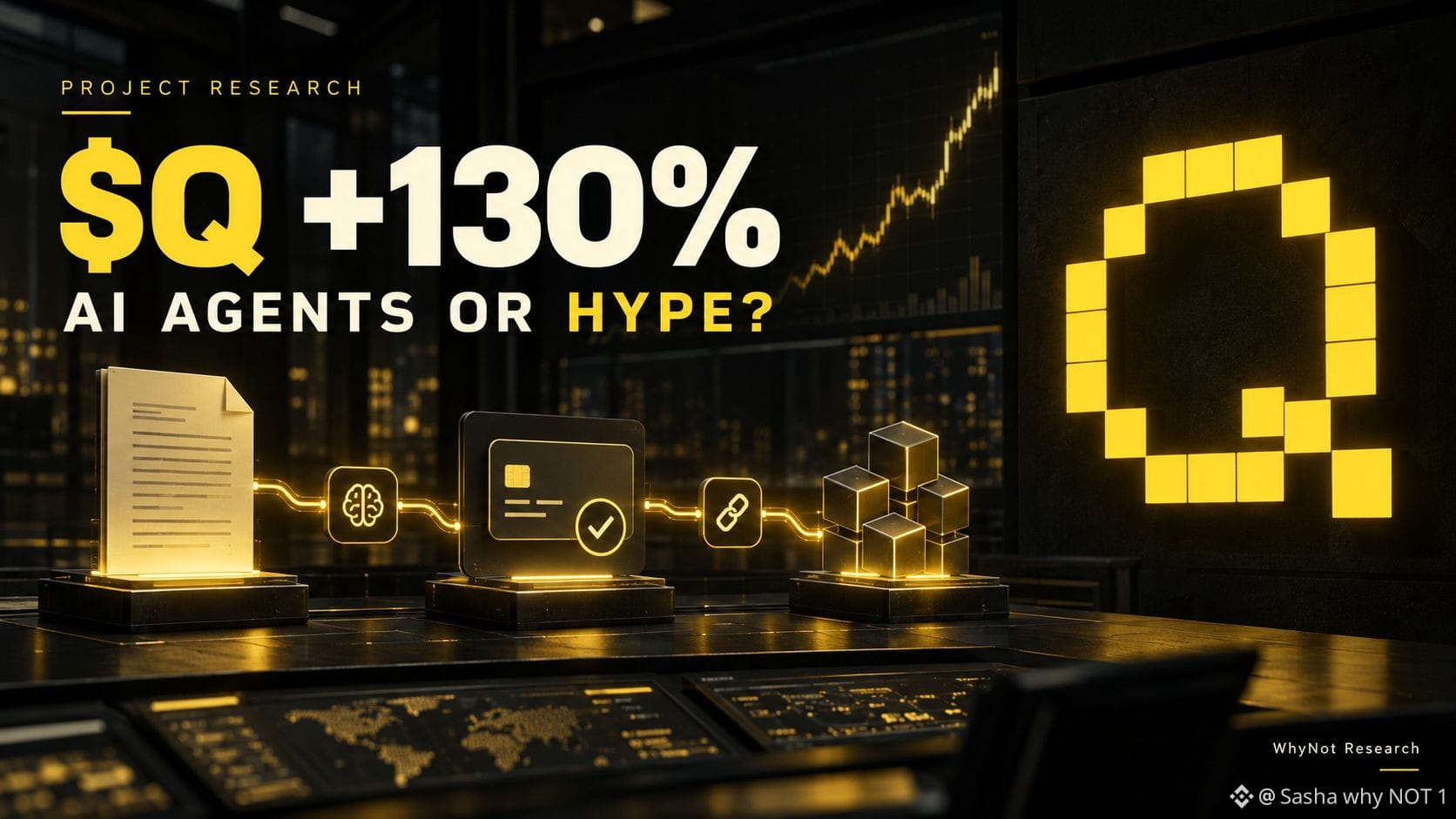
$Q Is Up 130% in a Week What Is Quack AI Actually Building? #QuackAI is building a programmable execution and governance layer for the Agent Economy. Its core product, Q402, allows AI agents to initiate gasless, policy-controlled blockchain payments. An agent signs an intent, the network checks the relevant rules, a facilitator handles gas and execution, and the final settlement remains verifiable on-chain. This gives Quack AI a clearer use case than the average “AI + crypto” token. The infrastructure connects governance intelligence, automated payments and compliance logic across multiple chains. The project reports more than 3M Quack Passports, 40+ integrations and thousands of AI-executed governance votes. It also raised $3.6M from investors including Animoca Brands, Kenetic Capital, Skyland Ventures and CARV Labs. But the current rally requires caution. $Q gained approximately 33% in 24 hours and 130% in seven days, reaching a new all-time high near $0.0715. Trading volume rose sharply, yet there was no major project-specific announcement explaining the entire move. The primary catalyst appears to be speculative demand around AI agents performing crypto transactions. Derivatives are also playing a major role. Open interest is close to $157M roughly 47% of market cap while perpetual volume significantly exceeds spot volume. Negative funding suggests that short covering may have accelerated the breakout. Tokenomics are the main long-term risk. Only 4.7B of the maximum 10B $Q are circulating, placing FDV near $708M versus a market cap of roughly $333M. Team and investor tokens have also entered linear vesting. Quack AI has a credible product narrative. The next test is whether Q402 can generate measurable payments, fees and recurring demand for $Q. Research by WhyNot Research. #BTC Price Analysis#
$Q Is Up 130% in a Week What Is Quack AI Actually Building? #QuackAI is building a programmable execution and governance layer for the Agent Economy. Its core product, Q402, allows AI agents to initiate gasless, policy-controlled blockchain payments. An agent signs an intent, the network checks the relevant rules, a facilitator handles gas and execution, and the final settlement remains verifiable on-chain. This gives Quack AI a clearer use case than the average “AI + crypto” token. The infrastructure connects governance intelligence, automated payments and compliance logic across multiple chains. The project reports more than 3M Quack Passports, 40+ integrations and thousands of AI-executed governance votes. It also raised $3.6M from investors including Animoca Brands, Kenetic Capital, Skyland Ventures and CARV Labs. But the current rally requires caution. $Q gained approximately 33% in 24 hours and 130% in seven days, reaching a new all-time high near $0.0715. Trading volume rose sharply, yet there was no major project-specific announcement explaining the entire move. The primary catalyst appears to be speculative demand around AI agents performing crypto transactions. Derivatives are also playing a major role. Open interest is close to $157M roughly 47% of market cap while perpetual volume significantly exceeds spot volume. Negative funding suggests that short covering may have accelerated the breakout. Tokenomics are the main long-term risk. Only 4.7B of the maximum 10B $Q are circulating, placing FDV near $708M versus a market cap of roughly $333M. Team and investor tokens have also entered linear vesting. Quack AI has a credible product narrative. The next test is whether Q402 can generate measurable payments, fees and recurring demand for $Q. Research by WhyNot Research. #BTC Price Analysis#
76
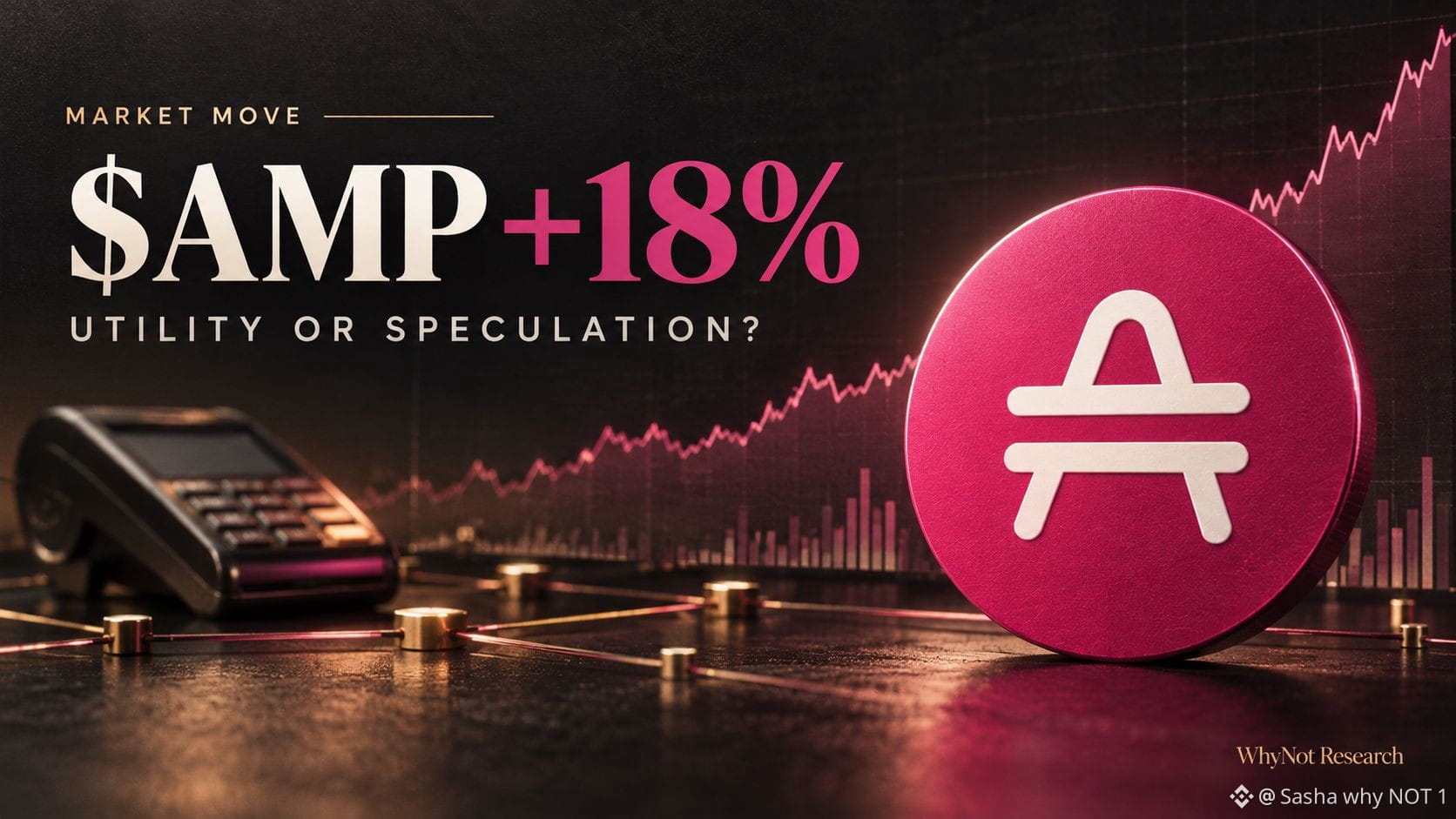
Why Is $AMP Up 18% Today? $AMP has gained approximately 18% in 24 hours, while trading volume jumped 157% to nearly $28M. Volume now equals roughly 40% of its $70M market cap a clear sign that speculative liquidity has returned. I found no confirmed same-day announcement that fully explains the move. The rally appears to be driven by a technical breakout, renewed interest in payment infrastructure and capital rotation into heavily discounted legacy tokens. The fundamental narrative is still connected to Flexa. AMP acts as collateral for digital payments, guaranteeing merchants receive value while the original blockchain transaction completes settlement. Flexa expanded into Europe in July 2026, while AMP’s earlier Upbit listing improved access to Korean liquidity. These developments strengthened the longer-term narrative, but they are not fresh enough to explain the entire current move. The critical question is whether speculation will be followed by real adoption. Almost 89.8B #AMP are already circulating out of a 100B maximum supply. This reduces conventional unlock risk, but the absolute supply remains enormous. Sustained appreciation therefore requires meaningful collateral demand from actual Flexa payment volume. Technically, $0.000794 is the immediate breakout level. Holding above it could open the path toward approximately $0.000880. A return below the $0.000653–$0.000628 area would weaken the structure and suggest that the rally was mainly liquidity-driven. For now, $AMP is showing strong momentum but payment volume, collateral capacity and staked AMP must confirm the narrative. Research by WhyNot Research. #Altcoin Season#
Why Is $AMP Up 18% Today? $AMP has gained approximately 18% in 24 hours, while trading volume jumped 157% to nearly $28M. Volume now equals roughly 40% of its $70M market cap a clear sign that speculative liquidity has returned. I found no confirmed same-day announcement that fully explains the move. The rally appears to be driven by a technical breakout, renewed interest in payment infrastructure and capital rotation into heavily discounted legacy tokens. The fundamental narrative is still connected to Flexa. AMP acts as collateral for digital payments, guaranteeing merchants receive value while the original blockchain transaction completes settlement. Flexa expanded into Europe in July 2026, while AMP’s earlier Upbit listing improved access to Korean liquidity. These developments strengthened the longer-term narrative, but they are not fresh enough to explain the entire current move. The critical question is whether speculation will be followed by real adoption. Almost 89.8B #AMP are already circulating out of a 100B maximum supply. This reduces conventional unlock risk, but the absolute supply remains enormous. Sustained appreciation therefore requires meaningful collateral demand from actual Flexa payment volume. Technically, $0.000794 is the immediate breakout level. Holding above it could open the path toward approximately $0.000880. A return below the $0.000653–$0.000628 area would weaken the structure and suggest that the rally was mainly liquidity-driven. For now, $AMP is showing strong momentum but payment volume, collateral capacity and staked AMP must confirm the narrative. Research by WhyNot Research. #Altcoin Season#
85
$PUFFER : Up ~100% in a Week Are Fundamentals Catching Up? PUFFER has roughly doubled over the past week. But a price recovery and a business recovery are different things. WHAT IS PUFFER? Founded by Amir Forouzani and Jason Vranek, Puffer builds Ethereum staking, restaking and transaction infrastructure through pufETH, Puffer Preconf and UniFi. The crucial distinction: • pufETH represents a yield-bearing position. • PUFFER provides governance rights. Holding PUFFER does not automatically earn the staking yield generated by pufETH. WHERE DOES THE MONEY COME FROM? Puffer Stake generates yield through validator-ticket sales and restaking rewards. Protocol and guardian fees retain a portion. The available DefiLlama snapshot, indexed before the latest rally, showed: • TVL: ~$29.7M • 30-day fees/gross strategy yield: ~$63.4K • 30-day protocol revenue: ~$3.3K • Tracked PUFFER holder revenue: $0 Gross yield is not protocol profit. Token incentives are not the same as revenue distributed to holders. WHAT SUPPORTS THE STORY? Puffer announced Google Cloud infrastructure cooperation on September 22 and an Anchorage Digital custody and settlement partnership on September 29. GitHub shows contract-repository updates on October 13. These support the development thesis. They do not establish how much recurring revenue the partnerships will generate or explain the entire weekly rally. THE SUPPLY QUESTION CMC’s October 15 snapshot showed approximately 574.9M PUFFER circulating against a 1B maximum supply. Future releases remain relevant. A deep discount to ATH alone does not establish undervaluation. MY VIEW Puffer has products and active development. The token thesis needs stronger evidence that adoption creates economic value for #PUFFER holders. Watch protocol revenue, paid UniFi usage, holder benefits and dilution. The next test is whether fundamentals follow the price. #Altcoin Season#
$PUFFER : Up ~100% in a Week Are Fundamentals Catching Up? PUFFER has roughly doubled over the past week. But a price recovery and a business recovery are different things. WHAT IS PUFFER? Founded by Amir Forouzani and Jason Vranek, Puffer builds Ethereum staking, restaking and transaction infrastructure through pufETH, Puffer Preconf and UniFi. The crucial distinction: • pufETH represents a yield-bearing position. • PUFFER provides governance rights. Holding PUFFER does not automatically earn the staking yield generated by pufETH. WHERE DOES THE MONEY COME FROM? Puffer Stake generates yield through validator-ticket sales and restaking rewards. Protocol and guardian fees retain a portion. The available DefiLlama snapshot, indexed before the latest rally, showed: • TVL: ~$29.7M • 30-day fees/gross strategy yield: ~$63.4K • 30-day protocol revenue: ~$3.3K • Tracked PUFFER holder revenue: $0 Gross yield is not protocol profit. Token incentives are not the same as revenue distributed to holders. WHAT SUPPORTS THE STORY? Puffer announced Google Cloud infrastructure cooperation on September 22 and an Anchorage Digital custody and settlement partnership on September 29. GitHub shows contract-repository updates on October 13. These support the development thesis. They do not establish how much recurring revenue the partnerships will generate or explain the entire weekly rally. THE SUPPLY QUESTION CMC’s October 15 snapshot showed approximately 574.9M PUFFER circulating against a 1B maximum supply. Future releases remain relevant. A deep discount to ATH alone does not establish undervaluation. MY VIEW Puffer has products and active development. The token thesis needs stronger evidence that adoption creates economic value for #PUFFER holders. Watch protocol revenue, paid UniFi usage, holder benefits and dilution. The next test is whether fundamentals follow the price. #Altcoin Season#
66
MORNING MARKET BRIEF October 15, 2026 Inflation is challenging the market again. AI demand remains strong, but financing it is getting harder. US MACRO September CPI, released October 14: • Headline: +0.6% MoM / +3.7% YoY • Core: +0.3% MoM / +2.6% YoY Gasoline rose 9.1% MoM, driving more than half the headline increase. Core inflation also accelerated annually. The US 10Y yield jumped to ~5.31% immediately after the release—an intraday reading, not the closing yield. DXY stood at 102.53 late October 14, below its 102.94 intraday high. CME pricing cited by Reuters still implied roughly a 65% chance of an October Fed hold. CRYPTO $BTC dropped about $1,000 to $82,800 immediately after CPI, according to CoinDesk. This is the initial October 14 reaction, not a live quote. Meanwhile, Kraken parent Payward agreed to acquire Lithuania’s Saldo Bank. Closing is expected in 2027, subject to regulatory approval. The deal could expand European banking, lending and payment services. WALL STREET OCTOBER 14 CLOSE S&P 500: −1.11% Nasdaq: −1.88% Dow: −0.09% Technology took the bigger hit. Expensive capital weighs especially heavily on businesses funding growth today for profits tomorrow. BUSINESS & AI ASML reported quarterly sales of €11.7B and raised its annual sales outlook to €44–45B. Customers are expressing interest in equipment deliveries through 2029–2030. Reuters sources said Anthropic presented Q3 revenue of $16.8B, up from $11.6B in Q2, and adjusted profitability. These are meeting accounts, not published audited results. ENERGY Brent settled at $106.06 on October 14. Shipping risks around Hormuz continue to threaten supply and add inflation pressure. MY VIEW Strong AI demand can coexist with falling AI stocks. For $BTC , watch yields and the dollar. For AI, watch cash flow after infrastructure costs. WhyNot Research | Research the Future #BTC Price Analysis#
MORNING MARKET BRIEF October 15, 2026 Inflation is challenging the market again. AI demand remains strong, but financing it is getting harder. US MACRO September CPI, released October 14: • Headline: +0.6% MoM / +3.7% YoY • Core: +0.3% MoM / +2.6% YoY Gasoline rose 9.1% MoM, driving more than half the headline increase. Core inflation also accelerated annually. The US 10Y yield jumped to ~5.31% immediately after the release—an intraday reading, not the closing yield. DXY stood at 102.53 late October 14, below its 102.94 intraday high. CME pricing cited by Reuters still implied roughly a 65% chance of an October Fed hold. CRYPTO $BTC dropped about $1,000 to $82,800 immediately after CPI, according to CoinDesk. This is the initial October 14 reaction, not a live quote. Meanwhile, Kraken parent Payward agreed to acquire Lithuania’s Saldo Bank. Closing is expected in 2027, subject to regulatory approval. The deal could expand European banking, lending and payment services. WALL STREET OCTOBER 14 CLOSE S&P 500: −1.11% Nasdaq: −1.88% Dow: −0.09% Technology took the bigger hit. Expensive capital weighs especially heavily on businesses funding growth today for profits tomorrow. BUSINESS & AI ASML reported quarterly sales of €11.7B and raised its annual sales outlook to €44–45B. Customers are expressing interest in equipment deliveries through 2029–2030. Reuters sources said Anthropic presented Q3 revenue of $16.8B, up from $11.6B in Q2, and adjusted profitability. These are meeting accounts, not published audited results. ENERGY Brent settled at $106.06 on October 14. Shipping risks around Hormuz continue to threaten supply and add inflation pressure. MY VIEW Strong AI demand can coexist with falling AI stocks. For $BTC , watch yields and the dollar. For AI, watch cash flow after infrastructure costs. WhyNot Research | Research the Future #BTC Price Analysis#
81
$WAL : AI Data Growth vs. Real Revenue #Walrus is decentralized storage infrastructure originally developed by Mysten Labs, the team behind Sui. Its product is data storage not an AI model. • Price: ~$0.0485 • Market cap: ~$127M • FDV: ~$243M • Circulating supply: ~2.61B / 5B WAL • Around 94.5% below CMC’s recorded ATH THE NEW CATALYST On October 12, Sui Foundation announced a $30M investment in DATA Network. The integration makes Walrus the default storage layer for DATA Foundation applications. That could bring demand for AI-data storage. But $30M invested in DATA is not Walrus revenue. Registered data contributions are not automatically paid Walrus uploads. HOW THE ECONOMICS WORK Users pay WAL for storage and writes. Payments are distributed over time to storage providers, with stakers sharing rewards. Subsidies also exist. Staking yield should not automatically be treated as customer-funded income. THE REVENUE CHECK DefiLlama’s available snapshot shows approximately $3,691 in storage fees over 30 days. Tracked quarterly fees increased from $13.78K in Q2 to $20.51K in Q3 about 49%. Growth exists, but the absolute figures remain small. These are protocol fees, not corporate net profit or dividends. SUPPLY MATTERS Initial circulation was 1.25B WAL. It is now roughly 2.61B. A token can fall heavily while its circulating supply expands. Distance from ATH alone does not establish value. Development continues: GitHub lists a September 30 mainnet release and an October 7 testnet release. MY VIEW Walrus has a functioning product and a credible adoption catalyst. The investment test is whether integrations produce recurring paid storage demand faster than token supply grows. Watch fees, customer retention and dilution not just partnership headlines. #Altcoin Season#
$WAL : AI Data Growth vs. Real Revenue #Walrus is decentralized storage infrastructure originally developed by Mysten Labs, the team behind Sui. Its product is data storage not an AI model. • Price: ~$0.0485 • Market cap: ~$127M • FDV: ~$243M • Circulating supply: ~2.61B / 5B WAL • Around 94.5% below CMC’s recorded ATH THE NEW CATALYST On October 12, Sui Foundation announced a $30M investment in DATA Network. The integration makes Walrus the default storage layer for DATA Foundation applications. That could bring demand for AI-data storage. But $30M invested in DATA is not Walrus revenue. Registered data contributions are not automatically paid Walrus uploads. HOW THE ECONOMICS WORK Users pay WAL for storage and writes. Payments are distributed over time to storage providers, with stakers sharing rewards. Subsidies also exist. Staking yield should not automatically be treated as customer-funded income. THE REVENUE CHECK DefiLlama’s available snapshot shows approximately $3,691 in storage fees over 30 days. Tracked quarterly fees increased from $13.78K in Q2 to $20.51K in Q3 about 49%. Growth exists, but the absolute figures remain small. These are protocol fees, not corporate net profit or dividends. SUPPLY MATTERS Initial circulation was 1.25B WAL. It is now roughly 2.61B. A token can fall heavily while its circulating supply expands. Distance from ATH alone does not establish value. Development continues: GitHub lists a September 30 mainnet release and an October 7 testnet release. MY VIEW Walrus has a functioning product and a credible adoption catalyst. The investment test is whether integrations produce recurring paid storage demand faster than token supply grows. Watch fees, customer retention and dilution not just partnership headlines. #Altcoin Season#
56
MORNING MARKET BRIEF October 14, 2026 Lower yields failed to lift stocks yesterday. Today, US inflation takes center stage. CPI WATCH September CPI is scheduled for 12:30 UTC today. October 13 snapshot: • US 10Y yield: ~5.22% • DXY: −0.34% • Brent: $105.69 • October Fed hold probability: 80.6%, according to CME pricing cited by Reuters For $BTC, watch the inflation surprise and the bond market’s reaction. Lower yields can help, but capital remains expensive. BINANCE POOL IS CLOSING Binance announced that Pool, Pool Savings, Cloud Mining, Transaction Accelerator and related APIs will shut down on November 10 at 07:00 UTC. Miners should prepare to switch pools, review Savings positions and download records. Historical pages remain available until November 24 at 07:00 UTC. This concerns mining services, not the Binance exchange or Bitcoin network. WALL STREET OCTOBER 13 CLOSE S&P 500: −0.02% Nasdaq: −0.15% Dow: −0.35% Micron fell 3.6%; Applied Materials lost almost 7%. Small index moves concealed much larger losses in individual stocks. BUSINESS Citi reported EPS of $2.85 versus $2.66 expected. Investment-banking revenue rose 9% YoY but fell 13% from Q2. An earnings beat alone does not guarantee improving momentum. ENERGY & GEOPOLITICS Vortexa estimated Iranian seaborne crude exports at zero as of October 5, Reuters reported October 13. That is a dated shipping estimate, not a live reading. Changing supply routes keep logistics and sanctions risks relevant. AI COMPETITION IDC put Nvidia’s share of China’s AI-accelerator shipments at 34% in H1 2026, versus Huawei’s 28%. Nvidia’s shipments fell 44% YoY. AI demand growth does not guarantee every supplier gains. MY VIEW Watch yields after CPI, earnings quality and who actually captures AI spending. WhyNot Research | Research the Future #BTC Price Analysis# $BTC
MORNING MARKET BRIEF October 14, 2026 Lower yields failed to lift stocks yesterday. Today, US inflation takes center stage. CPI WATCH September CPI is scheduled for 12:30 UTC today. October 13 snapshot: • US 10Y yield: ~5.22% • DXY: −0.34% • Brent: $105.69 • October Fed hold probability: 80.6%, according to CME pricing cited by Reuters For $BTC, watch the inflation surprise and the bond market’s reaction. Lower yields can help, but capital remains expensive. BINANCE POOL IS CLOSING Binance announced that Pool, Pool Savings, Cloud Mining, Transaction Accelerator and related APIs will shut down on November 10 at 07:00 UTC. Miners should prepare to switch pools, review Savings positions and download records. Historical pages remain available until November 24 at 07:00 UTC. This concerns mining services, not the Binance exchange or Bitcoin network. WALL STREET OCTOBER 13 CLOSE S&P 500: −0.02% Nasdaq: −0.15% Dow: −0.35% Micron fell 3.6%; Applied Materials lost almost 7%. Small index moves concealed much larger losses in individual stocks. BUSINESS Citi reported EPS of $2.85 versus $2.66 expected. Investment-banking revenue rose 9% YoY but fell 13% from Q2. An earnings beat alone does not guarantee improving momentum. ENERGY & GEOPOLITICS Vortexa estimated Iranian seaborne crude exports at zero as of October 5, Reuters reported October 13. That is a dated shipping estimate, not a live reading. Changing supply routes keep logistics and sanctions risks relevant. AI COMPETITION IDC put Nvidia’s share of China’s AI-accelerator shipments at 34% in H1 2026, versus Huawei’s 28%. Nvidia’s shipments fell 44% YoY. AI demand growth does not guarantee every supplier gains. MY VIEW Watch yields after CPI, earnings quality and who actually captures AI spending. WhyNot Research | Research the Future #BTC Price Analysis# $BTC
66
Oil and a stronger dollar complicate the setup ahead of US inflation data. CRYPTO Evernorth began trading on Nasdaq as XRPN on October 12 following its merger with Armada. It offers equity exposure to an XRP-focused treasury strategy, with additional risks: operating costs, dilution and a potential premium or discount to underlying assets. $BTC was around $82K in the morning brief’s snapshot, down roughly 1.9% over 24 hours. This is not a live quote. MACRO The Fed’s policy range remains 3.75–4.00%. Cleveland Fed President Beth Hammack called for a relatively quick move toward more restrictive policy. Her comments are not a new committee decision. The dollar reached an approximately 18-month high on October 12. US bond markets were closed for the holiday. Next checkpoint: September CPI, October 14 at 12:30 UTC. ENERGY & GEOPOLITICS Oil gained around 2% on October 12 amid supply concerns following attacks on Riyadh’s airport. The announced Russia–Ukraine energy ceasefire remained disputed. Actual supply flows will matter more than diplomatic headlines. BUSINESS Getty Images announced a restructuring plan involving up to $533M in new equity and a planned Chapter 11 process. Business continuity does not guarantee preservation of existing shareholder value. AI & TECHNOLOGY On October 13, Omron announced a $675M acquisition of OnLogic and its parent to expand industrial AI capabilities. The next test: measurable productivity gains and returns on investment. MY VIEW For $BTC , watch the dollar and the bond-market reaction to CPI. For equities, watch earnings quality and financing costs. WhyNot Research | Research the Future #BTC Price Analysis#
Oil and a stronger dollar complicate the setup ahead of US inflation data. CRYPTO Evernorth began trading on Nasdaq as XRPN on October 12 following its merger with Armada. It offers equity exposure to an XRP-focused treasury strategy, with additional risks: operating costs, dilution and a potential premium or discount to underlying assets. $BTC was around $82K in the morning brief’s snapshot, down roughly 1.9% over 24 hours. This is not a live quote. MACRO The Fed’s policy range remains 3.75–4.00%. Cleveland Fed President Beth Hammack called for a relatively quick move toward more restrictive policy. Her comments are not a new committee decision. The dollar reached an approximately 18-month high on October 12. US bond markets were closed for the holiday. Next checkpoint: September CPI, October 14 at 12:30 UTC. ENERGY & GEOPOLITICS Oil gained around 2% on October 12 amid supply concerns following attacks on Riyadh’s airport. The announced Russia–Ukraine energy ceasefire remained disputed. Actual supply flows will matter more than diplomatic headlines. BUSINESS Getty Images announced a restructuring plan involving up to $533M in new equity and a planned Chapter 11 process. Business continuity does not guarantee preservation of existing shareholder value. AI & TECHNOLOGY On October 13, Omron announced a $675M acquisition of OnLogic and its parent to expand industrial AI capabilities. The next test: measurable productivity gains and returns on investment. MY VIEW For $BTC , watch the dollar and the bond-market reaction to CPI. For equities, watch earnings quality and financing costs. WhyNot Research | Research the Future #BTC Price Analysis#
87
Проверено
$MINA : technical progress is real. Token economics still need proof. Mina’s investment thesis is straightforward: can useful zero-knowledge applications create lasting demand for MINA? There is progress to examine. September’s Mesa announcement confirmed the upgrade was live on mainnet. Slot time fell from 180 to 90 seconds, zkApps gained more capacity, and automated hard forks should simplify future upgrades. The Q2 ecosystem update also reported Zeko’s mainnet launch and production-ready Native Prover tooling. But shipping infrastructure is only part of the story. Block producers earn newly issued MINA and transaction fees. Delegators receive a share of rewards. Staking payouts should therefore not be confused with business profits. Mina’s 2025 economics report highlighted reliance on emissions and weak protocol-level value capture. Its inflation estimates were challenged by community members, so quoting them as today’s rate would be misleading. I could not verify a current network revenue figure or evidence that proposed economic reforms have all been implemented. At the retrieved CMC snapshot, #MINA traded near $0.081, with roughly $105M market cap and a drawdown exceeding 99% from ATH. That is a price observation, not proof of undervaluation. What matters next: • Recurring zkApp users • User fees relative to issuance • Measurable demand from ecosystem applications • Implemented tokenomics changes My view: $MINA remains a speculative bet on ZK adoption. The next milestone must be economic traction. #Mina #ZK #WhyNotResearch
$MINA : technical progress is real. Token economics still need proof. Mina’s investment thesis is straightforward: can useful zero-knowledge applications create lasting demand for MINA? There is progress to examine. September’s Mesa announcement confirmed the upgrade was live on mainnet. Slot time fell from 180 to 90 seconds, zkApps gained more capacity, and automated hard forks should simplify future upgrades. The Q2 ecosystem update also reported Zeko’s mainnet launch and production-ready Native Prover tooling. But shipping infrastructure is only part of the story. Block producers earn newly issued MINA and transaction fees. Delegators receive a share of rewards. Staking payouts should therefore not be confused with business profits. Mina’s 2025 economics report highlighted reliance on emissions and weak protocol-level value capture. Its inflation estimates were challenged by community members, so quoting them as today’s rate would be misleading. I could not verify a current network revenue figure or evidence that proposed economic reforms have all been implemented. At the retrieved CMC snapshot, #MINA traded near $0.081, with roughly $105M market cap and a drawdown exceeding 99% from ATH. That is a price observation, not proof of undervaluation. What matters next: • Recurring zkApp users • User fees relative to issuance • Measurable demand from ecosystem applications • Implemented tokenomics changes My view: $MINA remains a speculative bet on ZK adoption. The next milestone must be economic traction. #Mina #ZK #WhyNotResearch
57
Oil eases, but inflation and earnings remain the week’s main tests. MARKETS Reuters’ early October 12 snapshot: • S&P 500 futures +0.2% • Nasdaq futures +0.5% • Brent $103.50 • WTI $90.73 • DXY ~102.25 These are intraday readings, not closing prices. Lower oil could help sentiment, while a firm dollar keeps financial conditions tight. CRYPTO: XRPL SECURITY DISCLOSURE An October 9 report detailed a payment-engine vulnerability that could create unbacked $XRP. The fix shipped on September 25 in version 3.4.1. Developers reported no evidence of exploitation on public networks. This was disclosure of a patched vulnerability. The investment lesson: security depends on continuous testing and timely upgrades. US MACRO September payrolls: +29K. Unemployment: 4.2%. August PCE inflation: 3.4% YoY; core: 3.0%. Real consumer spending: +0.6% MoM. September CPI arrives October 14 at 12:30 UTC. Bank earnings begin Tuesday. Weak hiring and resilient spending leave a mixed picture. For $BTC, watch how bond yields react to inflation. ENERGY & POLITICS US senators from both parties challenged the administration’s Russian diesel arrangement. Additional supply could help, but legal uncertainty and actual deliveries will determine the impact. AI & BUSINESS Reuters reports that Moonshot executives are discussing a shareholder-dispute settlement ahead of a planned Hong Kong IPO. Allegations remain contested. Separately, Reuters, citing WSJ, reports Amazon is discussing a roughly $7B acquisition of Decart. No completed deal has been announced. MY VIEW Watch three things: inflation, earnings and energy supply. In AI, valuations need support from revenue and returns on invested capital. WhyNot Research | Research the Future #BTC Price Analysis# $BTC
Oil eases, but inflation and earnings remain the week’s main tests. MARKETS Reuters’ early October 12 snapshot: • S&P 500 futures +0.2% • Nasdaq futures +0.5% • Brent $103.50 • WTI $90.73 • DXY ~102.25 These are intraday readings, not closing prices. Lower oil could help sentiment, while a firm dollar keeps financial conditions tight. CRYPTO: XRPL SECURITY DISCLOSURE An October 9 report detailed a payment-engine vulnerability that could create unbacked $XRP. The fix shipped on September 25 in version 3.4.1. Developers reported no evidence of exploitation on public networks. This was disclosure of a patched vulnerability. The investment lesson: security depends on continuous testing and timely upgrades. US MACRO September payrolls: +29K. Unemployment: 4.2%. August PCE inflation: 3.4% YoY; core: 3.0%. Real consumer spending: +0.6% MoM. September CPI arrives October 14 at 12:30 UTC. Bank earnings begin Tuesday. Weak hiring and resilient spending leave a mixed picture. For $BTC, watch how bond yields react to inflation. ENERGY & POLITICS US senators from both parties challenged the administration’s Russian diesel arrangement. Additional supply could help, but legal uncertainty and actual deliveries will determine the impact. AI & BUSINESS Reuters reports that Moonshot executives are discussing a shareholder-dispute settlement ahead of a planned Hong Kong IPO. Allegations remain contested. Separately, Reuters, citing WSJ, reports Amazon is discussing a roughly $7B acquisition of Decart. No completed deal has been announced. MY VIEW Watch three things: inflation, earnings and energy supply. In AI, valuations need support from revenue and returns on invested capital. WhyNot Research | Research the Future #BTC Price Analysis# $BTC

83
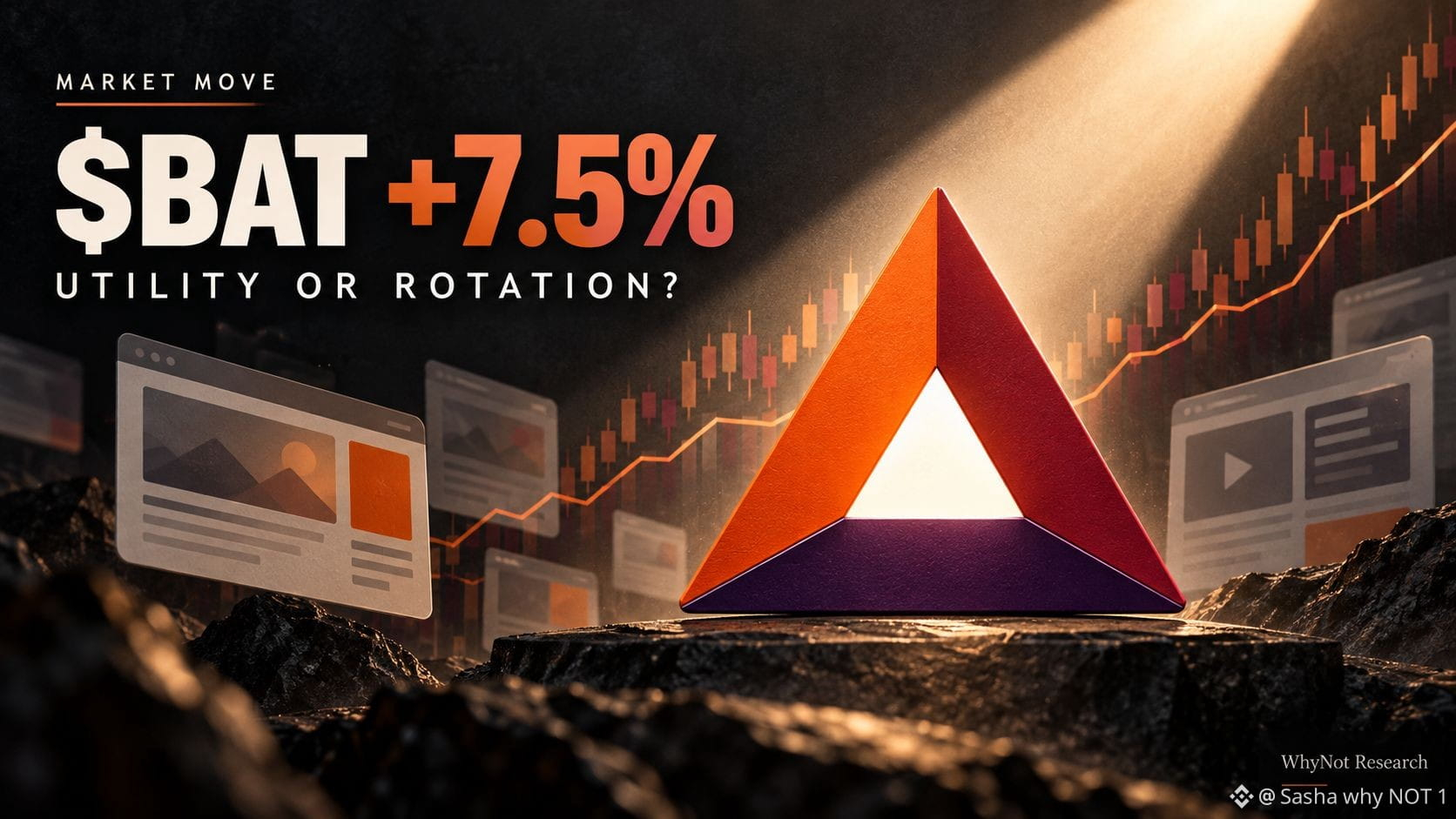
Why Is $BAT Suddenly Outperforming the Market? Basic Attention Token has gained around 7.5% in 24 hours and roughly 49% over the past week. More importantly, trading volume climbed to about $64M nearly 29% of its market cap. I found no confirmed same-day announcement capable of explaining the move alone. The rally looks more like a combination of increased liquidity, altcoin rotation and a delayed reassessment of BAT Roadmap 4.0. Brave plans to expand BAT beyond browser advertising through BravePay, a unified wallet, the Brave Rewards Card, machine payments and a protocol that could compensate creators when their content is used by AI products. The roadmap also introduces a potentially important value-capture mechanism: part of the revenue generated by Brave Wallet, BravePay and the Rewards Card is expected to fund #BAT buybacks. The distribution layer is substantial. Brave reported 128.3M monthly and 54.6M daily active users as of September 30. Meanwhile, approximately 99.7% of BAT’s fixed 1.5B supply is already circulating, leaving little conventional unlock pressure. But this is the key distinction: growth in Brave users does not automatically create proportional demand for $BAT. The rally becomes fundamentally stronger only if the new products produce measurable transactions, rewards activity and recurring buybacks. The immediate level to watch is approximately $0.151. Acceptance above it could extend momentum, while a move back below $0.129–$0.130 would weaken the breakout structure. This looks like a credible narrative repricing but execution must now confirm the valuation. Research by WhyNot Research. #BTC Price Analysis#
Why Is $BAT Suddenly Outperforming the Market? Basic Attention Token has gained around 7.5% in 24 hours and roughly 49% over the past week. More importantly, trading volume climbed to about $64M nearly 29% of its market cap. I found no confirmed same-day announcement capable of explaining the move alone. The rally looks more like a combination of increased liquidity, altcoin rotation and a delayed reassessment of BAT Roadmap 4.0. Brave plans to expand BAT beyond browser advertising through BravePay, a unified wallet, the Brave Rewards Card, machine payments and a protocol that could compensate creators when their content is used by AI products. The roadmap also introduces a potentially important value-capture mechanism: part of the revenue generated by Brave Wallet, BravePay and the Rewards Card is expected to fund #BAT buybacks. The distribution layer is substantial. Brave reported 128.3M monthly and 54.6M daily active users as of September 30. Meanwhile, approximately 99.7% of BAT’s fixed 1.5B supply is already circulating, leaving little conventional unlock pressure. But this is the key distinction: growth in Brave users does not automatically create proportional demand for $BAT. The rally becomes fundamentally stronger only if the new products produce measurable transactions, rewards activity and recurring buybacks. The immediate level to watch is approximately $0.151. Acceptance above it could extend momentum, while a move back below $0.129–$0.130 would weaken the breakout structure. This looks like a credible narrative repricing but execution must now confirm the valuation. Research by WhyNot Research. #BTC Price Analysis#
56
MORNING MARKET BRIEF October 11, 2026 Crypto custody risks take center stage as markets prepare for another inflation test. LEDGER: THE INVESTIGATION DEVELOPS Bitquery estimates $93.2M in losses across 315 wallets on six chains, with $10M frozen by Tether. These are investigators’ estimates, not Ledger’s final accounting. On October 10, The Verge reported that Ledger confirmed an unauthorized hardware implant in one affected device. That does not establish that every reported loss had the same cause or that all Ledger devices are compromised. The lesson: self-custody security includes the device’s supply chain. Moving a compromised seed to new hardware does not make it safe. STOCKS & MACRO On October 9, the S&P 500 and Nasdaq gained roughly 0.6% each. US 10Y yields stood near 5.26% in Reuters’ late-session report. September payrolls rose just 29K, while August real consumer spending increased 0.6%. Growth signals remain mixed, and capital remains expensive. Next major checkpoint: September CPI on October 14 at 12:30 UTC, alongside the coming bank earnings season. ENERGY & GEOPOLITICS India announced a dollar facility for three state oil companies as pressure on the rupee intensified. A reported US strike on a cargo vessel in the Gulf of Oman adds shipping uncertainty. Energy disruption can feed into inflation, currencies and financing costs. AI Reuters, citing the FT, reports Nvidia is discussing further investment in or a potential acquisition of Reflection AI. Talks are preliminary; no deal is confirmed. MY VIEW For $BTC , watch how yields respond to CPI. For investors, security deserves as much attention as price. Sources: Bitquery, The Verge, Reuters, BLS, BEA. WhyNot Research | Research the Future #BTC Price Analysis#
MORNING MARKET BRIEF October 11, 2026 Crypto custody risks take center stage as markets prepare for another inflation test. LEDGER: THE INVESTIGATION DEVELOPS Bitquery estimates $93.2M in losses across 315 wallets on six chains, with $10M frozen by Tether. These are investigators’ estimates, not Ledger’s final accounting. On October 10, The Verge reported that Ledger confirmed an unauthorized hardware implant in one affected device. That does not establish that every reported loss had the same cause or that all Ledger devices are compromised. The lesson: self-custody security includes the device’s supply chain. Moving a compromised seed to new hardware does not make it safe. STOCKS & MACRO On October 9, the S&P 500 and Nasdaq gained roughly 0.6% each. US 10Y yields stood near 5.26% in Reuters’ late-session report. September payrolls rose just 29K, while August real consumer spending increased 0.6%. Growth signals remain mixed, and capital remains expensive. Next major checkpoint: September CPI on October 14 at 12:30 UTC, alongside the coming bank earnings season. ENERGY & GEOPOLITICS India announced a dollar facility for three state oil companies as pressure on the rupee intensified. A reported US strike on a cargo vessel in the Gulf of Oman adds shipping uncertainty. Energy disruption can feed into inflation, currencies and financing costs. AI Reuters, citing the FT, reports Nvidia is discussing further investment in or a potential acquisition of Reflection AI. Talks are preliminary; no deal is confirmed. MY VIEW For $BTC , watch how yields respond to CPI. For investors, security deserves as much attention as price. Sources: Bitquery, The Verge, Reuters, BLS, BEA. WhyNot Research | Research the Future #BTC Price Analysis#

89
#Sonic : Can Real Revenue Rebuild the Case for $S? $S trades around $0.0446, roughly 95.7% below its recorded ATH. But a deep drawdown alone doesn’t make a token cheap. Sonic’s challenge is converting network activity into value for holders. The retrieved DefiLlama snapshot shows: • DeFi TVL: ~$17.7M • Stablecoin supply: ~$156.9M • DEX volume: ~$1.88M/24h • Active addresses: ~7,500/24h • Chain fees: ~$198/24h The network has activity. Gas monetization remains small. Application revenue is separate and does not automatically accrue to $S. WHAT IS CHANGING? Sonic is pursuing integrated financial products, aiming to support token economics through product revenue rather than gas alone. Its May report disclosed $13K from the early USSD/Metropolis implementation for March 1–May 11. That is an initial result, not proof of a scaled revenue engine. Leadership also changed in June: Matt Visser became CEO, while Andre Cronje, Michael Kong and David Richardson left the board and retained advisory roles. TOKEN SUPPLY MATTERS The team says it skipped this year’s planned 47.625M S growth issuance. October 15 is also the final S1/S2 airdrop claim deadline. Remaining unclaimed allocations can then be burned. The widely cited 32.69M S figure dates to April it is not a confirmed final burn amount. MY VIEW The bull case is improving execution, financial-product revenue and verifiable buybacks. The risk is that strong technology still fails to create enough economic demand for $S I’m watching sustained fees, retained liquidity and revenue reaching the token not just a burn headline. WhyNot Research | Research the Future
#Sonic : Can Real Revenue Rebuild the Case for $S? $S trades around $0.0446, roughly 95.7% below its recorded ATH. But a deep drawdown alone doesn’t make a token cheap. Sonic’s challenge is converting network activity into value for holders. The retrieved DefiLlama snapshot shows: • DeFi TVL: ~$17.7M • Stablecoin supply: ~$156.9M • DEX volume: ~$1.88M/24h • Active addresses: ~7,500/24h • Chain fees: ~$198/24h The network has activity. Gas monetization remains small. Application revenue is separate and does not automatically accrue to $S. WHAT IS CHANGING? Sonic is pursuing integrated financial products, aiming to support token economics through product revenue rather than gas alone. Its May report disclosed $13K from the early USSD/Metropolis implementation for March 1–May 11. That is an initial result, not proof of a scaled revenue engine. Leadership also changed in June: Matt Visser became CEO, while Andre Cronje, Michael Kong and David Richardson left the board and retained advisory roles. TOKEN SUPPLY MATTERS The team says it skipped this year’s planned 47.625M S growth issuance. October 15 is also the final S1/S2 airdrop claim deadline. Remaining unclaimed allocations can then be burned. The widely cited 32.69M S figure dates to April it is not a confirmed final burn amount. MY VIEW The bull case is improving execution, financial-product revenue and verifiable buybacks. The risk is that strong technology still fails to create enough economic demand for $S I’m watching sustained fees, retained liquidity and revenue reaching the token not just a burn headline. WhyNot Research | Research the Future
1
93
Войдите, чтобы посмотреть больше материала
Присоединяйтесь к пользователям криптовалют по всему миру на Binance Square
⚡️ Получайте новейшую и полезную информацию о криптоактивах.
💬 Нам доверяет крупнейшая в мире криптобиржа.
👍 Получите достоверные аналитические данные от верифицированных создателей контента.
Эл. почта/номер телефона
В тренде
BinancePick
Просмотров: 3M
151,860 обсуждают
Join #EarningsSeason: Predict Earnings on Binance Pick, Share Your Take on Binance Square!
Binance Square Official
·Лайков: 408
·Просмотров: 342.4k
EarningsSeason
Просмотров: 5.2M
25,799 обсуждают
AnthropicTTMRevenueGrewAbout1200%
Просмотров: 19,799
337 обсуждают